Visual abstracts
New randomized trials and meta-analyses from leading journals at a glance: who was studied, what was compared, and what was found. Every paper is free to read in full.
All specialtiesCardiology 4763Oncology 4042Gastroenterology & Hepatology 1902Infectious Disease 3756Neurology 1872Psychiatry & Mental Health 2214Pulmonology 2042Critical Care 1319Endocrinology & Diabetes 2544Pediatrics 2889Surgery 2479Orthopedics & Sports Medicine 917Neurosurgery 525Cardiothoracic & Vascular Surgery 656Plastic & Reconstructive Surgery 574Nephrology 1107Rheumatology 810Hematology 1090Dermatology 611Ophthalmology 532Obstetrics & Gynecology 1645Public & Global Health 1037Radiology & Imaging 617Anesthesiology 957Urology 745ENT (Otolaryngology) 494Emergency Medicine 481Allergy & Immunology 309Geriatrics 972Family Medicine & Primary Care 533Medical Genetics & Genomics 659Pathology & Laboratory Medicine 156Physical Medicine & Rehabilitation 734Palliative Care 421Nutrition 1560Digital Health & AI 2133General Medicine 318
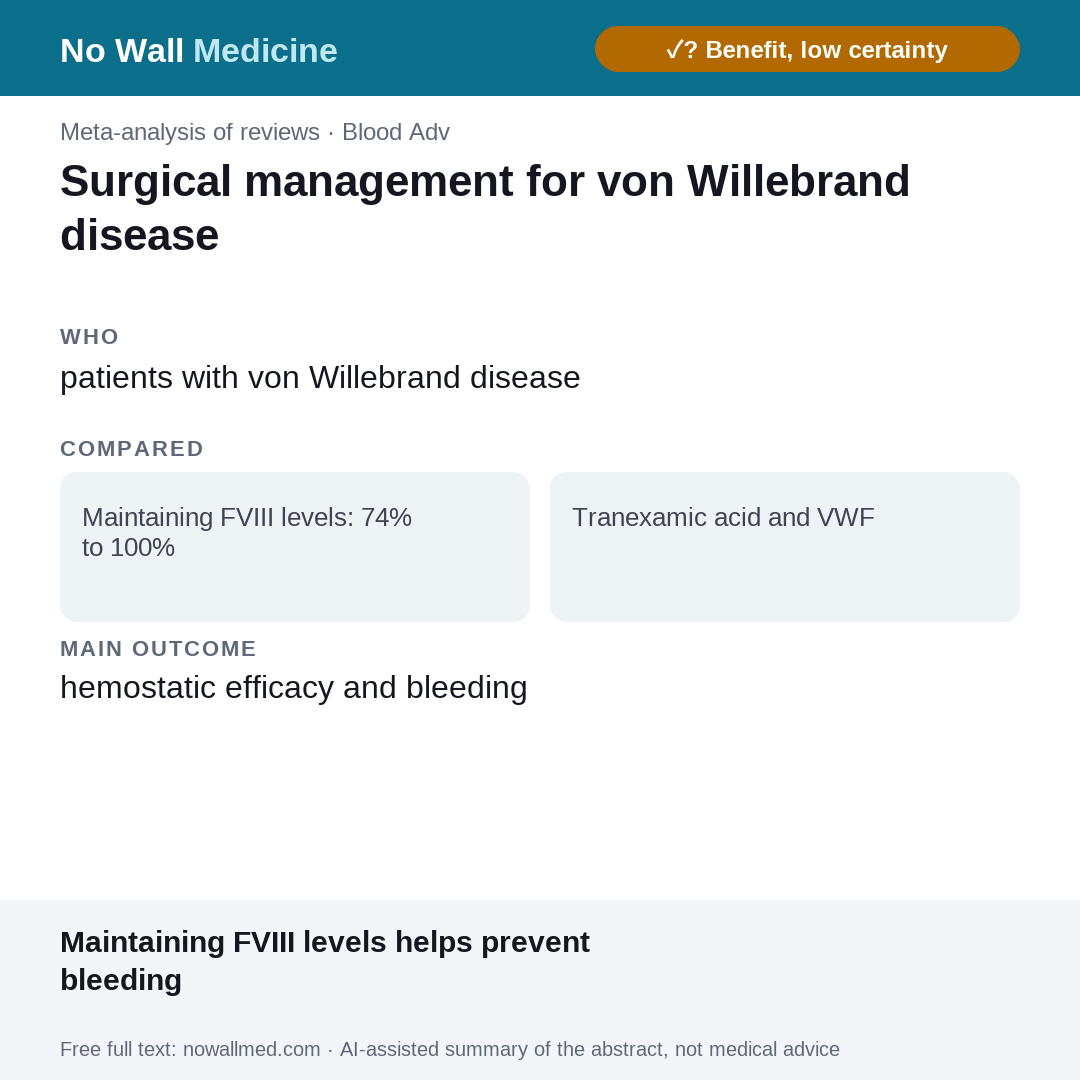
Surgical management of patients with von Willebrand disease: summary of 2 systematic reviews of the literature
Meta-analysis of reviewsBenefit, low certainty
Surgical management for von Willebrand disease
Who
patients with von Willebrand disease
Compared
Maintaining FVIII levels: 74% to 100%
Tranexamic acid and VWF
Main outcome
hemostatic efficacy and bleeding
Bottom line: Maintaining FVIII levels helps prevent bleeding
Limitation: low-quality evidence
Blood Adv · 2021-10-16Download image
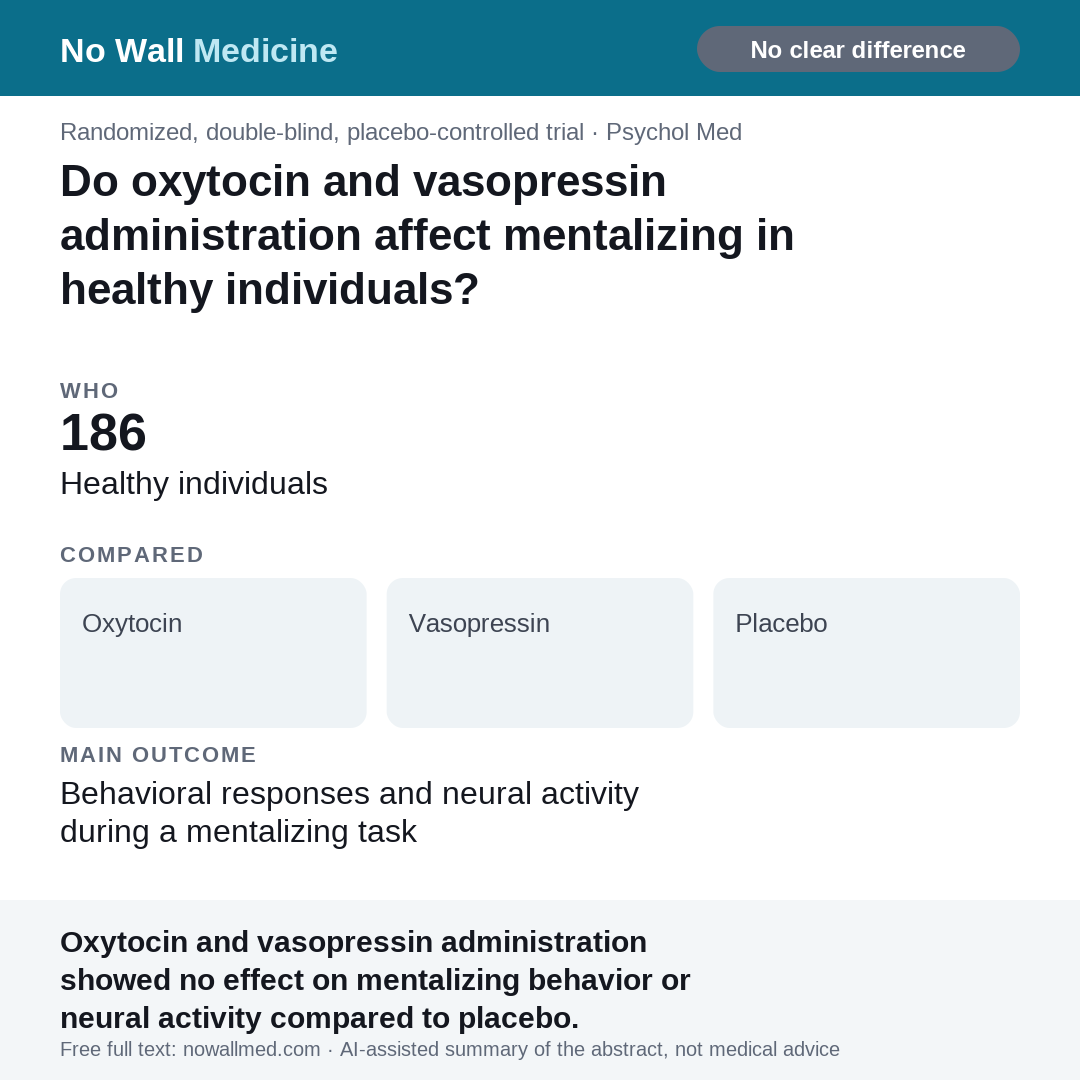
Null results of oxytocin and vasopressin administration on mentalizing in a large fMRI sample: evidence from a randomized controlled trial
Randomized, double-blind, placebo-controlled trialNo clear difference
Do oxytocin and vasopressin administration affect mentalizing in healthy individuals?
Who
186
Healthy individuals
Compared
Oxytocin
Vasopressin
Placebo
Main outcome
Behavioral responses and neural activity during a mentalizing task
Bottom line: Oxytocin and vasopressin administration showed no effect on mentalizing behavior or neural activity compared to placebo.
Psychol Med · 2021-10-15Download image
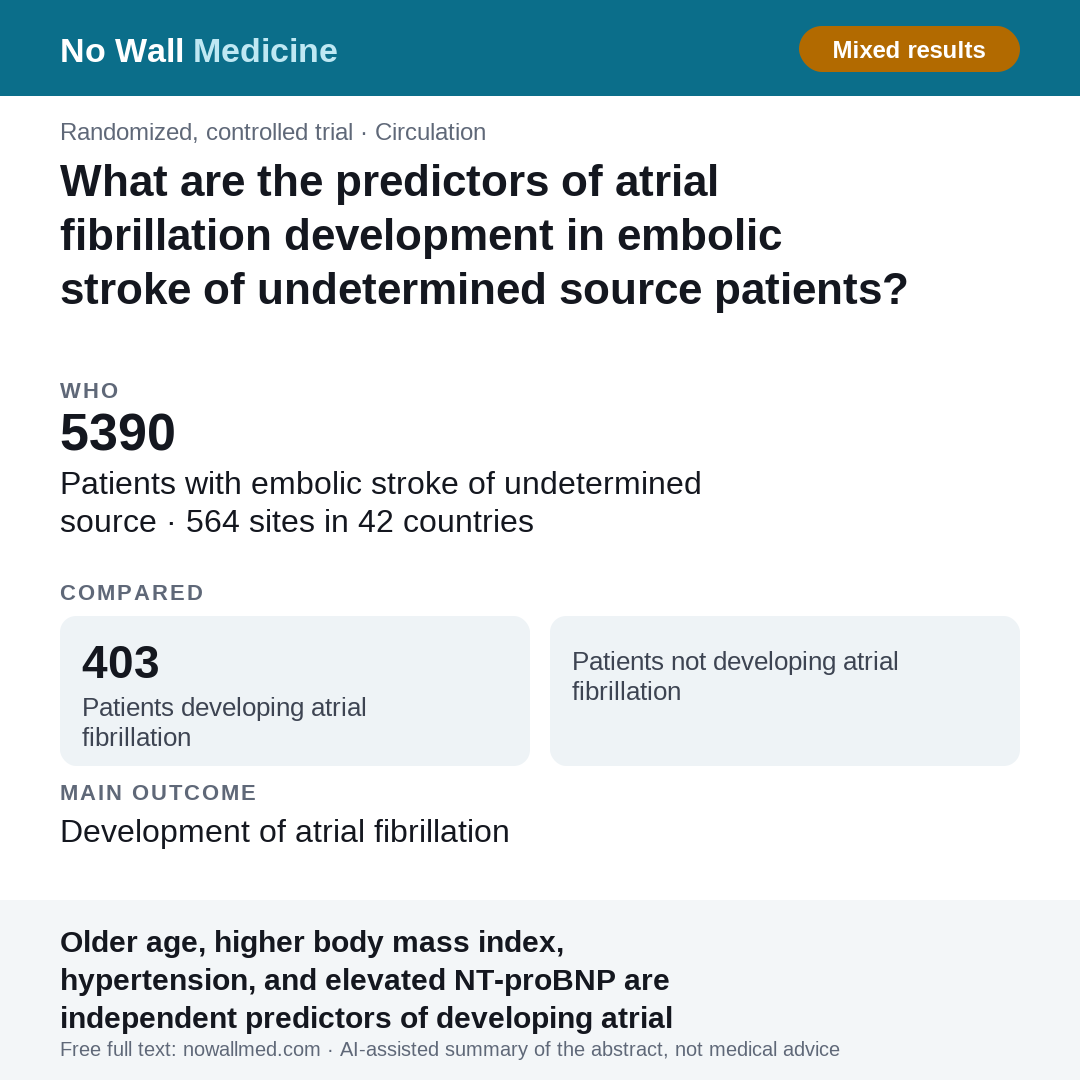
Predictors of Atrial Fibrillation Development in Patients With Embolic Stroke of Undetermined Source: An Analysis of the RE-SPECT ESUS Trial
Randomized, controlled trialMixed results
What are the predictors of atrial fibrillation development in embolic stroke of undetermined source patients?
Who
5390
Patients with embolic stroke of undetermined source · 564 sites in 42 countries
Compared
403Patients developing atrial fibrillation (7.5%)
Patients not developing atrial fibrillation
Main outcome
Development of atrial fibrillation
Bottom line: Older age, higher body mass index, hypertension, and elevated NT-proBNP are independent predictors of developing atrial fibrillation.
Circulation · 2021-10-15Download image
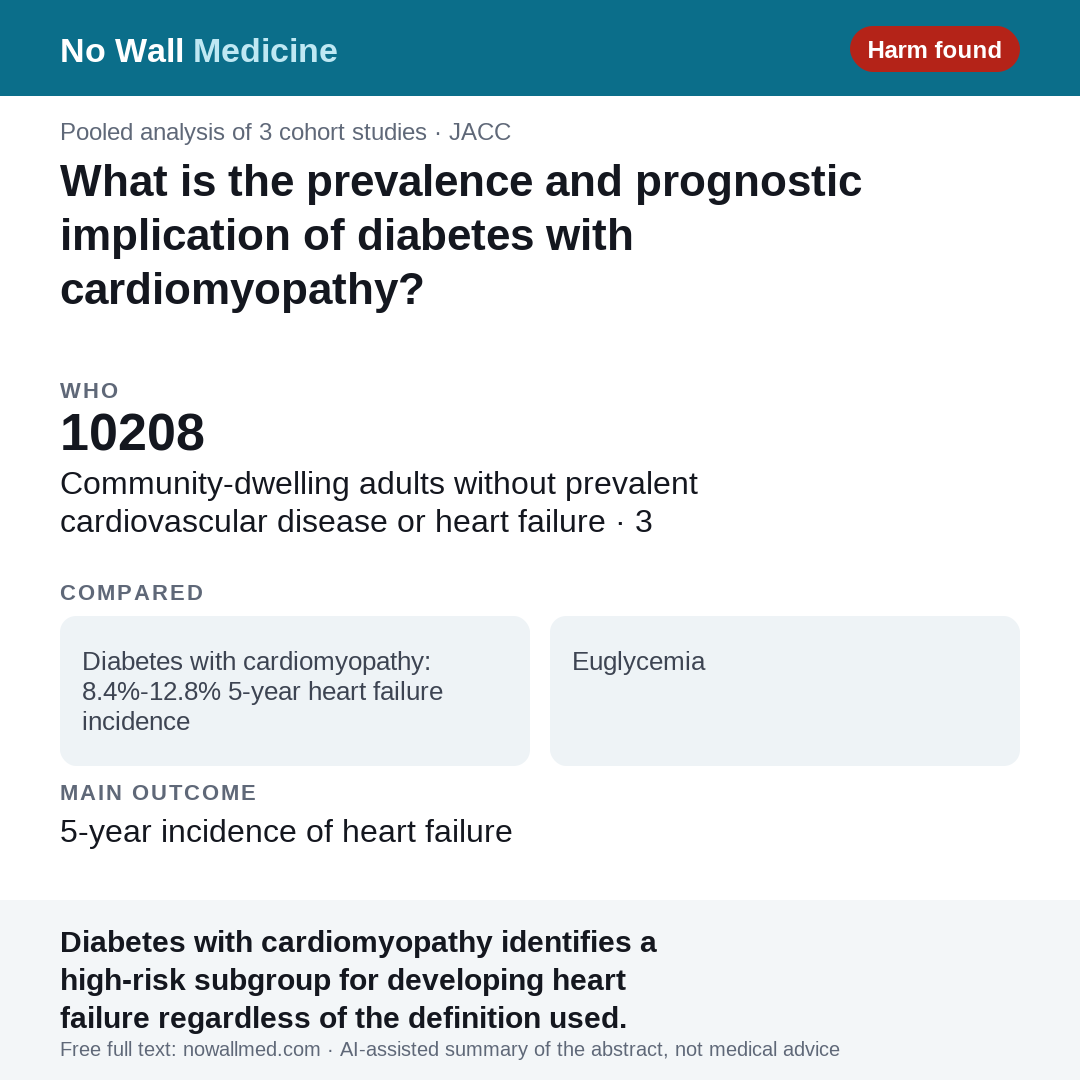
Prevalence and Prognostic Implications of Diabetes With Cardiomyopathy in Community-Dwelling Adults
Pooled analysis of 3 cohort studiesKey finding
What is the prevalence and prognostic implication of diabetes with cardiomyopathy?
Who
10208
Community-dwelling adults without prevalent cardiovascular disease or heart failure · 3 cohort studies
Compared
Diabetes with cardiomyopathy: 8.4%-12.8% 5-year heart failure incidence
Euglycemia
Main outcome
5-year incidence of heart failure
Result: hazard ratio 2.55 (95% CI 1.69-3.86)
Bottom line: Diabetes with cardiomyopathy identifies a high-risk subgroup for developing heart failure regardless of the definition used.
JACC · 2021-10-15Download image
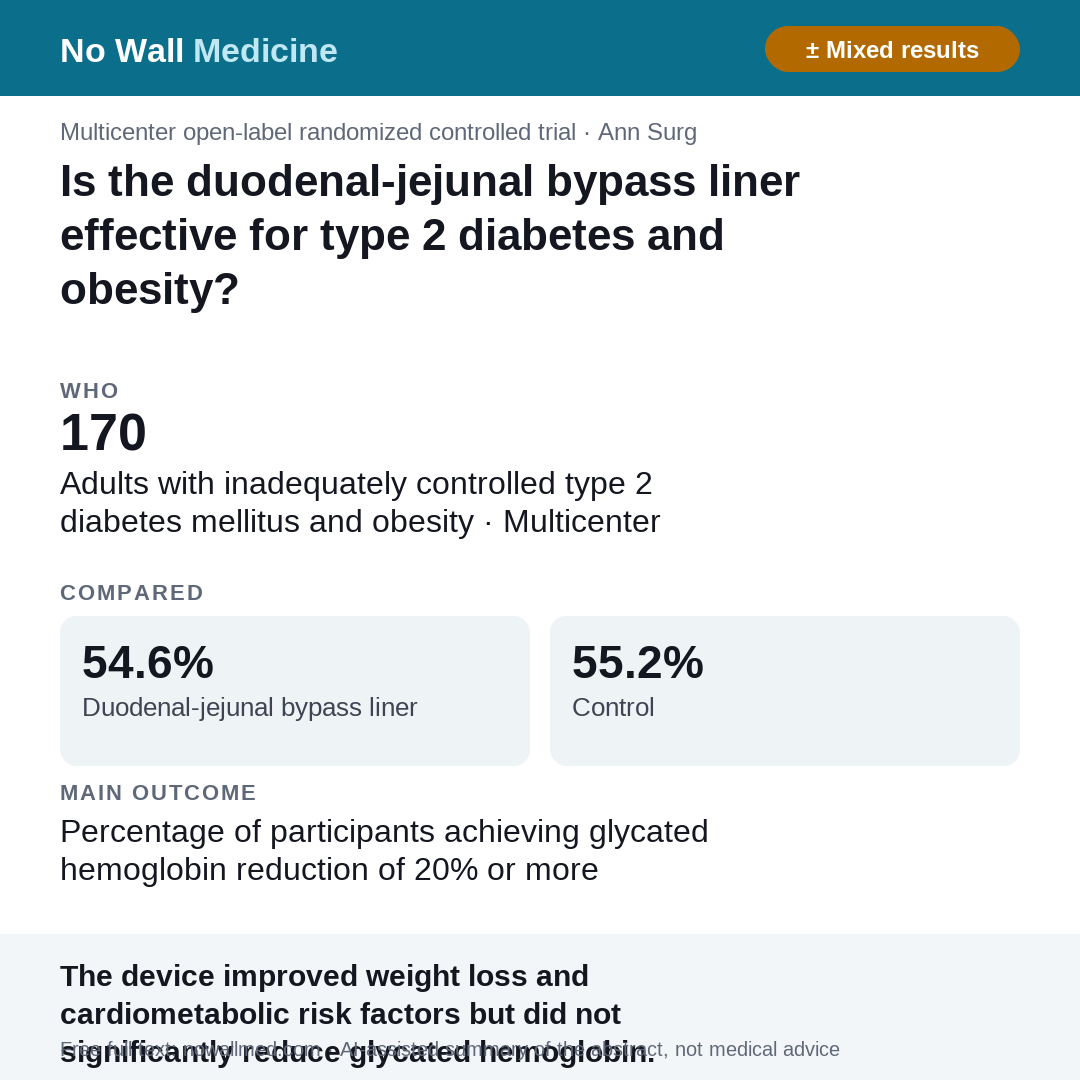
Duodenal-Jejunal Bypass Liner for the management of Type 2 Diabetes Mellitus and Obesity: A Multicenter Randomized Controlled Trial
Multicenter open-label randomized controlled trialMixed results
Is the duodenal-jejunal bypass liner effective for type 2 diabetes and obesity?
Who
170
Adults with inadequately controlled type 2 diabetes mellitus and obesity · Multicenter
Compared
54.6%Duodenal-jejunal bypass liner (n = 30)
55.2%Control (n = 32)
Main outcome
Percentage of participants achieving glycated hemoglobin reduction of 20% or more
Result: odds ratio 0.93, 95% confidence interval 0.44-2.0
Bottom line: The device improved weight loss and cardiometabolic risk factors but did not significantly reduce glycated hemoglobin.
Ann Surg · 2021-10-15Download image
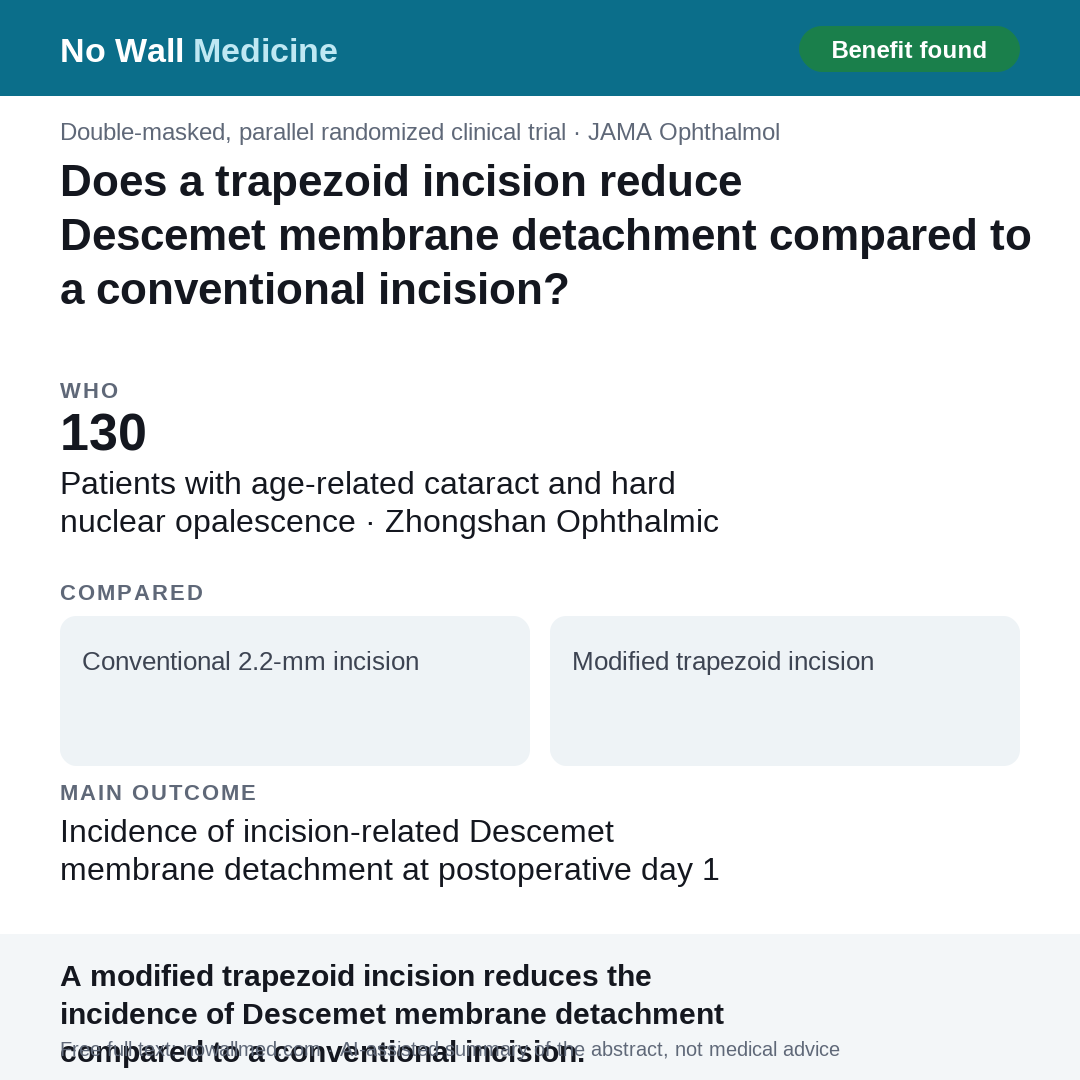
Incidence of Incision-Related Descemet Membrane Detachment Using Phacoemulsification With Trapezoid vs Conventional 2.2-mm Clear Corneal Incision: A Randomized Clinical Trial
Double-masked, parallel randomized clinical trialBenefit found
Does a trapezoid incision reduce Descemet membrane detachment compared to a conventional incision?
Who
130
Patients with age-related cataract and hard nuclear opalescence · Zhongshan Ophthalmic Center, Guangzhou, China
Compared
Conventional 2.2-mm incision
Modified trapezoid incision
Main outcome
Incidence of incision-related Descemet membrane detachment at postoperative day 1
Result: difference, 26.15 (95% CI, 9.60-42.71)
Bottom line: A modified trapezoid incision reduces the incidence of Descemet membrane detachment compared to a conventional incision.
JAMA Ophthalmol · 2021-10-15Download image
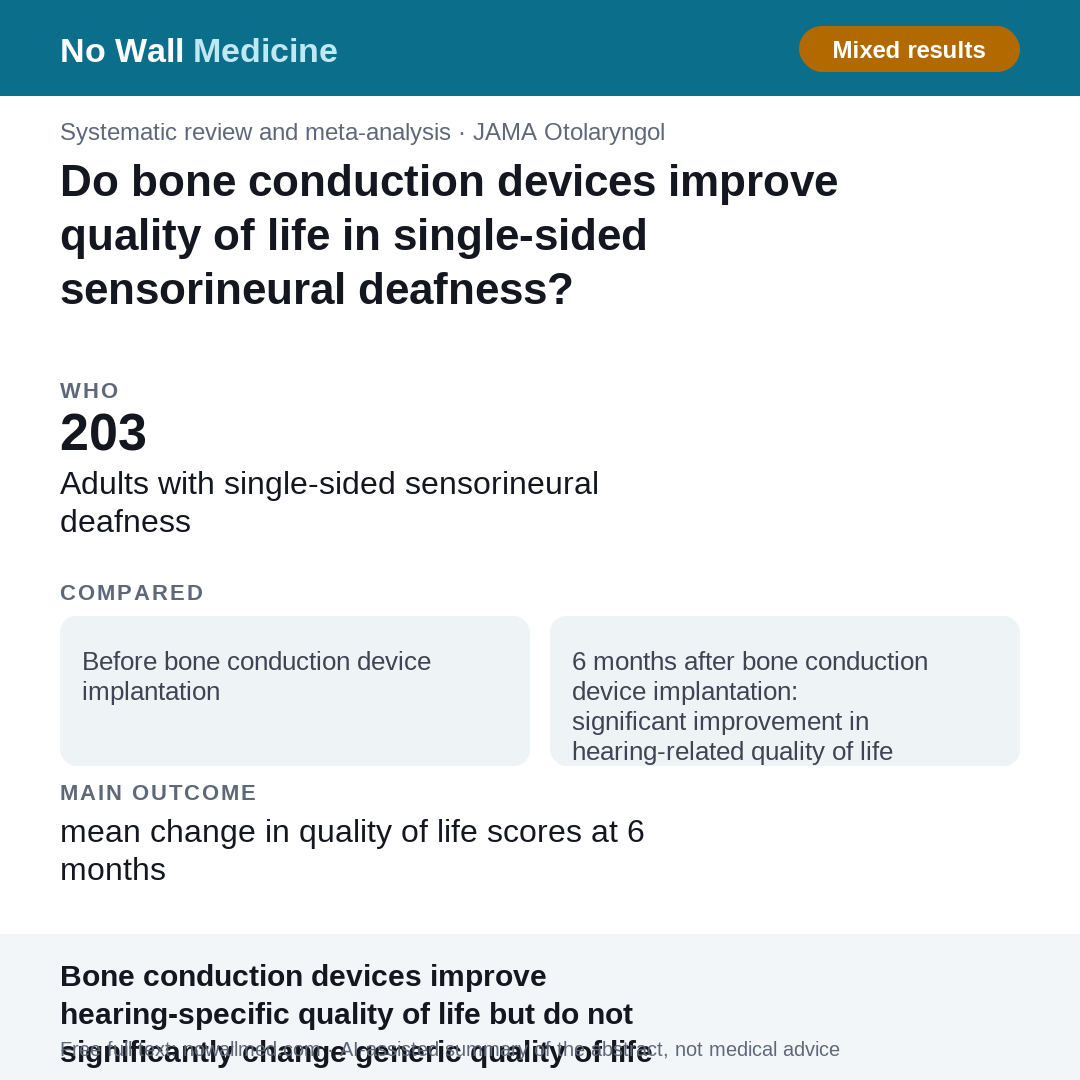
Association of Bone Conduction Devices for Single-Sided Sensorineural Deafness With Quality of Life: A Systematic Review and Meta-analysis
Systematic review and meta-analysis of 11 studiesKey finding
Association of bone conduction devices with quality of life in single-sided deafness
Who
203
Adults with single-sided sensorineural deafness undergoing unilateral bone conduction device implantation
Compared
15.50Bone conduction device (95% CI, 12.63-18.36)
No device
Main outcome
Mean change in quality of life scores at 6 months
Result: mean change, 15.50; 95% CI, 12.63-18.36
Bottom line: Bone conduction devices were linked to improved hearing-specific quality of life but not generic quality of life.
Limitation: Heterogeneous bone conduction devices and low to moderate risk of bias
JAMA Otolaryngol · 2021-10-15Download image
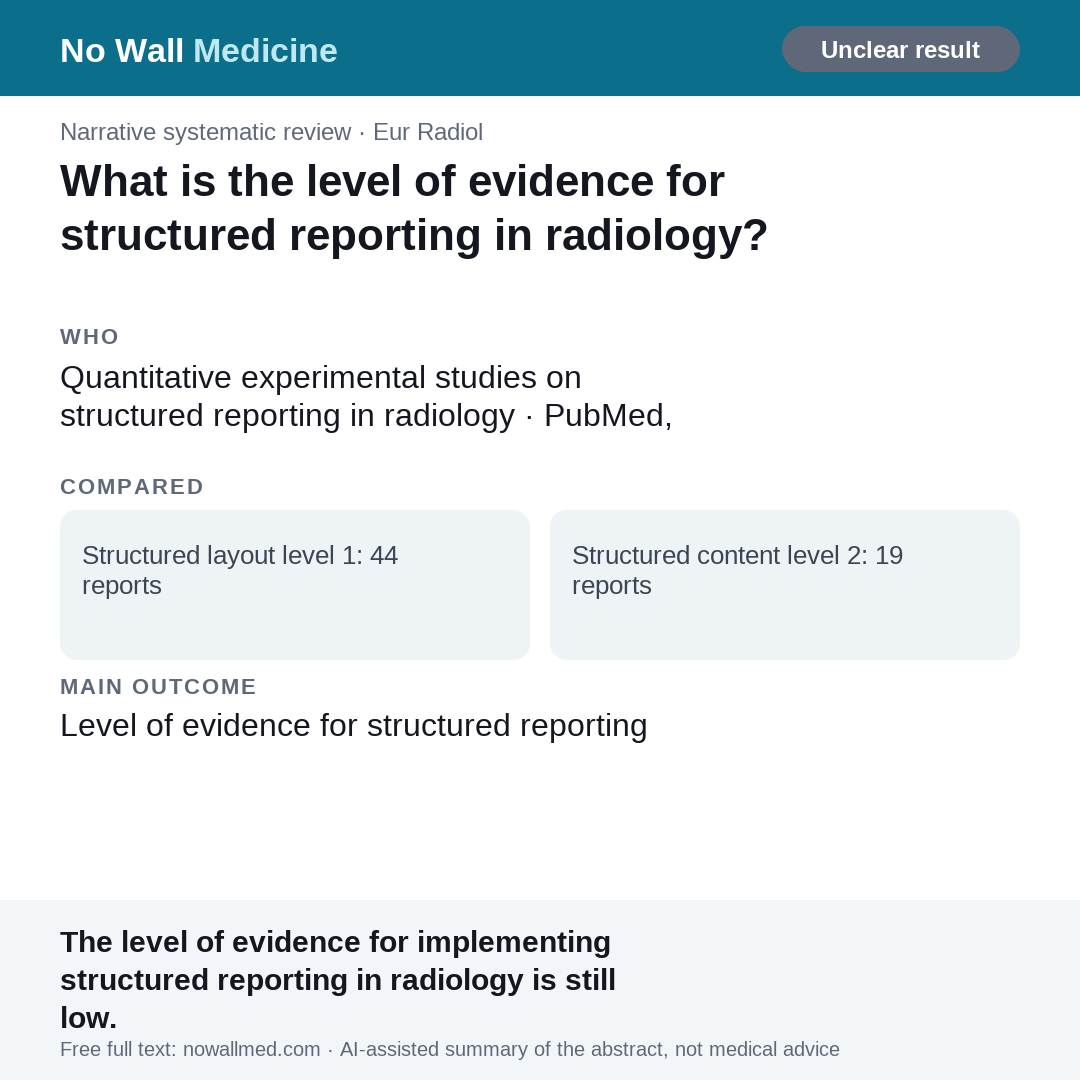
Structured reporting in radiology: a systematic review to explore its potential
Narrative systematic reviewUnclear result
What is the level of evidence for structured reporting in radiology?
Who
Quantitative experimental studies on structured reporting in radiology · PubMed, Embase, and the Cochrane Library
Compared
Structured layout level 1: 44 reports
Structured content level 2: 19 reports
Main outcome
Level of evidence for structured reporting
Bottom line: The level of evidence for implementing structured reporting in radiology is still low.
Limitation: The level of evidence is low and outcomes should be interpreted with caution.
Eur Radiol · 2021-10-15Download image
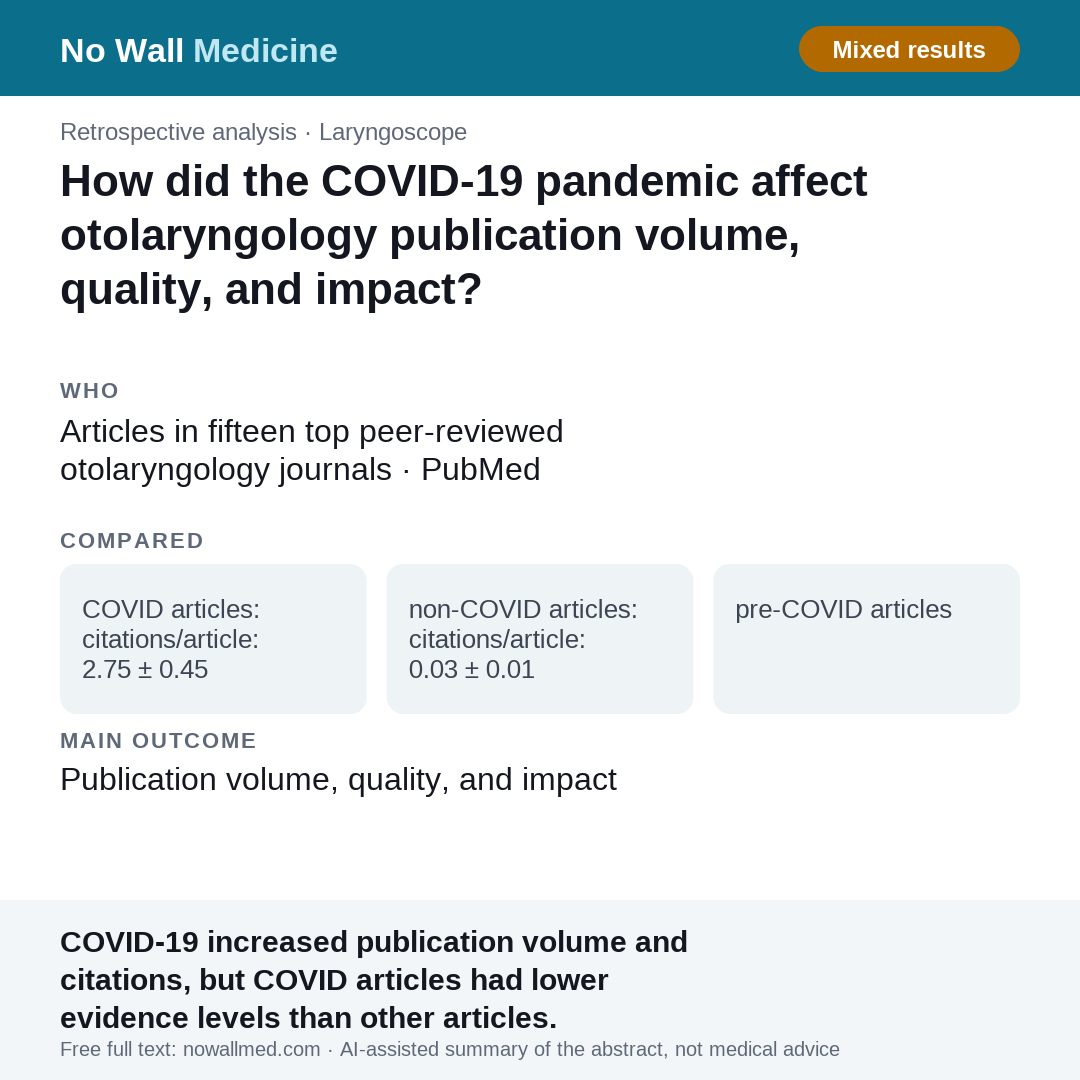
Impact of COVID-19 on Otolaryngology Literature
Retrospective analysisMixed results
How did the COVID-19 pandemic affect otolaryngology publication volume, quality, and impact?
Who
Articles in fifteen top peer-reviewed otolaryngology journals · PubMed
Compared
COVID articles: citations/article: 2.75 ± 0.45
non-COVID articles: citations/article: 0.03 ± 0.01
pre-COVID articles
Main outcome
Publication volume, quality, and impact
Bottom line: COVID-19 increased publication volume and citations, but COVID articles had lower evidence levels than other articles.
Laryngoscope · 2021-10-15Download image
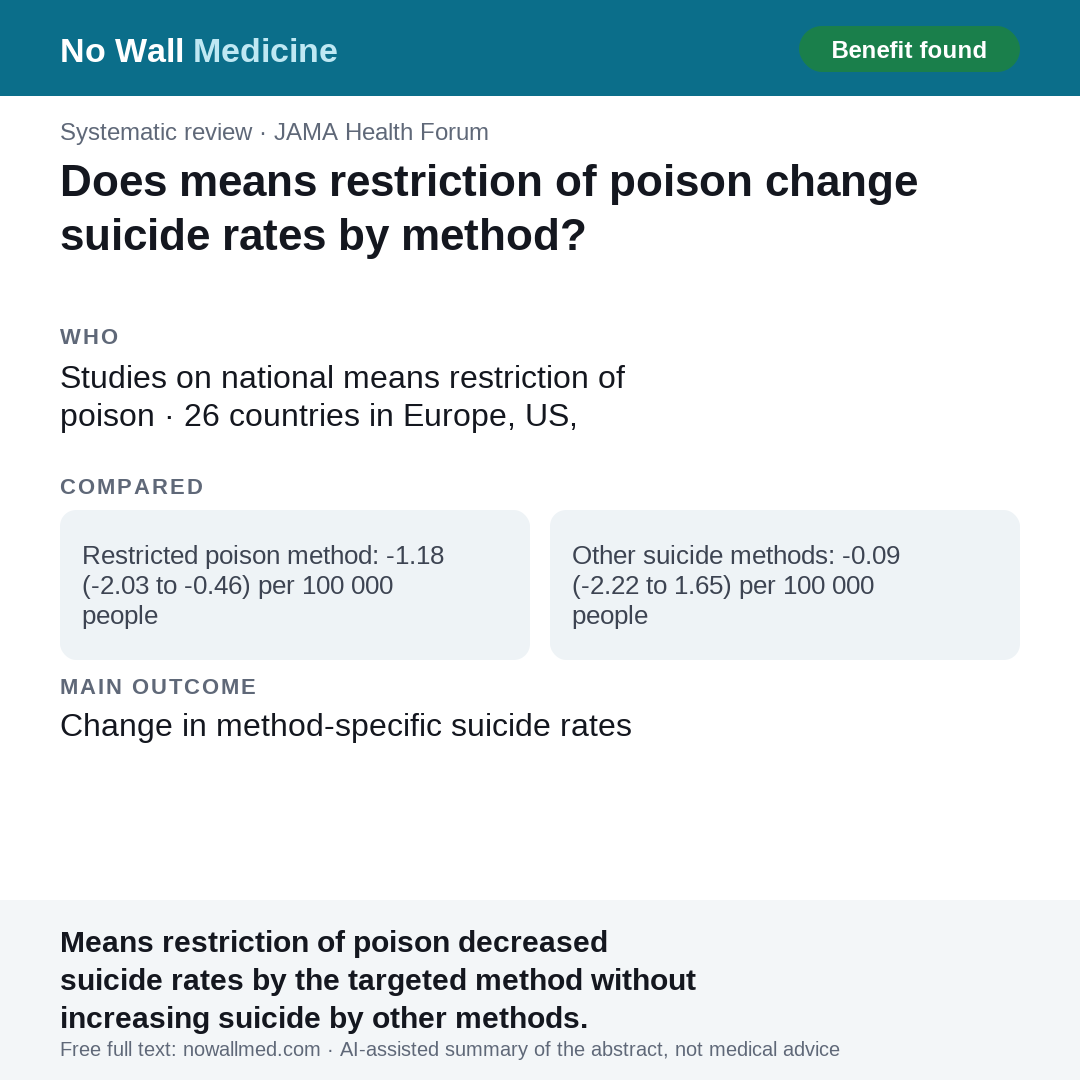
Association Between Means Restriction of Poison and Method-Specific Suicide Rates: A Systematic Review
Systematic reviewBenefit found
Does means restriction of poison change suicide rates by method?
Who
Studies on national means restriction of poison · 26 countries in Europe, US, Australia, Asia, and United Kingdom
Compared
Restricted poison method: -1.18 (-2.03 to -0.46) per 100 000 people
Other suicide methods: -0.09 (-2.22 to 1.65) per 100 000 people
Main outcome
Change in method-specific suicide rates
Bottom line: Means restriction of poison decreased suicide rates by the targeted method without increasing suicide by other methods.
JAMA Health Forum · 2021-10-15Download image
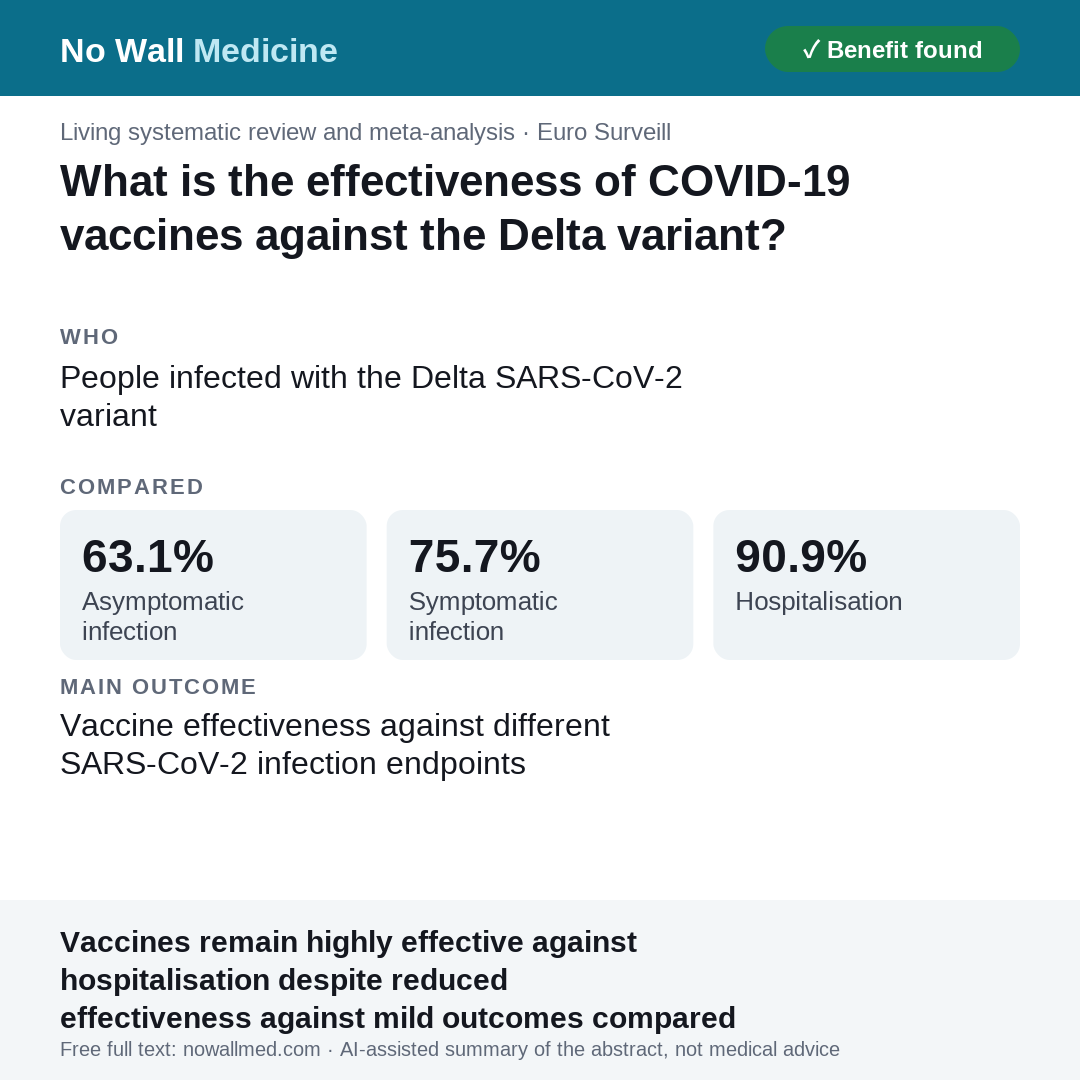
Effectiveness of COVID-19 vaccines against SARS-CoV-2 infection with the Delta (B.1.617.2) variant: second interim results of a living systematic review and meta-analysis, 1 January to 25 August 2021
Living systematic review and meta-analysisBenefit found
What is the effectiveness of COVID-19 vaccines against the Delta variant?
Who
People infected with the Delta SARS-CoV-2 variant
Compared
63.1%Asymptomatic infection (95% confidence interval: 40.9-76.9)
75.7%Symptomatic infection (95% CI: 69.3-80.8)
90.9%Hospitalisation (95% CI: 84.5-94.7)
Main outcome
Vaccine effectiveness against different SARS-CoV-2 infection endpoints
Bottom line: Vaccines remain highly effective against hospitalisation despite reduced effectiveness against mild outcomes compared to the Alpha variant.
Euro Surveill · 2021-10-15Download image
Prevalence of complex post-traumatic stress disorder in refugees and asylum seekers: systematic review
Systematic reviewMixed results
What is the prevalence of complex post-traumatic stress disorder in refugees and asylum seekers?
Who
Adult refugee and asylum seeking samples
Compared
Treatment-seeking samples: between 16 and 38%
Population samples: 2.2 to 9.3% or 50.9%
Main outcome
Prevalence of complex post-traumatic stress disorder
Bottom line: Complex post-traumatic stress disorder prevalence is high in treatment samples but research in general populations is lacking.
BJPsych Open · 2021-10-15Download image

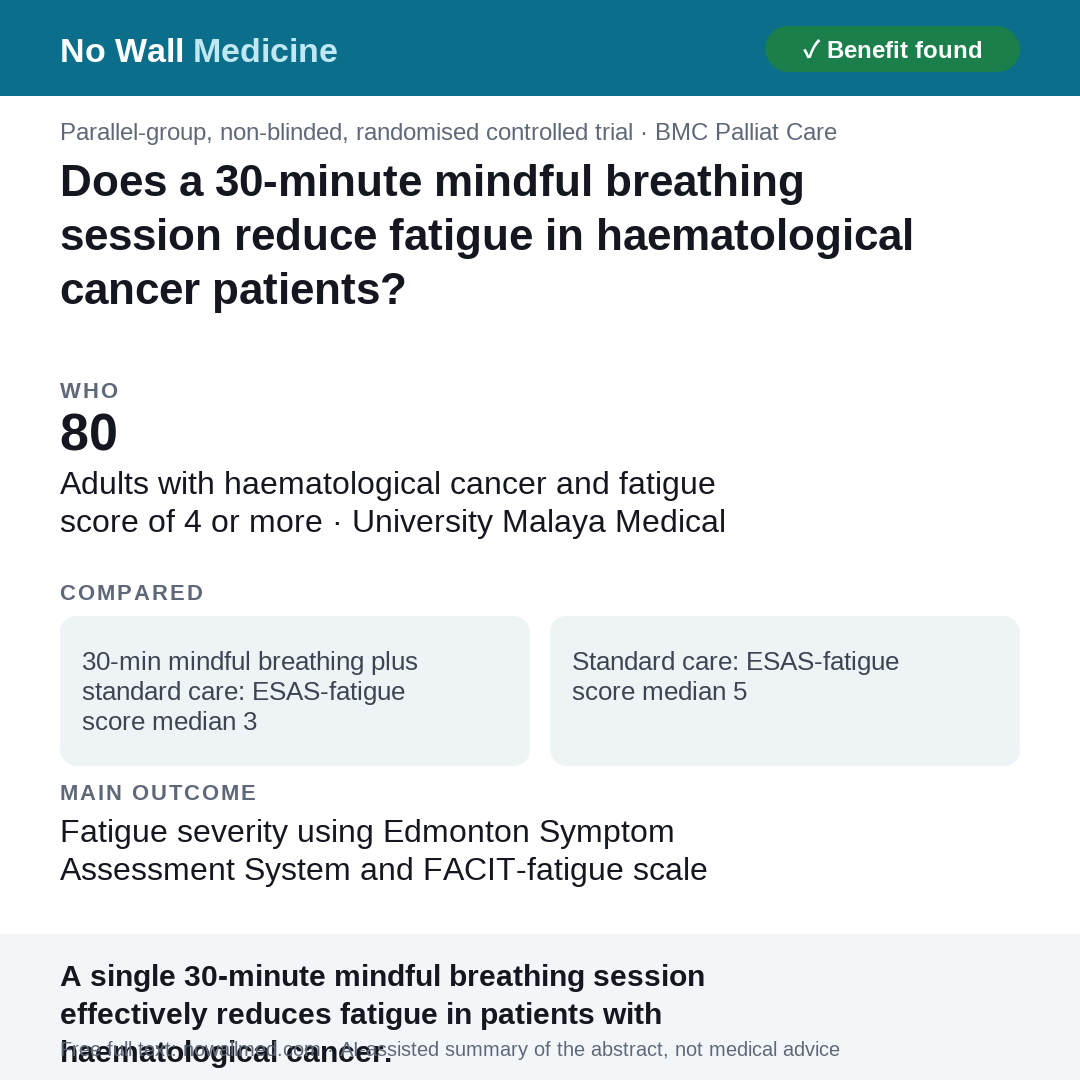
The effect of a single session of 30-min mindful breathing in reducing fatigue among patients with haematological cancer - a randomised controlled trial
Parallel-group, non-blinded, randomised controlled trialBenefit found
Does a 30-minute mindful breathing session reduce fatigue in haematological cancer patients?
Who
80
Adults with haematological cancer and fatigue score of 4 or more · University Malaya Medical Centre
Compared
30-min mindful breathing plus standard care: ESAS-fatigue score median 3
Standard care: ESAS-fatigue score median 5
Main outcome
Fatigue severity using Edmonton Symptom Assessment System and FACIT-fatigue scale
Result: Cohen's d 1.4 for between-group comparison of FACIT-fatigue score differences
Bottom line: A single 30-minute mindful breathing session effectively reduces fatigue in patients with haematological cancer.
BMC Palliat Care · 2021-10-15Download image
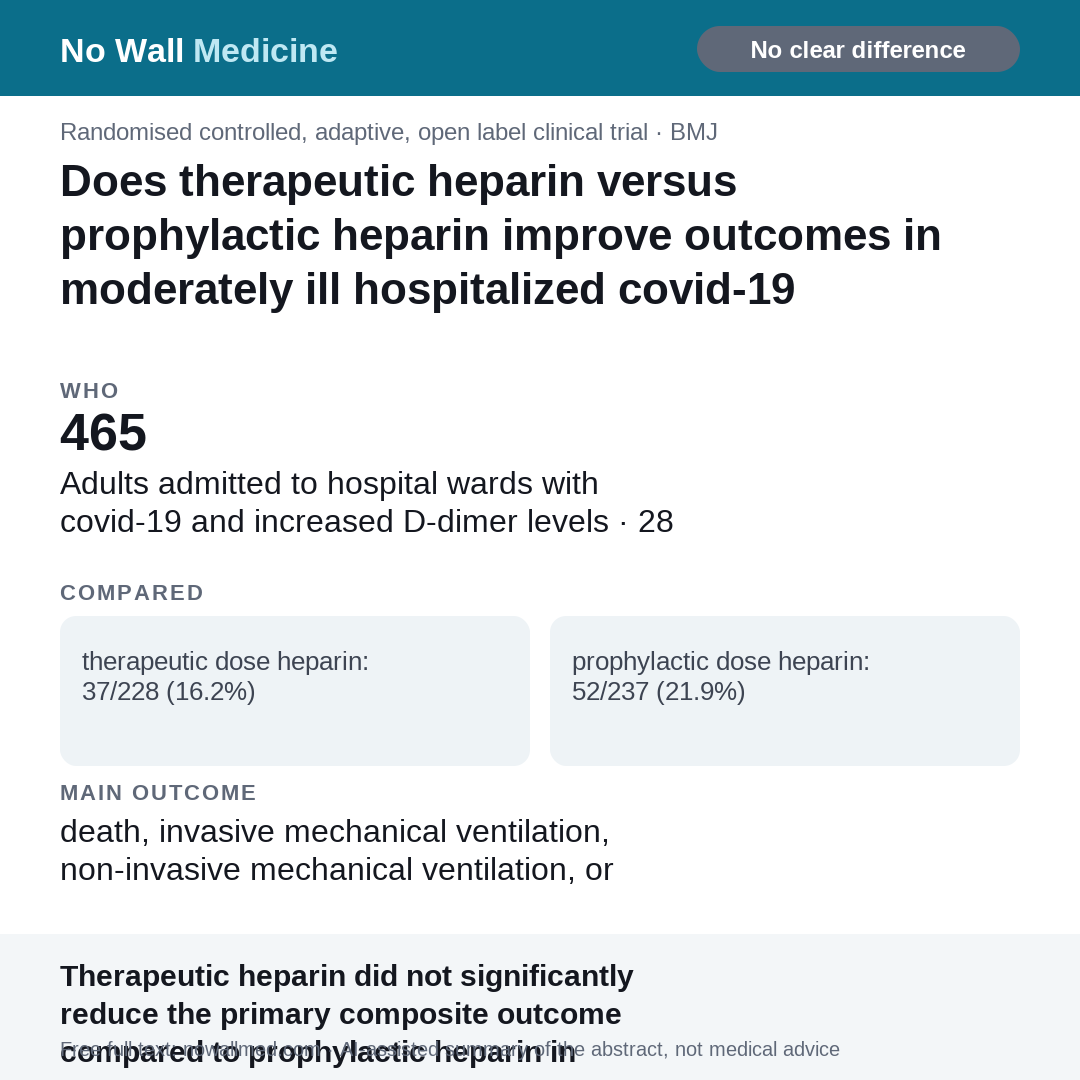
Effectiveness of therapeutic heparin versus prophylactic heparin on death, mechanical ventilation, or intensive care unit admission in moderately ill patients with covid-19 admitted to hospital: RAPID randomised clinical trial
Randomised controlled, adaptive, open label clinical trialNo clear difference
Does therapeutic heparin versus prophylactic heparin improve outcomes in moderately ill hospitalized covid-19 patients?
Who
465
Adults admitted to hospital wards with covid-19 and increased D-dimer levels · 28 hospitals in six countries
Compared
therapeutic dose heparin: 37/228 (16.2%)
prophylactic dose heparin: 52/237 (21.9%)
Main outcome
death, invasive mechanical ventilation, non-invasive mechanical ventilation, or intensive care unit admission
Result: odds ratio 0.69, 95% confidence interval 0.43 to 1.10
Bottom line: Therapeutic heparin did not significantly reduce the primary composite outcome compared to prophylactic heparin in moderately ill covid-19 patients.
BMJ · 2021-10-14Download image
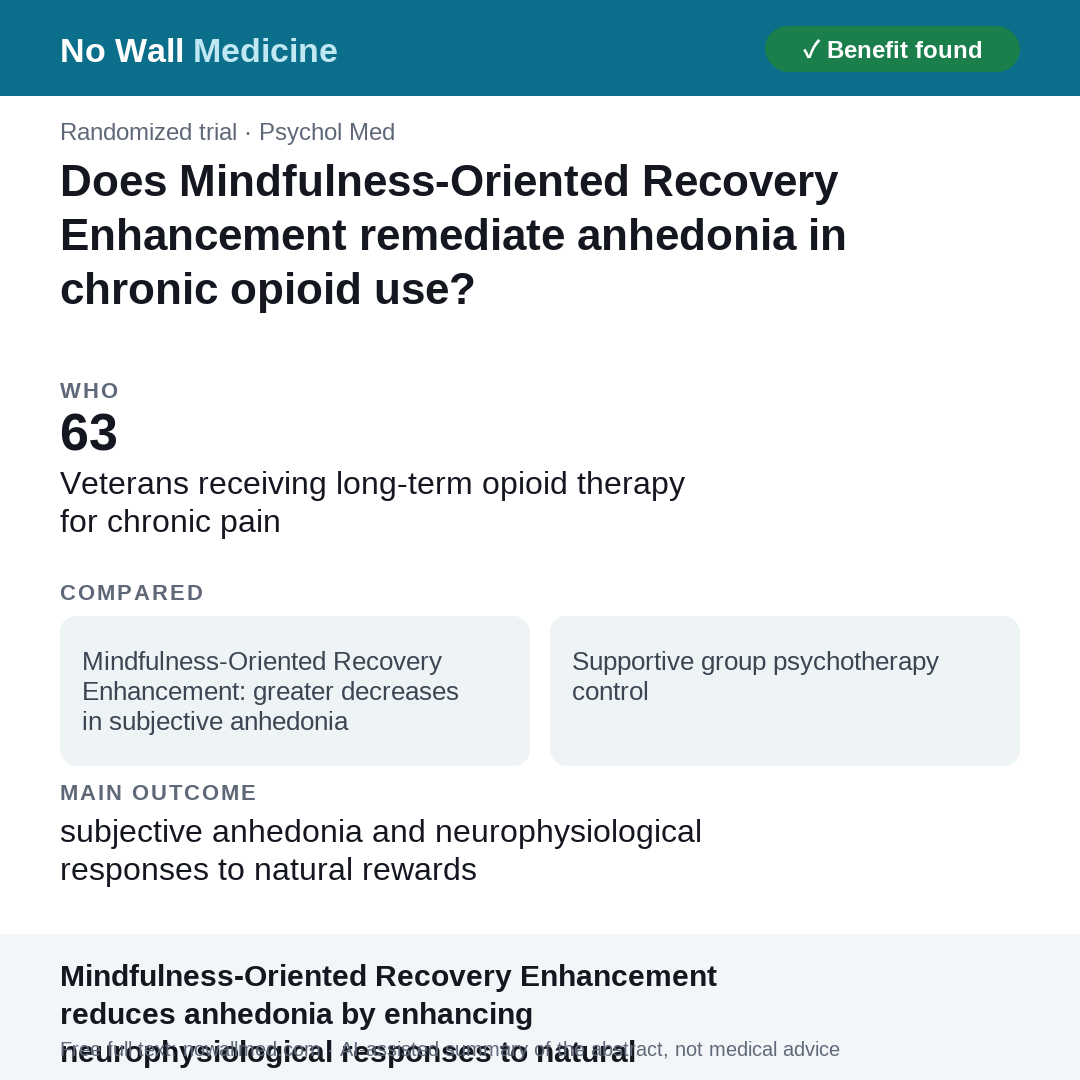
Mindfulness-Oriented Recovery Enhancement remediates anhedonia in chronic opioid use by enhancing neurophysiological responses during savoring of natural rewards
Randomized trialBenefit found
Does Mindfulness-Oriented Recovery Enhancement remediate anhedonia in chronic opioid use?
Who
63
Veterans receiving long-term opioid therapy for chronic pain
Compared
Mindfulness-Oriented Recovery Enhancement: greater decreases in subjective anhedonia
Supportive group psychotherapy control
Main outcome
subjective anhedonia and neurophysiological responses to natural rewards
Bottom line: Mindfulness-Oriented Recovery Enhancement reduces anhedonia by enhancing neurophysiological responses to natural rewards in chronic opioid users.
Psychol Med · 2021-10-14Download image
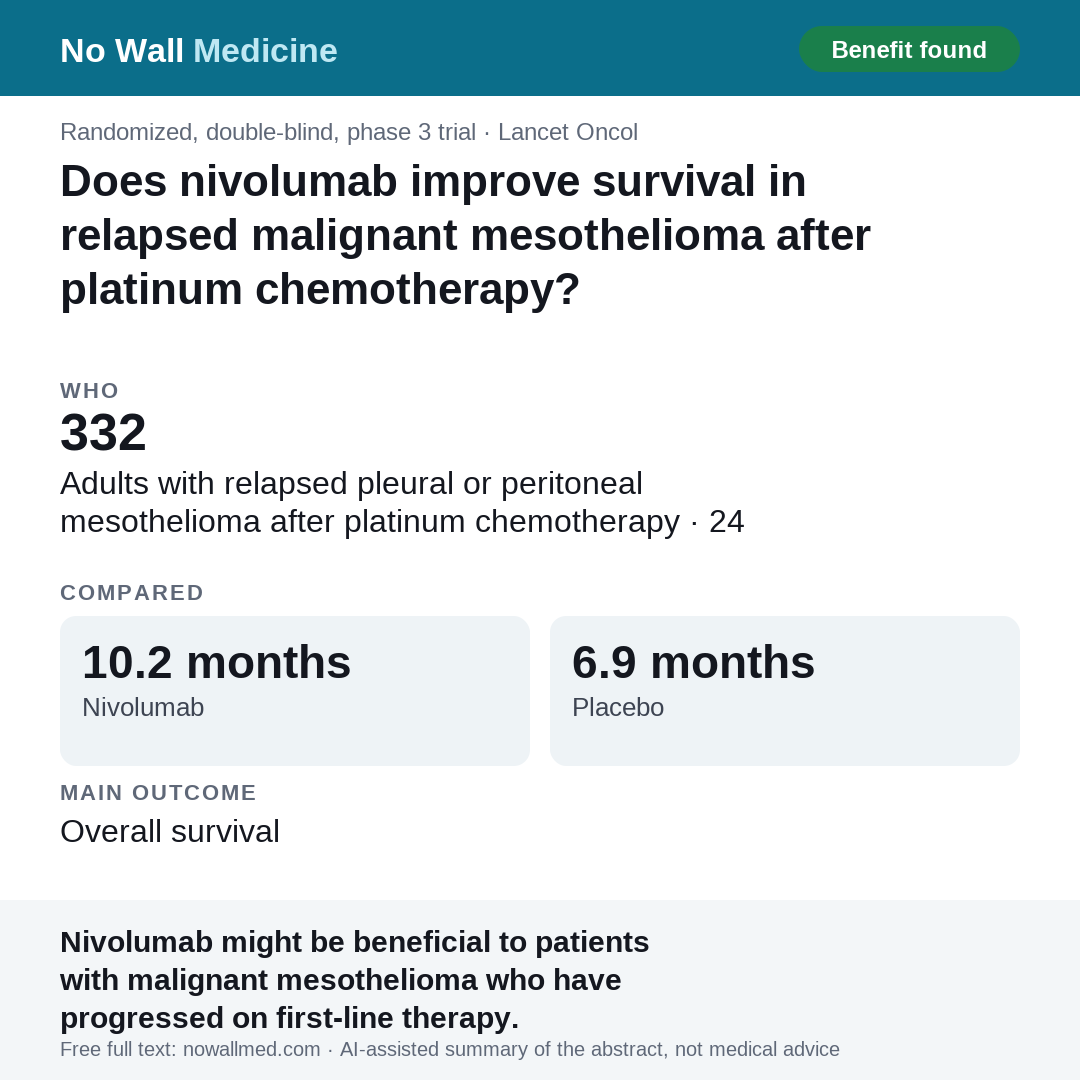
Nivolumab versus placebo in patients with relapsed malignant mesothelioma (CONFIRM): a multicentre, double-blind, randomised, phase 3 trial
Randomized, double-blind, phase 3 trialBenefit found
Does nivolumab improve survival in relapsed malignant mesothelioma after platinum chemotherapy?
Who
332
Adults with relapsed pleural or peritoneal mesothelioma after platinum chemotherapy · 24 hospitals in the UK
Compared
10.2 monthsNivolumab (95% CI 8.5-12.1)
6.9 monthsPlacebo (95% CI 5.0-8.0)
Main outcome
Overall survival
Result: adjusted hazard ratio 0.69 (95% CI 0.52-0.91)
Bottom line: Nivolumab might be beneficial to patients with malignant mesothelioma who have progressed on first-line therapy.
Funded by: Stand up to Cancer-Cancer Research UK and Bristol Myers Squibb
Lancet Oncol · 2021-10-14Download image
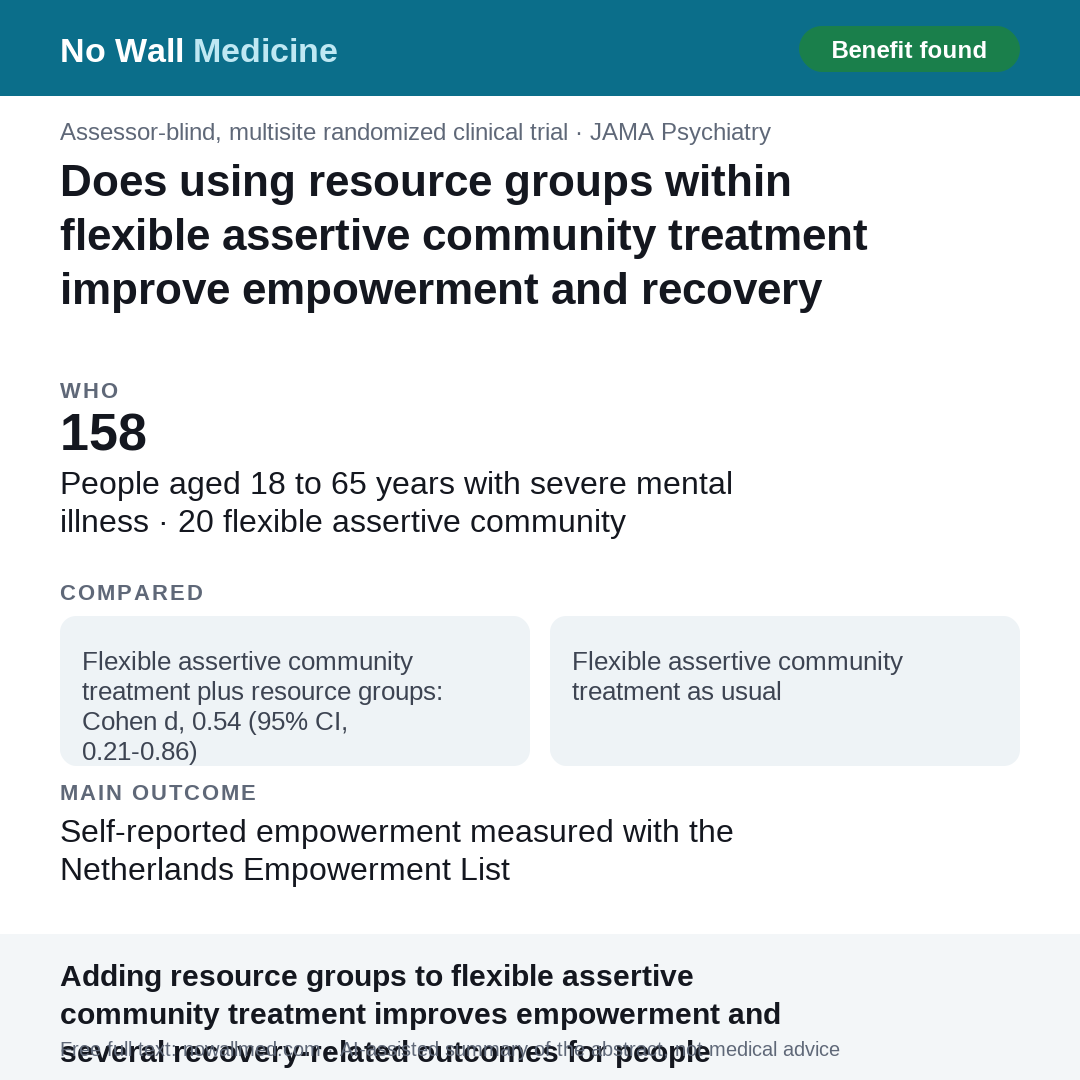
Effectiveness of Resource Groups for Improving Empowerment, Quality of Life, and Functioning of People With Severe Mental Illness: A Randomized Clinical Trial
Assessor-blind, multisite randomized clinical trialBenefit found
Does using resource groups within flexible assertive community treatment improve empowerment and recovery outcomes?
Who
158
People aged 18 to 65 years with severe mental illness · 20 flexible assertive community treatment teams throughout the Netherlands
Compared
Flexible assertive community treatment plus resource groups: Cohen d, 0.54 (95% CI, 0.21-0.86)
Flexible assertive community treatment as usual
Main outcome
Self-reported empowerment measured with the Netherlands Empowerment List
Result: Cohen d, 0.54 (95% CI, 0.21-0.86)
Bottom line: Adding resource groups to flexible assertive community treatment improves empowerment and several recovery-related outcomes for people with severe mental illness.
JAMA Psychiatry · 2021-10-14Download image
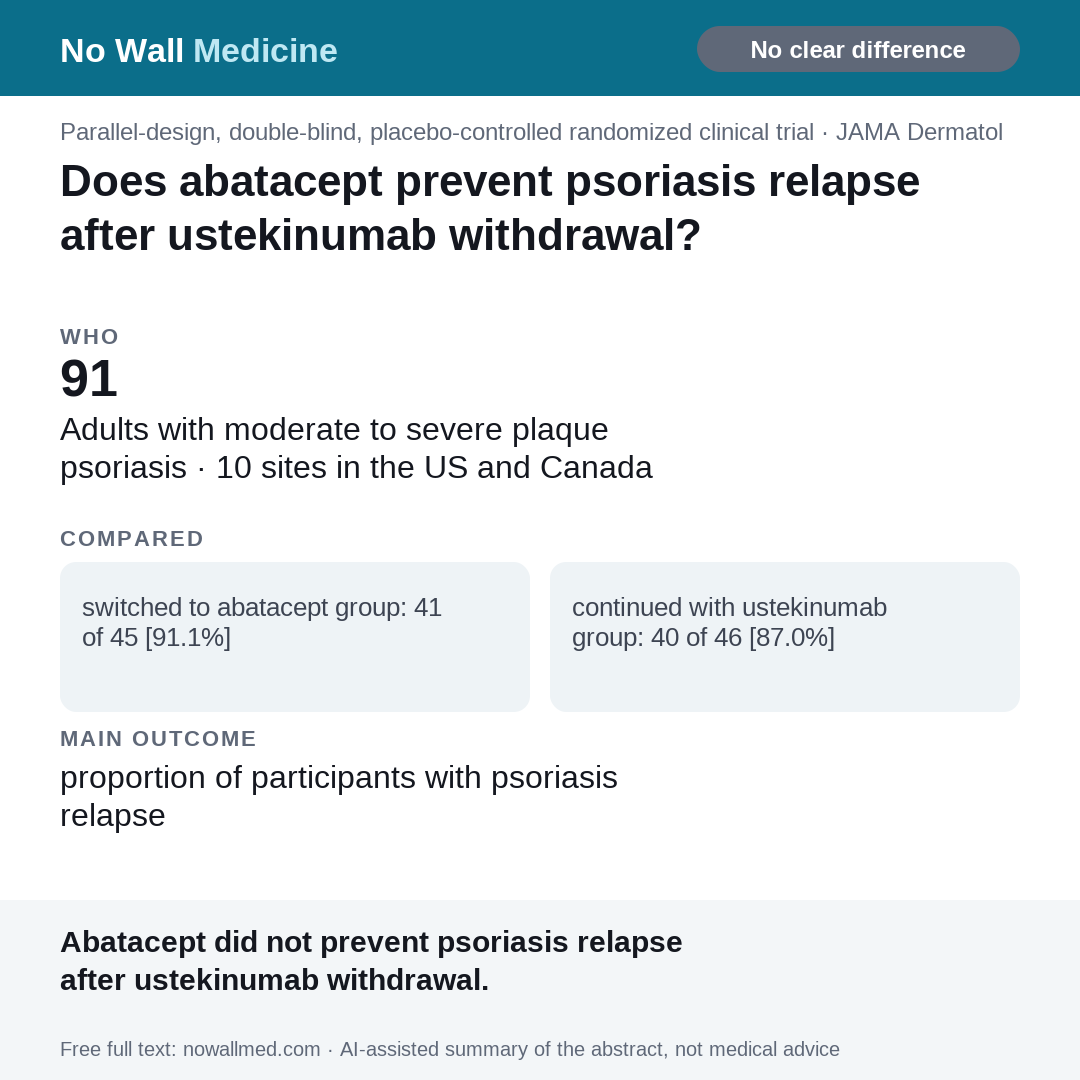
Effect of Costimulatory Blockade With Abatacept After Ustekinumab Withdrawal in Patients With Moderate to Severe Plaque Psoriasis: The PAUSE Randomized Clinical Trial
Parallel-design, double-blind, placebo-controlled randomized clinical trialNo clear difference
Does abatacept prevent psoriasis relapse after ustekinumab withdrawal?
Who
91
Adults with moderate to severe plaque psoriasis · 10 sites in the US and Canada
Compared
switched to abatacept group: 41 of 45 [91.1%]
continued with ustekinumab group: 40 of 46 [87.0%]
Main outcome
proportion of participants with psoriasis relapse
Bottom line: Abatacept did not prevent psoriasis relapse after ustekinumab withdrawal.
JAMA Dermatol · 2021-10-14Download image
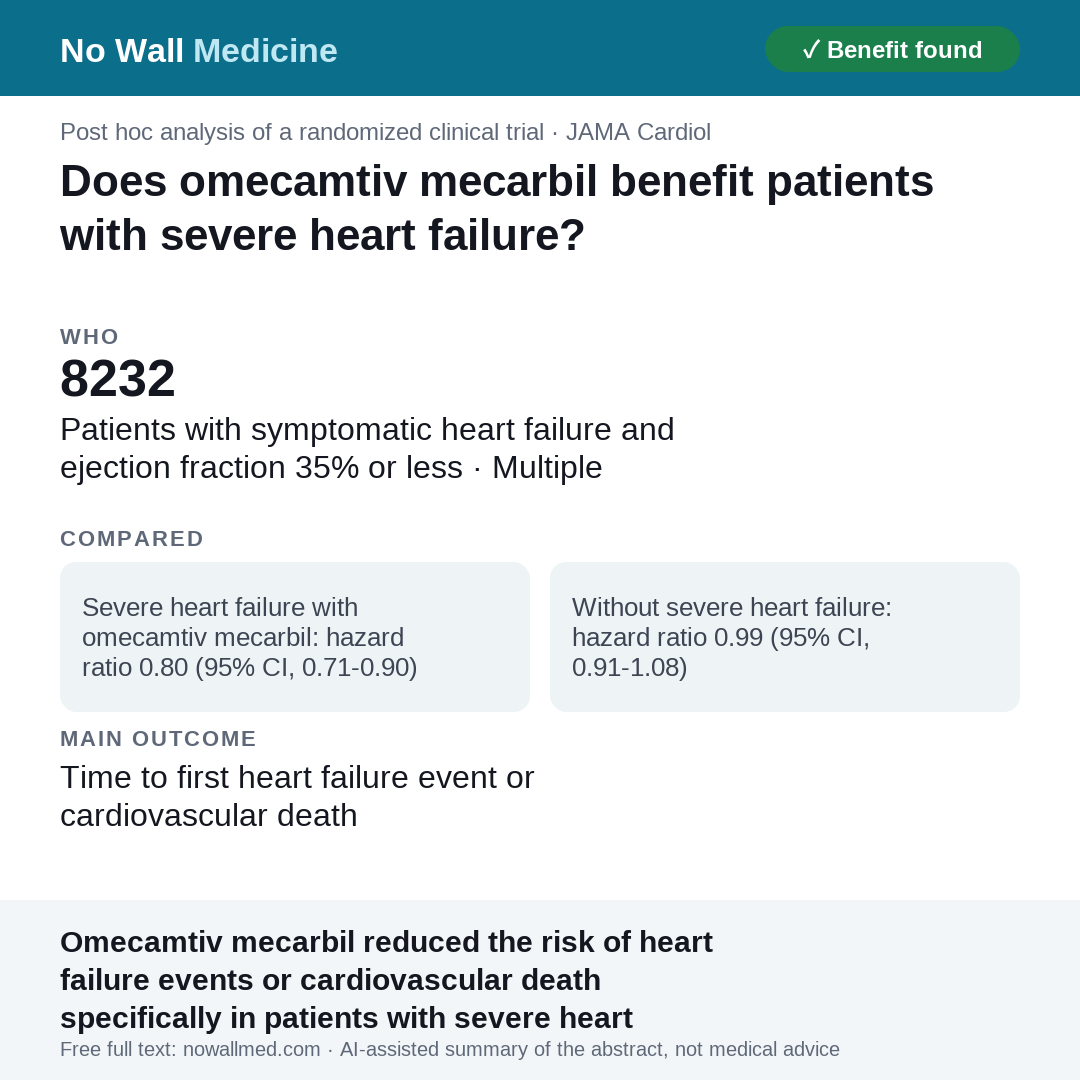
Assessment of Omecamtiv Mecarbil for the Treatment of Patients With Severe Heart Failure: A Post Hoc Analysis of Data From the GALACTIC-HF Randomized Clinical Trial
Post hoc analysis of a randomized clinical trialBenefit found
Does omecamtiv mecarbil benefit patients with severe heart failure?
Who
8232
Patients with symptomatic heart failure and ejection fraction 35% or less · Multiple centers, global
Compared
Severe heart failure with omecamtiv mecarbil: hazard ratio 0.80 (95% CI, 0.71-0.90)
Without severe heart failure: hazard ratio 0.99 (95% CI, 0.91-1.08)
Main outcome
Time to first heart failure event or cardiovascular death
Result: hazard ratio 0.80 (95% CI, 0.71-0.90)
Bottom line: Omecamtiv mecarbil reduced the risk of heart failure events or cardiovascular death specifically in patients with severe heart failure.
Limitation: This was a post hoc analysis of data from a randomized clinical trial.
JAMA Cardiol · 2021-10-14Download image
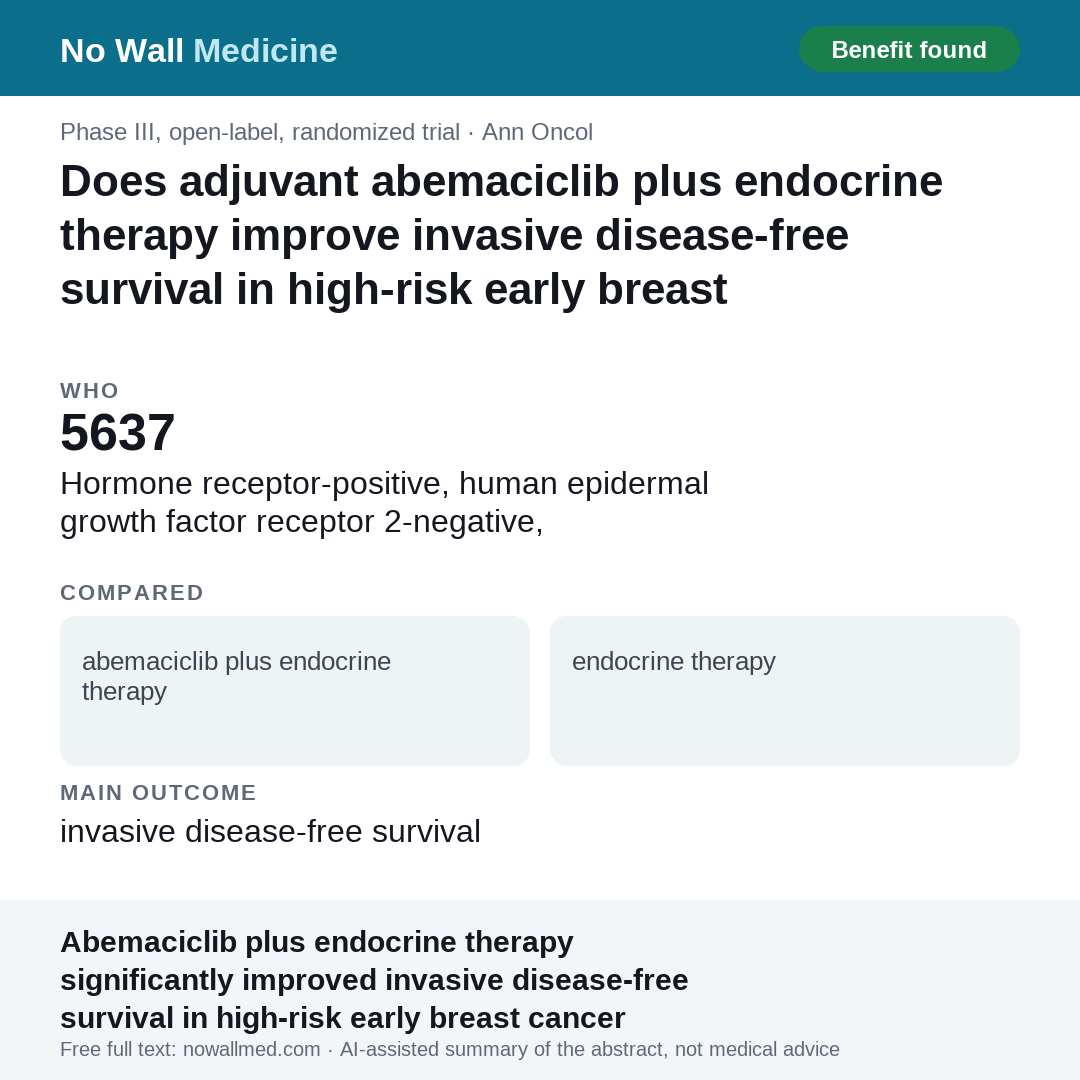
Adjuvant abemaciclib combined with endocrine therapy for high-risk early breast cancer: updated efficacy and Ki-67 analysis from the monarchE study
Phase III, open-label, randomized trialBenefit found
Does adjuvant abemaciclib plus endocrine therapy improve invasive disease-free survival in high-risk early breast cancer?
Who
5637
Hormone receptor-positive, human epidermal growth factor receptor 2-negative, node-positive, high-risk early breast cancer · global
Compared
abemaciclib plus endocrine therapy
endocrine therapy
Main outcome
invasive disease-free survival
Result: hazard ratio 0.71 (95% CI 0.58-0.87)
Bottom line: Abemaciclib plus endocrine therapy significantly improved invasive disease-free survival in high-risk early breast cancer patients.
Limitation: follow-up was limited
Ann Oncol · 2021-10-14Download image