Visual abstracts
New randomized trials and meta-analyses from leading journals at a glance: who was studied, what was compared, and what was found. Every paper is free to read in full.
All specialtiesCardiology 4800Oncology 4084Gastroenterology & Hepatology 1917Infectious Disease 3789Neurology 1886Psychiatry & Mental Health 2240Pulmonology 2061Critical Care 1335Endocrinology & Diabetes 2553Pediatrics 2914Surgery 2500Orthopedics & Sports Medicine 923Neurosurgery 532Cardiothoracic & Vascular Surgery 665Plastic & Reconstructive Surgery 585Nephrology 1115Rheumatology 815Hematology 1099Dermatology 619Ophthalmology 539Obstetrics & Gynecology 1661Public & Global Health 1044Radiology & Imaging 637Anesthesiology 959Urology 751ENT (Otolaryngology) 497Emergency Medicine 484Allergy & Immunology 310Geriatrics 974Family Medicine & Primary Care 538Medical Genetics & Genomics 662Pathology & Laboratory Medicine 156Physical Medicine & Rehabilitation 746Palliative Care 422Nutrition 1566Digital Health & AI 2191General Medicine 319
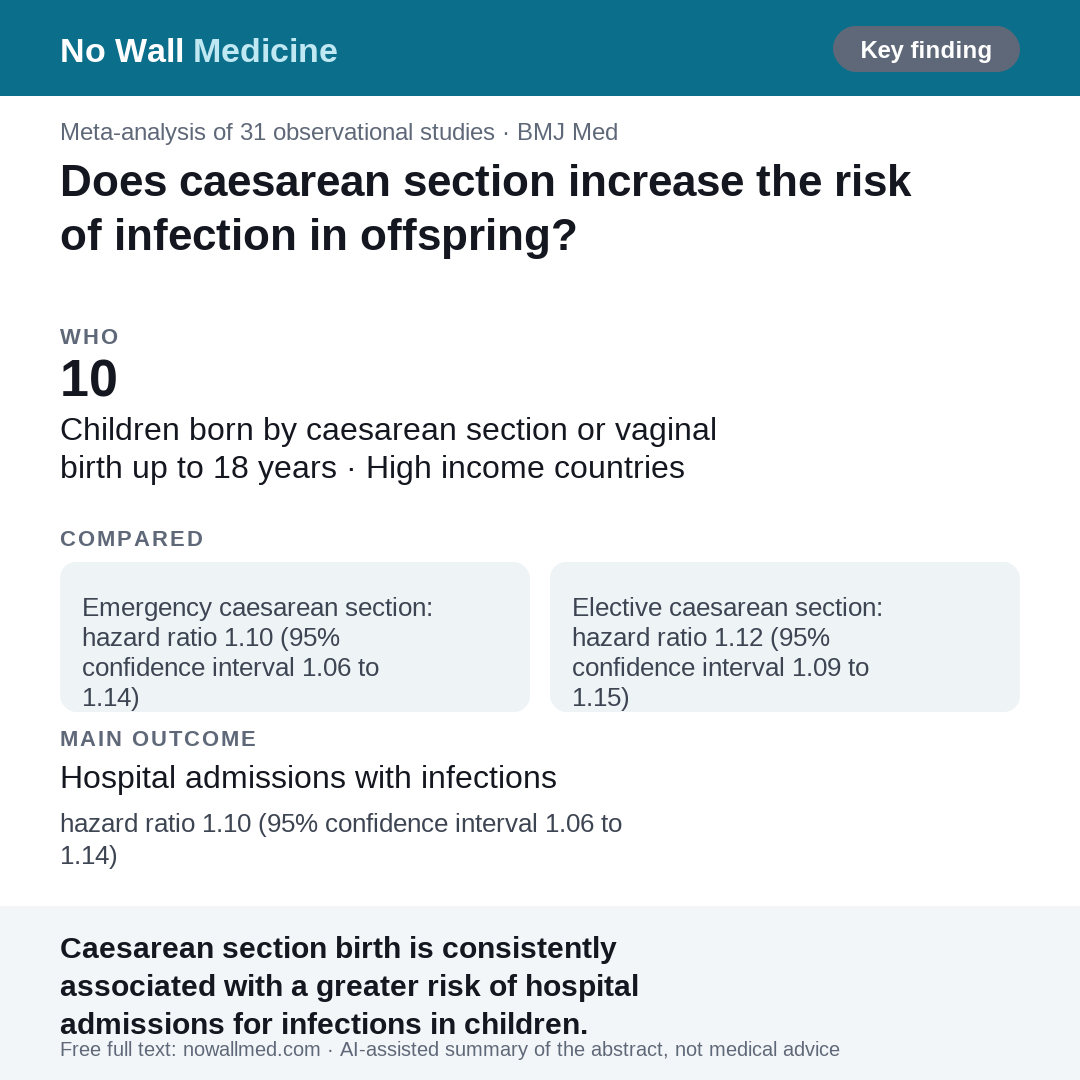
Caesarean section and risk of infection in offspring: systematic review and meta-analysis of observational studies
Meta-analysis of 31 observational studiesHarm found
Does caesarean section increase the risk of infection in offspring?
Who
10
Children born by caesarean section or vaginal birth up to 18 years · High income countries
Compared
Emergency caesarean section: hazard ratio 1.10 (95% confidence interval 1.06 to 1.14)
Elective caesarean section: hazard ratio 1.12 (95% confidence interval 1.09 to 1.15)
Main outcome
Hospital admissions with infections
Result: hazard ratio 1.10 (95% confidence interval 1.06 to 1.14)
Bottom line: Caesarean section birth is consistently associated with a greater risk of hospital admissions for infections in children.
Limitation: Potential for unmeasured confounding and scarcity of studies from low and middle income countries.
BMJ Med · 2024-11-27Download image
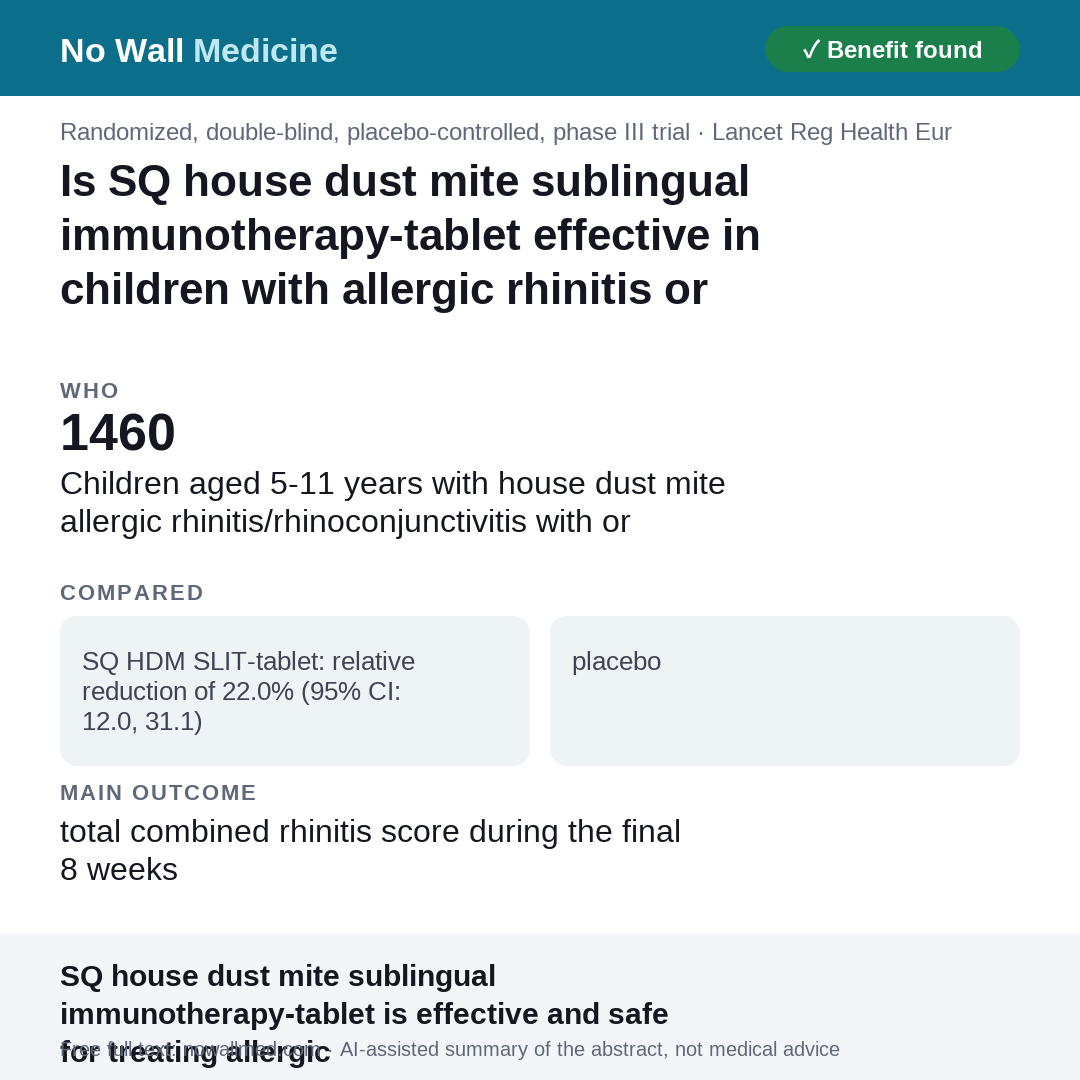
Efficacy and safety of SQ house dust mite sublingual immunotherapy-tablet (12 SQ-HDM) in children with allergic rhinitis/rhinoconjunctivitis with or without asthma (MT-12): a randomised, double-blind, placebo-controlled, phase III trial
Randomized, double-blind, placebo-controlled, phase III trialBenefit found
Is SQ house dust mite sublingual immunotherapy-tablet effective in children with allergic rhinitis or rhinoconjunctivitis?
Who
1460
Children aged 5-11 years with house dust mite allergic rhinitis/rhinoconjunctivitis with or without asthma
Compared
SQ HDM SLIT-tablet: relative reduction of 22.0% (95% CI: 12.0, 31.1)
placebo
Main outcome
total combined rhinitis score during the final 8 weeks
Result: absolute difference of 1.0 (95% CI: 0.5, 1.4; p < 0.0001)
Bottom line: SQ house dust mite sublingual immunotherapy-tablet is effective and safe for treating allergic rhinitis/rhinoconjunctivitis in children aged 5-11 years.
Funded by: ALK-Abellό, Hørsholm, Denmark
Lancet Reg Health Eur · 2024-11-26Download image
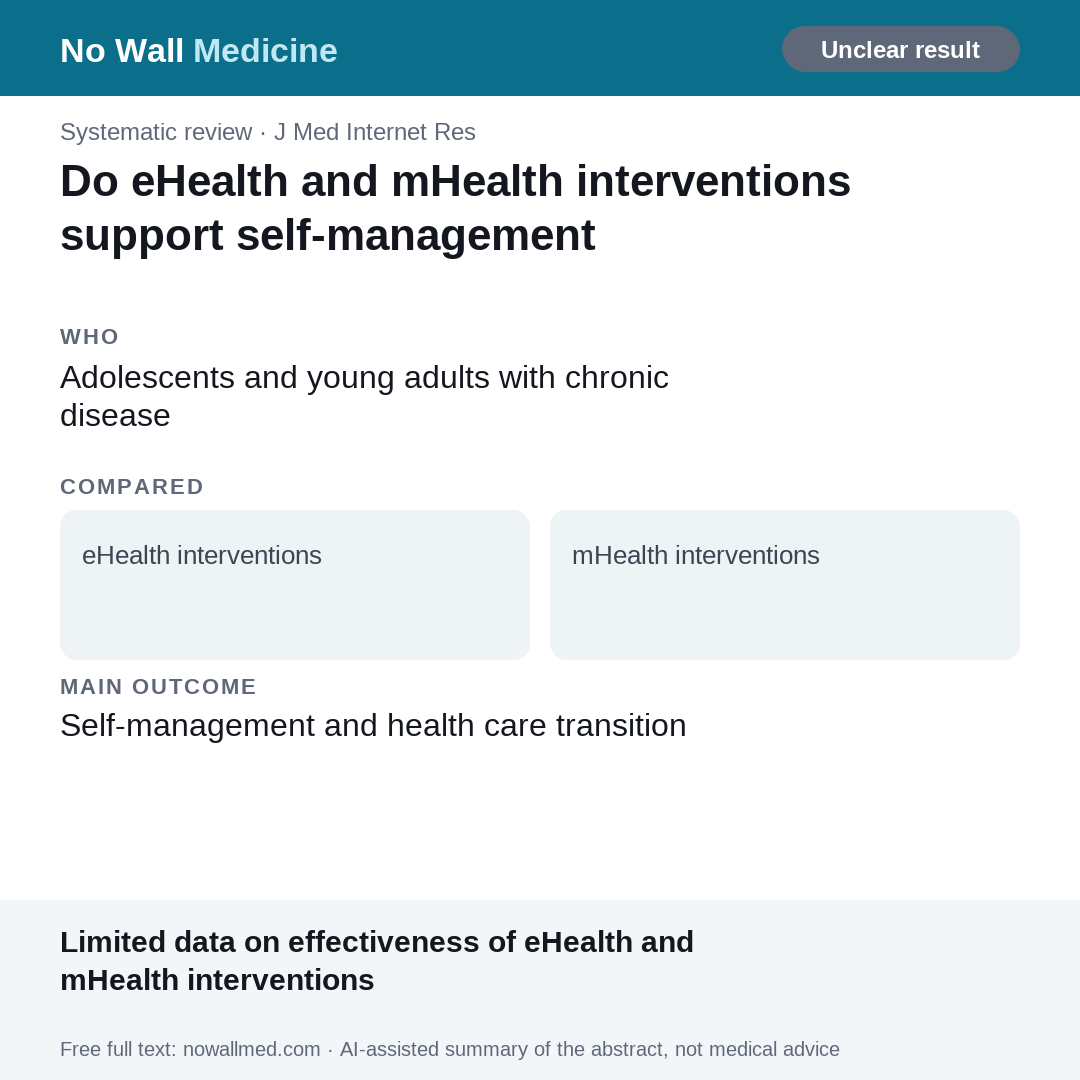
Usability and Effectiveness of eHealth and mHealth Interventions That Support Self-Management and Health Care Transition in Adolescents and Young Adults With Chronic Disease: Systematic Review
Systematic reviewUnclear result
Do eHealth and mHealth interventions support self-management
Who
22
Adolescents and young adults with chronic disease
Compared
eHealth interventions
mHealth interventions
Main outcome
Self-management and health care transition
Bottom line: Limited data on effectiveness of eHealth and mHealth interventions
Limitation: Limited data available
J Med Internet Res · 2024-11-26Download image
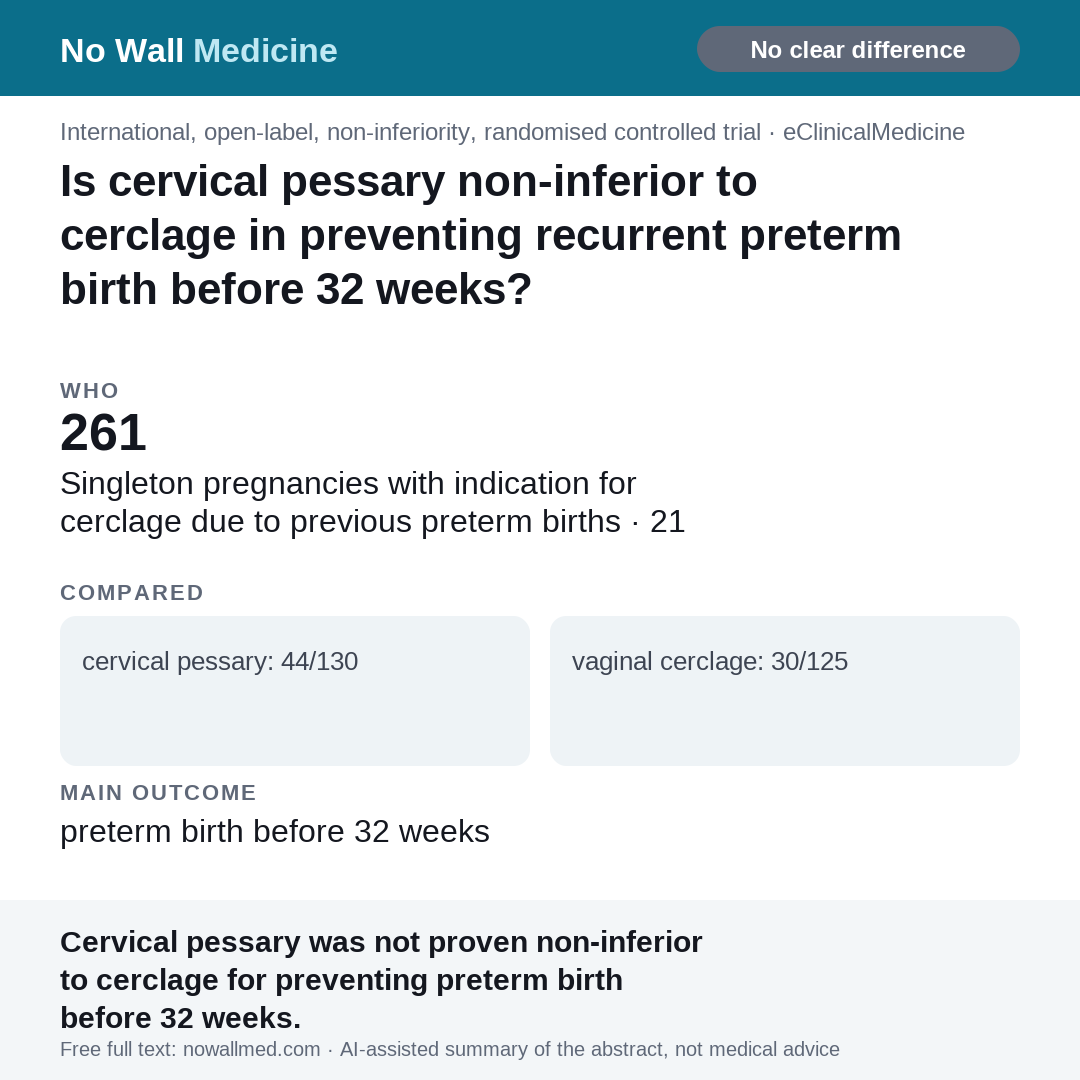
Pessary or cerclage (PC study) to prevent recurrent preterm birth: a non-inferiority, randomised controlled trial
International, open-label, non-inferiority, randomised controlled trialNo clear difference
Is cervical pessary non-inferior to cerclage in preventing recurrent preterm birth before 32 weeks?
Who
261
Singleton pregnancies with indication for cerclage due to previous preterm births · 21 hospitals
Compared
cervical pessary: 44/130
vaginal cerclage: 30/125
Main outcome
preterm birth before 32 weeks
Result: absolute risk difference 9.8% (95% CI -1.2 to 20.9)
Bottom line: Cervical pessary was not proven non-inferior to cerclage for preventing preterm birth before 32 weeks.
Funded by: ZonMw, a Dutch Organisation for Health Research and Development
eClinicalMedicine · 2024-11-25Download image
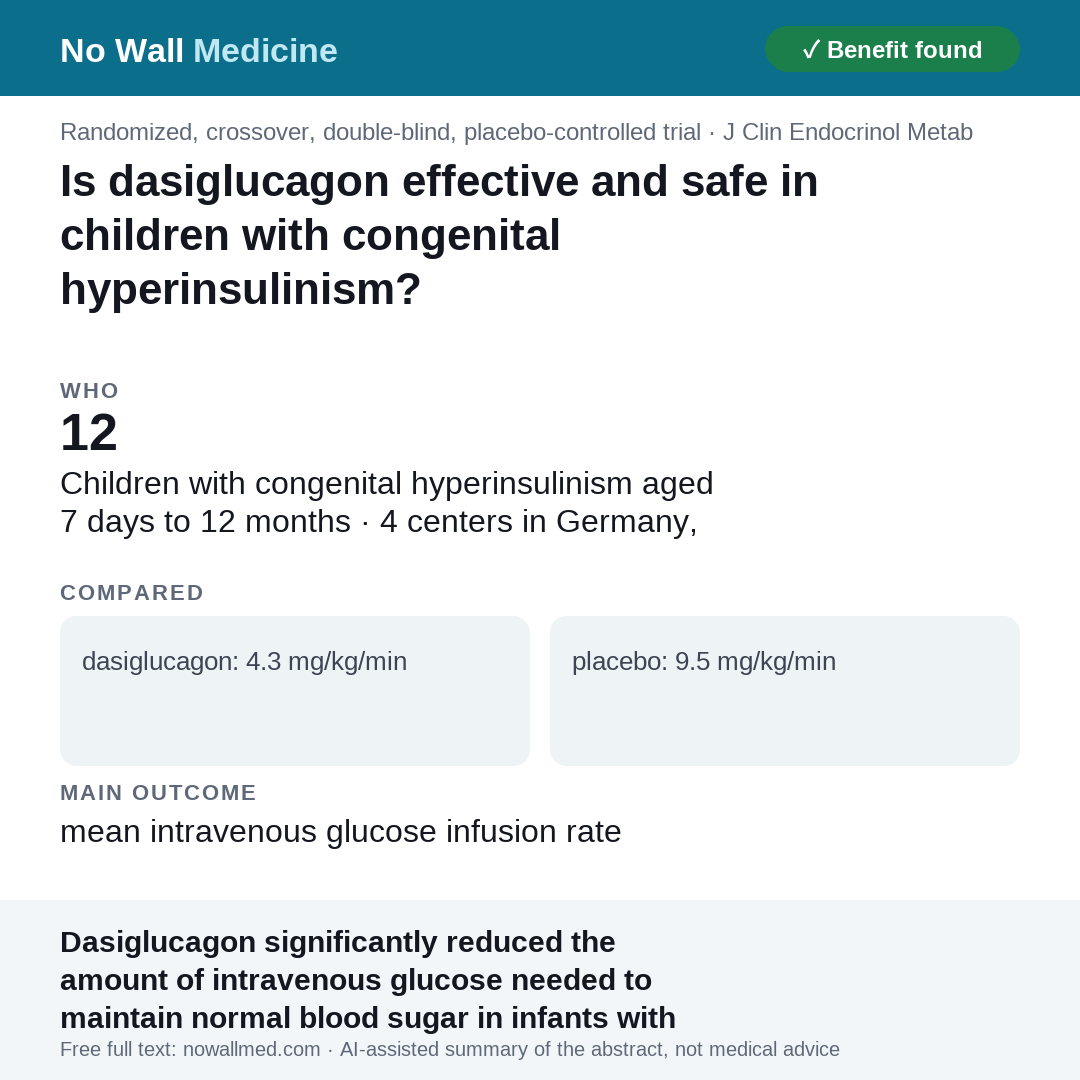
Dasiglucagon in Children With Congenital Hyperinsulinism Up to 1 Year of Age: Results From a Randomized Clinical Trial
Randomized, crossover, double-blind, placebo-controlled trialBenefit found
Is dasiglucagon effective and safe in children with congenital hyperinsulinism?
Who
12
Children with congenital hyperinsulinism aged 7 days to 12 months · 4 centers in Germany, United Kingdom, and United States
Compared
dasiglucagon: 4.3 mg/kg/min
placebo: 9.5 mg/kg/min
Main outcome
mean intravenous glucose infusion rate
Result: least-squares mean 4.3 mg/kg/min [95% CI, 1.04 to 7.60 mg/kg/min] vs 9.5 mg/kg/min [95% CI, 6.24 to 12.81 mg/kg/min]
Bottom line: Dasiglucagon significantly reduced the amount of intravenous glucose needed to maintain normal blood sugar in infants with congenital hyperinsulinism.
J Clin Endocrinol Metab · 2024-11-25Download image
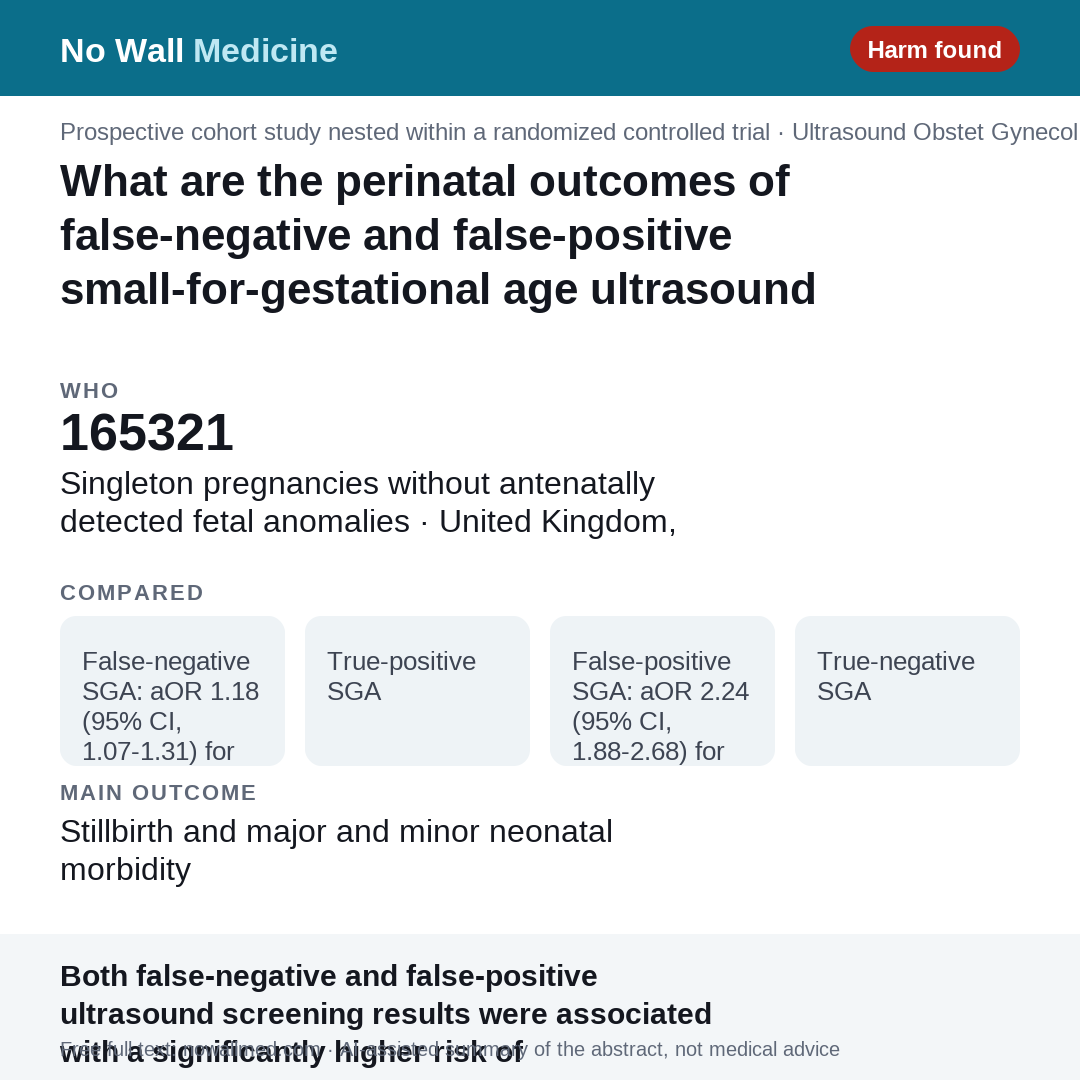
Perinatal outcomes after selective third-trimester ultrasound screening for small-for-gestational age: prospective cohort study nested within DESiGN randomized controlled trial
Prospective cohort study nested within a randomized controlled trialHarm found
What are the perinatal outcomes of false-negative and false-positive small-for-gestational age ultrasound screening?
Who
165321
Singleton pregnancies without antenatally detected fetal anomalies · United Kingdom, multicenter
Compared
False-negative SGA: aOR 1.18 (95% CI, 1.07-1.31) for stillbirth
True-positive SGA
False-positive SGA: aOR 2.24 (95% CI, 1.88-2.68) for stillbirth
True-negative SGA
Main outcome
Stillbirth and major and minor neonatal morbidity
Result: aOR 1.18 (95% CI, 1.07-1.31) for false-negative stillbirth; aOR 2.24 (95% CI, 1.88-2.68) for false-positive stillbirth
Bottom line: Both false-negative and false-positive ultrasound screening results were associated with a significantly higher risk of stillbirth.
Ultrasound Obstet Gynecol · 2024-11-25Download image
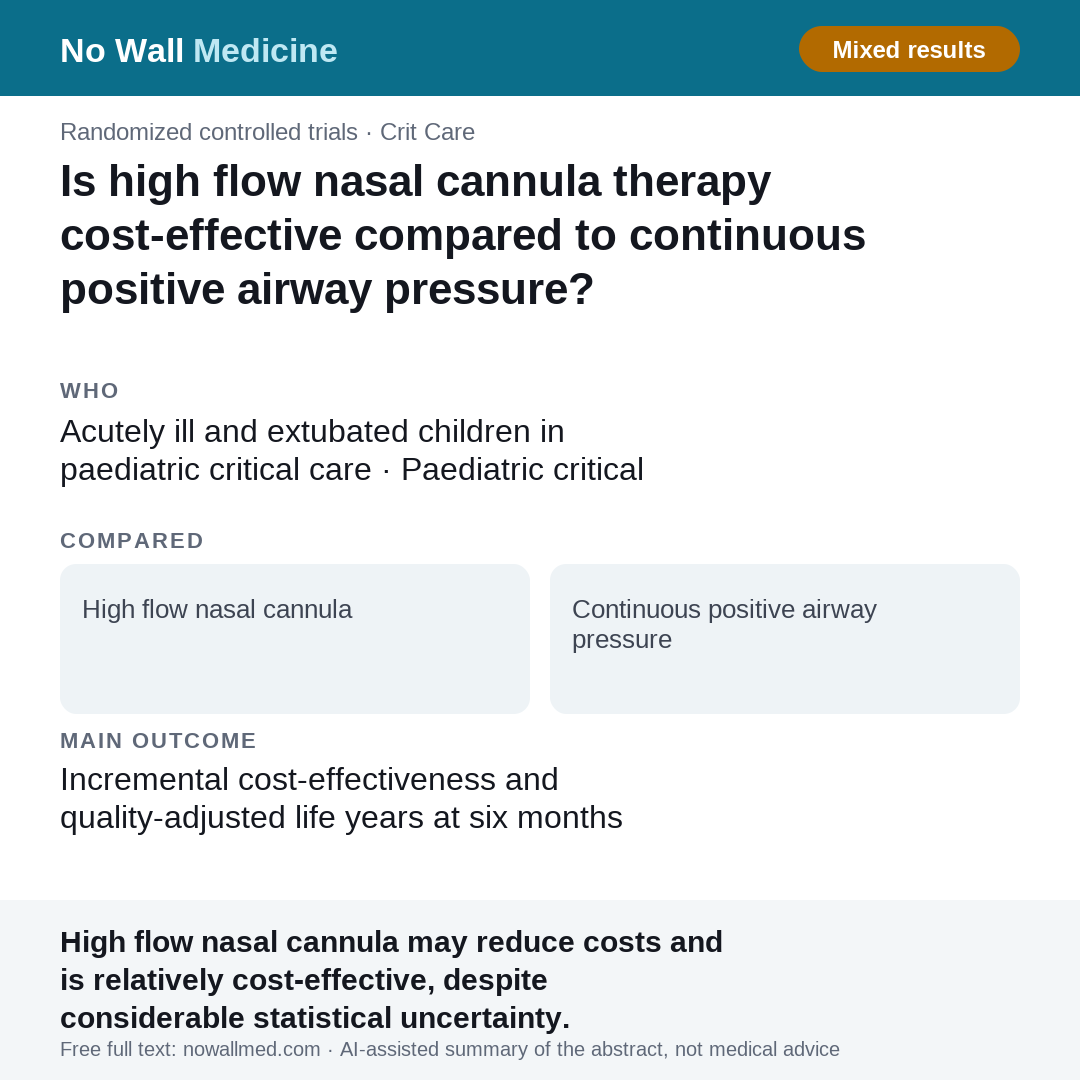
Cost-effectiveness of high flow nasal cannula therapy versus continuous positive airway pressure for non-invasive respiratory support in paediatric critical care
Randomized controlled trialsMixed results
Is high flow nasal cannula therapy cost-effective compared to continuous positive airway pressure?
Who
Acutely ill and extubated children in paediatric critical care · Paediatric critical care units
Compared
High flow nasal cannula
Continuous positive airway pressure
Main outcome
Incremental cost-effectiveness and quality-adjusted life years at six months
Result: incremental cost -£4565 (95% CI -£11,499 to £2368) and -£5702 (95% CI -£11,328 to -£75)
Bottom line: High flow nasal cannula may reduce costs and is relatively cost-effective, despite considerable statistical uncertainty.
Crit Care · 2024-11-25Download image
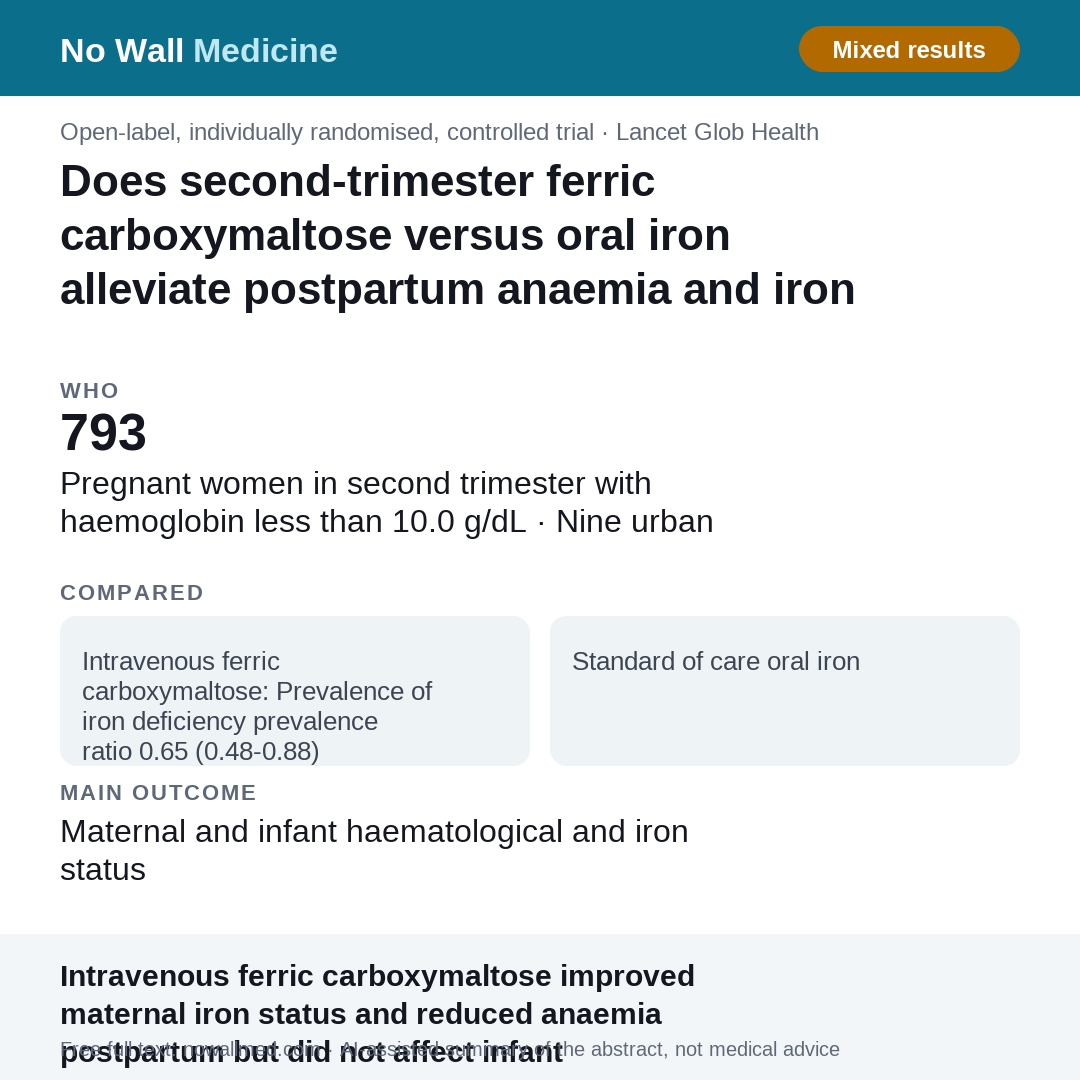
Postpartum maternal and infant haematological effects of second-trimester ferric carboxymaltose versus standard-of-care oral iron in Malawi: longitudinal follow-up of a randomised controlled trial
Open-label, individually randomised, controlled trialMixed results
Does second-trimester ferric carboxymaltose versus oral iron alleviate postpartum anaemia and iron deficiency in mothers and infants?
Who
793
Pregnant women in second trimester with haemoglobin less than 10.0 g/dL · Nine urban and five rural health centres in Malawi
Compared
Intravenous ferric carboxymaltose: Prevalence of iron deficiency prevalence ratio 0.65 (0.48-0.88)
Standard of care oral iron
Main outcome
Maternal and infant haematological and iron status
Result: prevalence ratio 0.65 (95% CI 0.48 to 0.88)
Bottom line: Intravenous ferric carboxymaltose improved maternal iron status and reduced anaemia postpartum but did not affect infant haematological outcomes.
Funded by: Bill & Melinda Gates Foundation
Lancet Glob Health · 2024-11-23Download image
A Dutch paediatric palliative care guideline: a systematic review and recommendations on advance care planning and shared decision-making
Systematic reviewBenefit found
Does advance care planning improve care
Who
Children with life-threatening conditions · Netherlands
Compared
Advance care planning
No advance care planning
Main outcome
Quality of care
Bottom line: Advance care planning improves care
Limitation: Knowledge gaps
BMC Palliat Care · 2024-11-23Download image
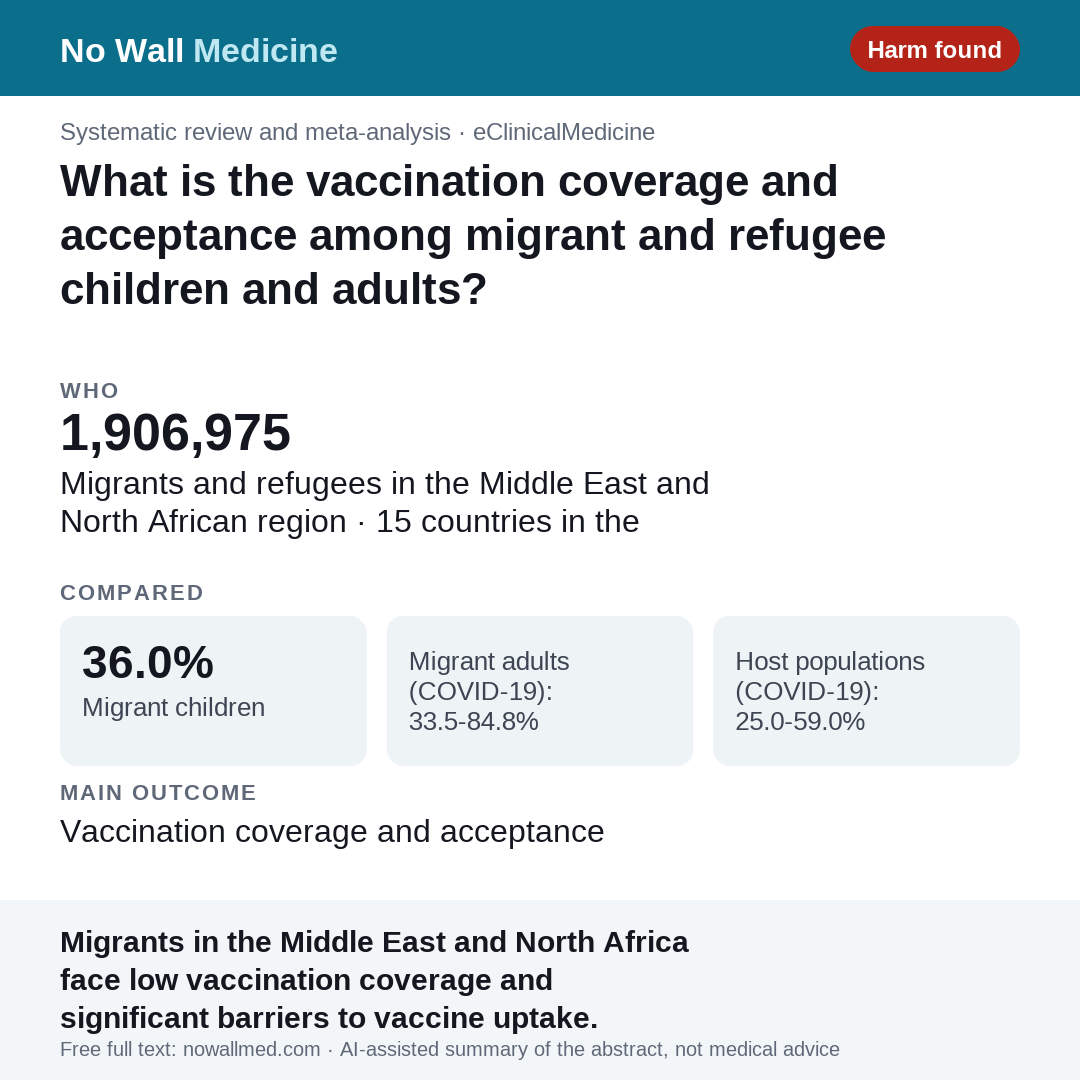
Vaccination coverage and access among children and adult migrants and refugees in the Middle East and North African region: a systematic review and meta-analysis
Systematic review and meta-analysisHarm found
What is the vaccination coverage and acceptance among migrant and refugee children and adults?
Who
1,906,975
Migrants and refugees in the Middle East and North African region · 15 countries in the Middle East and North African region
Compared
36.0%Migrant children
Migrant adults (COVID-19): 33.5-84.8%
Host populations (COVID-19): 25.0-59.0%
Main outcome
Vaccination coverage and acceptance
Bottom line: Migrants in the Middle East and North Africa face low vaccination coverage and significant barriers to vaccine uptake.
Limitation: Data is limited to small-scale studies among accessible groups.
eClinicalMedicine · 2024-11-22Download image
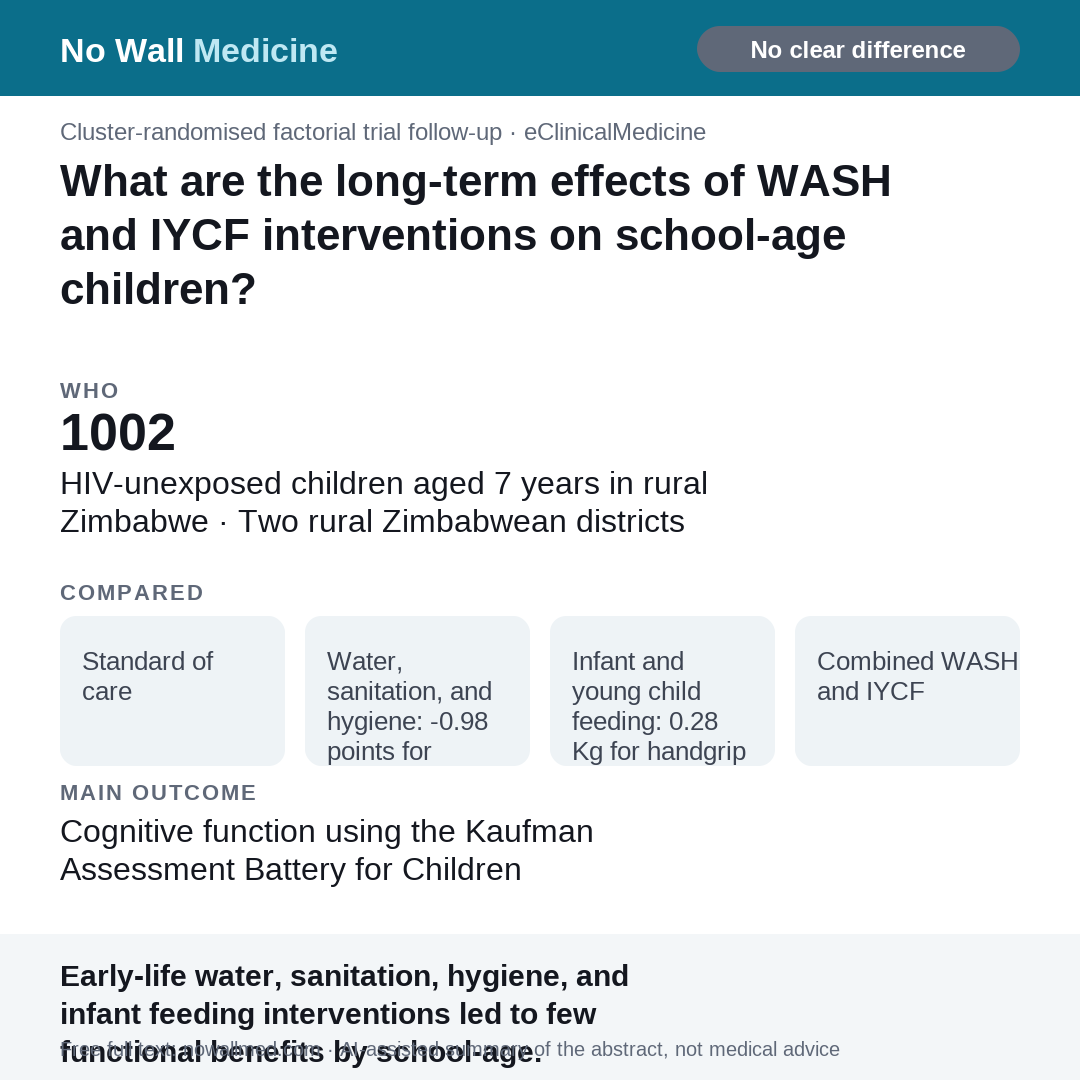
School-age growth and development following infant feeding and/or water, sanitation, and hygiene interventions in rural Zimbabwe: long-term follow-up of a cluster-randomised trial
Cluster-randomised factorial trial follow-upNo clear difference
What are the long-term effects of WASH and IYCF interventions on school-age children?
Who
1002
HIV-unexposed children aged 7 years in rural Zimbabwe · Two rural Zimbabwean districts
Compared
Standard of care
Water, sanitation, and hygiene: -0.98 points for socioemotional function (95% CI -1.73, -0.22)
Infant and young child feeding: 0.28 Kg for handgrip strength (95% CI 0.02, 0.53)
Combined WASH and IYCF
Main outcome
Cognitive function using the Kaufman Assessment Battery for Children
Result: no effect of IYCF or WASH on the KABC-II score
Bottom line: Early-life water, sanitation, hygiene, and infant feeding interventions led to few functional benefits by school-age.
Funded by: Wellcome, NIH, Thrasher, and IMMANA
eClinicalMedicine · 2024-11-22Download image
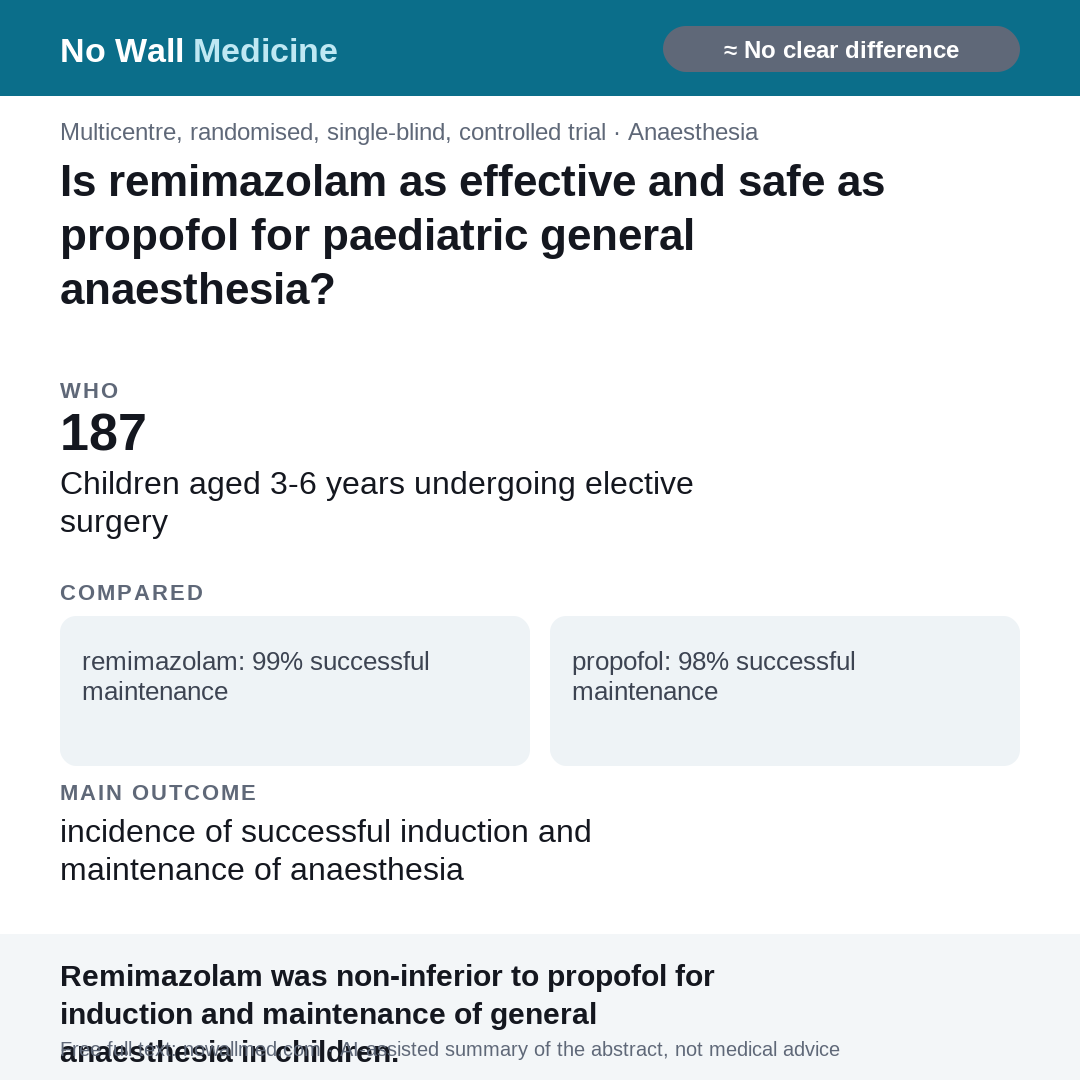
Safety and efficacy of remimazolam tosilate for general anaesthesia in paediatric patients undergoing elective surgery: a multicentre, randomised, single-blind, controlled trial
Multicentre, randomised, single-blind, controlled trialNo clear difference
Is remimazolam as effective and safe as propofol for paediatric general anaesthesia?
Who
187
Children aged 3-6 years undergoing elective surgery
Compared
remimazolam: 99% successful maintenance
propofol: 98% successful maintenance
Main outcome
incidence of successful induction and maintenance of anaesthesia
Result: rate difference 1.4%, 95%CI -2.9-5.8%
Bottom line: Remimazolam was non-inferior to propofol for induction and maintenance of general anaesthesia in children.
Anaesthesia · 2024-11-22Download image
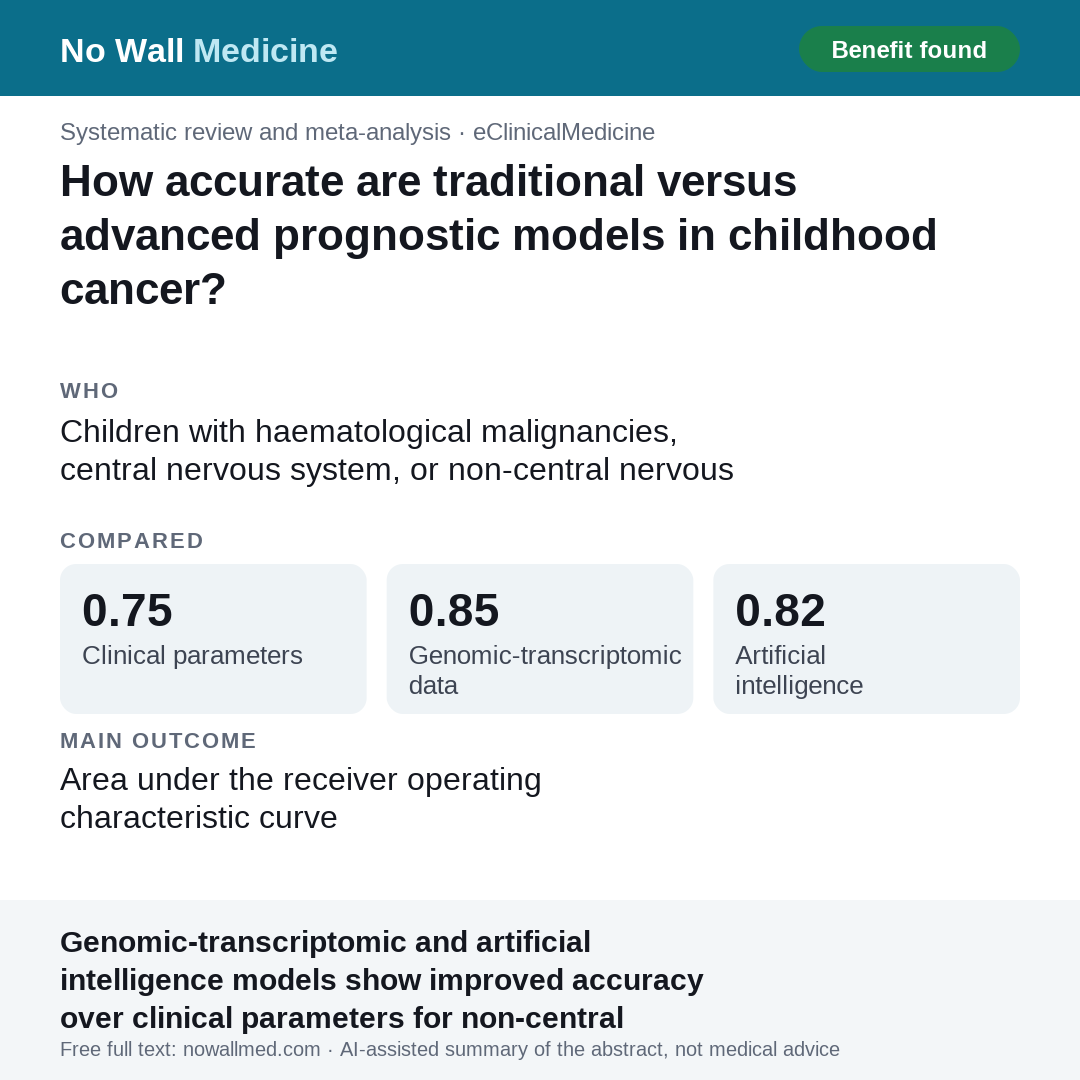
From simple factors to artificial intelligence: evolution of prognosis prediction in childhood cancer: a systematic review and meta-analysis
Systematic review and meta-analysisBenefit found
How accurate are traditional versus advanced prognostic models in childhood cancer?
Who
Children with haematological malignancies, central nervous system, or non-central nervous system solid tumours
Compared
0.75Clinical parameters (95% CI: 0.72-0.79)
0.85Genomic-transcriptomic data (95% CI: 0.82-0.88)
0.82Artificial intelligence (95% CI: 0.77-0.88)
Main outcome
Area under the receiver operating characteristic curve
Bottom line: Genomic-transcriptomic and artificial intelligence models show improved accuracy over clinical parameters for non-central nervous system solid tumours.
Limitation: Internal validation studies showed significantly better performance than external validation, highlighting high risk of bias.
eClinicalMedicine · 2024-11-21Download image
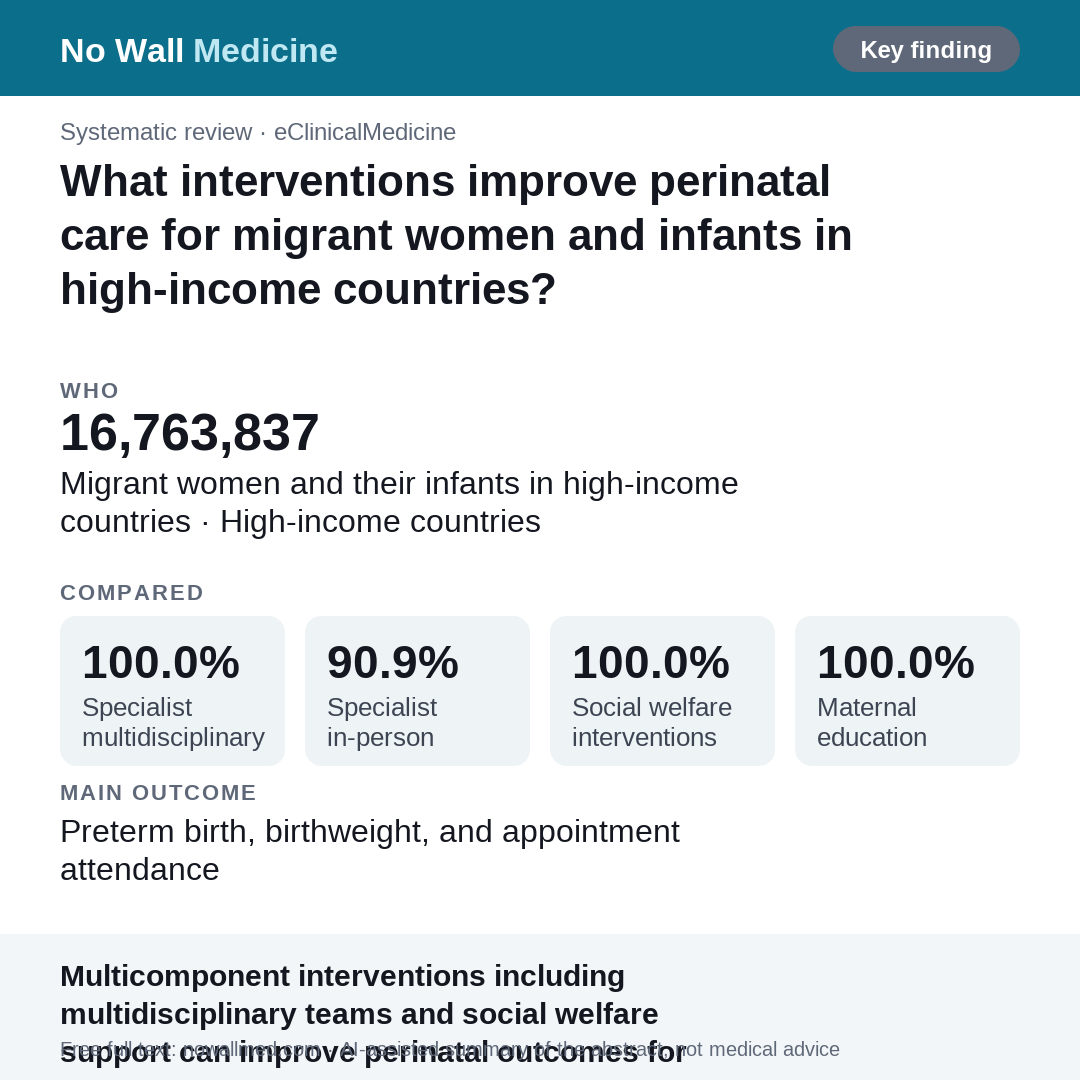
Public health, policy, and clinical interventions to improve perinatal care for migrant women and infants in high-income countries: a systematic review
Systematic reviewBenefit found
What interventions improve perinatal care for migrant women and infants in high-income countries?
Who
16,763,837
Migrant women and their infants in high-income countries · High-income countries
Compared
100.0%Specialist multidisciplinary teams
90.9%Specialist in-person interpreting
100.0%Social welfare interventions
100.0%Maternal education interventions
Main outcome
Preterm birth, birthweight, and appointment attendance
Bottom line: Multicomponent interventions including multidisciplinary teams and social welfare support can improve perinatal outcomes for migrant women and infants.
Limitation: Most included studies were of poor quality and interventional studies alone did not demonstrate effect.
Funded by: National Institute for Health Research and Medical Research Council
eClinicalMedicine · 2024-11-19Download image
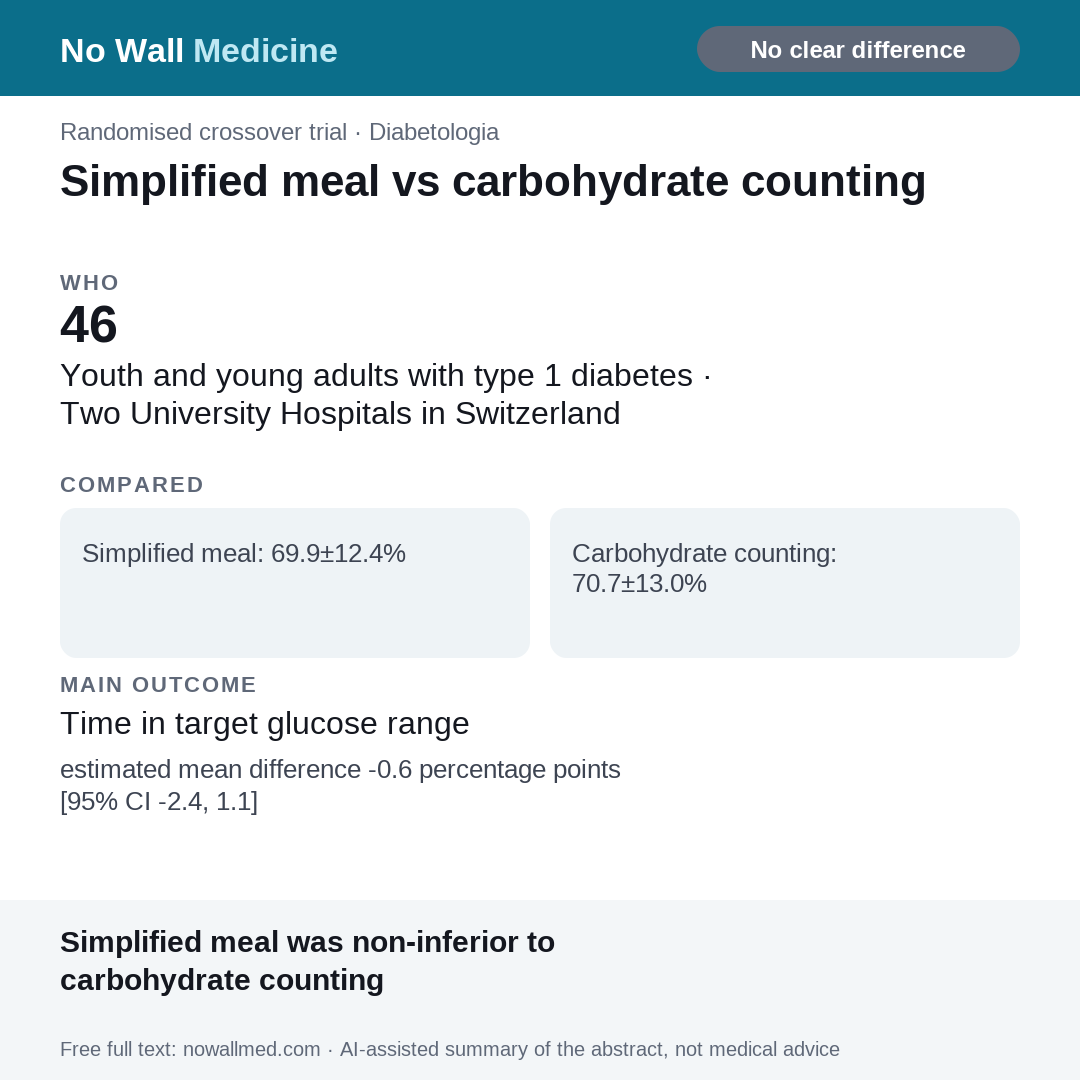
Simplified meal announcement study (SMASH) using hybrid closed-loop insulin delivery in youth and young adults with type 1 diabetes: a randomised controlled two-centre crossover trial
Randomised crossover trialNo clear difference
Simplified meal vs carbohydrate counting
Who
46
Youth and young adults with type 1 diabetes · Two University Hospitals in Switzerland
Compared
Simplified meal: 69.9±12.4%
Carbohydrate counting: 70.7±13.0%
Main outcome
Time in target glucose range
Result: estimated mean difference -0.6 percentage points [95% CI -2.4, 1.1]
Bottom line: Simplified meal was non-inferior to carbohydrate counting
Funded by: Swiss Diabetes Foundation and others
Diabetologia · 2024-11-19Download image
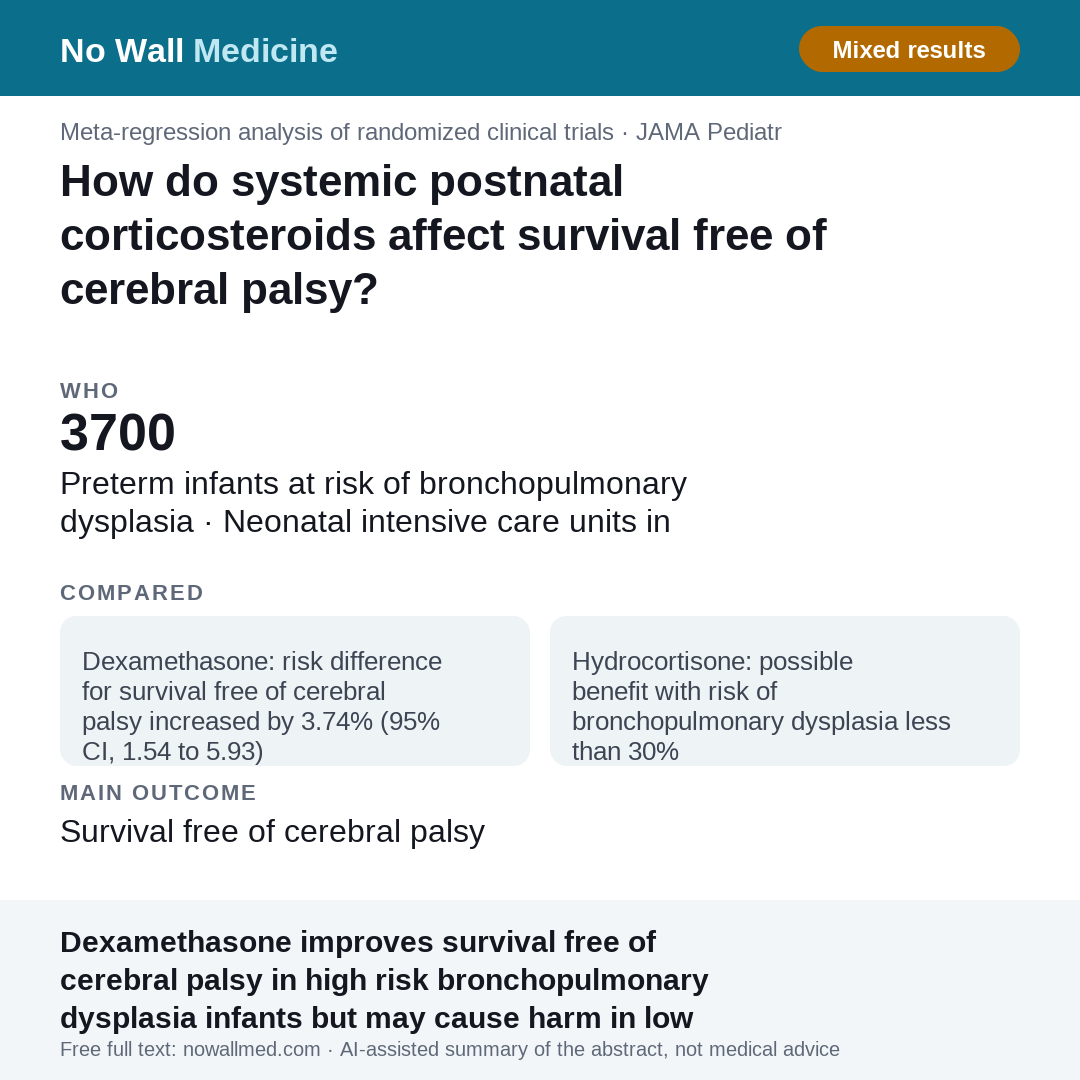
Systemic Postnatal Corticosteroids, Bronchopulmonary Dysplasia, and Survival Free of Cerebral Palsy
Meta-regression analysis of randomized clinical trialsMixed results
How do systemic postnatal corticosteroids affect survival free of cerebral palsy?
Who
3700
Preterm infants at risk of bronchopulmonary dysplasia · Neonatal intensive care units in 10 countries
Compared
Dexamethasone: risk difference for survival free of cerebral palsy increased by 3.74% (95% CI, 1.54 to 5.93)
Hydrocortisone: possible benefit with risk of bronchopulmonary dysplasia less than 30%
Main outcome
Survival free of cerebral palsy
Result: interaction coefficient 0.54 (95% CI 0.25 to 0.82)
Bottom line: Dexamethasone improves survival free of cerebral palsy in high risk bronchopulmonary dysplasia infants but may cause harm in low risk infants.
JAMA Pediatr · 2024-11-18Download image
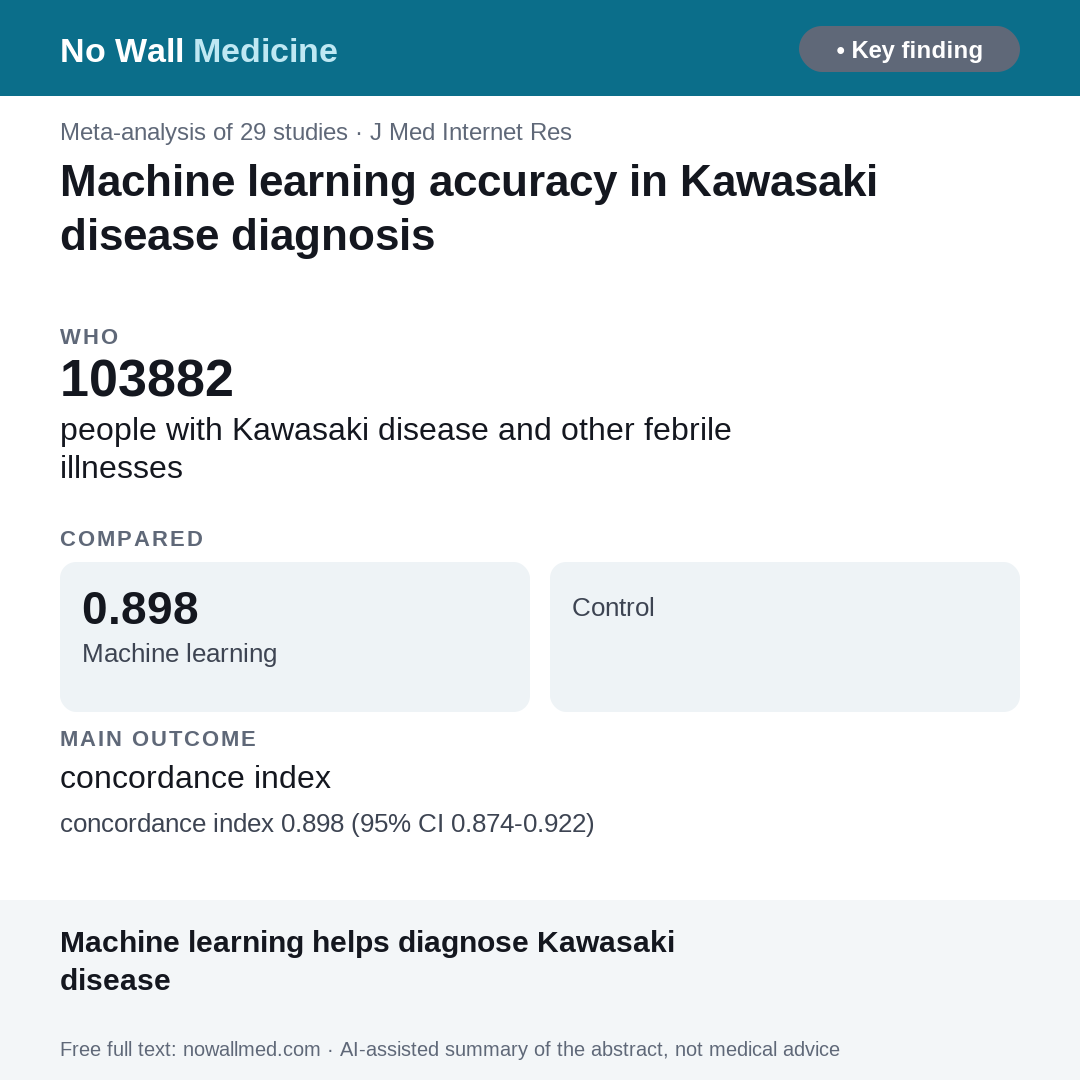
Accuracy of Machine Learning in Discriminating Kawasaki Disease and Other Febrile Illnesses: Systematic Review and Meta-Analysis
Meta-analysis of 29 studiesBenefit found
Machine learning accuracy in Kawasaki disease diagnosis
Who
103882
people with Kawasaki disease and other febrile illnesses
Compared
0.898Machine learning (95% CI 0.874-0.922)
Control
Main outcome
concordance index
Result: concordance index 0.898 (95% CI 0.874-0.922)
Bottom line: Machine learning helps diagnose Kawasaki disease
J Med Internet Res · 2024-11-18Download image
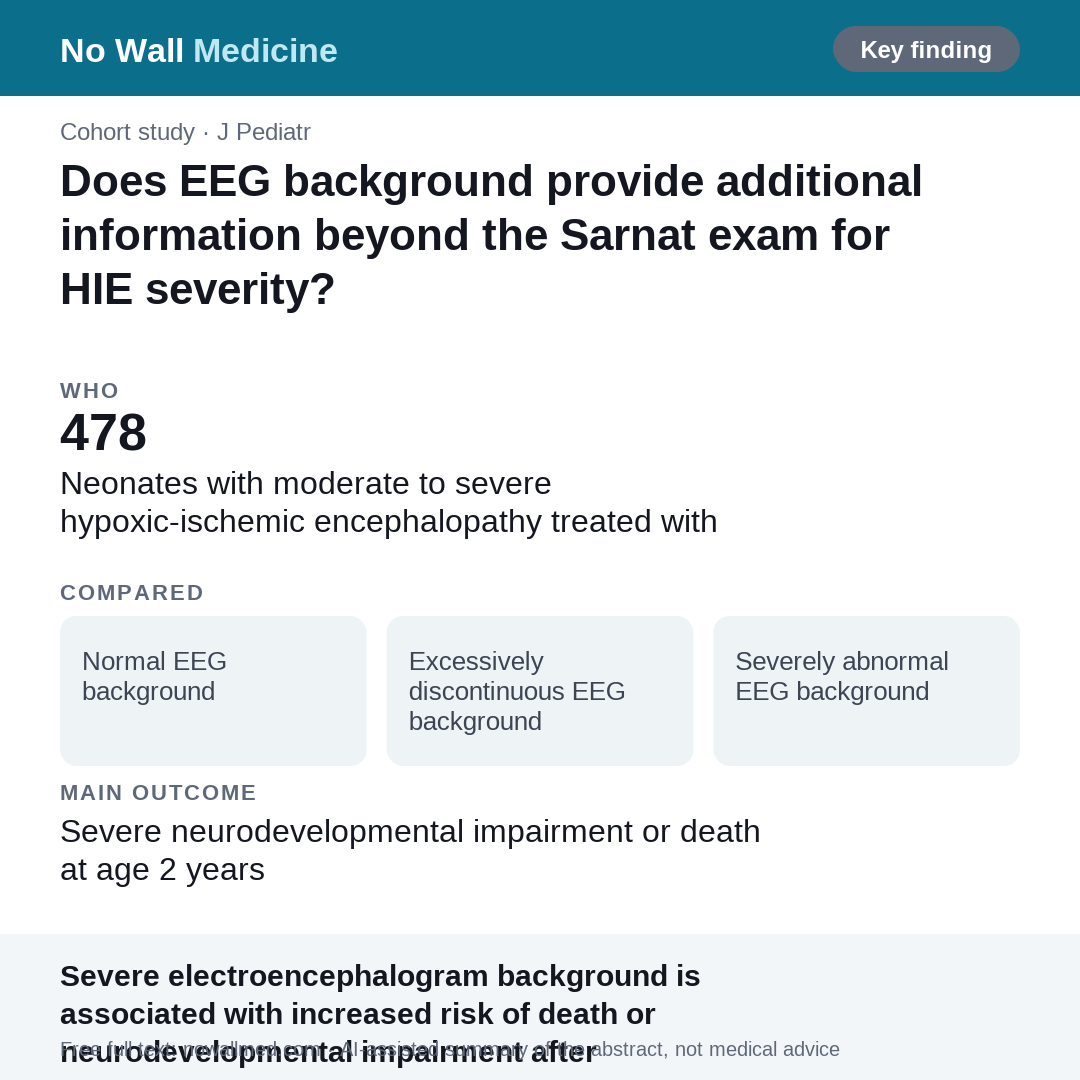
Assessing Early Severity of Hypoxic-Ischemic Encephalopathy: The Role of Electroencephalogram Background in Addition to Sarnat Exam
Cohort studyBenefit found
Does EEG background provide additional information beyond the Sarnat exam for HIE severity?
Who
478
Neonates with moderate to severe hypoxic-ischemic encephalopathy treated with therapeutic hypothermia · High-dose Erythropoietin for Asphyxia and Encephalopathy trial
Compared
Normal EEG background
Excessively discontinuous EEG background
Severely abnormal EEG background
Main outcome
Severe neurodevelopmental impairment or death at age 2 years
Result: relative risk 5.7 (95% CI 3.7-8.9)
Bottom line: Severe electroencephalogram background is associated with increased risk of death or neurodevelopmental impairment after adjusting for Sarnat exam severity.
J Pediatr · 2024-11-16Download image
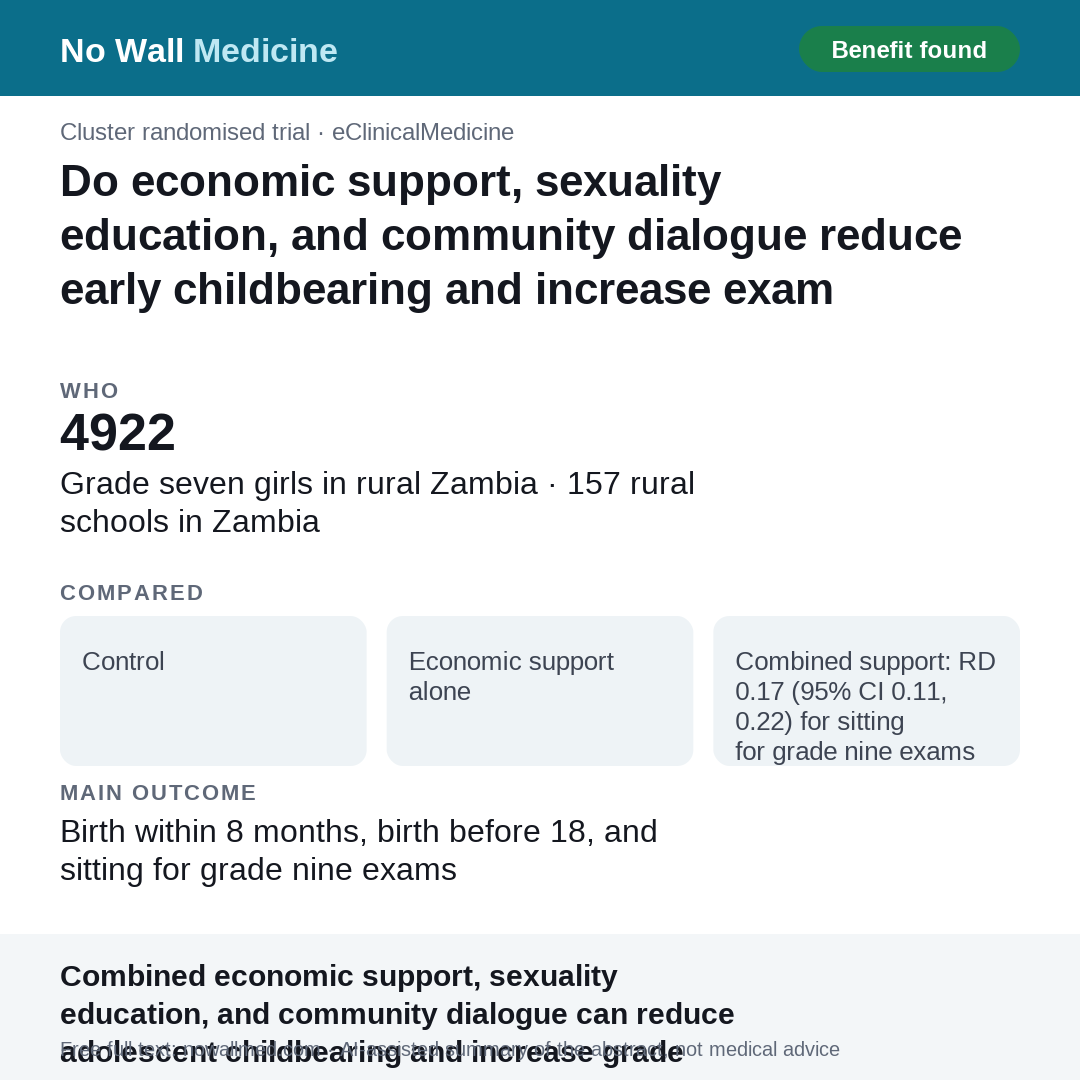
Effectiveness of economic support, comprehensive sexuality education and community dialogue on early childbearing and sitting for grade nine exams among adolescent girls in rural Zambia: a cluster randomised trial
Cluster randomised trialBenefit found
Do economic support, sexuality education, and community dialogue reduce early childbearing and increase exam sitting?
Who
4922
Grade seven girls in rural Zambia · 157 rural schools in Zambia
Compared
Control
Economic support alone
Combined support: RD 0.17 (95% CI 0.11, 0.22) for sitting for grade nine exams
Main outcome
Birth within 8 months, birth before 18, and sitting for grade nine exams
Result: risk difference -0.042 (95% CI -0.084, -0.0003) for birth within eight months
Bottom line: Combined economic support, sexuality education, and community dialogue can reduce adolescent childbearing and increase grade nine exam sitting.
Funded by: Research Council of Norway, University of Bergen, SIDA
eClinicalMedicine · 2024-11-15Download image
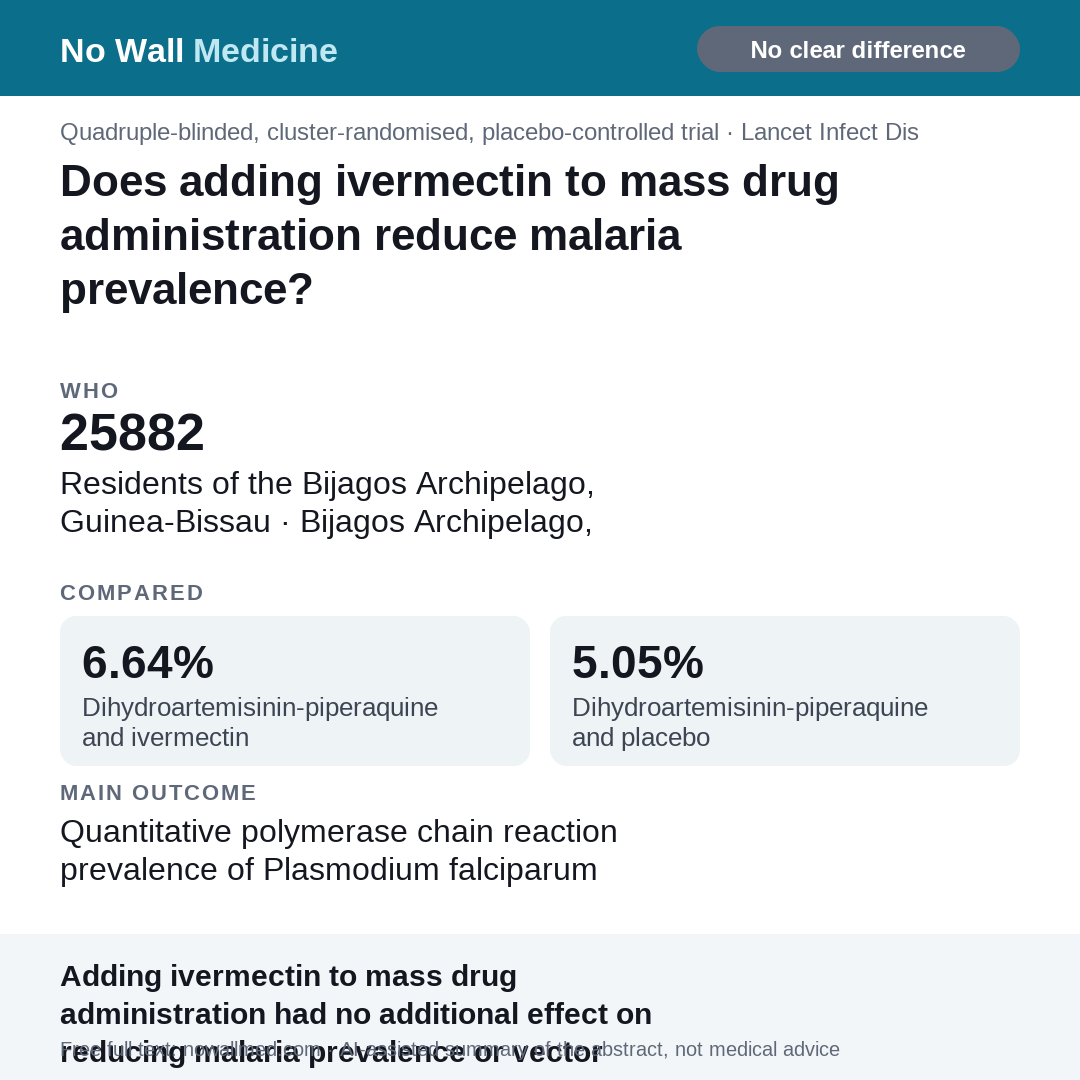
Adjunctive ivermectin mass drug administration for malaria control on the Bijagos Archipelago of Guinea-Bissau (MATAMAL): a quadruple-blinded, cluster-randomised, placebo-controlled trial
Quadruple-blinded, cluster-randomised, placebo-controlled trialNo clear difference
Does adding ivermectin to mass drug administration reduce malaria prevalence?
Who
25882
Residents of the Bijagos Archipelago, Guinea-Bissau · Bijagos Archipelago, Guinea-Bissau
Compared
6.64%Dihydroartemisinin-piperaquine and ivermectin (141/2083)
5.05%Dihydroartemisinin-piperaquine and placebo (118/2300)
Main outcome
Quantitative polymerase chain reaction prevalence of Plasmodium falciparum parasitaemia
Result: risk difference 1.67% (95% CI -1.44 to 4.78)
Bottom line: Adding ivermectin to mass drug administration had no additional effect on reducing malaria prevalence or vector parity.
Funded by: NIHR, Medical Research Council, Wellcome, and FCDO
Lancet Infect Dis · 2024-11-14Download image