Visual abstracts
New randomized trials and meta-analyses from leading journals at a glance: who was studied, what was compared, and what was found. Every paper is free to read in full.
All specialtiesCardiology 4763Oncology 4042Gastroenterology & Hepatology 1902Infectious Disease 3756Neurology 1872Psychiatry & Mental Health 2214Pulmonology 2042Critical Care 1319Endocrinology & Diabetes 2544Pediatrics 2889Surgery 2479Orthopedics & Sports Medicine 917Neurosurgery 525Cardiothoracic & Vascular Surgery 656Plastic & Reconstructive Surgery 574Nephrology 1107Rheumatology 810Hematology 1090Dermatology 611Ophthalmology 532Obstetrics & Gynecology 1645Public & Global Health 1037Radiology & Imaging 617Anesthesiology 957Urology 745ENT (Otolaryngology) 494Emergency Medicine 481Allergy & Immunology 309Geriatrics 972Family Medicine & Primary Care 533Medical Genetics & Genomics 659Pathology & Laboratory Medicine 156Physical Medicine & Rehabilitation 734Palliative Care 421Nutrition 1560Digital Health & AI 2133General Medicine 318
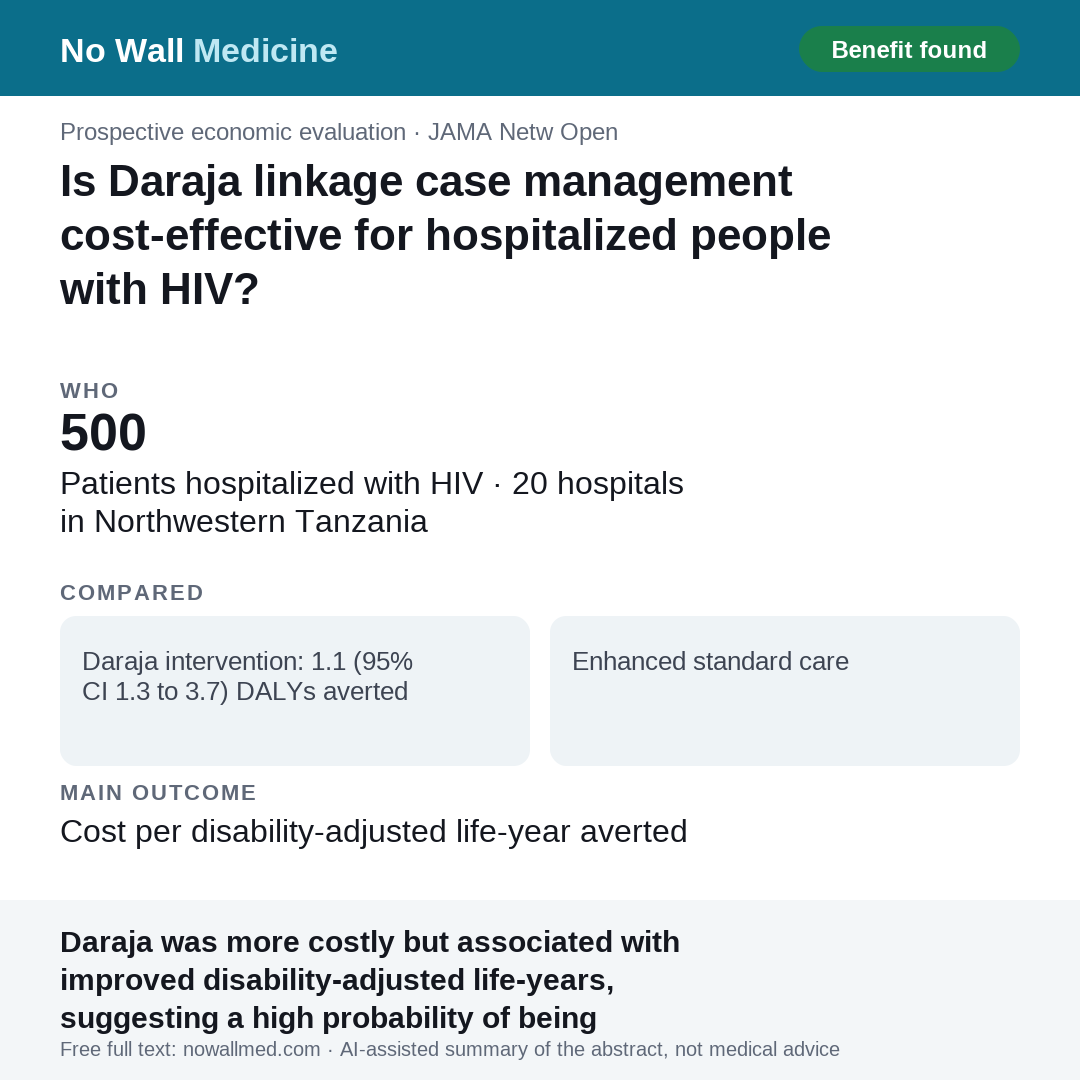
Cost-Effectiveness of Linkage Case Management for Hospitalized People With HIV
Prospective economic evaluationBenefit found
Is Daraja linkage case management cost-effective for hospitalized people with HIV?
Who
500
Patients hospitalized with HIV · 20 hospitals in Northwestern Tanzania
Compared
Daraja intervention: 1.1 (95% CI 1.3 to 3.7) DALYs averted
Enhanced standard care
Main outcome
Cost per disability-adjusted life-year averted
Bottom line: Daraja was more costly but associated with improved disability-adjusted life-years, suggesting a high probability of being cost-effective.
JAMA Netw Open · 2025-11-03Download image
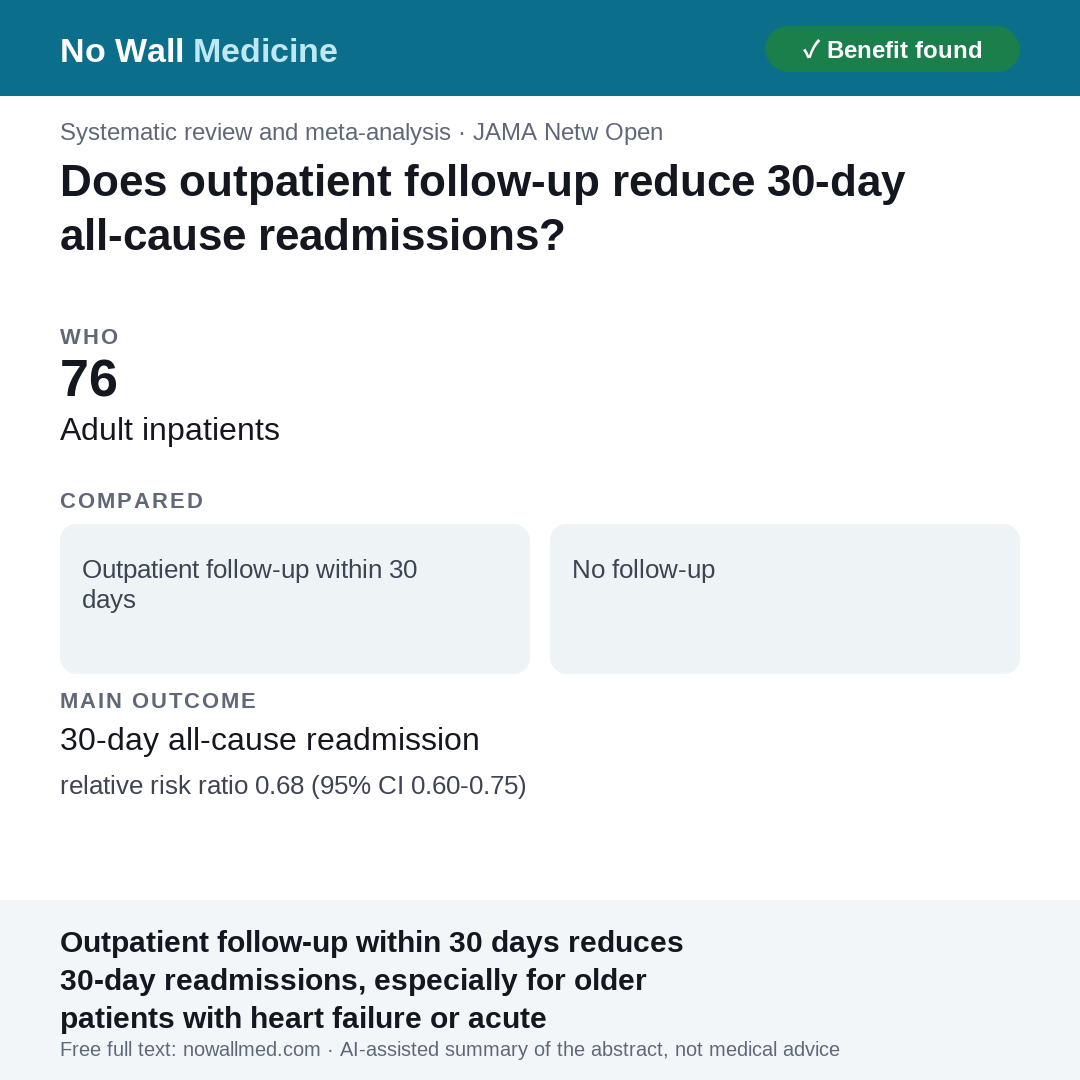
Outpatient Follow-Up and 30-Day Readmissions: A Systematic Review and Meta-Analysis
Systematic review and meta-analysisBenefit found
Does outpatient follow-up reduce 30-day all-cause readmissions?
Who
76
Adult inpatients
Compared
Outpatient follow-up within 30 days
No follow-up
Main outcome
30-day all-cause readmission
Result: relative risk ratio 0.68 (95% CI 0.60-0.75)
Bottom line: Outpatient follow-up within 30 days reduces 30-day readmissions, especially for older patients with heart failure or acute myocardial infarction.
JAMA Netw Open · 2025-11-03Download image
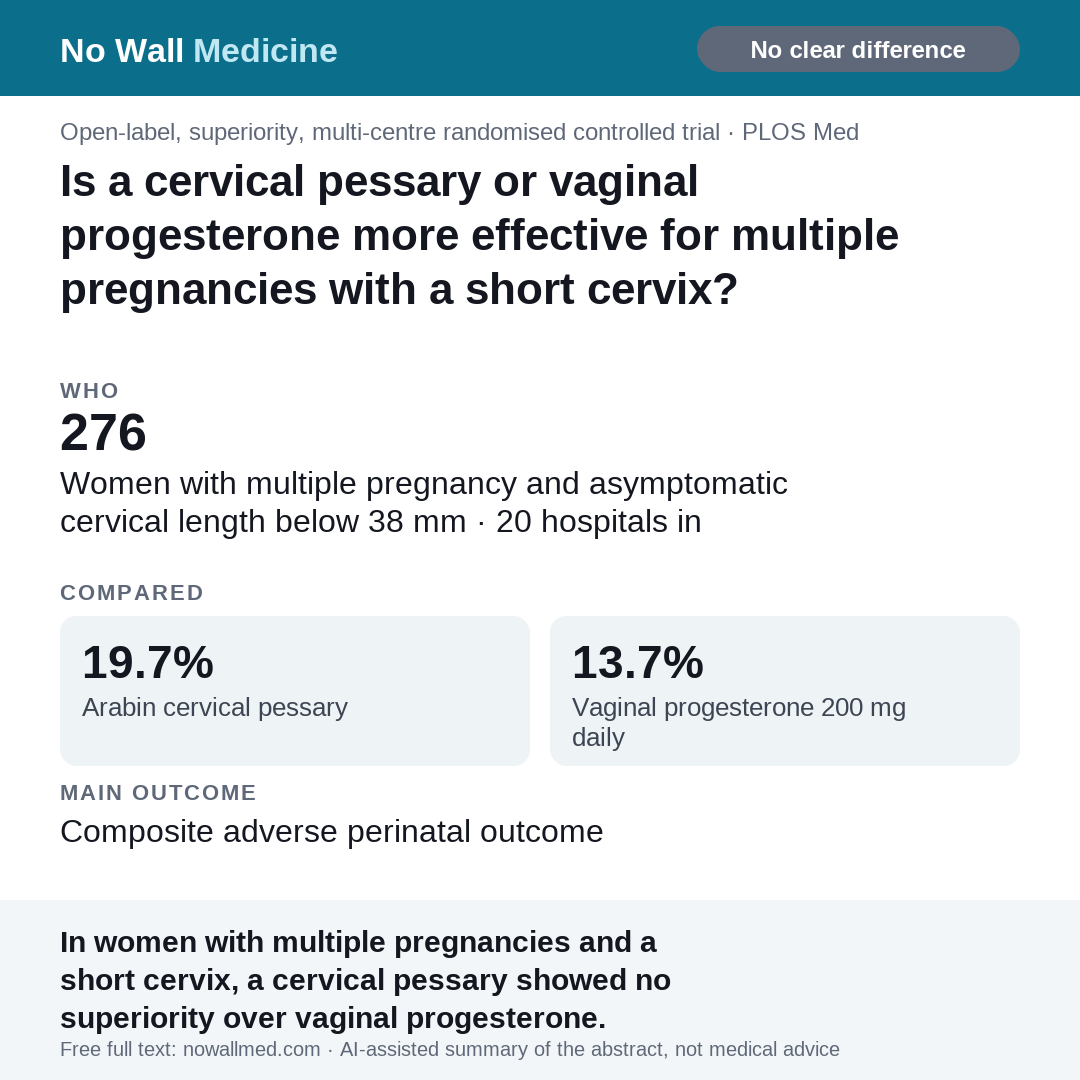
Cervical pessary versus vaginal progesterone in women with a multiple pregnancy and a short cervix: A randomised controlled trial
Open-label, superiority, multi-centre randomised controlled trialNo clear difference
Is a cervical pessary or vaginal progesterone more effective for multiple pregnancies with a short cervix?
Who
276
Women with multiple pregnancy and asymptomatic cervical length below 38 mm · 20 hospitals in the Netherlands
Compared
19.7%Arabin cervical pessary
13.7%Vaginal progesterone 200 mg daily
Main outcome
Composite adverse perinatal outcome
Result: crude RR 1.43 (95% CI 0.85 to 2.4)
Bottom line: In women with multiple pregnancies and a short cervix, a cervical pessary showed no superiority over vaginal progesterone.
Limitation: Inability to blind interventions and low self-reported medication compliance in the progesterone group.
PLOS Med · 2025-11-03Download image
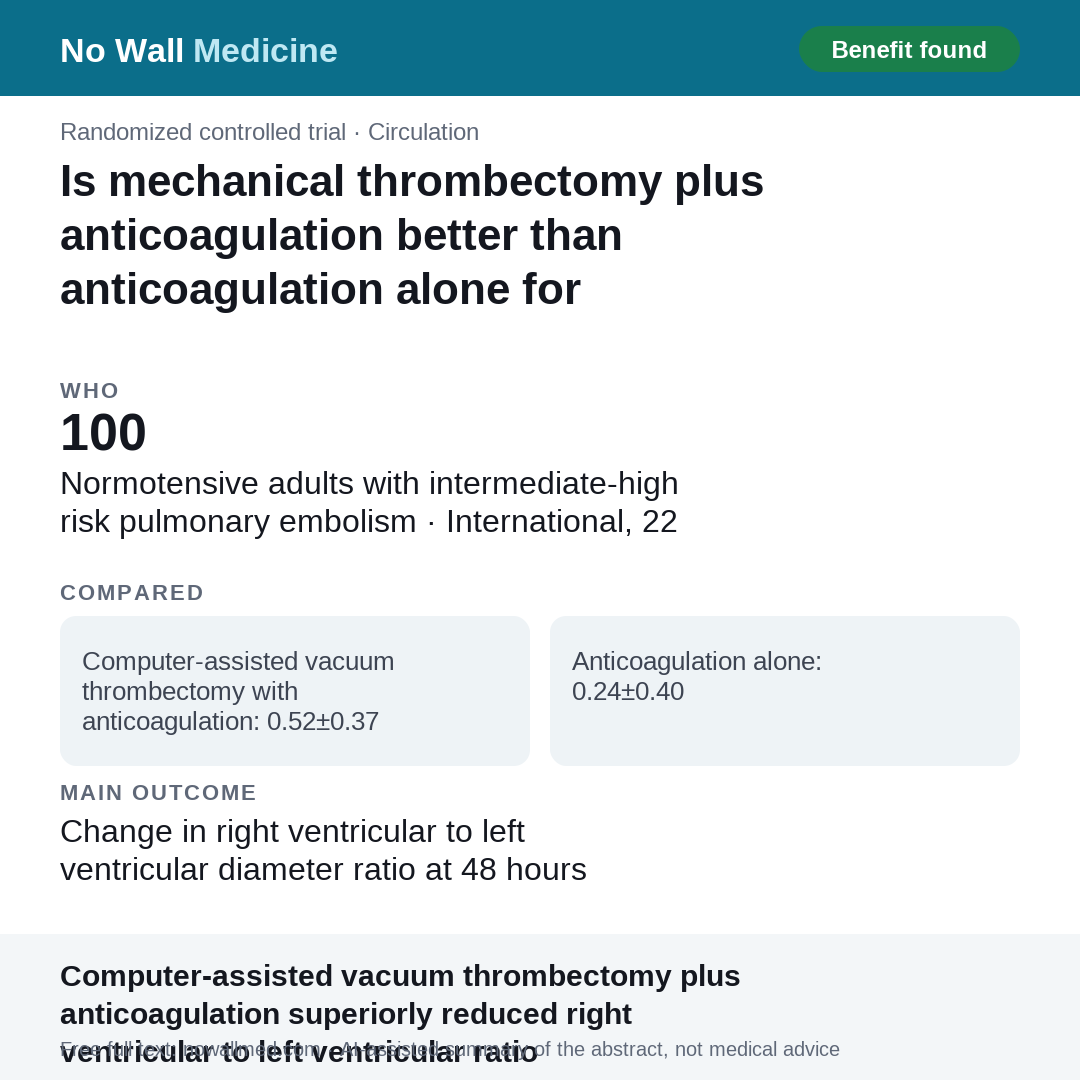
Randomized Controlled Trial of Mechanical Thrombectomy With Anticoagulation Versus Anticoagulation Alone for Acute Intermediate-High Risk Pulmonary Embolism: Primary Outcomes From the STORM-PE Trial
Randomized controlled trialBenefit found
Is mechanical thrombectomy plus anticoagulation better than anticoagulation alone for intermediate-high risk pulmonary embolism?
Who
100
Normotensive adults with intermediate-high risk pulmonary embolism · International, 22 sites
Compared
Computer-assisted vacuum thrombectomy with anticoagulation: 0.52±0.37
Anticoagulation alone: 0.24±0.40
Main outcome
Change in right ventricular to left ventricular diameter ratio at 48 hours
Result: difference of 0.27 (95% CI, 0.12-0.43)
Bottom line: Computer-assisted vacuum thrombectomy plus anticoagulation superiorly reduced right ventricular to left ventricular ratio compared to anticoagulation alone.
Circulation · 2025-11-03Download image
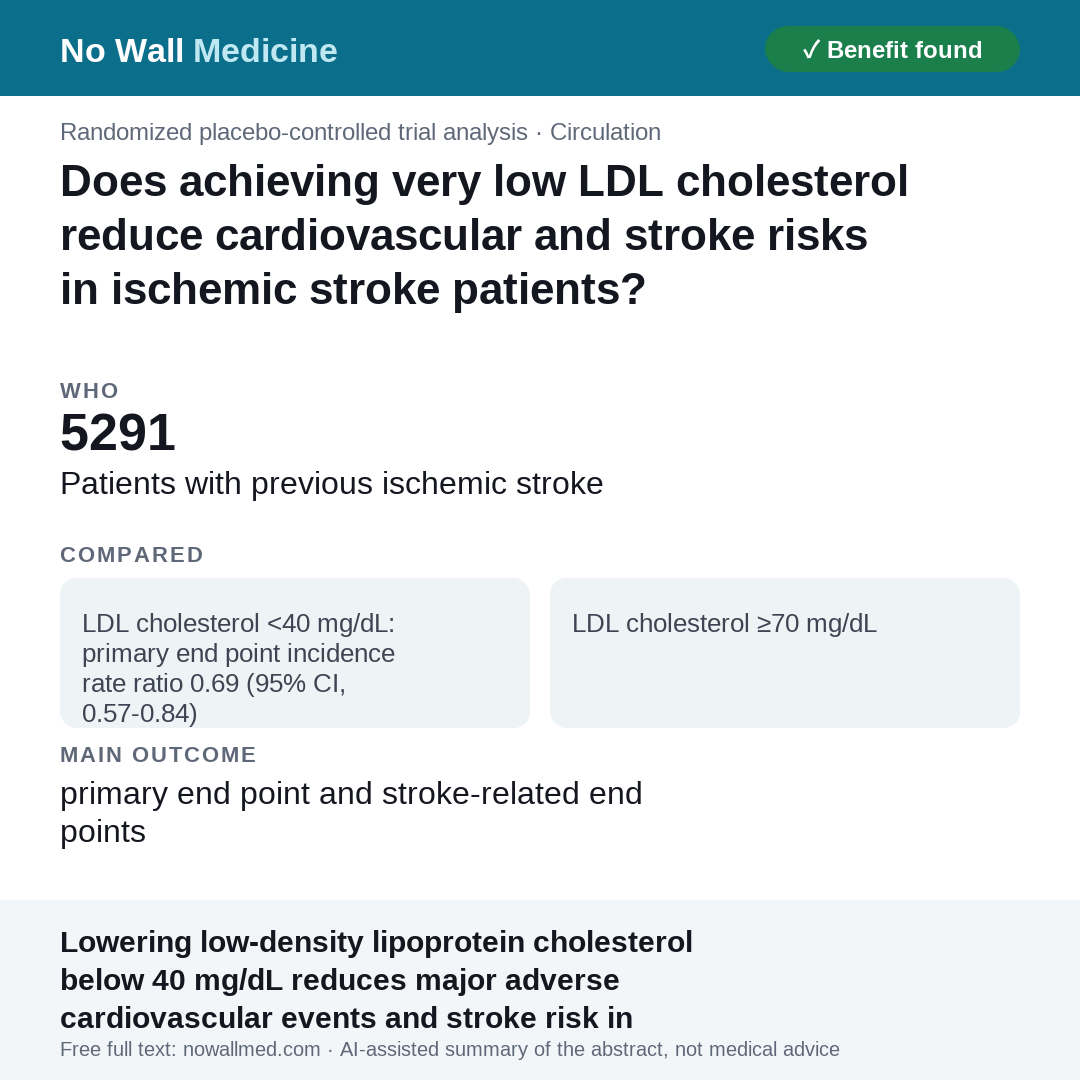
Efficacy and Safety of Very Low Achieved LDL Cholesterol in Patients With Previous Ischemic Stroke
Randomized placebo-controlled trial analysisBenefit found
Does achieving very low LDL cholesterol reduce cardiovascular and stroke risks in ischemic stroke patients?
Who
5291
Patients with previous ischemic stroke
Compared
LDL cholesterol <40 mg/dL: primary end point incidence rate ratio 0.69 (95% CI, 0.57-0.84)
LDL cholesterol ≥70 mg/dL
Main outcome
primary end point and stroke-related end points
Result: incidence rate ratio 0.69 (95% CI, 0.57-0.84)
Bottom line: Lowering low-density lipoprotein cholesterol below 40 mg/dL reduces major adverse cardiovascular events and stroke risk in ischemic stroke patients.
Circulation · 2025-11-03Download image
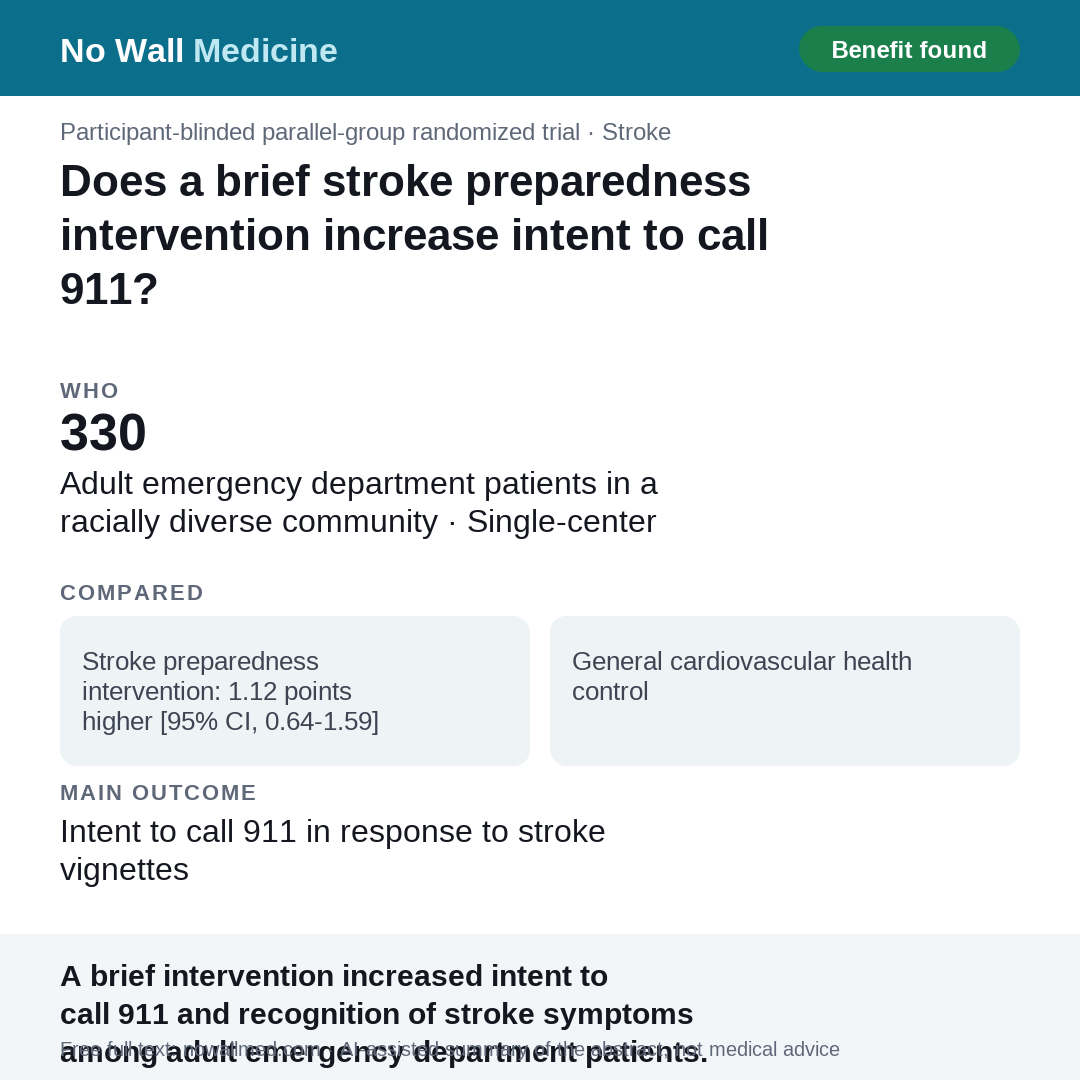
Partnering With an Urban Hospital for Stroke Preparedness in the Emergency Department: SPEDI Randomized Controlled Trial
Participant-blinded parallel-group randomized trialBenefit found
Does a brief stroke preparedness intervention increase intent to call 911?
Who
330
Adult emergency department patients in a racially diverse community · Single-center urban hospital
Compared
Stroke preparedness intervention: 1.12 points higher [95% CI, 0.64-1.59]
General cardiovascular health control
Main outcome
Intent to call 911 in response to stroke vignettes
Result: adjusted mean stroke action score difference, 1.12 points higher [95% CI, 0.64-1.59]
Bottom line: A brief intervention increased intent to call 911 and recognition of stroke symptoms among adult emergency department patients.
Funded by: National Institutes of Health
Stroke · 2025-11-03Download image
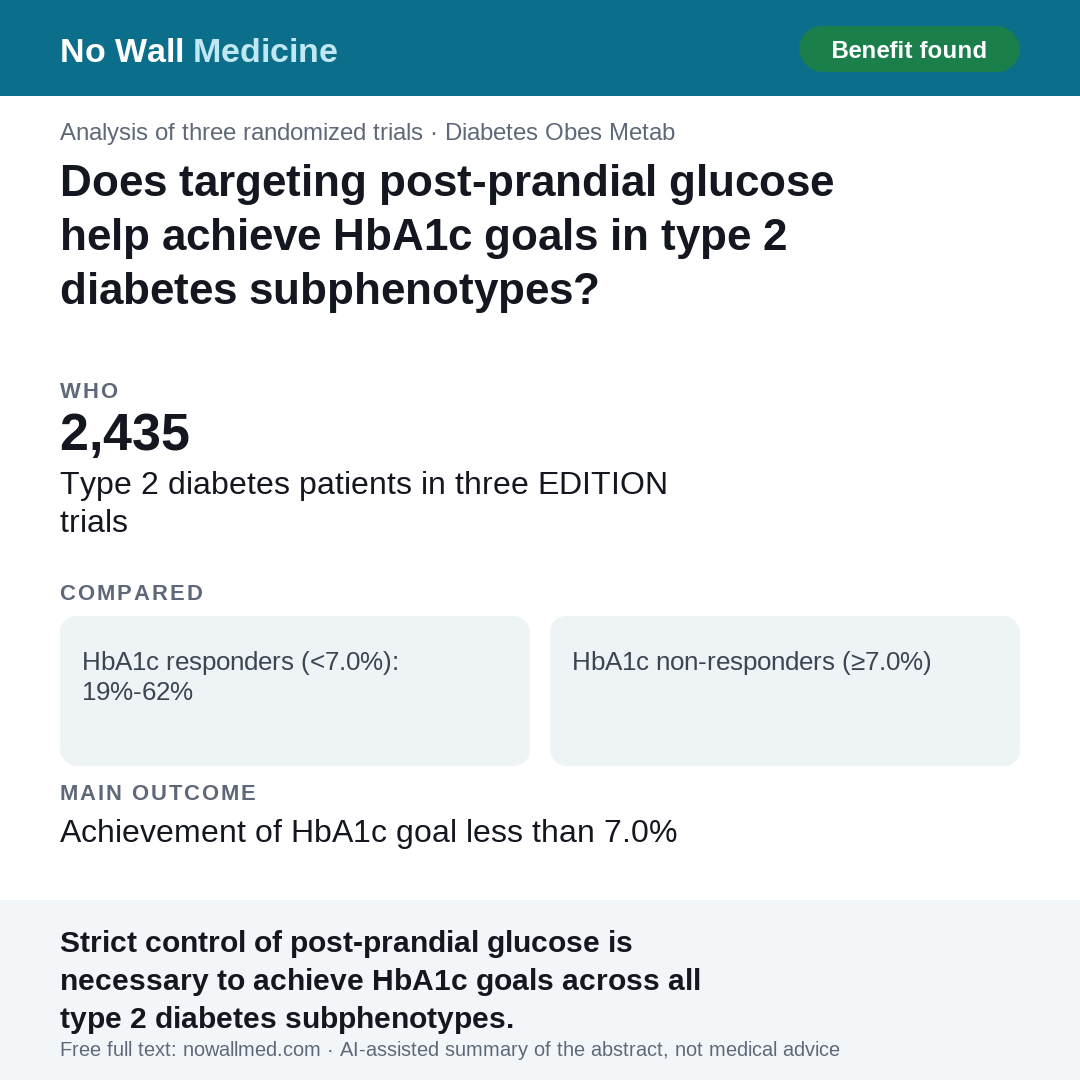
Importance of targeting post-prandial hyperglycaemia to achieve HbA1c goals in insulin glargine-treated subphenotypes of type 2 diabetes
Analysis of three randomized trialsBenefit found
Does targeting post-prandial glucose help achieve HbA1c goals in type 2 diabetes subphenotypes?
Who
2,435
Type 2 diabetes patients in three EDITION trials
Compared
HbA1c responders (<7.0%): 19%-62%
HbA1c non-responders (≥7.0%)
Main outcome
Achievement of HbA1c goal less than 7.0%
Bottom line: Strict control of post-prandial glucose is necessary to achieve HbA1c goals across all type 2 diabetes subphenotypes.
Diabetes Obes Metab · 2025-11-03Download image
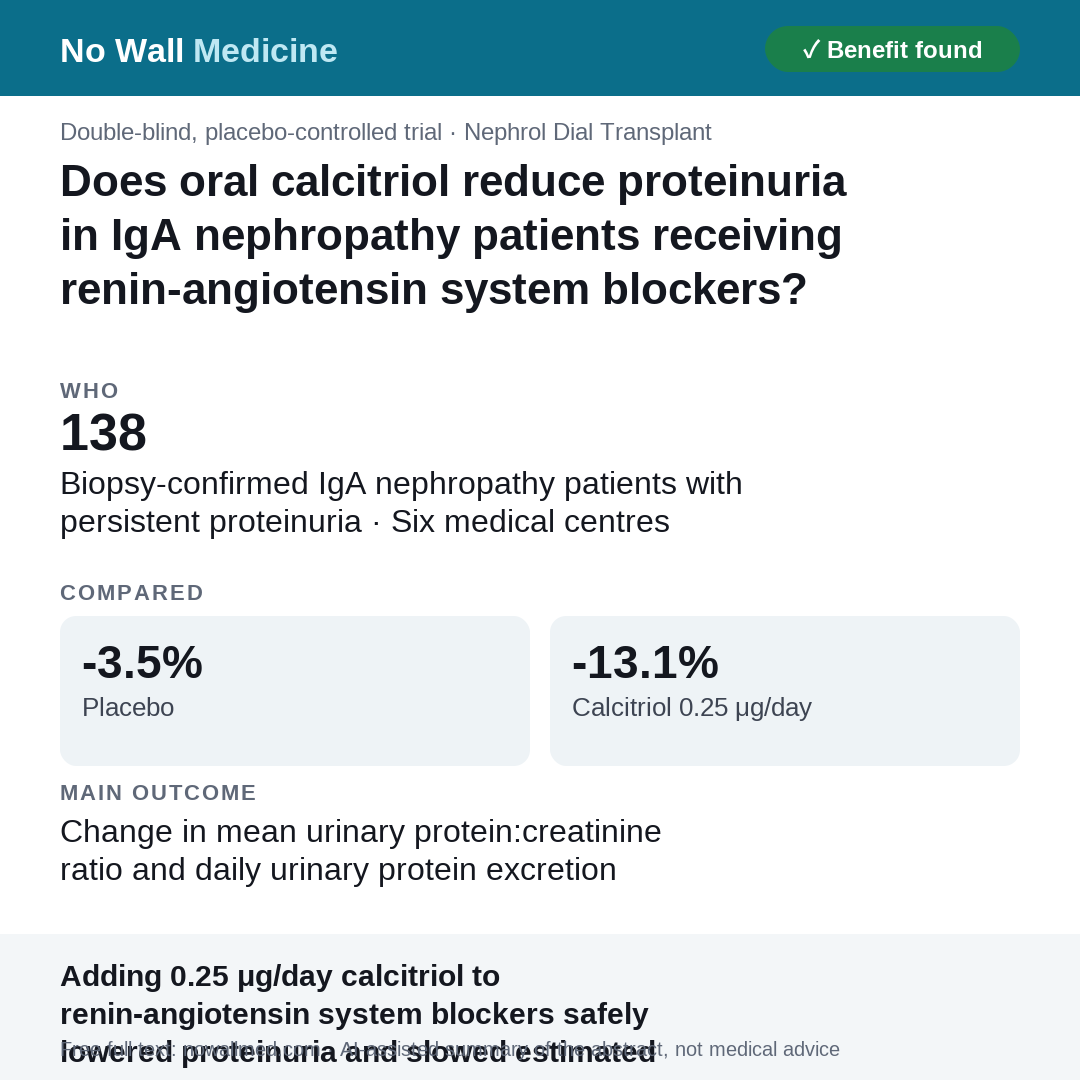
Additive renoprotective effects of oral calcitriol on patients with IgA nephropathy receiving RAS blockers
Double-blind, placebo-controlled trialBenefit found
Does oral calcitriol reduce proteinuria in IgA nephropathy patients receiving renin-angiotensin system blockers?
Who
138
Biopsy-confirmed IgA nephropathy patients with persistent proteinuria · Six medical centres
Compared
-3.5%Placebo (from 1.32 to 1.02 g/day)
-13.1%Calcitriol 0.25 μg/day (from 1.29 to 0.97 g/day)
Main outcome
Change in mean urinary protein:creatinine ratio and daily urinary protein excretion
Result: mean difference -187 mg/g [95% confidence interval -370.6 to -4.0]
Bottom line: Adding 0.25 μg/day calcitriol to renin-angiotensin system blockers safely lowered proteinuria and slowed estimated glomerular filtration rate decline.
Nephrol Dial Transplant · 2025-11-03Download image
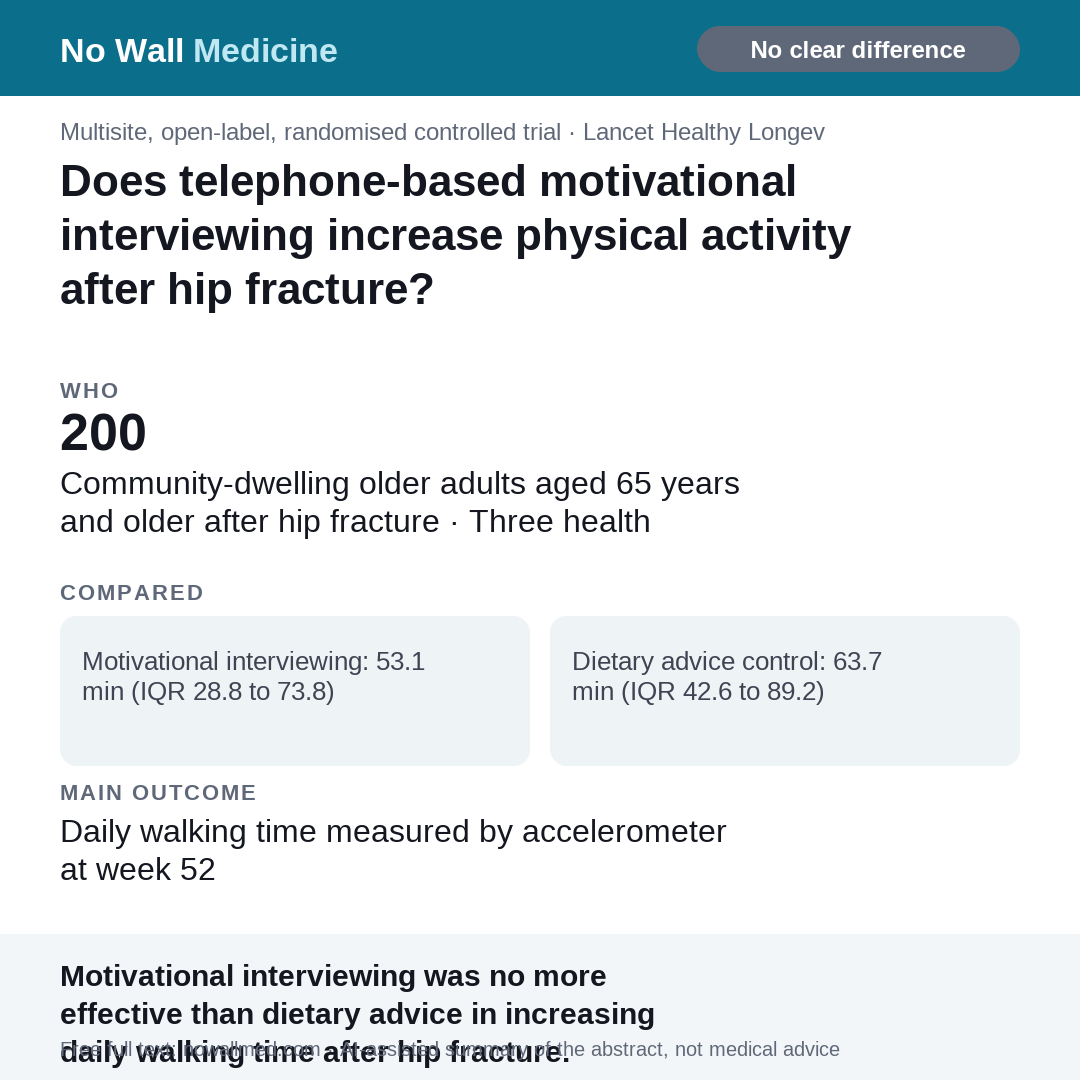
The effect of motivational interviewing on physical activity after hip fracture: a multisite, open-label, randomised controlled trial in Australia
Multisite, open-label, randomised controlled trialNo clear difference
Does telephone-based motivational interviewing increase physical activity after hip fracture?
Who
200
Community-dwelling older adults aged 65 years and older after hip fracture · Three health networks in Melbourne, Australia
Compared
Motivational interviewing: 53.1 min (IQR 28.8 to 73.8)
Dietary advice control: 63.7 min (IQR 42.6 to 89.2)
Main outcome
Daily walking time measured by accelerometer at week 52
Result: mean difference 4.1% (95% CI -16.6 to 21.1)
Bottom line: Motivational interviewing was no more effective than dietary advice in increasing daily walking time after hip fracture.
Funded by: National Health and Medical Research Council, Australia
Lancet Healthy Longev · 2025-11-03Download image
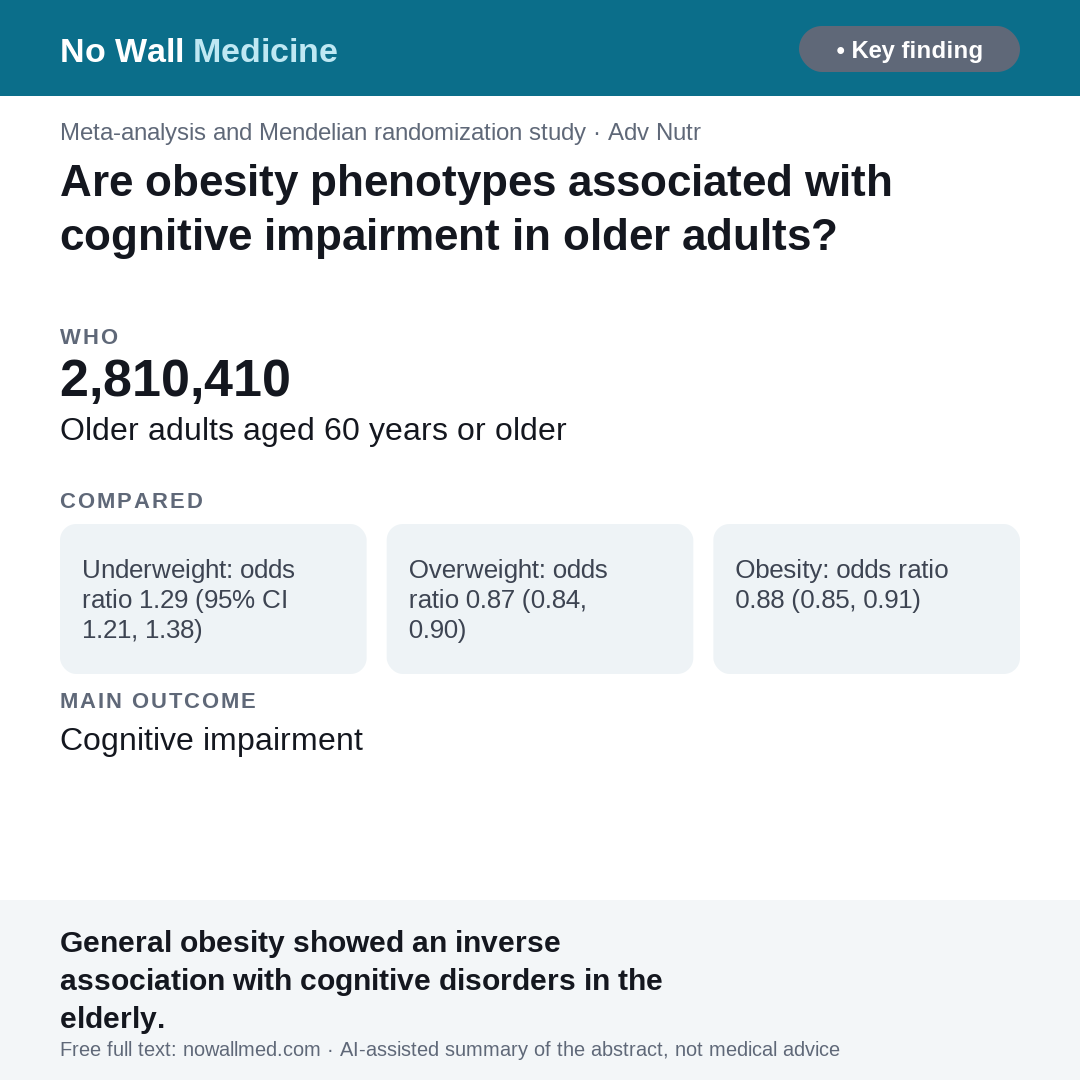
The Associations of General, Central, Visceral Obesity, and Body Fat Percentage with Cognitive Impairment in the Elderly: Meta-analysis and Mendelian Randomization Study
Meta-analysis and Mendelian randomization studyKey finding
Are obesity phenotypes associated with cognitive impairment in older adults?
Who
2,810,410
Older adults aged 60 years or older
Compared
Underweight: odds ratio 1.29 (95% CI 1.21, 1.38)
Overweight: odds ratio 0.87 (0.84, 0.90)
Obesity: odds ratio 0.88 (0.85, 0.91)
Main outcome
Cognitive impairment
Bottom line: General obesity showed an inverse association with cognitive disorders in the elderly.
Adv Nutr · 2025-11-03Download image
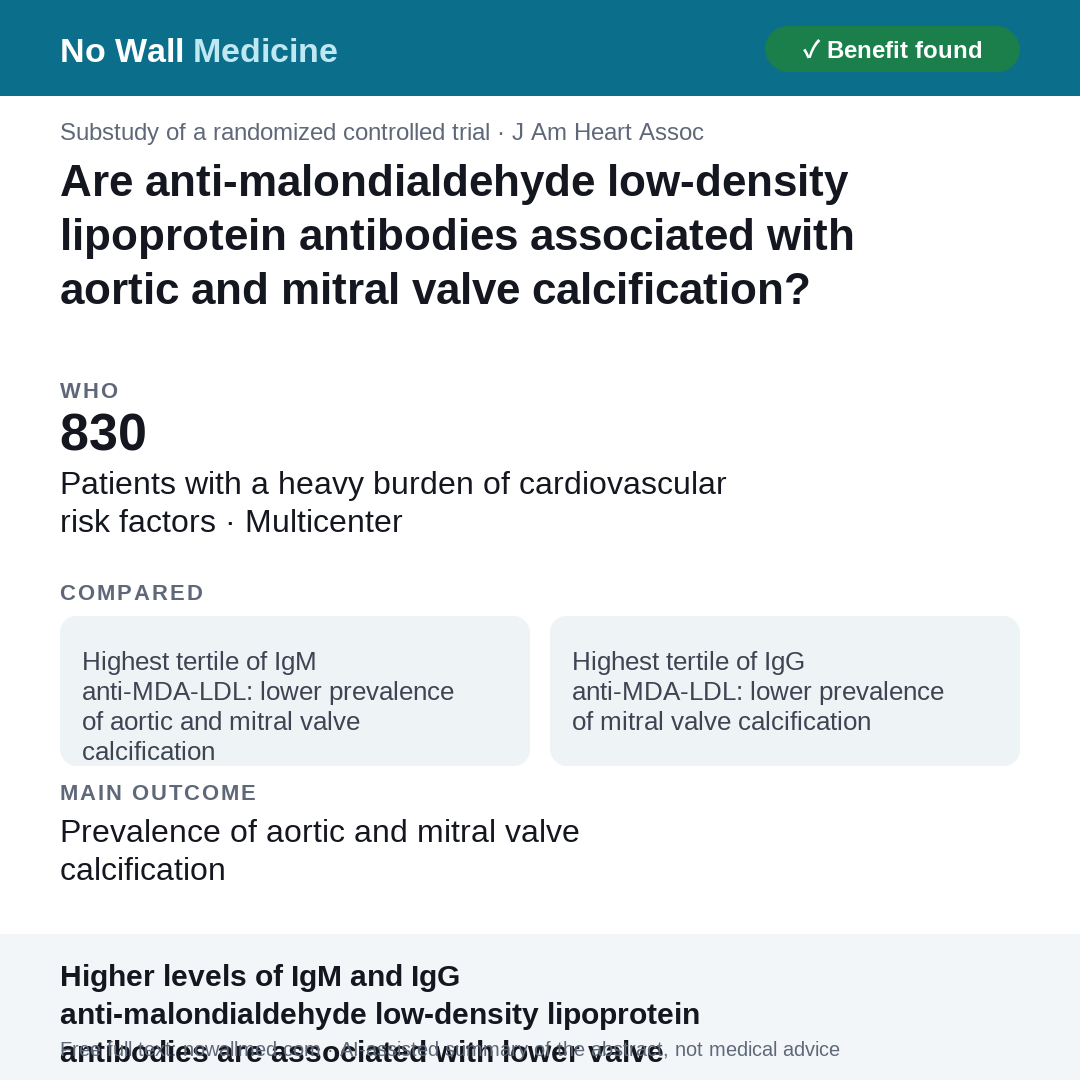
Anti-Malondialdehyde Low-Density Lipoprotein Antibodies and Valvular Calcification: A Substudy of the SCOT-HEART Trial
Substudy of a randomized controlled trialBenefit found
Are anti-malondialdehyde low-density lipoprotein antibodies associated with aortic and mitral valve calcification?
Who
830
Patients with a heavy burden of cardiovascular risk factors · Multicenter
Compared
Highest tertile of IgM anti-MDA-LDL: lower prevalence of aortic and mitral valve calcification
Highest tertile of IgG anti-MDA-LDL: lower prevalence of mitral valve calcification
Main outcome
Prevalence of aortic and mitral valve calcification
Result: odds ratio 0.59 (95% CI 0.36-0.96) for aortic; odds ratio 0.26 (95% CI 0.07-0.72) for mitral
Bottom line: Higher levels of IgM and IgG anti-malondialdehyde low-density lipoprotein antibodies are associated with lower valve calcification prevalence.
J Am Heart Assoc · 2025-11-03Download image
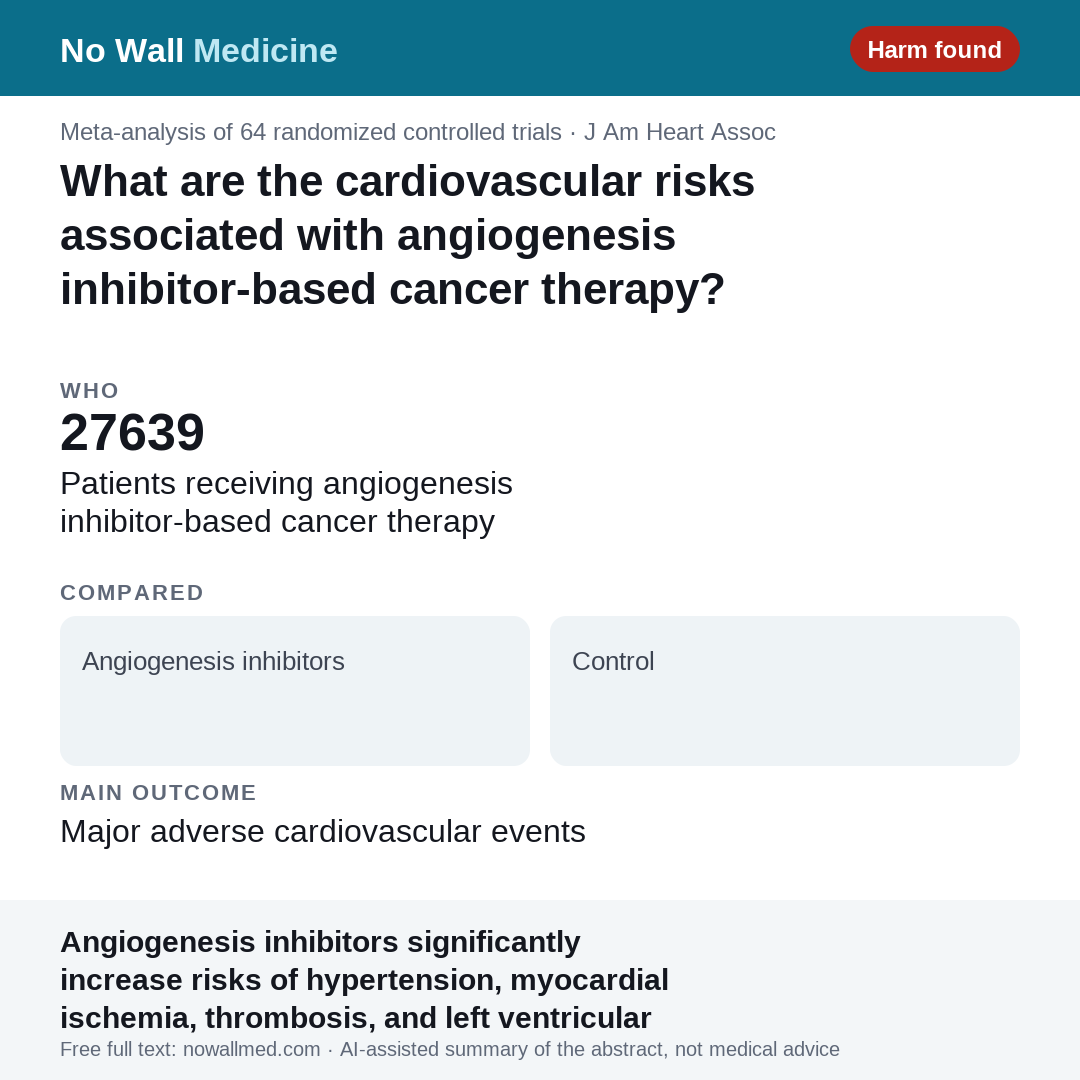
Major Adverse Cardiovascular Events in Angiogenesis Inhibitor-Based Cancer Therapy: A Systematic Review and Meta-Analysis
Meta-analysis of 64 randomized controlled trialsHarm found
What are the cardiovascular risks associated with angiogenesis inhibitor-based cancer therapy?
Who
27639
Patients receiving angiogenesis inhibitor-based cancer therapy
Compared
Angiogenesis inhibitors
Control
Main outcome
Major adverse cardiovascular events
Result: hypertension relative risk 3.28 (95% CI 2.82-4.30)
Bottom line: Angiogenesis inhibitors significantly increase risks of hypertension, myocardial ischemia, thrombosis, and left ventricular dysfunction in cancer patients.
J Am Heart Assoc · 2025-11-03Download image
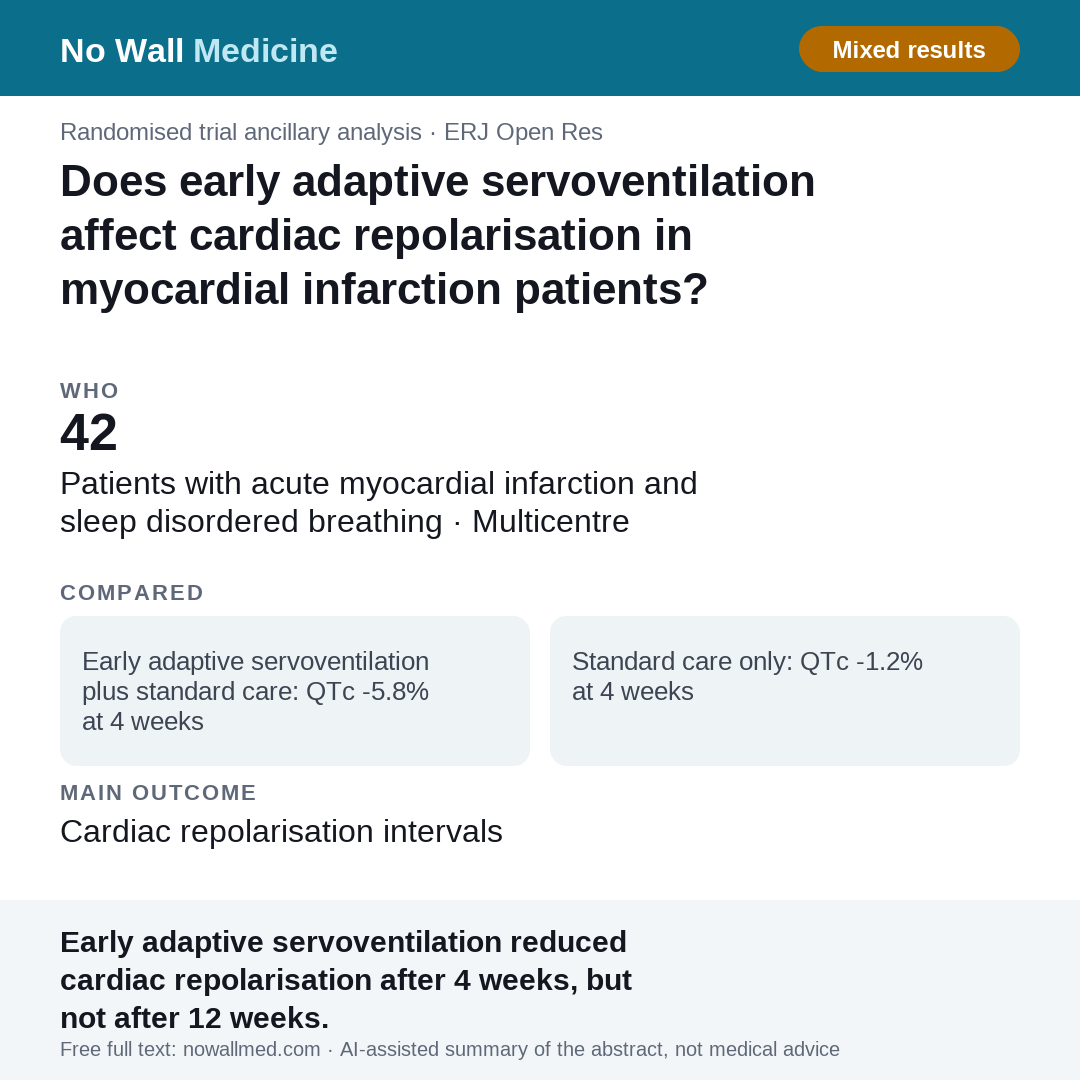
Effect of early adaptive servoventilation on cardiac repolarisation in patients with myocardial infarction and sleep disordered breathing: an ancillary analysis of the randomised controlled trial TEAM-ASV I
Randomised trial ancillary analysisMixed results
Does early adaptive servoventilation affect cardiac repolarisation in myocardial infarction patients?
Who
42
Patients with acute myocardial infarction and sleep disordered breathing · Multicentre
Compared
Early adaptive servoventilation plus standard care: QTc -5.8% at 4 weeks
Standard care only: QTc -1.2% at 4 weeks
Main outcome
Cardiac repolarisation intervals
Bottom line: Early adaptive servoventilation reduced cardiac repolarisation after 4 weeks, but not after 12 weeks.
ERJ Open Res · 2025-11-03Download image
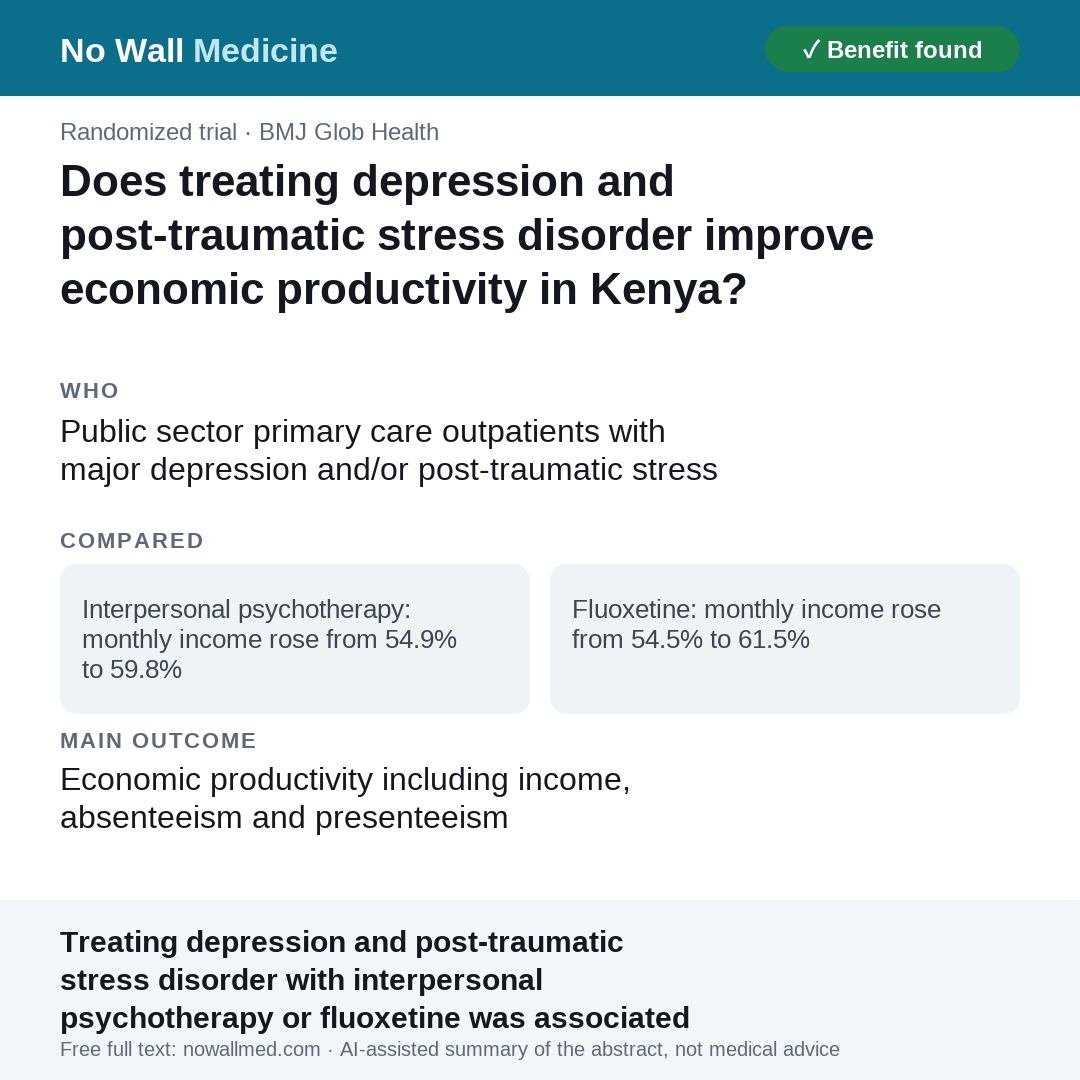
Productivity benefits of treatment of depression and post-traumatic stress disorder in Kenya
Randomized trialBenefit found
Does treating depression and post-traumatic stress disorder improve economic productivity in Kenya?
Who
Public sector primary care outpatients with major depression and/or post-traumatic stress disorder · Kiumu County Hospital, western Kenya
Compared
Interpersonal psychotherapy: monthly income rose from 54.9% to 59.8%
Fluoxetine: monthly income rose from 54.5% to 61.5%
Main outcome
Economic productivity including income, absenteeism and presenteeism
Bottom line: Treating depression and post-traumatic stress disorder with interpersonal psychotherapy or fluoxetine was associated with increased economic productivity.
Funded by: National Institute of Mental Health
BMJ Glob Health · 2025-11-03Download image
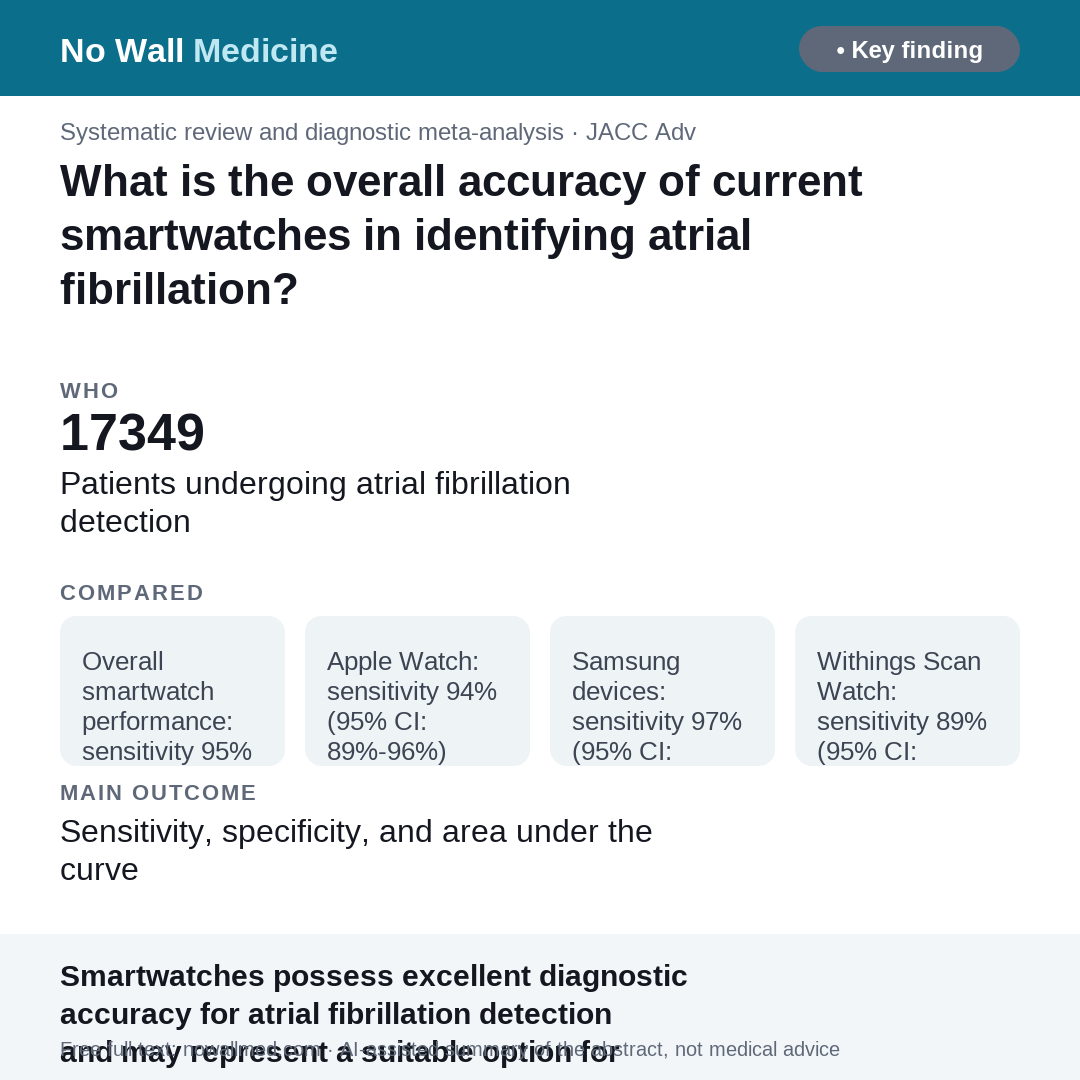
Accuracy of Smartwatches in the Detection of Atrial Fibrillation: A Systematic Review and Diagnostic Meta-Analysis
Systematic review and diagnostic meta-analysisKey finding
What is the overall accuracy of current smartwatches in identifying atrial fibrillation?
Who
17349
Patients undergoing atrial fibrillation detection
Compared
Overall smartwatch performance: sensitivity 95% (95% CI: 92%-97%)
Apple Watch: sensitivity 94% (95% CI: 89%-96%)
Samsung devices: sensitivity 97% (95% CI: 92%-99%)
Withings Scan Watch: sensitivity 89% (95% CI: 75%-96%)
Main outcome
Sensitivity, specificity, and area under the curve
Result: pooled AUC 0.97 (95% CI 0.96%-0.99%)
Bottom line: Smartwatches possess excellent diagnostic accuracy for atrial fibrillation detection and may represent a suitable option for patients.
JACC Adv · 2025-11-03Download image
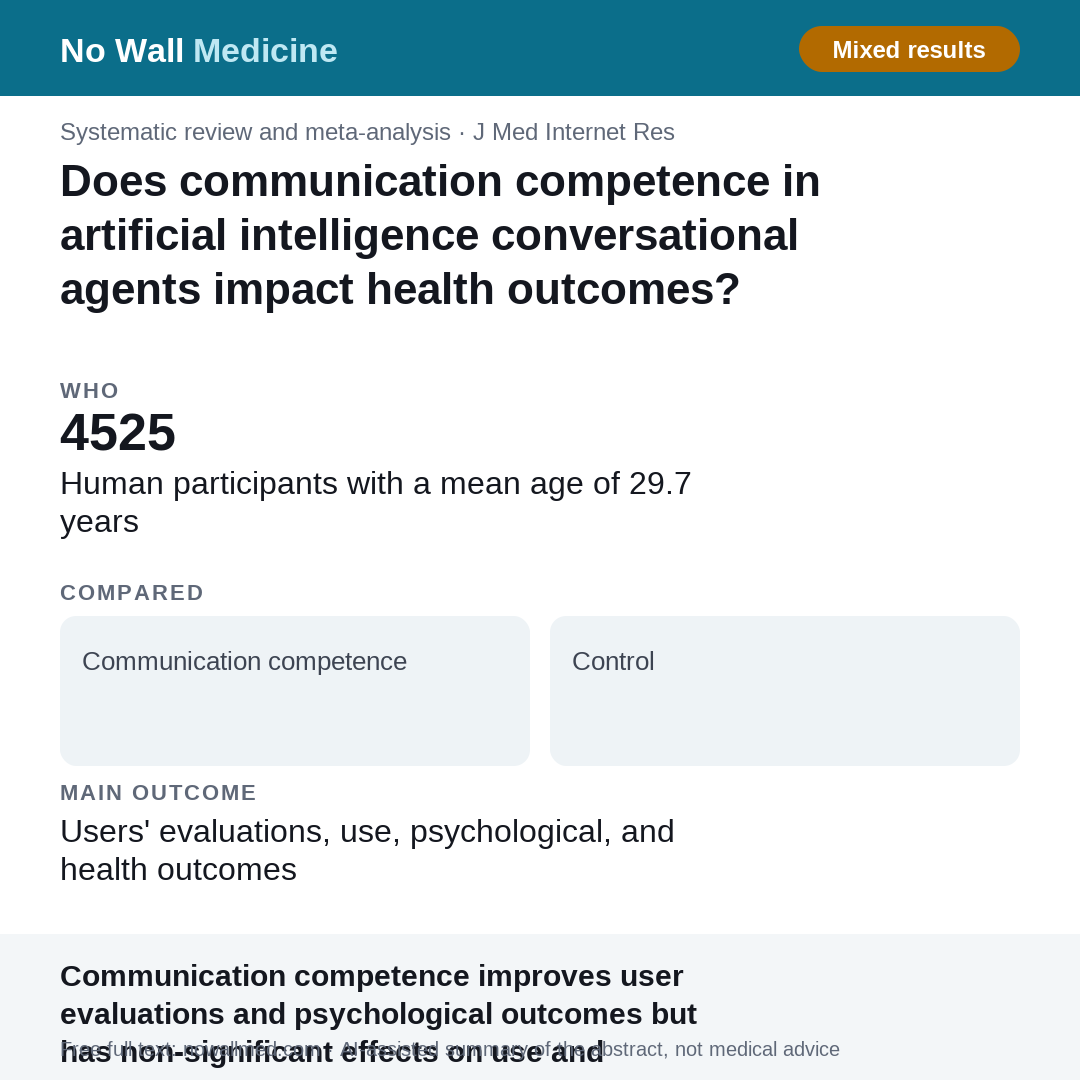
Effectiveness of Communication Competence in AI Conversational Agents for Health: Systematic Review and Meta-Analysis
Systematic review and meta-analysisMixed results
Does communication competence in artificial intelligence conversational agents impact health outcomes?
Who
4525
Human participants with a mean age of 29.7 years
Compared
Communication competence
Control
Main outcome
Users' evaluations, use, psychological, and health outcomes
Result: Hedges g=0.45 (95% CI 0.24-0.66) for evaluations; Hedges g=0.49 (95% CI 0.19-0.78) for psychological outcomes
Bottom line: Communication competence improves user evaluations and psychological outcomes but has non-significant effects on use and health outcomes.
Limitation: Limited number of studies examining health outcomes restricts robustness of effectiveness on that outcome.
J Med Internet Res · 2025-11-03Download image
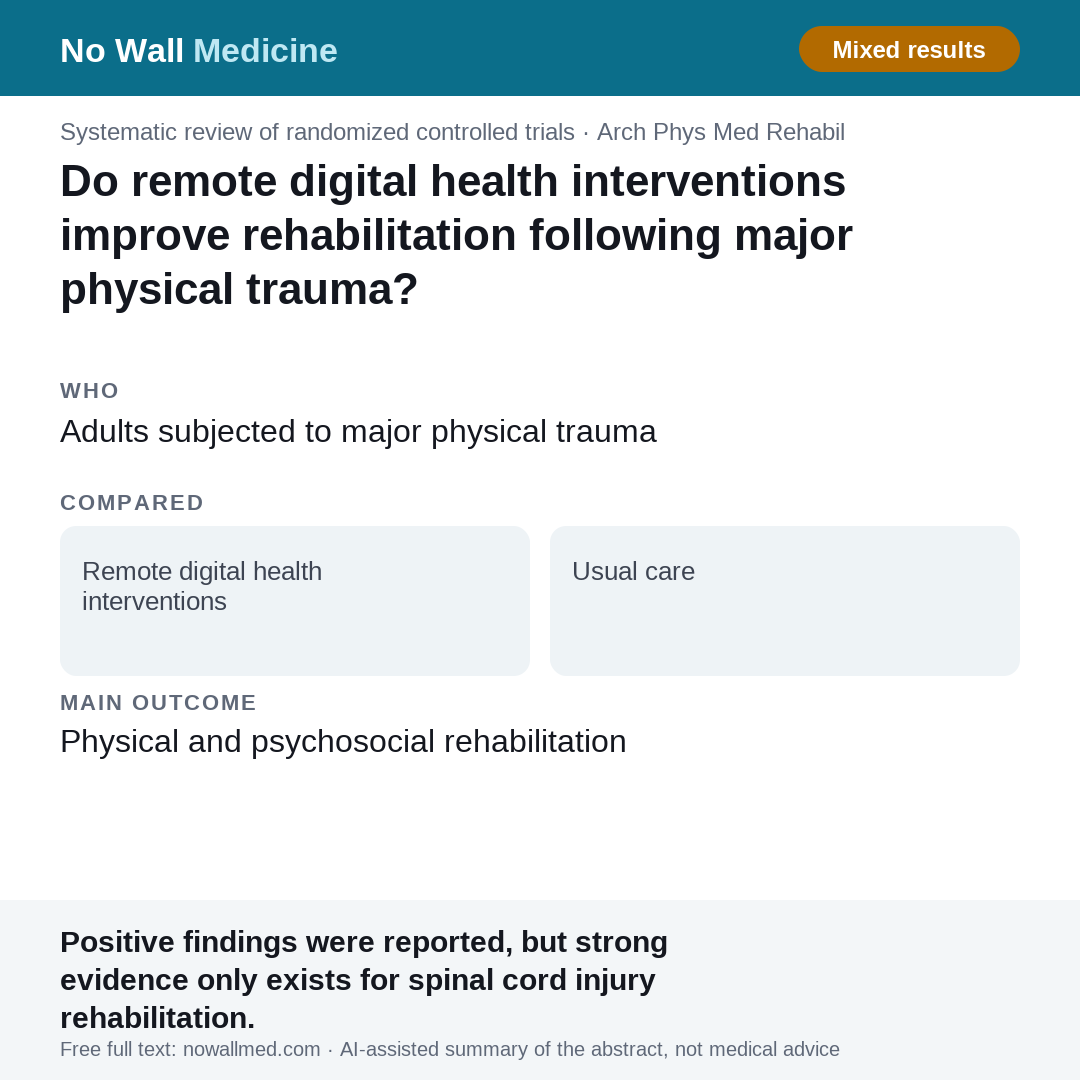
Can Remote Digital Health Interventions Improve Rehabilitation Following Major Trauma? Results of a Systematic Review
Systematic review of randomized controlled trialsMixed results
Do remote digital health interventions improve rehabilitation following major physical trauma?
Who
Adults subjected to major physical trauma
Compared
Remote digital health interventions
Usual care
Main outcome
Physical and psychosocial rehabilitation
Bottom line: Positive findings were reported, but strong evidence only exists for spinal cord injury rehabilitation.
Limitation: Studies need adequate power and diverse populations to measure effectiveness and cost effectiveness.
Arch Phys Med Rehabil · 2025-11-02Download image
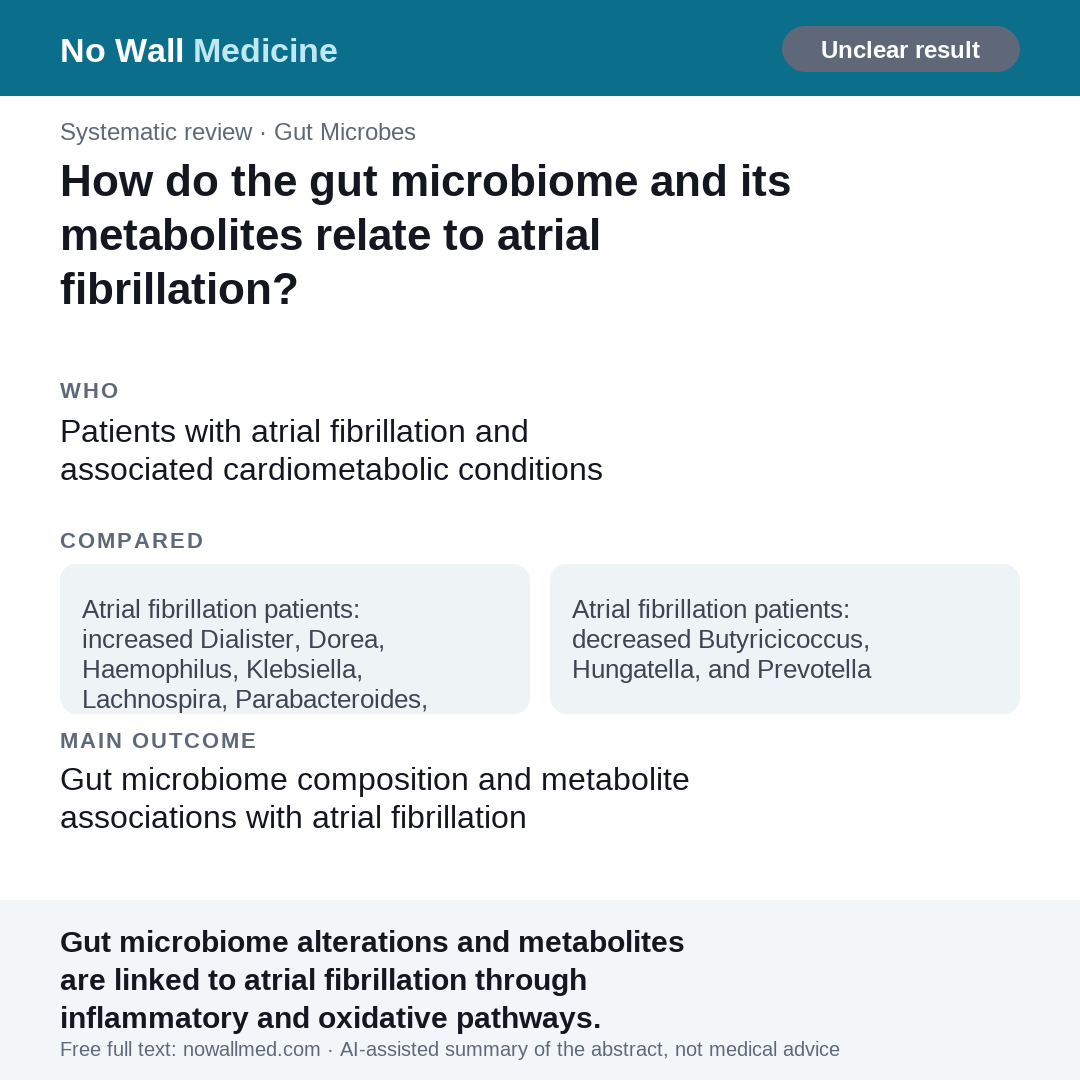
Gut microbiome and atrial fibrillation: mechanistic insights metabolites and comorbidities. Systematic review
Systematic reviewUnclear result
How do the gut microbiome and its metabolites relate to atrial fibrillation?
Who
Patients with atrial fibrillation and associated cardiometabolic conditions
Compared
Atrial fibrillation patients: increased Dialister, Dorea, Haemophilus, Klebsiella, Lachnospira, Parabacteroides, Ruminococcus, and Veillonella
Atrial fibrillation patients: decreased Butyricicoccus, Hungatella, and Prevotella
Main outcome
Gut microbiome composition and metabolite associations with atrial fibrillation
Bottom line: Gut microbiome alterations and metabolites are linked to atrial fibrillation through inflammatory and oxidative pathways.
Limitation: current data are limited and more research is needed to clarify causality
Gut Microbes · 2025-11-02Download image
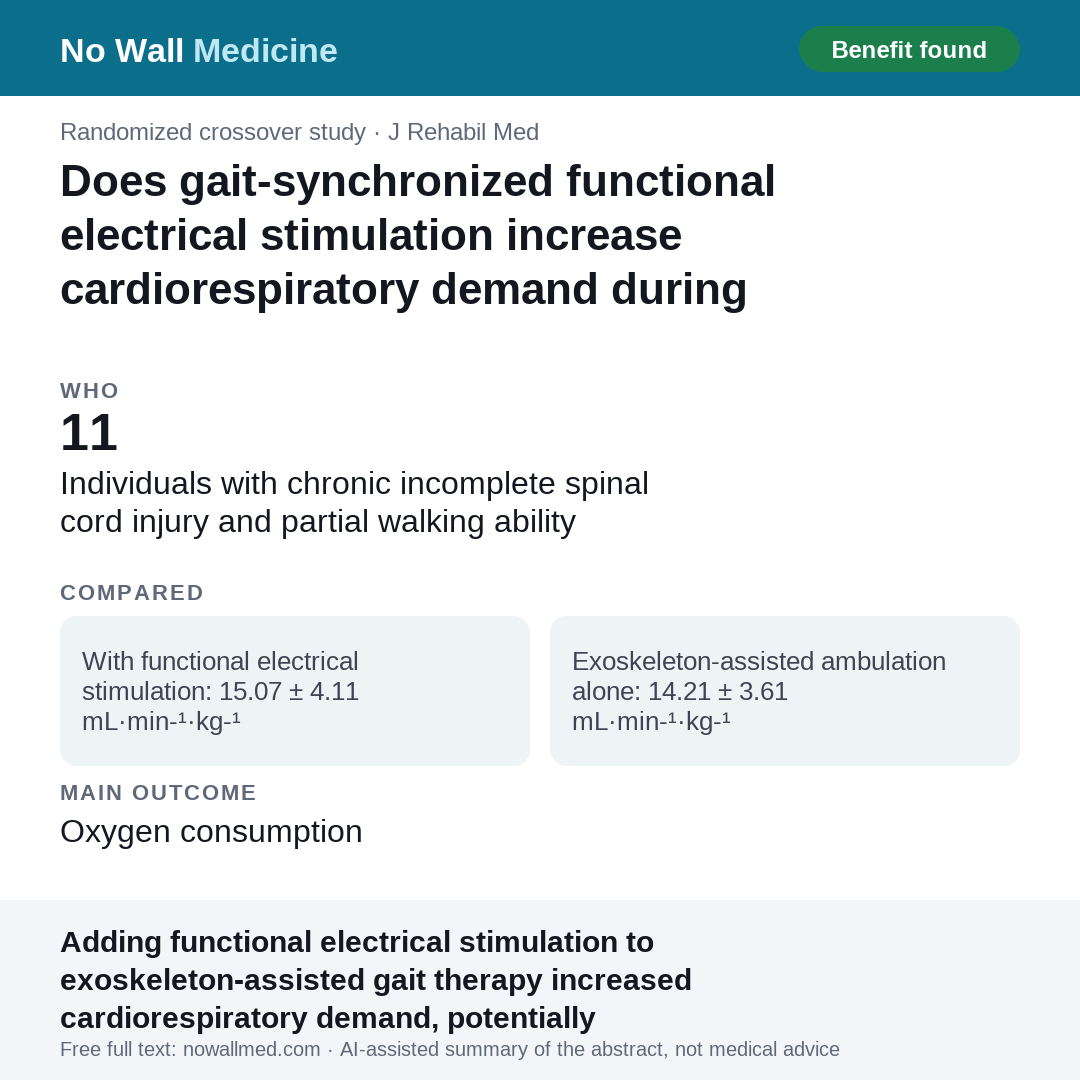
Influence of gait-synchronized functional electrical stimulation during exoskeleton-assisted ambulation on cardiorespiratory outcomes in individuals with incomplete spinal cord injury
Randomized crossover studyKey finding
Does gait-synchronized functional electrical stimulation increase cardiorespiratory demand during exoskeleton-assisted walking?
Who
11
Individuals with chronic incomplete spinal cord injury and partial walking ability
Compared
With functional electrical stimulation: 15.07 ± 4.11 mL·min-¹·kg-¹
Exoskeleton-assisted ambulation alone: 14.21 ± 3.61 mL·min-¹·kg-¹
Main outcome
Oxygen consumption
Bottom line: Adding functional electrical stimulation to exoskeleton-assisted gait therapy increased cardiorespiratory demand, potentially enhancing training intensity.
J Rehabil Med · 2025-11-02Download image
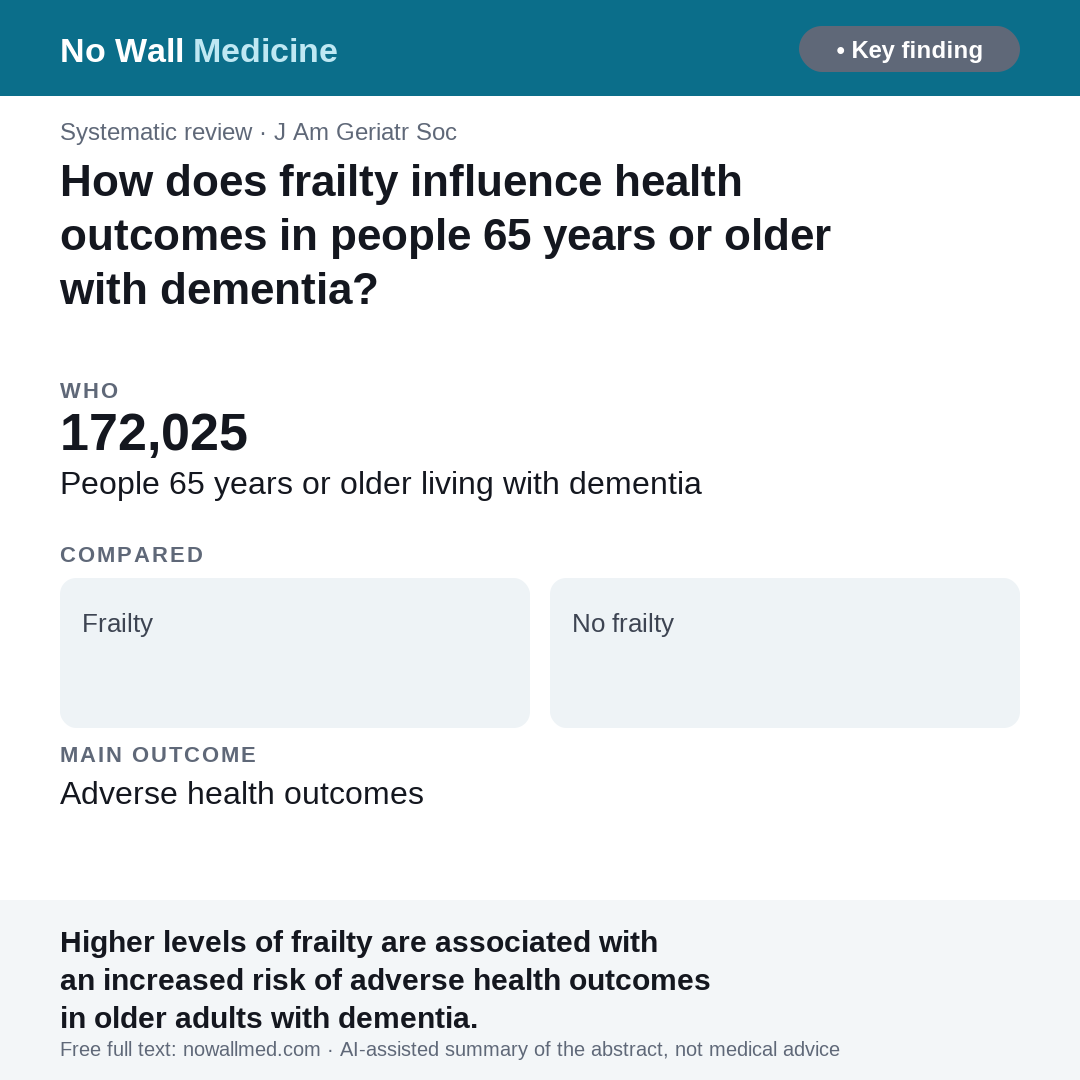
Frailty and Health Outcomes in People 65 Years or Older Living With Dementia: A Systematic Review of the Literature
Systematic reviewKey finding
How does frailty influence health outcomes in people 65 years or older with dementia?
Who
172,025
People 65 years or older living with dementia
Compared
Frailty
No frailty
Main outcome
Adverse health outcomes
Bottom line: Higher levels of frailty are associated with an increased risk of adverse health outcomes in older adults with dementia.
J Am Geriatr Soc · 2025-11-01Download image