Visual abstracts
New randomized trials and meta-analyses from leading journals at a glance: who was studied, what was compared, and what was found. Every paper is free to read in full.
All specialtiesCardiology 247Oncology 214Gastroenterology & Hepatology 119Infectious Disease 211Neurology 123Psychiatry & Mental Health 189Pulmonology 126Critical Care 78Endocrinology & Diabetes 149Pediatrics 117Surgery 83Orthopedics & Sports Medicine 52Neurosurgery 14Cardiothoracic & Vascular Surgery 28Plastic & Reconstructive Surgery 58Nephrology 56Rheumatology 56Hematology 69Dermatology 23Ophthalmology 42Obstetrics & Gynecology 81Public & Global Health 86Radiology & Imaging 23Anesthesiology 45Urology 62ENT (Otolaryngology) 36Emergency Medicine 26Allergy & Immunology 28Geriatrics 80Family Medicine & Primary Care 45Medical Genetics & Genomics 25Pathology & Laboratory Medicine 5Physical Medicine & Rehabilitation 68Palliative Care 41Nutrition 94Digital Health & AI 244General Medicine 37
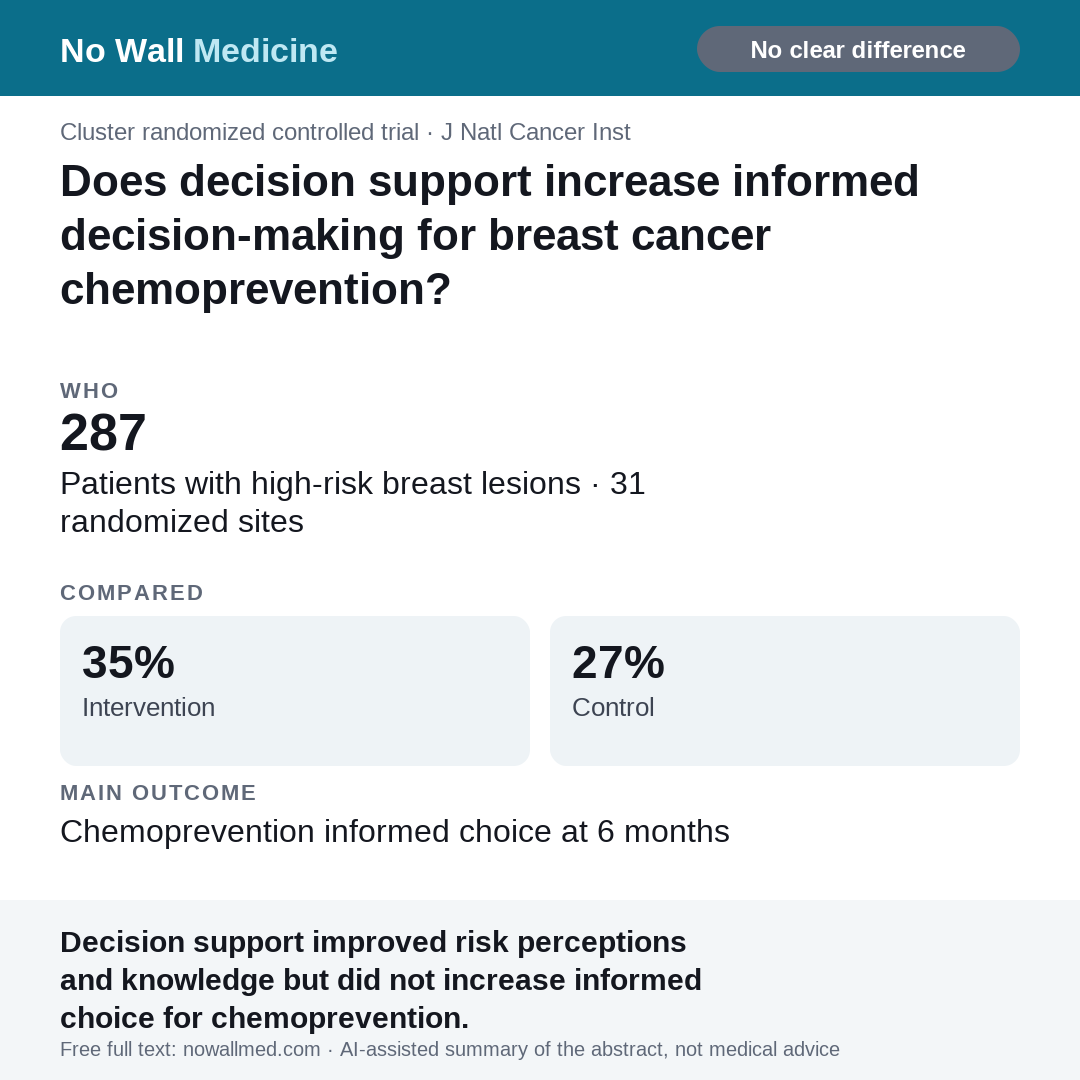
Cluster randomized controlled trial of decision support for breast cancer chemoprevention, MiCHOICE
Cluster randomized controlled trialNo clear difference
Does decision support increase informed decision-making for breast cancer chemoprevention?
Who
287
Patients with high-risk breast lesions · 31 randomized sites
Compared
35%Intervention (at 6 months)
27%Control (at 6 months)
Main outcome
Chemoprevention informed choice at 6 months
Bottom line: Decision support improved risk perceptions and knowledge but did not increase informed choice for chemoprevention.
J Natl Cancer Inst · 2026-07-02Download image
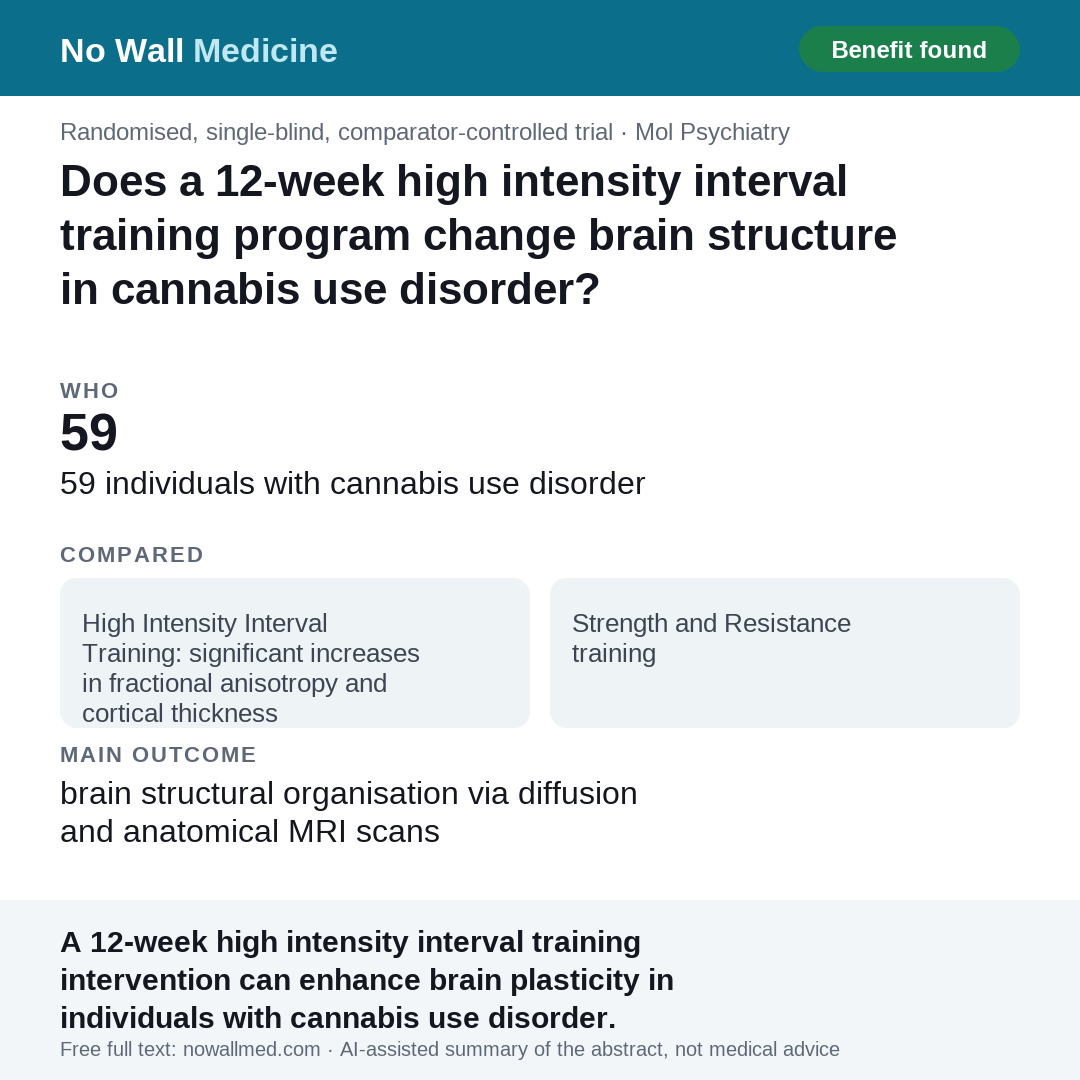
Exercise-induced brain changes in cannabis use disorder: a longitudinal MRI study of a 12-week supervised HIIT program
Randomised, single-blind, comparator-controlled trialBenefit found
Does a 12-week high intensity interval training program change brain structure in cannabis use disorder?
Who
59
59 individuals with cannabis use disorder
Compared
High Intensity Interval Training: significant increases in fractional anisotropy and cortical thickness
Strength and Resistance training
Main outcome
brain structural organisation via diffusion and anatomical MRI scans
Bottom line: A 12-week high intensity interval training intervention can enhance brain plasticity in individuals with cannabis use disorder.
Mol Psychiatry · 2026-07-02Download image
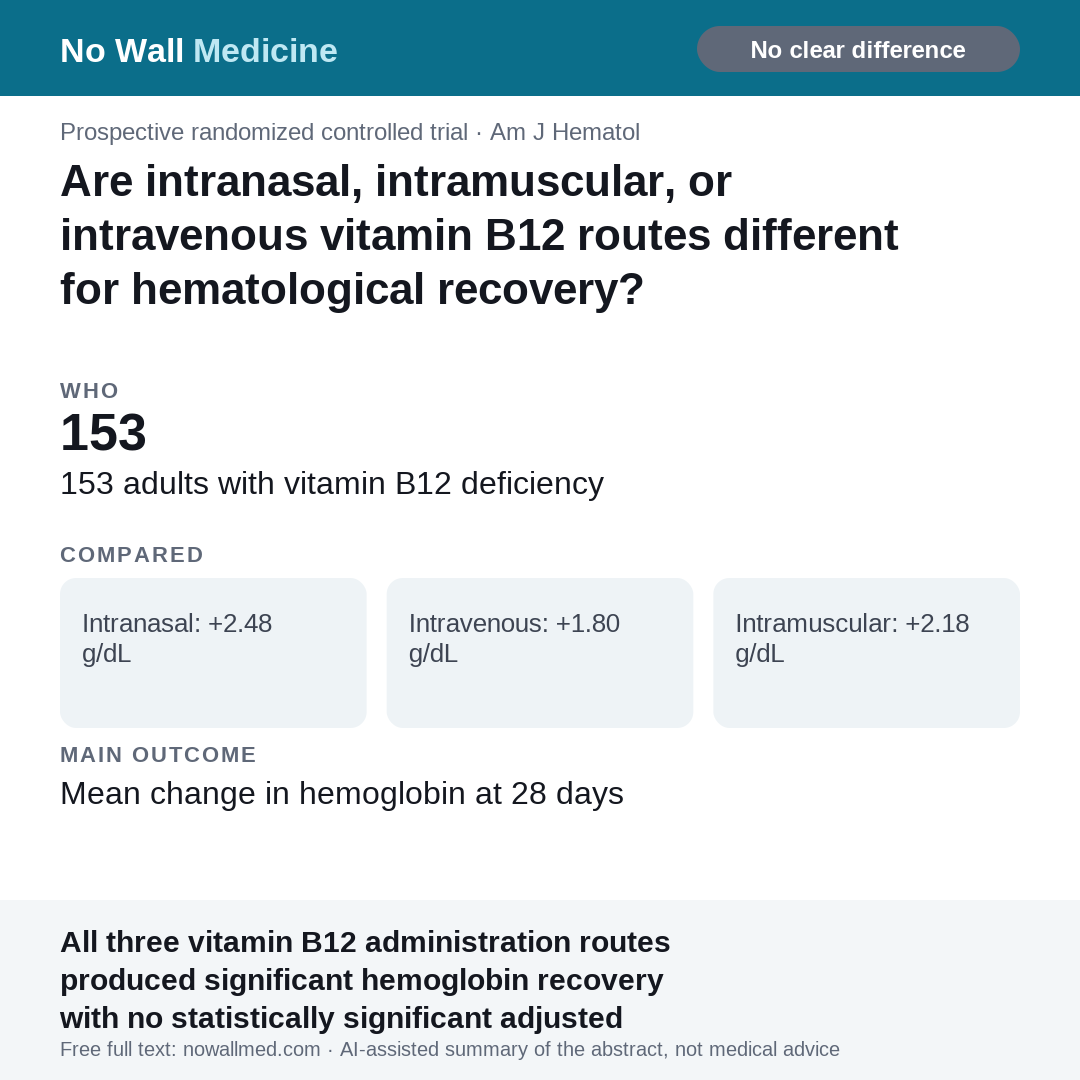
Comparative Efficacy of Intranasal, Intramuscular, and Intravenous Vitamin B12 Therapy for Hematological Recovery in Vitamin B12 Deficiency Anemia: A Randomized Controlled Trial
Prospective randomized controlled trialNo clear difference
Are intranasal, intramuscular, or intravenous vitamin B12 routes different for hematological recovery?
Who
153
153 adults with vitamin B12 deficiency
Compared
Intranasal: +2.48 g/dL
Intravenous: +1.80 g/dL
Intramuscular: +2.18 g/dL
Main outcome
Mean change in hemoglobin at 28 days
Bottom line: All three vitamin B12 administration routes produced significant hemoglobin recovery with no statistically significant adjusted differences.
Limitation: All conclusions are restricted to short-term hematological outcomes.
Am J Hematol · 2026-07-02Download image
Ablative radiotherapy in castration-resistant prostate cancer
Monocentric, randomised, phase II clinical trialMixed results
Does ablative radiotherapy benefit patients with up to five castration-resistant prostate cancer metastases?
Who
30
Patients with up to five prostate-specific membrane antigen-positive metastases · Single-centre
Compared
44%Metastasis-directed therapy
75%Observation
Main outcome
Proportion of patients having prostate-specific antigen progression within 1 year
Bottom line: Metastasis-directed therapy may extend time to prostate-specific antigen progression despite non-significant primary endpoint results.
Limitation: Single-centre design and small sample size at interim analysis
Funded by: TU Dresden
BJU Int · 2026-07-02Download image
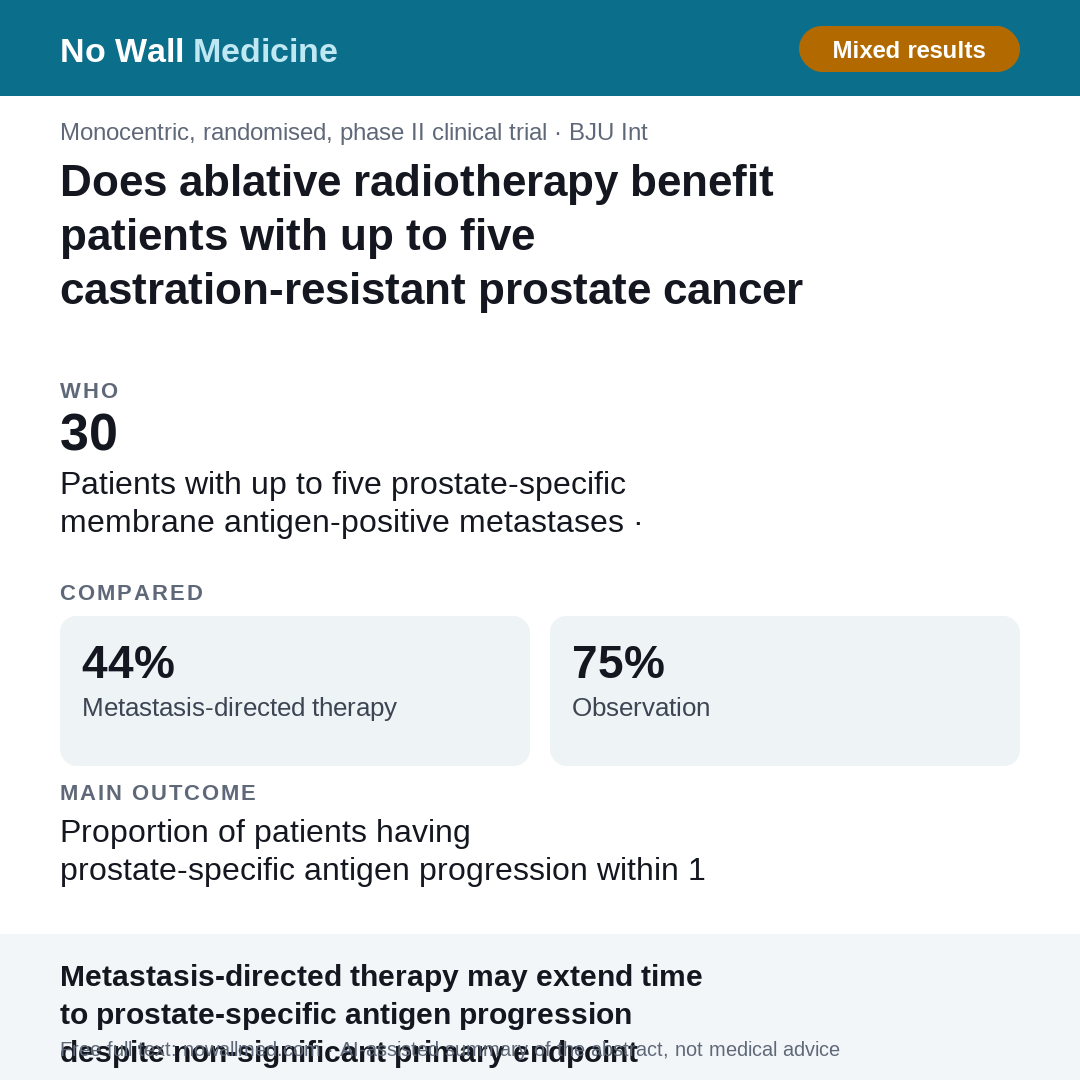
Sub-ulcer Ultrasound Guided Foam Sclerotherapy for Venous Leg Ulcers: Results of the FINNULCER Randomised Controlled Trial
Multicentre, non-blinded, parallel group, randomised controlled trialBenefit found
Does adding sub-ulcer ultrasound guided foam sclerotherapy to conventional treatment improve venous leg ulcer healing?
Who
73
Patients with venous leg ulcers · Four vascular surgery units in Finland
Compared
Study group (conventional plus sub-ulcer foam): median 55 days (95% CI 42-68 days)
Control group (conventional treatment only): median 91 days (95% CI 73-109 days)
Main outcome
Time to ulcer healing within 1 year
Result: hazard ratio 1.81 (95% CI 1.10-2.96)
Bottom line: Adding sub-ulcer ultrasound guided foam sclerotherapy to conventional treatment shortened ulcer healing time without increasing complication rates.
Eur J Vasc Endovasc Surg · 2026-07-02Download image
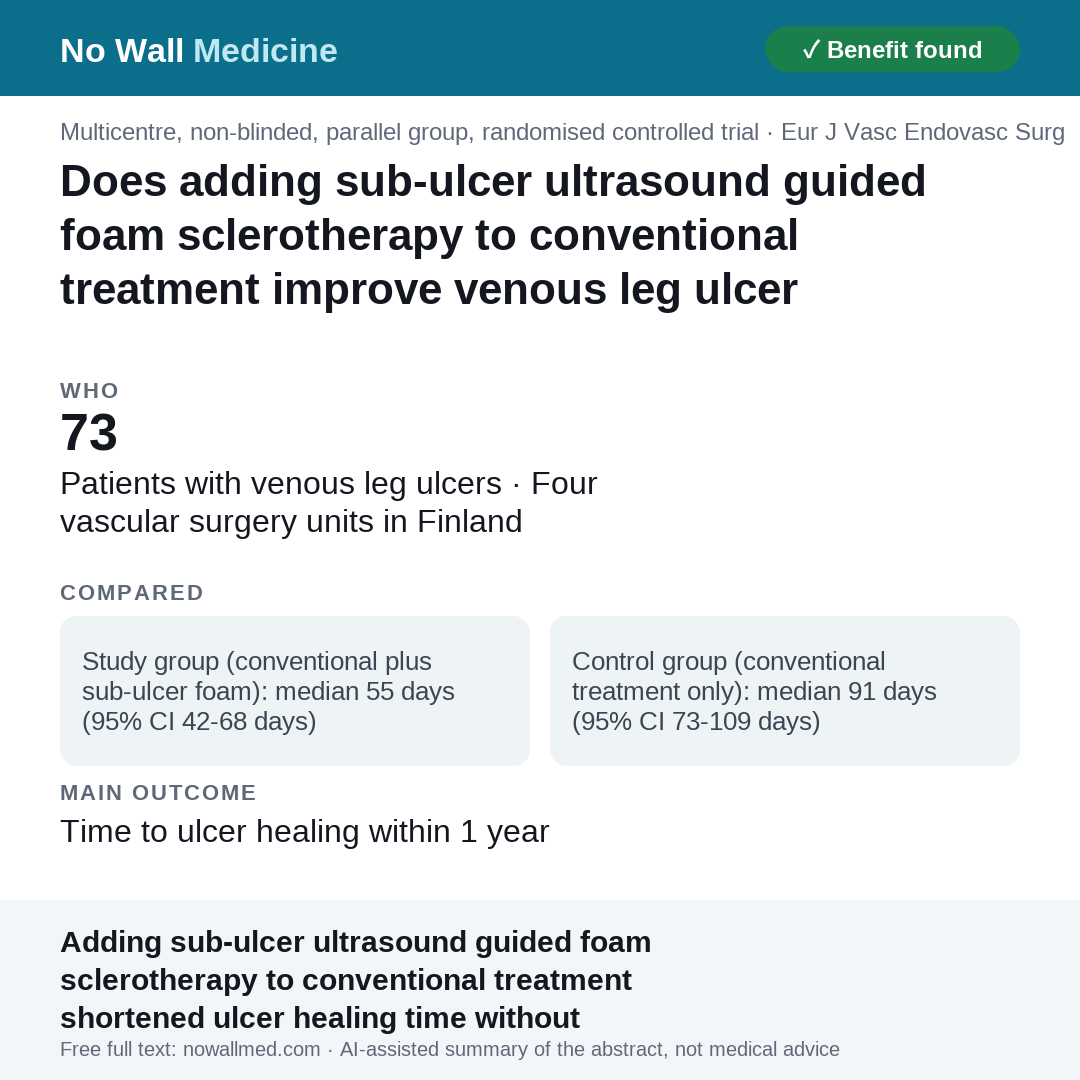
Histopathological Advantages of En Bloc Resection in Non-muscle-invasive Bladder Cancer: A Multinational Randomised Controlled Clinical Trial
Multinational randomized controlled trialMixed results
Is en bloc resection better than conventional transurethral resection for non-muscle-invasive bladder cancer?
Who
220
Patients with suspected non-muscle-invasive bladder cancer tumours measuring 1-4 cm · 11 sites in five countries
Compared
En bloc resection: 80% T-stage concordance
Conventional transurethral resection: 81% T-stage concordance
Main outcome
T-stage concordance between central review and initial pathology assessment
Result: -1.5% (95% CI, -12 to 9.3)
Bottom line: En bloc resection showed improved specimen orientation and reduced thermal damage but similar T-stage concordance compared to conventional resection.
Limitation: Lack of standardised specimen-handling procedures across sites leading to suboptimal preparation of some specimens.
Eur Urol Open Sci · 2026-07-02Download image
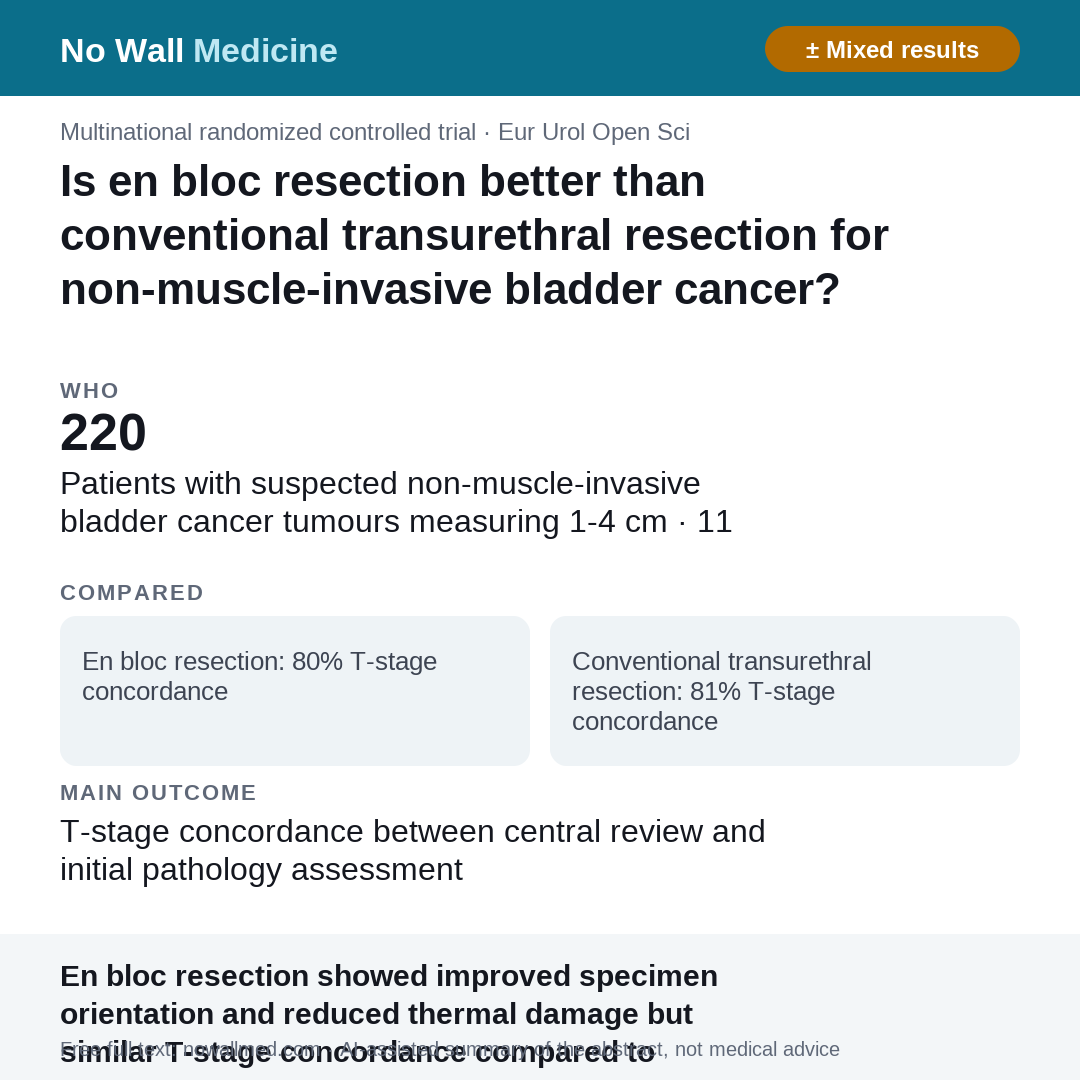
Eco-Focused Menu Labels on Full Meal Orders From Fast-Food Restaurants: A Randomized Clinical Trial
Randomized clinical trialMixed results
Do different ecolabel designs on fast-food menus affect meal healthfulness?
Who
6210
Nationally representative sample of adults in the United States · Online survey
Compared
Control: QR code: 49.25 [0.18] points
Traffic-light labels: 49.93 [0.18] points
Low-climate-impact labels
High-climate-impact labels
Main outcome
Healthfulness of meals based on modified Nutrient Profile Index score
Bottom line: Traffic-light labels promoted more healthful burger choices and lower greenhouse gas emissions without increasing costs.
JAMA Health Forum · 2026-07-02Download image
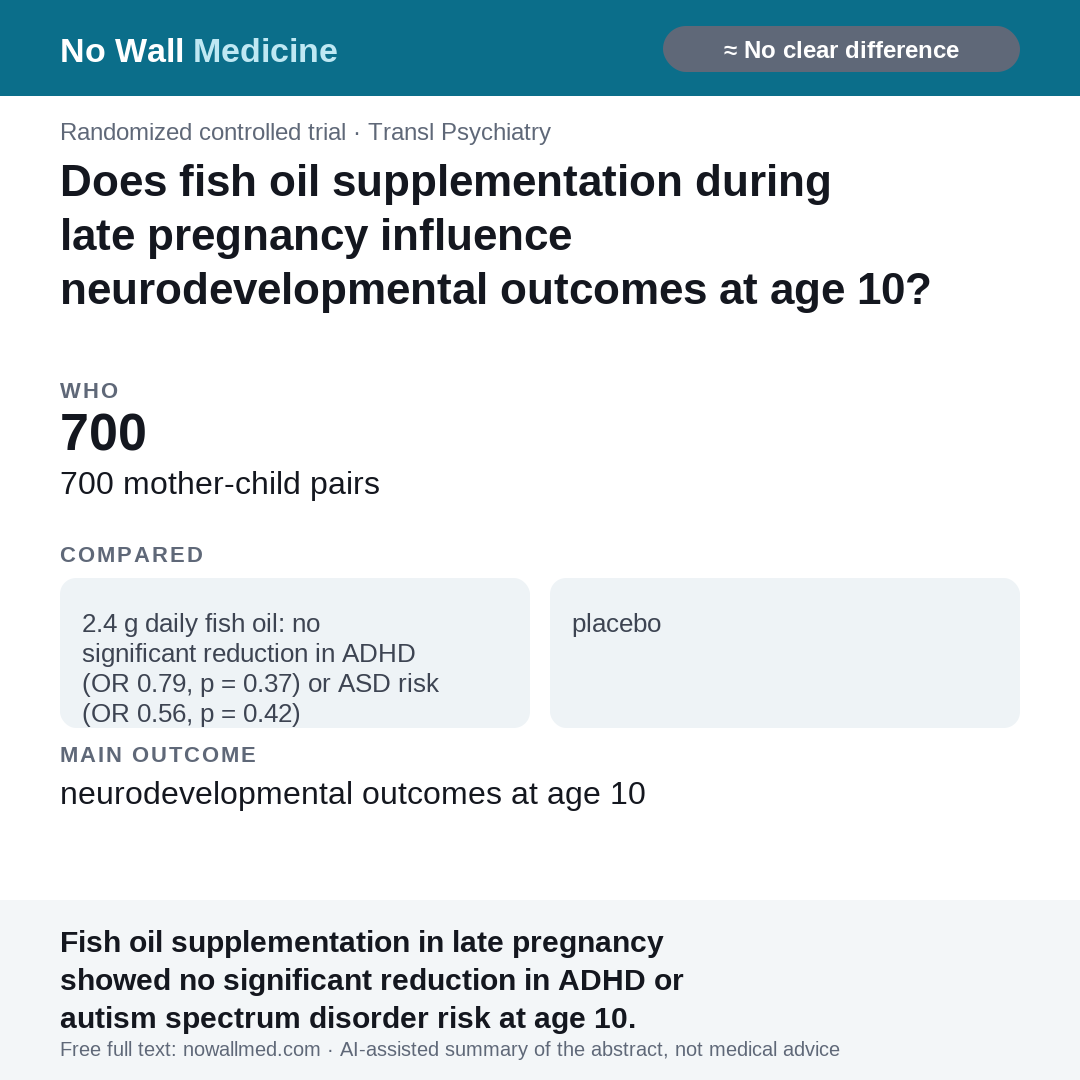
Fish oil-derived fatty acids during pregnancy and risk of neurodevelopmental disorders in children at age 10 - A randomized controlled trial
Randomized controlled trialNo clear difference
Does fish oil supplementation during late pregnancy influence neurodevelopmental outcomes at age 10?
Who
700
700 mother-child pairs
Compared
2.4 g daily fish oil: no significant reduction in ADHD (OR 0.79, p = 0.37) or ASD risk (OR 0.56, p = 0.42)
placebo
Main outcome
neurodevelopmental outcomes at age 10
Bottom line: Fish oil supplementation in late pregnancy showed no significant reduction in ADHD or autism spectrum disorder risk at age 10.
Limitation: Potential effects on inattentive ADHD symptoms did not hold significance after correction for multiple testing.
Transl Psychiatry · 2026-07-02Download image
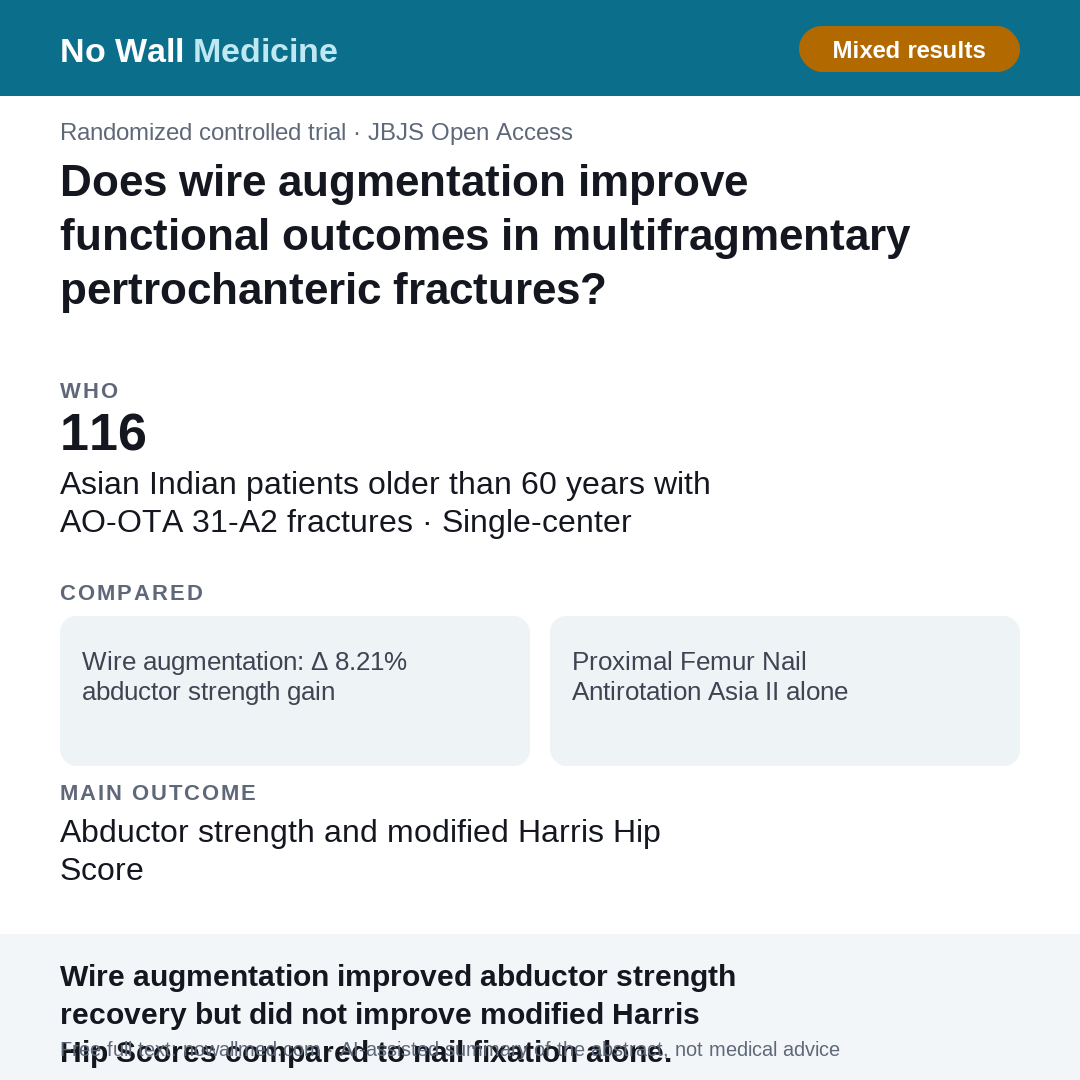
Should We Reconstruct Coronal Plane Fractures in Multifragmentary Pertrochanteric Fractures? A Randomized Controlled Trial
Randomized controlled trialMixed results
Does wire augmentation improve functional outcomes in multifragmentary pertrochanteric fractures?
Who
116
Asian Indian patients older than 60 with AO-OTA 31-A2 fractures · Single-center
Compared
Wire augmentation: Δ 8.21% abductor strength gain
Proximal Femur Nail Antirotation II alone
Main outcome
Abductor strength and modified Harris Hip Score
Result: Δ 8.21% (95% confidence interval, 4.4-12.83) for abductor strength
Bottom line: Wire augmentation improved abductor strength recovery, especially for fragments larger than 50%, but modified Harris Hip Scores were similar.
JBJS Open Access · 2026-07-02Download image
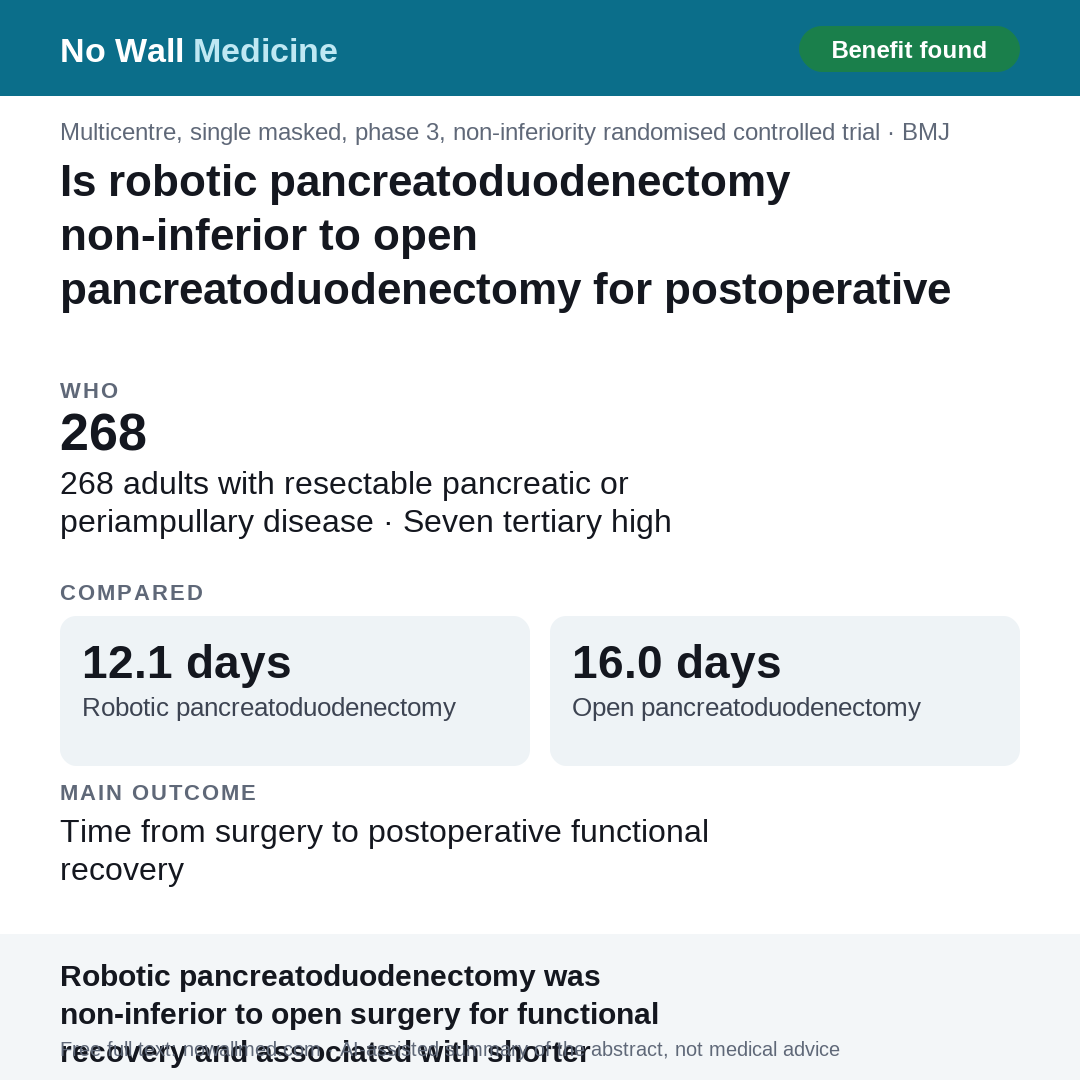
Robotic versus Open Pancreatoduodenectomy (PORTAL): multicentre, single masked, phase 3, non-inferiority randomised controlled trial
Multicentre, single masked, phase 3, non-inferiority randomised controlled trialBenefit found
Is robotic pancreatoduodenectomy non-inferior to open pancreatoduodenectomy for postoperative functional recovery?
Who
268
268 adults with resectable pancreatic or periampullary disease · Seven tertiary high volume pancreatic centres in China
Compared
12.1 daysRobotic pancreatoduodenectomy (95% CI 11.2 to 13.1)
16.0 daysOpen pancreatoduodenectomy (14.5 to 17.5)
Main outcome
Time from surgery to postoperative functional recovery
Result: difference -3.9 days, 95% CI -5.6 to -2.2
Bottom line: Robotic pancreatoduodenectomy was non-inferior to open surgery for functional recovery and associated with shorter hospital stays.
BMJ · 2026-07-01Download image
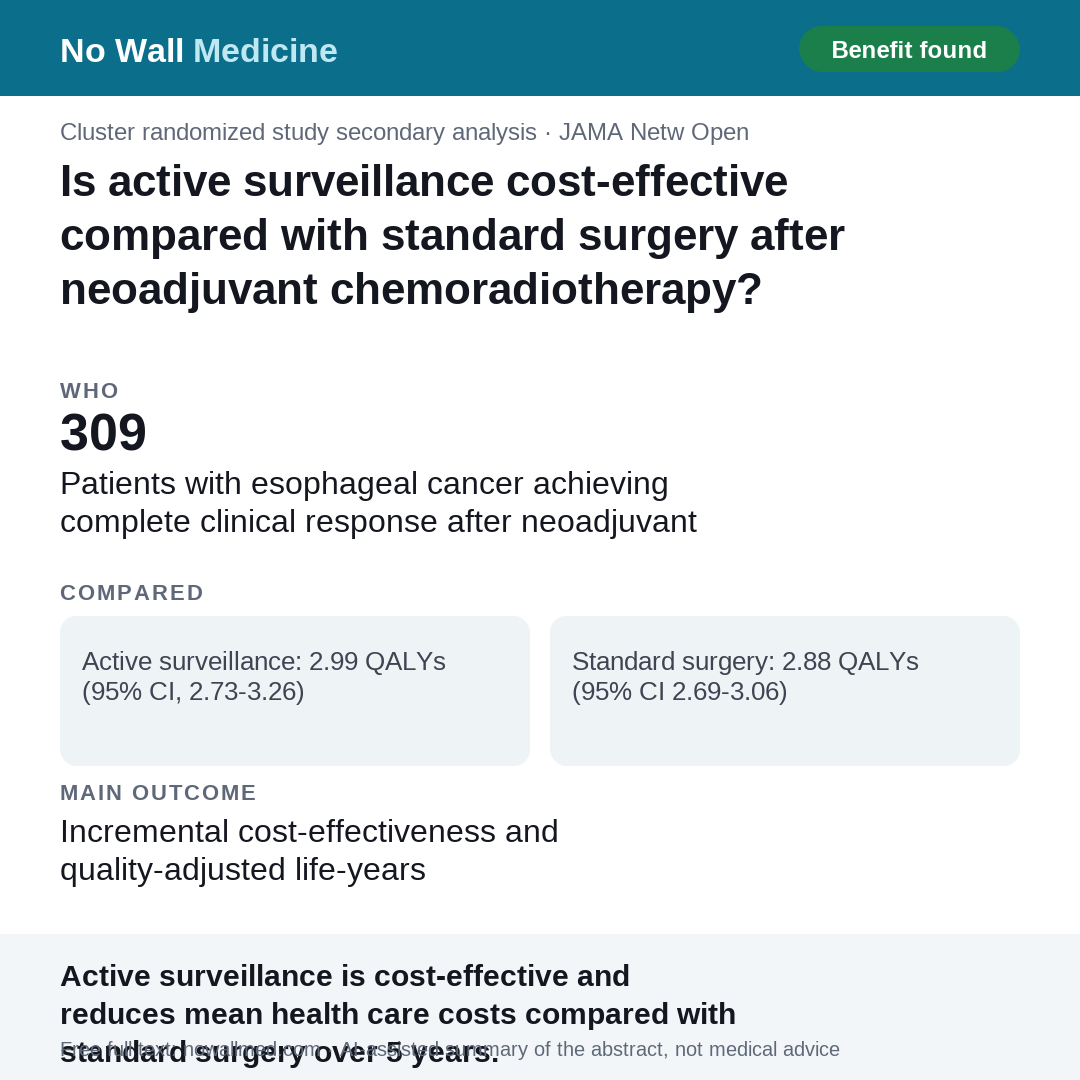
Surveillance vs Standard Surgery and Cost-Effectiveness After Neoadjuvant Chemoradiotherapy for Esophageal Cancer: Secondary Analysis of a Randomized Clinical Trial
Cluster randomized study secondary analysisBenefit found
Is active surveillance cost-effective compared with standard surgery after neoadjuvant chemoradiotherapy?
Who
309
Patients with esophageal cancer achieving complete clinical response after neoadjuvant chemoradiotherapy · 12 hospitals in the Netherlands
Compared
Active surveillance: 2.99 QALYs (95% CI, 2.73-3.26)
Standard surgery: 2.88 QALYs (95% CI 2.69-3.06)
Main outcome
Incremental cost-effectiveness and quality-adjusted life-years
Result: incremental QALY 0.11 (95% CI, -0.10 to 0.33)
Bottom line: Active surveillance is cost-effective and reduces mean health care costs compared with standard surgery over 5 years.
JAMA Netw Open · 2026-07-01Download image
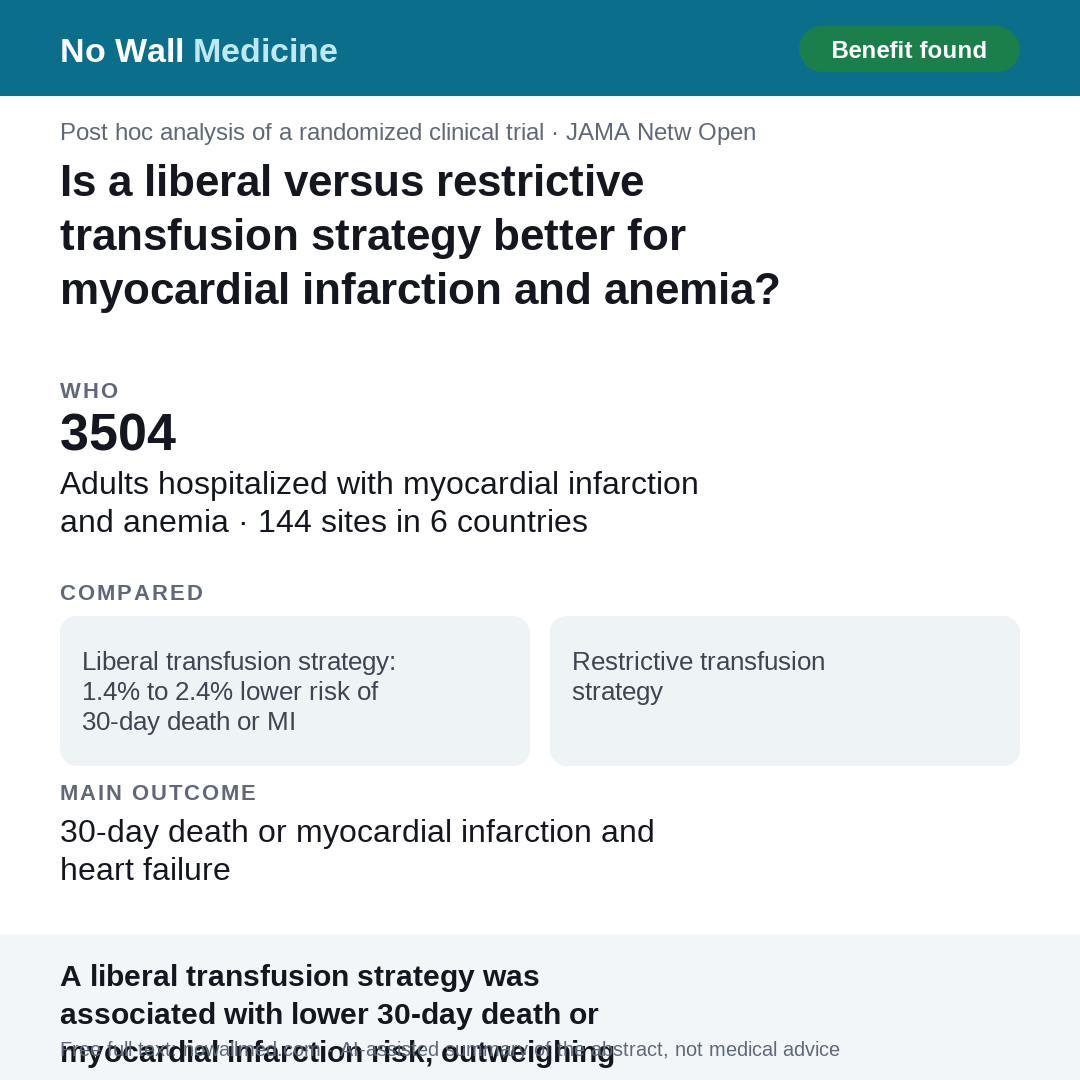
Restrictive vs Liberal Transfusion Strategy After Myocardial Infarction: A Post Hoc Analysis of the MINT Randomized Clinical Trial
Post hoc analysis of a randomized clinical trialBenefit found
Is a liberal or restrictive transfusion strategy better for myocardial infarction and anemia?
Who
3504
Adults hospitalized with myocardial infarction and anemia · 144 sites in 6 countries
Compared
Liberal transfusion strategy
Restrictive transfusion strategy
Main outcome
30-day death or myocardial infarction and heart failure
Result: risk difference 1.4% (95% credible interval, -0.8% to 3.5%) to 2.4% (95% credible interval, 0.3%-4.6%) lower
Bottom line: A liberal transfusion strategy was associated with lower 30-day death or myocardial infarction risk, outweighing increased heart failure risk.
JAMA Netw Open · 2026-07-01Download image
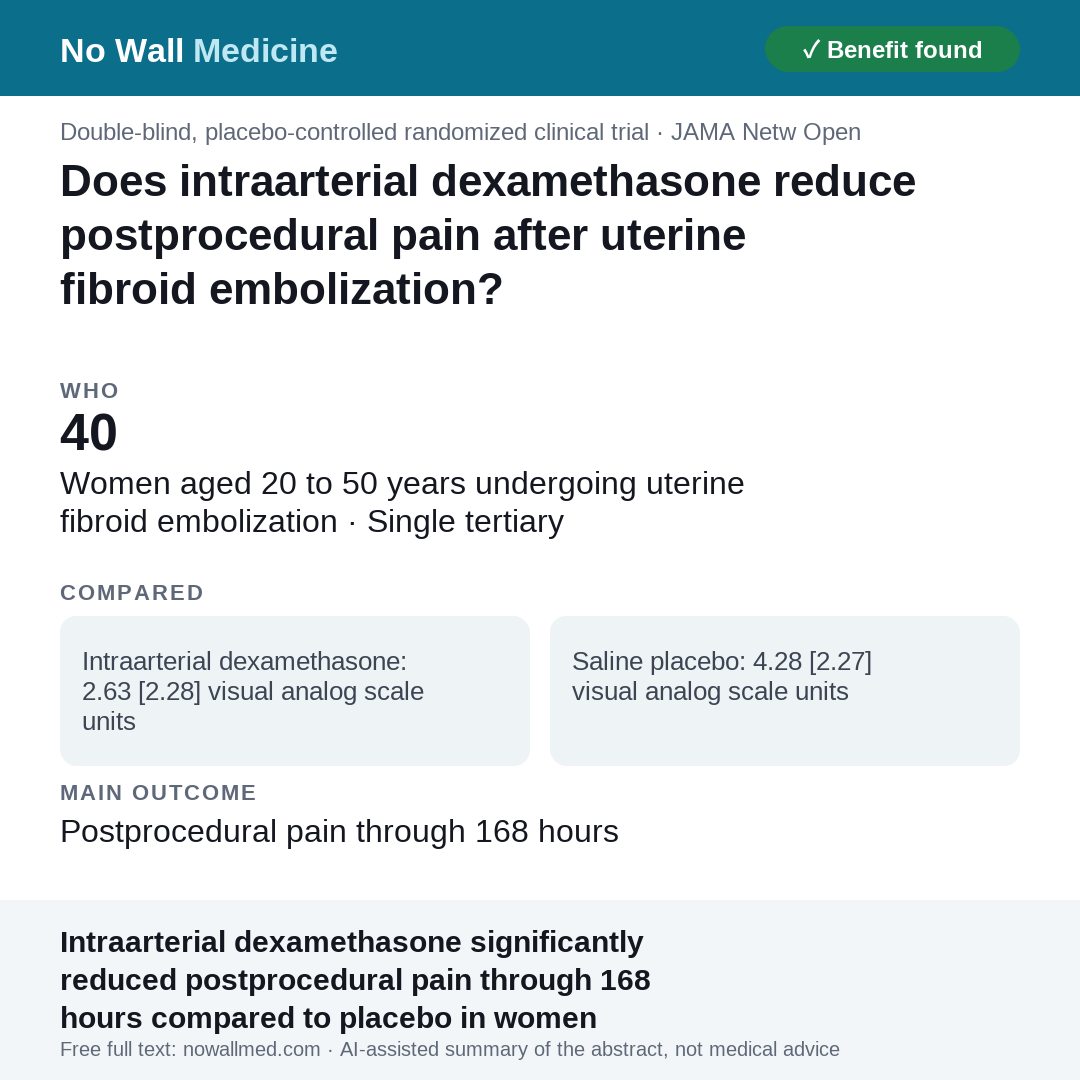
Intraarterial Dexamethasone for Pain Relief After Uterine Fibroid Embolization: A Randomized Clinical Trial
Double-blind, placebo-controlled randomized clinical trialBenefit found
Does intraarterial dexamethasone reduce postprocedural pain after uterine fibroid embolization?
Who
40
Women aged 20 to 50 years undergoing uterine fibroid embolization · Single tertiary academic medical center
Compared
Intraarterial dexamethasone: 2.63 [2.28] visual analog scale units
Saline placebo: 4.28 [2.27] visual analog scale units
Main outcome
Postprocedural pain through 168 hours
Result: mean difference, -1.64 (95% CI, -3.10 to -0.19)
Bottom line: Intraarterial dexamethasone significantly reduced postprocedural pain through 168 hours compared to placebo in women undergoing uterine fibroid embolization.
JAMA Netw Open · 2026-07-01Download image
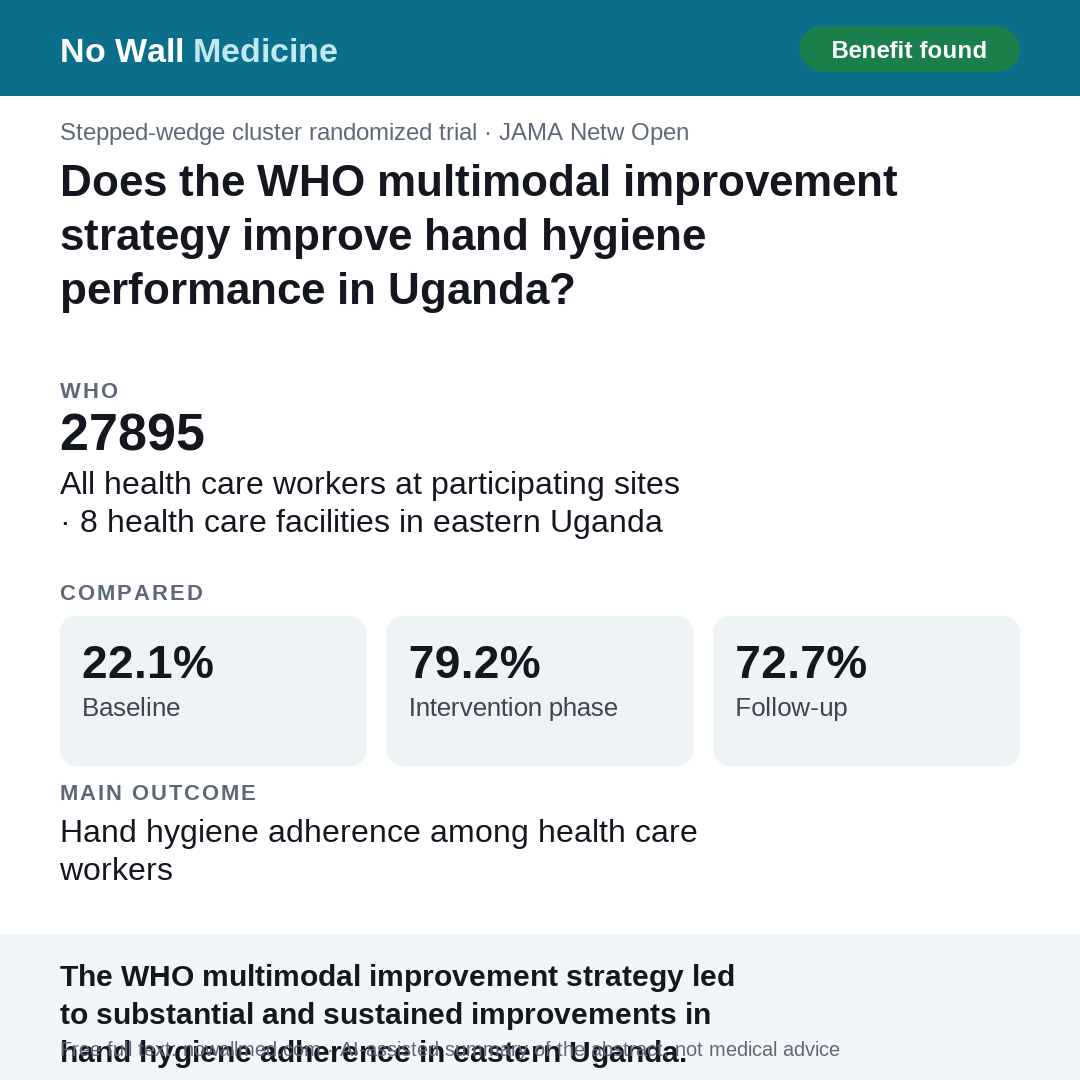
World Health Organization Multimodal Improvement Strategy for Hand Hygiene: A Stepped-Wedge Cluster Randomized Trial
Stepped-wedge cluster randomized trialBenefit found
Does the WHO multimodal improvement strategy improve hand hygiene performance in Uganda?
Who
All health care workers at participating sites · 8 health care facilities in eastern Uganda
Compared
22.1%Baseline (95% CI, 11.4%-32.8%)
79.2%After intervention (95% CI, 67.2%-91.2%)
Main outcome
Hand hygiene adherence among health care workers
Bottom line: The WHO multimodal improvement strategy led to substantial and sustained improvements in hand hygiene adherence in Uganda.
JAMA Netw Open · 2026-07-01Download image
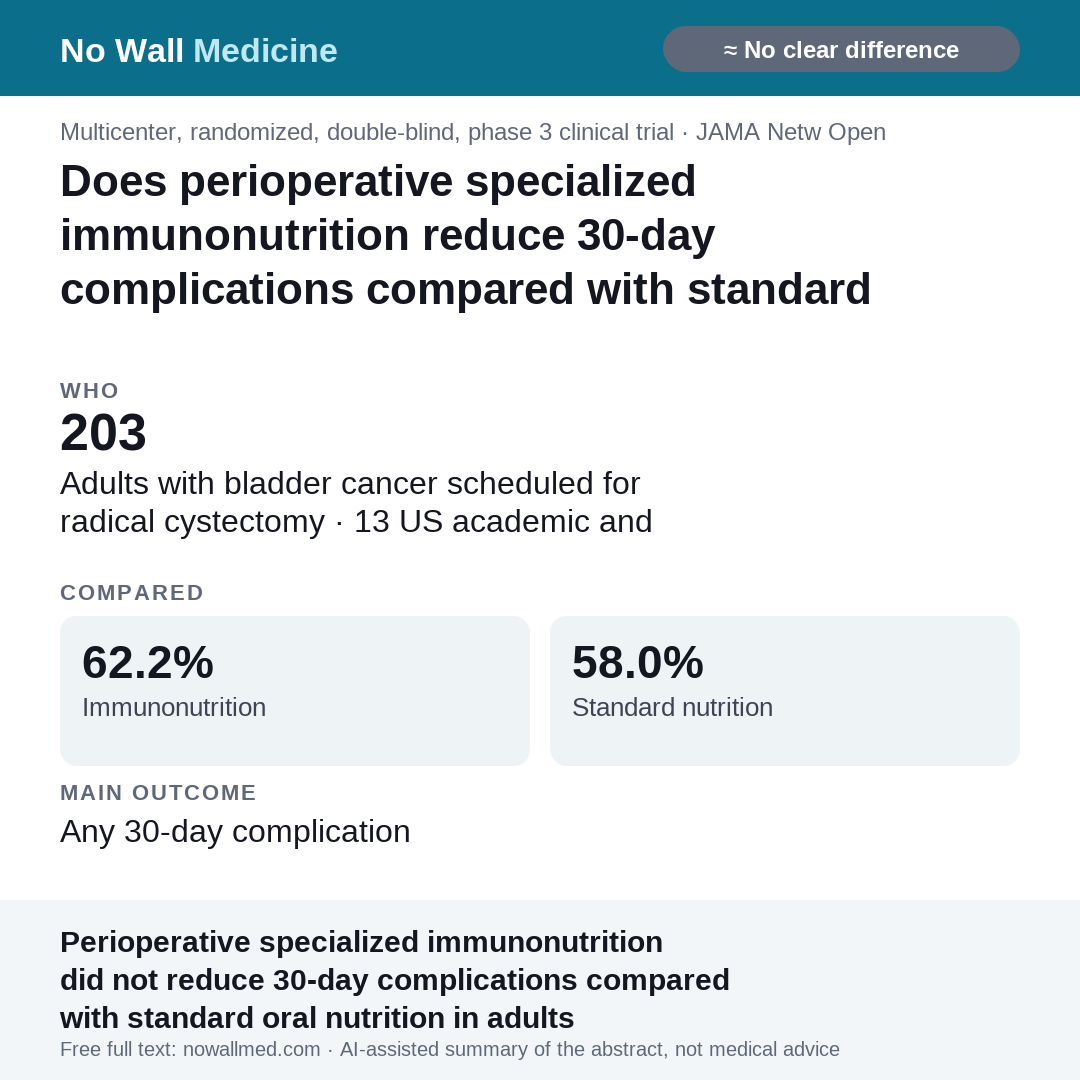
Immune-Enhancing Nutrition and Outcomes After Radical Cystectomy: A Randomized Clinical Trial
Multicenter, randomized, double-blind, phase 3 clinical trialNo clear difference
Does perioperative specialized immunonutrition reduce 30-day complications compared with standard oral nutrition support?
Who
203
Adults with bladder cancer scheduled for radical cystectomy · 13 US academic and community sites
Compared
62.2%Immunonutrition (56 of 90)
58.0%Standard nutrition (51 of 88)
Main outcome
Any 30-day complication
Result: odds ratio 1.18 (95% CI, 0.64-2.18)
Bottom line: Perioperative specialized immunonutrition did not reduce 30-day complications compared with standard oral nutrition in adults undergoing radical cystectomy.
Limitation: Further mechanistic evaluation and subgroup analyses are warranted.
JAMA Netw Open · 2026-07-01Download image
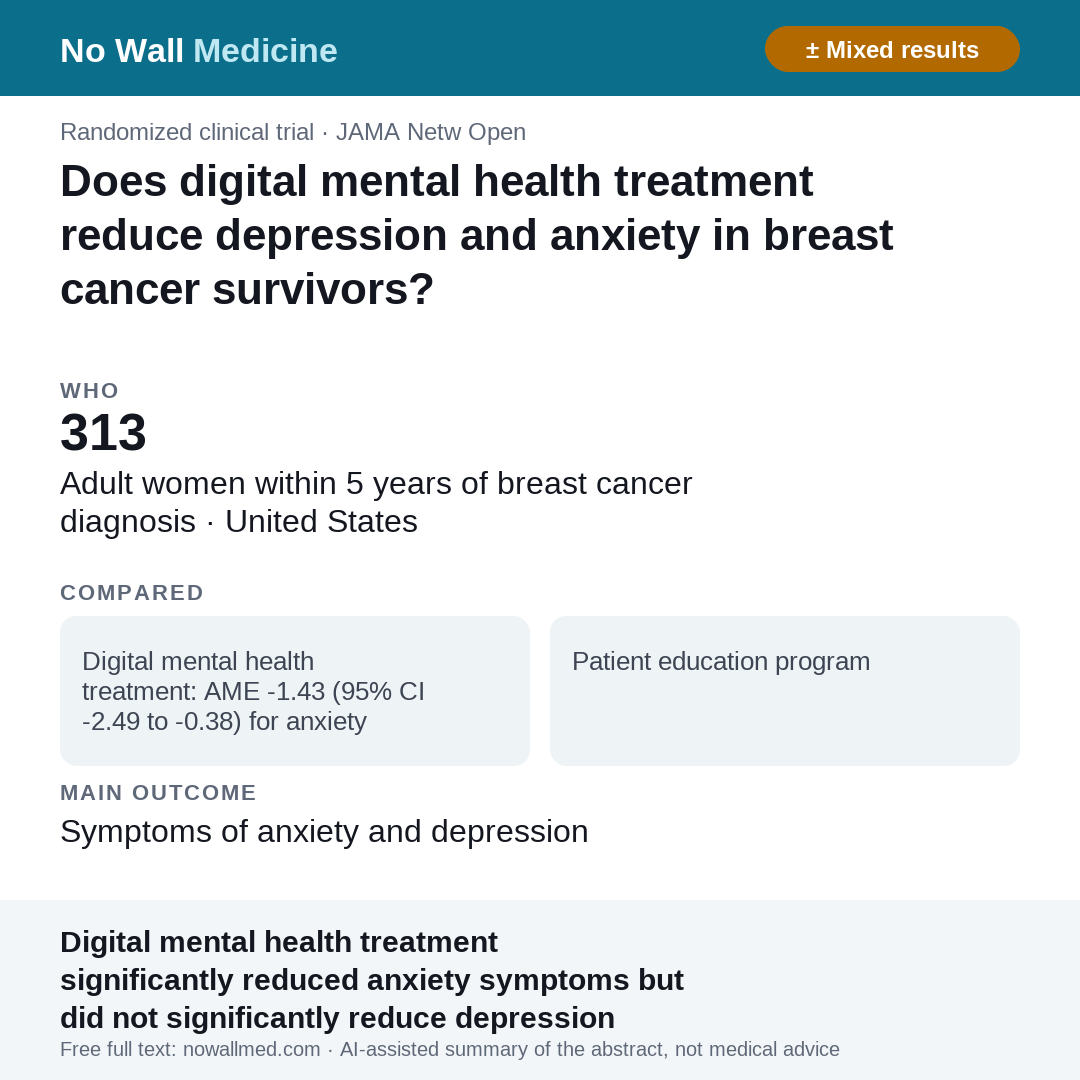
Digital Mental Health Treatment and Symptoms of Depression and Anxiety in Breast Cancer Survivors: A Randomized Clinical Trial
Randomized clinical trialMixed results
Does digital mental health treatment reduce depression and anxiety in breast cancer survivors?
Who
313
Adult women within 5 years of breast cancer diagnosis · United States
Compared
Digital mental health treatment: AME -1.43 (95% CI -2.49 to -0.38) for anxiety
Patient education program
Main outcome
Symptoms of anxiety and depression
Result: average marginal effect -1.43 (95% CI -2.49 to -0.38) for anxiety
Bottom line: Digital mental health treatment significantly reduced anxiety symptoms but did not significantly reduce depression symptoms compared to patient education.
JAMA Netw Open · 2026-07-01Download image
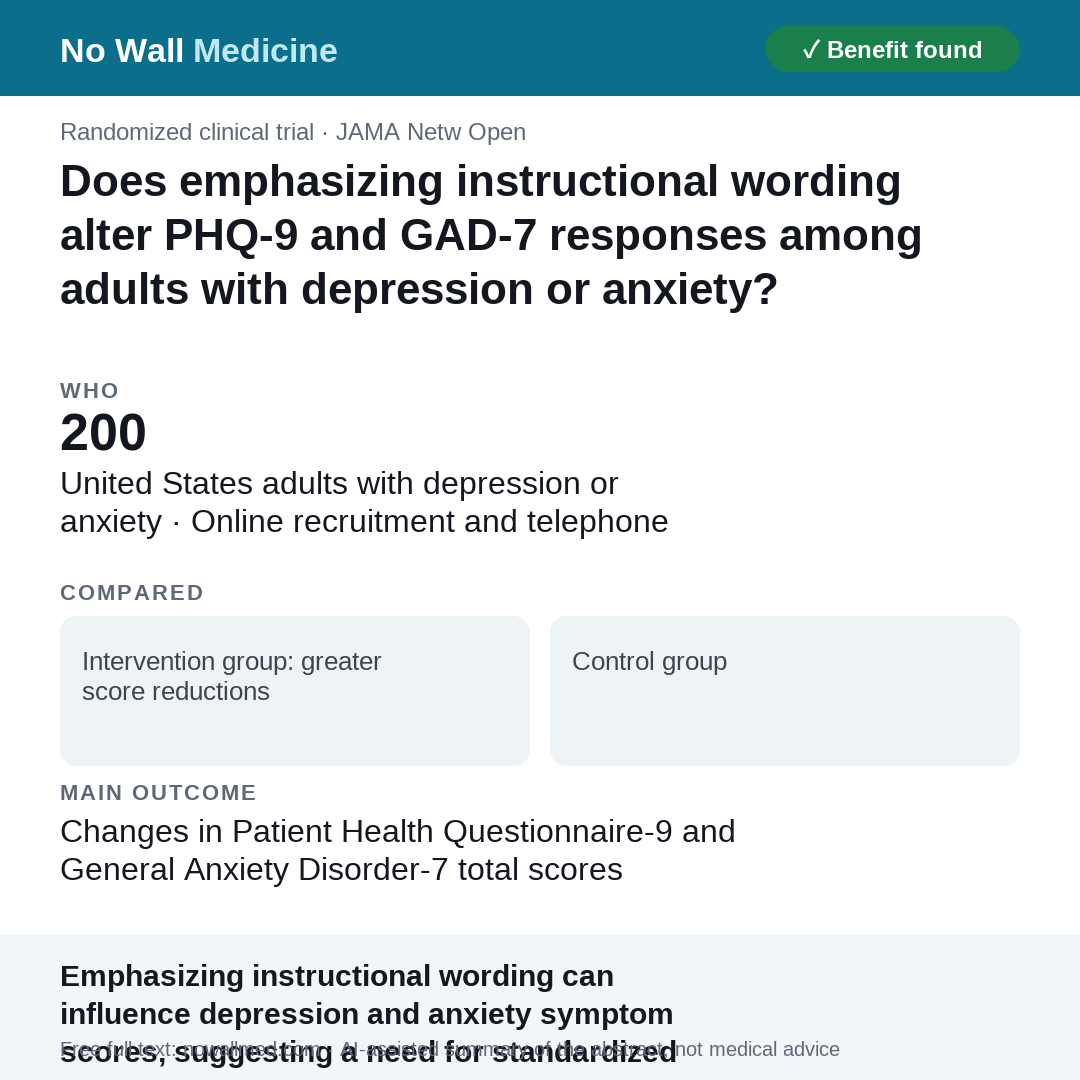
Instructional Emphasis and PHQ-9 and GAD-7 Scores Among Participants With Anxiety or Depression: A Randomized Clinical Trial
Randomized clinical trialBenefit found
Does emphasizing instructional wording alter PHQ-9 and GAD-7 responses among adults with depression or anxiety?
Who
200
United States adults with depression or anxiety · Online recruitment and telephone assessment
Compared
Intervention group: greater score reductions
Control group
Main outcome
Changes in Patient Health Questionnaire-9 and General Anxiety Disorder-7 total scores
Result: difference in changes: -2.60 (95% CI, -3.30 to -1.91) for PHQ-9
Bottom line: Emphasizing instructional wording can influence depression and anxiety symptom scores, suggesting a need for standardized administration.
JAMA Netw Open · 2026-07-01Download image
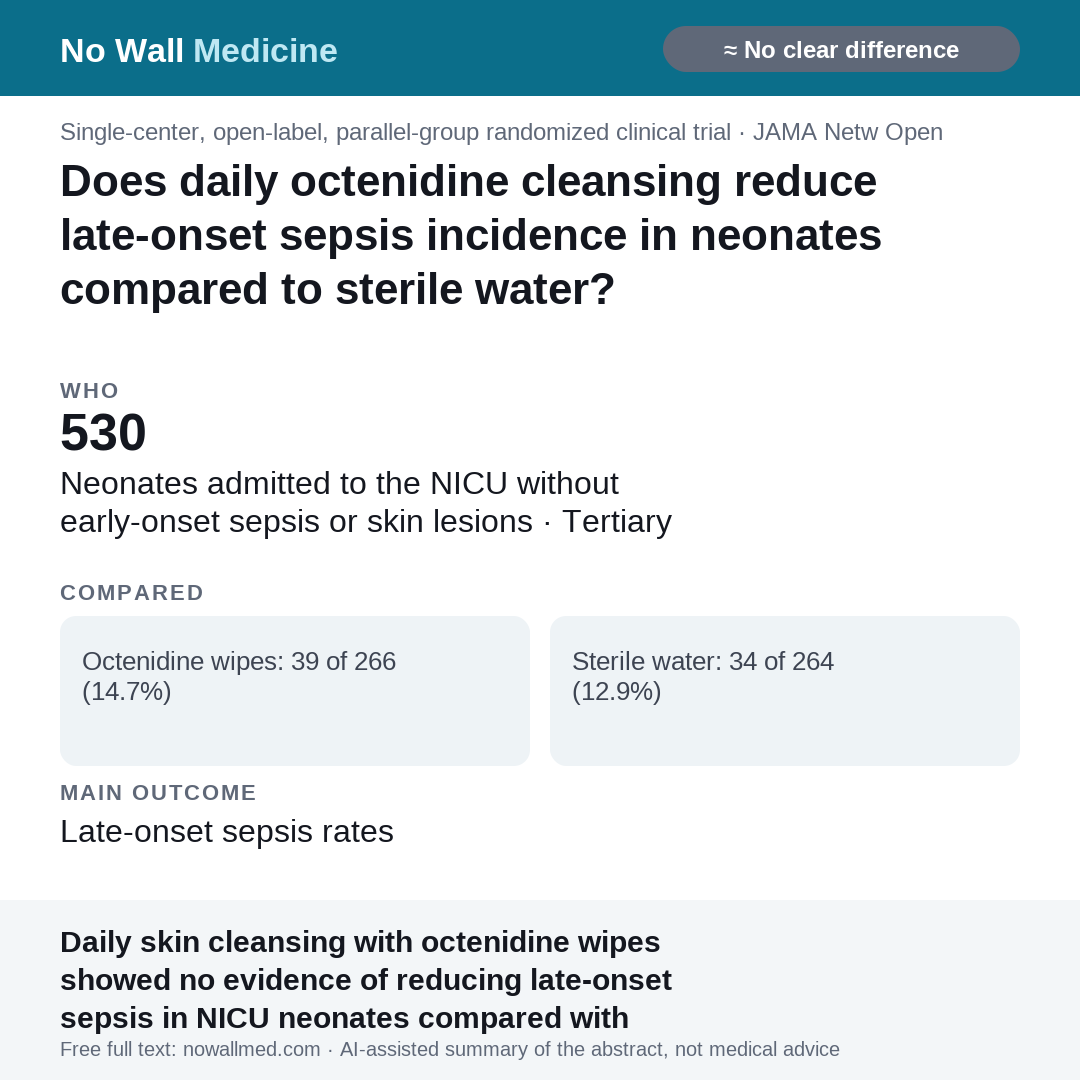
Octenidine or Sterile Water Cleansing and Late-Onset Sepsis in Neonates in the NICU: A Randomized Clinical Trial
Single-center, open-label, parallel-group randomized clinical trialNo clear difference
Does daily octenidine cleansing reduce late-onset sepsis incidence in neonates compared to sterile water?
Who
530
Neonates admitted to the NICU without early-onset sepsis or skin lesions · Tertiary care hospital in India
Compared
Octenidine wipes: 39 of 266 (14.7%)
Sterile water: 34 of 264 (12.9%)
Main outcome
Late-onset sepsis rates
Result: relative risk 1.10 (95% CI 0.75-1.70)
Bottom line: Daily skin cleansing with octenidine wipes showed no evidence of reducing late-onset sepsis in NICU neonates compared with sterile water.
JAMA Netw Open · 2026-07-01Download image
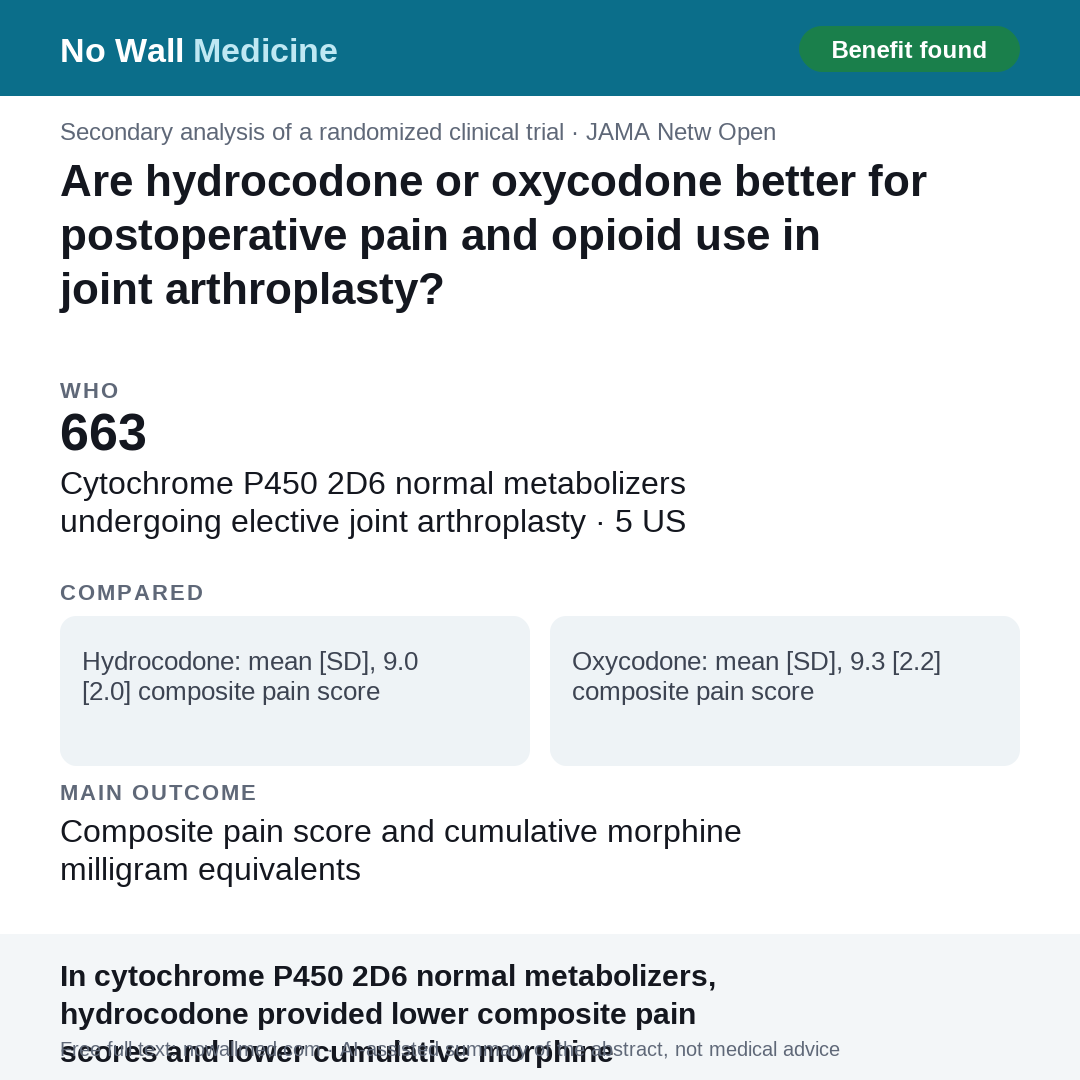
Hydrocodone vs Oxycodone and Postoperative Pain and Opioid Use in Joint Arthroplasty
Secondary analysis of a randomized clinical trialBenefit found
Are hydrocodone or oxycodone better for postoperative pain and opioid use in joint arthroplasty?
Who
663
Cytochrome P450 2D6 normal metabolizers undergoing elective joint arthroplasty · 5 US surgery clinical sites
Compared
Oxycodone: 9.3 [2.2] composite pain score
Hydrocodone: 9.0 [2.0] composite pain score
Main outcome
Composite pain score and cumulative morphine milligram equivalents
Bottom line: Hydrocodone provided comparable pain control to oxycodone with significantly lower cumulative morphine milligram equivalents in joint arthroplasty patients.
Limitation: Findings were not consistent in hip arthroplasty subgroups.
JAMA Netw Open · 2026-07-01Download image
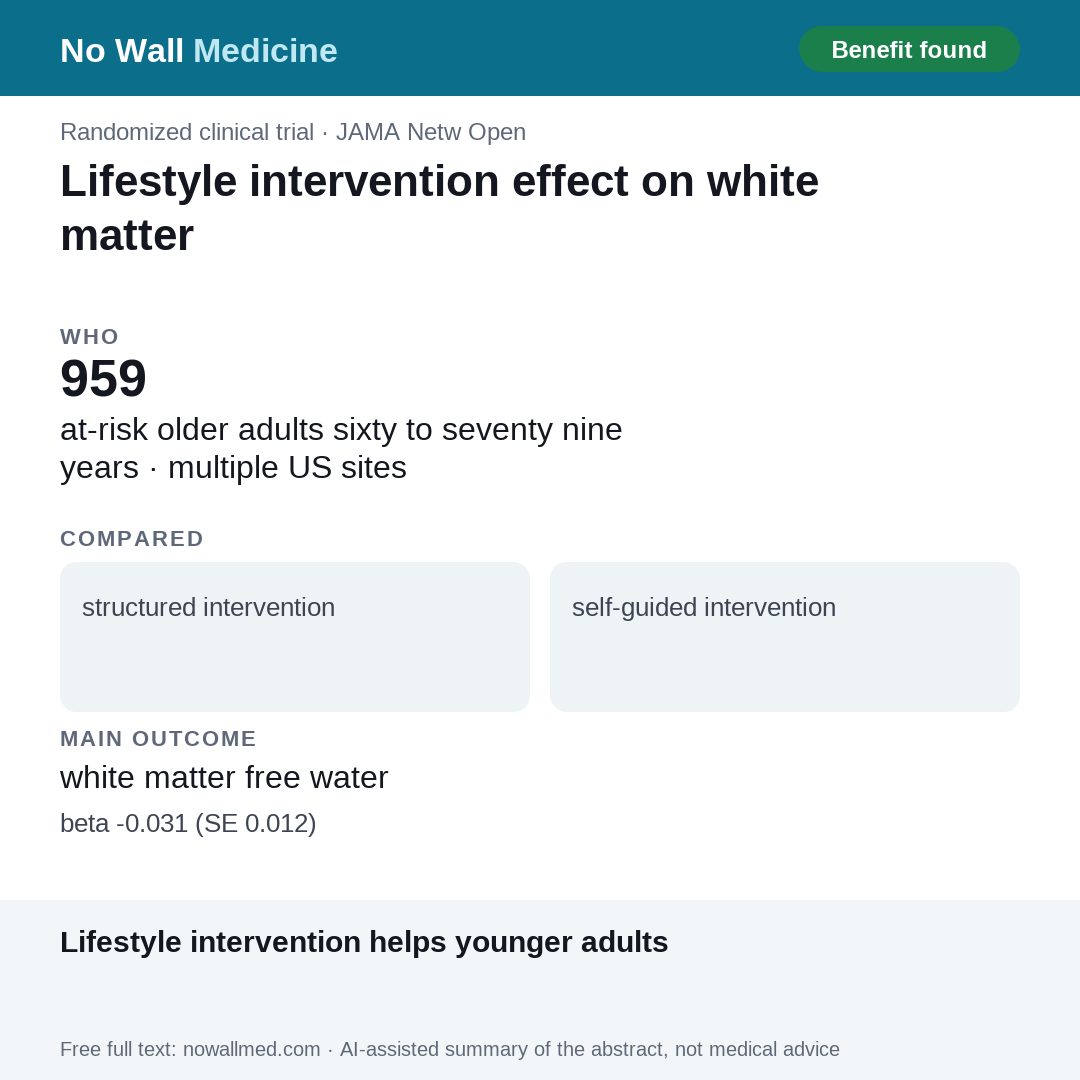
Age, Multidomain Lifestyle Intervention, and White Matter Integrity: Secondary Analysis of the POINTER Randomized Clinical Trial
Randomized clinical trialBenefit found
Does lifestyle intervention alter cerebrovascular markers?
Who
959
at-risk older adults sixty to seventy nine years old · multiple US sites
Compared
structured intervention
self-guided program
Main outcome
cerebrovascular MRI markers
Result: attenuated free water increase over time in younger participants
Bottom line: Lifestyle intervention helps younger at-risk adults
JAMA Netw Open · 2026-07-01Download image