Visual abstracts
New randomized trials and meta-analyses from leading journals at a glance: who was studied, what was compared, and what was found. Every paper is free to read in full.
All specialtiesCardiology 4833Oncology 4115Gastroenterology & Hepatology 1934Infectious Disease 3825Neurology 1901Psychiatry & Mental Health 2256Pulmonology 2082Critical Care 1346Endocrinology & Diabetes 2572Pediatrics 2940Surgery 2525Orthopedics & Sports Medicine 926Neurosurgery 534Cardiothoracic & Vascular Surgery 671Plastic & Reconstructive Surgery 591Nephrology 1124Rheumatology 823Hematology 1104Dermatology 620Ophthalmology 543Obstetrics & Gynecology 1684Public & Global Health 1056Radiology & Imaging 641Anesthesiology 962Urology 754ENT (Otolaryngology) 503Emergency Medicine 489Allergy & Immunology 313Geriatrics 982Family Medicine & Primary Care 541Medical Genetics & Genomics 675Pathology & Laboratory Medicine 157Physical Medicine & Rehabilitation 751Palliative Care 424Nutrition 1580Digital Health & AI 2195General Medicine 321
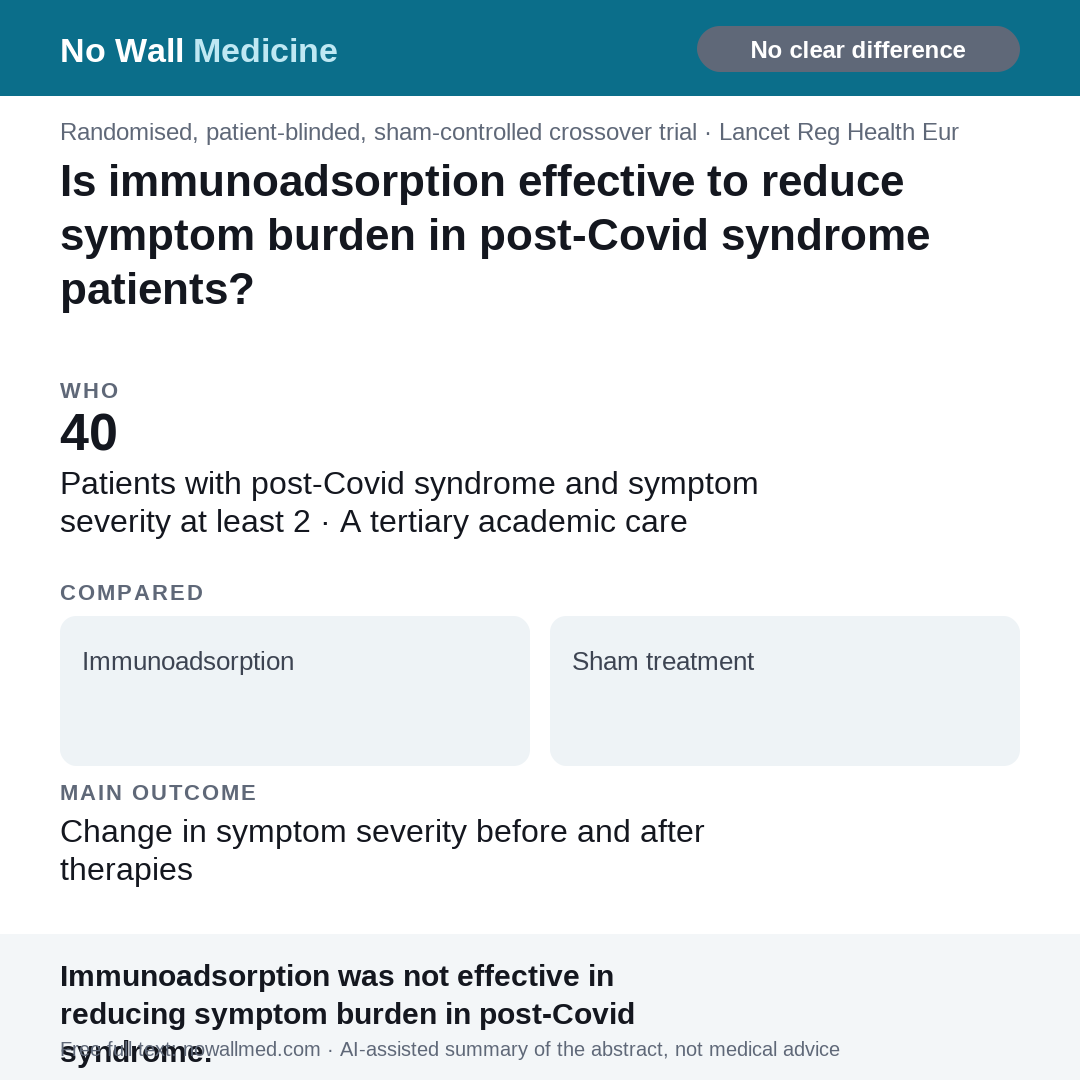
Immunoadsorption Versus Sham Treatment for Post-COVID Syndrome: A Randomised Sham-Controlled Crossover Trial
Randomised, patient-blinded, sham-controlled crossover trialNo clear difference
Is immunoadsorption effective to reduce symptom burden in post-Covid syndrome patients?
Who
40
Patients with post-Covid syndrome and symptom severity at least 2 · A tertiary academic care centre
Compared
Immunoadsorption
Sham treatment
Main outcome
Change in symptom severity before and after therapies
Result: odds ratio 1.17 (95% CI, 0.41-3.36)
Bottom line: Immunoadsorption was not effective in reducing symptom burden in post-Covid syndrome.
Funded by: Ministry of Health, Rhineland-Palatinate; Mainz University Medical Centre; DIAMED Medical Technology
Lancet Reg Health Eur · 2026-06-11Download image
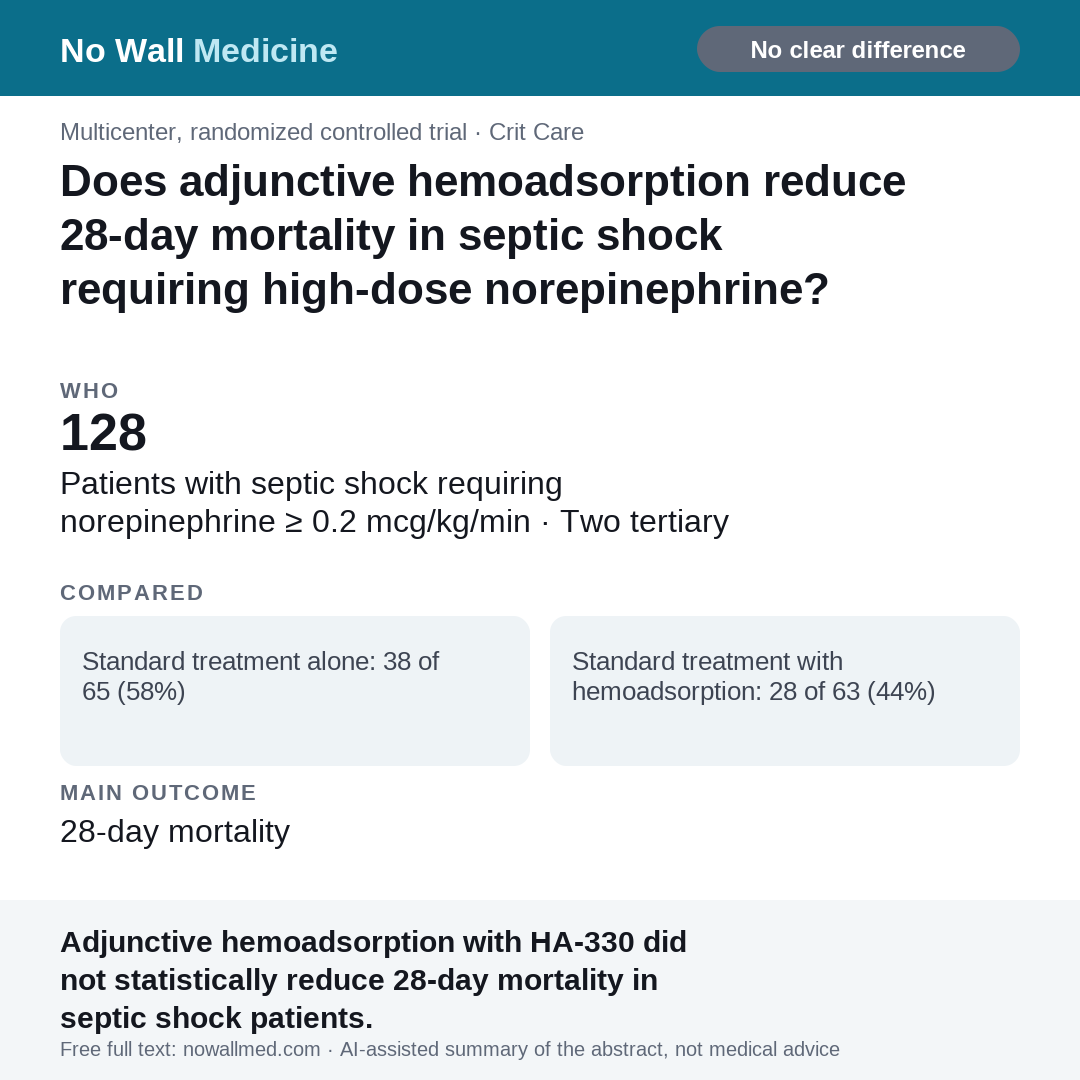
HA-330 hemoadsorption in septic shock requiring high-dose norepinephrine: a multicenter randomized controlled trial (CLEANSE)
Multicenter, randomized controlled trialNo clear difference
Does adjunctive hemoadsorption reduce 28-day mortality in septic shock requiring high-dose norepinephrine?
Who
128
Patients with septic shock requiring norepinephrine ≥ 0.2 mcg/kg/min · Two tertiary care centers in Thailand
Compared
Standard treatment alone: 38 of 65 (58%)
Standard treatment with hemoadsorption: 28 of 63 (44%)
Main outcome
28-day mortality
Result: relative risk 0.76 (95% CI 0.54-1.07)
Bottom line: Adjunctive hemoadsorption with HA-330 did not statistically reduce 28-day mortality in septic shock patients.
Crit Care · 2026-06-11Download image
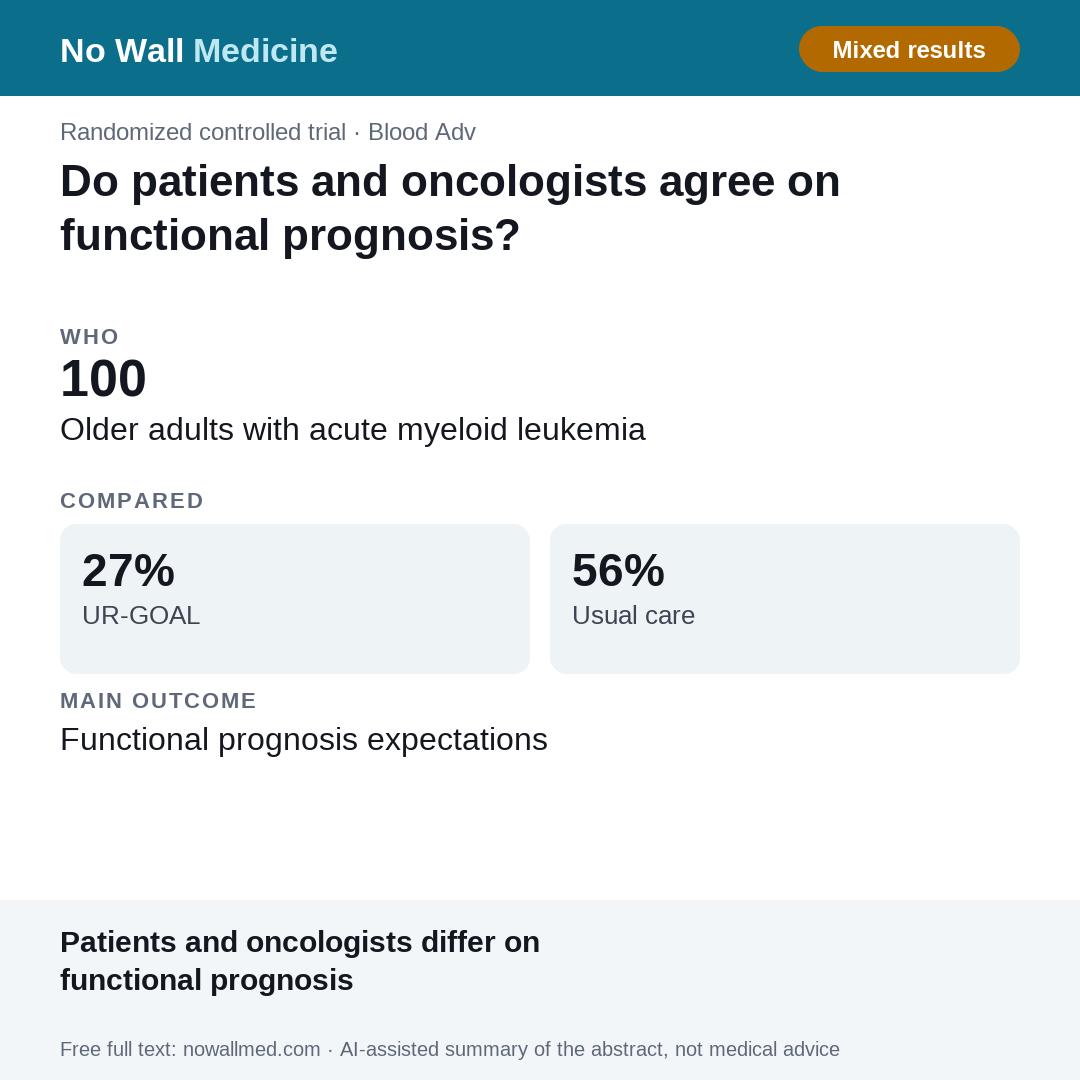
Patient and oncologist expectations of functional prognosis among older adults with acute myeloid leukemia
Randomized controlled trialMixed results
Do patients and oncologists agree on functional prognosis?
Who
100
Older adults with acute myeloid leukemia
Compared
27%UR-GOAL
56%Usual care
Main outcome
Functional prognosis expectations
Bottom line: Patients and oncologists differ on functional prognosis
Blood Adv · 2026-06-11Download image
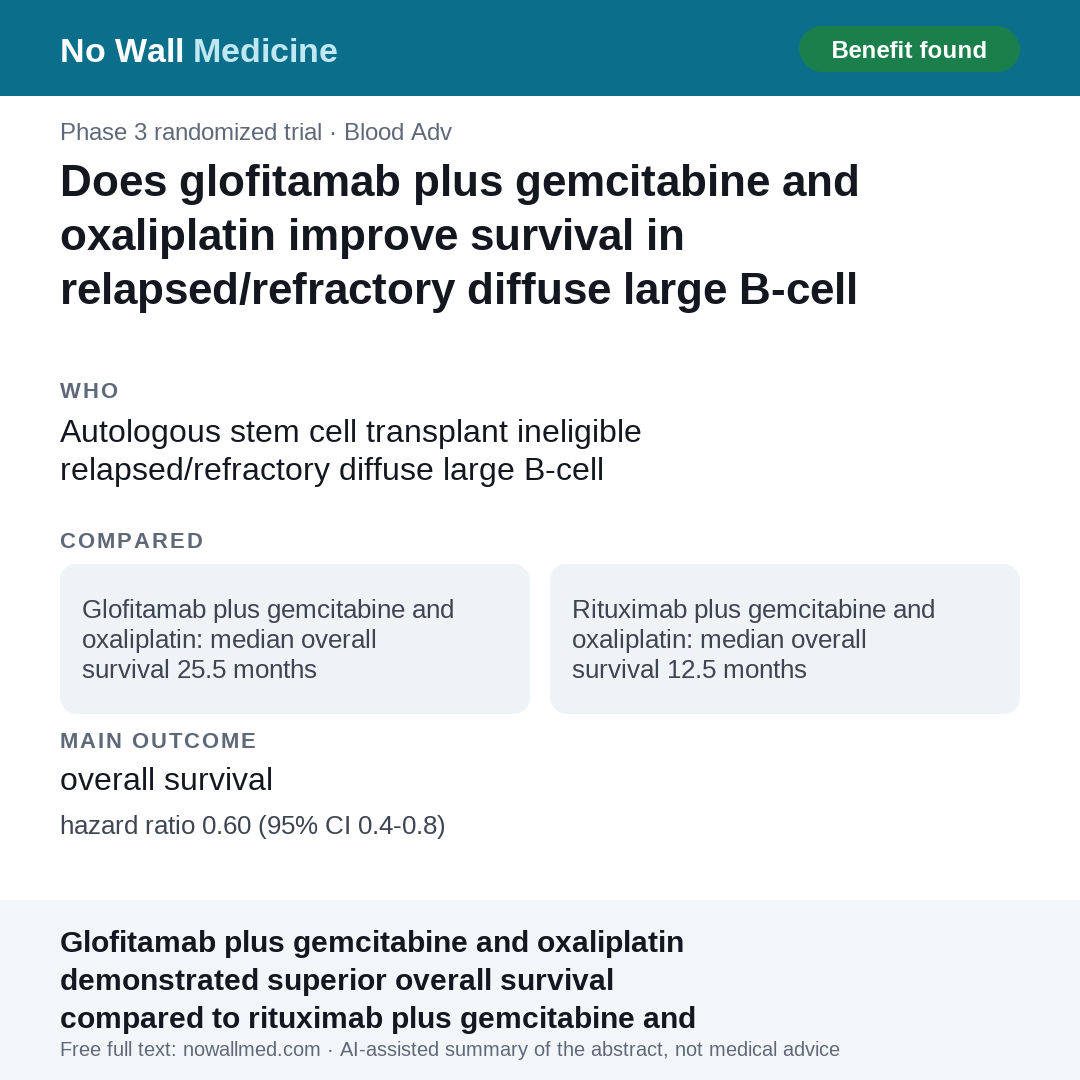
Glofitamab plus gemcitabine and oxaliplatin for relapsed/refractory DLBCL: 3-year follow-up of STARGLO
Phase 3 randomized trialBenefit found
Does glofitamab plus gemcitabine and oxaliplatin improve survival in relapsed/refractory diffuse large B-cell lymphoma?
Who
Autologous stem cell transplant ineligible relapsed/refractory diffuse large B-cell lymphoma patients
Compared
Glofitamab plus gemcitabine and oxaliplatin: median overall survival 25.5 months
Rituximab plus gemcitabine and oxaliplatin: median overall survival 12.5 months
Main outcome
overall survival
Result: hazard ratio 0.60 (95% CI 0.4-0.8)
Bottom line: Glofitamab plus gemcitabine and oxaliplatin demonstrated superior overall survival compared to rituximab plus gemcitabine and oxaliplatin.
Blood Adv · 2026-06-11Download image
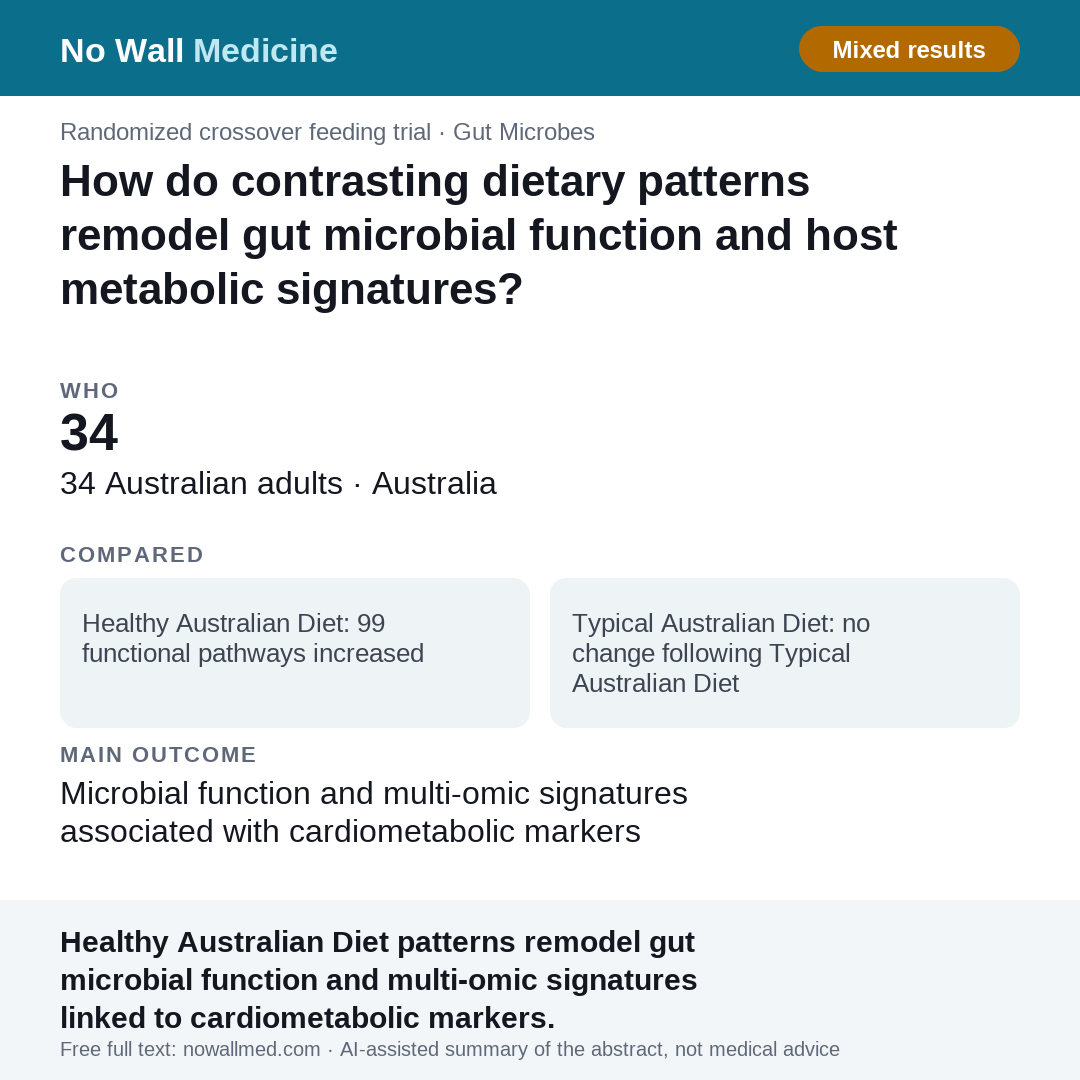
Contrasting dietary patterns remodel gut microbial function and generate multi-omic signatures associated with cardiometabolic markers
Randomized crossover feeding trialMixed results
How do contrasting dietary patterns remodel gut microbial function and host metabolic signatures?
Who
34
34 Australian adults · Australia
Compared
Healthy Australian Diet: 99 functional pathways increased
Typical Australian Diet: no change following Typical Australian Diet
Main outcome
Microbial function and multi-omic signatures associated with cardiometabolic markers
Bottom line: Healthy Australian Diet patterns remodel gut microbial function and multi-omic signatures linked to cardiometabolic markers.
Gut Microbes · 2026-06-11Download image
Sociodemographic Paradoxes and Enrollment Differences in In-Person Versus Online Recruitment to a Mobile Health Smoking Cessation Intervention for Food-Insecure Adults: Secondary Analysis of a Randomized Controlled Trial
Secondary analysis of a randomized controlled trialMixed results
How do sociodemographic, smoking-related, and psychosocial characteristics differ between in-person and online recruitment methods?
Who
Food-insecure adults
Compared
In-person recruitment: 49% enrollment rate
Online recruitment: 71% enrollment rate
Main outcome
Baseline characteristics and enrollment rates
Bottom line: Online recruitment was faster and yielded different sociodemographic and psychosocial profiles compared to in-person recruitment.
J Med Internet Res · 2026-06-11Download image

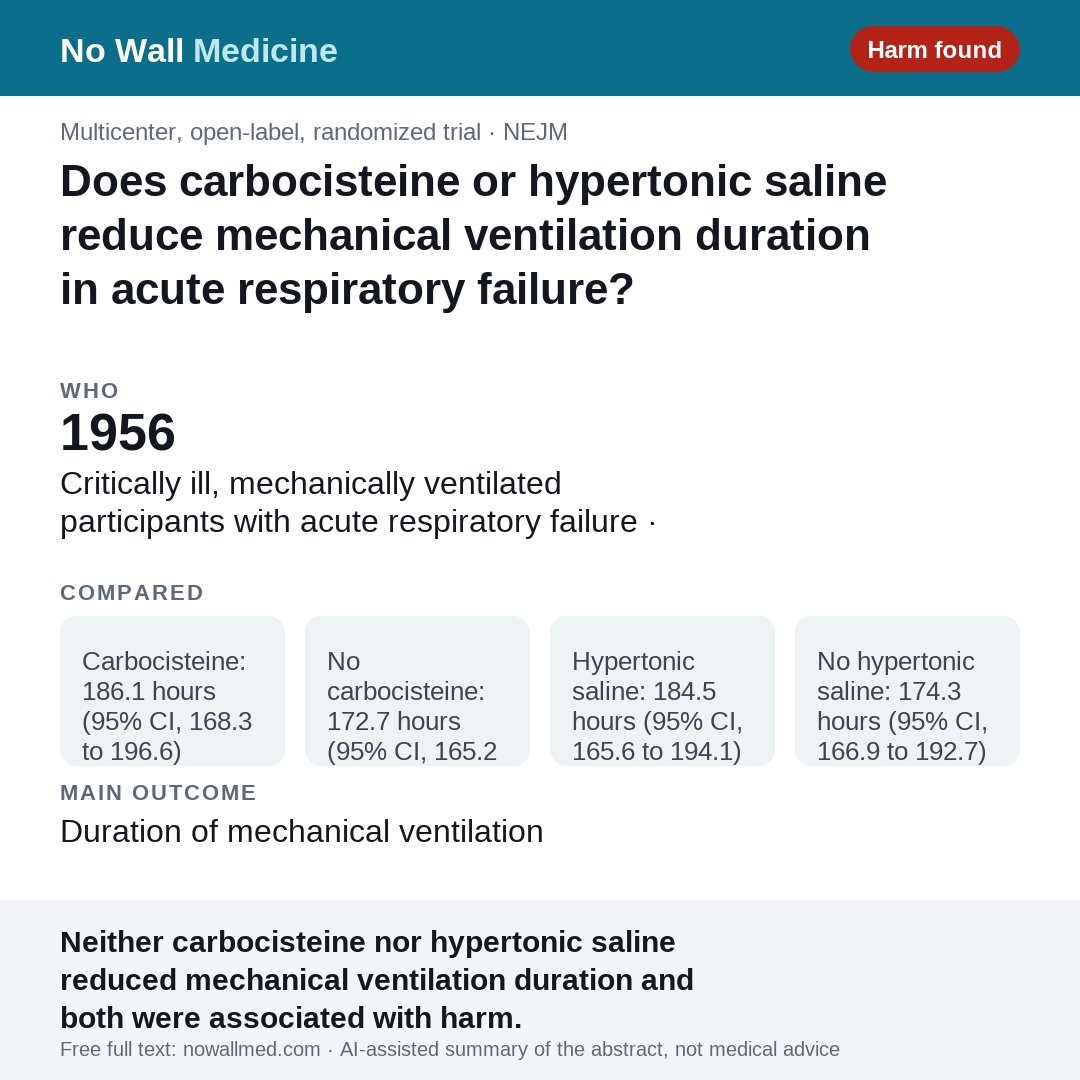
Carbocisteine or Hypertonic Saline for Acute Respiratory Failure
Multicenter, open-label, randomized trialHarm found
Does carbocisteine or hypertonic saline reduce mechanical ventilation duration in acute respiratory failure?
Who
1956
Critically ill, mechanically ventilated participants with acute respiratory failure · Multicenter
Compared
Carbocisteine: 186.1 hours (95% CI, 168.3 to 196.6)
No carbocisteine: 172.7 hours (95% CI, 165.2 to 190.4)
Hypertonic saline: 184.5 hours (95% CI, 165.6 to 194.1)
No hypertonic saline: 174.3 hours (95% CI, 166.9 to 192.7)
Main outcome
Duration of mechanical ventilation
Result: adjusted hazard ratio 0.96 (95% CI 0.87 to 1.05) for carbocisteine
Bottom line: Neither carbocisteine nor hypertonic saline reduced mechanical ventilation duration and both were associated with harm.
Funded by: NIHR Health Technology Assessment Programme and Belfast Health and Social Care Trust
NEJM · 2026-06-10Download image
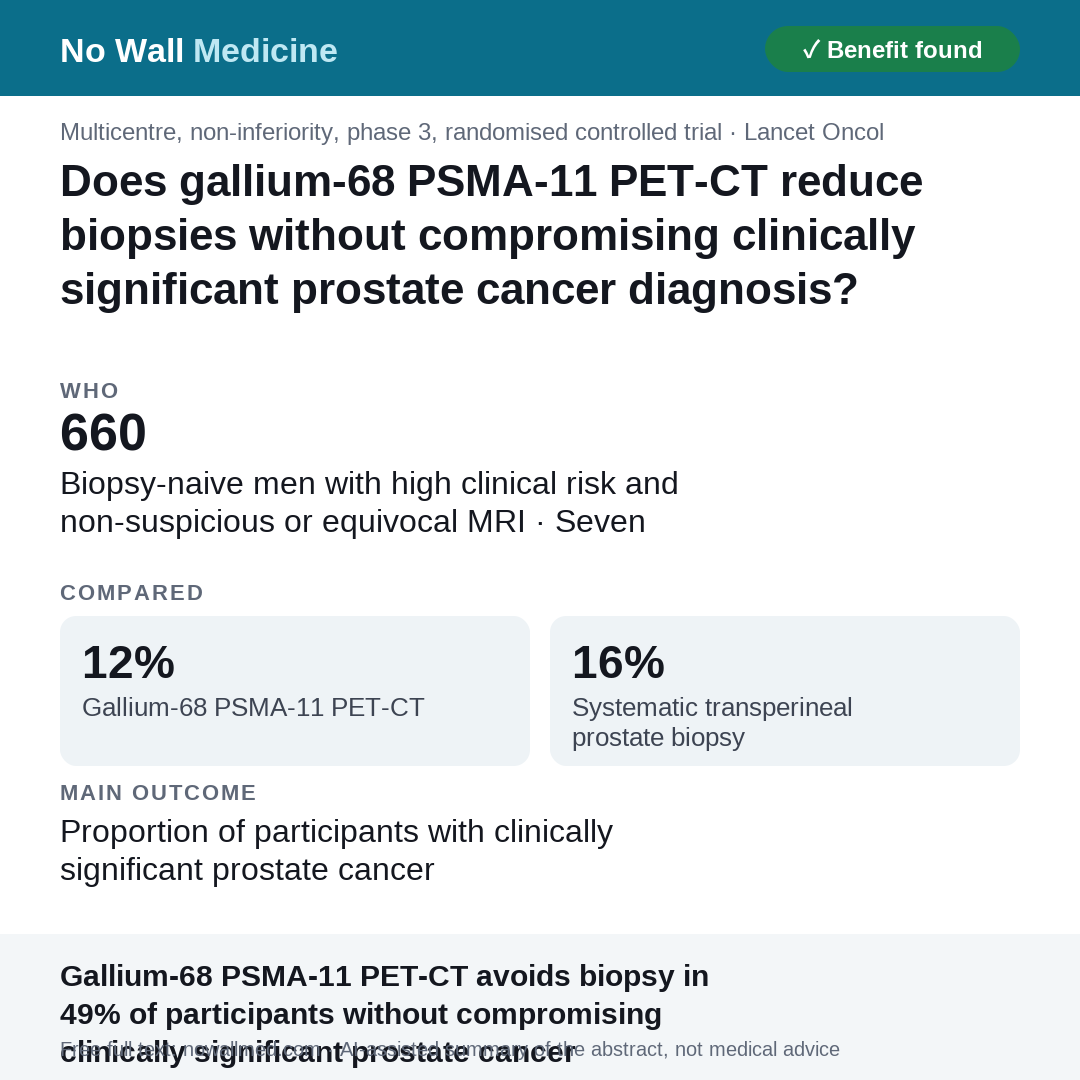
Effect of [68Ga]Ga-PSMA-11 PET-CT in the diagnosis of prostate cancer in men with equivocal or clinically high-risk non-suspicious findings on multiparametric MRI (PRIMARY2): a multicentre, non-inferiority, phase 3, randomised controlled trial
Multicentre, non-inferiority, phase 3, randomised controlled trialBenefit found
Does gallium-68 PSMA-11 PET-CT reduce biopsies without compromising clinically significant prostate cancer diagnosis?
Who
660
Biopsy-naive men with high clinical risk and non-suspicious or equivocal MRI · Seven Australian hospitals
Compared
12%Gallium-68 PSMA-11 PET-CT
16%Systematic transperineal prostate biopsy
Main outcome
Proportion of participants with clinically significant prostate cancer
Result: difference -3·7% (95% CI -8·9 to 1·5%)
Bottom line: Gallium-68 PSMA-11 PET-CT avoids biopsy in 49% of participants without compromising clinically significant prostate cancer diagnosis.
Lancet Oncol · 2026-06-10Download image
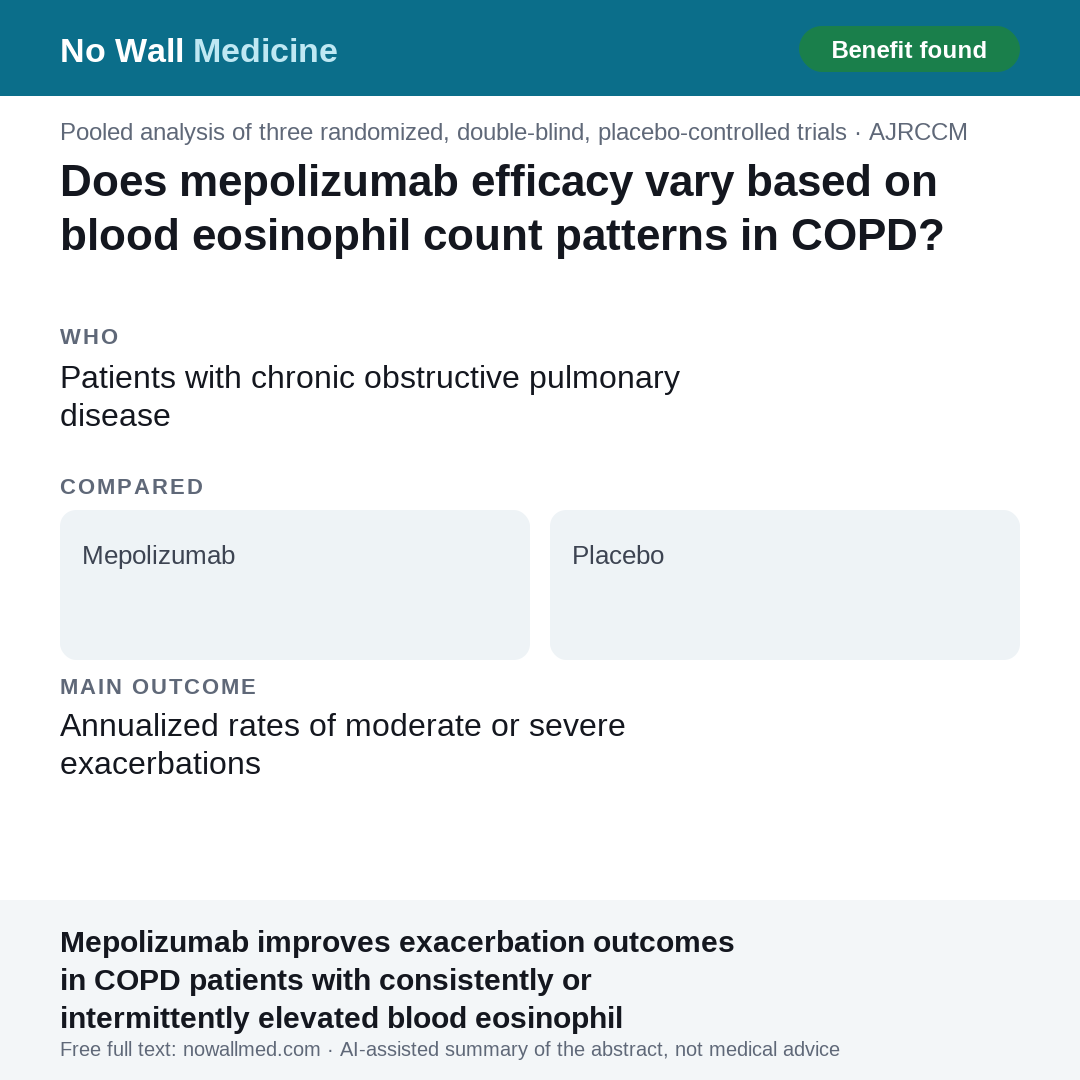
Mepolizumab efficacy in chronic obstructive pulmonary disease: insights from longitudinal patterns of blood eosinophil counts and their variability across 3 clinical trials
Pooled analysis of three randomized, double-blind, placebo-controlled trialsBenefit found
Does mepolizumab efficacy vary based on blood eosinophil count patterns in COPD?
Who
Patients with chronic obstructive pulmonary disease
Compared
Mepolizumab
Placebo
Main outcome
Annualized rates of moderate or severe exacerbations
Bottom line: Mepolizumab improves exacerbation outcomes in COPD patients with consistently or intermittently elevated blood eosinophil counts.
AJRCCM · 2026-06-10Download image
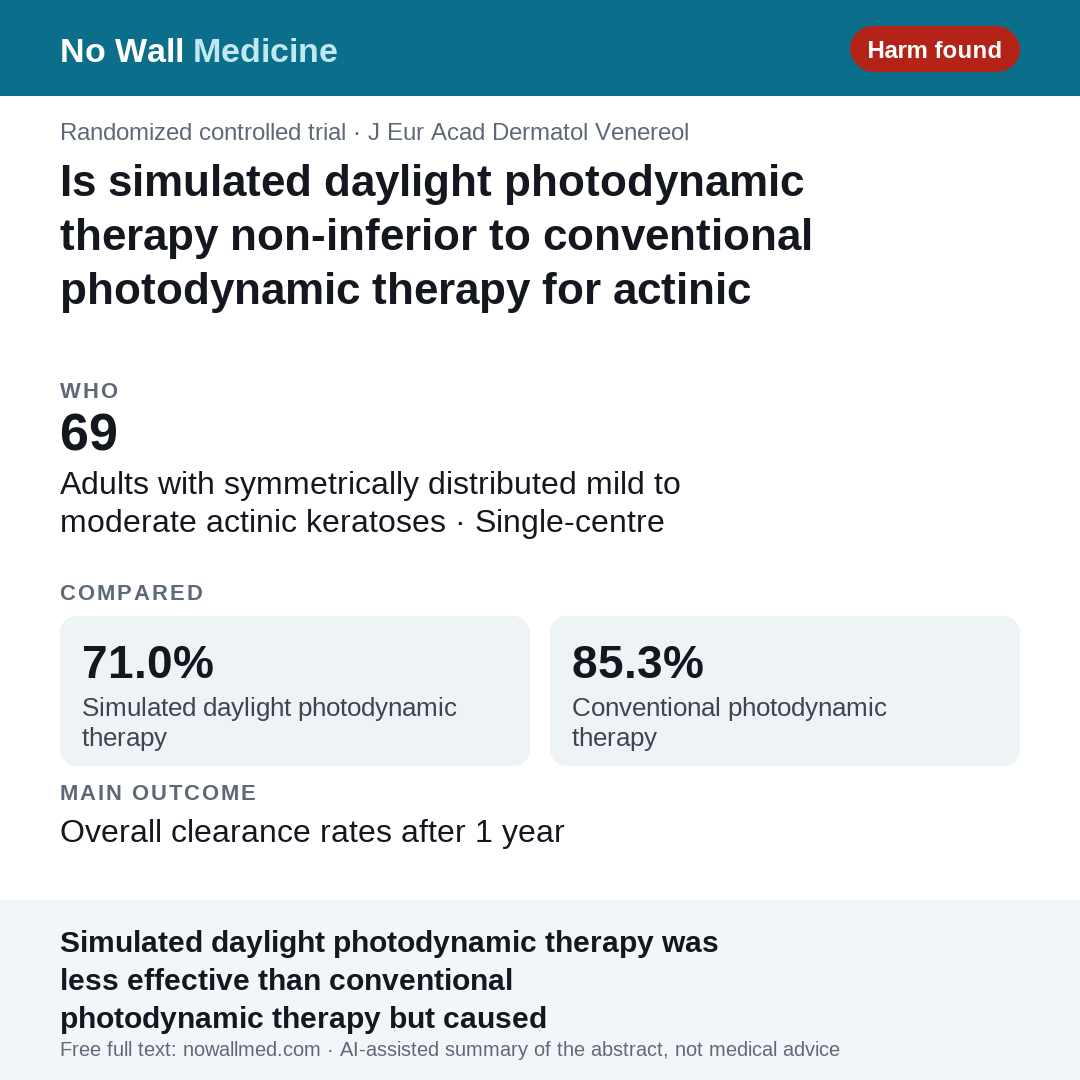
Simulated daylight versus conventional PDT for mild to moderate actinic keratoses: A randomized controlled trial
Randomized controlled trialHarm found
Is simulated daylight photodynamic therapy non-inferior to conventional photodynamic therapy for actinic keratoses?
Who
69
Adults with symmetrically distributed mild to moderate actinic keratoses · Single-centre
Compared
71.0%Simulated daylight photodynamic therapy
85.3%Conventional photodynamic therapy
Main outcome
Overall clearance rates after 1 year
Bottom line: Simulated daylight photodynamic therapy was less effective than conventional photodynamic therapy but caused significantly less pain.
J Eur Acad Dermatol Venereol · 2026-06-10Download image
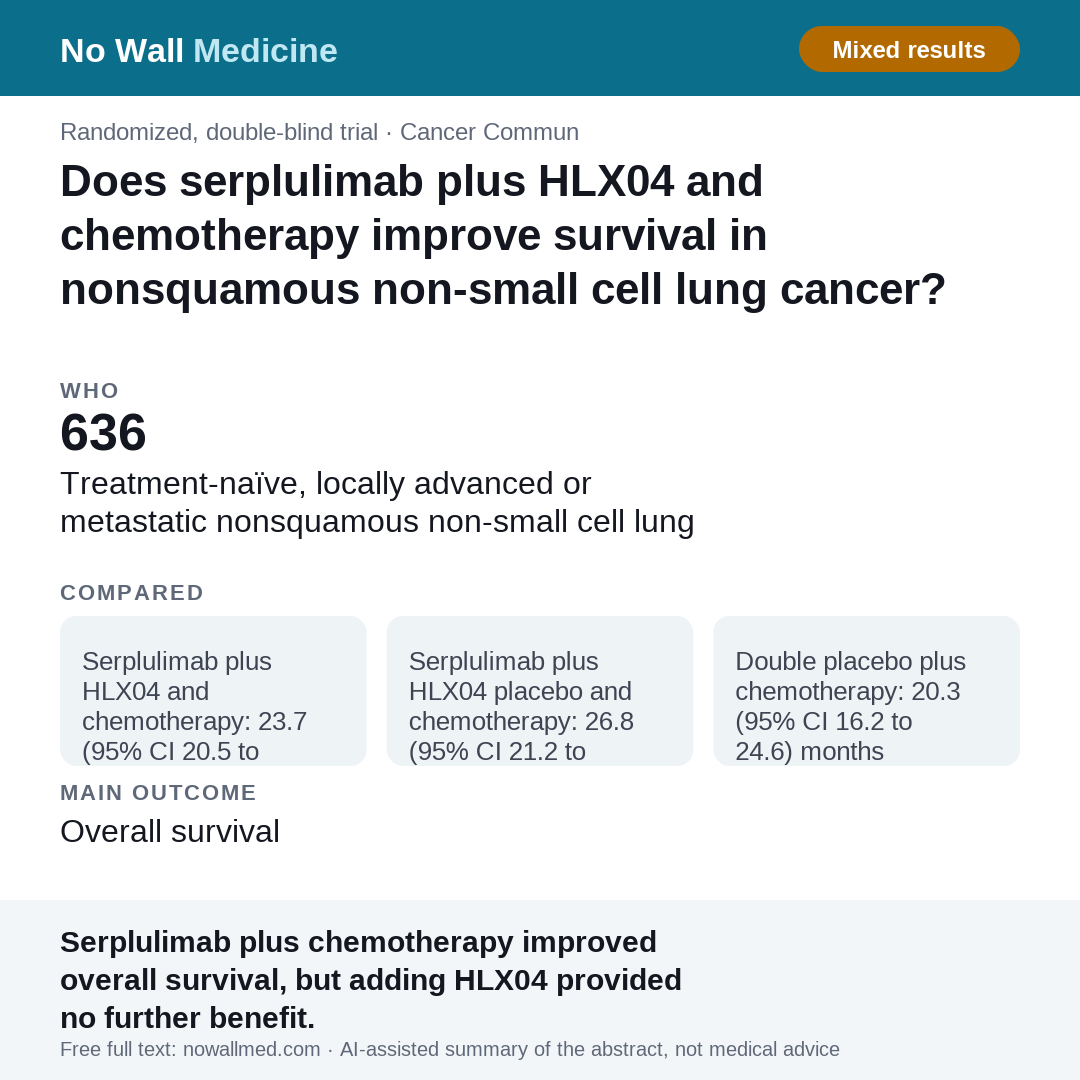
Serplulimab Plus Chemotherapy, with or without HLX04, versus Chemotherapy as First-Line Treatment for Nonsquamous NSCLC: Final Survival Analysis of the Phase III ASTRUM-002 Study
Randomized, double-blind trialMixed results
Does serplulimab plus HLX04 and chemotherapy improve survival in nonsquamous non-small cell lung cancer?
Who
636
Treatment-naïve, locally advanced or metastatic nonsquamous non-small cell lung cancer without EGFR or ALK/ROS1 alterations
Compared
Serplulimab plus HLX04 and chemotherapy: 23.7 (95% CI 20.5 to 27.5) months
Serplulimab plus HLX04 placebo and chemotherapy: 26.8 (95% CI 21.2 to 30.9) months
Double placebo plus chemotherapy: 20.3 (95% CI 16.2 to 24.6) months
Main outcome
Overall survival
Result: hazard ratio 0.66 (95% CI 0.52 to 0.83)
Bottom line: Serplulimab plus chemotherapy improved overall survival, but adding HLX04 provided no further benefit.
Cancer Commun · 2026-06-10Download image
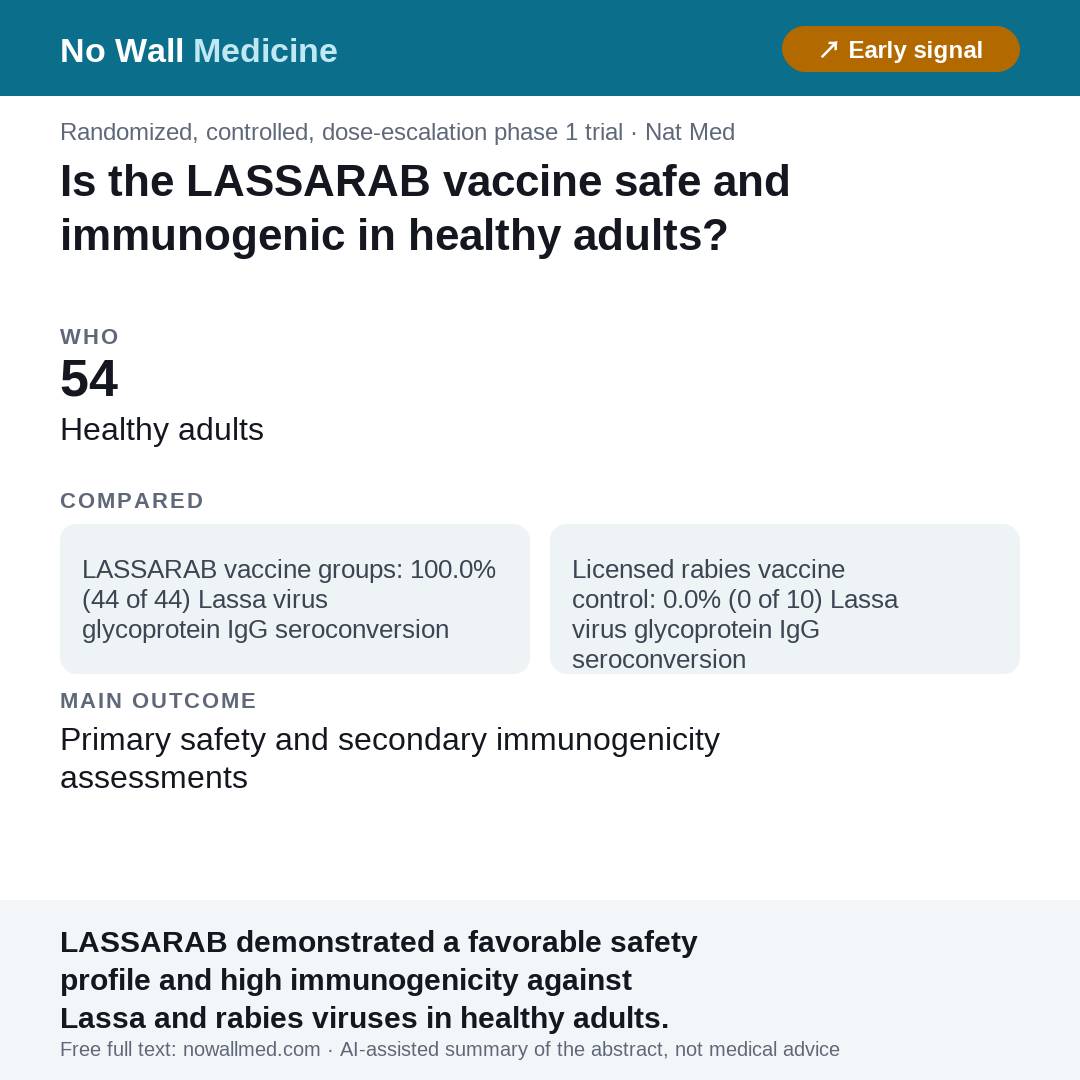
Adjuvanted inactivated rabies virus-vectored Lassa virus vaccine in healthy adults: a phase 1 trial
Randomized, controlled, dose-escalation phase 1 trialEarly signal
Is the LASSARAB vaccine safe and immunogenic in healthy adults?
Who
54
Healthy adults
Compared
LASSARAB vaccine groups: 100.0% (44 of 44) Lassa virus glycoprotein IgG seroconversion
Licensed rabies vaccine control: 0.0% (0 of 10) Lassa virus glycoprotein IgG seroconversion
Main outcome
Primary safety and secondary immunogenicity assessments
Bottom line: LASSARAB demonstrated a favorable safety profile and high immunogenicity against Lassa and rabies viruses in healthy adults.
Limitation: There were no prespecified hypotheses or formal power calculations.
Nat Med · 2026-06-09Download image
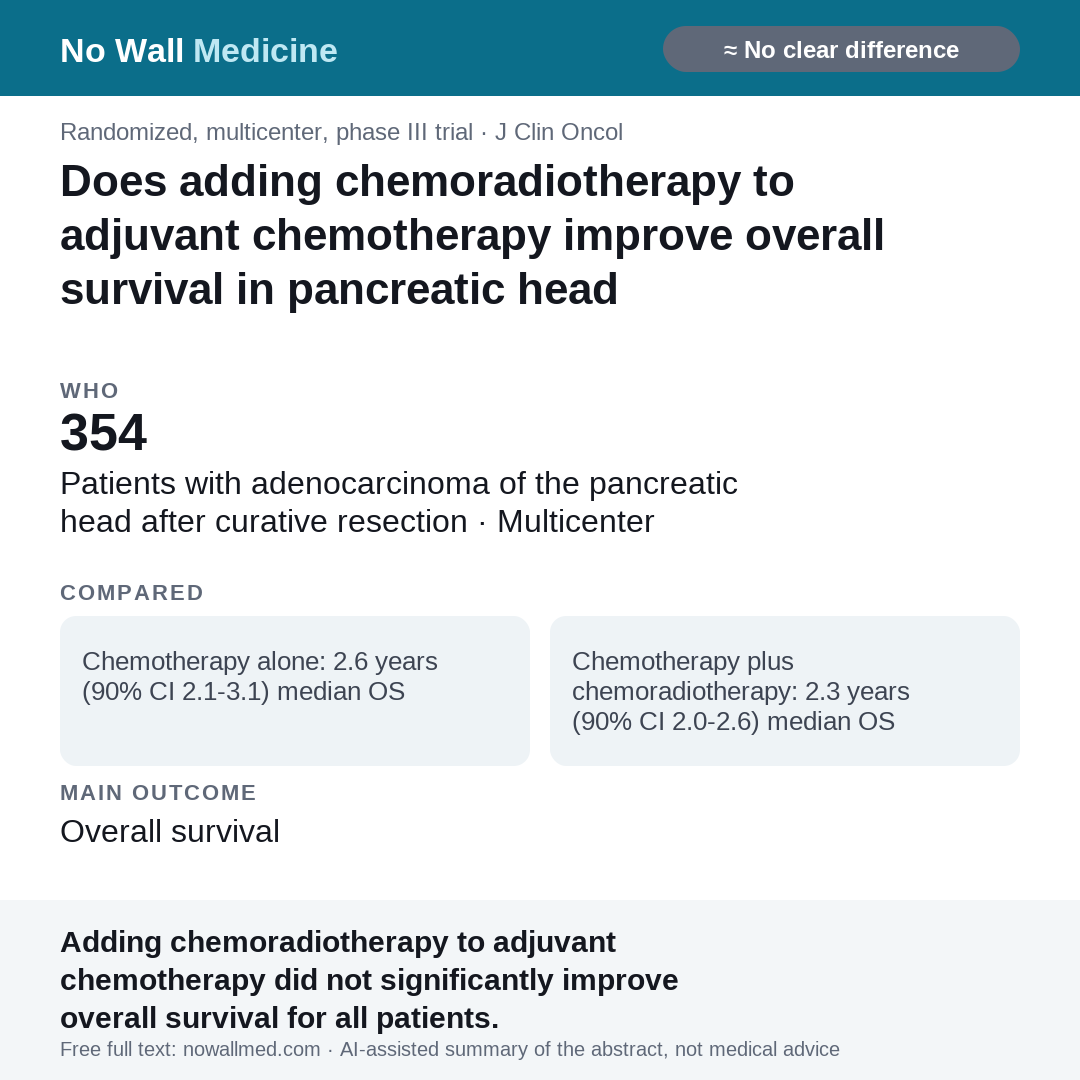
Adjuvant Chemotherapy ± Chemoradiotherapy for Adenocarcinoma of the Pancreatic Head: Results of the Radiotherapy Random Assignment of NRG Oncology/RTOG 0848
Randomized, multicenter, phase III trialNo clear difference
Does adding chemoradiotherapy to adjuvant chemotherapy improve overall survival in pancreatic head adenocarcinoma?
Who
354
Patients with adenocarcinoma of the pancreatic head after curative resection · Multicenter
Compared
Chemotherapy alone: 2.6 years (90% CI 2.1-3.1) median OS
Chemotherapy plus chemoradiotherapy: 2.3 years (90% CI 2.0-2.6) median OS
Main outcome
Overall survival
Result: hazard ratio 0.96 (90% CI 0.79 to 1.18)
Bottom line: Adding chemoradiotherapy to adjuvant chemotherapy did not significantly improve overall survival for all patients.
Limitation: The benefit of chemoradiotherapy was only observed in node-negative patients.
J Clin Oncol · 2026-06-09Download image
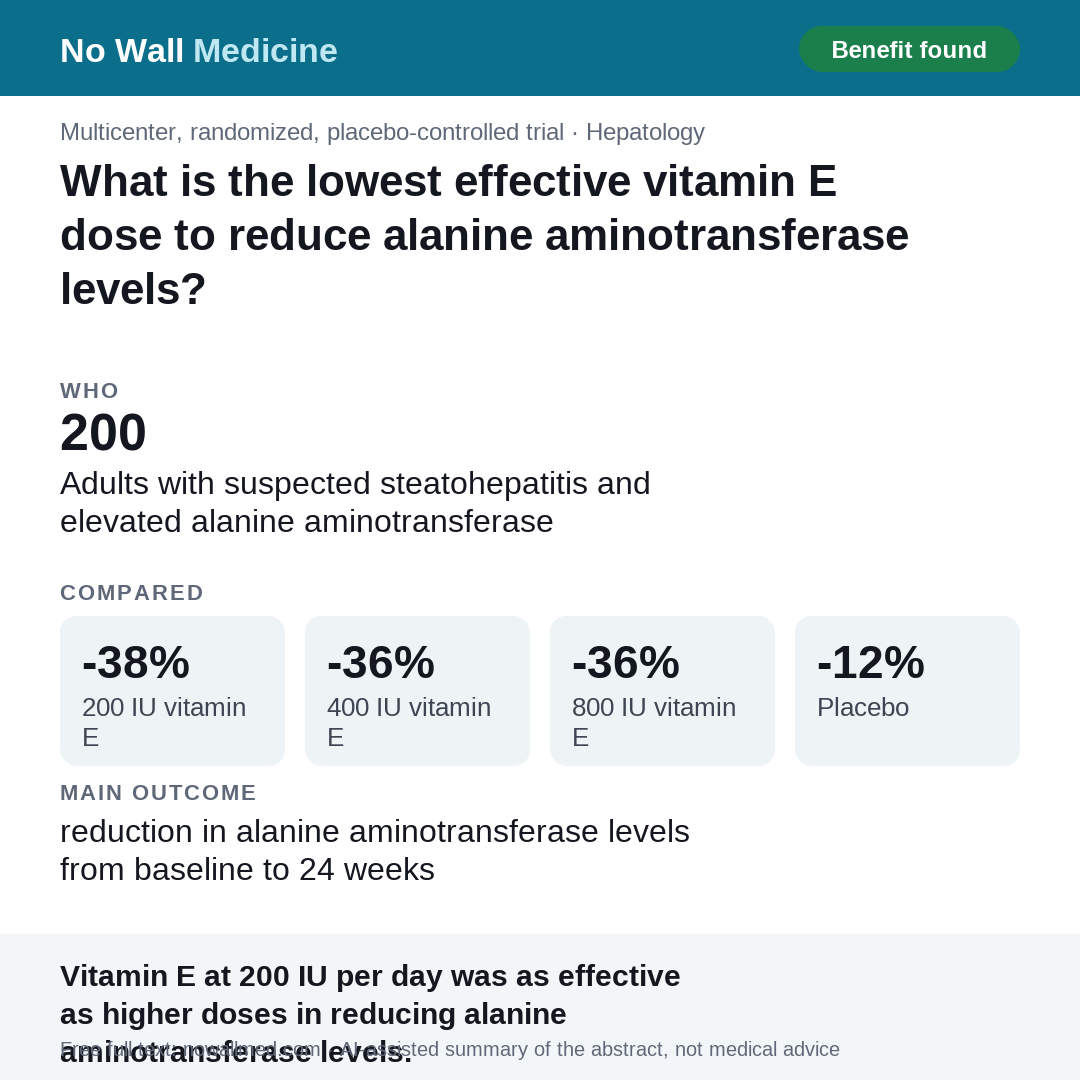
Vitamin E dosing study (VEDS) in patients with metabolic dysfunction-associated steatotic liver disease with elevated aminotransferases: A multicenter, randomized, placebo-controlled trial
Multicenter, randomized, placebo-controlled trialBenefit found
What is the lowest effective vitamin E dose to reduce alanine aminotransferase levels?
Who
200
Adults with suspected steatohepatitis and elevated alanine aminotransferase
Compared
-38%200 IU vitamin E
-36%400 IU vitamin E
-36%800 IU vitamin E
-12%Placebo
Main outcome
reduction in alanine aminotransferase levels from baseline to 24 weeks
Bottom line: Vitamin E at 200 IU per day was as effective as higher doses in reducing alanine aminotransferase levels.
Hepatology · 2026-06-09Download image
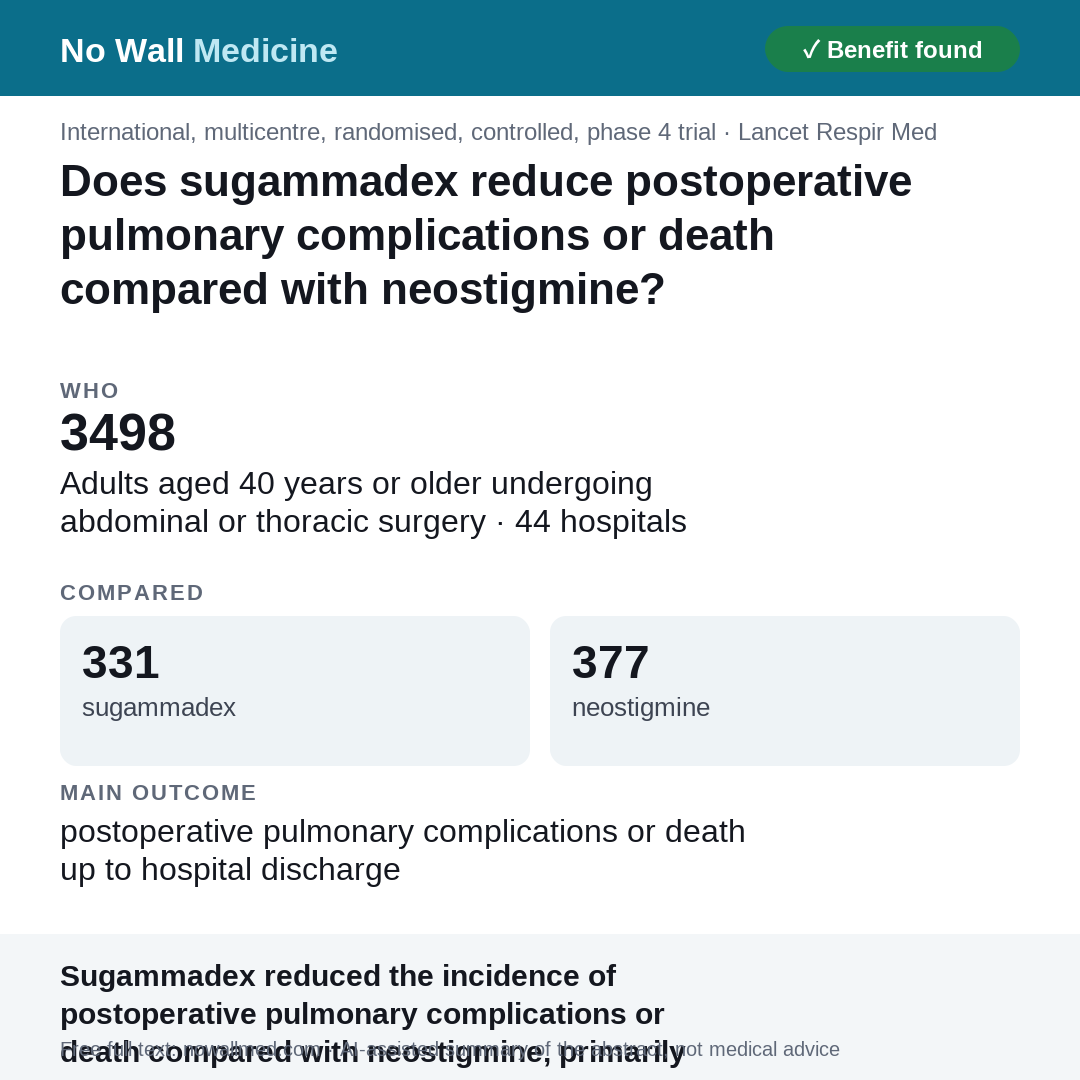
Sugammadex versus neostigmine for reversal of neuromuscular blockade and postoperative pulmonary complications (SNaPP): an international, randomised, controlled, phase 4 trial
International, multicentre, randomised, controlled, phase 4 trialBenefit found
Does sugammadex reduce postoperative pulmonary complications or death compared with neostigmine?
Who
3498
Adults aged 40 years or older undergoing abdominal or thoracic surgery · 44 hospitals in Australia, Aotearoa New Zealand, and Hong Kong
Compared
331sugammadex (19·0%)
377neostigmine (21·5%)
Main outcome
postoperative pulmonary complications or death up to hospital discharge
Result: risk ratio 0·88 (95% CI 0·77-1·00)
Bottom line: Sugammadex reduced the incidence of postoperative pulmonary complications or death compared with neostigmine, primarily driven by reduced atelectasis.
Funded by: Australian Medical Research Future Fund and Hong Kong Health and Medical Research Fund
Lancet Respir Med · 2026-06-09Download image
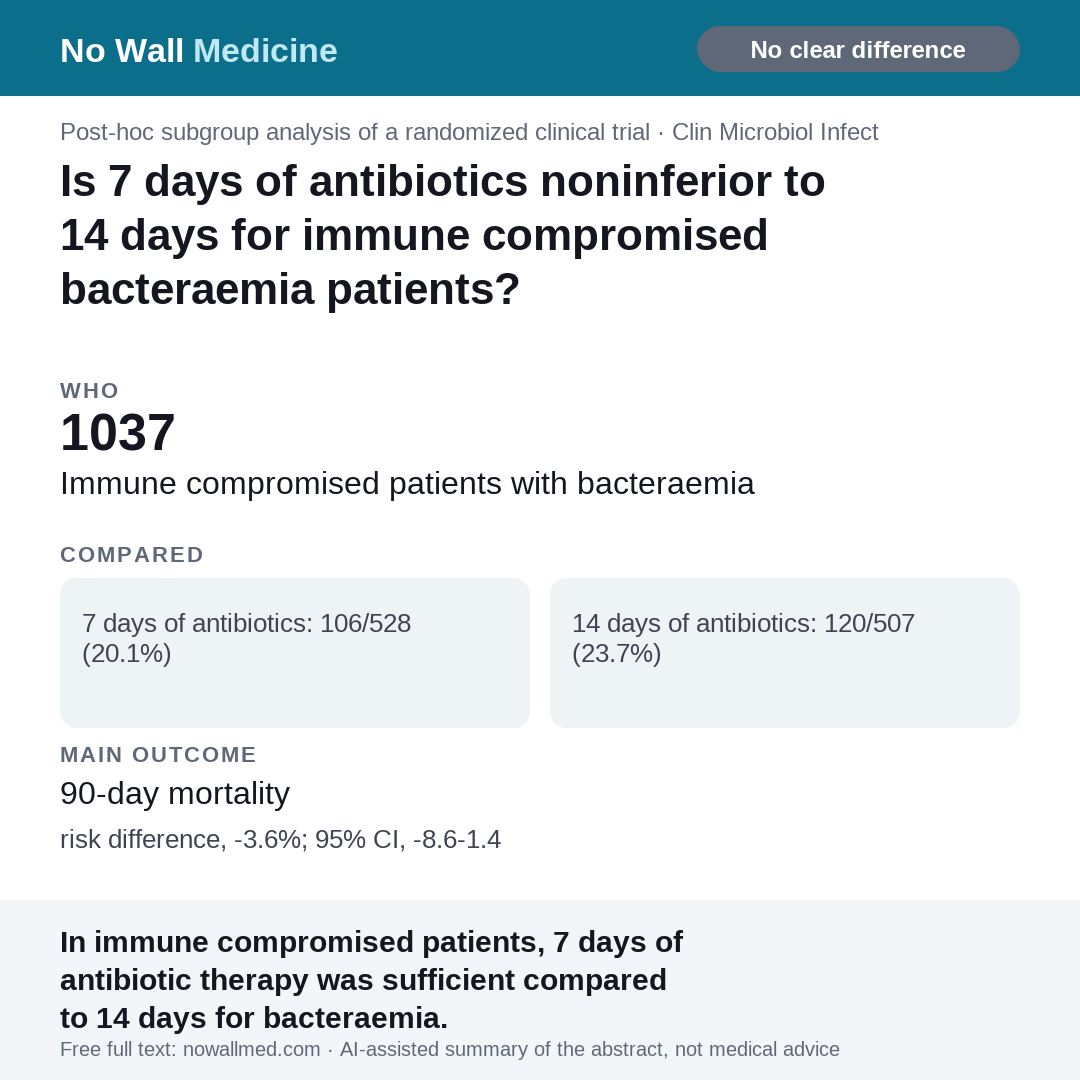
Duration of antibiotic therapy for bacteraemia in immune compromised hosts-a post-hoc subgroup analysis of the Bacteremia Antibiotic Length Actually Needed For Clinical Effectiveness (BALANCE) randomized clinical trial
Post-hoc subgroup analysis of a randomized clinical trialNo clear difference
Is 7 days of antibiotics noninferior to 14 days for immune compromised bacteraemia patients?
Who
1037
Immune compromised patients with bacteraemia
Compared
7 days of antibiotics: 106/528 (20.1%)
14 days of antibiotics: 120/507 (23.7%)
Main outcome
90-day mortality
Result: risk difference, -3.6%; 95% CI, -8.6-1.4
Bottom line: In immune compromised patients, 7 days of antibiotic therapy was sufficient compared to 14 days for bacteraemia.
Limitation: This was a post-hoc subgroup analysis.
Clin Microbiol Infect · 2026-06-09Download image
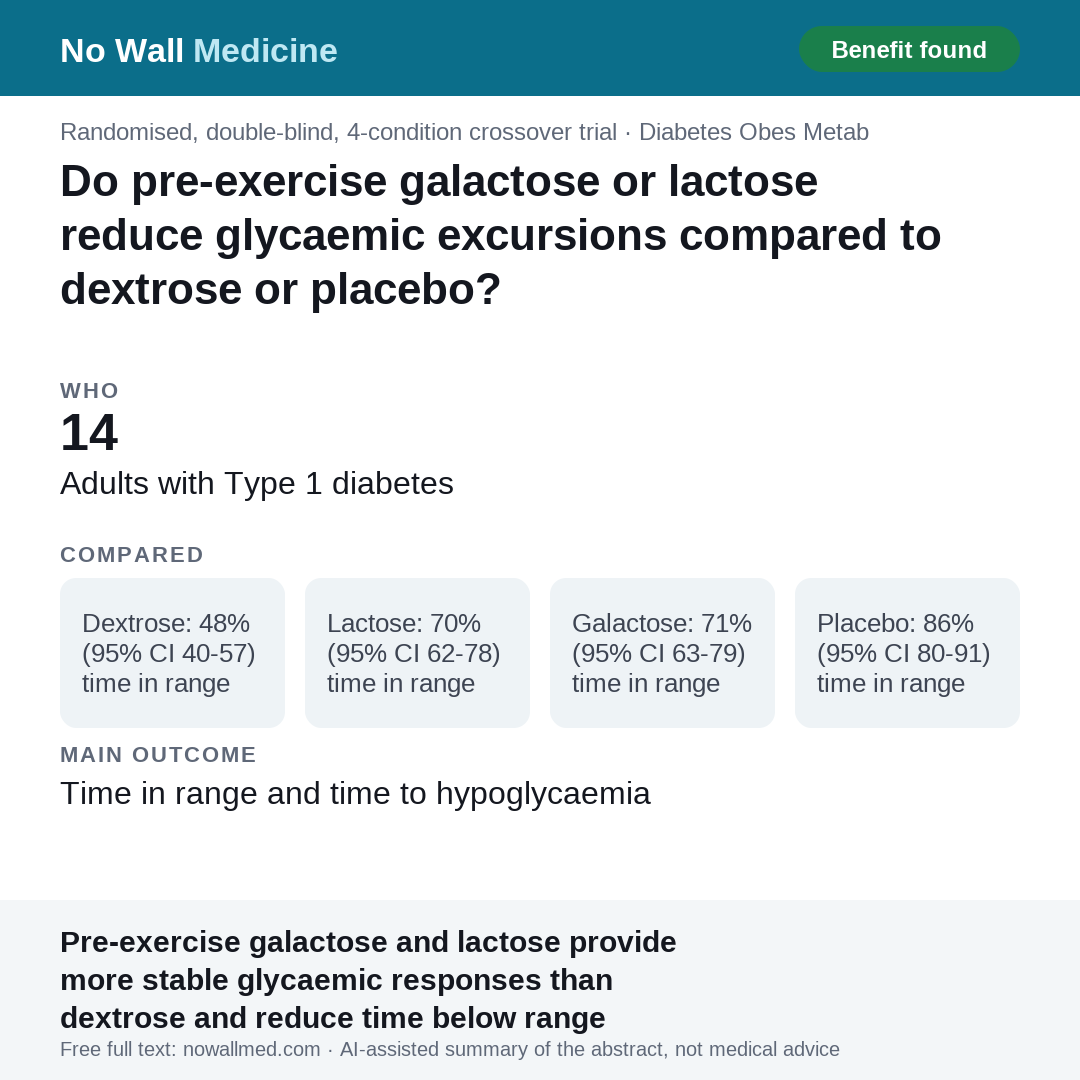
Pre-Exercise Galactose or Lactose Reduces Glycaemic Excursions During Exercise in Adults With Type 1 Diabetes: A Randomised, Double-Blind, Crossover Trial
Randomised, double-blind, 4-condition crossover trialBenefit found
Do pre-exercise galactose or lactose reduce glycaemic excursions compared to dextrose or placebo?
Who
14
Adults with Type 1 diabetes
Compared
Dextrose: 48% (95% CI 40-57) time in range
Lactose: 70% (95% CI 62-78) time in range
Galactose: 71% (95% CI 63-79) time in range
Placebo: 86% (95% CI 80-91) time in range
Main outcome
Time in range and time to hypoglycaemia
Bottom line: Pre-exercise galactose and lactose provide more stable glycaemic responses than dextrose and reduce time below range compared to placebo.
Diabetes Obes Metab · 2026-06-09Download image
Mobile intervention for emerging adults with regular cannabis use: a micro-randomized trial
Micro-randomized trialMixed results
Does a personalized just-in-time adaptive intervention improve engagement and cannabis use?
Who
122
Emerging adults with regular cannabis use
Compared
Intervention message delivery: b = 0.044; 95% CI: 0.018, 0.070
No message: b = 0.008; 95% CI: -0.003, 0.020
Main outcome
Proximal engagement and proximal cannabis use
Bottom line: The intervention increased proximal engagement but did not affect proximal cannabis use among emerging adults.
Funded by: National Institute of Health and the Brzoznowski family
Lancet Reg Health Am · 2026-06-09Download image

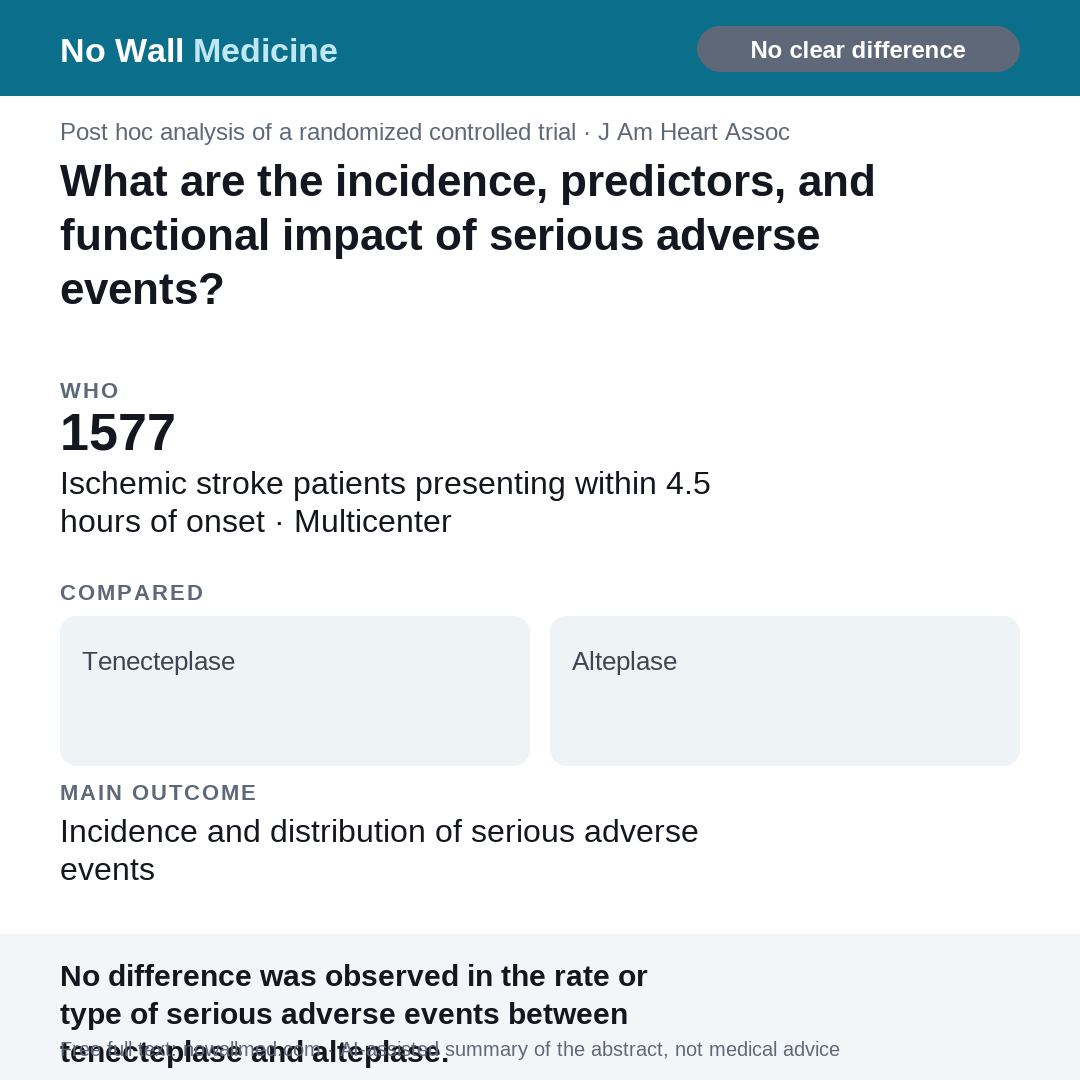
Predictors and Consequences of Serious Adverse Events in Patients Treated With Thrombolysis: A Prespecified Secondary Analysis of the AcT Trial
Post hoc analysis of a randomized controlled trialNo clear difference
What are the incidence, predictors, and functional impact of serious adverse events?
Who
1577
Ischemic stroke patients presenting within 4.5 hours of onset · Multicenter
Compared
Tenecteplase
Alteplase
Main outcome
Incidence and distribution of serious adverse events
Bottom line: No difference was observed in the rate or type of serious adverse events between tenecteplase and alteplase.
J Am Heart Assoc · 2026-06-09Download image
Large Core Stroke Thrombectomy Is Safe and Effective Regardless of Prior Antithrombotic or Thrombolytic Treatment: A Secondary Analysis of the Randomized TENSION Trial
Prospective randomized open-label blinded-end point clinical trialBenefit found
Is endovascular thrombectomy safe and effective regardless of prior antithrombotic or thrombolytic treatment?
Who
246
Patients with acute ischemic stroke, large vessel occlusion, and large infarct
Compared
Endovascular thrombectomy with medical therapy
Medical therapy alone
Main outcome
Functional outcome at 90 days
Bottom line: Endovascular thrombectomy is safe and effective regardless of prior antiplatelet, anticoagulant, or intravenous thrombolysis treatment.
J Am Heart Assoc · 2026-06-09Download image
