Visual abstracts
New randomized trials and meta-analyses from leading journals at a glance: who was studied, what was compared, and what was found. Every paper is free to read in full.
All specialtiesCardiology 4763Oncology 4042Gastroenterology & Hepatology 1902Infectious Disease 3756Neurology 1872Psychiatry & Mental Health 2214Pulmonology 2042Critical Care 1319Endocrinology & Diabetes 2544Pediatrics 2889Surgery 2479Orthopedics & Sports Medicine 917Neurosurgery 525Cardiothoracic & Vascular Surgery 656Plastic & Reconstructive Surgery 574Nephrology 1107Rheumatology 810Hematology 1090Dermatology 611Ophthalmology 532Obstetrics & Gynecology 1645Public & Global Health 1037Radiology & Imaging 617Anesthesiology 957Urology 745ENT (Otolaryngology) 494Emergency Medicine 481Allergy & Immunology 309Geriatrics 972Family Medicine & Primary Care 533Medical Genetics & Genomics 659Pathology & Laboratory Medicine 156Physical Medicine & Rehabilitation 734Palliative Care 421Nutrition 1560Digital Health & AI 2133General Medicine 318
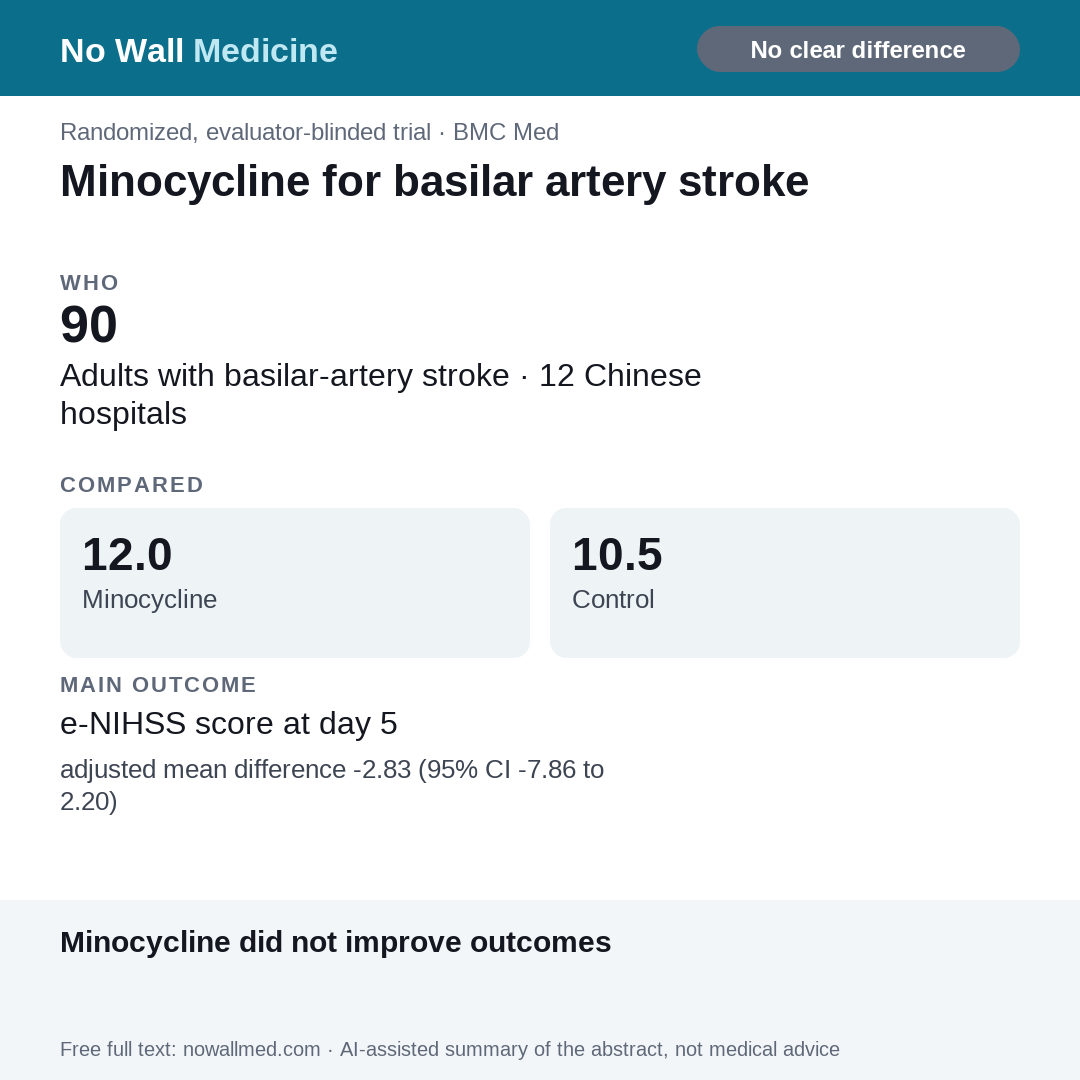
Minocycline for acute basilar artery occlusion stroke undergoing endovascular treatment: a randomized, evaluator-blinded, open-label, pilot trial
Randomized, evaluator-blinded trialNo clear difference
Minocycline for basilar artery stroke
Who
90
Adults with basilar-artery stroke · 12 Chinese hospitals
Compared
12.0Minocycline (IQR 3.5 to 30.0)
10.5Control (IQR 2.0 to 35.0)
Main outcome
e-NIHSS score at day 5
Result: adjusted mean difference -2.83 (95% CI -7.86 to 2.20)
Bottom line: Minocycline did not improve outcomes
Limitation: small sample size
BMC Med · 2026-07-27Download image
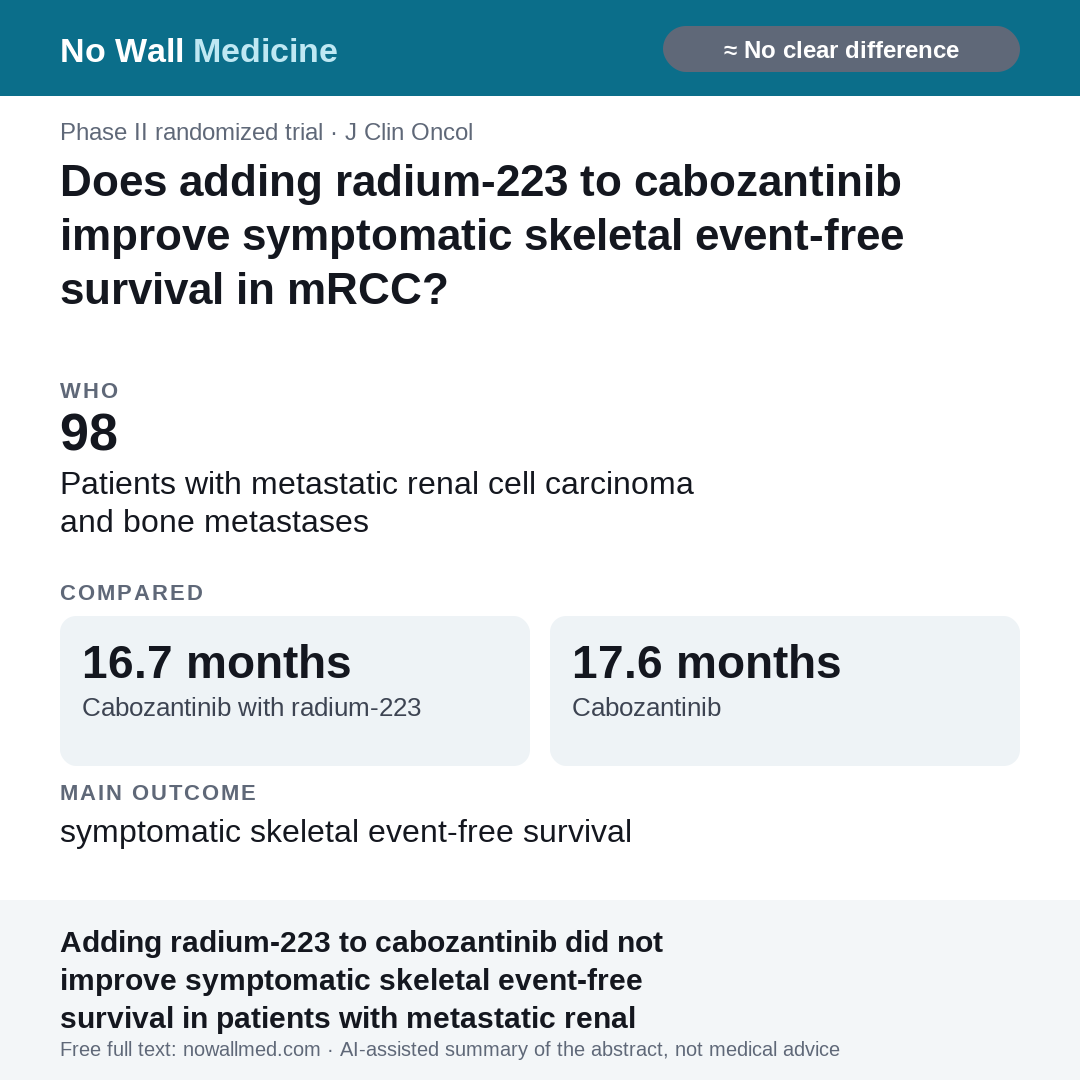
Phase II Randomized Trial of Radium-223 Dichloride and Cabozantinib in Patients With Renal Cell Carcinoma With Bone Metastases: RADICAL (Alliance A031801)
Phase II randomized trialNo clear difference
Does adding radium-223 to cabozantinib improve symptomatic skeletal event-free survival in mRCC?
Who
98
Patients with metastatic renal cell carcinoma and bone metastases
Compared
16.7 monthsCabozantinib with radium-223
17.6 monthsCabozantinib
Main outcome
symptomatic skeletal event-free survival
Result: sHR 1.46 (90% CI 0.86 to 2.51)
Bottom line: Adding radium-223 to cabozantinib did not improve symptomatic skeletal event-free survival in patients with metastatic renal cell carcinoma.
J Clin Oncol · 2026-07-27Download image
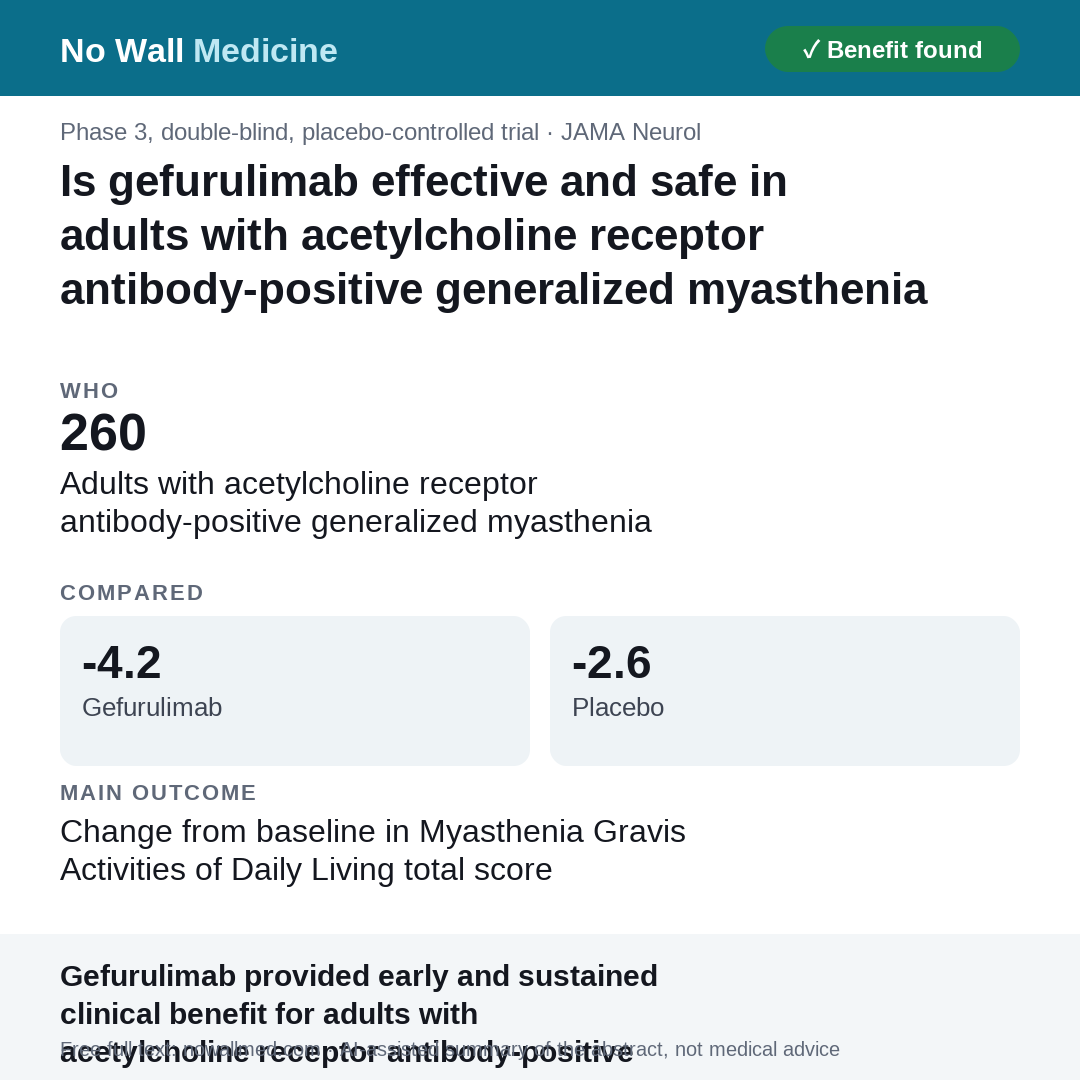
Efficacy and Safety of Gefurulimab in Generalized Myasthenia Gravis: The PREVAIL Phase 3 Randomized Clinical Trial
Phase 3, double-blind, placebo-controlled trialBenefit found
Is gefurulimab effective and safe in adults with acetylcholine receptor antibody-positive generalized myasthenia gravis?
Who
260
Adults with acetylcholine receptor antibody-positive generalized myasthenia gravis · 113 sites in 20 countries
Compared
-4.2Gefurulimab
-2.6Placebo
Main outcome
Change from baseline in Myasthenia Gravis Activities of Daily Living total score
Result: treatment difference -1.6 (95% CI -2.4 to -0.8)
Bottom line: Gefurulimab provided early and sustained clinical benefit for adults with acetylcholine receptor antibody-positive generalized myasthenia gravis.
JAMA Neurol · 2026-07-27Download image
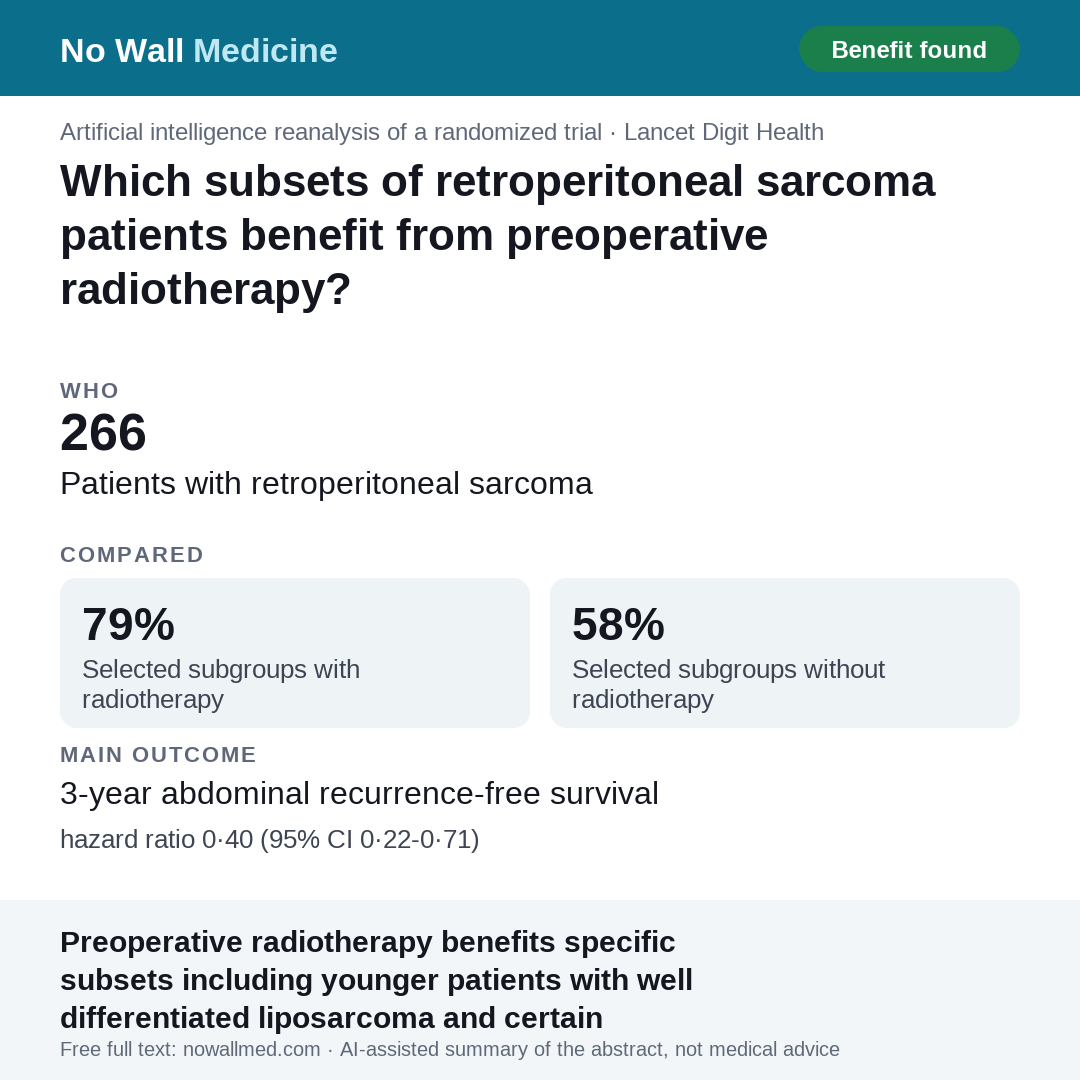
Identifying subsets of patients with retroperitoneal sarcoma who benefit from radiotherapy: an Interpretable AI reanalysis of the STRASS randomised trial
Artificial intelligence reanalysis of a randomized trialBenefit found
Which subsets of retroperitoneal sarcoma patients benefit from preoperative radiotherapy?
Who
266
Patients with retroperitoneal sarcoma
Compared
79%Selected subgroups with radiotherapy (95% CI 70-89)
58%Selected subgroups without radiotherapy (48-72)
Main outcome
3-year abdominal recurrence-free survival
Result: hazard ratio 0·40 (95% CI 0·22-0·71)
Bottom line: Preoperative radiotherapy benefits specific subsets including younger patients with well differentiated liposarcoma and certain dedifferentiated liposarcoma patients.
Funded by: National Cancer Institute and Memorial Sloan Kettering Cancer Center
Lancet Digit Health · 2026-07-27Download image
Therapeutic potential and safety challenges of antimicrobial peptides and peptidomimetics against ESKAPEE pathogens: a systematic review with quantitative analysis
Systematic review with quantitative analysisMixed results
What is the therapeutic potential and safety of antimicrobial peptides and peptidomimetics?
Who
Antimicrobial peptides and peptidomimetics against ESKAPEE pathogens
Compared
Natural antimicrobial peptides: most potent in vitro against Gram-negative bacteria but frequently caused significant host toxicity
Peptidomimetics: generally provided a wider safety margin than synthetic peptides
Main outcome
therapeutic balance of potency and safety
Bottom line: Natural peptides are potent but toxic, while peptidomimetics offer better safety but face pharmacokinetic challenges.
Limitation: Limited cytotoxicity data prevented robust selectivity analysis for natural compounds.
J Antimicrob Chemother · 2026-07-27Download image

Standardizing care for agitation in Alzheimer's disease, results from a randomized controlled trial of an integrated care pathway versus usual care - the StaN trial
Double-blind randomized controlled trialMixed results
Does an integrated care pathway improve agitation management and reduce polypharmacy in dementia?
Who
185
Inpatients and long-term-care home residents with dementia · 12 inpatient units and long-term-care homes across Canada
Compared
Integrated Care Pathway
Treatment as usual
Main outcome
Cohen Mansfield Agitation Inventory and psychotropic polypharmacy
Bottom line: The integrated care pathway may reduce polypharmacy but did not significantly affect agitation levels.
Alzheimers Dement · 2026-07-27Download image

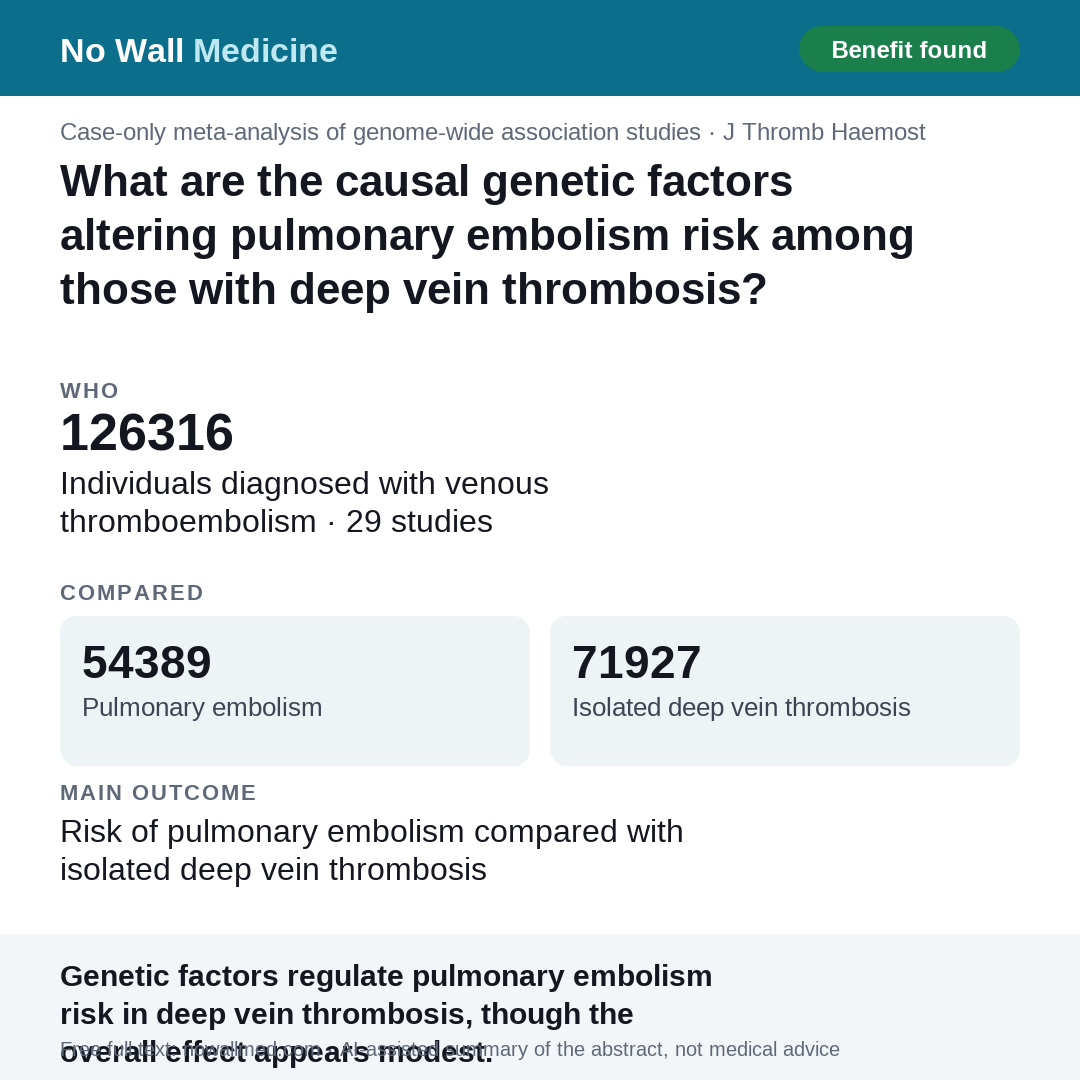
Genetic associations with pulmonary embolism among those with a deep vein thrombosis: the International Network Against Venous Thrombosis Consortium
Case-only meta-analysis of genome-wide association studiesKey finding
What are the causal genetic factors altering pulmonary embolism risk among those with deep vein thrombosis?
Who
126316
Individuals diagnosed with venous thromboembolism · 29 studies
Compared
54389Pulmonary embolism
71927Isolated deep vein thrombosis
Main outcome
Risk of pulmonary embolism compared with isolated deep vein thrombosis
Result: odds ratio 1.05 (95% CI 1.003-1.094) per 1 standard deviation polygenic risk score increase
Bottom line: Genetic factors regulate pulmonary embolism risk in deep vein thrombosis, though the overall effect appears modest.
J Thromb Haemost · 2026-07-27Download image
The Paradoxes of Social Care: Reframing Apparent Conflicts
Sub-analysis of a systematic reviewUnclear result
What are the key paradoxes in the social care literature?
Who
Social care literature regarding adult primary care
Compared
82Studies addressing paradoxes
Studies not addressing paradoxes
Main outcome
Identification of recurring paradoxes and reconciliation strategies
Bottom line: The review identified 12 recurring paradoxes and three reconciliation strategies within social care literature.
Ann Fam Med · 2026-07-27Download image

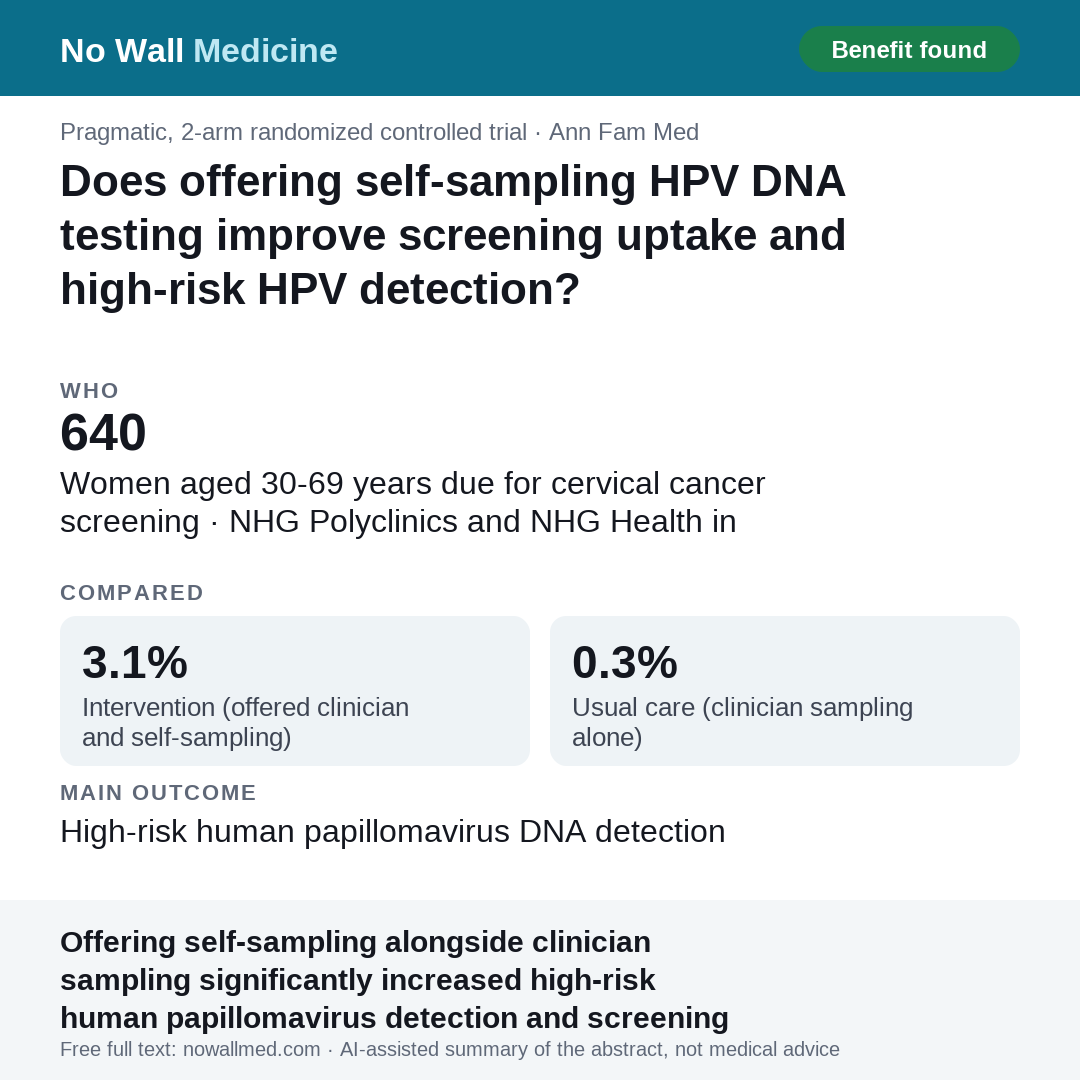
Effect of Self-Sampling HPV DNA Testing on Cervical Cancer Screening in Singapore's Primary Care: Pragmatic Randomized Controlled Trial
Pragmatic, 2-arm randomized controlled trialBenefit found
Does offering self-sampling HPV DNA testing increase screening uptake and high-risk HPV detection?
Who
640
Women aged 30-69 years due for cervical cancer screening · NHG Polyclinics and NHG Health in Singapore
Compared
Intervention (offered clinician and self-sampling): 3.1% high-risk HPV detection
Usual care (clinician sampling alone): 0.3% high-risk HPV detection
Main outcome
High-risk human papillomavirus DNA detection
Result: absolute difference 2.8% (95% CI, 0.8-4.8)
Bottom line: Offering self-sampling alongside clinician sampling significantly increased screening uptake and high-risk human papillomavirus detection rates.
Limitation: Uptake remained lower among women with less education.
Ann Fam Med · 2026-07-27Download image
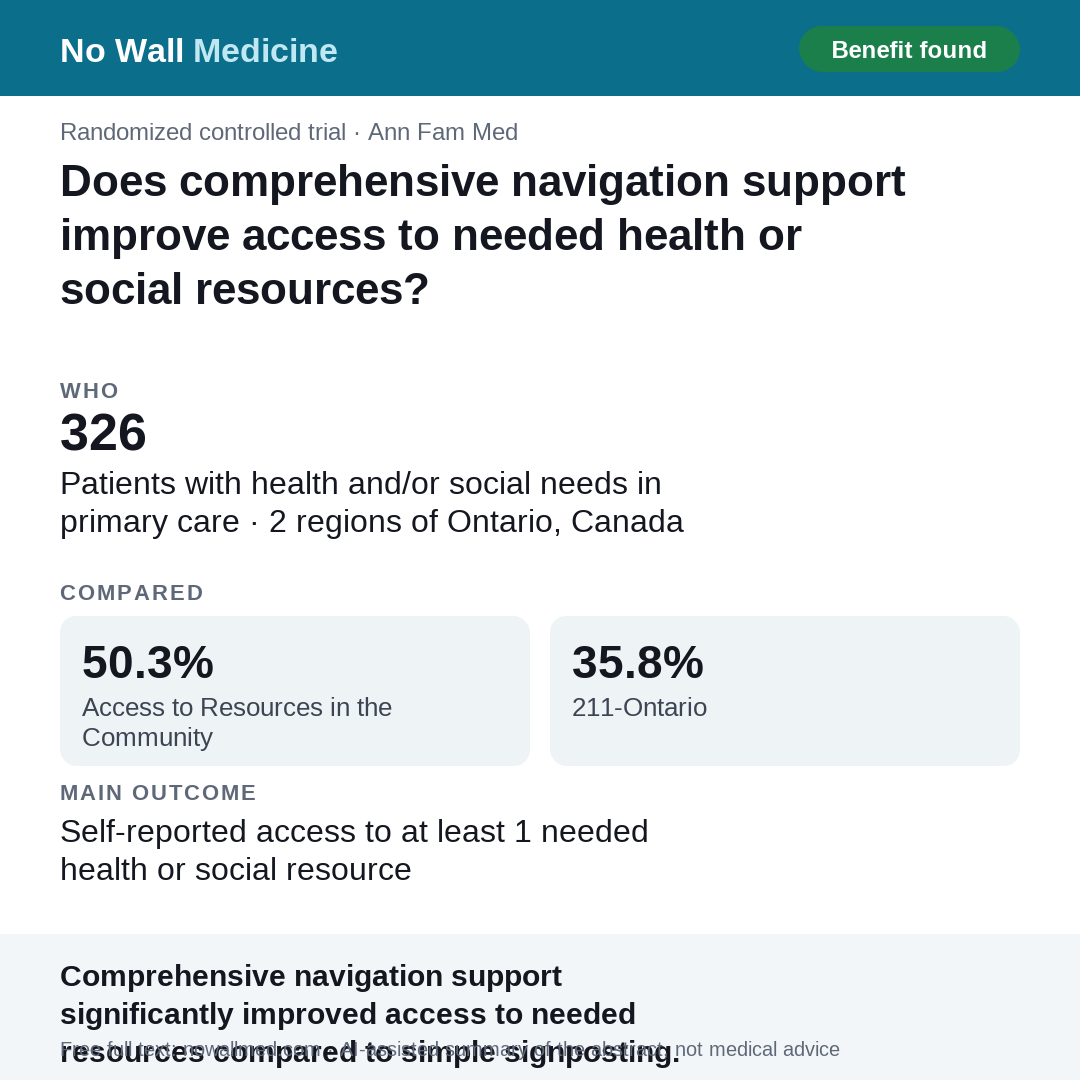
A Randomized Controlled Trial of Social Prescribing: Comparing a Comprehensive Navigation Model With Signposting
Randomized controlled trialBenefit found
Does comprehensive navigation support improve access to needed health or social resources?
Who
326
Patients with health and/or social needs in primary care · 2 regions of Ontario, Canada
Compared
50.3%Access to Resources in the Community
35.8%211-Ontario
Main outcome
Self-reported access to at least 1 needed health or social resource
Result: adjusted odds ratio 1.82 (95% CI 1.13-2.94)
Bottom line: Comprehensive navigation support significantly improved access to needed resources compared to simple signposting.
Ann Fam Med · 2026-07-27Download image
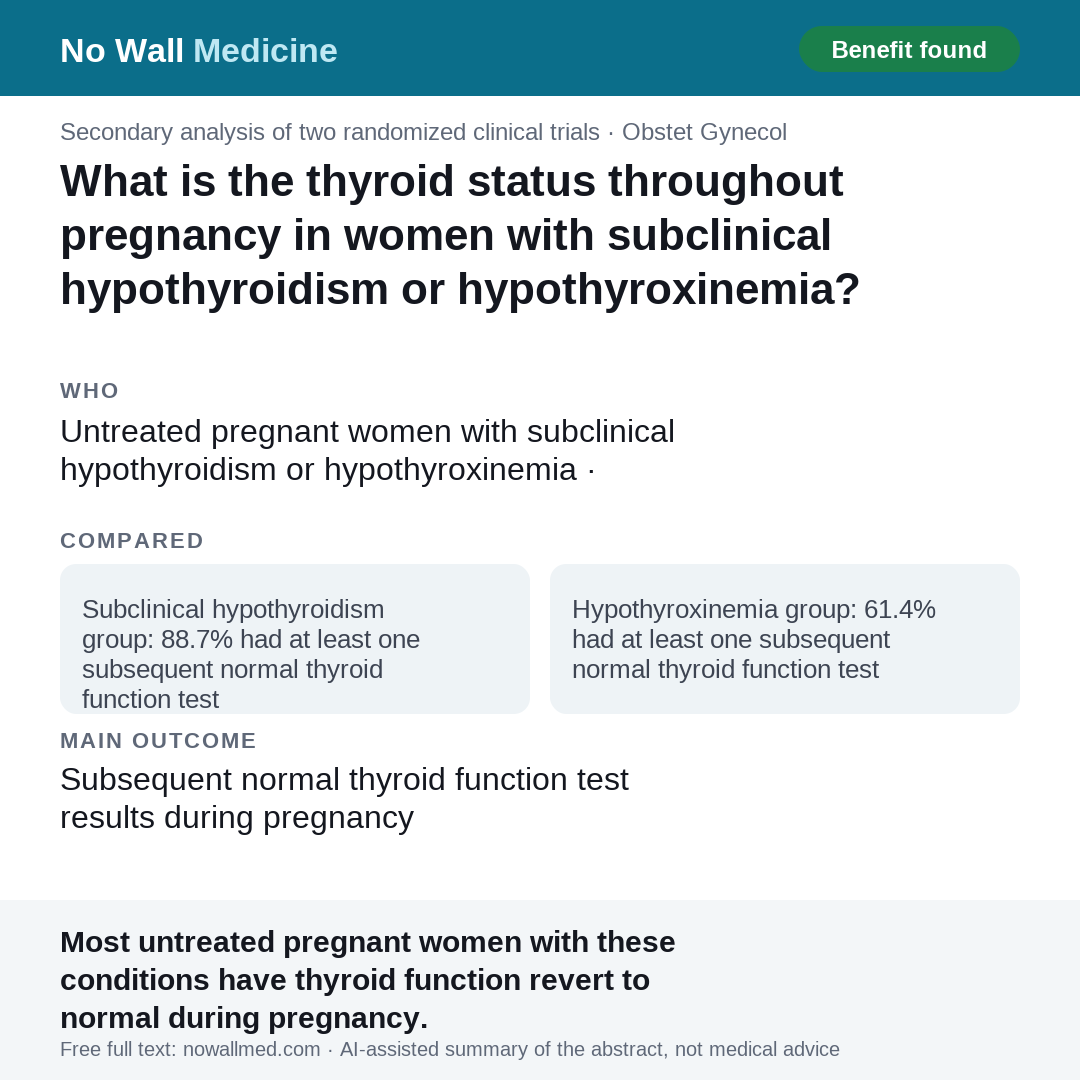
Thyroid Function Throughout Pregnancy in Women With Subclinical Hypothyroidism or Hypothyroxinemia
Secondary analysis of two randomized clinical trialsNo clear difference
What is the thyroid status throughout pregnancy in women with subclinical hypothyroidism or hypothyroxinemia?
Who
Pregnant women with subclinical hypothyroidism or hypothyroxinemia · Multicenter
Compared
Subclinical hypothyroidism placebo group: 88.7% had at least one subsequent normal thyroid function test
Hypothyroxinemia placebo group: 61.4% had at least one subsequent normal thyroid function test
Main outcome
Subsequent thyroid function test results during pregnancy
Bottom line: Most untreated pregnant women with these conditions do not have sustained abnormal thyroid results throughout pregnancy.
Obstet Gynecol · 2026-07-27Download image
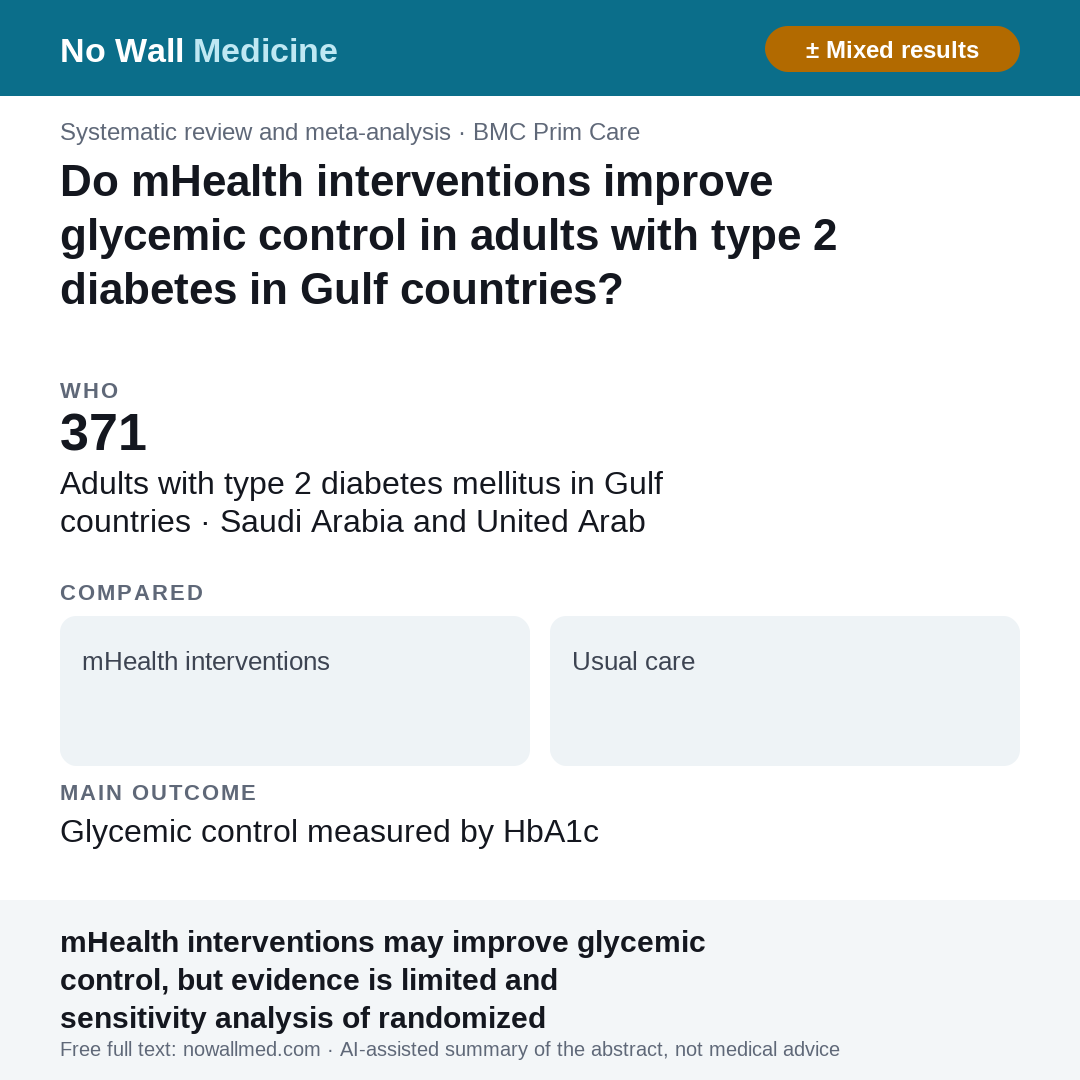
Effectiveness of mHealth interventions on glycemic outcomes in adults with type 2 diabetes in Gulf countries: a systematic review and meta-analysis
Systematic review and meta-analysisMixed results
Do mHealth interventions improve glycemic control in adults with type 2 diabetes in Gulf countries?
Who
371
Adults with type 2 diabetes mellitus in Gulf countries · Saudi Arabia and United Arab Emirates
Compared
mHealth interventions
Usual care
Main outcome
Glycemic control measured by HbA1c
Result: pooled mean difference -0.86% (95% CI: -1.48 to -0.24)
Bottom line: mHealth interventions may improve glycemic control, but evidence is limited and sensitivity analysis of randomized controlled trials was inconclusive.
Limitation: Small number of studies and inconclusive findings from the sensitivity analysis of randomized controlled trials.
BMC Prim Care · 2026-07-27Download image
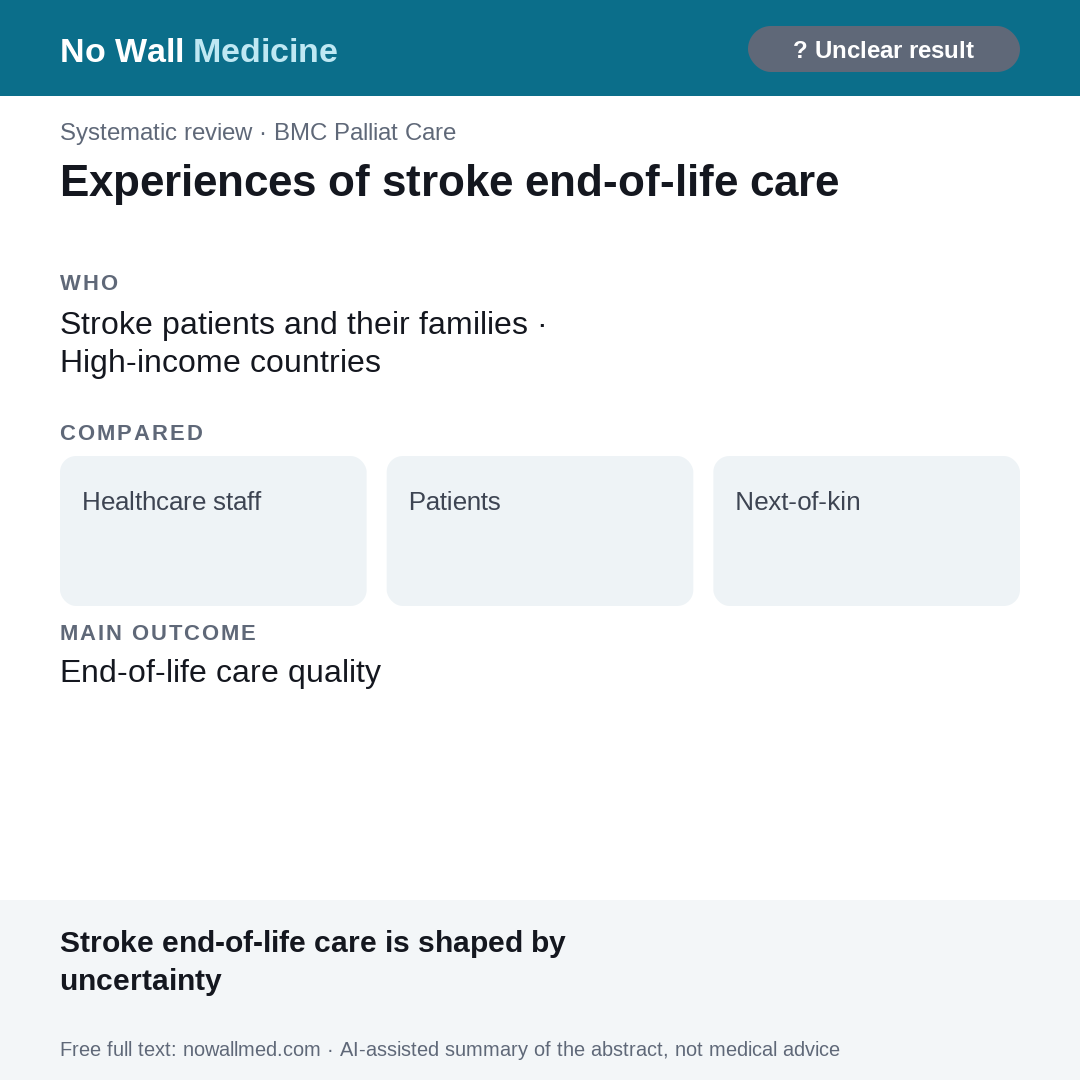
Experiences, barriers and enablers of stroke end-of-life care: a systematic review with mixed-methods synthesis
Systematic reviewUnclear result
Experiences of stroke end-of-life care
Who
Stroke patients and their families · High-income countries
Compared
Healthcare staff
Patients
Next-of-kin
Main outcome
End-of-life care quality
Bottom line: Stroke end-of-life care is shaped by uncertainty
Limitation: Limited patient-reported experiences
BMC Palliat Care · 2026-07-27Download image
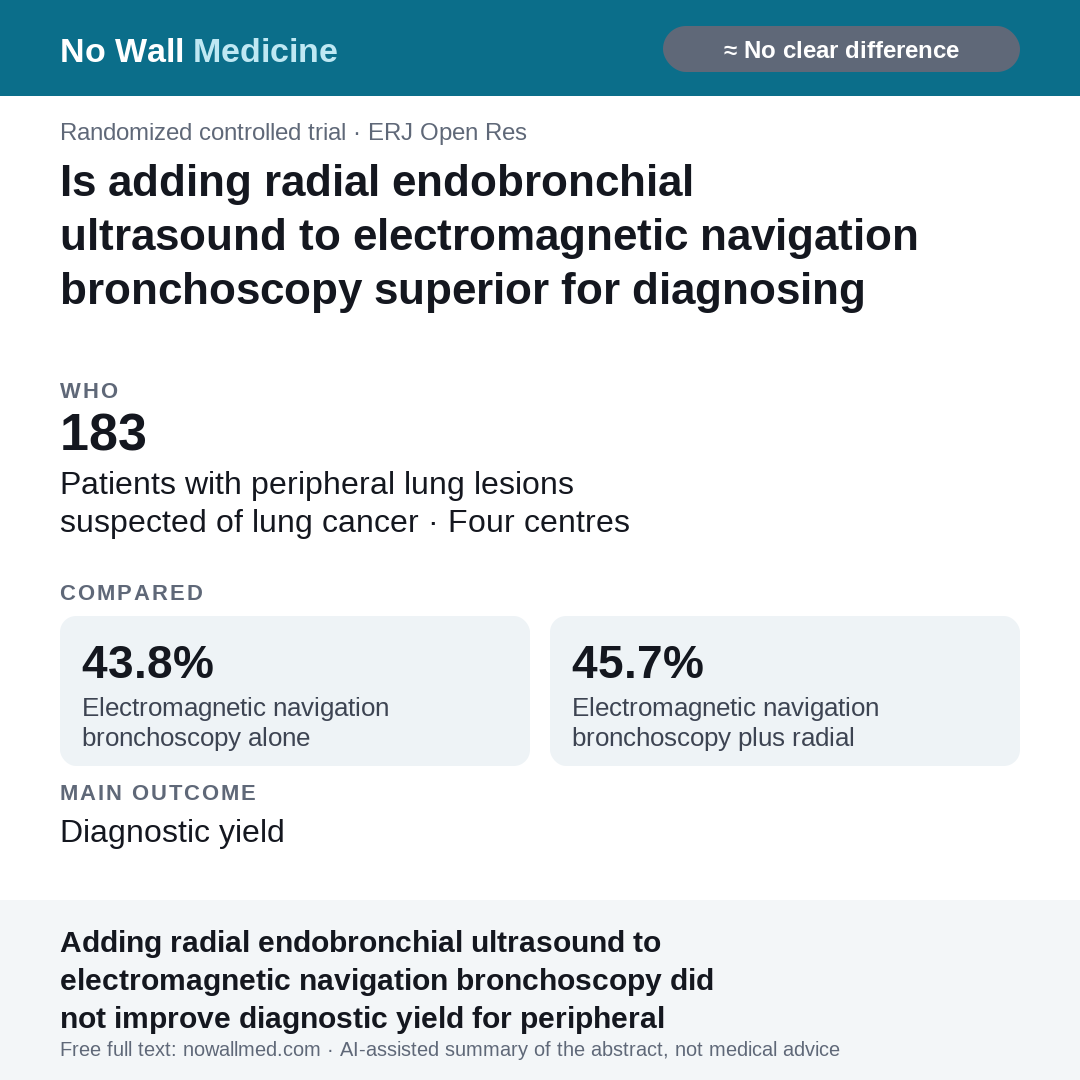
The addition of radial endobronchial ultrasound to electromagnetic navigation bronchoscopy: the NEBULA study - a randomised controlled trial
Randomized controlled trialNo clear difference
Is adding radial endobronchial ultrasound to electromagnetic navigation bronchoscopy superior for diagnosing peripheral lung lesions?
Who
183
Patients with peripheral lung lesions suspected of lung cancer · Four centres
Compared
43.8%Electromagnetic navigation bronchoscopy alone
45.7%Electromagnetic navigation bronchoscopy plus radial endobronchial ultrasound
Main outcome
Diagnostic yield
Bottom line: Adding radial endobronchial ultrasound to electromagnetic navigation bronchoscopy did not improve diagnostic yield for peripheral lung lesions.
ERJ Open Res · 2026-07-27Download image
Systematic Review and Meta-analysis of Vertical Alar Division and Resection in Tip Rhinoplasty
Systematic review and meta-analysisBenefit found
How do vertical dome division and vertical alar resection affect rhinoplasty outcomes?
Who
Patients undergoing tip rhinoplasty
Compared
Vertical dome division: 15.8% increase in nasal tip projection
Vertical alar resection: sustained stability of projections beyond 7 years
Main outcome
nasal tip projection, rotation, revision rates, complications, and satisfaction
Bottom line: Both techniques provide favorable aesthetic outcomes and low complication rates for nasal tip refinement.
Limitation: The available evidence is largely retrospective and heterogeneous.
Plast Reconstr Surg Glob Open · 2026-07-27Download image

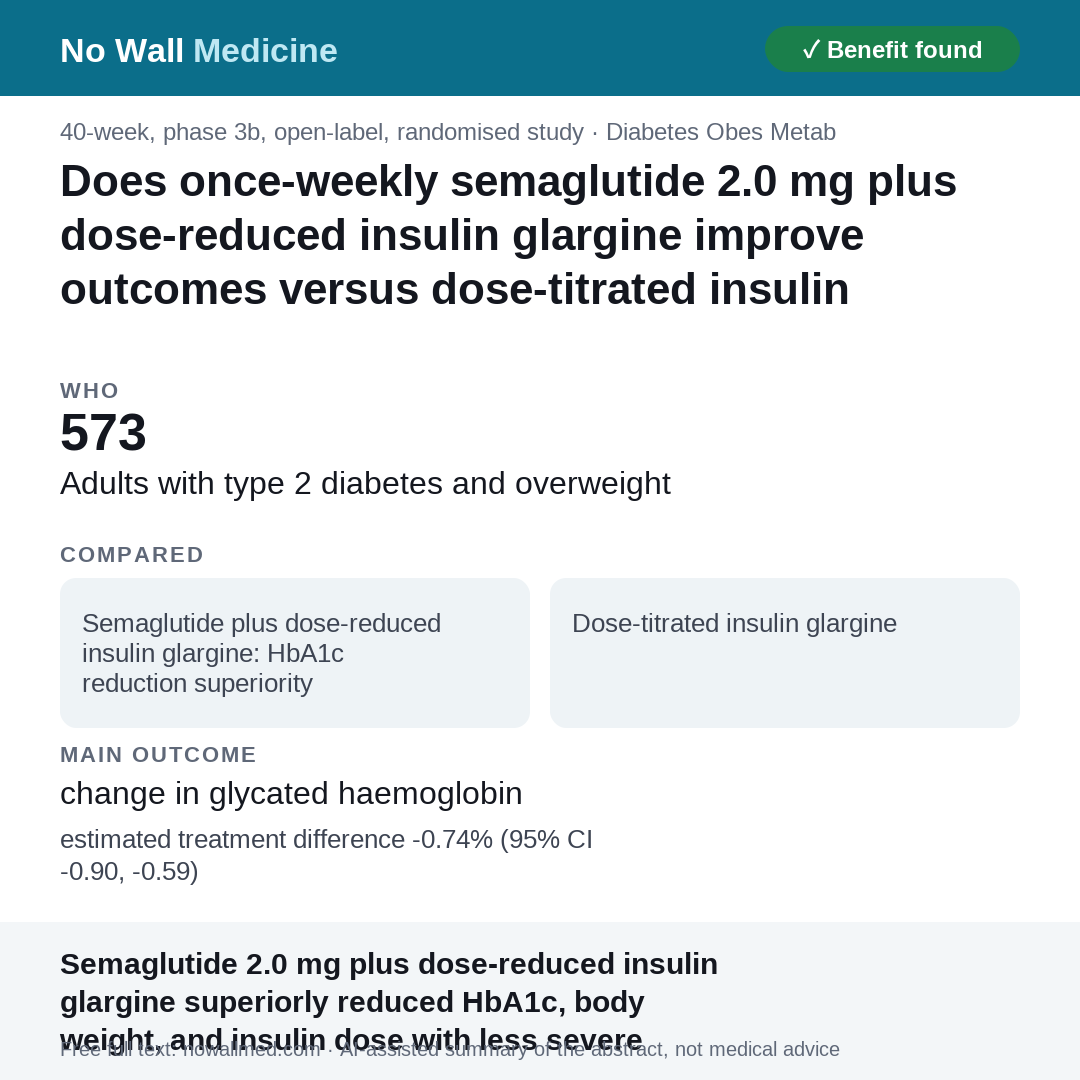
Efficacy and Safety of Once-Weekly Semaglutide 2.0 mg as an Add-On to Dose-Reduced Insulin Glargine versus Dose-Titrated Insulin Glargine in People With Type 2 Diabetes and Overweight (SUSTAIN OPTIMIZE)
40-week, phase 3b, open-label, randomised studyBenefit found
Does once-weekly semaglutide 2.0 mg plus dose-reduced insulin glargine improve outcomes versus dose-titrated insulin glargine?
Who
573
Adults with type 2 diabetes and overweight
Compared
Semaglutide plus dose-reduced insulin glargine: HbA1c reduction superiority
Dose-titrated insulin glargine
Main outcome
change in glycated haemoglobin
Result: estimated treatment difference -0.74% (95% CI -0.90, -0.59)
Bottom line: Semaglutide 2.0 mg plus dose-reduced insulin glargine superiorly reduced HbA1c, body weight, and insulin dose with less severe hypoglycaemia.
Diabetes Obes Metab · 2026-07-26Download image
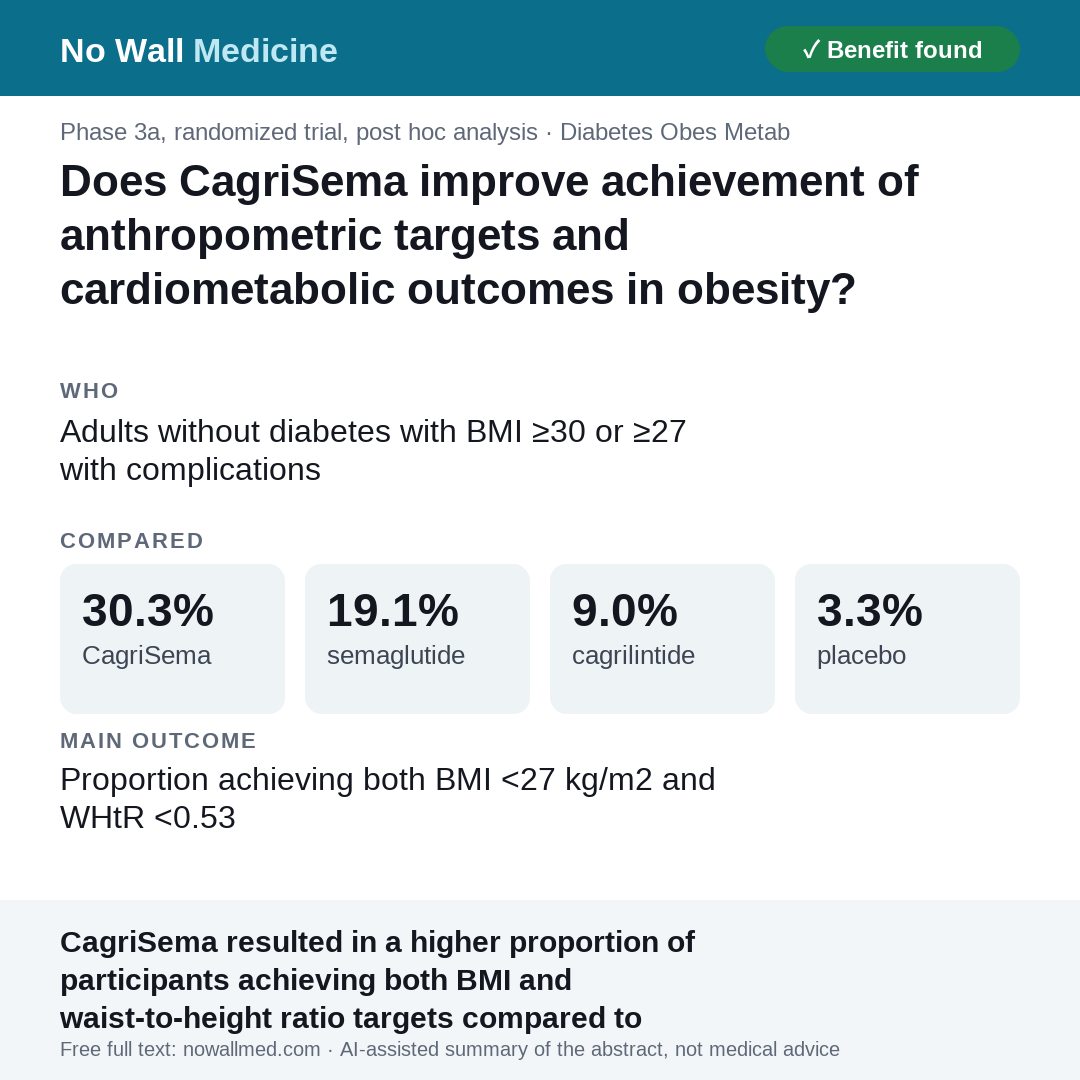
Efficacy of CagriSema for Reaching Anthropometric Treatment Targets and Cardiometabolic Outcomes: A Secondary, Post hoc Analysis of REDEFINE 1
Phase 3a, randomized trial, post hoc analysisBenefit found
Does CagriSema improve achievement of anthropometric targets and cardiometabolic outcomes in obesity?
Who
Adults without diabetes with BMI ≥30 or ≥27 with complications
Compared
30.3%CagriSema
19.1%semaglutide
9.0%cagrilintide
3.3%placebo
Main outcome
Proportion achieving both BMI <27 kg/m2 and WHtR <0.53
Bottom line: CagriSema resulted in a higher proportion of participants achieving both BMI and waist-to-height ratio targets compared to other treatments.
Diabetes Obes Metab · 2026-07-26Download image
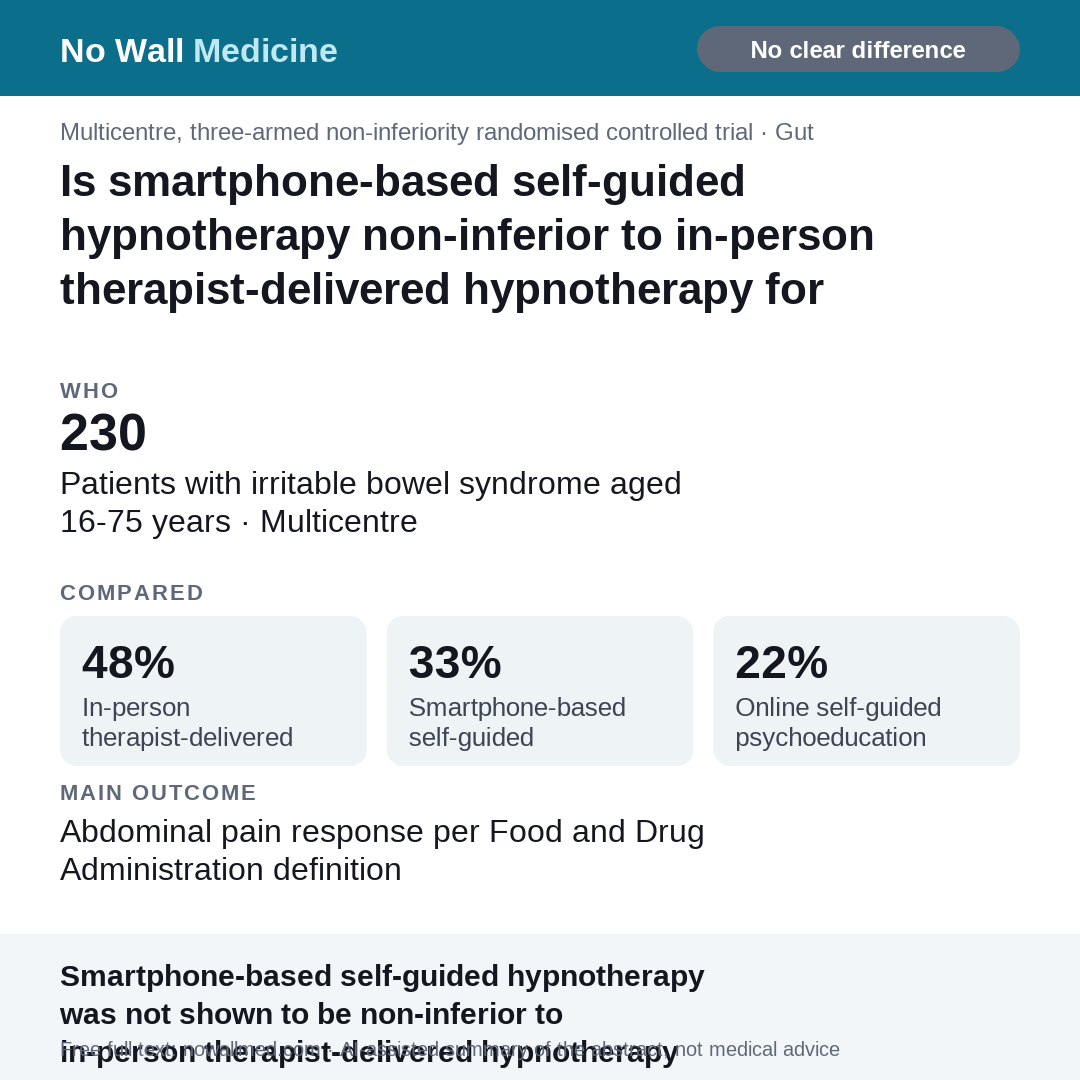
In-person therapist-delivered hypnotherapy versus smartphone-based self-guided hypnotherapy in IBS: a multicentre three-armed randomised controlled trial
Multicentre, three-armed non-inferiority randomised controlled trialNo clear difference
Is smartphone-based self-guided hypnotherapy non-inferior to in-person therapist-delivered hypnotherapy for IBS?
Who
230
Patients with irritable bowel syndrome aged 16-75 years · Multicentre
Compared
48%In-person therapist-delivered hypnotherapy
33%Smartphone-based self-guided hypnotherapy
22%Online self-guided psychoeducation
Main outcome
Abdominal pain response per Food and Drug Administration definition
Result: -14.7%, 95% CI -29.3% to 0.9%
Bottom line: Smartphone-based self-guided hypnotherapy was not shown to be non-inferior to in-person therapist-delivered hypnotherapy for reducing abdominal pain.
Gut · 2026-07-25Download image
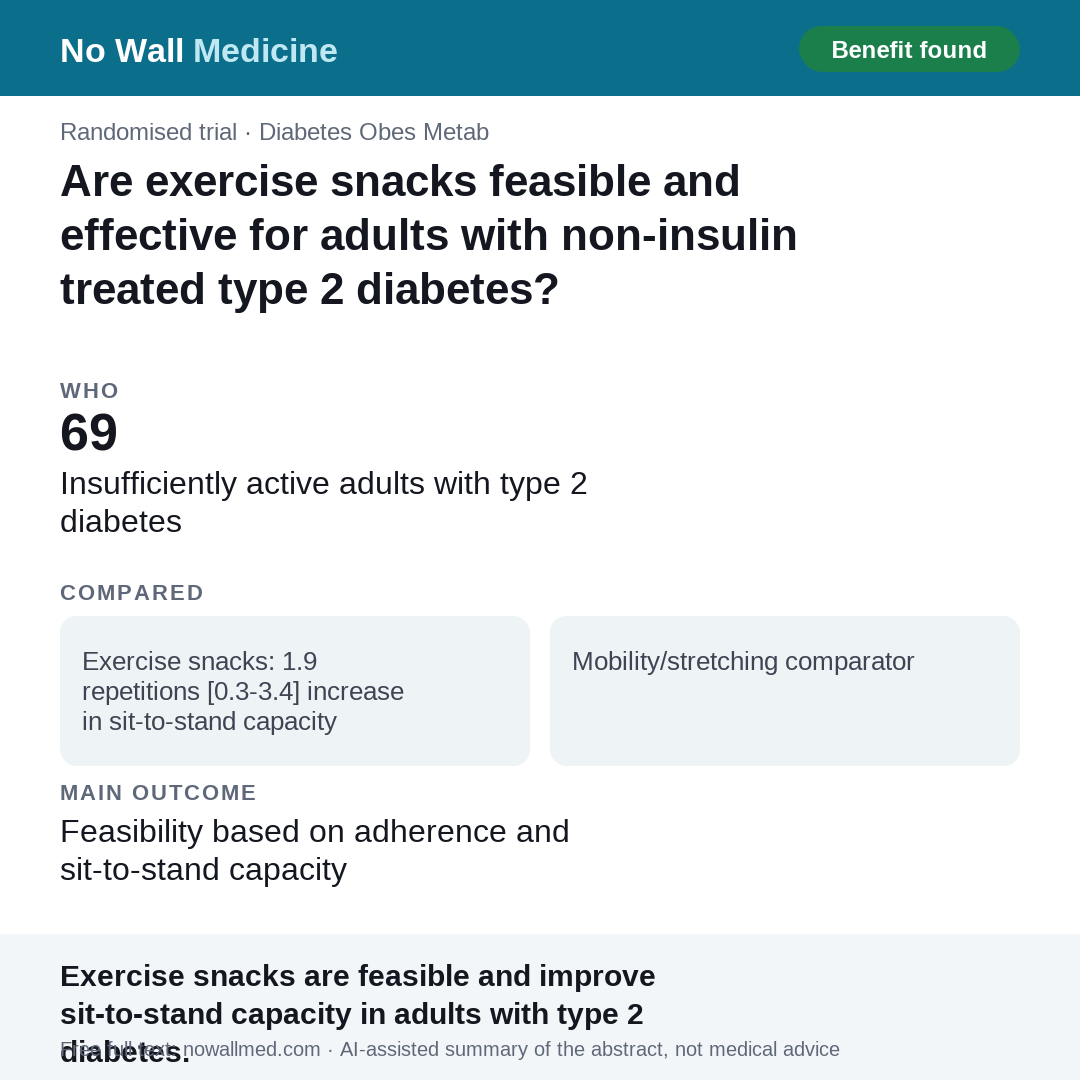
Exercise Snacks Are Feasible to Perform in the Real World and Improve Physical Capacity for Adults Living With Non-Insulin Treated Type 2 Diabetes: A Randomised Trial
Randomised trialBenefit found
Are exercise snacks feasible and effective for adults with non-insulin treated type 2 diabetes?
Who
69
Insufficiently active adults with type 2 diabetes
Compared
Exercise snacks: 1.9 repetitions [0.3-3.4] increase in sit-to-stand capacity
Mobility/stretching comparator
Main outcome
Feasibility based on adherence and sit-to-stand capacity
Result: 1.9 repetitions [0.3-3.4] (p = 0.02)
Bottom line: Exercise snacks are feasible and improve sit-to-stand capacity in adults with type 2 diabetes.
Diabetes Obes Metab · 2026-07-25Download image
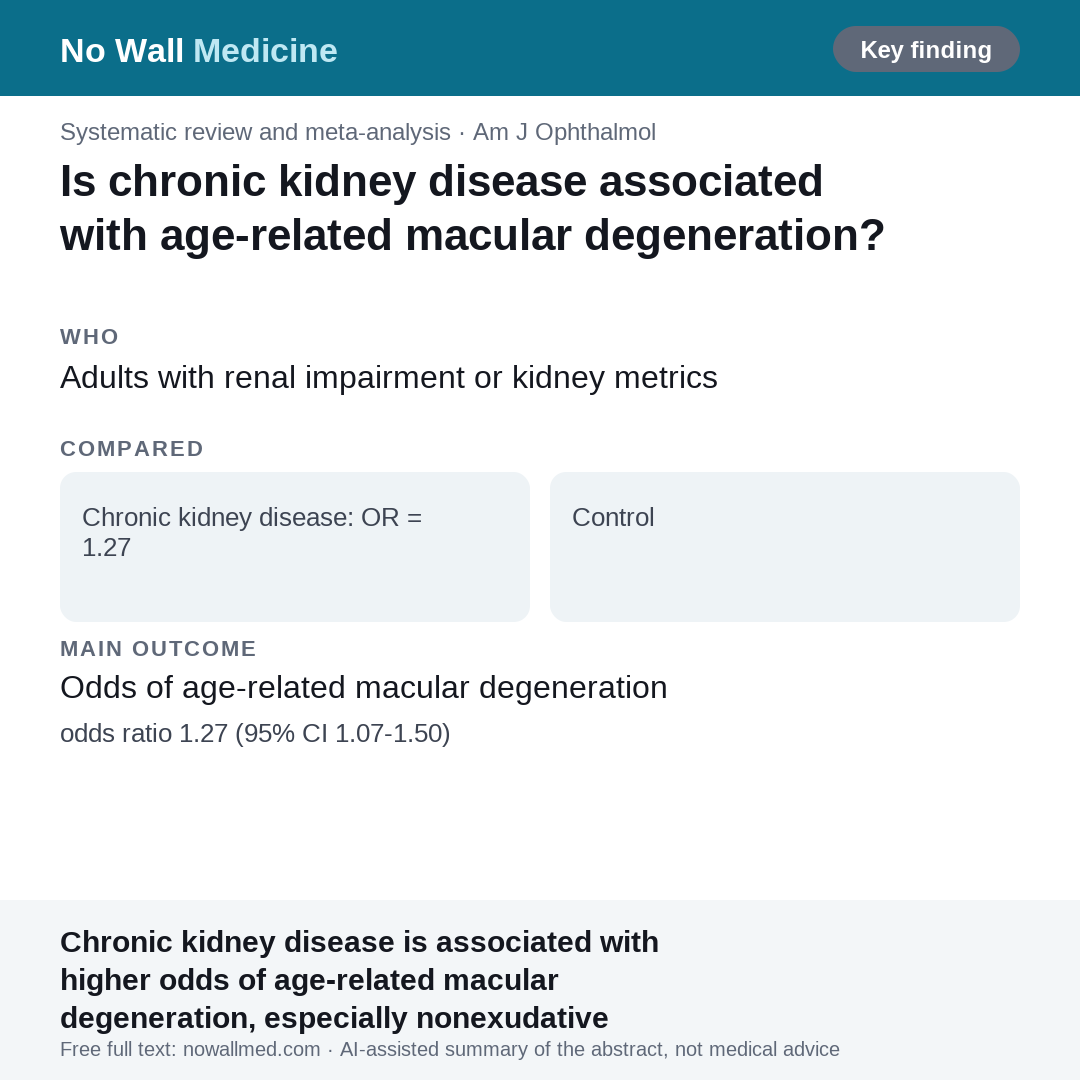
Renal Impairment and Age-Related Macular Degeneration: A Comprehensive Systematic Review and Meta-Analysis
Systematic review and meta-analysisKey finding
Is chronic kidney disease associated with age-related macular degeneration?
Who
Adults with renal impairment or kidney metrics
Compared
Chronic kidney disease: OR = 1.27
Control
Main outcome
Odds of age-related macular degeneration
Result: odds ratio 1.27 (95% CI 1.07-1.50)
Bottom line: Chronic kidney disease is associated with higher odds of age-related macular degeneration, especially nonexudative disease and dialysis exposure.
Am J Ophthalmol · 2026-07-25Download image