Visual abstracts
New randomized trials and meta-analyses from leading journals at a glance: who was studied, what was compared, and what was found. Every paper is free to read in full.
All specialtiesCardiology 4795Oncology 4083Gastroenterology & Hepatology 1916Infectious Disease 3786Neurology 1885Psychiatry & Mental Health 2240Pulmonology 2061Critical Care 1334Endocrinology & Diabetes 2553Pediatrics 2913Surgery 2498Orthopedics & Sports Medicine 922Neurosurgery 532Cardiothoracic & Vascular Surgery 665Plastic & Reconstructive Surgery 585Nephrology 1114Rheumatology 814Hematology 1097Dermatology 619Ophthalmology 539Obstetrics & Gynecology 1659Public & Global Health 1042Radiology & Imaging 637Anesthesiology 959Urology 751ENT (Otolaryngology) 497Emergency Medicine 484Allergy & Immunology 310Geriatrics 974Family Medicine & Primary Care 538Medical Genetics & Genomics 662Pathology & Laboratory Medicine 156Physical Medicine & Rehabilitation 746Palliative Care 422Nutrition 1566Digital Health & AI 2190General Medicine 319
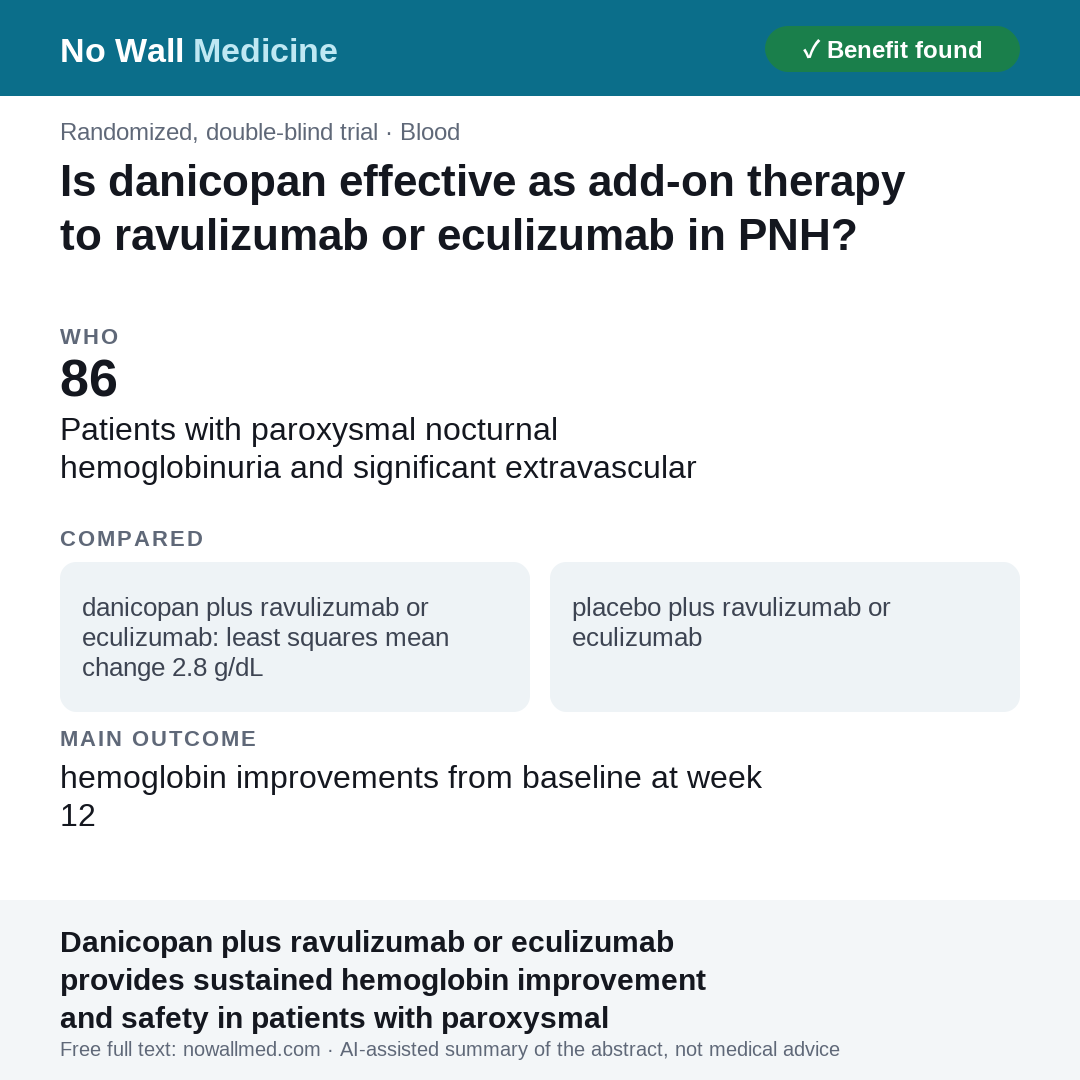
Long-term efficacy and safety of danicopan as add-on therapy to ravulizumab or eculizumab in PNH with significant EVH
Randomized, double-blind trialBenefit found
Is danicopan effective as add-on therapy to ravulizumab or eculizumab in PNH?
Who
86
Patients with paroxysmal nocturnal hemoglobinuria and significant extravascular hemolysis
Compared
danicopan plus ravulizumab or eculizumab: least squares mean change 2.8 g/dL
placebo plus ravulizumab or eculizumab
Main outcome
hemoglobin improvements from baseline at week 12
Bottom line: Danicopan plus ravulizumab or eculizumab provides sustained hemoglobin improvement and safety in patients with paroxysmal nocturnal hemoglobinuria.
Blood · 2024-12-19Download image
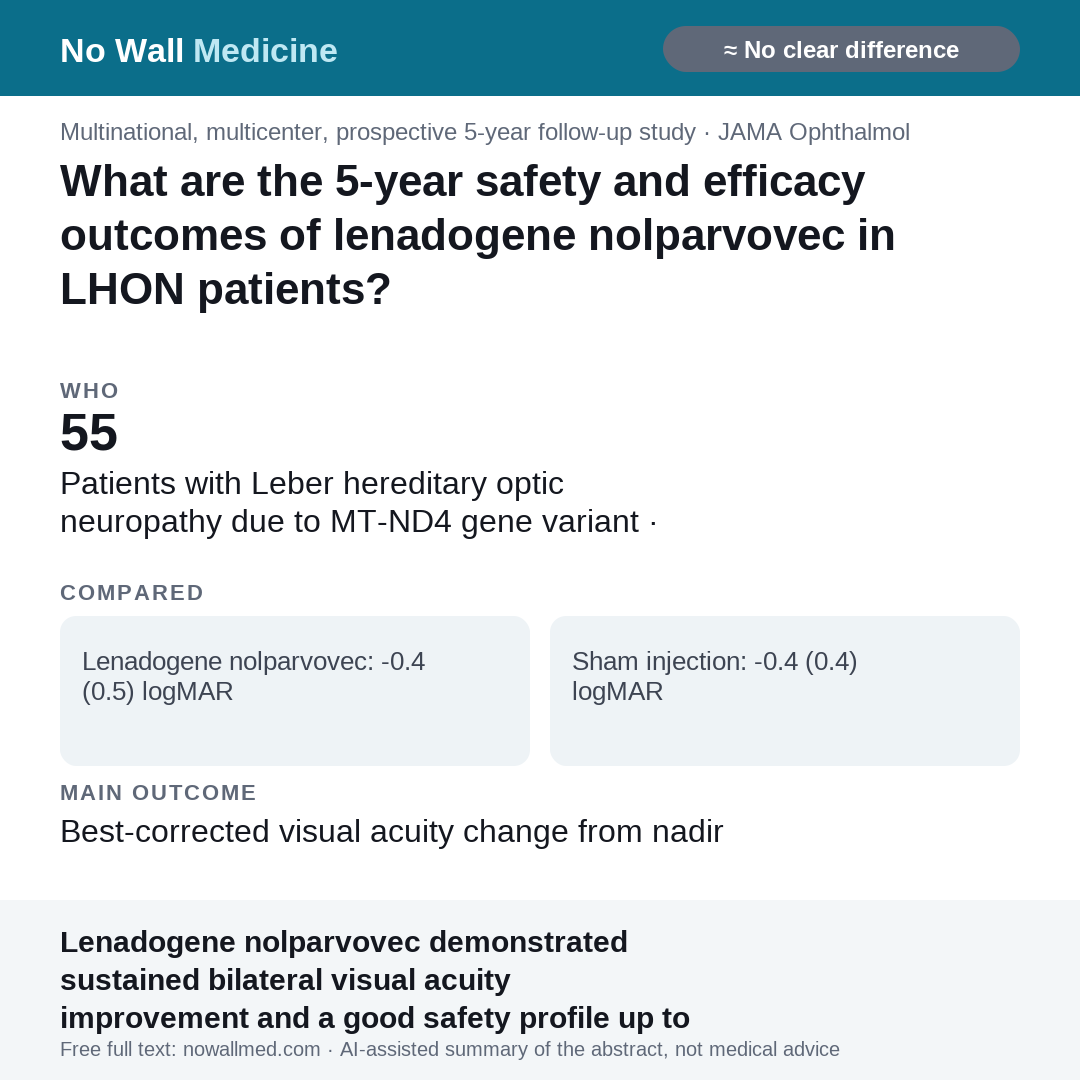
Five-Year Outcomes of Lenadogene Nolparvovec Gene Therapy in Leber Hereditary Optic Neuropathy
Multinational, multicenter, prospective 5-year follow-up studyNo clear difference
What are the 5-year safety and efficacy outcomes of lenadogene nolparvovec in LHON patients?
Who
55
Patients with Leber hereditary optic neuropathy due to MT-ND4 gene variant · Multinational, multicenter
Compared
Lenadogene nolparvovec: -0.4 (0.5) logMAR
Sham injection: -0.4 (0.4) logMAR
Main outcome
Best-corrected visual acuity change from nadir
Result: difference, -0.05 (95% CI, -0.15 to 0.04)
Bottom line: Lenadogene nolparvovec demonstrated sustained bilateral visual acuity improvement and a good safety profile up to 5 years.
JAMA Ophthalmol · 2024-12-19Download image
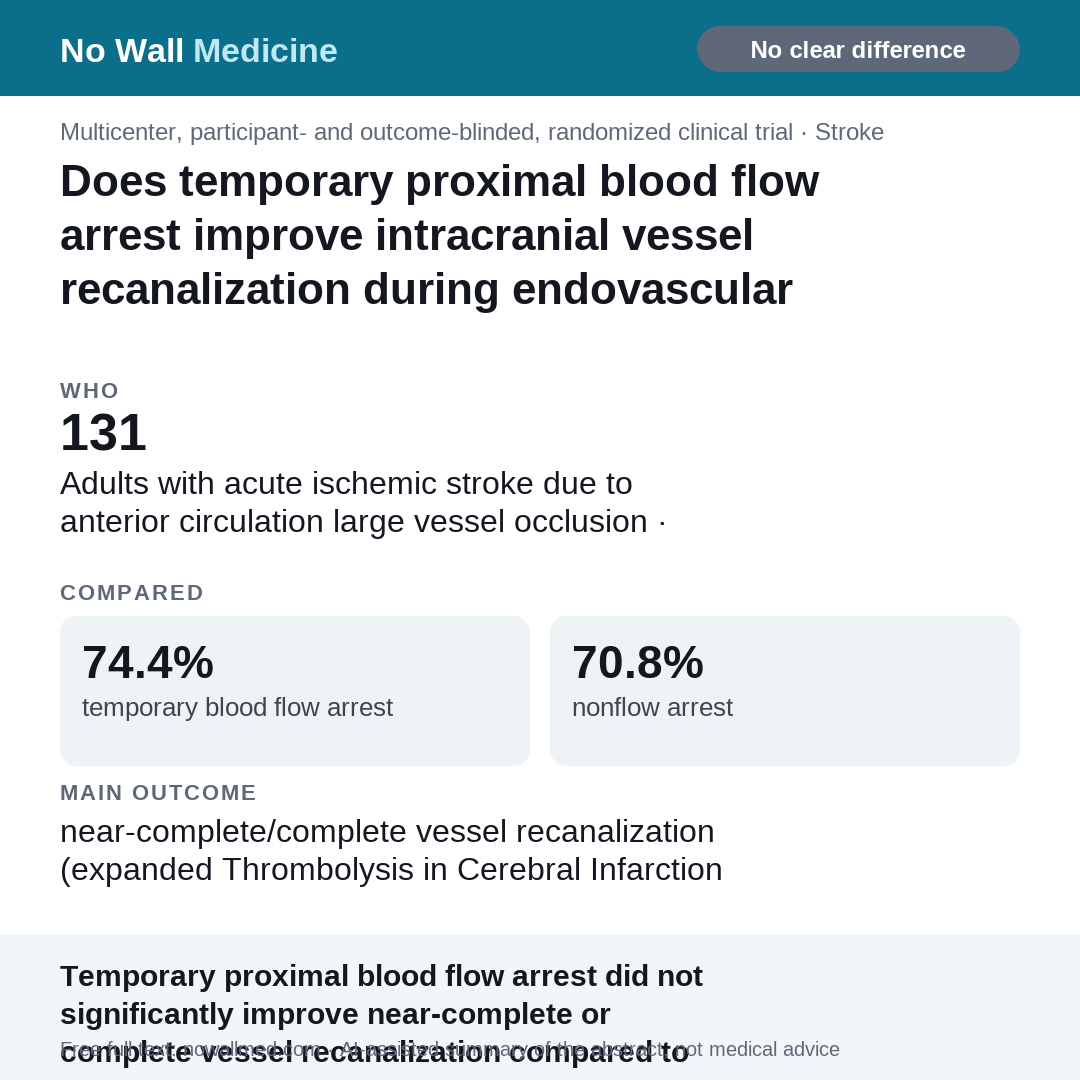
Effect of Proximal Blood Flow Arrest During Endovascular Thrombectomy (ProFATE): A Multicenter, Blinded-End Point, Randomized Clinical Trial
Multicenter, participant- and outcome-blinded, randomized clinical trialNo clear difference
Does temporary proximal blood flow arrest improve intracranial vessel recanalization during endovascular thrombectomy?
Who
131
Adults with acute ischemic stroke due to anterior circulation large vessel occlusion · 4 thrombectomy centers in the United Kingdom
Compared
74.4%temporary blood flow arrest (49/66)
70.8%nonflow arrest (46/65)
Main outcome
near-complete/complete vessel recanalization (expanded Thrombolysis in Cerebral Infarction score 2c or 3)
Result: adjusted odds ratio, 1.07 (95% CI, 0.45-2.55)
Bottom line: Temporary proximal blood flow arrest did not significantly improve near-complete or complete vessel recanalization compared to nonflow arrest.
Stroke · 2024-12-19Download image
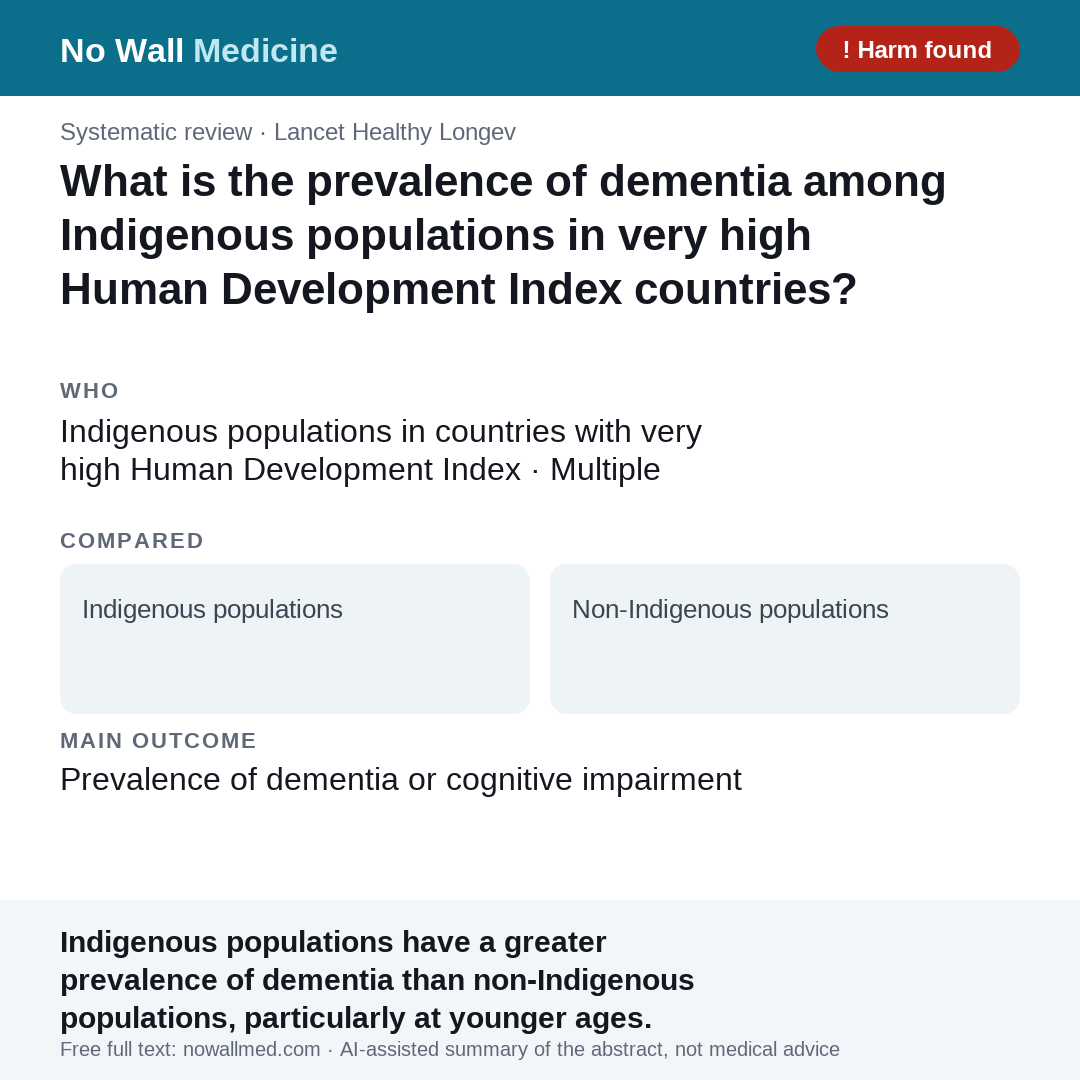
Prevalence of dementia among Indigenous populations of countries with a very high Human Development Index: a systematic review
Systematic reviewHarm found
What is the prevalence of dementia among Indigenous populations in very high Human Development Index countries?
Who
Indigenous populations in countries with very high Human Development Index · Multiple countries with very high Human Development Index
Compared
Indigenous populations
Non-Indigenous populations
Main outcome
Prevalence of dementia or cognitive impairment
Bottom line: Indigenous populations have a greater prevalence of dementia than non-Indigenous populations, particularly at younger ages.
Limitation: Fourteen studies presented a moderate risk of bias and few studies reported Indigenous involvement.
Lancet Healthy Longev · 2024-12-19Download image
Effect of a Community-Based Peer-Led eHealth Wheelchair Skills Training Program: A Randomized Control Trial
Randomized control trialBenefit found
Does a peer-led eHealth wheelchair skills training program improve outcomes for manual wheelchair users?
Who
50
Community-dwelling manual wheelchair users aged 18 years or older · Community
Compared
eHealth training intervention: community participation increasing by 24%
Wait-list control group
Main outcome
Community participation measured by the Wheelchair Outcome Measure
Bottom line: A peer-led eHealth training program effectively improves community participation, wheelchair skills, self-efficacy, and quality of life.
Arch Phys Med Rehabil · 2024-12-19Download image

3D printing in palliative medicine: systematic review
Systematic reviewBenefit found
Is 3D printing useful in palliative medicine
Who
Palliative care patients
Compared
3D printing
Conventional approaches
Main outcome
Clinical outcomes
Bottom line: 3D printing is useful in palliative medicine
BMJ Support Palliat Care · 2024-12-19Download image

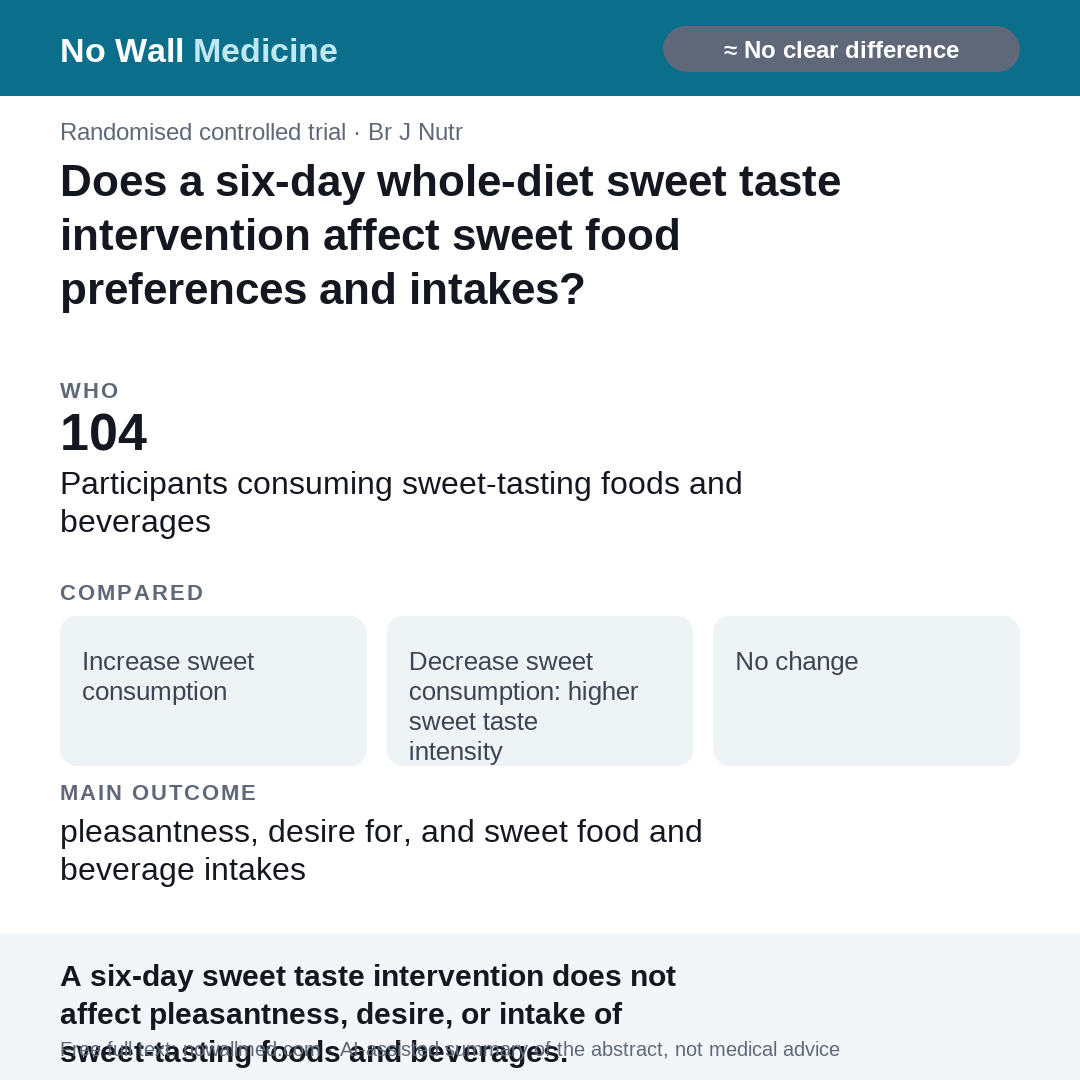
Effects of a six-day, whole-diet sweet taste intervention on pleasantness, desire for and intakes of sweet foods: a randomised controlled trial
Randomised controlled trialNo clear difference
Does a six-day whole-diet sweet taste intervention affect sweet food preferences and intakes?
Who
104
Participants consuming sweet-tasting foods and beverages
Compared
Increase sweet consumption
Decrease sweet consumption: higher sweet taste intensity perceptions at day 7 compared with day 0
No change
Main outcome
pleasantness, desire for, and sweet food and beverage intakes
Bottom line: A six-day sweet taste intervention does not affect pleasantness, desire, or intake of sweet-tasting foods and beverages.
Limitation: Self-reported adherence with the dietary interventions was moderate to good.
Br J Nutr · 2024-12-19Download image
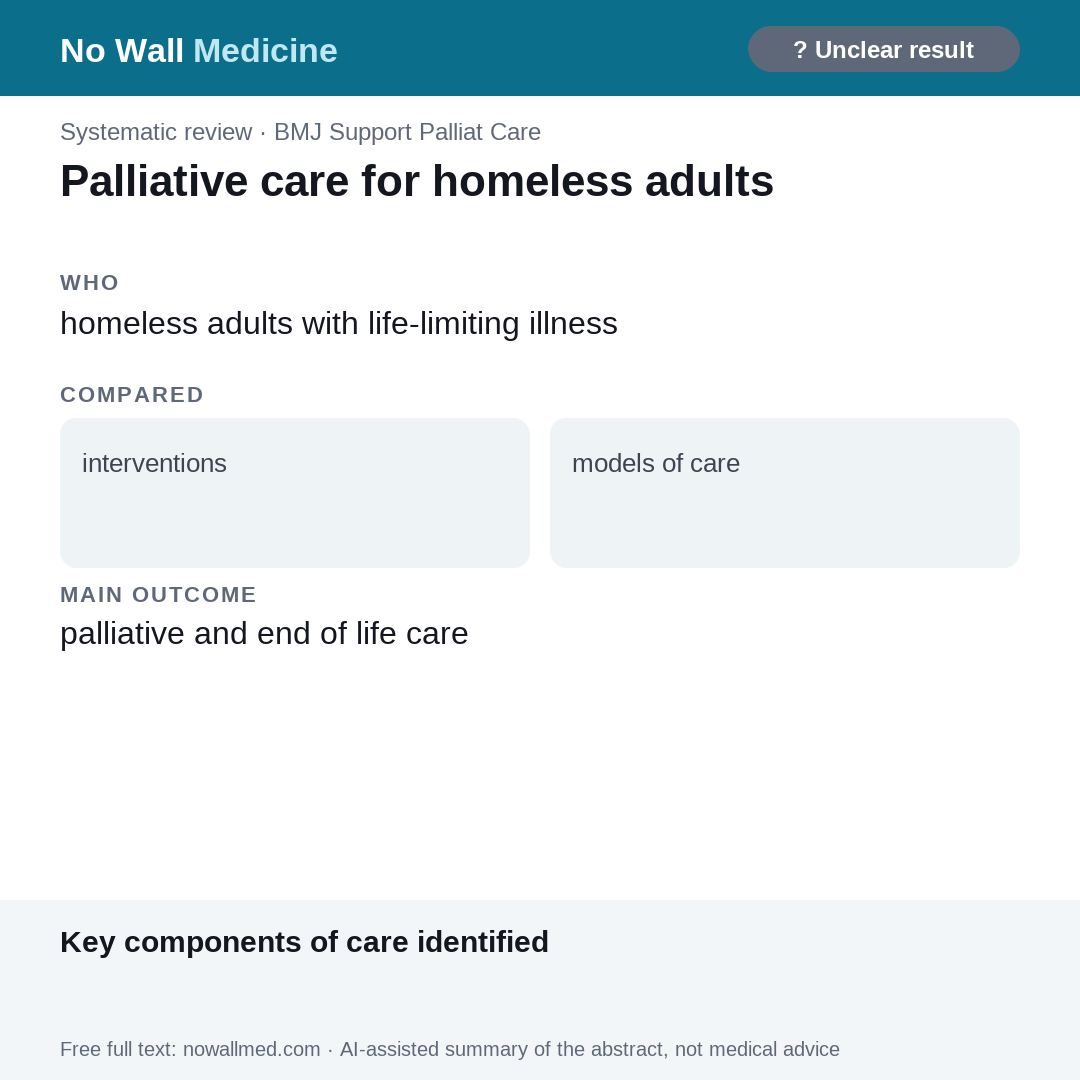
Destitute and dying: interventions and models of palliative and end of life care for homeless adults - a systematic review
Systematic reviewUnclear result
Palliative care for homeless adults
Who
homeless adults with life-limiting illness
Compared
interventions
models of care
Main outcome
palliative and end of life care
Bottom line: Key components of care identified
BMJ Support Palliat Care · 2024-12-19Download image
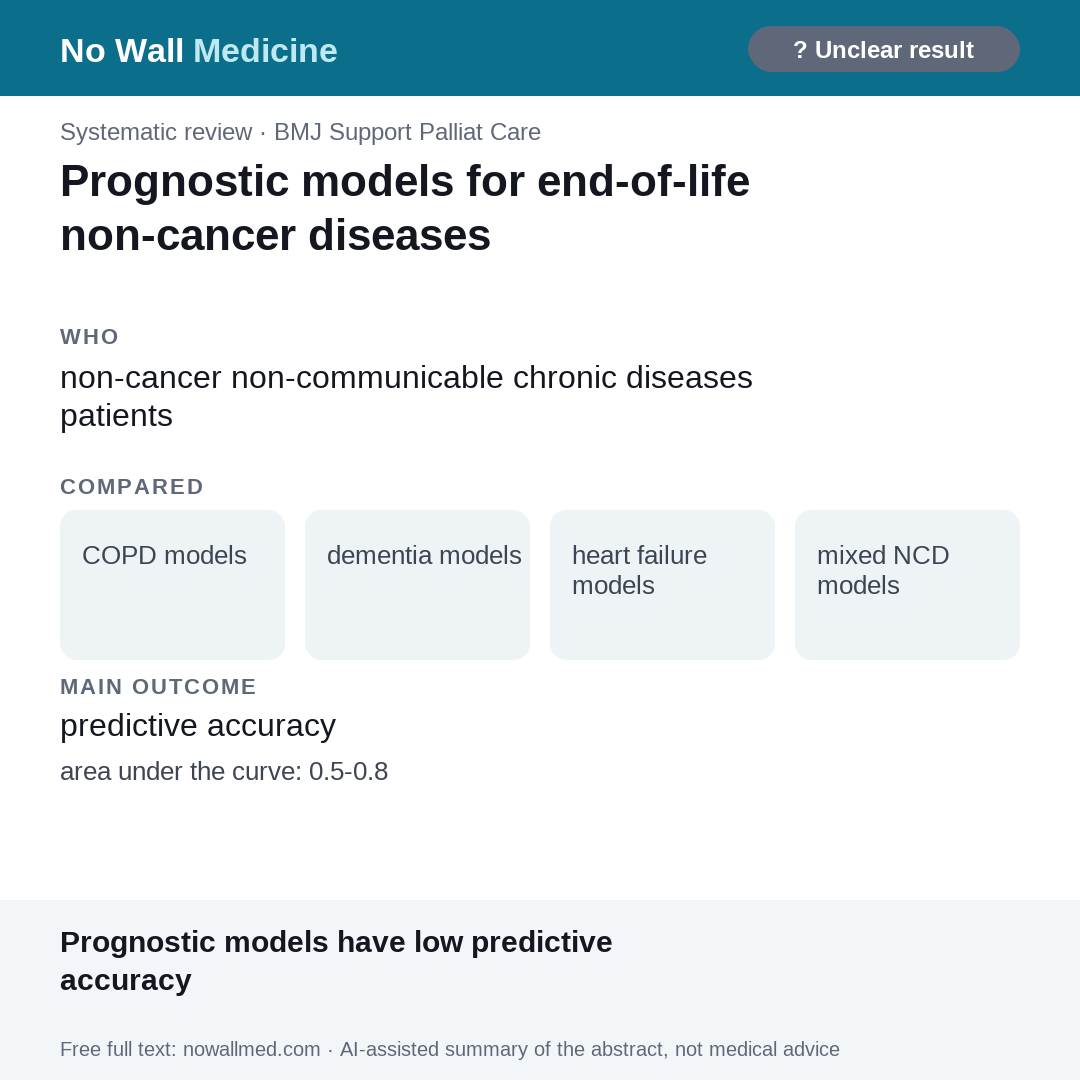
Prognostic models and factors identifying end-of-life in non-cancer chronic diseases: a systematic review
Systematic reviewUnclear result
Prognostic models for end-of-life non-cancer diseases
Who
41
non-cancer non-communicable chronic diseases patients
Compared
COPD models
dementia models
heart failure models
mixed NCD models
Main outcome
predictive accuracy
Result: area under the curve: 0.5-0.8
Bottom line: Prognostic models have low predictive accuracy
Limitation: lacked independent external validation
BMJ Support Palliat Care · 2024-12-19Download image
Peer support-based online education, burden of care and quality of life among family caregivers of patients with leukaemia: non-randomised clinical trial
Non-randomised clinical trialMixed results
Does peer support-based online education affect burden of care and quality of life?
Who
80
Family caregivers of patients with leukaemia
Compared
Intervention group: significantly lower mean burden of care score
Control group
Main outcome
burden of care and quality of life
Bottom line: Peer support-based online education reduced the burden of care but did not improve quality of life.
Limitation: This was a non-randomised clinical trial
BMJ Support Palliat Care · 2024-12-19Download image

Palliative Care Curriculum and Training Plan for community health workers
Randomized controlled trialBenefit found
Does the Palliative Care Curriculum and Training Plan increase knowledge and competence among community health workers?
Who
3
Community health workers · Three hospital sites in the United States
Compared
85%Pre-training (SD 10.49)
96%Post-training (SD 4.17)
Main outcome
Knowledge, perceived competence, and satisfaction
Bottom line: The curriculum led to increased knowledge and perceived competence among community health workers.
BMJ Support Palliat Care · 2024-12-19Download image

Core elements of serious illness conversations: an integrative systematic review
Integrative systematic reviewUnclear result
Core elements of serious illness conversations
Who
diverse population groups
Compared
Serious Illness Care Program
Serious Illness Conversation Guide
Main outcome
core elements of conversations
Bottom line: Core elements of conversations identified
BMJ Support Palliat Care · 2024-12-19Download image

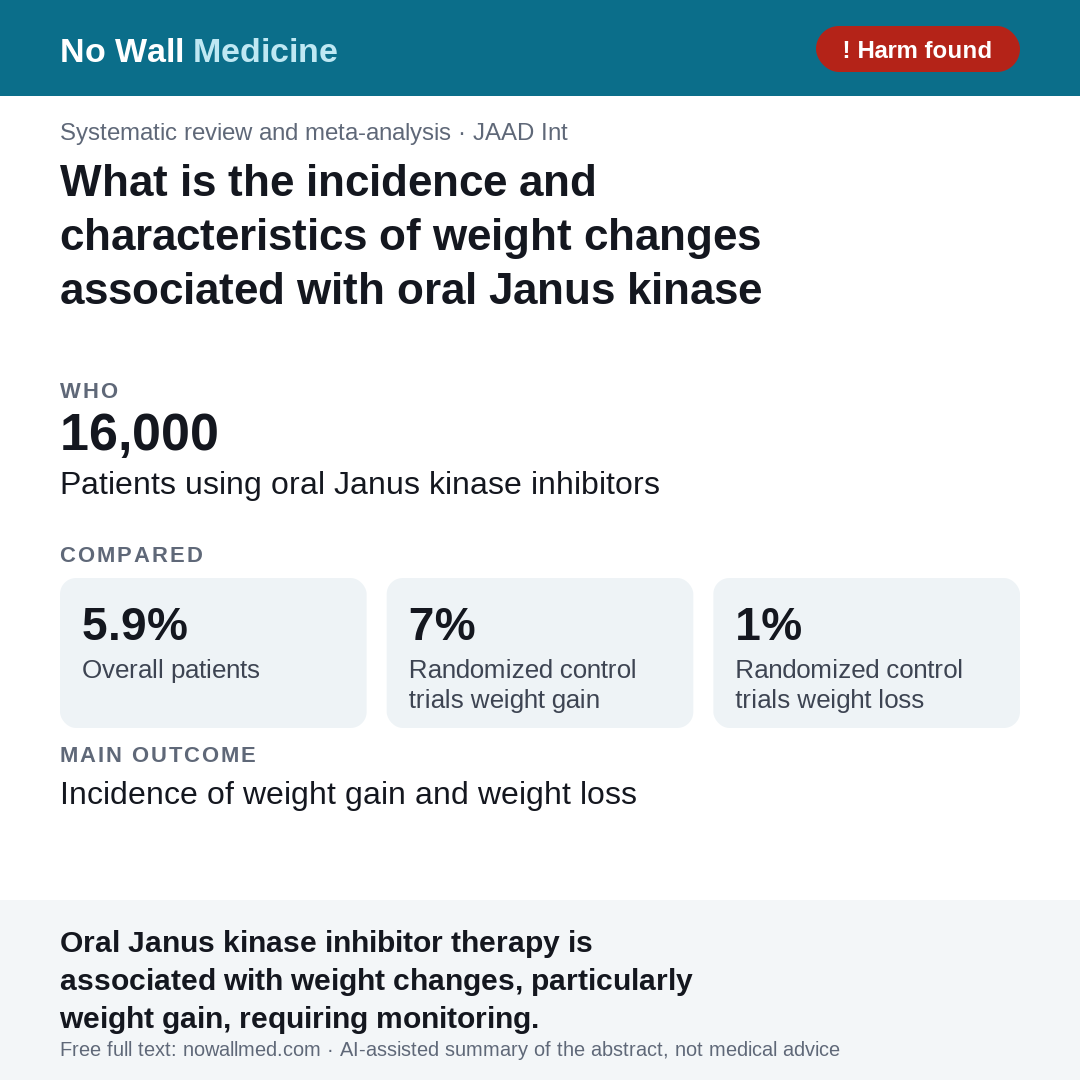
Weight gain secondary to the use of oral Janus kinase inhibitors: A systematic review and meta-analysis
Systematic review and meta-analysisHarm found
What is the incidence and characteristics of weight changes associated with oral Janus kinase inhibitors?
Who
16,000
Patients using oral Janus kinase inhibitors
Compared
5.9%Overall patients (947/16,000)
7%Randomized control trials weight gain (95% CI: 0.04; 0.09)
1%Randomized control trials weight loss (95% CI: 0.00; 0.03)
Main outcome
Incidence of weight gain and weight loss
Bottom line: Oral Janus kinase inhibitor therapy is associated with weight changes, particularly weight gain, requiring monitoring.
JAAD Int · 2024-12-19Download image
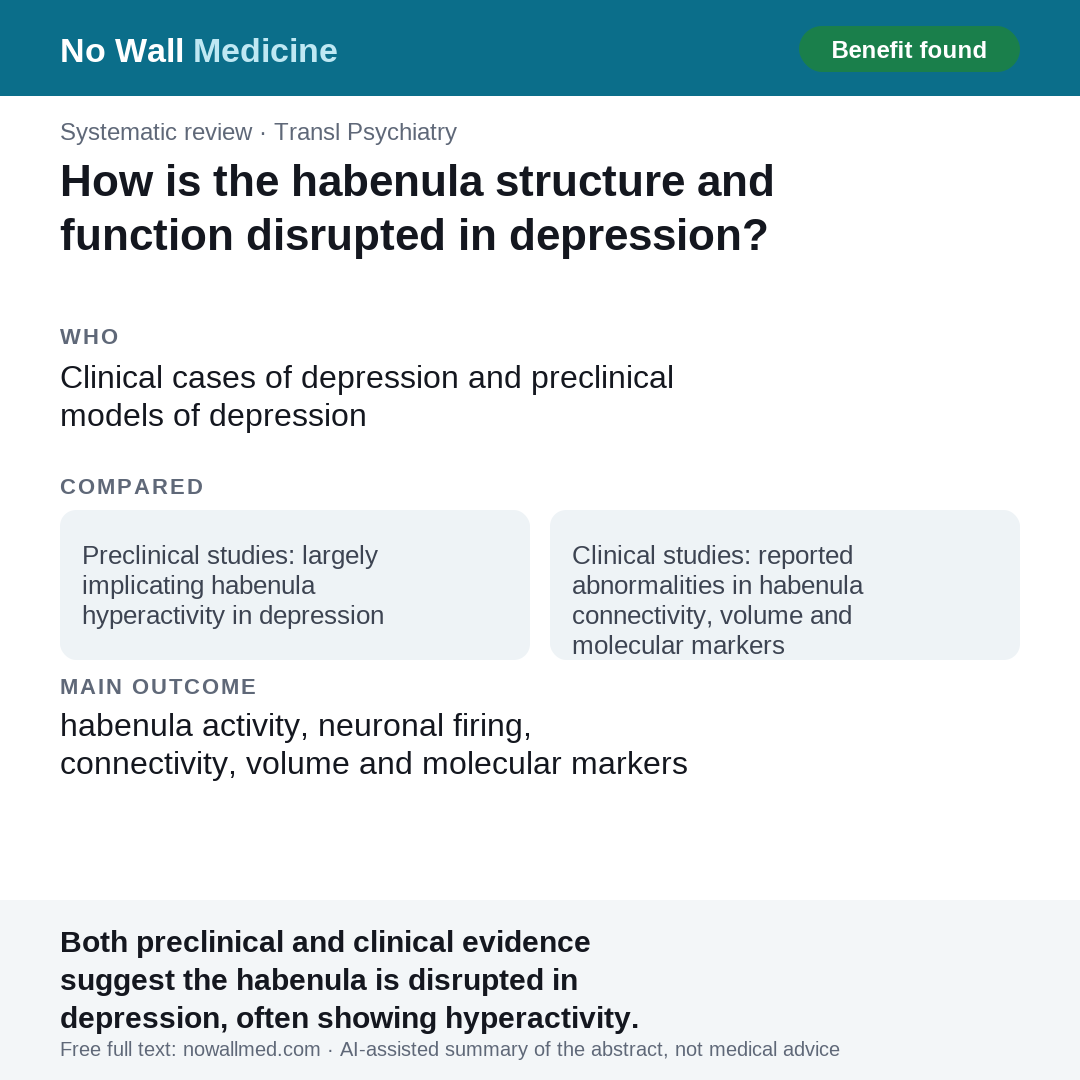
The disappointment centre of the brain gets exciting: a systematic review of habenula dysfunction in depression
Systematic reviewBenefit found
How is the habenula structure and function disrupted in depression?
Who
Clinical cases of depression and preclinical models of depression
Compared
Preclinical studies: largely implicating habenula hyperactivity in depression
Clinical studies: reported abnormalities in habenula connectivity, volume and molecular markers
Main outcome
habenula activity, neuronal firing, connectivity, volume and molecular markers
Bottom line: Both preclinical and clinical evidence suggest the habenula is disrupted in depression, often showing hyperactivity.
Limitation: progress is limited by a lack of detailed molecular analyses and limited imaging resolution
Transl Psychiatry · 2024-12-19Download image
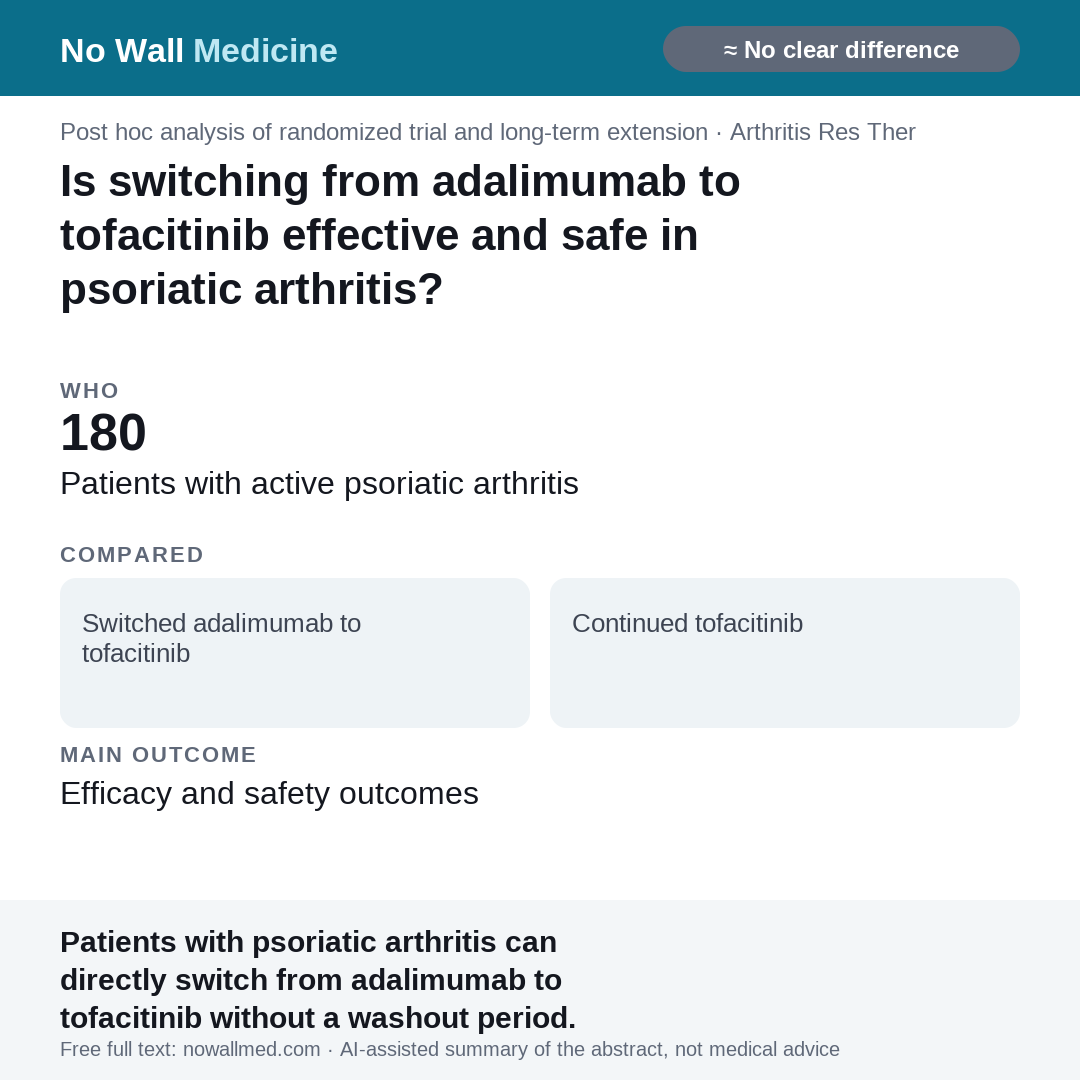
Efficacy and safety of tofacitinib in an open-label, long-term extension study in patients with psoriatic arthritis who received adalimumab or tofacitinib in a Phase 3 randomized controlled study: a post hoc analysis
Post hoc analysis of randomized trial and long-term extensionNo clear difference
Is switching from adalimumab to tofacitinib effective and safe in psoriatic arthritis?
Who
180
Patients with active psoriatic arthritis
Compared
Switched adalimumab to tofacitinib
Continued tofacitinib
Main outcome
Efficacy and safety outcomes
Bottom line: Patients with psoriatic arthritis can directly switch from adalimumab to tofacitinib without a washout period.
Limitation: This was a post hoc analysis of an open-label long-term extension study.
Arthritis Res Ther · 2024-12-19Download image
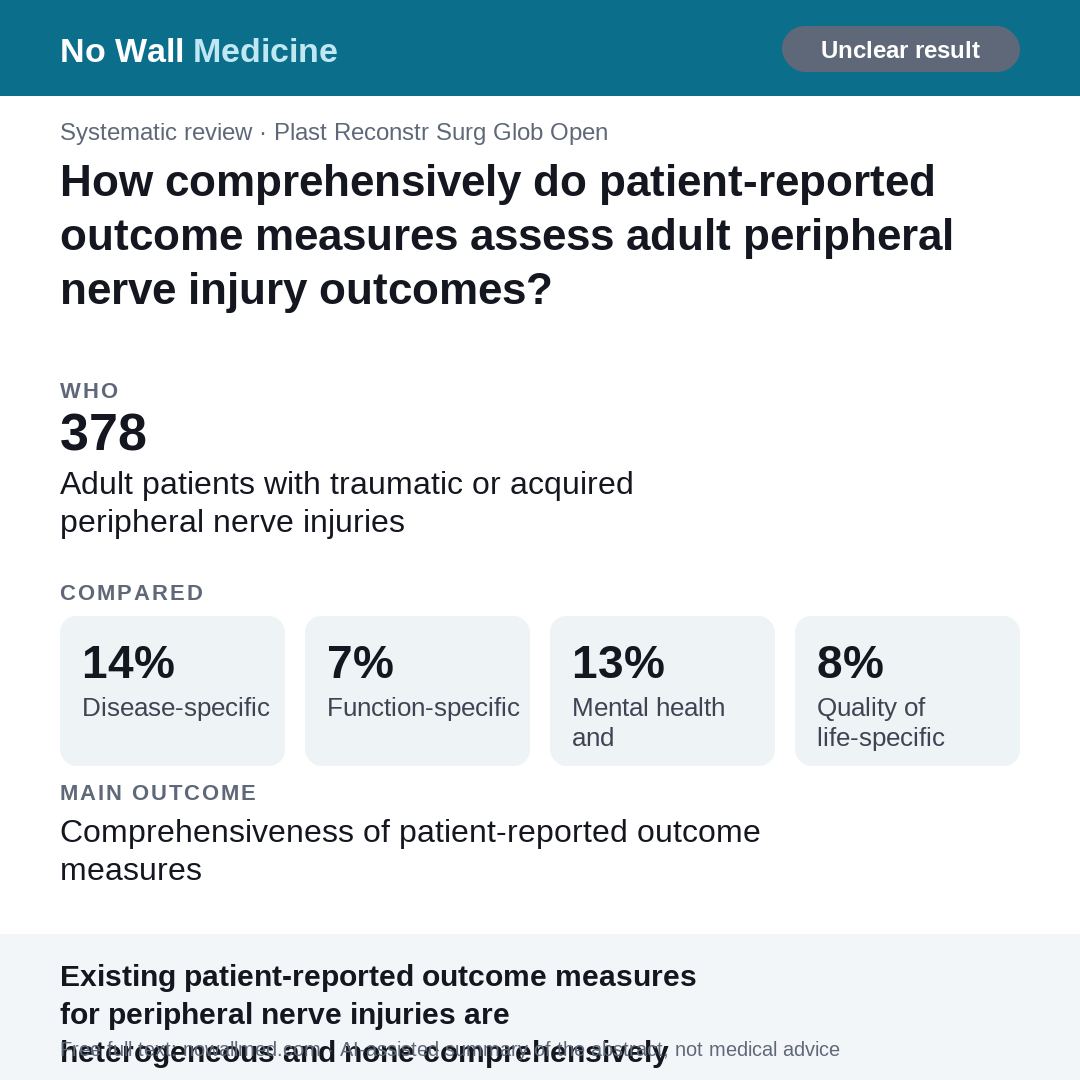
Patient-reported Outcome Measures for Peripheral Nerve Injuries: A Systematic Review
Systematic reviewUnclear result
How comprehensively do patient-reported outcome measures assess adult peripheral nerve injury outcomes?
Who
378
Adult patients with traumatic or acquired peripheral nerve injuries
Compared
14%Disease-specific
7%Function-specific
13%Mental health and well-being-specific
8%Quality of life-specific
Main outcome
Comprehensiveness of patient-reported outcome measures
Bottom line: Existing patient-reported outcome measures for peripheral nerve injuries are heterogeneous and none comprehensively assess this patient population.
Plast Reconstr Surg Glob Open · 2024-12-19Download image
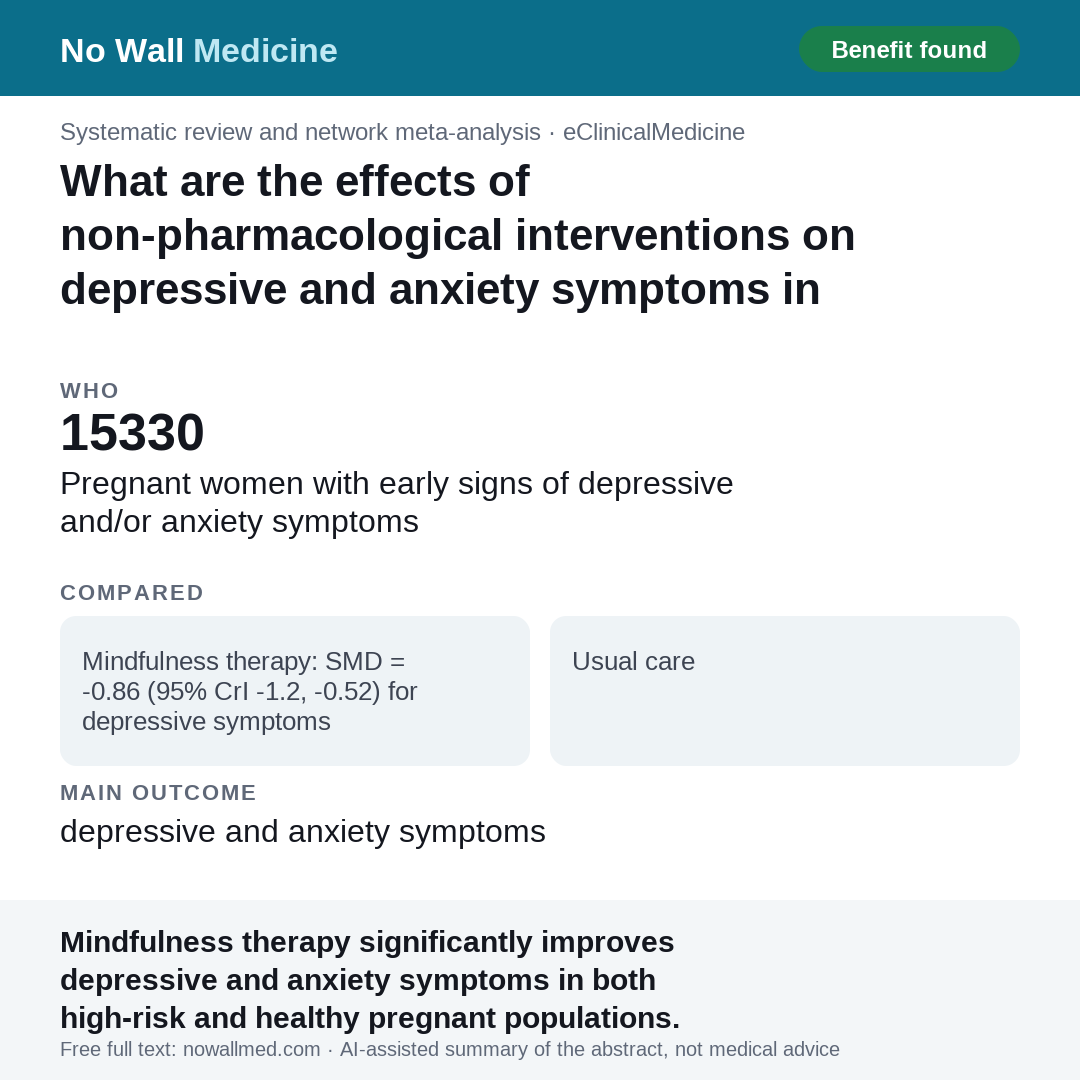
Effects of non-pharmacological interventions on depressive and anxiety symptoms in pregnant women: a systematic review and network meta-analysis
Systematic review and network meta-analysisBenefit found
What are the effects of non-pharmacological interventions on depressive and anxiety symptoms in pregnant women?
Who
15330
Pregnant women with early signs of depressive and/or anxiety symptoms
Compared
Mindfulness therapy: SMD = -0.86 (95% CrI -1.2, -0.52) for depressive symptoms
Usual care
Main outcome
depressive and anxiety symptoms
Result: SMD = -0.86, 95% CrI = -1.2, -0.52
Bottom line: Mindfulness therapy significantly improves depressive and anxiety symptoms in both high-risk and healthy pregnant populations.
Limitation: 19 studies demonstrated a high risk of bias
eClinicalMedicine · 2024-12-18Download image
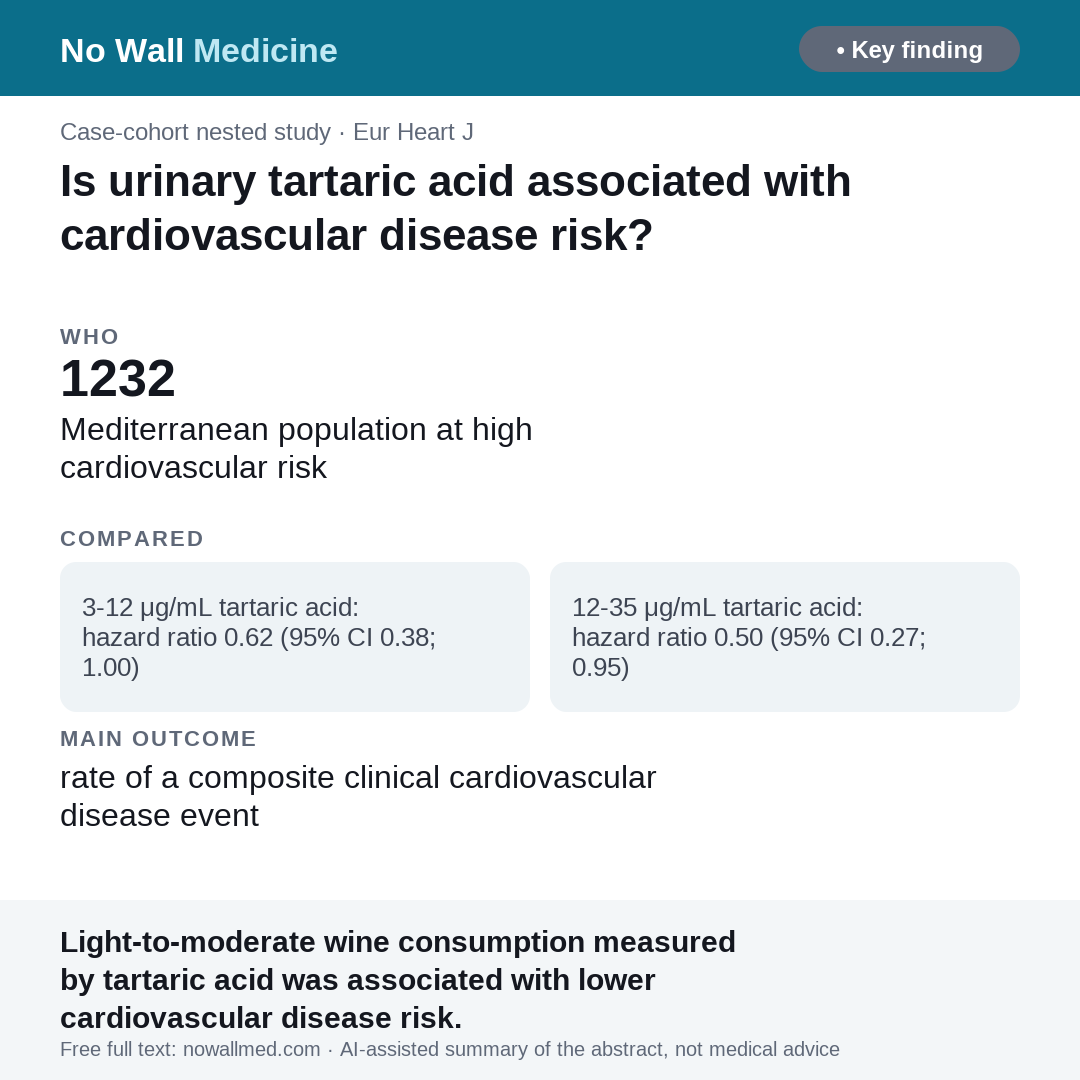
Urinary tartaric acid as a biomarker of wine consumption and cardiovascular risk: the PREDIMED trial
Case-cohort nested studyBenefit found
Is urinary tartaric acid associated with cardiovascular disease risk?
Who
1232
Mediterranean population at high cardiovascular risk
Compared
3-12 μg/mL tartaric acid: hazard ratio 0.62 (95% CI 0.38; 1.00)
12-35 μg/mL tartaric acid: hazard ratio 0.50 (95% CI 0.27; 0.95)
Main outcome
rate of a composite clinical cardiovascular disease event
Result: hazard ratio 0.50 (95% CI 0.27; 0.95)
Bottom line: Light-to-moderate wine consumption measured by tartaric acid was associated with lower cardiovascular disease risk.
Eur Heart J · 2024-12-18Download image
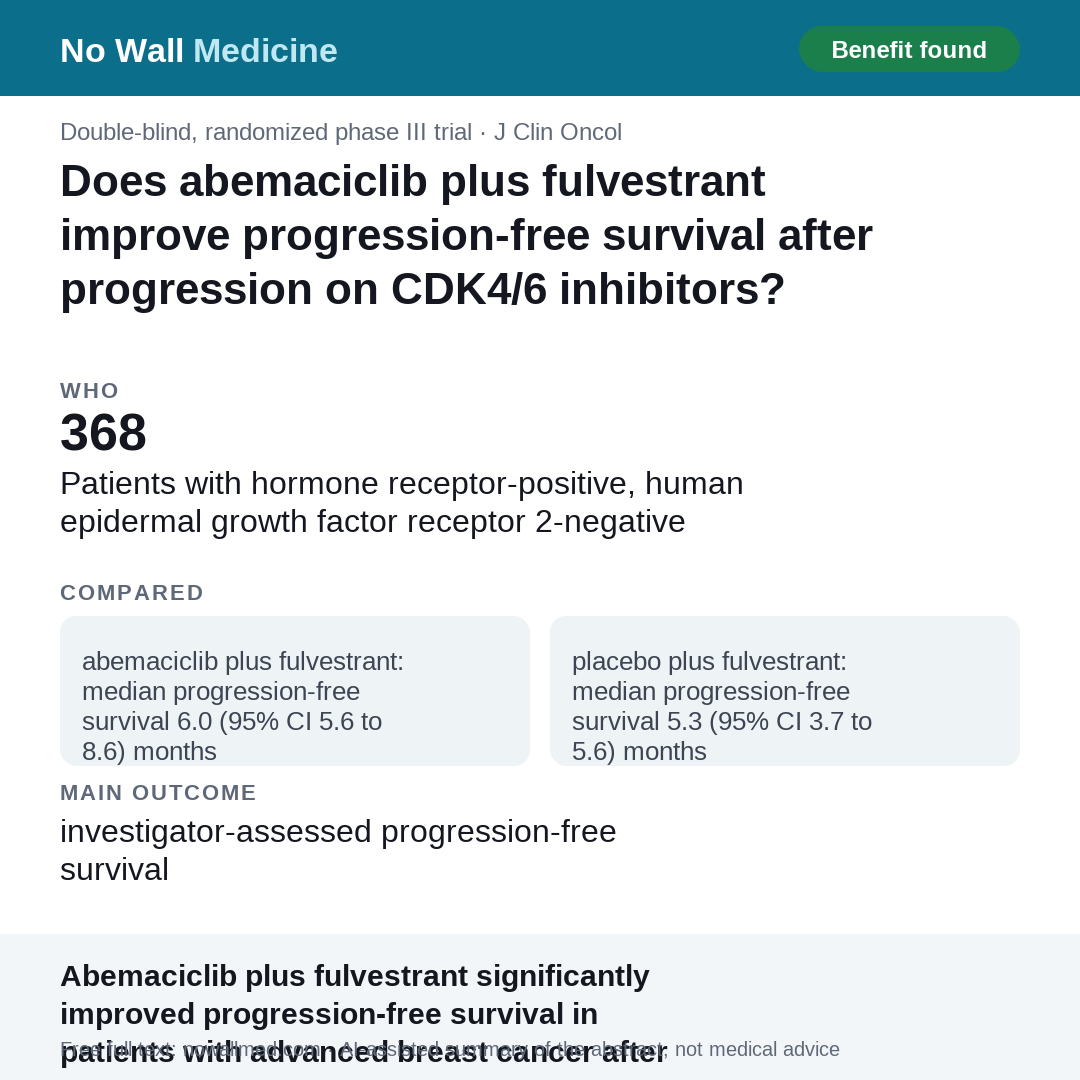
Abemaciclib Plus Fulvestrant in Advanced Breast Cancer After Progression on CDK4/6 Inhibition: Results From the Phase III postMONARCH Trial
Double-blind, randomized phase III trialBenefit found
Does abemaciclib plus fulvestrant improve progression-free survival after progression on CDK4/6 inhibitors?
Who
368
Patients with hormone receptor-positive, human epidermal growth factor receptor 2-negative advanced breast cancer
Compared
abemaciclib plus fulvestrant: median progression-free survival 6.0 (95% CI 5.6 to 8.6) months
placebo plus fulvestrant: median progression-free survival 5.3 (95% CI 3.7 to 5.6) months
Main outcome
investigator-assessed progression-free survival
Result: hazard ratio 0.73 (95% CI 0.57 to 0.95)
Bottom line: Abemaciclib plus fulvestrant significantly improved progression-free survival in patients with advanced breast cancer after progression on CDK4/6 inhibitors.
J Clin Oncol · 2024-12-18Download image
Safety, tolerability, pharmacokinetics, and antimalarial activity of MMV533: a phase 1a first-in-human, randomised, ascending dose and food effect study, and a phase 1b Plasmodium falciparum volunteer infection study
Randomised, double-blind, placebo-controlled and open-label trialsEarly signal
What are the safety, tolerability, pharmacokinetics, and antimalarial activity of MMV533?
Who
69
Adults aged 18-55 years with bodyweight at least 50 kg · Australia
Compared
MMV533: 63% (24/38) adverse events
Placebo: 50% (6/12) adverse events
Main outcome
Safety, tolerability, pharmacokinetics, and parasite reduction ratio
Bottom line: MMV533 showed an acceptable safety profile and confirmed parasiticidal activity in early phase trials.
Funded by: Medicines for Malaria Venture and Bill & Melinda Gates Foundation
Lancet Infect Dis · 2024-12-18Download image