Visual abstracts
New randomized trials and meta-analyses from leading journals at a glance: who was studied, what was compared, and what was found. Every paper is free to read in full.
All specialtiesCardiology 3011Oncology 2562Gastroenterology & Hepatology 1159Infectious Disease 1963Neurology 1197Psychiatry & Mental Health 1404Pulmonology 1248Critical Care 842Endocrinology & Diabetes 1520Pediatrics 1795Surgery 1577Orthopedics & Sports Medicine 540Neurosurgery 361Cardiothoracic & Vascular Surgery 343Plastic & Reconstructive Surgery 430Nephrology 626Rheumatology 464Hematology 664Dermatology 360Ophthalmology 334Obstetrics & Gynecology 992Public & Global Health 562Radiology & Imaging 420Anesthesiology 615Urology 500ENT (Otolaryngology) 337Emergency Medicine 330Allergy & Immunology 191Geriatrics 636Family Medicine & Primary Care 345Medical Genetics & Genomics 355Pathology & Laboratory Medicine 103Physical Medicine & Rehabilitation 480Palliative Care 258Nutrition 831Digital Health & AI 1431General Medicine 215
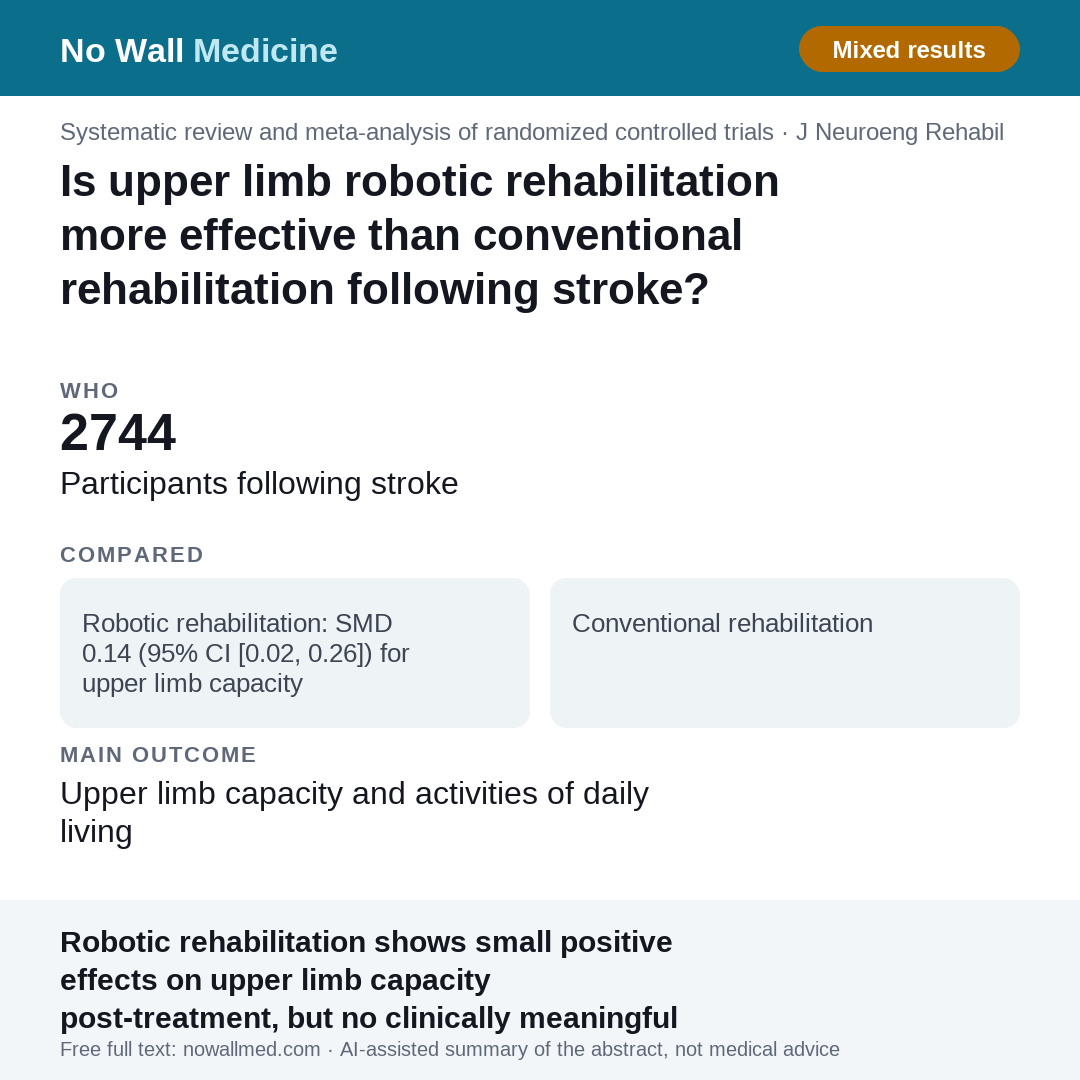
Upper limb robotic rehabilitation following stroke: a systematic review and meta-analysis investigating efficacy and the influence of device features and program parameters
Systematic review and meta-analysis of randomized controlled trialsMixed results
Is upper limb robotic rehabilitation more effective than conventional rehabilitation following stroke?
Who
2744
Participants following stroke
Compared
Robotic rehabilitation: SMD 0.14 (95% CI [0.02, 0.26]) for upper limb capacity
Conventional rehabilitation
Main outcome
Upper limb capacity and activities of daily living
Result: SMD 0.14 (95% CI [0.02, 0.26])
Bottom line: Robotic rehabilitation shows small positive effects on upper limb capacity post-treatment, but no clinically meaningful improvements in capacity or activities of daily living.
J Neuroeng Rehabil · 2025-07-16Download image
Effect of processed electroencephalography-guided anesthesia on postoperative delirium: an updated systematic review and meta-analysis
Systematic review and meta-analysis of randomized controlled trialsBenefit found
Does processed electroencephalography-guided anesthesia reduce postoperative delirium incidence?
Who
4523
Adult surgical patients
Compared
Processed electroencephalography-guided general anesthesia
Standard care
Main outcome
Postoperative delirium incidence
Result: risk ratio 0.81 (95% CI 0.69-0.95)
Bottom line: Processed electroencephalography-guided anesthesia reduces postoperative delirium incidence, especially in elderly patients and non-cardiac surgeries.
Limitation: Effectiveness may vary due to differences in practice, anesthetic protocols, and cultural factors.
Int J Surg · 2025-07-15Download image

Factors Influencing Quality of Life After Intensive Care: A Systematic Review and Meta-Analysis
Systematic review and meta-analysisMixed results
What factors influence quality of life in patients after intensive care?
Who
17298
post-intensive care unit patients
Compared
58.835Overall quality of life score (95% CI, 52.935-64.735)
49.517Physical component summary score (95% CI, 45.781-53.253)
53.509Mental component summary score (95% CI, 50.301-56.718)
Main outcome
quality of life levels and influencing factors
Bottom line: Post-intensive care quality of life is moderate, with physical health more impaired than mental health.
Crit Care Med · 2025-07-15Download image

Global, regional, and national health-care inefficiency and associated factors in 201 countries, 1995-2022: a stochastic frontier meta-analysis for the Global Burden of Disease Study 2023
Stochastic frontier meta-analysisMixed results
What were the health-care inefficiency levels and associated factors from 1995 to 2022?
Who
201 countries · Global
Compared
Low spending ($100 per capita): US$92 (95% uncertainty interval 43-239) per capita
High spending ($5000 per capita): US$11 213 (8031-57 754) per capita
Main outcome
Health-adjusted life expectancy inefficiency and cost of additional healthy life
Bottom line: Health spending inefficiency fluctuated globally, with better governance and government funding associated with more efficient health-care spending.
Funded by: Bill & Melinda Gates Foundation
Lancet Glob Health · 2025-07-15Download image

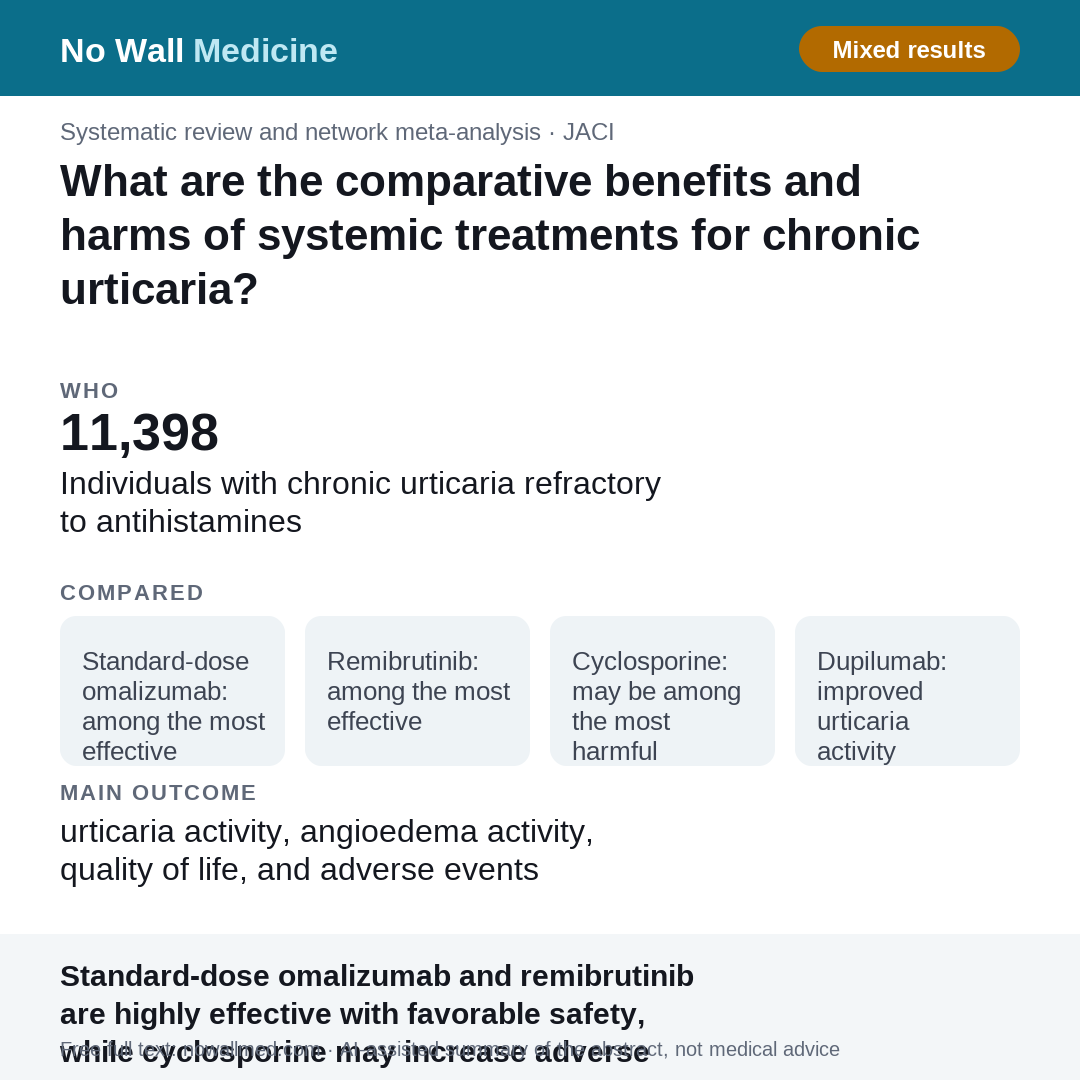
Comparative efficacy and safety of biologics and systemic immunomodulatory treatments for chronic urticaria: Systematic review and network meta-analysis
Systematic review and network meta-analysisMixed results
What are the comparative benefits and harms of systemic treatments for chronic urticaria?
Who
11,398
Individuals with chronic urticaria refractory to antihistamines
Compared
Standard-dose omalizumab: among the most effective
Remibrutinib: among the most effective
Cyclosporine: may be among the most harmful
Dupilumab: improved urticaria activity
Main outcome
urticaria activity, angioedema activity, quality of life, and adverse events
Bottom line: Standard-dose omalizumab and remibrutinib are highly effective with favorable safety, while cyclosporine may increase adverse events.
Limitation: The safety profile of remibrutinib is less certain.
JACI · 2025-07-15Download image
Efficacy and safety of earlier switching to an oral antibiotic therapy for the treatment of Gram-positive bloodstream infections: a systematic review and meta-analysis
Systematic review and meta-analysisBenefit found
Is early switching to oral antibiotics effective for Gram-positive bloodstream infections?
Who
6015
Patients with Gram-positive bloodstream infections
Compared
Oral switch
Intravenous therapy
Main outcome
Treatment failure, mortality, recurrence, readmission, stay, and adverse events
Result: 30-day mortality OR 0.33 (95% CI 0.13, 0.83); 90-day mortality OR 0.59 (95% CI 0.36, 0.97)
Bottom line: Switching from intravenous to oral therapy reduces mortality and hospital stay for Gram-positive bloodstream infections.
J Antimicrob Chemother · 2025-07-15Download image

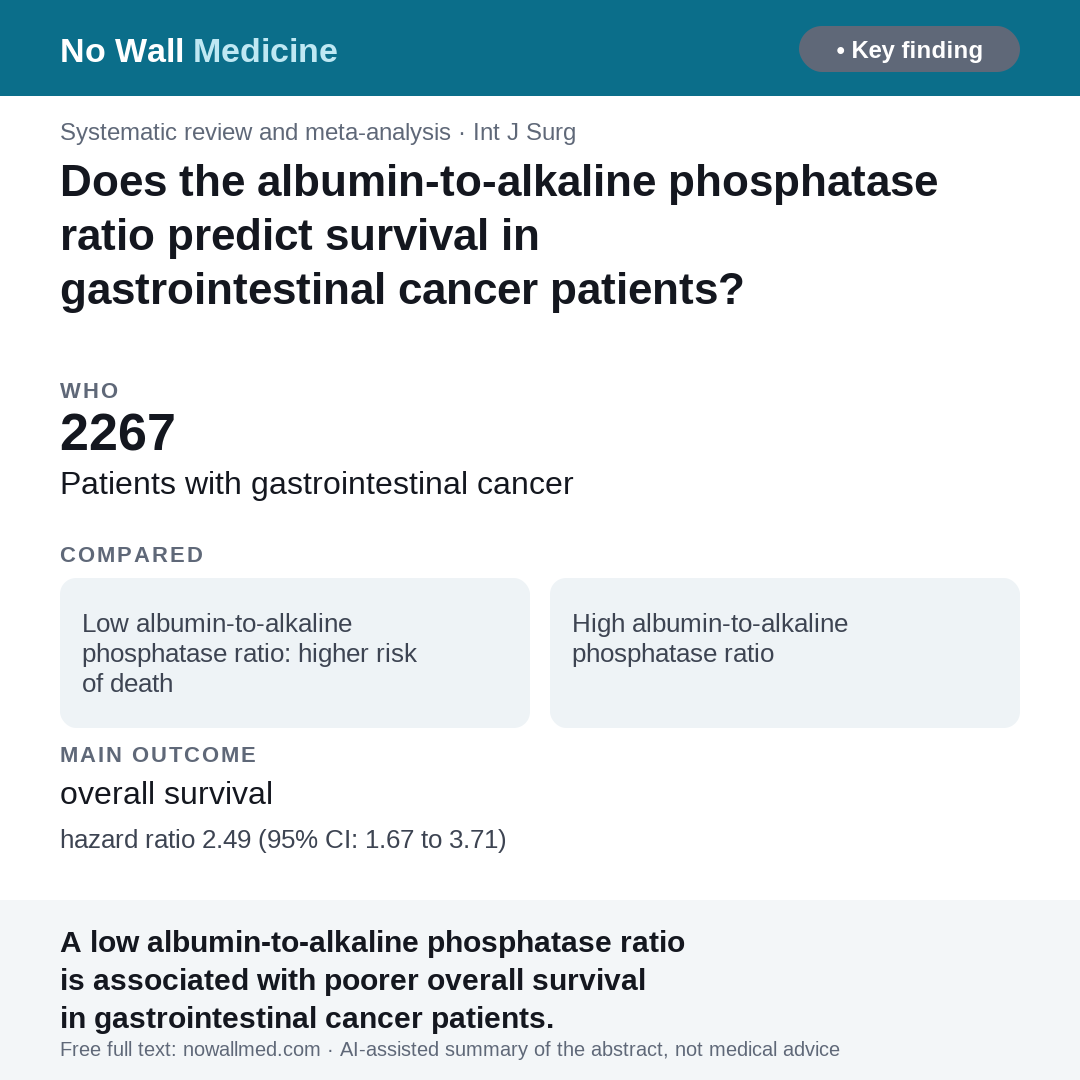
Prognostic significance of the albumin-to-alkaline phosphatase ratio in gastrointestinal cancer patients: a systematic review and meta-analysis
Systematic review and meta-analysisBenefit found
Does the albumin-to-alkaline phosphatase ratio predict survival in gastrointestinal cancer patients?
Who
2267
Patients with gastrointestinal cancer
Compared
Low albumin-to-alkaline phosphatase ratio: higher risk of death
High albumin-to-alkaline phosphatase ratio
Main outcome
overall survival
Result: hazard ratio 2.49 (95% CI: 1.67 to 3.71)
Bottom line: A low albumin-to-alkaline phosphatase ratio is associated with poorer overall survival in gastrointestinal cancer patients.
Limitation: Publication bias was detected in the overall survival meta-analysis.
Int J Surg · 2025-07-15Download image
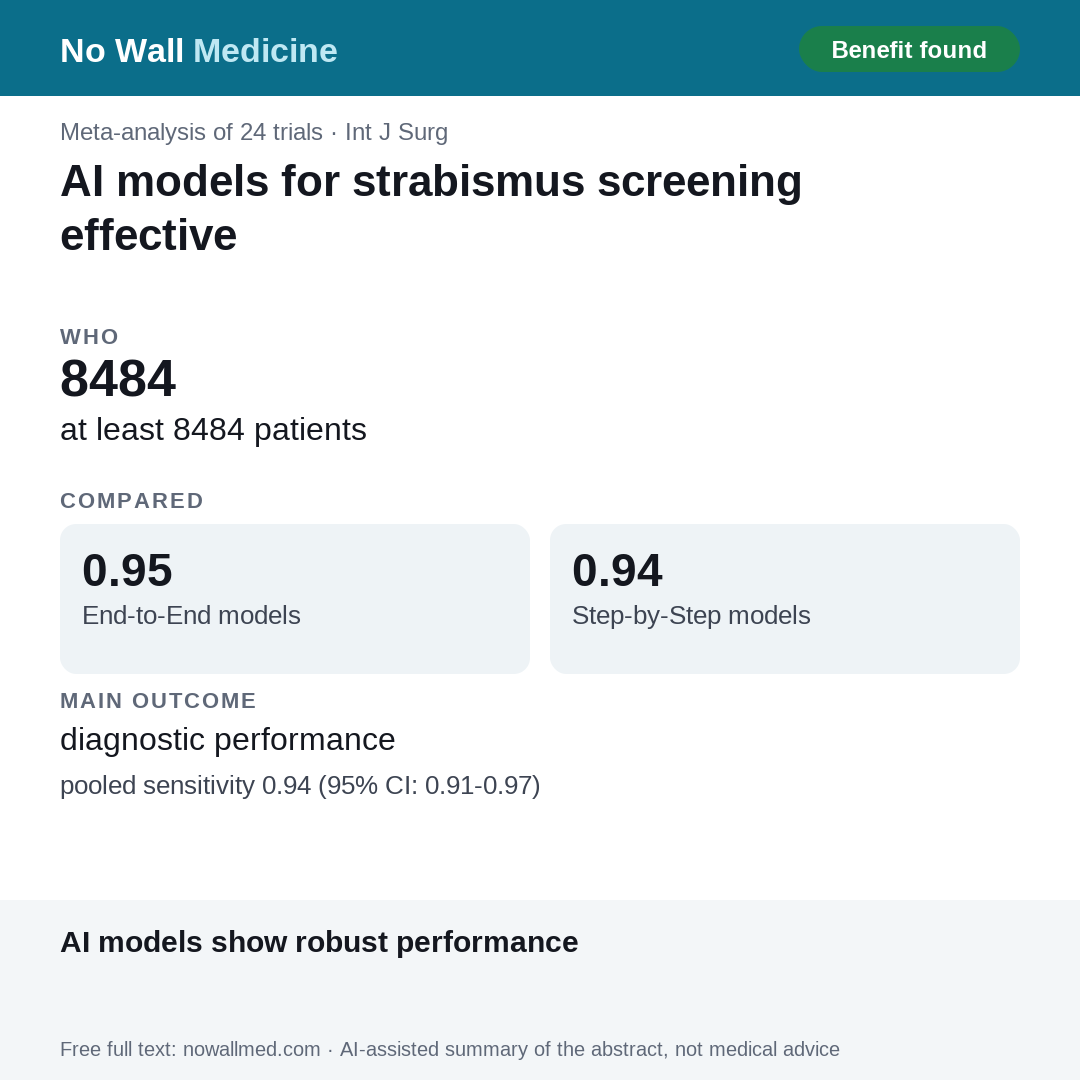
Systematic review and meta-analysis of artificial intelligence models for strabismus screening: methodological insights and future directions
Meta-analysis of 24 trialsBenefit found
AI models for strabismus screening effective
Who
8484
at least 8484 patients
Compared
0.95End-to-End models (0.91-0.97)
0.94Step-by-Step models (0.85-0.97)
Main outcome
diagnostic performance
Result: pooled sensitivity 0.94 (95% CI: 0.91-0.97)
Bottom line: AI models show robust performance
Limitation: low risk of bias except index test
Int J Surg · 2025-07-15Download image
A network meta-analysis of randomized clinical trials in lenalidomide-exposed or -refractory multiple myeloma patients
Network meta-analysis of eight randomized controlled trialsBenefit found
Which lenalidomide-free regimen is most effective for relapsed or refractory multiple myeloma?
Who
3952
Lenalidomide-exposed or lenalidomide-refractory multiple myeloma patients
Compared
Belantamab mafodotin, bortezomib, and dexamethasone: highest surface under the cumulative ranking curve for progression-free survival
Other triplet regimens
Main outcome
progression-free survival
Bottom line: Belantamab mafodotin, bortezomib, and dexamethasone is the most effective lenalidomide-free second-line treatment option.
ESMO Open · 2025-07-15Download image

Screening tools for work-related asthma and their diagnostic accuracy: a systematic review
Systematic reviewMixed results
What is the diagnostic accuracy of screening tools for work-related asthma?
Who
Individuals aged 16 years or older · Tertiary hospitals and specialist centres
Compared
Improvement off work question: sensitivity 74-87% and specificity 15-58%
Multiple questions: sensitivity 80-100% and specificity 8-55%
Questionnaire with methacholine challenge test: specificity 75% with sensitivity 65%
Diagnostic models: area under the curve 0.69 to 0.89
Main outcome
Diagnostic accuracy of screening tools for work-related asthma
Bottom line: Screening tools have high sensitivity but low specificity, which may be sufficient for initial screening purposes.
Limitation: Studies are limited, inadequately reported, and need further evaluation in primary care and workplaces.
BMJ Open Respir Res · 2025-07-15Download image

Anorectal malformation and outcome review (ARMOUR) project: a systematic review for the outcomes reported in patients with an anorectal malformation
Systematic reviewUnclear result
Outcomes in anorectal malformation treatment
Who
Patients with anorectal malformation · Europe, Asia, North America
Compared
Medical professionals
Patients
Main outcome
Outcomes reported in literature
Bottom line: 339 outcomes identified in 25 domains
BMJ Paediatr Open · 2025-07-15Download image

Basic life support training targeted to family members or carers of those at high-risk of out-of-hospital cardiac arrest: a systematic review
Systematic reviewBenefit found
Does targeting basic life support training to high-risk groups improve outcomes?
Who
Family members or carers of those at high-risk of out-of-hospital cardiac arrest
Compared
Targeted training intervention
Control
Main outcome
Patient and educational outcomes
Bottom line: Targeting high-risk groups improves simulated cardiopulmonary resuscitation skills, confidence, and willingness to provide care.
Limitation: Very-low to low quality of evidence due to low event numbers and loss to follow-up.
Resusc Plus · 2025-07-15Download image

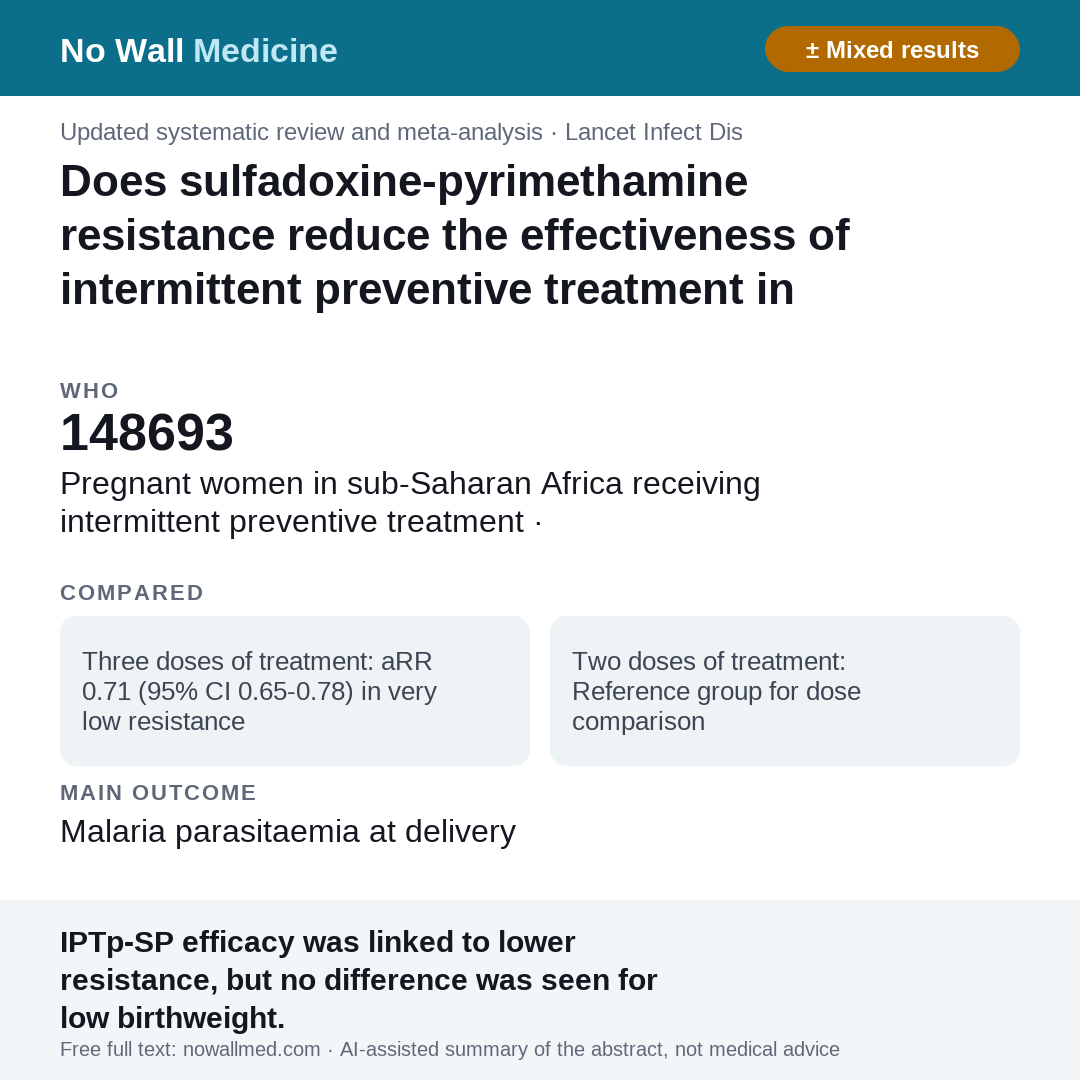
The impact of sulfadoxine-pyrimethamine resistance on the effectiveness of intermittent preventive treatment for the prevention of malaria in pregnancy in Africa: an updated systematic review and meta-analysis
Meta-analysis of 122 studiesHarm found
Does sulfadoxine-pyrimethamine resistance affect IPTp-SP effectiveness
Who
148693
pregnant women in sub-Saharan Africa · Africa
Compared
0.71Very low resistance (95% CI 0.65-0.78)
0.83Low resistance (0.72-0.95)
0.63Moderate resistance (0.57-0.69)
0.89High resistance (0.82-0.96)
Main outcome
malaria infection
Result: adjusted risk ratio 0.71 (95% CI 0.65-0.78) to 0.93 (0.85-1.01)
Bottom line: Sulfadoxine-pyrimethamine resistance reduces IPTp-SP effectiveness
Limitation: limited by sample size in some resistance strata
Lancet Infect Dis · 2025-07-14Download image
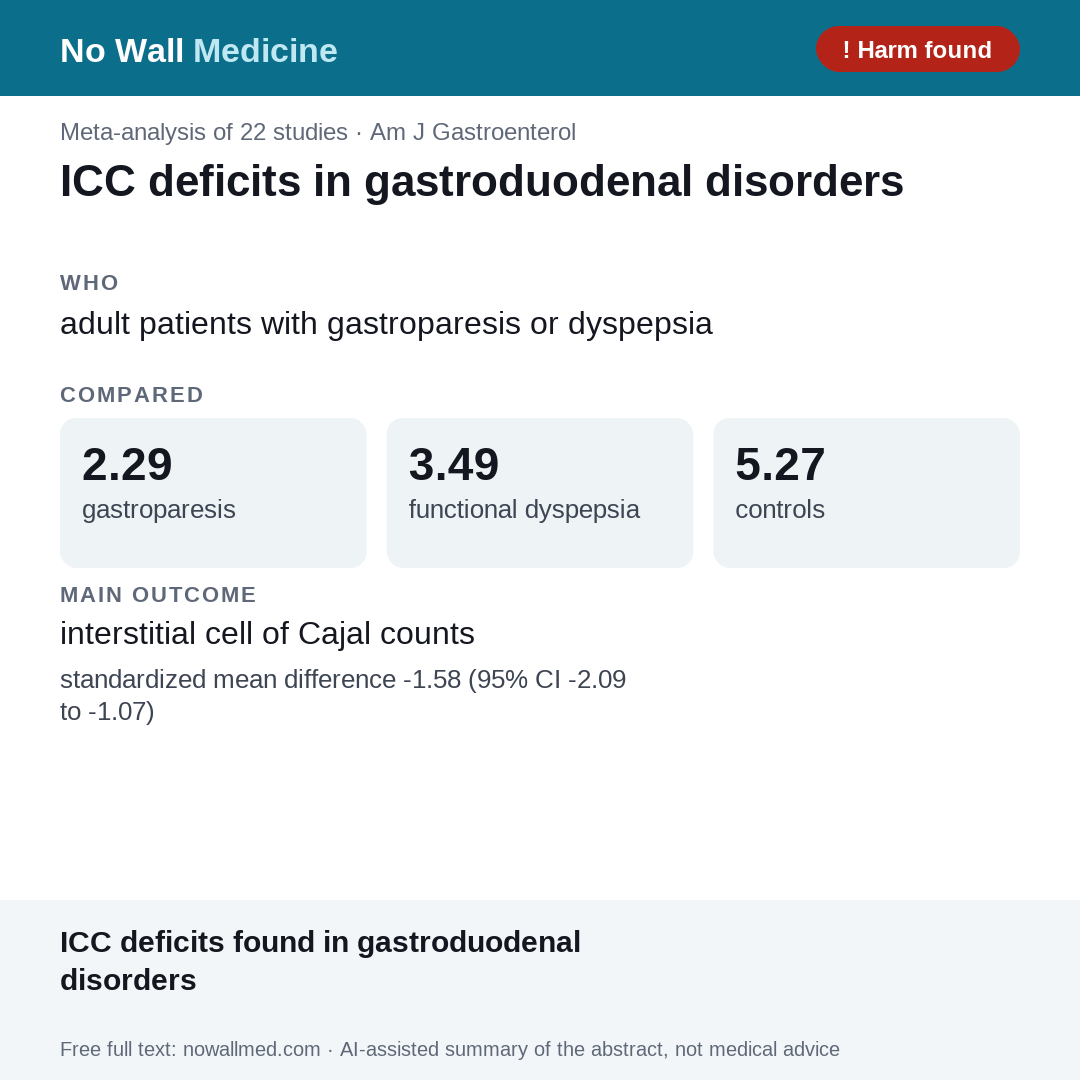
Spectrum of Interstitial Cell of Cajal Deficits in Chronic Gastroduodenal Disorders: Systematic Review and Meta-Analysis
Meta-analysis of 22 studiesHarm found
ICC deficits in gastroduodenal disorders
Who
2158
adult patients with gastroparesis or dyspepsia
Compared
2.29gastroparesis
3.49functional dyspepsia
5.27controls
Main outcome
interstitial cell of Cajal counts
Result: standardized mean difference -1.58 (95% CI -2.09 to -1.07)
Bottom line: ICC deficits found in gastroduodenal disorders
Limitation: high risk of bias in most studies
Am J Gastroenterol · 2025-07-14Download image
A Systematic Review Supporting the Endocrine Society Clinical Practice Guideline on Management of Primary Aldosteronism
Systematic reviewMixed results
What are the best management strategies for primary aldosteronism?
Who
Patients with primary aldosteronism
Compared
Adrenal venous sampling: better post-adrenalectomy biochemical cure rate
Computed tomography alone
Surgical therapy: better blood pressure control than medical therapy
Medical therapy
Main outcome
Management outcomes including blood pressure control and biochemical cure
Bottom line: Surgical therapy may improve blood pressure control, and adrenal venous sampling may improve biochemical cure rates.
J Clin Endocrinol Metab · 2025-07-14Download image

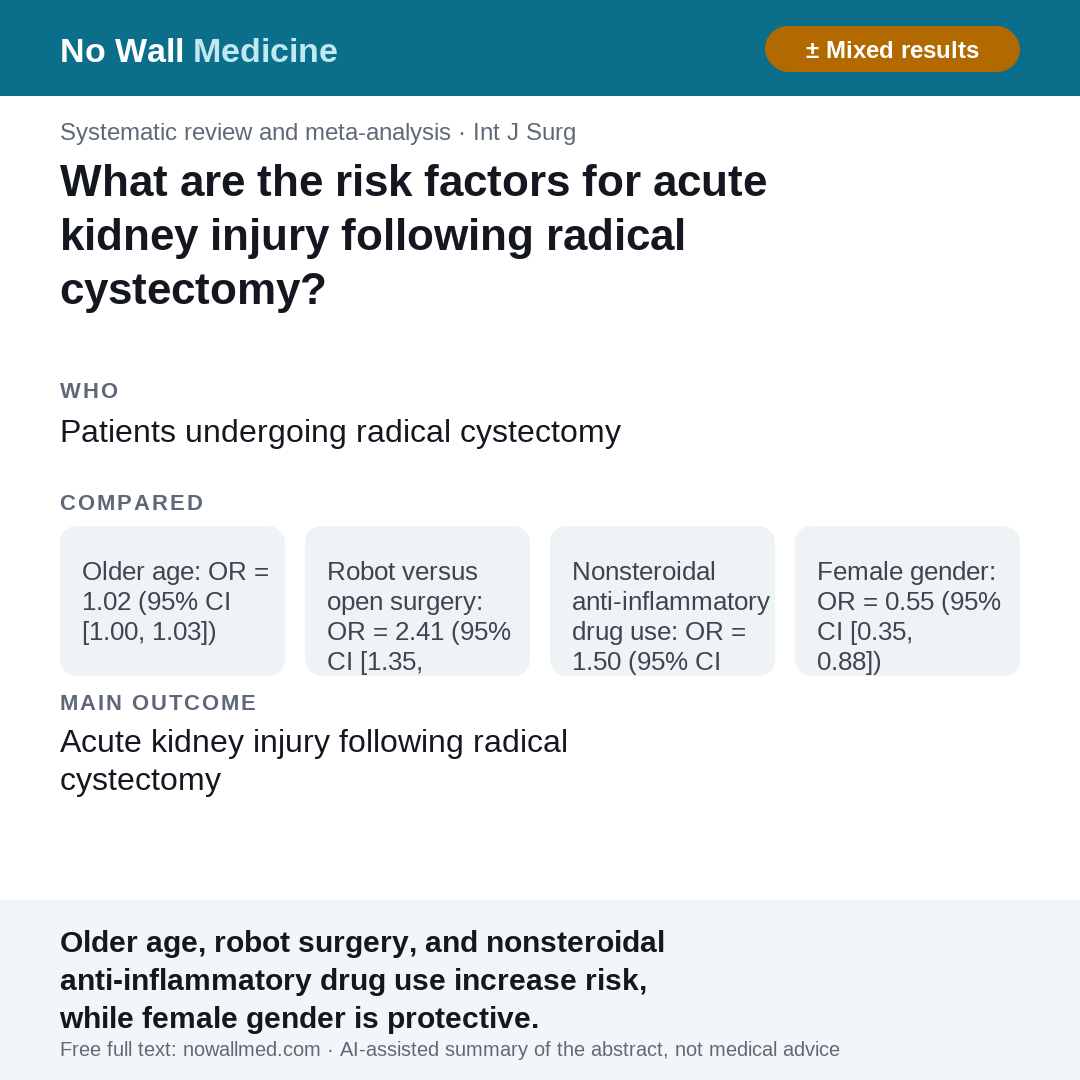
Risk factors for acute kidney injury following radical cystectomy: a systematic review and meta-analysis
Systematic review and meta-analysisMixed results
What are the risk factors for acute kidney injury following radical cystectomy?
Who
Patients undergoing radical cystectomy
Compared
Older age: OR = 1.02 (95% CI [1.00, 1.03])
Robot versus open surgery: OR = 2.41 (95% CI [1.35, 4.31])
Nonsteroidal anti-inflammatory drug use: OR = 1.50 (95% CI [1.01, 2.23])
Female gender: OR = 0.55 (95% CI [0.35, 0.88])
Main outcome
Acute kidney injury following radical cystectomy
Bottom line: Older age, robot surgery, and nonsteroidal anti-inflammatory drug use increase risk, while female gender is protective.
Limitation: Most of these risk factors exhibited minimal effect sizes.
Int J Surg · 2025-07-14Download image
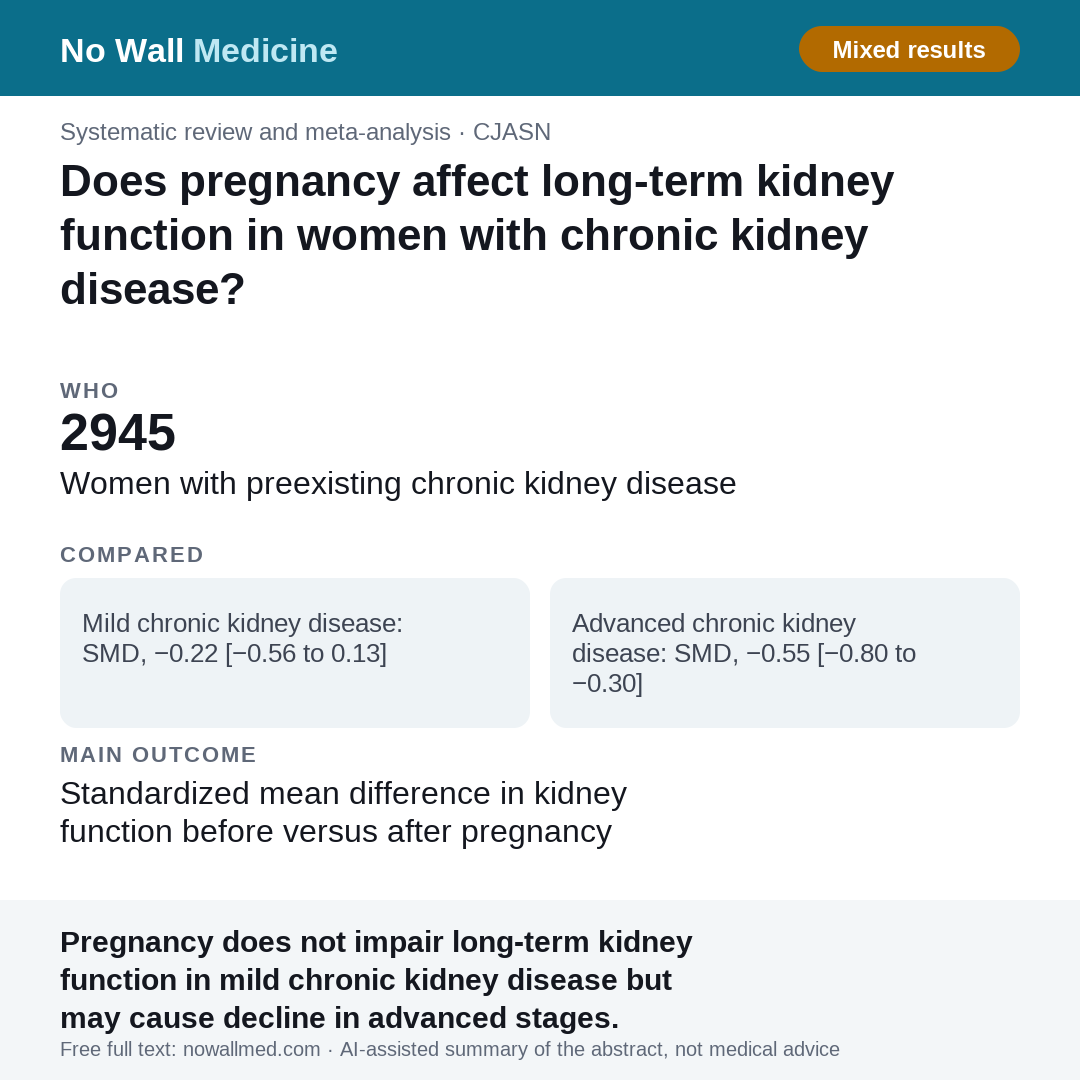
Pregnancy and Long-Term Kidney Function in CKD: A Systematic Review and Meta-Analysis
Systematic review and meta-analysisMixed results
Does pregnancy affect long-term kidney function in women with chronic kidney disease?
Who
2945
Women with preexisting chronic kidney disease
Compared
Mild chronic kidney disease: SMD, −0.22 [−0.56 to 0.13]
Advanced chronic kidney disease: SMD, −0.55 [−0.80 to −0.30]
Main outcome
Standardized mean difference in kidney function before versus after pregnancy
Result: pooled eGFR decline −8.96 ml/min (−17.4 to −0.48)
Bottom line: Pregnancy does not impair long-term kidney function in mild chronic kidney disease but may cause decline in advanced stages.
Limitation: Scarce studies including estimated glomerular filtration rate slopes prepregnancy and postpregnancy limit understanding of natural disease progression.
CJASN · 2025-07-14Download image
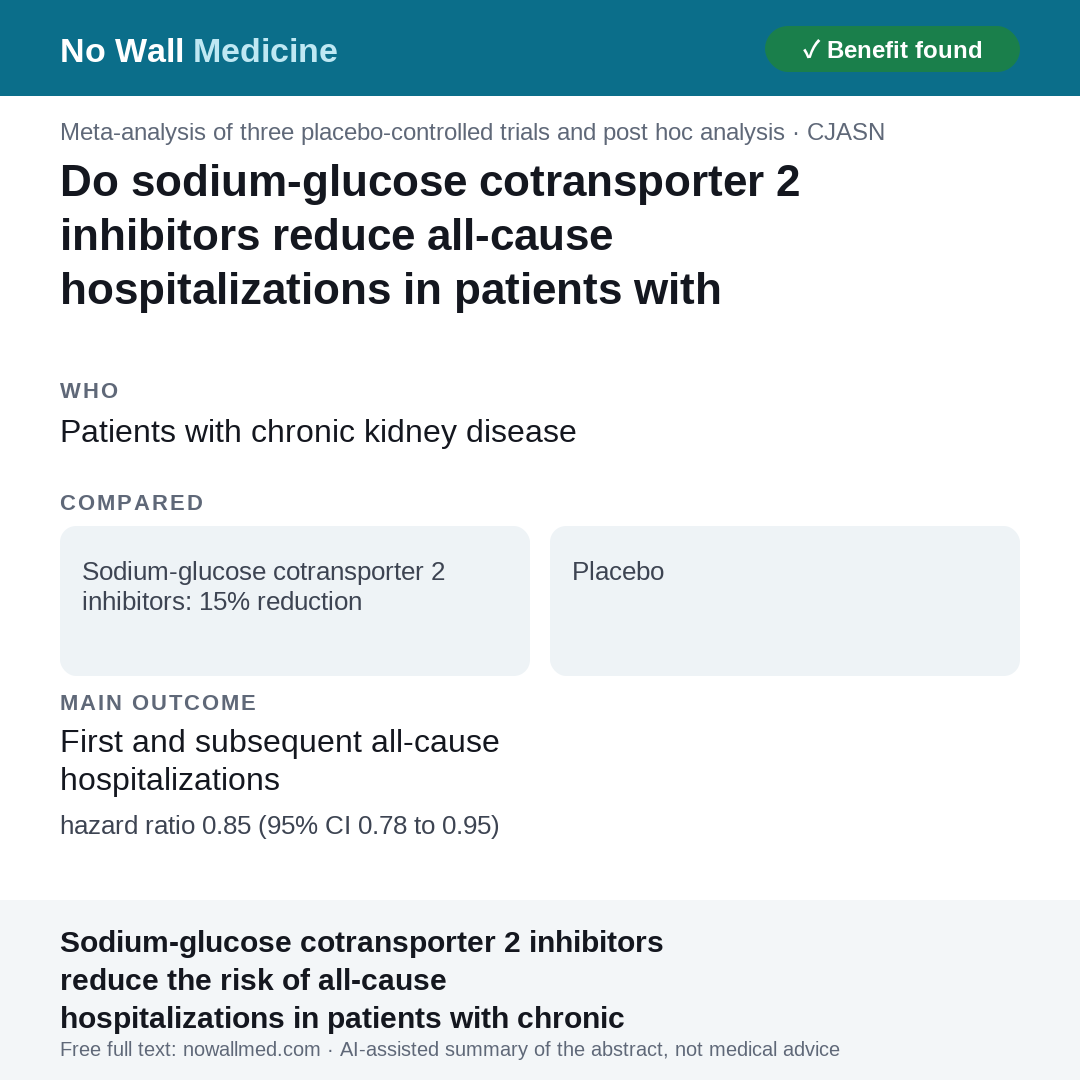
Sodium-Glucose Cotransporter 2 Inhibition and Hospitalizations in Patients with CKD: A Meta-Analysis of Kidney Outcome Trials
Meta-analysis of three placebo-controlled trials and post hoc analysisBenefit found
Do sodium-glucose cotransporter 2 inhibitors reduce all-cause hospitalizations in patients with chronic kidney disease?
Who
Patients with chronic kidney disease
Compared
Sodium-glucose cotransporter 2 inhibitors: 15% reduction
Placebo
Main outcome
First and subsequent all-cause hospitalizations
Result: hazard ratio 0.85 (95% CI 0.78 to 0.95)
Bottom line: Sodium-glucose cotransporter 2 inhibitors reduce the risk of all-cause hospitalizations in patients with chronic kidney disease.
CJASN · 2025-07-14Download image
Gene therapy for intracranial aneurysms: systemic review
Systemic reviewUnclear result
Gene therapy for aneurysms
Who
patients with intracranial aneurysms
Compared
gene therapy
standard treatment
Main outcome
aneurysm development
Bottom line: Gene therapy may improve aneurysm outcomes
J Neurointerv Surg · 2025-07-14Download image

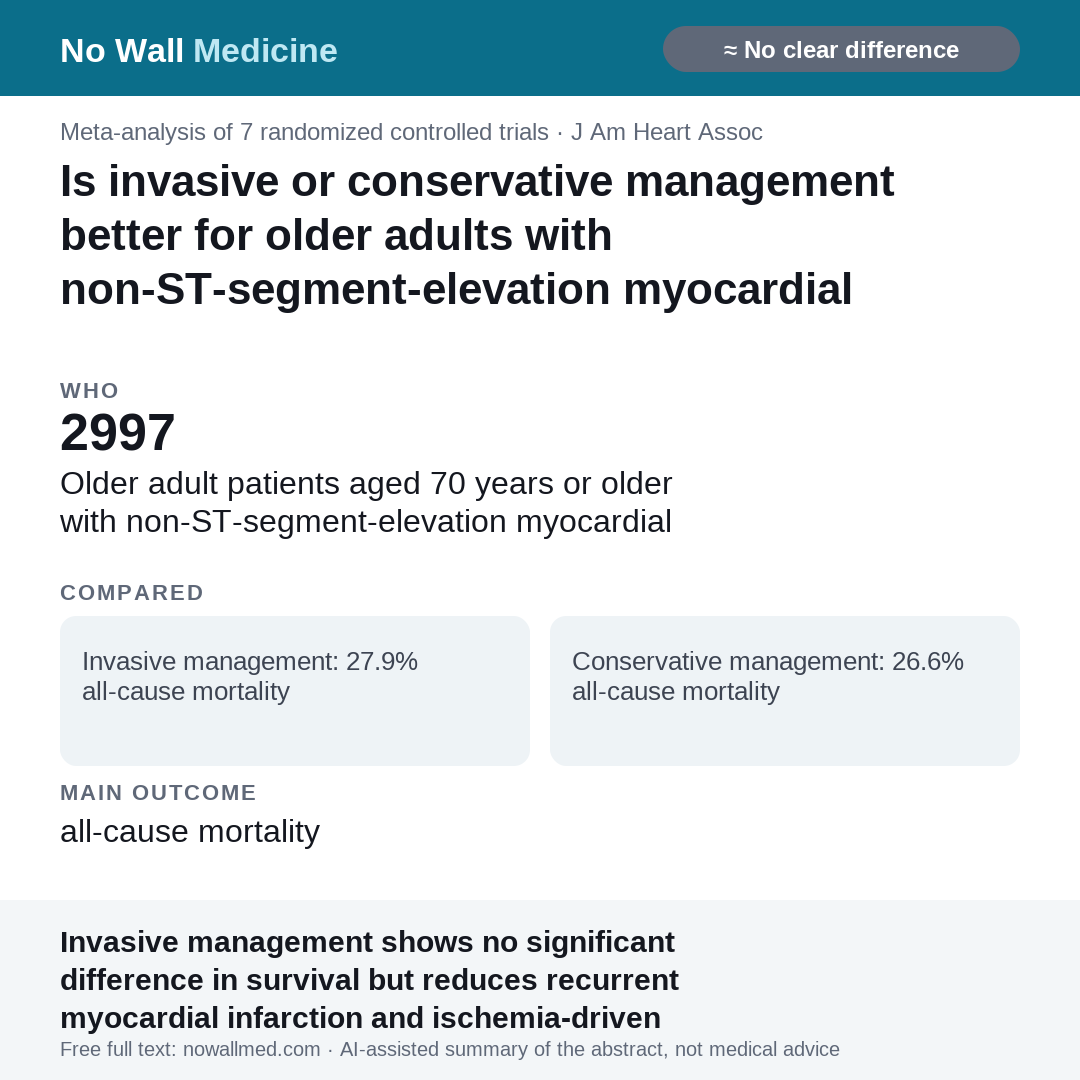
Invasive Versus Conservative Management Among Older Adult Patients With Non-ST-Segment-Elevation Myocardial Infarction: A Meta-Analysis of Randomized Controlled Trials
Meta-analysis of 7 randomized controlled trialsNo clear difference
Is invasive or conservative management better for older adults with non-ST-segment-elevation myocardial infarction?
Who
2997
Older adult patients aged 70 years or older with non-ST-segment-elevation myocardial infarction
Compared
Invasive management: 27.9% all-cause mortality
Conservative management: 26.6% all-cause mortality
Main outcome
all-cause mortality
Result: risk ratio 1.05 (95% CI 0.94-1.18)
Bottom line: Invasive management shows no significant difference in survival but reduces recurrent myocardial infarction and ischemia-driven revascularization in older adults.
J Am Heart Assoc · 2025-07-14Download image