Visual abstracts
New randomized trials and meta-analyses from leading journals at a glance: who was studied, what was compared, and what was found. Every paper is free to read in full.
All specialtiesCardiology 4877Oncology 4138Gastroenterology & Hepatology 1942Infectious Disease 3837Neurology 1905Psychiatry & Mental Health 2273Pulmonology 2143Critical Care 1365Endocrinology & Diabetes 2580Pediatrics 2980Surgery 2559Orthopedics & Sports Medicine 931Neurosurgery 537Cardiothoracic & Vascular Surgery 674Plastic & Reconstructive Surgery 591Nephrology 1133Rheumatology 823Hematology 1109Dermatology 621Ophthalmology 543Obstetrics & Gynecology 1686Public & Global Health 1058Radiology & Imaging 648Anesthesiology 986Urology 764ENT (Otolaryngology) 503Emergency Medicine 511Allergy & Immunology 313Geriatrics 981Family Medicine & Primary Care 562Medical Genetics & Genomics 676Pathology & Laboratory Medicine 159Physical Medicine & Rehabilitation 757Palliative Care 444Nutrition 1588Digital Health & AI 2201General Medicine 321
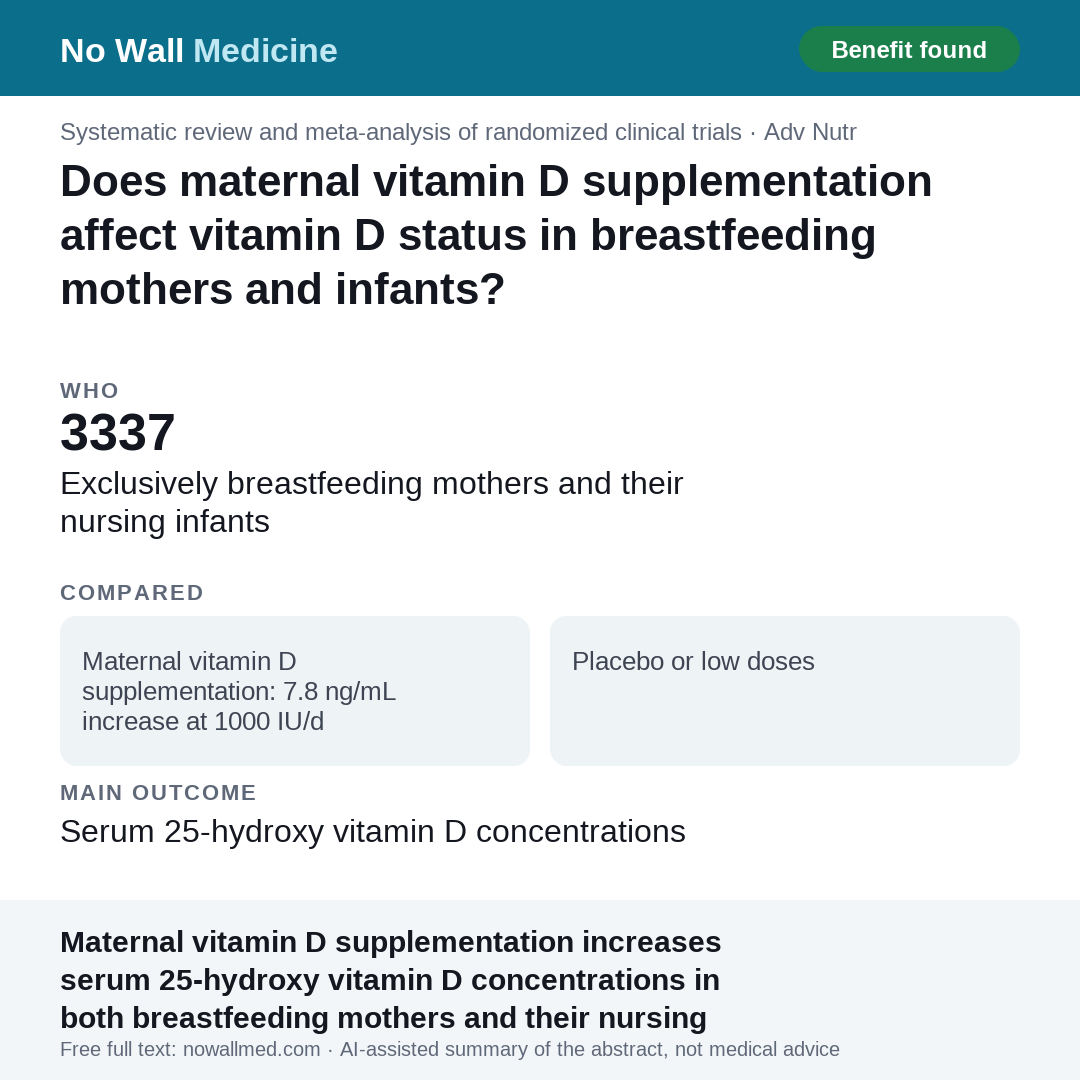
The Effect of Maternal Vitamin D Supplementation on Vitamin D Status of Exclusively Breastfeeding Mothers and Their Nursing Infants: A Systematic Review and Meta-Analysis of Randomized Clinical Trials
Systematic review and meta-analysis of randomized clinical trialsBenefit found
Does maternal vitamin D supplementation affect vitamin D status in breastfeeding mothers and infants?
Who
3337
Exclusively breastfeeding mothers and their nursing infants
Compared
Maternal vitamin D supplementation: 7.8 ng/mL increase at 1000 IU/d
Placebo or low doses
Main outcome
Serum 25-hydroxy vitamin D concentrations
Bottom line: Maternal vitamin D supplementation increases serum 25-hydroxy vitamin D concentrations in both breastfeeding mothers and their nursing infants.
Adv Nutr · 2023-02-10Download image
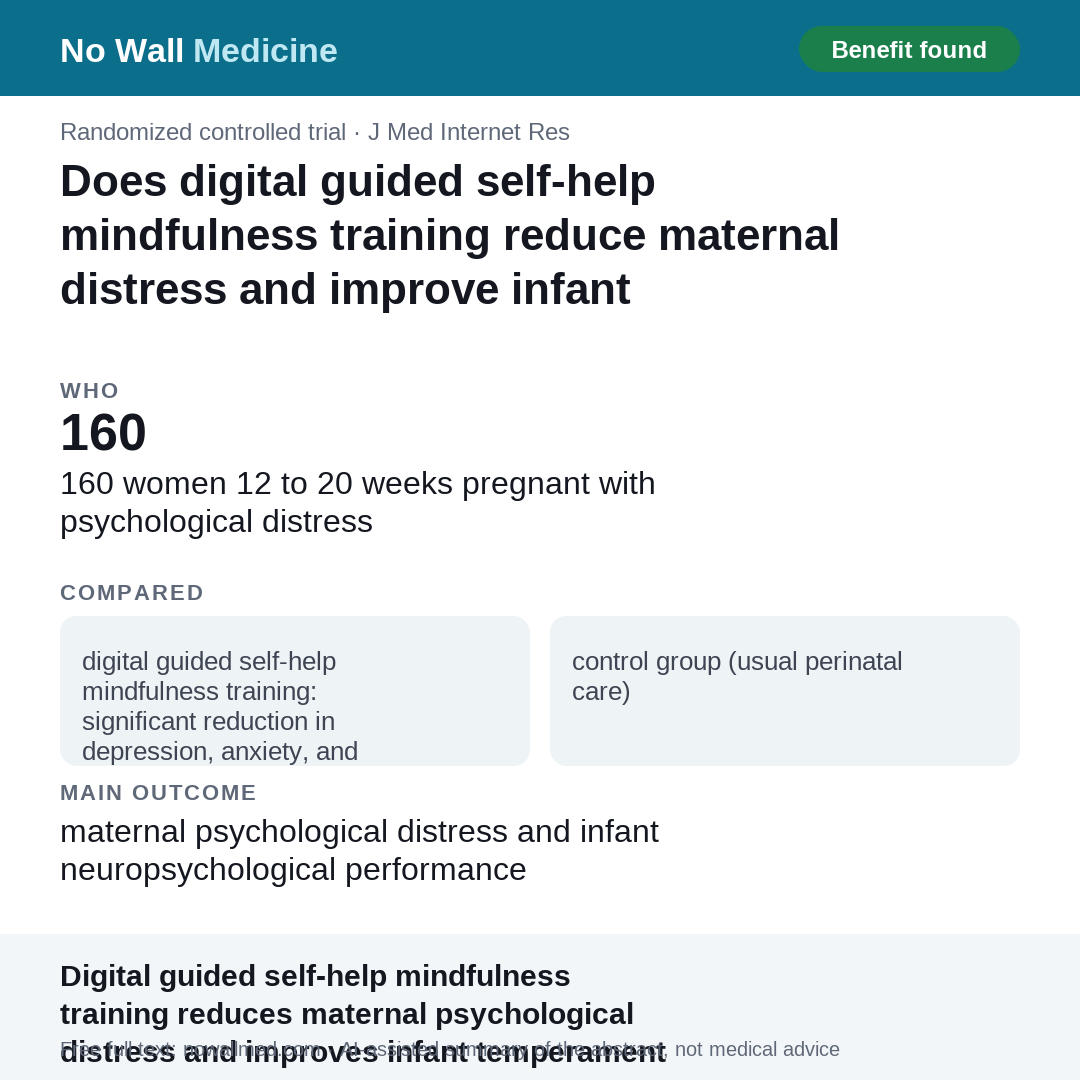
Effectiveness of Digital Guided Self-help Mindfulness Training During Pregnancy on Maternal Psychological Distress and Infant Neuropsychological Development: Randomized Controlled Trial
Randomized controlled trialBenefit found
Does digital guided self-help mindfulness training reduce maternal distress and improve infant neuropsychological development?
Who
160
160 women 12 to 20 weeks pregnant with psychological distress
Compared
digital guided self-help mindfulness training: significant reduction in depression, anxiety, and pregnancy-related anxiety symptoms
control group (usual perinatal care)
Main outcome
maternal psychological distress and infant neuropsychological performance
Bottom line: Digital guided self-help mindfulness training reduces maternal psychological distress and improves infant temperament scores.
J Med Internet Res · 2023-02-10Download image
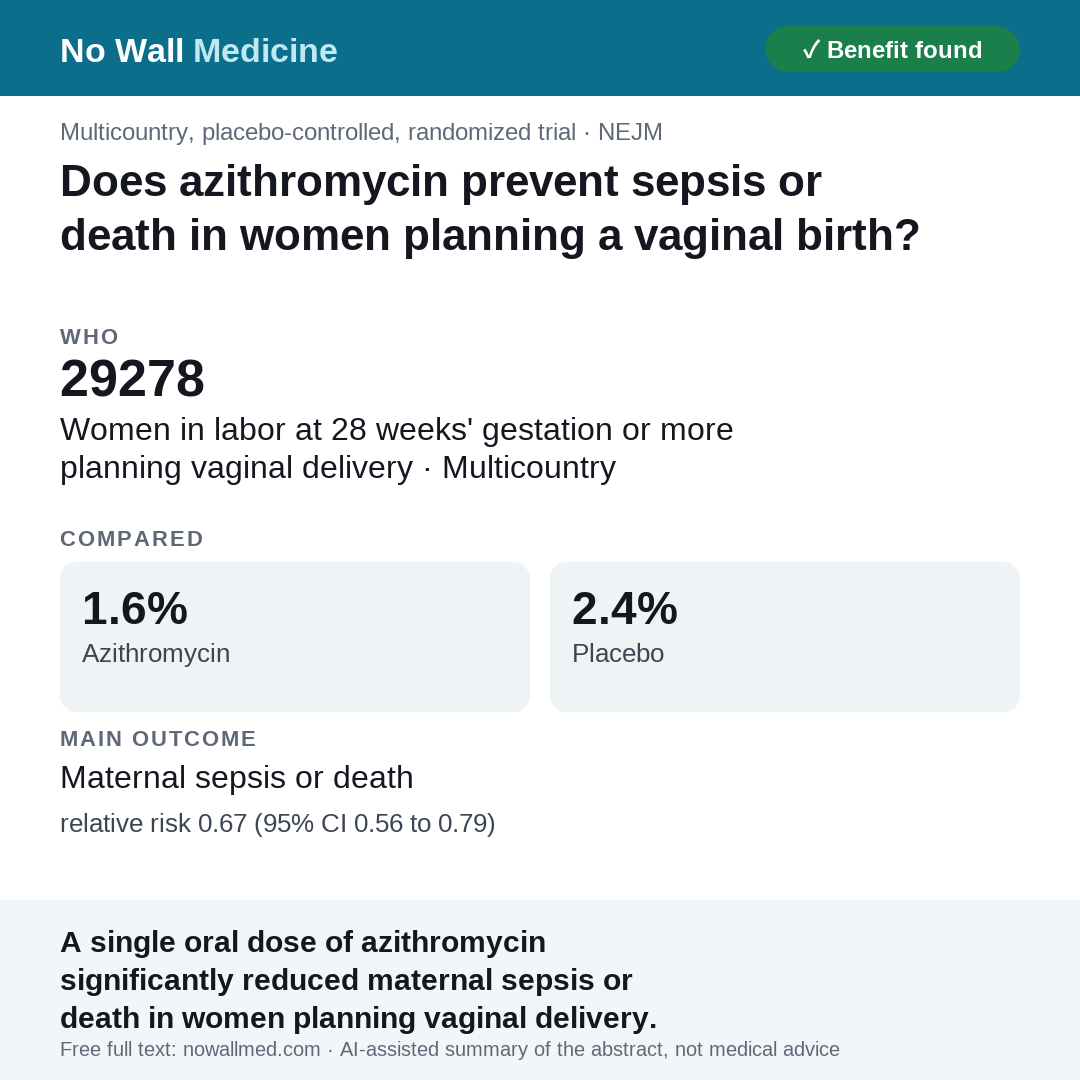
Azithromycin to Prevent Sepsis or Death in Women Planning a Vaginal Birth
Multicountry, placebo-controlled, randomized trialBenefit found
Does azithromycin prevent sepsis or death in women planning a vaginal birth?
Who
29278
Women in labor at 28 weeks' gestation or more planning vaginal delivery · Multicountry
Compared
1.6%Azithromycin
2.4%Placebo
Main outcome
Maternal sepsis or death
Result: relative risk 0.67 (95% CI 0.56 to 0.79)
Bottom line: A single oral dose of azithromycin significantly reduced maternal sepsis or death in women planning vaginal delivery.
Funded by: Eunice Kennedy Shriver National Institute of Child Health and Human Development
NEJM · 2023-02-09Download image
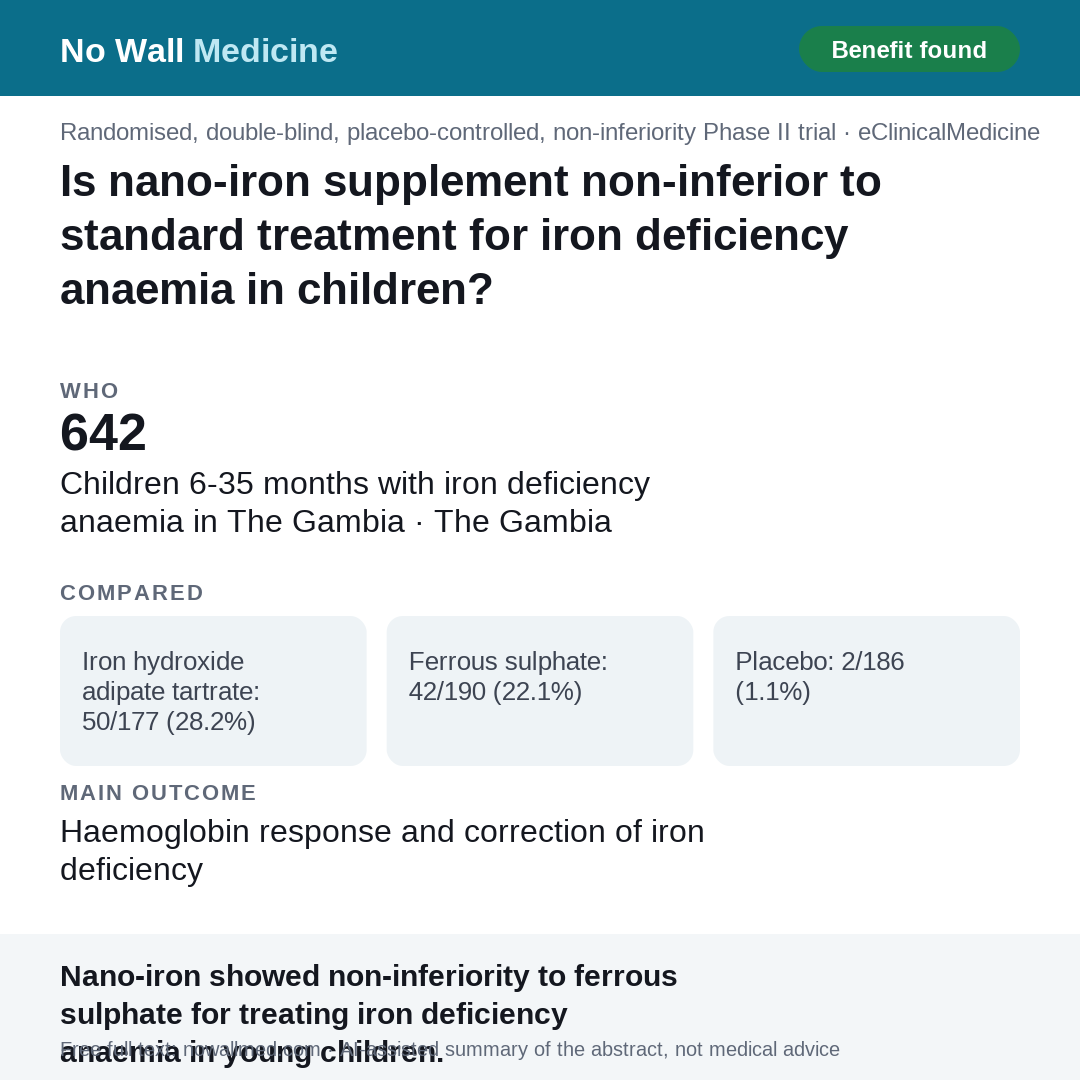
A novel nano-iron supplement versus standard treatment for iron deficiency anaemia in children 6-35 months (IHAT-GUT trial): a double-blind, randomised, placebo-controlled non-inferiority phase II trial in The Gambia
Randomised, double-blind, placebo-controlled, non-inferiority Phase II trialBenefit found
Is nano-iron supplement non-inferior to standard treatment for iron deficiency anaemia in children?
Who
642
Children 6-35 months with iron deficiency anaemia in The Gambia · The Gambia
Compared
Iron hydroxide adipate tartrate: 50/177 (28.2%)
Ferrous sulphate: 42/190 (22.1%)
Placebo: 2/186 (1.1%)
Main outcome
Haemoglobin response and correction of iron deficiency
Result: OR 1.39, 80% CI 1.01-1.91
Bottom line: Nano-iron showed non-inferiority to ferrous sulphate for treating iron deficiency anaemia in young children.
Funded by: Bill & Melinda Gates Foundation
eClinicalMedicine · 2023-02-09Download image
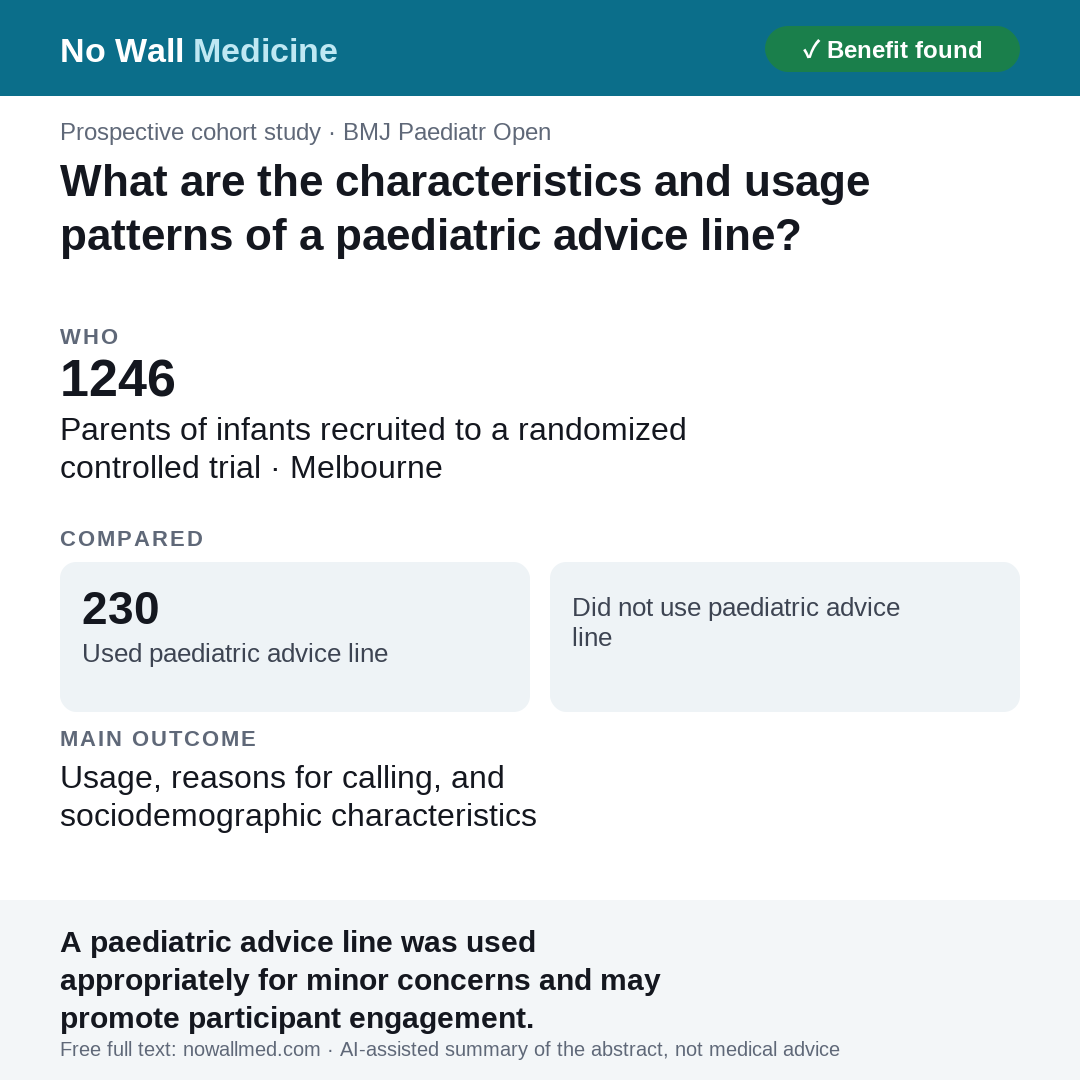
Use of a paediatric advice line for parents of infants recruited to a randomised controlled trial
Prospective cohort studyBenefit found
What are the characteristics and usage patterns of a paediatric advice line?
Who
1246
Parents of infants recruited to a randomized controlled trial · Melbourne
Compared
230Used paediatric advice line (18.5%)
Did not use paediatric advice line
Main outcome
Usage, reasons for calling, and sociodemographic characteristics
Bottom line: A paediatric advice line was used appropriately for minor concerns and may promote participant engagement.
BMJ Paediatr Open · 2023-02-09Download image
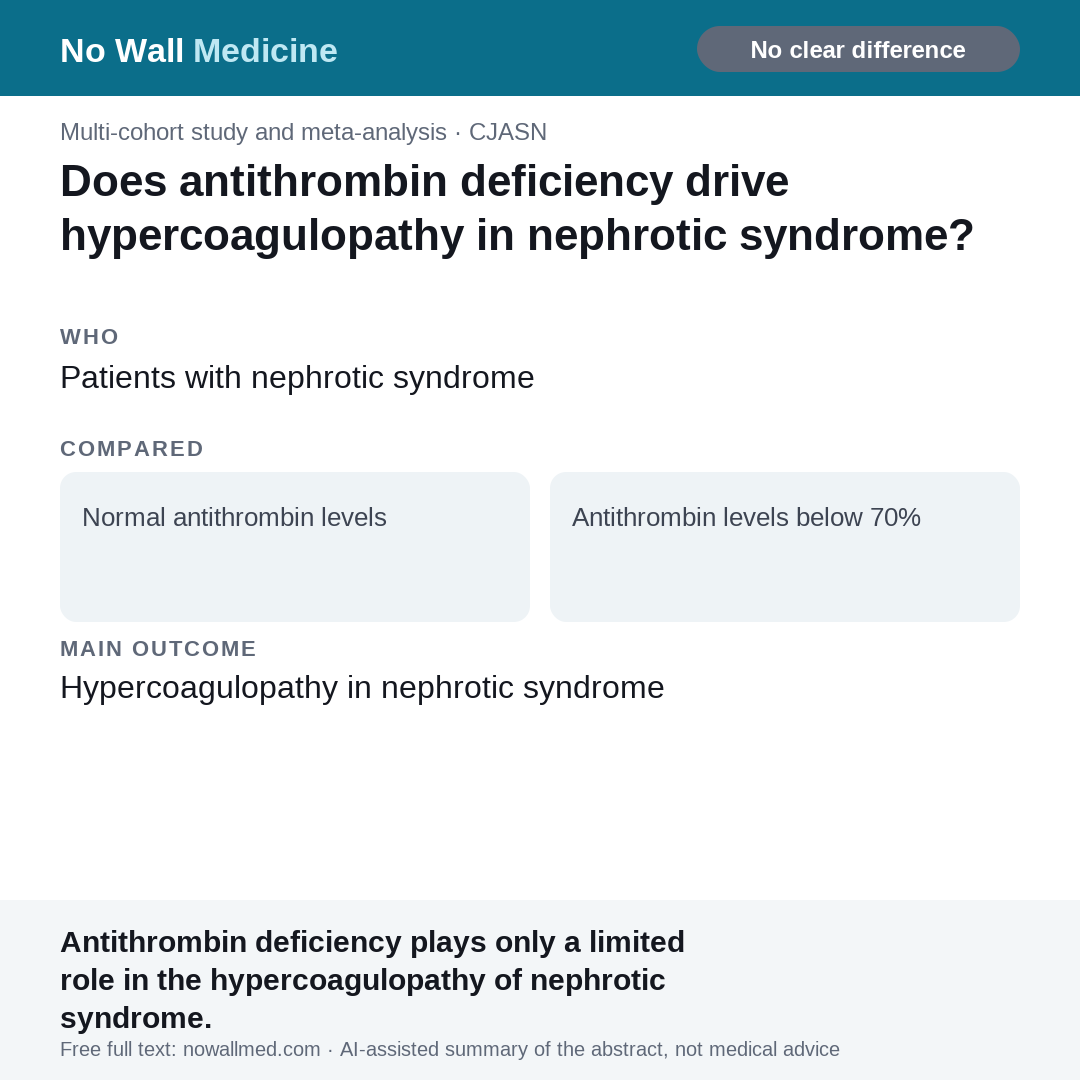
Exploring the Role of Antithrombin in Nephrotic Syndrome-Associated Hypercoagulopathy: A Multi-Cohort Study and Meta-Analysis
Multi-cohort study and meta-analysisNo clear difference
Does antithrombin deficiency drive hypercoagulopathy in nephrotic syndrome?
Who
Patients with nephrotic syndrome
Compared
Normal antithrombin levels
Antithrombin levels below 70%
Main outcome
Hypercoagulopathy in nephrotic syndrome
Bottom line: Antithrombin deficiency plays only a limited role in the hypercoagulopathy of nephrotic syndrome.
CJASN · 2023-02-08Download image
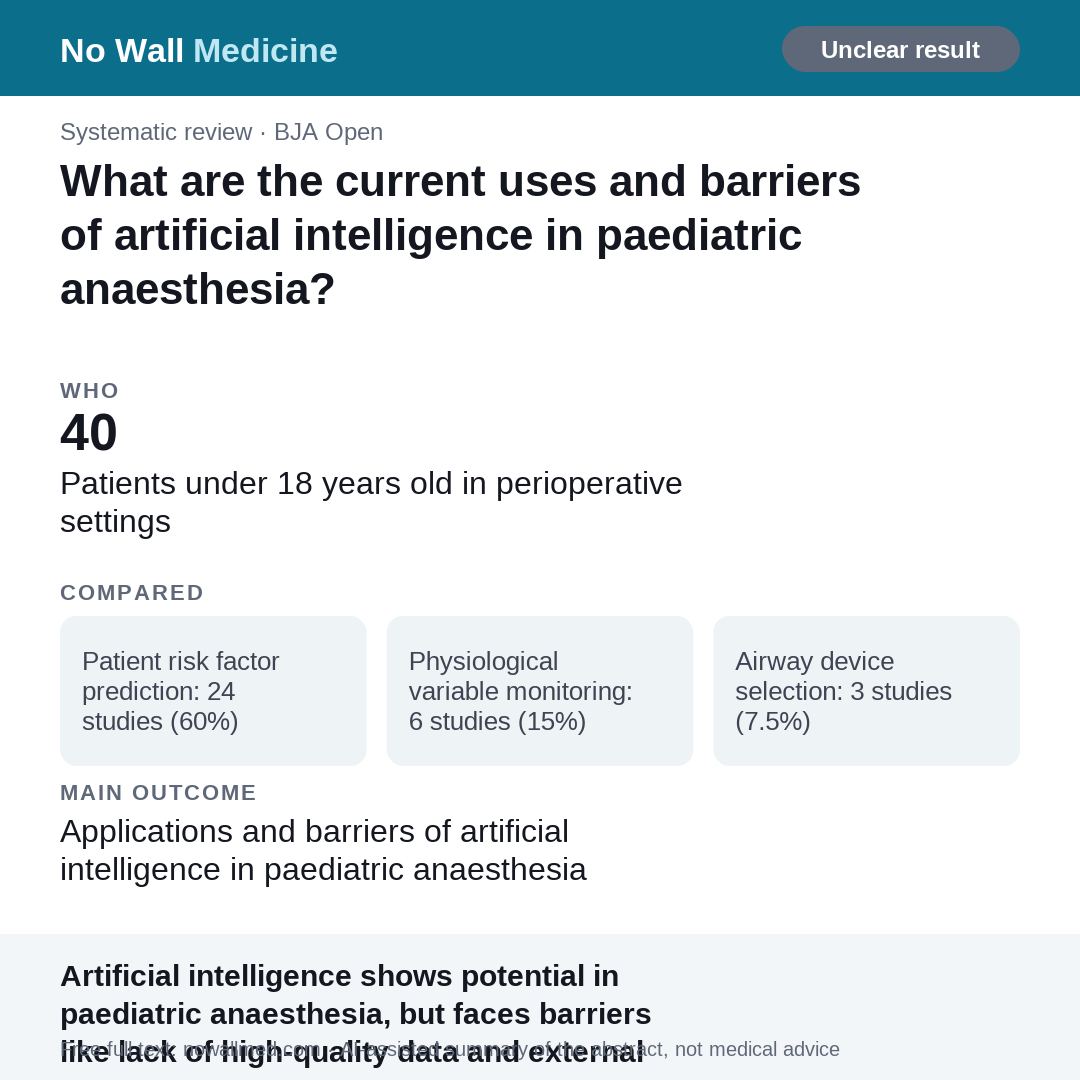
Use of artificial intelligence in paediatric anaesthesia: a systematic review
Systematic reviewUnclear result
What are the current uses and barriers of artificial intelligence in paediatric anaesthesia?
Who
40
Patients under 18 years old in perioperative settings
Compared
Patient risk factor prediction: 24 studies (60%)
Physiological variable monitoring: 6 studies (15%)
Airway device selection: 3 studies (7.5%)
Main outcome
Applications and barriers of artificial intelligence in paediatric anaesthesia
Bottom line: Artificial intelligence shows potential in paediatric anaesthesia, but faces barriers like lack of high-quality data and external validation.
Limitation: Lack of high-quality input data, lack of external validation, and unclear generalisability to diverse settings.
BJA Open · 2023-02-07Download image
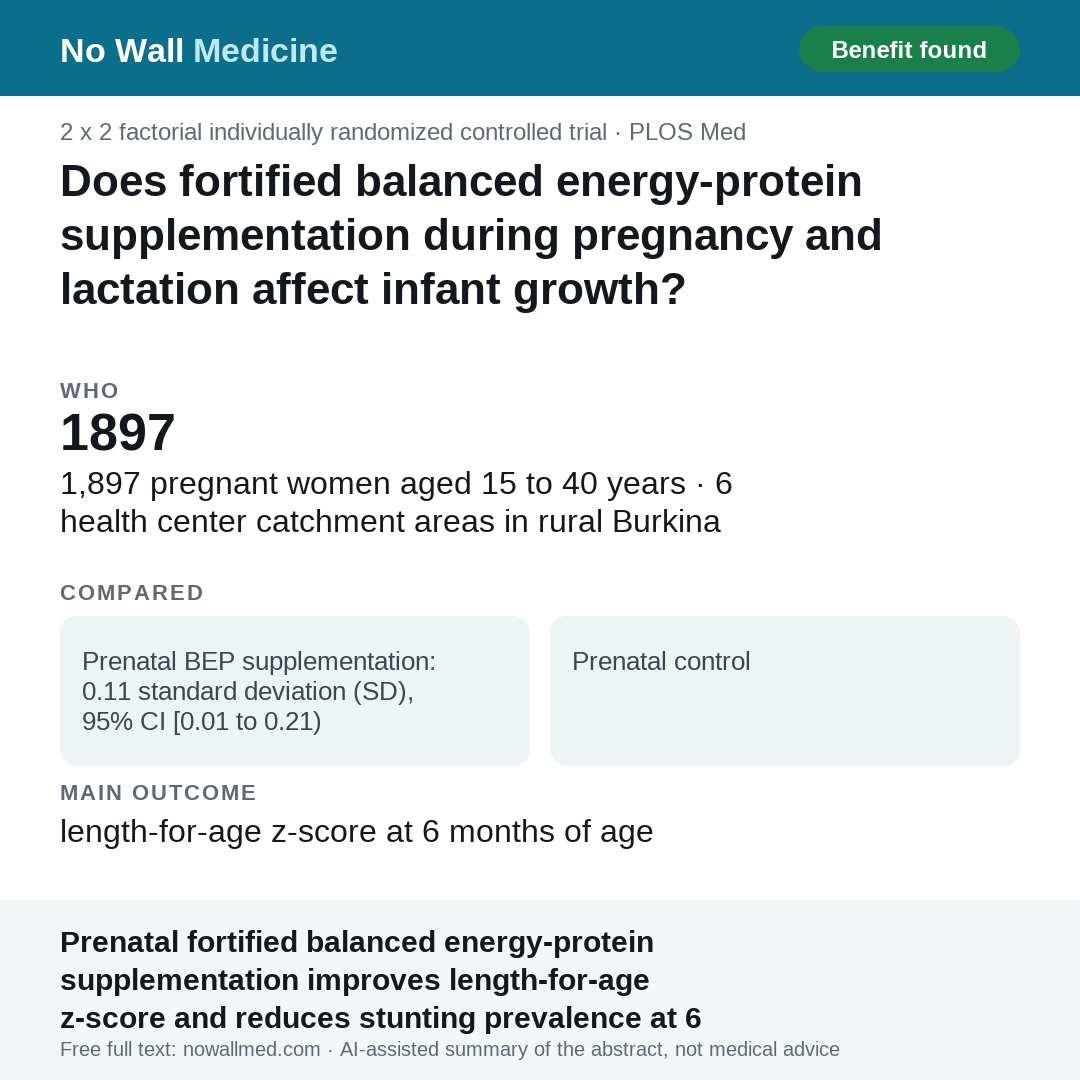
Fortified balanced energy-protein supplementation during pregnancy and lactation and infant growth in rural Burkina Faso: A 2 × 2 factorial individually randomized controlled trial
2 x 2 factorial individually randomized controlled trialBenefit found
Does fortified balanced energy-protein supplementation during pregnancy and lactation affect infant growth?
Who
1897
1,897 pregnant women aged 15 to 40 years · 6 health center catchment areas in rural Burkina Faso
Compared
Prenatal BEP supplementation: 0.11 standard deviation (SD), 95% CI [0.01 to 0.21)
Prenatal control
Main outcome
length-for-age z-score at 6 months of age
Result: 0.11 standard deviation (SD), 95% CI [0.01 to 0.21]
Bottom line: Prenatal fortified balanced energy-protein supplementation improves length-for-age z-score and reduces stunting prevalence at 6 months of age.
PLOS Med · 2023-02-06Download image
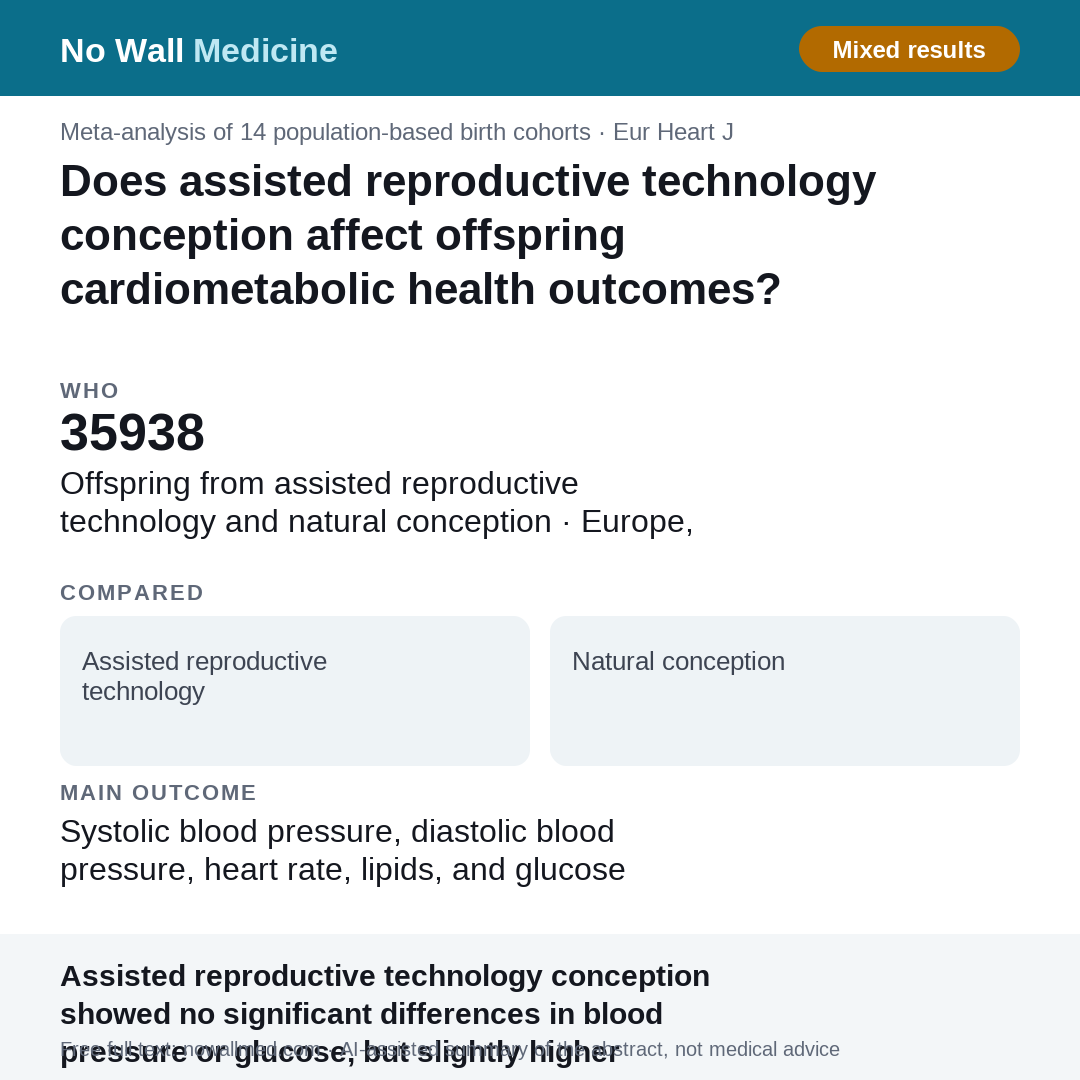
Long-term cardiometabolic health in people born after assisted reproductive technology: a multi-cohort analysis
Meta-analysis of 14 population-based birth cohortsMixed results
Does assisted reproductive technology conception affect offspring cardiometabolic health outcomes?
Who
35938
Offspring from assisted reproductive technology and natural conception · Europe, Australia, and Singapore
Compared
Assisted reproductive technology
Natural conception
Main outcome
Systolic blood pressure, diastolic blood pressure, heart rate, lipids, and glucose
Result: Total cholesterol (2.59%; 0.10-5.07), HDL cholesterol (4.16%; 2.52-5.81), LDL cholesterol (4.95%; 0.47-9.43)
Bottom line: Assisted reproductive technology conception showed no significant differences in blood pressure or glucose, but slightly higher cholesterol levels.
Limitation: Longer-term follow-up is warranted to investigate changes over adulthood.
Eur Heart J · 2023-02-06Download image
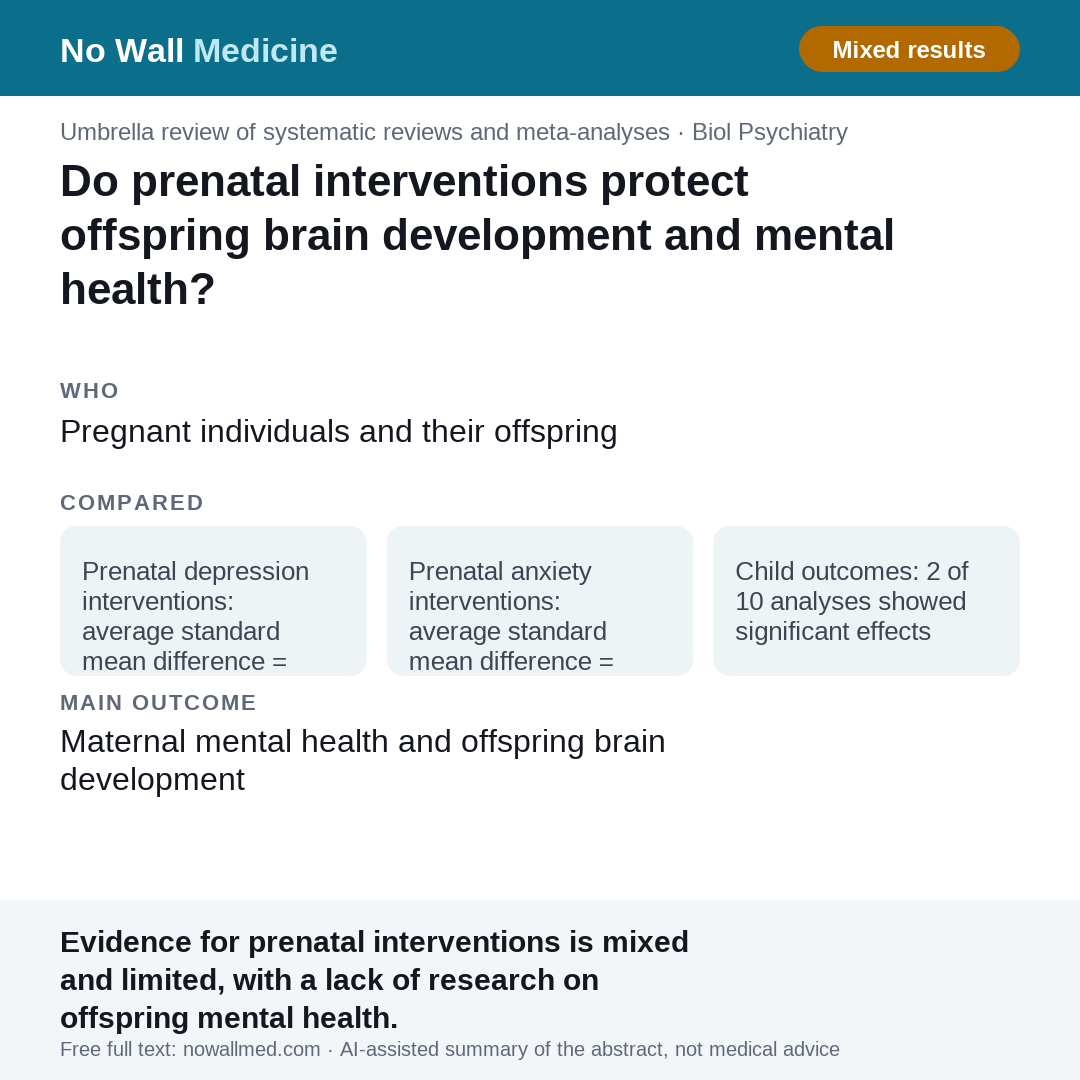
Maternal Mental Health and Offspring Brain Development: An Umbrella Review of Prenatal Interventions
Umbrella review of systematic reviews and meta-analysesMixed results
Do prenatal interventions protect offspring brain development and mental health?
Who
Pregnant individuals and their offspring
Compared
Prenatal depression interventions: average standard mean difference = -0.45
Prenatal anxiety interventions: average standard mean difference = -0.76
Child outcomes: 2 of 10 analyses showed significant effects
Main outcome
Maternal mental health and offspring brain development
Bottom line: Evidence for prenatal interventions is mixed and limited, with a lack of research on offspring mental health.
Limitation: None of the systematic reviews focused on offspring mental health or neurodevelopmental outcomes.
Biol Psychiatry · 2023-02-06Download image
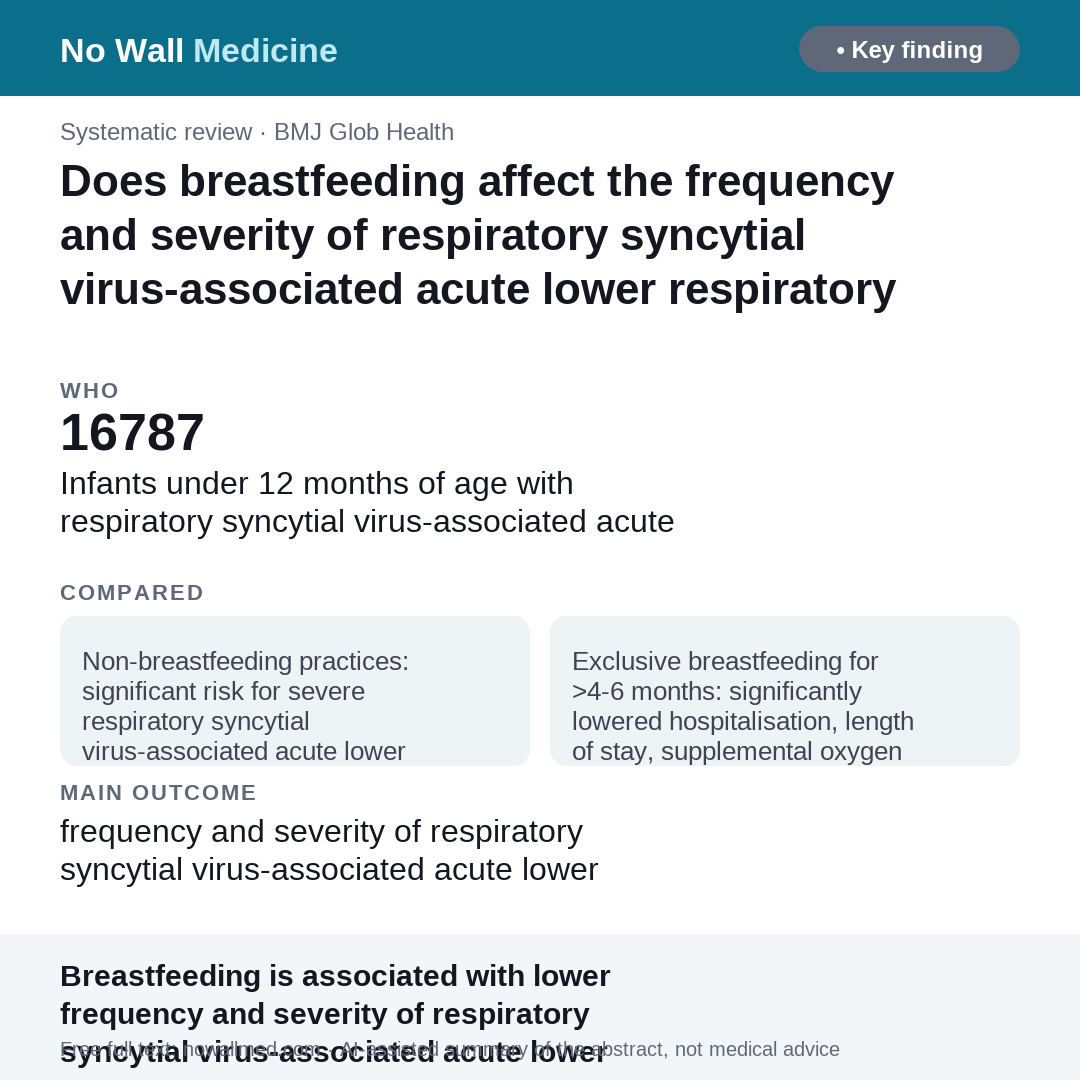
Impact of breastfeeding on the incidence and severity of respiratory syncytial virus (RSV)-associated acute lower respiratory infections in infants: a systematic review highlighting the global relevance of primary prevention
Systematic reviewBenefit found
Does breastfeeding affect the frequency and severity of respiratory syncytial virus-associated acute lower respiratory infections?
Who
16787
Infants under 12 months of age with respiratory syncytial virus-associated acute lower respiratory infections · 31 countries
Compared
Non-breastfeeding practices: significant risk for severe respiratory syncytial virus-associated acute lower respiratory infections and hospitalisation
Exclusive breastfeeding for >4-6 months: significantly lowered hospitalisation, length of stay, supplemental oxygen demand and admission to intensive care units
Main outcome
frequency and severity of respiratory syncytial virus-associated acute lower respiratory infections
Bottom line: Breastfeeding is associated with lower frequency and severity of respiratory syncytial virus-associated acute lower respiratory infections in infants.
Limitation: Based on observational studies of variable grades of evidence and risk-of-bias.
BMJ Glob Health · 2023-02-06Download image
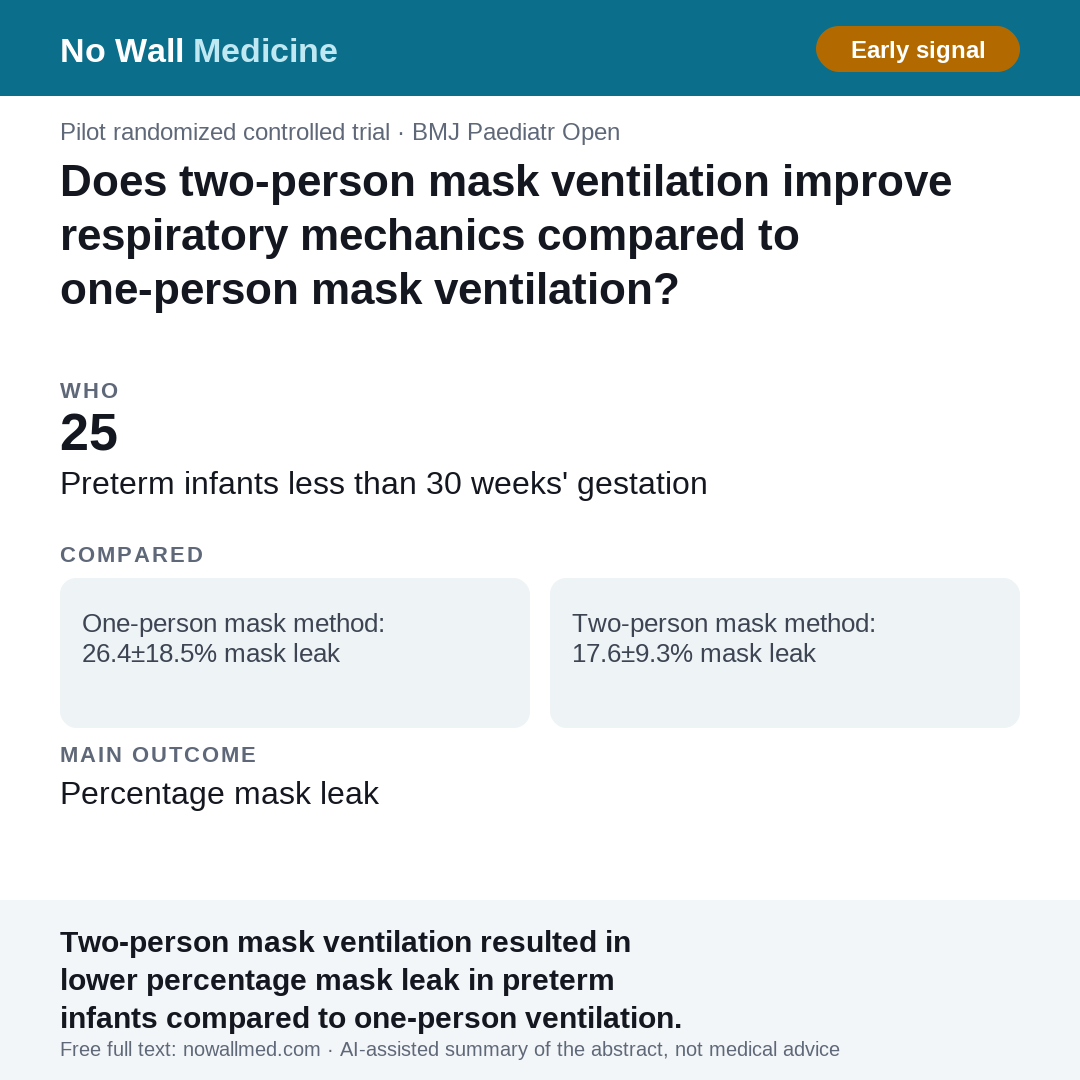
One-person versus two-person mask ventilation in preterm infants at birth: a pilot randomised controlled trial
Pilot randomized controlled trialBenefit found
Does two-person mask ventilation improve respiratory mechanics compared to one-person mask ventilation?
Who
25
Preterm infants less than 30 weeks' gestation
Compared
One-person mask method: 26.4±18.5% mask leak
Two-person mask method: 17.6±9.3% mask leak
Main outcome
Percentage mask leak
Bottom line: Two-person mask ventilation resulted in lower percentage mask leak in preterm infants compared to one-person ventilation.
BMJ Paediatr Open · 2023-02-06Download image
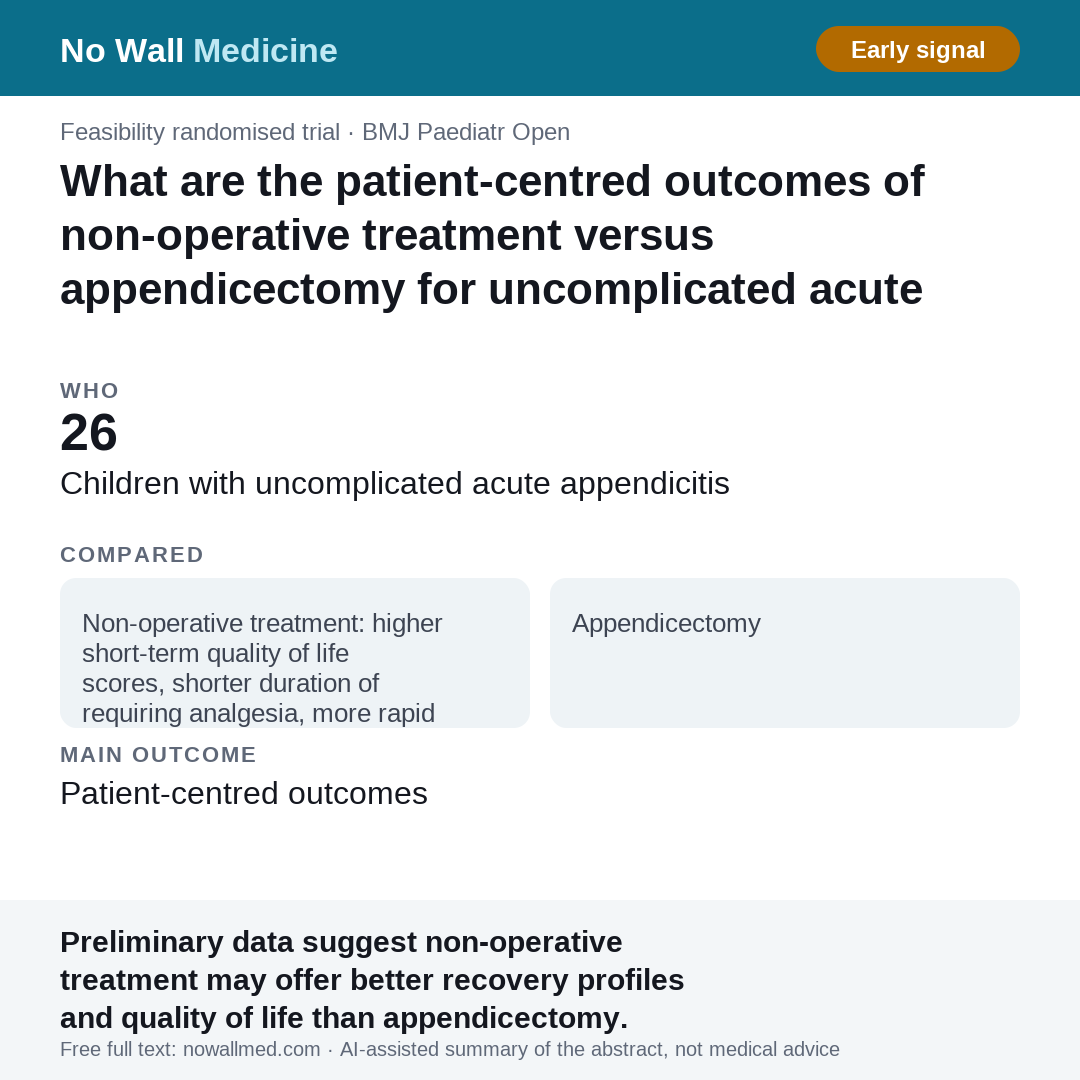
Patient-centred outcomes following non-operative treatment or appendicectomy for uncomplicated acute appendicitis in children
Feasibility randomised trialBenefit found
What are the patient-centred outcomes of non-operative treatment versus appendicectomy for uncomplicated acute appendicitis in children?
Who
26
Children with uncomplicated acute appendicitis
Compared
Non-operative treatment: higher short-term quality of life scores, shorter duration of requiring analgesia, more rapid return to normal activities and shorter parental absence from work
Appendicectomy
Main outcome
Patient-centred outcomes
Bottom line: Preliminary data suggest non-operative treatment may offer better recovery profiles and quality of life than appendicectomy.
BMJ Paediatr Open · 2023-02-06Download image
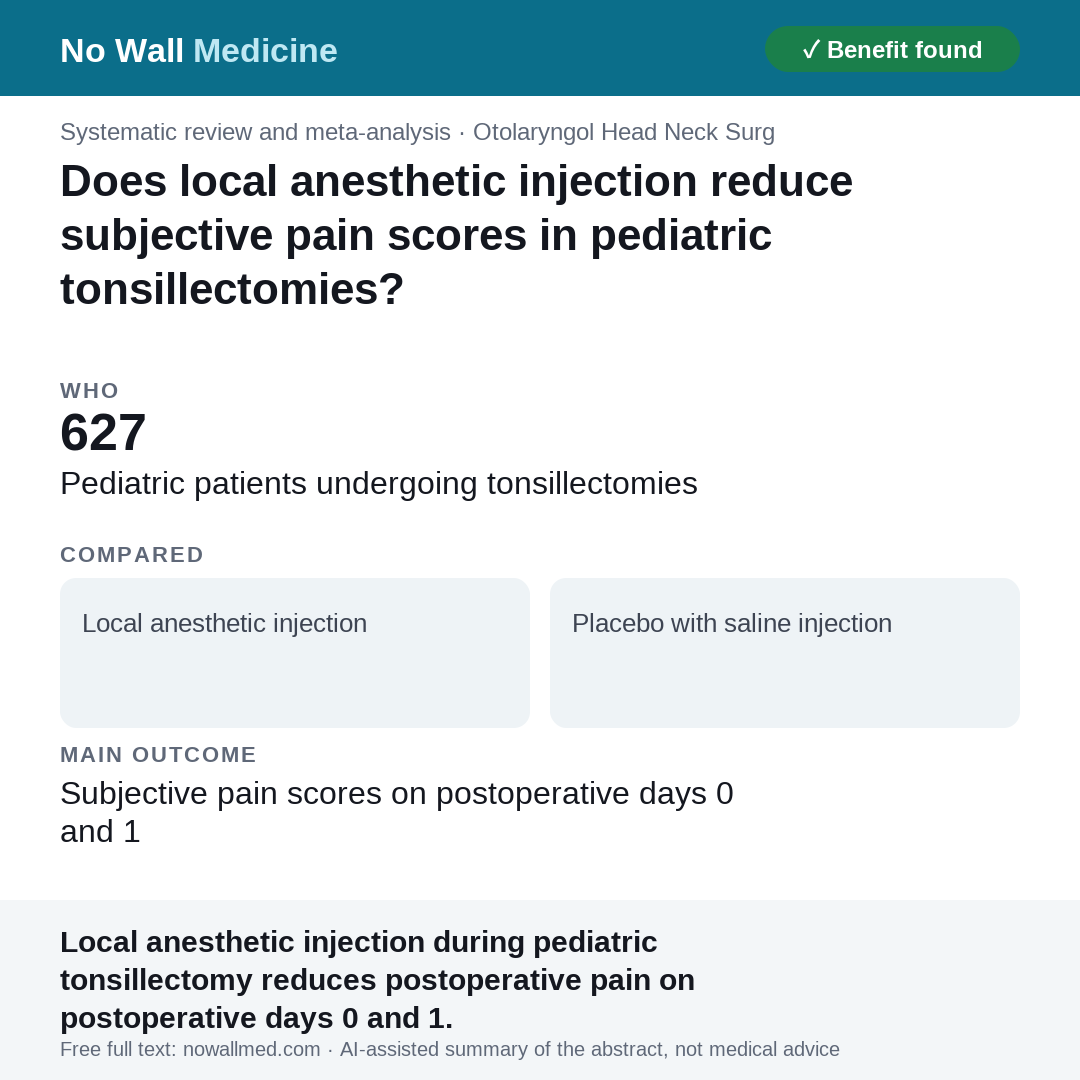
Effect of Local Anesthetic Injections on Subjective Pain Scales in Pediatric Tonsillectomies: A Meta-analysis
Systematic review and meta-analysisBenefit found
Does local anesthetic injection reduce subjective pain scores in pediatric tonsillectomies?
Who
627
Pediatric patients undergoing tonsillectomies
Compared
Local anesthetic injection
Placebo with saline injection
Main outcome
Subjective pain scores on postoperative days 0 and 1
Result: standard mean difference POD 0 -0.81 (95% CI, -1.16 to -0.46); POD 1 -1.13 (95% CI, -1.48 to -0.78)
Bottom line: Local anesthetic injection during pediatric tonsillectomy reduces postoperative pain on postoperative days 0 and 1.
Otolaryngol Head Neck Surg · 2023-02-05Download image
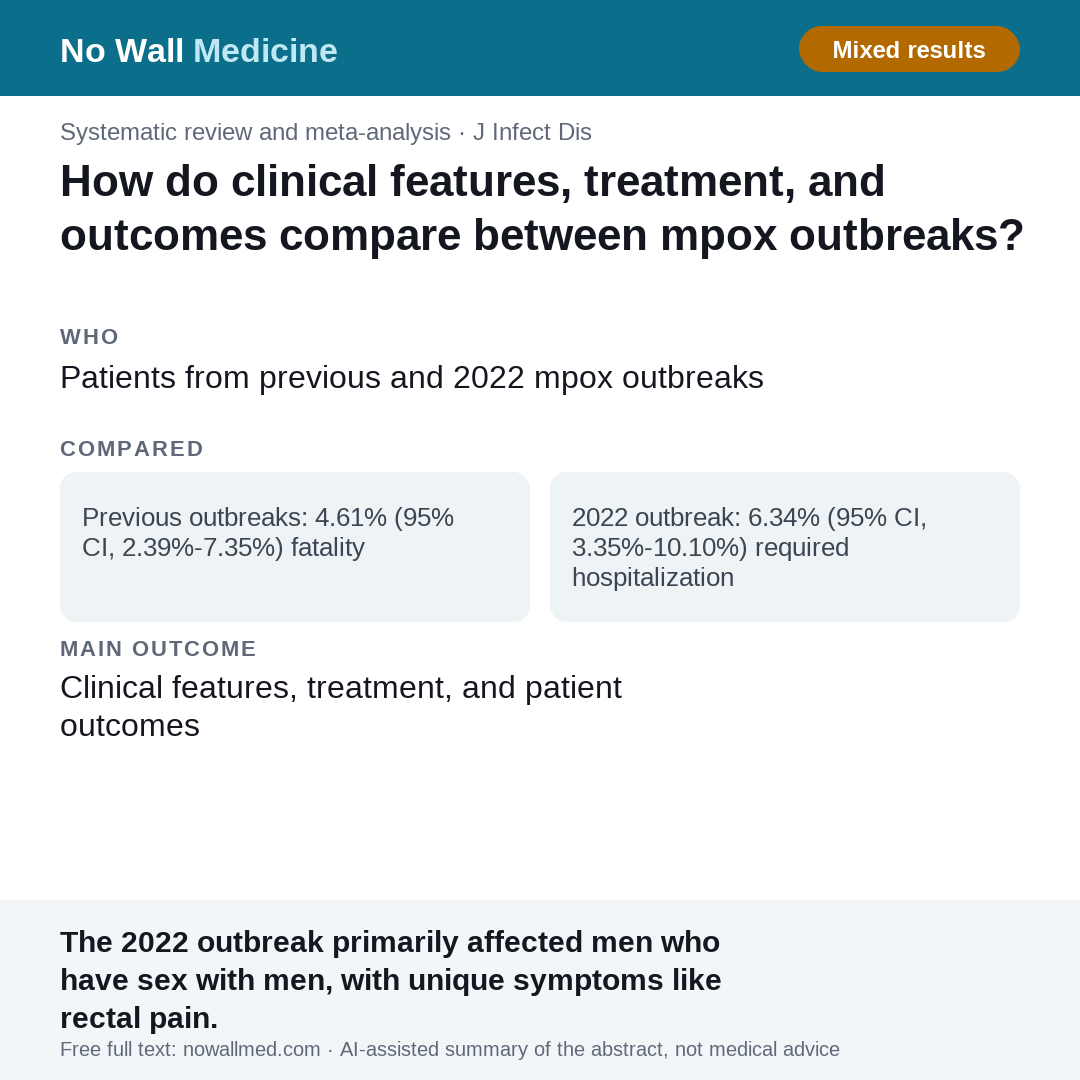
Clinical Features, Antiviral Treatment, and Patient Outcomes: A Systematic Review and Comparative Analysis of the Previous and the 2022 Mpox Outbreaks
Systematic review and meta-analysisMixed results
How do clinical features, treatment, and outcomes compare between mpox outbreaks?
Who
Patients from previous and 2022 mpox outbreaks
Compared
Previous outbreaks: 4.61% (95% CI, 2.39%-7.35%) fatality
2022 outbreak: 6.34% (95% CI, 3.35%-10.10%) required hospitalization
Main outcome
Clinical features, treatment, and patient outcomes
Bottom line: The 2022 outbreak primarily affected men who have sex with men, with unique symptoms like rectal pain.
Limitation: The efficacy of antiviral treatment, specifically tecovirimat, remains inconclusive.
J Infect Dis · 2023-02-04Download image
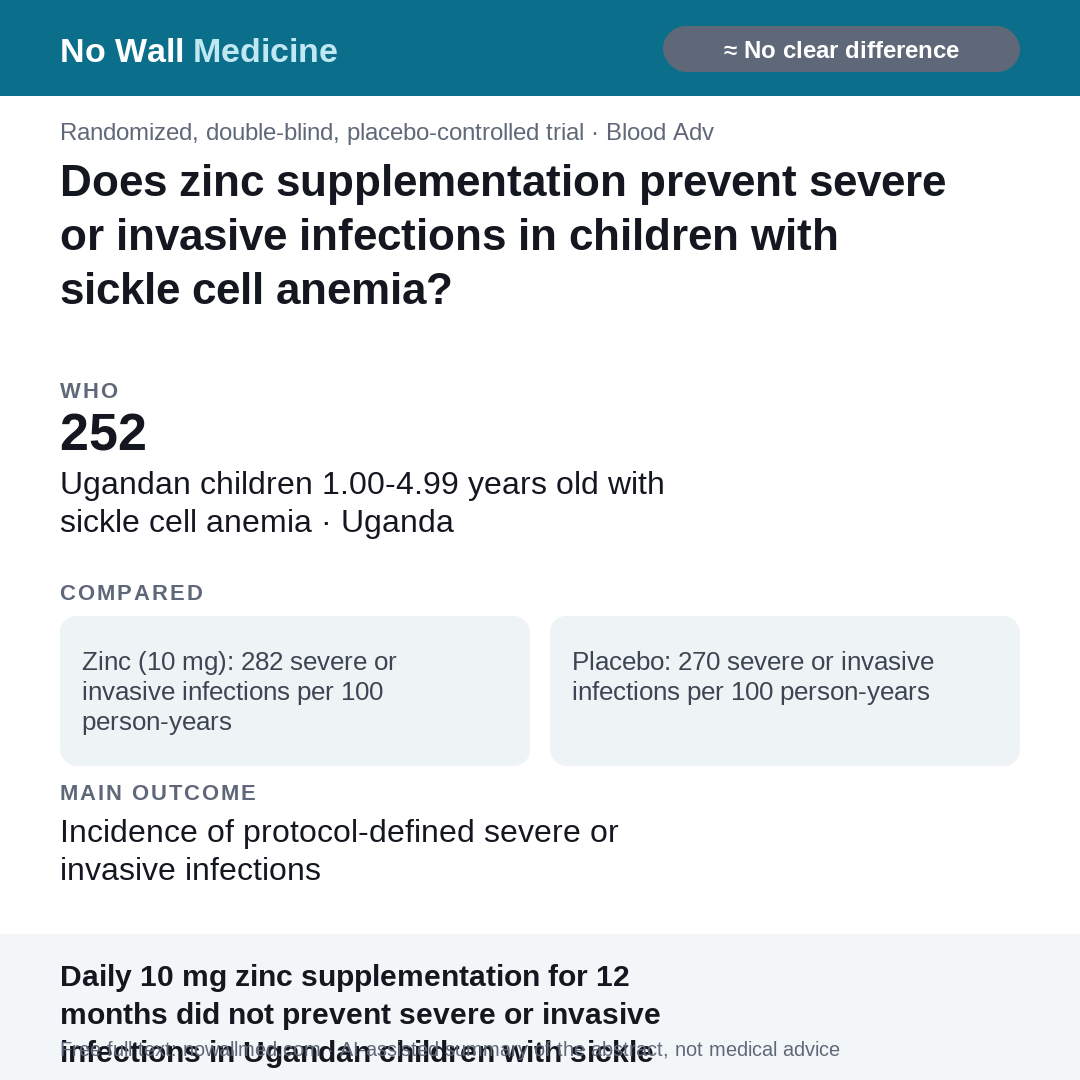
Zinc for infection prevention in children with sickle cell anemia: a randomized double-blind placebo-controlled trial
Randomized, double-blind, placebo-controlled trialNo clear difference
Does zinc supplementation prevent severe or invasive infections in children with sickle cell anemia?
Who
252
Ugandan children 1.00-4.99 years old with sickle cell anemia · Uganda
Compared
Zinc (10 mg): 282 severe or invasive infections per 100 person-years
Placebo: 270 severe or invasive infections per 100 person-years
Main outcome
Incidence of protocol-defined severe or invasive infections
Result: incidence rate ratio 1.04 (95% CI 0.81 to 1.32)
Bottom line: Daily 10 mg zinc supplementation for 12 months did not prevent severe or invasive infections in Ugandan children with sickle cell anemia.
Blood Adv · 2023-02-04Download image
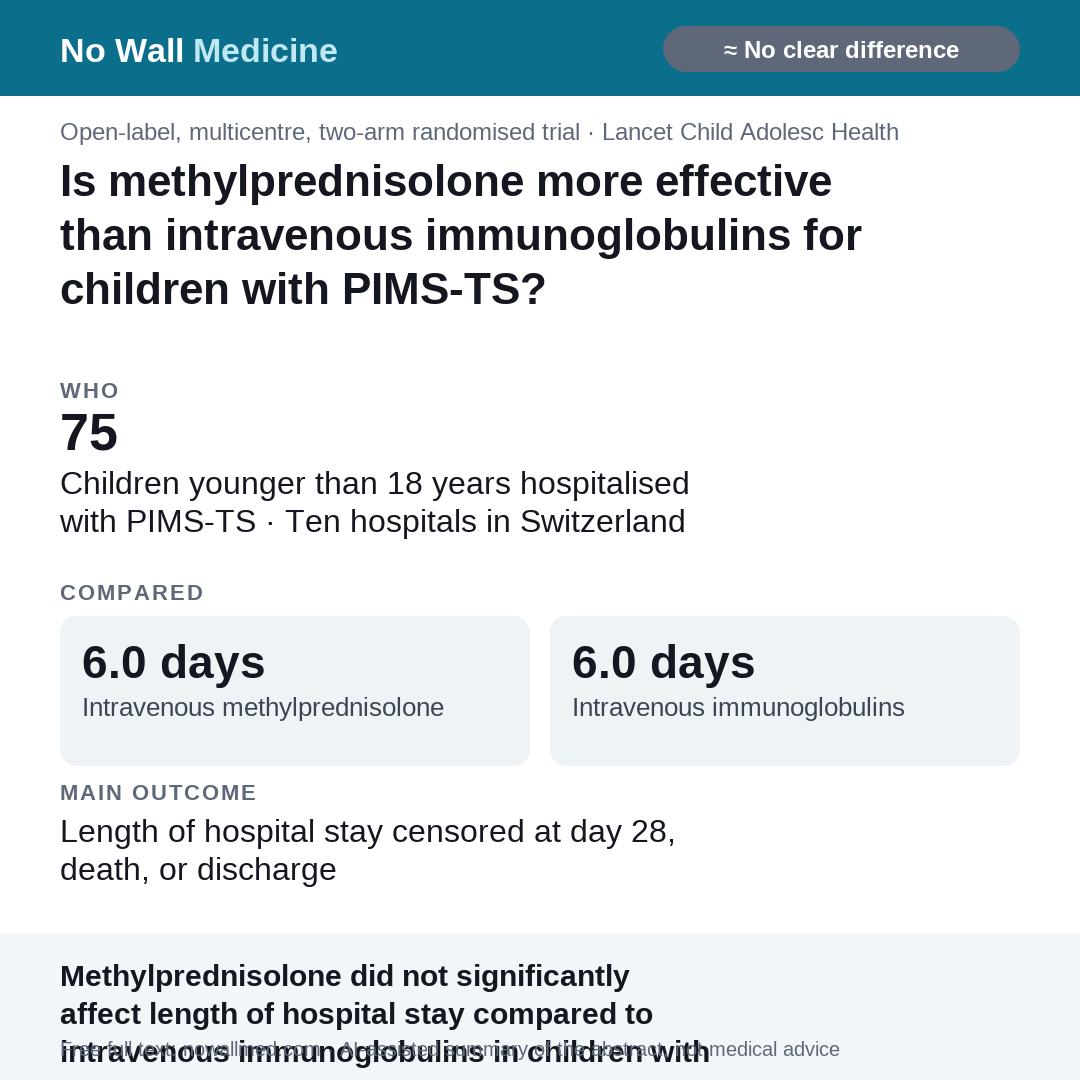
Methylprednisolone versus intravenous immunoglobulins in children with paediatric inflammatory multisystem syndrome temporally associated with SARS-CoV-2 (PIMS-TS): an open-label, multicentre, randomised trial
Open-label, multicentre, two-arm randomised trialNo clear difference
Is methylprednisolone more effective than intravenous immunoglobulins for children with PIMS-TS?
Who
75
Children younger than 18 years hospitalised with PIMS-TS · Ten hospitals in Switzerland
Compared
6.0 daysIntravenous methylprednisolone (IQR 4.0-8.0)
6.0 daysIntravenous immunoglobulins (IQR 5.0-8.8)
Main outcome
Length of hospital stay censored at day 28, death, or discharge
Result: estimated effect size -0·037 of the log10 transformed times, 95% CI -0·13 to 0·065
Bottom line: Methylprednisolone did not significantly affect length of hospital stay compared to intravenous immunoglobulins in children with PIMS-TS.
Funded by: NOMIS Foundation, Vontobel Foundation, and Gaydoul Foundation
Lancet Child Adolesc Health · 2023-02-03Download image
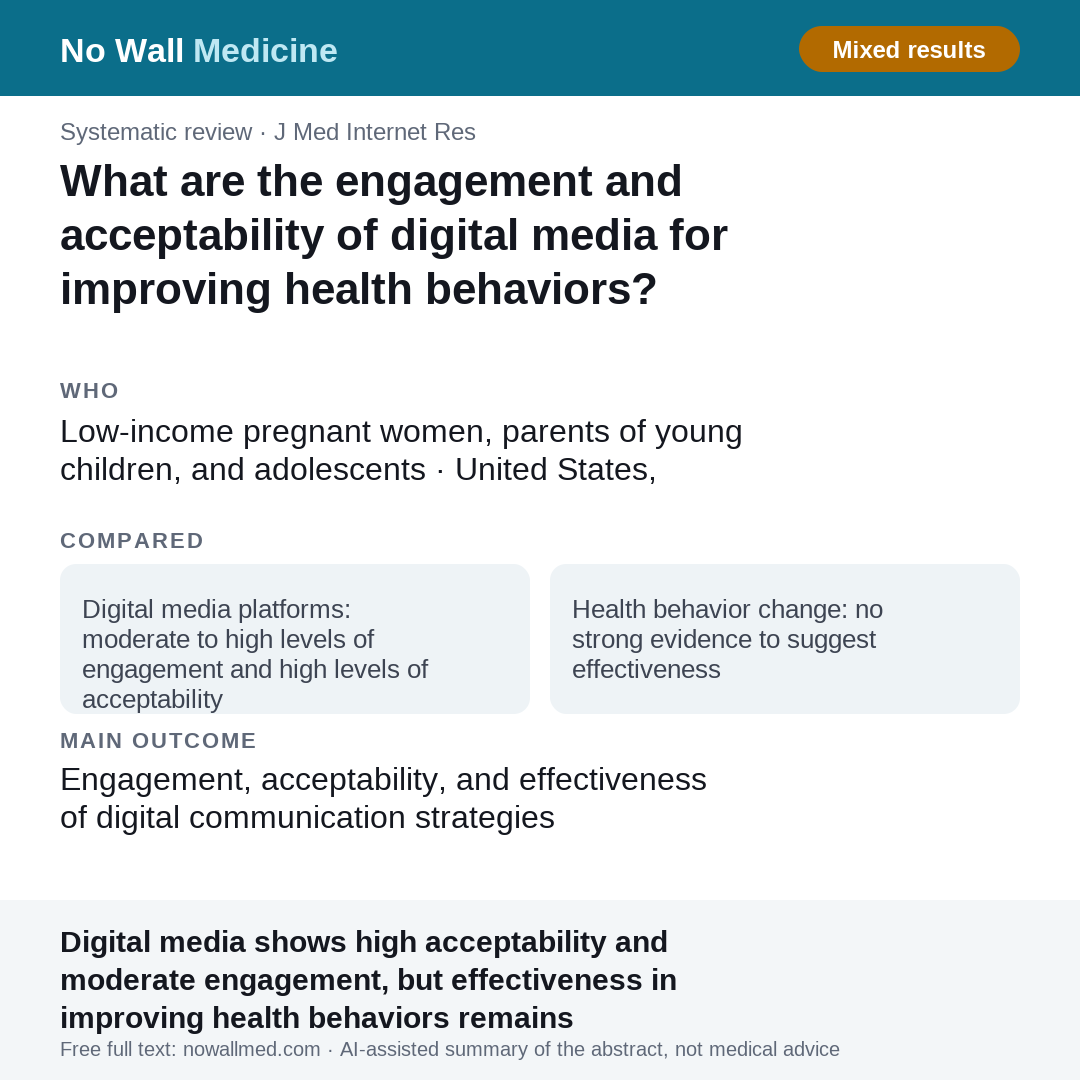
Engagement With and Acceptability of Digital Media Platforms for Use in Improving Health Behaviors Among Vulnerable Families: Systematic Review
Systematic reviewMixed results
What are the engagement and acceptability of digital media for improving health behaviors?
Who
Low-income pregnant women, parents of young children, and adolescents · United States, United Kingdom, and Australia
Compared
Digital media platforms: moderate to high levels of engagement and high levels of acceptability
Health behavior change: no strong evidence to suggest effectiveness
Main outcome
Engagement, acceptability, and effectiveness of digital communication strategies
Bottom line: Digital media shows high acceptability and moderate engagement, but effectiveness in improving health behaviors remains inconclusive.
Limitation: Additional rigorous studies with larger sample sizes are required.
J Med Internet Res · 2023-02-03Download image
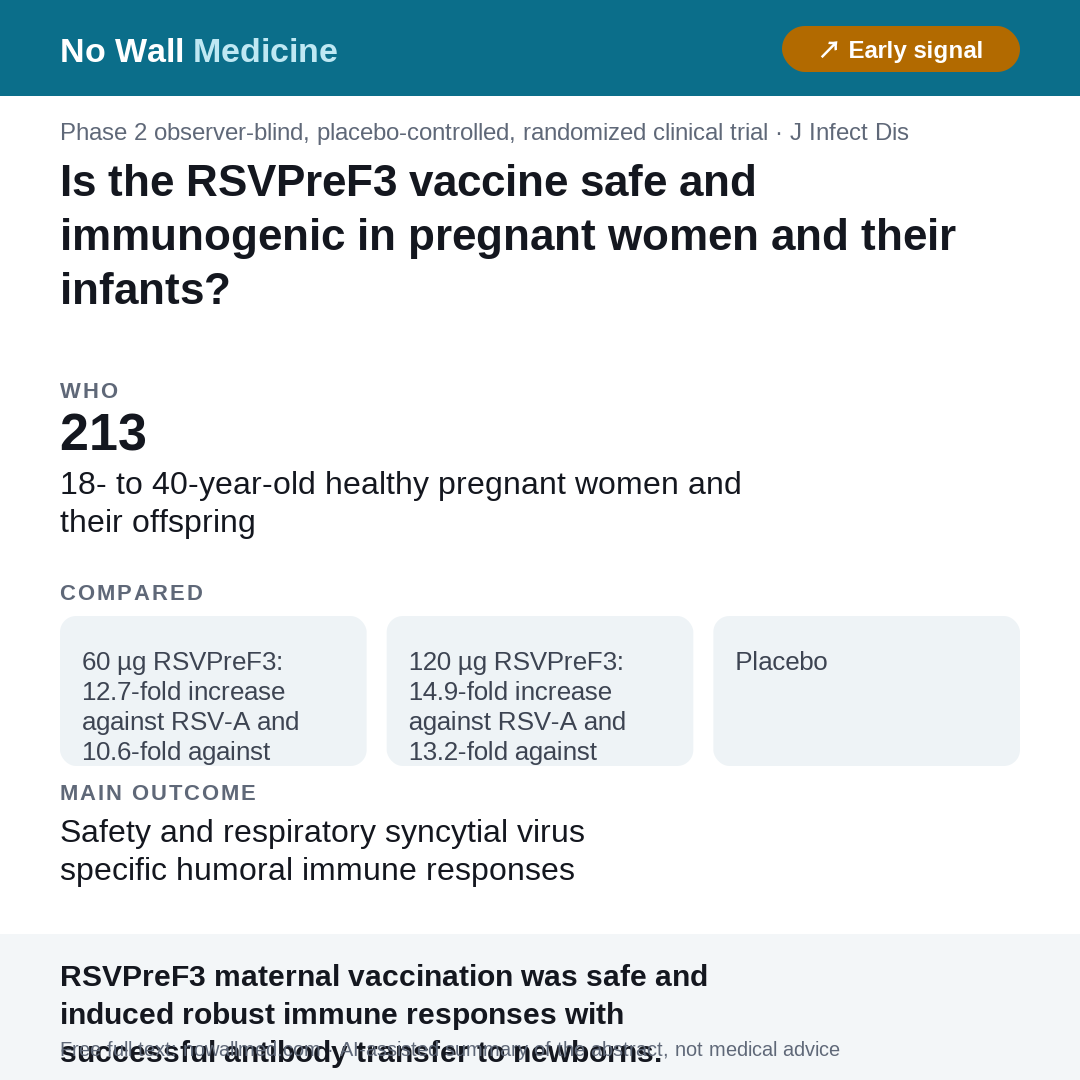
Safety and Immunogenicity of an Investigational Respiratory Syncytial Virus Vaccine (RSVPreF3) in Mothers and Their Infants: A Phase 2 Randomized Trial
Phase 2 observer-blind, placebo-controlled, randomized clinical trialBenefit found
Is the RSVPreF3 vaccine safe and immunogenic in pregnant women and their infants?
Who
213
18- to 40-year-old healthy pregnant women and their offspring
Compared
60 µg RSVPreF3: 12.7-fold increase against RSV-A and 10.6-fold against RSV-B
120 µg RSVPreF3: 14.9-fold increase against RSV-A and 13.2-fold against RSV-B
Placebo
Main outcome
Safety and respiratory syncytial virus specific humoral immune responses
Bottom line: RSVPreF3 maternal vaccination was safe and induced robust immune responses with successful antibody transfer to newborns.
J Infect Dis · 2023-02-02Download image
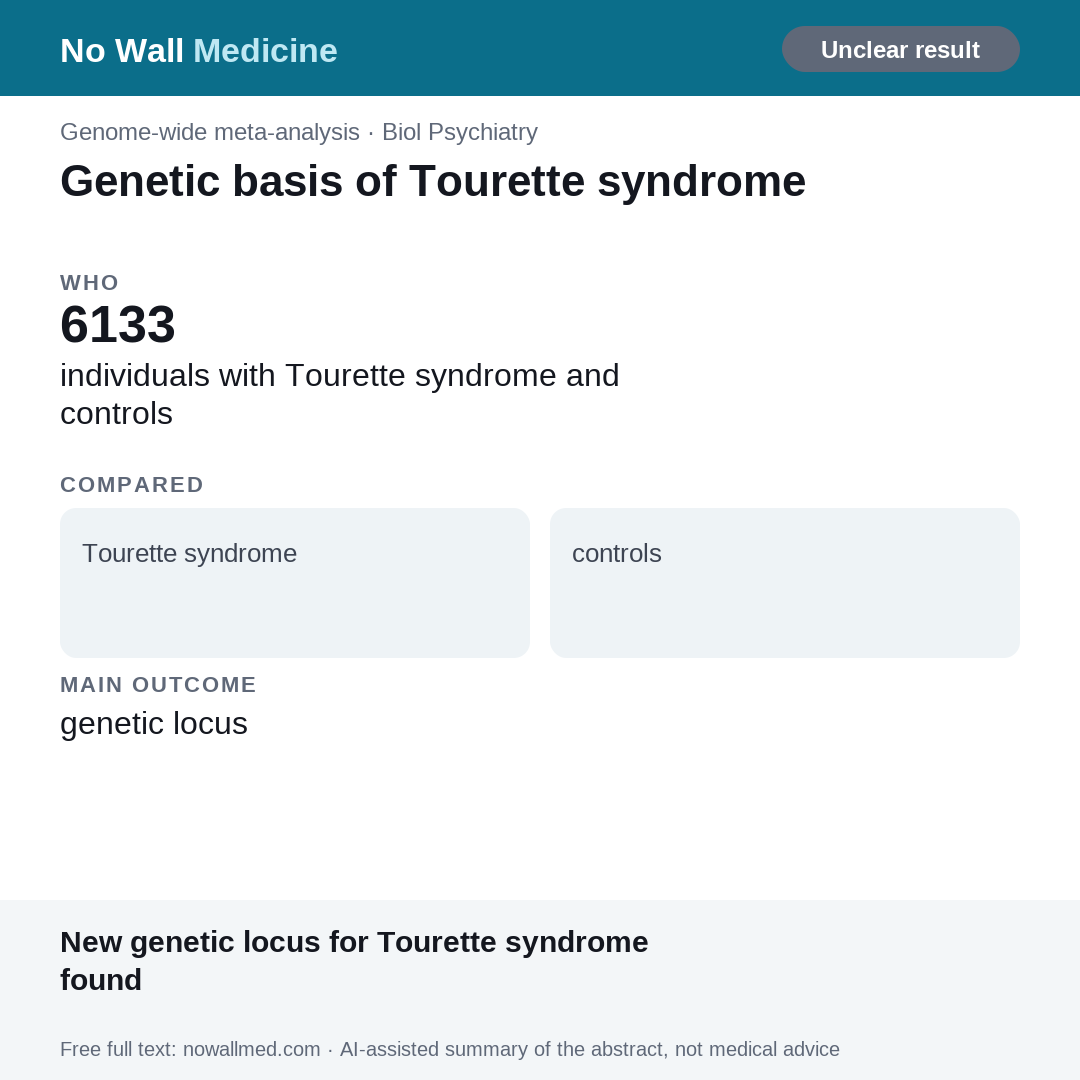
Genome-Wide Association Study Points to Novel Locus for Gilles de la Tourette Syndrome
Genome-wide meta-analysisUnclear result
Genetic basis of Tourette syndrome
Who
6133
individuals with Tourette syndrome and controls
Compared
Tourette syndrome
controls
Main outcome
genetic locus
Bottom line: New genetic locus for Tourette syndrome found
Biol Psychiatry · 2023-02-02Download image