Visual abstracts
New randomized trials and meta-analyses from leading journals at a glance: who was studied, what was compared, and what was found. Every paper is free to read in full.
All specialtiesCardiology 3146Oncology 2678Gastroenterology & Hepatology 1228Infectious Disease 2097Neurology 1256Psychiatry & Mental Health 1485Pulmonology 1323Critical Care 889Endocrinology & Diabetes 1585Pediatrics 1882Surgery 1677Orthopedics & Sports Medicine 561Neurosurgery 374Cardiothoracic & Vascular Surgery 366Plastic & Reconstructive Surgery 451Nephrology 661Rheumatology 492Hematology 700Dermatology 379Ophthalmology 350Obstetrics & Gynecology 1043Public & Global Health 593Radiology & Imaging 444Anesthesiology 647Urology 536ENT (Otolaryngology) 343Emergency Medicine 347Allergy & Immunology 198Geriatrics 661Family Medicine & Primary Care 359Medical Genetics & Genomics 379Pathology & Laboratory Medicine 104Physical Medicine & Rehabilitation 498Palliative Care 277Nutrition 886Digital Health & AI 1507General Medicine 220
Tenecteplase for Acute Ischemic Stroke at 4.5 to 24 Hours: A Meta-Analysis of Randomized Controlled Trials
Meta-analysis of 4 randomized controlled trialsBenefit found
Does tenecteplase benefit acute ischemic stroke patients treated within 4.5 to 24 hours?
Who
1278
Adults with acute ischemic stroke within 4.5 to 24 hours · Multicenter
Compared
Tenecteplase
Standard care or placebo
Main outcome
Excellent functional outcome at 90 days
Result: odds ratio 1.34 (95% CI 1.06-1.71)
Bottom line: Tenecteplase improves excellent functional outcomes and recanalization without increasing hemorrhage or mortality risks in the extended window.
Stroke · 2025-10-13Download image

Malignant Transformation of Oral Leukoplakia and Proliferative Verrucous Leukoplakia and Its Biomarker Predictors: A Systematic Umbrella Review
Umbrella review of systematic reviews and meta-analysesMixed results
What are the malignant transformation rates and predictive biomarkers for oral leukoplakia?
Who
125,000
Patients with oral leukoplakia and proliferative verrucous leukoplakia
Compared
48%Proliferative verrucous leukoplakia
6%Oral leukoplakia
Main outcome
Malignant transformation prevalence and predictive biomarkers
Bottom line: Proliferative verrucous leukoplakia has higher transformation rates than oral leukoplakia, with DNA aneuploidy as a promising biomarker.
Head Neck · 2025-10-13Download image

Optimizing glycemic variability in type 2 diabetes using simple dietary and culinary recommendations to modulate starch digestibility: a randomized controlled trial
Randomized, parallel, single-blind, controlled trialBenefit found
Does a high slowly digestible starch diet improve glycemic variability in type 2 diabetes?
Who
51
Patients with type 2 diabetes with suboptimal control
Compared
High slowly digestible starch diet: β = 30.4 [95% confidence interval (CI): 12.4, 48.5]
Low slowly digestible starch diet
Main outcome
Mean amplitude of glycemic excursions
Result: β = 30.4 [95% confidence interval (CI): 12.4, 48.5]
Bottom line: A high slowly digestible starch diet significantly lowers mean amplitude of glycemic excursions in patients with type 2 diabetes.
Am J Clin Nutr · 2025-10-13Download image

Prenatal and preschool micronutrient supplementation and behavioral outcomes in school-aged children in Nepal-a cohort study
Cohort follow-up study of two randomized trialsBenefit found
Does prenatal and preschool micronutrient supplementation affect behavioral outcomes in school-aged children?
Who
1255
School-aged children between 7 and 9 years old in rural Nepal · Rural Nepal
Compared
Prenatal iron-folic acid: lower oppositionality/hyperactivity and inattention scores
Prenatal iron-folic acid with zinc: reversed the positive effect seen with iron-folic acid
Prenatal multiple micronutrients: lower oppositionality and/or hyperactivity score
Preschool supplementation groups: reduced child inattention when assessed by parents
Main outcome
Attention-deficit hyperactivity disorder-related behaviors
Bottom line: Early life micronutrient supplementation shows potential benefit for child-related behavior outcomes in a South Asian setting.
Am J Clin Nutr · 2025-10-13Download image

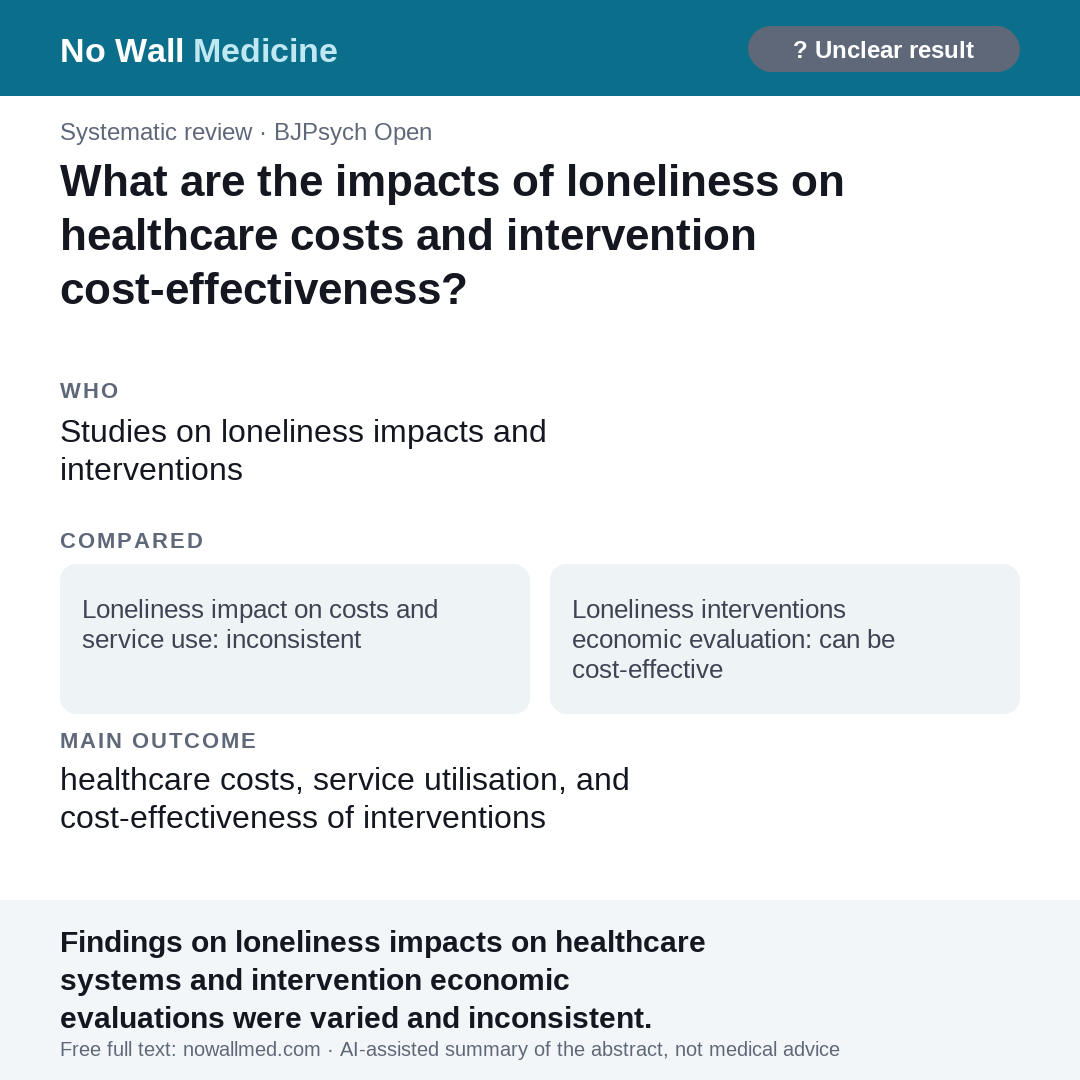
The impact of loneliness on healthcare costs and service utilisation and the cost-effectiveness of loneliness interventions: systematic review
Systematic reviewUnclear result
What are the impacts of loneliness on healthcare costs and intervention cost-effectiveness?
Who
53
Studies on loneliness impacts and interventions
Compared
Loneliness impact on costs and service use: inconsistent
Loneliness interventions economic evaluation: can be cost-effective
Main outcome
healthcare costs, service utilisation, and cost-effectiveness of interventions
Bottom line: Findings on loneliness impacts on healthcare systems and intervention economic evaluations were varied and inconsistent.
BJPsych Open · 2025-10-13Download image
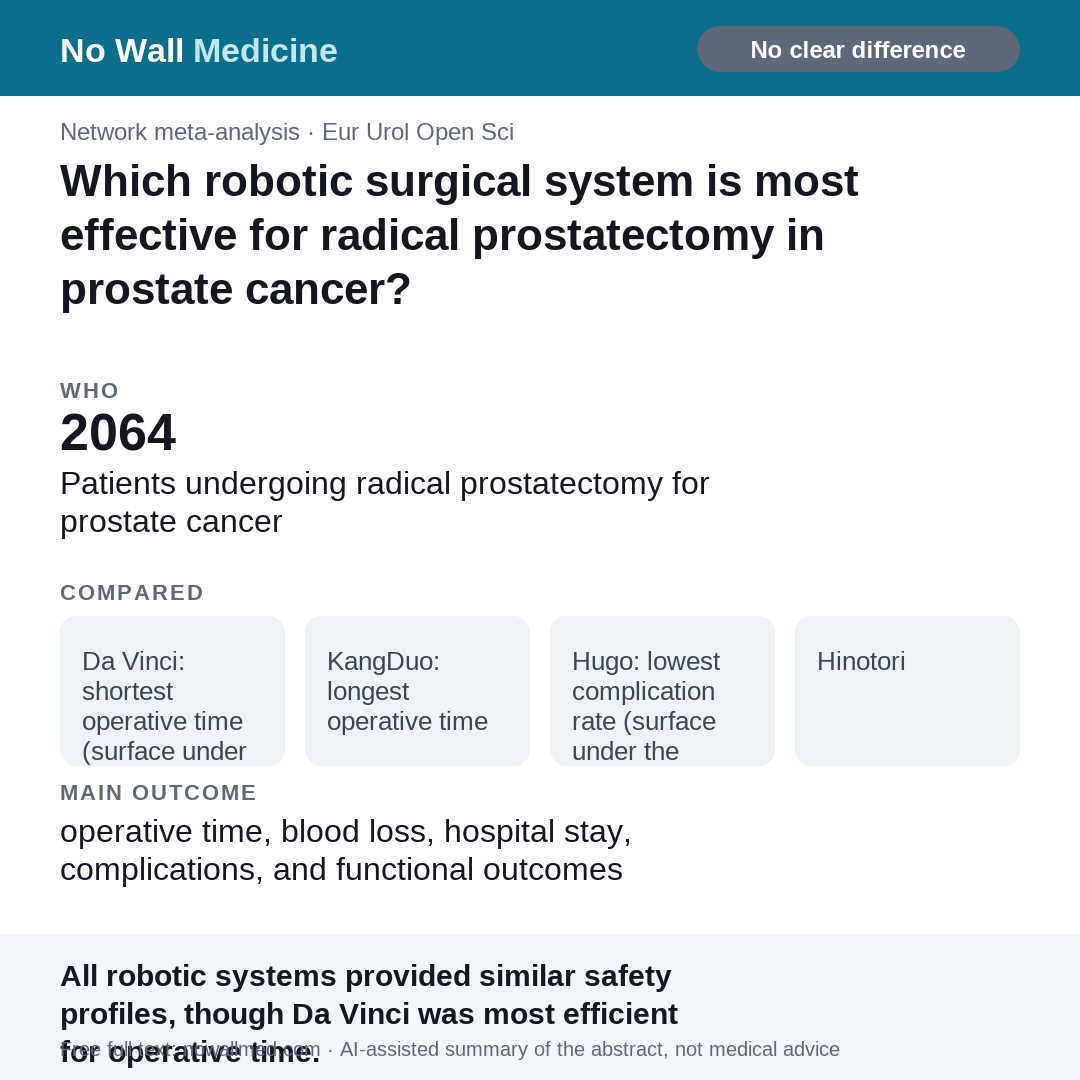
Application Effect of Different Robotic Surgery Systems in Radical Prostatectomy: A Comparative Study Based on a Network Meta-analysis
Network meta-analysisNo clear difference
Which robotic surgical system is most effective for radical prostatectomy in prostate cancer?
Who
2064
Patients undergoing radical prostatectomy for prostate cancer
Compared
Da Vinci: shortest operative time (surface under the cumulative ranking curve score: 90.7)
KangDuo: longest operative time
Hugo: lowest complication rate (surface under the cumulative ranking curve score: 84.3)
Hinotori
Main outcome
operative time, blood loss, hospital stay, complications, and functional outcomes
Bottom line: All robotic systems provided similar safety profiles, though Da Vinci was most efficient for operative time.
Eur Urol Open Sci · 2025-10-13Download image
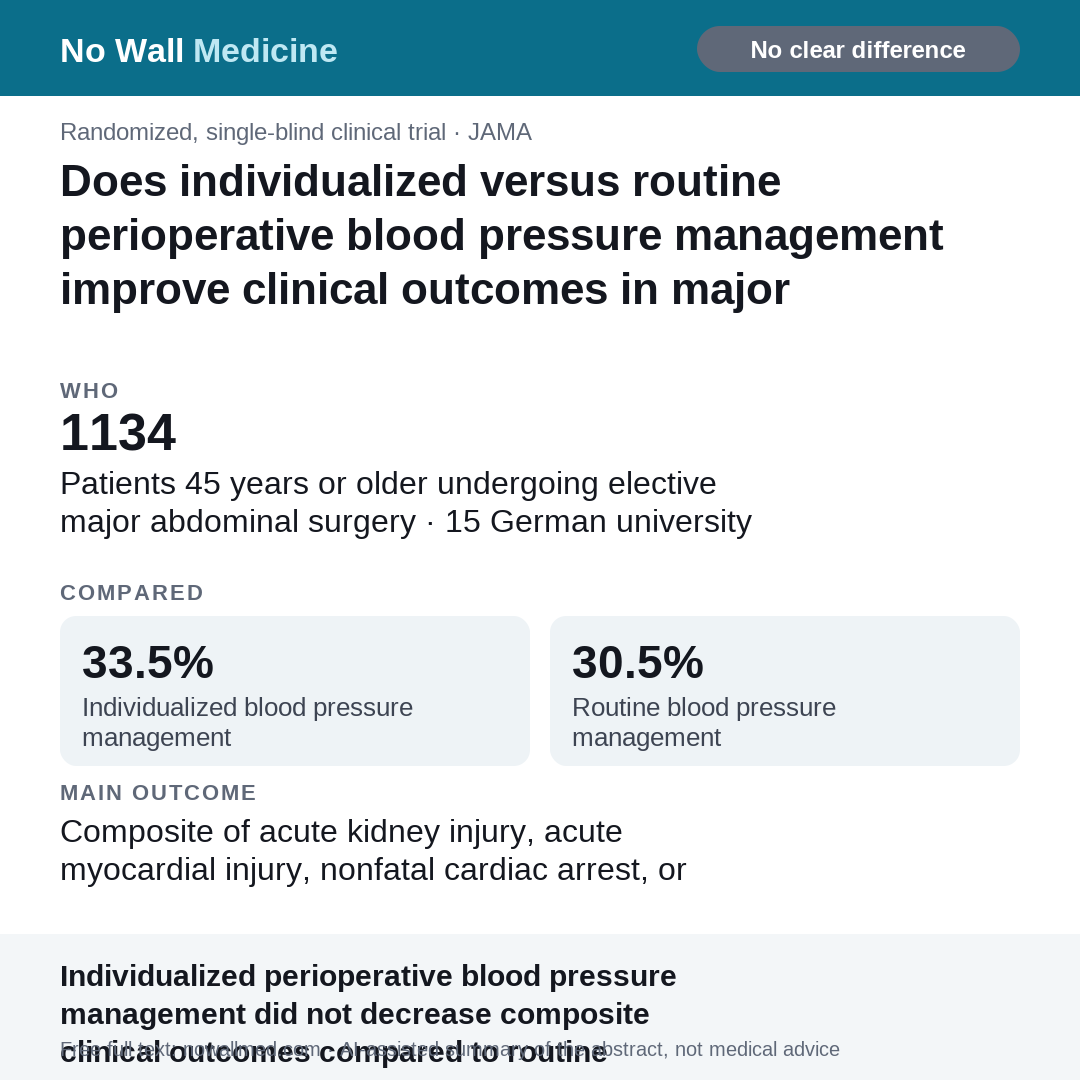
Individualized Perioperative Blood Pressure Management in Patients Undergoing Major Abdominal Surgery: The IMPROVE-multi Randomized Clinical Trial
Randomized, single-blind clinical trialNo clear difference
Does individualized versus routine perioperative blood pressure management improve clinical outcomes in major abdominal surgery?
Who
1134
Patients 45 years or older undergoing elective major abdominal surgery · 15 German university hospitals
Compared
33.5%Individualized blood pressure management (190/567)
30.5%Routine blood pressure management (173/567)
Main outcome
Composite of acute kidney injury, acute myocardial injury, nonfatal cardiac arrest, or death
Result: relative risk 1.10 (95% CI 0.93-1.30)
Bottom line: Individualized perioperative blood pressure management did not decrease composite clinical outcomes compared to routine management in high-risk abdominal surgery patients.
JAMA · 2025-10-12Download image
Proactive vs Reactive Treatment of Hypotension During Surgery: The PRETREAT Randomized Clinical Trial
Randomized clinical trialNo clear difference
Does proactive blood pressure management reduce postoperative functional disability in noncardiac surgery?
Who
3247
Adults undergoing elective noncardiac surgery · 2 tertiary hospitals in the Netherlands
Compared
17.7Proactive blood pressure management (20.1)
18.2Usual management (20.5)
Main outcome
Functional disability at 6 months using WHODAS 2.0
Result: mean difference -0.5 (95% credible interval, -1.9 to 0.9)
Bottom line: Proactive blood pressure management stratified by hypotension risk did not improve functional disability at 6 months compared to usual care.
JAMA · 2025-10-12Download image

Catheter Ablation vs Sotalol or Amiodarone for Ventricular Tachycardia: A Substudy of the VANISH2 Trial
Randomized trial substudyMixed results
Is catheter ablation better than sotalol or amiodarone for ventricular tachycardia?
Who
416
Patients with prior myocardial infarction and ventricular tachycardia · Multicenter
Compared
46%Ablation (sotalol stratum)
59%Sotalol (sotalol stratum)
55%Ablation (amiodarone stratum)
61%Antiarrhythmic drugs (amiodarone stratum)
Main outcome
Composite of death, appropriate shock, ventricular tachycardia storm, or treated sustained ventricular tachycardia
Result: hazard ratio 0.64 (95% CI 0.43-0.94) for sotalol; hazard ratio 0.86 (95% CI 0.61-1.22) for amiodarone
Bottom line: Ablation reduced primary endpoint risk in sotalol-eligible patients but showed comparable efficacy to amiodarone with more adverse events.
JACC · 2025-10-11Download image

Antiviral efficacy of oral ensitrelvir versus oral ritonavir-boosted nirmatrelvir in COVID-19 (PLATCOV): an open-label, phase 2, randomised, controlled, adaptive trial
Open-label, phase 2, randomised, controlled, adaptive trialNo clear difference
Is oral ensitrelvir effective compared to ritonavir-boosted nirmatrelvir for COVID-19 viral clearance?
Who
604
Low-risk adult outpatients aged 18-60 years with early symptomatic COVID-19 · Hospital acute respiratory infection clinics in Thailand and Laos
Compared
Oral ensitrelvir: 5.9 h
Ritonavir-boosted nirmatrelvir: 5.2 h
No study drug: 11.6 h
Main outcome
Oropharyngeal SARS-CoV-2 viral clearance rate
Result: 16% slower (5-25) than ritonavir-boosted nirmatrelvir
Bottom line: Ensitrelvir and nirmatrelvir both accelerate viral clearance, with ensitrelvir being an effective alternative to nirmatrelvir.
Funded by: Wellcome Trust through the COVID-19 Therapeutics Accelerator
Lancet Infect Dis · 2025-10-11Download image

Effects of empagliflozin on conventional and exploratory acute and chronic kidney outcomes: an individual participant-level meta-analysis
Individual participant-level meta-analysisBenefit found
What are the effects of empagliflozin on acute and chronic kidney outcomes?
Who
23340
Participants in four large placebo-controlled trials
Compared
Empagliflozin
Placebo
Main outcome
Acute and chronic kidney outcomes
Result: hazard ratio 0.80 (95% CI 0.72-0.88) for acute kidney injury marker
Bottom line: Empagliflozin reduces risk of acute and chronic kidney outcomes regardless of diabetes, heart failure, or kidney disease severity.
Lancet Diabetes Endocrinol · 2025-10-11Download image

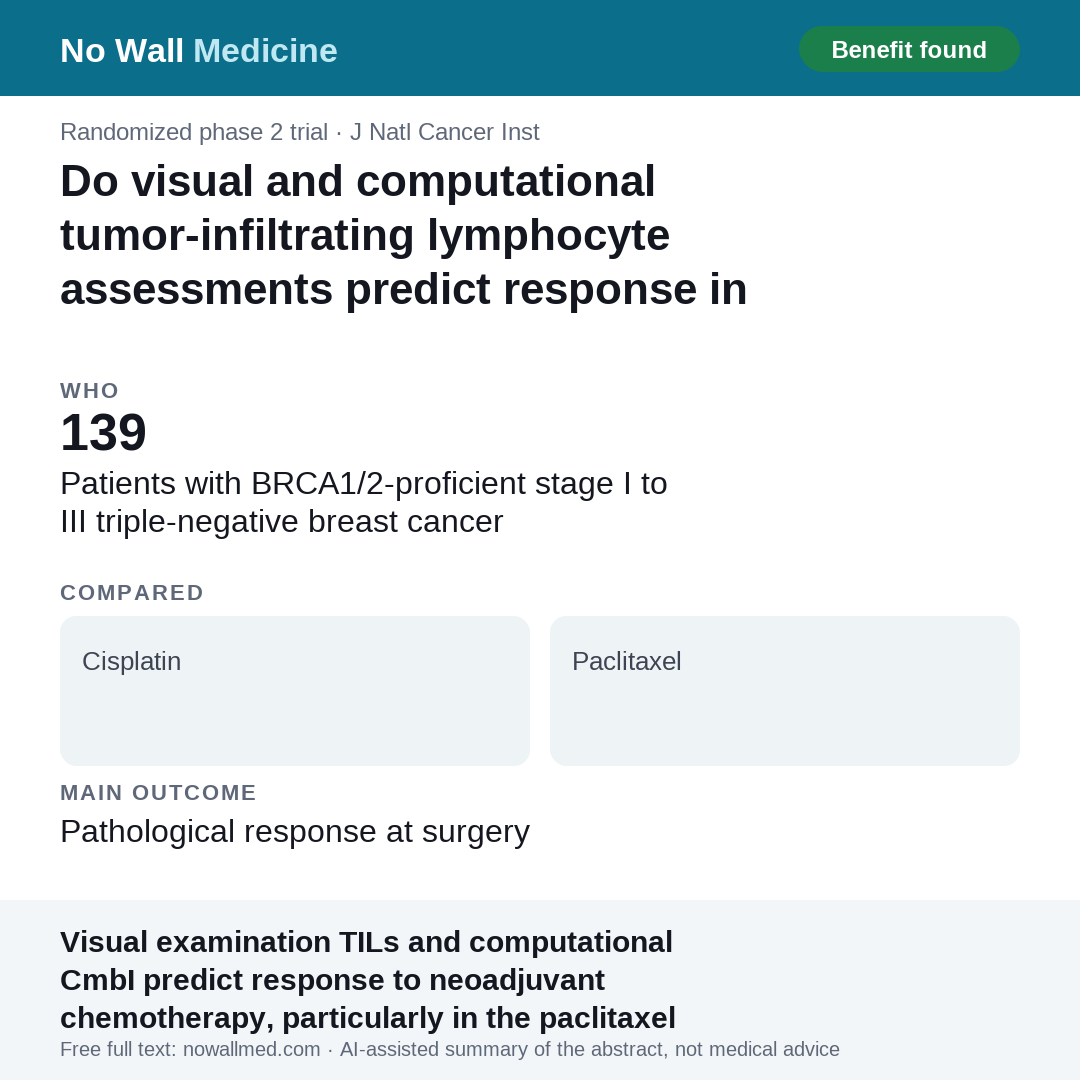
Prognostic value of visually and computationally assessed tumor-infiltrating lymphocytes in early-stage triple-negative breast cancer (TBCRC-030)
Randomized phase 2 trialBenefit found
Do visual and computational tumor-infiltrating lymphocyte assessments predict response in triple-negative breast cancer?
Who
139
Patients with BRCA1/2-proficient stage I to III triple-negative breast cancer
Compared
Cisplatin
Paclitaxel
Main outcome
Pathological response at surgery
Result: visual examination TILs odds ratio 1.86 (95% CI 1.24 to 2.87)
Bottom line: Visual examination TILs and computational CmbI predict response to neoadjuvant chemotherapy, particularly in the paclitaxel arm.
J Natl Cancer Inst · 2025-10-11Download image
Revisiting the Value of Admission Cardiotocography in Term Pregnancies: An Updated Systematic Review and Meta-Analysis
Systematic review and meta-analysis of 5 randomized controlled trialsNo clear difference
Does admission cardiotocography compared with intermittent auscultation improve maternal and neonatal outcomes?
Who
16341
Low-risk, term pregnancies with singleton fetuses
Compared
Admission cardiotocography: RR 1.23 (95% CI: 1.05-1.44) for continuous electronic fetal heart rate monitoring
Intermittent auscultation
Main outcome
maternal and neonatal outcomes
Result: no significant difference for caesarean section (RR 1.09, 95% CI: 0.86-1.37)
Bottom line: Routine admission cardiotocography in low-risk term pregnancies shows no improvement in maternal or neonatal outcomes compared to intermittent auscultation.
Limitation: Evidence certainty was rated moderate for most outcomes.
BJOG · 2025-10-11Download image

Discriminatory Characteristics of Responders and Nonresponders of Patients With Sepsis to Neuromuscular Electrical Stimulation: A Subanalysis of a Randomized Controlled Double-Blinded Trial
Subanalysis of a randomized, controlled, double-blind trialMixed results
What characteristics distinguish responders and nonresponders to neuromuscular electrical stimulation in sepsis?
Who
15
Adult patients diagnosed with sepsis or septic shock · Intensive care unit at a private hospital
Compared
Responder group: De Morton Mobility Index increased from 19±20 points to 33±30 points
Nonresponder group: Rectus femoris thickness reduced by more than 10%
Main outcome
Ultrasonographic muscle characteristics and physical function variables
Bottom line: Surgical ICU Optimal Mobilization Score and De Morton Mobility Index characterize responders to neuromuscular electrical stimulation.
Arch Phys Med Rehabil · 2025-10-11Download image

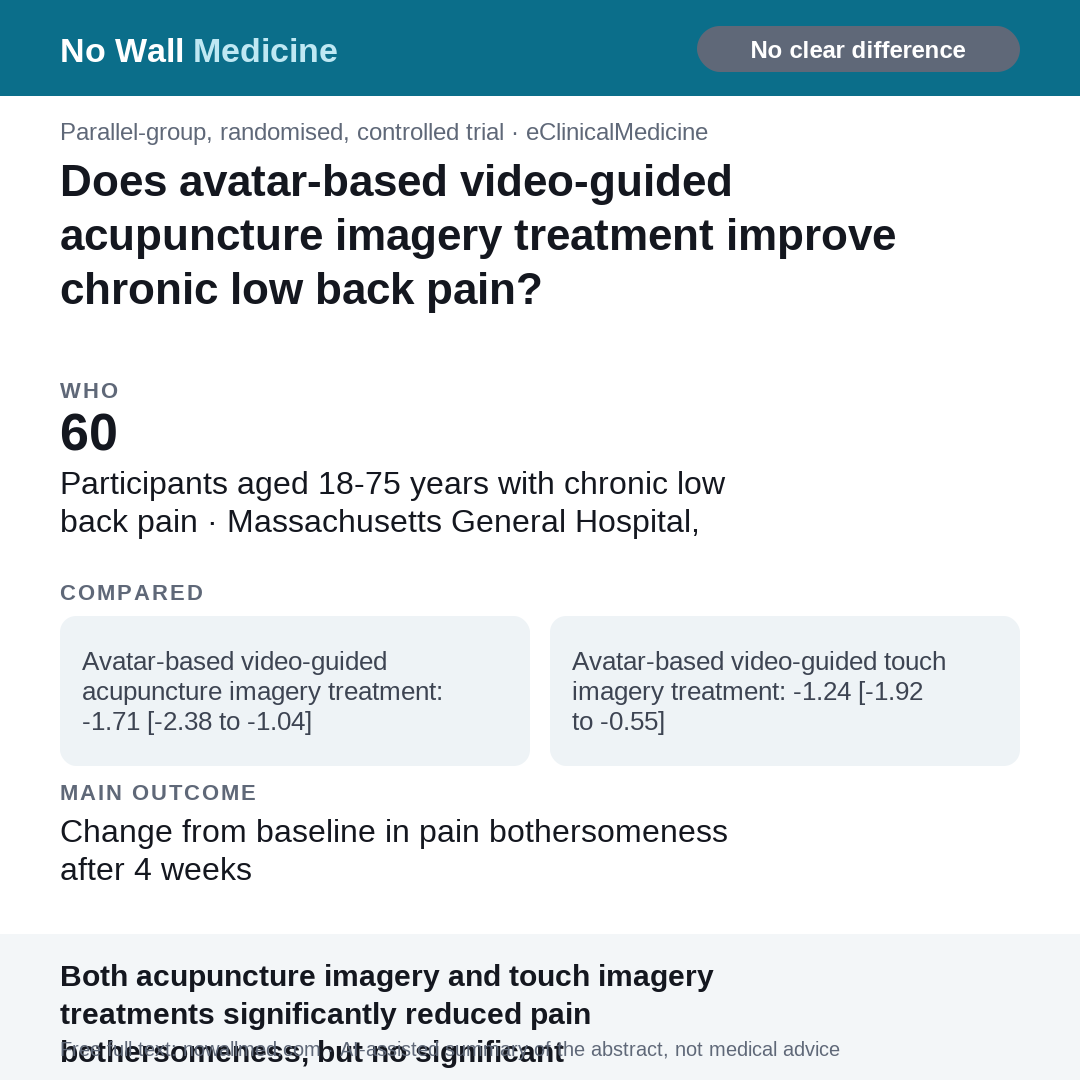
Novel avatar-based video-guided acupuncture imagery treatment for chronic low back pain: a randomised controlled trial in the USA
Parallel-group, randomised, controlled trialNo clear difference
Does avatar-based video-guided acupuncture imagery treatment improve chronic low back pain?
Who
60
Participants aged 18-75 years with chronic low back pain · Massachusetts General Hospital, USA
Compared
Avatar-based video-guided acupuncture imagery treatment: -1.71 [-2.38 to -1.04]
Avatar-based video-guided touch imagery treatment: -1.24 [-1.92 to -0.55]
Main outcome
Change from baseline in pain bothersomeness after 4 weeks
Result: -0.47 [-1.43 to 0.49]
Bottom line: Both acupuncture imagery and touch imagery treatments significantly reduced pain bothersomeness, but no significant difference was found between them.
Limitation: Short duration, limited treatment frequency, and small sample size may restrict generalisability.
Funded by: National Institutes of Health/National Center for Complementary and Integrative Health
eClinicalMedicine · 2025-10-10Download image
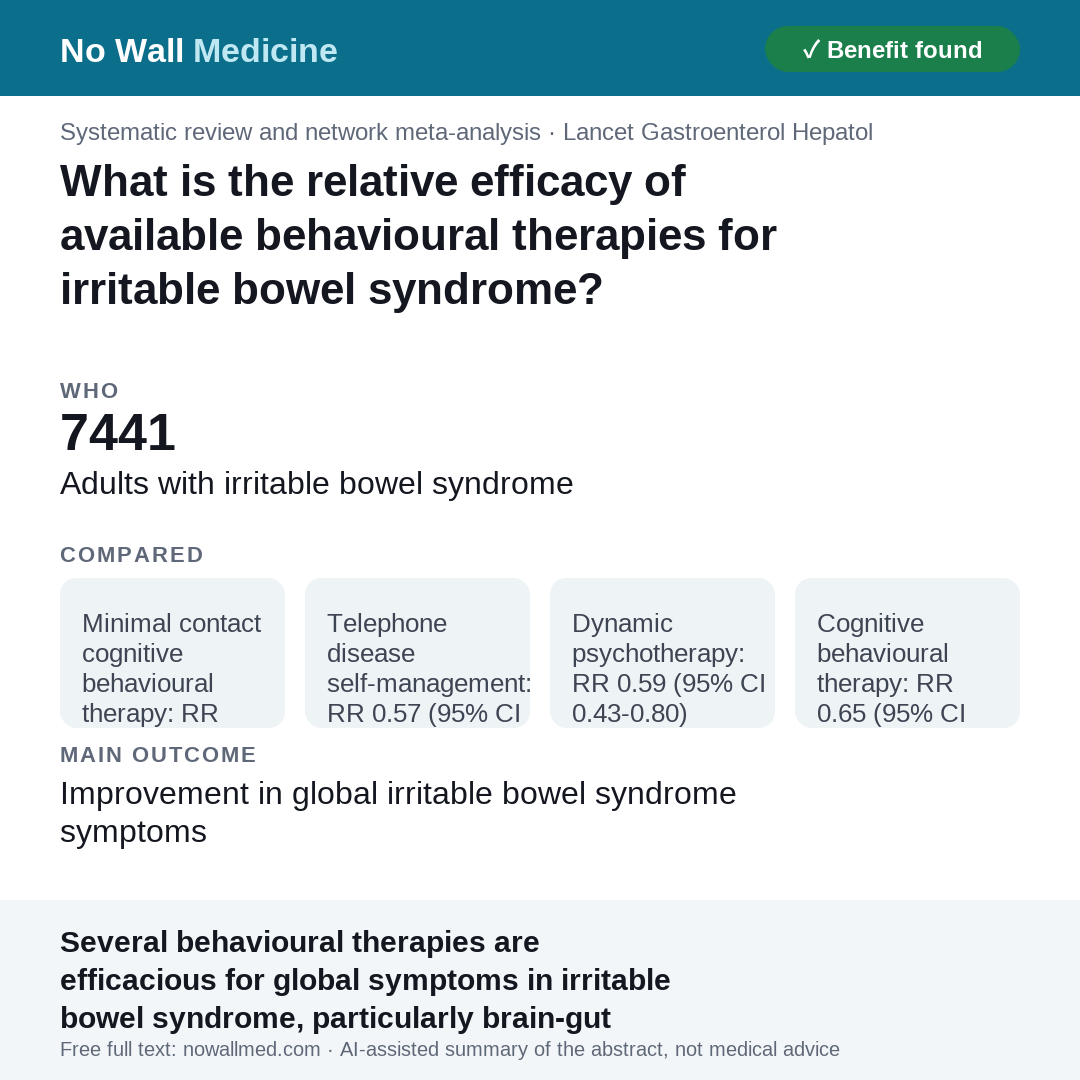
Efficacy of behavioural therapies for irritable bowel syndrome: a systematic review and network meta-analysis
Systematic review and network meta-analysisBenefit found
What is the relative efficacy of available behavioural therapies for irritable bowel syndrome?
Who
7441
Adults with irritable bowel syndrome
Compared
Minimal contact cognitive behavioural therapy: RR 0.55 (95% CI 0.39-0.76)
Telephone disease self-management: RR 0.57 (95% CI 0.41-0.80)
Dynamic psychotherapy: RR 0.59 (95% CI 0.43-0.80)
Cognitive behavioural therapy: RR 0.65 (95% CI 0.53-0.80)
Main outcome
Improvement in global irritable bowel syndrome symptoms
Bottom line: Several behavioural therapies are efficacious for global symptoms in irritable bowel syndrome, particularly brain-gut behaviour therapies.
Limitation: Evidence certainty was low or very low due to publication bias and risk of bias in trials.
Lancet Gastroenterol Hepatol · 2025-10-10Download image
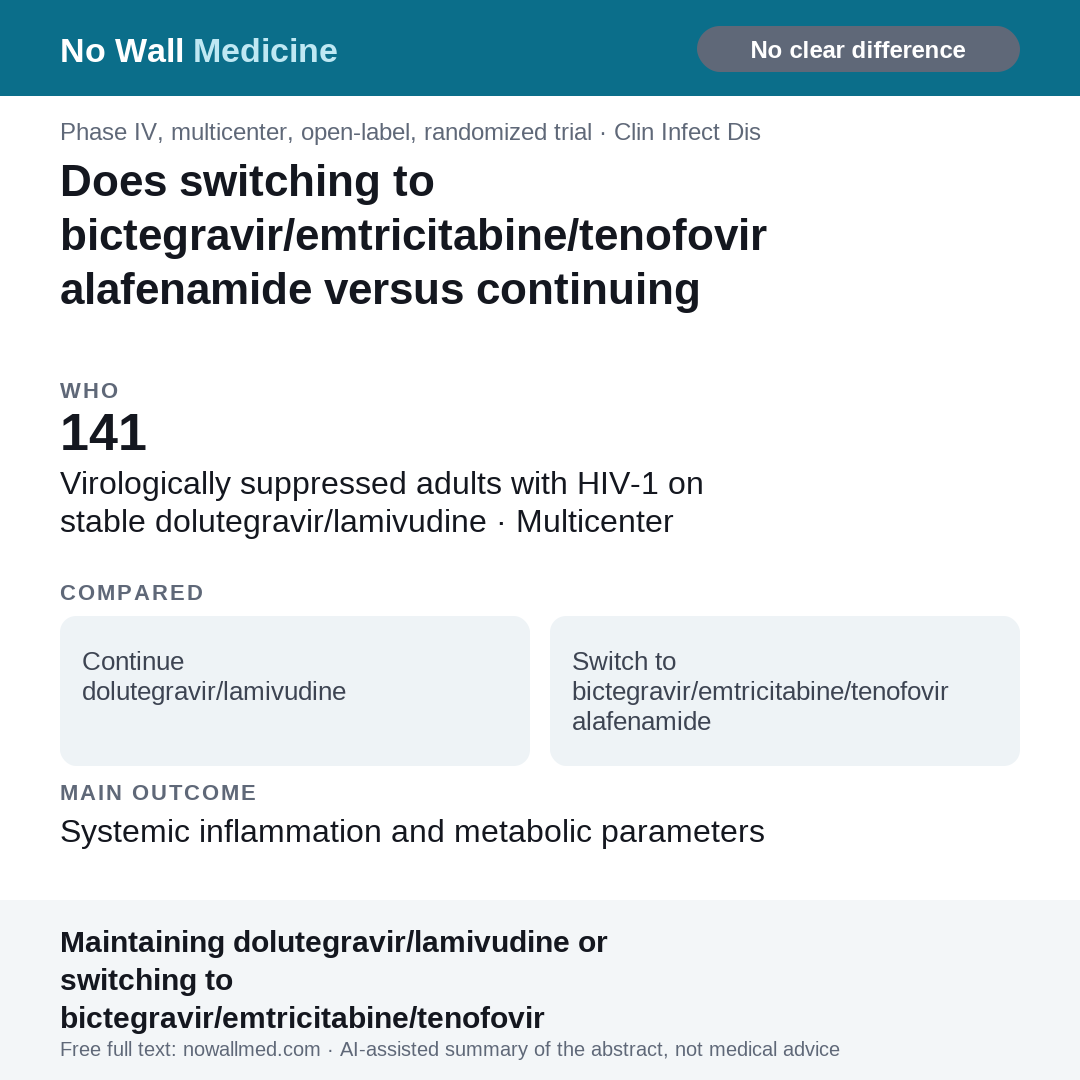
Comparable Inflammatory and Metabolic Outcomes After Switching to Bictegravir/Emtricitabine/Tenofovir Alafenamide Versus Continuing Dolutegravir/Lamivudine in Virologically Suppressed Adults With HIV (INSTINCT/GESIDA10918 Study)
Phase IV, multicenter, open-label, randomized trialNo clear difference
Does switching to bictegravir/emtricitabine/tenofovir alafenamide versus continuing dolutegravir/lamivudine affect inflammation and metabolism?
Who
141
Virologically suppressed adults with HIV-1 on stable dolutegravir/lamivudine · Multicenter
Compared
Continue dolutegravir/lamivudine
Switch to bictegravir/emtricitabine/tenofovir alafenamide
Main outcome
Systemic inflammation and metabolic parameters
Bottom line: Maintaining dolutegravir/lamivudine or switching to bictegravir/emtricitabine/tenofovir alafenamide showed equivalent inflammatory, metabolic, and immunologic profiles.
Clin Infect Dis · 2025-10-10Download image
From risk to chronicity: genetic and neuroimaging insights into the evolving patterns of spontaneous brain activity in schizophrenia
Neuroimaging meta-analysisBenefit found
How does spontaneous brain activity and genetic association change across schizophrenia stages?
Who
High-risk, first-episode, and chronic schizophrenia stages
Compared
High-risk stage: reduced brain activity in the right median cingulate and paracingulate gyri
First-episode stage: increased activity in the right putamen and decreased activity in the left gyrus rectus and right postcentral gyrus
Chronic stage: heightened activity in the right inferior frontal gyrus and reduced activity in the superior occipital gyrus and right postcentral gyrus
Main outcome
Spontaneous brain activity alterations and associated genes
Bottom line: Brain activity alterations and 199 consistent genes across schizophrenia stages may serve as universal biomarkers and therapeutic targets.
Psychol Med · 2025-10-10Download image

Effect of neuromuscular blocking agents on tracheal intubation quality in paediatric patients: a systematic review using network meta-analysis and meta-regression
Systematic review and network meta-analysisBenefit found
How do different neuromuscular blocking agents affect tracheal intubation quality in paediatric patients?
Who
8008
Healthy paediatric participants aged 0 to 12 years
Compared
Non depolarising neuromuscular blocking agents: excellent (OR: 2.97 [1.82-5.10]) and acceptable (OR: 2.29 [1.14-4.39]) intubation conditions
Intubation without neuromuscular blocking agents
Main outcome
excellent and acceptable tracheal intubation conditions
Bottom line: Non depolarising neuromuscular blocking agents enhance excellent and acceptable intubation conditions in paediatric patients.
Br J Anaesth · 2025-10-10Download image

Machine Learning to Predict Extranodal Extension in Head and Neck Squamous Cell Carcinoma: A Systematic Review and Meta-Analysis
Systematic review and meta-analysisBenefit found
Can machine learning algorithms diagnose extranodal extension in head and neck squamous cell carcinoma?
Who
1407
Patients with head and neck squamous cell carcinoma
Compared
Machine learning algorithms: pooled AUC of 0.92 (95% CI [0.915, 0.923])
Radiologists: pooled AUCs of 0.65 (95% CI [0.645-0.654])
Main outcome
Diagnostic accuracy of detecting extranodal extension using computed tomography imaging
Result: pooled AUC of 0.92 (95% CI [0.915, 0.923])
Bottom line: Machine learning algorithms demonstrate superior diagnostic performance in predicting extranodal extension compared to radiologists.
Laryngoscope · 2025-10-10Download image