Visual abstracts
New randomized trials and meta-analyses from leading journals at a glance: who was studied, what was compared, and what was found. Every paper is free to read in full.
All specialtiesCardiology 3474Oncology 2990Gastroenterology & Hepatology 1365Infectious Disease 2415Neurology 1405Psychiatry & Mental Health 1646Pulmonology 1484Critical Care 998Endocrinology & Diabetes 1766Pediatrics 2112Surgery 1845Orthopedics & Sports Medicine 645Neurosurgery 414Cardiothoracic & Vascular Surgery 411Plastic & Reconstructive Surgery 487Nephrology 752Rheumatology 556Hematology 783Dermatology 429Ophthalmology 384Obstetrics & Gynecology 1194Public & Global Health 666Radiology & Imaging 490Anesthesiology 710Urology 578ENT (Otolaryngology) 380Emergency Medicine 377Allergy & Immunology 215Geriatrics 732Family Medicine & Primary Care 405Medical Genetics & Genomics 442Pathology & Laboratory Medicine 112Physical Medicine & Rehabilitation 544Palliative Care 320Nutrition 1040Digital Health & AI 1637General Medicine 250
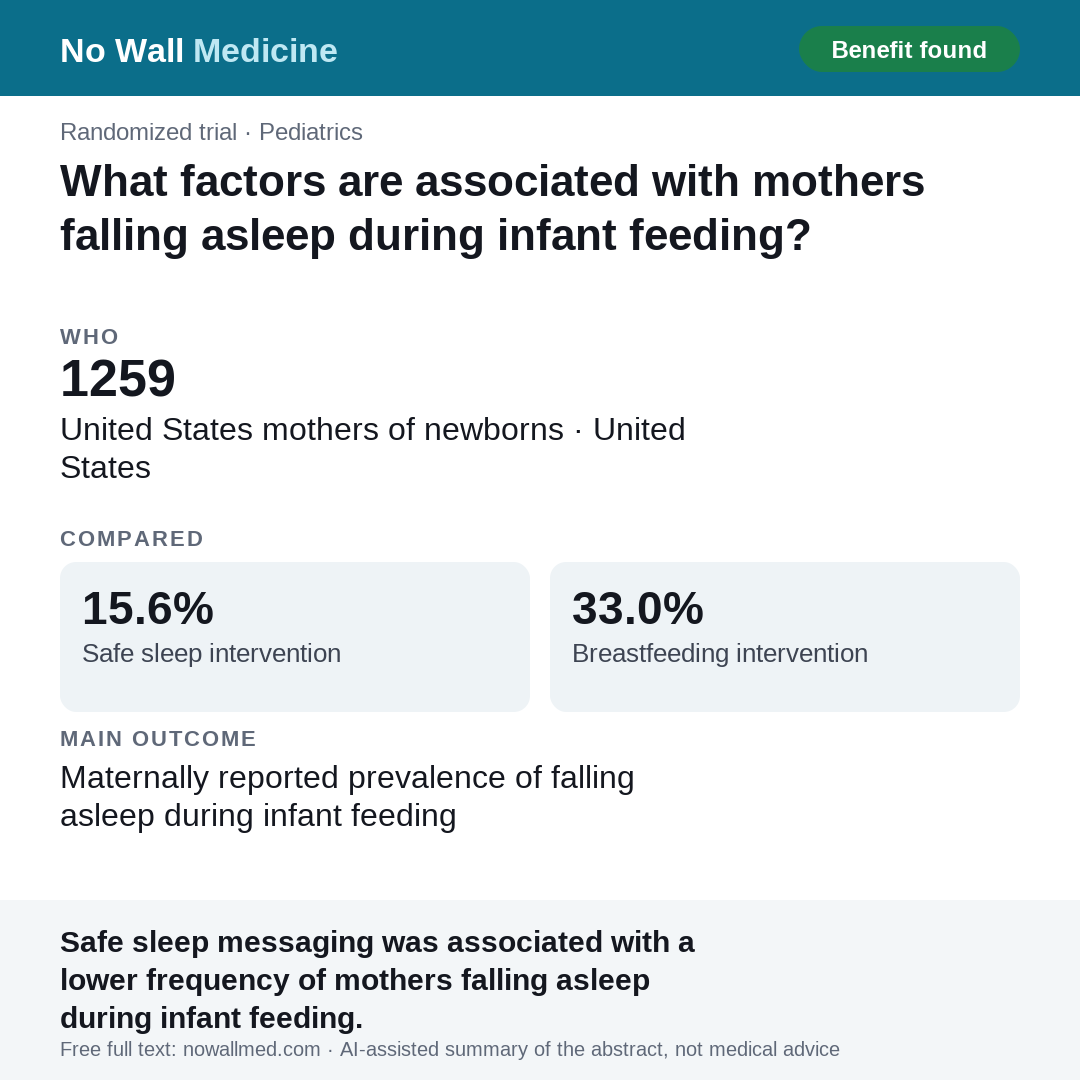
Mothers Falling Asleep During Infant Feeding
Randomized trialBenefit found
What factors are associated with mothers falling asleep during infant feeding?
Who
1259
United States mothers of newborns · United States
Compared
15.6%Safe sleep intervention
33.0%Breastfeeding intervention
Main outcome
Maternally reported prevalence of falling asleep during infant feeding
Result: adjusted odds ratio 0.40 (95% confidence interval, 0.25-0.65)
Bottom line: Safe sleep messaging was associated with a lower frequency of mothers falling asleep during infant feeding.
Pediatrics · 2024-11-01Download image
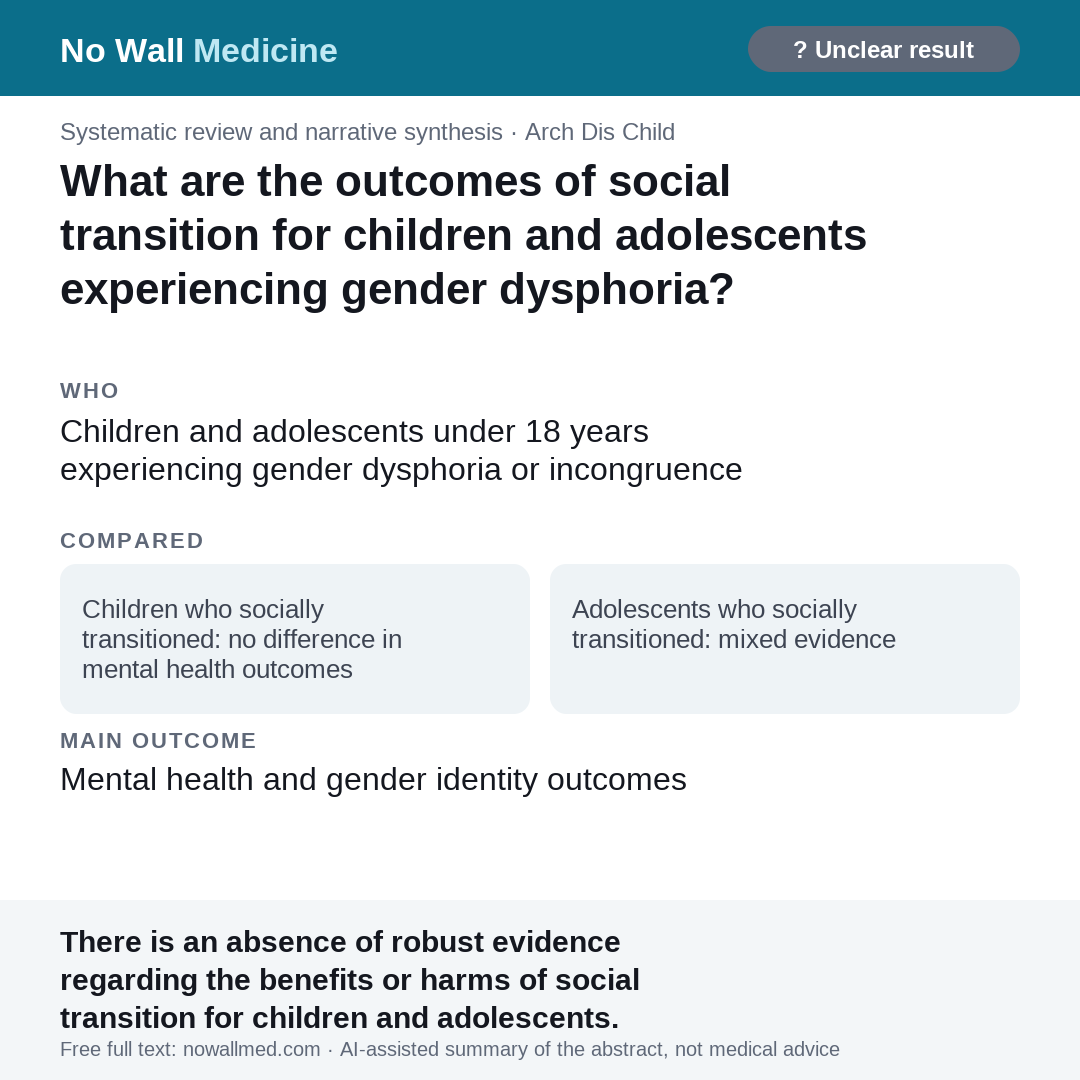
Impact of social transition in relation to gender for children and adolescents: a systematic review
Systematic review and narrative synthesisUnclear result
What are the outcomes of social transition for children and adolescents experiencing gender dysphoria?
Who
Children and adolescents under 18 years experiencing gender dysphoria or incongruence · Primarily United States
Compared
Children who socially transitioned: no difference in mental health outcomes
Adolescents who socially transitioned: mixed evidence
Main outcome
Mental health and gender identity outcomes
Bottom line: There is an absence of robust evidence regarding the benefits or harms of social transition for children and adolescents.
Arch Dis Child · 2024-10-30Download image
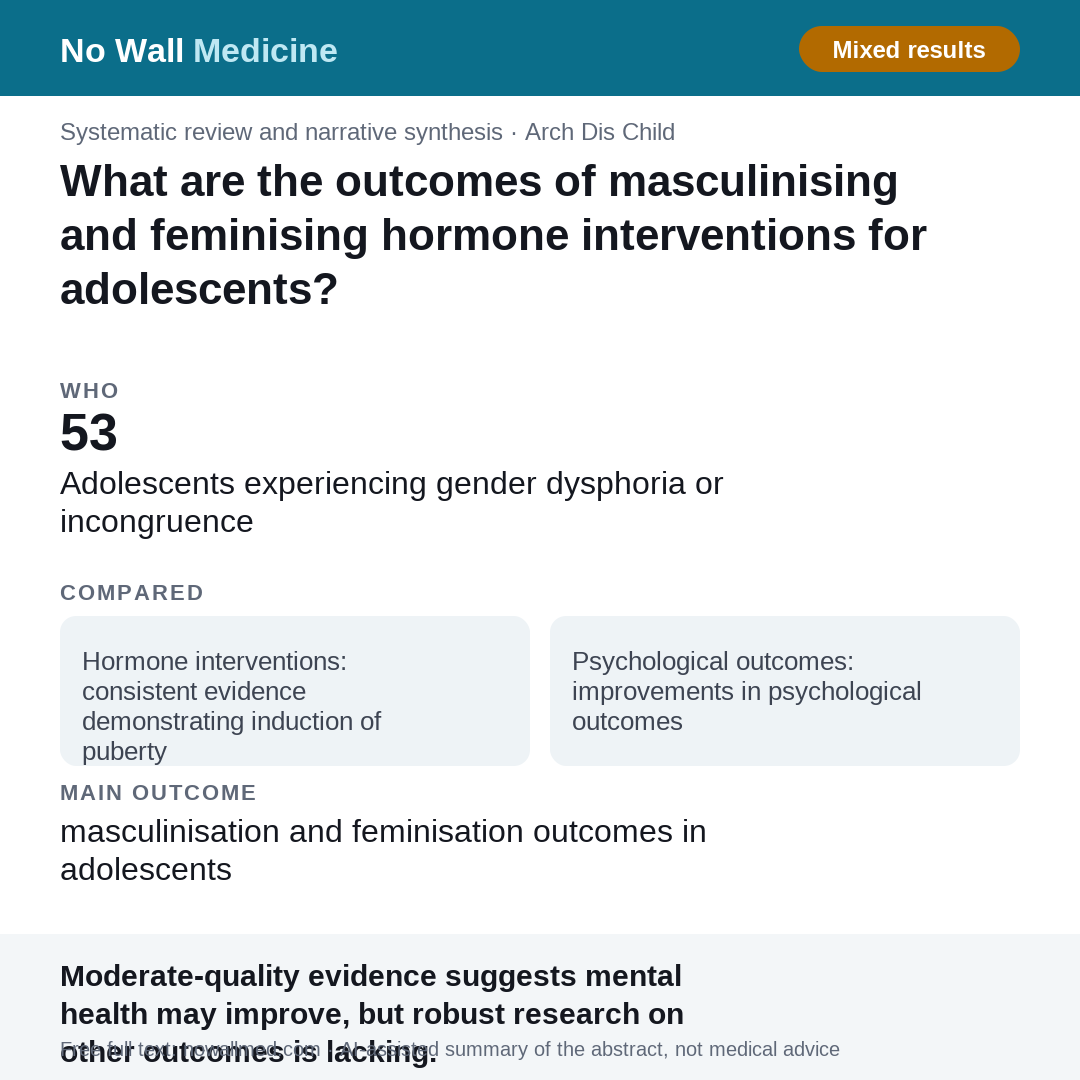
Masculinising and feminising hormone interventions for adolescents experiencing gender dysphoria or incongruence: a systematic review
Systematic review and narrative synthesisMixed results
What are the outcomes of masculinising and feminising hormone interventions for adolescents?
Who
53
Adolescents experiencing gender dysphoria or incongruence
Compared
Hormone interventions: consistent evidence demonstrating induction of puberty
Psychological outcomes: improvements in psychological outcomes
Main outcome
masculinisation and feminisation outcomes in adolescents
Bottom line: Moderate-quality evidence suggests mental health may improve, but robust research on other outcomes is lacking.
Limitation: Most studies included adolescents receiving puberty suppression, making it difficult to determine hormone effects alone.
Arch Dis Child · 2024-10-30Download image
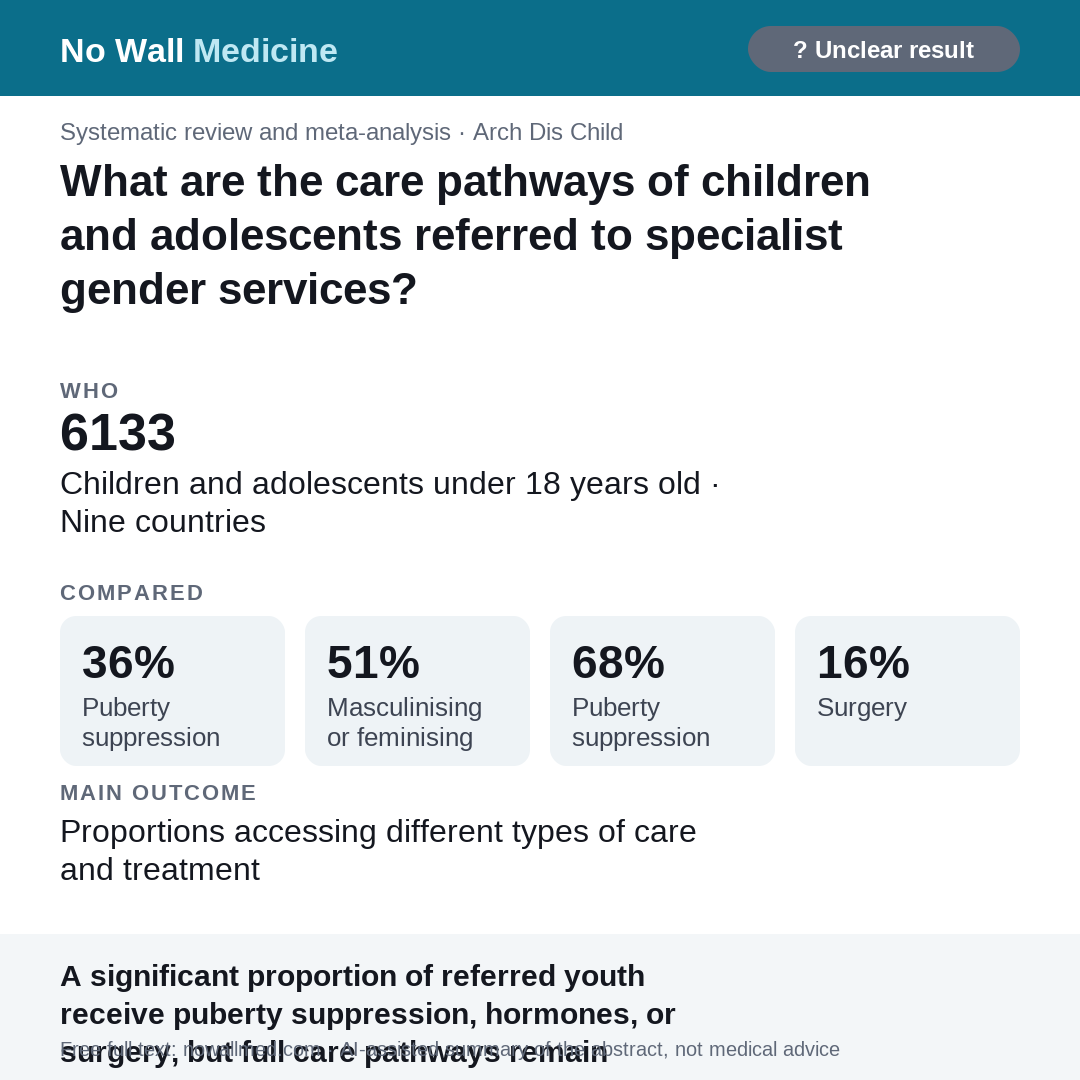
Care pathways of children and adolescents referred to specialist gender services: a systematic review
Systematic review and meta-analysisUnclear result
What are the care pathways of children and adolescents referred to specialist gender services?
Who
6133
Children and adolescents under 18 years old · Nine countries
Compared
36%Puberty suppression (95% CI 27% to 45%)
51%Masculinising or feminising hormones (95% CI 40% to 62%)
68%Puberty suppression and/or hormones (95% CI 57% to 77%)
16%Surgery (95% CI 10% to 24%)
Main outcome
Proportions accessing different types of care and treatment
Bottom line: A significant proportion of referred youth receive puberty suppression, hormones, or surgery, but full care pathways remain unknown.
Limitation: No study systematically reported information about the full pathway or psychological care received.
Arch Dis Child · 2024-10-30Download image
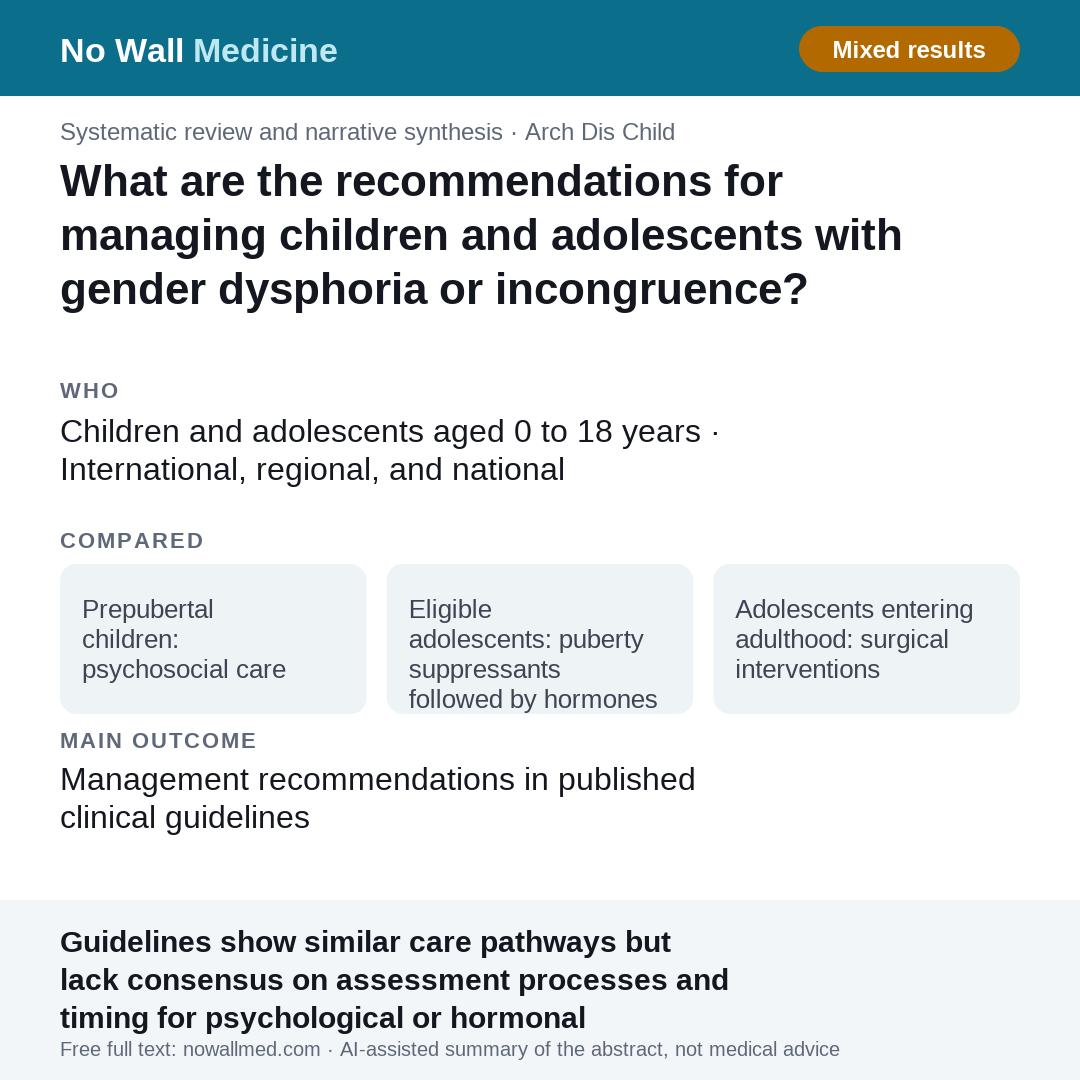
Clinical guidelines for children and adolescents experiencing gender dysphoria or incongruence: a systematic review of recommendations (part 2)
Systematic review and narrative synthesisMixed results
What are the recommendations for managing children and adolescents with gender dysphoria or incongruence?
Who
Children and adolescents aged 0 to 18 years · International, regional, and national guidelines
Compared
Prepubertal children: psychosocial care
Eligible adolescents: puberty suppressants followed by hormones
Adolescents entering adulthood: surgical interventions
Main outcome
Management recommendations in published clinical guidelines
Bottom line: Guidelines show similar care pathways but lack consensus on assessment processes and timing for psychological or hormonal interventions.
Limitation: Limited guidance on psychological care, prepubertal management, or non-binary gender identity.
Arch Dis Child · 2024-10-30Download image
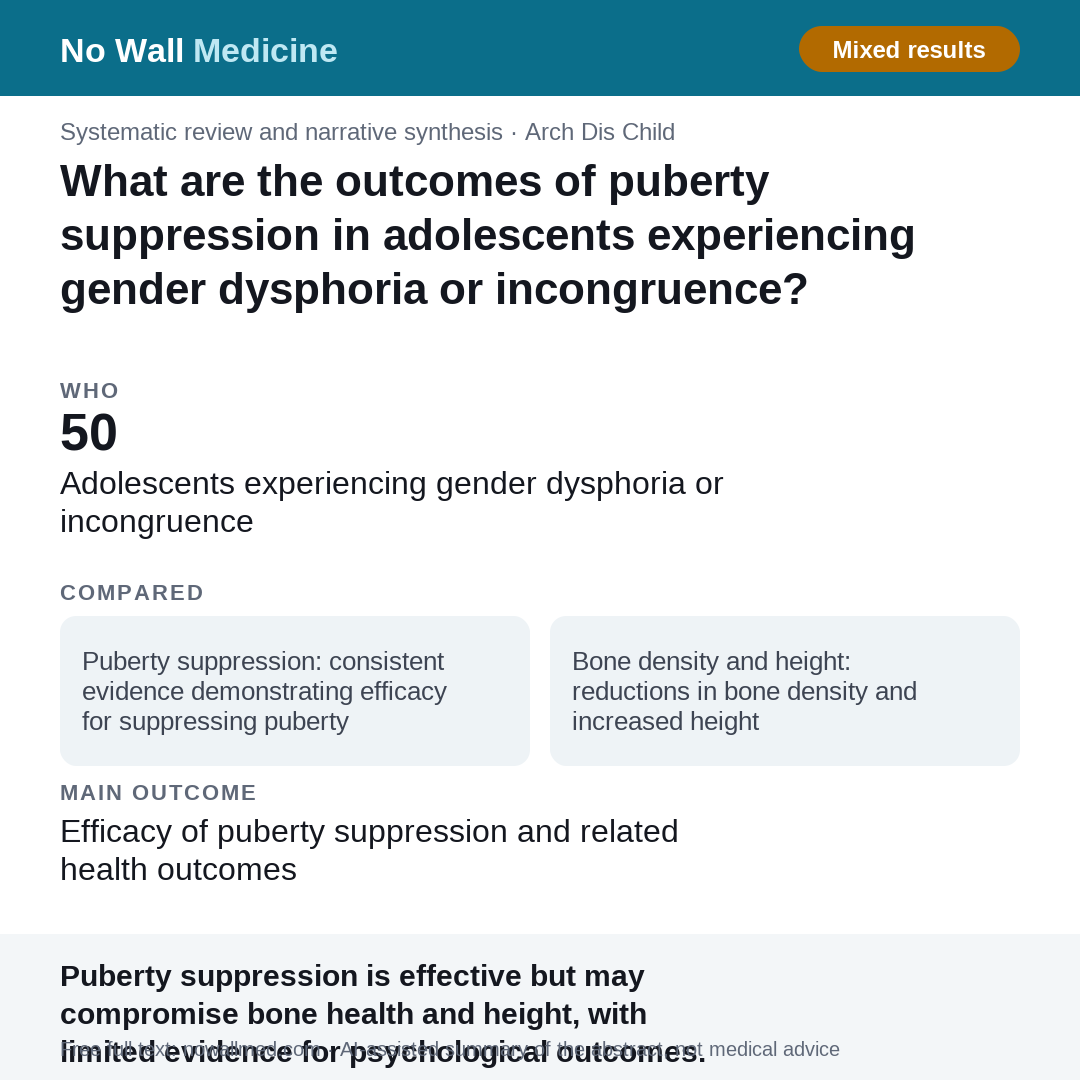
Interventions to suppress puberty in adolescents experiencing gender dysphoria or incongruence: a systematic review
Systematic review and narrative synthesisMixed results
What are the outcomes of puberty suppression in adolescents experiencing gender dysphoria or incongruence?
Who
50
Adolescents experiencing gender dysphoria or incongruence
Compared
Puberty suppression: consistent evidence demonstrating efficacy for suppressing puberty
Bone density and height: reductions in bone density and increased height
Main outcome
Efficacy of puberty suppression and related health outcomes
Bottom line: Puberty suppression is effective but may compromise bone health and height, with limited evidence for psychological outcomes.
Limitation: Lack of high-quality research assessing various health and psychological impacts.
Arch Dis Child · 2024-10-30Download image
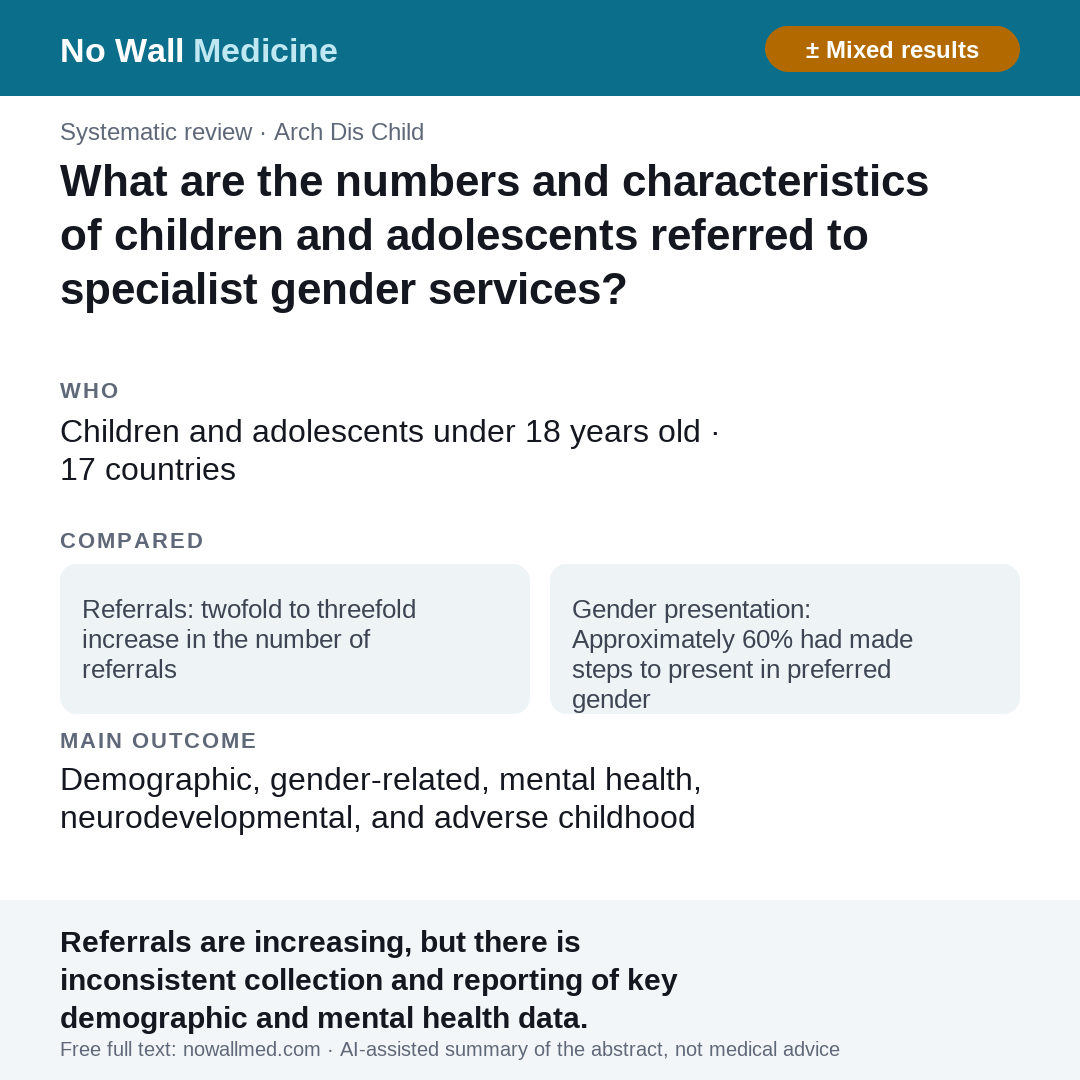
Characteristics of children and adolescents referred to specialist gender services: a systematic review
Systematic reviewMixed results
What are the numbers and characteristics of children and adolescents referred to specialist gender services?
Who
Children and adolescents under 18 years old · 17 countries
Compared
Referrals: twofold to threefold increase in the number of referrals
Gender presentation: Approximately 60% had made steps to present in preferred gender
Main outcome
Demographic, gender-related, mental health, neurodevelopmental, and adverse childhood experience data
Bottom line: Referrals are increasing, but there is inconsistent collection and reporting of key demographic and mental health data.
Arch Dis Child · 2024-10-30Download image
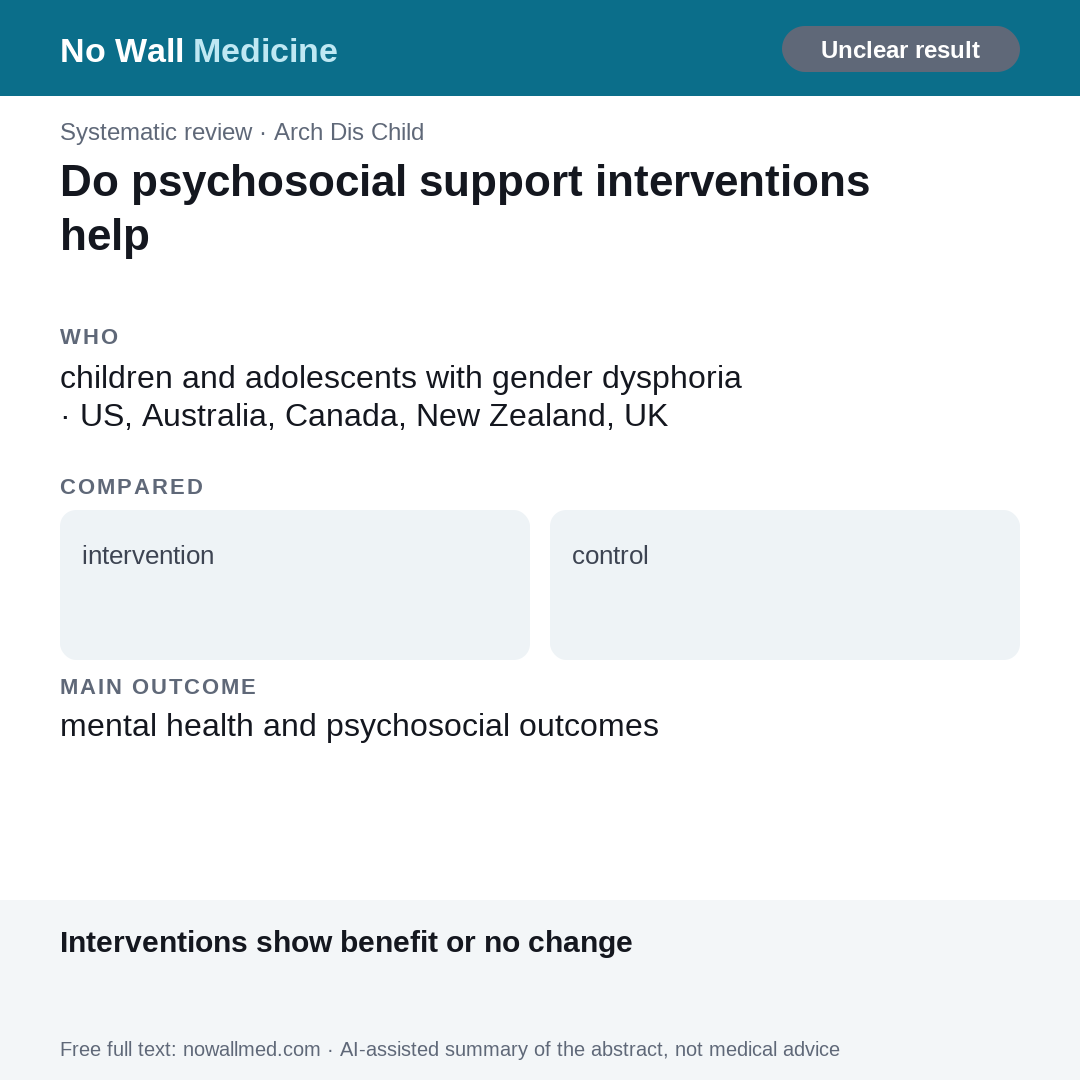
Psychosocial support interventions for children and adolescents experiencing gender dysphoria or incongruence: a systematic review
Systematic reviewUnclear result
Do psychosocial support interventions help
Who
children and adolescents with gender dysphoria · US, Australia, Canada, New Zealand, UK
Compared
intervention
control
Main outcome
mental health and psychosocial outcomes
Bottom line: Interventions show benefit or no change
Limitation: small number of low-quality studies
Arch Dis Child · 2024-10-30Download image
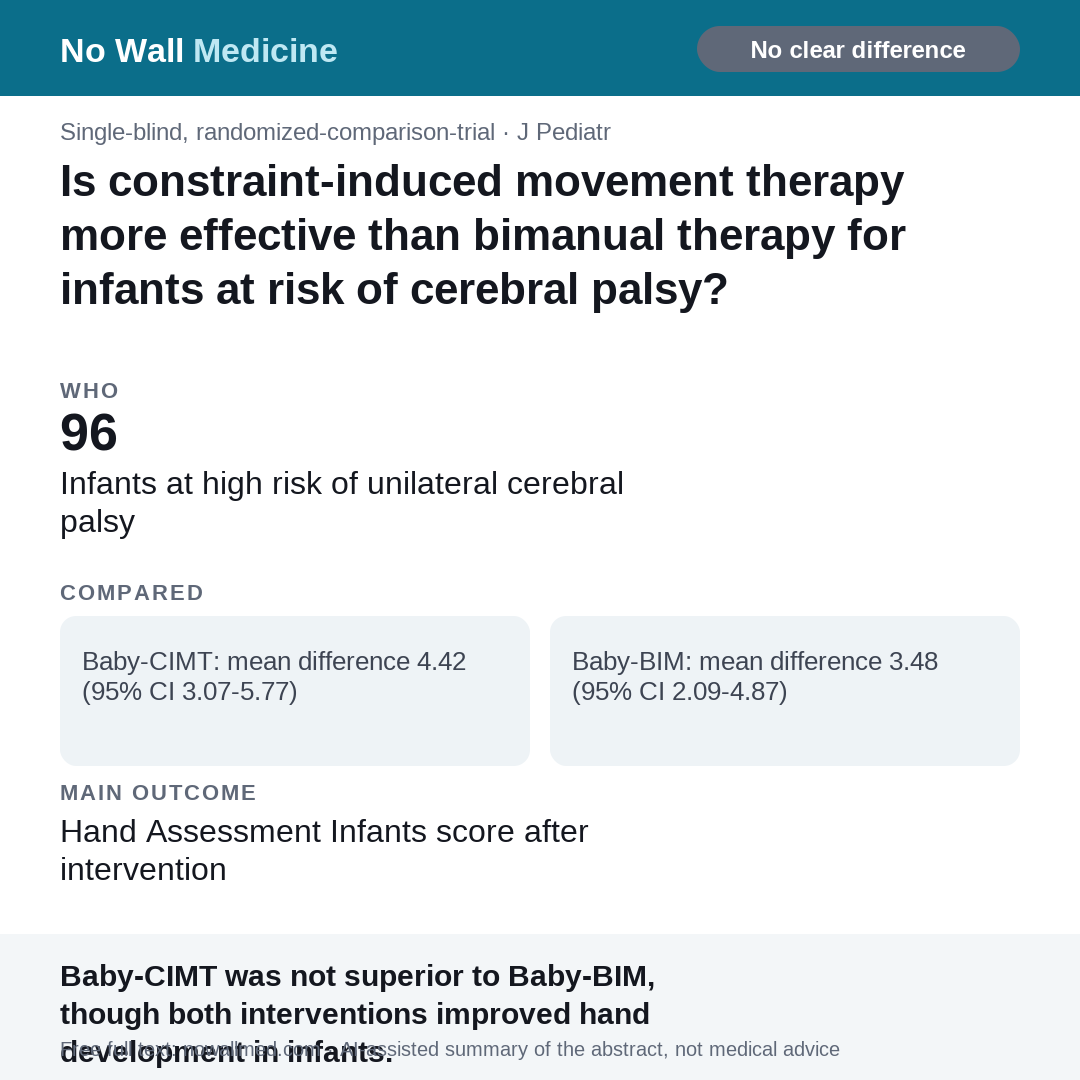
Randomized Comparison Trial of Rehabilitation Very Early for Infants with Congenital Hemiplegia
Single-blind, randomized-comparison-trialNo clear difference
Is constraint-induced movement therapy more effective than bimanual therapy for infants at risk of cerebral palsy?
Who
96
Infants at high risk of unilateral cerebral palsy
Compared
Baby-CIMT: mean difference 4.42 (95% CI 3.07-5.77)
Baby-BIM: mean difference 3.48 (95% CI 2.09-4.87)
Main outcome
Hand Assessment Infants score after intervention
Result: mean difference 0.98 HAI units (95% CI 0.94-2.91)
Bottom line: Baby-CIMT was not superior to Baby-BIM, though both interventions improved hand development in infants.
J Pediatr · 2024-10-29Download image
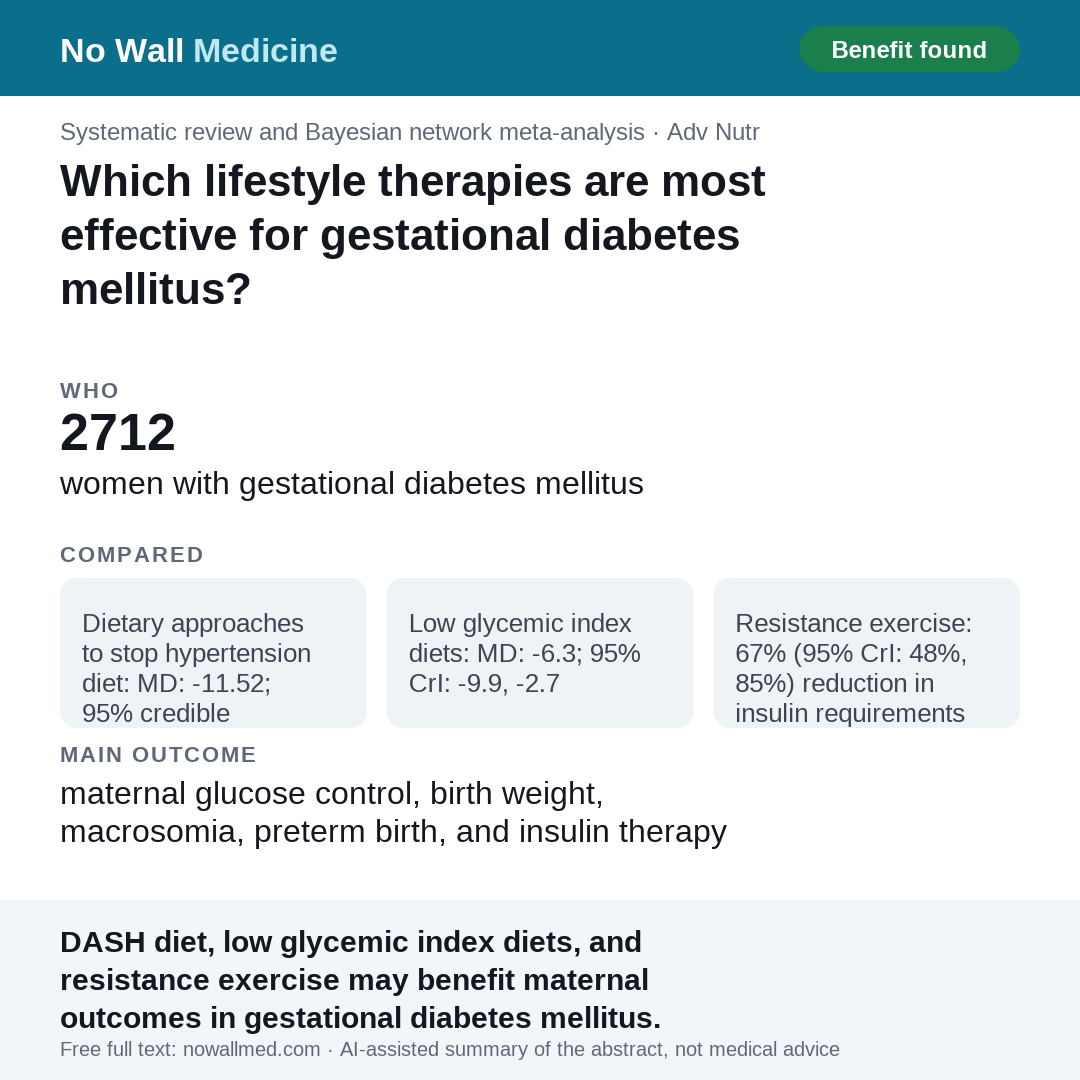
Effects of Dietary Approaches and Exercise Interventions on Gestational Diabetes Mellitus: A Systematic Review and Bayesian Network Meta-analysis
Systematic review and Bayesian network meta-analysisBenefit found
Which lifestyle therapies are most effective for gestational diabetes mellitus?
Who
2712
women with gestational diabetes mellitus
Compared
Dietary approaches to stop hypertension diet: MD: -11.52; 95% credible intervals (CrIs): -14.01, -9.07
Low glycemic index diets: MD: -6.3; 95% CrI: -9.9, -2.7
Resistance exercise: 67% (95% CrI: 48%, 85%) reduction in insulin requirements
Main outcome
maternal glucose control, birth weight, macrosomia, preterm birth, and insulin therapy
Bottom line: DASH diet, low glycemic index diets, and resistance exercise may benefit maternal outcomes in gestational diabetes mellitus.
Limitation: Future research with higher quality and evidence grades is necessary.
Adv Nutr · 2024-10-29Download image
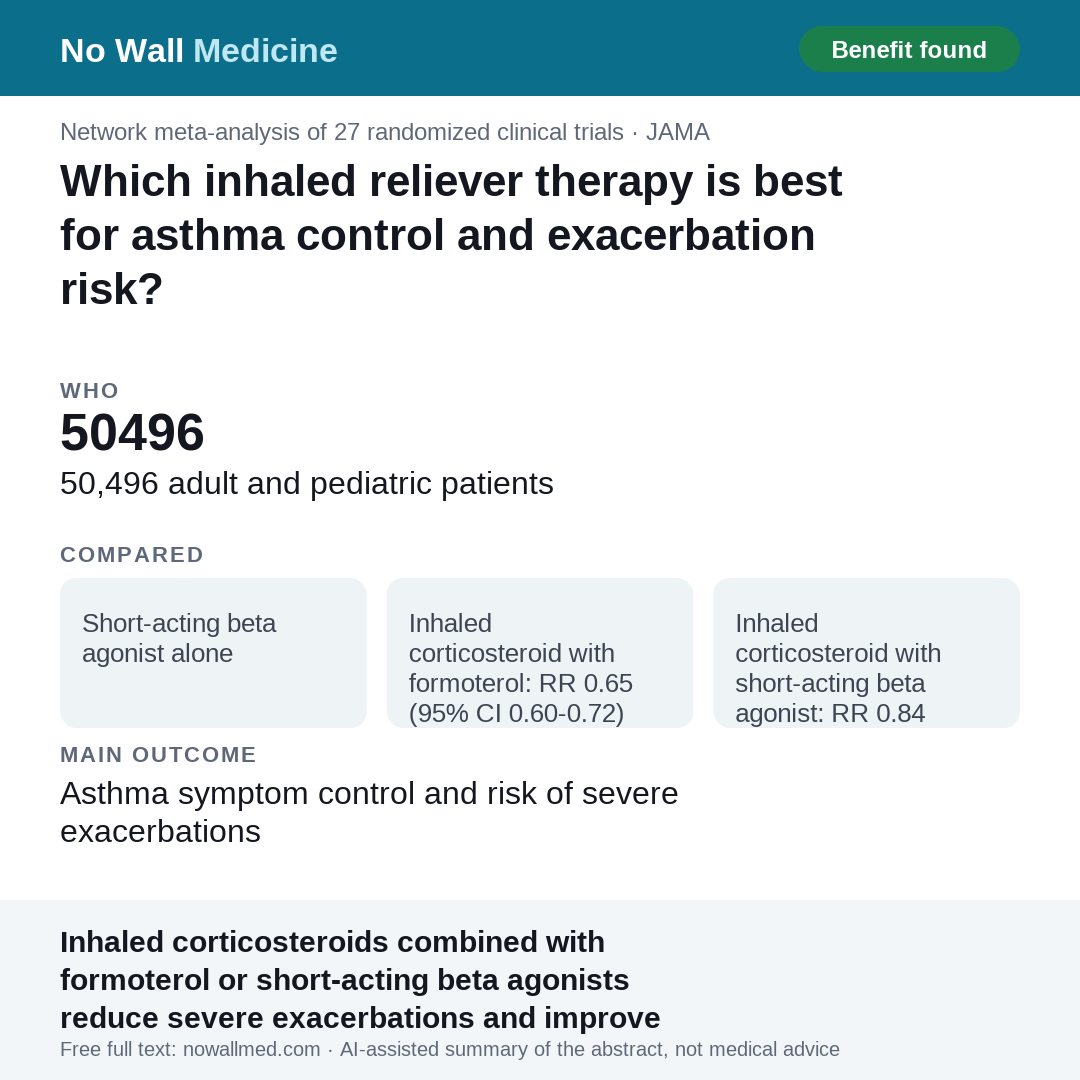
Inhaled Reliever Therapies for Asthma: A Systematic Review and Meta-Analysis
Network meta-analysis of 27 randomized clinical trialsBenefit found
Which inhaled reliever therapy is best for asthma control and exacerbation risk?
Who
50496
50,496 adult and pediatric patients
Compared
Short-acting beta agonist alone
Inhaled corticosteroid with formoterol: RR 0.65 (95% CI 0.60-0.72) for severe exacerbations
Inhaled corticosteroid with short-acting beta agonist: RR 0.84 (95% CI 0.73-0.95) for severe exacerbations
Main outcome
Asthma symptom control and risk of severe exacerbations
Result: ICS-formoterol RR 0.65 (95% CI 0.60-0.72) for severe exacerbations
Bottom line: Inhaled corticosteroids combined with formoterol or short-acting beta agonists reduce severe exacerbations and improve asthma control compared to short-acting beta agonists alone.
JAMA · 2024-10-28Download image
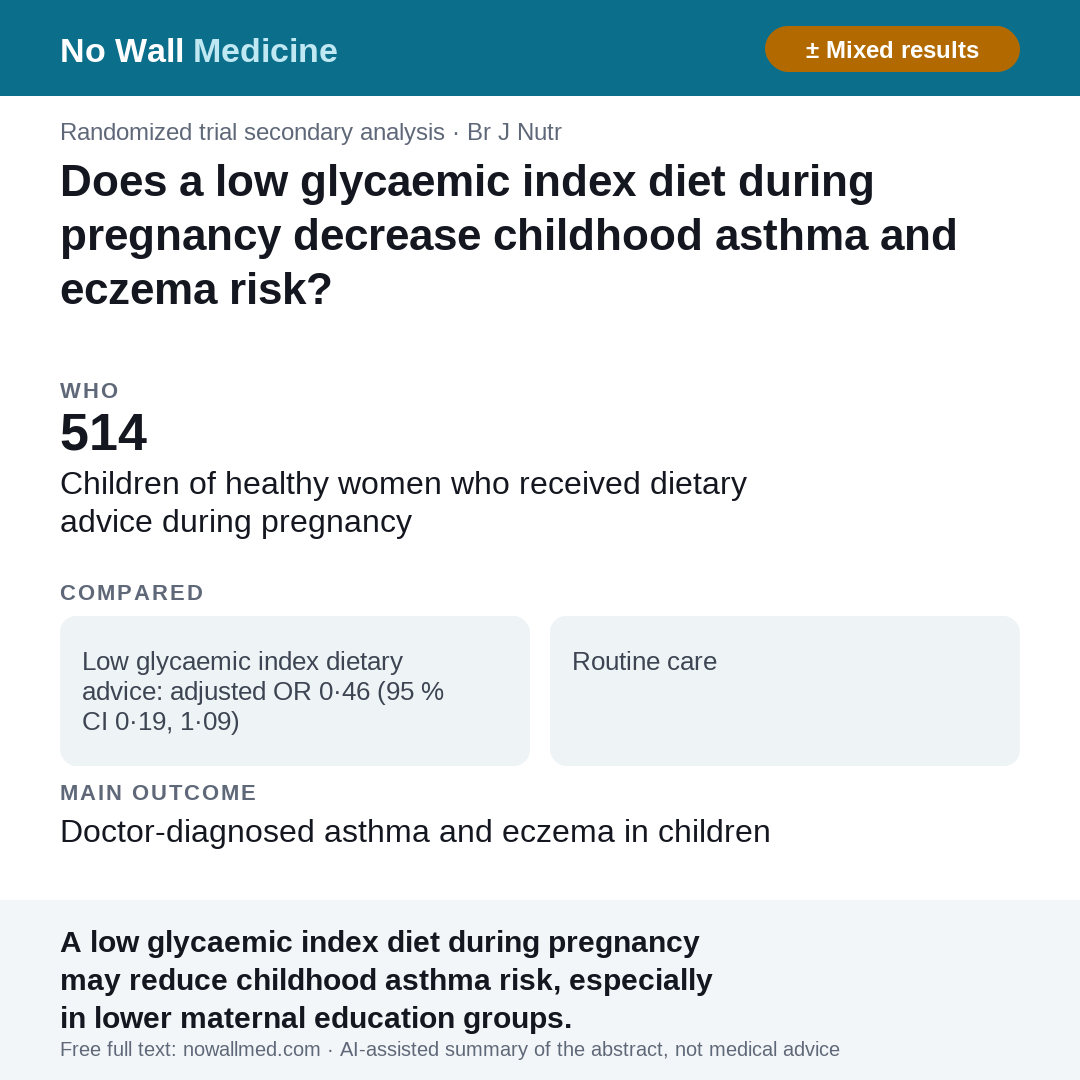
Low glycaemic index diet in pregnancy and child asthma: follow-up of the ROLO trial
Randomized trial secondary analysisMixed results
Does a low glycaemic index diet during pregnancy decrease childhood asthma and eczema risk?
Who
514
Children of healthy women who received dietary advice during pregnancy
Compared
Low glycaemic index dietary advice: adjusted OR 0·46 (95 % CI 0·19, 1·09)
Routine care
Main outcome
Doctor-diagnosed asthma and eczema in children
Result: adjusted OR 0·46 (95 % CI 0·19, 1·09)
Bottom line: A low glycaemic index diet during pregnancy may reduce childhood asthma risk, especially in lower maternal education groups.
Br J Nutr · 2024-10-28Download image
Diagnosis and Treatment of Tethered Spinal Cord: A Systematic Review
Systematic reviewMixed results
What is the evidence for diagnosis and treatment of tethered spinal cord?
Who
Patients with tethered spinal cord syndrome
Compared
MRI diagnosis: medium to high diagnostic sensitivity and specificity
Prophylactic surgery: motor function benefits and stability of neurologic status
Symptomatic surgical detethering: improvement in neurologic status
Main outcome
Diagnosis, prophylactic surgery, symptomatic treatment, and repeat surgery
Bottom line: MRI is effective for diagnosis, while surgical treatments show benefits but carry risks of complications.
Limitation: Insufficient evidence for clinical impact, ambulation, quality of life, and over- or undertreatment.
Pediatrics · 2024-10-25Download image

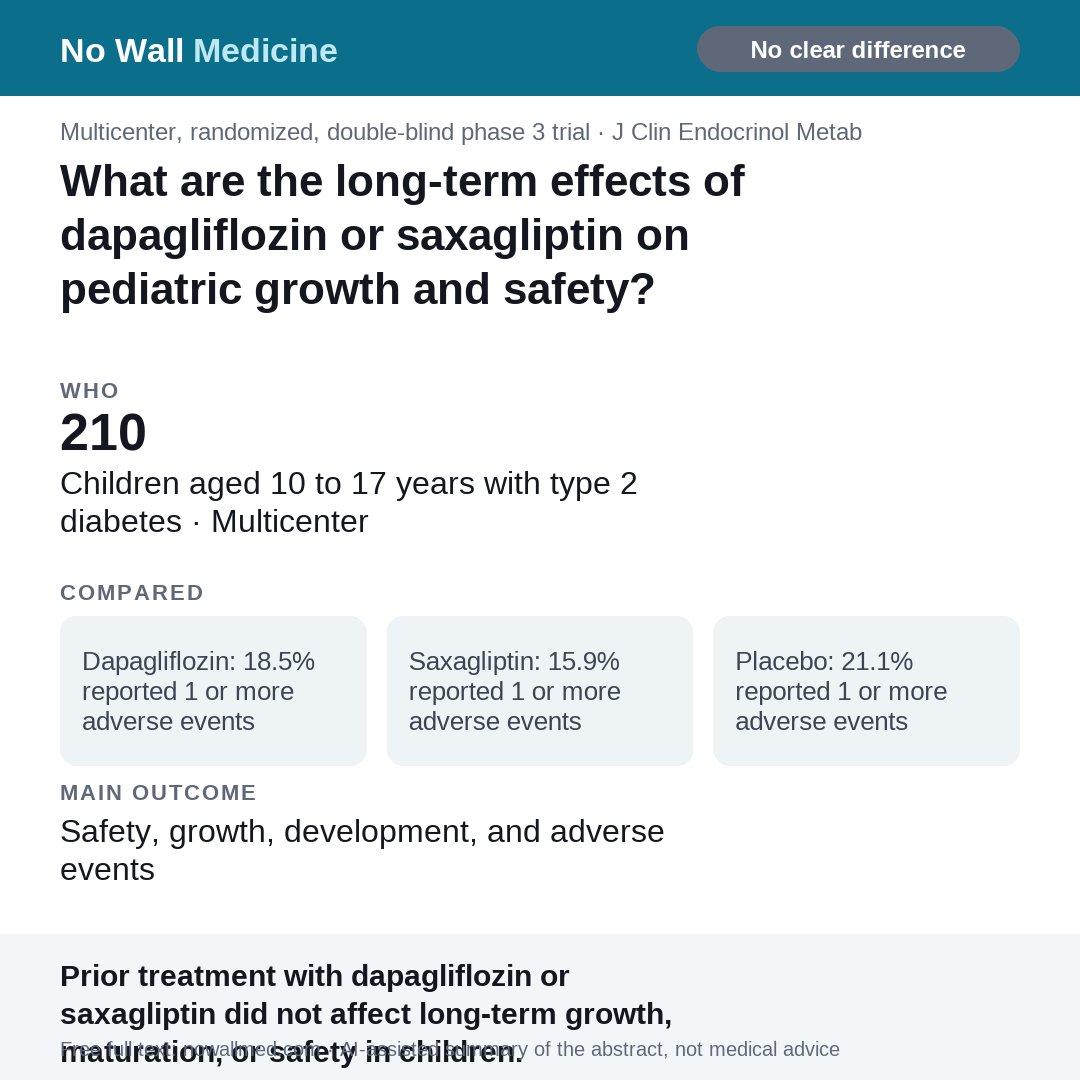
Safety, Growth, and Development After Dapagliflozin or Saxagliptin in Children With Type 2 Diabetes (T2NOW Follow-Up)
Multicenter, randomized, double-blind phase 3 trialNo clear difference
What are the long-term effects of dapagliflozin or saxagliptin on pediatric growth and safety?
Who
210
Children aged 10 to 17 years with type 2 diabetes · Multicenter
Compared
Dapagliflozin: 18.5% reported 1 or more adverse events
Saxagliptin: 15.9% reported 1 or more adverse events
Placebo: 21.1% reported 1 or more adverse events
Main outcome
Safety, growth, development, and adverse events
Bottom line: Prior treatment with dapagliflozin or saxagliptin did not affect long-term growth, maturation, or safety in children.
J Clin Endocrinol Metab · 2024-10-24Download image
Duration of anticoagulation for venous thromboembolism in pediatric patients: Evaluation of the Duration of Therapy for Thrombosis in Children (Kids-DOTT) trial outcomes at 2 years
Multicenter, randomized clinical trialBenefit found
Is 6 weeks of anticoagulation noninferior to 3 months for provoked venous thromboembolism?
Who
417
Patients under 21 years old with provoked venous thromboembolism · Multicenter
Compared
6-week anticoagulation duration: 1.7% (95% CI, 0%, 3.7%) symptomatic recurrent venous thromboembolism
3-month anticoagulation duration: 2.9% (95% CI, 0.3%, 5.4%) symptomatic recurrent venous thromboembolism
Main outcome
net clinical benefit including recurrent thrombosis and bleeding
Bottom line: A 6-week anticoagulation duration is noninferior to a 3-month course for net clinical benefit at 2 years.
J Thromb Haemost · 2024-10-24Download image

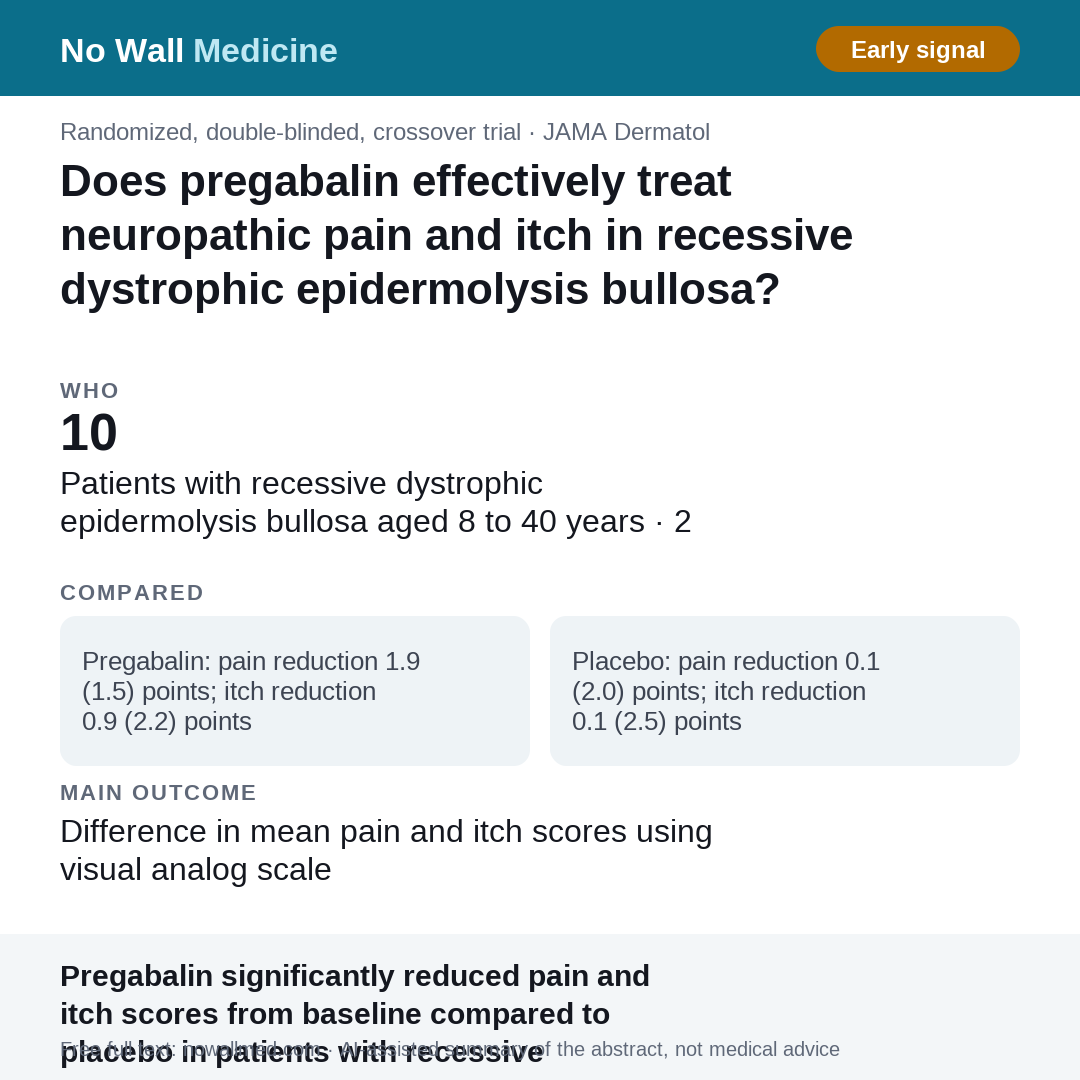
Pregabalin for Neuropathic Pain and Itch in Recessive Dystrophic Epidermolysis Bullosa: A Randomized Crossover Trial
Randomized, double-blinded, crossover trialBenefit found
Does pregabalin effectively treat neuropathic pain and itch in recessive dystrophic epidermolysis bullosa?
Who
10
Patients with recessive dystrophic epidermolysis bullosa aged 8 to 40 years · 2 sites, Toronto (Canada) and Santiago (Chile)
Compared
Pregabalin: pain reduction 1.9 (1.5) points; itch reduction 0.9 (2.2) points
Placebo: pain reduction 0.1 (2.0) points; itch reduction 0.1 (2.5) points
Main outcome
Difference in mean pain and itch scores using visual analog scale
Bottom line: Pregabalin significantly reduced pain and itch scores from baseline compared to placebo in patients with recessive dystrophic epidermolysis bullosa.
JAMA Dermatol · 2024-10-23Download image
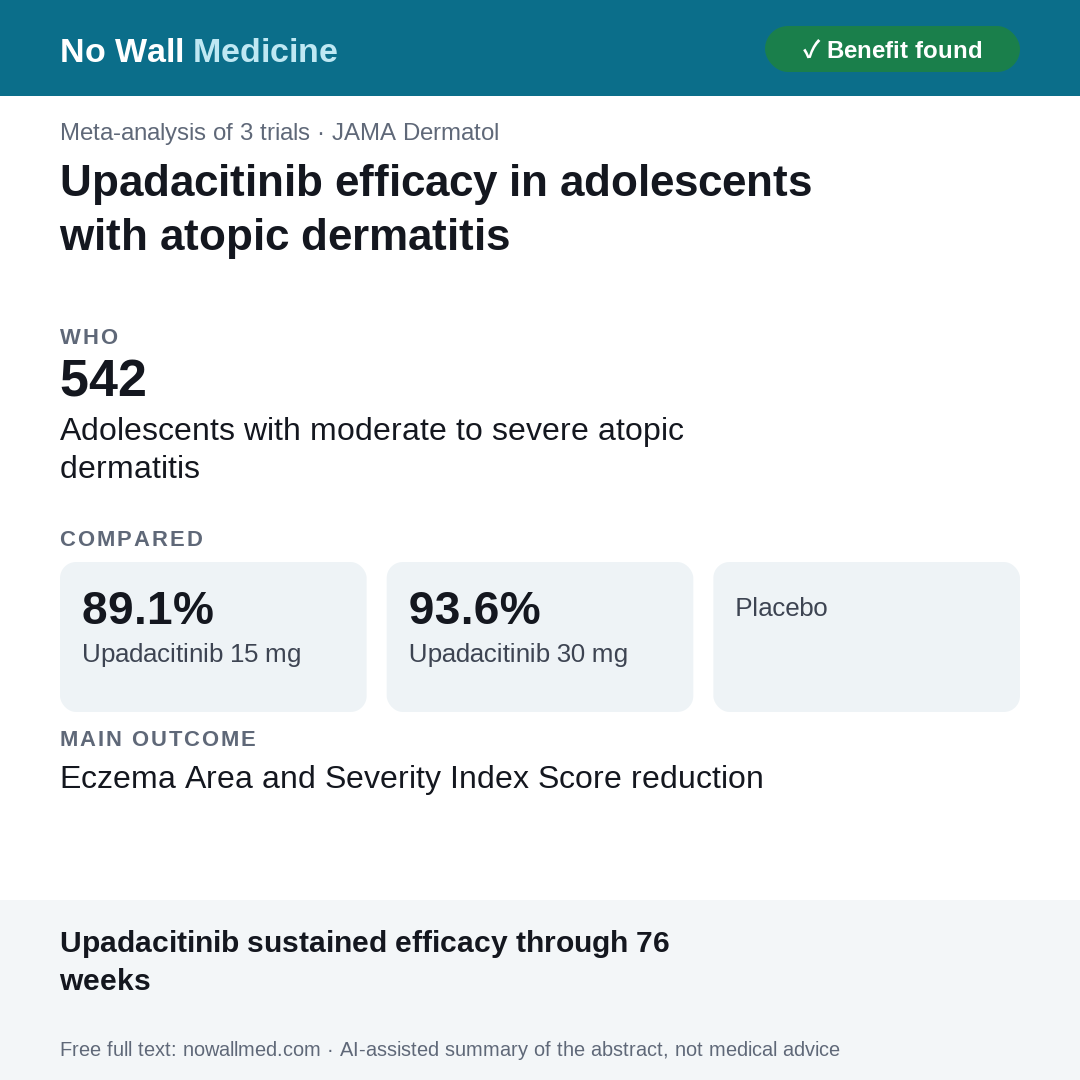
Upadacitinib in Adolescents With Moderate to Severe Atopic Dermatitis: Analysis of 3 Phase 3 Randomized Clinical Trials Through 76 Weeks
Meta-analysis of 3 trialsBenefit found
Upadacitinib efficacy in adolescents with atopic dermatitis
Who
542
Adolescents with moderate to severe atopic dermatitis
Compared
89.1%Upadacitinib 15 mg
93.6%Upadacitinib 30 mg
Placebo
Main outcome
Eczema Area and Severity Index Score reduction
Bottom line: Upadacitinib sustained efficacy through 76 weeks
JAMA Dermatol · 2024-10-23Download image
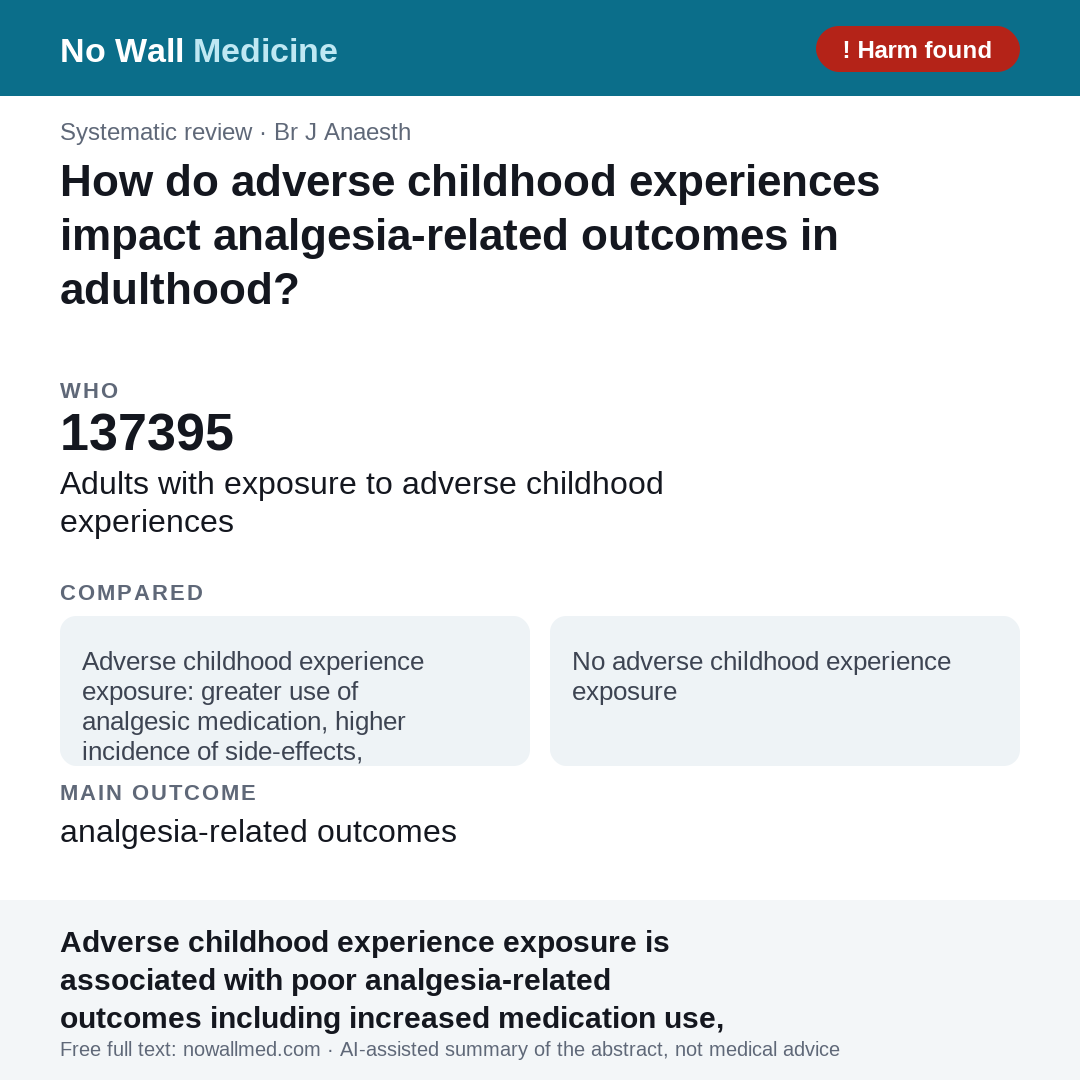
Impact of adverse childhood experiences on analgesia-related outcomes: a systematic review
Systematic reviewHarm found
How do adverse childhood experiences impact analgesia-related outcomes in adulthood?
Who
137395
Adults with exposure to adverse childhood experiences
Compared
Adverse childhood experience exposure: greater use of analgesic medication, higher incidence of side-effects, greater risk and severity of substance misuse, greater risk of drug overdose, and greater risk of attempted suicide
No adverse childhood experience exposure
Main outcome
analgesia-related outcomes
Bottom line: Adverse childhood experience exposure is associated with poor analgesia-related outcomes including increased medication use, side-effects, and substance misuse.
Limitation: Significant gaps remain regarding the use and harms of non opioid analgesics.
Br J Anaesth · 2024-10-22Download image
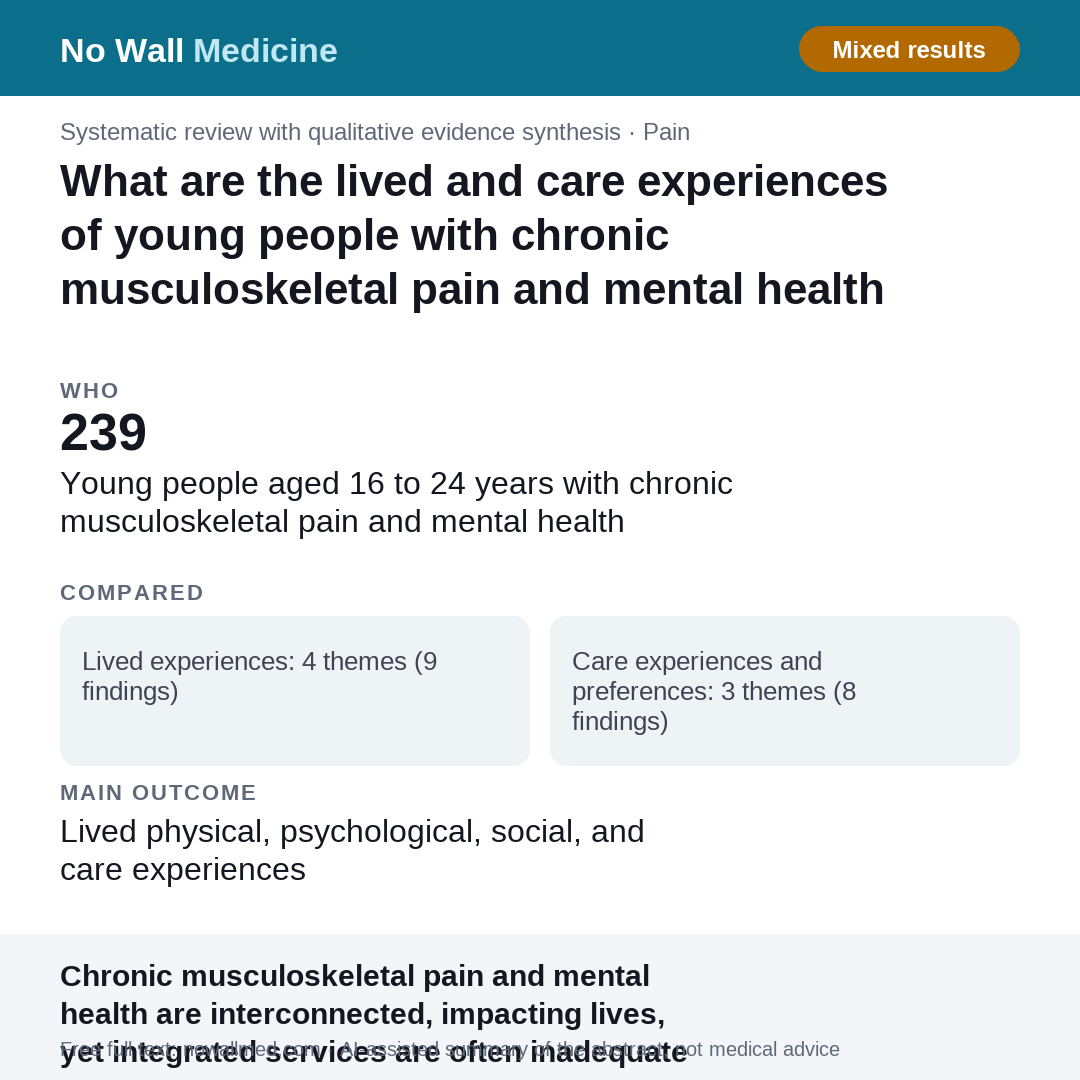
Lived and care experiences of young people with chronic musculoskeletal pain and mental health conditions: a systematic review with qualitative evidence synthesis
Systematic review with qualitative evidence synthesisMixed results
What are the lived and care experiences of young people with chronic musculoskeletal pain and mental health conditions?
Who
239
Young people aged 16 to 24 years with chronic musculoskeletal pain and mental health conditions
Compared
Lived experiences: 4 themes (9 findings)
Care experiences and preferences: 3 themes (8 findings)
Main outcome
Lived physical, psychological, social, and care experiences
Bottom line: Chronic musculoskeletal pain and mental health are interconnected, impacting lives, yet integrated services are often inadequate and poorly integrated.
Limitation: Confidence in findings ranged from very low to moderate
Pain · 2024-10-22Download image
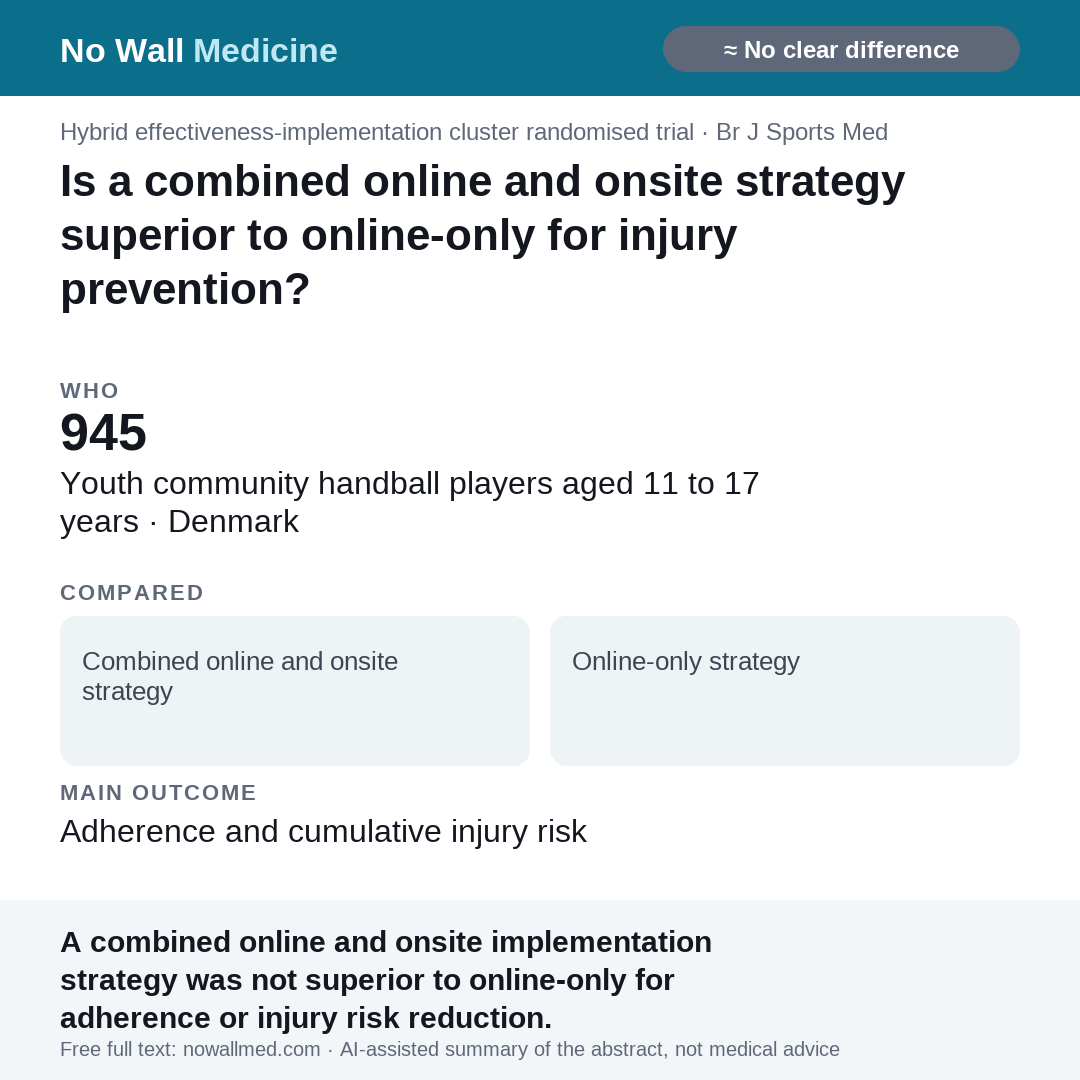
Health And Performance Promotion in Youth (HAPPY) hybrid effectiveness-implementation cluster randomised trial: comparison of two strategies to implement an injury prevention exercise programme in Danish youth handball
Hybrid effectiveness-implementation cluster randomised trialNo clear difference
Is a combined online and onsite strategy superior to online-only for injury prevention?
Who
945
Youth community handball players aged 11 to 17 years · Denmark
Compared
Combined online and onsite strategy
Online-only strategy
Main outcome
Adherence and cumulative injury risk
Result: between-group difference 5.5% points, 95% CI -2.2 to 13.1
Bottom line: A combined online and onsite implementation strategy was not superior to online-only for adherence or injury risk reduction.
Br J Sports Med · 2024-10-22Download image