Visual abstracts
New randomized trials and meta-analyses from leading journals at a glance: who was studied, what was compared, and what was found. Every paper is free to read in full.
All specialtiesCardiology 172Oncology 141Gastroenterology & Hepatology 83Infectious Disease 131Neurology 79Psychiatry & Mental Health 112Pulmonology 83Critical Care 47Endocrinology & Diabetes 107Pediatrics 73Surgery 55Orthopedics & Sports Medicine 36Neurosurgery 5Cardiothoracic & Vascular Surgery 16Plastic & Reconstructive Surgery 41Nephrology 34Rheumatology 36Hematology 45Dermatology 18Ophthalmology 32Obstetrics & Gynecology 46Public & Global Health 53Radiology & Imaging 15Anesthesiology 29Urology 44ENT (Otolaryngology) 22Emergency Medicine 17Allergy & Immunology 14Geriatrics 54Family Medicine & Primary Care 19Medical Genetics & Genomics 17Pathology & Laboratory Medicine 5Physical Medicine & Rehabilitation 45Palliative Care 23Nutrition 56Digital Health & AI 159General Medicine 26
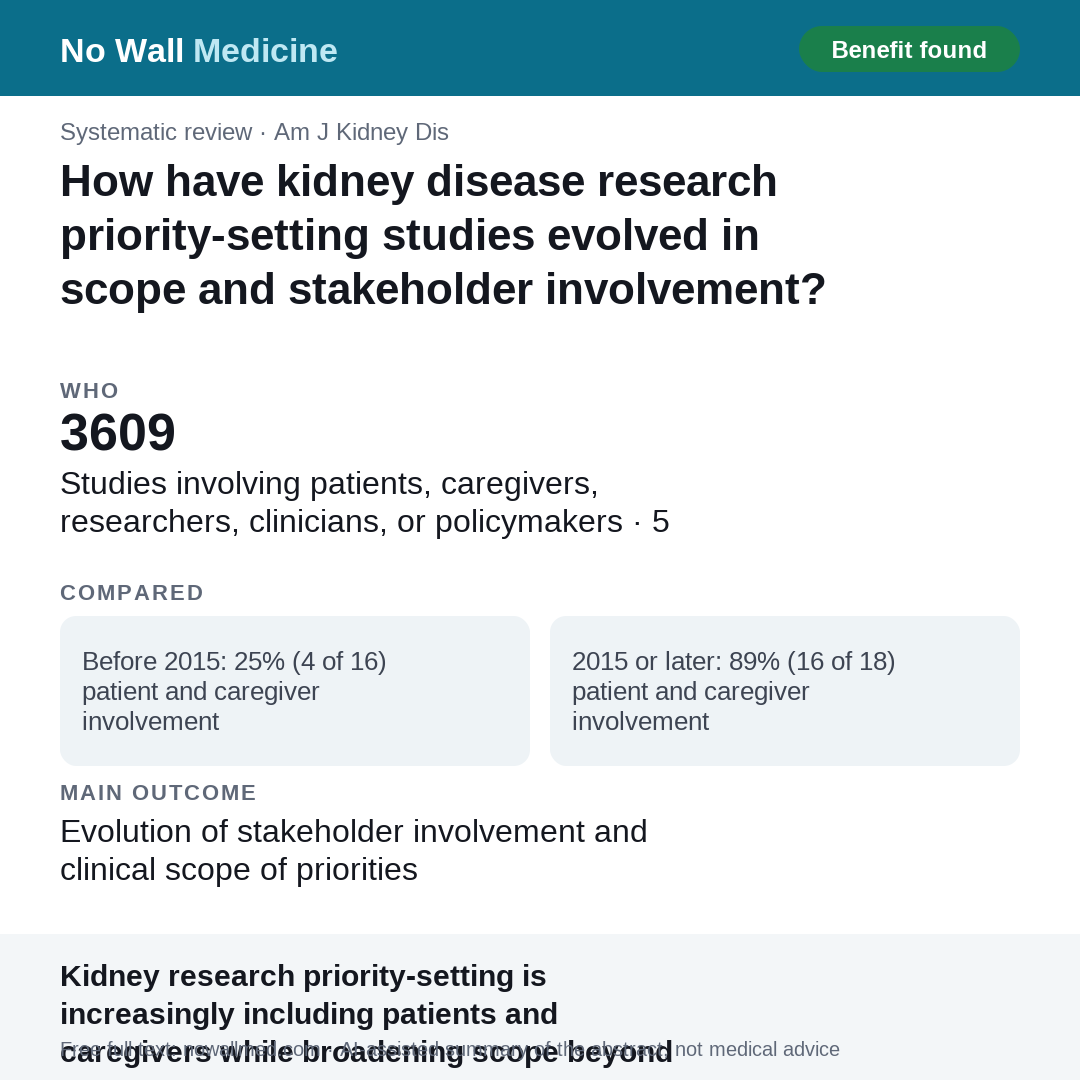
Evolution of Stakeholder Involvement and Scope of Research Priority-Setting Studies in Kidney Disease: A Systematic Review
Systematic reviewBenefit found
How have kidney disease research priority-setting studies evolved in scope and stakeholder involvement?
Who
3609
Studies involving patients, caregivers, researchers, clinicians, or policymakers · 5 high income countries
Compared
Before 2015: 25% (4 of 16) patient and caregiver involvement
2015 or later: 89% (16 of 18) patient and caregiver involvement
Main outcome
Evolution of stakeholder involvement and clinical scope of priorities
Bottom line: Kidney research priority-setting is increasingly including patients and caregivers while broadening scope beyond medical treatments.
Limitation: Restricted to peer-reviewed, English-language publications and lacks data from low- and middle-income settings.
Am J Kidney Dis · 2026-10-05Download image
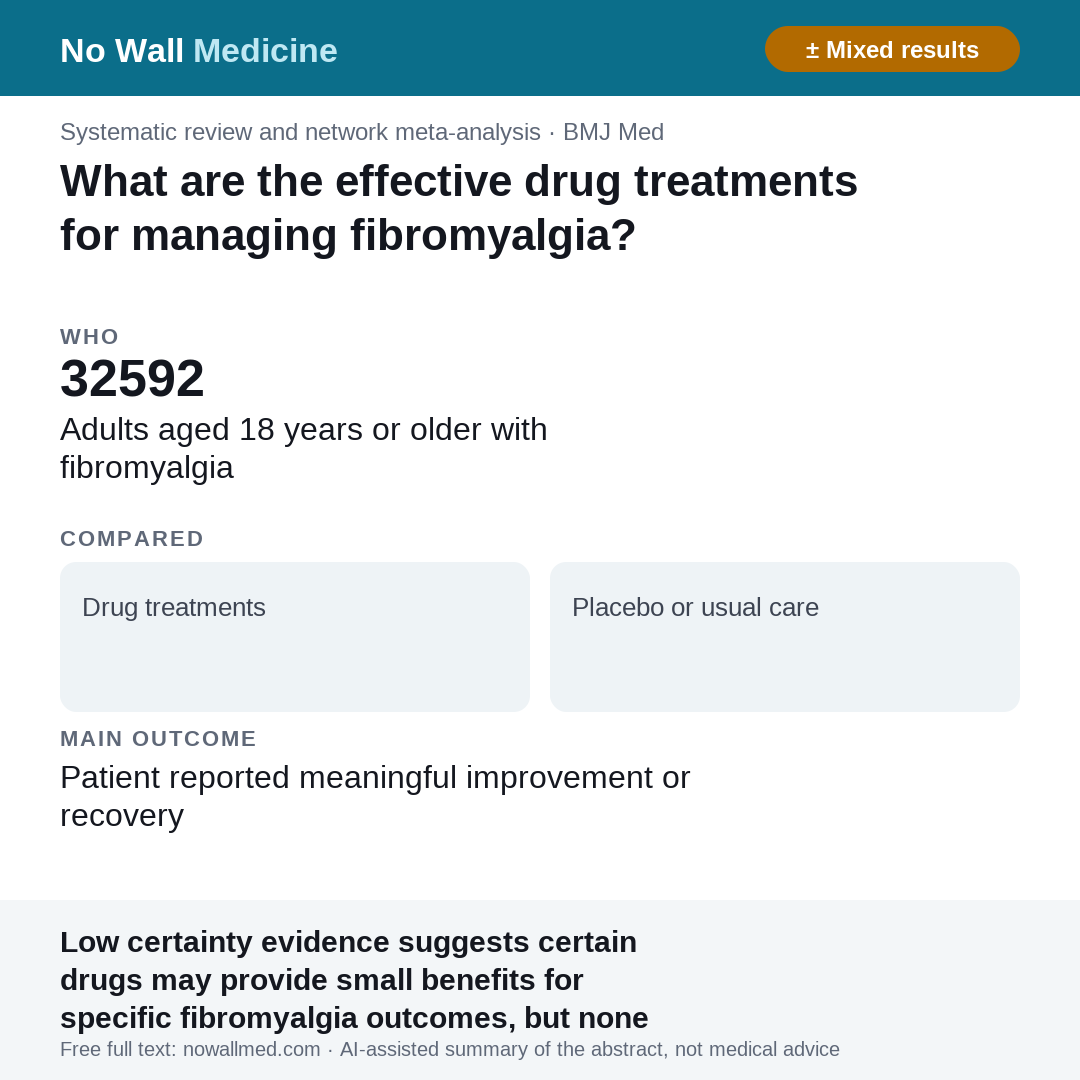
Drug treatments for fibromyalgia: systematic review and network meta-analysis of randomised trials
Systematic review and network meta-analysisMixed results
What are the effective drug treatments for managing fibromyalgia?
Who
32592
Adults aged 18 years or older with fibromyalgia
Compared
Drug treatments
Placebo or usual care
Main outcome
Patient reported meaningful improvement or recovery
Result: risk difference 105 to 283 more per 1000 patients
Bottom line: Low certainty evidence suggests certain drugs may provide small benefits for specific fibromyalgia outcomes, but none exceeded clinical importance thresholds.
BMJ Med · 2026-10-05Download image
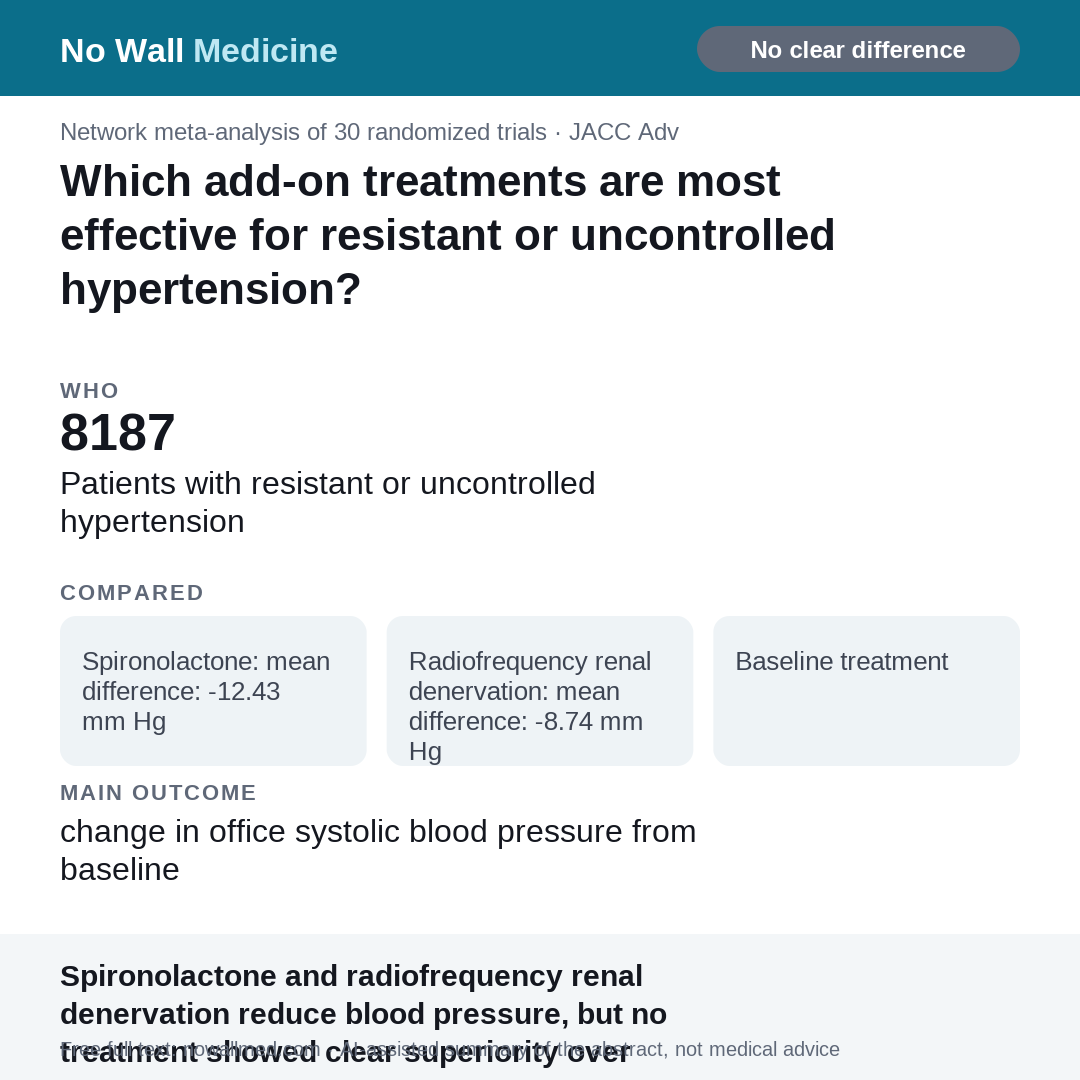
Comparative Efficacy of Treatments for Resistant or Uncontrolled Hypertension: A Network Meta-Analysis of Randomized Trials
Network meta-analysis of 30 randomized trialsNo clear difference
Which add-on treatments are most effective for resistant or uncontrolled hypertension?
Who
8187
Patients with resistant or uncontrolled hypertension
Compared
Spironolactone: mean difference: -12.43 mm Hg
Radiofrequency renal denervation: mean difference: -8.74 mm Hg
Baseline treatment
Main outcome
change in office systolic blood pressure from baseline
Result: no significant differences were observed between add-on treatments
Bottom line: Spironolactone and radiofrequency renal denervation reduce blood pressure, but no treatment showed clear superiority over another.
JACC Adv · 2026-10-05Download image
Machine Learning and Deep Learning for the Diagnosis of Cervical Degenerative Diseases: Systematic Review and Meta-Analysis
Meta-analysis of 30 studiesBenefit found
Do machine learning models diagnose cervical diseases accurately?
Who
25301
patients with cervical degenerative diseases
Compared
Traditional machine learning
Deep learning
Main outcome
diagnostic accuracy
Bottom line: Machine learning models diagnose cervical diseases accurately
Limitation: low certainty of evidence
J Med Internet Res · 2026-10-05Download image

Longitudinal associations between loneliness and outcomes of Common Mental Disorders (CMDs): A systematic review and meta-analysis
Meta-analysis of 22 studiesHarm found
Is loneliness linked to mental health outcomes
Who
adults with Common Mental Disorders · clinical, community, treatment settings
Compared
lonely individuals
not lonely individuals
Main outcome
depression outcomes
Result: odds ratio 3.26 (95% CI 2.26 to 4.70)
Bottom line: Loneliness linked to poorer depression outcomes
BMC Med · 2026-10-03Download image

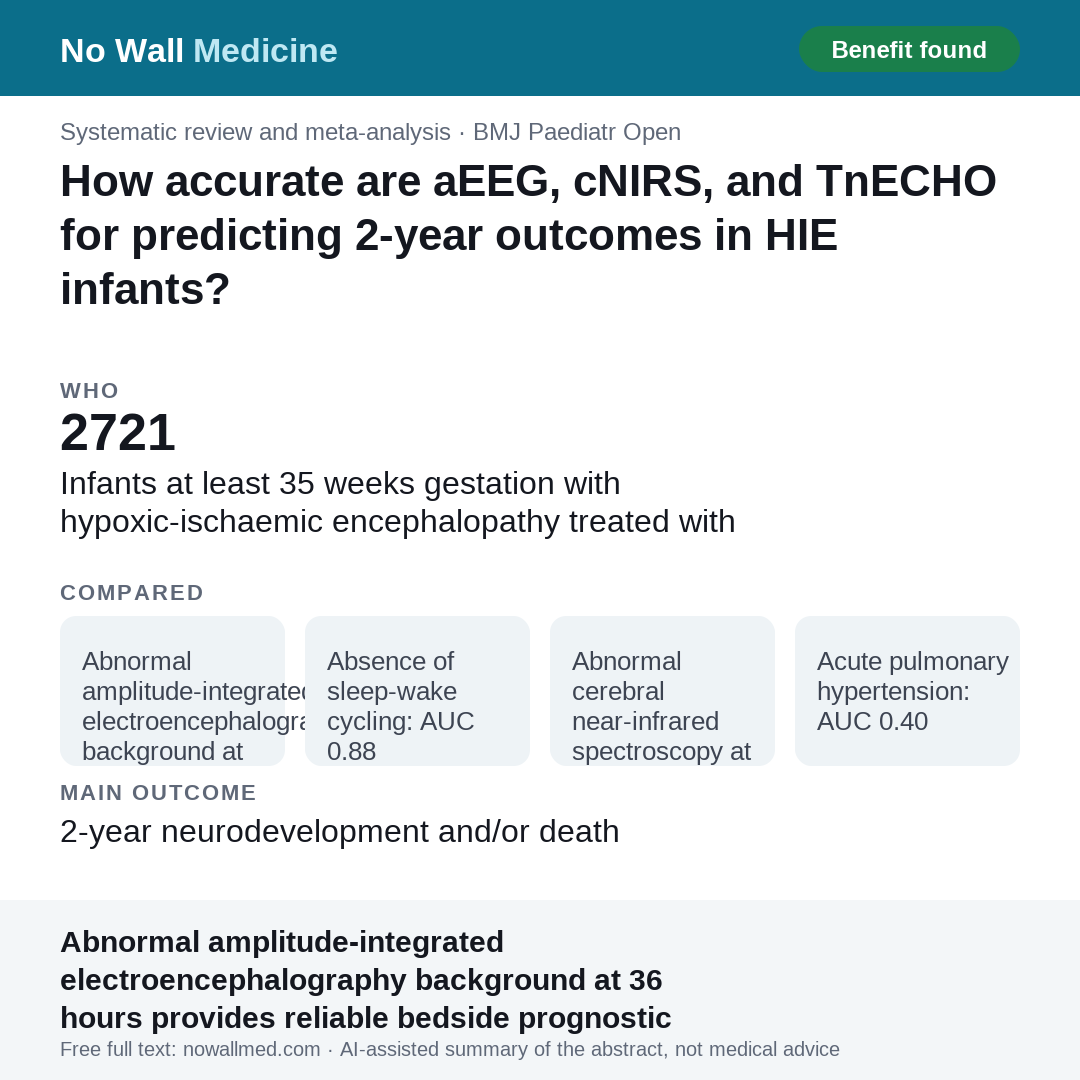
Haemodynamic and neurophysiological assessments for 2-year outcome prediction in neonates with hypoxic-ischaemic encephalopathy treated with therapeutic hypothermia: a systematic review and meta-analysis
Systematic review and meta-analysisBenefit found
How accurate are aEEG, cNIRS, and TnECHO for predicting 2-year outcomes in HIE infants?
Who
2721
Infants at least 35 weeks gestation with hypoxic-ischaemic encephalopathy treated with therapeutic hypothermia
Compared
Abnormal amplitude-integrated electroencephalography background at 36 hours: AUC 0.88
Absence of sleep-wake cycling: AUC 0.88
Abnormal cerebral near-infrared spectroscopy at 36 hours: AUC 0.86
Acute pulmonary hypertension: AUC 0.40
Main outcome
2-year neurodevelopment and/or death
Bottom line: Abnormal amplitude-integrated electroencephalography background at 36 hours provides reliable bedside prognostic information for 2-year outcomes.
Limitation: Right ventricular dysfunction showed substantial heterogeneity.
BMJ Paediatr Open · 2026-10-03Download image
Survival After Risk-Reducing Mastectomy in Patients With Pathogenic Variants in BRCA1 and BRCA2: A Network Meta-Analysis
Meta-analysis of 5 studiesBenefit found
Does risk-reducing mastectomy improve survival
Who
7937
Female patients with pathogenic variants in BRCA1 and BRCA2
Compared
Risk-reducing mastectomy
Magnetic resonance imaging-based screening
Mammography alone
Main outcome
All-cause mortality
Result: hazard ratio 0.37 (95% CI 0.22 to 0.63) for risk-reducing mastectomy versus magnetic resonance imaging-based screening
Bottom line: Risk-reducing mastectomy improves survival
Limitation: Very low certainty of evidence
JAMA Netw Open · 2026-10-01Download image

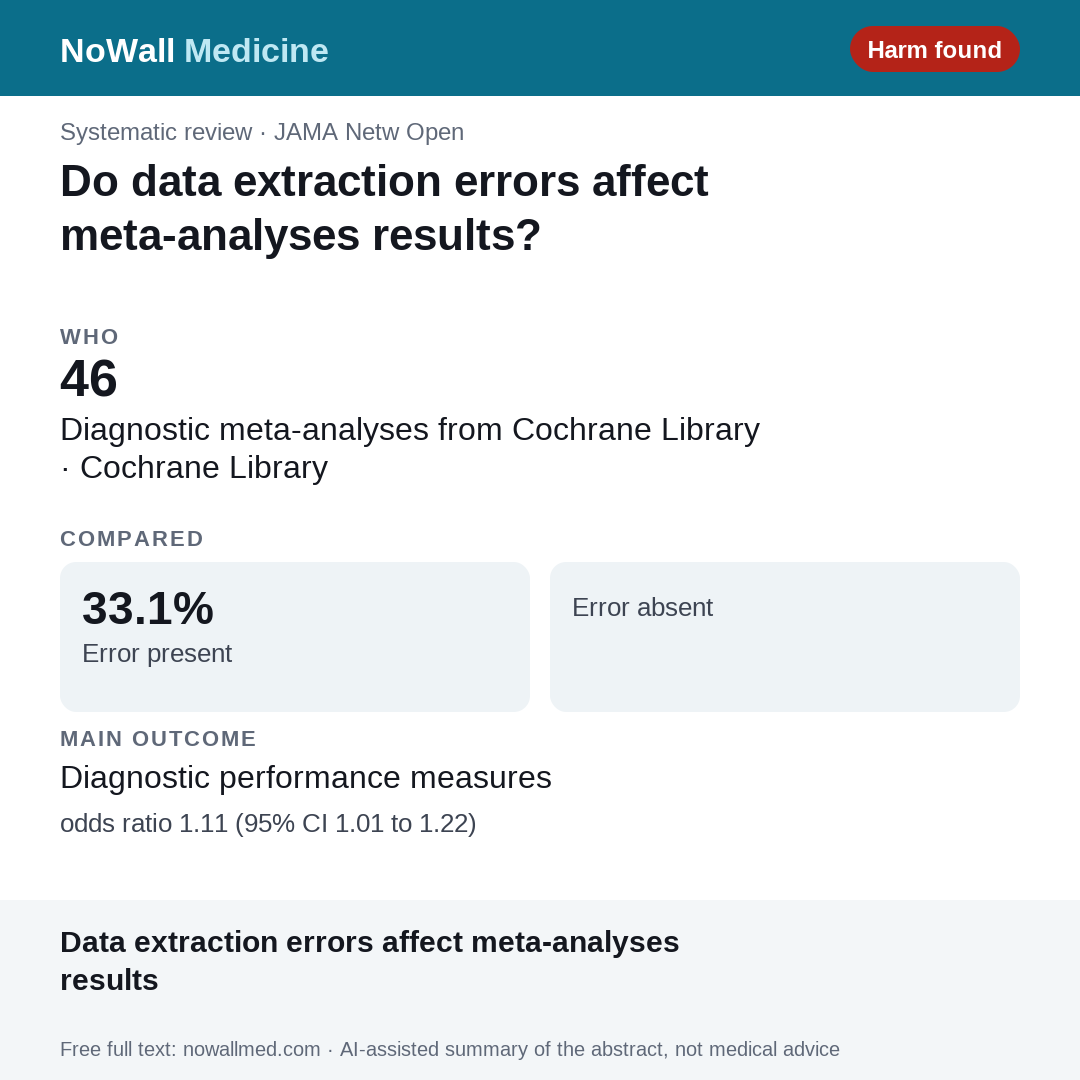
Data Extraction Errors and Diagnostic Conclusions of Meta-Analyses: A Systematic Review
Systematic reviewHarm found
Do data extraction errors affect meta-analyses results?
Who
46
Diagnostic meta-analyses from Cochrane Library · Cochrane Library
Compared
33.1%Error present
Error absent
Main outcome
Diagnostic performance measures
Result: odds ratio 1.11 (95% CI 1.01 to 1.22)
Bottom line: Data extraction errors affect meta-analyses results
JAMA Netw Open · 2026-10-01Download image
Studies of US Department of Health and Human Services Agency Advisory Committees: A Systematic Review
Systematic reviewMixed results
Do HHS advisory committees work
Who
146
US Department of Health and Human Services agencies · United States
Compared
FDA advisory committees
Non-FDA advisory committees
Main outcome
Advisory committee implementation and impact
Result: Generally high concordance between recommendations and agency decisions
Bottom line: Variation in use and management of advisory committees found
Limitation: Limited evidence on non-FDA advisory committees
JAMA Netw Open · 2026-10-01Download image

Clinical Evidence on Psilocybin and Its Representation in Media Reporting: A Systematic Review
Systematic reviewBenefit found
Does media reporting reflect clinical trial evidence for psilocybin?
Who
70
Clinical trial participants and media article audience
Compared
70%Clinical trials (49/70)
73%Media articles (125/172)
Main outcome
Efficacy of therapeutic psilocybin
Bottom line: Media reports overstate psilocybin benefits
Limitation: Small sample sizes and methodologic limitations
JAMA Netw Open · 2026-10-01Download image

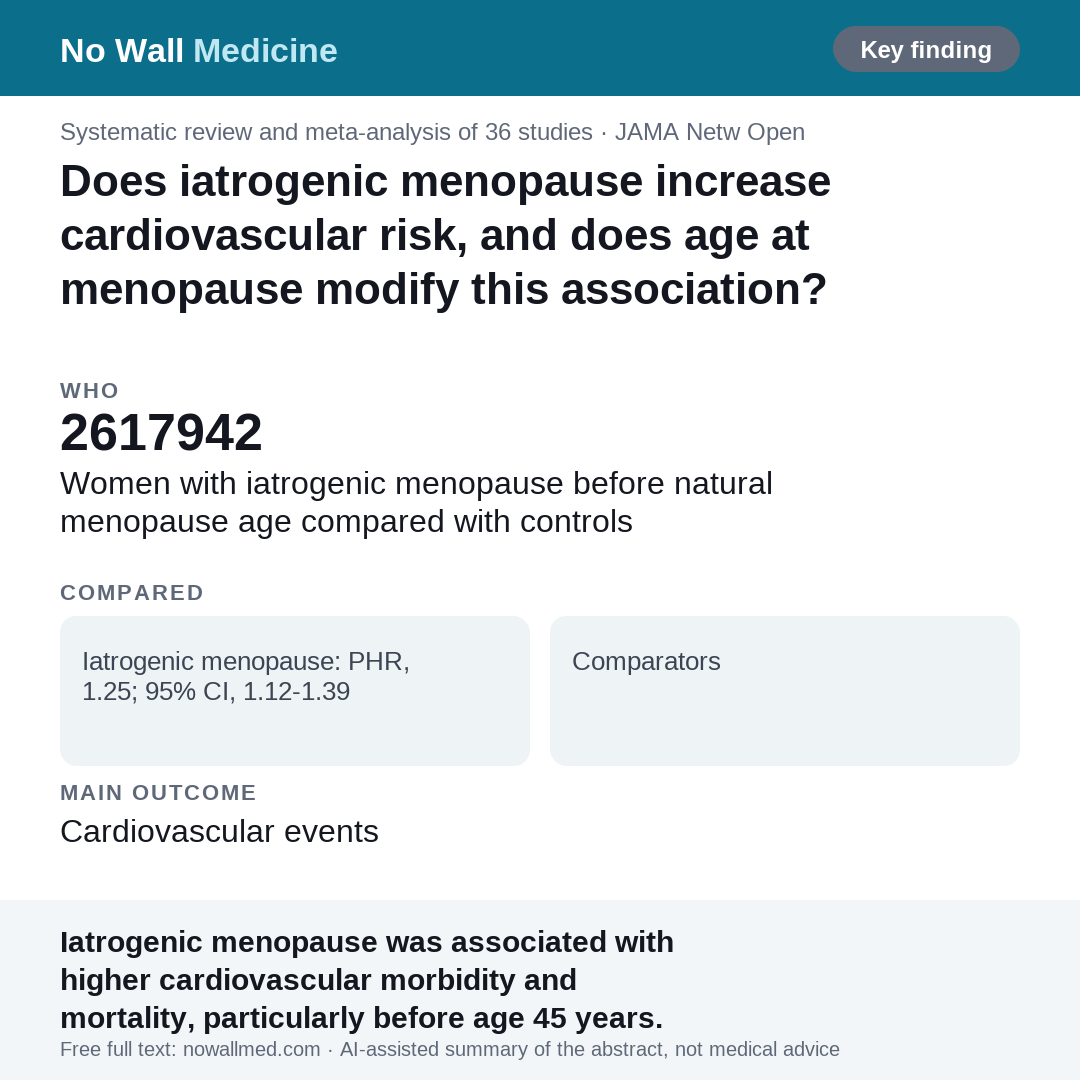
Age at Iatrogenic Menopause and Cardiovascular Morbidity and Mortality: A Systematic Review and Meta-Analysis
Meta-analysis of 36 studiesHarm found
Iatrogenic menopause impact on cardiovascular health
Who
2617942
women with iatrogenic menopause and comparators
Compared
Iatrogenic menopause before 45
Iatrogenic menopause at or after 45
Main outcome
cardiovascular morbidity and mortality
Result: hazard ratio 1.08 (95% CI 1.01 to 1.16) for all-cause mortality
Bottom line: Iatrogenic menopause increases cardiovascular risk
JAMA Netw Open · 2026-10-01Download image
Factors influencing access to green health prescribing in primary care for older adults - a qualitative systematic review
Qualitative systematic reviewUnclear result
What influences green health prescribing access
Who
older adults with long-term conditions
Compared
barriers
enablers
Main outcome
access to green health prescribing
Bottom line: Barriers and enablers to access identified
BMC Med · 2026-10-01Download image

Epstein-Barr virus-attributable cancers among children and adolescents in Europe and North America: a meta-analysis
Meta-analysisBenefit found
What proportion of childhood cancers in Europe and North America are attributable to Epstein-Barr virus?
Who
Children and adolescents aged 19 years or younger · Europe and North America
Compared
19.7%Burkitt lymphoma (CI: 10.2-34.7%)
33.4%Hodgkin lymphoma (CI: 27.4-40.0%)
96.8%Nasopharyngeal cancer (CI: 88.0-99.2%)
Main outcome
Epstein-Barr virus prevalence in specific cancers
Bottom line: In 2022, 2.8% of childhood cancers in Europe and North America were attributable to Epstein-Barr virus.
J Natl Cancer Inst · 2026-10-01Download image

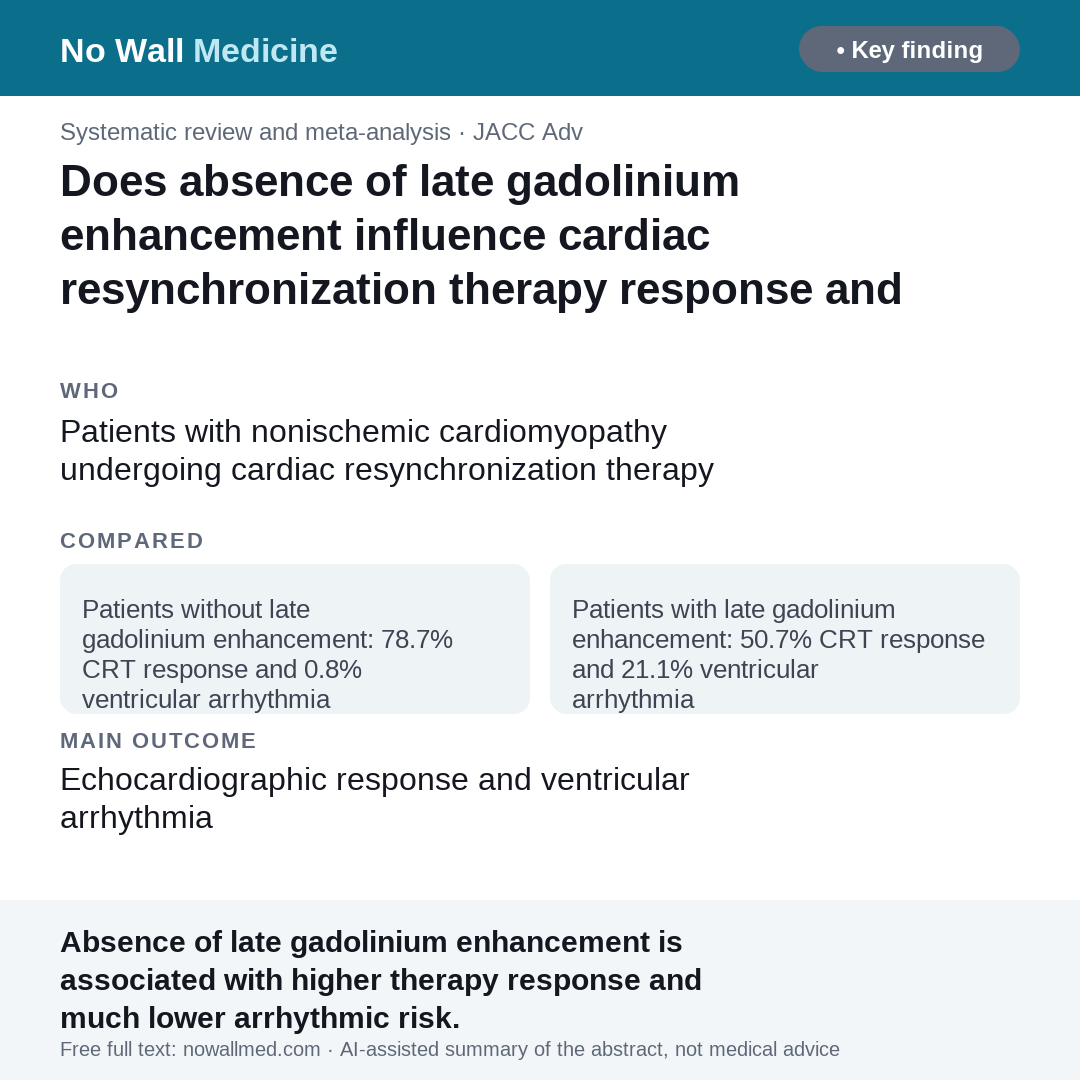
Absence of Fibrosis Influences Prognosis of Cardiac Resynchronization in Nonischemic Cardiomyopathy: Systematic Review and Meta-Analysis
Systematic review and meta-analysisBenefit found
Does absence of late gadolinium enhancement influence cardiac resynchronization therapy response and arrhythmia?
Who
Patients with nonischemic cardiomyopathy undergoing cardiac resynchronization therapy
Compared
78.7%Patients without late gadolinium enhancement
50.7%Patients with late gadolinium enhancement
Main outcome
Echocardiographic response to cardiac resynchronization therapy
Bottom line: Absence of late gadolinium enhancement is associated with greater echocardiographic response and low arrhythmic risk.
JACC Adv · 2026-10-01Download image
Sex differences in the efficacy, acceptability, and tolerability of antipsychotics in people with acute schizophrenia: individual participant data pairwise, dose-response, and network meta-analyses
Meta-analysis of 33 trialsNo clear difference
Do antipsychotics differ by sex in efficacy and tolerability
Who
7062
Adults with acute schizophrenia
Compared
Females
Males
Main outcome
Overall symptoms at week 6
Result: difference of standardised mean difference 0·04, 95% CI -0·09 to 0·18
Bottom line: No sex difference in antipsychotic efficacy found
Funded by: German Federal Ministry of Research
Lancet Psychiatry · 2026-09-30Download image

Effect of vitamin D supplementation on bone health in Black, Asian and other non-White ethnic adults: a systematic review and meta-analysis
Systematic review and meta-analysis of randomized controlled trialsUnclear result
Does vitamin D supplementation improve bone health in non-White ethnic adults?
Who
8023
Black, Asian, and other non-White adults
Compared
Vitamin D supplementation
Placebo
Main outcome
Bone mineral density, bone turnover markers, and fractures
Bottom line: Evidence supporting vitamin D supplementation for improving bone health in non-White adults remains limited.
Limitation: Evidence supporting vitamin D supplementation for improving bone health remains limited.
Am J Clin Nutr · 2026-09-30Download image

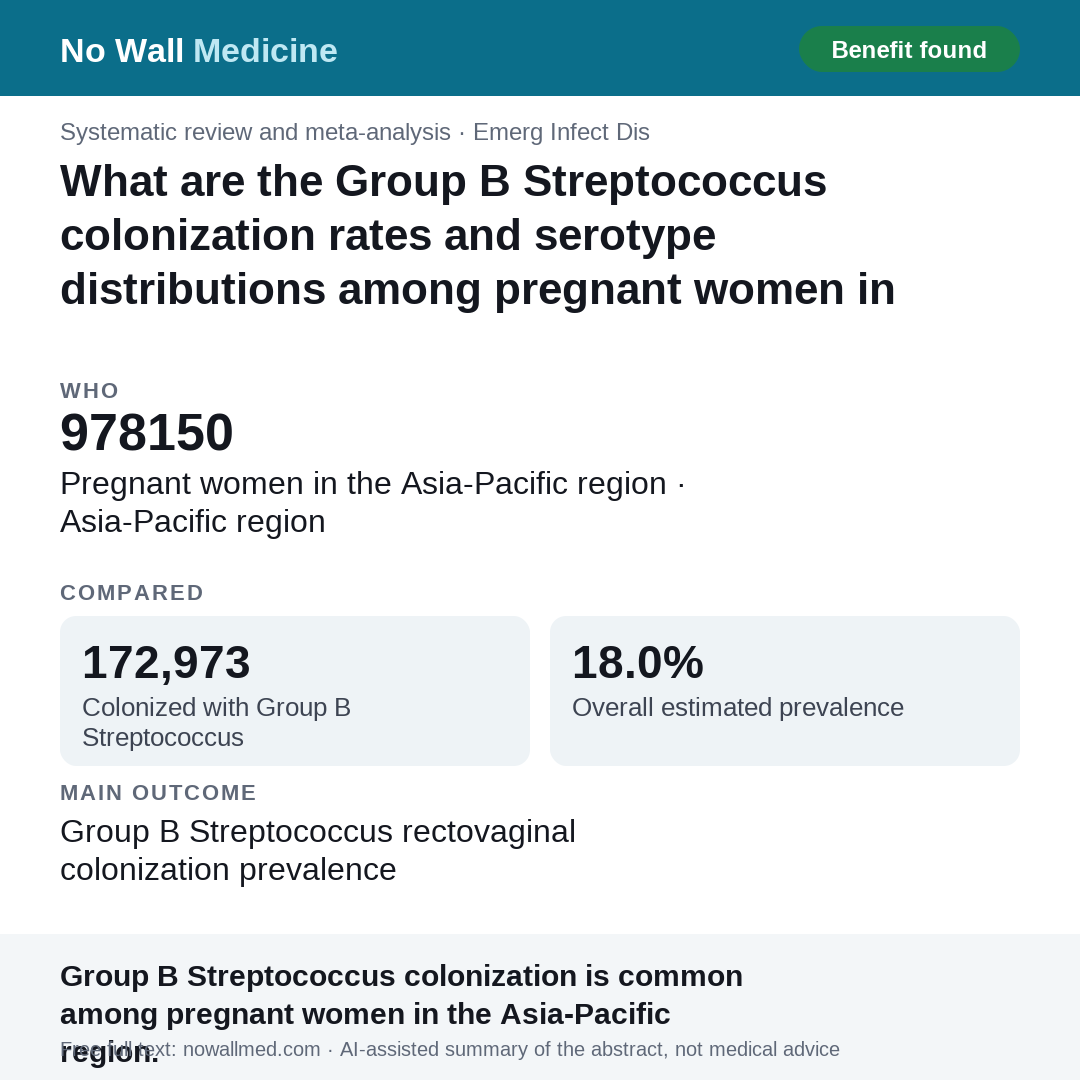
Systematic Review and Meta-analysis of Group B Streptococcus Rectovaginal Colonization Rates and Serotype Distribution among Pregnant Women, Asia-Pacific Region, 2014-2025
Systematic review and meta-analysisBenefit found
What are the Group B Streptococcus colonization rates and serotype distributions among pregnant women in Asia-Pacific?
Who
978150
Pregnant women in the Asia-Pacific region · Asia-Pacific region
Compared
172,973Colonized with Group B Streptococcus
18.0%Overall estimated prevalence (95% CI 12%-23%)
Main outcome
Group B Streptococcus rectovaginal colonization prevalence
Result: 18.0% (95% CI 12%-23%)
Bottom line: Group B Streptococcus colonization is common among pregnant women in the Asia-Pacific region.
Limitation: Studies from Southeast Asia were limited.
Emerg Infect Dis · 2026-09-30Download image
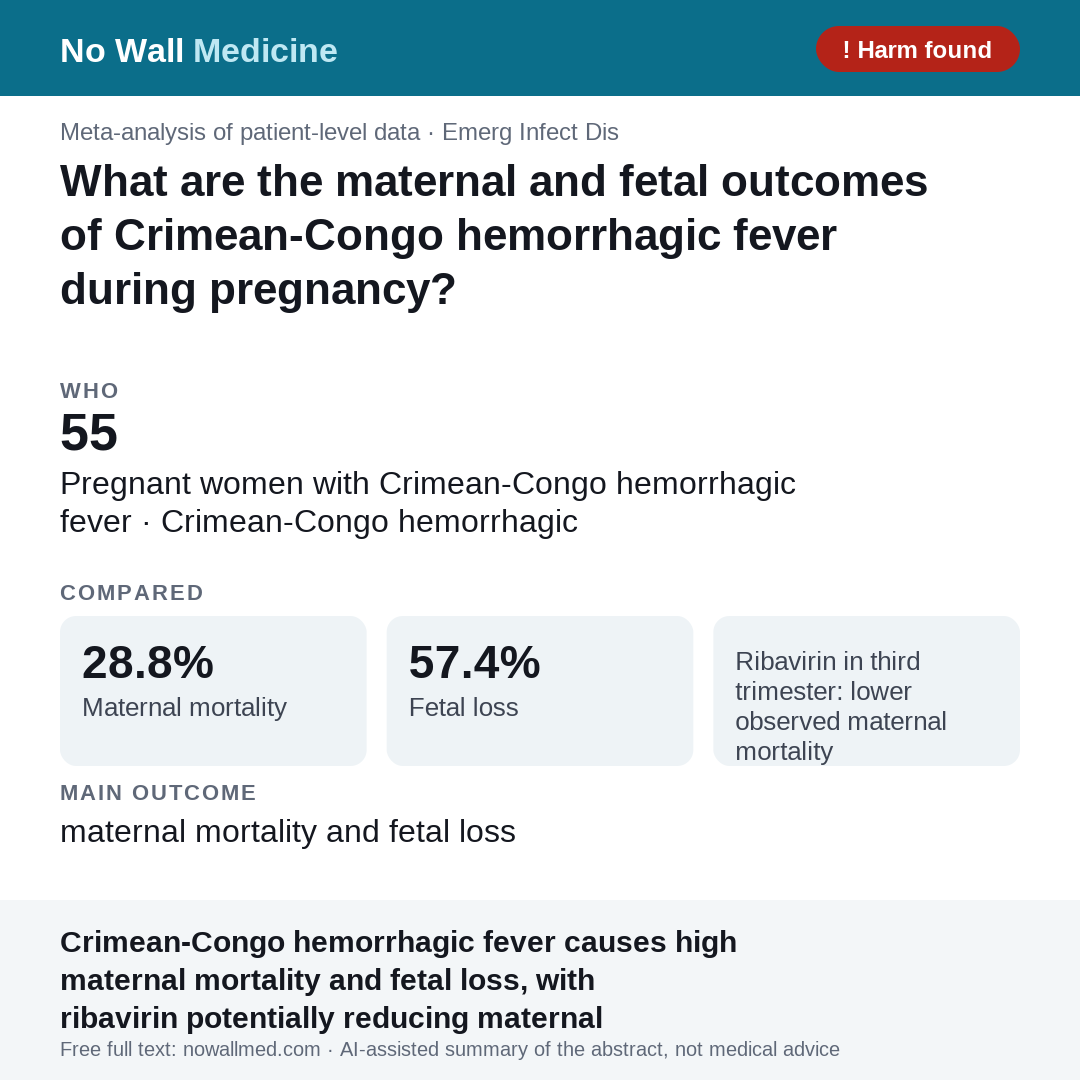
Meta-analysis of Maternal and Fetal Outcomes of Crimean-Congo Hemorrhagic Fever during Pregnancy
Meta-analysis of patient-level dataHarm found
What are the maternal and fetal outcomes of Crimean-Congo hemorrhagic fever during pregnancy?
Who
55
Pregnant women with Crimean-Congo hemorrhagic fever · Crimean-Congo hemorrhagic fever-endemic areas
Compared
28.8%Maternal mortality (15/52)
57.4%Fetal loss (31/54)
Ribavirin in third trimester: lower observed maternal mortality
Main outcome
maternal mortality and fetal loss
Result: odds ratio 0.33 (95% CI 0.13-0.84)
Bottom line: Crimean-Congo hemorrhagic fever causes high maternal mortality and fetal loss, with ribavirin potentially reducing maternal mortality in the third trimester.
Limitation: evidence remains limited to heterogeneous case reports
Emerg Infect Dis · 2026-09-30Download image
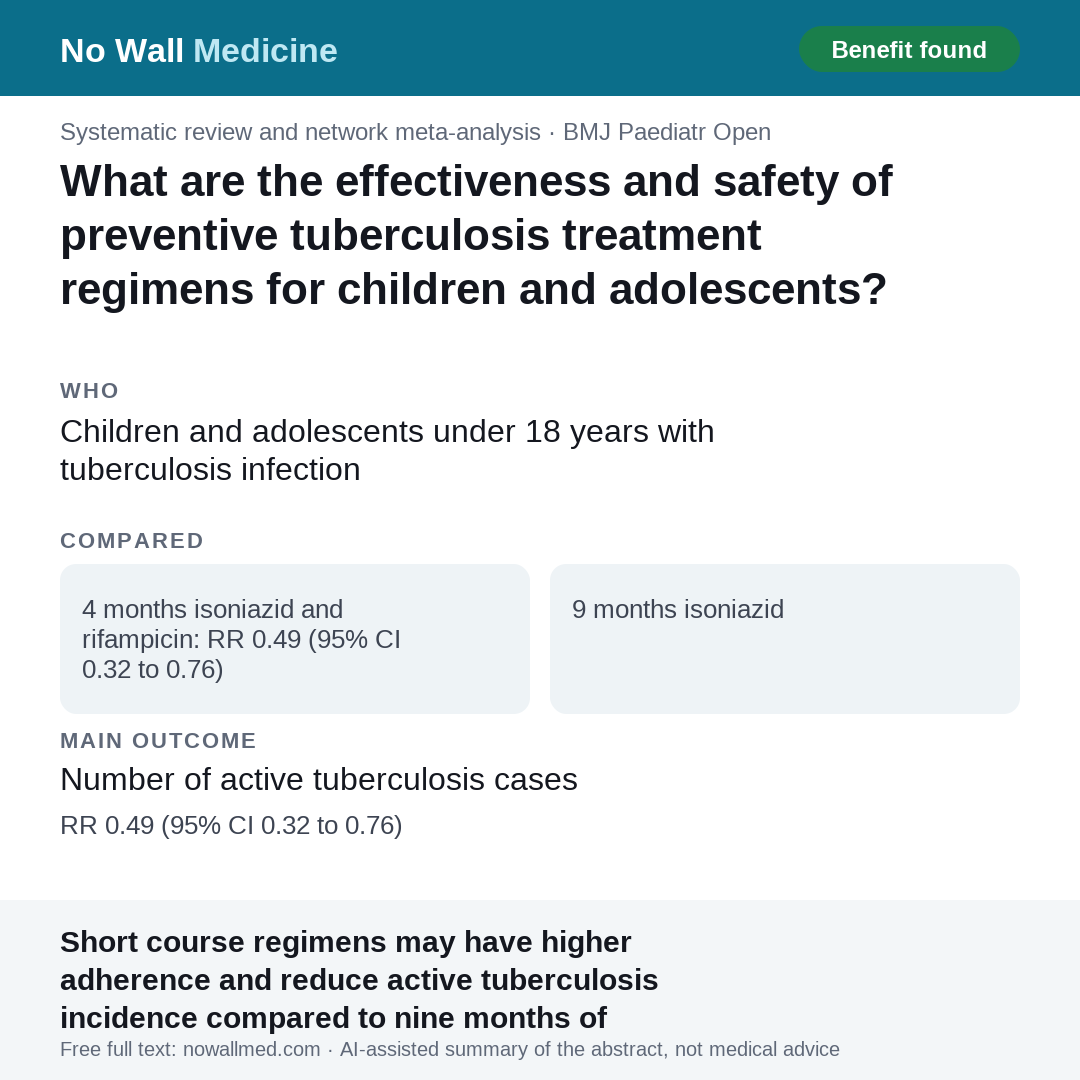
Effectiveness and safety of the available preventive tuberculosis treatment regimens for children and adolescents: systematic review and network meta-analysis
Systematic review and network meta-analysisBenefit found
What are the effectiveness and safety of preventive tuberculosis treatment regimens for children and adolescents?
Who
Children and adolescents under 18 years with tuberculosis infection
Compared
4 months isoniazid and rifampicin: RR 0.49 (95% CI 0.32 to 0.76)
9 months isoniazid
Main outcome
Number of active tuberculosis cases
Result: RR 0.49 (95% CI 0.32 to 0.76)
Bottom line: Short course regimens may have higher adherence and reduce active tuberculosis incidence compared to nine months of isoniazid.
Limitation: High variability was found in the reporting of adverse reactions.
BMJ Paediatr Open · 2026-09-30Download image
Electroencephalography in Subjective Cognitive Decline and Mild Cognitive Impairment: Systematic Review of Biomarkers, Classification, and Prognostic Evidence
Systematic reviewUnclear result
Can electroencephalography serve as a biomarker, classification tool, or prognostic indicator in SCD and MCI?
Who
3853
Individuals with subjective cognitive decline or mild cognitive impairment
Compared
EEG biomarkers and classification
EEG prognosis
Main outcome
EEG biomarkers, classification models, and prognostic evidence
Bottom line: Electroencephalography shows promise for biomarker discovery and model development but lacks established clinical screening or diagnostic evidence.
Limitation: The certainty of evidence was very low across all evidence bodies.
J Med Internet Res · 2026-09-30Download image