Visual abstracts
New randomized trials and meta-analyses from leading journals at a glance: who was studied, what was compared, and what was found. Every paper is free to read in full.
All specialtiesCardiology 847Oncology 766Gastroenterology & Hepatology 307Infectious Disease 626Neurology 353Psychiatry & Mental Health 430Pulmonology 368Critical Care 252Endocrinology & Diabetes 480Pediatrics 540Surgery 328Orthopedics & Sports Medicine 163Neurosurgery 100Cardiothoracic & Vascular Surgery 87Plastic & Reconstructive Surgery 132Nephrology 197Rheumatology 108Hematology 182Dermatology 80Ophthalmology 97Obstetrics & Gynecology 262Public & Global Health 167Radiology & Imaging 98Anesthesiology 117Urology 162ENT (Otolaryngology) 100Emergency Medicine 84Allergy & Immunology 58Geriatrics 160Family Medicine & Primary Care 111Medical Genetics & Genomics 91Pathology & Laboratory Medicine 24Physical Medicine & Rehabilitation 148Palliative Care 81Nutrition 223Digital Health & AI 460General Medicine 101
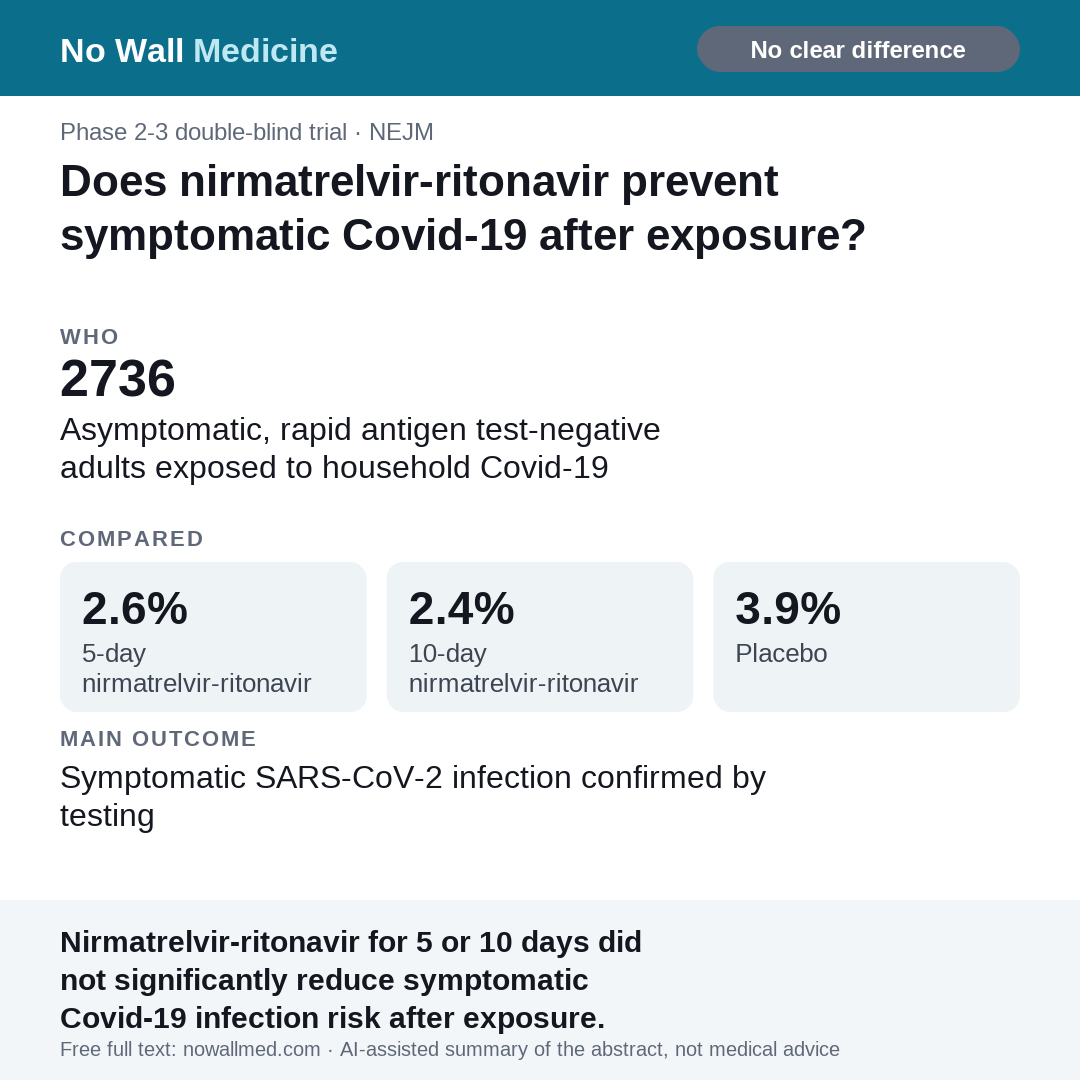
Oral Nirmatrelvir-Ritonavir as Postexposure Prophylaxis for Covid-19
Phase 2-3 double-blind trialNo clear difference
Does nirmatrelvir-ritonavir prevent symptomatic Covid-19 after exposure?
Who
2736
Asymptomatic, rapid antigen test-negative adults exposed to household Covid-19
Compared
2.6%5-day nirmatrelvir-ritonavir
2.4%10-day nirmatrelvir-ritonavir
3.9%Placebo
Main outcome
Symptomatic SARS-CoV-2 infection confirmed by testing
Result: risk reduction 29.8% (95% CI, -16.7 to 57.8) and 35.5% (95% CI, -11.5 to 62.7)
Bottom line: Nirmatrelvir-ritonavir for 5 or 10 days did not significantly reduce symptomatic Covid-19 infection risk after exposure.
Funded by: Pfizer
NEJM · 2024-07-17Download image
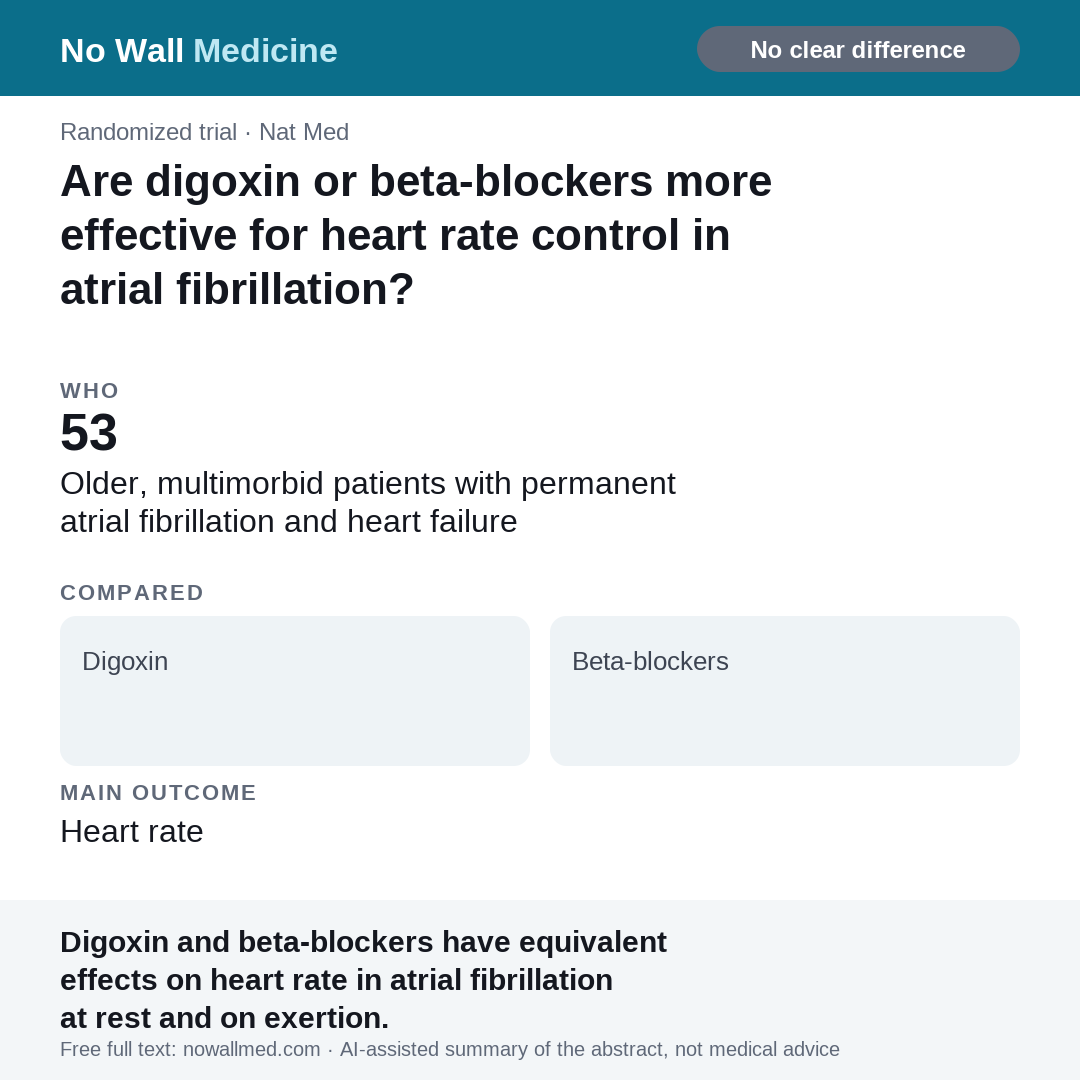
Consumer wearable devices for evaluation of heart rate control using digoxin versus beta-blockers: the RATE-AF randomized trial
Randomized trialNo clear difference
Are digoxin or beta-blockers more effective for heart rate control in atrial fibrillation?
Who
53
Older, multimorbid patients with permanent atrial fibrillation and heart failure
Compared
Digoxin
Beta-blockers
Main outcome
Heart rate
Result: regression coefficient 1.22 (95% CI -2.82 to 5.27)
Bottom line: Digoxin and beta-blockers have equivalent effects on heart rate in atrial fibrillation at rest and on exertion.
Nat Med · 2024-07-15Download image
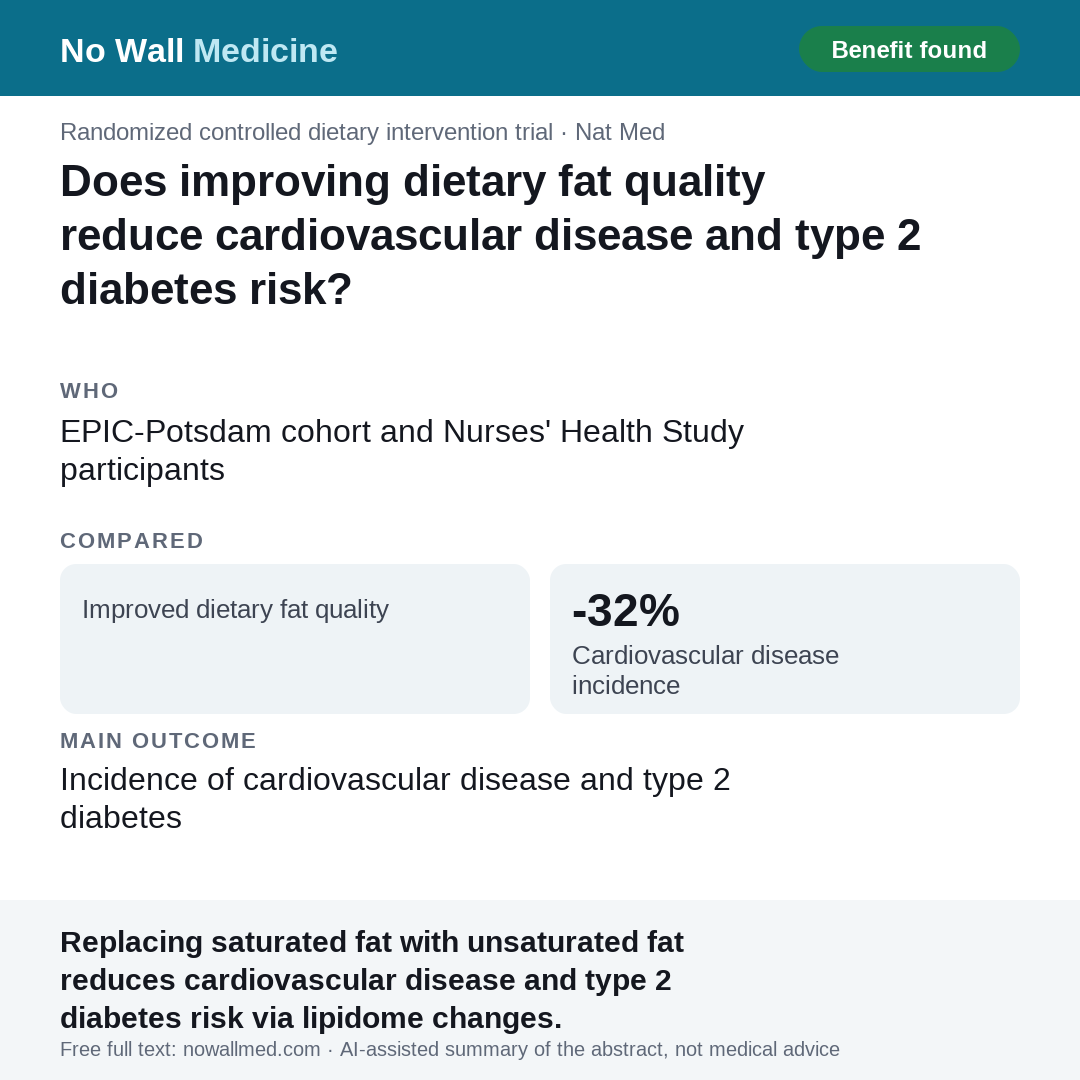
Lipidome changes due to improved dietary fat quality inform cardiometabolic risk reduction and precision nutrition
Randomized controlled dietary intervention trialBenefit found
Does improving dietary fat quality reduce cardiovascular disease and type 2 diabetes risk?
Who
EPIC-Potsdam cohort and Nurses' Health Study participants
Compared
Improved dietary fat quality
-32%Cardiovascular disease incidence
Main outcome
Incidence of cardiovascular disease and type 2 diabetes
Result: -32% (95% CI: -21% to -42%)
Bottom line: Replacing saturated fat with unsaturated fat reduces cardiovascular disease and type 2 diabetes risk via lipidome changes.
Nat Med · 2024-07-11Download image
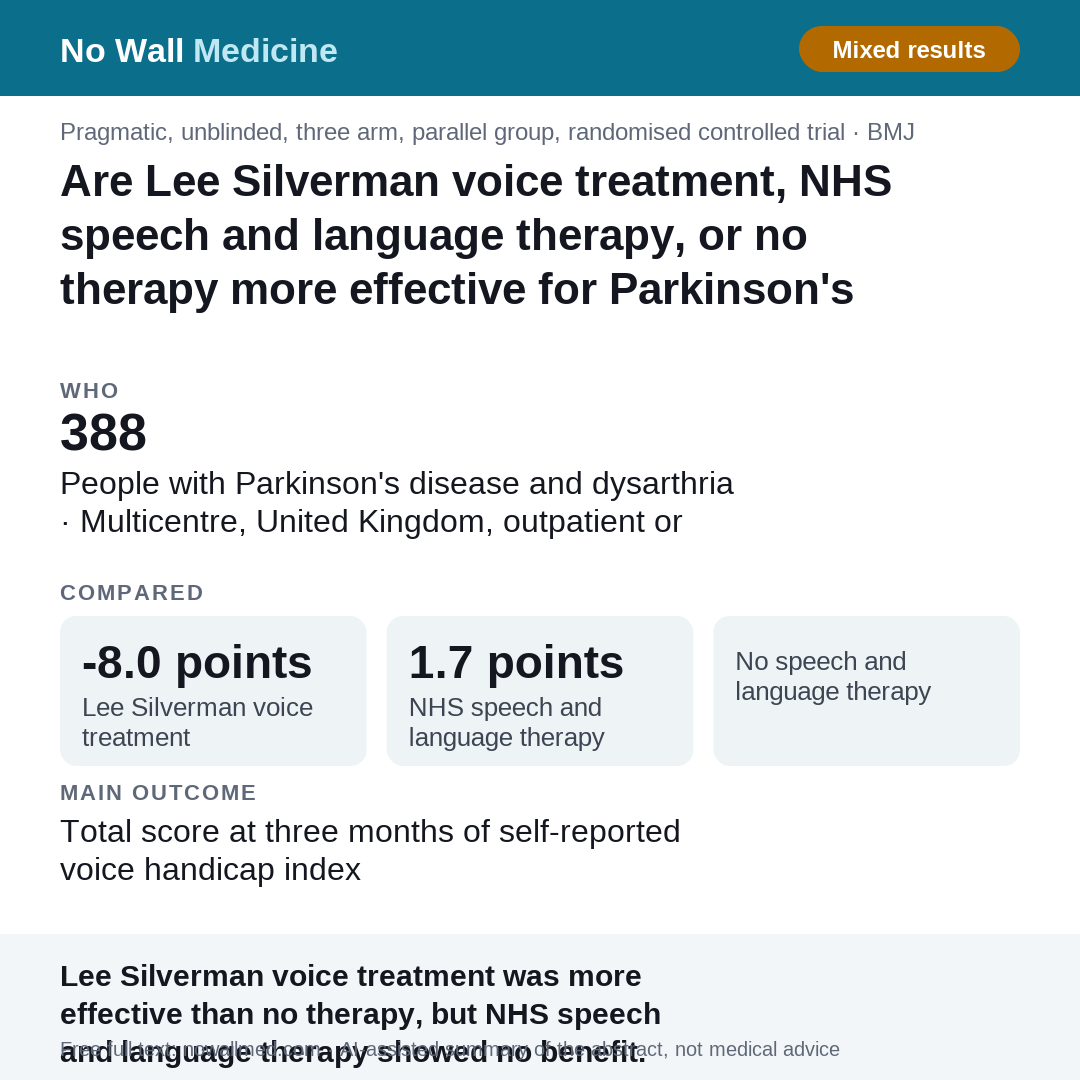
Lee Silverman voice treatment versus NHS speech and language therapy versus control for dysarthria in people with Parkinson's disease (PD COMM): pragmatic, UK based, multicentre, three arm, parallel group, unblinded, randomised controlled trial
Pragmatic, unblinded, three arm, parallel group, randomised controlled trialMixed results
Are Lee Silverman voice treatment, NHS speech and language therapy, or no therapy more effective for Parkinson's dysarthria?
Who
388
People with Parkinson's disease and dysarthria · Multicentre, United Kingdom, outpatient or home settings
Compared
-8.0 pointsLee Silverman voice treatment (99% confidence interval -13.3 to -2.6)
1.7 pointsNHS speech and language therapy (-3.8 to 7.1)
No speech and language therapy
Main outcome
Total score at three months of self-reported voice handicap index
Result: -8.0 points (99% confidence interval -13.3 to -2.6)
Bottom line: Lee Silverman voice treatment was more effective than no therapy, but NHS speech and language therapy showed no benefit.
BMJ · 2024-07-10Download image
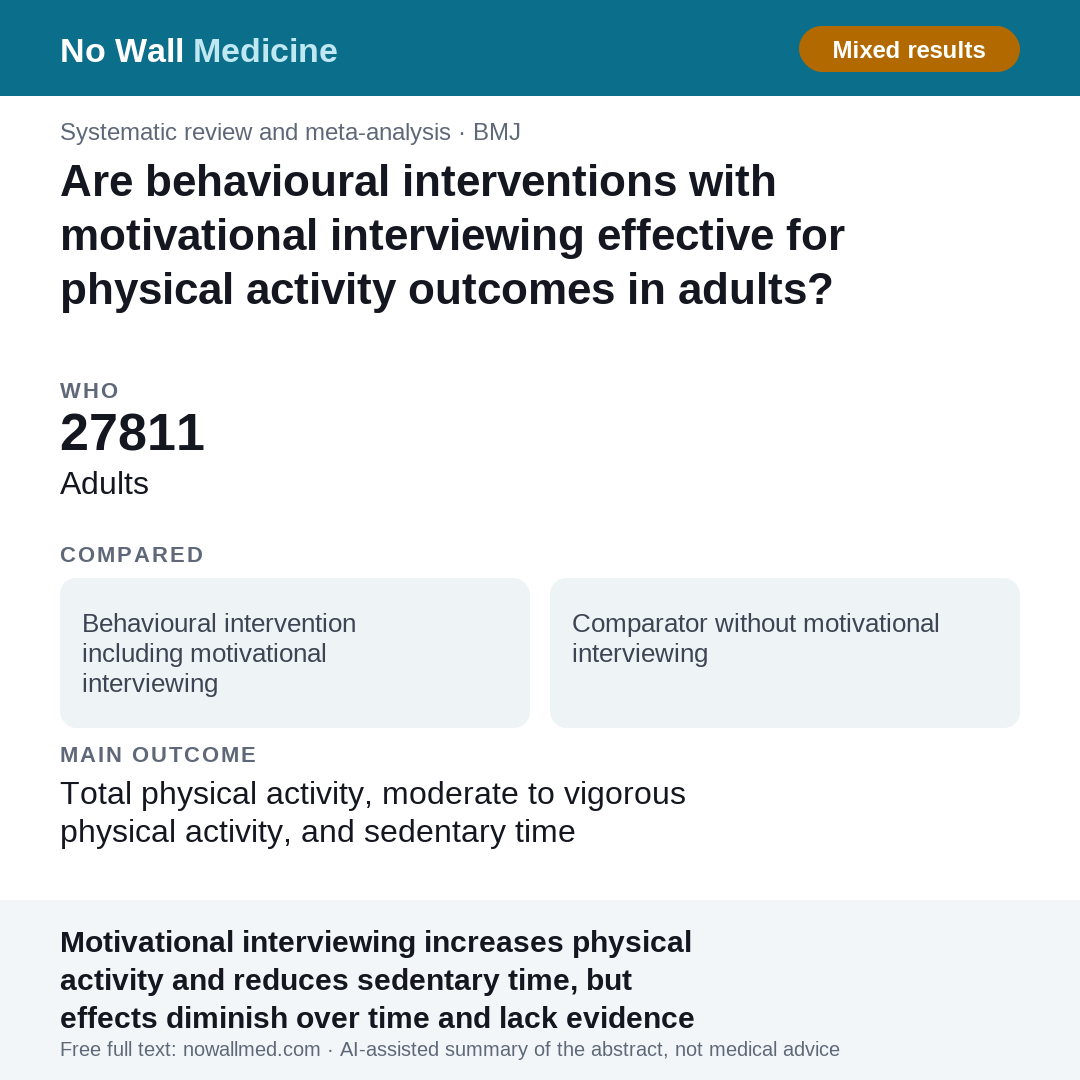
Effectiveness of behavioural interventions with motivational interviewing on physical activity outcomes in adults: systematic review and meta-analysis
Systematic review and meta-analysisMixed results
Are behavioural interventions with motivational interviewing effective for physical activity outcomes in adults?
Who
27811
Adults
Compared
Behavioural intervention including motivational interviewing
Comparator without motivational interviewing
Main outcome
Total physical activity, moderate to vigorous physical activity, and sedentary time
Result: SMD 0.45 (95% CI 0.33 to 0.65) for total physical activity
Bottom line: Motivational interviewing increases physical activity and reduces sedentary time, but effects diminish over time and lack evidence beyond one year.
Limitation: Effectiveness waned over time and evidence of benefit beyond one year was lacking.
BMJ · 2024-07-10Download image
AI-based selection of individuals for supplemental MRI in population-based breast cancer screening: the randomized ScreenTrustMRI trial
Randomized clinical trialBenefit found
Does artificial intelligence selection for supplemental MRI detect more cancers than traditional density measures?
Who
Individuals with a negative screening mammogram and high artificial intelligence score
Compared
Artificial intelligence method: 64 cancers detected per 1,000 MRI examinations
Traditional breast density measures: 16.5 cancers detected per 1,000 MRI examinations
Main outcome
Cancers detected by supplemental magnetic resonance imaging
Bottom line: Artificial intelligence selection for supplemental MRI is more efficient at detecting cancers than traditional breast density measures.
Nat Med · 2024-07-08Download image

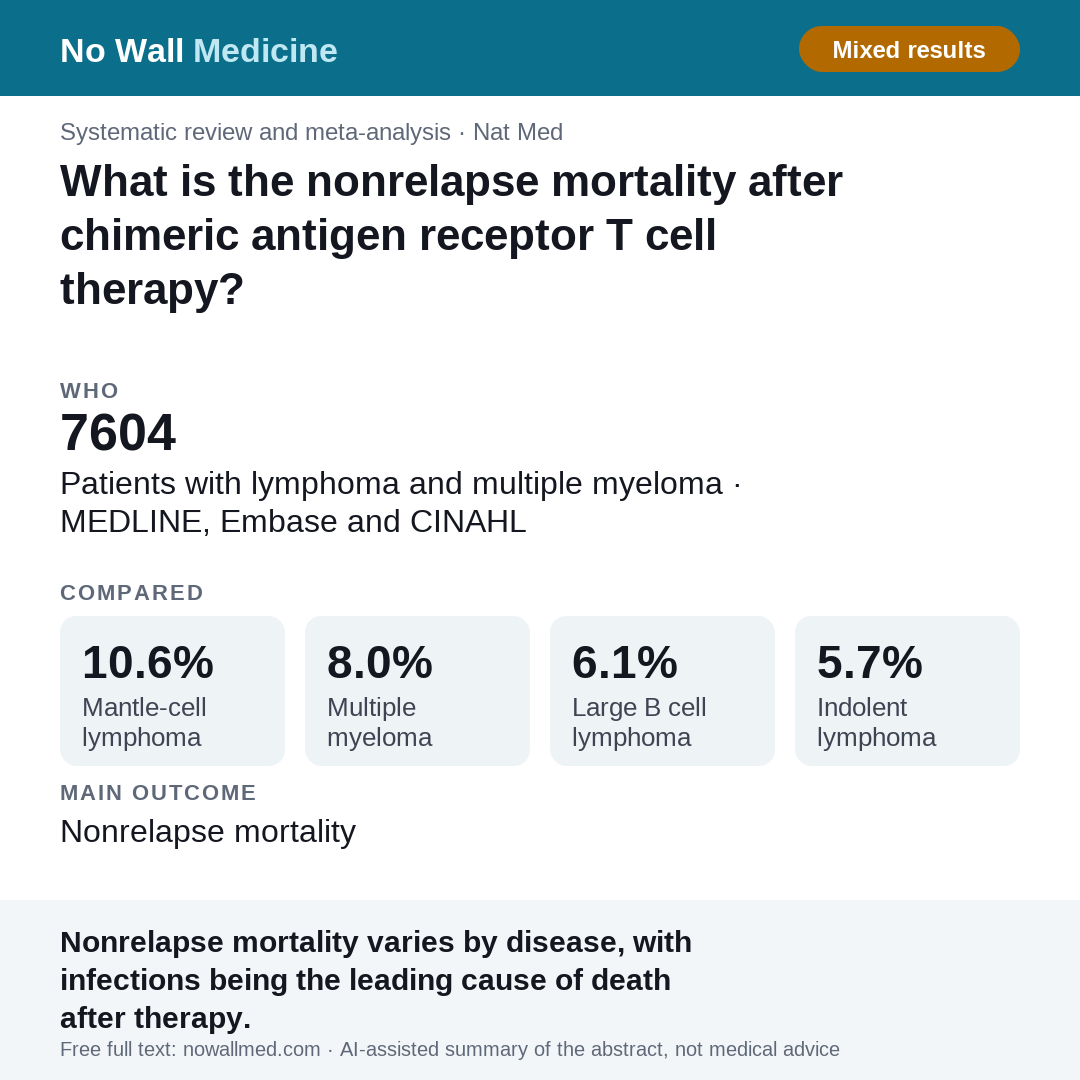
A systematic review and meta-analysis of nonrelapse mortality after CAR T cell therapy
Systematic review and meta-analysisMixed results
What is the nonrelapse mortality after chimeric antigen receptor T cell therapy?
Who
7604
Patients with lymphoma and multiple myeloma · MEDLINE, Embase and CINAHL
Compared
10.6%Mantle-cell lymphoma
8.0%Multiple myeloma
6.1%Large B cell lymphoma
5.7%Indolent lymphoma
Main outcome
Nonrelapse mortality
Bottom line: Nonrelapse mortality varies by disease, with infections being the leading cause of death after therapy.
Nat Med · 2024-07-08Download image
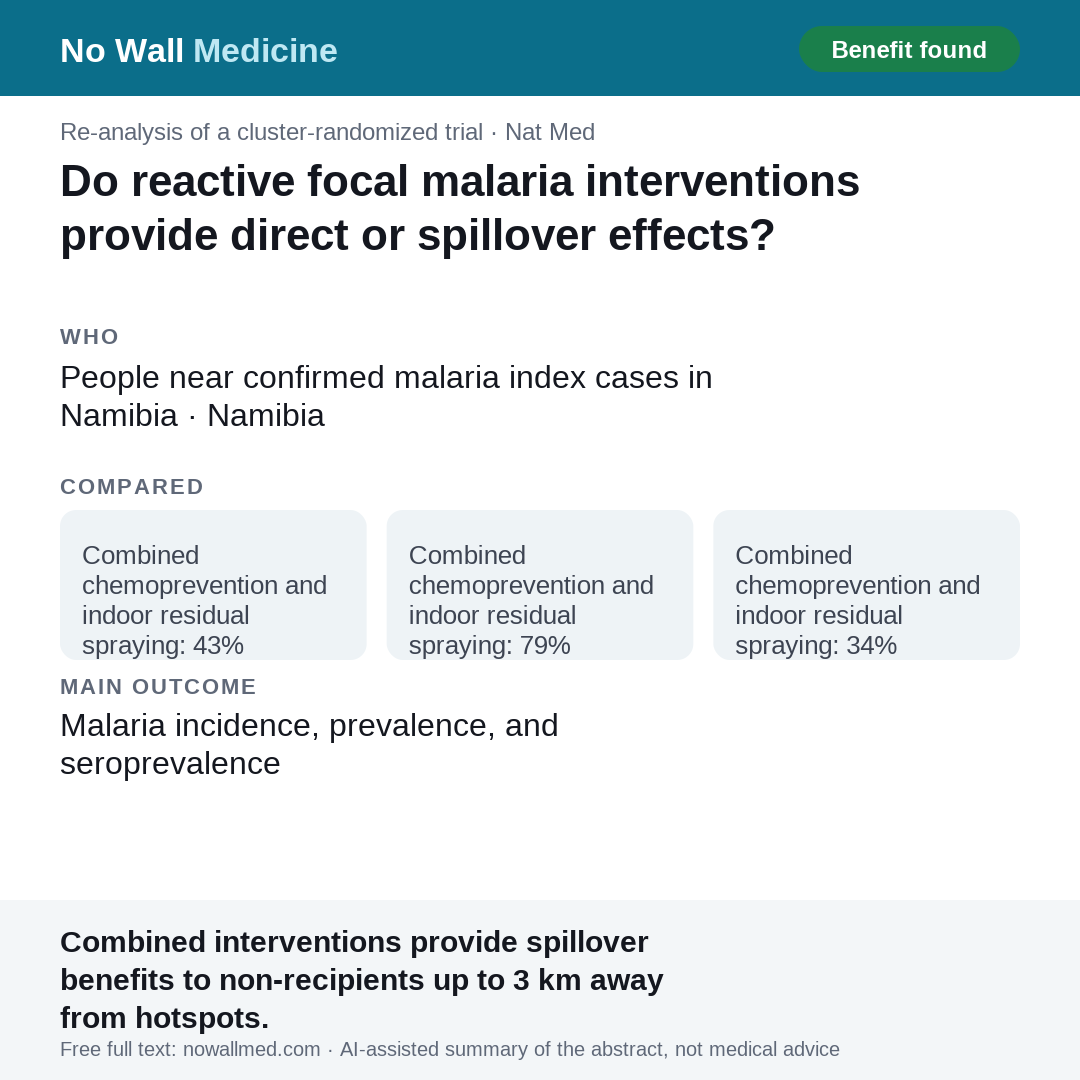
Extension of efficacy range for targeted malaria-elimination interventions due to spillover effects
Re-analysis of a cluster-randomized trialBenefit found
Do reactive focal malaria interventions provide direct or spillover effects?
Who
People near confirmed malaria index cases in Namibia · Namibia
Compared
Combined chemoprevention and indoor residual spraying: 43% reduction in incidence among non-recipients within 1 km
Combined chemoprevention and indoor residual spraying: 79% reduction in infection prevalence among non-recipients within 3 km
Combined chemoprevention and indoor residual spraying: 34% reduction in seroprevalence among non-recipients within 3 km
Main outcome
Malaria incidence, prevalence, and seroprevalence
Bottom line: Combined interventions provide spillover benefits to non-recipients up to 3 km away from hotspots.
Nat Med · 2024-07-04Download image
Assessing the efficacy and tolerability of PET-guided BrECADD versus eBEACOPP in advanced-stage, classical Hodgkin lymphoma (HD21): a randomised, multicentre, parallel, open-label, phase 3 trial
Randomised, multicentre, parallel, open-label, phase 3 trialBenefit found
Is PET-guided BrECADD more effective and tolerable than eBEACOPP for advanced classical Hodgkin lymphoma?
Who
1482
Adults with newly diagnosed, advanced-stage, classical Hodgkin lymphoma · 233 trial sites across nine countries
Compared
BrECADD: 42% (312/738) treatment-related morbidity
eBEACOPP: 59% (430/732) treatment-related morbidity
Main outcome
treatment-related morbidity and progression-free survival
Result: hazard ratio 0.66 (95% CI 0.45-0.97)
Bottom line: PET-guided BrECADD is better tolerated and more effective than eBEACOPP in advanced-stage, classical Hodgkin lymphoma.
Funded by: Takeda Oncology
Lancet · 2024-07-03Download image

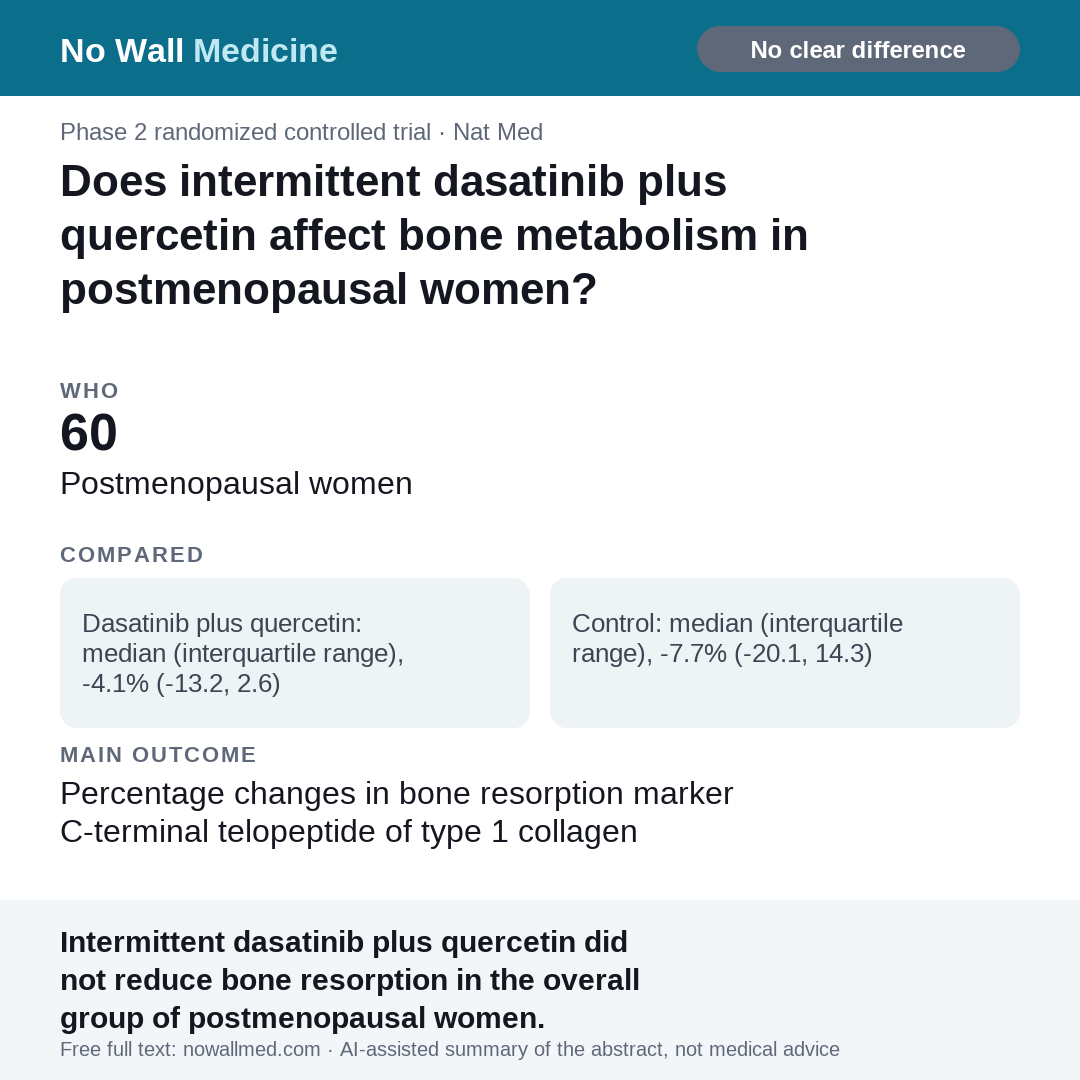
Effects of intermittent senolytic therapy on bone metabolism in postmenopausal women: a phase 2 randomized controlled trial
Phase 2 randomized controlled trialNo clear difference
Does intermittent dasatinib plus quercetin affect bone metabolism in postmenopausal women?
Who
60
Postmenopausal women
Compared
Dasatinib plus quercetin: median (interquartile range), -4.1% (-13.2, 2.6)
Control: median (interquartile range), -7.7% (-20.1, 14.3)
Main outcome
Percentage changes in bone resorption marker C-terminal telopeptide of type 1 collagen
Bottom line: Intermittent dasatinib plus quercetin did not reduce bone resorption in the overall group of postmenopausal women.
Limitation: Exploratory analyses suggest response may depend on underlying senescent cell burden.
Nat Med · 2024-07-02Download image
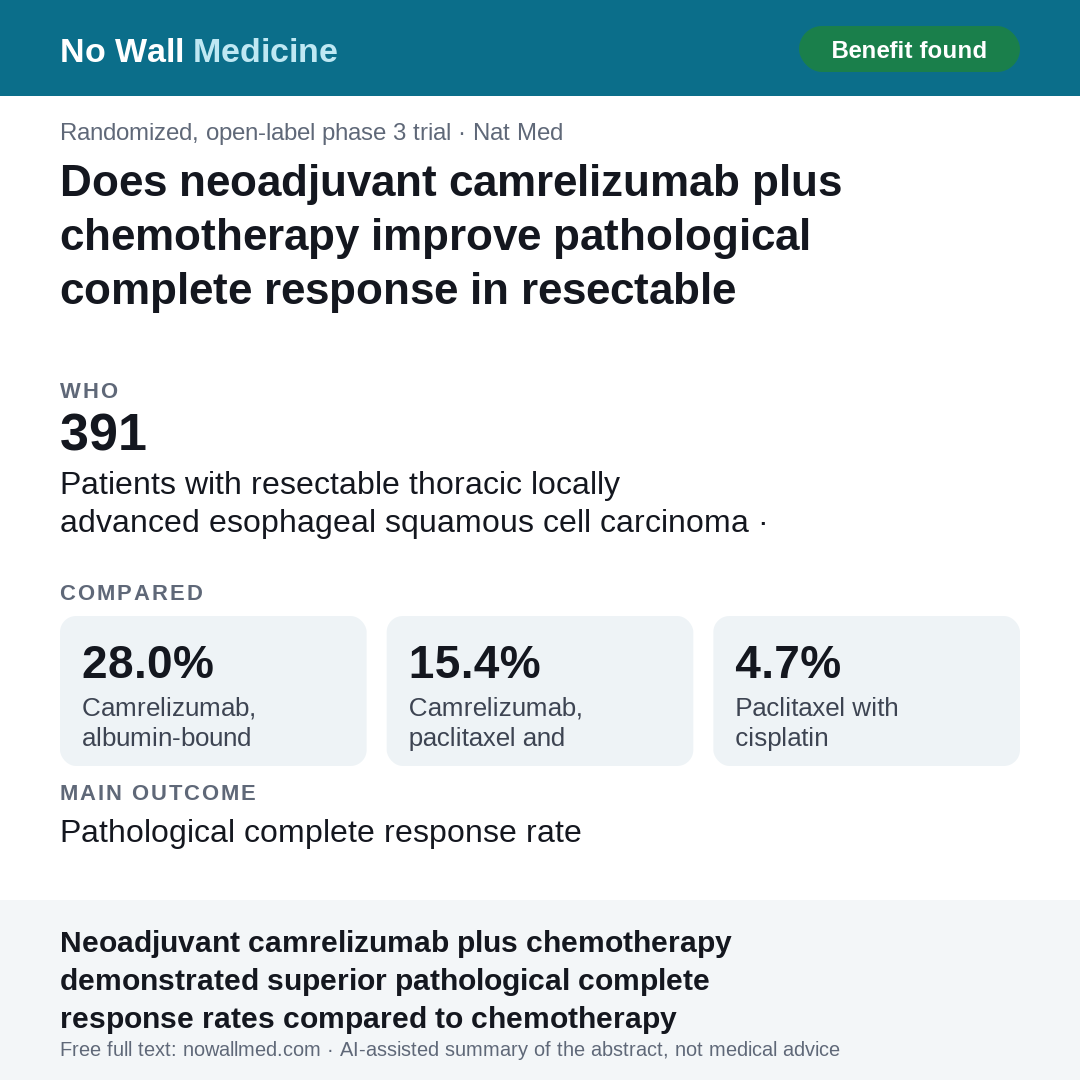
Neoadjuvant chemotherapy with or without camrelizumab in resectable esophageal squamous cell carcinoma: the randomized phase 3 ESCORT-NEO/NCCES01 trial
Randomized, open-label phase 3 trialBenefit found
Does neoadjuvant camrelizumab plus chemotherapy improve pathological complete response in resectable esophageal squamous cell carcinoma?
Who
391
Patients with resectable thoracic locally advanced esophageal squamous cell carcinoma · Multicenter
Compared
28.0%Camrelizumab, albumin-bound paclitaxel and cisplatin
15.4%Camrelizumab, paclitaxel and cisplatin
4.7%Paclitaxel with cisplatin
Main outcome
Pathological complete response rate
Result: difference 23.5%, 95% confidence interval 15.1-32.0
Bottom line: Neoadjuvant camrelizumab plus chemotherapy demonstrated superior pathological complete response rates compared to chemotherapy alone for locally advanced esophageal squamous cell carcinoma.
Limitation: event-free survival is not yet mature
Nat Med · 2024-07-02Download image
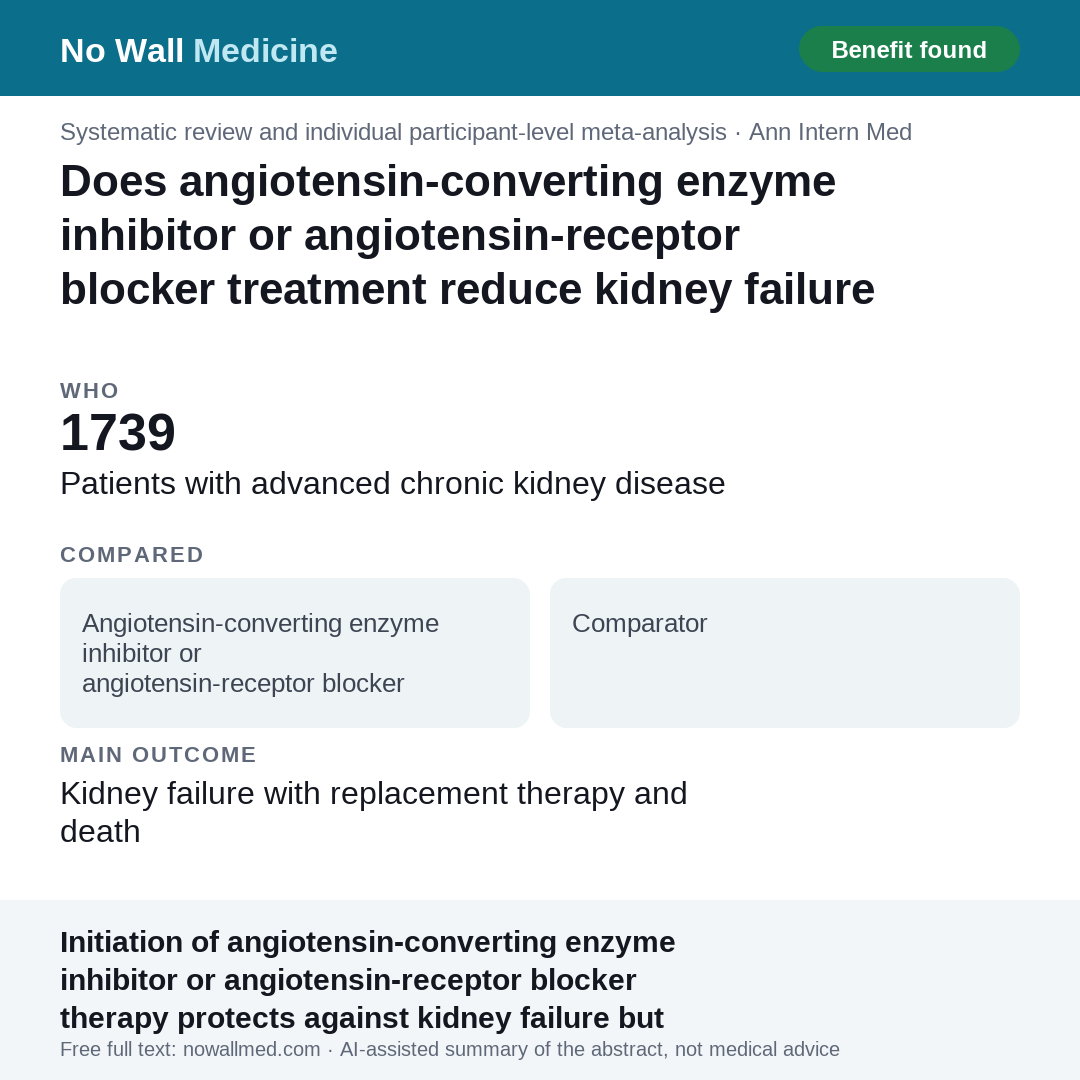
Angiotensin-Converting Enzyme Inhibitors or Angiotensin-Receptor Blockers for Advanced Chronic Kidney Disease : A Systematic Review and Retrospective Individual Participant-Level Meta-analysis of Clinical Trials
Systematic review and individual participant-level meta-analysisBenefit found
Does angiotensin-converting enzyme inhibitor or angiotensin-receptor blocker treatment reduce kidney failure or death?
Who
1739
Patients with advanced chronic kidney disease
Compared
Angiotensin-converting enzyme inhibitor or angiotensin-receptor blocker
Comparator
Main outcome
Kidney failure with replacement therapy and death
Result: adjusted hazard ratio 0.66 (95% CI 0.55 to 0.79) for kidney failure
Bottom line: Initiation of angiotensin-converting enzyme inhibitor or angiotensin-receptor blocker therapy protects against kidney failure but not death in advanced chronic kidney disease.
Limitation: Individual participant-level data for hyperkalemia or acute kidney injury were not available.
Funded by: National Institutes of Health
Ann Intern Med · 2024-07-02Download image
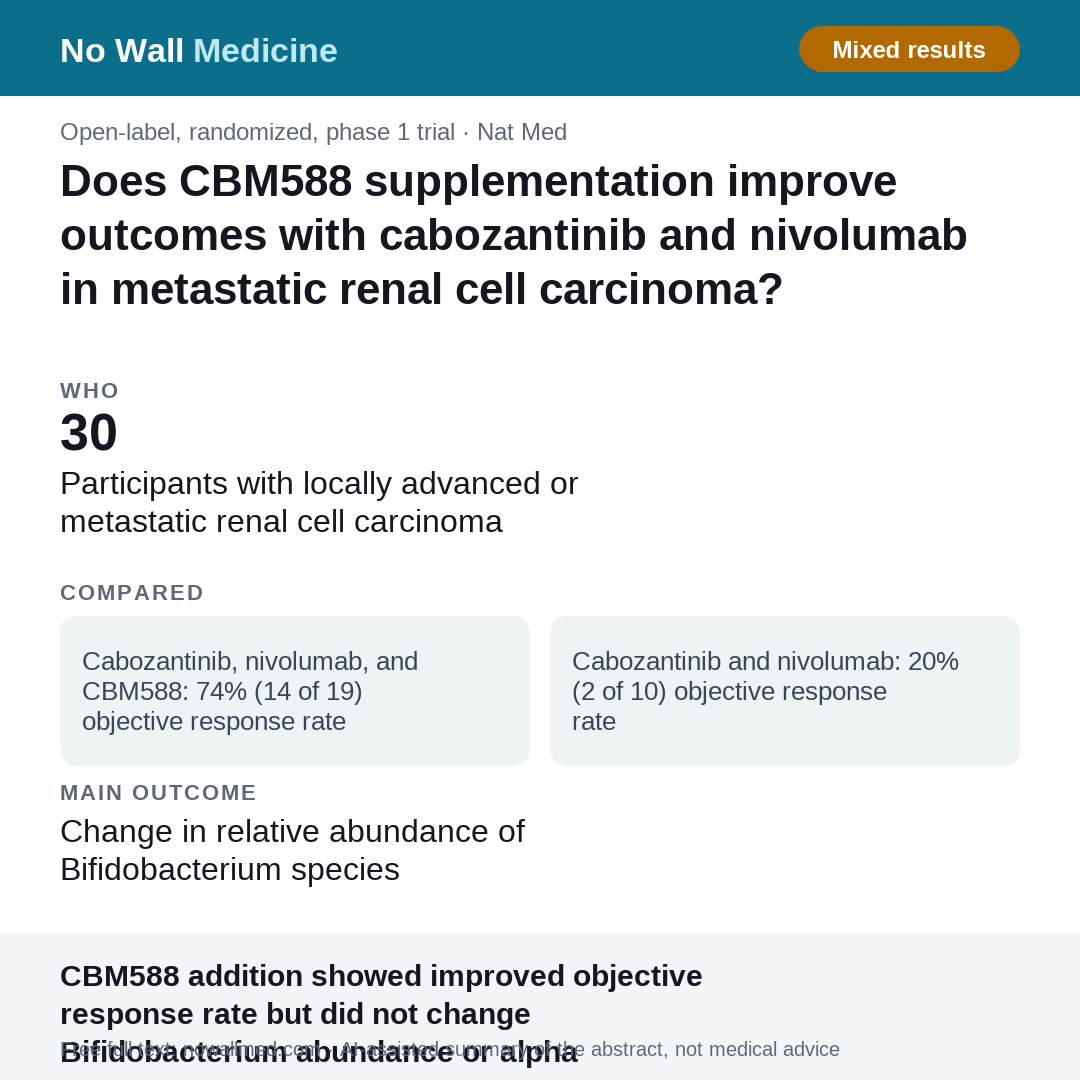
Cabozantinib and nivolumab with or without live bacterial supplementation in metastatic renal cell carcinoma: a randomized phase 1 trial
Open-label, randomized, phase 1 trialMixed results
Does CBM588 supplementation improve outcomes with cabozantinib and nivolumab in metastatic renal cell carcinoma?
Who
30
Participants with locally advanced or metastatic renal cell carcinoma
Compared
Cabozantinib, nivolumab, and CBM588: 74% (14 of 19) objective response rate
Cabozantinib and nivolumab: 20% (2 of 10) objective response rate
Main outcome
Change in relative abundance of Bifidobacterium species
Bottom line: CBM588 addition showed improved objective response rate but did not change Bifidobacterium abundance or alpha diversity.
Limitation: Further investigation is needed to confirm findings and characterize the underlying mechanism.
Nat Med · 2024-06-28Download image
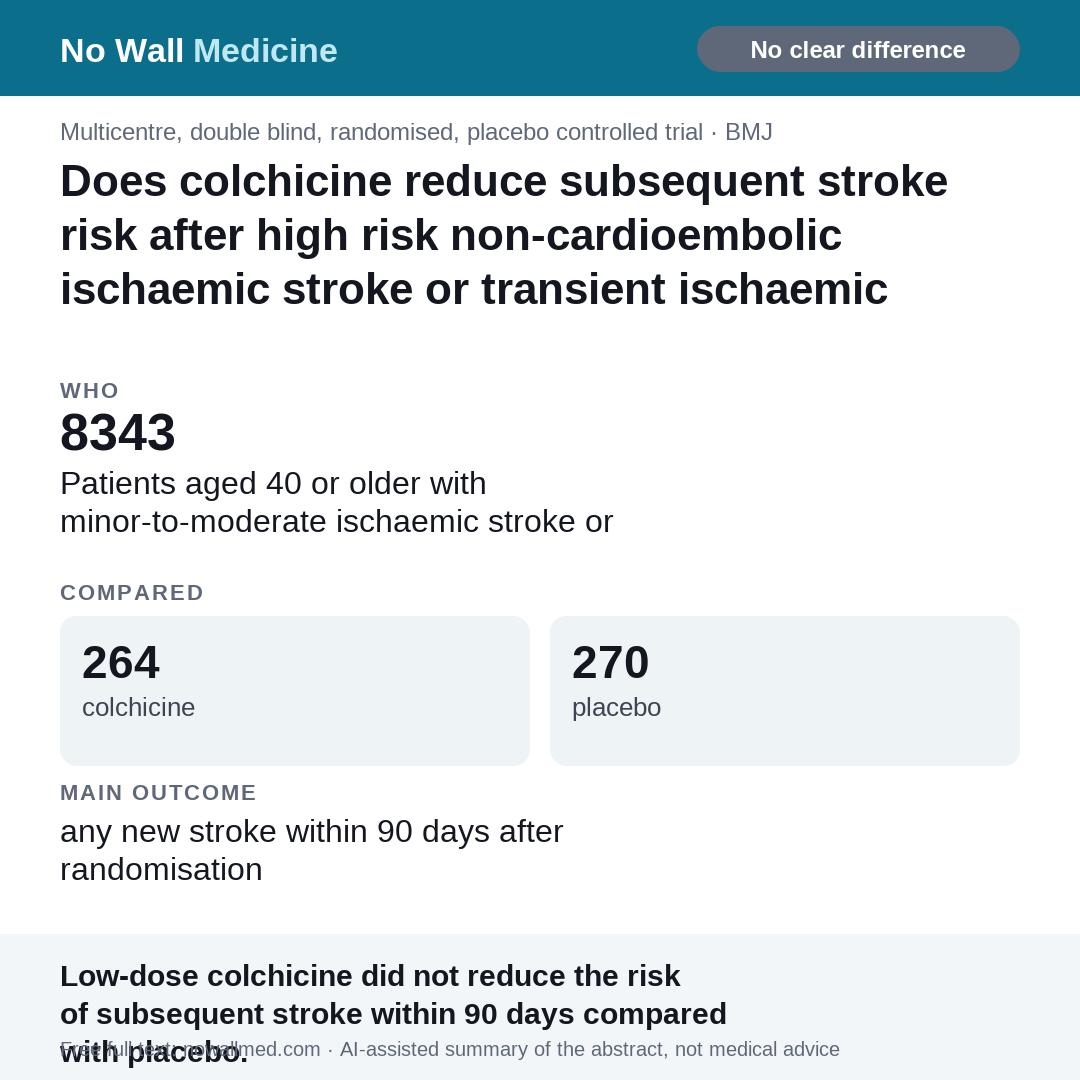
Colchicine in patients with acute ischaemic stroke or transient ischaemic attack (CHANCE-3): multicentre, double blind, randomised, placebo controlled trial
Multicentre, double blind, randomised, placebo controlled trialNo clear difference
Does colchicine reduce subsequent stroke risk after high risk non-cardioembolic ischaemic stroke or transient ischaemic attack?
Who
8343
Patients aged 40 or older with minor-to-moderate ischaemic stroke or transient ischaemic attack · 244 hospitals in China
Compared
264colchicine (6.3%)
270placebo (6.5%)
Main outcome
any new stroke within 90 days after randomisation
Result: hazard ratio 0.98 (95% confidence interval 0.83 to 1.16)
Bottom line: Low-dose colchicine did not reduce the risk of subsequent stroke within 90 days compared with placebo.
BMJ · 2024-06-26Download image
A portable thermal ablation device for cervical cancer prevention in a screen-and-treat setting: a randomized, noninferiority trial
Randomized controlled trialBenefit found
Is thermal ablation noninferior to cryotherapy or electrosurgical excision for cervical precancer?
Who
3124
Women positive on visual inspection with acetic acid in Zambia · Zambia
Compared
74.0%Thermal ablation
71.1%Cryotherapy
71.4%Electrosurgical excision
Main outcome
Treatment success
Bottom line: Portable thermal ablation is a safe and effective noninferior alternative to cryotherapy or surgical excision for cervical precancer.
Nat Med · 2024-06-25Download image

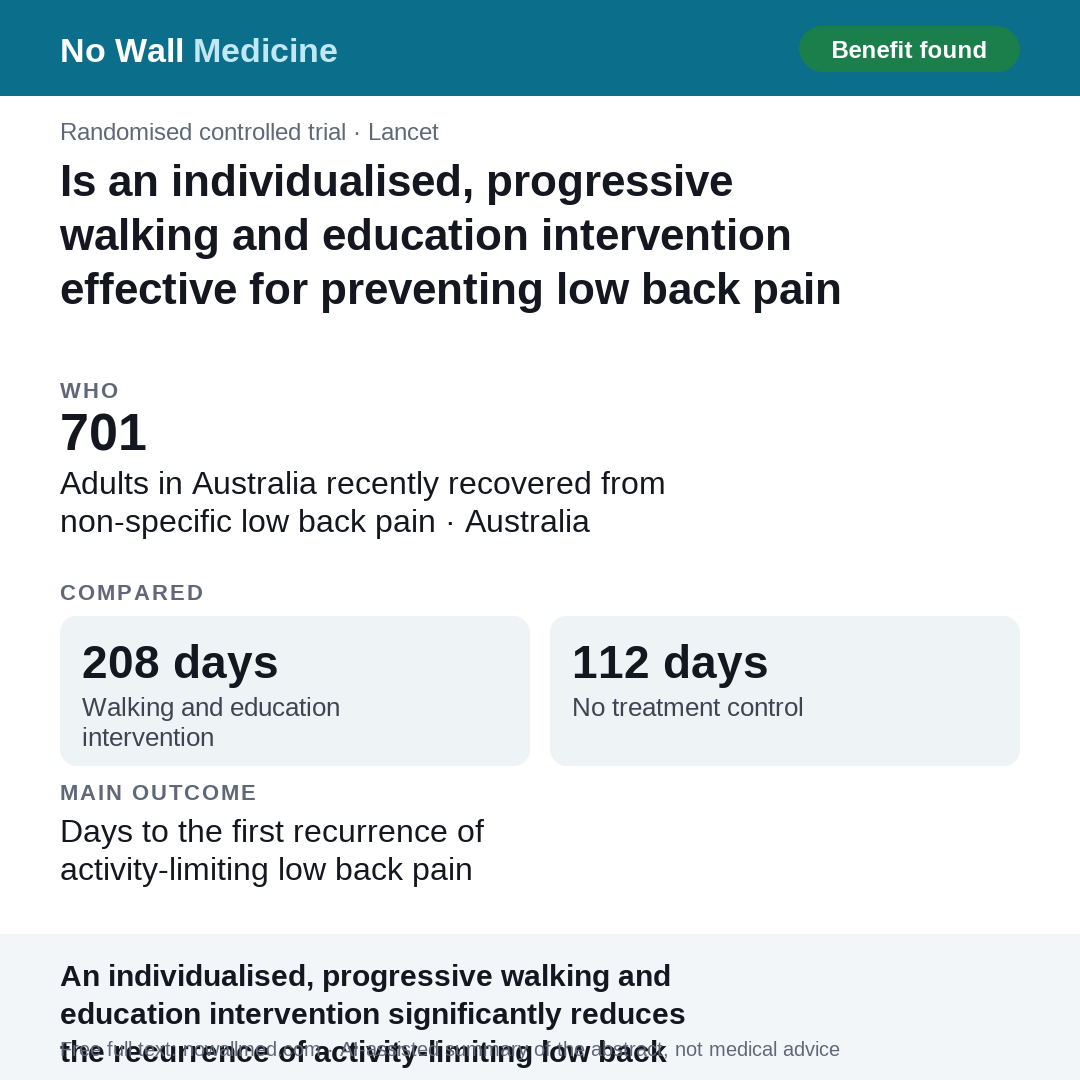
Extended-release ketamine tablets for treatment-resistant depression: a randomized placebo-controlled phase 2 trial
Randomized, double-blind, placebo-controlled phase 2 trialBenefit found
Are extended-release ketamine tablets effective for treatment-resistant depression?
Who
168
Adult patients with treatment-resistant major depression · Multicenter clinical trial
Compared
180 mg R-107 tablet: 42.9% relapse rate
Placebo: 70.6% relapse rate
Main outcome
Least square mean change in Montgomery-Asberg Depression Rating Scale
Result: -6.1 (95% confidence interval 1.0 to 11.16, P = 0.019)
Bottom line: Extended-release ketamine tablets 180 mg were effective and well tolerated in treatment-resistant depression responders.
Nat Med · 2024-06-24Download image
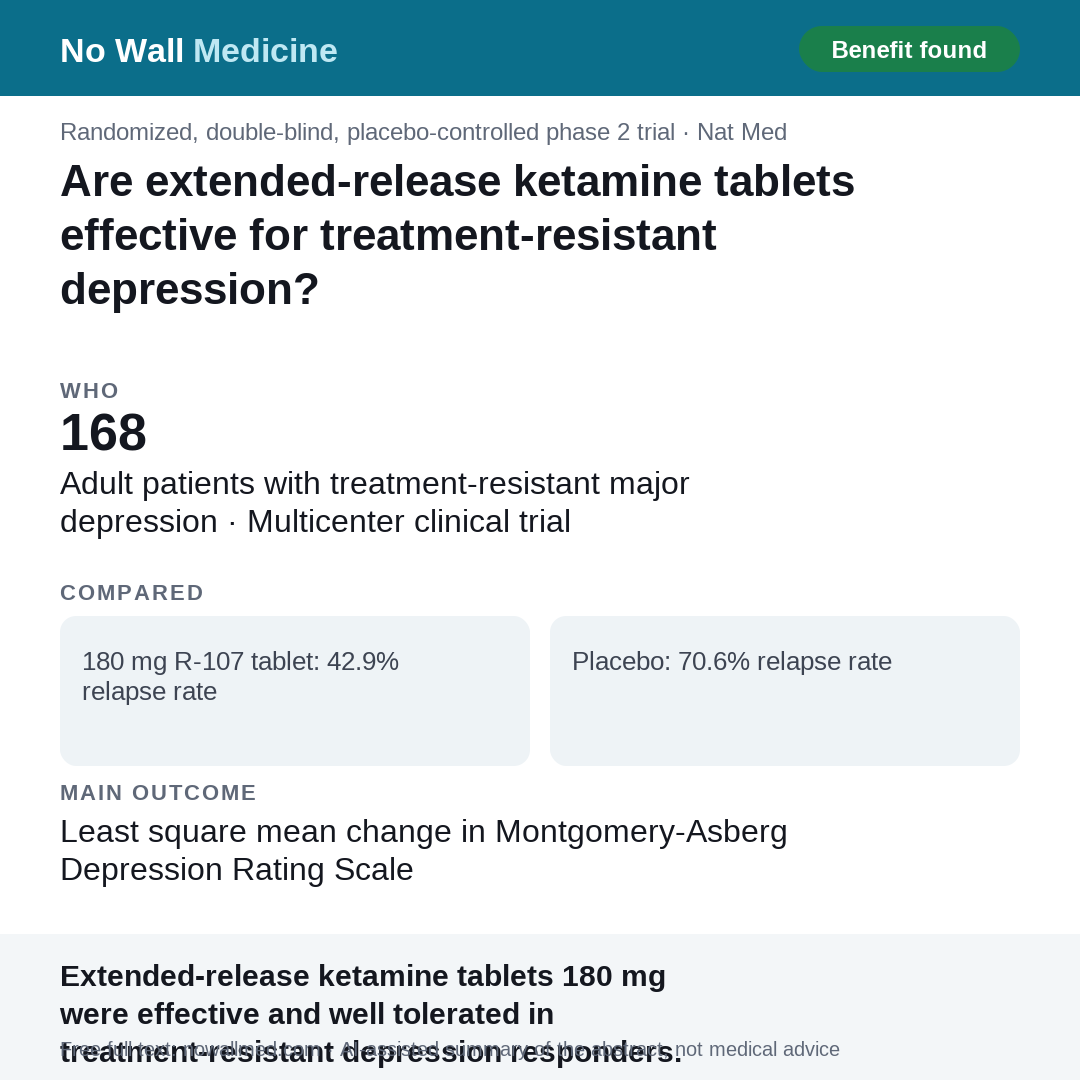
Tirzepatide for the Treatment of Obstructive Sleep Apnea and Obesity
Two phase 3, double-blind, randomized, controlled trialsBenefit found
Does tirzepatide treat obstructive sleep apnea and obesity?
Who
Adults with moderate-to-severe obstructive sleep apnea and obesity
Compared
Tirzepatide: Trial 1: -25.3 events per hour; Trial 2: -29.3 events per hour
Placebo: Trial 1: -5.3 events per hour; Trial 2: -5.5 events per hour
Main outcome
change in the apnea-hypopnea index from baseline
Result: Trial 1: -20.0 events per hour (95% CI, -25.8 to -14.2); Trial 2: -23.8 events per hour (95% CI, -29.6 to -17.9)
Bottom line: Tirzepatide significantly reduced apnea-hypopnea index, body weight, and other key secondary end points in adults with sleep apnea and obesity.
Funded by: Eli Lilly
NEJM · 2024-06-21Download image
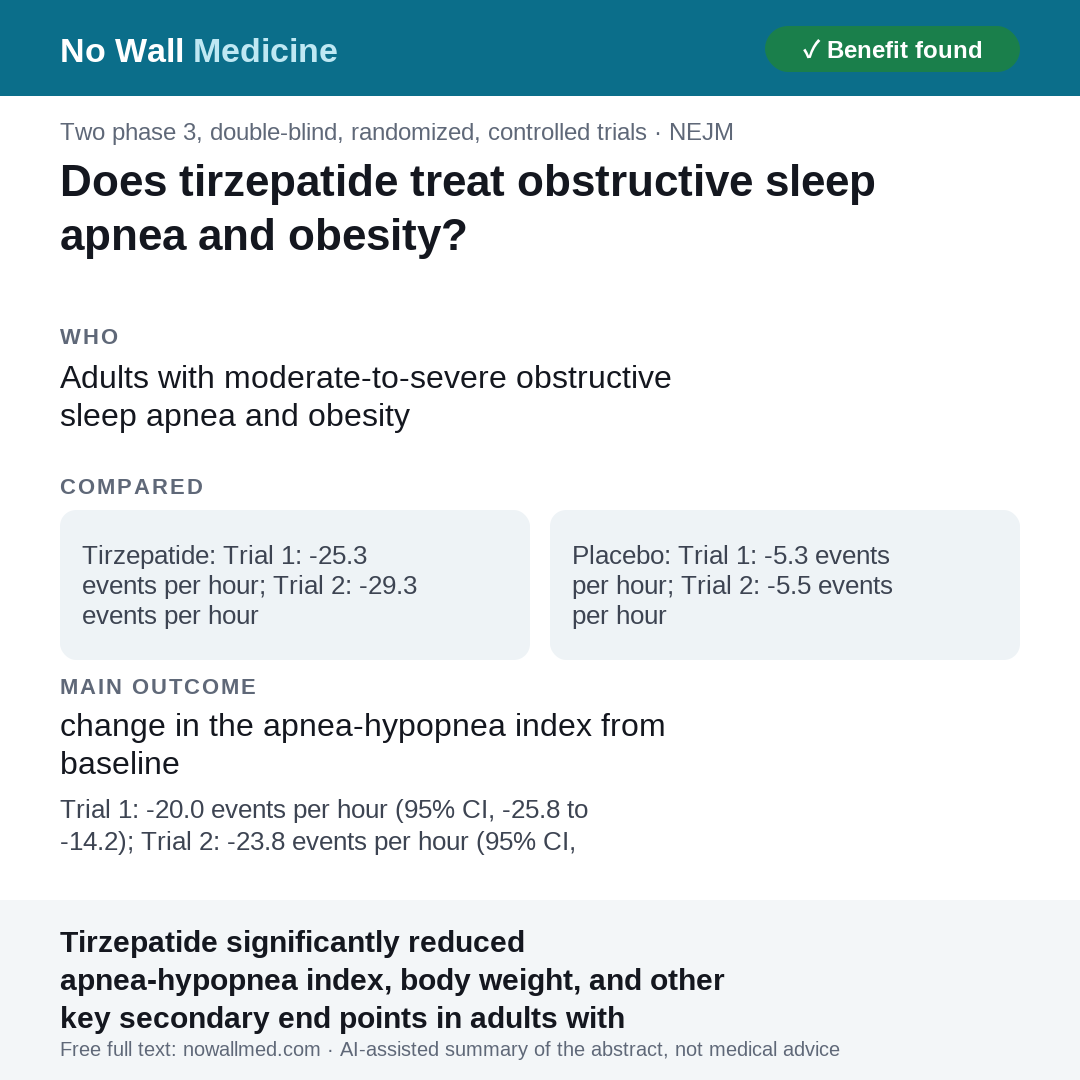
Neoadjuvant pembrolizumab, dabrafenib and trametinib in BRAFV600-mutant resectable melanoma: the randomized phase 2 NeoTrio trial
Randomized, non-comparative, phase 2 trialMixed results
Does adding targeted therapy to neoadjuvant immunotherapy improve pathological response in melanoma?
Who
60
Patients with resectable stage III BRAF V600-mutant melanoma
Compared
55%Pembrolizumab alone (11/20)
50%Sequential therapy (10/20)
80%Concurrent triple therapy (16/20)
Main outcome
Pathological response
Bottom line: Concurrent therapy increased pathological response, but recurrences were more common after major response in targeted therapy arms.
Nat Med · 2024-06-21Download image
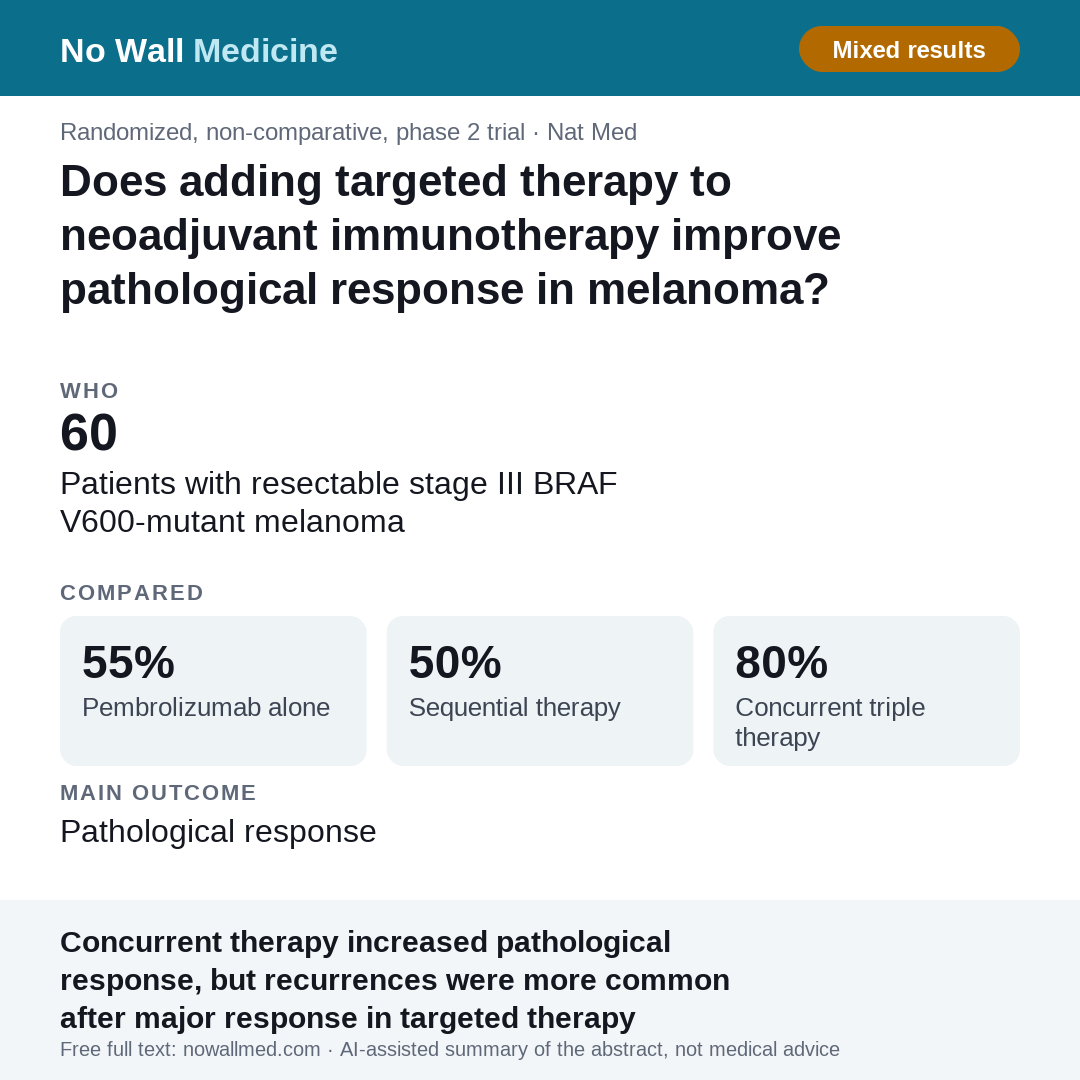
Effectiveness and cost-effectiveness of an individualised, progressive walking and education intervention for the prevention of low back pain recurrence in Australia (WalkBack): a randomised controlled trial
Randomised controlled trialBenefit found
Is an individualised, progressive walking and education intervention effective for preventing low back pain recurrence?
Who
701
Adults in Australia recently recovered from non-specific low back pain · Australia
Compared
208 daysWalking and education intervention (95% CI 149-295)
112 daysNo treatment control (89-140)
Main outcome
Days to the first recurrence of activity-limiting low back pain
Result: hazard ratio 0·72 (95% CI 0·60-0·85)
Bottom line: An individualised, progressive walking and education intervention significantly reduces the recurrence of activity-limiting low back pain.
Funded by: National Health and Medical Research Council, Australia
Lancet · 2024-06-19Download image
Nab-paclitaxel, cisplatin, and capecitabine versus cisplatin and gemcitabine as first line chemotherapy in patients with recurrent or metastatic nasopharyngeal carcinoma: randomised phase 3 clinical trial
Phase 3, open label, multicentre, randomised trialBenefit found
Is nab-paclitaxel, cisplatin, and capecitabine better than gemcitabine and cisplatin for recurrent or metastatic nasopharyngeal carcinoma?
Who
Adults with recurrent or metastatic nasopharyngeal carcinoma · Four hospitals located in China
Compared
nab-paclitaxel, cisplatin, and capecitabine: 11.3 (95% confidence interval 9.7 to 12.9) months
gemcitabine and cisplatin: 7.7 (6.5 to 9.0) months
Main outcome
Progression-free survival
Result: hazard ratio 0.43 (95% confidence interval 0.25 to 0.73)
Bottom line: Nab-paclitaxel, cisplatin, and capecitabine improved progression-free survival and had a more favourable safety profile than gemcitabine and cisplatin.
BMJ · 2024-06-19Download image