Visual abstracts
New randomized trials and meta-analyses from leading journals at a glance: who was studied, what was compared, and what was found. Every paper is free to read in full.
All specialtiesCardiology 3836Oncology 3293Gastroenterology & Hepatology 1522Infectious Disease 2780Neurology 1525Psychiatry & Mental Health 1807Pulmonology 1645Critical Care 1086Endocrinology & Diabetes 1971Pediatrics 2314Surgery 2038Orthopedics & Sports Medicine 719Neurosurgery 446Cardiothoracic & Vascular Surgery 471Plastic & Reconstructive Surgery 518Nephrology 842Rheumatology 623Hematology 865Dermatology 482Ophthalmology 420Obstetrics & Gynecology 1332Public & Global Health 752Radiology & Imaging 520Anesthesiology 785Urology 626ENT (Otolaryngology) 418Emergency Medicine 411Allergy & Immunology 239Geriatrics 799Family Medicine & Primary Care 455Medical Genetics & Genomics 517Pathology & Laboratory Medicine 131Physical Medicine & Rehabilitation 592Palliative Care 348Nutrition 1168Digital Health & AI 1777General Medicine 271
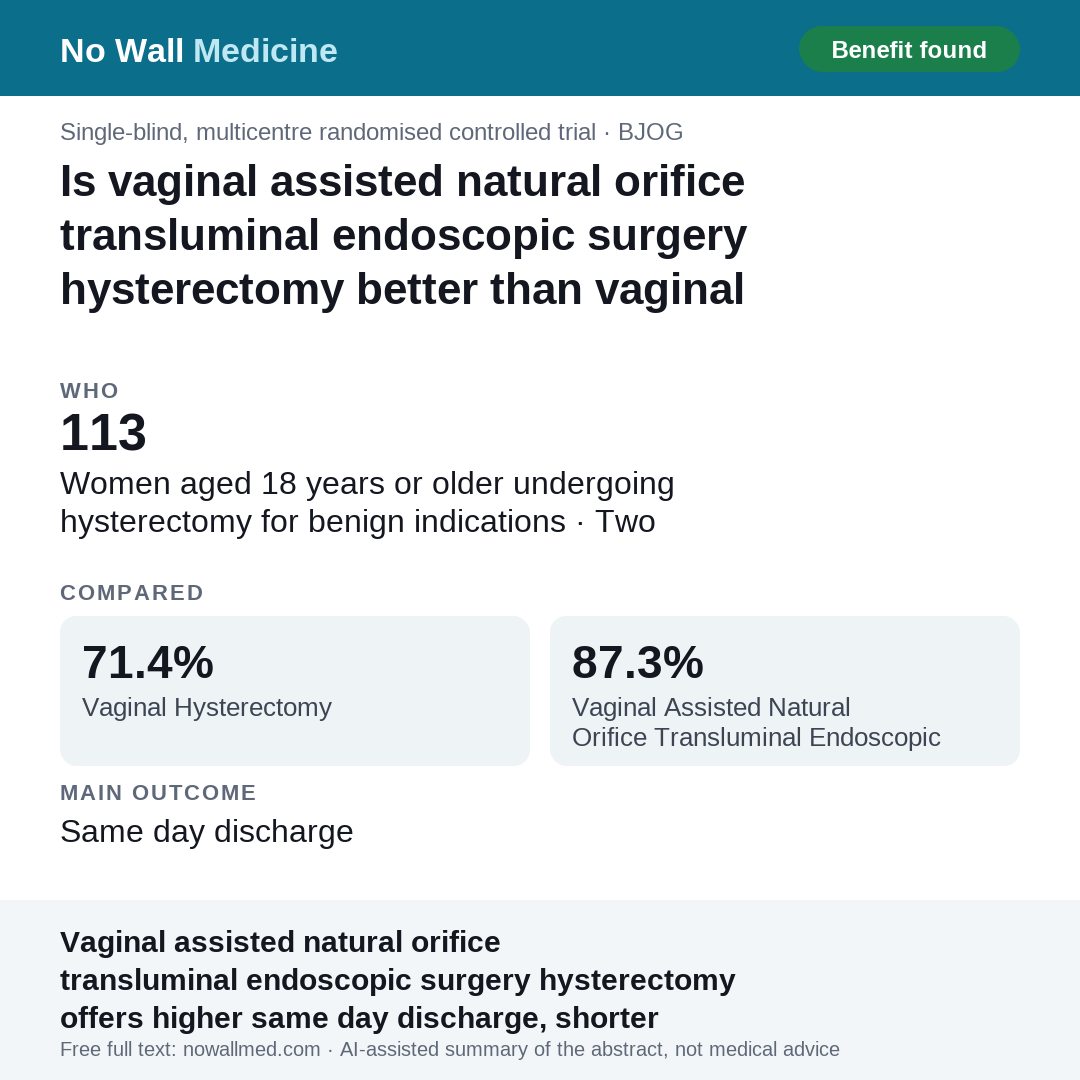
Vaginal Hysterectomy Versus Vaginal Assisted Natural Orifice Transluminal Endoscopic Surgery Hysterectomy; Results of a Randomised Controlled Trial
Single-blind, multicentre randomised controlled trialBenefit found
Is vaginal assisted natural orifice transluminal endoscopic surgery hysterectomy better than vaginal hysterectomy?
Who
113
Women aged 18 years or older undergoing hysterectomy for benign indications · Two Dutch non-academic teaching hospitals
Compared
71.4%Vaginal Hysterectomy
87.3%Vaginal Assisted Natural Orifice Transluminal Endoscopic Surgery Hysterectomy
Main outcome
Same day discharge
Result: odds ratio 2.76 (95% CI 1.04-7.25)
Bottom line: Vaginal assisted natural orifice transluminal endoscopic surgery hysterectomy offers higher same day discharge, shorter operative time, and less blood loss.
BJOG · 2026-05-15Download image
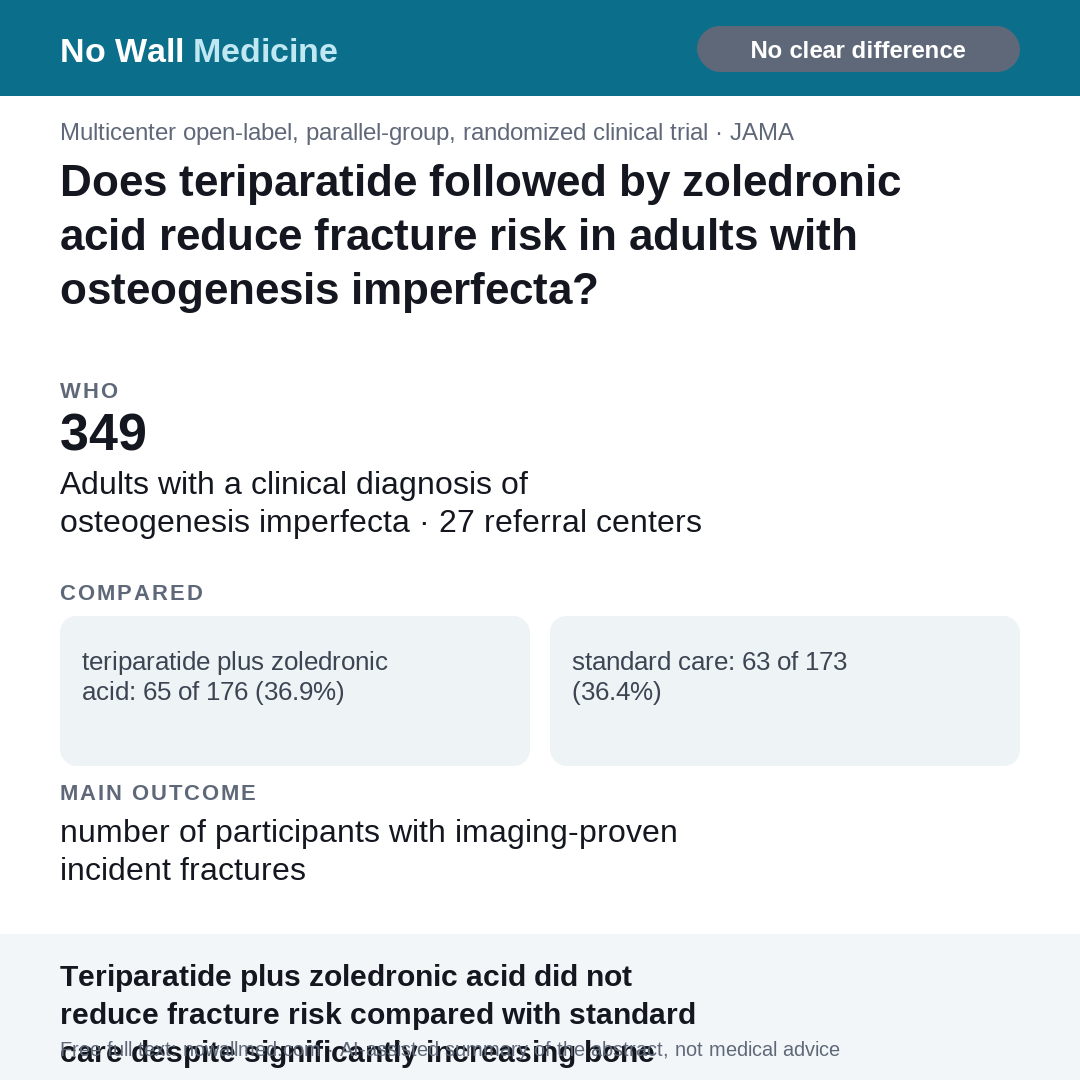
Teriparatide Plus Zoledronic Acid for Osteogenesis Imperfecta: A Randomized Clinical Trial
Multicenter open-label, parallel-group, randomized clinical trialNo clear difference
Does teriparatide followed by zoledronic acid reduce fracture risk in adults with osteogenesis imperfecta?
Who
349
Adults with a clinical diagnosis of osteogenesis imperfecta · 27 referral centers
Compared
teriparatide plus zoledronic acid: 65 of 176 (36.9%)
standard care: 63 of 173 (36.4%)
Main outcome
number of participants with imaging-proven incident fractures
Result: hazard ratio 0.97 (95% CI 0.68 to 1.38)
Bottom line: Teriparatide plus zoledronic acid did not reduce fracture risk compared with standard care despite significantly increasing bone mineral density.
JAMA · 2026-05-14Download image
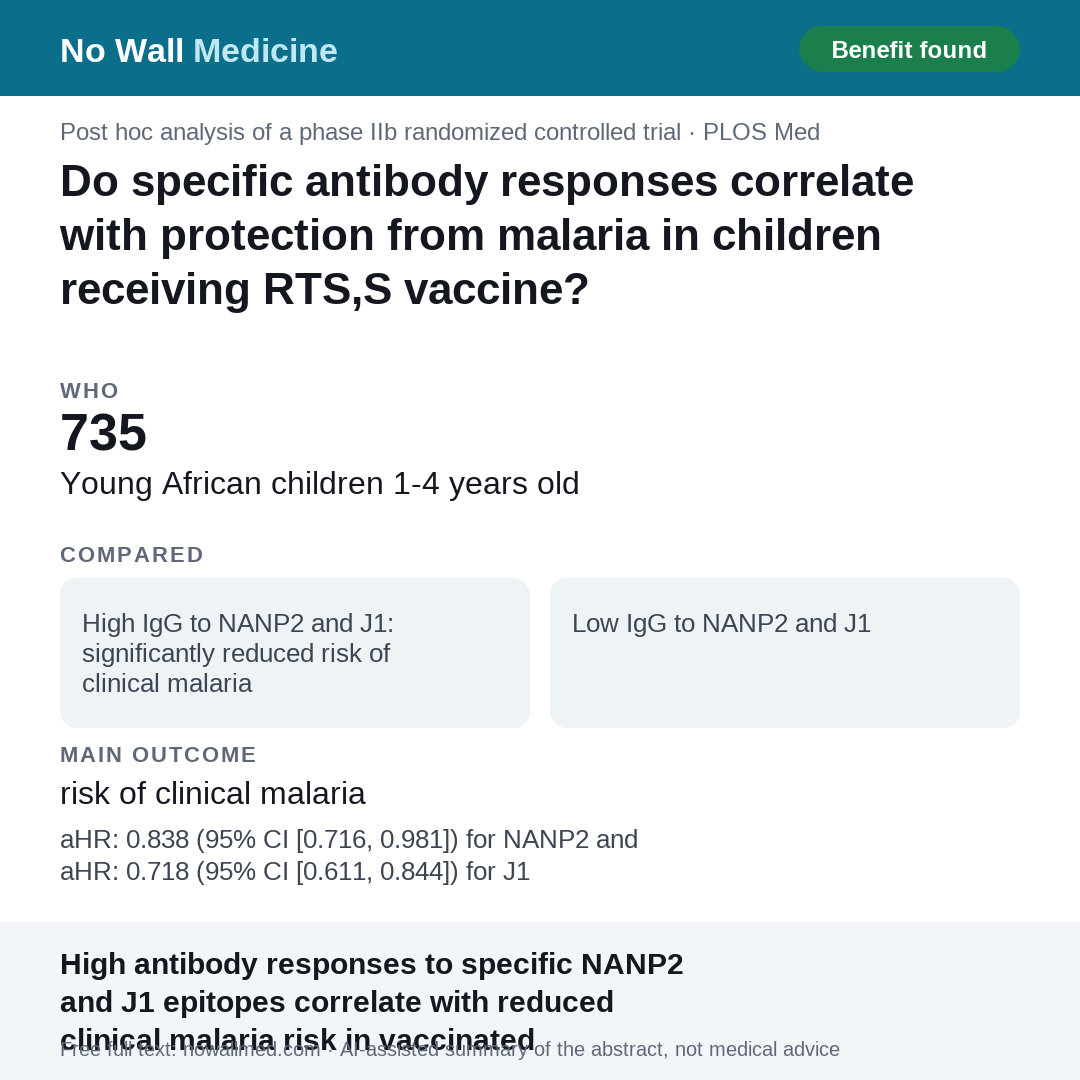
Antibody fine specificity correlates with protection from malaria for the RTS,S vaccine in young African children: A post hoc analysis of a phase IIb randomised controlled trial
Post hoc analysis of a phase IIb randomized controlled trialBenefit found
Do specific antibody responses correlate with protection from malaria in children receiving RTS,S vaccine?
Who
735
Young African children 1-4 years old
Compared
High IgG to NANP2 and J1: significantly reduced risk of clinical malaria
Low IgG to NANP2 and J1
Main outcome
risk of clinical malaria
Result: aHR: 0.838 (95% CI [0.716, 0.981]) for NANP2 and aHR: 0.718 (95% CI [0.611, 0.844]) for J1
Bottom line: High antibody responses to specific NANP2 and J1 epitopes correlate with reduced clinical malaria risk in vaccinated children.
PLOS Med · 2026-05-14Download image
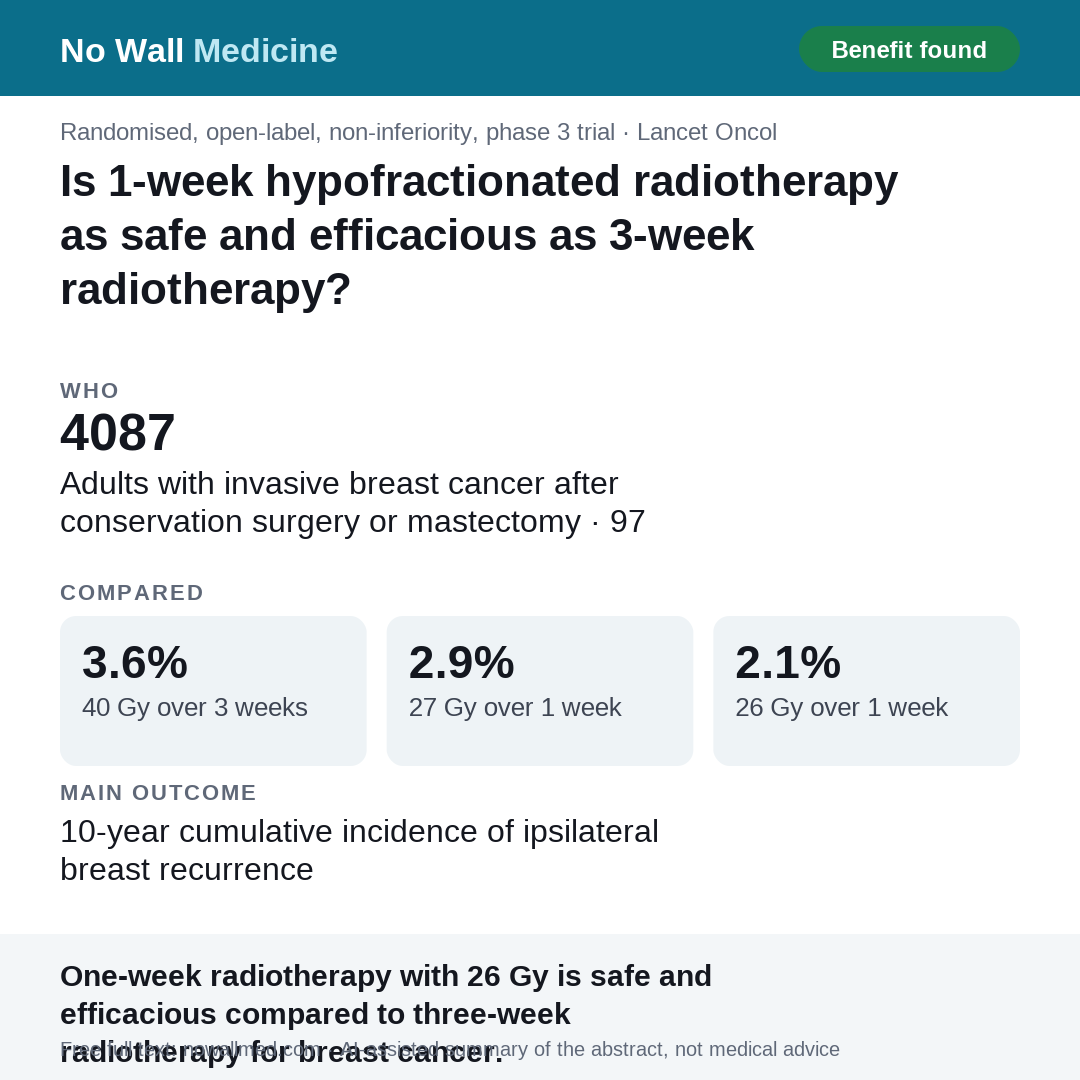
Hypofractionated breast radiotherapy for 1 week versus 3 weeks (FAST-Forward): 10-year efficacy and late normal tissue effects from a multicentre, open-label, non-inferiority, phase 3, randomised controlled trial and 5-year efficacy results from a randomised axillary substudy
Randomised, open-label, non-inferiority, phase 3 trialBenefit found
Is 1-week hypofractionated radiotherapy as safe and efficacious as 3-week radiotherapy?
Who
4087
Adults with invasive breast cancer after conservation surgery or mastectomy · 97 hospitals in the United Kingdom
Compared
3.6%40 Gy over 3 weeks (95% CI 2.7-4.9)
2.9%27 Gy over 1 week (2.1-4.0)
2.1%26 Gy over 1 week (1.5-3.1)
Main outcome
10-year cumulative incidence of ipsilateral breast recurrence
Bottom line: One-week radiotherapy with 26 Gy is safe and efficacious compared to three-week radiotherapy for breast cancer.
Limitation: Sample size limits precision of estimation for the axillary nodal radiotherapy subgroup.
Funded by: UK National Institute for Health and Care Research
Lancet Oncol · 2026-05-14Download image
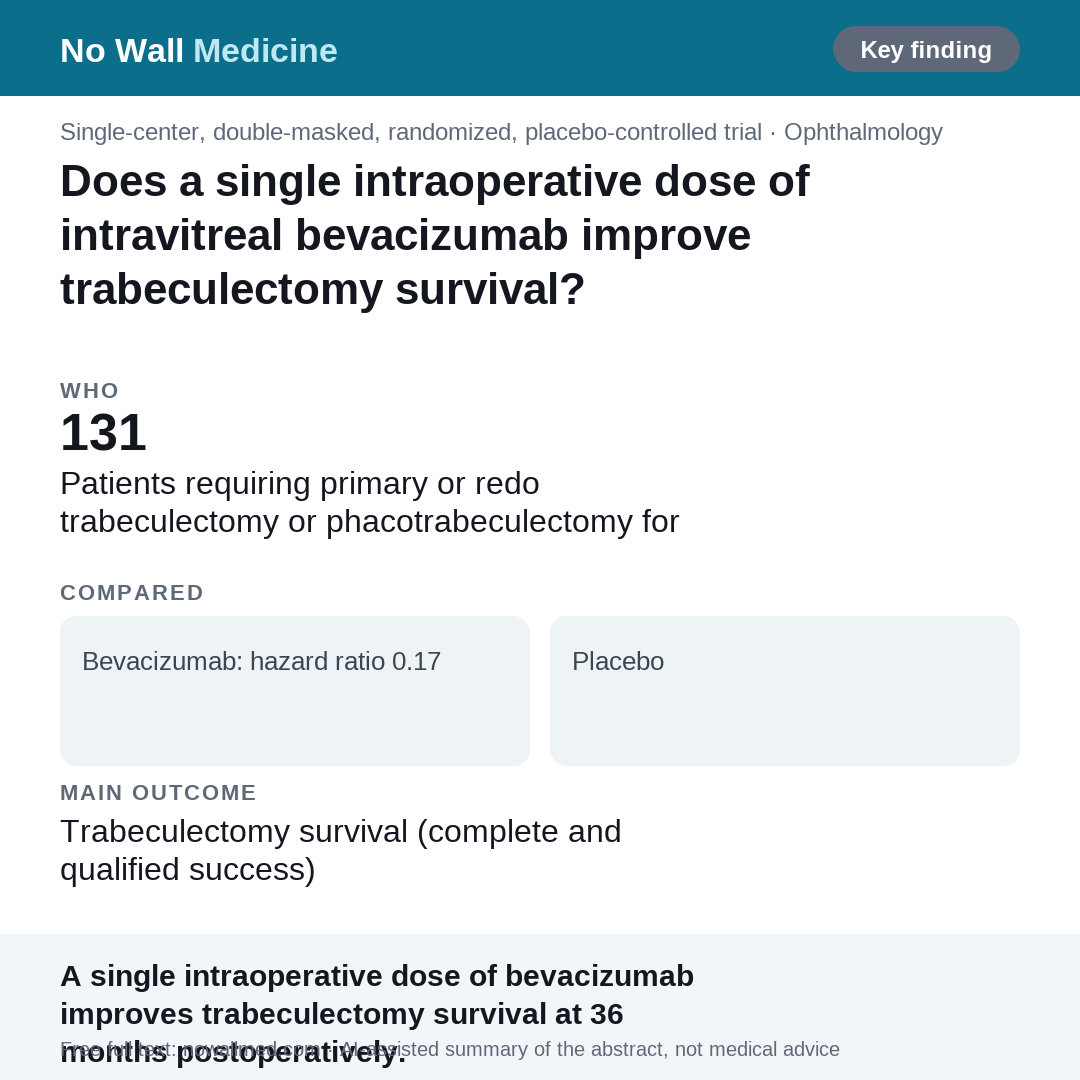
Intravitreal Bevacizumab Improves Trabeculectomy Survival at 3 Years: Long-term Follow-up from the Bevacizumab in Trabeculectomy Study
Single-center, double-masked, randomized, placebo-controlled trialBenefit found
Does a single intraoperative dose of intravitreal bevacizumab improve trabeculectomy survival?
Who
131
Patients requiring primary or redo trabeculectomy or phacotrabeculectomy for progressing glaucoma · Single ophthalmic outpatient referral center
Compared
Bevacizumab: hazard ratio 0.17
Placebo
Main outcome
Trabeculectomy survival (complete and qualified success)
Result: hazard ratio 0.17 (P = 0.002)
Bottom line: A single intraoperative dose of bevacizumab improves trabeculectomy survival at 36 months postoperatively.
Ophthalmology · 2026-05-14Download image
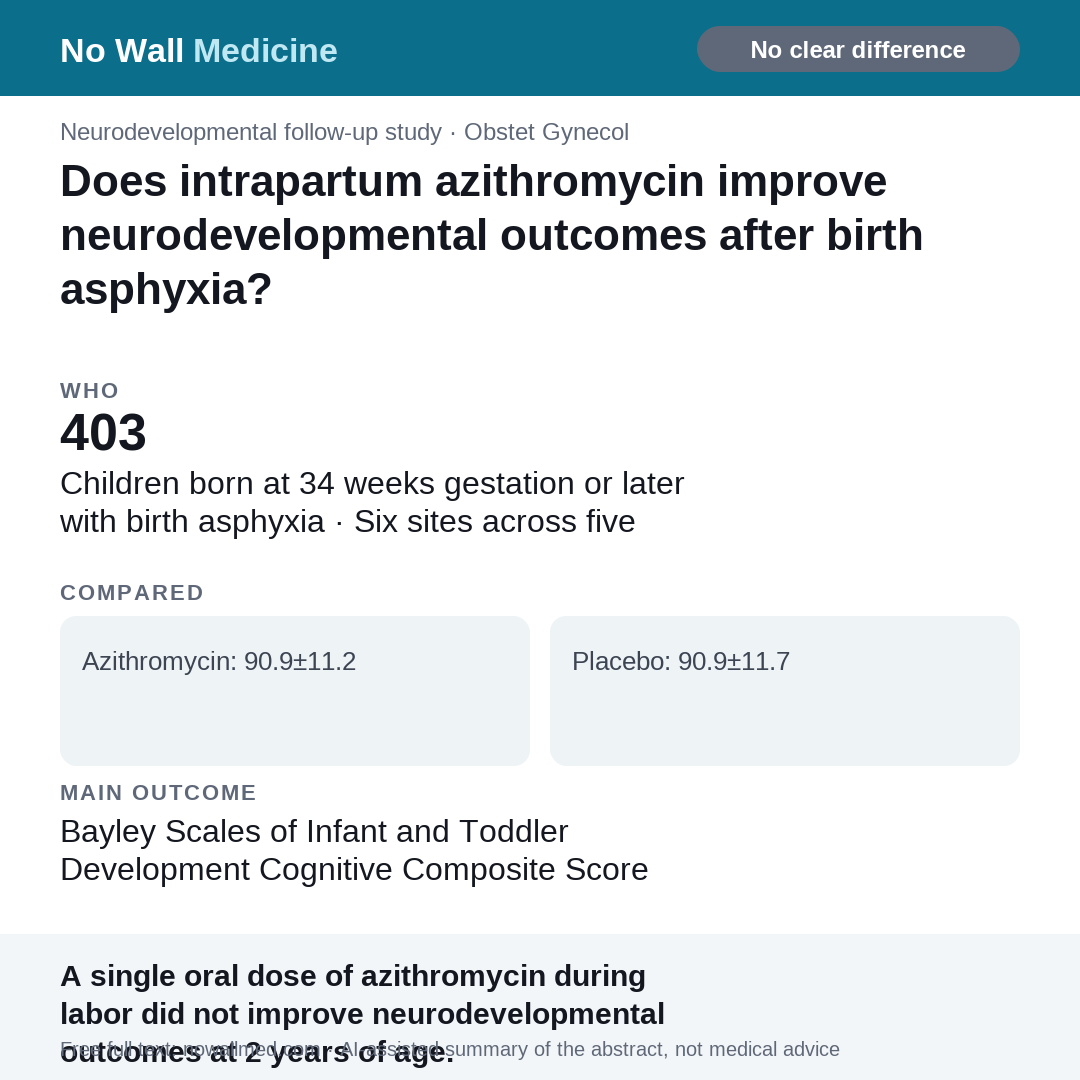
Neurodevelopmental Pediatric Follow-Up After the Azithromycin Prevention in Labor Use Study
Neurodevelopmental follow-up studyNo clear difference
Does intrapartum azithromycin improve neurodevelopmental outcomes after birth asphyxia?
Who
403
Children born at 34 weeks gestation or later with birth asphyxia · Six sites across five countries
Compared
Azithromycin: 90.9±11.2
Placebo: 90.9±11.7
Main outcome
Bayley Scales of Infant and Toddler Development Cognitive Composite Score
Result: mean difference: 0.29; 95% CI, -1.77 to 2.34
Bottom line: A single oral dose of azithromycin during labor did not improve neurodevelopmental outcomes at 2 years of age.
Obstet Gynecol · 2026-05-14Download image
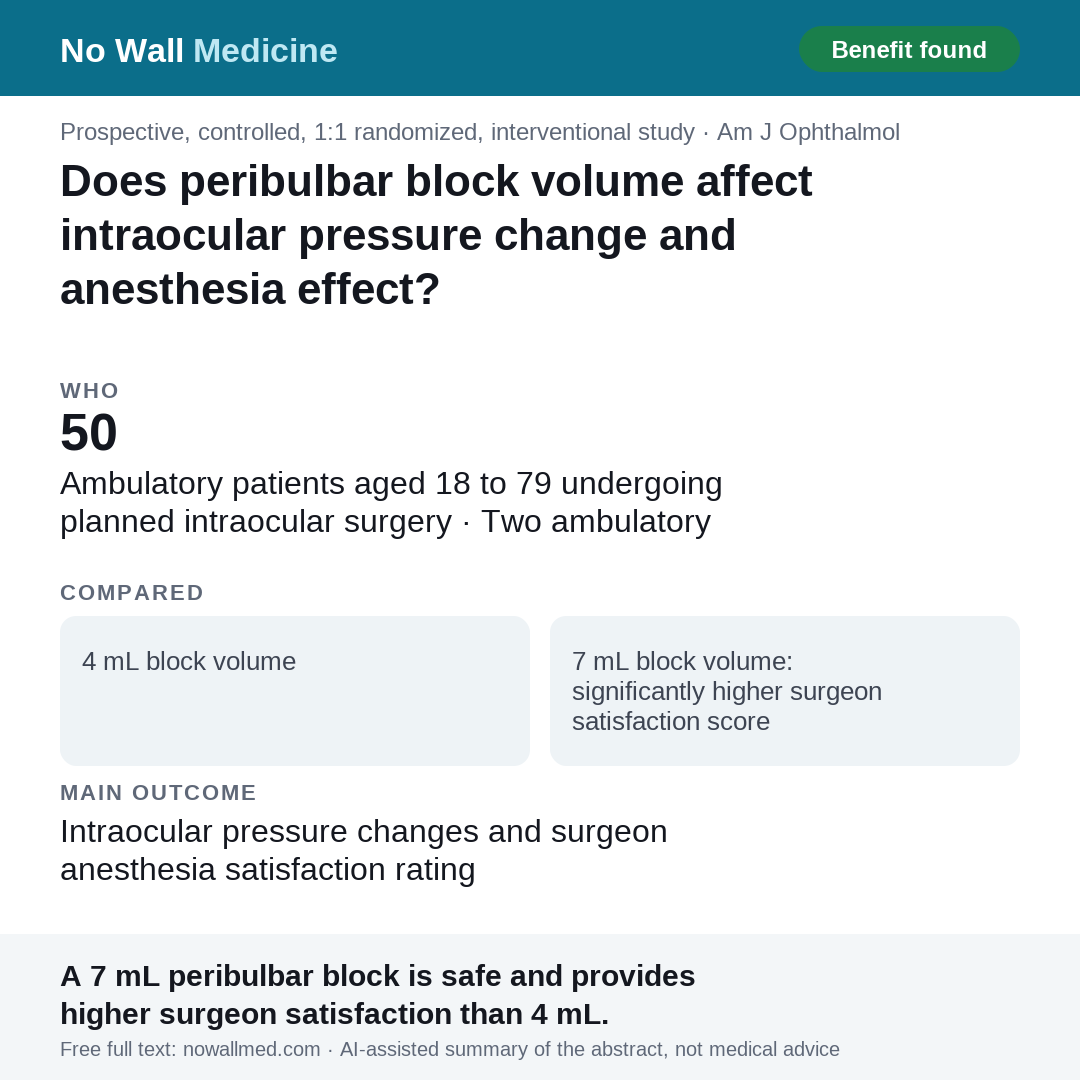
The Effect of Peribulbar Block Volume on Intraocular Pressure Change: A Randomized Prospective Study
Prospective, controlled, 1:1 randomized, interventional studyBenefit found
Does peribulbar block volume affect intraocular pressure change and anesthesia effect?
Who
50
Ambulatory patients aged 18 to 79 undergoing planned intraocular surgery · Two ambulatory surgical centers
Compared
4 mL block volume
7 mL block volume: significantly higher surgeon satisfaction score
Main outcome
Intraocular pressure changes and surgeon anesthesia satisfaction rating
Bottom line: A 7 mL peribulbar block is safe and provides higher surgeon satisfaction than 4 mL.
Am J Ophthalmol · 2026-05-14Download image
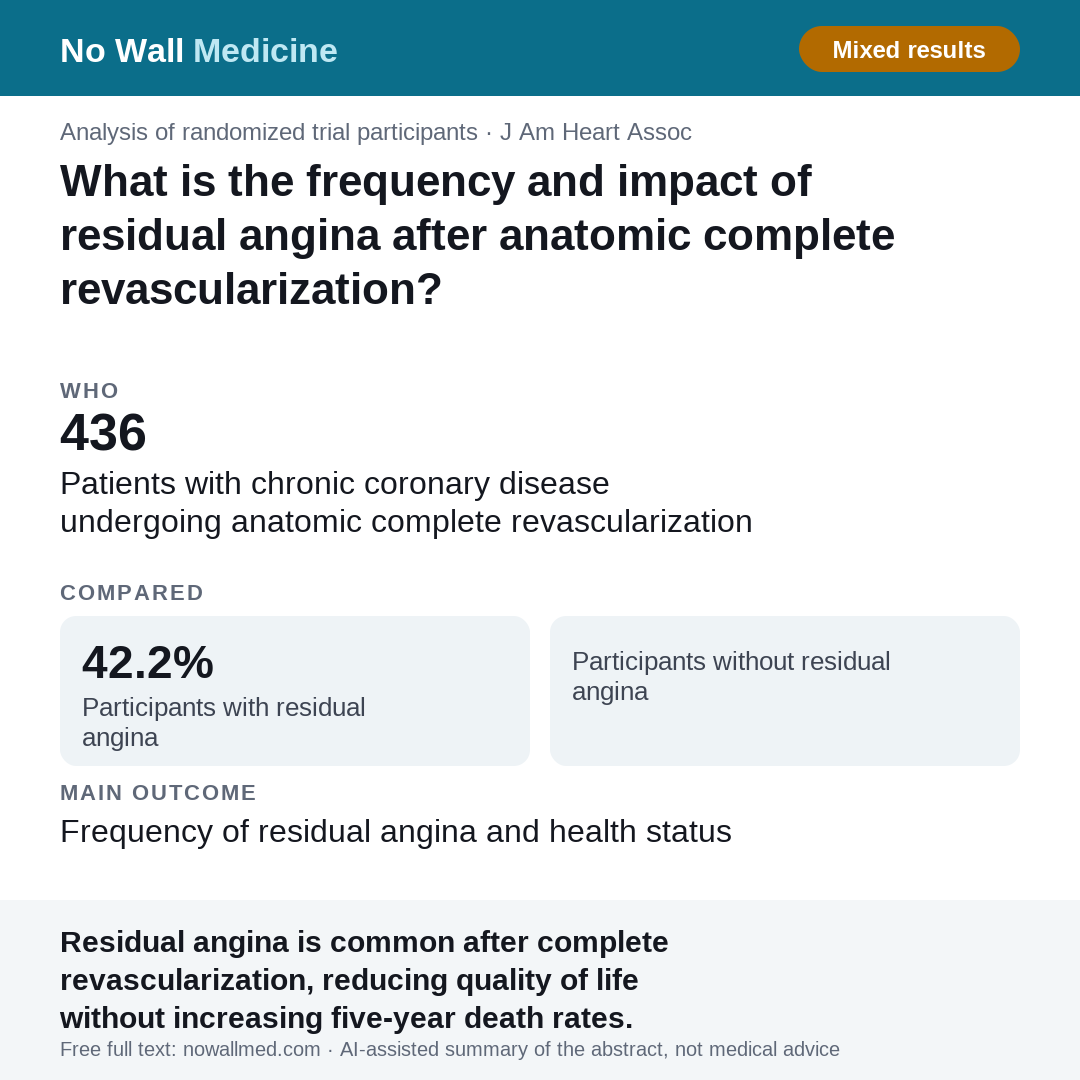
Intravenous methylprednisolone as add-on induction therapy for chronic inflammatory demyelinating polyradiculoneuropathy: a randomised controlled trial
Randomised, double-blind, placebo-controlled studyNo clear difference
Does adding intravenous methylprednisolone to intravenous immunoglobulin increase remission rates in CIDP?
Who
77
Adults with chronic inflammatory demyelinating polyradiculoneuropathy
Compared
38%Intravenous immunoglobulin and intravenous methylprednisolone (14/37)
28%Intravenous immunoglobulin and placebo (11/40)
Main outcome
Remission at 52 weeks
Result: difference of 10% (95% CI -11 to 31; p=0.47)
Bottom line: Adding intravenous methylprednisolone to intravenous immunoglobulin did not significantly increase remission rates compared to intravenous immunoglobulin alone.
J Neurol Neurosurg Psychiatry · 2026-05-14Download image
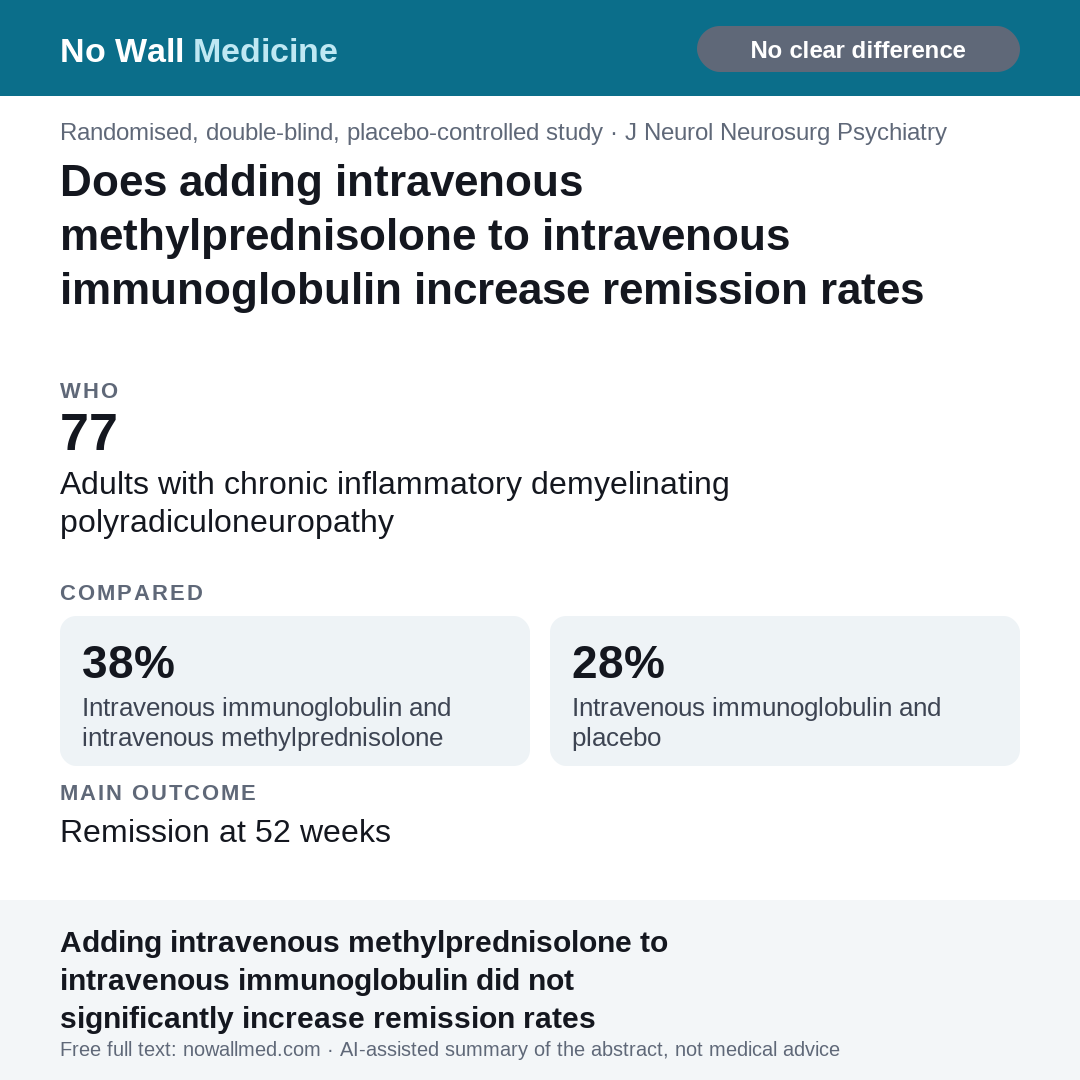
Randomized Controlled Trial of Individualized Intervention for Frailty Reversal in Older Patients With Nondialysis CKD
Randomized controlled trialBenefit found
Can a comprehensive geriatric assessment-based individualized intervention reverse frailty in older nondialysis chronic kidney disease patients?
Who
242
Frail patients with nondialysis chronic kidney disease aged 65 or older · Beijing Chao-yang Hospital
Compared
30.6%Individualized intervention group
7.4%Control group receiving routine care
Main outcome
Frailty reversion at 12 months
Result: odds ratio 5.22 (95% CI 2.37-11.49)
Bottom line: Individualized multidomain interventions effectively reversed frailty in older nondialysis chronic kidney disease patients at 12 months.
Limitation: Findings may not be generalizable to patients with more advanced chronic kidney disease.
Kidney Int Rep · 2026-05-14Download image
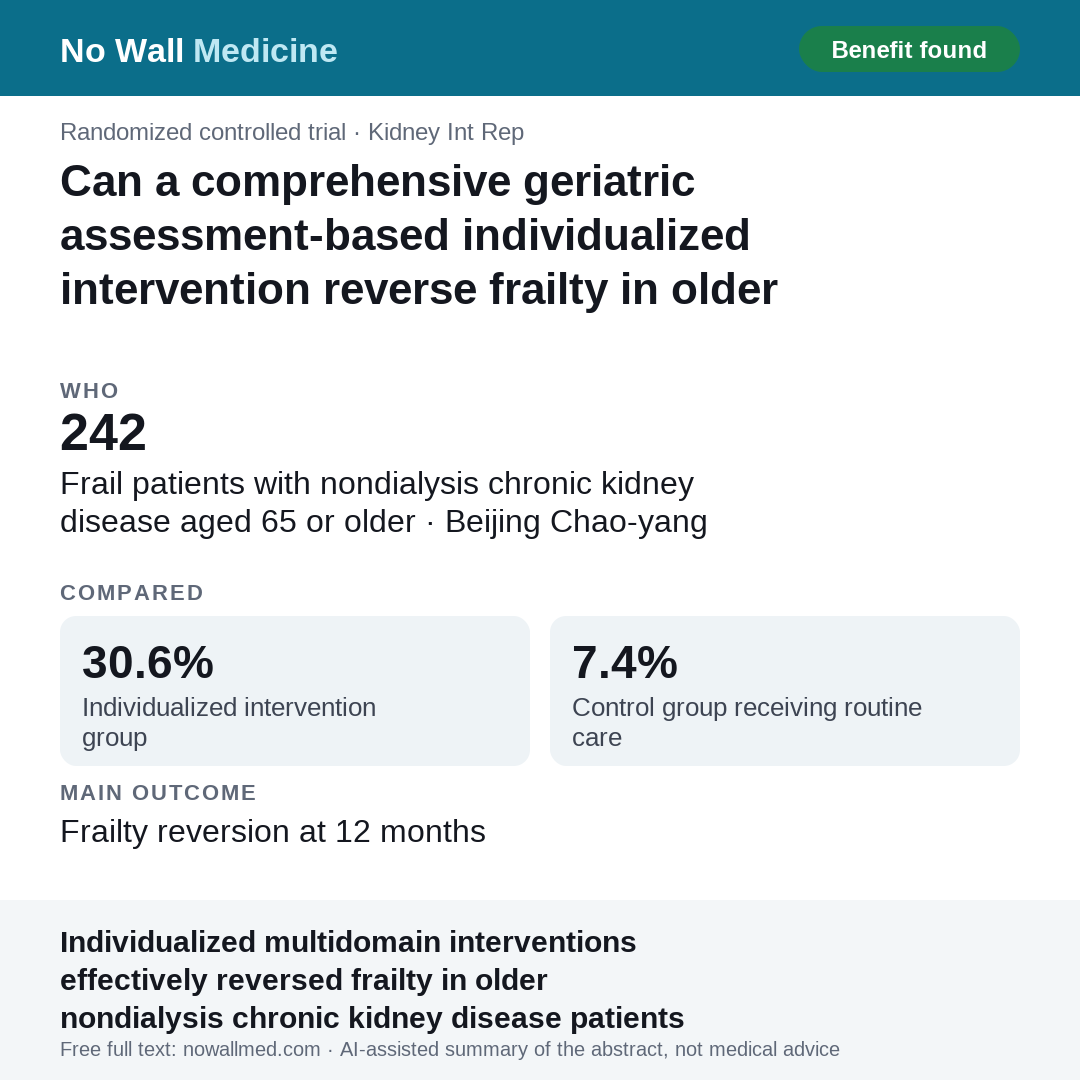
Low-Density Lipoprotein Cholesterol Lowering With Inclisiran Plus Usual Care in Recent Acute Coronary Syndrome: VICTORION-INCEPTION, a Randomized, Controlled, Open-Label Trial
Randomized, open-label, multicenter trialBenefit found
Does inclisiran plus usual care lower LDL-C in recent acute coronary syndrome?
Who
400
Patients discharged following acute coronary syndrome with LDL-C ≥70 mg/dL · multicenter
Compared
inclisiran plus usual care: -46.9% percentage change from baseline
usual care: 2.2% percentage change from baseline
Main outcome
LDL-C attainment and LDL-C percentage change from baseline
Result: percentage change: -46.9% difference (97.5% CI -55.4 to -38.5)
Bottom line: Inclisiran plus usual care resulted in rapid, sustained attainment of LDL-C goals in recent acute coronary syndrome.
J Am Heart Assoc · 2026-05-14Download image
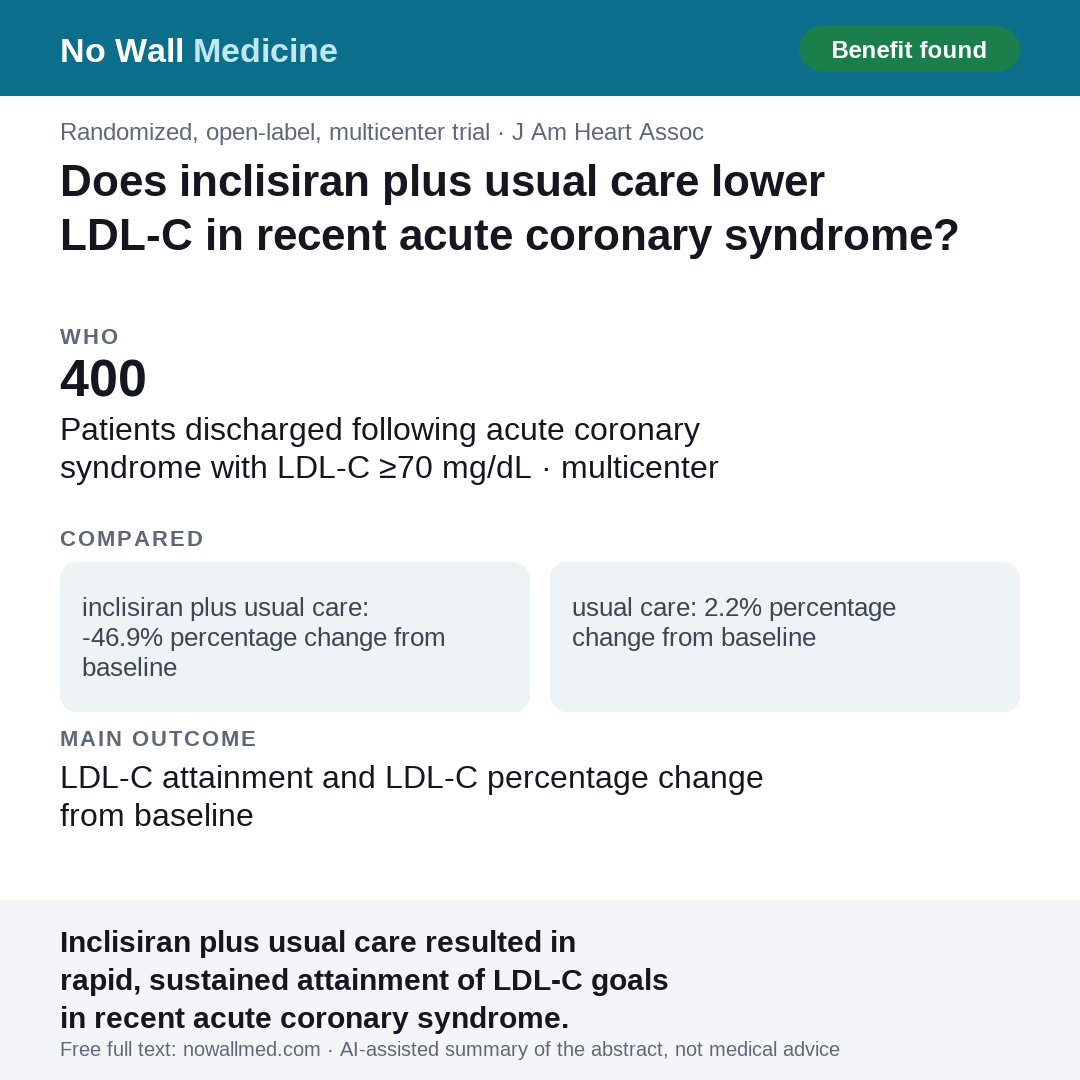
Residual Angina Following Complete Revascularization in the ISCHEMIA Trial: Frequency, Clinical Characteristics, Health Status, and Cardiovascular Outcomes
Analysis of randomized trial participantsMixed results
What is the frequency and impact of residual angina after anatomic complete revascularization?
Who
436
Patients with chronic coronary disease undergoing anatomic complete revascularization · International
Compared
42.2%Participants with residual angina
Participants without residual angina
Main outcome
Frequency of residual angina and health status
Bottom line: Residual angina is common after complete revascularization, reducing quality of life without increasing five-year death rates.
J Am Heart Assoc · 2026-05-14Download image
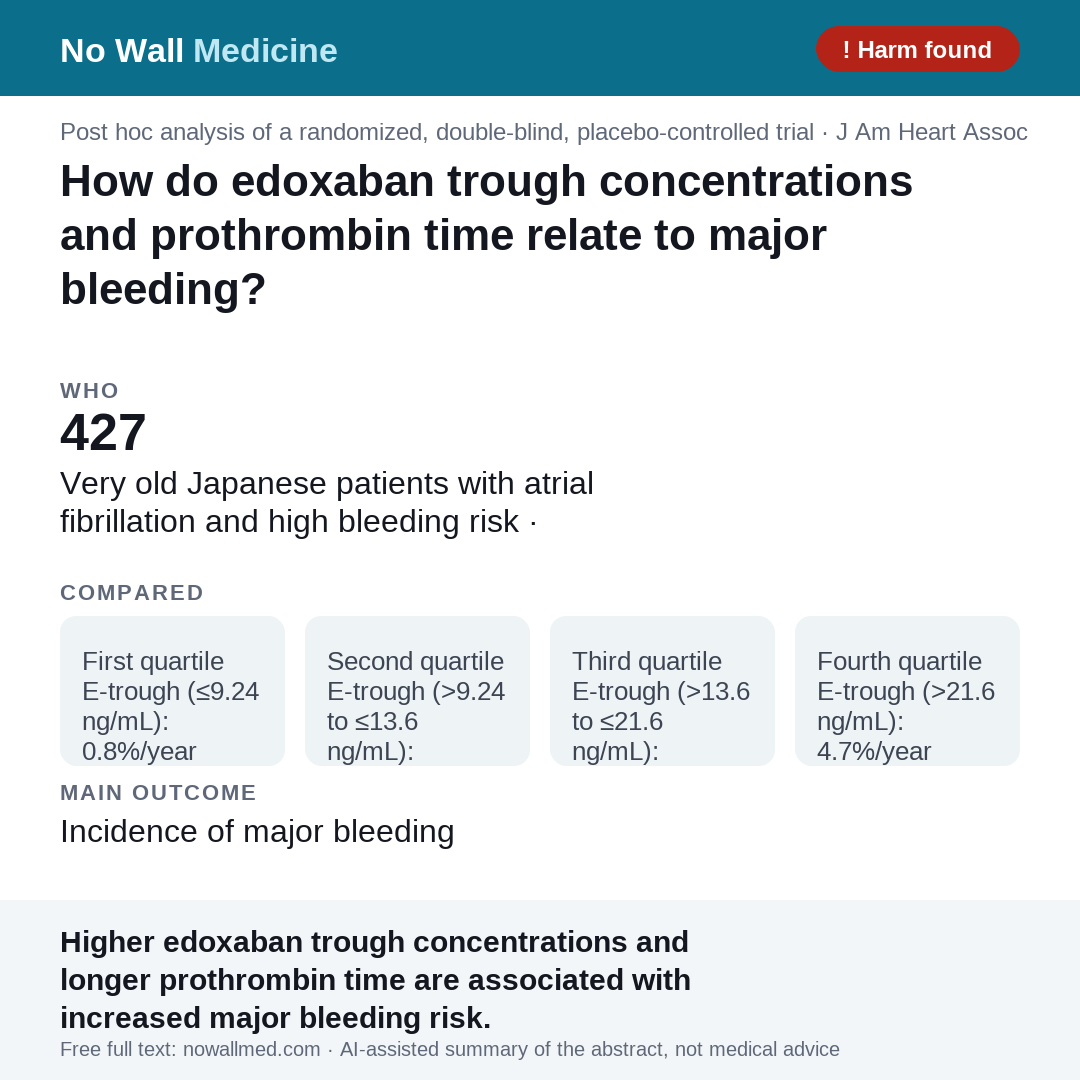
Association of Edoxaban Pharmacokinetics With Bleeding in Older Patients With Atrial Fibrillation Treated With Low-Dose Edoxaban: A Post Hoc Analysis of a Randomized Controlled Trial
Post hoc analysis of a randomized, double-blind, placebo-controlled trialHarm found
How do edoxaban trough concentrations and prothrombin time relate to major bleeding?
Who
427
Very old Japanese patients with atrial fibrillation and high bleeding risk · Multicenter
Compared
First quartile E-trough (≤9.24 ng/mL): 0.8%/year
Second quartile E-trough (>9.24 to ≤13.6 ng/mL): 1.9%/year
Third quartile E-trough (>13.6 to ≤21.6 ng/mL): 3.4%/year
Fourth quartile E-trough (>21.6 ng/mL): 4.7%/year
Main outcome
Incidence of major bleeding
Bottom line: Higher edoxaban trough concentrations and longer prothrombin time are associated with increased major bleeding risk.
J Am Heart Assoc · 2026-05-14Download image
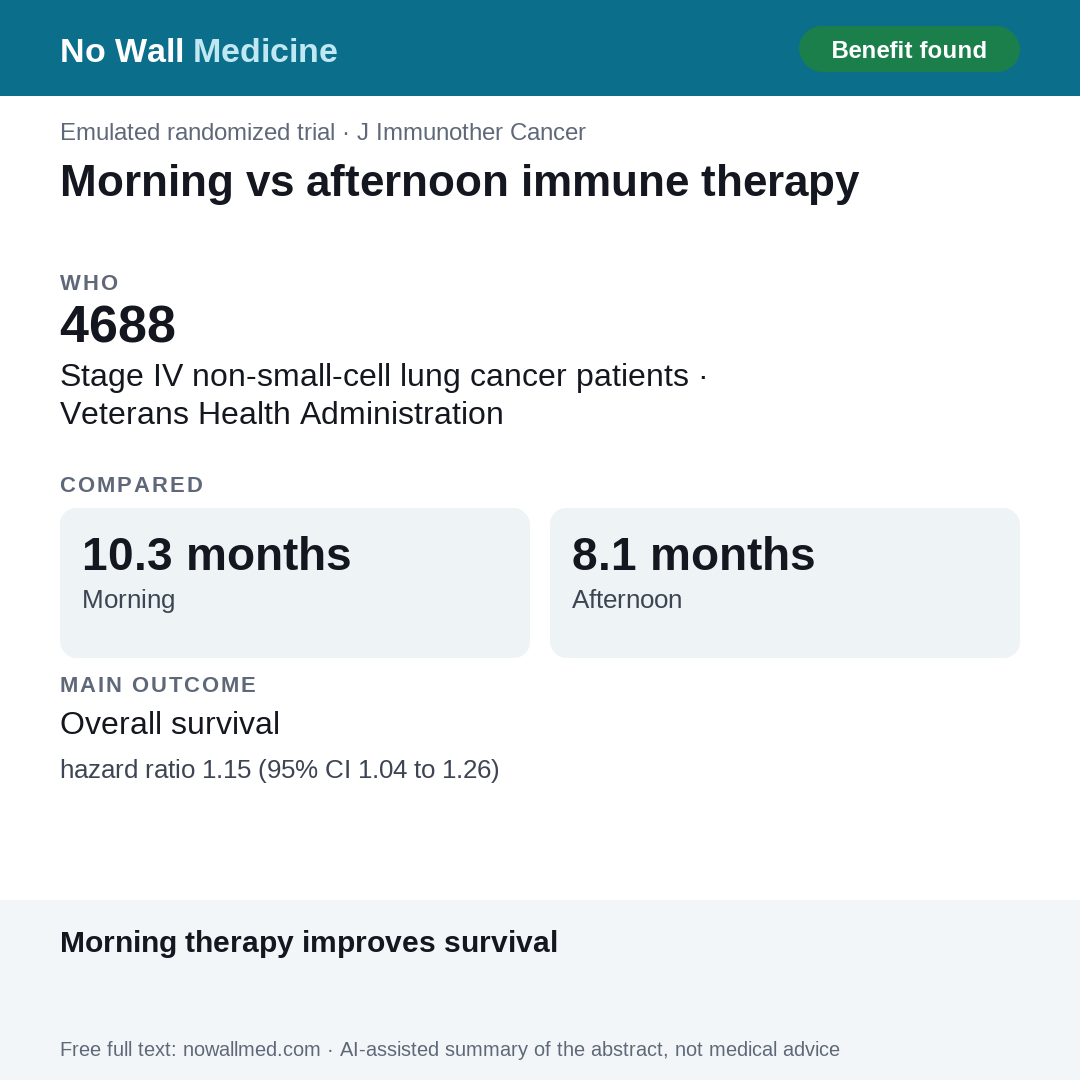
Morning versus afternoon administration of immune checkpoint inhibitors in metastatic non-small-cell lung cancer
Emulated randomized trialBenefit found
Morning vs afternoon immune therapy
Who
4688
Stage IV non-small-cell lung cancer patients · Veterans Health Administration
Compared
10.3 monthsMorning
8.1 monthsAfternoon
Main outcome
Overall survival
Result: hazard ratio 1.15 (95% CI 1.04 to 1.26)
Bottom line: Morning therapy improves survival
Limitation: not prospective
J Immunother Cancer · 2026-05-14Download image
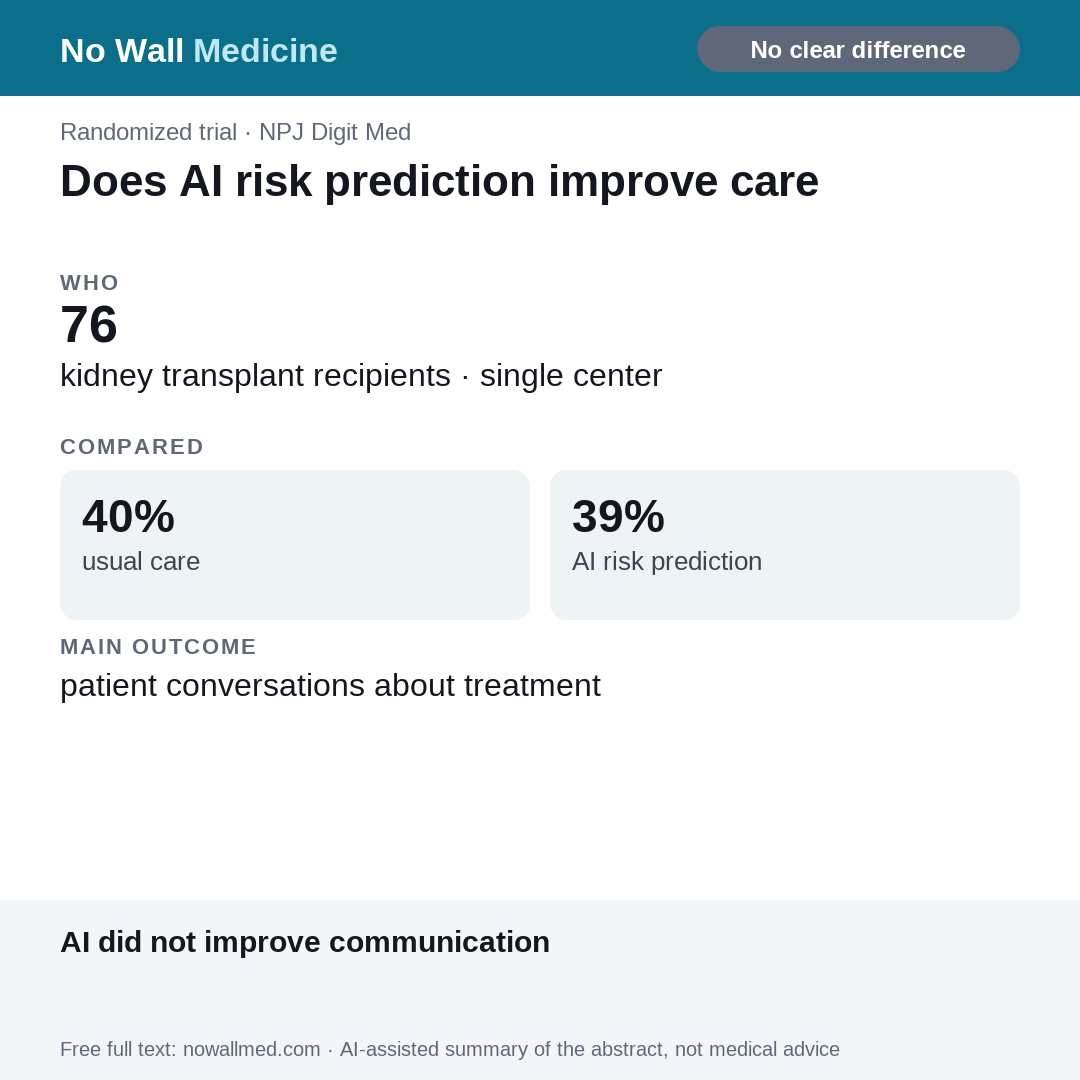
Randomized trial of electronic health record implemented AI risk prediction in kidney transplant care
Randomized trialNo clear difference
Does AI risk prediction improve care
Who
76
kidney transplant recipients · single center
Compared
40%usual care (16/40)
39%AI risk prediction (14/36)
Main outcome
patient conversations about treatment
Bottom line: AI did not improve communication
Limitation: low tool uptake and workflow barriers
NPJ Digit Med · 2026-05-14Download image
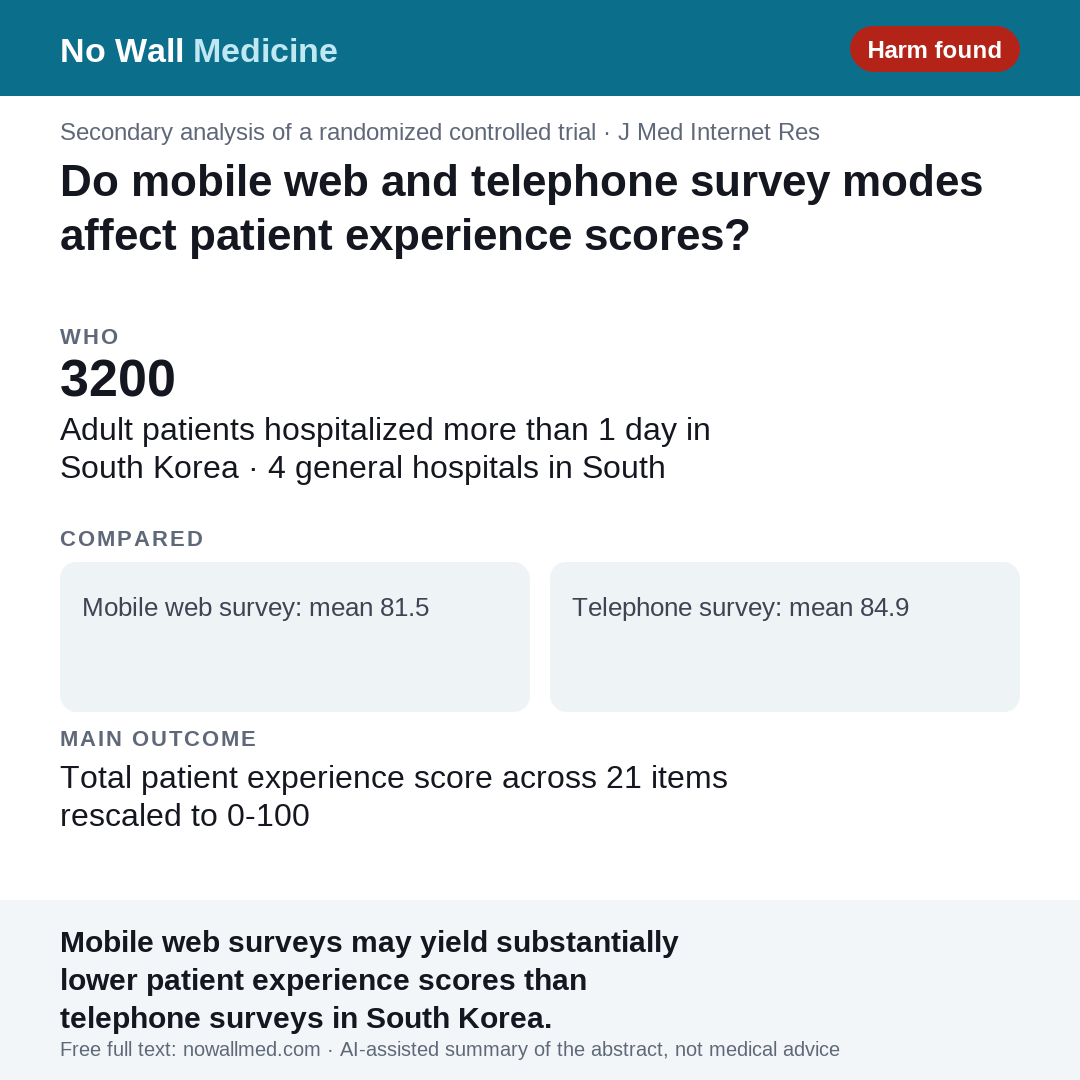
Mode Effects Between Mobile Web and Telephone Surveys on Patient Experience Scores in South Korea: Secondary Analysis of a Randomized Controlled Trial Under Various Missingness Scenarios
Secondary analysis of a randomized controlled trialHarm found
Do mobile web and telephone survey modes affect patient experience scores?
Who
3200
Adult patients hospitalized more than 1 day in South Korea · 4 general hospitals in South Korea
Compared
Mobile web survey: mean 81.5
Telephone survey: mean 84.9
Main outcome
Total patient experience score across 21 items rescaled to 0-100
Result: unadjusted difference -3.41 points, 95% CI -5.51 to -1.31
Bottom line: Mobile web surveys may yield substantially lower patient experience scores than telephone surveys in South Korea.
Limitation: Blinding of participants, interviewers, and outcome assessors was not feasible after assignment.
J Med Internet Res · 2026-05-14Download image
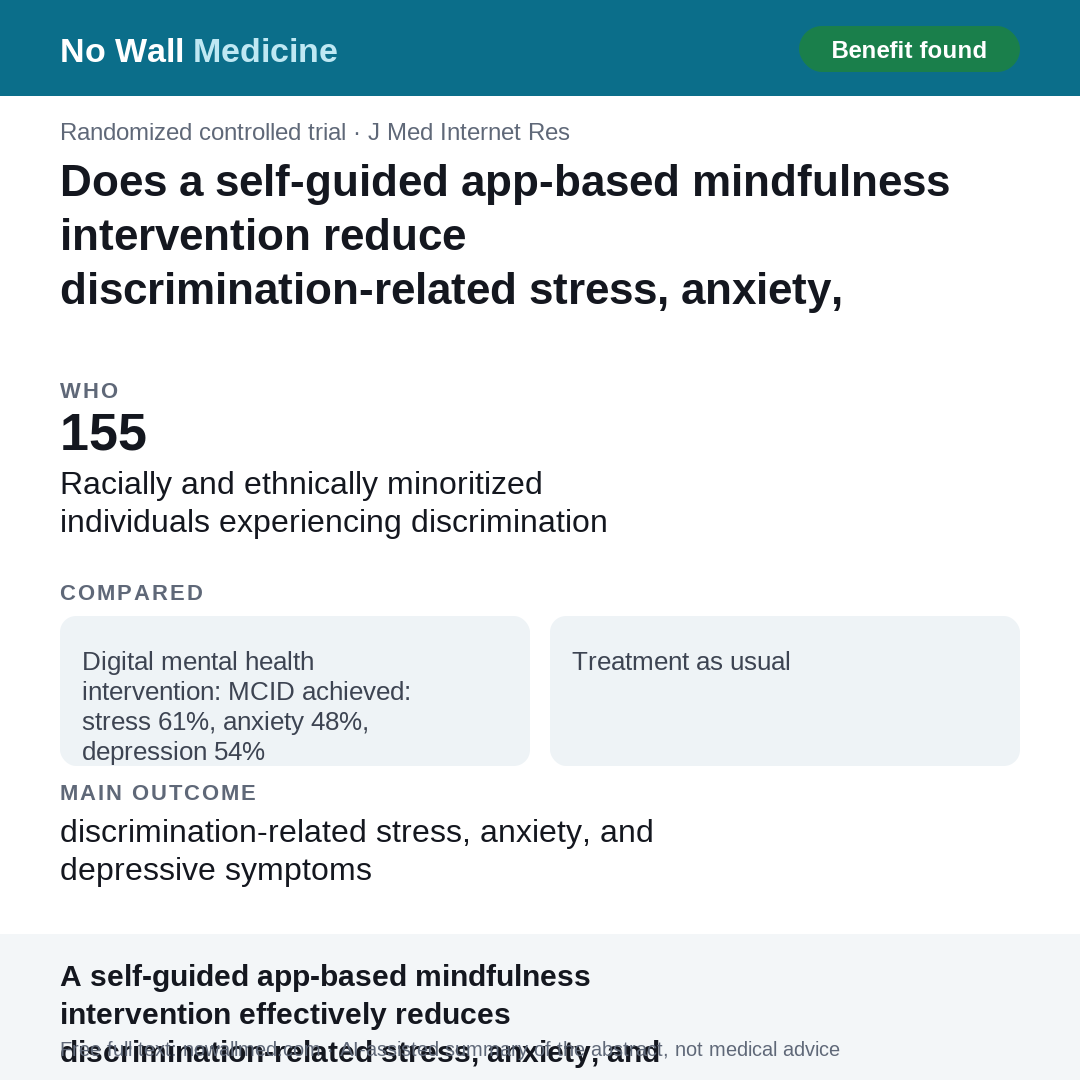
A Self-Guided App-Based Mindfulness Intervention for Racially and Ethnically Minoritized Individuals Who Experience Discrimination-Related Mental Health Symptoms: Randomized Controlled Trial
Randomized controlled trialBenefit found
Does a self-guided app-based mindfulness intervention reduce discrimination-related stress, anxiety, and depressive symptoms?
Who
155
Racially and ethnically minoritized individuals experiencing discrimination
Compared
Digital mental health intervention: MCID achieved: stress 61%, anxiety 48%, depression 54%
Treatment as usual
Main outcome
discrimination-related stress, anxiety, and depressive symptoms
Result: stress β=-4.52 (95% CI -6.54 to -2.51), anxiety β=-3.31 (95% CI -4.89 to -1.74), depression β=-2.84 (95% CI -4.57 to -1.12)
Bottom line: A self-guided app-based mindfulness intervention effectively reduces discrimination-related stress, anxiety, and depression among minoritized individuals.
J Med Internet Res · 2026-05-14Download image
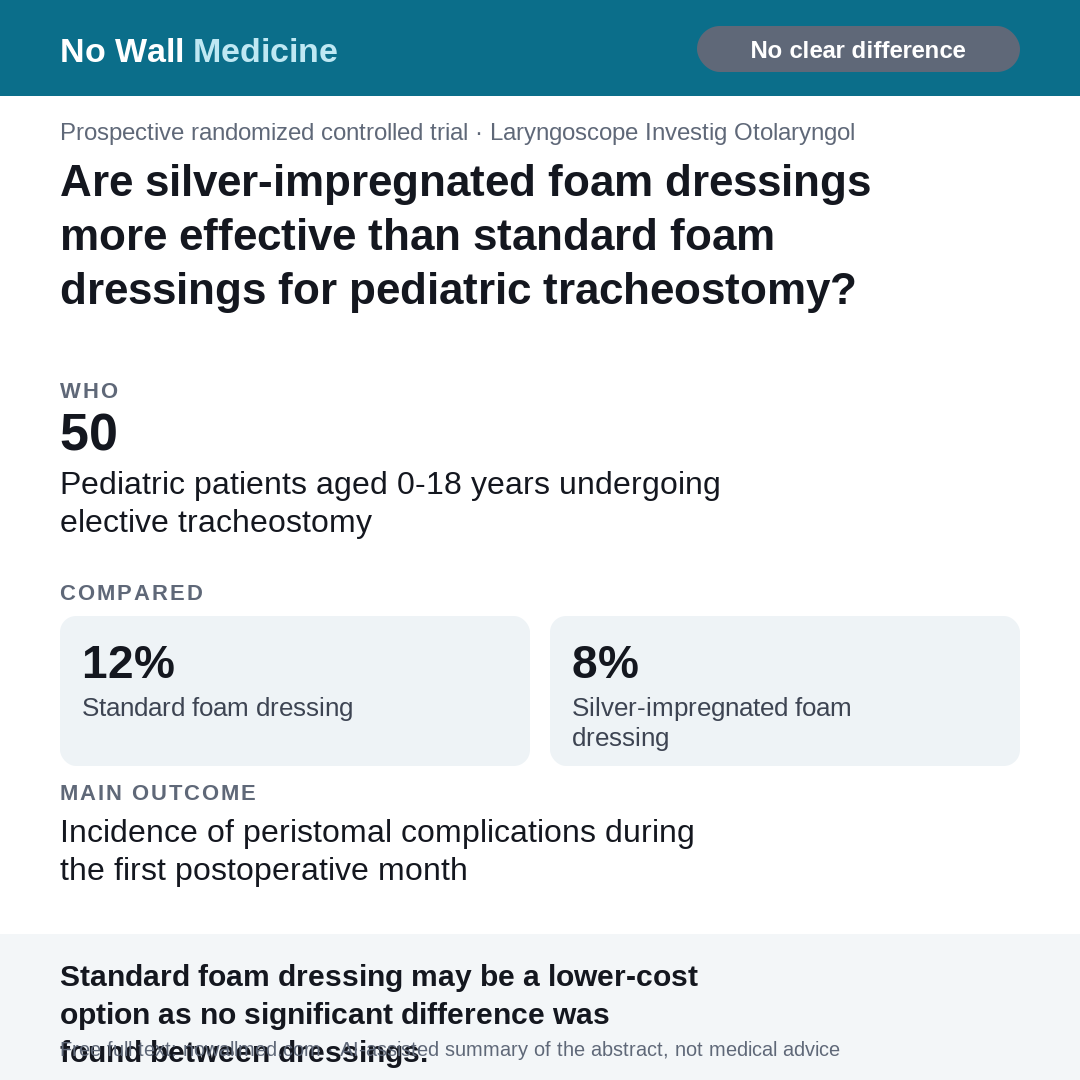
Foam Versus Silver-Impregnated Foam Dressings for Pediatric Tracheostomy: A Randomized Trial
Prospective randomized controlled trialNo clear difference
Are silver-impregnated foam dressings more effective than standard foam dressings for pediatric tracheostomy?
Who
50
Pediatric patients aged 0-18 years undergoing elective tracheostomy
Compared
12%Standard foam dressing (n = 3)
8%Silver-impregnated foam dressing (n = 2)
Main outcome
Incidence of peristomal complications during the first postoperative month
Result: risk difference: 4%, 95% CI: -0.114 to 0.194
Bottom line: Standard foam dressing may be a lower-cost option as no significant difference was found between dressings.
Limitation: Small sample size limits statistical power and it was not a non-inferiority trial.
Laryngoscope Investig Otolaryngol · 2026-05-14Download image
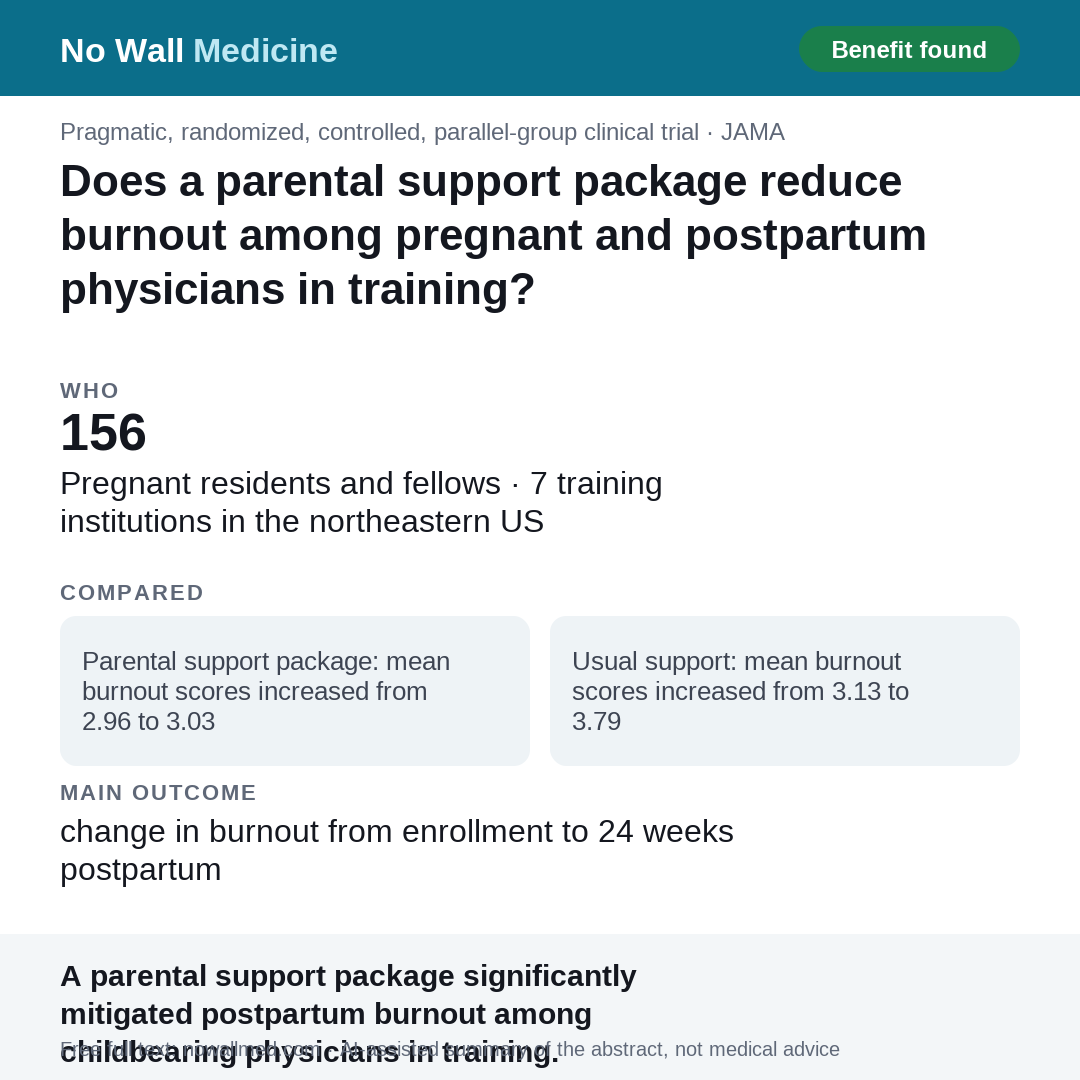
Pragmatic Parental Support to Mitigate Burnout Among Pregnant and Postpartum Trainees: A Randomized Clinical Trial
Pragmatic, randomized, controlled, parallel-group clinical trialBenefit found
Does a parental support package reduce burnout among pregnant and postpartum physicians in training?
Who
156
Pregnant residents and fellows · 7 training institutions in the northeastern US
Compared
Parental support package: mean burnout scores increased from 2.96 to 3.03
Usual support: mean burnout scores increased from 3.13 to 3.79
Main outcome
change in burnout from enrollment to 24 weeks postpartum
Result: adjusted between-group difference in change, -0.58 (95% CI, -1.10 to -0.07)
Bottom line: A parental support package significantly mitigated postpartum burnout among childbearing physicians in training.
JAMA · 2026-05-13Download image
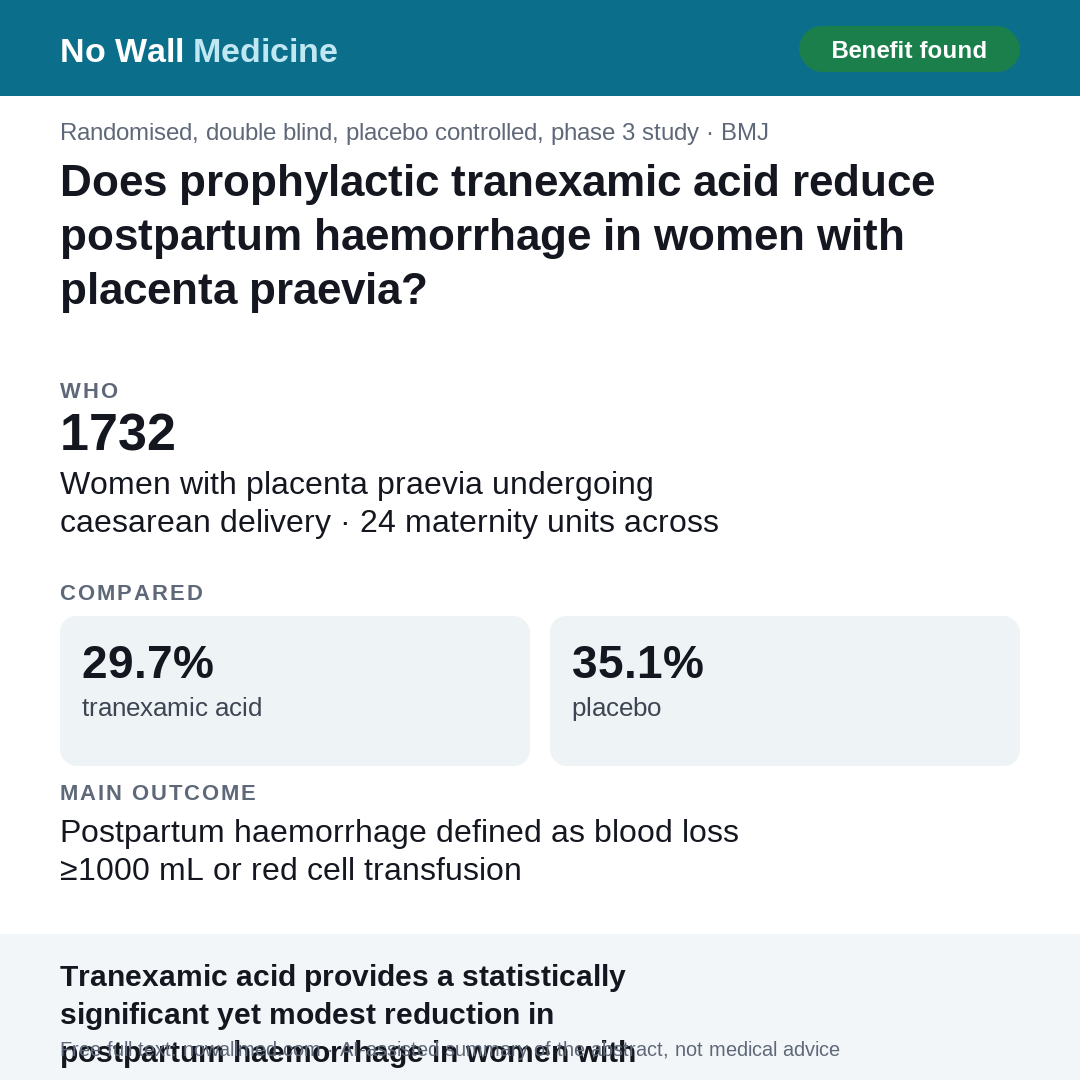
Prophylactic tranexamic acid for the prevention of postpartum haemorrhage in women with placenta praevia: multicentre, double blind, randomised, placebo controlled, phase 3 trial
Randomised, double blind, placebo controlled, phase 3 studyBenefit found
Does prophylactic tranexamic acid reduce postpartum haemorrhage in women with placenta praevia?
Who
1732
Women with placenta praevia undergoing caesarean delivery · 24 maternity units across China
Compared
29.7%tranexamic acid (251/845)
35.1%placebo (297/846)
Main outcome
Postpartum haemorrhage defined as blood loss ≥1000 mL or red cell transfusion
Result: relative risk 0.85, 95.2% confidence interval (CI) 0.75 to 0.96
Bottom line: Tranexamic acid provides a statistically significant yet modest reduction in postpartum haemorrhage in women with placenta praevia.
BMJ · 2026-05-13Download image
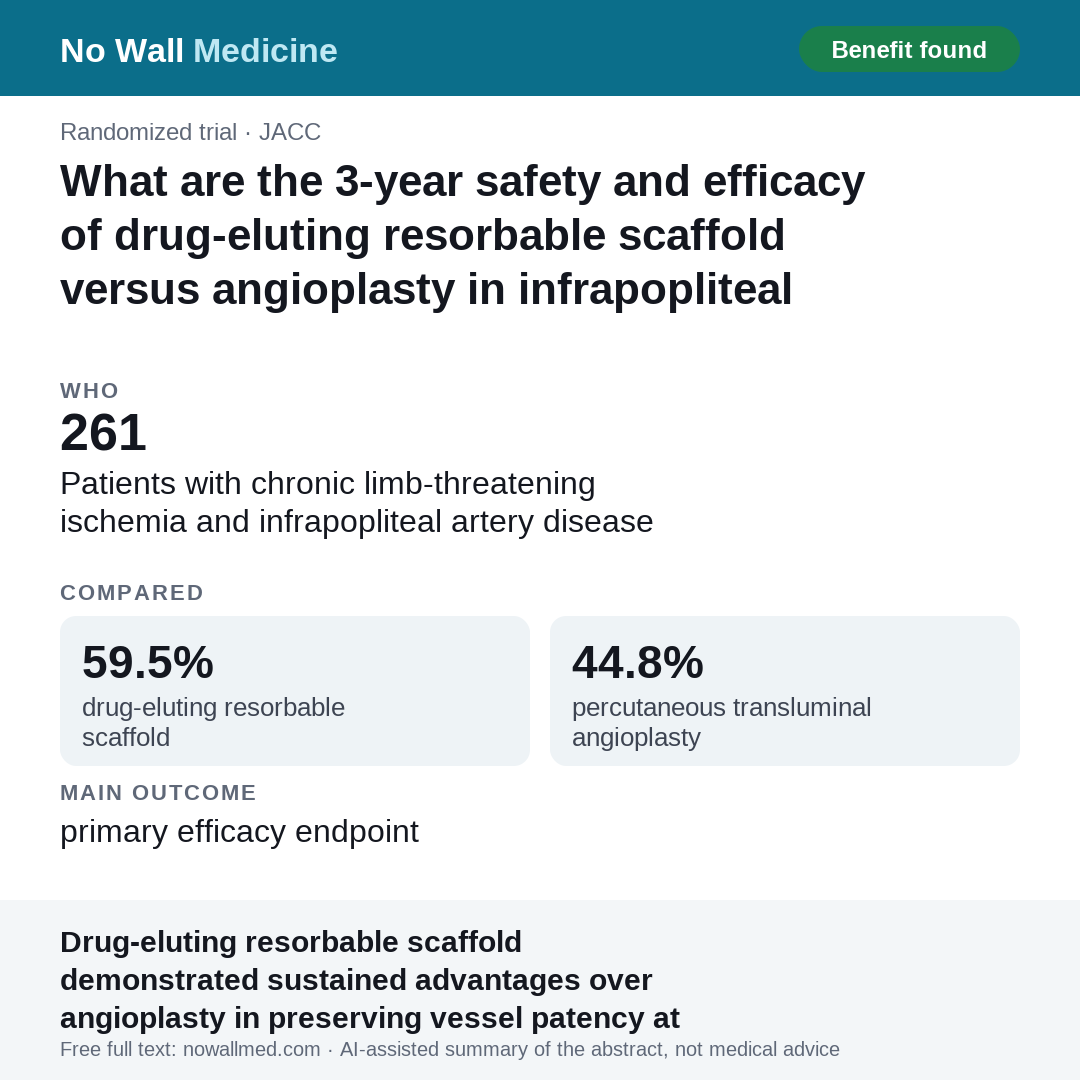
Long-Term Outcomes of a Drug-Eluting Resorbable Scaffold vs Angioplasty in Infrapopliteal Chronic Limb-Threatening Ischemia: 3-Year Results From the LIFE-BTK Trial
Randomized trialBenefit found
What are the 3-year safety and efficacy of drug-eluting resorbable scaffold versus angioplasty in infrapopliteal disease?
Who
261
Patients with chronic limb-threatening ischemia and infrapopliteal artery disease
Compared
59.5%drug-eluting resorbable scaffold
44.8%percutaneous transluminal angioplasty
Main outcome
primary efficacy endpoint
Result: hazard ratio 0.46 (95% CI 0.22-0.97)
Bottom line: Drug-eluting resorbable scaffold demonstrated sustained advantages over angioplasty in preserving vessel patency at 3 years.
JACC · 2026-05-13Download image