Visual abstracts
New randomized trials and meta-analyses from leading journals at a glance: who was studied, what was compared, and what was found. Every paper is free to read in full.
All specialtiesCardiology 3539Oncology 3034Gastroenterology & Hepatology 1395Infectious Disease 2484Neurology 1428Psychiatry & Mental Health 1676Pulmonology 1518Critical Care 1014Endocrinology & Diabetes 1811Pediatrics 2148Surgery 1872Orthopedics & Sports Medicine 657Neurosurgery 417Cardiothoracic & Vascular Surgery 423Plastic & Reconstructive Surgery 492Nephrology 768Rheumatology 569Hematology 795Dermatology 439Ophthalmology 392Obstetrics & Gynecology 1216Public & Global Health 682Radiology & Imaging 495Anesthesiology 725Urology 584ENT (Otolaryngology) 389Emergency Medicine 382Allergy & Immunology 221Geriatrics 751Family Medicine & Primary Care 409Medical Genetics & Genomics 453Pathology & Laboratory Medicine 116Physical Medicine & Rehabilitation 551Palliative Care 327Nutrition 1062Digital Health & AI 1660General Medicine 253
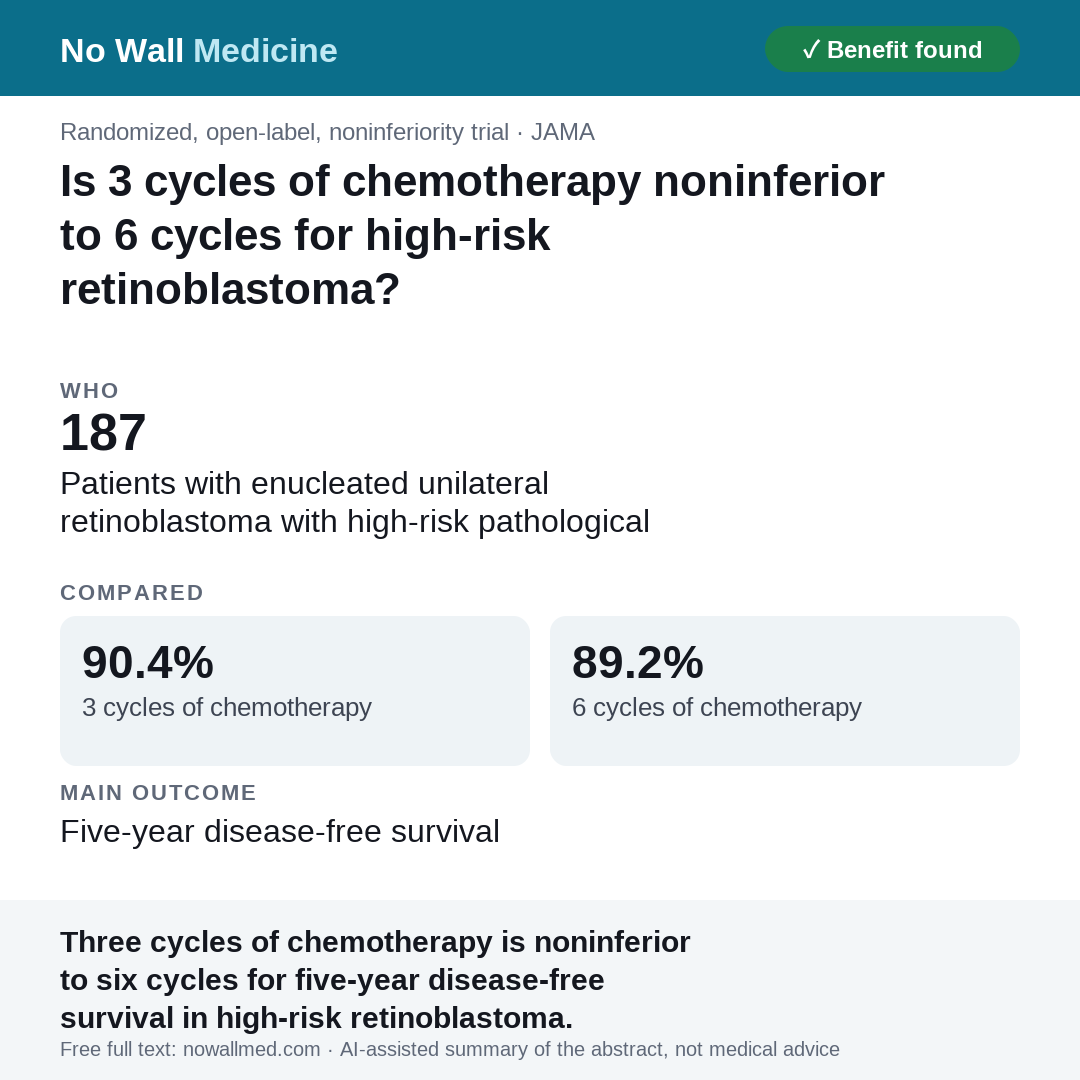
Three vs 6 Cycles of Chemotherapy for High-Risk Retinoblastoma: A Randomized Clinical Trial
Randomized, open-label, noninferiority trialBenefit found
Is 3 cycles of chemotherapy noninferior to 6 cycles for high-risk retinoblastoma?
Who
187
Patients with enucleated unilateral retinoblastoma with high-risk pathological features · 2 premier eye centers in China
Compared
90.4%3 cycles of chemotherapy
89.2%6 cycles of chemotherapy
Main outcome
Five-year disease-free survival
Result: difference, 1.2% (95% CI, -7.5% to 9.8%)
Bottom line: Three cycles of chemotherapy is noninferior to six cycles for five-year disease-free survival in high-risk retinoblastoma.
JAMA · 2024-10-21Download image
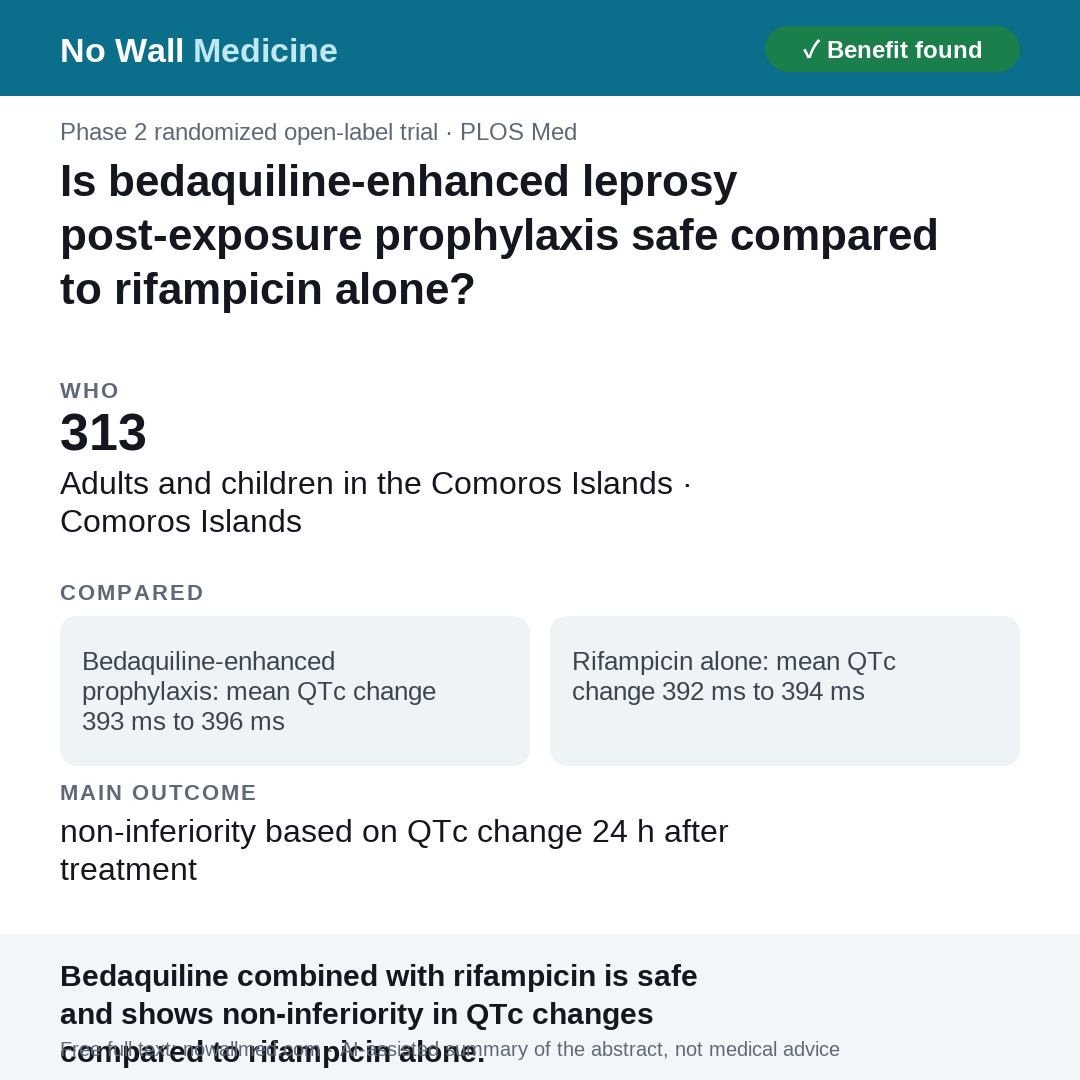
Safety of single-dose bedaquiline combined with rifampicin for leprosy post-exposure prophylaxis: A Phase 2 randomized non-inferiority trial in the Comoros Islands
Phase 2 randomized open-label trialBenefit found
Is bedaquiline-enhanced leprosy post-exposure prophylaxis safe compared to rifampicin alone?
Who
313
Adults and children in the Comoros Islands · Comoros Islands
Compared
Bedaquiline-enhanced prophylaxis: mean QTc change 393 ms to 396 ms
Rifampicin alone: mean QTc change 392 ms to 394 ms
Main outcome
non-inferiority based on QTc change 24 h after treatment
Result: difference between arms 1.8 ms, 95% CI -1.8, 5.3
Bottom line: Bedaquiline combined with rifampicin is safe and shows non-inferiority in QTc changes compared to rifampicin alone.
Limitation: false elevation of ALT/AST during adult recruitment due to a technical error
PLOS Med · 2024-10-21Download image
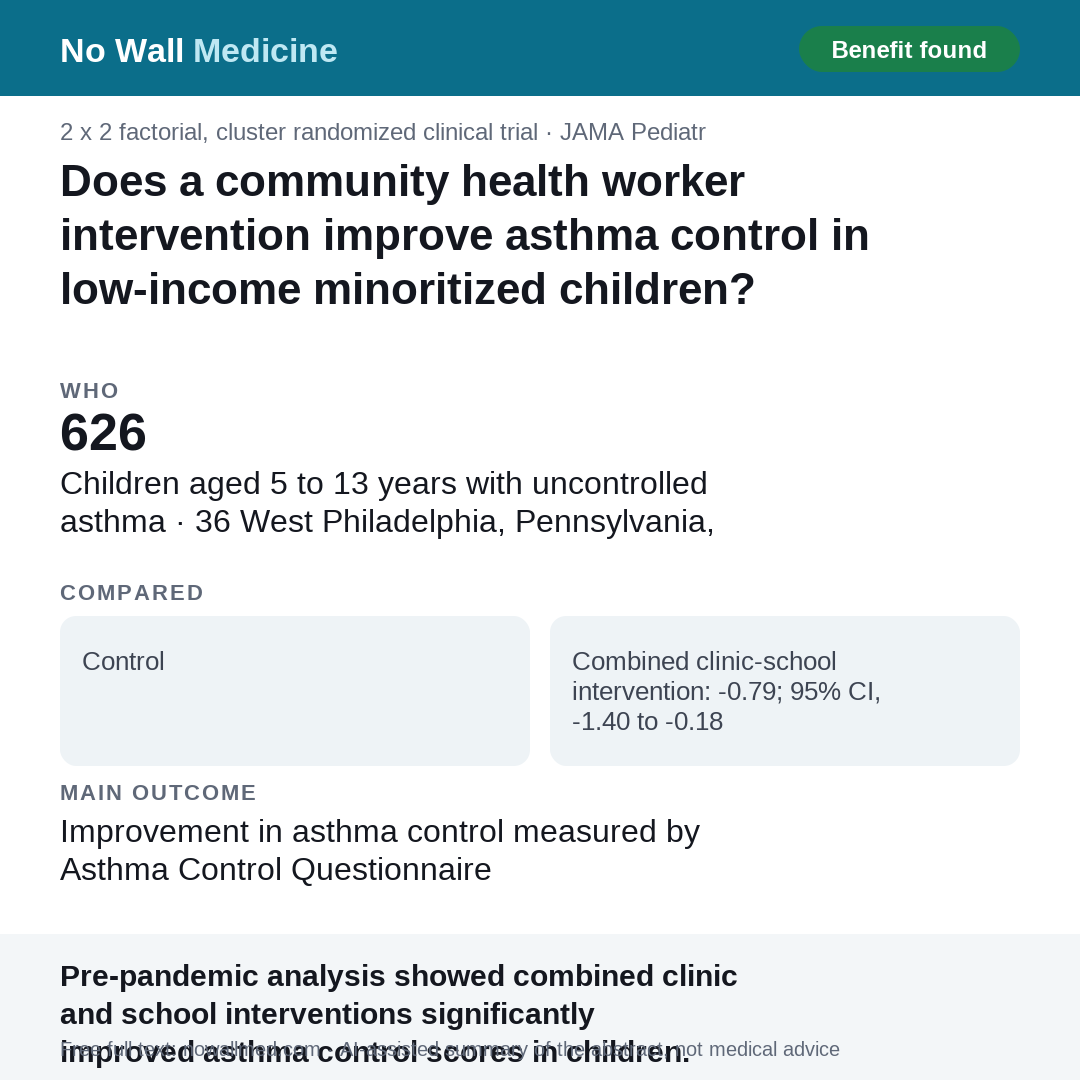
Community Health Workers Linking Clinics and Schools and Asthma Control: A Randomized Clinical Trial
2 x 2 factorial, cluster randomized clinical trialBenefit found
Does a community health worker intervention improve asthma control in low-income minoritized children?
Who
626
Children aged 5 to 13 years with uncontrolled asthma · 36 West Philadelphia, Pennsylvania, public and charter schools
Compared
Control
Combined clinic-school intervention: -0.79; 95% CI, -1.40 to -0.18
Main outcome
Improvement in asthma control measured by Asthma Control Questionnaire
Result: -0.79; 95% CI, -1.40 to -0.18
Bottom line: Pre-pandemic analysis showed combined clinic and school interventions significantly improved asthma control scores in children.
Limitation: Primary care and school interventions were dramatically disrupted by the COVID-19 pandemic.
JAMA Pediatr · 2024-10-21Download image
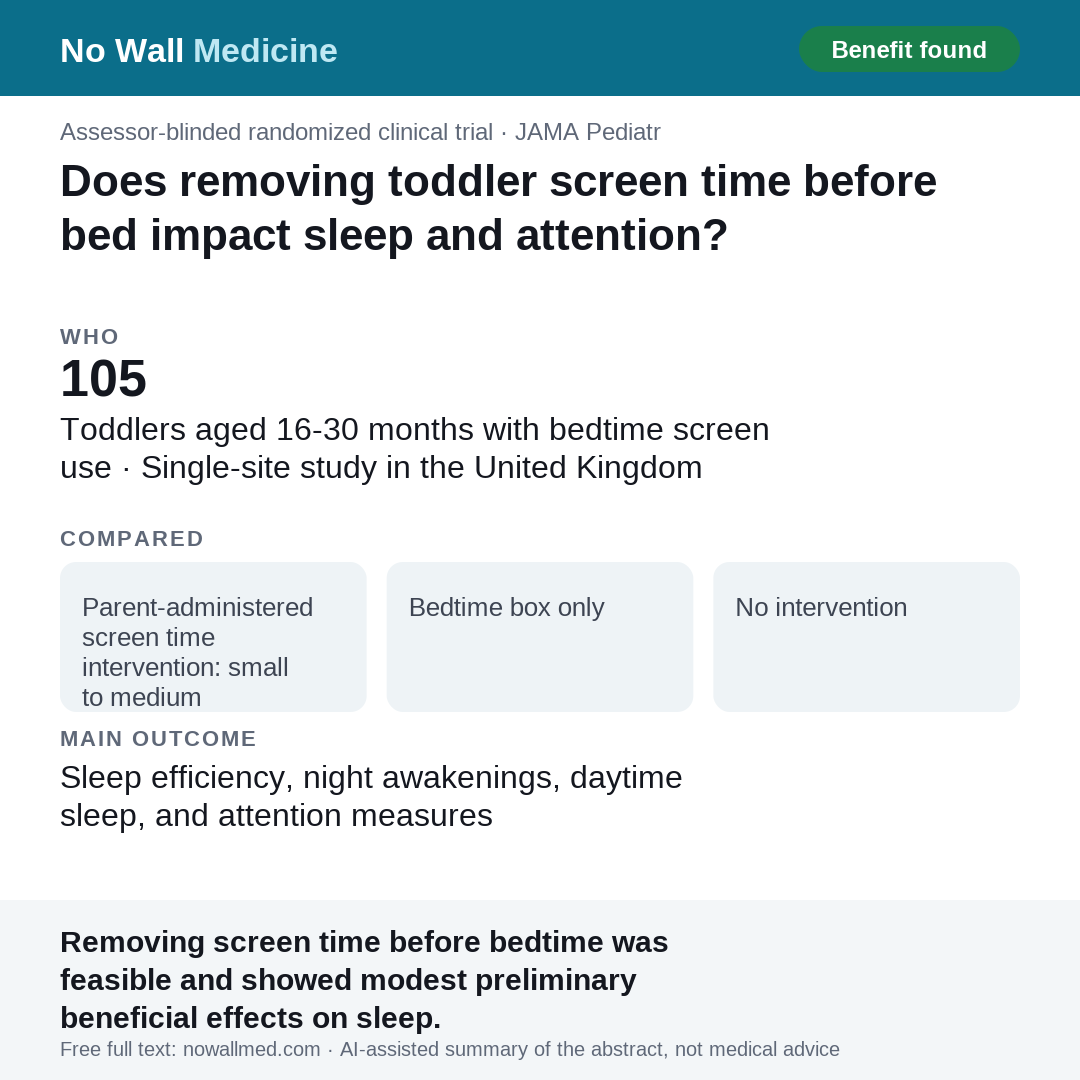
Toddler Screen Use Before Bed and Its Effect on Sleep and Attention: A Randomized Clinical Trial
Assessor-blinded randomized clinical trialBenefit found
Does removing toddler screen time before bed impact sleep and attention?
Who
105
Toddlers aged 16-30 months with bedtime screen use · Single-site study in the United Kingdom
Compared
Parent-administered screen time intervention: small to medium improvements in sleep efficiency
Bedtime box only
No intervention
Main outcome
Sleep efficiency, night awakenings, daytime sleep, and attention measures
Result: Cohen d 0.56 (95% CI, 0.17-0.96) for sleep efficiency vs BB only
Bottom line: Removing screen time before bedtime was feasible and showed modest preliminary beneficial effects on sleep.
JAMA Pediatr · 2024-10-21Download image
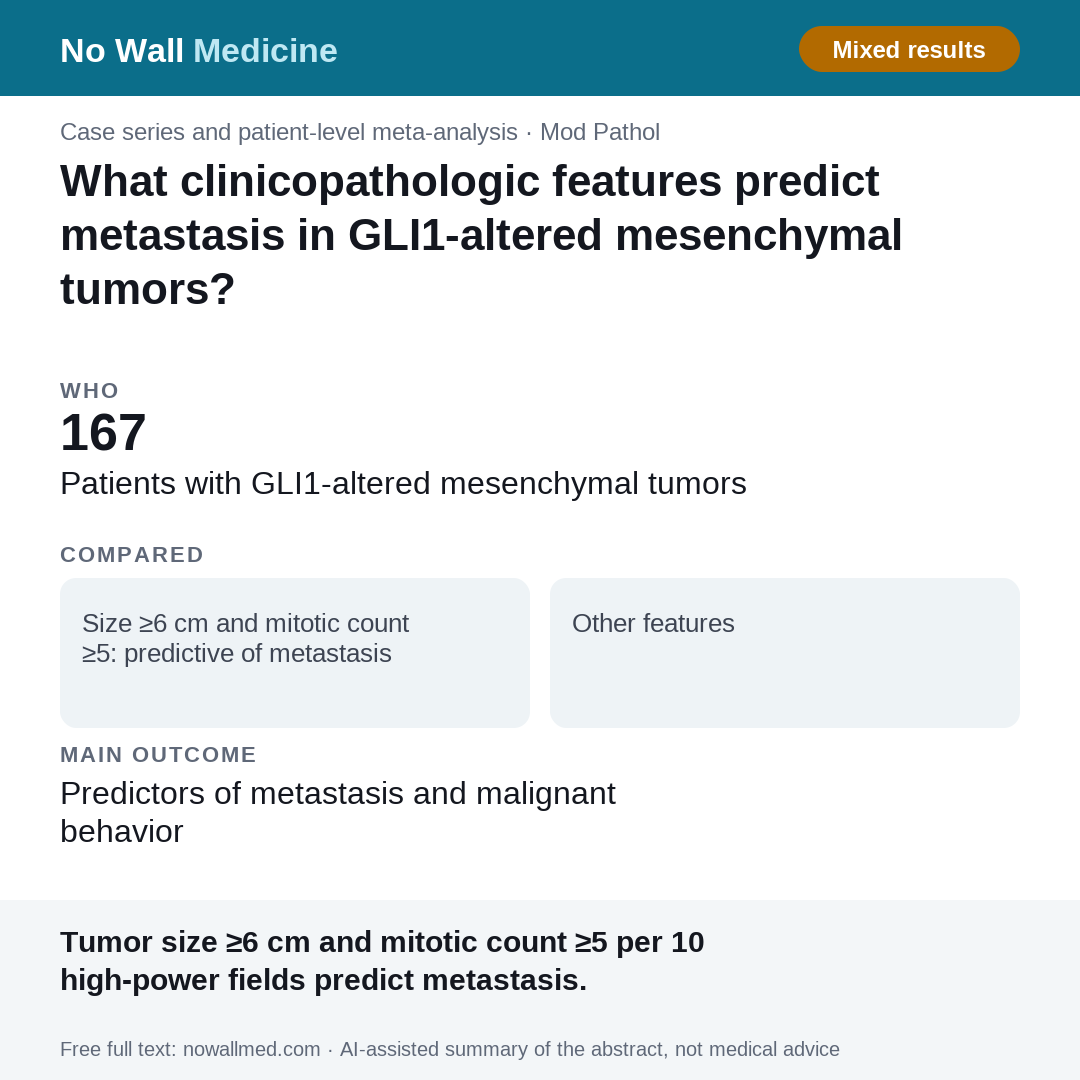
GLI1-Altered Mesenchymal Tumor-Multiomic Characterization of a Case Series and Patient-Level Meta-analysis of One Hundred Sixty-Seven Cases for Risk Stratification
Case series and patient-level meta-analysisMixed results
What clinicopathologic features predict metastasis in GLI1-altered mesenchymal tumors?
Who
167
Patients with GLI1-altered mesenchymal tumors
Compared
Size ≥6 cm and mitotic count ≥5: predictive of metastasis
Other features
Main outcome
Predictors of metastasis and malignant behavior
Bottom line: Tumor size ≥6 cm and mitotic count ≥5 per 10 high-power fields predict metastasis.
Mod Pathol · 2024-10-21Download image
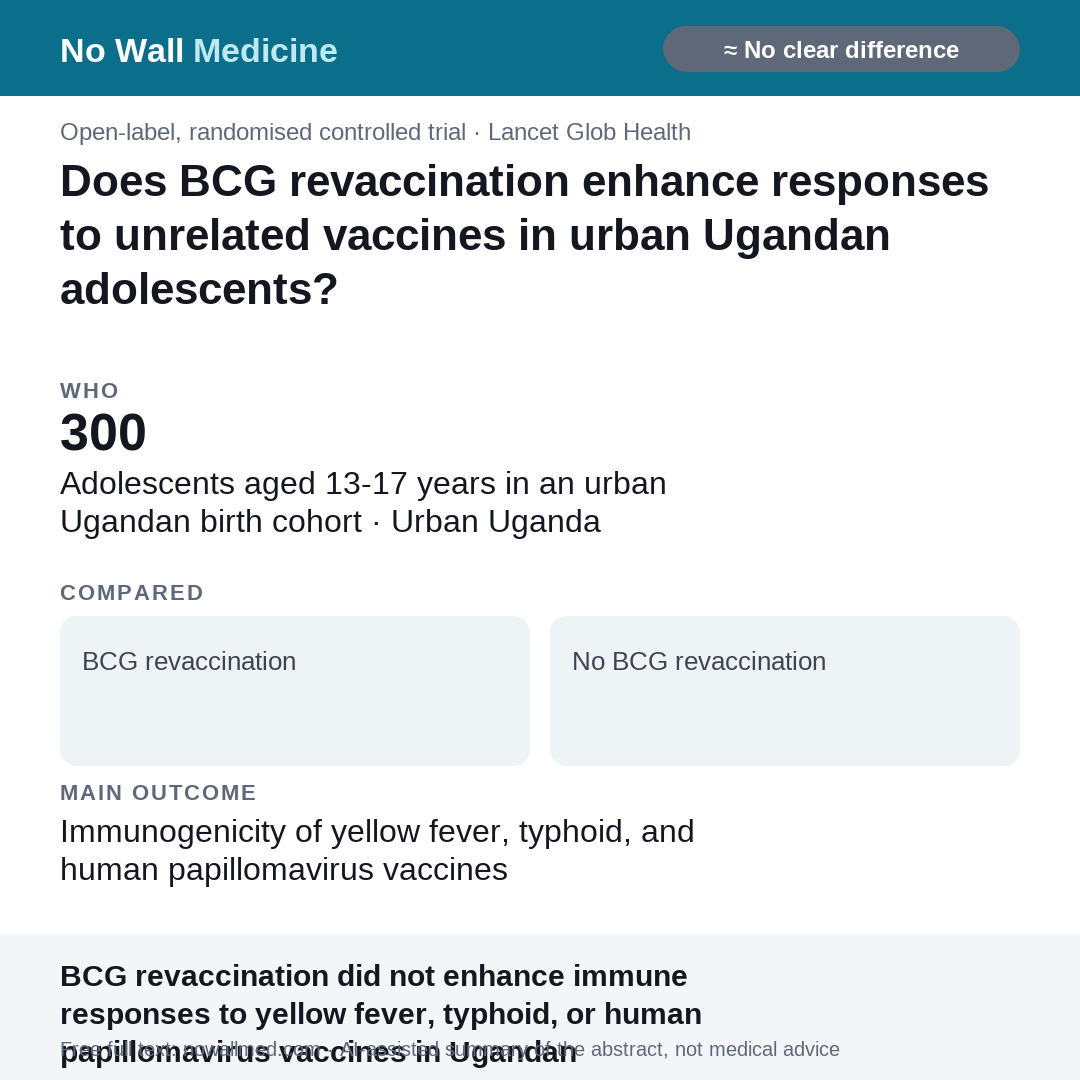
The effect of BCG revaccination on the response to unrelated vaccines in urban Ugandan adolescents (POPVAC C): an open-label, randomised controlled trial
Open-label, randomised controlled trialNo clear difference
Does BCG revaccination enhance responses to unrelated vaccines in urban Ugandan adolescents?
Who
300
Adolescents aged 13-17 years in an urban Ugandan birth cohort · Urban Uganda
Compared
BCG revaccination
No BCG revaccination
Main outcome
Immunogenicity of yellow fever, typhoid, and human papillomavirus vaccines
Result: GMR 0.95 (95% CI 0.75-1.19) for yellow fever PRNT50
Bottom line: BCG revaccination did not enhance immune responses to yellow fever, typhoid, or human papillomavirus vaccines in Ugandan adolescents.
Lancet Glob Health · 2024-10-19Download image
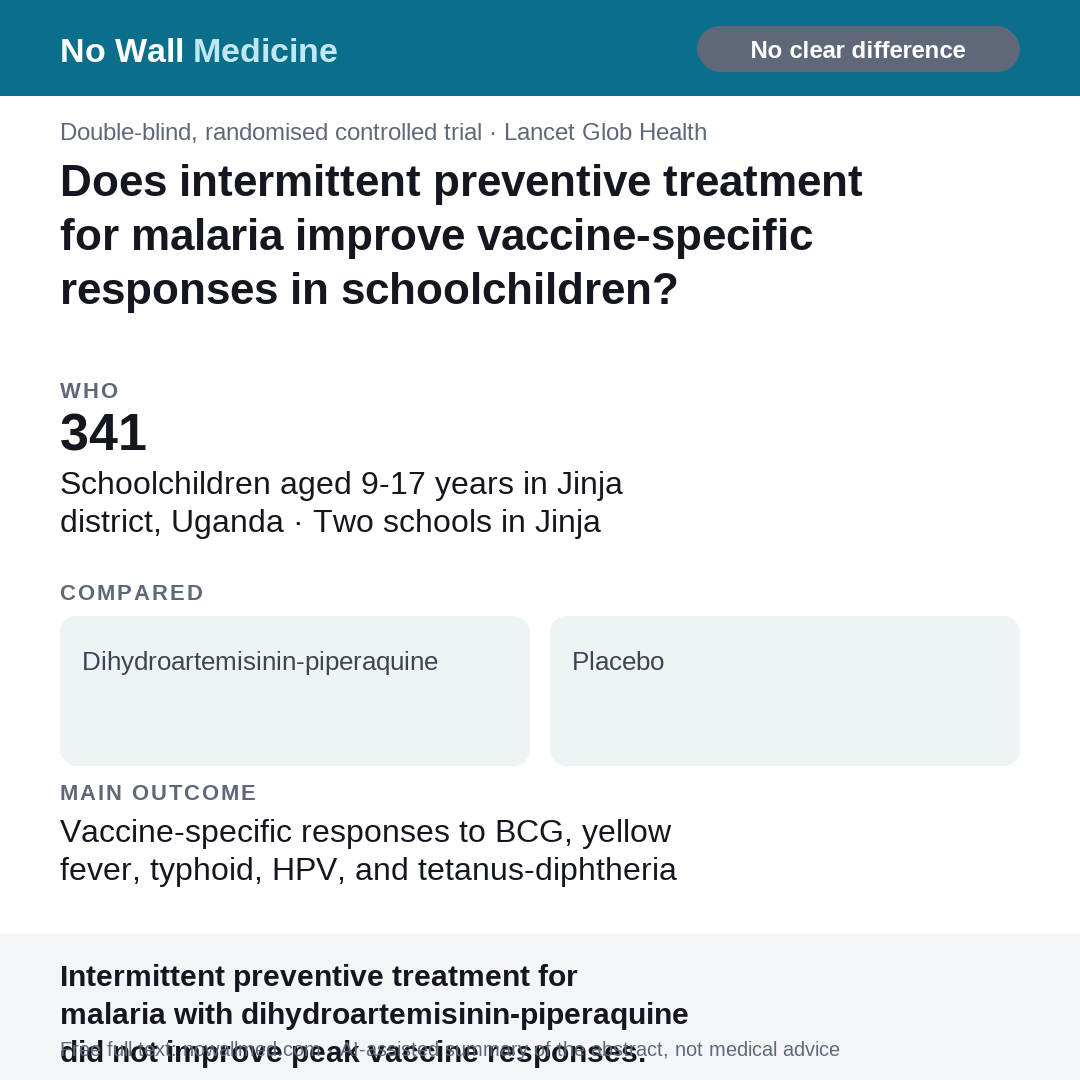
The effect of intermittent preventive treatment for malaria with dihydroartemisinin-piperaquine on vaccine-specific responses among schoolchildren in rural Uganda (POPVAC B): a double-blind, randomised controlled trial
Double-blind, randomised controlled trialNo clear difference
Does intermittent preventive treatment for malaria improve vaccine-specific responses in schoolchildren?
Who
341
Schoolchildren aged 9-17 years in Jinja district, Uganda · Two schools in Jinja district, Uganda
Compared
Dihydroartemisinin-piperaquine
Placebo
Main outcome
Vaccine-specific responses to BCG, yellow fever, typhoid, HPV, and tetanus-diphtheria
Bottom line: Intermittent preventive treatment for malaria with dihydroartemisinin-piperaquine did not improve peak vaccine responses.
Funded by: UK Medical Research Council
Lancet Glob Health · 2024-10-19Download image
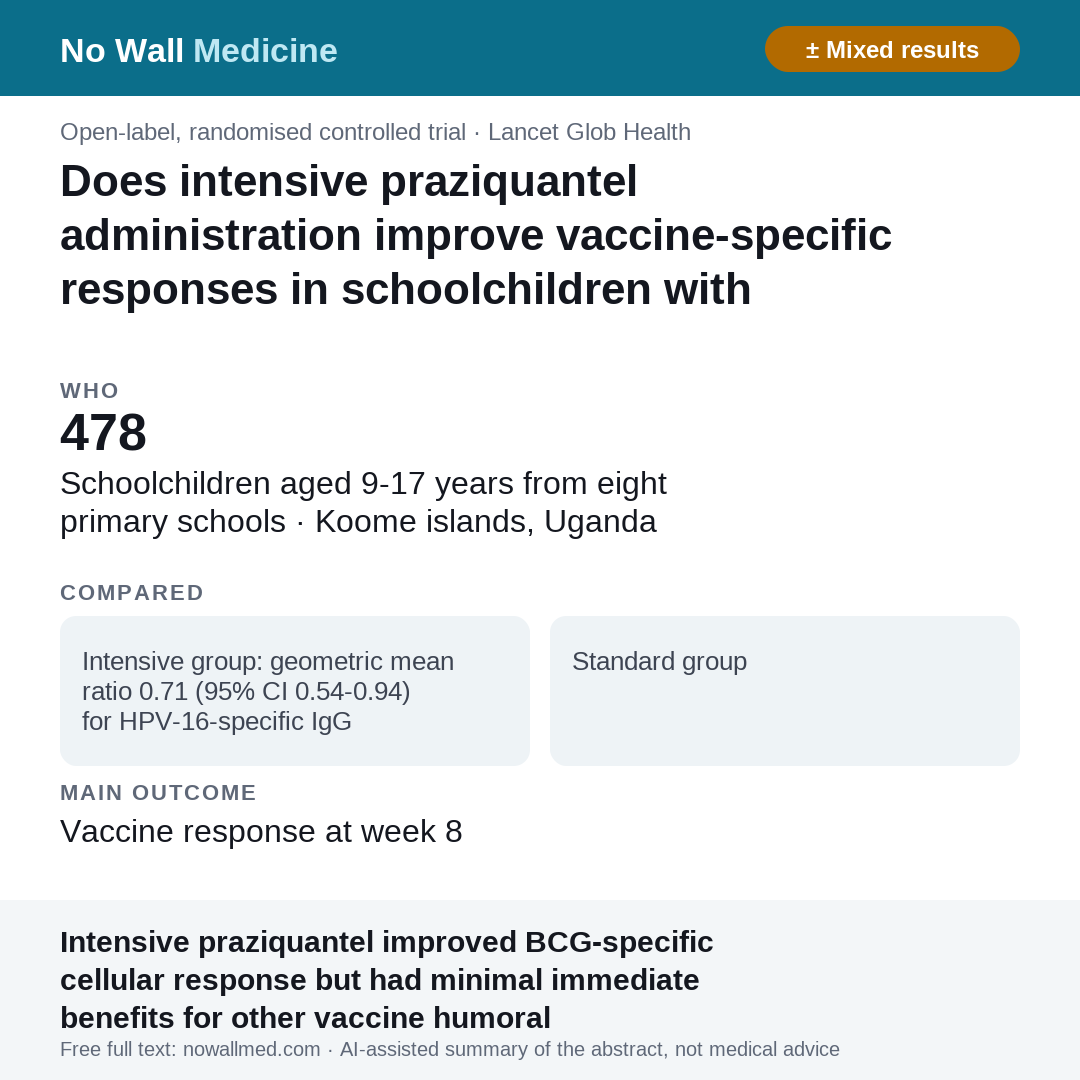
The effect of intensive praziquantel administration on vaccine-specific responses among schoolchildren in Ugandan schistosomiasis-endemic islands (POPVAC A): an open-label, randomised controlled trial
Open-label, randomised controlled trialMixed results
Does intensive praziquantel administration improve vaccine-specific responses in schoolchildren with Schistosoma mansoni?
Who
478
Schoolchildren aged 9-17 years from eight primary schools · Koome islands, Uganda
Compared
Intensive group: geometric mean ratio 0.71 (95% CI 0.54-0.94) for HPV-16-specific IgG
Standard group
Main outcome
Vaccine response at week 8
Result: geometric mean ratio 0.71 (95% CI 0.54-0.94)
Bottom line: Intensive praziquantel improved BCG-specific cellular response but had minimal immediate benefits for other vaccine humoral responses.
Funded by: UK Medical Research Council
Lancet Glob Health · 2024-10-19Download image
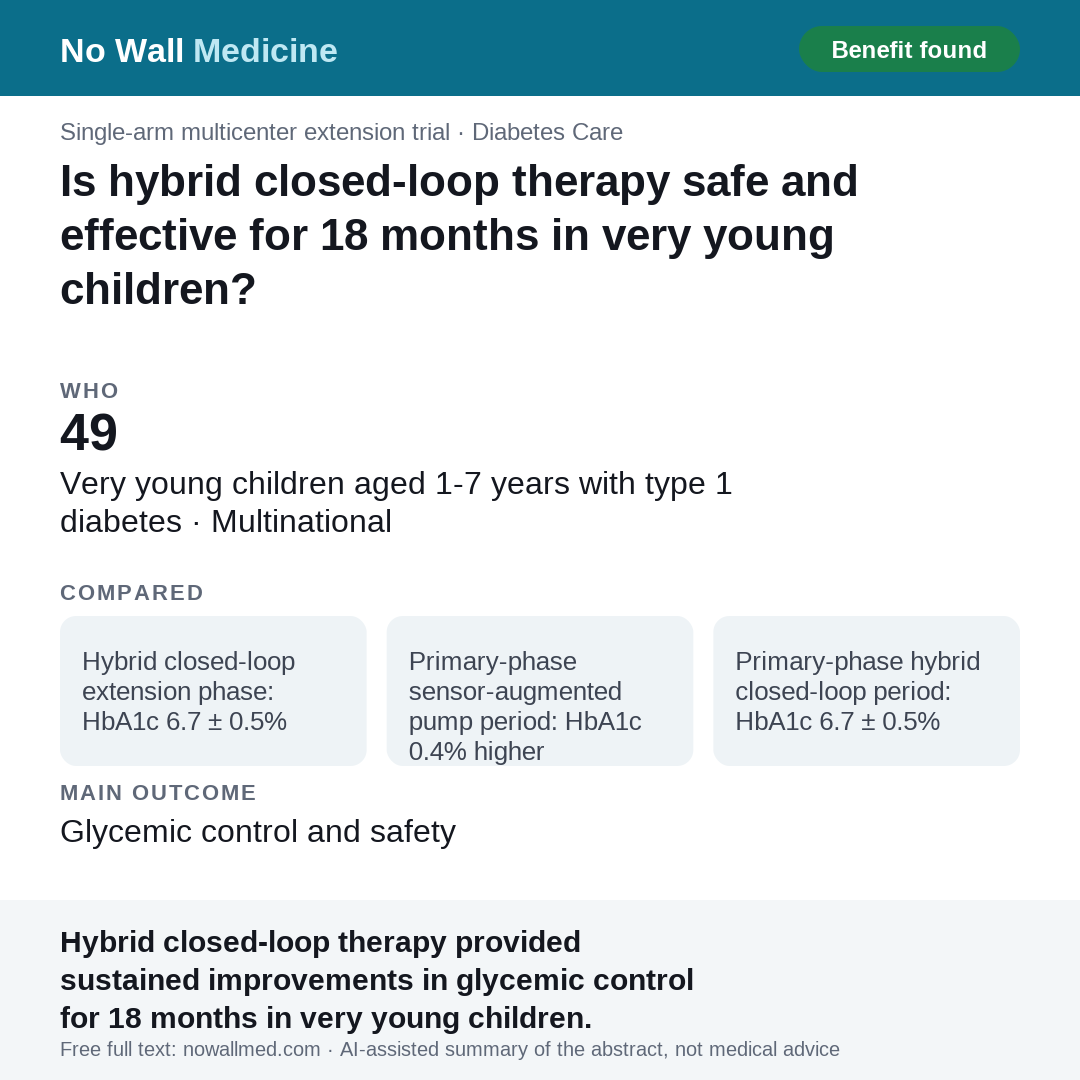
Eighteen-Month Hybrid Closed-Loop Use in Very Young Children With Type 1 Diabetes: A Single-Arm Multicenter Trial
Single-arm multicenter extension trialBenefit found
Is hybrid closed-loop therapy safe and effective for 18 months in very young children?
Who
49
Very young children aged 1-7 years with type 1 diabetes · Multinational
Compared
Hybrid closed-loop extension phase: HbA1c 6.7 ± 0.5%
Primary-phase sensor-augmented pump period: HbA1c 0.4% higher
Primary-phase hybrid closed-loop period: HbA1c 6.7 ± 0.5%
Main outcome
Glycemic control and safety
Bottom line: Hybrid closed-loop therapy provided sustained improvements in glycemic control for 18 months in very young children.
Diabetes Care · 2024-10-18Download image
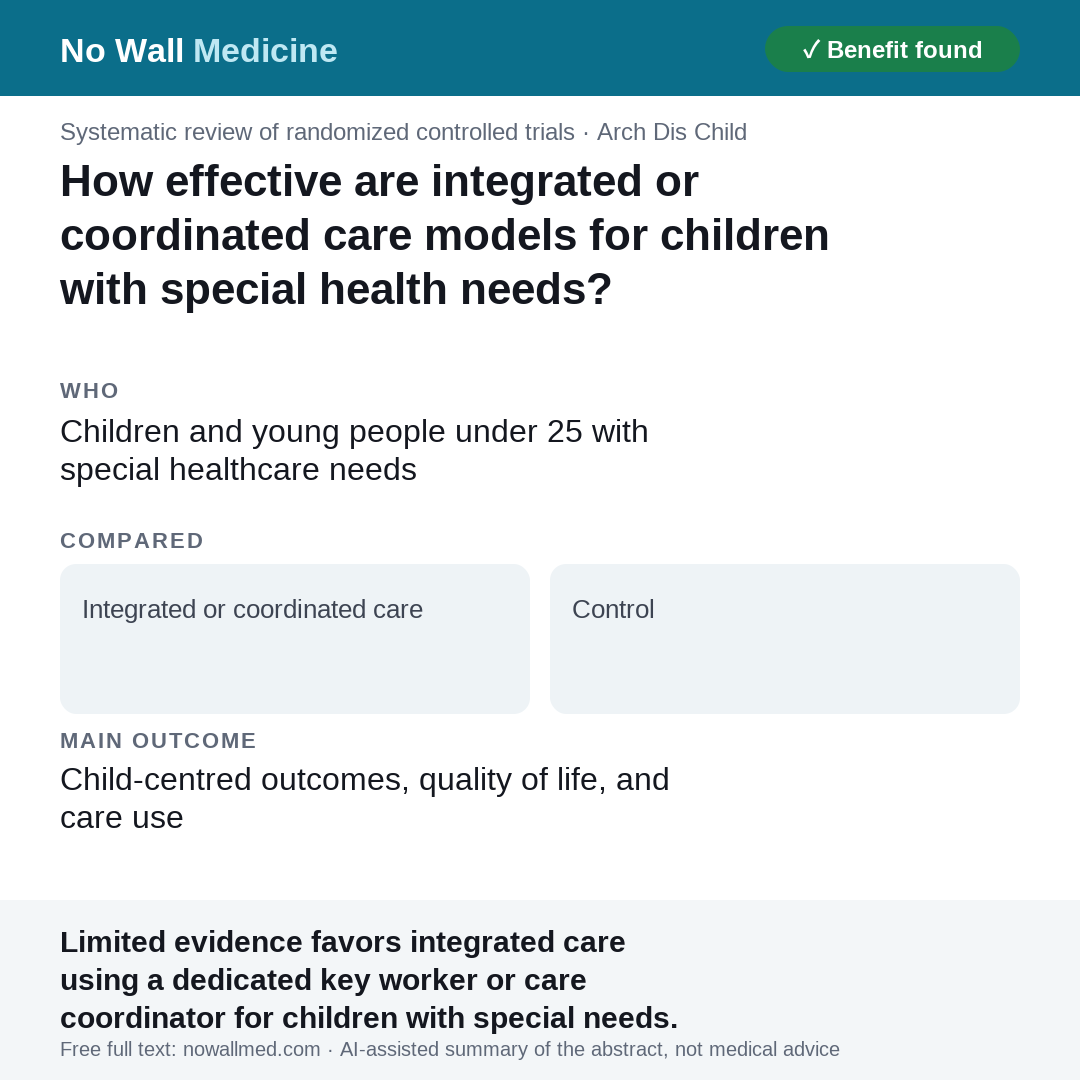
Integrated care for children and young people with special health and care needs: a systematic review
Systematic review of randomized controlled trialsBenefit found
How effective are integrated or coordinated care models for children with special health needs?
Who
Children and young people under 25 with special healthcare needs
Compared
Integrated or coordinated care
Control
Main outcome
Child-centred outcomes, quality of life, and care use
Bottom line: Limited evidence favors integrated care using a dedicated key worker or care coordinator for children with special needs.
Limitation: Low or very low certainty of evidence and heterogeneity in study outcomes and definitions.
Arch Dis Child · 2024-10-18Download image
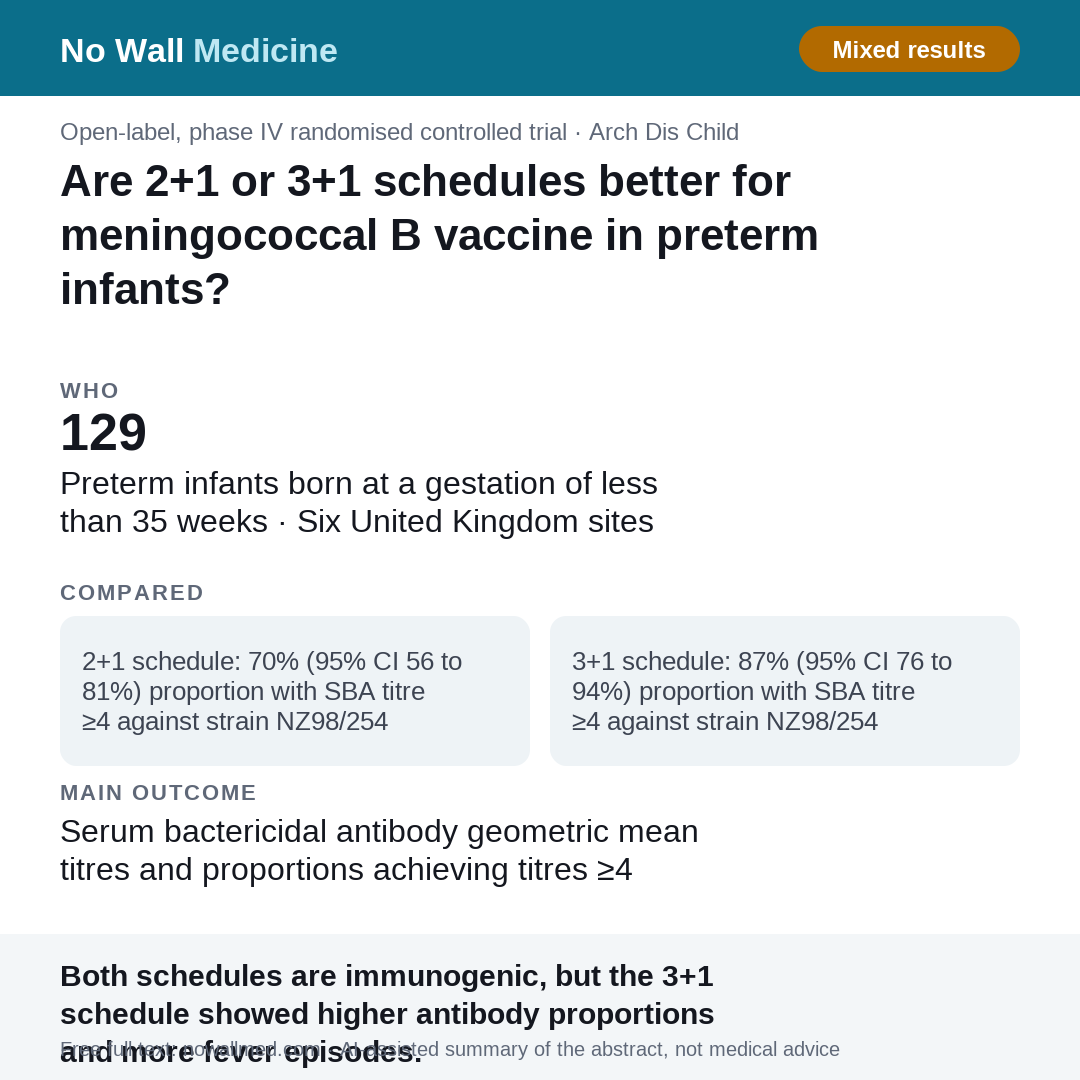
An open-label, phase IV randomised controlled trial of two schedules of a four-component meningococcal B vaccine in UK preterm infants
Open-label, phase IV randomised controlled trialMixed results
Are 2+1 or 3+1 schedules better for meningococcal B vaccine in preterm infants?
Who
129
Preterm infants born at a gestation of less than 35 weeks · Six United Kingdom sites
Compared
2+1 schedule: 70% (95% CI 56 to 81%) proportion with SBA titre ≥4 against strain NZ98/254
3+1 schedule: 87% (95% CI 76 to 94%) proportion with SBA titre ≥4 against strain NZ98/254
Main outcome
Serum bactericidal antibody geometric mean titres and proportions achieving titres ≥4
Result: p=0.03 for proportion with SBA titre ≥4 against strain NZ98/254
Bottom line: Both schedules are immunogenic, but the 3+1 schedule showed higher antibody proportions and more fever episodes.
Arch Dis Child · 2024-10-18Download image
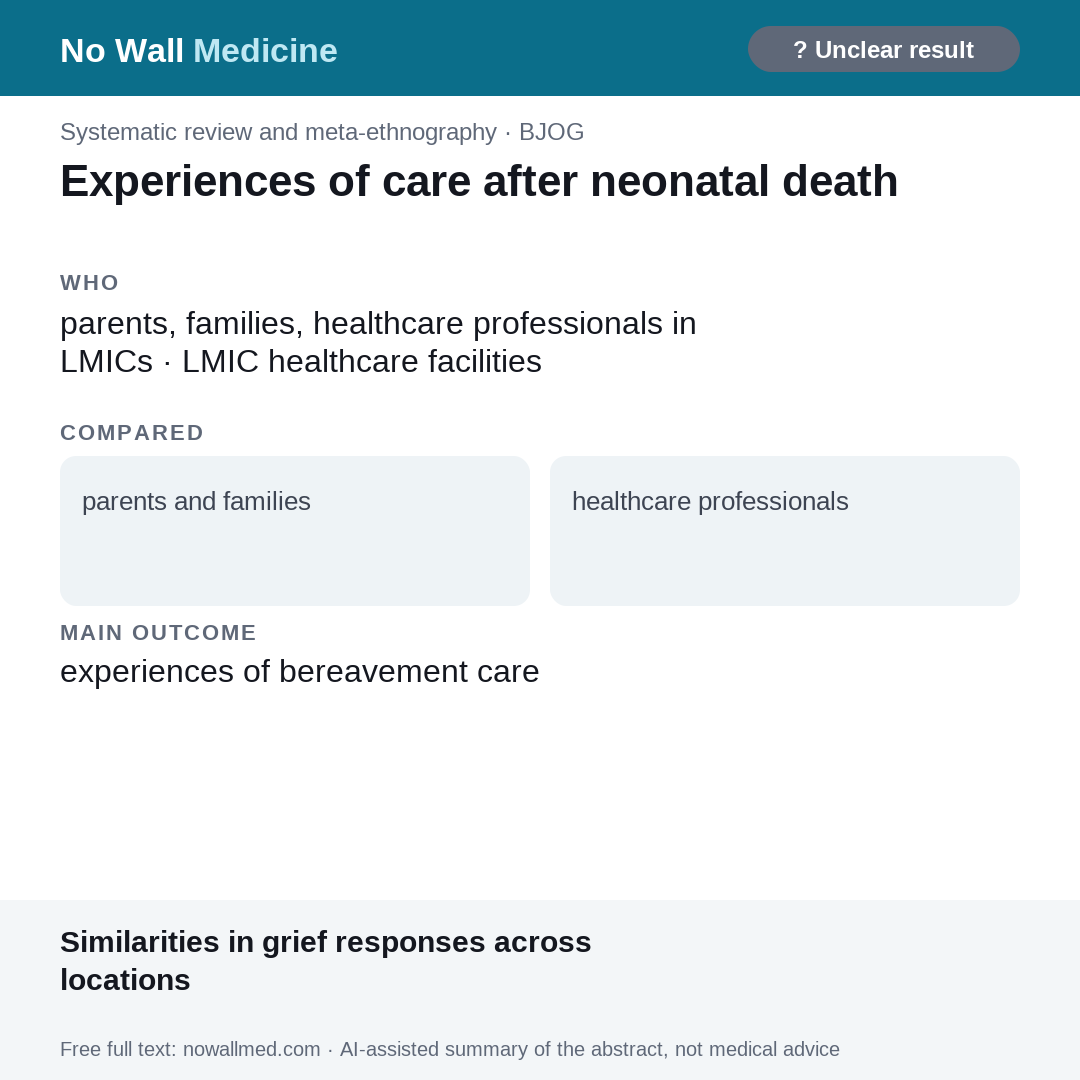
Parents', Families', Communities' and Healthcare Professionals' Experiences of Care Following Neonatal Death in Healthcare Facilities in LMICs: A Systematic Review and Meta-Ethnography
Systematic review and meta-ethnographyUnclear result
Experiences of care after neonatal death
Who
parents, families, healthcare professionals in LMICs · LMIC healthcare facilities
Compared
parents and families
healthcare professionals
Main outcome
experiences of bereavement care
Bottom line: Similarities in grief responses across locations
BJOG · 2024-10-18Download image
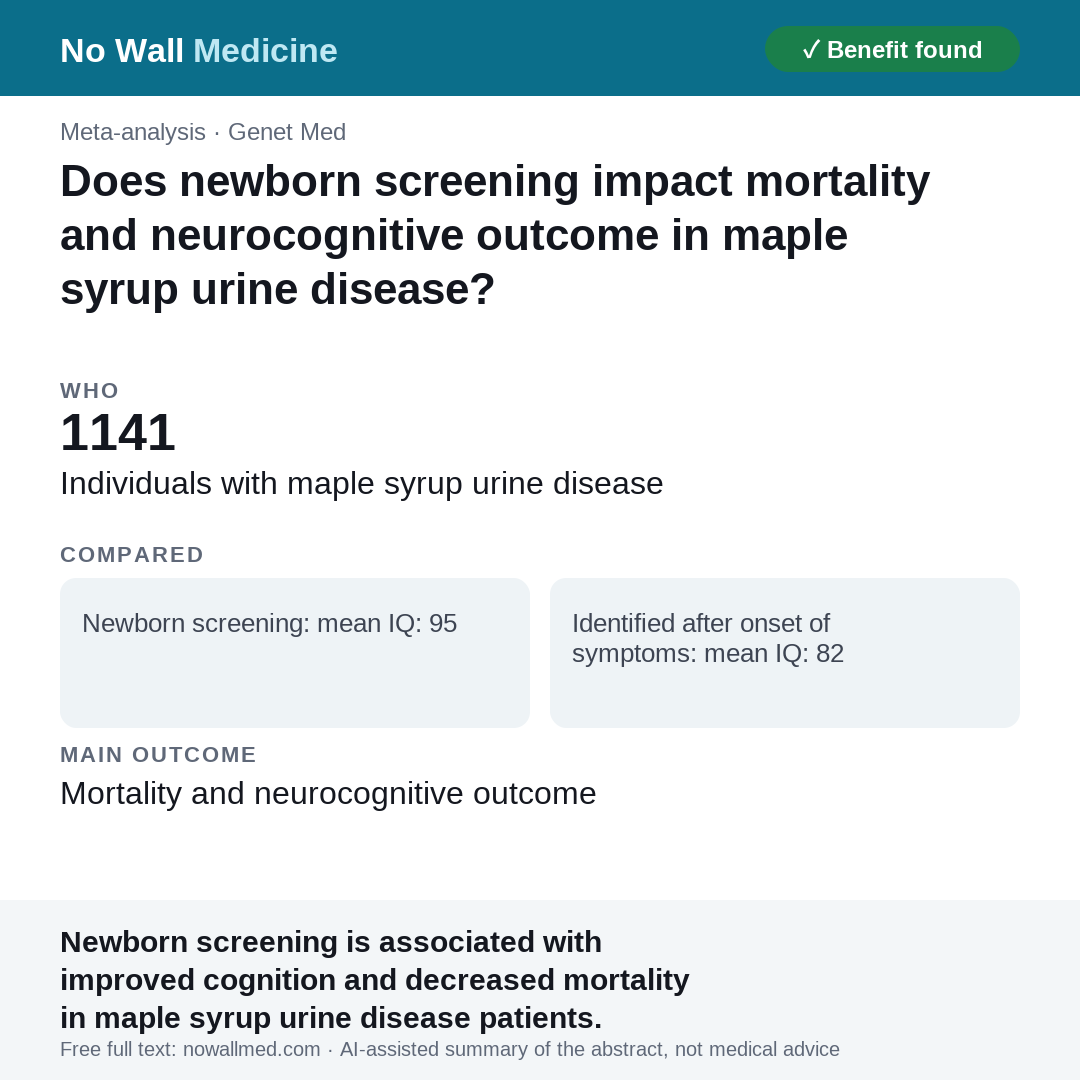
Impact of early diagnosis, disease variant, and quality of care on the neurocognitive outcome in maple syrup urine disease: A meta-analysis
Meta-analysisBenefit found
Does newborn screening impact mortality and neurocognitive outcome in maple syrup urine disease?
Who
1141
Individuals with maple syrup urine disease
Compared
Newborn screening: mean IQ: 95
Identified after onset of symptoms: mean IQ: 82
Main outcome
Mortality and neurocognitive outcome
Bottom line: Newborn screening is associated with improved cognition and decreased mortality in maple syrup urine disease patients.
Genet Med · 2024-10-18Download image
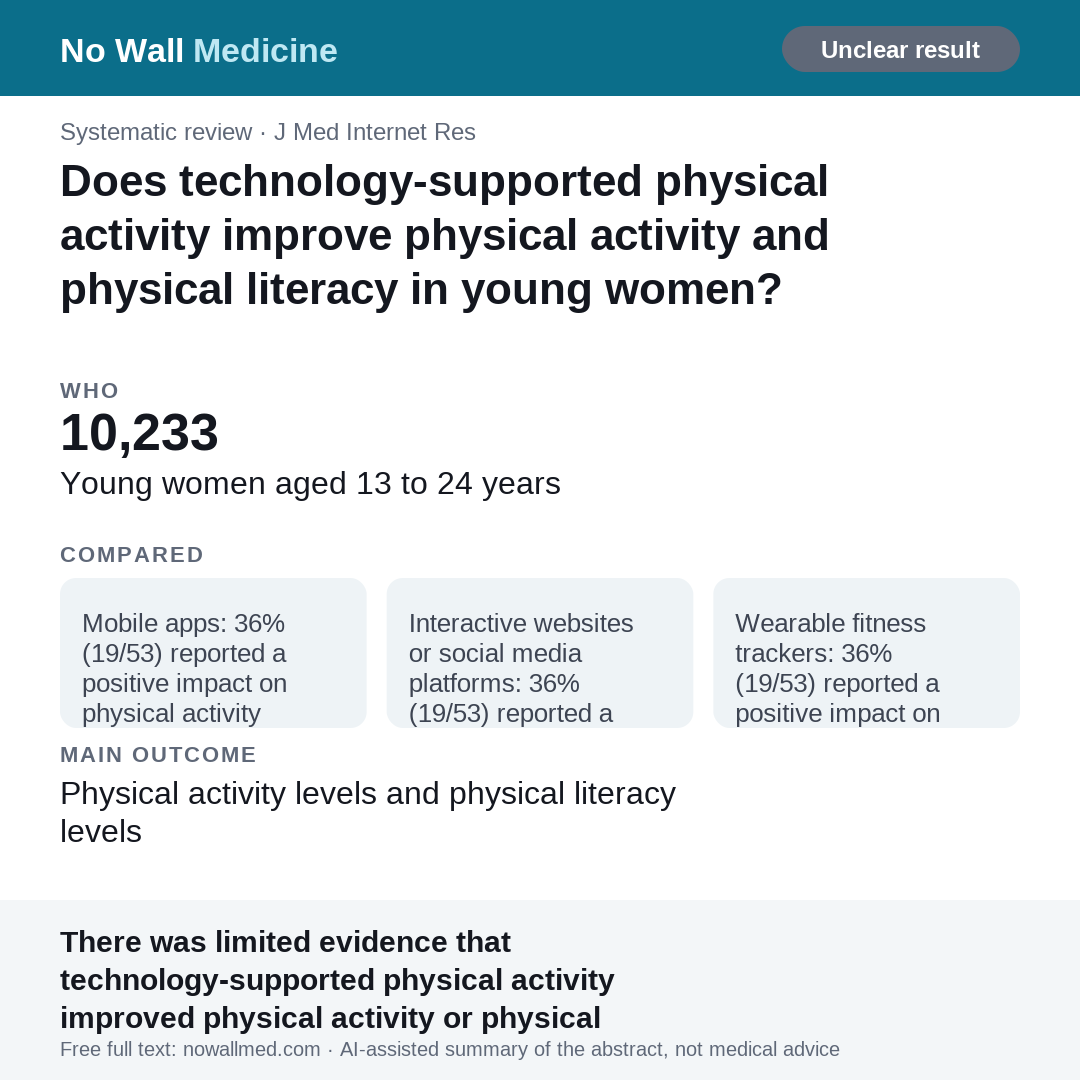
Technology-Supported Physical Activity and Its Potential as a Tool to Promote Young Women's Physical Activity and Physical Literacy: Systematic Review
Systematic reviewUnclear result
Does technology-supported physical activity improve physical activity and physical literacy in young women?
Who
10,233
Young women aged 13 to 24 years
Compared
Mobile apps: 36% (19/53) reported a positive impact on physical activity
Interactive websites or social media platforms: 36% (19/53) reported a positive impact on physical activity
Wearable fitness trackers: 36% (19/53) reported a positive impact on physical activity
Main outcome
Physical activity levels and physical literacy levels
Bottom line: There was limited evidence that technology-supported physical activity improved physical activity or physical literacy in young women.
Limitation: Evidence was limited by poor study quality, lack of theoretical frameworks, and little information on technology designs.
J Med Internet Res · 2024-10-18Download image
Surgical Treatments of Pediatric Bilateral Vocal Fold Paralysis: A Systematic Review
Systematic reviewMixed results
What are the surgical treatments and outcomes for pediatric bilateral vocal fold paralysis?
Who
320
Patients with pediatric bilateral vocal fold paralysis
Compared
No laryngeal procedure: 76.7% decannulation
Laterofixation of the vocal fold: 84.6% decannulation
Cricoid split approaches: 66.6% decannulation
Partial or total arytenoidectomy: 83.3% decannulation
Main outcome
Decannulation rates and symptom relief
Bottom line: Surgical procedures may improve symptoms, but conflicting results and study heterogeneity prevent determining the superior technique.
J Otolaryngol Head Neck Surg · 2024-10-18Download image

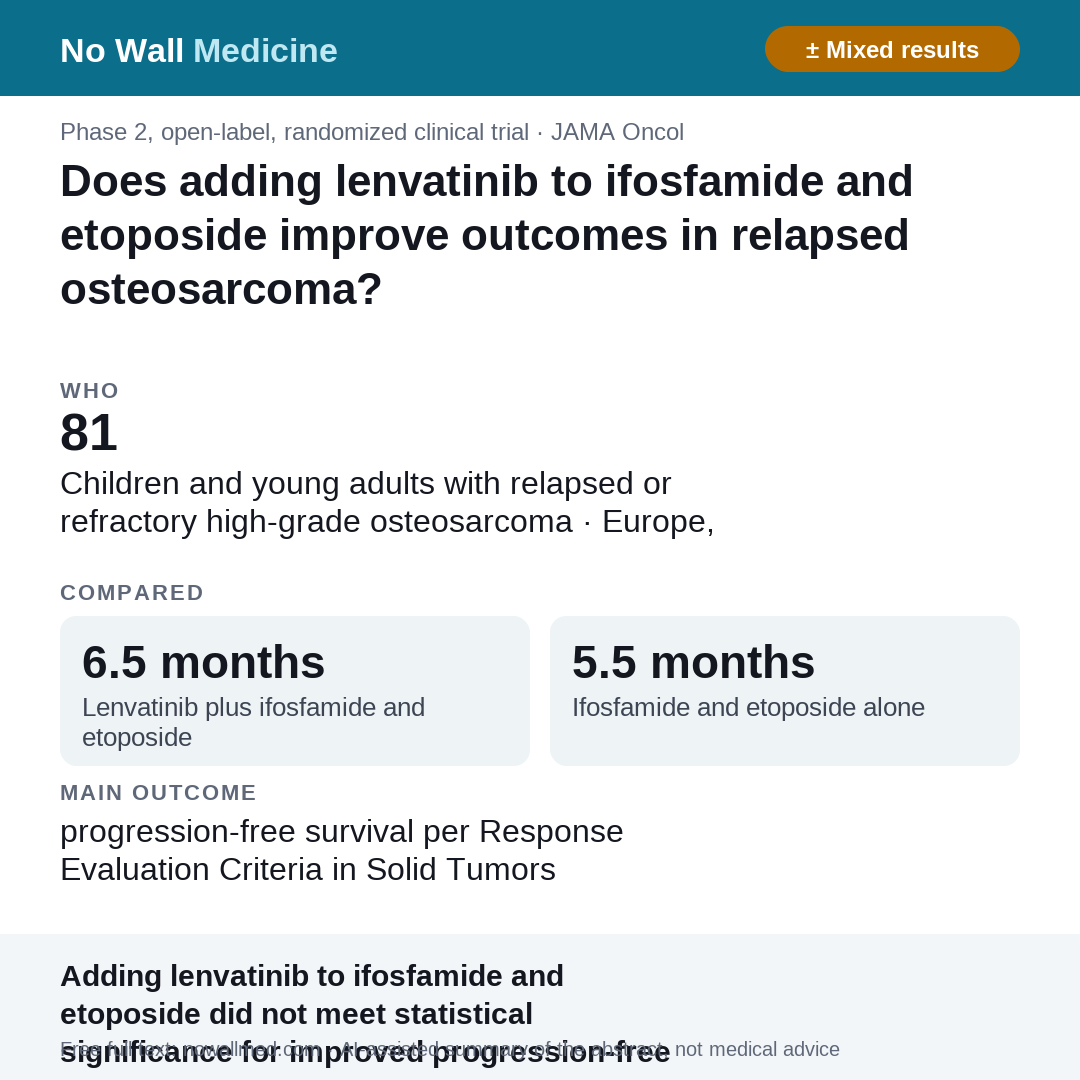
Lenvatinib Plus Ifosfamide and Etoposide in Children and Young Adults With Relapsed Osteosarcoma: A Phase 2 Randomized Clinical Trial
Phase 2, open-label, randomized clinical trialMixed results
Does adding lenvatinib to ifosfamide and etoposide improve outcomes in relapsed osteosarcoma?
Who
81
Children and young adults with relapsed or refractory high-grade osteosarcoma · Europe, Asia, Pacific, and North America
Compared
6.5 monthsLenvatinib plus ifosfamide and etoposide
5.5 monthsIfosfamide and etoposide alone
Main outcome
progression-free survival per Response Evaluation Criteria in Solid Tumors
Result: hazard ratio 0.54 (95% CI 0.27 to 1.08)
Bottom line: Adding lenvatinib to ifosfamide and etoposide did not meet statistical significance for improved progression-free survival.
Limitation: The study did not meet prespecified statistical significance for improved progression-free survival.
JAMA Oncol · 2024-10-17Download image
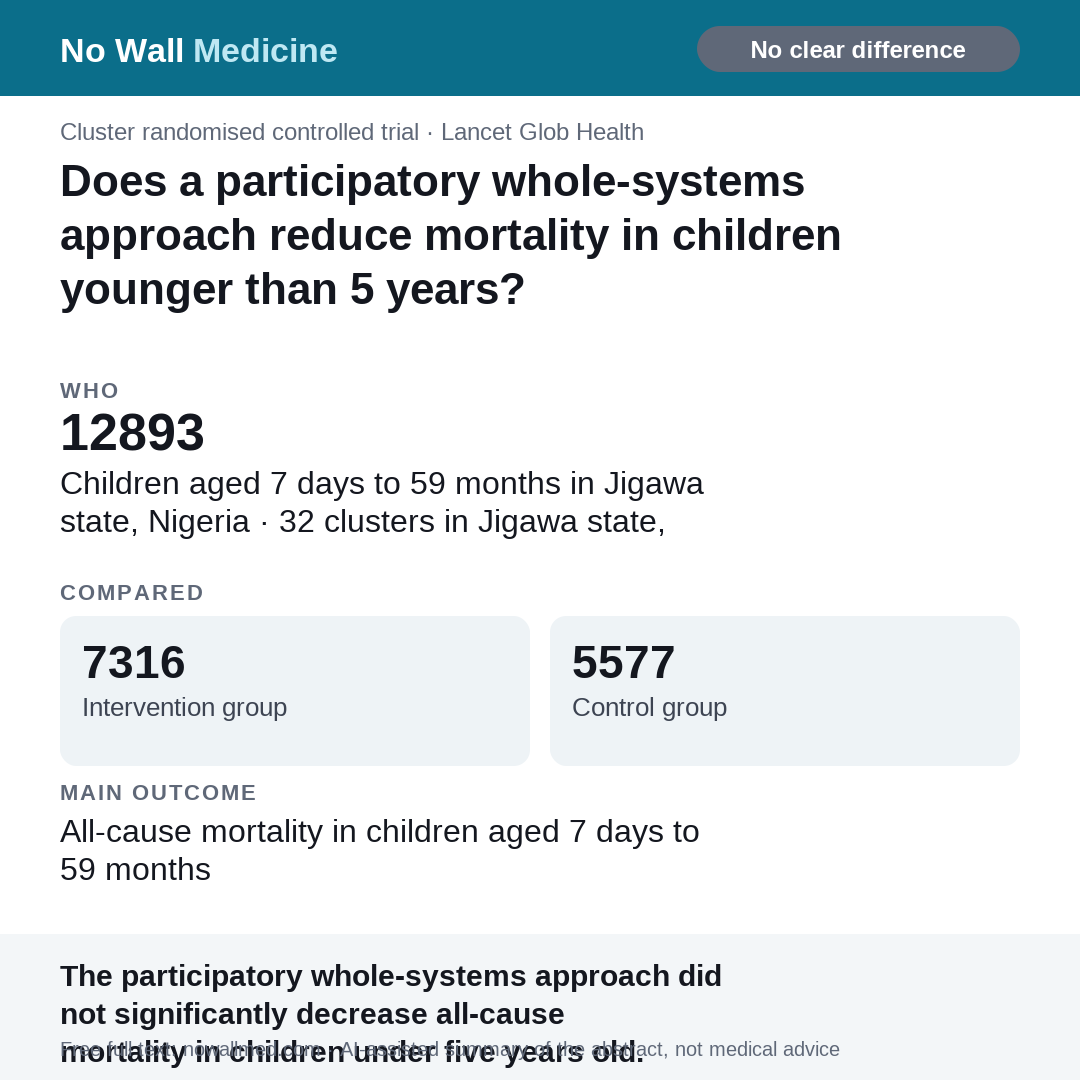
Effect of a participatory whole-systems approach on mortality in children younger than 5 years in Jigawa state, Nigeria (INSPIRING trial): a community-based, parallel-arm, pragmatic, cluster randomised controlled trial and concurrent mixed-methods process evaluation
Cluster randomised controlled trialNo clear difference
Does a participatory whole-systems approach reduce mortality in children younger than 5 years?
Who
12893
Children aged 7 days to 59 months in Jigawa state, Nigeria · 32 clusters in Jigawa state, Nigeria
Compared
7316Intervention group (56·8%)
5577Control group (43·3%)
Main outcome
All-cause mortality in children aged 7 days to 59 months
Result: hazard ratio 0·95 (95% CI 0·68-1·33)
Bottom line: The participatory whole-systems approach did not significantly decrease all-cause mortality in children under five years old.
Limitation: The process evaluation showed low coverage and issues in reach of the intervention.
Funded by: GSK and Save the Children UK
Lancet Glob Health · 2024-10-17Download image
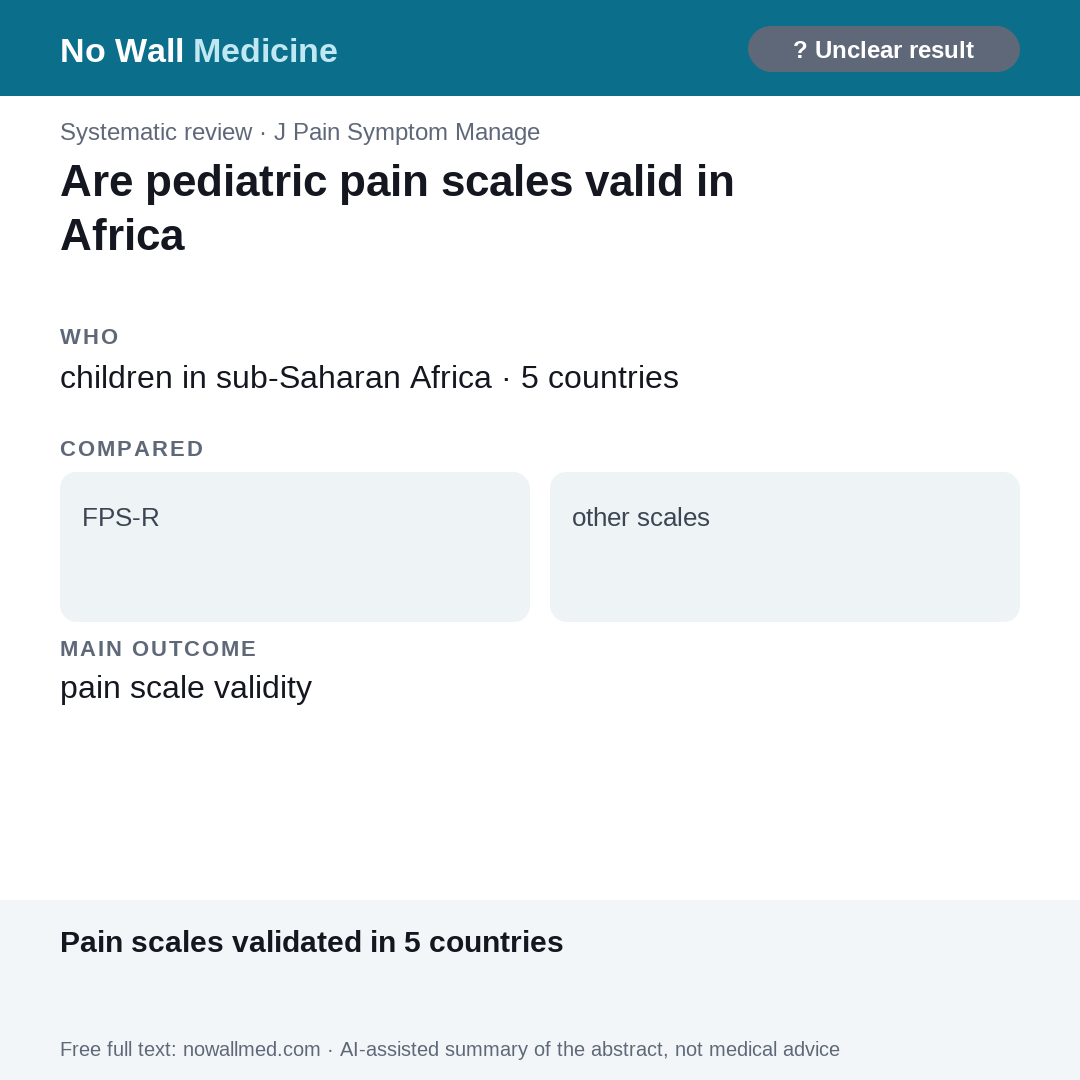
Validation of Pediatric Self-Report Pain Scales in Sub-Saharan Africa: A Systematic Review
Systematic reviewUnclear result
Are pediatric pain scales valid in Africa
Who
children in sub-Saharan Africa · 5 countries
Compared
FPS-R
other scales
Main outcome
pain scale validity
Bottom line: Pain scales validated in 5 countries
J Pain Symptom Manage · 2024-10-17Download image
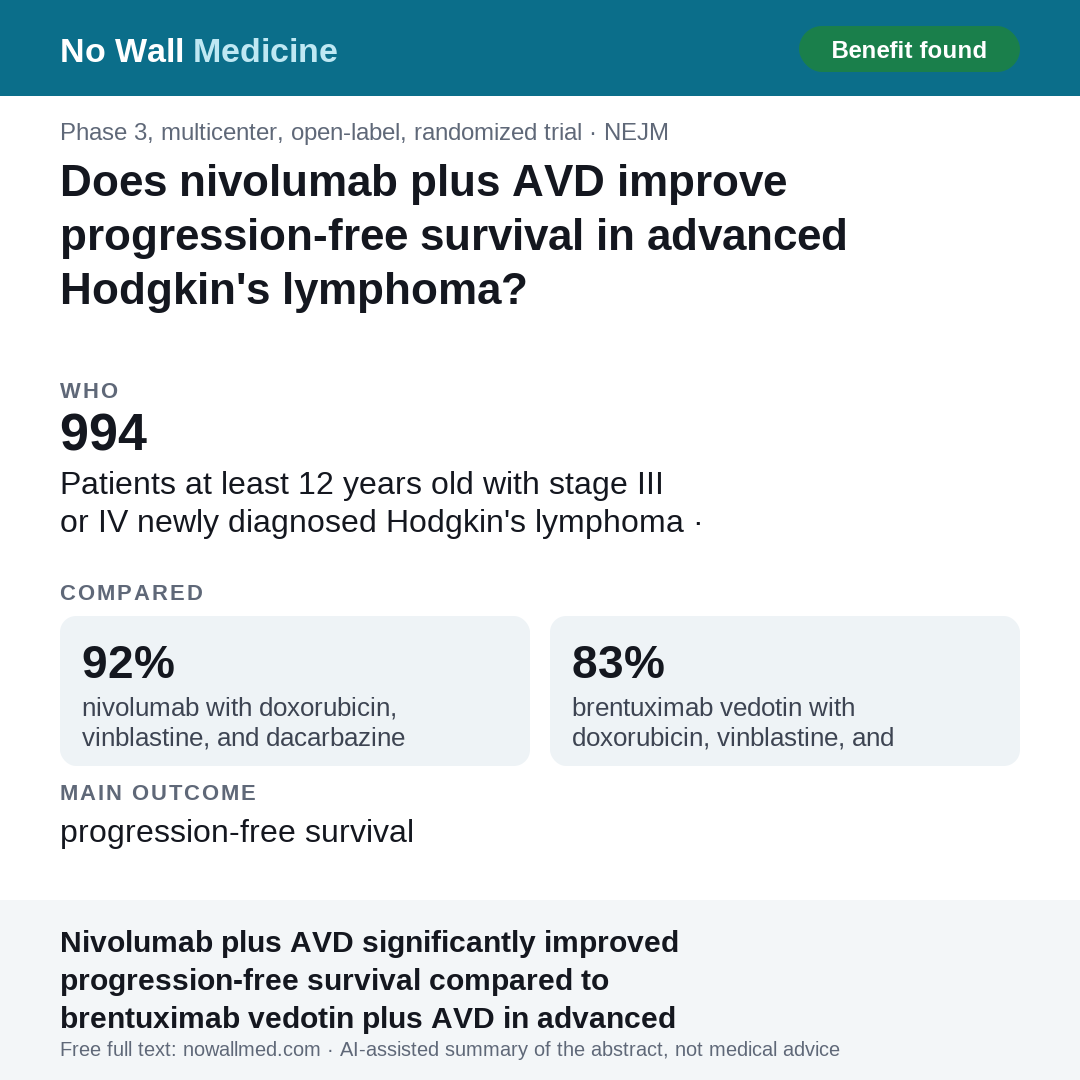
Nivolumab+AVD in Advanced-Stage Classic Hodgkin's Lymphoma
Phase 3, multicenter, open-label, randomized trialBenefit found
Does nivolumab plus AVD improve progression-free survival in advanced Hodgkin's lymphoma?
Who
994
Patients at least 12 years old with stage III or IV newly diagnosed Hodgkin's lymphoma · multicenter
Compared
92%nivolumab with doxorubicin, vinblastine, and dacarbazine (95% CI, 89 to 94)
83%brentuximab vedotin with doxorubicin, vinblastine, and dacarbazine (95% CI, 79 to 86)
Main outcome
progression-free survival
Result: hazard ratio 0.45 (95% CI, 0.30 to 0.65)
Bottom line: Nivolumab plus AVD significantly improved progression-free survival compared to brentuximab vedotin plus AVD in advanced Hodgkin's lymphoma.
Limitation: short follow-up time
Funded by: National Cancer Institute of the National Institutes of Health
NEJM · 2024-10-16Download image
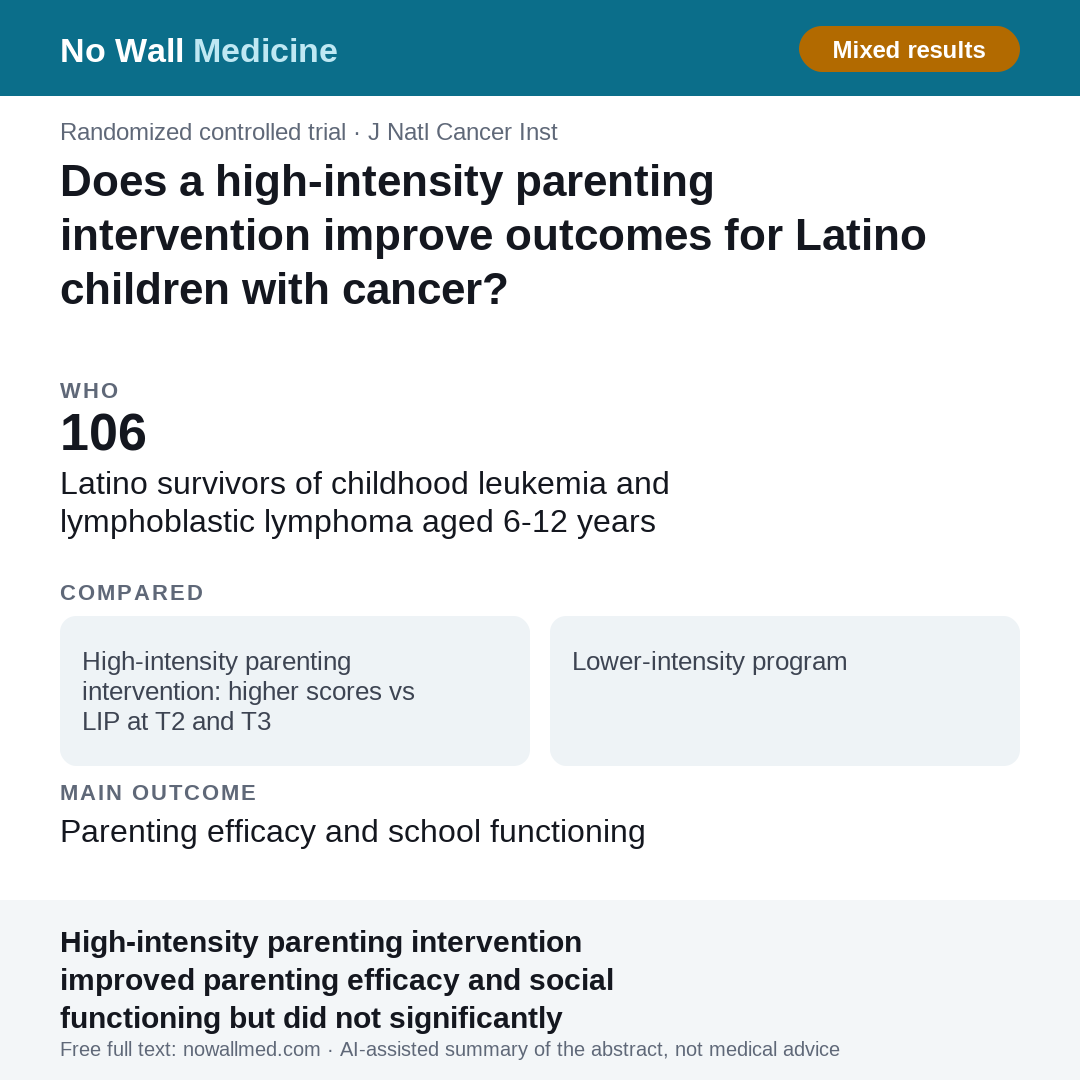
Reducing learning and psychosocial disparities in Latino children with cancer: a randomized intervention trial
Randomized controlled trialMixed results
Does a high-intensity parenting intervention improve outcomes for Latino children with cancer?
Who
106
Latino survivors of childhood leukemia and lymphoblastic lymphoma aged 6-12 years
Compared
High-intensity parenting intervention: higher scores vs LIP at T2 and T3
Lower-intensity program
Main outcome
Parenting efficacy and school functioning
Bottom line: High-intensity parenting intervention improved parenting efficacy and social functioning but did not significantly improve school functioning.
Limitation: Adherence challenges were observed, with only 61% completing the intervention.
J Natl Cancer Inst · 2024-10-16Download image