Visual abstracts
New randomized trials and meta-analyses from leading journals at a glance: who was studied, what was compared, and what was found. Every paper is free to read in full.
All specialtiesCardiology 851Oncology 770Gastroenterology & Hepatology 309Infectious Disease 626Neurology 354Psychiatry & Mental Health 430Pulmonology 369Critical Care 256Endocrinology & Diabetes 484Pediatrics 542Surgery 343Orthopedics & Sports Medicine 165Neurosurgery 107Cardiothoracic & Vascular Surgery 87Plastic & Reconstructive Surgery 140Nephrology 197Rheumatology 108Hematology 182Dermatology 81Ophthalmology 97Obstetrics & Gynecology 264Public & Global Health 168Radiology & Imaging 101Anesthesiology 125Urology 162ENT (Otolaryngology) 110Emergency Medicine 93Allergy & Immunology 58Geriatrics 160Family Medicine & Primary Care 111Medical Genetics & Genomics 91Pathology & Laboratory Medicine 27Physical Medicine & Rehabilitation 148Palliative Care 81Nutrition 223Digital Health & AI 462General Medicine 101
The Efficacy of Rule-Based Versus Large Language Model-Based Chatbots in Alleviating Symptoms of Depression and Anxiety: Systematic Review and Meta-Analysis
Systematic review and meta-analysisMixed results
Are large language model-based or rule-based chatbots more effective for depression and anxiety?
Who
Not specified
Compared
Rule-based chatbot for depression: g=0.266
Large language model-based chatbot for depression: g=0.407
Rule-based chatbot for anxiety: g=0.147
Large language model-based chatbot for anxiety: g=0.711
Main outcome
Alleviation of depressive and anxiety symptoms
Bottom line: Rule-based chatbots show a modest effect on depression, while large language model-based chatbot effectiveness lacks robust evidence.
Limitation: Limited by the sample size, robust evidence supporting large language model-based chatbot interventions is lacking.
J Med Internet Res · 2025-12-04Download image

Spirituality and spiritual care in palliative and terminal illness: a systematic review and epistemic meta-analysis from physicians' hermeneutic and bioethical perspective
Systematic review and epistemic meta-analysisMixed results
What factors influence physicians' engagement with spiritual care in palliative and terminal illness?
Who
Physicians in palliative and terminal illness settings · PubMed, Web of Science, and BIREME databases
Compared
Influencing factors: personal values, individual beliefs, and self-awareness
Key barriers: insufficient training, role ambiguity, and personal discomfort
Main outcome
Physicians' engagement with spiritual care
Bottom line: Physician engagement with spiritual care is shaped by personal values, training, role clarity, and institutional dynamics.
BMC Palliat Care · 2025-12-04Download image

The effects of ketogenic diet on polycystic ovary syndrome: A systematic review and meta-analysis
Systematic review and meta-analysisBenefit found
What are the effects of ketogenic diet on women with polycystic ovary syndrome?
Who
Women with polycystic ovary syndrome
Compared
Ketogenic diet
Other diets
Main outcome
Anthropometric, metabolic, and endocrinological outcomes
Result: MD: -1.65 (95% CI -2.76 to -0.55) for BMI
Bottom line: Ketogenic diet improves weight, insulin sensitivity, and reproductive hormone profiles in women with polycystic ovary syndrome.
Limitation: Considerable heterogeneity among included studies and variations in study quality.
Clin Nutr · 2025-12-03Download image

Specificity of environmental risk factors for schizophrenia, bipolar disorders, and depressive disorders - umbrella review
Meta-analysis of 70 meta-analysesMixed results
Risk factors for schizophrenia, bipolar, depressive disorders
Who
patients with schizophrenia, bipolar, depressive disorders
Compared
childhood maltreatment
pregnancy and birth complications
somatic conditions
Main outcome
risk of disorders
Bottom line: Childhood maltreatment is a transdiagnostic risk factor
Psychol Med · 2025-12-03Download image

Evaluating the use of virtual reality for weight management: A systematic review and meta-analysis
Systematic review and meta-analysisBenefit found
Does virtual reality enhance weight management compared to conventional treatments alone?
Who
Adults seeking weight loss
Compared
Virtual reality-enhanced treatment
Conventional treatments alone
Main outcome
Body weight and body mass index
Result: mean difference -5.16 kg (95% CI -8.46 to -1.85)
Bottom line: Virtual reality-enhanced treatment may be more effective for maintaining weight loss than conventional methods.
Limitation: Small number of studies with concerns regarding conduct, governance, and transparency.
Diabetes Obes Metab · 2025-12-03Download image

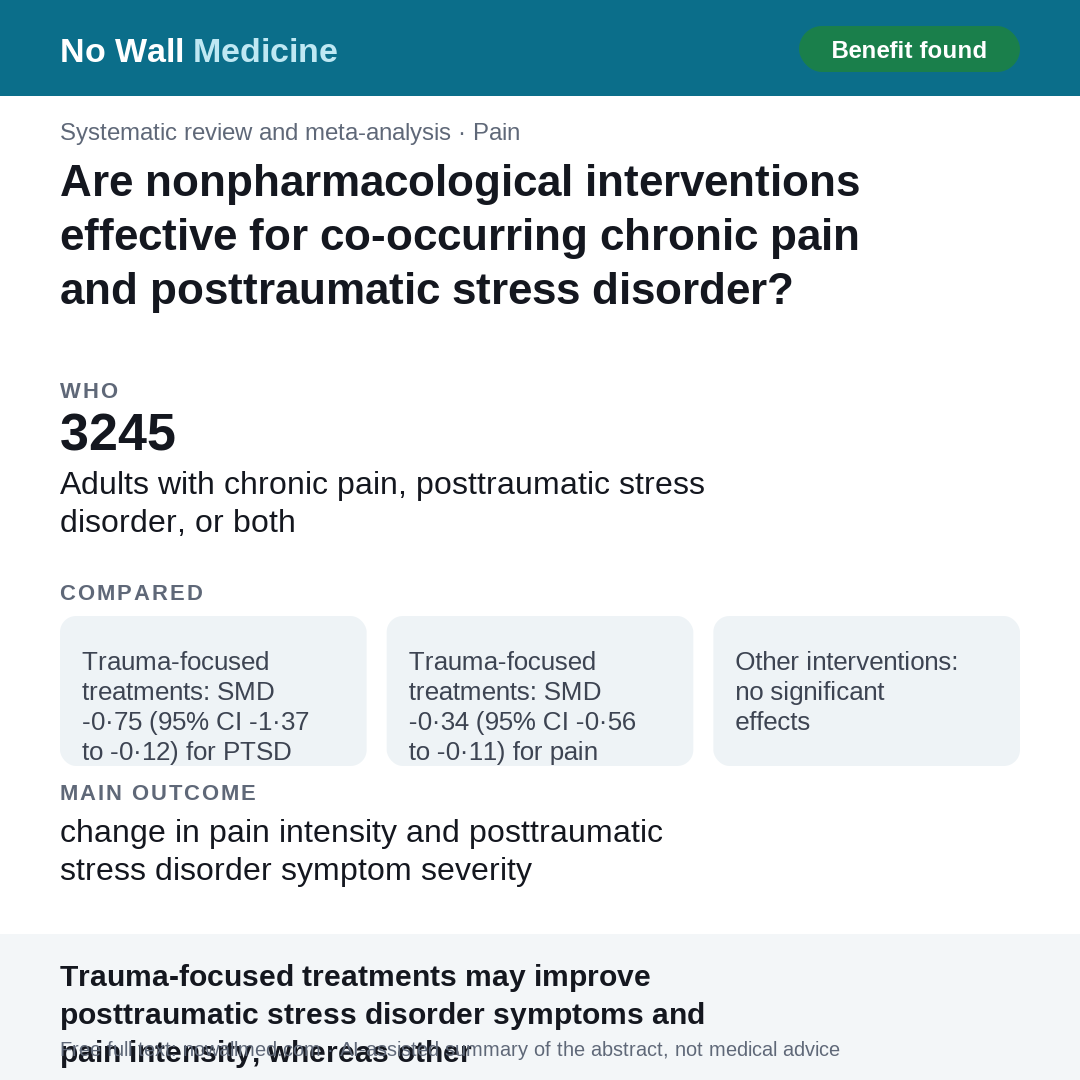
Systematic review and meta-analyses of nonpharmacological interventions for co-occurring chronic pain and posttraumatic stress disorder
Systematic review and meta-analysisBenefit found
Are nonpharmacological interventions effective for co-occurring chronic pain and posttraumatic stress disorder?
Who
3245
Adults with chronic pain, posttraumatic stress disorder, or both
Compared
Trauma-focused treatments: SMD -0·75 (95% CI -1·37 to -0·12) for PTSD
Trauma-focused treatments: SMD -0·34 (95% CI -0·56 to -0·11) for pain
Other interventions: no significant effects
Main outcome
change in pain intensity and posttraumatic stress disorder symptom severity
Result: SMD -0·75 (95% CI -1·37 to -0·12) for PTSD; SMD -0·34 (95% CI -0·56 to -0·11) for pain
Bottom line: Trauma-focused treatments may improve posttraumatic stress disorder symptoms and pain intensity, whereas other nonpharmacological therapies showed no significant effects.
Limitation: Most studies were methodologically weak and evidence quality was low.
Pain · 2025-12-03Download image
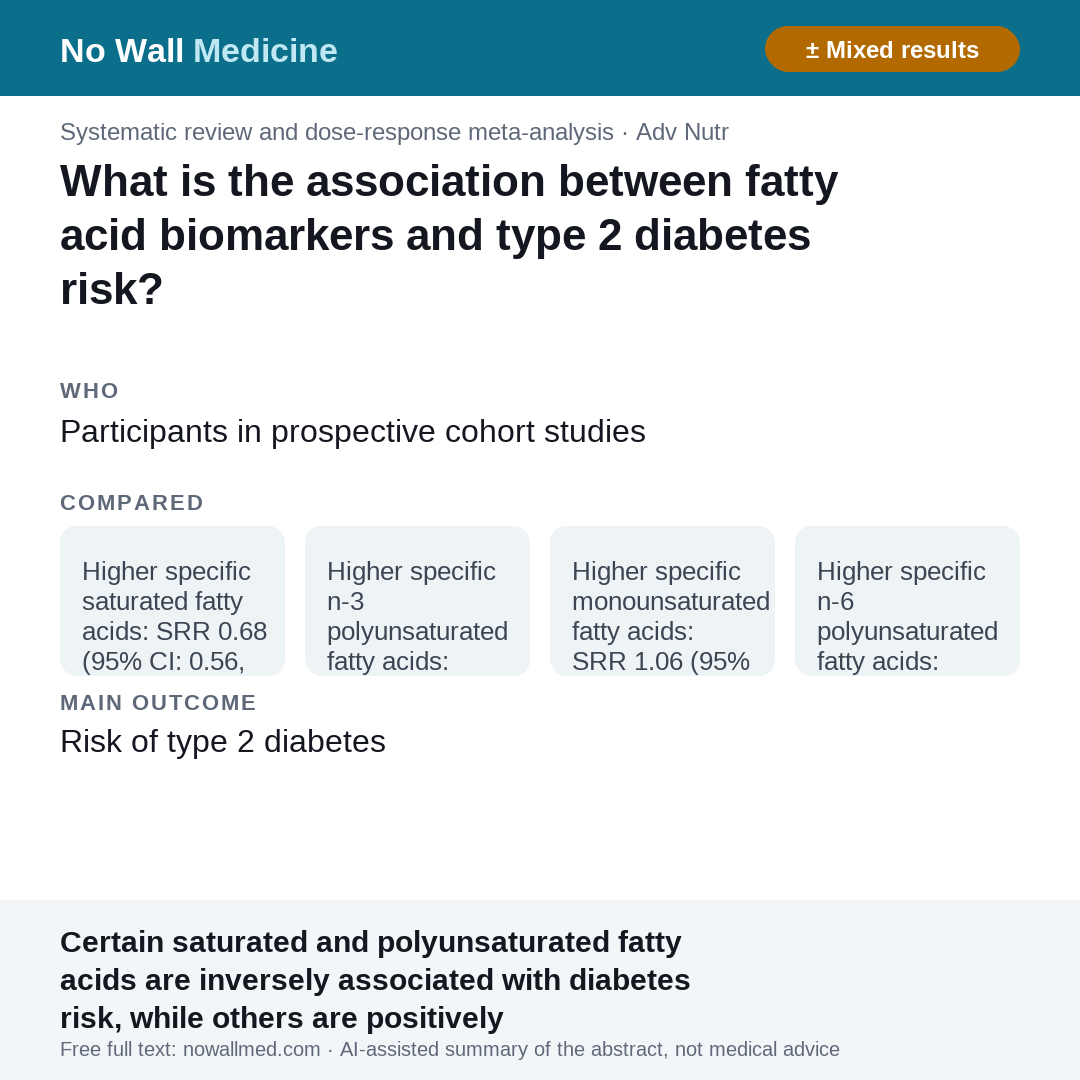
Fatty Acid Biomarkers and Incidence of Type 2 diabetes: A Systematic Review and Dose-Response Meta-analysis of Prospective Observational Studies
Systematic review and dose-response meta-analysisMixed results
What is the association between fatty acid biomarkers and type 2 diabetes risk?
Who
27
Participants in prospective cohort studies
Compared
Higher specific saturated fatty acids: SRR 0.68 (95% CI: 0.56, 0.81)
Higher specific n-3 polyunsaturated fatty acids: SRR 0.97 (95% CI: 0.95, 0.99)
Higher specific monounsaturated fatty acids: SRR 1.06 (95% CI: 1.03, 1.10)
Higher specific n-6 polyunsaturated fatty acids: SRR 1.07 (95% CI: 1.03, 1.11)
Main outcome
Risk of type 2 diabetes
Bottom line: Certain saturated and polyunsaturated fatty acids are inversely associated with diabetes risk, while others are positively associated.
Adv Nutr · 2025-12-03Download image
Epigenetic and blood markers associated with response to electroconvulsive therapy in patients with depressive disorders
Epigenome-wide association study and meta-analysisMixed results
What epigenetic and blood markers are associated with response to electroconvulsive therapy?
Who
99
Patients with depressive disorders · Norway and Germany
Compared
Norwegian cohort
German cohort
Main outcome
Percent clinical response and remission
Bottom line: DNA methylation and neutrophil to lymphocyte ratios are associated with electroconvulsive therapy response and remission.
Transl Psychiatry · 2025-12-03Download image

Systematic review and meta-analysis of effects of standalone digital mindfulness-based interventions on sleep in adults
Systematic review and meta-analysis of randomized controlled trialsBenefit found
Do standalone digital mindfulness-based interventions improve sleep and mental health in adults?
Who
4870
Adults
Compared
Standalone digital mindfulness-based interventions
Control
Main outcome
Sleep health and mental health
Result: Hedges' g = 0.38 for sleep and 0.33 for mental health
Bottom line: Standalone digital mindfulness-based interventions significantly improve sleep and mental health, though evidence certainty is very low.
Limitation: High heterogeneity and publication bias reduced the certainty of evidence to very low levels.
NPJ Digit Med · 2025-12-03Download image

Risk Factors for Failure in Minimally Invasive Bleb Surgery: A Systematic Review
Systematic reviewMixed results
What are the risk factors for failure in minimally invasive bleb surgery?
Who
9281
9281 subjects with 9580 eyes undergoing minimally invasive bleb surgery
Compared
Non-White ethnicity: higher risk of failure
Lower or no Mitomycin-C dosing: higher risk of failure
Main outcome
surgical failure following minimally invasive bleb surgery
Bottom line: Non-White ethnicity and reduced Mitomycin-C use are associated with higher failure risk, but evidence certainty is low.
Limitation: low certainty of evidence and low to moderate evidence quality
Am J Ophthalmol · 2025-12-02Download image

Economic evaluation of next-generation sequencing technologies in pediatric patient groups with confirmed or possible rare diseases: A systematic literature review
Systematic literature reviewBenefit found
Is next-generation sequencing cost-effective for diagnosing rare diseases in pediatric populations?
Who
25
Pediatric patients with confirmed or possible rare diseases · Organization for Economic Co-operation and Development or European Union countries
Compared
Next-generation sequencing
Standard diagnostic methods
Main outcome
Cost-effectiveness of next-generation sequencing technologies
Bottom line: Next-generation sequencing is generally cost-effective for diagnosing rare diseases in pediatrics, especially when used early.
Limitation: Significant variability in study methodology and limited evaluation of newborn screening.
Genet Med · 2025-12-02Download image

The user experience of ambulatory assessment and mood monitoring in depression: a systematic review & meta-synthesis
Systematic review and meta-synthesisMixed results
User experience of mood monitoring
Who
Individuals with depression
Compared
Mood monitoring
Ambulatory assessment
Main outcome
User experience
Bottom line: Mood monitoring has positive and negative effects
NPJ Digit Med · 2025-12-02Download image

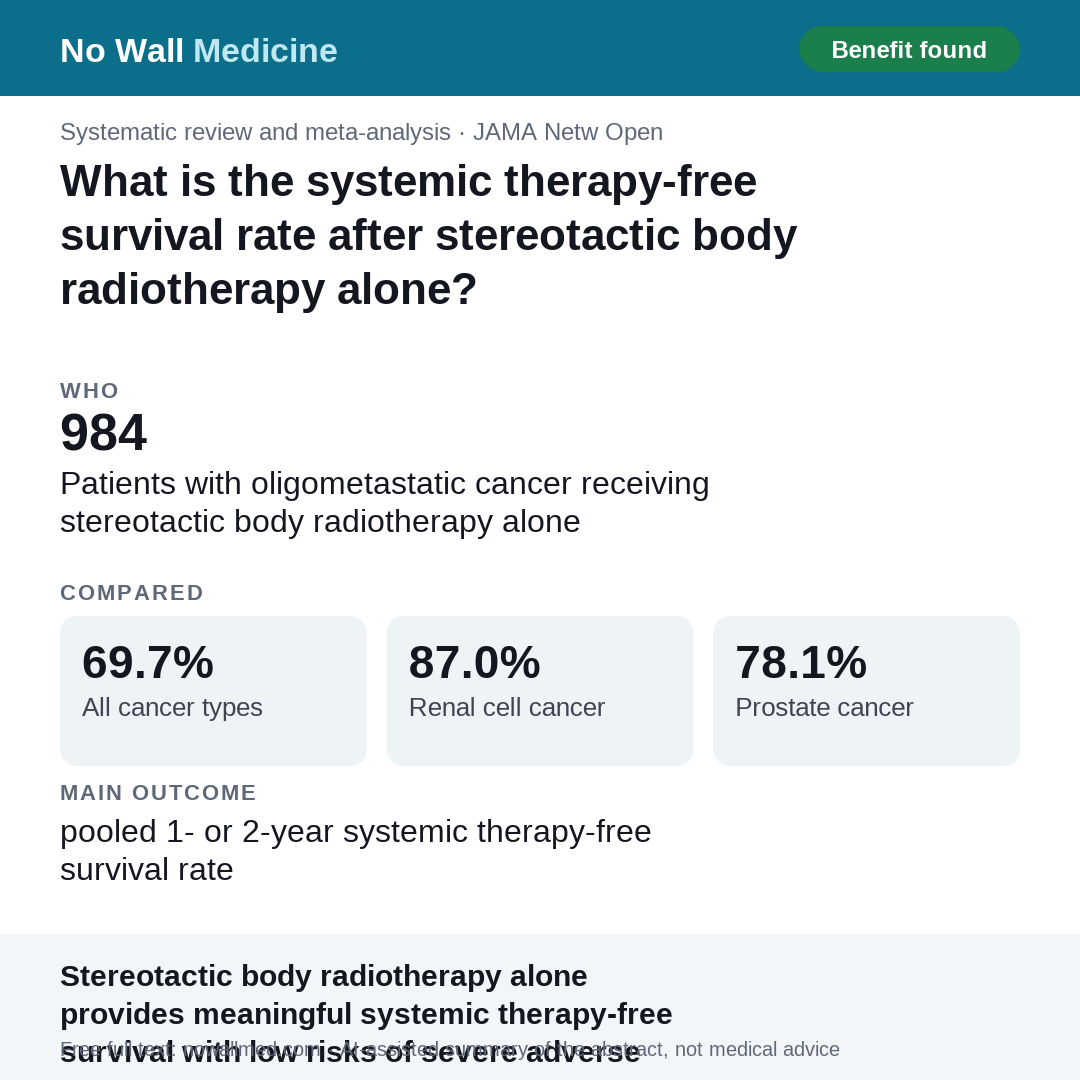
Stereotactic Body Radiotherapy Without Systemic Therapy for Oligometastatic Cancer: A Systematic Review and Meta-Analysis
Systematic review and meta-analysisBenefit found
What is the systemic therapy-free survival rate after stereotactic body radiotherapy alone?
Who
984
Patients with oligometastatic cancer receiving stereotactic body radiotherapy alone
Compared
69.7%All cancer types (95% CI, 57.4%-80.9%)
87.0%Renal cell cancer (95% CI, 76.2%-95.2%)
78.1%Prostate cancer (95% CI, 67.4%-87.3%)
Main outcome
pooled 1- or 2-year systemic therapy-free survival rate
Result: 69.7% (95% CI, 57.4%-80.9%)
Bottom line: Stereotactic body radiotherapy alone provides meaningful systemic therapy-free survival with low risks of severe adverse events.
JAMA Netw Open · 2025-12-01Download image
Diagnostic Accuracy of Severe Acute Respiratory Infection Definitions in Hospitalized Children: A Systematic Review and Meta-Analysis
Systematic review and meta-analysisHarm found
How accurate are severe acute respiratory infection definitions for detecting viral infections in hospitalized children?
Who
Hospitalized children with viral respiratory tract infections · 65 inpatient sites across 8 countries
Compared
WHO 2014 SARI definition for influenza: sensitivity 75.7% (95% CI, 65.0%-83.9%); specificity 30.6% (95% CI, 19.8%-44.0%)
WHO 2014 SARI definition for respiratory syncytial virus: sensitivity 70.6% (95% CI, 56.9%-81.9%); specificity 38.7% (95% CI, 25.7%-53.5%)
Main outcome
Sensitivity and specificity of case definitions
Bottom line: The WHO 2014 SARI definition may underestimate pediatric disease burden due to reduced sensitivity in younger cohorts.
JAMA Netw Open · 2025-12-01Download image

Cue-Elicited Brain Activity and Treatment Outcomes in Substance Use Disorders: A Meta-Analysis
Meta-analysisBenefit found
Is cue-elicited brain activity associated with substance use disorder treatment outcomes?
Who
1787
Adults undergoing substance use disorder treatment
Compared
Predictive biomarker regions: lower baseline cue reactivity associated with better treatment outcomes
Response biomarker regions: significant reductions in cue reactivity
Main outcome
functional magnetic resonance imaging-based cue reactivity
Bottom line: Specific brain regions like the insula may serve as predictive and response biomarkers for substance use disorder treatment.
JAMA Netw Open · 2025-12-01Download image

Flying blind? Recommendations for monitoring of 10 common chronic diseases in guidelines from Germany, England, and Europe - a modified systematic review
Modified systematic reviewMixed results
What is the detail and evidence level of monitoring recommendations in clinical practice guidelines?
Who
Guidelines for 10 common chronic diseases · Germany, England, and Europe
Compared
Monitoring frequency detail: low level of detail in 34.4% of cases
Monitoring parameters detail: low level of detail in 25.2% of cases
Monitoring consequences detail: low level of detail in 84.7% of cases
Main outcome
Level of detail and level of evidence in monitoring recommendations
Bottom line: Monitoring recommendations often lack detail and high-quality evidence, potentially causing medical underuse, overuse, and unnecessary diagnostic cascades.
Limitation: Overcoming systemic barriers is essential to enable the generation of high-quality evidence on monitoring.
BMC Med · 2025-12-01Download image

Enhancing Interpretability of Patient-Reported Outcomes Measurement Information System (PROMIS) and Related Measures in Rehabilitation Populations: A Systematic Review of Clinical and Research Applications
Systematic reviewMixed results
What are the interpretability metrics for PROMIS and related measures in rehabilitation populations?
Who
202
Rehabilitation populations using PROMIS, Neuro-QoL, TBI-QoL, or SCI-QoL · Electronic databases and clinical trial registries
Compared
PROMIS mental health domains: relatively consistent estimates
PROMIS physical function domains: more variable
Main outcome
Interpretability metrics including minimal important change, difference, and detectable change
Bottom line: Interpretability metrics varied widely across populations, with mental health domains being more consistent than physical function domains.
Limitation: Limited data were available for Spinal Cord Injury Quality of Life and Traumatic Brain Injury Quality of Life.
Arch Phys Med Rehabil · 2025-12-01Download image

Editor's Choice - Systematic Review, Meta-analysis, and Time to Event Analysis of Contemporary Mortality after Major Lower Limb Amputation for Peripheral Arterial Disease or Diabetes Mellitus
Systematic review, meta-analysis, and time to event analysisHarm found
What are the contemporary mortality rates and risk factors after major lower limb amputation?
Who
59999
Patients undergoing major lower limb amputation for peripheral arterial disease or diabetes mellitus
Compared
Patients with diabetes: median survival 2.7 years (95% confidence interval 2.0 - 3.5 years)
Patients with peripheral arterial disease alone: median survival 3.1 years (1.9 - 4.7 years)
Main outcome
Mortality and survival after major lower limb amputation
Bottom line: Major lower limb amputation carries high mortality, with specific risk factors including renal disease, heart failure, and frailty.
Limitation: Subgroup analyses were of very low to moderate Grading of Recommendations Assessment, Development, and Evaluation certainty.
Eur J Vasc Endovasc Surg · 2025-12-01Download image

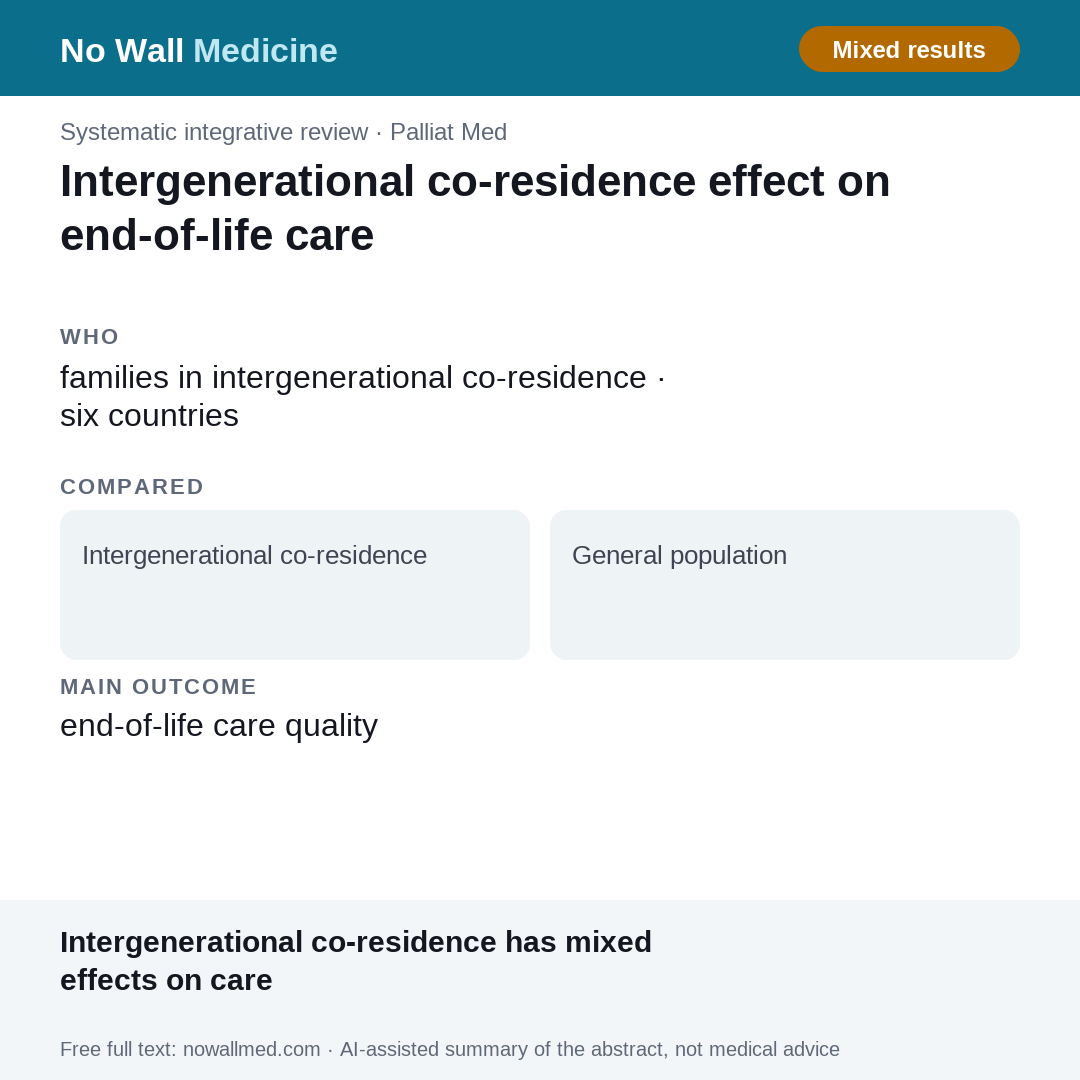
'Saying goodbye'. . . A systematic integrative review of palliative caregiving in intergenerational living contexts
Systematic integrative reviewMixed results
Intergenerational co-residence effect on end-of-life care
Who
families in intergenerational co-residence · six countries
Compared
Intergenerational co-residence
General population
Main outcome
end-of-life care quality
Bottom line: Intergenerational co-residence has mixed effects on care
Palliat Med · 2025-12-01Download image
Diagnostic digital phenotyping in schizophrenia-spectrum disorders: a systematic review
Systematic reviewBenefit found
What is the diagnostic and predictive utility of digital phenotyping in schizophrenia-spectrum disorders?
Who
6294
Individuals with schizophrenia-spectrum disorders and controls
Compared
Schizophrenia-spectrum disorders: Hedges' g ≈ 1.20 for cognitive performance
Controls
Main outcome
Diagnostic and predictive utility of digital phenotyping
Result: Hedges' g ≈ 1.20 for cognitive performance
Bottom line: Digital phenotyping shows potential for differentiating schizophrenia-spectrum disorders, especially through cognitive performance measures.
Limitation: High heterogeneity and lack of methodological standardization in relapse prediction models.
NPJ Digit Med · 2025-12-01Download image