Visual abstracts
New randomized trials and meta-analyses from leading journals at a glance: who was studied, what was compared, and what was found. Every paper is free to read in full.
All specialtiesCardiology 388Oncology 309Gastroenterology & Hepatology 155Infectious Disease 305Neurology 178Psychiatry & Mental Health 254Pulmonology 175Critical Care 119Endocrinology & Diabetes 226Pediatrics 178Surgery 119Orthopedics & Sports Medicine 72Neurosurgery 24Cardiothoracic & Vascular Surgery 45Plastic & Reconstructive Surgery 76Nephrology 76Rheumatology 77Hematology 90Dermatology 41Ophthalmology 61Obstetrics & Gynecology 114Public & Global Health 115Radiology & Imaging 34Anesthesiology 67Urology 88ENT (Otolaryngology) 47Emergency Medicine 39Allergy & Immunology 48Geriatrics 111Family Medicine & Primary Care 66Medical Genetics & Genomics 35Pathology & Laboratory Medicine 6Physical Medicine & Rehabilitation 94Palliative Care 59Nutrition 133Digital Health & AI 329General Medicine 46
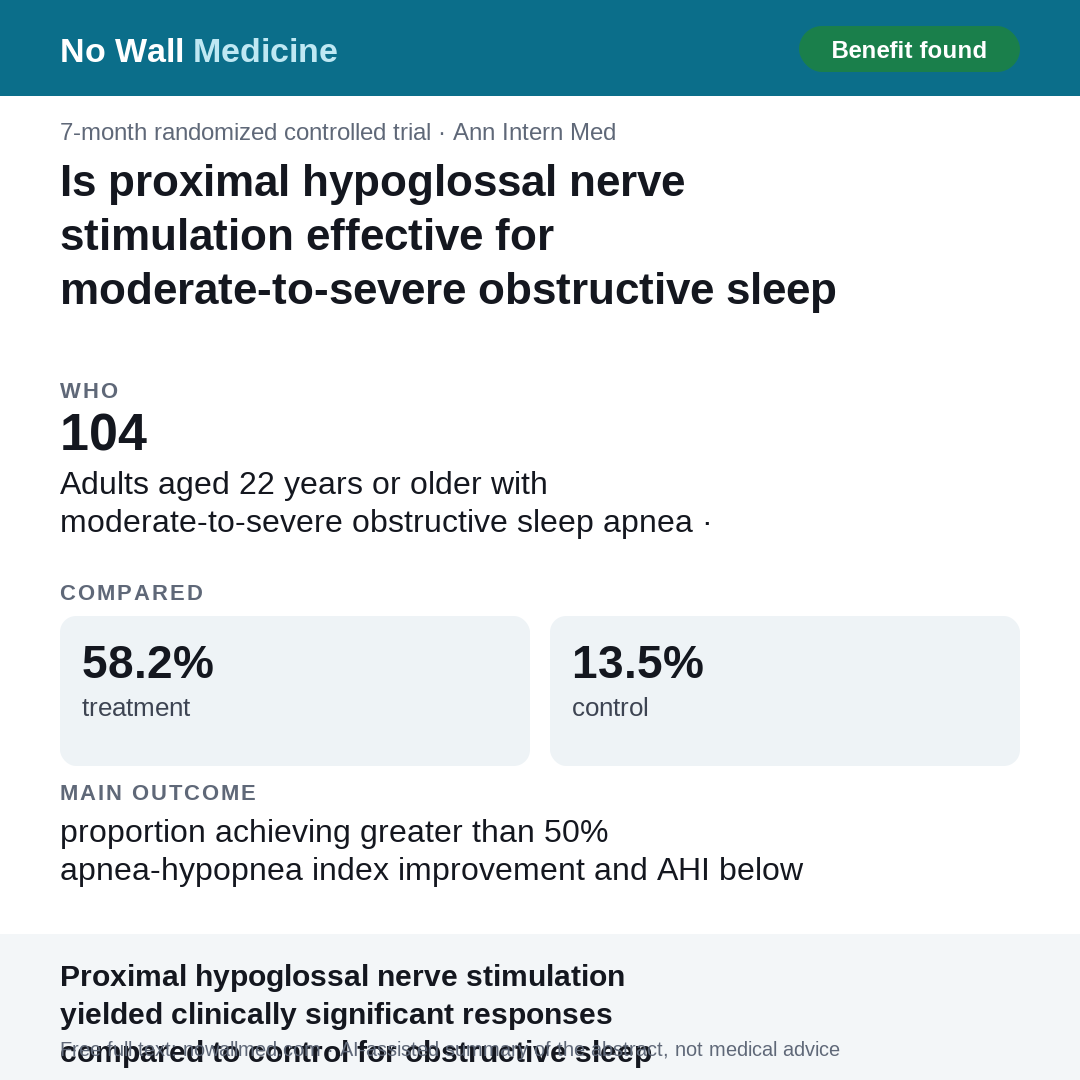
Proximal Hypoglossal Nerve Stimulation for Obstructive Sleep Apnea in the OSPREY Study : A Randomized Controlled Trial
7-month randomized controlled trialBenefit found
Is proximal hypoglossal nerve stimulation effective for moderate-to-severe obstructive sleep apnea?
Who
104
Adults aged 22 years or older with moderate-to-severe obstructive sleep apnea · 23 U.S. health centers
Compared
58.2%treatment (95% CI, 45.5% to 70.2%)
13.5%control (CI, 4.5% to 28.8%)
Main outcome
proportion achieving greater than 50% apnea-hypopnea index improvement and AHI below 20
Bottom line: Proximal hypoglossal nerve stimulation yielded clinically significant responses compared to control for obstructive sleep apnea at month 7.
Limitation: Lack of blinding, small sample size, and short follow-up.
Funded by: LivaNova PLC
Ann Intern Med · 2026-04-21Download image
Duration and association with protection of NANP-repeat-specific and C-terminus-specific anti-circumsporozoite protein IgG responses following RTS,S/AS01E vaccination: an observational ancillary immunological study of a phase 3 clinical trial
Observational ancillary immunological studyBenefit found
How do antibody responses to circumsporozoite protein relate to malaria protection?
Who
1292
Children aged 5-17 months · Six African countries
Compared
C-terminus IgG: geometric mean fold change 0·099 [95% CI 0·089-0·110]
NANP-repeat IgG: geometric mean fold change 0·055 [0·048-0·062]
Main outcome
Circumsporozoite protein IgG levels and malaria risk
Result: hazard ratio 0·60, 95% CI 0·43-0·83
Bottom line: C-terminus antibodies are more durable than NANP-repeat antibodies and remain independently protective against malaria.
Funded by: National Institute of Allergy and Infectious Diseases and others
Lancet Infect Dis · 2026-04-21Download image

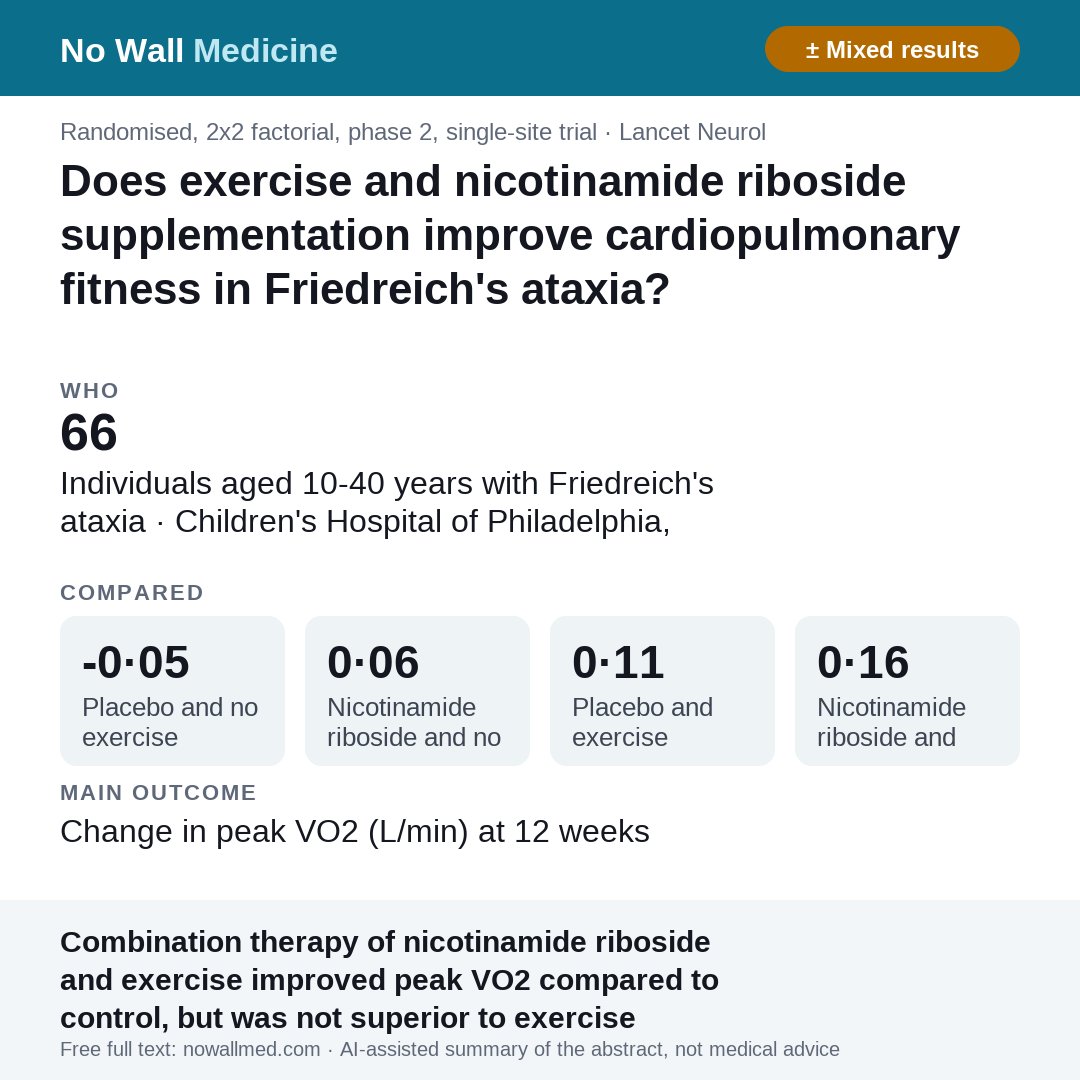
Safety and efficacy of individualised exercise and NAD+ precursor supplementation in patients with Friedreich's ataxia in the USA: a single-centre, 2 × 2 factorial, randomised controlled trial
Randomised, 2x2 factorial, phase 2, single-site trialMixed results
Does exercise and nicotinamide riboside supplementation improve cardiopulmonary fitness in Friedreich's ataxia?
Who
66
Individuals aged 10-40 years with Friedreich's ataxia · Children's Hospital of Philadelphia, USA
Compared
-0·05Placebo and no exercise (95% CI -0·16 to 0·06)
0·06Nicotinamide riboside and no exercise (-0·05 to 0·17)
0·11Placebo and exercise (0·00 to 0·22)
0·16Nicotinamide riboside and exercise (0·05 to 0·27)
Main outcome
Change in peak VO2 (L/min) at 12 weeks
Result: 0·21 (95% CI 0.05 to 0.36) for combination vs control
Bottom line: Combination therapy of nicotinamide riboside and exercise improved peak VO2 compared to control, but was not superior to exercise alone.
Lancet Neurol · 2026-04-21Download image
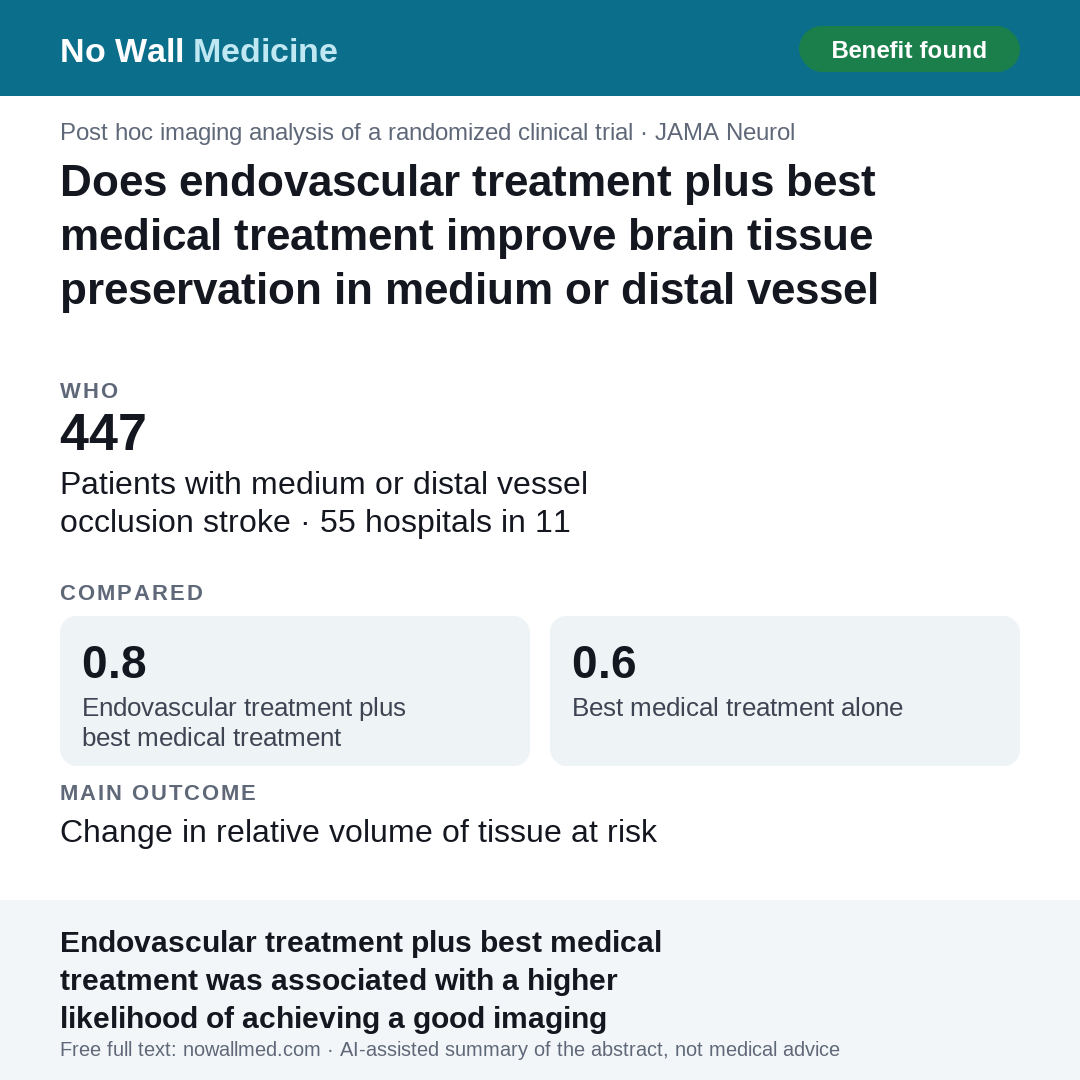
Mechanical Thrombectomy and Final Infarct Volume in Medium or Distal Vessel Occlusion Stroke: A Post Hoc Analysis of a Randomized Clinical Trial
Post hoc imaging analysis of a randomized clinical trialBenefit found
Does endovascular treatment plus best medical treatment improve brain tissue preservation in medium or distal vessel occlusion stroke?
Who
447
Patients with medium or distal vessel occlusion stroke · 55 hospitals in 11 countries
Compared
0.8Endovascular treatment plus best medical treatment (0.2-1.0)
0.6Best medical treatment alone (0-0.9)
Main outcome
Change in relative volume of tissue at risk
Result: adjusted odds ratio 1.6 (95% CI 1.1-2.3)
Bottom line: Endovascular treatment plus best medical treatment was associated with a higher likelihood of achieving a good imaging outcome.
JAMA Neurol · 2026-04-21Download image
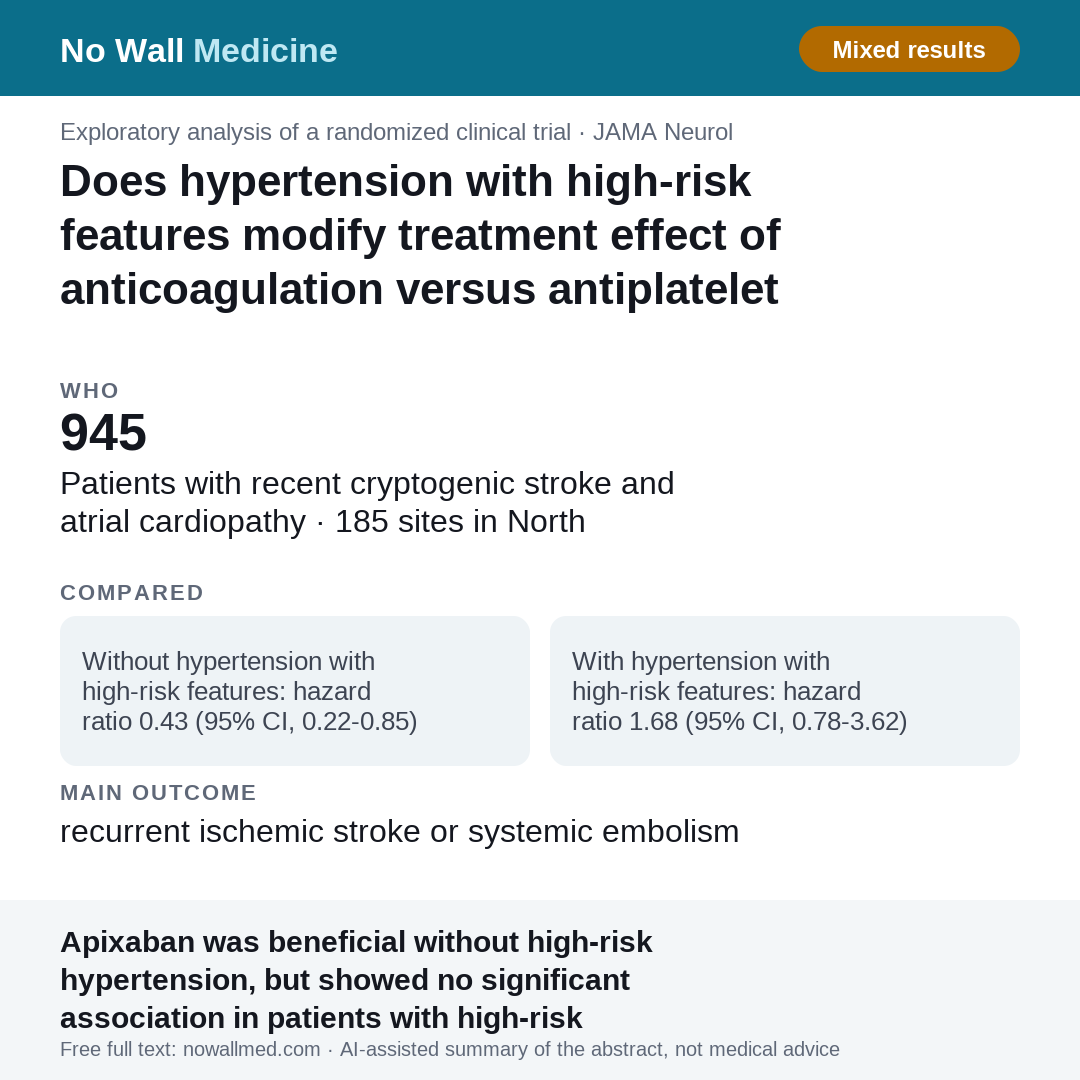
Hypertension With High-Risk Features in Cryptogenic Stroke: An Exploratory Analysis of the ARCADIA Randomized Clinical Trial
Exploratory analysis of a randomized clinical trialMixed results
Does hypertension with high-risk features modify treatment effect of anticoagulation versus antiplatelet therapy?
Who
945
Patients with recent cryptogenic stroke and atrial cardiopathy · 185 sites in North America
Compared
Without hypertension with high-risk features: hazard ratio 0.43 (95% CI, 0.22-0.85)
With hypertension with high-risk features: hazard ratio 1.68 (95% CI, 0.78-3.62)
Main outcome
recurrent ischemic stroke or systemic embolism
Result: hazard ratio 0.43 (95% CI, 0.22-0.85) vs hazard ratio 1.68 (95% CI, 0.78-3.62)
Bottom line: Apixaban was beneficial without high-risk hypertension, but showed no significant association in patients with high-risk hypertension features.
Limitation: This was an exploratory analysis of a randomized clinical trial.
JAMA Neurol · 2026-04-21Download image
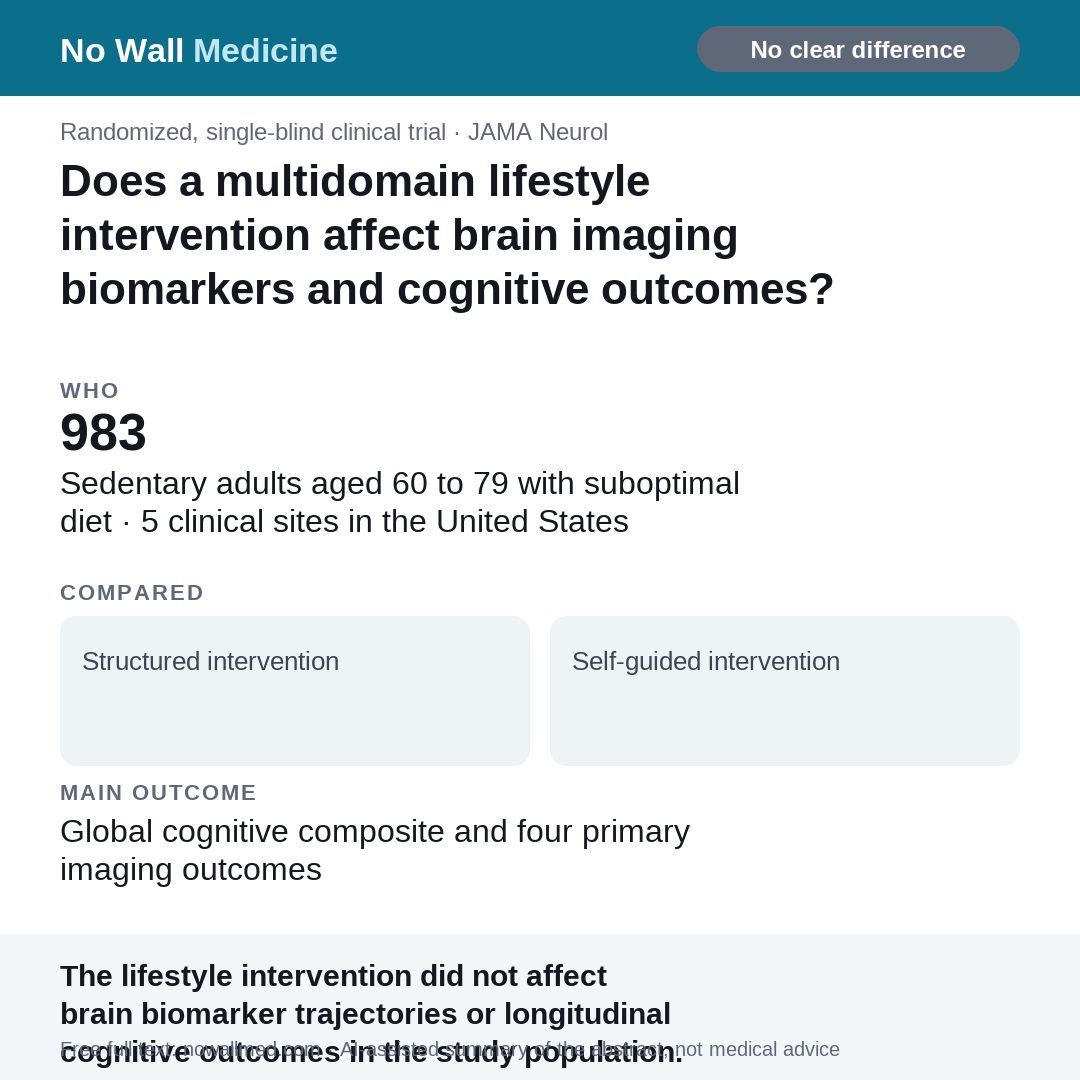
Brain Imaging Biomarkers and Cognitive Outcomes in a Multidomain Lifestyle Intervention: The POINTER Imaging Ancillary Study
Randomized, single-blind clinical trialNo clear difference
Does a multidomain lifestyle intervention affect brain imaging biomarkers and cognitive outcomes?
Who
983
Sedentary adults aged 60 to 79 with suboptimal diet · 5 clinical sites in the United States
Compared
Structured intervention
Self-guided intervention
Main outcome
Global cognitive composite and four primary imaging outcomes
Bottom line: The lifestyle intervention did not affect brain biomarker trajectories or longitudinal cognitive outcomes in the study population.
JAMA Neurol · 2026-04-21Download image
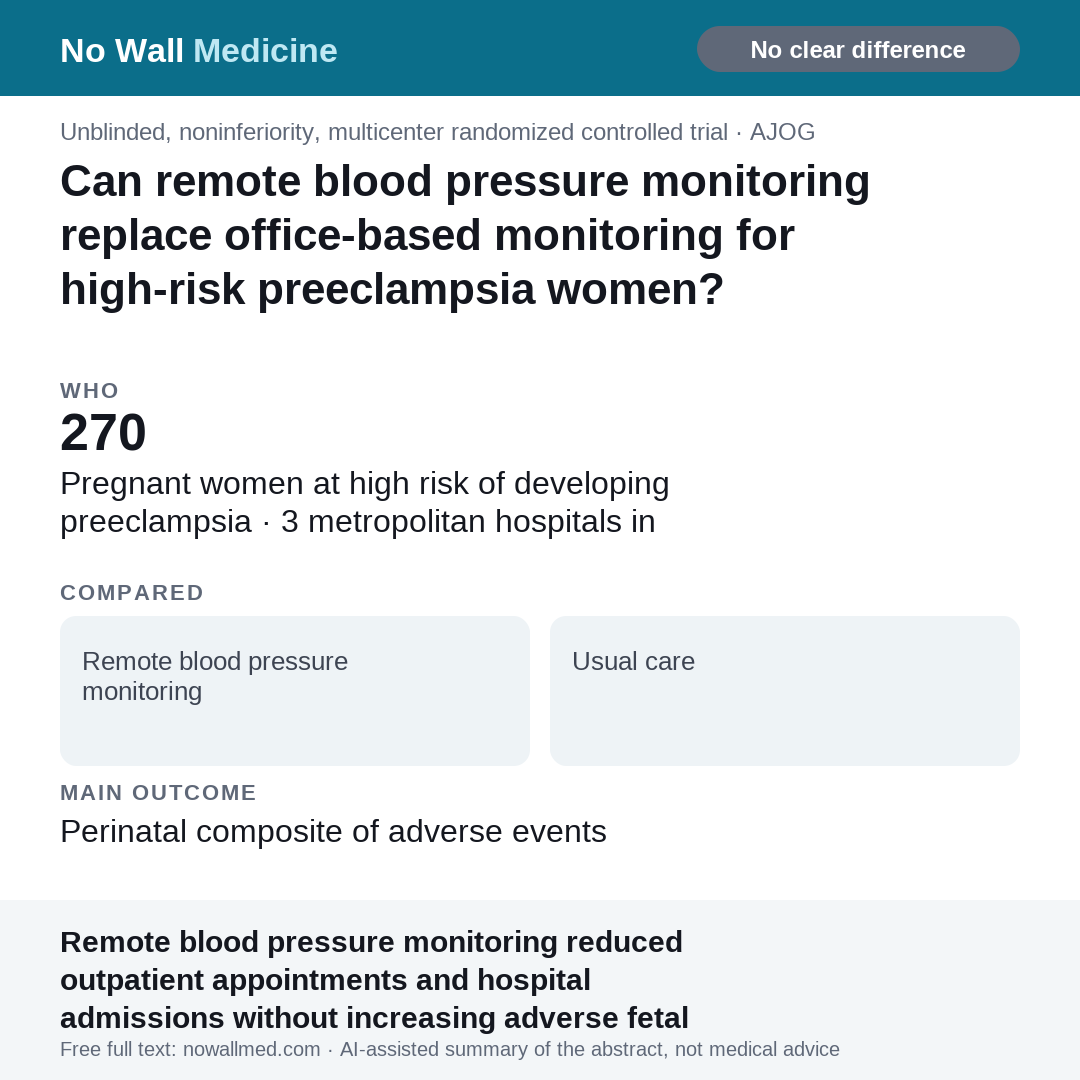
A randomized controlled trial comparing remote blood pressure monitoring with office-based blood pressure monitoring for women at high risk of preeclampsia
Unblinded, noninferiority, multicenter randomized controlled trialNo clear difference
Can remote blood pressure monitoring replace office-based monitoring for high-risk preeclampsia women?
Who
270
Pregnant women at high risk of developing preeclampsia · 3 metropolitan hospitals in Australia
Compared
Remote blood pressure monitoring
Usual care
Main outcome
Perinatal composite of adverse events
Result: hazard ratio 1.0 (95% CI 0.57-1.76)
Bottom line: Remote blood pressure monitoring reduced outpatient appointments and hospital admissions without increasing adverse fetal or maternal outcomes.
AJOG · 2026-04-21Download image
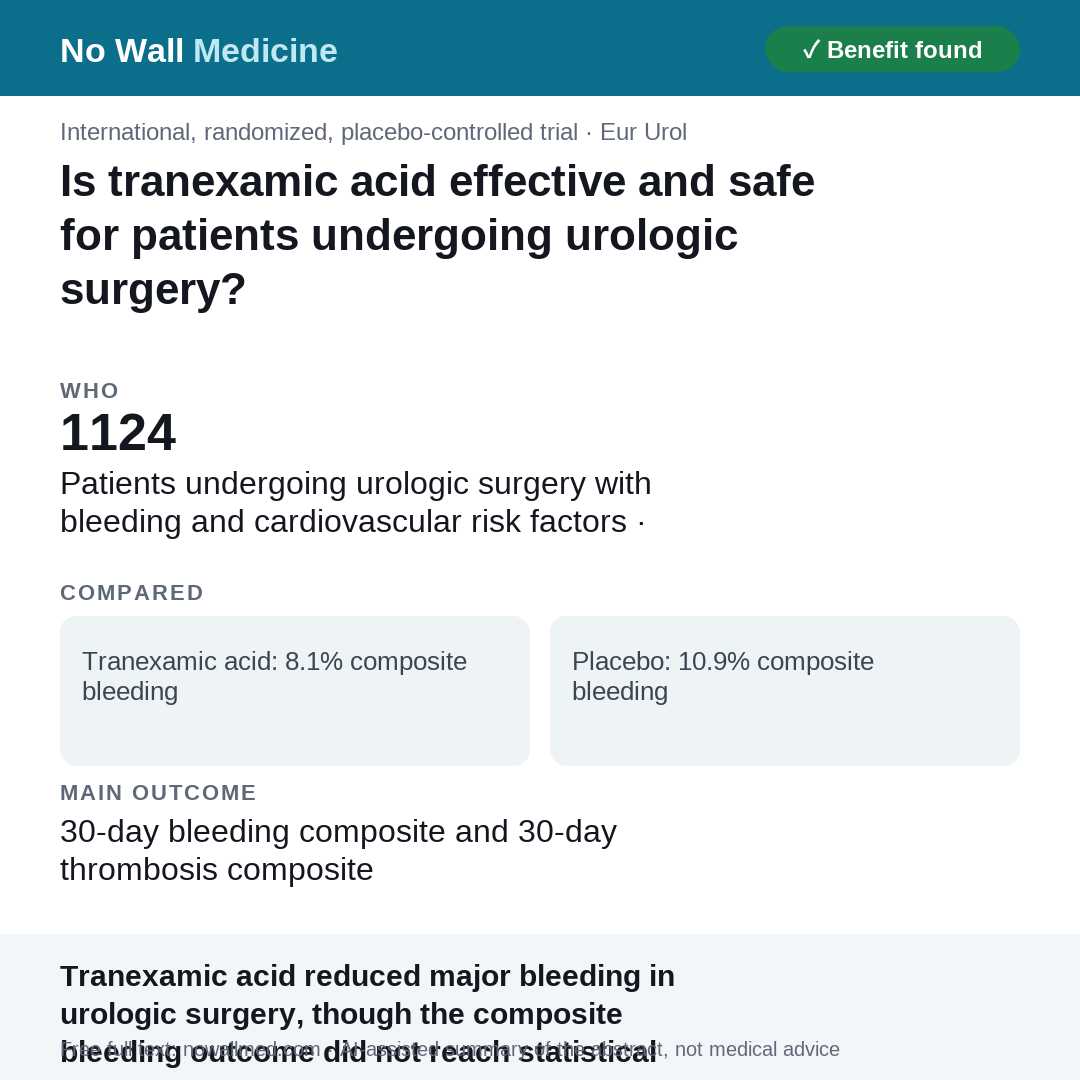
Safety and Efficacy of Tranexamic Acid in Urologic Surgery: Results from the International, Randomized, Placebo-Controlled POISE-3 Trial
International, randomized, placebo-controlled trialBenefit found
Is tranexamic acid effective and safe for patients undergoing urologic surgery?
Who
1124
Patients undergoing urologic surgery with bleeding and cardiovascular risk factors · International
Compared
Tranexamic acid: 8.1% composite bleeding
Placebo: 10.9% composite bleeding
Main outcome
30-day bleeding composite and 30-day thrombosis composite
Result: hazard ratio 0.73 (95% CI 0.50-1.07)
Bottom line: Tranexamic acid reduced major bleeding in urologic surgery, though the composite bleeding outcome did not reach statistical significance.
Limitation: Few patient-important thrombotic events limited precision for stroke and venous thromboembolism estimates.
Eur Urol · 2026-04-21Download image
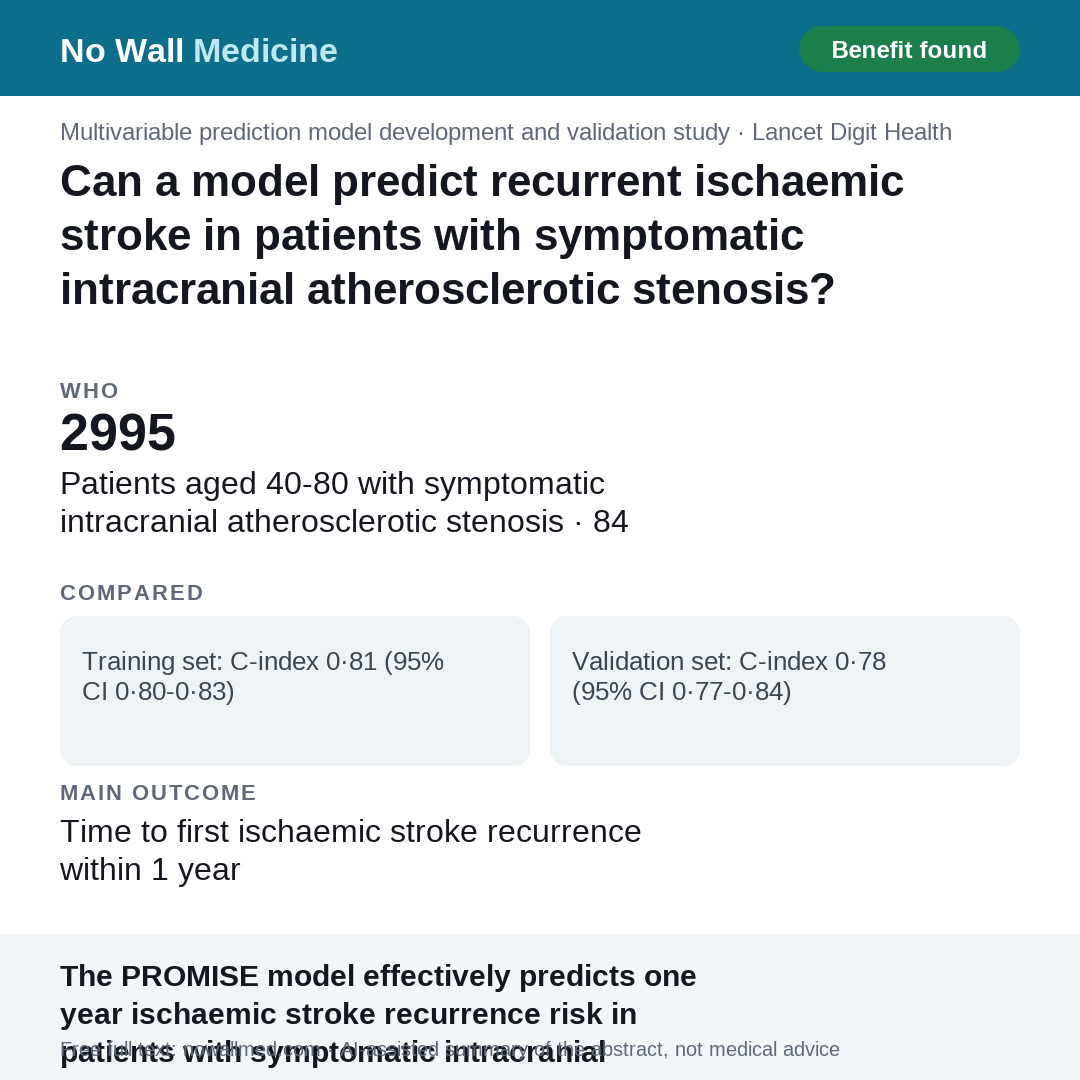
Ischaemic stroke recurrence in patients with symptomatic intracranial atherosclerotic stenosis in China (PROMISE): a multivariable prediction model development and validation study
Multivariable prediction model development and validation studyBenefit found
Can a model predict recurrent ischaemic stroke in patients with symptomatic intracranial atherosclerotic stenosis?
Who
2995
Patients aged 40-80 with symptomatic intracranial atherosclerotic stenosis · 84 hospitals in China
Compared
Training set: C-index 0·81 (95% CI 0·80-0·83)
Validation set: C-index 0·78 (95% CI 0·77-0·84)
Main outcome
Time to first ischaemic stroke recurrence within 1 year
Bottom line: The PROMISE model effectively predicts one year ischaemic stroke recurrence risk in patients with symptomatic intracranial atherosclerotic stenosis.
Funded by: National Natural Science Foundation of China and others
Lancet Digit Health · 2026-04-21Download image
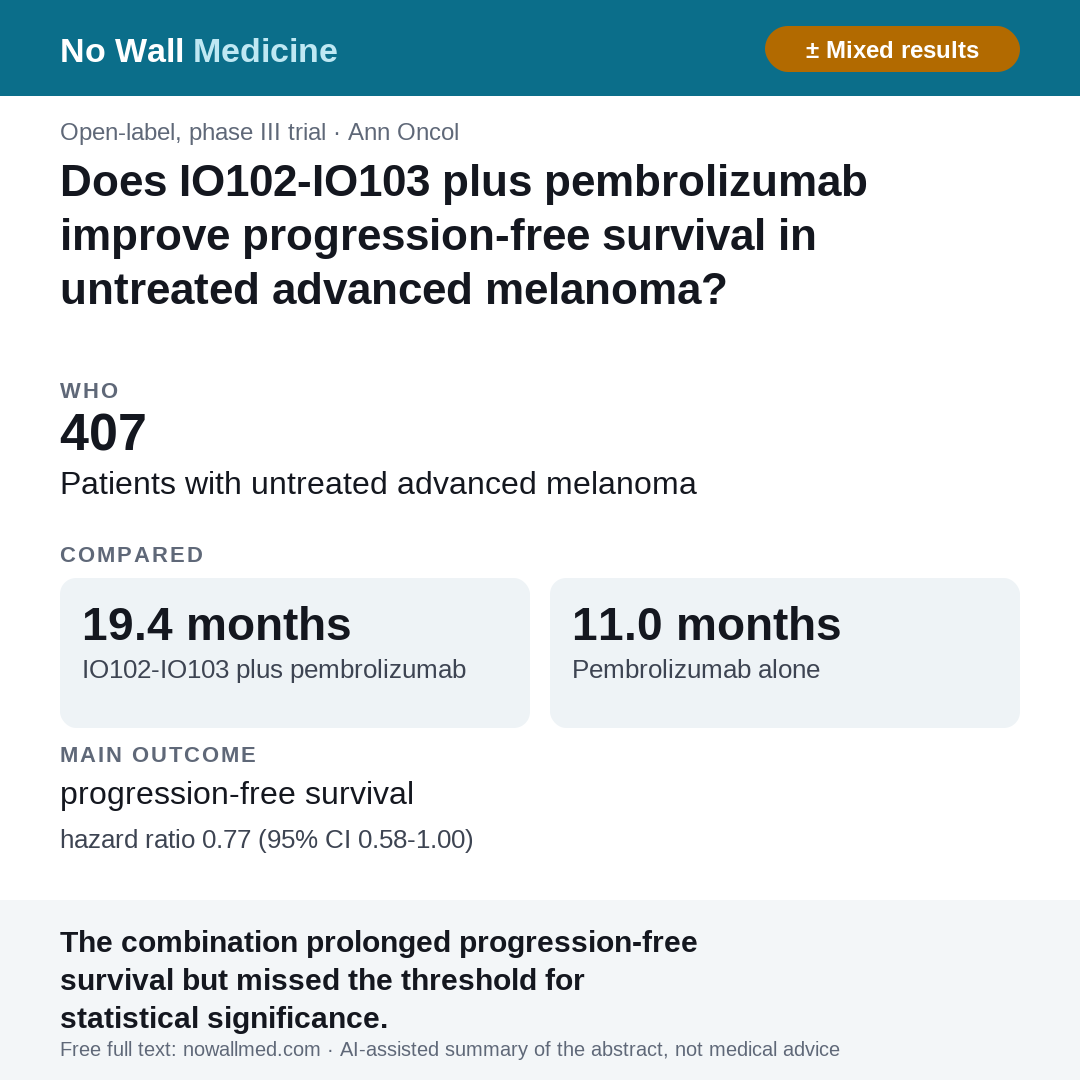
IO102-IO103 immune-modulatory cancer vaccine and pembrolizumab in melanoma
Open-label, phase III trialMixed results
Does IO102-IO103 plus pembrolizumab improve progression-free survival in untreated advanced melanoma?
Who
407
Patients with untreated advanced melanoma
Compared
19.4 monthsIO102-IO103 plus pembrolizumab
11.0 monthsPembrolizumab alone
Main outcome
progression-free survival
Result: hazard ratio 0.77 (95% CI 0.58-1.00)
Bottom line: The combination prolonged progression-free survival but missed the threshold for statistical significance.
Limitation: The statistical significance threshold was missed for the primary endpoint.
Ann Oncol · 2026-04-21Download image
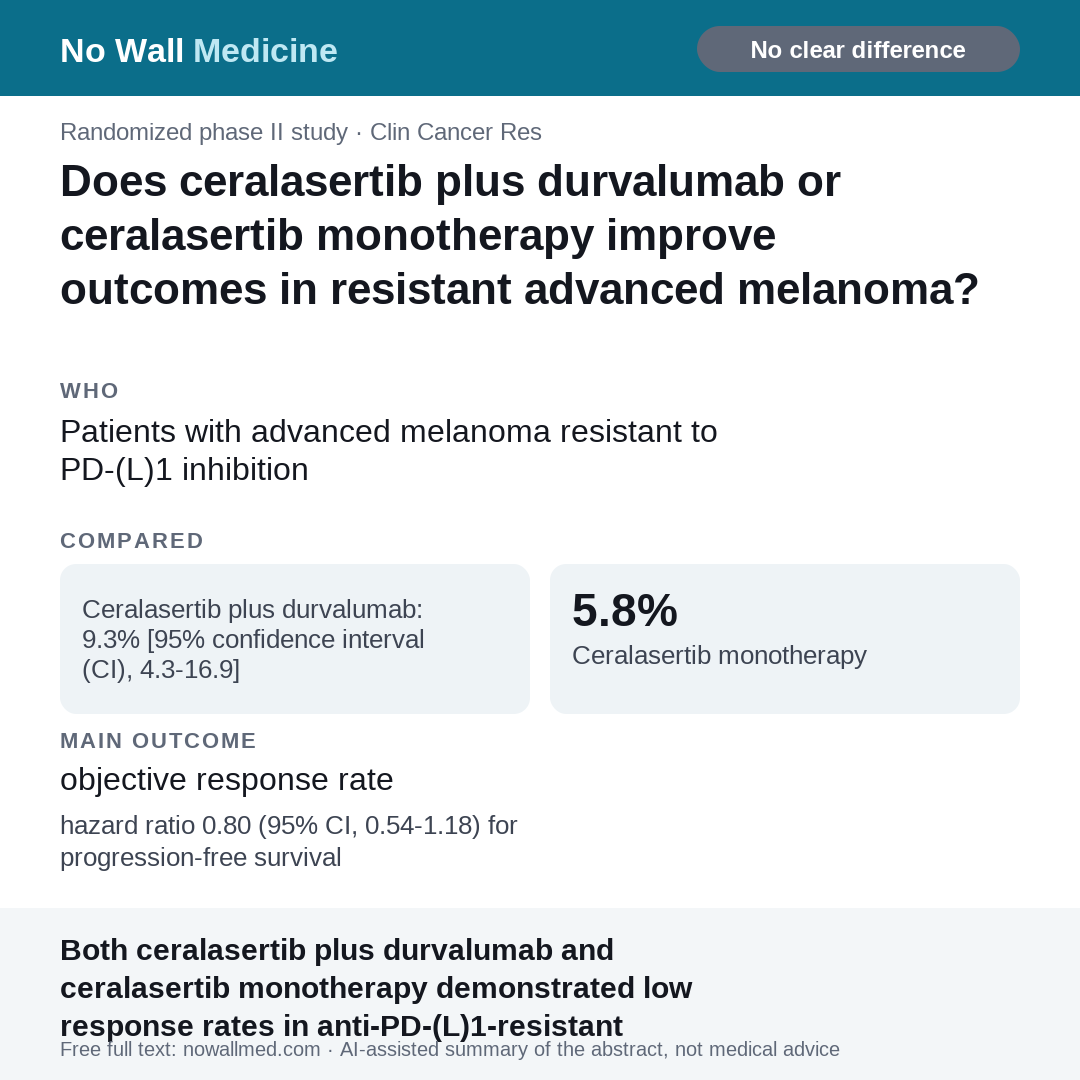
MONETTE: A Randomized Phase II Study of Ceralasertib plus Durvalumab or Ceralasertib Monotherapy in Patients with Advanced Melanoma Resistant to PD-(L)1 Inhibition
Randomized phase II studyNo clear difference
Does ceralasertib plus durvalumab or ceralasertib monotherapy improve outcomes in resistant advanced melanoma?
Who
Patients with advanced melanoma resistant to PD-(L)1 inhibition
Compared
Ceralasertib plus durvalumab: 9.3% [95% confidence interval (CI), 4.3-16.9]
5.8%Ceralasertib monotherapy (95% CI, 1.2-15.9)
Main outcome
objective response rate
Result: hazard ratio 0.80 (95% CI, 0.54-1.18) for progression-free survival
Bottom line: Both ceralasertib plus durvalumab and ceralasertib monotherapy demonstrated low response rates in anti-PD-(L)1-resistant advanced melanoma.
Clin Cancer Res · 2026-04-21Download image
Improved coping and self-efficacy drive improvements in mood among caregivers of patients with primary malignant brain tumors: Results from a randomized controlled trial
Randomized controlled trialBenefit found
Do improved coping and self-efficacy mediate NeuroCARE effects on caregiver anxiety and depression?
Who
120
Caregivers of patients with primary malignant brain tumors
Compared
NeuroCARE
Usual care
Main outcome
Anxiety and depression symptoms
Bottom line: NeuroCARE improves mood by enhancing coping skills and improving caregivers' self-efficacy.
Neuro Oncol · 2026-04-21Download image

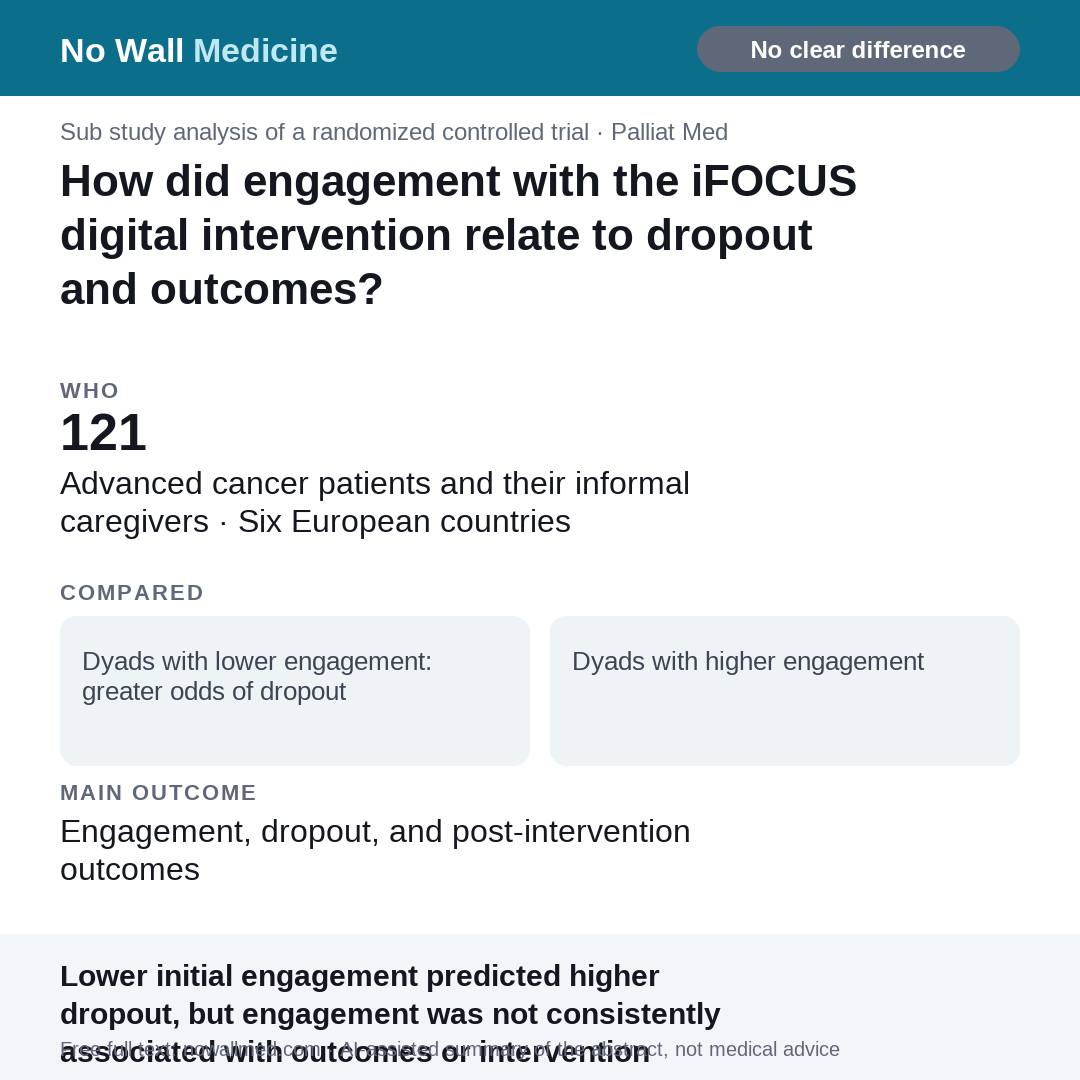
Exploring engagement with a web-based self-directed psychoeducational program for advanced cancer patients and their caregivers (iFOCUS): A sub study analysis of the DIAdIC trial
Sub study analysis of a randomized controlled trialNo clear difference
How did engagement with the iFOCUS digital intervention relate to dropout and outcomes?
Who
121
Advanced cancer patients and their informal caregivers · Six European countries
Compared
Dyads with lower engagement: greater odds of dropout
Dyads with higher engagement
Main outcome
Engagement, dropout, and post-intervention outcomes
Bottom line: Lower initial engagement predicted higher dropout, but engagement was not consistently associated with outcomes or intervention evaluation.
Limitation: Inconsistencies in the extent and nature of associations between engagement and characteristics.
Palliat Med · 2026-04-21Download image
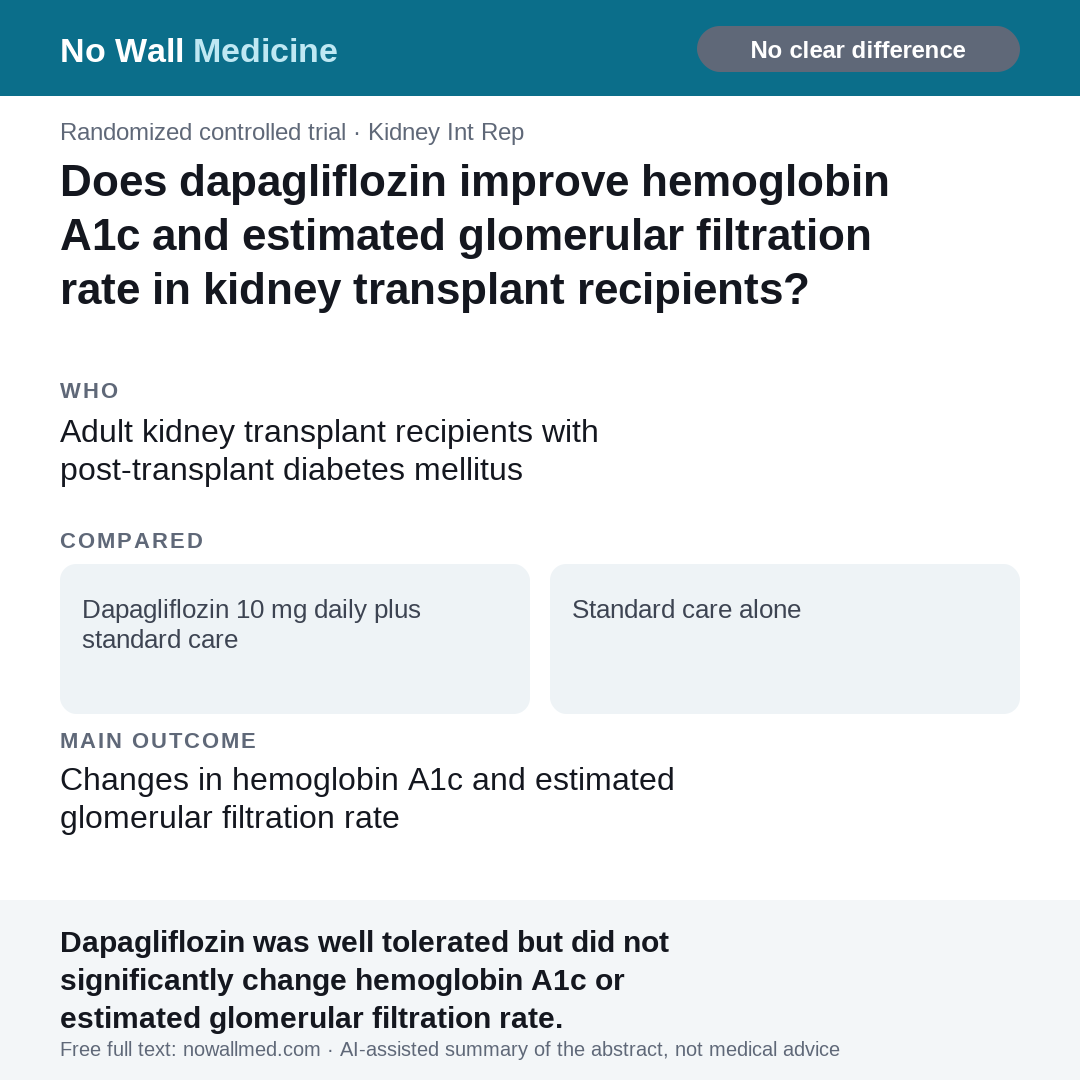
Randomized Controlled Trial of Dapagliflozin for Post-Transplant Diabetes Mellitus in Renal Transplant Recipients
Randomized controlled trialNo clear difference
Does dapagliflozin improve hemoglobin A1c and estimated glomerular filtration rate in kidney transplant recipients?
Who
Adult kidney transplant recipients with post-transplant diabetes mellitus
Compared
Dapagliflozin 10 mg daily plus standard care
Standard care alone
Main outcome
Changes in hemoglobin A1c and estimated glomerular filtration rate
Bottom line: Dapagliflozin was well tolerated but did not significantly change hemoglobin A1c or estimated glomerular filtration rate.
Limitation: Findings are hypothesis-generating and require confirmation in larger blinded trials.
Kidney Int Rep · 2026-04-21Download image
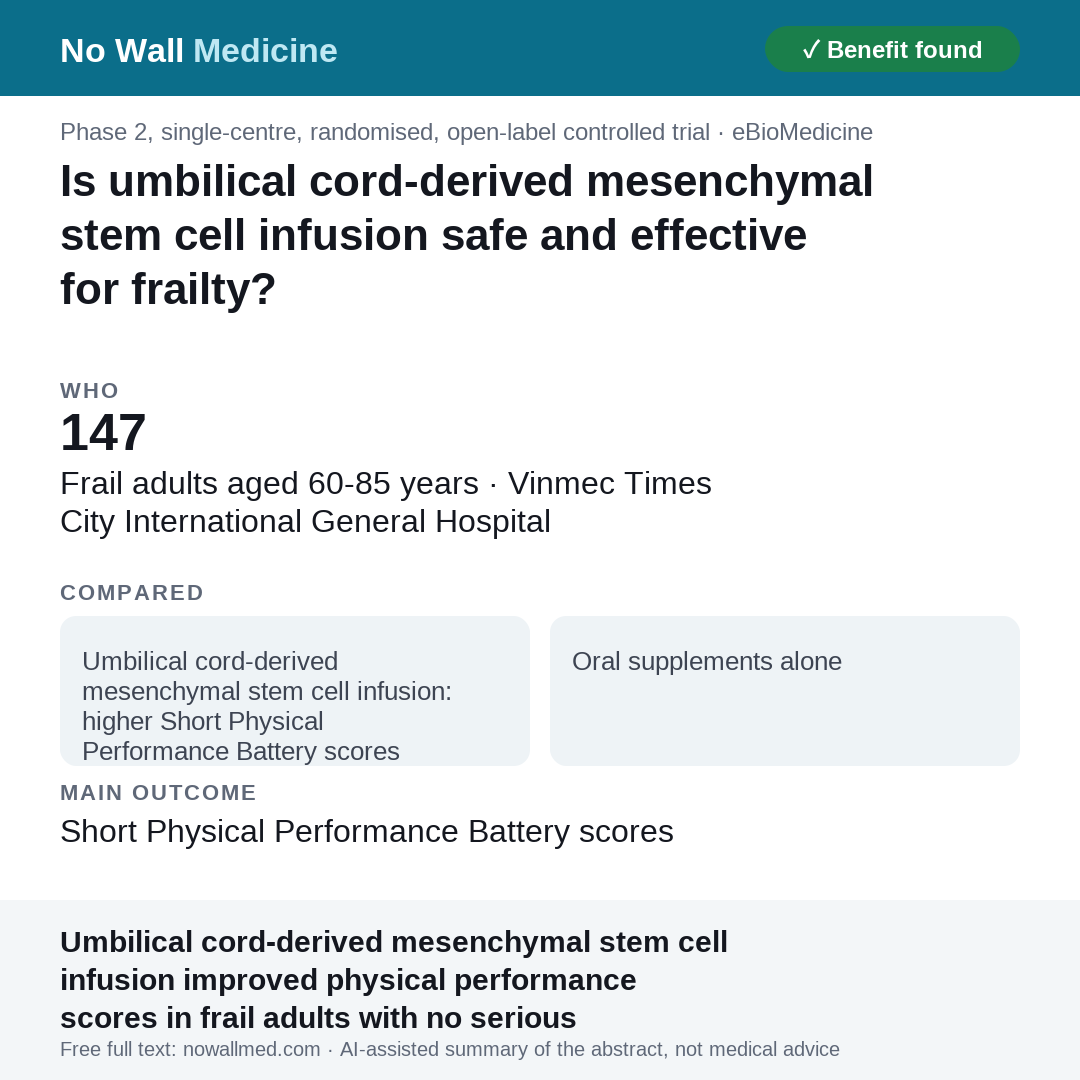
Safety and efficacy of allogeneic umbilical cord-derived mesenchymal stem cell infusion for frailty: a phase 2, single-centre, randomised, open-label controlled trial
Phase 2, single-centre, randomised, open-label controlled trialBenefit found
Is umbilical cord-derived mesenchymal stem cell infusion safe and effective for frailty?
Who
147
Frail adults aged 60-85 years · Vinmec Times City International General Hospital
Compared
Umbilical cord-derived mesenchymal stem cell infusion: higher Short Physical Performance Battery scores
Oral supplements alone
Main outcome
Short Physical Performance Battery scores
Result: least-squares mean difference 1.1 points (95% CI: 0.6-1.6)
Bottom line: Umbilical cord-derived mesenchymal stem cell infusion improved physical performance scores in frail adults with no serious adverse events.
Funded by: Vingroup Joint Stock Company
eBioMedicine · 2026-04-21Download image
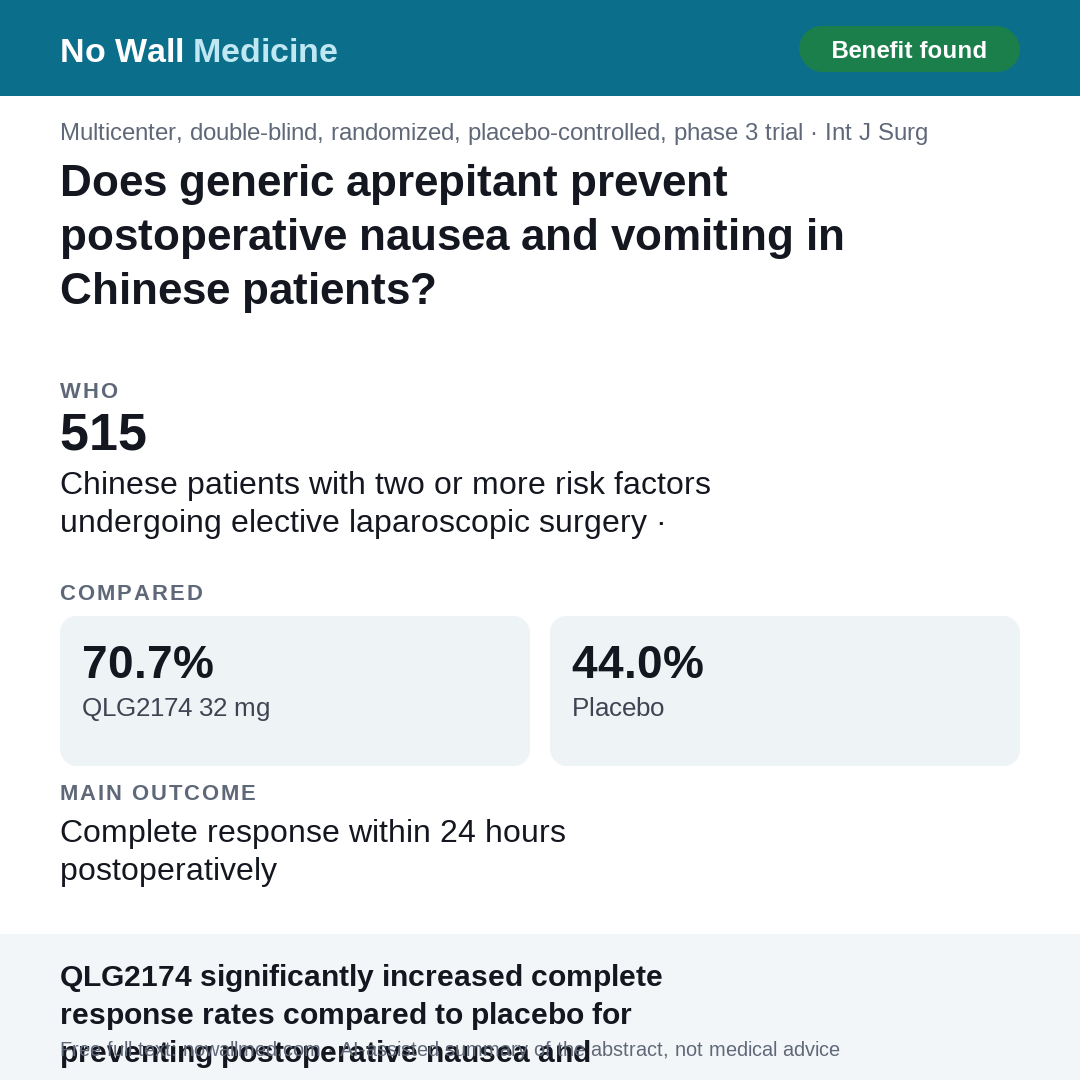
A multicenter parallel-group double-blind randomized placebo-controlled phase III clinical trial of generic aprepitant QLG2174 for the prevention of postoperative nausea and vomiting
Multicenter, double-blind, randomized, placebo-controlled, phase 3 trialBenefit found
Does generic aprepitant prevent postoperative nausea and vomiting in Chinese patients?
Who
515
Chinese patients with two or more risk factors undergoing elective laparoscopic surgery · Multicenter
Compared
70.7%QLG2174 32 mg (181/256)
44.0%Placebo (114/259)
Main outcome
Complete response within 24 hours postoperatively
Result: adjusted rate difference 26.6% (95% confidence interval, 18.4-34.7)
Bottom line: QLG2174 significantly increased complete response rates compared to placebo for preventing postoperative nausea and vomiting.
Int J Surg · 2026-04-20Download image
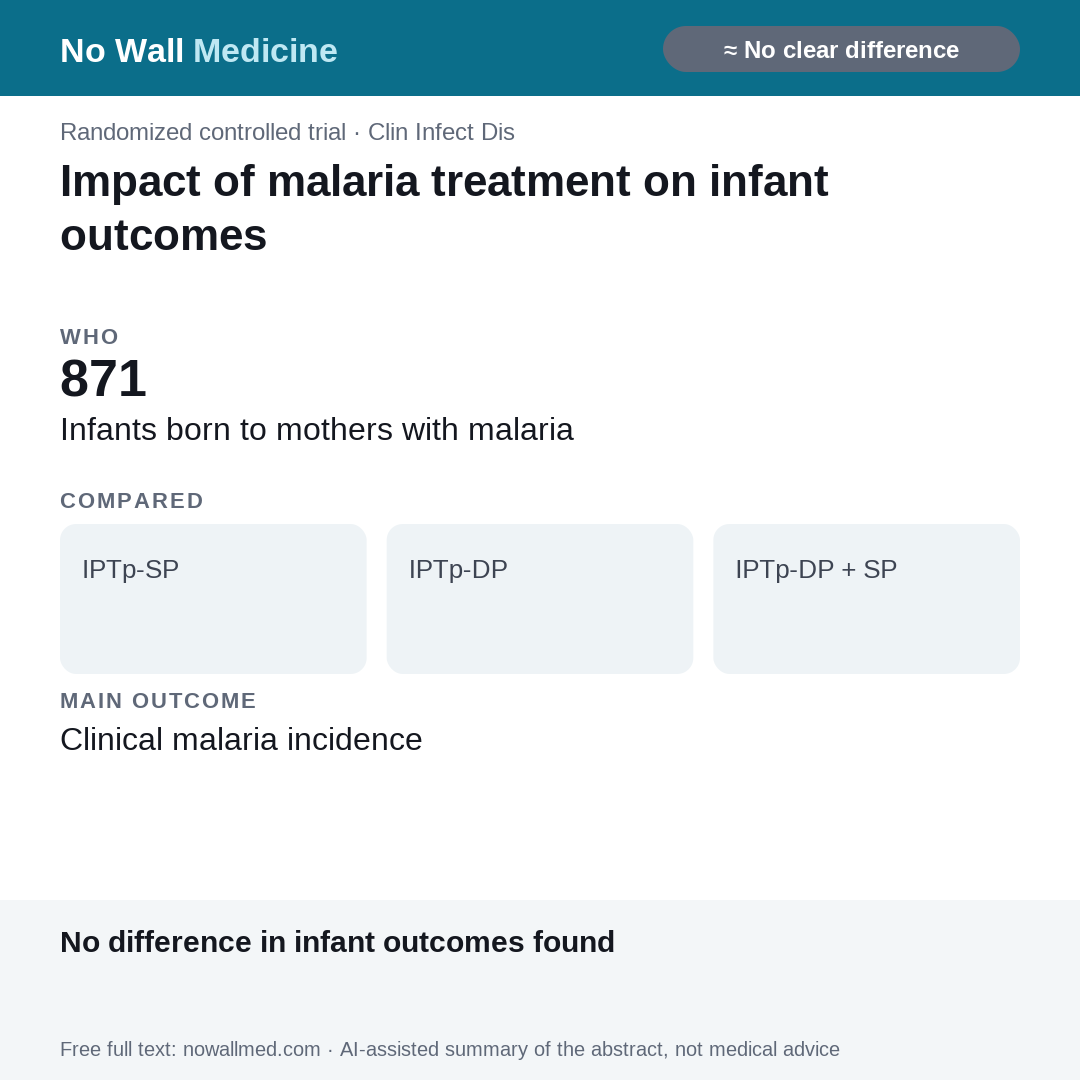
Impact of Intermittent Preventive Treatment for Malaria in Pregnancy With Sulfadoxine-Pyrimethamine, Dihydroartemisinin-Piperaquine, and Their Combination on Infant Outcomes: A Randomized Controlled Trial
Randomized controlled trialNo clear difference
Impact of malaria treatment on infant outcomes
Who
871
Infants born to mothers with malaria
Compared
IPTp-SP
IPTp-DP
IPTp-DP + SP
Main outcome
Clinical malaria incidence
Bottom line: No difference in infant outcomes found
Clin Infect Dis · 2026-04-20Download image
Cerebral Oximetry in Extremely Preterm Infants: 2-Year Follow-Up of the SafeBoosC-III Randomized Clinical Trial
Randomized clinical trialNo clear difference
Does cerebral oximetry monitoring reduce death or neurodevelopmental disability at 2 years?
Who
1438
Extremely preterm infants · 56 sites across 17 countries
Compared
47.1%Cerebral oximetry monitoring (292/620)
48.0%Usual care (321/669)
Main outcome
Death or moderate or severe neurodevelopmental disability
Result: relative risk 0.96 (97.5% CI 0.85-1.07)
Bottom line: Cerebral oximetry monitoring did not reduce death or neurodevelopmental disability at 2 years corrected age.
JAMA Pediatr · 2026-04-20Download image

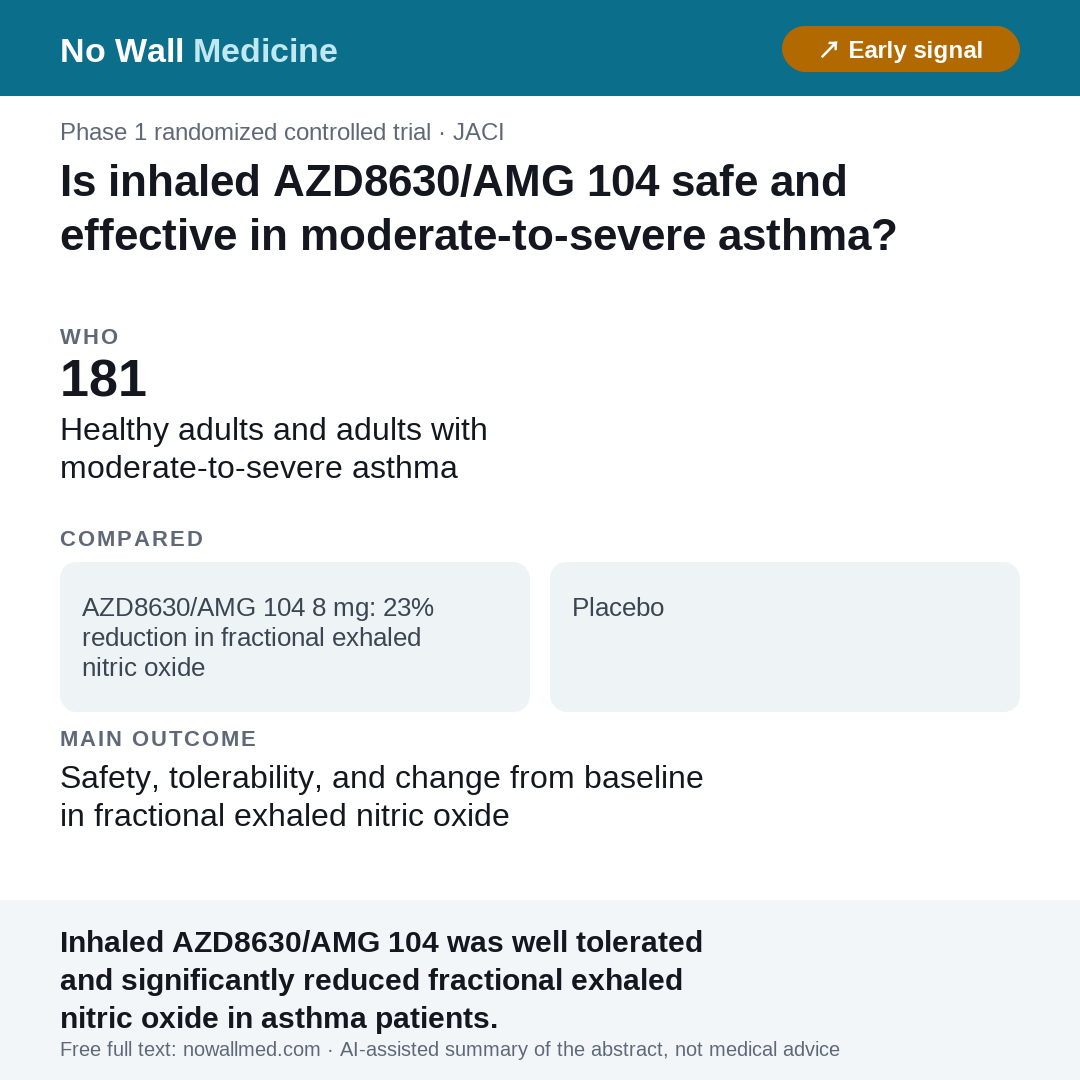
AZD8630/AMG 104, an inhaled anti-thymic stromal lymphopoietin antibody fragment, for moderate-to-severe asthma: Phase 1 randomized controlled trial
Phase 1 randomized controlled trialBenefit found
Is inhaled AZD8630/AMG 104 safe and effective in moderate-to-severe asthma?
Who
181
Healthy adults and adults with moderate-to-severe asthma
Compared
AZD8630/AMG 104 8 mg: 23% reduction in fractional exhaled nitric oxide
Placebo
Main outcome
Safety, tolerability, and change from baseline in fractional exhaled nitric oxide
Bottom line: Inhaled AZD8630/AMG 104 was well tolerated and significantly reduced fractional exhaled nitric oxide in asthma patients.
JACI · 2026-04-20Download image
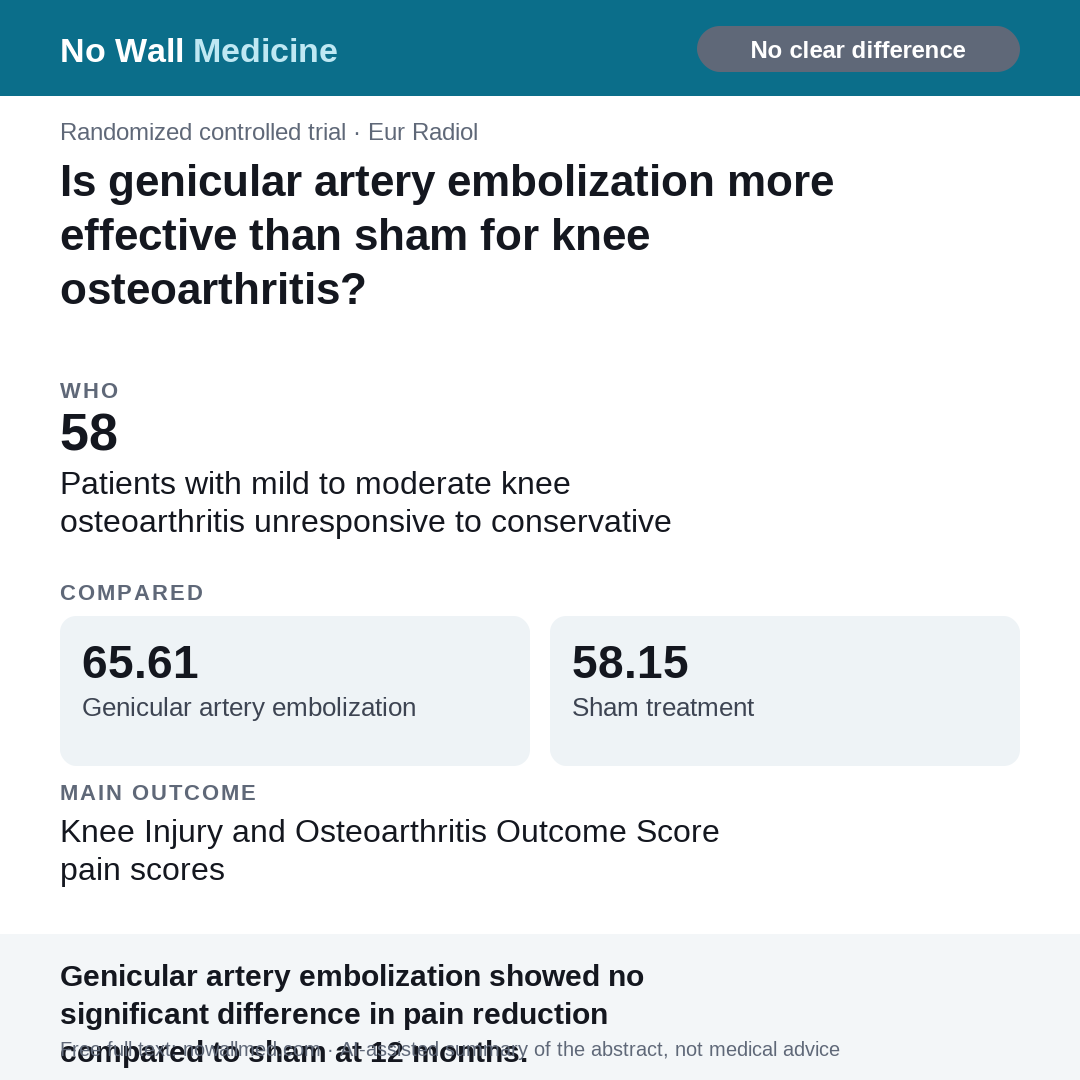
Long-term outcomes of genicular artery embolization for knee osteoarthritis: 12-month efficacy and secondary outcomes from a randomized sham-controlled clinical trial
Randomized controlled trialNo clear difference
Is genicular artery embolization more effective than sham for knee osteoarthritis?
Who
58
Patients with mild to moderate knee osteoarthritis unresponsive to conservative treatment
Compared
65.61Genicular artery embolization (95% CI 57.16-74.06)
58.15Sham treatment (95% CI 48.7-67.6)
Main outcome
Knee Injury and Osteoarthritis Outcome Score pain scores
Result: 7.46; 95% CI -13.63 to -28.56; p = 0.25
Bottom line: Genicular artery embolization showed no significant difference in pain reduction compared to sham at 12 months.
Eur Radiol · 2026-04-20Download image