Visual abstracts
New randomized trials and meta-analyses from leading journals at a glance: who was studied, what was compared, and what was found. Every paper is free to read in full.
All specialtiesCardiology 388Oncology 309Gastroenterology & Hepatology 155Infectious Disease 305Neurology 178Psychiatry & Mental Health 254Pulmonology 175Critical Care 119Endocrinology & Diabetes 226Pediatrics 178Surgery 119Orthopedics & Sports Medicine 72Neurosurgery 24Cardiothoracic & Vascular Surgery 45Plastic & Reconstructive Surgery 76Nephrology 76Rheumatology 77Hematology 90Dermatology 41Ophthalmology 61Obstetrics & Gynecology 114Public & Global Health 115Radiology & Imaging 34Anesthesiology 67Urology 88ENT (Otolaryngology) 47Emergency Medicine 39Allergy & Immunology 48Geriatrics 111Family Medicine & Primary Care 66Medical Genetics & Genomics 35Pathology & Laboratory Medicine 6Physical Medicine & Rehabilitation 94Palliative Care 59Nutrition 133Digital Health & AI 329General Medicine 46
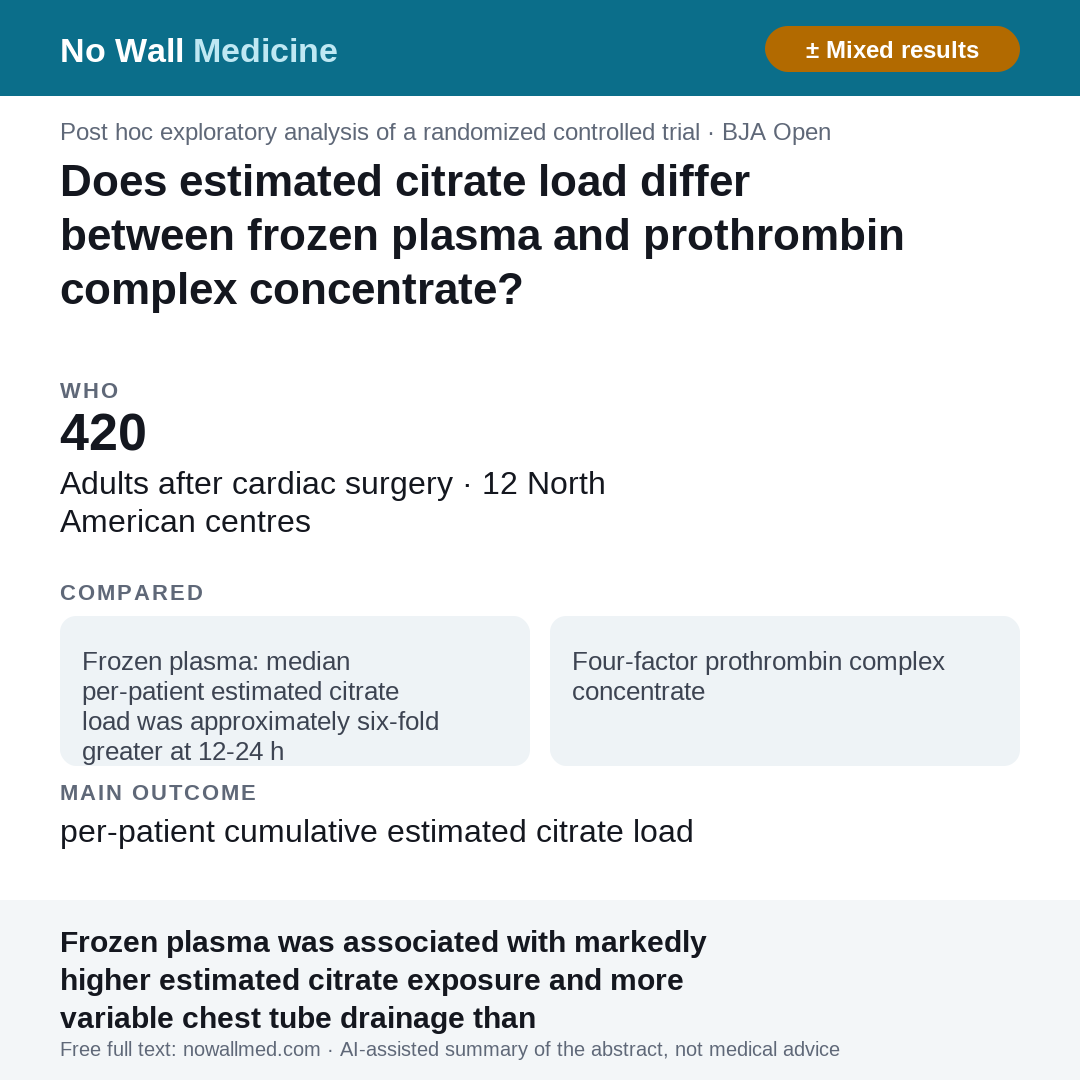
The association of estimated citrate load with frozen plasma versus four-factor prothrombin complex concentrate for coagulopathy after cardiac surgery: a post hoc exploratory analysis of the FARES-II randomised controlled trial
Post hoc exploratory analysis of a randomized controlled trialMixed results
Does estimated citrate load differ between frozen plasma and prothrombin complex concentrate?
Who
420
Adults after cardiac surgery · 12 North American centres
Compared
Frozen plasma: median per-patient estimated citrate load was approximately six-fold greater at 12-24 h
Four-factor prothrombin complex concentrate
Main outcome
per-patient cumulative estimated citrate load
Bottom line: Frozen plasma was associated with markedly higher estimated citrate exposure and more variable chest tube drainage than prothrombin complex concentrate.
BJA Open · 2026-06-29Download image
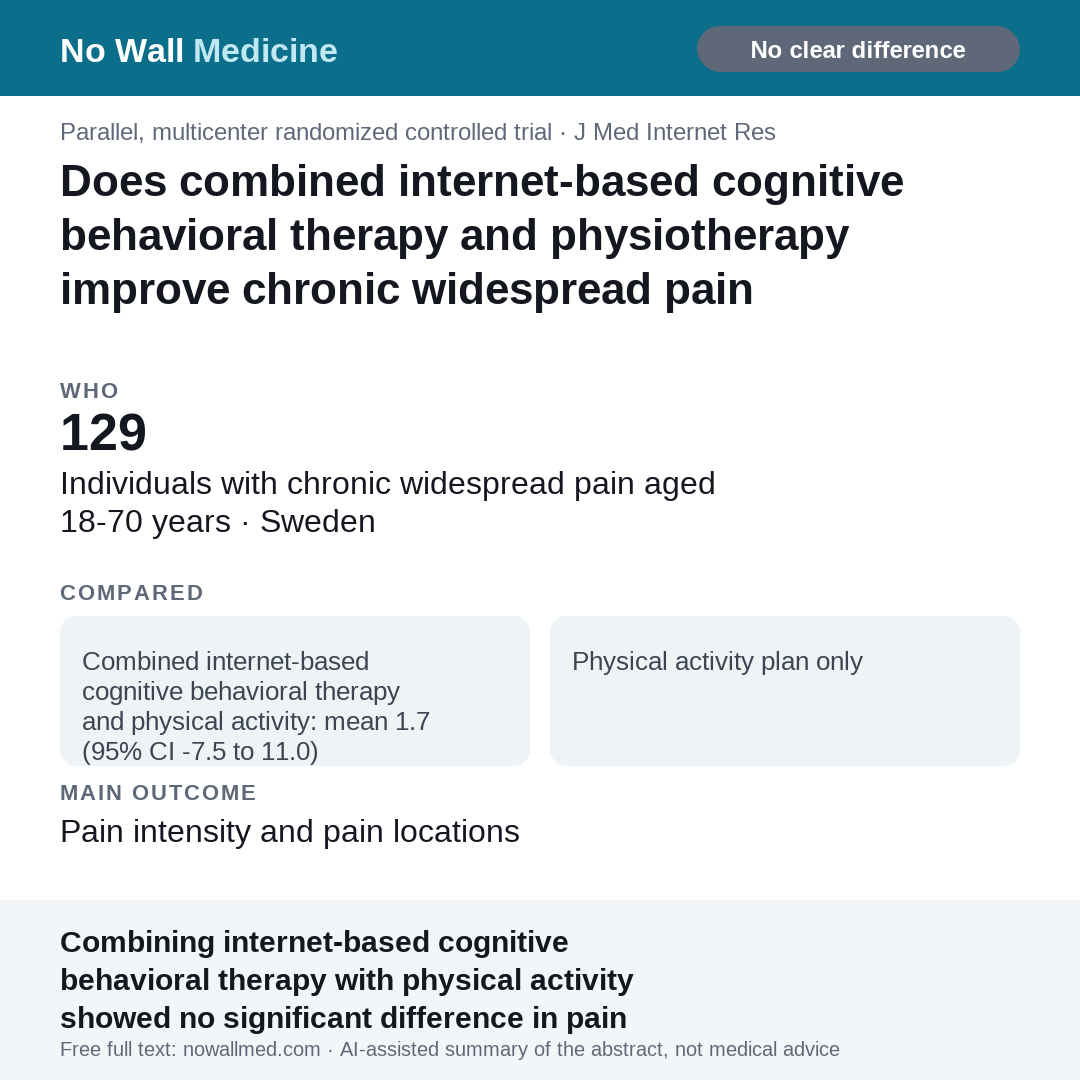
Combined Internet-Based Cognitive Behavioral Therapy and Face-to-Face Physiotherapy in Primary Health Care for Chronic Widespread Pain: Randomized Controlled Trial
Parallel, multicenter randomized controlled trialNo clear difference
Does combined internet-based cognitive behavioral therapy and physiotherapy improve chronic widespread pain outcomes?
Who
129
Individuals with chronic widespread pain aged 18-70 years · Sweden
Compared
Combined internet-based cognitive behavioral therapy and physical activity: mean 1.7 (95% CI -7.5 to 11.0)
Physical activity plan only
Main outcome
Pain intensity and pain locations
Result: no between-group differences were observed
Bottom line: Combining internet-based cognitive behavioral therapy with physical activity showed no significant difference in pain outcomes compared to physical activity alone.
J Med Internet Res · 2026-06-29Download image
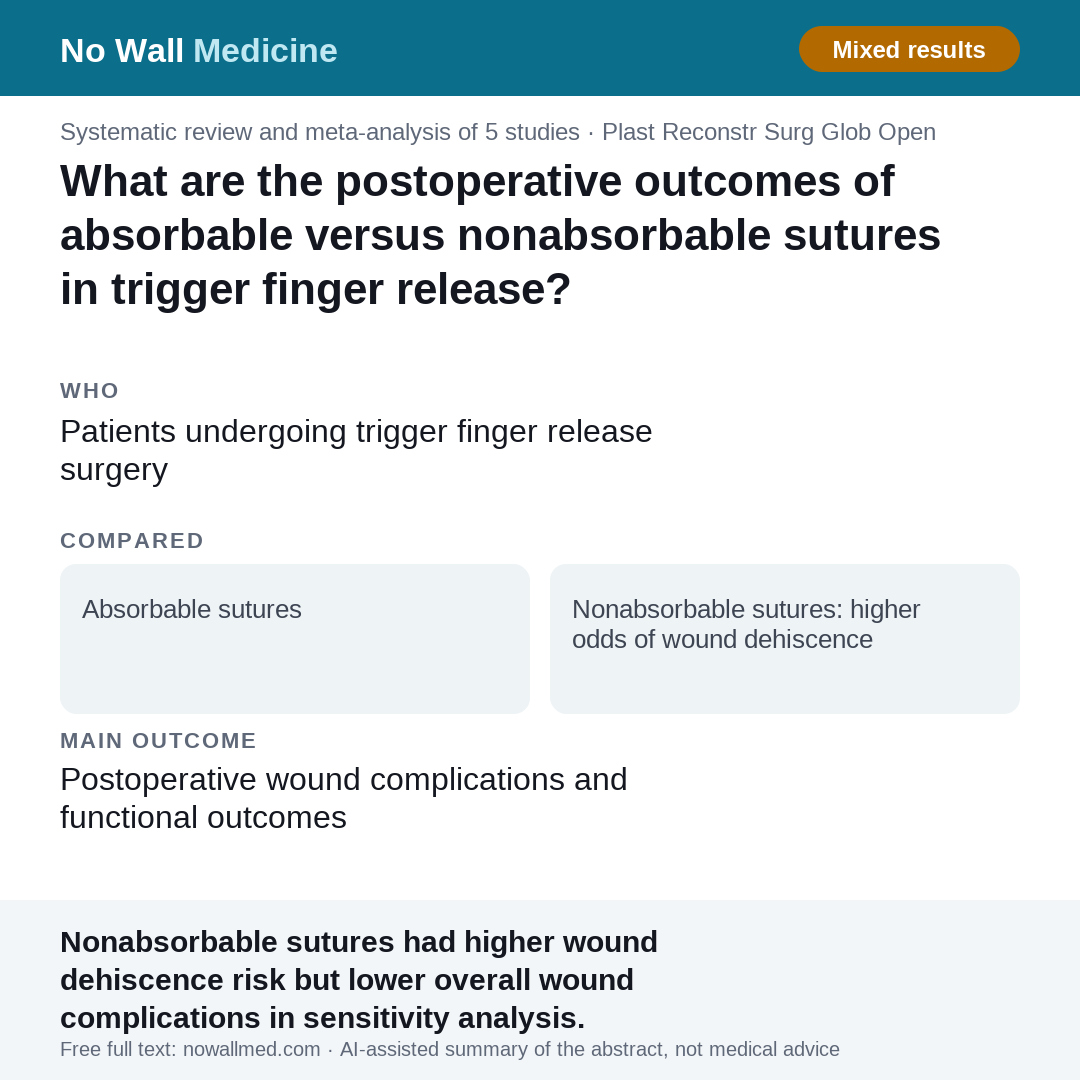
Postoperative Outcomes of Absorbable versus Nonabsorbable Sutures in Trigger Finger Release Closure: A Systematic Review and Meta-analysis
Systematic review and meta-analysis of 5 studiesMixed results
What are the postoperative outcomes of absorbable versus nonabsorbable sutures in trigger finger release?
Who
Patients undergoing trigger finger release surgery
Compared
Absorbable sutures
Nonabsorbable sutures: higher odds of wound dehiscence
Main outcome
Postoperative wound complications and functional outcomes
Result: odds ratio 2.83 (P = 0.02) for wound dehiscence
Bottom line: Nonabsorbable sutures had higher wound dehiscence risk but lower overall wound complications in sensitivity analysis.
Limitation: The available evidence remains limited and further high-quality studies are required.
Plast Reconstr Surg Glob Open · 2026-06-29Download image
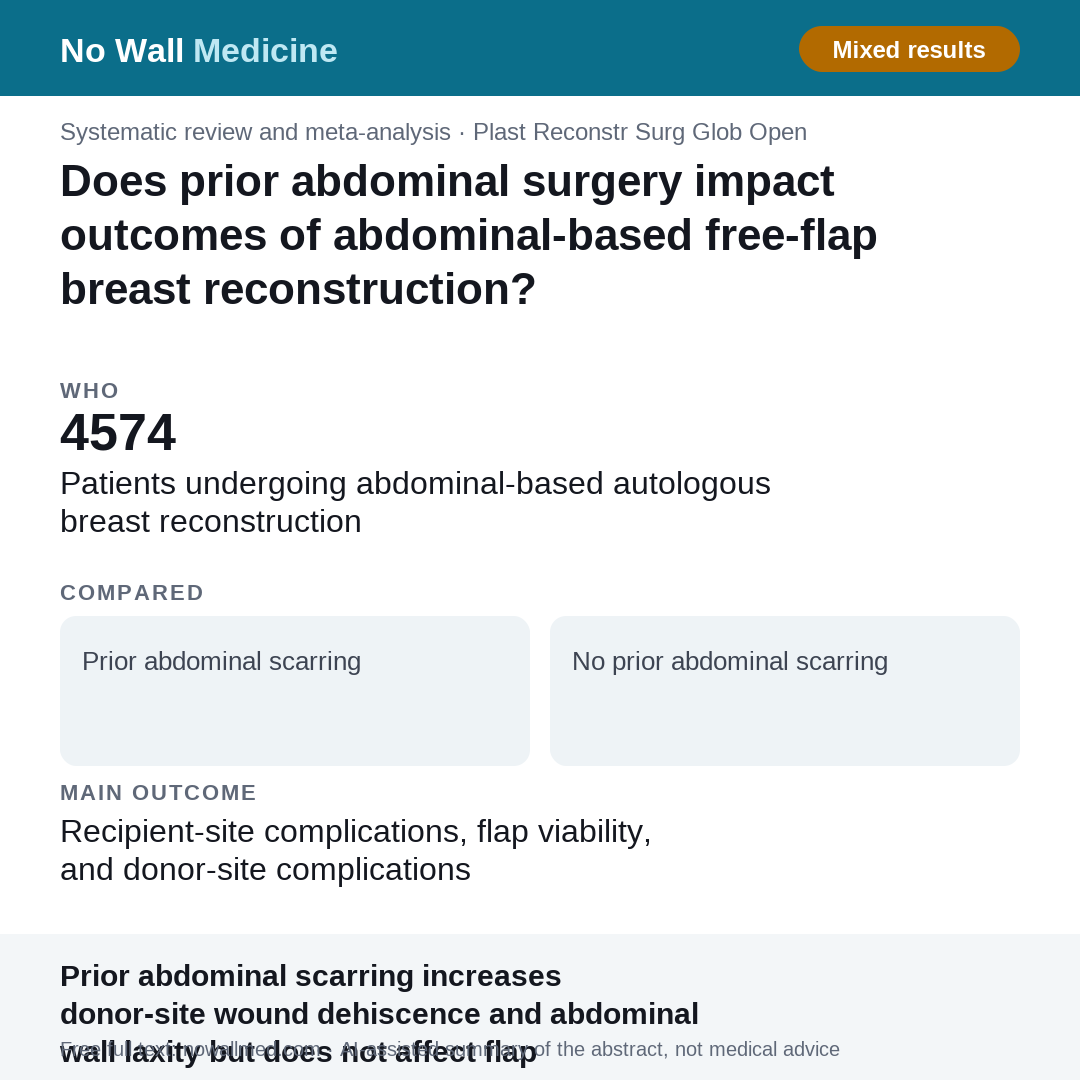
Effect of Prior Abdominal Surgery on Abdominal-based Free-flap Breast Reconstruction Outcomes: A Systematic Review and Meta-analysis
Systematic review and meta-analysisMixed results
Does prior abdominal surgery impact outcomes of abdominal-based free-flap breast reconstruction?
Who
4574
Patients undergoing abdominal-based autologous breast reconstruction
Compared
Prior abdominal scarring
No prior abdominal scarring
Main outcome
Recipient-site complications, flap viability, and donor-site complications
Result: risk ratio 1.68 for donor-site wound dehiscence; risk ratio 4.19 for abdominal wall laxity
Bottom line: Prior abdominal scarring increases donor-site wound dehiscence and abdominal wall laxity but does not affect flap viability.
Limitation: Included studies were 11 cohort and 1 case-control retrospective studies
Plast Reconstr Surg Glob Open · 2026-06-29Download image
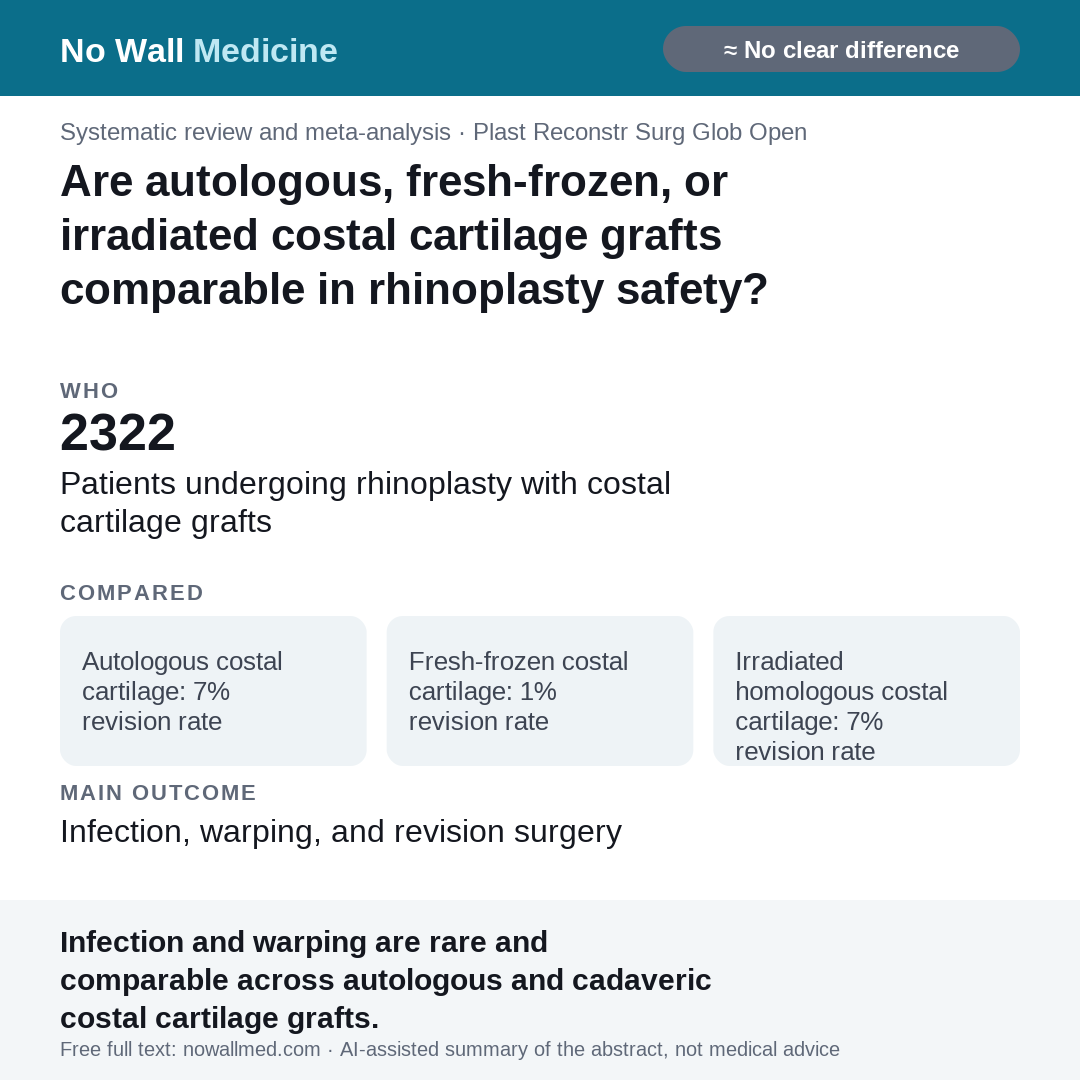
Rib Grafts in Rhinoplasty: A Systematic Review and Meta-analysis of Autologous, Fresh-frozen, and Irradiated Cartilage
Systematic review and meta-analysisNo clear difference
Are autologous, fresh-frozen, or irradiated costal cartilage grafts comparable in rhinoplasty safety?
Who
2322
Patients undergoing rhinoplasty with costal cartilage grafts
Compared
Autologous costal cartilage: 7% revision rate
Fresh-frozen costal cartilage: 1% revision rate
Irradiated homologous costal cartilage: 7% revision rate
Main outcome
Infection, warping, and revision surgery
Bottom line: Infection and warping are rare and comparable across autologous and cadaveric costal cartilage grafts.
Limitation: High heterogeneity and funnel plot asymmetry in revision outcomes and limited study design quality.
Plast Reconstr Surg Glob Open · 2026-06-29Download image
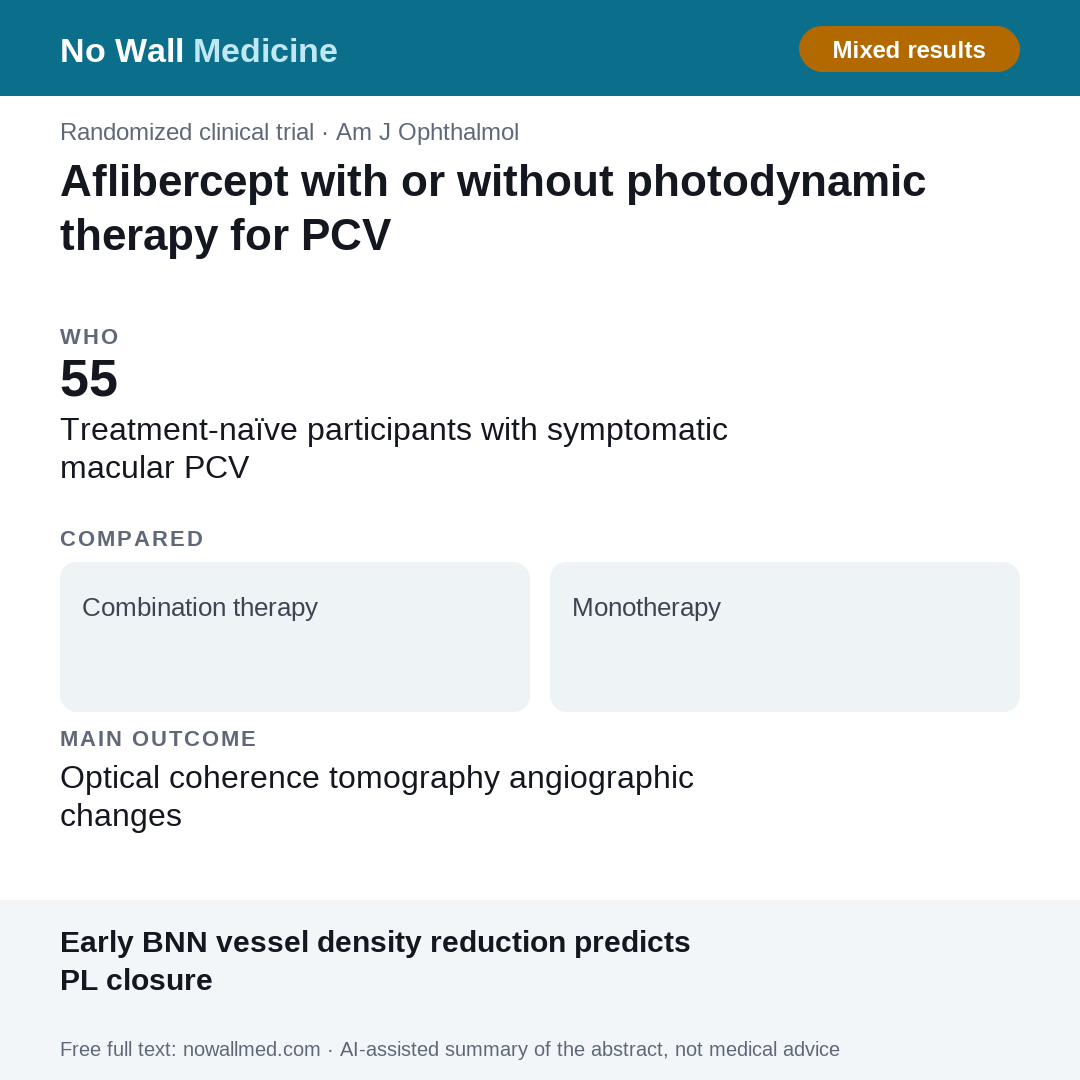
Aflibercept With Versus Without Reduced-Fluence Photodynamic Therapy for Polypoidal Choroidal Vasculopathy: Optical Coherence Tomography Angiographic Changes From a Randomized Clinical Trial
Randomized clinical trialMixed results
Aflibercept with or without photodynamic therapy for PCV
Who
55
Treatment-naïve participants with symptomatic macular PCV
Compared
Combination therapy
Monotherapy
Main outcome
Optical coherence tomography angiographic changes
Bottom line: Early BNN vessel density reduction predicts PL closure
Am J Ophthalmol · 2026-06-28Download image
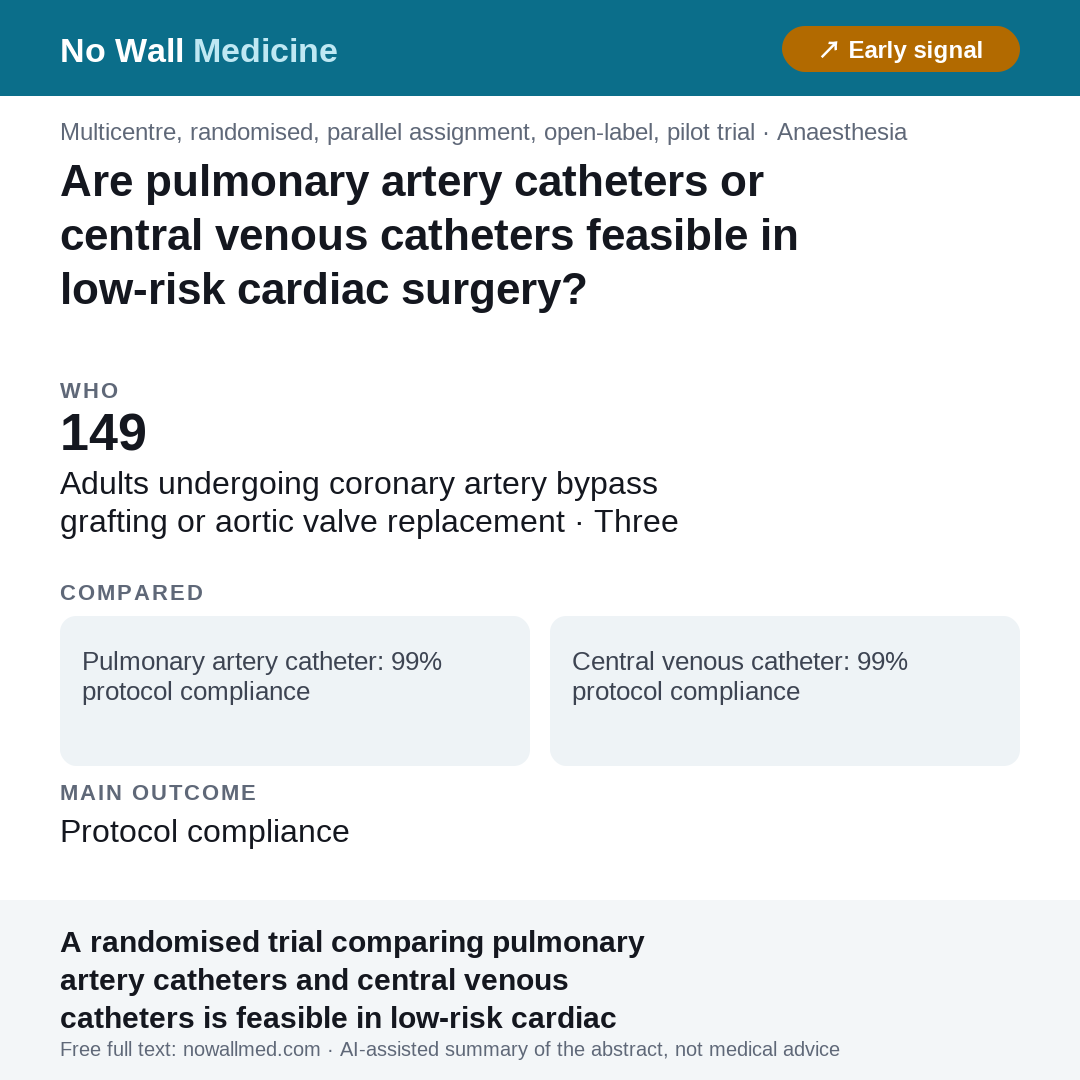
Pulmonary artery catheters or central venous catheters for cardiac surgery: the PUMA Pilot randomised clinical trial
Multicentre, randomised, parallel assignment, open-label, pilot trialBenefit found
Are pulmonary artery catheters or central venous catheters feasible in low-risk cardiac surgery?
Who
149
Adults undergoing coronary artery bypass grafting or aortic valve replacement · Three tertiary cardiac surgery centres
Compared
Pulmonary artery catheter: 99% protocol compliance
Central venous catheter: 99% protocol compliance
Main outcome
Protocol compliance
Bottom line: A randomised trial comparing pulmonary artery catheters and central venous catheters is feasible in low-risk cardiac surgery.
Anaesthesia · 2026-06-28Download image
Efficacy and safety of RApid PrednIsolone Dose reduction for acute exacerbation of Idiopathic Pulmonary Fibrosis (RAPID-IPF Trial): a study protocol for a randomised controlled trial
Randomised, open-label, non-inferiority trialUnclear result
Is early corticosteroid tapering non-inferior to conventional tapering for 90-day mortality?
Who
70
Patients hospitalised for acute exacerbation of idiopathic pulmonary fibrosis · Multicentre, Japan
Compared
accelerated 6-week prednisolone tapering regimen
conventional 12-week tapering regimen
Main outcome
all-cause mortality at 90 days
Bottom line: This study protocol aims to test if early tapering is non-inferior to standard tapering for mortality.
BMJ Open Respir Res · 2026-06-28Download image

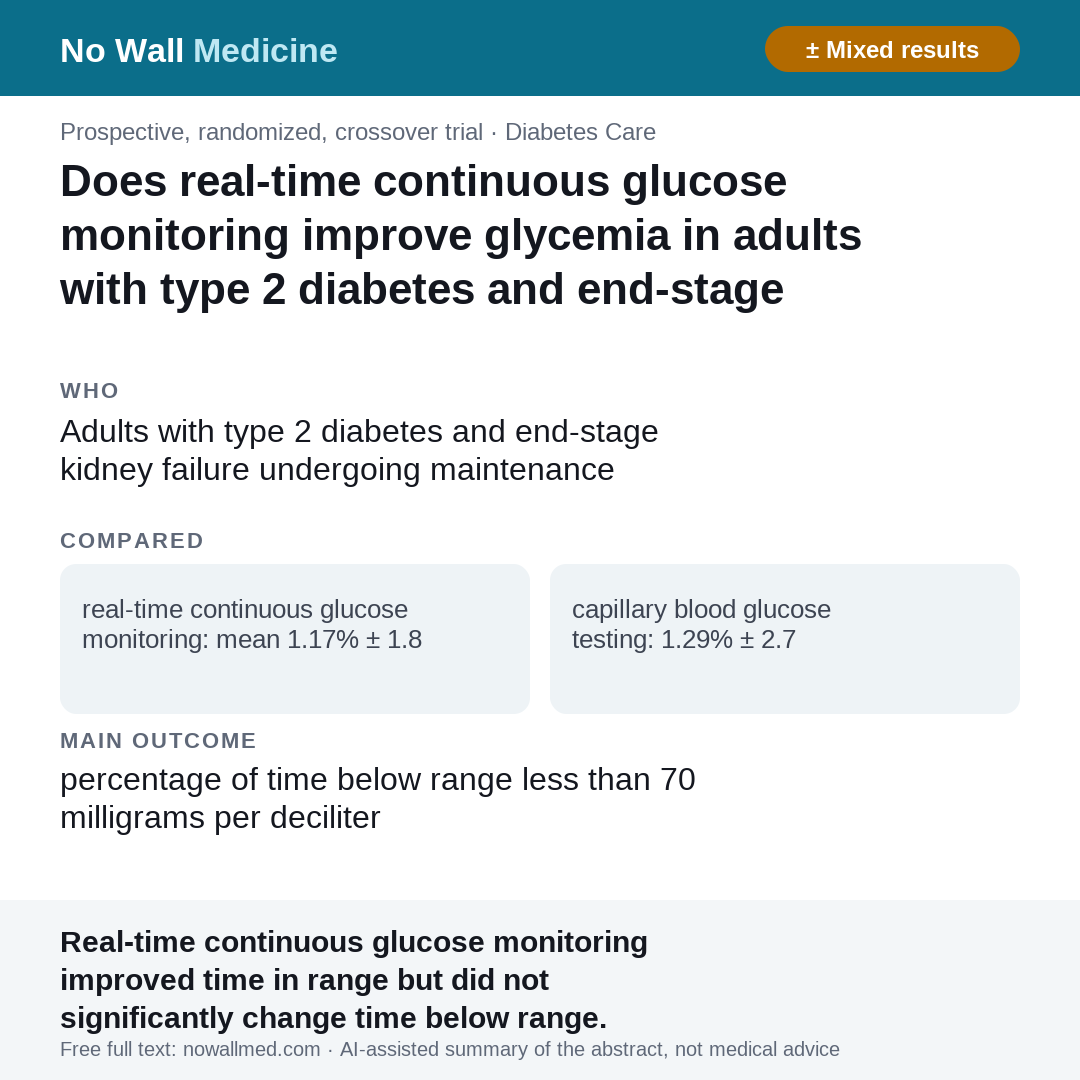
Real-Time Continuous Glucose Monitoring Among People With Type 2 Diabetes and End-Stage Kidney Failure Undergoing Maintenance Hemodialysis: A Randomized Clinical Trial
Prospective, randomized, crossover trialMixed results
Does real-time continuous glucose monitoring improve glycemia in adults with type 2 diabetes and end-stage kidney failure?
Who
Adults with type 2 diabetes and end-stage kidney failure undergoing maintenance hemodialysis
Compared
real-time continuous glucose monitoring: mean 1.17% ± 1.8
capillary blood glucose testing: 1.29% ± 2.7
Main outcome
percentage of time below range less than 70 milligrams per deciliter
Bottom line: Real-time continuous glucose monitoring improved time in range but did not significantly change time below range.
Diabetes Care · 2026-06-27Download image
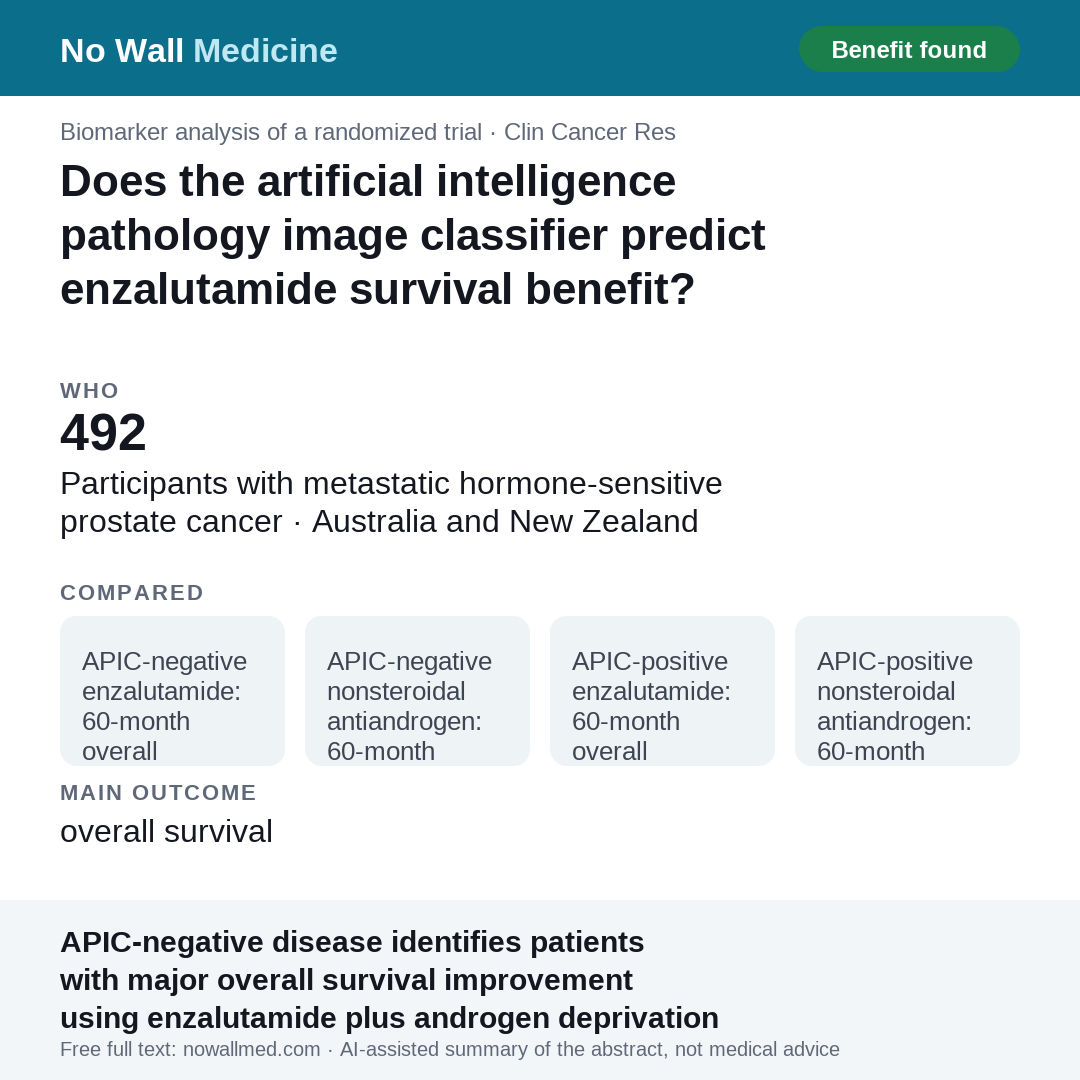
AI-Based Pathology Classifier Predicts Sensitivity to Enzalutamide in Metastatic Hormone-Sensitive Prostate Cancer: A Biomarker Analysis of the ENZAMET Trial
Biomarker analysis of a randomized trialBenefit found
Does the artificial intelligence pathology image classifier predict enzalutamide survival benefit?
Who
492
Participants with metastatic hormone-sensitive prostate cancer · Australia and New Zealand
Compared
APIC-negative enzalutamide: 60-month overall survival 76.5%
APIC-negative nonsteroidal antiandrogen: 60-month overall survival 58.3%
APIC-positive enzalutamide: 60-month overall survival 55.6%
APIC-positive nonsteroidal antiandrogen: 60-month overall survival 58.8%
Main outcome
overall survival
Result: hazard ratio 0.50 (95% CI 0.35-0.73) for APIC-negative
Bottom line: APIC-negative disease identifies patients with major overall survival improvement using enzalutamide plus androgen deprivation therapy.
Clin Cancer Res · 2026-06-27Download image
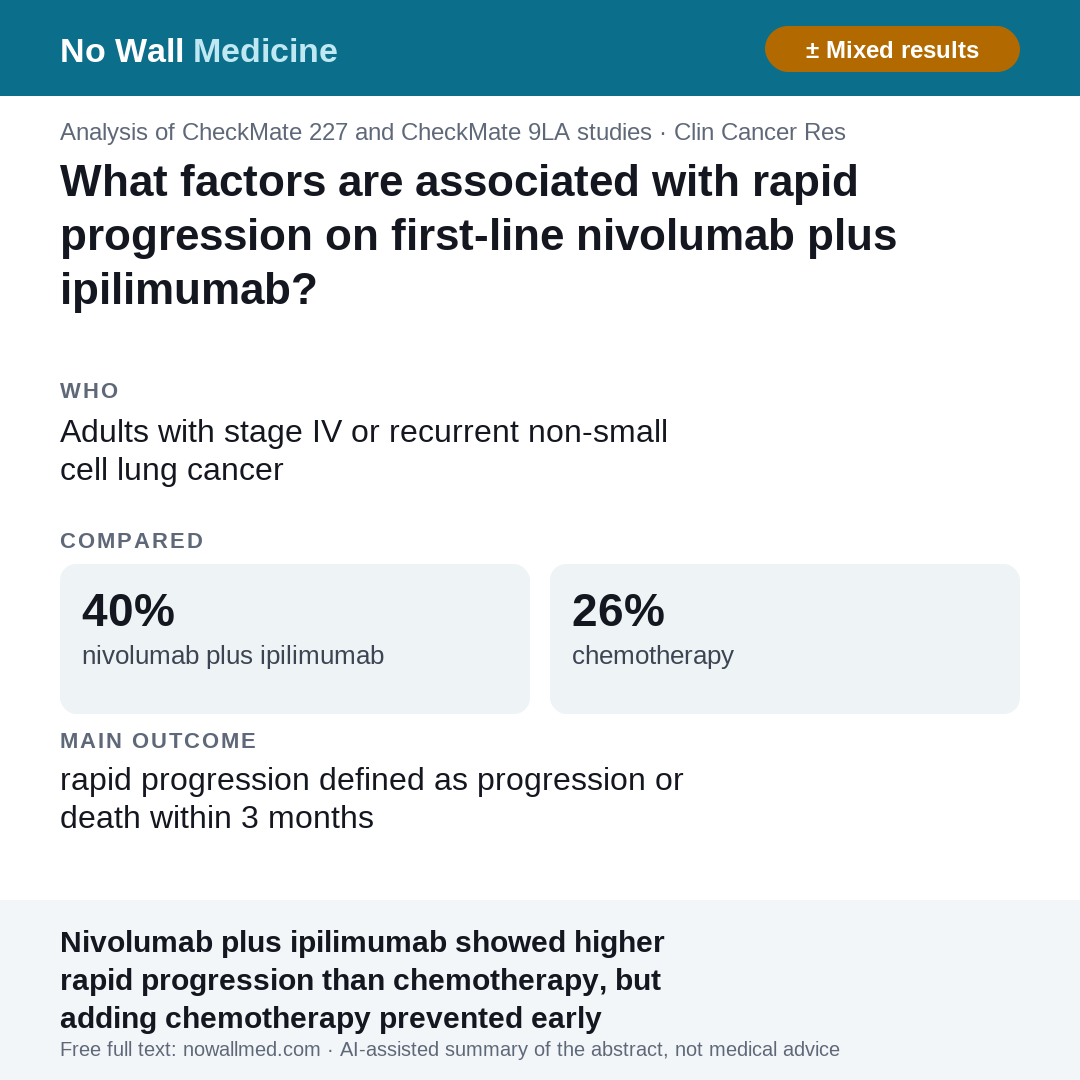
Early Detriment Analysis of First-Line Nivolumab plus Ipilimumab-Based Therapy in Patients with Metastatic Non-Small Cell Lung Cancer
Analysis of CheckMate 227 and CheckMate 9LA studiesMixed results
What factors are associated with rapid progression on first-line nivolumab plus ipilimumab?
Who
Adults with stage IV or recurrent non-small cell lung cancer
Compared
40%nivolumab plus ipilimumab
26%chemotherapy
Main outcome
rapid progression defined as progression or death within 3 months
Bottom line: Nivolumab plus ipilimumab showed higher rapid progression than chemotherapy, but adding chemotherapy prevented early detriment.
Clin Cancer Res · 2026-06-27Download image
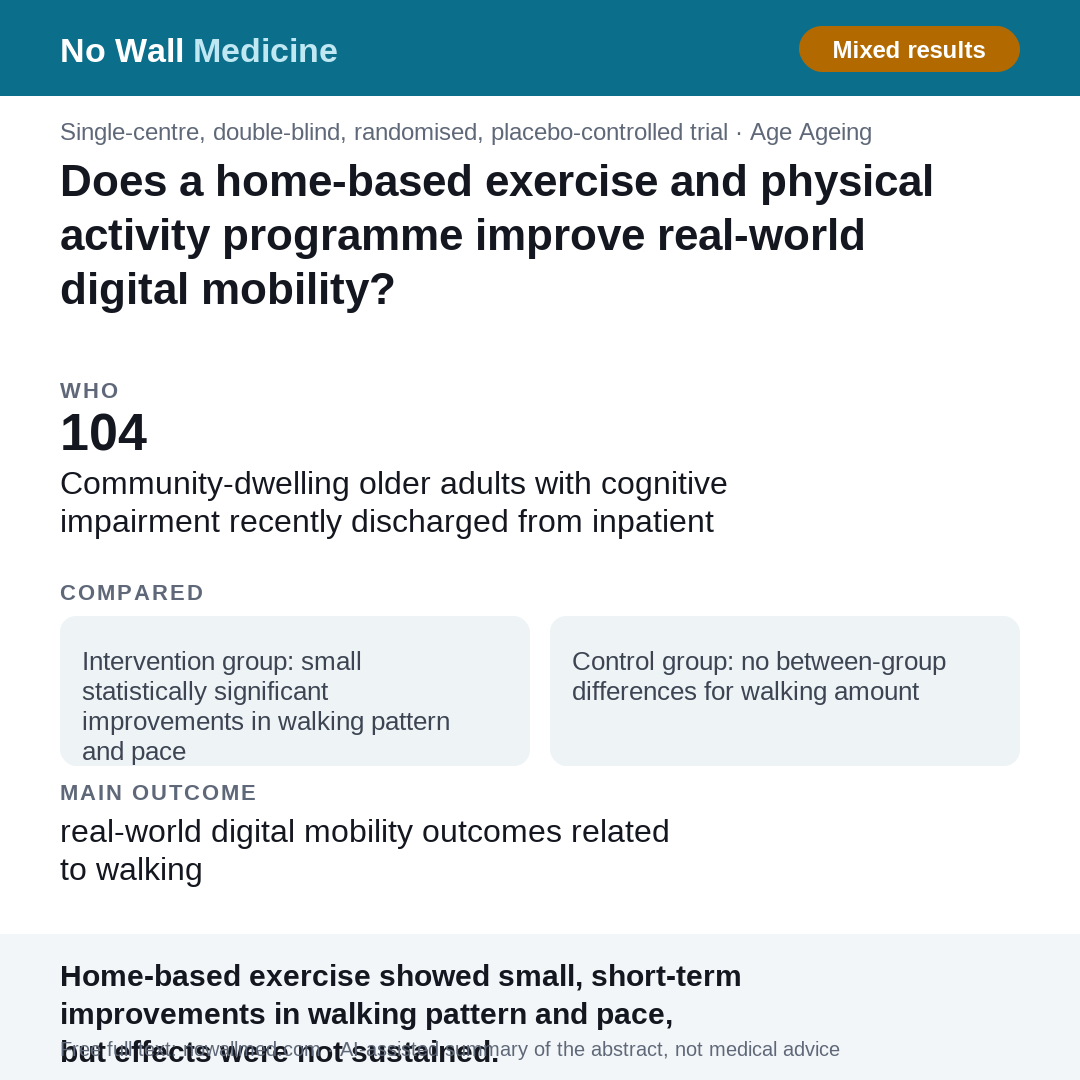
Effects of a home-based exercise and physical activity intervention after inpatient rehabilitation on real-world mobility in older adults with cognitive impairment: a secondary analysis of a randomised controlled trial
Single-centre, double-blind, randomised, placebo-controlled trialMixed results
Does a home-based exercise and physical activity programme improve real-world digital mobility?
Who
104
Community-dwelling older adults with cognitive impairment recently discharged from inpatient rehabilitation · Community
Compared
Intervention group: small statistically significant improvements in walking pattern and pace
Control group: no between-group differences for walking amount
Main outcome
real-world digital mobility outcomes related to walking
Bottom line: Home-based exercise showed small, short-term improvements in walking pattern and pace, but effects were not sustained.
Age Ageing · 2026-06-27Download image
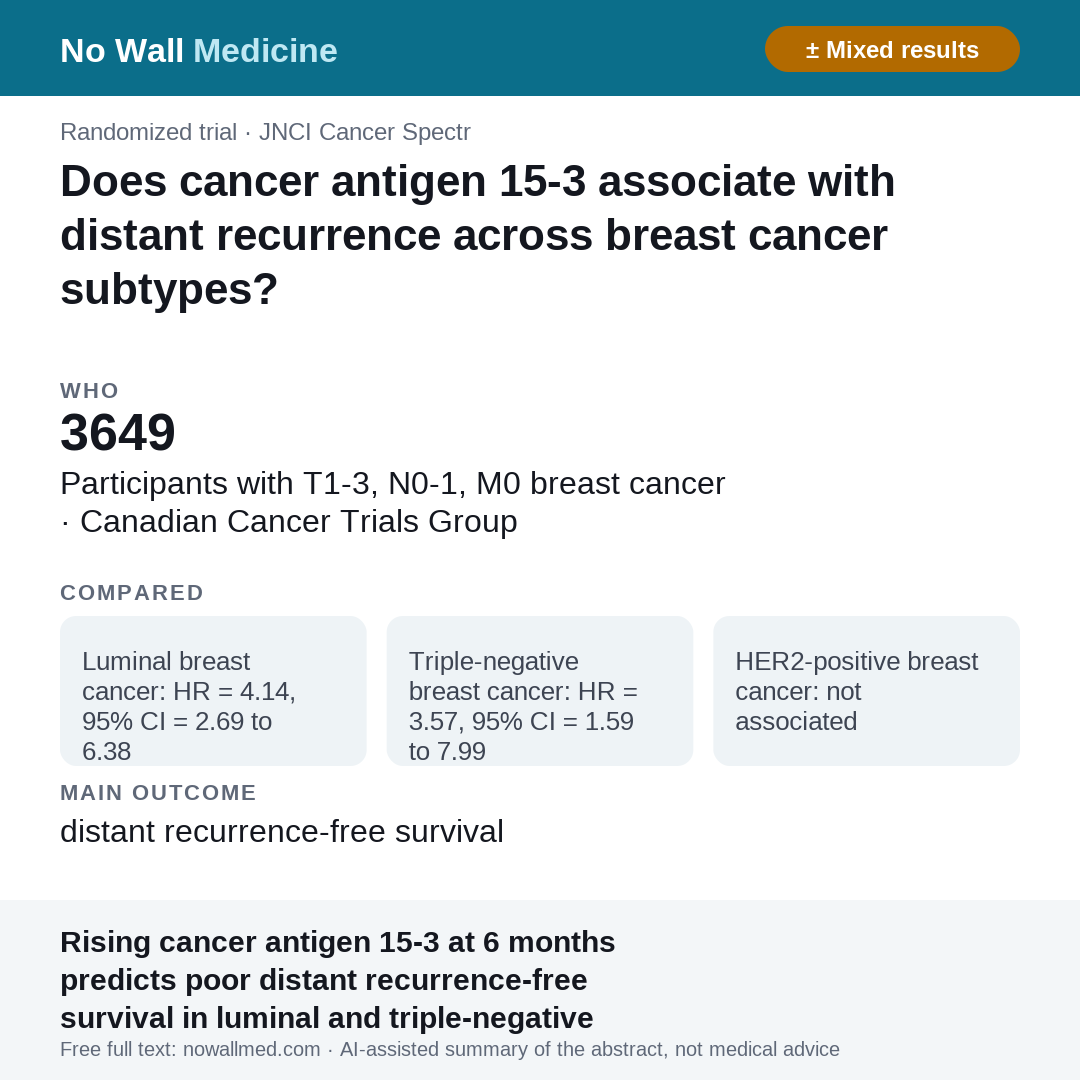
Association of cancer antigen 15-3 with distant recurrence in immunohistochemically defined breast cancer subtypes in Canadian Cancer Trials Group MA.32
Randomized trialMixed results
Does cancer antigen 15-3 associate with distant recurrence across breast cancer subtypes?
Who
3649
Participants with T1-3, N0-1, M0 breast cancer · Canadian Cancer Trials Group
Compared
Luminal breast cancer: HR = 4.14, 95% CI = 2.69 to 6.38
Triple-negative breast cancer: HR = 3.57, 95% CI = 1.59 to 7.99
HER2-positive breast cancer: not associated
Main outcome
distant recurrence-free survival
Result: HR = 4.14 (95% CI 2.69 to 6.38) for luminal; HR = 3.57 (95% CI 1.59 to 7.99) for triple-negative
Bottom line: Rising cancer antigen 15-3 at 6 months predicts poor distant recurrence-free survival in luminal and triple-negative breast cancer.
JNCI Cancer Spectr · 2026-06-27Download image
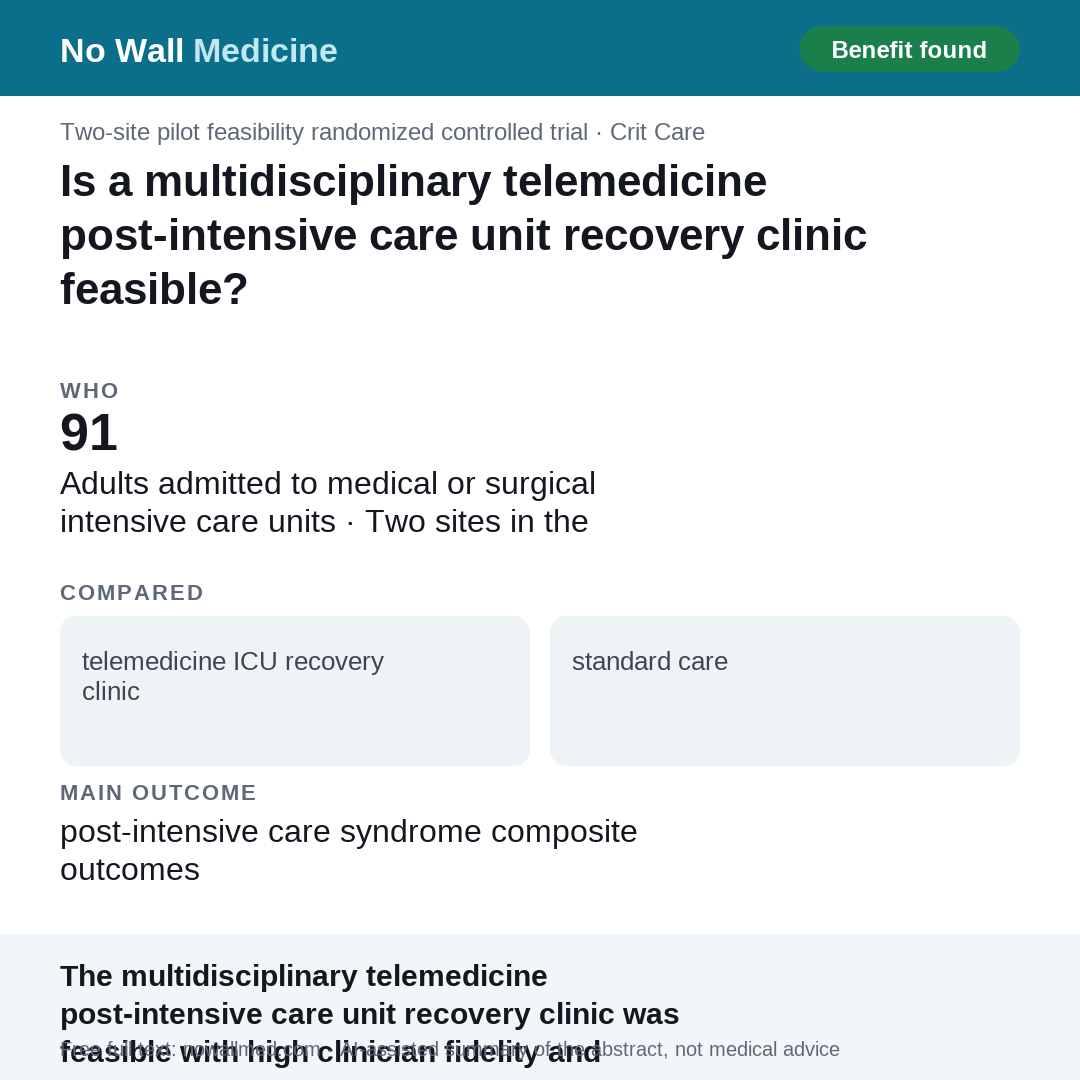
Multidisciplinary telemedicine intervention for ICU recovery: the TelePORT feasibility randomized trial
Two-site pilot feasibility randomized controlled trialBenefit found
Is a multidisciplinary telemedicine post-intensive care unit recovery clinic feasible?
Who
91
Adults admitted to medical or surgical intensive care units · Two sites in the southeastern United States
Compared
telemedicine ICU recovery clinic
standard care
Main outcome
post-intensive care syndrome composite outcomes
Bottom line: The multidisciplinary telemedicine post-intensive care unit recovery clinic was feasible with high clinician fidelity and favorable participant ratings.
Crit Care · 2026-06-27Download image
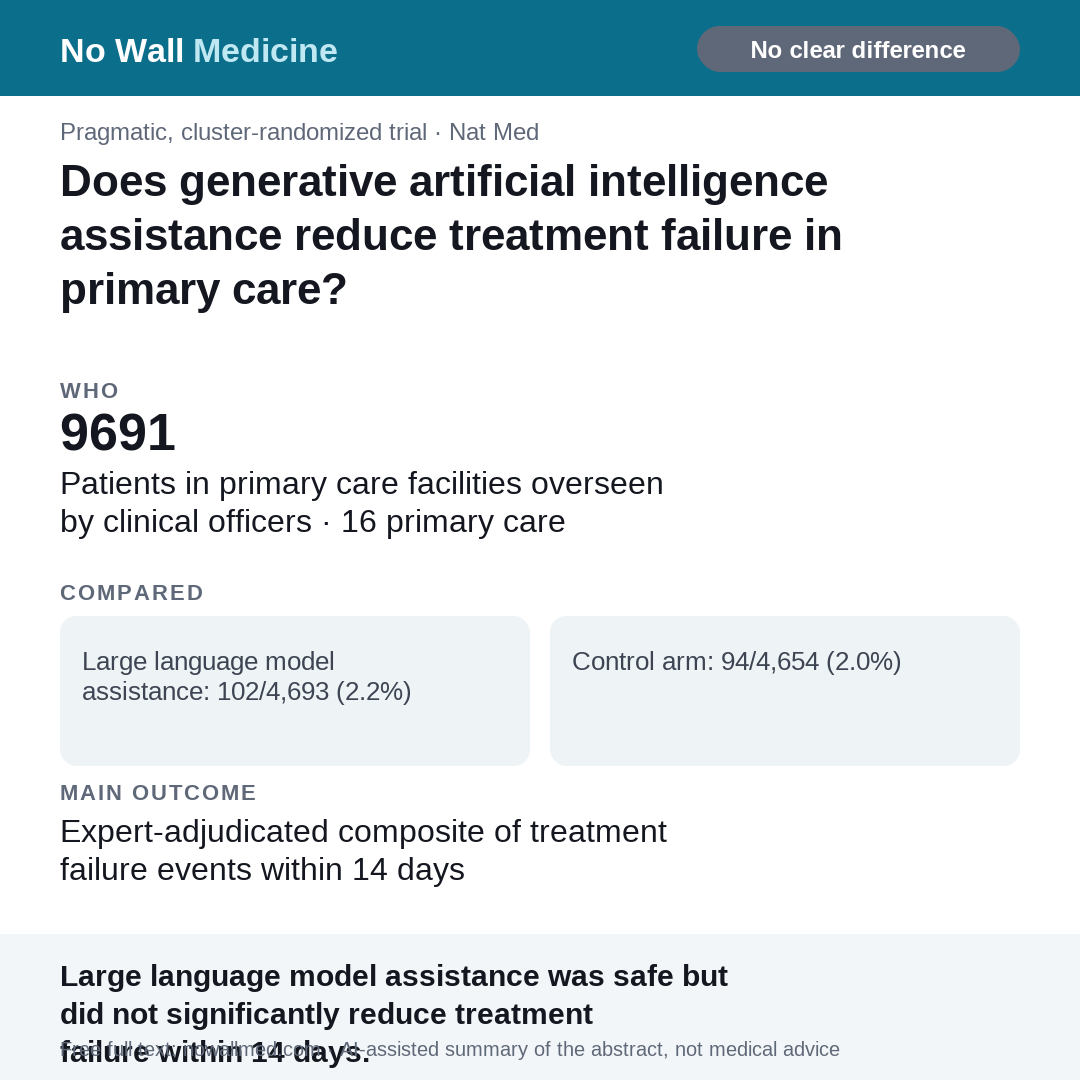
Generative AI-enabled clinical decision support system in primary care: a pragmatic, cluster-randomized trial
Pragmatic, cluster-randomized trialNo clear difference
Does generative artificial intelligence assistance reduce treatment failure in primary care?
Who
9691
Patients in primary care facilities overseen by clinical officers · 16 primary care facilities in Kenya
Compared
Large language model assistance: 102/4,693 (2.2%)
Control arm: 94/4,654 (2.0%)
Main outcome
Expert-adjudicated composite of treatment failure events within 14 days
Result: adjusted odds ratio 0.77 (95% confidence interval 0.55 to 1.08)
Bottom line: Large language model assistance was safe but did not significantly reduce treatment failure within 14 days.
Nat Med · 2026-06-26Download image
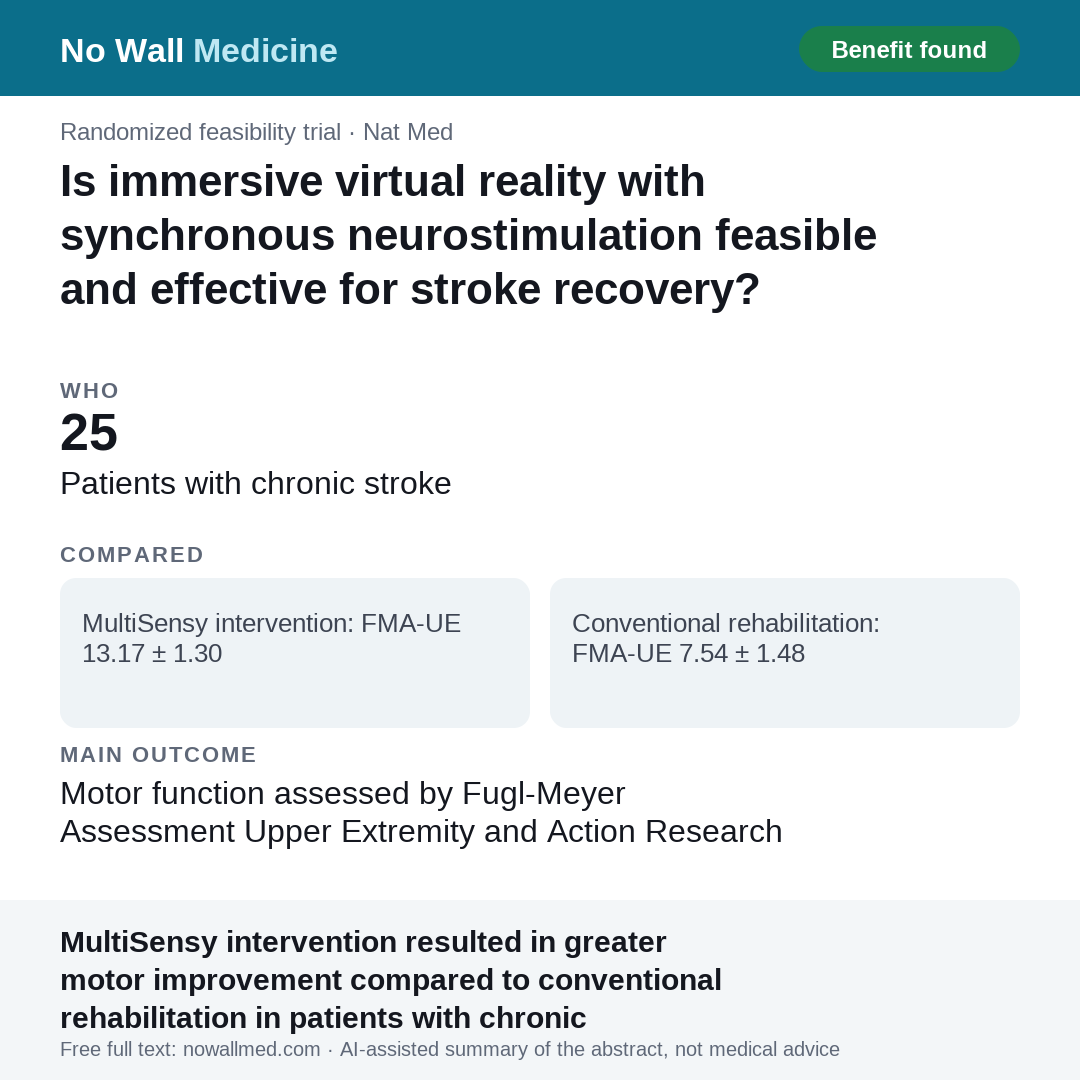
Immersive virtual reality with synchronous neurostimulation for upper-limb recovery after stroke: a randomized feasibility trial
Randomized feasibility trialBenefit found
Is immersive virtual reality with synchronous neurostimulation feasible and effective for stroke recovery?
Who
25
Patients with chronic stroke
Compared
MultiSensy intervention: FMA-UE 13.17 ± 1.30
Conventional rehabilitation: FMA-UE 7.54 ± 1.48
Main outcome
Motor function assessed by Fugl-Meyer Assessment Upper Extremity and Action Research Arm Test
Bottom line: MultiSensy intervention resulted in greater motor improvement compared to conventional rehabilitation in patients with chronic stroke.
Limitation: The study was a small feasibility trial with a limited sample size.
Nat Med · 2026-06-26Download image
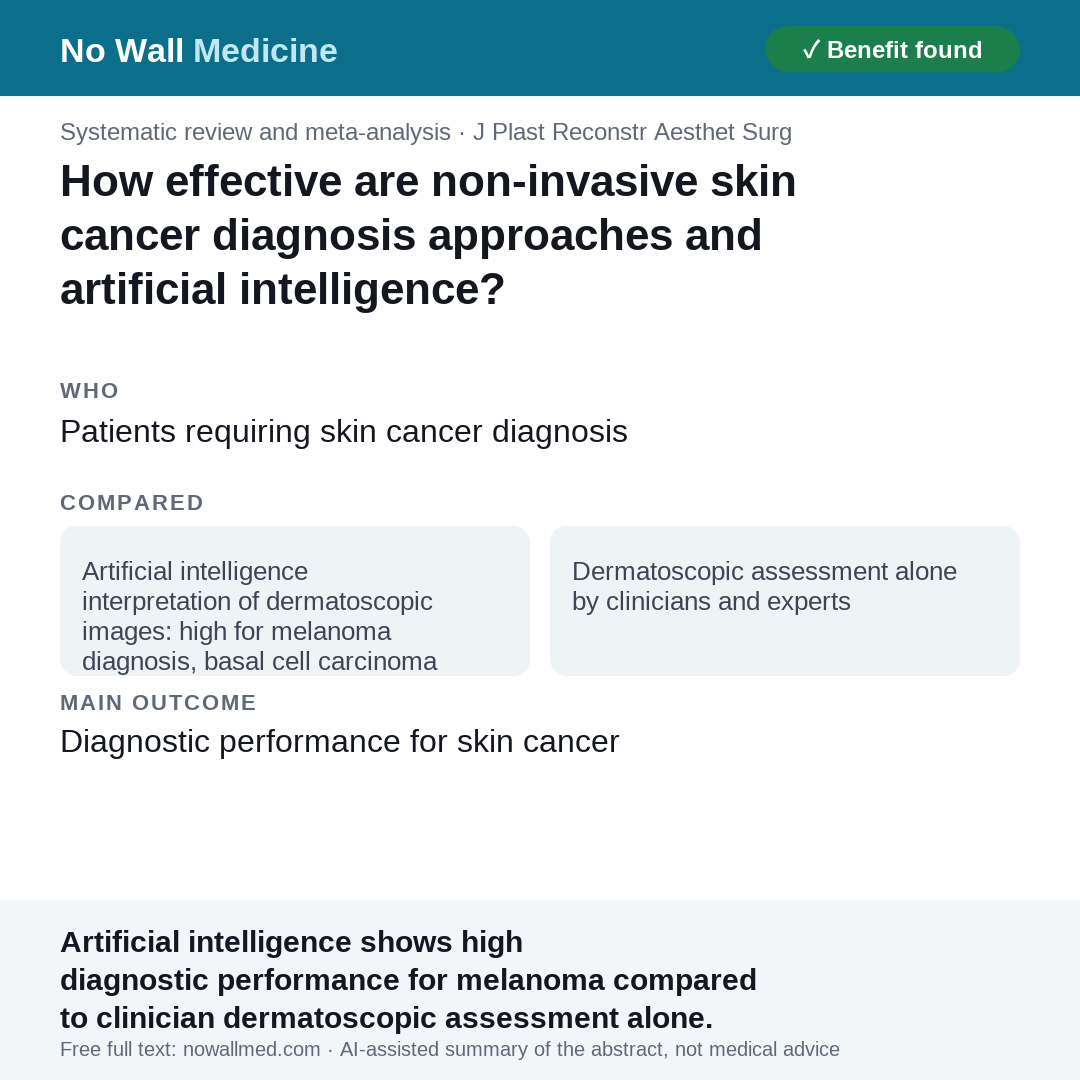
Efficacy of current approaches to non-invasive diagnosis of skin cancer and the potential impact of artificial intelligence: A systematic review and meta-analysis
Systematic review and meta-analysisBenefit found
How effective are non-invasive skin cancer diagnosis approaches and artificial intelligence?
Who
Patients requiring skin cancer diagnosis
Compared
Artificial intelligence interpretation of dermatoscopic images: high for melanoma diagnosis, basal cell carcinoma or malignancy
Dermatoscopic assessment alone by clinicians and experts
Main outcome
Diagnostic performance for skin cancer
Bottom line: Artificial intelligence shows high diagnostic performance for melanoma compared to clinician dermatoscopic assessment alone.
J Plast Reconstr Aesthet Surg · 2026-06-26Download image
A systematic review of ultra-processed food subtypes and risk of type 2 diabetes, combined with a cohort analysis, question the utility of broad food classifications for public health policy
Systematic review and cohort analysisMixed results
Do ultra-processed food subtypes have different associations with type 2 diabetes risk?
Who
635332
Adult men and women without type 2 diabetes · Danish Diet, Cancer and Health cohort
Compared
Ready-to-eat dishes, meat products, and sweetened beverages: positively associated
Dairy products, sweets, snacks and confectionaries: generally inversely associated
The terrible five (post-hoc analysis): positive association
Main outcome
Risk of type 2 diabetes
Bottom line: Different ultra-processed food subtypes show varying associations with type 2 diabetes risk, potentially masking individual effects in broad categories.
Limitation: Overall risk of bias was considered moderate to high in all included studies.
BMC Med · 2026-06-26Download image

40 Hz biparietal transcranial alternating current stimulation for Alzheimer's disease: a prospective study
Randomized prospective studyBenefit found
Is biparietal 40 Hz transcranial alternating current stimulation effective for Alzheimer's disease?
Who
Patients with mild Alzheimer's disease · First Hospital of Hebei Medical University
Compared
tACS group: improvements in global cognition, memory, language, attention, and executive functions
Sham group: clinical efficacies were not obvious
Main outcome
global cognition, memory, language, attention, executive functions, and neuropsychiatric inventory scores
Bottom line: Biparietal 40 Hz transcranial alternating current stimulation is a potentially safe and effective treatment for mild Alzheimer's disease.
BMC Med · 2026-06-26Download image

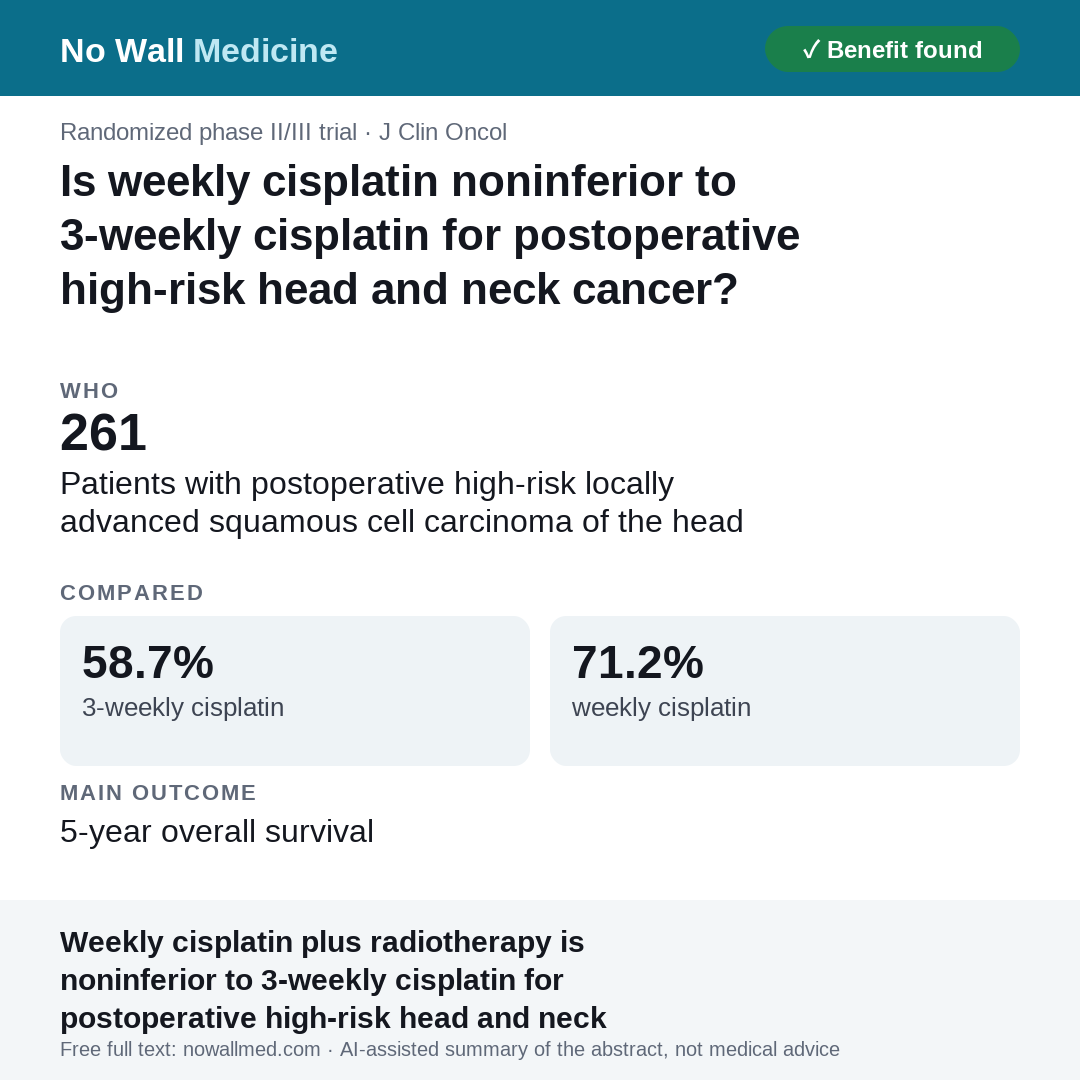
Long-Term Follow-Up of JCOG1008, a Randomized Phase II/III Trial of Chemoradiotherapy Comparing 3-Weekly Cisplatin With Weekly Cisplatin in Postoperative Head and Neck Cancer
Randomized phase II/III trialBenefit found
Is weekly cisplatin noninferior to 3-weekly cisplatin for postoperative high-risk head and neck cancer?
Who
261
Patients with postoperative high-risk locally advanced squamous cell carcinoma of the head and neck
Compared
58.7%3-weekly cisplatin
71.2%weekly cisplatin
Main outcome
5-year overall survival
Result: hazard ratio 0.76 (95% CI 0.52 to 1.12 [<1.32])
Bottom line: Weekly cisplatin plus radiotherapy is noninferior to 3-weekly cisplatin for postoperative high-risk head and neck cancer.
J Clin Oncol · 2026-06-26Download image