Visual abstracts
New randomized trials and meta-analyses from leading journals at a glance: who was studied, what was compared, and what was found. Every paper is free to read in full.
All specialtiesCardiology 4877Oncology 4138Gastroenterology & Hepatology 1942Infectious Disease 3837Neurology 1905Psychiatry & Mental Health 2273Pulmonology 2143Critical Care 1365Endocrinology & Diabetes 2580Pediatrics 2980Surgery 2559Orthopedics & Sports Medicine 931Neurosurgery 537Cardiothoracic & Vascular Surgery 674Plastic & Reconstructive Surgery 591Nephrology 1133Rheumatology 823Hematology 1109Dermatology 621Ophthalmology 543Obstetrics & Gynecology 1686Public & Global Health 1058Radiology & Imaging 648Anesthesiology 986Urology 764ENT (Otolaryngology) 503Emergency Medicine 511Allergy & Immunology 313Geriatrics 981Family Medicine & Primary Care 562Medical Genetics & Genomics 676Pathology & Laboratory Medicine 159Physical Medicine & Rehabilitation 757Palliative Care 444Nutrition 1588Digital Health & AI 2201General Medicine 321
Cognitive aids used in simulated resuscitation: A systematic review
Systematic reviewMixed results
Does using cognitive aids during resuscitation improve cardiopulmonary resuscitation quality and performance?
Who
29
Healthcare professionals and lay providers in simulated resuscitation · Simulation settings
Compared
Healthcare professionals: showed benefits
Lay providers: reported undesirable effects
Main outcome
Cardiopulmonary resuscitation quality and performance
Bottom line: Cognitive aids may benefit healthcare professionals but may have undesirable effects for lay providers during simulated resuscitation.
Limitation: Limited to indirect evidence from simulation studies only with significant methodological heterogeneity.
Resusc Plus · 2024-06-01Download image

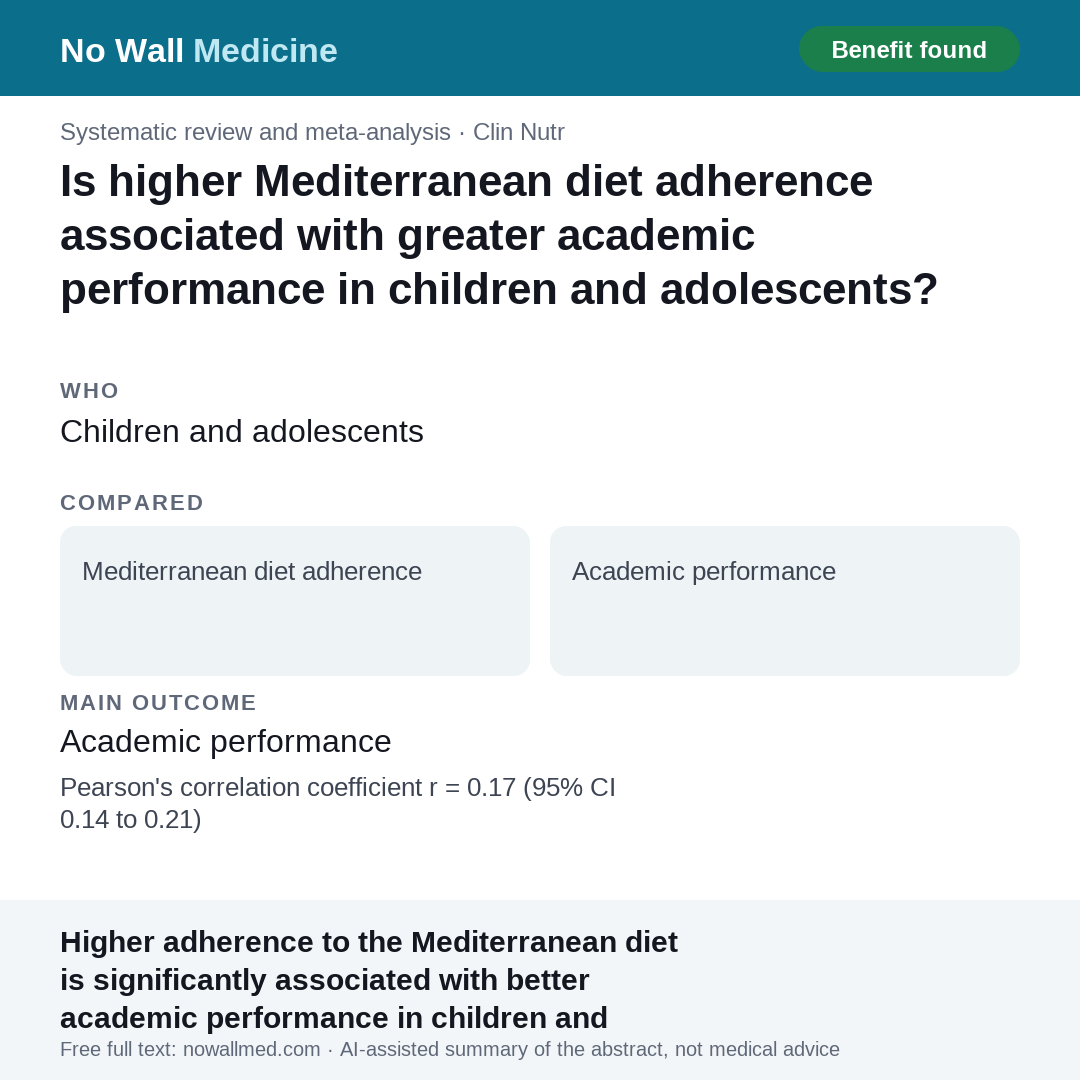
Is higher adherence to the mediterranean diet associated with greater academic performance in children and adolescents? A systematic review and meta-analysis
Systematic review and meta-analysisBenefit found
Is higher Mediterranean diet adherence associated with greater academic performance in children and adolescents?
Who
Children and adolescents
Compared
Mediterranean diet adherence
Academic performance
Main outcome
Academic performance
Result: Pearson's correlation coefficient r = 0.17 (95% CI 0.14 to 0.21)
Bottom line: Higher adherence to the Mediterranean diet is significantly associated with better academic performance in children and adolescents.
Clin Nutr · 2024-05-31Download image
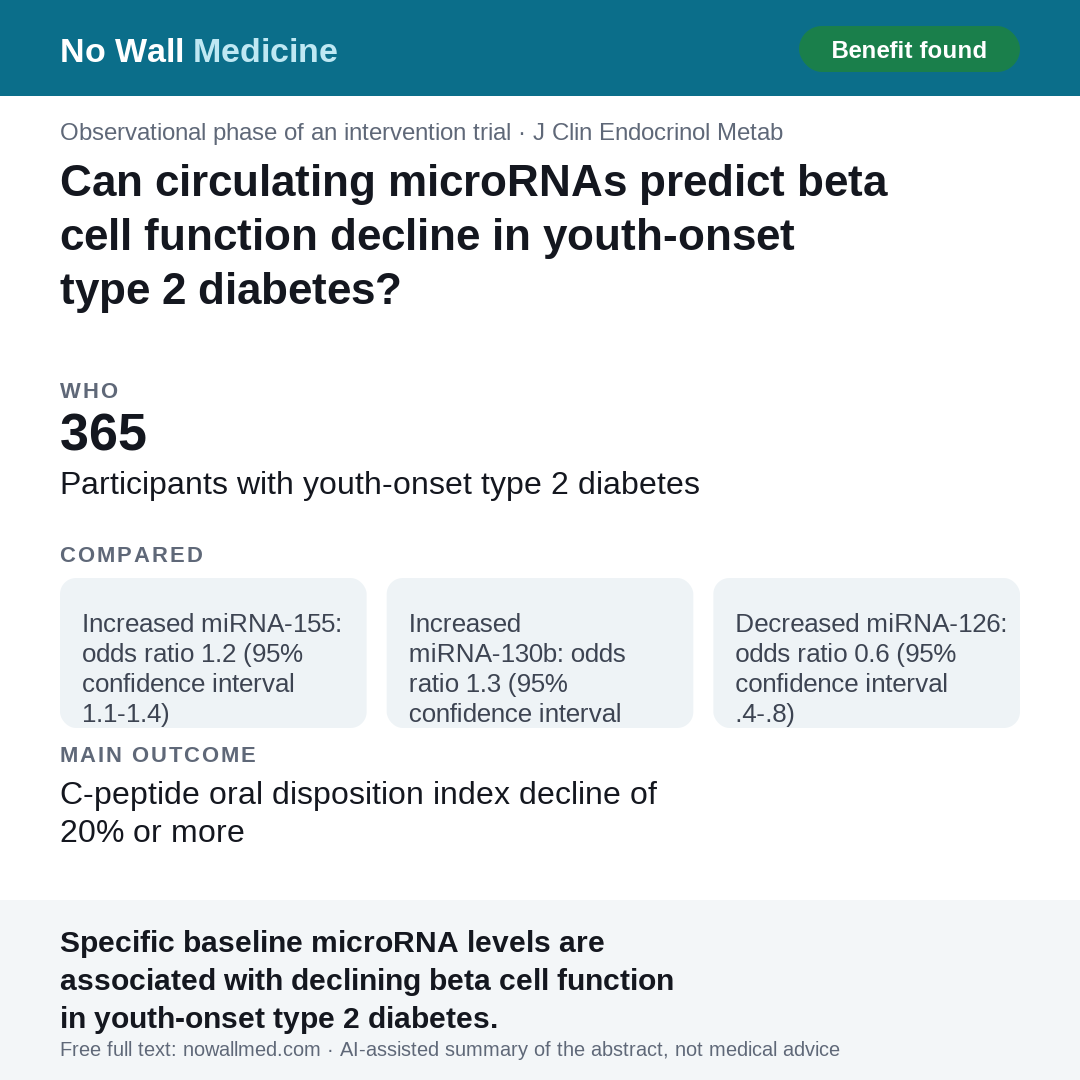
Circulating MicroRNAs as Predictors of Beta Cell Function in Youth-onset Type 2 Diabetes: The TODAY Study
Observational phase of an intervention trialBenefit found
Can circulating microRNAs predict beta cell function decline in youth-onset type 2 diabetes?
Who
365
Participants with youth-onset type 2 diabetes
Compared
Increased miRNA-155: odds ratio 1.2 (95% confidence interval 1.1-1.4)
Increased miRNA-130b: odds ratio 1.3 (95% confidence interval 1.0-1.7)
Decreased miRNA-126: odds ratio 0.6 (95% confidence interval .4-.8)
Main outcome
C-peptide oral disposition index decline of 20% or more
Result: odds ratio 1.2 (95% CI 1.1-1.4) for miRNA-155
Bottom line: Specific baseline microRNA levels are associated with declining beta cell function in youth-onset type 2 diabetes.
J Clin Endocrinol Metab · 2024-05-30Download image
Exposure-Response and Subgroup Analyses to Support Body Weight-Based Dosing of Brentuximab Vedotin in Children and Young Adults with Newly Diagnosed High-risk Classical Hodgkin Lymphoma
Phase III randomized trialNo clear difference
Does brentuximab vedotin dosage require adjustment based on age or body weight?
Who
296
Pediatric and young adult patients with high-risk classical Hodgkin lymphoma
Compared
Ages 2 to <12 years: 96.2% 3-year event-free survival
Ages 12 to <18 years: 92.0% 3-year event-free survival
Main outcome
3-year event-free survival
Bottom line: No further adjustments based on age or body weight are required for brentuximab vedotin dosage in children.
Limitation: Exposure-response analyses were limited to the pharmacokinetic subpopulation of 24 patients.
Clin Cancer Res · 2024-05-29Download image

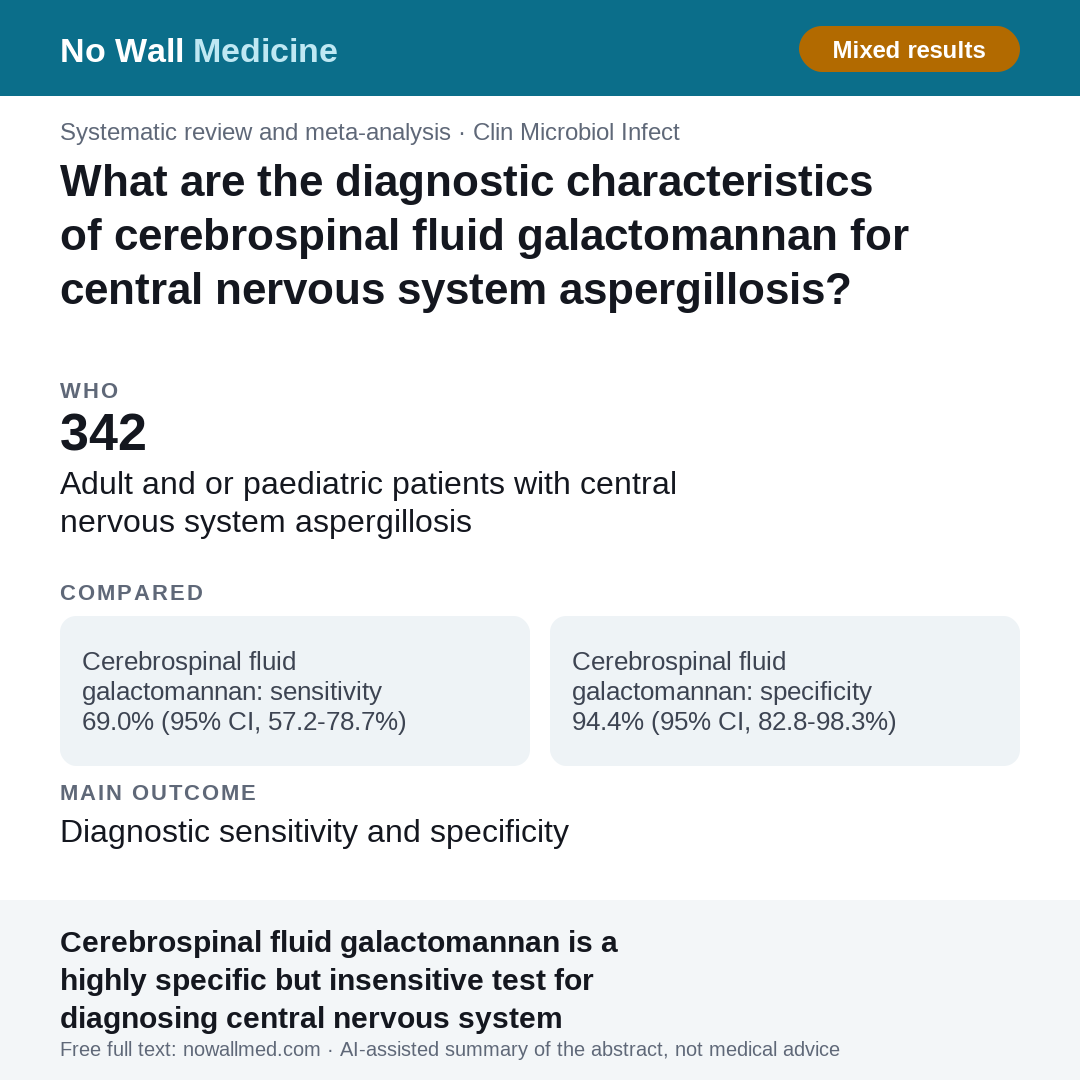
Cerebrospinal fluid galactomannan detection for the diagnosis of central nervous system aspergillosis: a diagnostic test accuracy systematic review and meta-analysis
Systematic review and meta-analysisMixed results
What are the diagnostic characteristics of cerebrospinal fluid galactomannan for central nervous system aspergillosis?
Who
342
Adult and or paediatric patients with central nervous system aspergillosis
Compared
Cerebrospinal fluid galactomannan: sensitivity 69.0% (95% CI, 57.2-78.7%)
Cerebrospinal fluid galactomannan: specificity 94.4% (95% CI, 82.8-98.3%)
Main outcome
Diagnostic sensitivity and specificity
Bottom line: Cerebrospinal fluid galactomannan is a highly specific but insensitive test for diagnosing central nervous system aspergillosis.
Limitation: Few included studies, no prospective studies, and a high risk of bias.
Clin Microbiol Infect · 2024-05-27Download image
Feasibility, safety, and efficacy of dietary or lifestyle interventions for hypothalamic obesity: A systematic review
Systematic reviewMixed results
Are dietary or lifestyle interventions feasible, safe, and effective for hypothalamic obesity?
Who
118
Children and adults with hypothalamic overweight or obesity
Compared
Dietary intervention: effective in terms of weight stabilization or decrease
Combined dietary and lifestyle intervention: decreased BMI, although BMI returned to baseline values on long-term
Main outcome
feasibility, safety, or efficacy of dietary or lifestyle interventions
Bottom line: Hypocaloric or restrictive macronutrient diets appear effective for weight stabilization, but lifestyle interventions only show short-term BMI decreases.
Limitation: High risk of bias, small cohorts without control groups, and limited generalizability.
Clin Nutr · 2024-05-27Download image

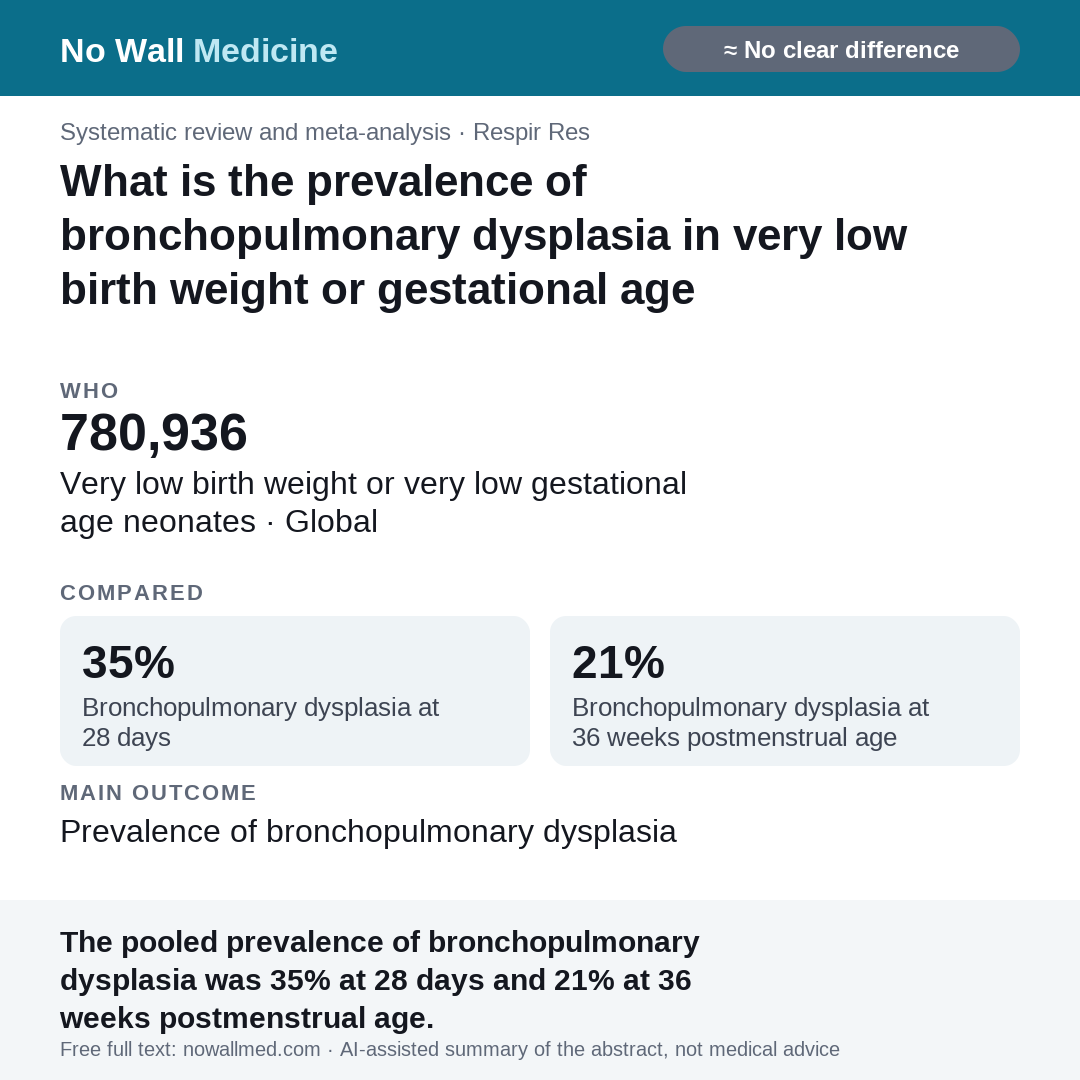
Rates of bronchopulmonary dysplasia in very low birth weight neonates: a systematic review and meta-analysis
Systematic review and meta-analysisNo clear difference
What is the prevalence of bronchopulmonary dysplasia in very low birth weight or gestational age neonates?
Who
780,936
Very low birth weight or very low gestational age neonates · Global
Compared
35%Bronchopulmonary dysplasia at 28 days (95% CI, 28-42%)
21%Bronchopulmonary dysplasia at 36 weeks postmenstrual age (95% CI, 19-24%)
Main outcome
Prevalence of bronchopulmonary dysplasia
Bottom line: The pooled prevalence of bronchopulmonary dysplasia was 35% at 28 days and 21% at 36 weeks postmenstrual age.
Respir Res · 2024-05-24Download image
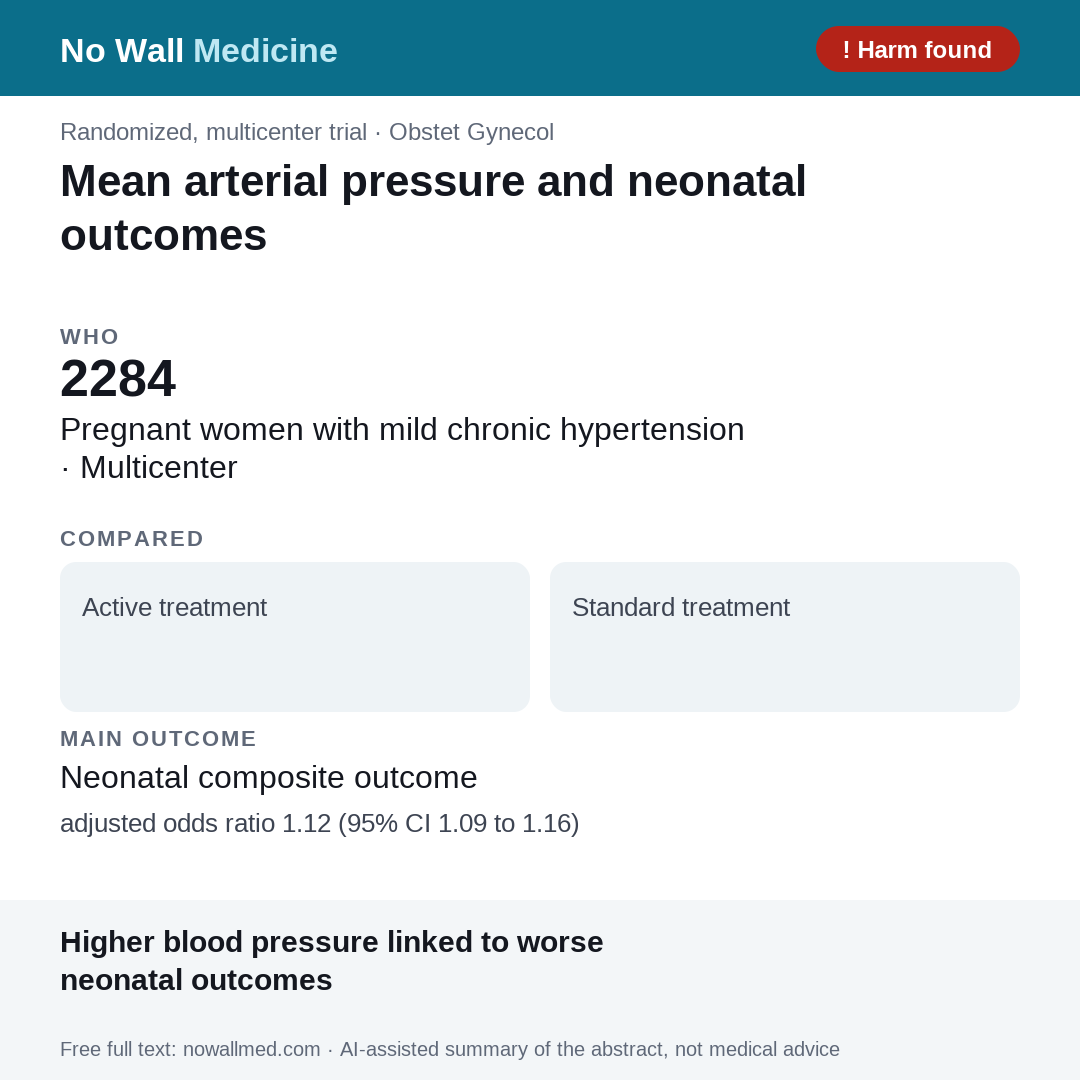
Mean Arterial Pressure and Neonatal Outcomes in Pregnancies Complicated by Mild Chronic Hypertension
Randomized, multicenter trialHarm found
Mean arterial pressure and neonatal outcomes
Who
2284
Pregnant women with mild chronic hypertension · Multicenter
Compared
Active treatment
Standard treatment
Main outcome
Neonatal composite outcome
Result: adjusted odds ratio 1.12 (95% CI 1.09 to 1.16)
Bottom line: Higher blood pressure linked to worse neonatal outcomes
Obstet Gynecol · 2024-05-23Download image
Suprazygomatic Maxillary Nerve Blocks and Opioid Requirements in Pediatric Adenotonsillectomy: A Randomized Clinical Trial
Randomized, blinded, prospective trialBenefit found
Do suprazygomatic maxillary nerve blocks reduce pain and opioid use after pediatric adenotonsillectomy?
Who
53
Pediatric patients aged 2 to 14 years · Single-center tertiary pediatric hospital
Compared
Suprazygomatic maxillary nerve block group: 0.07 (0.11) mg/kg morphine equivalent
Control group: 0.15 (0.14) mg/kg morphine equivalent
Main outcome
Opioid consumption, FLACC scores, and opioid-free postanesthesia care unit stay
Result: mean difference 0.08; 95% CI, 0.01-0.15
Bottom line: Suprazygomatic maxillary nerve blocks reduce postoperative opioid consumption and pain scores in pediatric intracapsular adenotonsillectomy with low complication risk.
JAMA Otolaryngol · 2024-05-23Download image

A systematic review and meta-analysis of nutritional and dietary interventions in randomized controlled trials for skin symptoms in children with atopic dermatitis and without food allergy: An EAACI task force report
Systematic review and meta-analysis of 27 randomized controlled trialsBenefit found
Do dietary interventions reduce skin symptoms in children with atopic dermatitis without food allergies?
Who
Children with atopic dermatitis without food allergies
Compared
Probiotics or probiotics combined with prebiotics: significant reduction in SCORAD scores
Other dietary interventions
Main outcome
SCORAD scores for atopic dermatitis clinical expression
Bottom line: Probiotics or probiotics combined with prebiotics significantly reduce skin symptom scores in children without food allergies.
Limitation: Evidence for other dietary interventions remains limited.
Allergy · 2024-05-23Download image

Role of nebulised magnesium sulfate in treating acute asthma in children: a systematic review and meta-analysis
Meta-analysis of 10 randomized controlled trialsNo clear difference
Does nebulised magnesium sulfate improve outcomes in children with acute asthma?
Who
2301
Children presenting with acute asthma exacerbation
Compared
Nebulised magnesium sulfate
Placebo
Main outcome
Composite Asthma Severity Score and peak expiratory flow rate
Result: standardised mean difference -0.09 (95% CI -0.2 to +0.02)
Bottom line: Nebulised magnesium sulfate does not reduce asthma severity or hospitalisation needs, despite slightly better lung functions.
Limitation: Low-certainty evidence
BMJ Paediatr Open · 2024-05-23Download image

Swallowed topical steroid therapy for eosinophilic oesophagitis in children: practical, evidence-based guidance by the BSPGHAN Eosinophilic Oesophagitis Working Group
Systematic literature review and consensus guidanceBenefit found
What is the evidence-based guidance for swallowed topical steroid therapy in paediatric eosinophilic oesophagitis?
Who
Children with paediatric eosinophilic oesophagitis · United Kingdom
Compared
Oral viscous budesonide
Orodispersible budesonide
Main outcome
Histological improvement and maintenance of remission
Bottom line: Swallowed topical steroids are effective for induction and maintenance therapy to improve histology in paediatric eosinophilic oesophagitis.
BMJ Paediatr Open · 2024-05-23Download image

Changes in the Term Neonatal Electroencephalogram with General Anesthesia: A Systematic Review with Narrative Synthesis
Systematic review with narrative synthesisMixed results
How does general anesthesia affect electroencephalography in term neonates?
Who
140
Term neonates (37 to 44 weeks postmenstrual age)
Compared
General anesthesia: 94 of 119 neonates
Hypothermia: 23 of 23 neonates
Main outcome
Occurrence of discontinuity in electroencephalography
Bottom line: Increasing sevoflurane concentration and decreasing temperature are associated with increasing electroencephalography discontinuity in term neonates.
Limitation: Data were limited and study quality was very low.
Anesthesiology · 2024-05-22Download image

Efficacy and safety of biologic drugs in Still's disease: a systematic review and network meta-analysis of randomized controlled trials
Systematic review and network meta-analysisBenefit found
Are biologic drugs effective and safe for Still's disease management?
Who
430
Patients with systemic juvenile idiopathic arthritis or adult-onset Still's disease
Compared
Biologic drugs: greater odds of ACR50 response
Placebo
Main outcome
Achievement of ACR50 response and serious adverse events
Bottom line: Biologic drugs are effective in achieving ACR50 response and have a low serious adverse event profile.
Rheumatology · 2024-05-22Download image

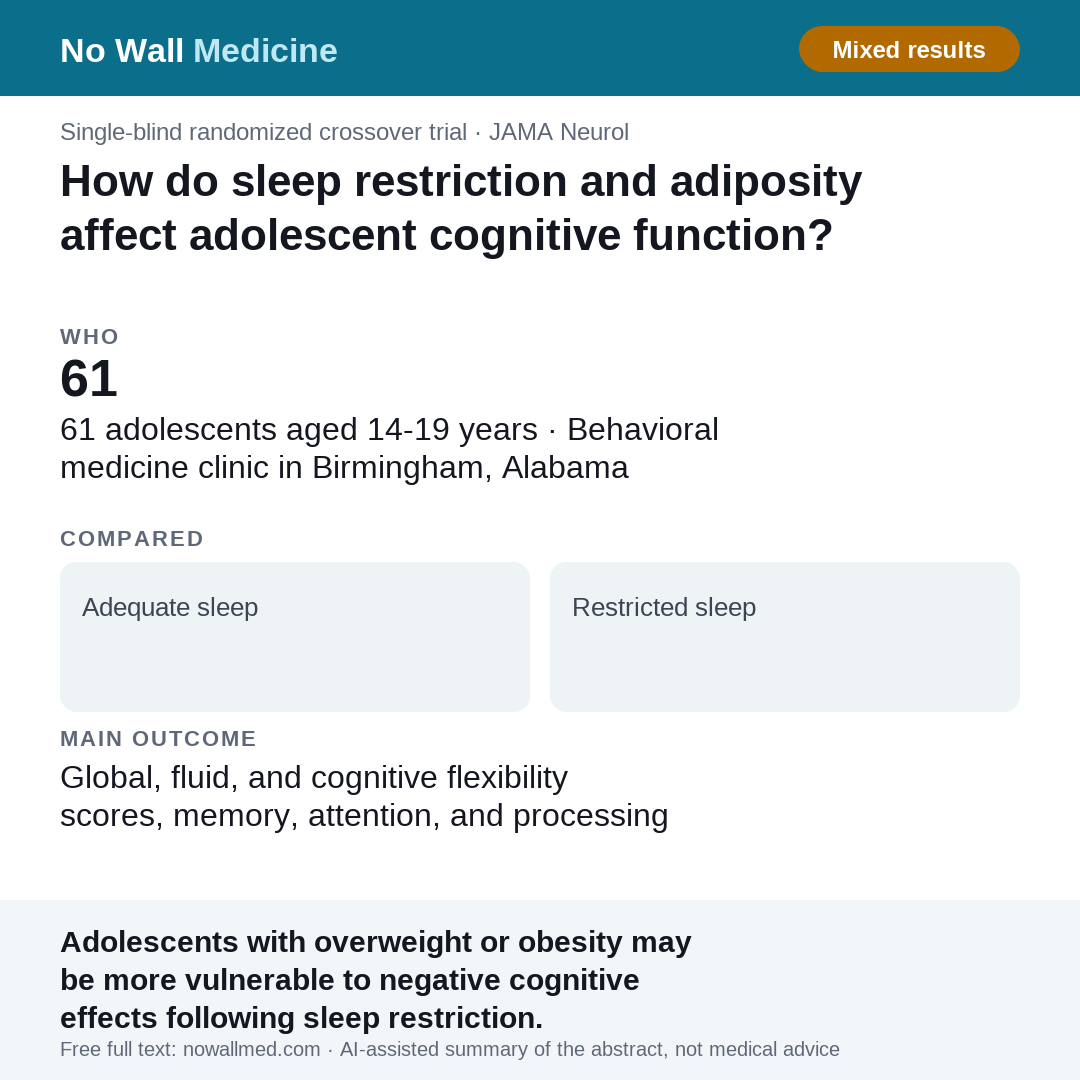
Effect of Sleep Restriction on Adolescent Cognition by Adiposity: A Randomized Crossover Trial
Single-blind randomized crossover trialMixed results
How do sleep restriction and adiposity affect adolescent cognitive function?
Who
61
61 adolescents aged 14-19 years · Behavioral medicine clinic in Birmingham, Alabama
Compared
Adequate sleep
Restricted sleep
Main outcome
Global, fluid, and cognitive flexibility scores, memory, attention, and processing speed
Bottom line: Adolescents with overweight or obesity may be more vulnerable to negative cognitive effects following sleep restriction.
JAMA Neurol · 2024-05-20Download image
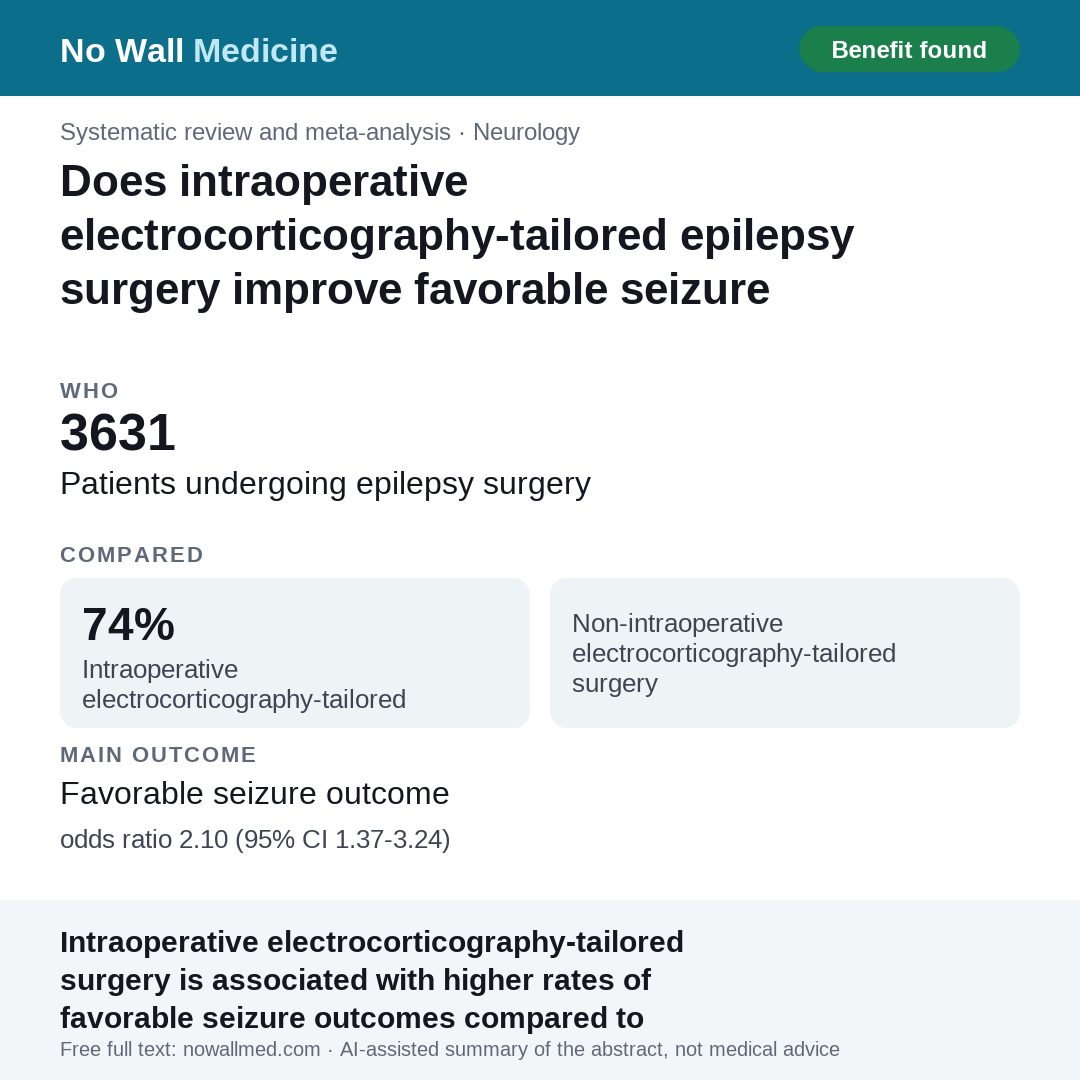
Seizure Outcome After Intraoperative Electrocorticography-Tailored Epilepsy Surgery: A Systematic Review and Meta-Analysis
Systematic review and meta-analysisBenefit found
Does intraoperative electrocorticography-tailored epilepsy surgery improve favorable seizure outcomes?
Who
3631
Patients undergoing epilepsy surgery
Compared
74%Intraoperative electrocorticography-tailored surgery (95% CI 71-77)
Non-intraoperative electrocorticography-tailored surgery
Main outcome
Favorable seizure outcome
Result: odds ratio 2.10 (95% CI 1.37-3.24)
Bottom line: Intraoperative electrocorticography-tailored surgery is associated with higher rates of favorable seizure outcomes compared to non-tailored surgery.
Limitation: Limited by low-quality evidence and significant heterogeneity.
Neurology · 2024-05-20Download image
Effects of Probiotics on Preterm Infant Gut Microbiota Across Populations: A Systematic Review and Meta-Analysis
Systematic review and meta-analysisBenefit found
How do probiotics affect the gut microbiota of preterm infants?
Who
706
Preterm infants
Compared
Preterm infants exposed to probiotics: Enrichment of Acinetobacter, Bifidobacterium, and Lactobacillus spp
Preterm infants not exposed to probiotics: Depletion of Finegoldia, Veillonella, and Klebsiella spp
Main outcome
Gut microbial composition and predicted functional pathways
Bottom line: Probiotics reshape the microbial ecosystem of preterm infants at both taxonomic and functional levels.
Limitation: More standardized and relevant studies are needed to understand disease risk.
Adv Nutr · 2024-05-20Download image

Innovative continuum of care to promote exclusive breast feeding in Pakistan: protocol of a pilot randomised controlled trial
Pilot randomized controlled trialUnclear result
Is a continuum of care programme feasible and acceptable to promote exclusive breastfeeding?
Who
50
Women between 28 and 32 weeks of gestation · Aziz Bhatti Shaheed Teaching Hospital, Pakistan
Compared
intervention group
control group
Main outcome
feasibility and acceptability
Bottom line: This pilot trial protocol aims to assess the feasibility and acceptability of a breastfeeding continuum of care programme.
BMJ Paediatr Open · 2024-05-20Download image

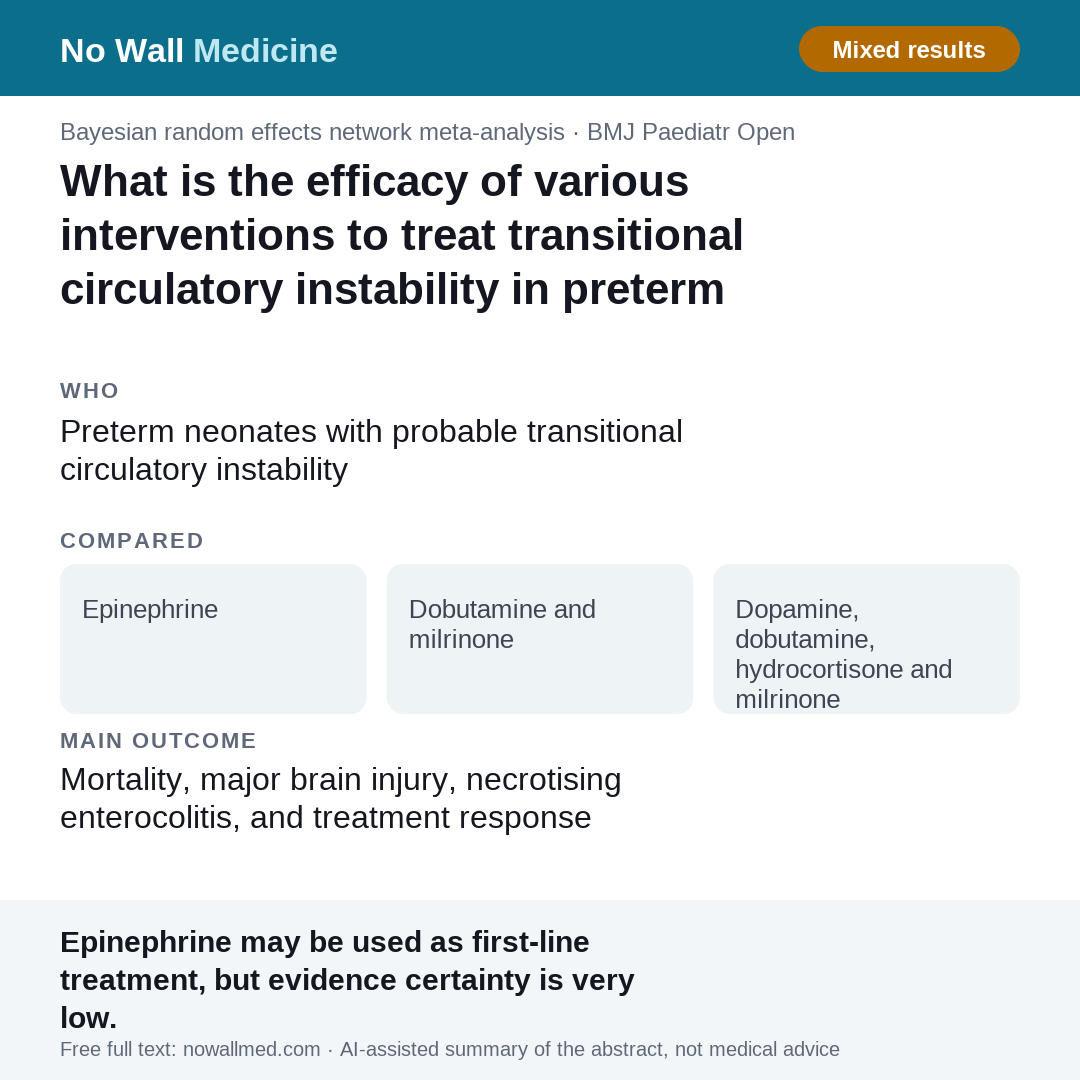
Comparative efficacy of volume expansion, inotropes and vasopressors in preterm neonates with probable transitional circulatory instability in the first week of life: a systematic review and network meta-analysis
Bayesian random effects network meta-analysisMixed results
What is the efficacy of various interventions to treat transitional circulatory instability in preterm neonates?
Who
Preterm neonates with probable transitional circulatory instability
Compared
Epinephrine
Dobutamine and milrinone
Dopamine, dobutamine, hydrocortisone and milrinone
Main outcome
Mortality, major brain injury, necrotising enterocolitis, and treatment response
Bottom line: Epinephrine may be used as first-line treatment, but evidence certainty is very low.
Limitation: Evidence certainty for outcomes was very low.
BMJ Paediatr Open · 2024-05-20Download image
Patient preferences for prophylactic regimens requiring regular injections in children and adolescents: a systematic review and thematic analysis
Systematic reviewUnclear result
Patient preferences for injections in children
Who
25
Patients, parents, caregivers, and healthcare providers
Compared
Patients
Caregivers
Main outcome
Treatment preferences
Bottom line: Patient preferences inform injection regimens
Limitation: Limited available literature
BMJ Paediatr Open · 2024-05-20Download image