Visual abstracts
New randomized trials and meta-analyses from leading journals at a glance: who was studied, what was compared, and what was found. Every paper is free to read in full.
All specialtiesCardiology 4763Oncology 4043Gastroenterology & Hepatology 1903Infectious Disease 3756Neurology 1872Psychiatry & Mental Health 2216Pulmonology 2044Critical Care 1319Endocrinology & Diabetes 2544Pediatrics 2889Surgery 2480Orthopedics & Sports Medicine 917Neurosurgery 525Cardiothoracic & Vascular Surgery 656Plastic & Reconstructive Surgery 574Nephrology 1107Rheumatology 810Hematology 1090Dermatology 611Ophthalmology 532Obstetrics & Gynecology 1645Public & Global Health 1037Radiology & Imaging 619Anesthesiology 958Urology 745ENT (Otolaryngology) 494Emergency Medicine 481Allergy & Immunology 309Geriatrics 972Family Medicine & Primary Care 534Medical Genetics & Genomics 659Pathology & Laboratory Medicine 156Physical Medicine & Rehabilitation 734Palliative Care 421Nutrition 1560Digital Health & AI 2137General Medicine 318
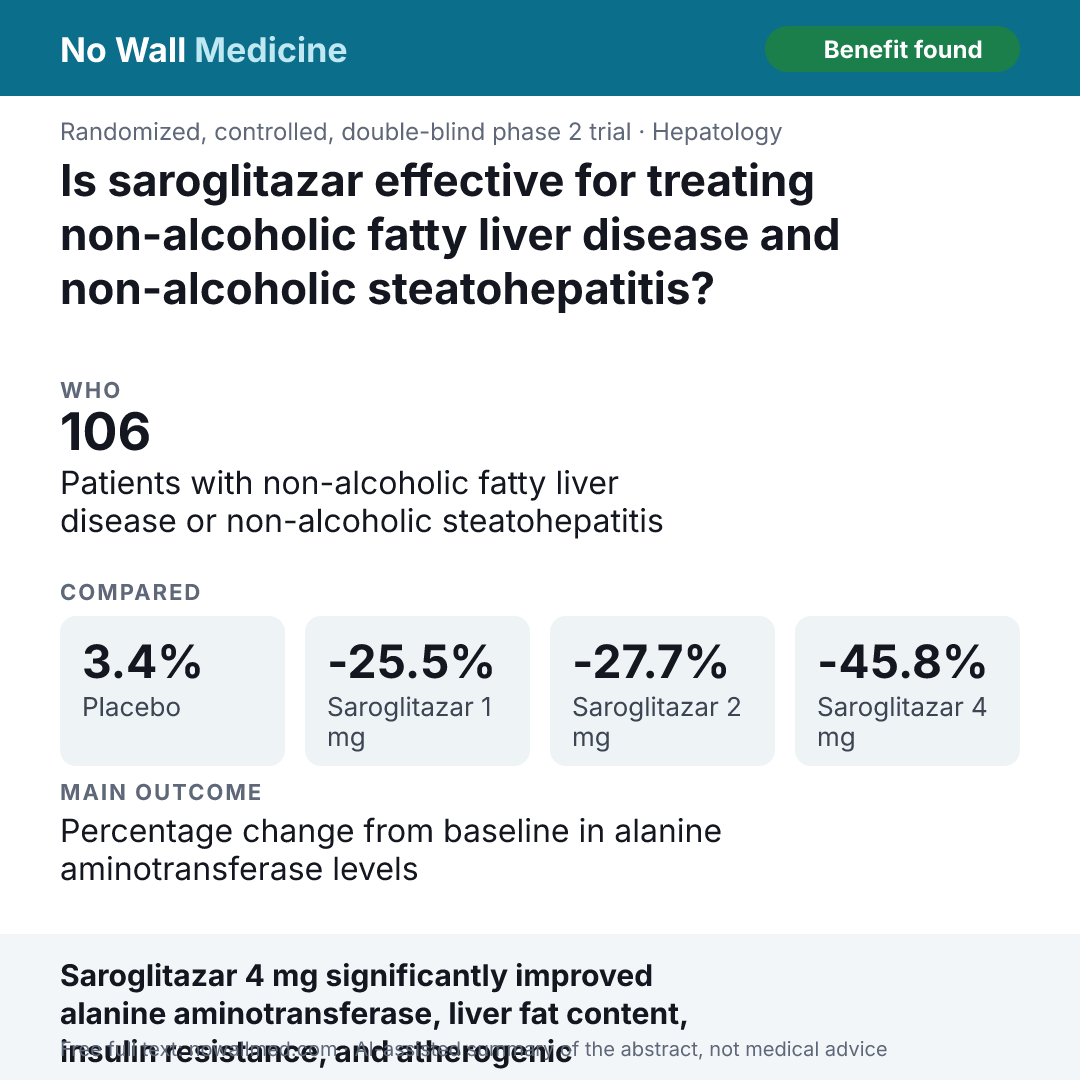
Saroglitazar, a PPAR-α/γ Agonist, for Treatment of NAFLD: A Randomized Controlled Double-Blind Phase 2 Trial
Randomized, controlled, double-blind phase 2 trialBenefit found
Is saroglitazar effective for treating non-alcoholic fatty liver disease and non-alcoholic steatohepatitis?
Who
106
Patients with non-alcoholic fatty liver disease or non-alcoholic steatohepatitis
Compared
3.4%Placebo (5.6)
-25.5%Saroglitazar 1 mg (5.8)
-27.7%Saroglitazar 2 mg (5.9)
-45.8%Saroglitazar 4 mg (5.7)
Main outcome
Percentage change from baseline in alanine aminotransferase levels
Bottom line: Saroglitazar 4 mg significantly improved alanine aminotransferase, liver fat content, insulin resistance, and atherogenic dyslipidemia.
Hepatology · 2021-07-19 · Save PNG
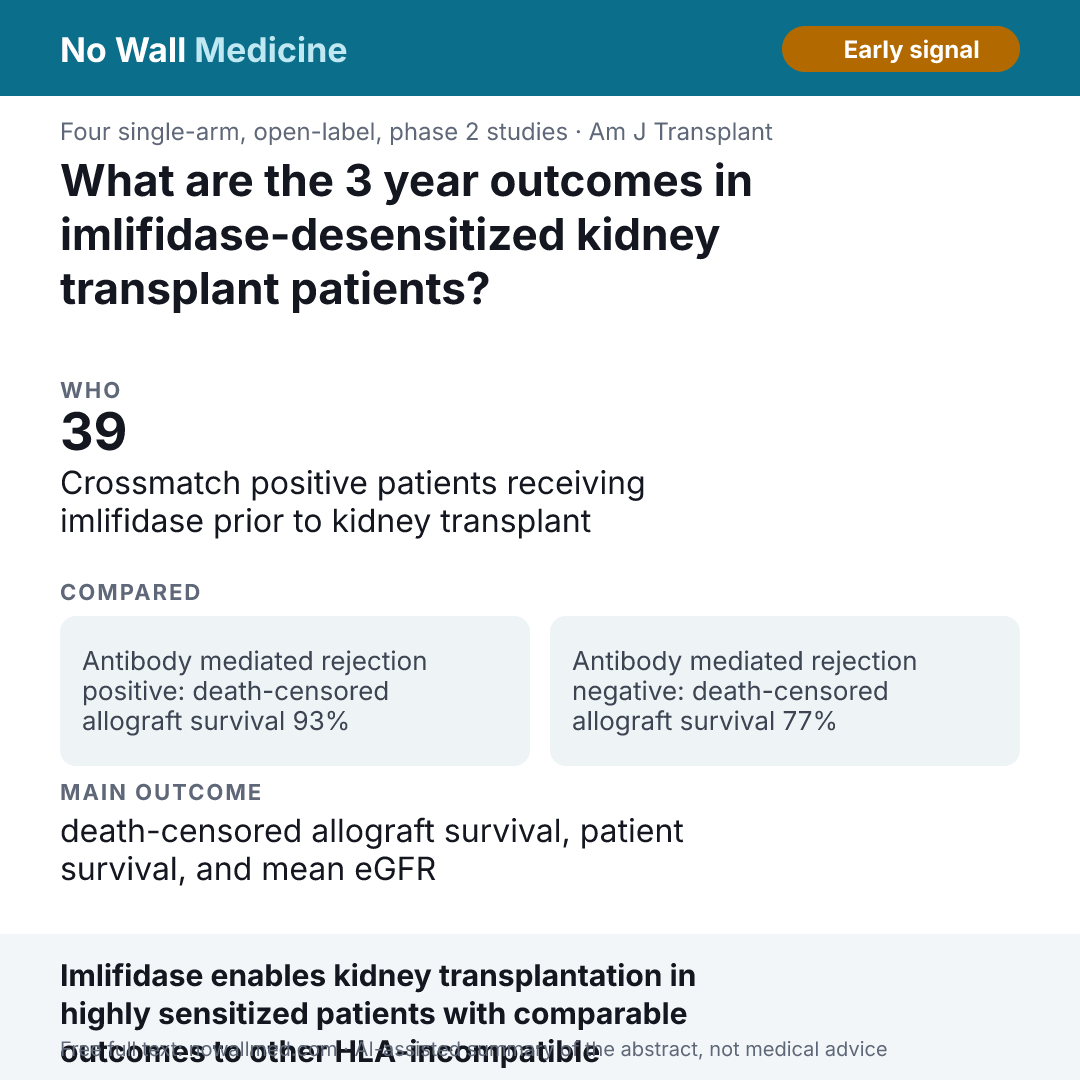
Outcomes at 3 years posttransplant in imlifidase-desensitized kidney transplant patients
Four single-arm, open-label, phase 2 studiesEarly signal
What are the 3 year outcomes in imlifidase-desensitized kidney transplant patients?
Who
39
Crossmatch positive patients receiving imlifidase prior to kidney transplant
Compared
Antibody mediated rejection positive: death-censored allograft survival 93%
Antibody mediated rejection negative: death-censored allograft survival 77%
Main outcome
death-censored allograft survival, patient survival, and mean eGFR
Bottom line: Imlifidase enables kidney transplantation in highly sensitized patients with comparable outcomes to other HLA-incompatible transplantations.
Am J Transplant · 2021-07-19 · Save PNG
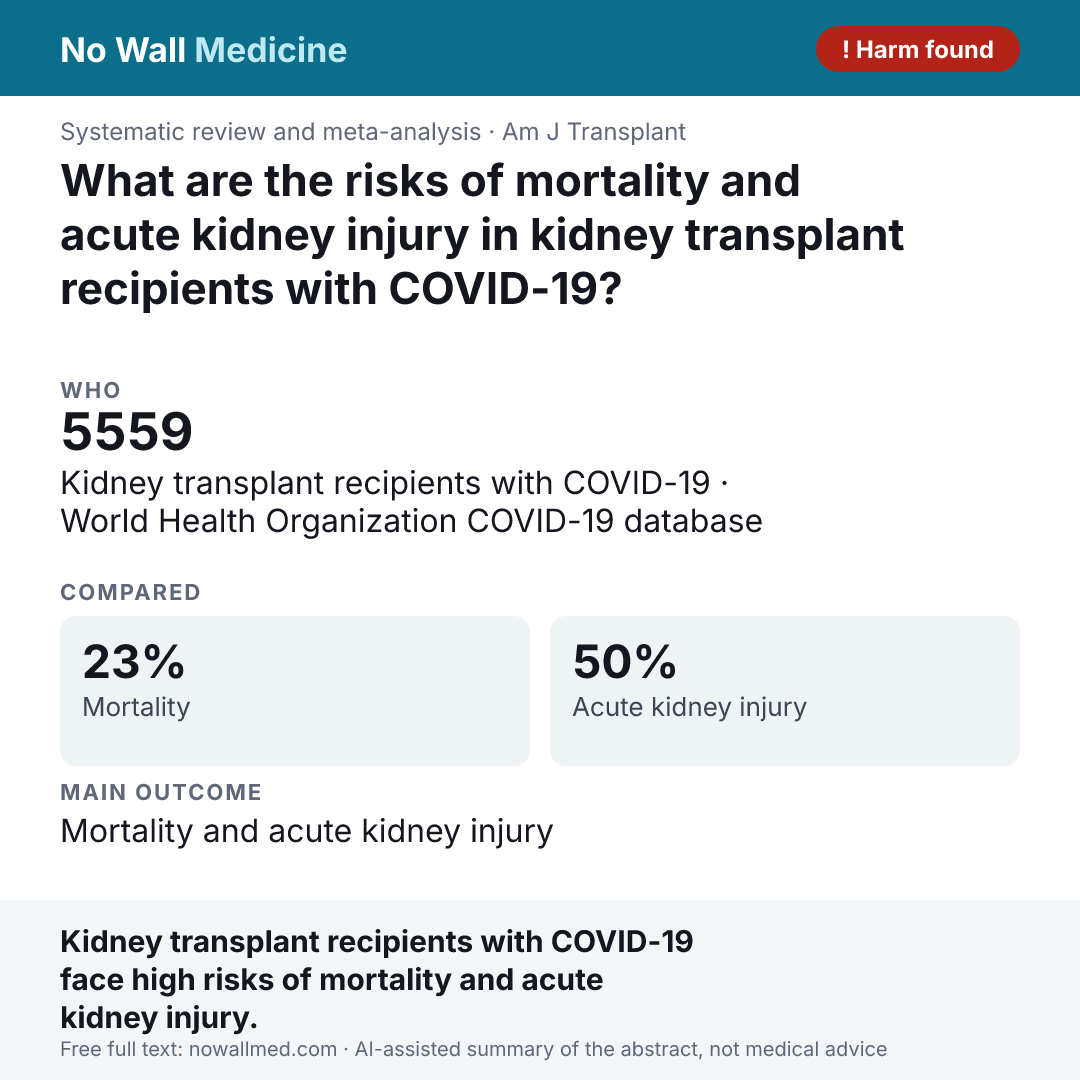
A systematic review and meta-analysis of COVID-19 in kidney transplant recipients: Lessons to be learned
Systematic review and meta-analysisHarm found
What are the risks of mortality and acute kidney injury in kidney transplant recipients with COVID-19?
Who
5559
Kidney transplant recipients with COVID-19 · World Health Organization COVID-19 database
Compared
23%Mortality (95% CI: 21%-27%)
50%Acute kidney injury (95% CI: 44%-56%)
Main outcome
Mortality and acute kidney injury
Bottom line: Kidney transplant recipients with COVID-19 face high risks of mortality and acute kidney injury.
Am J Transplant · 2021-07-19 · Save PNG
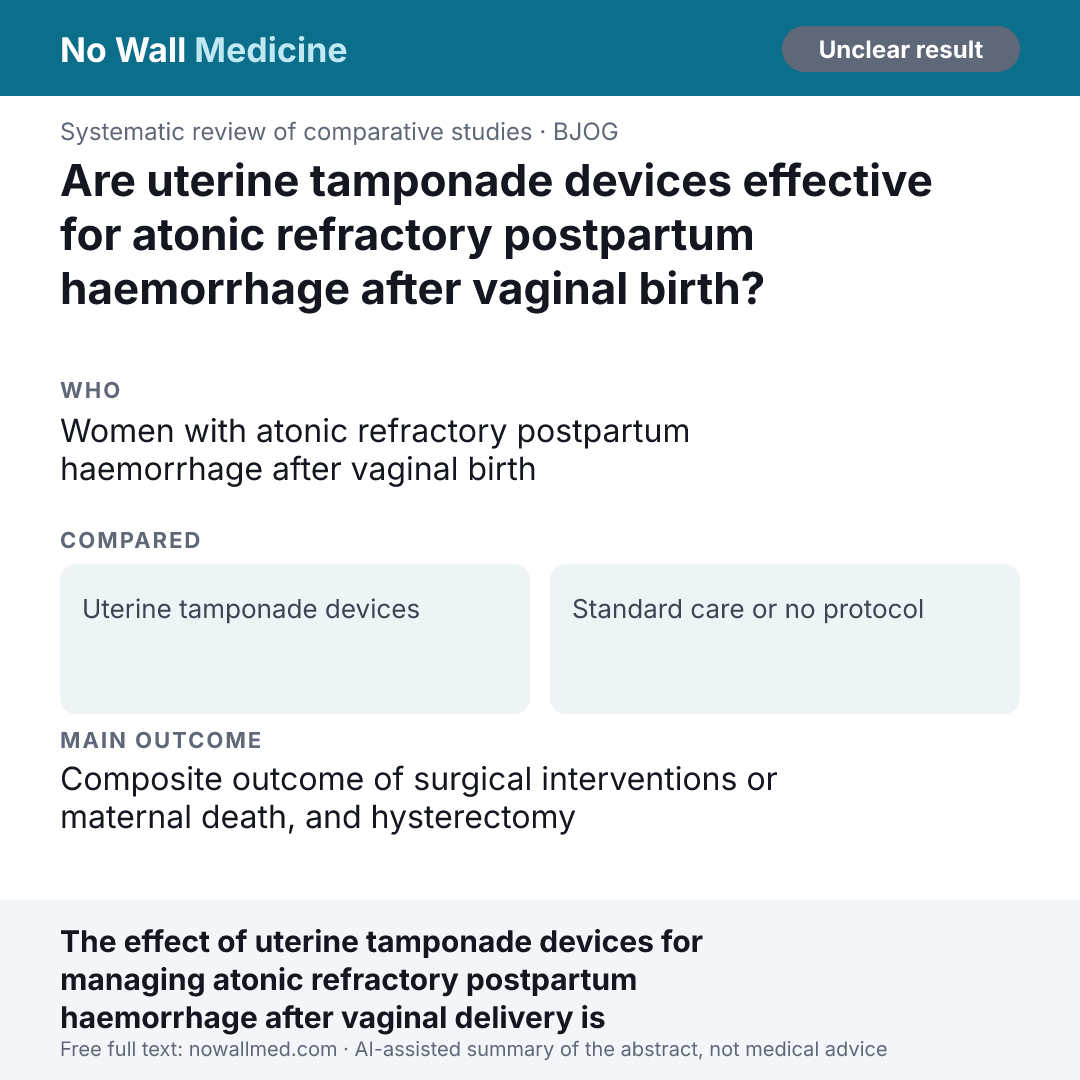
Effectiveness of uterine tamponade devices for refractory postpartum haemorrhage after vaginal birth: a systematic review
Systematic review of comparative studiesUnclear result
Are uterine tamponade devices effective for atonic refractory postpartum haemorrhage after vaginal birth?
Who
Women with atonic refractory postpartum haemorrhage after vaginal birth
Compared
Uterine tamponade devices
Standard care or no protocol
Main outcome
Composite outcome of surgical interventions or maternal death, and hysterectomy
Bottom line: The effect of uterine tamponade devices for managing atonic refractory postpartum haemorrhage after vaginal delivery is unclear.
Limitation: All included studies were at high risk of bias with very low to low certainty.
BJOG · 2021-07-19 · Save PNG
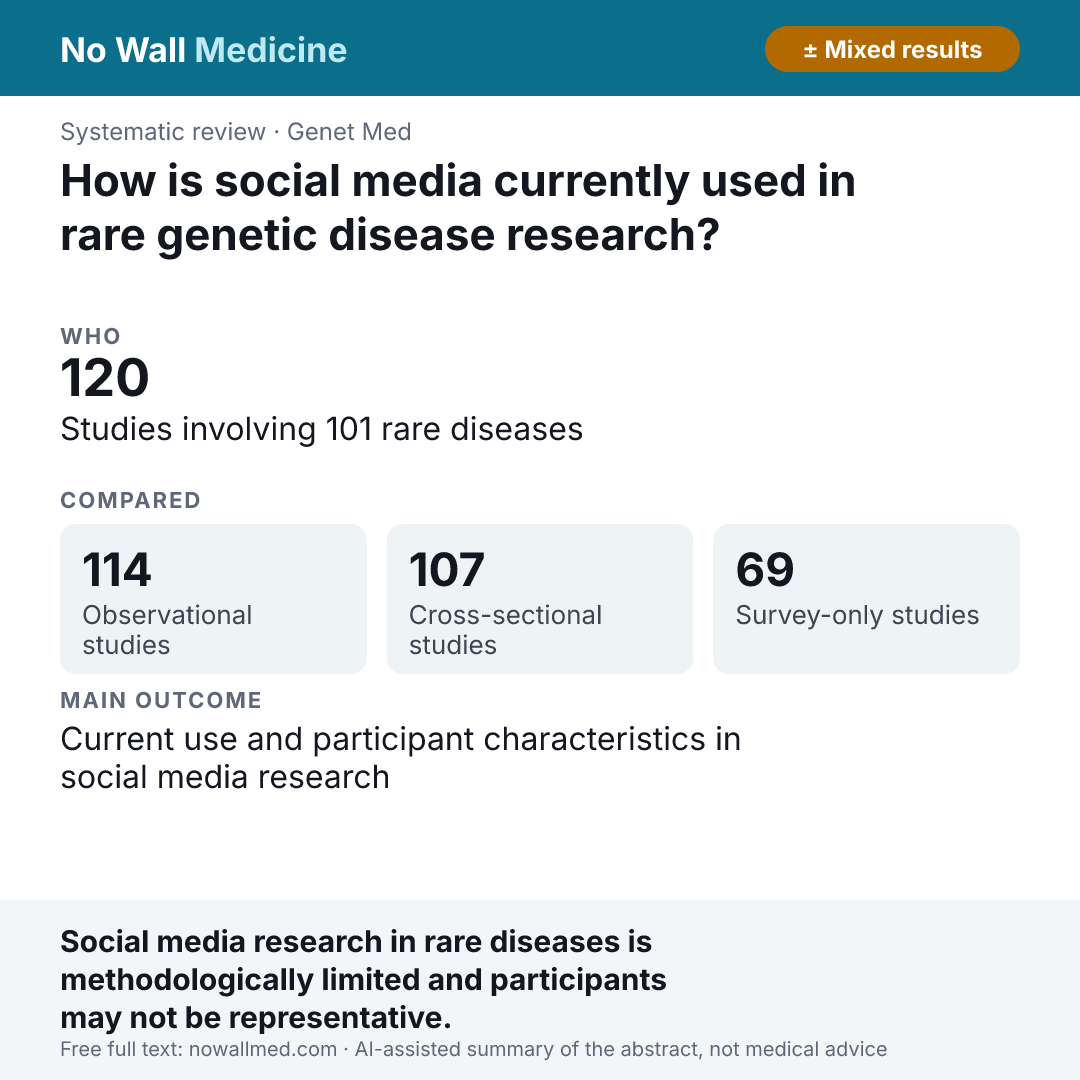
Opportunities and pitfalls of social media research in rare genetic diseases: a systematic review
Systematic reviewMixed results
How is social media currently used in rare genetic disease research?
Who
120
Studies involving 101 rare diseases
Compared
114Observational studies (95.0%)
107Cross-sectional studies (89.2%)
69Survey-only studies (57.5%)
Main outcome
Current use and participant characteristics in social media research
Bottom line: Social media research in rare diseases is methodologically limited and participants may not be representative.
Limitation: Participants may not be representative by gender, race, age, or rare disease type.
Genet Med · 2021-07-19 · Save PNG
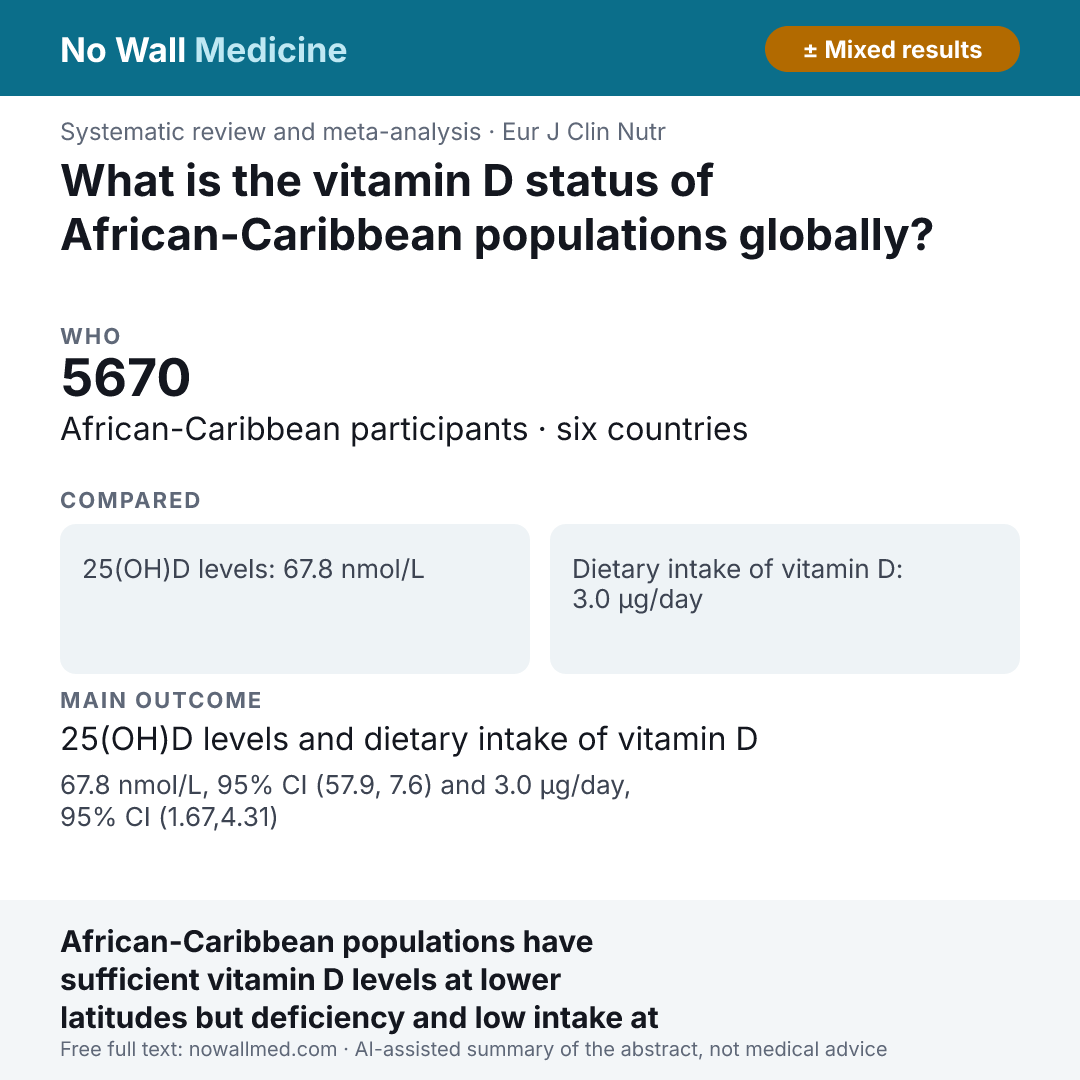
Global Perspective of the Vitamin D Status of African-Caribbean Populations: A Systematic Review and Meta-analysis
Systematic review and meta-analysisMixed results
What is the vitamin D status of African-Caribbean populations globally?
Who
5670
African-Caribbean participants · six countries
Compared
25(OH)D levels: 67.8 nmol/L
Dietary intake of vitamin D: 3.0 µg/day
Main outcome
25(OH)D levels and dietary intake of vitamin D
Result: 67.8 nmol/L, 95% CI (57.9, 7.6) and 3.0 µg/day, 95% CI (1.67,4.31)
Bottom line: African-Caribbean populations have sufficient vitamin D levels at lower latitudes but deficiency and low intake at higher latitudes.
Eur J Clin Nutr · 2021-07-19 · Save PNG
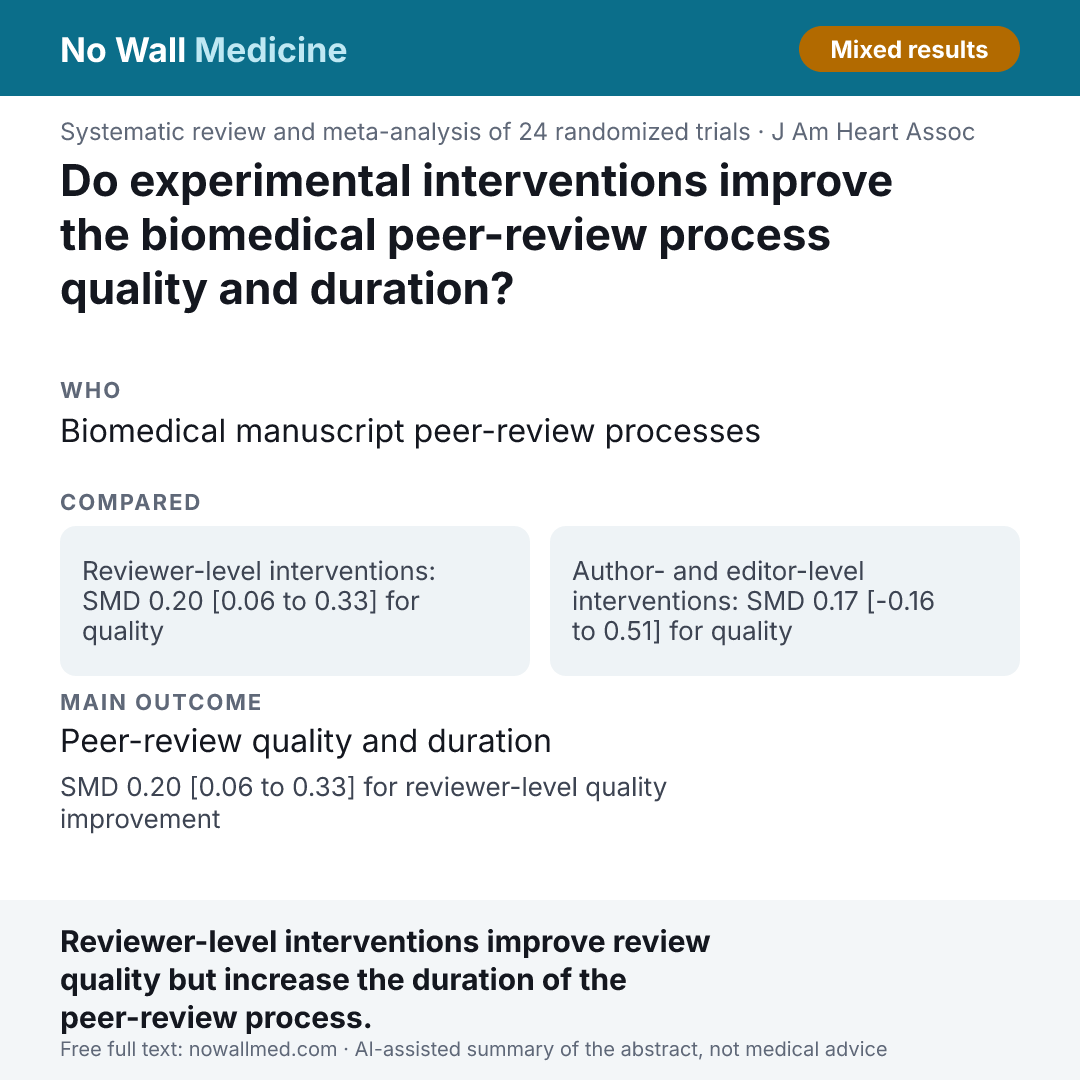
Effects of Experimental Interventions to Improve the Biomedical Peer-Review Process: A Systematic Review and Meta-Analysis
Systematic review and meta-analysis of 24 randomized trialsMixed results
Do experimental interventions improve the biomedical peer-review process quality and duration?
Who
Biomedical manuscript peer-review processes
Compared
Reviewer-level interventions: SMD 0.20 [0.06 to 0.33] for quality
Author- and editor-level interventions: SMD 0.17 [-0.16 to 0.51] for quality
Main outcome
Peer-review quality and duration
Result: SMD 0.20 [0.06 to 0.33] for reviewer-level quality improvement
Bottom line: Reviewer-level interventions improve review quality but increase the duration of the peer-review process.
J Am Heart Assoc · 2021-07-19 · Save PNG
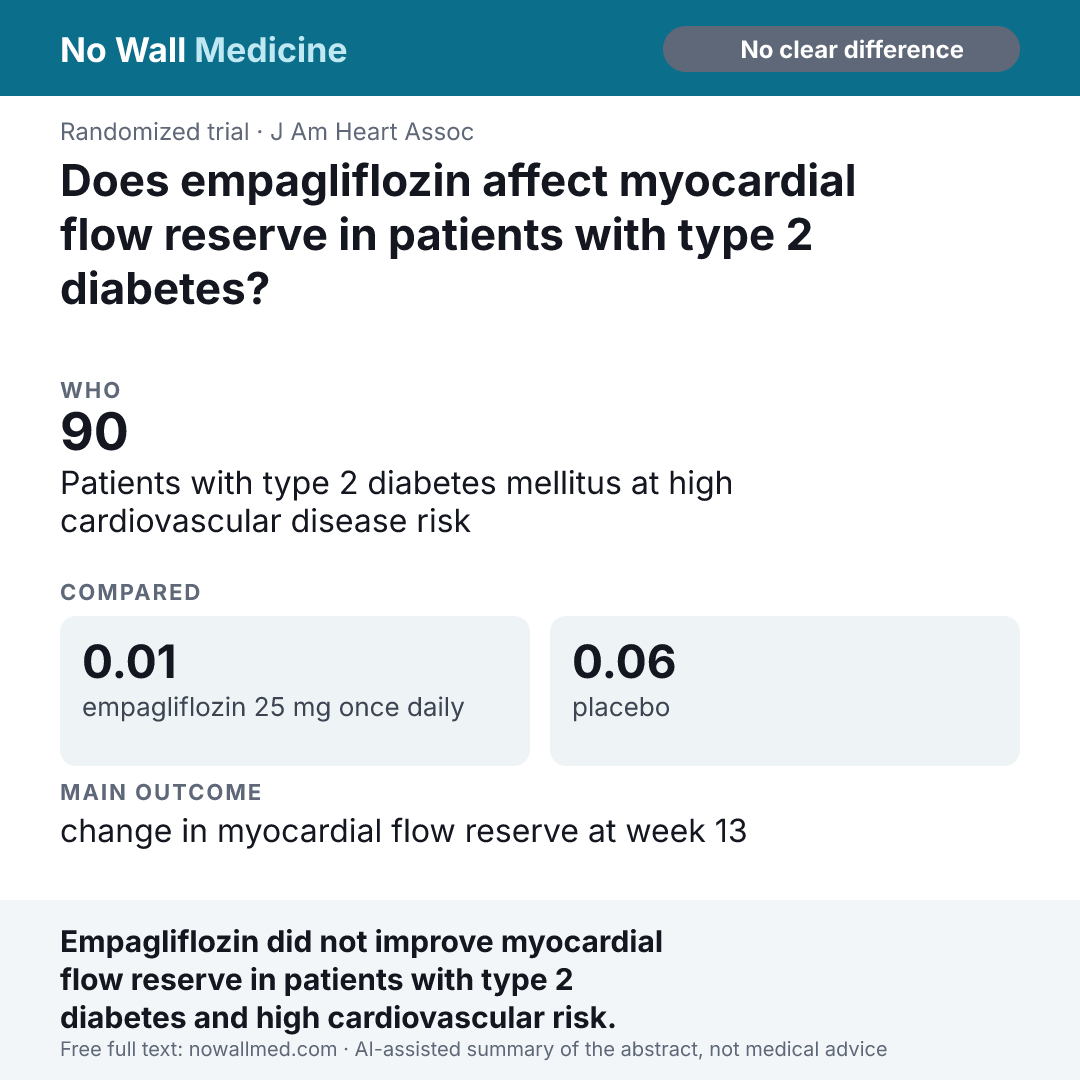
Effects of Empagliflozin on Myocardial Flow Reserve in Patients With Type 2 Diabetes Mellitus: The SIMPLE Trial
Randomized trialNo clear difference
Does empagliflozin affect myocardial flow reserve in patients with type 2 diabetes?
Who
90
Patients with type 2 diabetes mellitus at high cardiovascular disease risk
Compared
0.01empagliflozin 25 mg once daily (95% CI, -0.18 to 0.21)
0.06placebo (95% CI, -0.15 to 0.27)
Main outcome
change in myocardial flow reserve at week 13
Result: -0.05 (95% CI, -0.33 to 0.23)
Bottom line: Empagliflozin did not improve myocardial flow reserve in patients with type 2 diabetes and high cardiovascular risk.
J Am Heart Assoc · 2021-07-19 · Save PNG
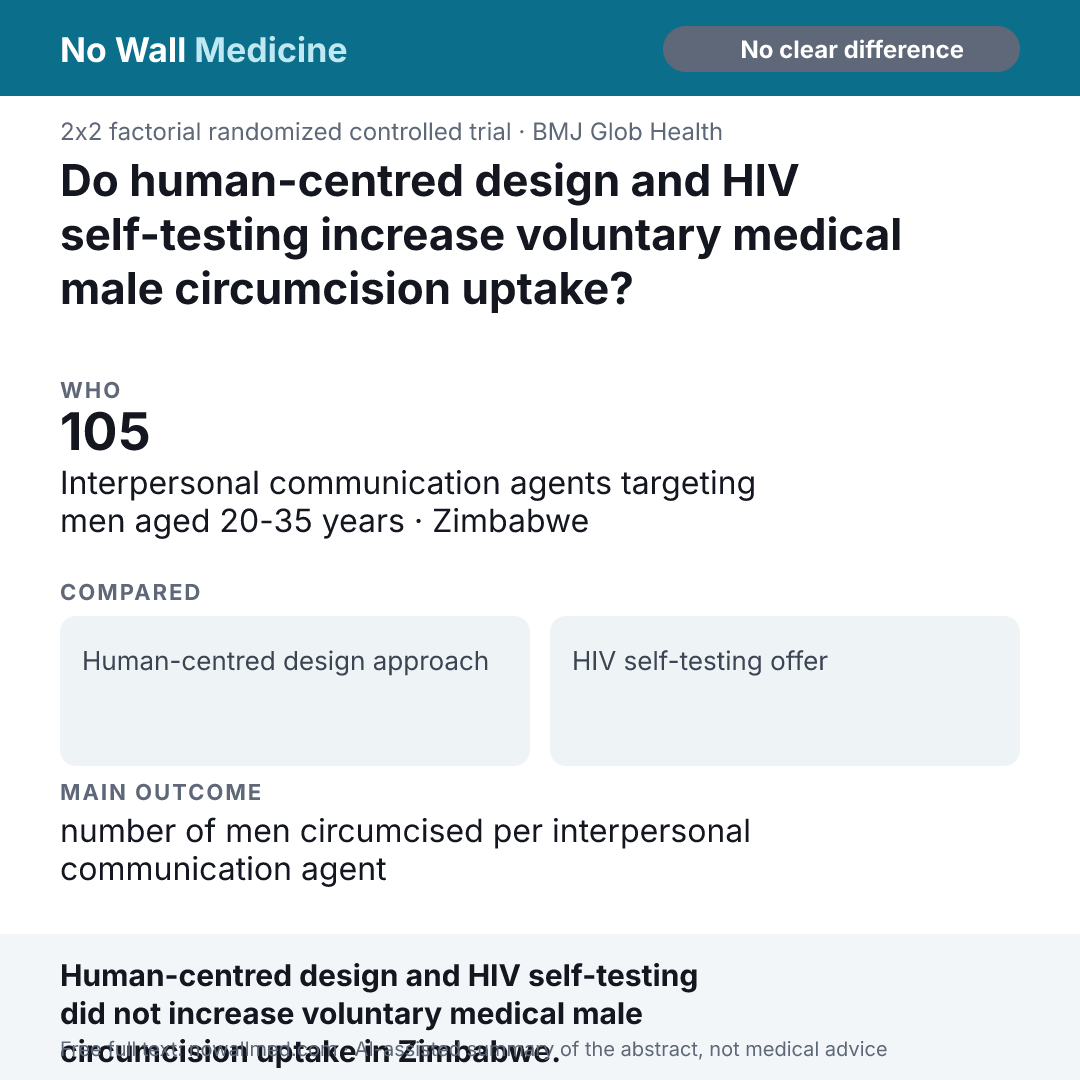
Innovative demand creation strategies to increase voluntary medical male circumcision uptake: a pragmatic randomised controlled trial in Zimbabwe
2x2 factorial randomized controlled trialNo clear difference
Do human-centred design and HIV self-testing increase voluntary medical male circumcision uptake?
Who
105
Interpersonal communication agents targeting men aged 20-35 years · Zimbabwe
Compared
Human-centred design approach
HIV self-testing offer
Main outcome
number of men circumcised per interpersonal communication agent
Result: incident rate ratio 0.87 (95% CI 0.38 to 2.02); IRR 0.65 (95% CI 0.28 to 1.50)
Bottom line: Human-centred design and HIV self-testing did not increase voluntary medical male circumcision uptake in Zimbabwe.
BMJ Glob Health · 2021-07-19 · Save PNG
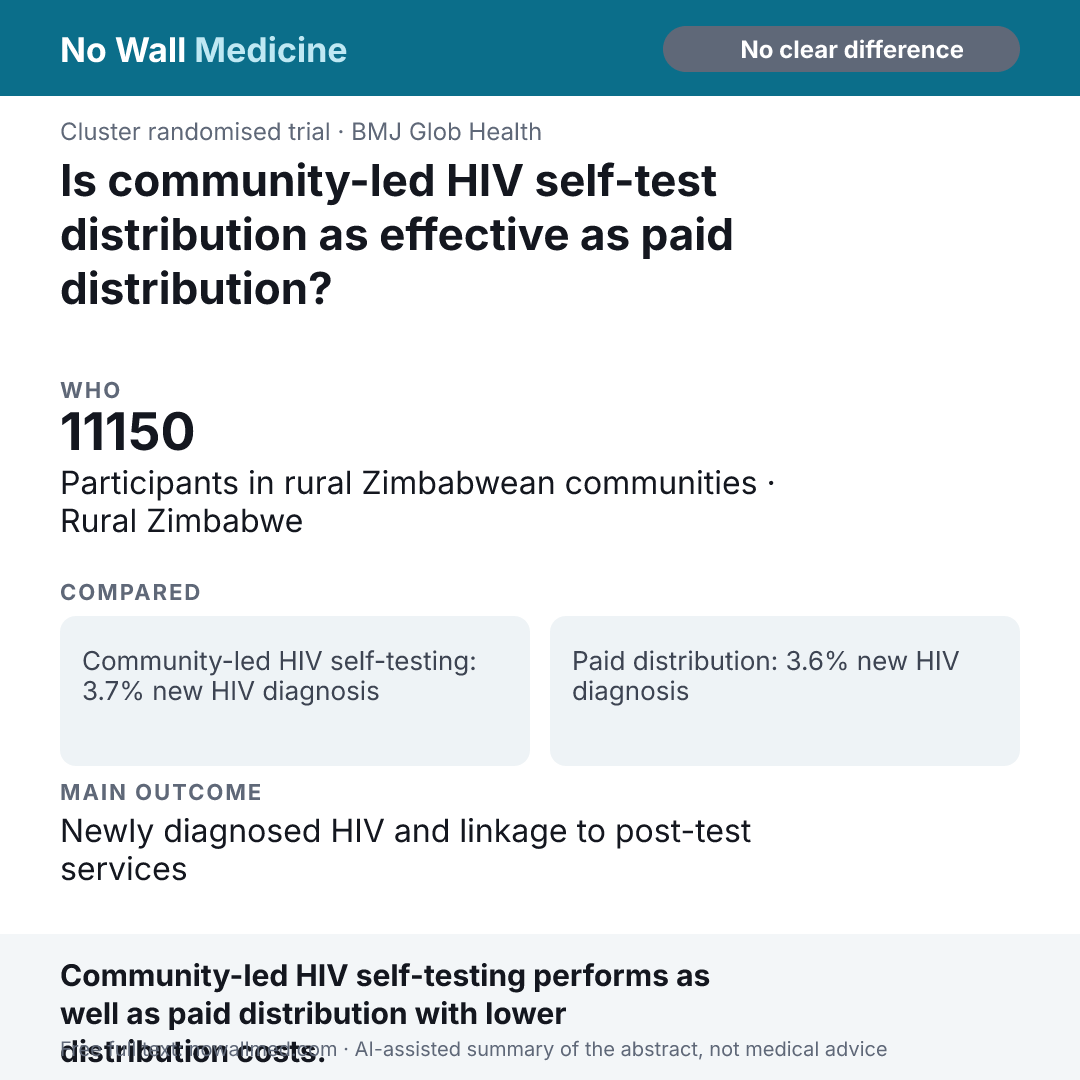
Comparison of community-led distribution of HIV self-tests kits with distribution by paid distributors: a cluster randomised trial in rural Zimbabwean communities
Cluster randomised trialNo clear difference
Is community-led HIV self-test distribution as effective as paid distribution?
Who
11150
Participants in rural Zimbabwean communities · Rural Zimbabwe
Compared
Community-led HIV self-testing: 3.7% new HIV diagnosis
Paid distribution: 3.6% new HIV diagnosis
Main outcome
Newly diagnosed HIV and linkage to post-test services
Result: adjusted OR 1.1 (95% CI 0.72 to 1.56)
Bottom line: Community-led HIV self-testing performs as well as paid distribution with lower distribution costs.
BMJ Glob Health · 2021-07-19 · Save PNG
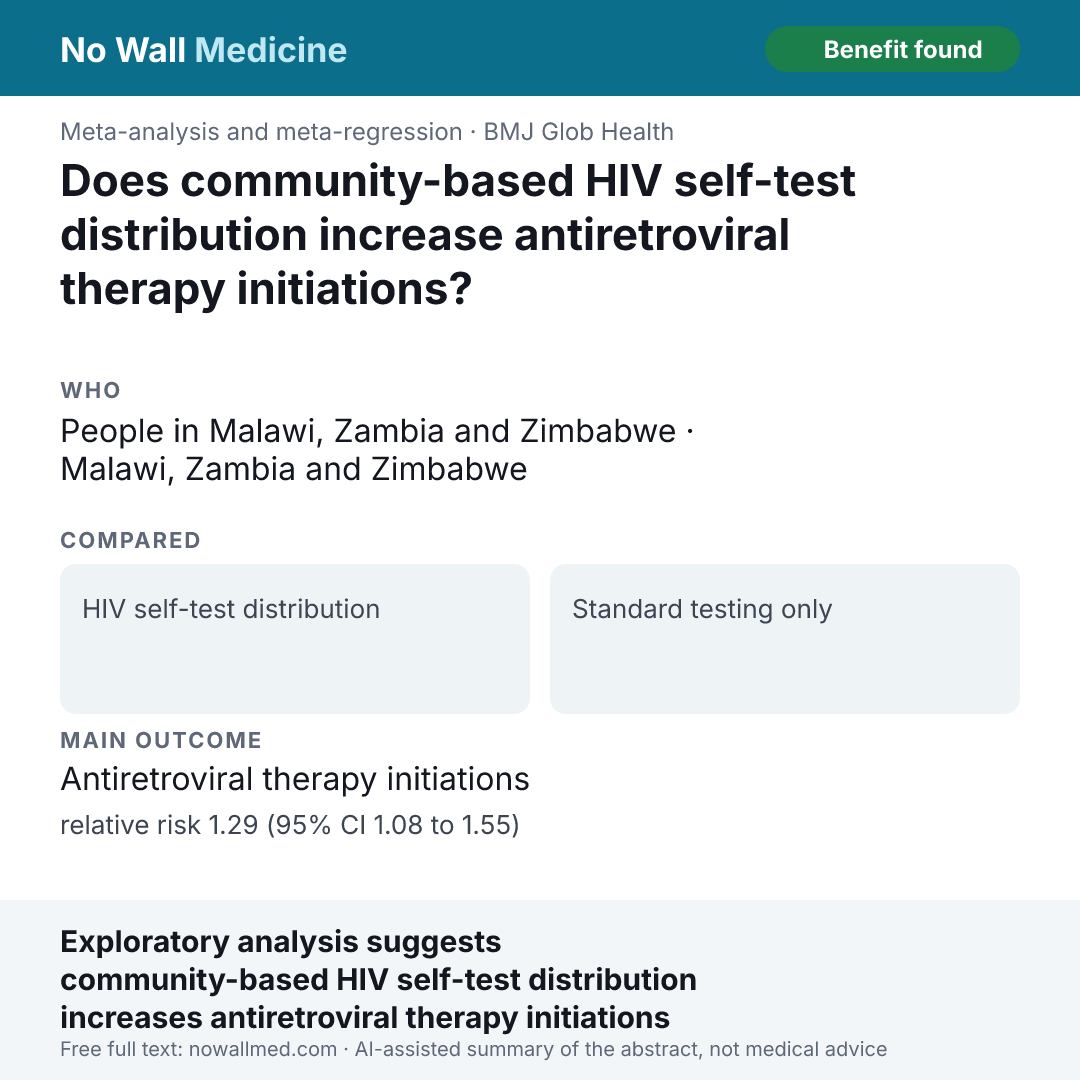
ART initiations following community-based distribution of HIV self-tests: meta-analysis and meta-regression of STAR Initiative data
Meta-analysis and meta-regressionBenefit found
Does community-based HIV self-test distribution increase antiretroviral therapy initiations?
Who
People in Malawi, Zambia and Zimbabwe · Malawi, Zambia and Zimbabwe
Compared
HIV self-test distribution
Standard testing only
Main outcome
Antiretroviral therapy initiations
Result: relative risk 1.29 (95% CI 1.08 to 1.55)
Bottom line: Exploratory analysis suggests community-based HIV self-test distribution increases antiretroviral therapy initiations compared to standard testing.
BMJ Glob Health · 2021-07-19 · Save PNG
Relative efficiency of demand creation strategies to increase voluntary medical male circumcision uptake: a study conducted as part of a randomised controlled trial in Zimbabwe
Randomised controlled trialMixed results
What are the relative economic costs of four voluntary medical male circumcision demand creation modalities?
Who
Five districts in Zimbabwe · 15 purposively selected sites in Zimbabwe
Compared
Standard demand creation: $52 per client reached
Demand creation plus HIV self-testing: $55 per client reached
Human-centred design informed approach: $68 per client reached
Human-centred design plus HIV self-testing: $226 per client circumcised
Main outcome
Annual provider financial expenditure and activity-based costing
Bottom line: Costs varied significantly across demand creation modalities and service delivery models, with human-centred design plus HIV self-testing being most expensive.
BMJ Glob Health · 2021-07-19 · Save PNG

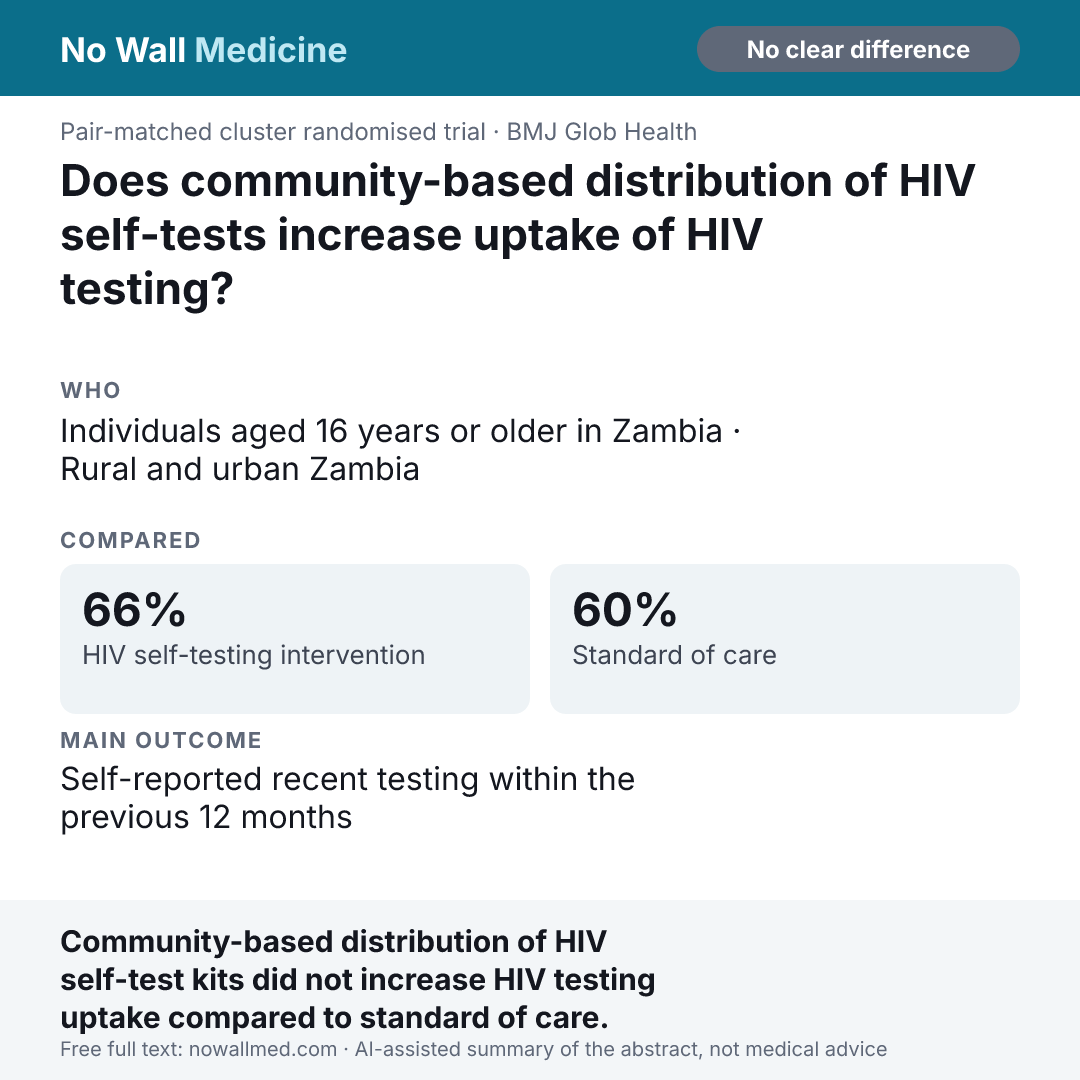
Does community-based distribution of HIV self-tests increase uptake of HIV testing? Results of pair-matched cluster randomised trial in Zambia
Pair-matched cluster randomised trialNo clear difference
Does community-based distribution of HIV self-tests increase uptake of HIV testing?
Who
Individuals aged 16 years or older in Zambia · Rural and urban Zambia
Compared
66%HIV self-testing intervention (1622/2465)
60%Standard of care (1456/2429)
Main outcome
Self-reported recent testing within the previous 12 months
Result: adjusted risk ratio 1.08 (95% CI 0.94 to 1.24)
Bottom line: Community-based distribution of HIV self-test kits did not increase HIV testing uptake compared to standard of care.
BMJ Glob Health · 2021-07-19 · Save PNG
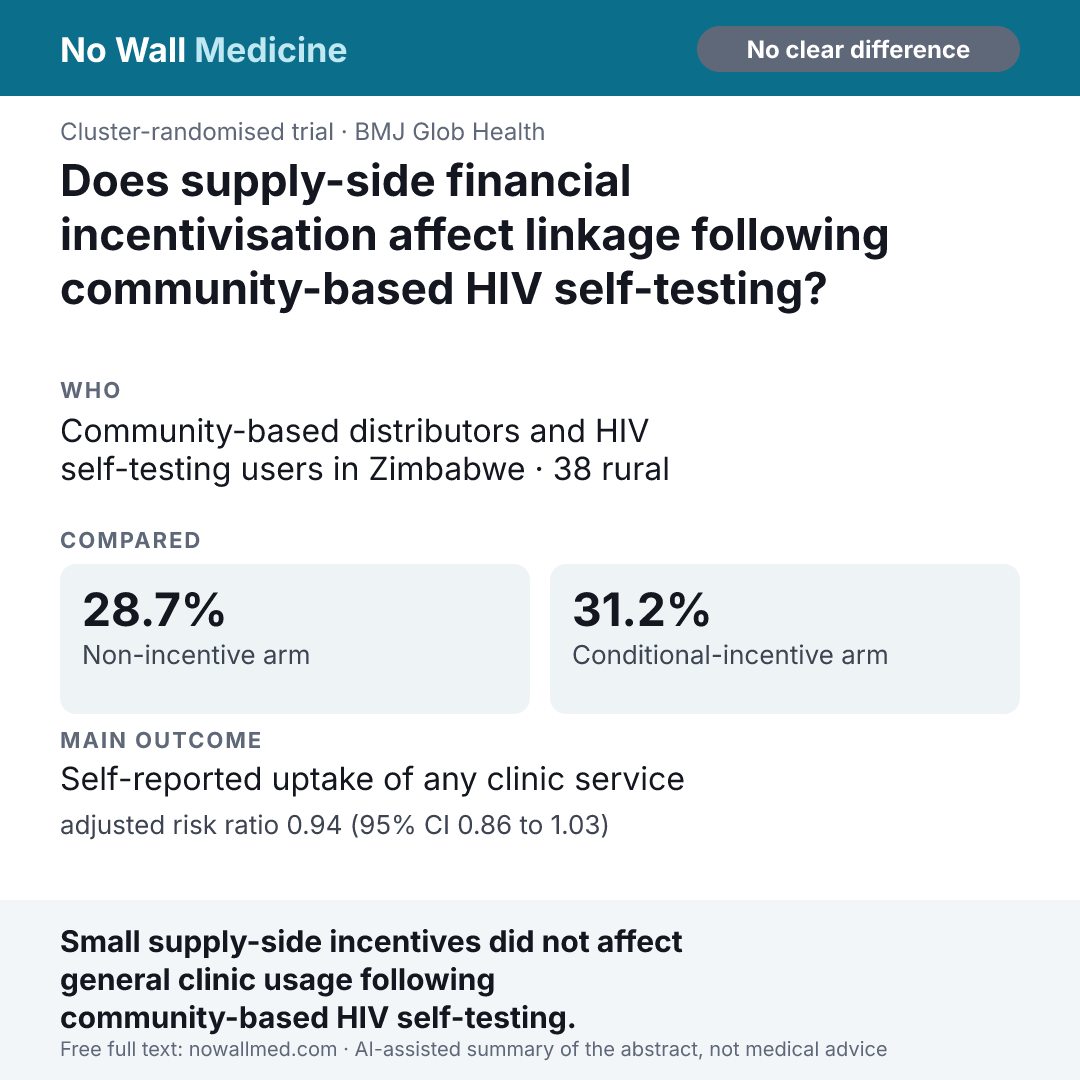
Community-based HIV self-testing: a cluster-randomised trial of supply-side financial incentives and time-trend analysis of linkage to antiretroviral therapy in Zimbabwe
Cluster-randomised trialNo clear difference
Does supply-side financial incentivisation affect linkage following community-based HIV self-testing?
Who
Community-based distributors and HIV self-testing users in Zimbabwe · 38 rural Zimbabwean communities
Compared
28.7%Non-incentive arm (1062/3698)
31.2%Conditional-incentive arm (1075/3448)
Main outcome
Self-reported uptake of any clinic service
Result: adjusted risk ratio 0.94 (95% CI 0.86 to 1.03)
Bottom line: Small supply-side incentives did not affect general clinic usage following community-based HIV self-testing.
Limitation: The study used a non-randomised difference-in-differences analysis for antiretroviral therapy initiations.
BMJ Glob Health · 2021-07-19 · Save PNG
Treatment of the lung injury of drowning: a systematic review
Systematic reviewUnclear result
Treatment of lung injury in drowning patients
Who
drowning patients with lung injury
Compared
Mechanical ventilation
Supplemental oxygen
Main outcome
patient outcomes
Bottom line: Limited evidence for treatment of lung injury
Limitation: very low quality of evidence
Crit Care · 2021-07-19 · Save PNG
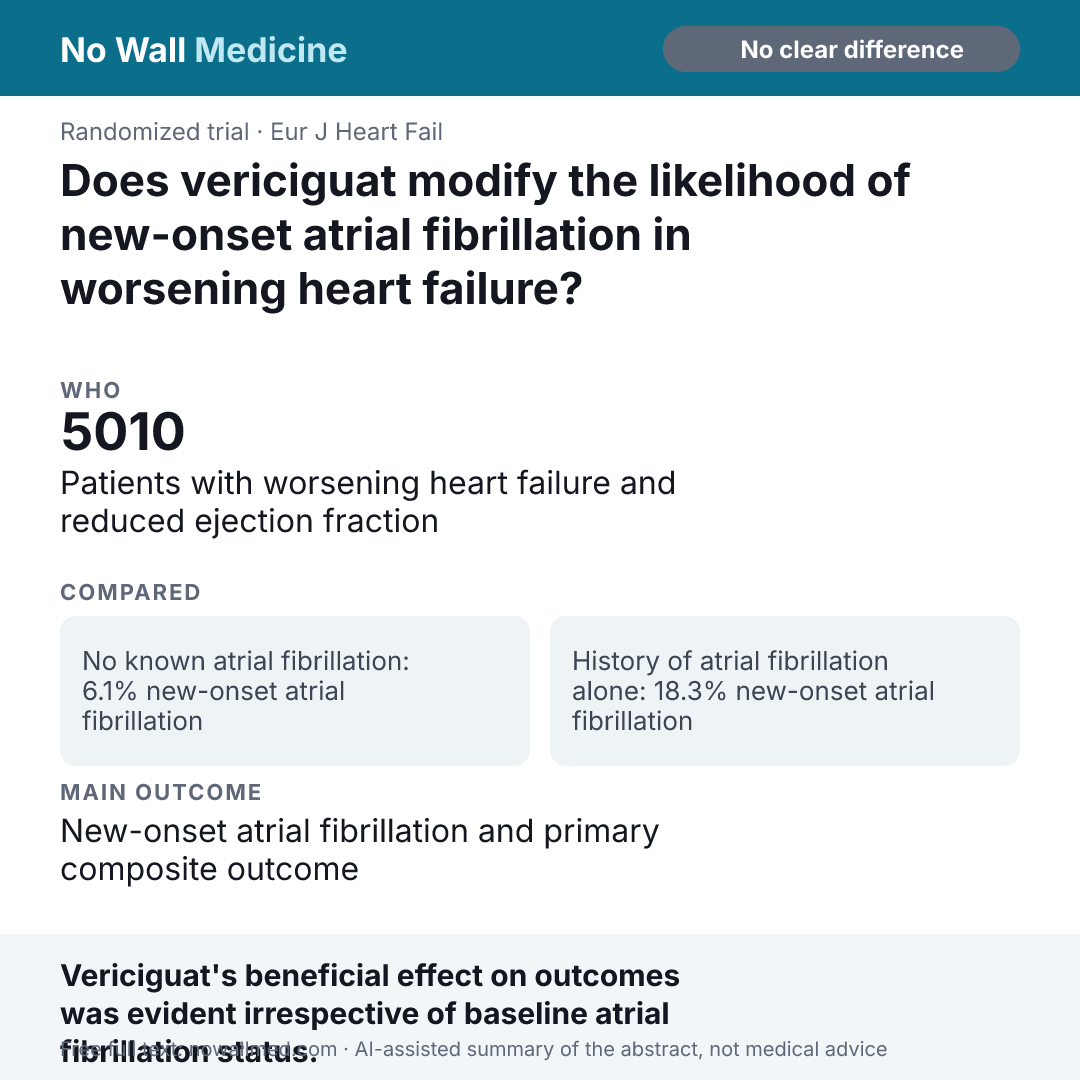
Vericiguat in patients with atrial fibrillation and heart failure with reduced ejection fraction: insights from the VICTORIA trial
Randomized trialNo clear difference
Does vericiguat modify the likelihood of new-onset atrial fibrillation in worsening heart failure?
Who
5010
Patients with worsening heart failure and reduced ejection fraction
Compared
No known atrial fibrillation: 6.1% new-onset atrial fibrillation
History of atrial fibrillation alone: 18.3% new-onset atrial fibrillation
Main outcome
New-onset atrial fibrillation and primary composite outcome
Result: adjusted hazard ratio 0.93 (95% CI 0.75-1.16)
Bottom line: Vericiguat's beneficial effect on outcomes was evident irrespective of baseline atrial fibrillation status.
Eur J Heart Fail · 2021-07-18 · Save PNG
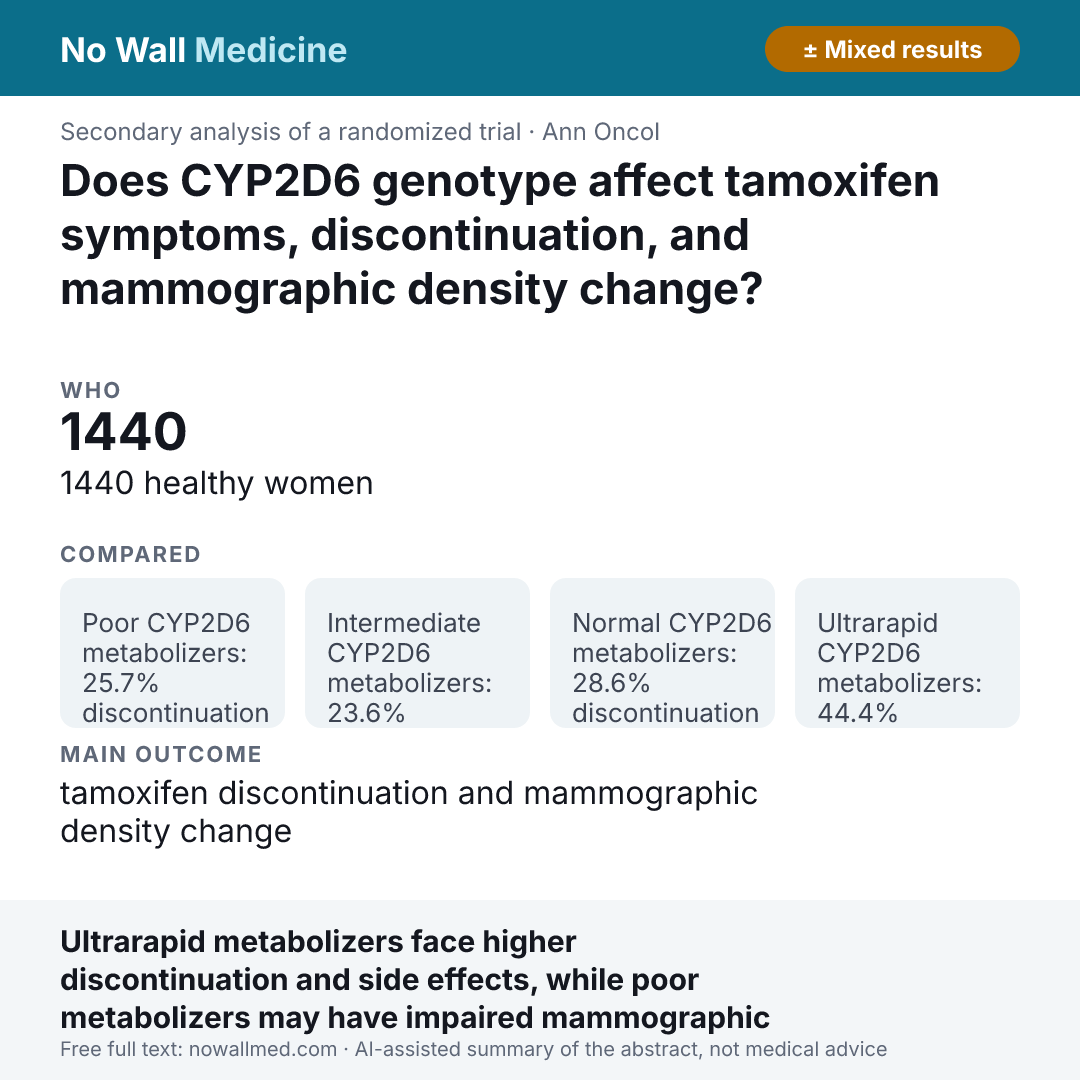
CYP2D6 genotype predicts tamoxifen discontinuation and drug response: a secondary analysis of the KARISMA trial
Secondary analysis of a randomized trialMixed results
Does CYP2D6 genotype affect tamoxifen symptoms, discontinuation, and mammographic density change?
Who
1440
1440 healthy women
Compared
Poor CYP2D6 metabolizers: 25.7% discontinuation rate
Intermediate CYP2D6 metabolizers: 23.6% discontinuation rate
Normal CYP2D6 metabolizers: 28.6% discontinuation rate
Ultrarapid CYP2D6 metabolizers: 44.4% discontinuation rate
Main outcome
tamoxifen discontinuation and mammographic density change
Bottom line: Ultrarapid metabolizers face higher discontinuation and side effects, while poor metabolizers may have impaired mammographic density reduction.
Ann Oncol · 2021-07-18 · Save PNG
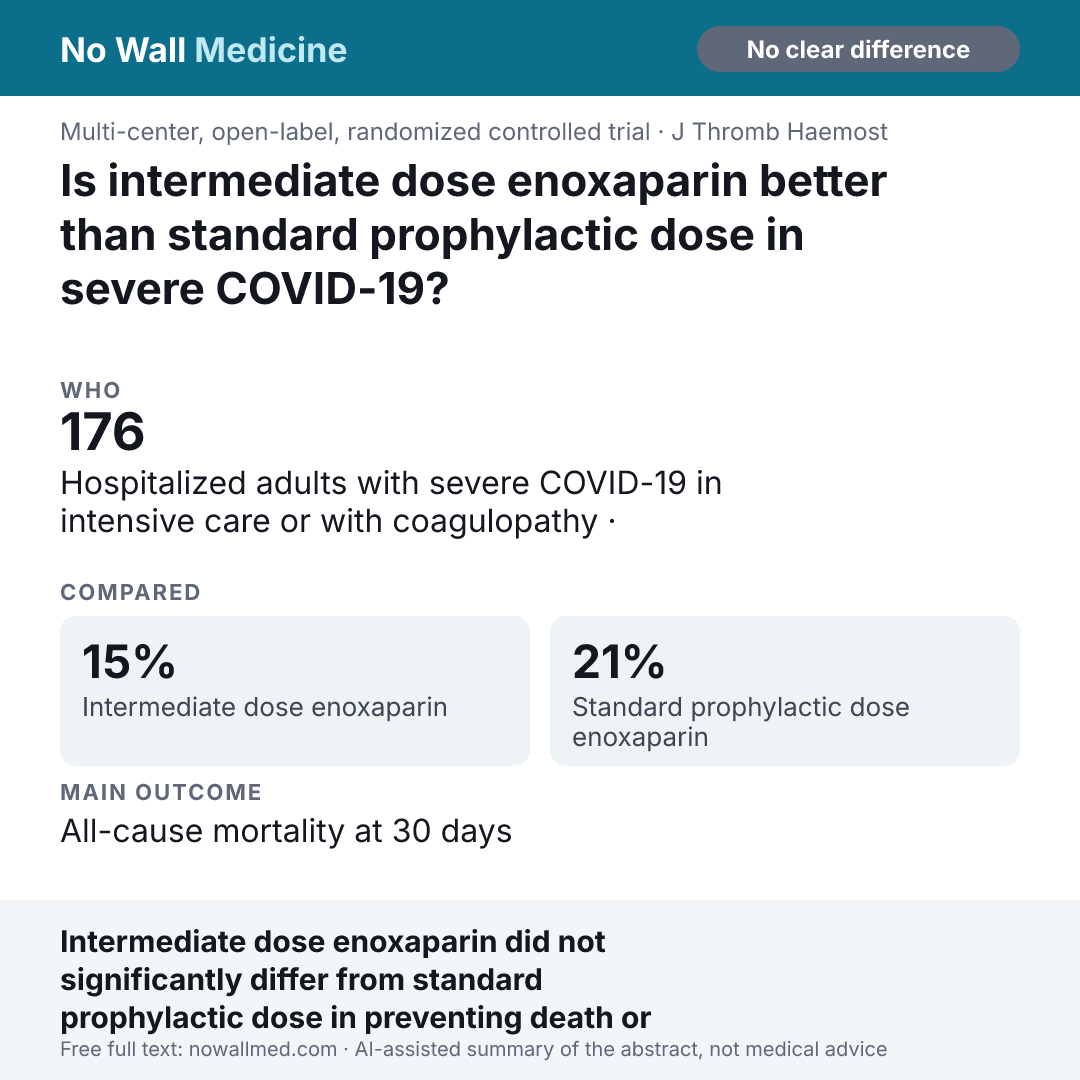
Standard prophylactic versus intermediate dose enoxaparin in adults with severe COVID-19: A multi-center, open-label, randomized controlled trial
Multi-center, open-label, randomized controlled trialNo clear difference
Is intermediate dose enoxaparin better than standard prophylactic dose in severe COVID-19?
Who
176
Hospitalized adults with severe COVID-19 in intensive care or with coagulopathy · Multi-center
Compared
15%Intermediate dose enoxaparin
21%Standard prophylactic dose enoxaparin
Main outcome
All-cause mortality at 30 days
Result: odds ratio, 0.66 (95% confidence interval, 0.30-1.45)
Bottom line: Intermediate dose enoxaparin did not significantly differ from standard prophylactic dose in preventing death or thrombosis.
J Thromb Haemost · 2021-07-18 · Save PNG
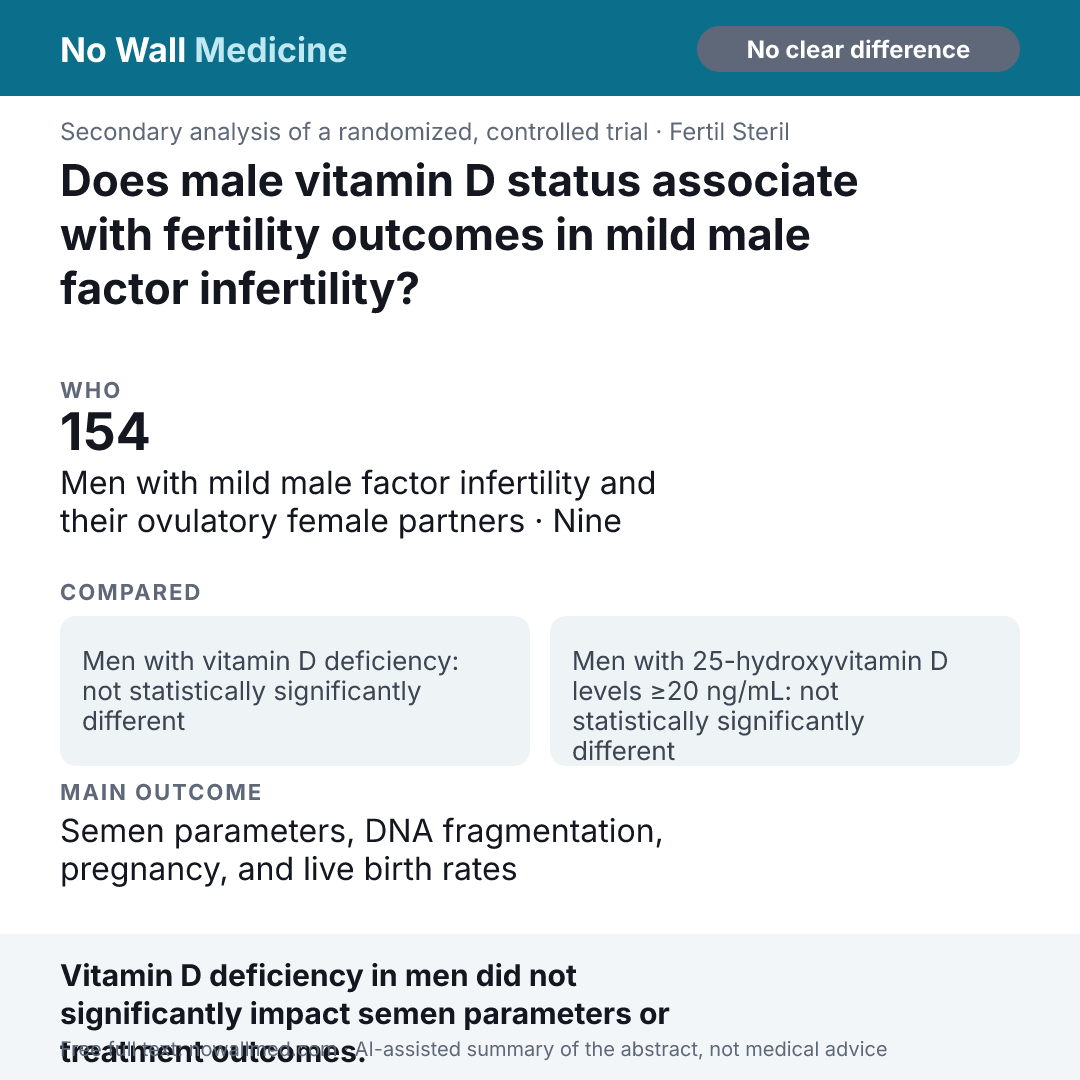
Male vitamin D status and male factor infertility
Secondary analysis of a randomized, controlled trialNo clear difference
Does male vitamin D status associate with fertility outcomes in mild male factor infertility?
Who
154
Men with mild male factor infertility and their ovulatory female partners · Nine fertility centers in the United States
Compared
Men with vitamin D deficiency: not statistically significantly different
Men with 25-hydroxyvitamin D levels ≥20 ng/mL: not statistically significantly different
Main outcome
Semen parameters, DNA fragmentation, pregnancy, and live birth rates
Result: adjusted odds ratio 9.0 (95% confidence interval 1.3 to 61.3)
Bottom line: Vitamin D deficiency in men did not significantly impact semen parameters or treatment outcomes.
Fertil Steril · 2021-07-18 · Save PNG
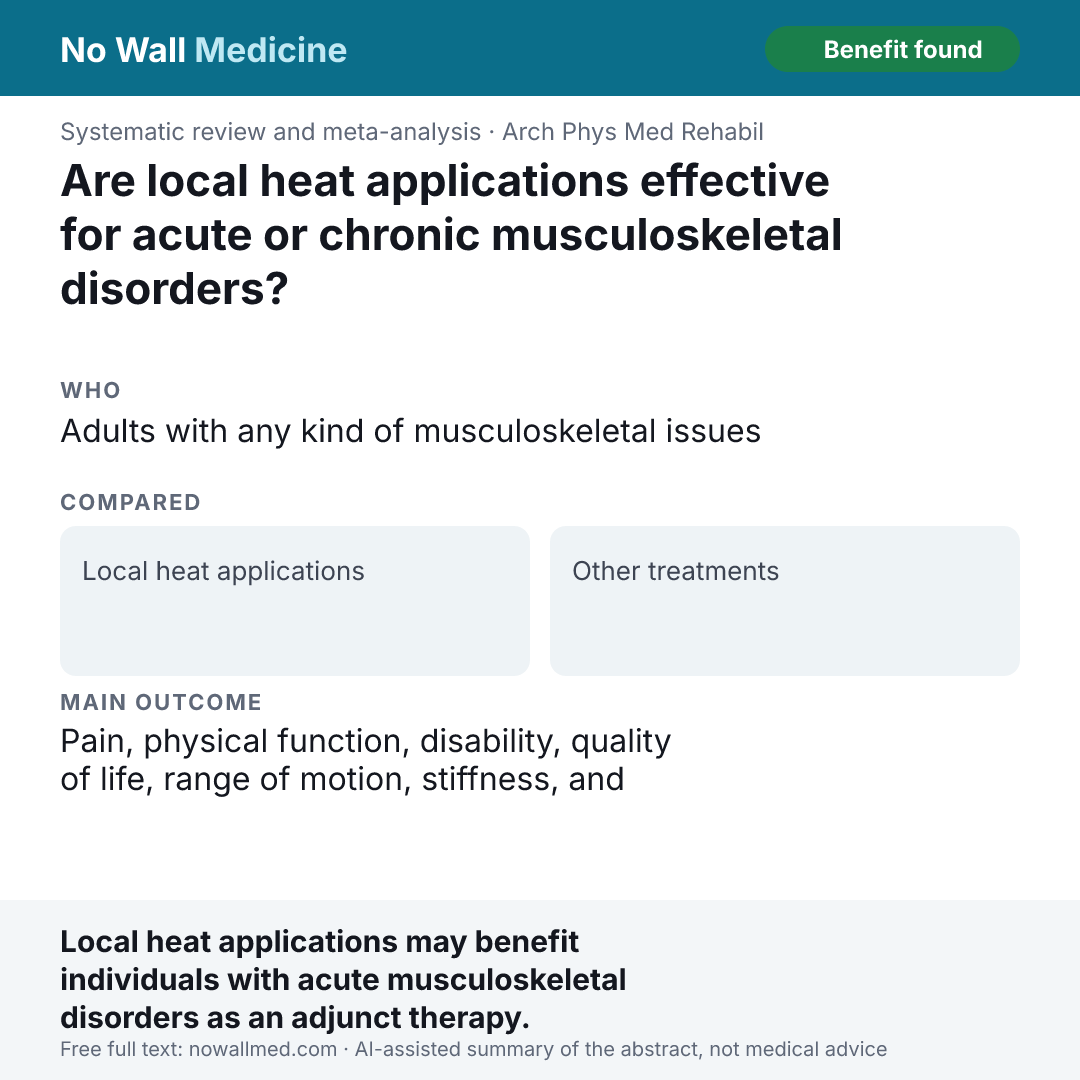
Local Heat Applications as a Treatment of Physical and Functional Parameters in Acute and Chronic Musculoskeletal Disorders or Pain
Systematic review and meta-analysisBenefit found
Are local heat applications effective for acute or chronic musculoskeletal disorders?
Who
Adults with any kind of musculoskeletal issues
Compared
Local heat applications
Other treatments
Main outcome
Pain, physical function, disability, quality of life, range of motion, stiffness, and strength
Bottom line: Local heat applications may benefit individuals with acute musculoskeletal disorders as an adjunct therapy.
Limitation: High heterogeneity and mostly an unclear risk of bias in included studies.
Arch Phys Med Rehabil · 2021-07-18 · Save PNG