Visual abstracts
New randomized trials and meta-analyses from leading journals at a glance: who was studied, what was compared, and what was found. Every paper is free to read in full.
All specialtiesCardiology 4877Oncology 4138Gastroenterology & Hepatology 1942Infectious Disease 3837Neurology 1905Psychiatry & Mental Health 2273Pulmonology 2143Critical Care 1365Endocrinology & Diabetes 2580Pediatrics 2980Surgery 2559Orthopedics & Sports Medicine 931Neurosurgery 537Cardiothoracic & Vascular Surgery 674Plastic & Reconstructive Surgery 591Nephrology 1133Rheumatology 823Hematology 1109Dermatology 621Ophthalmology 543Obstetrics & Gynecology 1686Public & Global Health 1058Radiology & Imaging 648Anesthesiology 986Urology 764ENT (Otolaryngology) 503Emergency Medicine 511Allergy & Immunology 313Geriatrics 981Family Medicine & Primary Care 562Medical Genetics & Genomics 676Pathology & Laboratory Medicine 159Physical Medicine & Rehabilitation 757Palliative Care 444Nutrition 1588Digital Health & AI 2201General Medicine 321
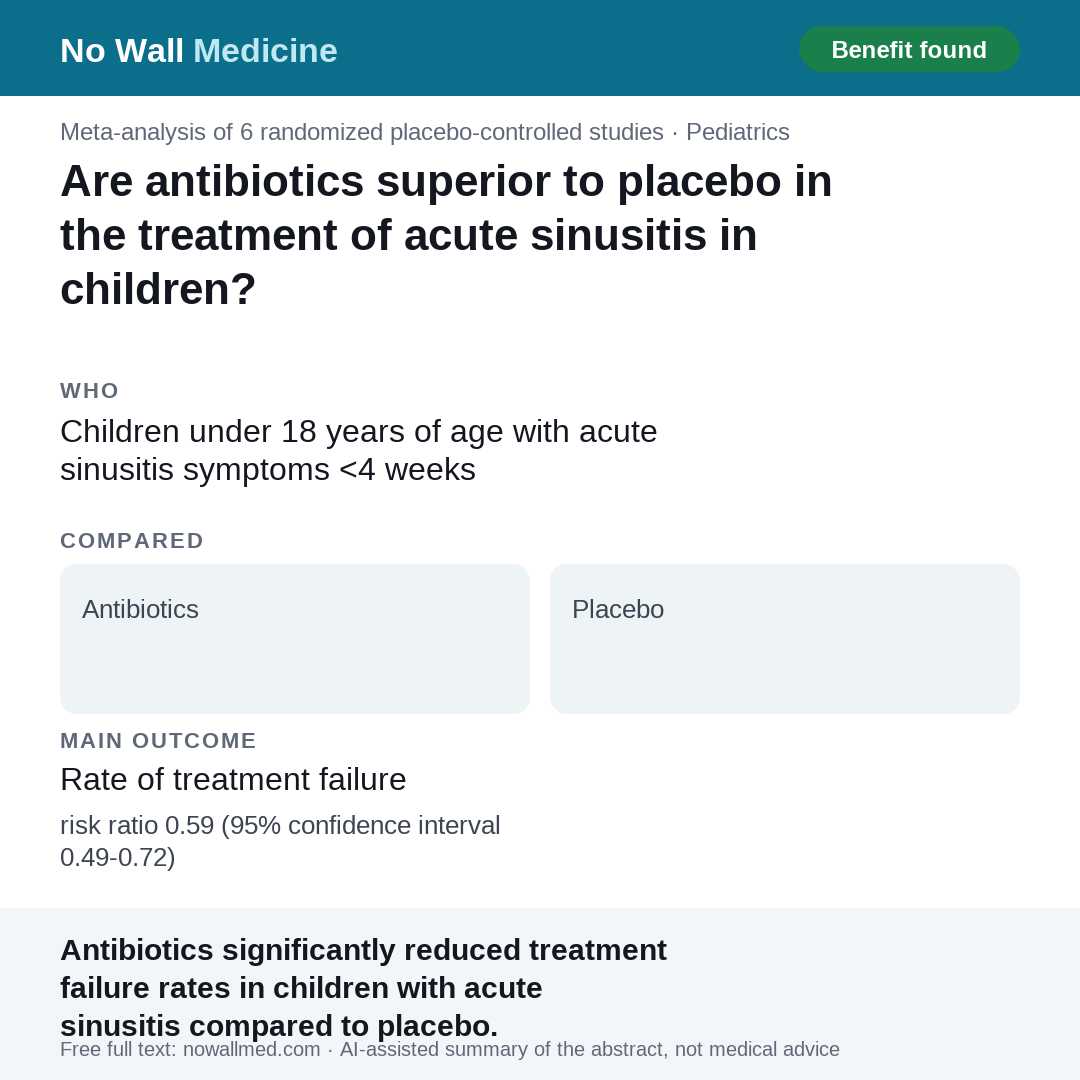
Antibiotics for Acute Sinusitis in Children: A Meta-Analysis
Meta-analysis of 6 randomized placebo-controlled studiesBenefit found
Are antibiotics superior to placebo in the treatment of acute sinusitis in children?
Who
Children under 18 years of age with acute sinusitis symptoms <4 weeks
Compared
Antibiotics
Placebo
Main outcome
Rate of treatment failure
Result: risk ratio 0.59 (95% confidence interval 0.49-0.72)
Bottom line: Antibiotics significantly reduced treatment failure rates in children with acute sinusitis compared to placebo.
Limitation: A small number of studies were eligible and included studies differed in methodology.
Pediatrics · 2024-04-22Download image
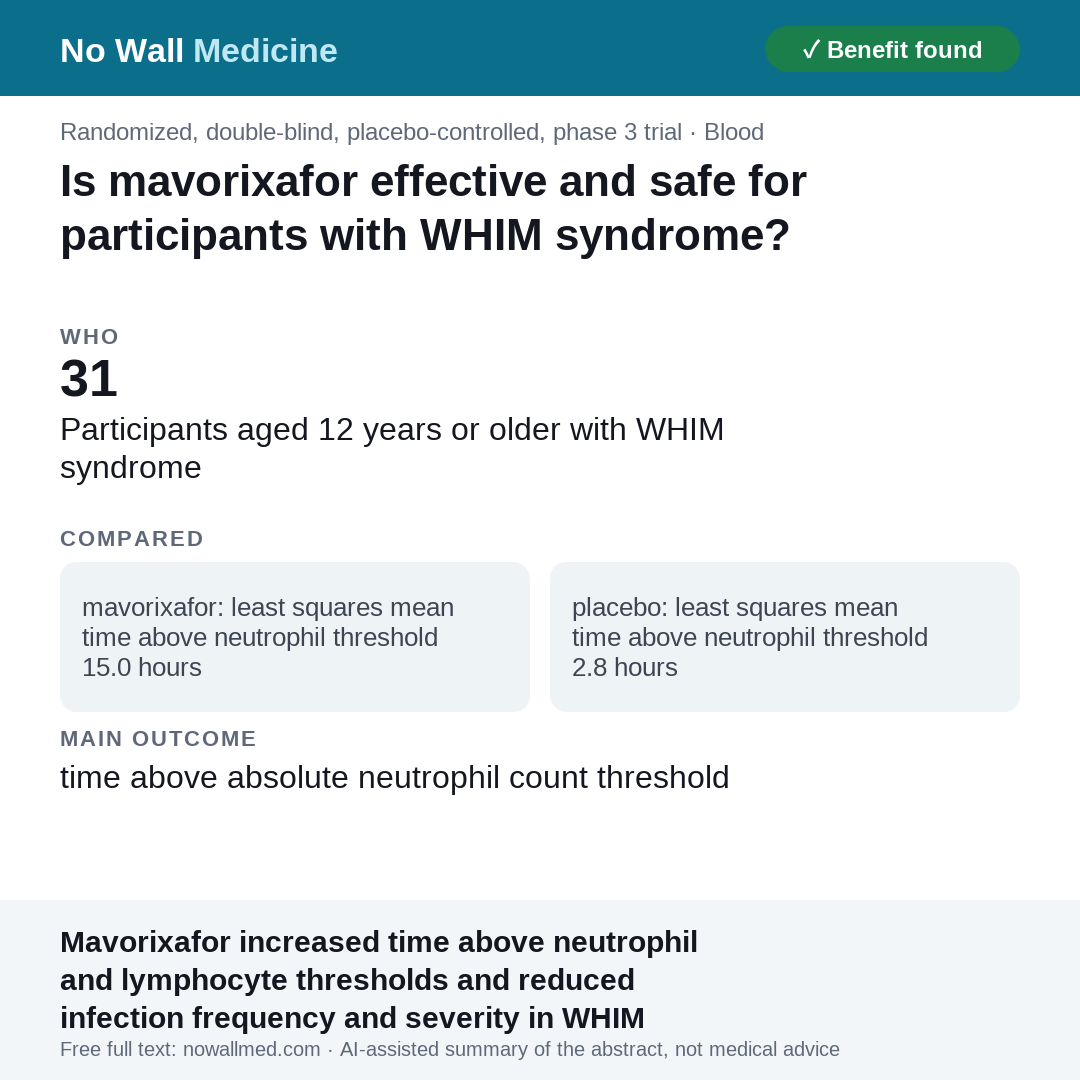
A phase 3 randomized trial of mavorixafor, a CXCR4 antagonist, for WHIM syndrome
Randomized, double-blind, placebo-controlled, phase 3 trialBenefit found
Is mavorixafor effective and safe for participants with WHIM syndrome?
Who
31
Participants aged 12 years or older with WHIM syndrome
Compared
mavorixafor: least squares mean time above neutrophil threshold 15.0 hours
placebo: least squares mean time above neutrophil threshold 2.8 hours
Main outcome
time above absolute neutrophil count threshold
Bottom line: Mavorixafor increased time above neutrophil and lymphocyte thresholds and reduced infection frequency and severity in WHIM syndrome.
Blood · 2024-04-21Download image
Efficacy and safety of withholding antimicrobial therapy in children with cancer, fever, and neutropenia, with a demonstrated viral respiratory infection: a randomized clinical trial
Prospective, multicenter, noninferiority, randomized studyBenefit found
Is withholding antimicrobial therapy safe and effective in children with febrile neutropenia and viral respiratory infection?
Who
139
Children with cancer and febrile neutropenia with a demonstrated viral respiratory infection · Seven hospitals in Chile
Compared
Maintain antimicrobial therapy: 66/70 (94%)
Withdraw antimicrobial therapy: 66/69 (96%)
Main outcome
Percentage of episodes with an uneventful resolution
Result: relative risk 1.01 (95% CI 0.93 to 1.09)
Bottom line: Withholding antimicrobial therapy is noninferior to maintaining it in children with febrile neutropenia and viral respiratory infection.
Clin Microbiol Infect · 2024-04-20Download image

Ultra-processed foods and human health: An umbrella review and updated meta-analyses of observational evidence
Umbrella review and updated meta-analysesHarm found
Is ultra-processed food consumption associated with various human health outcomes?
Who
Observational studies on ultra-processed food consumption
Compared
High ultra-processed food consumption
Lowest quartile consumption
Main outcome
Association between ultra-processed food consumption and health outcomes
Bottom line: High ultra-processed food consumption is associated with increased risk of chronic diseases and mental health disorders.
Clin Nutr · 2024-04-18Download image

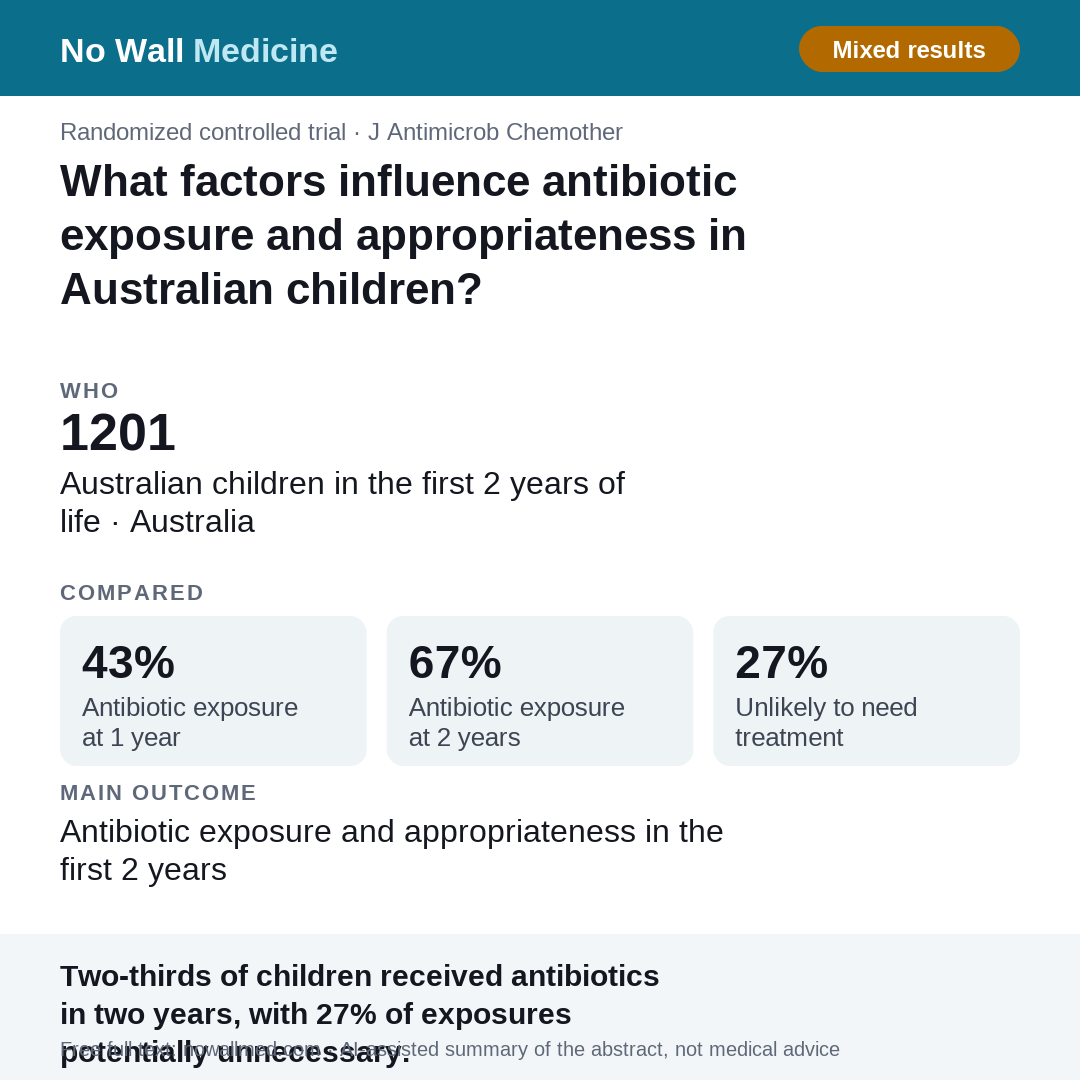
Inappropriate prescribing contributes to high antibiotic exposure in young children in Australia
Randomized controlled trialMixed results
What factors influence antibiotic exposure and appropriateness in Australian children?
Who
1201
Australian children in the first 2 years of life · Australia
Compared
43%Antibiotic exposure at 1 year
67%Antibiotic exposure at 2 years
27%Unlikely to need treatment
Main outcome
Antibiotic exposure and appropriateness in the first 2 years
Bottom line: Two-thirds of children received antibiotics in two years, with 27% of exposures potentially unnecessary.
J Antimicrob Chemother · 2024-04-17Download image
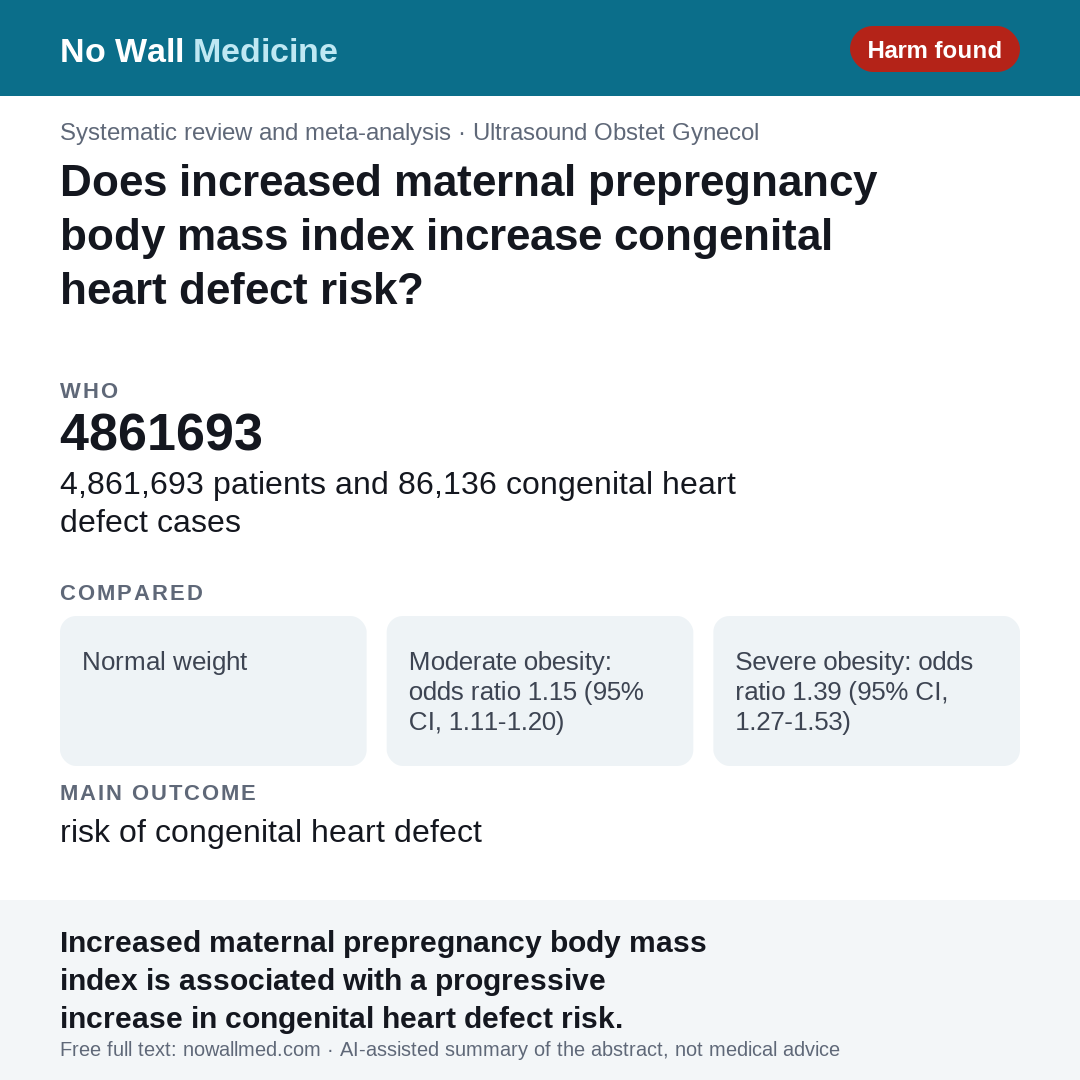
Maternal prepregnancy weight as an independent risk factor for congenital heart defect: systematic review and meta-analysis stratified by subtype and severity of defect
Systematic review and meta-analysisHarm found
Does increased maternal prepregnancy body mass index increase congenital heart defect risk?
Who
4861693
4,861,693 patients and 86,136 congenital heart defect cases
Compared
Normal weight
Moderate obesity: odds ratio 1.15 (95% CI, 1.11-1.20)
Severe obesity: odds ratio 1.39 (95% CI, 1.27-1.53)
Main outcome
risk of congenital heart defect
Result: odds ratio 1.15 (95% CI, 1.11-1.20) to 1.39 (95% CI, 1.27-1.53)
Bottom line: Increased maternal prepregnancy body mass index is associated with a progressive increase in congenital heart defect risk.
Ultrasound Obstet Gynecol · 2024-04-17Download image
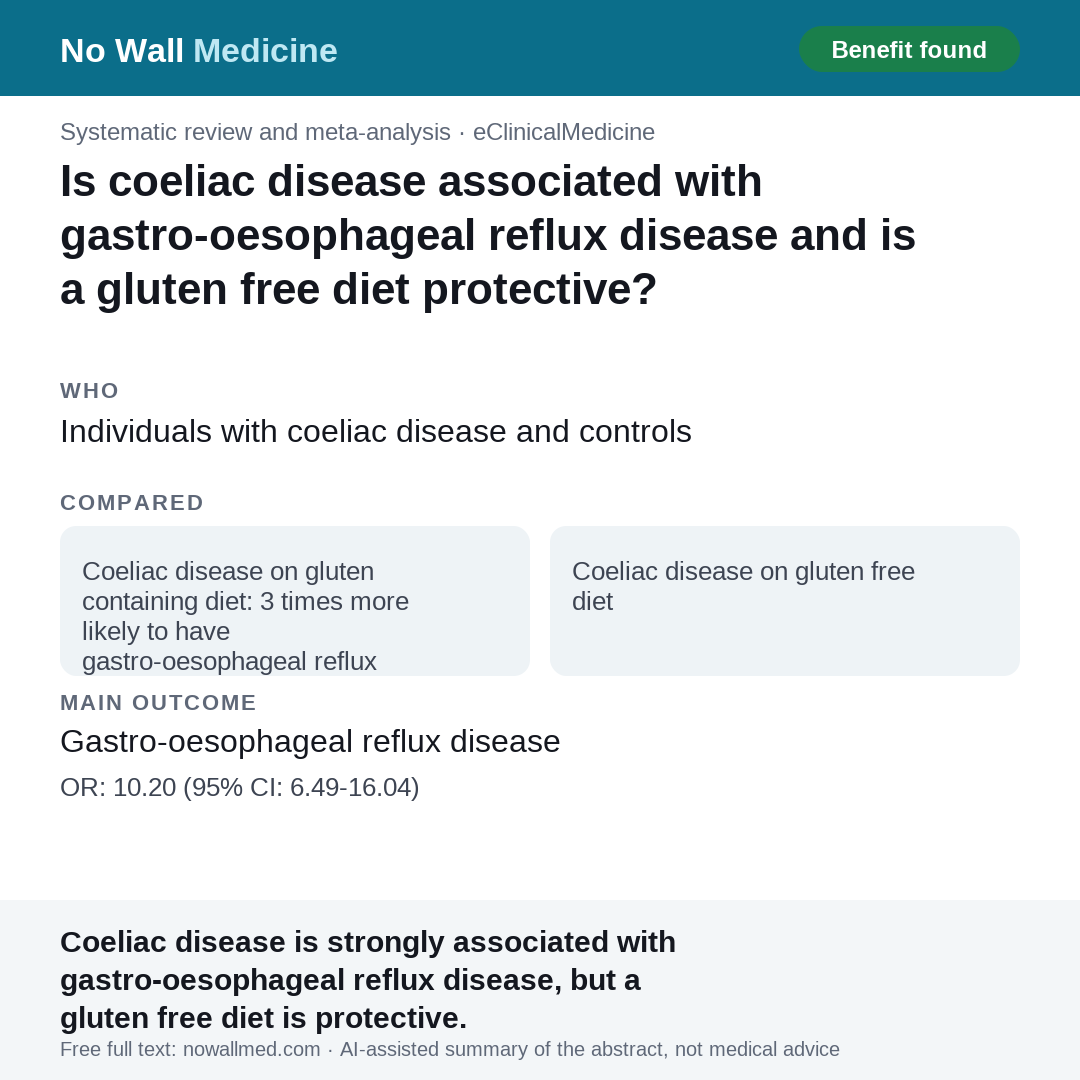
Coeliac disease is a strong risk factor for Gastro-oesophageal reflux disease while a gluten free diet is protective: a systematic review and meta-analysis
Systematic review and meta-analysisBenefit found
Is coeliac disease associated with gastro-oesophageal reflux disease and is a gluten free diet protective?
Who
Individuals with coeliac disease and controls
Compared
Coeliac disease on gluten containing diet: 3 times more likely to have gastro-oesophageal reflux disease
Coeliac disease on gluten free diet
Main outcome
Gastro-oesophageal reflux disease
Result: OR: 10.20 (95% CI: 6.49-16.04)
Bottom line: Coeliac disease is strongly associated with gastro-oesophageal reflux disease, but a gluten free diet is protective.
Funded by: NHMRC Investigator Grant
eClinicalMedicine · 2024-04-16Download image
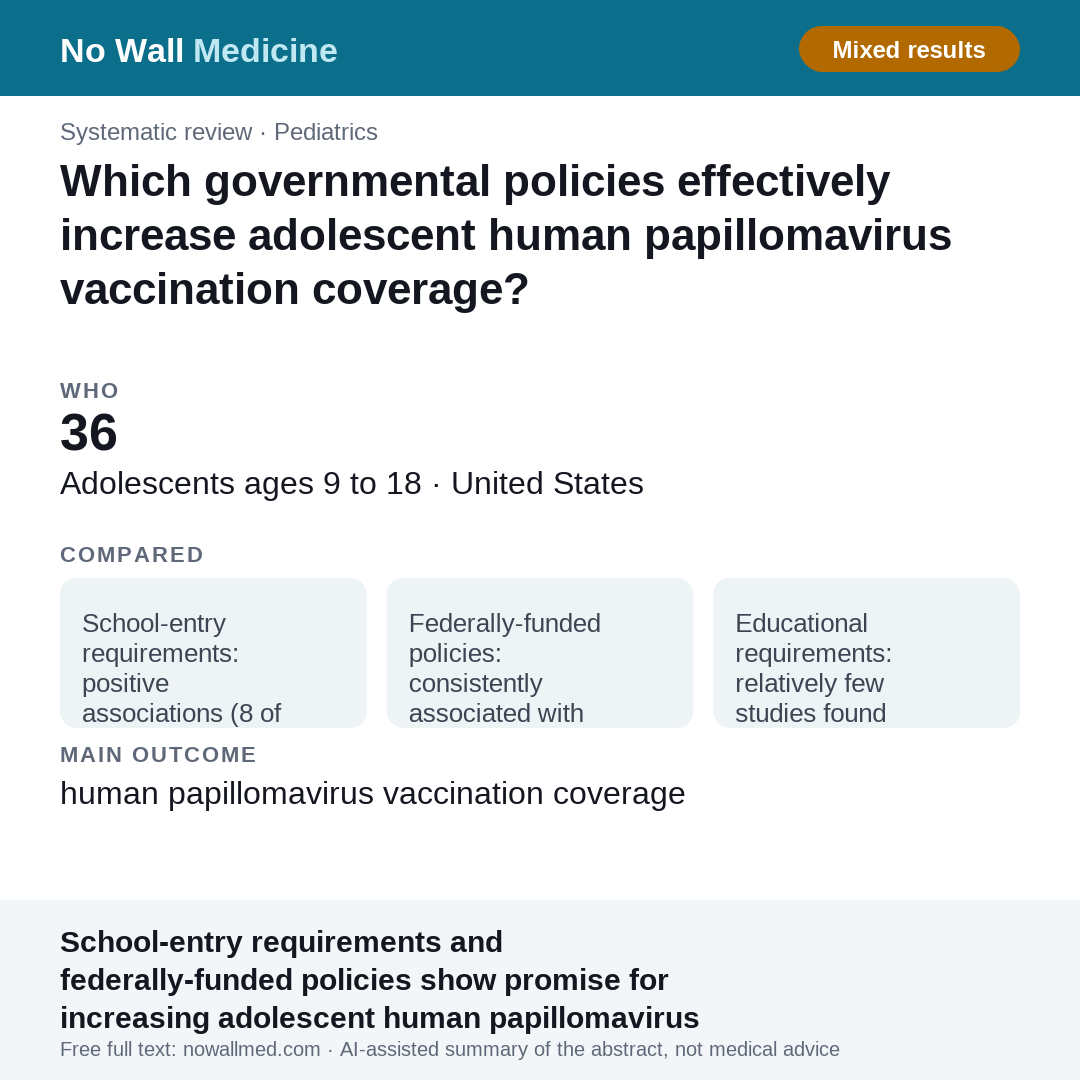
Policy Approaches for Increasing Adolescent HPV Vaccination Coverage: A Systematic Review
Systematic reviewMixed results
Which governmental policies effectively increase adolescent human papillomavirus vaccination coverage?
Who
36
Adolescents ages 9 to 18 · United States
Compared
School-entry requirements: positive associations (8 of 14)
Federally-funded policies: consistently associated with higher coverage (7 of 9)
Educational requirements: relatively few studies found associations (2 of 8)
Main outcome
human papillomavirus vaccination coverage
Bottom line: School-entry requirements and federally-funded policies show promise for increasing adolescent human papillomavirus vaccination coverage.
Limitation: Studies used limited vaccination data sources and non- or quasi-experimental designs.
Pediatrics · 2024-04-16Download image
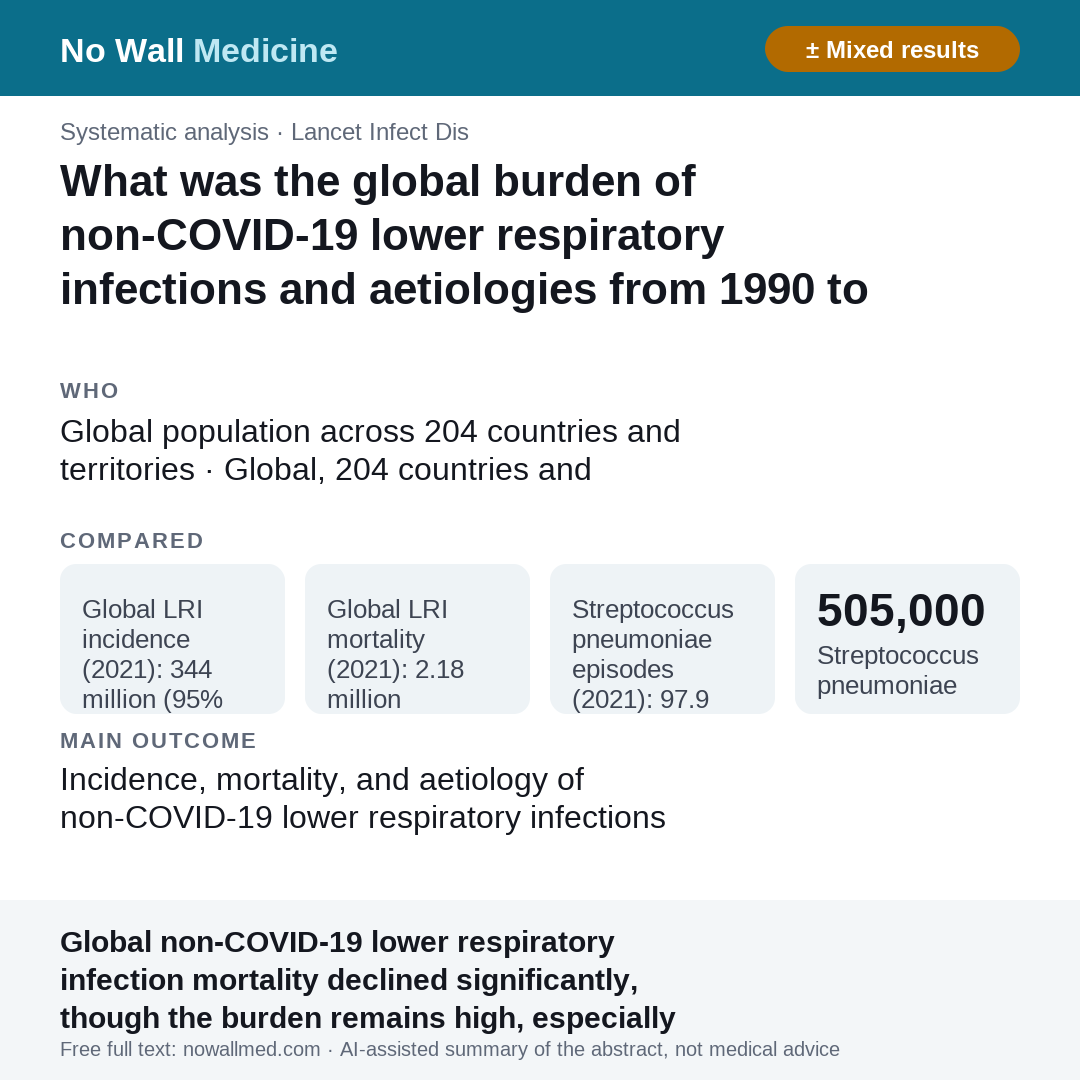
Global, regional, and national incidence and mortality burden of non-COVID-19 lower respiratory infections and aetiologies, 1990-2021: a systematic analysis from the Global Burden of Disease Study 2021
Systematic analysisMixed results
What was the global burden of non-COVID-19 lower respiratory infections and aetiologies from 1990 to 2021?
Who
Global population across 204 countries and territories · Global, 204 countries and territories
Compared
Global LRI incidence (2021): 344 million (95% uncertainty interval 325-364)
Global LRI mortality (2021): 2.18 million (1.98-2.36)
Streptococcus pneumoniae episodes (2021): 97.9 million (92.1-104.0)
505,000Streptococcus pneumoniae deaths (2021) (454,000-555,000)
Main outcome
Incidence, mortality, and aetiology of non-COVID-19 lower respiratory infections
Bottom line: Global non-COVID-19 lower respiratory infection mortality declined significantly, though the burden remains high, especially in low-income countries.
Lancet Infect Dis · 2024-04-15Download image
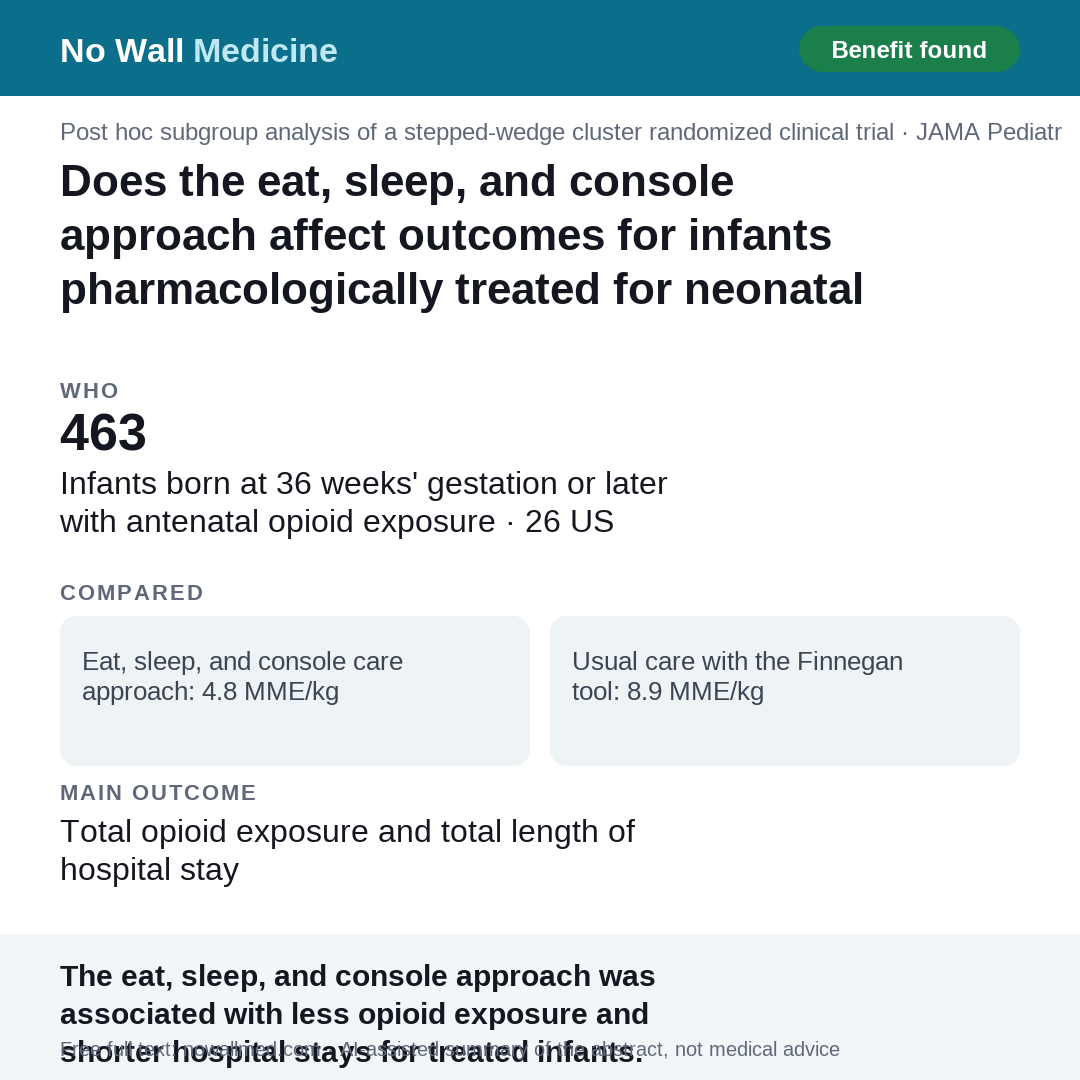
Influence of Eat, Sleep, and Console on Infants Pharmacologically Treated for Opioid Withdrawal: A Post Hoc Subgroup Analysis of the ESC-NOW Randomized Clinical Trial
Post hoc subgroup analysis of a stepped-wedge cluster randomized clinical trialBenefit found
Does the eat, sleep, and console approach affect outcomes for infants pharmacologically treated for neonatal opioid withdrawal syndrome?
Who
463
Infants born at 36 weeks' gestation or later with antenatal opioid exposure · 26 US hospitals
Compared
Eat, sleep, and console care approach: 4.8 MME/kg
Usual care with the Finnegan tool: 8.9 MME/kg
Main outcome
Total opioid exposure and total length of hospital stay
Result: absolute difference of 4.1 morphine milligram equivalents per kilogram (95% CI, 1.3-7.0)
Bottom line: The eat, sleep, and console approach was associated with less opioid exposure and shorter hospital stays for treated infants.
JAMA Pediatr · 2024-04-15Download image
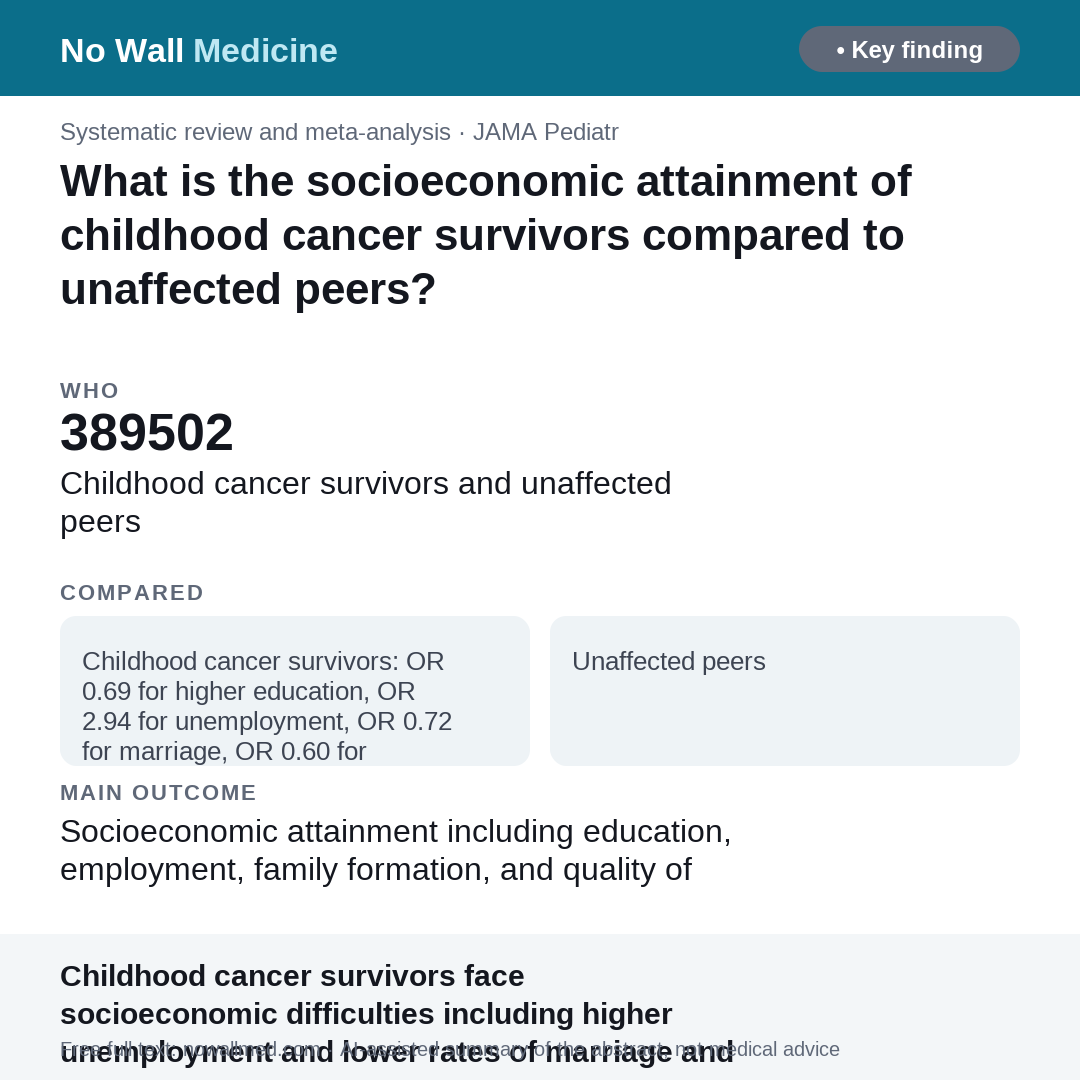
Burden of Childhood Cancer and the Social and Economic Challenges in Adulthood: A Systematic Review and Meta-Analysis
Systematic review and meta-analysisHarm found
What is the socioeconomic attainment of childhood cancer survivors compared to unaffected peers?
Who
389502
Childhood cancer survivors and unaffected peers
Compared
Childhood cancer survivors: OR 0.69 for higher education, OR 2.94 for unemployment, OR 0.72 for marriage, OR 0.60 for parenthood
Unaffected peers
Main outcome
Socioeconomic attainment including education, employment, family formation, and quality of life
Bottom line: Childhood cancer survivors face socioeconomic difficulties including higher unemployment and lower rates of marriage and parenthood.
JAMA Pediatr · 2024-04-15Download image
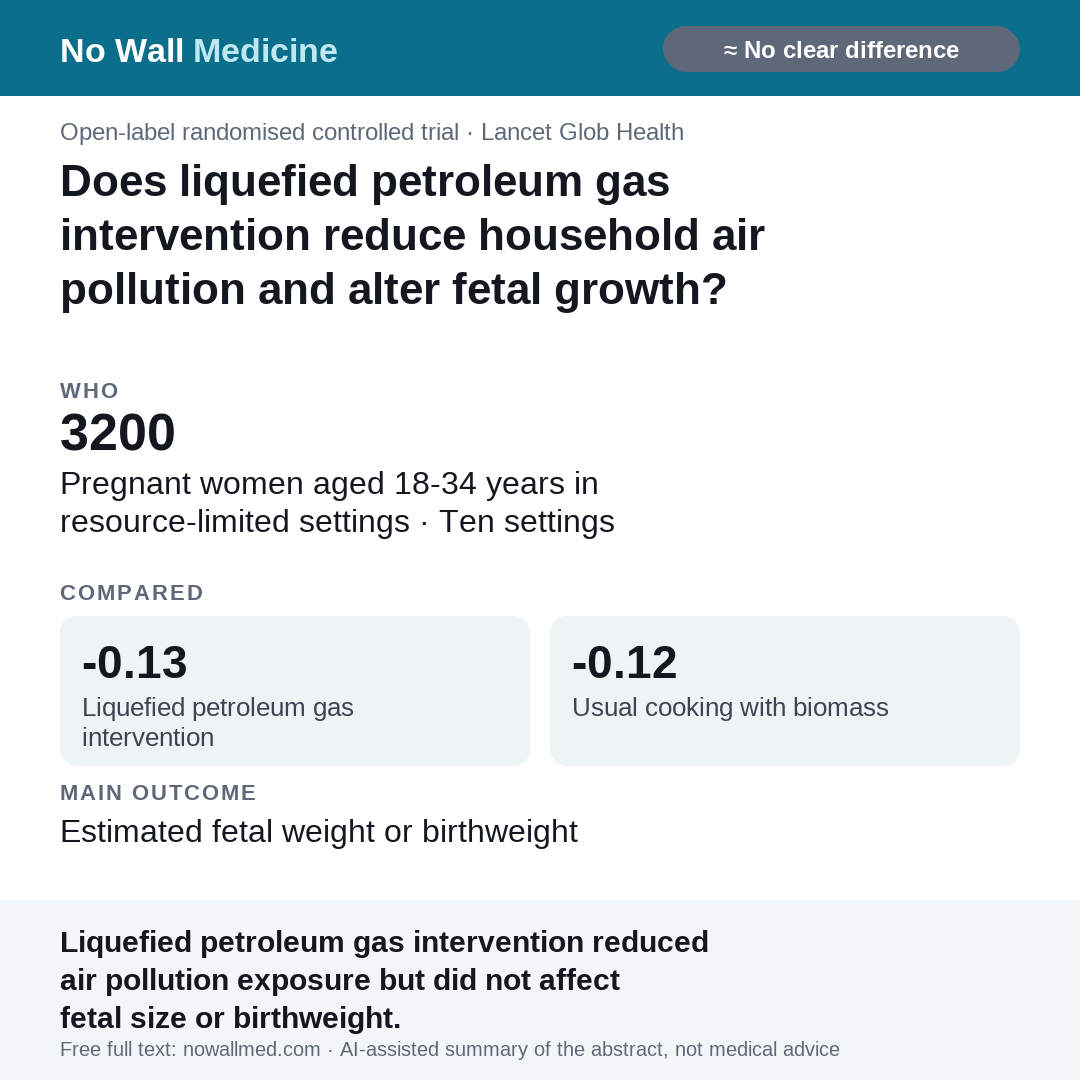
Cooking with liquefied petroleum gas or biomass and fetal growth outcomes: a multi-country randomised controlled trial
Open-label randomised controlled trialNo clear difference
Does liquefied petroleum gas intervention reduce household air pollution and alter fetal growth?
Who
3200
Pregnant women aged 18-34 years in resource-limited settings · Ten settings across Guatemala, India, Peru, and Rwanda
Compared
-0.13Liquefied petroleum gas intervention
-0.12Usual cooking with biomass
Main outcome
Estimated fetal weight or birthweight
Bottom line: Liquefied petroleum gas intervention reduced air pollution exposure but did not affect fetal size or birthweight.
Funded by: US National Institutes of Health and Bill & Melinda Gates Foundation
Lancet Glob Health · 2024-04-14Download image
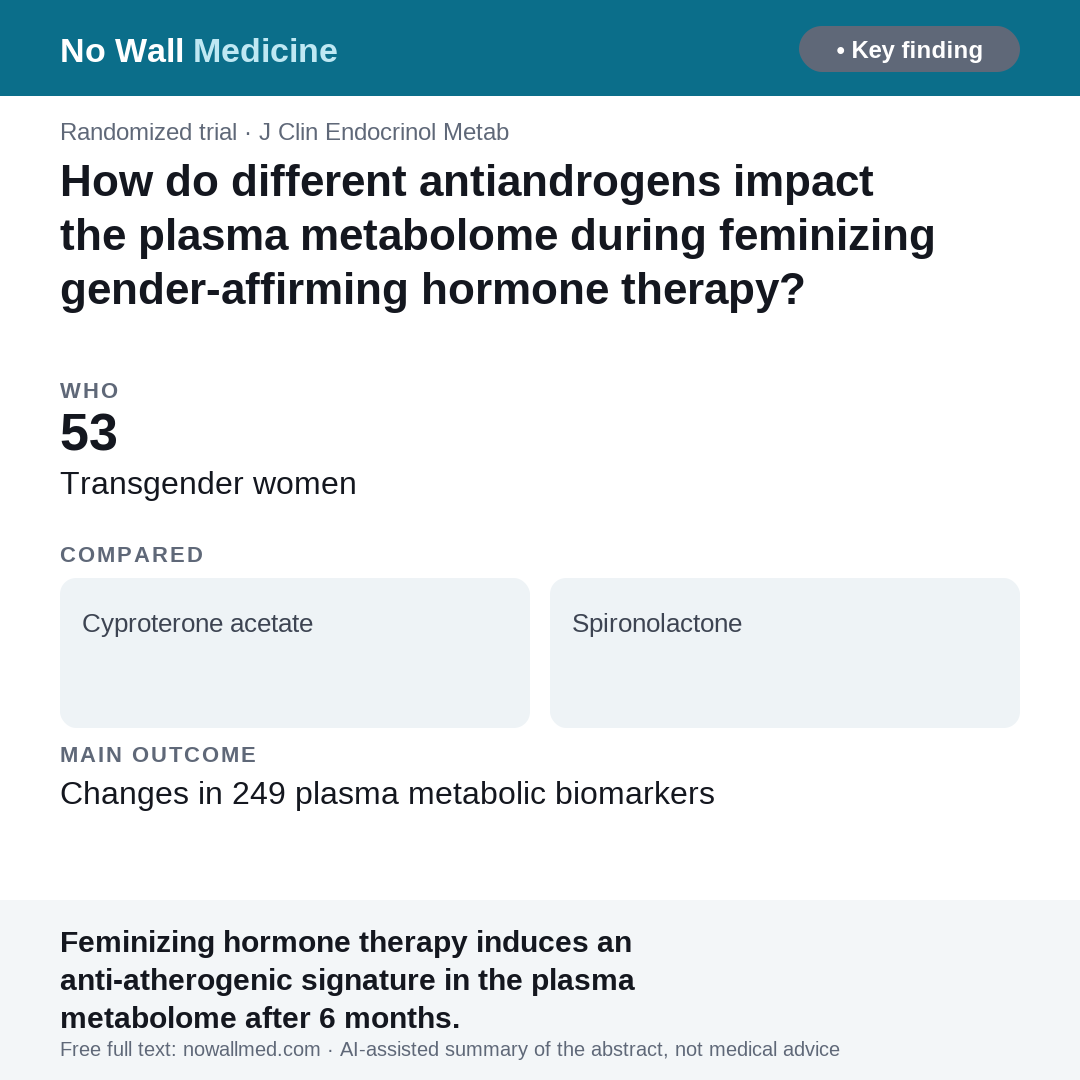
Impact of Distinct Antiandrogen Exposures on the Plasma Metabolome in Feminizing Gender-affirming Hormone Therapy
Randomized trialBenefit found
How do different antiandrogens impact the plasma metabolome during feminizing gender-affirming hormone therapy?
Who
53
Transgender women
Compared
Cyproterone acetate
Spironolactone
Main outcome
Changes in 249 plasma metabolic biomarkers
Bottom line: Feminizing hormone therapy induces an anti-atherogenic signature in the plasma metabolome after 6 months.
J Clin Endocrinol Metab · 2024-04-13Download image
Effectiveness of conservative non-pharmacological interventions in people with muscular dystrophies: a systematic review and meta-analysis
Systematic review and meta-analysisBenefit found
Are conservative non-pharmacological interventions effective for people with muscular dystrophies?
Who
957
People with muscular dystrophies
Compared
Conservative non-pharmacological interventions
Usual care
Main outcome
Physical management effectiveness
Bottom line: Low-quality evidence suggests strength training may improve function, balance, and well-being in muscular dystrophies.
Limitation: Most studies were mostly at high risk of bias.
J Neurol Neurosurg Psychiatry · 2024-04-12Download image

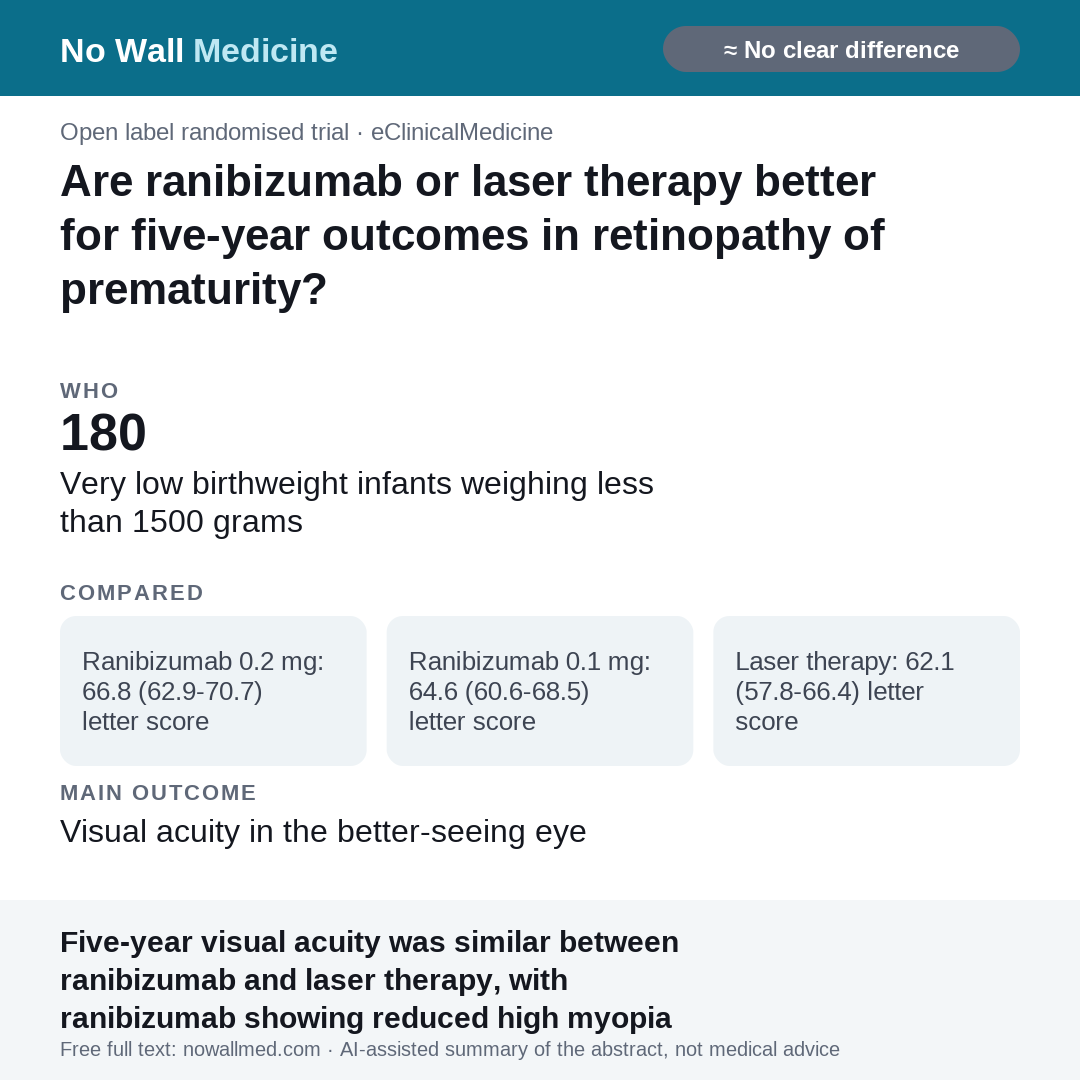
Ranibizumab versus laser therapy for the treatment of very low birthweight infants with retinopathy of prematurity (RAINBOW): five-year outcomes of a randomised trial
Open label randomised trialNo clear difference
Are ranibizumab or laser therapy better for five-year outcomes in retinopathy of prematurity?
Who
180
Very low birthweight infants weighing less than 1500 grams
Compared
Ranibizumab 0.2 mg: 66.8 (62.9-70.7) letter score
Ranibizumab 0.1 mg: 64.6 (60.6-68.5) letter score
Laser therapy: 62.1 (57.8-66.4) letter score
Main outcome
Visual acuity in the better-seeing eye
Result: differences in means: ranibizumab 0.2 mg v laser: 4.7 (95% CI: -1.1, 10.5)
Bottom line: Five-year visual acuity was similar between ranibizumab and laser therapy, with ranibizumab showing reduced high myopia frequency.
Funded by: Novartis Pharma AG
eClinicalMedicine · 2024-04-11Download image
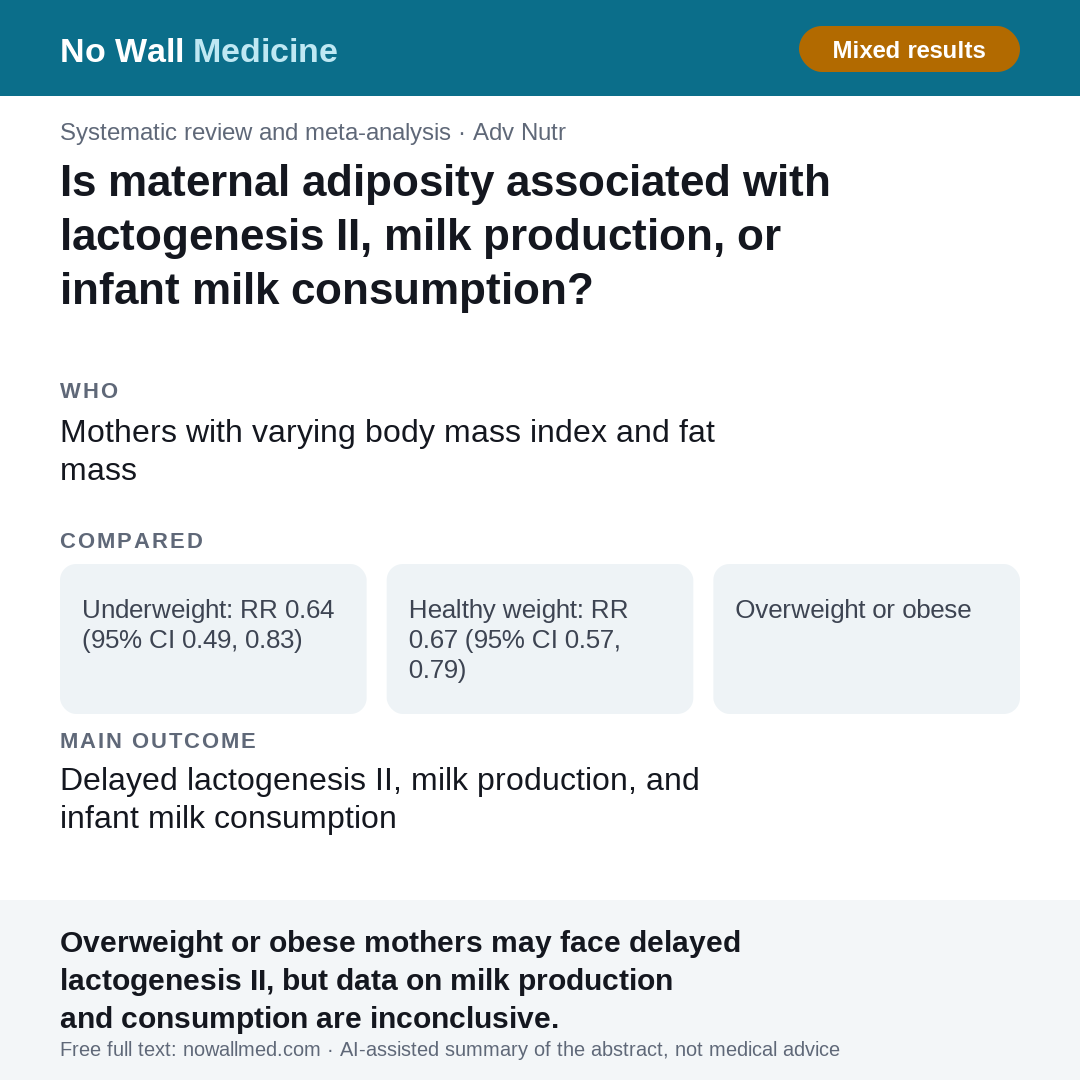
Is Maternal Body Weight or Composition Associated with Onset of Lactogenesis II, Human Milk Production, or Infant Consumption of Mother's Own Milk? A Systematic Review and Meta-Analysis
Systematic review and meta-analysisMixed results
Is maternal adiposity associated with lactogenesis II, milk production, or infant milk consumption?
Who
Mothers with varying body mass index and fat mass
Compared
Underweight: RR 0.64 (95% CI 0.49, 0.83)
Healthy weight: RR 0.67 (95% CI 0.57, 0.79)
Overweight or obese
Main outcome
Delayed lactogenesis II, milk production, and infant milk consumption
Result: RR 0.64 (95% CI 0.49, 0.83) for underweight vs overweight/obese
Bottom line: Overweight or obese mothers may face delayed lactogenesis II, but data on milk production and consumption are inconclusive.
Limitation: The included studies do not adequately represent mothers with obesity and certainty of evidence was very low.
Adv Nutr · 2024-04-11Download image
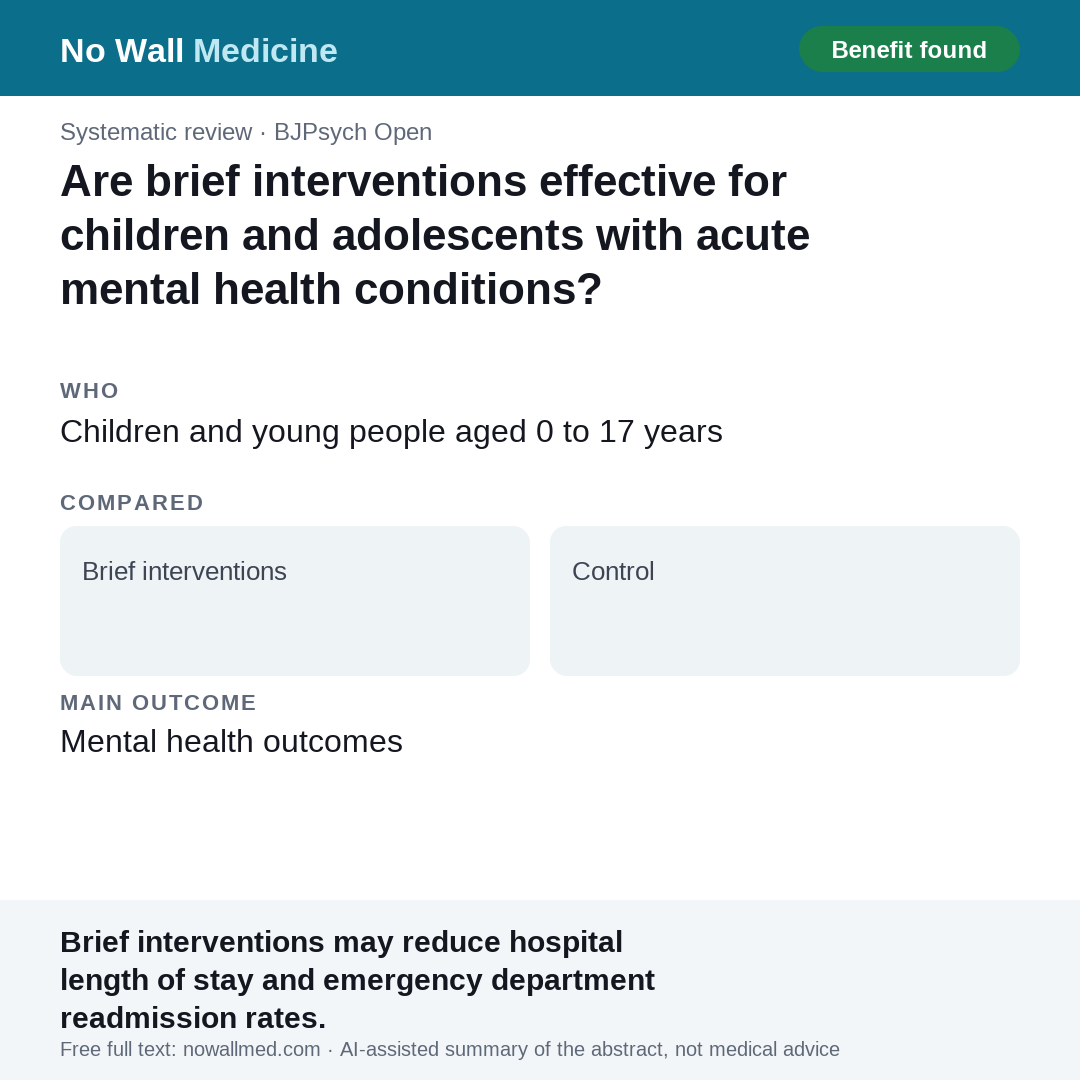
Evidence-based brief interventions targeting acute mental health presentations for children and adolescents: systematic review
Systematic reviewBenefit found
Are brief interventions effective for children and adolescents with acute mental health conditions?
Who
Children and young people aged 0 to 17 years
Compared
Brief interventions
Control
Main outcome
Mental health outcomes
Bottom line: Brief interventions may reduce hospital length of stay and emergency department readmission rates.
BJPsych Open · 2024-04-11Download image
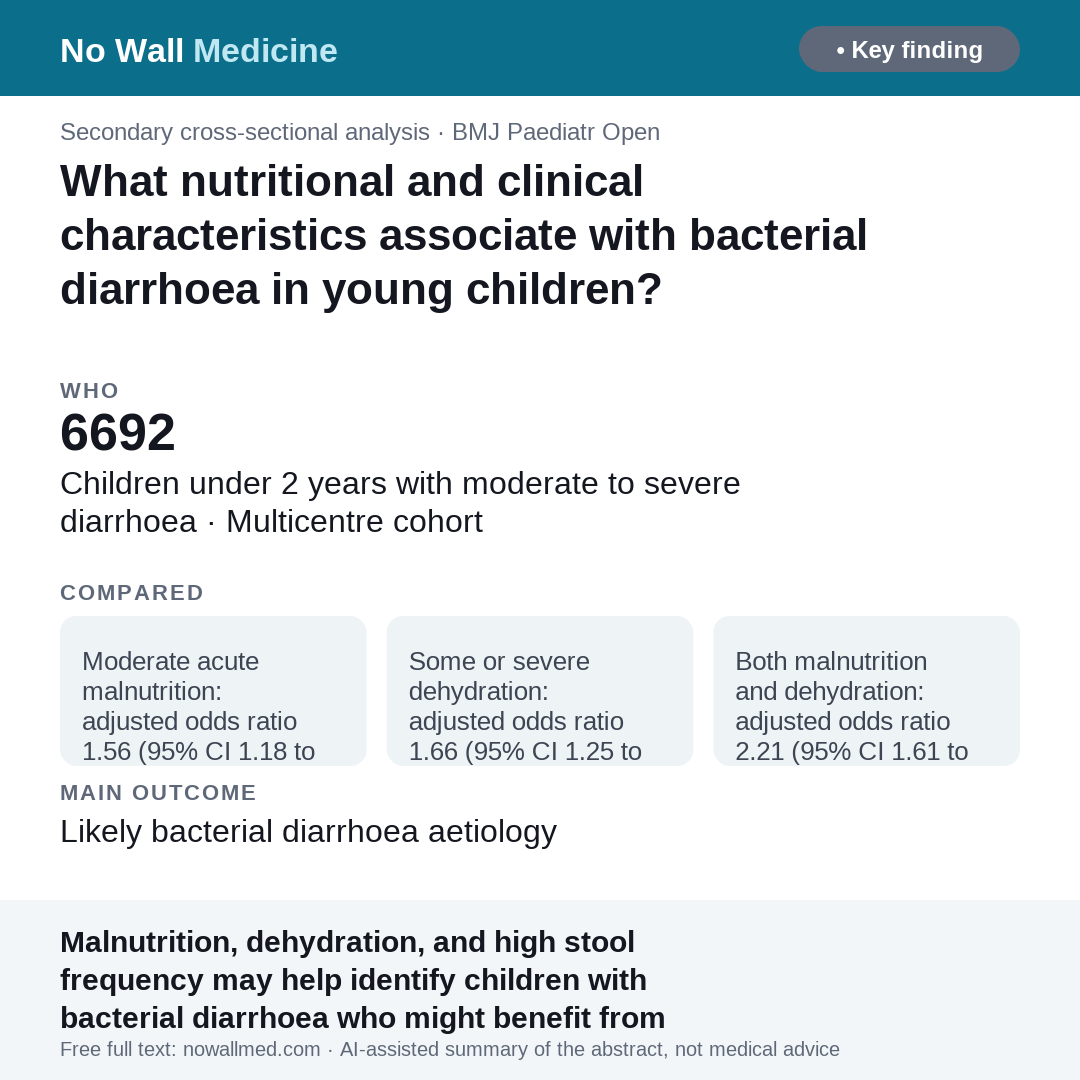
Clinical and nutritional correlates of bacterial diarrhoea aetiology in young children: a secondary cross-sectional analysis of the ABCD trial
Secondary cross-sectional analysisBenefit found
What nutritional and clinical characteristics associate with bacterial diarrhoea in young children?
Who
6692
Children under 2 years with moderate to severe diarrhoea · Multicentre cohort
Compared
Moderate acute malnutrition: adjusted odds ratio 1.56 (95% CI 1.18 to 2.08)
Some or severe dehydration: adjusted odds ratio 1.66 (95% CI 1.25 to 2.22)
Both malnutrition and dehydration: adjusted odds ratio 2.21 (95% CI 1.61 to 3.06)
Main outcome
Likely bacterial diarrhoea aetiology
Bottom line: Malnutrition, dehydration, and high stool frequency may help identify children with bacterial diarrhoea who might benefit from antibiotics.
BMJ Paediatr Open · 2024-04-11Download image
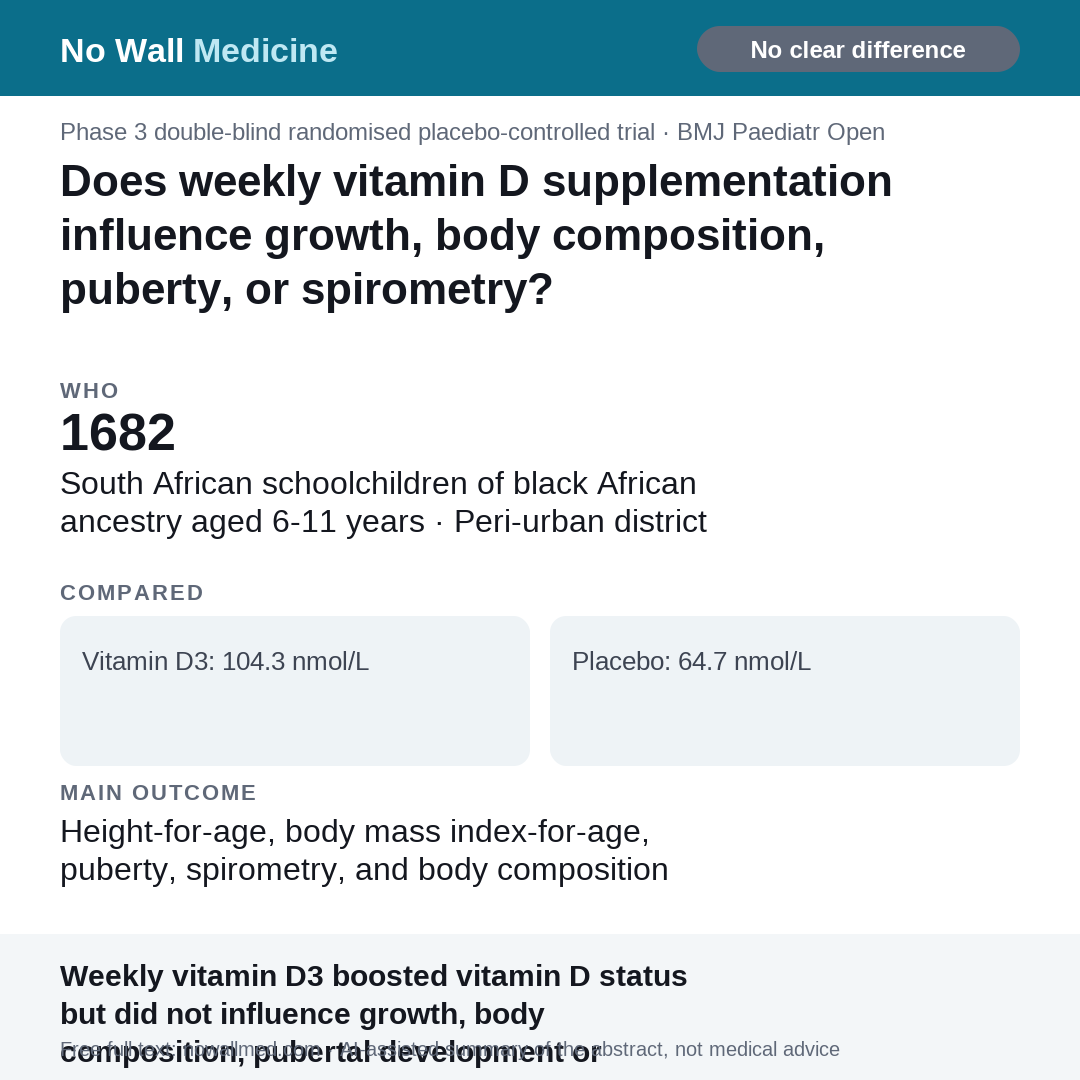
Influence of vitamin D supplementation on growth, body composition, pubertal development and spirometry in South African schoolchildren: a randomised controlled trial (ViDiKids)
Phase 3 double-blind randomised placebo-controlled trialNo clear difference
Does weekly vitamin D supplementation influence growth, body composition, puberty, or spirometry?
Who
1682
South African schoolchildren of black African ancestry aged 6-11 years · Peri-urban district of Cape Town, South Africa
Compared
Vitamin D3: 104.3 nmol/L
Placebo: 64.7 nmol/L
Main outcome
Height-for-age, body mass index-for-age, puberty, spirometry, and body composition
Result: adjusted mean difference -0.08 (95% CI -0.19 to 0.03) for height-for-age
Bottom line: Weekly vitamin D3 boosted vitamin D status but did not influence growth, body composition, pubertal development or spirometric outcomes.
BMJ Paediatr Open · 2024-04-10Download image
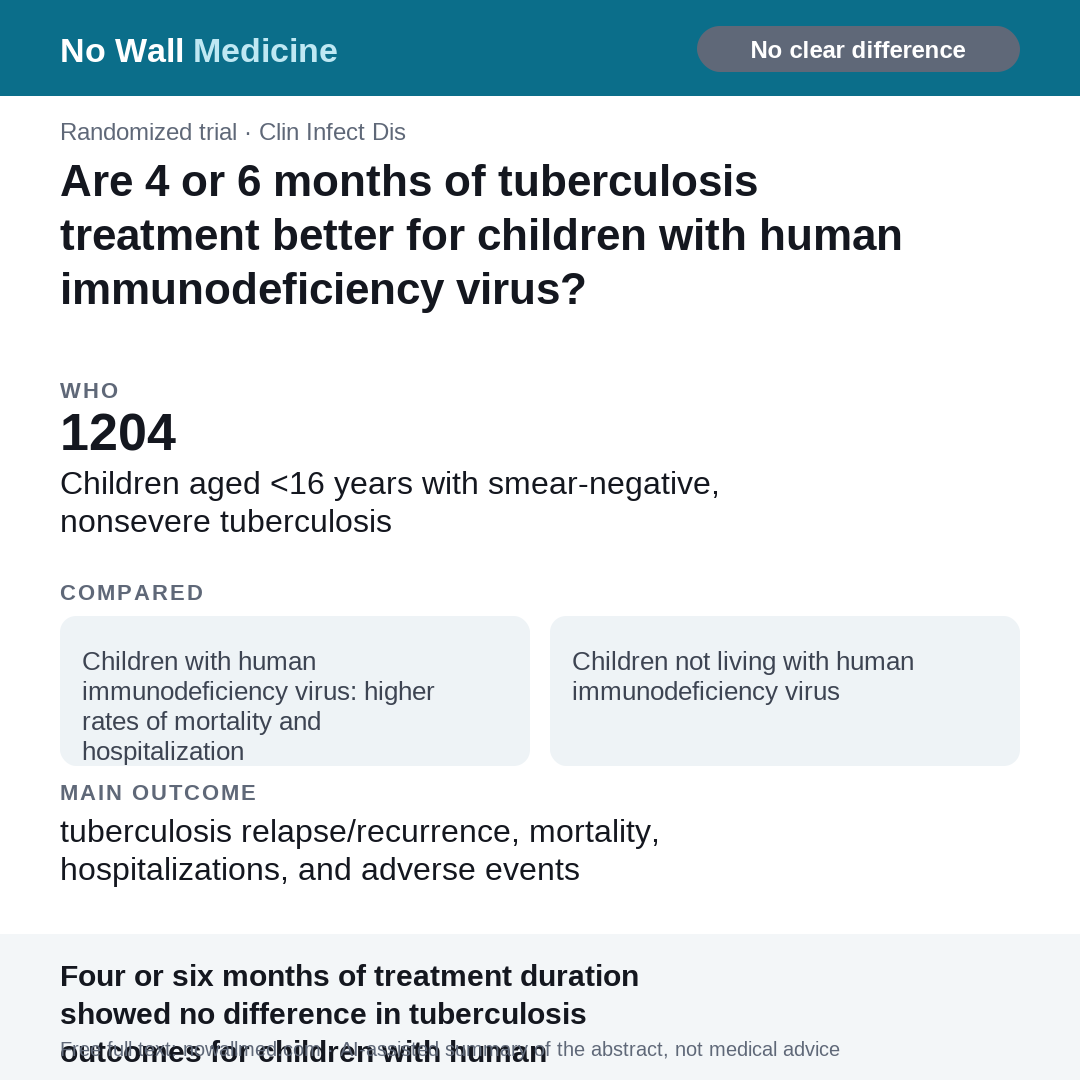
Clinical Outcomes in Children With Human Immunodeficiency Virus Treated for Nonsevere Tuberculosis in the SHINE Trial
Randomized trialNo clear difference
Are 4 or 6 months of tuberculosis treatment better for children with human immunodeficiency virus?
Who
1204
Children aged <16 years with smear-negative, nonsevere tuberculosis
Compared
Children with human immunodeficiency virus: higher rates of mortality and hospitalization
Children not living with human immunodeficiency virus
Main outcome
tuberculosis relapse/recurrence, mortality, hospitalizations, and adverse events
Bottom line: Four or six months of treatment duration showed no difference in tuberculosis outcomes for children with human immunodeficiency virus.
Clin Infect Dis · 2024-04-09Download image