Visual abstracts
New randomized trials and meta-analyses from leading journals at a glance: who was studied, what was compared, and what was found. Every paper is free to read in full.
All specialtiesCardiology 4877Oncology 4138Gastroenterology & Hepatology 1942Infectious Disease 3837Neurology 1905Psychiatry & Mental Health 2273Pulmonology 2143Critical Care 1365Endocrinology & Diabetes 2580Pediatrics 2980Surgery 2559Orthopedics & Sports Medicine 931Neurosurgery 537Cardiothoracic & Vascular Surgery 674Plastic & Reconstructive Surgery 591Nephrology 1133Rheumatology 823Hematology 1109Dermatology 621Ophthalmology 543Obstetrics & Gynecology 1686Public & Global Health 1058Radiology & Imaging 648Anesthesiology 986Urology 764ENT (Otolaryngology) 503Emergency Medicine 511Allergy & Immunology 313Geriatrics 981Family Medicine & Primary Care 562Medical Genetics & Genomics 676Pathology & Laboratory Medicine 159Physical Medicine & Rehabilitation 757Palliative Care 444Nutrition 1588Digital Health & AI 2201General Medicine 321
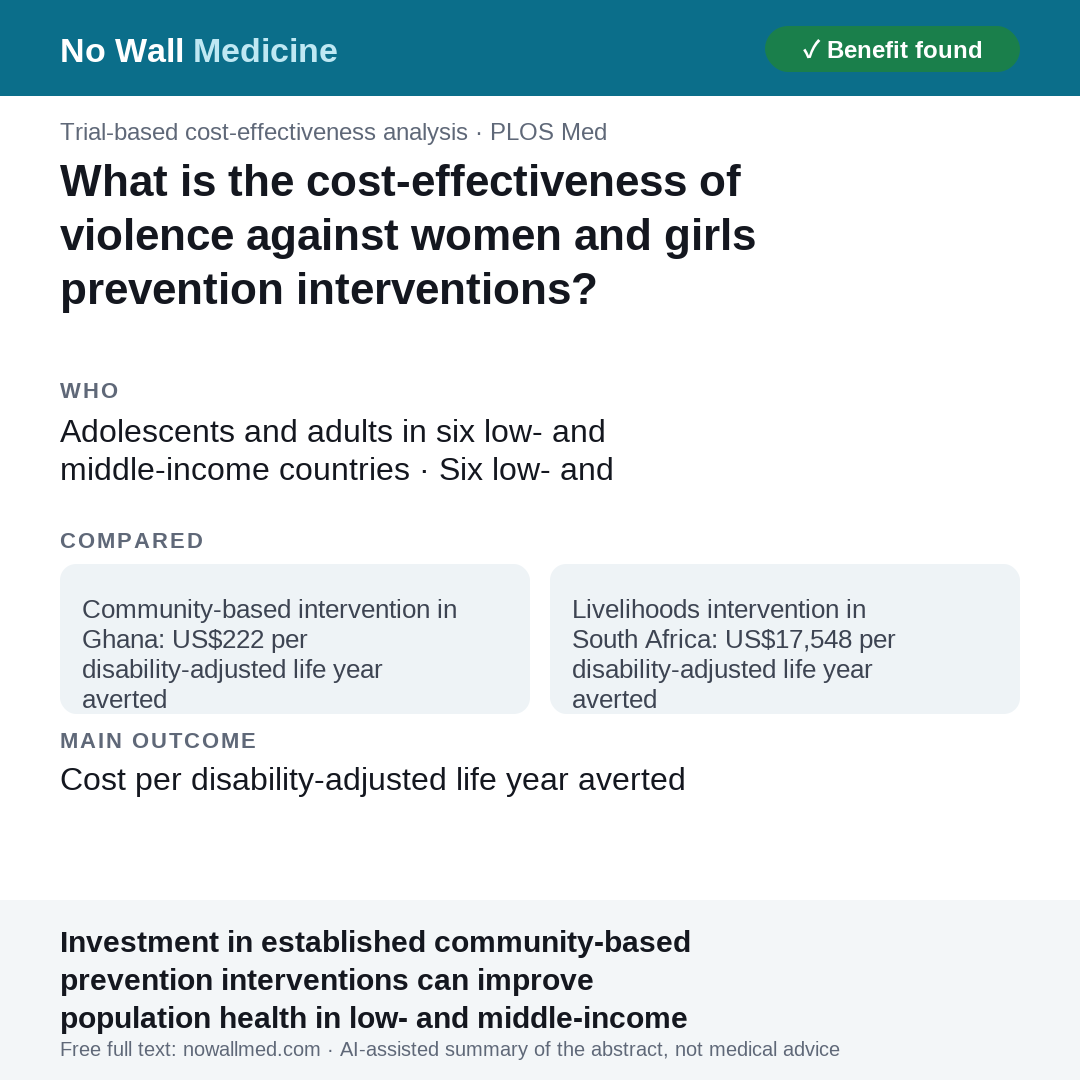
Prevention of violence against women and girls: A cost-effectiveness study across 6 low- and middle-income countries
Trial-based cost-effectiveness analysisBenefit found
What is the cost-effectiveness of violence against women and girls prevention interventions?
Who
Adolescents and adults in six low- and middle-income countries · Six low- and middle-income countries in sub-Saharan Africa and South Asia
Compared
Community-based intervention in Ghana: US$222 per disability-adjusted life year averted
Livelihoods intervention in South Africa: US$17,548 per disability-adjusted life year averted
Main outcome
Cost per disability-adjusted life year averted
Bottom line: Investment in established community-based prevention interventions can improve population health in low- and middle-income countries.
Limitation: May underestimate overall health impact and does not report participants' health costs.
PLOS Med · 2022-03-24Download image
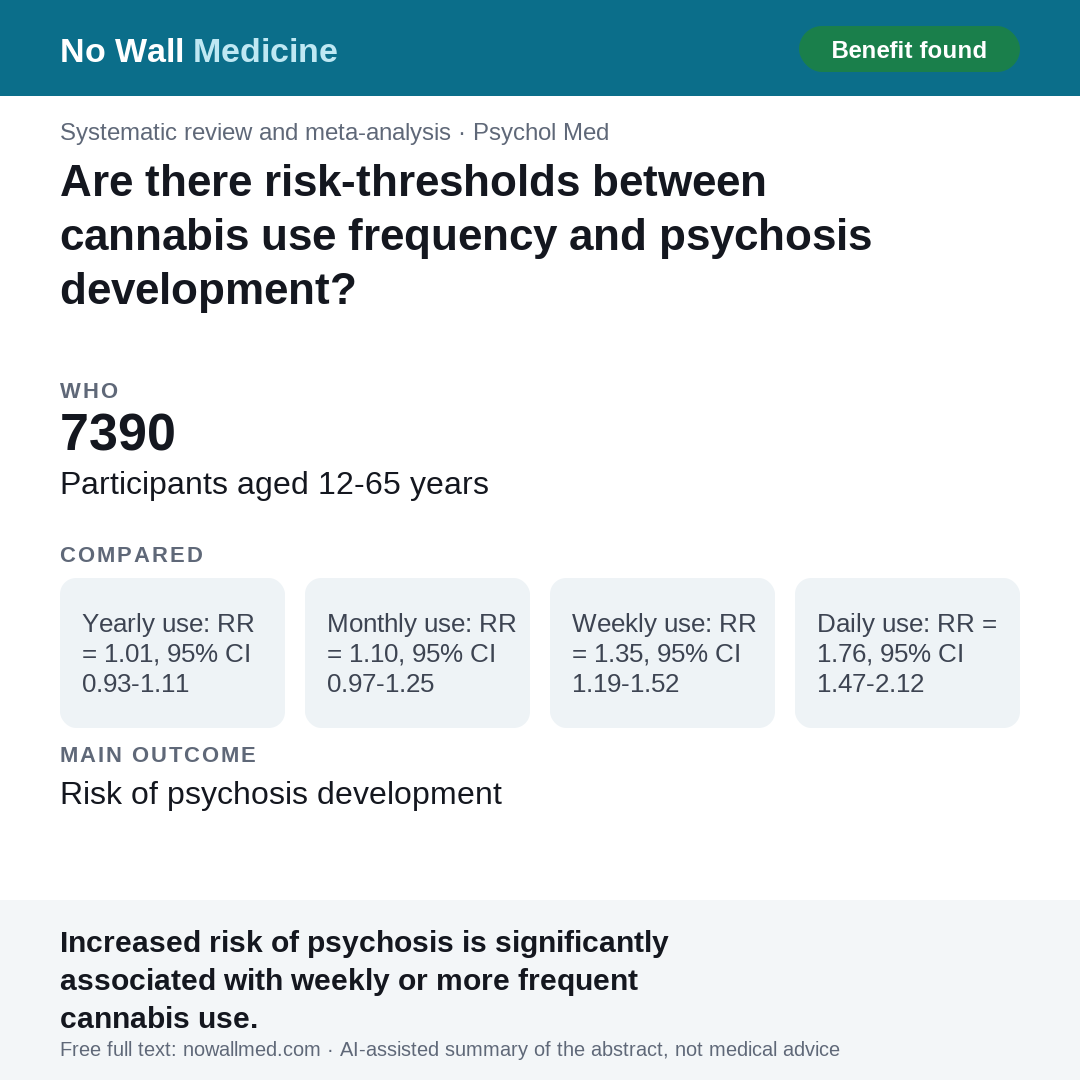
Risk-thresholds for the association between frequency of cannabis use and the development of psychosis: a systematic review and meta-analysis
Systematic review and meta-analysisBenefit found
Are there risk-thresholds between cannabis use frequency and psychosis development?
Who
7390
Participants aged 12-65 years
Compared
Yearly use: RR = 1.01, 95% CI 0.93-1.11
Monthly use: RR = 1.10, 95% CI 0.97-1.25
Weekly use: RR = 1.35, 95% CI 1.19-1.52
Daily use: RR = 1.76, 95% CI 1.47-2.12
Main outcome
Risk of psychosis development
Bottom line: Increased risk of psychosis is significantly associated with weekly or more frequent cannabis use.
Limitation: Risk-thresholds should be refined through further work.
Psychol Med · 2022-03-24Download image
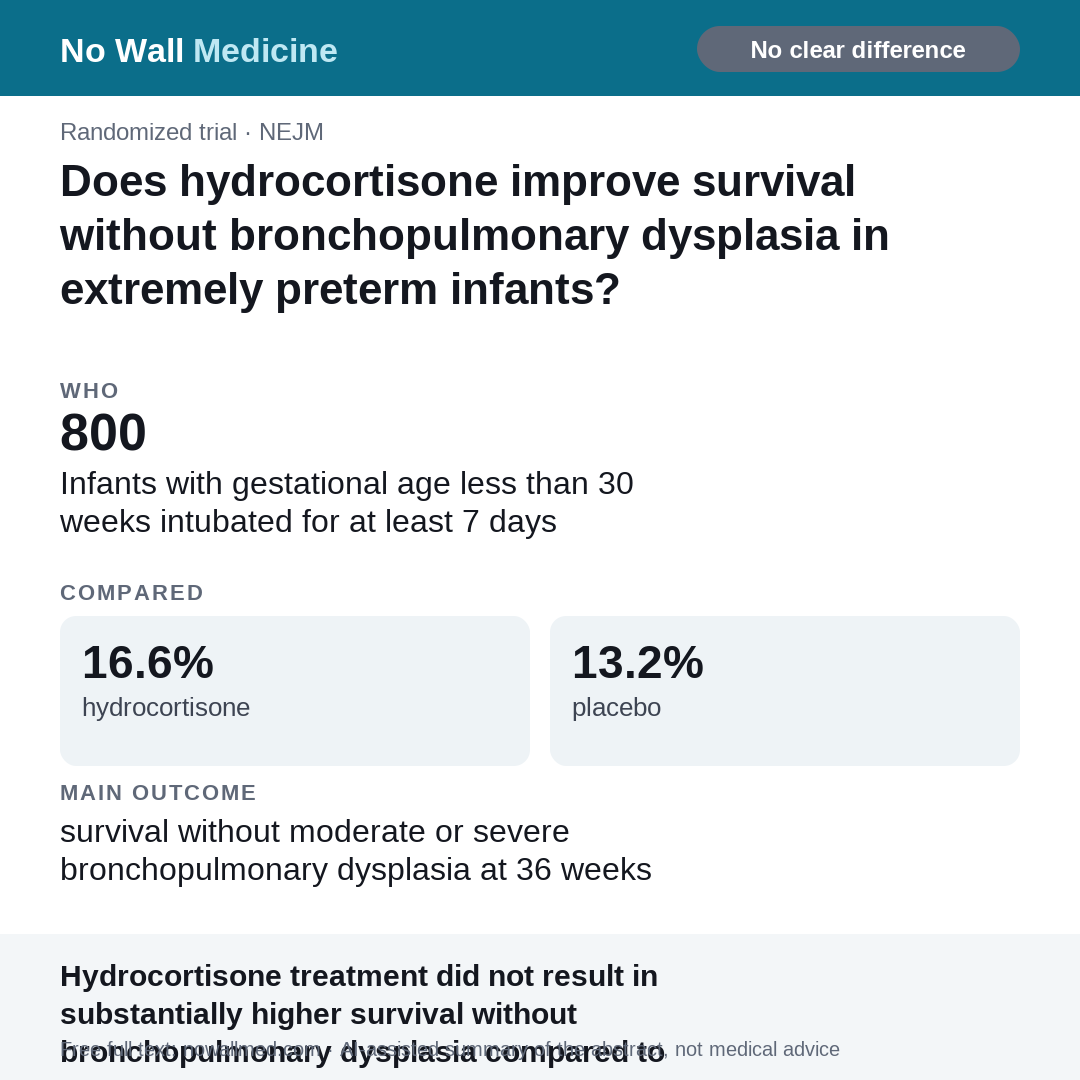
Hydrocortisone to Improve Survival without Bronchopulmonary Dysplasia
Randomized trialNo clear difference
Does hydrocortisone improve survival without bronchopulmonary dysplasia in extremely preterm infants?
Who
800
Infants with gestational age less than 30 weeks intubated for at least 7 days
Compared
16.6%hydrocortisone (66/398)
13.2%placebo (53/402)
Main outcome
survival without moderate or severe bronchopulmonary dysplasia at 36 weeks
Result: adjusted rate ratio 1.27 (95% CI 0.93 to 1.74)
Bottom line: Hydrocortisone treatment did not result in substantially higher survival without bronchopulmonary dysplasia compared to placebo in preterm infants.
Funded by: National Institutes of Health
NEJM · 2022-03-23Download image
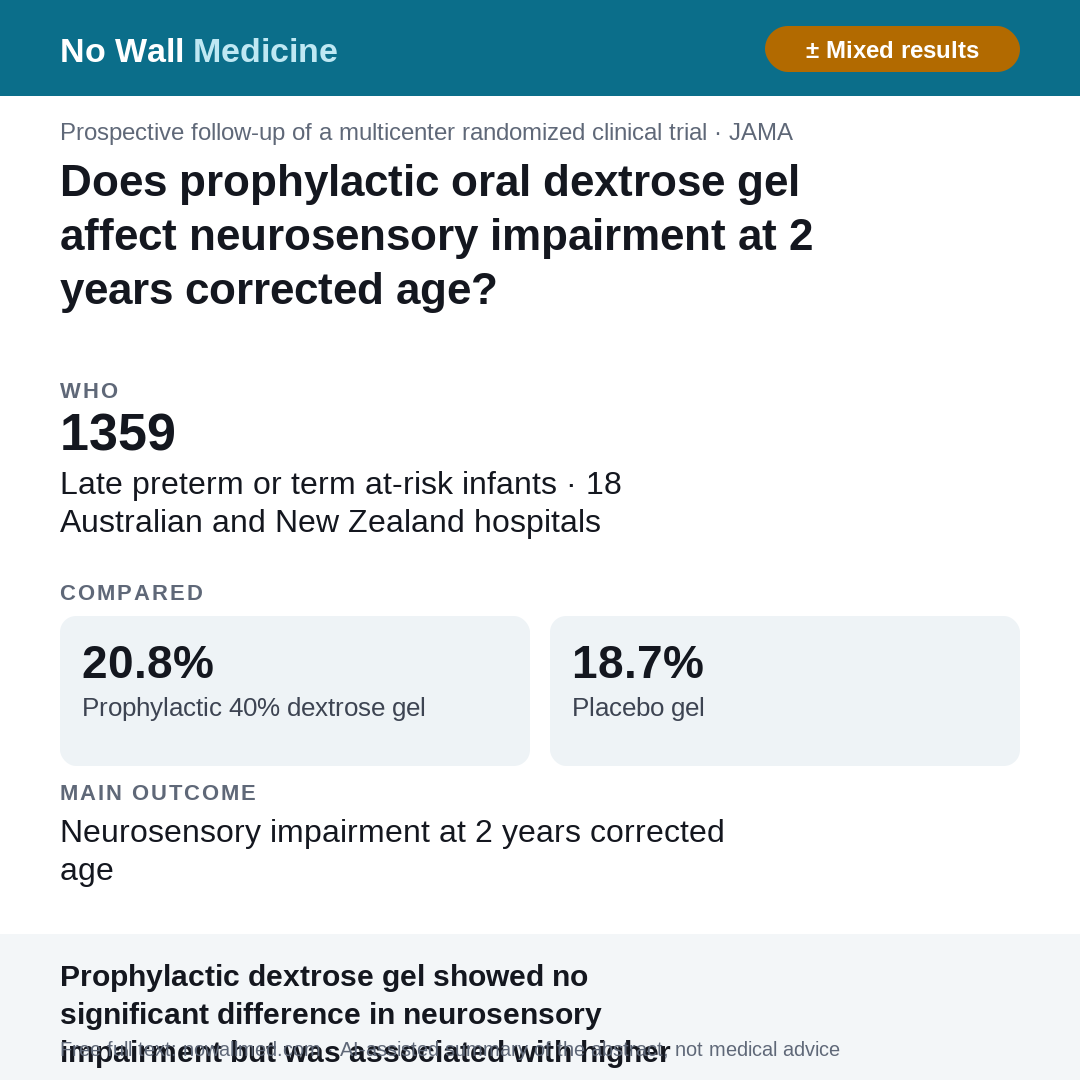
Prophylactic Oral Dextrose Gel and Neurosensory Impairment at 2-Year Follow-up of Participants in the hPOD Randomized Trial
Prospective follow-up of a multicenter randomized clinical trialMixed results
Does prophylactic oral dextrose gel affect neurosensory impairment at 2 years corrected age?
Who
1359
Late preterm or term at-risk infants · 18 Australian and New Zealand hospitals
Compared
20.8%Prophylactic 40% dextrose gel
18.7%Placebo gel
Main outcome
Neurosensory impairment at 2 years corrected age
Result: adjusted risk ratio 1.13 (95% CI 0.90 to 1.41)
Bottom line: Prophylactic dextrose gel showed no significant difference in neurosensory impairment but was associated with higher motor delay risk.
Limitation: The study may have been underpowered to detect a small but potentially clinically important increase in risk.
JAMA · 2022-03-22Download image
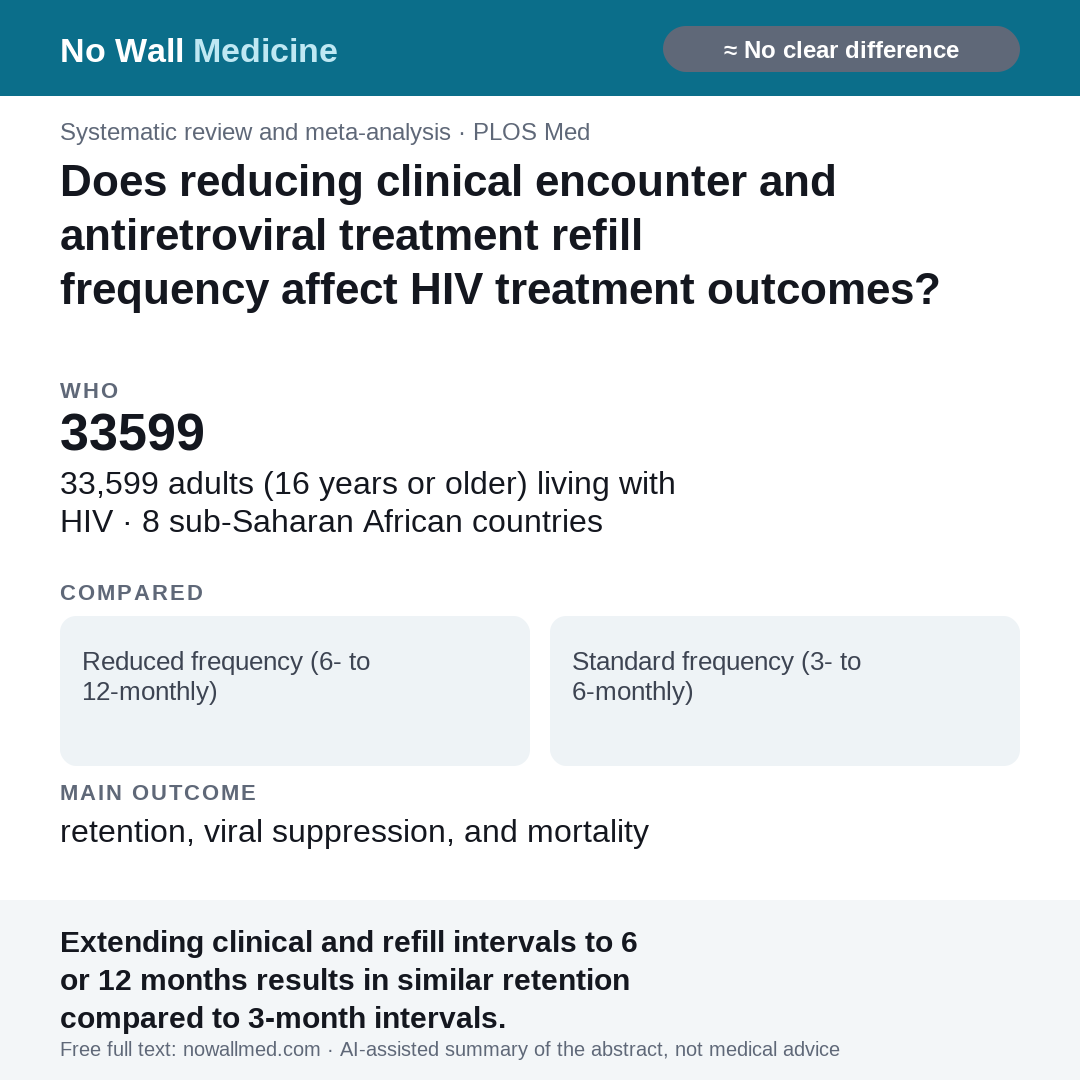
Evaluation of HIV treatment outcomes with reduced frequency of clinical encounters and antiretroviral treatment refills: A systematic review and meta-analysis
Systematic review and meta-analysisNo clear difference
Does reducing clinical encounter and antiretroviral treatment refill frequency affect HIV treatment outcomes?
Who
33599
33,599 adults (16 years or older) living with HIV · 8 sub-Saharan African countries
Compared
Reduced frequency (6- to 12-monthly)
Standard frequency (3- to 6-monthly)
Main outcome
retention, viral suppression, and mortality
Result: RR 1.01 (95% CI 0.97-1.04) for retention
Bottom line: Extending clinical and refill intervals to 6 or 12 months results in similar retention compared to 3-month intervals.
Limitation: Small number of studies comparing 12 versus 6-monthly consultations and lack of evidence for non-sub-Saharan African countries.
PLOS Med · 2022-03-22Download image
Paediatric brain MRI findings following congenital heart surgery: a systematic review
Systematic reviewHarm found
What is the incidence of new postoperative brain MRI findings following paediatric congenital cardiac surgery?
Who
Neonates undergoing paediatric congenital cardiac surgery
Compared
43%Pre-existing brain MRI findings (513/1205)
51%New postoperative brain MRI findings (550/1075)
Main outcome
Incidence of new postoperative brain magnetic resonance imaging findings
Bottom line: Surgery approximately doubles the number of patients with new brain lesions following congenital cardiac surgery.
Arch Dis Child · 2022-03-22Download image

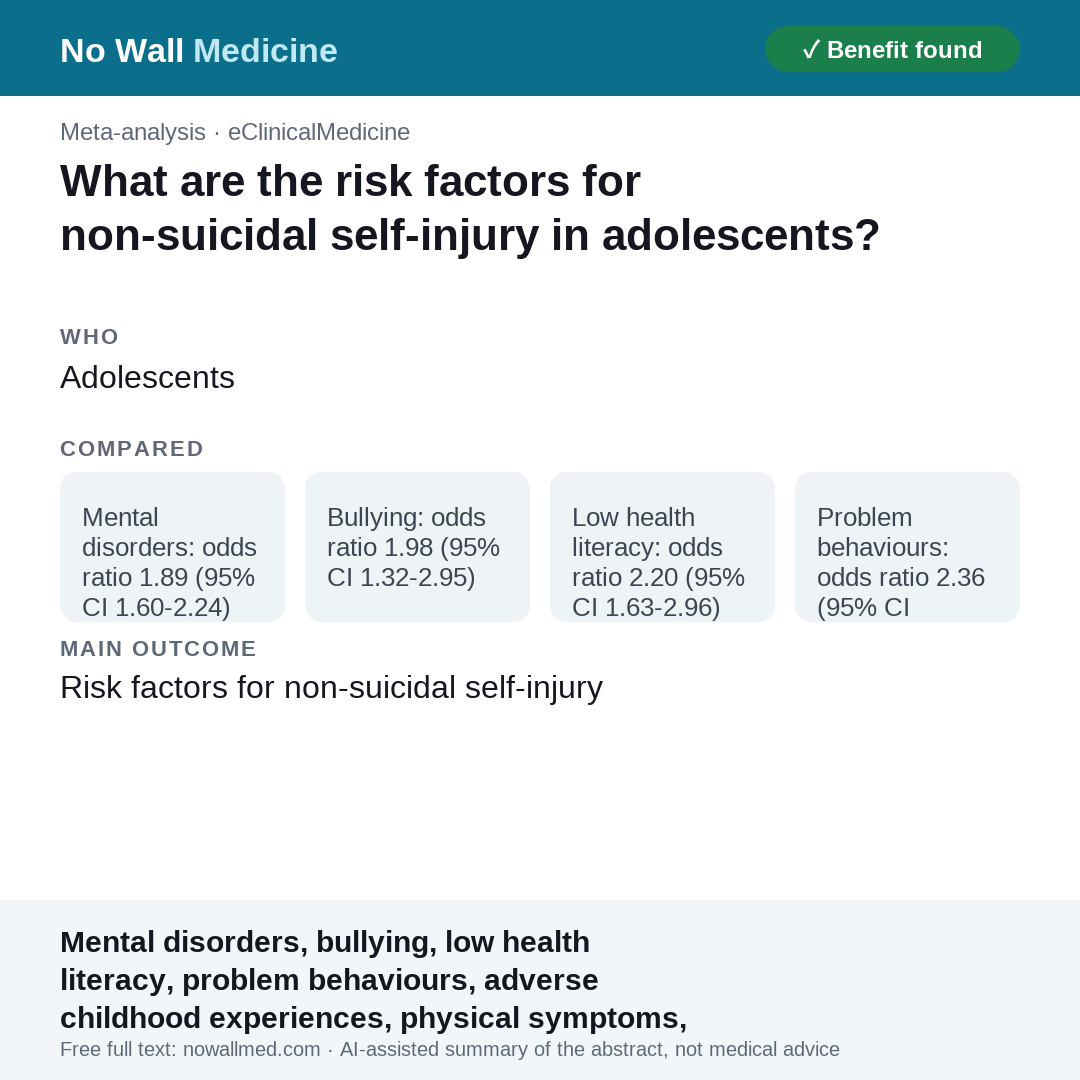
Risk factors for non-suicidal self-injury (NSSI) in adolescents: A meta-analysis
Meta-analysisBenefit found
What are the risk factors for non-suicidal self-injury in adolescents?
Who
Adolescents
Compared
Mental disorders: odds ratio 1.89 (95% CI 1.60-2.24)
Bullying: odds ratio 1.98 (95% CI 1.32-2.95)
Low health literacy: odds ratio 2.20 (95% CI 1.63-2.96)
Problem behaviours: odds ratio 2.36 (95% CI 2.00-2.77)
Main outcome
Risk factors for non-suicidal self-injury
Bottom line: Mental disorders, bullying, low health literacy, problem behaviours, adverse childhood experiences, physical symptoms, and female gender are risk factors.
Limitation: The range of heterogeneity was from 20.3% to 99.2%.
eClinicalMedicine · 2022-03-21Download image
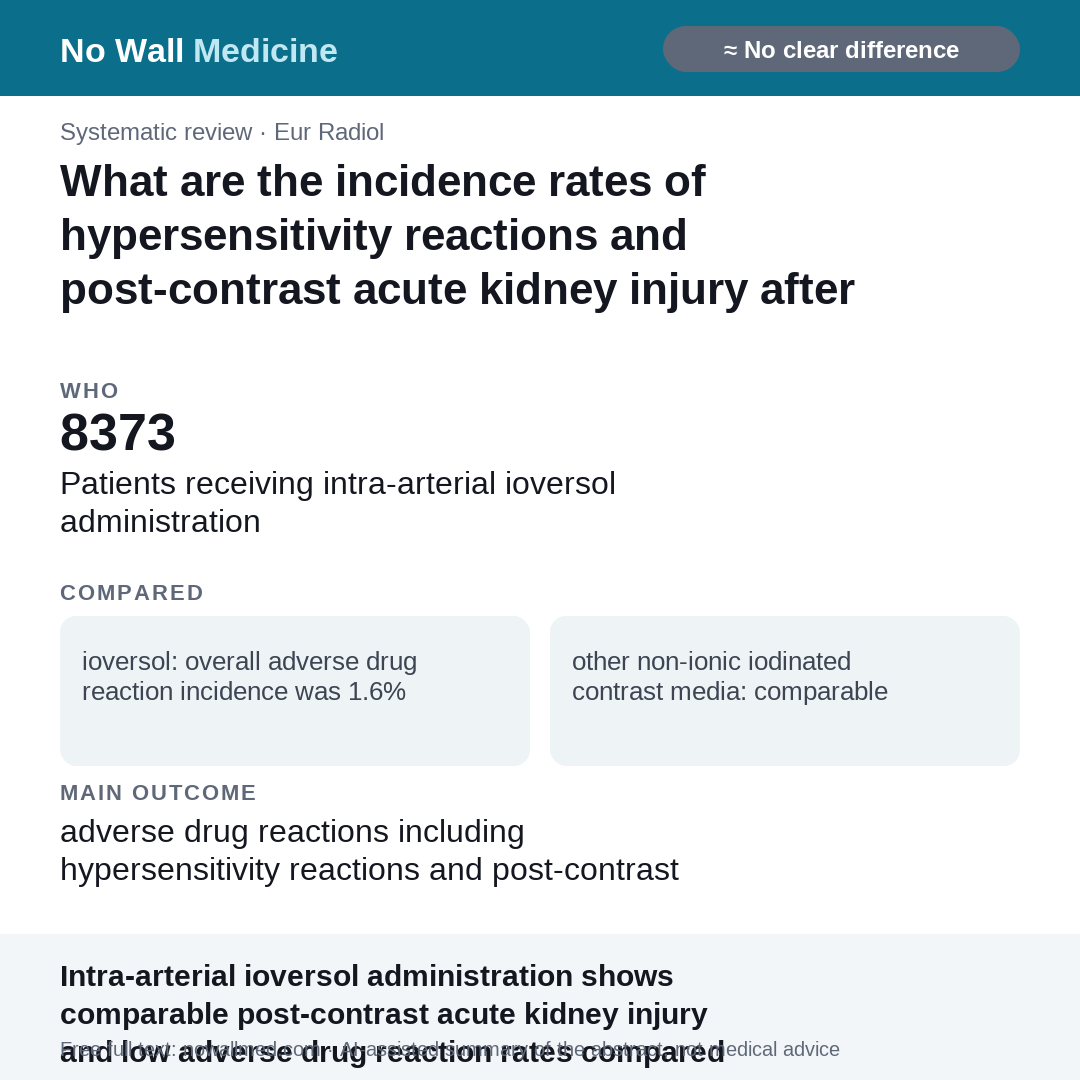
A systematic review of the incidence of hypersensitivity reactions and post-contrast acute kidney injury after ioversol: part 2-intra-arterial administration
Systematic reviewNo clear difference
What are the incidence rates of hypersensitivity reactions and post-contrast acute kidney injury after intra-arterial ioversol?
Who
8373
Patients receiving intra-arterial ioversol administration
Compared
ioversol: overall adverse drug reaction incidence was 1.6%
other non-ionic iodinated contrast media: comparable
Main outcome
adverse drug reactions including hypersensitivity reactions and post-contrast acute kidney injury
Bottom line: Intra-arterial ioversol administration shows comparable post-contrast acute kidney injury and low adverse drug reaction rates compared to other media.
Eur Radiol · 2022-03-21Download image
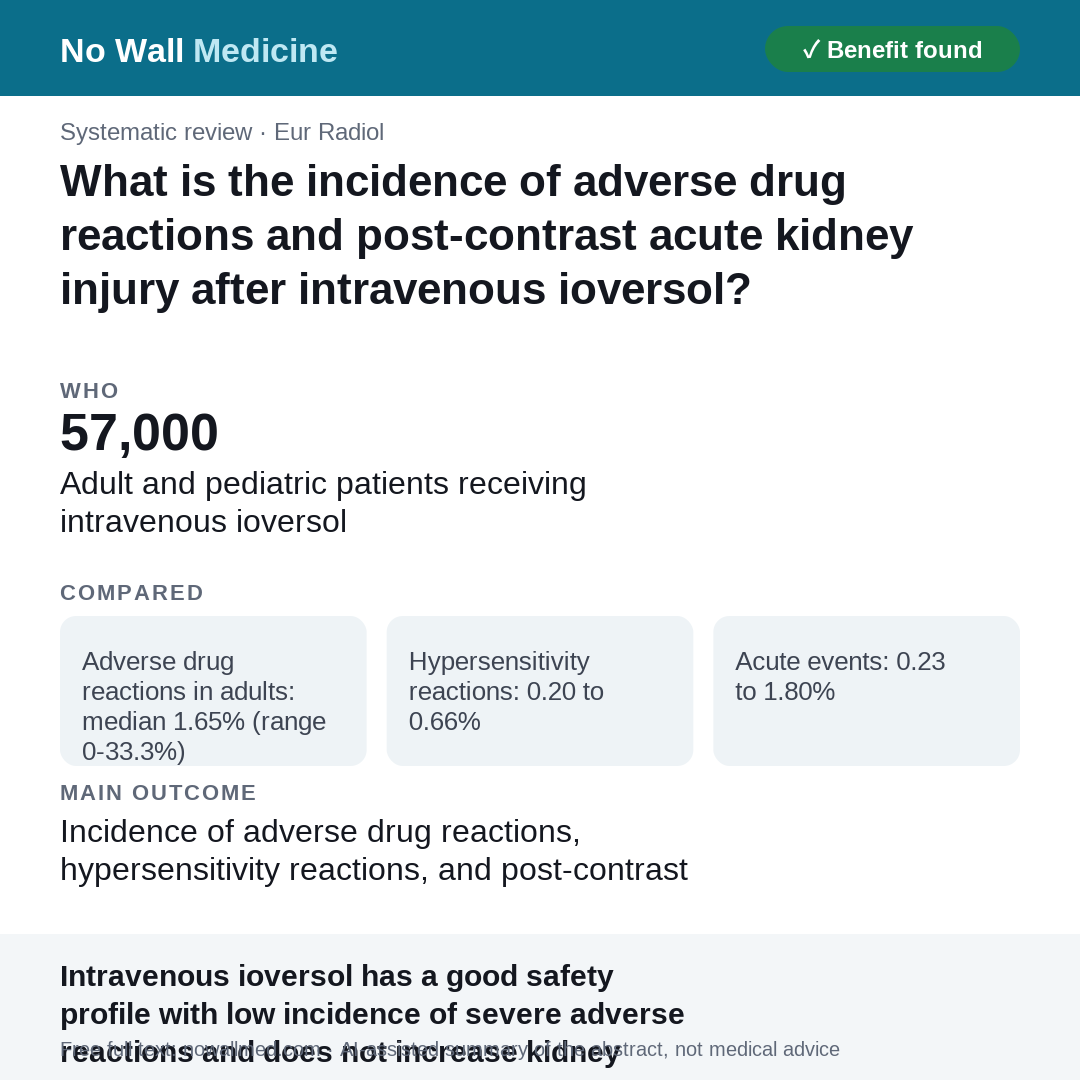
A systematic review of the incidence of hypersensitivity reactions and post-contrast acute kidney injury after ioversol in more than 57,000 patients: part 1-intravenous administration
Systematic reviewBenefit found
What is the incidence of adverse drug reactions and post-contrast acute kidney injury after intravenous ioversol?
Who
57,000
Adult and pediatric patients receiving intravenous ioversol
Compared
Adverse drug reactions in adults: median 1.65% (range 0-33.3%)
Hypersensitivity reactions: 0.20 to 0.66%
Acute events: 0.23 to 1.80%
Main outcome
Incidence of adverse drug reactions, hypersensitivity reactions, and post-contrast acute kidney injury
Bottom line: Intravenous ioversol has a good safety profile with low incidence of severe adverse reactions and does not increase kidney injury.
Limitation: Further well-designed studies are warranted to confirm these results.
Eur Radiol · 2022-03-21Download image
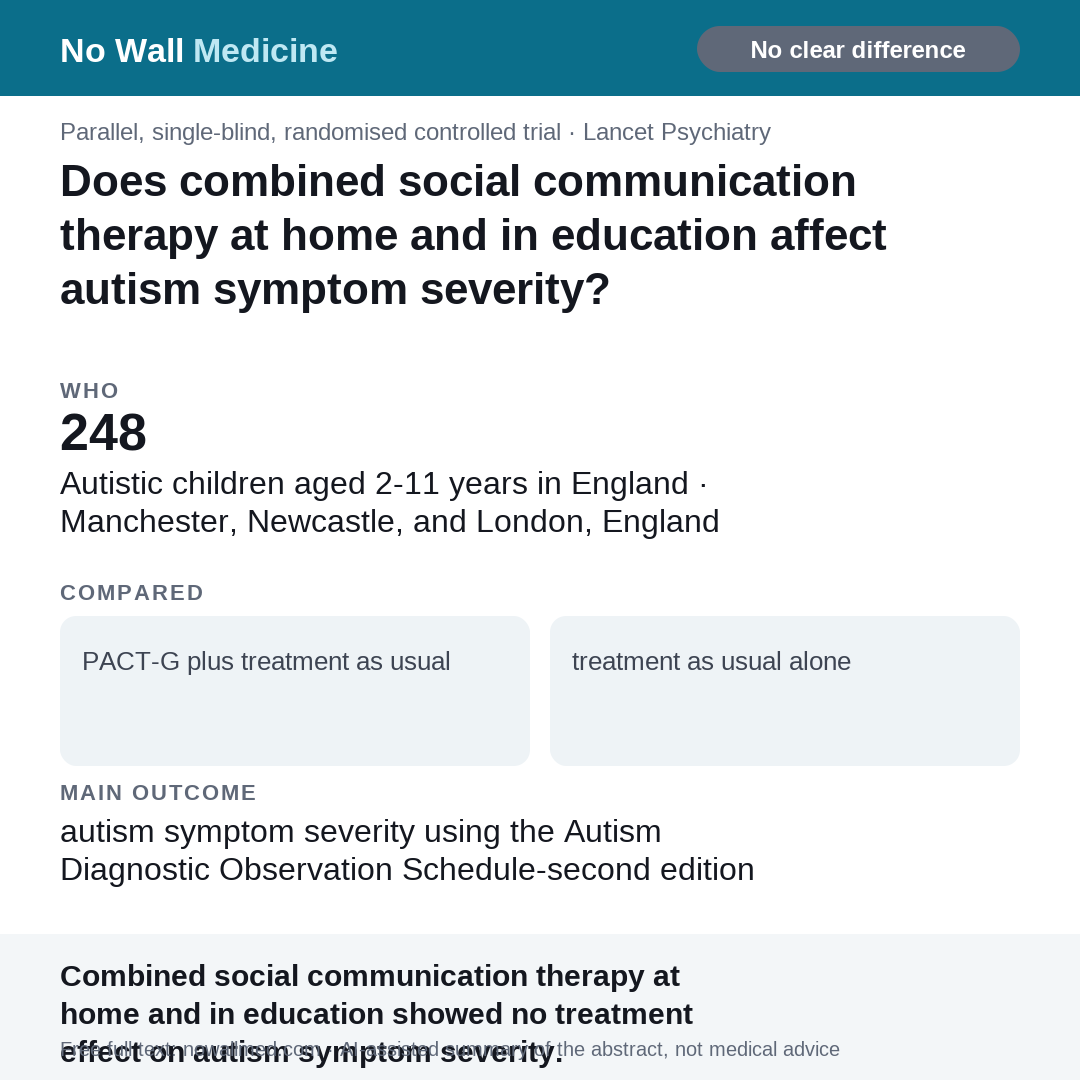
Combined social communication therapy at home and in education for young autistic children in England (PACT-G): a parallel, single-blind, randomised controlled trial
Parallel, single-blind, randomised controlled trialNo clear difference
Does combined social communication therapy at home and in education affect autism symptom severity?
Who
248
Autistic children aged 2-11 years in England · Manchester, Newcastle, and London, England
Compared
PACT-G plus treatment as usual
treatment as usual alone
Main outcome
autism symptom severity using the Autism Diagnostic Observation Schedule-second edition
Result: effect size 0·04 (95% CI -0·19 to 0·26)
Bottom line: Combined social communication therapy at home and in education showed no treatment effect on autism symptom severity.
Lancet Psychiatry · 2022-03-20Download image
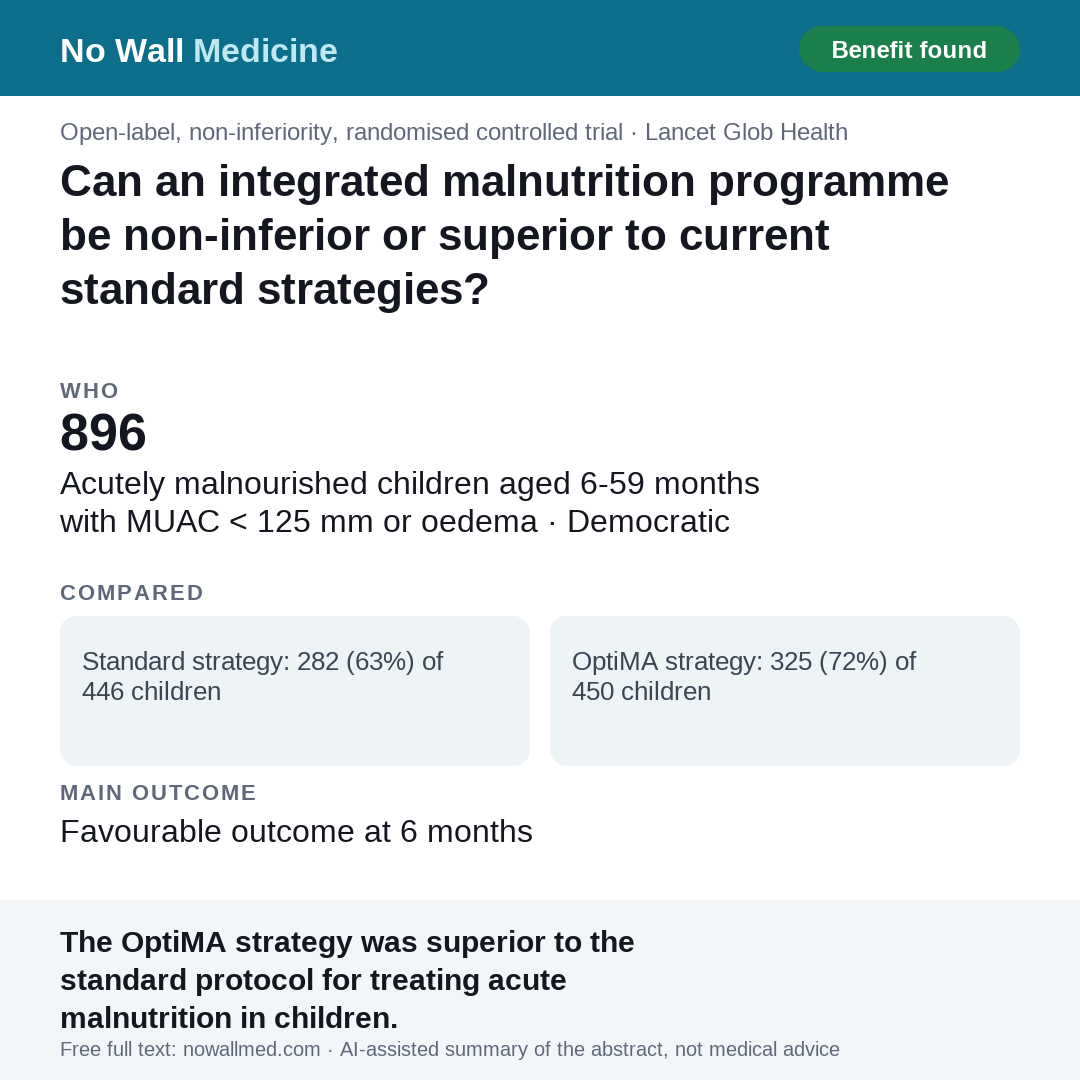
Simplifying and optimising the management of uncomplicated acute malnutrition in children aged 6-59 months in the Democratic Republic of the Congo (OptiMA-DRC): a non-inferiority, randomised controlled trial
Open-label, non-inferiority, randomised controlled trialBenefit found
Can an integrated malnutrition programme be non-inferior or superior to current standard strategies?
Who
896
Acutely malnourished children aged 6-59 months with MUAC < 125 mm or oedema · Democratic Republic of the Congo
Compared
Standard strategy: 282 (63%) of 446 children
OptiMA strategy: 325 (72%) of 450 children
Main outcome
Favourable outcome at 6 months
Result: difference -9·0%, 95% CI -15·9 to -2·0
Bottom line: The OptiMA strategy was superior to the standard protocol for treating acute malnutrition in children.
Funded by: Innocent Foundation and European Civil Protection and Humanitarian Aid Operations
Lancet Glob Health · 2022-03-19Download image
Phenotypic and genetic analysis of a wellbeing factor score in the UK Biobank and the impact of childhood maltreatment and psychiatric illness
Within-cohort studyHarm found
What are the genetic and phenotypic relationships of a wellbeing index score?
Who
129237
Caucasian participants · UK Biobank
Compared
Participants with psychiatric disorders: lower wellbeing score
Total sample
Main outcome
Wellbeing index score
Result: genetic correlation with childhood maltreatment rg = ~-0.56
Bottom line: Wellbeing is negatively associated with both psychiatric disorders and childhood maltreatment.
Limitation: notable limitations, biases and assumptions are discussed
Transl Psychiatry · 2022-03-19Download image

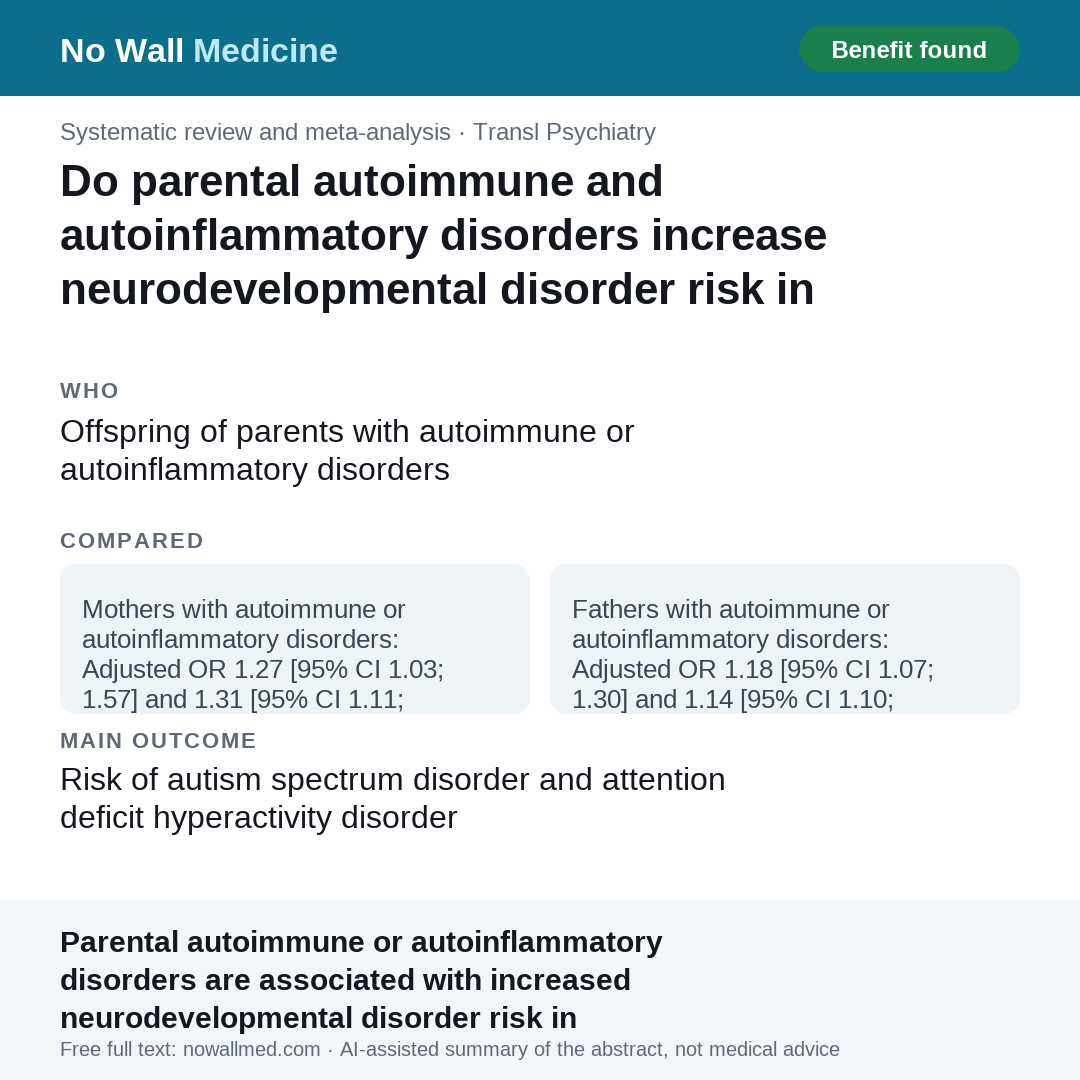
Parental autoimmune and autoinflammatory disorders as multiple risk factors for common neurodevelopmental disorders in offspring: a systematic review and meta-analysis
Systematic review and meta-analysisBenefit found
Do parental autoimmune and autoinflammatory disorders increase neurodevelopmental disorder risk in offspring?
Who
Offspring of parents with autoimmune or autoinflammatory disorders
Compared
Mothers with autoimmune or autoinflammatory disorders: Adjusted OR 1.27 [95% CI 1.03; 1.57] and 1.31 [95% CI 1.11; 1.55]
Fathers with autoimmune or autoinflammatory disorders: Adjusted OR 1.18 [95% CI 1.07; 1.30] and 1.14 [95% CI 1.10; 1.17]
Main outcome
Risk of autism spectrum disorder and attention deficit hyperactivity disorder
Bottom line: Parental autoimmune or autoinflammatory disorders are associated with increased neurodevelopmental disorder risk in offspring, particularly maternal associations.
Transl Psychiatry · 2022-03-18Download image
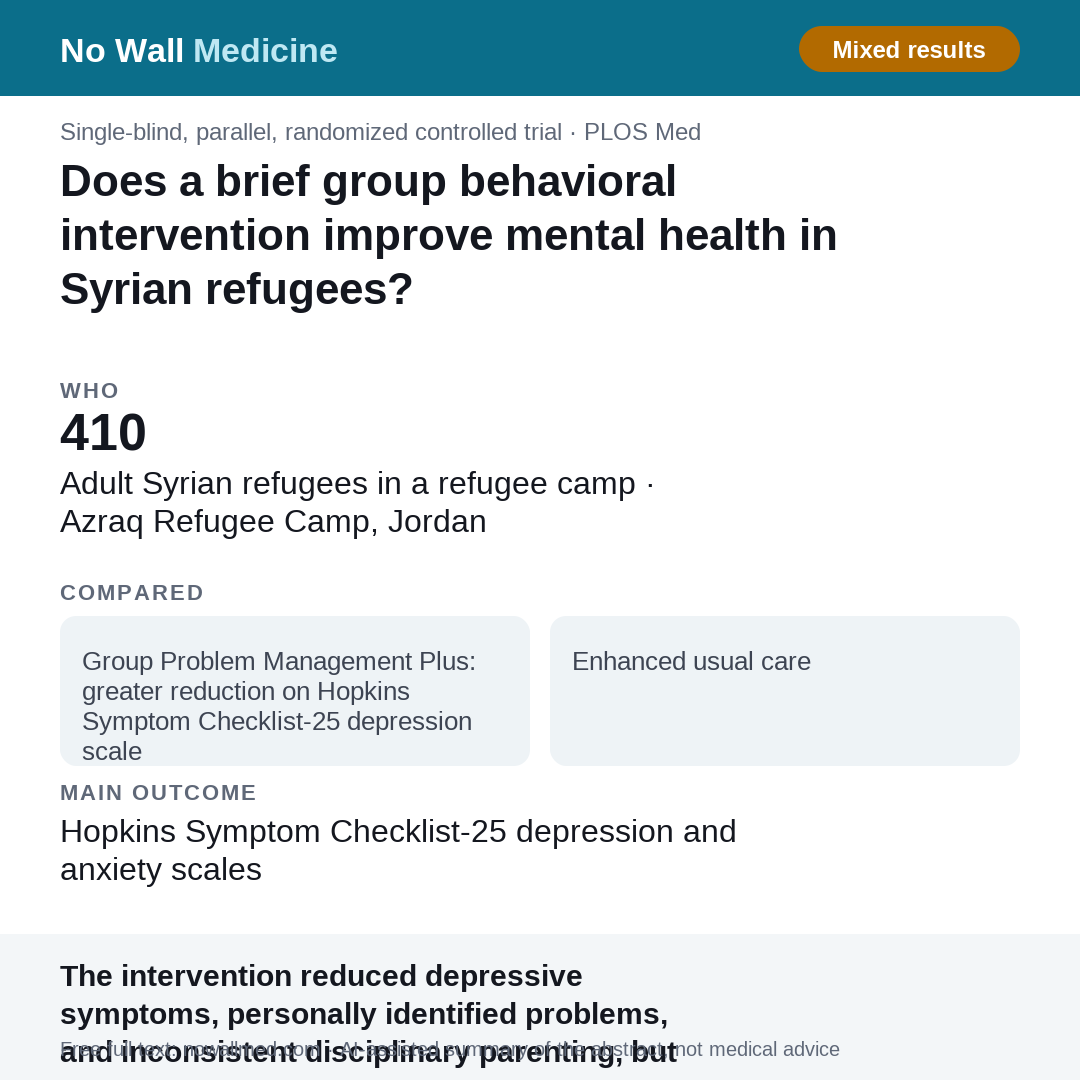
Effectiveness of a brief group behavioral intervention for common mental disorders in Syrian refugees in Jordan: A randomized controlled trial
Single-blind, parallel, randomized controlled trialMixed results
Does a brief group behavioral intervention improve mental health in Syrian refugees?
Who
410
Adult Syrian refugees in a refugee camp · Azraq Refugee Camp, Jordan
Compared
Group Problem Management Plus: greater reduction on Hopkins Symptom Checklist-25 depression scale
Enhanced usual care
Main outcome
Hopkins Symptom Checklist-25 depression and anxiety scales
Result: mean difference 3.69 (95% CI 1.90 to 5.48) for depression
Bottom line: The intervention reduced depressive symptoms, personally identified problems, and inconsistent disciplinary parenting, but not anxiety or PTSD.
Limitation: Only one-quarter of participants were male and some measures have not been validated with Syrians.
PLOS Med · 2022-03-17Download image
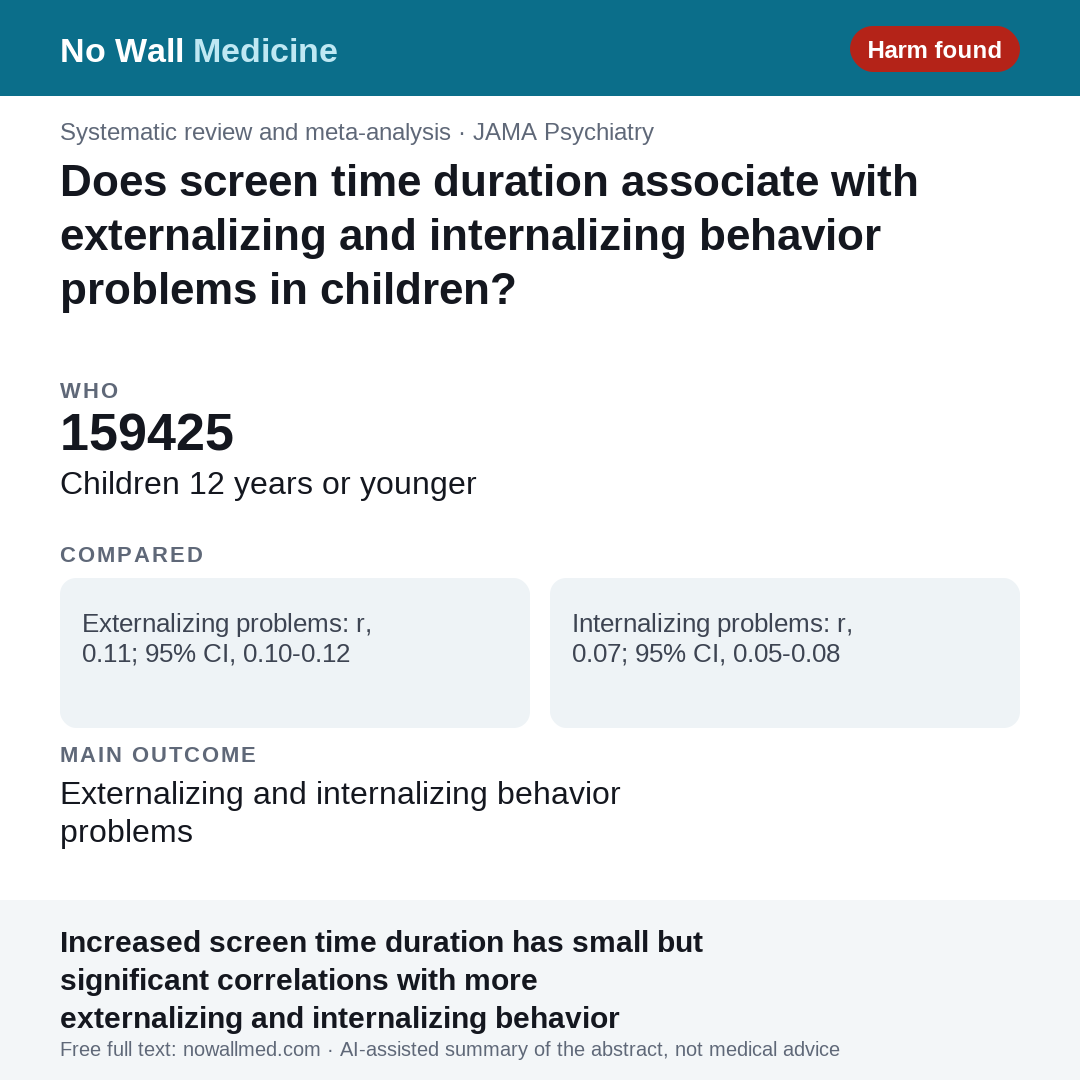
Association of Screen Time With Internalizing and Externalizing Behavior Problems in Children 12 Years or Younger: A Systematic Review and Meta-analysis
Systematic review and meta-analysisHarm found
Does screen time duration associate with externalizing and internalizing behavior problems in children?
Who
159425
Children 12 years or younger
Compared
Externalizing problems: r, 0.11; 95% CI, 0.10-0.12
Internalizing problems: r, 0.07; 95% CI, 0.05-0.08
Main outcome
Externalizing and internalizing behavior problems
Bottom line: Increased screen time duration has small but significant correlations with more externalizing and internalizing behavior problems in children.
JAMA Psychiatry · 2022-03-17Download image
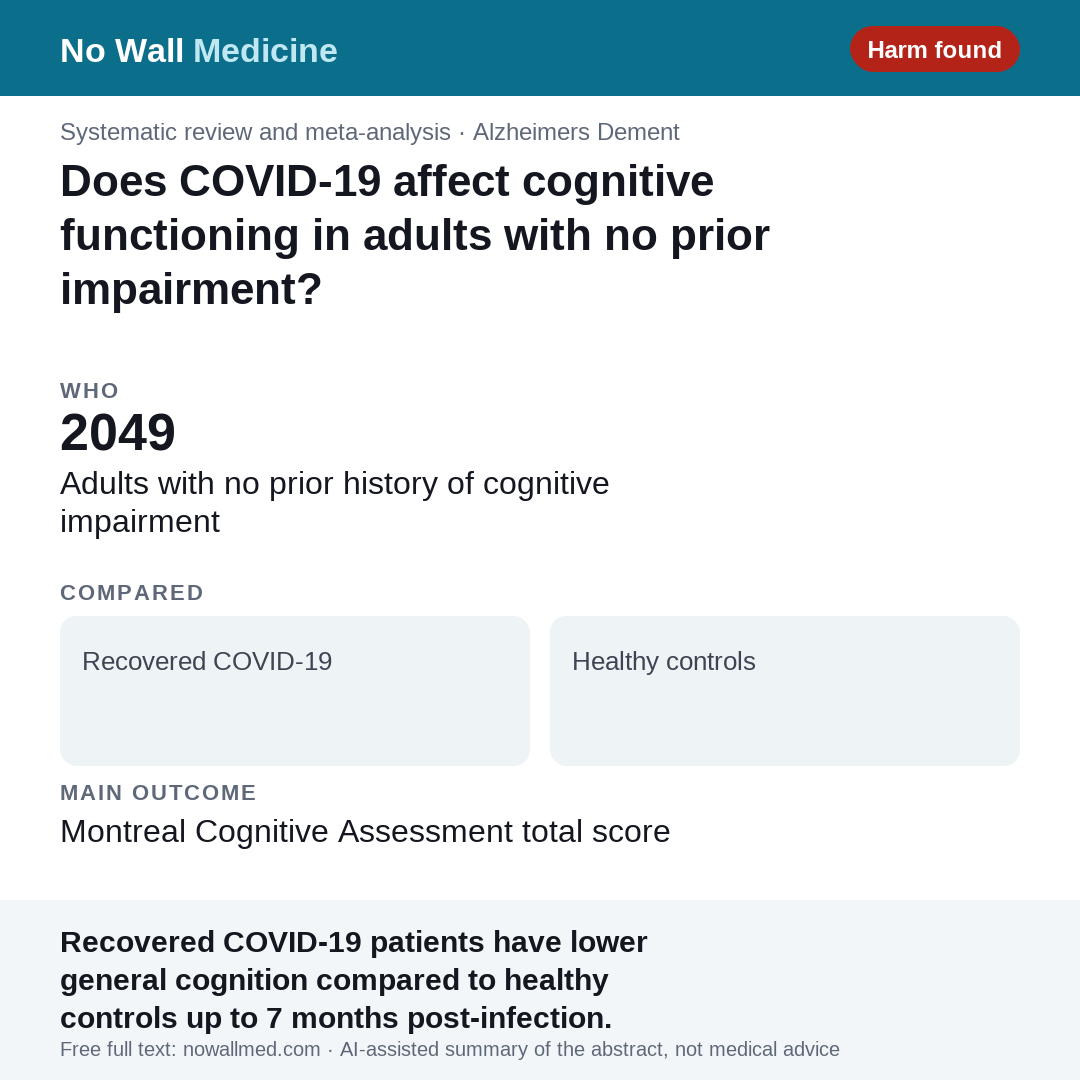
Changes in cognitive functioning after COVID-19: A systematic review and meta-analysis
Systematic review and meta-analysisHarm found
Does COVID-19 affect cognitive functioning in adults with no prior impairment?
Who
2049
Adults with no prior history of cognitive impairment
Compared
Recovered COVID-19
Healthy controls
Main outcome
Montreal Cognitive Assessment total score
Result: mean difference -0.94 (95% CI -1.59, -0.29)
Bottom line: Recovered COVID-19 patients have lower general cognition compared to healthy controls up to 7 months post-infection.
Alzheimers Dement · 2022-03-17Download image
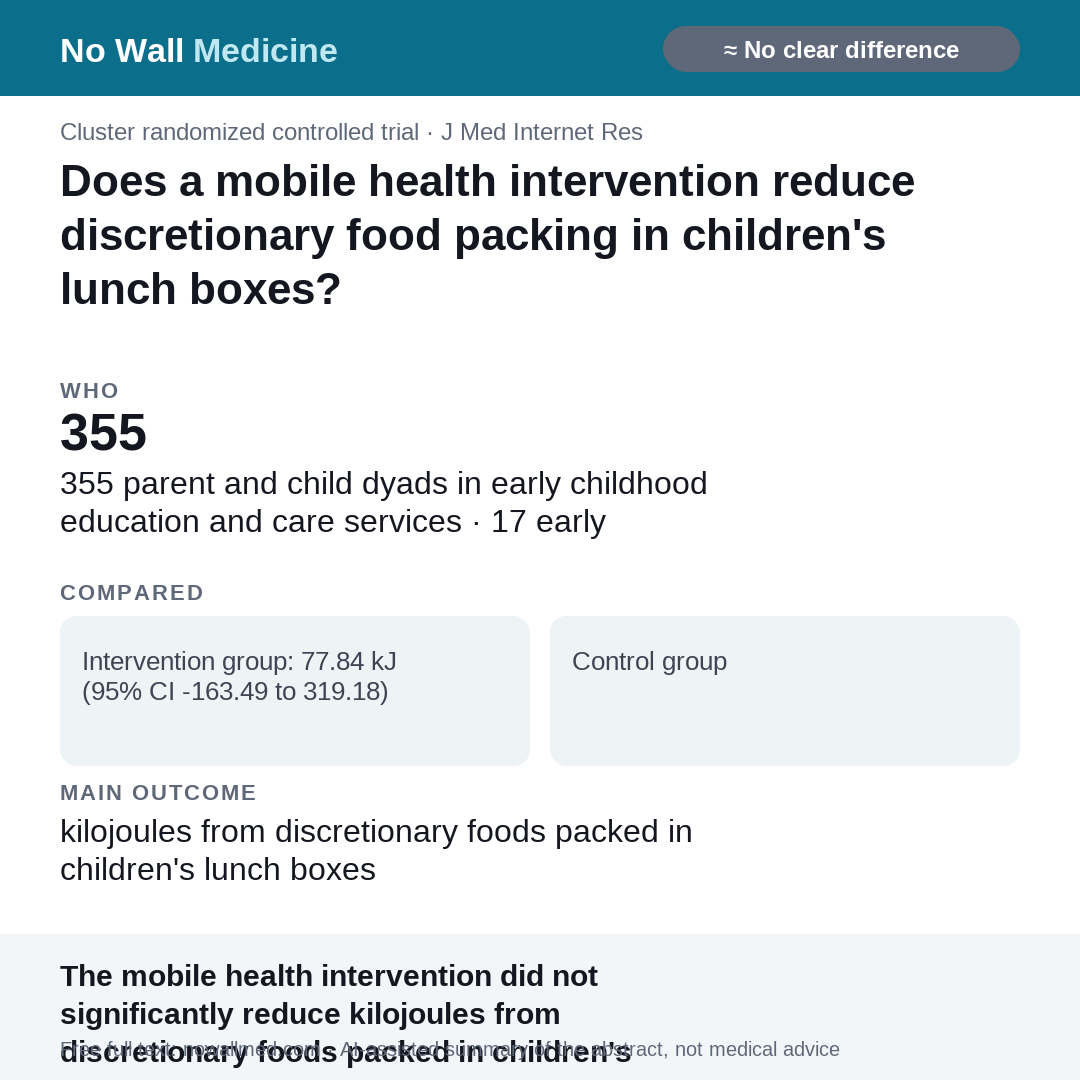
An mHealth Intervention to Reduce the Packing of Discretionary Foods in Children's Lunch Boxes in Early Childhood Education and Care Services: Cluster Randomized Controlled Trial
Cluster randomized controlled trialNo clear difference
Does a mobile health intervention reduce discretionary food packing in children's lunch boxes?
Who
355
355 parent and child dyads in early childhood education and care services · 17 early childhood education and care services
Compared
Intervention group: 77.84 kJ (95% CI -163.49 to 319.18)
Control group
Main outcome
kilojoules from discretionary foods packed in children's lunch boxes
Result: 77.84 kJ (95% CI -163.49 to 319.18)
Bottom line: The mobile health intervention did not significantly reduce kilojoules from discretionary foods packed in children's lunch boxes.
J Med Internet Res · 2022-03-17Download image
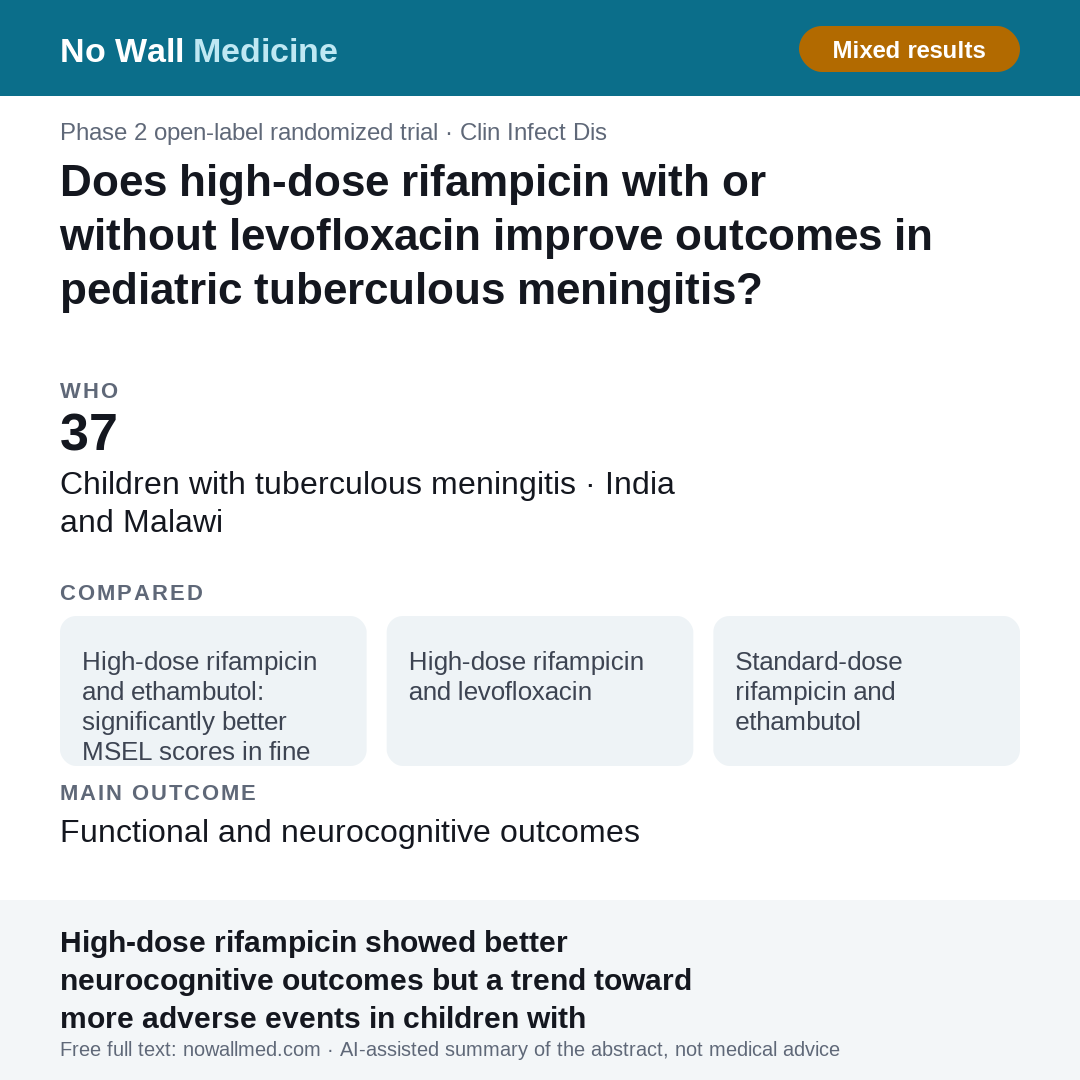
Randomized Clinical Trial of High-Dose Rifampicin With or Without Levofloxacin Versus Standard of Care for Pediatric Tuberculous Meningitis: The TBM-KIDS Trial
Phase 2 open-label randomized trialMixed results
Does high-dose rifampicin with or without levofloxacin improve outcomes in pediatric tuberculous meningitis?
Who
37
Children with tuberculous meningitis · India and Malawi
Compared
High-dose rifampicin and ethambutol: significantly better MSEL scores in fine motor, receptive language, and expressive language
High-dose rifampicin and levofloxacin
Standard-dose rifampicin and ethambutol
Main outcome
Functional and neurocognitive outcomes
Bottom line: High-dose rifampicin showed better neurocognitive outcomes but a trend toward more adverse events in children with tuberculous meningitis.
Clin Infect Dis · 2022-03-16Download image
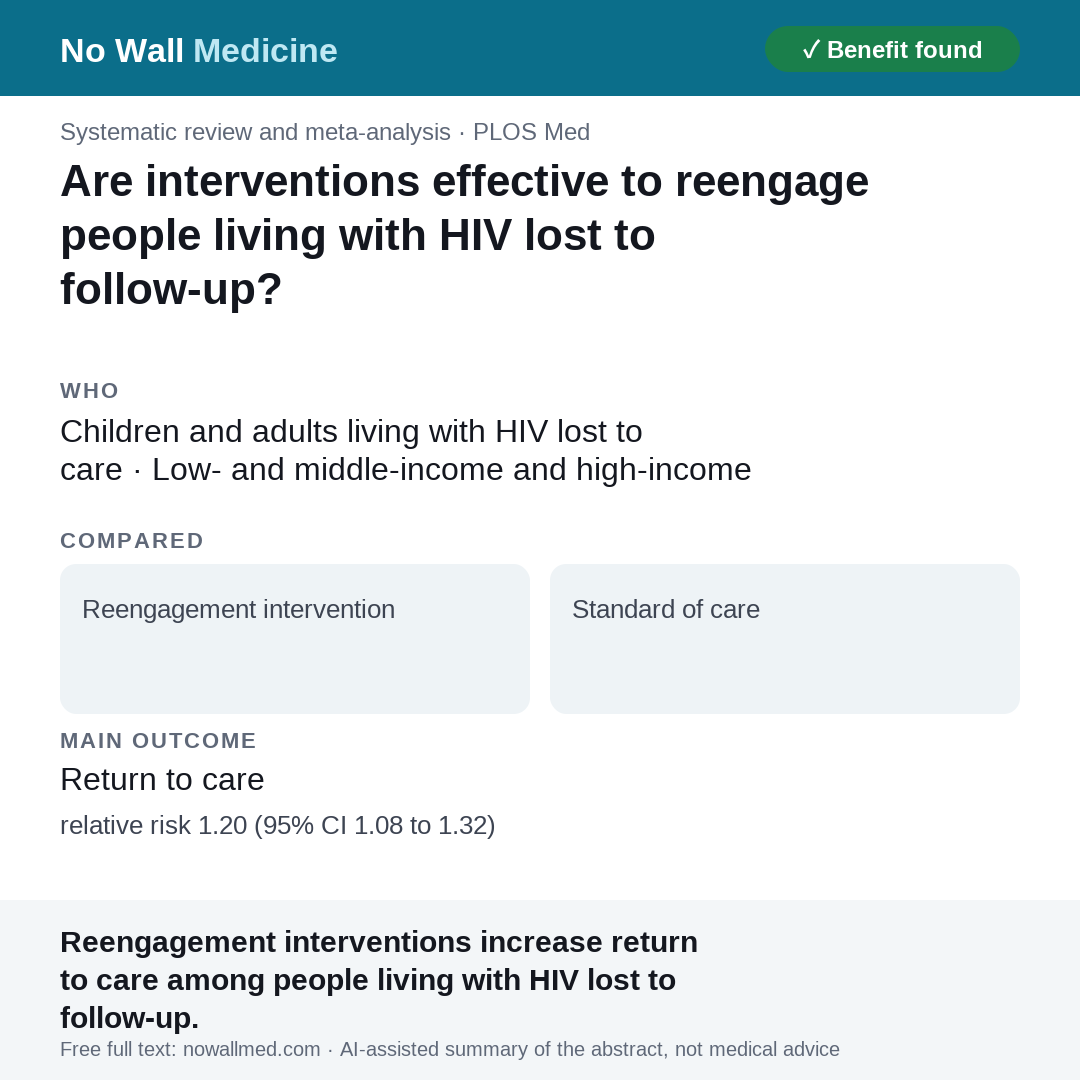
Interventions to reengage people living with HIV who are lost to follow-up from HIV treatment programs: A systematic review and meta-analysis
Systematic review and meta-analysisBenefit found
Are interventions effective to reengage people living with HIV lost to follow-up?
Who
Children and adults living with HIV lost to care · Low- and middle-income and high-income countries
Compared
Reengagement intervention
Standard of care
Main outcome
Return to care
Result: relative risk 1.20 (95% CI 1.08 to 1.32)
Bottom line: Reengagement interventions increase return to care among people living with HIV lost to follow-up.
PLOS Med · 2022-03-15Download image
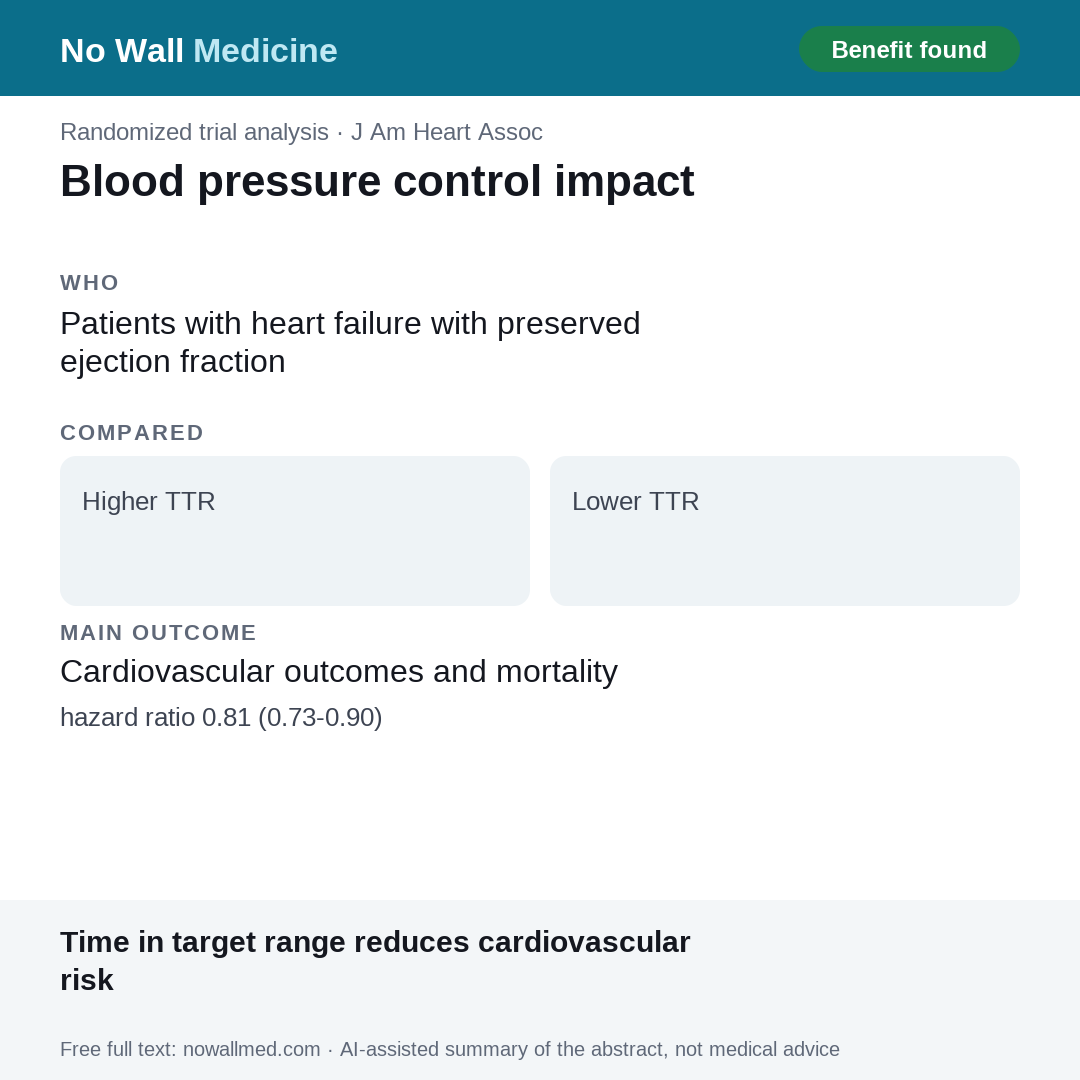
Time in Target Range for Systolic Blood Pressure and Cardiovascular Outcomes in Patients With Heart Failure With Preserved Ejection Fraction
Randomized trial analysisBenefit found
Blood pressure control impact
Who
Patients with heart failure with preserved ejection fraction
Compared
Higher TTR
Lower TTR
Main outcome
Cardiovascular outcomes and mortality
Result: hazard ratio 0.81 (0.73-0.90)
Bottom line: Time in target range reduces cardiovascular risk
J Am Heart Assoc · 2022-03-15Download image