Visual abstracts
New randomized trials and meta-analyses from leading journals at a glance: who was studied, what was compared, and what was found. Every paper is free to read in full.
All specialtiesCardiology 4877Oncology 4138Gastroenterology & Hepatology 1942Infectious Disease 3837Neurology 1905Psychiatry & Mental Health 2273Pulmonology 2143Critical Care 1365Endocrinology & Diabetes 2580Pediatrics 2980Surgery 2559Orthopedics & Sports Medicine 931Neurosurgery 537Cardiothoracic & Vascular Surgery 674Plastic & Reconstructive Surgery 591Nephrology 1133Rheumatology 823Hematology 1109Dermatology 621Ophthalmology 543Obstetrics & Gynecology 1686Public & Global Health 1058Radiology & Imaging 648Anesthesiology 986Urology 764ENT (Otolaryngology) 503Emergency Medicine 511Allergy & Immunology 313Geriatrics 981Family Medicine & Primary Care 562Medical Genetics & Genomics 676Pathology & Laboratory Medicine 159Physical Medicine & Rehabilitation 757Palliative Care 444Nutrition 1588Digital Health & AI 2201General Medicine 321
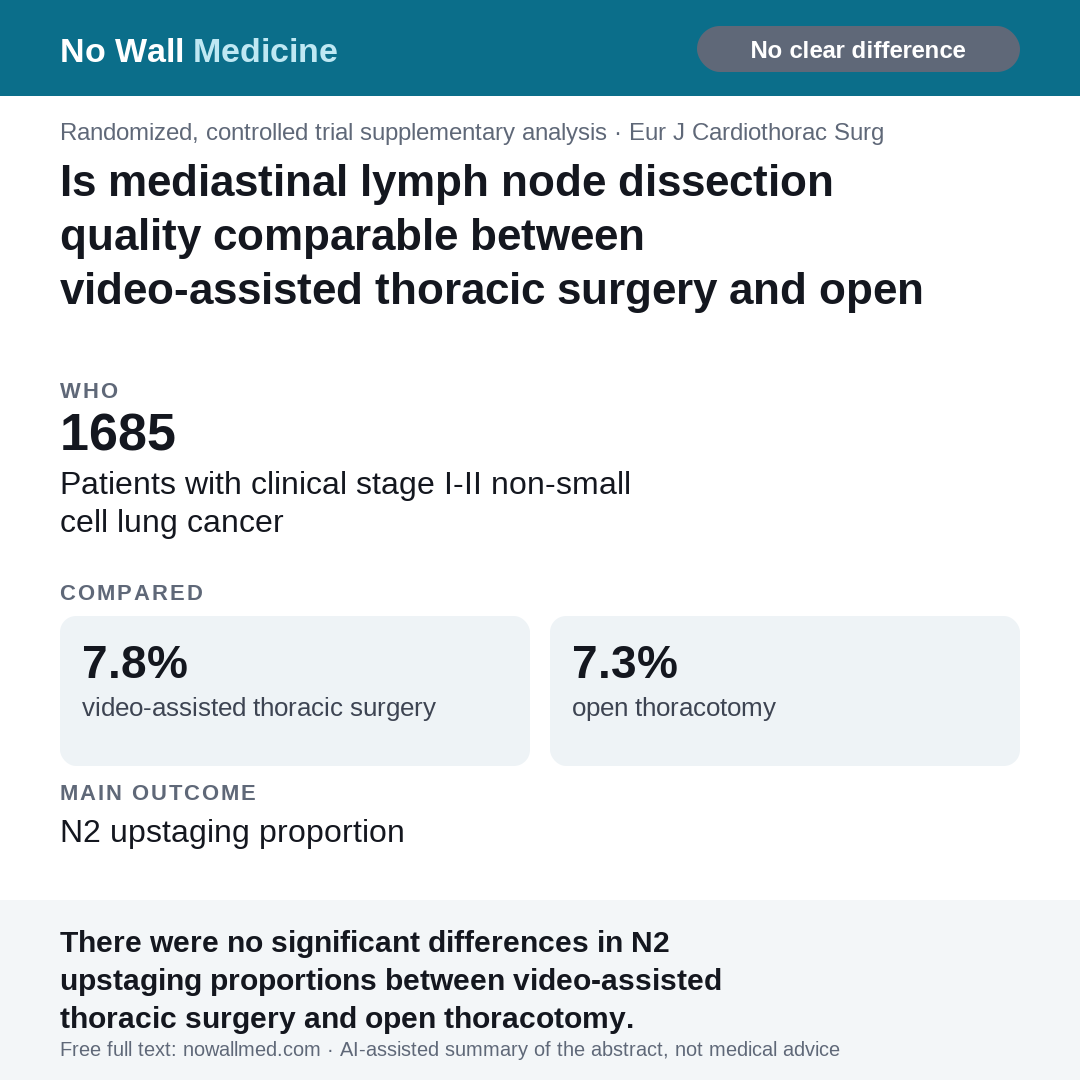
Safety and immunogenicity of investigational tuberculosis vaccine M72/AS01E-4 in people living with HIV in South Africa: an observer-blinded, randomised, controlled, phase 2 trial
Observer-blinded, randomised, controlled, phase 2 trialBenefit found
Is the M72/AS01E-4 vaccine safe and immunogenic in people living with HIV?
Who
401
People aged 16-35 years with well controlled HIV in South Africa · Urban, semi-urban, and semi-rural settings in South Africa
Compared
M72/AS01E-4: 8% [15 of 201] unsolicited adverse events related to vaccine
Placebo: 1% [two of 200] unsolicited adverse events related to vaccine
Main outcome
Safety and immunogenicity
Bottom line: The M72/AS01E-4 tuberculosis vaccine was immunogenic with an acceptable safety profile in people living with HIV.
Funded by: Gates Foundation and the Wellcome Trust
Lancet HIV · 2025-07-01Download image
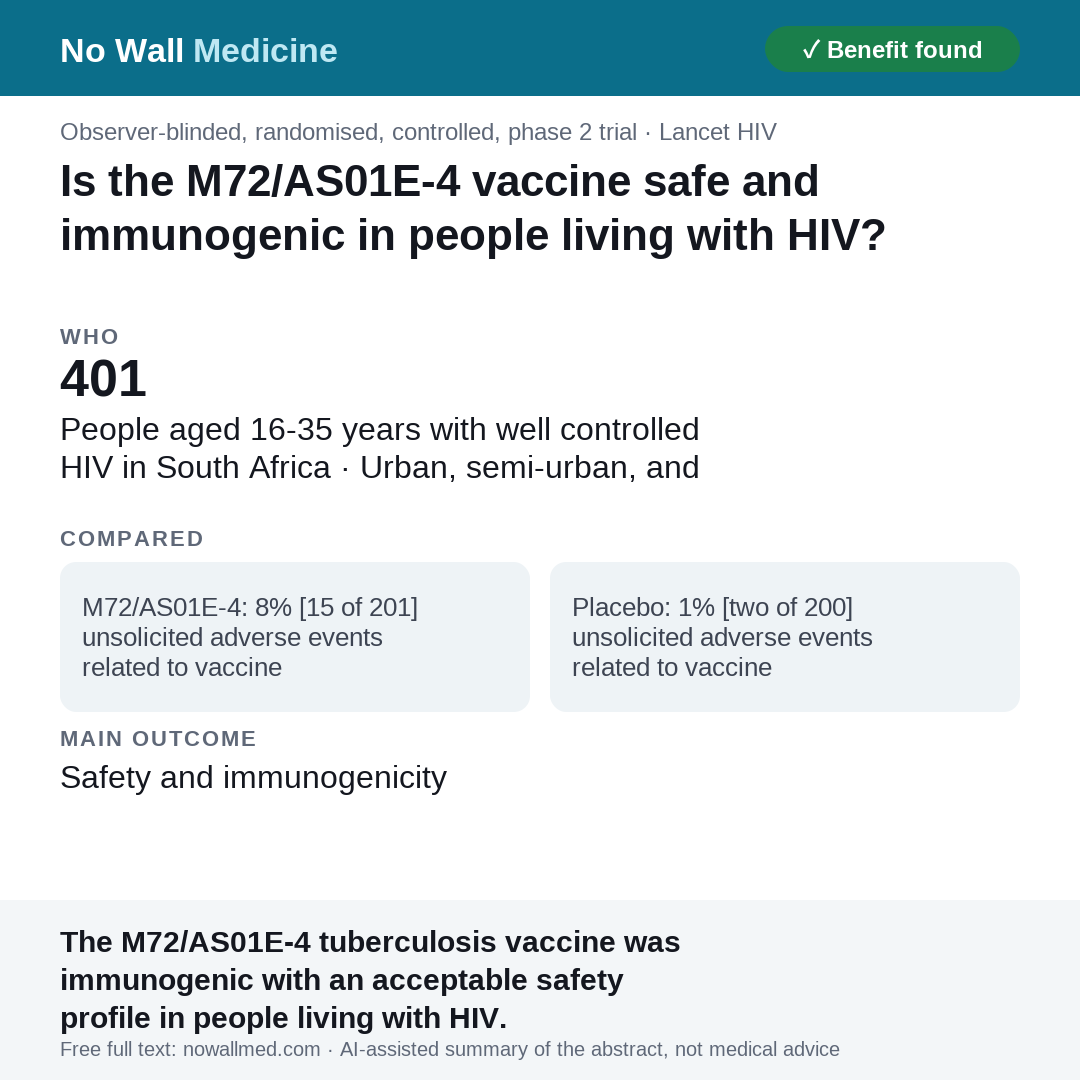
Main results of a randomized controlled trial (RNPLS-01): efficacy and safety of ramucirumab combined with nab-paclitaxel, lobaplatin, and S-1 in neoadjuvant therapy for advanced gastric cancer
Randomized controlled trialBenefit found
Does ramucirumab plus nab-paclitaxel, lobaplatin, and S-1 improve neoadjuvant therapy for advanced gastric cancer?
Who
70
Patients with advanced gastric cancer in the neoadjuvant cohort
Compared
22.9%RNPLS group
2.9%NPLS group
Main outcome
pathological complete response
Bottom line: Ramucirumab combined with nab-paclitaxel, lobaplatin, and S-1 significantly enhances pathological complete response and objective response rates.
Int J Surg · 2025-07-01Download image
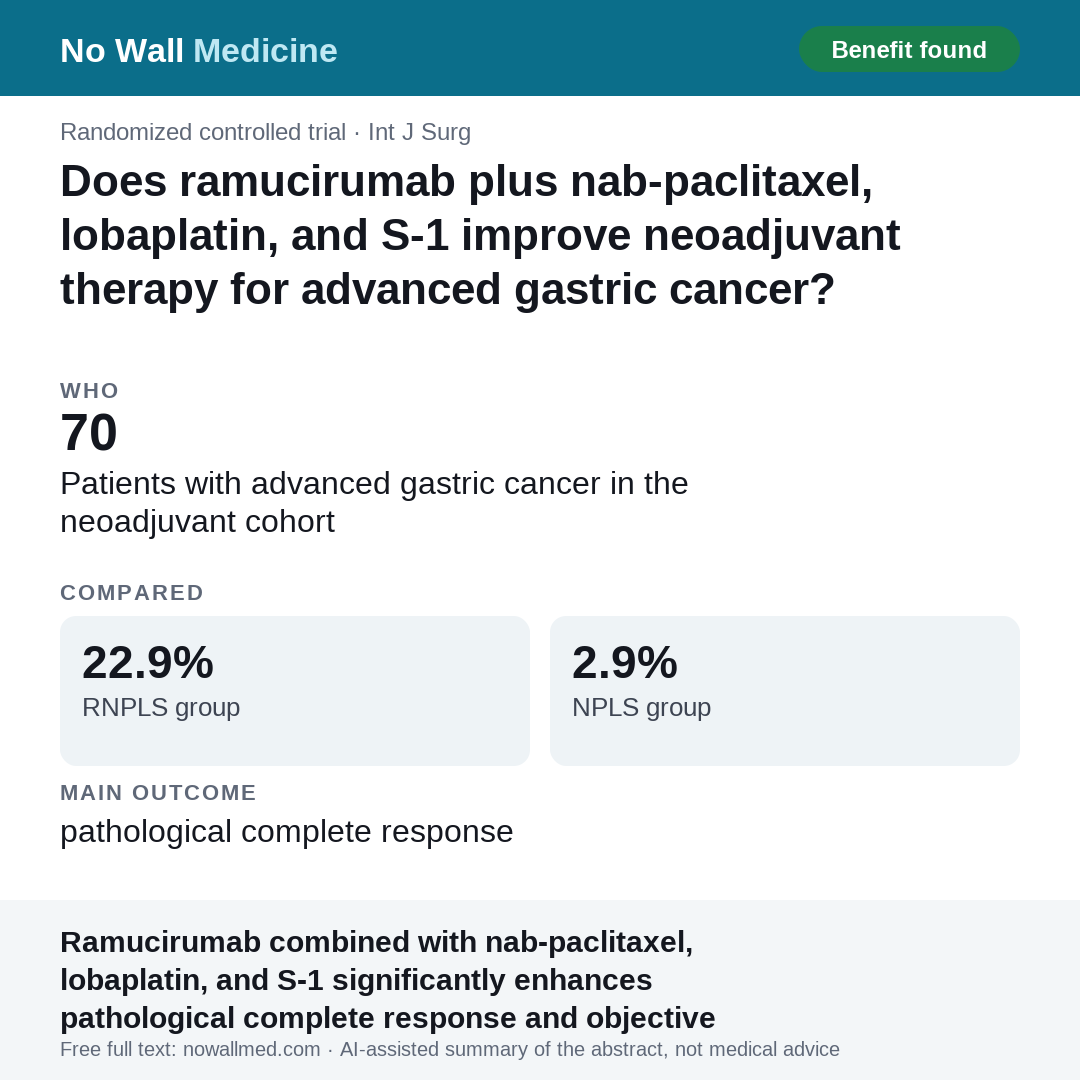
Aspirin, Birthweight, and Large-For-Gestational-Age Neonates: A Secondary Analysis of the ASPRE Trial
Secondary analysis of a randomized trialNo clear difference
Does aspirin affect birthweight distribution and large-for-gestational-age neonate rates?
Who
1571
Participants at increased risk of preterm pre-eclampsia with a live birth · Thirteen hospitals in England, Spain, Belgium, Greece, Italy and Israel
Compared
5.5%aspirin group
6.2%placebo group
Main outcome
rates of large-for-gestational-age neonates
Bottom line: Aspirin is associated with increased birthweight without increasing the rate of large-for-gestational-age neonates.
BJOG · 2025-07-01Download image
177Lu-PSMA-617 Consolidation Therapy After Docetaxel in Patients with Synchronous High-Volume Metastatic Hormone-Sensitive Prostate Cancer: A Randomized, Phase 2 Trial
Randomized, parallel-group, open-label phase 2 trialBenefit found
Does 177Lu-PSMA-617 consolidation therapy improve PSA levels after docetaxel in high-volume mHSPC?
Who
30
Synchronous high-volume metastatic hormone-sensitive prostate cancer patients with residual disease
Compared
60%177Lu-PSMA-617 (9 of 15)
13%Standard of care alone (2 of 15)
Main outcome
Proportion of patients achieving PSA level of 0.2 ng/mL or less
Result: risk ratio, 4.5 (95% CI, 1.2-17.4)
Bottom line: 177Lu-PSMA-617 consolidation therapy showed promising efficacy and safety in patients with residual disease after chemohormonal treatment.
Limitation: The trial was terminated early because of poor accrual and changing treatment guidelines.
J Nucl Med · 2025-07-01Download image

The Efficacy and Safety Between Intradetrusor OnabotulinumtoxinA Injection and Combined Pharmacotherapy in Patients With Refractory Overactive Bladder: A Randomized Controlled Trial
Single-center, open-label, randomized trialNo clear difference
Is onabotulinumtoxinA injection more effective and safer than combined pharmacotherapy for refractory overactive bladder?
Who
66
Patients with detrusor overactivity and persistent symptoms despite single pharmacotherapy · Single-center
Compared
OnabotulinumtoxinA injection: median 2.0 urgency episodes per 24 hours
Combined pharmacotherapy: median 2.0 urgency episodes per 24 hours
Main outcome
Urgency episodes per 24 hours
Result: mean difference -0.1 (95% CI: -1.5 to 1.4)
Bottom line: Both treatments improved symptoms, but onabotulinumtoxinA had fewer side effects than combined pharmacotherapy.
J Urol · 2025-07-01Download image
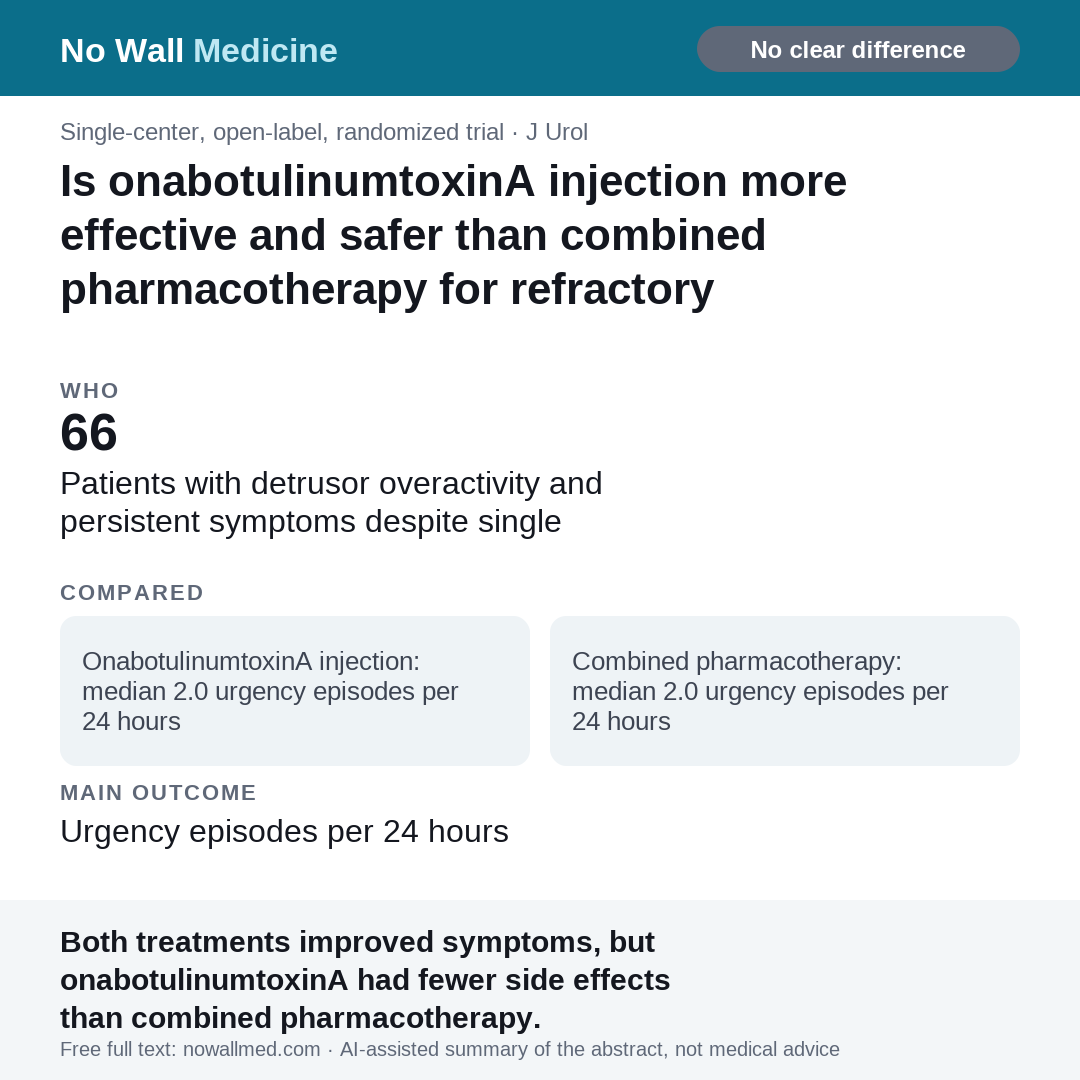
Final report on North Central Cancer Treatment Group N0877 (alliance): A phase II randomized, placebo-controlled trial of chemoradiotherapy with or without dasatinib for glioblastoma
Phase II randomized, placebo-controlled trialNo clear difference
Does adding dasatinib to chemoradiotherapy improve survival for glioblastoma patients?
Who
204
Adult patients with a histologic diagnosis of glioblastoma
Compared
Dasatinib with standard chemoradiotherapy: median overall survival 15.6 months
Placebo with standard chemoradiotherapy: median overall survival 19.3 months
Main outcome
overall survival
Result: hazard ratio 1.21 (95% CI 0.88-1.65)
Bottom line: Adding dasatinib to standard chemoradiation did not improve overall survival for patients with glioblastoma.
Neuro Oncol · 2025-07-01Download image
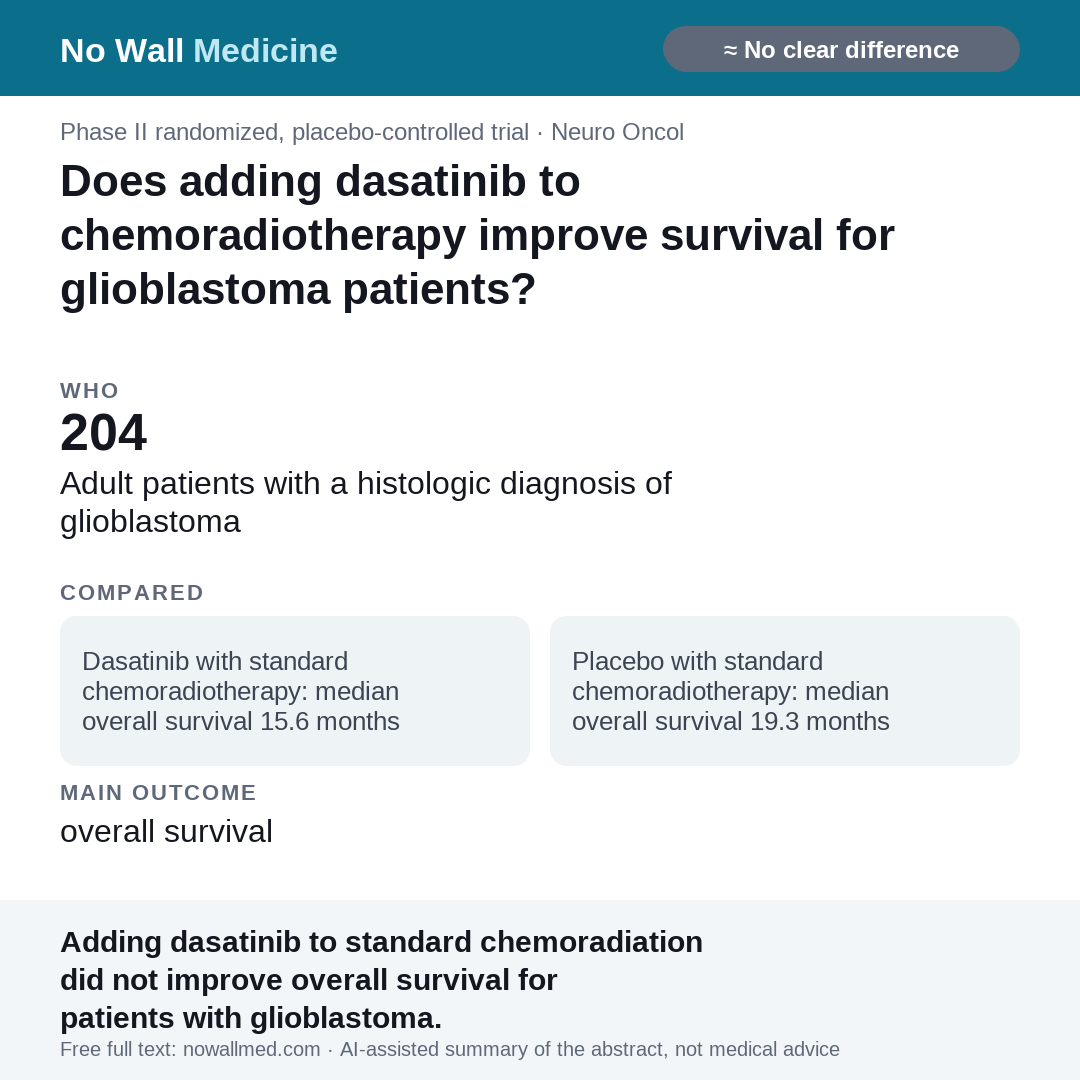
Effectiveness of ultrasound-guided alveolar recruitment in thoracic surgery with one-lung ventilation: a randomized-controlled trial
Randomized controlled trialBenefit found
Is lung ultrasound-guided alveolar recruitment more effective than conventional alveolar recruitment in thoracic surgery?
Who
166
Patients aged 20-80 years scheduled for lung resection surgery
Compared
1.2%Lung ultrasound-guided alveolar recruitment
14.3%Conventional alveolar recruitment
Main outcome
Incidence of intraoperative hypoxaemia (SpO2 < 95%)
Result: risk ratio 0.09 (95% CI 0.01-0.64)
Bottom line: Lung ultrasound-guided alveolar recruitment was more effective than conventional alveolar recruitment in preventing intraoperative hypoxaemia.
Eur J Cardiothorac Surg · 2025-07-01Download image
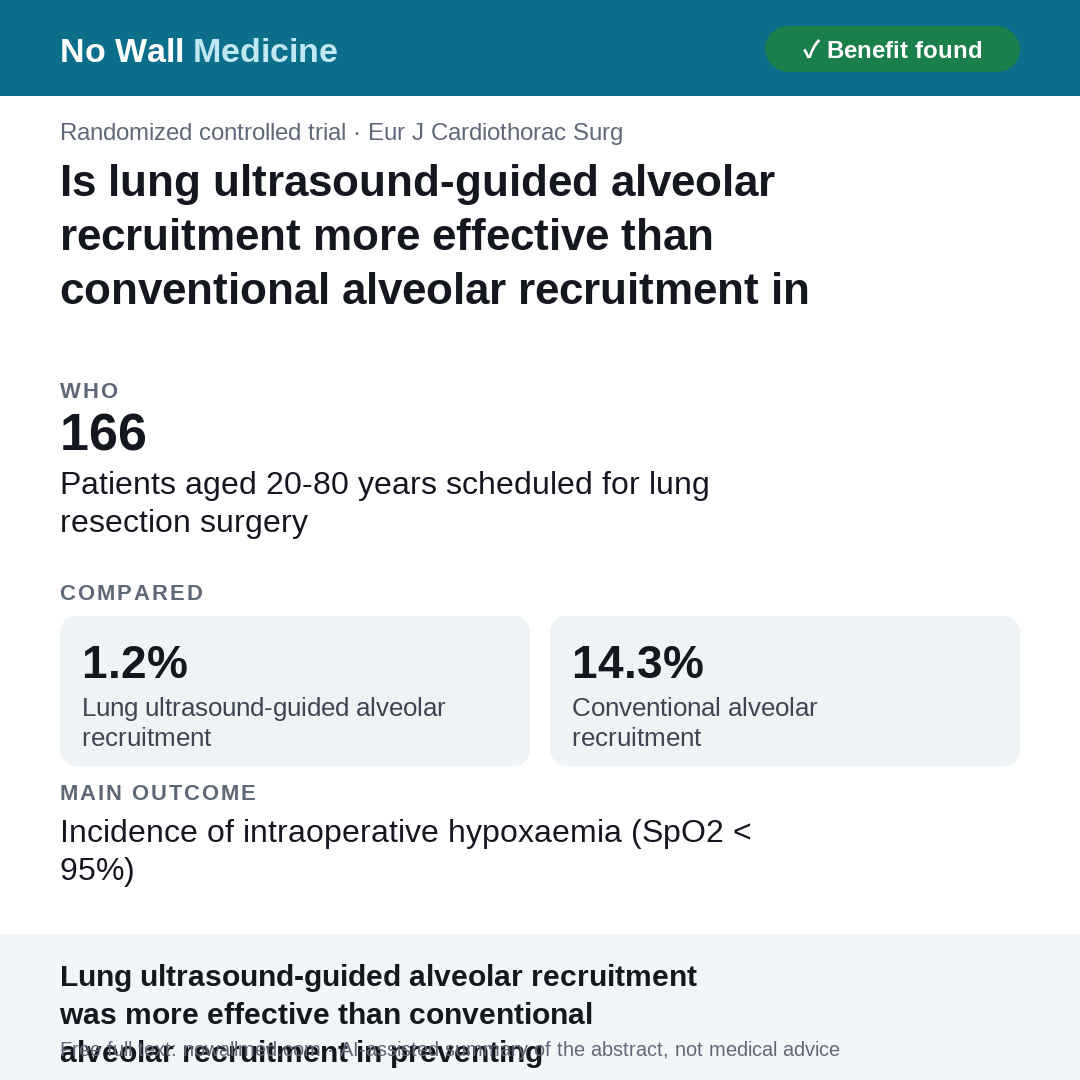
Infant vitamin B12 status and its predictors - cross-sectional baseline results from an ongoing randomized controlled trial
Cross-sectional baseline results from a randomized controlled trialMixed results
What is the vitamin B12 status and its predictors in Norwegian infants?
Who
644
Norwegian infants aged 6-15 weeks and their mothers · Public health clinics in Innlandet County, Norway
Compared
Exclusively breastfed infants: 40% lower cobalamin and 30% higher total homocysteine
Partially breastfed infants: 21% lower cobalamin and 12% higher total homocysteine
Nonbreastfed infants
Main outcome
Vitamin B12 status using multiple biomarkers and cut-off approaches
Bottom line: Many Norwegian infants show biochemical signs of low vitamin B12 status, particularly those who are breastfed.
Limitation: It is unclear whether these biomarker patterns have clinical significance.
Am J Clin Nutr · 2025-07-01Download image
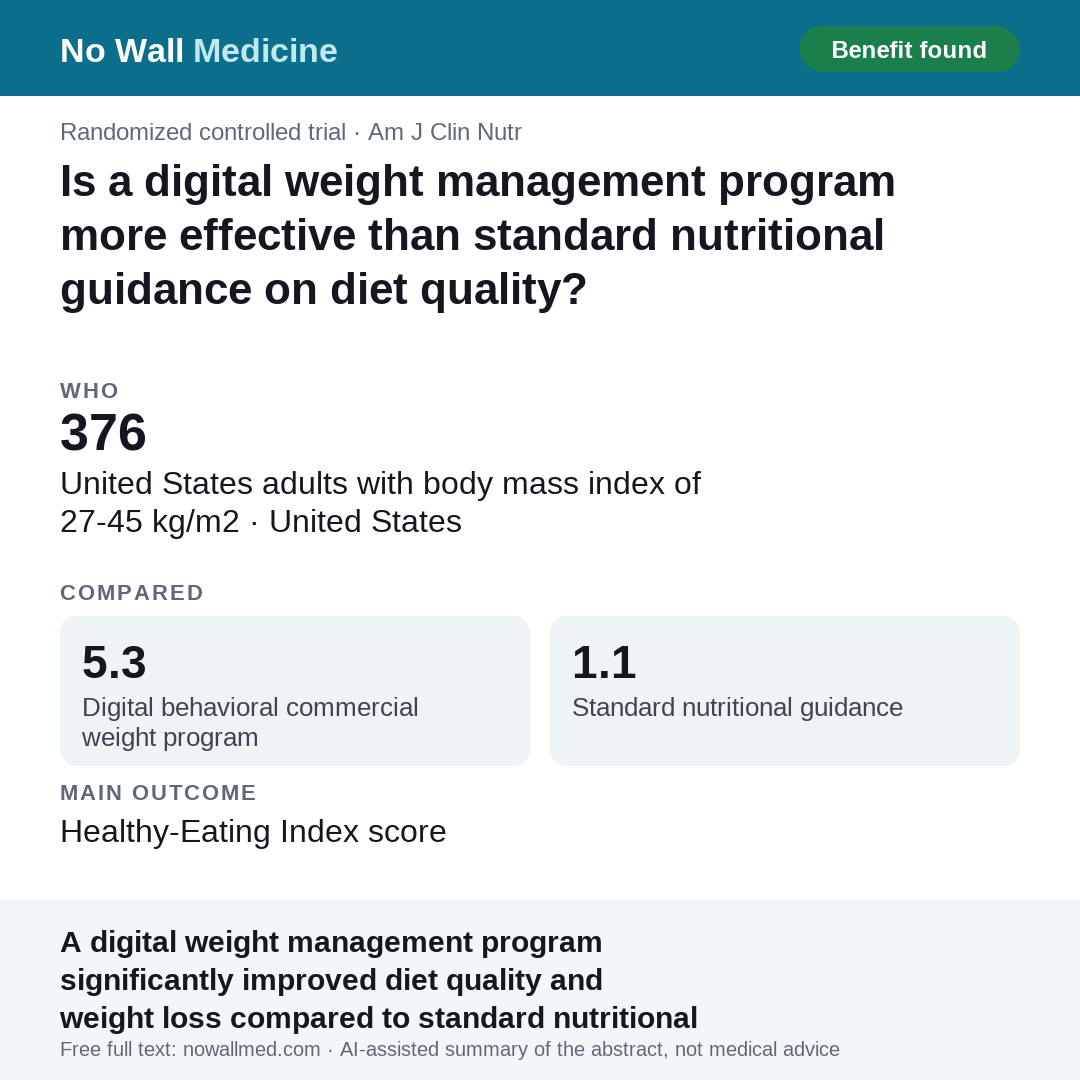
Effectiveness of a digital weight management program on diet quality: a randomized controlled trial
Randomized controlled trialBenefit found
Is a digital weight management program more effective than standard nutritional guidance on diet quality?
Who
376
United States adults with body mass index of 27-45 kg/m2 · United States
Compared
5.3Digital behavioral commercial weight program (standard error = 1.5)
1.1Standard nutritional guidance (1.4)
Main outcome
Healthy-Eating Index score
Result: between-group mean difference 4.2 (95% CI: 1.8, 6.6)
Bottom line: A digital weight management program significantly improved diet quality and weight loss compared to standard nutritional guidance.
Am J Clin Nutr · 2025-07-01Download image
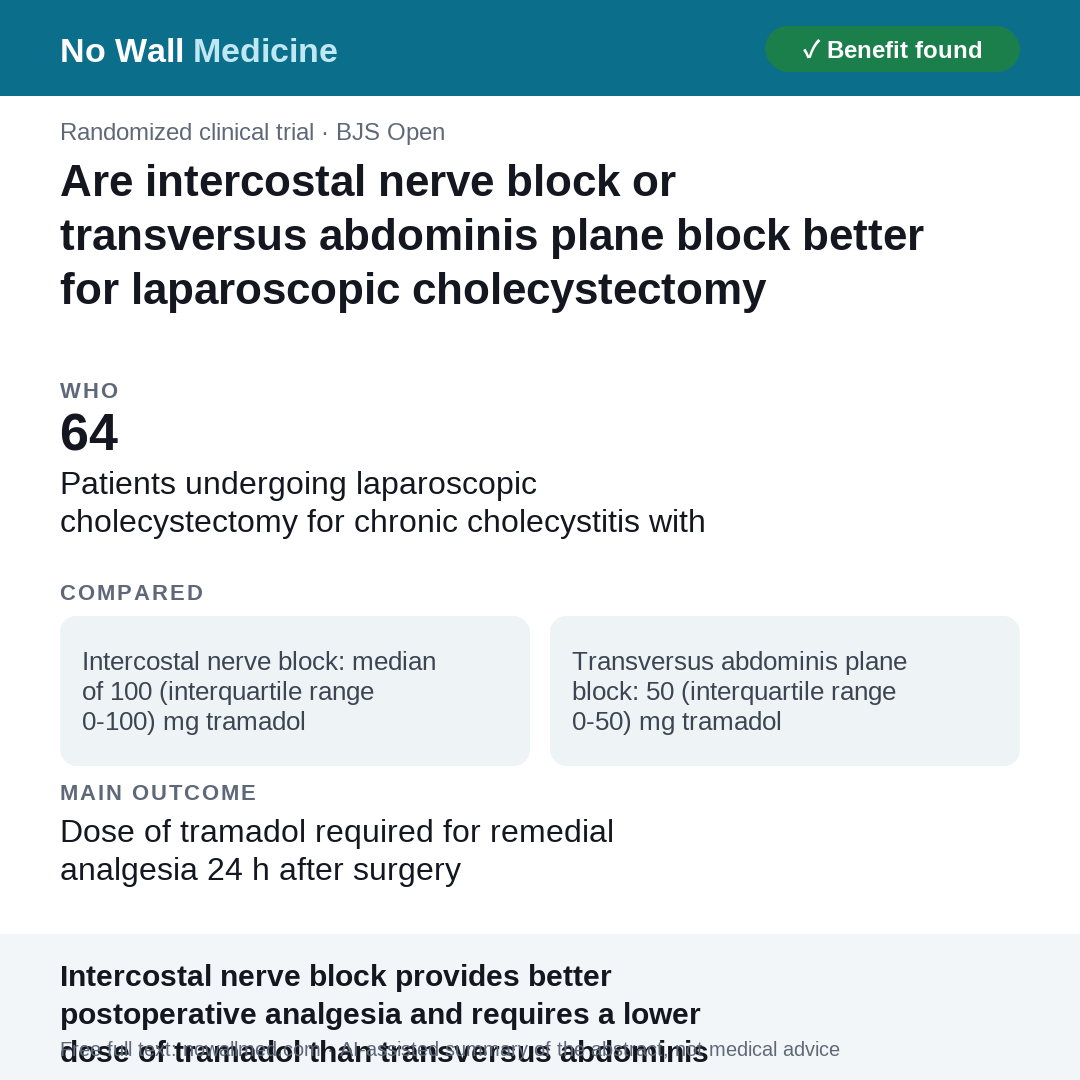
Comparison of postoperative analgesic effects of ultrasound-guided intercostal nerve block and transversus abdominis plane block in patients undergoing laparoscopic cholecystectomy: randomized clinical trial
Randomized clinical trialBenefit found
Are intercostal nerve block or transversus abdominis plane block better for laparoscopic cholecystectomy analgesia?
Who
64
Patients undergoing laparoscopic cholecystectomy for chronic cholecystitis with gallstones
Compared
Intercostal nerve block: median of 100 (interquartile range 0-100) mg tramadol
Transversus abdominis plane block: 50 (interquartile range 0-50) mg tramadol
Main outcome
Dose of tramadol required for remedial analgesia 24 h after surgery
Bottom line: Intercostal nerve block provides better postoperative analgesia and requires a lower dose of tramadol than transversus abdominis plane block.
BJS Open · 2025-07-01Download image
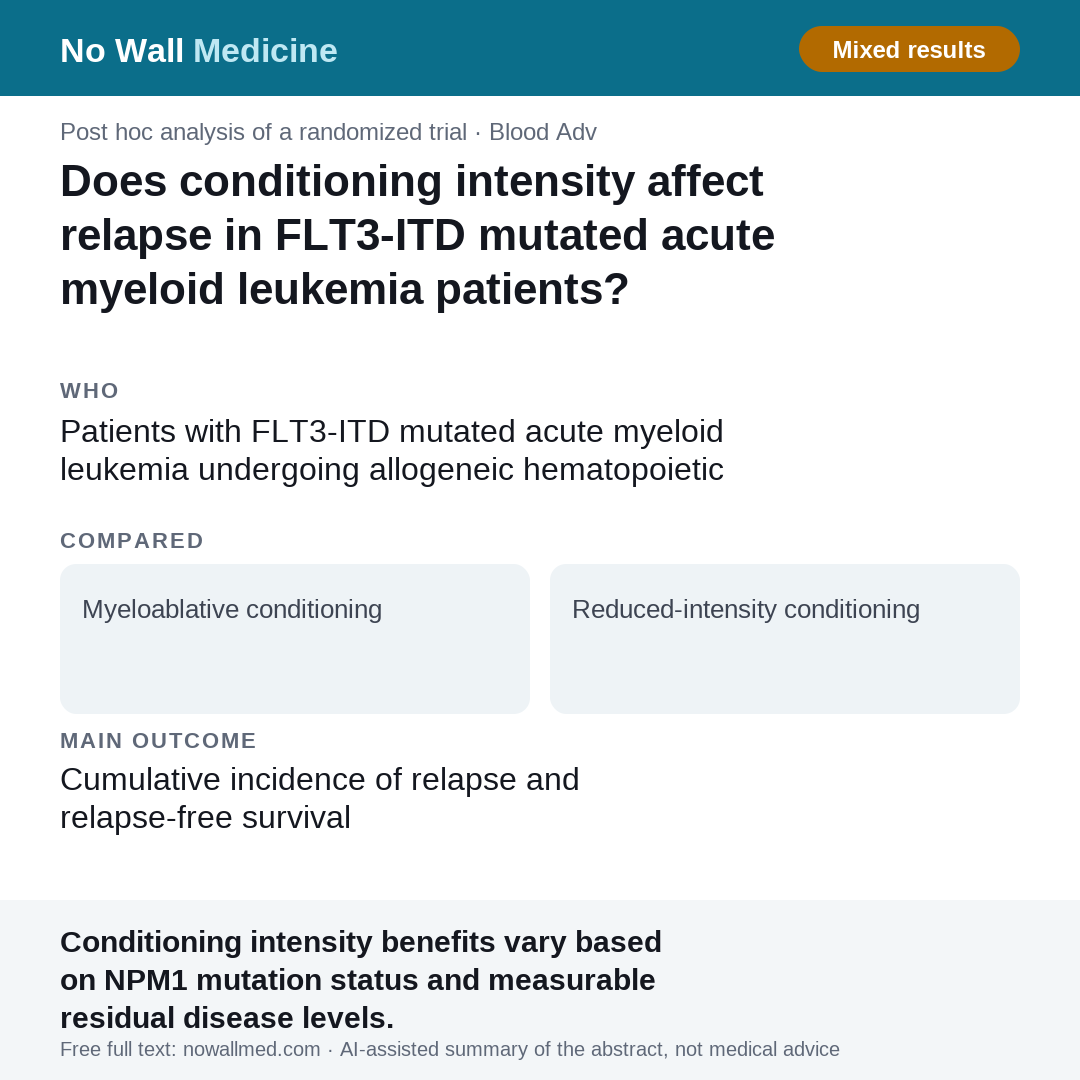
Impact of transplant conditioning, NPM1 mutations, and measurable residual disease in FLT3-ITD acute myeloid leukemia
Post hoc analysis of a randomized trialMixed results
Does conditioning intensity affect relapse in FLT3-ITD mutated acute myeloid leukemia patients?
Who
Patients with FLT3-ITD mutated acute myeloid leukemia undergoing allogeneic hematopoietic cell transplantation · Blood and Marrow Transplant Clinical Trials Network 1506
Compared
Myeloablative conditioning
Reduced-intensity conditioning
Main outcome
Cumulative incidence of relapse and relapse-free survival
Bottom line: Conditioning intensity benefits vary based on NPM1 mutation status and measurable residual disease levels.
Blood Adv · 2025-07-01Download image
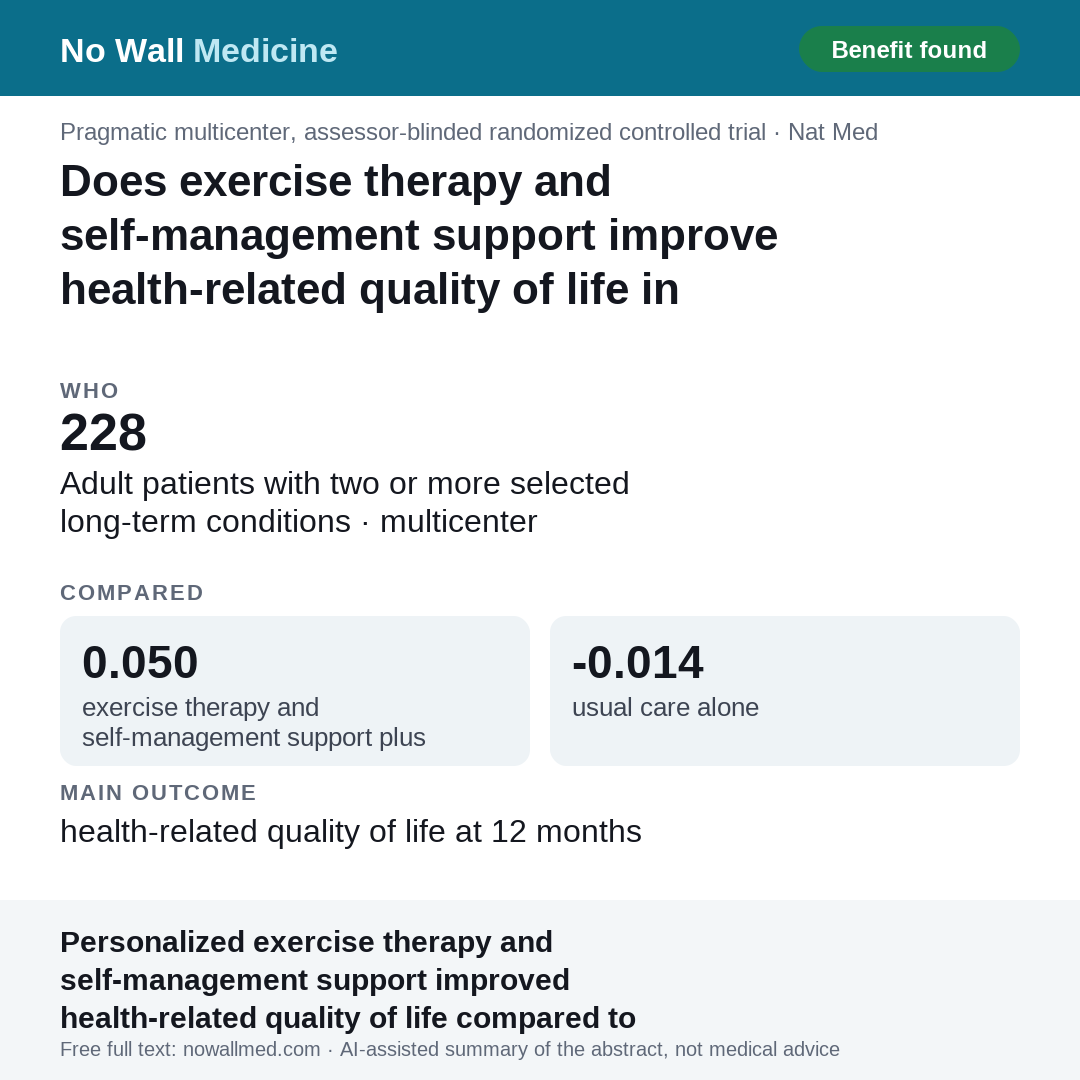
Exercise therapy and self-management support for individuals with multimorbidity: a randomized and controlled trial
Pragmatic multicenter, assessor-blinded randomized controlled trialBenefit found
Does exercise therapy and self-management support improve health-related quality of life in individuals with multimorbidity?
Who
228
Adult patients with two or more selected long-term conditions · multicenter
Compared
0.050exercise therapy and self-management support plus usual care
-0.014usual care alone
Main outcome
health-related quality of life at 12 months
Result: adjusted mean difference, 0.064 points (95% CI: 0.014-0.115)
Bottom line: Personalized exercise therapy and self-management support improved health-related quality of life compared to usual care alone in adults with multimorbidity.
Limitation: The clinical relevance of the results remains unclear.
Nat Med · 2025-06-30Download image
Ambroxol as a Treatment for Parkinson Disease Dementia: A Randomized Clinical Trial
Phase 2, double-blind, placebo-controlled, randomized clinical trialNo clear difference
Is ambroxol safe and effective for improving or slowing Parkinson disease dementia progression?
Who
55
Patients with Parkinson disease dementia older than 50 years · Single center, referral based
Compared
Ambroxol high dose: no evidence to suggest differences
Placebo: no evidence to suggest differences
Main outcome
Alzheimer Disease Assessment Scale-cognitive subscale and Clinician's Global Impression of Change
Bottom line: Ambroxol demonstrated target engagement but did not confirm an effect on cognition in Parkinson disease dementia.
JAMA Neurol · 2025-06-30Download image
Nocturnal respiratory support with nasal high flow in hypercapnic COPD: a randomised, crossover trial
Randomized, crossover trialBenefit found
Does nocturnal nasal high flow improve gas exchange and sleep in hypercapnic COPD?
Who
42
Severe COPD patients with mild hypercapnic respiratory failure
Compared
Nasal high flow: reduced mean overnight transcutaneous carbon dioxide by 3.4±6.5 mmHg
Long-term oxygen therapy
Main outcome
transcutaneous carbon dioxide measured during polysomnography
Bottom line: Nocturnal nasal high flow attenuated carbon dioxide increases during sleep without affecting sleep quality compared to long-term oxygen therapy.
ERJ Open Res · 2025-06-30Download image
Use of Patient-Specific Information for Randomization in Clinical Research: A Randomized Trial
Randomized trialBenefit found
Does using patient-specific information for randomization work in clinical research?
Who
Patients in outpatient, inpatient, and emergency department settings · Outpatient, inpatient, and emergency department settings
Compared
Encounter identification method: passed either 10 or 11 out of 11 NIST tests
Patient identification method: passed either 10 or 11 out of 11 NIST tests
Main outcome
Ability to perform group randomization
Bottom line: Patient information-based electronic medical records randomization methods successfully produce random group assignments in pragmatic trials.
JACEP Open · 2025-06-30Download image
Improvements in Glycemic Control With a Digital Diabetes Logbook: Secondary Analysis of a Randomized Controlled Trial Enriched by Observational, Real-World Data
Secondary analysis of a randomized controlled trialBenefit found
Does a digital diabetes logbook increase the likelihood of achieving optimal glycemic control?
Who
342
Participants with type 1 or type 2 diabetes
Compared
Intervention group
Control group
Main outcome
Likelihood of achieving optimal glycemic control (glycated hemoglobin ≤6.5%)
Result: odds ratio 2.24 (95% CI 1.12-4.47)
Bottom line: A digital diabetes logbook significantly increased the likelihood of achieving optimal glycemic control after 3 months.
J Med Internet Res · 2025-06-30Download image
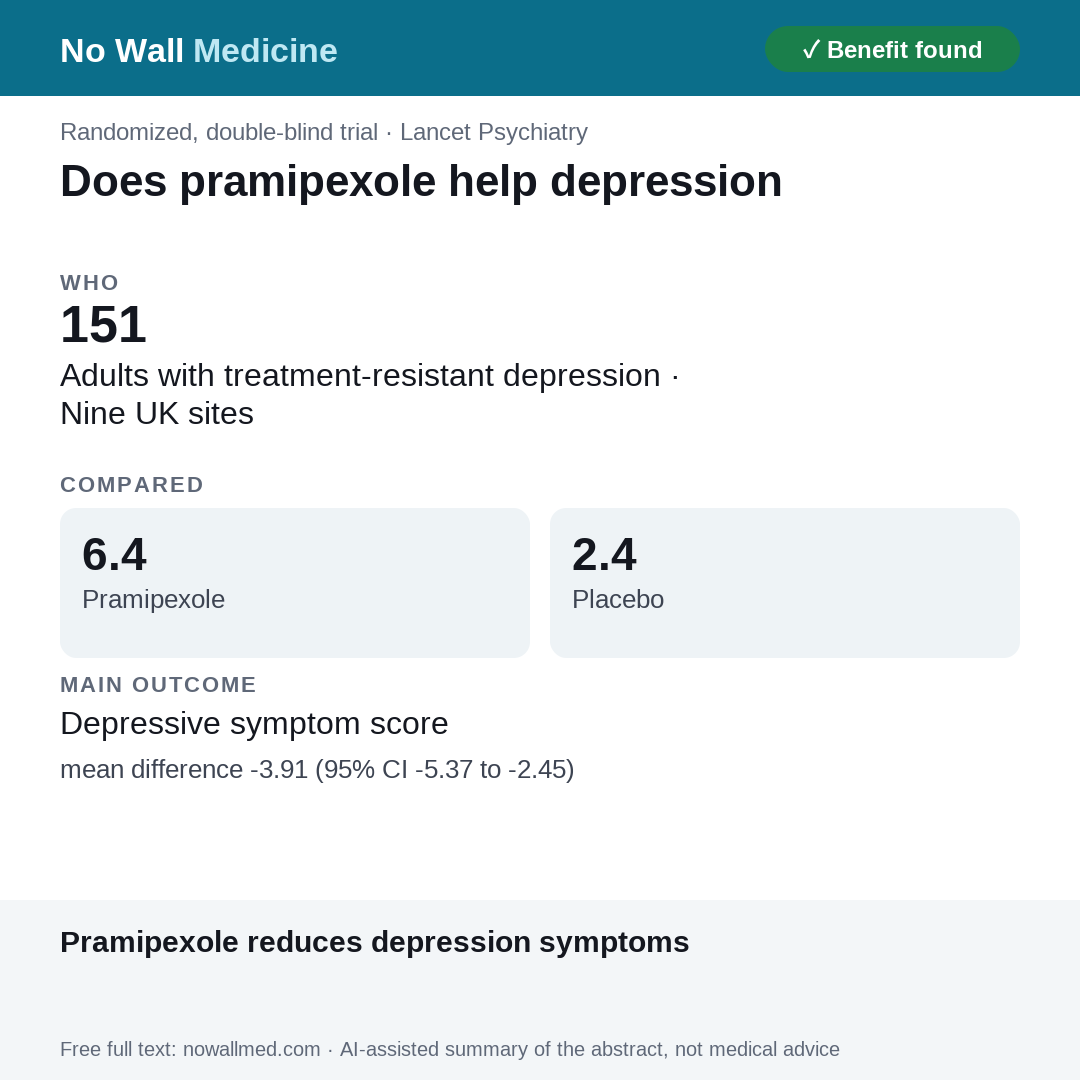
Pramipexole augmentation for the acute phase of treatment-resistant, unipolar depression: a placebo-controlled, double-blind, randomised trial in the UK
Randomized, double-blind trialBenefit found
Does pramipexole help depression
Who
151
Adults with treatment-resistant depression · Nine UK sites
Compared
6.4Pramipexole (SD 4.9)
2.4Placebo (4.0)
Main outcome
Depressive symptom score
Result: mean difference -3.91 (95% CI -5.37 to -2.45)
Bottom line: Pramipexole reduces depression symptoms
Funded by: National Institute of Health
Lancet Psychiatry · 2025-06-29Download image
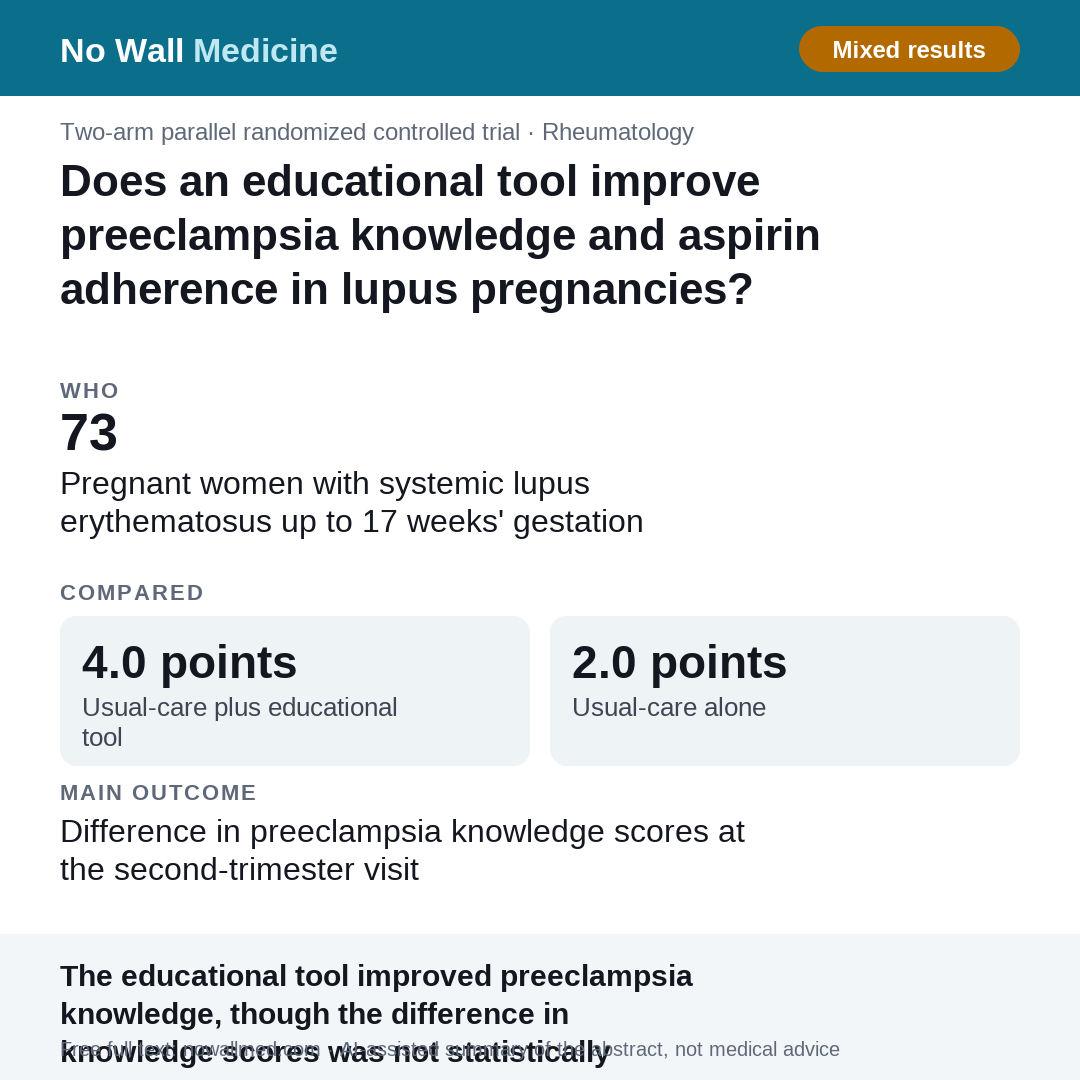
An educational tool to improve PREeclamPsia knowledge and Aspirin adheRence in lupus prEgnancies: the PREPARE trial
Two-arm parallel randomized controlled trialMixed results
Does an educational tool improve preeclampsia knowledge and aspirin adherence in lupus pregnancies?
Who
73
Pregnant women with systemic lupus erythematosus up to 17 weeks' gestation
Compared
4.0 pointsUsual-care plus educational tool (95% CI: 2.4, 5.6)
2.0 pointsUsual-care alone (95% CI: 0.3, 3.9)
Main outcome
Difference in preeclampsia knowledge scores at the second-trimester visit
Result: mean difference of 1.8 points higher (95% CI: -0.5, 4.2)
Bottom line: The educational tool improved preeclampsia knowledge, though the difference in knowledge scores was not statistically significant.
Rheumatology · 2025-06-28Download image
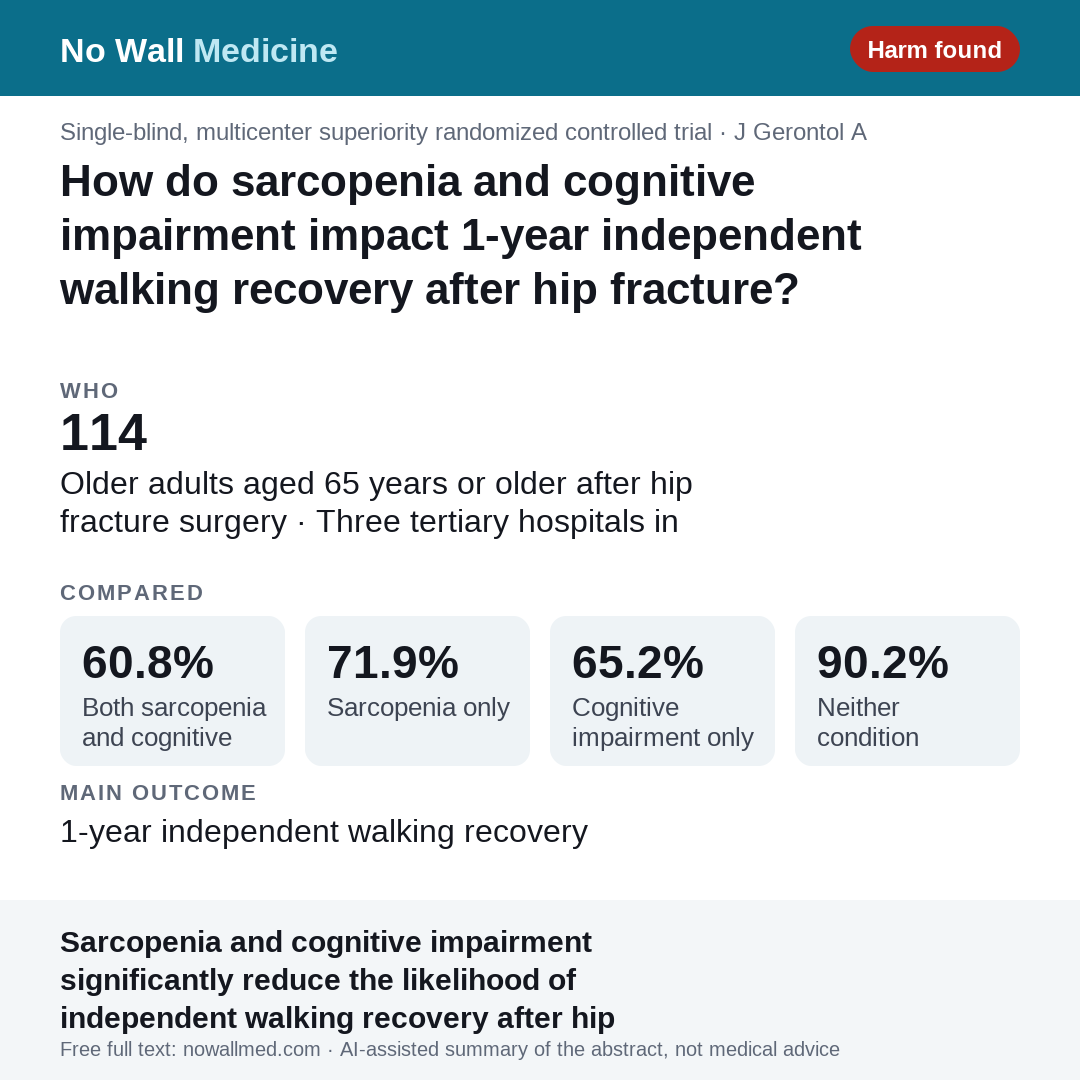
Concurrent impact of sarcopenia and cognitive impairment on walking recovery after rehabilitation following hip fracture surgery
Single-blind, multicenter superiority randomized controlled trialHarm found
How do sarcopenia and cognitive impairment impact 1-year independent walking recovery after hip fracture?
Who
114
Older adults aged 65 years or older after hip fracture surgery · Three tertiary hospitals in South Korea
Compared
60.8%Both sarcopenia and cognitive impairment
71.9%Sarcopenia only
65.2%Cognitive impairment only
90.2%Neither condition
Main outcome
1-year independent walking recovery
Result: hazard ratio 0.431 (95% CI 0.233 to 0.798)
Bottom line: Sarcopenia and cognitive impairment significantly reduce the likelihood of independent walking recovery after hip fracture rehabilitation.
J Gerontol A · 2025-06-28Download image
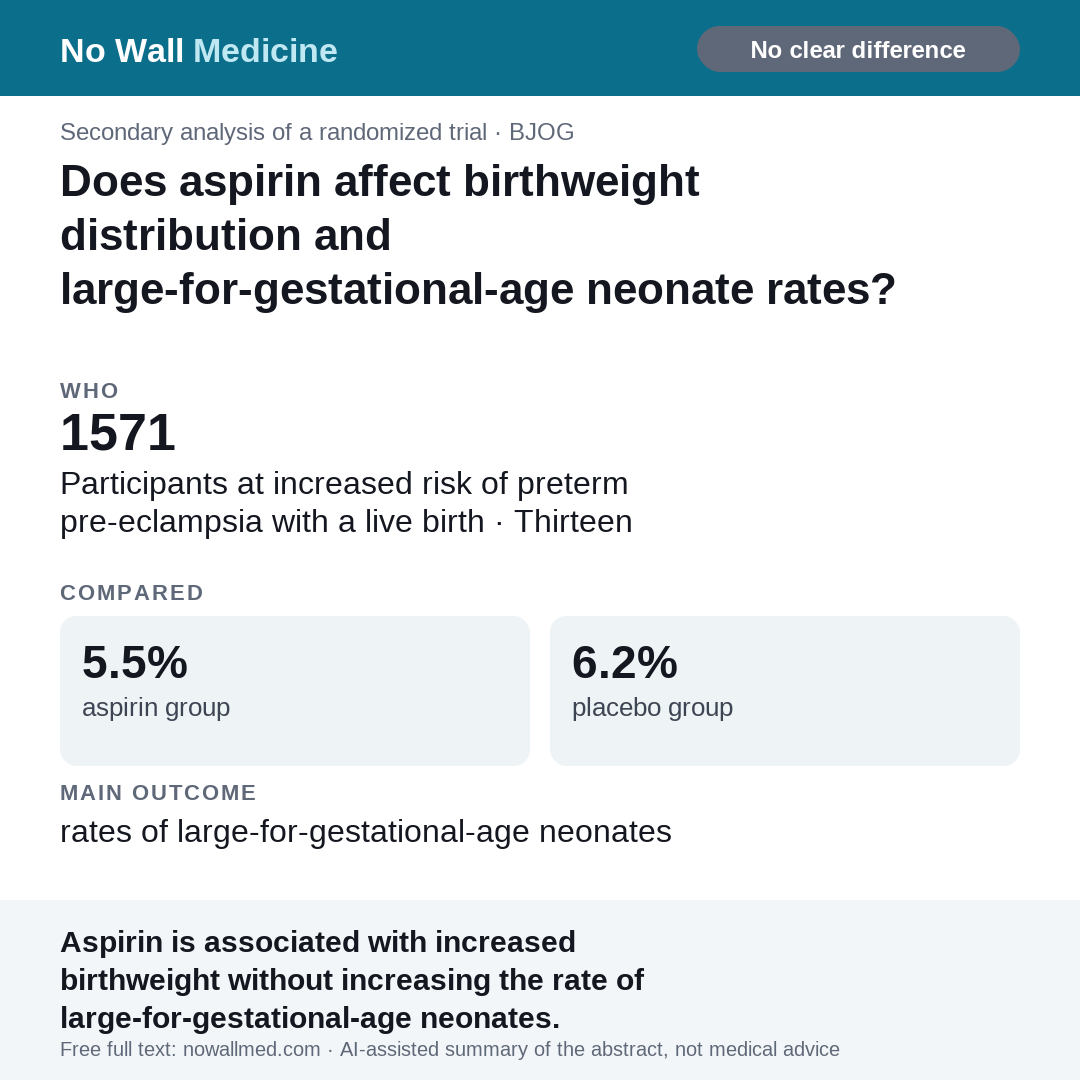
Quality comparison of mediastinal lymph node dissection between video-assisted thoracic surgery and open thoracotomy: a supplementary analysis of the phase 3 Japan Clinical Oncology Group 1413 trial†
Randomized, controlled trial supplementary analysisNo clear difference
Is mediastinal lymph node dissection quality comparable between video-assisted thoracic surgery and open thoracotomy?
Who
1685
Patients with clinical stage I-II non-small cell lung cancer
Compared
7.8%video-assisted thoracic surgery
7.3%open thoracotomy
Main outcome
N2 upstaging proportion
Bottom line: There were no significant differences in N2 upstaging proportions between video-assisted thoracic surgery and open thoracotomy.
Eur J Cardiothorac Surg · 2025-06-28Download image