Visual abstracts
New randomized trials and meta-analyses from leading journals at a glance: who was studied, what was compared, and what was found. Every paper is free to read in full.
All specialtiesCardiology 431Oncology 355Gastroenterology & Hepatology 174Infectious Disease 349Neurology 199Psychiatry & Mental Health 296Pulmonology 198Critical Care 140Endocrinology & Diabetes 277Pediatrics 215Surgery 152Orthopedics & Sports Medicine 91Neurosurgery 28Cardiothoracic & Vascular Surgery 52Plastic & Reconstructive Surgery 89Nephrology 87Rheumatology 88Hematology 109Dermatology 46Ophthalmology 79Obstetrics & Gynecology 136Public & Global Health 138Radiology & Imaging 41Anesthesiology 83Urology 101ENT (Otolaryngology) 57Emergency Medicine 45Allergy & Immunology 53Geriatrics 127Family Medicine & Primary Care 77Medical Genetics & Genomics 42Pathology & Laboratory Medicine 6Physical Medicine & Rehabilitation 114Palliative Care 66Nutrition 152Digital Health & AI 384General Medicine 53
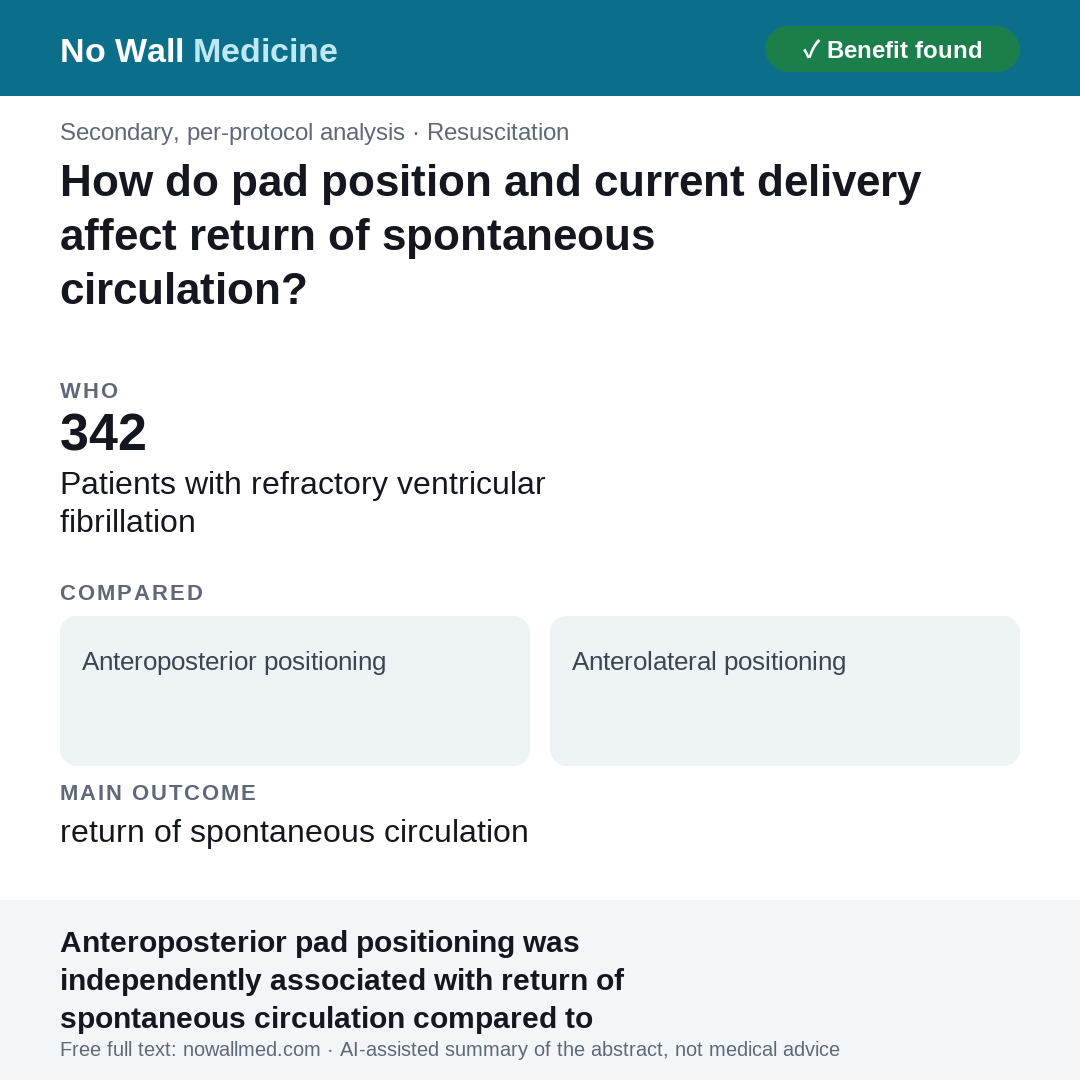
The impact of defibrillation current and pad position on return of spontaneous circulation during refractory ventricular fibrillation
Secondary, per-protocol analysisBenefit found
How do pad position and current delivery affect return of spontaneous circulation?
Who
342
Patients with refractory ventricular fibrillation
Compared
Anteroposterior positioning
Anterolateral positioning
Main outcome
return of spontaneous circulation
Result: adjusted odds ratio 2.01 (95% CI 1.12-3.59)
Bottom line: Anteroposterior pad positioning was independently associated with return of spontaneous circulation compared to anterolateral positioning.
Resuscitation · 2026-03-17Download image
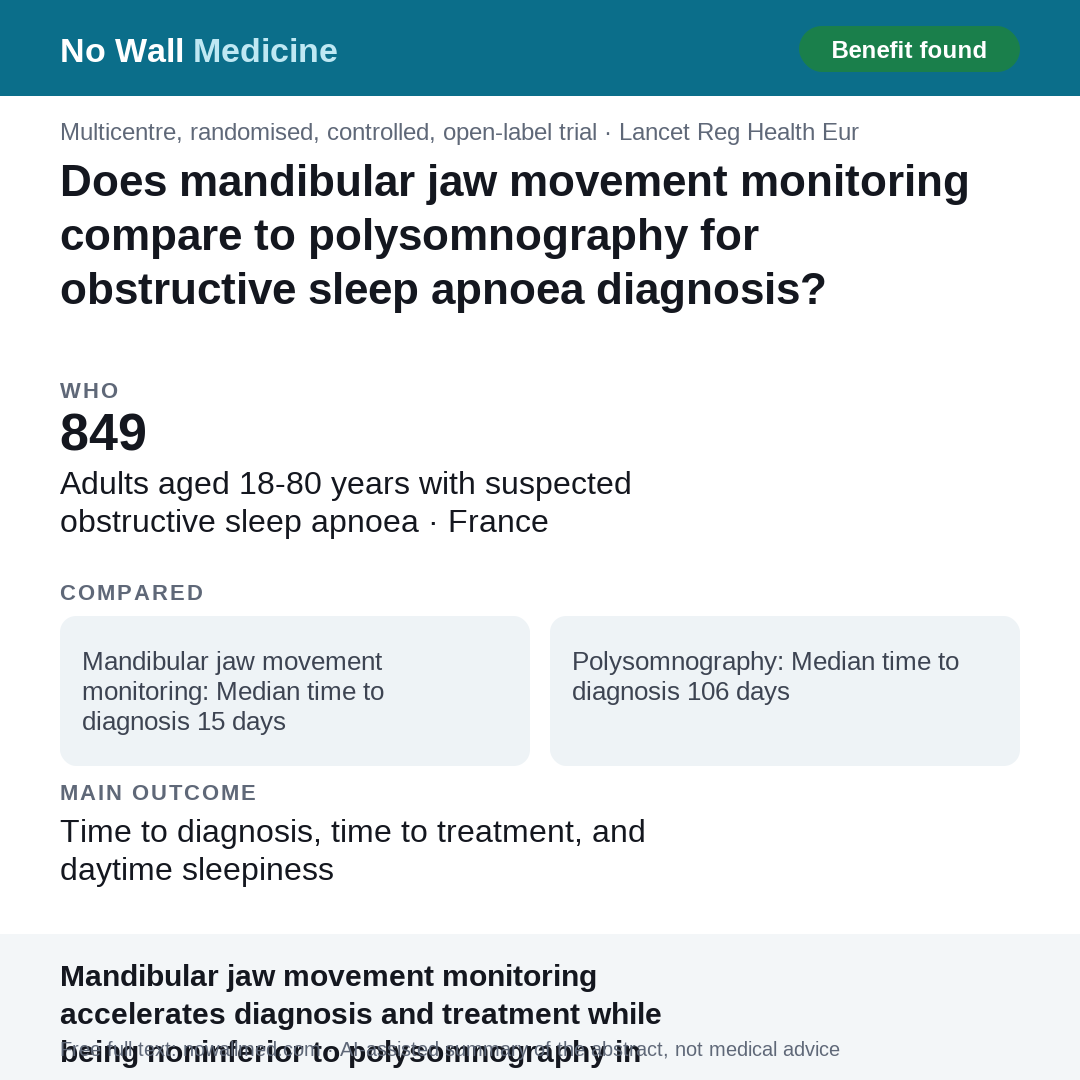
Time to diagnosis and treatment of obstructive sleep apnoea using mandibular jaw movement monitoring versus polysomnography: an open-label, multicentre, randomised, controlled trial
Multicentre, randomised, controlled, open-label trialBenefit found
Does mandibular jaw movement monitoring compare to polysomnography for obstructive sleep apnoea diagnosis?
Who
849
Adults aged 18-80 years with suspected obstructive sleep apnoea · France
Compared
Mandibular jaw movement monitoring: Median time to diagnosis 15 days
Polysomnography: Median time to diagnosis 106 days
Main outcome
Time to diagnosis, time to treatment, and daytime sleepiness
Result: difference in ESS at 3 months -2.26 vs -2.29 (95% CI -0.85, 0.79)
Bottom line: Mandibular jaw movement monitoring accelerates diagnosis and treatment while being noninferior to polysomnography in reducing daytime sleepiness.
Funded by: Sunrise and French Ministry of Health
Lancet Reg Health Eur · 2026-03-17Download image
Harnessing metabolomics and proteomics in a clinical trial for pulmonary arterial hypertension: insights from post-hoc analysis of the REHAB-PH trial
Randomized, placebo-controlled trialMixed results
How do famotidine treatment and placebo affect multi-omic profiles in pulmonary arterial hypertension?
Who
79
Participants with pulmonary arterial hypertension
Compared
famotidine: significant changes across 191 proteomic pathways (q-value <0.05)
placebo: high molecular stability
Main outcome
plasma metabolomic and proteomic profiles
Bottom line: Famotidine caused significant proteomic changes but provided no clinical benefit in pulmonary arterial hypertension.
Funded by: US National Institutes of Health
eBioMedicine · 2026-03-17Download image

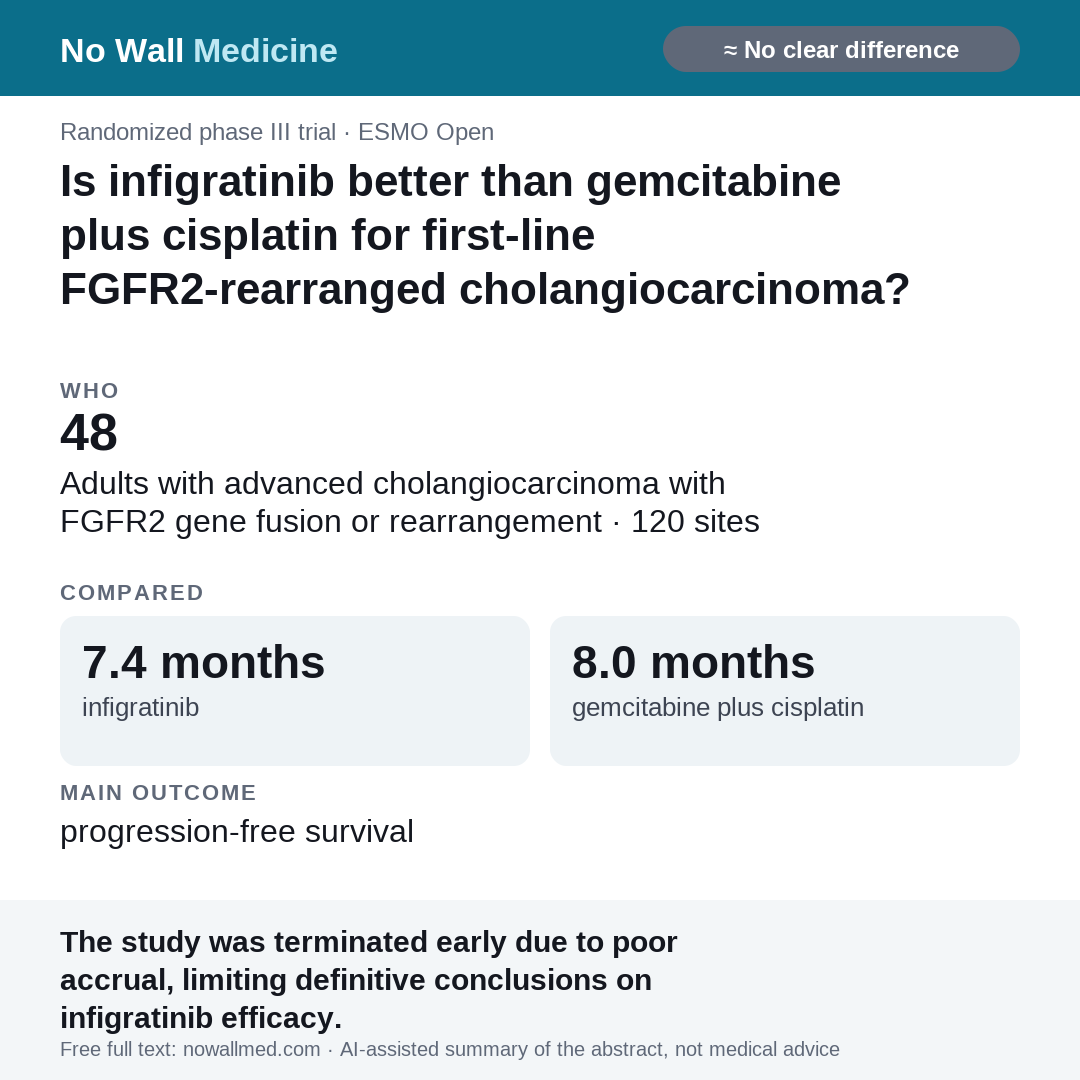
Phase III trial of infigratinib versus gemcitabine/cisplatin in adults with advanced cholangiocarcinoma with FGFR2 gene fusion or rearrangement: results and reflections on early termination of PROOF 301
Randomized phase III trialNo clear difference
Is infigratinib better than gemcitabine plus cisplatin for first-line FGFR2-rearranged cholangiocarcinoma?
Who
48
Adults with advanced cholangiocarcinoma with FGFR2 gene fusion or rearrangement · 120 sites
Compared
7.4 monthsinfigratinib
8.0 monthsgemcitabine plus cisplatin
Main outcome
progression-free survival
Bottom line: The study was terminated early due to poor accrual, limiting definitive conclusions on infigratinib efficacy.
Limitation: Study was terminated early due to poor accrual, limiting ability to draw definitive conclusions.
ESMO Open · 2026-03-17Download image
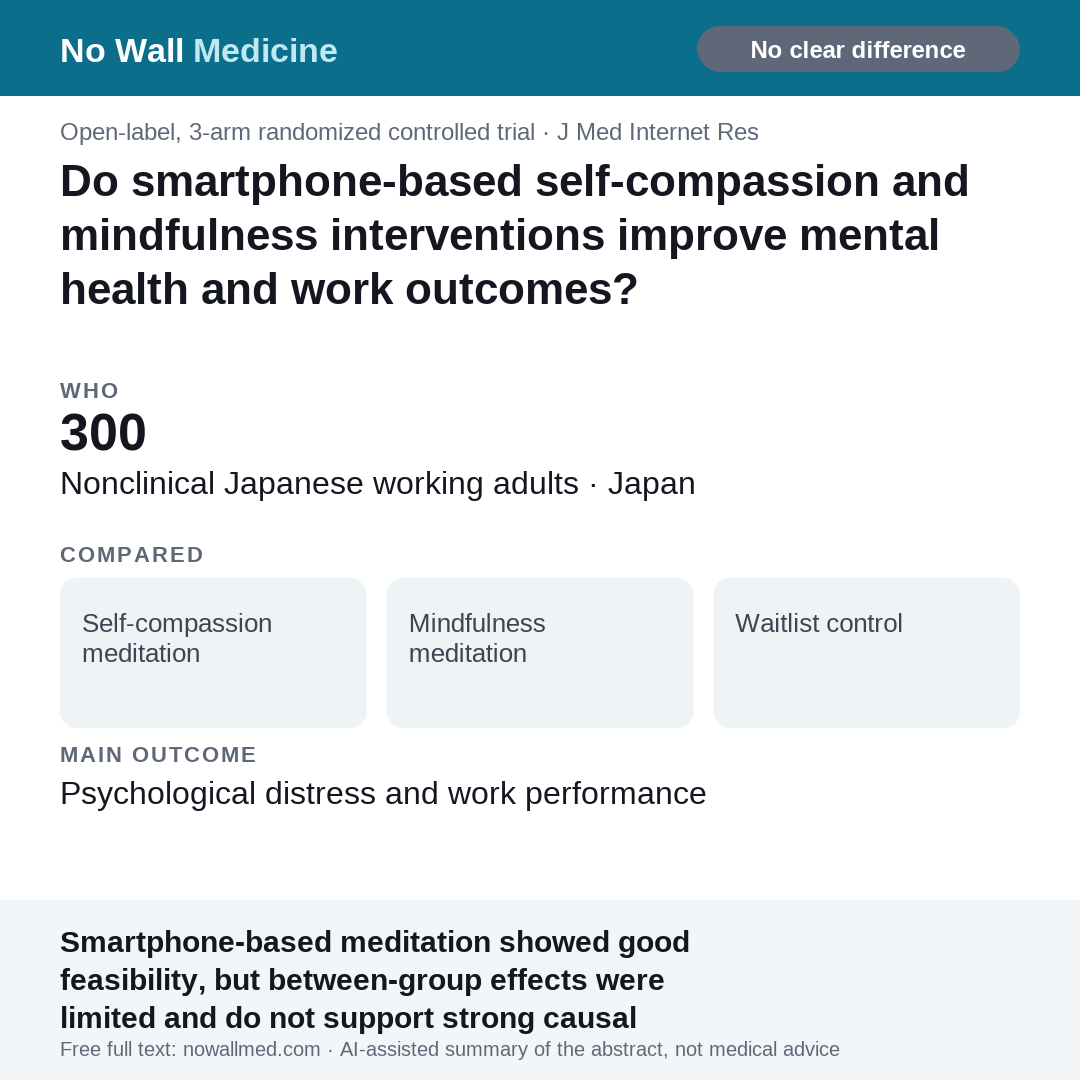
Effects of Self-Compassion and Mindfulness Interventions on Mental Health and Work-Related Outcomes Among Japanese Workers: Randomized Controlled Trial
Open-label, 3-arm randomized controlled trialNo clear difference
Do smartphone-based self-compassion and mindfulness interventions improve mental health and work outcomes?
Who
300
Nonclinical Japanese working adults · Japan
Compared
Self-compassion meditation
Mindfulness meditation
Waitlist control
Main outcome
Psychological distress and work performance
Bottom line: Smartphone-based meditation showed good feasibility, but between-group effects were limited and do not support strong causal claims.
Limitation: Findings are preliminary and clinical significance remains unclear in this nonclinical sample.
J Med Internet Res · 2026-03-17Download image
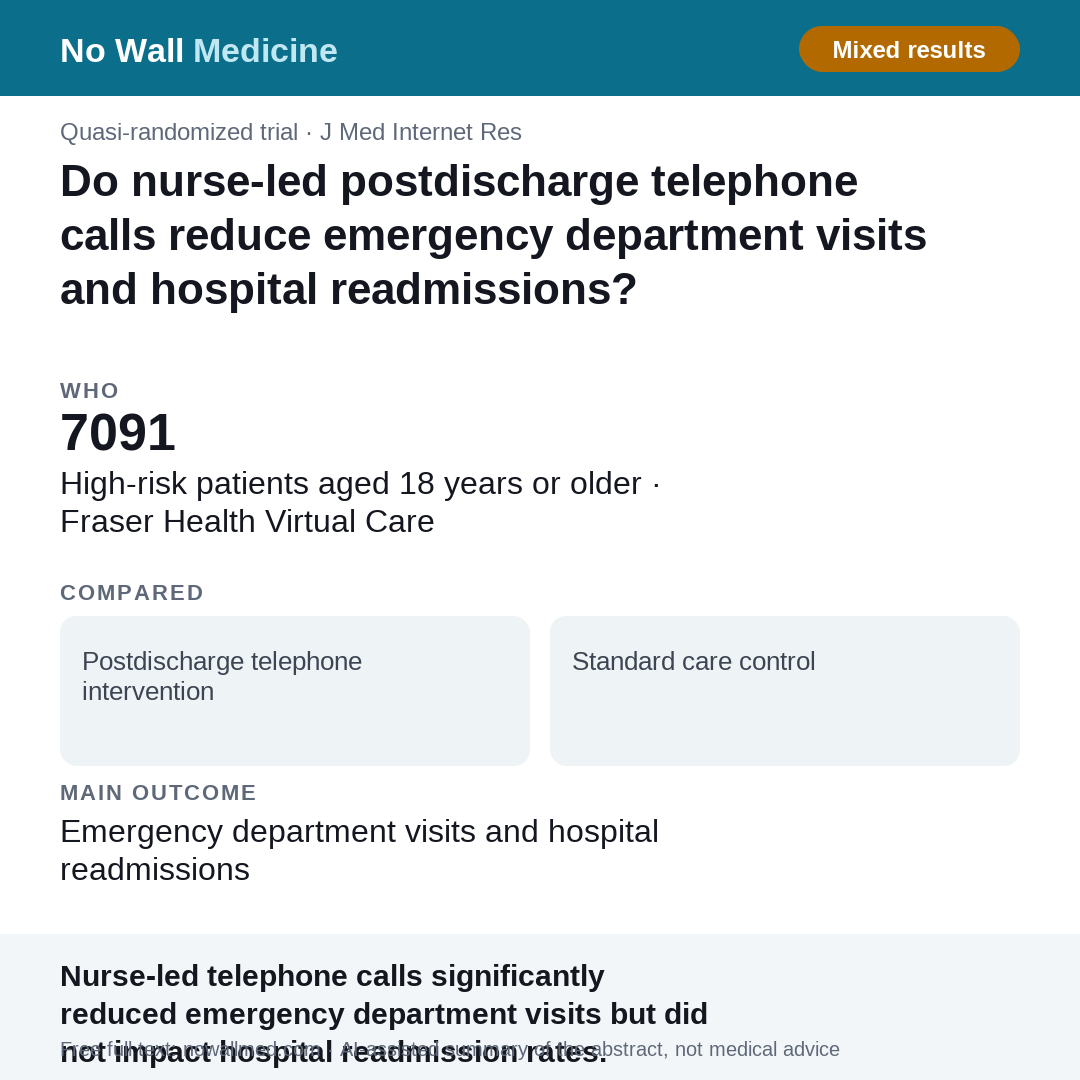
Effectiveness of Postdischarge Telephone Calls in Reducing Hospital Utilization: Quasi-Randomized Controlled Trial
Quasi-randomized trialMixed results
Do nurse-led postdischarge telephone calls reduce emergency department visits and hospital readmissions?
Who
7091
High-risk patients aged 18 years or older · Fraser Health Virtual Care
Compared
Postdischarge telephone intervention
Standard care control
Main outcome
Emergency department visits and hospital readmissions
Result: adjusted IRR 0.719 (95% CI 0.617-0.837) for 7-day emergency department visits
Bottom line: Nurse-led telephone calls significantly reduced emergency department visits but did not impact hospital readmission rates.
J Med Internet Res · 2026-03-17Download image
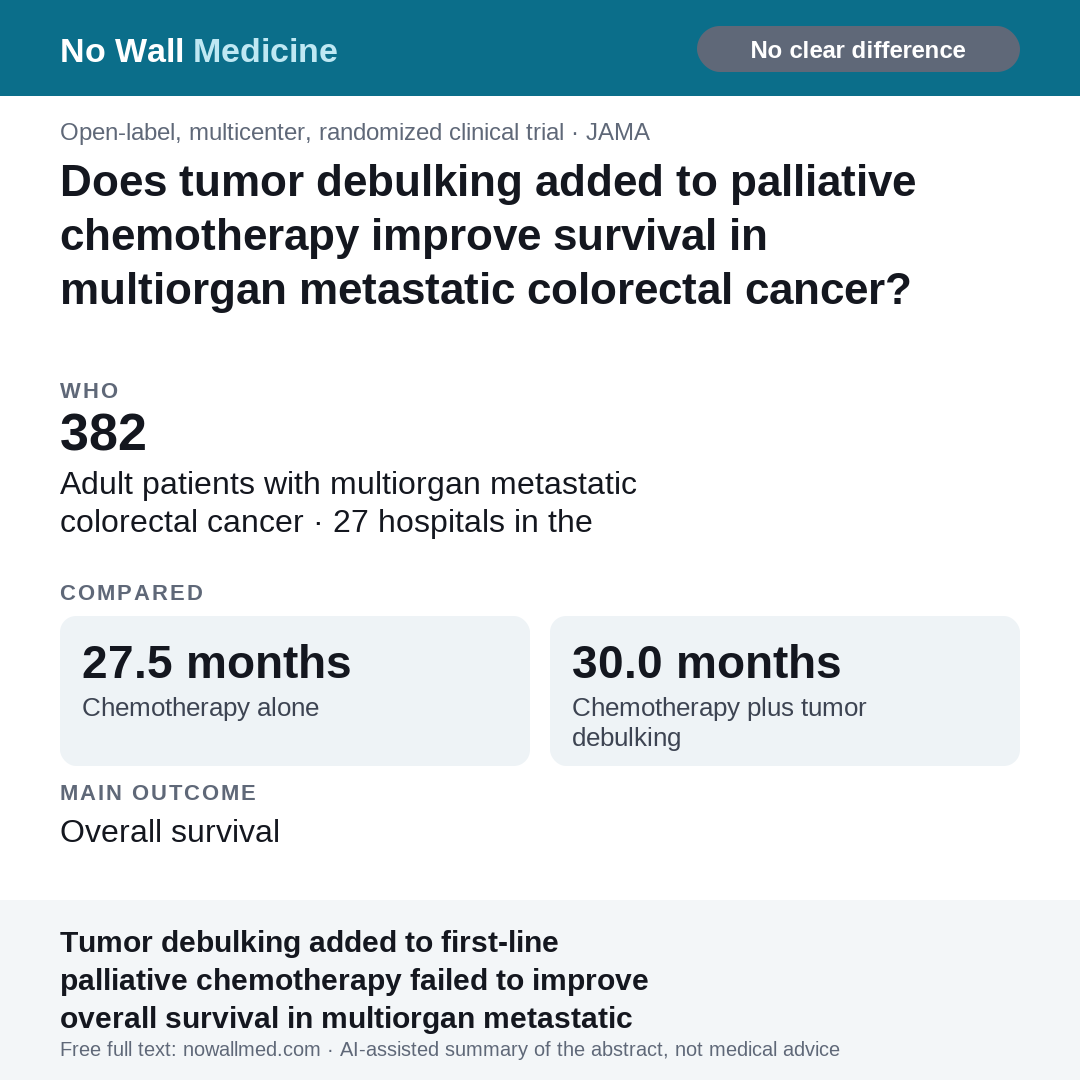
Tumor Debulking in Combination With Chemotherapy in Multiorgan Metastatic Colorectal Cancer: The ORCHESTRA Randomized Clinical Trial
Open-label, multicenter, randomized clinical trialNo clear difference
Does tumor debulking added to palliative chemotherapy improve survival in multiorgan metastatic colorectal cancer?
Who
382
Adult patients with multiorgan metastatic colorectal cancer · 27 hospitals in the Netherlands and 1 in the UK
Compared
27.5 monthsChemotherapy alone
30.0 monthsChemotherapy plus tumor debulking
Main outcome
Overall survival
Result: adjusted hazard ratio 0.88 (95% CI 0.70-1.10)
Bottom line: Tumor debulking added to first-line palliative chemotherapy failed to improve overall survival in multiorgan metastatic colorectal cancer.
JAMA · 2026-03-16Download image
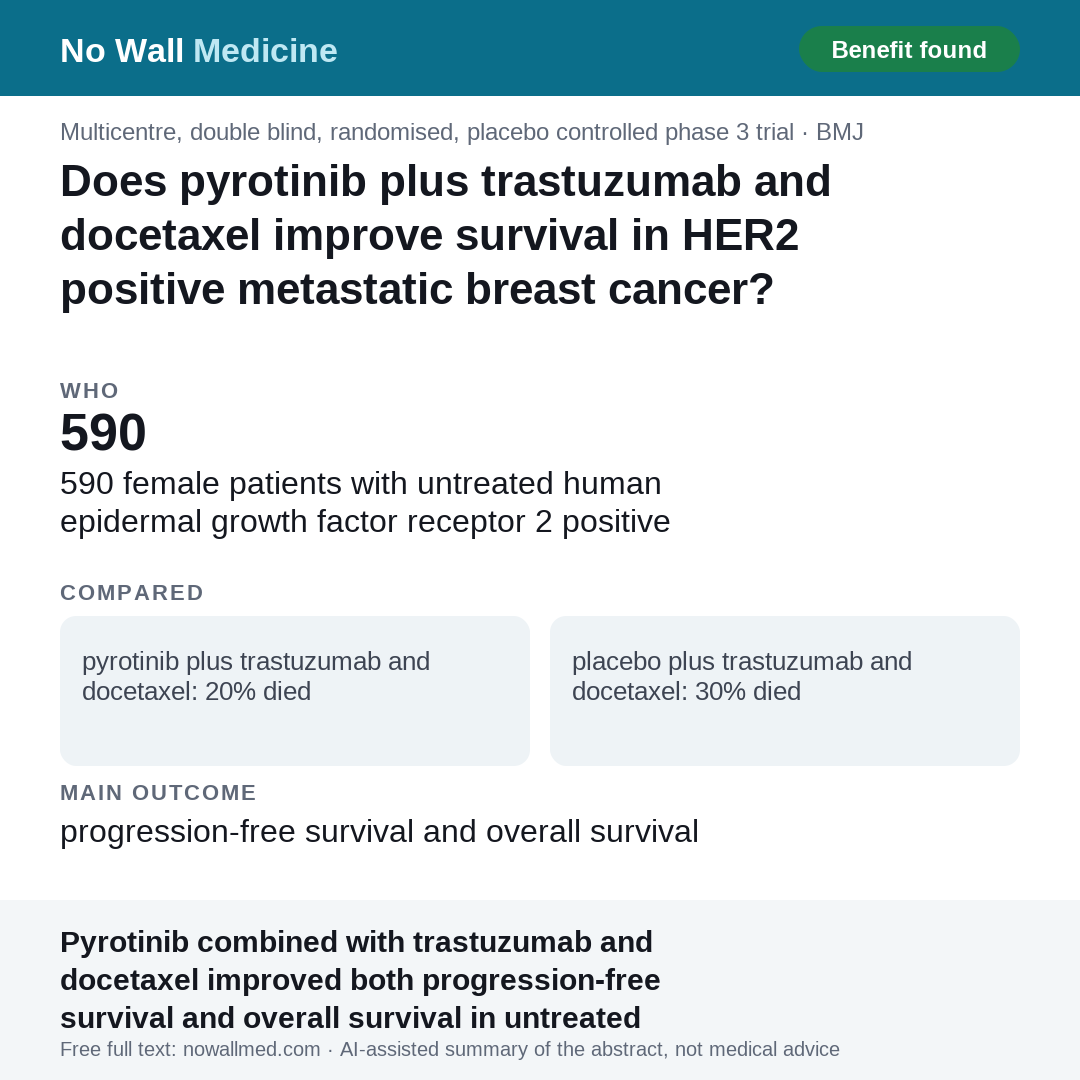
Pyrotinib or placebo in combination with trastuzumab and docetaxel for HER2 positive metastatic breast cancer: long term survival results from randomised phase 3 PHILA trial
Multicentre, double blind, randomised, placebo controlled phase 3 trialBenefit found
Does pyrotinib plus trastuzumab and docetaxel improve survival in HER2 positive metastatic breast cancer?
Who
590
590 female patients with untreated human epidermal growth factor receptor 2 positive metastatic breast cancer · 40 centres in China
Compared
pyrotinib plus trastuzumab and docetaxel: 20% died
placebo plus trastuzumab and docetaxel: 30% died
Main outcome
progression-free survival and overall survival
Result: hazard ratio 0.64 (95% CI 0.46 to 0.89)
Bottom line: Pyrotinib combined with trastuzumab and docetaxel improved both progression-free survival and overall survival in untreated HER2 positive metastatic breast cancer.
BMJ · 2026-03-16Download image
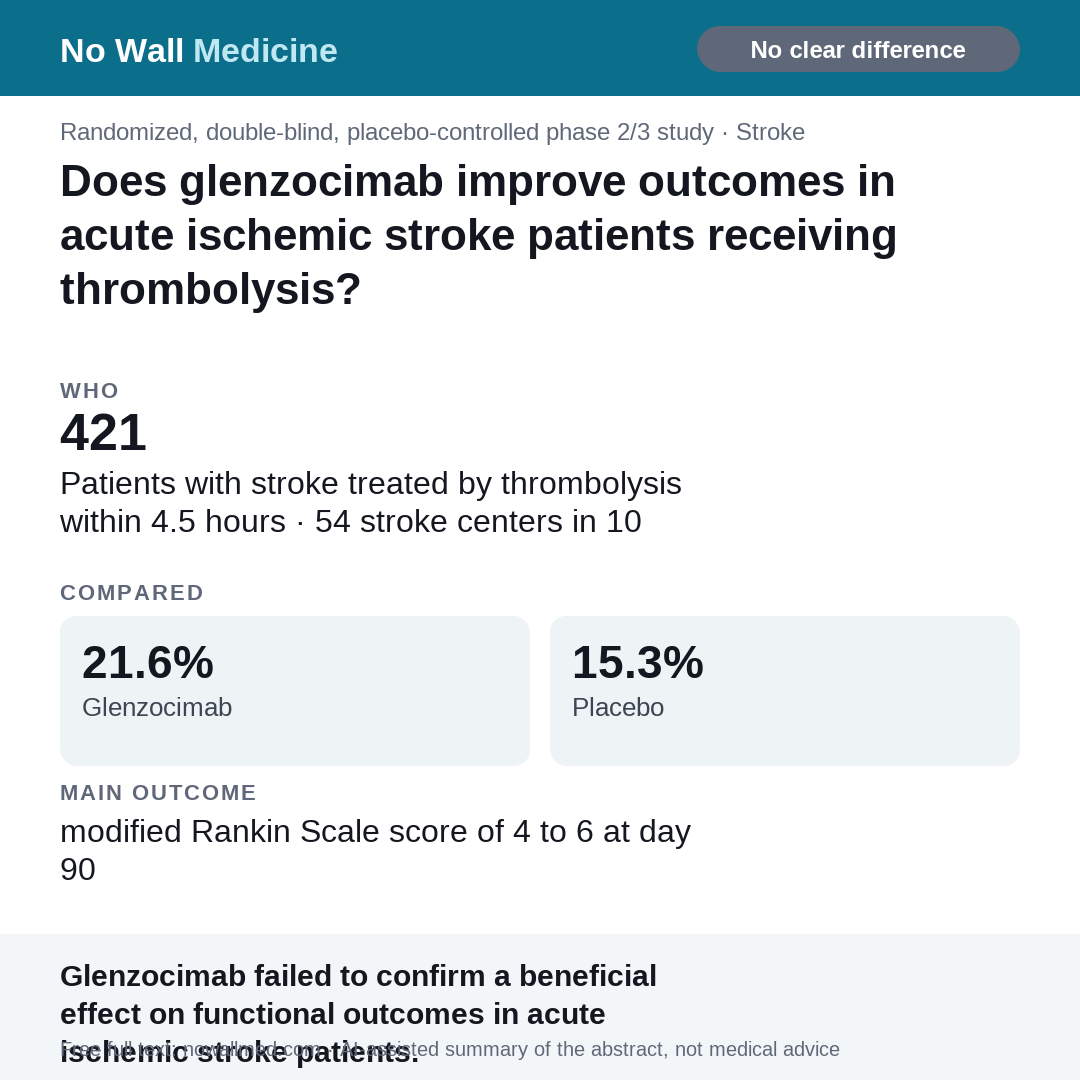
Glenzocimab Efficacy and Safety Added to Intravenous Thrombolysis With or Without Mechanical Thrombectomy in Patients With Acute Ischemic Stroke-ACTISAVE: A Prospective, Randomized, Double-Blind Study
Randomized, double-blind, placebo-controlled phase 2/3 studyNo clear difference
Does glenzocimab improve outcomes in acute ischemic stroke patients receiving thrombolysis?
Who
421
Patients with stroke treated by thrombolysis within 4.5 hours · 54 stroke centers in 10 countries
Compared
21.6%Glenzocimab
15.3%Placebo
Main outcome
modified Rankin Scale score of 4 to 6 at day 90
Result: odds ratio 1.51 (95% CI 0.90-2.54)
Bottom line: Glenzocimab failed to confirm a beneficial effect on functional outcomes in acute ischemic stroke patients.
Stroke · 2026-03-16Download image
Safety and Efficacy of PrimeC in Amyotrophic Lateral Sclerosis: The PARADIGM Randomized Clinical Trial
Randomized, double-blind, placebo-controlled, phase 2b trialMixed results
Is PrimeC safe and effective in people living with amyotrophic lateral sclerosis?
Who
68
Adults with definite or probable amyotrophic lateral sclerosis · 4 ALS referral centers
Compared
PrimeC: 66.7% adverse event rate
Placebo: 65.2% adverse event rate
Main outcome
Safety, tolerability, and ALS Functional Rating Scale-Revised score
Result: hazard ratio 0.36 (95% CI, 0.15-0.85)
Bottom line: PrimeC was safe and showed potential functional benefits and lower complication risks in amyotrophic lateral sclerosis.
Limitation: The trial was not powered for efficacy.
JAMA Neurol · 2026-03-16Download image

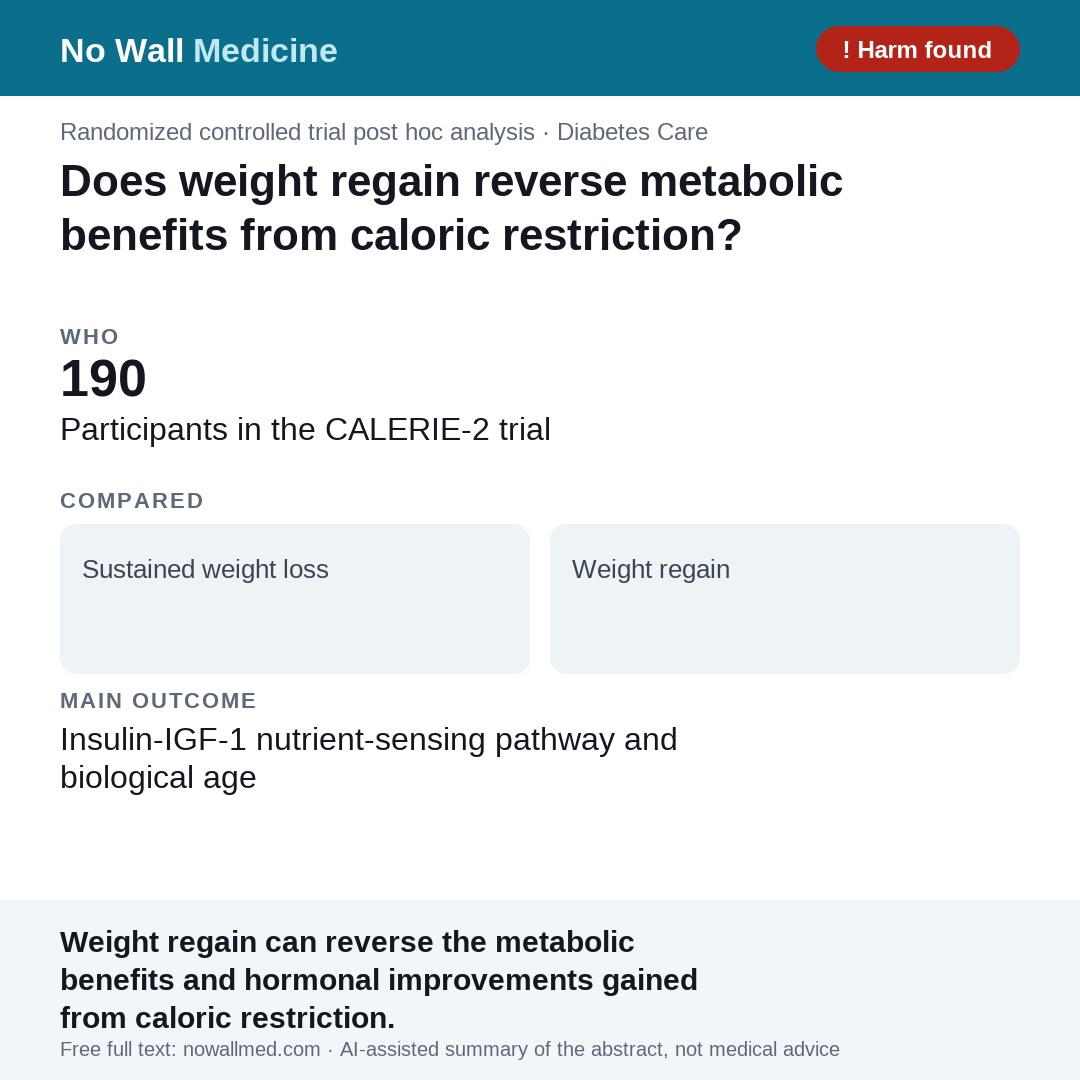
Weight Regain Reverses Caloric Restriction-Induced Benefits on the Insulin-IGF-1 Nutrient-Sensing Pathway: Post Hoc Analysis From the CALERIE-2 Randomized Controlled Trial
Randomized controlled trial post hoc analysisHarm found
Does weight regain reverse metabolic benefits from caloric restriction?
Who
190
Participants in the CALERIE-2 trial
Compared
Sustained weight loss
Weight regain
Main outcome
Insulin-IGF-1 nutrient-sensing pathway and biological age
Bottom line: Weight regain can reverse the metabolic benefits and hormonal improvements gained from caloric restriction.
Diabetes Care · 2026-03-16Download image
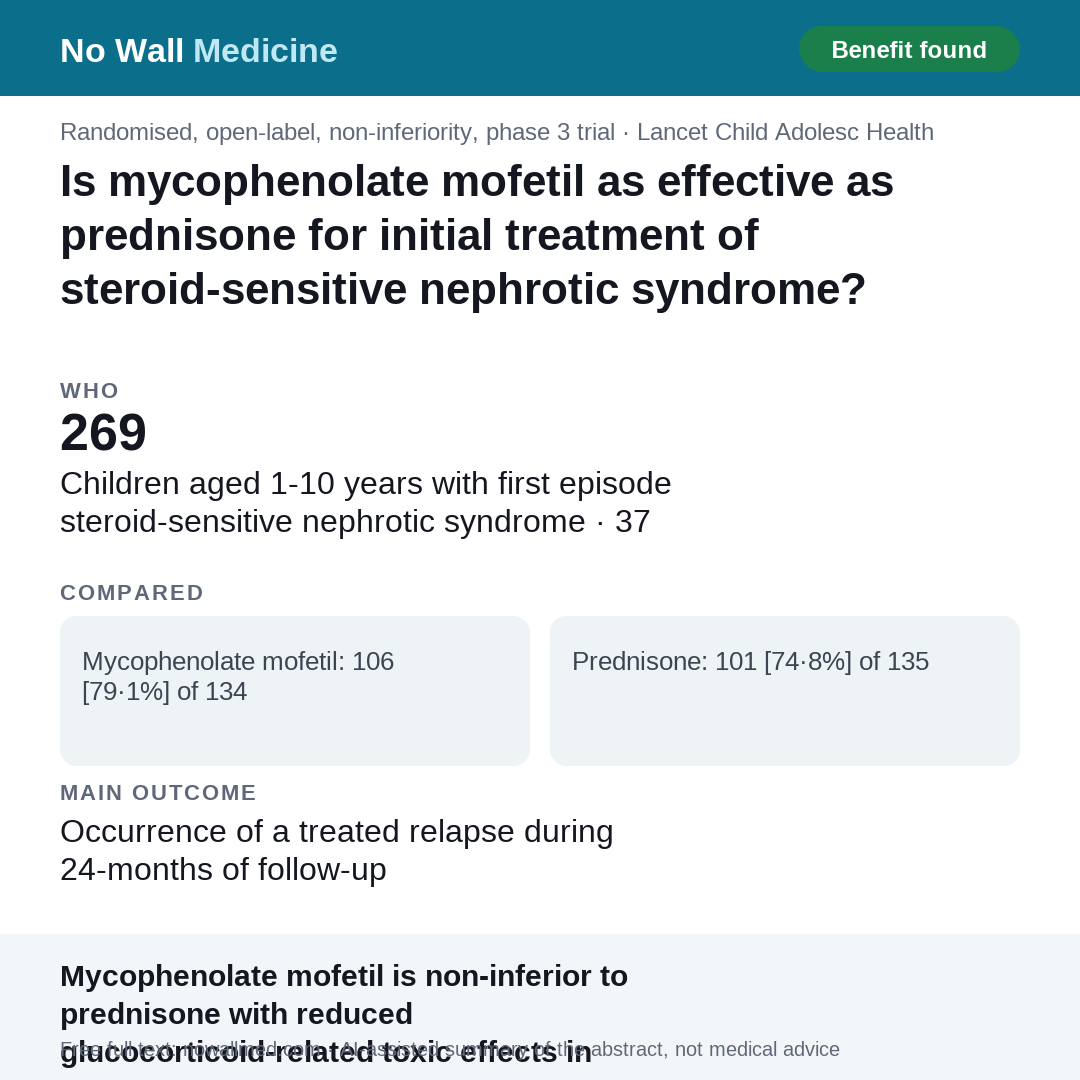
Mycophenolate mofetil versus prednisone for the initial treatment of idiopathic steroid-sensitive nephrotic syndrome in children in Germany (INTENT): a multicentre, open-label, randomised, controlled, parallel-group, non-inferiority, phase 3 trial
Randomised, open-label, non-inferiority, phase 3 trialBenefit found
Is mycophenolate mofetil as effective as prednisone for initial treatment of steroid-sensitive nephrotic syndrome?
Who
269
Children aged 1-10 years with first episode steroid-sensitive nephrotic syndrome · 37 hospitals in Germany
Compared
Mycophenolate mofetil: 106 [79·1%] of 134
Prednisone: 101 [74·8%] of 135
Main outcome
Occurrence of a treated relapse during 24-months of follow-up
Result: difference 4·3% [90% CIs -4·2 to 12·7]
Bottom line: Mycophenolate mofetil is non-inferior to prednisone with reduced glucocorticoid-related toxic effects in children.
Funded by: German Federal Ministry of Education and Research
Lancet Child Adolesc Health · 2026-03-16Download image
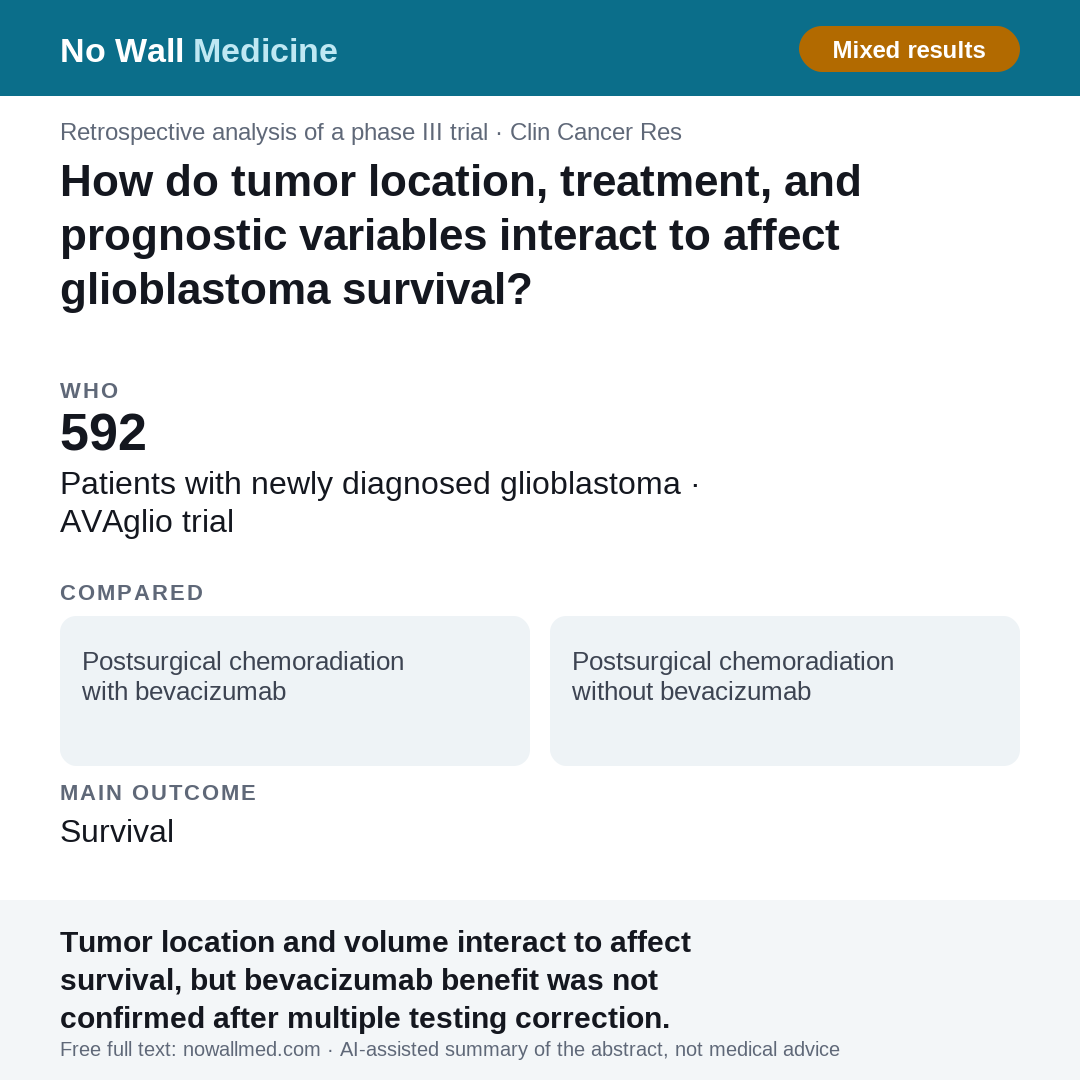
Framework for Statistical Parametric Mapping of the Interactions between Glioblastoma Location, Treatment, Prognostic Variables, and Survival Using a Phase III Trial
Retrospective analysis of a phase III trialMixed results
How do tumor location, treatment, and prognostic variables interact to affect glioblastoma survival?
Who
592
Patients with newly diagnosed glioblastoma · AVAglio trial
Compared
Postsurgical chemoradiation with bevacizumab
Postsurgical chemoradiation without bevacizumab
Main outcome
Survival
Bottom line: Tumor location and volume interact to affect survival, but bevacizumab benefit was not confirmed after multiple testing correction.
Clin Cancer Res · 2026-03-16Download image
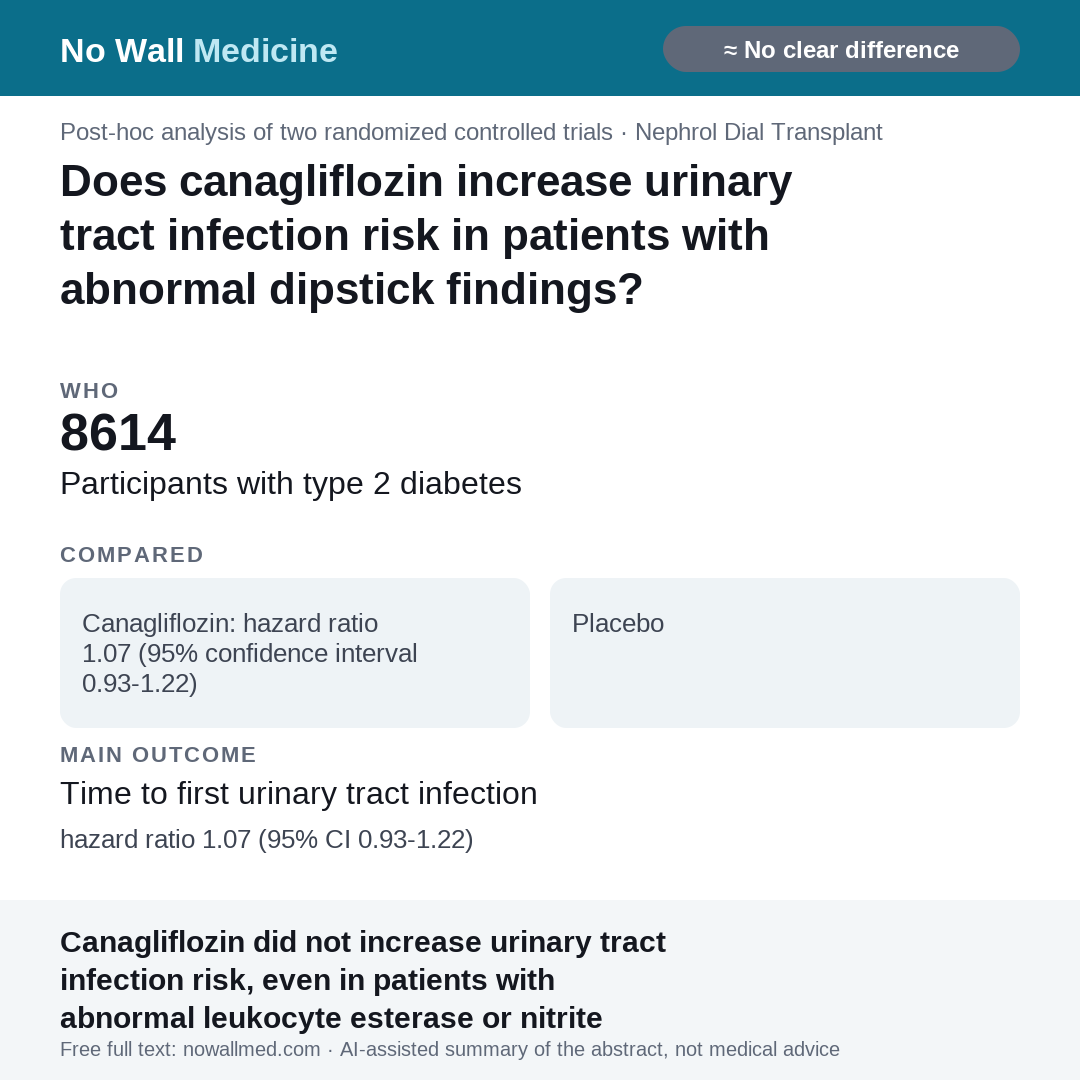
Urinary dipstick findings and UTI risk with SGLT2 inhibitors: a post-hoc analysis of the CANVAS and CREDENCE trials
Post-hoc analysis of two randomized controlled trialsNo clear difference
Does canagliflozin increase urinary tract infection risk in patients with abnormal dipstick findings?
Who
8614
Participants with type 2 diabetes
Compared
Canagliflozin: hazard ratio 1.07 (95% confidence interval 0.93-1.22)
Placebo
Main outcome
Time to first urinary tract infection
Result: hazard ratio 1.07 (95% CI 0.93-1.22)
Bottom line: Canagliflozin did not increase urinary tract infection risk, even in patients with abnormal leukocyte esterase or nitrite findings.
Nephrol Dial Transplant · 2026-03-16Download image
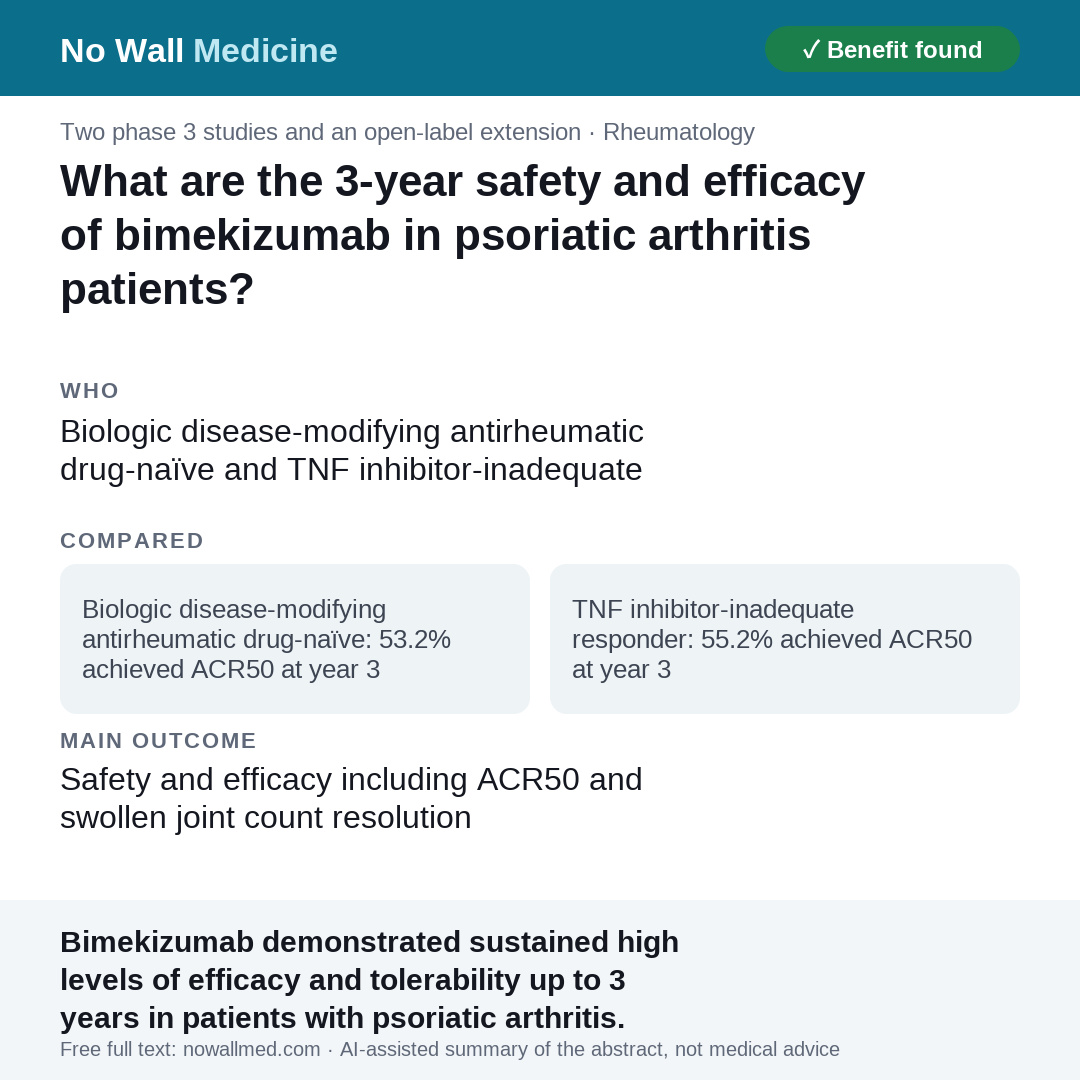
Bimekizumab safety and efficacy in patients with psoriatic arthritis: 3-year results from two phase 3 studies
Two phase 3 studies and an open-label extensionBenefit found
What are the 3-year safety and efficacy of bimekizumab in psoriatic arthritis patients?
Who
Biologic disease-modifying antirheumatic drug-naïve and TNF inhibitor-inadequate responder patients
Compared
Biologic disease-modifying antirheumatic drug-naïve: 53.2% achieved ACR50 at year 3
TNF inhibitor-inadequate responder: 55.2% achieved ACR50 at year 3
Main outcome
Safety and efficacy including ACR50 and swollen joint count resolution
Bottom line: Bimekizumab demonstrated sustained high levels of efficacy and tolerability up to 3 years in patients with psoriatic arthritis.
Rheumatology · 2026-03-16Download image
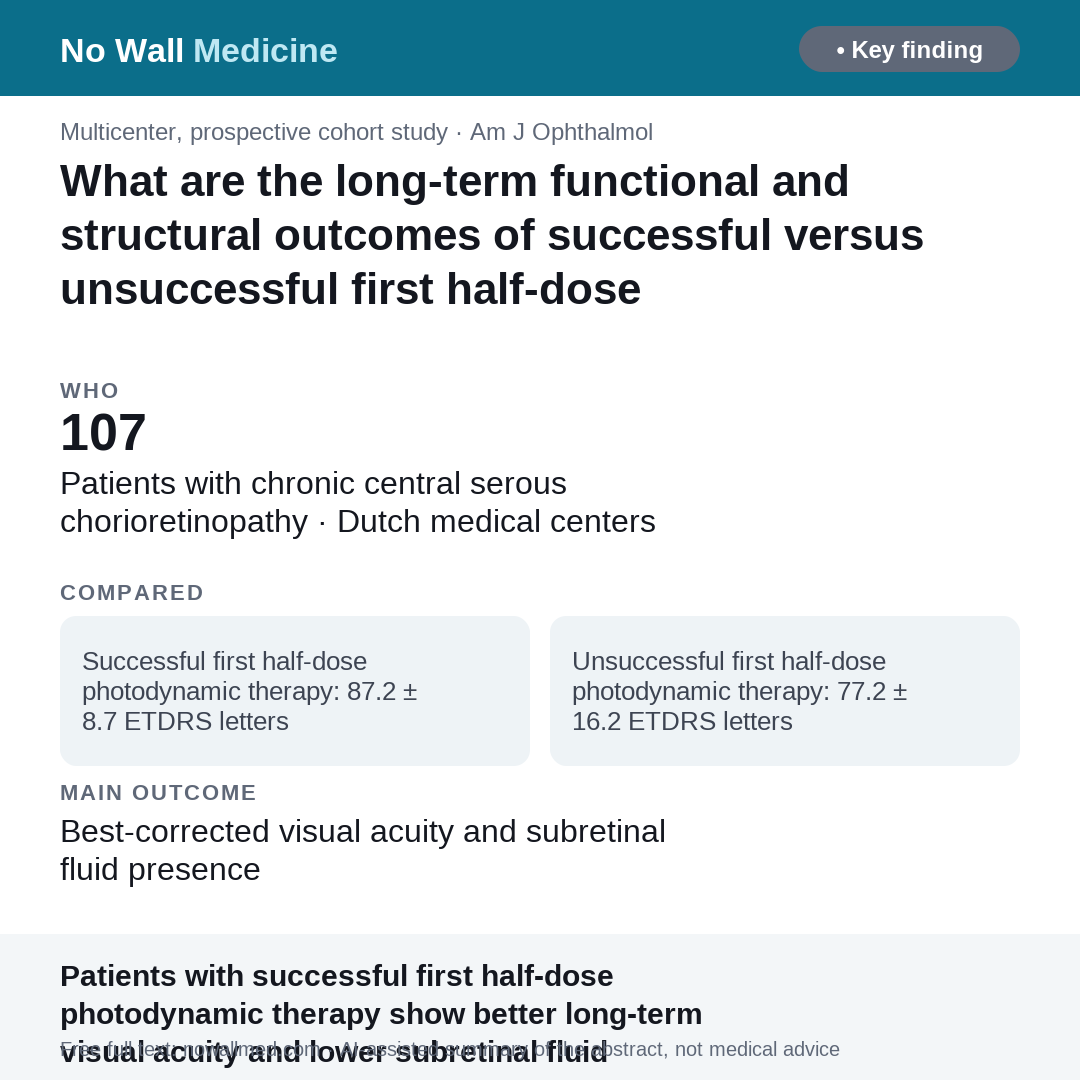
Long-Term Follow-Up of PLACE and SPECTRA Trials: Outcomes After Successful and Unsuccessful Half-Dose Photodynamic Therapy for Chronic Central Serous Chorioretinopathy
Multicenter, prospective cohort studyBenefit found
What are the long-term functional and structural outcomes of successful versus unsuccessful first half-dose photodynamic therapy?
Who
107
Patients with chronic central serous chorioretinopathy · Dutch medical centers
Compared
Successful first half-dose photodynamic therapy: 87.2 ± 8.7 ETDRS letters
Unsuccessful first half-dose photodynamic therapy: 77.2 ± 16.2 ETDRS letters
Main outcome
Best-corrected visual acuity and subretinal fluid presence
Bottom line: Patients with successful first half-dose photodynamic therapy show better long-term visual acuity and lower subretinal fluid rates.
Am J Ophthalmol · 2026-03-16Download image
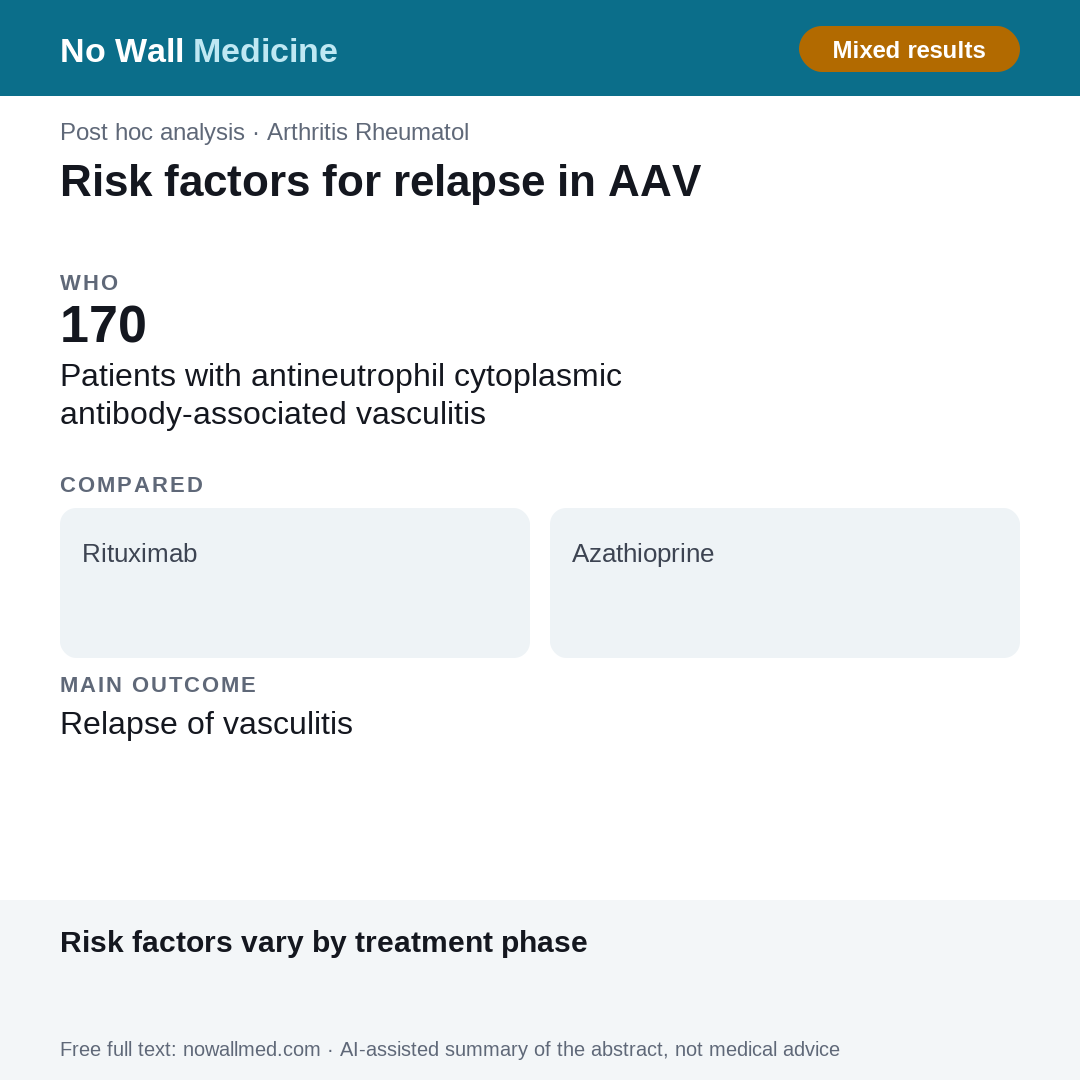
Risk Factors for Relapse in Antineutrophil Cytoplasmic Antibody-Associated Vasculitis Among Patients With Relapse After Induction of Remission With Rituximab
Post hoc analysisMixed results
Risk factors for relapse in AAV
Who
170
Patients with antineutrophil cytoplasmic antibody-associated vasculitis
Compared
Rituximab
Azathioprine
Main outcome
Relapse of vasculitis
Bottom line: Risk factors vary by treatment phase
Arthritis Rheumatol · 2026-03-16Download image
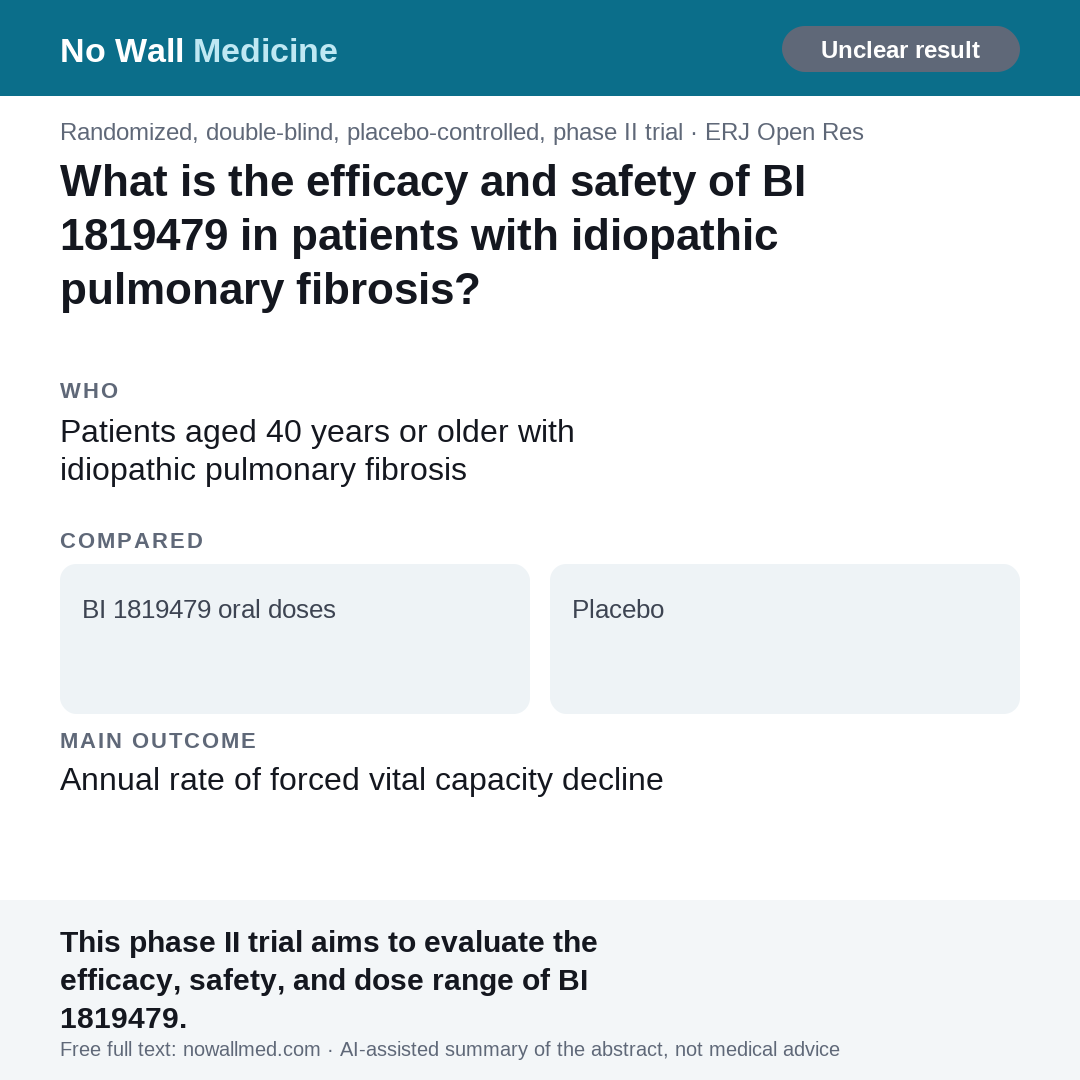
Design of a phase II randomised, double-blind, placebo-controlled, dose-finding trial of BI 1819479 in patients with idiopathic pulmonary fibrosis
Randomized, double-blind, placebo-controlled, phase II trialUnclear result
What is the efficacy and safety of BI 1819479 in patients with idiopathic pulmonary fibrosis?
Who
Patients aged 40 years or older with idiopathic pulmonary fibrosis
Compared
BI 1819479 oral doses
Placebo
Main outcome
Annual rate of forced vital capacity decline
Bottom line: This phase II trial aims to evaluate the efficacy, safety, and dose range of BI 1819479.
ERJ Open Res · 2026-03-16Download image
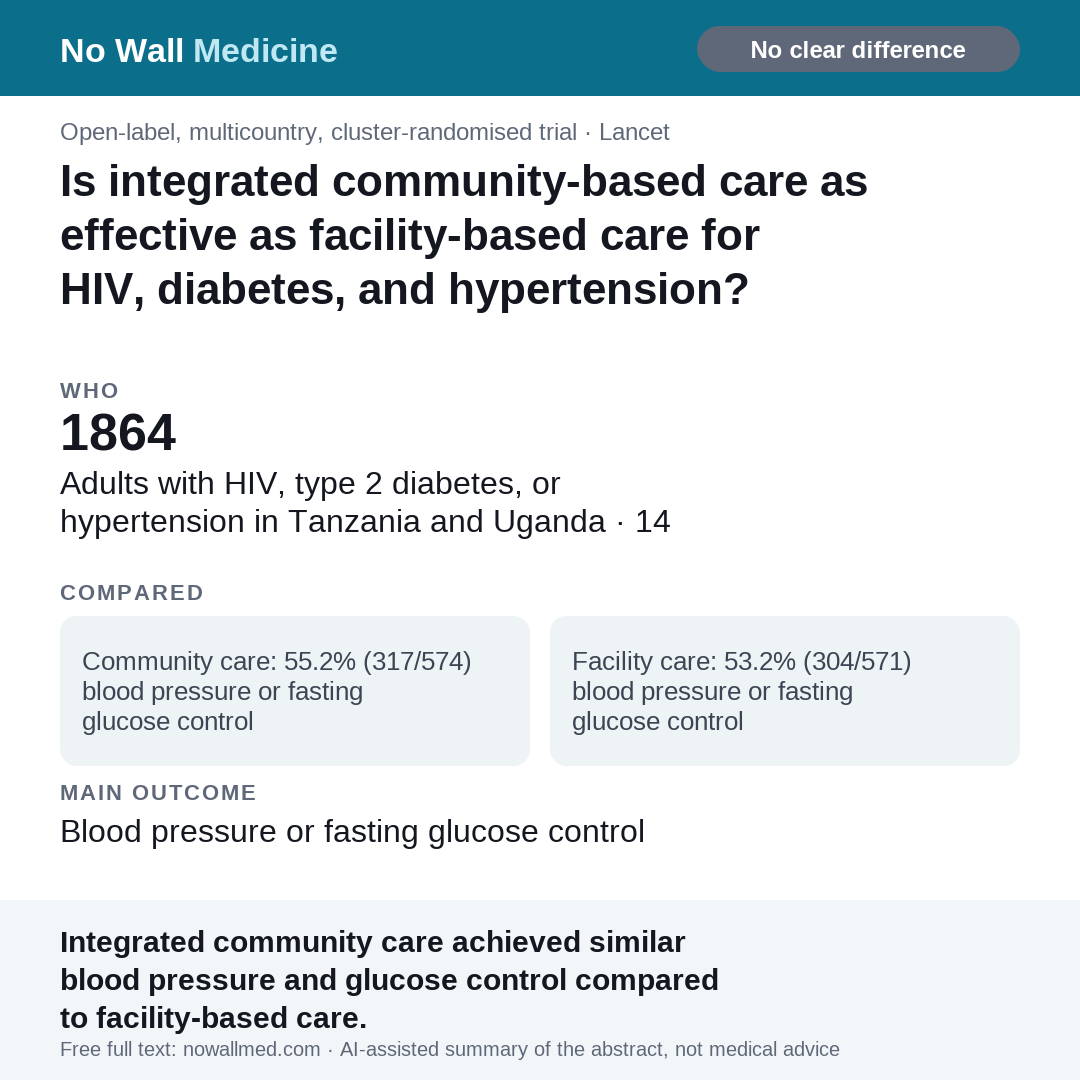
Integrated community-based versus facility-based care for people with HIV, diabetes, and hypertension in sub-Saharan Africa (INTE-COMM): an open-label, multicountry, cluster-randomised trial
Open-label, multicountry, cluster-randomised trialNo clear difference
Is integrated community-based care as effective as facility-based care for HIV, diabetes, and hypertension?
Who
1864
Adults with HIV, type 2 diabetes, or hypertension in Tanzania and Uganda · 14 primary care facilities in Tanzania and Uganda
Compared
Community care: 55.2% (317/574) blood pressure or fasting glucose control
Facility care: 53.2% (304/571) blood pressure or fasting glucose control
Main outcome
Blood pressure or fasting glucose control
Result: adjusted risk difference 1.80 (95% CI -4.52 to 8.12)
Bottom line: Integrated community care achieved similar blood pressure and glucose control compared to facility-based care.
Funded by: National Institute for Health and Care Research
Lancet · 2026-03-15Download image
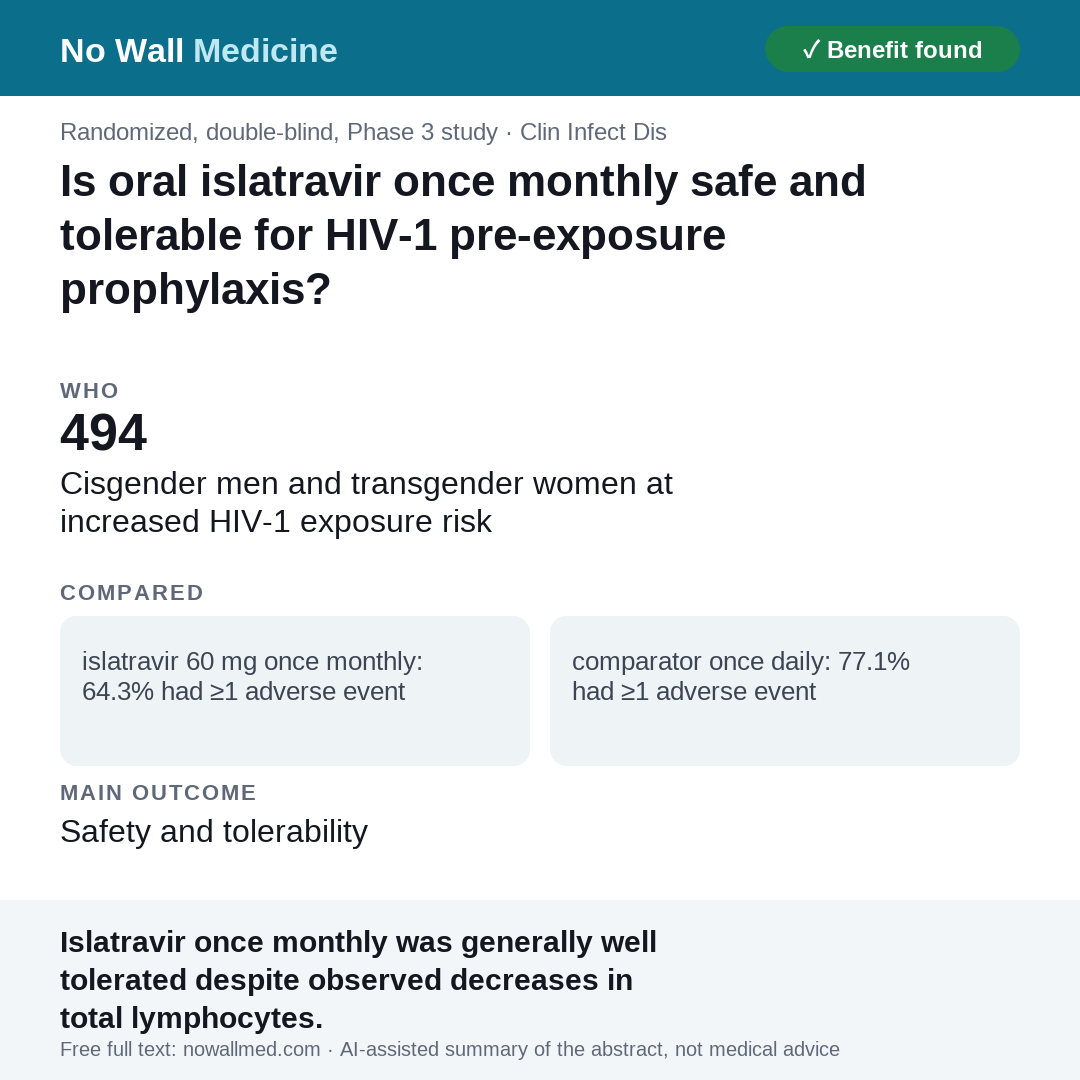
Safety and Tolerability of Oral Islatravir Once Monthly as Pre-exposure Prophylaxis in Cisgender Men and Transgender Women Who Have an Elevated Likelihood of HIV-1 Exposure: Results From the IMPOWER-24 Randomized Phase 3 Study
Randomized, double-blind, Phase 3 studyBenefit found
Is oral islatravir once monthly safe and tolerable for HIV-1 pre-exposure prophylaxis?
Who
494
Cisgender men and transgender women at increased HIV-1 exposure risk
Compared
islatravir 60 mg once monthly: 64.3% had ≥1 adverse event
comparator once daily: 77.1% had ≥1 adverse event
Main outcome
Safety and tolerability
Bottom line: Islatravir once monthly was generally well tolerated despite observed decreases in total lymphocytes.
Clin Infect Dis · 2026-03-14Download image