Visual abstracts
New randomized trials and meta-analyses from leading journals at a glance: who was studied, what was compared, and what was found. Every paper is free to read in full.
All specialtiesCardiology 4877Oncology 4138Gastroenterology & Hepatology 1942Infectious Disease 3837Neurology 1905Psychiatry & Mental Health 2273Pulmonology 2143Critical Care 1365Endocrinology & Diabetes 2580Pediatrics 2980Surgery 2559Orthopedics & Sports Medicine 931Neurosurgery 537Cardiothoracic & Vascular Surgery 674Plastic & Reconstructive Surgery 591Nephrology 1133Rheumatology 823Hematology 1109Dermatology 621Ophthalmology 543Obstetrics & Gynecology 1686Public & Global Health 1058Radiology & Imaging 648Anesthesiology 986Urology 764ENT (Otolaryngology) 503Emergency Medicine 511Allergy & Immunology 313Geriatrics 981Family Medicine & Primary Care 562Medical Genetics & Genomics 676Pathology & Laboratory Medicine 159Physical Medicine & Rehabilitation 757Palliative Care 444Nutrition 1588Digital Health & AI 2201General Medicine 321
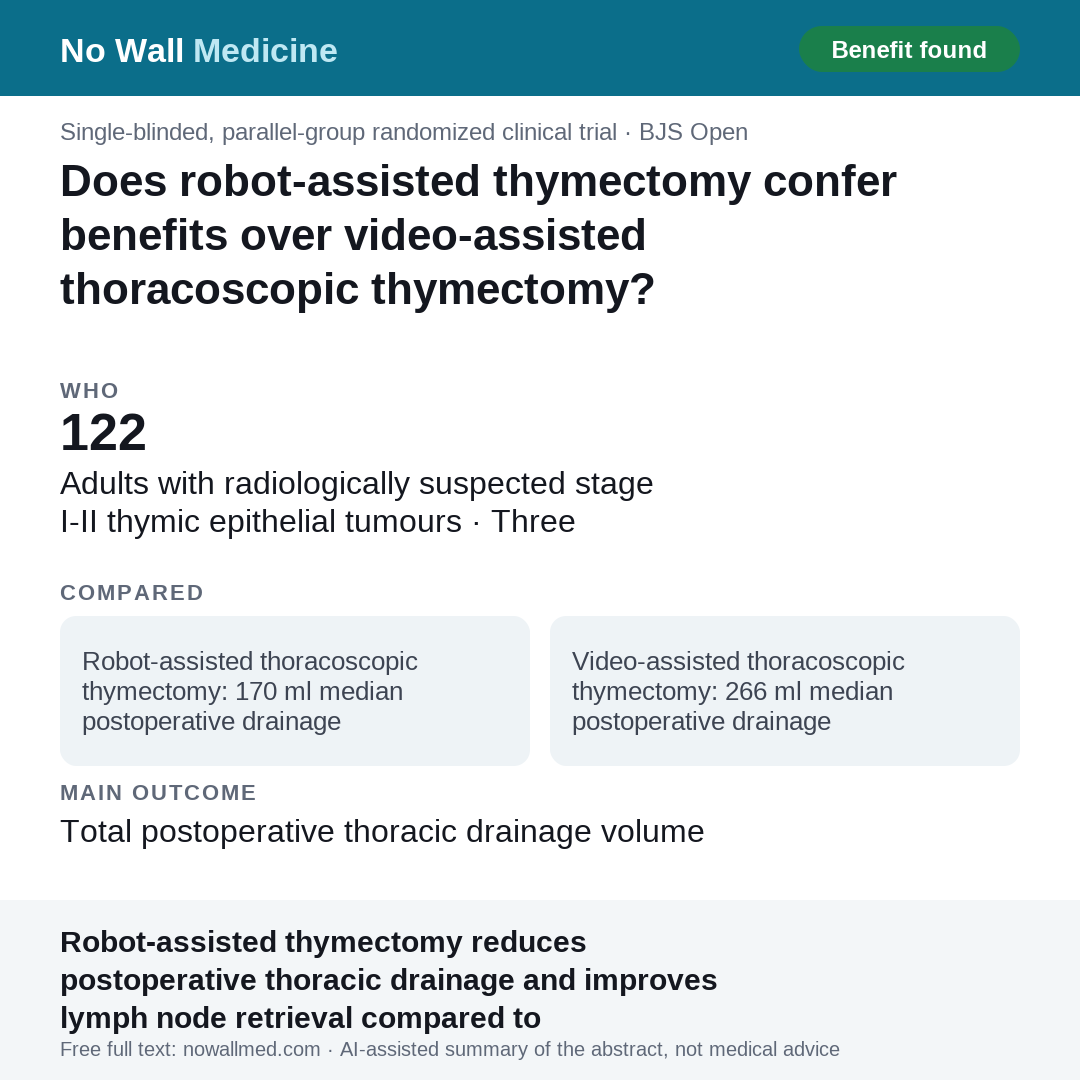
Robot-assisted versus video-assisted thoracoscopic thymectomy for early-stage thymic epithelial tumours: multicentre randomized clinical trial
Single-blinded, parallel-group randomized clinical trialBenefit found
Does robot-assisted thymectomy confer benefits over video-assisted thoracoscopic thymectomy?
Who
122
Adults with radiologically suspected stage I-II thymic epithelial tumours · Three academic centres
Compared
Robot-assisted thoracoscopic thymectomy: 170 ml median postoperative drainage
Video-assisted thoracoscopic thymectomy: 266 ml median postoperative drainage
Main outcome
Total postoperative thoracic drainage volume
Result: median difference -100 ml, 95% confidence interval -150 to -50
Bottom line: Robot-assisted thymectomy reduces postoperative thoracic drainage and improves lymph node retrieval compared to video-assisted thoracoscopic thymectomy.
Limitation: Participants and surgeons were unblinded due to the surgical nature of the interventions.
BJS Open · 2026-11-24Download image
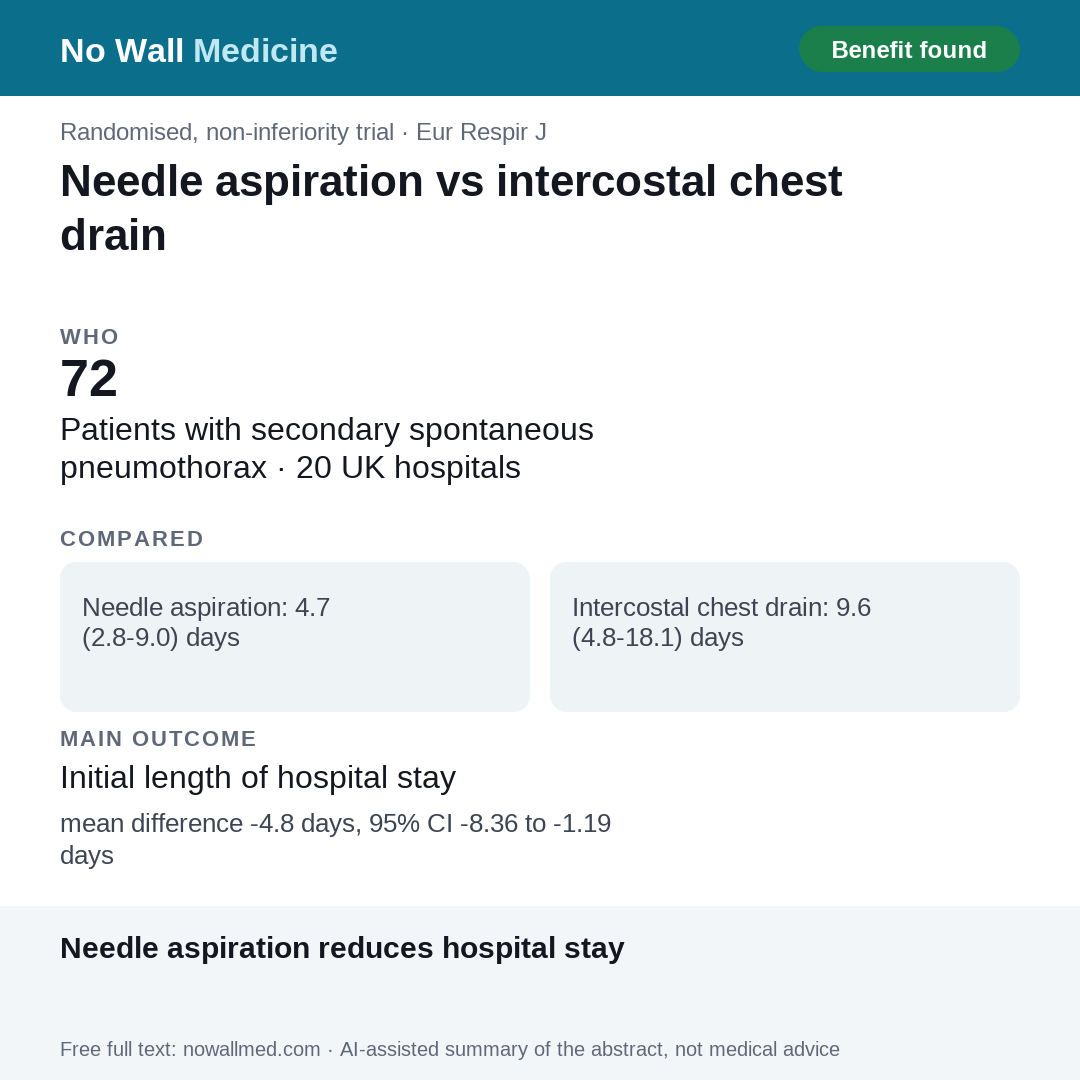
Needle aspiration versus intercostal chest drain for secondary spontaneous pneumothorax (the PRINCE-SSP trial): a pragmatic, open-label, multicentre, non-inferiority, randomised controlled trial
Randomised, non-inferiority trialBenefit found
Needle aspiration vs intercostal chest drain
Who
72
Patients with secondary spontaneous pneumothorax · 20 UK hospitals
Compared
Needle aspiration: 4.7 (2.8-9.0) days
Intercostal chest drain: 9.6 (4.8-18.1) days
Main outcome
Initial length of hospital stay
Result: mean difference -4.8 days, 95% CI -8.36 to -1.19 days
Bottom line: Needle aspiration reduces hospital stay
Limitation: uncertainty surrounding cost-effectiveness
Eur Respir J · 2026-11-23Download image
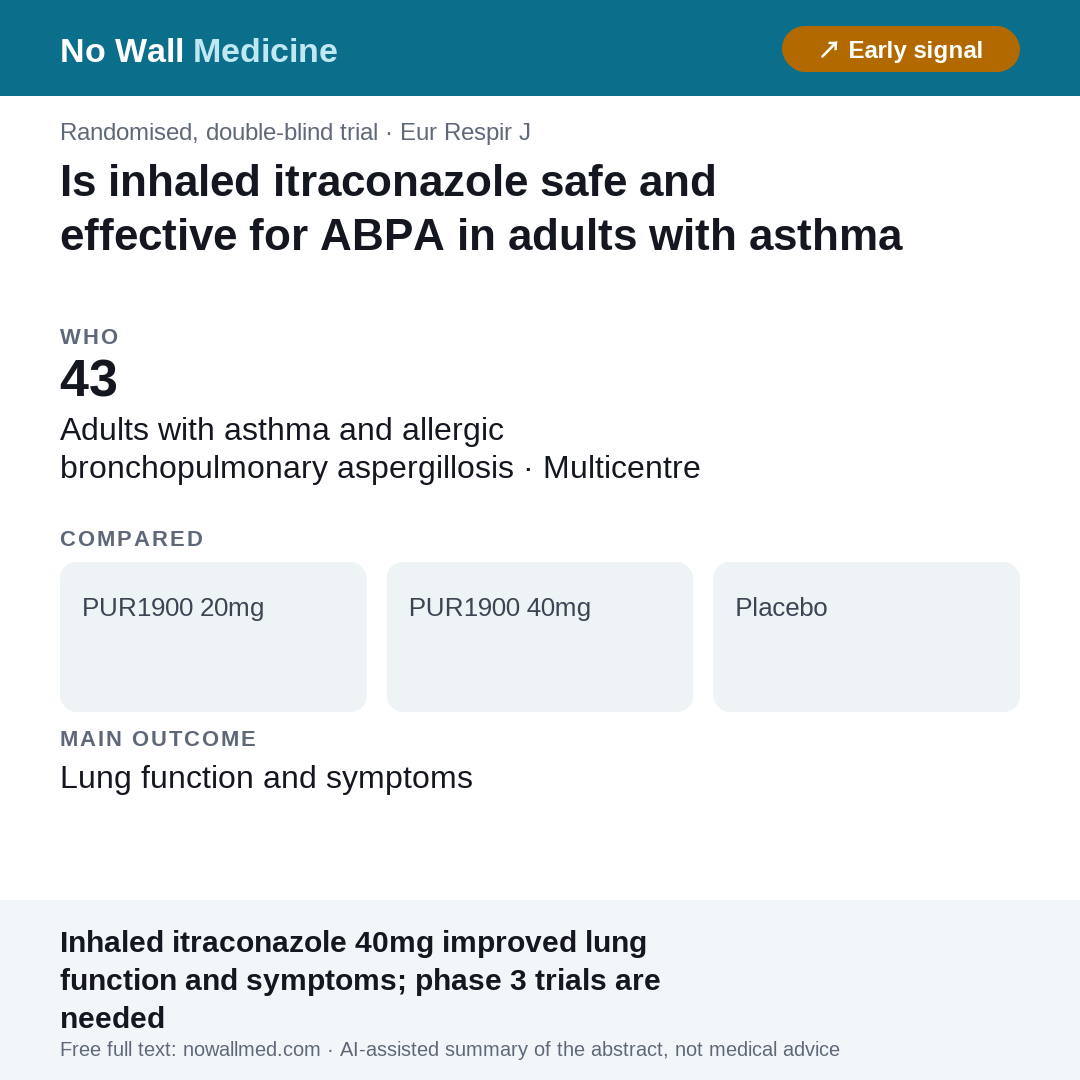
Safety and efficacy of inhaled itraconazole in adults with asthma and allergic bronchopulmonary aspergillosis (PUR1900-ABPA): a randomised, double-blind, parallel group, placebo-controlled, multicentre, phase 2 trial
Randomised, double-blind trialBenefit found
Is inhaled itraconazole safe and effective for ABPA in adults with asthma
Who
43
Adults with asthma and allergic bronchopulmonary aspergillosis · Multicentre
Compared
PUR1900 20mg
PUR1900 40mg
Placebo
Main outcome
Lung function and symptoms
Bottom line: Inhaled itraconazole improved symptoms and lung function
Limitation: No pre-specified primary end-point
Eur Respir J · 2026-11-23Download image
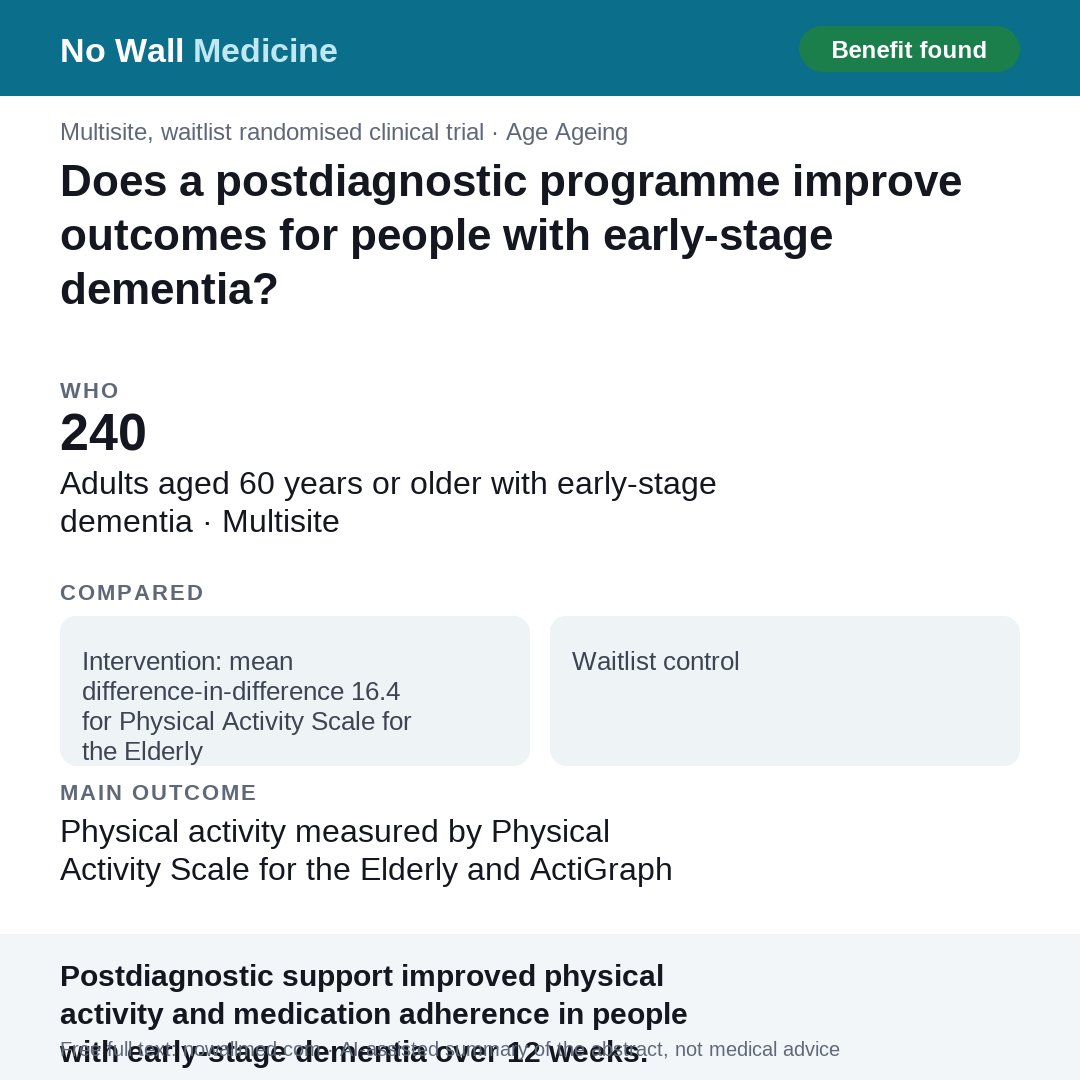
Postdiagnostic support programme for people newly diagnosed with early-stage dementia: a randomised controlled trial
Multisite, waitlist randomised clinical trialBenefit found
Does a postdiagnostic programme improve outcomes for people with early-stage dementia?
Who
240
Adults aged 60 years or older with early-stage dementia · Multisite
Compared
Intervention: mean difference-in-difference 16.4 for Physical Activity Scale for the Elderly
Waitlist control
Main outcome
Physical activity measured by Physical Activity Scale for the Elderly and ActiGraph
Result: mean difference-in-difference 16.4 (95% CI 0.84 to 31.87)
Bottom line: Postdiagnostic support improved physical activity and medication adherence in people with early-stage dementia over 12 weeks.
Age Ageing · 2026-11-22Download image
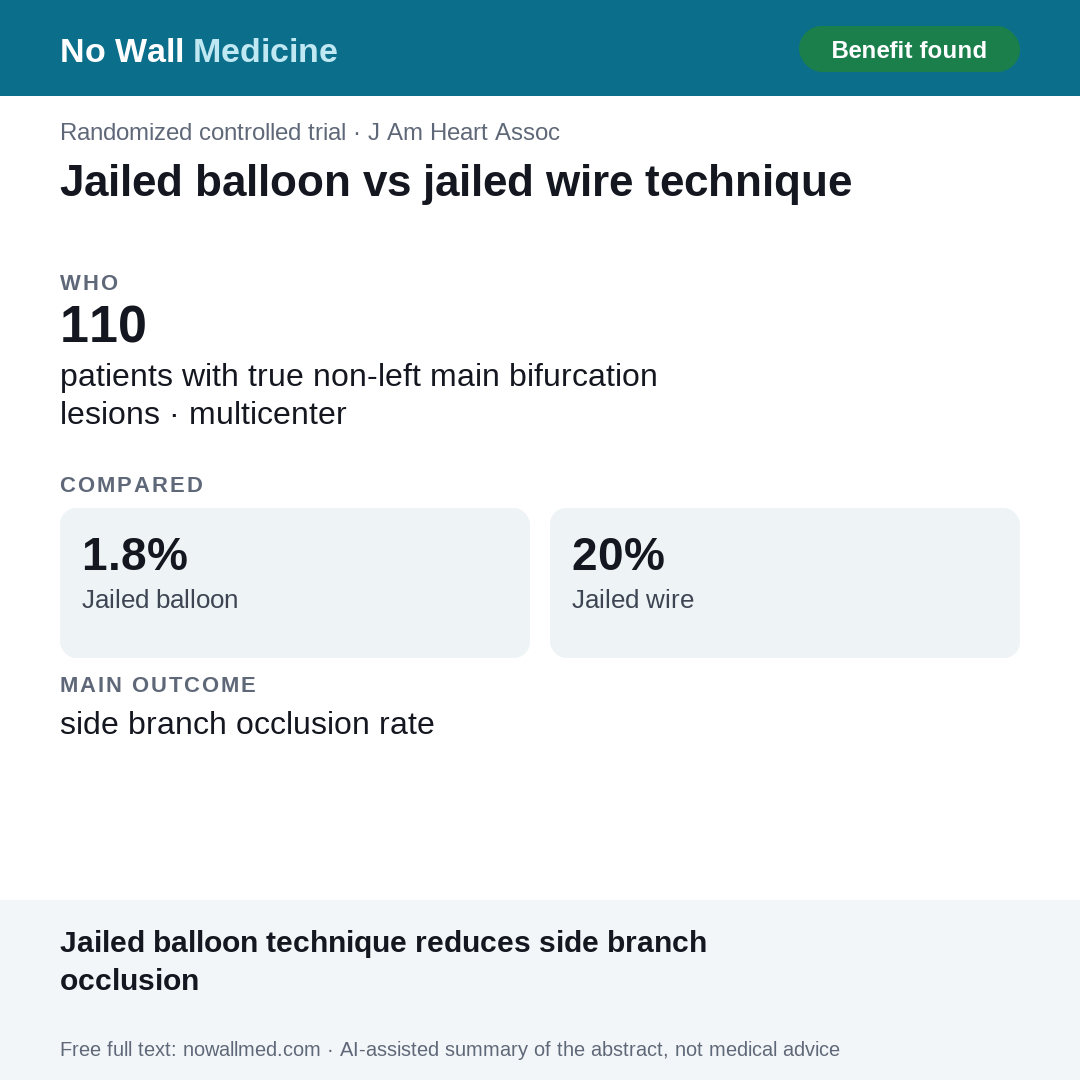
Efficacy and Safety of Jailed Balloon-Proximal Optimization Technique Versus Jailed Wire Technique for Preventing Side Branch Occlusion During Percutaneous Coronary Intervention of True Non-Left Main Bifurcation Lesions: A Multicenter, Open-Label, Randomized Controlled Trial
Randomized controlled trialBenefit found
Jailed balloon vs jailed wire technique
Who
110
patients with true non-left main bifurcation lesions · multicenter
Compared
1.8%Jailed balloon
20%Jailed wire
Main outcome
side branch occlusion rate
Bottom line: Jailed balloon technique reduces side branch occlusion
J Am Heart Assoc · 2026-11-22Download image
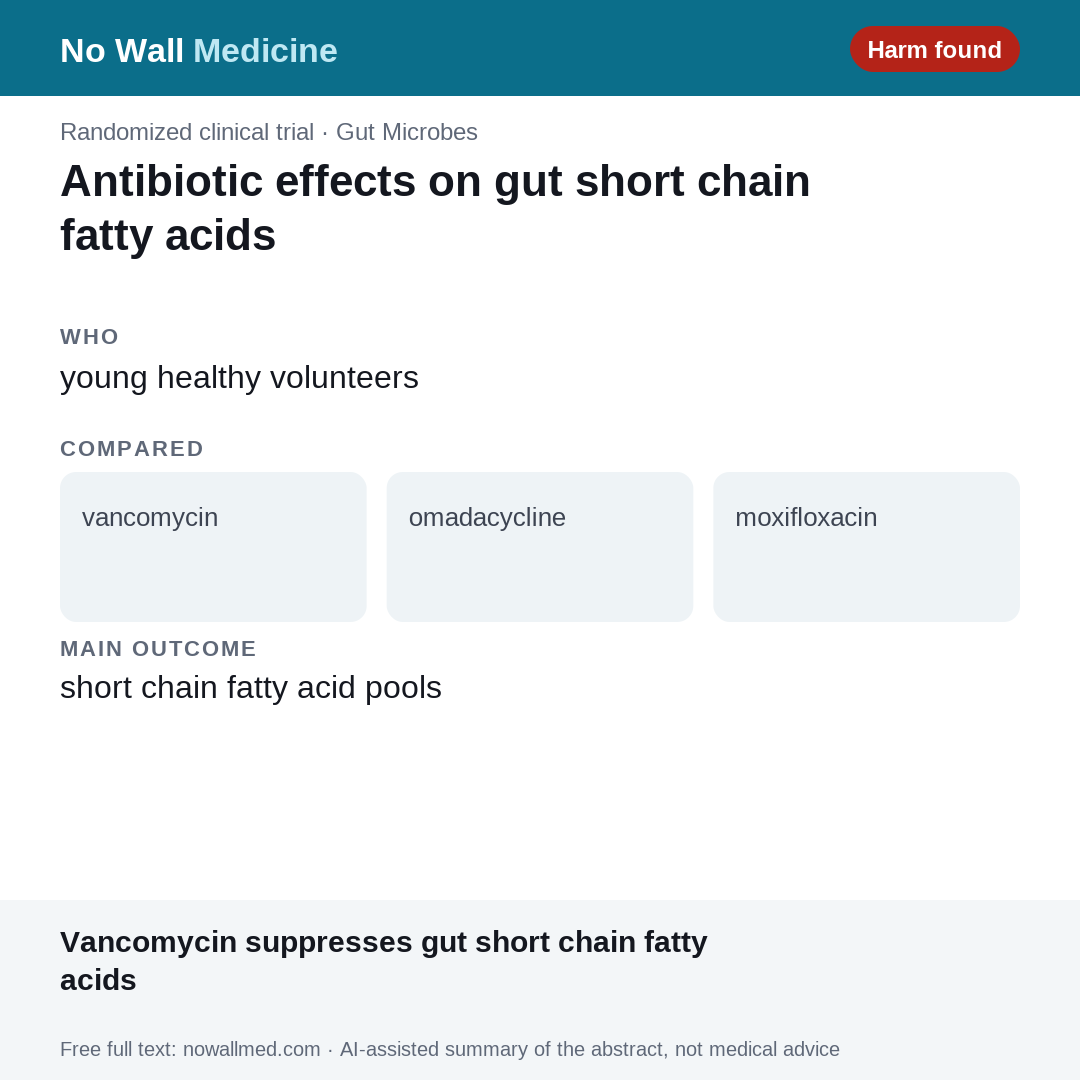
Antibiotic effects on gut-derived short chain fatty acid pools in healthy volunteers
Randomized clinical trialHarm found
Antibiotic effects on gut short chain fatty acids
Who
young healthy volunteers
Compared
vancomycin
omadacycline
moxifloxacin
Main outcome
short chain fatty acid pools
Bottom line: Vancomycin suppresses gut short chain fatty acids
Gut Microbes · 2026-11-21Download image
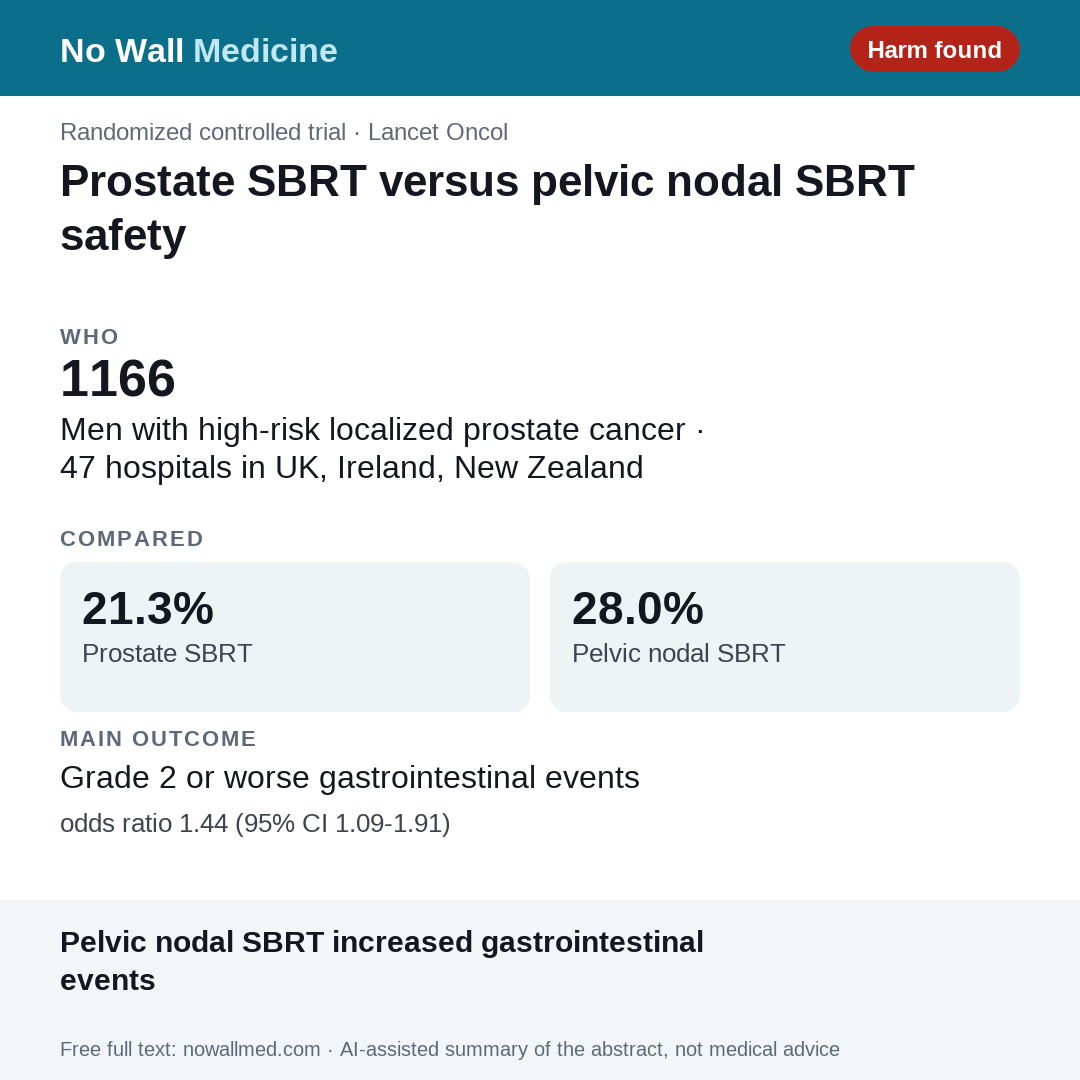
Prostate and pelvic nodal stereotactic body radiotherapy (SBRT) versus prostate-only SBRT for high-risk, localised prostate cancer (PACE-NODES): early adverse event results from an international, open-label, phase 3, randomised controlled trial
Randomized controlled trialHarm found
Prostate SBRT versus pelvic nodal SBRT safety
Who
1166
Men with high-risk localized prostate cancer · 47 hospitals in UK, Ireland, New Zealand
Compared
21.3%Prostate SBRT (118/555)
28.0%Pelvic nodal SBRT (143/511)
Main outcome
Grade 2 or worse gastrointestinal events
Result: odds ratio 1.44 (95% CI 1.09-1.91)
Bottom line: Pelvic nodal SBRT increased gastrointestinal events
Lancet Oncol · 2026-11-20Download image
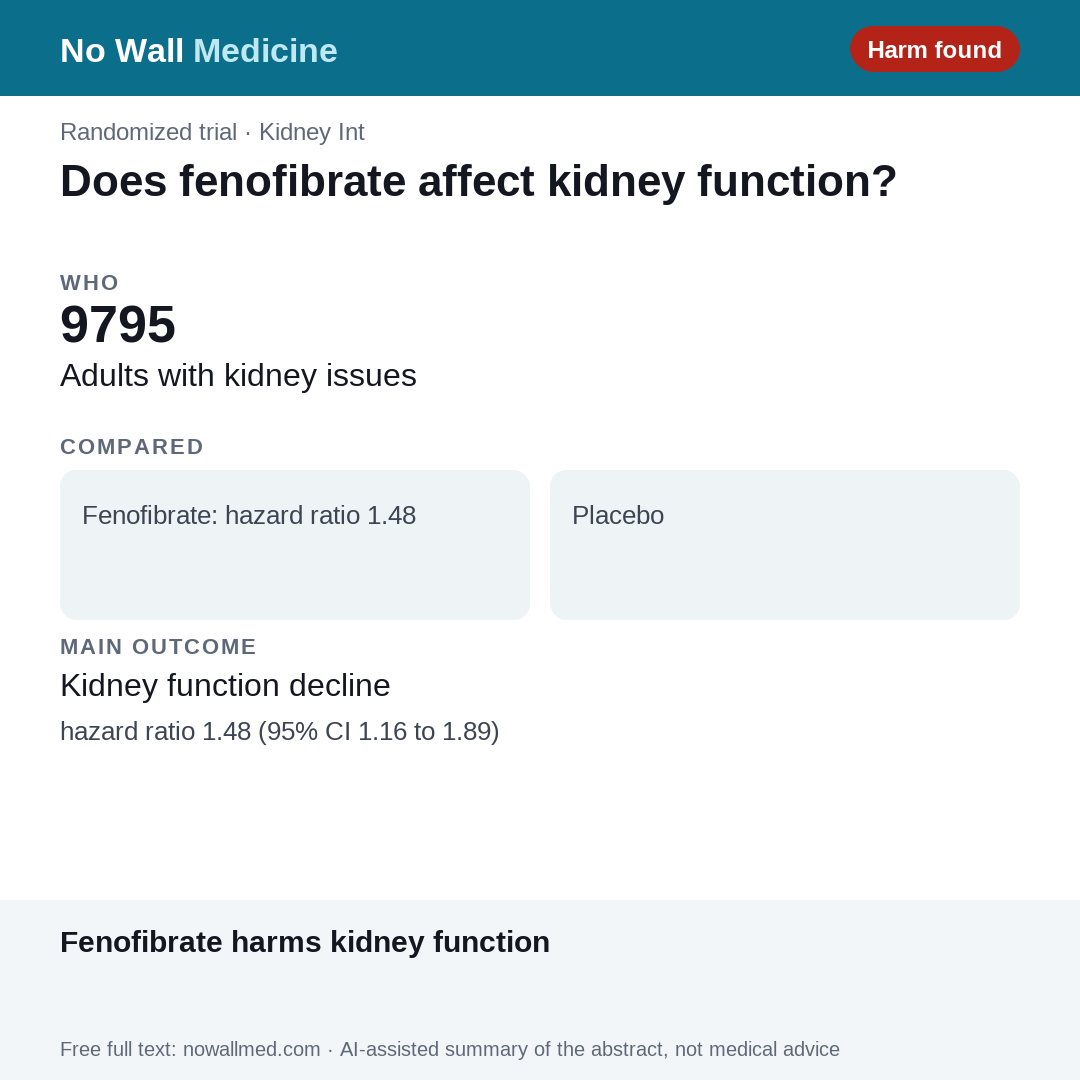
Secondary analysis of the FIELD randomized trial evaluated the performance of GFR slope in a non-glomerular model of estimated GFR decline
Randomized trialHarm found
Does fenofibrate affect kidney function?
Who
9795
Adults with kidney issues
Compared
Fenofibrate: hazard ratio 1.48
Placebo
Main outcome
Kidney function decline
Result: hazard ratio 1.48 (95% CI 1.16 to 1.89)
Bottom line: Fenofibrate harms kidney function
Kidney Int · 2026-11-19Download image
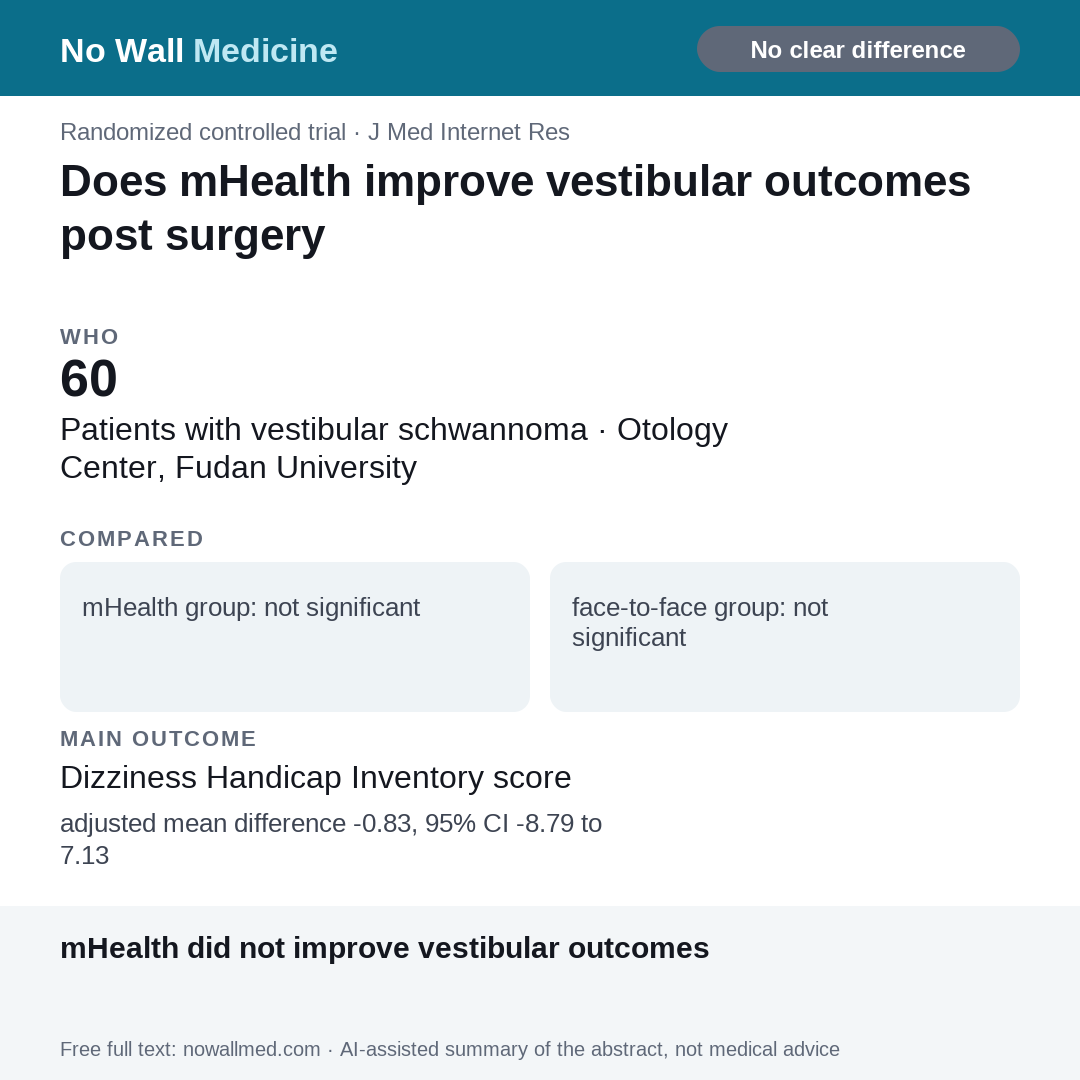
A mHealth-Based Vestibular Rehabilitation Program for Postoperative Vestibular Dysfunction in Patients With Vestibular Schwannoma: Randomized Controlled Trial
Randomized controlled trialNo clear difference
Does mHealth improve vestibular outcomes post surgery
Who
60
Patients with vestibular schwannoma · Otology Center, Fudan University
Compared
mHealth group: not significant
face-to-face group: not significant
Main outcome
Dizziness Handicap Inventory score
Result: adjusted mean difference -0.83, 95% CI -8.79 to 7.13
Bottom line: mHealth did not improve vestibular outcomes
J Med Internet Res · 2026-11-19Download image
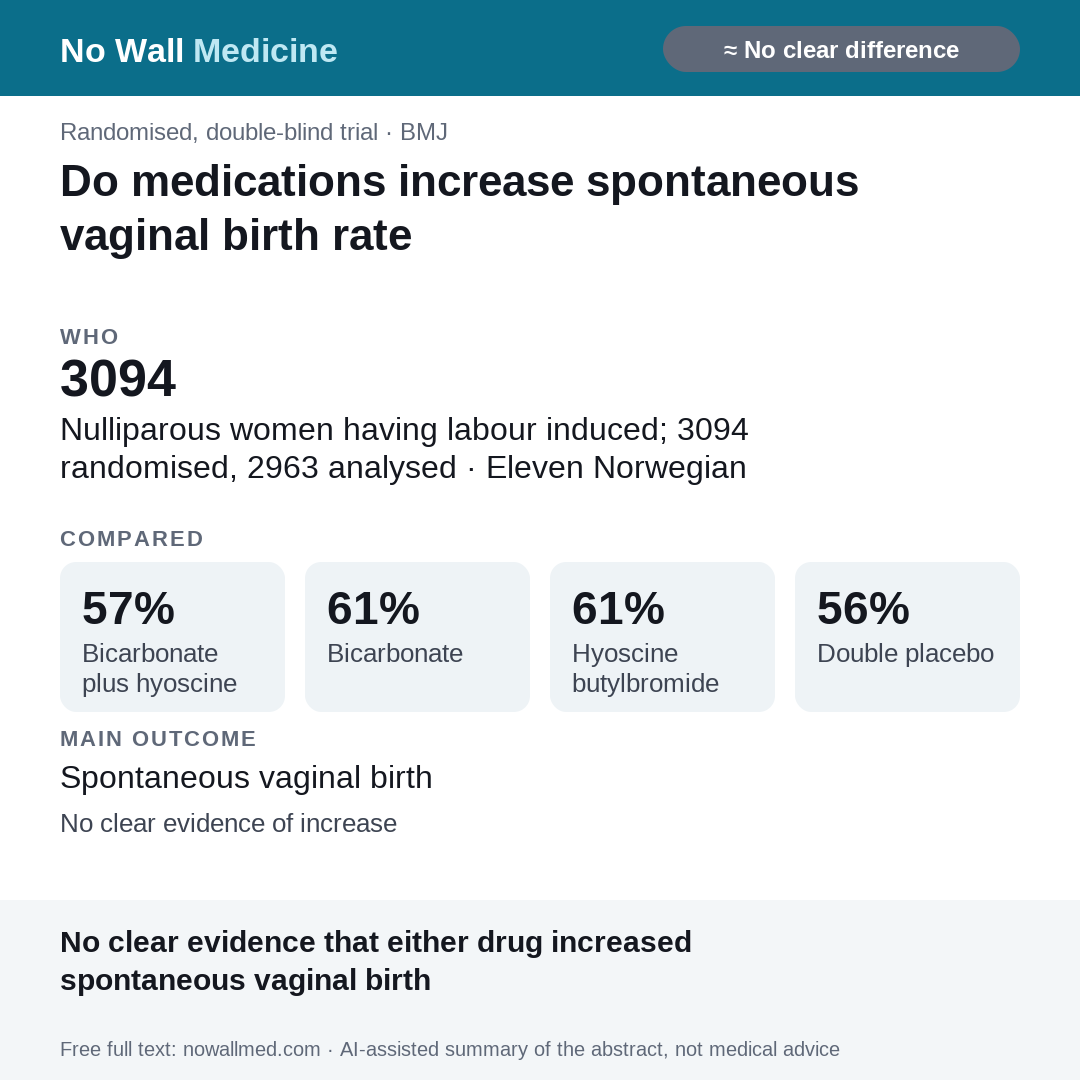
Effect of intrapartum hyoscine butylbromide and sodium bicarbonate on spontaneous vaginal birth in nulliparous women after induction of labour (SAINT): multicentre randomised placebo controlled factorial trial
Randomised, double-blind trialNo clear difference
Do medications increase spontaneous vaginal birth rate
Who
3094
Nulliparous women undergoing labour induction · Eleven Norwegian hospitals
Compared
57%Bicarbonate plus hyoscine (422/741)
61%Bicarbonate (445/734)
61%Hyoscine butylbromide (449/741)
56%Double placebo (422/747)
Main outcome
Spontaneous vaginal birth
Result: No clear evidence of increase
Bottom line: Medications do not increase spontaneous birth rate
BMJ · 2026-11-18Download image
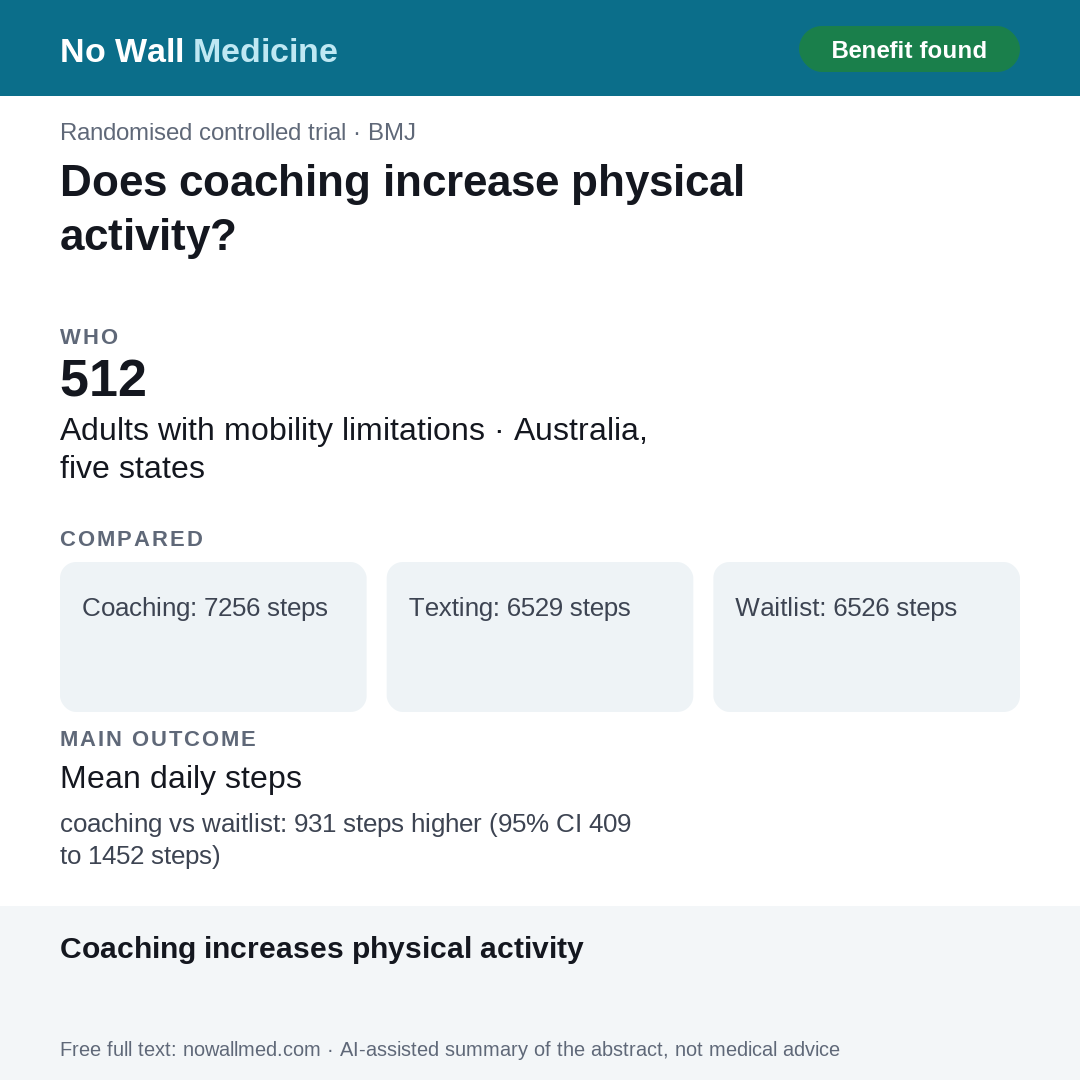
Physical activity coaching and text messaging for adults with mobility limitations (ComeBACK): hybrid type 1 effectiveness implementation randomised controlled trial
Randomised controlled trialBenefit found
Does coaching increase physical activity?
Who
512
Adults with mobility limitations · Australia, five states
Compared
Coaching: 7256 steps
Texting: 6529 steps
Waitlist: 6526 steps
Main outcome
Mean daily steps
Result: coaching vs waitlist: 931 steps higher (95% CI 409 to 1452 steps)
Bottom line: Coaching increases physical activity
BMJ · 2026-11-18Download image
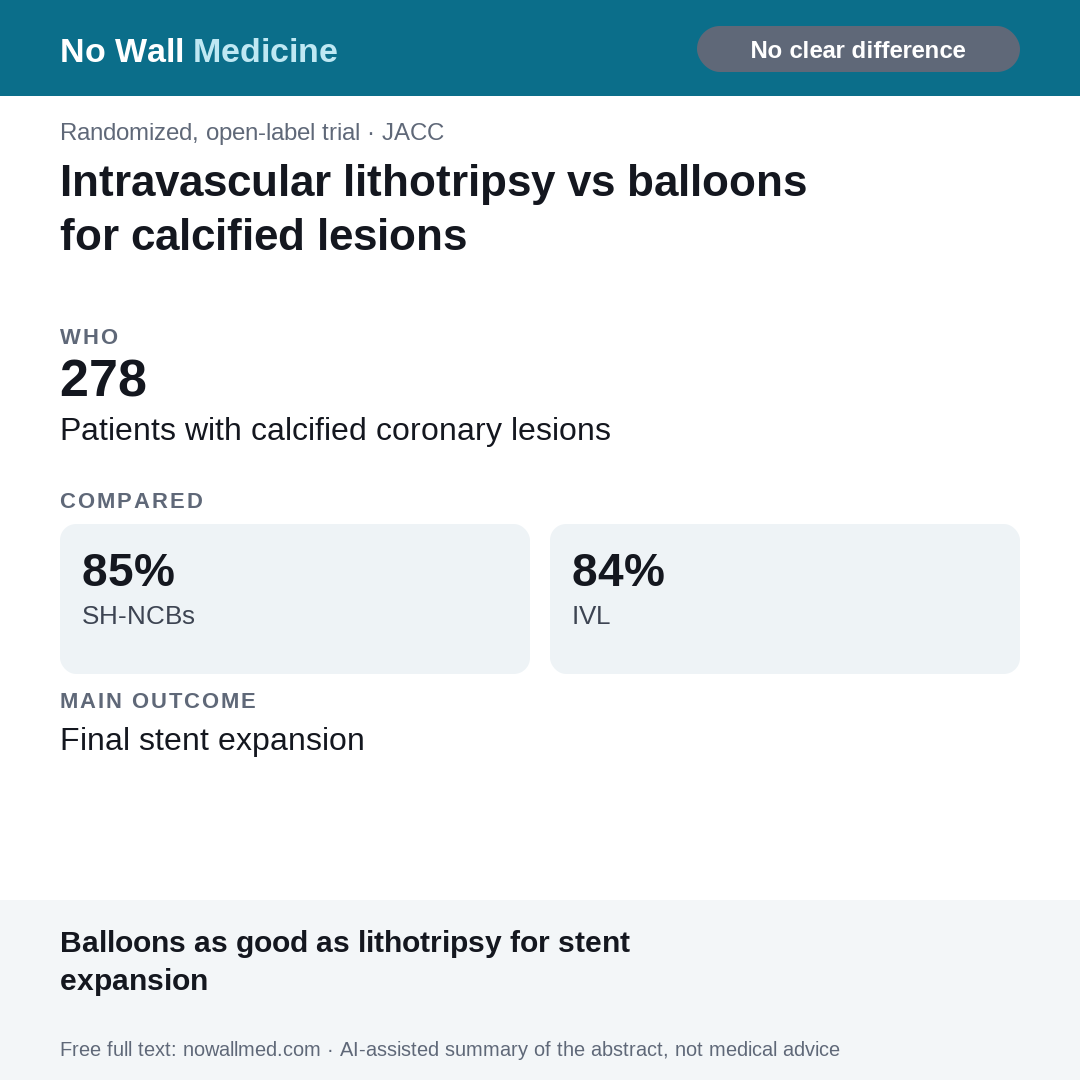
Intravascular Lithotripsy vs Super-High-Pressure Noncompliant Balloons for Treatment of Calcified Coronary Lesions: The VICTORY Trial
Randomized, open-label trialNo clear difference
Intravascular lithotripsy vs balloons for calcified lesions
Who
278
Patients with calcified coronary lesions
Compared
85%SH-NCB
84%IVL
Main outcome
Stent expansion
Result: hazard ratio 0.50 (95% CI 0.15 to 1.66)
Bottom line: Balloons were noninferior to lithotripsy
JACC · 2026-11-18Download image
Digital Delivery of Apolipoprotein E Genotype and Phosphorylated Tau 217 Results: The eSMARTER Randomized Clinical Trial
Randomized, noninferiority trialNo clear difference
Is digital platform noninferior to clinician-mediated disclosure
Who
651
Patients aged 60 to 80 years with APOE genotyping · Across the contiguous US
Compared
Digital platform: noninferior
Clinician-mediated: noninferior
Main outcome
Anxiety and disease-specific distress
Result: noninferior
Bottom line: Digital platform is noninferior to clinician-mediated disclosure
JAMA Neurol · 2026-11-18Download image

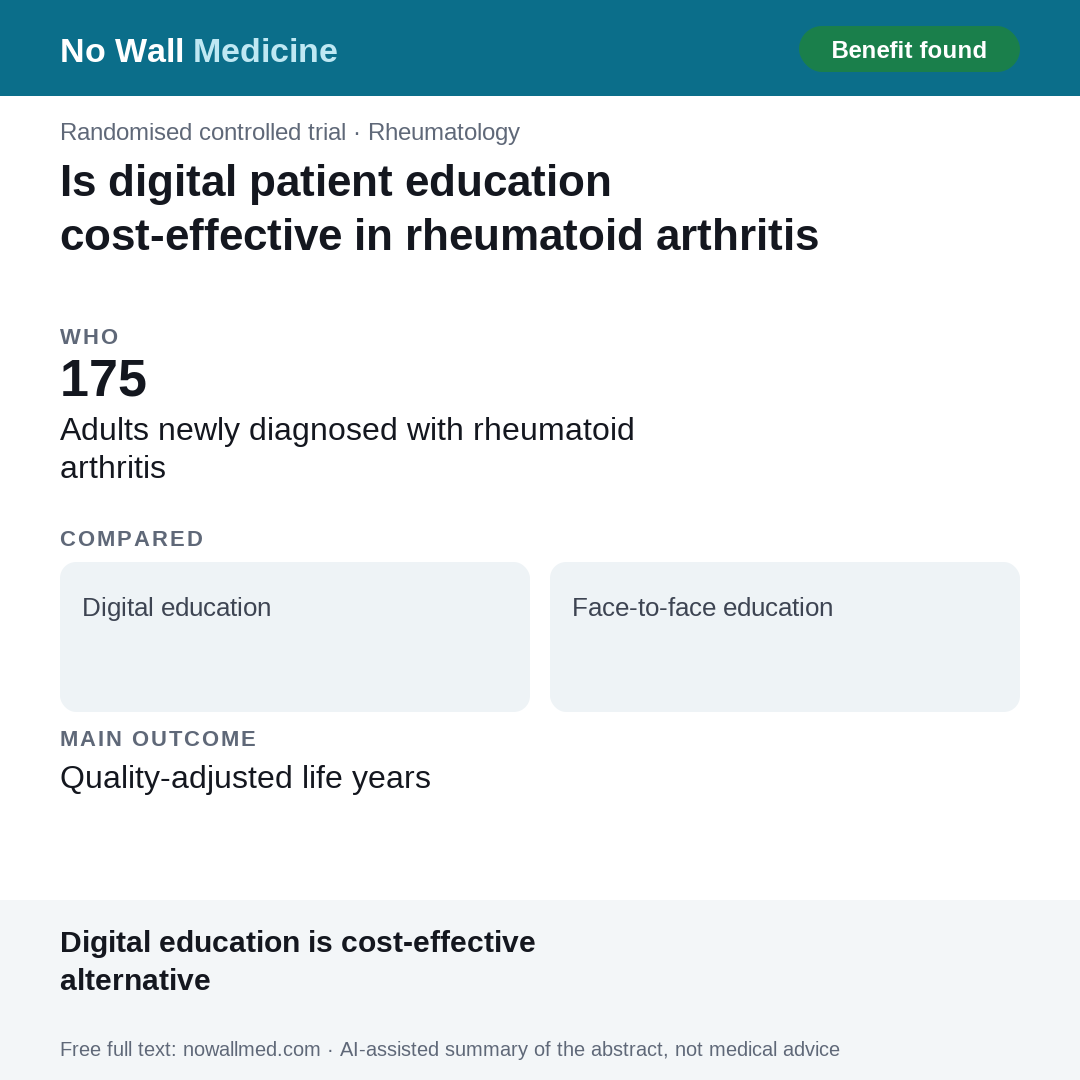
Cost-Effectiveness of Digital Patient Education in Rheumatoid Arthritis: An economic evaluation from a randomised controlled trial
Randomised controlled trialBenefit found
Is digital patient education cost-effective in rheumatoid arthritis
Who
175
Adults newly diagnosed with rheumatoid arthritis
Compared
Digital education
Face-to-face education
Main outcome
Quality-adjusted life years
Bottom line: Digital education is cost-effective alternative
Limitation: some uncertainty and sensitivity
Rheumatology · 2026-11-18Download image
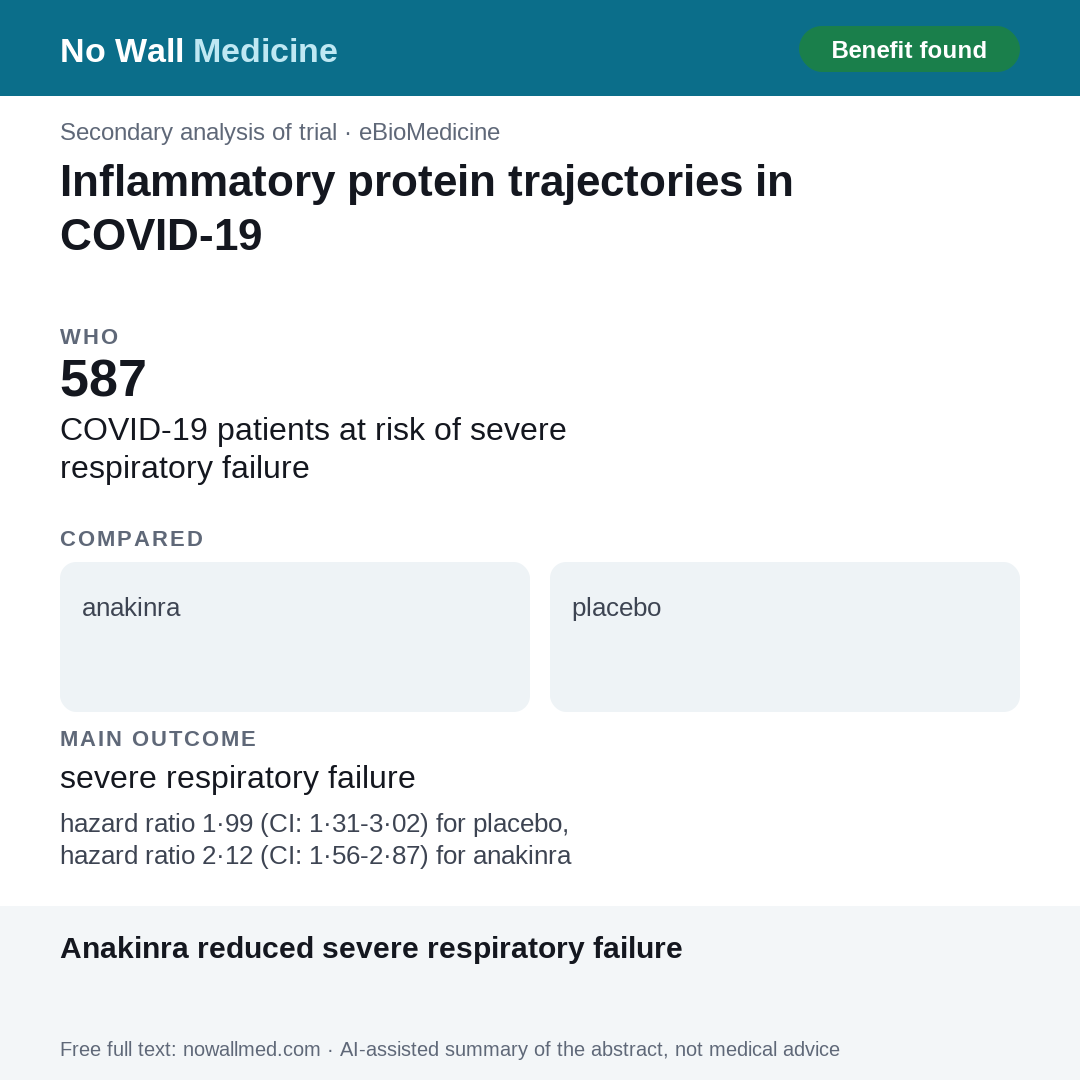
Inflammatory protein trajectories and severe respiratory failure in COVID-19: a secondary analysis of the SAVE-MORE randomised trial
Secondary analysis of trialBenefit found
Inflammatory protein trajectories in COVID-19
Who
587
COVID-19 patients at risk of severe respiratory failure
Compared
anakinra
placebo
Main outcome
severe respiratory failure
Result: hazard ratio 1·99 (CI: 1·31-3·02) for placebo, hazard ratio 2·12 (CI: 1·56-2·87) for anakinra
Bottom line: Anakinra reduced severe respiratory failure
Funded by: Hellenic Institute and Swedish Orphan Biovitrum
eBioMedicine · 2026-11-18Download image
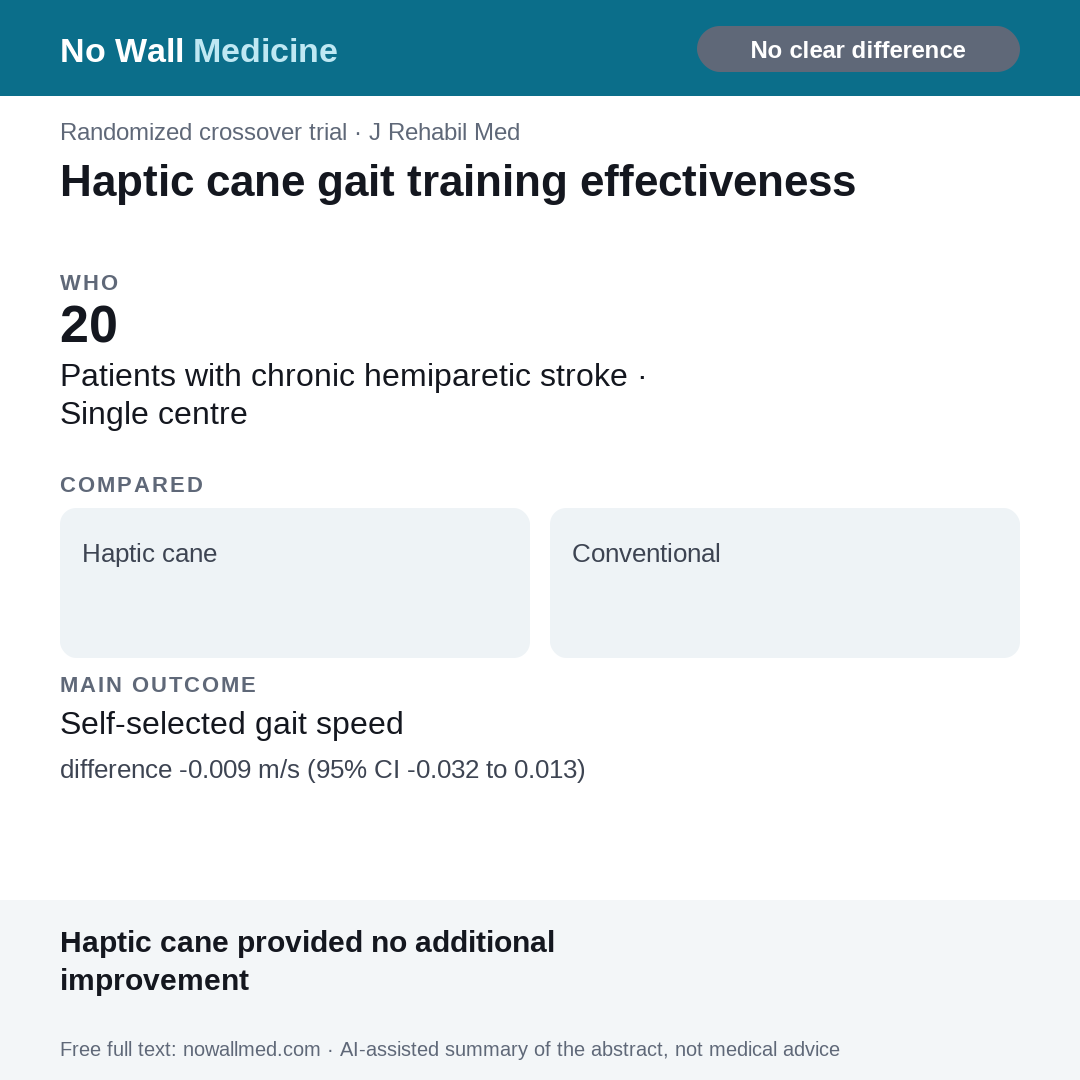
Feasibility, safety, and preliminary effects of haptic cane-assisted gait training in chronic hemiparetic stroke: a pilot randomized crossover trial
Randomized crossover trialNo clear difference
Haptic cane gait training effectiveness
Who
20
Patients with chronic hemiparetic stroke · Single centre
Compared
Haptic cane
Conventional
Main outcome
Self-selected gait speed
Result: difference -0.009 m/s (95% CI -0.032 to 0.013)
Bottom line: Haptic cane provided no additional improvement
J Rehabil Med · 2026-11-18Download image
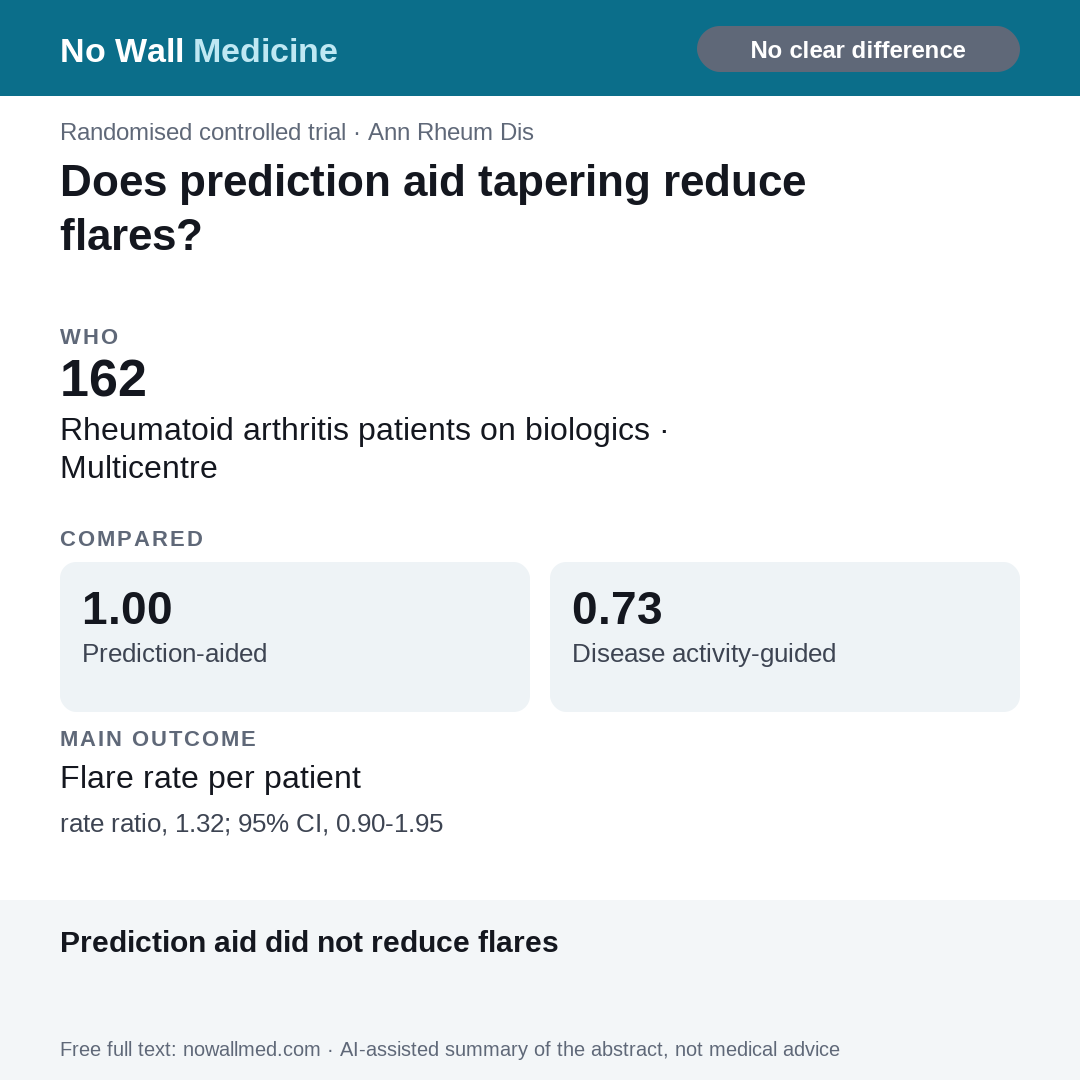
Prediction-aided tapering in rheumatoid arthritis patients treated with biOlogicals (PATIO): a randomised controlled trial
Randomised controlled trialNo clear difference
Does prediction aid tapering reduce flares?
Who
162
Rheumatoid arthritis patients on biologics · Multicentre
Compared
1.00Prediction-aided (95% CI, 0.73-1.27)
0.73Disease activity-guided (95% CI, 0.51-0.95)
Main outcome
Flare rate per patient
Result: rate ratio, 1.32; 95% CI, 0.90-1.95
Bottom line: Prediction aid did not reduce flares
Ann Rheum Dis · 2026-11-17Download image
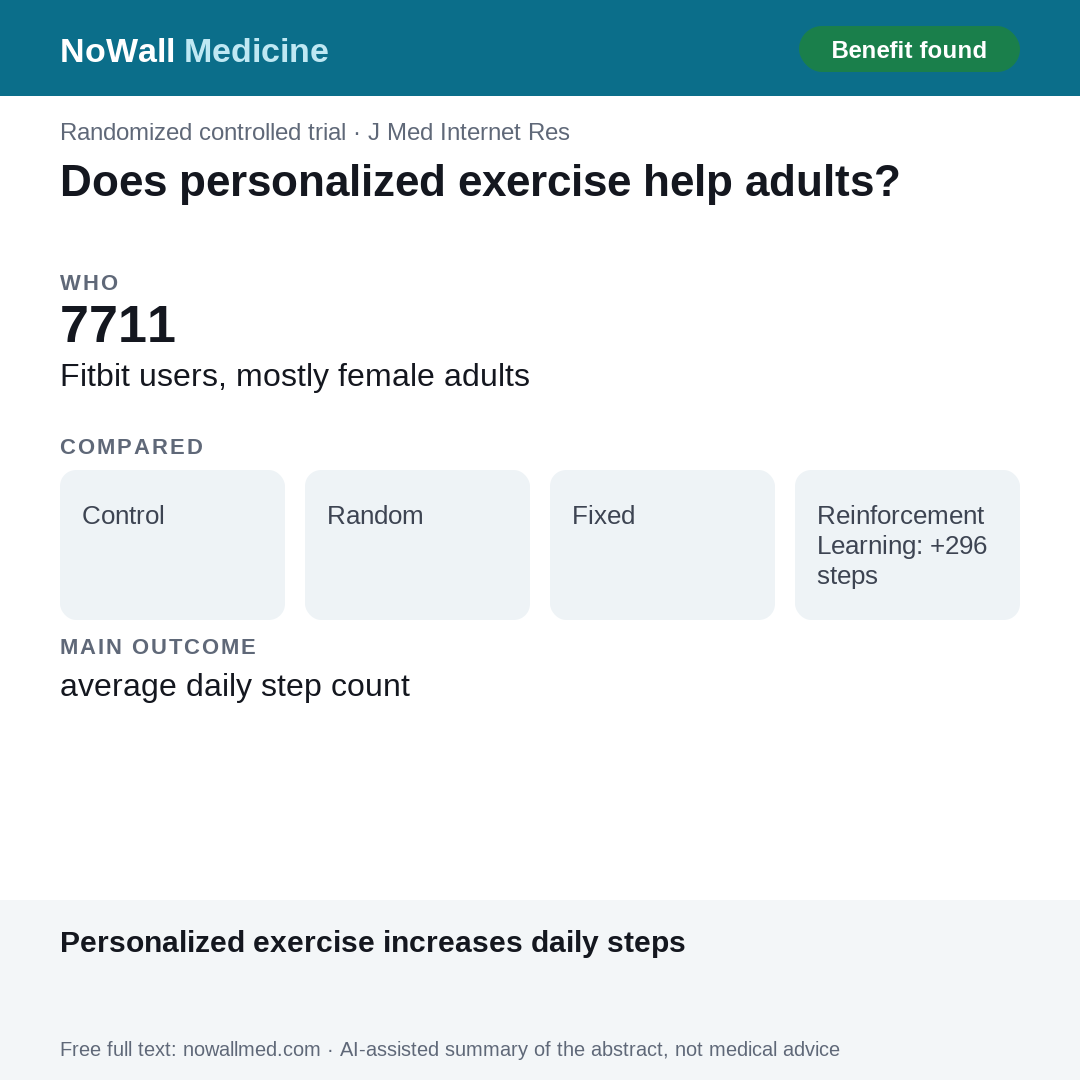
A Personalized Exercise Assistant Using Reinforcement Learning: Results From a Large-Scale Mobile Health Randomized-Controlled Trial
Randomized controlled trialBenefit found
Does personalized exercise help adults?
Who
7711
Fitbit users, mostly female adults
Compared
Control
Random
Fixed
Reinforcement Learning
Main outcome
average daily step count
Bottom line: Personalized exercise increases daily steps
Limitation: short follow-up, modest step gains
J Med Internet Res · 2026-11-17Download image
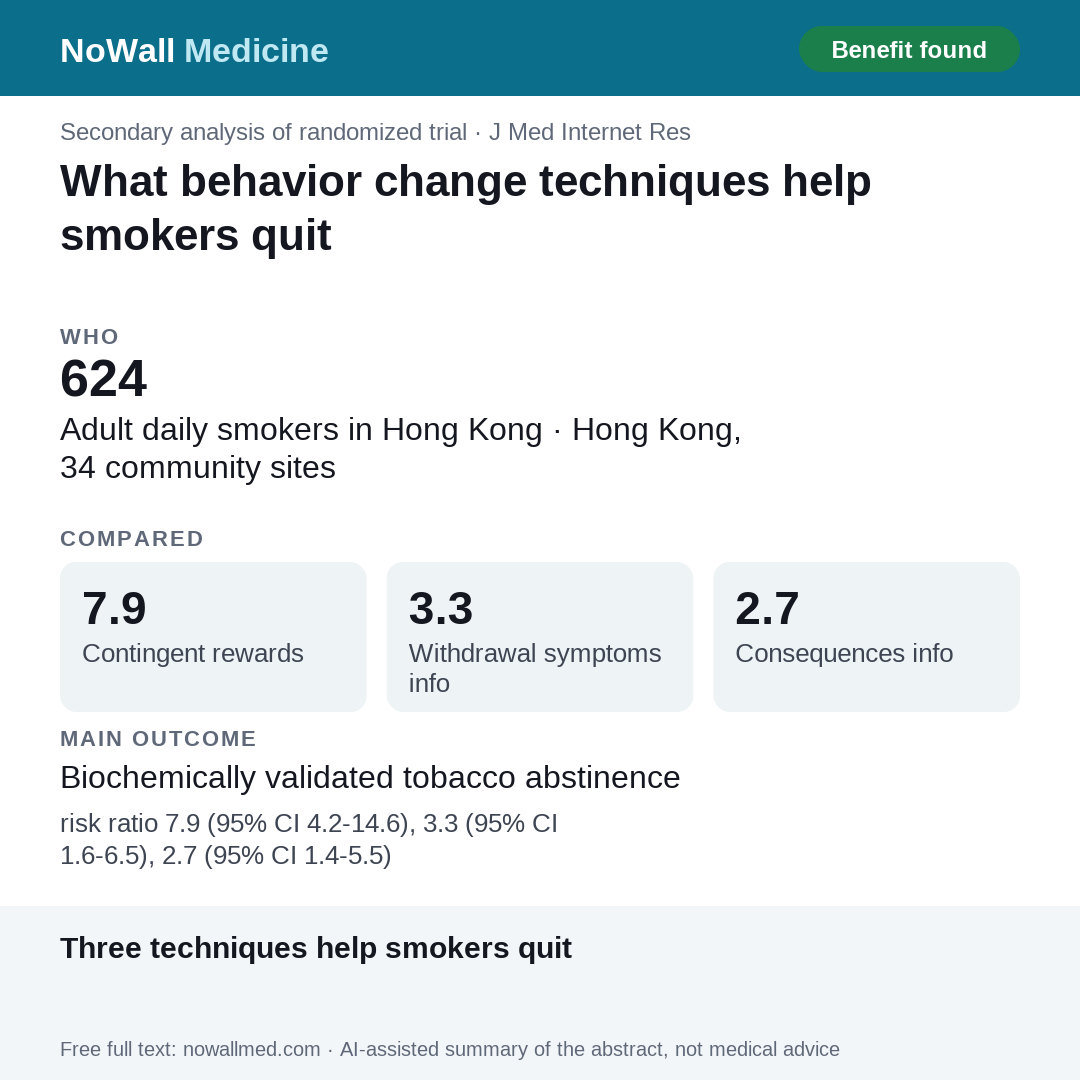
Behavior Change Techniques Associated With Abstinence in a Chat-Based Smoking Cessation Intervention: Secondary Analysis of a Randomized Clinical Trial Using Machine Learning
Secondary analysis of randomized trialBenefit found
What behavior change techniques help smokers quit
Who
624
Adult daily smokers in Hong Kong · Hong Kong, 34 community sites
Compared
7.9Contingent rewards (4.2-14.6)
3.3Withdrawal symptoms info (1.6-6.5)
2.7Consequences info (1.4-5.5)
Main outcome
Biochemically validated tobacco abstinence
Result: risk ratio 7.9 (95% CI 4.2-14.6), 3.3 (95% CI 1.6-6.5), 2.7 (95% CI 1.4-5.5)
Bottom line: Three techniques help smokers quit
J Med Internet Res · 2026-11-17Download image
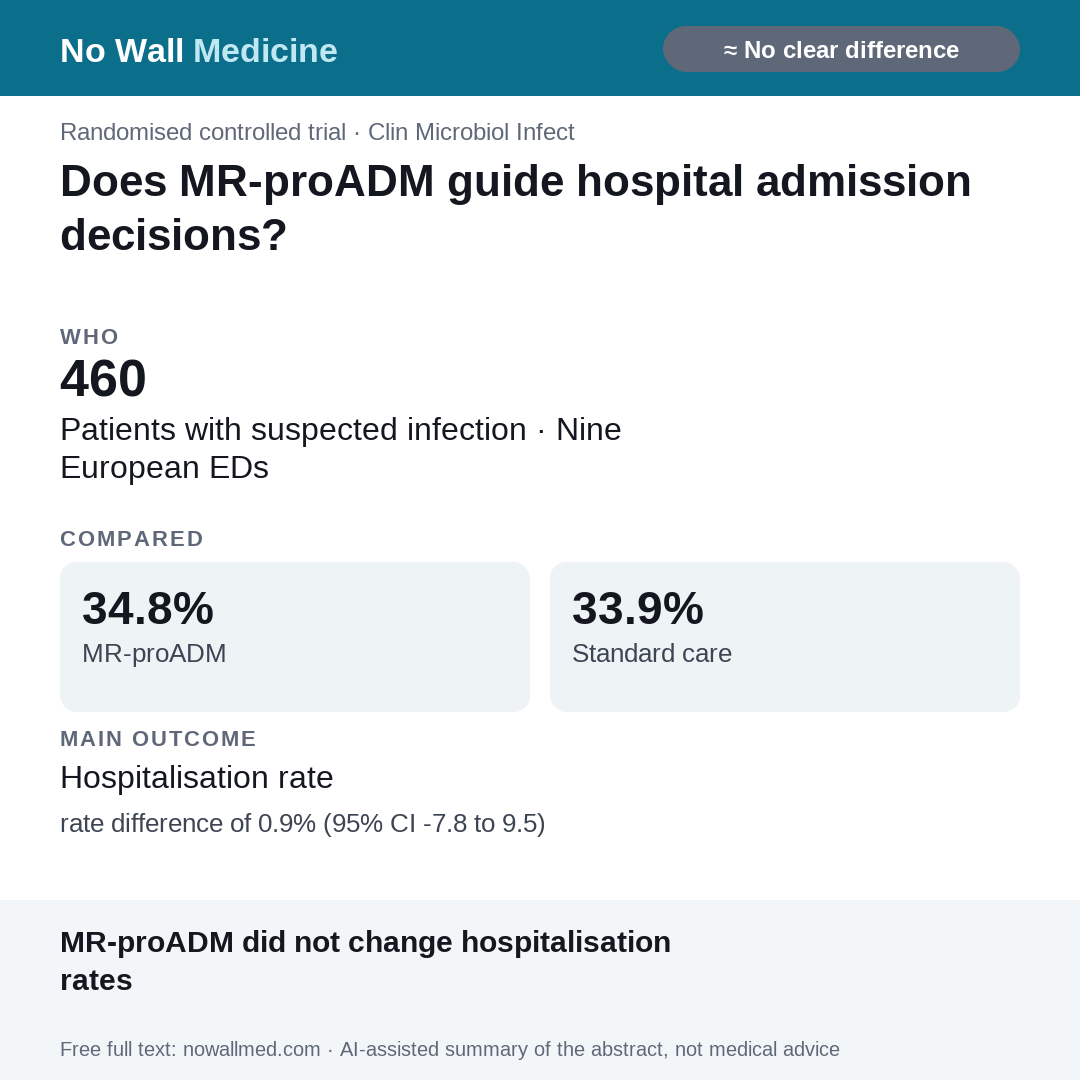
IDEntifying pAtients with suspicion of infection in the ED who have Low disease severity using midregional proadrenomedullin (MR-proADM) - A pragmatic pivotal randomised controlled trial
Randomised controlled trialNo clear difference
Does MR-proADM guide hospital admission decisions?
Who
460
Patients with suspected infection · Nine European EDs
Compared
34.8%MR-proADM (80/230)
33.9%Standard care (78/230)
Main outcome
Hospitalisation rate
Result: rate difference of 0.9% (95% CI -7.8 to 9.5)
Bottom line: MR-proADM did not change hospitalisation rates
Clin Microbiol Infect · 2026-11-16Download image