Visual abstracts
New randomized trials and meta-analyses from leading journals at a glance: who was studied, what was compared, and what was found. Every paper is free to read in full.
All specialtiesCardiology 4800Oncology 4084Gastroenterology & Hepatology 1917Infectious Disease 3789Neurology 1886Psychiatry & Mental Health 2240Pulmonology 2061Critical Care 1335Endocrinology & Diabetes 2553Pediatrics 2914Surgery 2500Orthopedics & Sports Medicine 923Neurosurgery 532Cardiothoracic & Vascular Surgery 665Plastic & Reconstructive Surgery 585Nephrology 1115Rheumatology 815Hematology 1099Dermatology 619Ophthalmology 539Obstetrics & Gynecology 1661Public & Global Health 1044Radiology & Imaging 637Anesthesiology 959Urology 751ENT (Otolaryngology) 497Emergency Medicine 484Allergy & Immunology 310Geriatrics 974Family Medicine & Primary Care 538Medical Genetics & Genomics 662Pathology & Laboratory Medicine 156Physical Medicine & Rehabilitation 746Palliative Care 422Nutrition 1566Digital Health & AI 2191General Medicine 319
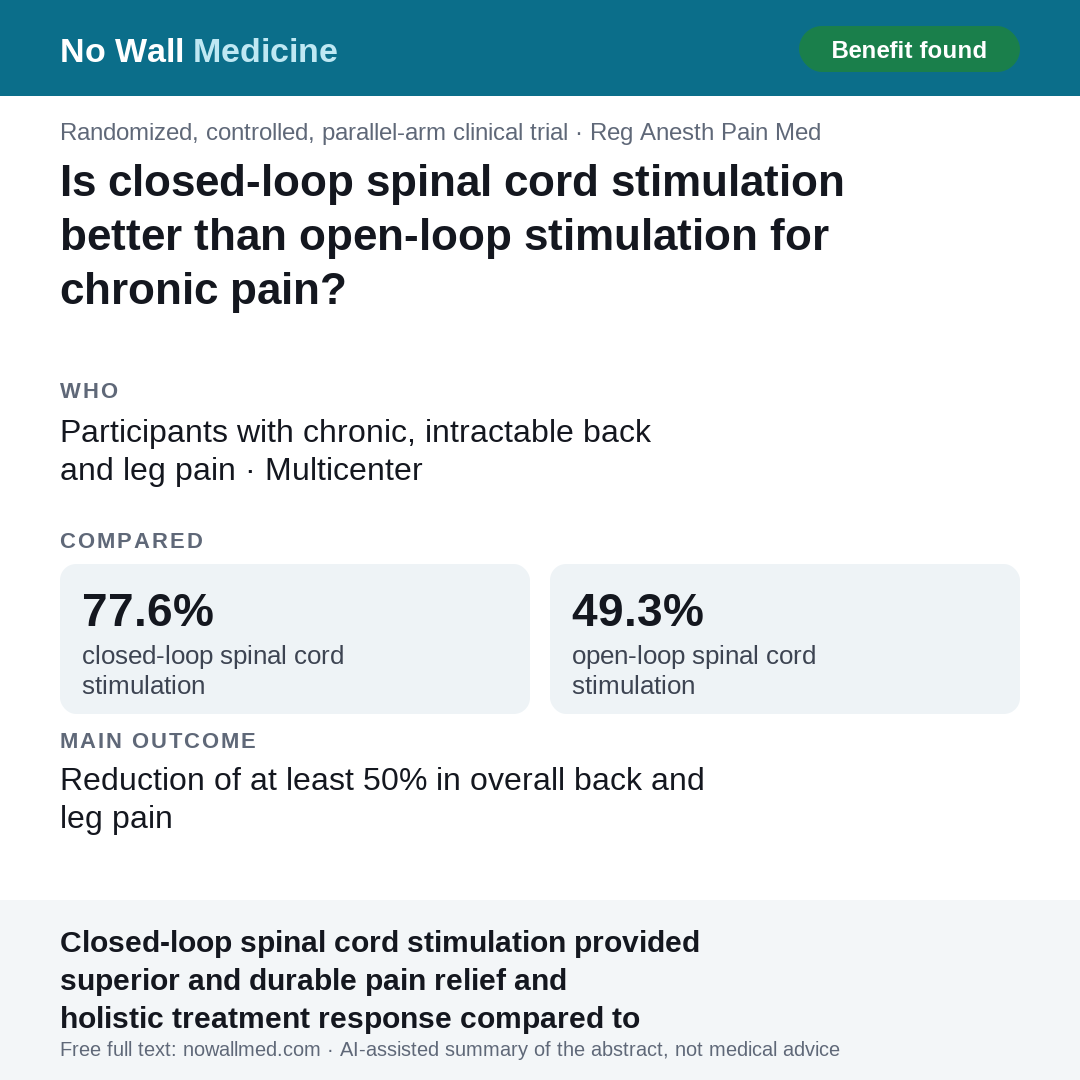
ECAP-controlled closed-loop versus open-loop SCS for the treatment of chronic pain: 36-month results of the EVOKE blinded randomized clinical trial
Randomized, controlled, parallel-arm clinical trialBenefit found
Is closed-loop spinal cord stimulation better than open-loop stimulation for chronic pain?
Who
Participants with chronic, intractable back and leg pain · Multicenter
Compared
77.6%closed-loop spinal cord stimulation
49.3%open-loop spinal cord stimulation
Main outcome
Reduction of at least 50% in overall back and leg pain
Result: difference: 28.4%, 95% CI 12.8% to 43.9%
Bottom line: Closed-loop spinal cord stimulation provided superior and durable pain relief and holistic treatment response compared to open-loop stimulation.
Reg Anesth Pain Med · 2024-05-07Download image
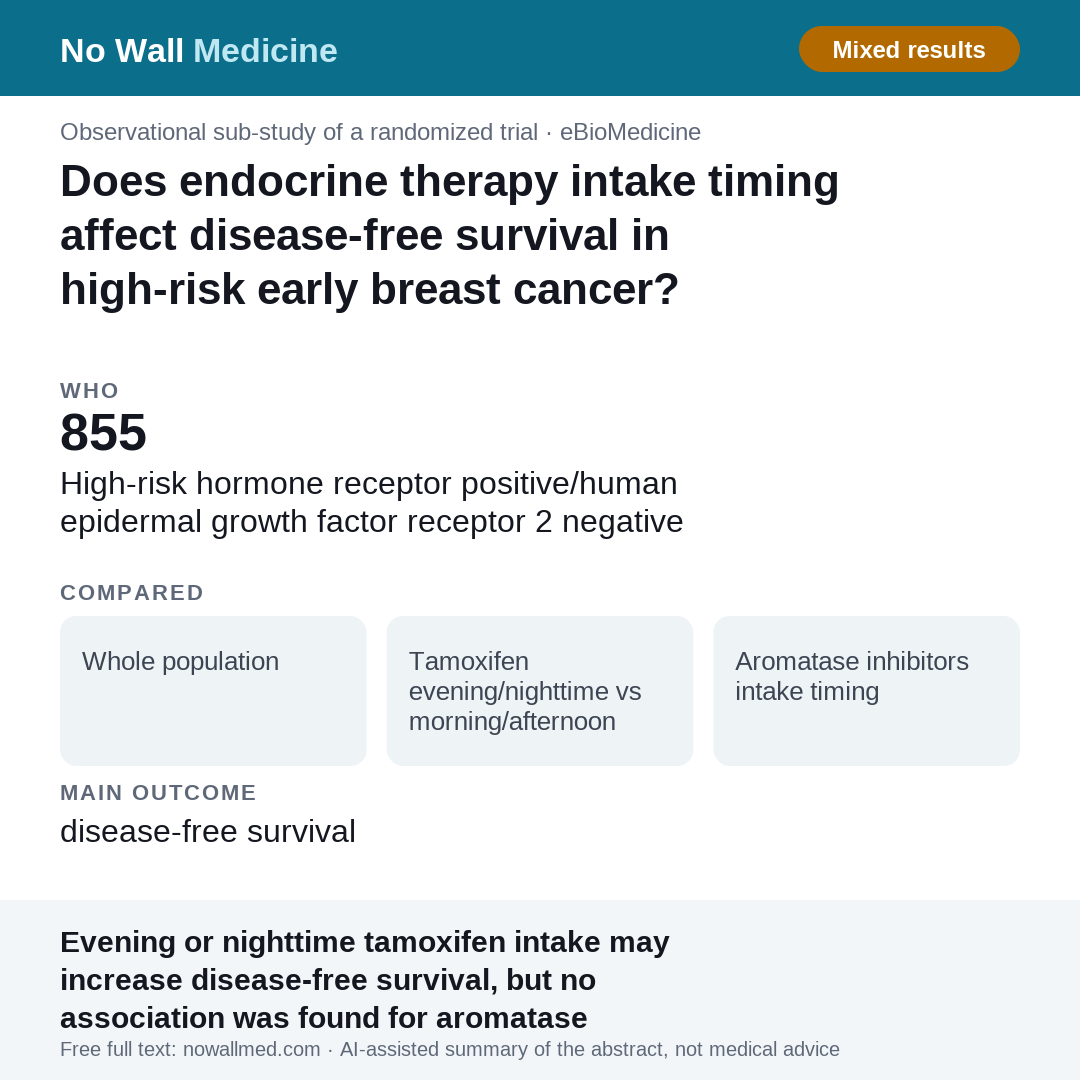
Association between endocrine adjuvant therapy intake timing and disease-free survival in patients with high-risk early breast cancer: results of a sub-study of the UCBG- UNIRAD trial
Observational sub-study of a randomized trialMixed results
Does endocrine therapy intake timing affect disease-free survival in high-risk early breast cancer?
Who
855
High-risk hormone receptor positive/human epidermal growth factor receptor 2 negative primary breast cancer patients
Compared
Whole population
Tamoxifen evening/nighttime vs morning/afternoon
Aromatase inhibitors intake timing
Main outcome
disease-free survival
Result: hazard ratio 0.77 (95% CI 0.53 to 1.12)
Bottom line: Evening or nighttime tamoxifen intake may increase disease-free survival, but no association was found for aromatase inhibitors.
Funded by: French Ministry of Health, La Ligue contre le Cancer, Cancer Research-UK, Myriad Genetics, Novartis
eBioMedicine · 2024-05-07Download image
Circulating VEGF-A Levels in Relation to Retinopathy of Prematurity and Treatment Effects: A Systematic Review and Meta-Analysis
Systematic review and meta-analysisMixed results
Do circulating VEGF-A levels relate to retinopathy of prematurity and treatment effects?
Who
Preterm infants with retinopathy of prematurity
Compared
Anti-VEGF therapy: 0.31 [0.25-0.38]
Laser treatment: 0.77 [0.61-0.97]
Main outcome
Circulating vascular endothelial growth factor A levels
Result: ratio of means 0.34 [95% confidence interval 0.25-0.45]
Bottom line: Anti-VEGF therapy significantly reduces VEGF-A levels, but blood VEGF-A does not consistently predict retinopathy of prematurity development.
Limitation: Unclear patient selection and lack of sample timing or analytical method details.
Ophthalmol Sci · 2024-05-07Download image

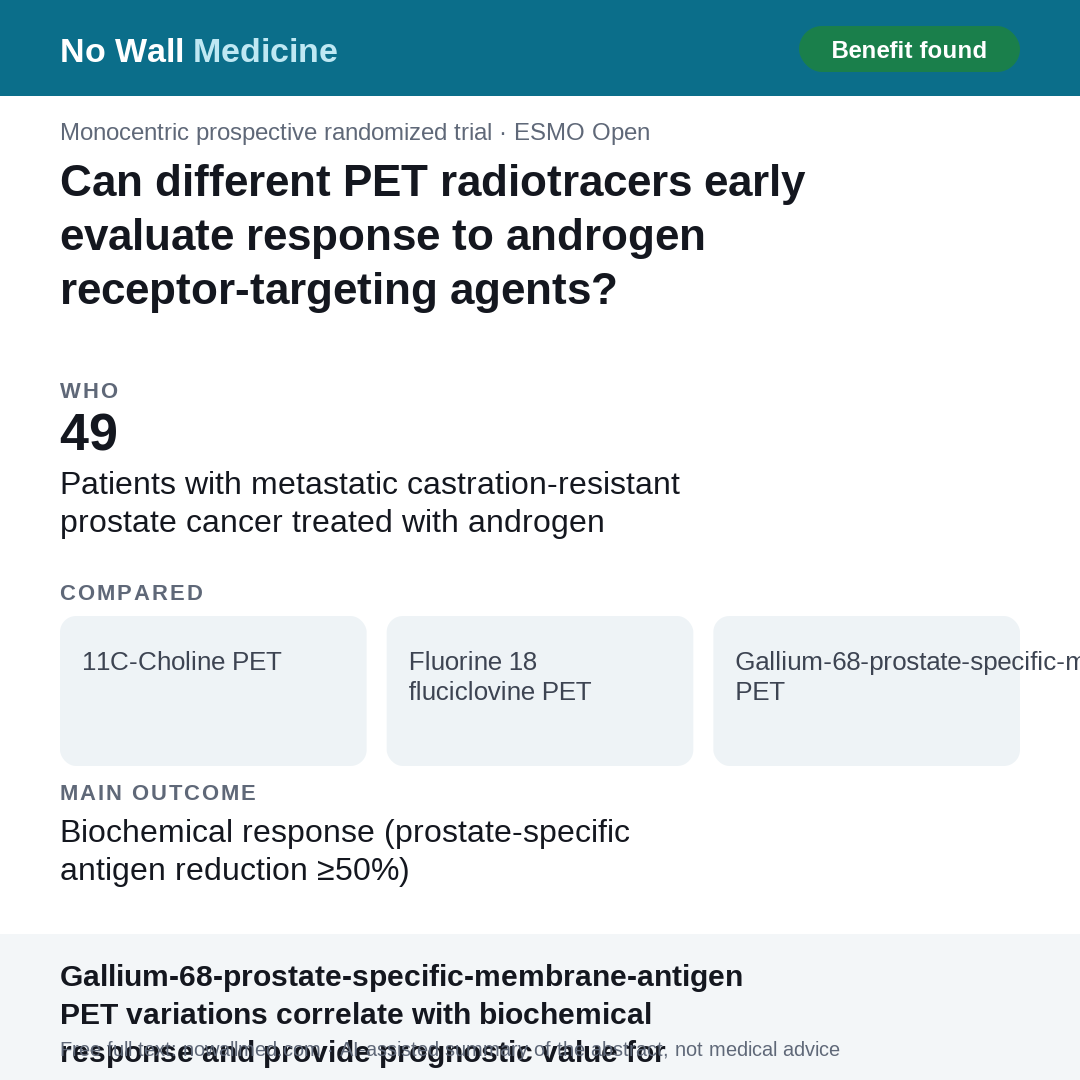
A prospective study on the early evaluation of response to androgen receptor-targeted agents with 11C-Choline, 68Ga-PSMA, and 18F-FACBC PET in metastatic castration-resistant prostate cancer: a single-center experience
Monocentric prospective randomized trialBenefit found
Can different PET radiotracers early evaluate response to androgen receptor-targeting agents?
Who
49
Patients with metastatic castration-resistant prostate cancer treated with androgen receptor-targeting agents · Single center
Compared
11C-Choline PET
Fluorine 18 fluciclovine PET
Gallium-68-prostate-specific-membrane-antigen PET
Main outcome
Biochemical response (prostate-specific antigen reduction ≥50%)
Bottom line: Gallium-68-prostate-specific-membrane-antigen PET variations correlate with biochemical response and provide prognostic value for survival.
ESMO Open · 2024-05-07Download image
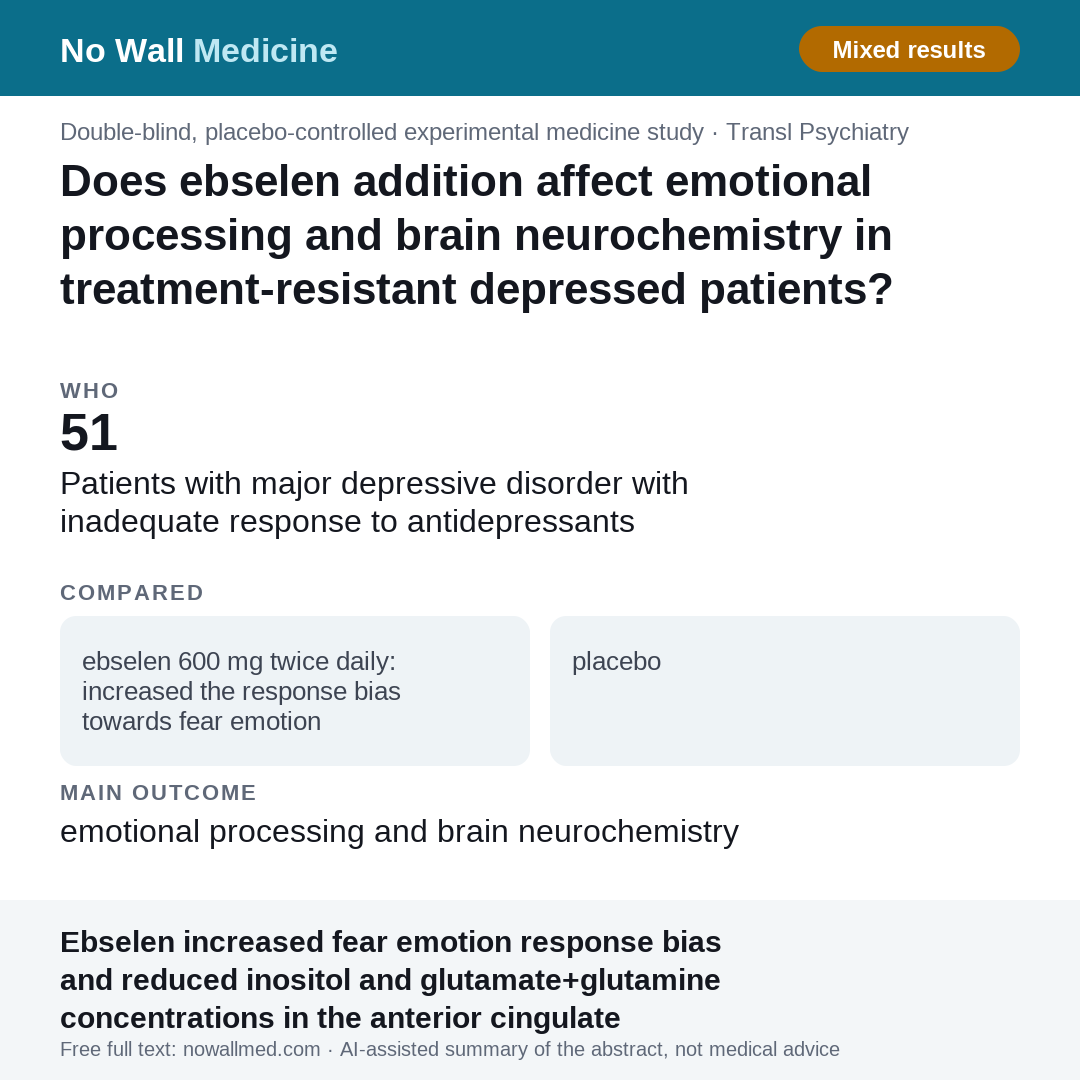
Effects of ebselen addition on emotional processing and brain neurochemistry in depressed patients unresponsive to antidepressant medication
Double-blind, placebo-controlled experimental medicine studyMixed results
Does ebselen addition affect emotional processing and brain neurochemistry in treatment-resistant depressed patients?
Who
51
Patients with major depressive disorder with inadequate response to antidepressants
Compared
ebselen 600 mg twice daily: increased the response bias towards fear emotion
placebo
Main outcome
emotional processing and brain neurochemistry
Bottom line: Ebselen increased fear emotion response bias and reduced inositol and glutamate+glutamine concentrations in the anterior cingulate cortex.
Transl Psychiatry · 2024-05-07Download image
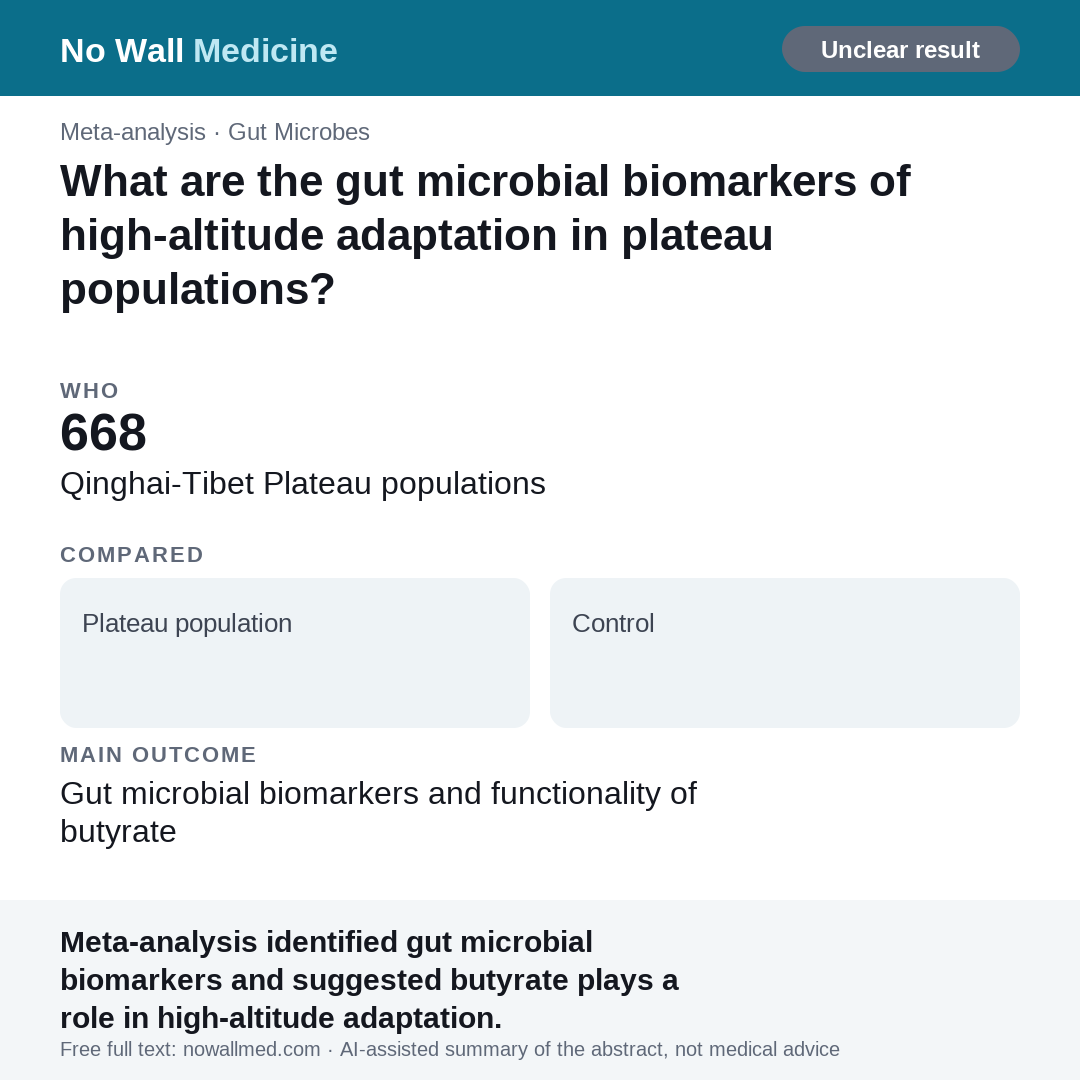
Meta-analysis identifying gut microbial biomarkers of Qinghai-Tibet Plateau populations and the functionality of microbiota-derived butyrate in high-altitude adaptation
Meta-analysisUnclear result
What are the gut microbial biomarkers of high-altitude adaptation in plateau populations?
Who
668
Qinghai-Tibet Plateau populations
Compared
Plateau population
Control
Main outcome
Gut microbial biomarkers and functionality of butyrate
Bottom line: Meta-analysis identified gut microbial biomarkers and suggested butyrate plays a role in high-altitude adaptation.
Gut Microbes · 2024-05-07Download image
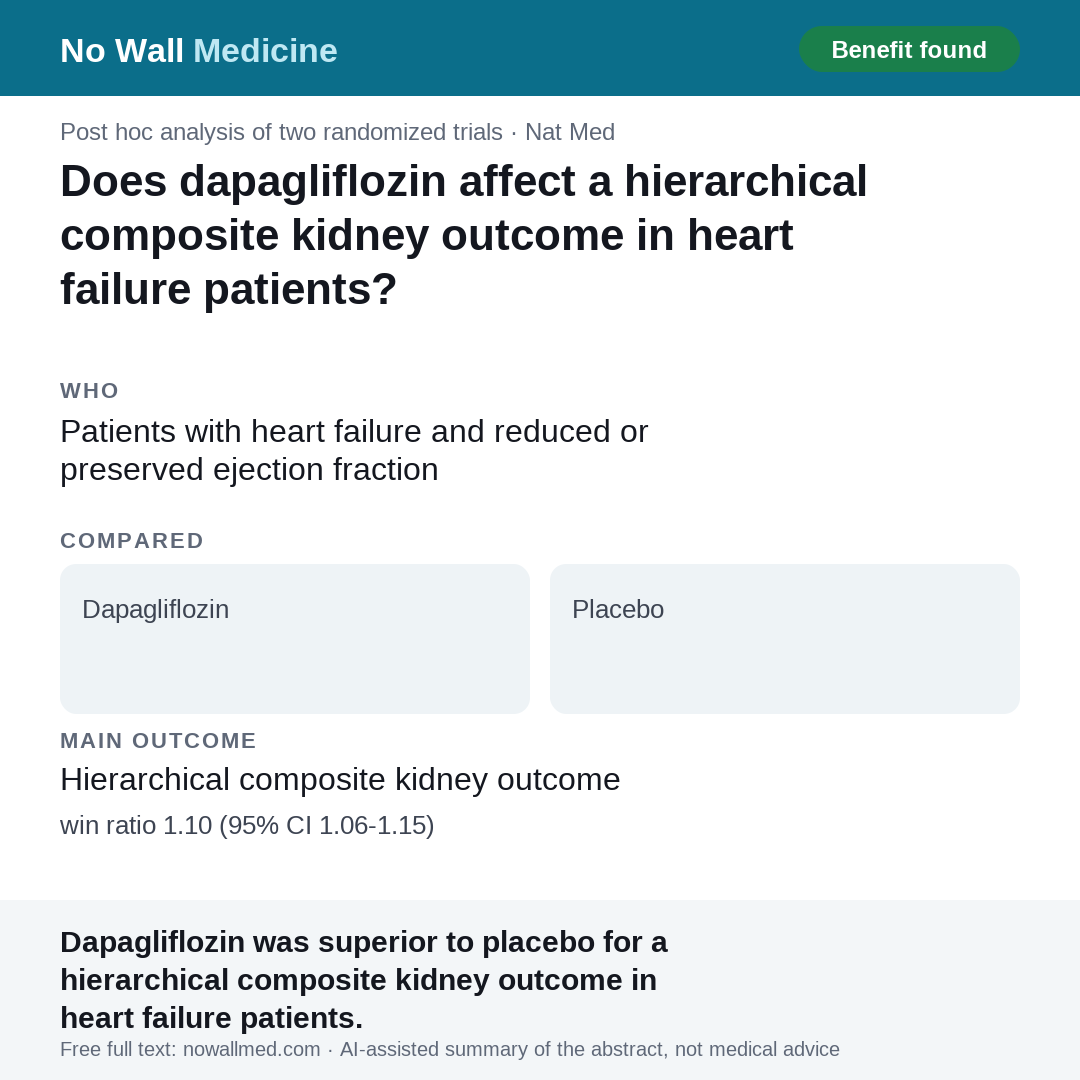
A hierarchical kidney outcome using win statistics in patients with heart failure from the DAPA-HF and DELIVER trials
Post hoc analysis of two randomized trialsBenefit found
Does dapagliflozin affect a hierarchical composite kidney outcome in heart failure patients?
Who
Patients with heart failure and reduced or preserved ejection fraction
Compared
Dapagliflozin
Placebo
Main outcome
Hierarchical composite kidney outcome
Result: win ratio 1.10 (95% CI 1.06-1.15)
Bottom line: Dapagliflozin was superior to placebo for a hierarchical composite kidney outcome in heart failure patients.
Nat Med · 2024-05-06Download image
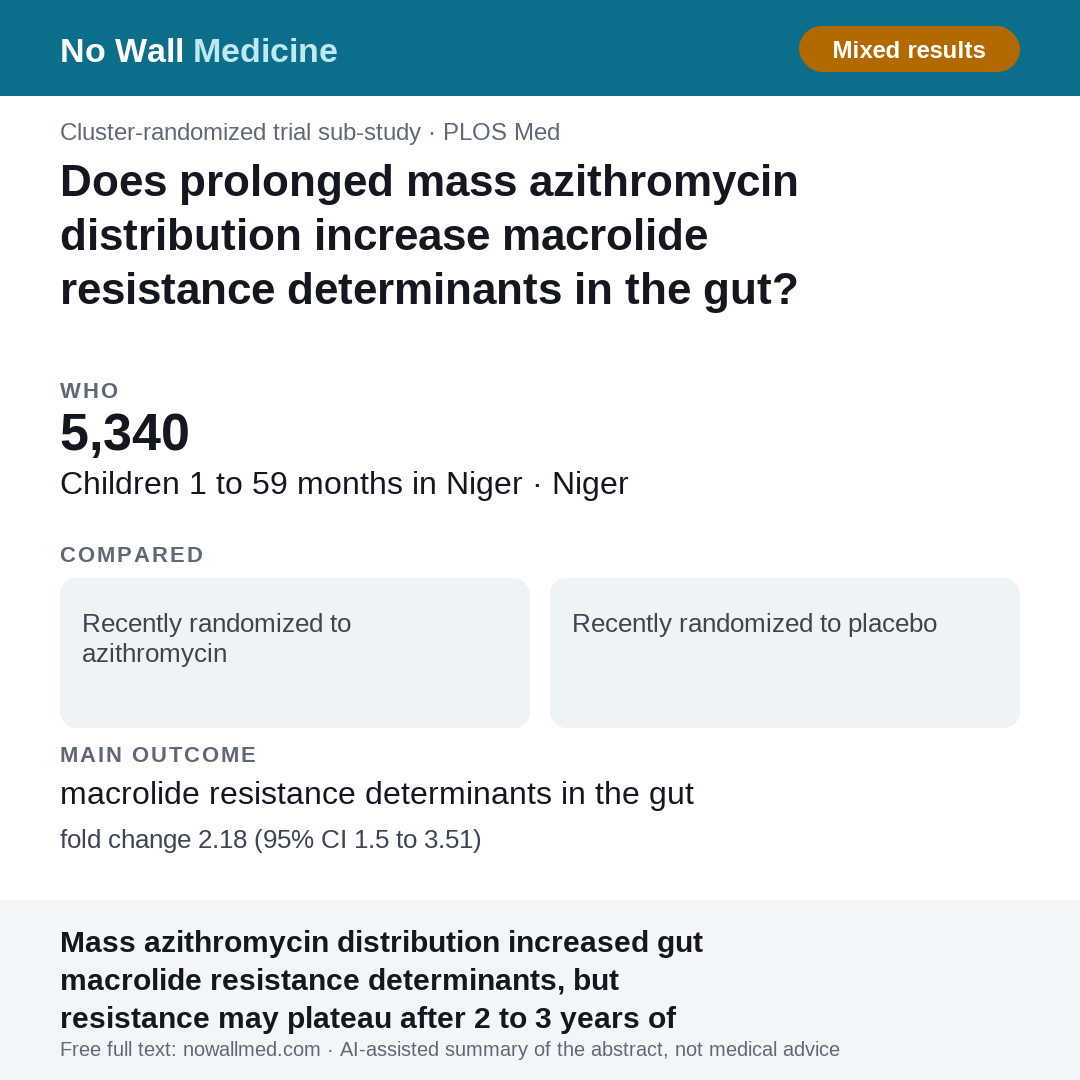
Prolonged mass azithromycin distributions and macrolide resistance determinants among preschool children in Niger: A sub-study of a cluster-randomized trial (MORDOR)
Cluster-randomized trial sub-studyMixed results
Does prolonged mass azithromycin distribution increase macrolide resistance determinants in the gut?
Who
5,340
Children 1 to 59 months in Niger · Niger
Compared
Recently randomized to azithromycin
Recently randomized to placebo
Main outcome
macrolide resistance determinants in the gut
Result: fold change 2.18 (95% CI 1.5 to 3.51)
Bottom line: Mass azithromycin distribution increased gut macrolide resistance determinants, but resistance may plateau after 2 to 3 years of treatment.
Limitation: absence of phenotypic characterization, no complete placebo arm, and no monitoring outside of Niger
PLOS Med · 2024-05-06Download image
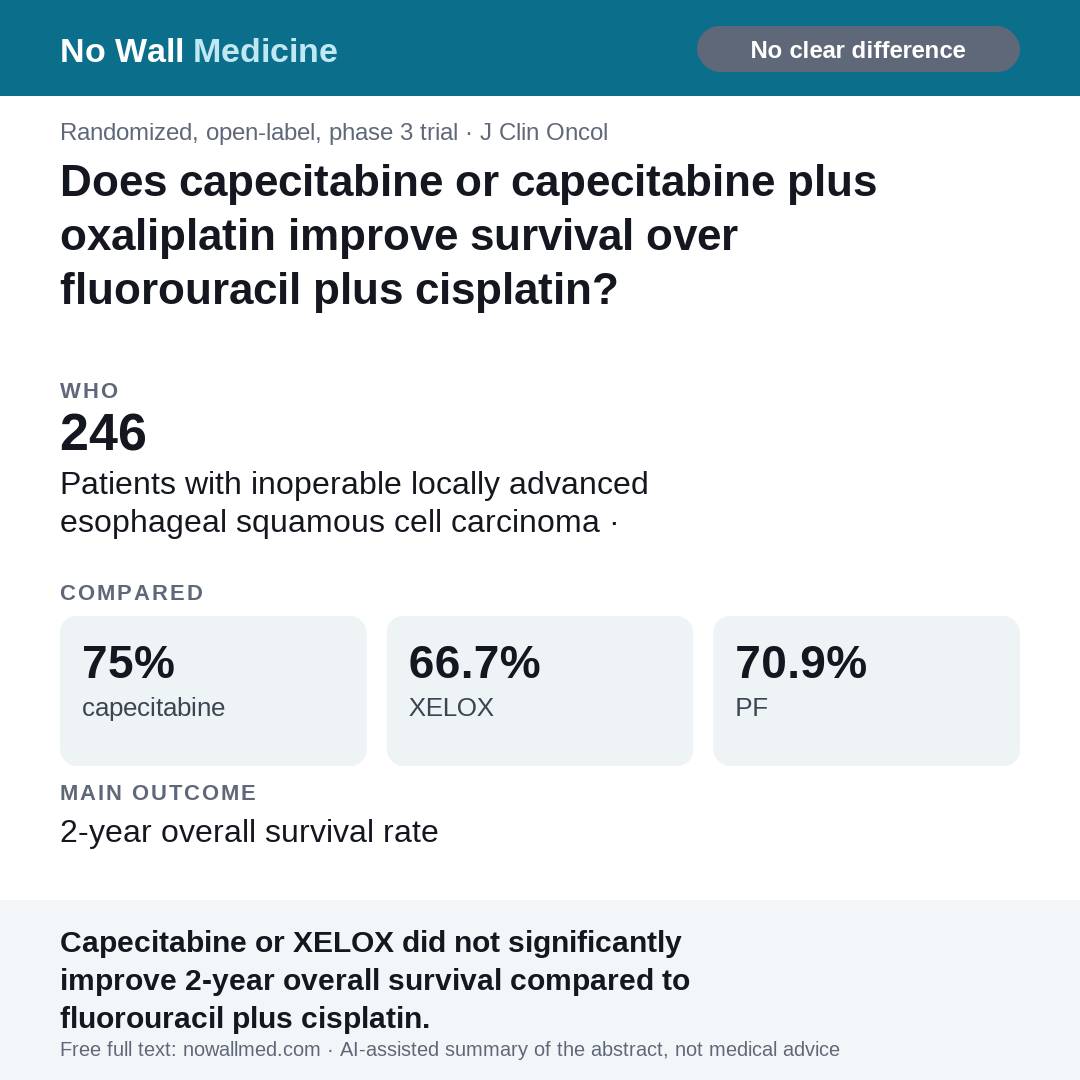
Capecitabine or Capecitabine Plus Oxaliplatin Versus Fluorouracil Plus Cisplatin in Definitive Concurrent Chemoradiotherapy for Locally Advanced Esophageal Squamous Cell Carcinoma (CRTCOESC): A Multicenter, Randomized, Open-Label, Phase 3 Trial
Randomized, open-label, phase 3 trialNo clear difference
Does capecitabine or capecitabine plus oxaliplatin improve survival over fluorouracil plus cisplatin?
Who
246
Patients with inoperable locally advanced esophageal squamous cell carcinoma · Multicenter
Compared
75%capecitabine
66.7%XELOX
70.9%PF
Main outcome
2-year overall survival rate
Result: hazard ratio 0.91 (95% CI 0.61 to 1.35) for capecitabine versus PF
Bottom line: Capecitabine or XELOX did not significantly improve 2-year overall survival compared to fluorouracil plus cisplatin.
J Clin Oncol · 2024-05-06Download image
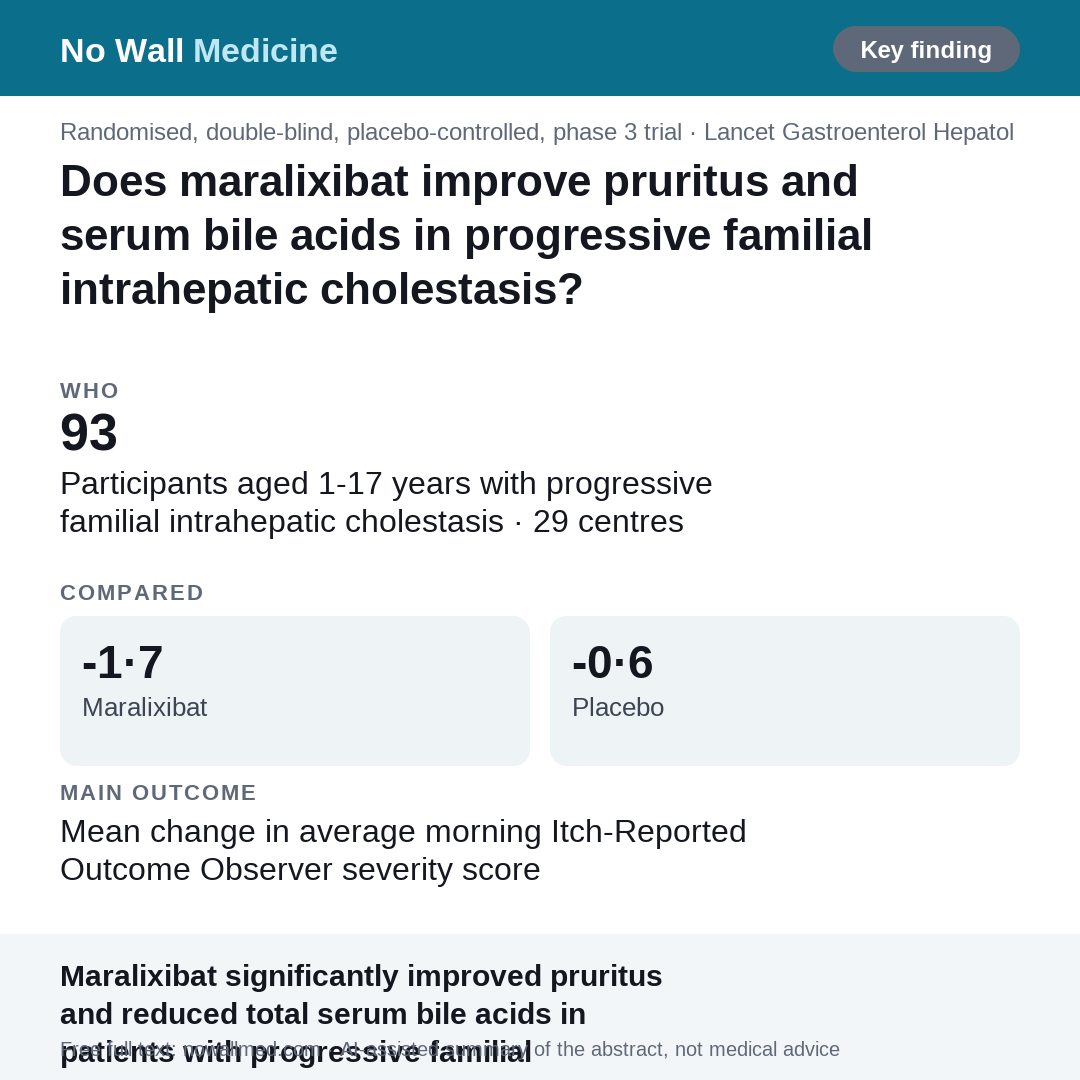
Maralixibat in progressive familial intrahepatic cholestasis (MARCH-PFIC): a multicentre, randomised, double-blind, placebo-controlled, phase 3 trial
Randomised, double-blind, placebo-controlled, phase 3 trialBenefit found
Does maralixibat improve pruritus and serum bile acids in progressive familial intrahepatic cholestasis?
Who
93
Participants aged 1-17 years with progressive familial intrahepatic cholestasis · 29 centres across 16 countries
Compared
-1·7Maralixibat (95% CI -2·3 to -1·2)
-0·6Placebo (-1·1 to -0·1)
Main outcome
Mean change in average morning Itch-Reported Outcome Observer severity score
Result: -1·1 (95% CI -1·8 to -0·3; p=0·0063)
Bottom line: Maralixibat significantly improved pruritus and reduced total serum bile acids in patients with progressive familial intrahepatic cholestasis.
Funded by: Mirum Pharmaceuticals
Lancet Gastroenterol Hepatol · 2024-05-06Download image
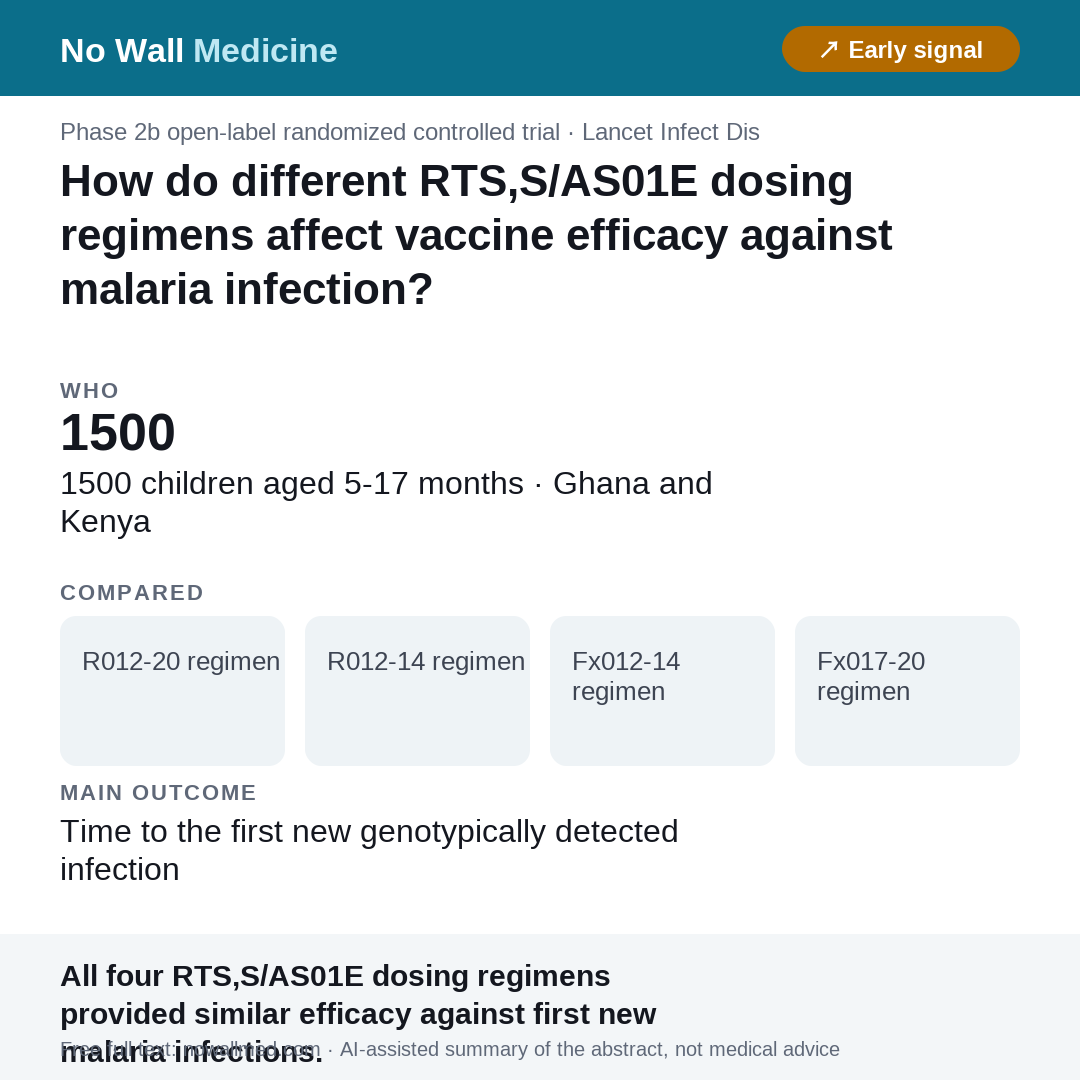
Genotypic analysis of RTS,S/AS01E malaria vaccine efficacy against parasite infection as a function of dosage regimen and baseline malaria infection status in children aged 5-17 months in Ghana and Kenya: a longitudinal phase 2b randomised controlled trial
Phase 2b open-label randomized controlled trialEarly signal
How do different RTS,S/AS01E dosing regimens affect vaccine efficacy against malaria infection?
Who
1500
1500 children aged 5-17 months · Ghana and Kenya
Compared
R012-20 regimen
R012-14 regimen
Fx012-14 regimen
Fx017-20 regimen
Main outcome
Time to the first new genotypically detected infection
Result: vaccine efficacy 25-43% (95% CI union 9-53)
Bottom line: All four RTS,S/AS01E dosing regimens provided similar efficacy against first new malaria infections.
Funded by: GlaxoSmithKline Biologicals SA, PATH, Bill & Melinda Gates Foundation, and German Federal Ministry
Lancet Infect Dis · 2024-05-06Download image
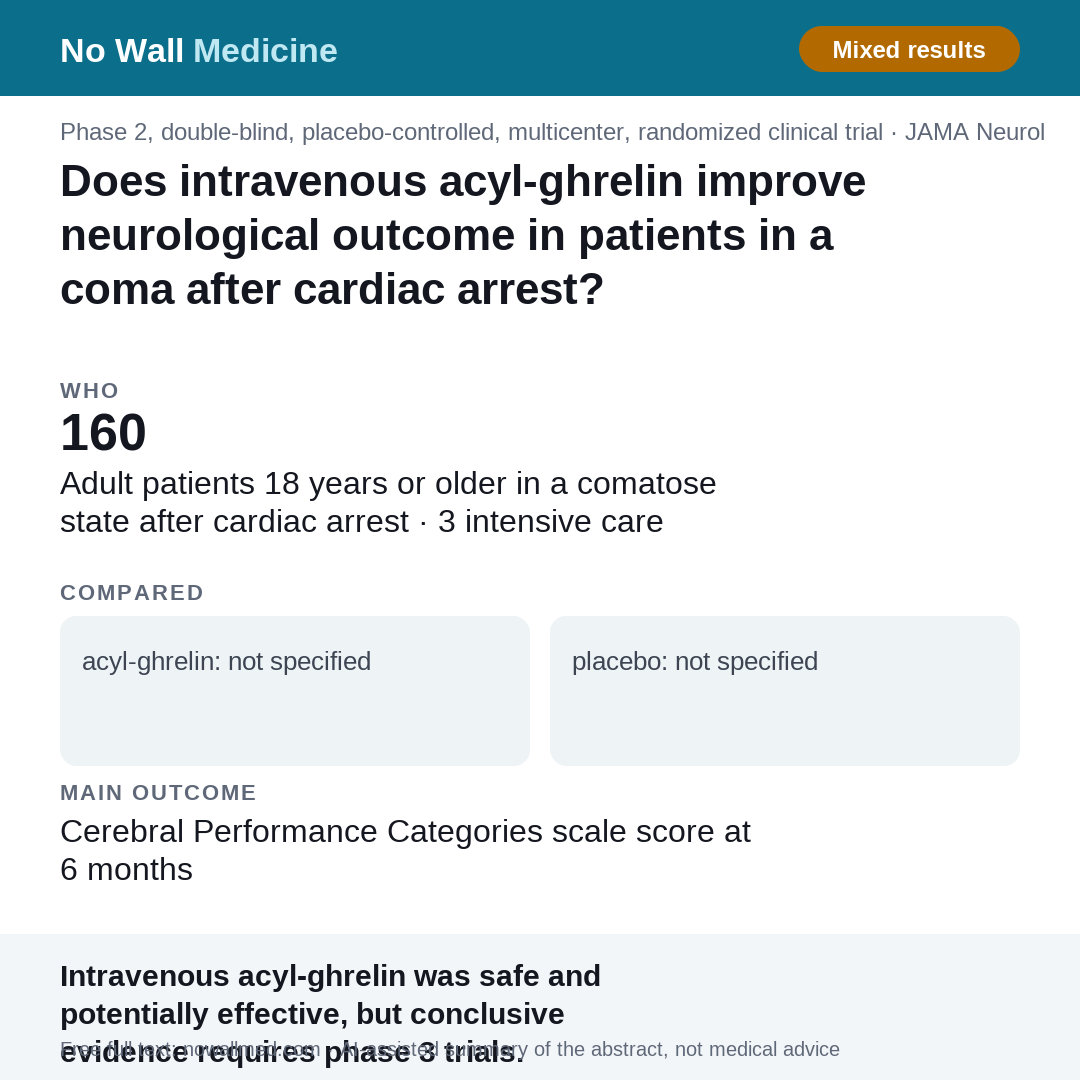
Ghrelin for Neuroprotection in Post-Cardiac Arrest Coma: A Randomized Clinical Trial
Phase 2, double-blind, placebo-controlled, multicenter, randomized clinical trialMixed results
Does intravenous acyl-ghrelin improve neurological outcome in patients in a coma after cardiac arrest?
Who
160
Adult patients 18 years or older in a comatose state after cardiac arrest · 3 intensive care units in the Netherlands
Compared
acyl-ghrelin: not specified
placebo: not specified
Main outcome
Cerebral Performance Categories scale score at 6 months
Result: odds ratio 1.78 (95% CI, 0.98-3.22)
Bottom line: Intravenous acyl-ghrelin was safe and potentially effective, but conclusive evidence requires phase 3 trials.
Limitation: Phase 3 trials are needed for conclusive evidence.
JAMA Neurol · 2024-05-06Download image
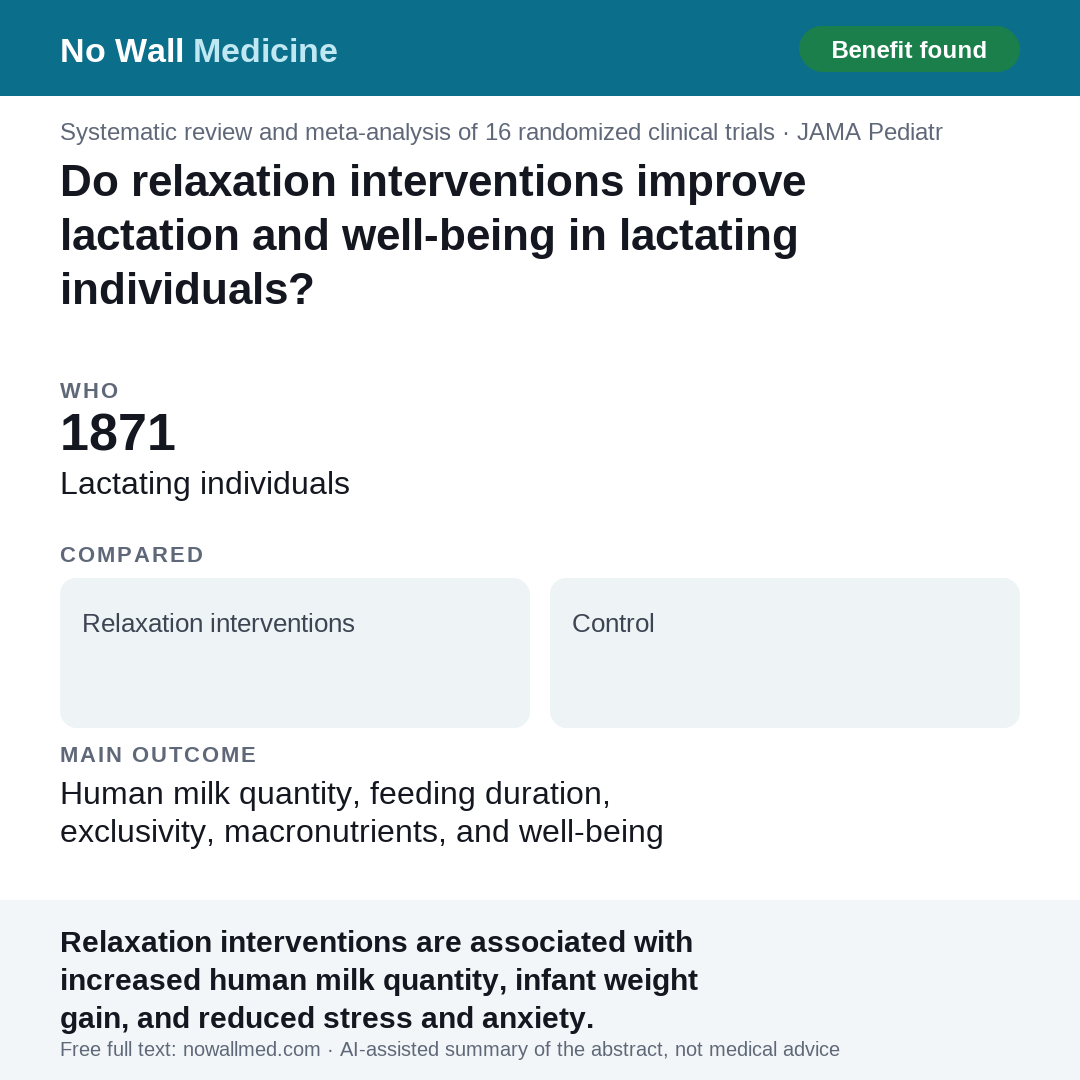
Relaxation Therapy and Human Milk Feeding Outcomes: A Systematic Review and Meta-Analysis
Systematic review and meta-analysis of 16 randomized clinical trialsBenefit found
Do relaxation interventions improve lactation and well-being in lactating individuals?
Who
1871
Lactating individuals
Compared
Relaxation interventions
Control
Main outcome
Human milk quantity, feeding duration, exclusivity, macronutrients, and well-being
Result: standardized mean difference 0.73 (95% CI, 0.57-0.89) for milk quantity
Bottom line: Relaxation interventions are associated with increased human milk quantity, infant weight gain, and reduced stress and anxiety.
JAMA Pediatr · 2024-05-06Download image
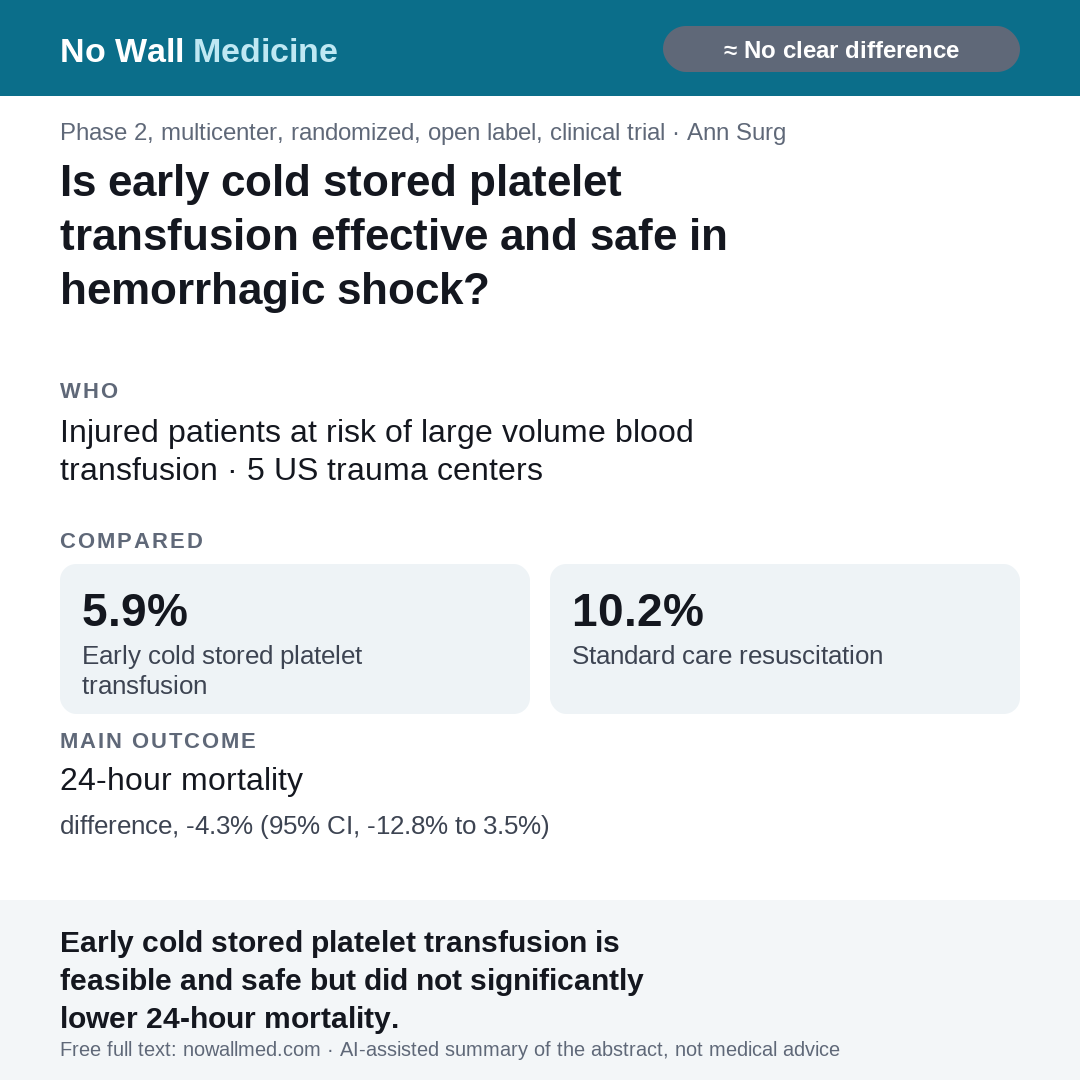
Early Cold Stored Platelet Transfusion Following Severe Injury: A Randomized Clinical Trial
Phase 2, multicenter, randomized, open label, clinical trialNo clear difference
Is early cold stored platelet transfusion effective and safe in hemorrhagic shock?
Who
Injured patients at risk of large volume blood transfusion · 5 US trauma centers
Compared
5.9%Early cold stored platelet transfusion
10.2%Standard care resuscitation
Main outcome
24-hour mortality
Result: difference, -4.3% (95% CI, -12.8% to 3.5%)
Bottom line: Early cold stored platelet transfusion is feasible and safe but did not significantly lower 24-hour mortality.
Ann Surg · 2024-05-06Download image
Patient perspectives in adverse event reporting after vaginal apical prolapse surgery
Planned supplementary study to a randomized trialMixed results
How do clinician and patient gradings of adverse event severity compare?
Who
360
Patients undergoing vaginal apical prolapse surgery
Compared
Clinician grading
Patient grading
Main outcome
Interrater agreement for adverse event severity
Result: kappa=0.24 (95% confidence interval, 0.14-0.34)
Bottom line: Clinician and patient perceptions of adverse event severity are discordant, with patient severity linked to quality of life.
AJOG · 2024-05-06Download image

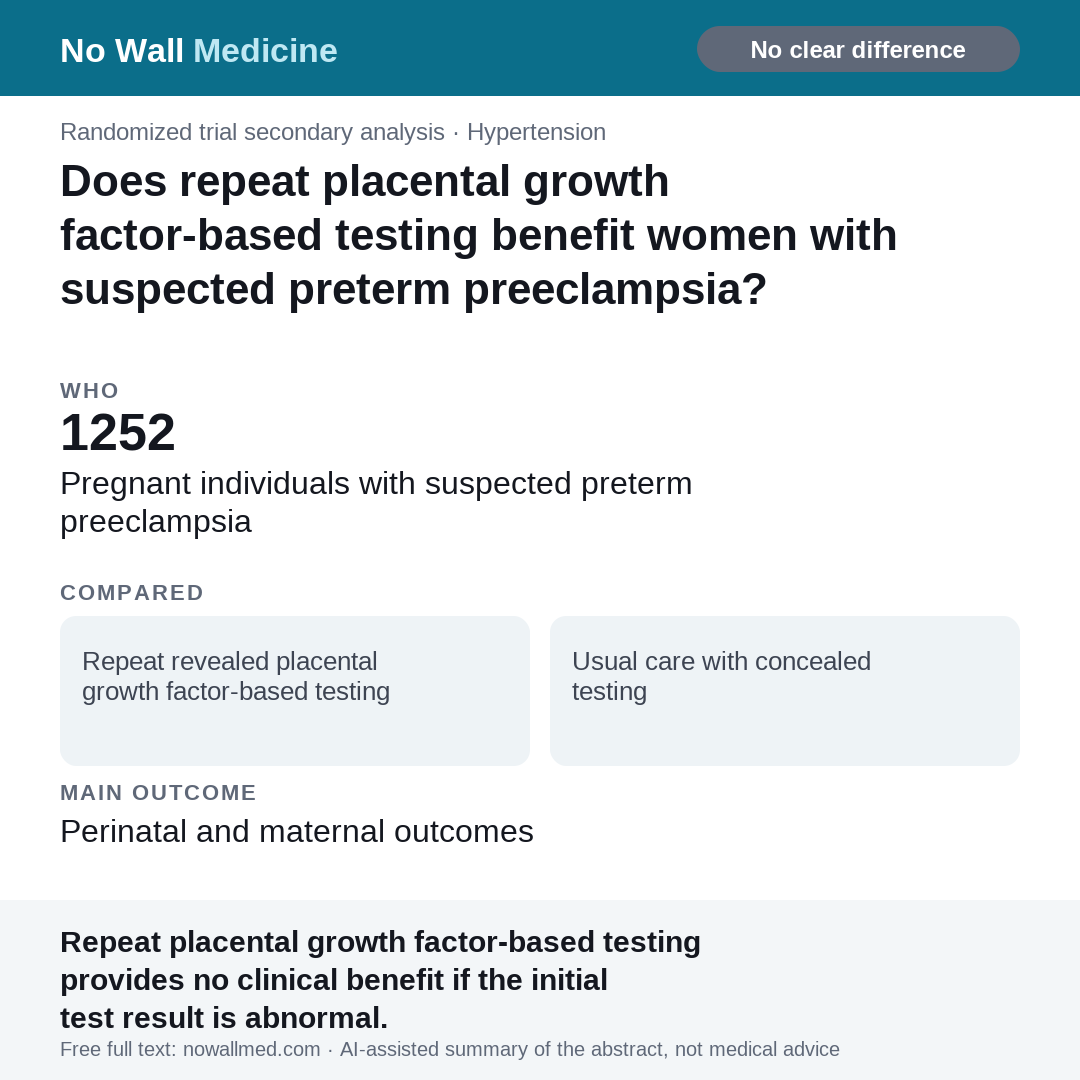
Repeat Placental Growth Factor-Based Testing in Women With Suspected Preterm Preeclampsia: A Stratified Analysis of the PARROT-2 Trial
Randomized trial secondary analysisNo clear difference
Does repeat placental growth factor-based testing benefit women with suspected preterm preeclampsia?
Who
1252
Pregnant individuals with suspected preterm preeclampsia
Compared
Repeat revealed placental growth factor-based testing
Usual care with concealed testing
Main outcome
Perinatal and maternal outcomes
Bottom line: Repeat placental growth factor-based testing provides no clinical benefit if the initial test result is abnormal.
Hypertension · 2024-05-06Download image
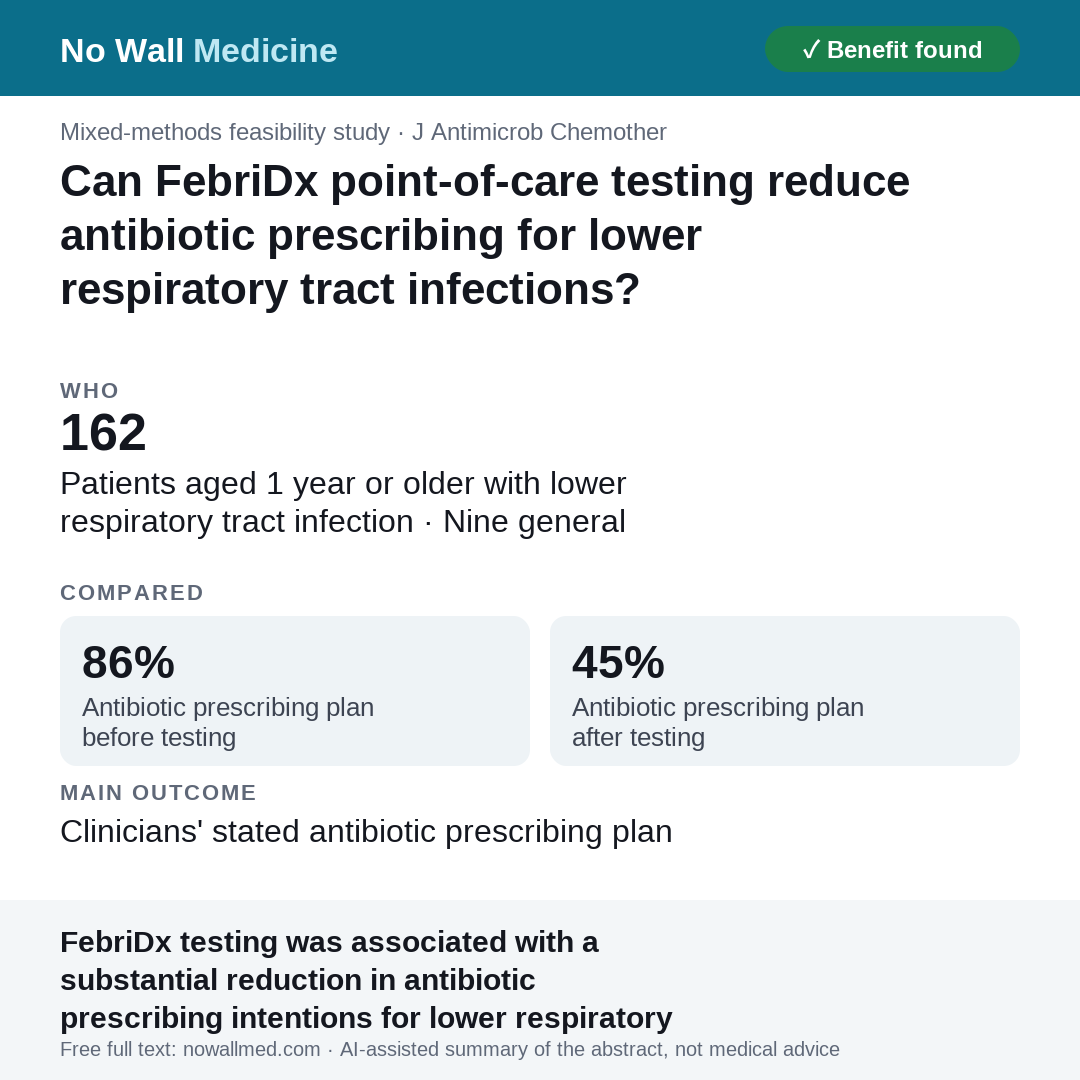
Use of the FebriDx® host-response point-of-care test may reduce antibiotic use for respiratory tract infections in primary care: a mixed-methods feasibility study
Mixed-methods feasibility studyBenefit found
Can FebriDx point-of-care testing reduce antibiotic prescribing for lower respiratory tract infections?
Who
162
Patients aged 1 year or older with lower respiratory tract infection · Nine general practices
Compared
86%Antibiotic prescribing plan before testing (134/155)
45%Antibiotic prescribing plan after testing (69/155)
Main outcome
Clinicians' stated antibiotic prescribing plan
Result: 41% (95% CI: 31%, 51%) difference after testing
Bottom line: FebriDx testing was associated with a substantial reduction in antibiotic prescribing intentions for lower respiratory tract infections.
J Antimicrob Chemother · 2024-05-06Download image
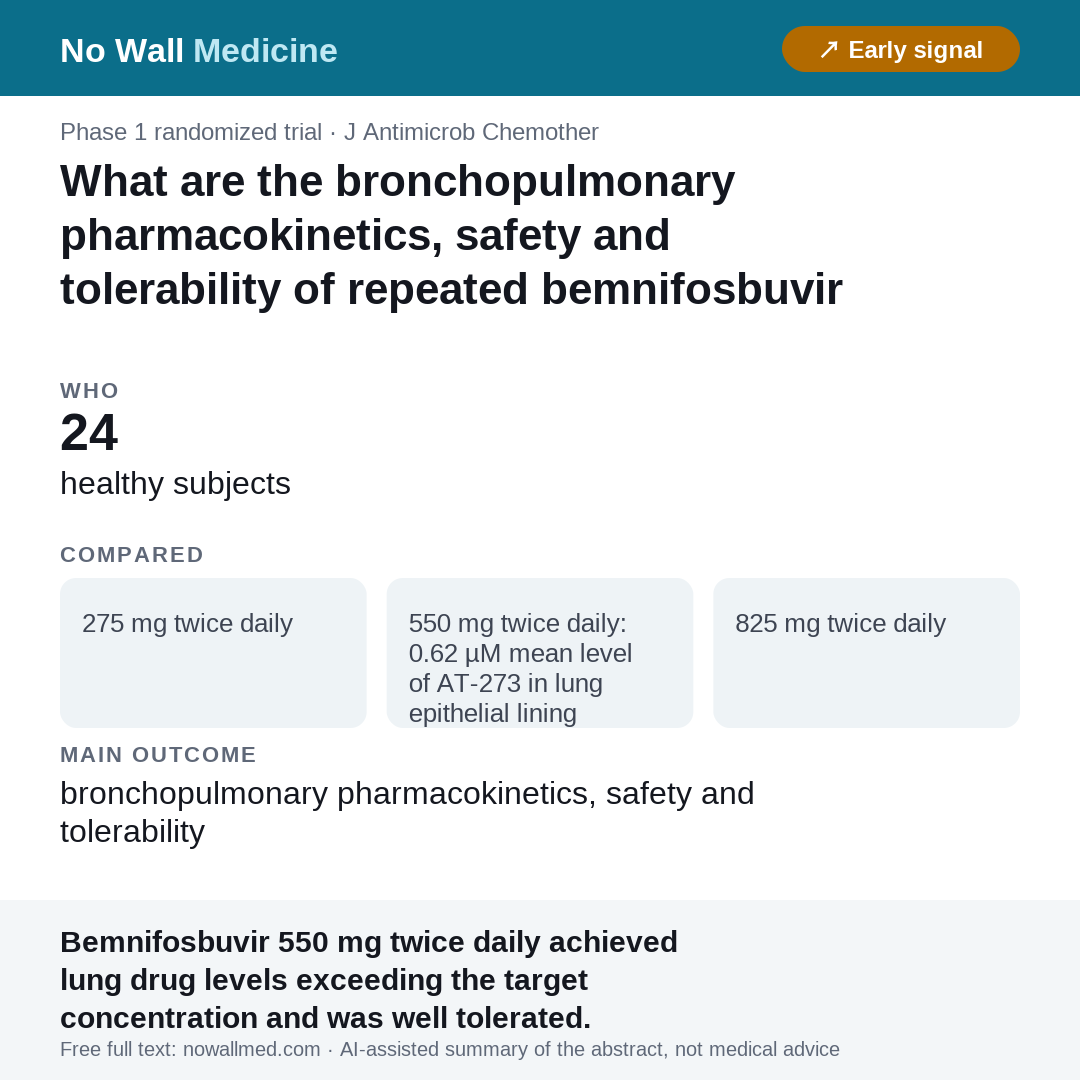
Human bronchopulmonary disposition and plasma pharmacokinetics of oral bemnifosbuvir (AT-527), an experimental guanosine nucleotide prodrug for COVID-19
Phase 1 randomized trialEarly signal
What are the bronchopulmonary pharmacokinetics, safety and tolerability of repeated bemnifosbuvir doses?
Who
24
healthy subjects
Compared
275 mg twice daily
550 mg twice daily: 0.62 µM mean level of AT-273 in lung epithelial lining fluid
825 mg twice daily
Main outcome
bronchopulmonary pharmacokinetics, safety and tolerability
Bottom line: Bemnifosbuvir 550 mg twice daily achieved lung drug levels exceeding the target concentration and was well tolerated.
J Antimicrob Chemother · 2024-05-06Download image
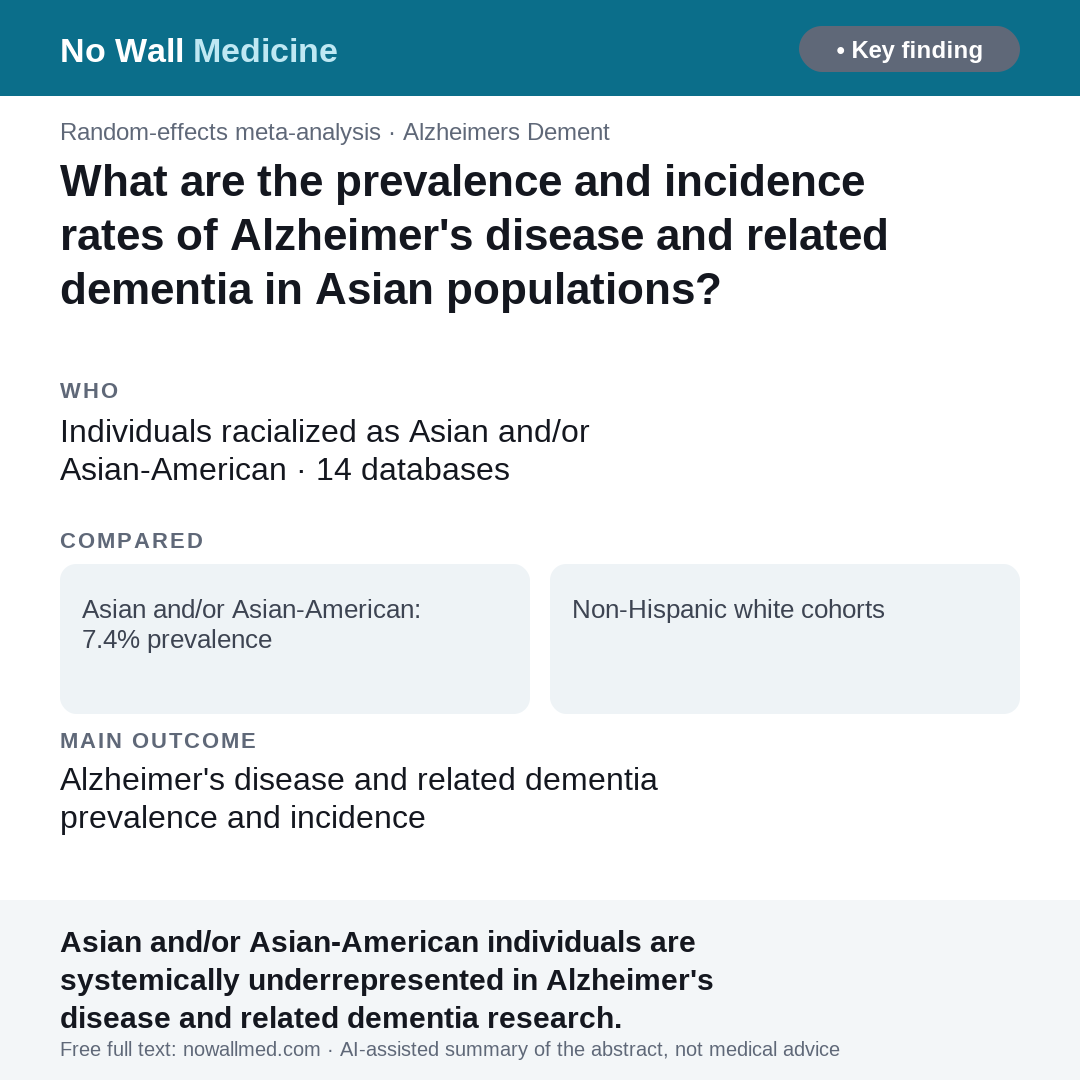
A systematic review/meta-analysis of prevalence and incidence rates illustrates systemic underrepresentation of individuals racialized as Asian and/or Asian-American in ADRD research
Random-effects meta-analysisHarm found
What are the prevalence and incidence rates of Alzheimer's disease and related dementia in Asian populations?
Who
Individuals racialized as Asian and/or Asian-American · 14 databases
Compared
Asian and/or Asian-American: 7.4% prevalence
Non-Hispanic white cohorts
Main outcome
Alzheimer's disease and related dementia prevalence and incidence
Bottom line: Asian and/or Asian-American individuals are systemically underrepresented in Alzheimer's disease and related dementia research.
Limitation: There is limited data on group-specific risk factors for Alzheimer's disease and related dementia among Asian-Americans.
Alzheimers Dement · 2024-05-06Download image
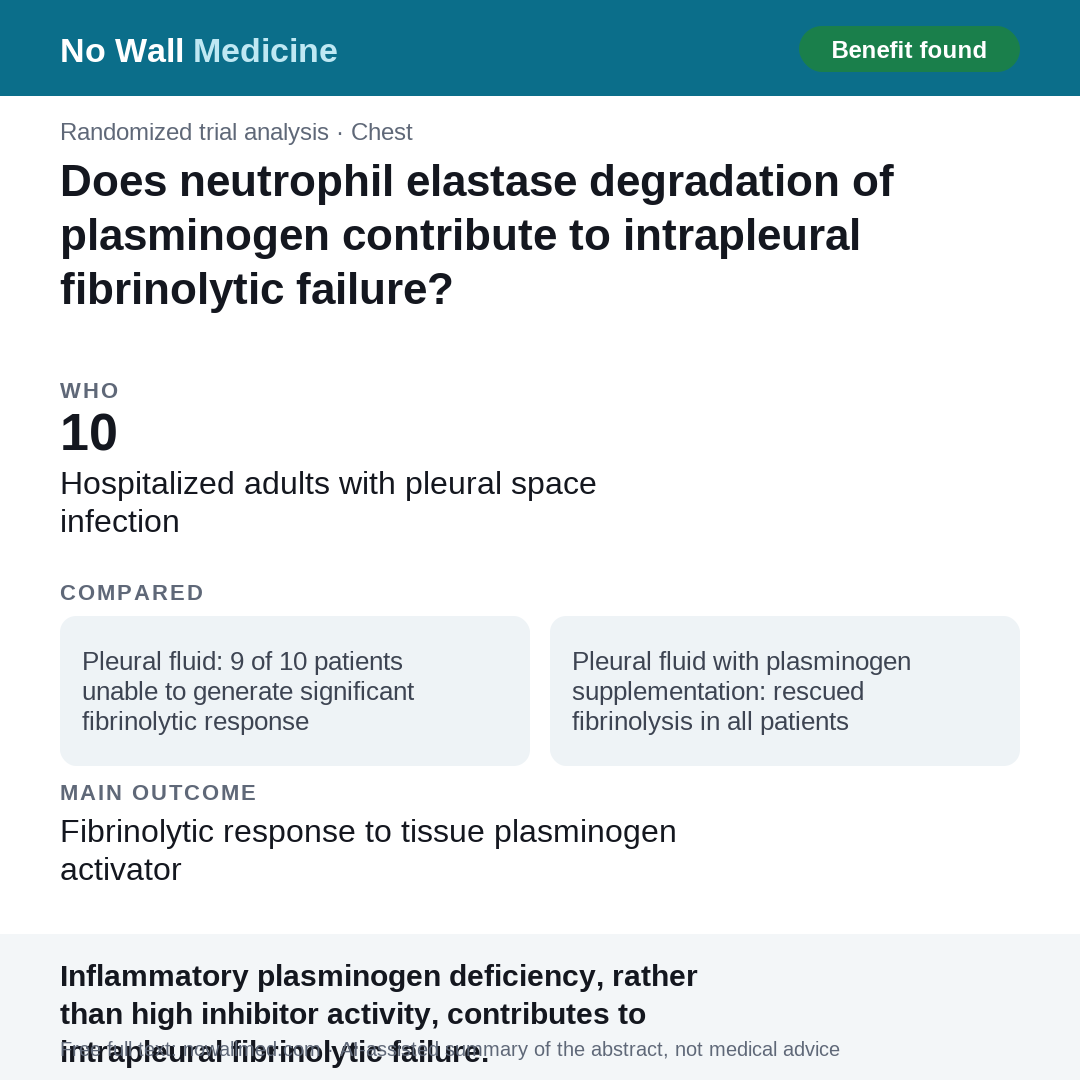
Neutrophil-Mediated Inflammatory Plasminogen Degradation, Rather Than High Plasminogen-Activator Inhibitor-1, May Underly Failures and Inefficiencies of Intrapleural Fibrinolysis
Randomized trial analysisBenefit found
Does neutrophil elastase degradation of plasminogen contribute to intrapleural fibrinolytic failure?
Who
10
Hospitalized adults with pleural space infection
Compared
Pleural fluid: 9 of 10 patients unable to generate significant fibrinolytic response
Pleural fluid with plasminogen supplementation: rescued fibrinolysis in all patients
Main outcome
Fibrinolytic response to tissue plasminogen activator
Bottom line: Inflammatory plasminogen deficiency, rather than high inhibitor activity, contributes to intrapleural fibrinolytic failure.
Chest · 2024-05-06Download image