Visual abstracts
New randomized trials and meta-analyses from leading journals at a glance: who was studied, what was compared, and what was found. Every paper is free to read in full.
All specialtiesCardiology 935Oncology 840Gastroenterology & Hepatology 345Infectious Disease 661Neurology 382Psychiatry & Mental Health 464Pulmonology 409Critical Care 277Endocrinology & Diabetes 519Pediatrics 588Surgery 383Orthopedics & Sports Medicine 169Neurosurgery 119Cardiothoracic & Vascular Surgery 89Plastic & Reconstructive Surgery 145Nephrology 207Rheumatology 116Hematology 200Dermatology 89Ophthalmology 113Obstetrics & Gynecology 286Public & Global Health 185Radiology & Imaging 117Anesthesiology 150Urology 179ENT (Otolaryngology) 121Emergency Medicine 104Allergy & Immunology 64Geriatrics 171Family Medicine & Primary Care 116Medical Genetics & Genomics 94Pathology & Laboratory Medicine 30Physical Medicine & Rehabilitation 151Palliative Care 83Nutrition 231Digital Health & AI 485General Medicine 105
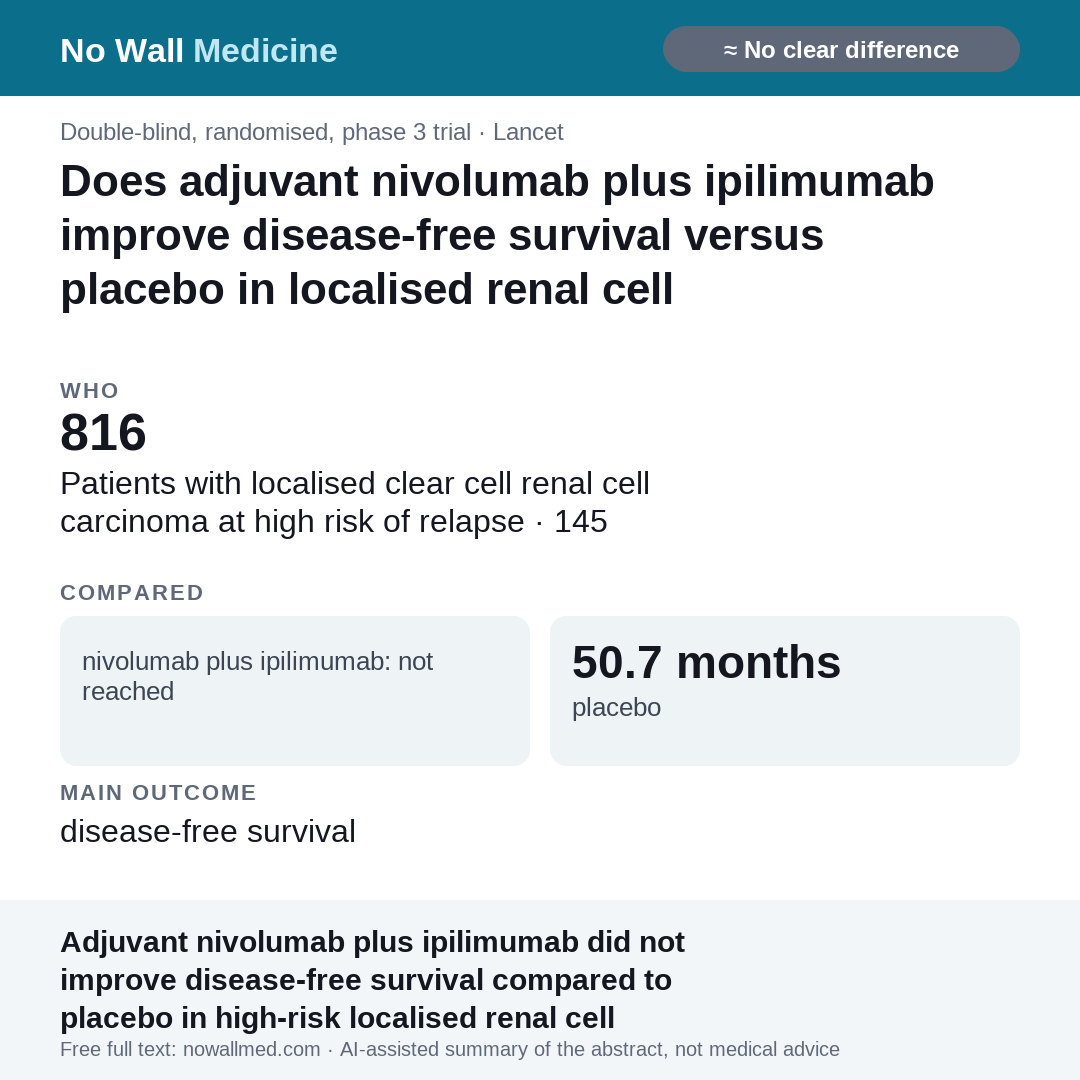
Adjuvant nivolumab plus ipilimumab versus placebo for localised renal cell carcinoma after nephrectomy (CheckMate 914): a double-blind, randomised, phase 3 trial
Double-blind, randomised, phase 3 trialNo clear difference
Does adjuvant nivolumab plus ipilimumab improve disease-free survival versus placebo in localised renal cell carcinoma?
Who
816
Patients with localised clear cell renal cell carcinoma at high risk of relapse · 145 hospitals and cancer centres across 20 countries
Compared
nivolumab plus ipilimumab: not reached
50.7 monthsplacebo (95% CI 48.1 to not estimable)
Main outcome
disease-free survival
Result: hazard ratio 0.92, 95% CI 0.71-1.19
Bottom line: Adjuvant nivolumab plus ipilimumab did not improve disease-free survival compared to placebo in high-risk localised renal cell carcinoma.
Funded by: Bristol Myers Squibb and Ono Pharmaceutical
Lancet · 2023-02-09Download image
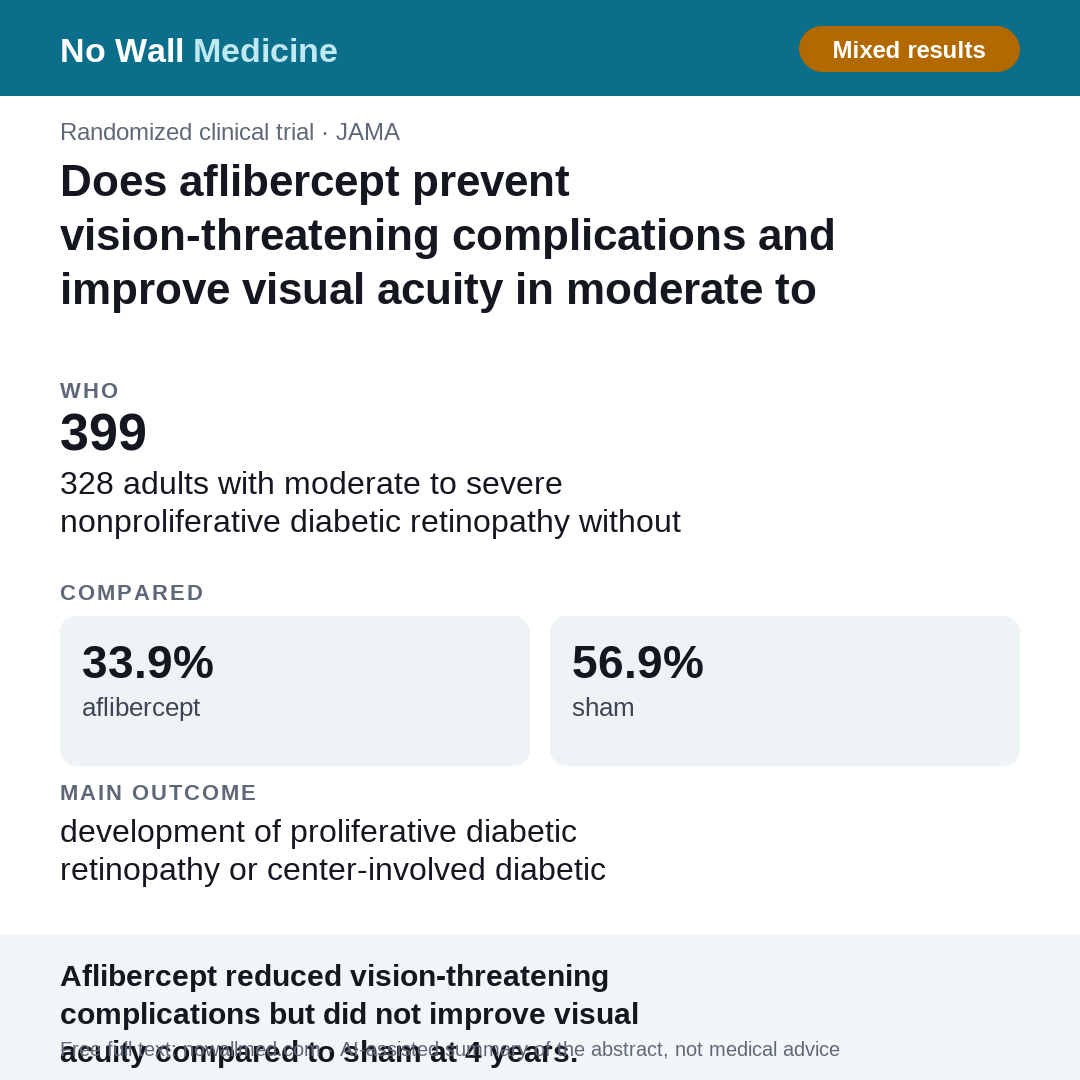
Four-Year Visual Outcomes in the Protocol W Randomized Trial of Intravitreous Aflibercept for Prevention of Vision-Threatening Complications of Diabetic Retinopathy
Randomized clinical trialMixed results
Does aflibercept prevent vision-threatening complications and improve visual acuity in moderate to severe nonproliferative diabetic retinopathy?
Who
399
328 adults with moderate to severe nonproliferative diabetic retinopathy without center-involved diabetic macular edema · 64 clinical sites in the US and Canada
Compared
33.9%aflibercept
56.9%sham
Main outcome
development of proliferative diabetic retinopathy or center-involved diabetic macular edema with vision loss
Result: adjusted hazard ratio 0.40 (97.5% CI 0.28 to 0.57)
Bottom line: Aflibercept reduced vision-threatening complications but did not improve visual acuity compared to sham at 4 years.
JAMA · 2023-02-07Download image
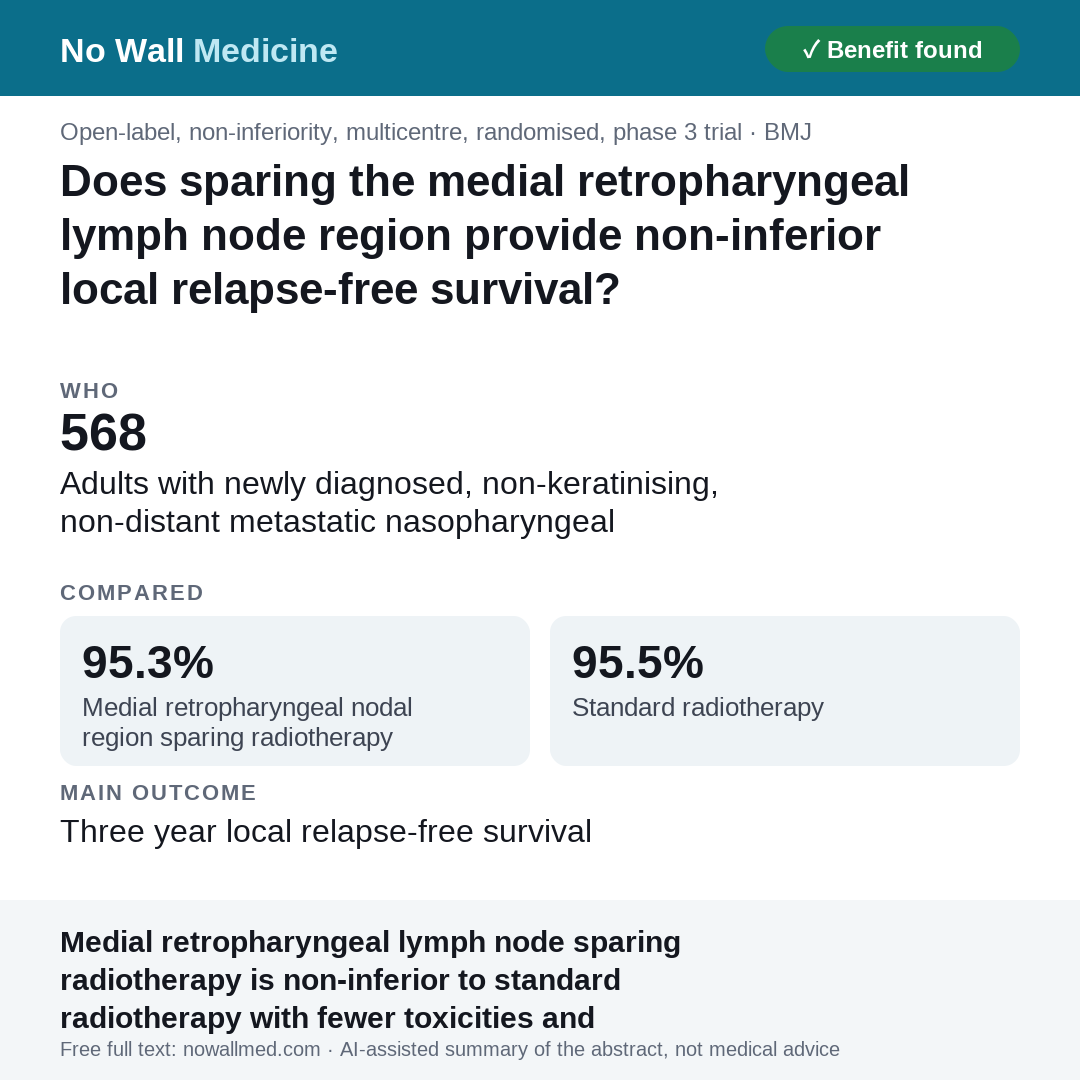
Medial retropharyngeal nodal region sparing radiotherapy versus standard radiotherapy in patients with nasopharyngeal carcinoma: open label, non-inferiority, multicentre, randomised, phase 3 trial
Open-label, non-inferiority, multicentre, randomised, phase 3 trialBenefit found
Does sparing the medial retropharyngeal lymph node region provide non-inferior local relapse-free survival?
Who
568
Adults with newly diagnosed, non-keratinising, non-distant metastatic nasopharyngeal carcinoma · Three Chinese hospitals
Compared
95.3%Medial retropharyngeal nodal region sparing radiotherapy
95.5%Standard radiotherapy
Main outcome
Three year local relapse-free survival
Result: stratified hazard ratio 1.04 (95% confidence interval 0.51 to 2.12)
Bottom line: Medial retropharyngeal lymph node sparing radiotherapy is non-inferior to standard radiotherapy with fewer toxicities and improved patient outcomes.
BMJ · 2023-02-06Download image
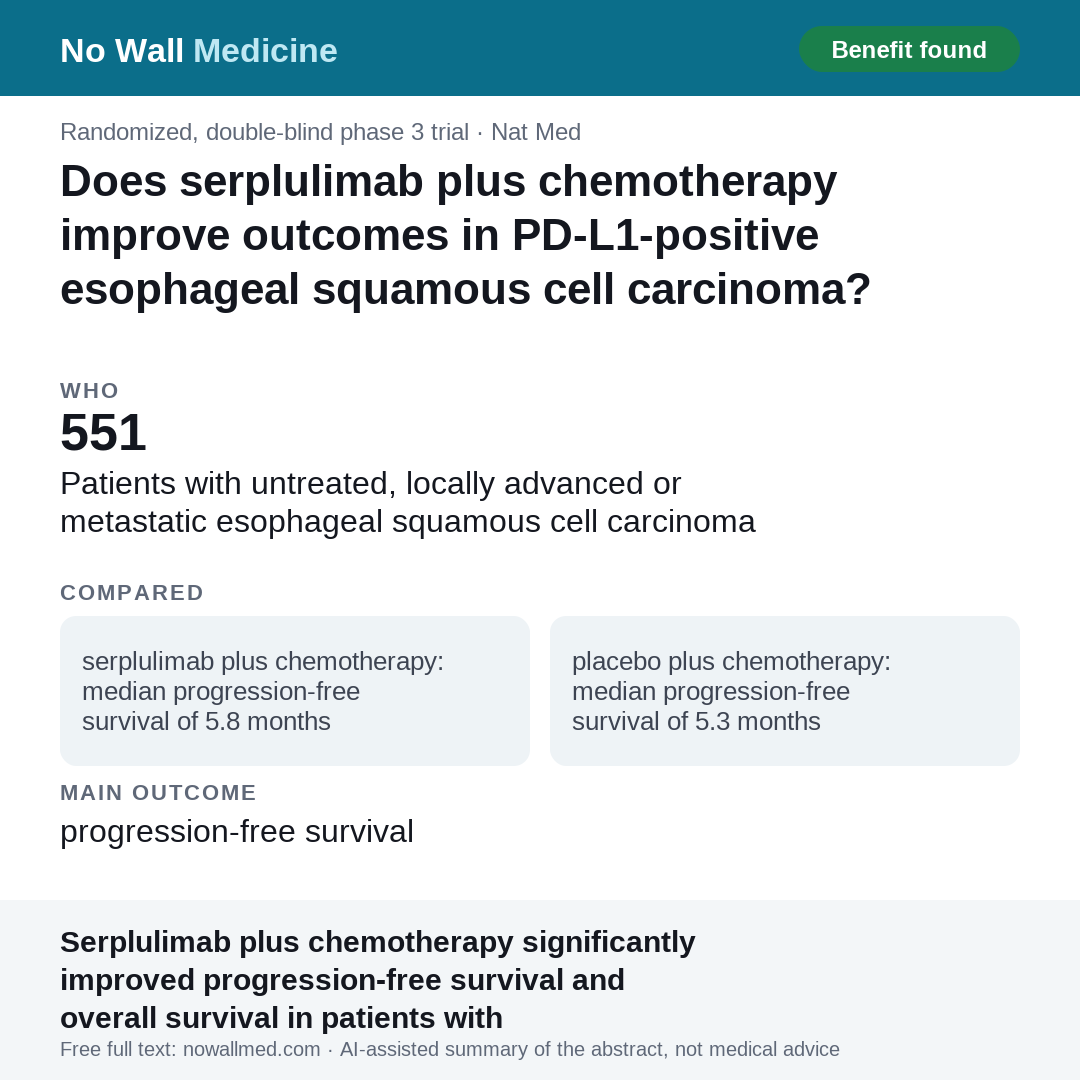
First-line serplulimab or placebo plus chemotherapy in PD-L1-positive esophageal squamous cell carcinoma: a randomized, double-blind phase 3 trial
Randomized, double-blind phase 3 trialBenefit found
Does serplulimab plus chemotherapy improve outcomes in PD-L1-positive esophageal squamous cell carcinoma?
Who
551
Patients with untreated, locally advanced or metastatic esophageal squamous cell carcinoma · Multicenter
Compared
serplulimab plus chemotherapy: median progression-free survival of 5.8 months
placebo plus chemotherapy: median progression-free survival of 5.3 months
Main outcome
progression-free survival
Result: hazard ratio 0.60 (95% confidence interval 0.48-0.75)
Bottom line: Serplulimab plus chemotherapy significantly improved progression-free survival and overall survival in patients with PD-L1-positive advanced esophageal squamous cell carcinoma.
Nat Med · 2023-02-02Download image
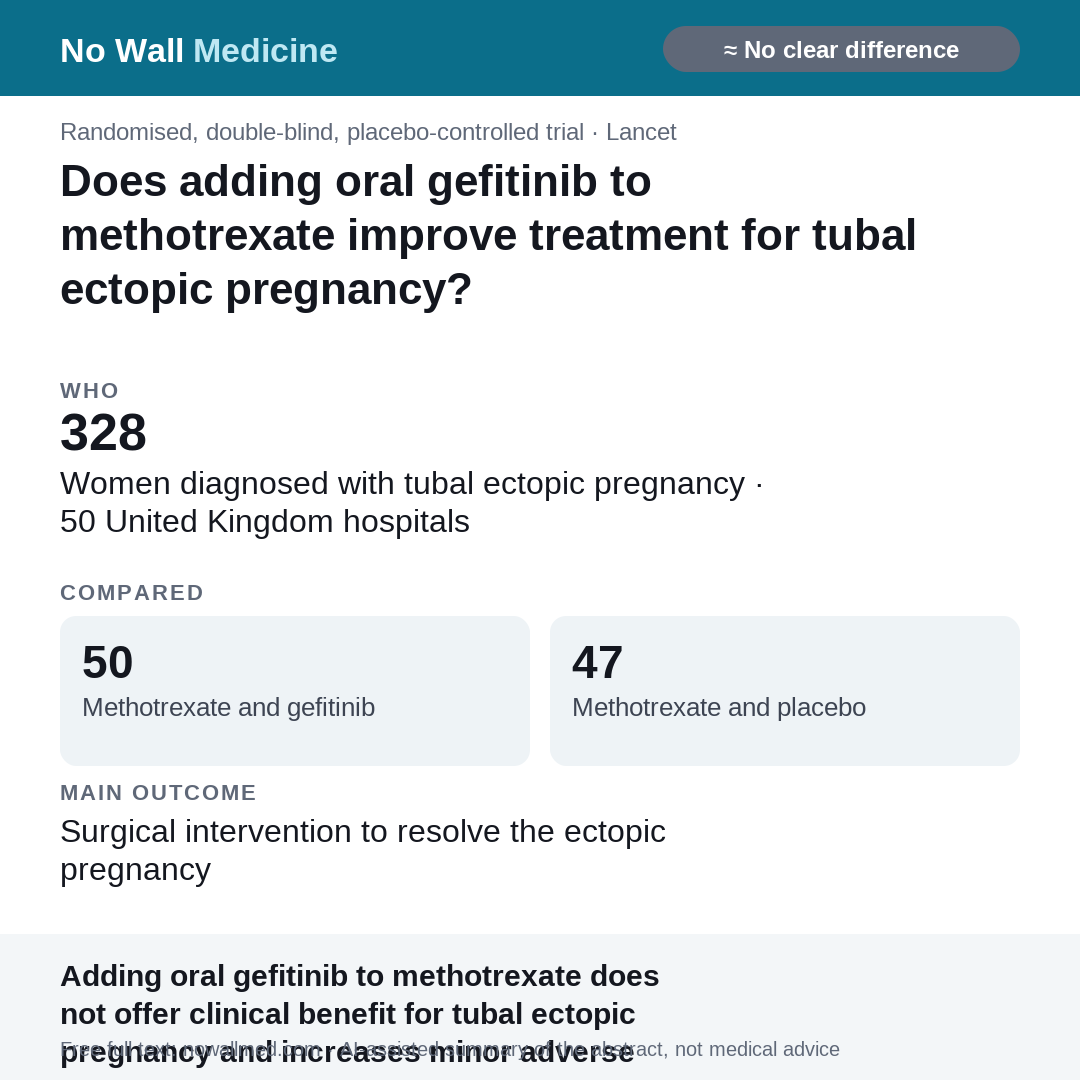
Combination of gefitinib and methotrexate to treat tubal ectopic pregnancy (GEM3): a multicentre, randomised, double-blind, placebo-controlled trial
Randomised, double-blind, placebo-controlled trialNo clear difference
Does adding oral gefitinib to methotrexate improve treatment for tubal ectopic pregnancy?
Who
328
Women diagnosed with tubal ectopic pregnancy · 50 United Kingdom hospitals
Compared
50Methotrexate and gefitinib (30%)
47Methotrexate and placebo (29%)
Main outcome
Surgical intervention to resolve the ectopic pregnancy
Result: adjusted risk ratio 1·15 (95% CI 0·85 to 1·58)
Bottom line: Adding oral gefitinib to methotrexate does not offer clinical benefit for tubal ectopic pregnancy and increases minor adverse reactions.
Funded by: National Institute of Health Research
Lancet · 2023-02-01Download image
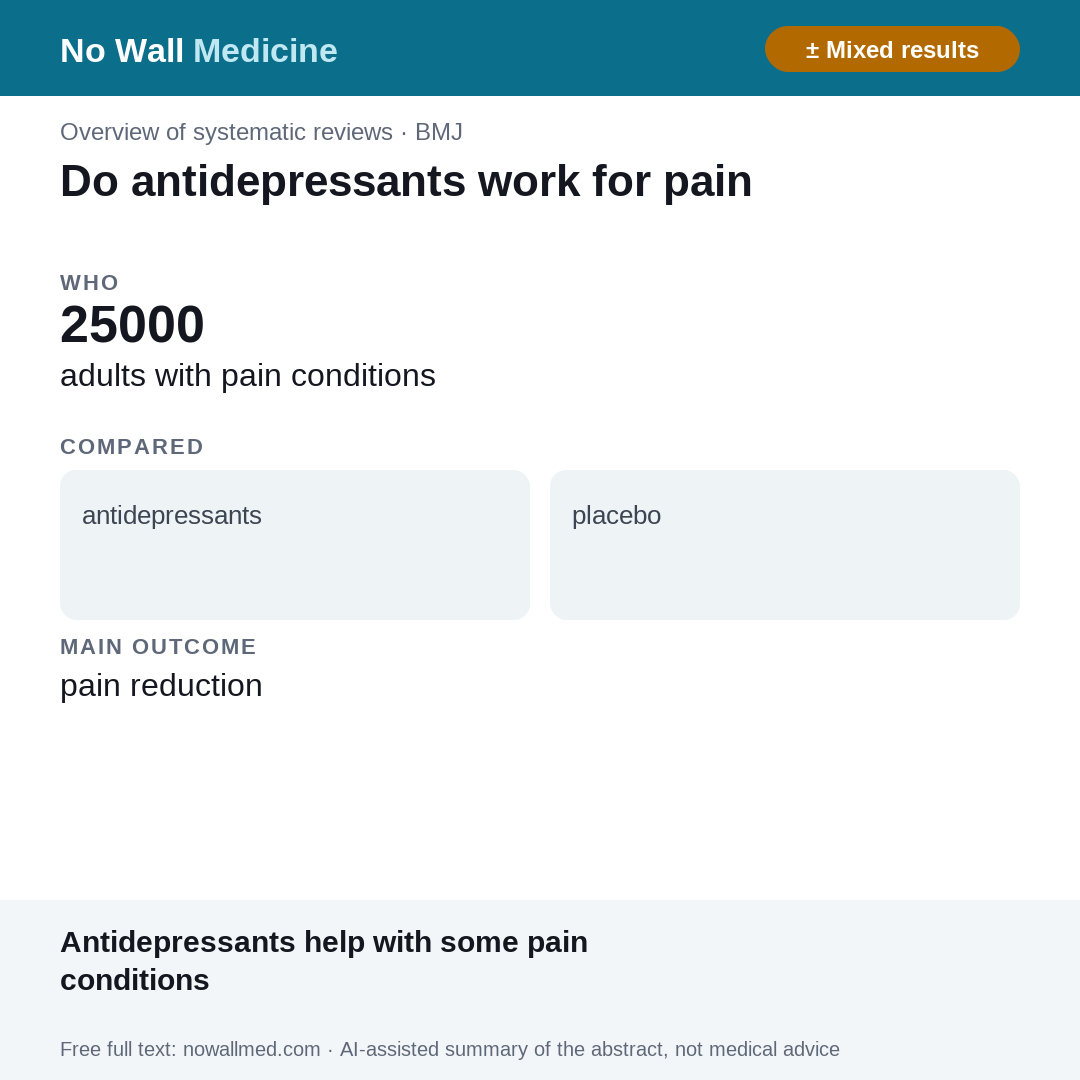
Efficacy, safety, and tolerability of antidepressants for pain in adults: overview of systematic reviews
Overview of systematic reviewsMixed results
Do antidepressants work for pain
Who
25000
adults with pain conditions
Compared
antidepressants
placebo
Main outcome
pain reduction
Bottom line: Antidepressants help with some pain conditions
BMJ · 2023-02-01Download image
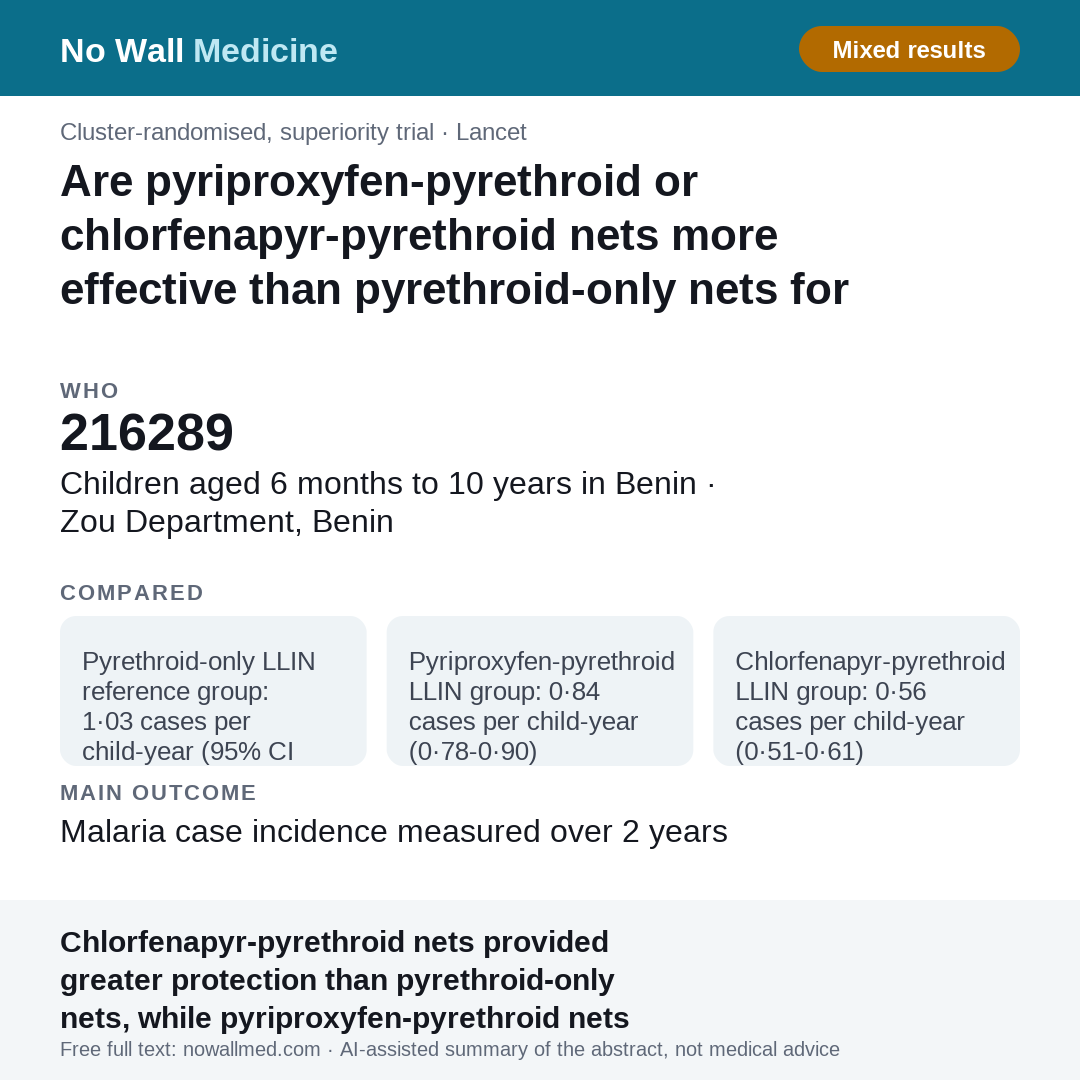
Efficacy of pyriproxyfen-pyrethroid long-lasting insecticidal nets (LLINs) and chlorfenapyr-pyrethroid LLINs compared with pyrethroid-only LLINs for malaria control in Benin: a cluster-randomised, superiority trial
Cluster-randomised, superiority trialMixed results
Are pyriproxyfen-pyrethroid or chlorfenapyr-pyrethroid nets more effective than pyrethroid-only nets for malaria control?
Who
216289
Children aged 6 months to 10 years in Benin · Zou Department, Benin
Compared
Pyrethroid-only LLIN reference group: 1·03 cases per child-year (95% CI 0·96-1·09)
Pyriproxyfen-pyrethroid LLIN group: 0·84 cases per child-year (0·78-0·90)
Chlorfenapyr-pyrethroid LLIN group: 0·56 cases per child-year (0·51-0·61)
Main outcome
Malaria case incidence measured over 2 years
Result: hazard ratio 0·54 (95% CI 0·42-0·70) for chlorfenapyr-pyrethroid
Bottom line: Chlorfenapyr-pyrethroid nets provided greater protection than pyrethroid-only nets, while pyriproxyfen-pyrethroid nets conferred similar protection.
Funded by: UNITAID, The Global Fund
Lancet · 2023-01-24Download image
Cerebral regional tissue Oxygen Saturation to Guide Oxygen Delivery in preterm neonates during immediate transition after birth (COSGOD III): multicentre randomised phase 3 clinical trial
Multicentre, multinational, randomised controlled phase 3 trialNo clear difference
Does cerebral tissue oxygen saturation monitoring increase survival without cerebral injury in preterm neonates?
Who
655
Preterm neonates born to pregnant women under 32 weeks gestation · 11 tertiary neonatal intensive care units in six countries
Compared
Near infrared spectroscopy group: 252 (82.9%) out of 304
Control group: 238 (78.5%) out of 303
Main outcome
Survival without cerebral injury
Result: relative risk 1.06 (95% confidence interval 0.98 to 1.14)
Bottom line: Adding cerebral tissue oxygen saturation monitoring to standard care did not significantly increase survival without cerebral injury in preterm neonates.
BMJ · 2023-01-24Download image
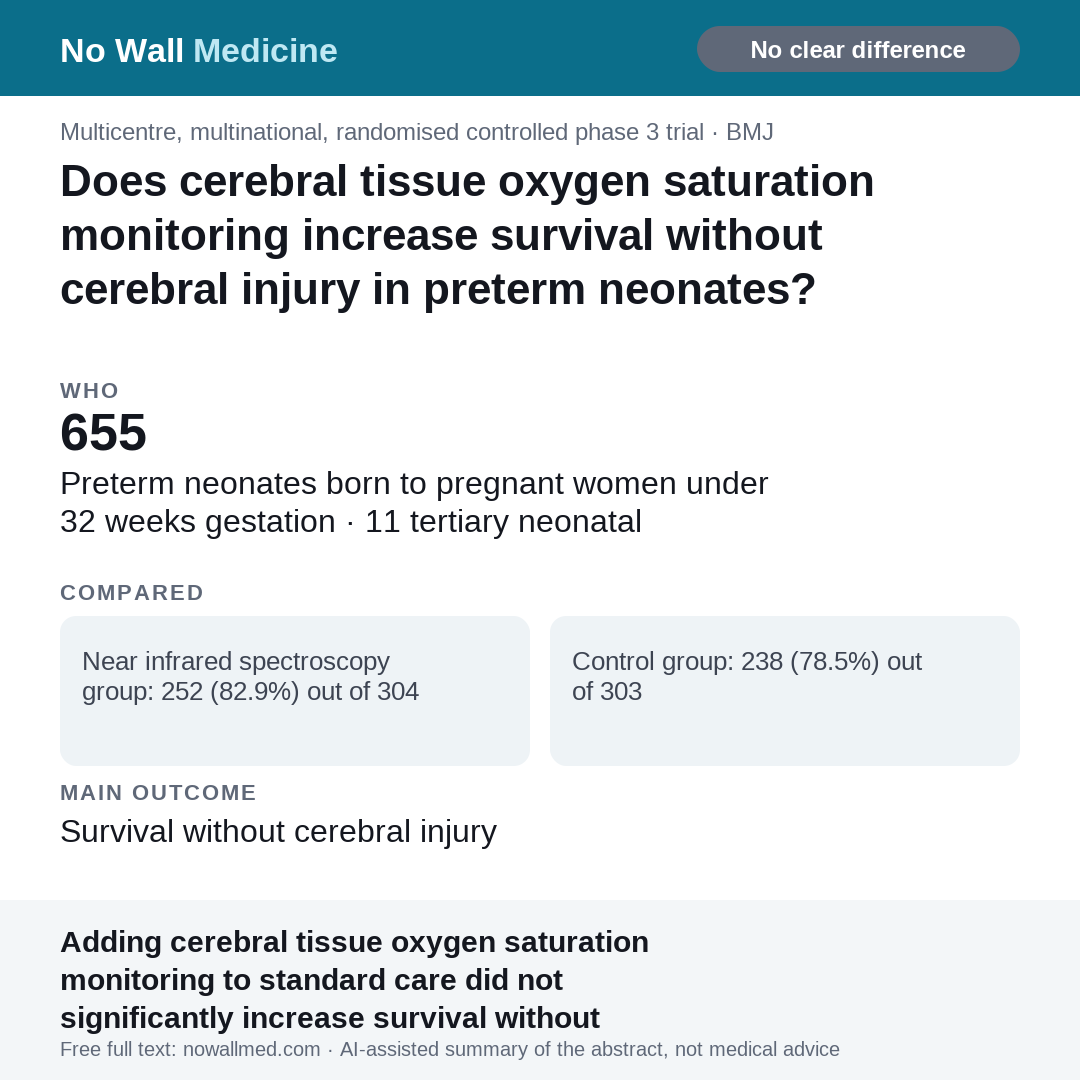
Nonpharmacologic and Pharmacologic Treatments of Adult Patients With Major Depressive Disorder: A Systematic Review and Network Meta-analysis for a Clinical Guideline by the American College of Physicians
Systematic review and network meta-analysisNo clear difference
What are the benefits and harms of nonpharmacologic versus pharmacologic treatments for major depressive disorder?
Who
65
Adult patients with major depressive disorder
Compared
Nonpharmacologic treatments
Second-generation antidepressants
Main outcome
Benefits and harms of first-step and second-step treatments
Bottom line: Benefits of most nonpharmacologic treatments and antidepressants are similar as first-step treatments for major depressive disorder.
Limitation: Low certainty of evidence, methodological limitations, dosing inequalities, and potential publication bias.
Funded by: American College of Physicians
Ann Intern Med · 2023-01-24Download image
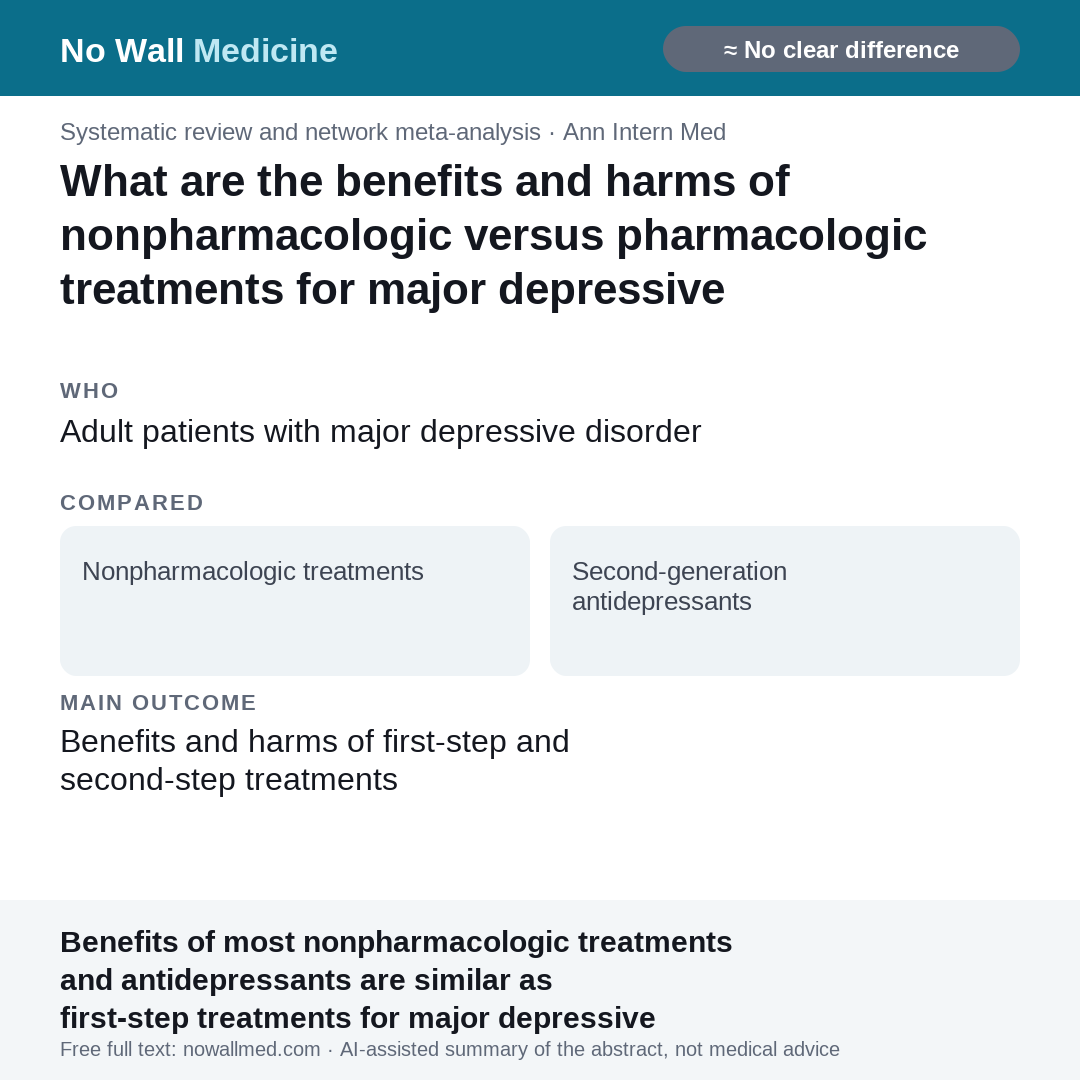
Early Restrictive or Liberal Fluid Management for Sepsis-Induced Hypotension
Unblinded superiority trialNo clear difference
Does restrictive or liberal fluid management reduce mortality in sepsis-induced hypotension?
Who
1563
Patients with sepsis-induced hypotension refractory to initial fluid treatment · 60 United States centers
Compared
14.0%Restrictive fluid strategy (109 patients)
14.9%Liberal fluid strategy (116 patients)
Main outcome
All-cause mortality before discharge home by day 90
Result: estimated difference, -0.9 percentage points; 95% CI, -4.4 to 2.6
Bottom line: Restrictive fluid management did not significantly change 90-day mortality compared to liberal fluid management in sepsis-induced hypotension.
Funded by: National Heart, Lung, and Blood Institute
NEJM · 2023-01-21Download image
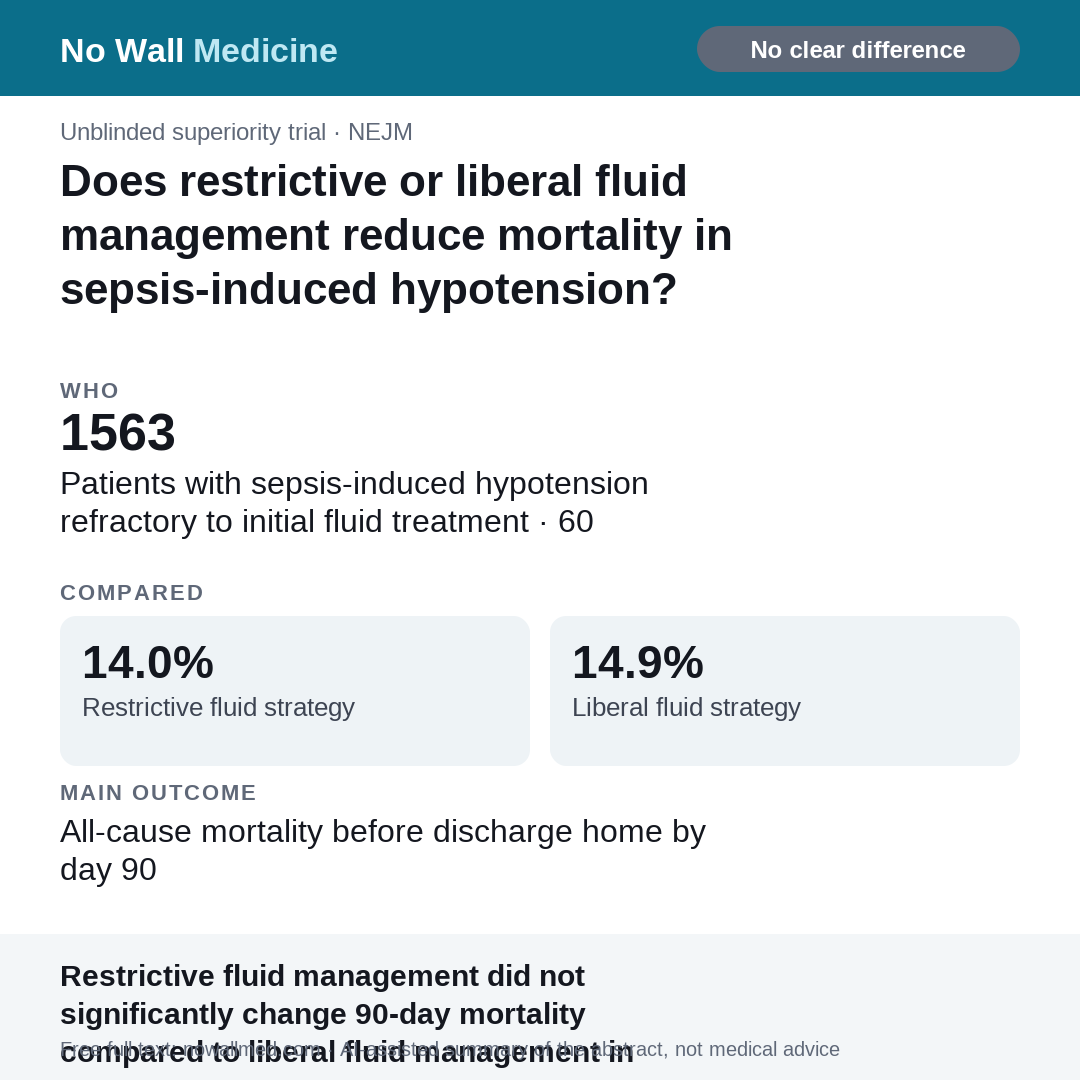
Bivalent Omicron BA.1-Adapted BNT162b2 Booster in Adults Older than 55 Years
Randomized phase 3 trialBenefit found
Are BA.1-adapted vaccines superior or noninferior to BNT162b2 for neutralizing activity?
Who
1846
Adults older than 55 years previously receiving three doses of BNT162b2
Compared
BNT162b2 (30 μg)
1.56Bivalent BA.1 (30 μg) (95% CI, 1.17 to 2.08)
1.97Bivalent BA.1 (60 μg) (95% CI, 1.45 to 2.68)
3.15Monovalent BA.1 (60 μg) (95% CI, 2.38 to 4.16)
Main outcome
50% neutralizing titer geometric mean ratios against BA.1
Result: GMRs of 1.56 (95% CI, 1.17 to 2.08), 1.97 (95% CI, 1.45 to 2.68), and 3.15 (95% CI, 2.38 to 4.16)
Bottom line: Bivalent and monovalent BA.1-adapted vaccines showed superior neutralizing activity against BA.1 compared to BNT162b2.
Funded by: BioNTech and Pfizer
NEJM · 2023-01-18Download image

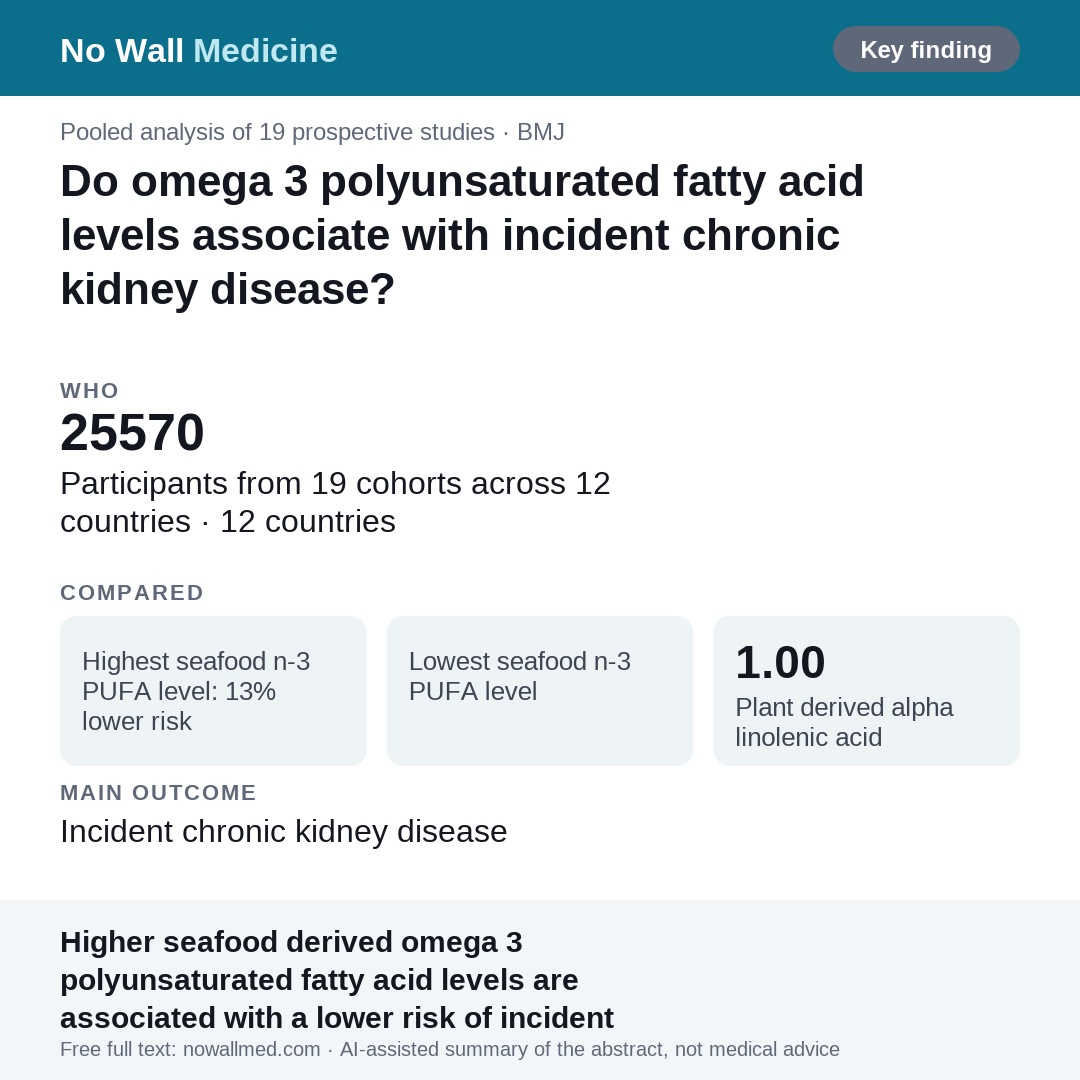
Association of omega 3 polyunsaturated fatty acids with incident chronic kidney disease: pooled analysis of 19 cohorts
Pooled analysis of 19 prospective studiesBenefit found
Do omega 3 polyunsaturated fatty acid levels associate with incident chronic kidney disease?
Who
25570
Participants from 19 cohorts across 12 countries · 12 countries
Compared
Highest seafood n-3 PUFA level: 13% lower risk
Lowest seafood n-3 PUFA level
1.00Plant derived alpha linolenic acid (95% CI 0.94 to 1.06)
Main outcome
Incident chronic kidney disease
Result: relative risk per interquintile range 0.92 (95% CI 0.86 to 0.98)
Bottom line: Higher seafood derived omega 3 polyunsaturated fatty acid levels are associated with a lower risk of incident chronic kidney disease.
BMJ · 2023-01-18Download image
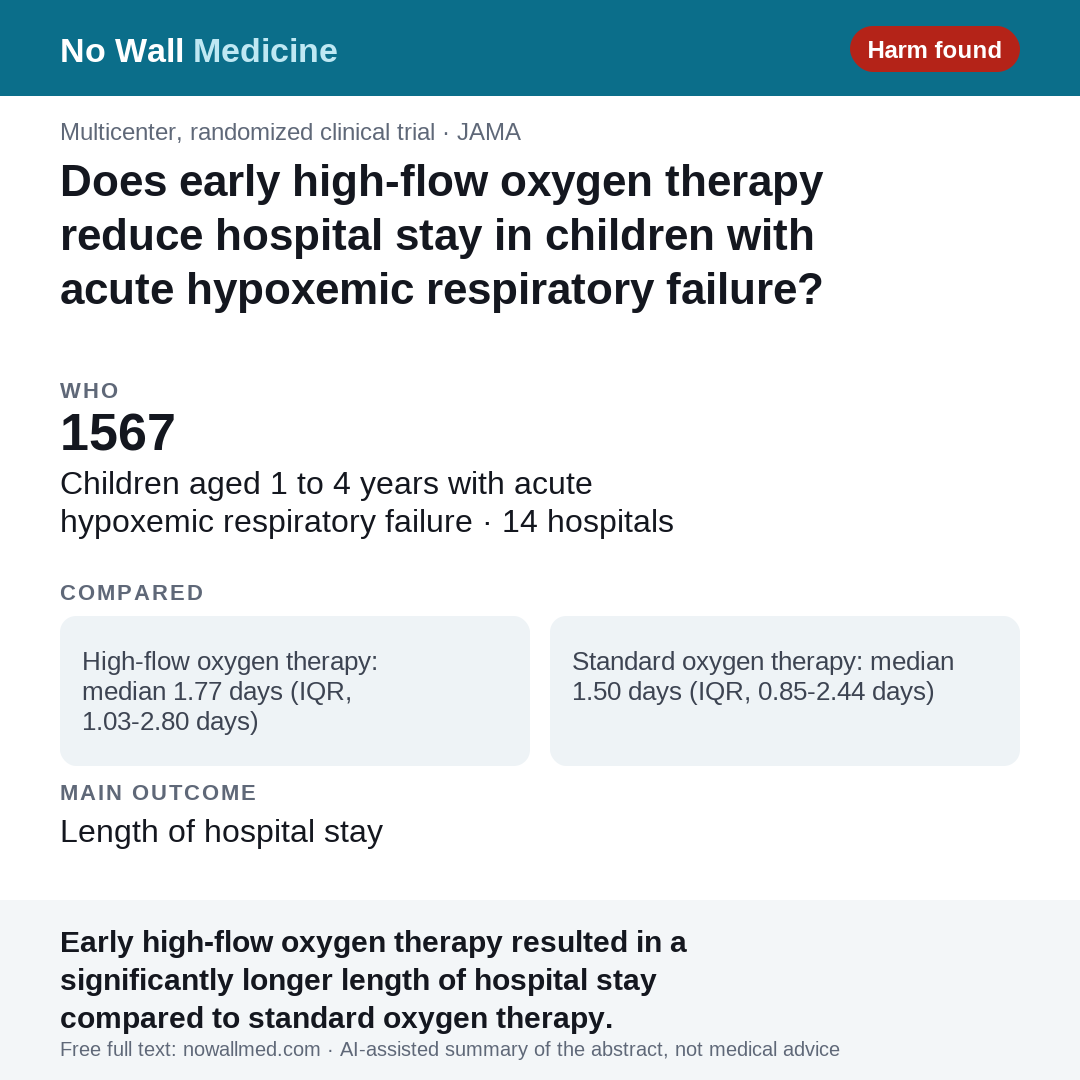
Effect of Early High-Flow Nasal Oxygen vs Standard Oxygen Therapy on Length of Hospital Stay in Hospitalized Children With Acute Hypoxemic Respiratory Failure: The PARIS-2 Randomized Clinical Trial
Multicenter, randomized clinical trialHarm found
Does early high-flow oxygen therapy reduce hospital stay in children with acute hypoxemic respiratory failure?
Who
1567
Children aged 1 to 4 years with acute hypoxemic respiratory failure · 14 hospitals in Australia and New Zealand
Compared
High-flow oxygen therapy: median 1.77 days (IQR, 1.03-2.80 days)
Standard oxygen therapy: median 1.50 days (IQR, 0.85-2.44 days)
Main outcome
Length of hospital stay
Result: adjusted hazard ratio, 0.83 (95% CI, 0.75-0.92)
Bottom line: Early high-flow oxygen therapy resulted in a significantly longer length of hospital stay compared to standard oxygen therapy.
JAMA · 2023-01-17Download image
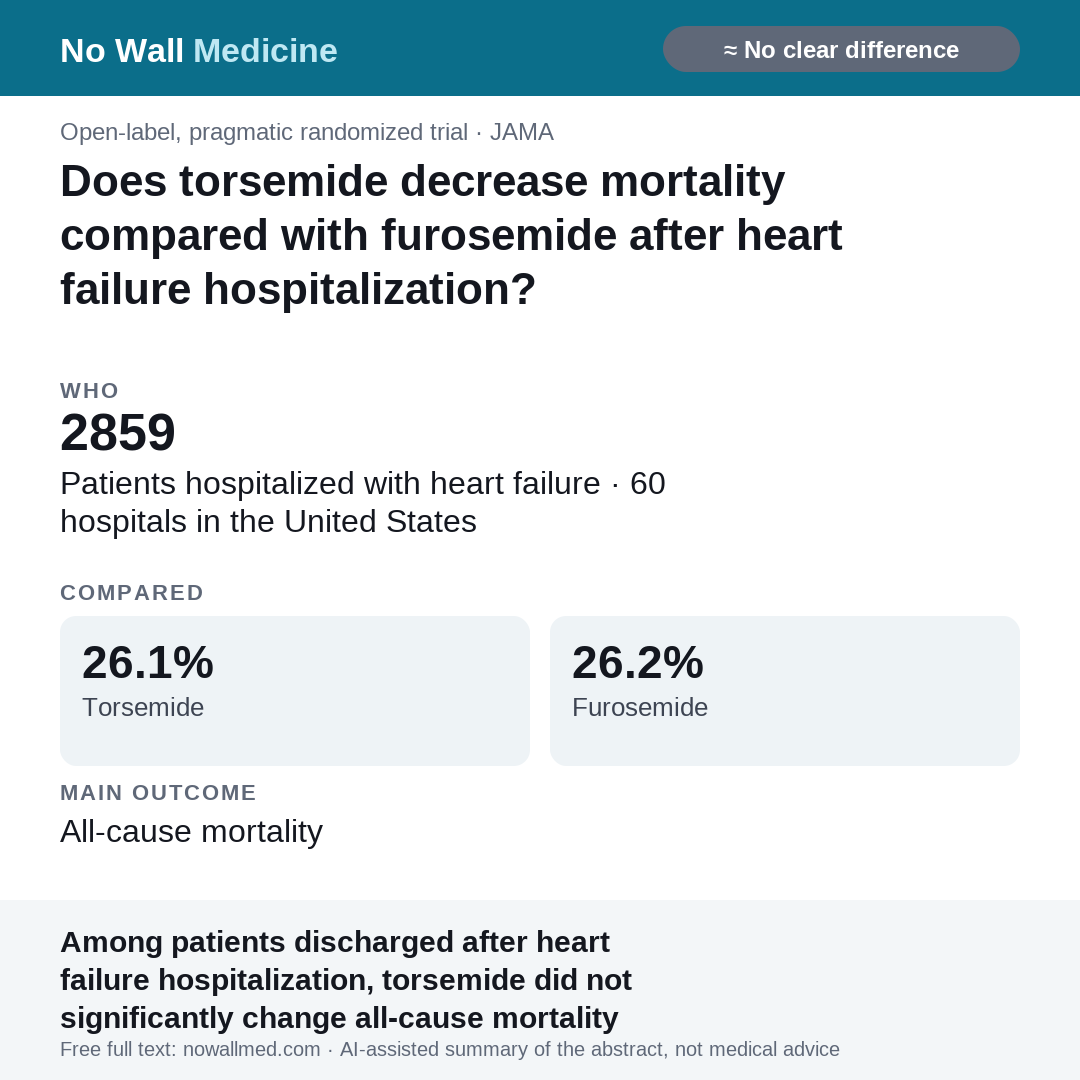
Effect of Torsemide vs Furosemide After Discharge on All-Cause Mortality in Patients Hospitalized With Heart Failure: The TRANSFORM-HF Randomized Clinical Trial
Open-label, pragmatic randomized trialNo clear difference
Does torsemide decrease mortality compared with furosemide after heart failure hospitalization?
Who
2859
Patients hospitalized with heart failure · 60 hospitals in the United States
Compared
26.1%Torsemide
26.2%Furosemide
Main outcome
All-cause mortality
Result: hazard ratio 1.02 (95% CI 0.89-1.18)
Bottom line: Among patients discharged after heart failure hospitalization, torsemide did not significantly change all-cause mortality compared with furosemide.
Limitation: Interpretation is limited by loss to follow-up, participant crossover, and nonadherence.
JAMA · 2023-01-17Download image
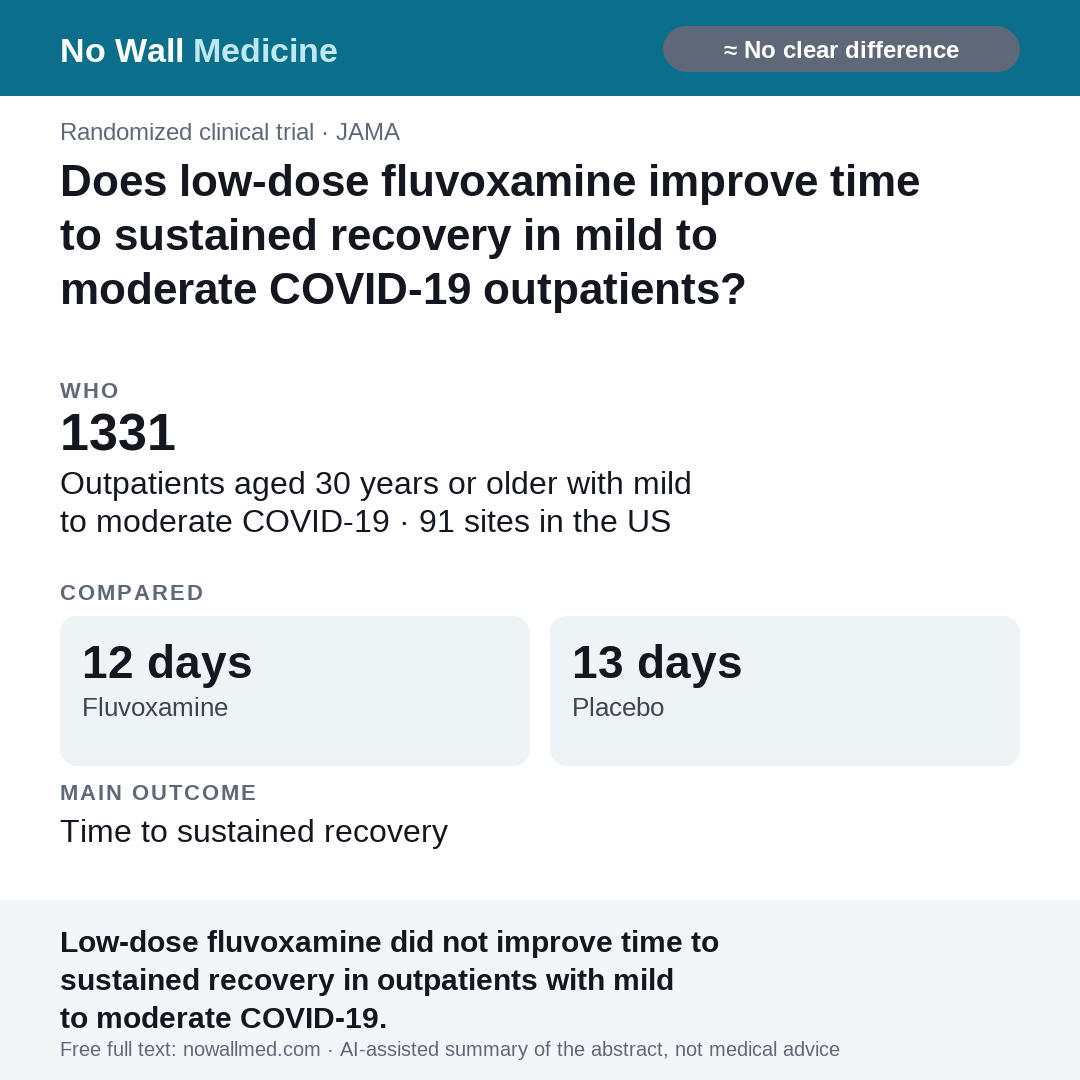
Effect of Fluvoxamine vs Placebo on Time to Sustained Recovery in Outpatients With Mild to Moderate COVID-19: A Randomized Clinical Trial
Randomized clinical trialNo clear difference
Does low-dose fluvoxamine improve time to sustained recovery in mild to moderate COVID-19 outpatients?
Who
1331
Outpatients aged 30 years or older with mild to moderate COVID-19 · 91 sites in the US
Compared
12 daysFluvoxamine (IQR, 11-14 days)
13 daysPlacebo (IQR, 12-13 days)
Main outcome
Time to sustained recovery
Result: hazard ratio 0.96 (95% credible interval, 0.86-1.06)
Bottom line: Low-dose fluvoxamine did not improve time to sustained recovery in outpatients with mild to moderate COVID-19.
JAMA · 2023-01-13Download image
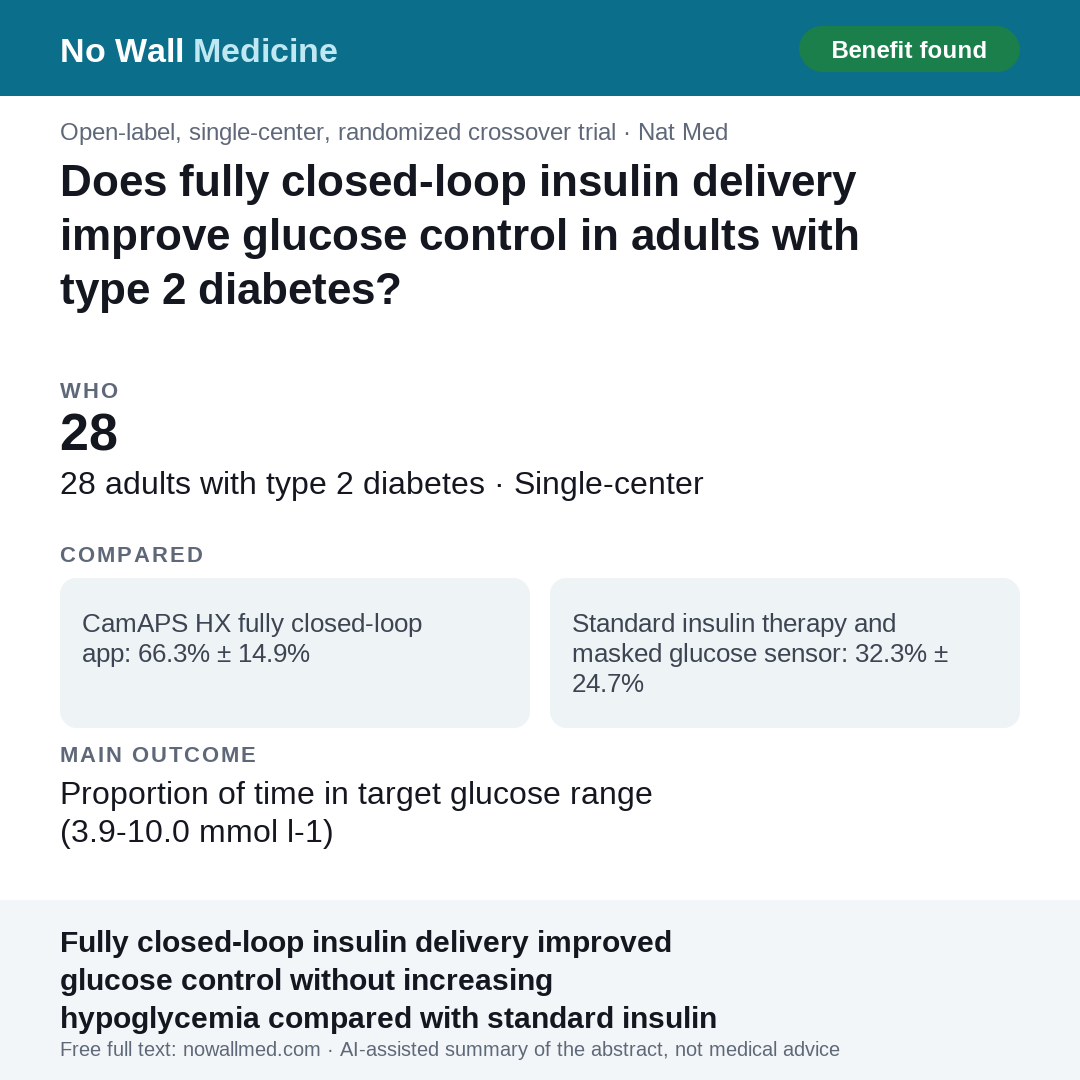
Fully automated closed-loop insulin delivery in adults with type 2 diabetes: an open-label, single-center, randomized crossover trial
Open-label, single-center, randomized crossover trialBenefit found
Does fully closed-loop insulin delivery improve glucose control in adults with type 2 diabetes?
Who
28
28 adults with type 2 diabetes · Single-center
Compared
CamAPS HX fully closed-loop app: 66.3% ± 14.9%
Standard insulin therapy and masked glucose sensor: 32.3% ± 24.7%
Main outcome
Proportion of time in target glucose range (3.9-10.0 mmol l-1)
Result: mean difference, 35.3 percentage points; 95% confidence interval (CI), 28.0-42.6 percentage points
Bottom line: Fully closed-loop insulin delivery improved glucose control without increasing hypoglycemia compared with standard insulin therapy in adults with type 2 diabetes.
Nat Med · 2023-01-11Download image
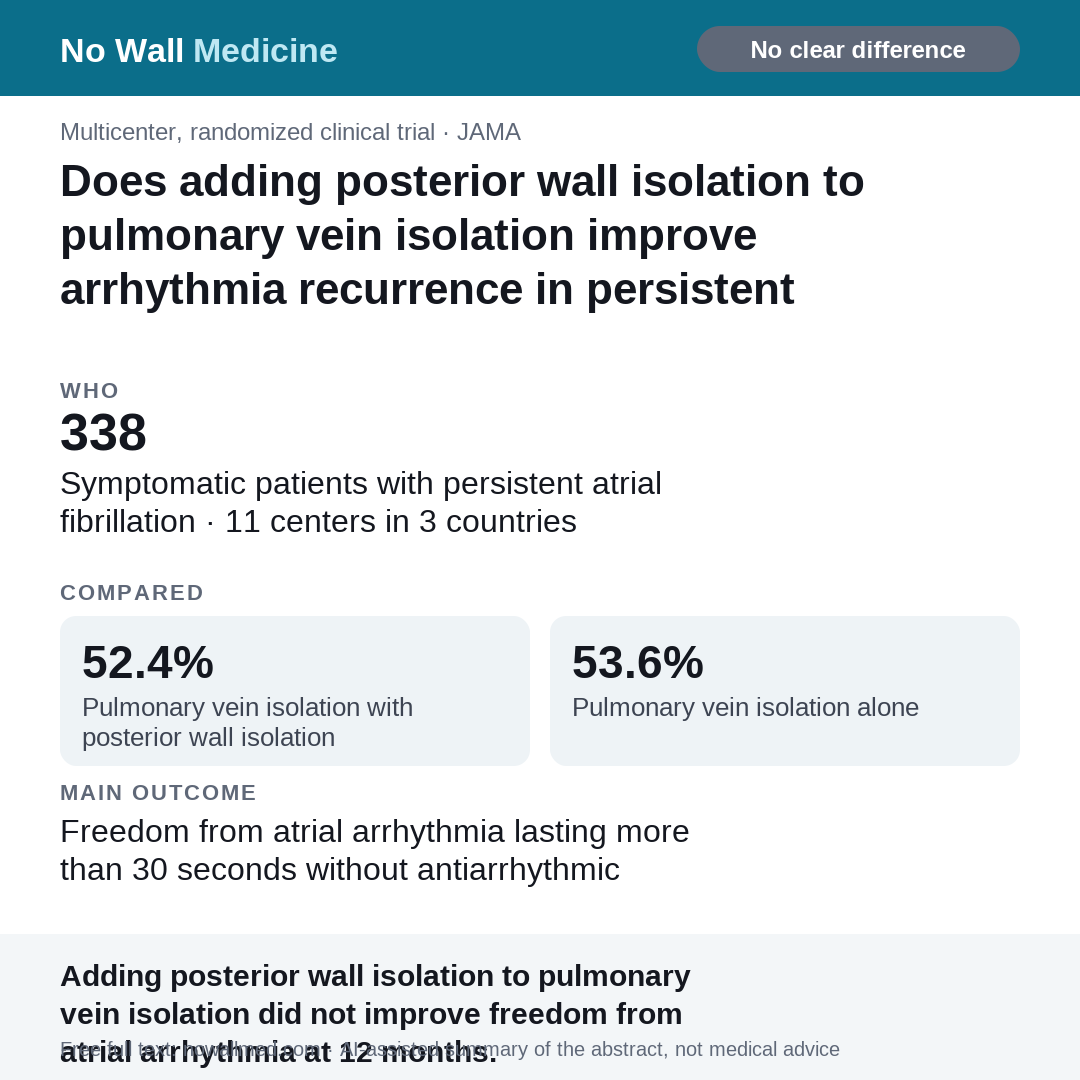
Effect of Catheter Ablation Using Pulmonary Vein Isolation With vs Without Posterior Left Atrial Wall Isolation on Atrial Arrhythmia Recurrence in Patients With Persistent Atrial Fibrillation: The CAPLA Randomized Clinical Trial
Multicenter, randomized clinical trialNo clear difference
Does adding posterior wall isolation to pulmonary vein isolation improve arrhythmia recurrence in persistent atrial fibrillation?
Who
338
Symptomatic patients with persistent atrial fibrillation · 11 centers in 3 countries
Compared
52.4%Pulmonary vein isolation with posterior wall isolation
53.6%Pulmonary vein isolation alone
Main outcome
Freedom from atrial arrhythmia lasting more than 30 seconds without antiarrhythmic medication
Result: hazard ratio 0.99 (95% CI 0.73-1.36)
Bottom line: Adding posterior wall isolation to pulmonary vein isolation did not improve freedom from atrial arrhythmia at 12 months.
JAMA · 2023-01-10Download image
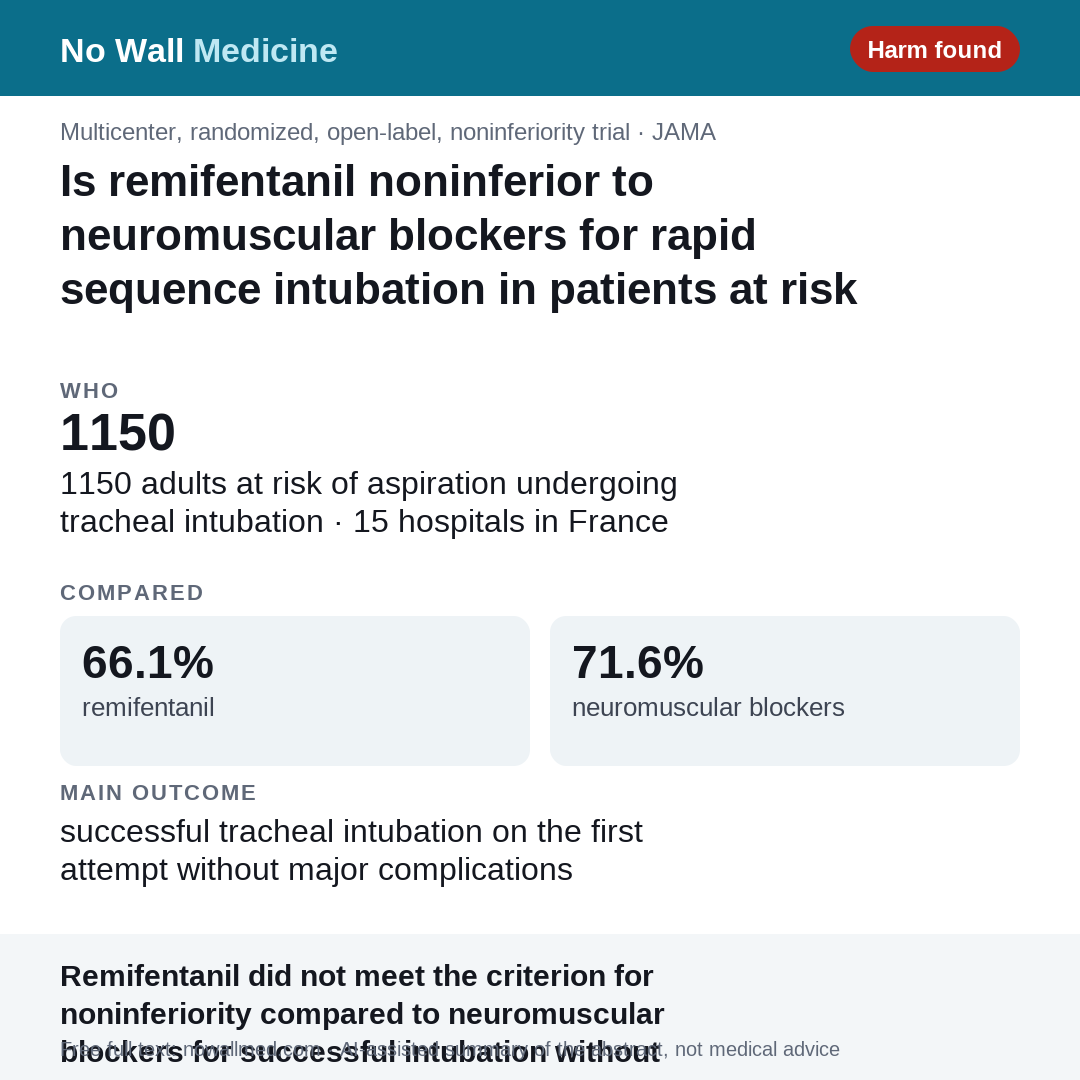
Effect of Remifentanil vs Neuromuscular Blockers During Rapid Sequence Intubation on Successful Intubation Without Major Complications Among Patients at Risk of Aspiration: A Randomized Clinical Trial
Multicenter, randomized, open-label, noninferiority trialHarm found
Is remifentanil noninferior to neuromuscular blockers for rapid sequence intubation in patients at risk of aspiration?
Who
1150
1150 adults at risk of aspiration undergoing tracheal intubation · 15 hospitals in France
Compared
66.1%remifentanil (374/575)
71.6%neuromuscular blockers (408/575)
Main outcome
successful tracheal intubation on the first attempt without major complications
Result: -6.1%; 95% CI, -11.6% to -0.5%
Bottom line: Remifentanil did not meet the criterion for noninferiority compared to neuromuscular blockers for successful intubation without major complications.
JAMA · 2023-01-03Download image
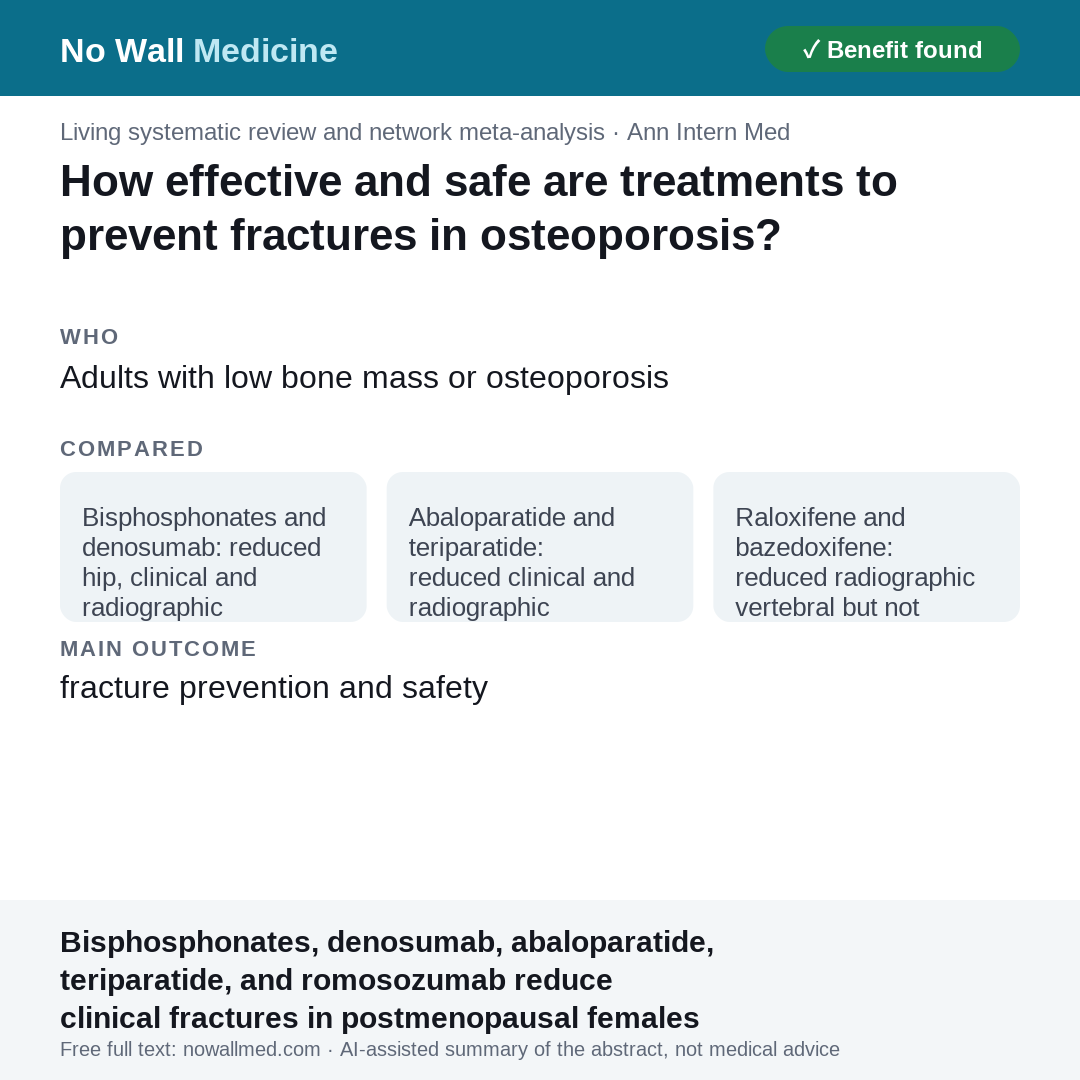
Effectiveness and Safety of Treatments to Prevent Fractures in People With Low Bone Mass or Primary Osteoporosis: A Living Systematic Review and Network Meta-analysis for the American College of Physicians
Living systematic review and network meta-analysisBenefit found
How effective and safe are treatments to prevent fractures in osteoporosis?
Who
Adults with low bone mass or osteoporosis
Compared
Bisphosphonates and denosumab: reduced hip, clinical and radiographic vertebral, and other clinical fractures
Abaloparatide and teriparatide: reduced clinical and radiographic vertebral fractures
Raloxifene and bazedoxifene: reduced radiographic vertebral but not clinical fractures
Main outcome
fracture prevention and safety
Bottom line: Bisphosphonates, denosumab, abaloparatide, teriparatide, and romosozumab reduce clinical fractures in postmenopausal females with osteoporosis.
Limitation: Few studies examined low bone mass, males, Black-identifying persons, or sequential therapy.
Funded by: American College of Physicians
Ann Intern Med · 2023-01-03Download image
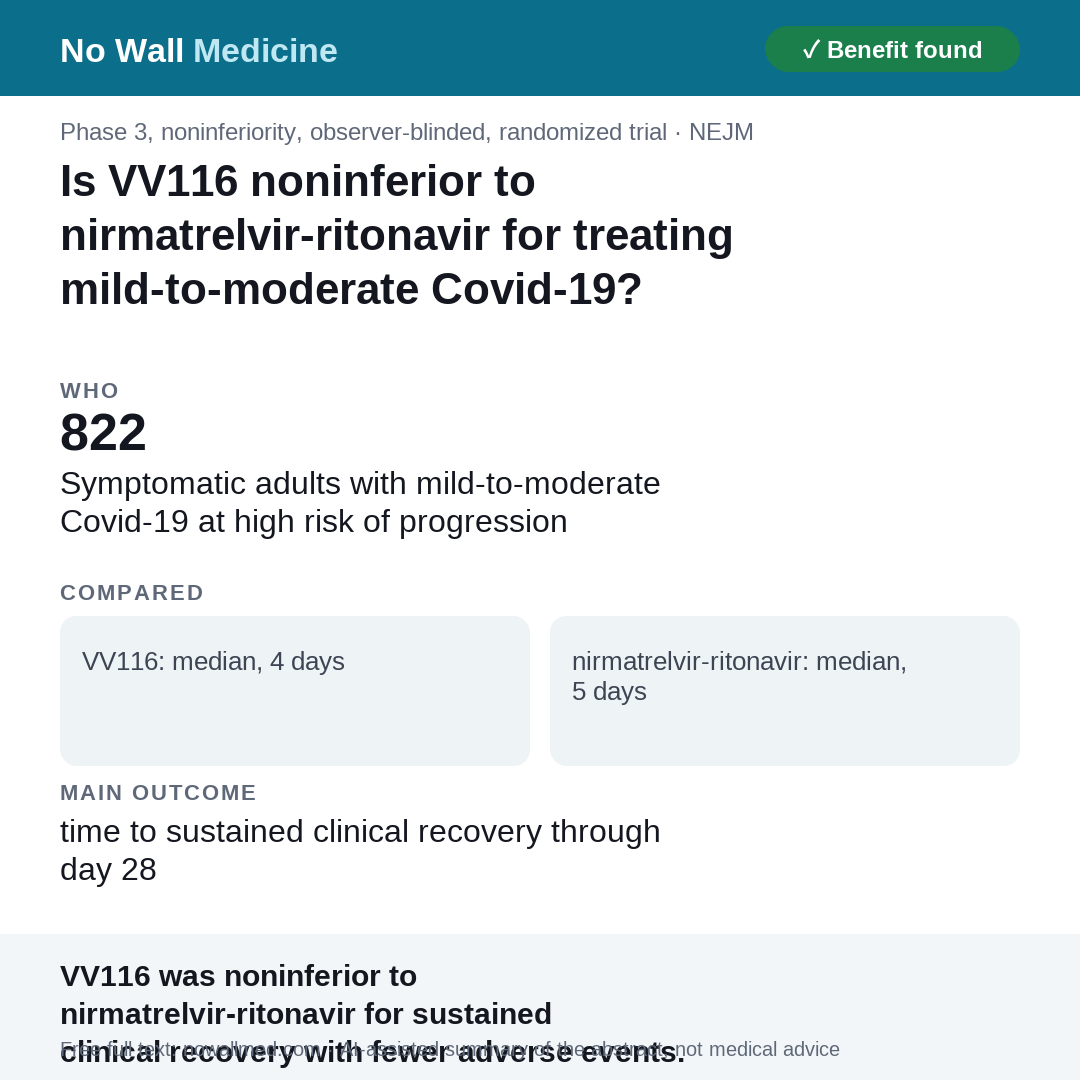
VV116 versus Nirmatrelvir-Ritonavir for Oral Treatment of Covid-19
Phase 3, noninferiority, observer-blinded, randomized trialBenefit found
Is VV116 noninferior to nirmatrelvir-ritonavir for treating mild-to-moderate Covid-19?
Who
822
Symptomatic adults with mild-to-moderate Covid-19 at high risk of progression
Compared
VV116: median, 4 days
nirmatrelvir-ritonavir: median, 5 days
Main outcome
time to sustained clinical recovery through day 28
Result: hazard ratio, 1.17; 95% confidence interval, 1.01 to 1.35
Bottom line: VV116 was noninferior to nirmatrelvir-ritonavir for sustained clinical recovery with fewer adverse events.
Funded by: Vigonvita Life Sciences and others
NEJM · 2022-12-28Download image