Visual abstracts
New randomized trials and meta-analyses from leading journals at a glance: who was studied, what was compared, and what was found. Every paper is free to read in full.
All specialtiesCardiology 936Oncology 841Gastroenterology & Hepatology 345Infectious Disease 661Neurology 384Psychiatry & Mental Health 464Pulmonology 410Critical Care 278Endocrinology & Diabetes 519Pediatrics 588Surgery 383Orthopedics & Sports Medicine 169Neurosurgery 119Cardiothoracic & Vascular Surgery 89Plastic & Reconstructive Surgery 145Nephrology 207Rheumatology 116Hematology 200Dermatology 89Ophthalmology 113Obstetrics & Gynecology 286Public & Global Health 185Radiology & Imaging 117Anesthesiology 150Urology 180ENT (Otolaryngology) 121Emergency Medicine 104Allergy & Immunology 64Geriatrics 171Family Medicine & Primary Care 116Medical Genetics & Genomics 94Pathology & Laboratory Medicine 30Physical Medicine & Rehabilitation 151Palliative Care 83Nutrition 231Digital Health & AI 485General Medicine 105
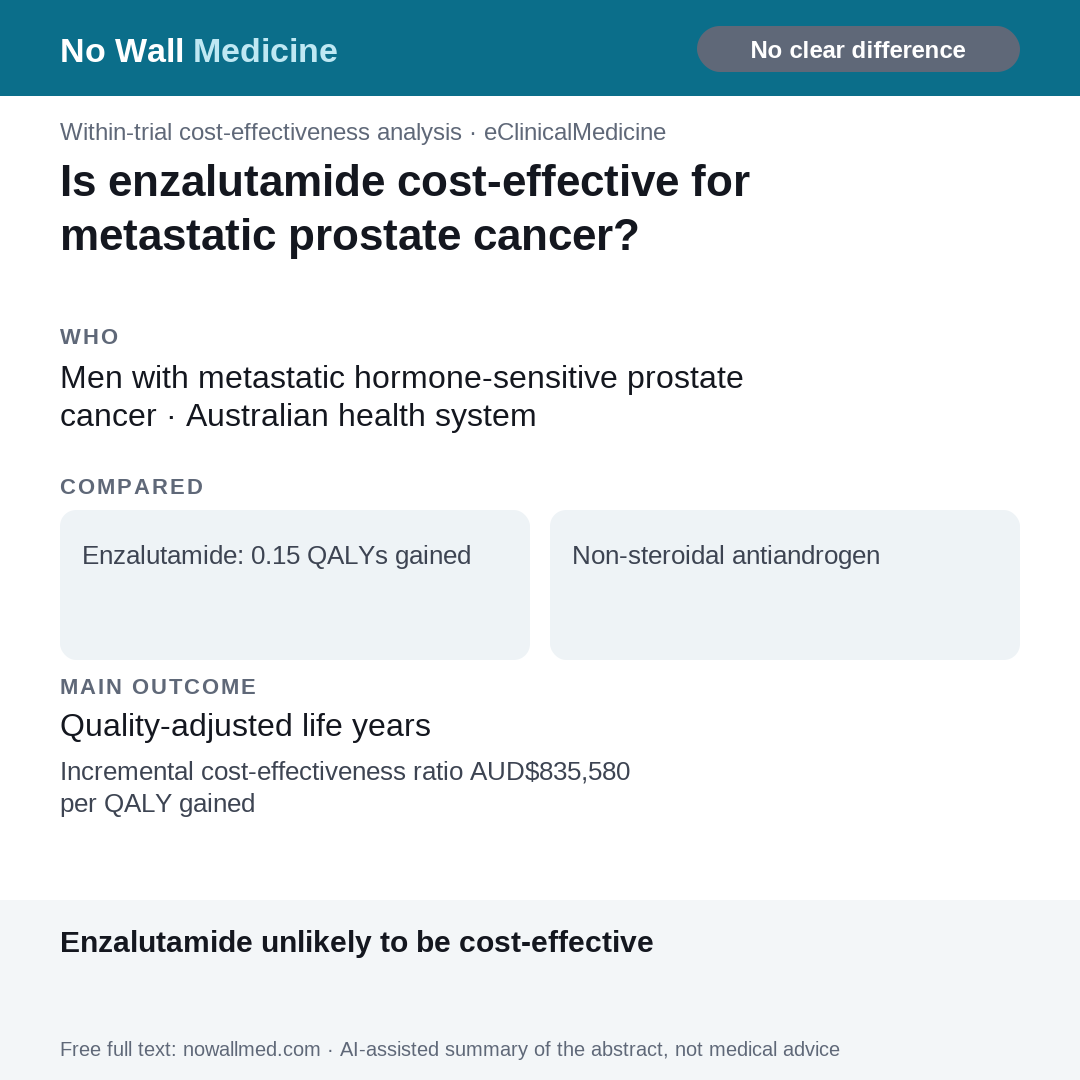
Cost-effectiveness of adding enzalutamide vs standard non-steroidal antiandrogen drugs for patients with metastatic hormone-sensitive prostate cancer undergoing standard first-line therapy: a within-trial, secondary end-point analysis of the ENZAMET phase 3, international randomized trial (ANZUP 1304)
Within-trial cost-effectiveness analysisNo clear difference
Is enzalutamide cost-effective for metastatic prostate cancer?
Who
Men with metastatic hormone-sensitive prostate cancer · Australian health system
Compared
Enzalutamide: 0.15 QALYs gained
Non-steroidal antiandrogen
Main outcome
Quality-adjusted life years
Result: Incremental cost-effectiveness ratio AUD$835,580 per QALY gained
Bottom line: Enzalutamide unlikely to be cost-effective
Funded by: Astellas Pharma and Australian National Health
eClinicalMedicine · 2026-10-05Download image
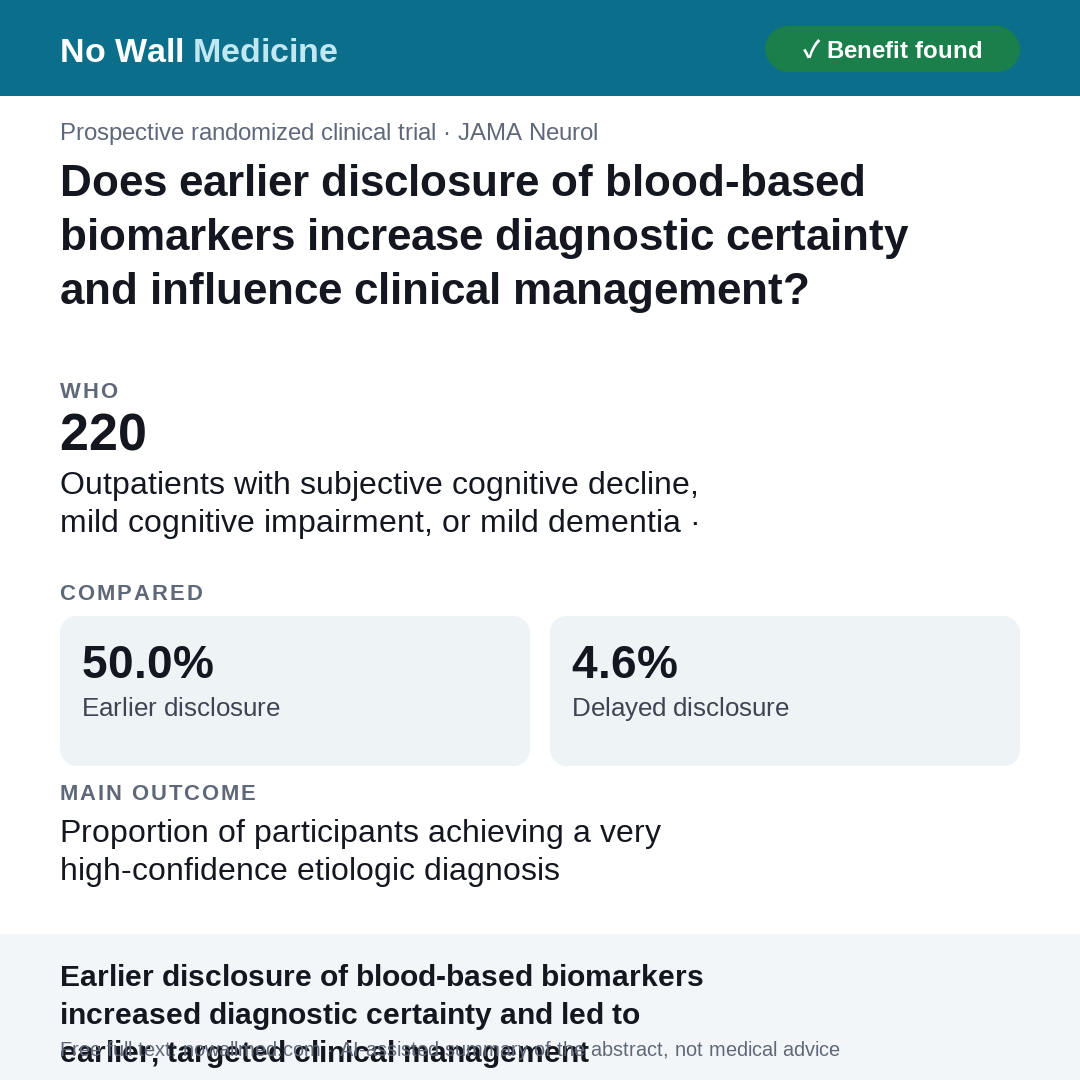
Earlier Disclosure of Blood-Based Biomarkers, Diagnostic Certainty, and Clinical Management: A Randomized Clinical Trial
Prospective randomized clinical trialBenefit found
Does earlier disclosure of blood-based biomarkers increase diagnostic certainty and influence clinical management?
Who
220
Outpatients with subjective cognitive decline, mild cognitive impairment, or mild dementia · Single memory clinic in Spain
Compared
50.0%Earlier disclosure
4.6%Delayed disclosure
Main outcome
Proportion of participants achieving a very high-confidence etiologic diagnosis
Result: difference, 9.7; 95% CI, 1.8 to 17.8
Bottom line: Earlier disclosure of blood-based biomarkers increased diagnostic certainty and led to earlier, targeted clinical management without increasing emotional distress.
JAMA Neurol · 2026-10-05Download image
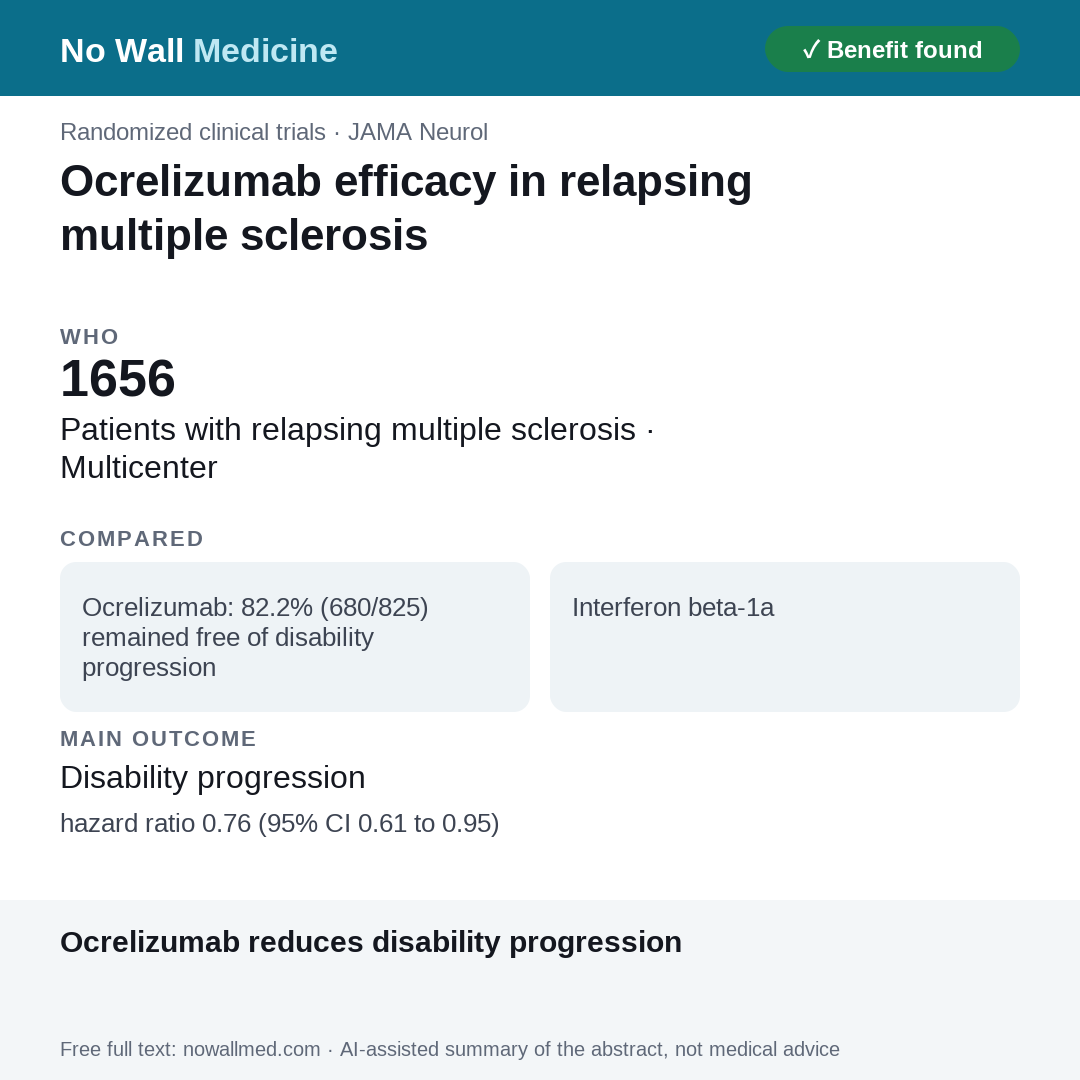
Ten Years of Ocrelizumab in Relapsing Multiple Sclerosis: The OPERA I and II Randomized Clinical Trials
Randomized clinical trialsBenefit found
Ocrelizumab efficacy in relapsing multiple sclerosis
Who
1656
Patients with relapsing multiple sclerosis · Multicenter
Compared
Ocrelizumab: 82.2% (680/825) remained free of disability progression
Interferon beta-1a
Main outcome
Disability progression
Result: hazard ratio 0.76 (95% CI 0.61 to 0.95)
Bottom line: Ocrelizumab reduces disability progression
JAMA Neurol · 2026-10-05Download image
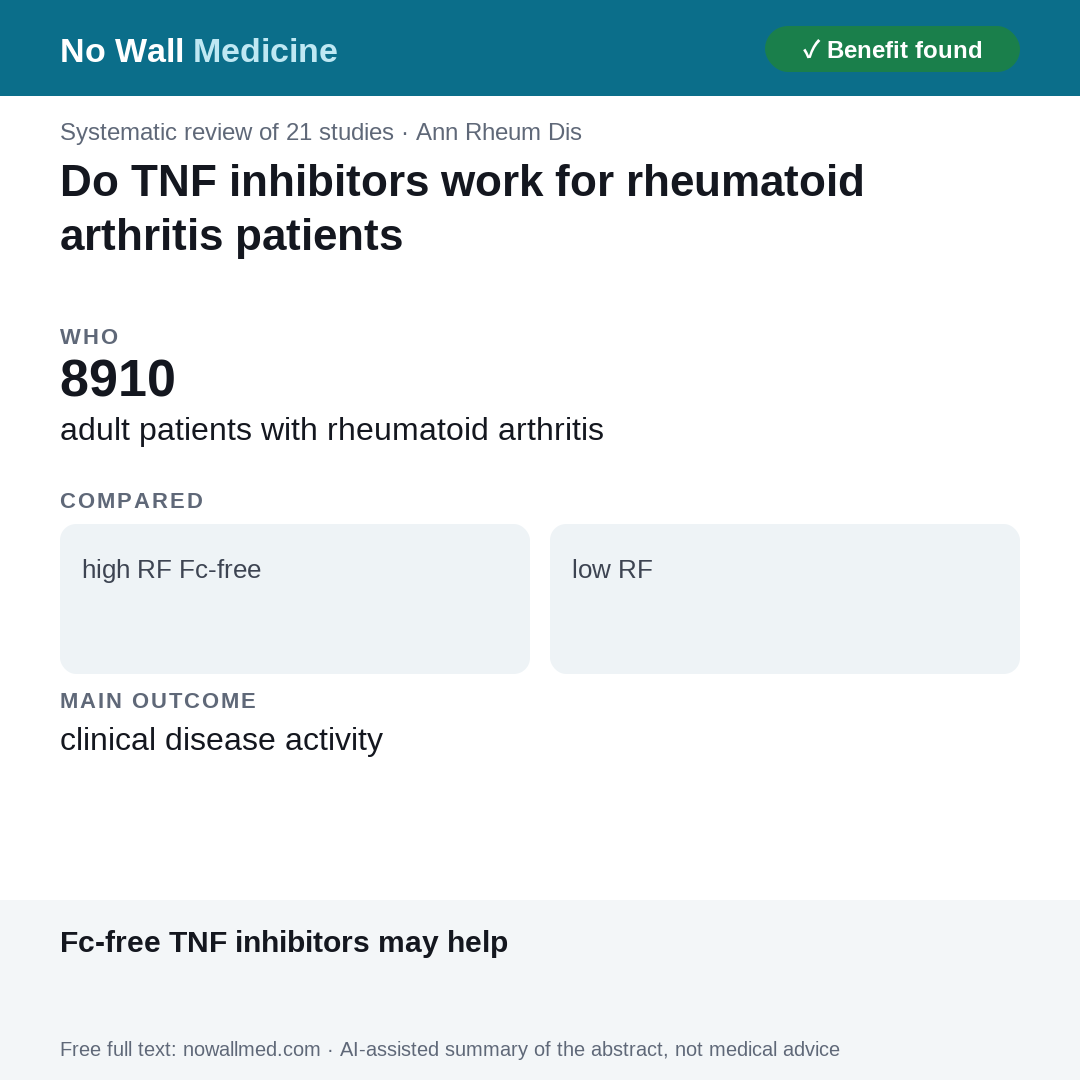
Preclinical and clinical outcomes in patients with high rheumatoid factor levels treated with TNF inhibitors:a systematic review
Systematic review of 21 studiesBenefit found
Do TNF inhibitors work for rheumatoid arthritis patients
Who
8910
adult patients with rheumatoid arthritis
Compared
high RF Fc-free
low RF
Main outcome
clinical disease activity
Bottom line: Fc-free TNF inhibitors may help
Ann Rheum Dis · 2026-10-05Download image
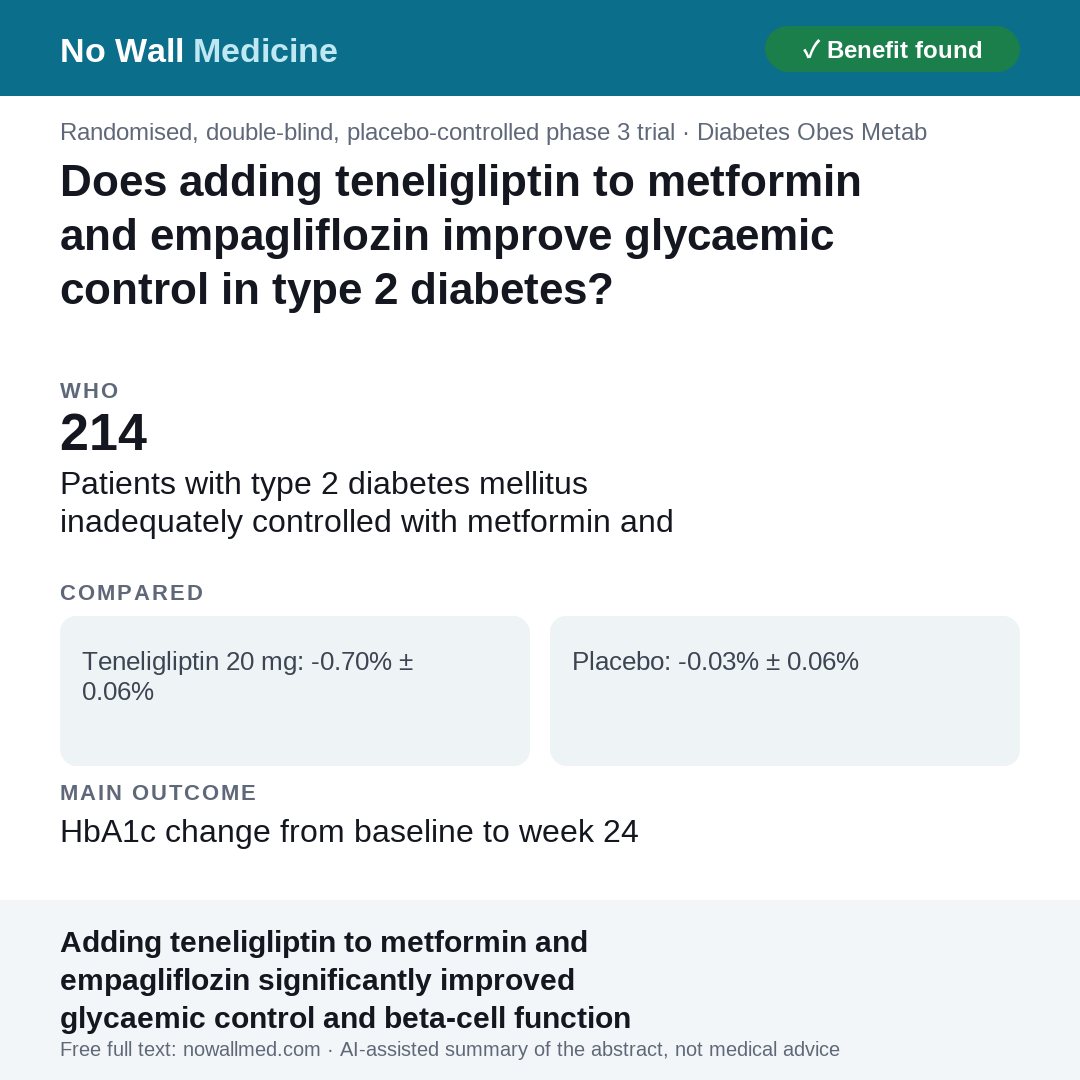
A 52-Week Efficacy and Safety Study of Teneligliptin, as an Add-On to Empagliflozin and Metformin in Patients With Type 2 Diabetes Mellitus: A Randomised, Double-Blind, Placebo-Controlled Phase 3 Trial (TERA305 Study)
Randomised, double-blind, placebo-controlled phase 3 trialBenefit found
Does adding teneligliptin to metformin and empagliflozin improve glycaemic control in type 2 diabetes?
Who
214
Patients with type 2 diabetes mellitus inadequately controlled with metformin and empagliflozin
Compared
Teneligliptin 20 mg: -0.70% ± 0.06%
Placebo: -0.03% ± 0.06%
Main outcome
HbA1c change from baseline to week 24
Result: -0.67% (95% CI, -0.84 to -0.49)
Bottom line: Adding teneligliptin to metformin and empagliflozin significantly improved glycaemic control and beta-cell function over 24 weeks.
Diabetes Obes Metab · 2026-10-05Download image
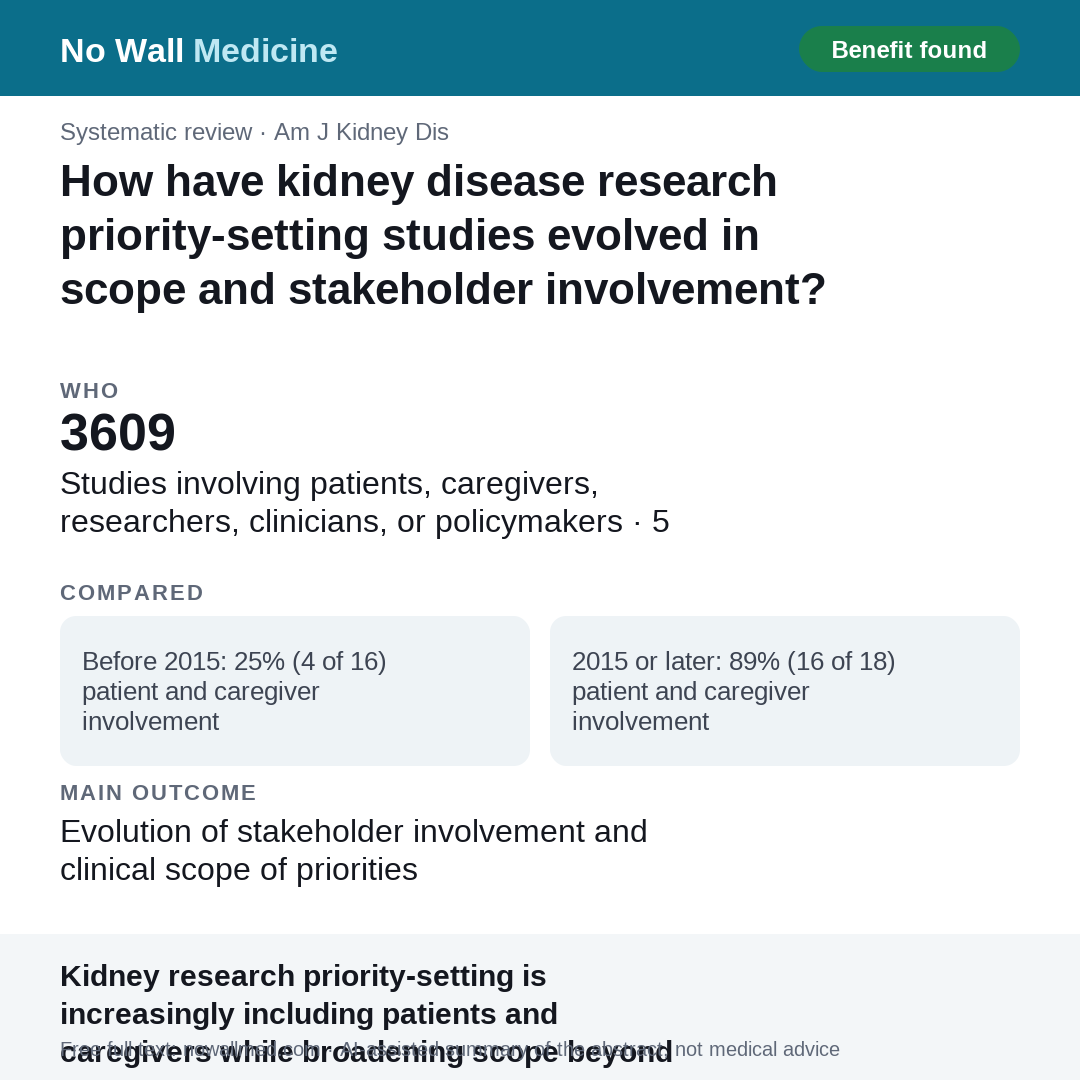
Evolution of Stakeholder Involvement and Scope of Research Priority-Setting Studies in Kidney Disease: A Systematic Review
Systematic reviewBenefit found
How have kidney disease research priority-setting studies evolved in scope and stakeholder involvement?
Who
3609
Studies involving patients, caregivers, researchers, clinicians, or policymakers · 5 high income countries
Compared
Before 2015: 25% (4 of 16) patient and caregiver involvement
2015 or later: 89% (16 of 18) patient and caregiver involvement
Main outcome
Evolution of stakeholder involvement and clinical scope of priorities
Bottom line: Kidney research priority-setting is increasingly including patients and caregivers while broadening scope beyond medical treatments.
Limitation: Restricted to peer-reviewed, English-language publications and lacks data from low- and middle-income settings.
Am J Kidney Dis · 2026-10-05Download image
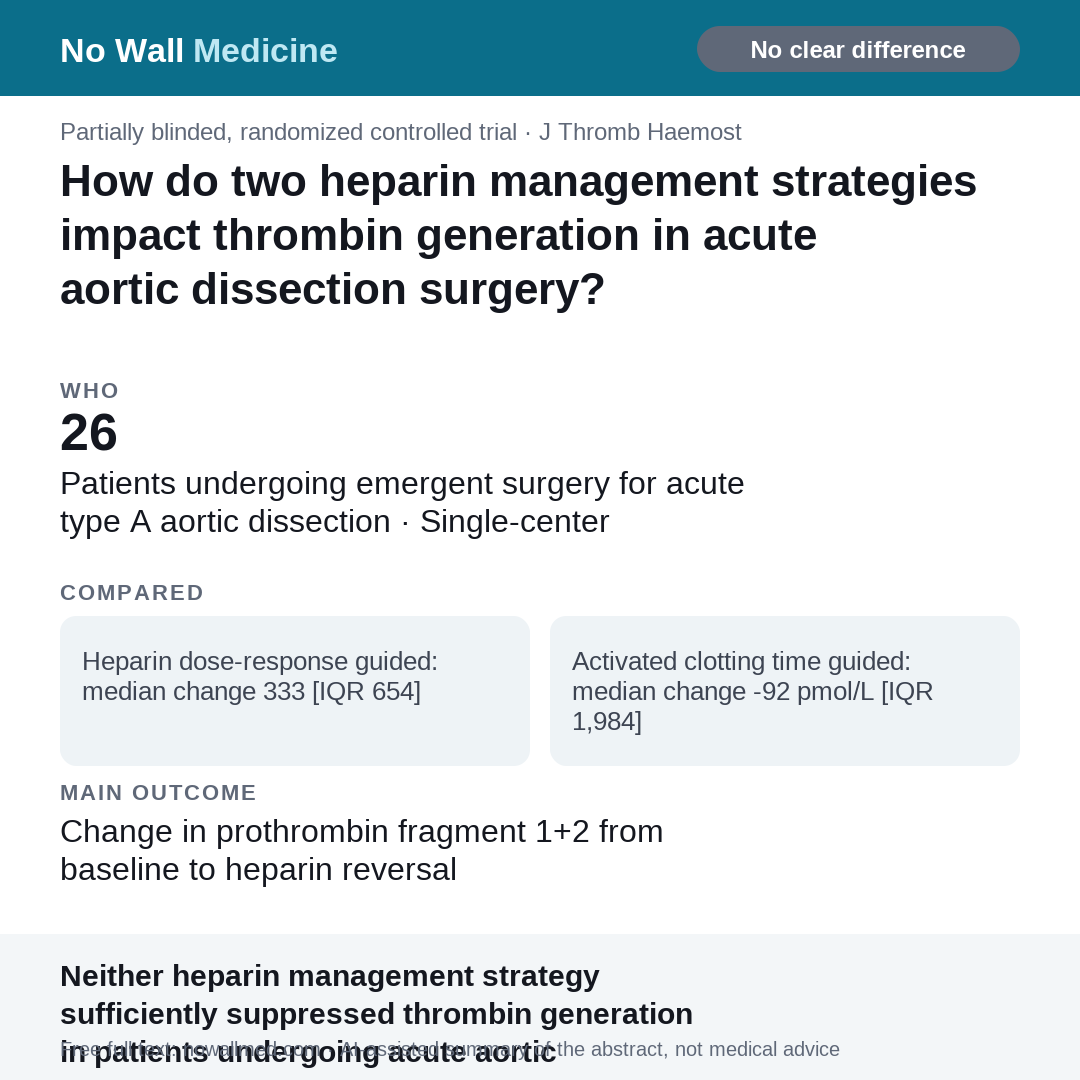
Heparin management and coagulation in acute aortic dissection surgery: a randomized controlled trial
Partially blinded, randomized controlled trialNo clear difference
How do two heparin management strategies impact thrombin generation in acute aortic dissection surgery?
Who
26
Patients undergoing emergent surgery for acute type A aortic dissection · Single-center
Compared
Heparin dose-response guided: median change 333 [IQR 654]
Activated clotting time guided: median change -92 pmol/L [IQR 1,984]
Main outcome
Change in prothrombin fragment 1+2 from baseline to heparin reversal
Result: HDR/ACT ratio 0.86, 95% CI 0.63-1.17
Bottom line: Neither heparin management strategy sufficiently suppressed thrombin generation in patients undergoing acute aortic dissection surgery.
J Thromb Haemost · 2026-10-05Download image
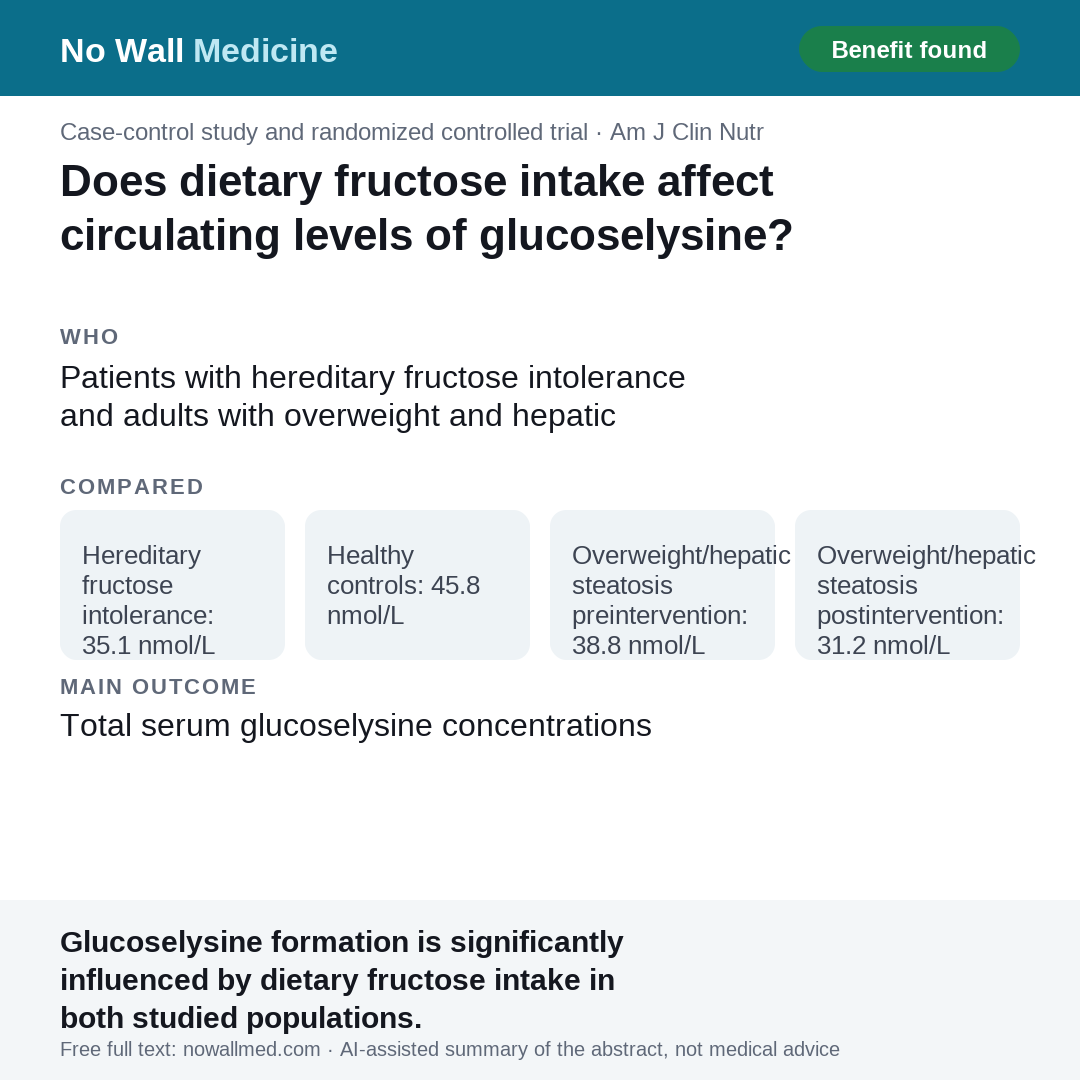
Circulating levels of glucoselysine, a fructose-specific glycation product, are modulated by dietary fructose: post hoc analysis of a case-control study and a randomized controlled trial
Case-control study and randomized controlled trialBenefit found
Does dietary fructose intake affect circulating levels of glucoselysine?
Who
Patients with hereditary fructose intolerance and adults with overweight and hepatic steatosis
Compared
Hereditary fructose intolerance: 35.1 nmol/L
Healthy controls: 45.8 nmol/L
Overweight/hepatic steatosis preintervention: 38.8 nmol/L
Overweight/hepatic steatosis postintervention: 31.2 nmol/L
Main outcome
Total serum glucoselysine concentrations
Bottom line: Glucoselysine formation is significantly influenced by dietary fructose intake in both studied populations.
Am J Clin Nutr · 2026-10-05Download image
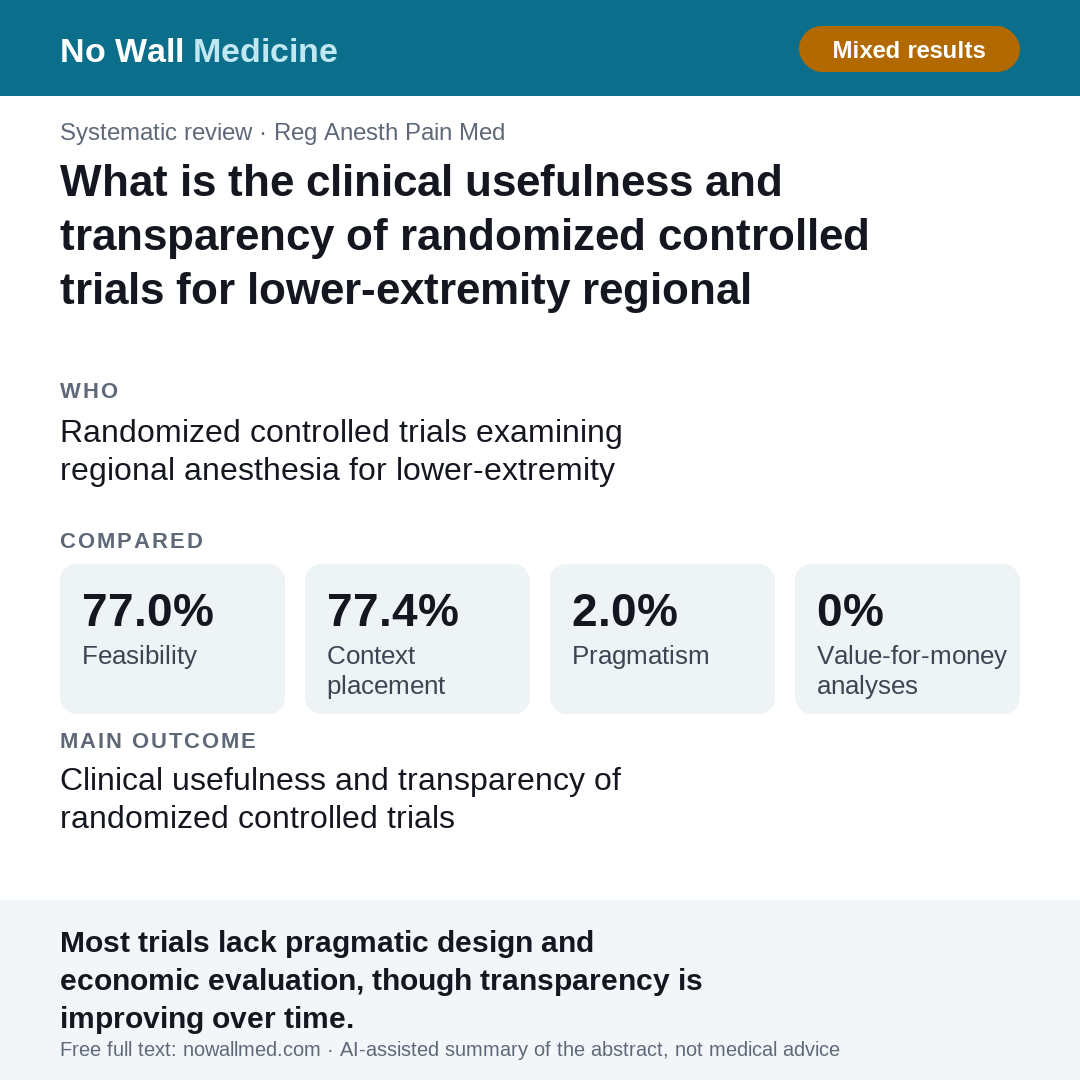
Clinical utility of randomized controlled trials of regional anesthesia for lower-extremity surgery: a systematic review
Systematic reviewMixed results
What is the clinical usefulness and transparency of randomized controlled trials for lower-extremity regional anesthesia?
Who
248
Randomized controlled trials examining regional anesthesia for lower-extremity surgery · Embase and MEDLINE databases
Compared
77.0%Feasibility
77.4%Context placement
2.0%Pragmatism
0%Value-for-money analyses
Main outcome
Clinical usefulness and transparency of randomized controlled trials
Bottom line: Most trials lack pragmatic design and economic evaluation, though transparency is improving over time.
Limitation: Usefulness scoring involves subjective judgment and non-English trials were excluded.
Reg Anesth Pain Med · 2026-10-05Download image
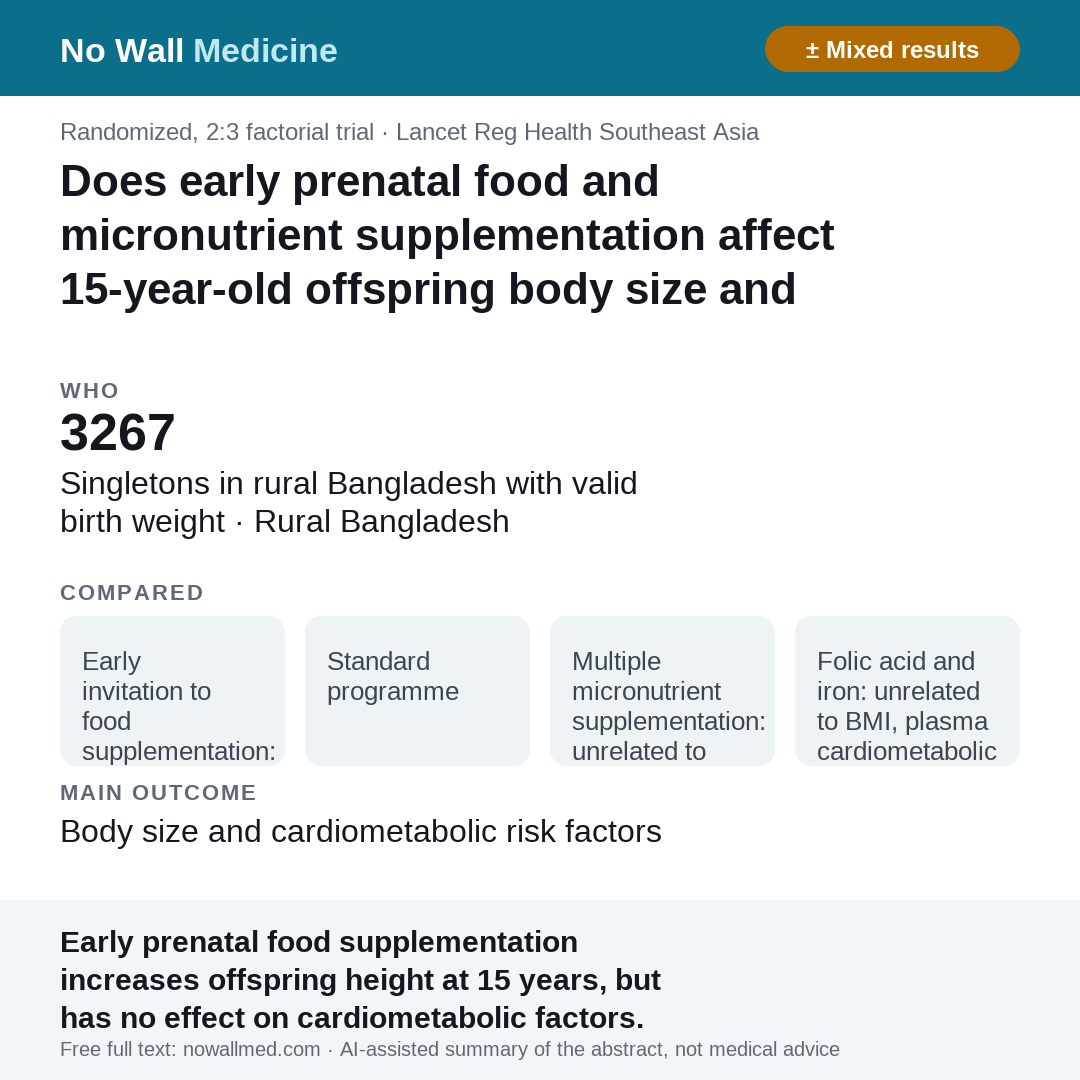
Effects of prenatal early food and micronutrient supplementations on body size and cardiometabolic risk factors in the 15-year-old offspring - the MINIMat randomised trial
Randomized, 2:3 factorial trialMixed results
Does early prenatal food and micronutrient supplementation affect 15-year-old offspring body size and cardiometabolic risk?
Who
3267
Singletons in rural Bangladesh with valid birth weight · Rural Bangladesh
Compared
Early invitation to food supplementation: 0.08 units higher height z score (95% CI 0.01, 0.16)
Standard programme
Multiple micronutrient supplementation: unrelated to BMI, plasma cardiometabolic biomarkers or blood pressure
Folic acid and iron: unrelated to BMI, plasma cardiometabolic biomarkers or blood pressure
Main outcome
Body size and cardiometabolic risk factors
Result: risk difference 4.1% (95% CI 0.8%, 7.3%) for stunting
Bottom line: Early prenatal food supplementation increases offspring height at 15 years, but has no effect on cardiometabolic factors.
Funded by: Swedish, Finnish, and Novo Nordisk foundations
Lancet Reg Health Southeast Asia · 2026-10-05Download image
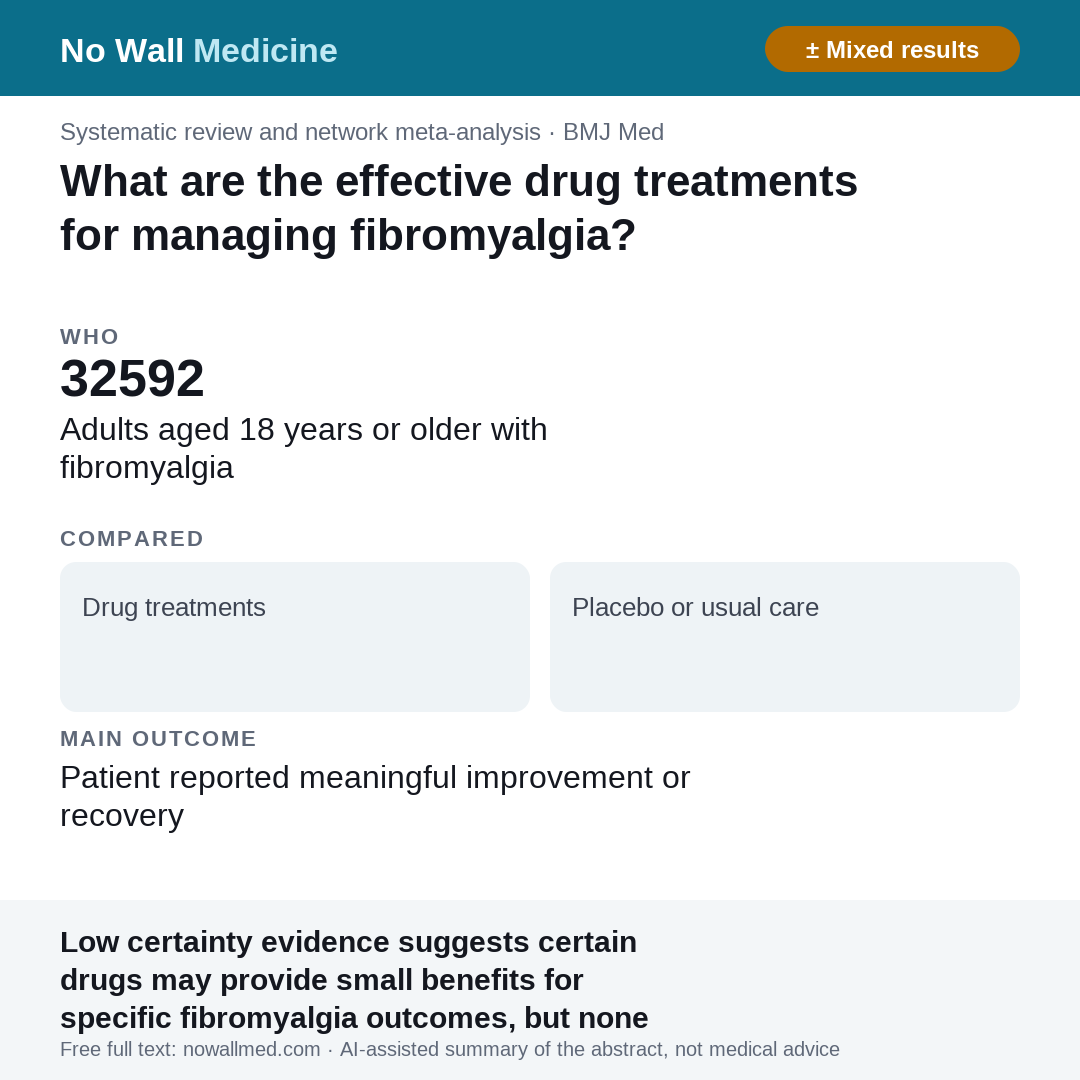
Drug treatments for fibromyalgia: systematic review and network meta-analysis of randomised trials
Systematic review and network meta-analysisMixed results
What are the effective drug treatments for managing fibromyalgia?
Who
32592
Adults aged 18 years or older with fibromyalgia
Compared
Drug treatments
Placebo or usual care
Main outcome
Patient reported meaningful improvement or recovery
Result: risk difference 105 to 283 more per 1000 patients
Bottom line: Low certainty evidence suggests certain drugs may provide small benefits for specific fibromyalgia outcomes, but none exceeded clinical importance thresholds.
BMJ Med · 2026-10-05Download image
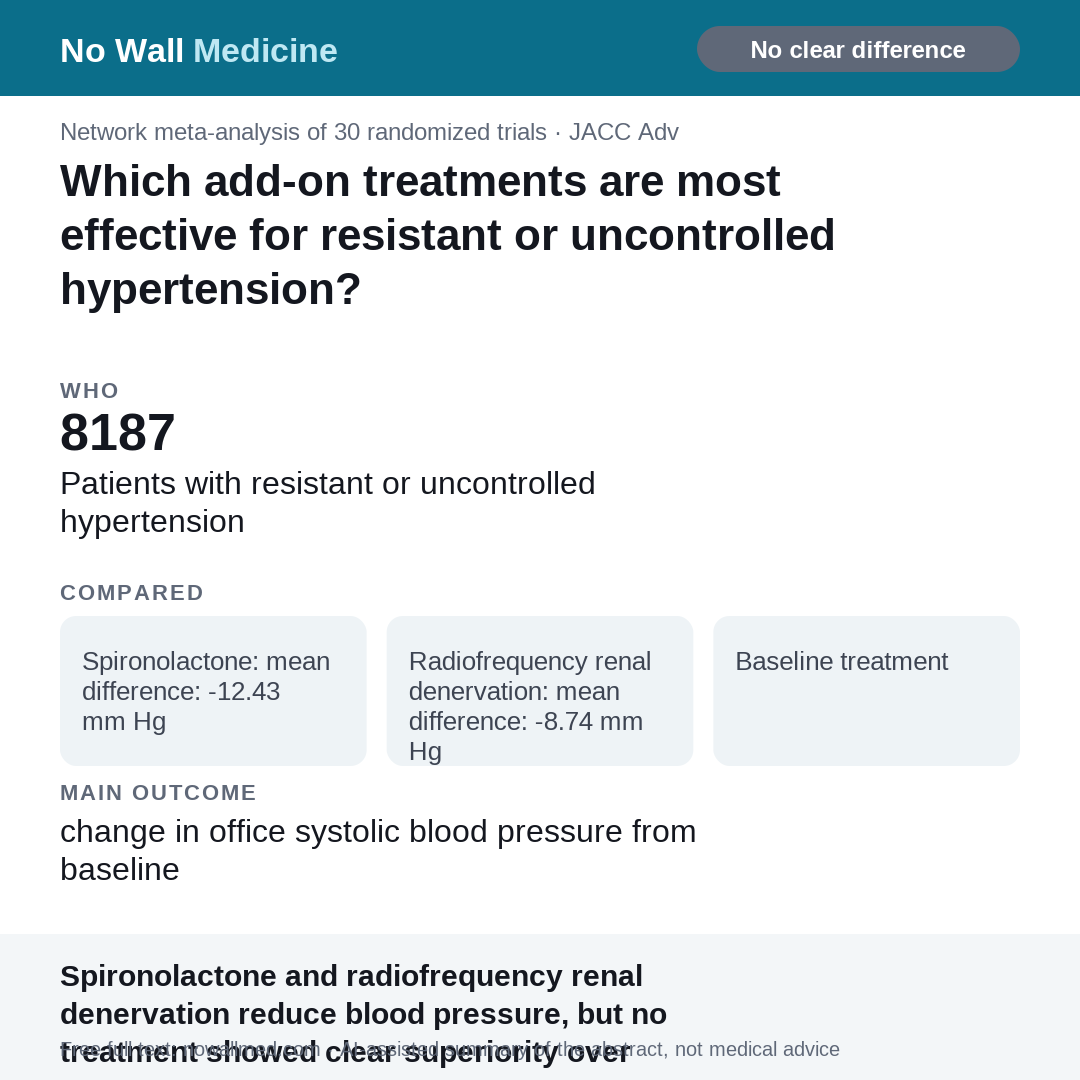
Comparative Efficacy of Treatments for Resistant or Uncontrolled Hypertension: A Network Meta-Analysis of Randomized Trials
Network meta-analysis of 30 randomized trialsNo clear difference
Which add-on treatments are most effective for resistant or uncontrolled hypertension?
Who
8187
Patients with resistant or uncontrolled hypertension
Compared
Spironolactone: mean difference: -12.43 mm Hg
Radiofrequency renal denervation: mean difference: -8.74 mm Hg
Baseline treatment
Main outcome
change in office systolic blood pressure from baseline
Result: no significant differences were observed between add-on treatments
Bottom line: Spironolactone and radiofrequency renal denervation reduce blood pressure, but no treatment showed clear superiority over another.
JACC Adv · 2026-10-05Download image
Machine Learning and Deep Learning for the Diagnosis of Cervical Degenerative Diseases: Systematic Review and Meta-Analysis
Meta-analysis of 30 studiesBenefit found
Do machine learning models diagnose cervical diseases accurately?
Who
25301
patients with cervical degenerative diseases
Compared
Traditional machine learning
Deep learning
Main outcome
diagnostic accuracy
Bottom line: Machine learning models diagnose cervical diseases accurately
Limitation: low certainty of evidence
J Med Internet Res · 2026-10-05Download image

A nationwide prospective randomized trial for diagnosing developmental disorders demonstrates genome sequencing outperforms standard of care
Nationwide prospective randomized trialBenefit found
Does genome sequencing outperform standard of care for diagnosing developmental disorders?
Who
567
Individuals with unexplained developmental disorders · All Belgian human genetics centers
Compared
39.8%Genome sequencing (113/284)
30%Standard of care (85/283)
Main outcome
Diagnostic yield
Result: 7.3% difference (p = 0.069) after correction
Bottom line: Genome sequencing outperforms standard of care for diagnosing developmental disorders in a nationwide Belgian study.
Genome Med · 2026-10-05Download image

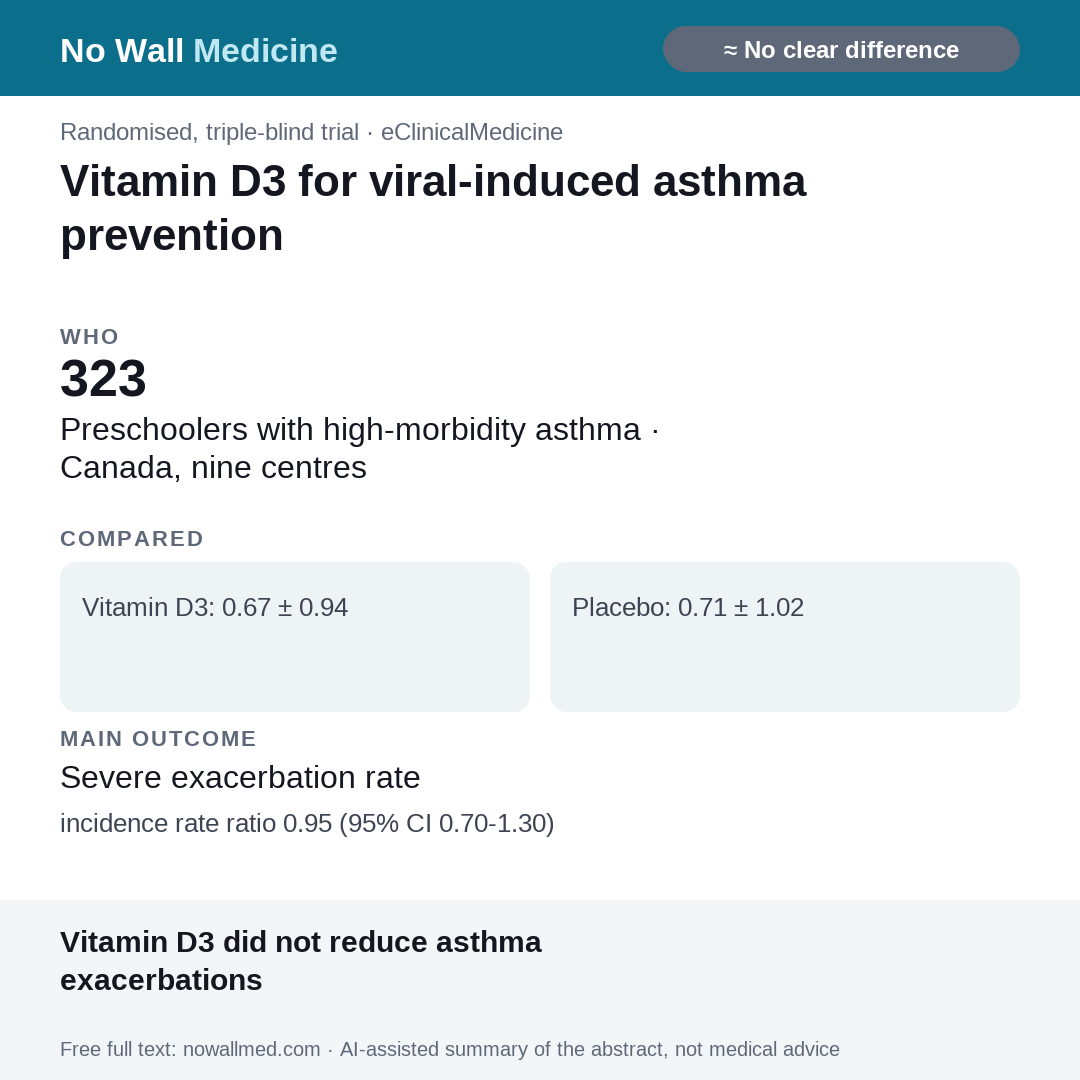
High-dose vitamin D3 supplementation in the prevention of viral-induced asthma in high-morbidity preschoolers (DIVA): a randomised controlled trial in Canada
Randomised, triple-blind trialNo clear difference
Vitamin D3 for viral-induced asthma prevention
Who
323
Preschoolers with high-morbidity asthma · Canada, nine centres
Compared
Vitamin D3: 0.67 ± 0.94
Placebo: 0.71 ± 1.02
Main outcome
Severe exacerbation rate
Result: incidence rate ratio 0.95 (95% CI 0.70-1.30)
Bottom line: Vitamin D3 did not reduce asthma exacerbations
Limitation: fewer participants than planned
Funded by: Canadian Institutes of Health Research
eClinicalMedicine · 2026-10-04Download image
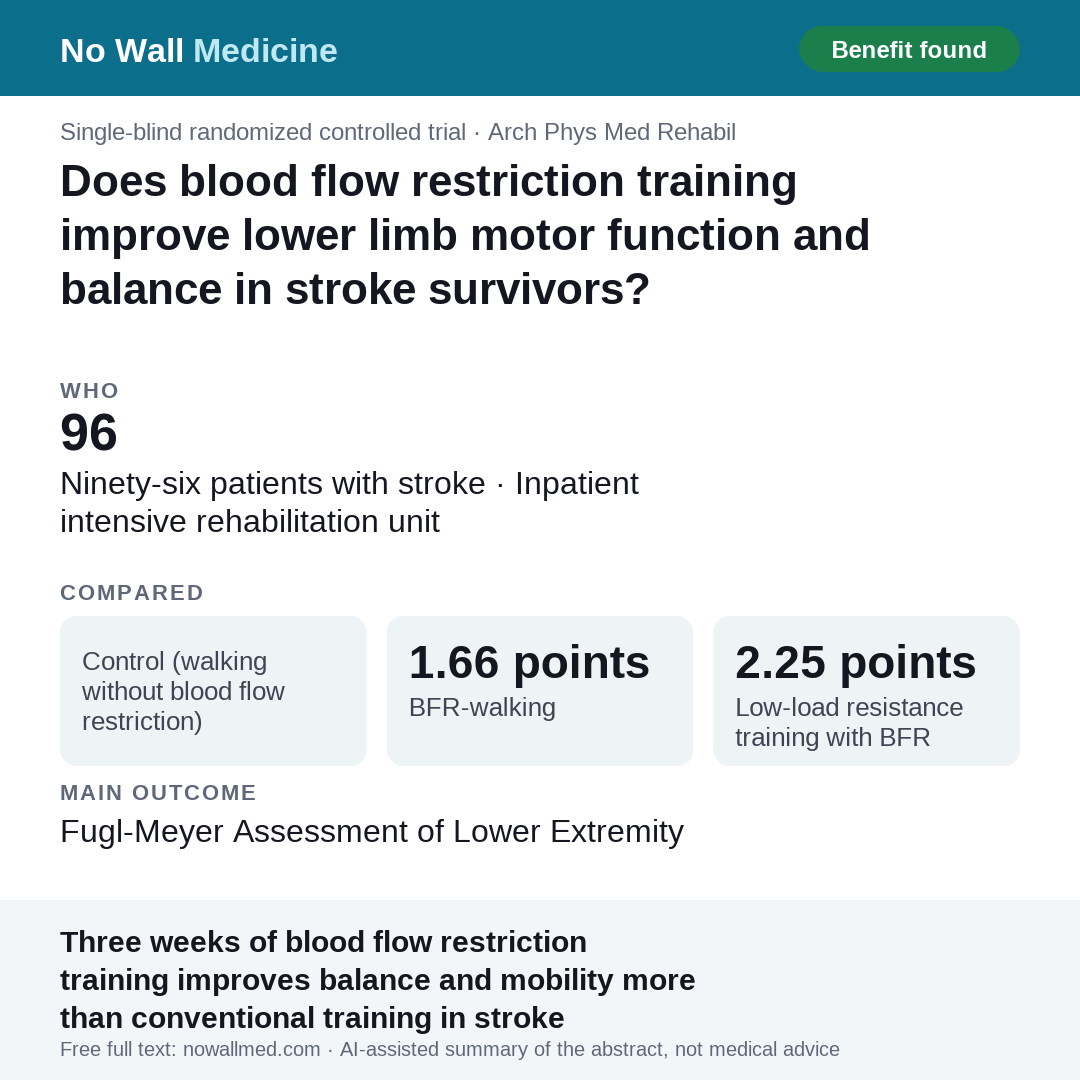
Effects of Blood Flow Restriction Training on Lower Limb Motor Function and Balance in Individuals With Stroke: A Randomized Controlled Trial
Single-blind randomized controlled trialBenefit found
Does blood flow restriction training improve lower limb motor function and balance in stroke survivors?
Who
96
Ninety-six patients with stroke · Inpatient intensive rehabilitation unit
Compared
Control (walking without blood flow restriction)
1.66 pointsBFR-walking (95% CI, 0.27-3.04)
2.25 pointsLow-load resistance training with BFR (95% CI, 0.86-3.64)
Main outcome
Fugl-Meyer Assessment of Lower Extremity
Result: adjusted mean difference vs control: 1.66 points (95% CI, 0.27-3.04) and 2.25 points (95% CI, 0.86-3.64)
Bottom line: Three weeks of blood flow restriction training improves balance and mobility more than conventional training in stroke survivors.
Arch Phys Med Rehabil · 2026-10-04Download image
Longitudinal associations between loneliness and outcomes of Common Mental Disorders (CMDs): A systematic review and meta-analysis
Systematic review and meta-analysisBenefit found
Is loneliness longitudinally associated with mental health outcomes in individuals with common mental disorders?
Who
22
Adults aged 16 years or older with common mental disorders · Clinical, community, and treatment settings
Compared
Lonely individuals
Not lonely individuals
Main outcome
Binary depression outcomes reflecting unfavourable course
Result: adjusted odds ratio 3.26 (95% CI 2.26 to 4.70)
Bottom line: Loneliness is consistently associated with poorer subsequent depression outcomes in people with common mental disorders.
Limitation: Only one of the four meta-analyzed studies adjusted for baseline depressive symptom severity.
BMC Med · 2026-10-03Download image

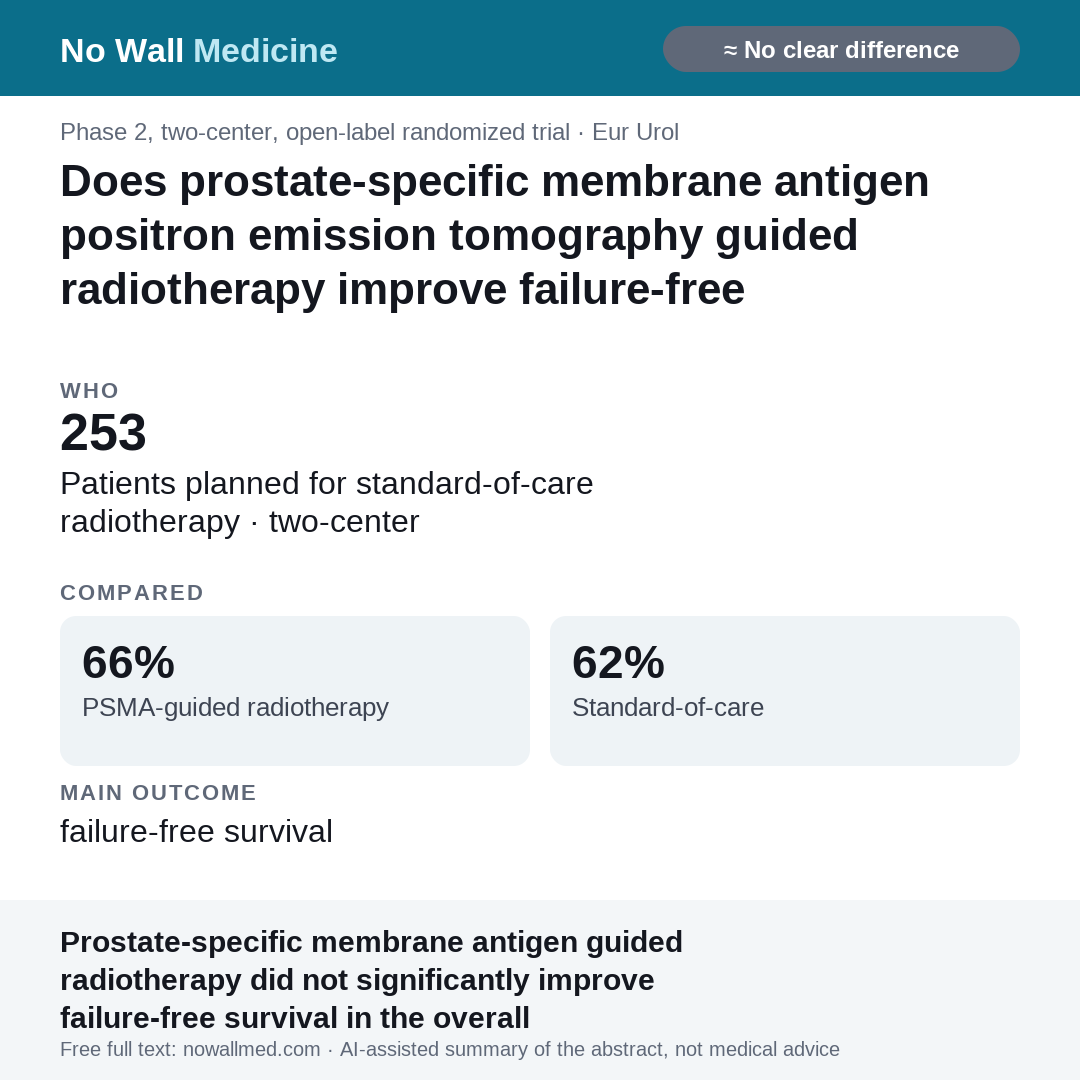
PSMA-PET/CT-guided Intensification of Radiation Therapy for Prostate Cancer (PSMAgRT): 5-yr Analysis of a Phase 2 Randomized Controlled Trial
Phase 2, two-center, open-label randomized trialNo clear difference
Does prostate-specific membrane antigen positron emission tomography guided radiotherapy improve failure-free survival?
Who
253
Patients planned for standard-of-care radiotherapy · two-center
Compared
66%PSMA-guided radiotherapy
62%Standard-of-care
Main outcome
failure-free survival
Result: hazard ratio 0.80 (one-sided 90% CI, upper bound 1.04)
Bottom line: Prostate-specific membrane antigen guided radiotherapy did not significantly improve failure-free survival in the overall population.
Limitation: phase 2 design with a heterogeneous population
Eur Urol · 2026-10-03Download image
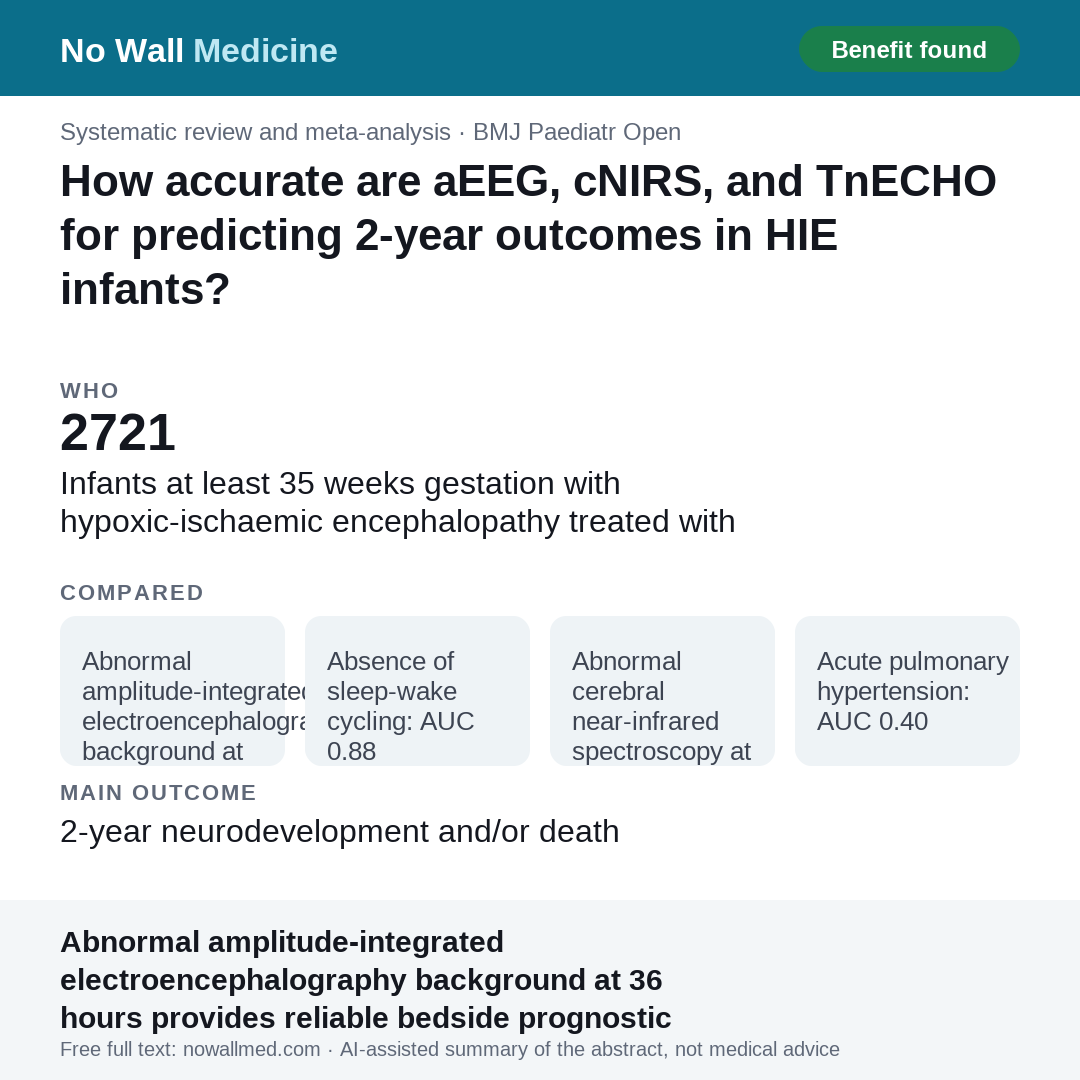
Haemodynamic and neurophysiological assessments for 2-year outcome prediction in neonates with hypoxic-ischaemic encephalopathy treated with therapeutic hypothermia: a systematic review and meta-analysis
Systematic review and meta-analysisBenefit found
How accurate are aEEG, cNIRS, and TnECHO for predicting 2-year outcomes in HIE infants?
Who
2721
Infants at least 35 weeks gestation with hypoxic-ischaemic encephalopathy treated with therapeutic hypothermia
Compared
Abnormal amplitude-integrated electroencephalography background at 36 hours: AUC 0.88
Absence of sleep-wake cycling: AUC 0.88
Abnormal cerebral near-infrared spectroscopy at 36 hours: AUC 0.86
Acute pulmonary hypertension: AUC 0.40
Main outcome
2-year neurodevelopment and/or death
Bottom line: Abnormal amplitude-integrated electroencephalography background at 36 hours provides reliable bedside prognostic information for 2-year outcomes.
Limitation: Right ventricular dysfunction showed substantial heterogeneity.
BMJ Paediatr Open · 2026-10-03Download image
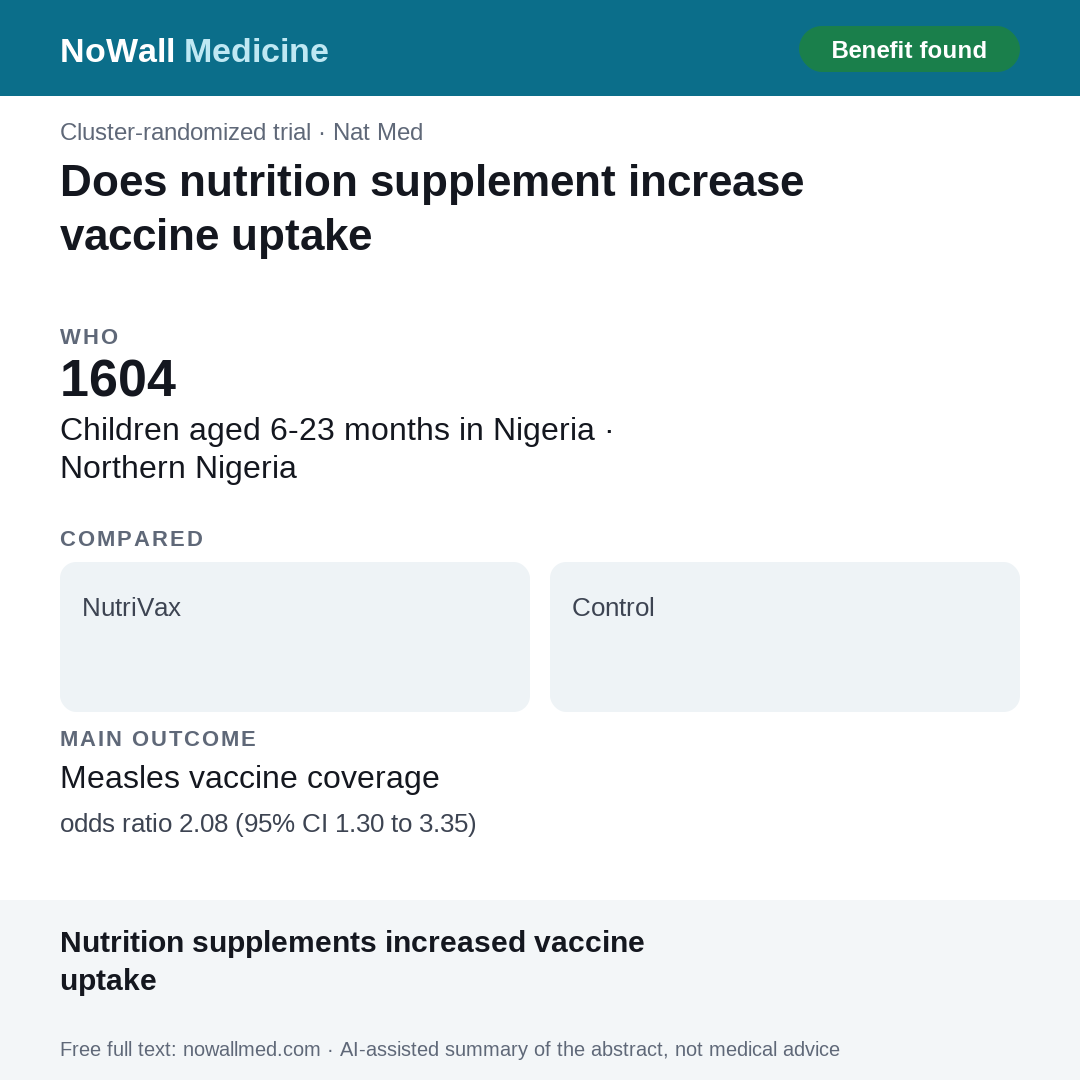
Small quantity lipid-based nutritional supplementation and measles vaccination coverage in children aged 6-23 months: a pragmatic cluster-randomized trial
Cluster-randomized trialBenefit found
Does nutrition supplement increase vaccine uptake
Who
1604
Children aged 6-23 months in Nigeria · Northern Nigeria
Compared
NutriVax
Control
Main outcome
Measles vaccine coverage
Result: odds ratio 2.08 (95% CI 1.30 to 3.35)
Bottom line: Nutrition supplements increased vaccine uptake
Nat Med · 2026-10-02Download image