Visual abstracts
New randomized trials and meta-analyses from leading journals at a glance: who was studied, what was compared, and what was found. Every paper is free to read in full.
All specialtiesCardiology 4877Oncology 4138Gastroenterology & Hepatology 1942Infectious Disease 3837Neurology 1905Psychiatry & Mental Health 2273Pulmonology 2143Critical Care 1365Endocrinology & Diabetes 2580Pediatrics 2980Surgery 2559Orthopedics & Sports Medicine 931Neurosurgery 537Cardiothoracic & Vascular Surgery 674Plastic & Reconstructive Surgery 591Nephrology 1133Rheumatology 823Hematology 1109Dermatology 621Ophthalmology 543Obstetrics & Gynecology 1686Public & Global Health 1058Radiology & Imaging 648Anesthesiology 986Urology 764ENT (Otolaryngology) 503Emergency Medicine 511Allergy & Immunology 313Geriatrics 981Family Medicine & Primary Care 562Medical Genetics & Genomics 676Pathology & Laboratory Medicine 159Physical Medicine & Rehabilitation 757Palliative Care 444Nutrition 1588Digital Health & AI 2201General Medicine 321
Using the RE-AIM framework to evaluate the impact of shared medical appointments for diabetes mellitus: a systematic review and meta-analysis
Systematic review and meta-analysisBenefit found
What is the impact of shared medical appointments on diabetes management?
Who
People living with diabetes
Compared
Shared medical appointments
Control
Main outcome
Hemoglobin A1c, systolic blood pressure, and healthcare costs
Bottom line: Shared medical appointments effectively improve hemoglobin A1c, systolic blood pressure, and reduce healthcare costs for people living with diabetes.
Limitation: Most studies reported effectiveness well, while other RE-AIM dimensions were poorly reported.
BMC Prim Care · 2025-06-05Download image

Outcome measures of instrumented gait analysis in hereditary spastic paraplegia: a systematic review
Systematic reviewMixed results
What are the outcome measures of instrumented gait analysis in hereditary spastic paraplegia?
Who
Patients with hereditary spastic paraplegia
Compared
General parameters: walking speed and range-of-motion knee
Disease-specific parameters: foot lift, range-of-motion foot, and gait variability
Main outcome
Instrumented gait analysis outcome measures
Bottom line: Walking speed and knee range-of-motion are general, while foot lift and gait variability are promising disease-specific parameters.
Limitation: Need for better longitudinal multicenter studies with larger sample sizes.
J Neuroeng Rehabil · 2025-06-05Download image

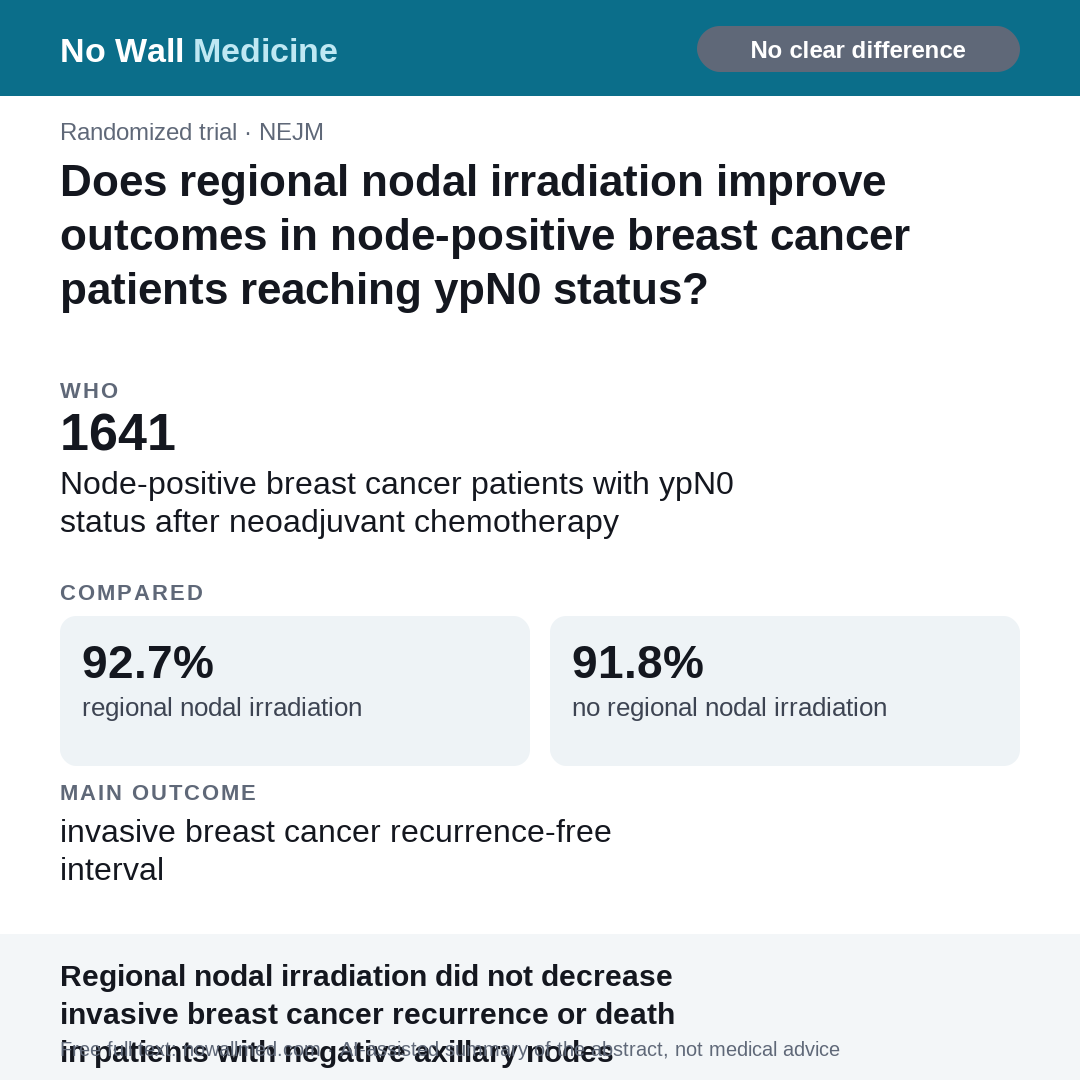
Omitting Regional Nodal Irradiation after Response to Neoadjuvant Chemotherapy
Randomized trialNo clear difference
Does regional nodal irradiation improve outcomes in node-positive breast cancer patients reaching ypN0 status?
Who
1641
Node-positive breast cancer patients with ypN0 status after neoadjuvant chemotherapy
Compared
92.7%regional nodal irradiation
91.8%no regional nodal irradiation
Main outcome
invasive breast cancer recurrence-free interval
Result: hazard ratio 0.88 (95% confidence interval 0.60 to 1.28)
Bottom line: Regional nodal irradiation did not decrease invasive breast cancer recurrence or death in patients with negative axillary nodes after chemotherapy.
Funded by: National Institutes of Health
NEJM · 2025-06-04Download image
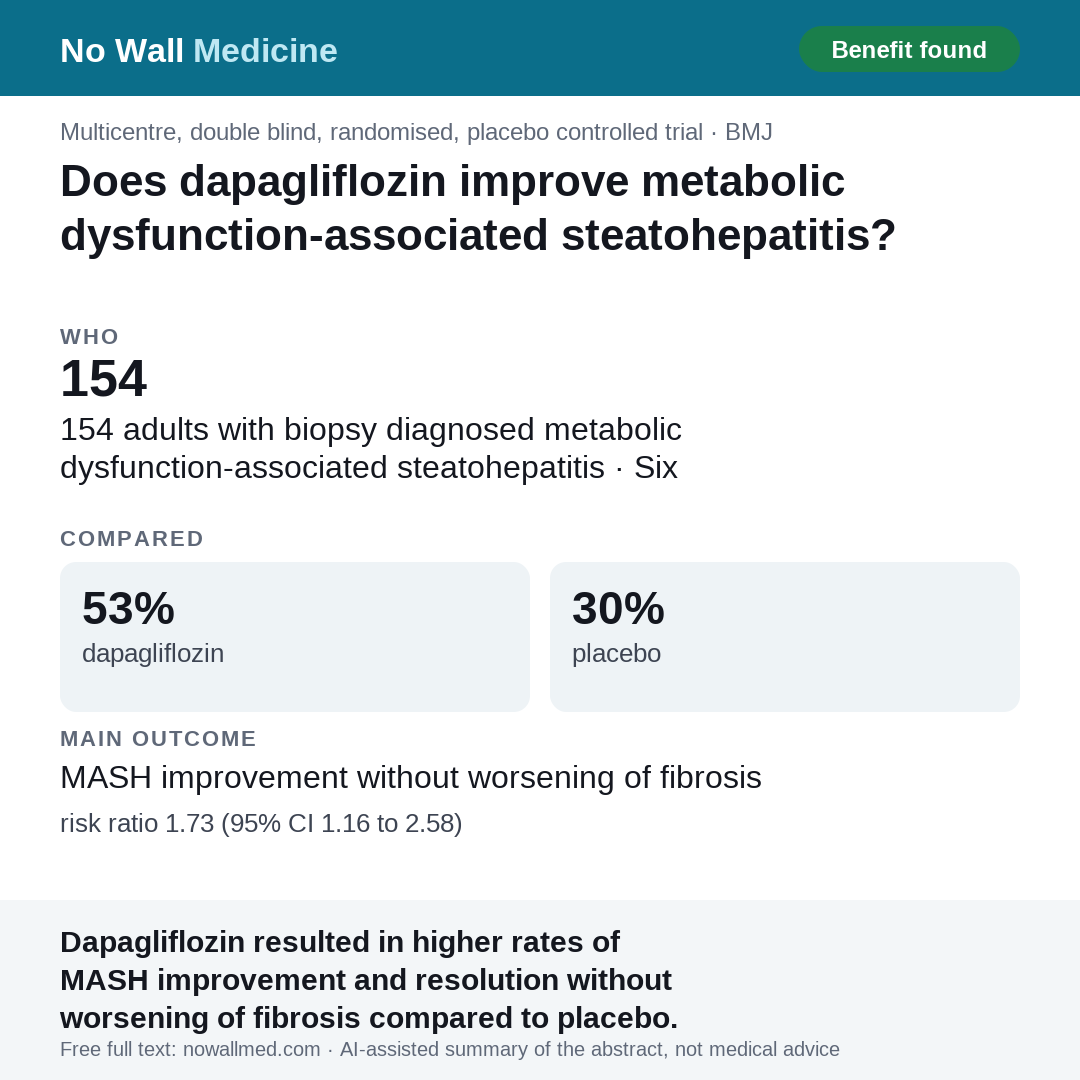
Effect of dapagliflozin on metabolic dysfunction-associated steatohepatitis: multicentre, double blind, randomised, placebo controlled trial
Multicentre, double blind, randomised, placebo controlled trialBenefit found
Does dapagliflozin improve metabolic dysfunction-associated steatohepatitis?
Who
154
154 adults with biopsy diagnosed metabolic dysfunction-associated steatohepatitis · Six tertiary hospitals in China
Compared
53%dapagliflozin (41/78)
30%placebo (23/76)
Main outcome
MASH improvement without worsening of fibrosis
Result: risk ratio 1.73 (95% CI 1.16 to 2.58)
Bottom line: Dapagliflozin resulted in higher rates of MASH improvement and resolution without worsening of fibrosis compared to placebo.
BMJ · 2025-06-04Download image
P2Y12 inhibitor or aspirin after percutaneous coronary intervention: individual patient data meta-analysis of randomised clinical trials
Individual participant data meta-analysis of randomised clinical trialsBenefit found
Is P2Y12 inhibitor monotherapy more effective than aspirin monotherapy after percutaneous coronary intervention?
Who
16117
Patients with coronary artery disease who underwent percutaneous coronary intervention
Compared
P2Y12 inhibitor monotherapy
Aspirin monotherapy
Main outcome
Major adverse cardiac and cerebrovascular events and major bleeding
Result: hazard ratio 0.77 (95% CI 0.67 to 0.89)
Bottom line: P2Y12 inhibitor monotherapy reduces major adverse cardiac and cerebrovascular events without increasing major bleeding risk compared to aspirin.
BMJ · 2025-06-04Download image

Impact of multifaceted health education on influenza vaccination health literacy in primary school students: a cluster randomized controlled trial
Cluster randomized controlled trialBenefit found
Does multifaceted health education impact influenza vaccination rates and health literacy in primary school students?
Who
3463
Fourth- and fifth-grade students · 20 primary schools in Dongguan, China
Compared
Intervention group: 173 [10.9%]
Control group: 130 [7.4%]
Main outcome
Influenza vaccination rate
Result: adjusted risk ratios 1.54 (95% CI 1.23-1.93)
Bottom line: Multifaceted health education significantly enhanced influenza vaccination uptake in primary school students, though the increase was modest.
Limitation: The increase in vaccination uptake was modest.
BMC Med · 2025-06-04Download image

Safety, Tolerability, and Immunogenicity of mRNA-1345 in Adults at Increased Risk for Respiratory Syncytial Virus Disease Aged 18-59 Years
Randomized, double-blind phase 3 trialBenefit found
Is mRNA-1345 safe and immunogenic in adults aged 18-59 at increased RSV risk?
Who
999
Adults aged 18-59 years at increased risk for respiratory syncytial virus
Compared
50-µg dose: RSV-A GMT ratio (GMR), 1.2 (95% CI, 1.1-1.3)
30-µg dose
Main outcome
Safety, tolerability, and neutralizing antibody geometric mean titers
Result: RSV-A GMT ratio (GMR), 1.2 (95% CI, 1.1-1.3)
Bottom line: A 50-µg dose of mRNA-1345 was well tolerated and elicited noninferior antibody responses in adults aged 18-59 years.
Clin Infect Dis · 2025-06-04Download image

Optimal Head-of-Bed Positioning Before Thrombectomy in Large Vessel Occlusion Stroke: A Randomized Clinical Trial
Prospective randomized clinical trialBenefit found
Is 0° head positioning superior to 30° head positioning for maintaining clinical stability?
Who
92
Patients with large vessel occlusion stroke candidates for thrombectomy · Certified thrombectomy hospitals in the US
Compared
0° head positioning: score stability
30° head positioning: worsening on the NIHSS of 2 points or more
Main outcome
Worsening of 2 or more National Institutes of Health Stroke Scale points
Result: hazard ratio 34.40 (95% CI 4.65-254.37)
Bottom line: Zero degree head positioning maintains clinical stability better than 30 degree positioning before thrombectomy in large vessel occlusion stroke.
Limitation: Patients with disabilities lacking a legal representative could not participate.
JAMA Neurol · 2025-06-04Download image

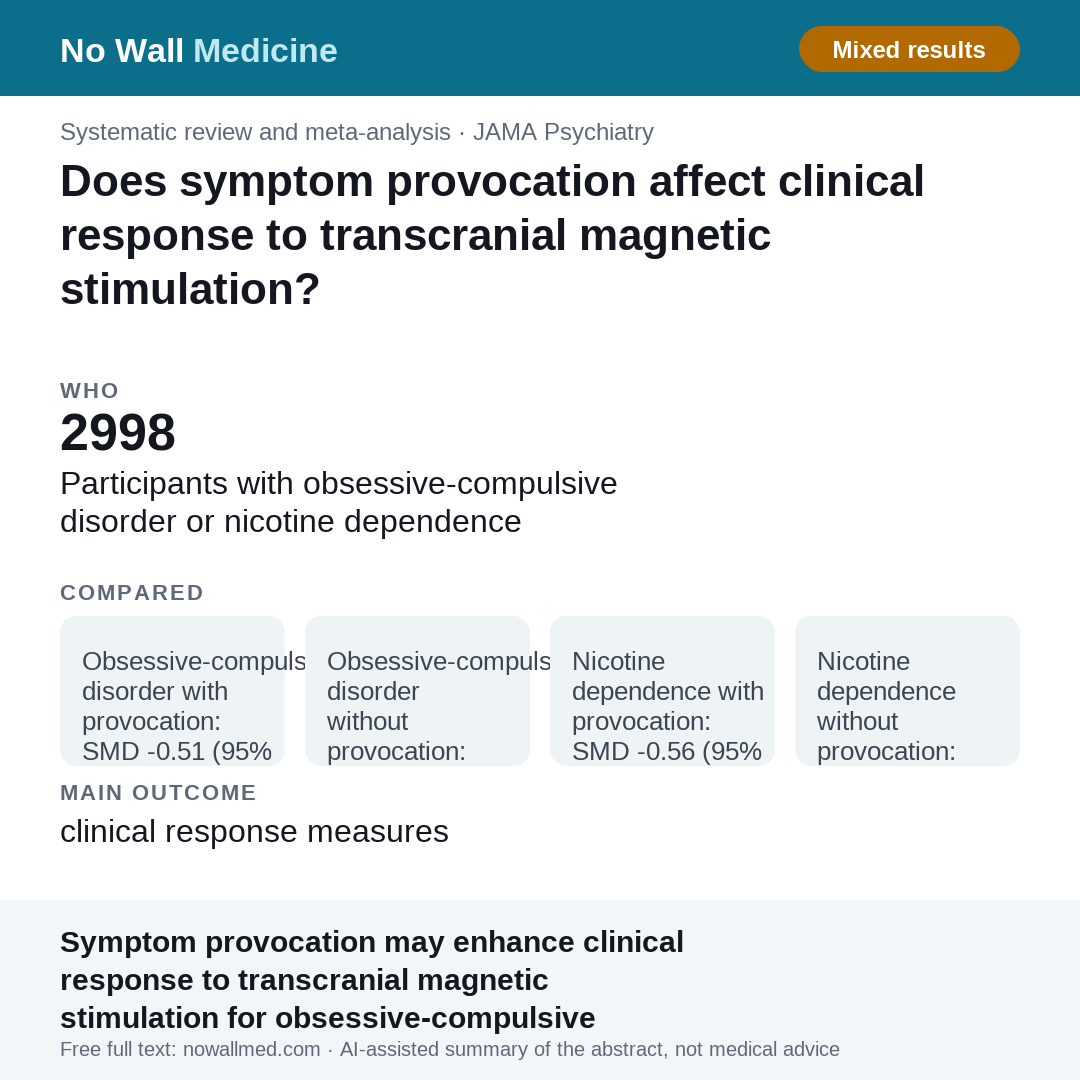
Symptom Provocation and Clinical Response to Transcranial Magnetic Stimulation: A Systematic Review and Meta-Analysis
Systematic review and meta-analysisMixed results
Does symptom provocation affect clinical response to transcranial magnetic stimulation?
Who
2998
Participants with obsessive-compulsive disorder or nicotine dependence
Compared
Obsessive-compulsive disorder with provocation: SMD -0.51 (95% CI, -0.96 to -0.07)
Obsessive-compulsive disorder without provocation: SMD -0.29 (95% CI, -0.40 to -0.17)
Nicotine dependence with provocation: SMD -0.56 (95% CI, -1.12 to 0)
Nicotine dependence without provocation: SMD -0.35 (95% CI, -0.74 to 0.04)
Main outcome
clinical response measures
Bottom line: Symptom provocation may enhance clinical response to transcranial magnetic stimulation for obsessive-compulsive disorder and nicotine dependence.
Limitation: Studies comparing TMS with and without provocation are critical to establish the causal effect of provocation.
JAMA Psychiatry · 2025-06-04Download image
Simvastatin as Add-On Treatment to Escitalopram in Patients With Major Depression and Obesity: A Randomized Clinical Trial
Confirmatory, double-blind, placebo-controlled, multicenter randomized clinical trialNo clear difference
Does adding simvastatin to escitalopram improve depressive symptoms in patients with major depression and obesity?
Who
160
Adults with major depressive disorder and comorbid obesity · 9 tertiary care settings in Germany
Compared
0.47 pointsSimvastatin plus escitalopram
Placebo plus escitalopram
Main outcome
Change in Montgomery-Åsberg Depression Rating Scale score from baseline to week 12
Result: least squares mean difference, 0.47 points; 95% CI, -2.08 to 3.02
Bottom line: Adding simvastatin to escitalopram did not improve depressive symptoms in patients with major depression and obesity.
JAMA Psychiatry · 2025-06-04Download image

Cellular Adhesion Molecules and Adverse Outcomes in Chronic Heart Failure: Findings From the DAPA-HF Randomized Clinical Trial
Randomized clinical trial substudyBenefit found
Are VCAM-1 and ICAM-1 levels associated with progression of established heart failure?
Who
3051
Patients with heart failure and reduced ejection fraction · 410 sites in 20 countries
Compared
Higher VCAM-1 (tertile 3)
Lower VCAM-1 (tertile 1)
Main outcome
Composite of worsening heart failure event or cardiovascular death
Result: hazard ratio 1.40 (95% CI 1.11-1.77)
Bottom line: Higher baseline vascular cell adhesion molecule 1 levels are associated with worse outcomes in heart failure patients.
JAMA Cardiol · 2025-06-04Download image

Effects of antiretrovirals on major adverse cardiovascular events in the REPRIEVE trial: a longitudinal cohort analysis
Double-blind, placebo-controlled, multicentre, phase 3 randomised trial secondary analysisHarm found
Do former or current antiretroviral therapy use affect major adverse cardiovascular events?
Who
7769
People with HIV aged 40-75 years with low-to-moderate cardiovascular disease risk · 137 sites in 12 countries
Compared
Abacavir former exposure: hazard ratio 1.62 (95% CI 1.14-2.30)
Abacavir current exposure: hazard ratio 1.41 (95% CI 1.01-1.96)
No abacavir exposure
Main outcome
time-to-first major adverse cardiovascular events
Result: hazard ratio 1.62 (95% CI 1.14-2.30) for former abacavir exposure
Bottom line: Former or current abacavir use is associated with a higher hazard of major adverse cardiovascular events in people with HIV.
Funded by: National Institutes of Health, Kowa Pharmaceuticals America, Gilead Sciences, and ViiV Healthcare
Lancet HIV · 2025-06-04Download image

Common driving behaviors in older adults with dementia: Insights from a systematic literature review
Systematic literature reviewHarm found
What are the common driving behaviors in older adults with dementia compared to controls?
Who
26
Drivers with dementia and age-matched healthy controls · Scopus, Medline All, and Embase databases
Compared
Drivers with dementia: higher standard deviations of mean speeds, more traffic light tickets, greater out-of-lane drifting, and increased variability in mean headway distance
Age-matched healthy controls
Main outcome
Driving behaviors during on-road tests, simulator experiments, or naturalistic driving
Bottom line: Drivers with dementia exhibit distinct patterns including greater speed variability, traffic light violations, lane drifting, and headway distance variability.
Limitation: Small samples, lack of confounding factors, non-validated settings, and simulator studies may not reflect real-world conditions.
Alzheimers Dement · 2025-06-04Download image

Nonverbal correlates of paranoid ideation - a systematic literature review
Systematic literature reviewUnclear result
What are the nonverbal correlates of paranoid ideation?
Who
22
Adults with psychosis spectrum diagnosis or healthy populations
Compared
Spatial behavior: n = 6
Brain region activity: n = 5
Visual perception: n = 5
Stress physiology: n = 4
Main outcome
Nonverbal correlates of paranoid ideation
Bottom line: Evidence is strongest for spatial behavior and brain region activity, but other nonverbal correlates require more investigation.
Psychol Med · 2025-06-04Download image

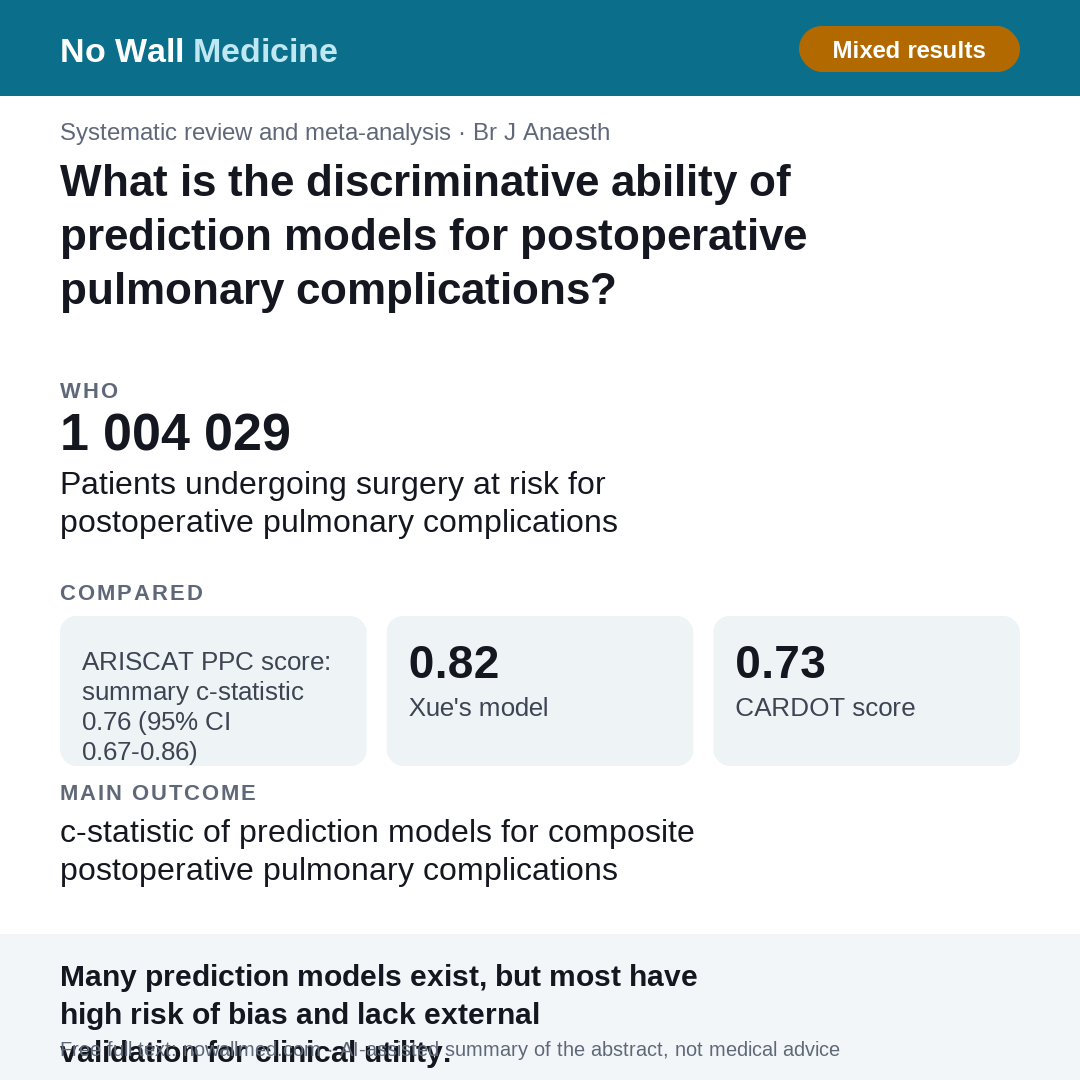
Prediction models for postoperative pulmonary complications: a systematic review and meta-analysis
Systematic review and meta-analysisMixed results
What is the discriminative ability of prediction models for postoperative pulmonary complications?
Who
1 004 029
Patients undergoing surgery at risk for postoperative pulmonary complications
Compared
ARISCAT PPC score: summary c-statistic 0.76 (95% CI 0.67-0.86)
0.82Xue's model (95% CI 0.75-0.89)
0.73CARDOT score (95% CI 0.61-0.85)
Main outcome
c-statistic of prediction models for composite postoperative pulmonary complications
Bottom line: Many prediction models exist, but most have high risk of bias and lack external validation for clinical utility.
Limitation: Reliability is limited by the lack of external validation cohorts and 90.2% of models had high risk of bias.
Br J Anaesth · 2025-06-04Download image
Fluid resuscitation management in patients with sepsis and septic shock: a network meta-analysis
Network meta-analysis of 28 randomized controlled trialsBenefit found
Which fluid resuscitation strategies are most effective for sepsis and septic shock?
Who
8770
Patients with sepsis or septic shock
Compared
Balanced crystalloids
Low molecular weight hydroxyethyl starch
Saline
High molecular weight hydroxyethyl starch
Main outcome
90-day mortality, complications, and treatment responses
Result: RR -0.84 (95 % CrI 0.75 to 0.95) for balanced crystalloids vs low molecular weight hydroxyethyl starch
Bottom line: Balanced crystalloids reduce 90-day mortality compared to saline or low molecular weight hydroxyethyl starch in sepsis patients.
Am J Emerg Med · 2025-06-04Download image

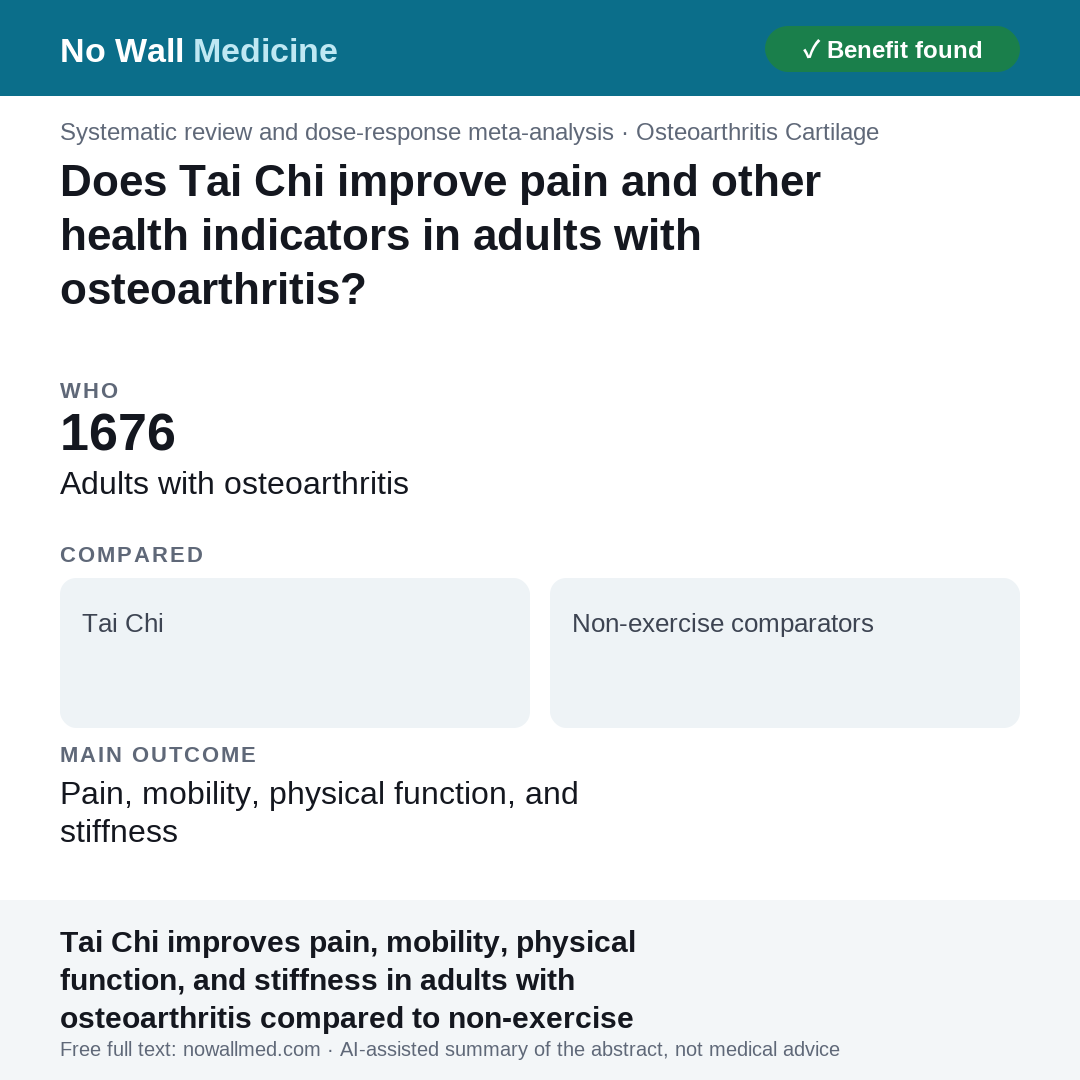
The effects of Tai Chi on pain and other health indicators in people with osteoarthritis: An updated systematic review and dose-response meta-analysis
Systematic review and dose-response meta-analysisBenefit found
Does Tai Chi improve pain and other health indicators in adults with osteoarthritis?
Who
1676
Adults with osteoarthritis
Compared
Tai Chi
Non-exercise comparators
Main outcome
Pain, mobility, physical function, and stiffness
Result: Cohen's d -0.64 (95% CI -0.96 to -0.34) for pain
Bottom line: Tai Chi improves pain, mobility, physical function, and stiffness in adults with osteoarthritis compared to non-exercise controls.
Osteoarthritis Cartilage · 2025-06-04Download image
High dose arachidonic and docosahexaenoic acid in very preterm infants and neurodevelopment at 2 years - A double-blind randomized controlled trial
Double-blind randomized controlled trialNo clear difference
Does arachidonic and docosahexaenoic acid supplementation improve neurodevelopment in very preterm infants?
Who
120
Infants born before 29 weeks of gestational age
Compared
Arachidonic and docosahexaenoic acid group
Medium chain triglycerides control group
Main outcome
Neurodevelopmental outcomes at two years corrected age
Bottom line: Supplementation with arachidonic and docosahexaenoic acid did not significantly change neurodevelopmental outcomes at two years.
Clin Nutr · 2025-06-04Download image

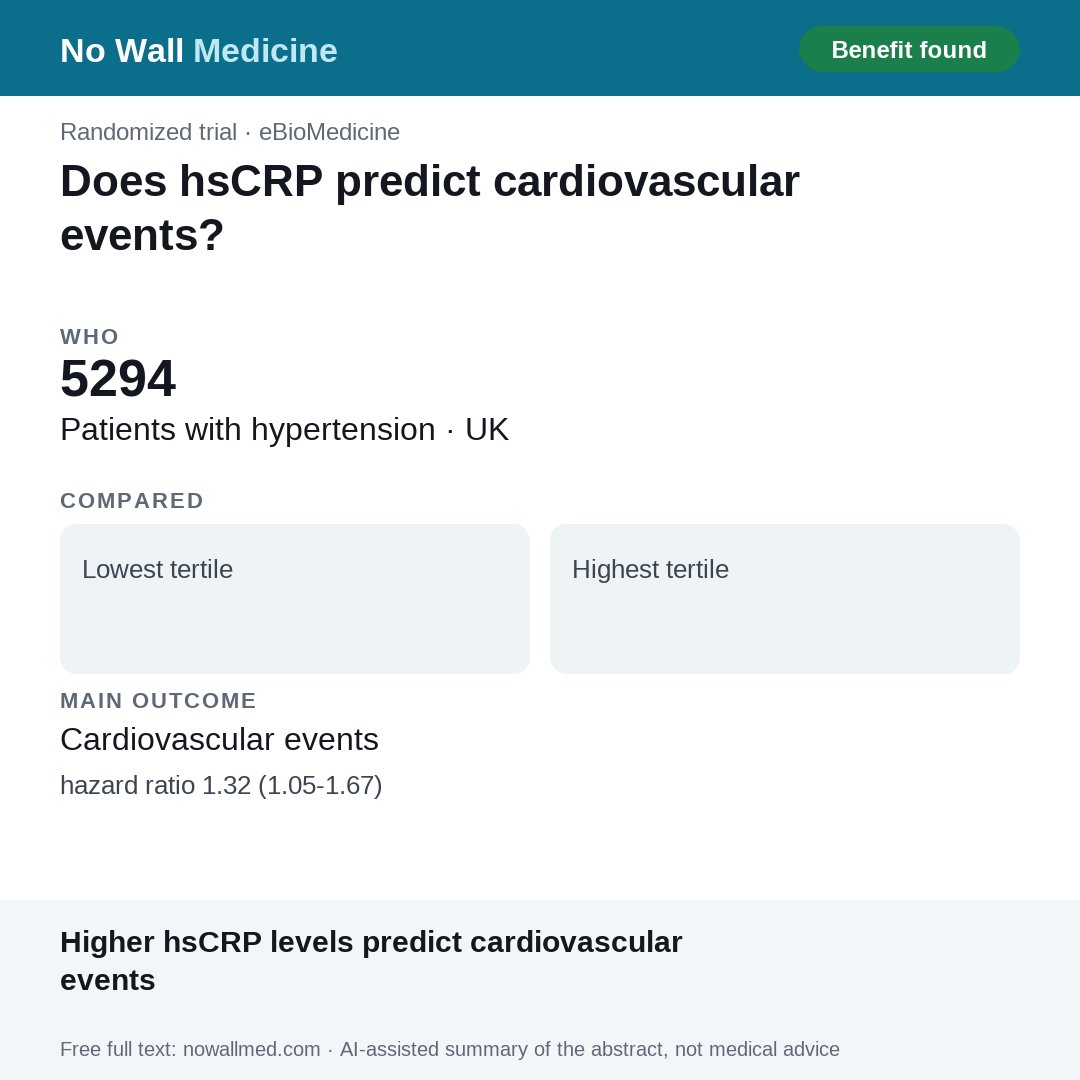
The relationship of baseline high-sensitivity C-reactive protein with incident cardiovascular events and all-cause mortality over 20 years
Randomized trialBenefit found
Does hsCRP predict cardiovascular events?
Who
5294
Patients with hypertension · UK
Compared
Lowest tertile
Highest tertile
Main outcome
Cardiovascular events
Result: hazard ratio 1.32 (1.05-1.67)
Bottom line: Higher hsCRP levels predict cardiovascular events
Funded by: British Heart Foundation
eBioMedicine · 2025-06-04Download image
Quality-of-life and symptom severity in the PALLAS randomized trial of palbociclib with adjuvant endocrine therapy in early breast cancer (AFT-05, ABCSG-42, BIG-14-03, PrE0109)
Phase III, randomized trialNo clear difference
Does adding palbociclib to adjuvant endocrine therapy affect quality of life and symptom severity?
Who
4688
Hormone receptor-positive, human epidermal growth factor receptor 2-negative, stage II-III breast cancer patients
Compared
palbociclib plus adjuvant endocrine therapy
adjuvant endocrine therapy alone
Main outcome
eight patient-reported quality of life and symptom severity endpoints
Bottom line: No clinically significant differences in patient-reported quality of life or symptom severity were found between treatment arms.
Limitation: Differences in symptom worsening were observed by treatment regimen, race, and ethnicity.
ESMO Open · 2025-06-04Download image