Visual abstracts
New randomized trials and meta-analyses from leading journals at a glance: who was studied, what was compared, and what was found. Every paper is free to read in full.
All specialtiesCardiology 1196Oncology 1047Gastroenterology & Hepatology 415Infectious Disease 788Neurology 491Psychiatry & Mental Health 609Pulmonology 505Critical Care 347Endocrinology & Diabetes 663Pediatrics 713Surgery 529Orthopedics & Sports Medicine 226Neurosurgery 163Cardiothoracic & Vascular Surgery 134Plastic & Reconstructive Surgery 187Nephrology 250Rheumatology 158Hematology 245Dermatology 114Ophthalmology 134Obstetrics & Gynecology 371Public & Global Health 234Radiology & Imaging 156Anesthesiology 212Urology 217ENT (Otolaryngology) 165Emergency Medicine 127Allergy & Immunology 82Geriatrics 239Family Medicine & Primary Care 148Medical Genetics & Genomics 125Pathology & Laboratory Medicine 36Physical Medicine & Rehabilitation 206Palliative Care 108Nutrition 311Digital Health & AI 595General Medicine 113
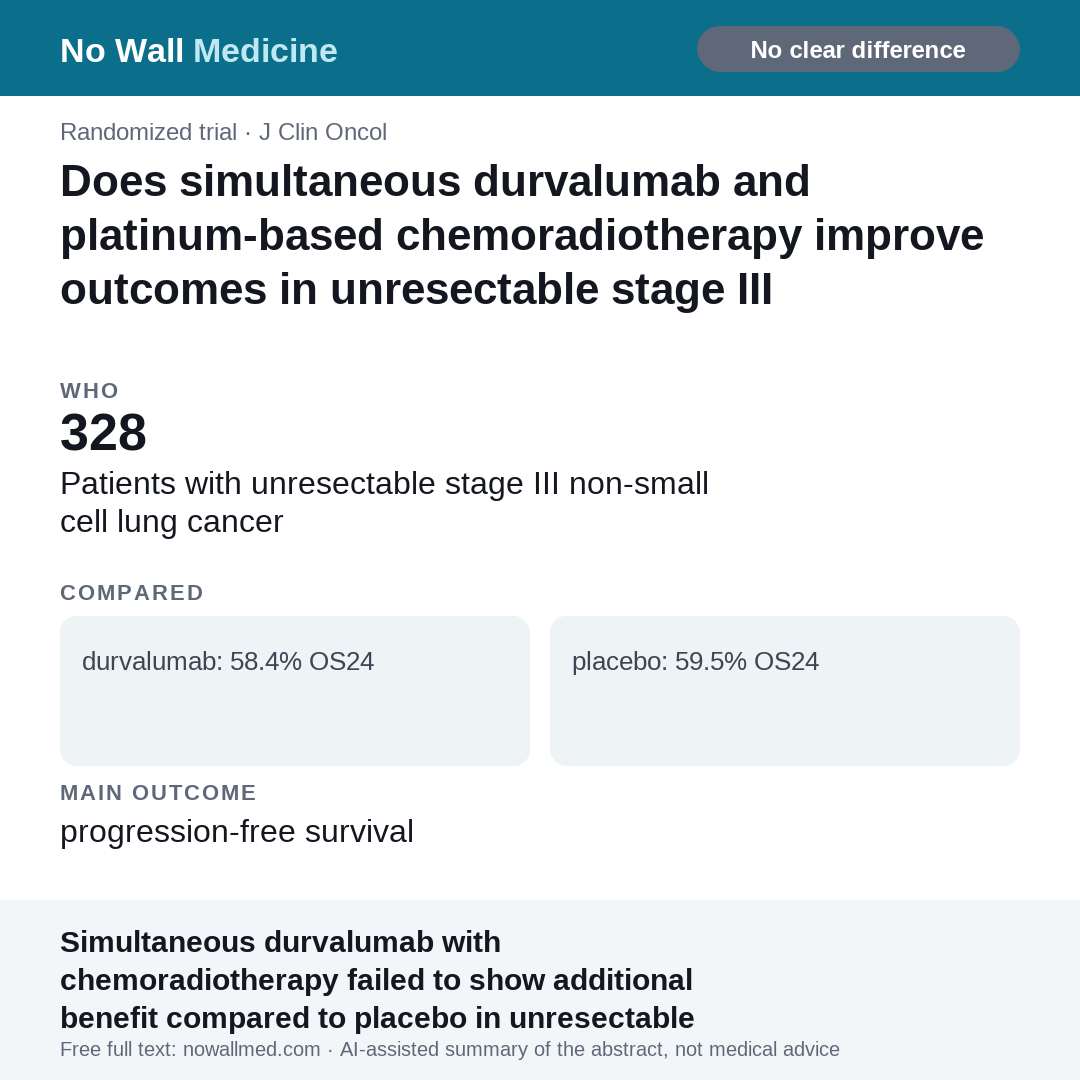
Simultaneous Durvalumab and Platinum-Based Chemoradiotherapy in Unresectable Stage III Non-Small Cell Lung Cancer: The Phase III PACIFIC-2 Study
Randomized trialNo clear difference
Does simultaneous durvalumab and platinum-based chemoradiotherapy improve outcomes in unresectable stage III non-small cell lung cancer?
Who
328
Patients with unresectable stage III non-small cell lung cancer
Compared
durvalumab: 58.4% OS24
placebo: 59.5% OS24
Main outcome
progression-free survival
Result: hazard ratio 0.85 (95% CI 0.65 to 1.12)
Bottom line: Simultaneous durvalumab with chemoradiotherapy failed to show additional benefit compared to placebo in unresectable stage III non-small cell lung cancer.
J Clin Oncol · 2025-10-13Download image
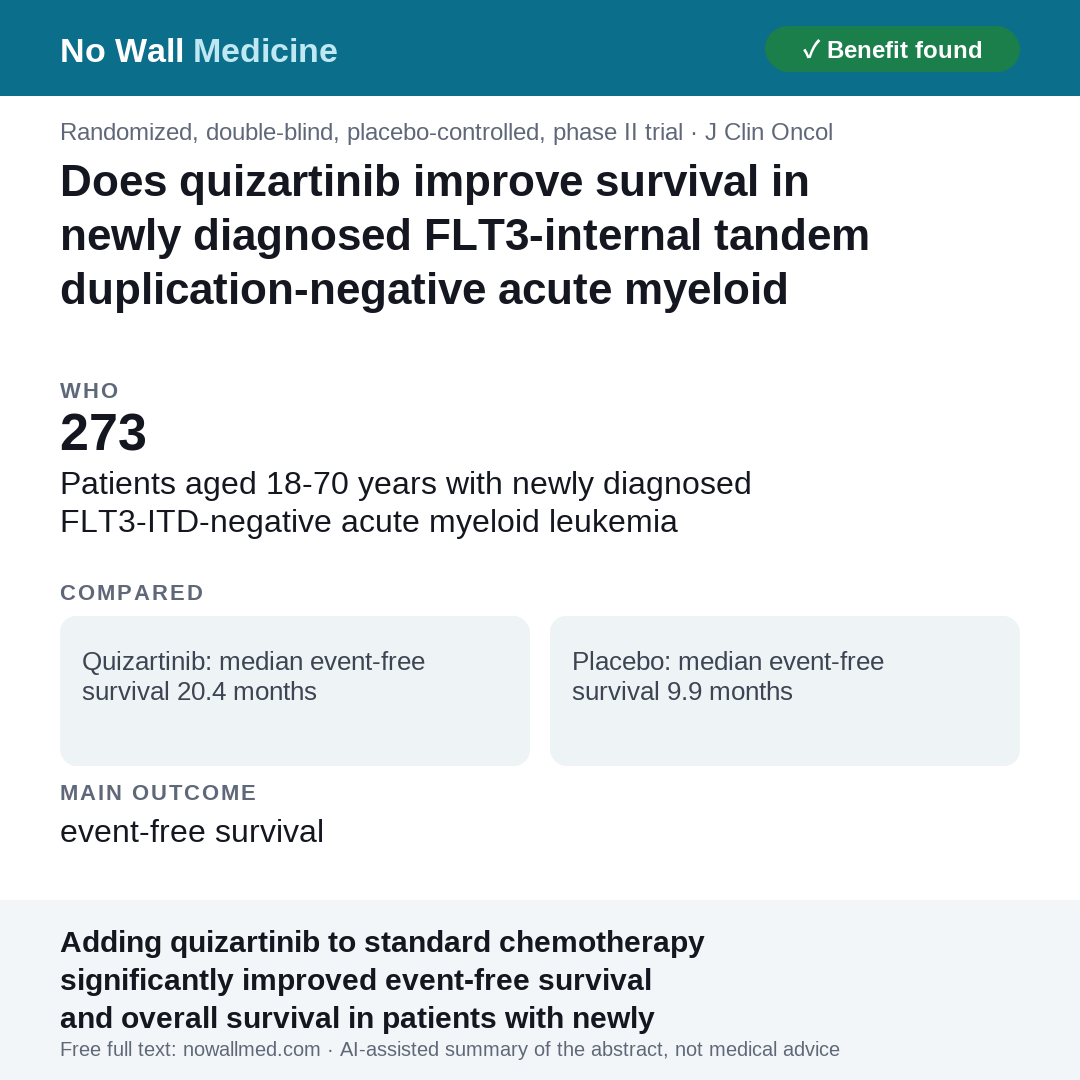
Quizartinib for Newly Diagnosed FLT3-Internal Tandem Duplication-Negative AML: The Randomized, Double-Blind, Placebo-Controlled, Phase II QUIWI Study
Randomized, double-blind, placebo-controlled, phase II trialBenefit found
Does quizartinib improve survival in newly diagnosed FLT3-internal tandem duplication-negative acute myeloid leukemia?
Who
273
Patients aged 18-70 years with newly diagnosed FLT3-ITD-negative acute myeloid leukemia
Compared
Quizartinib: median event-free survival 20.4 months
Placebo: median event-free survival 9.9 months
Main outcome
event-free survival
Bottom line: Adding quizartinib to standard chemotherapy significantly improved event-free survival and overall survival in patients with newly diagnosed FLT3-ITD-negative acute myeloid leukemia.
J Clin Oncol · 2025-10-13Download image
Sedation vs General Anesthesia for Endovascular Therapy in Acute Ischemic Stroke: The SEGA Randomized Clinical Trial
Multicenter randomized clinical trialNo clear difference
Is general anesthesia or moderate sedation better for endovascular therapy in acute ischemic stroke?
Who
260
Adult patients with acute ischemic stroke and large vessel occlusion · 10 comprehensive stroke centers in the US
Compared
General anesthesia
Moderate sedation
Main outcome
ordinal modified Rankin Scale score at 90 days
Result: odds ratio 1.22 (95% credible interval 0.79-1.87)
Bottom line: General anesthesia showed improved 90-day outcomes and reperfusion rates, but the difference was not statistically significant.
JAMA Neurol · 2025-10-13Download image

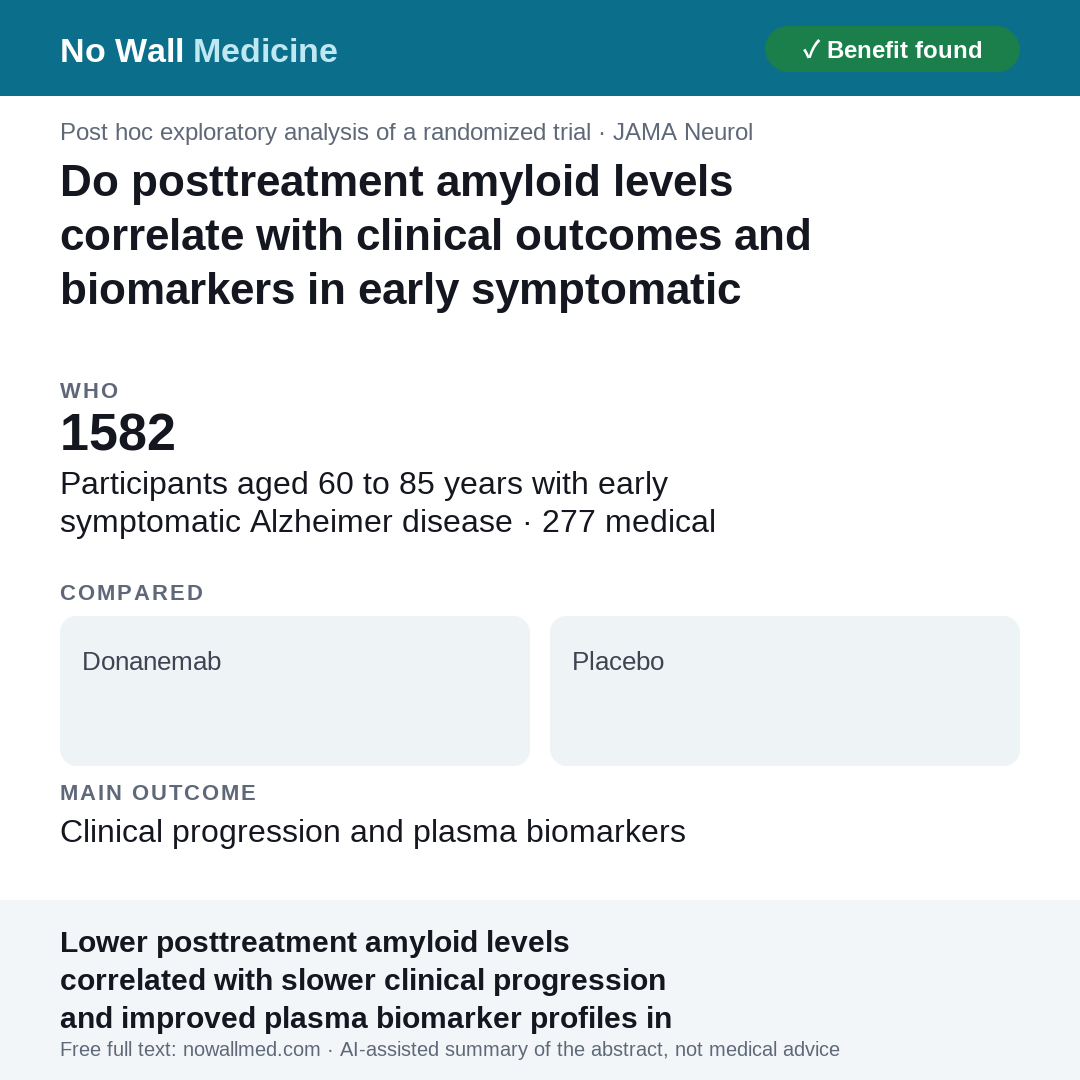
Posttreatment Amyloid Levels and Clinical Outcomes Following Donanemab for Early Symptomatic Alzheimer Disease: A Secondary Analysis of the TRAILBLAZER-ALZ 2 Randomized Clinical Trial
Post hoc exploratory analysis of a randomized trialBenefit found
Do posttreatment amyloid levels correlate with clinical outcomes and biomarkers in early symptomatic Alzheimer disease?
Who
1582
Participants aged 60 to 85 years with early symptomatic Alzheimer disease · 277 medical research centers in 8 countries
Compared
Donanemab
Placebo
Main outcome
Clinical progression and plasma biomarkers
Result: iADRS R2 0.73 (95% CI 0.37-0.97); CDR-SB R2 0.87 (95% CI 0.70-0.97)
Bottom line: Lower posttreatment amyloid levels correlated with slower clinical progression and improved plasma biomarker profiles in Alzheimer disease.
JAMA Neurol · 2025-10-13Download image
Efficacy and safety of pharmacological therapies for functional constipation in children: a systematic review and meta-analysis
Systematic review and meta-analysis of 59 randomized controlled trialsBenefit found
How effective and safe are pharmacological therapies for functional constipation in children?
Who
7045
Children aged 0 to younger than 18 years with functional constipation
Compared
Polyethylene glycol: RR 1·74 [95% CI 1·25-2·41]
Placebo
Main outcome
Treatment success, defecation frequency, and withdrawals due to adverse events
Result: RR 1·74 [95% CI 1·25-2·41]
Bottom line: Polyethylene glycol is probably more effective than placebo and other therapies for treating functional constipation in children.
Lancet Child Adolesc Health · 2025-10-13Download image

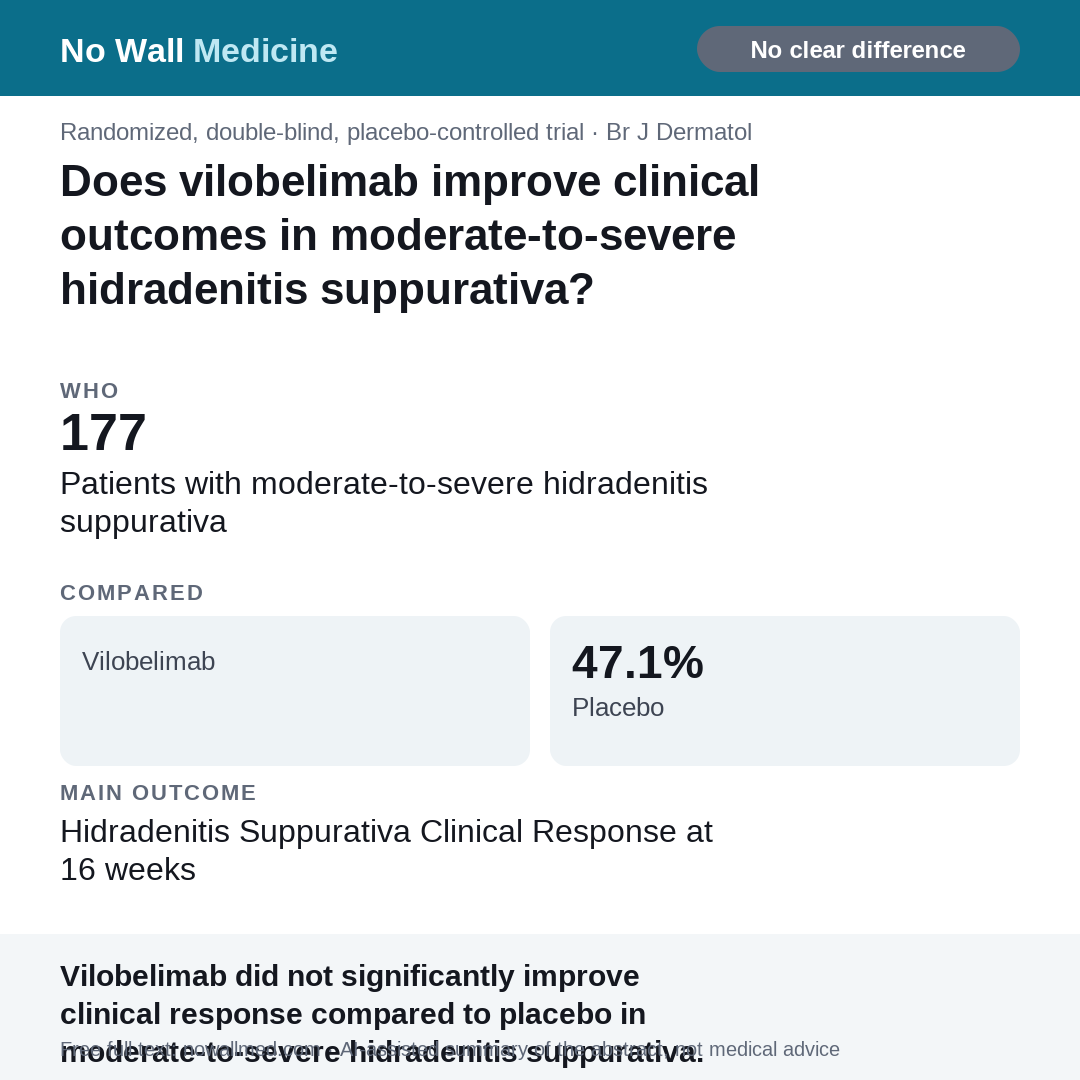
Vilobelimab to improve clinical outcomes in moderate-to-severe hidradenitis suppurativa through an adjunctive effect on draining tunnels: results of the SHINE double-blind placebo-controlled randomized trial
Randomized, double-blind, placebo-controlled trialNo clear difference
Does vilobelimab improve clinical outcomes in moderate-to-severe hidradenitis suppurativa?
Who
177
Patients with moderate-to-severe hidradenitis suppurativa
Compared
Vilobelimab
47.1%Placebo
Main outcome
Hidradenitis Suppurativa Clinical Response at 16 weeks
Bottom line: Vilobelimab did not significantly improve clinical response compared to placebo in moderate-to-severe hidradenitis suppurativa.
Br J Dermatol · 2025-10-13Download image
A Randomized Phase 1 Study Investigating Gut Microbiome Changes With Moxifloxacin vs Oral Vancomycin: Implications for Clostridioides difficile Risk
Phase 1, nonblinded, randomized clinical trialMixed results
How do moxifloxacin and oral vancomycin affect gut microbiome and metabolomic changes?
Who
Healthy volunteers aged 18 to 40 years
Compared
Moxifloxacin: minimal microbial disruption
Vancomycin: more significant changes in the microbiome
Main outcome
microbial taxonomic profile and metabolomic changes
Bottom line: Moxifloxacin causes specific microbiome and metabolomic changes, increasing risk for a shorter period than vancomycin.
J Infect Dis · 2025-10-13Download image

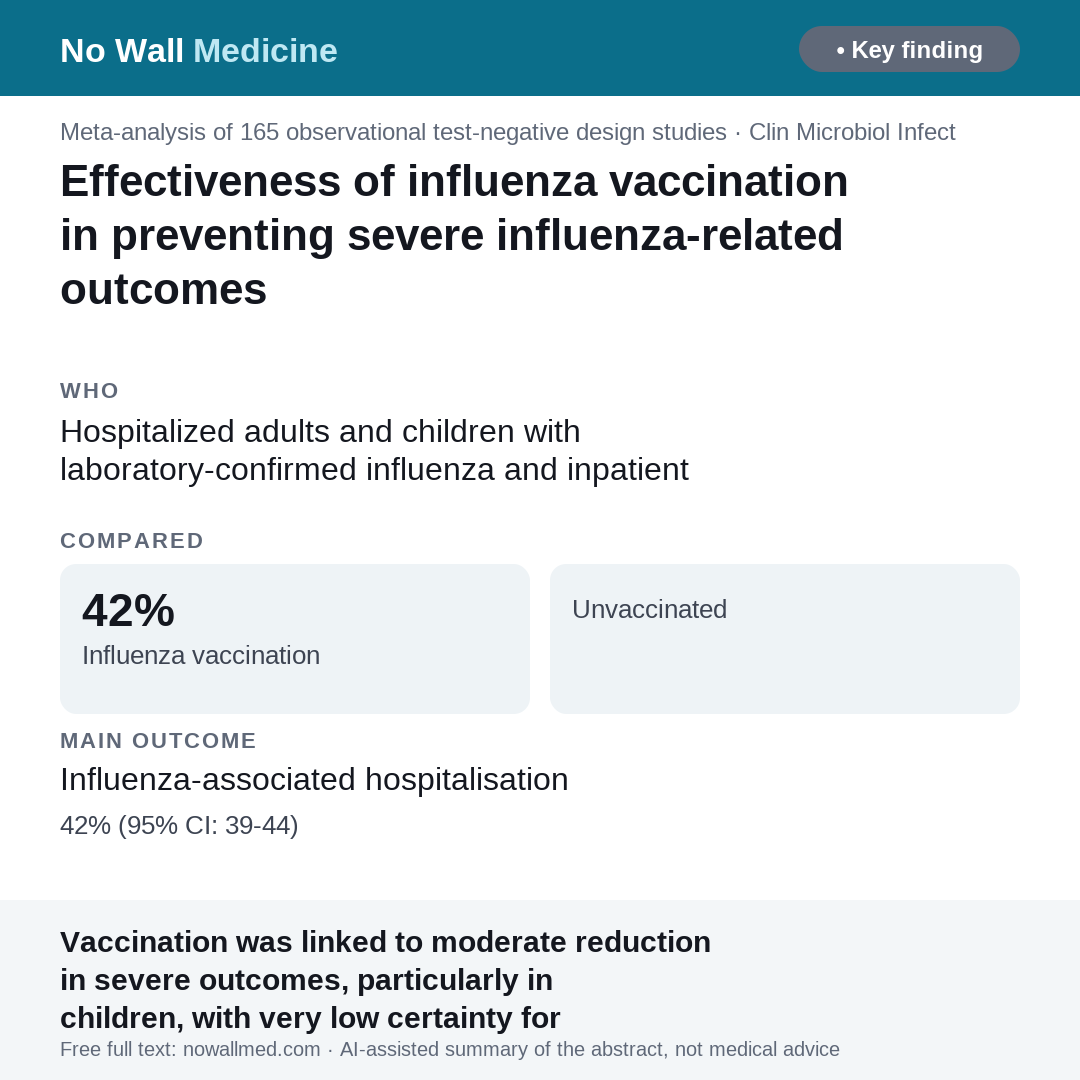
Effectiveness of influenza vaccination to prevent severe disease: a systematic review and meta-analysis of test-negative design studies
Meta-analysis of 165 test-negative design studiesBenefit found
Is influenza vaccination effective in preventing severe influenza-related outcomes?
Who
Hospitalized adults and children with laboratory-confirmed influenza
Compared
Influenza vaccination
No vaccination
Main outcome
Severe influenza-related outcomes
Result: 42% (95% CI: 39-44) against influenza-associated hospitalisation
Bottom line: Influenza vaccination moderately reduces severe outcomes, particularly in children and against influenza A(H1N1).
Limitation: Certainty of evidence was low to very low for most outcomes.
Clin Microbiol Infect · 2025-10-13Download image
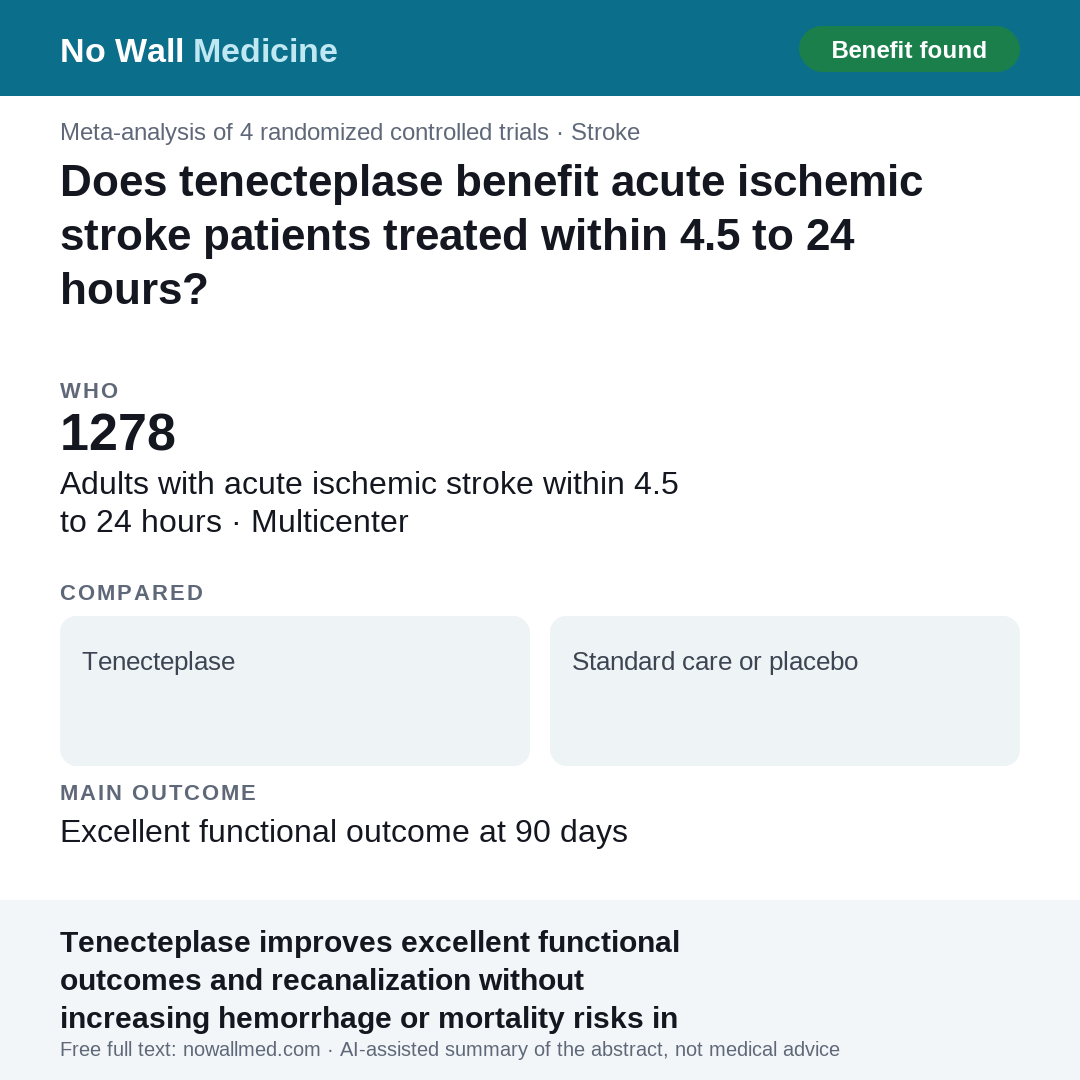
Tenecteplase for Acute Ischemic Stroke at 4.5 to 24 Hours: A Meta-Analysis of Randomized Controlled Trials
Meta-analysis of 4 randomized controlled trialsBenefit found
Does tenecteplase benefit acute ischemic stroke patients treated within 4.5 to 24 hours?
Who
1278
Adults with acute ischemic stroke within 4.5 to 24 hours · Multicenter
Compared
Tenecteplase
Standard care or placebo
Main outcome
Excellent functional outcome at 90 days
Result: odds ratio 1.34 (95% CI 1.06-1.71)
Bottom line: Tenecteplase improves excellent functional outcomes and recanalization without increasing hemorrhage or mortality risks in the extended window.
Stroke · 2025-10-13Download image
Malignant Transformation of Oral Leukoplakia and Proliferative Verrucous Leukoplakia and Its Biomarker Predictors: A Systematic Umbrella Review
Umbrella review of systematic reviews and meta-analysesMixed results
What are the malignant transformation rates and predictive biomarkers for oral leukoplakia?
Who
125,000
Patients with oral leukoplakia and proliferative verrucous leukoplakia
Compared
48%Proliferative verrucous leukoplakia
6%Oral leukoplakia
Main outcome
Malignant transformation prevalence and predictive biomarkers
Bottom line: Proliferative verrucous leukoplakia has higher transformation rates than oral leukoplakia, with DNA aneuploidy as a promising biomarker.
Head Neck · 2025-10-13Download image

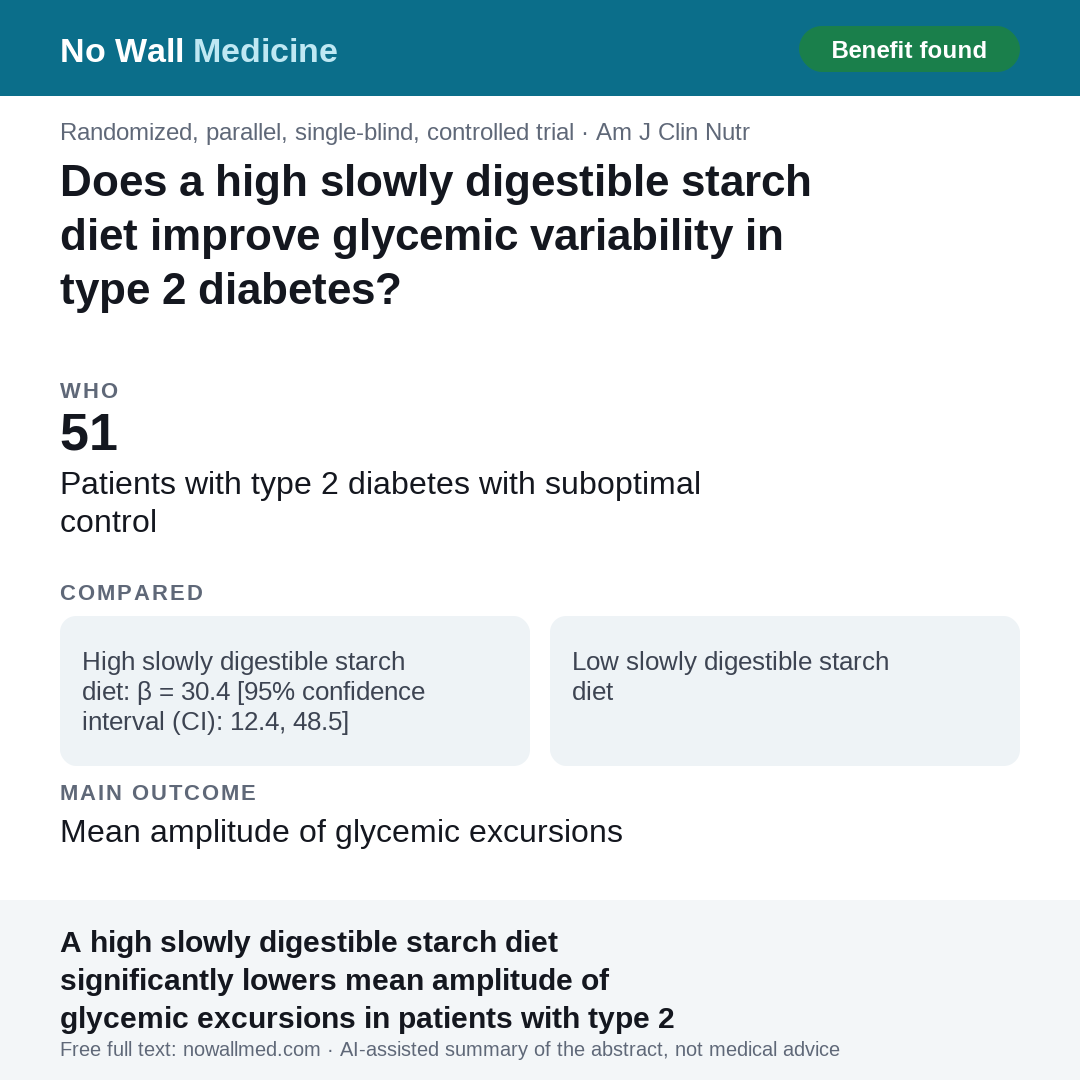
Optimizing glycemic variability in type 2 diabetes using simple dietary and culinary recommendations to modulate starch digestibility: a randomized controlled trial
Randomized, parallel, single-blind, controlled trialBenefit found
Does a high slowly digestible starch diet improve glycemic variability in type 2 diabetes?
Who
51
Patients with type 2 diabetes with suboptimal control
Compared
High slowly digestible starch diet: β = 30.4 [95% confidence interval (CI): 12.4, 48.5]
Low slowly digestible starch diet
Main outcome
Mean amplitude of glycemic excursions
Result: β = 30.4 [95% confidence interval (CI): 12.4, 48.5]
Bottom line: A high slowly digestible starch diet significantly lowers mean amplitude of glycemic excursions in patients with type 2 diabetes.
Am J Clin Nutr · 2025-10-13Download image
Prenatal and preschool micronutrient supplementation and behavioral outcomes in school-aged children in Nepal-a cohort study
Cohort follow-up study of two randomized trialsBenefit found
Does prenatal and preschool micronutrient supplementation affect behavioral outcomes in school-aged children?
Who
1255
School-aged children between 7 and 9 years old in rural Nepal · Rural Nepal
Compared
Prenatal iron-folic acid: lower oppositionality/hyperactivity and inattention scores
Prenatal iron-folic acid with zinc: reversed the positive effect seen with iron-folic acid
Prenatal multiple micronutrients: lower oppositionality and/or hyperactivity score
Preschool supplementation groups: reduced child inattention when assessed by parents
Main outcome
Attention-deficit hyperactivity disorder-related behaviors
Bottom line: Early life micronutrient supplementation shows potential benefit for child-related behavior outcomes in a South Asian setting.
Am J Clin Nutr · 2025-10-13Download image

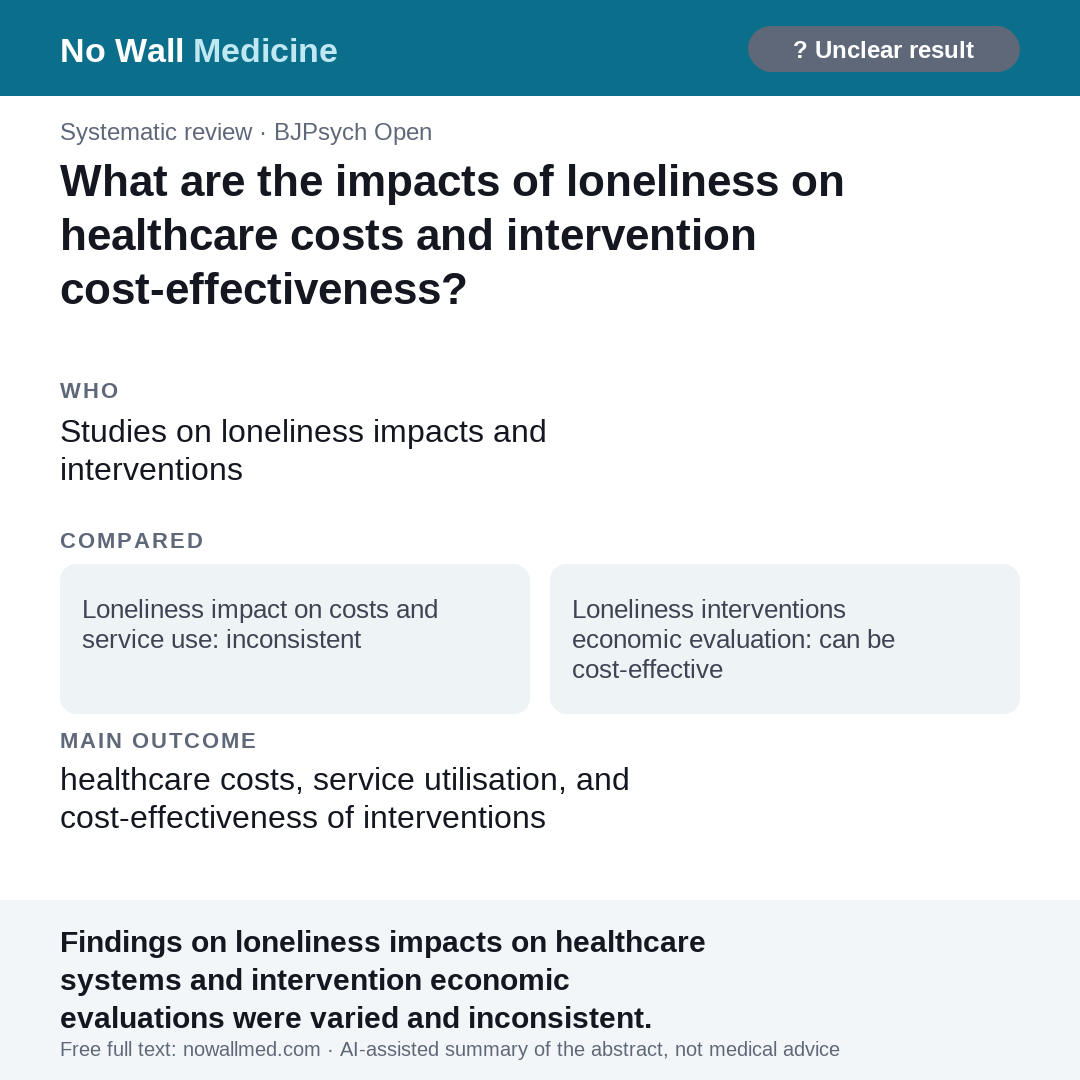
The impact of loneliness on healthcare costs and service utilisation and the cost-effectiveness of loneliness interventions: systematic review
Systematic reviewUnclear result
What are the impacts of loneliness on healthcare costs and intervention cost-effectiveness?
Who
53
Studies on loneliness impacts and interventions
Compared
Loneliness impact on costs and service use: inconsistent
Loneliness interventions economic evaluation: can be cost-effective
Main outcome
healthcare costs, service utilisation, and cost-effectiveness of interventions
Bottom line: Findings on loneliness impacts on healthcare systems and intervention economic evaluations were varied and inconsistent.
BJPsych Open · 2025-10-13Download image
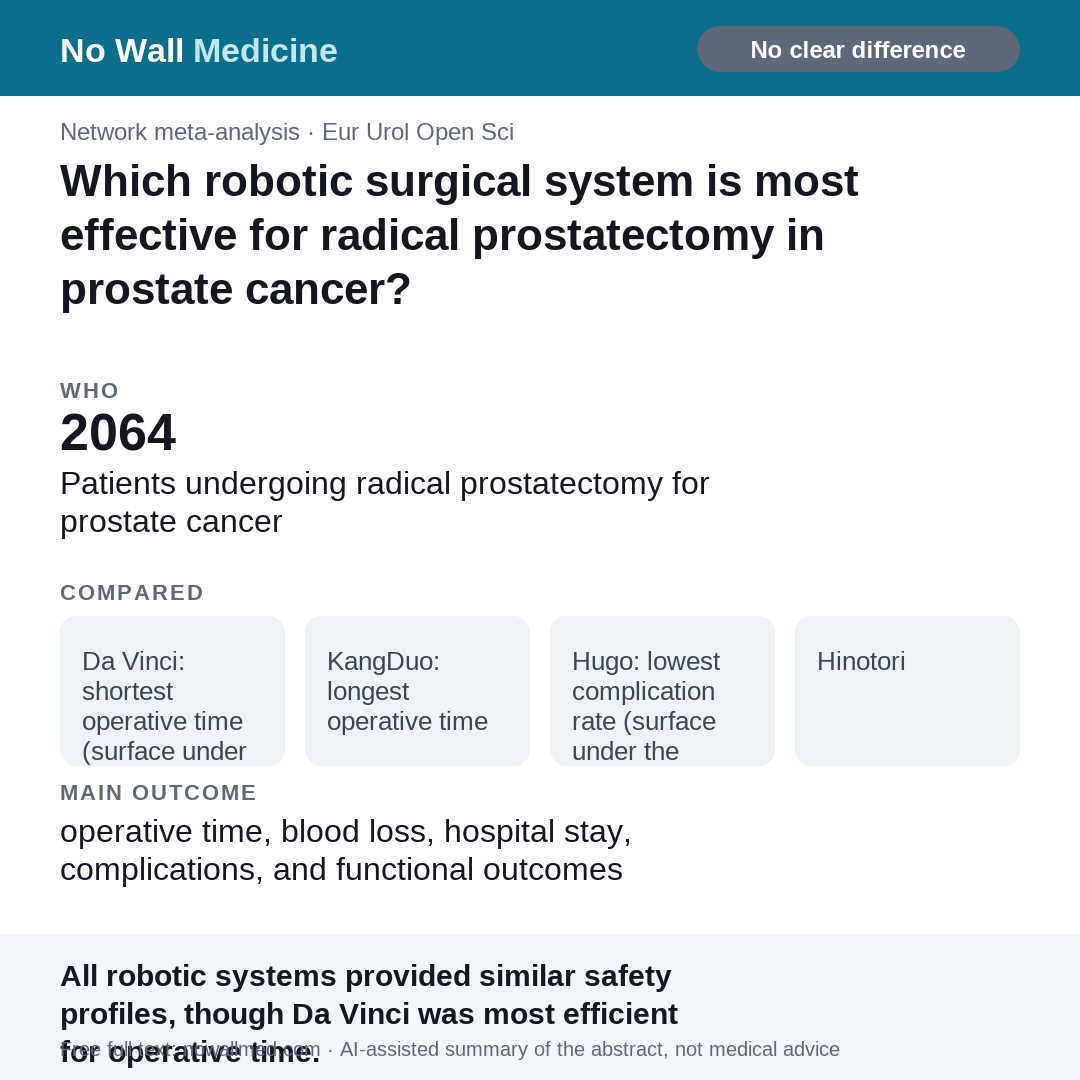
Application Effect of Different Robotic Surgery Systems in Radical Prostatectomy: A Comparative Study Based on a Network Meta-analysis
Network meta-analysisNo clear difference
Which robotic surgical system is most effective for radical prostatectomy in prostate cancer?
Who
2064
Patients undergoing radical prostatectomy for prostate cancer
Compared
Da Vinci: shortest operative time (surface under the cumulative ranking curve score: 90.7)
KangDuo: longest operative time
Hugo: lowest complication rate (surface under the cumulative ranking curve score: 84.3)
Hinotori
Main outcome
operative time, blood loss, hospital stay, complications, and functional outcomes
Bottom line: All robotic systems provided similar safety profiles, though Da Vinci was most efficient for operative time.
Eur Urol Open Sci · 2025-10-13Download image
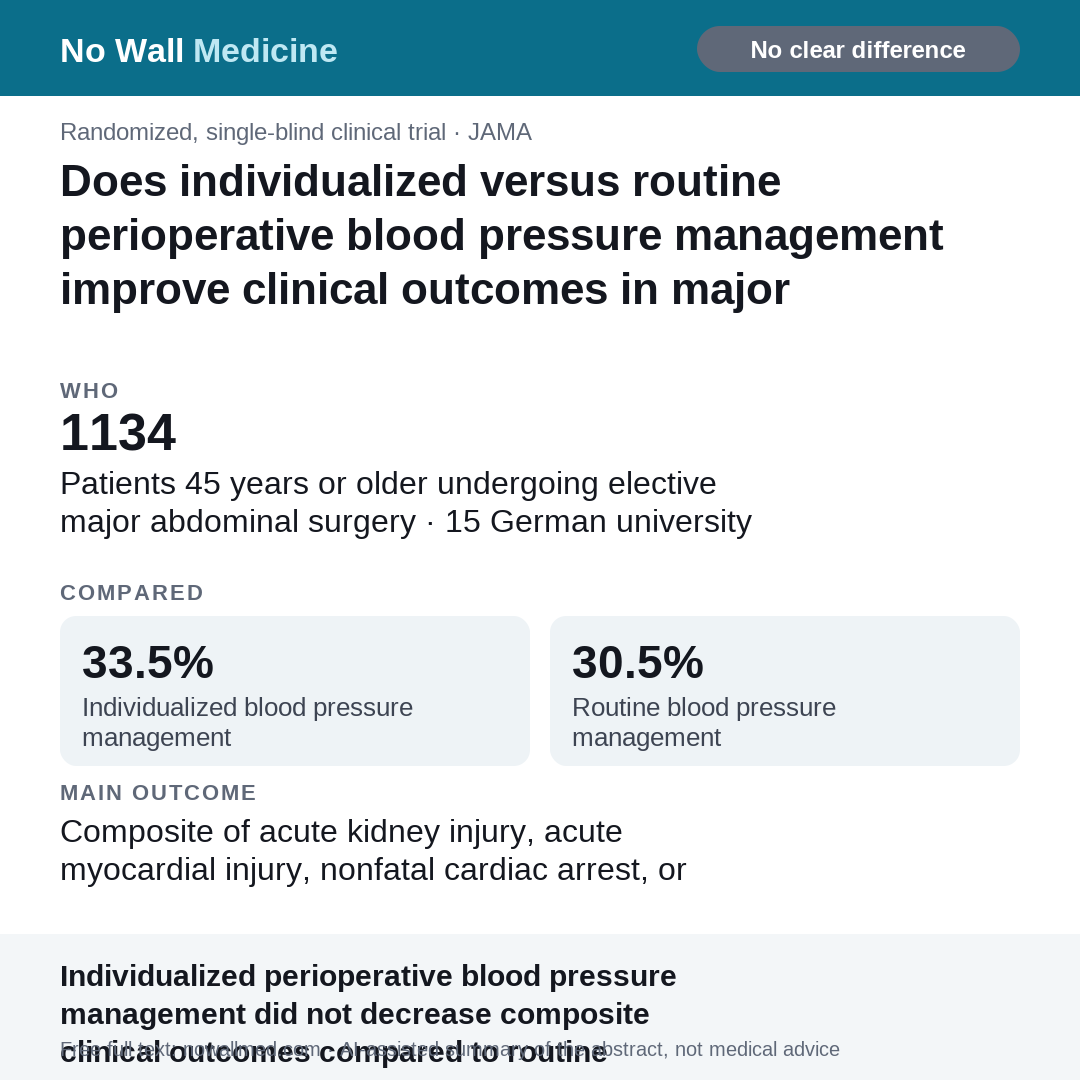
Individualized Perioperative Blood Pressure Management in Patients Undergoing Major Abdominal Surgery: The IMPROVE-multi Randomized Clinical Trial
Randomized, single-blind clinical trialNo clear difference
Does individualized versus routine perioperative blood pressure management improve clinical outcomes in major abdominal surgery?
Who
1134
Patients 45 years or older undergoing elective major abdominal surgery · 15 German university hospitals
Compared
33.5%Individualized blood pressure management (190/567)
30.5%Routine blood pressure management (173/567)
Main outcome
Composite of acute kidney injury, acute myocardial injury, nonfatal cardiac arrest, or death
Result: relative risk 1.10 (95% CI 0.93-1.30)
Bottom line: Individualized perioperative blood pressure management did not decrease composite clinical outcomes compared to routine management in high-risk abdominal surgery patients.
JAMA · 2025-10-12Download image
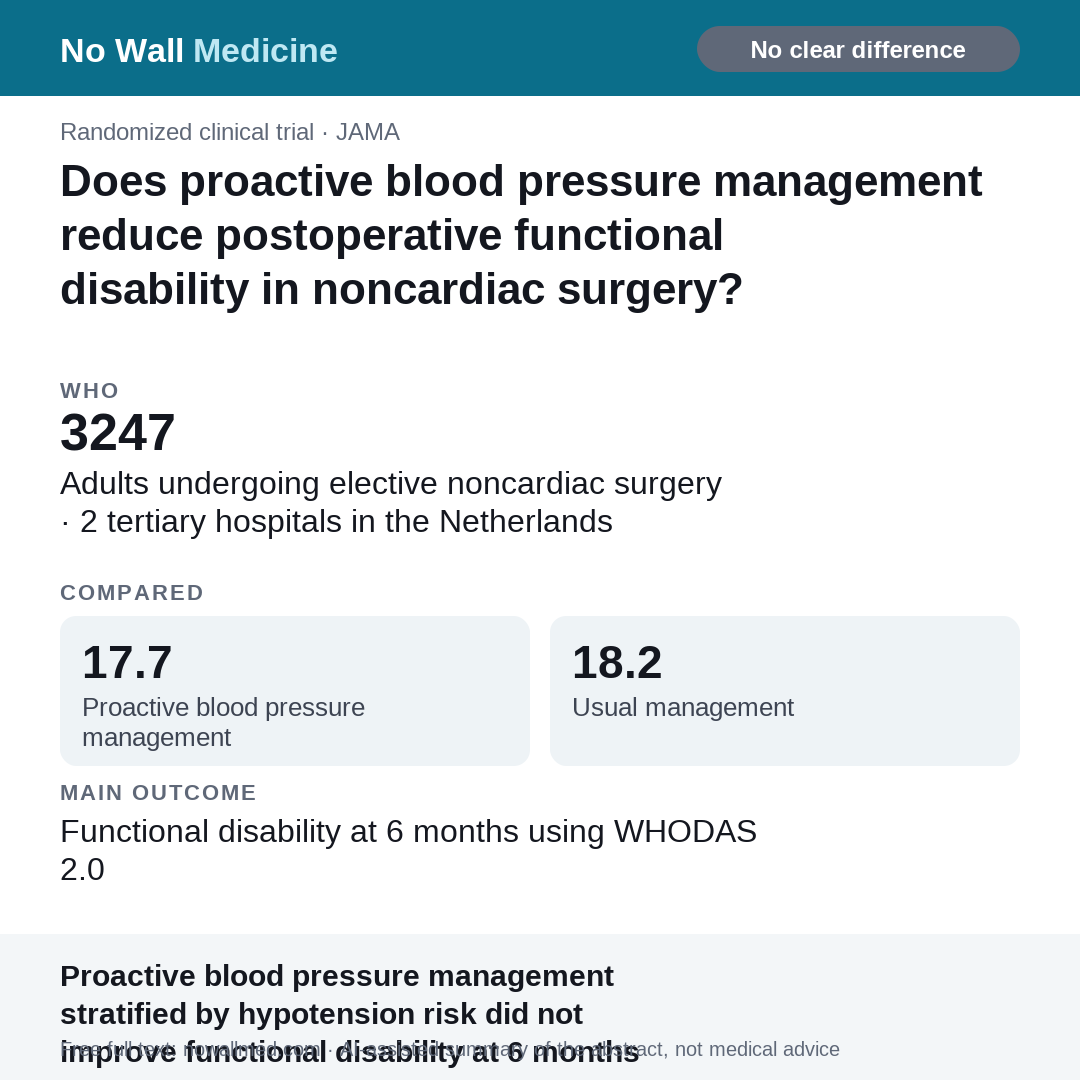
Proactive vs Reactive Treatment of Hypotension During Surgery: The PRETREAT Randomized Clinical Trial
Randomized clinical trialNo clear difference
Does proactive blood pressure management reduce postoperative functional disability in noncardiac surgery?
Who
3247
Adults undergoing elective noncardiac surgery · 2 tertiary hospitals in the Netherlands
Compared
17.7Proactive blood pressure management (20.1)
18.2Usual management (20.5)
Main outcome
Functional disability at 6 months using WHODAS 2.0
Result: mean difference -0.5 (95% credible interval, -1.9 to 0.9)
Bottom line: Proactive blood pressure management stratified by hypotension risk did not improve functional disability at 6 months compared to usual care.
JAMA · 2025-10-12Download image
Catheter Ablation vs Sotalol or Amiodarone for Ventricular Tachycardia: A Substudy of the VANISH2 Trial
Randomized trial substudyMixed results
Is catheter ablation better than sotalol or amiodarone for ventricular tachycardia?
Who
416
Patients with prior myocardial infarction and ventricular tachycardia · Multicenter
Compared
46%Ablation (sotalol stratum)
59%Sotalol (sotalol stratum)
55%Ablation (amiodarone stratum)
61%Antiarrhythmic drugs (amiodarone stratum)
Main outcome
Composite of death, appropriate shock, ventricular tachycardia storm, or treated sustained ventricular tachycardia
Result: hazard ratio 0.64 (95% CI 0.43-0.94) for sotalol; hazard ratio 0.86 (95% CI 0.61-1.22) for amiodarone
Bottom line: Ablation reduced primary endpoint risk in sotalol-eligible patients but showed comparable efficacy to amiodarone with more adverse events.
JACC · 2025-10-11Download image

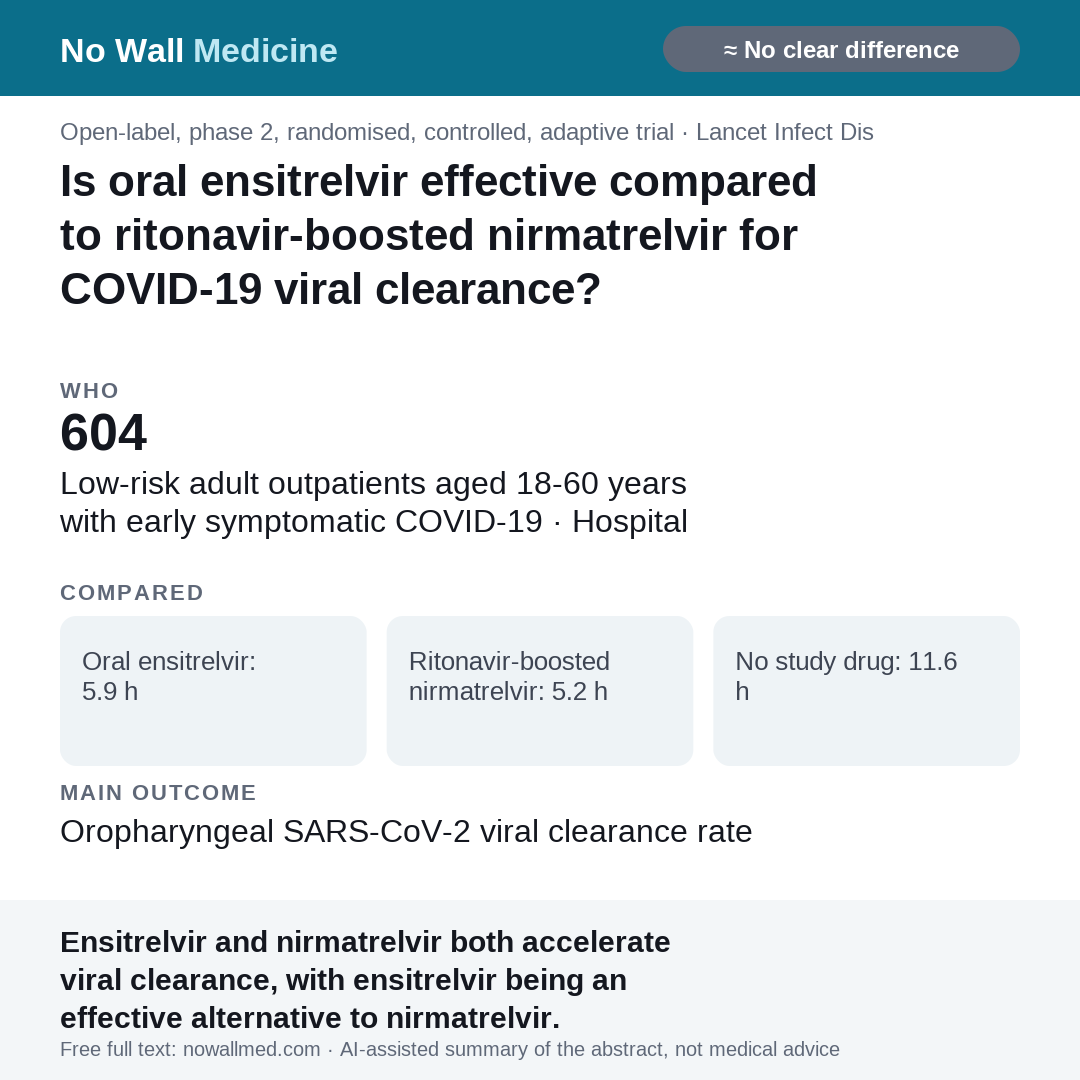
Antiviral efficacy of oral ensitrelvir versus oral ritonavir-boosted nirmatrelvir in COVID-19 (PLATCOV): an open-label, phase 2, randomised, controlled, adaptive trial
Open-label, phase 2, randomised, controlled, adaptive trialNo clear difference
Is oral ensitrelvir effective compared to ritonavir-boosted nirmatrelvir for COVID-19 viral clearance?
Who
604
Low-risk adult outpatients aged 18-60 years with early symptomatic COVID-19 · Hospital acute respiratory infection clinics in Thailand and Laos
Compared
Oral ensitrelvir: 5.9 h
Ritonavir-boosted nirmatrelvir: 5.2 h
No study drug: 11.6 h
Main outcome
Oropharyngeal SARS-CoV-2 viral clearance rate
Result: 16% slower (5-25) than ritonavir-boosted nirmatrelvir
Bottom line: Ensitrelvir and nirmatrelvir both accelerate viral clearance, with ensitrelvir being an effective alternative to nirmatrelvir.
Funded by: Wellcome Trust through the COVID-19 Therapeutics Accelerator
Lancet Infect Dis · 2025-10-11Download image
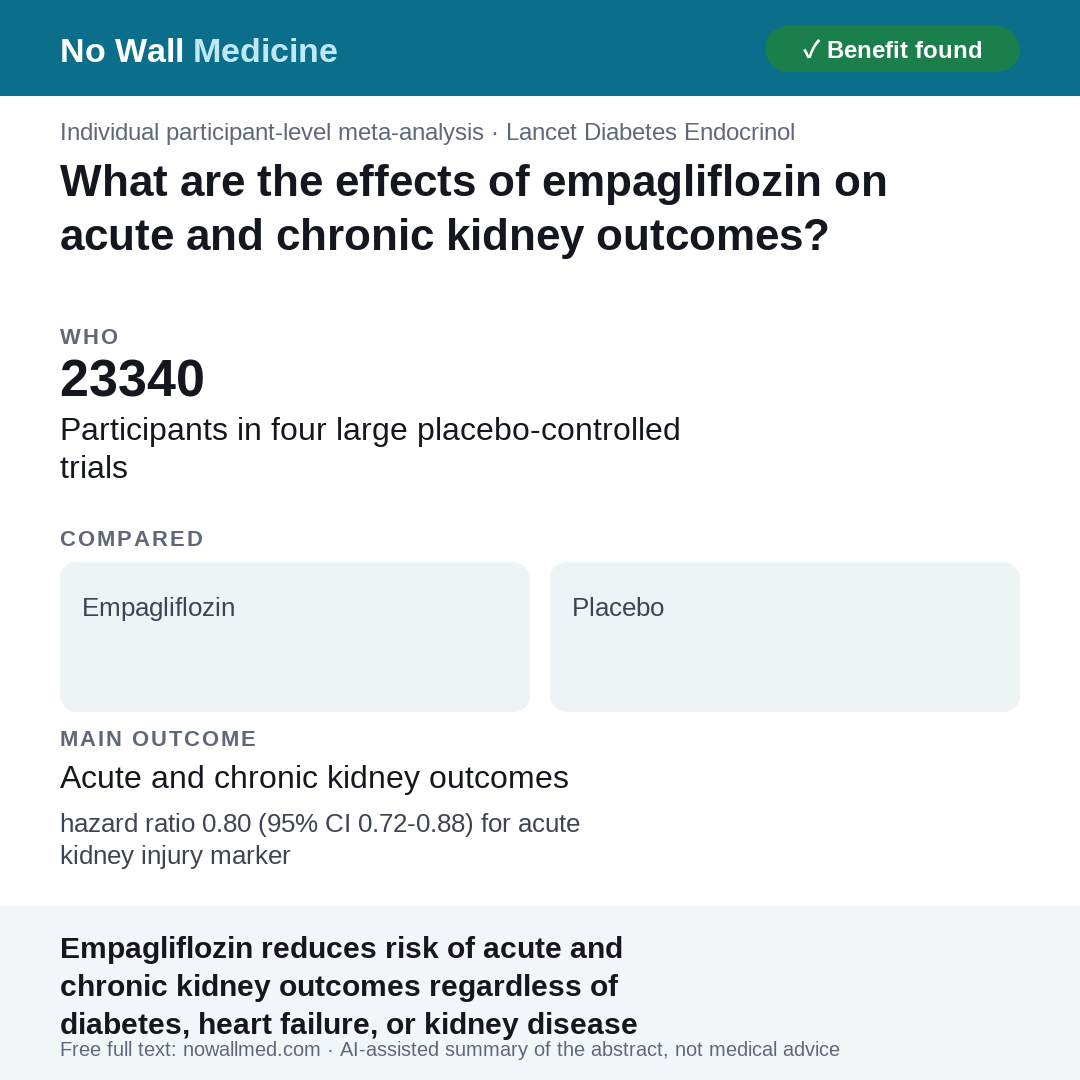
Effects of empagliflozin on conventional and exploratory acute and chronic kidney outcomes: an individual participant-level meta-analysis
Individual participant-level meta-analysisBenefit found
What are the effects of empagliflozin on acute and chronic kidney outcomes?
Who
23340
Participants in four large placebo-controlled trials
Compared
Empagliflozin
Placebo
Main outcome
Acute and chronic kidney outcomes
Result: hazard ratio 0.80 (95% CI 0.72-0.88) for acute kidney injury marker
Bottom line: Empagliflozin reduces risk of acute and chronic kidney outcomes regardless of diabetes, heart failure, or kidney disease severity.
Lancet Diabetes Endocrinol · 2025-10-11Download image
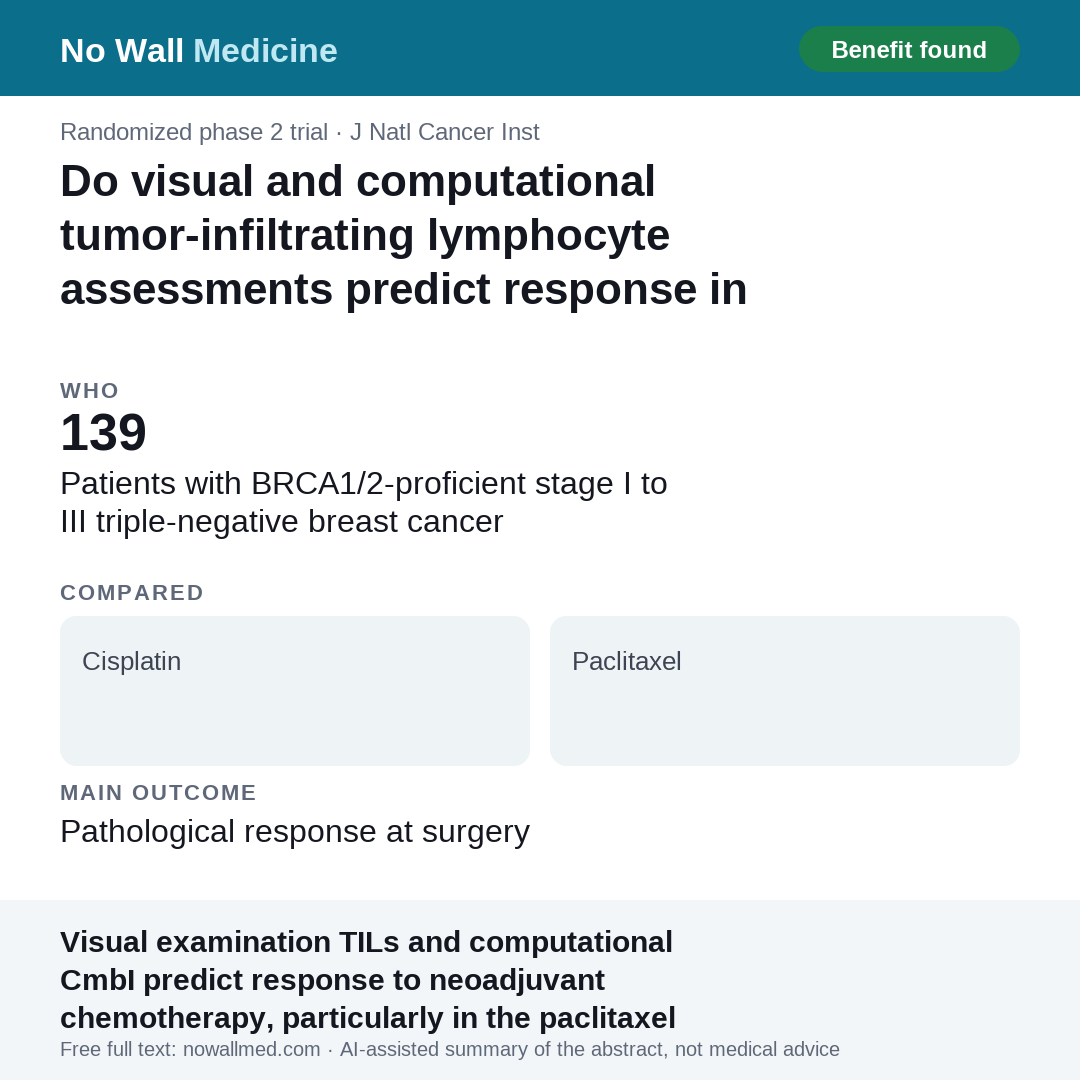
Prognostic value of visually and computationally assessed tumor-infiltrating lymphocytes in early-stage triple-negative breast cancer (TBCRC-030)
Randomized phase 2 trialBenefit found
Do visual and computational tumor-infiltrating lymphocyte assessments predict response in triple-negative breast cancer?
Who
139
Patients with BRCA1/2-proficient stage I to III triple-negative breast cancer
Compared
Cisplatin
Paclitaxel
Main outcome
Pathological response at surgery
Result: visual examination TILs odds ratio 1.86 (95% CI 1.24 to 2.87)
Bottom line: Visual examination TILs and computational CmbI predict response to neoadjuvant chemotherapy, particularly in the paclitaxel arm.
J Natl Cancer Inst · 2025-10-11Download image