Visual abstracts
New randomized trials and meta-analyses from leading journals at a glance: who was studied, what was compared, and what was found. Every paper is free to read in full.
All specialtiesCardiology 2454Oncology 2087Gastroenterology & Hepatology 934Infectious Disease 1522Neurology 979Psychiatry & Mental Health 1142Pulmonology 1022Critical Care 679Endocrinology & Diabetes 1271Pediatrics 1430Surgery 1246Orthopedics & Sports Medicine 446Neurosurgery 300Cardiothoracic & Vascular Surgery 270Plastic & Reconstructive Surgery 369Nephrology 509Rheumatology 345Hematology 530Dermatology 280Ophthalmology 289Obstetrics & Gynecology 797Public & Global Health 445Radiology & Imaging 334Anesthesiology 490Urology 412ENT (Otolaryngology) 306Emergency Medicine 277Allergy & Immunology 152Geriatrics 515Family Medicine & Primary Care 282Medical Genetics & Genomics 262Pathology & Laboratory Medicine 77Physical Medicine & Rehabilitation 408Palliative Care 206Nutrition 638Digital Health & AI 1198General Medicine 177
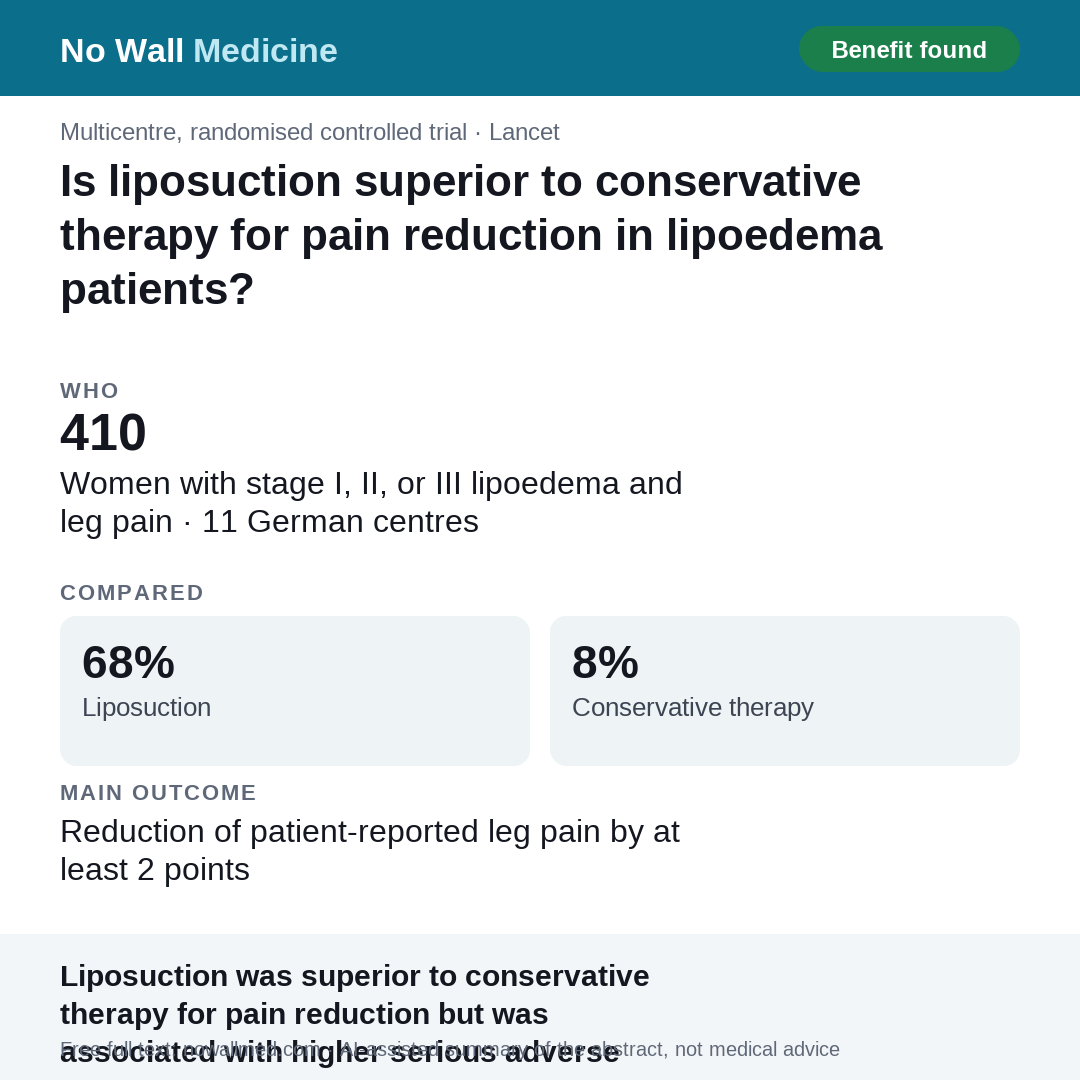
Liposuction versus conservative therapy for patients with lipoedema in Germany: a multicentre, randomised controlled clinical trial
Multicentre, randomised controlled trialBenefit found
Is liposuction superior to conservative therapy for pain reduction in lipoedema patients?
Who
410
Women with stage I, II, or III lipoedema and leg pain · 11 German centres
Compared
68%liposuction (190/278)
8%conservative therapy (10/132)
Main outcome
reduction of patient-reported leg pain by at least 2 points
Result: odds ratio 26·2 (95% CI 13·1-52·5)
Bottom line: Liposuction was superior to conservative therapy for pain reduction but was associated with a higher rate of serious adverse events.
Funded by: The Federal Joint Committee, Germany
Lancet · 2026-09-03Download image
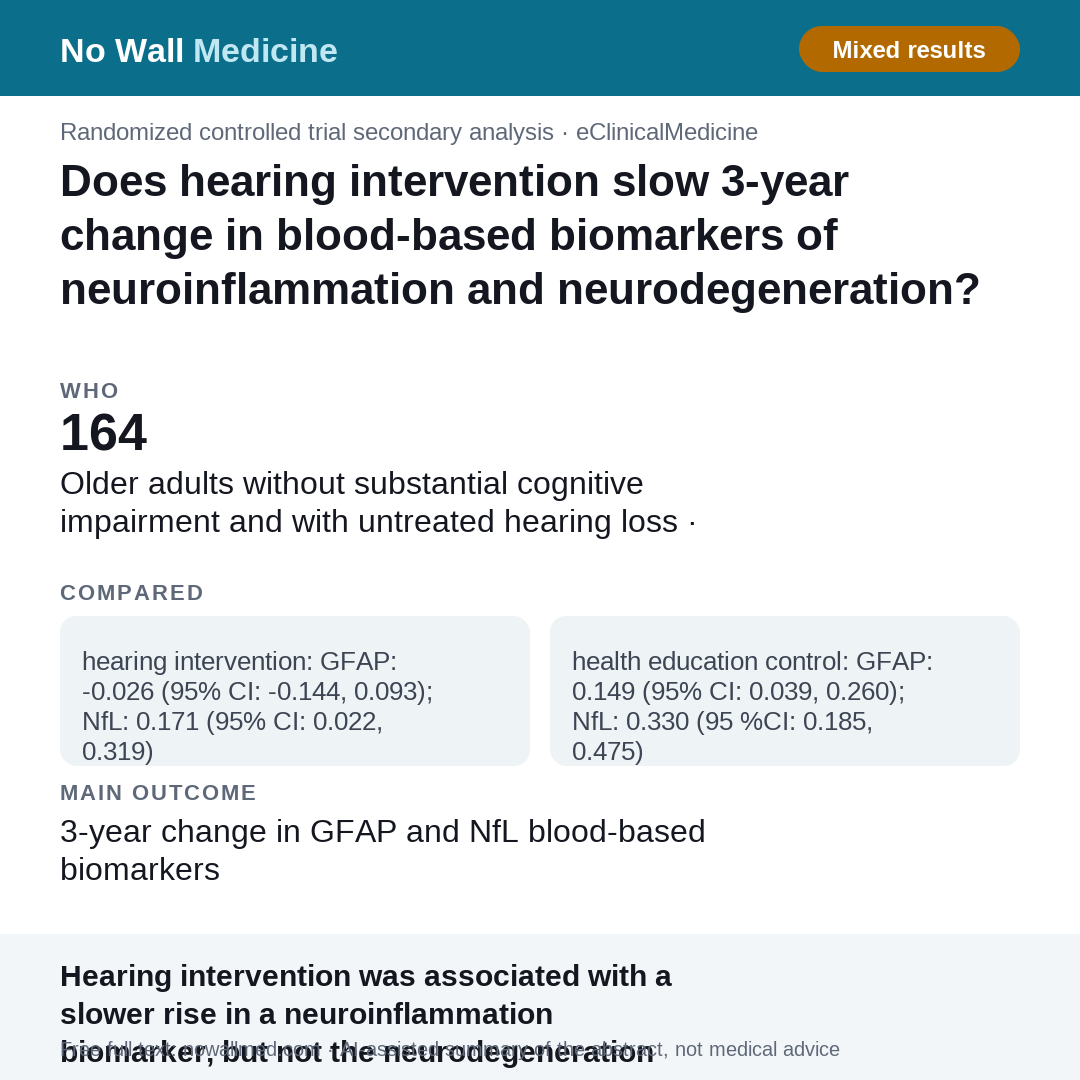
Effects of hearing intervention on blood-based biomarkers of neuroinflammation and neurodegeneration: a secondary analysis of the ACHIEVE randomised controlled trial
Randomized controlled trial secondary analysisMixed results
Does hearing intervention slow 3-year change in blood-based biomarkers of neuroinflammation and neurodegeneration?
Who
164
Older adults without substantial cognitive impairment and with untreated hearing loss · United States
Compared
hearing intervention: GFAP: -0.026 (95% CI: -0.144, 0.093); NfL: 0.171 (95% CI: 0.022, 0.319)
health education control: GFAP: 0.149 (95% CI: 0.039, 0.260); NfL: 0.330 (95 %CI: 0.185, 0.475)
Main outcome
3-year change in GFAP and NfL blood-based biomarkers
Result: GFAP difference: -0.175 (95% CI: -0.322, -0.028); NfL difference: -0.159 (95 %CI: -0.348, 0.029)
Bottom line: Hearing intervention was associated with a slower rise in a neuroinflammation biomarker, but not the neurodegeneration biomarker.
Funded by: US National Institutes of Health
eClinicalMedicine · 2026-09-03Download image
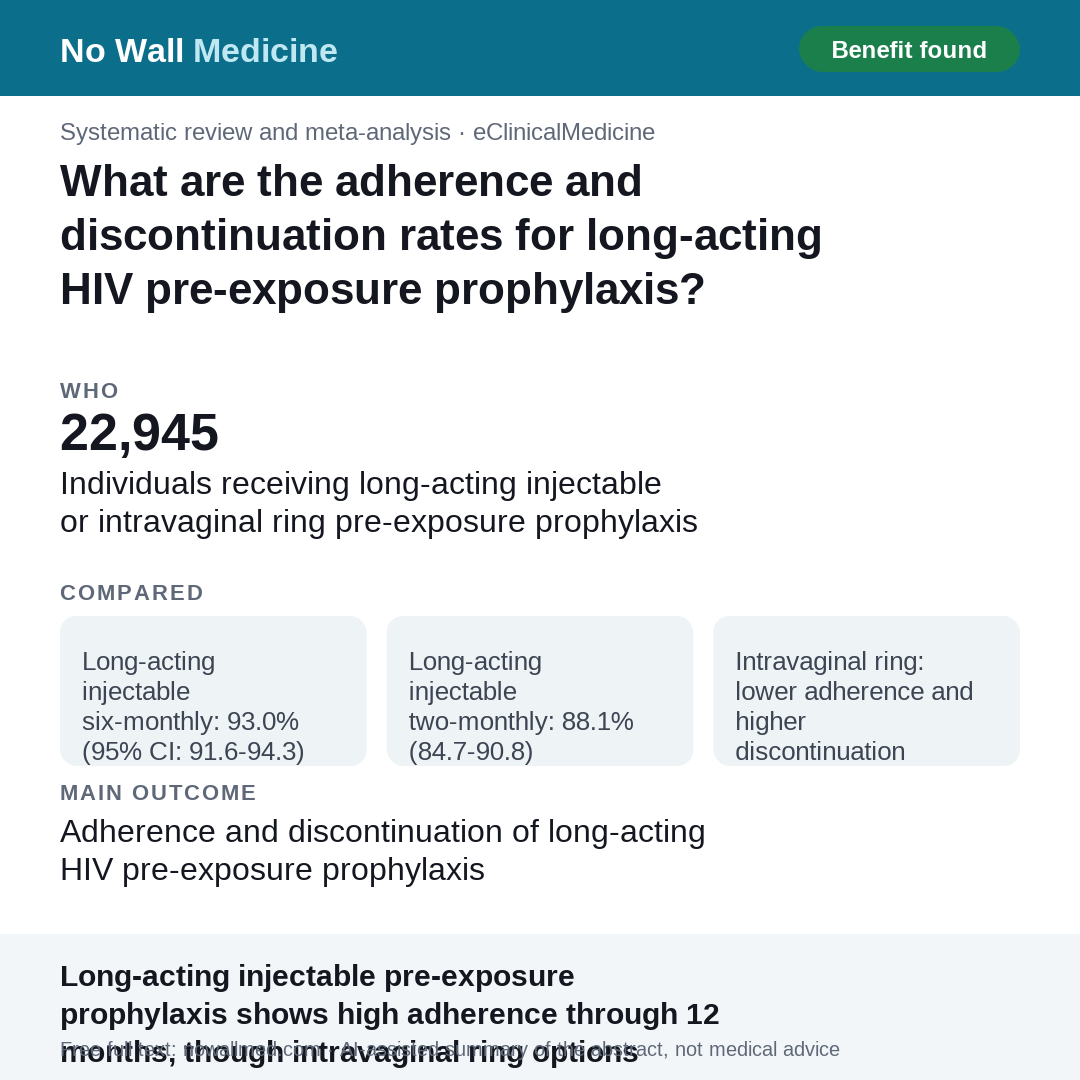
Long-acting HIV pre-exposure prophylaxis adherence and discontinuation: a global systematic review and meta-analysis
Systematic review and meta-analysisMixed results
What are the adherence and discontinuation rates for long-acting HIV pre-exposure prophylaxis?
Who
22945
Individuals receiving long-acting injectable or intravaginal ring pre-exposure prophylaxis
Compared
Six-monthly long-acting injectable: 93.0% (95% CI: 91.6-94.3) adherence at 12 months
Two-monthly long-acting injectable: 88.1% (84.7-90.8%) adherence at 12 months
Intravaginal ring: 66.1% (42.2-83.9%) adherence at 6 months
Main outcome
Adherence and discontinuation of long-acting HIV pre-exposure prophylaxis
Bottom line: Long-acting injectable adherence remained high, but intravaginal ring showed lower adherence and higher discontinuation rates.
Funded by: National Key R&D Program of China
eClinicalMedicine · 2026-09-03Download image
Molecularly Guided Therapy Versus Continued Chemotherapy in Unfavorable Cancer of Unknown Primary: Updated Efficacy and Safety From the Randomized, Phase II CUPISCO Study
Randomized, phase II trialBenefit found
Does molecularly guided therapy improve progression-free survival compared to continued chemotherapy in unfavorable cancer of unknown primary?
Who
436
Untreated, unfavorable cancer of unknown primary patients reaching disease control after induction chemotherapy
Compared
6.1 monthsmolecularly guided therapies (95% CI, 4.7 to 6.5)
4.4 monthschemotherapy (95% CI, 4.2 to 6.4)
Main outcome
progression-free survival
Result: hazard ratio 0.75 (95% CI 0.59 to 0.95)
Bottom line: Molecularly guided therapies improved progression-free survival compared to continued chemotherapy in patients with unfavorable cancer of unknown primary.
J Clin Oncol · 2026-09-03Download image
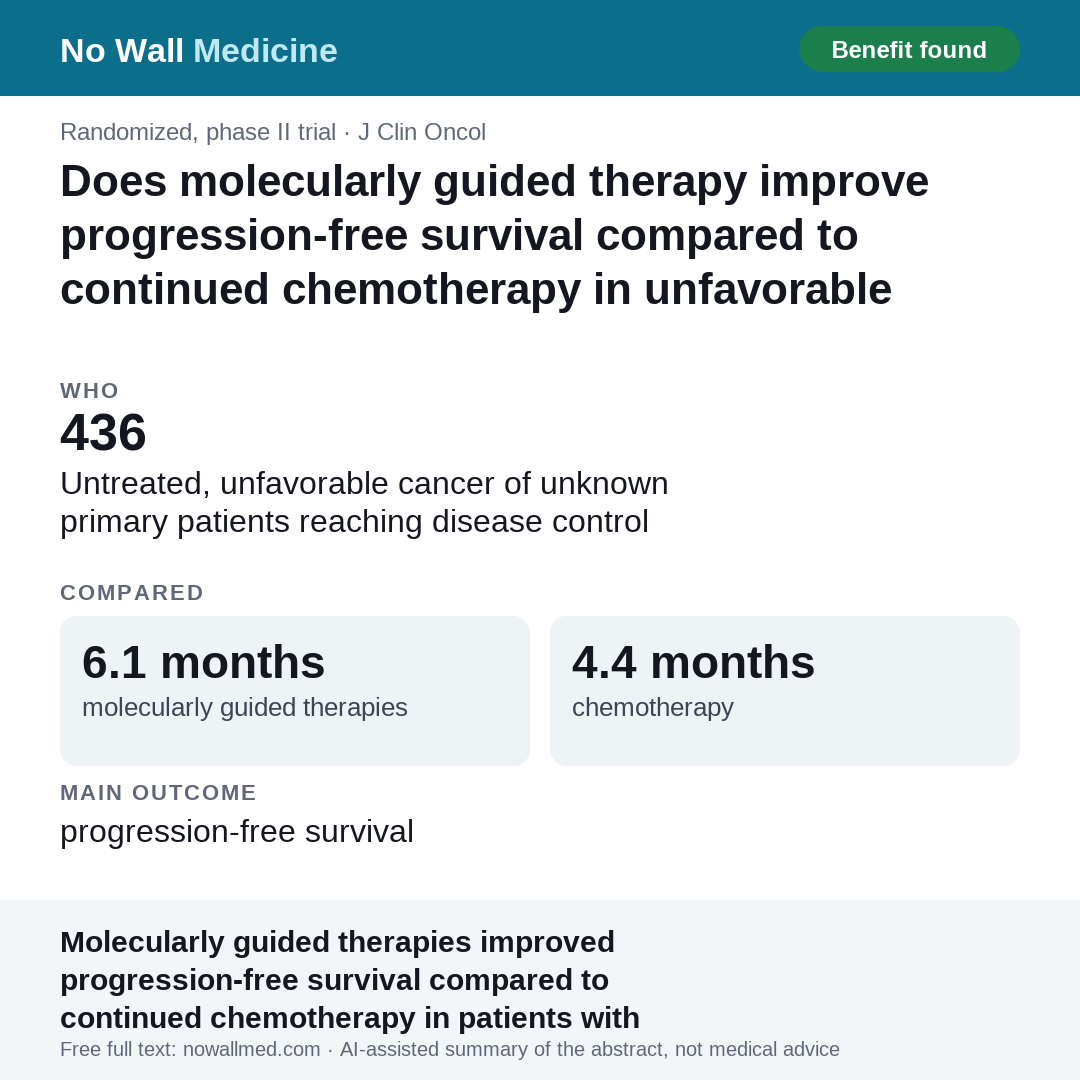
Neoadjuvant Anbenitamab and HB1801 in ERBB2-Positive Breast Cancer: A Phase 3 Randomized Clinical Trial
Multicenter, phase 3 randomized clinical trialBenefit found
Does neoadjuvant anbenitamab and HB1801 improve efficacy in early ERBB2-positive breast cancer?
Who
521
Patients with stage II or III ERBB2-positive breast cancer · 61 hospitals in China
Compared
62.4%Anbenitamab plus HB1801
51.2%Trastuzumab, pertuzumab, and docetaxel
Main outcome
total pathological complete response
Result: absolute difference, 11.4 (95% CI, 3.2 to 19.6) percentage points
Bottom line: Neoadjuvant anbenitamab and HB1801 significantly improved total pathological complete response rates compared to standard therapy.
JAMA Oncol · 2026-09-03Download image
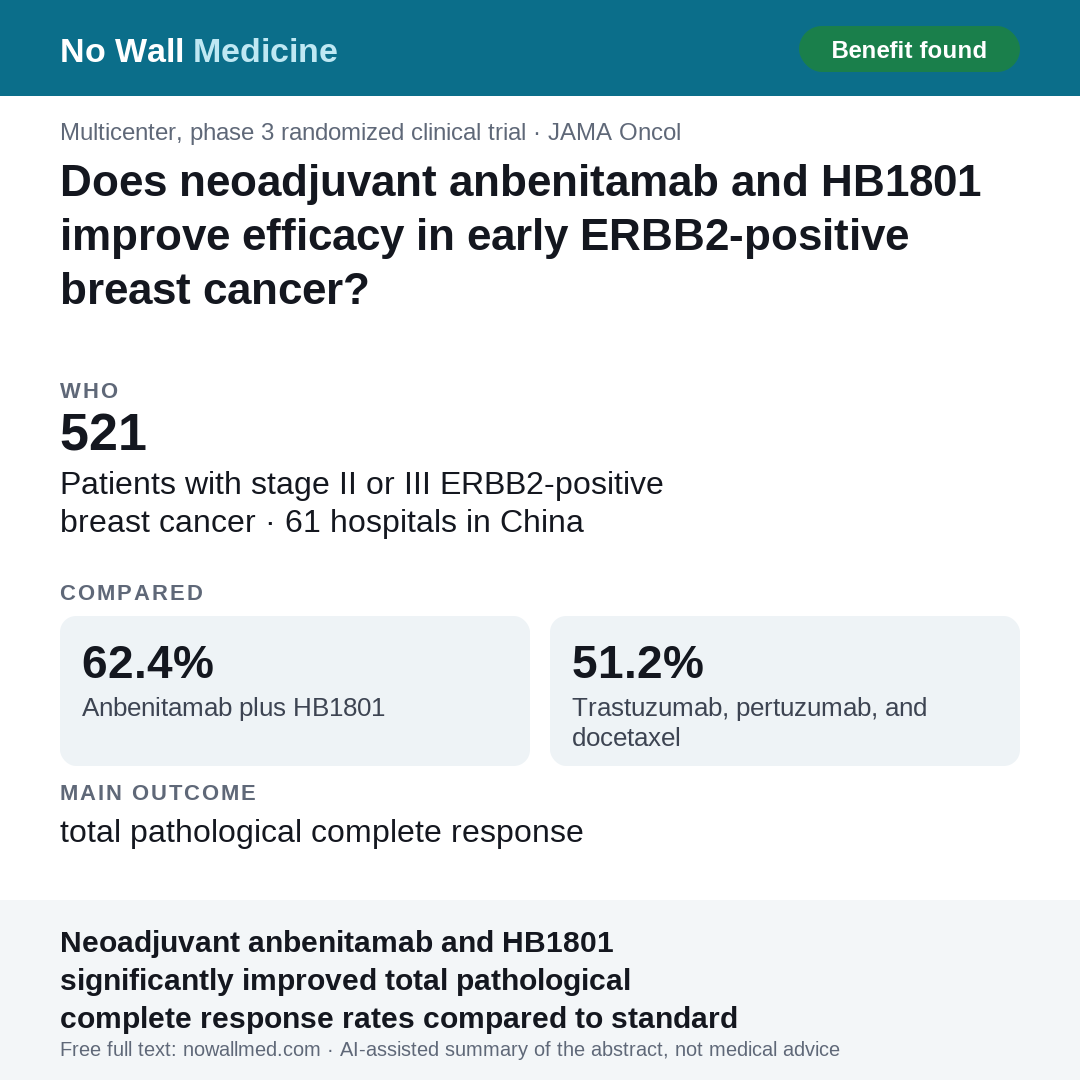
Efficacy and safety of recibokibart, an interleukin-36 receptor antibody, in generalized pustular psoriasis: a phase II randomized controlled trial
Randomized, double-blind, placebo-controlled phase II trialBenefit found
Is recibokibart effective and safe for acute flares of generalized pustular psoriasis?
Who
33
Patients with moderate-to-severe acute generalized pustular psoriasis · Multicentre, China
Compared
86%recibokibart
9%placebo
Main outcome
proportion of patients achieving GPPGA pustulation subscore of 0 or 1
Result: between-group difference 77.3%, 95% confidence interval 42.5-88.9
Bottom line: A single dose of recibokibart provides rapid improvement in pustular and overall skin disease severity in acute flares.
Limitation: assessments after day 8 included patients who received open-label treatment
Br J Dermatol · 2026-09-03Download image
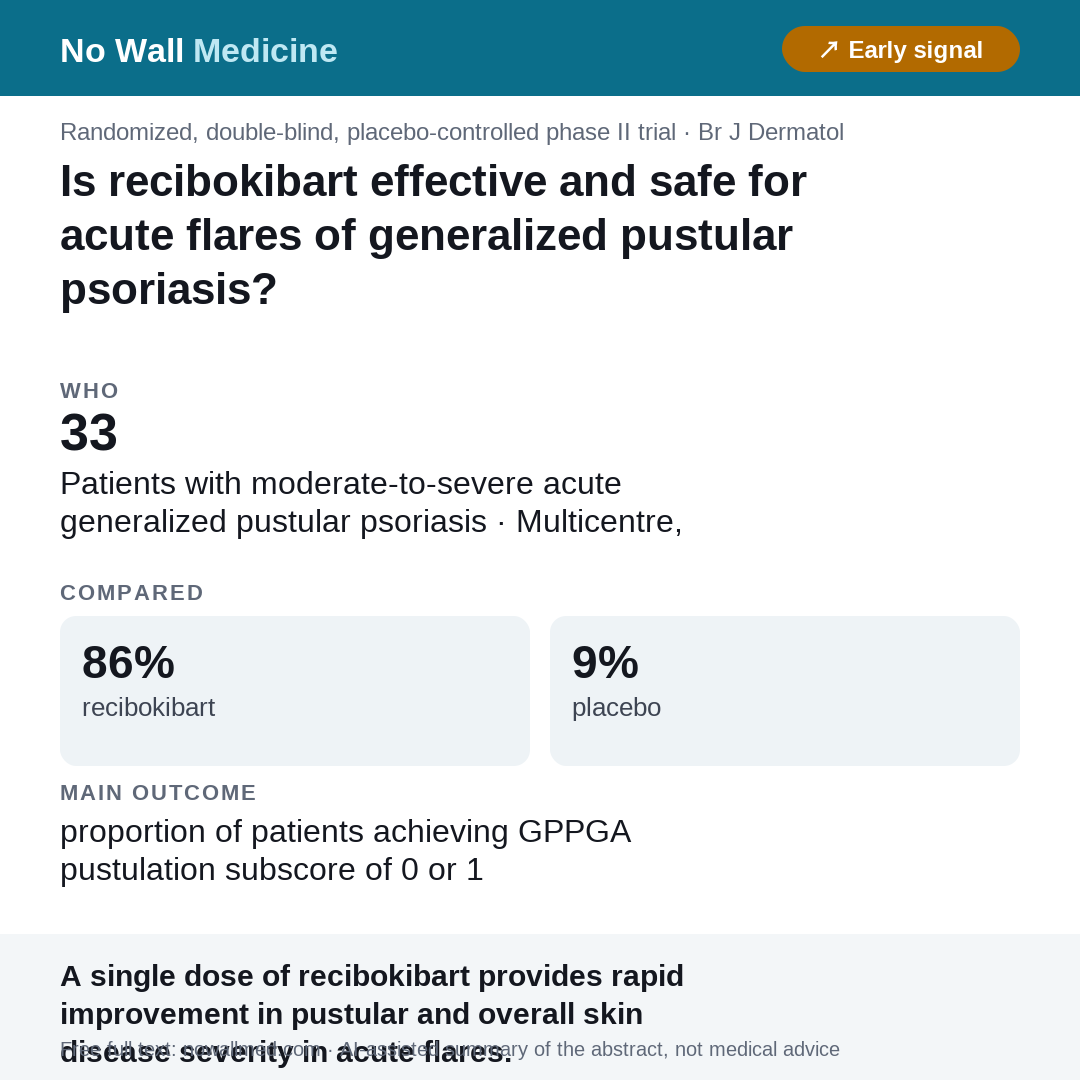
Safety and Effects of Gildeuretinol Acetate on Retinal Atrophic Lesions in Stargardt Disease: The TEASE-1 Randomized Clinical Trial
Double-masked, placebo-controlled randomized clinical trialBenefit found
Does oral gildeuretinol acetate affect retinal atrophic lesion growth in Stargardt disease?
Who
50
Individuals aged 12 years or older with Stargardt disease · 7 outpatient clinics in the US
Compared
Gildeuretinol acetate: 0.182 mm/y
Untreated group: 0.232 mm/y
Main outcome
Growth rate of retinal atrophic lesions over 24 months
Result: mean difference -0.050 mm/y (95% CI, -0.072 to -0.027)
Bottom line: Gildeuretinol acetate reduced the growth rate of retinal atrophic lesions in Stargardt disease patients.
JAMA Ophthalmol · 2026-09-03Download image
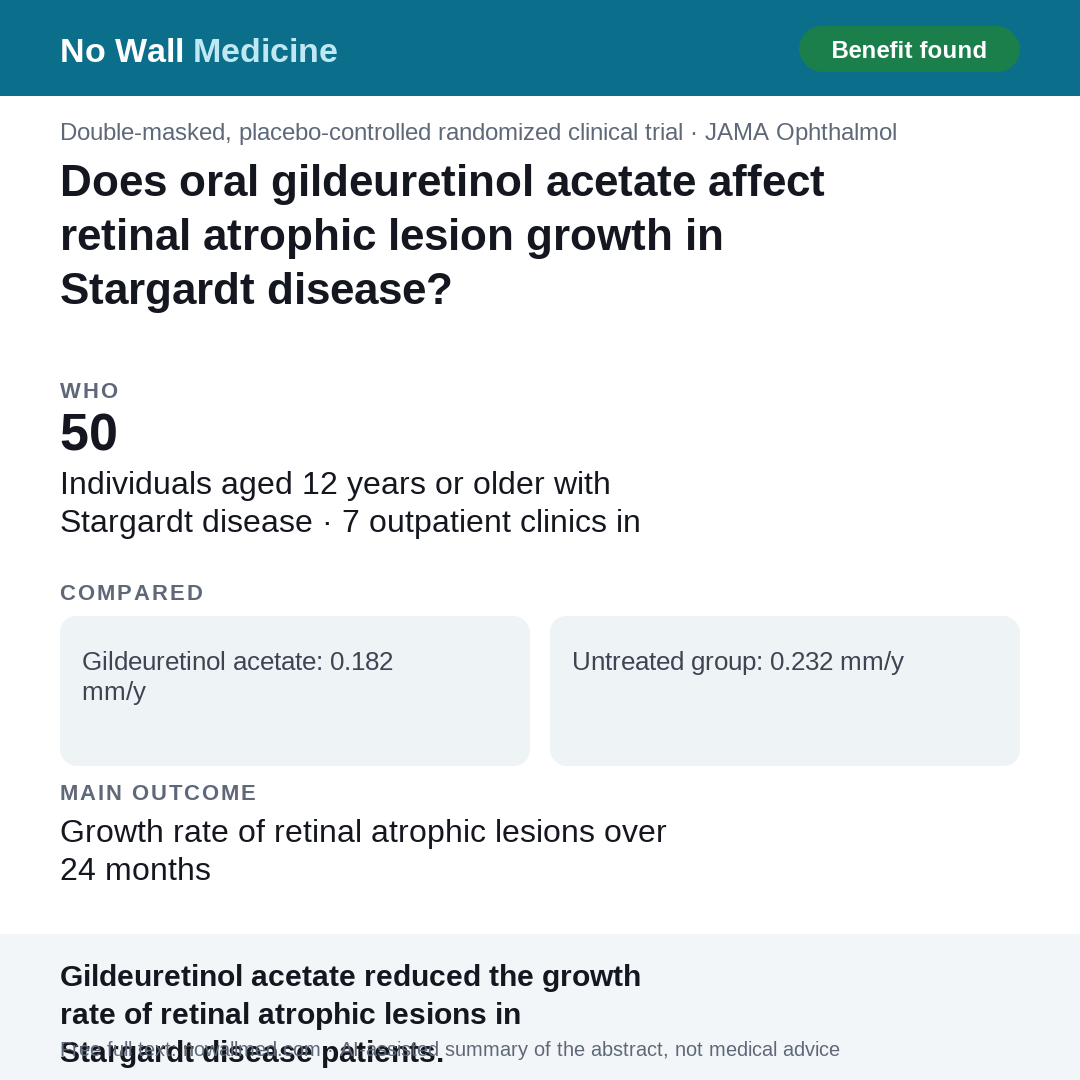
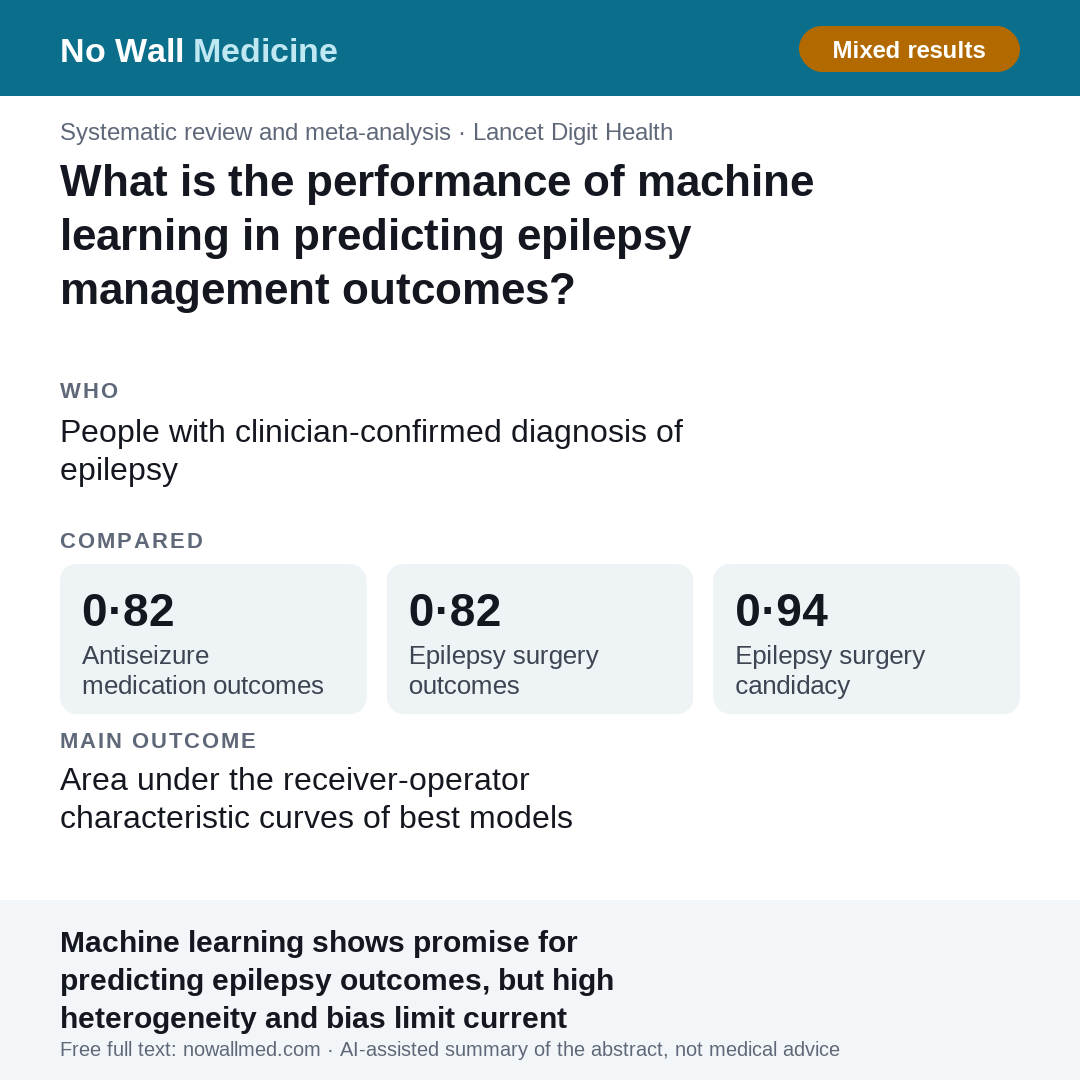
Status, challenges, and future directions of machine learning in the management of epilepsy: a systematic review and meta-analysis
Systematic review and meta-analysisMixed results
What is the performance of machine learning in epilepsy management?
Who
People with clinician-confirmed diagnosis of epilepsy
Compared
0·82Antiseizure medication outcomes (95% CI 0·77-0·88)
0·82Epilepsy surgery outcomes (0·76-0·88)
0·94Epilepsy surgery candidacy (0·92-0·96)
Main outcome
Area under the receiver-operator characteristic curves
Bottom line: Machine learning shows promise in predicting epilepsy treatment outcomes, but high heterogeneity and bias limit clinical applicability.
Limitation: High heterogeneity, high risk of bias, small sample sizes, and scarcity of external validation.
Funded by: Australian Government National Health and Medical Research Council
Lancet Digit Health · 2026-09-03Download image
Applications and outcomes of virtual reality in inpatient psychiatry: A systematic review
Systematic reviewUnclear result
What are the applications and outcomes of virtual reality in inpatient psychiatry?
Who
1,004
Psychiatric inpatients · Not specified
Compared
Virtual reality applications
Control
Main outcome
Types of applications, implementation barriers, facilitators, and clinical outcomes
Bottom line: Virtual reality is feasible and safe in inpatient psychiatry, showing consistent improvements in clinical symptoms like anxiety.
Limitation: Findings remain preliminary and high-quality trials are needed.
Psychol Med · 2026-09-03Download image

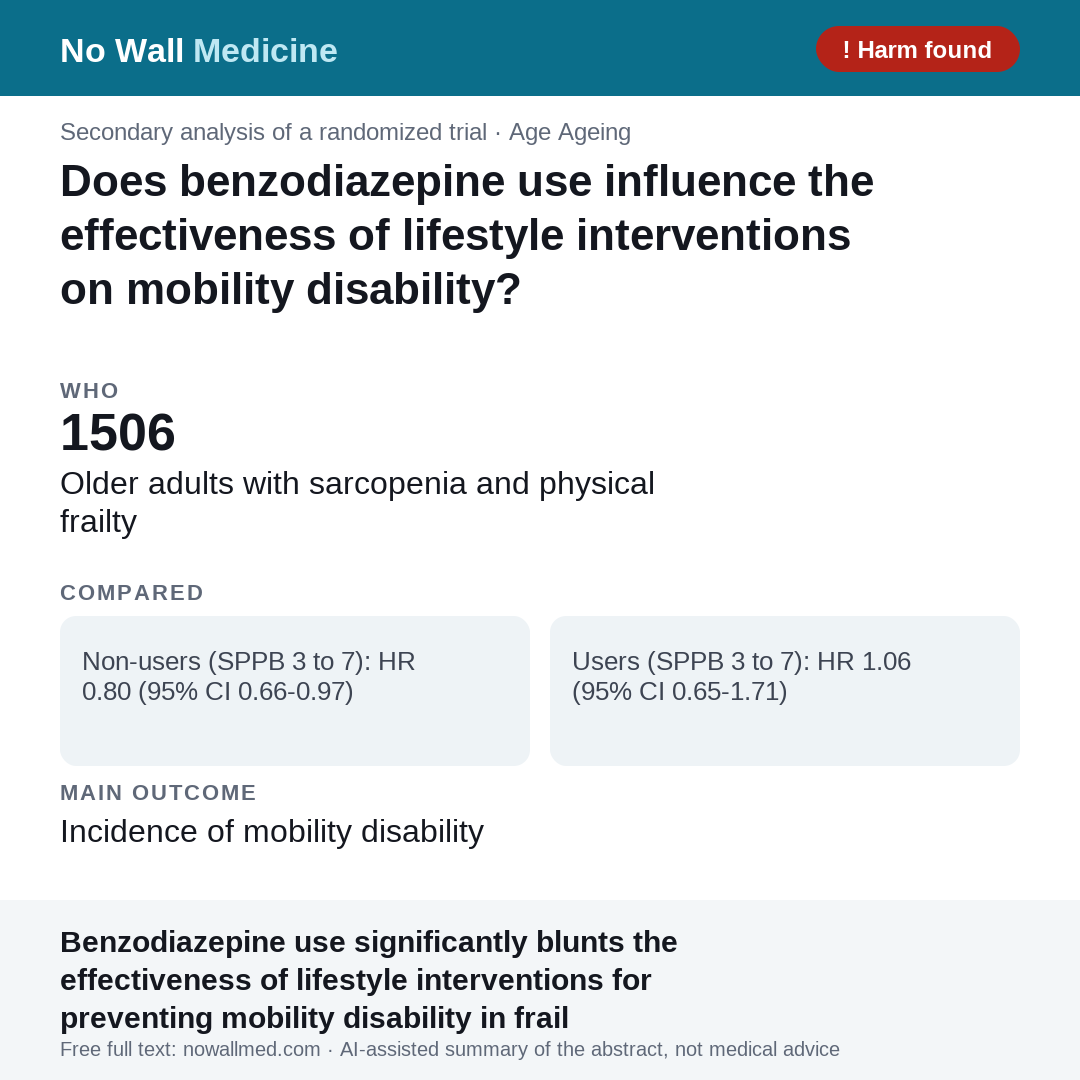
Does the use of benzodiazepine influence the effectiveness of lifestyle intervention? Secondary analysis from the Sarcopenia and Physical fRailty iN older people strategies (SPRINTT) trial
Secondary analysis of a randomized trialHarm found
Does benzodiazepine use influence the effectiveness of lifestyle interventions on mobility disability?
Who
1506
Older adults with sarcopenia and physical frailty
Compared
Non-users (SPPB 3 to 7): HR 0.80 (95% CI 0.66-0.97)
Users (SPPB 3 to 7): HR 1.06 (95% CI 0.65-1.71)
Main outcome
Incidence of mobility disability
Result: HR 0.80 (95% CI 0.66-0.97) for non-users vs HR 1.06 (95% CI 0.65-1.71) for users
Bottom line: Benzodiazepine use significantly blunts the effectiveness of lifestyle interventions for preventing mobility disability in frail older adults.
Age Ageing · 2026-09-03Download image
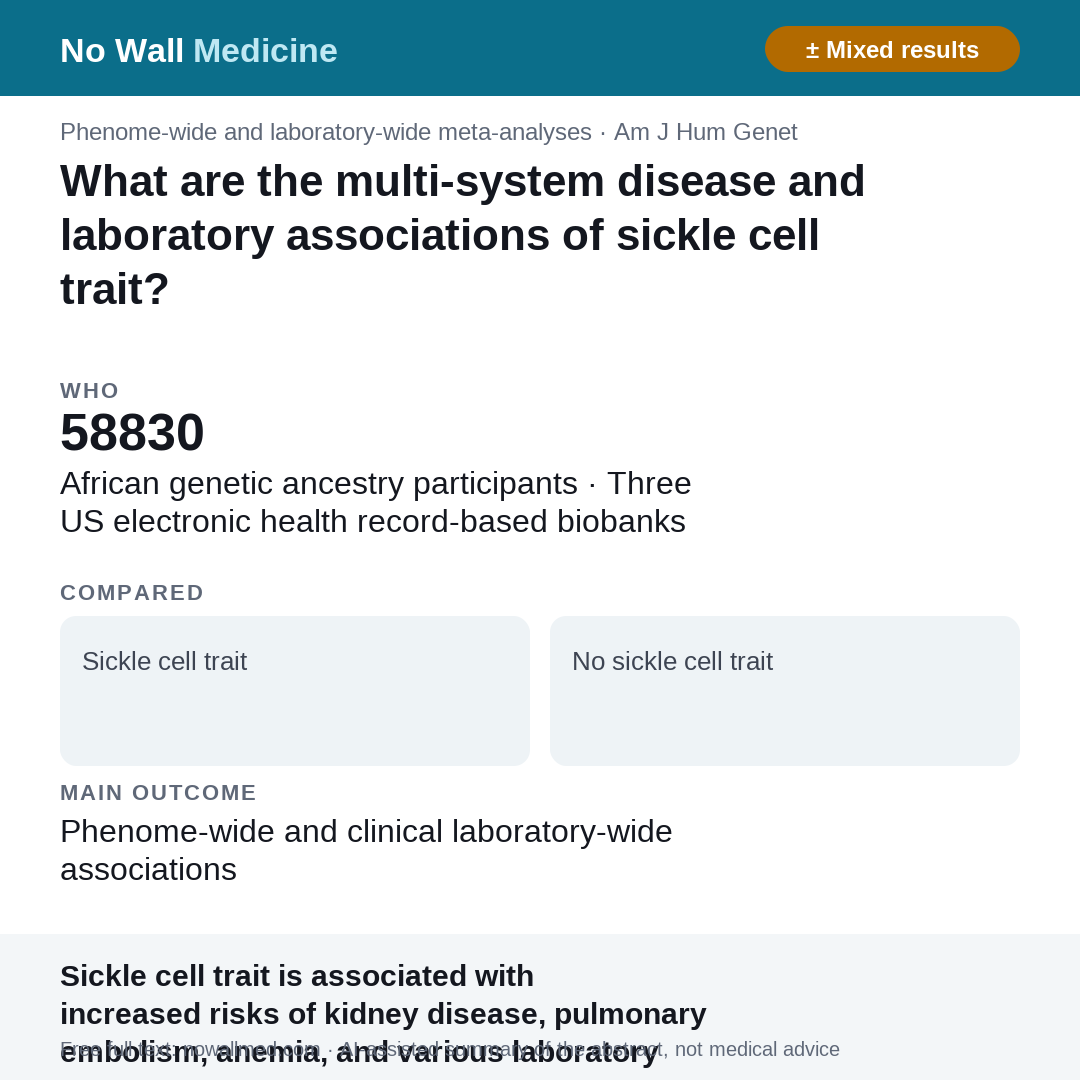
Phenome- and laboratory-wide meta-analyses of sickle cell trait reveal multi-system disease associations
Phenome-wide and laboratory-wide meta-analysesMixed results
What are the multi-system disease and laboratory associations of sickle cell trait?
Who
58830
African genetic ancestry participants · Three US electronic health record-based biobanks
Compared
Sickle cell trait
No sickle cell trait
Main outcome
Phenome-wide and clinical laboratory-wide associations
Bottom line: Sickle cell trait is associated with increased risks of kidney disease, pulmonary embolism, anemia, and various laboratory parameter changes.
Am J Hum Genet · 2026-09-03Download image
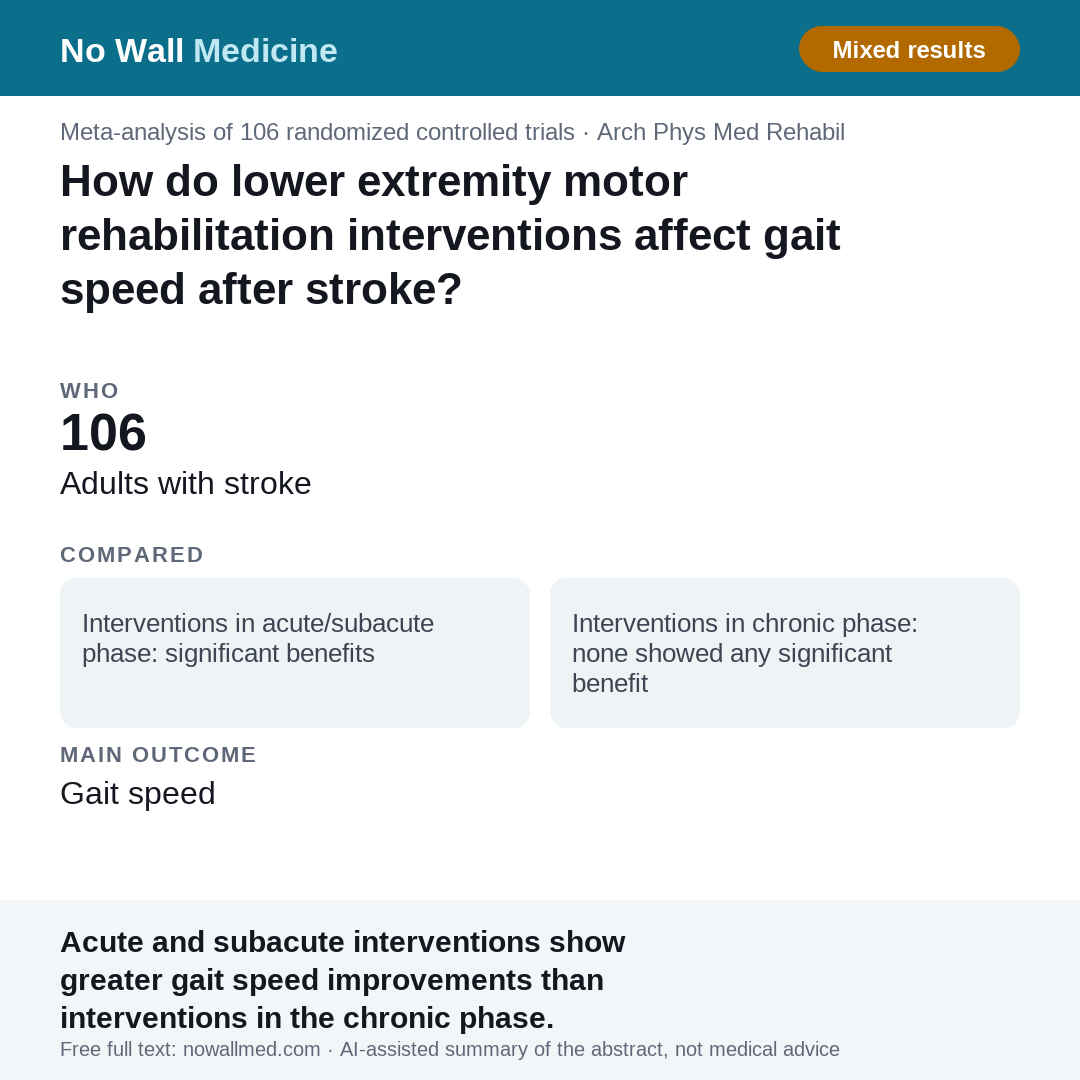
Gait Speed Changes in Stroke Rehabilitation Motor Lower Extremity Randomized Controlled Trials by Intervention and Time Poststroke: A Meta-analysis
Meta-analysis of 106 randomized controlled trialsMixed results
How do lower extremity motor rehabilitation interventions affect gait speed after stroke?
Who
106
Adults with stroke
Compared
Interventions in acute/subacute phase: significant benefits
Interventions in chronic phase: none showed any significant benefit
Main outcome
Gait speed
Bottom line: Acute and subacute interventions show greater gait speed improvements than interventions in the chronic phase.
Arch Phys Med Rehabil · 2026-09-03Download image
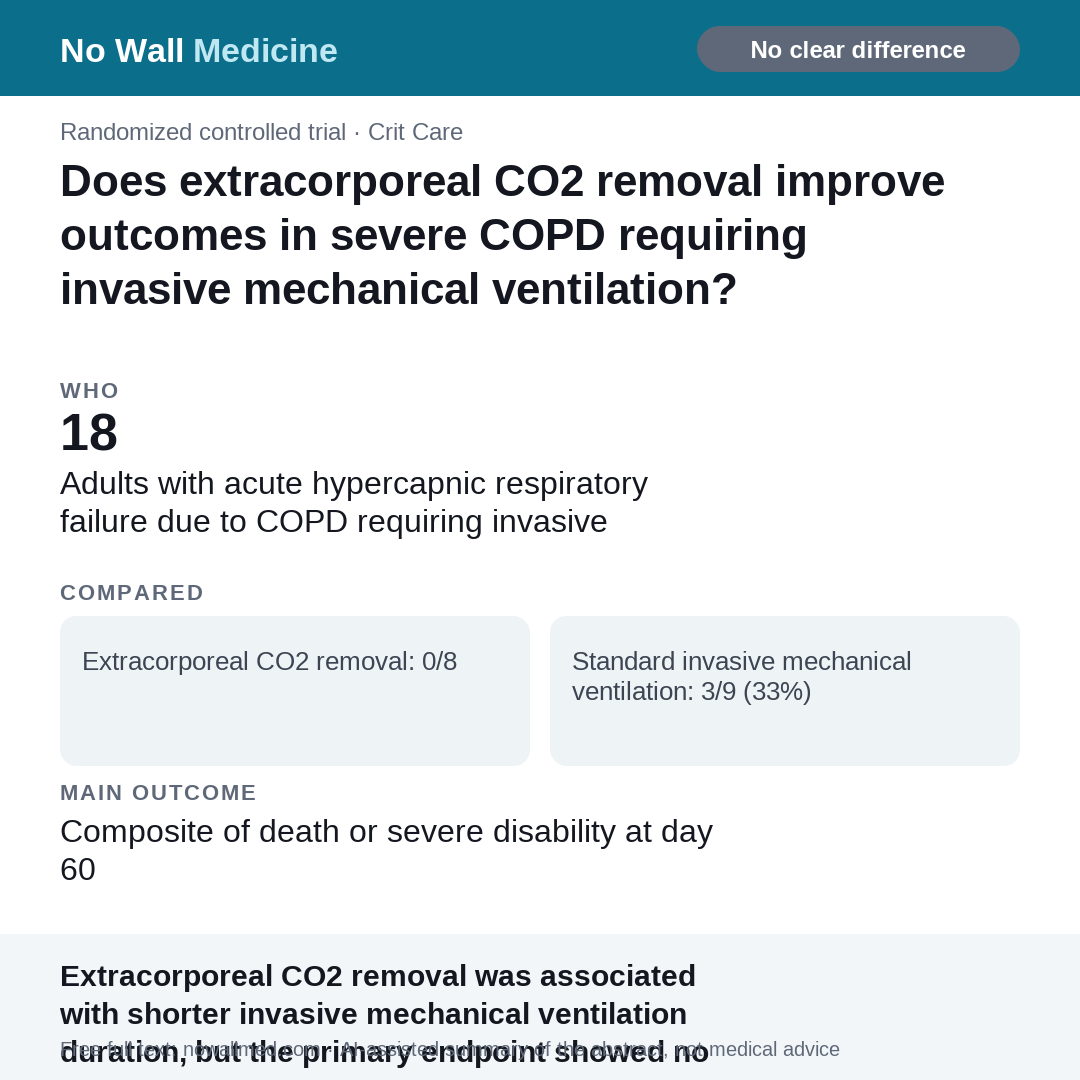
Extracorporeal CO2 elimination for acute exacerbation of severe COPD requiring invasive mechanical ventilation: a randomized controlled trial (the X-COPD trial)
Randomized controlled trialNo clear difference
Does extracorporeal CO2 removal improve outcomes in severe COPD requiring invasive mechanical ventilation?
Who
18
Adults with acute hypercapnic respiratory failure due to COPD requiring invasive mechanical ventilation
Compared
Extracorporeal CO2 removal: 0/8
Standard invasive mechanical ventilation: 3/9 (33%)
Main outcome
Composite of death or severe disability at day 60
Result: risk difference -33% (95% CI -65% to 6%)
Bottom line: Extracorporeal CO2 removal was associated with shorter invasive mechanical ventilation duration, but the primary endpoint showed no significant difference.
Limitation: Premature termination and very small sample size
Crit Care · 2026-09-03Download image
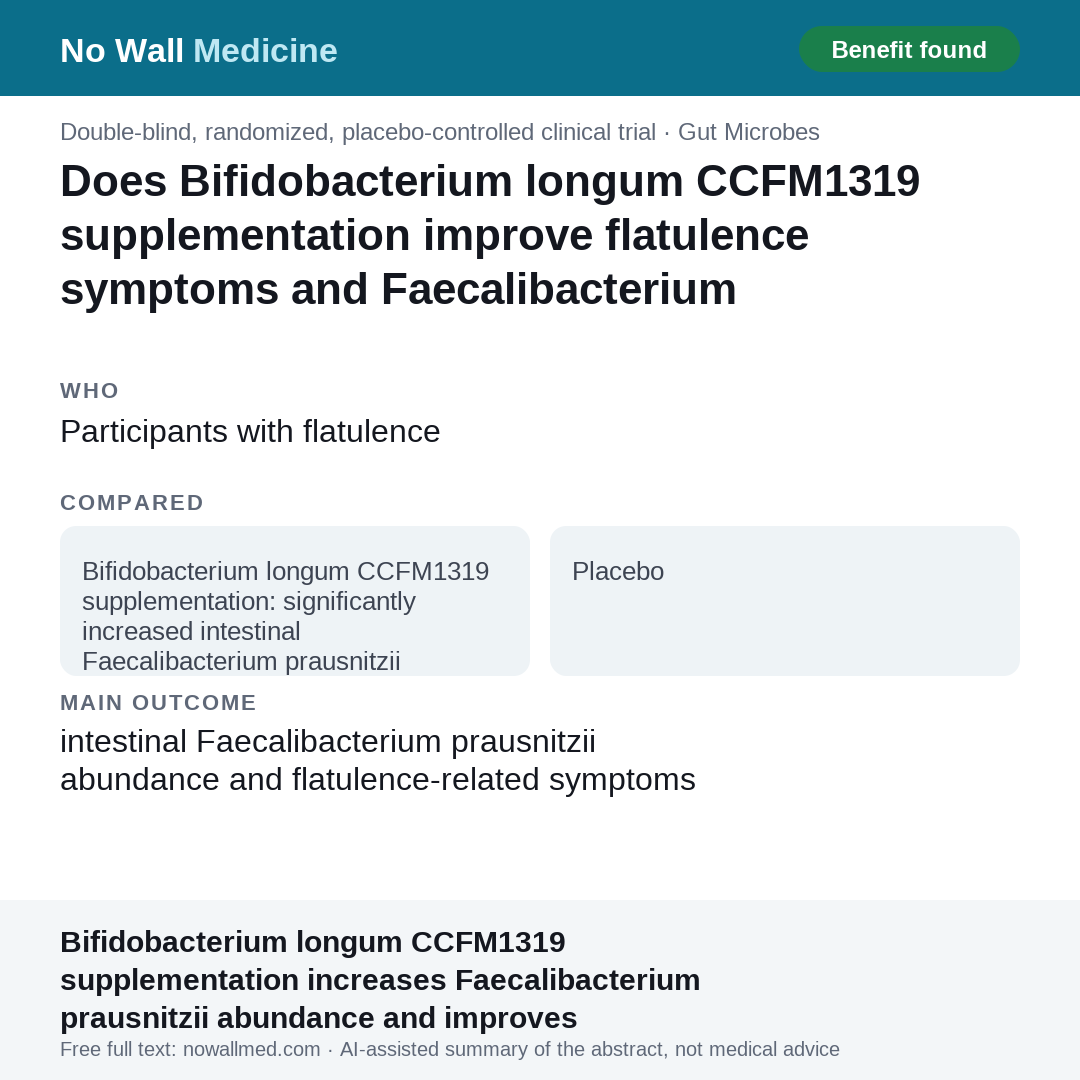
Gut microbiota and metabolic alterations in participants with flatulence identify Faecalibacterium prausnitzii as a key microbial target for clinical intervention
Double-blind, randomized, placebo-controlled clinical trialBenefit found
Does Bifidobacterium longum CCFM1319 supplementation improve flatulence symptoms and Faecalibacterium prausnitzii abundance?
Who
Participants with flatulence
Compared
Bifidobacterium longum CCFM1319 supplementation: significantly increased intestinal Faecalibacterium prausnitzii abundance and improved flatulence-related symptoms
Placebo
Main outcome
intestinal Faecalibacterium prausnitzii abundance and flatulence-related symptoms
Bottom line: Bifidobacterium longum CCFM1319 supplementation increases Faecalibacterium prausnitzii abundance and improves flatulence-related symptoms.
Gut Microbes · 2026-09-03Download image
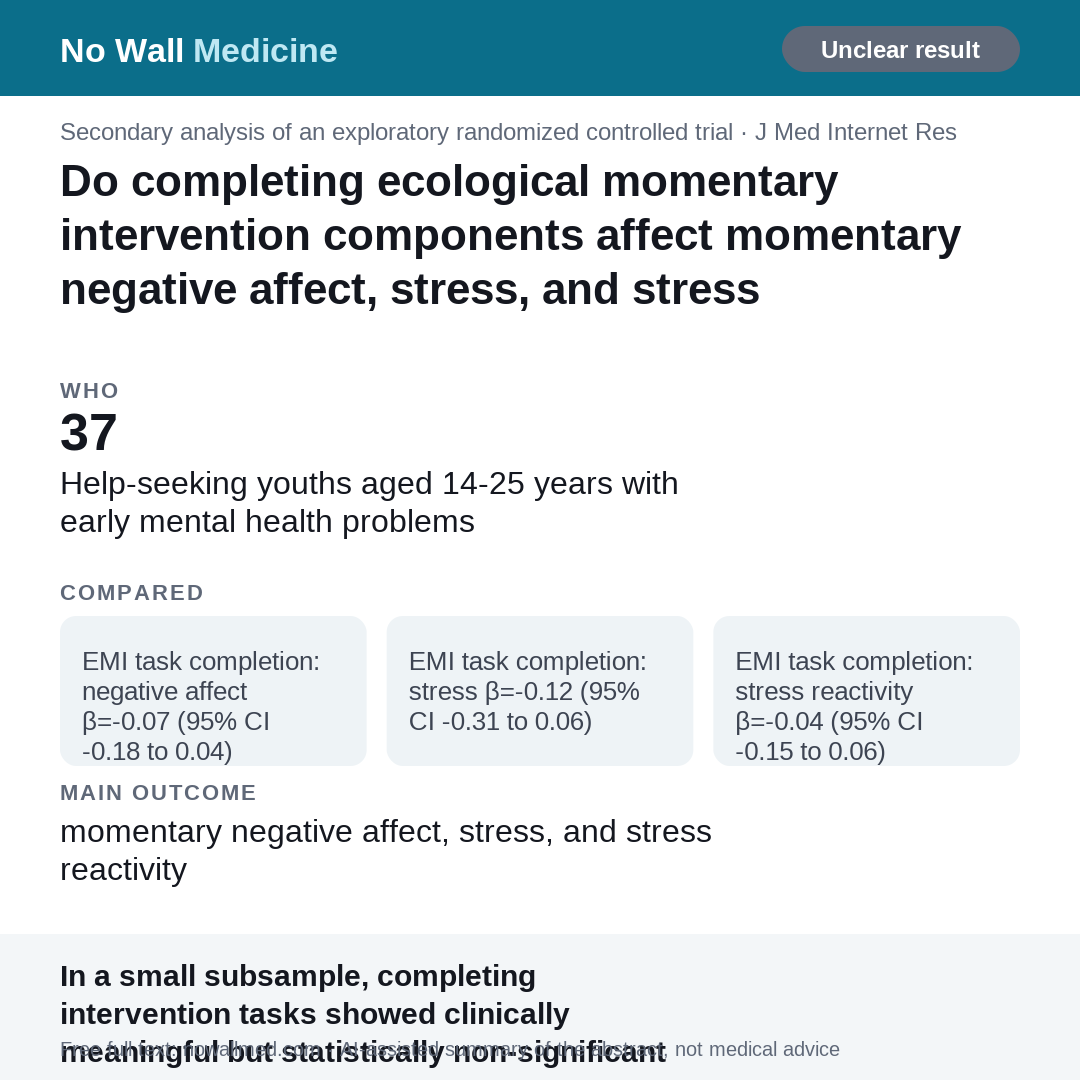
Proximal Effects of a Transdiagnostic, Ecological Momentary Intervention for Enhancing Resilience in Help-Seeking Young People (EMIcompass): Findings From a Secondary Analysis of an Exploratory Randomized Controlled Trial
Secondary analysis of an exploratory randomized controlled trialUnclear result
Do completing ecological momentary intervention components affect momentary negative affect, stress, and stress reactivity?
Who
37
Help-seeking youths aged 14-25 years with early mental health problems
Compared
EMI task completion: negative affect β=-0.07 (95% CI -0.18 to 0.04)
EMI task completion: stress β=-0.12 (95% CI -0.31 to 0.06)
EMI task completion: stress reactivity β=-0.04 (95% CI -0.15 to 0.06)
Main outcome
momentary negative affect, stress, and stress reactivity
Bottom line: In a small subsample, completing intervention tasks showed clinically meaningful but statistically non-significant effects on momentary mental health.
Limitation: Limited power due to a small subsample of 37 participants.
J Med Internet Res · 2026-09-03Download image
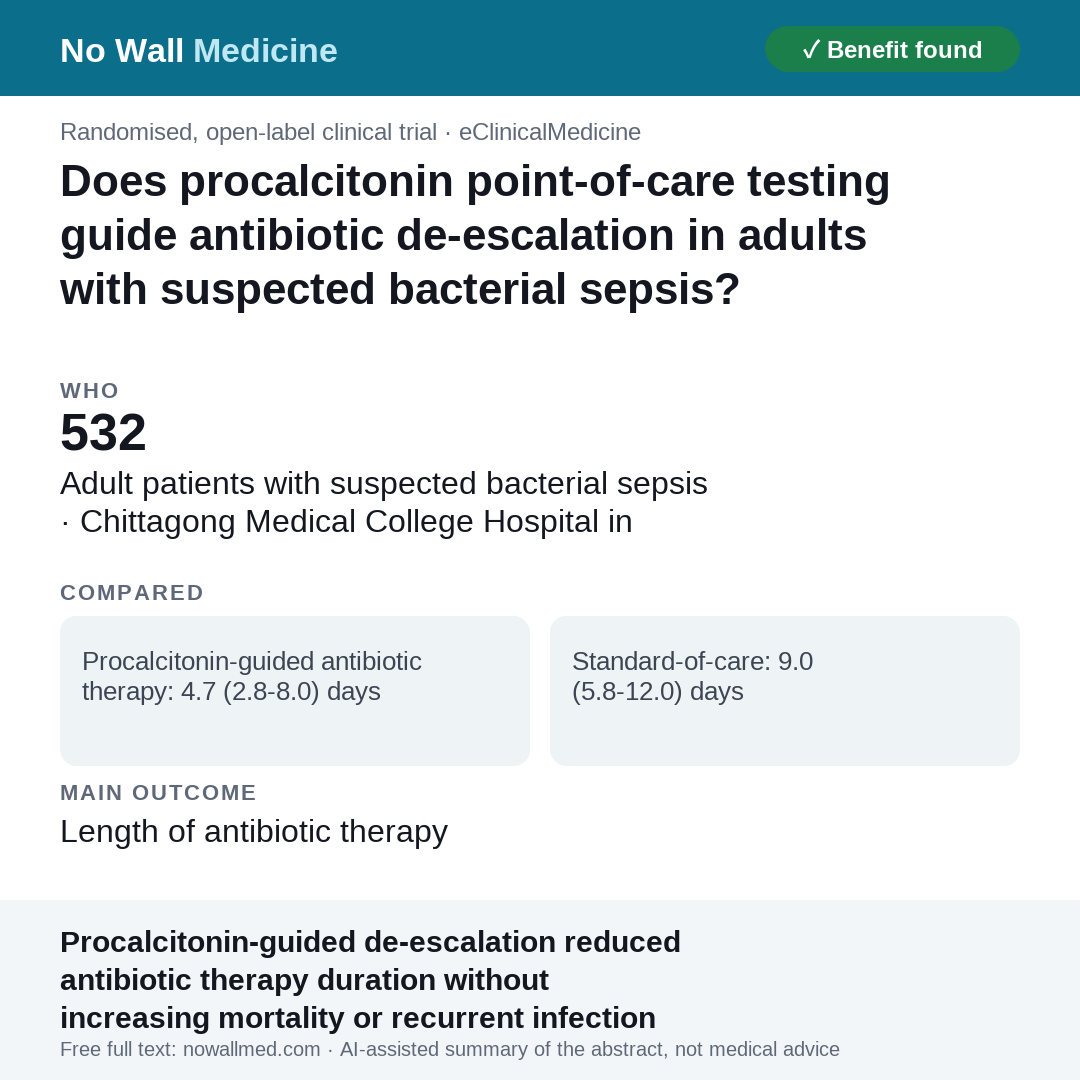
Use of procalcitonin point-of-care testing to guide de-escalation of antibiotic therapy in adults with suspected bacterial sepsis in a tertiary hospital in Bangladesh: a randomised controlled open-label trial
Randomised, open-label clinical trialBenefit found
Does procalcitonin point-of-care testing guide antibiotic de-escalation in adults with suspected bacterial sepsis?
Who
532
Adult patients with suspected bacterial sepsis · Chittagong Medical College Hospital in Bangladesh
Compared
Procalcitonin-guided antibiotic therapy: 4.7 (2.8-8.0) days
Standard-of-care: 9.0 (5.8-12.0) days
Main outcome
Length of antibiotic therapy
Bottom line: Procalcitonin-guided de-escalation reduced antibiotic therapy duration without increasing mortality or recurrent infection in adults with suspected sepsis.
Limitation: The trial was not powered to assess mortality and recurrent infection formally.
Funded by: Wellcome Trust of Great Britain
eClinicalMedicine · 2026-09-02Download image
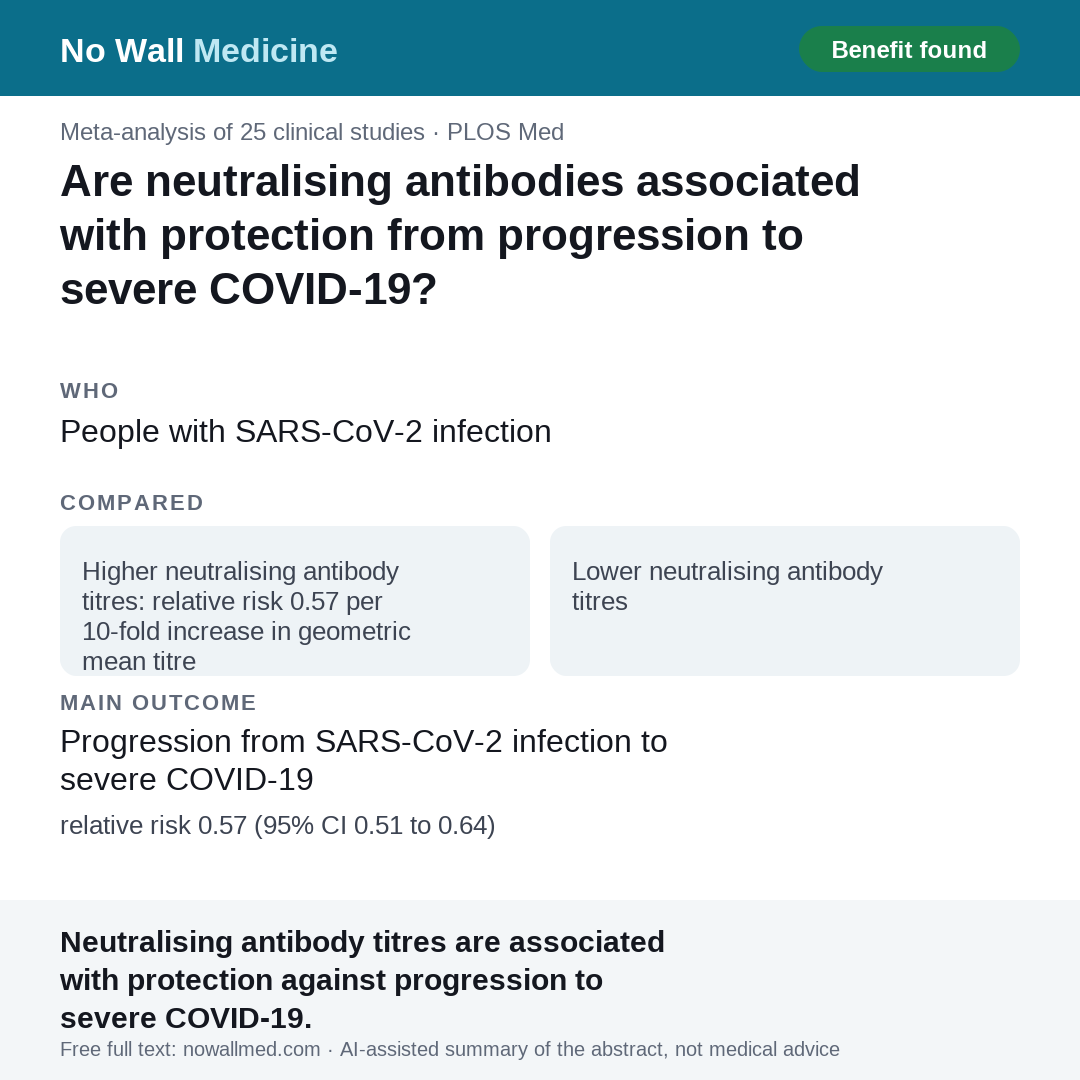
Neutralising antibodies and protection from progression to severe COVID-19: A meta-analysis
Meta-analysis of 25 clinical studiesBenefit found
Are neutralising antibodies associated with protection from progression to severe COVID-19?
Who
People with SARS-CoV-2 infection
Compared
Higher neutralising antibody titres: relative risk 0.57 per 10-fold increase in geometric mean titre
Lower neutralising antibody titres
Main outcome
Progression from SARS-CoV-2 infection to severe COVID-19
Result: relative risk 0.57 (95% CI 0.51 to 0.64)
Bottom line: Neutralising antibody titres are associated with protection against progression to severe COVID-19.
Limitation: Neutralisation titres and clinical outcomes were measured in different studies and unmeasured confounding is possible.
PLOS Med · 2026-09-02Download image
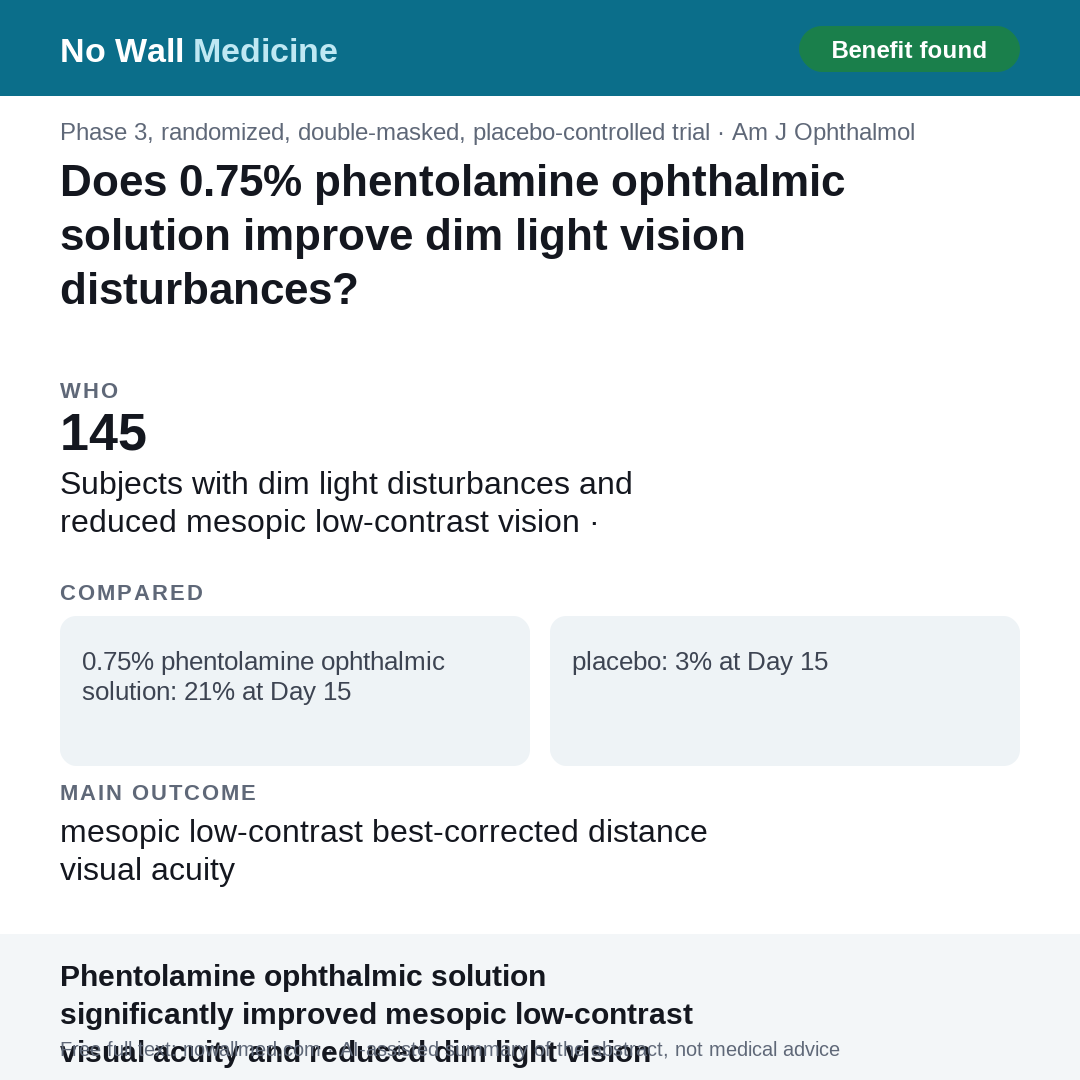
LYNX-1: A Phase 3 Study of 0.75% Phentolamine Ophthalmic Solution in Subjects With Dim Light Vision Disturbances
Phase 3, randomized, double-masked, placebo-controlled trialBenefit found
Does 0.75% phentolamine ophthalmic solution improve dim light vision disturbances?
Who
145
Subjects with dim light disturbances and reduced mesopic low-contrast vision · multicenter
Compared
0.75% phentolamine ophthalmic solution: 21% at Day 15
placebo: 3% at Day 15
Main outcome
mesopic low-contrast best-corrected distance visual acuity
Bottom line: Phentolamine ophthalmic solution significantly improved mesopic low-contrast visual acuity and reduced dim light vision disturbances.
Am J Ophthalmol · 2026-09-02Download image
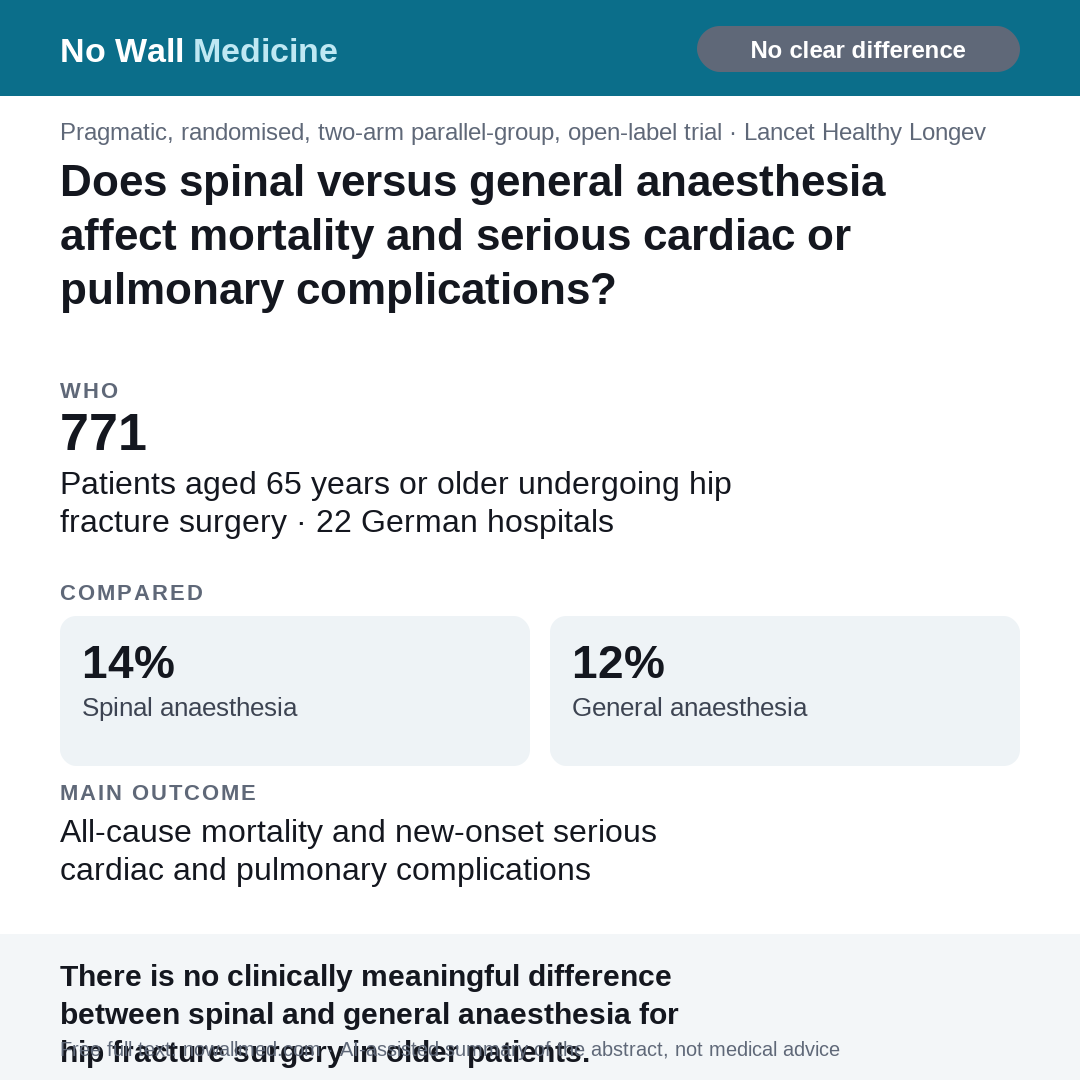
Spinal versus general anaesthesia and serious complications in older patients undergoing hip fracture surgery in Germany: a multicentre randomised clinical trial
Pragmatic, randomised, two-arm parallel-group, open-label trialNo clear difference
Does spinal versus general anaesthesia affect mortality and serious cardiac or pulmonary complications?
Who
771
Patients aged 65 years or older undergoing hip fracture surgery · 22 German hospitals
Compared
14%Spinal anaesthesia
12%General anaesthesia
Main outcome
All-cause mortality and new-onset serious cardiac and pulmonary complications
Result: hazard ratio 1.23, 95% CI 0.83-1.82
Bottom line: There is no clinically meaningful difference between spinal and general anaesthesia for hip fracture surgery in older patients.
Limitation: Premature trial termination, modest statistical power, and high treatment crossover.
Funded by: German Federal Ministry of Education and Research
Lancet Healthy Longev · 2026-09-02Download image
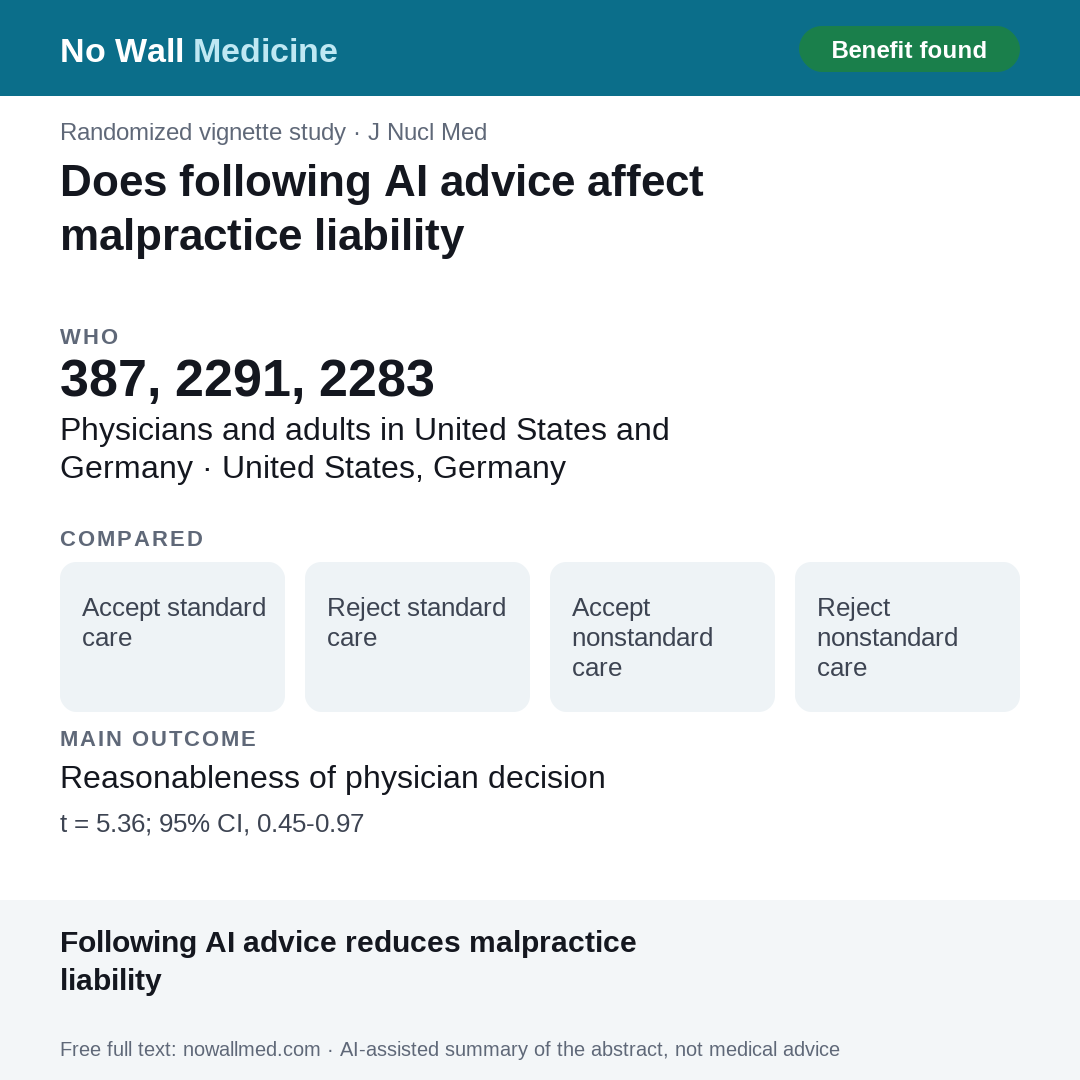
How Following Medical Artificial Intelligence Advice Can Mitigate Malpractice Liability: Cross-National Insights from a Randomized Trial
Randomized vignette studyBenefit found
Does following AI advice affect malpractice liability
Who
387, 2291, 2283
Physicians and adults in United States and Germany · United States, Germany
Compared
Accept standard care
Reject standard care
Accept nonstandard care
Reject nonstandard care
Main outcome
Reasonableness of physician decision
Result: t = 5.36; 95% CI, 0.45-0.97
Bottom line: Following AI advice reduces malpractice liability
J Nucl Med · 2026-09-02Download image