Visual abstracts
New randomized trials and meta-analyses from leading journals at a glance: who was studied, what was compared, and what was found. Every paper is free to read in full.
All specialtiesCardiology 2696Oncology 2271Gastroenterology & Hepatology 1034Infectious Disease 1697Neurology 1075Psychiatry & Mental Health 1247Pulmonology 1130Critical Care 744Endocrinology & Diabetes 1385Pediatrics 1571Surgery 1384Orthopedics & Sports Medicine 495Neurosurgery 331Cardiothoracic & Vascular Surgery 295Plastic & Reconstructive Surgery 401Nephrology 557Rheumatology 414Hematology 583Dermatology 317Ophthalmology 308Obstetrics & Gynecology 882Public & Global Health 492Radiology & Imaging 372Anesthesiology 539Urology 447ENT (Otolaryngology) 319Emergency Medicine 300Allergy & Immunology 174Geriatrics 577Family Medicine & Primary Care 308Medical Genetics & Genomics 303Pathology & Laboratory Medicine 85Physical Medicine & Rehabilitation 438Palliative Care 238Nutrition 717Digital Health & AI 1291General Medicine 193
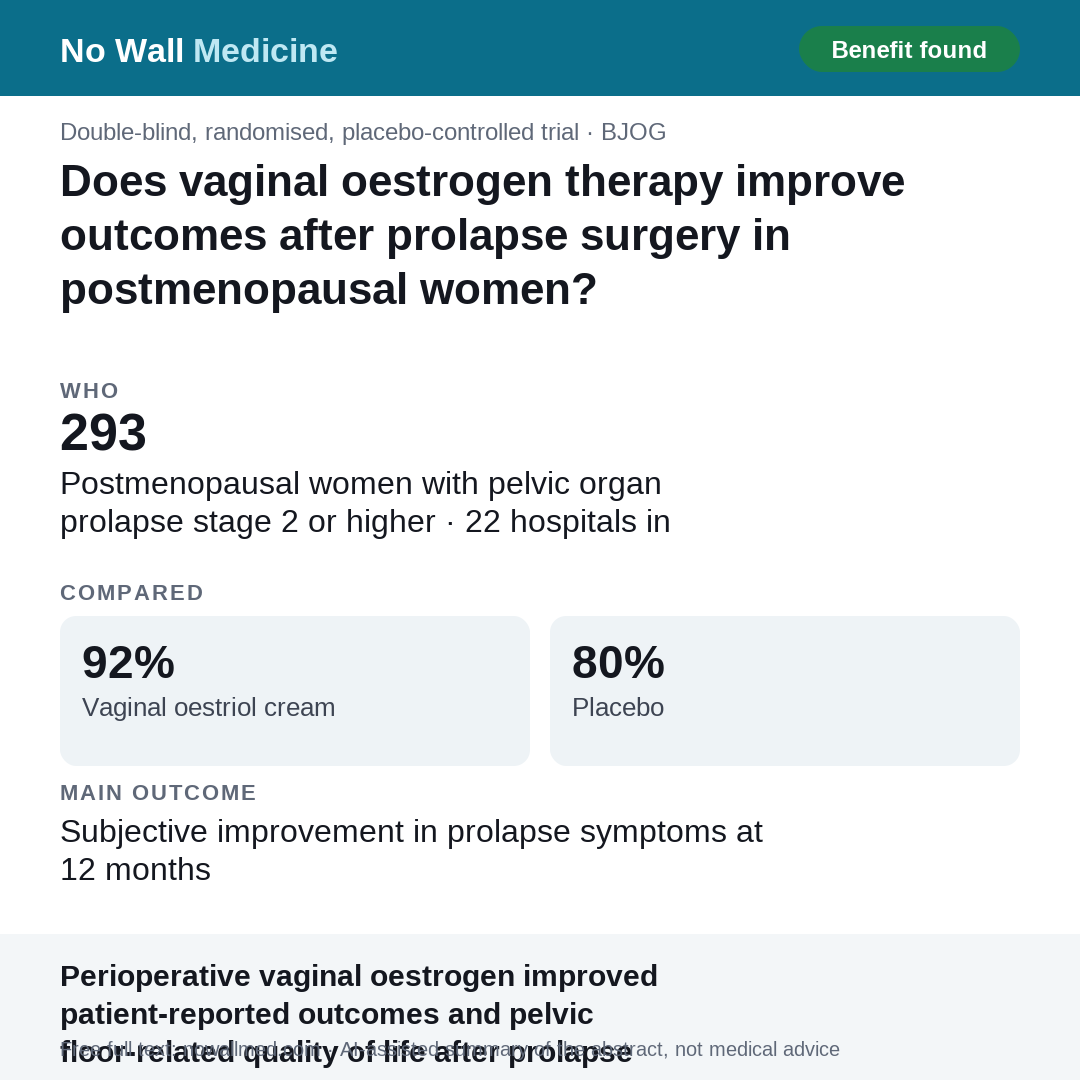
Vaginal Oestrogen Therapy for Postmenopausal Women Undergoing Prolapse Surgery: A Multicentre Double-Blind Randomised Placebo-Controlled Clinical Trial
Double-blind, randomised, placebo-controlled trialBenefit found
Does vaginal oestrogen therapy improve outcomes after prolapse surgery in postmenopausal women?
Who
293
Postmenopausal women with pelvic organ prolapse stage 2 or higher · 22 hospitals in the Netherlands
Compared
92%Vaginal oestriol cream
80%Placebo
Main outcome
Subjective improvement in prolapse symptoms at 12 months
Bottom line: Perioperative vaginal oestrogen improved patient-reported outcomes and pelvic floor-related quality of life after prolapse surgery.
BJOG · 2026-08-28Download image
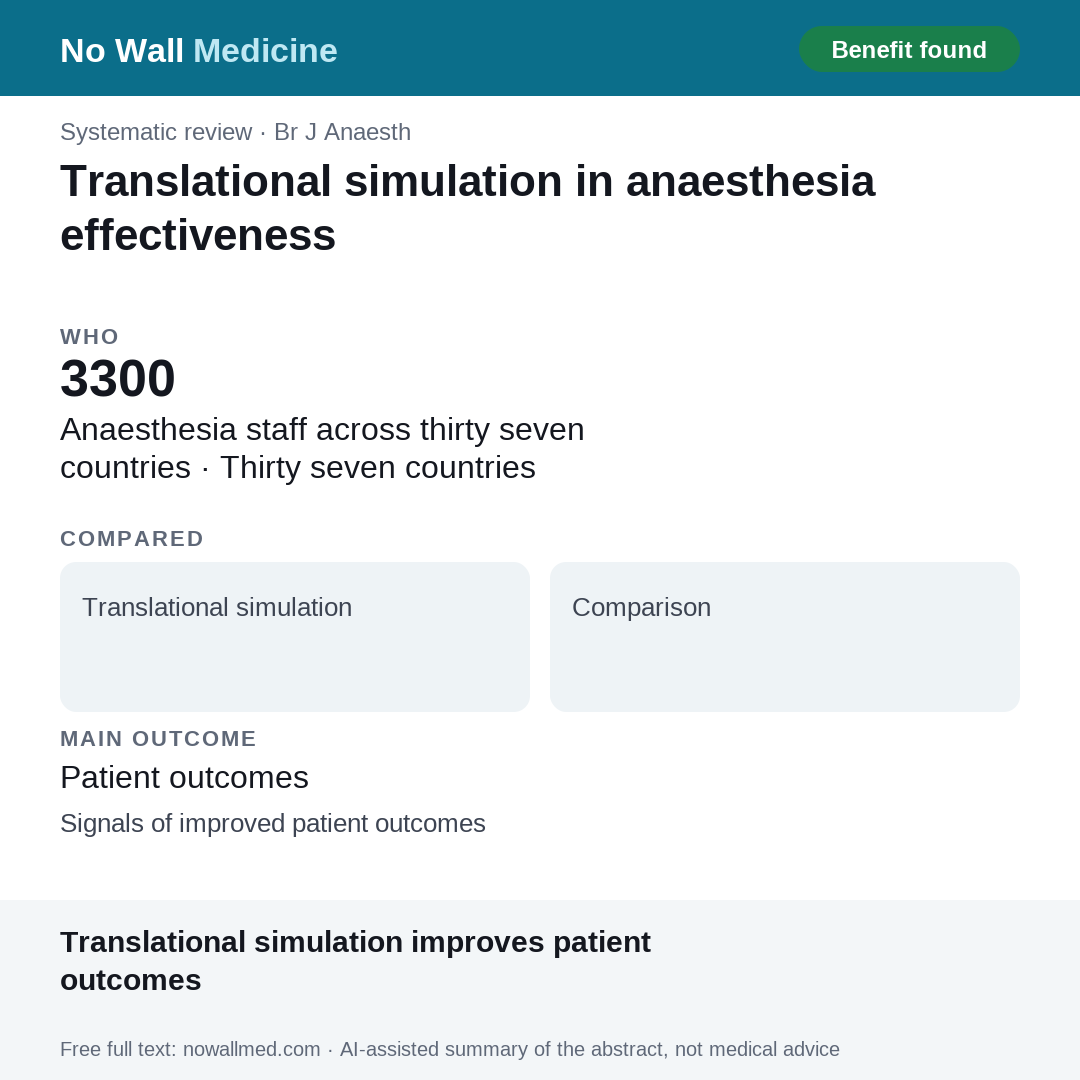
Translational simulation in anaesthesia: a systematic review of applications, processes, outcomes, and implementation factors
Systematic reviewBenefit found
Translational simulation in anaesthesia effectiveness
Who
3300
Anaesthesia staff across thirty seven countries · Thirty seven countries
Compared
Translational simulation
Comparison
Main outcome
Patient outcomes
Result: Signals of improved patient outcomes
Bottom line: Translational simulation improves patient outcomes
Limitation: Quasi-experimental designs
Br J Anaesth · 2026-08-28Download image
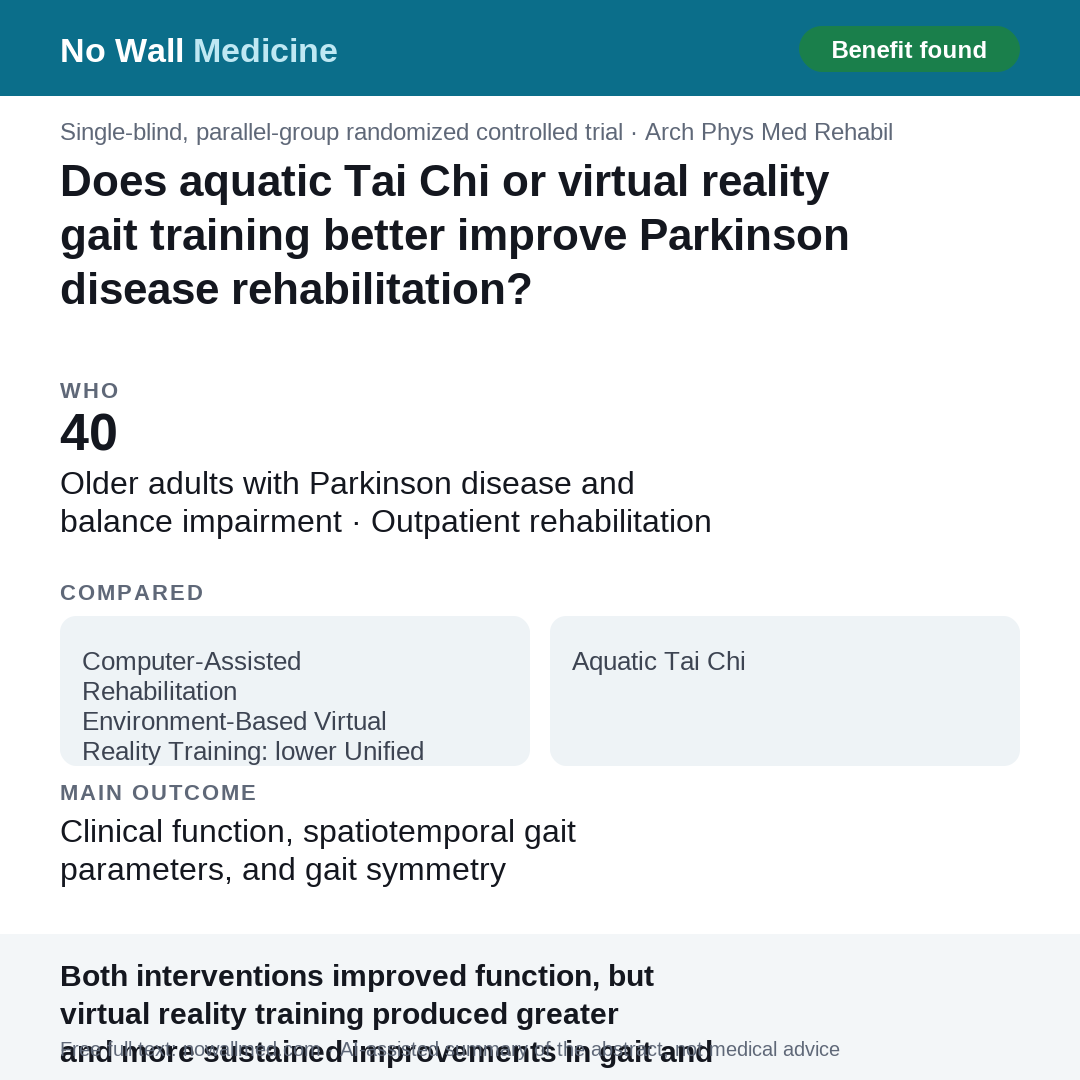
Effects of Aquatic Tai Chi and Computer-Assisted Rehabilitation Environment-Based Virtual Reality Training on Rehabilitation in Patients With Parkinson Disease: A Randomized Controlled Trial
Single-blind, parallel-group randomized controlled trialBenefit found
Does aquatic Tai Chi or virtual reality gait training better improve Parkinson disease rehabilitation?
Who
40
Older adults with Parkinson disease and balance impairment · Outpatient rehabilitation pool and gait laboratory
Compared
Computer-Assisted Rehabilitation Environment-Based Virtual Reality Training: lower Unified Parkinson's Disease Rating Scale, Part III scores
Aquatic Tai Chi
Main outcome
Clinical function, spatiotemporal gait parameters, and gait symmetry
Bottom line: Both interventions improved function, but virtual reality training produced greater and more sustained improvements in gait and balance.
Arch Phys Med Rehabil · 2026-08-28Download image
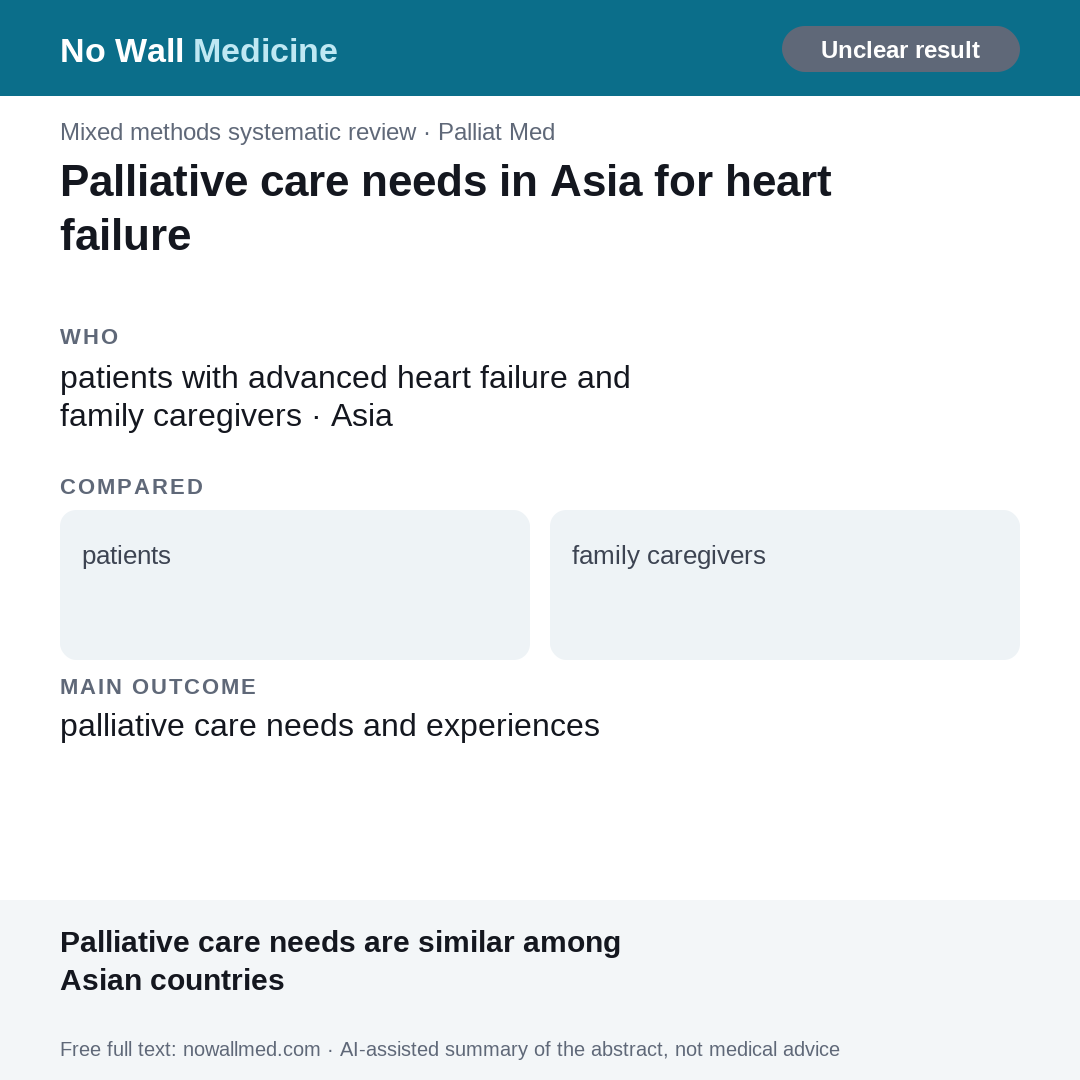
Palliative care needs and experiences of patients with advanced heart failure and family caregivers in Asia: A mixed methods systematic review
Mixed methods systematic reviewUnclear result
Palliative care needs in Asia for heart failure
Who
patients with advanced heart failure and family caregivers · Asia
Compared
patients
family caregivers
Main outcome
palliative care needs and experiences
Bottom line: Palliative care needs are similar among Asian countries
Palliat Med · 2026-08-28Download image
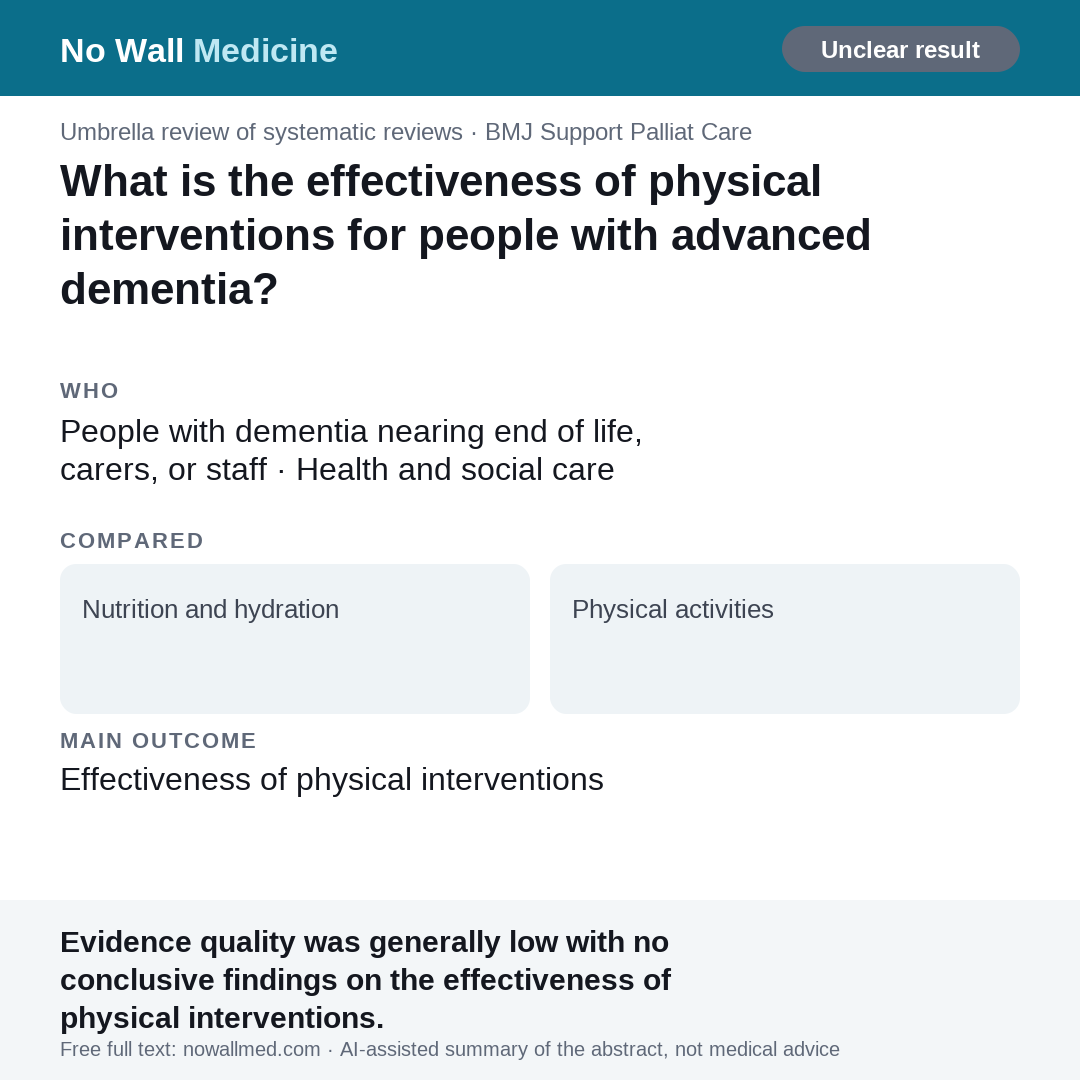
What is the evidence for physical interventions for people living with advanced dementia in the community? A meta-review
Umbrella review of systematic reviewsUnclear result
What is the effectiveness of physical interventions for people with advanced dementia?
Who
People with dementia nearing end of life, carers, or staff · Health and social care settings
Compared
Nutrition and hydration
Physical activities
Main outcome
Effectiveness of physical interventions
Bottom line: Evidence quality was generally low with no conclusive findings on the effectiveness of physical interventions.
Limitation: Evidence quality was generally low, with no conclusive findings on effectiveness.
BMJ Support Palliat Care · 2026-08-28Download image
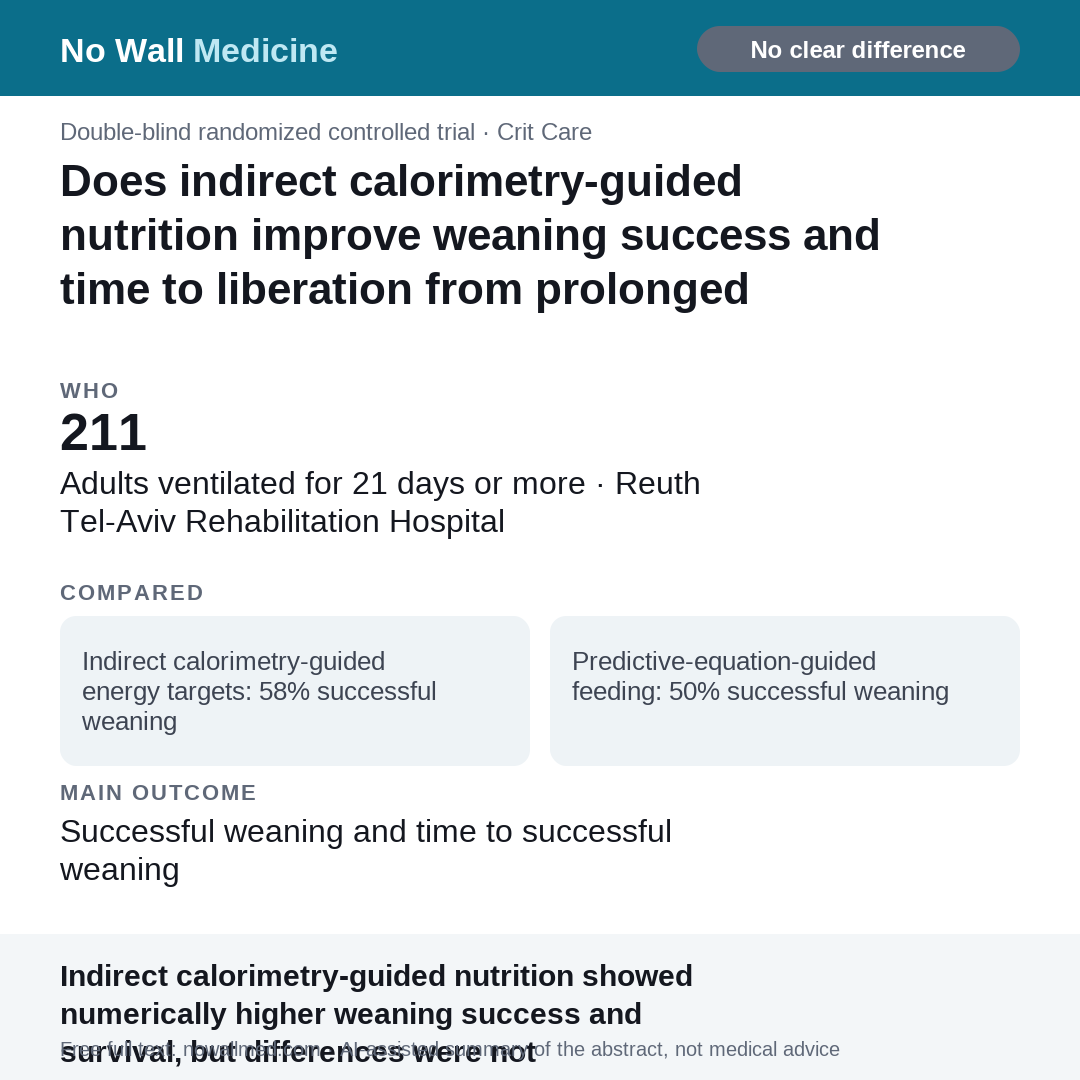
Indirect calorimetry-guided nutrition during weaning from prolonged mechanical ventilation: a double-blind randomized controlled trial
Double-blind randomized controlled trialNo clear difference
Does indirect calorimetry-guided nutrition improve weaning success and time to liberation from prolonged mechanical ventilation?
Who
211
Adults ventilated for 21 days or more · Reuth Tel-Aviv Rehabilitation Hospital
Compared
Indirect calorimetry-guided energy targets: 58% successful weaning
Predictive-equation-guided feeding: 50% successful weaning
Main outcome
Successful weaning and time to successful weaning
Bottom line: Indirect calorimetry-guided nutrition showed numerically higher weaning success and survival, but differences were not statistically significant.
Crit Care · 2026-08-28Download image
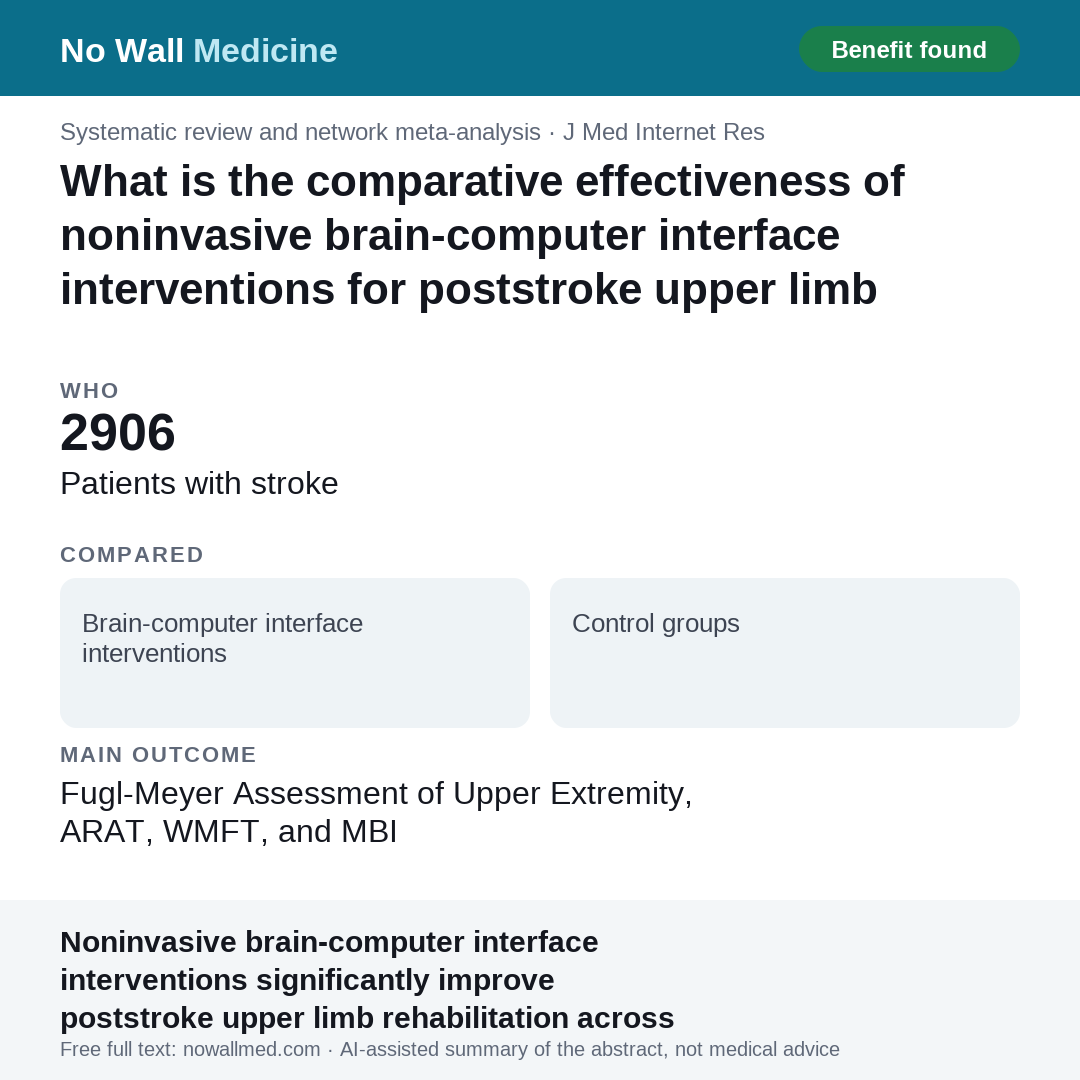
Comparative Effectiveness of Noninvasive Brain-Computer Interface-Based Interventions for Upper Limb Rehabilitation in Poststroke Hemiplegia: Systematic Review and Network Meta-Analysis of Randomized Controlled Trials
Systematic review and network meta-analysisBenefit found
What is the comparative effectiveness of noninvasive brain-computer interface interventions for poststroke upper limb rehabilitation?
Who
2906
Patients with stroke
Compared
Brain-computer interface interventions
Control groups
Main outcome
Fugl-Meyer Assessment of Upper Extremity, ARAT, WMFT, and MBI
Result: mean difference 5.33 (95% CI 4.28 to 6.38) for FMA-UE
Bottom line: Noninvasive brain-computer interface interventions significantly improve poststroke upper limb rehabilitation across body functions and activities.
Limitation: Low to moderate evidence certainty and substantial heterogeneity make findings exploratory.
J Med Internet Res · 2026-08-28Download image
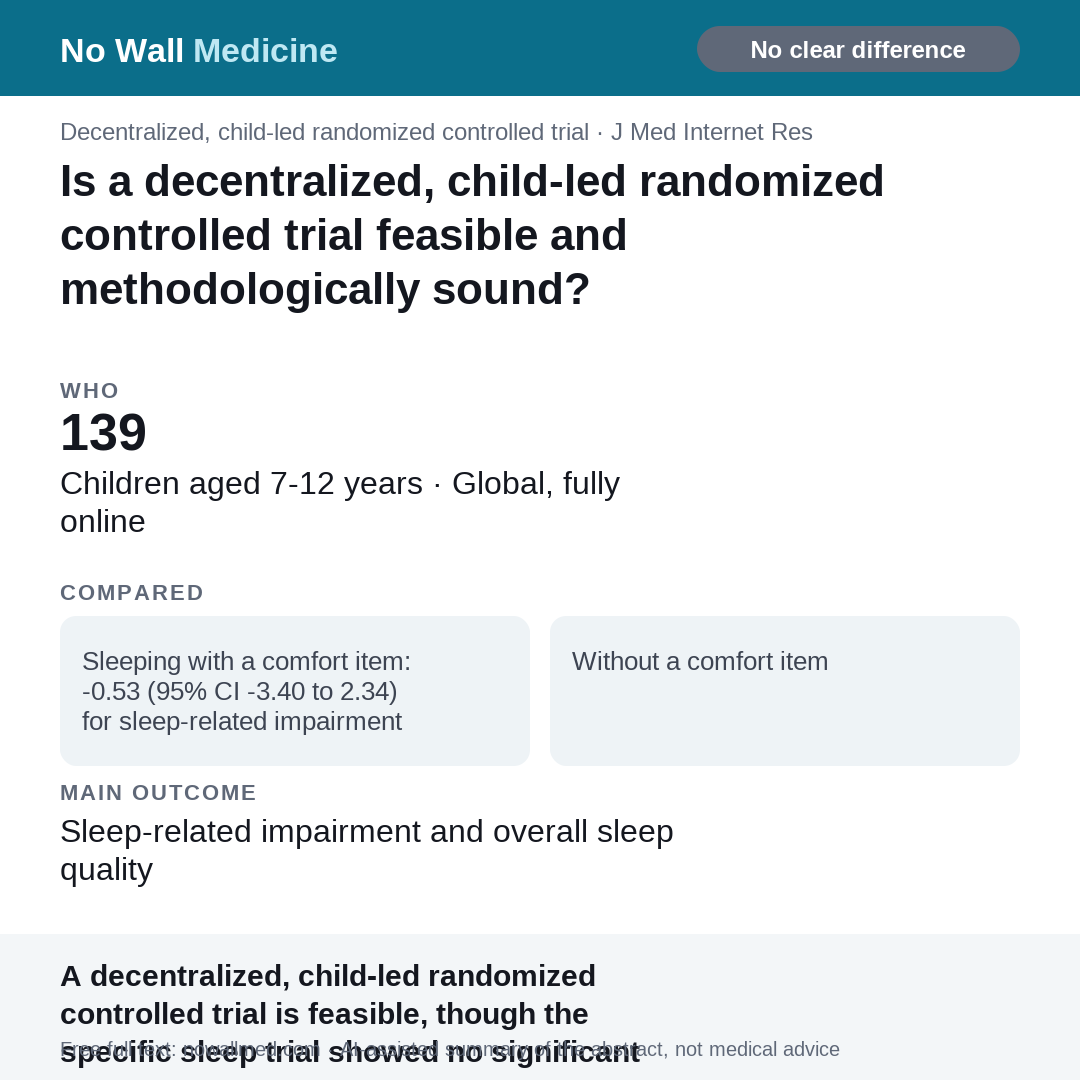
Feasibility and Methodological Reflections From the Co-Creation of a Randomized Controlled Trial (The Kid's Trial): Decentralized, Child-Led Citizen-Science Study
Decentralized, child-led randomized controlled trialNo clear difference
Is a decentralized, child-led randomized controlled trial feasible and methodologically sound?
Who
139
Children aged 7-12 years · Global, fully online
Compared
Sleeping with a comfort item: -0.53 (95% CI -3.40 to 2.34) for sleep-related impairment
Without a comfort item
Main outcome
Sleep-related impairment and overall sleep quality
Result: adjusted mean difference -0.53 (95% CI -3.40 to 2.34) for sleep-related impairment
Bottom line: A decentralized, child-led randomized controlled trial is feasible, though the specific sleep trial showed no significant difference in impairment.
Limitation: Poststudy responses were limited by low response rate and potential selection bias.
J Med Internet Res · 2026-08-28Download image
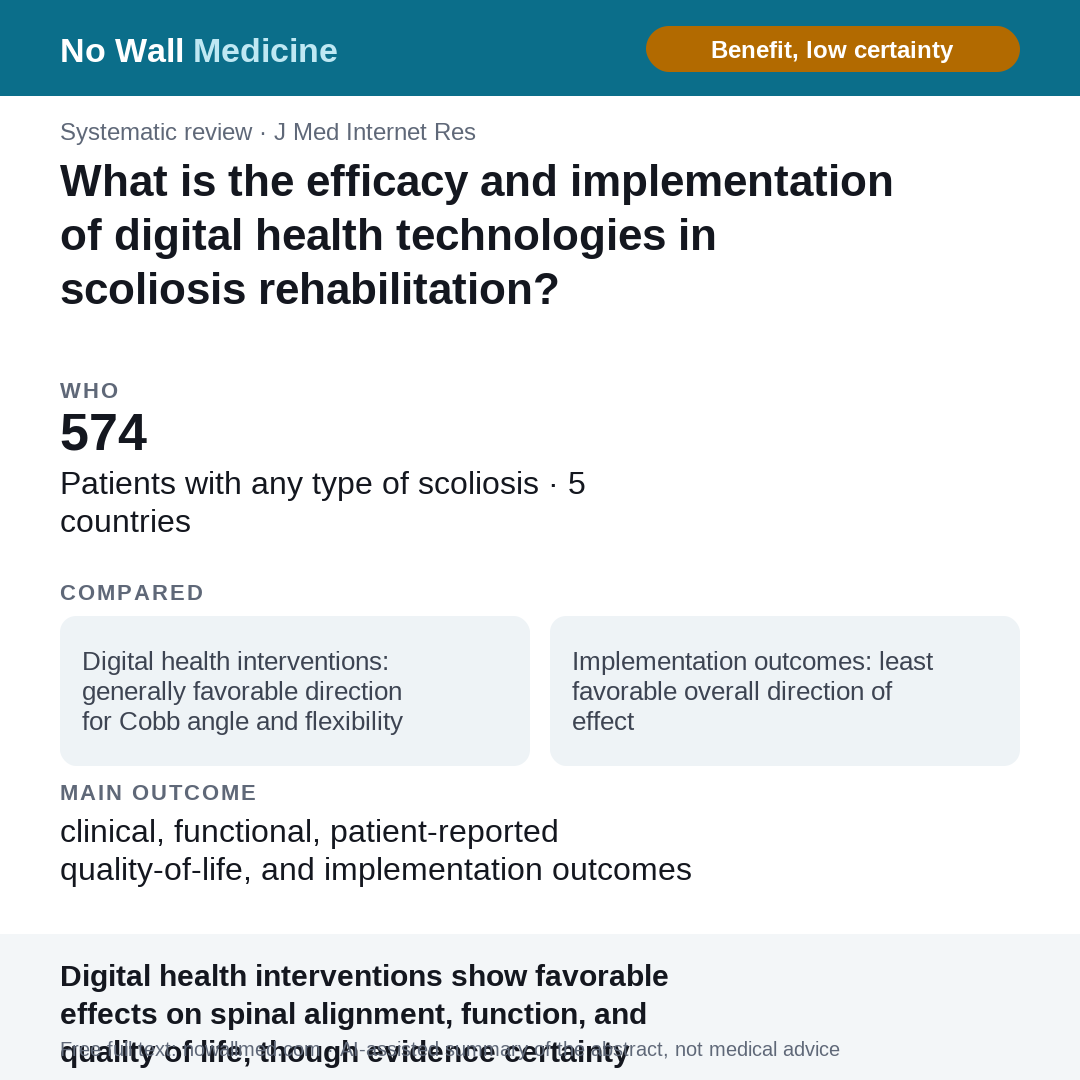
Application of Digital Health Technologies in Scoliosis Rehabilitation: Systematic Review Based on the Technology Classification Framework
Systematic reviewBenefit found
What is the efficacy and implementation of digital health technologies in scoliosis rehabilitation?
Who
574
Patients with any type of scoliosis · 5 countries
Compared
Digital health interventions: generally favorable direction for Cobb angle and flexibility
Implementation outcomes: least favorable overall direction of effect
Main outcome
clinical, functional, patient-reported quality-of-life, and implementation outcomes
Bottom line: Digital health interventions show favorable effects on spinal alignment, function, and quality of life, though evidence certainty is low.
Limitation: The overall certainty of evidence was low.
J Med Internet Res · 2026-08-28Download image
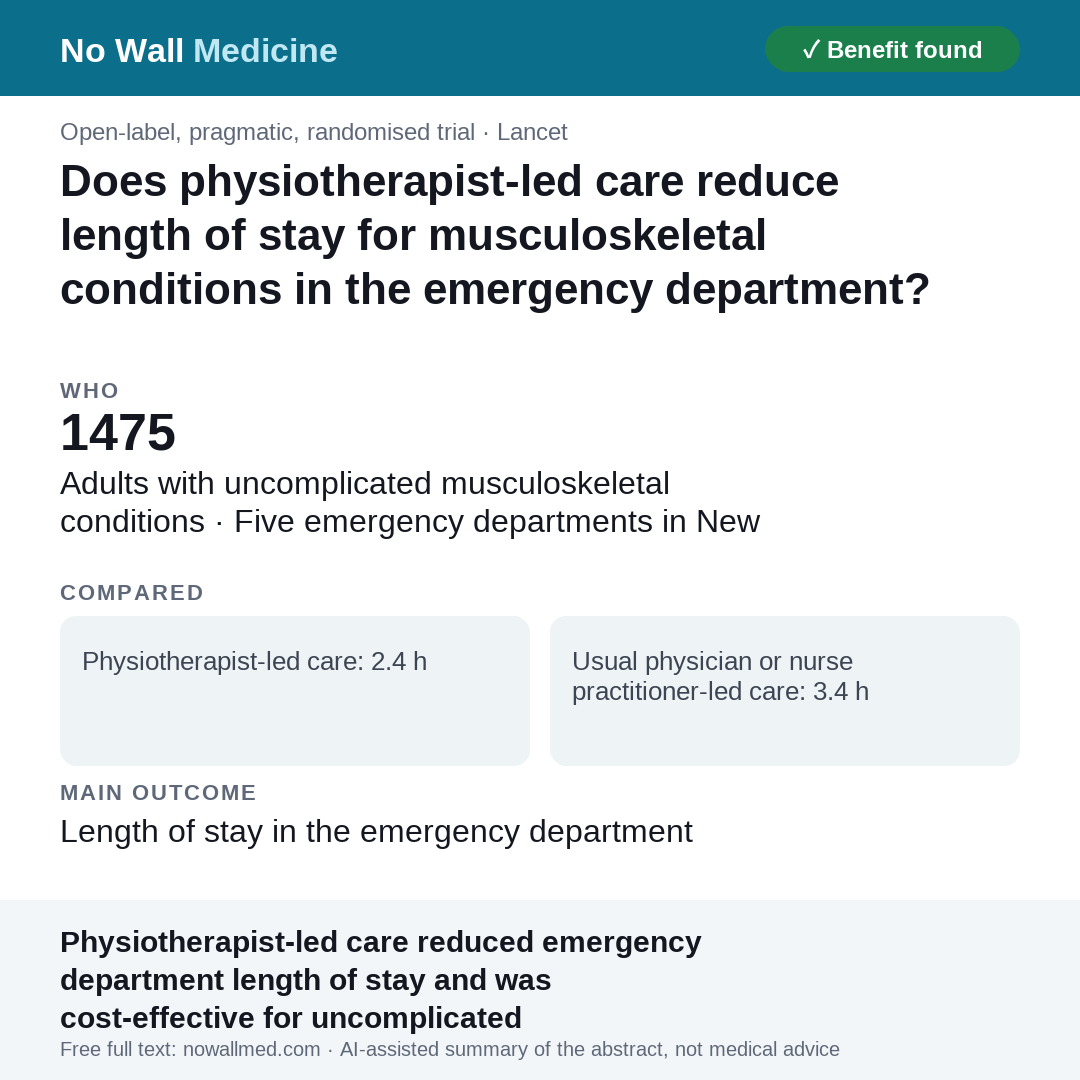
Physiotherapist-led care for musculoskeletal conditions in the emergency department (RESHAP-ED): a randomised controlled trial with economic evaluation
Open-label, pragmatic, randomised trialBenefit found
Does physiotherapist-led care reduce length of stay for musculoskeletal conditions in the emergency department?
Who
1475
Adults with uncomplicated musculoskeletal conditions · Five emergency departments in New South Wales, Australia
Compared
Physiotherapist-led care: 2.4 h
Usual physician or nurse practitioner-led care: 3.4 h
Main outcome
Length of stay in the emergency department
Result: -1.0 h (95% CI -1.2 to -0.8)
Bottom line: Physiotherapist-led care reduced emergency department length of stay and was cost-effective for uncomplicated musculoskeletal conditions.
Funded by: Medical Research Future Fund
Lancet · 2026-08-27Download image
Conflicting evidence for continuous glucose monitoring in gestational diabetes: current challenges and the imperative for individual participant data meta-analysis
Review of randomized controlled trialsUnclear result
Does continuous glucose monitoring improve glycaemic management and outcomes in gestational diabetes?
Who
Women with gestational diabetes mellitus
Compared
Continuous glucose monitoring
Self-monitoring of blood glucose
Main outcome
Glycaemic management and pregnancy outcomes
Bottom line: Evidence for continuous glucose monitoring in gestational diabetes remains conflicting with no clear benefit for maternal or neonatal outcomes.
Limitation: Absence of validated continuous glucose monitoring-based glycaemic targets specific to gestational diabetes.
BMC Med · 2026-08-27Download image
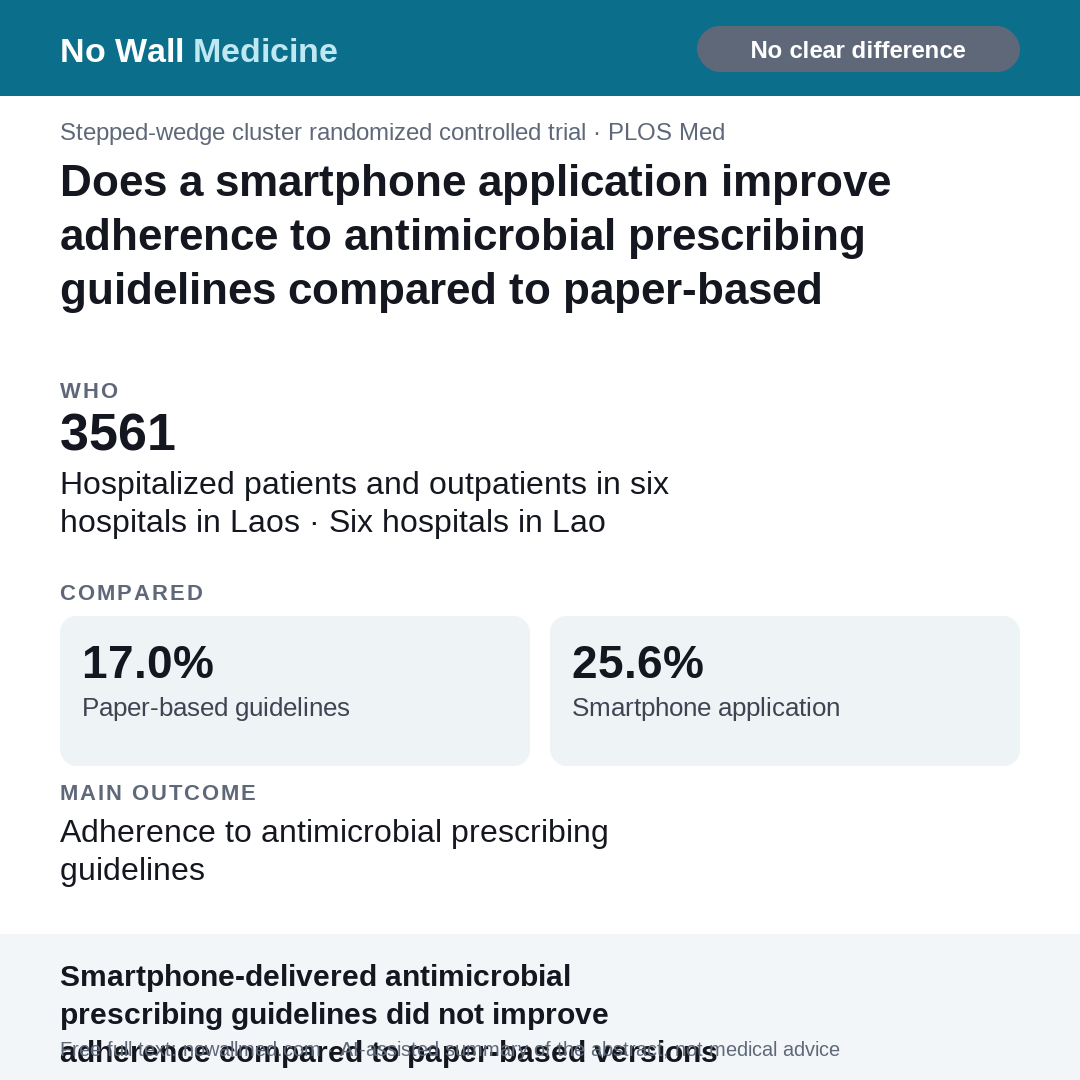
Adherence to smartphone-delivered antimicrobial prescribing guidelines in hospitals in Lao PDR: A stepped-wedge cluster randomized controlled trial
Stepped-wedge cluster randomized controlled trialNo clear difference
Does a smartphone application improve adherence to antimicrobial prescribing guidelines compared to paper-based versions?
Who
3561
Hospitalized patients and outpatients in six hospitals in Laos · Six hospitals in Lao People's Democratic Republic
Compared
17.0%Paper-based guidelines (95% confidence interval [15.0,19])
25.6%Smartphone application (95% CI [23.1,28.3])
Main outcome
Adherence to antimicrobial prescribing guidelines
Result: adjusted odds ratio 1.26 (95% CI [0.8,1.9])
Bottom line: Smartphone-delivered antimicrobial prescribing guidelines did not improve adherence compared to paper-based versions in Lao hospitals.
Limitation: Prescriptions could not be reliably linked to individual prescribers to evaluate individual behavior changes.
PLOS Med · 2026-08-27Download image
Does acute pyelonephritis skew outcomes in registrational trials of novel antibiotics for complicated urinary tract infections? A systematic review and meta-analysis
Systematic review and meta-analysisBenefit found
Do outcomes differ between acute pyelonephritis and other complicated urinary tract infections?
Who
5,971
Patients with acute pyelonephritis or other complicated urinary tract infections
Compared
Acute pyelonephritis
Other complicated urinary tract infections
Main outcome
Clinical cure plus microbiologic eradication at test-of-cure
Result: risk ratio 1.12 (95% CI 1.03-1.23)
Bottom line: Acute pyelonephritis achieved higher cure rates at test-of-cure than other complicated urinary tract infections.
Limitation: Heterogeneity in definitions and limited stratified reporting reduce interstudy comparability.
Clin Infect Dis · 2026-08-27Download image

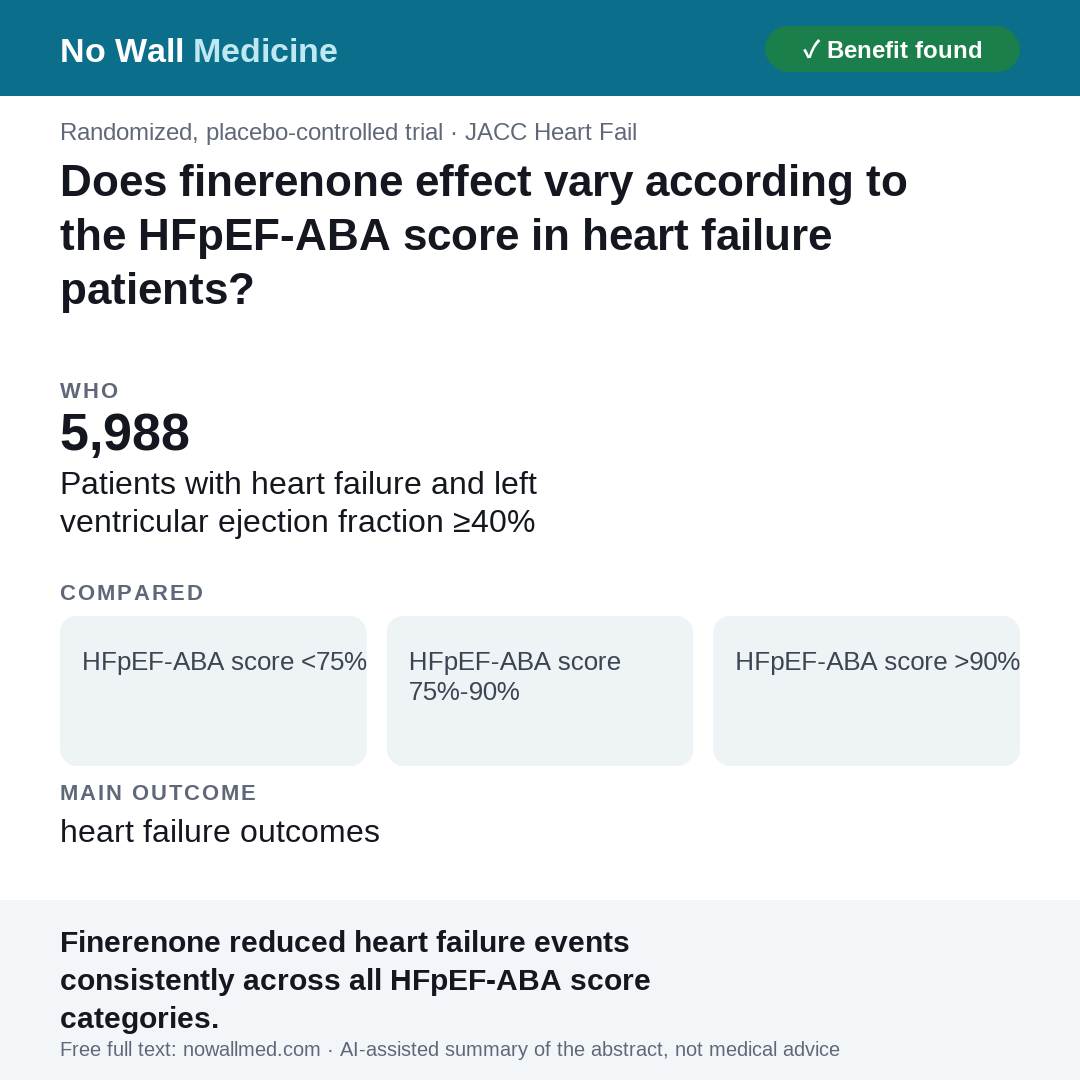
HFpEF-ABA Score and Finerenone in Patients With Heart Failure and Mildly Reduced or Preserved Ejection Fraction: Insights From the FINEARTS-HF Trial
Randomized, placebo-controlled trialBenefit found
Does finerenone effect vary according to the HFpEF-ABA score in heart failure patients?
Who
5,988
Patients with heart failure and left ventricular ejection fraction ≥40%
Compared
HFpEF-ABA score <75%
HFpEF-ABA score 75%-90%
HFpEF-ABA score >90%
Main outcome
heart failure outcomes
Bottom line: Finerenone reduced heart failure events consistently across all HFpEF-ABA score categories.
JACC Heart Fail · 2026-08-27Download image
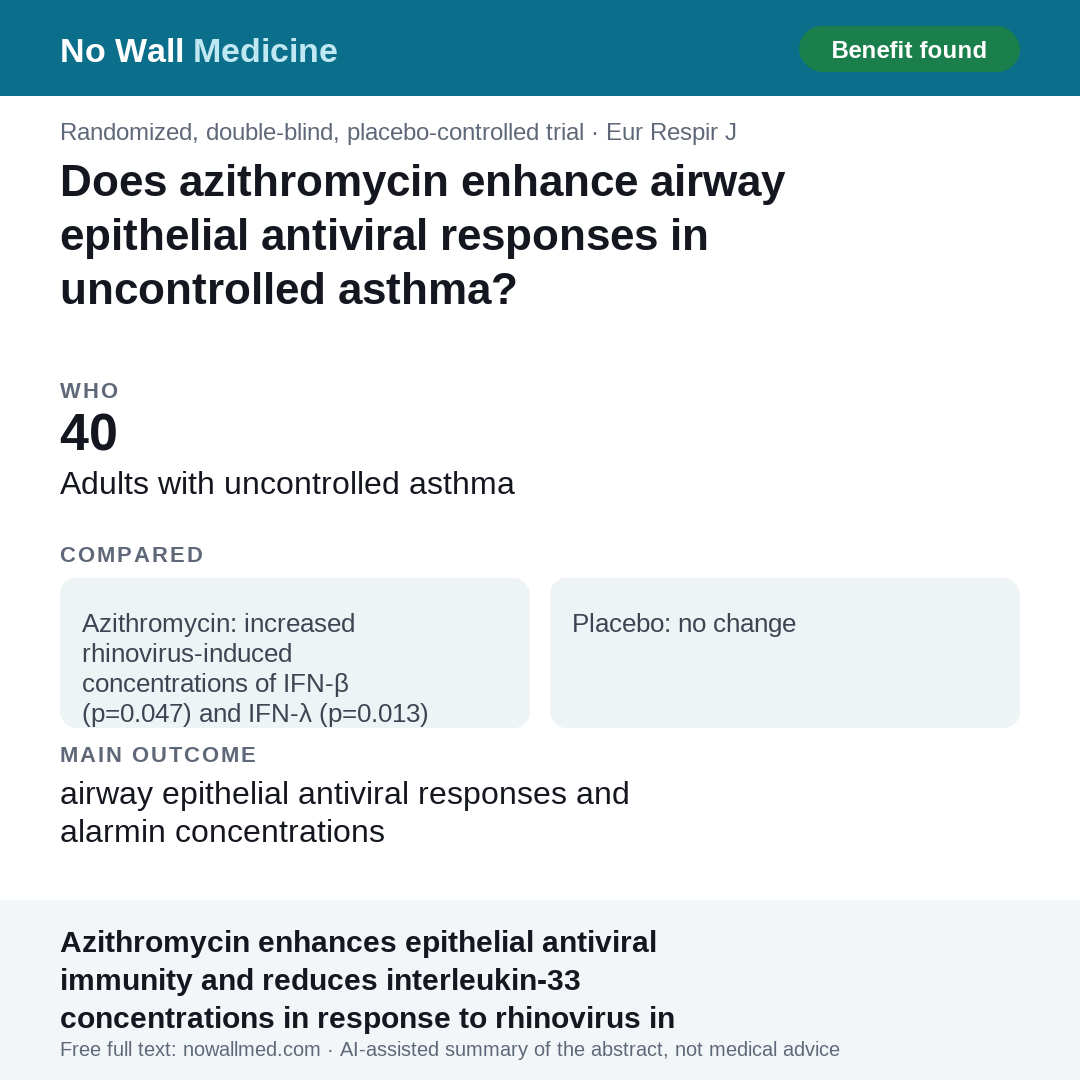
Azithromycin enhances epithelial antiviral immunity in uncontrolled asthma: results from the AZIMUNE randomised controlled trial
Randomized, double-blind, placebo-controlled trialBenefit found
Does azithromycin enhance airway epithelial antiviral responses in uncontrolled asthma?
Who
40
Adults with uncontrolled asthma
Compared
Azithromycin: increased rhinovirus-induced concentrations of IFN-β (p=0.047) and IFN-λ (p=0.013)
Placebo: no change
Main outcome
airway epithelial antiviral responses and alarmin concentrations
Bottom line: Azithromycin enhances epithelial antiviral immunity and reduces interleukin-33 concentrations in response to rhinovirus in asthma.
Eur Respir J · 2026-08-27Download image
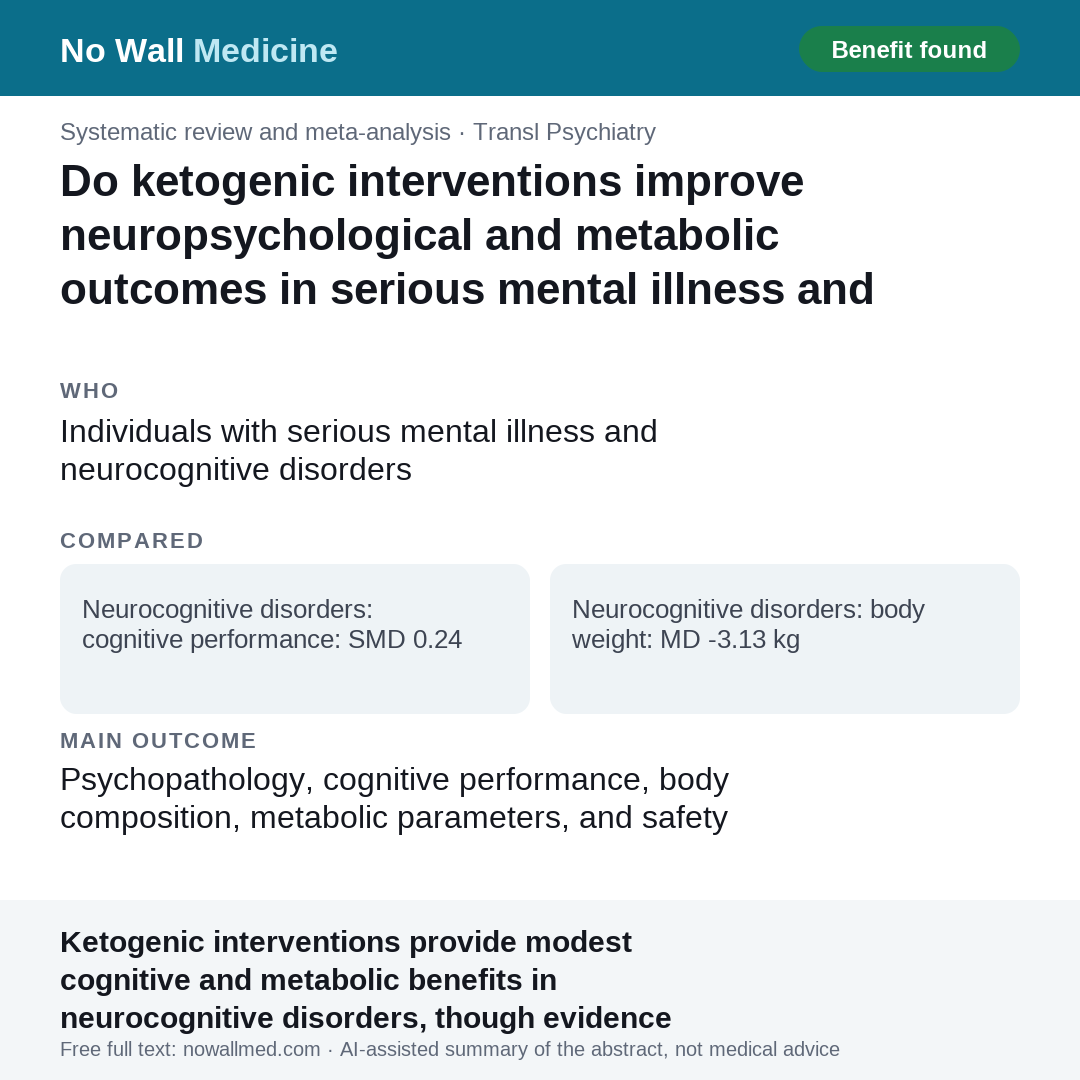
The efficacy of ketogenic interventions on neuropsychological & metabolic outcomes in serious mental illness & neurocognitive disorders: a systematic review & meta-analysis
Systematic review and meta-analysisBenefit found
Do ketogenic interventions improve neuropsychological and metabolic outcomes in serious mental illness and neurocognitive disorders?
Who
Individuals with serious mental illness and neurocognitive disorders
Compared
Neurocognitive disorders: cognitive performance: SMD 0.24
Neurocognitive disorders: body weight: MD -3.13 kg
Main outcome
Psychopathology, cognitive performance, body composition, metabolic parameters, and safety
Result: SMD 0.24 (95% CI 0.06 to 0.43) for cognitive performance
Bottom line: Ketogenic interventions provide modest cognitive and metabolic benefits in neurocognitive disorders, though evidence for serious mental illness is preliminary.
Limitation: Evidence in serious mental illness was largely limited to case reports and single-arm trials.
Transl Psychiatry · 2026-08-27Download image
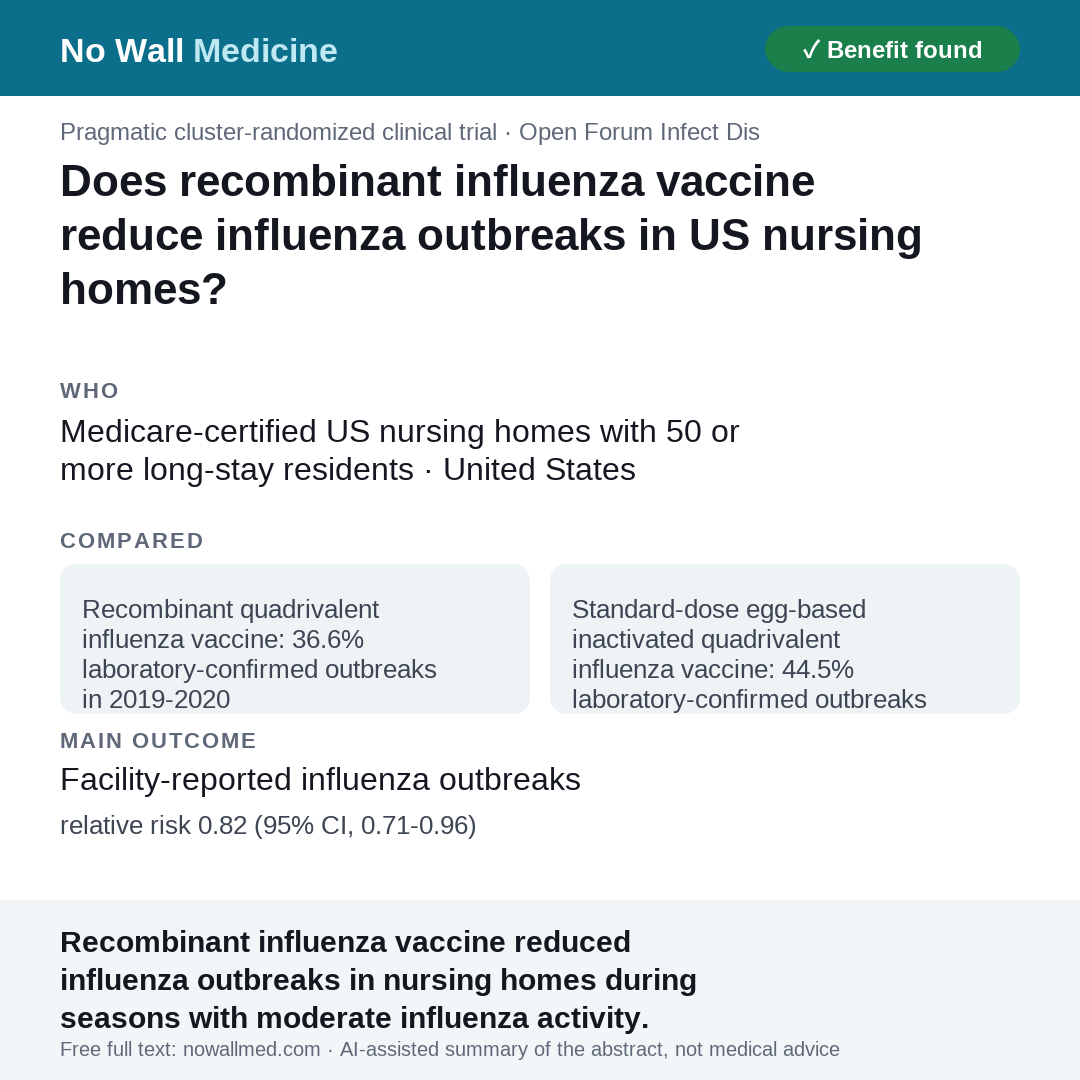
Recombinant Influenza Vaccine and Influenza Outbreaks in US Nursing Homes: Results From a Pragmatic Cluster-Randomized Clinical Trial
Pragmatic cluster-randomized clinical trialBenefit found
Does recombinant influenza vaccine reduce influenza outbreaks in US nursing homes?
Who
Medicare-certified US nursing homes with 50 or more long-stay residents · United States nursing homes
Compared
Recombinant quadrivalent influenza vaccine: 36.6% laboratory-confirmed outbreaks in 2019-2020
Standard-dose egg-based inactivated quadrivalent influenza vaccine: 44.5% laboratory-confirmed outbreaks in 2019-2020
Main outcome
Facility-reported influenza outbreaks
Result: relative risk 0.82 (95% CI, 0.71-0.96)
Bottom line: Recombinant influenza vaccine reduced influenza outbreaks in nursing homes during seasons with moderate influenza activity.
Limitation: No significant differences were observed during the low-circulation 2020-2021 season.
Open Forum Infect Dis · 2026-08-27Download image
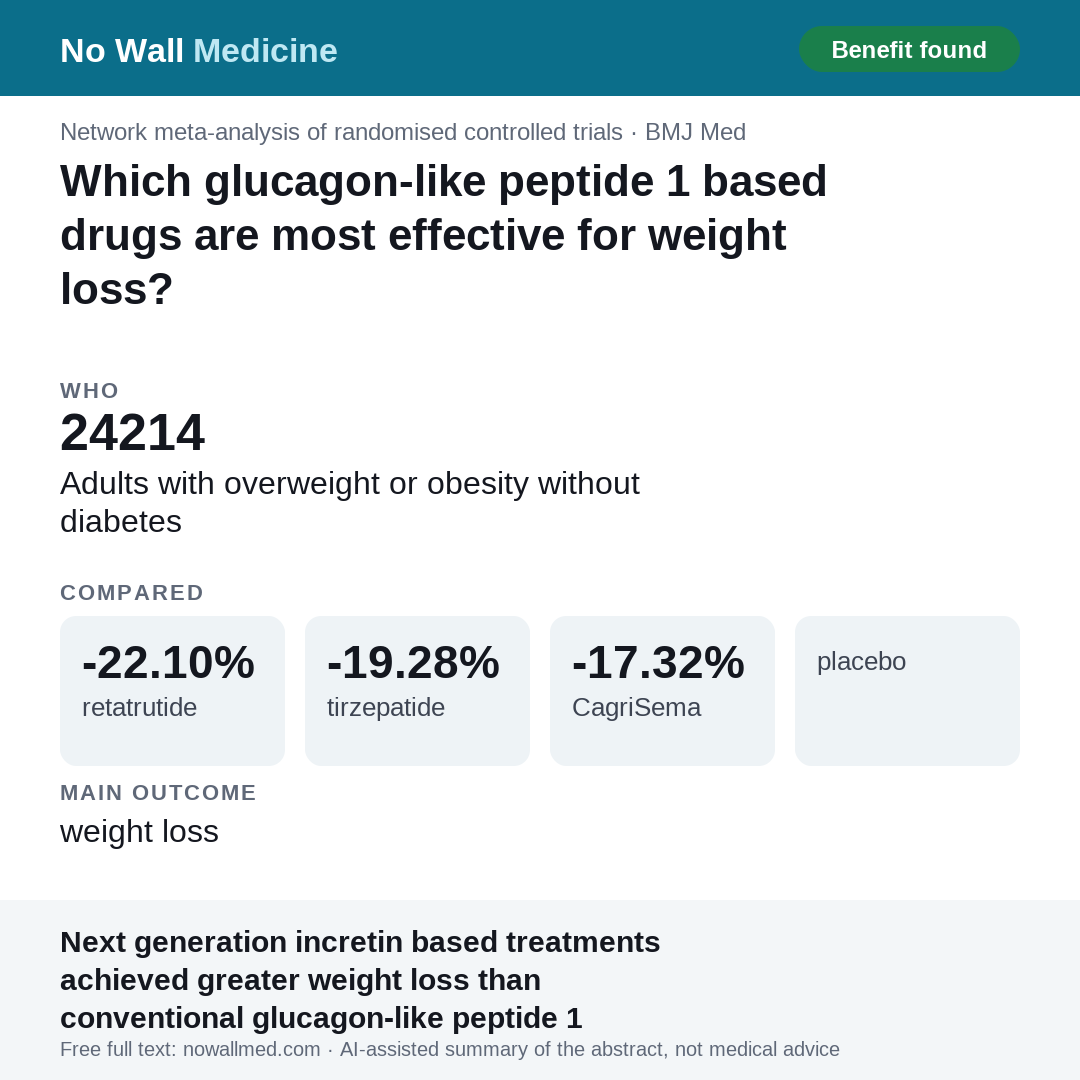
Comparative efficacy and safety of glucagon-like peptide 1 based drugs for weight loss in adults with overweight or obesity without diabetes: network meta-analysis of randomised controlled trials
Network meta-analysis of randomised controlled trialsBenefit found
Which glucagon-like peptide 1 based drugs are most effective for weight loss?
Who
24214
Adults with overweight or obesity without diabetes
Compared
-22.10%retatrutide (95% confidence interval -25.60% to -18.60%)
-19.28%tirzepatide (-20.39% to -18.16%)
-17.32%CagriSema (-19.32% to -15.32%)
placebo
Main outcome
weight loss
Bottom line: Next generation incretin based treatments achieved greater weight loss than conventional glucagon-like peptide 1 receptor agonists.
Limitation: Differences in tolerability, limited head-to-head evidence, and residual uncertainty.
BMJ Med · 2026-08-27Download image
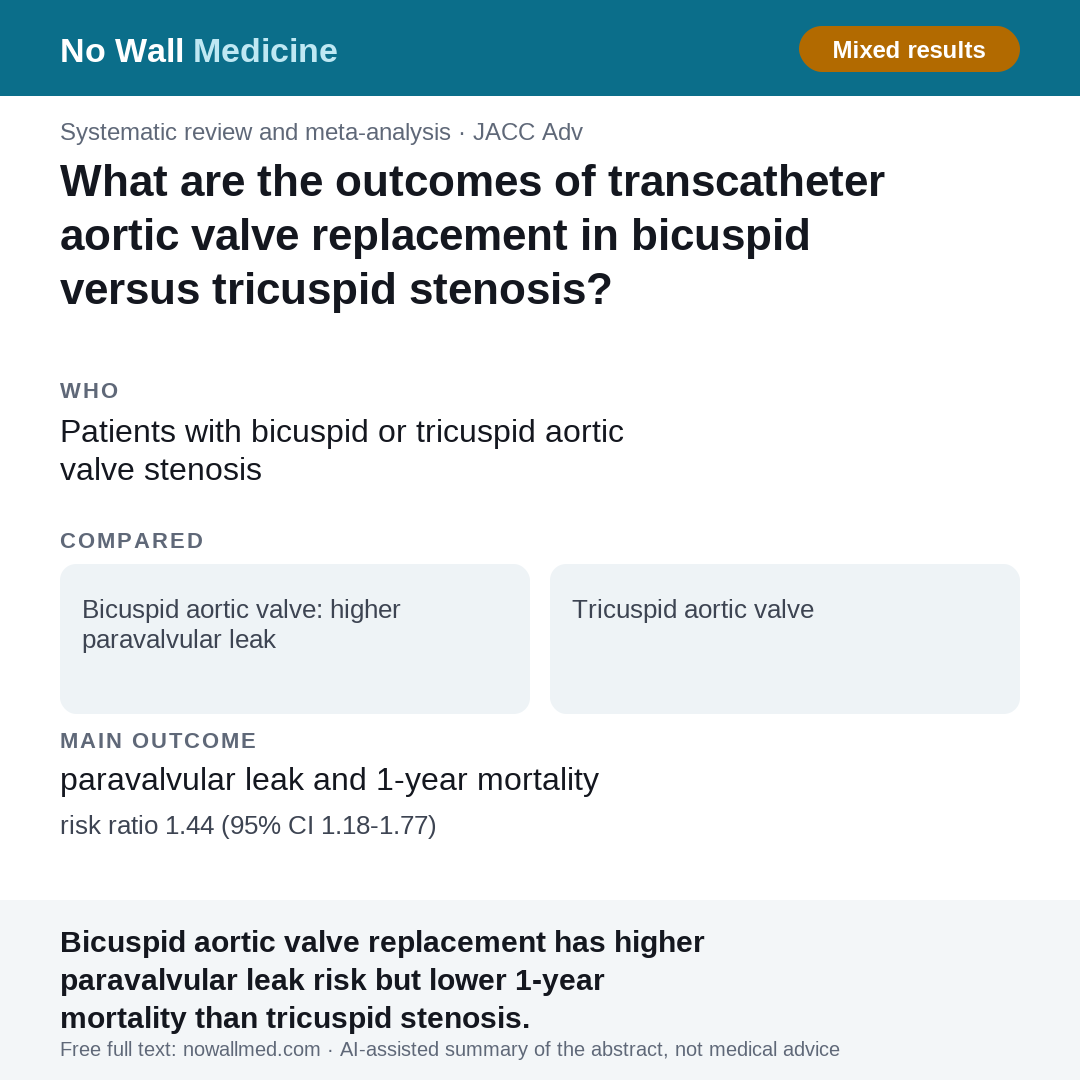
Transcatheter Aortic Valve Replacement for Severe Bicuspid Aortic Valve Stenosis: A Systematic Review and Meta-Analysis
Systematic review and meta-analysisMixed results
What are the outcomes of transcatheter aortic valve replacement in bicuspid versus tricuspid aortic valve stenosis?
Who
Patients with bicuspid or tricuspid aortic valve stenosis
Compared
Bicuspid aortic valve: higher paravalvular leak (RR: 1.44; 95% CI: 1.18-1.77)
Tricuspid aortic valve
Main outcome
paravalvular leak, aortic root injury, stroke, and mortality
Result: RR: 1.44 (95% CI: 1.18-1.77) for paravalvular leak
Bottom line: Bicuspid aortic valve replacement has higher procedural risks but lower 1-year mortality compared to tricuspid aortic valve replacement.
JACC Adv · 2026-08-27Download image
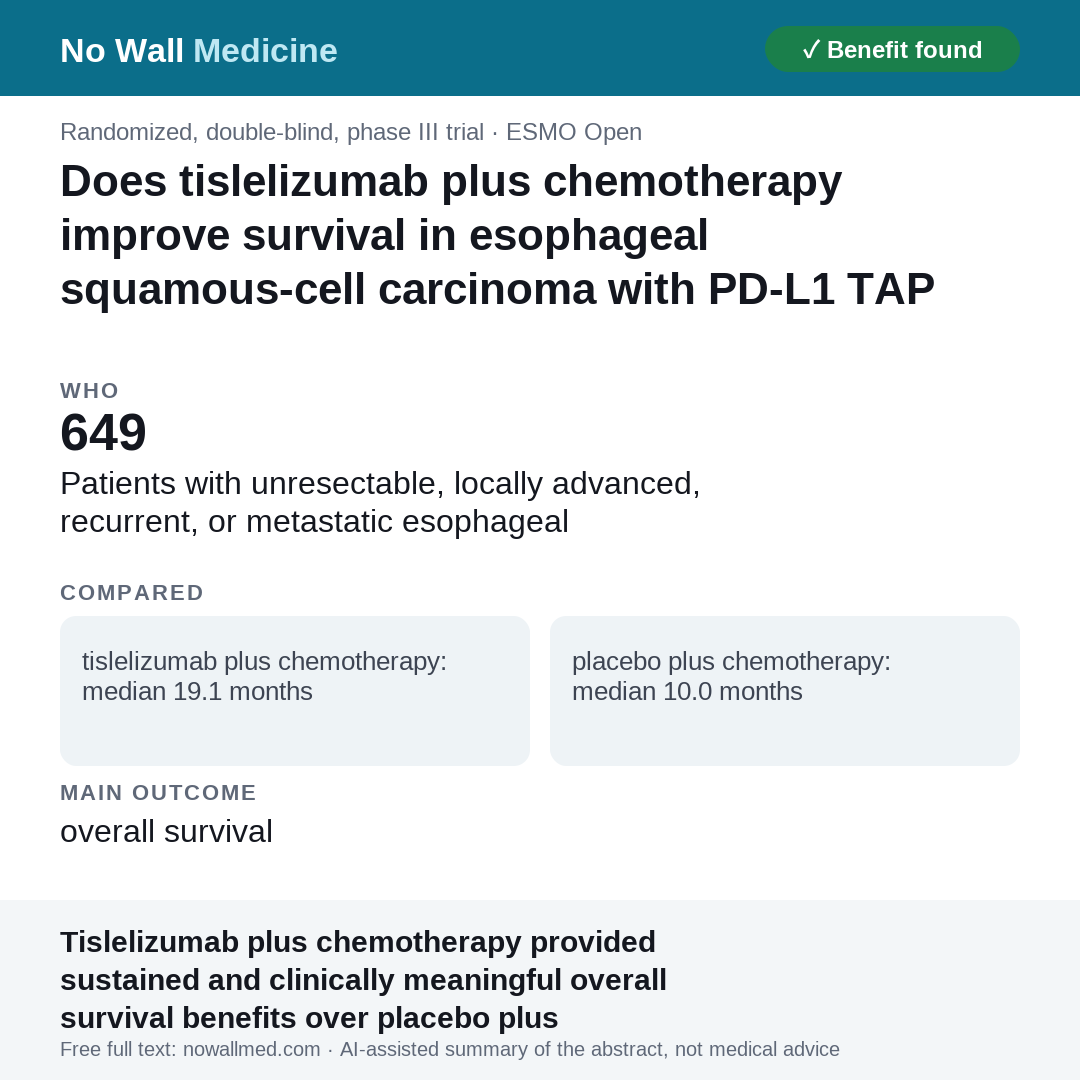
Tislelizumab plus chemotherapy for advanced or metastatic esophageal squamous-cell carcinoma in patients with PD-L1 Tumor Area Positivity score ≥5%: a post hoc, exploratory, long-term follow-up of RATIONALE-306☆
Randomized, double-blind, phase III trialBenefit found
Does tislelizumab plus chemotherapy improve survival in esophageal squamous-cell carcinoma with PD-L1 TAP score ≥5%?
Who
649
Patients with unresectable, locally advanced, recurrent, or metastatic esophageal squamous-cell carcinoma
Compared
tislelizumab plus chemotherapy: median 19.1 months
placebo plus chemotherapy: median 10.0 months
Main outcome
overall survival
Result: hazard ratio 0.61
Bottom line: Tislelizumab plus chemotherapy provided sustained and clinically meaningful overall survival benefits over placebo plus chemotherapy.
ESMO Open · 2026-08-27Download image