Visual abstracts
New randomized trials and meta-analyses from leading journals at a glance: who was studied, what was compared, and what was found. Every paper is free to read in full.
All specialtiesCardiology 919Oncology 824Gastroenterology & Hepatology 340Infectious Disease 656Neurology 375Psychiatry & Mental Health 451Pulmonology 393Critical Care 272Endocrinology & Diabetes 501Pediatrics 575Surgery 370Orthopedics & Sports Medicine 168Neurosurgery 117Cardiothoracic & Vascular Surgery 88Plastic & Reconstructive Surgery 145Nephrology 205Rheumatology 111Hematology 196Dermatology 87Ophthalmology 107Obstetrics & Gynecology 279Public & Global Health 184Radiology & Imaging 111Anesthesiology 136Urology 172ENT (Otolaryngology) 117Emergency Medicine 104Allergy & Immunology 63Geriatrics 168Family Medicine & Primary Care 116Medical Genetics & Genomics 93Pathology & Laboratory Medicine 28Physical Medicine & Rehabilitation 149Palliative Care 82Nutrition 229Digital Health & AI 466General Medicine 105
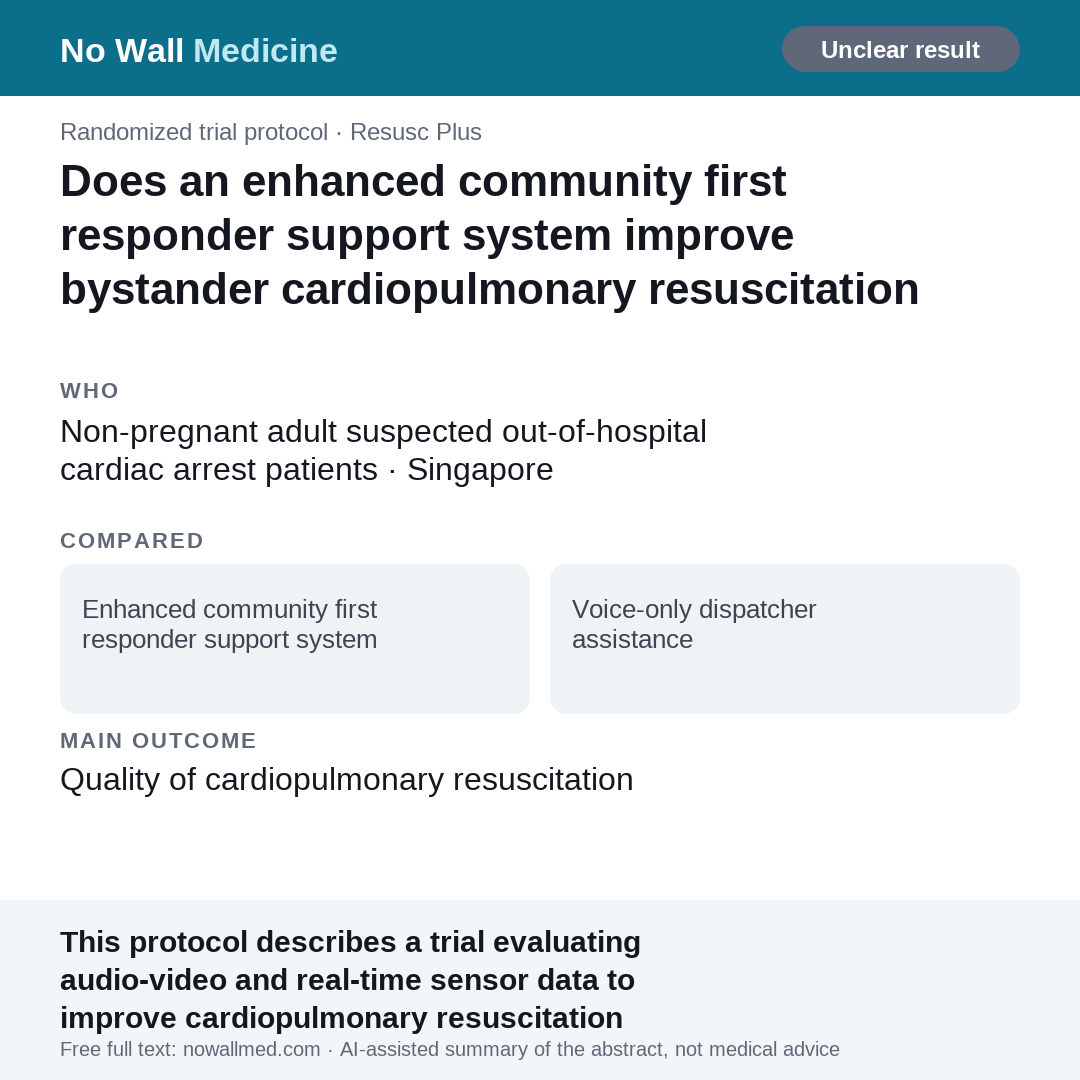
Enhanced community first responder support system: protocol of a randomized trial to improve bystander cardiopulmonary resuscitation quality for out-of-hospital cardiac arrest patients
Randomized trial protocolUnclear result
Does an enhanced community first responder support system improve bystander cardiopulmonary resuscitation quality?
Who
Non-pregnant adult suspected out-of-hospital cardiac arrest patients · Singapore
Compared
Enhanced community first responder support system
Voice-only dispatcher assistance
Main outcome
Quality of cardiopulmonary resuscitation
Bottom line: This protocol describes a trial evaluating audio-video and real-time sensor data to improve cardiopulmonary resuscitation quality.
Funded by: Singapore Civic Defence Force
Resusc Plus · 2025-11-19Download image
Enhancing theoretical BLS knowledge with virtual reality: a randomized controlled trial in medical students
Single blind randomized controlled trialMixed results
Does a virtual reality session enhance basic life support knowledge and performance?
Who
126
Fourth-year medical students with prior basic life support training
Compared
Intervention group with virtual reality: significantly greater gains in knowledge at post-course and follow-up
Control group receiving standard preparation: no significant differences in OSCE performance
Main outcome
Theoretical knowledge and practical performance of basic life support skills
Bottom line: A virtual reality session enhanced theoretical knowledge but did not significantly affect practical performance in medical students.
Limitation: Further research is needed to evaluate long-term impact and optimal integration methods.
Resusc Plus · 2025-11-19Download image

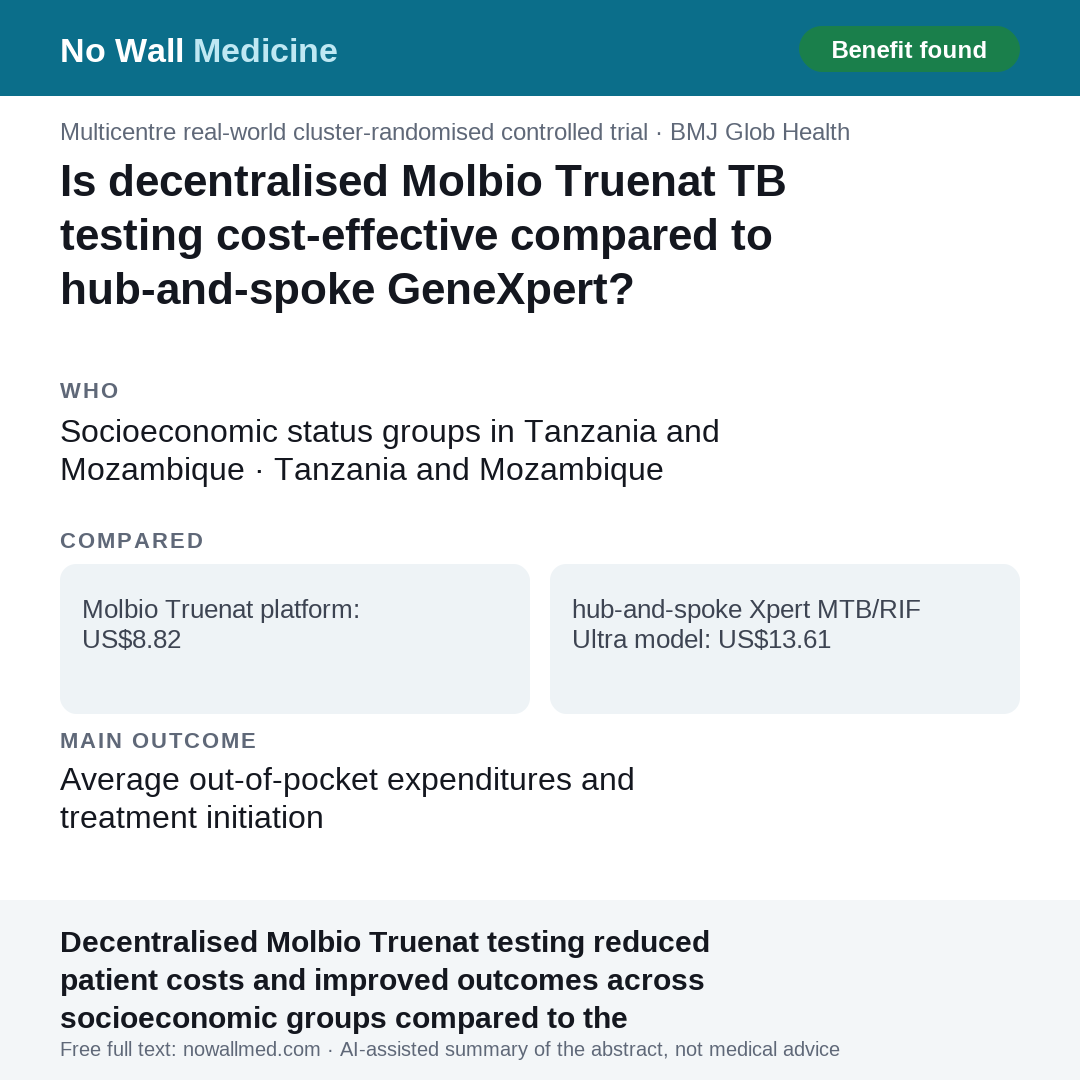
An extended cost-effectiveness analysis of decentralised TB diagnostic testing with Molbio Truenat MTB/RIF versus hub-and-spoke GeneXpert MTB/RIF in Mozambique and Tanzania
Multicentre real-world cluster-randomised controlled trialBenefit found
Is decentralised Molbio Truenat TB testing cost-effective compared to hub-and-spoke GeneXpert?
Who
Socioeconomic status groups in Tanzania and Mozambique · Tanzania and Mozambique
Compared
Molbio Truenat platform: US$8.82
hub-and-spoke Xpert MTB/RIF Ultra model: US$13.61
Main outcome
Average out-of-pocket expenditures and treatment initiation
Bottom line: Decentralised Molbio Truenat testing reduced patient costs and improved outcomes across socioeconomic groups compared to the hub-and-spoke model.
BMJ Glob Health · 2025-11-19Download image
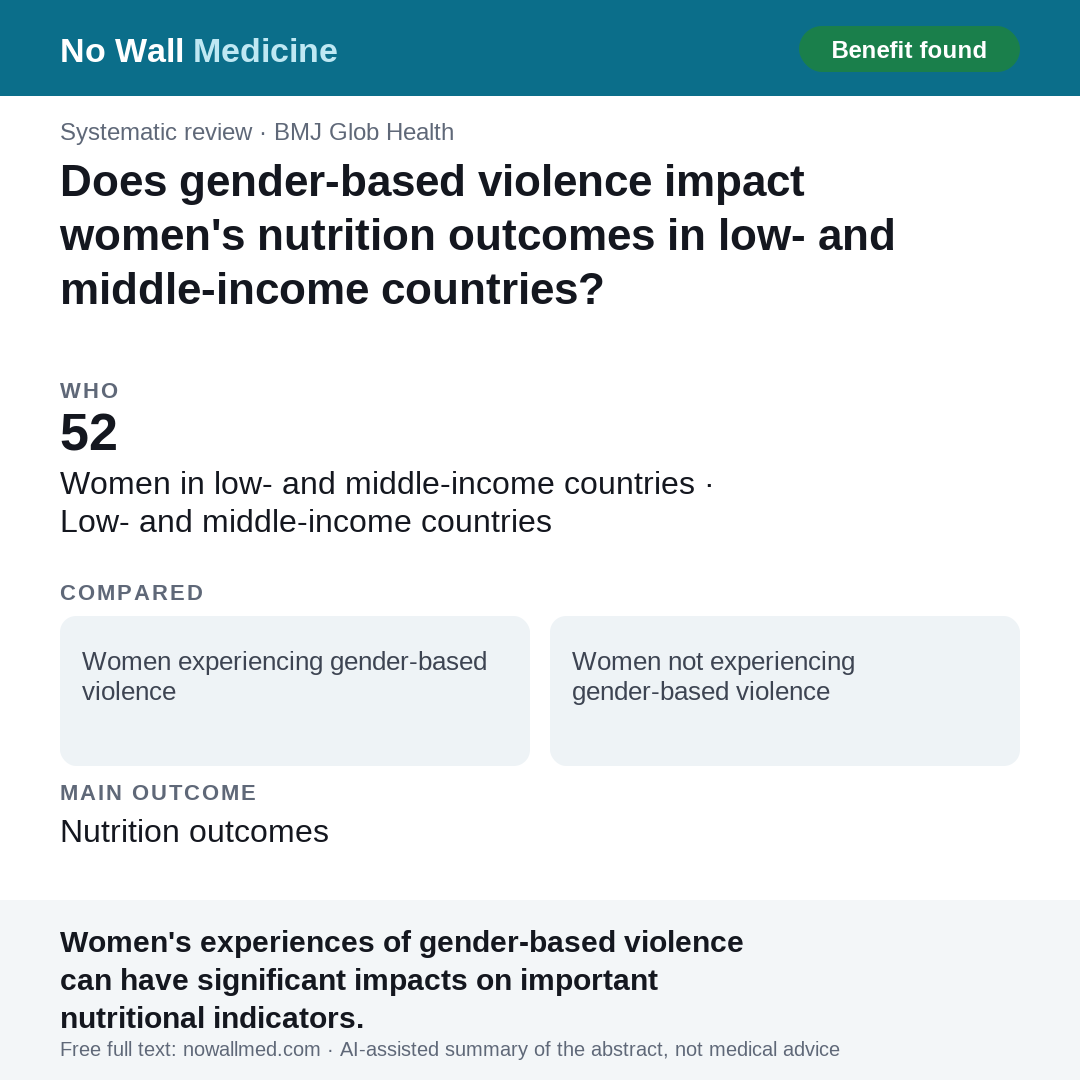
Gender-based violence and women's nutrition: a systematic review
Systematic reviewBenefit found
Does gender-based violence impact women's nutrition outcomes in low- and middle-income countries?
Who
52
Women in low- and middle-income countries · Low- and middle-income countries
Compared
Women experiencing gender-based violence
Women not experiencing gender-based violence
Main outcome
Nutrition outcomes
Bottom line: Women's experiences of gender-based violence can have significant impacts on important nutritional indicators.
Limitation: Sparse consideration of role and need for study designs enabling understanding of causal mechanisms.
BMJ Glob Health · 2025-11-19Download image
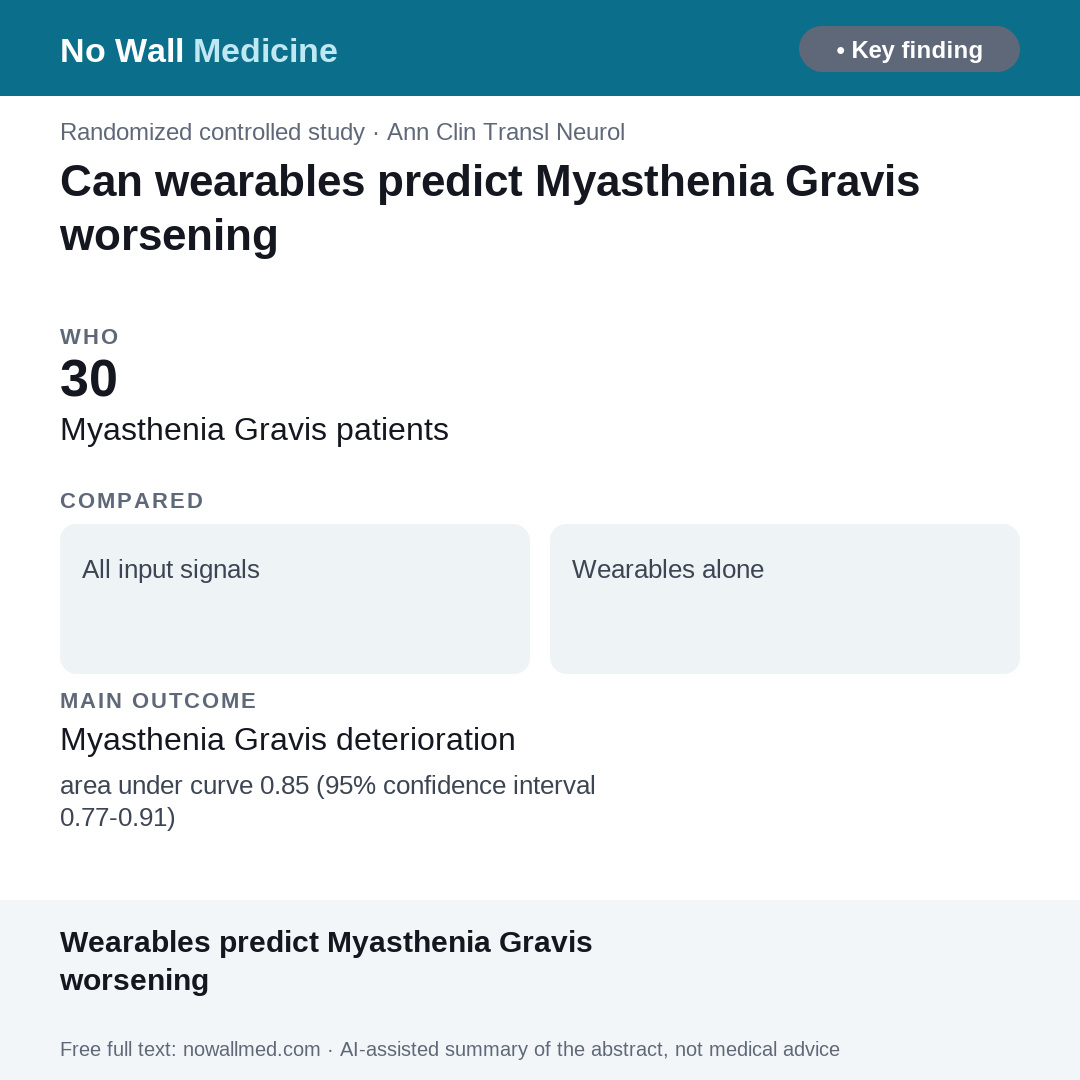
Prediction of Myasthenia Gravis Worsening: A Machine Learning Algorithm Using Wearables and Patient-Reported Measures
Randomized controlled studyBenefit found
Can wearables predict Myasthenia Gravis worsening
Who
30
Myasthenia Gravis patients
Compared
All input signals
Wearables alone
Main outcome
Myasthenia Gravis deterioration
Result: area under curve 0.85 (95% confidence interval 0.77-0.91)
Bottom line: Wearables predict Myasthenia Gravis worsening
Ann Clin Transl Neurol · 2025-11-19Download image
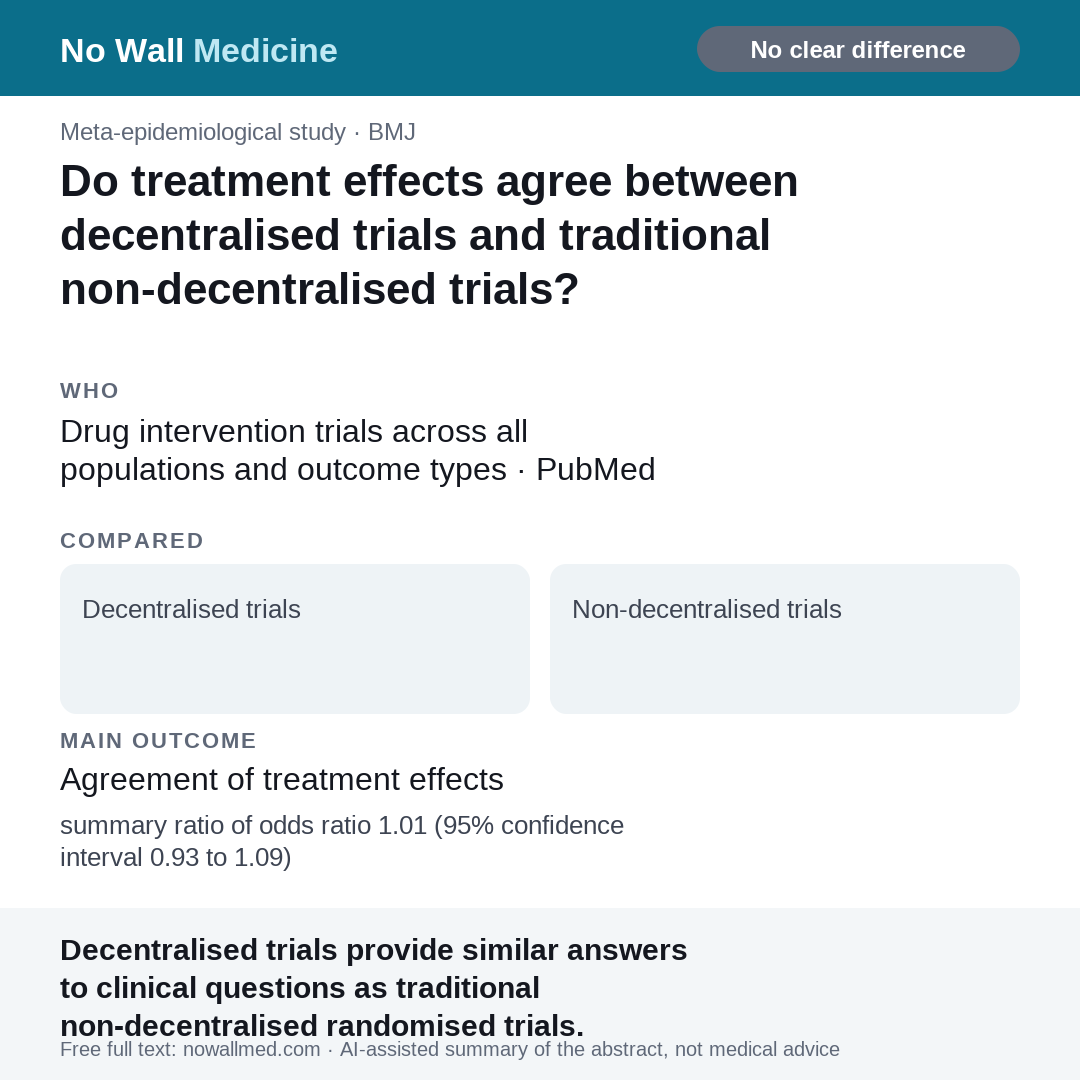
Agreement of treatment effects in decentralised trials versus traditional trials: meta-epidemiological study
Meta-epidemiological studyNo clear difference
Do treatment effects agree between decentralised trials and traditional non-decentralised trials?
Who
Drug intervention trials across all populations and outcome types · PubMed database
Compared
Decentralised trials
Non-decentralised trials
Main outcome
Agreement of treatment effects
Result: summary ratio of odds ratio 1.01 (95% confidence interval 0.93 to 1.09)
Bottom line: Decentralised trials provide similar answers to clinical questions as traditional non-decentralised randomised trials.
BMJ · 2025-11-18Download image
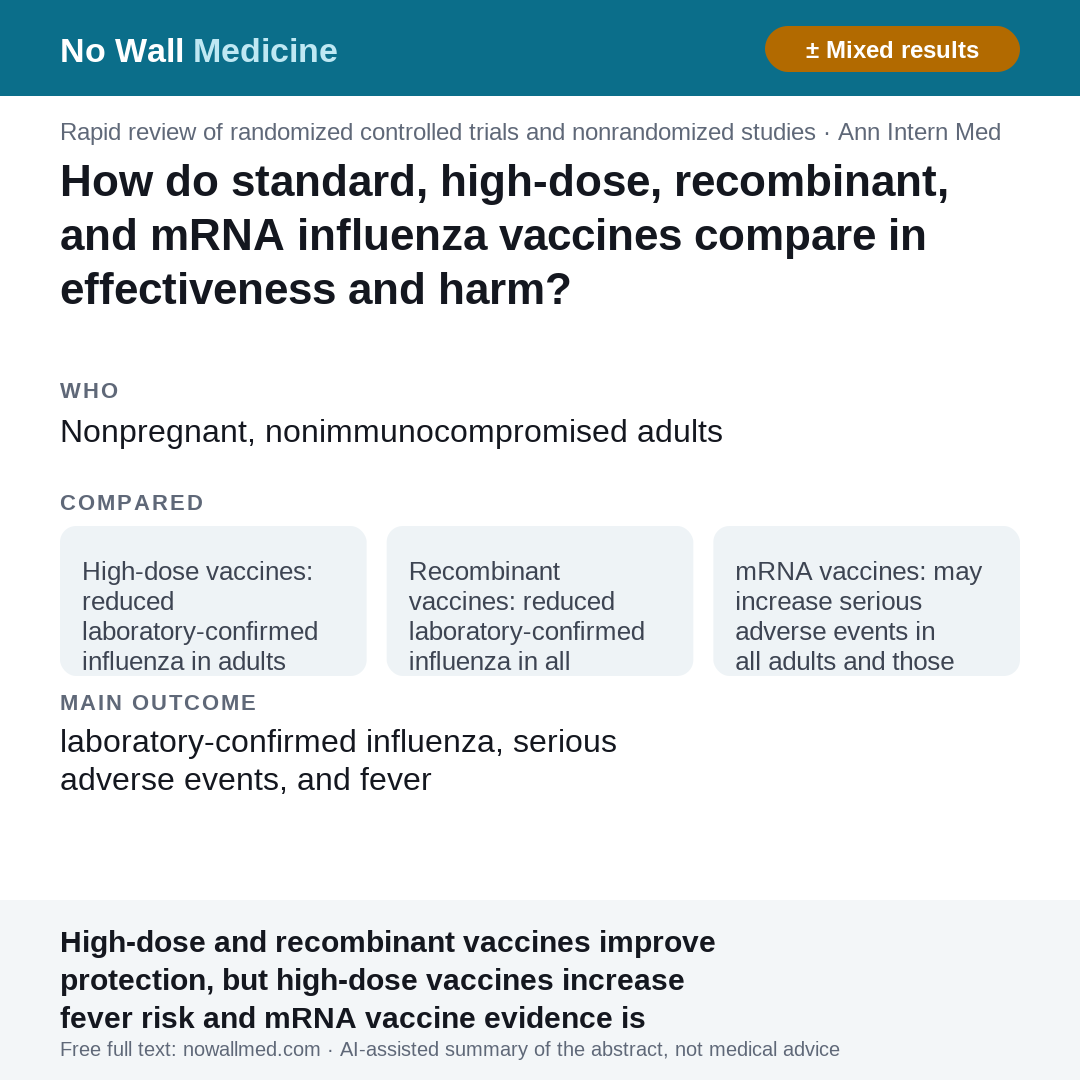
Comparative Effectiveness and Harm of Seasonal Influenza Vaccines in Adults Who Are Not Pregnant or Immunocompromised: A Rapid Review for the American College of Physicians
Rapid review of randomized controlled trials and nonrandomized studiesMixed results
How do standard, high-dose, recombinant, and mRNA influenza vaccines compare in effectiveness and harm?
Who
Nonpregnant, nonimmunocompromised adults
Compared
High-dose vaccines: reduced laboratory-confirmed influenza in adults aged 65 years or older
Recombinant vaccines: reduced laboratory-confirmed influenza in all adults and those younger than 65 years
mRNA vaccines: may increase serious adverse events in all adults and those younger than 65 years
Main outcome
laboratory-confirmed influenza, serious adverse events, and fever
Bottom line: High-dose and recombinant vaccines improve protection, but high-dose vaccines increase fever risk and mRNA vaccine evidence is limited.
Limitation: Limited randomized controlled trials for influenza-related hospitalization or death and broad definitions of serious adverse events.
Funded by: American College of Physicians
Ann Intern Med · 2025-11-18Download image
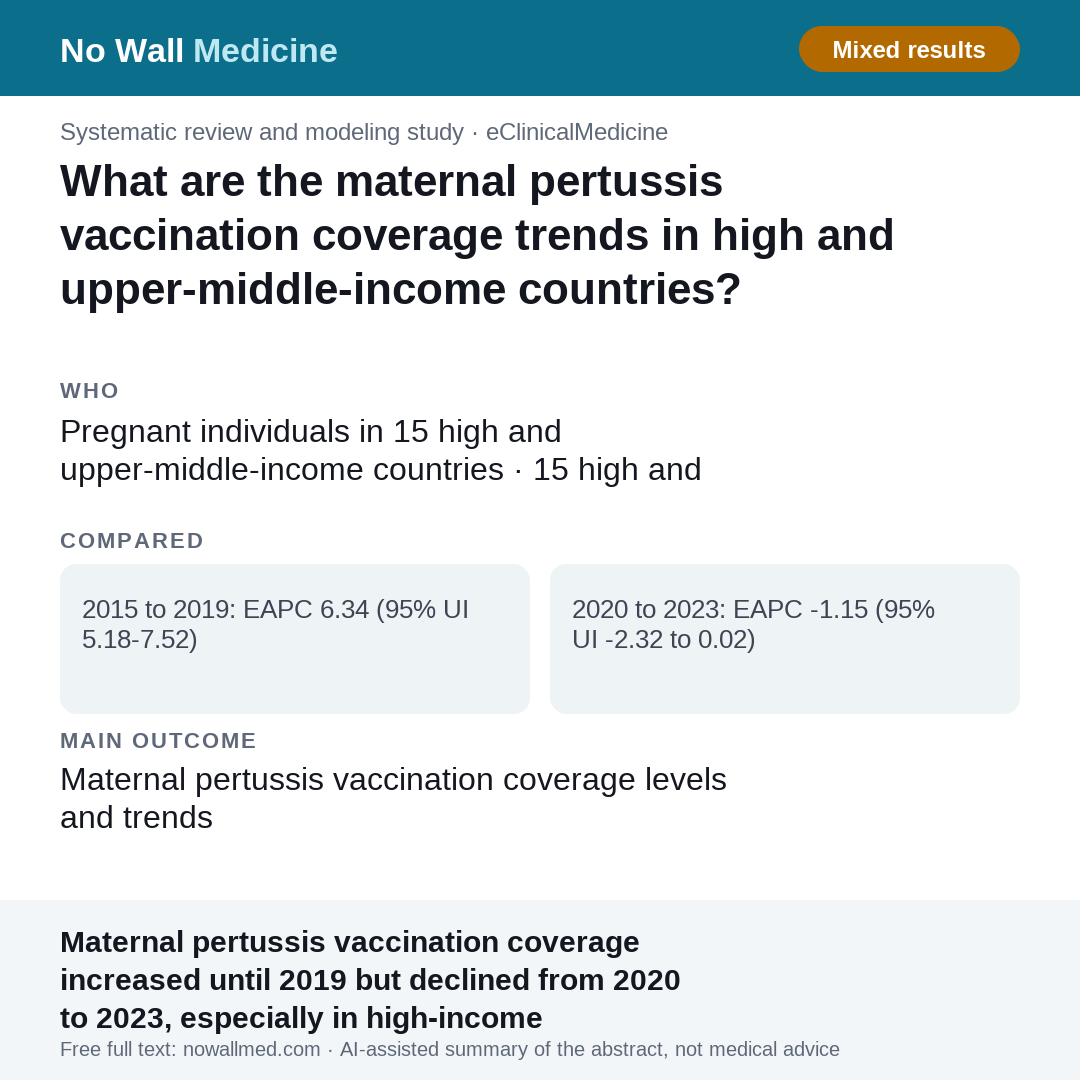
Tracking the progress of maternal pertussis vaccination coverage among upper-middle- and high-income countries and territories - a systematic review and modeling study
Systematic review and modeling studyMixed results
What are the maternal pertussis vaccination coverage trends in high and upper-middle-income countries?
Who
Pregnant individuals in 15 high and upper-middle-income countries · 15 high and upper-middle-income countries and territories
Compared
2015 to 2019: EAPC 6.34 (95% UI 5.18-7.52)
2020 to 2023: EAPC -1.15 (95% UI -2.32 to 0.02)
Main outcome
Maternal pertussis vaccination coverage levels and trends
Bottom line: Maternal pertussis vaccination coverage increased until 2019 but declined from 2020 to 2023, especially in high-income countries.
Funded by: National Social Science Foundation of China and others
eClinicalMedicine · 2025-11-18Download image
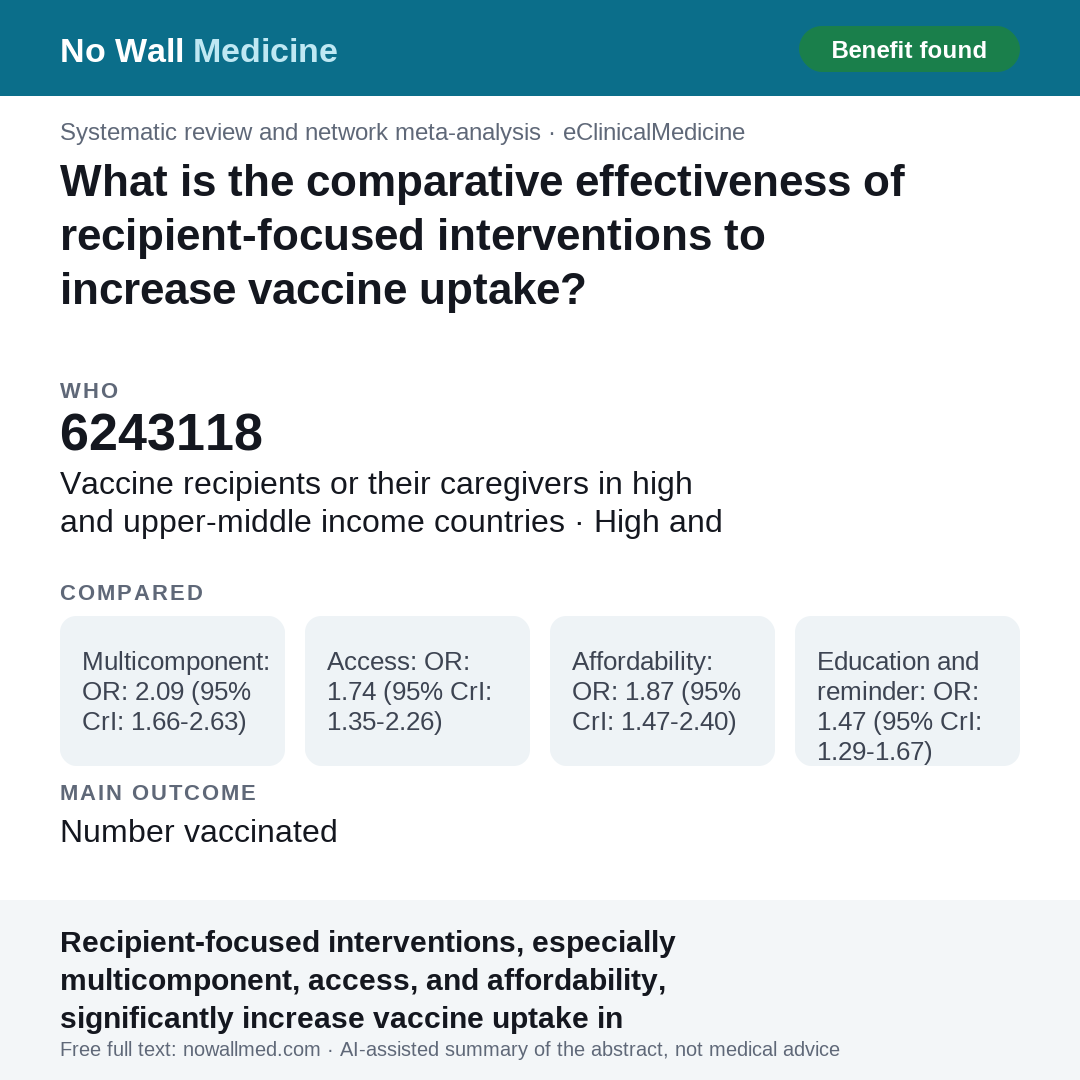
Recipient-focused interventions to increase vaccine uptake in high and upper-middle income countries: a systematic review and network meta-analysis
Systematic review and network meta-analysisBenefit found
What is the comparative effectiveness of recipient-focused interventions to increase vaccine uptake?
Who
6243118
Vaccine recipients or their caregivers in high and upper-middle income countries · High and upper-middle income countries
Compared
Multicomponent: OR: 2.09 (95% CrI: 1.66-2.63)
Access: OR: 1.74 (95% CrI: 1.35-2.26)
Affordability: OR: 1.87 (95% CrI: 1.47-2.40)
Education and reminder: OR: 1.47 (95% CrI: 1.29-1.67)
Main outcome
Number vaccinated
Result: ORs and 95% credible intervals > 1 for all six categories
Bottom line: Recipient-focused interventions, especially multicomponent, access, and affordability, significantly increase vaccine uptake in high and upper-middle income countries.
Limitation: The effectiveness of affordability and multicomponent interventions may have decreased post-2020 due to the COVID-19 pandemic.
Funded by: NIHR Public Health Research Programme
eClinicalMedicine · 2025-11-18Download image
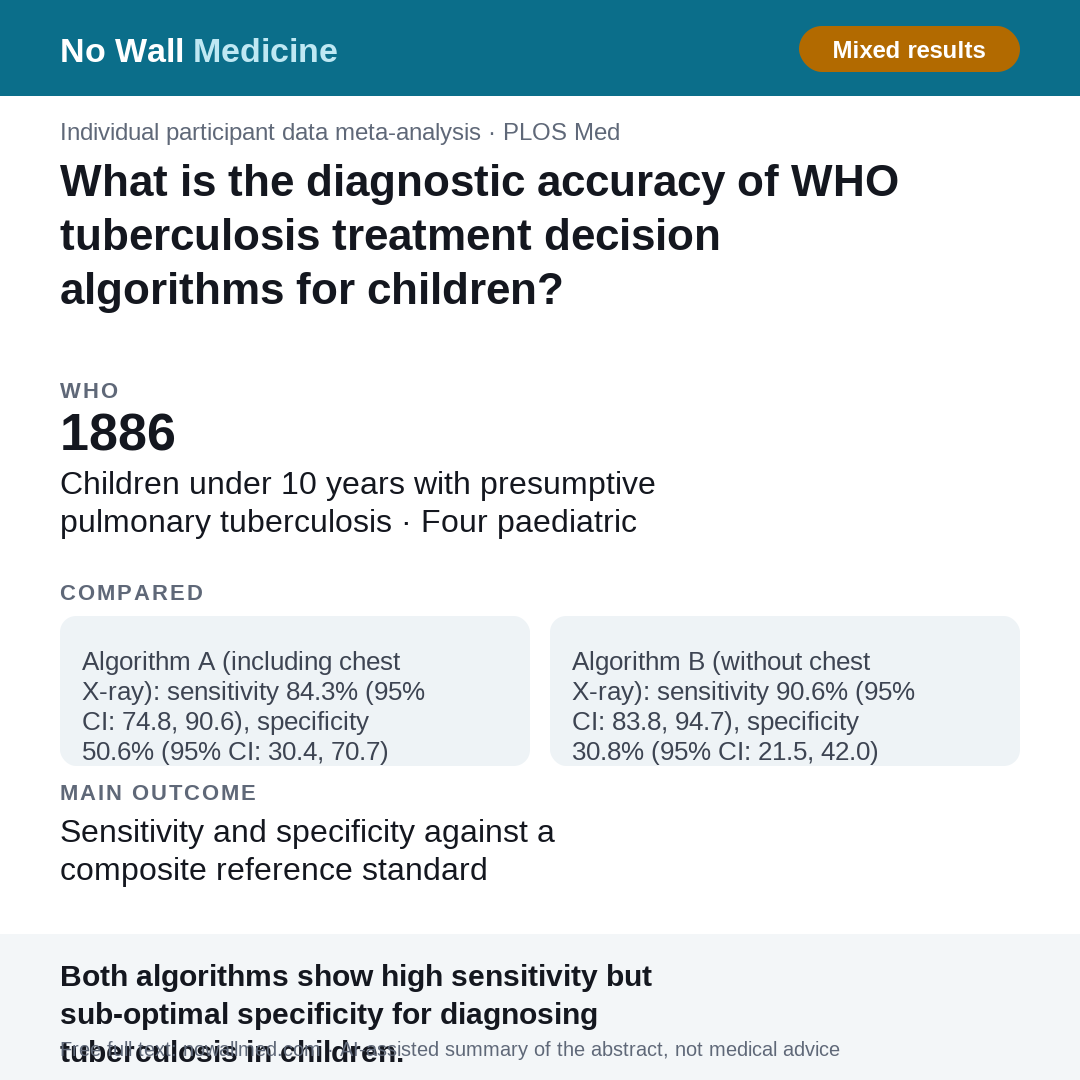
Diagnostic accuracy of the WHO tuberculosis treatment decision algorithms for children with presumptive tuberculosis: An individual participant data meta-analysis
Individual participant data meta-analysisMixed results
What is the diagnostic accuracy of WHO tuberculosis treatment decision algorithms for children?
Who
1886
Children under 10 years with presumptive pulmonary tuberculosis · Four paediatric cohorts
Compared
Algorithm A (including chest X-ray): sensitivity 84.3% (95% CI: 74.8, 90.6), specificity 50.6% (95% CI: 30.4, 70.7)
Algorithm B (without chest X-ray): sensitivity 90.6% (95% CI: 83.8, 94.7), specificity 30.8% (95% CI: 21.5, 42.0)
Main outcome
Sensitivity and specificity against a composite reference standard
Bottom line: Both algorithms show high sensitivity but sub-optimal specificity for diagnosing tuberculosis in children.
Limitation: Studies performed at secondary or tertiary hospitals might limit the generalisability of results.
PLOS Med · 2025-11-18Download image
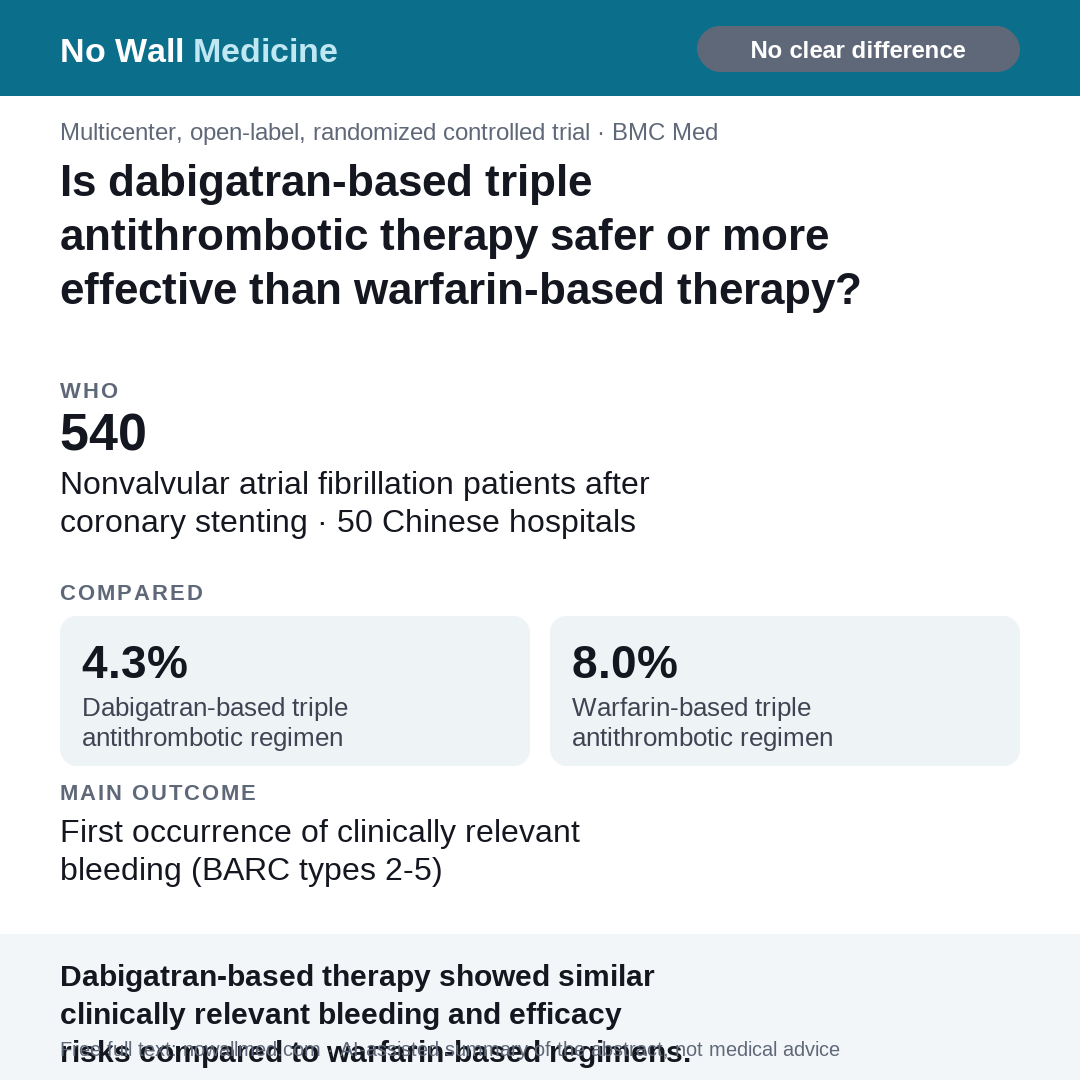
Dabigatran-based versus warfarin-based triple antithrombotic regimen with a 1-month intensification after coronary stenting in patients with nonvalvular atrial fibrillation (COACH-AF PCI)
Multicenter, open-label, randomized controlled trialNo clear difference
Is dabigatran-based triple antithrombotic therapy safer or more effective than warfarin-based therapy?
Who
540
Nonvalvular atrial fibrillation patients after coronary stenting · 50 Chinese hospitals
Compared
4.3%Dabigatran-based triple antithrombotic regimen
8.0%Warfarin-based triple antithrombotic regimen
Main outcome
First occurrence of clinically relevant bleeding (BARC types 2-5)
Result: hazard ratio 0.54 (95% CI 0.26-1.09)
Bottom line: Dabigatran-based therapy showed similar clinically relevant bleeding and efficacy risks compared to warfarin-based regimens.
BMC Med · 2025-11-18Download image
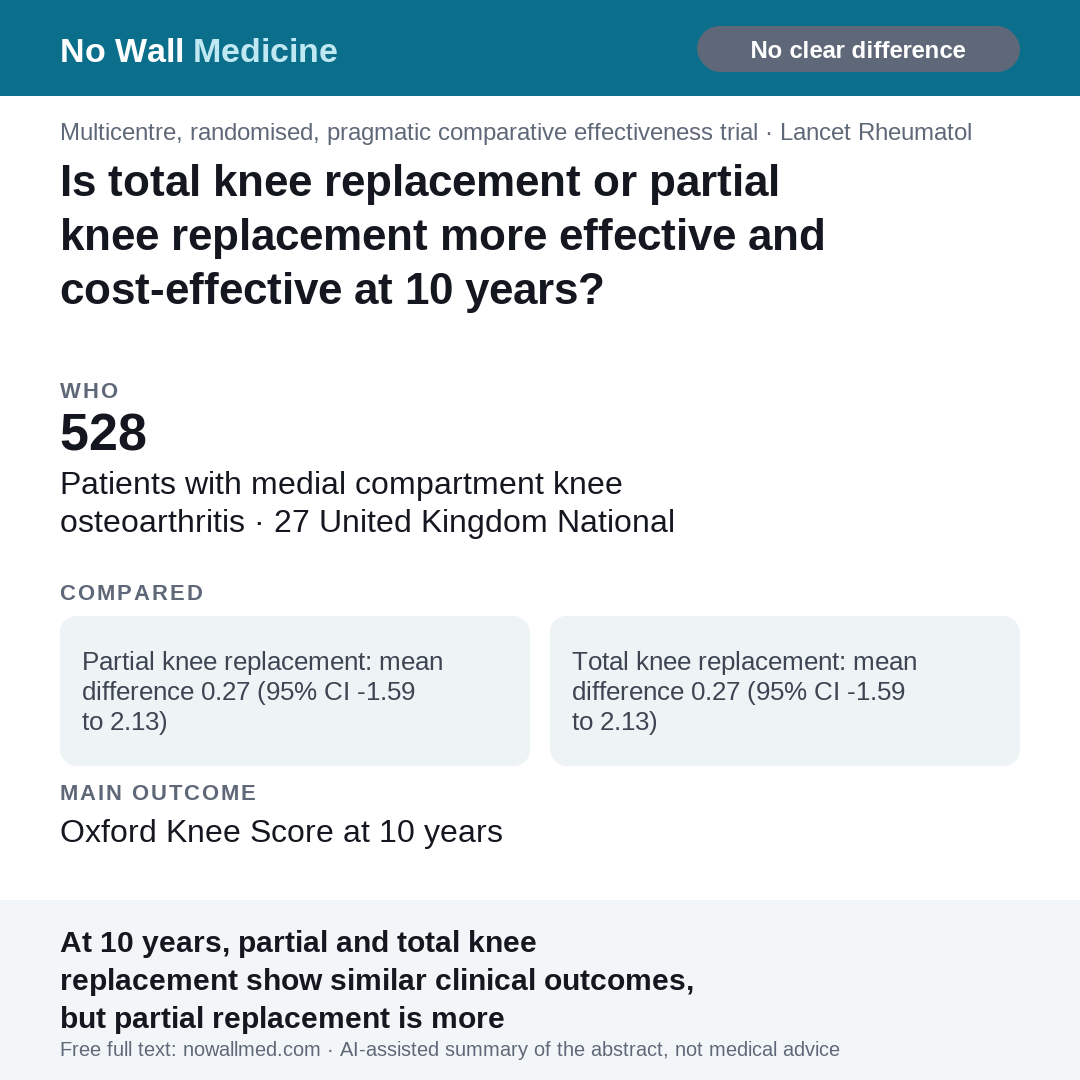
Assessing clinical and cost effectiveness of total versus partial knee replacement (TOPKAT): 10-year follow-up of a multicentre, randomised controlled trial
Multicentre, randomised, pragmatic comparative effectiveness trialNo clear difference
Is total knee replacement or partial knee replacement more effective and cost-effective at 10 years?
Who
528
Patients with medial compartment knee osteoarthritis · 27 United Kingdom National Health Service hospitals
Compared
Partial knee replacement: mean difference 0.27 (95% CI -1.59 to 2.13)
Total knee replacement: mean difference 0.27 (95% CI -1.59 to 2.13)
Main outcome
Oxford Knee Score at 10 years
Result: mean difference 0.27 (95% CI -1.59 to 2.13)
Bottom line: At 10 years, partial and total knee replacement show similar clinical outcomes, but partial replacement is more cost-effective.
Funded by: National Institute for Health and Care Research
Lancet Rheumatol · 2025-11-18Download image
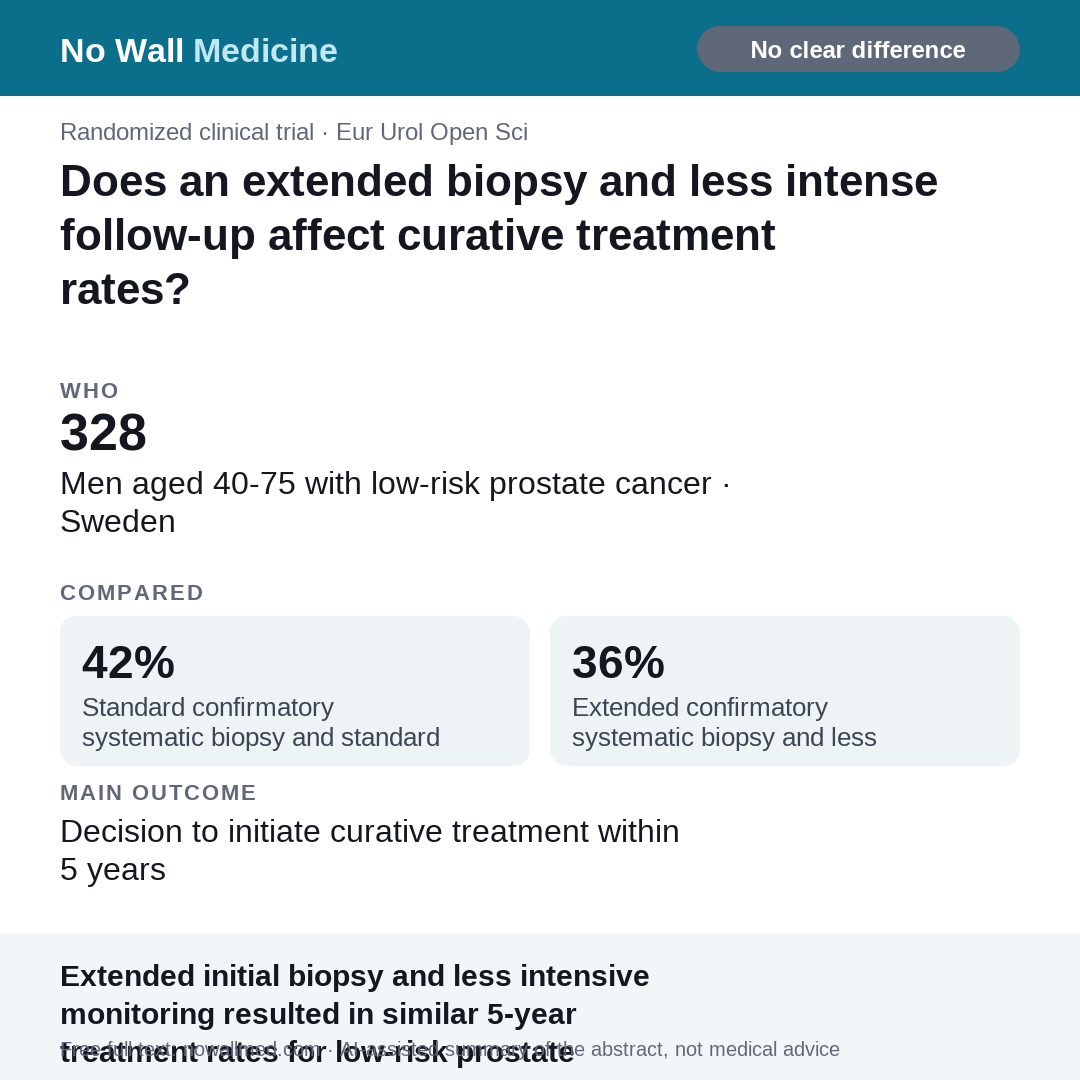
A Randomised Clinical Trial Comparing Two Biopsy Templates and Follow-up Schedules for Men on Active Surveillance for Low-risk Prostate Cancer: SAMS
Randomized clinical trialNo clear difference
Does an extended biopsy and less intense follow-up affect curative treatment rates?
Who
328
Men aged 40-75 with low-risk prostate cancer · Sweden
Compared
42%Standard confirmatory systematic biopsy and standard follow-up
36%Extended confirmatory systematic biopsy and less intense follow-up
Main outcome
Decision to initiate curative treatment within 5 years
Bottom line: Extended initial biopsy and less intensive monitoring resulted in similar 5-year treatment rates for low-risk prostate cancer.
Limitation: Inclusion was stopped before the target of 500 men was reached.
Eur Urol Open Sci · 2025-11-18Download image
Vasopressin, steroids, and epinephrine in out-of-hospital cardiac arrest - a protocol for a randomized controlled trial (OHCA REVIVES trial)
Multicenter, superiority cluster randomized controlled trialUnclear result
Does triple therapy improve clinical outcomes in out-of-hospital cardiac arrest?
Who
1344
Adult non-traumatic patients with out-of-hospital cardiac arrest · Taipei and New Taipei City, Taiwan
Compared
Vasopressin, epinephrine, and steroid combined therapy
Standard care
Main outcome
Sustained return of spontaneous circulation at least 2 hours
Bottom line: This protocol study aims to evaluate triple therapy versus standard care for out-of-hospital cardiac arrest.
Resusc Plus · 2025-11-18Download image

Pembrolizumab plus chemotherapy versus chemotherapy for advanced esophageal cancer: 5-year extended follow-up for the randomized phase III KEYNOTE-590 study
Randomized phase III trialBenefit found
Does pembrolizumab plus chemotherapy improve survival in advanced esophageal cancer?
Who
749
Adults with previously untreated advanced esophageal or Siewert type 1 gastroesophageal junction cancer
Compared
pembrolizumab plus chemotherapy: 10.6% 5-year survival rate
placebo plus chemotherapy: 3.0% 5-year survival rate
Main outcome
overall survival
Result: hazard ratio 0.72 (95% CI 0.62-0.84)
Bottom line: Pembrolizumab plus chemotherapy more than tripled the 5-year overall survival rate compared with placebo plus chemotherapy.
ESMO Open · 2025-11-18Download image

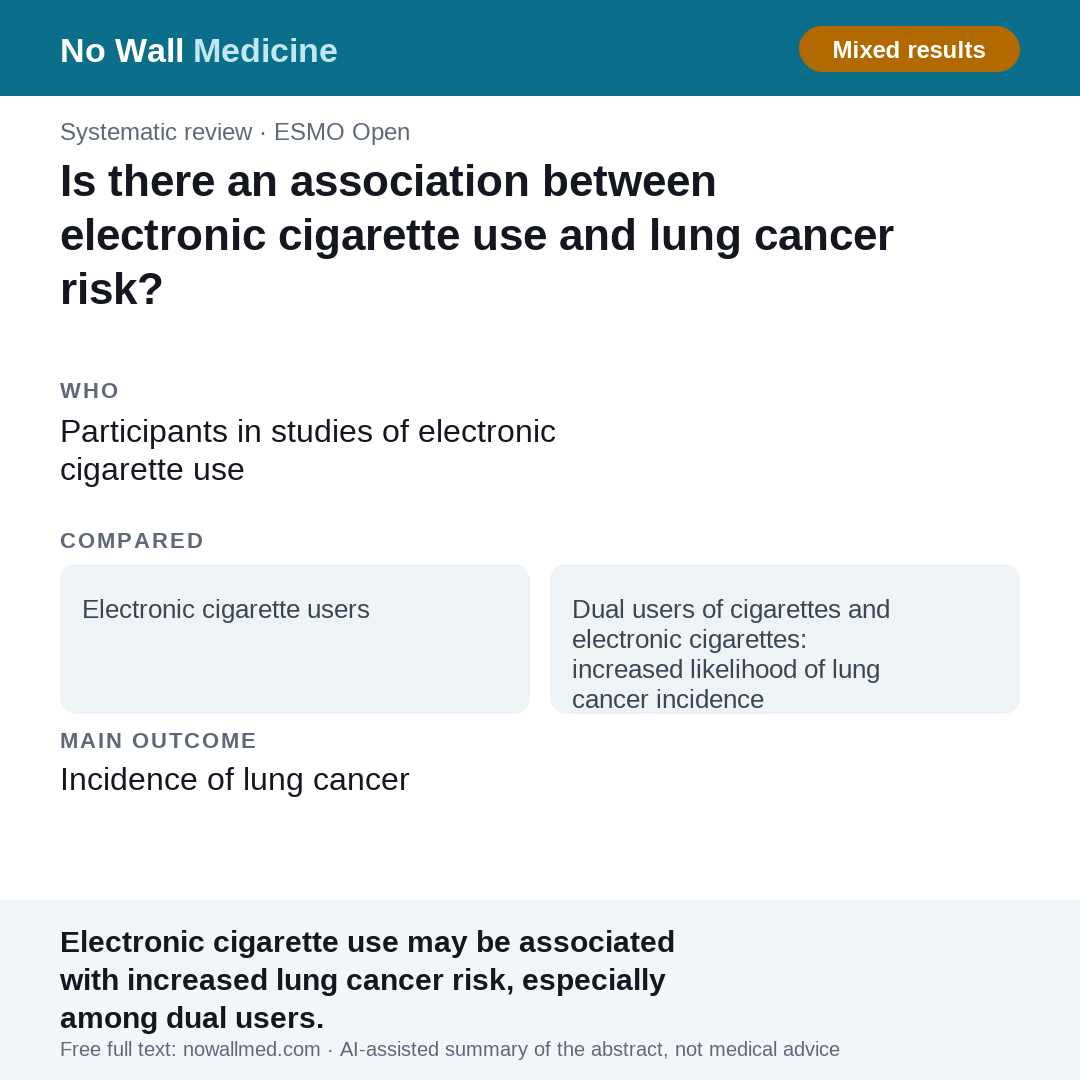
The risk of lung cancer from vaping or e-cigarette usage: a systematic review
Systematic reviewMixed results
Is there an association between electronic cigarette use and lung cancer risk?
Who
Participants in studies of electronic cigarette use
Compared
Electronic cigarette users
Dual users of cigarettes and electronic cigarettes: increased likelihood of lung cancer incidence
Main outcome
Incidence of lung cancer
Bottom line: Electronic cigarette use may be associated with increased lung cancer risk, especially among dual users.
Limitation: Causality cannot be established due to heterogeneity and limited longitudinal data.
ESMO Open · 2025-11-18Download image
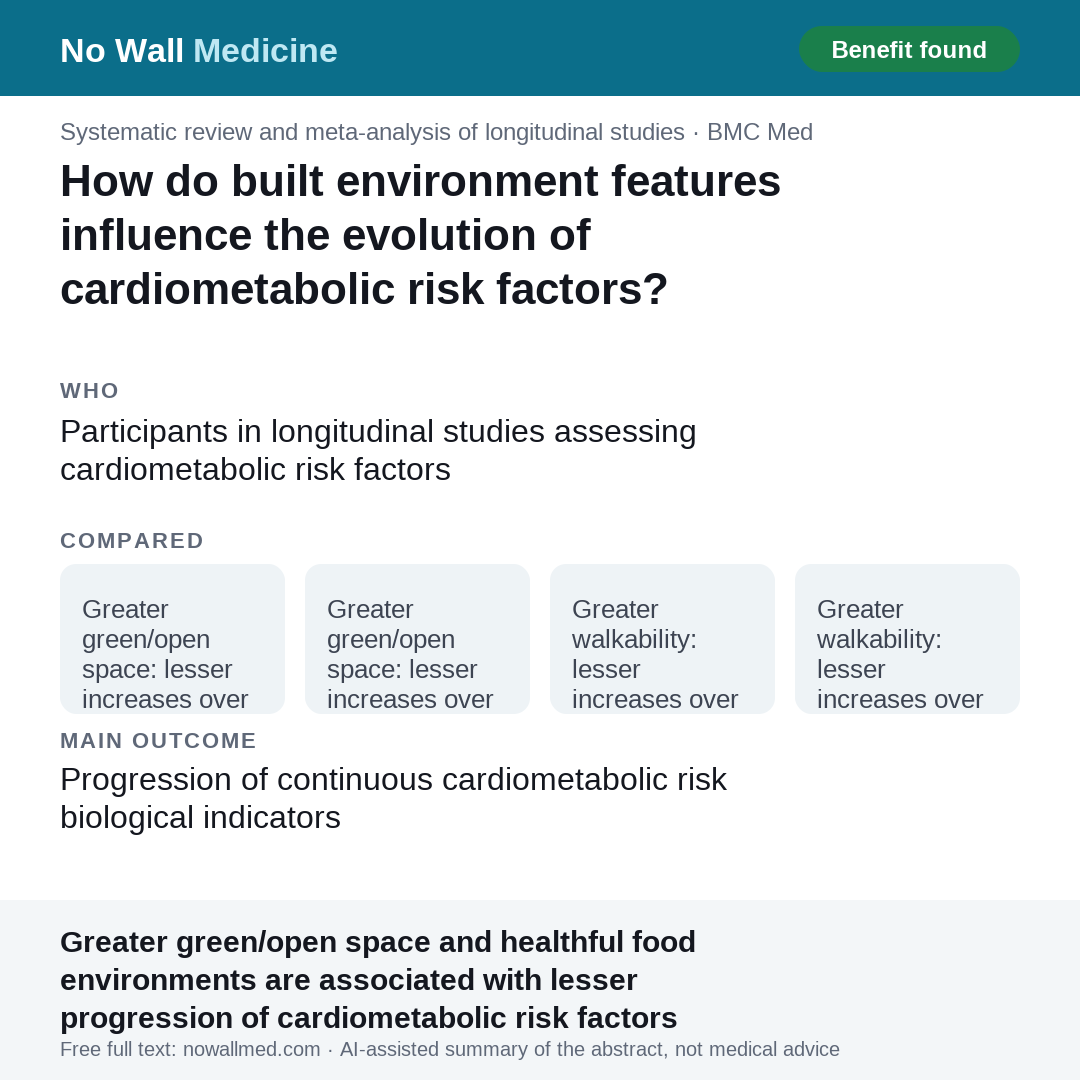
Built environment and the evolution of cardiometabolic risk factors: a systematic review and meta-analysis of longitudinal studies
Systematic review and meta-analysis of longitudinal studiesBenefit found
How do built environment features influence the evolution of cardiometabolic risk factors?
Who
Participants in longitudinal studies assessing cardiometabolic risk factors
Compared
Greater green/open space: lesser increases over time in systolic blood pressure (weighted z=3.43, p<0.001)
Greater green/open space: lesser increases over time in diastolic blood pressure (weighted z=2.89, p<0.01)
Greater walkability: lesser increases over time in systolic blood pressure (weighted z=2.95, p<0.01)
Greater walkability: lesser increases over time in glycated haemoglobin
Main outcome
Progression of continuous cardiometabolic risk biological indicators
Bottom line: Greater green/open space and healthful food environments are associated with lesser progression of cardiometabolic risk factors over time.
BMC Med · 2025-11-17Download image
Stroke Mechanism and Severity After Left Atrial Appendage Occlusion: Insights From the LAAOS III Randomized Clinical Trial
Post hoc exploratory analysis of a randomized clinical trialBenefit found
Does left atrial appendage occlusion impact ischemic stroke subtype and outcome?
Who
4811
Patients with atrial fibrillation and CHA2DS2-VASc score at least 2 · 105 centers in 27 countries
Compared
Surgical left atrial appendage occlusion plus standard care: 16.5% mortality at 30 days after stroke
Standard care alone: 20.1% mortality at 30 days after stroke
Main outcome
Functional outcome, mortality, cortical infarcts, and cardioembolic infarcts
Result: hazard ratio 0.55 (95% CI, 0.31-0.97)
Bottom line: Left atrial appendage occlusion is associated with reduced disability, mortality, and presumed cardioembolic stroke in patients with atrial fibrillation.
JAMA Neurol · 2025-11-17Download image

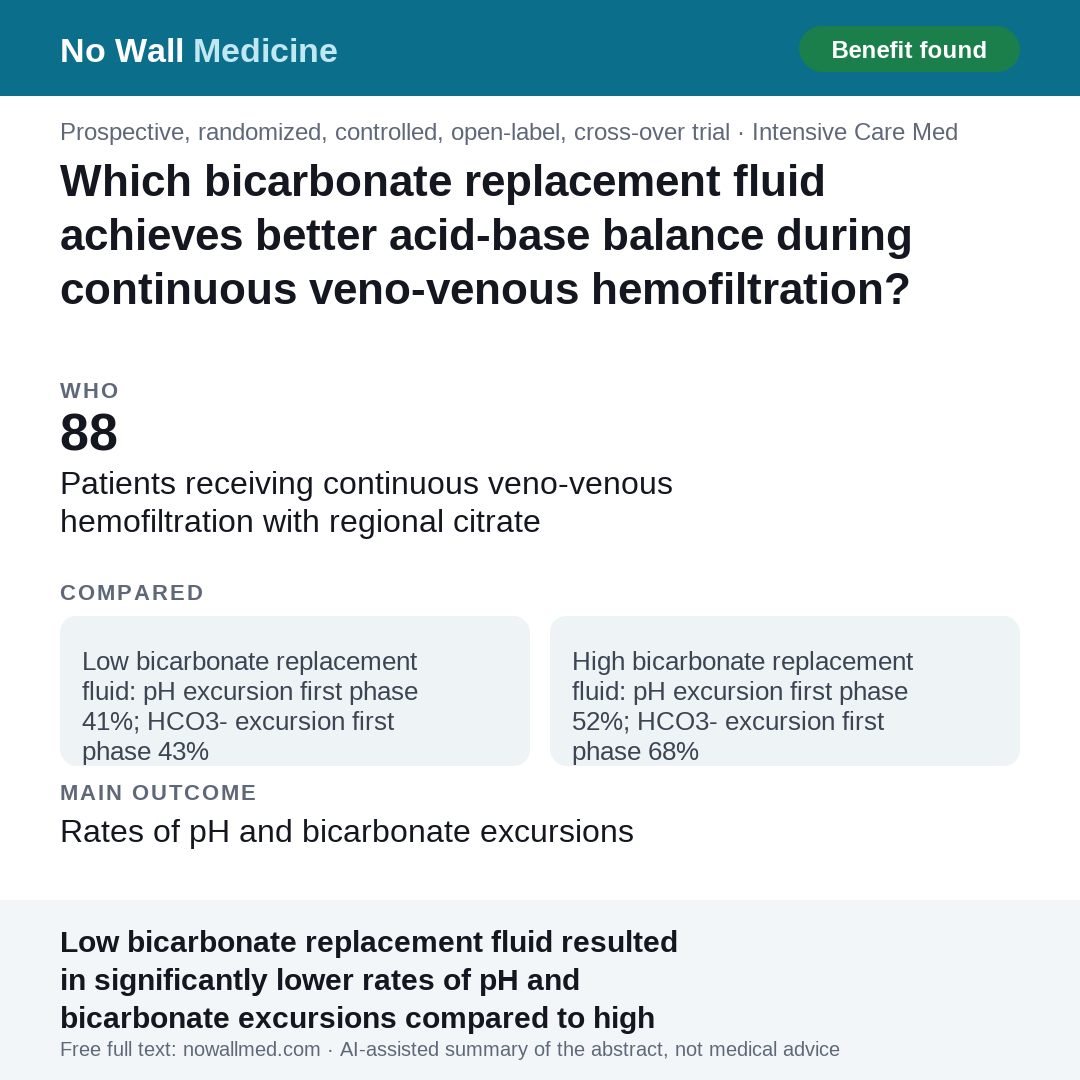
Comparison of two different bicarbonate replacement fluids during CVVH with RCA: a prospective, randomized, controlled trial
Prospective, randomized, controlled, open-label, cross-over trialBenefit found
Which bicarbonate replacement fluid achieves better acid-base balance during continuous veno-venous hemofiltration?
Who
88
Patients receiving continuous veno-venous hemofiltration with regional citrate anticoagulation · single-center trial
Compared
Low bicarbonate replacement fluid: pH excursion first phase 41%; HCO3- excursion first phase 43%
High bicarbonate replacement fluid: pH excursion first phase 52%; HCO3- excursion first phase 68%
Main outcome
Rates of pH and bicarbonate excursions
Result: odds ratio 1.78 (95% CI 1.12-2.82) for pH; 3.60 (95% CI 2.16-5.99) for HCO3-
Bottom line: Low bicarbonate replacement fluid resulted in significantly lower rates of pH and bicarbonate excursions compared to high bicarbonate replacement fluid.
Intensive Care Med · 2025-11-17Download image
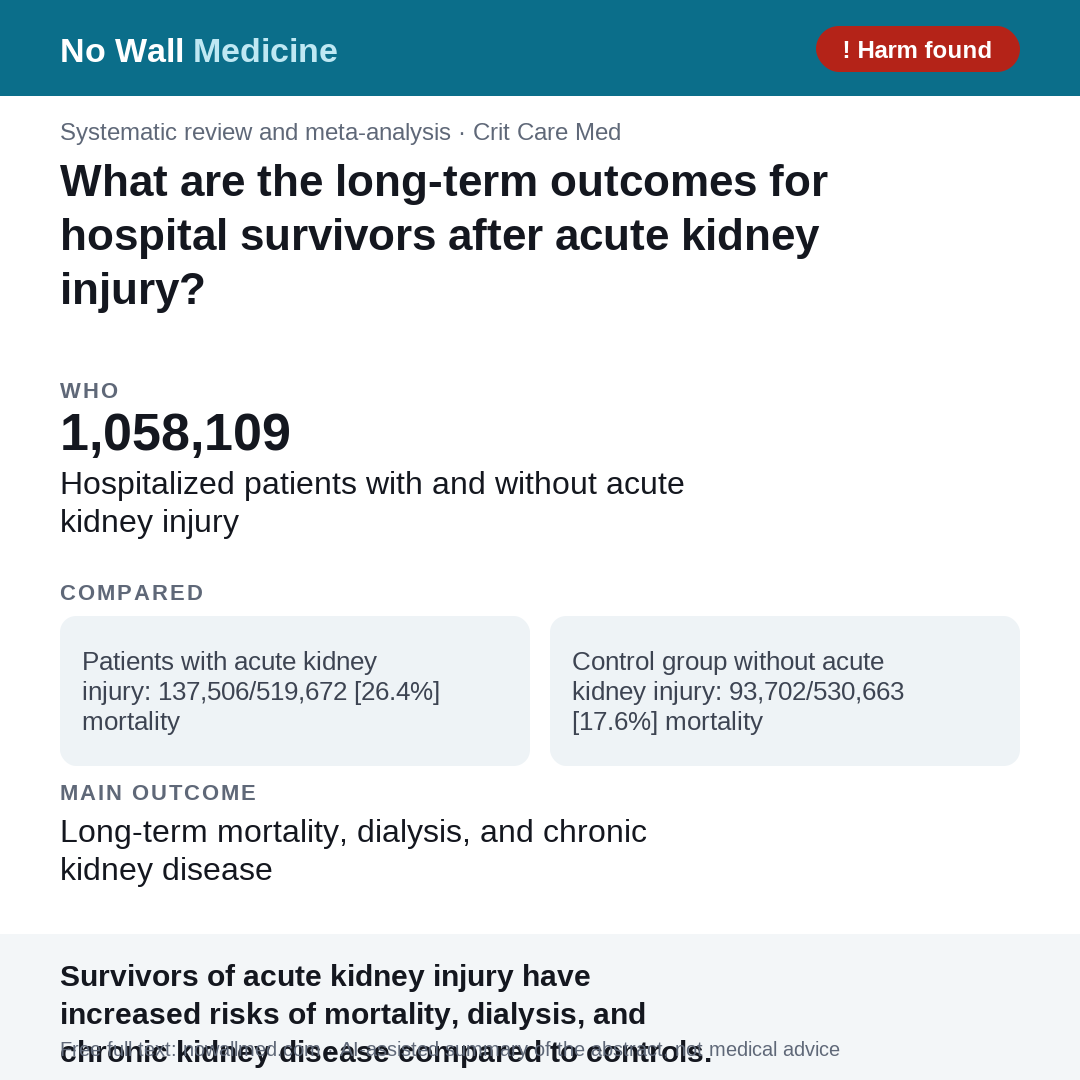
Long-Term Outcomes After Acute Kidney Injury During Hospitalization: A Systematic Review and Meta-Analysis of Matched Controls Studies
Systematic review and meta-analysisHarm found
What are the long-term outcomes for hospital survivors after acute kidney injury?
Who
1,058,109
Hospitalized patients with and without acute kidney injury
Compared
Patients with acute kidney injury: 137,506/519,672 [26.4%] mortality
Control group without acute kidney injury: 93,702/530,663 [17.6%] mortality
Main outcome
Long-term mortality, dialysis, and chronic kidney disease
Result: relative risk 1.42 (95% CI 1.13-1.78)
Bottom line: Survivors of acute kidney injury have increased risks of mortality, dialysis, and chronic kidney disease compared to controls.
Crit Care Med · 2025-11-17Download image