Visual abstracts
New randomized trials and meta-analyses from leading journals at a glance: who was studied, what was compared, and what was found. Every paper is free to read in full.
All specialtiesCardiology 1326Oncology 1174Gastroenterology & Hepatology 474Infectious Disease 866Neurology 547Psychiatry & Mental Health 662Pulmonology 567Critical Care 393Endocrinology & Diabetes 739Pediatrics 787Surgery 627Orthopedics & Sports Medicine 254Neurosurgery 179Cardiothoracic & Vascular Surgery 149Plastic & Reconstructive Surgery 207Nephrology 280Rheumatology 177Hematology 281Dermatology 141Ophthalmology 149Obstetrics & Gynecology 414Public & Global Health 260Radiology & Imaging 171Anesthesiology 249Urology 245ENT (Otolaryngology) 182Emergency Medicine 144Allergy & Immunology 90Geriatrics 276Family Medicine & Primary Care 167Medical Genetics & Genomics 142Pathology & Laboratory Medicine 41Physical Medicine & Rehabilitation 229Palliative Care 120Nutrition 346Digital Health & AI 684General Medicine 121
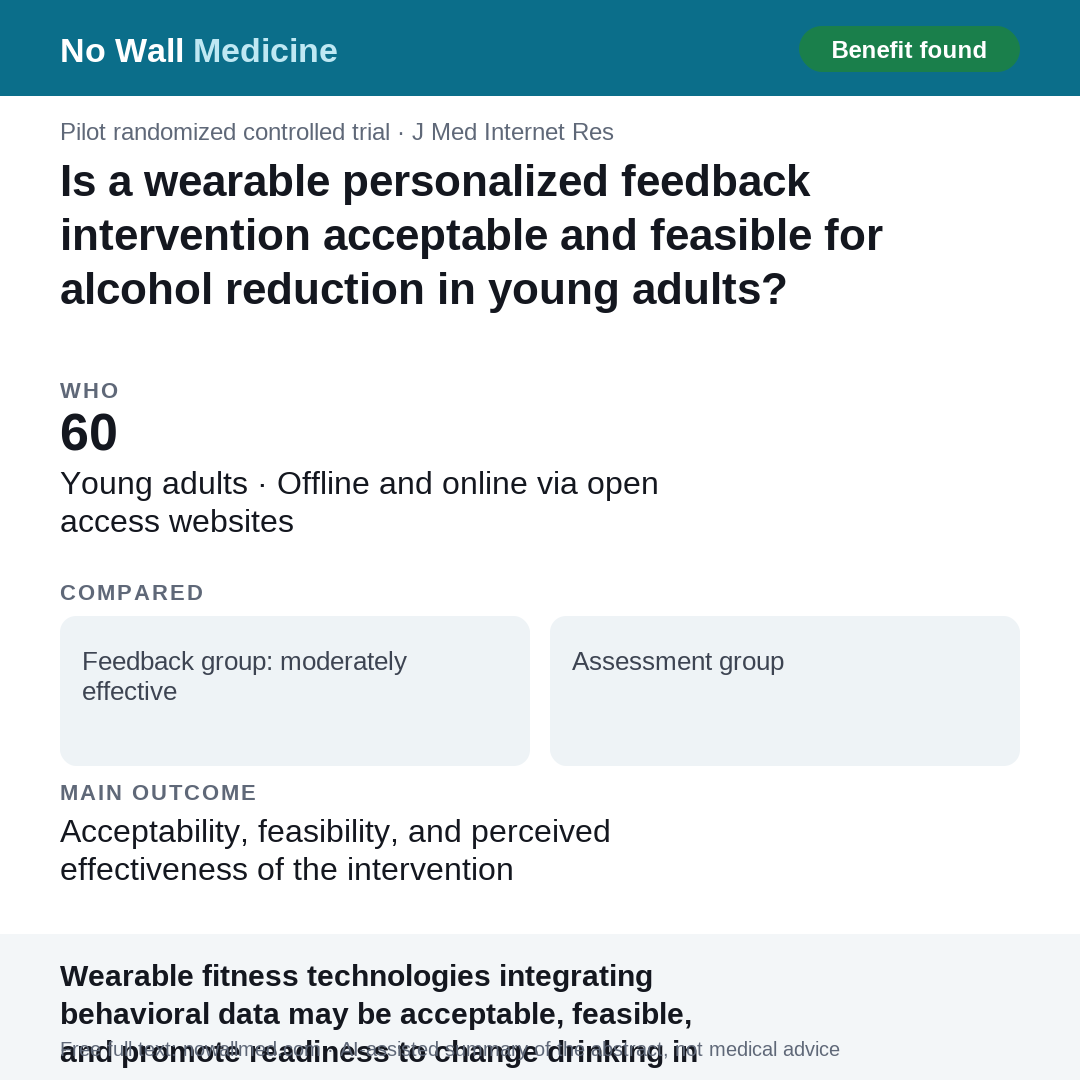
Oura Ring Behavioral Feedback Intervention for Alcohol Reduction in Young Adults: User Experience Evaluation of a Pilot Randomized Trial
Pilot randomized controlled trialBenefit found
Is a wearable personalized feedback intervention acceptable and feasible for alcohol reduction in young adults?
Who
60
Young adults · Offline and online via open access websites
Compared
Feedback group: moderately effective
Assessment group
Main outcome
Acceptability, feasibility, and perceived effectiveness of the intervention
Bottom line: Wearable fitness technologies integrating behavioral data may be acceptable, feasible, and promote readiness to change drinking in young adults.
J Med Internet Res · 2025-12-04Download image
Spirituality and spiritual care in palliative and terminal illness: a systematic review and epistemic meta-analysis from physicians' hermeneutic and bioethical perspective
Systematic review and epistemic meta-analysisMixed results
What factors influence physicians' engagement with spiritual care in palliative and terminal illness?
Who
Physicians in palliative and terminal illness settings · PubMed, Web of Science, and BIREME databases
Compared
Influencing factors: personal values, individual beliefs, and self-awareness
Key barriers: insufficient training, role ambiguity, and personal discomfort
Main outcome
Physicians' engagement with spiritual care
Bottom line: Physician engagement with spiritual care is shaped by personal values, training, role clarity, and institutional dynamics.
BMC Palliat Care · 2025-12-04Download image

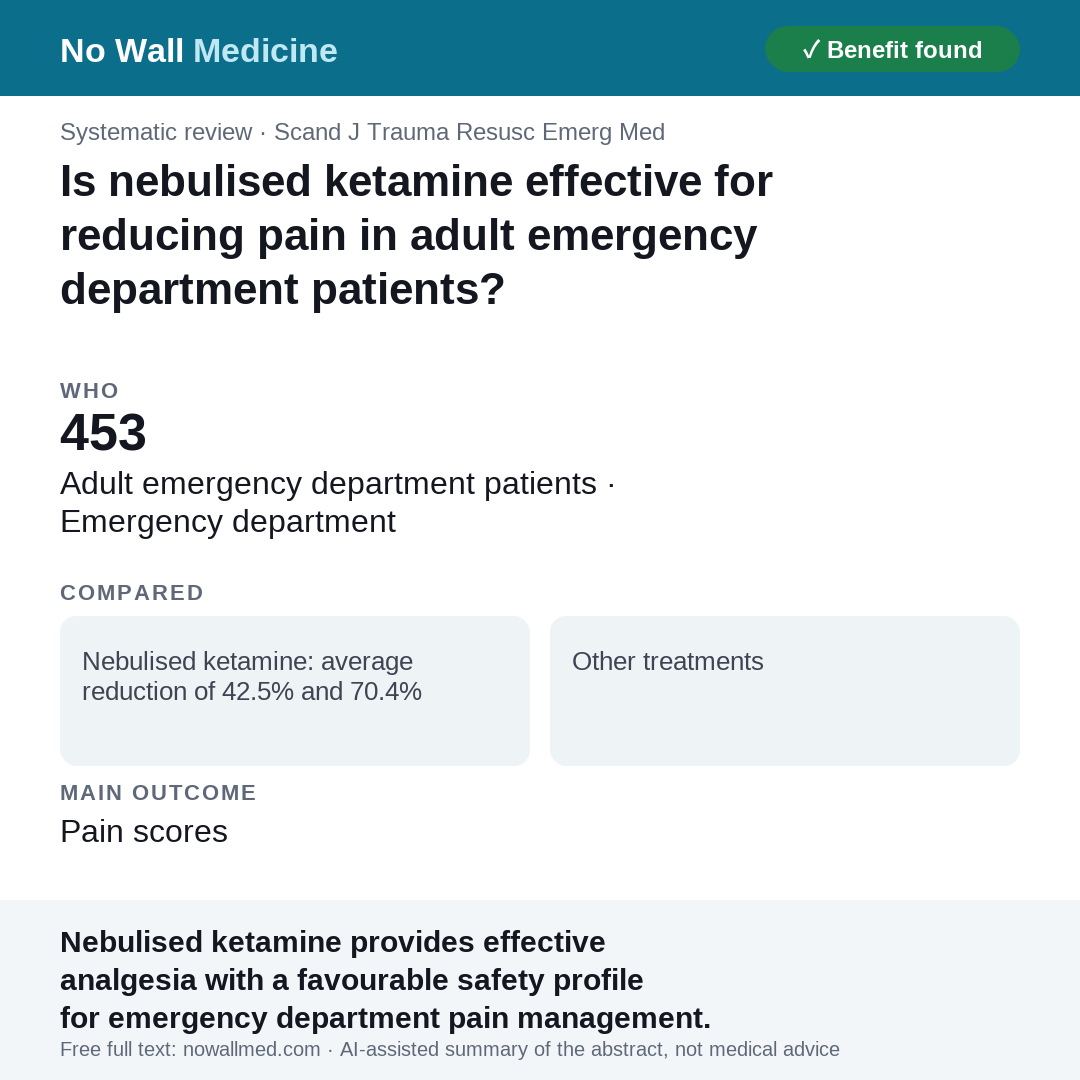
Breathing new life into pain management: a systematic review of nebulised ketamine for analgesia
Systematic reviewBenefit found
Is nebulised ketamine effective for reducing pain in adult emergency department patients?
Who
453
Adult emergency department patients · Emergency department
Compared
Nebulised ketamine: average reduction of 42.5% and 70.4%
Other treatments
Main outcome
Pain scores
Bottom line: Nebulised ketamine provides effective analgesia with a favourable safety profile for emergency department pain management.
Limitation: Further multicentre trials with larger populations are recommended to confirm findings.
Scand J Trauma Resusc Emerg Med · 2025-12-04Download image
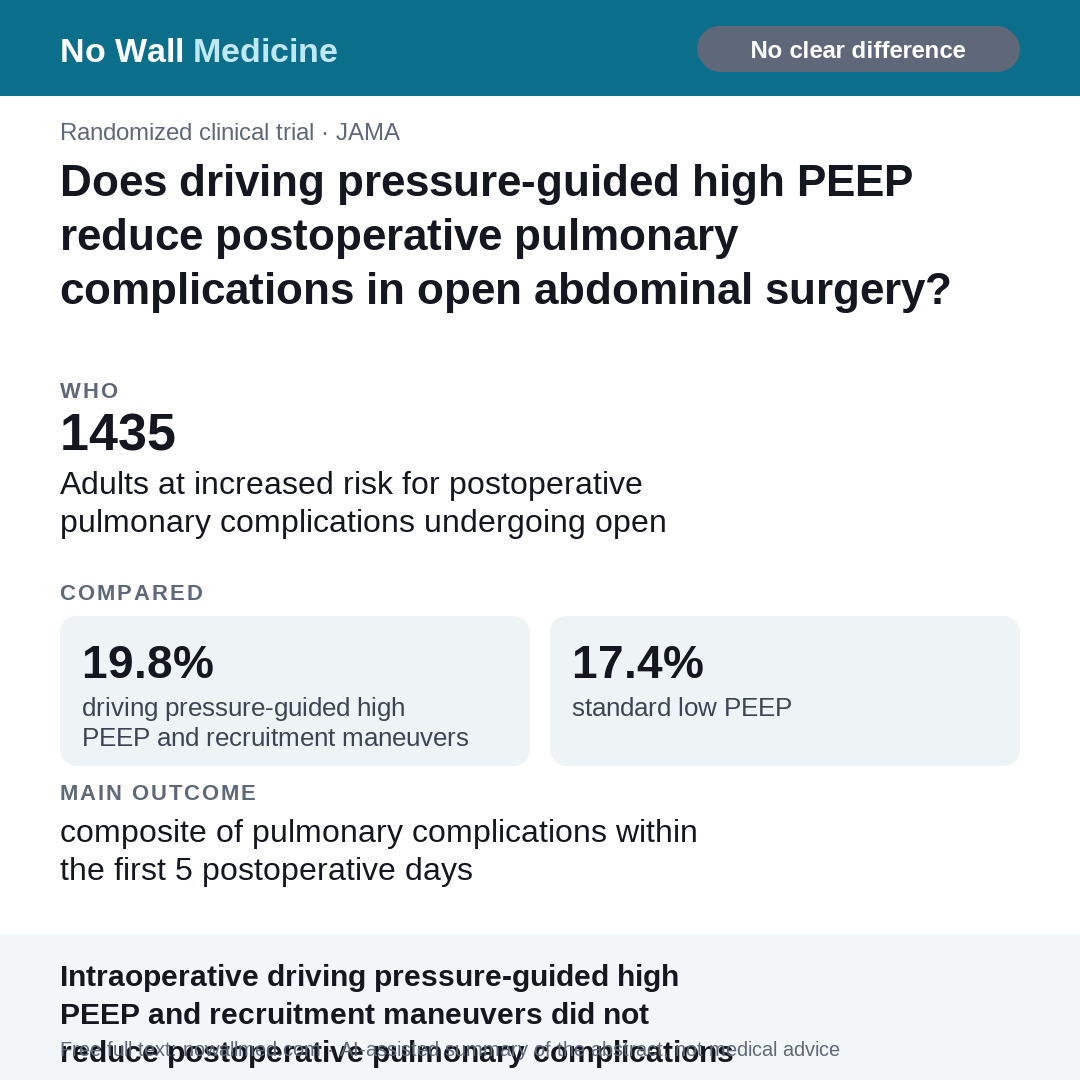
Intraoperative Driving Pressure-Guided High PEEP vs Standard Low PEEP for Postoperative Pulmonary Complications
Randomized clinical trialNo clear difference
Does driving pressure-guided high PEEP reduce postoperative pulmonary complications in open abdominal surgery?
Who
1435
Adults at increased risk for postoperative pulmonary complications undergoing open abdominal surgery · 29 sites in 5 countries across Europe
Compared
19.8%driving pressure-guided high PEEP and recruitment maneuvers (142/718)
17.4%standard low PEEP (125/717)
Main outcome
composite of pulmonary complications within the first 5 postoperative days
Result: absolute difference, 2.5% (95% CI, -1.5% to 6.4%)
Bottom line: Intraoperative driving pressure-guided high PEEP and recruitment maneuvers did not reduce postoperative pulmonary complications compared to standard low PEEP.
JAMA · 2025-12-03Download image
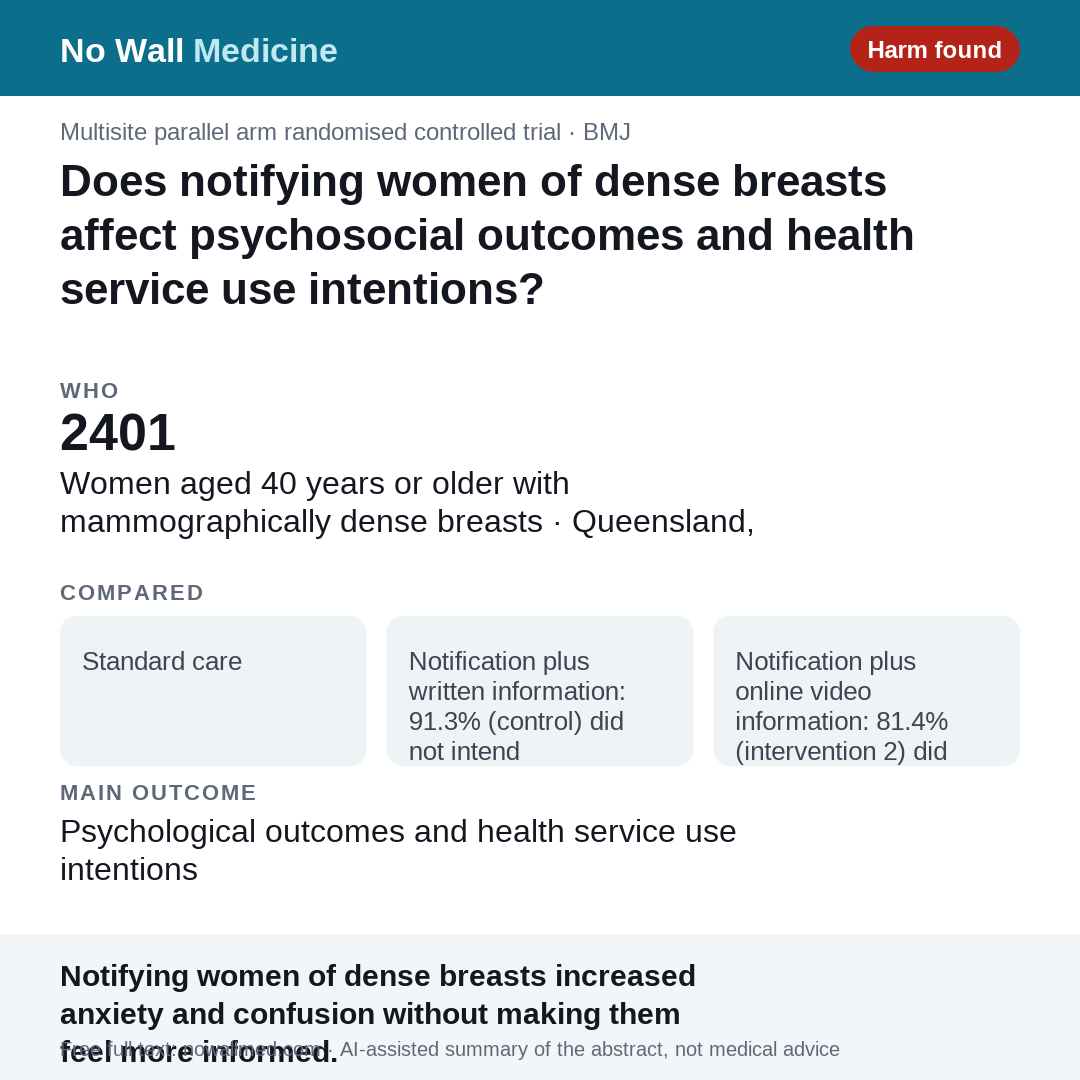
Impact of population based breast density notification: multisite parallel arm randomised controlled trial in BreastScreen
Multisite parallel arm randomised controlled trialHarm found
Does notifying women of dense breasts affect psychosocial outcomes and health service use intentions?
Who
2401
Women aged 40 years or older with mammographically dense breasts · Queensland, Australia
Compared
Standard care
Notification plus written information: 91.3% (control) did not intend supplemental screening
Notification plus online video information: 81.4% (intervention 2) did not intend supplemental screening
Main outcome
Psychological outcomes and health service use intentions
Bottom line: Notifying women of dense breasts increased anxiety and confusion without making them feel more informed.
BMJ · 2025-12-03Download image
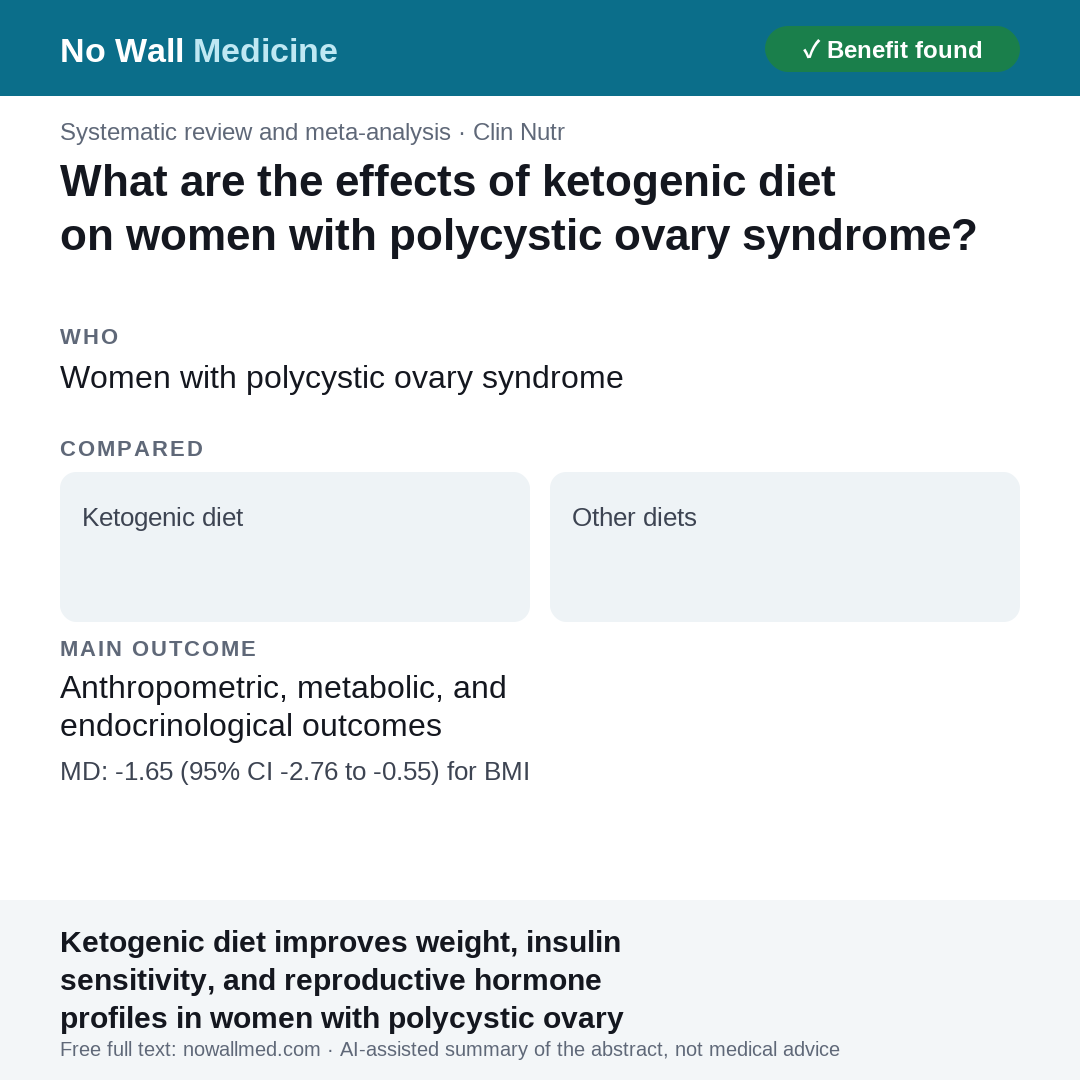
The effects of ketogenic diet on polycystic ovary syndrome: A systematic review and meta-analysis
Systematic review and meta-analysisBenefit found
What are the effects of ketogenic diet on women with polycystic ovary syndrome?
Who
Women with polycystic ovary syndrome
Compared
Ketogenic diet
Other diets
Main outcome
Anthropometric, metabolic, and endocrinological outcomes
Result: MD: -1.65 (95% CI -2.76 to -0.55) for BMI
Bottom line: Ketogenic diet improves weight, insulin sensitivity, and reproductive hormone profiles in women with polycystic ovary syndrome.
Limitation: Considerable heterogeneity among included studies and variations in study quality.
Clin Nutr · 2025-12-03Download image
Intramuscular versus intradermal administration of fractional dose inactivated poliovirus vaccine in Mozambique, 2020-2022: an, open-label, non-inferiority, randomised, controlled phase 2 trial
Open-label, non-inferiority, randomised, controlled phase 2 trialBenefit found
Is intramuscular administration non-inferior to intradermal administration of fractional dose inactivated poliovirus vaccine?
Who
382
Healthy inactivated poliovirus vaccine-naive infants · Maputo, Mozambique
Compared
92.1%Intradermal administration (139/151, 95% CI 86.5-95.8)
96.1%Intramuscular administration (148/154, 95% CI 91.7-98.6)
Main outcome
Cumulative type 2 poliovirus seroconversion rates
Bottom line: Intramuscular administration of fractional dose inactivated poliovirus vaccine is non-inferior to intradermal administration in young infants.
Funded by: World Health Organization
eClinicalMedicine · 2025-12-03Download image

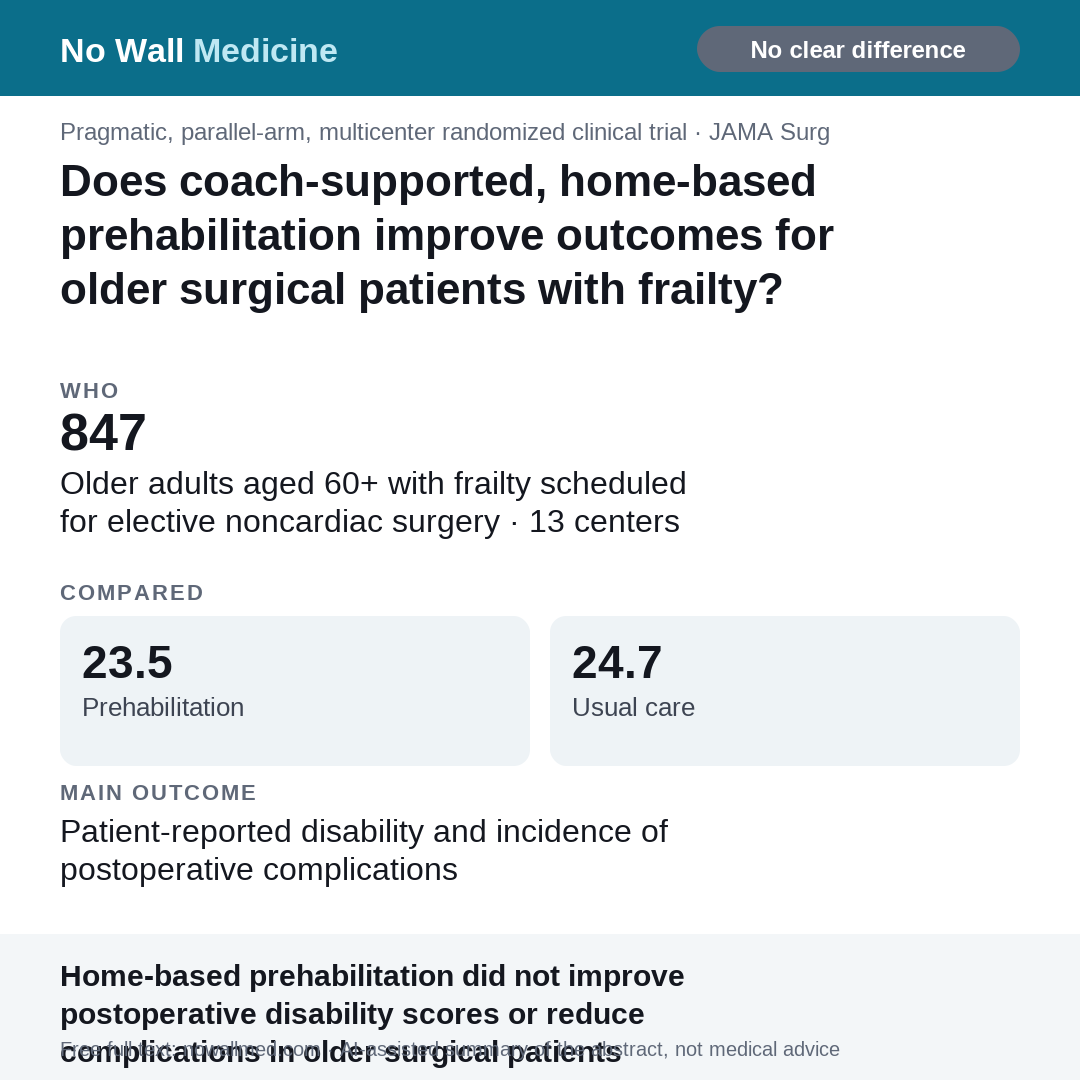
Home-Based Prehabilitation for Older Surgical Patients With Frailty: A Randomized Clinical Trial
Pragmatic, parallel-arm, multicenter randomized clinical trialNo clear difference
Does coach-supported, home-based prehabilitation improve outcomes for older surgical patients with frailty?
Who
847
Older adults aged 60+ with frailty scheduled for elective noncardiac surgery · 13 centers in Canada
Compared
23.5Prehabilitation (21.8)
24.7Usual care (23.8)
Main outcome
Patient-reported disability and incidence of postoperative complications
Result: adjusted mean difference, -1.4; 97.5% CI, -4.9 to 2.0
Bottom line: Home-based prehabilitation did not improve postoperative disability scores or reduce complications in older surgical patients with frailty.
JAMA Surg · 2025-12-03Download image
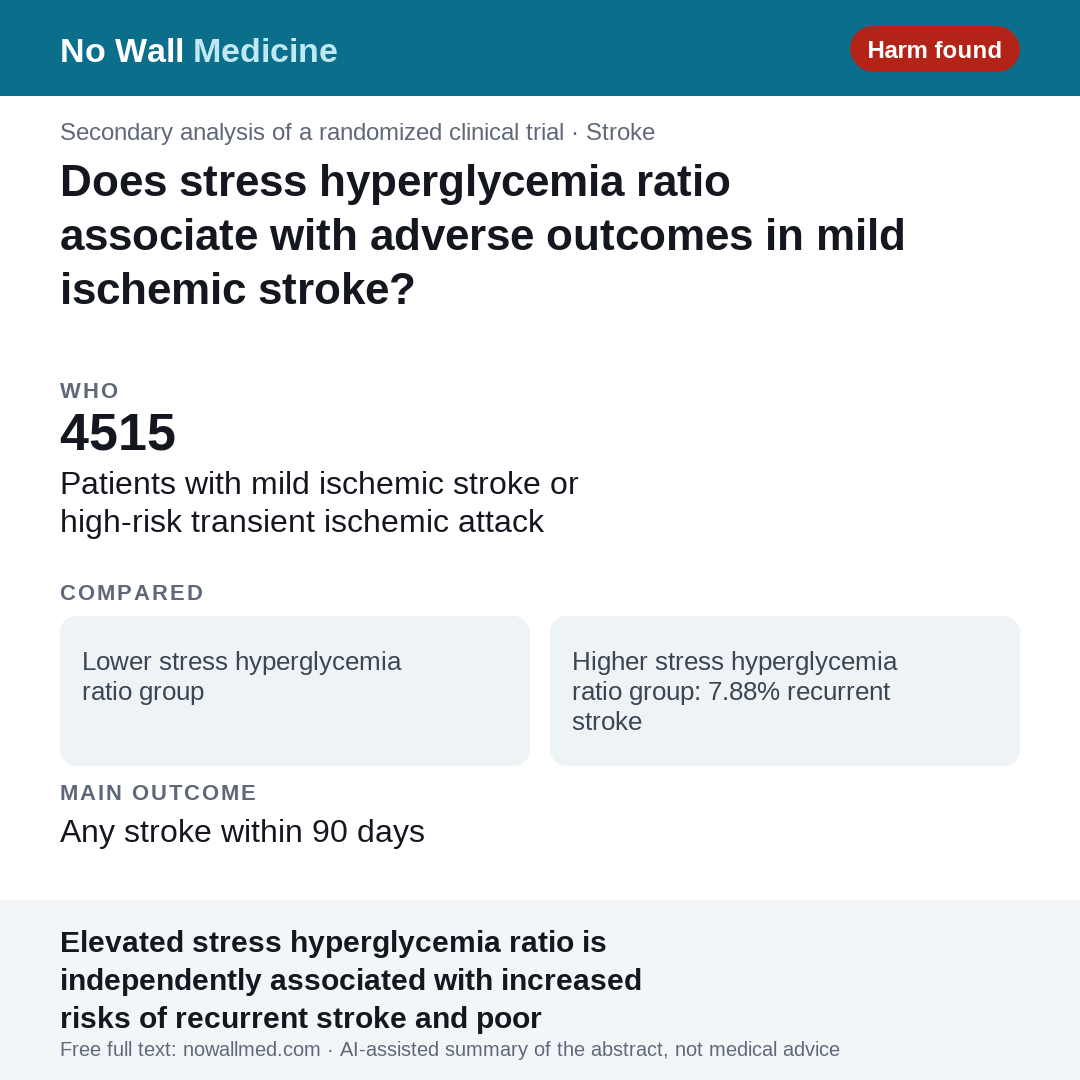
Stress Hyperglycemia Ratio and Adverse Outcomes in Acute Mild Ischemic Stroke or High-Risk Transient Ischemic Attack: A Secondary Analysis of the INSPIRES Trial
Secondary analysis of a randomized clinical trialHarm found
Does stress hyperglycemia ratio associate with adverse outcomes in mild ischemic stroke?
Who
4515
Patients with mild ischemic stroke or high-risk transient ischemic attack
Compared
Lower stress hyperglycemia ratio group
Higher stress hyperglycemia ratio group: 7.88% recurrent stroke
Main outcome
Any stroke within 90 days
Result: hazard ratio 1.84 (95% CI 1.30-2.61)
Bottom line: Elevated stress hyperglycemia ratio is independently associated with increased risks of recurrent stroke and poor functional outcomes.
Stroke · 2025-12-03Download image
Specificity of environmental risk factors for schizophrenia, bipolar disorders, and depressive disorders - umbrella review
Meta-analysis of 70 meta-analysesMixed results
Risk factors for schizophrenia, bipolar, depressive disorders
Who
patients with schizophrenia, bipolar, depressive disorders
Compared
childhood maltreatment
pregnancy and birth complications
somatic conditions
Main outcome
risk of disorders
Bottom line: Childhood maltreatment is a transdiagnostic risk factor
Psychol Med · 2025-12-03Download image

Evaluating the use of virtual reality for weight management: A systematic review and meta-analysis
Systematic review and meta-analysisBenefit found
Does virtual reality enhance weight management compared to conventional treatments alone?
Who
Adults seeking weight loss
Compared
Virtual reality-enhanced treatment
Conventional treatments alone
Main outcome
Body weight and body mass index
Result: mean difference -5.16 kg (95% CI -8.46 to -1.85)
Bottom line: Virtual reality-enhanced treatment may be more effective for maintaining weight loss than conventional methods.
Limitation: Small number of studies with concerns regarding conduct, governance, and transparency.
Diabetes Obes Metab · 2025-12-03Download image

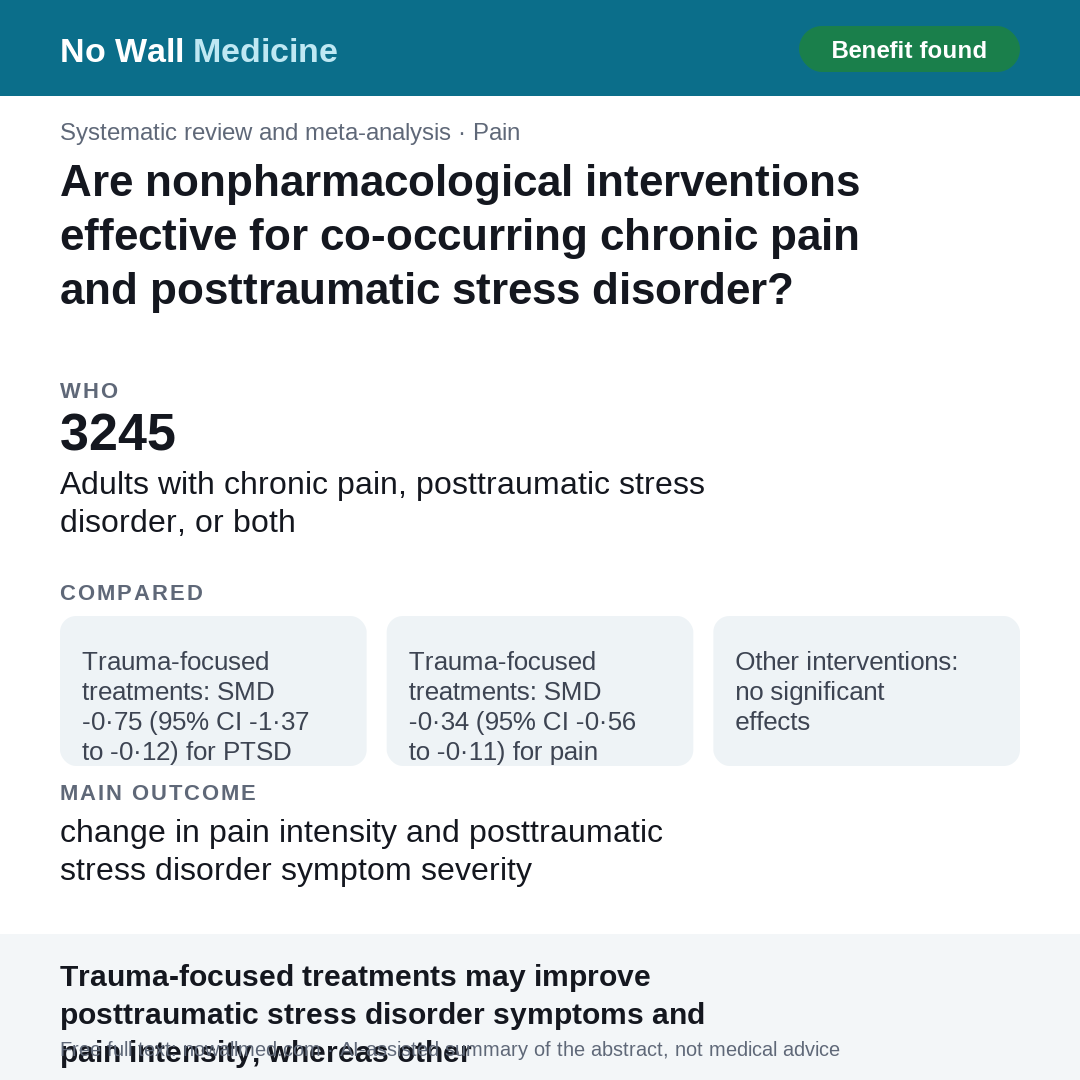
Systematic review and meta-analyses of nonpharmacological interventions for co-occurring chronic pain and posttraumatic stress disorder
Systematic review and meta-analysisBenefit found
Are nonpharmacological interventions effective for co-occurring chronic pain and posttraumatic stress disorder?
Who
3245
Adults with chronic pain, posttraumatic stress disorder, or both
Compared
Trauma-focused treatments: SMD -0·75 (95% CI -1·37 to -0·12) for PTSD
Trauma-focused treatments: SMD -0·34 (95% CI -0·56 to -0·11) for pain
Other interventions: no significant effects
Main outcome
change in pain intensity and posttraumatic stress disorder symptom severity
Result: SMD -0·75 (95% CI -1·37 to -0·12) for PTSD; SMD -0·34 (95% CI -0·56 to -0·11) for pain
Bottom line: Trauma-focused treatments may improve posttraumatic stress disorder symptoms and pain intensity, whereas other nonpharmacological therapies showed no significant effects.
Limitation: Most studies were methodologically weak and evidence quality was low.
Pain · 2025-12-03Download image
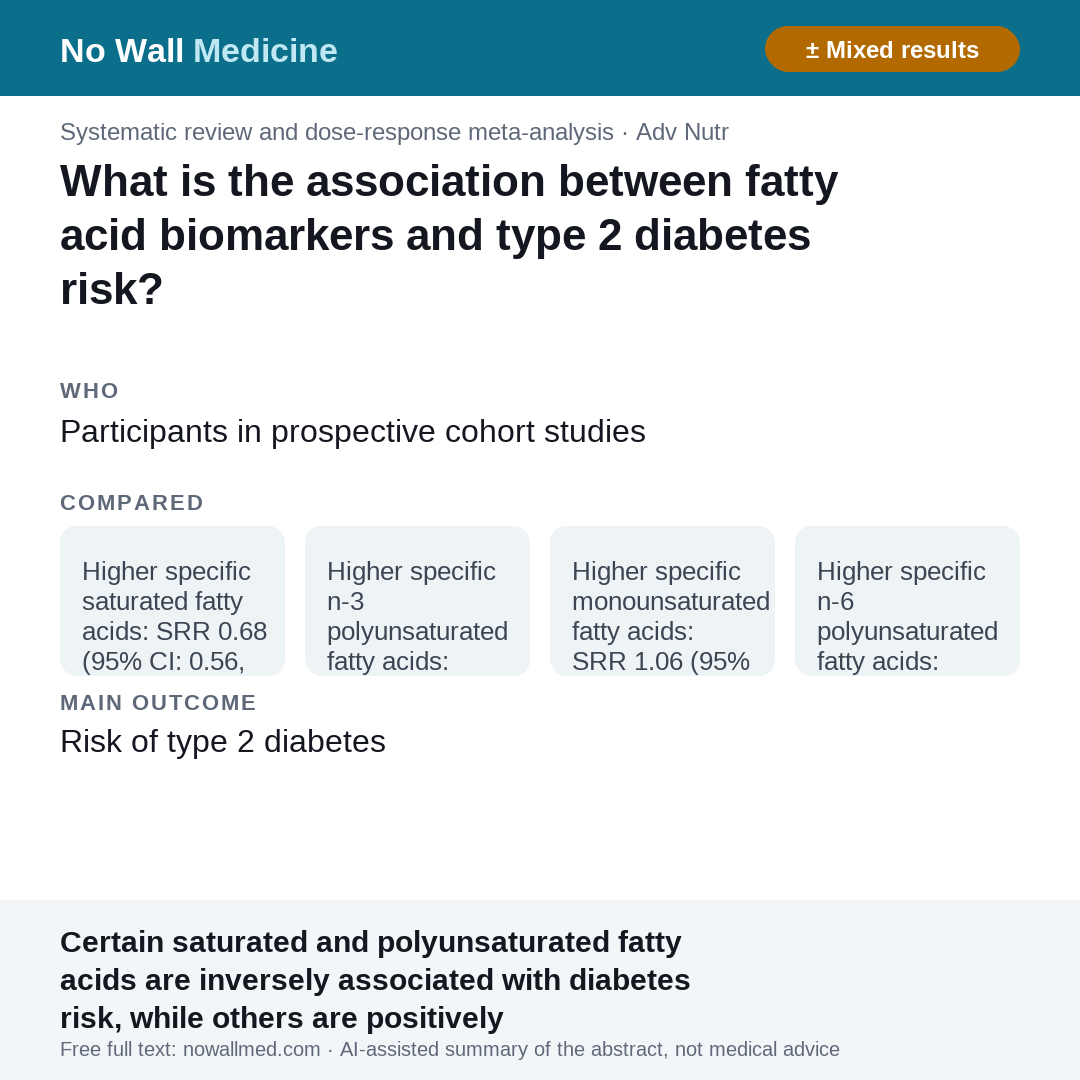
Fatty Acid Biomarkers and Incidence of Type 2 diabetes: A Systematic Review and Dose-Response Meta-analysis of Prospective Observational Studies
Systematic review and dose-response meta-analysisMixed results
What is the association between fatty acid biomarkers and type 2 diabetes risk?
Who
27
Participants in prospective cohort studies
Compared
Higher specific saturated fatty acids: SRR 0.68 (95% CI: 0.56, 0.81)
Higher specific n-3 polyunsaturated fatty acids: SRR 0.97 (95% CI: 0.95, 0.99)
Higher specific monounsaturated fatty acids: SRR 1.06 (95% CI: 1.03, 1.10)
Higher specific n-6 polyunsaturated fatty acids: SRR 1.07 (95% CI: 1.03, 1.11)
Main outcome
Risk of type 2 diabetes
Bottom line: Certain saturated and polyunsaturated fatty acids are inversely associated with diabetes risk, while others are positively associated.
Adv Nutr · 2025-12-03Download image
Prevention strategies and modifiable risk factors for upper extremity injury: a systematic review and meta-analysis for the Female, woman and/or girl Athlete Injury pRevention (FAIR) consensus
Systematic review and meta-analysisBenefit found
What are the injury prevention strategies and modifiable risk factors for female upper extremity injuries?
Who
33228
Female, woman and/or girl athletes
Compared
Shoulder exercise programmes: reduce shoulder injury rates by 51%
Control
Main outcome
shoulder injury rates
Result: 51% (95% CI 0.30 to 079)
Bottom line: Shoulder-specific strengthening and stability exercise programmes may reduce shoulder injury rates in female handball and volleyball players.
Limitation: Heterogeneity across injury outcomes, interventions, modifiable risk factors and limited female-specific data.
Br J Sports Med · 2025-12-03Download image

Prevention strategies and modifiable risk factors for concussion: a systematic review and meta-analysis for the Female, woman and girl/or Athlete Injury pRevention (FAIR) consensus
Systematic review and meta-analysisMixed results
What are the prevention strategies and modifiable risk factors for concussion in female athletes?
Who
Female, woman and/or girl athletes
Compared
Headgear use: 30% lower sport-related concussion rates
Eyewear use: not protective
Artificial turf versus grass: did not differ
Main outcome
sport-related concussion and head impact/head acceleration event outcomes
Result: headgear IRR=0.70 (95% CI 0.50 to 0.99); eyewear IRR=1.08 (95% CI 0.69 to 1.68); turf vs grass IRR=0.95 (95% CI 0.62 to 1.45)
Bottom line: Headgear may reduce concussion rates in adolescent female lacrosse and soccer, but evidence for other strategies remains limited.
Limitation: very-low certainty evidence
Br J Sports Med · 2025-12-03Download image

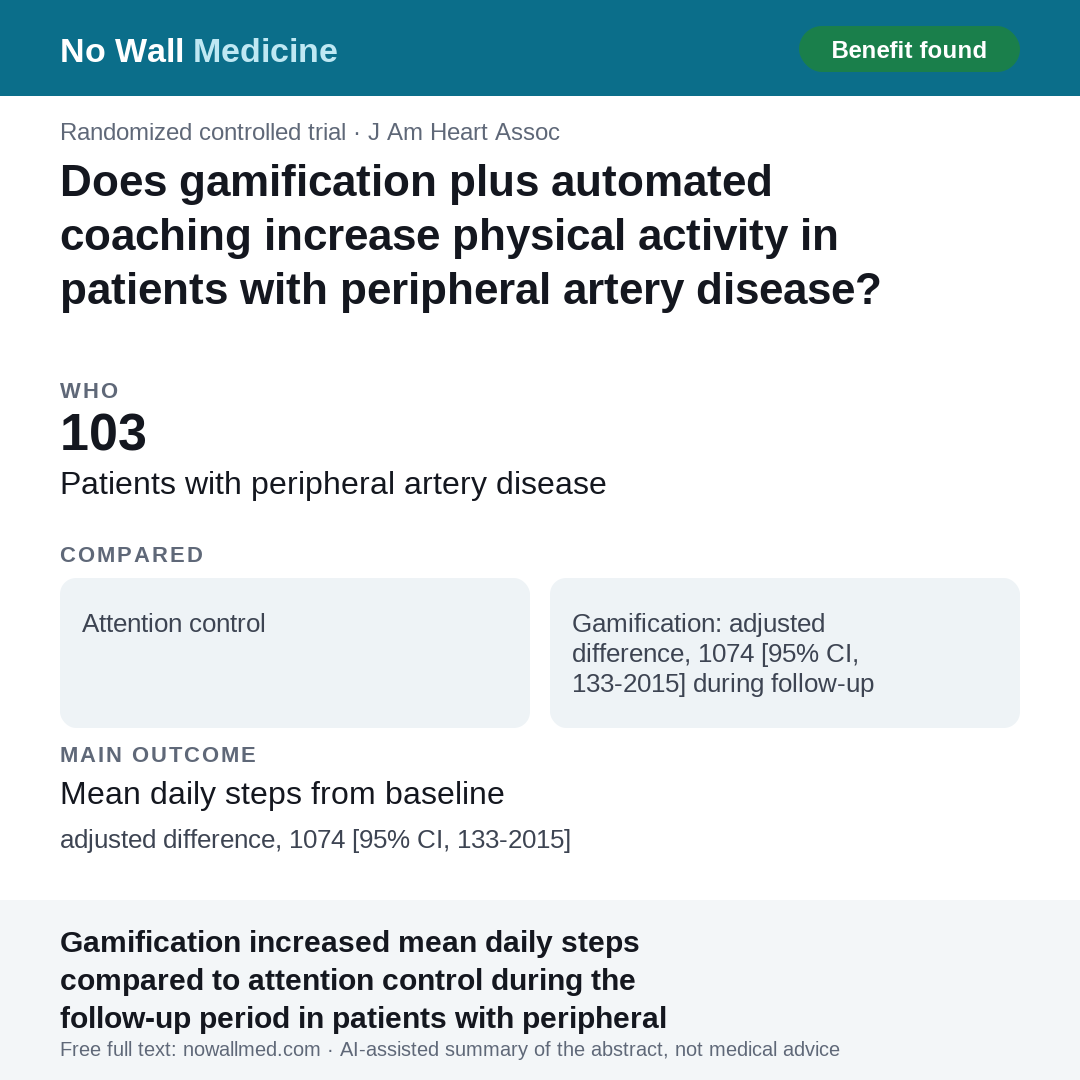
Effect of Gamification Plus Automated Coaching to Increase Physical Activity Among Patients With Peripheral Artery Disease: The GAMEPAD Randomized Controlled Trial
Randomized controlled trialBenefit found
Does gamification plus automated coaching increase physical activity in patients with peripheral artery disease?
Who
103
Patients with peripheral artery disease
Compared
Attention control
Gamification: adjusted difference, 1074 [95% CI, 133-2015] during follow-up
Main outcome
Mean daily steps from baseline
Result: adjusted difference, 1074 [95% CI, 133-2015]
Bottom line: Gamification increased mean daily steps compared to attention control during the follow-up period in patients with peripheral artery disease.
J Am Heart Assoc · 2025-12-03Download image
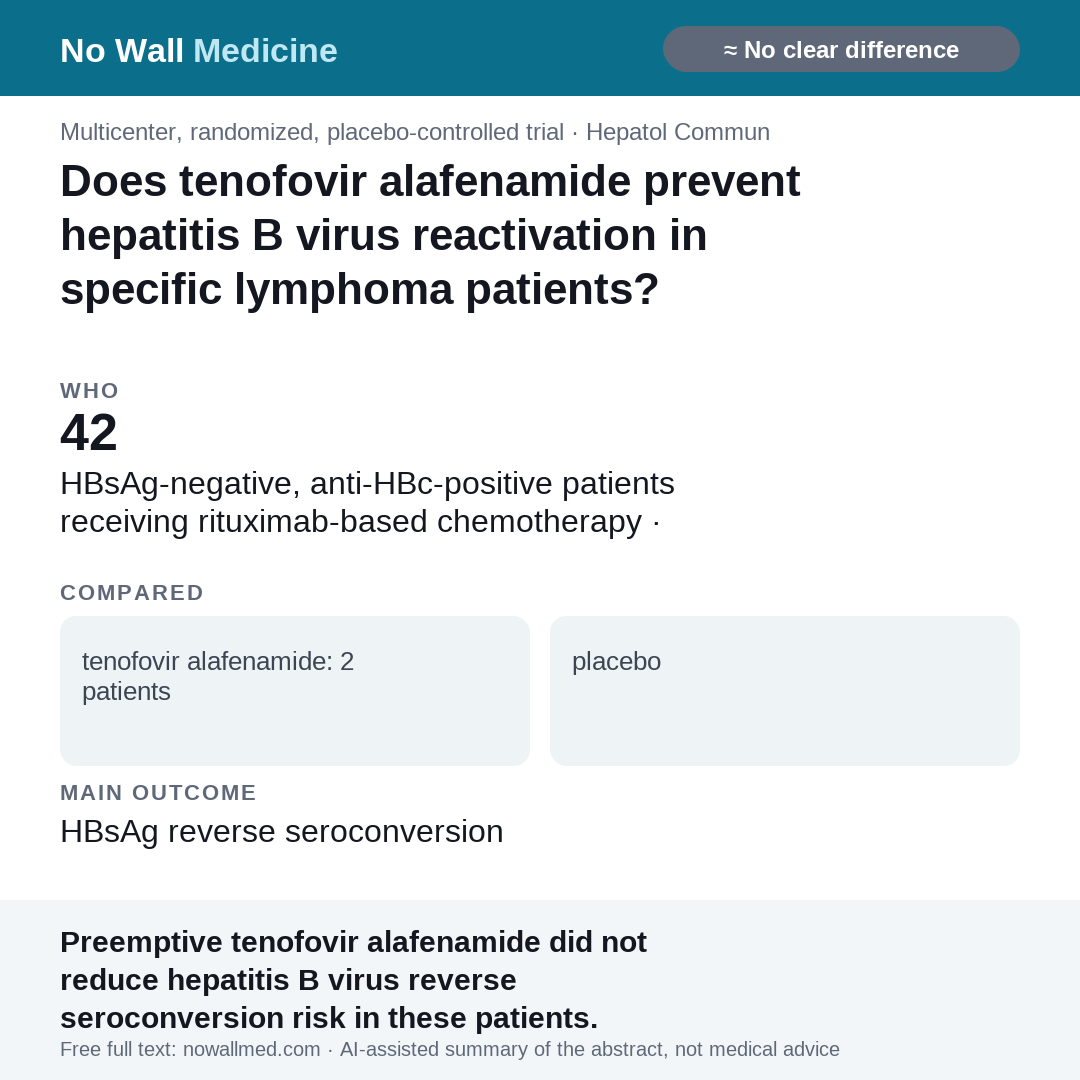
Tenofovir alafenamide for prevention of HBV reactivation in HBsAg-negative, anti-HBc-positive patients undergoing rituximab-based chemotherapy: A multicenter randomized controlled trial
Multicenter, randomized, placebo-controlled trialNo clear difference
Does tenofovir alafenamide prevent hepatitis B virus reactivation in specific lymphoma patients?
Who
42
HBsAg-negative, anti-HBc-positive patients receiving rituximab-based chemotherapy · multicenter
Compared
tenofovir alafenamide: 2 patients
placebo
Main outcome
HBsAg reverse seroconversion
Bottom line: Preemptive tenofovir alafenamide did not reduce hepatitis B virus reverse seroconversion risk in these patients.
Limitation: The study was underpowered due to slow enrolment leading to early termination.
Hepatol Commun · 2025-12-03Download image
GOULD EDU: Cluster-Randomized Trial of an Educational Intervention to Improve Lipid-Lowering Guideline Adherence
Cluster-randomized, stepped-wedge trialNo clear difference
Does an educational intervention improve lipid-lowering therapy optimization for patients with ASCVD?
Who
998
United States patients with atherosclerotic cardiovascular disease · United States
Compared
Baseline: 39.0% (202/518) met LDL-C <70 mg/dL
1 year: 39.5% (252/638) met LDL-C <70 mg/dL
Main outcome
Low-density lipoprotein cholesterol goal achievement
Bottom line: The educational intervention had little impact on lipid-lowering therapy optimization or cholesterol goal achievement over one year.
JACC Adv · 2025-12-03Download image

Epigenetic and blood markers associated with response to electroconvulsive therapy in patients with depressive disorders
Epigenome-wide association study and meta-analysisMixed results
What epigenetic and blood markers are associated with response to electroconvulsive therapy?
Who
99
Patients with depressive disorders · Norway and Germany
Compared
Norwegian cohort
German cohort
Main outcome
Percent clinical response and remission
Bottom line: DNA methylation and neutrophil to lymphocyte ratios are associated with electroconvulsive therapy response and remission.
Transl Psychiatry · 2025-12-03Download image

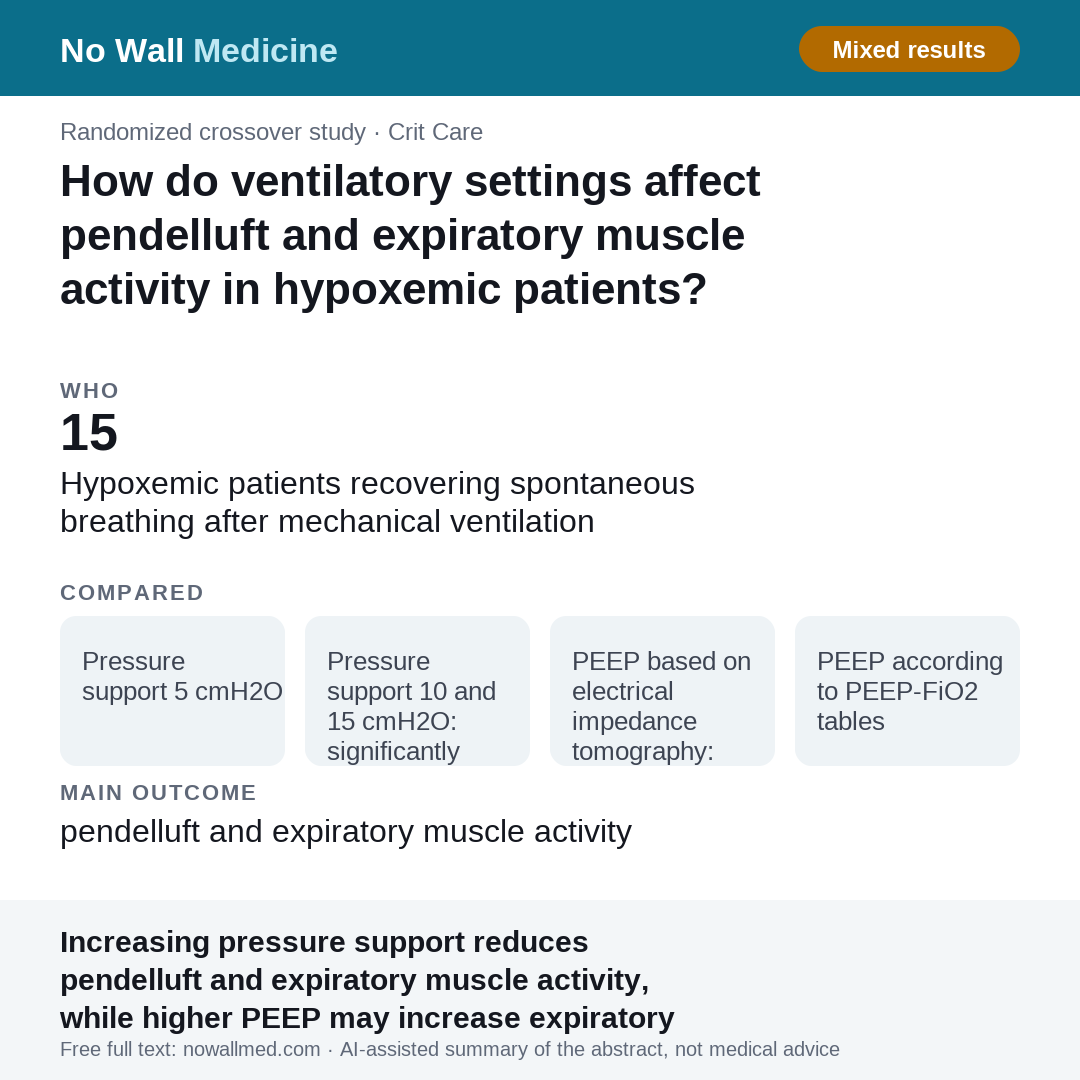
Influence of ventilatory settings on pendelluft and expiratory muscle activity in hypoxemic patients resuming spontaneous breathing
Randomized crossover studyMixed results
How do ventilatory settings affect pendelluft and expiratory muscle activity in hypoxemic patients?
Who
15
Hypoxemic patients recovering spontaneous breathing after mechanical ventilation
Compared
Pressure support 5 cmH2O
Pressure support 10 and 15 cmH2O: significantly reduced both pendelluft and ΔPgaEXP
PEEP based on electrical impedance tomography: slight reduction in pendelluft and increase in ΔPgaEXP
PEEP according to PEEP-FiO2 tables
Main outcome
pendelluft and expiratory muscle activity
Bottom line: Increasing pressure support reduces pendelluft and expiratory muscle activity, while higher PEEP may increase expiratory activity.
Crit Care · 2025-12-03Download image