Visual abstracts
New randomized trials and meta-analyses from leading journals at a glance: who was studied, what was compared, and what was found. Every paper is free to read in full.
All specialtiesCardiology 2209Oncology 1889Gastroenterology & Hepatology 833Infectious Disease 1390Neurology 893Psychiatry & Mental Health 1060Pulmonology 933Critical Care 614Endocrinology & Diabetes 1167Pediatrics 1288Surgery 1109Orthopedics & Sports Medicine 408Neurosurgery 272Cardiothoracic & Vascular Surgery 237Plastic & Reconstructive Surgery 337Nephrology 468Rheumatology 308Hematology 480Dermatology 257Ophthalmology 262Obstetrics & Gynecology 723Public & Global Health 414Radiology & Imaging 306Anesthesiology 438Urology 383ENT (Otolaryngology) 285Emergency Medicine 242Allergy & Immunology 136Geriatrics 466Family Medicine & Primary Care 254Medical Genetics & Genomics 238Pathology & Laboratory Medicine 74Physical Medicine & Rehabilitation 380Palliative Care 191Nutrition 588Digital Health & AI 1124General Medicine 166
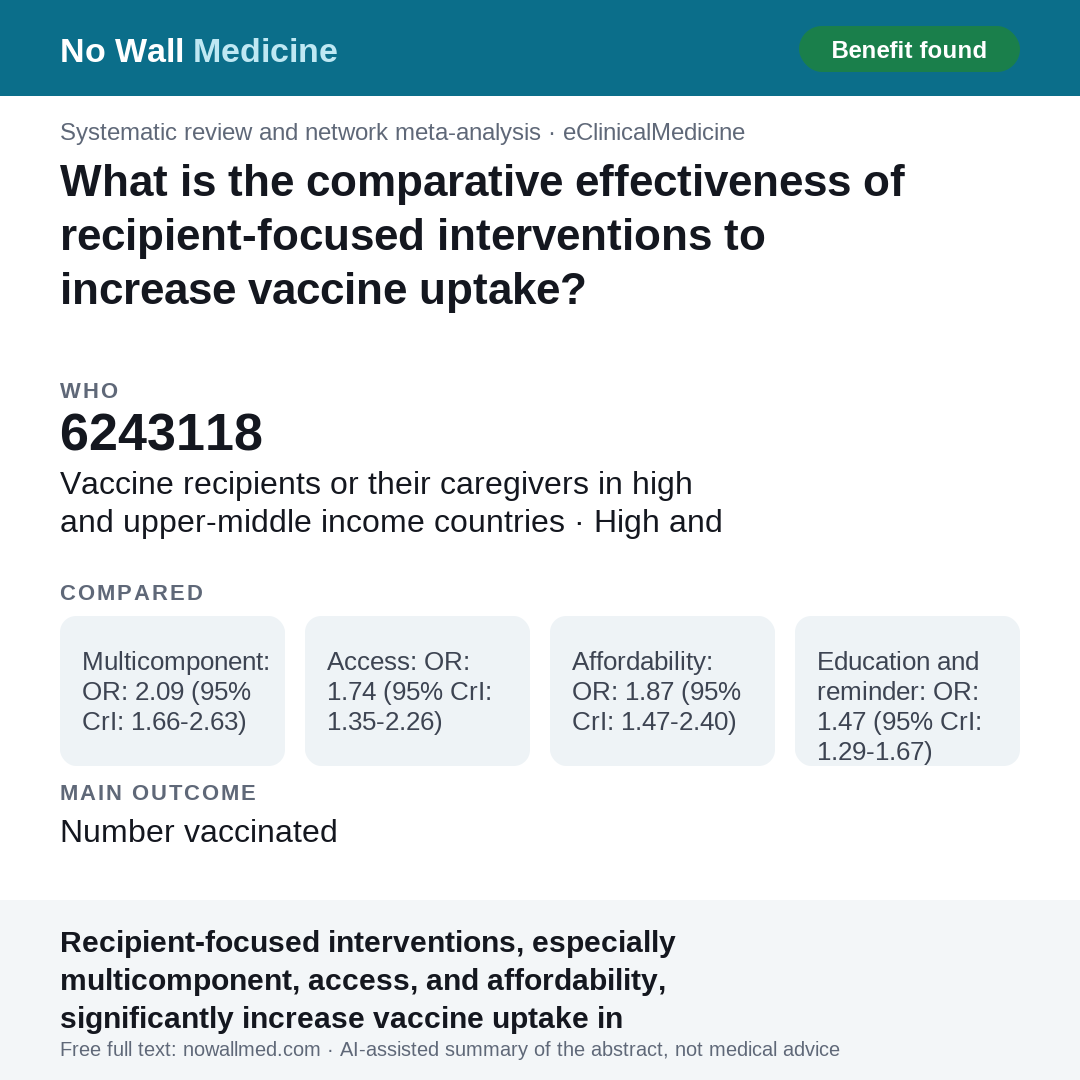
Recipient-focused interventions to increase vaccine uptake in high and upper-middle income countries: a systematic review and network meta-analysis
Systematic review and network meta-analysisBenefit found
What is the comparative effectiveness of recipient-focused interventions to increase vaccine uptake?
Who
6243118
Vaccine recipients or their caregivers in high and upper-middle income countries · High and upper-middle income countries
Compared
Multicomponent: OR: 2.09 (95% CrI: 1.66-2.63)
Access: OR: 1.74 (95% CrI: 1.35-2.26)
Affordability: OR: 1.87 (95% CrI: 1.47-2.40)
Education and reminder: OR: 1.47 (95% CrI: 1.29-1.67)
Main outcome
Number vaccinated
Result: ORs and 95% credible intervals > 1 for all six categories
Bottom line: Recipient-focused interventions, especially multicomponent, access, and affordability, significantly increase vaccine uptake in high and upper-middle income countries.
Limitation: The effectiveness of affordability and multicomponent interventions may have decreased post-2020 due to the COVID-19 pandemic.
Funded by: NIHR Public Health Research Programme
eClinicalMedicine · 2025-11-18Download image
Diagnostic accuracy of the WHO tuberculosis treatment decision algorithms for children with presumptive tuberculosis: An individual participant data meta-analysis
Individual participant data meta-analysisMixed results
What is the diagnostic accuracy of WHO tuberculosis treatment decision algorithms for children?
Who
1886
Children under 10 years with presumptive pulmonary tuberculosis · Four paediatric cohorts
Compared
Algorithm A (including chest X-ray): sensitivity 84.3% (95% CI: 74.8, 90.6), specificity 50.6% (95% CI: 30.4, 70.7)
Algorithm B (without chest X-ray): sensitivity 90.6% (95% CI: 83.8, 94.7), specificity 30.8% (95% CI: 21.5, 42.0)
Main outcome
Sensitivity and specificity against a composite reference standard
Bottom line: Both algorithms show high sensitivity but sub-optimal specificity for diagnosing tuberculosis in children.
Limitation: Studies performed at secondary or tertiary hospitals might limit the generalisability of results.
PLOS Med · 2025-11-18Download image

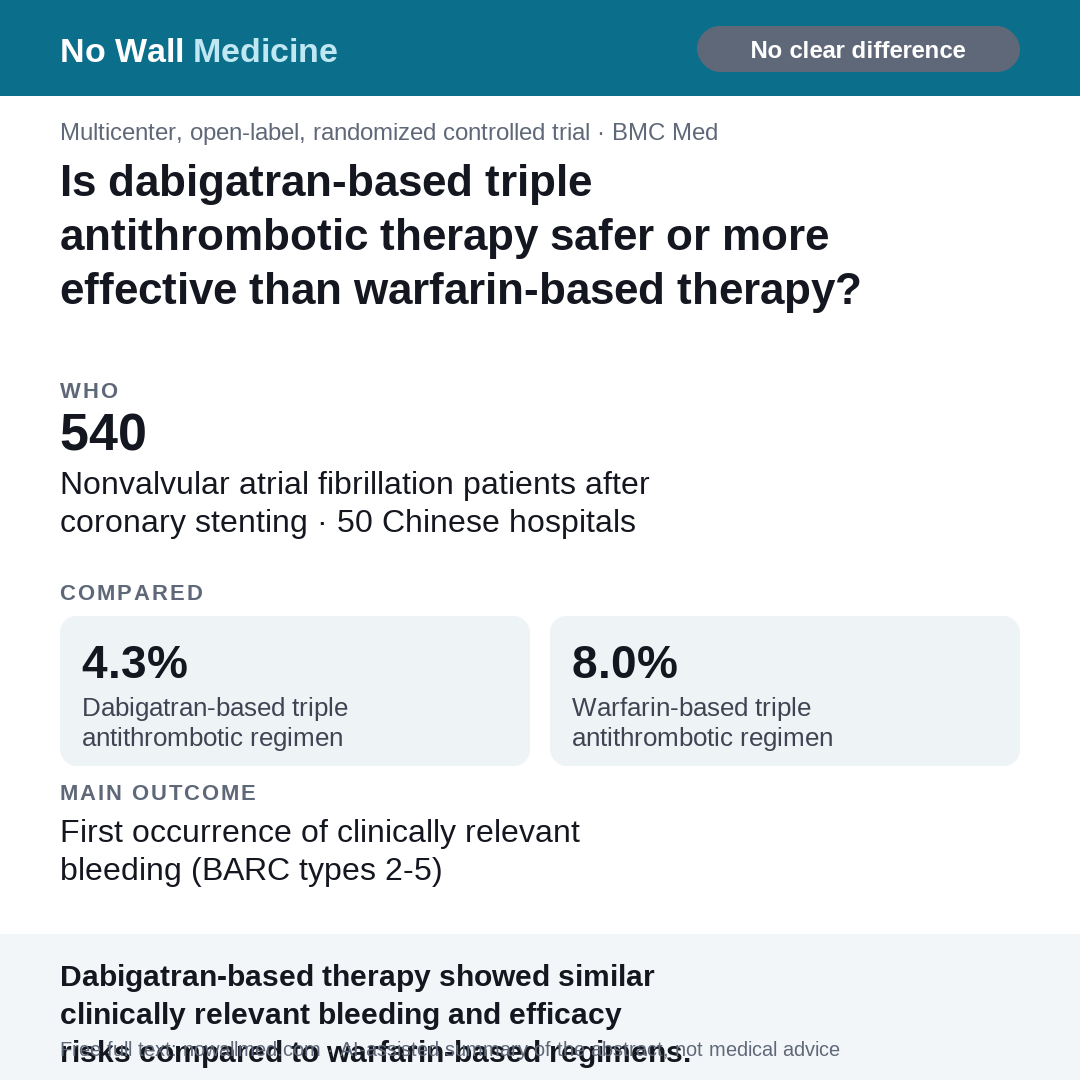
Dabigatran-based versus warfarin-based triple antithrombotic regimen with a 1-month intensification after coronary stenting in patients with nonvalvular atrial fibrillation (COACH-AF PCI)
Multicenter, open-label, randomized controlled trialNo clear difference
Is dabigatran-based triple antithrombotic therapy safer or more effective than warfarin-based therapy?
Who
540
Nonvalvular atrial fibrillation patients after coronary stenting · 50 Chinese hospitals
Compared
4.3%Dabigatran-based triple antithrombotic regimen
8.0%Warfarin-based triple antithrombotic regimen
Main outcome
First occurrence of clinically relevant bleeding (BARC types 2-5)
Result: hazard ratio 0.54 (95% CI 0.26-1.09)
Bottom line: Dabigatran-based therapy showed similar clinically relevant bleeding and efficacy risks compared to warfarin-based regimens.
BMC Med · 2025-11-18Download image
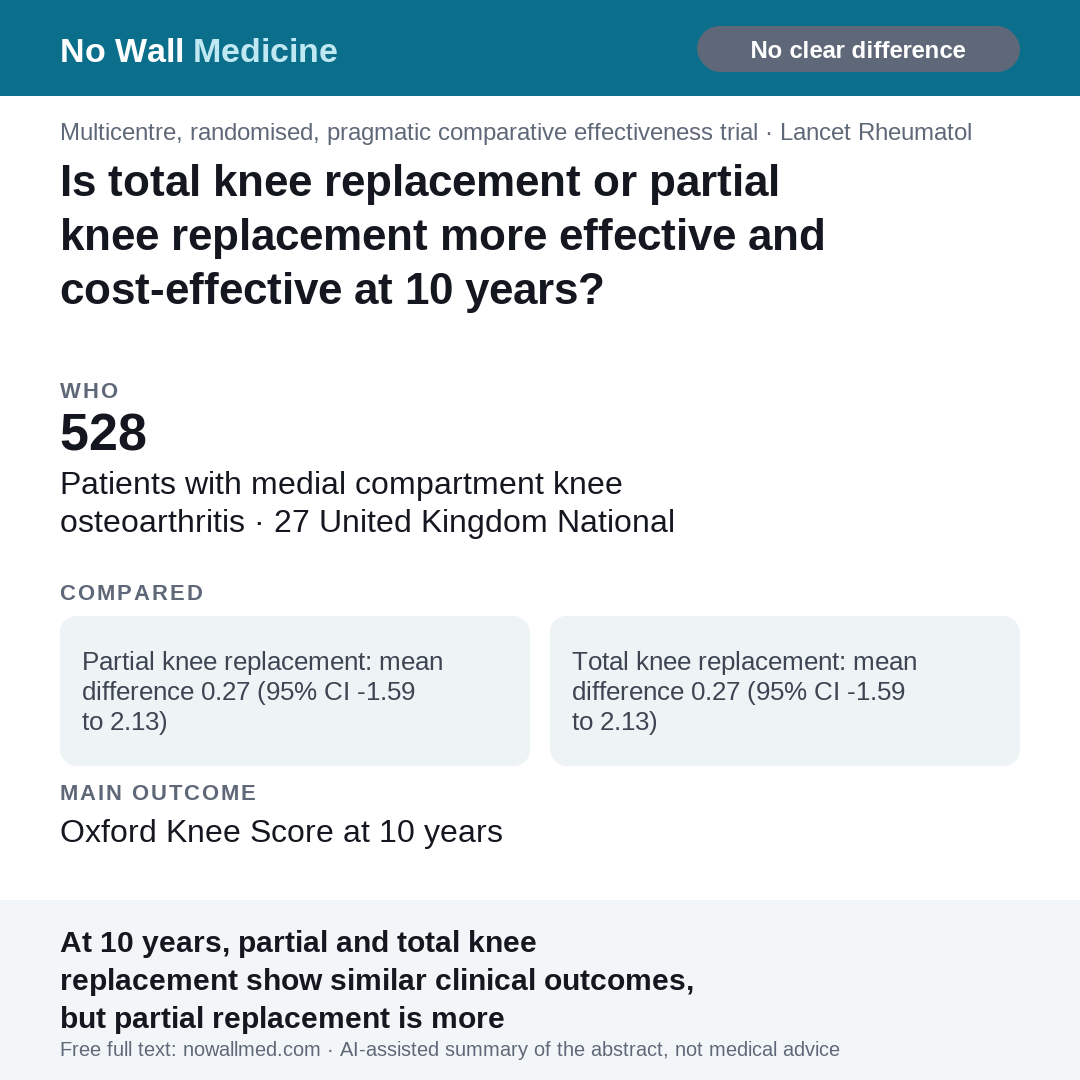
Assessing clinical and cost effectiveness of total versus partial knee replacement (TOPKAT): 10-year follow-up of a multicentre, randomised controlled trial
Multicentre, randomised, pragmatic comparative effectiveness trialNo clear difference
Is total knee replacement or partial knee replacement more effective and cost-effective at 10 years?
Who
528
Patients with medial compartment knee osteoarthritis · 27 United Kingdom National Health Service hospitals
Compared
Partial knee replacement: mean difference 0.27 (95% CI -1.59 to 2.13)
Total knee replacement: mean difference 0.27 (95% CI -1.59 to 2.13)
Main outcome
Oxford Knee Score at 10 years
Result: mean difference 0.27 (95% CI -1.59 to 2.13)
Bottom line: At 10 years, partial and total knee replacement show similar clinical outcomes, but partial replacement is more cost-effective.
Funded by: National Institute for Health and Care Research
Lancet Rheumatol · 2025-11-18Download image
Effects of hypoxic training interventions on cardiometabolic health of adults with overweight and obesity: A systematic review and meta-analysis
Systematic review and meta-analysisNo clear difference
Is hypoxic training more effective than normoxic training for cardiometabolic health in obesity?
Who
278
Adults with overweight or obesity
Compared
Hypoxic training
Normoxic training
Main outcome
Glucose homeostasis, lipid profile, and blood pressure
Bottom line: Hypoxic training did not outperform normoxic training in improving cardiometabolic outcomes in adults with overweight or obesity.
Limitation: Considerable variability in intervention duration, hypoxic dose, and exercise intensity across studies.
Diabetes Obes Metab · 2025-11-18Download image
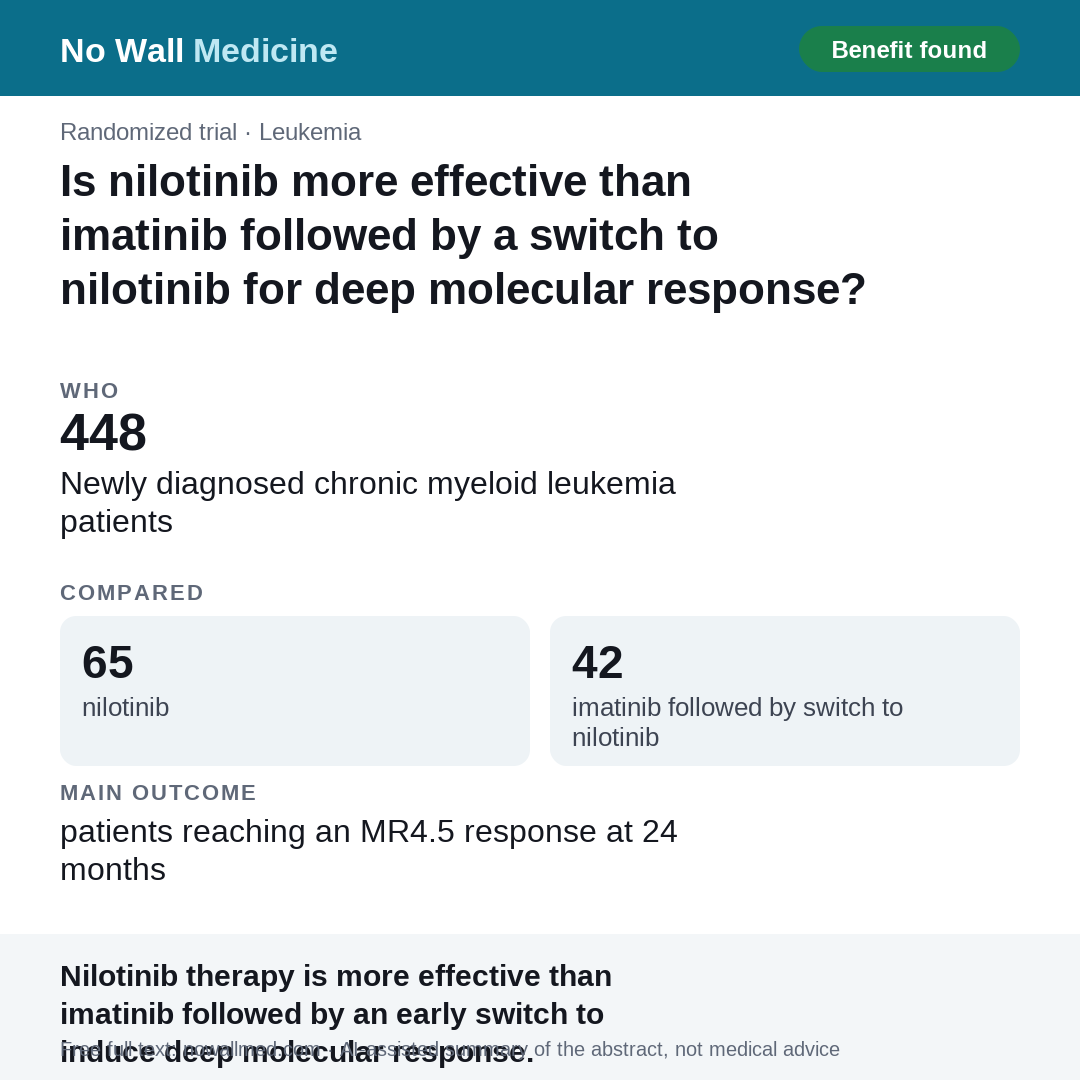
Nilotinib versus imatinib with early switch from imatinib to nilotinib to obtain treatment-free remission in newly diagnosed chronic myeloid leukemia patients: the analysis of the first co-primary endpoint
Randomized trialBenefit found
Is nilotinib more effective than imatinib followed by a switch to nilotinib for deep molecular response?
Who
448
Newly diagnosed chronic myeloid leukemia patients
Compared
65nilotinib
42imatinib followed by switch to nilotinib
Main outcome
patients reaching an MR4.5 response at 24 months
Result: 65 vs 42; p = 0.02
Bottom line: Nilotinib therapy is more effective than imatinib followed by an early switch to induce deep molecular response.
Leukemia · 2025-11-18Download image
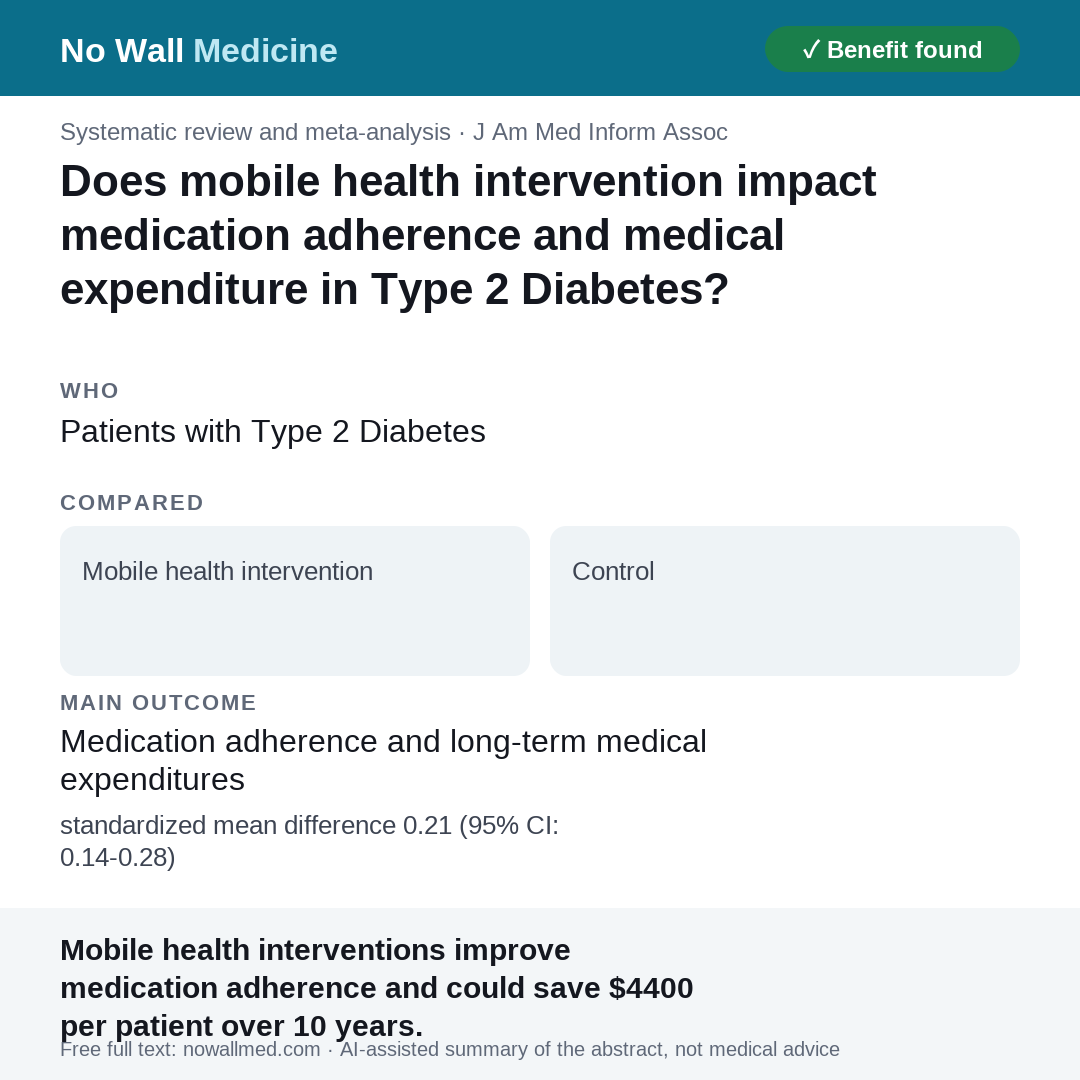
Does it save me money? The economic impact of mobile health interventions on medical expenditure of diabetic patients
Systematic review and meta-analysisBenefit found
Does mobile health intervention impact medication adherence and medical expenditure in Type 2 Diabetes?
Who
Patients with Type 2 Diabetes
Compared
Mobile health intervention
Control
Main outcome
Medication adherence and long-term medical expenditures
Result: standardized mean difference 0.21 (95% CI: 0.14-0.28)
Bottom line: Mobile health interventions improve medication adherence and could save $4400 per patient over 10 years.
J Am Med Inform Assoc · 2025-11-18Download image
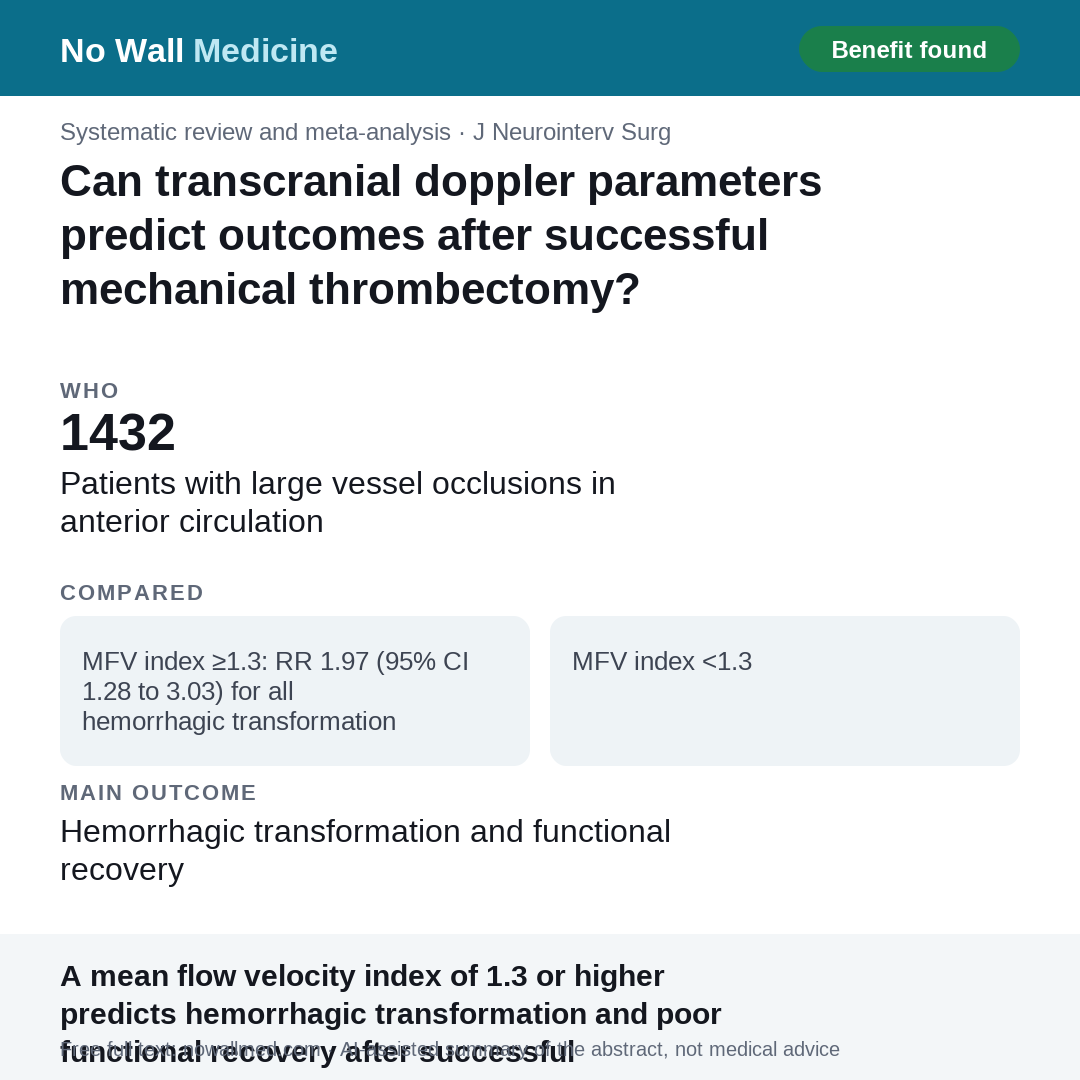
Transcranial doppler (TCD) in predicting outcomes following successful mechanical thrombectomy of large vessel occlusions in anterior circulation: a systematic review and meta-analysis
Systematic review and meta-analysisBenefit found
Can transcranial doppler parameters predict outcomes after successful mechanical thrombectomy?
Who
1432
Patients with large vessel occlusions in anterior circulation
Compared
MFV index ≥1.3: RR 1.97 (95% CI 1.28 to 3.03) for all hemorrhagic transformation
MFV index <1.3
Main outcome
Hemorrhagic transformation and functional recovery
Result: RR 1.65 (95% CI 1.27 to 2.14) for poor functional status
Bottom line: A mean flow velocity index of 1.3 or higher predicts hemorrhagic transformation and poor functional recovery after successful mechanical thrombectomy.
J Neurointerv Surg · 2025-11-18Download image
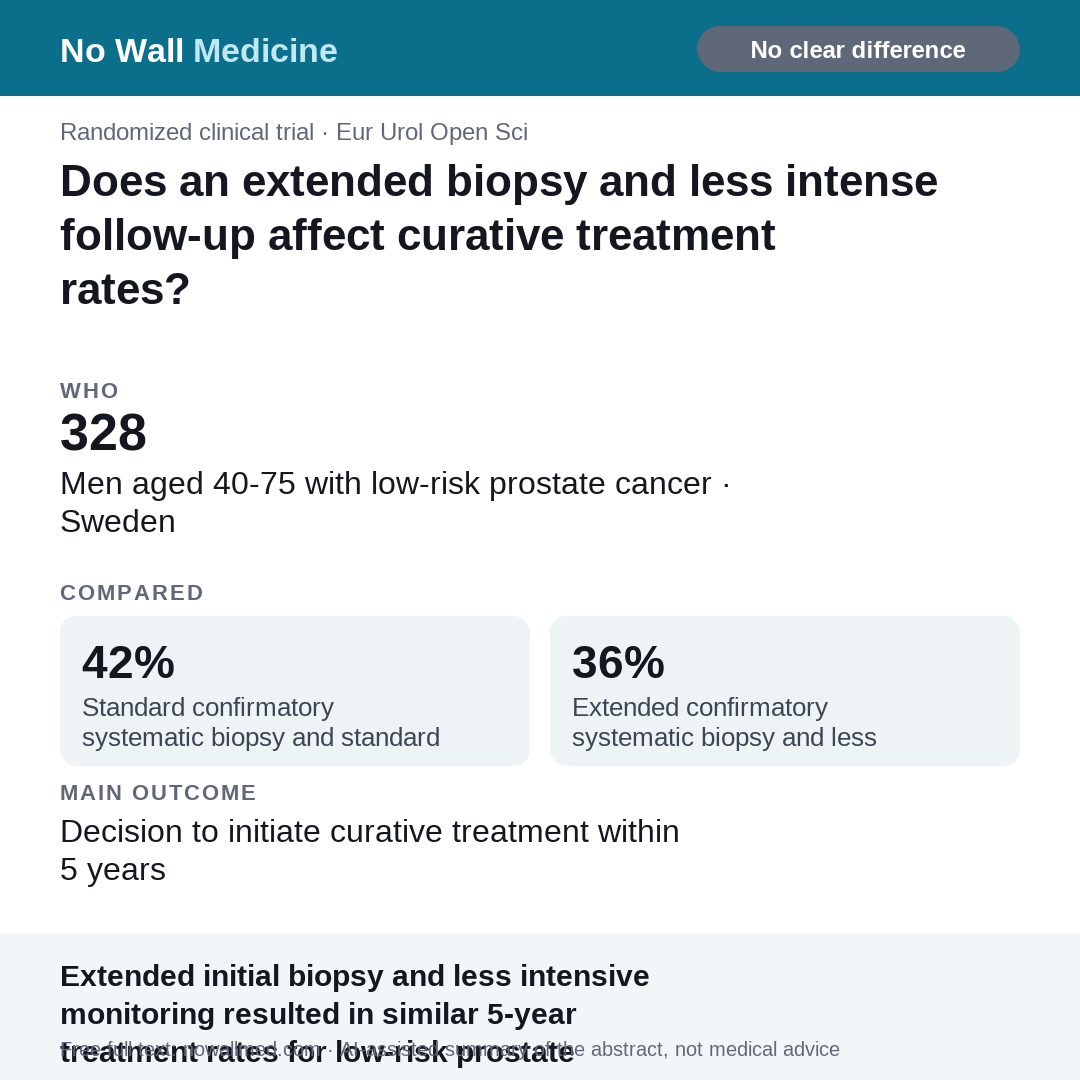
A Randomised Clinical Trial Comparing Two Biopsy Templates and Follow-up Schedules for Men on Active Surveillance for Low-risk Prostate Cancer: SAMS
Randomized clinical trialNo clear difference
Does an extended biopsy and less intense follow-up affect curative treatment rates?
Who
328
Men aged 40-75 with low-risk prostate cancer · Sweden
Compared
42%Standard confirmatory systematic biopsy and standard follow-up
36%Extended confirmatory systematic biopsy and less intense follow-up
Main outcome
Decision to initiate curative treatment within 5 years
Bottom line: Extended initial biopsy and less intensive monitoring resulted in similar 5-year treatment rates for low-risk prostate cancer.
Limitation: Inclusion was stopped before the target of 500 men was reached.
Eur Urol Open Sci · 2025-11-18Download image
Vasopressin, steroids, and epinephrine in out-of-hospital cardiac arrest - a protocol for a randomized controlled trial (OHCA REVIVES trial)
Multicenter, superiority cluster randomized controlled trialUnclear result
Does triple therapy improve clinical outcomes in out-of-hospital cardiac arrest?
Who
1344
Adult non-traumatic patients with out-of-hospital cardiac arrest · Taipei and New Taipei City, Taiwan
Compared
Vasopressin, epinephrine, and steroid combined therapy
Standard care
Main outcome
Sustained return of spontaneous circulation at least 2 hours
Bottom line: This protocol study aims to evaluate triple therapy versus standard care for out-of-hospital cardiac arrest.
Resusc Plus · 2025-11-18Download image

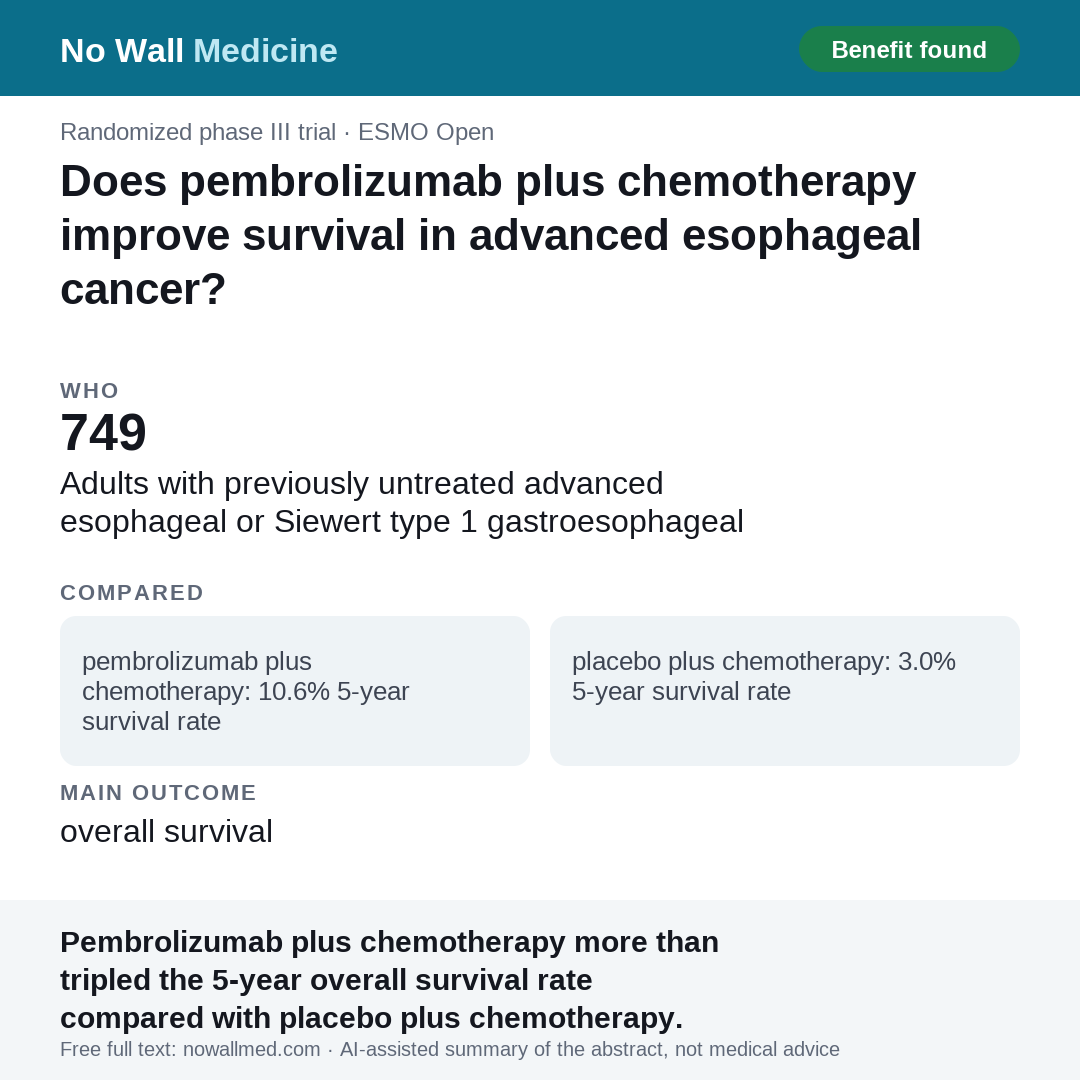
Pembrolizumab plus chemotherapy versus chemotherapy for advanced esophageal cancer: 5-year extended follow-up for the randomized phase III KEYNOTE-590 study
Randomized phase III trialBenefit found
Does pembrolizumab plus chemotherapy improve survival in advanced esophageal cancer?
Who
749
Adults with previously untreated advanced esophageal or Siewert type 1 gastroesophageal junction cancer
Compared
pembrolizumab plus chemotherapy: 10.6% 5-year survival rate
placebo plus chemotherapy: 3.0% 5-year survival rate
Main outcome
overall survival
Result: hazard ratio 0.72 (95% CI 0.62-0.84)
Bottom line: Pembrolizumab plus chemotherapy more than tripled the 5-year overall survival rate compared with placebo plus chemotherapy.
ESMO Open · 2025-11-18Download image
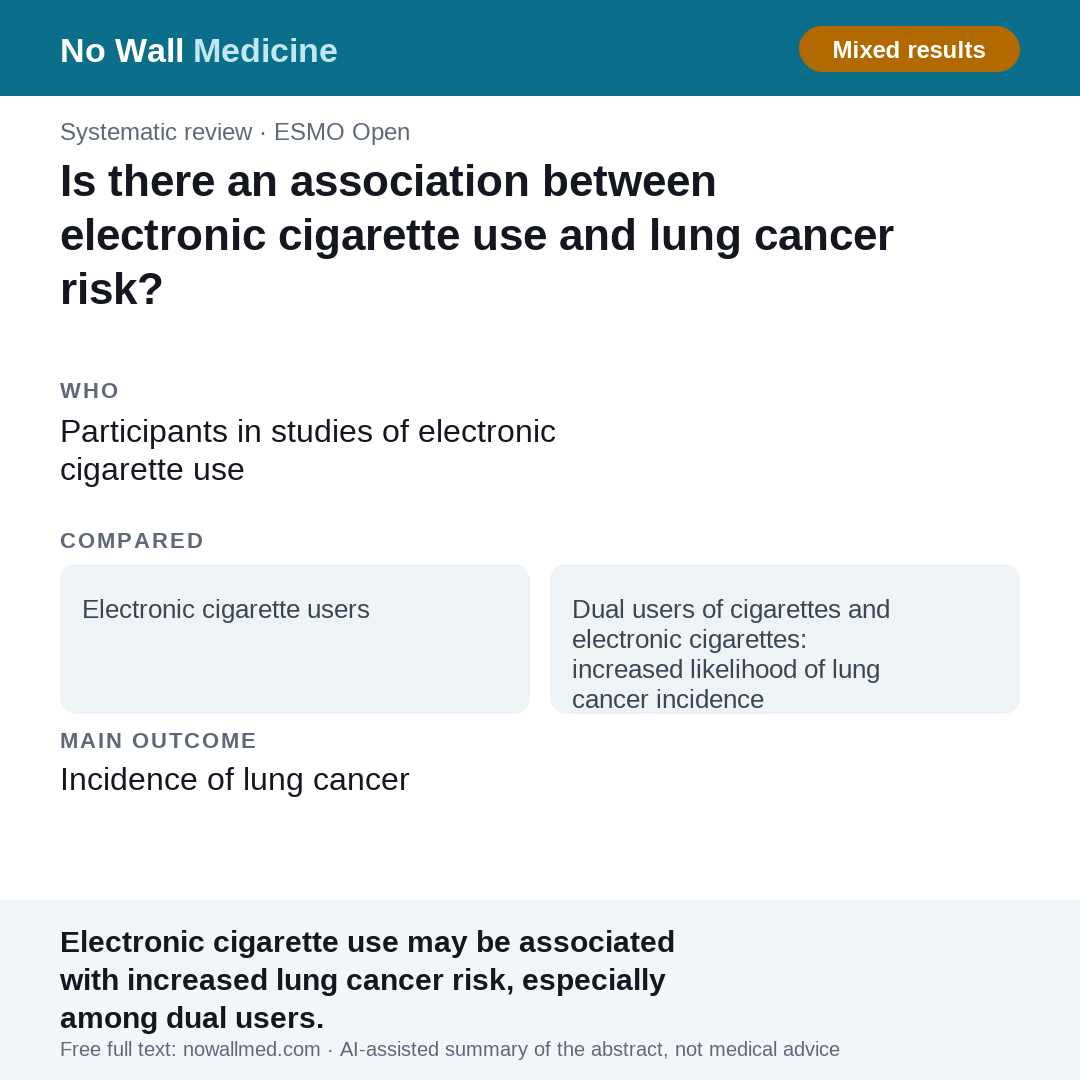
The risk of lung cancer from vaping or e-cigarette usage: a systematic review
Systematic reviewMixed results
Is there an association between electronic cigarette use and lung cancer risk?
Who
Participants in studies of electronic cigarette use
Compared
Electronic cigarette users
Dual users of cigarettes and electronic cigarettes: increased likelihood of lung cancer incidence
Main outcome
Incidence of lung cancer
Bottom line: Electronic cigarette use may be associated with increased lung cancer risk, especially among dual users.
Limitation: Causality cannot be established due to heterogeneity and limited longitudinal data.
ESMO Open · 2025-11-18Download image
Identification of 1q25.2 as a novel shared locus between schizophrenia and major depressive disorder in east Asians by integrative analyses
Linkage disequilibrium score regression and MiXeR analysesBenefit found
Is there polygenic overlap between schizophrenia and major depressive disorder in East Asians?
Who
East Asian individuals with schizophrenia and major depressive disorder
Compared
Schizophrenia: 29,519 cases and 44,392 controls
Major depressive disorder: 7,753 cases and 14,046 controls
Main outcome
Polygenic overlap and shared genomic loci
Bottom line: Substantial genetic overlap exists between schizophrenia and major depressive disorder in East Asians, including a novel locus at 1q25.2.
Transl Psychiatry · 2025-11-18Download image

Configuration design of ankle rehabilitation robots: a systematic review and future prospects
Systematic reviewUnclear result
Ankle rehabilitation robots vs traditional therapy
Who
stroke and fracture patients
Compared
Ankle robots
Traditional therapy
Main outcome
patient recovery outcomes
Bottom line: Robots offer varied training strategies
Limitation: shortcomings in human-machine compatibility
J Neuroeng Rehabil · 2025-11-18Download image
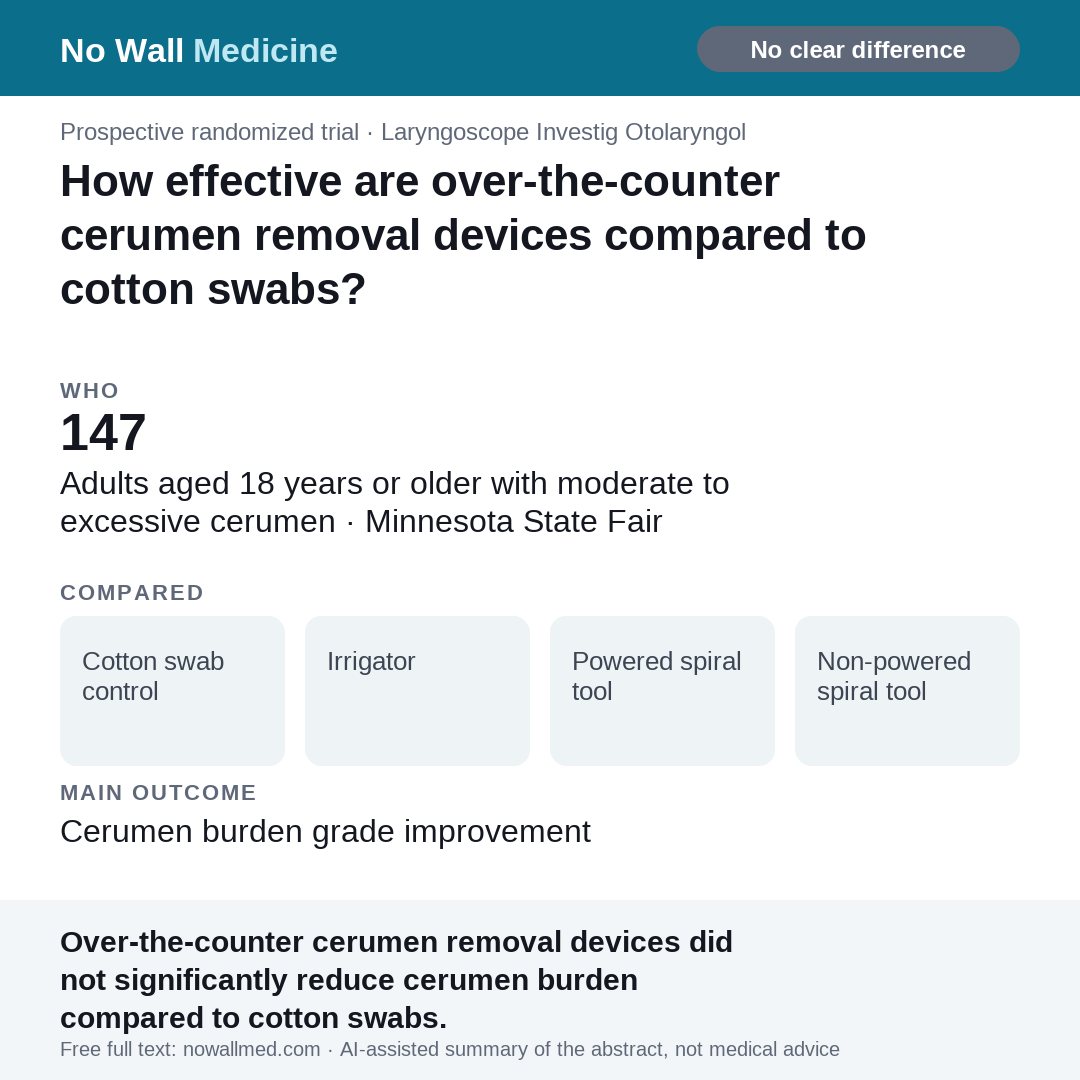
Efficacy of Over-the-Counter Cerumen Removal Devices: A Randomized Trial
Prospective randomized trialNo clear difference
How effective are over-the-counter cerumen removal devices compared to cotton swabs?
Who
147
Adults aged 18 years or older with moderate to excessive cerumen · Minnesota State Fair
Compared
Cotton swab control
Irrigator
Powered spiral tool
Non-powered spiral tool
Main outcome
Cerumen burden grade improvement
Bottom line: Over-the-counter cerumen removal devices did not significantly reduce cerumen burden compared to cotton swabs.
Laryngoscope Investig Otolaryngol · 2025-11-18Download image
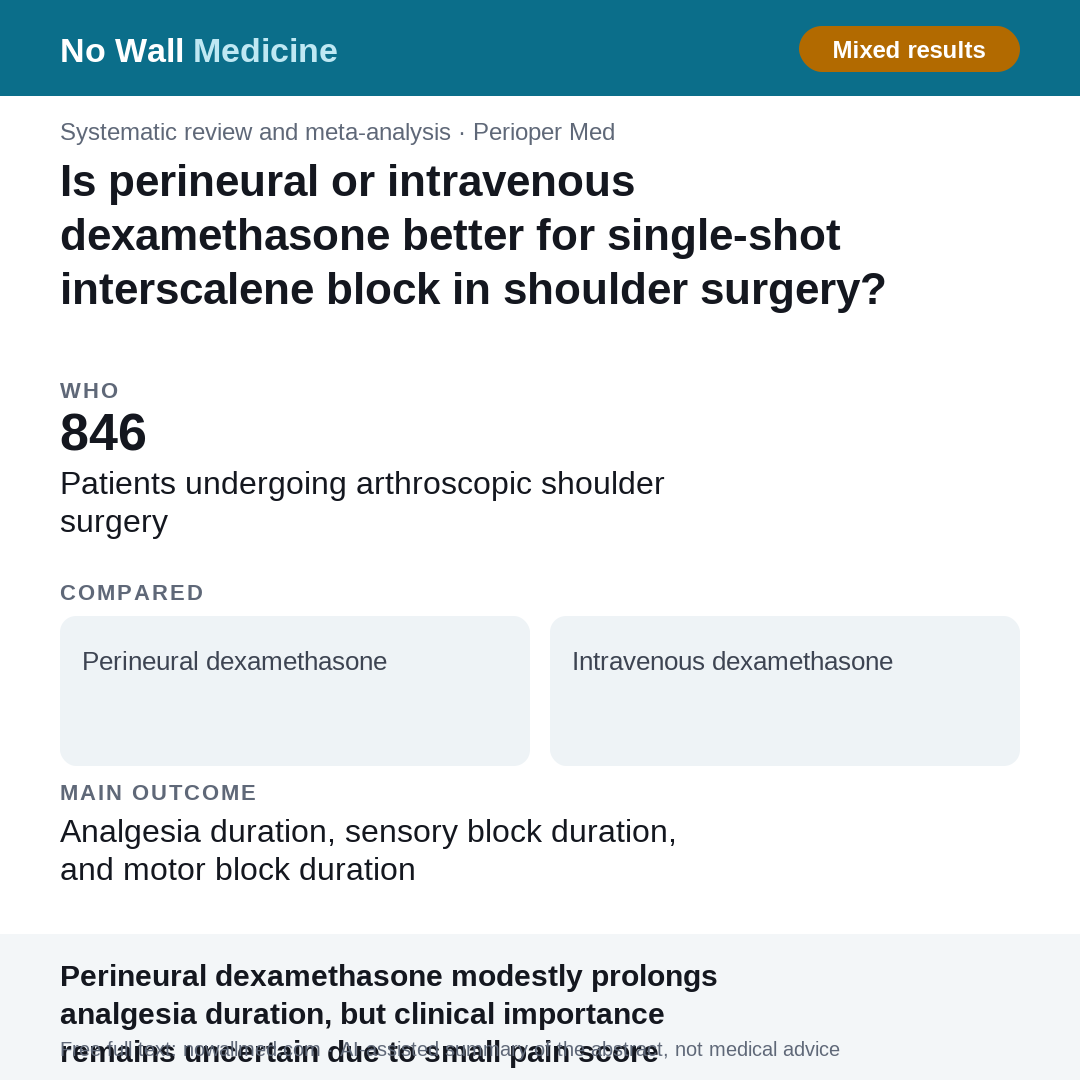
Perineural versus intravenous dexamethasone for single-shot interscalene block in arthroscopic shoulder surgery: a systematic review and meta-analysis of studies published through May 2021
Systematic review and meta-analysisMixed results
Is perineural or intravenous dexamethasone better for single-shot interscalene block in shoulder surgery?
Who
846
Patients undergoing arthroscopic shoulder surgery
Compared
Perineural dexamethasone
Intravenous dexamethasone
Main outcome
Analgesia duration, sensory block duration, and motor block duration
Result: weighted mean difference 1.699 h (95% CI 0.014 to 3.384)
Bottom line: Perineural dexamethasone modestly prolongs analgesia duration, but clinical importance remains uncertain due to small pain score reductions.
Limitation: Reductions in postoperative pain scores are small and unlikely to reach clinically important thresholds.
Perioper Med · 2025-11-18Download image
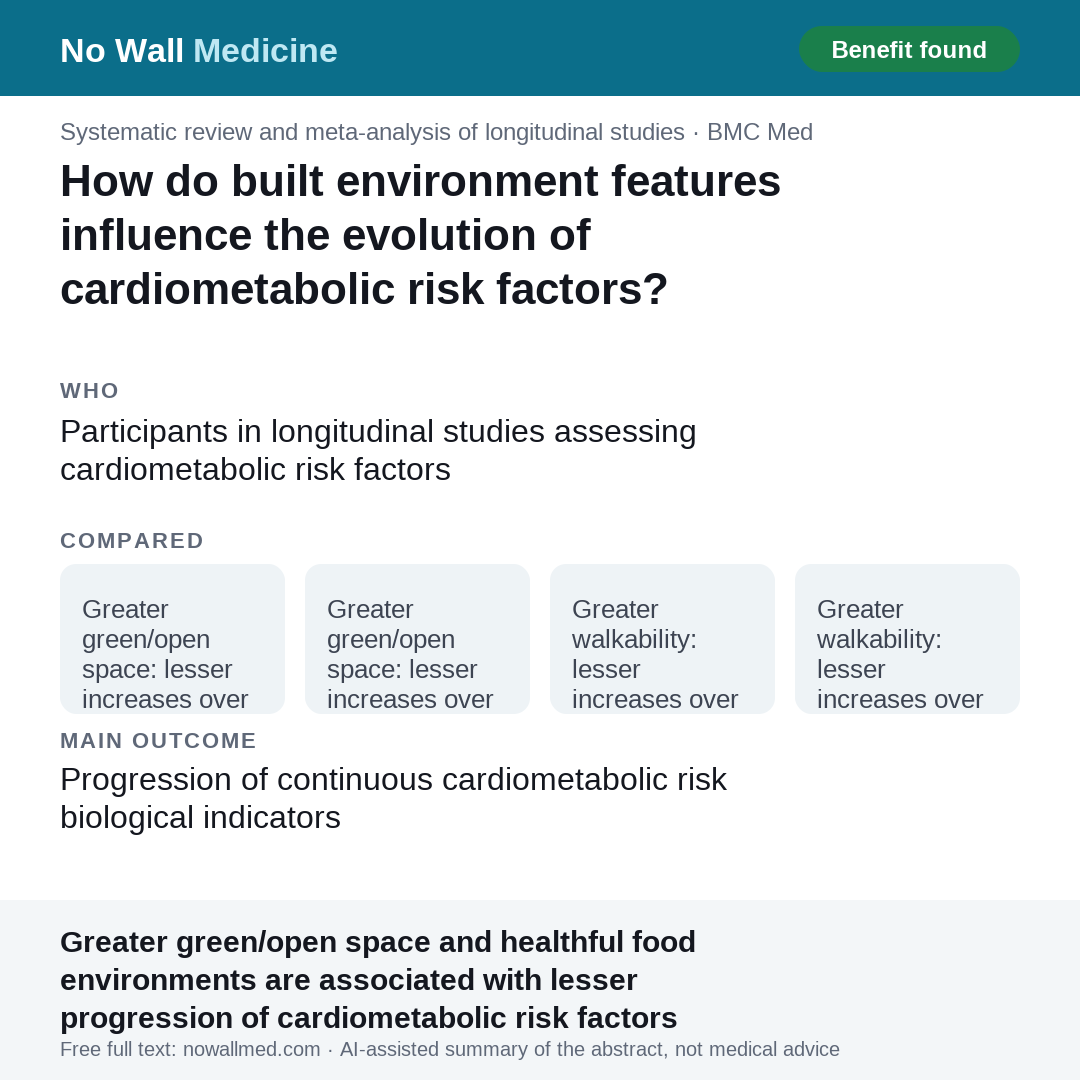
Built environment and the evolution of cardiometabolic risk factors: a systematic review and meta-analysis of longitudinal studies
Systematic review and meta-analysis of longitudinal studiesBenefit found
How do built environment features influence the evolution of cardiometabolic risk factors?
Who
Participants in longitudinal studies assessing cardiometabolic risk factors
Compared
Greater green/open space: lesser increases over time in systolic blood pressure (weighted z=3.43, p<0.001)
Greater green/open space: lesser increases over time in diastolic blood pressure (weighted z=2.89, p<0.01)
Greater walkability: lesser increases over time in systolic blood pressure (weighted z=2.95, p<0.01)
Greater walkability: lesser increases over time in glycated haemoglobin
Main outcome
Progression of continuous cardiometabolic risk biological indicators
Bottom line: Greater green/open space and healthful food environments are associated with lesser progression of cardiometabolic risk factors over time.
BMC Med · 2025-11-17Download image
Stroke Mechanism and Severity After Left Atrial Appendage Occlusion: Insights From the LAAOS III Randomized Clinical Trial
Post hoc exploratory analysis of a randomized clinical trialBenefit found
Does left atrial appendage occlusion impact ischemic stroke subtype and outcome?
Who
4811
Patients with atrial fibrillation and CHA2DS2-VASc score at least 2 · 105 centers in 27 countries
Compared
Surgical left atrial appendage occlusion plus standard care: 16.5% mortality at 30 days after stroke
Standard care alone: 20.1% mortality at 30 days after stroke
Main outcome
Functional outcome, mortality, cortical infarcts, and cardioembolic infarcts
Result: hazard ratio 0.55 (95% CI, 0.31-0.97)
Bottom line: Left atrial appendage occlusion is associated with reduced disability, mortality, and presumed cardioembolic stroke in patients with atrial fibrillation.
JAMA Neurol · 2025-11-17Download image

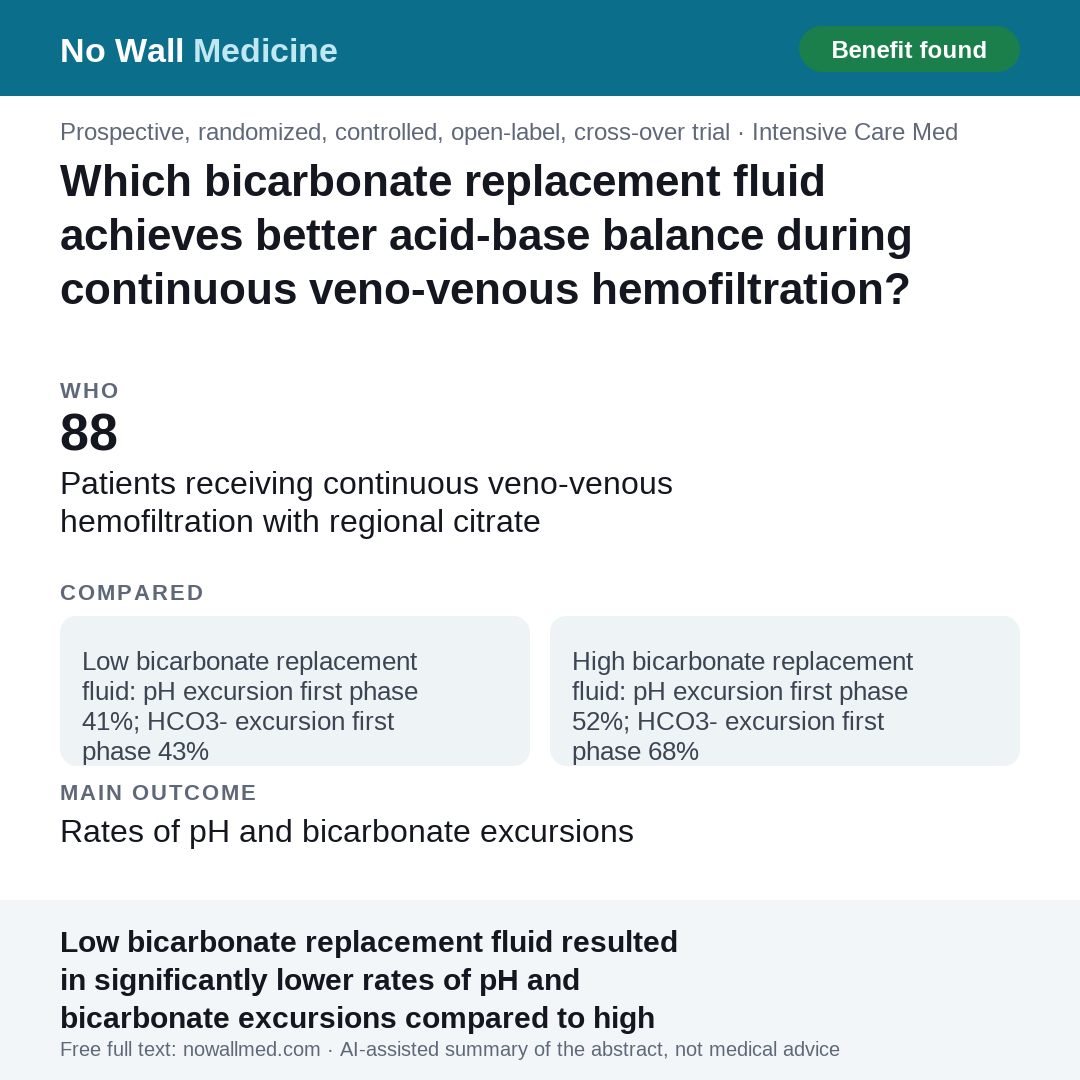
Comparison of two different bicarbonate replacement fluids during CVVH with RCA: a prospective, randomized, controlled trial
Prospective, randomized, controlled, open-label, cross-over trialBenefit found
Which bicarbonate replacement fluid achieves better acid-base balance during continuous veno-venous hemofiltration?
Who
88
Patients receiving continuous veno-venous hemofiltration with regional citrate anticoagulation · single-center trial
Compared
Low bicarbonate replacement fluid: pH excursion first phase 41%; HCO3- excursion first phase 43%
High bicarbonate replacement fluid: pH excursion first phase 52%; HCO3- excursion first phase 68%
Main outcome
Rates of pH and bicarbonate excursions
Result: odds ratio 1.78 (95% CI 1.12-2.82) for pH; 3.60 (95% CI 2.16-5.99) for HCO3-
Bottom line: Low bicarbonate replacement fluid resulted in significantly lower rates of pH and bicarbonate excursions compared to high bicarbonate replacement fluid.
Intensive Care Med · 2025-11-17Download image
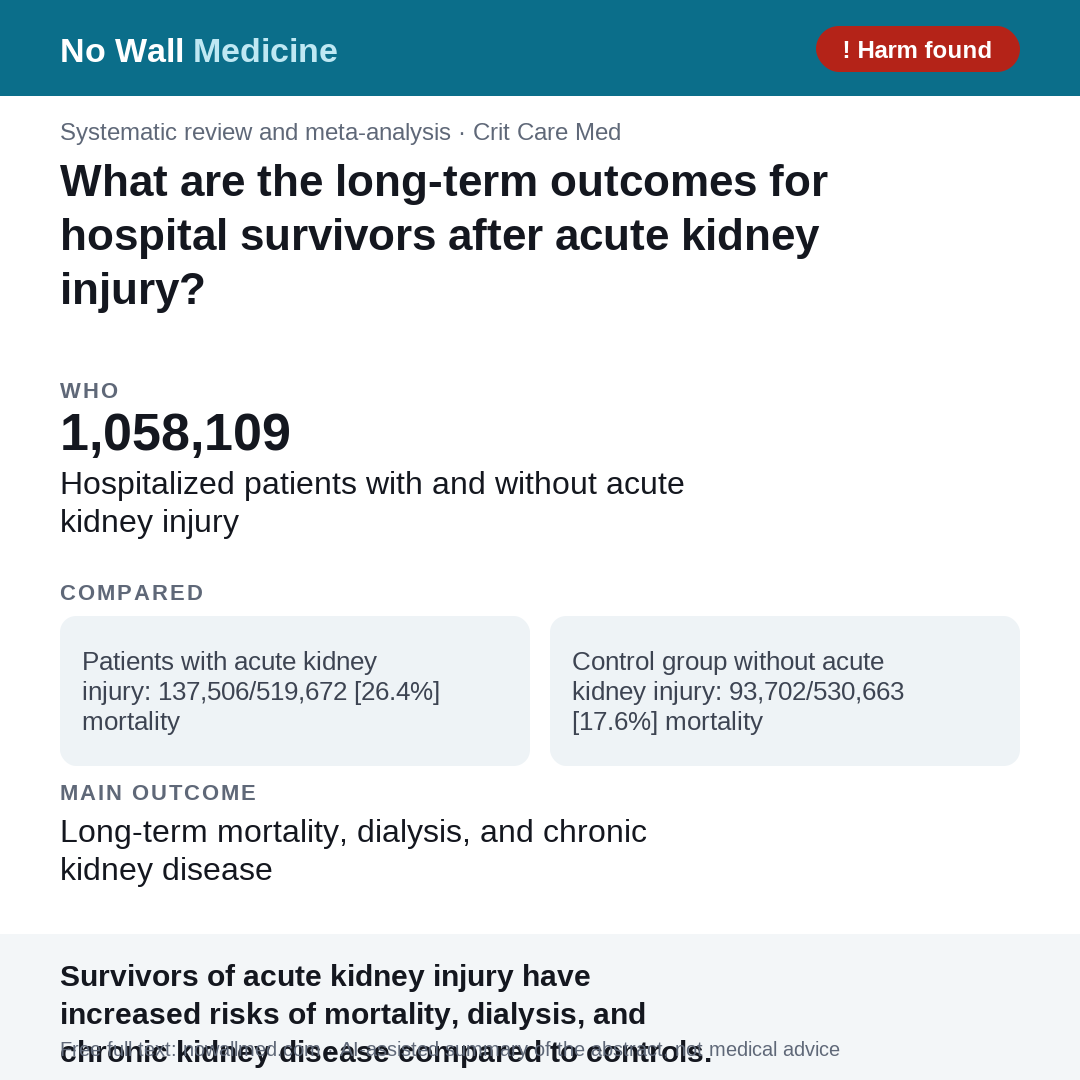
Long-Term Outcomes After Acute Kidney Injury During Hospitalization: A Systematic Review and Meta-Analysis of Matched Controls Studies
Systematic review and meta-analysisHarm found
What are the long-term outcomes for hospital survivors after acute kidney injury?
Who
1,058,109
Hospitalized patients with and without acute kidney injury
Compared
Patients with acute kidney injury: 137,506/519,672 [26.4%] mortality
Control group without acute kidney injury: 93,702/530,663 [17.6%] mortality
Main outcome
Long-term mortality, dialysis, and chronic kidney disease
Result: relative risk 1.42 (95% CI 1.13-1.78)
Bottom line: Survivors of acute kidney injury have increased risks of mortality, dialysis, and chronic kidney disease compared to controls.
Crit Care Med · 2025-11-17Download image