Visual abstracts
New randomized trials and meta-analyses from leading journals at a glance: who was studied, what was compared, and what was found. Every paper is free to read in full.
All specialtiesCardiology 857Oncology 770Gastroenterology & Hepatology 311Infectious Disease 626Neurology 354Psychiatry & Mental Health 430Pulmonology 370Critical Care 260Endocrinology & Diabetes 484Pediatrics 542Surgery 351Orthopedics & Sports Medicine 166Neurosurgery 115Cardiothoracic & Vascular Surgery 87Plastic & Reconstructive Surgery 144Nephrology 197Rheumatology 108Hematology 183Dermatology 82Ophthalmology 97Obstetrics & Gynecology 266Public & Global Health 168Radiology & Imaging 105Anesthesiology 130Urology 162ENT (Otolaryngology) 115Emergency Medicine 103Allergy & Immunology 58Geriatrics 160Family Medicine & Primary Care 111Medical Genetics & Genomics 91Pathology & Laboratory Medicine 27Physical Medicine & Rehabilitation 149Palliative Care 81Nutrition 223Digital Health & AI 462General Medicine 101
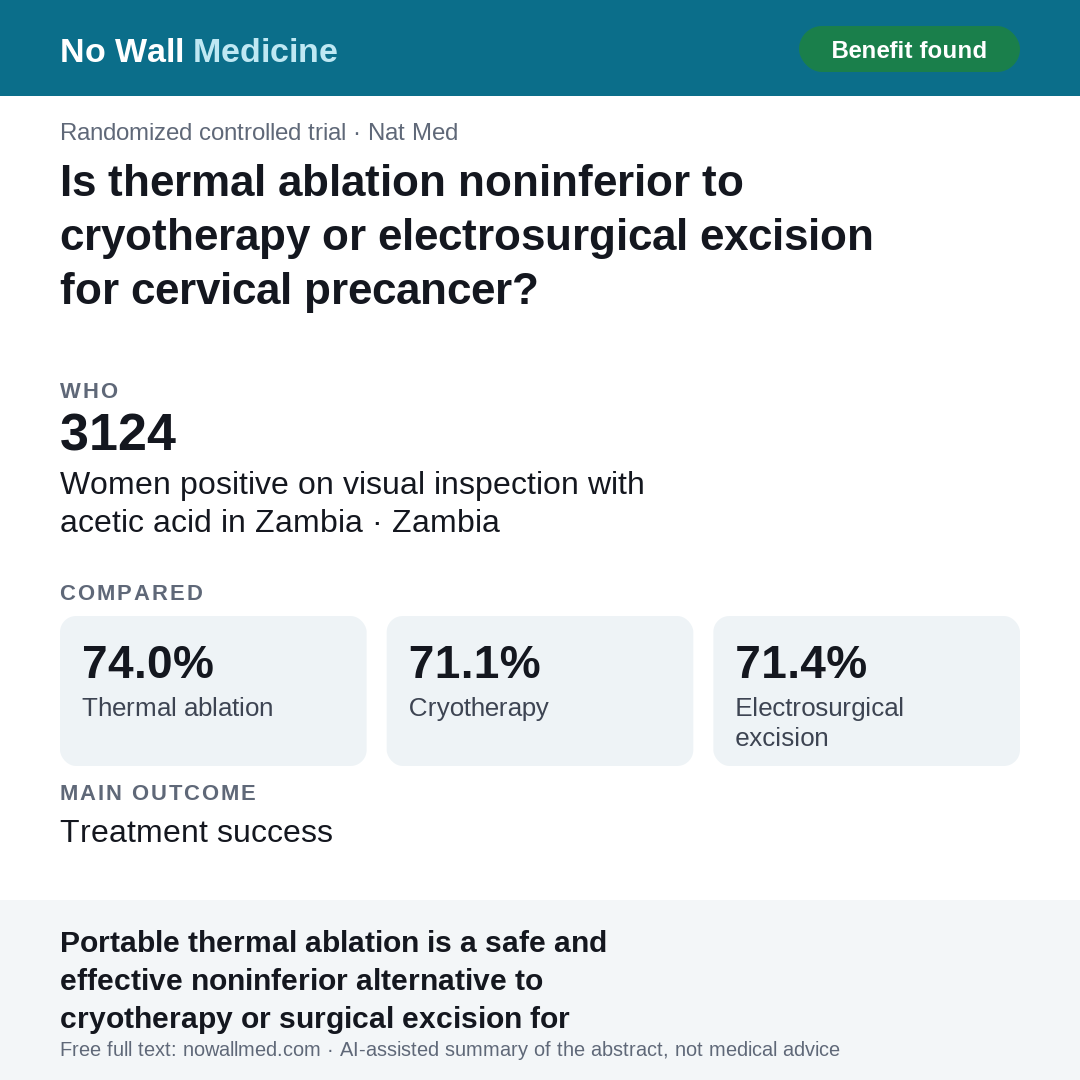
A portable thermal ablation device for cervical cancer prevention in a screen-and-treat setting: a randomized, noninferiority trial
Randomized controlled trialBenefit found
Is thermal ablation noninferior to cryotherapy or electrosurgical excision for cervical precancer?
Who
3124
Women positive on visual inspection with acetic acid in Zambia · Zambia
Compared
74.0%Thermal ablation
71.1%Cryotherapy
71.4%Electrosurgical excision
Main outcome
Treatment success
Bottom line: Portable thermal ablation is a safe and effective noninferior alternative to cryotherapy or surgical excision for cervical precancer.
Nat Med · 2024-06-25Download image
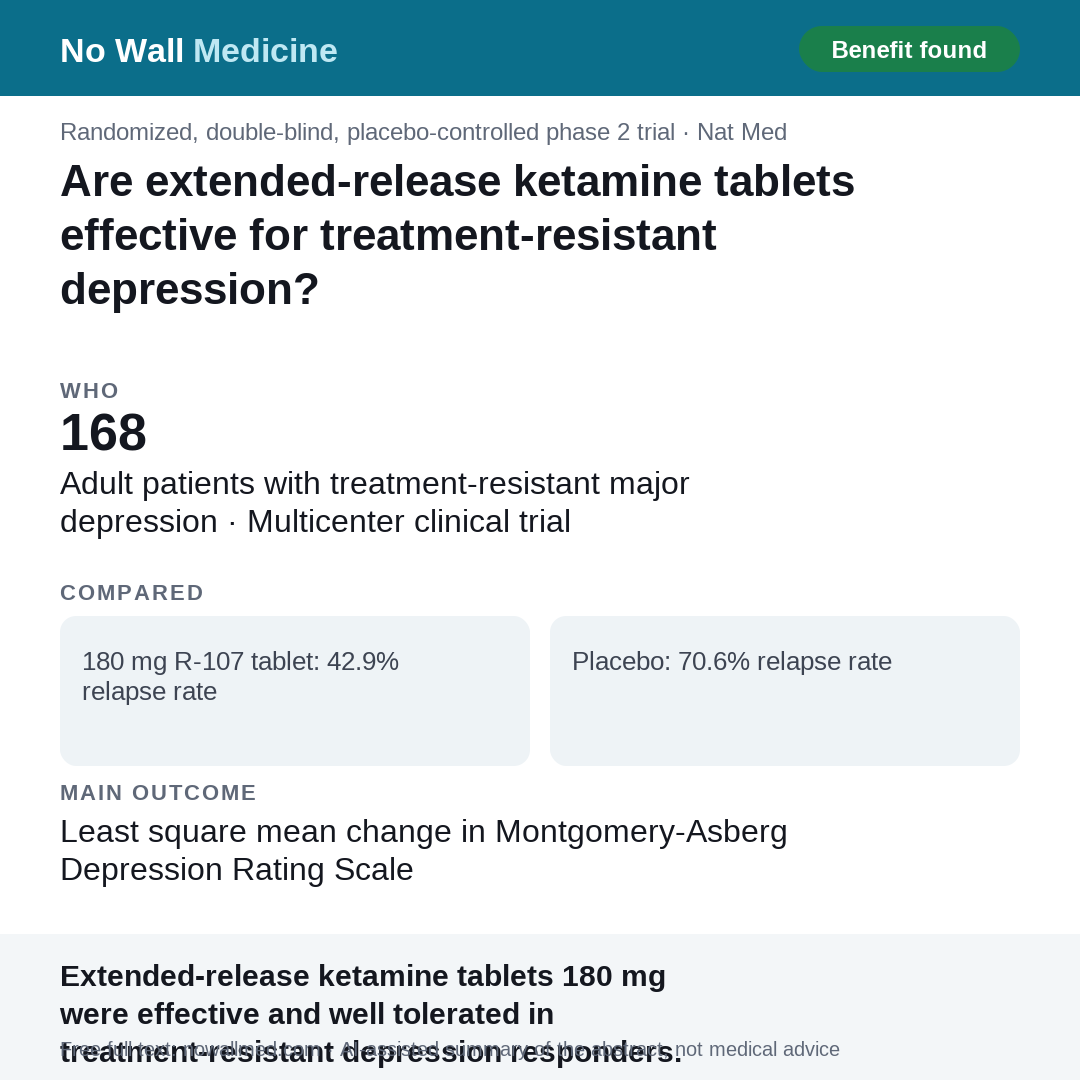
Extended-release ketamine tablets for treatment-resistant depression: a randomized placebo-controlled phase 2 trial
Randomized, double-blind, placebo-controlled phase 2 trialBenefit found
Are extended-release ketamine tablets effective for treatment-resistant depression?
Who
168
Adult patients with treatment-resistant major depression · Multicenter clinical trial
Compared
180 mg R-107 tablet: 42.9% relapse rate
Placebo: 70.6% relapse rate
Main outcome
Least square mean change in Montgomery-Asberg Depression Rating Scale
Result: -6.1 (95% confidence interval 1.0 to 11.16, P = 0.019)
Bottom line: Extended-release ketamine tablets 180 mg were effective and well tolerated in treatment-resistant depression responders.
Nat Med · 2024-06-24Download image
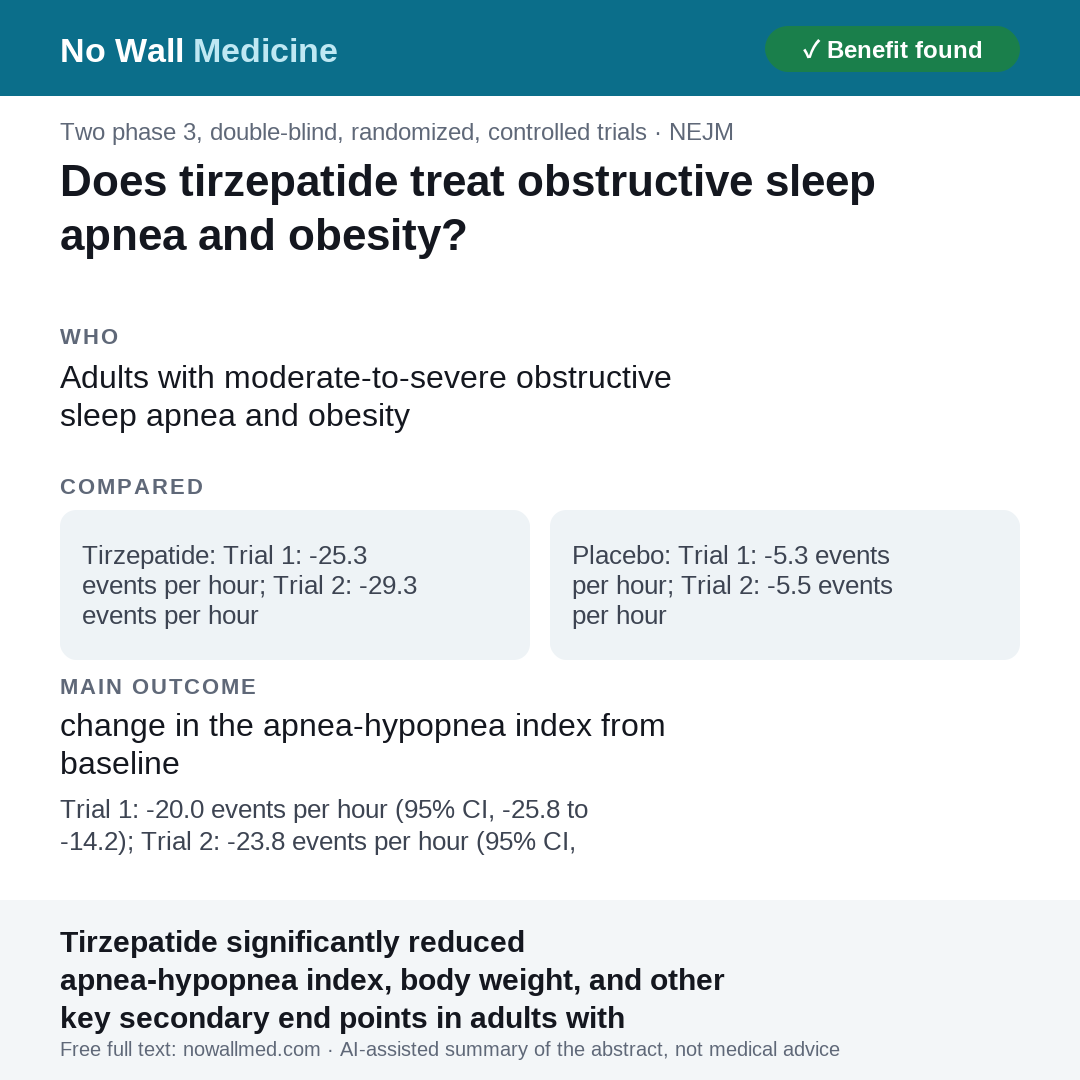
Tirzepatide for the Treatment of Obstructive Sleep Apnea and Obesity
Two phase 3, double-blind, randomized, controlled trialsBenefit found
Does tirzepatide treat obstructive sleep apnea and obesity?
Who
Adults with moderate-to-severe obstructive sleep apnea and obesity
Compared
Tirzepatide: Trial 1: -25.3 events per hour; Trial 2: -29.3 events per hour
Placebo: Trial 1: -5.3 events per hour; Trial 2: -5.5 events per hour
Main outcome
change in the apnea-hypopnea index from baseline
Result: Trial 1: -20.0 events per hour (95% CI, -25.8 to -14.2); Trial 2: -23.8 events per hour (95% CI, -29.6 to -17.9)
Bottom line: Tirzepatide significantly reduced apnea-hypopnea index, body weight, and other key secondary end points in adults with sleep apnea and obesity.
Funded by: Eli Lilly
NEJM · 2024-06-21Download image
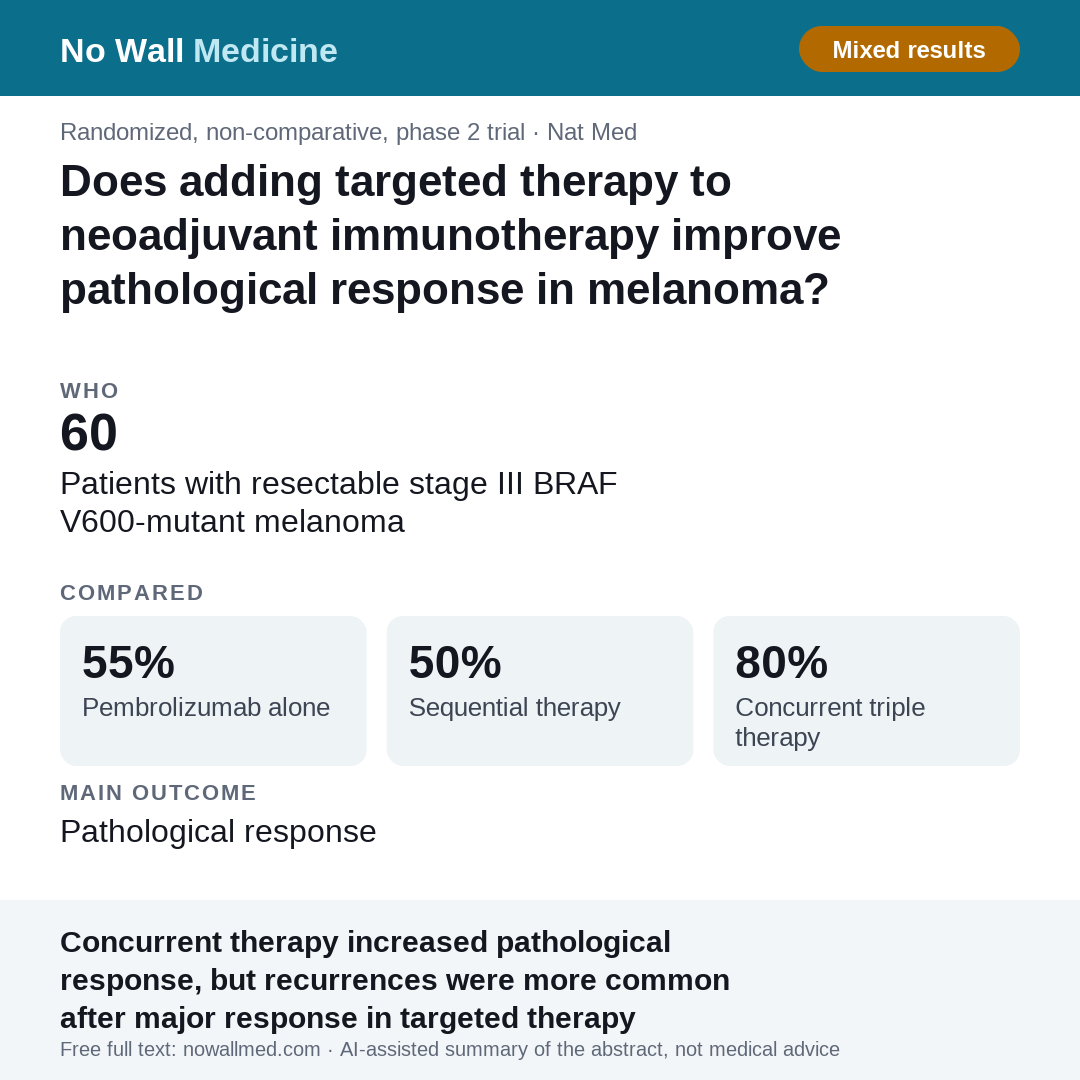
Neoadjuvant pembrolizumab, dabrafenib and trametinib in BRAFV600-mutant resectable melanoma: the randomized phase 2 NeoTrio trial
Randomized, non-comparative, phase 2 trialMixed results
Does adding targeted therapy to neoadjuvant immunotherapy improve pathological response in melanoma?
Who
60
Patients with resectable stage III BRAF V600-mutant melanoma
Compared
55%Pembrolizumab alone (11/20)
50%Sequential therapy (10/20)
80%Concurrent triple therapy (16/20)
Main outcome
Pathological response
Bottom line: Concurrent therapy increased pathological response, but recurrences were more common after major response in targeted therapy arms.
Nat Med · 2024-06-21Download image
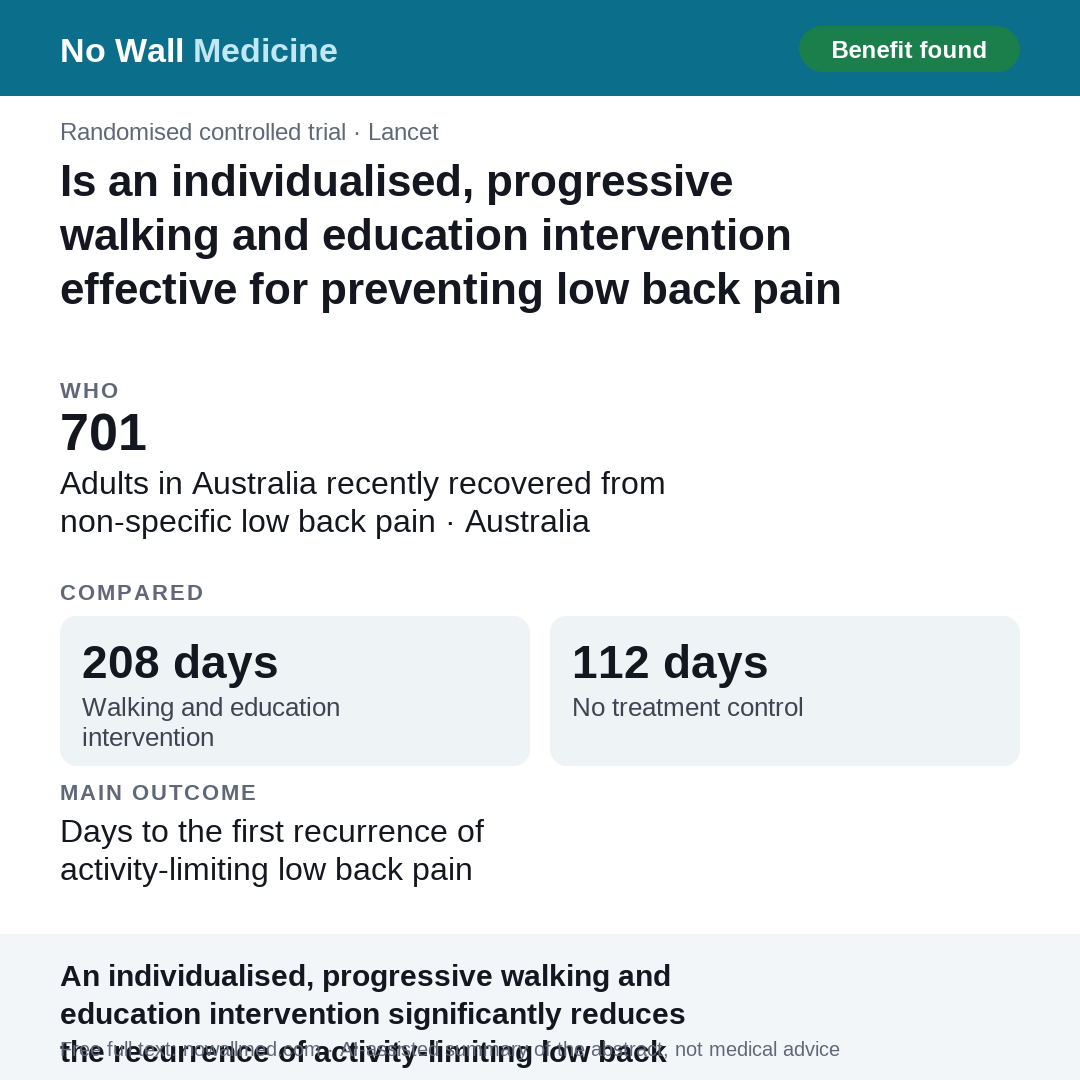
Effectiveness and cost-effectiveness of an individualised, progressive walking and education intervention for the prevention of low back pain recurrence in Australia (WalkBack): a randomised controlled trial
Randomised controlled trialBenefit found
Is an individualised, progressive walking and education intervention effective for preventing low back pain recurrence?
Who
701
Adults in Australia recently recovered from non-specific low back pain · Australia
Compared
208 daysWalking and education intervention (95% CI 149-295)
112 daysNo treatment control (89-140)
Main outcome
Days to the first recurrence of activity-limiting low back pain
Result: hazard ratio 0·72 (95% CI 0·60-0·85)
Bottom line: An individualised, progressive walking and education intervention significantly reduces the recurrence of activity-limiting low back pain.
Funded by: National Health and Medical Research Council, Australia
Lancet · 2024-06-19Download image
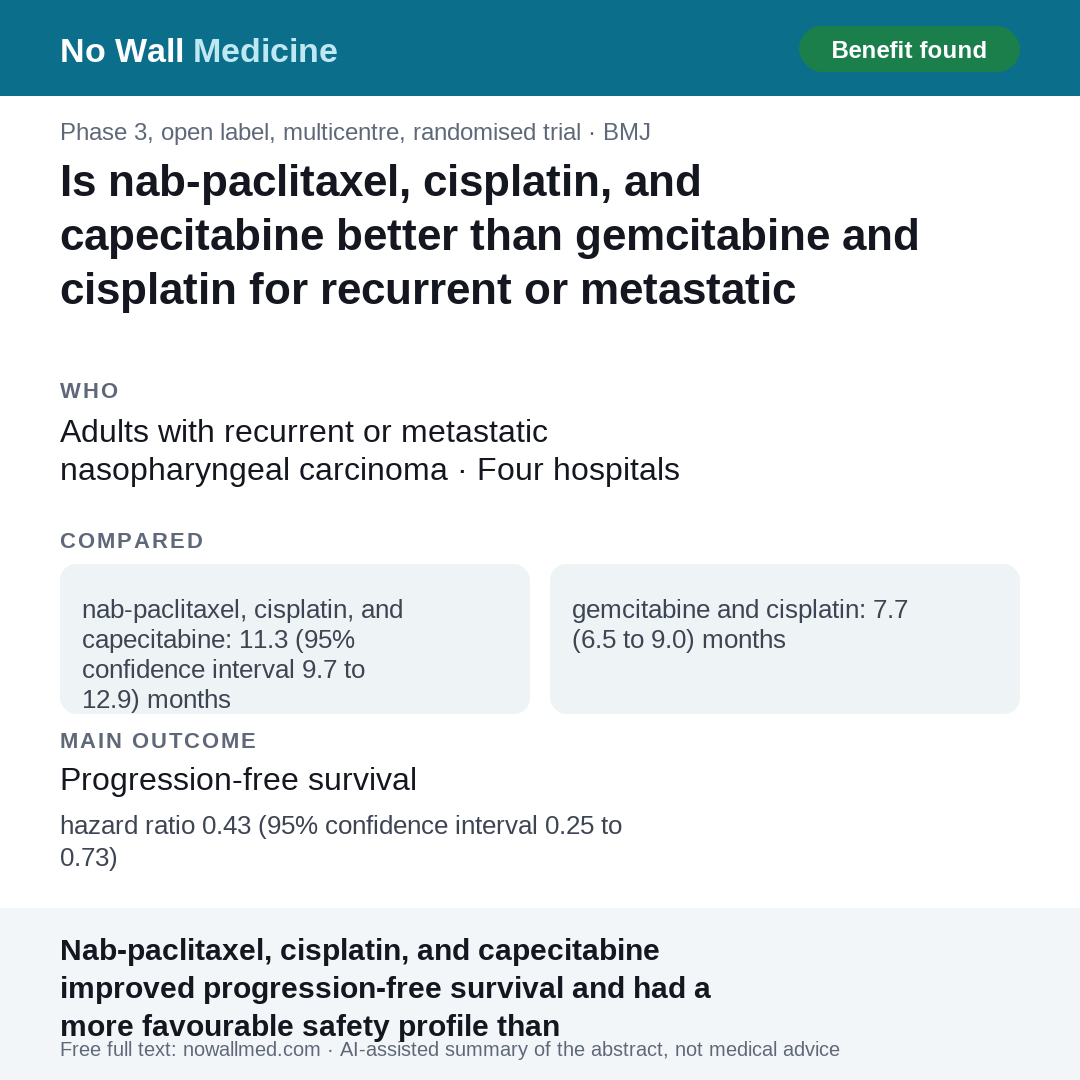
Nab-paclitaxel, cisplatin, and capecitabine versus cisplatin and gemcitabine as first line chemotherapy in patients with recurrent or metastatic nasopharyngeal carcinoma: randomised phase 3 clinical trial
Phase 3, open label, multicentre, randomised trialBenefit found
Is nab-paclitaxel, cisplatin, and capecitabine better than gemcitabine and cisplatin for recurrent or metastatic nasopharyngeal carcinoma?
Who
Adults with recurrent or metastatic nasopharyngeal carcinoma · Four hospitals located in China
Compared
nab-paclitaxel, cisplatin, and capecitabine: 11.3 (95% confidence interval 9.7 to 12.9) months
gemcitabine and cisplatin: 7.7 (6.5 to 9.0) months
Main outcome
Progression-free survival
Result: hazard ratio 0.43 (95% confidence interval 0.25 to 0.73)
Bottom line: Nab-paclitaxel, cisplatin, and capecitabine improved progression-free survival and had a more favourable safety profile than gemcitabine and cisplatin.
BMJ · 2024-06-19Download image
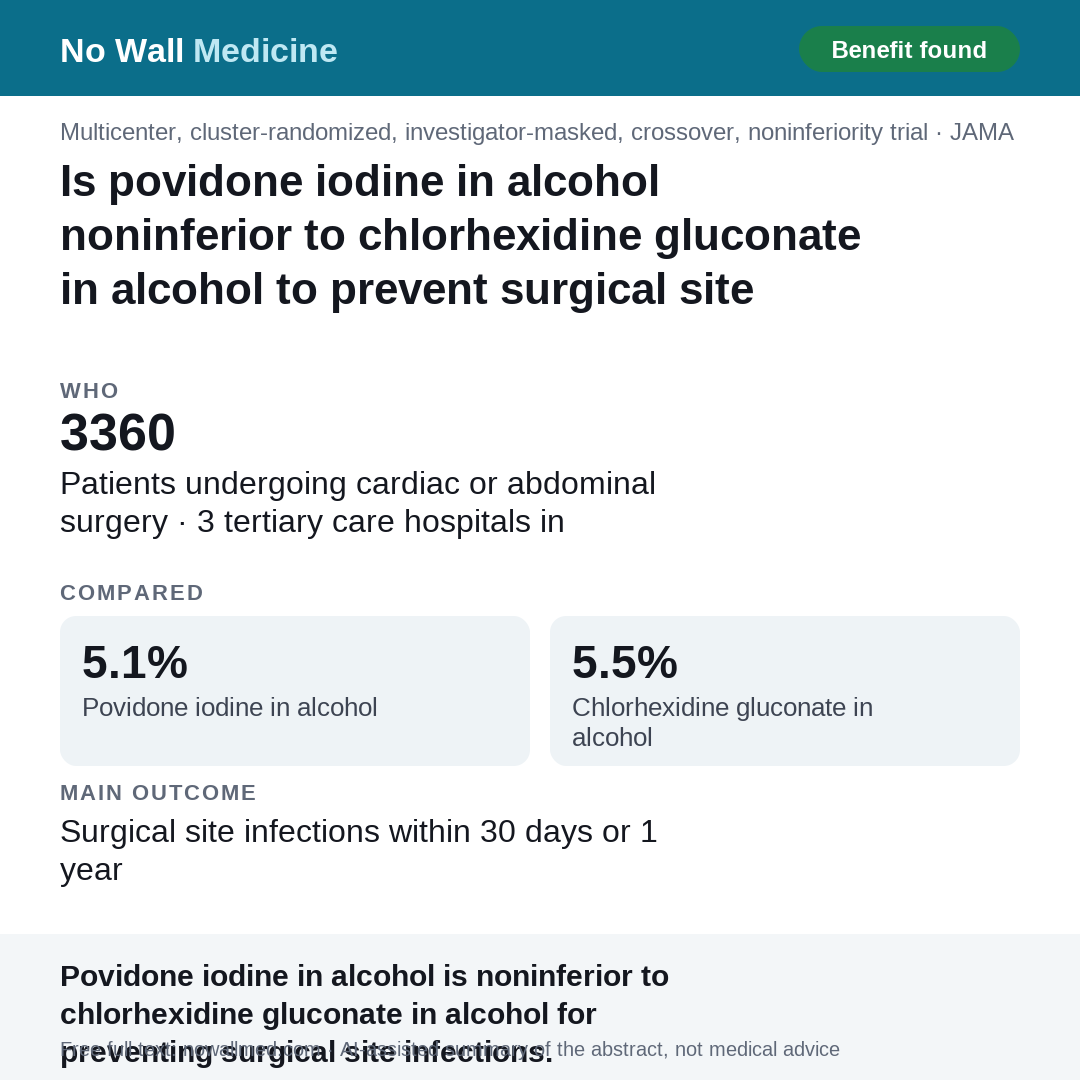
Povidone Iodine vs Chlorhexidine Gluconate in Alcohol for Preoperative Skin Antisepsis: A Randomized Clinical Trial
Multicenter, cluster-randomized, investigator-masked, crossover, noninferiority trialBenefit found
Is povidone iodine in alcohol noninferior to chlorhexidine gluconate in alcohol to prevent surgical site infections?
Who
3360
Patients undergoing cardiac or abdominal surgery · 3 tertiary care hospitals in Switzerland
Compared
5.1%Povidone iodine in alcohol
5.5%Chlorhexidine gluconate in alcohol
Main outcome
Surgical site infections within 30 days or 1 year
Result: difference of 0.4% (95% CI, -1.1% to 2.0%)
Bottom line: Povidone iodine in alcohol is noninferior to chlorhexidine gluconate in alcohol for preventing surgical site infections.
JAMA · 2024-06-17Download image
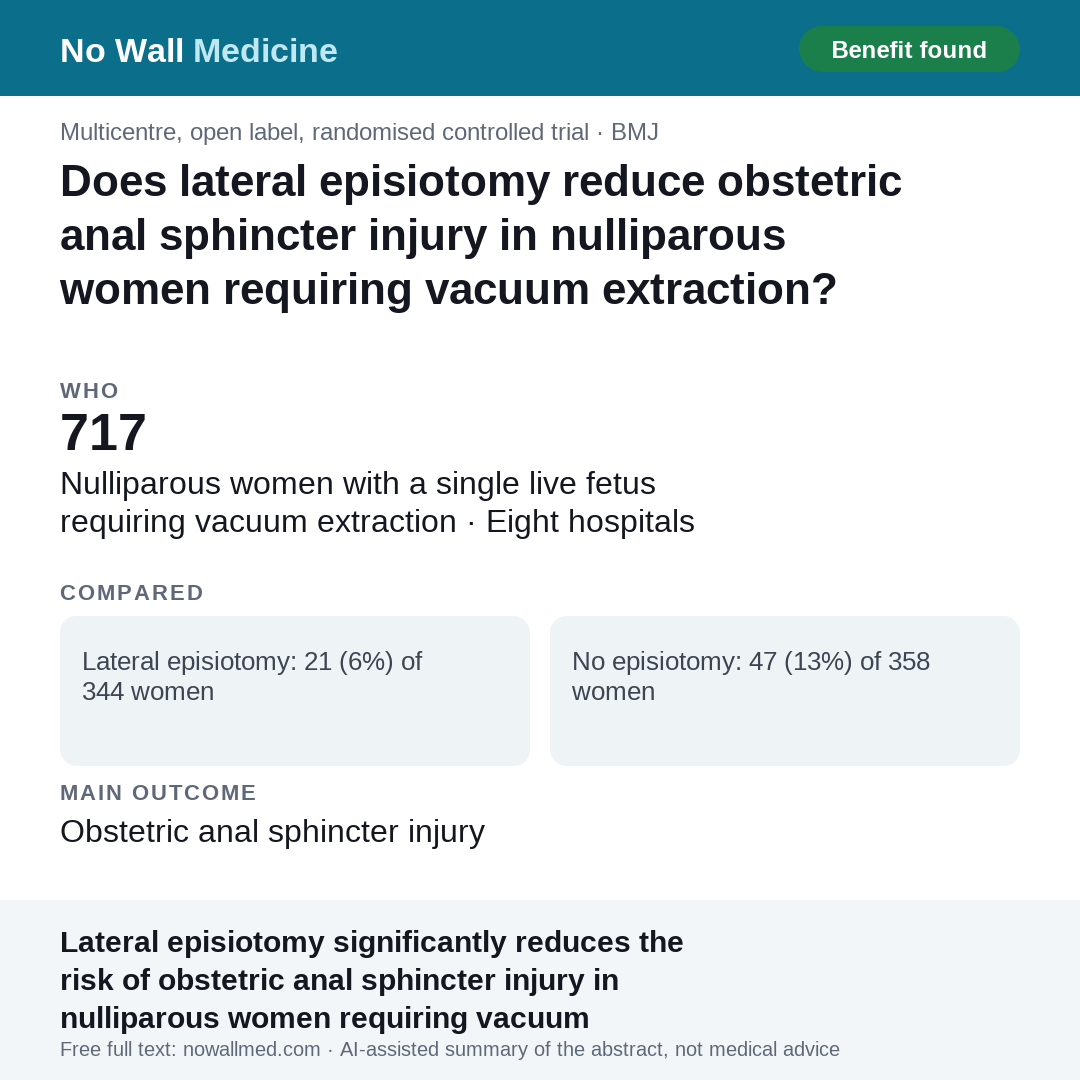
Lateral episiotomy or no episiotomy in vacuum assisted delivery in nulliparous women (EVA): multicentre, open label, randomised controlled trial
Multicentre, open label, randomised controlled trialBenefit found
Does lateral episiotomy reduce obstetric anal sphincter injury in nulliparous women requiring vacuum extraction?
Who
717
Nulliparous women with a single live fetus requiring vacuum extraction · Eight hospitals in Sweden
Compared
Lateral episiotomy: 21 (6%) of 344 women
No episiotomy: 47 (13%) of 358 women
Main outcome
Obstetric anal sphincter injury
Result: risk difference -7.0% (96% CI -11.7% to -2.5%)
Bottom line: Lateral episiotomy significantly reduces the risk of obstetric anal sphincter injury in nulliparous women requiring vacuum extraction.
BMJ · 2024-06-17Download image
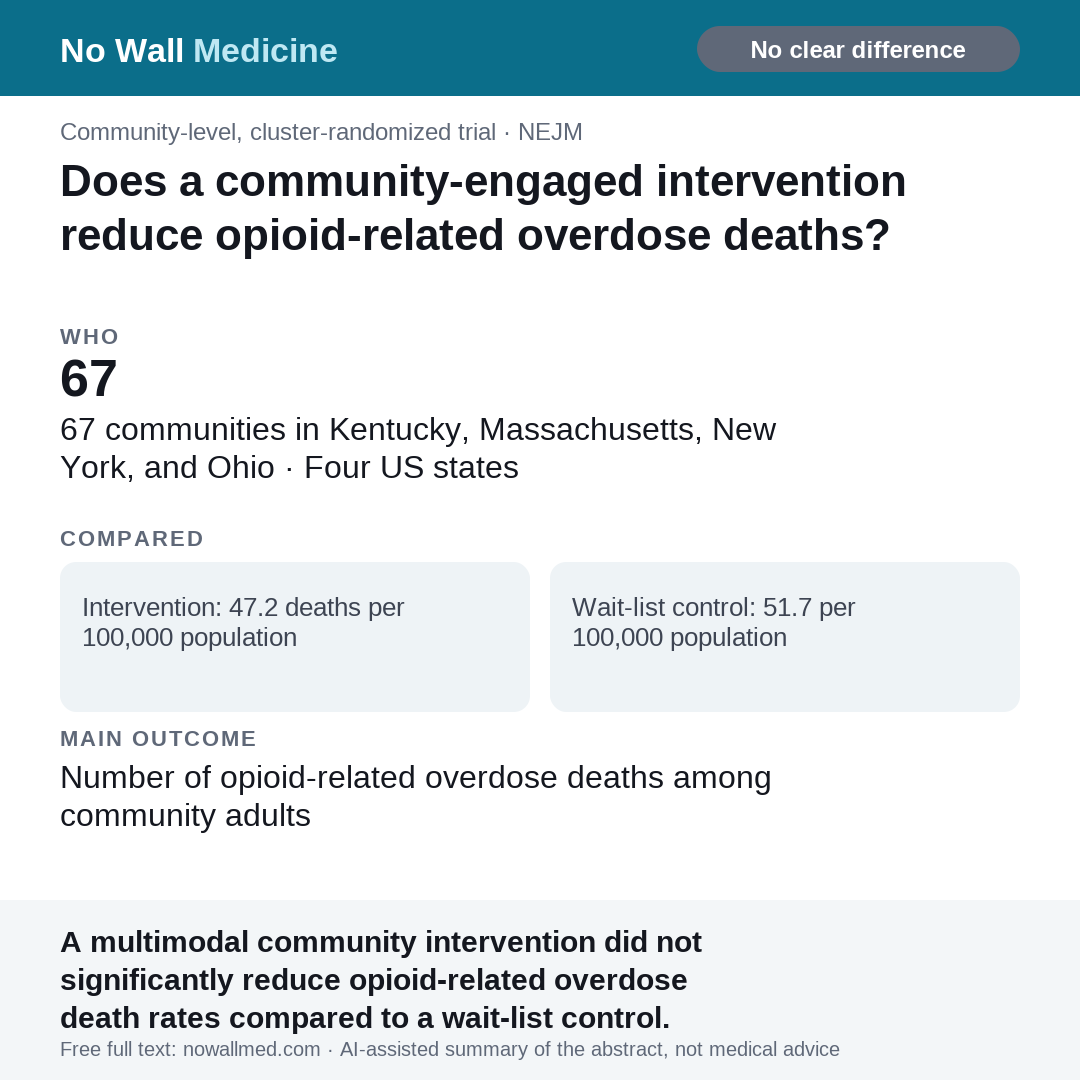
Community-Based Cluster-Randomized Trial to Reduce Opioid Overdose Deaths
Community-level, cluster-randomized trialNo clear difference
Does a community-engaged intervention reduce opioid-related overdose deaths?
Who
67
67 communities in Kentucky, Massachusetts, New York, and Ohio · Four US states
Compared
Intervention: 47.2 deaths per 100,000 population
Wait-list control: 51.7 per 100,000 population
Main outcome
Number of opioid-related overdose deaths among community adults
Result: adjusted rate ratio 0.91 (95% confidence interval, 0.76 to 1.09)
Bottom line: A multimodal community intervention did not significantly reduce opioid-related overdose death rates compared to a wait-list control.
Funded by: National Institutes of Health
NEJM · 2024-06-16Download image
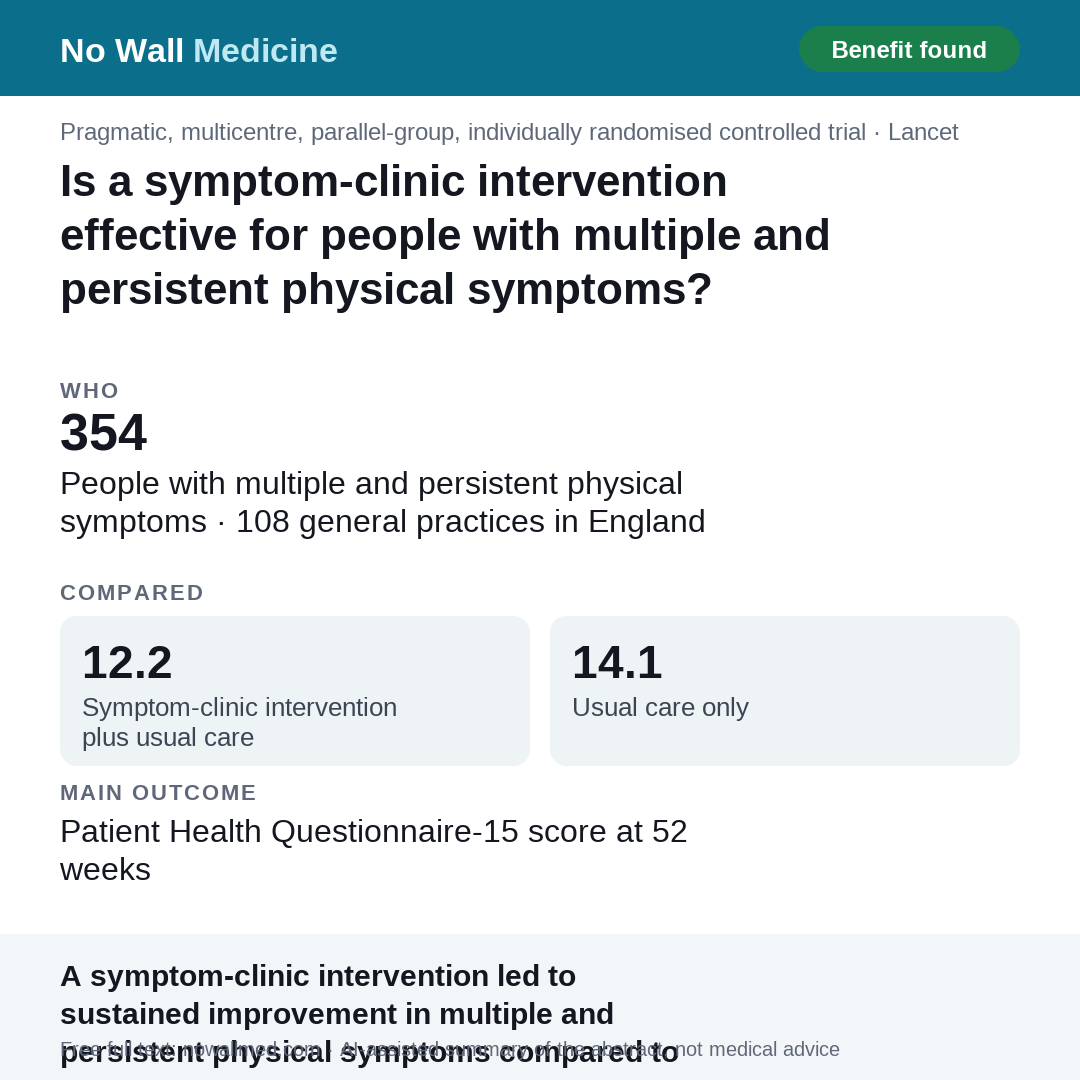
Effectiveness of a symptom-clinic intervention delivered by general practitioners with an extended role for people with multiple and persistent physical symptoms in England: the Multiple Symptoms Study 3 pragmatic, multicentre, parallel-group, individually randomised controlled trial
Pragmatic, multicentre, parallel-group, individually randomised controlled trialBenefit found
Is a symptom-clinic intervention effective for people with multiple and persistent physical symptoms?
Who
354
People with multiple and persistent physical symptoms · 108 general practices in England
Compared
12.2Symptom-clinic intervention plus usual care (4.5)
14.1Usual care only (3.7)
Main outcome
Patient Health Questionnaire-15 score at 52 weeks
Result: -1.82 (95% CI -2.67 to -0.97)
Bottom line: A symptom-clinic intervention led to sustained improvement in multiple and persistent physical symptoms compared to usual care.
Funded by: UK National Institute for Health and Care Research
Lancet · 2024-06-16Download image
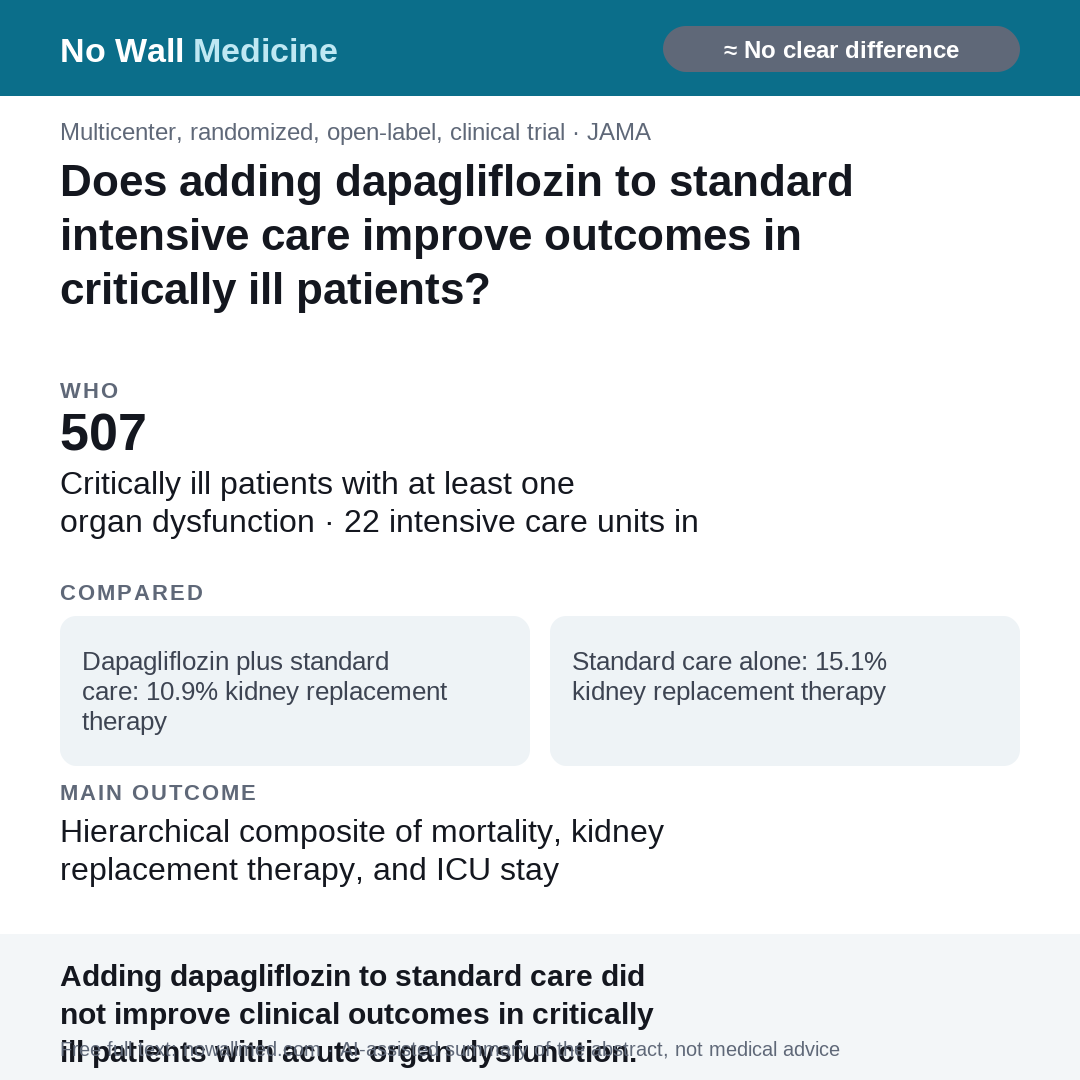
Dapagliflozin for Critically Ill Patients With Acute Organ Dysfunction: The DEFENDER Randomized Clinical Trial
Multicenter, randomized, open-label, clinical trialNo clear difference
Does adding dapagliflozin to standard intensive care improve outcomes in critically ill patients?
Who
507
Critically ill patients with at least one organ dysfunction · 22 intensive care units in Brazil
Compared
Dapagliflozin plus standard care: 10.9% kidney replacement therapy
Standard care alone: 15.1% kidney replacement therapy
Main outcome
Hierarchical composite of mortality, kidney replacement therapy, and ICU stay
Result: win ratio 1.01 (95% CI 0.90 to 1.13)
Bottom line: Adding dapagliflozin to standard care did not improve clinical outcomes in critically ill patients with acute organ dysfunction.
Limitation: Wide confidence intervals could not exclude relevant benefits or harms.
JAMA · 2024-06-14Download image
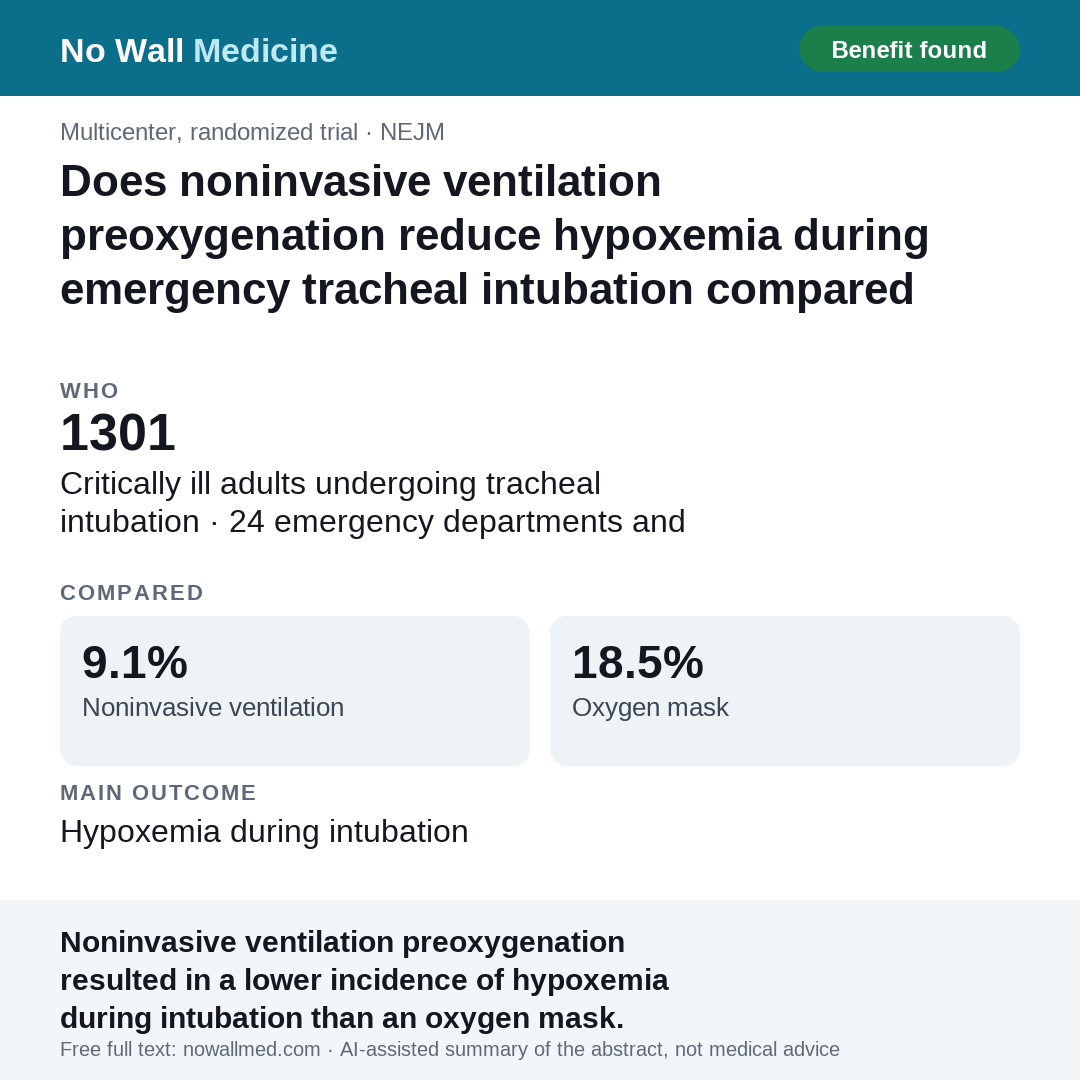
Noninvasive Ventilation for Preoxygenation during Emergency Intubation
Multicenter, randomized trialBenefit found
Does noninvasive ventilation preoxygenation reduce hypoxemia during emergency tracheal intubation compared to an oxygen mask?
Who
1301
Critically ill adults undergoing tracheal intubation · 24 emergency departments and intensive care units in the United States
Compared
9.1%Noninvasive ventilation (57/624)
18.5%Oxygen mask (118/637)
Main outcome
Hypoxemia during intubation
Result: difference, -9.4 percentage points (95% CI, -13.2 to -5.6)
Bottom line: Noninvasive ventilation preoxygenation resulted in a lower incidence of hypoxemia during intubation than an oxygen mask.
Funded by: U.S. Department of Defense
NEJM · 2024-06-13Download image
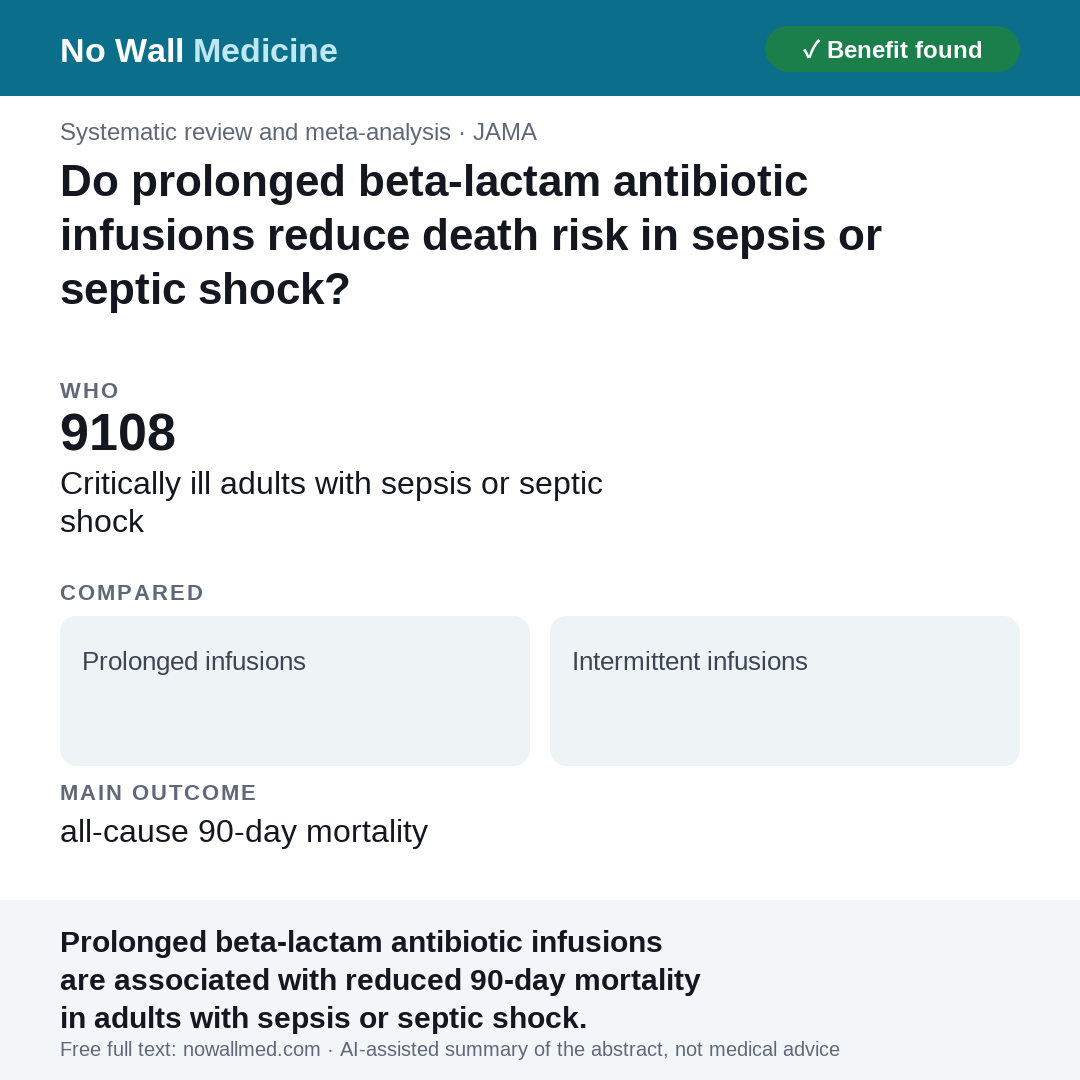
Prolonged vs Intermittent Infusions of β-Lactam Antibiotics in Adults With Sepsis or Septic Shock: A Systematic Review and Meta-Analysis
Systematic review and meta-analysisBenefit found
Do prolonged beta-lactam antibiotic infusions reduce death risk in sepsis or septic shock?
Who
9108
Critically ill adults with sepsis or septic shock
Compared
Prolonged infusions
Intermittent infusions
Main outcome
all-cause 90-day mortality
Result: risk ratio 0.86 (95% credible interval, 0.72-0.98)
Bottom line: Prolonged beta-lactam antibiotic infusions are associated with reduced 90-day mortality in adults with sepsis or septic shock.
JAMA · 2024-06-12Download image
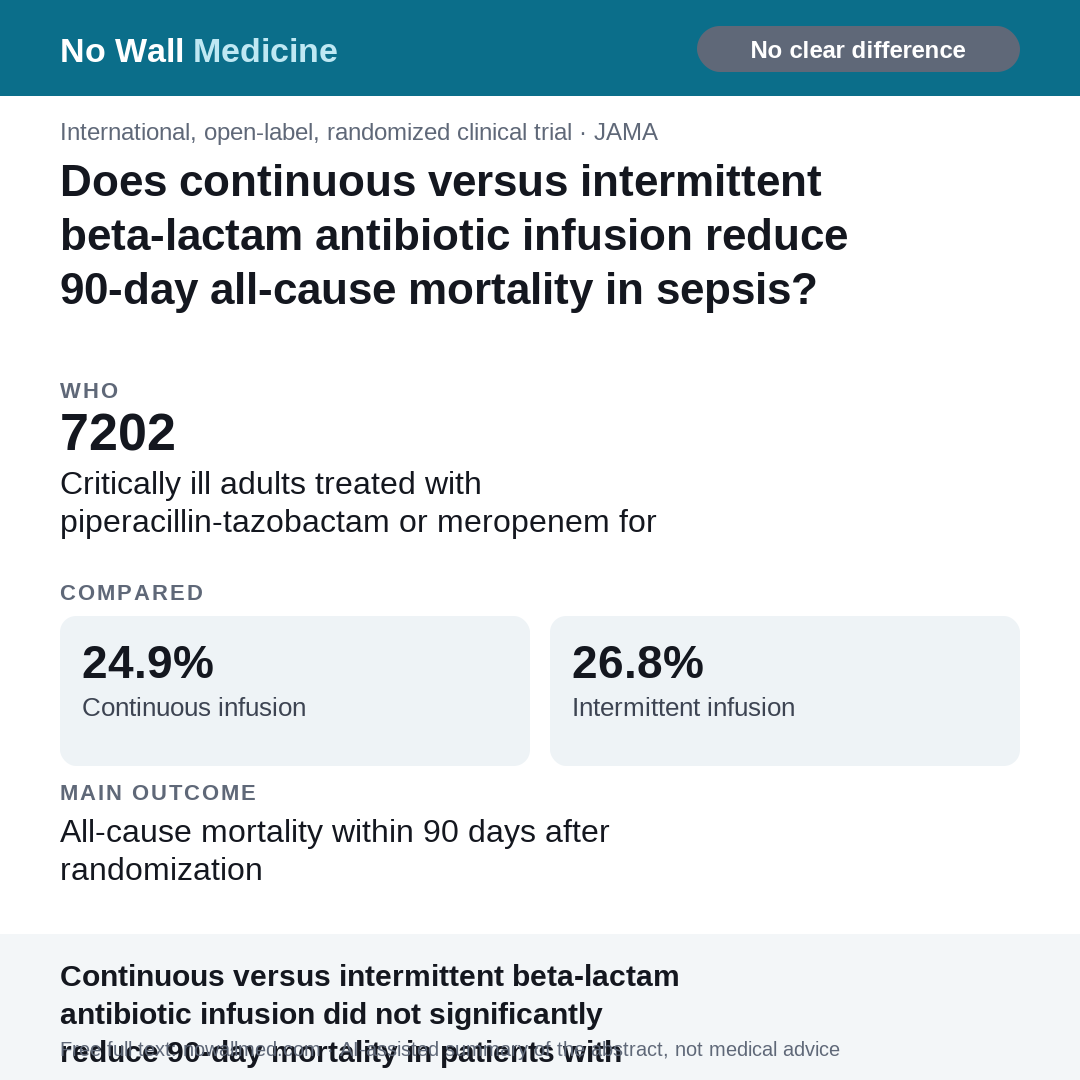
Continuous vs Intermittent β-Lactam Antibiotic Infusions in Critically Ill Patients With Sepsis: The BLING III Randomized Clinical Trial
International, open-label, randomized clinical trialNo clear difference
Does continuous versus intermittent beta-lactam antibiotic infusion reduce 90-day all-cause mortality in sepsis?
Who
7202
Critically ill adults treated with piperacillin-tazobactam or meropenem for sepsis · 104 intensive care units in seven countries
Compared
24.9%Continuous infusion (864/3474)
26.8%Intermittent infusion (939/3507)
Main outcome
All-cause mortality within 90 days after randomization
Result: odds ratio 0.91 (95% CI 0.81 to 1.01)
Bottom line: Continuous versus intermittent beta-lactam antibiotic infusion did not significantly reduce 90-day mortality in patients with sepsis.
Limitation: The confidence interval includes the possibility of both no important effect and a clinically important benefit.
JAMA · 2024-06-12Download image
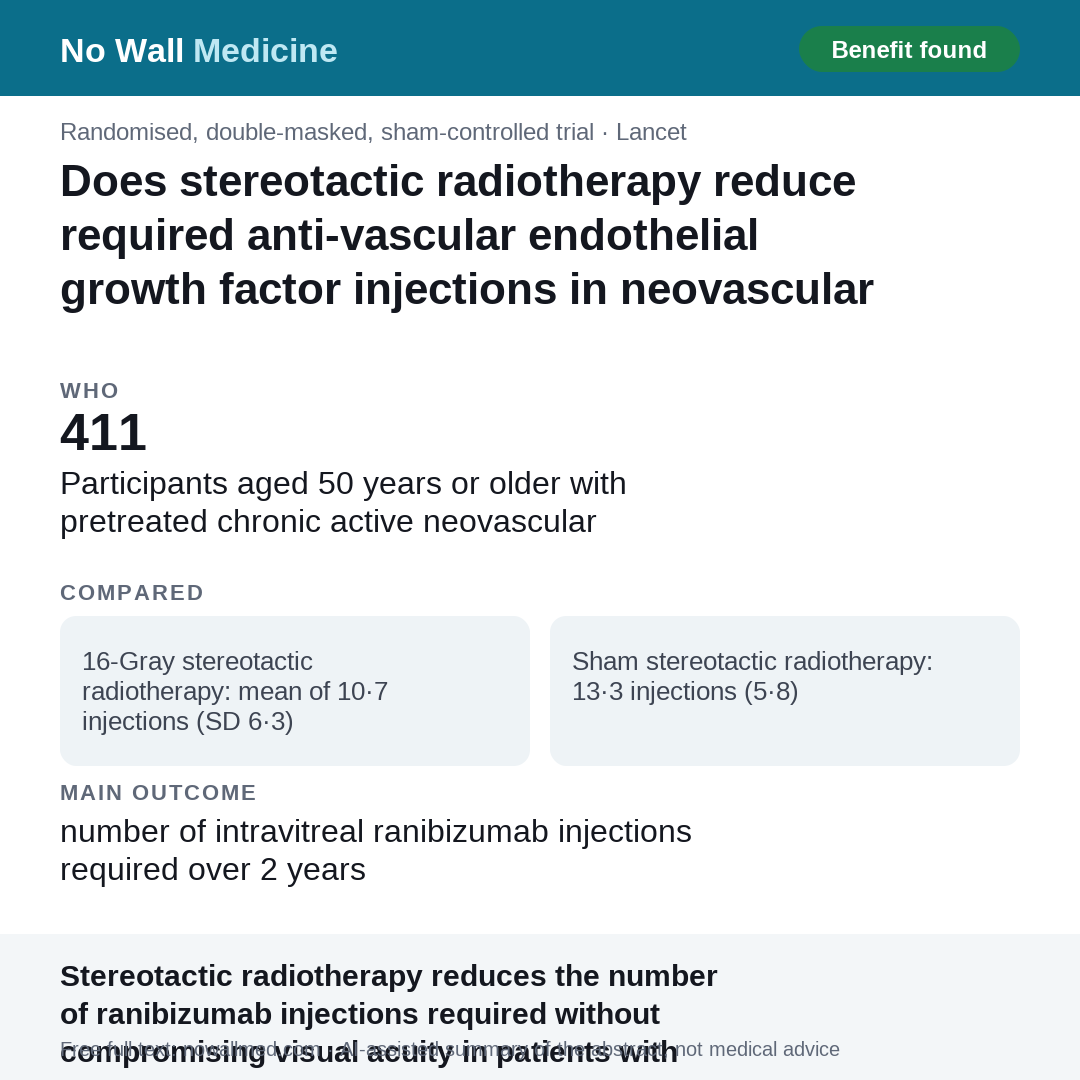
Stereotactic radiotherapy for neovascular age-related macular degeneration (STAR): a pivotal, randomised, double-masked, sham-controlled device trial
Randomised, double-masked, sham-controlled trialBenefit found
Does stereotactic radiotherapy reduce required anti-vascular endothelial growth factor injections in neovascular age-related macular degeneration?
Who
411
Participants aged 50 years or older with pretreated chronic active neovascular age-related macular degeneration · 30 UK hospitals
Compared
16-Gray stereotactic radiotherapy: mean of 10·7 injections (SD 6·3)
Sham stereotactic radiotherapy: 13·3 injections (5·8)
Main outcome
number of intravitreal ranibizumab injections required over 2 years
Result: reduction of 2·9 injections (95% CI -4·2 to -1·6)
Bottom line: Stereotactic radiotherapy reduces the number of ranibizumab injections required without compromising visual acuity in patients with neovascular age-related macular degeneration.
Funded by: Medical Research Council and National Institute for Health and Care Research
Lancet · 2024-06-11Download image
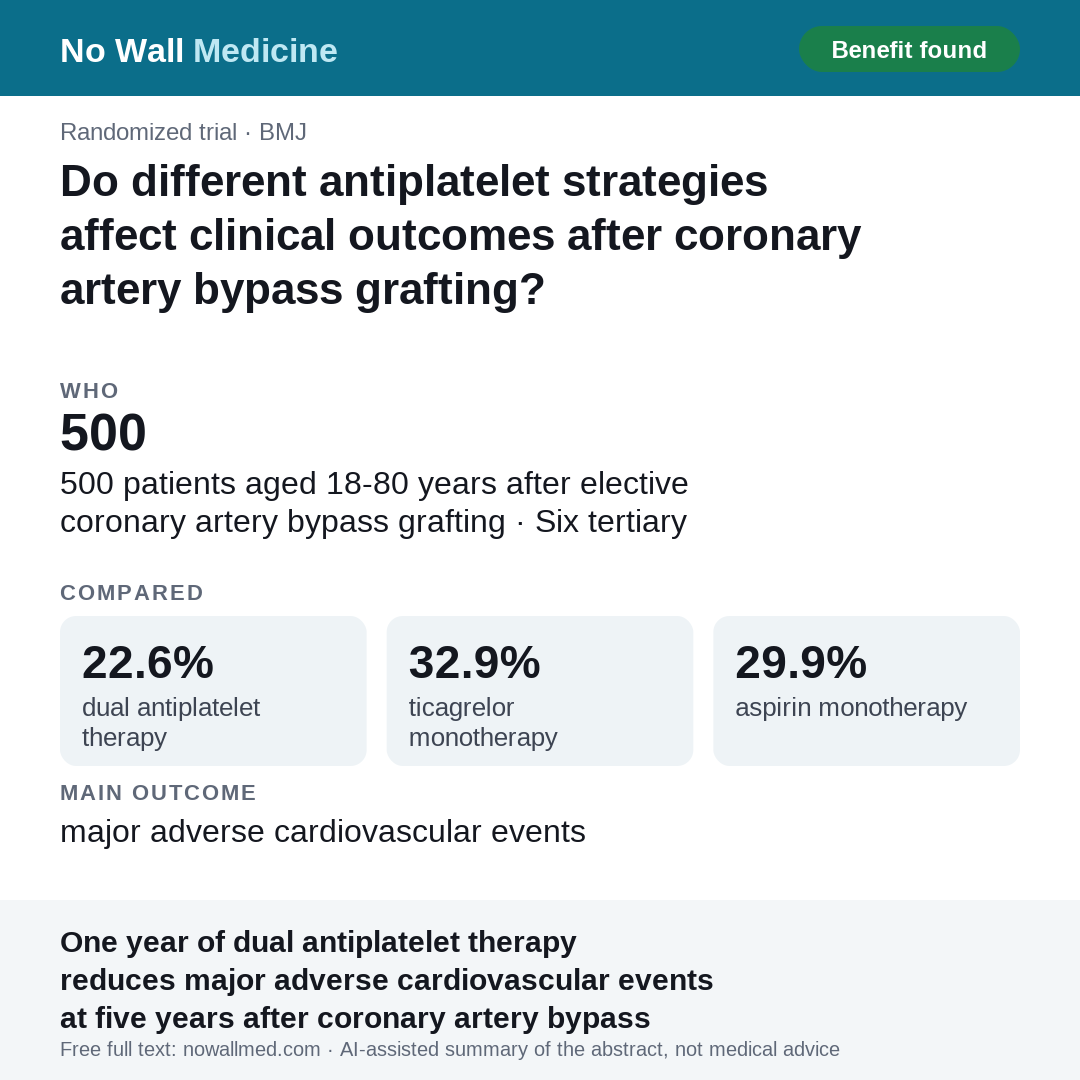
Antiplatelet therapy after coronary artery bypass surgery: five year follow-up of randomised DACAB trial
Randomized trialBenefit found
Do different antiplatelet strategies affect clinical outcomes after coronary artery bypass grafting?
Who
500
500 patients aged 18-80 years after elective coronary artery bypass grafting · Six tertiary hospitals in China
Compared
22.6%dual antiplatelet therapy
32.9%ticagrelor monotherapy
29.9%aspirin monotherapy
Main outcome
major adverse cardiovascular events
Result: hazard ratio 0.65 (95% confidence interval 0.43 to 0.99)
Bottom line: One year of dual antiplatelet therapy reduces major adverse cardiovascular events at five years after coronary artery bypass grafting.
BMJ · 2024-06-11Download image
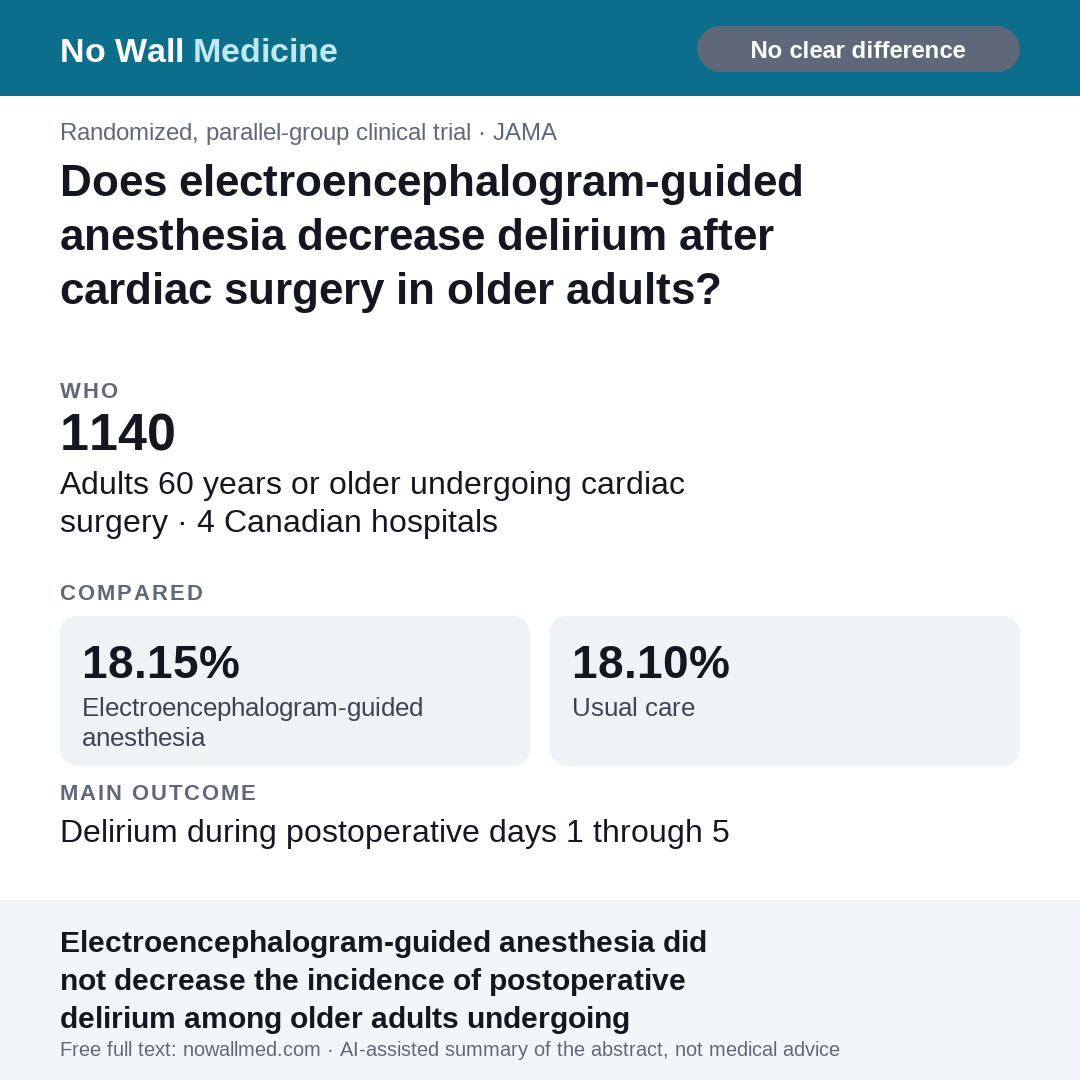
Electroencephalography-Guided Anesthesia and Delirium in Older Adults After Cardiac Surgery: The ENGAGES-Canada Randomized Clinical Trial
Randomized, parallel-group clinical trialNo clear difference
Does electroencephalogram-guided anesthesia decrease delirium after cardiac surgery in older adults?
Who
1140
Adults 60 years or older undergoing cardiac surgery · 4 Canadian hospitals
Compared
18.15%Electroencephalogram-guided anesthesia (102/562)
18.10%Usual care (103/569)
Main outcome
Delirium during postoperative days 1 through 5
Result: difference, 0.05% (95% CI, -4.57% to 4.67%)
Bottom line: Electroencephalogram-guided anesthesia did not decrease the incidence of postoperative delirium among older adults undergoing cardiac surgery.
JAMA · 2024-06-10Download image
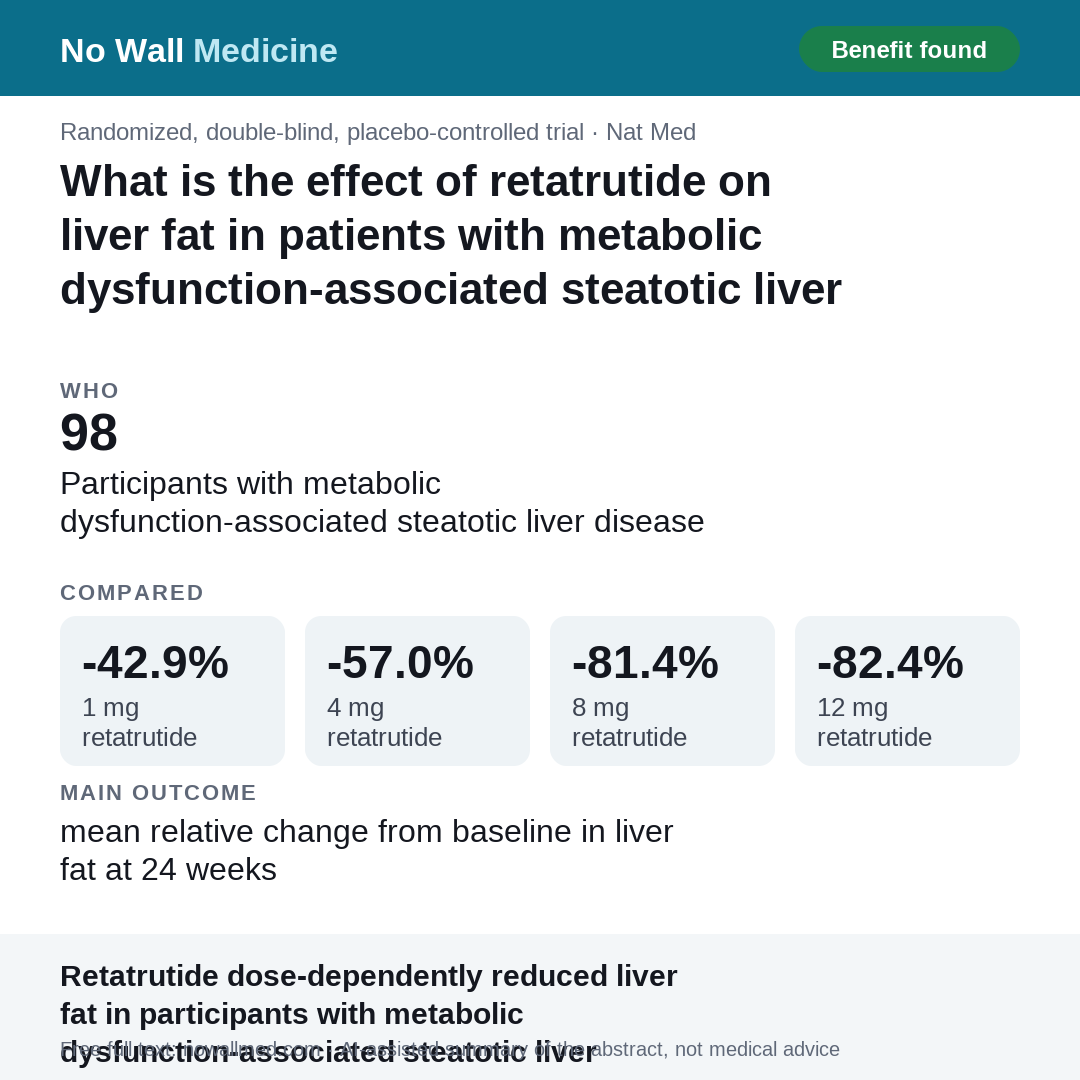
Triple hormone receptor agonist retatrutide for metabolic dysfunction-associated steatotic liver disease: a randomized phase 2a trial
Randomized, double-blind, placebo-controlled trialBenefit found
What is the effect of retatrutide on liver fat in patients with metabolic dysfunction-associated steatotic liver disease?
Who
98
Participants with metabolic dysfunction-associated steatotic liver disease and at least 10% liver fat
Compared
-42.9%1 mg retatrutide
-57.0%4 mg retatrutide
-81.4%8 mg retatrutide
-82.4%12 mg retatrutide
Main outcome
mean relative change from baseline in liver fat at 24 weeks
Bottom line: Retatrutide dose-dependently reduced liver fat in participants with metabolic dysfunction-associated steatotic liver disease.
Nat Med · 2024-06-10Download image
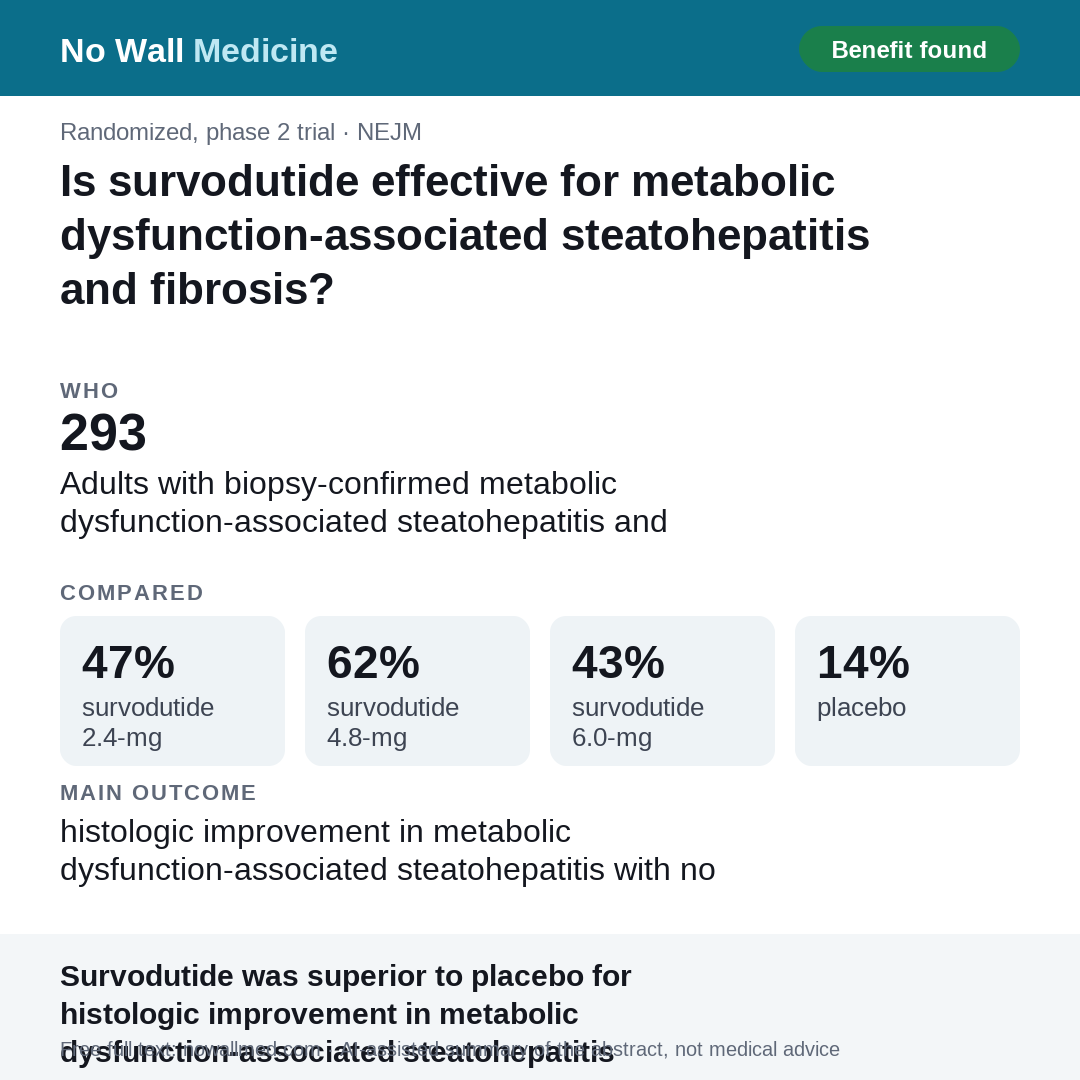
A Phase 2 Randomized Trial of Survodutide in MASH and Fibrosis
Randomized, phase 2 trialBenefit found
Is survodutide effective for metabolic dysfunction-associated steatohepatitis and fibrosis?
Who
293
Adults with biopsy-confirmed metabolic dysfunction-associated steatohepatitis and fibrosis stage F1 through F3
Compared
47%survodutide 2.4-mg
62%survodutide 4.8-mg
43%survodutide 6.0-mg
14%placebo
Main outcome
histologic improvement in metabolic dysfunction-associated steatohepatitis with no worsening of fibrosis
Bottom line: Survodutide was superior to placebo for histologic improvement in metabolic dysfunction-associated steatohepatitis without worsening of fibrosis.
Funded by: Boehringer Ingelheim
NEJM · 2024-06-07Download image
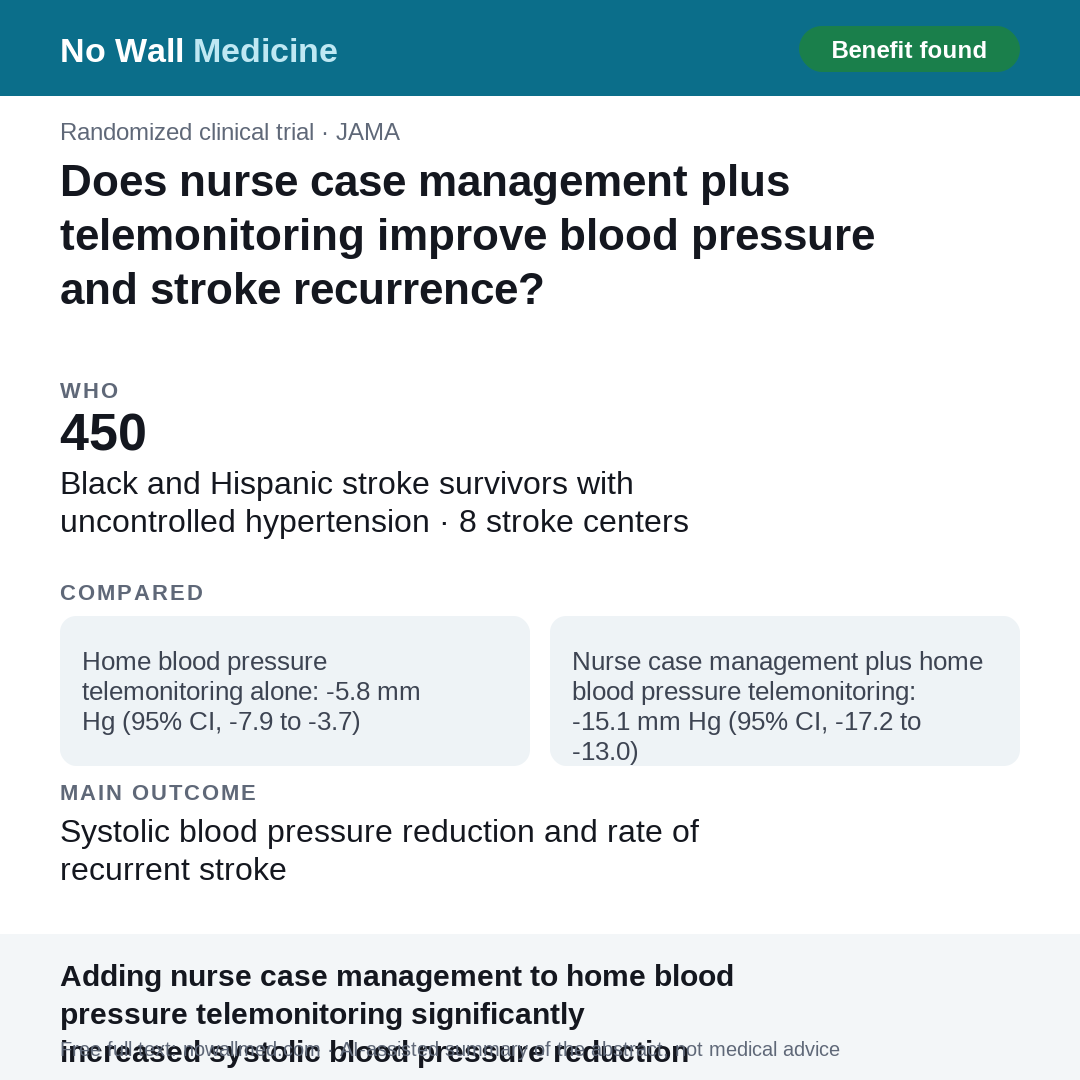
Home Blood Pressure Telemonitoring and Nurse Case Management in Black and Hispanic Patients With Stroke: A Randomized Clinical Trial
Randomized clinical trialBenefit found
Does nurse case management plus telemonitoring improve blood pressure and stroke recurrence?
Who
450
Black and Hispanic stroke survivors with uncontrolled hypertension · 8 stroke centers and ambulatory practices in New York City
Compared
Home blood pressure telemonitoring alone: -5.8 mm Hg (95% CI, -7.9 to -3.7)
Nurse case management plus home blood pressure telemonitoring: -15.1 mm Hg (95% CI, -17.2 to -13.0)
Main outcome
Systolic blood pressure reduction and rate of recurrent stroke
Result: -8.1 mm Hg (95% CI, -11.2 to -5.0)
Bottom line: Adding nurse case management to home blood pressure telemonitoring significantly increased systolic blood pressure reduction in Black and Hispanic stroke survivors.
Limitation: Additional studies are needed to understand long-term clinical outcomes, cost-effectiveness, and generalizability.
JAMA · 2024-06-06Download image