Visual abstracts
New randomized trials and meta-analyses from leading journals at a glance: who was studied, what was compared, and what was found. Every paper is free to read in full.
All specialtiesCardiology 4763Oncology 4043Gastroenterology & Hepatology 1903Infectious Disease 3756Neurology 1872Psychiatry & Mental Health 2216Pulmonology 2044Critical Care 1319Endocrinology & Diabetes 2544Pediatrics 2889Surgery 2480Orthopedics & Sports Medicine 917Neurosurgery 525Cardiothoracic & Vascular Surgery 656Plastic & Reconstructive Surgery 574Nephrology 1107Rheumatology 810Hematology 1090Dermatology 611Ophthalmology 532Obstetrics & Gynecology 1645Public & Global Health 1037Radiology & Imaging 619Anesthesiology 958Urology 745ENT (Otolaryngology) 494Emergency Medicine 481Allergy & Immunology 309Geriatrics 972Family Medicine & Primary Care 534Medical Genetics & Genomics 659Pathology & Laboratory Medicine 156Physical Medicine & Rehabilitation 734Palliative Care 421Nutrition 1560Digital Health & AI 2137General Medicine 318
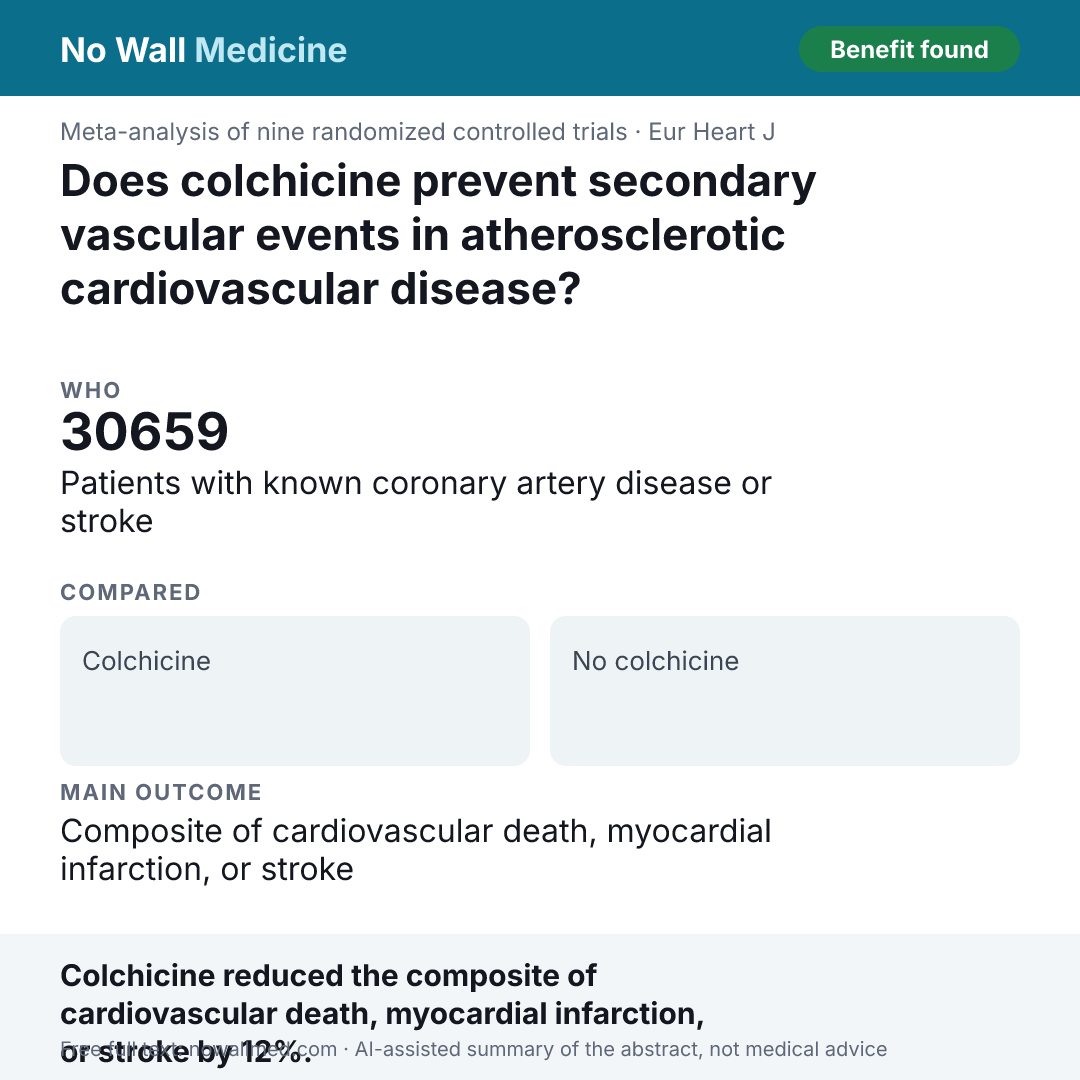
Colchicine for secondary prevention of vascular events: a meta-analysis of trials
Meta-analysis of nine randomized controlled trialsBenefit found
Does colchicine prevent secondary vascular events in atherosclerotic cardiovascular disease?
Who
30659
Patients with known coronary artery disease or stroke
Compared
Colchicine
No colchicine
Main outcome
Composite of cardiovascular death, myocardial infarction, or stroke
Result: relative risk 0.88 (95% CI 0.81-0.95)
Bottom line: Colchicine reduced the composite of cardiovascular death, myocardial infarction, or stroke by 12%.
Eur Heart J · 2025-05-02 · Save PNG
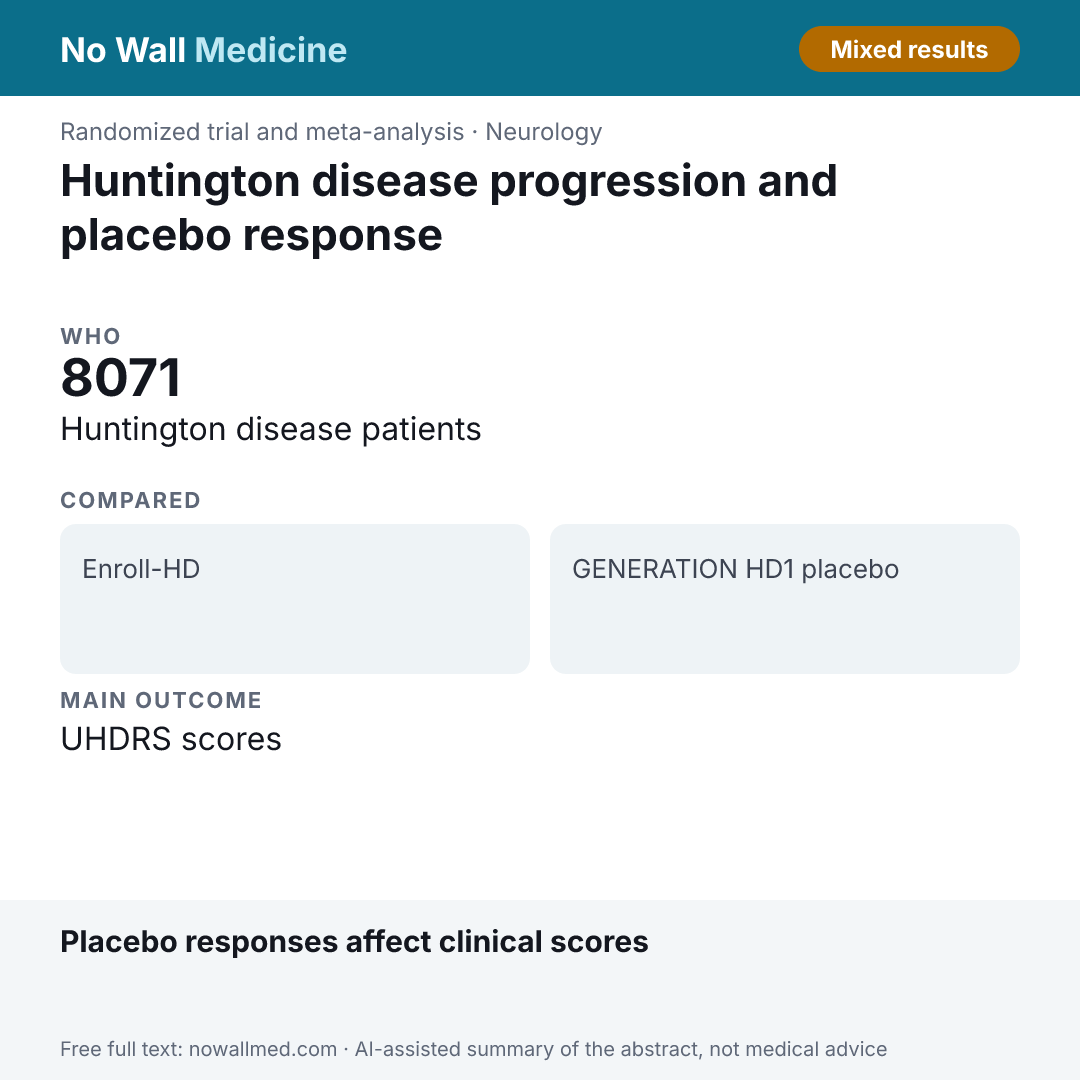
Modeling Disease Progression and Placebo Response in Huntington Disease: Insights From Enroll-HD and GENERATION HD1 Cohorts
Randomized trial and meta-analysisMixed results
Huntington disease progression and placebo response
Who
8071
Huntington disease patients
Compared
Enroll-HD
GENERATION HD1 placebo
Main outcome
UHDRS scores
Bottom line: Placebo responses affect clinical scores
Limitation: limited placebo data
Neurology · 2025-05-02 · Save PNG
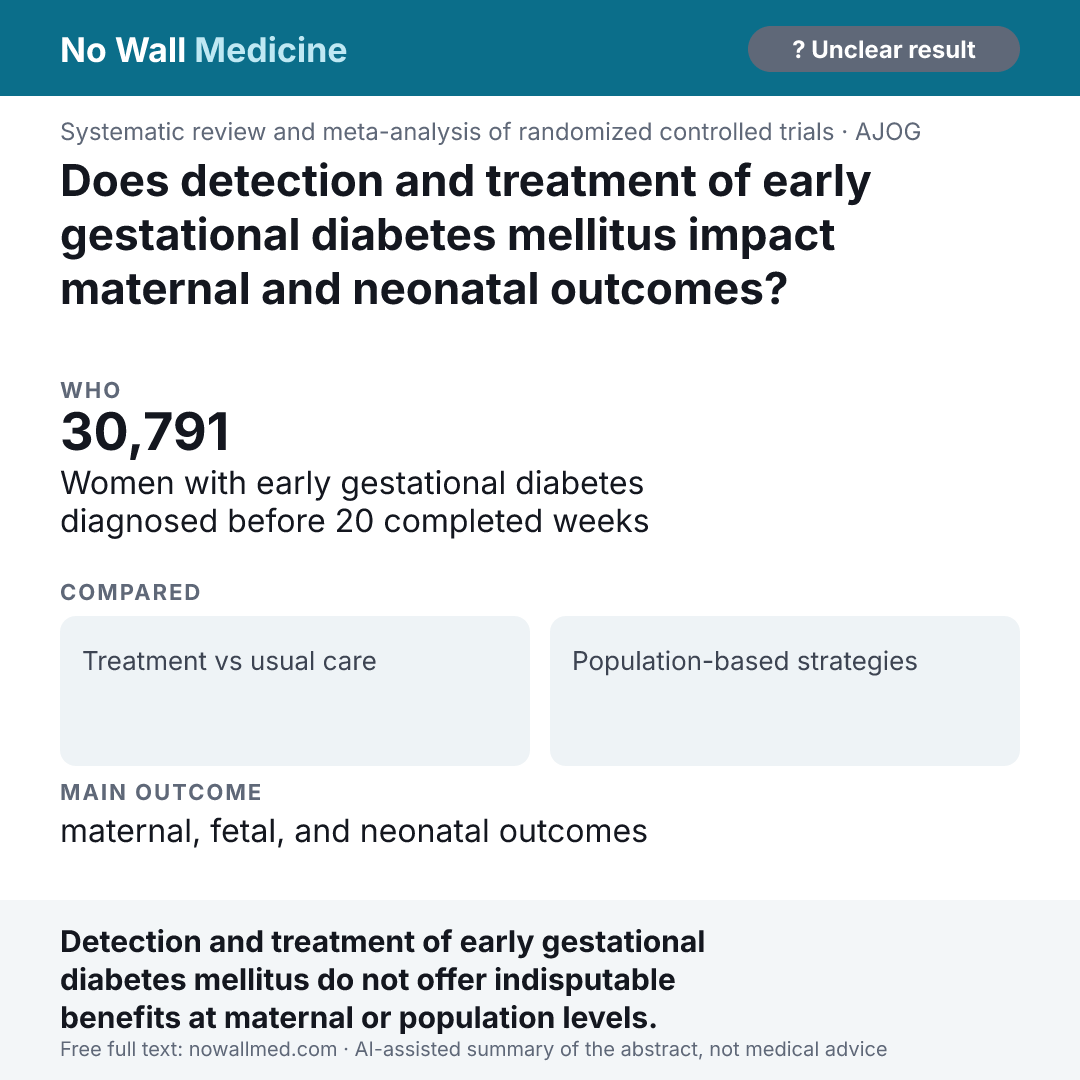
Detection and treatment of early gestational diabetes mellitus: a systematic review and meta-analysis of randomized controlled trials
Systematic review and meta-analysis of randomized controlled trialsUnclear result
Does detection and treatment of early gestational diabetes mellitus impact maternal and neonatal outcomes?
Who
30,791
Women with early gestational diabetes diagnosed before 20 completed weeks
Compared
Treatment vs usual care
Population-based strategies
Main outcome
maternal, fetal, and neonatal outcomes
Bottom line: Detection and treatment of early gestational diabetes mellitus do not offer indisputable benefits at maternal or population levels.
Limitation: The quality of evidence for most outcomes was low/very low.
AJOG · 2025-05-02 · Save PNG
Comparative efficacy and tolerability of nutraceuticals for depressive disorder: A systematic review and network meta-analysis
Systematic review and network meta-analysisBenefit found
What is the comparative efficacy and tolerability of nutraceuticals for depressive disorder?
Who
17437
Adults with depressive disorder
Compared
Adjunctive nutraceuticals: better efficacy than antidepressants alone
Antidepressants alone
Main outcome
change in depressive symptoms
Bottom line: Several nutraceuticals offer benefits as either adjuncts or monotherapies for treating depressive disorders.
Psychol Med · 2025-05-02 · Save PNG
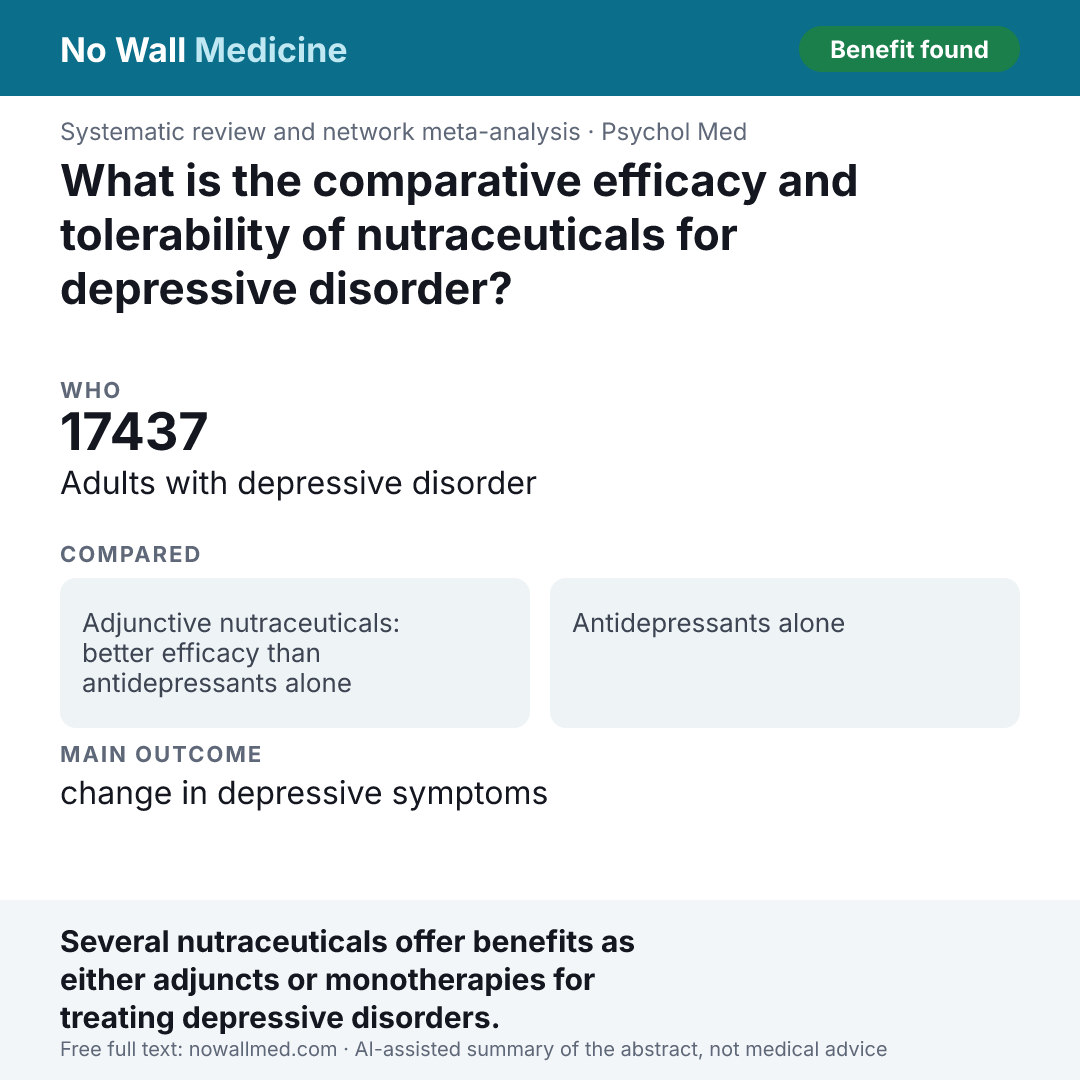
Arginine-Vasopressin Dynamics in Relation to Food Intake and 8-Week Intranasal Oxytocin Treatment in Adults With Obesity
Randomized clinical trialNo clear difference
How does food intake and 8-week intranasal oxytocin affect arginine-vasopressin levels?
Who
61
63 adults with obesity · Tertiary academic center
Compared
Intranasal oxytocin
Placebo
Main outcome
Arginine-vasopressin levels
Bottom line: Chronic intranasal oxytocin administration did not alter arginine-vasopressin levels in adults with obesity.
J Clin Endocrinol Metab · 2025-05-02 · Save PNG
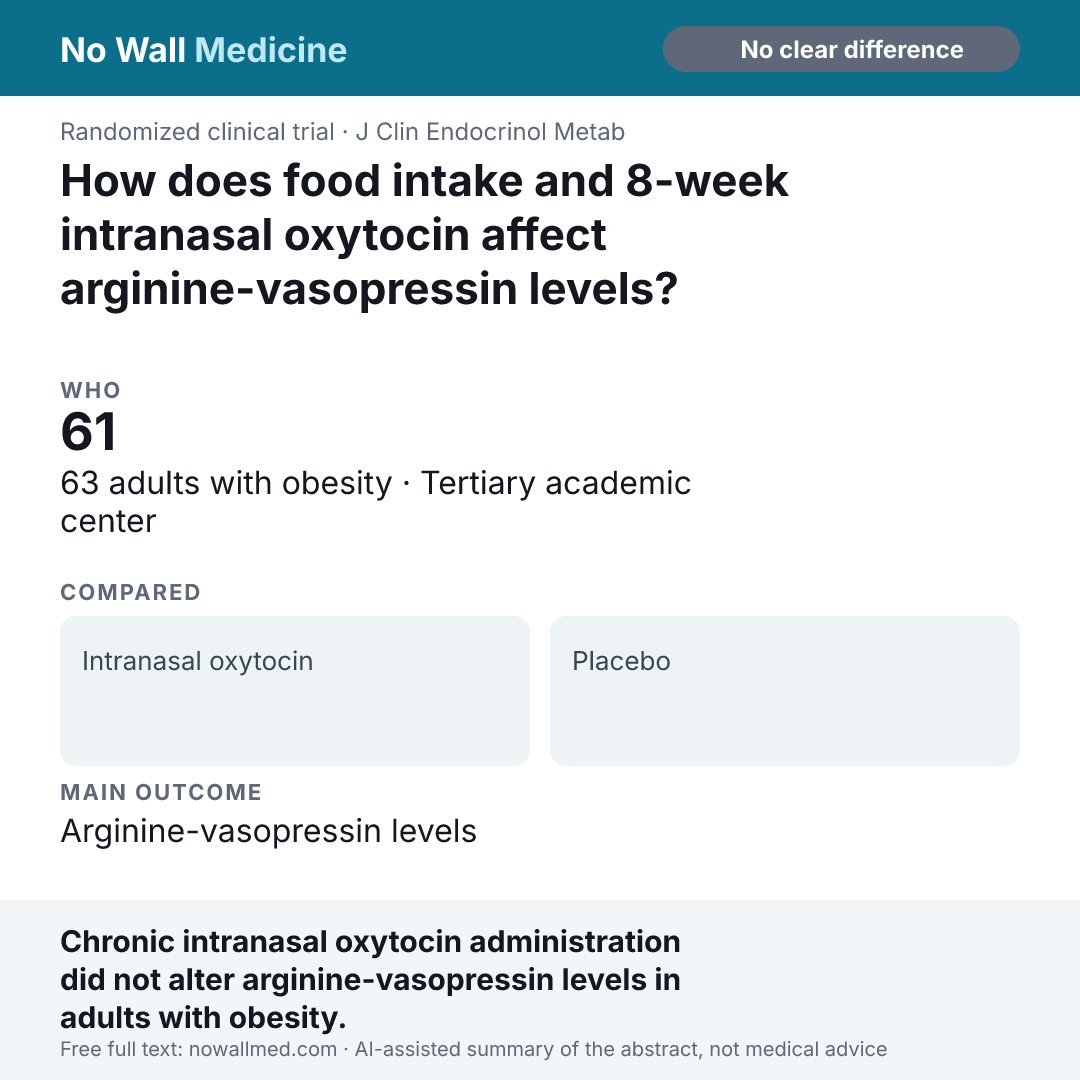
Three-Year Change in Subfoveal Choroidal Thickness and Area With Multifocal Contact Lens Wear in the Bifocal Lenses in Nearsighted Kids (BLINK) Study
Randomized trialBenefit found
How do multifocal contact lenses affect subfoveal choroidal thickness and area in myopic children?
Who
281
281 myopic children aged 7 to 11 years
Compared
Single vision contact lenses
+2.50 D add center-distance multifocal contact lenses: 8 ± 3 µm (thickness) and 0.07 ± 0.02 mm2 (area)
Main outcome
Subfoveal choroidal thickness and area
Bottom line: Multifocal contact lenses increased subfoveal choroidal thickness and area, which was associated with slower axial elongation.
Limitation: Only a portion of the treatment effect can be accounted for by choroidal parameters.
Invest Ophthalmol Vis Sci · 2025-05-02 · Save PNG
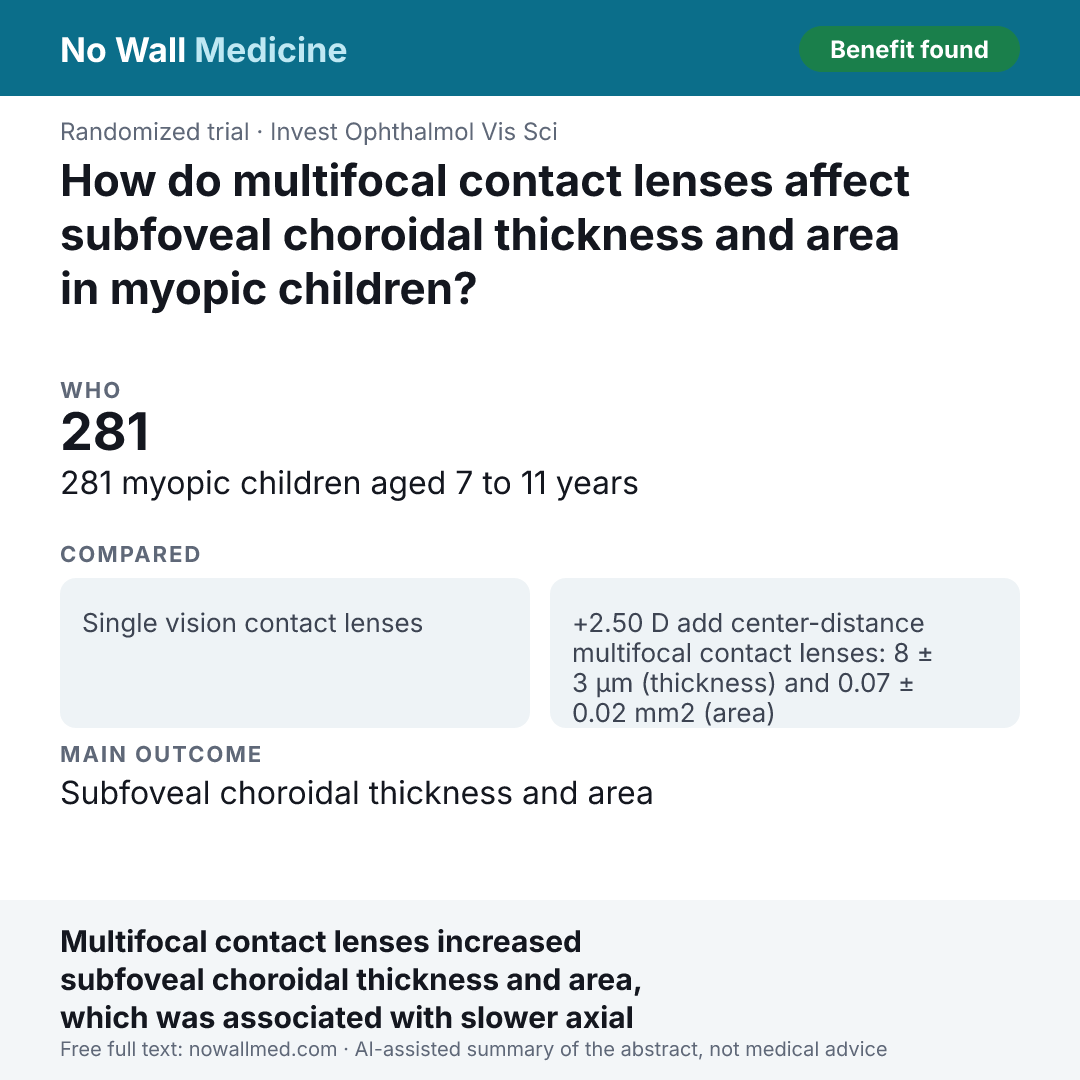
Comparison of Luteal Support Protocols in Frozen IVF/ICSI Cycles: A Network Meta-Analysis
Bayesian network meta-analysisBenefit found
Which luteal support strategy is most effective for frozen embryo transfers?
Who
4688
women undergoing frozen embryo transfers
Compared
Vaginal progesterone with subcutaneous GnRH agonist: significantly improving clinical pregnancy, RR 1.86 [95% CrI 1.18, 2.93]
Vaginal progesterone alone
Main outcome
clinical pregnancy, live birth, and miscarriage
Result: risk ratio 1.86 [95% credibility interval 1.18, 2.93]
Bottom line: Adding subcutaneous GnRH agonist to vaginal progesterone improves clinical pregnancy in frozen embryo transfer cycles.
Limitation: Overall CiNeMa risk of bias was moderate
BJOG · 2025-05-02 · Save PNG
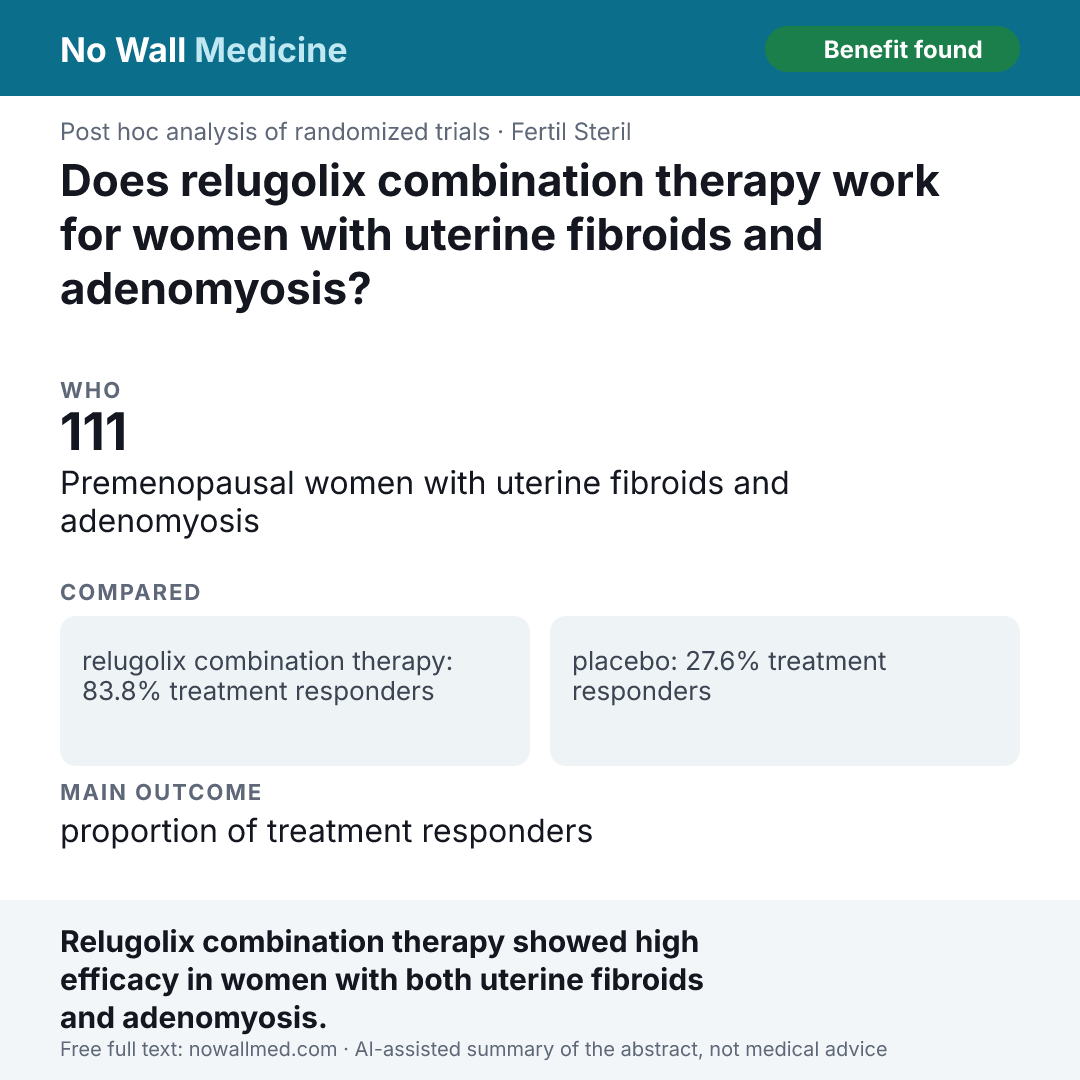
Efficacy and safety of relugolix combination therapy in women with uterine fibroids and adenomyosis: subgroup analysis of LIBERTY 1 and LIBERTY 2
Post hoc analysis of randomized trialsBenefit found
Does relugolix combination therapy work for women with uterine fibroids and adenomyosis?
Who
111
Premenopausal women with uterine fibroids and adenomyosis
Compared
relugolix combination therapy: 83.8% treatment responders
placebo: 27.6% treatment responders
Main outcome
proportion of treatment responders
Bottom line: Relugolix combination therapy showed high efficacy in women with both uterine fibroids and adenomyosis.
Fertil Steril · 2025-05-02 · Save PNG
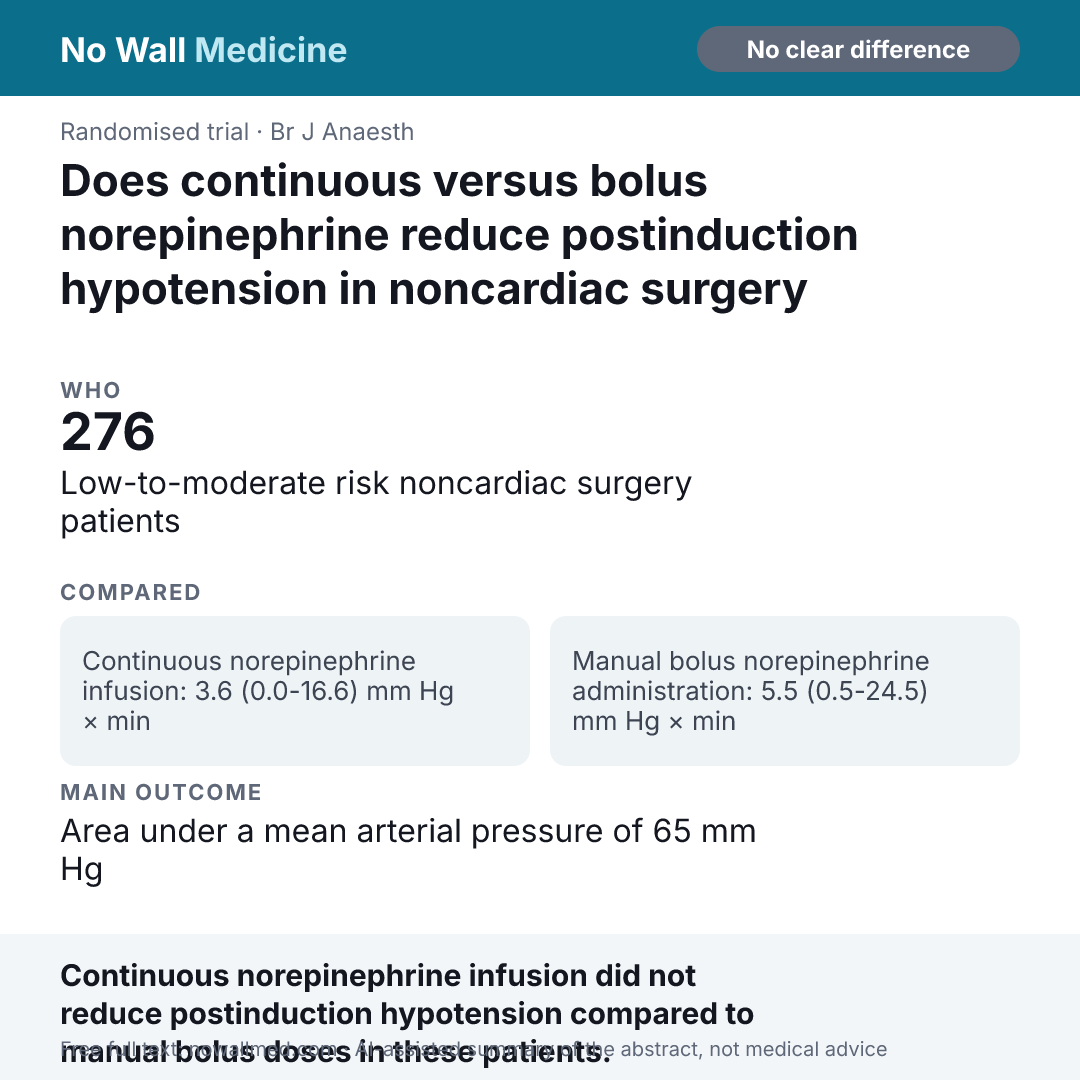
Continuous versus bolus norepinephrine administration to treat hypotension after induction of general anaesthesia in low-to-moderate risk noncardiac surgery patients: a randomised trial
Randomised trialNo clear difference
Does continuous versus bolus norepinephrine reduce postinduction hypotension in noncardiac surgery patients?
Who
276
Low-to-moderate risk noncardiac surgery patients
Compared
Continuous norepinephrine infusion: 3.6 (0.0-16.6) mm Hg × min
Manual bolus norepinephrine administration: 5.5 (0.5-24.5) mm Hg × min
Main outcome
Area under a mean arterial pressure of 65 mm Hg
Bottom line: Continuous norepinephrine infusion did not reduce postinduction hypotension compared to manual bolus doses in these patients.
Br J Anaesth · 2025-05-02 · Save PNG
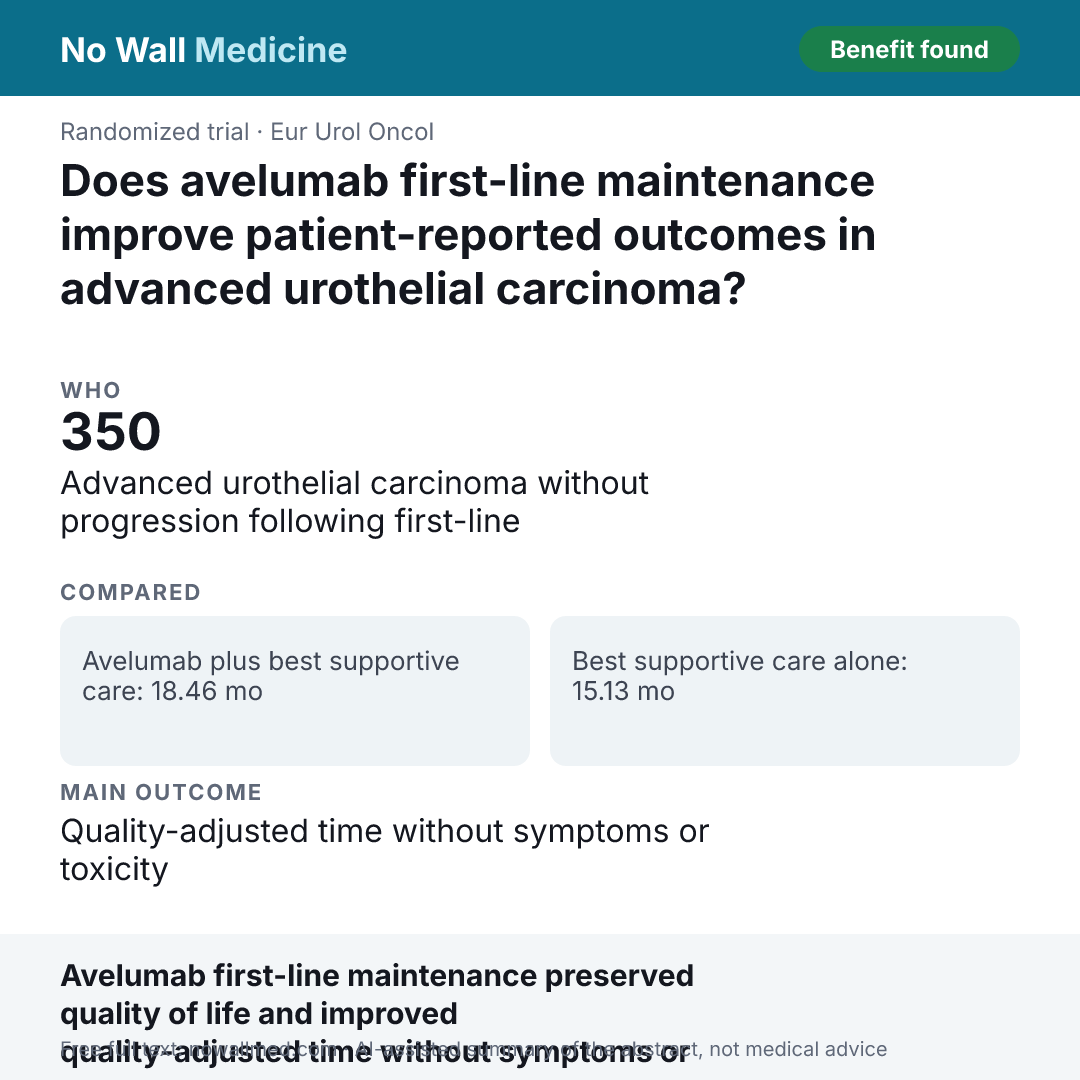
Avelumab First-line Maintenance for Advanced Urothelial Carcinoma: Long-term Analyses of Patient-reported Outcomes and Quality-adjusted Time Without Symptoms or Toxicity from the JAVELIN Bladder 100 Trial
Randomized trialBenefit found
Does avelumab first-line maintenance improve patient-reported outcomes in advanced urothelial carcinoma?
Who
350
Advanced urothelial carcinoma without progression following first-line platinum-based chemotherapy
Compared
Avelumab plus best supportive care: 18.46 mo
Best supportive care alone: 15.13 mo
Main outcome
Quality-adjusted time without symptoms or toxicity
Result: 22% relative improvement
Bottom line: Avelumab first-line maintenance preserved quality of life and improved quality-adjusted time without symptoms or toxicity.
Limitation: Open-label trial design and small patient numbers at later cycles.
Eur Urol Oncol · 2025-05-02 · Save PNG
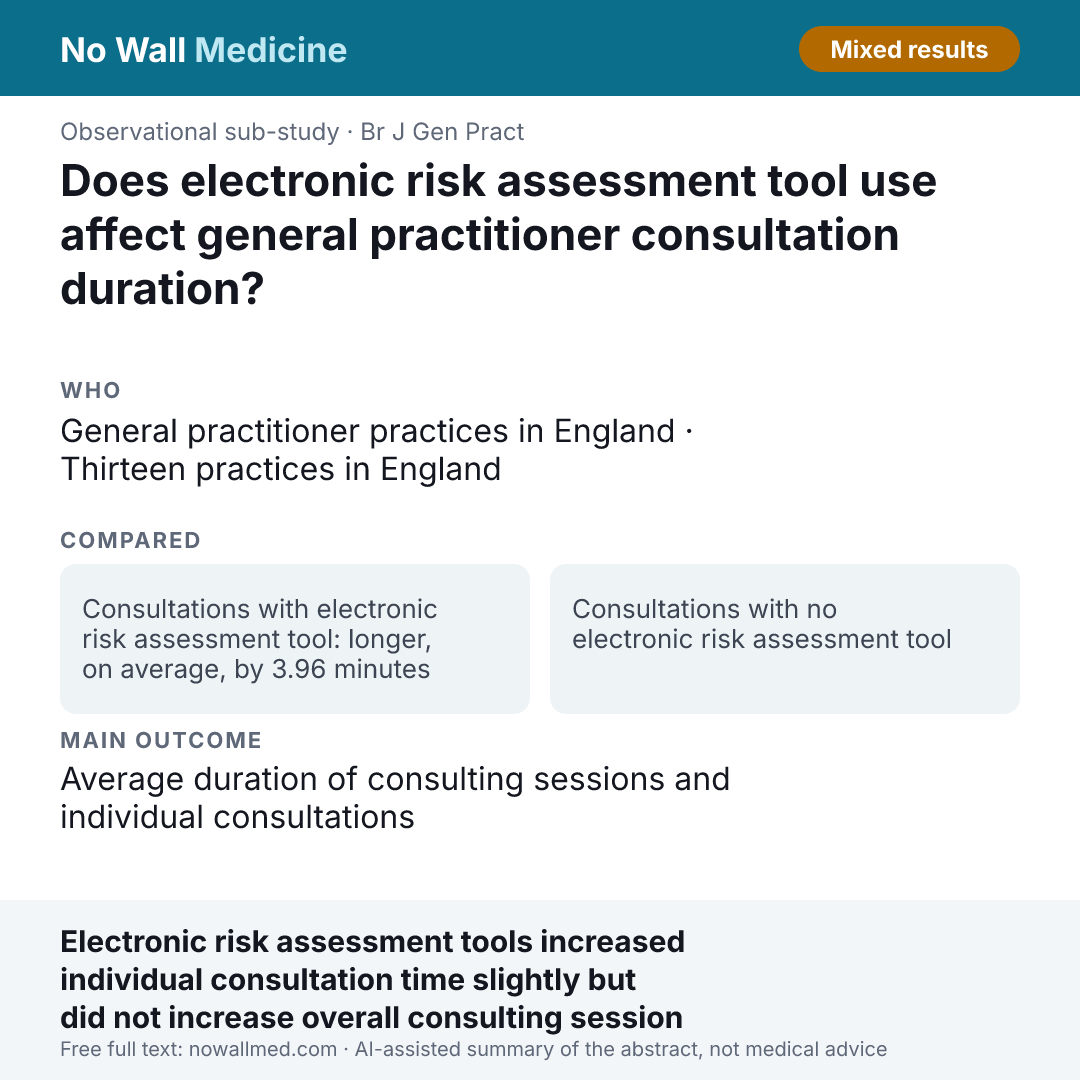
Association between cancer risk assessment tool use and GP consultation duration: an observational study
Observational sub-studyMixed results
Does electronic risk assessment tool use affect general practitioner consultation duration?
Who
General practitioner practices in England · Thirteen practices in England
Compared
Consultations with electronic risk assessment tool: longer, on average, by 3.96 minutes
Consultations with no electronic risk assessment tool
Main outcome
Average duration of consulting sessions and individual consultations
Result: 3.96 minutes (95% confidence interval = 3.45 to 4.47)
Bottom line: Electronic risk assessment tools increased individual consultation time slightly but did not increase overall consulting session workload.
Br J Gen Pract · 2025-05-02 · Save PNG
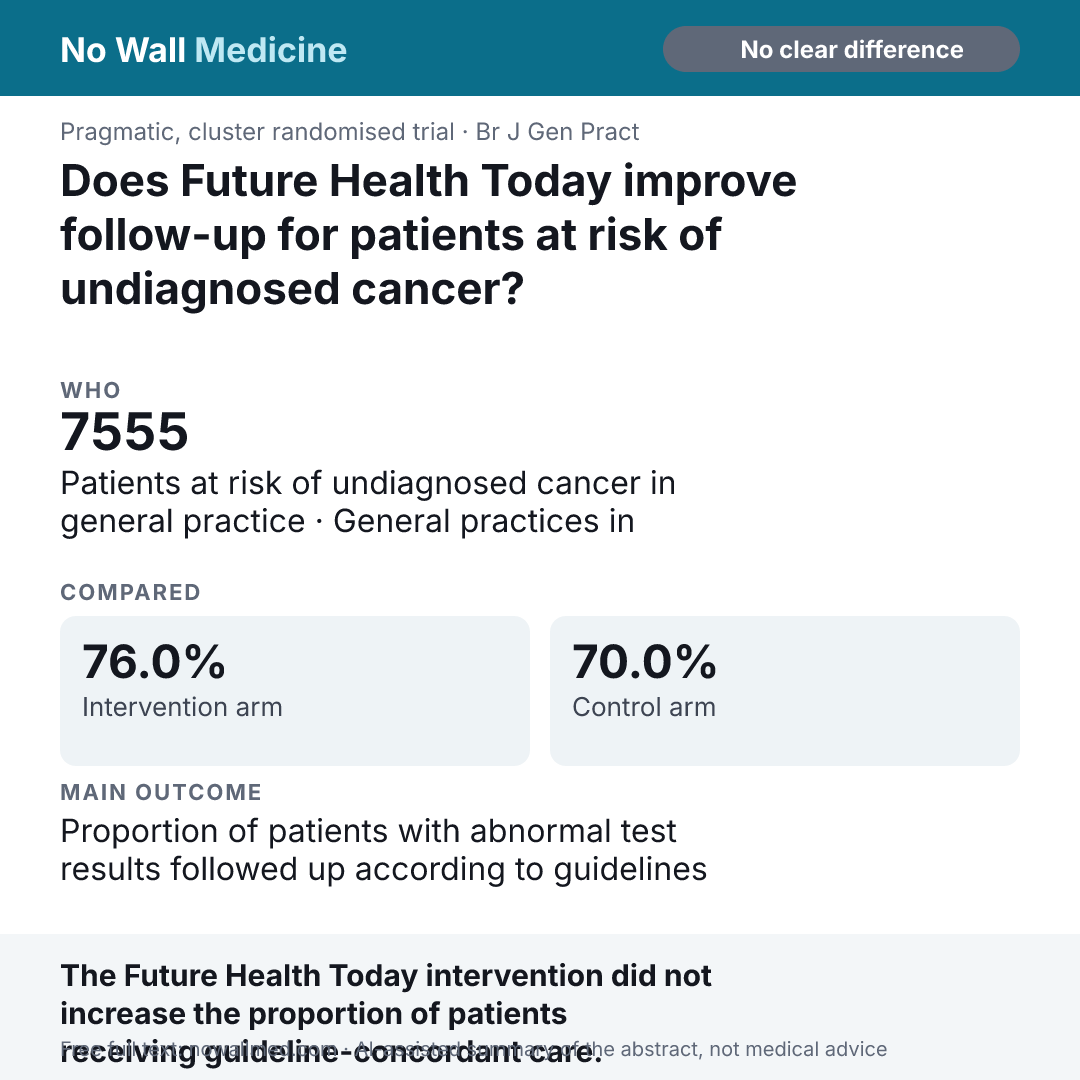
Future Health Today and patients at risk of undiagnosed cancer: a pragmatic cluster randomised trial of quality- improvement activities in general practice
Pragmatic, cluster randomised trialNo clear difference
Does Future Health Today improve follow-up for patients at risk of undiagnosed cancer?
Who
7555
Patients at risk of undiagnosed cancer in general practice · General practices in Victoria and Tasmania, Australia
Compared
76.0%Intervention arm (2820/3709)
70.0%Control arm (2693/3846)
Main outcome
Proportion of patients with abnormal test results followed up according to guidelines
Result: odds ratio 1.15 (95% CI 0.87 to 1.53)
Bottom line: The Future Health Today intervention did not increase the proportion of patients receiving guideline-concordant care.
Br J Gen Pract · 2025-05-02 · Save PNG
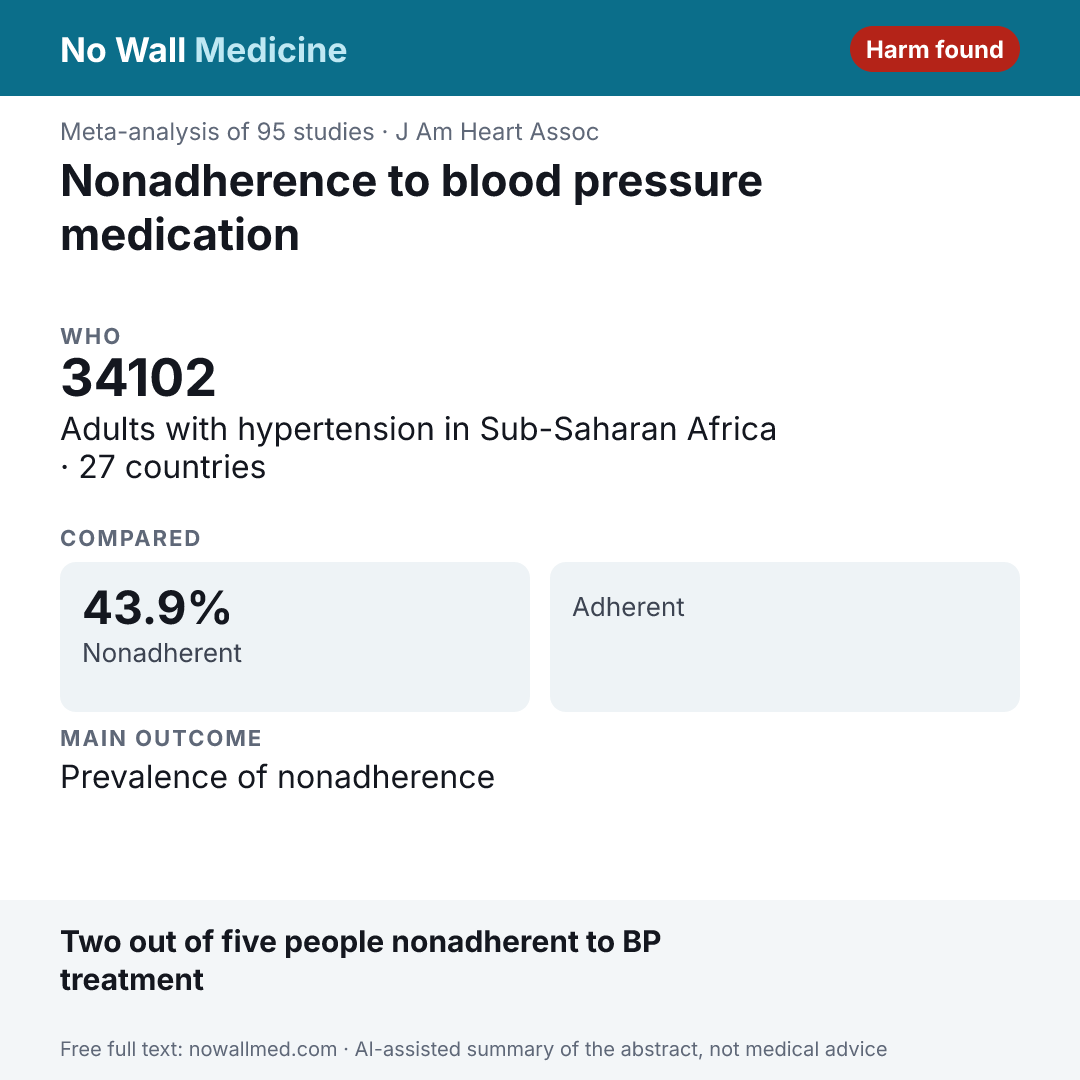
High Burden and Trend in Nonadherence to Blood Pressure-Lowering Medications: Meta-Analysis of Data From Over 34 000 Adults With Hypertension in Sub-Saharan Africa
Meta-analysis of 95 studiesHarm found
Nonadherence to blood pressure medication
Who
34102
Adults with hypertension in Sub-Saharan Africa · 27 countries
Compared
43.9%Nonadherent (95% CI, 39.2-48.6)
Adherent
Main outcome
Prevalence of nonadherence
Bottom line: Two out of five people nonadherent to BP treatment
J Am Heart Assoc · 2025-05-02 · Save PNG
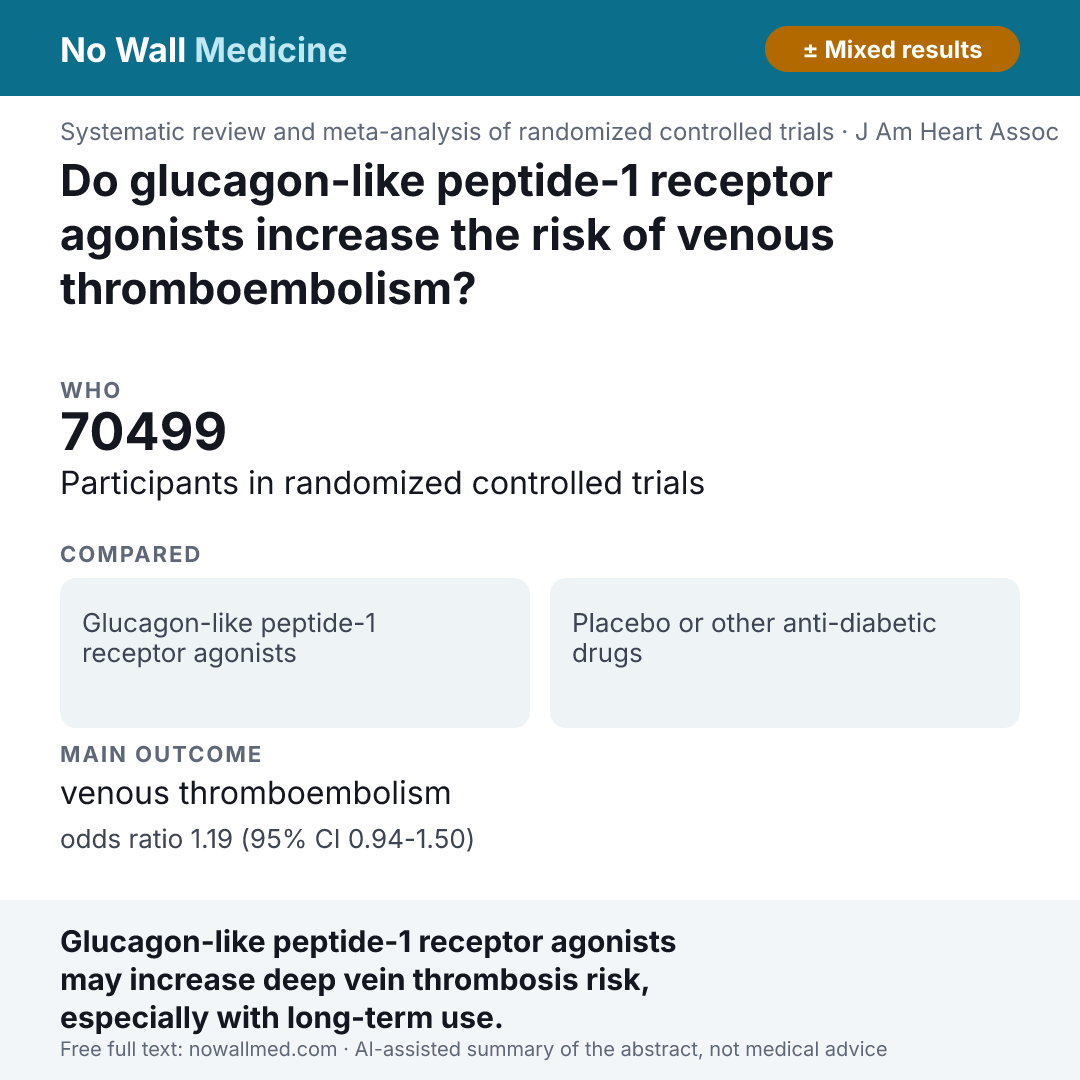
Glucagon-Like Peptide-1 Receptor Agonists and Risk of Venous Thromboembolism: A Systematic Review and Meta-Analysis of Randomized Controlled Trials
Systematic review and meta-analysis of randomized controlled trialsMixed results
Do glucagon-like peptide-1 receptor agonists increase the risk of venous thromboembolism?
Who
70499
Participants in randomized controlled trials
Compared
Glucagon-like peptide-1 receptor agonists
Placebo or other anti-diabetic drugs
Main outcome
venous thromboembolism
Result: odds ratio 1.19 (95% CI 0.94-1.50)
Bottom line: Glucagon-like peptide-1 receptor agonists may increase deep vein thrombosis risk, especially with long-term use.
J Am Heart Assoc · 2025-05-02 · Save PNG
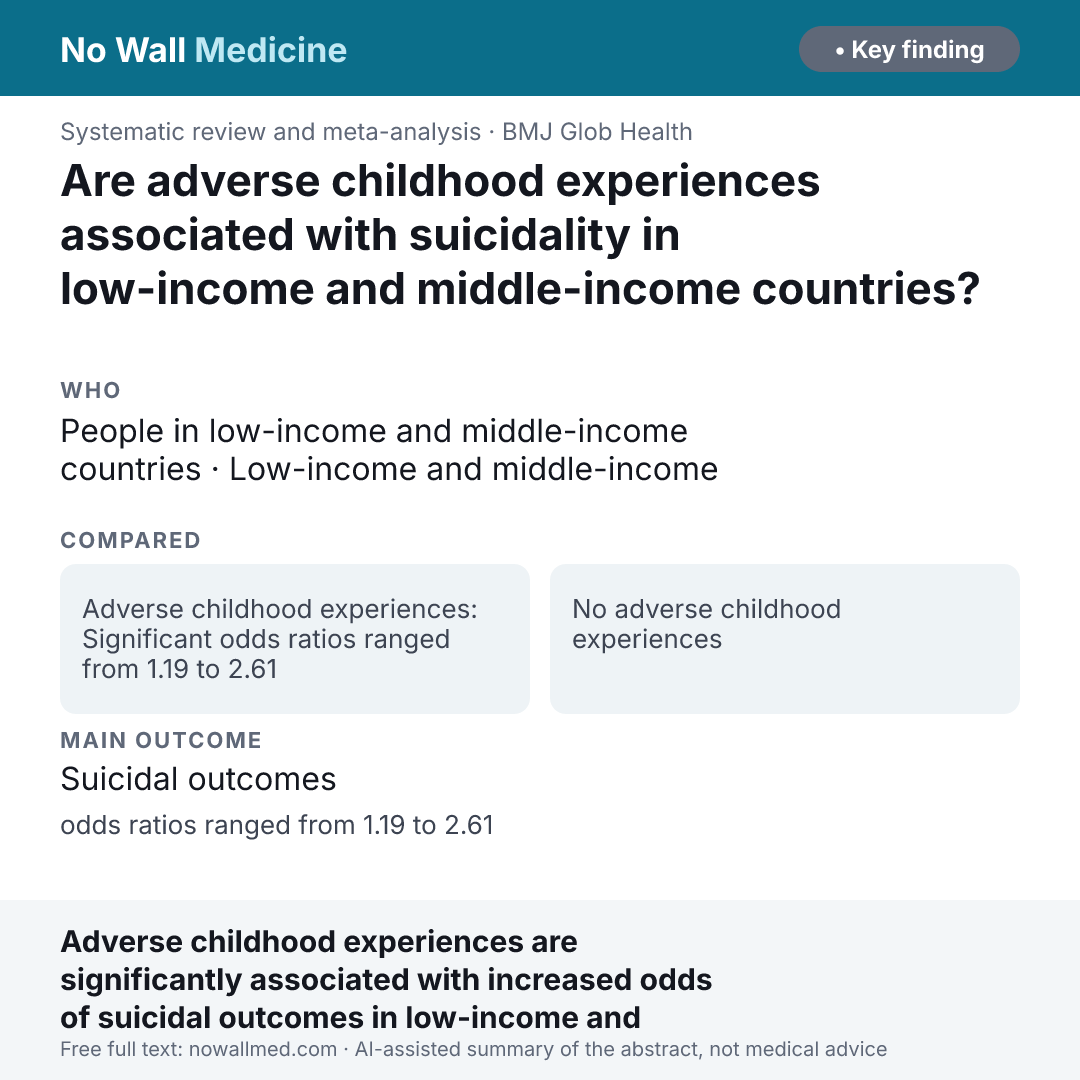
Adverse childhood experiences and suicidality in low-income and middle-income countries: a systematic review and meta-analysis
Systematic review and meta-analysisKey finding
Are adverse childhood experiences associated with suicidality in low-income and middle-income countries?
Who
People in low-income and middle-income countries · Low-income and middle-income countries
Compared
Adverse childhood experiences: Significant odds ratios ranged from 1.19 to 2.61
No adverse childhood experiences
Main outcome
Suicidal outcomes
Result: odds ratios ranged from 1.19 to 2.61
Bottom line: Adverse childhood experiences are significantly associated with increased odds of suicidal outcomes in low-income and middle-income countries.
Limitation: None of the included articles reported on suicide mortality.
BMJ Glob Health · 2025-05-02 · Save PNG
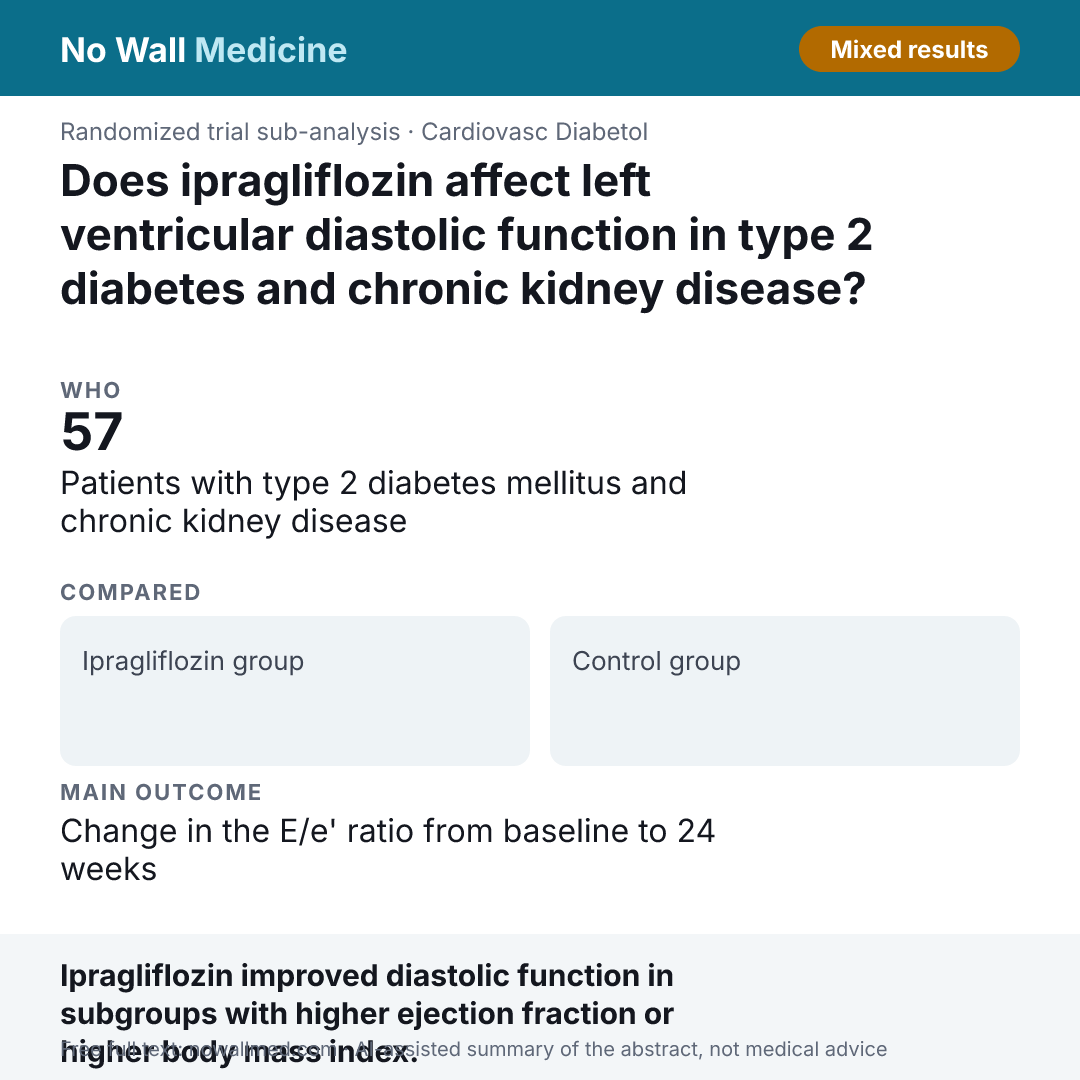
Impact of baseline left ventricular ejection fraction and body mass index on the effect of 24-week Ipragliflozin treatment on left ventricular diastolic function in patients with type 2 diabetes and chronic kidney disease: insights from the PROCEED trial
Randomized trial sub-analysisMixed results
Does ipragliflozin affect left ventricular diastolic function in type 2 diabetes and chronic kidney disease?
Who
57
Patients with type 2 diabetes mellitus and chronic kidney disease
Compared
Ipragliflozin group
Control group
Main outcome
Change in the E/e' ratio from baseline to 24 weeks
Result: group difference -0.82 (95% CI -2.44 to 0.81)
Bottom line: Ipragliflozin improved diastolic function in subgroups with higher ejection fraction or higher body mass index.
Cardiovasc Diabetol · 2025-05-02 · Save PNG
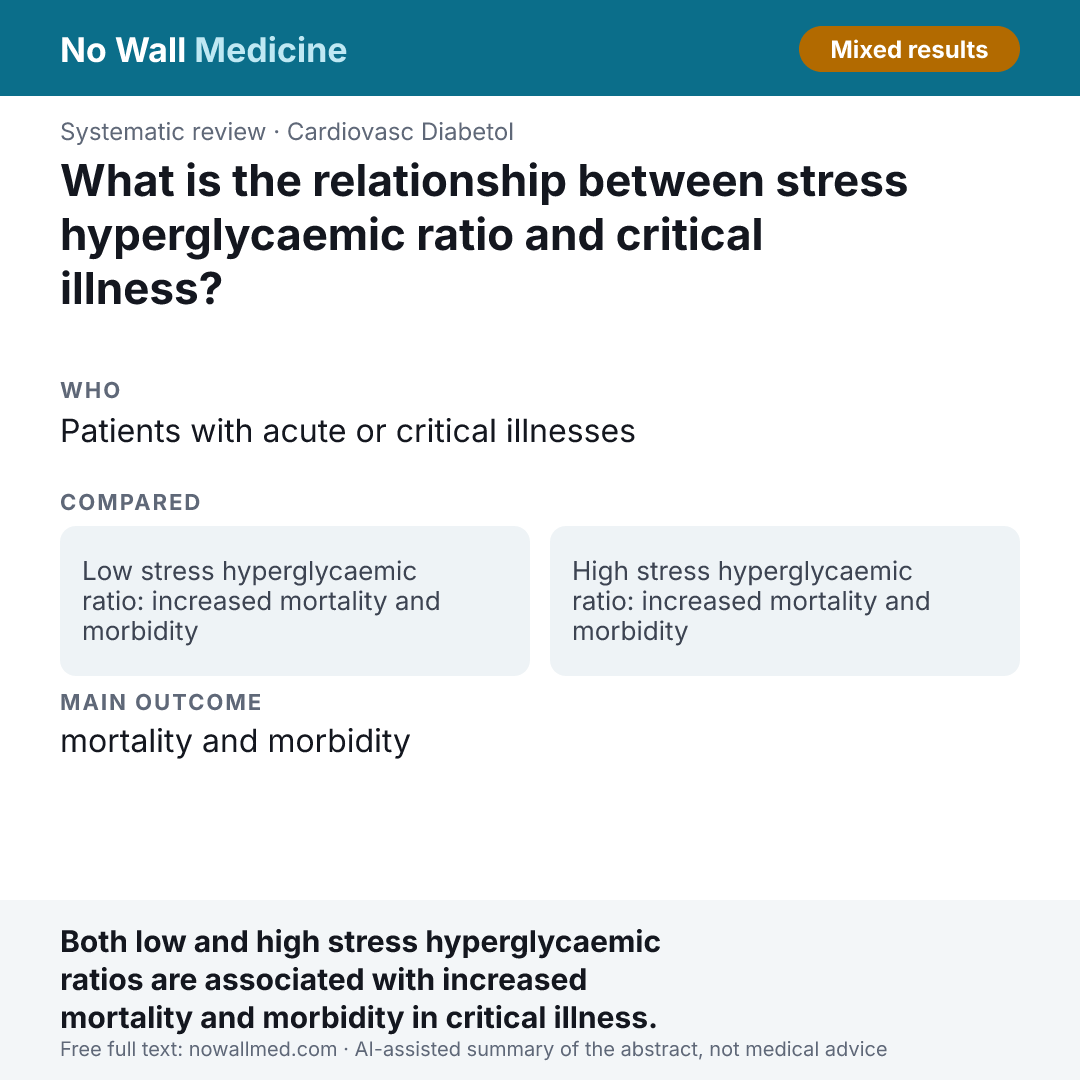
Relationship between stress hyperglycaemic ratio (SHR) and critical illness: a systematic review
Systematic reviewMixed results
What is the relationship between stress hyperglycaemic ratio and critical illness?
Who
Patients with acute or critical illnesses
Compared
Low stress hyperglycaemic ratio: increased mortality and morbidity
High stress hyperglycaemic ratio: increased mortality and morbidity
Main outcome
mortality and morbidity
Bottom line: Both low and high stress hyperglycaemic ratios are associated with increased mortality and morbidity in critical illness.
Cardiovasc Diabetol · 2025-05-02 · Save PNG
Randomised controlled feasibility trial of online group acceptance and commitment therapy for functional cognitive disorder
Single-blind randomized controlled feasibility trialBenefit found
Is online group acceptance and commitment therapy feasible for functional cognitive disorder?
Who
44
Participants from cognitive neurology, neuropsychiatry and memory clinics · London
Compared
Acceptance and commitment therapy plus treatment as usual: 64.3% reported being 'satisfied' or 'very satisfied'
Treatment as usual alone: 0% reported being 'satisfied' or 'very satisfied'
Main outcome
Acceptance and Action Questionnaire II score
Bottom line: Online group acceptance and commitment therapy is feasible for functional cognitive disorder with positive trends in psychological flexibility.
Limitation: The study was not powered to demonstrate efficacy statistically.
BJPsych Open · 2025-05-02 · Save PNG

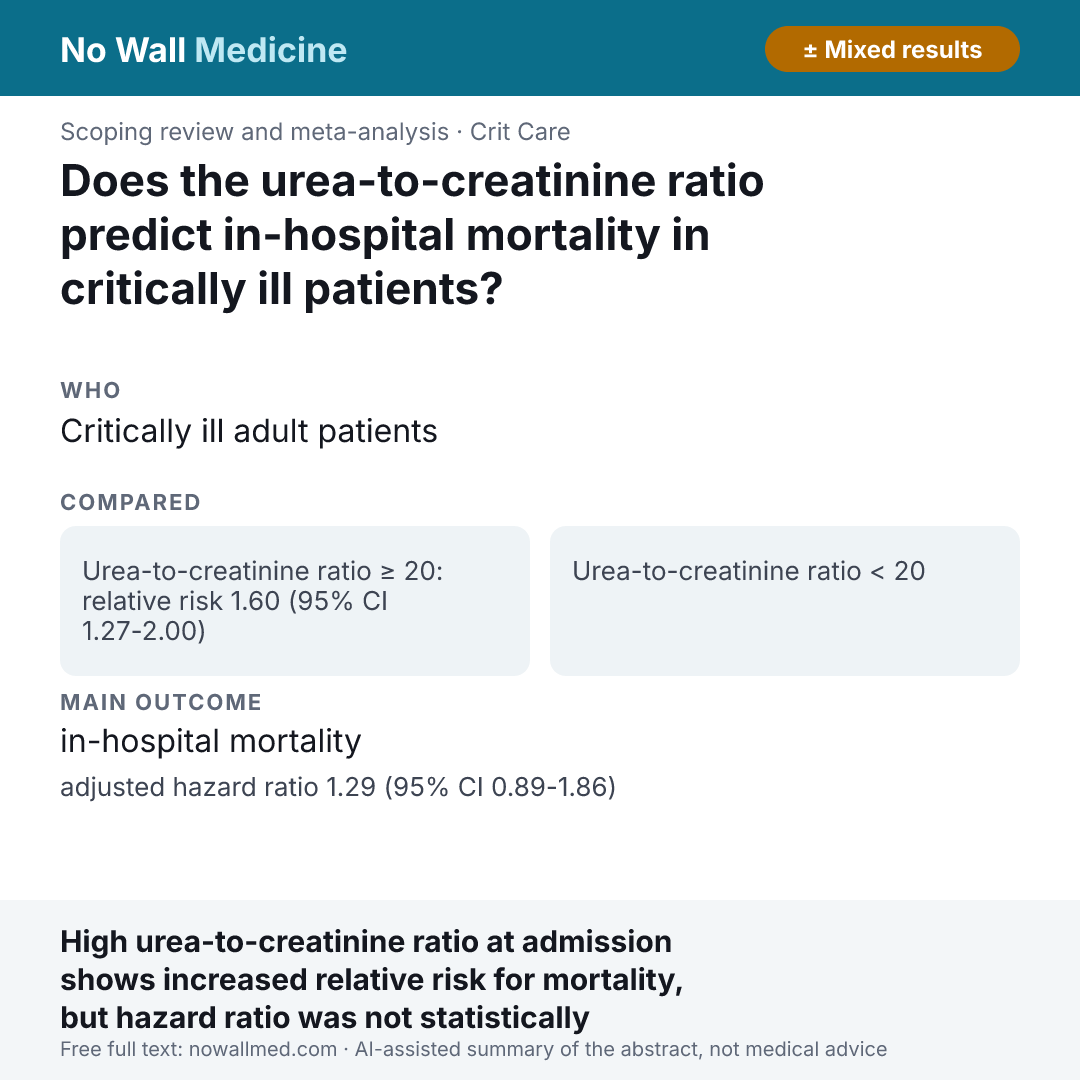
The urea-to-creatinine ratio as an emerging biomarker in critical care: a scoping review and meta-analysis
Scoping review and meta-analysisMixed results
Does the urea-to-creatinine ratio predict in-hospital mortality in critically ill patients?
Who
Critically ill adult patients
Compared
Urea-to-creatinine ratio ≥ 20: relative risk 1.60 (95% CI 1.27-2.00)
Urea-to-creatinine ratio < 20
Main outcome
in-hospital mortality
Result: adjusted hazard ratio 1.29 (95% CI 0.89-1.86)
Bottom line: High urea-to-creatinine ratio at admission shows increased relative risk for mortality, but hazard ratio was not statistically significant.
Crit Care · 2025-05-02 · Save PNG
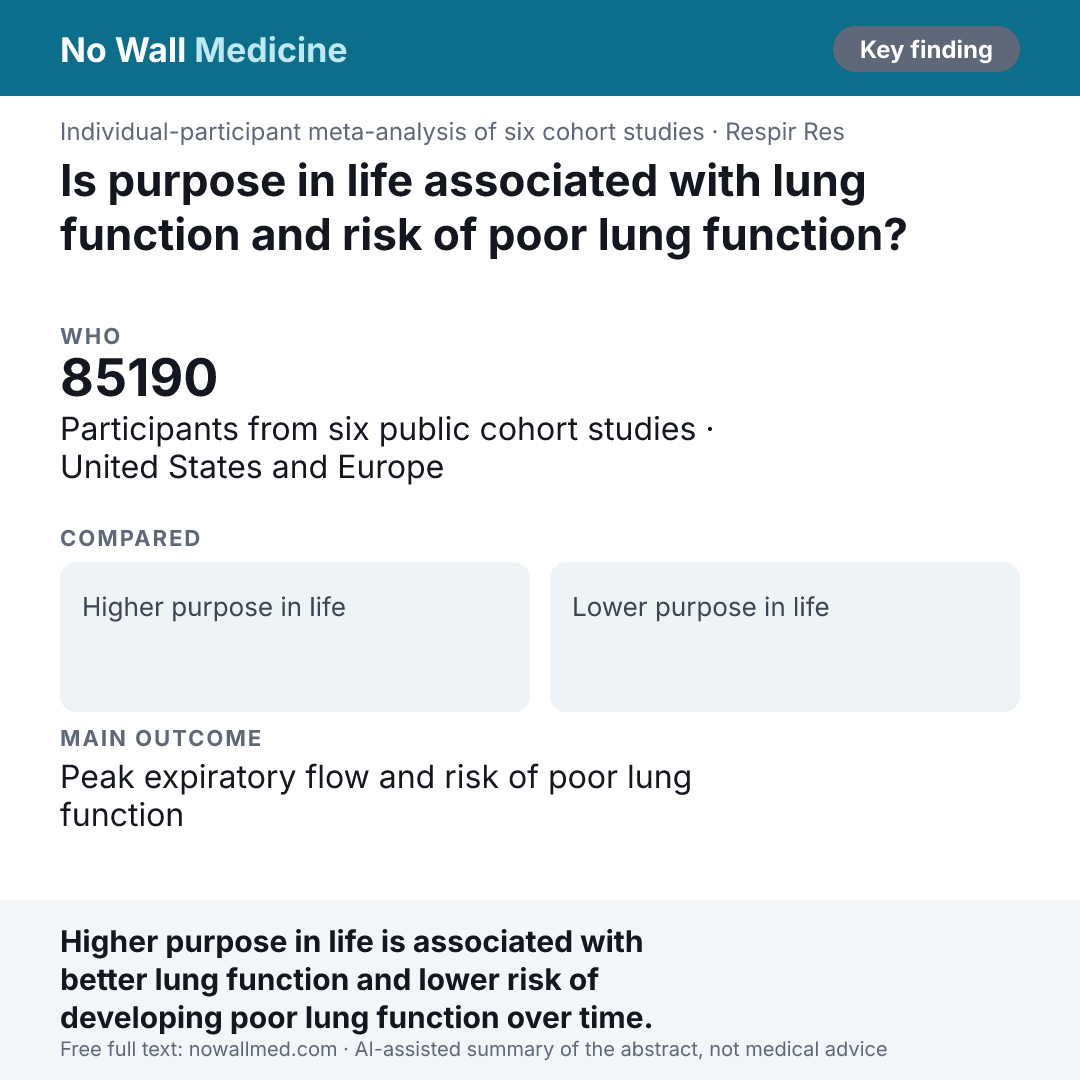
Purpose in life and lung function: an individual-participant meta-analysis of six cohort studies
Individual-participant meta-analysis of six cohort studiesKey finding
Is purpose in life associated with lung function and risk of poor lung function?
Who
85190
Participants from six public cohort studies · United States and Europe
Compared
Higher purpose in life
Lower purpose in life
Main outcome
Peak expiratory flow and risk of poor lung function
Result: hazard ratio 0.91 (95% confidence interval 0.88, 0.94)
Bottom line: Higher purpose in life is associated with better lung function and lower risk of developing poor lung function over time.
Respir Res · 2025-05-02 · Save PNG