Visual abstracts
New randomized trials and meta-analyses from leading journals at a glance: who was studied, what was compared, and what was found. Every paper is free to read in full.
All specialtiesCardiology 4877Oncology 4138Gastroenterology & Hepatology 1942Infectious Disease 3837Neurology 1905Psychiatry & Mental Health 2273Pulmonology 2143Critical Care 1365Endocrinology & Diabetes 2580Pediatrics 2980Surgery 2559Orthopedics & Sports Medicine 931Neurosurgery 537Cardiothoracic & Vascular Surgery 674Plastic & Reconstructive Surgery 591Nephrology 1133Rheumatology 823Hematology 1109Dermatology 621Ophthalmology 543Obstetrics & Gynecology 1686Public & Global Health 1058Radiology & Imaging 648Anesthesiology 986Urology 764ENT (Otolaryngology) 503Emergency Medicine 511Allergy & Immunology 313Geriatrics 981Family Medicine & Primary Care 562Medical Genetics & Genomics 676Pathology & Laboratory Medicine 159Physical Medicine & Rehabilitation 757Palliative Care 444Nutrition 1588Digital Health & AI 2201General Medicine 321
Vasopressor or advanced airway first in cardiac arrest?
Randomized trialNo clear difference
Does vasopressor or advanced airway administration first improve out-of-hospital cardiac arrest outcomes?
Who
2404
Patients with out-of-hospital cardiac arrest
Compared
Vasopressor-first
Advanced airway-first
Main outcome
72-hour survival, return of spontaneous circulation, and hospital survival
Result: adjusted OR 0.96 (95% CI: 0.71-1.31) for 72-hour survival
Bottom line: The sequence of vasopressor or advanced airway administration did not affect out-of-hospital cardiac arrest outcomes or CPR quality.
Resuscitation · 2024-10-30Download image

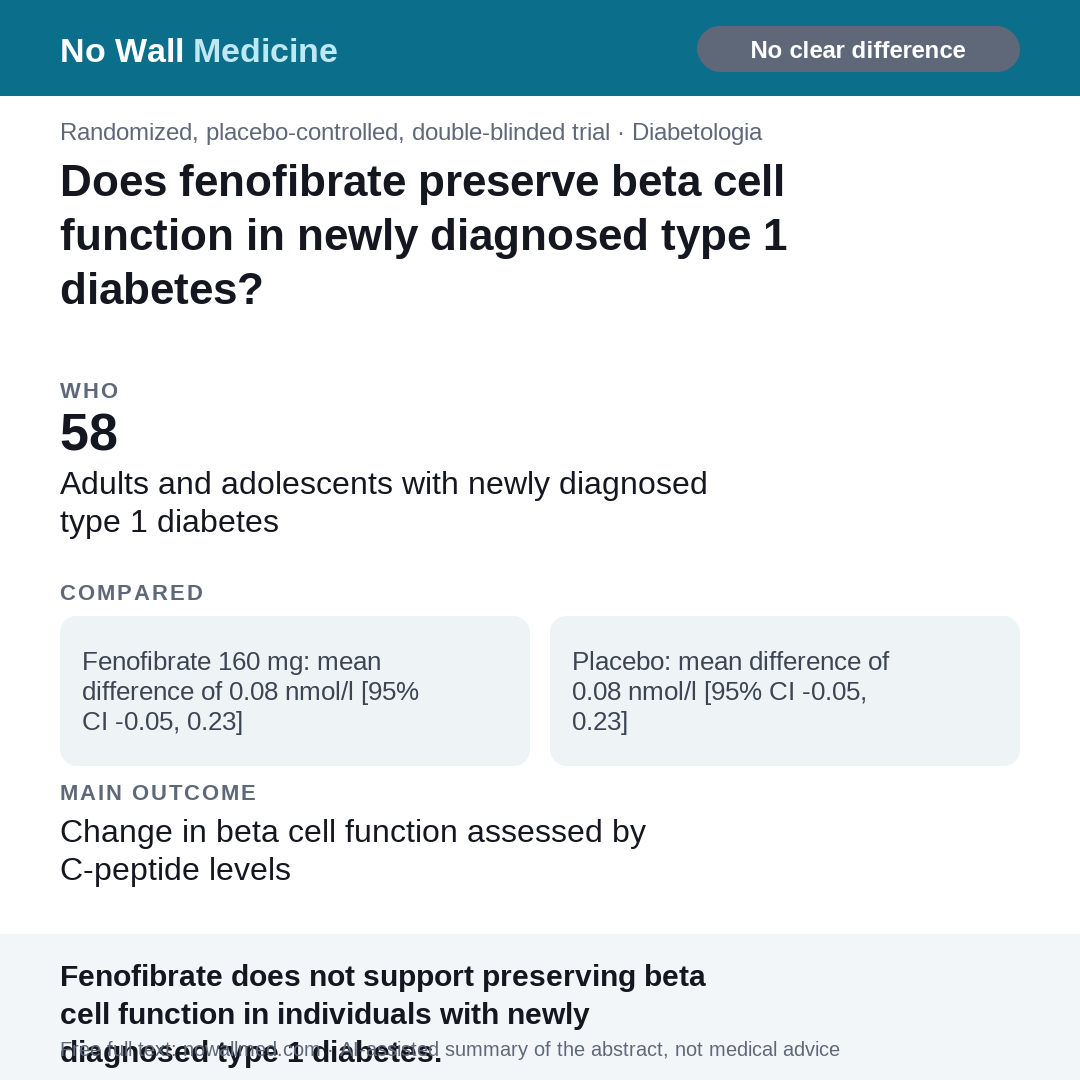
Effect of fenofibrate on residual beta cell function in adults and adolescents with newly diagnosed type 1 diabetes: a randomised clinical trial
Randomized, placebo-controlled, double-blinded trialNo clear difference
Does fenofibrate preserve beta cell function in newly diagnosed type 1 diabetes?
Who
58
Adults and adolescents with newly diagnosed type 1 diabetes
Compared
Fenofibrate 160 mg: mean difference of 0.08 nmol/l [95% CI -0.05, 0.23]
Placebo: mean difference of 0.08 nmol/l [95% CI -0.05, 0.23]
Main outcome
Change in beta cell function assessed by C-peptide levels
Result: mean difference of 0.08 nmol/l [95% CI -0.05, 0.23]
Bottom line: Fenofibrate does not support preserving beta cell function in individuals with newly diagnosed type 1 diabetes.
Funded by: Sehested Hansens Foundation
Diabetologia · 2024-10-30Download image
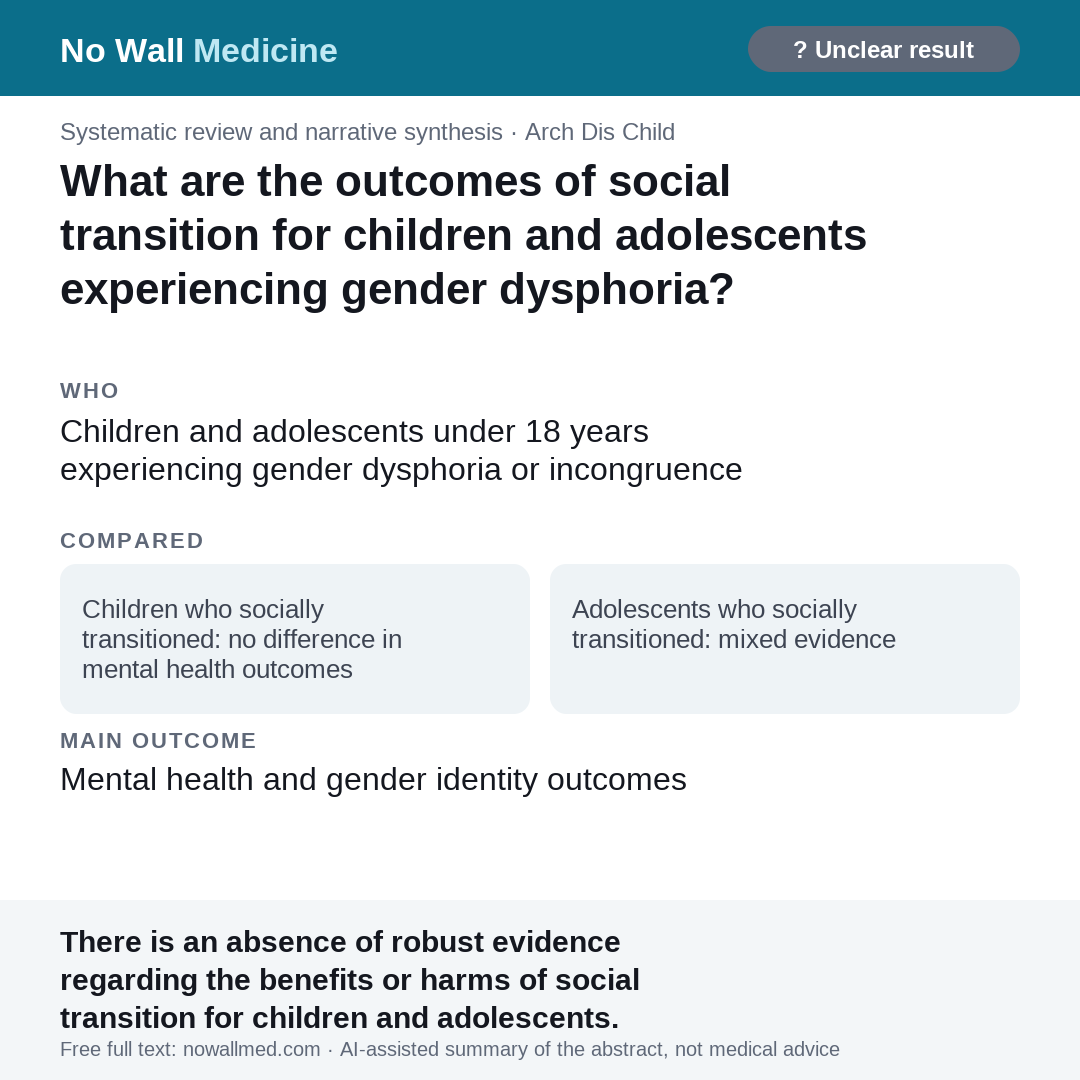
Impact of social transition in relation to gender for children and adolescents: a systematic review
Systematic review and narrative synthesisUnclear result
What are the outcomes of social transition for children and adolescents experiencing gender dysphoria?
Who
Children and adolescents under 18 years experiencing gender dysphoria or incongruence · Primarily United States
Compared
Children who socially transitioned: no difference in mental health outcomes
Adolescents who socially transitioned: mixed evidence
Main outcome
Mental health and gender identity outcomes
Bottom line: There is an absence of robust evidence regarding the benefits or harms of social transition for children and adolescents.
Arch Dis Child · 2024-10-30Download image
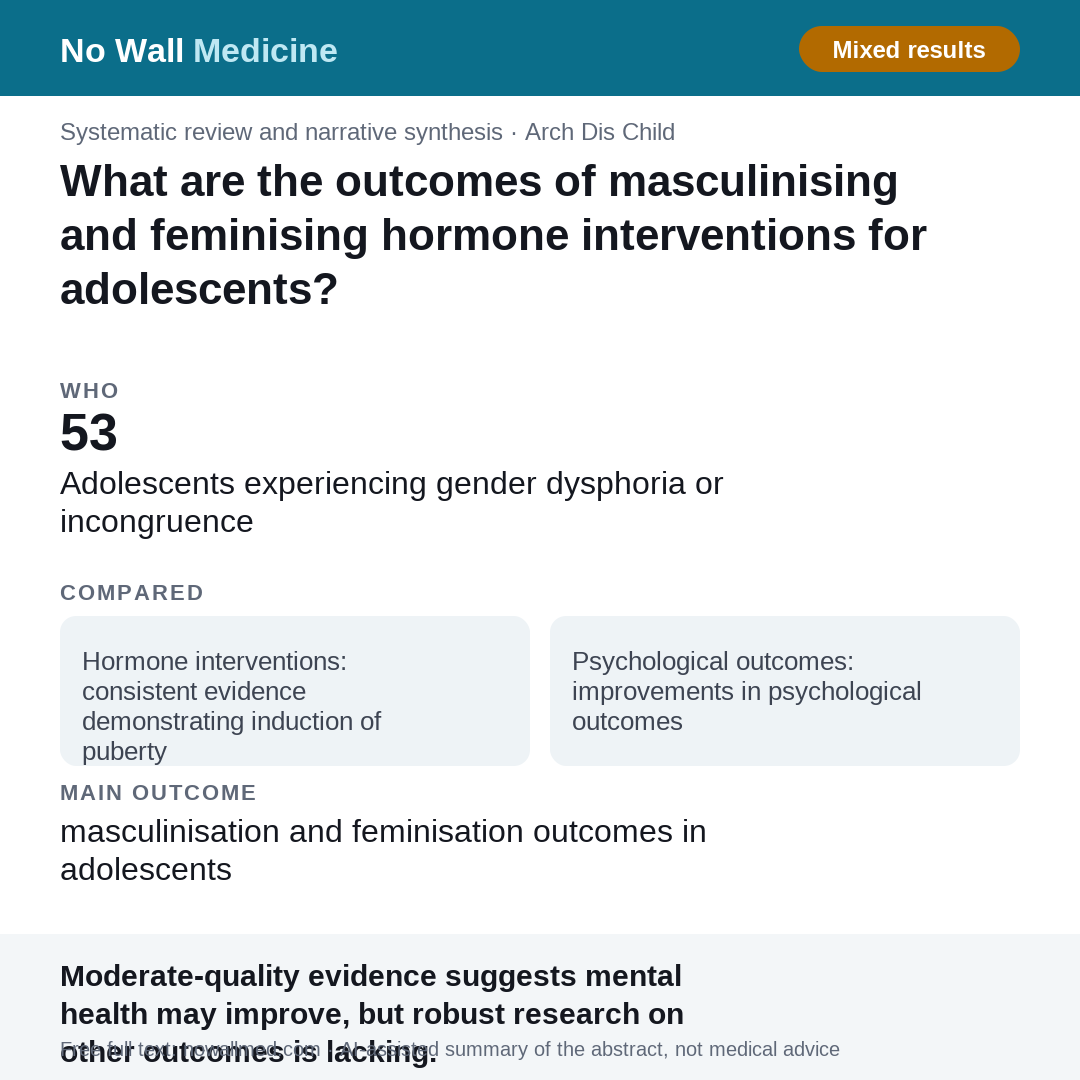
Masculinising and feminising hormone interventions for adolescents experiencing gender dysphoria or incongruence: a systematic review
Systematic review and narrative synthesisMixed results
What are the outcomes of masculinising and feminising hormone interventions for adolescents?
Who
53
Adolescents experiencing gender dysphoria or incongruence
Compared
Hormone interventions: consistent evidence demonstrating induction of puberty
Psychological outcomes: improvements in psychological outcomes
Main outcome
masculinisation and feminisation outcomes in adolescents
Bottom line: Moderate-quality evidence suggests mental health may improve, but robust research on other outcomes is lacking.
Limitation: Most studies included adolescents receiving puberty suppression, making it difficult to determine hormone effects alone.
Arch Dis Child · 2024-10-30Download image
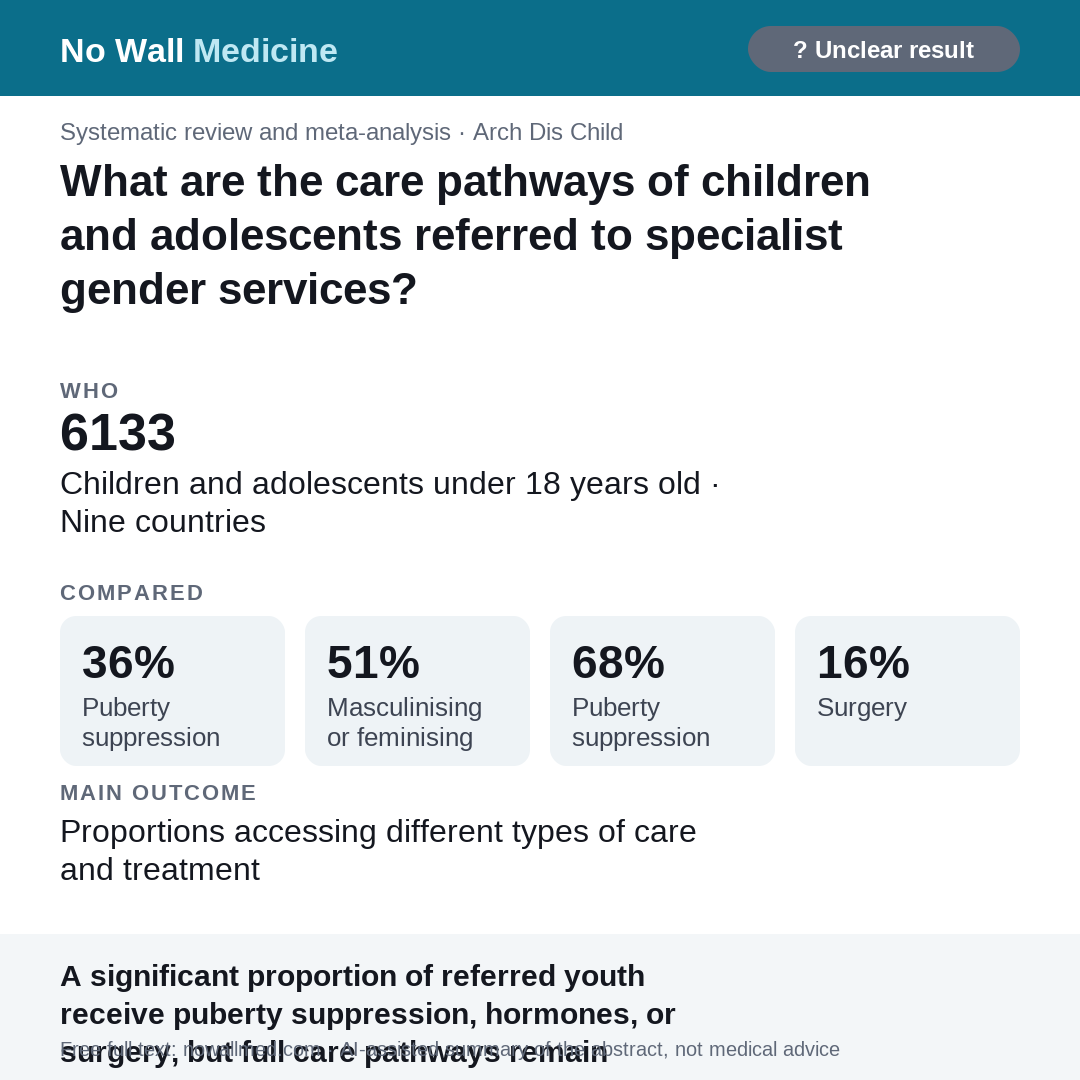
Care pathways of children and adolescents referred to specialist gender services: a systematic review
Systematic review and meta-analysisUnclear result
What are the care pathways of children and adolescents referred to specialist gender services?
Who
6133
Children and adolescents under 18 years old · Nine countries
Compared
36%Puberty suppression (95% CI 27% to 45%)
51%Masculinising or feminising hormones (95% CI 40% to 62%)
68%Puberty suppression and/or hormones (95% CI 57% to 77%)
16%Surgery (95% CI 10% to 24%)
Main outcome
Proportions accessing different types of care and treatment
Bottom line: A significant proportion of referred youth receive puberty suppression, hormones, or surgery, but full care pathways remain unknown.
Limitation: No study systematically reported information about the full pathway or psychological care received.
Arch Dis Child · 2024-10-30Download image
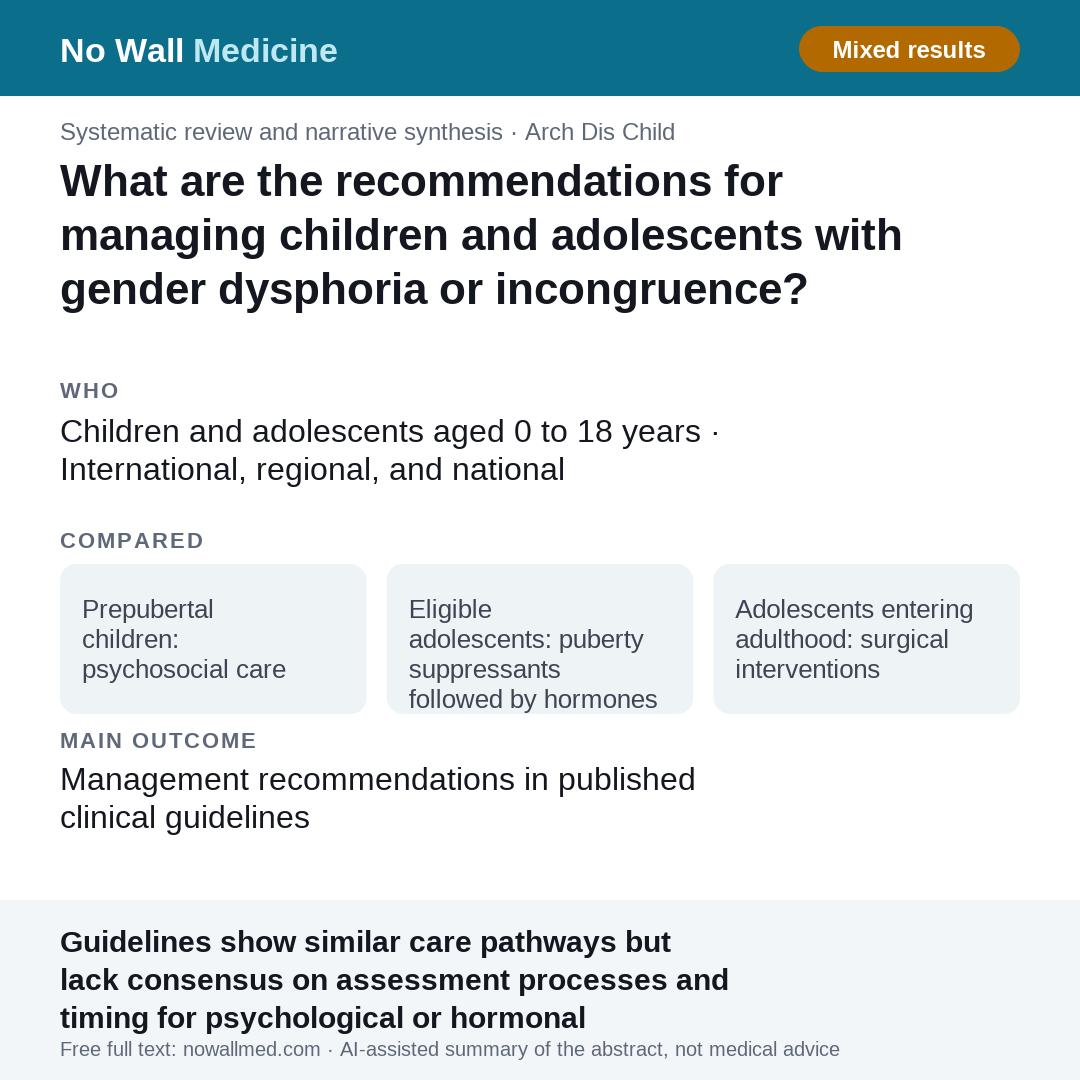
Clinical guidelines for children and adolescents experiencing gender dysphoria or incongruence: a systematic review of recommendations (part 2)
Systematic review and narrative synthesisMixed results
What are the recommendations for managing children and adolescents with gender dysphoria or incongruence?
Who
Children and adolescents aged 0 to 18 years · International, regional, and national guidelines
Compared
Prepubertal children: psychosocial care
Eligible adolescents: puberty suppressants followed by hormones
Adolescents entering adulthood: surgical interventions
Main outcome
Management recommendations in published clinical guidelines
Bottom line: Guidelines show similar care pathways but lack consensus on assessment processes and timing for psychological or hormonal interventions.
Limitation: Limited guidance on psychological care, prepubertal management, or non-binary gender identity.
Arch Dis Child · 2024-10-30Download image
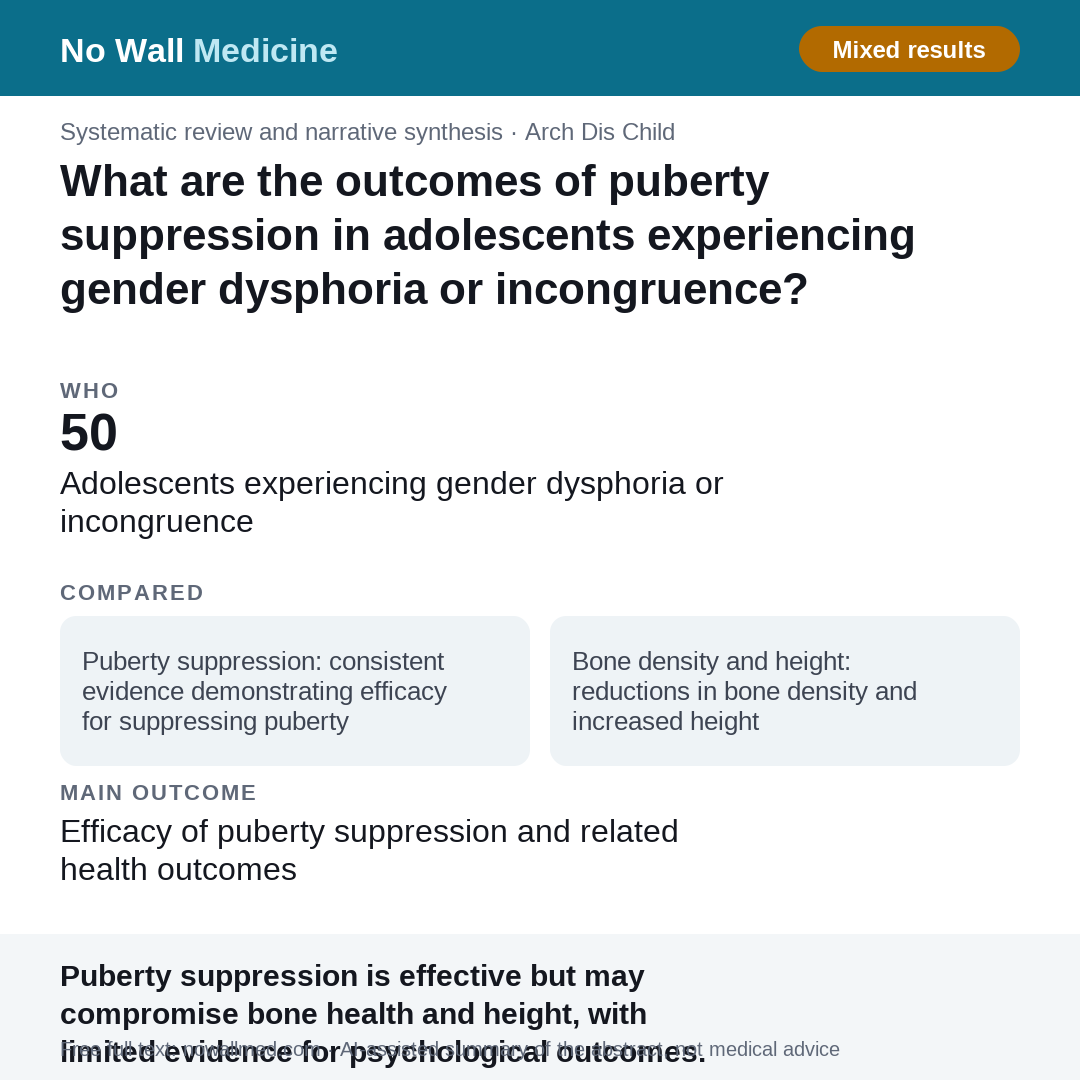
Interventions to suppress puberty in adolescents experiencing gender dysphoria or incongruence: a systematic review
Systematic review and narrative synthesisMixed results
What are the outcomes of puberty suppression in adolescents experiencing gender dysphoria or incongruence?
Who
50
Adolescents experiencing gender dysphoria or incongruence
Compared
Puberty suppression: consistent evidence demonstrating efficacy for suppressing puberty
Bone density and height: reductions in bone density and increased height
Main outcome
Efficacy of puberty suppression and related health outcomes
Bottom line: Puberty suppression is effective but may compromise bone health and height, with limited evidence for psychological outcomes.
Limitation: Lack of high-quality research assessing various health and psychological impacts.
Arch Dis Child · 2024-10-30Download image
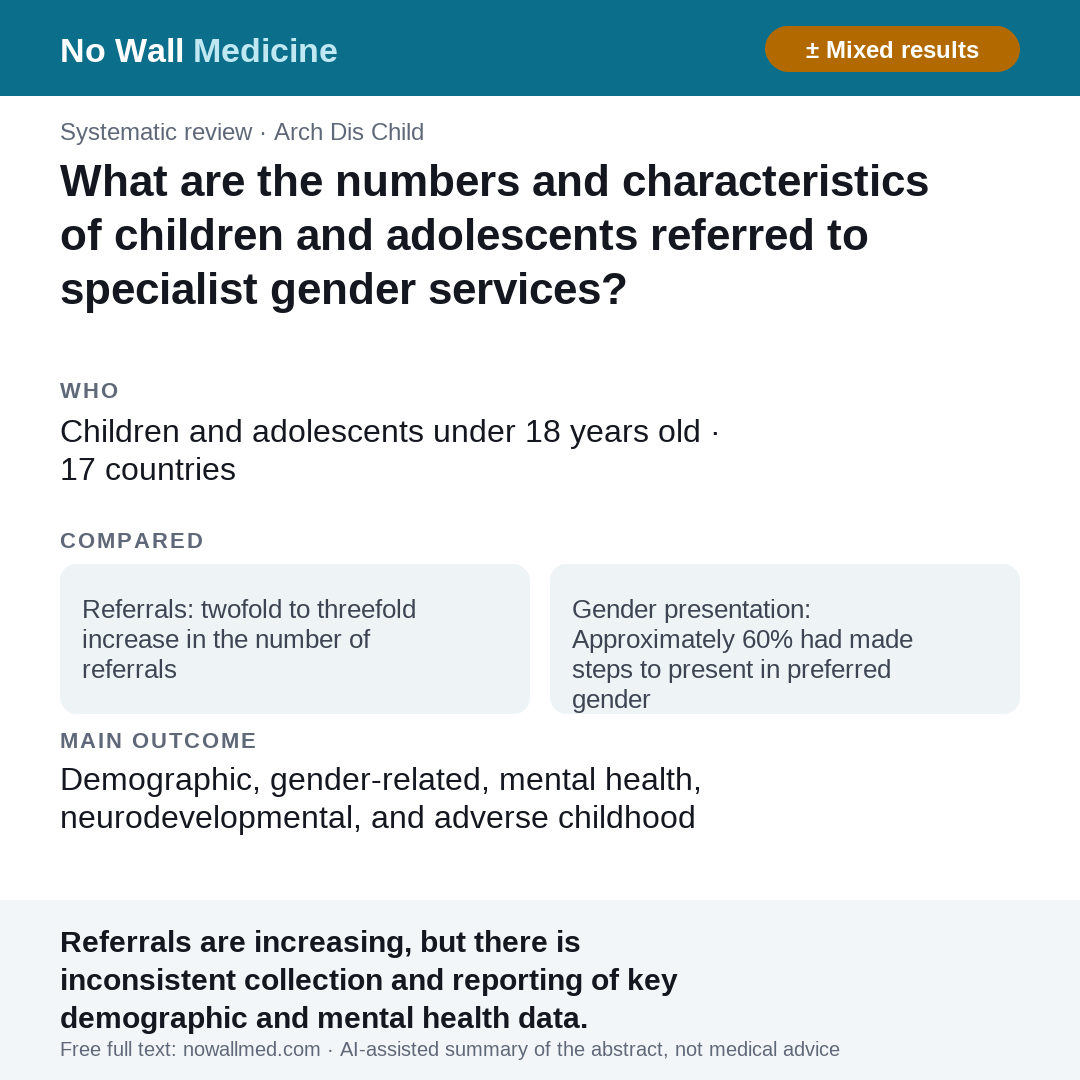
Characteristics of children and adolescents referred to specialist gender services: a systematic review
Systematic reviewMixed results
What are the numbers and characteristics of children and adolescents referred to specialist gender services?
Who
Children and adolescents under 18 years old · 17 countries
Compared
Referrals: twofold to threefold increase in the number of referrals
Gender presentation: Approximately 60% had made steps to present in preferred gender
Main outcome
Demographic, gender-related, mental health, neurodevelopmental, and adverse childhood experience data
Bottom line: Referrals are increasing, but there is inconsistent collection and reporting of key demographic and mental health data.
Arch Dis Child · 2024-10-30Download image
Psychosocial support interventions for children and adolescents experiencing gender dysphoria or incongruence: a systematic review
Systematic reviewUnclear result
Do psychosocial support interventions help
Who
children and adolescents with gender dysphoria · US, Australia, Canada, New Zealand, UK
Compared
intervention
control
Main outcome
mental health and psychosocial outcomes
Bottom line: Interventions show benefit or no change
Limitation: small number of low-quality studies
Arch Dis Child · 2024-10-30Download image
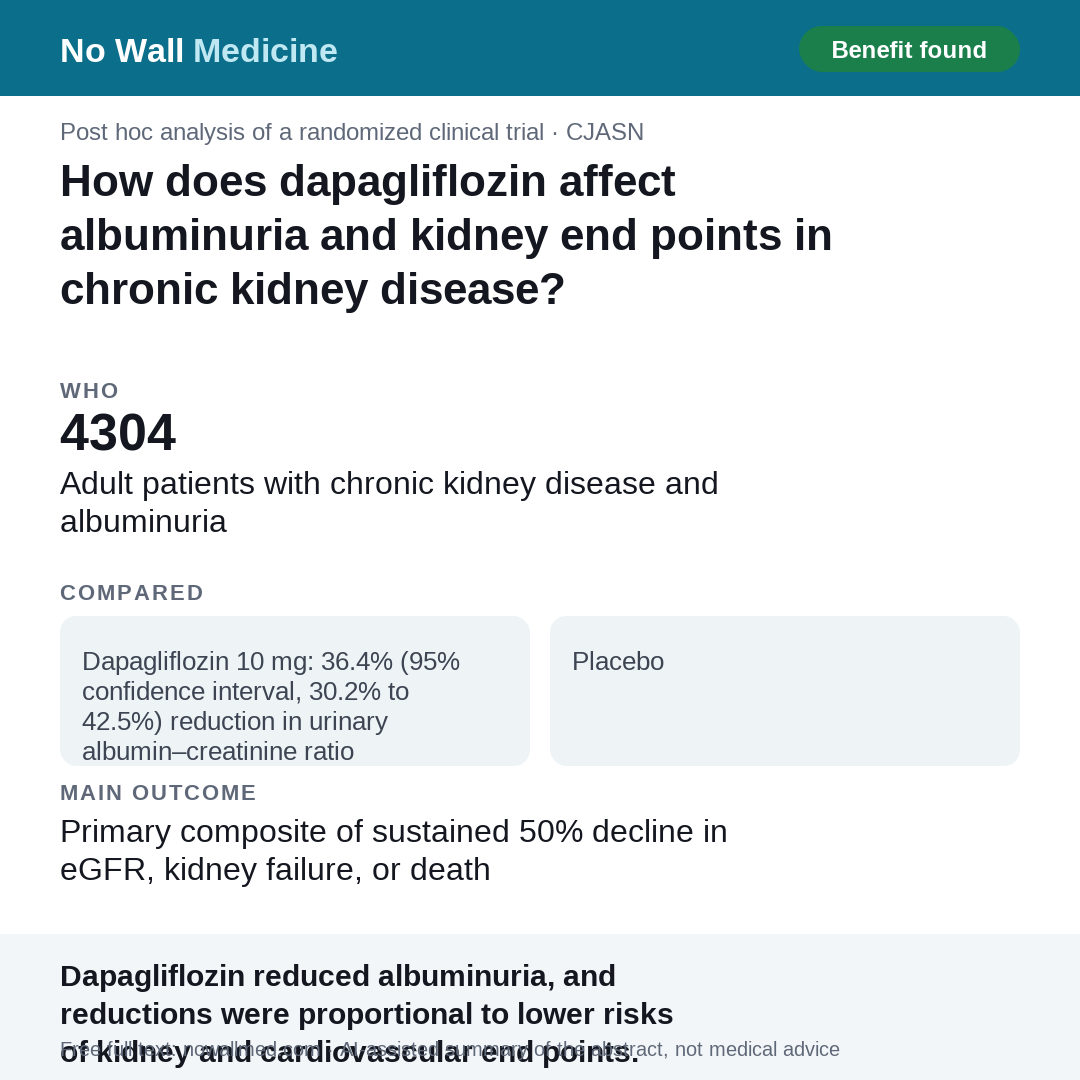
Baseline, Early Changes, and Residual Albuminuria: Post Hoc Analysis of a Randomized Clinical Trial of Dapagliflozin in Chronic Kidney Disease
Post hoc analysis of a randomized clinical trialBenefit found
How does dapagliflozin affect albuminuria and kidney end points in chronic kidney disease?
Who
4304
Adult patients with chronic kidney disease and albuminuria
Compared
Dapagliflozin 10 mg: 36.4% (95% confidence interval, 30.2% to 42.5%) reduction in urinary albumin–creatinine ratio
Placebo
Main outcome
Primary composite of sustained 50% decline in eGFR, kidney failure, or death
Bottom line: Dapagliflozin reduced albuminuria, and reductions were proportional to lower risks of kidney and cardiovascular end points.
CJASN · 2024-10-30Download image
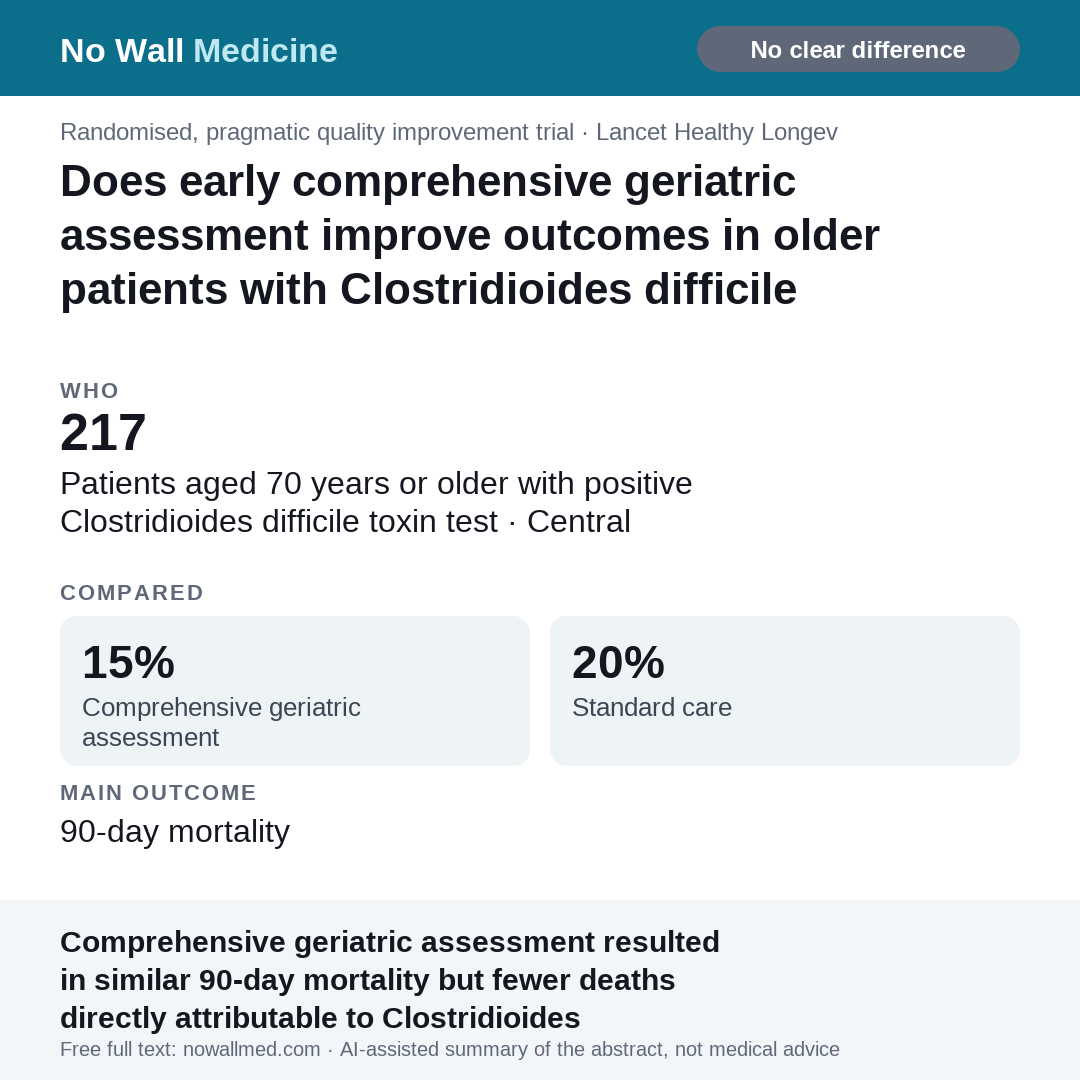
Early geriatric assessment and management in older patients with Clostridioides difficile infection in Denmark (CLODIfrail): a randomised trial
Randomised, pragmatic quality improvement trialNo clear difference
Does early comprehensive geriatric assessment improve outcomes in older patients with Clostridioides difficile infection?
Who
217
Patients aged 70 years or older with positive Clostridioides difficile toxin test · Central Denmark Region
Compared
15%Comprehensive geriatric assessment (16/109)
20%Standard care (22/108)
Main outcome
90-day mortality
Result: odds ratio 0·66, 95% CI 0·32-1·38
Bottom line: Comprehensive geriatric assessment resulted in similar 90-day mortality but fewer deaths directly attributable to Clostridioides difficile infection.
Funded by: Innovation Fund Denmark, Novo Nordisk Foundation, and Helsefonden
Lancet Healthy Longev · 2024-10-30Download image
IncobotulinumtoxinA in the Treatment of Upper Facial Lines: Results From Two Randomized, Double-Blind, Placebo-Controlled, Phase III Studies
Randomized, double-blind trialsBenefit found
IncobotulinumtoxinA for upper facial lines
Who
362, 368
Healthy participants with facial lines · United States, Germany
Compared
IncobotulinumtoxinA
Placebo
Main outcome
Proportions of responders
Bottom line: IncobotulinumtoxinA improved facial lines
Aesthet Surg J · 2024-10-30Download image

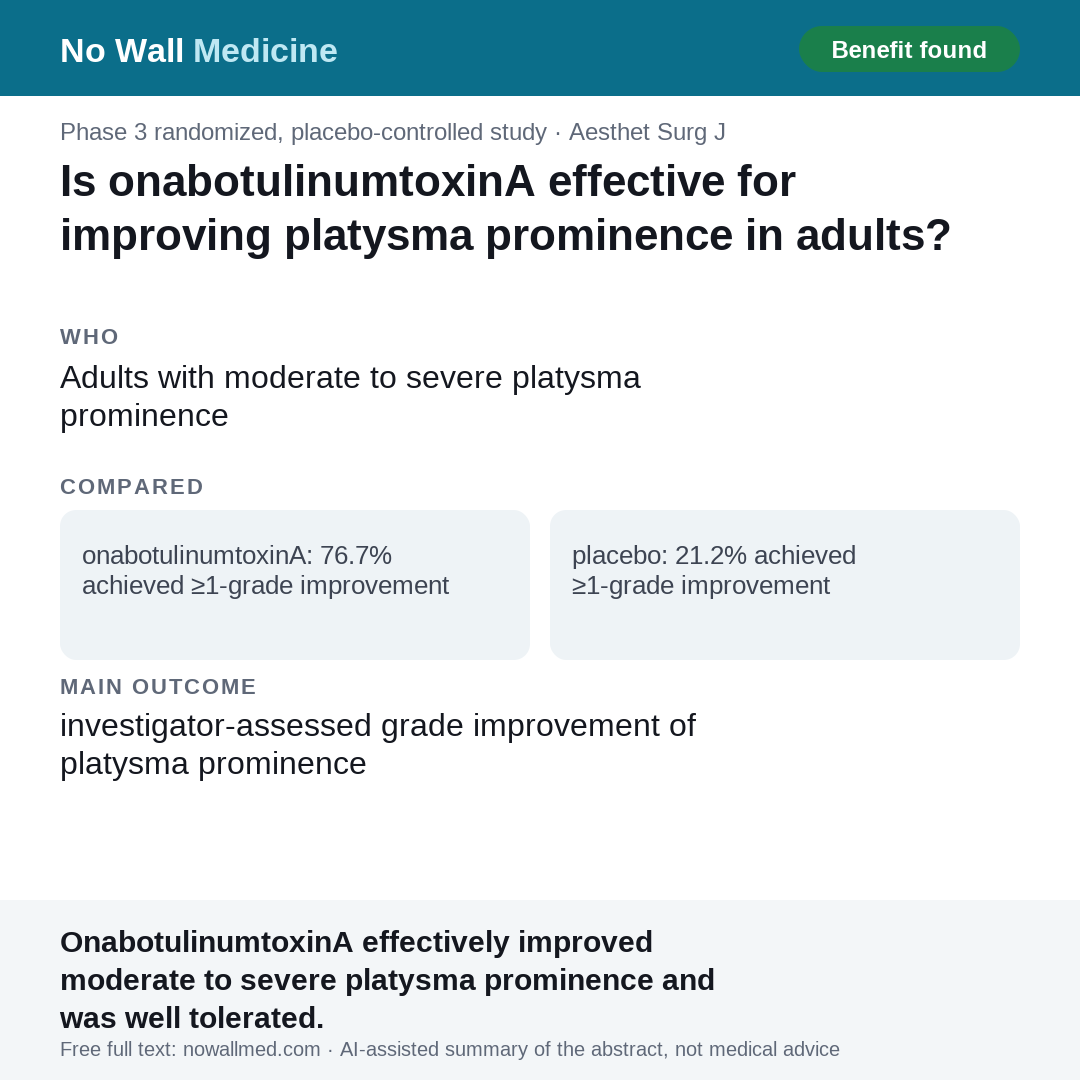
Improving Neck and Jawline Aesthetics With OnabotulinumtoxinA by Minimizing Platysma Muscle Contraction Effects: Efficacy and Safety Results in a Phase 3 Randomized, Placebo-Controlled Study
Phase 3 randomized, placebo-controlled studyBenefit found
Is onabotulinumtoxinA effective for improving platysma prominence in adults?
Who
Adults with moderate to severe platysma prominence
Compared
onabotulinumtoxinA: 76.7% achieved ≥1-grade improvement
placebo: 21.2% achieved ≥1-grade improvement
Main outcome
investigator-assessed grade improvement of platysma prominence
Bottom line: OnabotulinumtoxinA effectively improved moderate to severe platysma prominence and was well tolerated.
Aesthet Surg J · 2024-10-30Download image
Cost and cost-effectiveness of digital technologies for support of tuberculosis treatment adherence: a systematic review
Systematic reviewMixed results
What are the costs and cost-effectiveness of digital technologies for tuberculosis treatment adherence?
Who
Patients with tuberculosis infection or disease · Various settings including high-income countries
Compared
Digital adherence technologies
Healthcare provider directly observed therapy
Main outcome
Costs and cost-effectiveness of digital technologies
Bottom line: Digital technologies may be cost saving or cost-effective, particularly in high-income settings, but findings are highly variable.
Limitation: Only eight studies adequately reported most Consolidated Health Economic Evaluation Reporting Standards elements.
BMJ Glob Health · 2024-10-30Download image

Plasma exchange with albumin replacement for Alzheimer's disease treatment induced changes in serum and cerebrospinal fluid inflammatory mediator levels
Randomized trialBenefit found
Does plasma exchange with albumin replacement impact inflammatory mediator levels in Alzheimer's disease?
Who
142
Alzheimer's disease patients · AMBAR trial
Compared
plasma exchange with albumin replacement: significantly reduced IFN-γ, eotaxin, MIP-1α and ICAM-1 in serum, and eotaxin-3 and MIP-1β in CSF
placebo
Main outcome
serum and cerebrospinal fluid inflammatory mediator levels
Bottom line: Plasma exchange with albumin replacement reduces inflammatory mediators in serum and cerebrospinal fluid in Alzheimer's disease patients.
Ann Clin Transl Neurol · 2024-10-30Download image

Health Care Professionals' Experience of Using AI: Systematic Review With Narrative Synthesis
Systematic review with narrative synthesisMixed results
What are the experiences of health care professionals using non-knowledge-based artificial intelligence tools?
Who
25
Health care professionals using non-knowledge-based artificial intelligence tools · 9 different countries
Compared
Qualitative studies
Quantitative studies
Mixed methods studies
Main outcome
Experiences of using non-knowledge-based artificial intelligence for clinical decision-making
Bottom line: Health care professionals reported varied opinions on artificial intelligence value, with concerns regarding understanding and trust.
J Med Internet Res · 2024-10-30Download image

Evaluating the Impact of a Game (Inner Dragon) on User Engagement Within a Leading Smartphone App for Smoking Cessation: Randomized Controlled Trial
Randomized controlled trialBenefit found
Does the Inner Dragon game increase user engagement in a smoking cessation app?
Who
500
Adults smoking at least 1 cigarette daily planning to quit · United States
Compared
Treated group with Inner Dragon game: mean 29.6, SD 36.5 sessions
Control group with core features: mean 24.3, SD 37.9 sessions
Main outcome
User engagement with the app
Bottom line: The Inner Dragon game increased user engagement and program adherence in a smoking cessation app.
Limitation: Additional refinements may clarify whether the game increases abstinence rates.
J Med Internet Res · 2024-10-30Download image

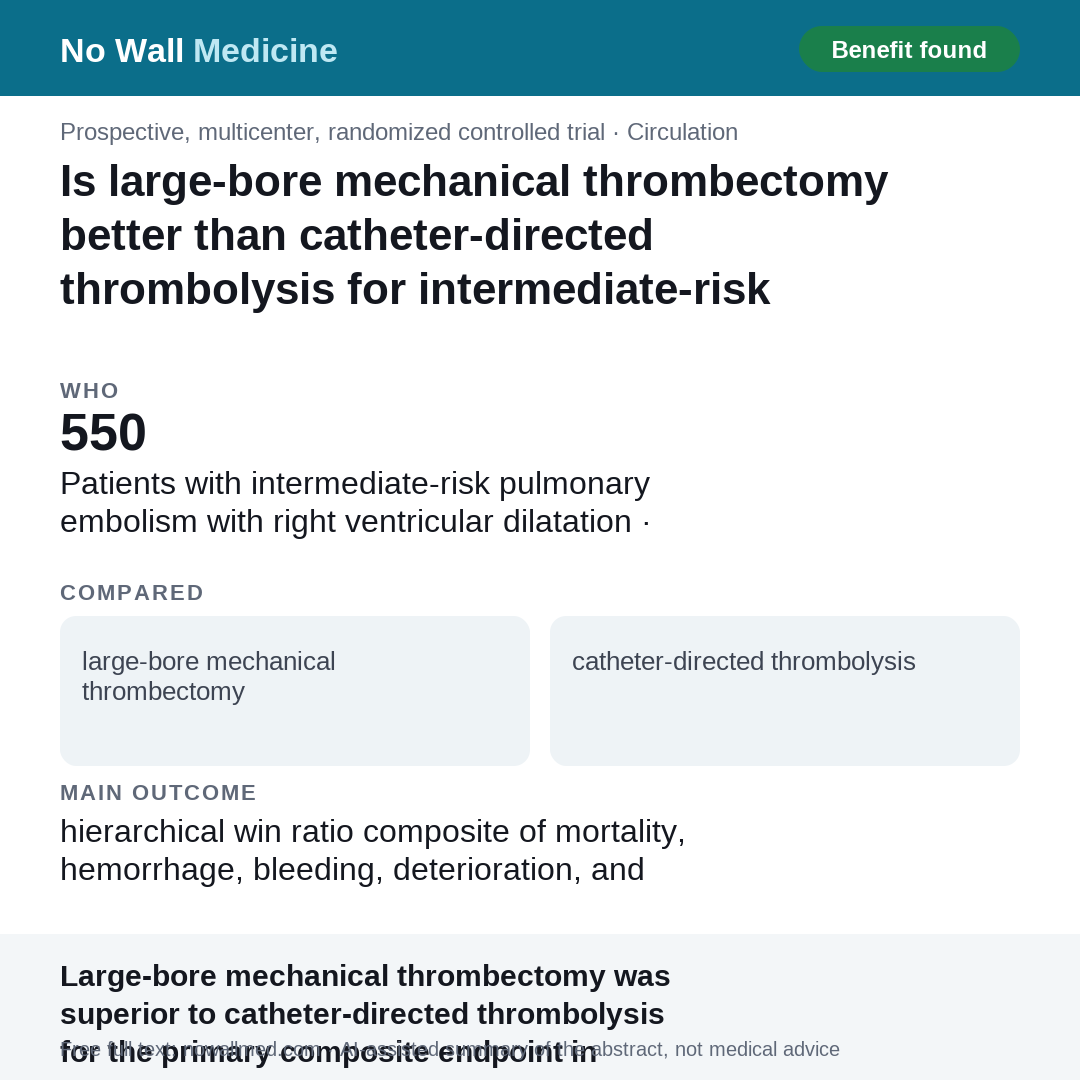
Large-Bore Mechanical Thrombectomy Versus Catheter-Directed Thrombolysis in the Management of Intermediate-Risk Pulmonary Embolism: Primary Results of the PEERLESS Randomized Controlled Trial
Prospective, multicenter, randomized controlled trialBenefit found
Is large-bore mechanical thrombectomy better than catheter-directed thrombolysis for intermediate-risk pulmonary embolism?
Who
550
Patients with intermediate-risk pulmonary embolism with right ventricular dilatation · multicenter
Compared
large-bore mechanical thrombectomy
catheter-directed thrombolysis
Main outcome
hierarchical win ratio composite of mortality, hemorrhage, bleeding, deterioration, and intensive care use
Result: win ratio 5.01 (95% CI 3.68-6.97)
Bottom line: Large-bore mechanical thrombectomy was superior to catheter-directed thrombolysis for the primary composite endpoint in intermediate-risk pulmonary embolism.
Circulation · 2024-10-29Download image
A High-Resolution Microendoscope Improves Esophageal Cancer Screening and Surveillance: Implications for Underserved Global Settings Based on an International Randomized Controlled Trial
International randomized controlled trialBenefit found
Does high-resolution microendoscopy improve esophageal squamous cell neoplasia screening and surveillance efficiency?
Who
916
Individuals undergoing screening or surveillance for esophageal squamous cell neoplasia · China and the United States
Compared
Lugol's chromoendoscopy: 20.0% (95% confidence interval 12.7-29.2) diagnostic yield
Lugol's chromoendoscopy plus high-resolution microendoscopy: 51.7% (95% CI 32.5-70.6) diagnostic yield
Main outcome
Efficiency and clinical impact using gold-standard consensus pathology
Bottom line: High-resolution microendoscopy combined with Lugol's chromoendoscopy improves diagnostic yield and reduces unnecessary biopsies during screening.
Limitation: Six participants had neoplasia missed by the endoscopist on high-resolution microendoscopy.
Gastroenterology · 2024-10-29Download image

Longitudinal validity of the Hyperhidrosis Quality of Life Index (HidroQoL©) in a phase IIIb clinical trial population with hyperhidrosis: responsiveness and meaningful change
Phase IIIb clinical trialBenefit found
What is the longitudinal validity and meaningful change of the HidroQoL index?
Who
357
Patients with primary axillary hyperhidrosis
Compared
5Week 4 meaningful change threshold
6Week 12 meaningful change threshold
Main outcome
Responsiveness and meaningful within-person change thresholds
Bottom line: The HidroQoL index shows longitudinal validity and sensitivity to symptom improvement in patients with primary axillary hyperhidrosis.
Br J Dermatol · 2024-10-29Download image