Visual abstracts
New randomized trials and meta-analyses from leading journals at a glance: who was studied, what was compared, and what was found. Every paper is free to read in full.
All specialtiesCardiology 4877Oncology 4138Gastroenterology & Hepatology 1942Infectious Disease 3837Neurology 1905Psychiatry & Mental Health 2273Pulmonology 2143Critical Care 1365Endocrinology & Diabetes 2580Pediatrics 2980Surgery 2559Orthopedics & Sports Medicine 931Neurosurgery 537Cardiothoracic & Vascular Surgery 674Plastic & Reconstructive Surgery 591Nephrology 1133Rheumatology 823Hematology 1109Dermatology 621Ophthalmology 543Obstetrics & Gynecology 1686Public & Global Health 1058Radiology & Imaging 648Anesthesiology 986Urology 764ENT (Otolaryngology) 503Emergency Medicine 511Allergy & Immunology 313Geriatrics 981Family Medicine & Primary Care 562Medical Genetics & Genomics 676Pathology & Laboratory Medicine 159Physical Medicine & Rehabilitation 757Palliative Care 444Nutrition 1588Digital Health & AI 2201General Medicine 321
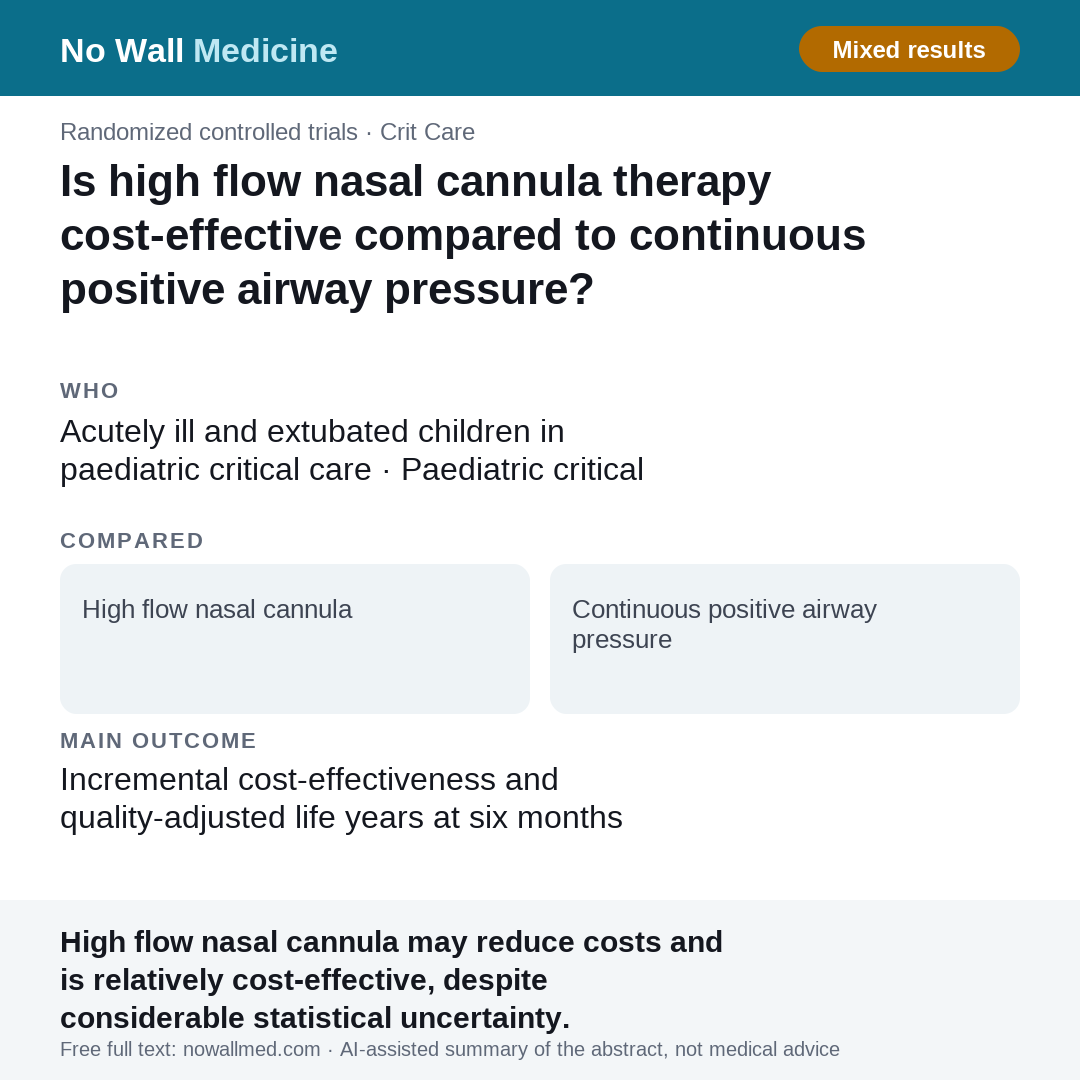
Cost-effectiveness of high flow nasal cannula therapy versus continuous positive airway pressure for non-invasive respiratory support in paediatric critical care
Randomized controlled trialsMixed results
Is high flow nasal cannula therapy cost-effective compared to continuous positive airway pressure?
Who
Acutely ill and extubated children in paediatric critical care · Paediatric critical care units
Compared
High flow nasal cannula
Continuous positive airway pressure
Main outcome
Incremental cost-effectiveness and quality-adjusted life years at six months
Result: incremental cost -£4565 (95% CI -£11,499 to £2368) and -£5702 (95% CI -£11,328 to -£75)
Bottom line: High flow nasal cannula may reduce costs and is relatively cost-effective, despite considerable statistical uncertainty.
Crit Care · 2024-11-25Download image
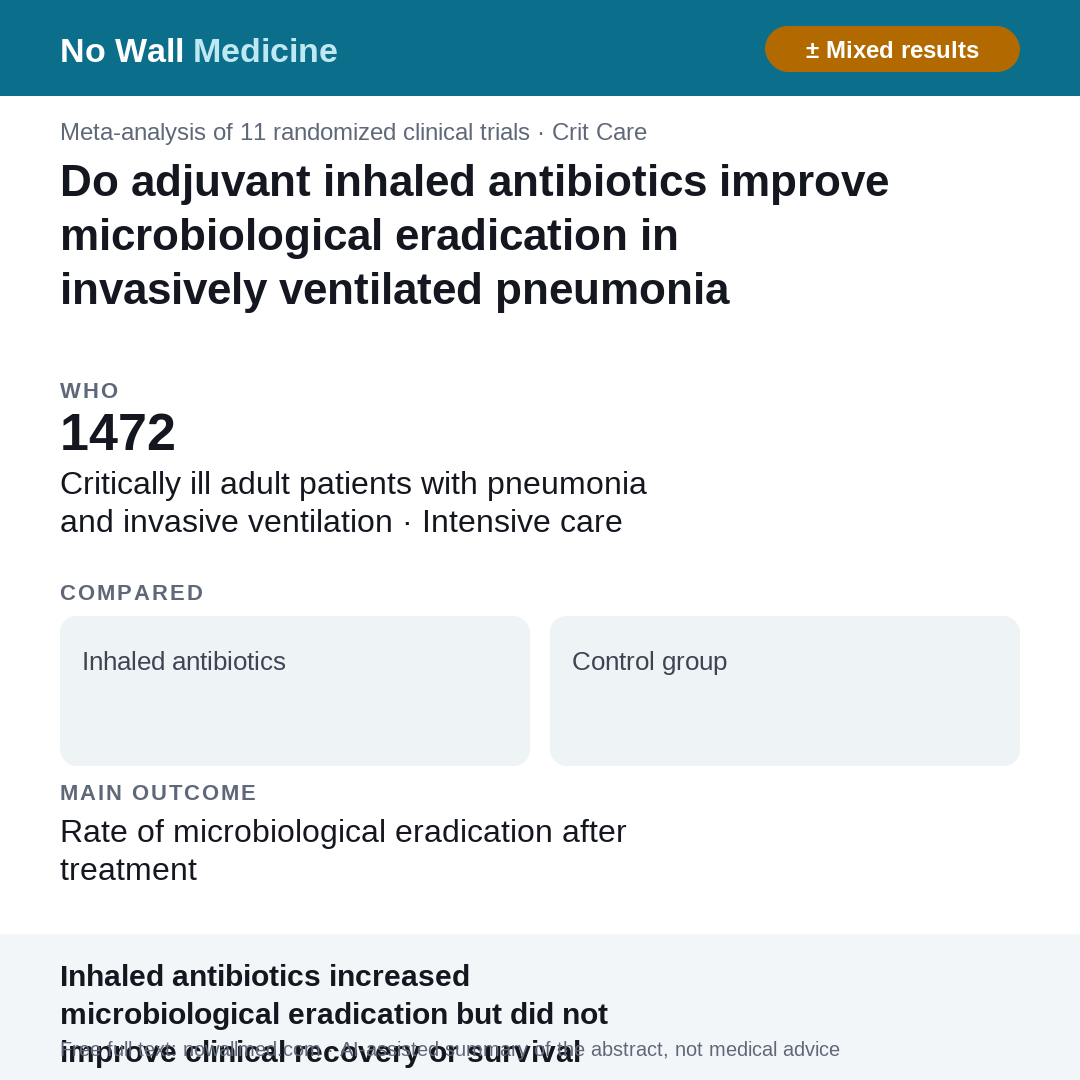
Inhaled antibiotics for treating pneumonia in invasively ventilated patients in intensive care unit: a meta-analysis of randomized clinical trials with trial sequential analysis
Meta-analysis of 11 randomized clinical trialsMixed results
Do adjuvant inhaled antibiotics improve microbiological eradication in invasively ventilated pneumonia patients?
Who
1472
Critically ill adult patients with pneumonia and invasive ventilation · Intensive care units
Compared
Inhaled antibiotics
Control group
Main outcome
Rate of microbiological eradication after treatment
Result: odds ratio 2.63 (95% CI 1.36-5.09)
Bottom line: Inhaled antibiotics increased microbiological eradication but did not improve clinical recovery or survival compared to intravenous therapy alone.
Limitation: Low certainty of evidence and high risk of publication bias
Crit Care · 2024-11-25Download image
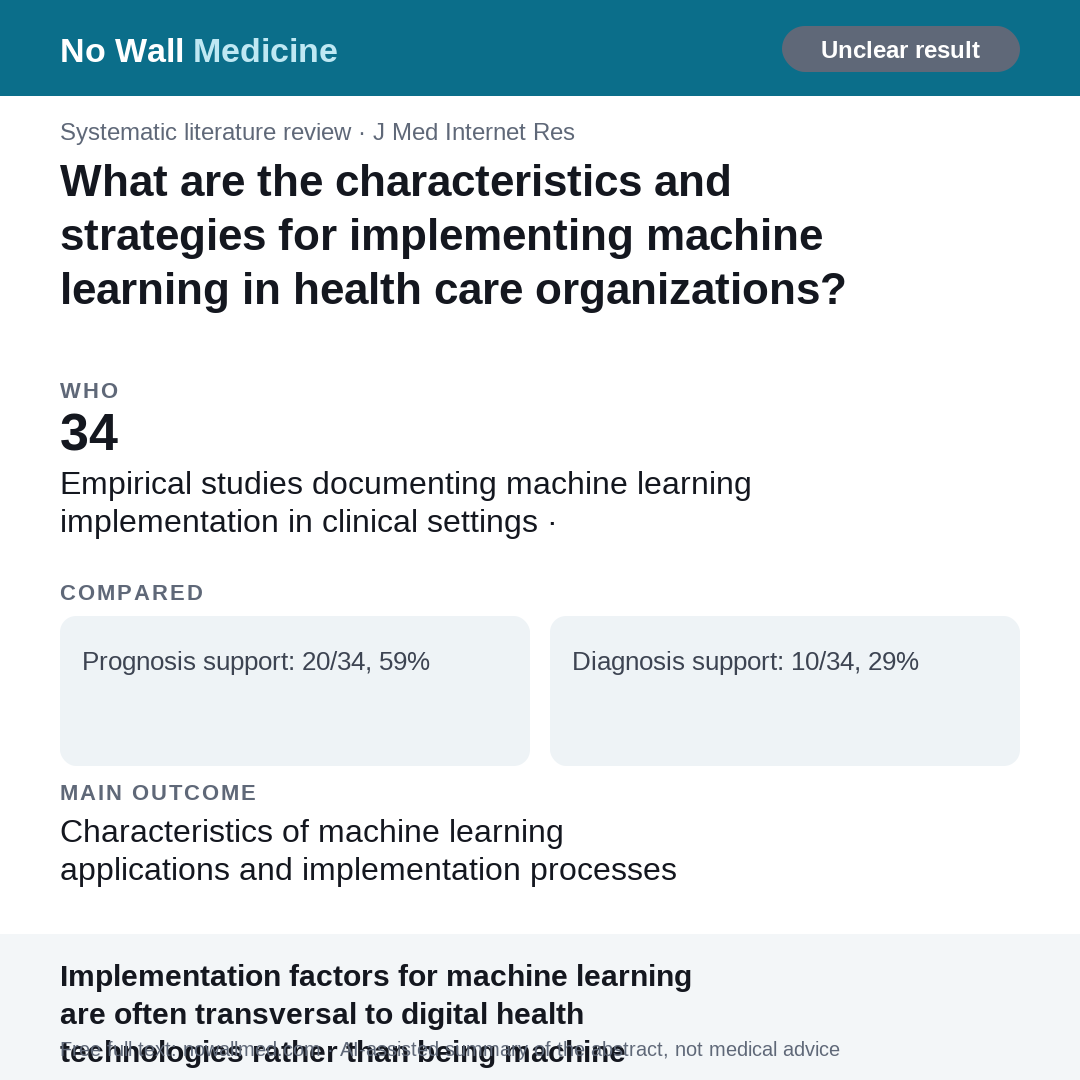
Implementation of Machine Learning Applications in Health Care Organizations: Systematic Review of Empirical Studies
Systematic literature reviewUnclear result
What are the characteristics and strategies for implementing machine learning in health care organizations?
Who
34
Empirical studies documenting machine learning implementation in clinical settings · Hospitals (29/34, 85%)
Compared
Prognosis support: 20/34, 59%
Diagnosis support: 10/34, 29%
Main outcome
Characteristics of machine learning applications and implementation processes
Bottom line: Implementation factors for machine learning are often transversal to digital health technologies rather than being machine learning specific.
Limitation: More research is needed to clarify factors relevant to implementing machine learning at the organizational level.
J Med Internet Res · 2024-11-25Download image
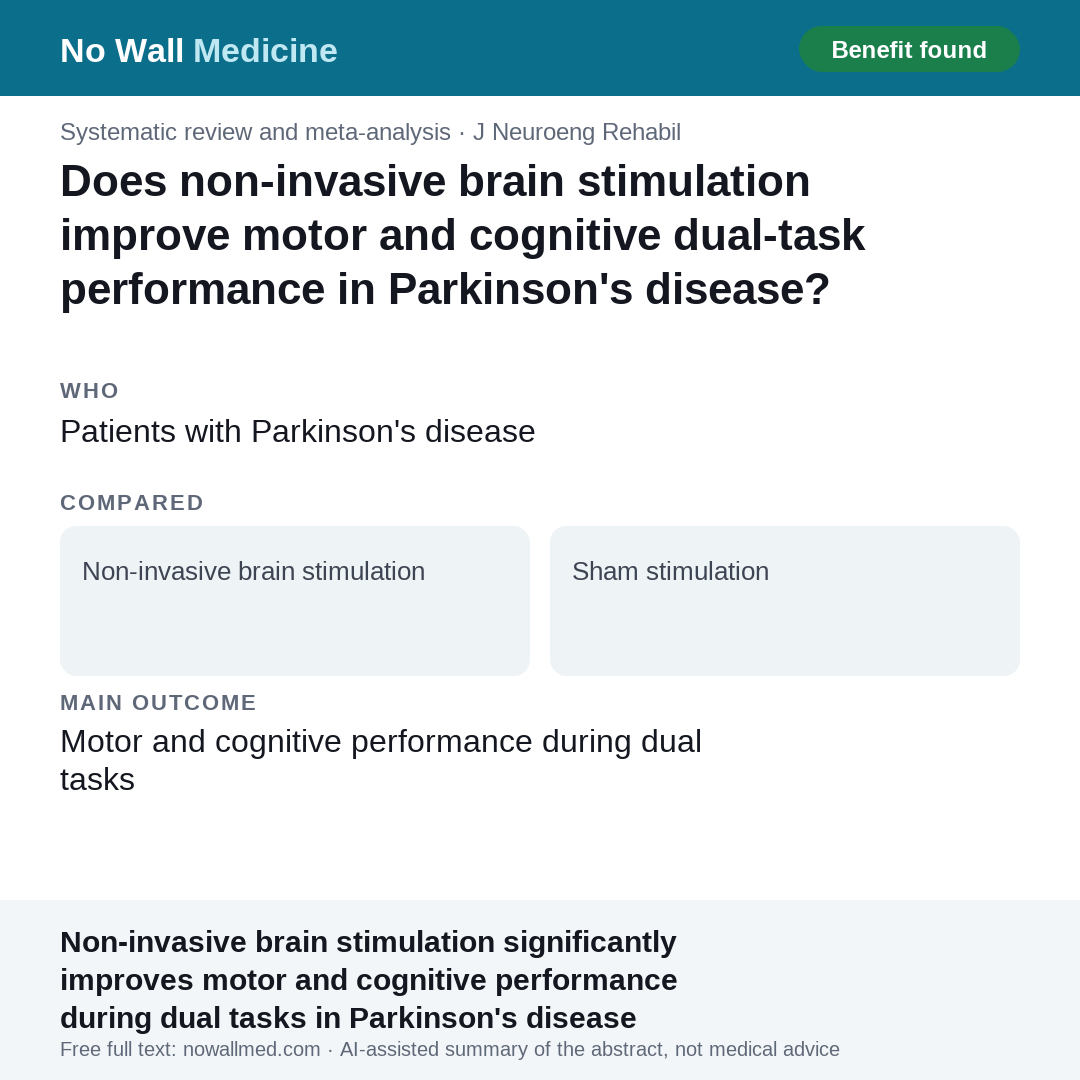
Non-invasive brain stimulation enhances motor and cognitive performances during dual tasks in patients with Parkinson's disease: a systematic review and meta-analysis
Systematic review and meta-analysisBenefit found
Does non-invasive brain stimulation improve motor and cognitive dual-task performance in Parkinson's disease?
Who
Patients with Parkinson's disease
Compared
Non-invasive brain stimulation
Sham stimulation
Main outcome
Motor and cognitive performance during dual tasks
Bottom line: Non-invasive brain stimulation significantly improves motor and cognitive performance during dual tasks in Parkinson's disease patients.
J Neuroeng Rehabil · 2024-11-25Download image
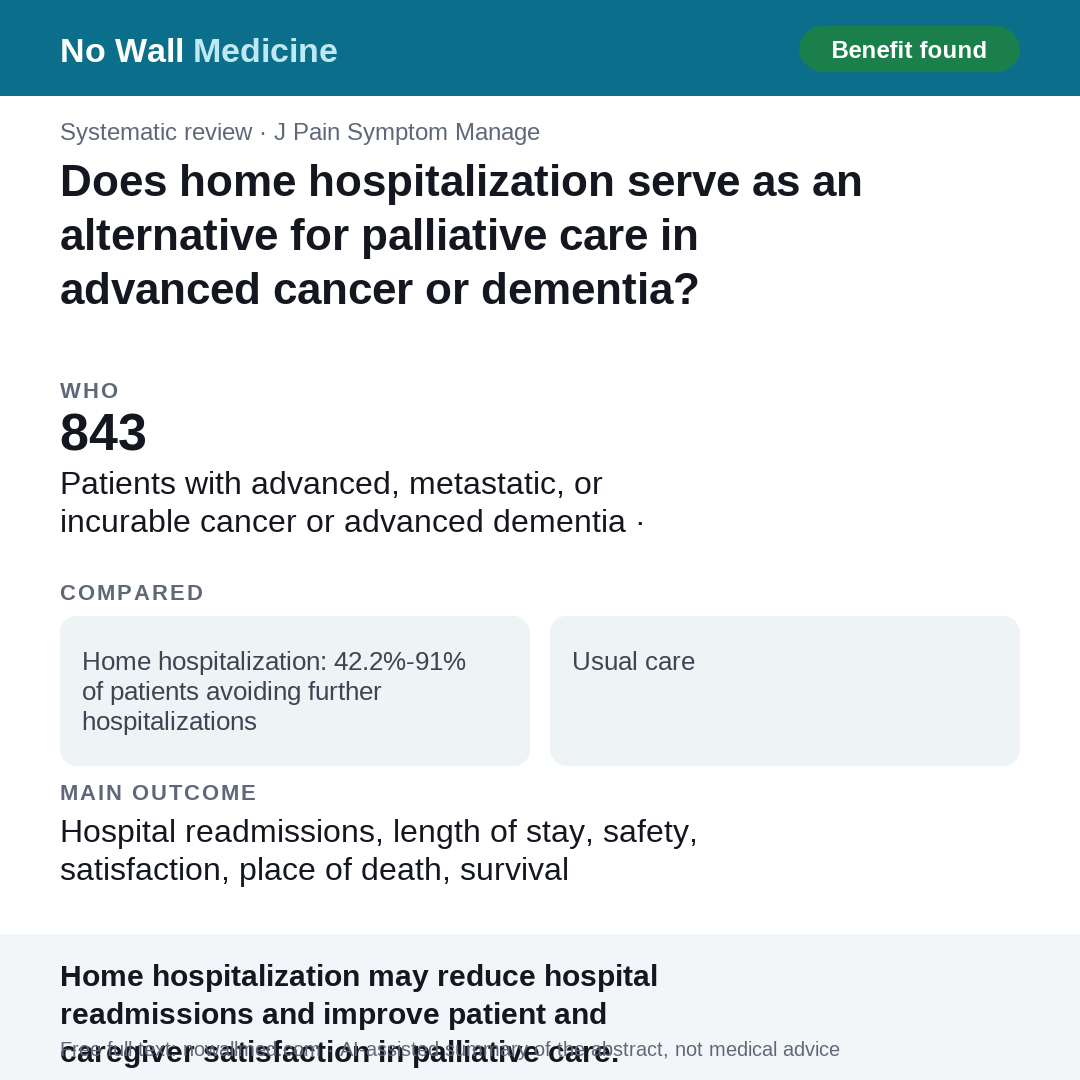
Home Hospitalization in Palliative Care for Advanced Cancer and Dementia: A Systematic Review
Systematic reviewBenefit found
Does home hospitalization serve as an alternative for palliative care in advanced cancer or dementia?
Who
843
Patients with advanced, metastatic, or incurable cancer or advanced dementia · Denmark, France, Spain, and Israel
Compared
Home hospitalization: 42.2%-91% of patients avoiding further hospitalizations
Usual care
Main outcome
Hospital readmissions, length of stay, safety, satisfaction, place of death, survival
Bottom line: Home hospitalization may reduce hospital readmissions and improve patient and caregiver satisfaction in palliative care.
Limitation: Heterogeneity in study designs and outcomes and moderate to high risk of bias.
J Pain Symptom Manage · 2024-11-24Download image
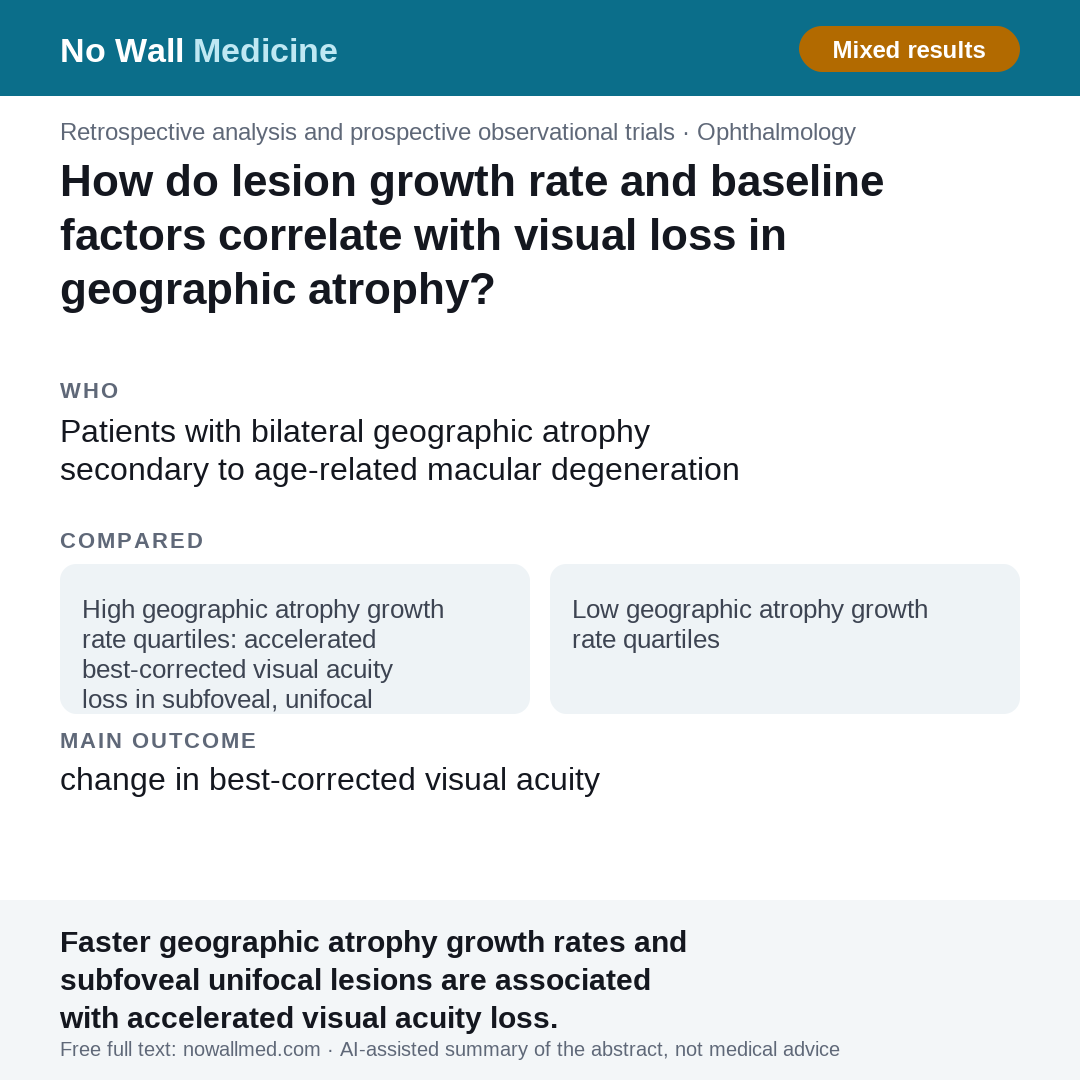
Visual Loss in Geographic Atrophy: Learnings from the Lampalizumab Trials
Retrospective analysis and prospective observational trialsMixed results
How do lesion growth rate and baseline factors correlate with visual loss in geographic atrophy?
Who
Patients with bilateral geographic atrophy secondary to age-related macular degeneration
Compared
High geographic atrophy growth rate quartiles: accelerated best-corrected visual acuity loss in subfoveal, unifocal lesions
Low geographic atrophy growth rate quartiles
Main outcome
change in best-corrected visual acuity
Bottom line: Faster geographic atrophy growth rates and subfoveal unifocal lesions are associated with accelerated visual acuity loss.
Ophthalmology · 2024-11-23Download image
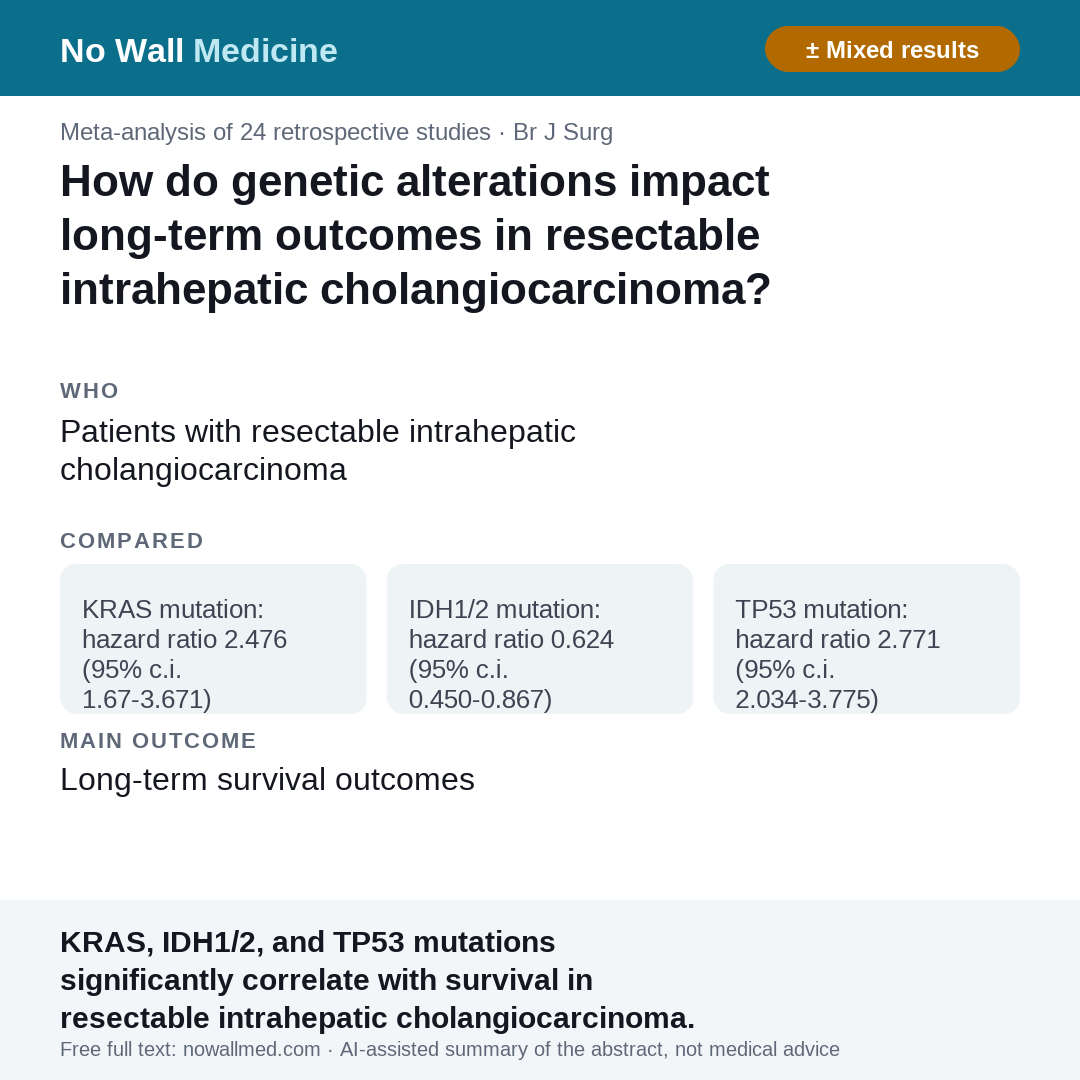
Impact of genetic alterations on long-term outcomes in resectable intrahepatic cholangiocarcinoma: meta-analysis
Meta-analysis of 24 retrospective studiesMixed results
How do genetic alterations impact long-term outcomes in resectable intrahepatic cholangiocarcinoma?
Who
Patients with resectable intrahepatic cholangiocarcinoma
Compared
KRAS mutation: hazard ratio 2.476 (95% c.i. 1.67-3.671)
IDH1/2 mutation: hazard ratio 0.624 (95% c.i. 0.450-0.867)
TP53 mutation: hazard ratio 2.771 (95% c.i. 2.034-3.775)
Main outcome
Long-term survival outcomes
Bottom line: KRAS, IDH1/2, and TP53 mutations significantly correlate with survival in resectable intrahepatic cholangiocarcinoma.
Limitation: Inconsistent results for infrequent gene alterations could potentially bias their prognostic meaning.
Br J Surg · 2024-11-23Download image
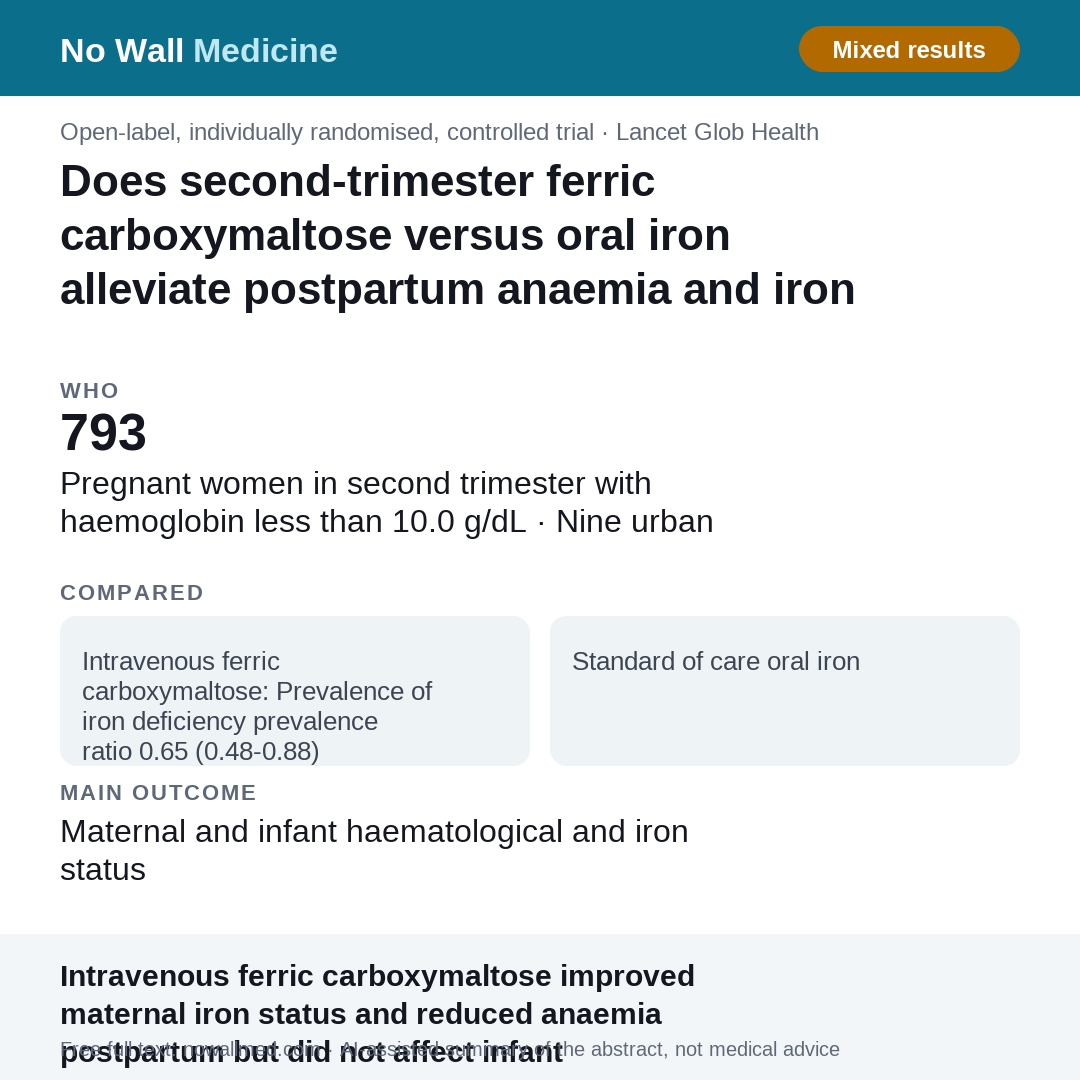
Postpartum maternal and infant haematological effects of second-trimester ferric carboxymaltose versus standard-of-care oral iron in Malawi: longitudinal follow-up of a randomised controlled trial
Open-label, individually randomised, controlled trialMixed results
Does second-trimester ferric carboxymaltose versus oral iron alleviate postpartum anaemia and iron deficiency in mothers and infants?
Who
793
Pregnant women in second trimester with haemoglobin less than 10.0 g/dL · Nine urban and five rural health centres in Malawi
Compared
Intravenous ferric carboxymaltose: Prevalence of iron deficiency prevalence ratio 0.65 (0.48-0.88)
Standard of care oral iron
Main outcome
Maternal and infant haematological and iron status
Result: prevalence ratio 0.65 (95% CI 0.48 to 0.88)
Bottom line: Intravenous ferric carboxymaltose improved maternal iron status and reduced anaemia postpartum but did not affect infant haematological outcomes.
Funded by: Bill & Melinda Gates Foundation
Lancet Glob Health · 2024-11-23Download image
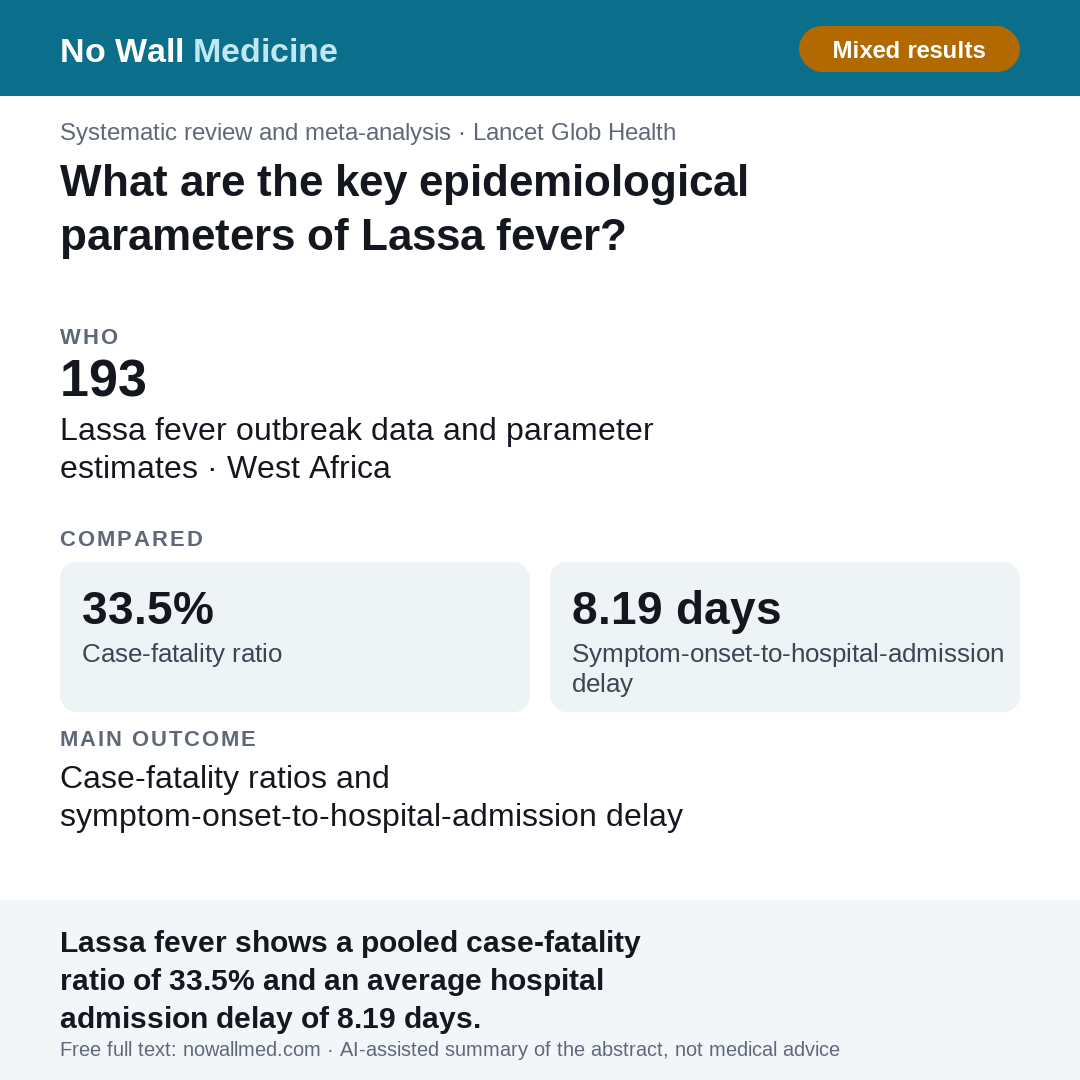
Lassa fever outbreaks, mathematical models, and disease parameters: a systematic review and meta-analysis
Systematic review and meta-analysisMixed results
What are the key epidemiological parameters of Lassa fever?
Who
193
Lassa fever outbreak data and parameter estimates · West Africa
Compared
33.5%Case-fatality ratio
8.19 daysSymptom-onset-to-hospital-admission delay
Main outcome
Case-fatality ratios and symptom-onset-to-hospital-admission delay
Result: CFR 33.5% (95% CI 25.8-42.2); delay 8.19 days (95% CI 7.31-9.06)
Bottom line: Lassa fever shows a pooled case-fatality ratio of 33.5% and an average hospital admission delay of 8.19 days.
Funded by: UK Medical Research Council, NIHR, Academy of Medical Sciences, and others
Lancet Glob Health · 2024-11-23Download image
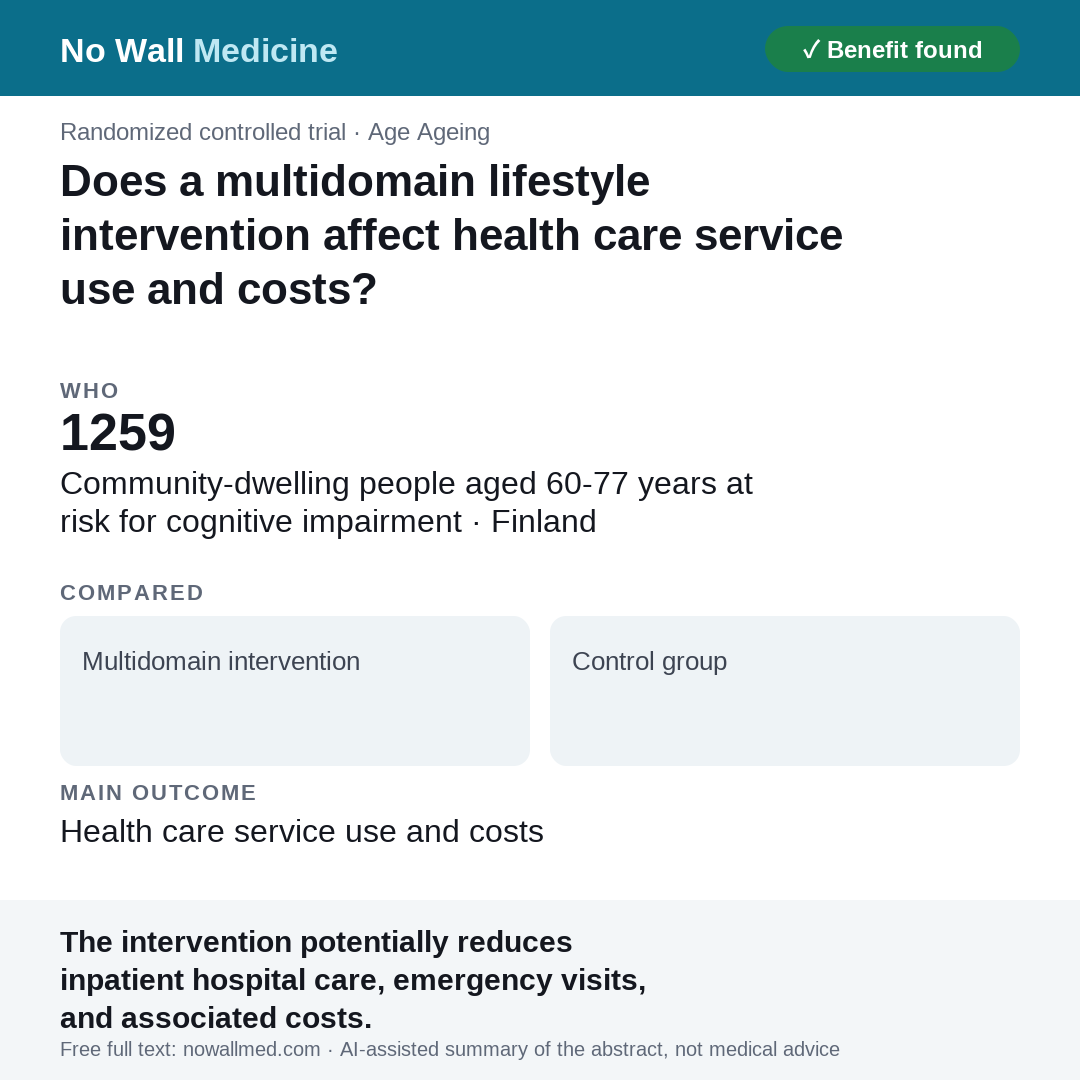
The effect of multidomain lifestyle intervention on health care service use and costs - secondary analyses from the Finnish Geriatric Intervention Study to Prevent Cognitive Impairment and Disability (FINGER): a randomised controlled trial
Randomized controlled trialBenefit found
Does a multidomain lifestyle intervention affect health care service use and costs?
Who
1259
Community-dwelling people aged 60-77 years at risk for cognitive impairment · Finland
Compared
Multidomain intervention
Control group
Main outcome
Health care service use and costs
Result: RR 0.81 (95% CI 0.68 to 0.99) for costs without long-term care
Bottom line: The intervention potentially reduces inpatient hospital care, emergency visits, and associated costs.
Age Ageing · 2024-11-23Download image
Polygenic risk scores in the clinic: a systematic review of stakeholders' perspectives, attitudes, and experiences
Mixed-method systematic reviewMixed results
What are the perspectives, attitudes, and experiences of stakeholders regarding polygenic risk scores?
Who
24
Healthcare providers, patients, and the public
Compared
Healthcare providers
Patients: no psychosocial burden was reported
The public
Main outcome
Stakeholders' perspectives, attitudes, and experiences regarding polygenic risk scores
Bottom line: Stakeholder perspectives are context-dependent, showing significant knowledge gaps among providers but minimal psychosocial burden for patients.
Eur J Hum Genet · 2024-11-23Download image

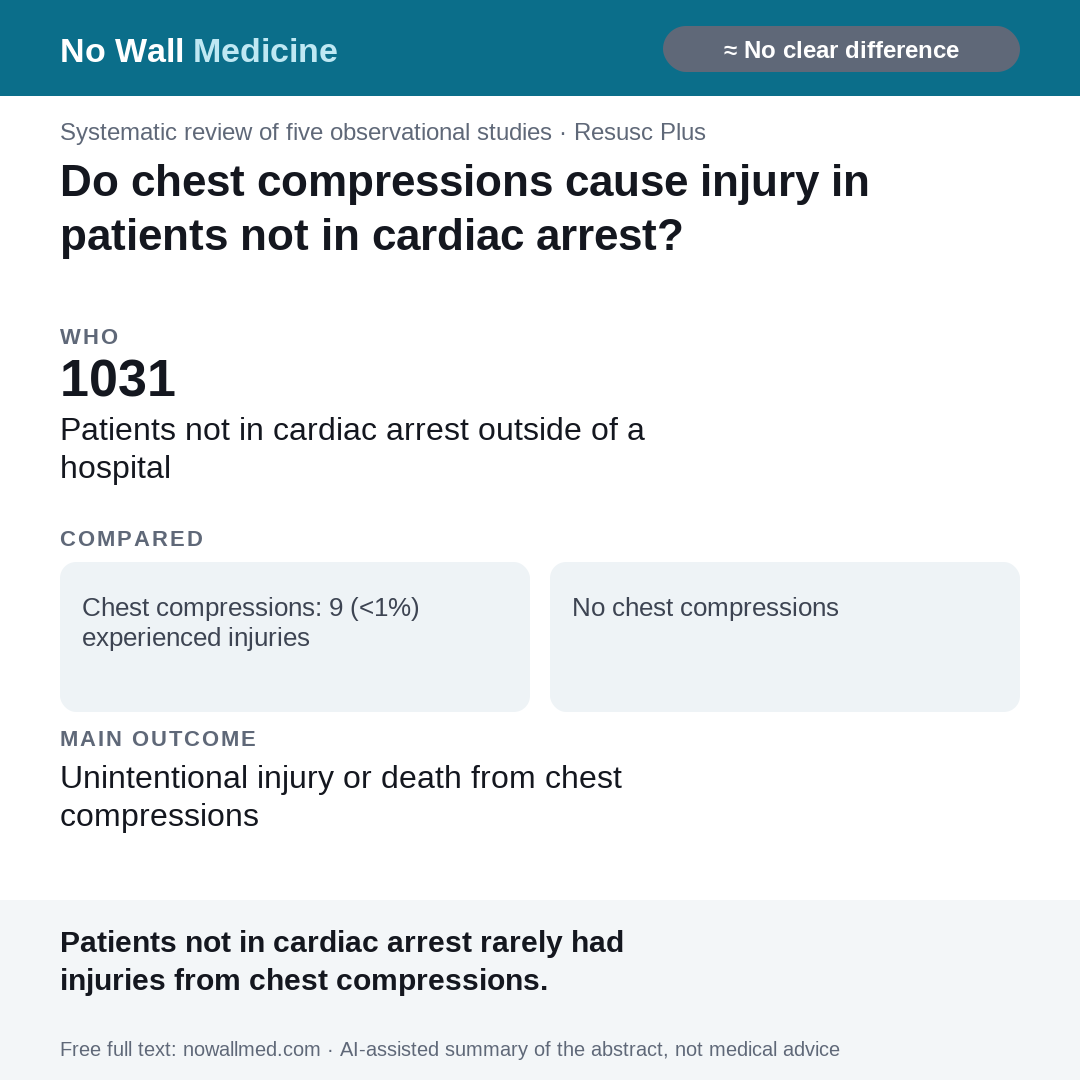
Does delivering chest compressions to patients who are not in cardiac arrest cause unintentional injury? A systematic review
Systematic review of five observational studiesBenefit found
Do chest compressions to patients not in cardiac arrest cause unintentional injury?
Who
1031
Patients not in cardiac arrest outside of a hospital
Compared
Chest compressions by layperson: 9 (<1%) experienced injuries
No chest compressions
Main outcome
Unintentional injury and survival with favourable neurological outcome
Bottom line: Chest compressions to patients not in cardiac arrest rarely caused injuries.
Limitation: Evidence was of very low certainty due to risk of bias and imprecision.
Resusc Plus · 2024-11-23Download image
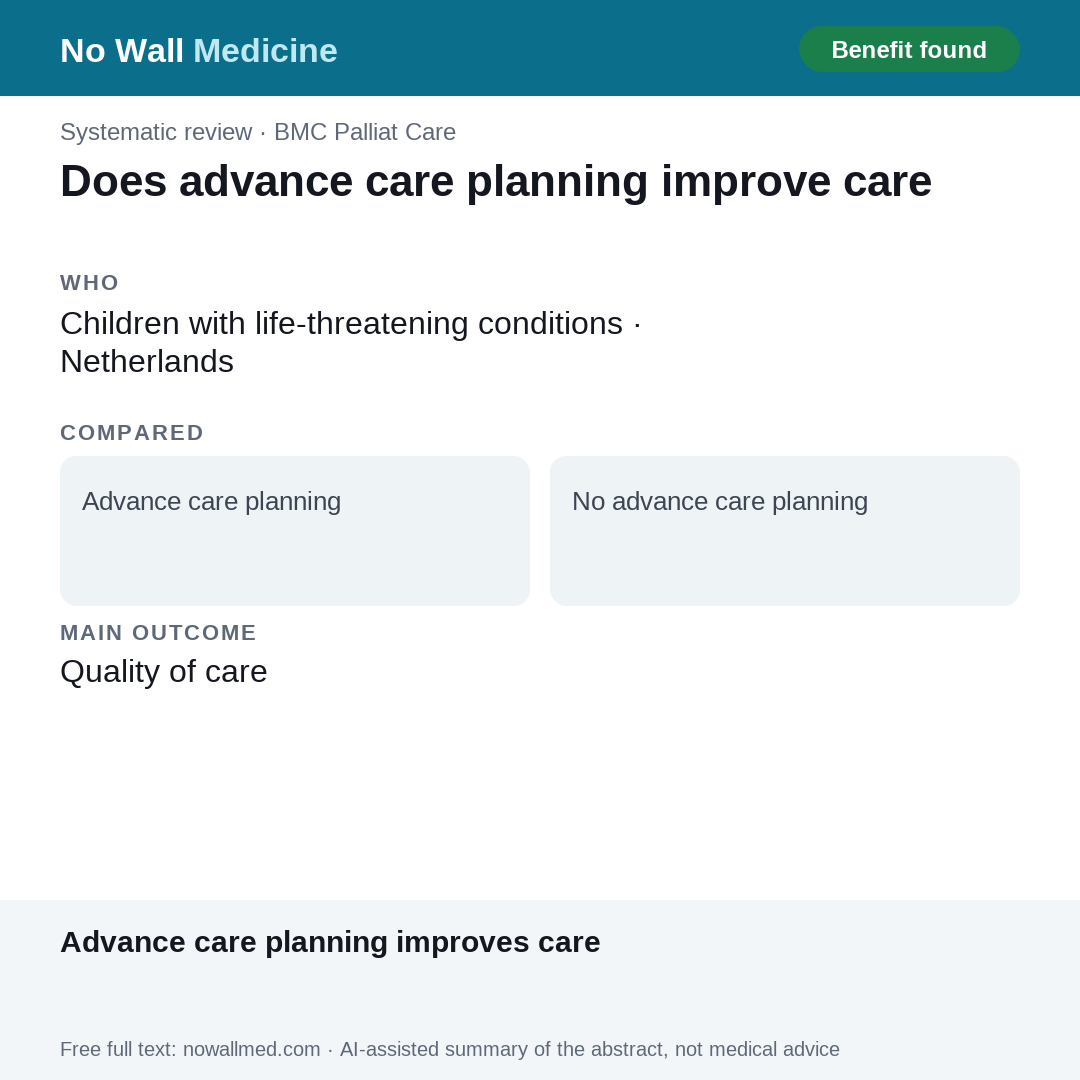
A Dutch paediatric palliative care guideline: a systematic review and recommendations on advance care planning and shared decision-making
Systematic reviewBenefit found
Does advance care planning improve care
Who
Children with life-threatening conditions · Netherlands
Compared
Advance care planning
No advance care planning
Main outcome
Quality of care
Bottom line: Advance care planning improves care
Limitation: Knowledge gaps
BMC Palliat Care · 2024-11-23Download image
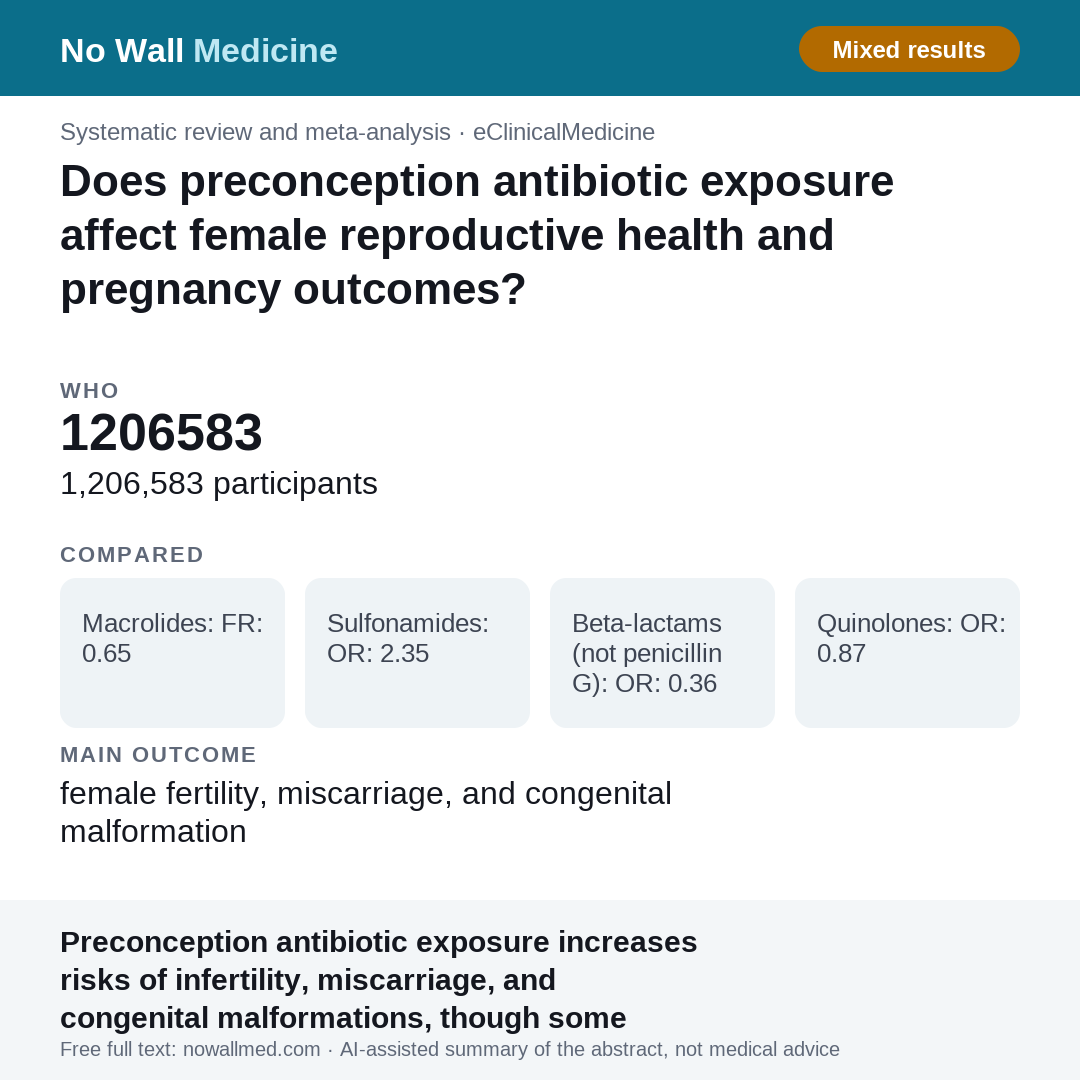
Effect of preconception antibiotics exposure on female reproductive health and pregnancy outcomes: a systematic review and meta-analysis
Systematic review and meta-analysisMixed results
Does preconception antibiotic exposure affect female reproductive health and pregnancy outcomes?
Who
1206583
1,206,583 participants
Compared
Macrolides: FR: 0.65
Sulfonamides: OR: 2.35
Beta-lactams (not penicillin G): OR: 0.36
Quinolones: OR: 0.87
Main outcome
female fertility, miscarriage, and congenital malformation
Bottom line: Preconception antibiotic exposure increases risks of infertility, miscarriage, and congenital malformations, though some classes show different effects.
Limitation: Further clinical and mechanistic studies are required to illustrate specific functions and cause effects.
Funded by: Leading Discipline Development Fund; Hong Kong Obstetrical and Gynaecological Trust Fund
eClinicalMedicine · 2024-11-22Download image
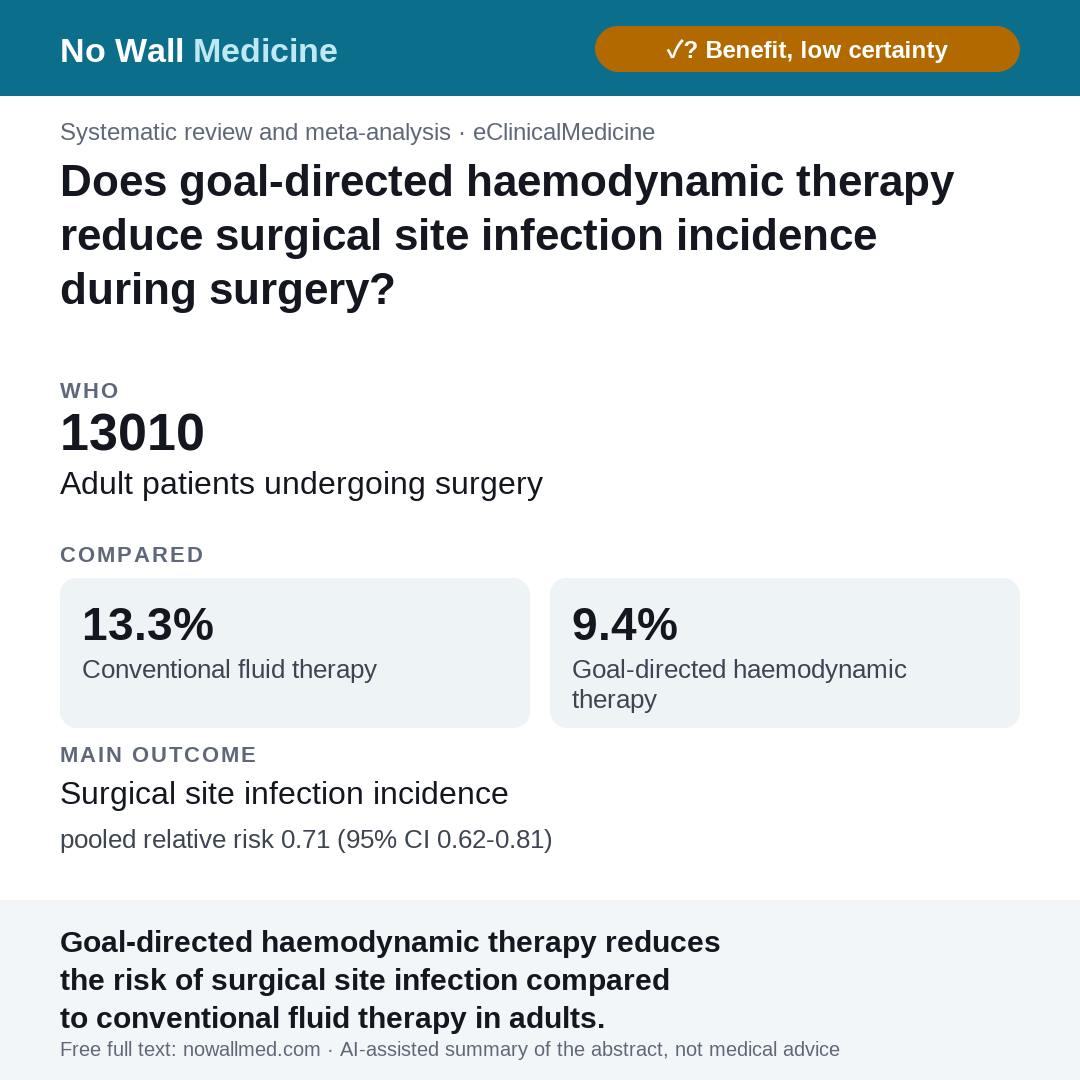
Systematic review and meta-analysis of goal-directed haemodynamic therapy algorithms during surgery for the prevention of surgical site infection
Systematic review and meta-analysisBenefit found
Does goal-directed haemodynamic therapy reduce surgical site infection incidence during surgery?
Who
13010
Adult patients undergoing surgery
Compared
13.3%Conventional fluid therapy
9.4%Goal-directed haemodynamic therapy
Main outcome
Surgical site infection incidence
Result: pooled relative risk 0.71 (95% CI 0.62-0.81)
Bottom line: Goal-directed haemodynamic therapy reduces the risk of surgical site infection compared to conventional fluid therapy in adults.
Funded by: Dutch Association for Quality Funds Medical Specialists
eClinicalMedicine · 2024-11-22Download image
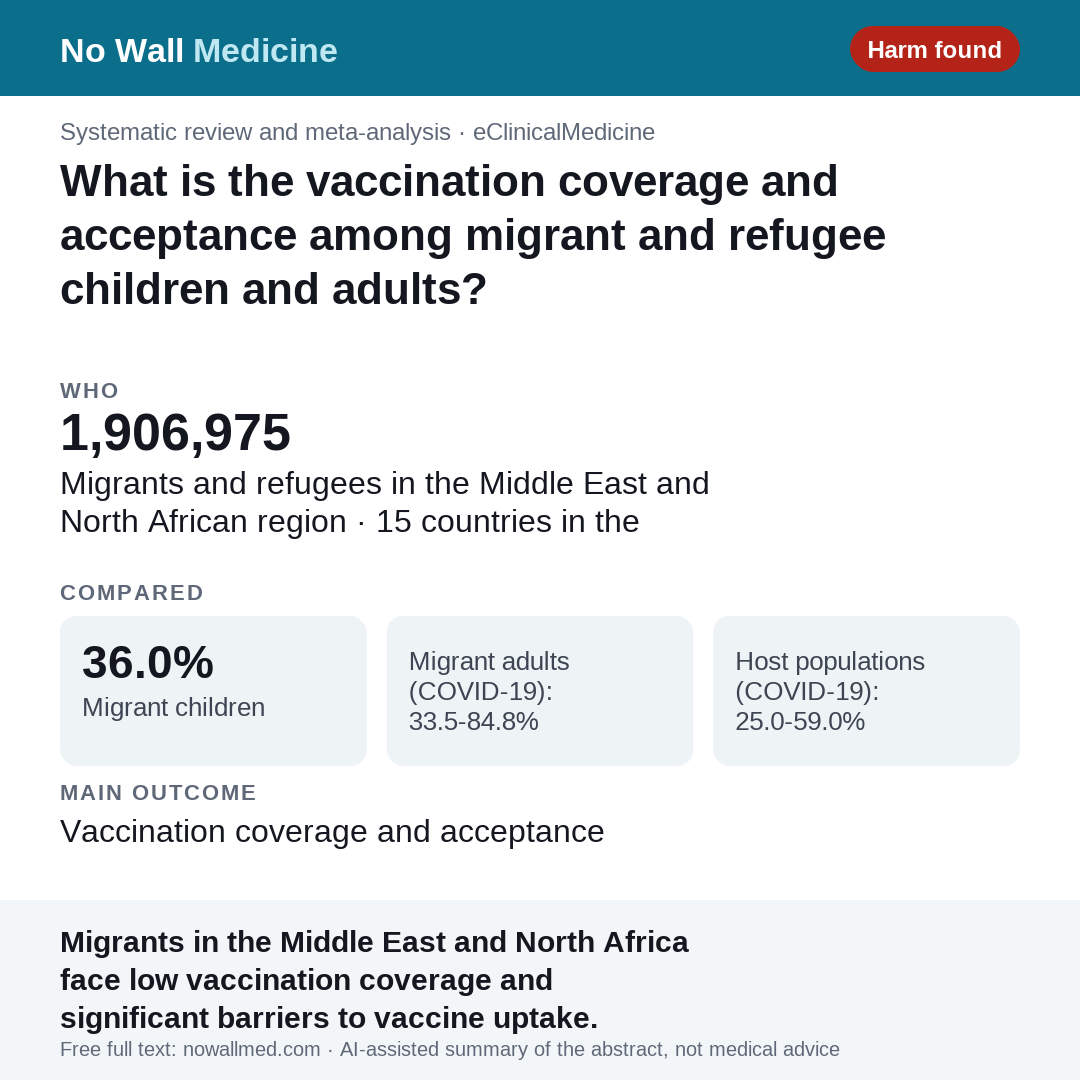
Vaccination coverage and access among children and adult migrants and refugees in the Middle East and North African region: a systematic review and meta-analysis
Systematic review and meta-analysisHarm found
What is the vaccination coverage and acceptance among migrant and refugee children and adults?
Who
1,906,975
Migrants and refugees in the Middle East and North African region · 15 countries in the Middle East and North African region
Compared
36.0%Migrant children
Migrant adults (COVID-19): 33.5-84.8%
Host populations (COVID-19): 25.0-59.0%
Main outcome
Vaccination coverage and acceptance
Bottom line: Migrants in the Middle East and North Africa face low vaccination coverage and significant barriers to vaccine uptake.
Limitation: Data is limited to small-scale studies among accessible groups.
eClinicalMedicine · 2024-11-22Download image
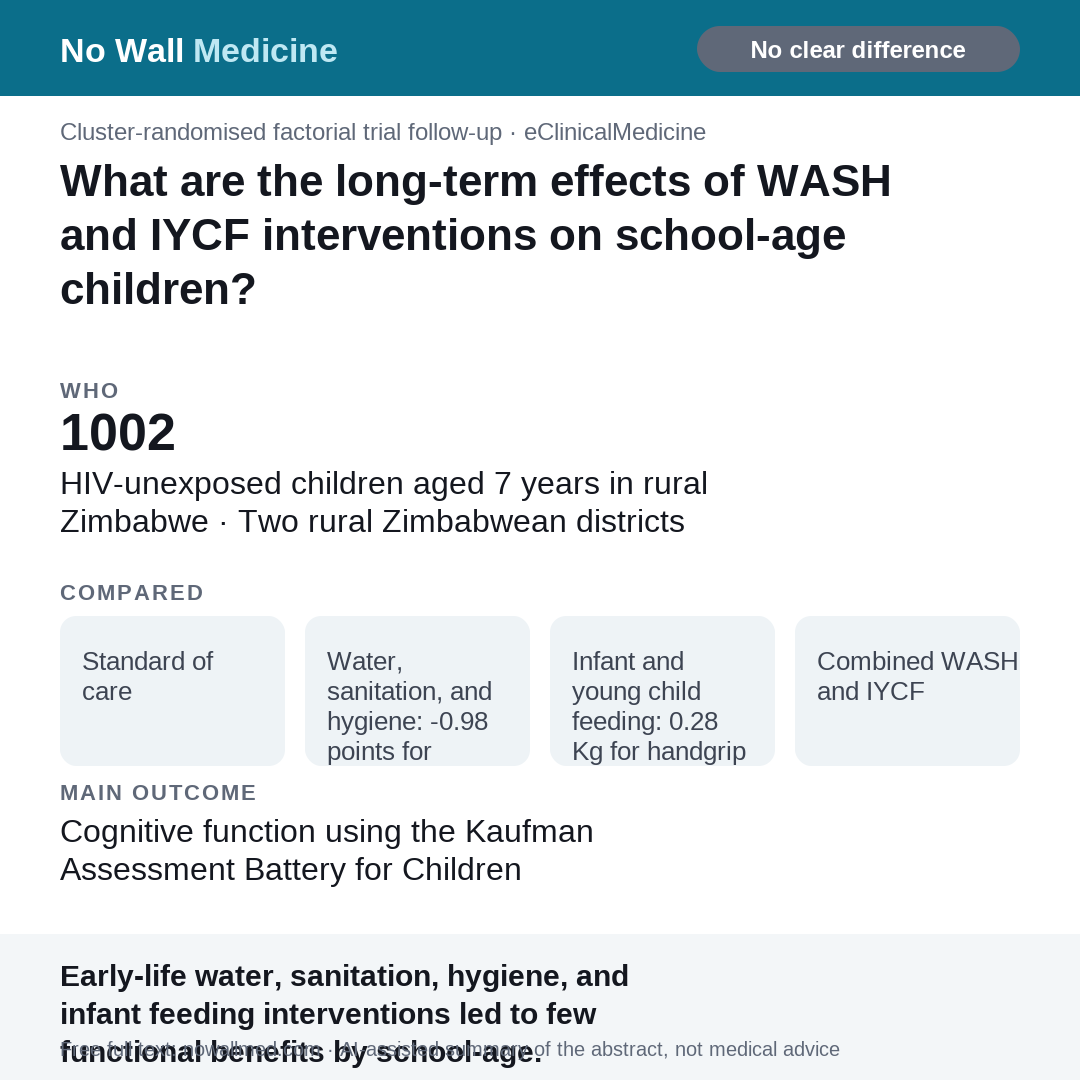
School-age growth and development following infant feeding and/or water, sanitation, and hygiene interventions in rural Zimbabwe: long-term follow-up of a cluster-randomised trial
Cluster-randomised factorial trial follow-upNo clear difference
What are the long-term effects of WASH and IYCF interventions on school-age children?
Who
1002
HIV-unexposed children aged 7 years in rural Zimbabwe · Two rural Zimbabwean districts
Compared
Standard of care
Water, sanitation, and hygiene: -0.98 points for socioemotional function (95% CI -1.73, -0.22)
Infant and young child feeding: 0.28 Kg for handgrip strength (95% CI 0.02, 0.53)
Combined WASH and IYCF
Main outcome
Cognitive function using the Kaufman Assessment Battery for Children
Result: no effect of IYCF or WASH on the KABC-II score
Bottom line: Early-life water, sanitation, hygiene, and infant feeding interventions led to few functional benefits by school-age.
Funded by: Wellcome, NIH, Thrasher, and IMMANA
eClinicalMedicine · 2024-11-22Download image
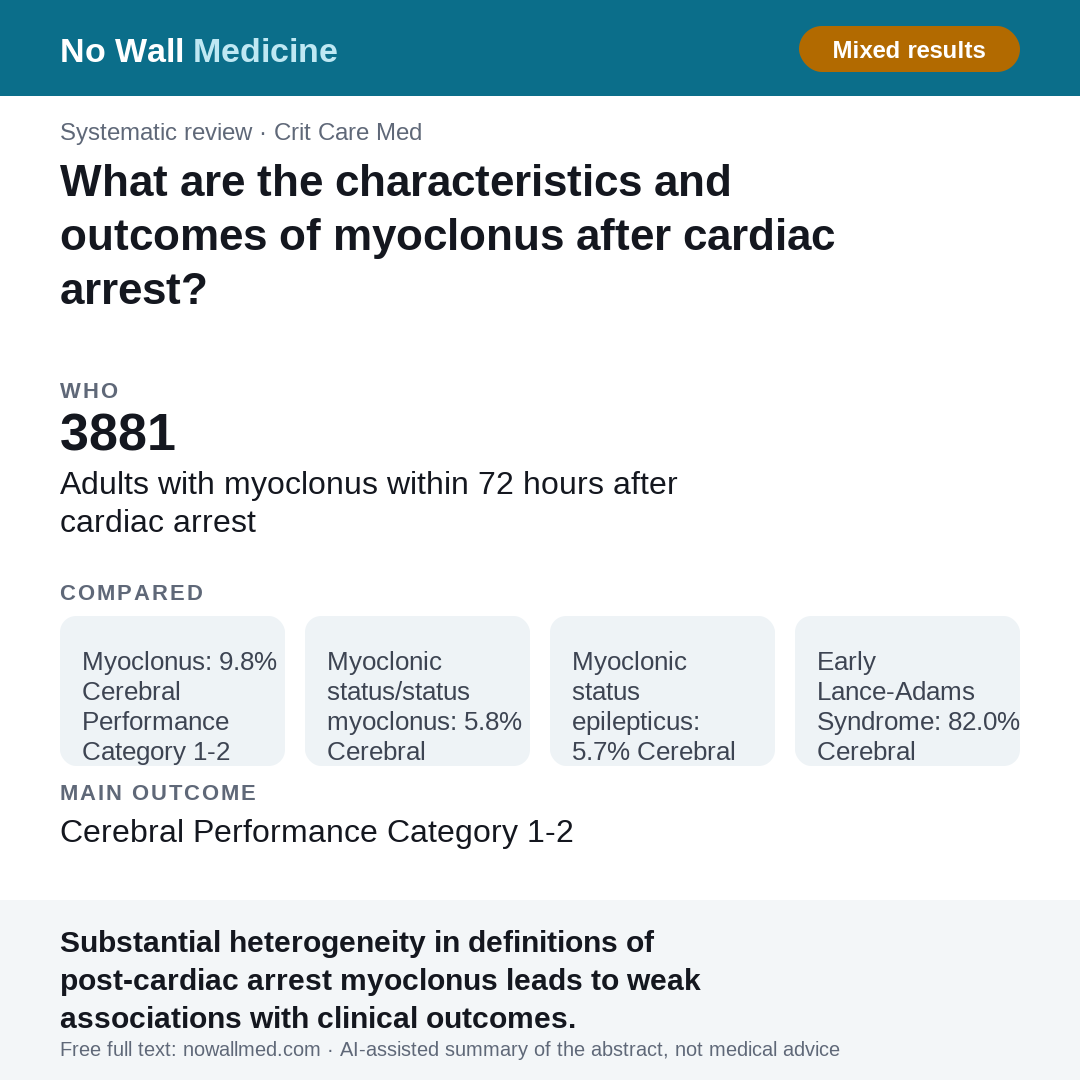
Myoclonus After Cardiac Arrest: Need for Standardization-A Systematic Review and Research Proposal on Terminology
Systematic reviewMixed results
What are the characteristics and outcomes of myoclonus after cardiac arrest?
Who
3881
Adults with myoclonus within 72 hours after cardiac arrest
Compared
Myoclonus: 9.8% Cerebral Performance Category 1-2
Myoclonic status/status myoclonus: 5.8% Cerebral Performance Category 1-2
Myoclonic status epilepticus: 5.7% Cerebral Performance Category 1-2
Early Lance-Adams Syndrome: 82.0% Cerebral Performance Category 1-2
Main outcome
Cerebral Performance Category 1-2
Bottom line: Substantial heterogeneity in definitions of post-cardiac arrest myoclonus leads to weak associations with clinical outcomes.
Limitation: Heterogeneity in definitions resulted in weak associations with outcomes.
Crit Care Med · 2024-11-22Download image
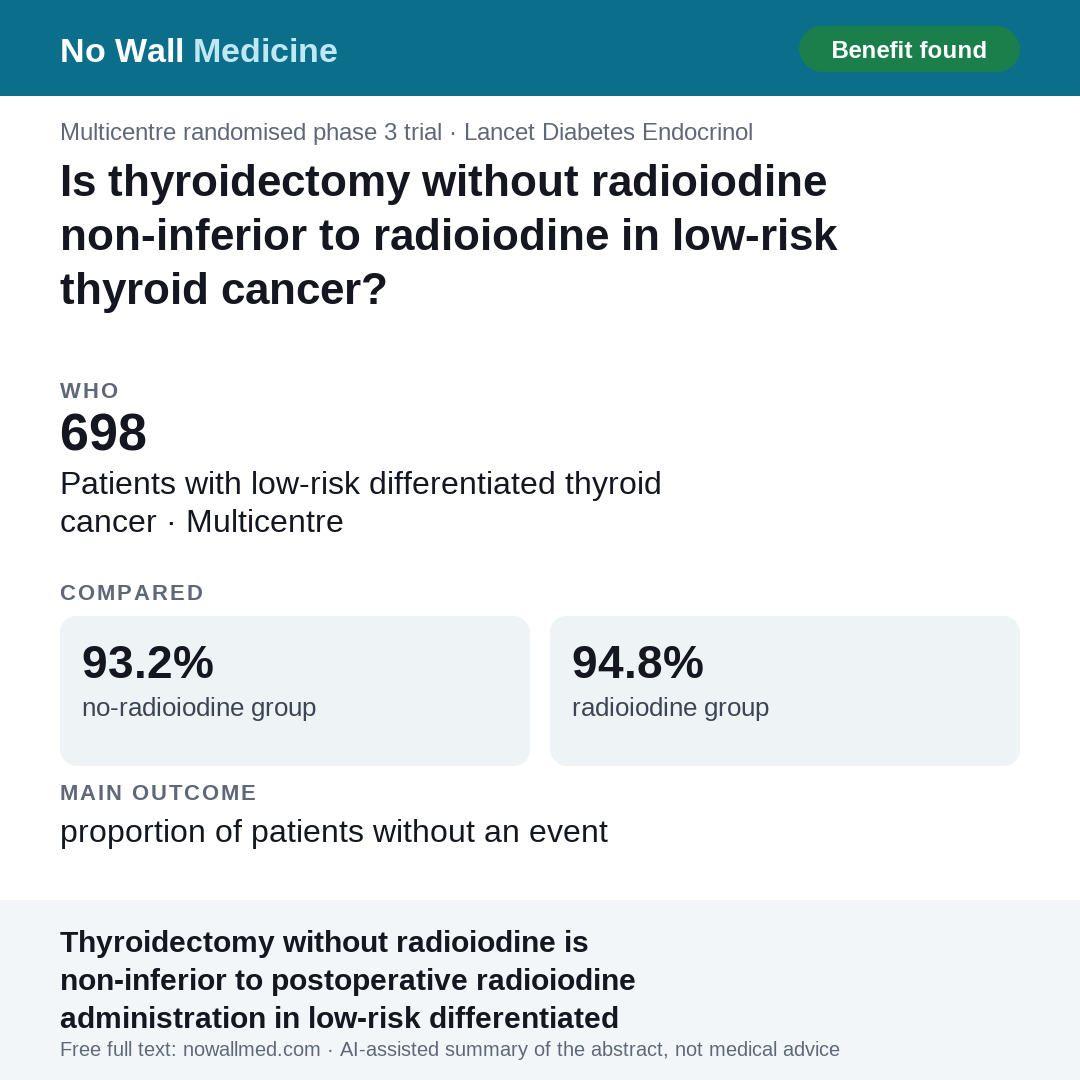
Thyroidectomy without radioiodine in patients with low-risk thyroid cancer: 5 years of follow-up of the prospective randomised ESTIMABL2 trial
Multicentre randomised phase 3 trialBenefit found
Is thyroidectomy without radioiodine non-inferior to radioiodine in low-risk thyroid cancer?
Who
698
Patients with low-risk differentiated thyroid cancer · Multicentre
Compared
93.2%no-radioiodine group
94.8%radioiodine group
Main outcome
proportion of patients without an event
Result: -1.6% (90% CI -4.5 to 1.4)
Bottom line: Thyroidectomy without radioiodine is non-inferior to postoperative radioiodine administration in low-risk differentiated thyroid cancer at 5 years.
Funded by: Programme de Recherche Hospitalier Clinique
Lancet Diabetes Endocrinol · 2024-11-22Download image
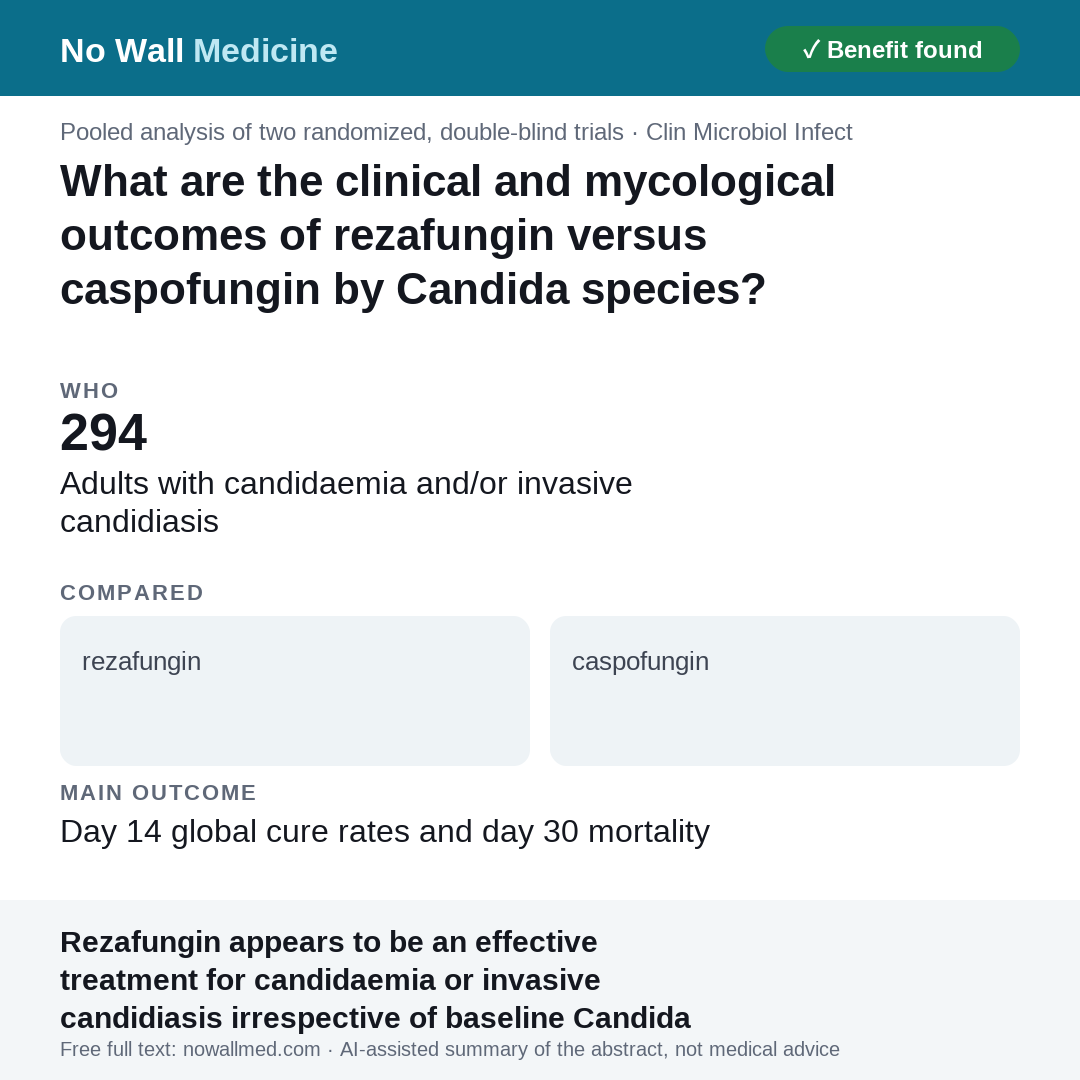
Clinical and mycological outcomes of candidaemia and/or invasive candidiasis by Candida spp. and antifungal susceptibility: pooled analyses of two randomized trials of rezafungin versus caspofungin
Pooled analysis of two randomized, double-blind trialsBenefit found
What are the clinical and mycological outcomes of rezafungin versus caspofungin by Candida species?
Who
294
Adults with candidaemia and/or invasive candidiasis
Compared
rezafungin
caspofungin
Main outcome
Day 14 global cure rates and day 30 mortality
Bottom line: Rezafungin appears to be an effective treatment for candidaemia or invasive candidiasis irrespective of baseline Candida species.
Clin Microbiol Infect · 2024-11-22Download image