Visual abstracts
New randomized trials and meta-analyses from leading journals at a glance: who was studied, what was compared, and what was found. Every paper is free to read in full.
All specialtiesCardiology 1875Oncology 1619Gastroenterology & Hepatology 717Infectious Disease 1192Neurology 778Psychiatry & Mental Health 916Pulmonology 806Critical Care 545Endocrinology & Diabetes 1014Pediatrics 1115Surgery 948Orthopedics & Sports Medicine 349Neurosurgery 234Cardiothoracic & Vascular Surgery 206Plastic & Reconstructive Surgery 293Nephrology 383Rheumatology 265Hematology 406Dermatology 206Ophthalmology 222Obstetrics & Gynecology 615Public & Global Health 365Radiology & Imaging 259Anesthesiology 376Urology 325ENT (Otolaryngology) 252Emergency Medicine 211Allergy & Immunology 121Geriatrics 402Family Medicine & Primary Care 222Medical Genetics & Genomics 205Pathology & Laboratory Medicine 59Physical Medicine & Rehabilitation 330Palliative Care 168Nutrition 505Digital Health & AI 994General Medicine 145
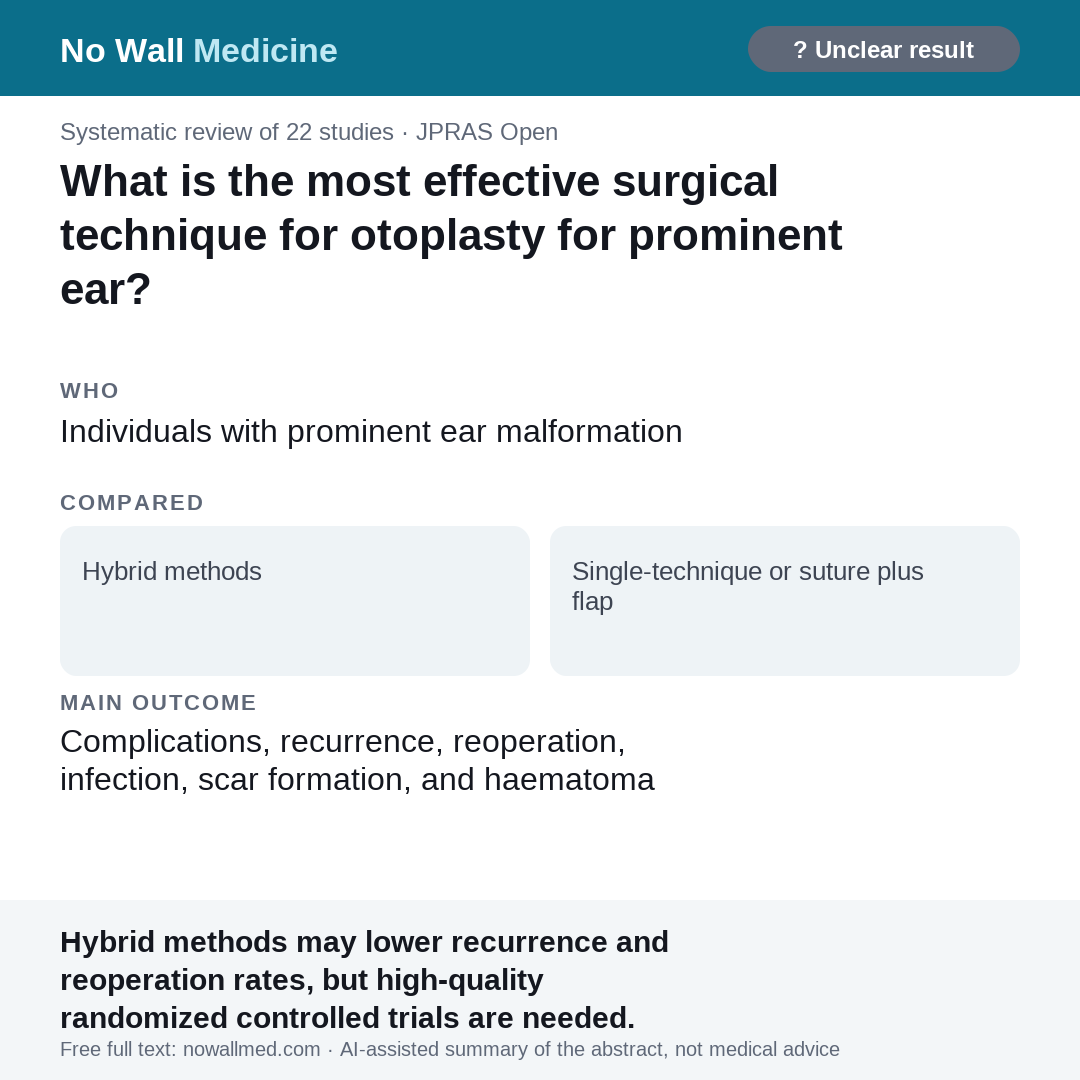
Otoplasty for prominent ear: A systematic review of surgical techniques
Systematic review of 22 studiesUnclear result
What is the most effective surgical technique for otoplasty for prominent ear?
Who
Individuals with prominent ear malformation
Compared
Hybrid methods
Single-technique or suture plus flap
Main outcome
Complications, recurrence, reoperation, infection, scar formation, and haematoma
Bottom line: Hybrid methods may lower recurrence and reoperation rates, but high-quality randomized controlled trials are needed.
Limitation: High-quality, long-term randomised control trials are required to determine the superior technique.
JPRAS Open · 2026-02-23Download image
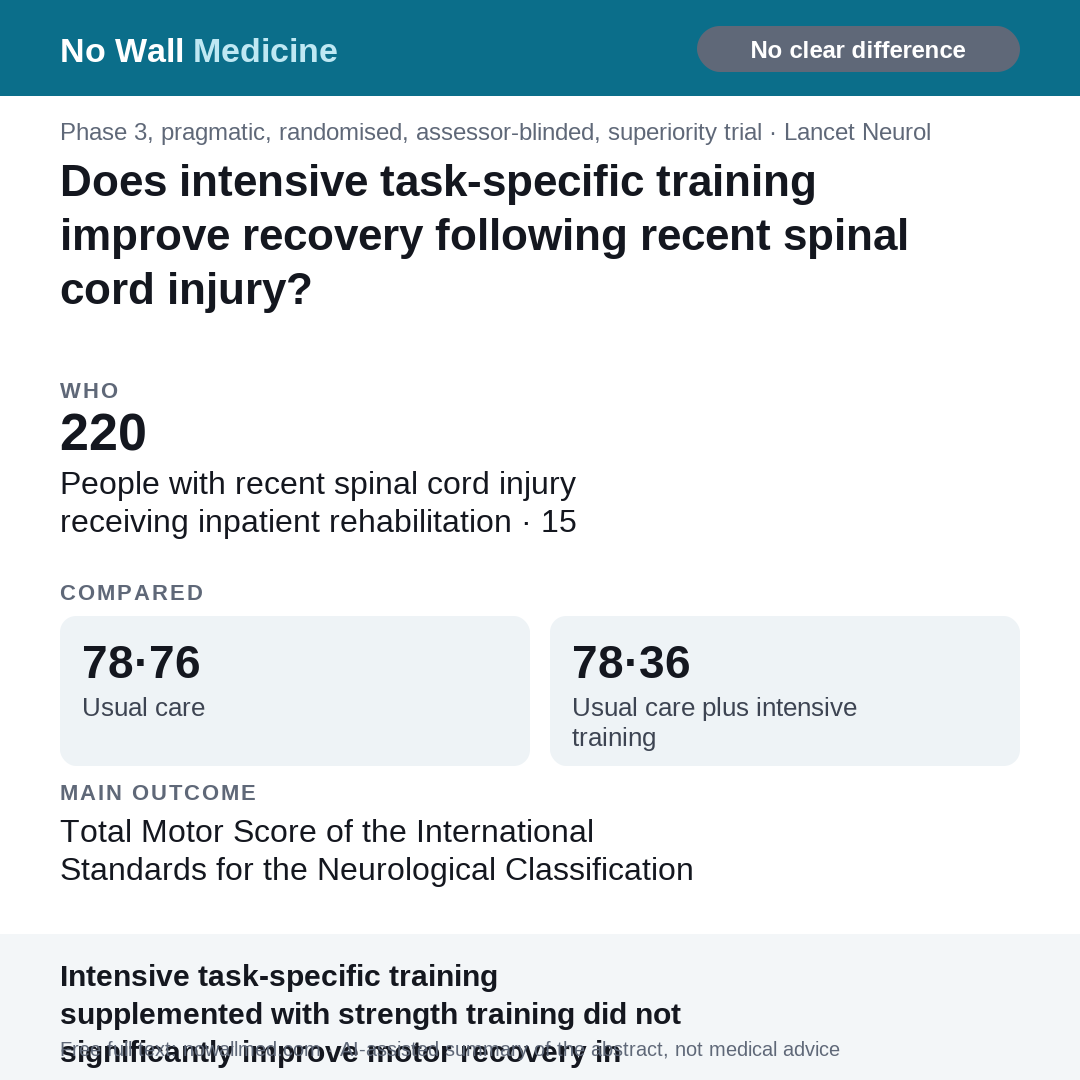
Safety and efficacy of intensive task-specific training in people with recent spinal cord injury: a phase 3, pragmatic, randomised, assessor-blinded, superiority trial
Phase 3, pragmatic, randomised, assessor-blinded, superiority trialNo clear difference
Does intensive task-specific training improve recovery following recent spinal cord injury?
Who
220
People with recent spinal cord injury receiving inpatient rehabilitation · 15 hospitals in six countries
Compared
78·76Usual care (SD 17·34)
78·36Usual care plus intensive training (SD 17·00)
Main outcome
Total Motor Score of the International Standards for the Neurological Classification of SCI
Result: mean between-group difference 0·93 (95% CI -1·63 to 3·48)
Bottom line: Intensive task-specific training supplemented with strength training did not significantly improve motor recovery in people with recent spinal cord injury.
Funded by: New South Wales Ministry of Health, University of Sydney, and Wings for Life
Lancet Neurol · 2026-02-22Download image
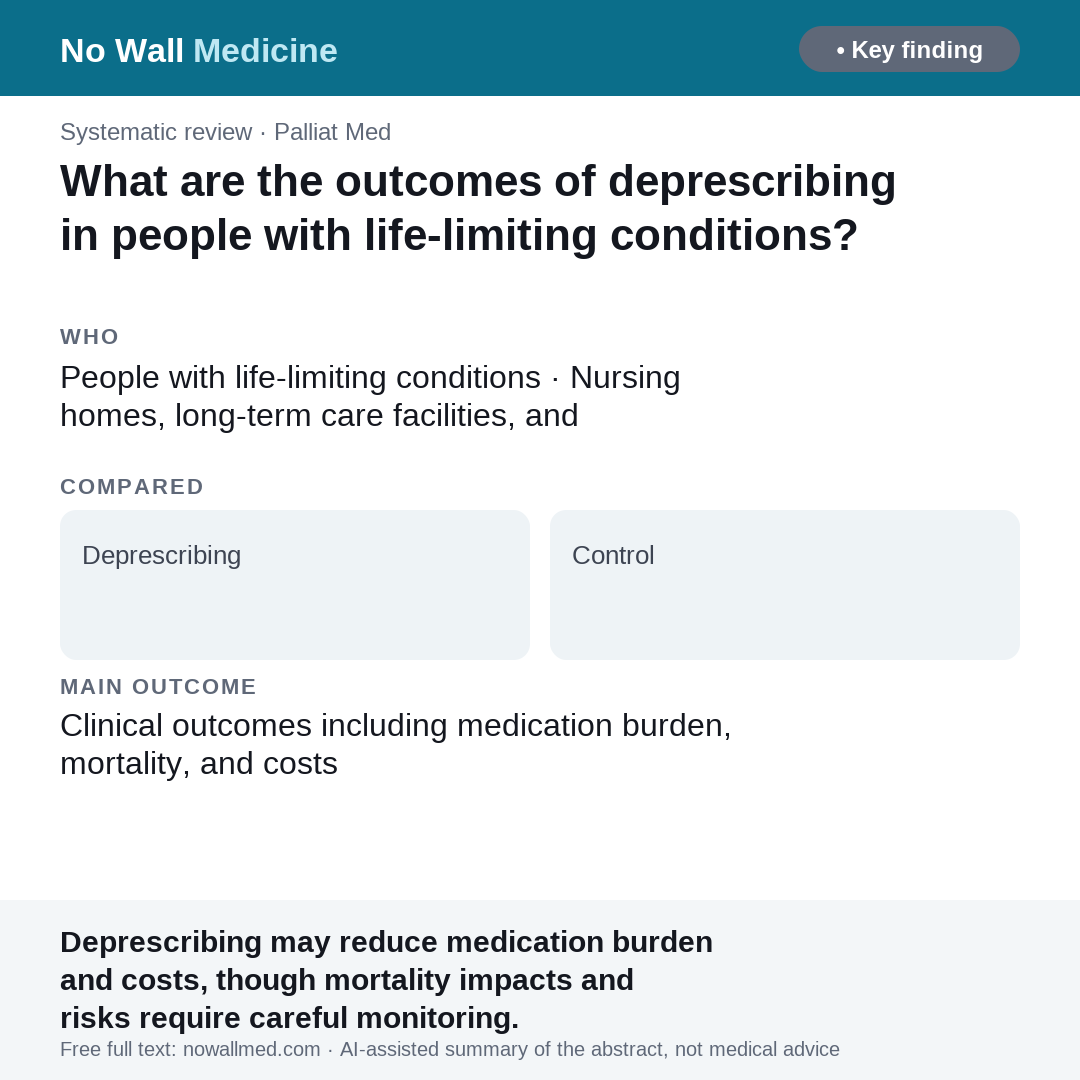
Outcomes of deprescribing for people with life-limiting conditions: A systematic review
Systematic reviewBenefit found
What are the outcomes of deprescribing in people with life-limiting conditions?
Who
People with life-limiting conditions · Nursing homes, long-term care facilities, and hospitals
Compared
Deprescribing
Control
Main outcome
Clinical outcomes including medication burden, mortality, and costs
Bottom line: Deprescribing may reduce medication burden and costs, though mortality impacts and risks require careful monitoring.
Limitation: Further research should explore how outcomes vary by disease condition and medication type.
Palliat Med · 2026-02-22Download image
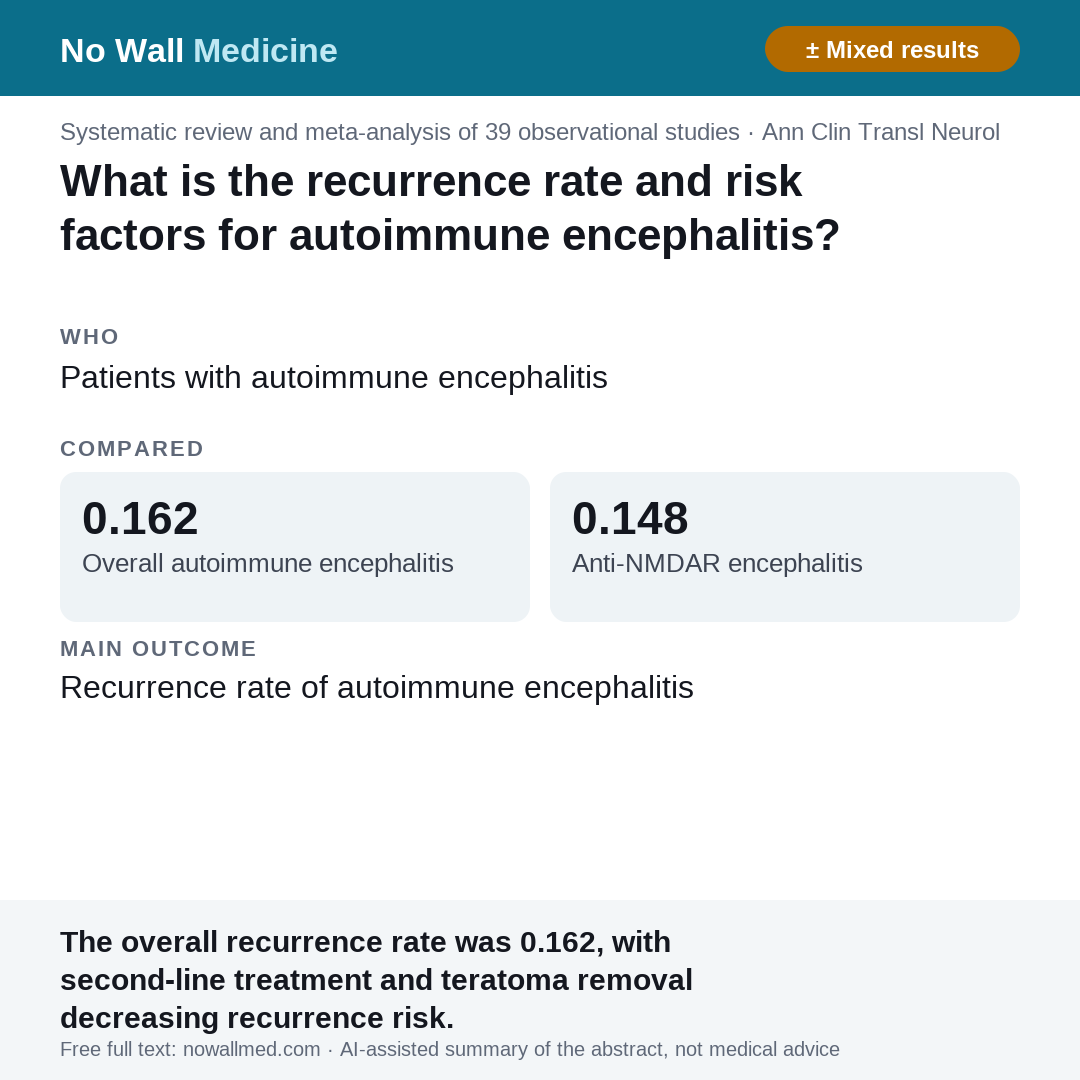
A Systematic Review and Meta-Analysis of the Recurrence of Autoimmune Encephalitis
Systematic review and meta-analysis of 39 observational studiesMixed results
What is the recurrence rate and risk factors for autoimmune encephalitis?
Who
Patients with autoimmune encephalitis
Compared
0.162Overall autoimmune encephalitis (95% CI, 0.121-0.207)
0.148Anti-NMDAR encephalitis (95% CI, 0.108-0.193)
Main outcome
Recurrence rate of autoimmune encephalitis
Bottom line: The overall recurrence rate was 0.162, with second-line treatment and teratoma removal decreasing recurrence risk.
Ann Clin Transl Neurol · 2026-02-22Download image
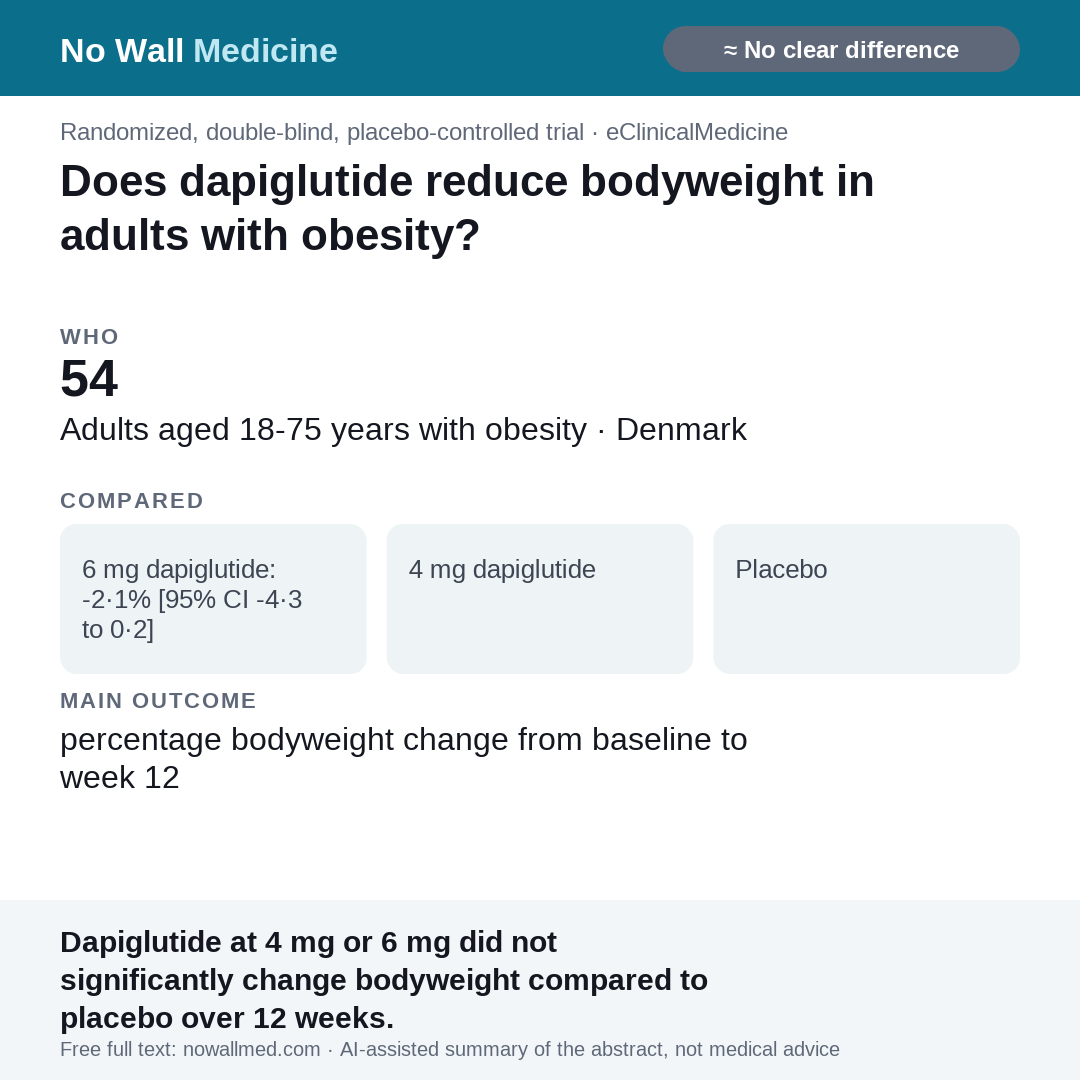
Dapiglutide, a dual GLP-1 and GLP-2 receptor agonist, for obesity: a randomised, double-blind, placebo-controlled parallel-group, proof-of-concept trial
Randomized, double-blind, placebo-controlled trialNo clear difference
Does dapiglutide reduce bodyweight in adults with obesity?
Who
54
Adults aged 18-75 years with obesity · Denmark
Compared
6 mg dapiglutide: -2·1% [95% CI -4·3 to 0·2]
4 mg dapiglutide
Placebo
Main outcome
percentage bodyweight change from baseline to week 12
Bottom line: Dapiglutide at 4 mg or 6 mg did not significantly change bodyweight compared to placebo over 12 weeks.
Funded by: Zealand Pharma
eClinicalMedicine · 2026-02-21Download image
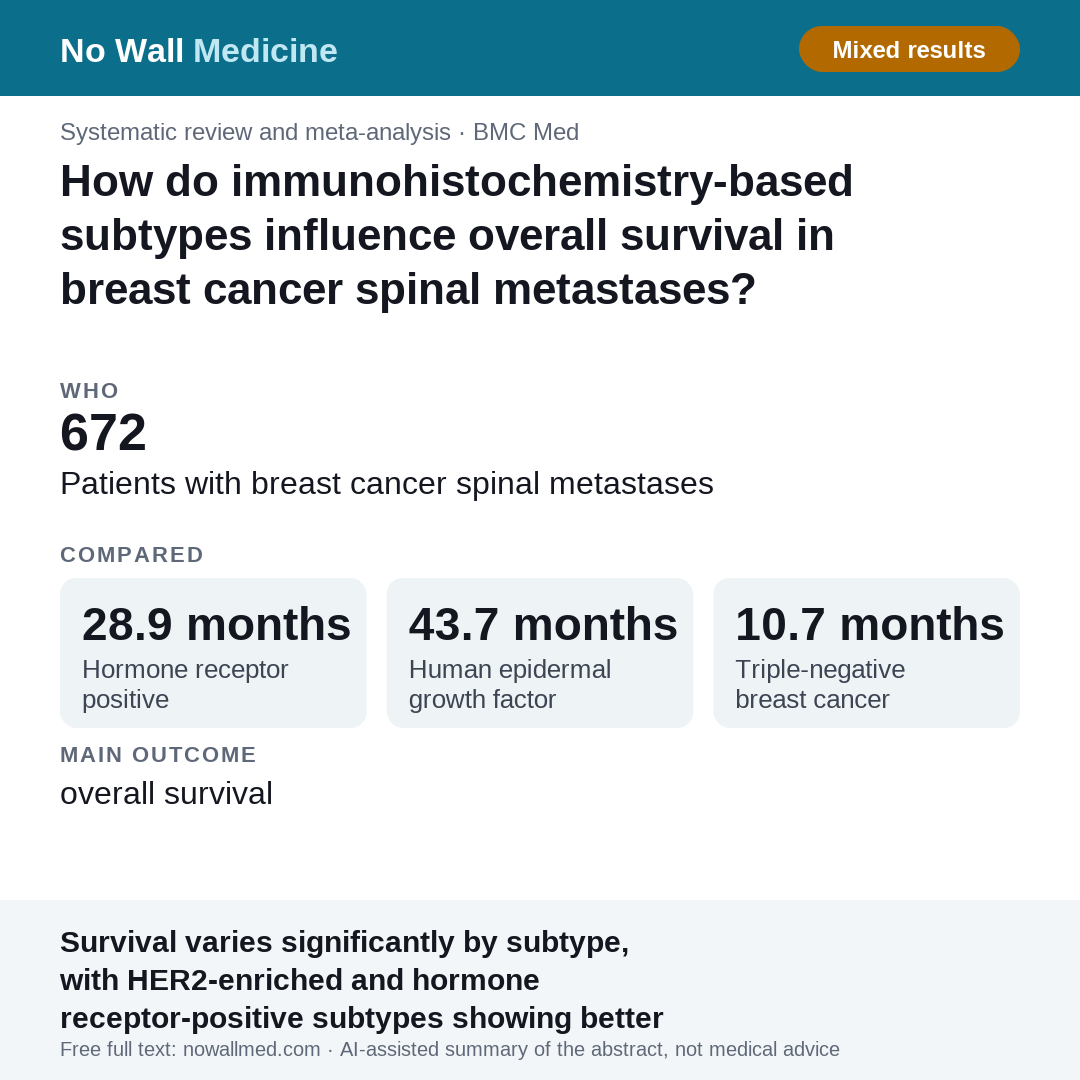
The influence of immunohistochemistry-based subtypes on overall survival in breast cancer spine metastases: a systematic review and meta-analysis
Systematic review and meta-analysisMixed results
How do immunohistochemistry-based subtypes influence overall survival in breast cancer spinal metastases?
Who
672
Patients with breast cancer spinal metastases
Compared
28.9 monthsHormone receptor positive (95% CI 26.0-35.6)
43.7 monthsHuman epidermal growth factor receptor 2-enriched (31.9-48.7)
10.7 monthsTriple-negative breast cancer (8.9-19.2)
Main outcome
overall survival
Bottom line: Survival varies significantly by subtype, with HER2-enriched and hormone receptor-positive subtypes showing better outcomes than triple-negative breast cancer.
BMC Med · 2026-02-21Download image
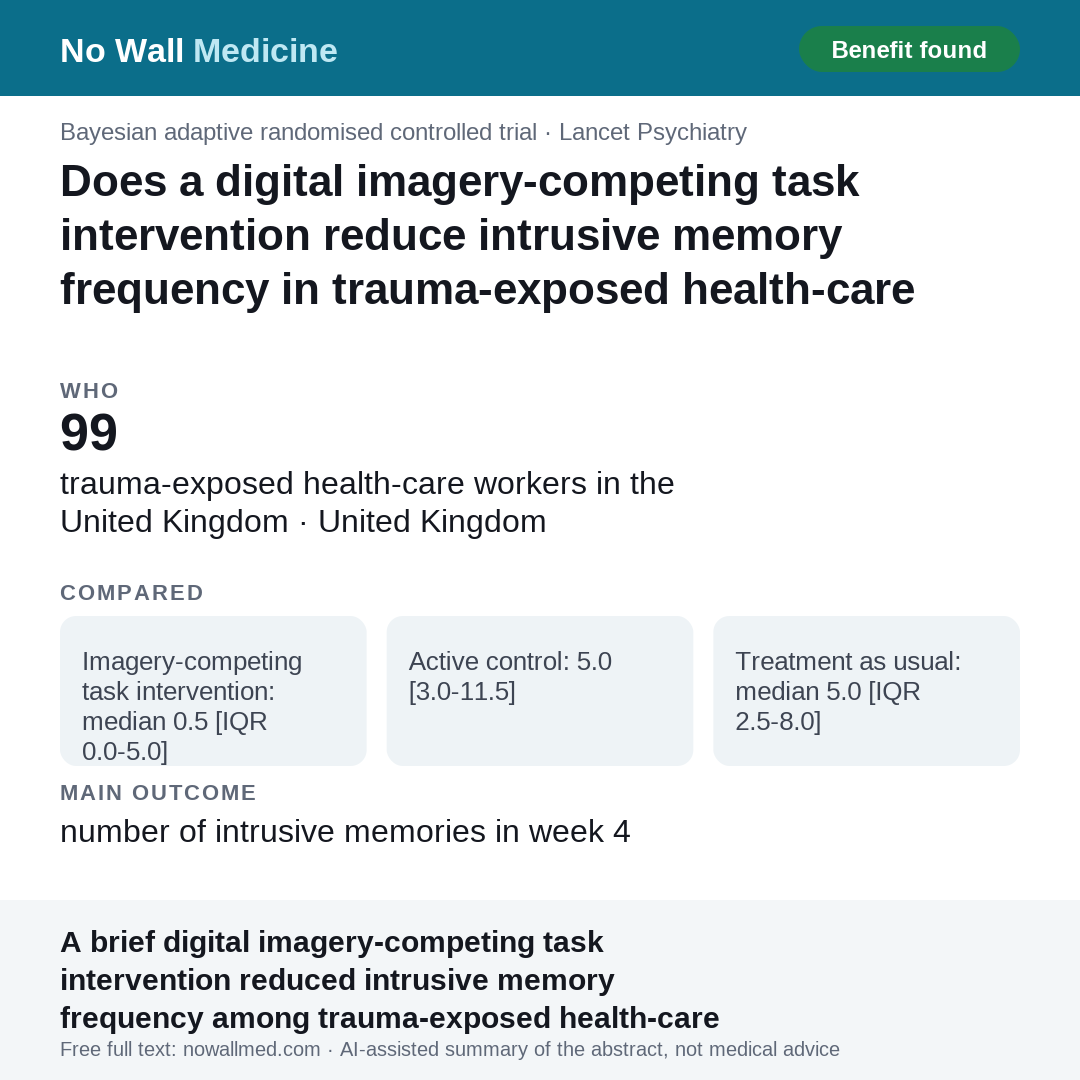
A digital imagery-competing task intervention for stopping intrusive memories in trauma-exposed health-care staff during the COVID-19 pandemic in the UK: a Bayesian adaptive randomised clinical trial
Bayesian adaptive randomised controlled trialBenefit found
Does a digital imagery-competing task intervention reduce intrusive memory frequency in trauma-exposed health-care staff?
Who
99
trauma-exposed health-care workers in the United Kingdom · United Kingdom
Compared
Imagery-competing task intervention: median 0.5 [IQR 0.0-5.0]
Active control: 5.0 [3.0-11.5]
Treatment as usual: median 5.0 [IQR 2.5-8.0]
Main outcome
number of intrusive memories in week 4
Result: βactive control>ICTI 1.29 (95% CrI 0.64-2.00); βtreatment as usual>ICTI 1.21 (95% CrI 0.49-1.98)
Bottom line: A brief digital imagery-competing task intervention reduced intrusive memory frequency among trauma-exposed health-care workers.
Funded by: Wellcome Trust, Swedish Research Council, UK Medical Research Council, and NIHR
Lancet Psychiatry · 2026-02-21Download image
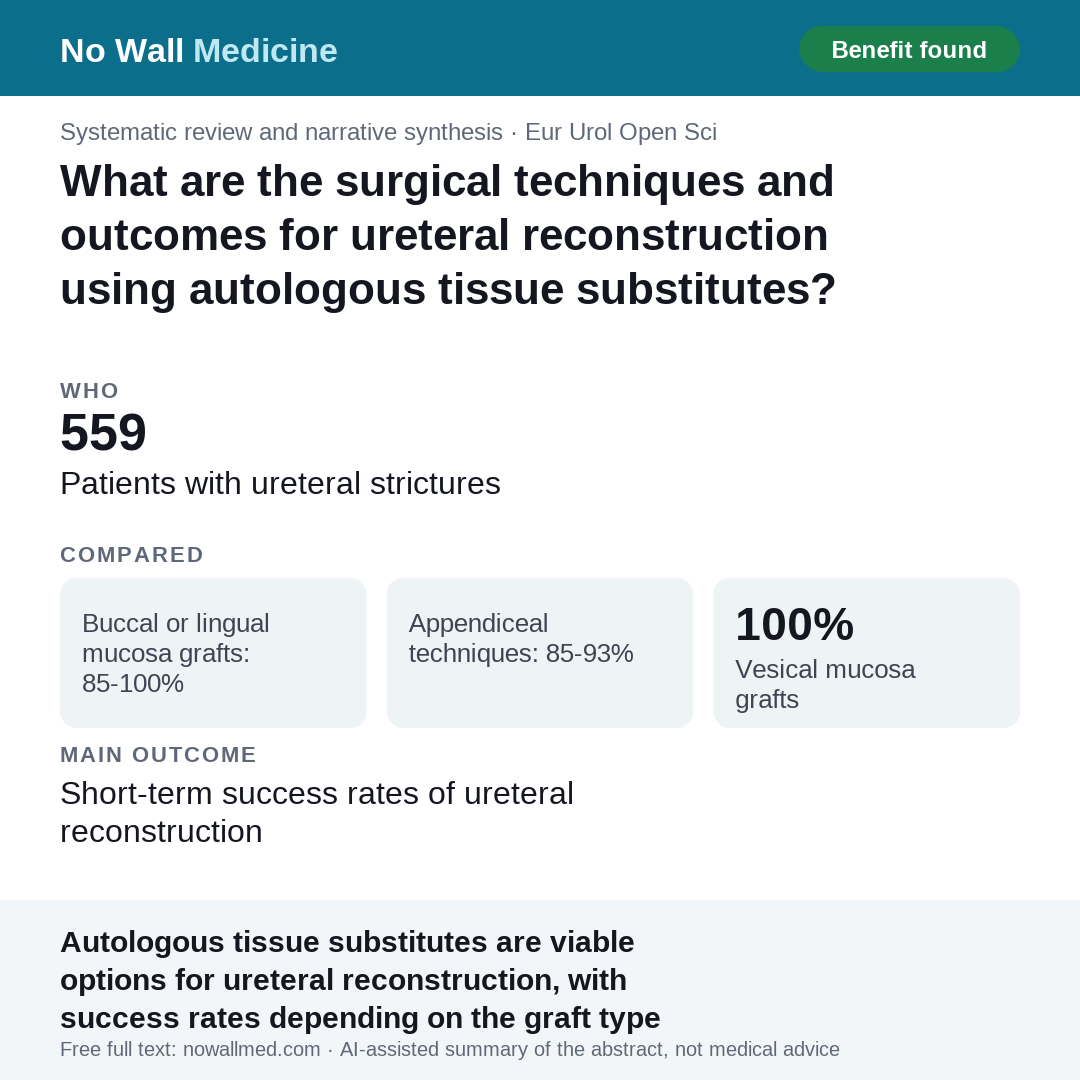
Autologous Tissue Substitutes for Ureteral Reconstruction: A Systematic Review of Surgical Techniques and Outcomes
Systematic review and narrative synthesisBenefit found
What are the surgical techniques and outcomes for ureteral reconstruction using autologous tissue substitutes?
Who
559
Patients with ureteral strictures
Compared
Buccal or lingual mucosa grafts: 85-100%
Appendiceal techniques: 85-93%
100%Vesical mucosa grafts
Main outcome
Short-term success rates of ureteral reconstruction
Bottom line: Autologous tissue substitutes are viable options for ureteral reconstruction, with success rates depending on the graft type used.
Limitation: Retrospective nature of most studies, heterogeneous reporting, and short follow-up.
Eur Urol Open Sci · 2026-02-21Download image
Perioperative anesthesia management of GLP-1 receptor agonists: a systematic review of potential risks
Systematic reviewUnclear result
Does glucagon-like peptide-1 receptor agonist use increase perioperative regurgitation and aspiration?
Who
Patients using glucagon-like peptide-1 receptor agonists · PubMed, Google Scholar, SCOPUS, MEDLINE, and EMBASE
Compared
Glucagon-like peptide-1 receptor agonist users
Control
Main outcome
Regurgitation and aspiration events
Bottom line: Evidence linking glucagon-like peptide-1 receptor agonists to increased regurgitation or aspiration events remains highly inconsistent.
Limitation: Variability in studies, potential confounding factors, and severe heterogeneity of conclusions.
Perioper Med · 2026-02-21Download image

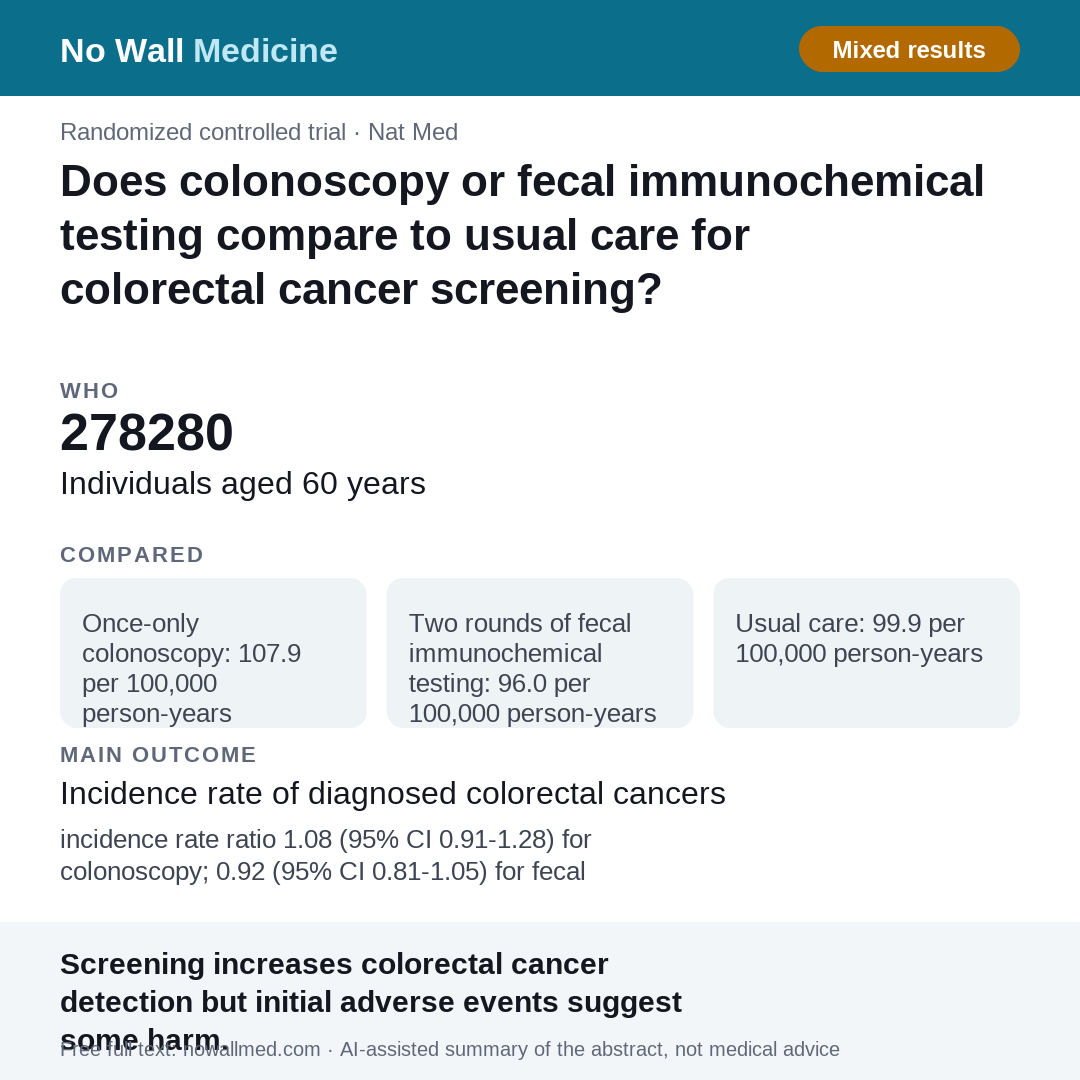
Colonoscopy and fecal immunochemical testing versus usual care in diagnostic colorectal cancer screening: the SCREESCO randomized controlled trial
Randomized controlled trialMixed results
Does colonoscopy or fecal immunochemical testing compare to usual care for colorectal cancer screening?
Who
278280
Individuals aged 60 years
Compared
Once-only colonoscopy: 107.9 per 100,000 person-years
Two rounds of fecal immunochemical testing: 96.0 per 100,000 person-years
Usual care: 99.9 per 100,000 person-years
Main outcome
Incidence rate of diagnosed colorectal cancers
Result: incidence rate ratio 1.08 (95% CI 0.91-1.28) for colonoscopy; 0.92 (95% CI 0.81-1.05) for fecal immunochemical testing
Bottom line: Screening increases colorectal cancer detection but initial adverse events suggest some harm.
Nat Med · 2026-02-20Download image
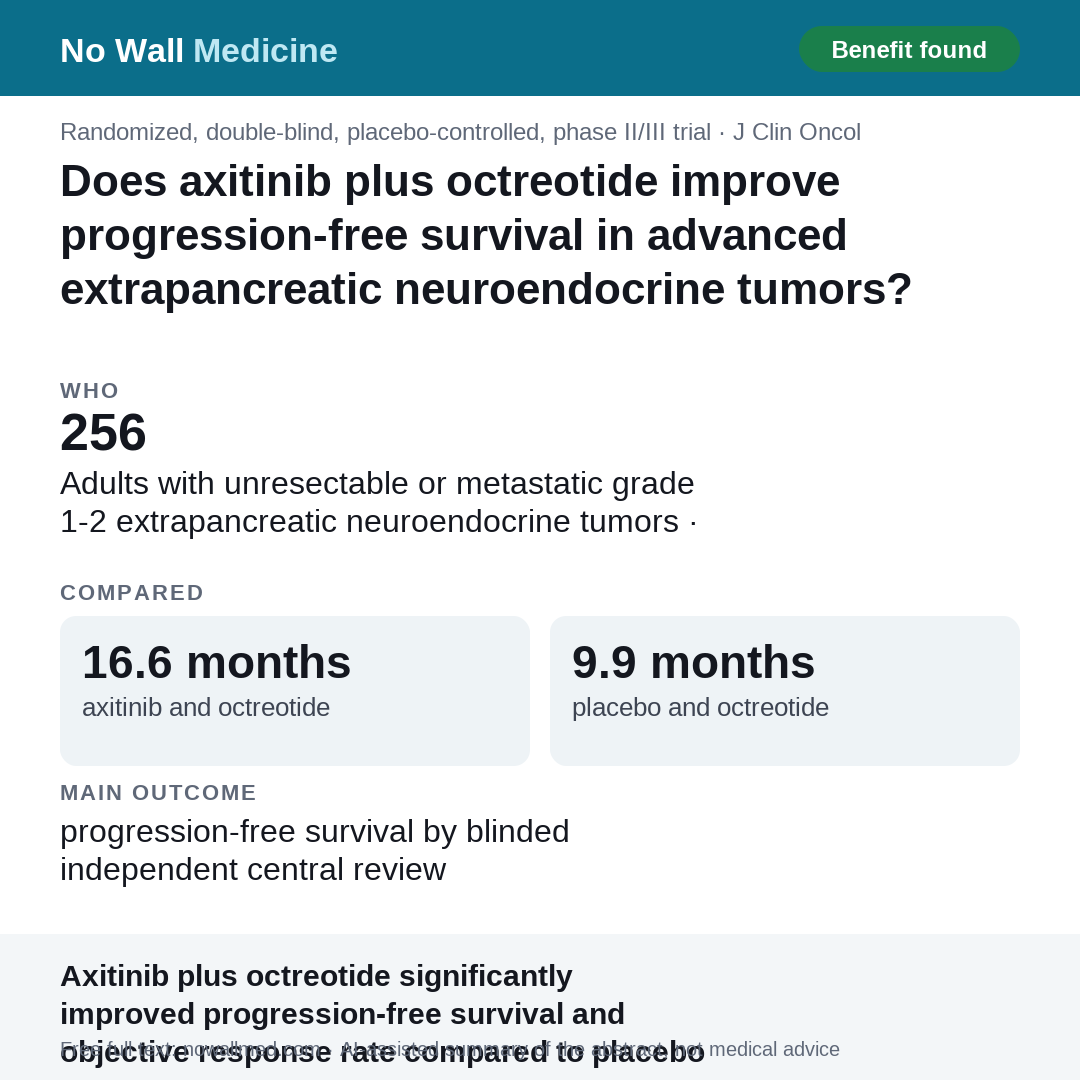
Axitinib and Long-Acting Octreotide in Advanced Extrapancreatic Neuroendocrine Tumors: A Randomized, Double-Blind, Placebo-Controlled, Phase III Clinical Trial (AXINET, GETNE 1107)
Randomized, double-blind, placebo-controlled, phase II/III trialBenefit found
Does axitinib plus octreotide improve progression-free survival in advanced extrapancreatic neuroendocrine tumors?
Who
256
Adults with unresectable or metastatic grade 1-2 extrapancreatic neuroendocrine tumors · international
Compared
16.6 monthsaxitinib and octreotide (95% CI, 13.5 to 24.2)
9.9 monthsplacebo and octreotide (95% CI, 8.2 to 13.9)
Main outcome
progression-free survival by blinded independent central review
Result: hazard ratio 0.71 (95% CI 0.54 to 0.94)
Bottom line: Axitinib plus octreotide significantly improved progression-free survival and objective response rate compared to placebo and octreotide.
J Clin Oncol · 2026-02-20Download image
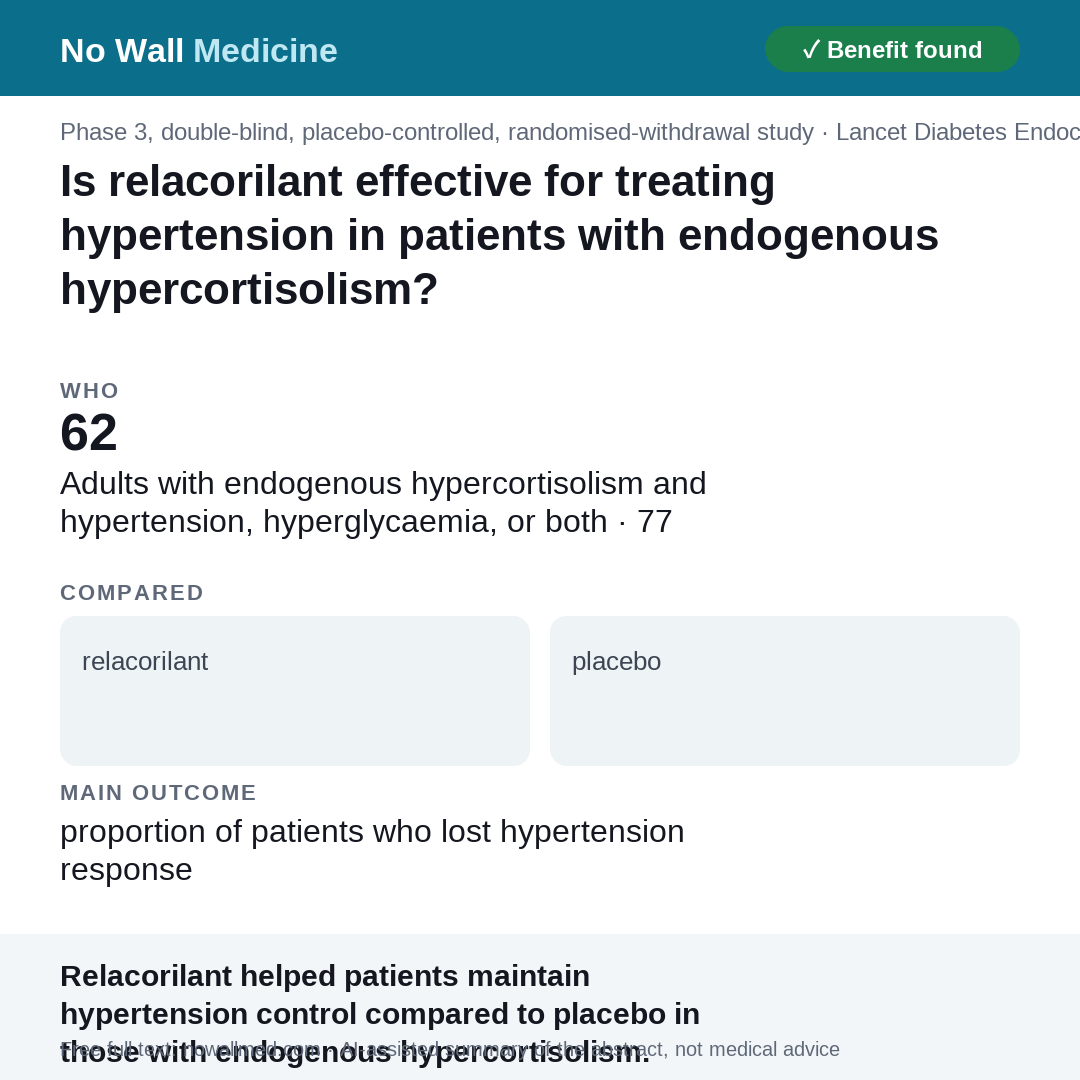
Efficacy and safety of relacorilant for the treatment of patients with Cushing's syndrome (GRACE): a multicentre, phase 3, double-blind, placebo-controlled, randomised-withdrawal study
Phase 3, double-blind, placebo-controlled, randomised-withdrawal studyBenefit found
Is relacorilant effective for treating hypertension in patients with endogenous hypercortisolism?
Who
62
Adults with endogenous hypercortisolism and hypertension, hyperglycaemia, or both · 77 study centres across 11 countries
Compared
relacorilant
placebo
Main outcome
proportion of patients who lost hypertension response
Result: odds ratio 0·17 (95% CI 0·04-0·77)
Bottom line: Relacorilant helped patients maintain hypertension control compared to placebo in those with endogenous hypercortisolism.
Funded by: Corcept Therapeutics
Lancet Diabetes Endocrinol · 2026-02-20Download image
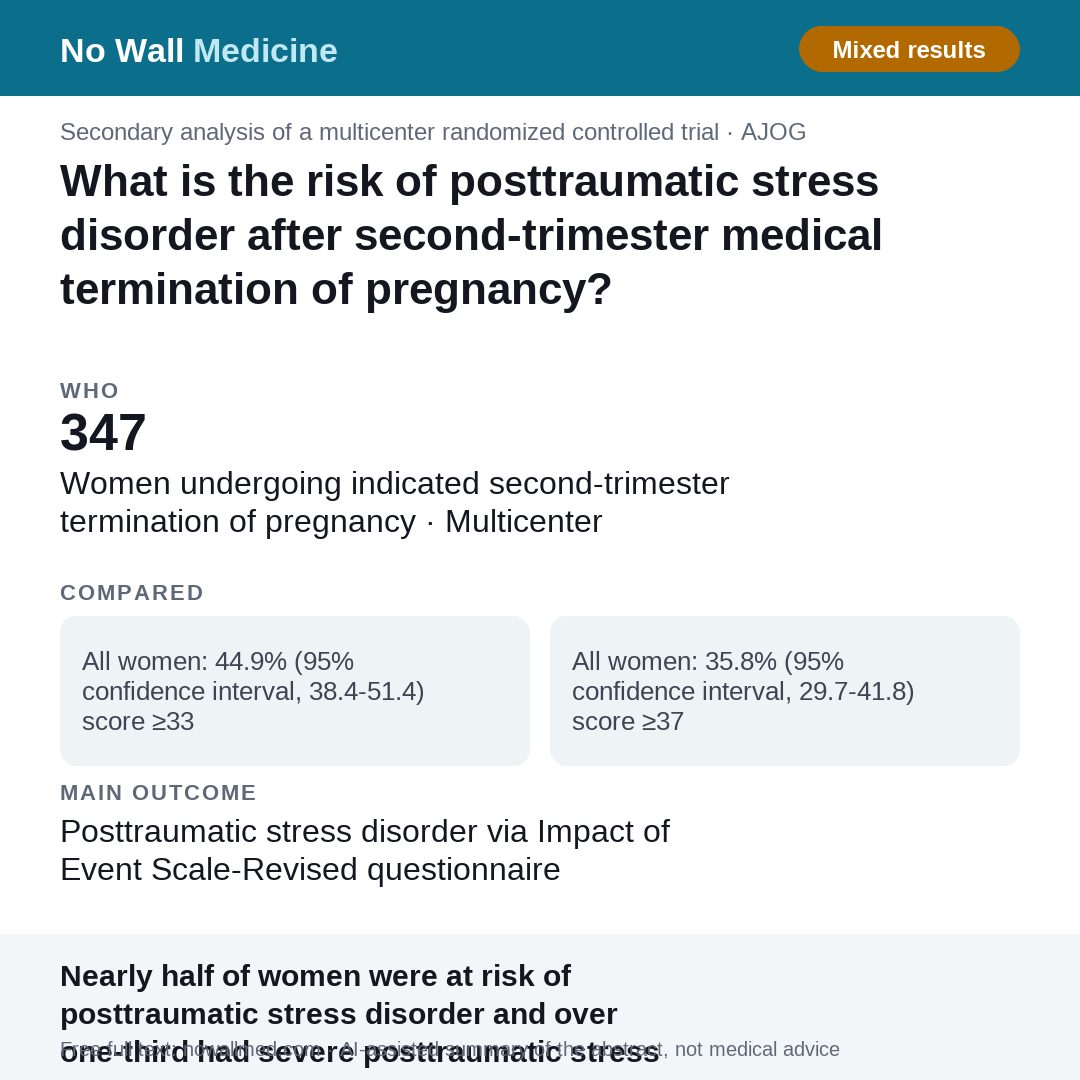
Posttraumatic stress disorder after second-trimester medical termination of pregnancy
Secondary analysis of a multicenter randomized controlled trialMixed results
What is the risk of posttraumatic stress disorder after second-trimester medical termination of pregnancy?
Who
347
Women undergoing indicated second-trimester termination of pregnancy · Multicenter
Compared
All women: 44.9% (95% confidence interval, 38.4-51.4) score ≥33
All women: 35.8% (95% confidence interval, 29.7-41.8) score ≥37
Main outcome
Posttraumatic stress disorder via Impact of Event Scale-Revised questionnaire
Bottom line: Nearly half of women were at risk of posttraumatic stress disorder and over one-third had severe posttraumatic stress disorder.
AJOG · 2026-02-20Download image
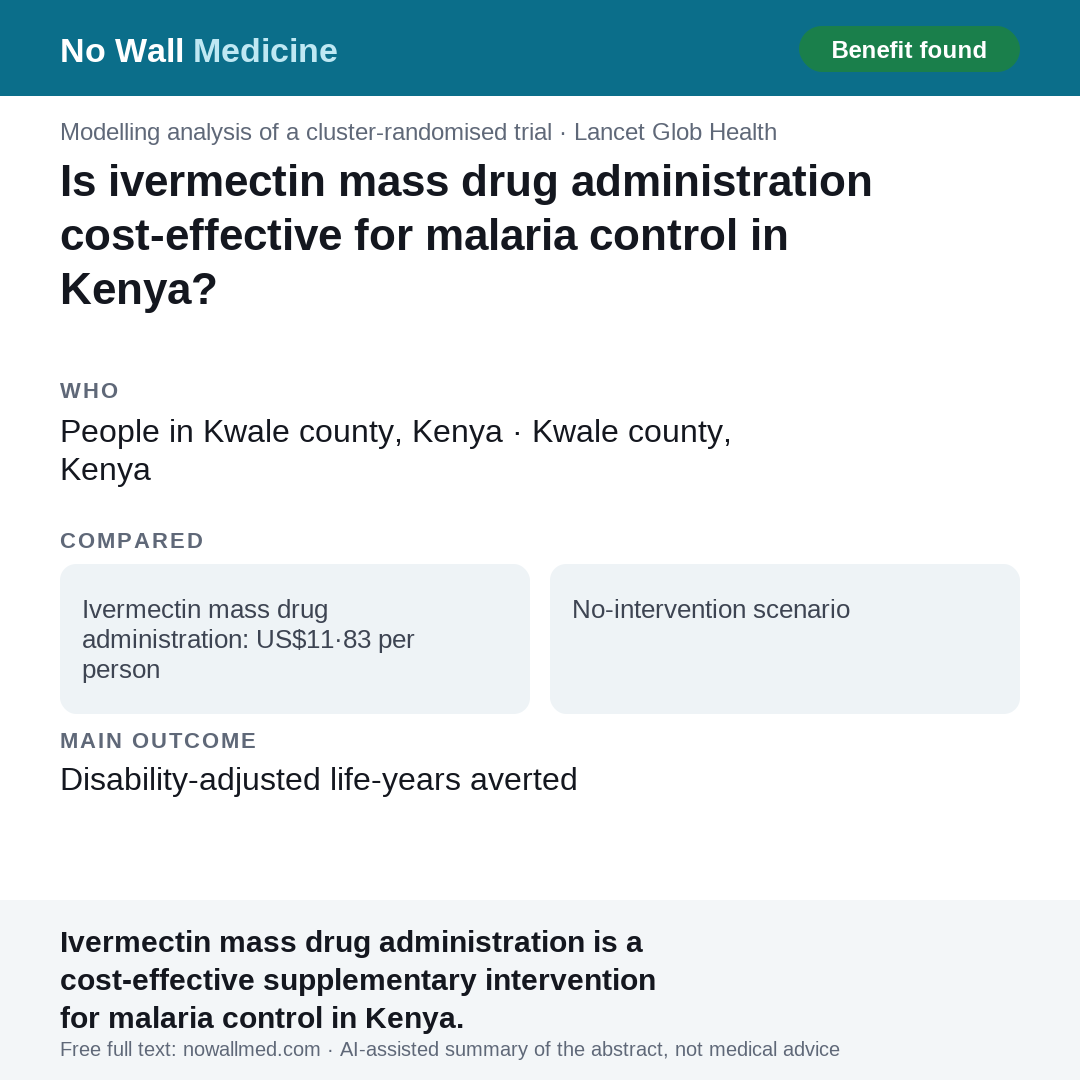
Cost and cost-effectiveness of ivermectin mass drug administration for malaria control in Kwale county, Kenya: a modelling analysis of a cluster-randomised trial
Modelling analysis of a cluster-randomised trialBenefit found
Is ivermectin mass drug administration cost-effective for malaria control in Kenya?
Who
People in Kwale county, Kenya · Kwale county, Kenya
Compared
Ivermectin mass drug administration: US$11·83 per person
No-intervention scenario
Main outcome
Disability-adjusted life-years averted
Result: $905·23 per DALY averted
Bottom line: Ivermectin mass drug administration is a cost-effective supplementary intervention for malaria control in Kenya.
Funded by: Unitaid through the BOHEMIA project
Lancet Glob Health · 2026-02-20Download image
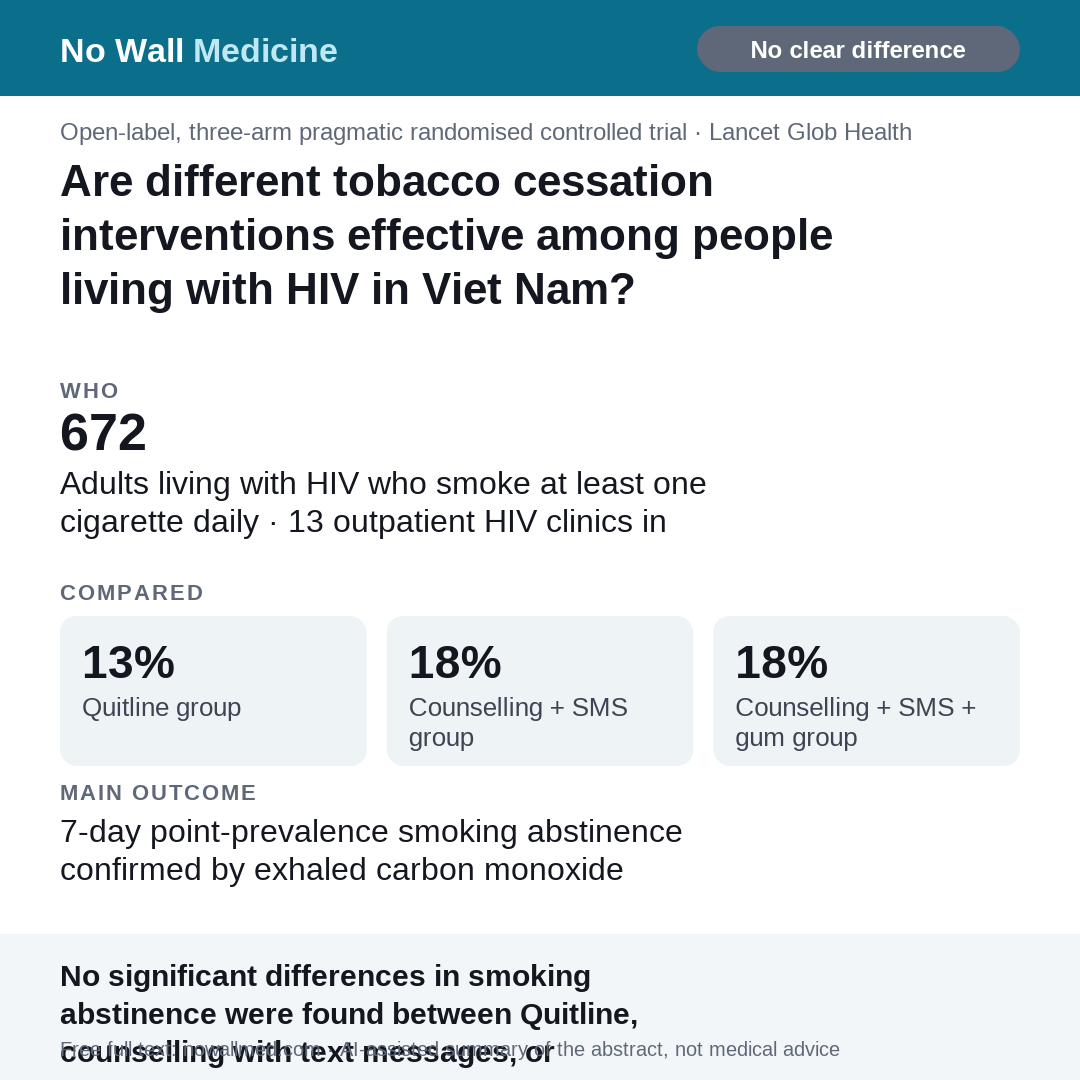
Effectiveness of behavioural tobacco cessation interventions with and without pharmacotherapy among people living with HIV in Viet Nam: a three-arm pragmatic randomised controlled trial
Open-label, three-arm pragmatic randomised controlled trialNo clear difference
Are different tobacco cessation interventions effective among people living with HIV in Viet Nam?
Who
672
Adults living with HIV who smoke at least one cigarette daily · 13 outpatient HIV clinics in Hanoi, Viet Nam
Compared
13%Quitline group
18%Counselling + SMS group
18%Counselling + SMS + gum group
Main outcome
7-day point-prevalence smoking abstinence confirmed by exhaled carbon monoxide
Result: odds ratio 1.48 (95% CI 0.78-2.81) for Counselling + SMS versus Quitline
Bottom line: No significant differences in smoking abstinence were found between Quitline, counselling with text messages, or counselling with nicotine gum.
Funded by: US National Cancer Institute
Lancet Glob Health · 2026-02-20Download image
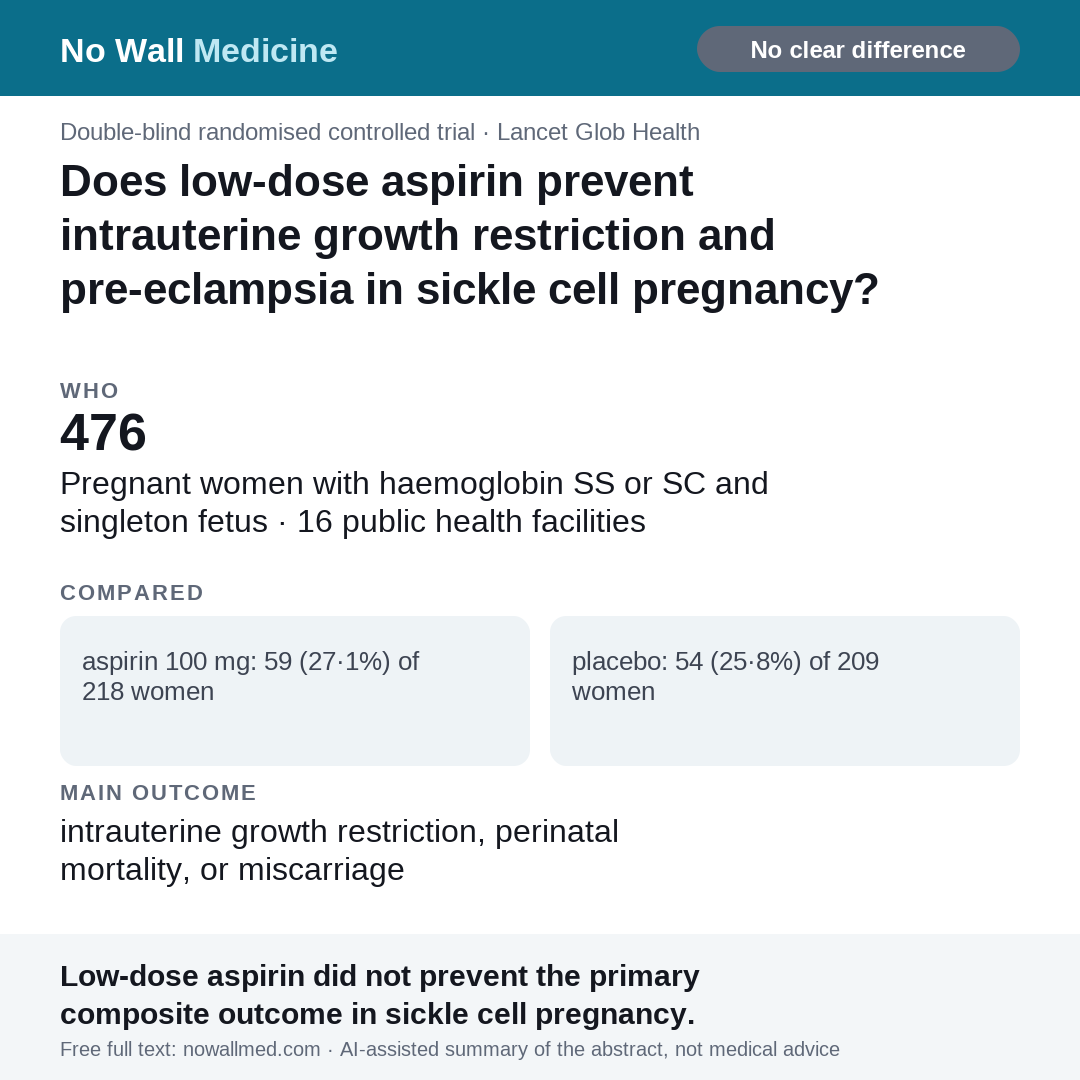
Low-dose aspirin for preventing intrauterine growth restriction and pre-eclampsia in sickle cell pregnancy in Nigeria (PIPSICKLE): a randomised controlled trial
Double-blind randomised controlled trialNo clear difference
Does low-dose aspirin prevent intrauterine growth restriction and pre-eclampsia in sickle cell pregnancy?
Who
476
Pregnant women with haemoglobin SS or SC and singleton fetus · 16 public health facilities in southwest Nigeria
Compared
aspirin 100 mg: 59 (27·1%) of 218 women
placebo: 54 (25·8%) of 209 women
Main outcome
intrauterine growth restriction, perinatal mortality, or miscarriage
Result: risk ratio 1·05 (95% CI 0·75-1·46)
Bottom line: Low-dose aspirin did not prevent the primary composite outcome in sickle cell pregnancy.
Limitation: conclusion is limited by late initiation of the medication after 16 weeks' gestation in three-quarters of the participants
Funded by: Tertiary Education Trust Fund Nigeria
Lancet Glob Health · 2026-02-20Download image
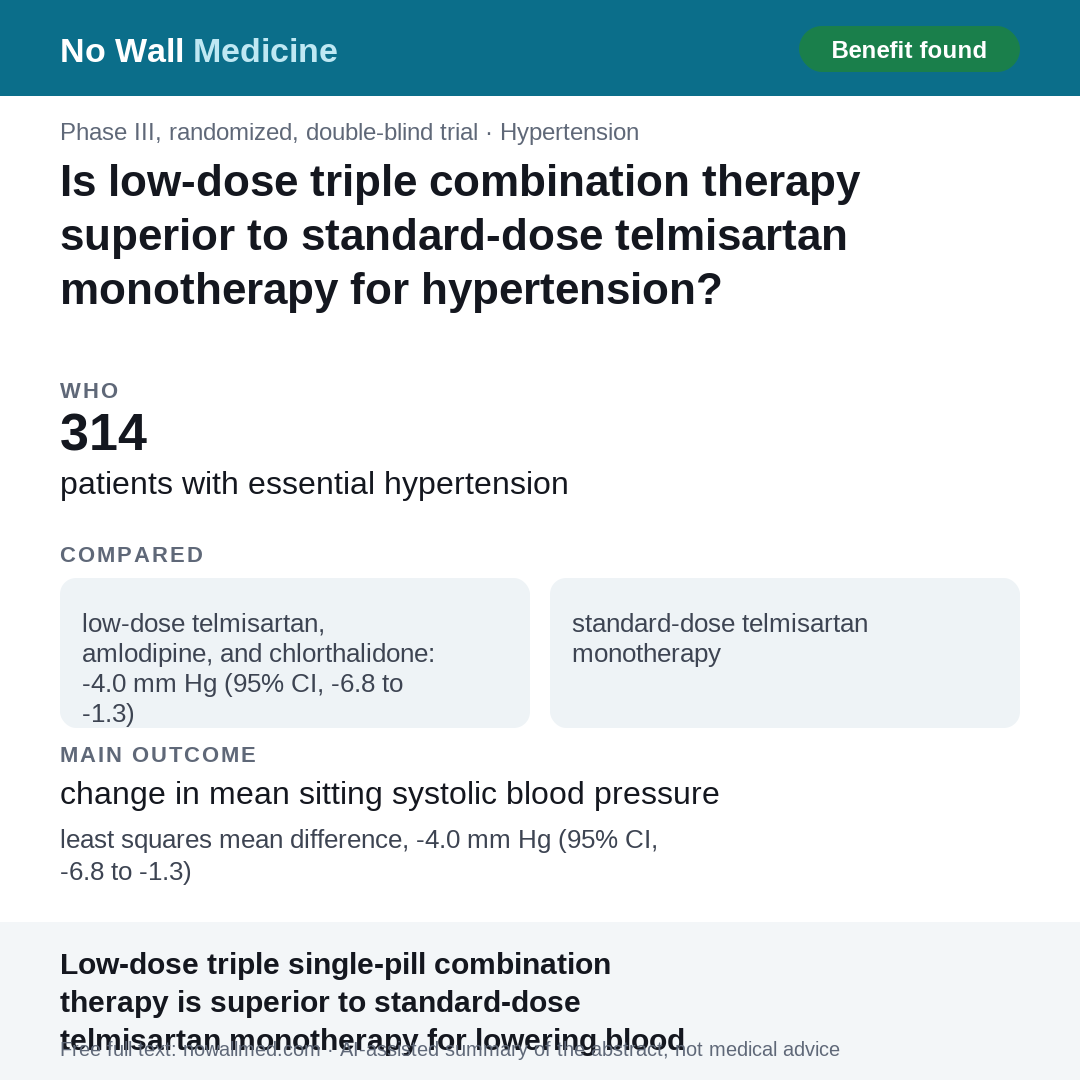
Low-Dose TEL/AML/CHTD SPC Versus Standard-Dose TEL in Hypertension: Phase III RCT
Phase III, randomized, double-blind trialBenefit found
Is low-dose triple combination therapy superior to standard-dose telmisartan monotherapy for hypertension?
Who
314
patients with essential hypertension
Compared
low-dose telmisartan, amlodipine, and chlorthalidone: -4.0 mm Hg (95% CI, -6.8 to -1.3)
standard-dose telmisartan monotherapy
Main outcome
change in mean sitting systolic blood pressure
Result: least squares mean difference, -4.0 mm Hg (95% CI, -6.8 to -1.3)
Bottom line: Low-dose triple single-pill combination therapy is superior to standard-dose telmisartan monotherapy for lowering blood pressure.
Hypertension · 2026-02-20Download image
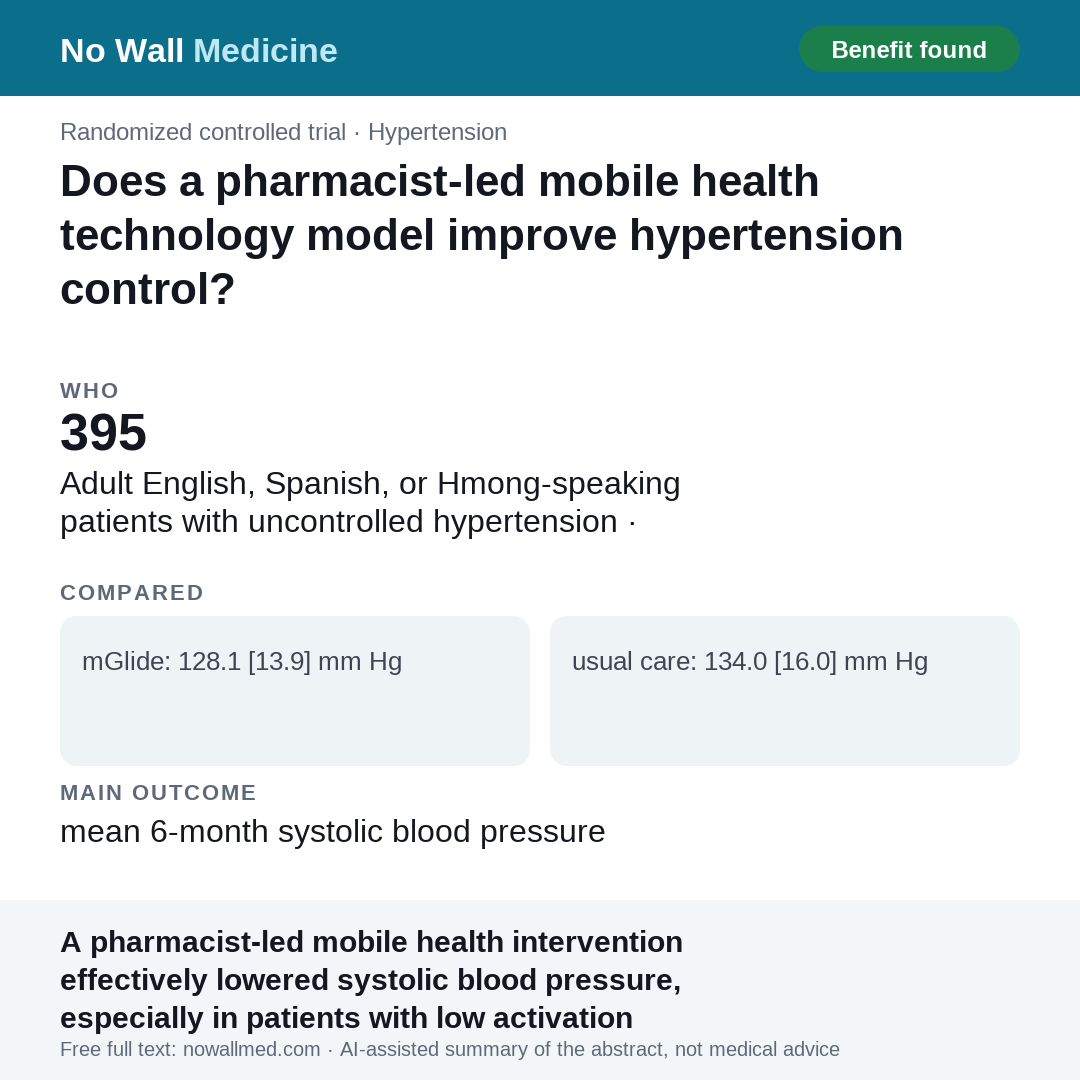
mHealth Intervention to Improve Hypertension Care in High-Risk Patients
Randomized controlled trialBenefit found
Does a pharmacist-led mobile health technology model improve hypertension control?
Who
395
Adult English, Spanish, or Hmong-speaking patients with uncontrolled hypertension · Large health care system and community clinics
Compared
mGlide: 128.1 [13.9] mm Hg
usual care: 134.0 [16.0] mm Hg
Main outcome
mean 6-month systolic blood pressure
Result: -5.8 mm Hg (95% CI, -8.6 to -3.0)
Bottom line: A pharmacist-led mobile health intervention effectively lowered systolic blood pressure, especially in patients with low activation levels.
Hypertension · 2026-02-20Download image
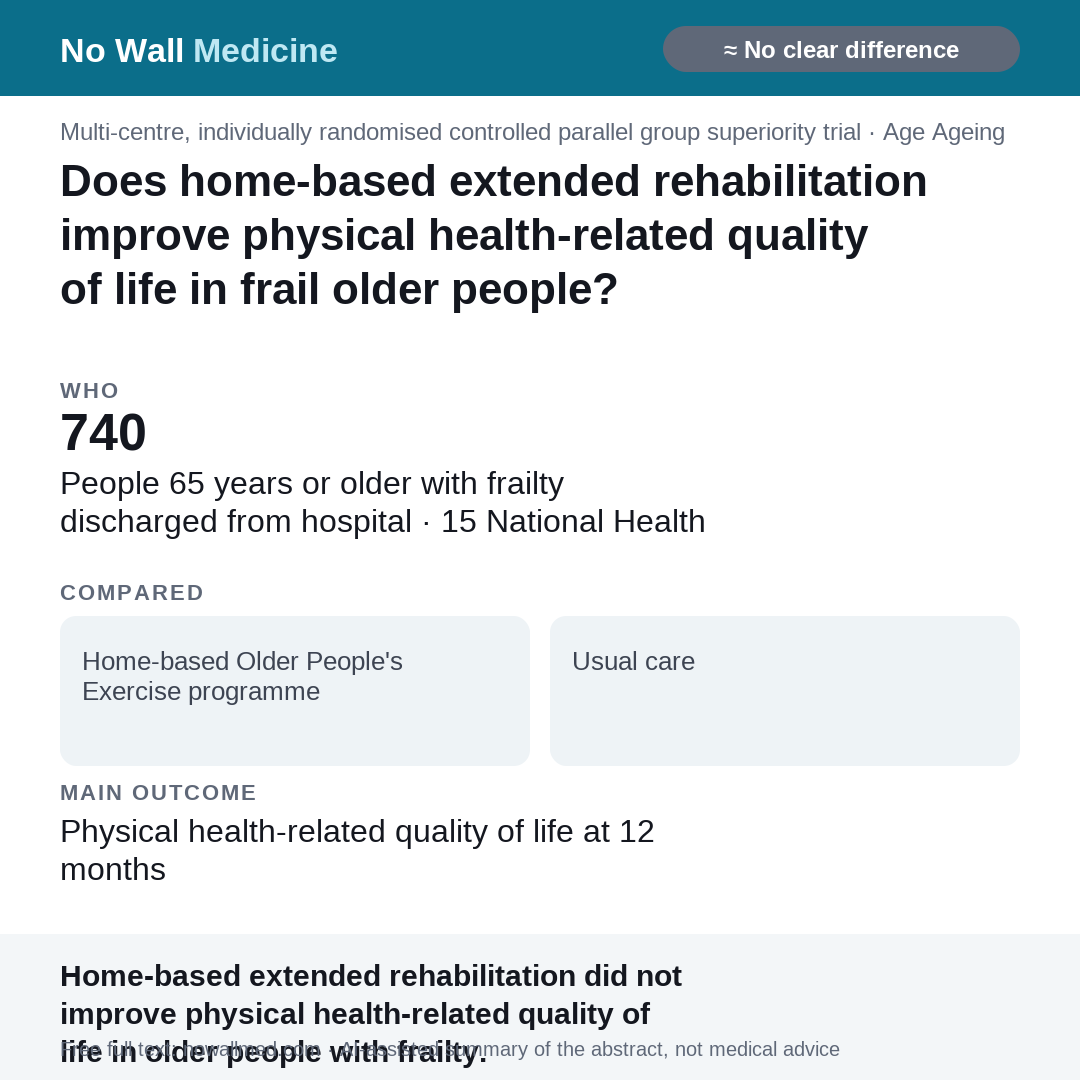
Home-based extended rehabilitation for older people with frailty (HERO): a randomised controlled trial
Multi-centre, individually randomised controlled parallel group superiority trialNo clear difference
Does home-based extended rehabilitation improve physical health-related quality of life in frail older people?
Who
740
People 65 years or older with frailty discharged from hospital · 15 National Health Service Trusts in England
Compared
Home-based Older People's Exercise programme
Usual care
Main outcome
Physical health-related quality of life at 12 months
Result: adjusted mean difference -0.22 (95% CI -1.47 to 1.03)
Bottom line: Home-based extended rehabilitation did not improve physical health-related quality of life in older people with frailty.
Age Ageing · 2026-02-20Download image
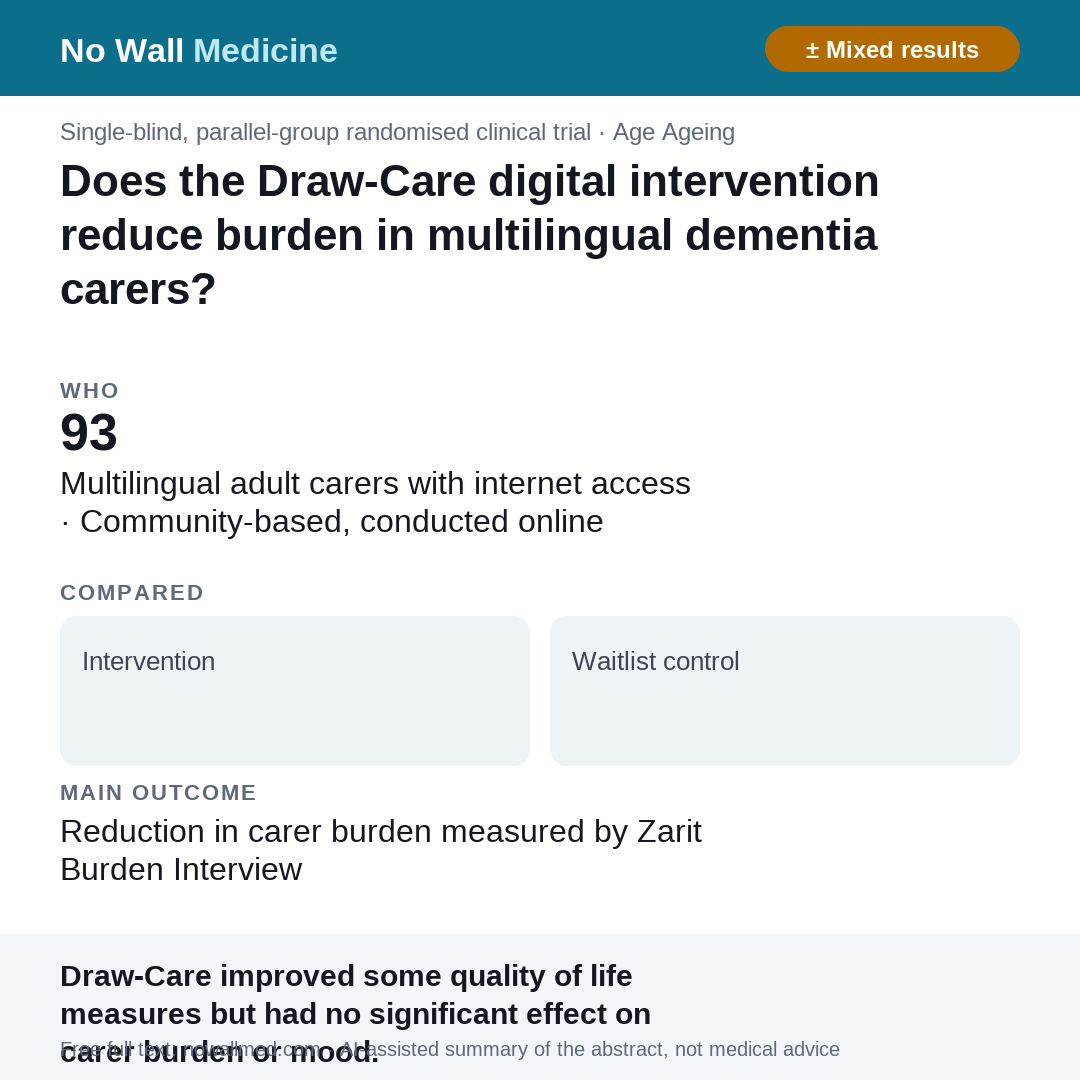
Evaluating the effects of the World Health Organisation's online intervention 'iSupport lite' to reduce burden in multilingual dementia carers: results from the Australian Draw-Care randomised clinical trial
Single-blind, parallel-group randomised clinical trialMixed results
Does the Draw-Care digital intervention reduce burden in multilingual dementia carers?
Who
93
Multilingual adult carers with internet access · Community-based, conducted online
Compared
Intervention
Waitlist control
Main outcome
Reduction in carer burden measured by Zarit Burden Interview
Result: mean difference 0.75 (95% CL: 0.25 to 1.24) for CarerQoL-VAS
Bottom line: Draw-Care improved some quality of life measures but had no significant effect on carer burden or mood.
Age Ageing · 2026-02-20Download image