Visual abstracts
New randomized trials and meta-analyses from leading journals at a glance: who was studied, what was compared, and what was found. Every paper is free to read in full.
All specialtiesCardiology 4877Oncology 4138Gastroenterology & Hepatology 1942Infectious Disease 3837Neurology 1905Psychiatry & Mental Health 2273Pulmonology 2143Critical Care 1365Endocrinology & Diabetes 2580Pediatrics 2980Surgery 2559Orthopedics & Sports Medicine 931Neurosurgery 537Cardiothoracic & Vascular Surgery 674Plastic & Reconstructive Surgery 591Nephrology 1133Rheumatology 823Hematology 1109Dermatology 621Ophthalmology 543Obstetrics & Gynecology 1686Public & Global Health 1058Radiology & Imaging 648Anesthesiology 986Urology 764ENT (Otolaryngology) 503Emergency Medicine 511Allergy & Immunology 313Geriatrics 981Family Medicine & Primary Care 562Medical Genetics & Genomics 676Pathology & Laboratory Medicine 159Physical Medicine & Rehabilitation 757Palliative Care 444Nutrition 1588Digital Health & AI 2201General Medicine 321
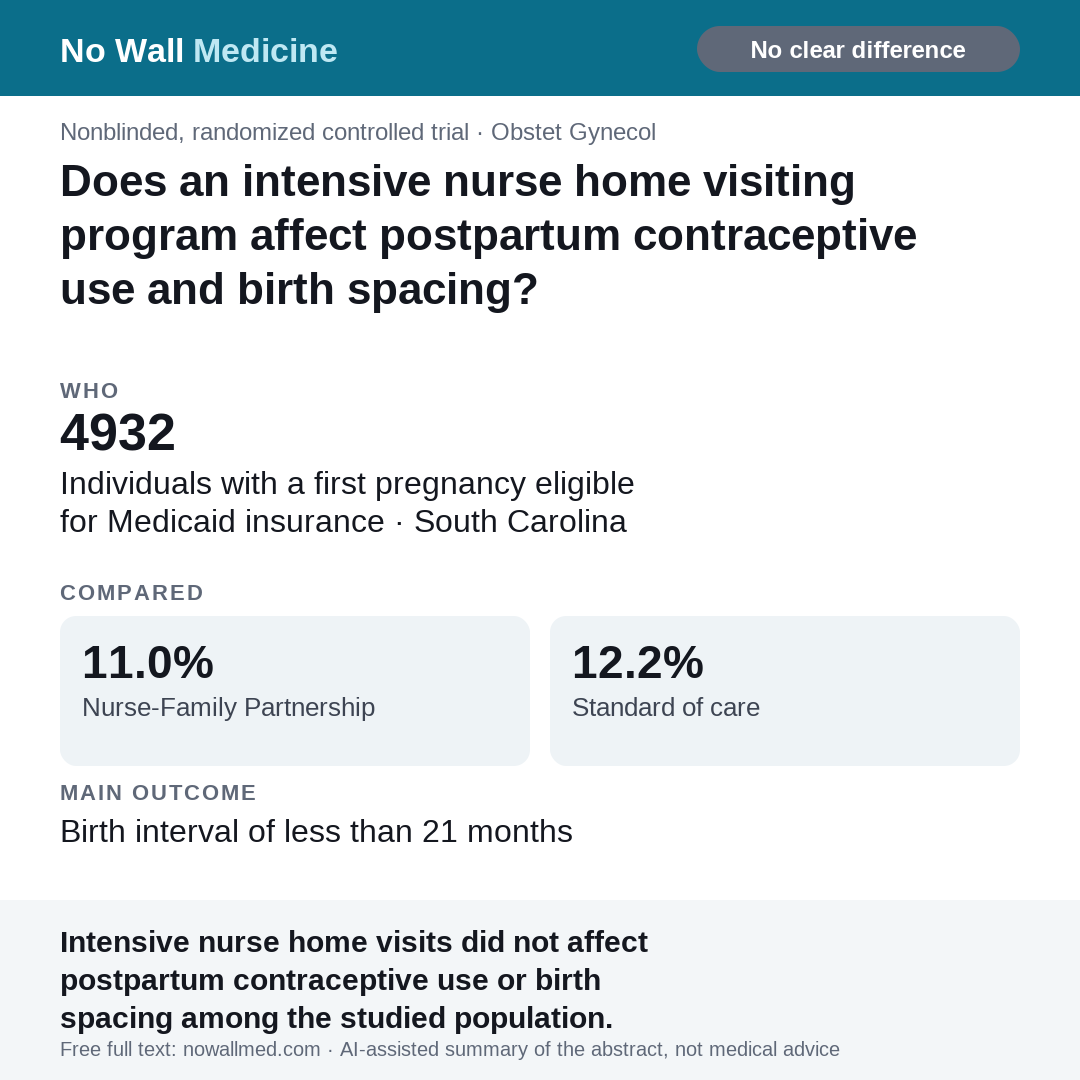
Effect of an Intensive Nurse Home Visiting Program on Postpartum Contraceptive Use and Birth Spacing: A Randomized Controlled Trial
Nonblinded, randomized controlled trialNo clear difference
Does an intensive nurse home visiting program affect postpartum contraceptive use and birth spacing?
Who
4932
Individuals with a first pregnancy eligible for Medicaid insurance · South Carolina
Compared
11.0%Nurse-Family Partnership
12.2%Standard of care
Main outcome
Birth interval of less than 21 months
Result: adjusted coefficient -1.1 (95% CI, -2.9 to 0.8)
Bottom line: Intensive nurse home visits did not affect postpartum contraceptive use or birth spacing among the studied population.
Obstet Gynecol · 2024-11-14Download image
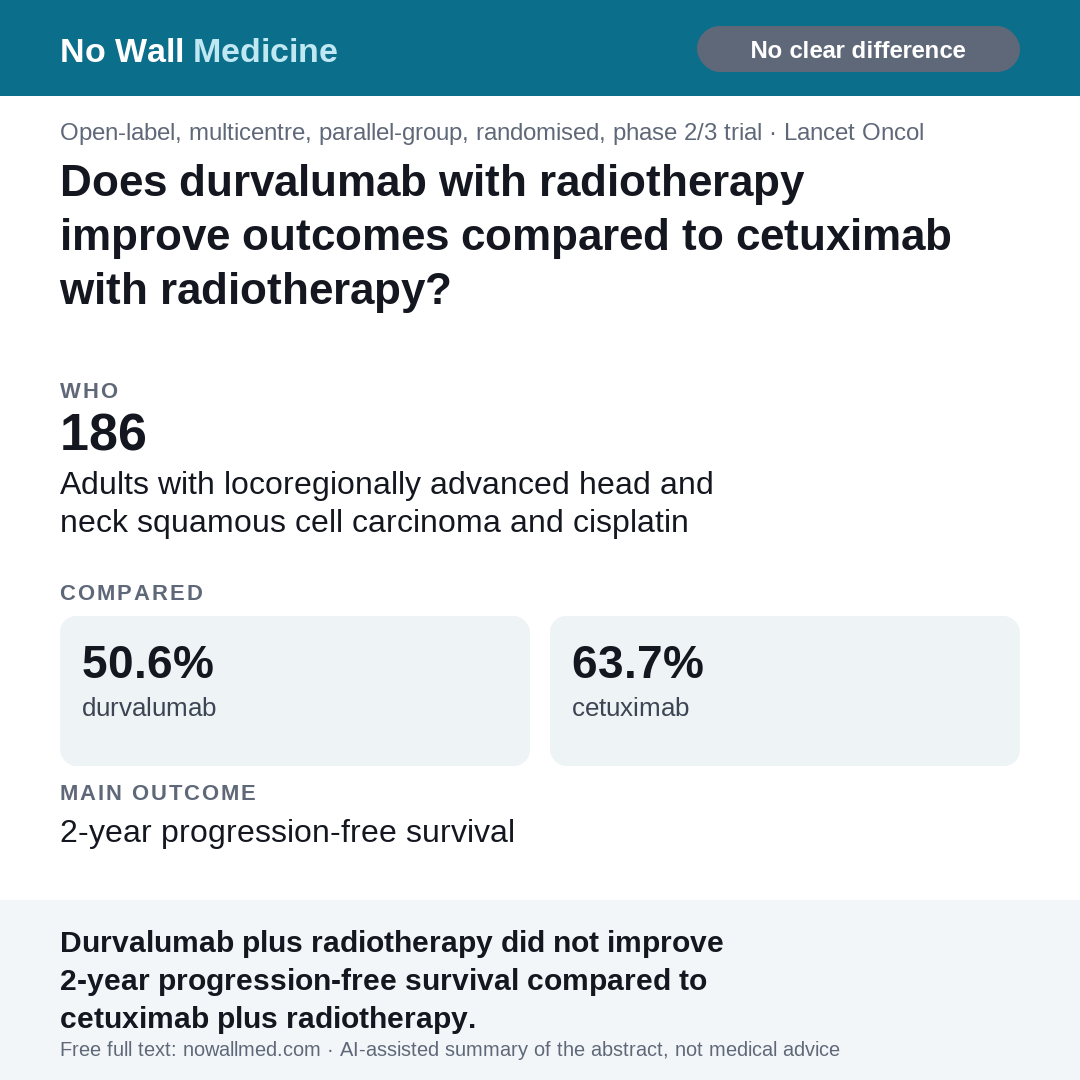
Radiotherapy with cetuximab or durvalumab for locoregionally advanced head and neck cancer in patients with a contraindication to cisplatin (NRG-HN004): an open-label, multicentre, parallel-group, randomised, phase 2/3 trial
Open-label, multicentre, parallel-group, randomised, phase 2/3 trialNo clear difference
Does durvalumab with radiotherapy improve outcomes compared to cetuximab with radiotherapy?
Who
186
Adults with locoregionally advanced head and neck squamous cell carcinoma and cisplatin contraindications · 89 academic and community medical centres in North America
Compared
50.6%durvalumab (95% CI 41.5-59.8)
63.7%cetuximab (51.3-76.1%)
Main outcome
2-year progression-free survival
Result: hazard ratio 1.33 (95% CI 0.84-2.12)
Bottom line: Durvalumab plus radiotherapy did not improve 2-year progression-free survival compared to cetuximab plus radiotherapy.
Funded by: US National Cancer Institute and AstraZeneca
Lancet Oncol · 2024-11-14Download image
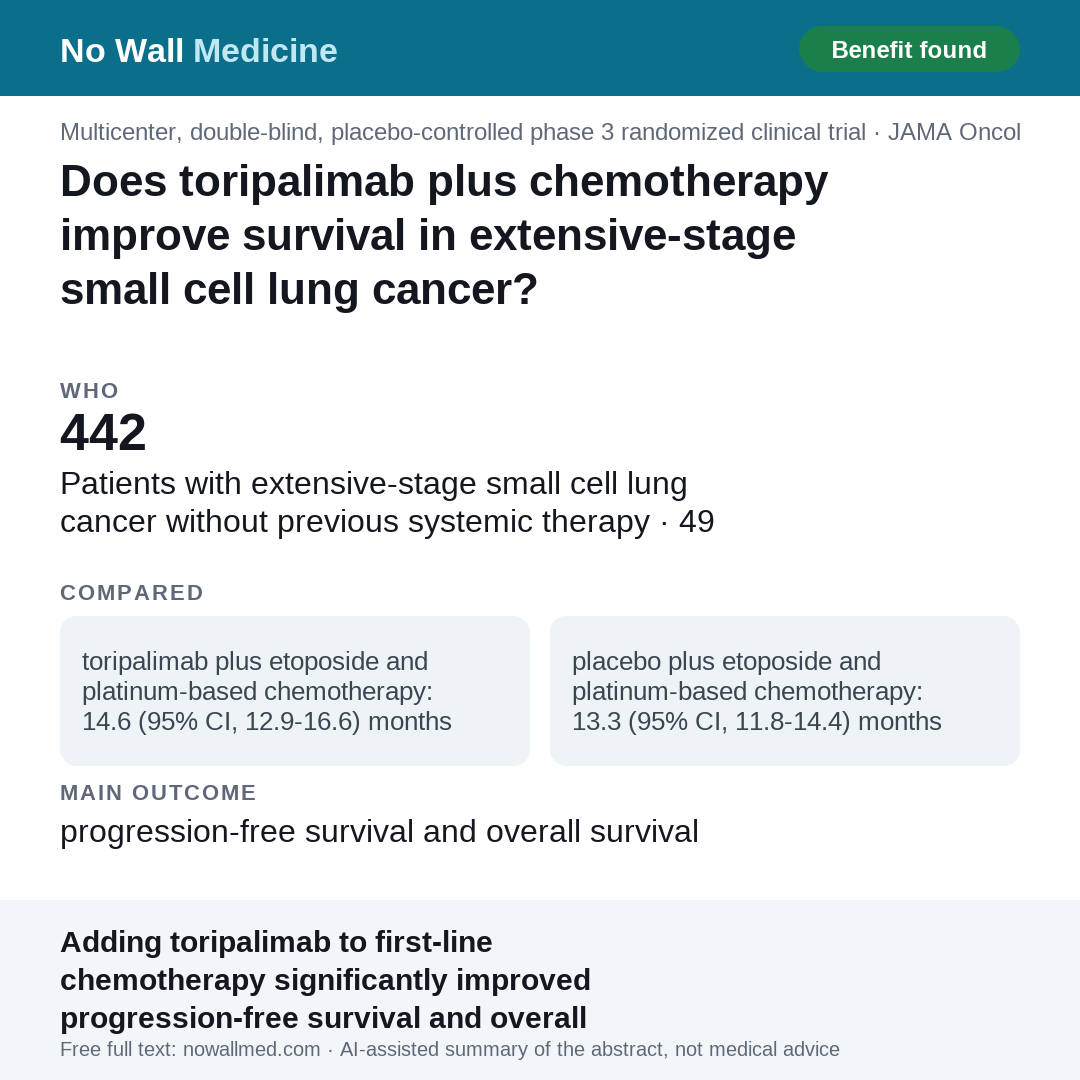
Toripalimab Plus Chemotherapy as a First-Line Therapy for Extensive-Stage Small Cell Lung Cancer: The Phase 3 EXTENTORCH Randomized Clinical Trial
Multicenter, double-blind, placebo-controlled phase 3 randomized clinical trialBenefit found
Does toripalimab plus chemotherapy improve survival in extensive-stage small cell lung cancer?
Who
442
Patients with extensive-stage small cell lung cancer without previous systemic therapy · 49 sites in China
Compared
toripalimab plus etoposide and platinum-based chemotherapy: 14.6 (95% CI, 12.9-16.6) months
placebo plus etoposide and platinum-based chemotherapy: 13.3 (95% CI, 11.8-14.4) months
Main outcome
progression-free survival and overall survival
Result: hazard ratio 0.80 (95% CI, 0.65-0.98)
Bottom line: Adding toripalimab to first-line chemotherapy significantly improved progression-free survival and overall survival in patients with extensive-stage small cell lung cancer.
JAMA Oncol · 2024-11-14Download image
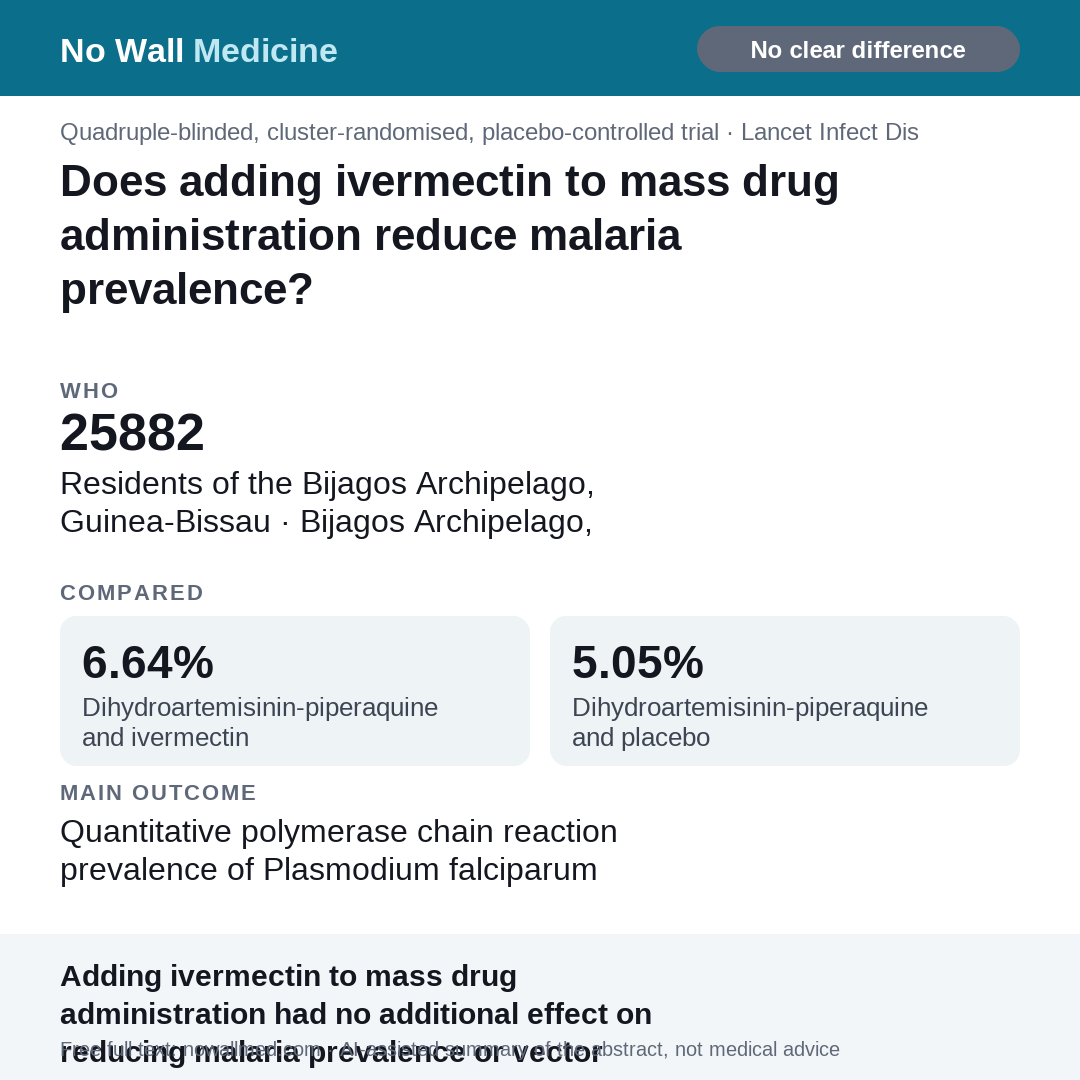
Adjunctive ivermectin mass drug administration for malaria control on the Bijagos Archipelago of Guinea-Bissau (MATAMAL): a quadruple-blinded, cluster-randomised, placebo-controlled trial
Quadruple-blinded, cluster-randomised, placebo-controlled trialNo clear difference
Does adding ivermectin to mass drug administration reduce malaria prevalence?
Who
25882
Residents of the Bijagos Archipelago, Guinea-Bissau · Bijagos Archipelago, Guinea-Bissau
Compared
6.64%Dihydroartemisinin-piperaquine and ivermectin (141/2083)
5.05%Dihydroartemisinin-piperaquine and placebo (118/2300)
Main outcome
Quantitative polymerase chain reaction prevalence of Plasmodium falciparum parasitaemia
Result: risk difference 1.67% (95% CI -1.44 to 4.78)
Bottom line: Adding ivermectin to mass drug administration had no additional effect on reducing malaria prevalence or vector parity.
Funded by: NIHR, Medical Research Council, Wellcome, and FCDO
Lancet Infect Dis · 2024-11-14Download image
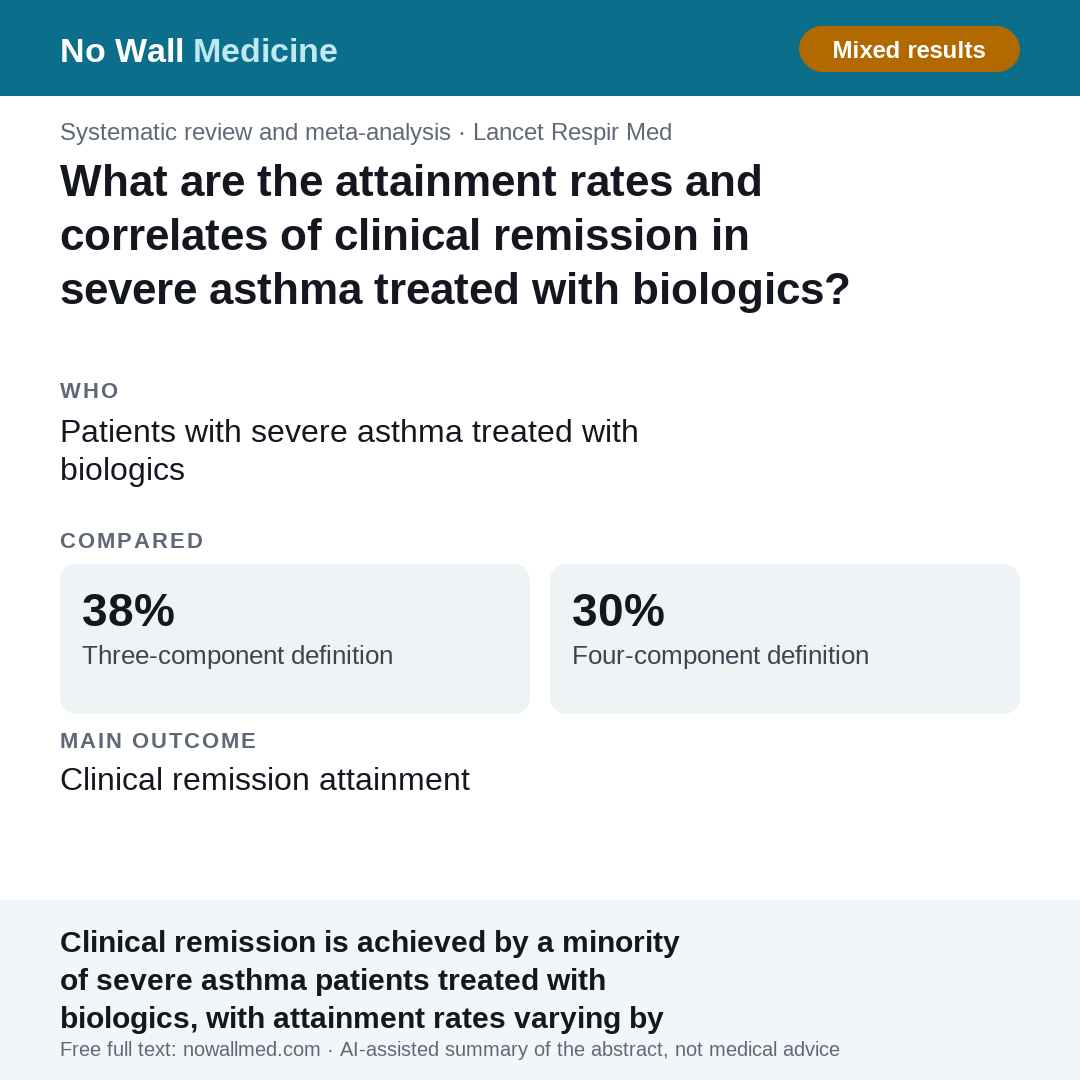
Clinical remission attainment, definitions, and correlates among patients with severe asthma treated with biologics: a systematic review and meta-analysis
Systematic review and meta-analysisMixed results
What are the attainment rates and correlates of clinical remission in severe asthma treated with biologics?
Who
Patients with severe asthma treated with biologics
Compared
38%Three-component definition (95% CI 29-47)
30%Four-component definition (27-34)
Main outcome
Clinical remission attainment
Bottom line: Clinical remission is achieved by a minority of severe asthma patients treated with biologics, with attainment rates varying by definition.
Limitation: Little consensus was found between studies regarding the clinical remission definition.
Funded by: Health Data Research UK
Lancet Respir Med · 2024-11-14Download image
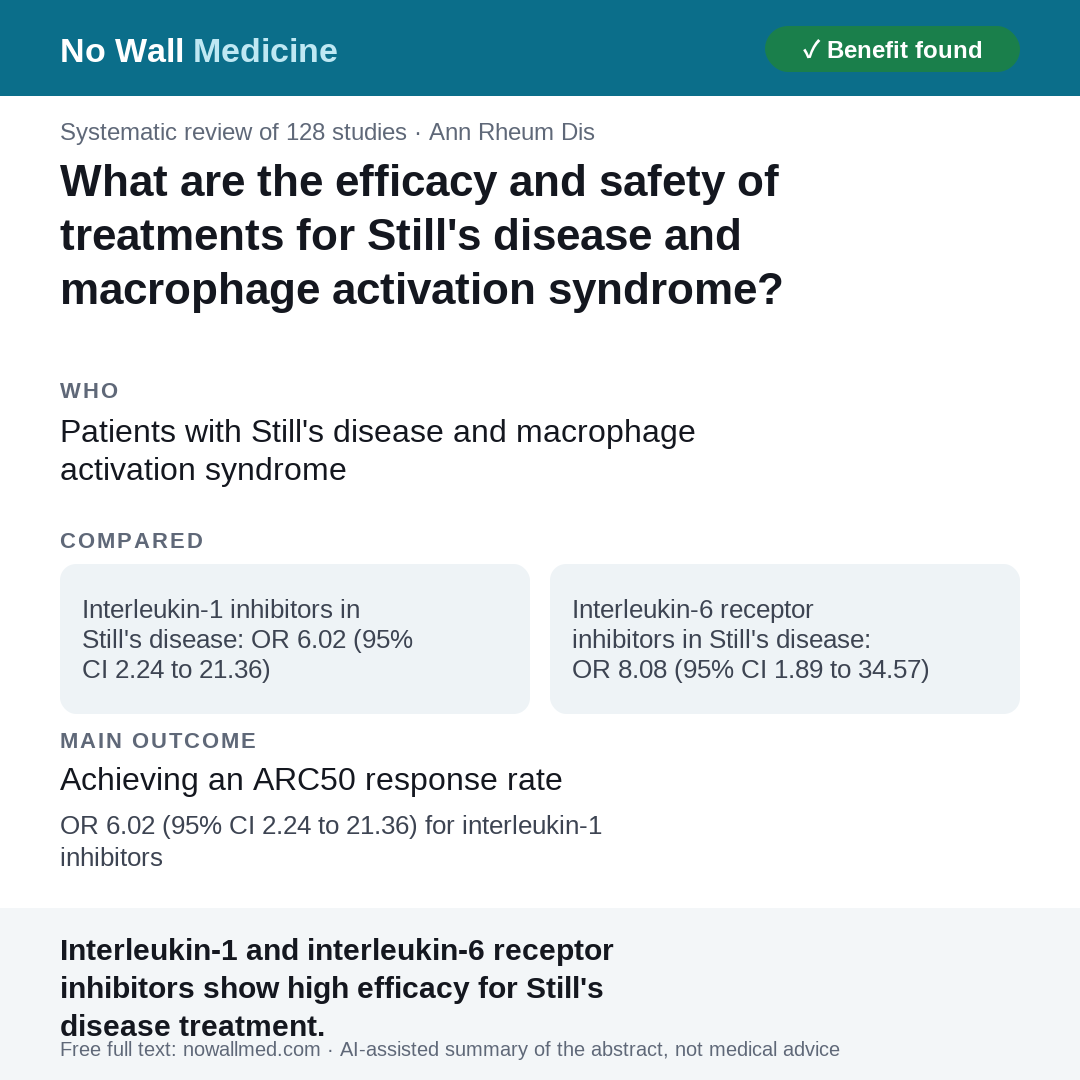
Efficacy and safety of therapies for Still's disease and macrophage activation syndrome (MAS): a systematic review informing the EULAR/PReS guidelines for the management of Still's disease
Systematic review of 128 studiesBenefit found
What are the efficacy and safety of treatments for Still's disease and macrophage activation syndrome?
Who
Patients with Still's disease and macrophage activation syndrome
Compared
Interleukin-1 inhibitors in Still's disease: OR 6.02 (95% CI 2.24 to 21.36)
Interleukin-6 receptor inhibitors in Still's disease: OR 8.08 (95% CI 1.89 to 34.57)
Main outcome
Achieving an ARC50 response rate
Result: OR 6.02 (95% CI 2.24 to 21.36) for interleukin-1 inhibitors
Bottom line: Interleukin-1 and interleukin-6 receptor inhibitors show high efficacy for Still's disease treatment.
Ann Rheum Dis · 2024-11-14Download image
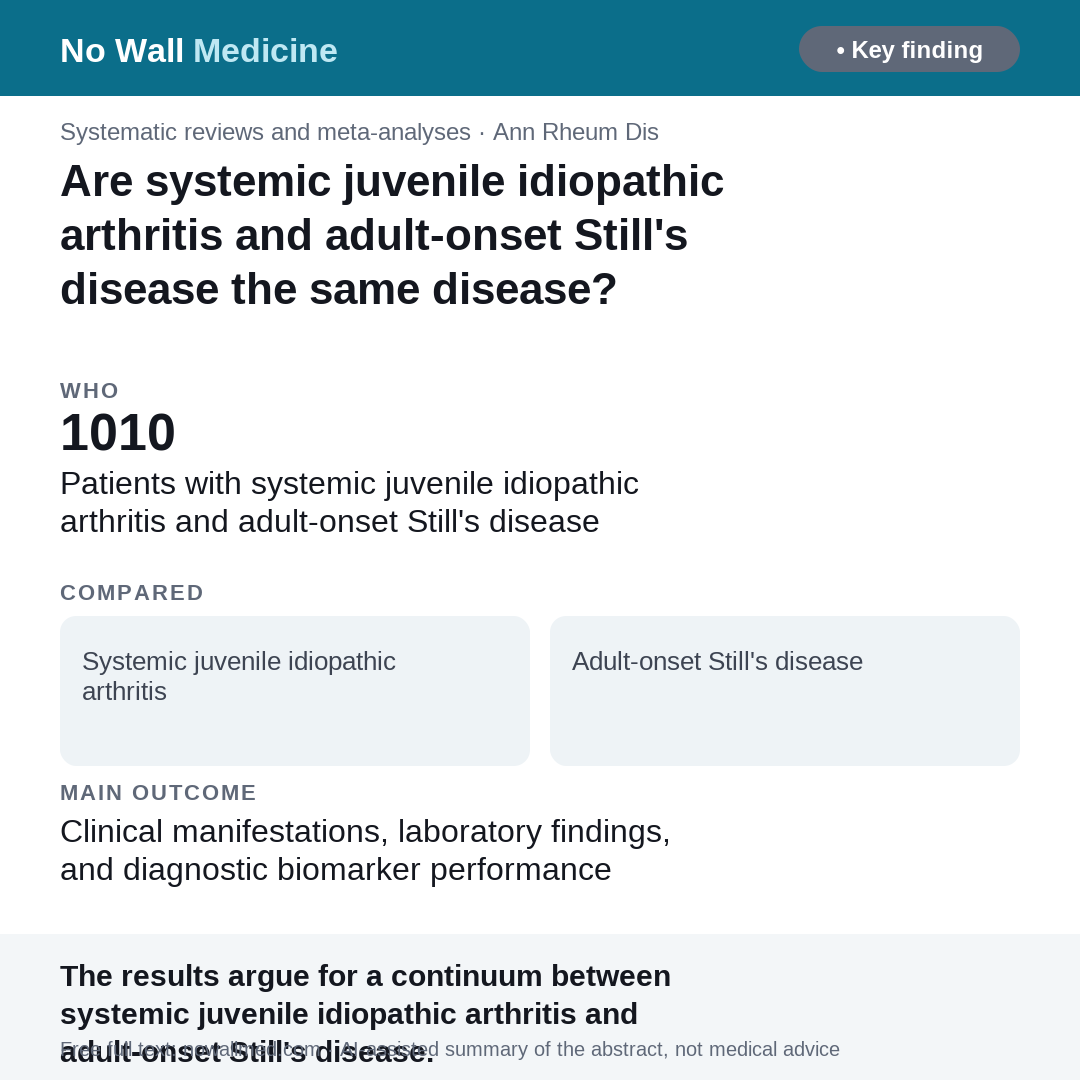
Systemic juvenile idiopathic arthritis and adult-onset Still's disease are the same disease: evidence from systematic reviews and meta-analyses informing the 2023 EULAR/PReS recommendations for the diagnosis and management of Still's disease
Systematic reviews and meta-analysesBenefit found
Are systemic juvenile idiopathic arthritis and adult-onset Still's disease the same disease?
Who
1010
Patients with systemic juvenile idiopathic arthritis and adult-onset Still's disease
Compared
Systemic juvenile idiopathic arthritis
Adult-onset Still's disease
Main outcome
Clinical manifestations, laboratory findings, and diagnostic biomarker performance
Bottom line: The results argue for a continuum between systemic juvenile idiopathic arthritis and adult-onset Still's disease.
Limitation: Certain symptoms like myalgia and sore throat may be incompletely ascertained in young children.
Ann Rheum Dis · 2024-11-14Download image
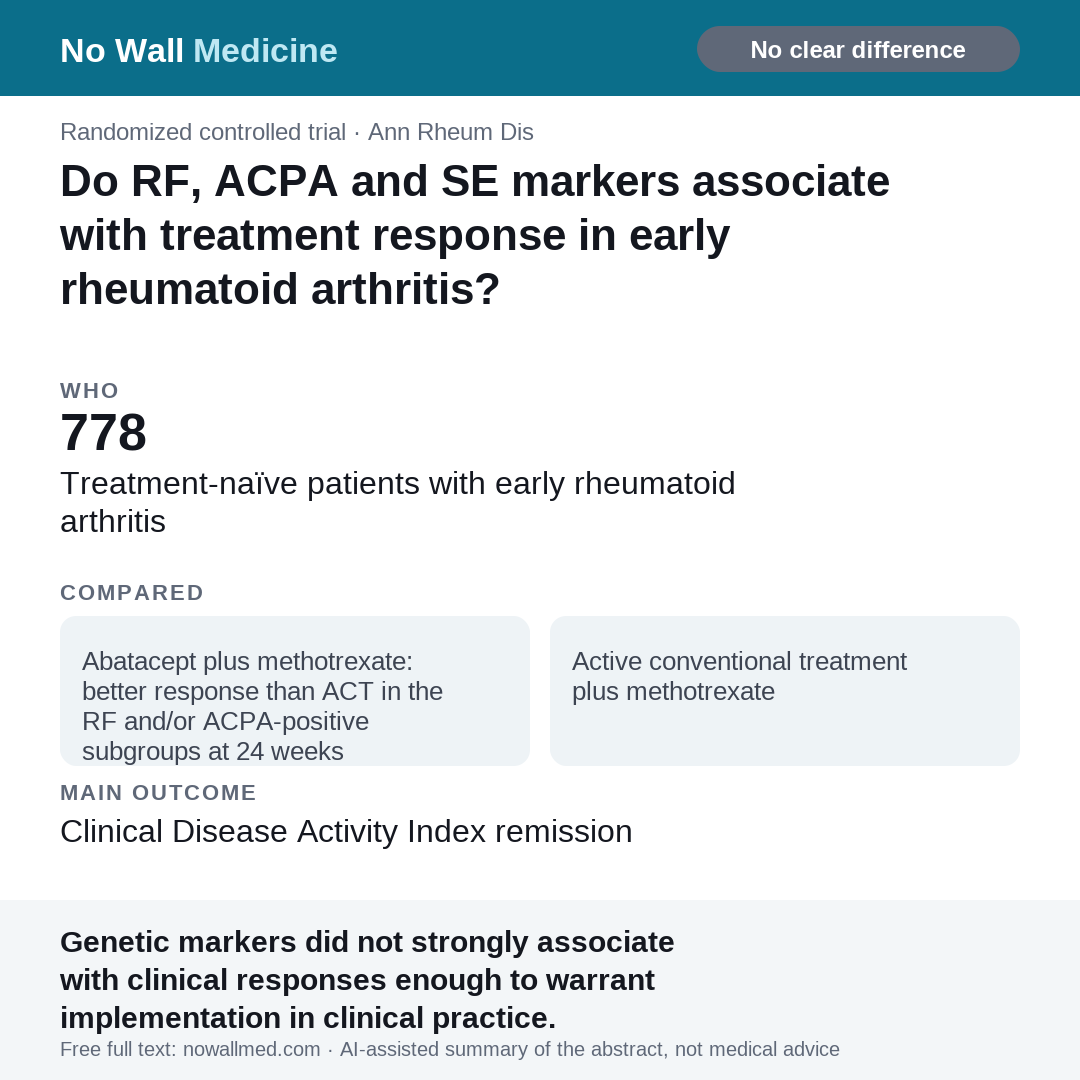
Association of rheumatoid factor, anti-citrullinated protein antibodies and shared epitope with clinical response to initial treatment in patients with early rheumatoid arthritis: data from a randomised controlled trial
Randomized controlled trialNo clear difference
Do RF, ACPA and SE markers associate with treatment response in early rheumatoid arthritis?
Who
778
Treatment-naïve patients with early rheumatoid arthritis
Compared
Abatacept plus methotrexate: better response than ACT in the RF and/or ACPA-positive subgroups at 24 weeks
Active conventional treatment plus methotrexate
Main outcome
Clinical Disease Activity Index remission
Bottom line: Genetic markers did not strongly associate with clinical responses enough to warrant implementation in clinical practice.
Ann Rheum Dis · 2024-11-14Download image
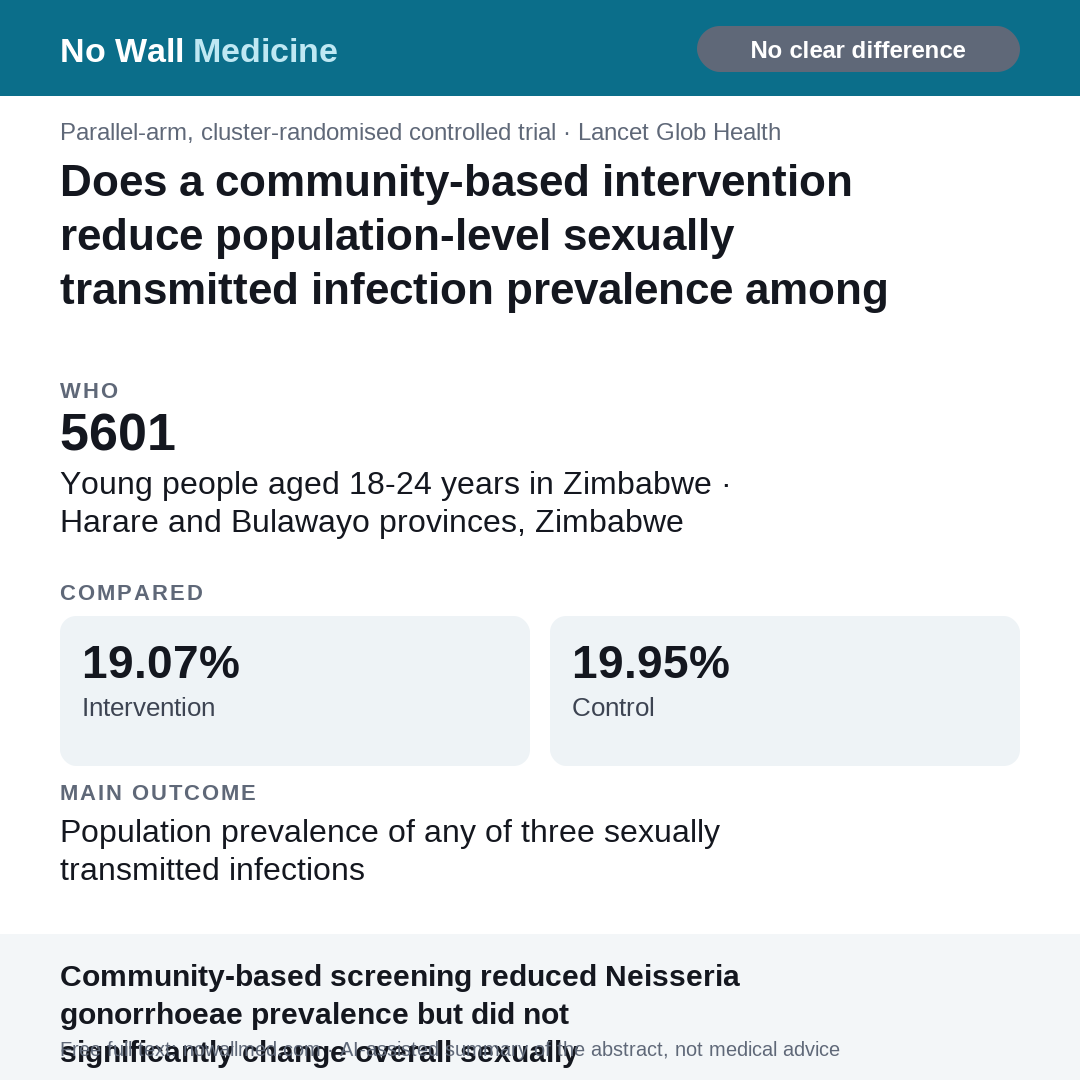
Effect of a community-based intervention for sexually transmitted infections on population-level prevalence among youth in Zimbabwe (STICH): a cluster-randomised trial
Parallel-arm, cluster-randomised controlled trialNo clear difference
Does a community-based intervention reduce population-level sexually transmitted infection prevalence among youth?
Who
5601
Young people aged 18-24 years in Zimbabwe · Harare and Bulawayo provinces, Zimbabwe
Compared
19.07%Intervention
19.95%Control
Main outcome
Population prevalence of any of three sexually transmitted infections
Result: risk ratio 0.93 (95% CI 0.78-1.10)
Bottom line: Community-based screening reduced Neisseria gonorrhoeae prevalence but did not significantly change overall sexually transmitted infection prevalence.
Lancet Glob Health · 2024-11-14Download image
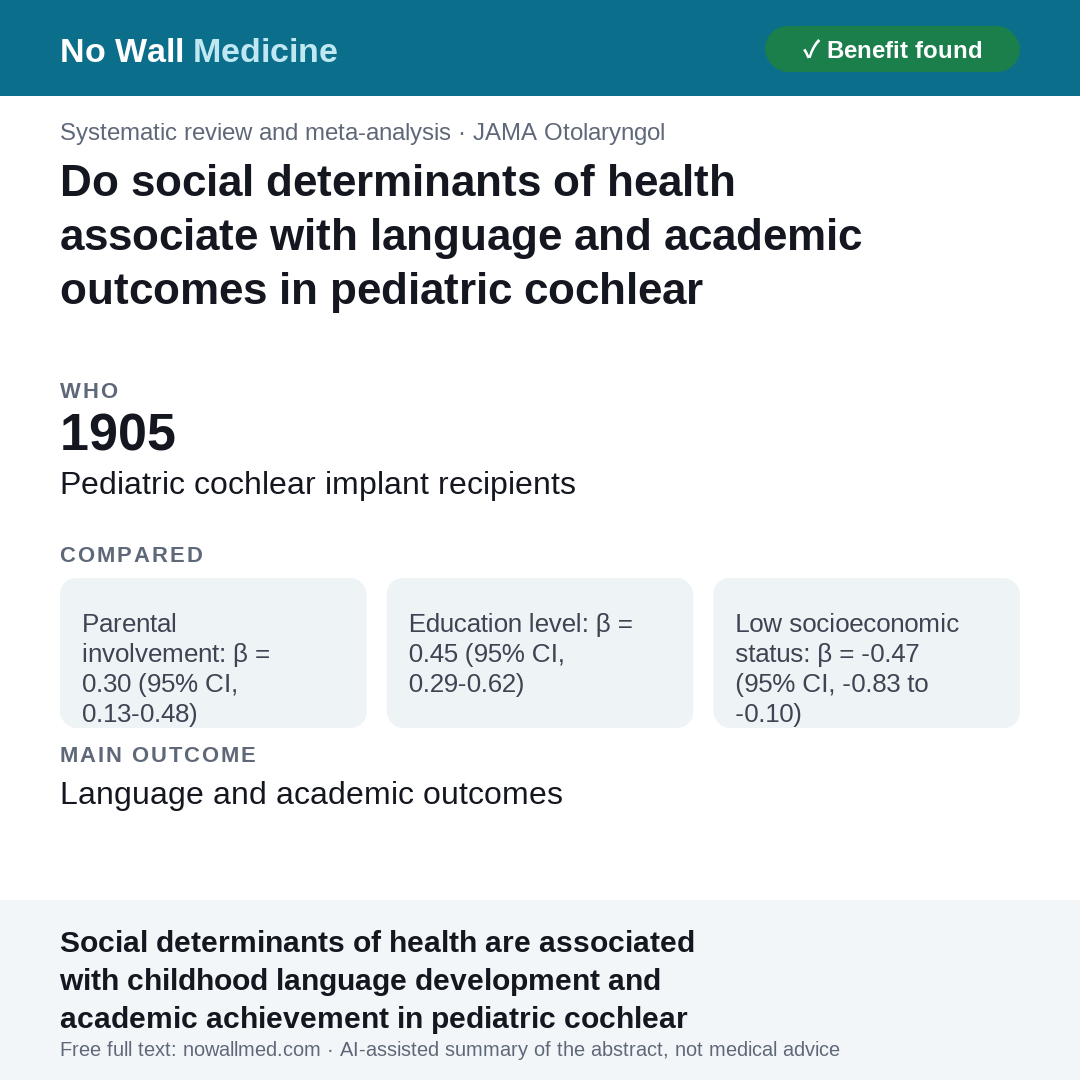
Social Determinants of Health and Language and Academic Outcomes in Pediatric Cochlear Implantation: A Systematic Review and Meta-Analysis
Systematic review and meta-analysisBenefit found
Do social determinants of health associate with language and academic outcomes in pediatric cochlear implantation?
Who
1905
Pediatric cochlear implant recipients
Compared
Parental involvement: β = 0.30 (95% CI, 0.13-0.48)
Education level: β = 0.45 (95% CI, 0.29-0.62)
Low socioeconomic status: β = -0.47 (95% CI, -0.83 to -0.10)
Main outcome
Language and academic outcomes
Bottom line: Social determinants of health are associated with childhood language development and academic achievement in pediatric cochlear implant recipients.
JAMA Otolaryngol · 2024-11-14Download image
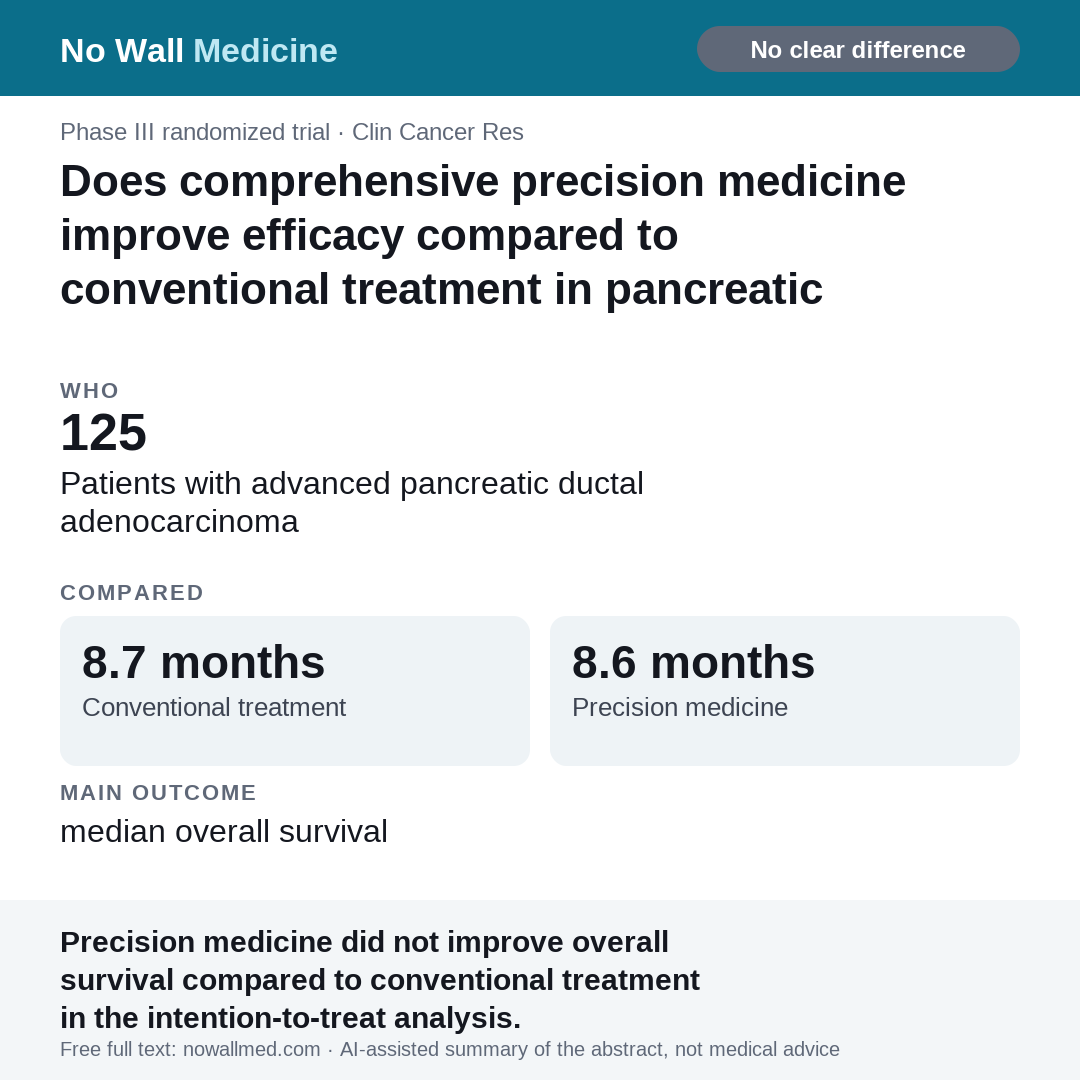
A Phase III Randomized Trial of Integrated Genomics and Avatar Models for Personalized Treatment of Pancreatic Cancer: The AVATAR Trial
Phase III randomized trialNo clear difference
Does comprehensive precision medicine improve efficacy compared to conventional treatment in pancreatic cancer?
Who
125
Patients with advanced pancreatic ductal adenocarcinoma
Compared
8.7 monthsConventional treatment
8.6 monthsPrecision medicine
Main outcome
median overall survival
Result: P = 0.849
Bottom line: Precision medicine did not improve overall survival compared to conventional treatment in the intention-to-treat analysis.
Limitation: Personalized medicine was challenging to implement in most patients, limiting intention-to-treat analysis.
Clin Cancer Res · 2024-11-14Download image
Meta-Analysis: Evaluating Placebo Rates Across Outcomes in Eosinophilic Oesophagitis Randomised Controlled Trials
Meta-analysis of 25 randomized controlled trialsMixed results
What are the placebo response rates for clinical, endoscopic, and histologic outcomes?
Who
Patients with eosinophilic oesophagitis
Compared
Clinical response: 41.0% [95% CI: 29.7%-52.8%]
Histologic remission (peak eosinophil count ≤ 6/HPF): 4.3% [95% CI: 2.6%-6.2%]
Histologic remission (peak eosinophil count ≤ 1/HPF): 1.3% [95% CI: 0.5%-2.5%]
Main outcome
Pooled proportion of clinical, endoscopic and histologic responders and remitters
Result: standardised mean difference -0.25 [95% CI: -0.41, -0.10]
Bottom line: Clinical placebo responses exceed 40%, while objective endoscopic and histologic measures show very low placebo responses.
Limitation: substantial heterogeneity in clinical response
Aliment Pharmacol Ther · 2024-11-14Download image
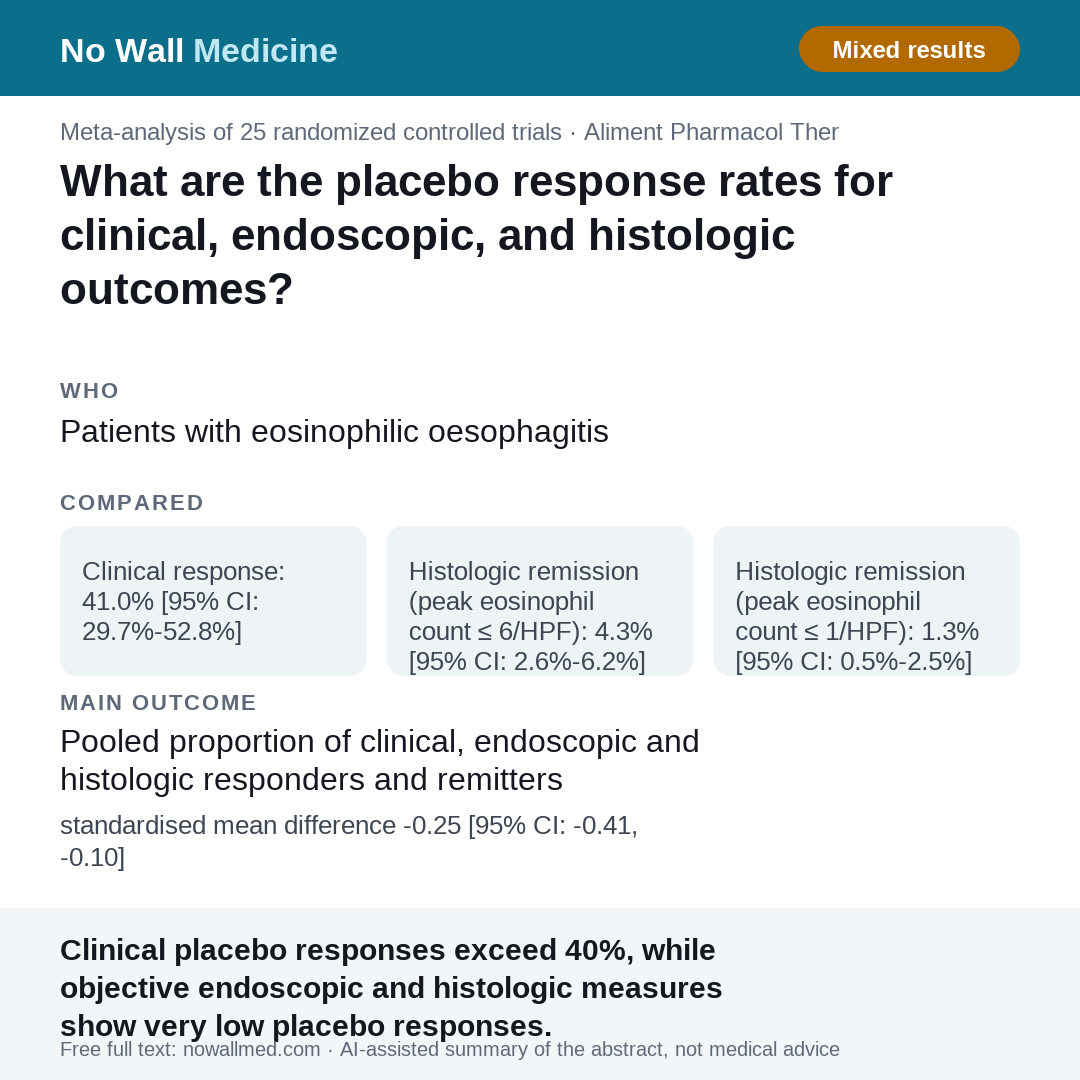
European Respiratory Society guidelines for the diagnosis and management of pulmonary alveolar proteinosis
GuidelineUnclear result
Pulmonary alveolar proteinosis diagnosis and management
Who
patients with pulmonary alveolar proteinosis
Compared
whole lung lavage
GM-CSF augmentation therapy
Main outcome
diagnosis and management
Bottom line: Guidelines for diagnosis and management
Limitation: limited supporting evidence
Eur Respir J · 2024-11-14Download image
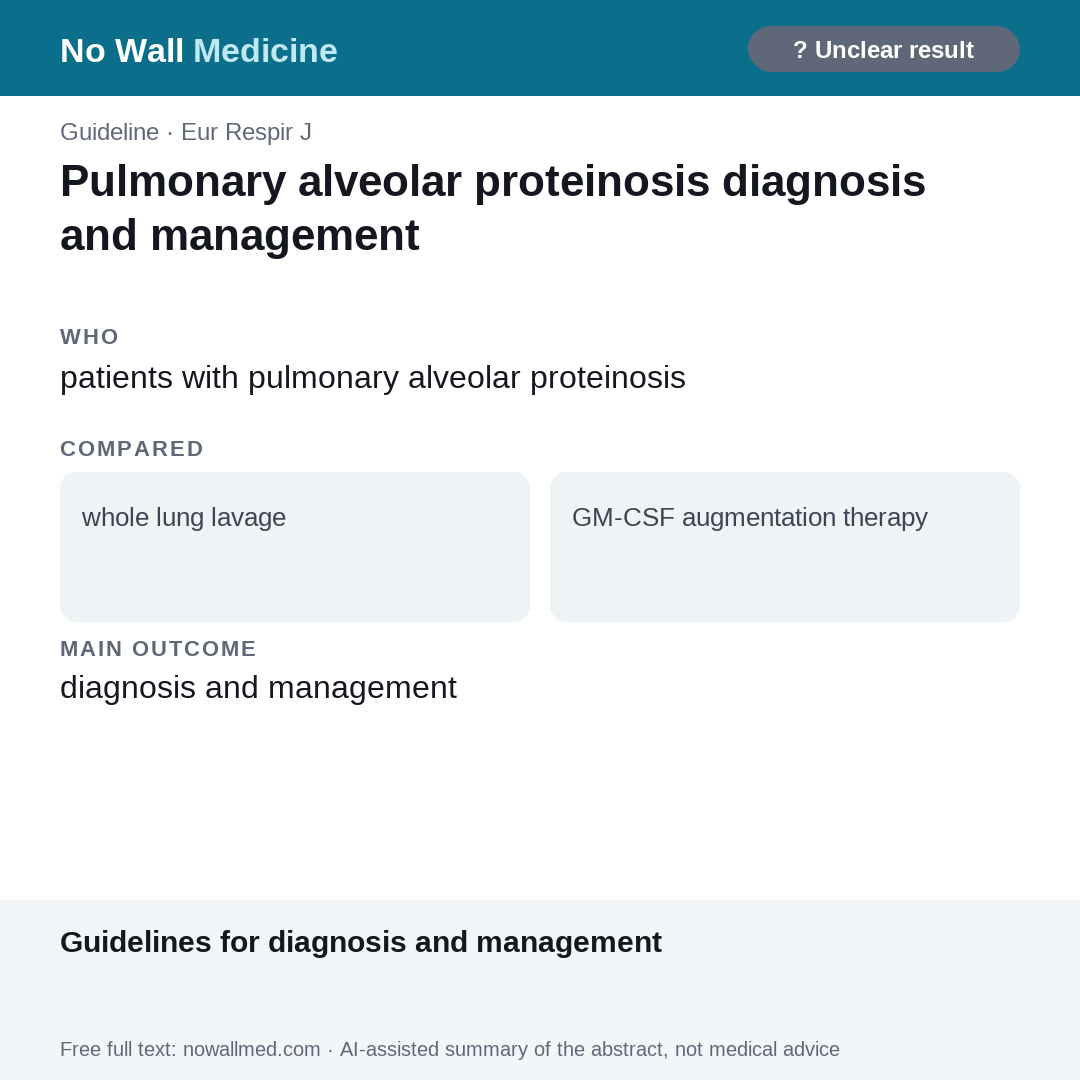
Drug therapy versus placebo or usual care for comatose survivors of cardiac arrest; a systematic review with meta-analysis
Systematic review with meta-analysisNo clear difference
Does drug therapy improve outcomes for comatose survivors of cardiac arrest?
Who
5800
Comatose survivors of cardiac arrest
Compared
Steroids: risk ratio 0.93 (95% CI 0.83-1.04)
Coenzyme Q10: risk ratio 0.91 (95% CI 0.61-1.37)
Thiamine: risk ratio 1.11 (95% CI 0.88-1.40)
Main outcome
Mortality at 30 days or hospital discharge
Result: no pooled effect detected for steroids, coenzyme Q10, or thiamine
Bottom line: Most drug therapies, including steroids, coenzyme Q10, and thiamine, showed no effect on mortality in comatose cardiac arrest survivors.
Limitation: Low certainty of evidence warrants further research.
Resuscitation · 2024-11-14Download image
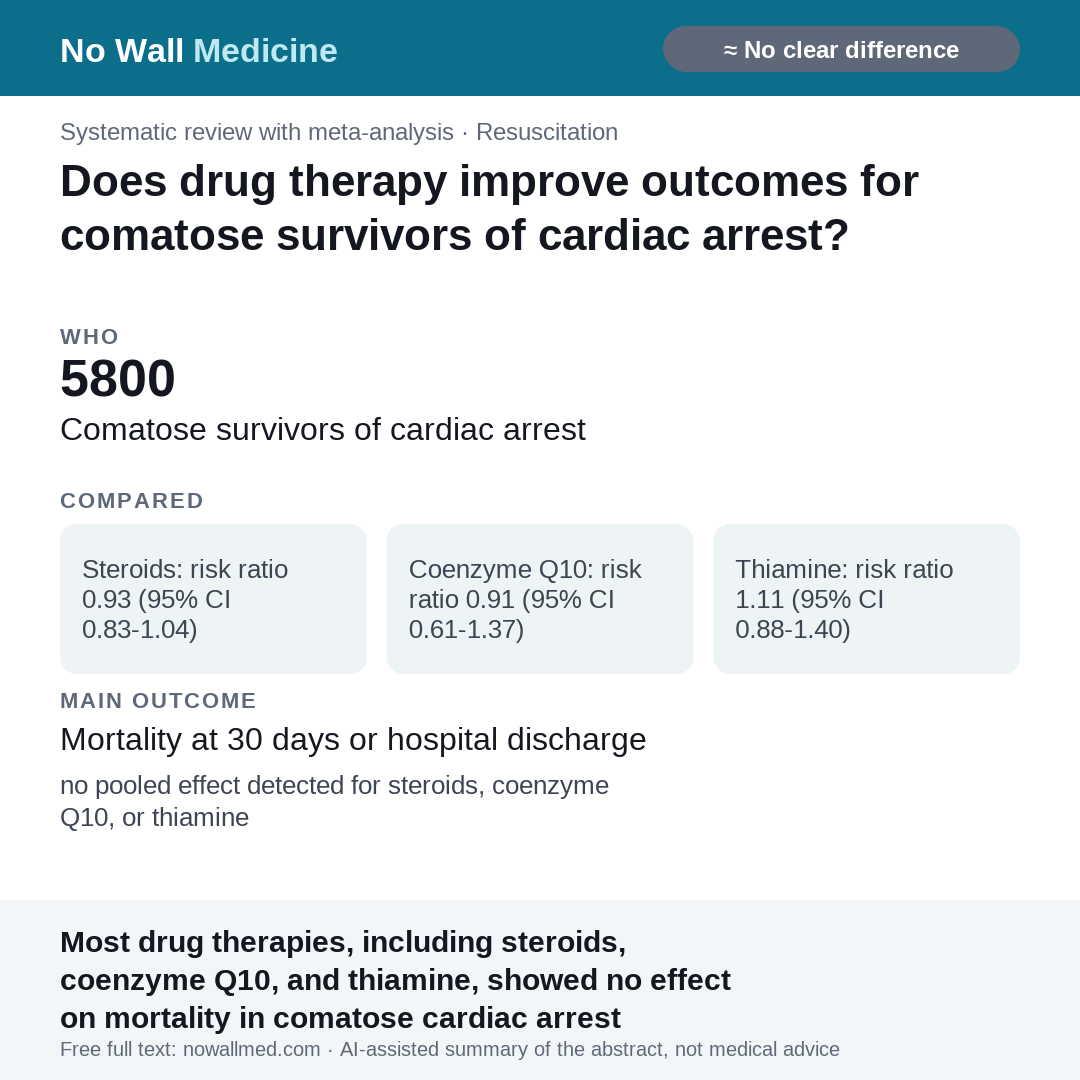
FRONTIER-2: A phase 2b, long-term extension, dose-ranging study of oral JNJ-77242113 for the treatment of moderate-to-severe plaque psoriasis
Phase 2b, long-term extension randomized trialBenefit found
What are the long-term efficacy and safety of oral JNJ-77242113 for plaque psoriasis?
Who
Patients with moderate-to-severe plaque psoriasis
Compared
JNJ-77242113 100 mg twice daily: 76% achieved PASI75 at week 52
JNJ-77242113-treated patients: 59% had at least 1 adverse event
Main outcome
Psoriasis Area and Severity Index 75 response
Bottom line: Oral JNJ-77242113 provided durable skin clearance through one year in patients with moderate-to-severe plaque psoriasis.
Limitation: Small number of patients in each treatment group and descriptive nature of longer-term data.
J Am Acad Dermatol · 2024-11-14Download image
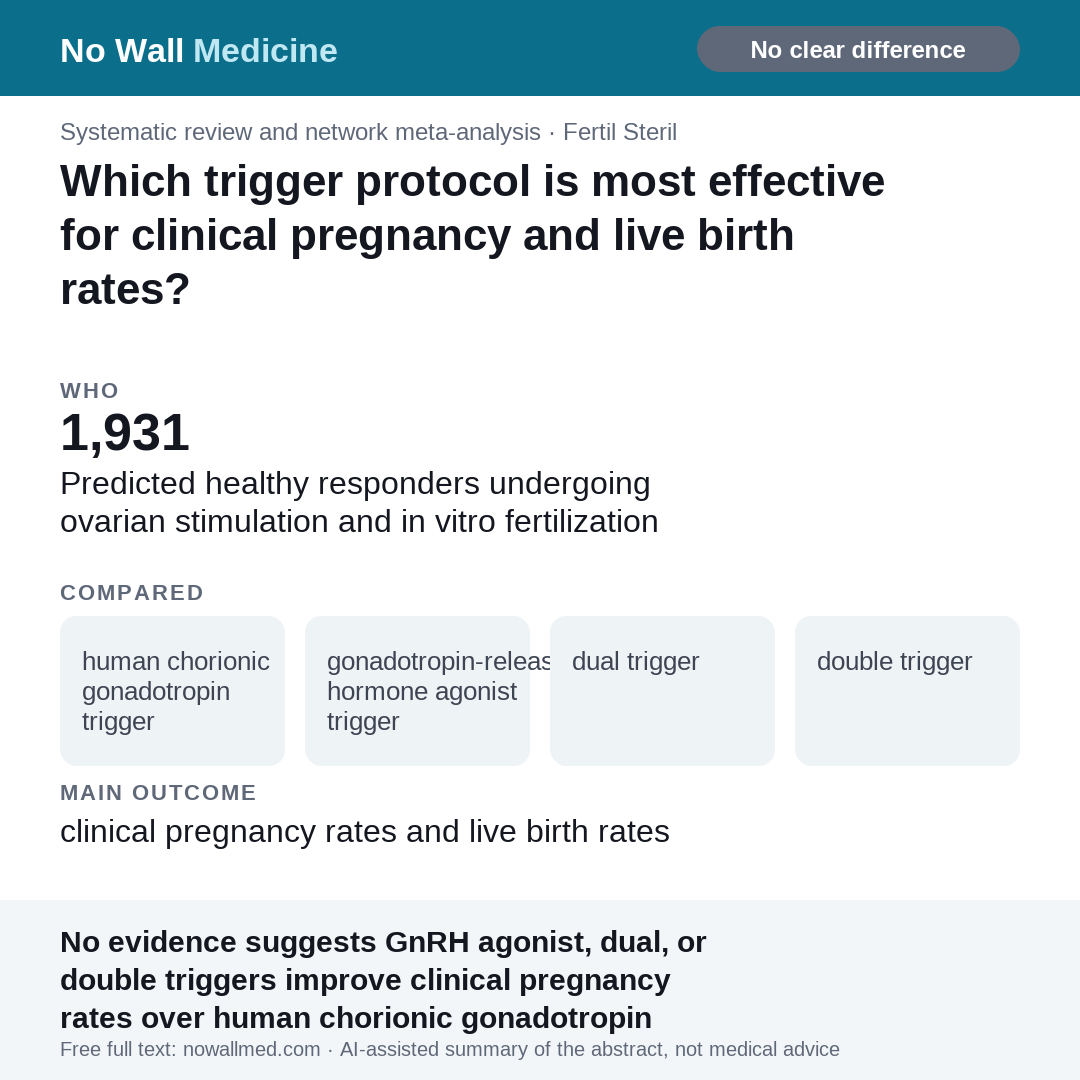
Triggering oocyte maturation in in vitro fertilization treatment in healthy responders: a systematic review and network meta-analysis
Systematic review and network meta-analysisNo clear difference
Which trigger protocol is most effective for clinical pregnancy and live birth rates?
Who
1,931
Predicted healthy responders undergoing ovarian stimulation and in vitro fertilization
Compared
human chorionic gonadotropin trigger
gonadotropin-releasing hormone agonist trigger
dual trigger
double trigger
Main outcome
clinical pregnancy rates and live birth rates
Result: risk ratio 1.13 (95% CI 0.80-1.60) for hCG vs. GnRH agonist trigger
Bottom line: No evidence suggests GnRH agonist, dual, or double triggers improve clinical pregnancy rates over human chorionic gonadotropin trigger.
Limitation: Results for live birth rates are limited by available randomized controlled trials.
Fertil Steril · 2024-11-14Download image
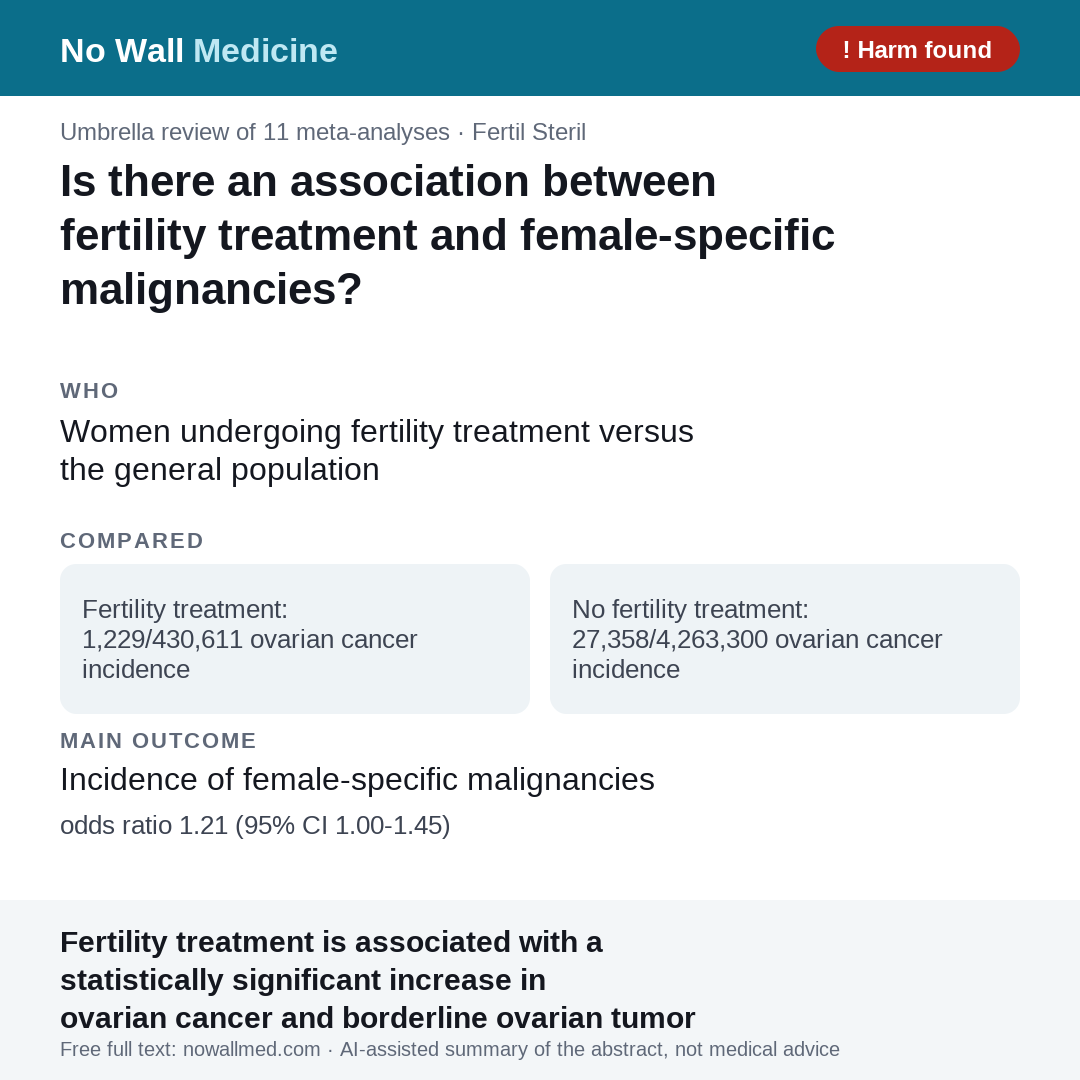
An umbrella review of meta-analyses regarding the incidence of female-specific malignancies after fertility treatment
Umbrella review of 11 meta-analysesHarm found
Is there an association between fertility treatment and female-specific malignancies?
Who
Women undergoing fertility treatment versus the general population
Compared
Fertility treatment: 1,229/430,611 ovarian cancer incidence
No fertility treatment: 27,358/4,263,300 ovarian cancer incidence
Main outcome
Incidence of female-specific malignancies
Result: odds ratio 1.21 (95% CI 1.00-1.45)
Bottom line: Fertility treatment is associated with a statistically significant increase in ovarian cancer and borderline ovarian tumor incidence.
Limitation: None of the examined associations could claim strong or highly suggestive evidence.
Fertil Steril · 2024-11-14Download image
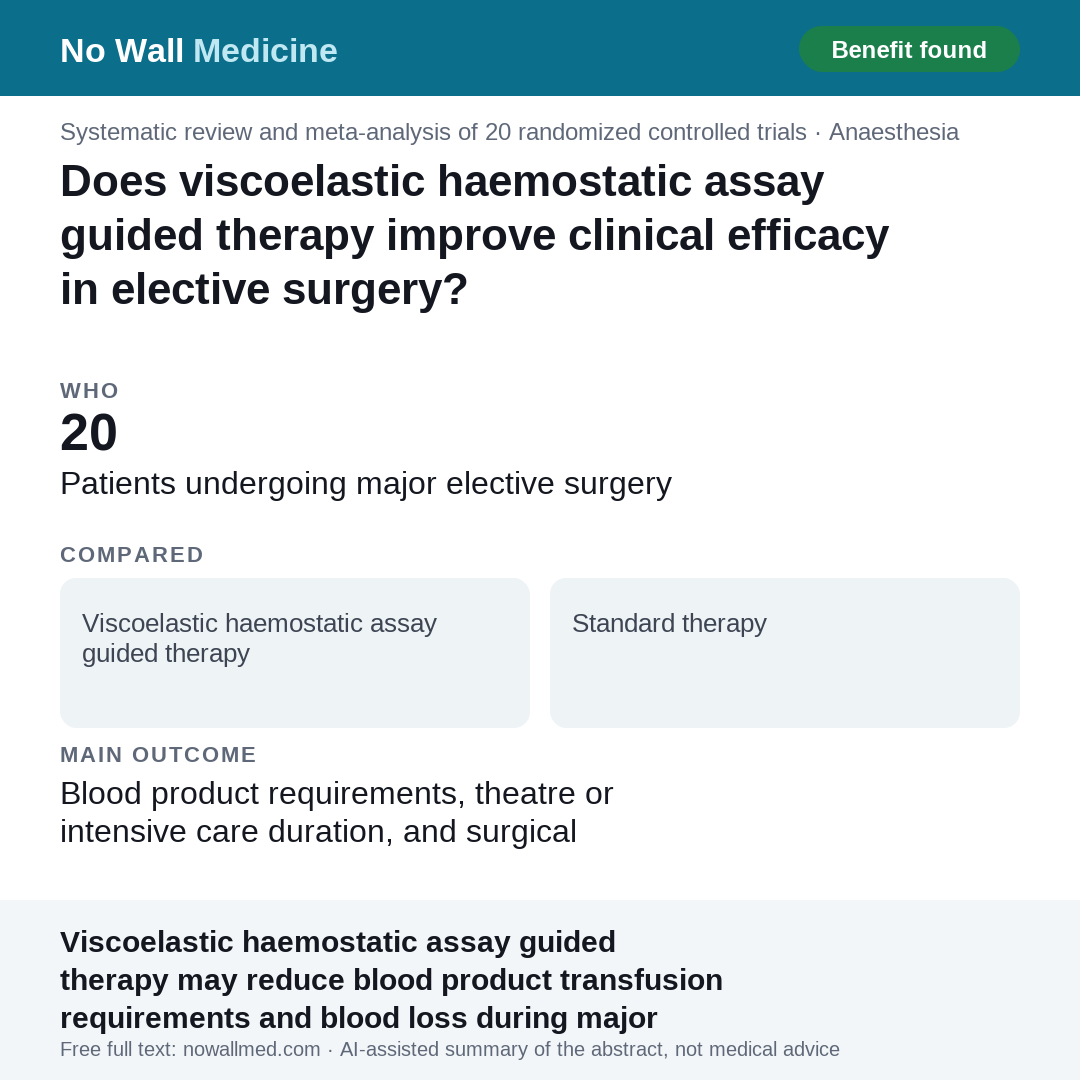
Viscoelastic haemostatic assays to guide therapy in elective surgery: an updated systematic review and meta-analysis
Systematic review and meta-analysis of 20 randomized controlled trialsBenefit found
Does viscoelastic haemostatic assay guided therapy improve clinical efficacy in elective surgery?
Who
20
Patients undergoing major elective surgery
Compared
Viscoelastic haemostatic assay guided therapy
Standard therapy
Main outcome
Blood product requirements, theatre or intensive care duration, and surgical reintervention
Result: standardised mean difference (95%CI) -0.33 (-0.56 to -0.10) for platelets
Bottom line: Viscoelastic haemostatic assay guided therapy may reduce blood product transfusion requirements and blood loss during major elective surgery.
Limitation: The overall quality of evidence was modest.
Anaesthesia · 2024-11-14Download image
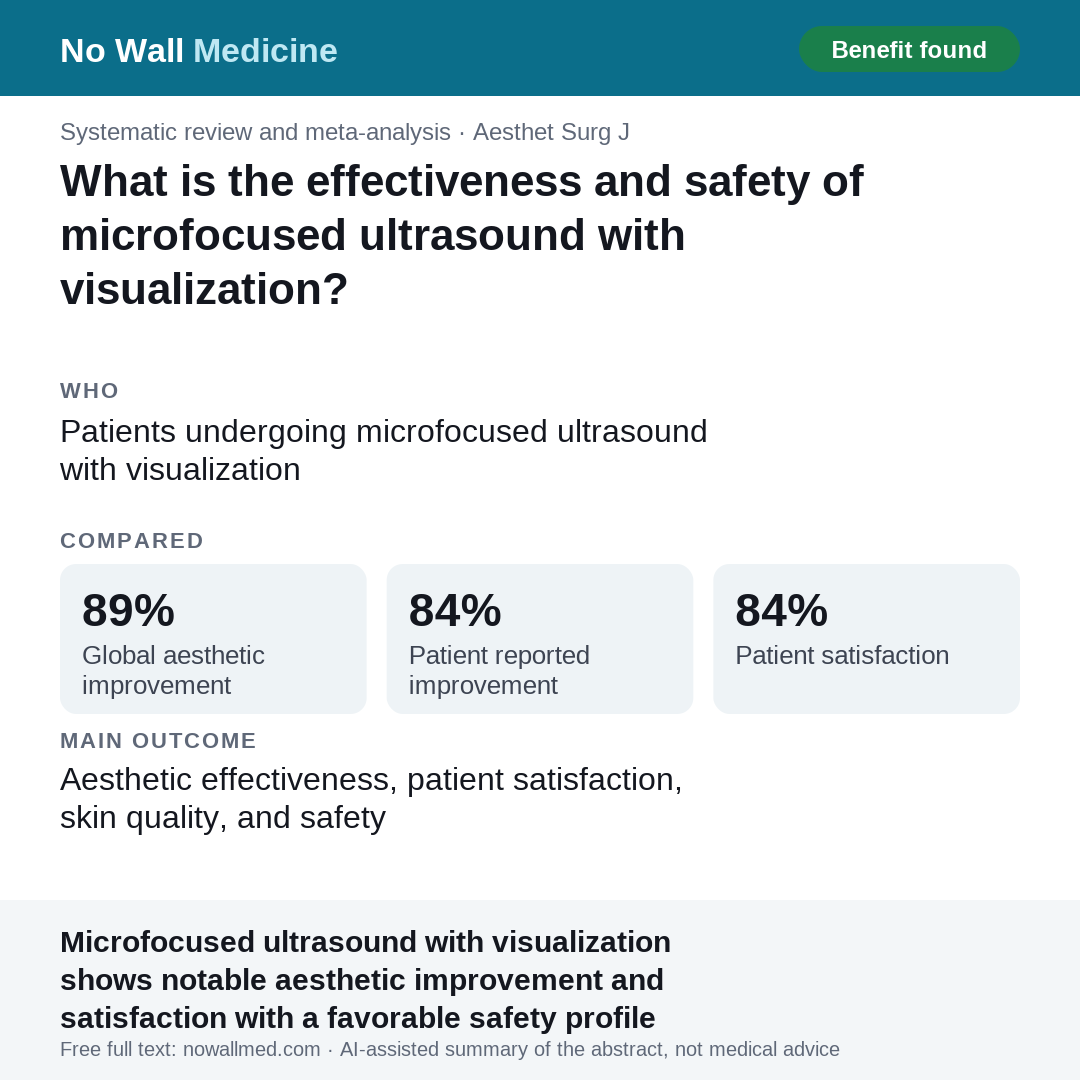
Microfocused Ultrasound With Visualization (MFU-V) Effectiveness and Safety: A Systematic Review and Meta-Analysis
Systematic review and meta-analysisBenefit found
What is the effectiveness and safety of microfocused ultrasound with visualization?
Who
Patients undergoing microfocused ultrasound with visualization
Compared
89%Global aesthetic improvement (95% CI: 81%-94%)
84%Patient reported improvement (95% CI: 73%-91%)
84%Patient satisfaction (95% CI: 61%-94%)
Main outcome
Aesthetic effectiveness, patient satisfaction, skin quality, and safety
Bottom line: Microfocused ultrasound with visualization shows notable aesthetic improvement and satisfaction with a favorable safety profile despite moderate pain.
Limitation: Potential misclassification of neutral responses as positive may overestimate treatment efficacy.
Aesthet Surg J · 2024-11-14Download image
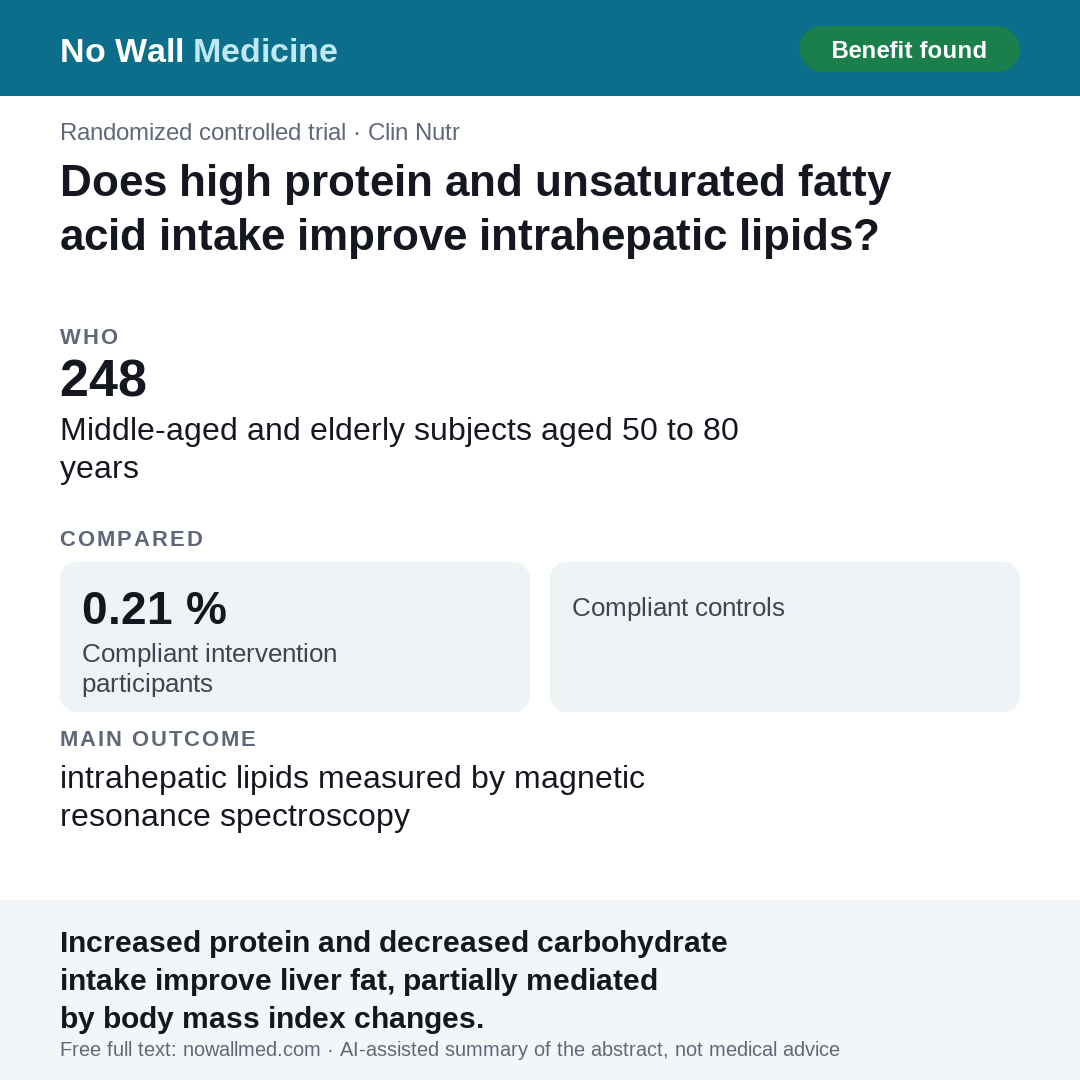
Increase in PUFA and protein, and decrease in carbohydrate intake improves liver fat in 12 months and the role of weight loss as a mediator: A randomized controlled trial
Randomized controlled trialBenefit found
Does high protein and unsaturated fatty acid intake improve intrahepatic lipids?
Who
248
Middle-aged and elderly subjects aged 50 to 80 years
Compared
0.21 %Compliant intervention participants (95 % CI 0.01, 0.40)
Compliant controls
Main outcome
intrahepatic lipids measured by magnetic resonance spectroscopy
Result: estimate of relative change 0.21 % (95 % CI 0.01, 0.40)
Bottom line: Increased protein and decreased carbohydrate intake improve liver fat, partially mediated by body mass index changes.
Clin Nutr · 2024-11-14Download image