Visual abstracts
New randomized trials and meta-analyses from leading journals at a glance: who was studied, what was compared, and what was found. Every paper is free to read in full.
All specialtiesCardiology 857Oncology 770Gastroenterology & Hepatology 311Infectious Disease 626Neurology 354Psychiatry & Mental Health 430Pulmonology 370Critical Care 260Endocrinology & Diabetes 484Pediatrics 542Surgery 351Orthopedics & Sports Medicine 166Neurosurgery 115Cardiothoracic & Vascular Surgery 87Plastic & Reconstructive Surgery 144Nephrology 197Rheumatology 108Hematology 183Dermatology 82Ophthalmology 97Obstetrics & Gynecology 266Public & Global Health 168Radiology & Imaging 105Anesthesiology 130Urology 162ENT (Otolaryngology) 115Emergency Medicine 103Allergy & Immunology 58Geriatrics 160Family Medicine & Primary Care 111Medical Genetics & Genomics 91Pathology & Laboratory Medicine 27Physical Medicine & Rehabilitation 149Palliative Care 81Nutrition 223Digital Health & AI 462General Medicine 101
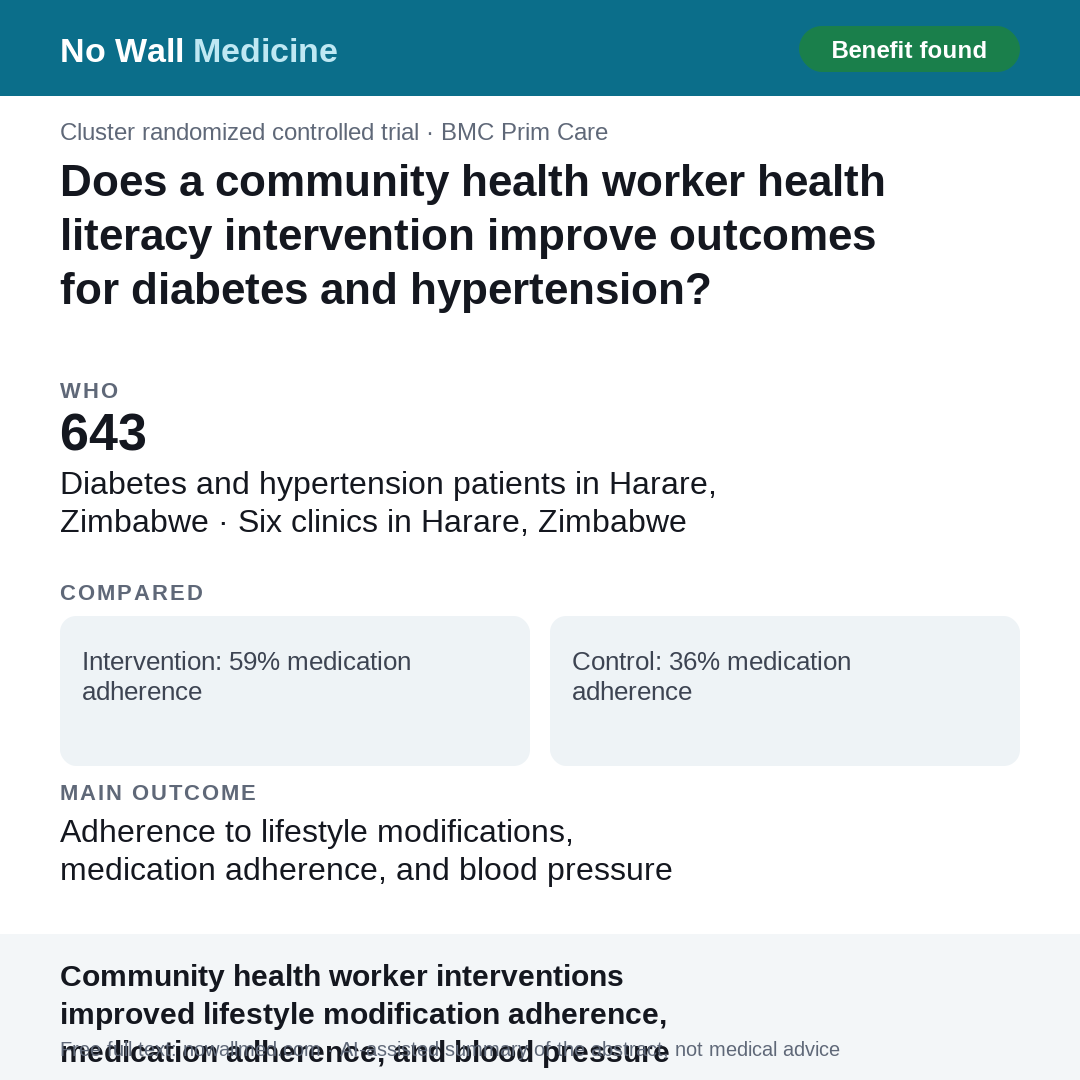
Evaluating the outcomes of a community-based health literacy intervention for hypertension and diabetes in Harare, Zimbabwe: a cluster randomized controlled trial
Cluster randomized controlled trialBenefit found
Does a community health worker health literacy intervention improve outcomes for diabetes and hypertension?
Who
643
Diabetes and hypertension patients in Harare, Zimbabwe · Six clinics in Harare, Zimbabwe
Compared
Intervention: 59% medication adherence
Control: 36% medication adherence
Main outcome
Adherence to lifestyle modifications, medication adherence, and blood pressure control
Bottom line: Community health worker interventions improved lifestyle modification adherence, medication adherence, and blood pressure control.
BMC Prim Care · 2026-04-22Download image
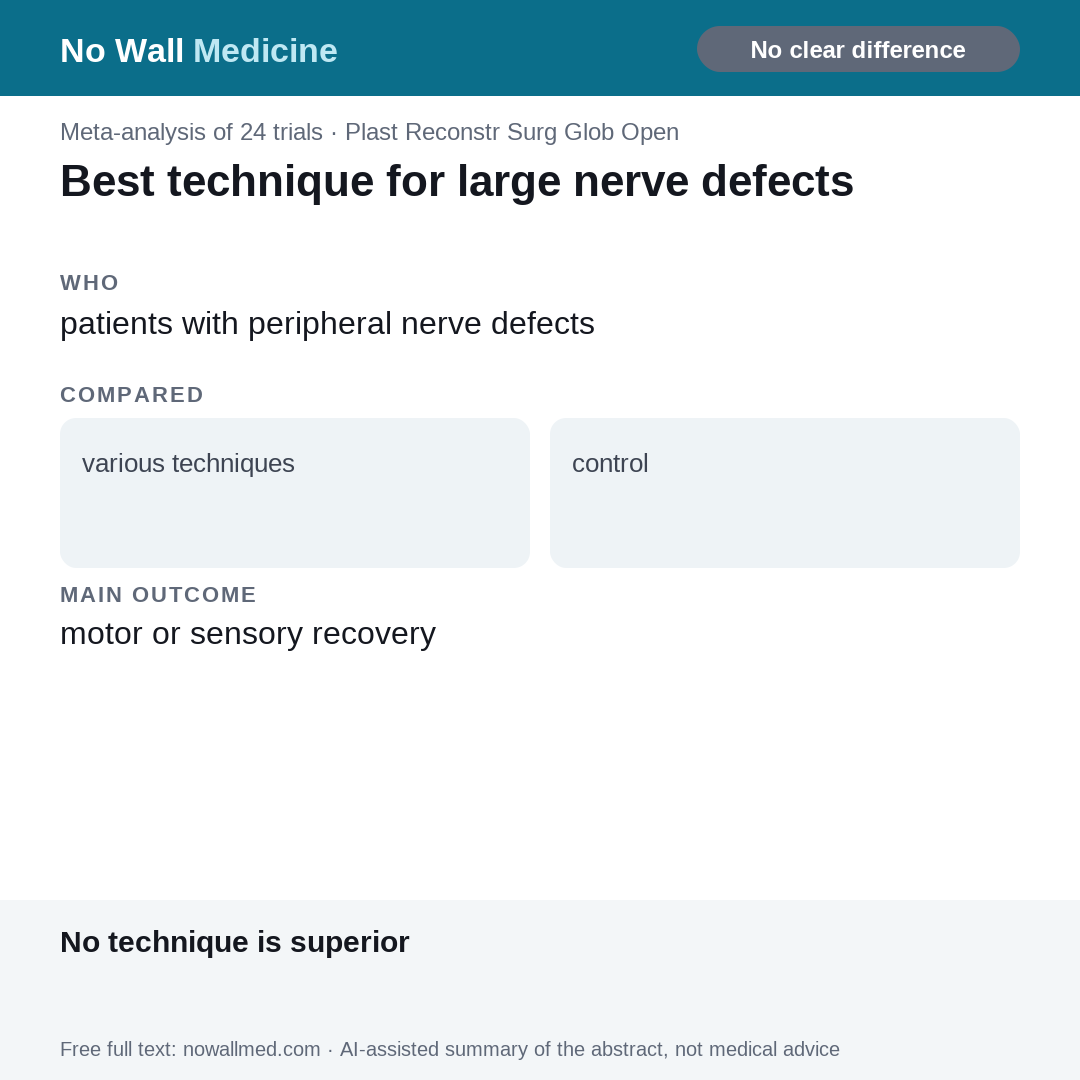
Reconstructive Techniques and Outcomes for Large (≥4 cm) Peripheral Nerve Defects: A Meta-analysis
Meta-analysis of 24 trialsNo clear difference
Best technique for large nerve defects
Who
patients with peripheral nerve defects
Compared
various techniques
control
Main outcome
motor or sensory recovery
Bottom line: No technique is superior
Plast Reconstr Surg Glob Open · 2026-04-22Download image
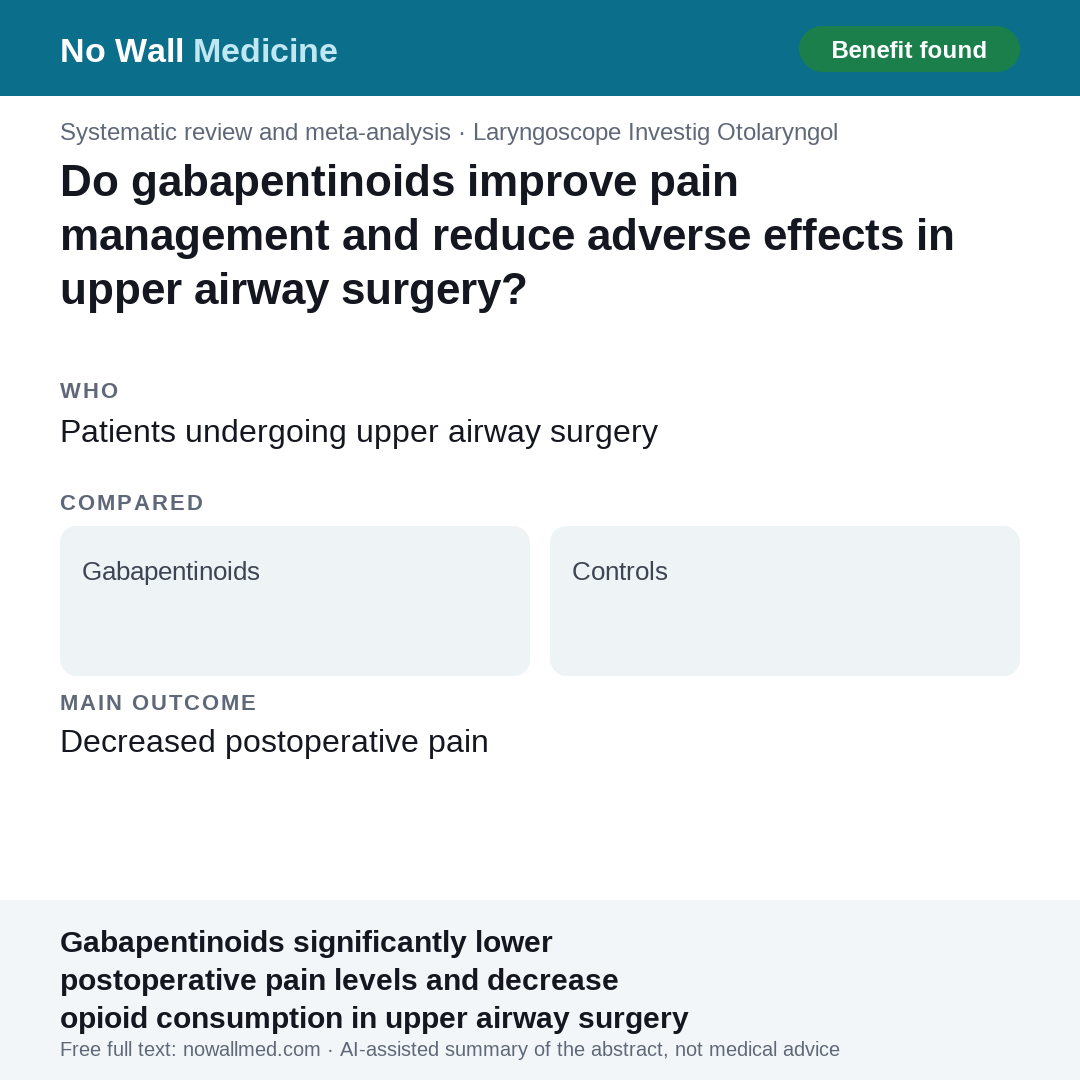
Gabapentinoids for Upper Airway Surgery Pain Management: Systematic Review and Meta-Analysis
Systematic review and meta-analysisBenefit found
Do gabapentinoids improve pain management and reduce adverse effects in upper airway surgery?
Who
Patients undergoing upper airway surgery
Compared
Gabapentinoids
Controls
Main outcome
Decreased postoperative pain
Bottom line: Gabapentinoids significantly lower postoperative pain levels and decrease opioid consumption in upper airway surgery patients.
Limitation: Need for larger cohorts, standardized protocols, and better blinding and objective measurements.
Laryngoscope Investig Otolaryngol · 2026-04-22Download image
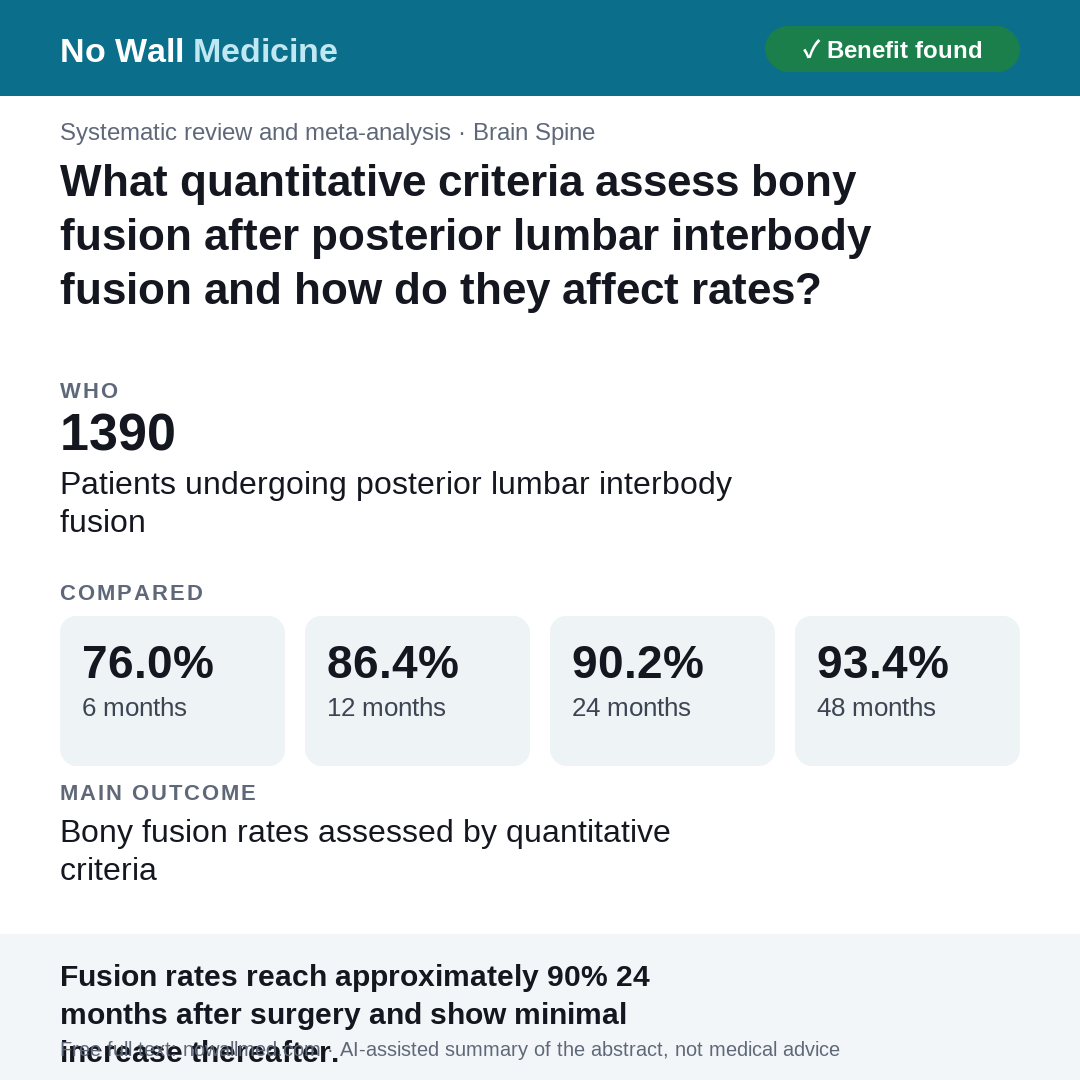
Evaluation of bony fusion after posterior lumbar interbody fusion: a systematic review and meta-analysis
Systematic review and meta-analysisBenefit found
What quantitative criteria assess bony fusion after posterior lumbar interbody fusion and how do they affect rates?
Who
1390
Patients undergoing posterior lumbar interbody fusion
Compared
76.0%6 months
86.4%12 months
90.2%24 months
93.4%48 months
Main outcome
Bony fusion rates assessed by quantitative criteria
Bottom line: Fusion rates reach approximately 90% 24 months after surgery and show minimal increase thereafter.
Brain Spine · 2026-04-22Download image
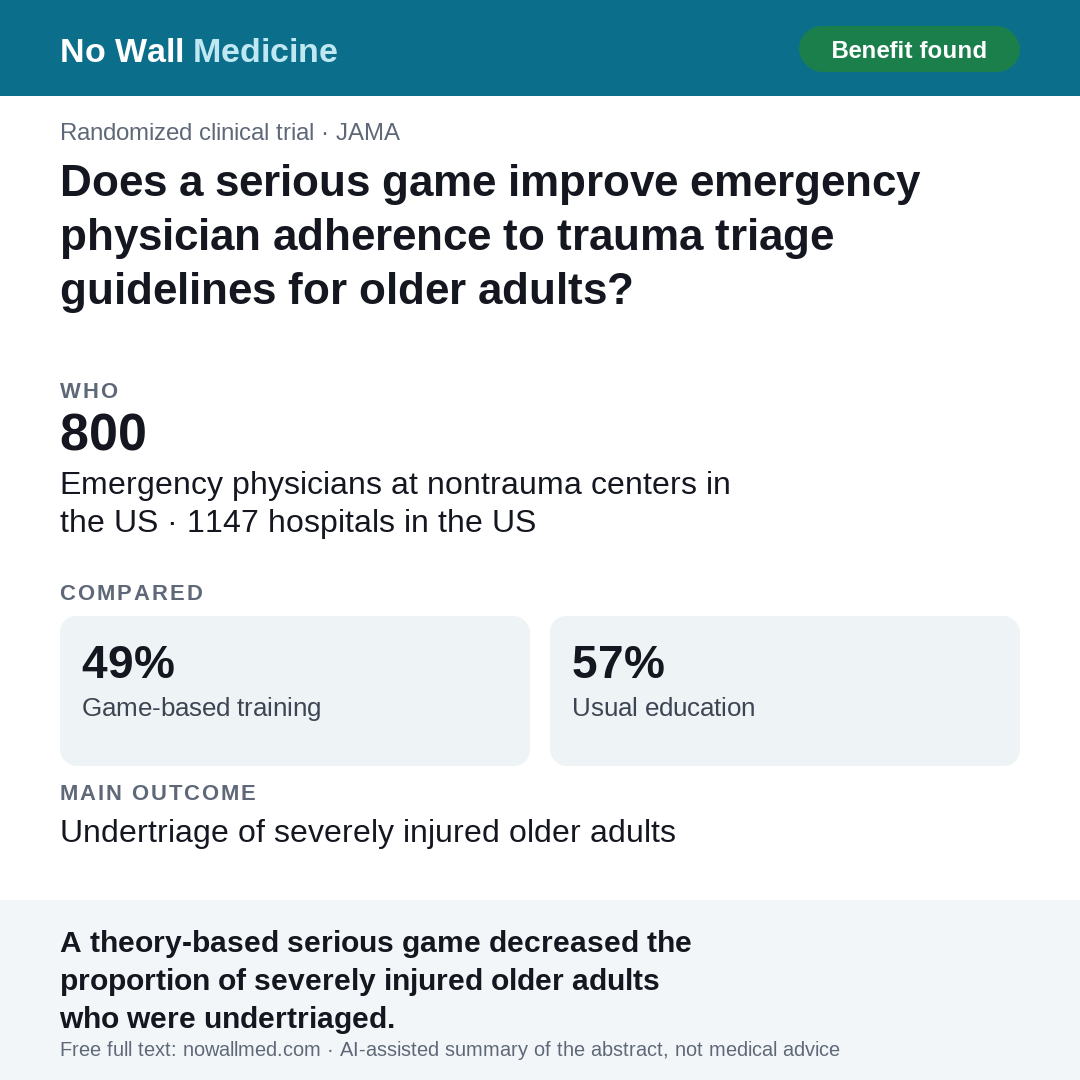
Using Serious Games to Increase the Implementation of Trauma Triage Guidelines: A Randomized Clinical Trial
Randomized clinical trialBenefit found
Does a serious game improve emergency physician adherence to trauma triage guidelines for older adults?
Who
800
Emergency physicians at nontrauma centers in the US · 1147 hospitals in the US
Compared
49%Game-based training (402/819)
57%Usual education (527/919)
Main outcome
Undertriage of severely injured older adults
Result: -7% (95% CI, -13% to -0.8%)
Bottom line: A theory-based serious game decreased the proportion of severely injured older adults who were undertriaged.
JAMA · 2026-04-21Download image
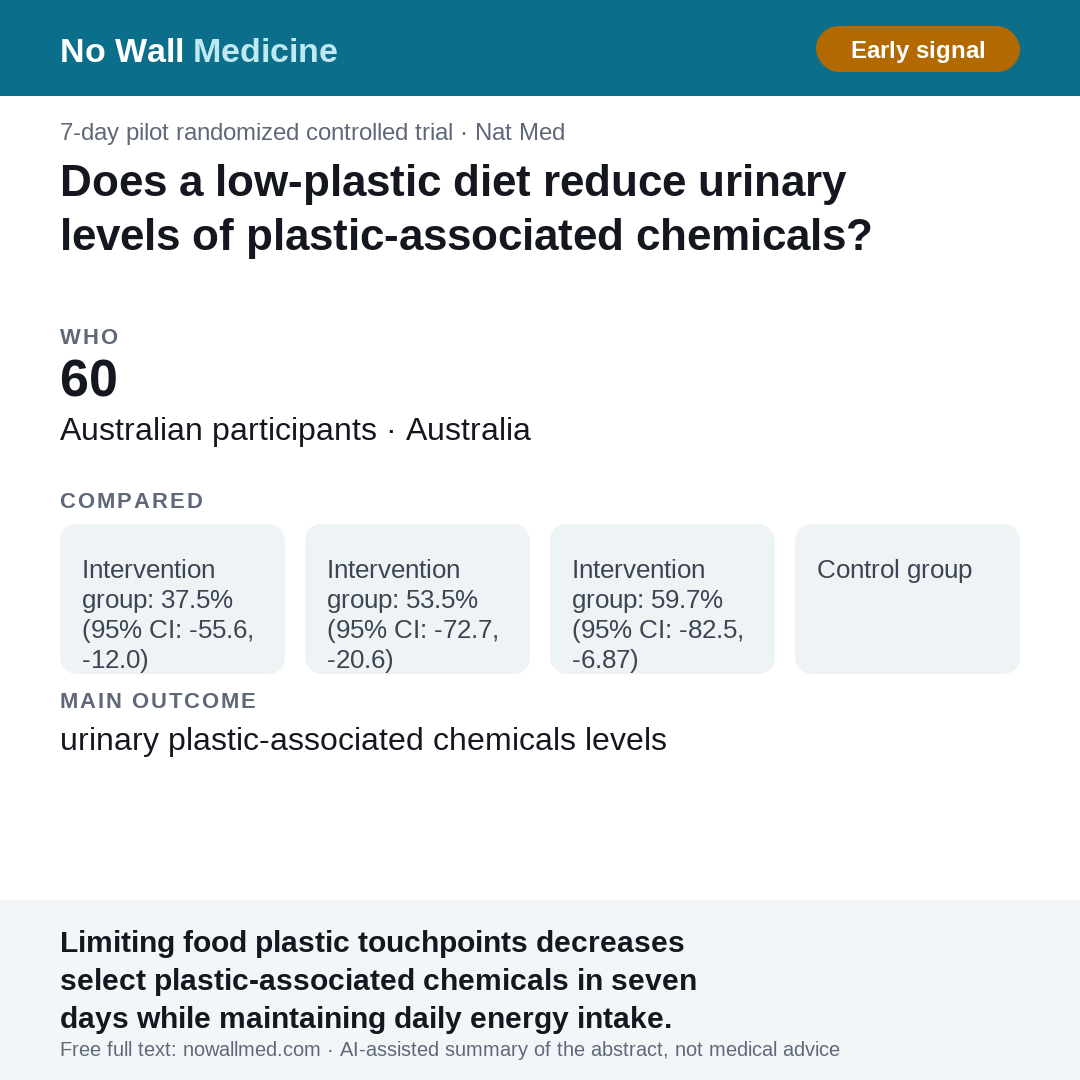
Low-plastic diet and urinary levels of plastic-associated phthalates and bisphenols: the randomized controlled PERTH Trial
7-day pilot randomized controlled trialBenefit found
Does a low-plastic diet reduce urinary levels of plastic-associated chemicals?
Who
60
Australian participants · Australia
Compared
Intervention group: 37.5% (95% CI: -55.6, -12.0) reduction in mono-n-butyl phthalate
Intervention group: 53.5% (95% CI: -72.7, -20.6) reduction in monobenzyl phthalate
Intervention group: 59.7% (95% CI: -82.5, -6.87) reduction in bisphenol A
Control group
Main outcome
urinary plastic-associated chemicals levels
Bottom line: Limiting food plastic touchpoints decreases select plastic-associated chemicals in seven days while maintaining daily energy intake.
Nat Med · 2026-04-21Download image
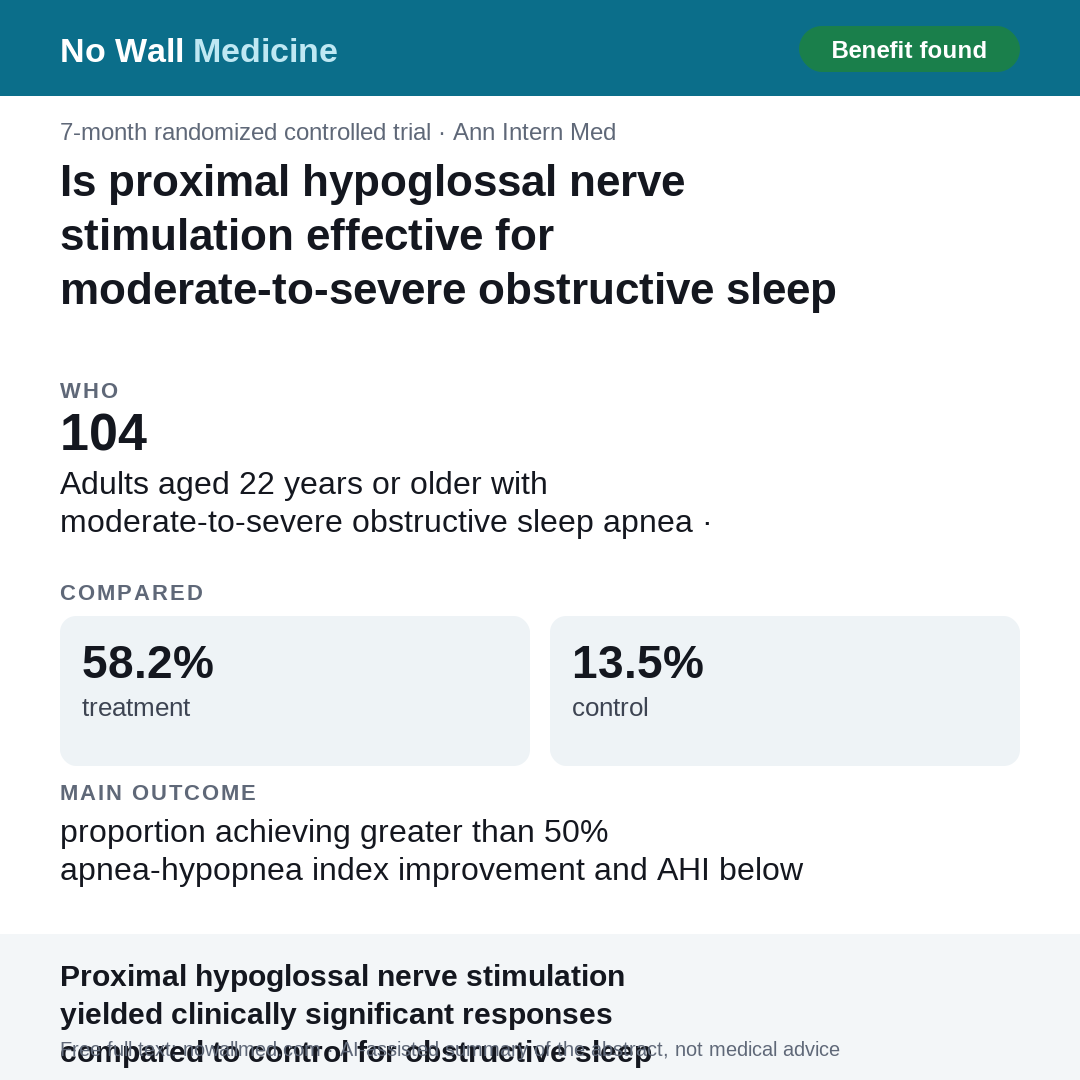
Proximal Hypoglossal Nerve Stimulation for Obstructive Sleep Apnea in the OSPREY Study : A Randomized Controlled Trial
7-month randomized controlled trialBenefit found
Is proximal hypoglossal nerve stimulation effective for moderate-to-severe obstructive sleep apnea?
Who
104
Adults aged 22 years or older with moderate-to-severe obstructive sleep apnea · 23 U.S. health centers
Compared
58.2%treatment (95% CI, 45.5% to 70.2%)
13.5%control (CI, 4.5% to 28.8%)
Main outcome
proportion achieving greater than 50% apnea-hypopnea index improvement and AHI below 20
Bottom line: Proximal hypoglossal nerve stimulation yielded clinically significant responses compared to control for obstructive sleep apnea at month 7.
Limitation: Lack of blinding, small sample size, and short follow-up.
Funded by: LivaNova PLC
Ann Intern Med · 2026-04-21Download image
Duration and association with protection of NANP-repeat-specific and C-terminus-specific anti-circumsporozoite protein IgG responses following RTS,S/AS01E vaccination: an observational ancillary immunological study of a phase 3 clinical trial
Observational ancillary immunological studyBenefit found
How do antibody responses to circumsporozoite protein relate to malaria protection?
Who
1292
Children aged 5-17 months · Six African countries
Compared
C-terminus IgG: geometric mean fold change 0·099 [95% CI 0·089-0·110]
NANP-repeat IgG: geometric mean fold change 0·055 [0·048-0·062]
Main outcome
Circumsporozoite protein IgG levels and malaria risk
Result: hazard ratio 0·60, 95% CI 0·43-0·83
Bottom line: C-terminus antibodies are more durable than NANP-repeat antibodies and remain independently protective against malaria.
Funded by: National Institute of Allergy and Infectious Diseases and others
Lancet Infect Dis · 2026-04-21Download image

Safety and efficacy of individualised exercise and NAD+ precursor supplementation in patients with Friedreich's ataxia in the USA: a single-centre, 2 × 2 factorial, randomised controlled trial
Randomised, 2x2 factorial, phase 2, single-site trialMixed results
Does exercise and nicotinamide riboside supplementation improve cardiopulmonary fitness in Friedreich's ataxia?
Who
66
Individuals aged 10-40 years with Friedreich's ataxia · Children's Hospital of Philadelphia, USA
Compared
-0·05Placebo and no exercise (95% CI -0·16 to 0·06)
0·06Nicotinamide riboside and no exercise (-0·05 to 0·17)
0·11Placebo and exercise (0·00 to 0·22)
0·16Nicotinamide riboside and exercise (0·05 to 0·27)
Main outcome
Change in peak VO2 (L/min) at 12 weeks
Result: 0·21 (95% CI 0.05 to 0.36) for combination vs control
Bottom line: Combination therapy of nicotinamide riboside and exercise improved peak VO2 compared to control, but was not superior to exercise alone.
Lancet Neurol · 2026-04-21Download image

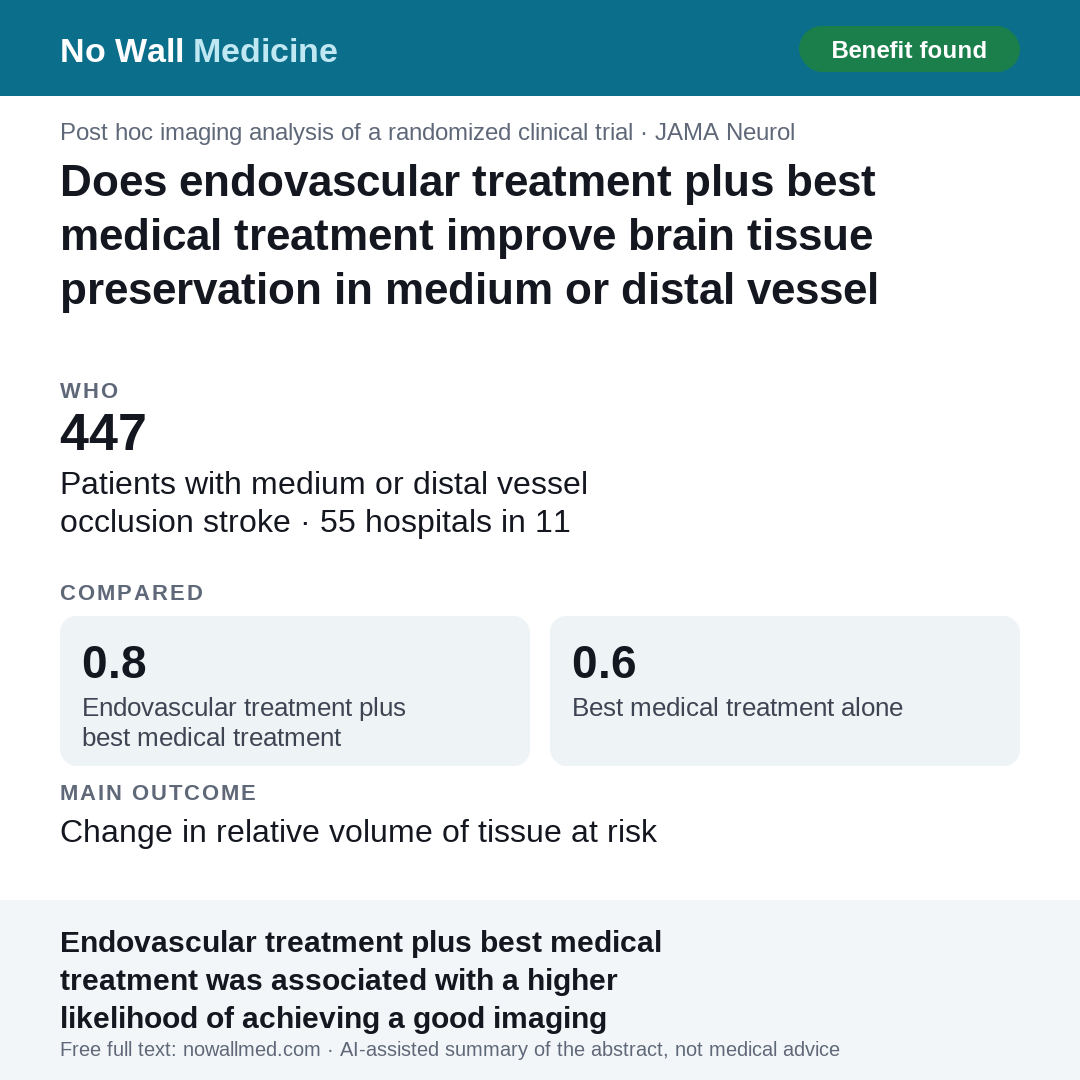
Mechanical Thrombectomy and Final Infarct Volume in Medium or Distal Vessel Occlusion Stroke: A Post Hoc Analysis of a Randomized Clinical Trial
Post hoc imaging analysis of a randomized clinical trialBenefit found
Does endovascular treatment plus best medical treatment improve brain tissue preservation in medium or distal vessel occlusion stroke?
Who
447
Patients with medium or distal vessel occlusion stroke · 55 hospitals in 11 countries
Compared
0.8Endovascular treatment plus best medical treatment (0.2-1.0)
0.6Best medical treatment alone (0-0.9)
Main outcome
Change in relative volume of tissue at risk
Result: adjusted odds ratio 1.6 (95% CI 1.1-2.3)
Bottom line: Endovascular treatment plus best medical treatment was associated with a higher likelihood of achieving a good imaging outcome.
JAMA Neurol · 2026-04-21Download image
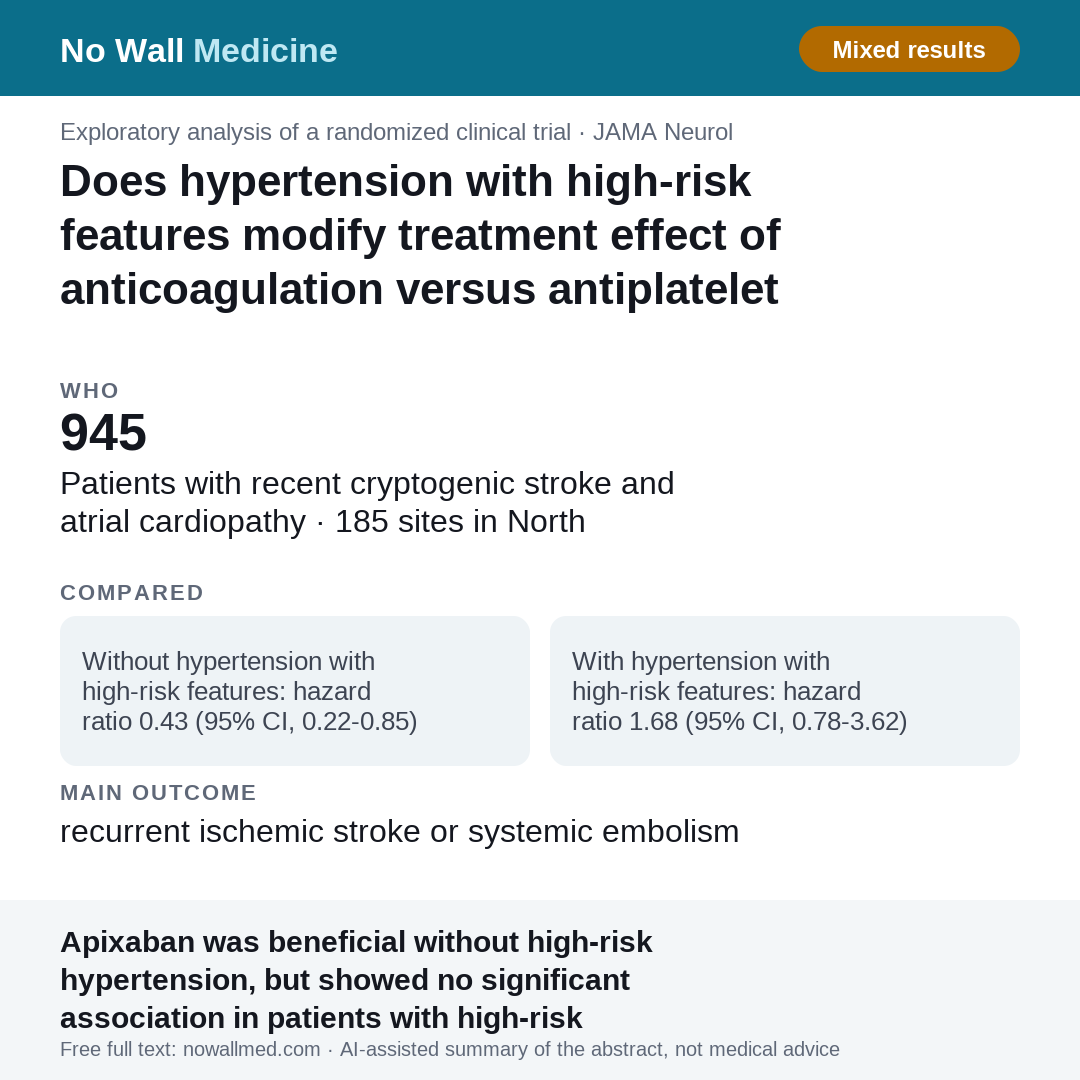
Hypertension With High-Risk Features in Cryptogenic Stroke: An Exploratory Analysis of the ARCADIA Randomized Clinical Trial
Exploratory analysis of a randomized clinical trialMixed results
Does hypertension with high-risk features modify treatment effect of anticoagulation versus antiplatelet therapy?
Who
945
Patients with recent cryptogenic stroke and atrial cardiopathy · 185 sites in North America
Compared
Without hypertension with high-risk features: hazard ratio 0.43 (95% CI, 0.22-0.85)
With hypertension with high-risk features: hazard ratio 1.68 (95% CI, 0.78-3.62)
Main outcome
recurrent ischemic stroke or systemic embolism
Result: hazard ratio 0.43 (95% CI, 0.22-0.85) vs hazard ratio 1.68 (95% CI, 0.78-3.62)
Bottom line: Apixaban was beneficial without high-risk hypertension, but showed no significant association in patients with high-risk hypertension features.
Limitation: This was an exploratory analysis of a randomized clinical trial.
JAMA Neurol · 2026-04-21Download image
Brain Imaging Biomarkers and Cognitive Outcomes in a Multidomain Lifestyle Intervention: The POINTER Imaging Ancillary Study
Randomized, single-blind clinical trialNo clear difference
Does a multidomain lifestyle intervention affect brain imaging biomarkers and cognitive outcomes?
Who
983
Sedentary adults aged 60 to 79 with suboptimal diet · 5 clinical sites in the United States
Compared
Structured intervention
Self-guided intervention
Main outcome
Global cognitive composite and four primary imaging outcomes
Bottom line: The lifestyle intervention did not affect brain biomarker trajectories or longitudinal cognitive outcomes in the study population.
JAMA Neurol · 2026-04-21Download image

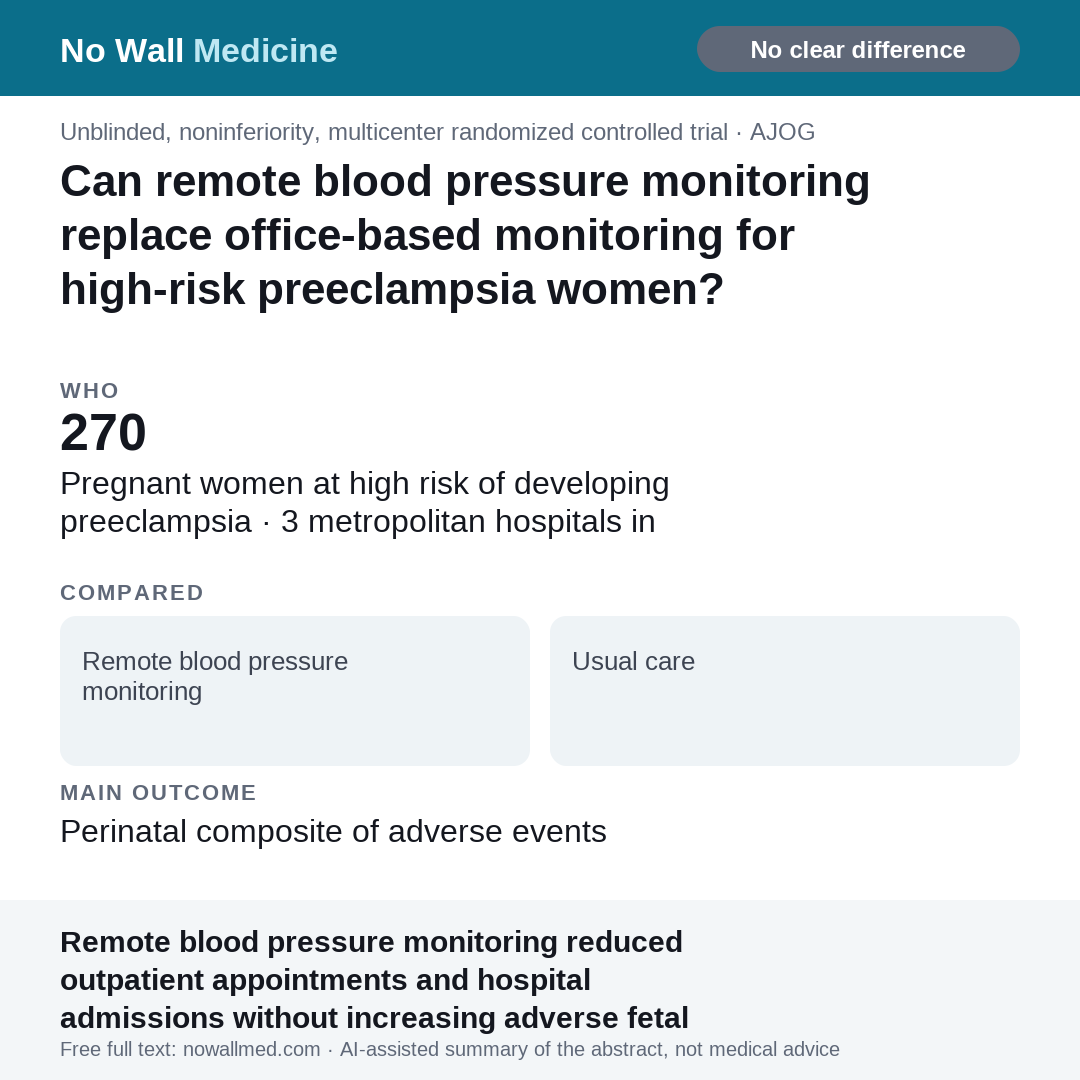
A randomized controlled trial comparing remote blood pressure monitoring with office-based blood pressure monitoring for women at high risk of preeclampsia
Unblinded, noninferiority, multicenter randomized controlled trialNo clear difference
Can remote blood pressure monitoring replace office-based monitoring for high-risk preeclampsia women?
Who
270
Pregnant women at high risk of developing preeclampsia · 3 metropolitan hospitals in Australia
Compared
Remote blood pressure monitoring
Usual care
Main outcome
Perinatal composite of adverse events
Result: hazard ratio 1.0 (95% CI 0.57-1.76)
Bottom line: Remote blood pressure monitoring reduced outpatient appointments and hospital admissions without increasing adverse fetal or maternal outcomes.
AJOG · 2026-04-21Download image
Safety and Efficacy of Tranexamic Acid in Urologic Surgery: Results from the International, Randomized, Placebo-Controlled POISE-3 Trial
International, randomized, placebo-controlled trialBenefit found
Is tranexamic acid effective and safe for patients undergoing urologic surgery?
Who
1124
Patients undergoing urologic surgery with bleeding and cardiovascular risk factors · International
Compared
Tranexamic acid: 8.1% composite bleeding
Placebo: 10.9% composite bleeding
Main outcome
30-day bleeding composite and 30-day thrombosis composite
Result: hazard ratio 0.73 (95% CI 0.50-1.07)
Bottom line: Tranexamic acid reduced major bleeding in urologic surgery, though the composite bleeding outcome did not reach statistical significance.
Limitation: Few patient-important thrombotic events limited precision for stroke and venous thromboembolism estimates.
Eur Urol · 2026-04-21Download image

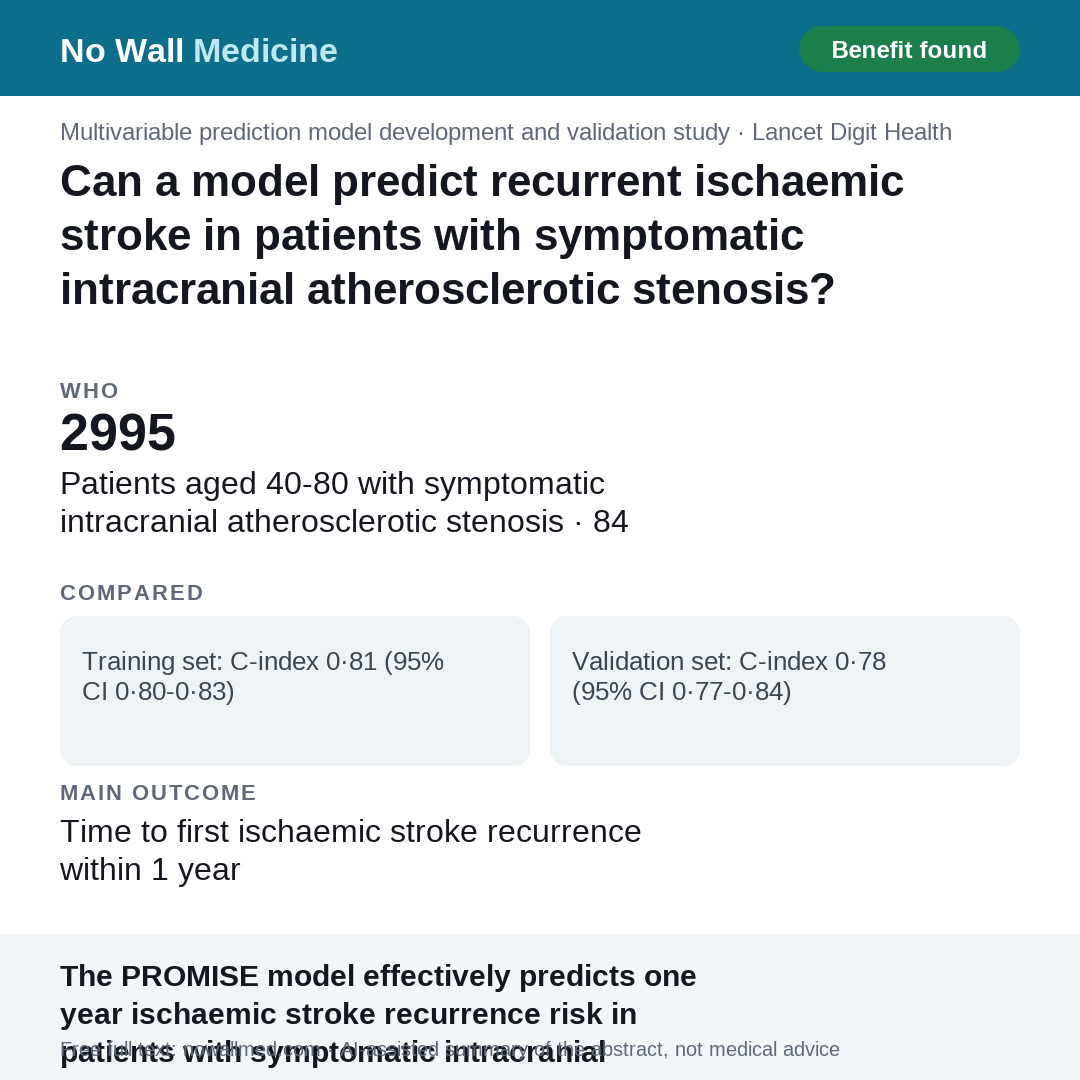
Ischaemic stroke recurrence in patients with symptomatic intracranial atherosclerotic stenosis in China (PROMISE): a multivariable prediction model development and validation study
Multivariable prediction model development and validation studyBenefit found
Can a model predict recurrent ischaemic stroke in patients with symptomatic intracranial atherosclerotic stenosis?
Who
2995
Patients aged 40-80 with symptomatic intracranial atherosclerotic stenosis · 84 hospitals in China
Compared
Training set: C-index 0·81 (95% CI 0·80-0·83)
Validation set: C-index 0·78 (95% CI 0·77-0·84)
Main outcome
Time to first ischaemic stroke recurrence within 1 year
Bottom line: The PROMISE model effectively predicts one year ischaemic stroke recurrence risk in patients with symptomatic intracranial atherosclerotic stenosis.
Funded by: National Natural Science Foundation of China and others
Lancet Digit Health · 2026-04-21Download image
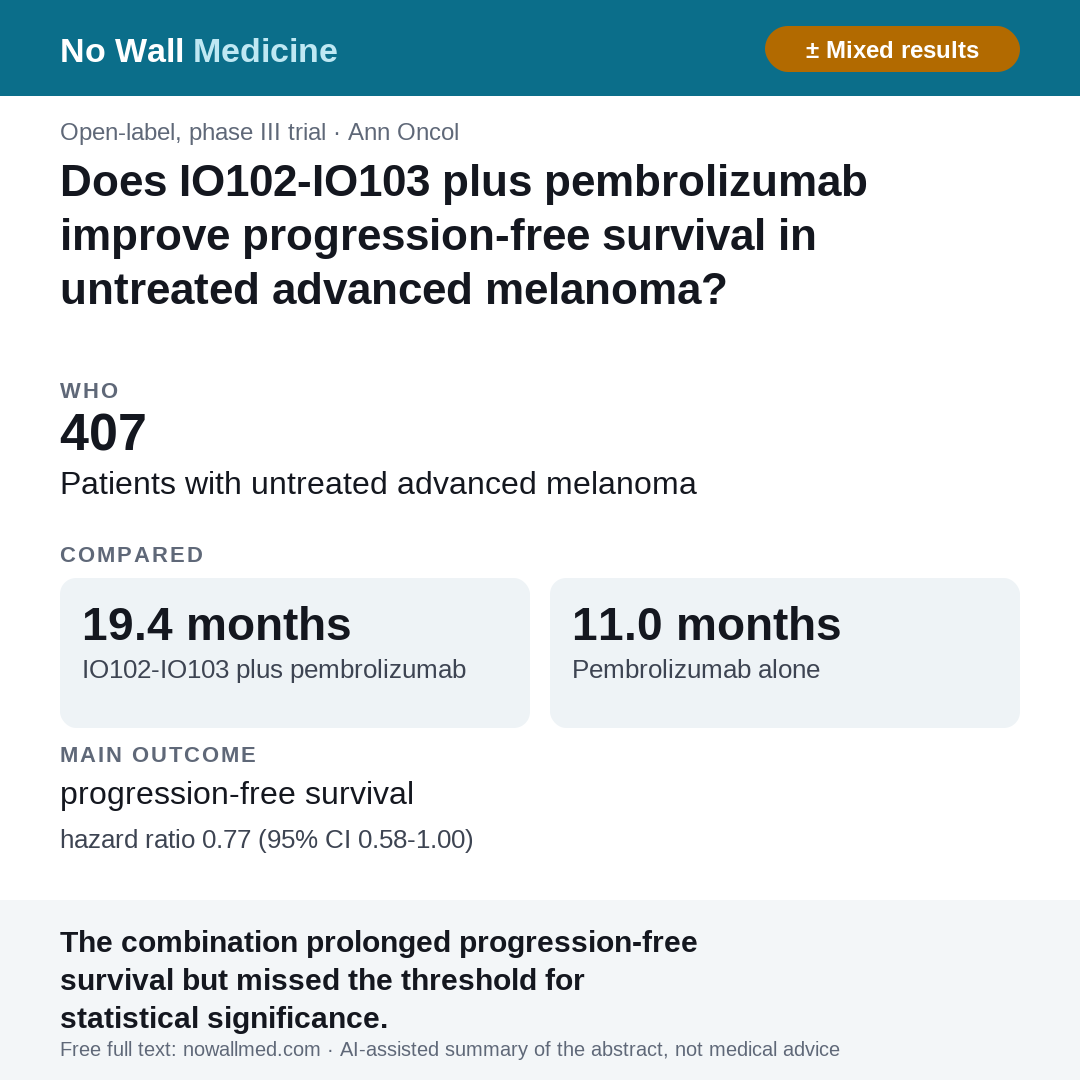
IO102-IO103 immune-modulatory cancer vaccine and pembrolizumab in melanoma
Open-label, phase III trialMixed results
Does IO102-IO103 plus pembrolizumab improve progression-free survival in untreated advanced melanoma?
Who
407
Patients with untreated advanced melanoma
Compared
19.4 monthsIO102-IO103 plus pembrolizumab
11.0 monthsPembrolizumab alone
Main outcome
progression-free survival
Result: hazard ratio 0.77 (95% CI 0.58-1.00)
Bottom line: The combination prolonged progression-free survival but missed the threshold for statistical significance.
Limitation: The statistical significance threshold was missed for the primary endpoint.
Ann Oncol · 2026-04-21Download image
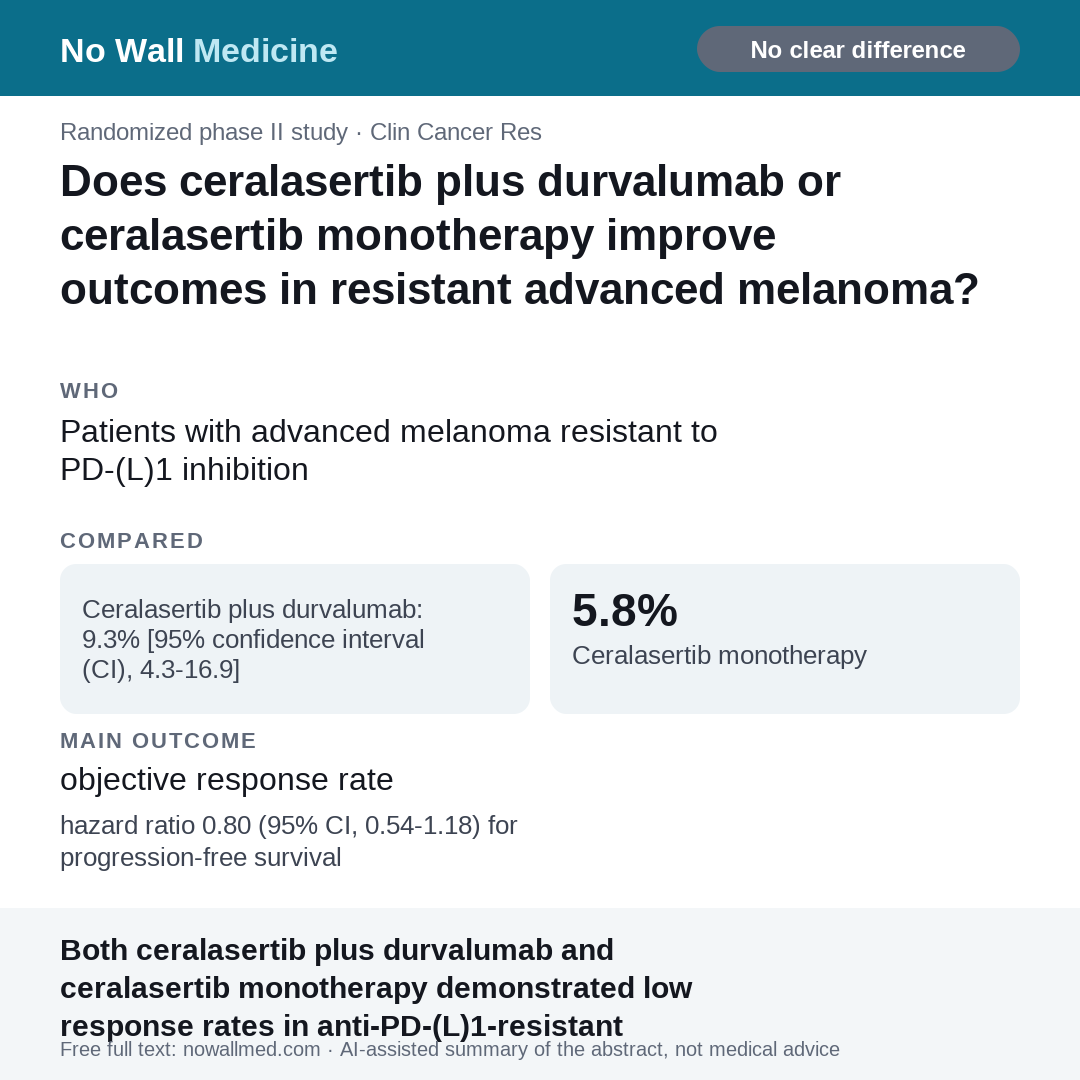
MONETTE: A Randomized Phase II Study of Ceralasertib plus Durvalumab or Ceralasertib Monotherapy in Patients with Advanced Melanoma Resistant to PD-(L)1 Inhibition
Randomized phase II studyNo clear difference
Does ceralasertib plus durvalumab or ceralasertib monotherapy improve outcomes in resistant advanced melanoma?
Who
Patients with advanced melanoma resistant to PD-(L)1 inhibition
Compared
Ceralasertib plus durvalumab: 9.3% [95% confidence interval (CI), 4.3-16.9]
5.8%Ceralasertib monotherapy (95% CI, 1.2-15.9)
Main outcome
objective response rate
Result: hazard ratio 0.80 (95% CI, 0.54-1.18) for progression-free survival
Bottom line: Both ceralasertib plus durvalumab and ceralasertib monotherapy demonstrated low response rates in anti-PD-(L)1-resistant advanced melanoma.
Clin Cancer Res · 2026-04-21Download image
Multimodal microglial and kynurenine pathway alterations across the affective-psychosis spectrum: a systematic review of patterns, heterogeneity, and dimensional implications
Systematic reviewMixed results
How do microglia and kynurenine pathway alterations differ across affective and psychotic illnesses?
Who
Patients with major depressive disorder, bipolar disorder, and schizophrenia
Compared
Major depressive disorder: increased TSPO binding in frontolimbic regions
Schizophrenia: shift toward the KYNA branch
Main outcome
Microglial and kynurenine pathway alterations
Bottom line: Alterations are better explained by biological subgroups and symptom dimensions than by categorical diagnoses.
Limitation: Limited cellular specificity of TSPO-PET and small sample sizes in postmortem studies.
Mol Psychiatry · 2026-04-21Download image

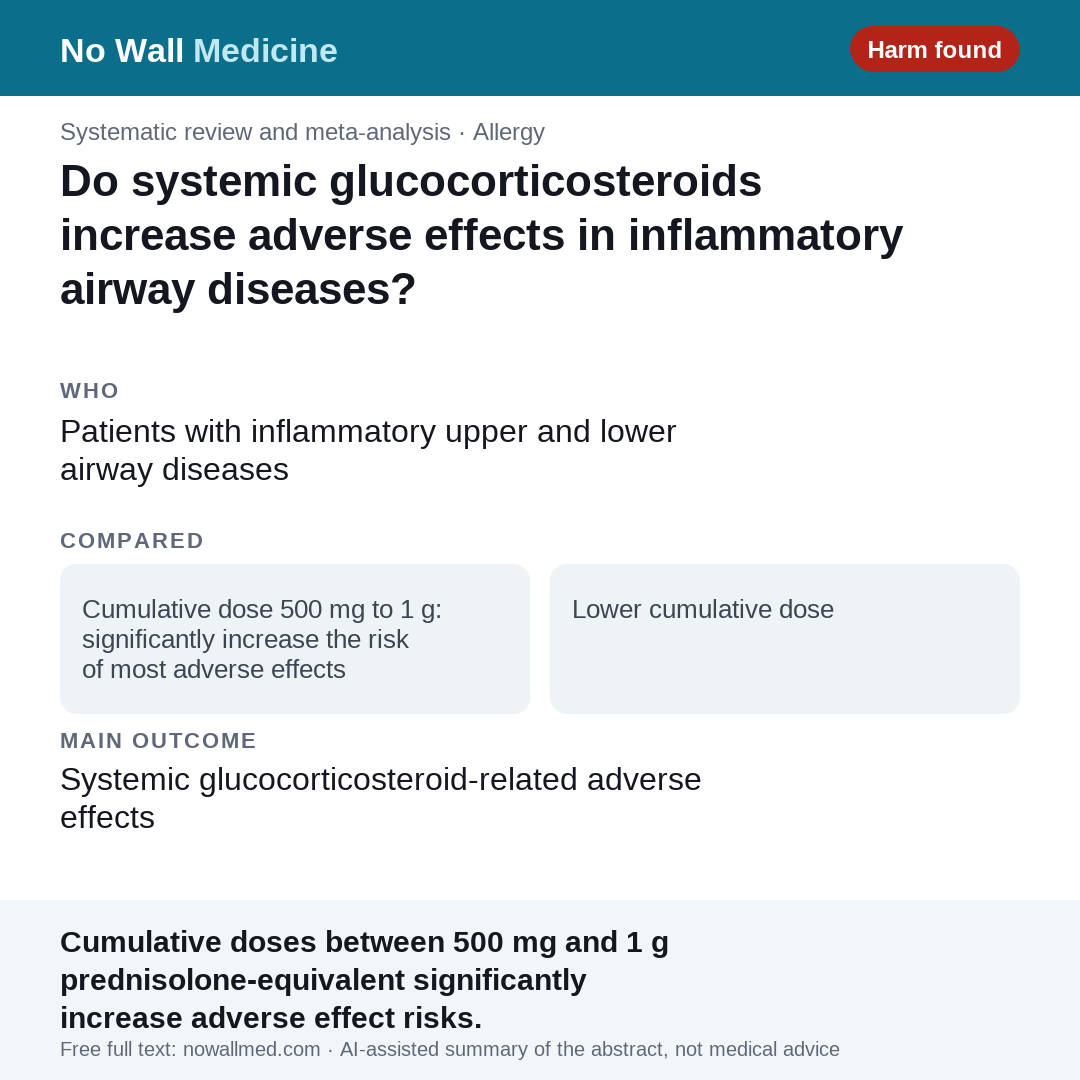
Meta-Analysis on the Harm of Systemic Glucocorticosteroids in Inflammatory Upper Airway Disease and Asthma: An EAACI Task Force
Systematic review and meta-analysisHarm found
Do systemic glucocorticosteroids increase adverse effects in inflammatory airway diseases?
Who
Patients with inflammatory upper and lower airway diseases
Compared
Cumulative dose 500 mg to 1 g: significantly increase the risk of most adverse effects
Lower cumulative dose
Main outcome
Systemic glucocorticosteroid-related adverse effects
Bottom line: Cumulative doses between 500 mg and 1 g prednisolone-equivalent significantly increase adverse effect risks.
Allergy · 2026-04-21Download image
Improved coping and self-efficacy drive improvements in mood among caregivers of patients with primary malignant brain tumors: Results from a randomized controlled trial
Randomized controlled trialBenefit found
Do improved coping and self-efficacy mediate NeuroCARE effects on caregiver anxiety and depression?
Who
120
Caregivers of patients with primary malignant brain tumors
Compared
NeuroCARE
Usual care
Main outcome
Anxiety and depression symptoms
Bottom line: NeuroCARE improves mood by enhancing coping skills and improving caregivers' self-efficacy.
Neuro Oncol · 2026-04-21Download image