Visual abstracts
New randomized trials and meta-analyses from leading journals at a glance: who was studied, what was compared, and what was found. Every paper is free to read in full.
All specialtiesCardiology 4877Oncology 4136Gastroenterology & Hepatology 1942Infectious Disease 3836Neurology 1904Psychiatry & Mental Health 2273Pulmonology 2143Critical Care 1364Endocrinology & Diabetes 2580Pediatrics 2980Surgery 2556Orthopedics & Sports Medicine 931Neurosurgery 537Cardiothoracic & Vascular Surgery 674Plastic & Reconstructive Surgery 591Nephrology 1133Rheumatology 823Hematology 1109Dermatology 621Ophthalmology 543Obstetrics & Gynecology 1686Public & Global Health 1058Radiology & Imaging 648Anesthesiology 986Urology 764ENT (Otolaryngology) 503Emergency Medicine 511Allergy & Immunology 313Geriatrics 979Family Medicine & Primary Care 562Medical Genetics & Genomics 676Pathology & Laboratory Medicine 159Physical Medicine & Rehabilitation 757Palliative Care 444Nutrition 1588Digital Health & AI 2197General Medicine 320
Incidence and Risk of Thromboembolic and Cardiovascular Adverse Events with PARP Inhibitor Treatment in Patients with Metastatic Castration-resistant Prostate Cancer: A Systematic Review and Safety Meta-analysis
Systematic review and safety meta-analysisHarm found
What are the risks of cardiovascular and thromboembolic events with PARP inhibitor treatment?
Who
Patients with metastatic castration-resistant prostate cancer
Compared
PARP inhibitor treatment
non-PARP inhibitor treatment
Main outcome
Major adverse cardiovascular events, thromboembolic events, and hypertension
Result: high-grade MACEs RR 2.03 (p = 0.03), thromboembolic events RR 2.15 (p = 0.002)
Bottom line: PARP inhibitors are associated with higher risk of high-grade cardiovascular and thromboembolic toxicity compared to other treatments.
Limitation: cardiovascular and thromboembolic adverse events are uncommon
Eur Urol Open Sci · 2025-01-10Download image

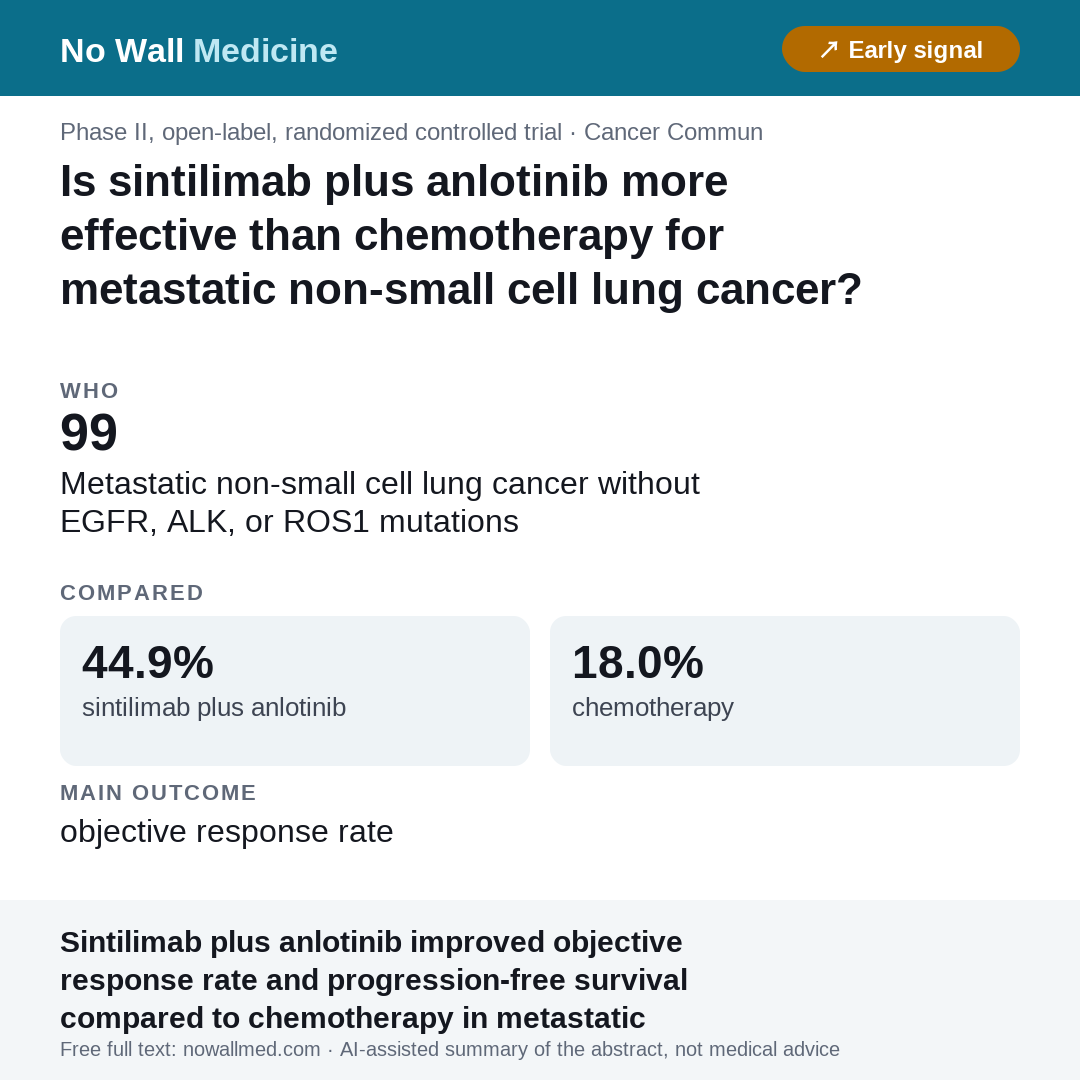
Efficacy and safety of first-line sintilimab plus anlotinib versus chemotherapy for metastatic non-small cell lung cancer: a phase II, open-label, randomized controlled trial
Phase II, open-label, randomized controlled trialBenefit found
Is sintilimab plus anlotinib more effective than chemotherapy for metastatic non-small cell lung cancer?
Who
99
Metastatic non-small cell lung cancer without EGFR, ALK, or ROS1 mutations
Compared
44.9%sintilimab plus anlotinib (95% CI 30.7%-59.8%)
18.0%chemotherapy (95% CI 8.6%-31.4%)
Main outcome
objective response rate
Result: hazard ratio 0.39 (95% CI 0.23-0.67)
Bottom line: Sintilimab plus anlotinib improved objective response rate and progression-free survival compared to chemotherapy in metastatic non-small cell lung cancer.
Cancer Commun · 2025-01-10Download image
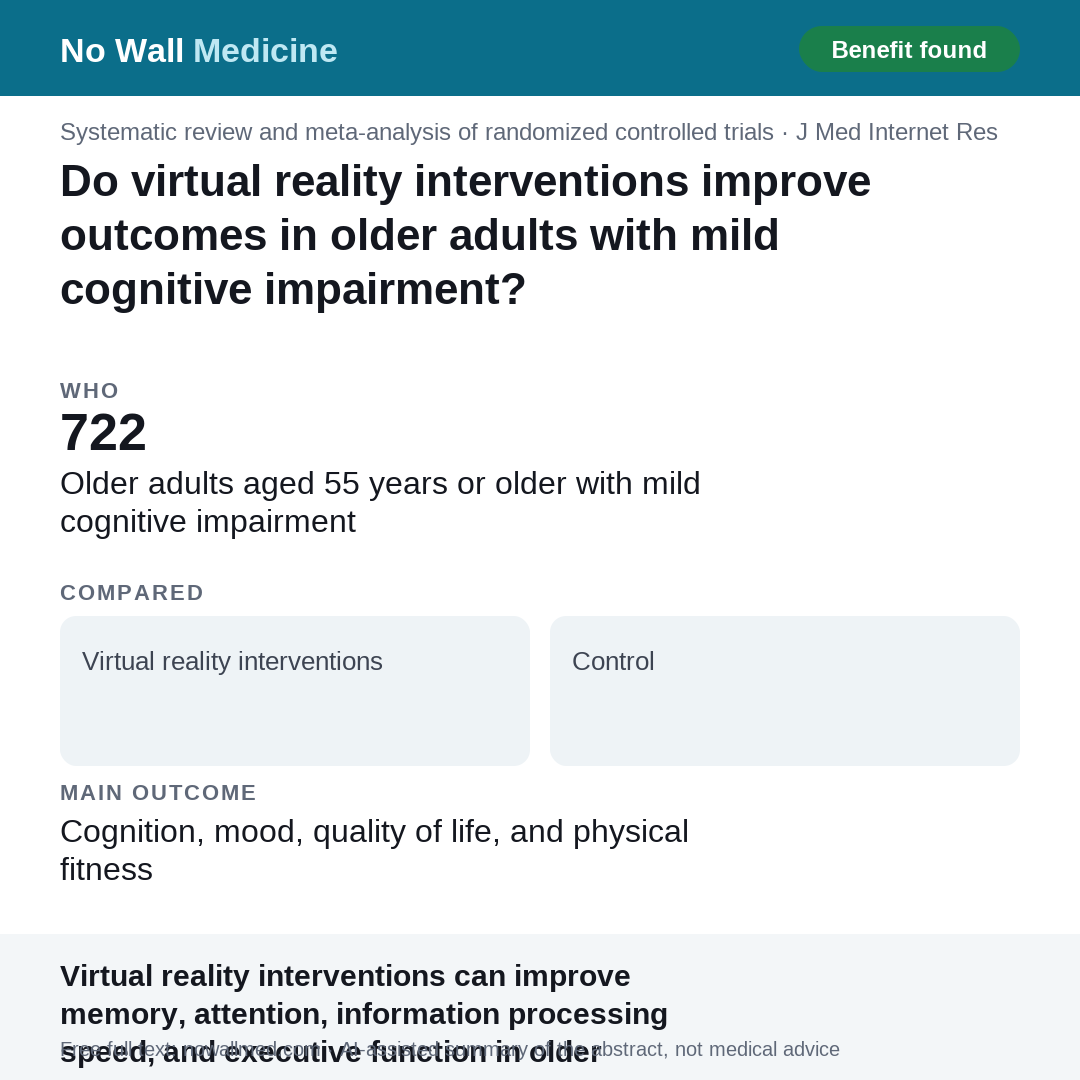
Virtual Reality Interventions for Older Adults With Mild Cognitive Impairment: Systematic Review and Meta-Analysis of Randomized Controlled Trials
Systematic review and meta-analysis of randomized controlled trialsBenefit found
Do virtual reality interventions improve outcomes in older adults with mild cognitive impairment?
Who
722
Older adults aged 55 years or older with mild cognitive impairment
Compared
Virtual reality interventions
Control
Main outcome
Cognition, mood, quality of life, and physical fitness
Result: memory SMD 0.2 (95% CI 0.02-0.38), attention and information processing speed SMD 0.25 (95% CI 0.06-0.45), executive function SMD 0.22 (95% CI 0.02-0.42)
Bottom line: Virtual reality interventions can improve memory, attention, information processing speed, and executive function in older adults with mild cognitive impairment.
Limitation: The quality of evidence is moderate to low for certain outcomes.
J Med Internet Res · 2025-01-10Download image
Preoperative smoking cessation interventions: a systematic review and meta-analysis
Systematic review and meta-analysisMixed results
Do preoperative smoking cessation interventions increase smoking cessation and reduce postoperative complications?
Who
2940
Smokers undergoing surgery
Compared
Smoking cessation intervention
Usual care
Main outcome
Smoking cessation and postoperative complications
Result: relative risk 1.64 (95% CI 1.30-2.07) for smoking cessation
Bottom line: Interventions increase odds of quitting smoking but do not reduce postoperative complications.
Limitation: High risk of bias and heterogeneity in the included studies.
Perioper Med · 2025-01-10Download image

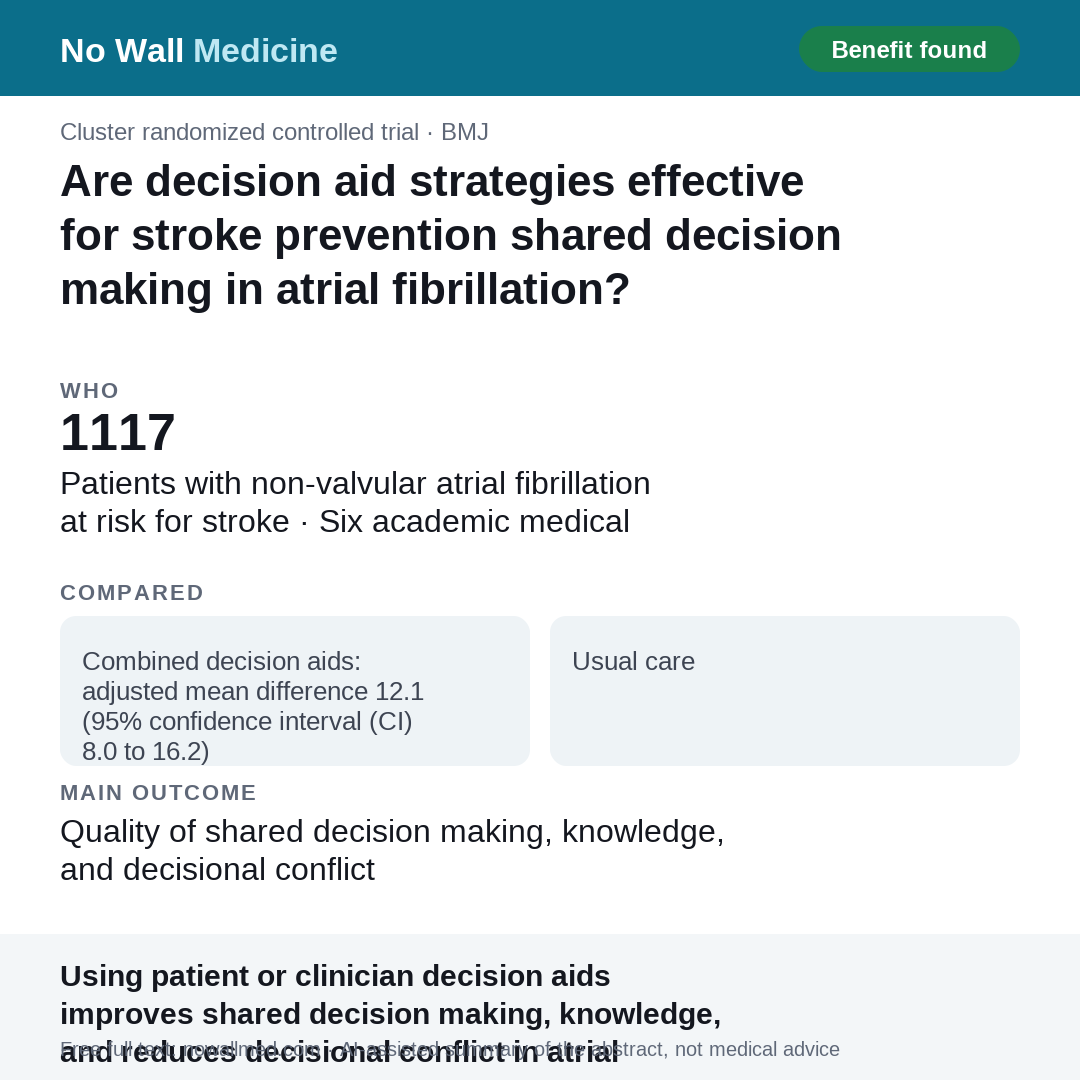
Effectiveness of shared decision making strategies for stroke prevention among patients with atrial fibrillation: cluster randomized controlled trial
Cluster randomized controlled trialBenefit found
Are decision aid strategies effective for stroke prevention shared decision making in atrial fibrillation?
Who
1117
Patients with non-valvular atrial fibrillation at risk for stroke · Six academic medical centers in the United States
Compared
Combined decision aids: adjusted mean difference 12.1 (95% confidence interval (CI) 8.0 to 16.2)
Usual care
Main outcome
Quality of shared decision making, knowledge, and decisional conflict
Result: adjusted mean difference 12.1 (95% confidence interval (CI) 8.0 to 16.2)
Bottom line: Using patient or clinician decision aids improves shared decision making, knowledge, and reduces decisional conflict in atrial fibrillation patients.
BMJ · 2025-01-09Download image
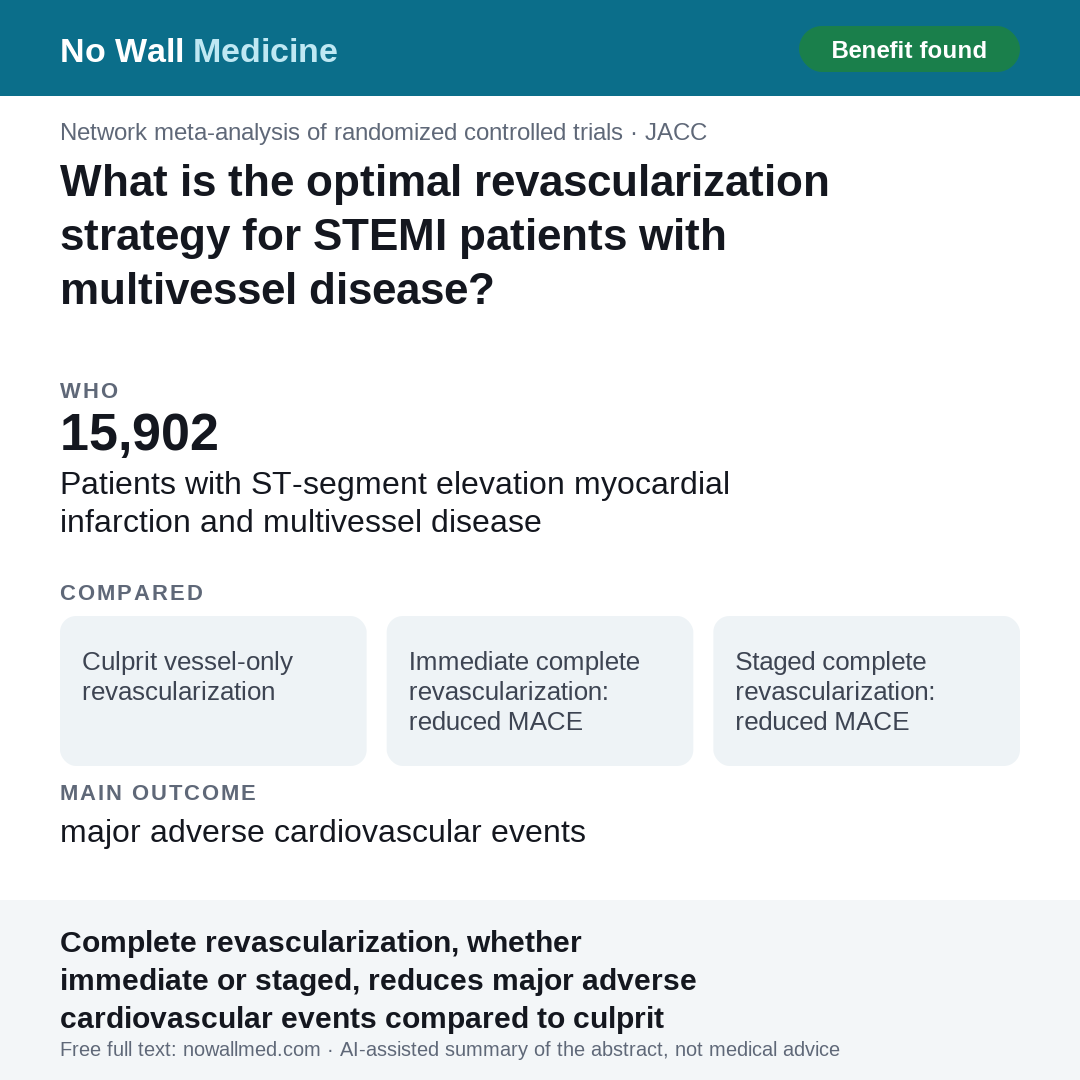
Optimal Strategy for Complete Revascularization in ST-Segment Elevation Myocardial Infarction and Multivessel Disease: A Network Meta-Analysis
Network meta-analysis of randomized controlled trialsBenefit found
What is the optimal revascularization strategy for STEMI patients with multivessel disease?
Who
15,902
Patients with ST-segment elevation myocardial infarction and multivessel disease
Compared
Culprit vessel-only revascularization
Immediate complete revascularization: reduced MACE
Staged complete revascularization: reduced MACE
Main outcome
major adverse cardiovascular events
Result: RR: 0.48; 95% CI: 0.36-0.64 (immediate CR) and RR: 0.65; 95% CI: 0.52-0.82 (staged CR)
Bottom line: Complete revascularization, whether immediate or staged, reduces major adverse cardiovascular events compared to culprit vessel-only treatment.
Limitation: The benefit of immediate versus staged revascularization for myocardial infarction was diminished when excluding procedural myocardial infarction.
JACC · 2025-01-09Download image
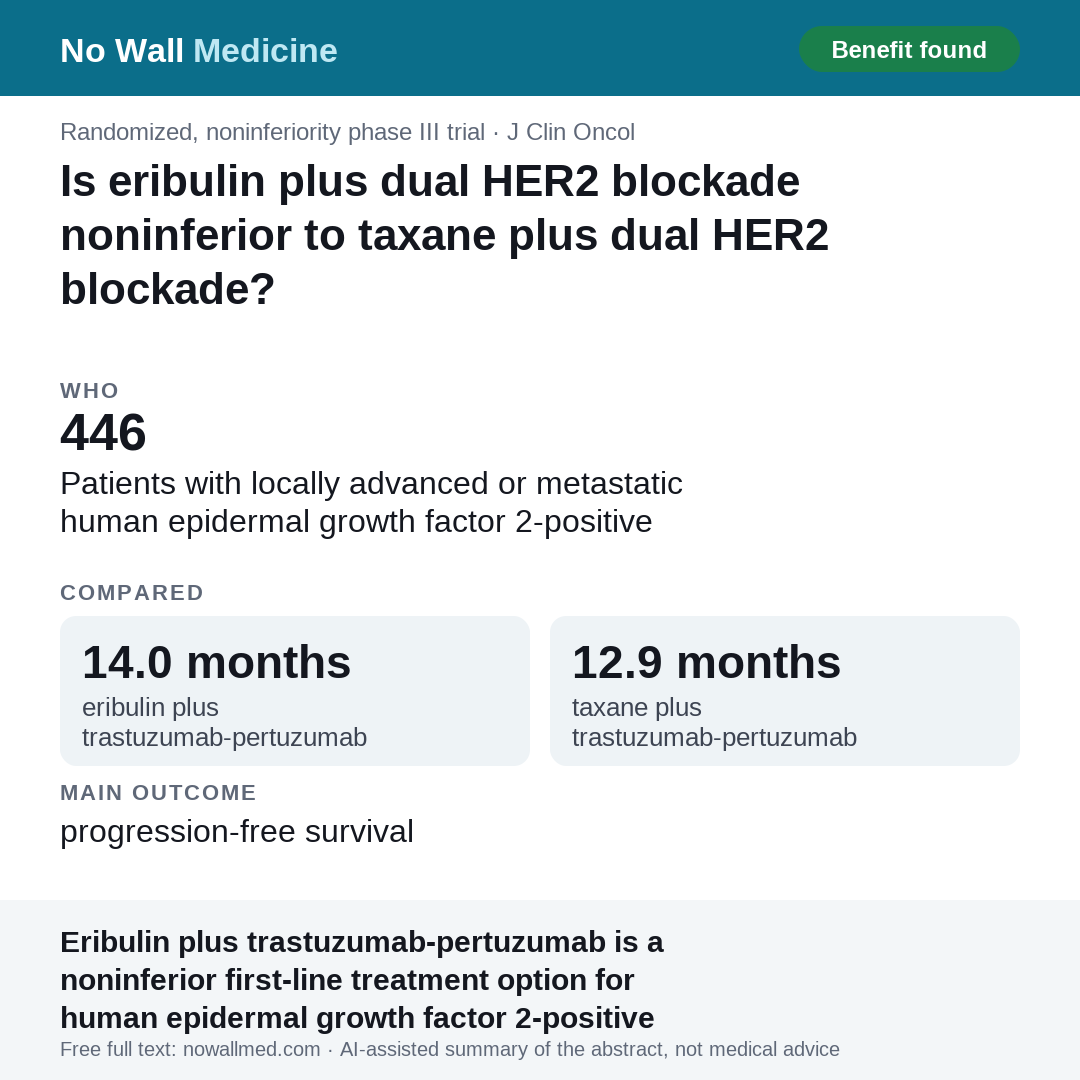
Trastuzumab-Pertuzumab Plus Eribulin or Taxane as First-Line Chemotherapy for Human Epidermal Growth Factor 2-Positive Locally Advanced/Metastatic Breast Cancer: The Randomized Noninferiority Phase III EMERALD Trial
Randomized, noninferiority phase III trialBenefit found
Is eribulin plus dual HER2 blockade noninferior to taxane plus dual HER2 blockade?
Who
446
Patients with locally advanced or metastatic human epidermal growth factor 2-positive breast cancer
Compared
14.0 monthseribulin plus trastuzumab-pertuzumab
12.9 monthstaxane plus trastuzumab-pertuzumab
Main outcome
progression-free survival
Result: hazard ratio 0.95 (95% CI 0.76 to 1.19)
Bottom line: Eribulin plus trastuzumab-pertuzumab is a noninferior first-line treatment option for human epidermal growth factor 2-positive breast cancer.
J Clin Oncol · 2025-01-09Download image
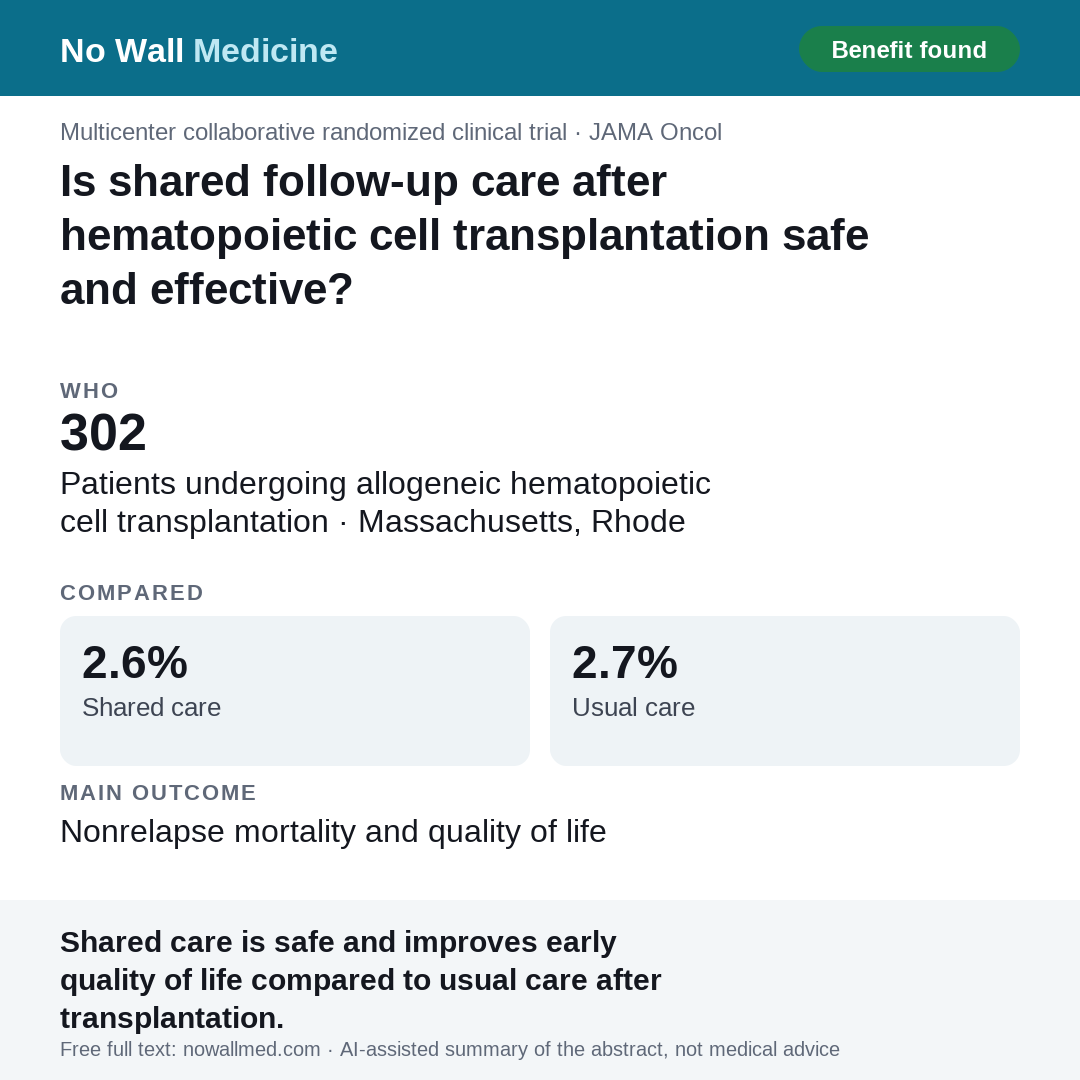
Shared Local Oncology Care After Allogeneic Hematopoietic Cell Transplantation: A Randomized Clinical Trial
Multicenter collaborative randomized clinical trialBenefit found
Is shared follow-up care after hematopoietic cell transplantation safe and effective?
Who
302
Patients undergoing allogeneic hematopoietic cell transplantation · Massachusetts, Rhode Island, New Hampshire, New York, and Maine
Compared
2.6%Shared care (95% CI, 0.7% to 6.6%)
2.7%Usual care (95% CI, 0.7% to 6.7%)
Main outcome
Nonrelapse mortality and quality of life
Result: noninferior NRM at day 100
Bottom line: Shared care is safe and improves early quality of life compared to usual care after transplantation.
JAMA Oncol · 2025-01-09Download image
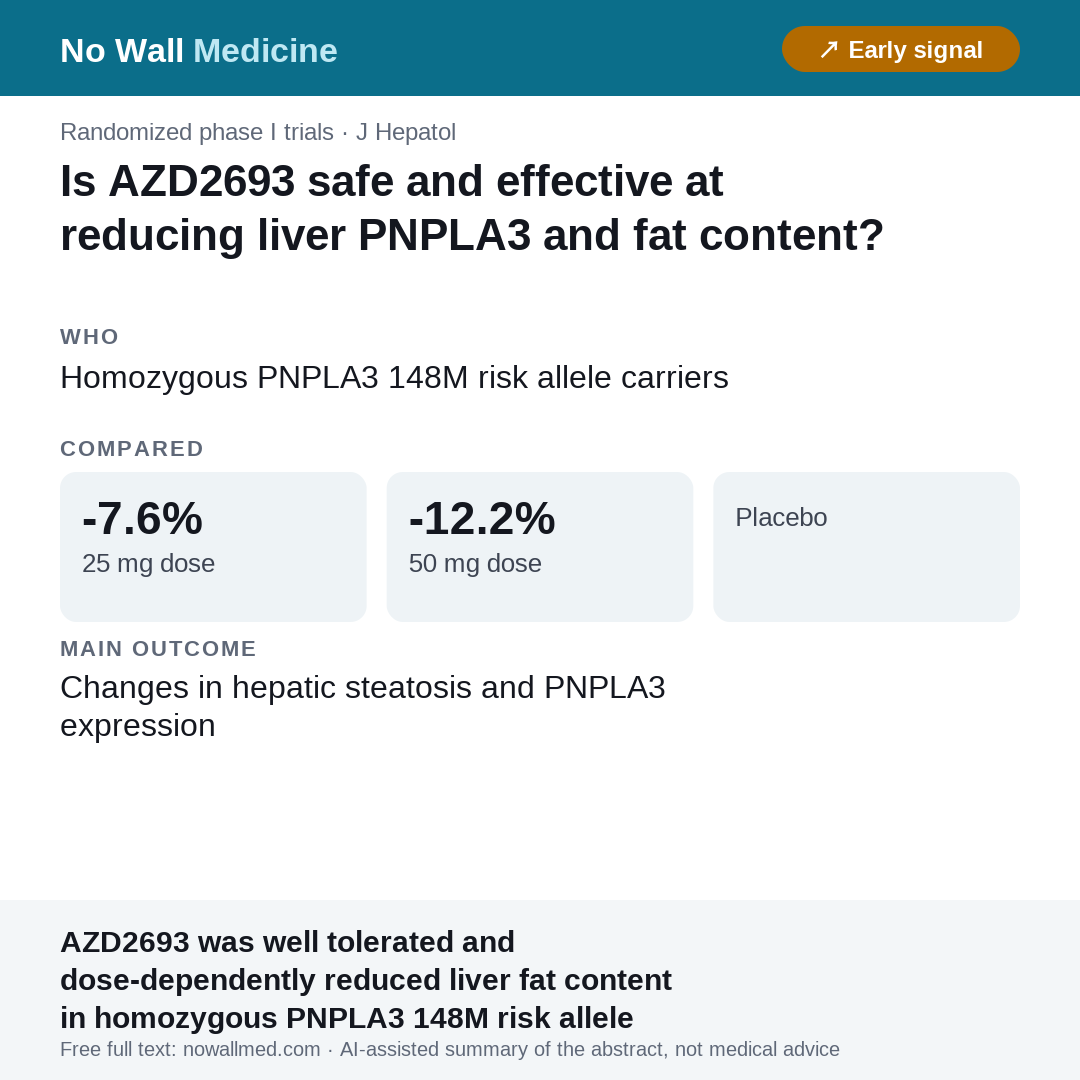
AZD2693, a PNPLA3 antisense oligonucleotide, for the treatment of MASH in 148M homozygous participants: Two randomized phase I trials
Randomized phase I trialsBenefit found
Is AZD2693 safe and effective at reducing liver PNPLA3 and fat content?
Who
Homozygous PNPLA3 148M risk allele carriers
Compared
-7.6%25 mg dose (placebo-corrected least-square means)
-12.2%50 mg dose (placebo-corrected least-square means)
Placebo
Main outcome
Changes in hepatic steatosis and PNPLA3 expression
Bottom line: AZD2693 was well tolerated and dose-dependently reduced liver fat content in homozygous PNPLA3 148M risk allele carriers.
J Hepatol · 2025-01-09Download image
Effect of mass drug administration on malaria incidence in southeast Senegal during 2020-22: a two-arm, open-label, cluster-randomised controlled trial
Two-arm, open-label, cluster-randomised controlled trialMixed results
Does mass drug administration reduce Plasmodium falciparum malaria incidence in southeast Senegal?
Who
Villages in the Tambacounda health district of southeast Senegal · Southeast Senegal
Compared
Mass drug administration: 126 cases per 1000 population
Standard of care: 146 cases per 1000 population
Main outcome
Plasmodium falciparum-confirmed malaria incidence in the post-intervention year
Result: adjusted MDA effect was 26% (-17 to 53)
Bottom line: Mass drug administration was safe and reduced malaria during the intervention year, but the sustained effect was weak.
Limitation: The sustained effect of mass drug administration was weak.
Funded by: US President's Malaria Initiative
Lancet Infect Dis · 2025-01-09Download image

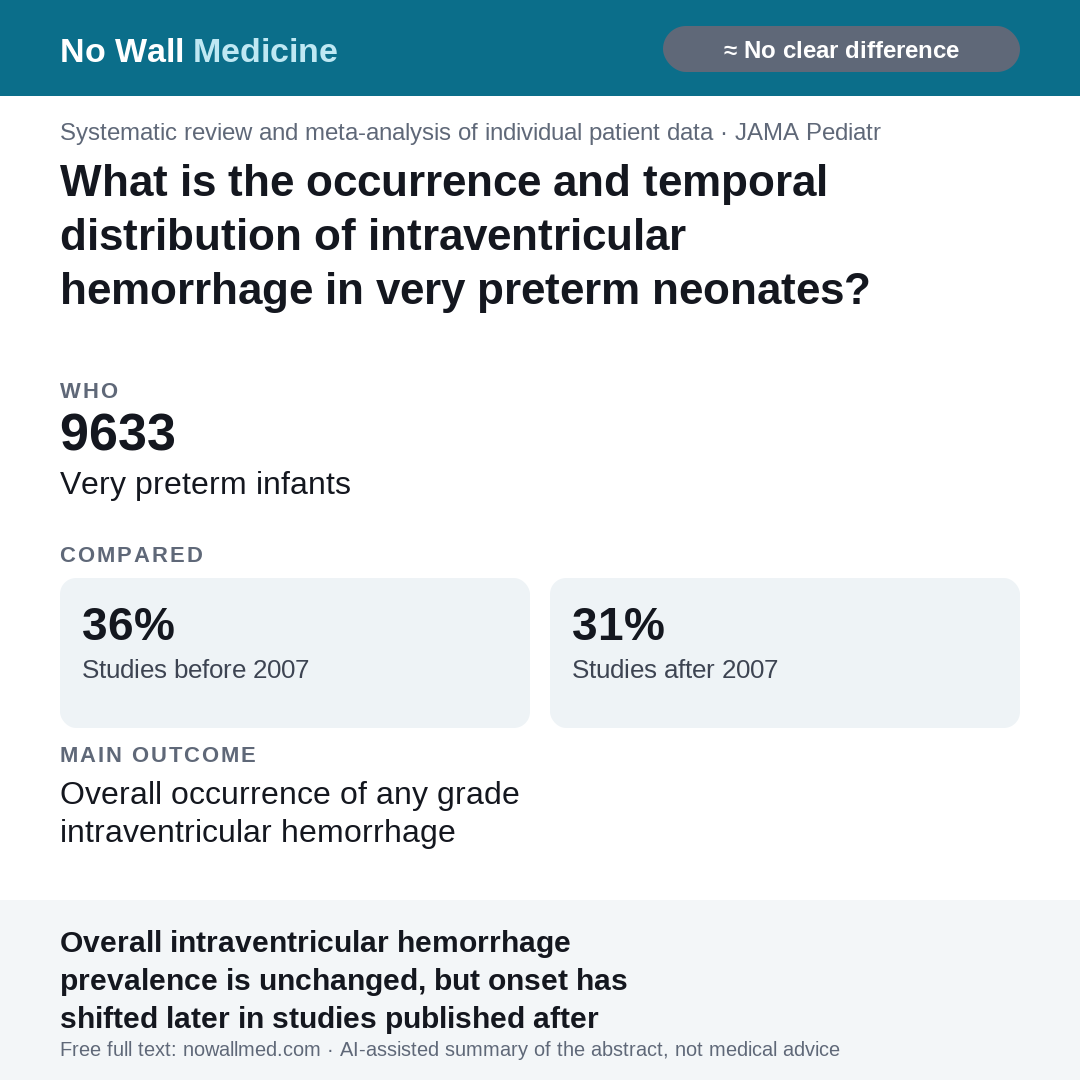
Occurrence and Time of Onset of Intraventricular Hemorrhage in Preterm Neonates: A Systematic Review and Meta-Analysis of Individual Patient Data
Systematic review and meta-analysis of individual patient dataNo clear difference
What is the occurrence and temporal distribution of intraventricular hemorrhage in very preterm neonates?
Who
9633
Very preterm infants
Compared
36%Studies before 2007 (95% CI, 30%-42%)
31%Studies after 2007 (95% CI, 25%-36%)
Main outcome
Overall occurrence of any grade intraventricular hemorrhage
Bottom line: Overall intraventricular hemorrhage prevalence is unchanged, but onset has shifted later in studies published after 2007.
JAMA Pediatr · 2025-01-09Download image
Procalcitonin-guided duration of antibiotic treatment in children hospitalised with confirmed or suspected bacterial infection in the UK (BATCH): a pragmatic, multicentre, open-label, two-arm, individually randomised, controlled trial
Pragmatic, multicentre, open-label, two-arm, individually randomised, controlled trialNo clear difference
Does a procalcitonin-guided algorithm reduce intravenous antibiotic duration in hospitalised children?
Who
1949
Children aged 72 hours to 18 years with suspected or confirmed bacterial infection · 15 hospitals in England and Wales
Compared
Procalcitonin group: 96.0 h (IQR 59.5-155.5)
Usual care group: 99.7 h (61.2-153.8)
Main outcome
Duration of intravenous antibiotic use
Result: hazard ratio 0.96 (95% CI 0.87-1.05)
Bottom line: A procalcitonin-guided algorithm did not reduce the duration of intravenous antibiotic treatment compared to usual care.
Funded by: National Institute for Health and Care Research
Lancet Child Adolesc Health · 2025-01-09Download image

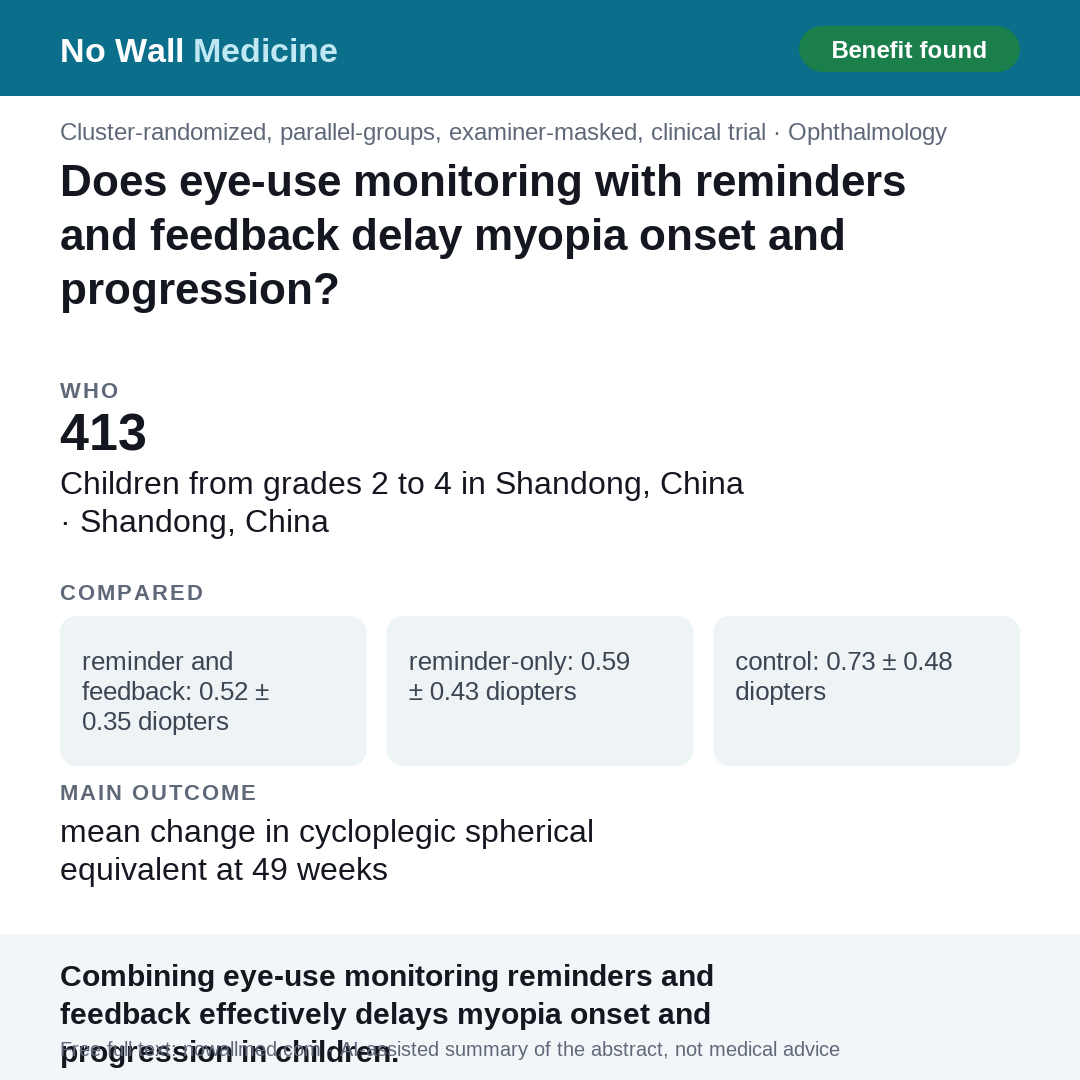
Behavioral Intervention with Eye-Use Monitoring to Delay Myopia Onset and Progression in Children: A Cluster Randomized Trial
Cluster-randomized, parallel-groups, examiner-masked, clinical trialBenefit found
Does eye-use monitoring with reminders and feedback delay myopia onset and progression?
Who
413
Children from grades 2 to 4 in Shandong, China · Shandong, China
Compared
reminder and feedback: 0.52 ± 0.35 diopters
reminder-only: 0.59 ± 0.43 diopters
control: 0.73 ± 0.48 diopters
Main outcome
mean change in cycloplegic spherical equivalent at 49 weeks
Bottom line: Combining eye-use monitoring reminders and feedback effectively delays myopia onset and progression in children.
Limitation: differences diminished by the 98-week follow-up
Ophthalmology · 2025-01-09Download image
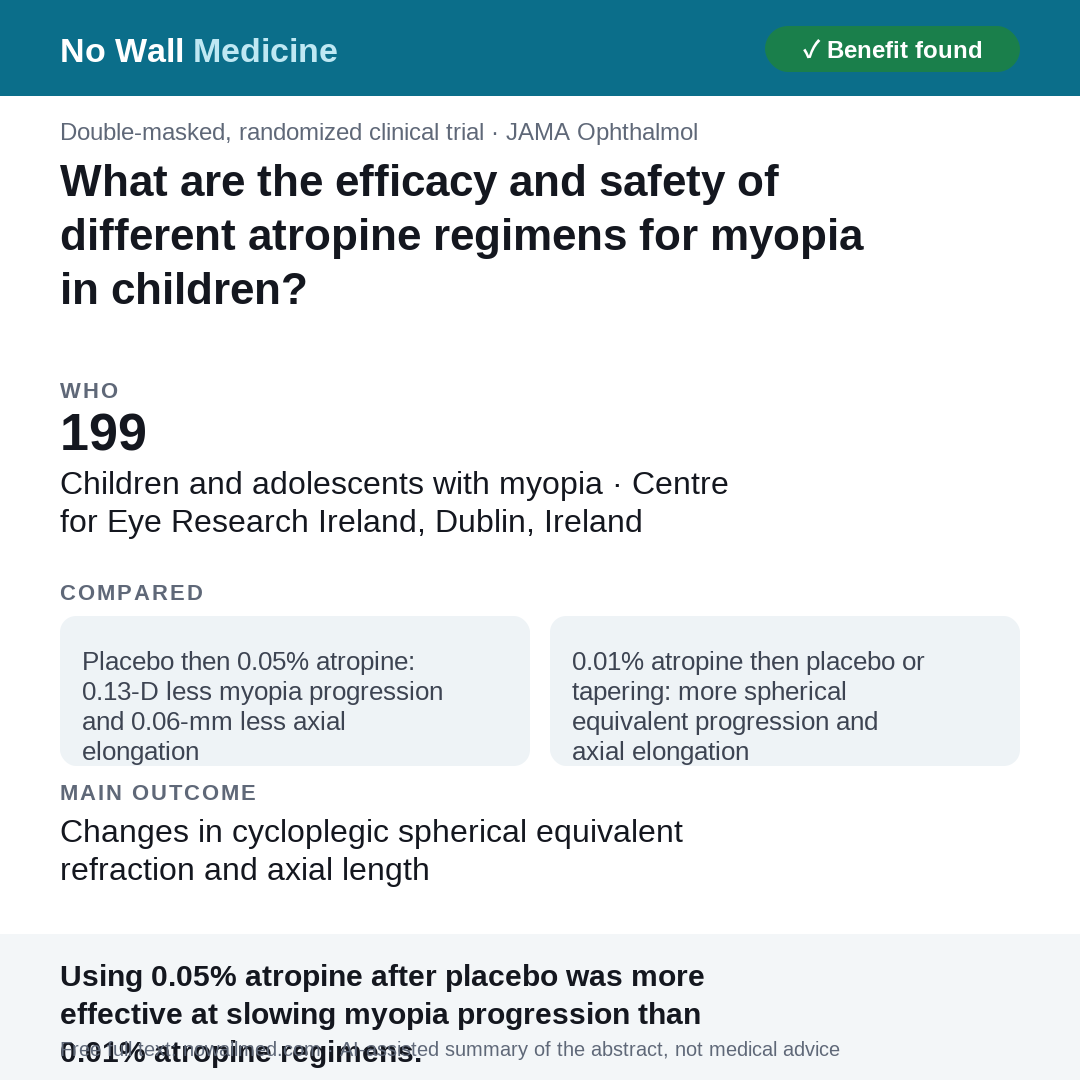
Efficacy and Safety of Different Atropine Regimens for the Treatment of Myopia in Children: Three-Year Results of the MOSAIC Randomized Clinical Trial
Double-masked, randomized clinical trialBenefit found
What are the efficacy and safety of different atropine regimens for myopia in children?
Who
199
Children and adolescents with myopia · Centre for Eye Research Ireland, Dublin, Ireland
Compared
Placebo then 0.05% atropine: 0.13-D less myopia progression and 0.06-mm less axial elongation
0.01% atropine then placebo or tapering: more spherical equivalent progression and axial elongation
Main outcome
Changes in cycloplegic spherical equivalent refraction and axial length
Result: adjusted difference, -0.13 diopters (95% CI, -0.22 to -0.04 D)
Bottom line: Using 0.05% atropine after placebo was more effective at slowing myopia progression than 0.01% atropine regimens.
JAMA Ophthalmol · 2025-01-09Download image
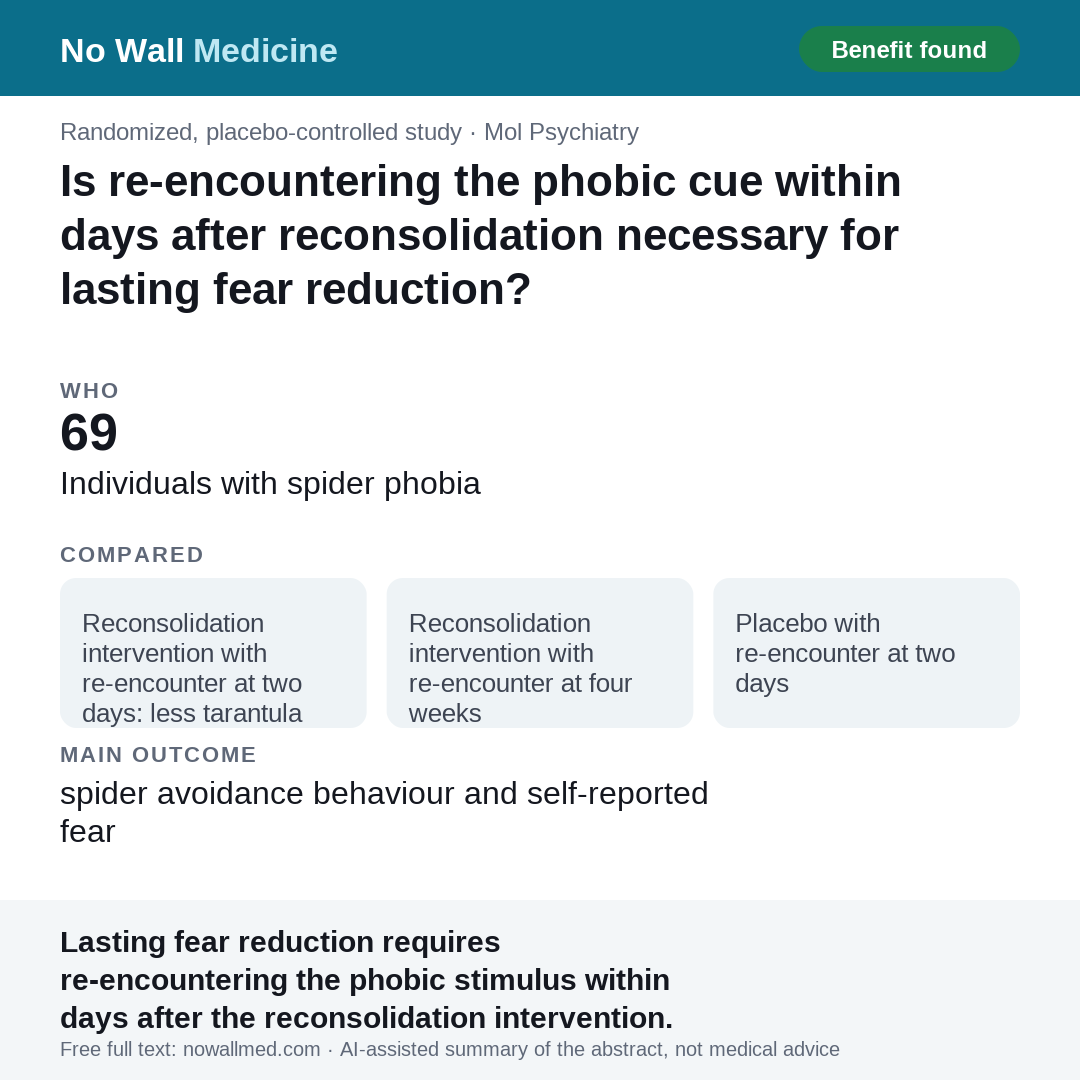
Re-encountering the phobic cue within days after a reconsolidation intervention is crucial to observe a lasting fear reduction in spider phobia
Randomized, placebo-controlled studyBenefit found
Is re-encountering the phobic cue within days after reconsolidation necessary for lasting fear reduction?
Who
69
Individuals with spider phobia
Compared
Reconsolidation intervention with re-encounter at two days: less tarantula avoidance behaviour and self-reported fear over the course of one year
Reconsolidation intervention with re-encounter at four weeks
Placebo with re-encounter at two days
Main outcome
spider avoidance behaviour and self-reported fear
Bottom line: Lasting fear reduction requires re-encountering the phobic stimulus within days after the reconsolidation intervention.
Mol Psychiatry · 2025-01-09Download image
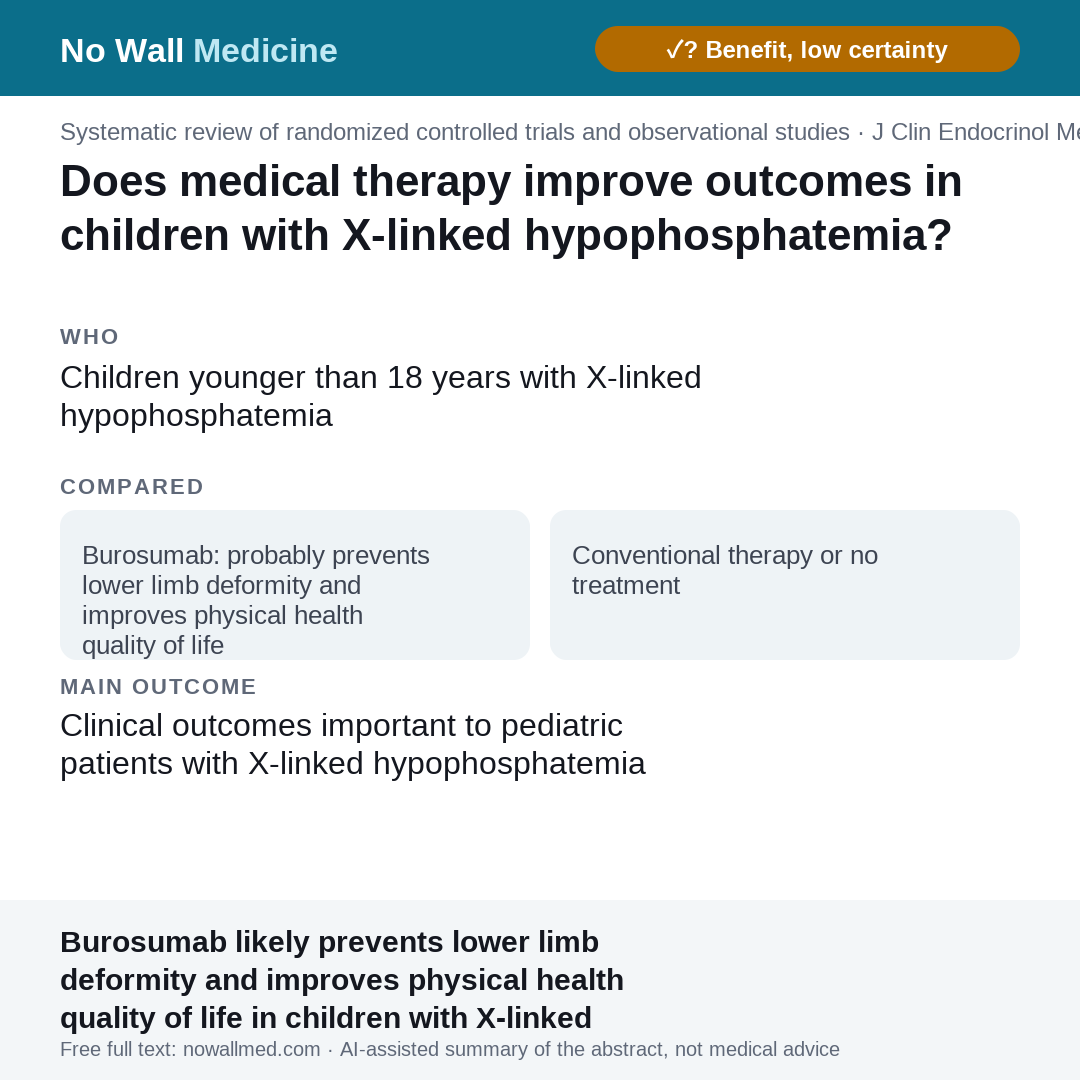
Systematic Review: Efficacy of Medical Therapy on Outcomes Important to Pediatric Patients With X-Linked Hypophosphatemia
Systematic review of randomized controlled trials and observational studiesBenefit found
Does medical therapy improve outcomes in children with X-linked hypophosphatemia?
Who
Children younger than 18 years with X-linked hypophosphatemia
Compared
Burosumab: probably prevents lower limb deformity and improves physical health quality of life
Conventional therapy or no treatment
Main outcome
Clinical outcomes important to pediatric patients with X-linked hypophosphatemia
Bottom line: Burosumab likely prevents lower limb deformity and improves physical health quality of life in children with X-linked hypophosphatemia.
Limitation: High risk of bias in included studies and low certainty of evidence.
J Clin Endocrinol Metab · 2025-01-09Download image
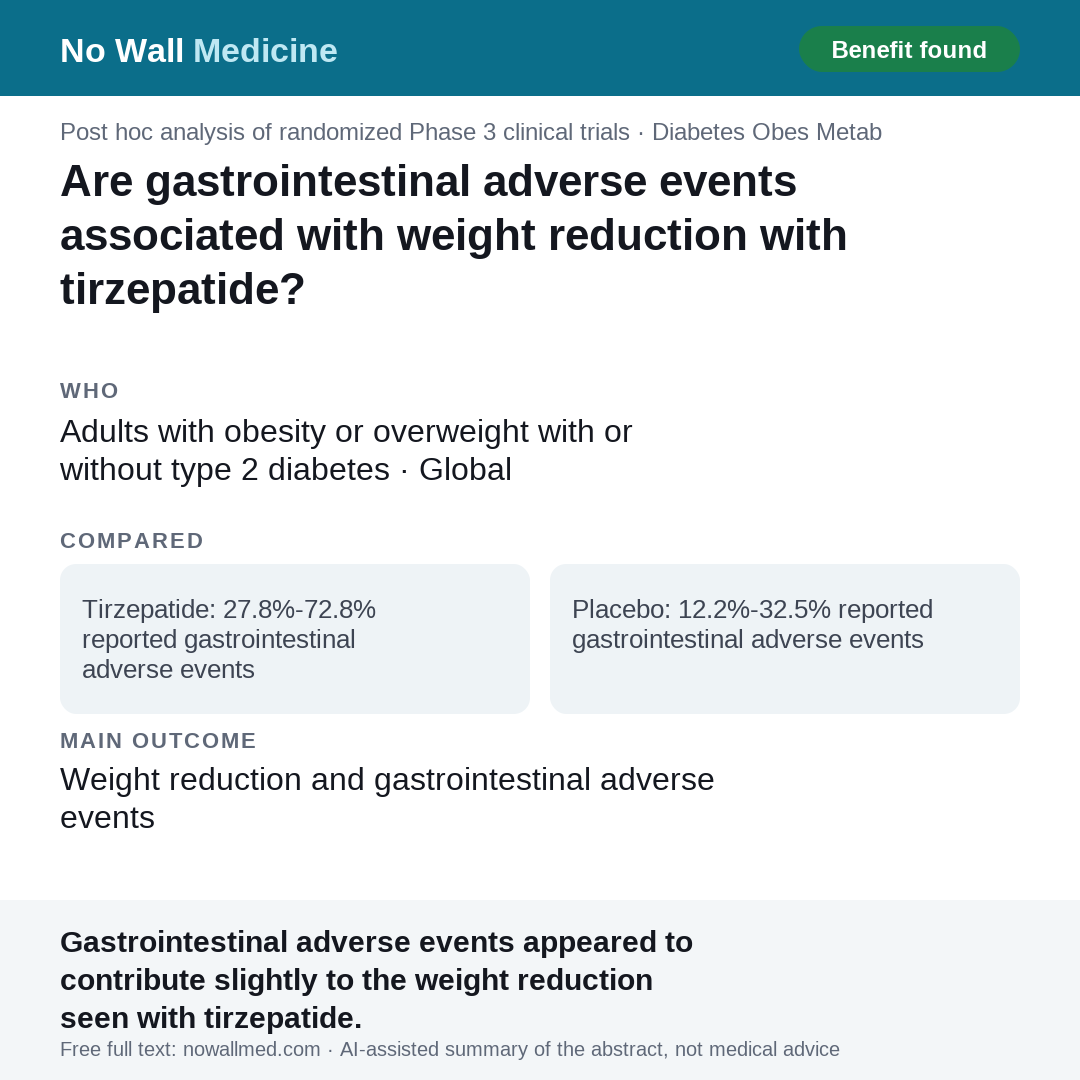
Gastrointestinal tolerability and weight reduction associated with tirzepatide in adults with obesity or overweight with and without type 2 diabetes in the SURMOUNT-1 to -4 trials
Post hoc analysis of randomized Phase 3 clinical trialsBenefit found
Are gastrointestinal adverse events associated with weight reduction with tirzepatide?
Who
Adults with obesity or overweight with or without type 2 diabetes · Global
Compared
Tirzepatide: 27.8%-72.8% reported gastrointestinal adverse events
Placebo: 12.2%-32.5% reported gastrointestinal adverse events
Main outcome
Weight reduction and gastrointestinal adverse events
Bottom line: Gastrointestinal adverse events appeared to contribute slightly to the weight reduction seen with tirzepatide.
Diabetes Obes Metab · 2025-01-09Download image
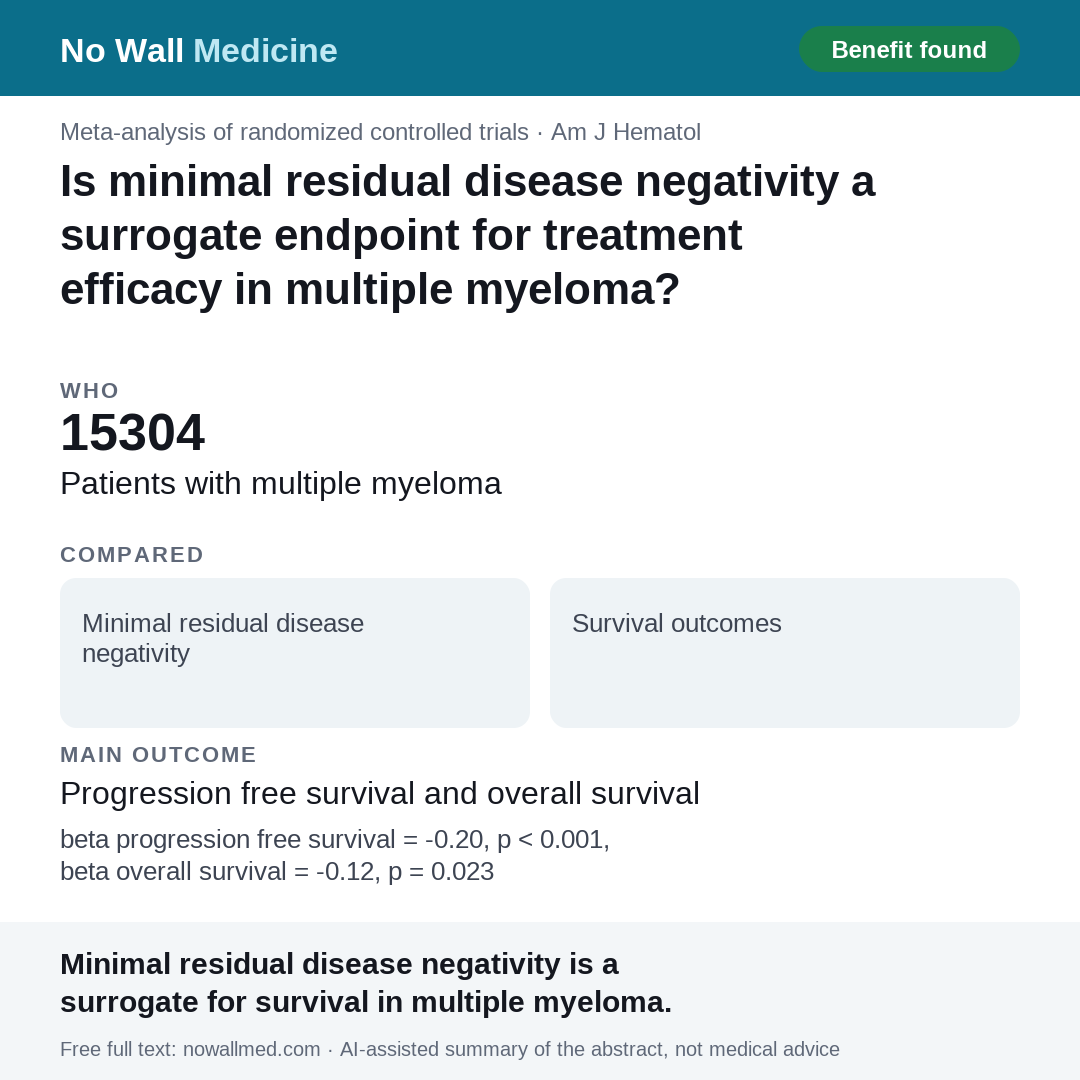
Evaluating Minimal Residual Disease Negativity as a Surrogate Endpoint for Treatment Efficacy in Multiple Myeloma: A Meta-Analysis of Randomized Controlled Trials
Meta-analysis of randomized controlled trialsBenefit found
Is minimal residual disease negativity a surrogate endpoint for treatment efficacy in multiple myeloma?
Who
15304
Patients with multiple myeloma
Compared
Minimal residual disease negativity
Survival outcomes
Main outcome
Progression free survival and overall survival
Result: beta progression free survival = -0.20, p < 0.001, beta overall survival = -0.12, p = 0.023
Bottom line: Minimal residual disease negativity is a surrogate for survival in multiple myeloma.
Am J Hematol · 2025-01-09Download image
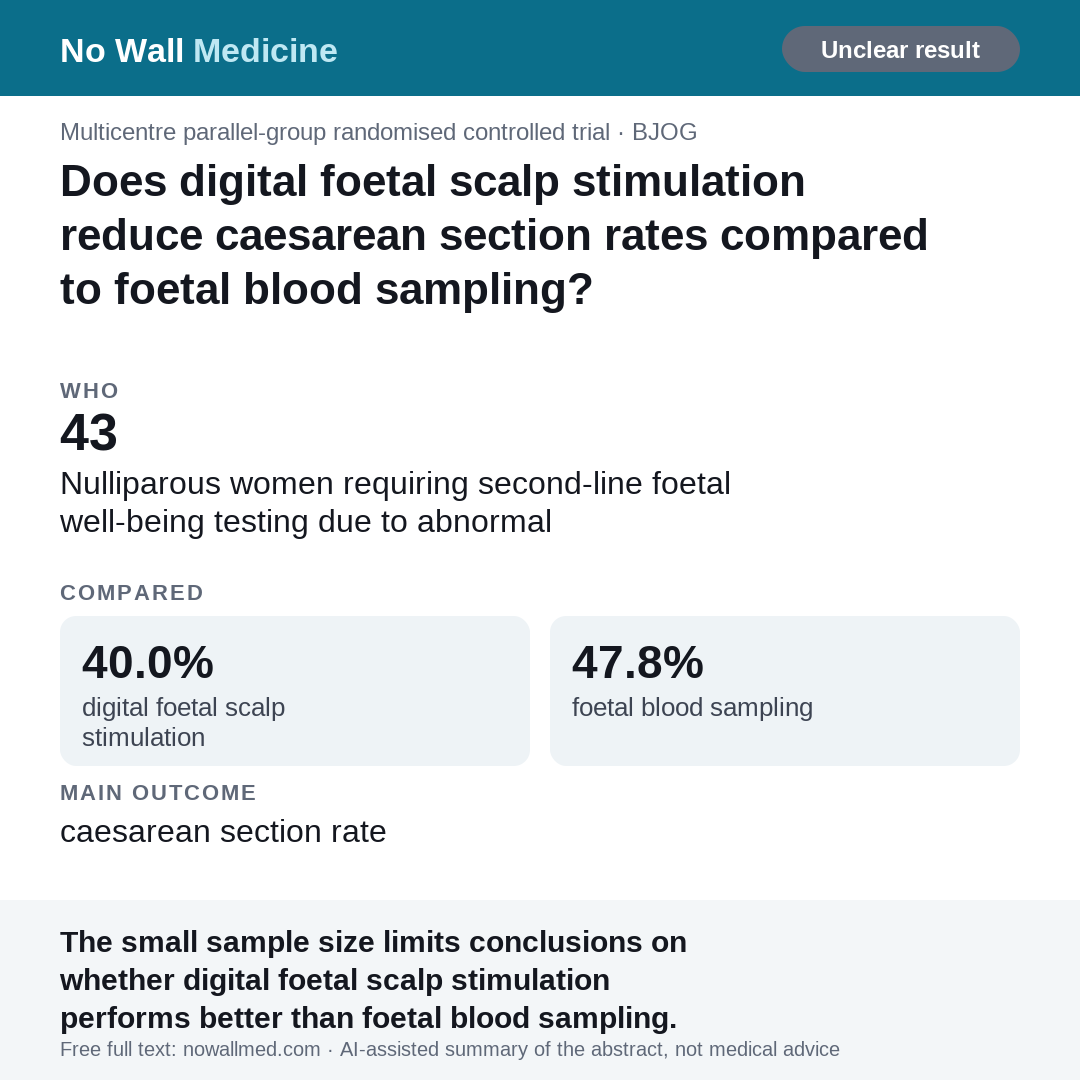
Digital Foetal Scalp Stimulation Versus Foetal Blood Sampling to Assess Foetal Well-Being in Labour: A Multicentre Randomised Controlled Trial
Multicentre parallel-group randomised controlled trialUnclear result
Does digital foetal scalp stimulation reduce caesarean section rates compared to foetal blood sampling?
Who
43
Nulliparous women requiring second-line foetal well-being testing due to abnormal cardiotocography · Maternity centres in Ireland
Compared
40.0%digital foetal scalp stimulation (8/20)
47.8%foetal blood sampling (11/23)
Main outcome
caesarean section rate
Result: OR 0.73, 95% CI 0.22-2.44
Bottom line: The small sample size limits conclusions on whether digital foetal scalp stimulation performs better than foetal blood sampling.
Limitation: The small sample size limits the ability to conclude whether digital foetal scalp stimulation performs better.
BJOG · 2025-01-09Download image
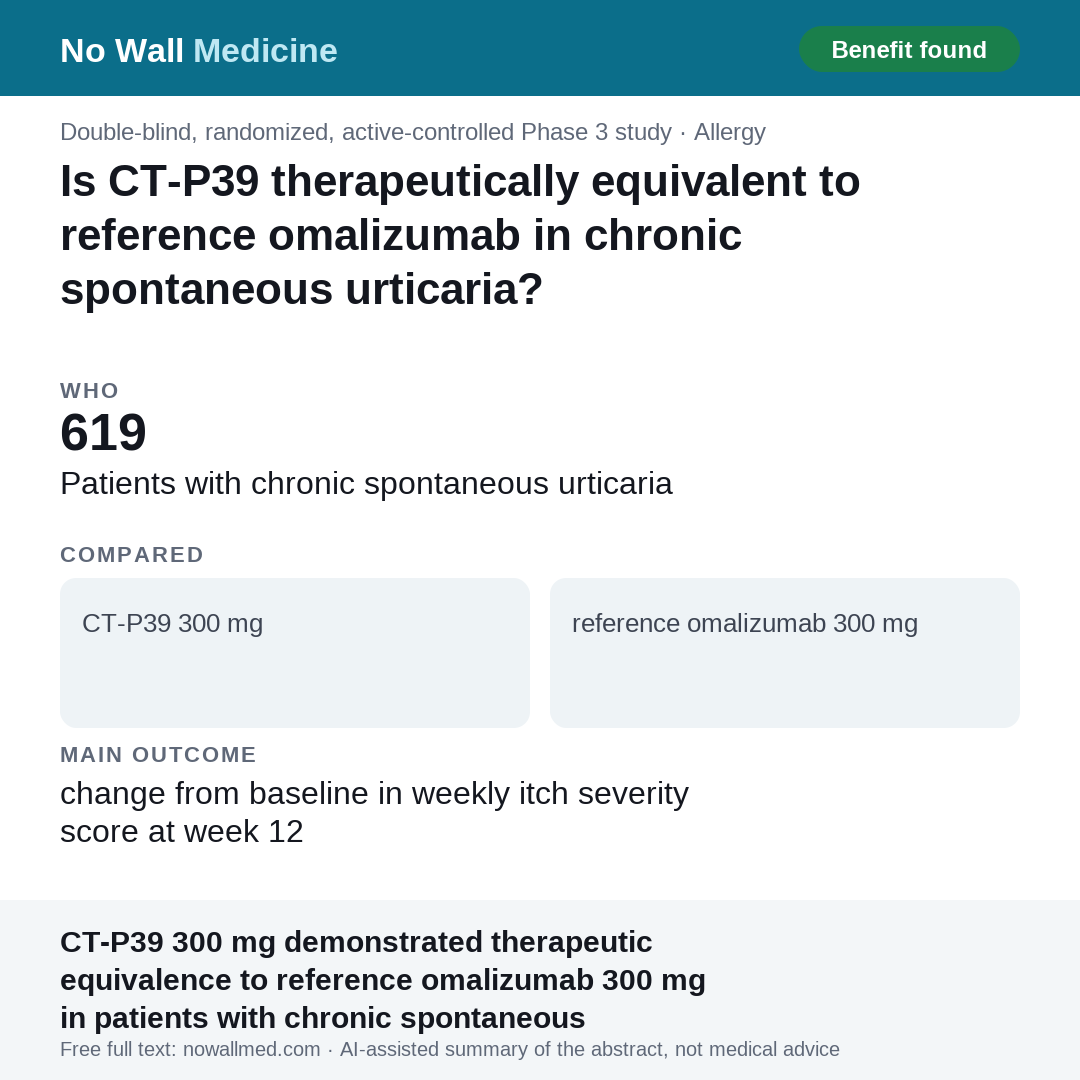
CT-P39 Compared With Reference Omalizumab in Chronic Spontaneous Urticaria: Results From a Double-Blind, Randomized, Active-Controlled, Phase 3 Study
Double-blind, randomized, active-controlled Phase 3 studyBenefit found
Is CT-P39 therapeutically equivalent to reference omalizumab in chronic spontaneous urticaria?
Who
619
Patients with chronic spontaneous urticaria
Compared
CT-P39 300 mg
reference omalizumab 300 mg
Main outcome
change from baseline in weekly itch severity score at week 12
Result: treatment difference 0.77, 95% CI -0.37 to 1.90
Bottom line: CT-P39 300 mg demonstrated therapeutic equivalence to reference omalizumab 300 mg in patients with chronic spontaneous urticaria.
Allergy · 2025-01-09Download image