Visual abstracts
New randomized trials and meta-analyses from leading journals at a glance: who was studied, what was compared, and what was found. Every paper is free to read in full.
All specialtiesCardiology 4763Oncology 4042Gastroenterology & Hepatology 1902Infectious Disease 3756Neurology 1872Psychiatry & Mental Health 2214Pulmonology 2042Critical Care 1319Endocrinology & Diabetes 2544Pediatrics 2889Surgery 2479Orthopedics & Sports Medicine 917Neurosurgery 525Cardiothoracic & Vascular Surgery 656Plastic & Reconstructive Surgery 574Nephrology 1107Rheumatology 810Hematology 1090Dermatology 611Ophthalmology 532Obstetrics & Gynecology 1645Public & Global Health 1037Radiology & Imaging 617Anesthesiology 957Urology 745ENT (Otolaryngology) 494Emergency Medicine 481Allergy & Immunology 309Geriatrics 972Family Medicine & Primary Care 533Medical Genetics & Genomics 659Pathology & Laboratory Medicine 156Physical Medicine & Rehabilitation 734Palliative Care 421Nutrition 1560Digital Health & AI 2133General Medicine 318
Effects of home-based virtual reality upper extremity rehabilitation in persons with chronic stroke: a randomized controlled trial
Single-blind, randomized, controlled trialBenefit found
Does home-based virtual reality upper extremity rehabilitation improve outcomes in chronic stroke?
Who
14
Outpatients with chronic stroke more than 6 months after onset · Two centers
Compared
Virtual reality intervention group: significant improvements in FMA-UE (p = 0.027), MAL (p = 0.014), JTT (p = 0.002), and BBT (p = 0.014)
Conventional home rehabilitation control group
Main outcome
Upper extremity motor function and hand function
Bottom line: Home-based virtual reality combined with occupational therapy leads to greater improvements in upper extremity function and paretic hand use.
J Neuroeng Rehabil · 2025-02-03Download image

Annual versus less frequent mammographic surveillance in people with breast cancer aged 50 years and older in the UK (Mammo-50): a multicentre, randomised, phase 3, non-inferiority trial
Randomised, phase 3, non-inferiority trialBenefit found
Is less frequent mammography non-inferior to annual mammography for breast cancer-specific survival?
Who
5235
Women aged 50 years or older, recurrence free 3 years post surgery · 114 National Health Service hospitals in the UK
Compared
98·1%Annual mammography (95% CI 97·5-98·6)
98·3%Less frequent mammography (97·8-98·8)
Main outcome
5-year breast cancer-specific survival
Result: hazard ratio 0·92, 95% CI 0·64-1·32
Bottom line: Less frequent mammography is non-inferior to annual mammography for breast cancer-specific survival in women aged 50 years or older.
Funded by: National Institute for Health Research Health Technology Assessment programme
Lancet · 2025-02-02Download image

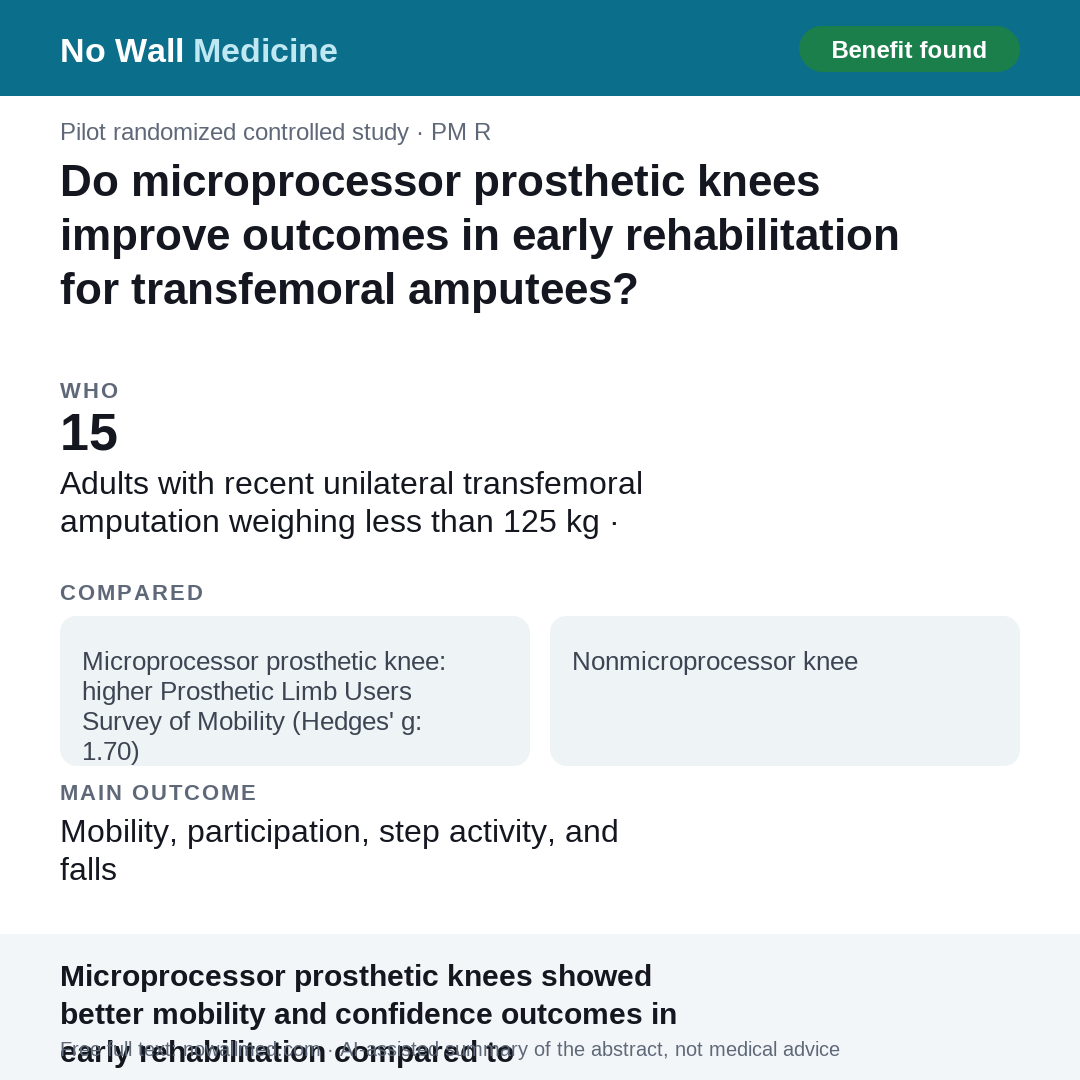
The effects of microprocessor prosthetic knee use in early rehabilitation: A pilot randomized controlled trial
Pilot randomized controlled studyEarly signal
Do microprocessor prosthetic knees improve outcomes in early rehabilitation for transfemoral amputees?
Who
15
Adults with recent unilateral transfemoral amputation weighing less than 125 kg · Institutional laboratory
Compared
Microprocessor prosthetic knee: higher Prosthetic Limb Users Survey of Mobility (Hedges' g: 1.70)
Nonmicroprocessor knee
Main outcome
Mobility, participation, step activity, and falls
Bottom line: Microprocessor prosthetic knees showed better mobility and confidence outcomes in early rehabilitation compared to nonmicroprocessor knees.
Limitation: Small sample size and heterogeneity within groups
PM R · 2025-02-02Download image
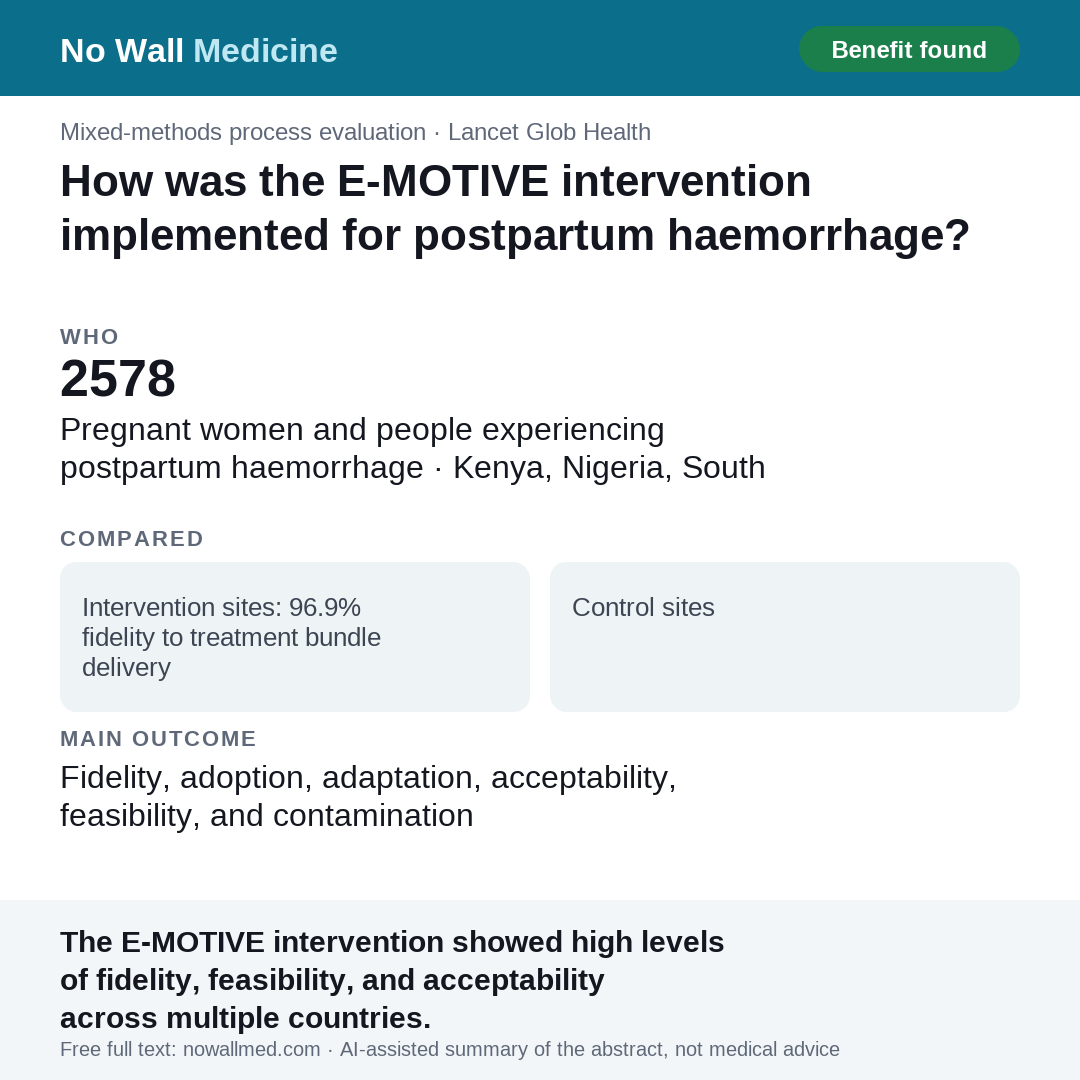
Early detection and a treatment bundle strategy for postpartum haemorrhage: a mixed-methods process evaluation
Mixed-methods process evaluationBenefit found
How was the E-MOTIVE intervention implemented for postpartum haemorrhage?
Who
2578
Pregnant women and people experiencing postpartum haemorrhage · Kenya, Nigeria, South Africa, and Tanzania
Compared
Intervention sites: 96.9% fidelity to treatment bundle delivery
Control sites
Main outcome
Fidelity, adoption, adaptation, acceptability, feasibility, and contamination
Bottom line: The E-MOTIVE intervention showed high levels of fidelity, feasibility, and acceptability across multiple countries.
Limitation: Barriers to pregnant women's and people's acceptability were reported by health workers.
Funded by: Bill and Melinda Gates Foundation and WHO co-sponsored programme
Lancet Glob Health · 2025-02-01Download image
Durability of immunogenicity at 5 years after a single dose of human papillomavirus vaccine compared with two doses in Tanzanian girls aged 9-14 years: results of the long-term extension of the DoRIS randomised trial
Open-label, randomised controlled trialMixed results
Is one dose of HPV vaccine as durable as two doses after 5 years?
Who
930
Tanzanian schoolgirls aged 9-14 years · Tanzania
Compared
one dose: more than 99% (HPV16 seropositivity)
two doses: non-inferior (HPV16 seropositivity)
Main outcome
seropositivity specific to human papillomavirus 16 or 18
Bottom line: One dose provides stable HPV16 immune responses, but non-inferiority for HPV18 seropositivity was not met.
Limitation: ongoing surveillance for potential waning immunity after a single dose is needed
Funded by: UK government, Wellcome Trust, and Bill & Melinda Gates Foundation
Lancet Glob Health · 2025-02-01Download image

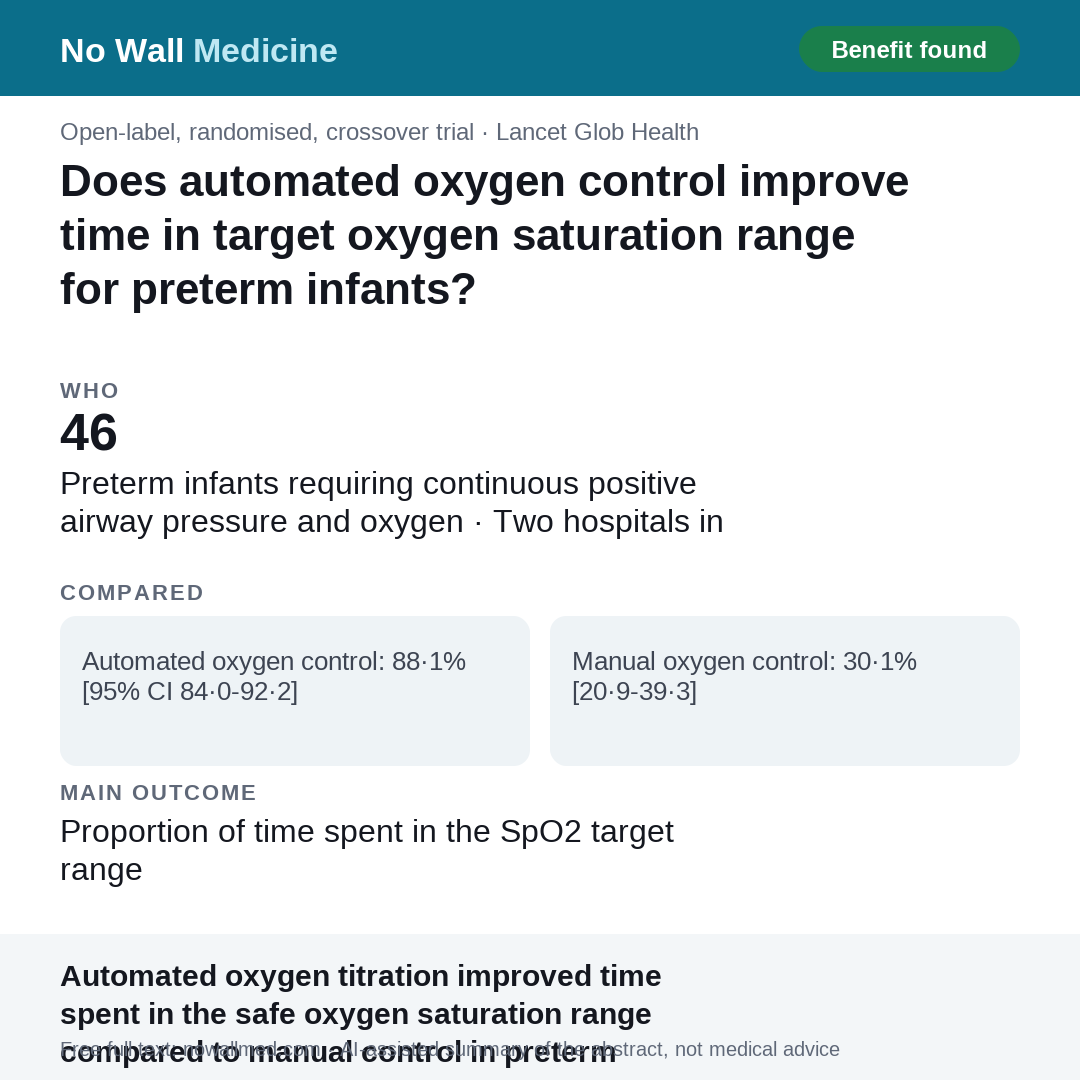
Automated oxygen control for preterm infants receiving continuous positive airway pressure in southwest Nigeria: an open-label, randomised, crossover trial
Open-label, randomised, crossover trialBenefit found
Does automated oxygen control improve time in target oxygen saturation range for preterm infants?
Who
46
Preterm infants requiring continuous positive airway pressure and oxygen · Two hospitals in southwest Nigeria
Compared
Automated oxygen control: 88·1% [95% CI 84·0-92·2]
Manual oxygen control: 30·1% [20·9-39·3]
Main outcome
Proportion of time spent in the SpO2 target range
Result: adjusted mean difference 58·0% [95% CI 48·0-67·9]
Bottom line: Automated oxygen titration improved time spent in the safe oxygen saturation range compared to manual control in preterm infants.
Funded by: National Health and Medical Research Council Australia and University of Tasmania
Lancet Glob Health · 2025-02-01Download image
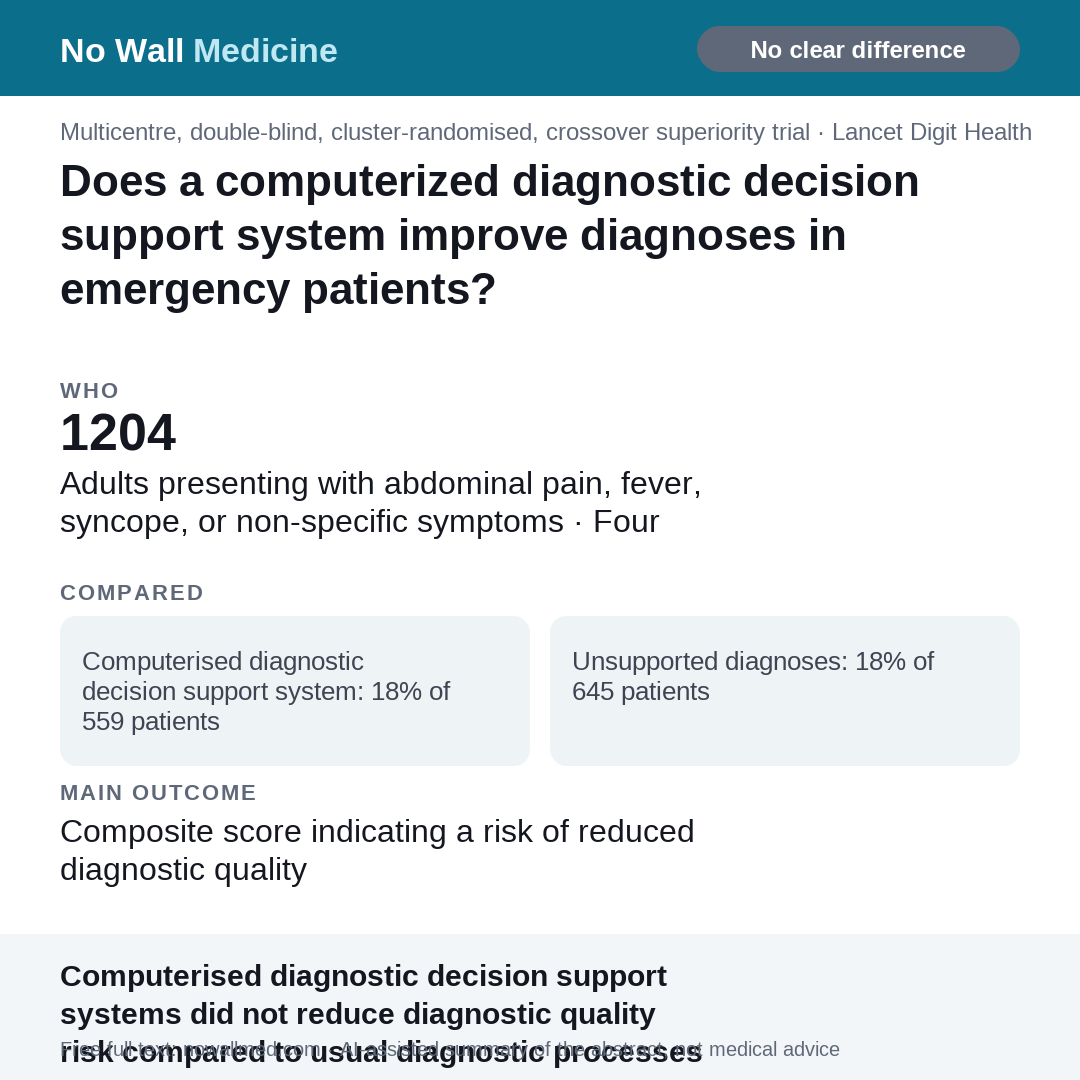
Diagnoses supported by a computerised diagnostic decision support system versus conventional diagnoses in emergency patients (DDX-BRO): a multicentre, multiple-period, double-blind, cluster-randomised, crossover superiority trial
Multicentre, double-blind, cluster-randomised, crossover superiority trialNo clear difference
Does a computerized diagnostic decision support system improve diagnoses in emergency patients?
Who
1204
Adults presenting with abdominal pain, fever, syncope, or non-specific symptoms · Four emergency departments in Switzerland
Compared
Computerised diagnostic decision support system: 18% of 559 patients
Unsupported diagnoses: 18% of 645 patients
Main outcome
Composite score indicating a risk of reduced diagnostic quality
Result: adjusted odds ratio 0·96 (95% CI 0·71-1·3)
Bottom line: Computerised diagnostic decision support systems did not reduce diagnostic quality risk compared to usual diagnostic processes in emergency departments.
Funded by: Swiss National Science Foundation and University Hospital Bern
Lancet Digit Health · 2025-02-01Download image
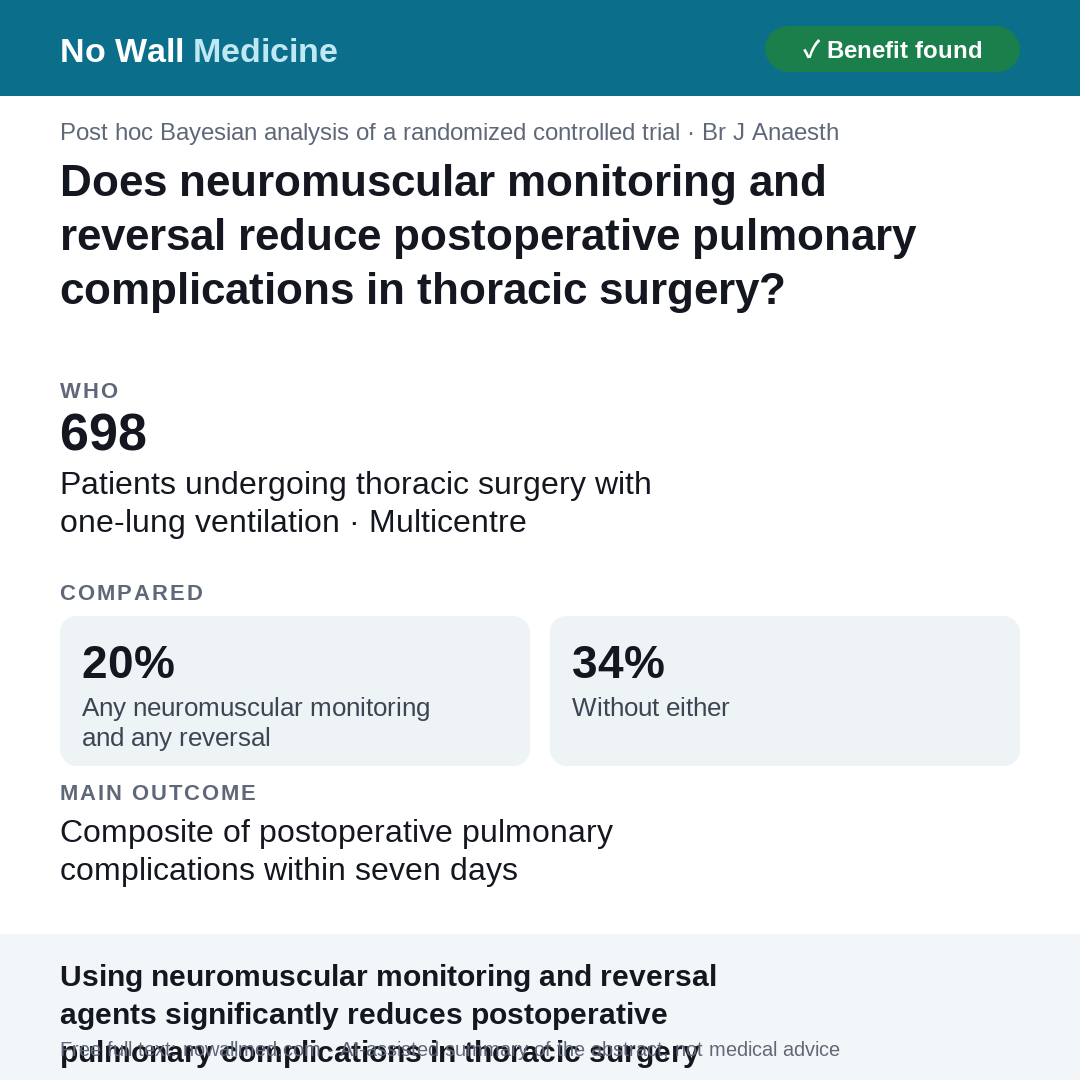
Impact of neuromuscular block monitoring and reversal on postoperative pulmonary complications in thoracic surgery: a Bayesian analysis of the iPROVE-OLV trial
Post hoc Bayesian analysis of a randomized controlled trialBenefit found
Does neuromuscular monitoring and reversal reduce postoperative pulmonary complications in thoracic surgery?
Who
698
Patients undergoing thoracic surgery with one-lung ventilation · Multicentre
Compared
20%Any neuromuscular monitoring and any reversal
34%Without either
Main outcome
Composite of postoperative pulmonary complications within seven days
Result: odds ratio 0.67 (95% credibility interval 0.39 to 1.11) to 0.84 (95% credibility interval 0.48 to 1.37)
Bottom line: Using neuromuscular monitoring and reversal agents significantly reduces postoperative pulmonary complications in thoracic surgery patients.
Br J Anaesth · 2025-02-01Download image
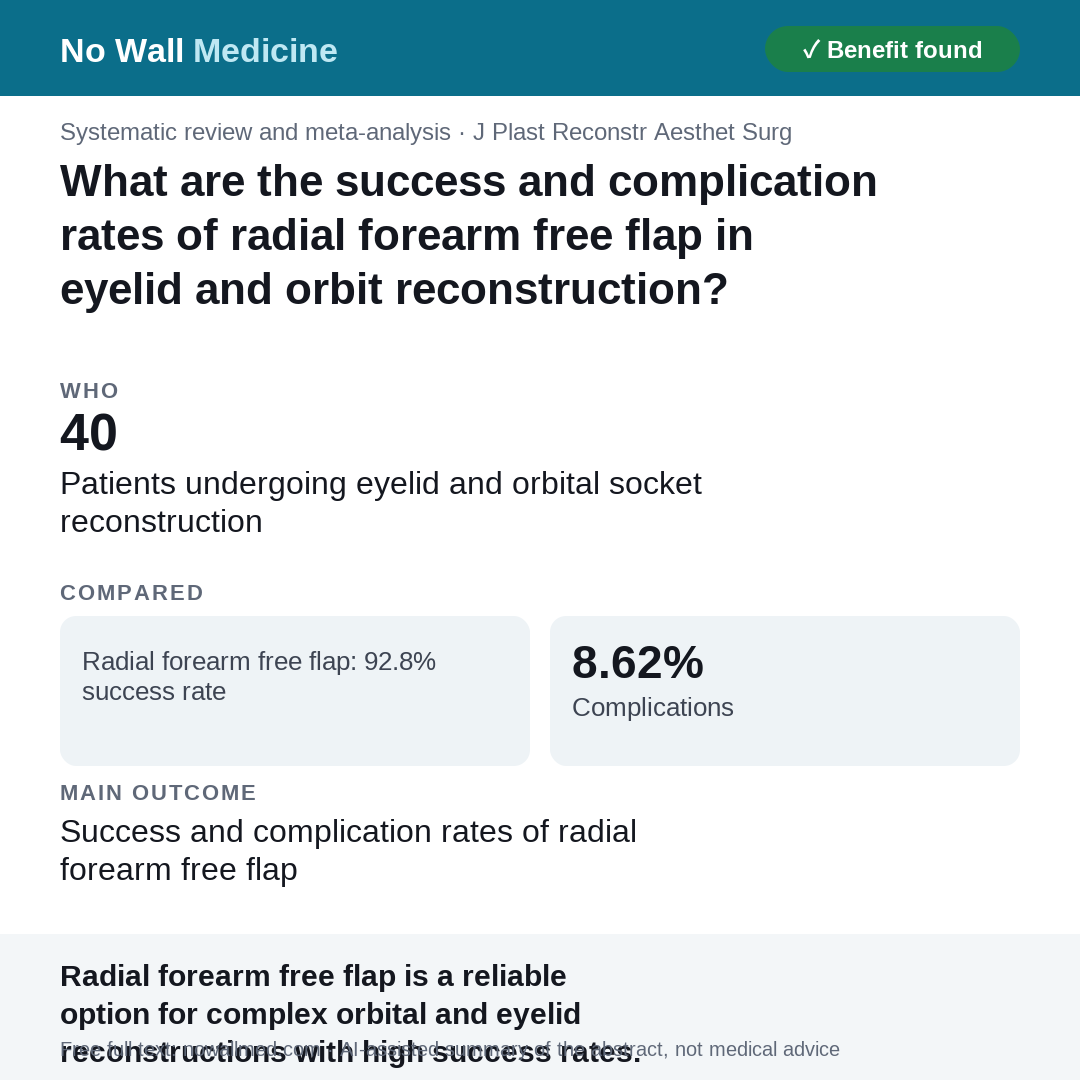
Use of the radial forearm free flap in eyelid and orbit defect reconstruction: A systematic review and meta-analysis
Systematic review and meta-analysisBenefit found
What are the success and complication rates of radial forearm free flap in eyelid and orbit reconstruction?
Who
40
Patients undergoing eyelid and orbital socket reconstruction
Compared
Radial forearm free flap: 92.8% success rate
8.62%Complications
Main outcome
Success and complication rates of radial forearm free flap
Result: 92.8% (95% CI, 83.25 to 100)
Bottom line: Radial forearm free flap is a reliable option for complex orbital and eyelid reconstructions with high success rates.
J Plast Reconstr Aesthet Surg · 2025-02-01Download image
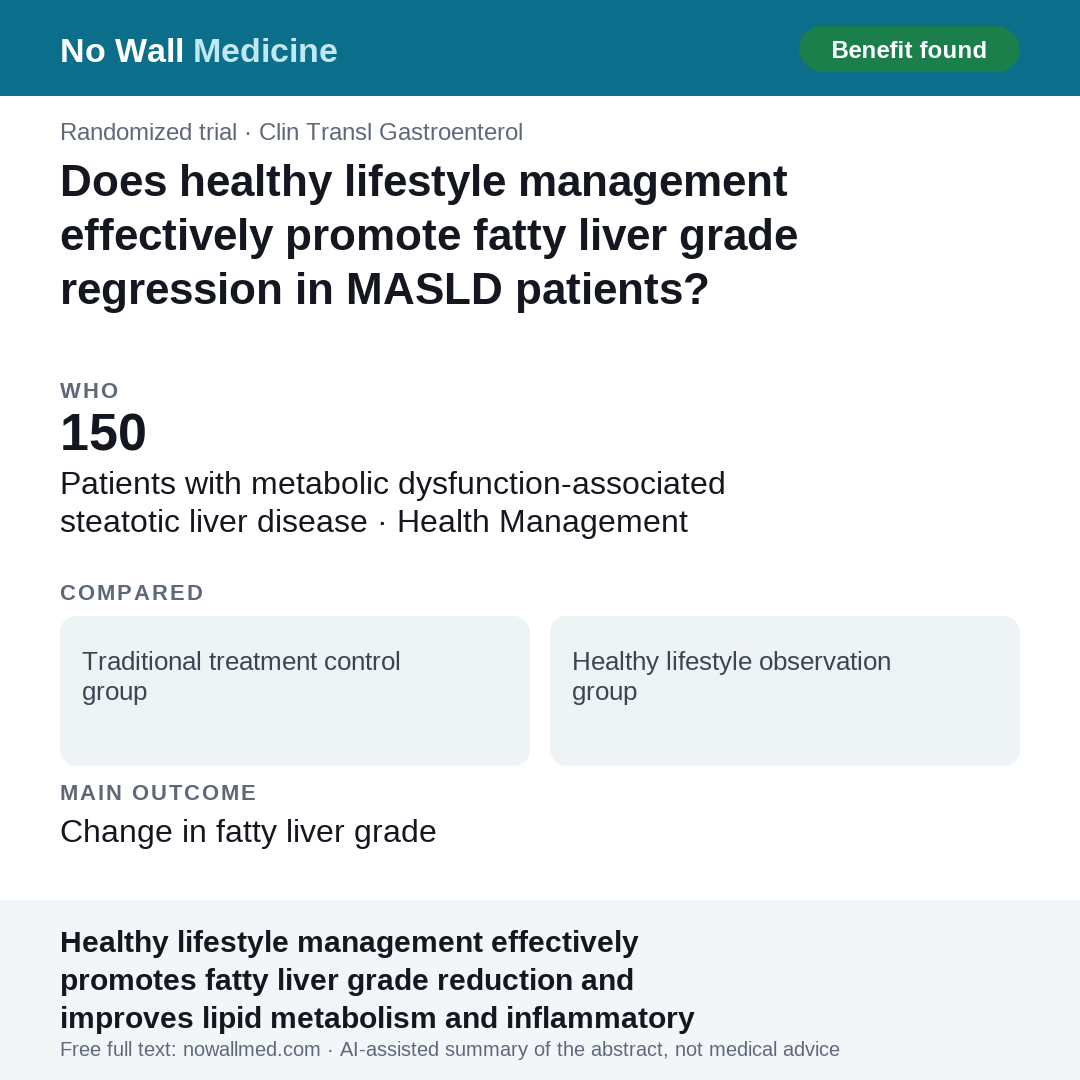
Healthy Lifestyle and Metabolic Dysfunction-Associated Steatotic Liver Disease: A Study of the Efficacy of Fatty Liver Regression
Randomized trialBenefit found
Does healthy lifestyle management effectively promote fatty liver grade regression in MASLD patients?
Who
150
Patients with metabolic dysfunction-associated steatotic liver disease · Health Management Center of one hospital
Compared
Traditional treatment control group
Healthy lifestyle observation group
Main outcome
Change in fatty liver grade
Bottom line: Healthy lifestyle management effectively promotes fatty liver grade reduction and improves lipid metabolism and inflammatory responses.
Clin Transl Gastroenterol · 2025-02-01Download image
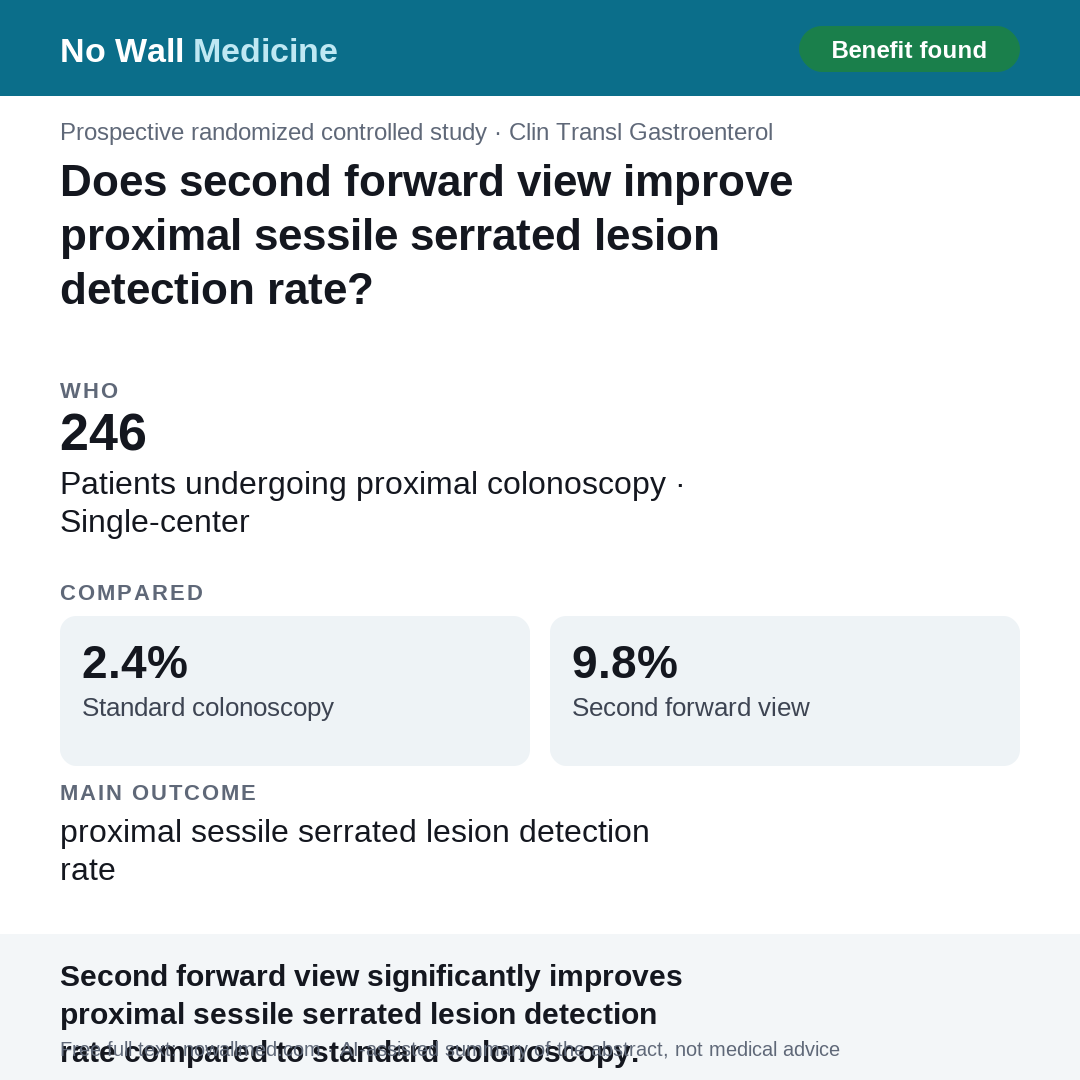
The Effect of the Second Forward View on the Detection Rate of Sessile Serrated Lesions in the Proximal Colon: A Single-Center Prospective Randomized Controlled Study
Prospective randomized controlled studyBenefit found
Does second forward view improve proximal sessile serrated lesion detection rate?
Who
246
Patients undergoing proximal colonoscopy · Single-center
Compared
2.4%Standard colonoscopy
9.8%Second forward view
Main outcome
proximal sessile serrated lesion detection rate
Result: odds ratio 7.70 (95% confidence interval 1.58 to 37.59)
Bottom line: Second forward view significantly improves proximal sessile serrated lesion detection rate compared to standard colonoscopy.
Clin Transl Gastroenterol · 2025-02-01Download image
Accuracy of Fecal Polymerase Chain Reaction Testing in Clarithromycin-Resistant Helicobacter Pylori: A Systematic Review and Meta-Analysis
Systematic review and meta-analysisBenefit found
How accurate is fecal polymerase chain reaction testing for clarithromycin-resistant Helicobacter pylori?
Who
866
Adults with Helicobacter pylori infection
Compared
Fecal polymerase chain reaction: sensitivity 0.97 (95% CI: 0.9-0.99)
Gastric biopsy reference: specificity 0.98 (95% CI: 0.81-1.00)
Main outcome
Diagnostic accuracy for clarithromycin-resistant Helicobacter pylori
Result: diagnostic odds ratio 1843.92 (95% CI 134.28-25,321.3)
Bottom line: Fecal polymerase chain reaction testing is highly sensitive and specific for detecting clarithromycin-resistant Helicobacter pylori strains.
Clin Transl Gastroenterol · 2025-02-01Download image

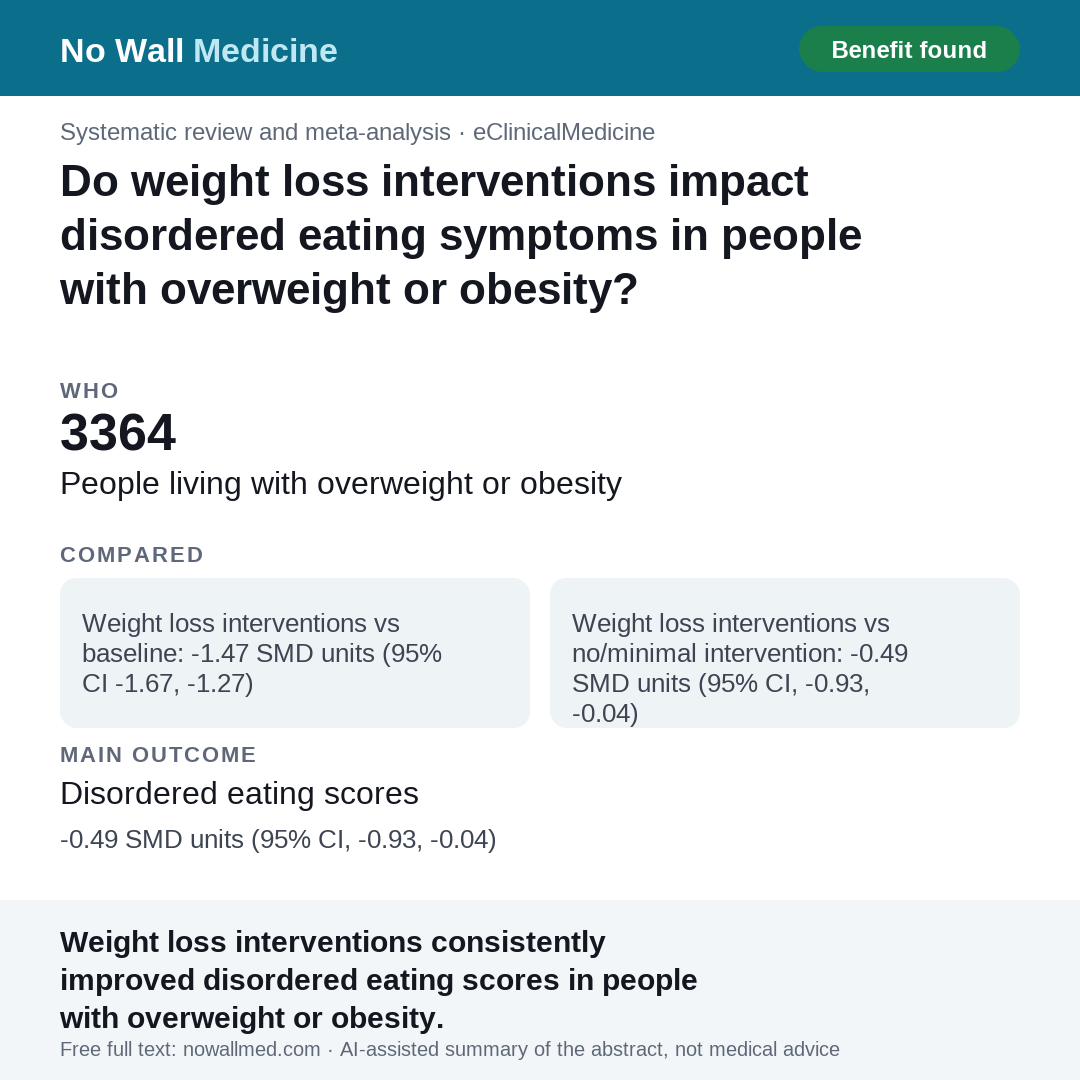
The impact of weight loss interventions on disordered eating symptoms in people with overweight and obesity: a systematic review & meta-analysis
Systematic review and meta-analysisBenefit found
Do weight loss interventions impact disordered eating symptoms in people with overweight or obesity?
Who
3364
People living with overweight or obesity
Compared
Weight loss interventions vs baseline: -1.47 SMD units (95% CI -1.67, -1.27)
Weight loss interventions vs no/minimal intervention: -0.49 SMD units (95% CI, -0.93, -0.04)
Main outcome
Disordered eating scores
Result: -0.49 SMD units (95% CI, -0.93, -0.04)
Bottom line: Weight loss interventions consistently improved disordered eating scores in people with overweight or obesity.
Limitation: High heterogeneity in effect size
Funded by: Novo Nordisk UK Research Foundation
eClinicalMedicine · 2025-01-31Download image
Efficacy and safety of immune checkpoint inhibitors in elderly patients with advanced non-small cell lung cancer: a systematic review and meta-analysis
Meta-analysis of 35 trialsBenefit found
Do immune checkpoint inhibitors improve survival
Who
9788
Elderly patients with advanced non-small cell lung cancer
Compared
Immune checkpoint inhibitors
Chemotherapy
Main outcome
Overall survival
Result: hazard ratio 0.78 (95% CI: 0.74-0.82)
Bottom line: Immune checkpoint inhibitors improve survival
Limitation: Findings require further validation
eClinicalMedicine · 2025-01-31Download image

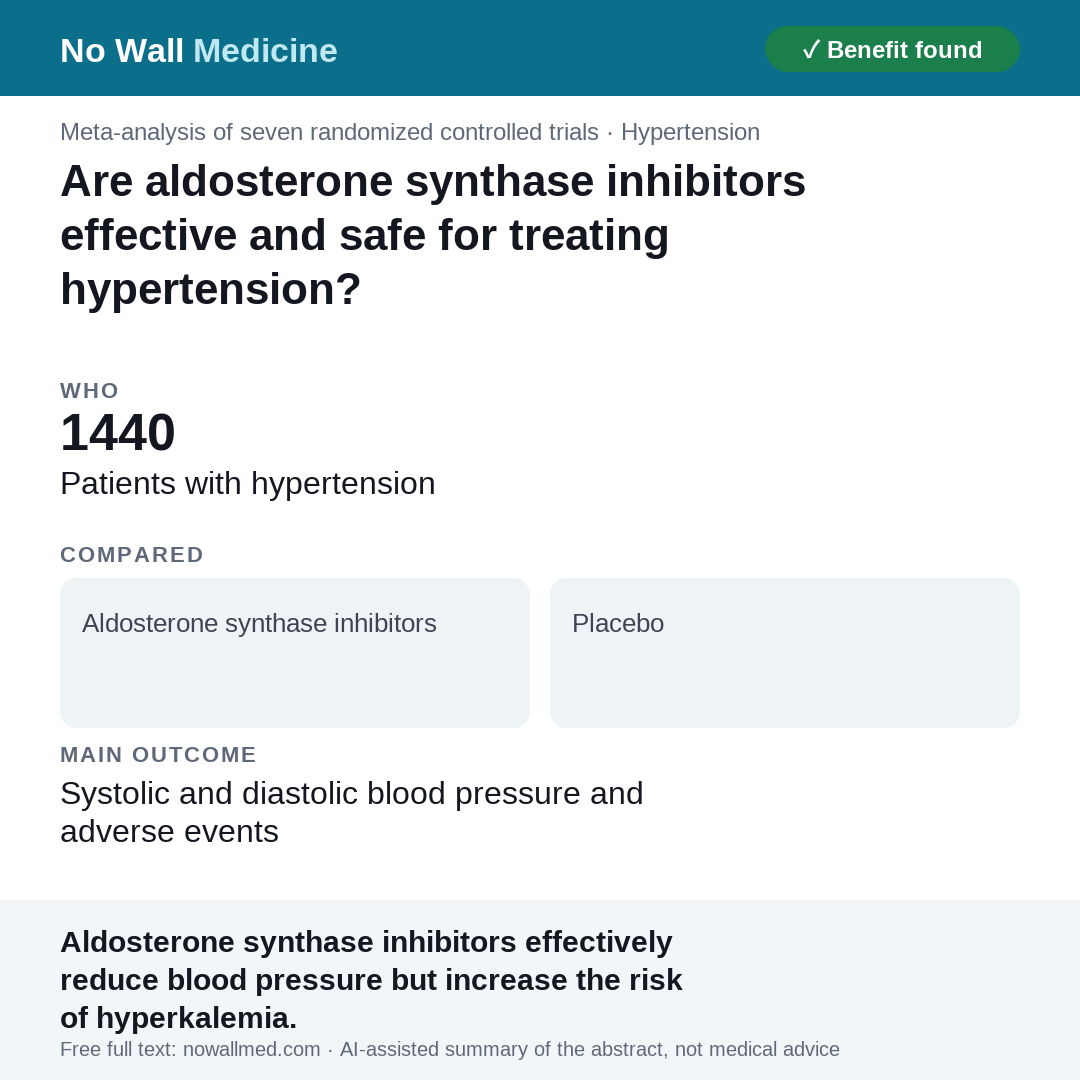
Efficacy and Safety of Aldosterone Synthase Inhibitors for Hypertension: A Meta-Analysis of Randomized Controlled Trials and Systematic Review
Meta-analysis of seven randomized controlled trialsBenefit found
Are aldosterone synthase inhibitors effective and safe for treating hypertension?
Who
1440
Patients with hypertension
Compared
Aldosterone synthase inhibitors
Placebo
Main outcome
Systolic and diastolic blood pressure and adverse events
Result: systolic blood pressure reduction -6.3 mm Hg (95% CI -8.8 to -3.8)
Bottom line: Aldosterone synthase inhibitors effectively reduce blood pressure but increase the risk of hyperkalemia.
Limitation: further research in larger studies is required
Hypertension · 2025-01-31Download image
Frailty and outcomes in adults undergoing systemic anticancer treatment: a systematic review and meta-analysis
Systematic review and meta-analysisHarm found
Does baseline frailty associate with outcomes in adults undergoing systemic anticancer treatment?
Who
Adults with solid-organ malignancy undergoing systemic anticancer treatment
Compared
Patients with frailty
Patients without frailty
Main outcome
Survival, toxicity, treatment tolerance, and hospitalization
Result: hazard ratio 1.68 (95% CI 1.41 to 2.00)
Bottom line: Frailty is associated with increased risk of mortality, toxicity, treatment intolerance, and hospitalization in cancer patients.
J Natl Cancer Inst · 2025-01-31Download image

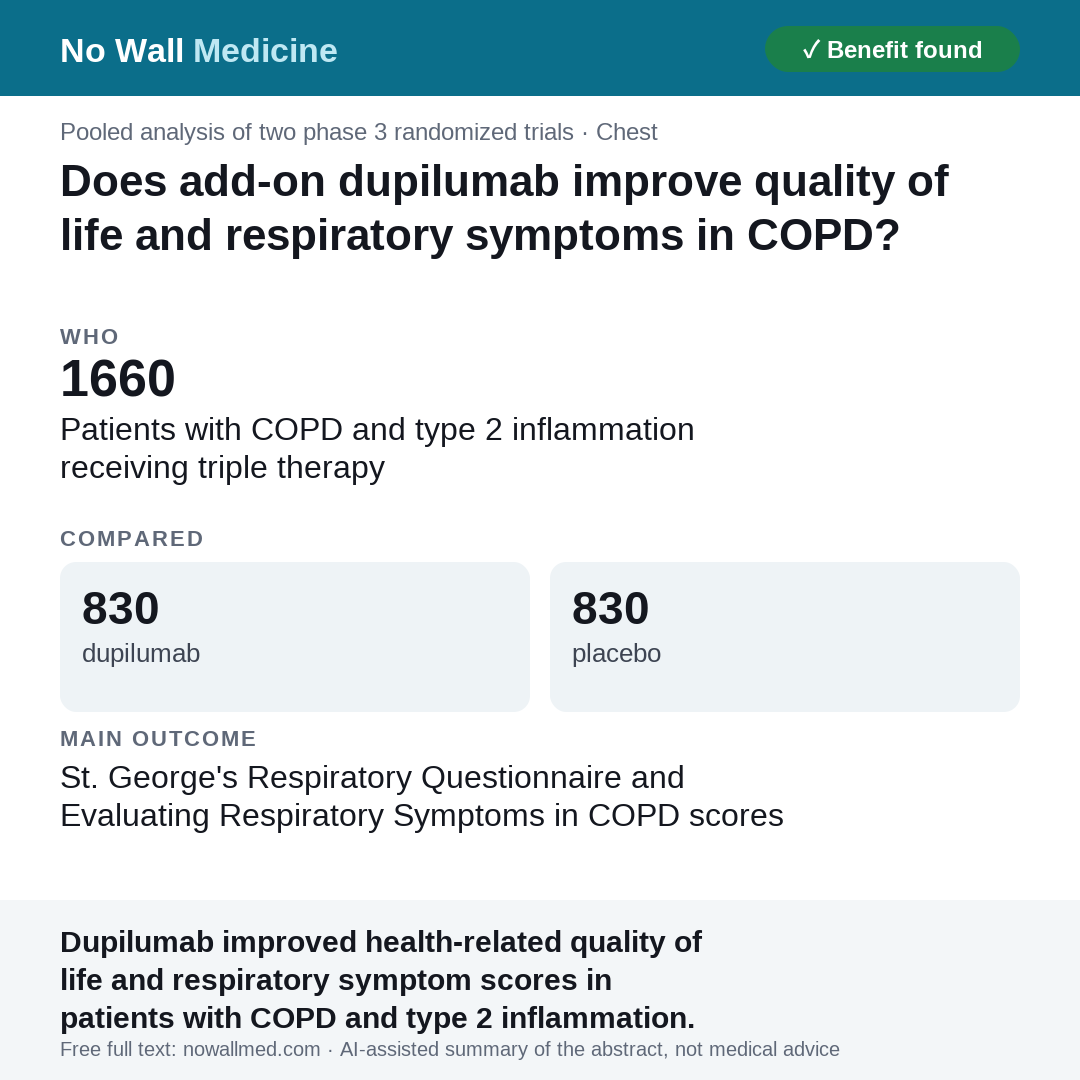
Effect of Dupilumab on Health-Related Quality of Life and Respiratory Symptoms in Patients With COPD and Type 2 Inflammation: BOREAS and NOTUS
Pooled analysis of two phase 3 randomized trialsBenefit found
Does add-on dupilumab improve quality of life and respiratory symptoms in COPD?
Who
1660
Patients with COPD and type 2 inflammation receiving triple therapy
Compared
830dupilumab
830placebo
Main outcome
St. George's Respiratory Questionnaire and Evaluating Respiratory Symptoms in COPD scores
Result: SGRQ difference -3.4 (95% CI -5.0 to -1.8); E-RS:COPD difference -0.9 (95% CI -1.4 to -0.4)
Bottom line: Dupilumab improved health-related quality of life and respiratory symptom scores in patients with COPD and type 2 inflammation.
Chest · 2025-01-31Download image
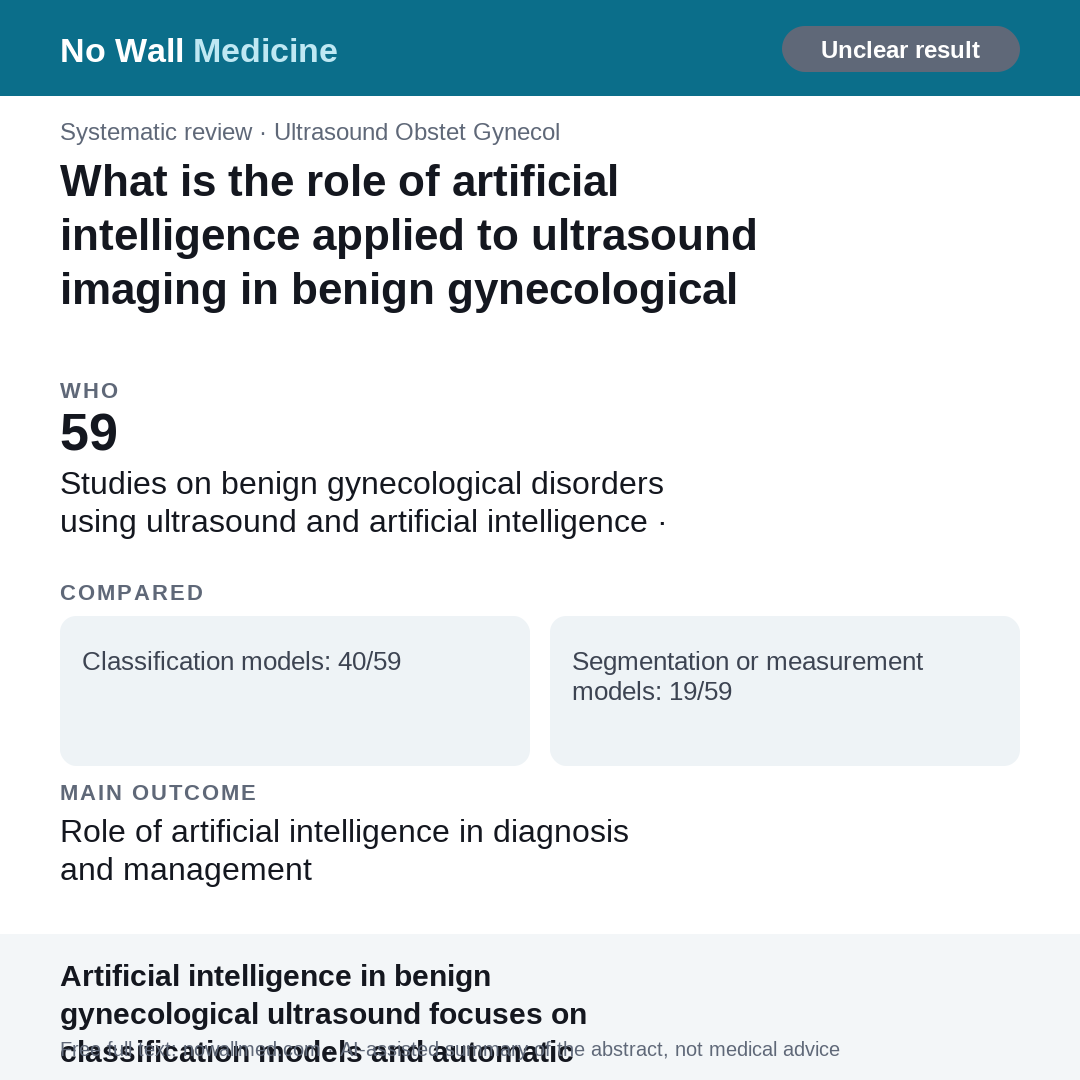
Application of artificial intelligence to ultrasound imaging for benign gynecological disorders: systematic review
Systematic reviewUnclear result
What is the role of artificial intelligence applied to ultrasound imaging in benign gynecological disorders?
Who
Studies on benign gynecological disorders using ultrasound and artificial intelligence · Global, most studies from China
Compared
Classification models: 40/59
Segmentation or measurement models: 19/59
Main outcome
Role of artificial intelligence in diagnosis and management
Bottom line: Artificial intelligence in benign gynecological ultrasound focuses on classification models and automatic segmentation or measurement.
Limitation: Most studies had high risk of bias for subject selection and index test domains.
Ultrasound Obstet Gynecol · 2025-01-31Download image
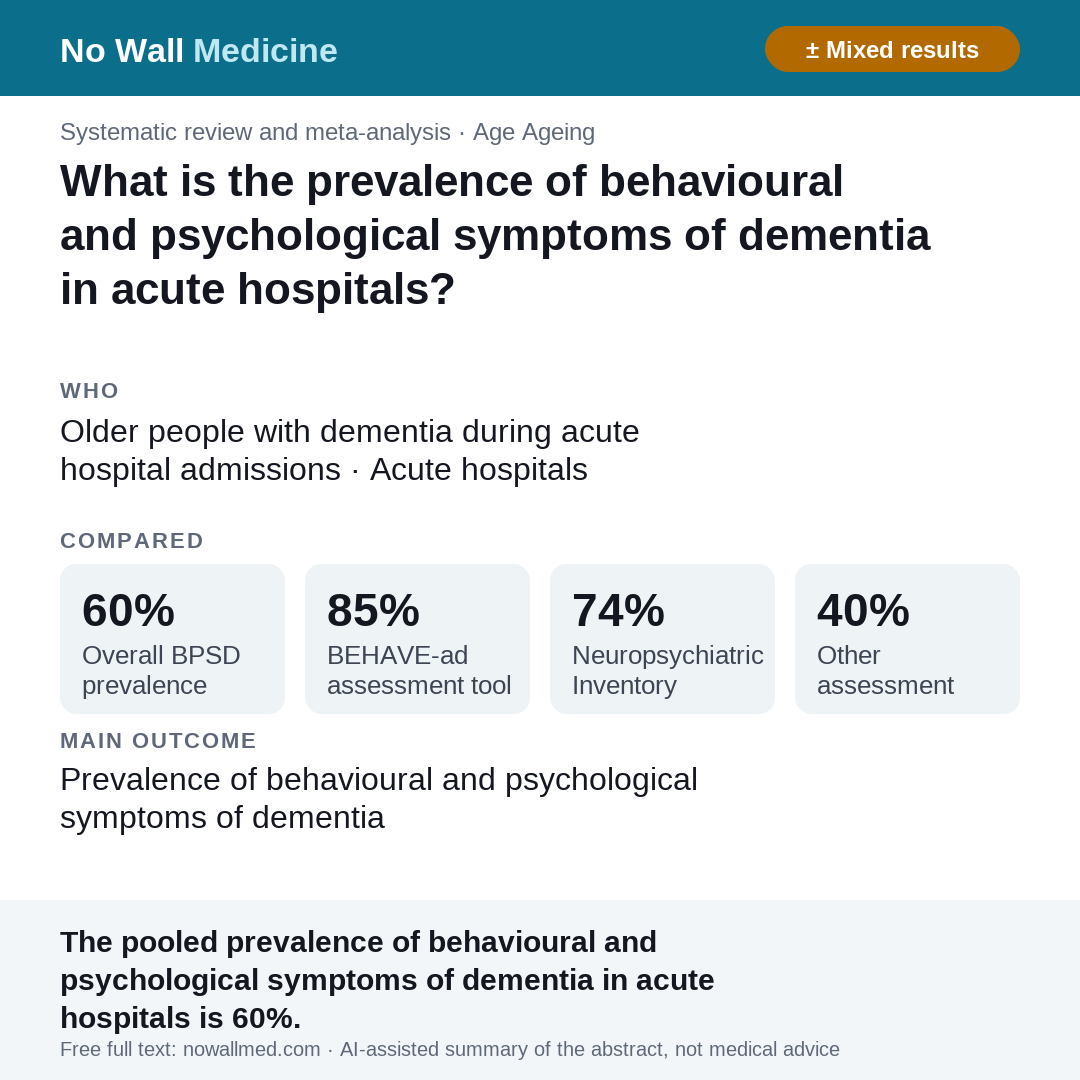
Behavioural and psychological symptoms of people with dementia in acute hospital settings: a systematic review and meta-analysis
Systematic review and meta-analysisMixed results
What is the prevalence of behavioural and psychological symptoms of dementia in acute hospitals?
Who
Older people with dementia during acute hospital admissions · Acute hospitals
Compared
60%Overall BPSD prevalence (95% CI 43-78%)
85%BEHAVE-ad assessment tool
74%Neuropsychiatric Inventory Questionnaire assessment tool
40%Other assessment tools
Main outcome
Prevalence of behavioural and psychological symptoms of dementia
Result: 60% (95% CI 43-78%)
Bottom line: The pooled prevalence of behavioural and psychological symptoms of dementia in acute hospitals is 60%.
Age Ageing · 2025-01-31Download image
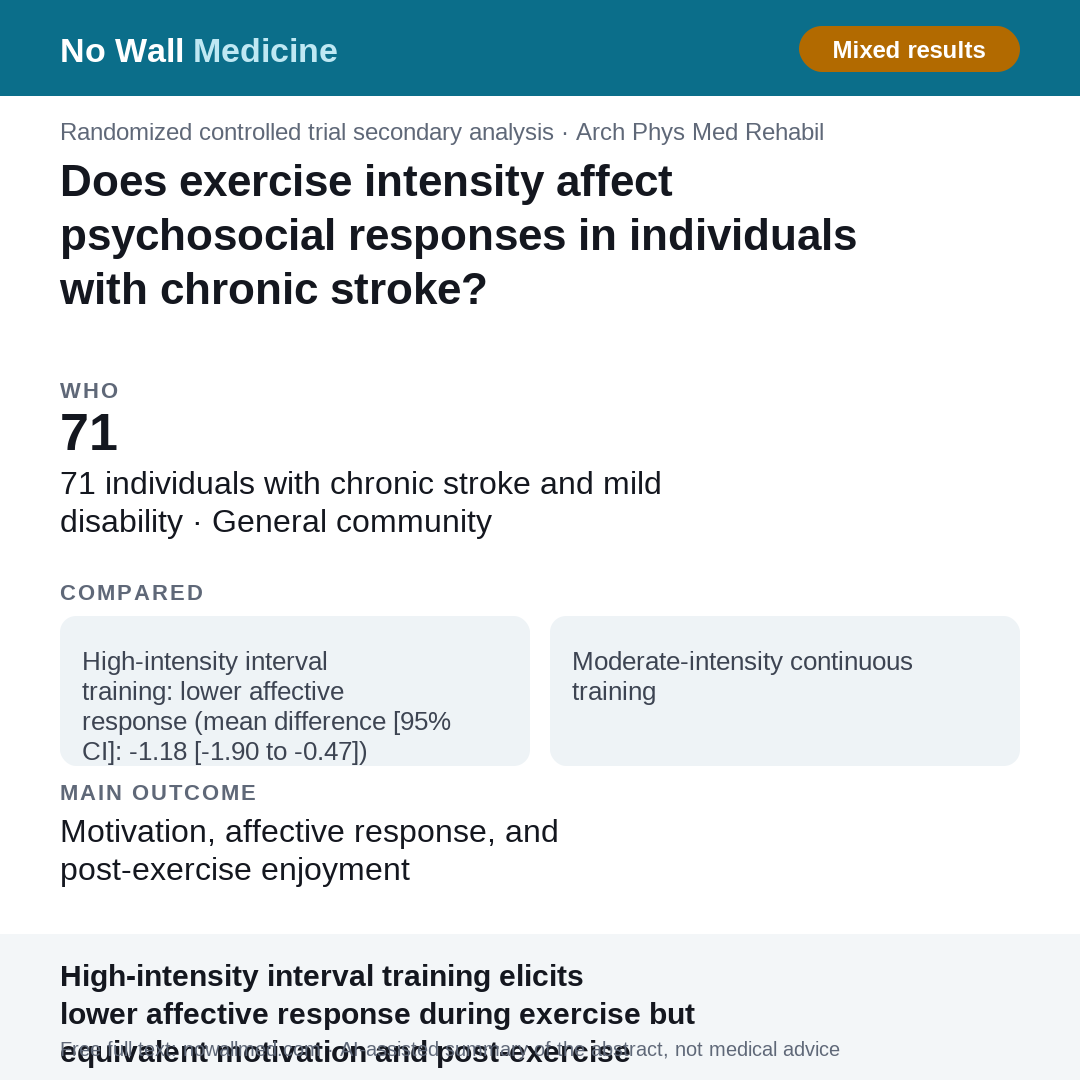
Psychosocial Responses to a Cardiovascular Exercise Randomized Controlled Trial: Does Intensity Matter for Individuals Post-stroke?
Randomized controlled trial secondary analysisMixed results
Does exercise intensity affect psychosocial responses in individuals with chronic stroke?
Who
71
71 individuals with chronic stroke and mild disability · General community
Compared
High-intensity interval training: lower affective response (mean difference [95% CI]: -1.18 [-1.90 to -0.47])
Moderate-intensity continuous training
Main outcome
Motivation, affective response, and post-exercise enjoyment
Result: mean difference [95% CI]: -1.18 [-1.90 to -0.47]
Bottom line: High-intensity interval training elicits lower affective response during exercise but equivalent motivation and post-exercise enjoyment compared to moderate-intensity continuous training.
Arch Phys Med Rehabil · 2025-01-31Download image