Visual abstracts
New randomized trials and meta-analyses from leading journals at a glance: who was studied, what was compared, and what was found. Every paper is free to read in full.
All specialtiesCardiology 4763Oncology 4042Gastroenterology & Hepatology 1902Infectious Disease 3756Neurology 1872Psychiatry & Mental Health 2214Pulmonology 2042Critical Care 1319Endocrinology & Diabetes 2544Pediatrics 2889Surgery 2479Orthopedics & Sports Medicine 917Neurosurgery 525Cardiothoracic & Vascular Surgery 656Plastic & Reconstructive Surgery 574Nephrology 1107Rheumatology 810Hematology 1090Dermatology 611Ophthalmology 532Obstetrics & Gynecology 1645Public & Global Health 1037Radiology & Imaging 617Anesthesiology 957Urology 745ENT (Otolaryngology) 494Emergency Medicine 481Allergy & Immunology 309Geriatrics 972Family Medicine & Primary Care 533Medical Genetics & Genomics 659Pathology & Laboratory Medicine 156Physical Medicine & Rehabilitation 734Palliative Care 421Nutrition 1560Digital Health & AI 2133General Medicine 318
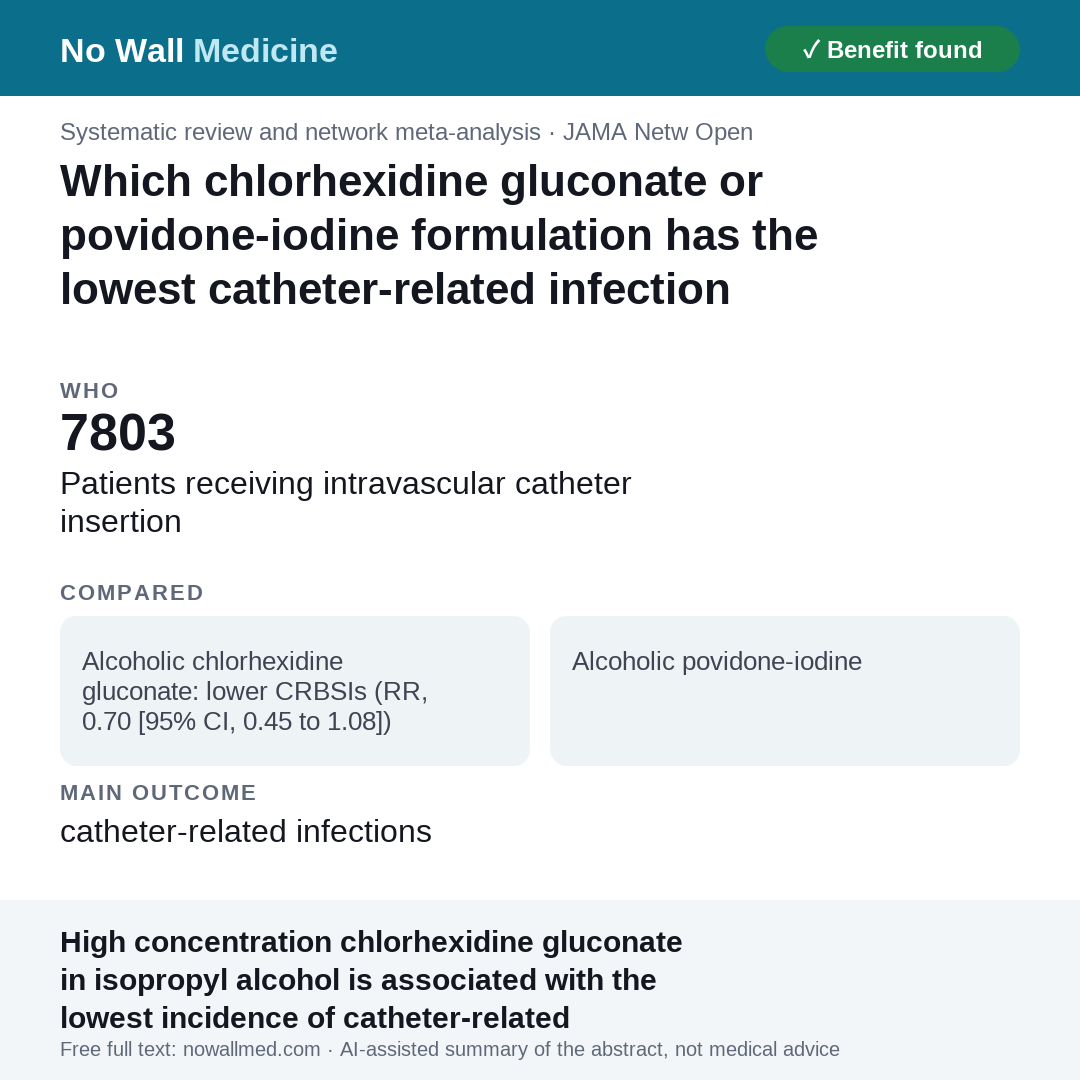
Chlorhexidine vs Povidone-Iodine and Incidence of Catheter-Related Infections: A Systematic Review and Meta-Analysis
Systematic review and network meta-analysisBenefit found
Which chlorhexidine gluconate or povidone-iodine formulation has the lowest catheter-related infection incidence?
Who
7803
Patients receiving intravascular catheter insertion
Compared
Alcoholic chlorhexidine gluconate: lower CRBSIs (RR, 0.70 [95% CI, 0.45 to 1.08])
Alcoholic povidone-iodine
Main outcome
catheter-related infections
Result: RR, 0.70 (95% CI, 0.45 to 1.08) for CRBSIs
Bottom line: High concentration chlorhexidine gluconate in isopropyl alcohol is associated with the lowest incidence of catheter-related infections.
JAMA Netw Open · 2026-02-02Download image
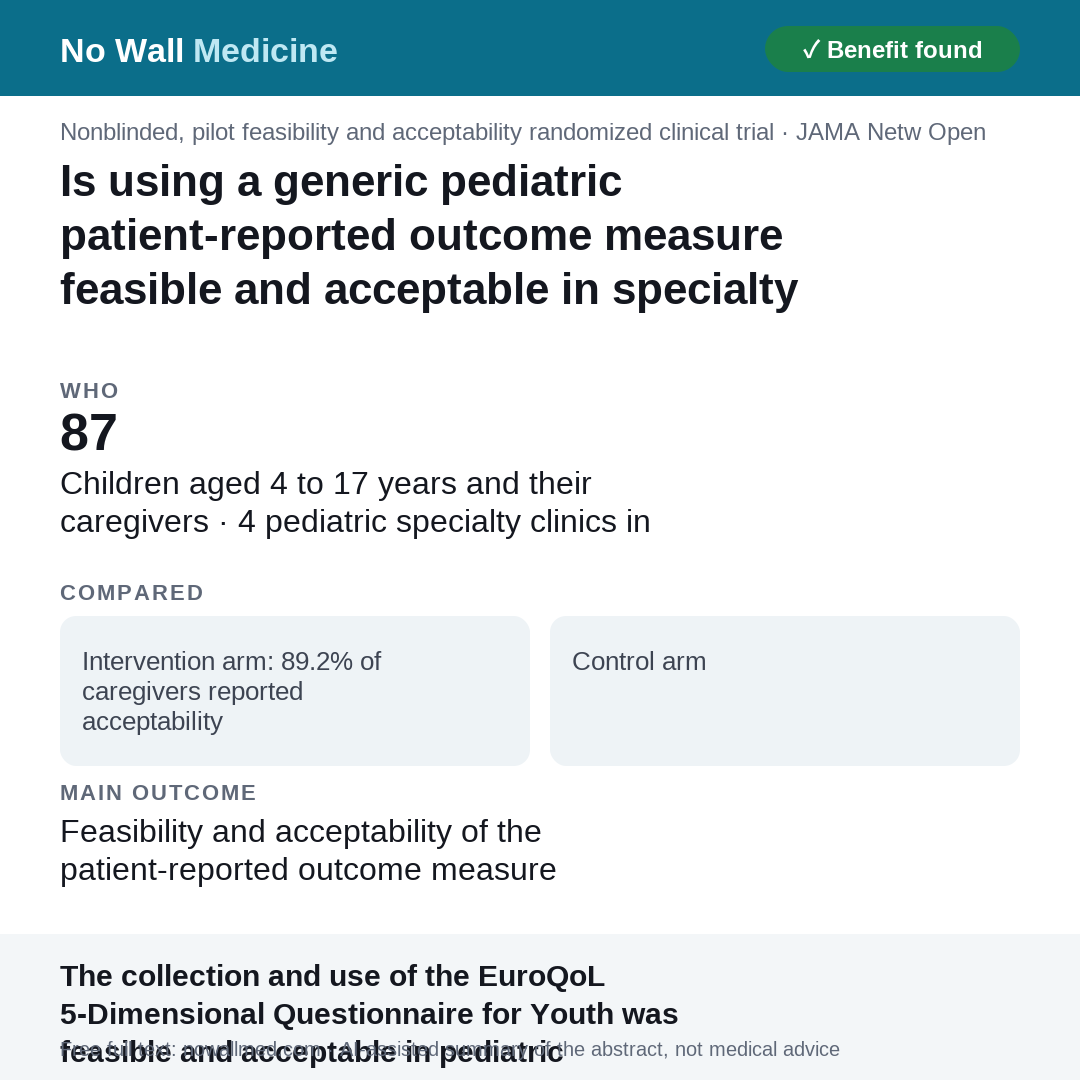
Use of Parent- and Patient-Reported Outcome Measures in Pediatric Specialty Clinics: A Pilot Randomized Clinical Trial
Nonblinded, pilot feasibility and acceptability randomized clinical trialBenefit found
Is using a generic pediatric patient-reported outcome measure feasible and acceptable in specialty clinics?
Who
87
Children aged 4 to 17 years and their caregivers · 4 pediatric specialty clinics in Melbourne, Australia
Compared
Intervention arm: 89.2% of caregivers reported acceptability
Control arm
Main outcome
Feasibility and acceptability of the patient-reported outcome measure
Bottom line: The collection and use of the EuroQoL 5-Dimensional Questionnaire for Youth was feasible and acceptable in pediatric specialty care.
Limitation: Further study should examine quantitative impacts on quality of care and outcomes over time.
JAMA Netw Open · 2026-02-02Download image
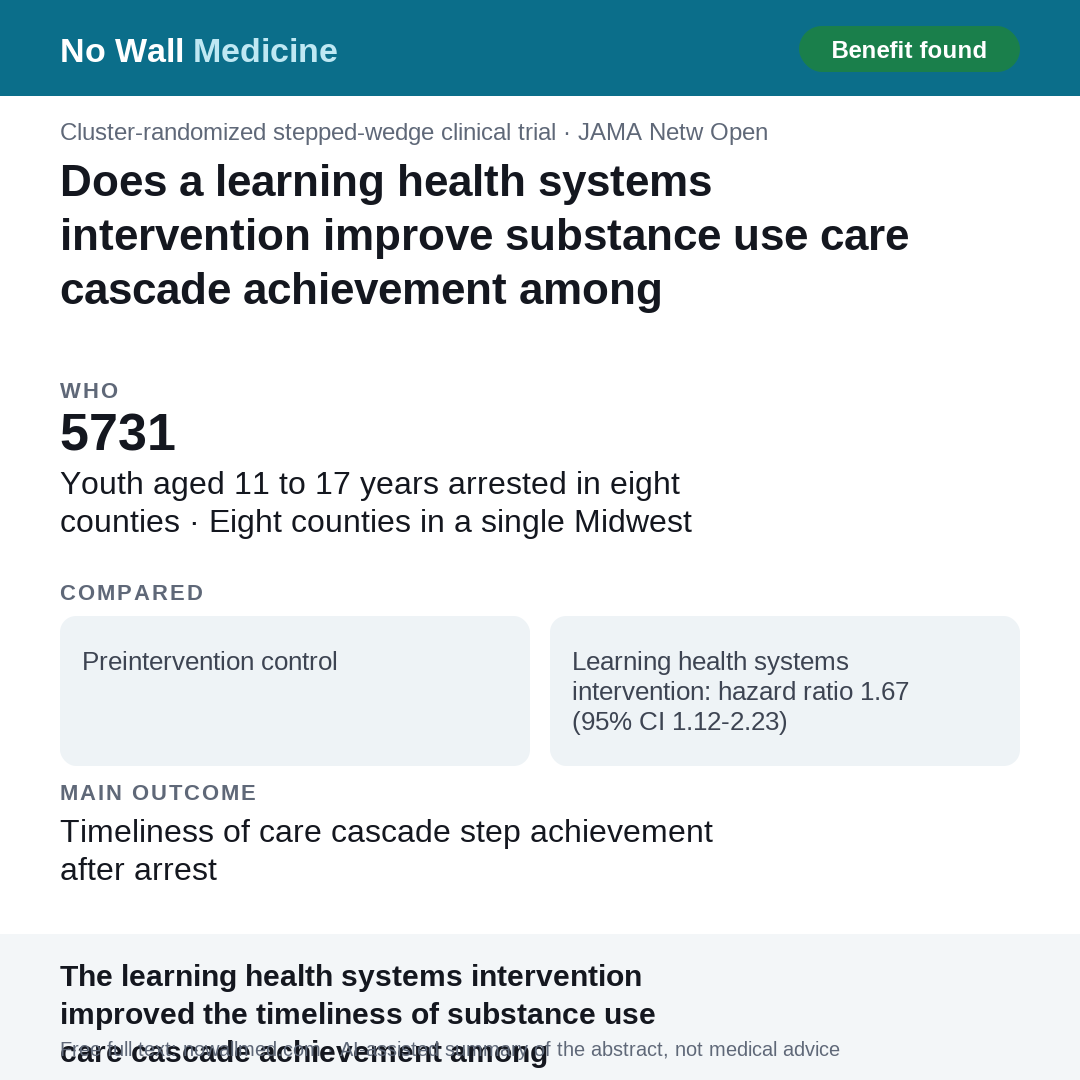
Learning Health Systems and Substance Use Care Cascade Achievement Among Justice-Involved Youth: A Cluster-Randomized Stepped-Wedge Clinical Trial
Cluster-randomized stepped-wedge clinical trialKey finding
Does a learning health systems intervention improve substance use care cascade achievement among justice-involved youth?
Who
5731
Youth aged 11 to 17 years arrested in eight counties · Eight counties in a single Midwest state
Compared
Preintervention control
Learning health systems intervention: hazard ratio 1.67 (95% CI 1.12-2.23)
Main outcome
Timeliness of care cascade step achievement after arrest
Result: hazard ratio 1.67 (95% CI 1.12-2.23)
Bottom line: The learning health systems intervention improved the timeliness of substance use care cascade achievement among justice-involved youth.
JAMA Netw Open · 2026-02-02Download image
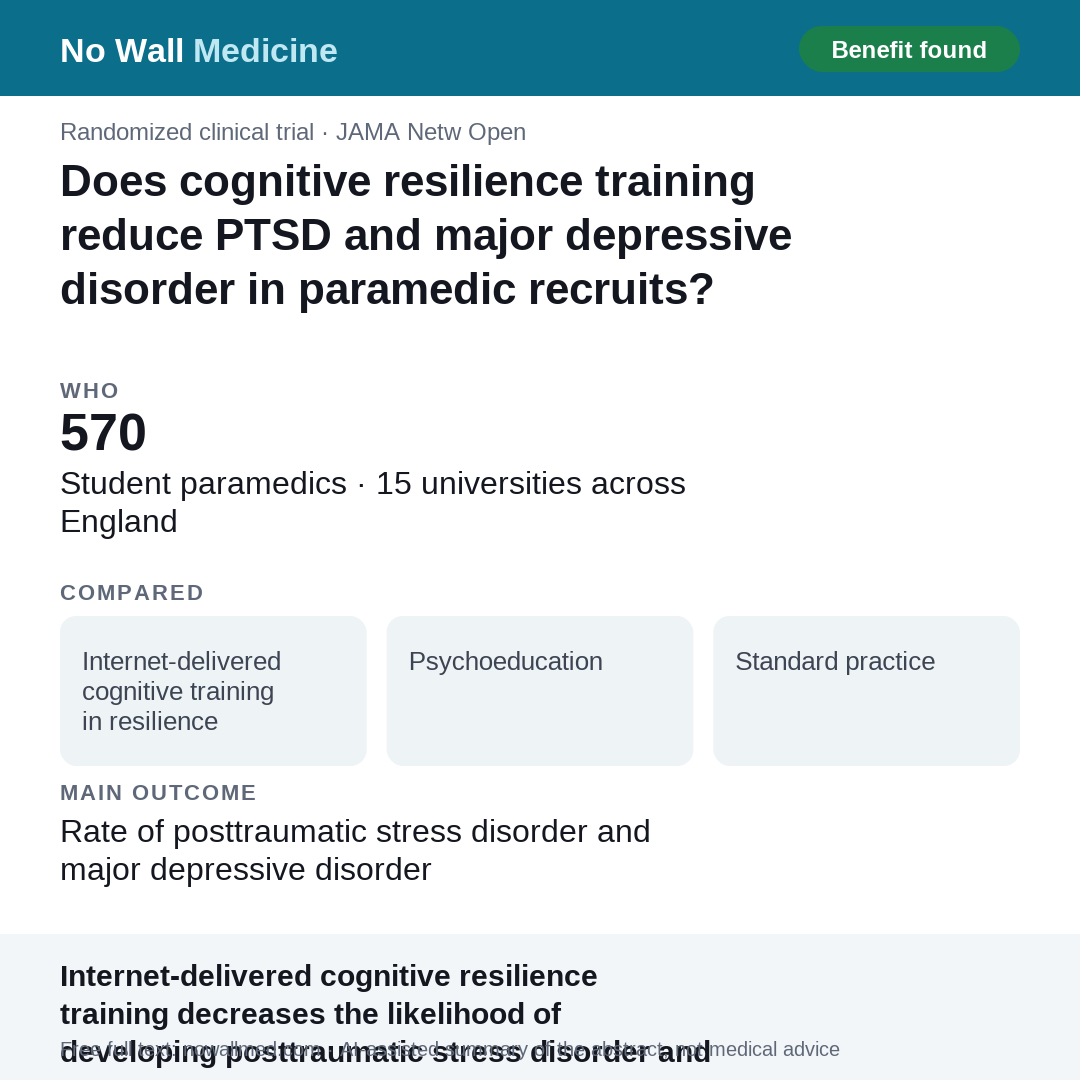
Cognitive Resilience Training to Prevent PTSD and Major Depressive Disorder in Paramedic Recruits: A Randomized Clinical Trial
Randomized clinical trialBenefit found
Does cognitive resilience training reduce PTSD and major depressive disorder in paramedic recruits?
Who
570
Student paramedics · 15 universities across England
Compared
Internet-delivered cognitive training in resilience
Psychoeducation
Standard practice
Main outcome
Rate of posttraumatic stress disorder and major depressive disorder
Result: odds ratio 0.20 (95% CI, 0.05-0.73) vs psychoeducation; odds ratio 0.25 (95% CI, 0.07-0.97) vs standard practice
Bottom line: Internet-delivered cognitive resilience training decreases the likelihood of developing posttraumatic stress disorder and major depressive disorder in paramedic trainees.
JAMA Netw Open · 2026-02-02Download image
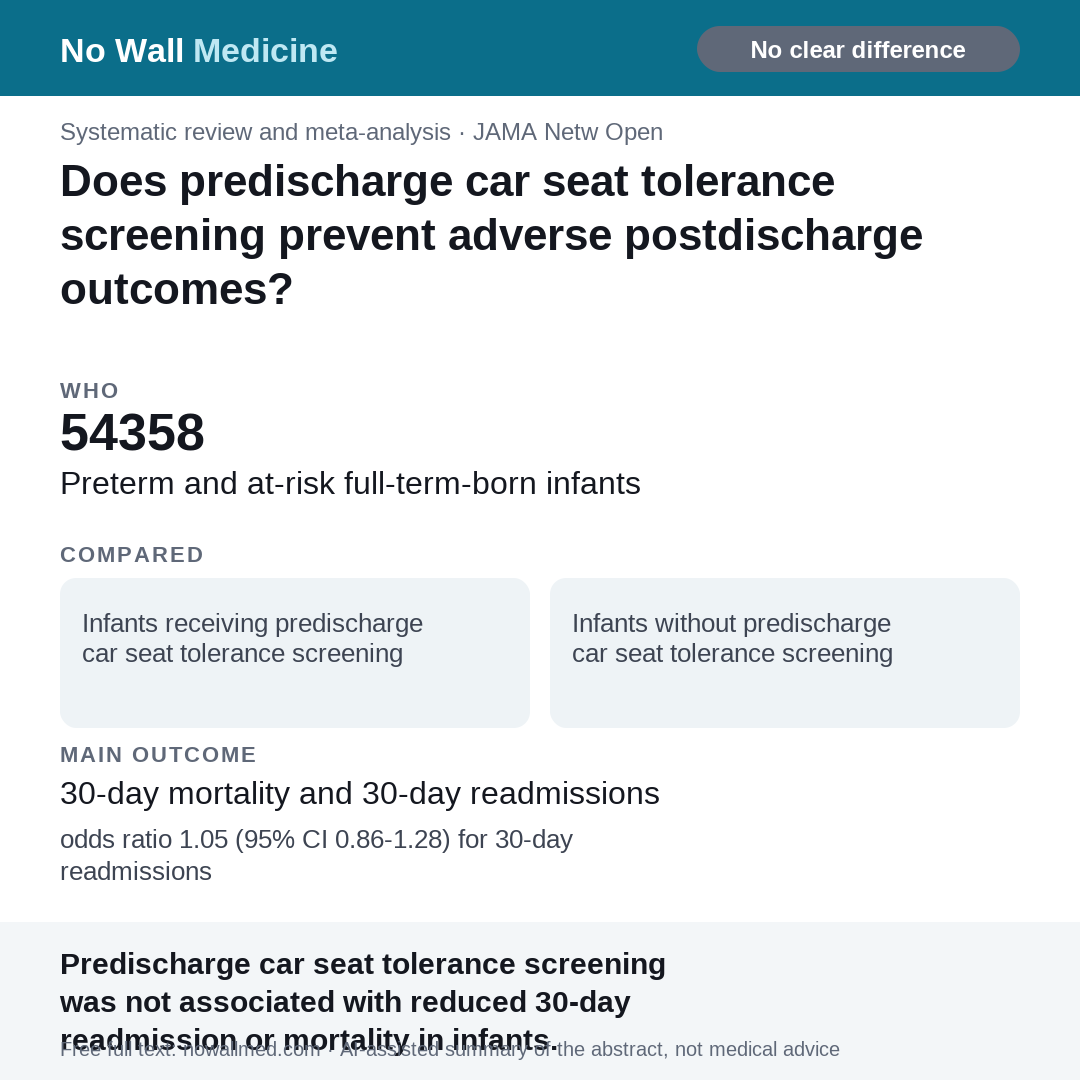
Predischarge Car Seat Tolerance Screening in Preterm and At-Risk Full-Term Infants: A Systematic Review and Meta-Analysis
Systematic review and meta-analysisNo clear difference
Does predischarge car seat tolerance screening prevent adverse postdischarge outcomes?
Who
54358
Preterm and at-risk full-term-born infants
Compared
Infants receiving predischarge car seat tolerance screening
Infants without predischarge car seat tolerance screening
Main outcome
30-day mortality and 30-day readmissions
Result: odds ratio 1.05 (95% CI 0.86-1.28) for 30-day readmissions
Bottom line: Predischarge car seat tolerance screening was not associated with reduced 30-day readmission or mortality in infants.
Limitation: No randomized trials were identified in the included studies.
JAMA Netw Open · 2026-02-02Download image
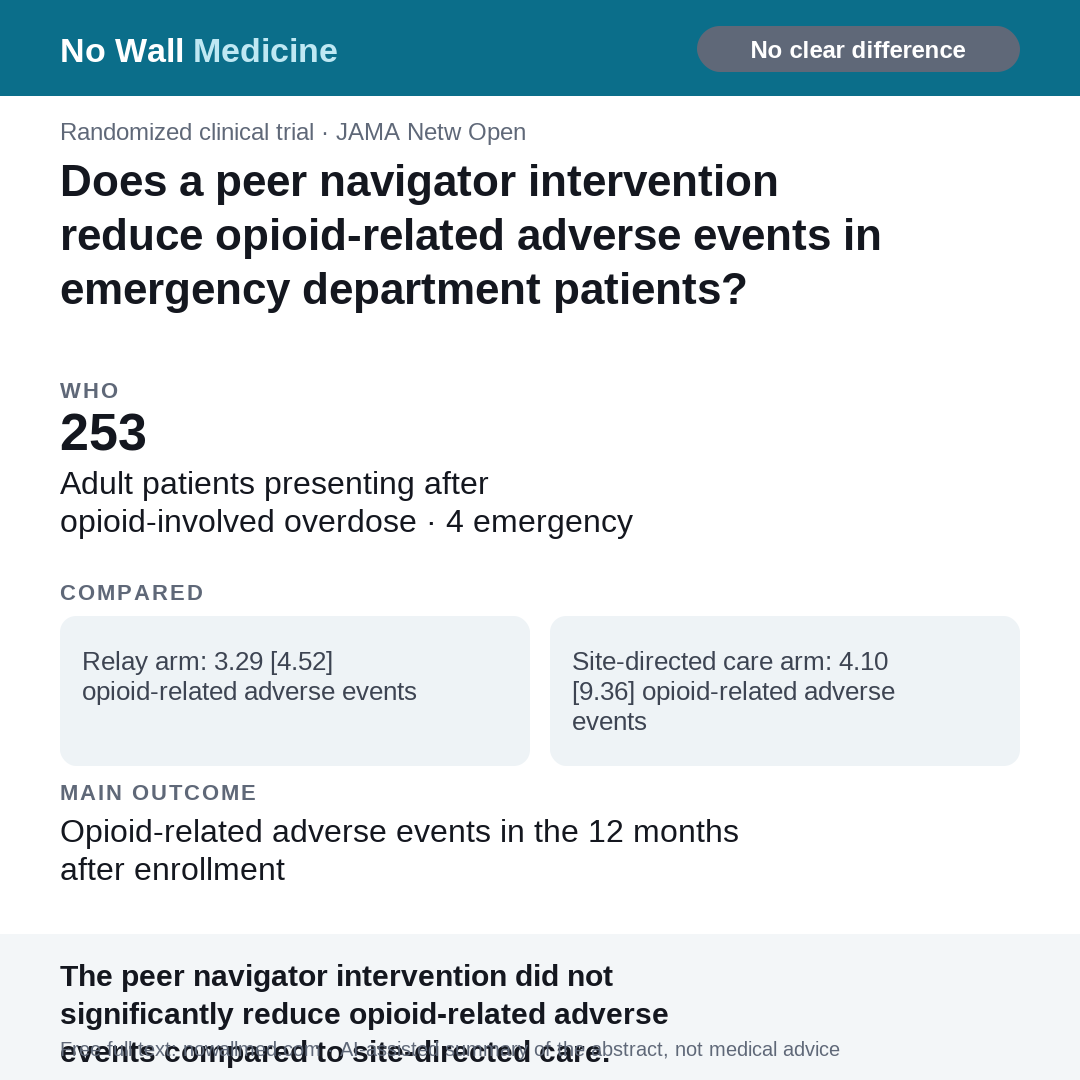
Peer Navigator Intervention and Opioid-Related Adverse Events for Emergency Department Patients: A Randomized Clinical Trial
Randomized clinical trialNo clear difference
Does a peer navigator intervention reduce opioid-related adverse events in emergency department patients?
Who
253
Adult patients presenting after opioid-involved overdose · 4 emergency departments in New York, New York
Compared
Relay arm: 3.29 [4.52] opioid-related adverse events
Site-directed care arm: 4.10 [9.36] opioid-related adverse events
Main outcome
Opioid-related adverse events in the 12 months after enrollment
Result: rate ratio 1.02 (95% CI 0.72-1.45)
Bottom line: The peer navigator intervention did not significantly reduce opioid-related adverse events compared to site-directed care.
JAMA Netw Open · 2026-02-02Download image
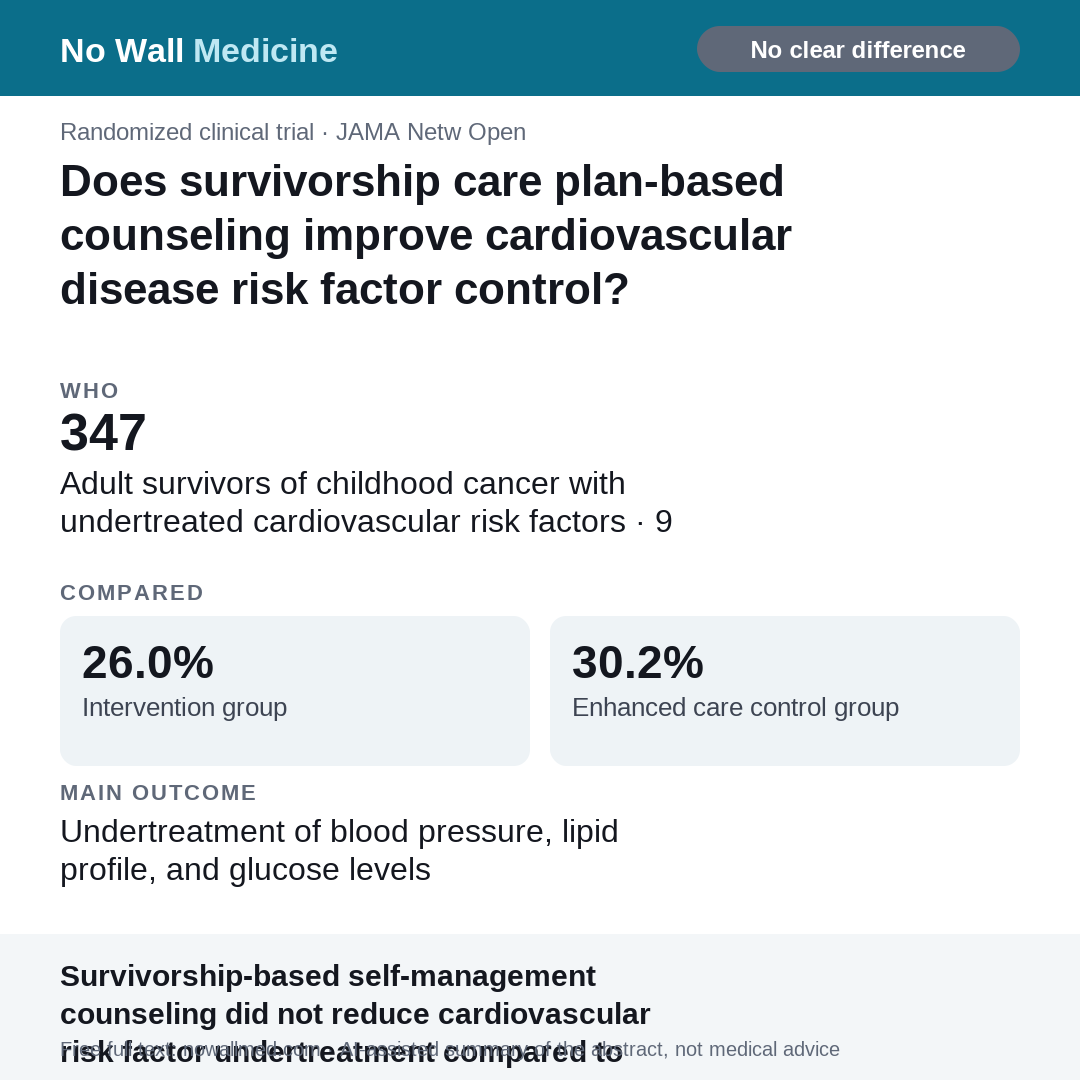
Counseling and Cardiovascular Disease Risk Factor Control in Long-Term Cancer Survivors: A Randomized Clinical Trial
Randomized clinical trialNo clear difference
Does survivorship care plan-based counseling improve cardiovascular disease risk factor control?
Who
347
Adult survivors of childhood cancer with undertreated cardiovascular risk factors · 9 US metropolitan areas
Compared
26.0%Intervention group
30.2%Enhanced care control group
Main outcome
Undertreatment of blood pressure, lipid profile, and glucose levels
Result: odds ratio 1.31 (95% CI 0.84-2.05)
Bottom line: Survivorship-based self-management counseling did not reduce cardiovascular risk factor undertreatment compared to enhanced care controls.
JAMA Netw Open · 2026-02-02Download image
Self-Acupressure for Fatigue in Patients Surviving Ovarian Cancer: A Randomized Clinical Trial
Phase 3 single-blind randomized clinical trialBenefit found
Does 6 weeks of self-acupressure via mobile app improve fatigue, sleep, and quality of life?
Who
160
Fatigued ovarian cancer survivors
Compared
True self-acupressure: 58.5% achieving clinically normal fatigue
Sham self-acupressure: 51.1% achieving clinically normal fatigue
Usual care: 17.6% achieving clinically normal fatigue
Main outcome
Change in Brief Fatigue Inventory score from baseline to week 6
Result: adjusted mean difference -1.23 (95% CI -2.17 to -0.29)
Bottom line: True self-acupressure via mobile app significantly reduced fatigue and improved quality of life compared to usual care.
JAMA Netw Open · 2026-02-02Download image
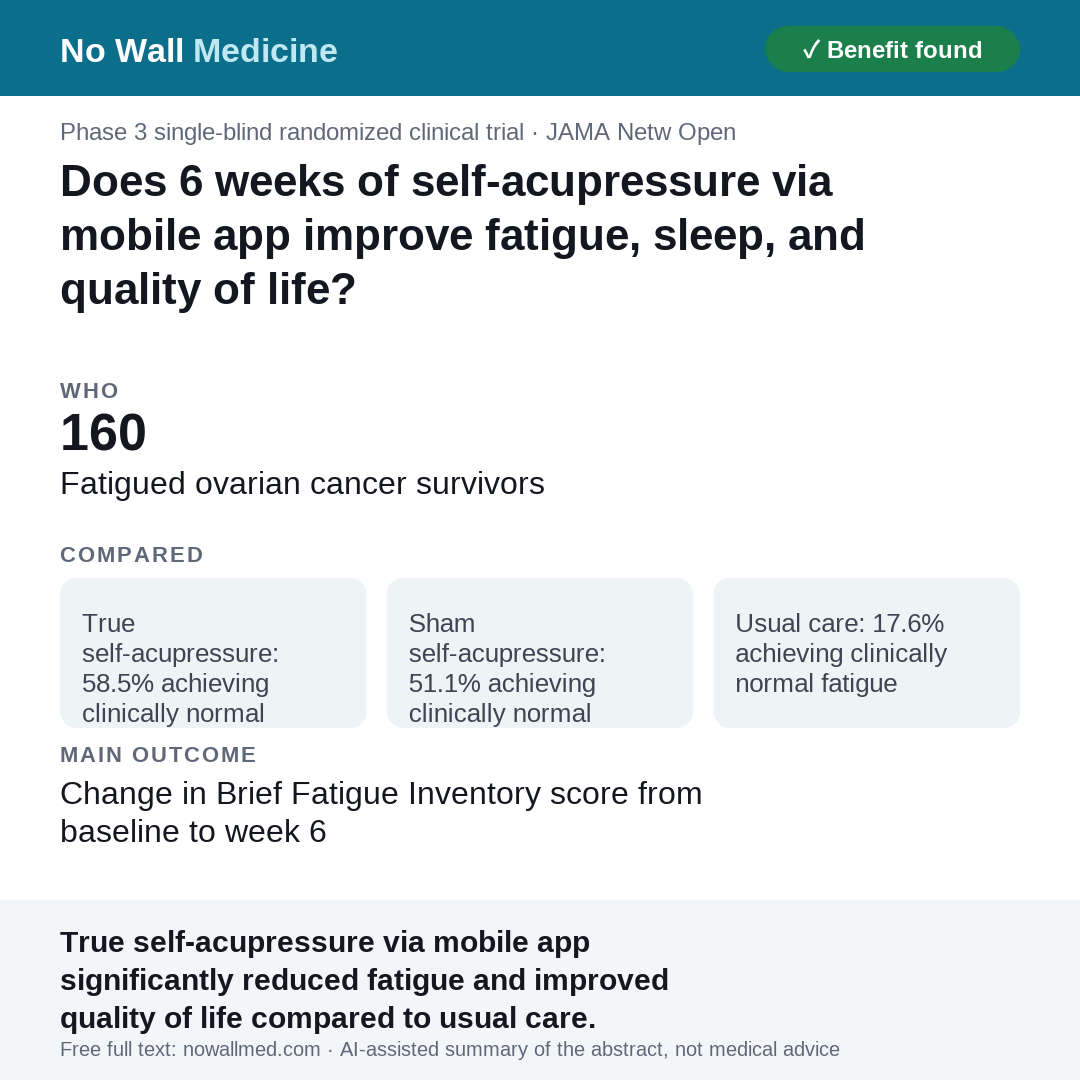
Cerebral Oximetry-Guided Treatment and Cerebral Oxygenation in Extremely Preterm Infants: A Randomized Clinical Trial
Single-blinded, 2-arm randomized clinical trialBenefit found
Does cerebral oximetry with a dedicated treatment guideline improve cerebral oxygenation stability?
Who
100
Extremely preterm infants born at less than 29 weeks' gestation · 5 tertiary neonatal intensive care units in Australia, New Zealand, and US
Compared
Intervention group: 5.7% hours (2.8% hours to 15.0% hours)
Standard care group: 39.6% hours (6.5% hours to 82.3% hours)
Main outcome
Burden of cerebral hypoxia and hyperoxia during first 5 days
Result: adjusted reduction of 42.8% hours (95% CI, 35.6% hours to 53.3% hours)
Bottom line: Cerebral oximetry-guided treatment significantly improved cerebral oxygenation stability in extremely preterm infants.
JAMA Netw Open · 2026-02-02Download image
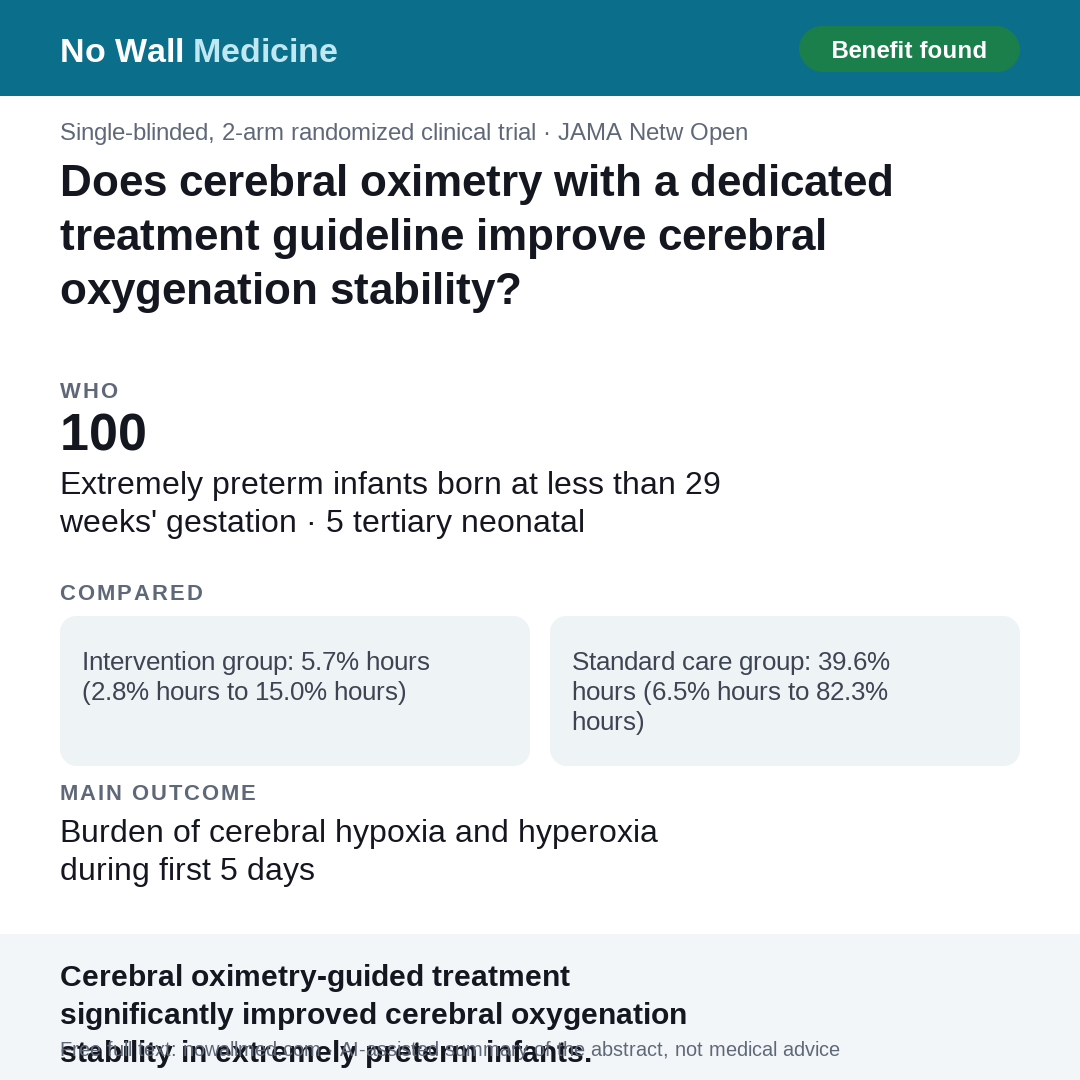
Equity, Diversity, and Inclusion Programs in Health Care Institutions: A Systematic Review and Meta-Analysis
Systematic review and meta-analysisBenefit found
What are the outcomes of equity, diversity, and inclusion programs in health care institutions?
Who
15000
Individuals involved in equity, diversity, and inclusion programs · Health care institutions
Compared
Equity, diversity, and inclusion interventions
Minority representation in competitive medical residencies: increased
Main outcome
Workforce diversity and program impact
Result: odds ratio 1.73 (95% CI 1.21-2.47)
Bottom line: Equity, diversity, and inclusion programs are associated with increased workforce diversity in health care institutions.
JAMA Netw Open · 2026-02-02Download image

Behavioral Activation and Mindfulness Interventions in Reducing Loneliness and Improving Well-Being in Older Adults: The HEAL-HOA Randomized Clinical Trial
3-arm, assessor-blinded randomized clinical trialBenefit found
Do telephone-delivered behavioral activation and mindfulness interventions reduce loneliness and enhance well-being in at-risk older adults?
Who
1151
Older adults 65 years or older living alone, digitally excluded, lonely, and experiencing financial hardship · Hong Kong
Compared
Telephone-delivered behavioral activation: UCLA-LS: mean difference -0.73 (95% CI, -1.29 to -0.16)
Telephone-delivered mindfulness: UCLA-LS: mean difference -0.72 (95% CI, -1.24 to -0.20)
Telephone-delivered befriending
Main outcome
loneliness measured by UCLA Loneliness Scale and De Jong Gierveld Loneliness Scale
Result: UCLA-LS: MD -0.73 (95% CI, -1.29 to -0.16) for Tele-BA; MD -0.72 (95% CI, -1.24 to -0.20) for Tele-MF
Bottom line: Telephone-delivered behavioral activation and mindfulness interventions sustainably reduced loneliness and enhanced well-being in at-risk older adults over 12 months.
JAMA Netw Open · 2026-02-02Download image
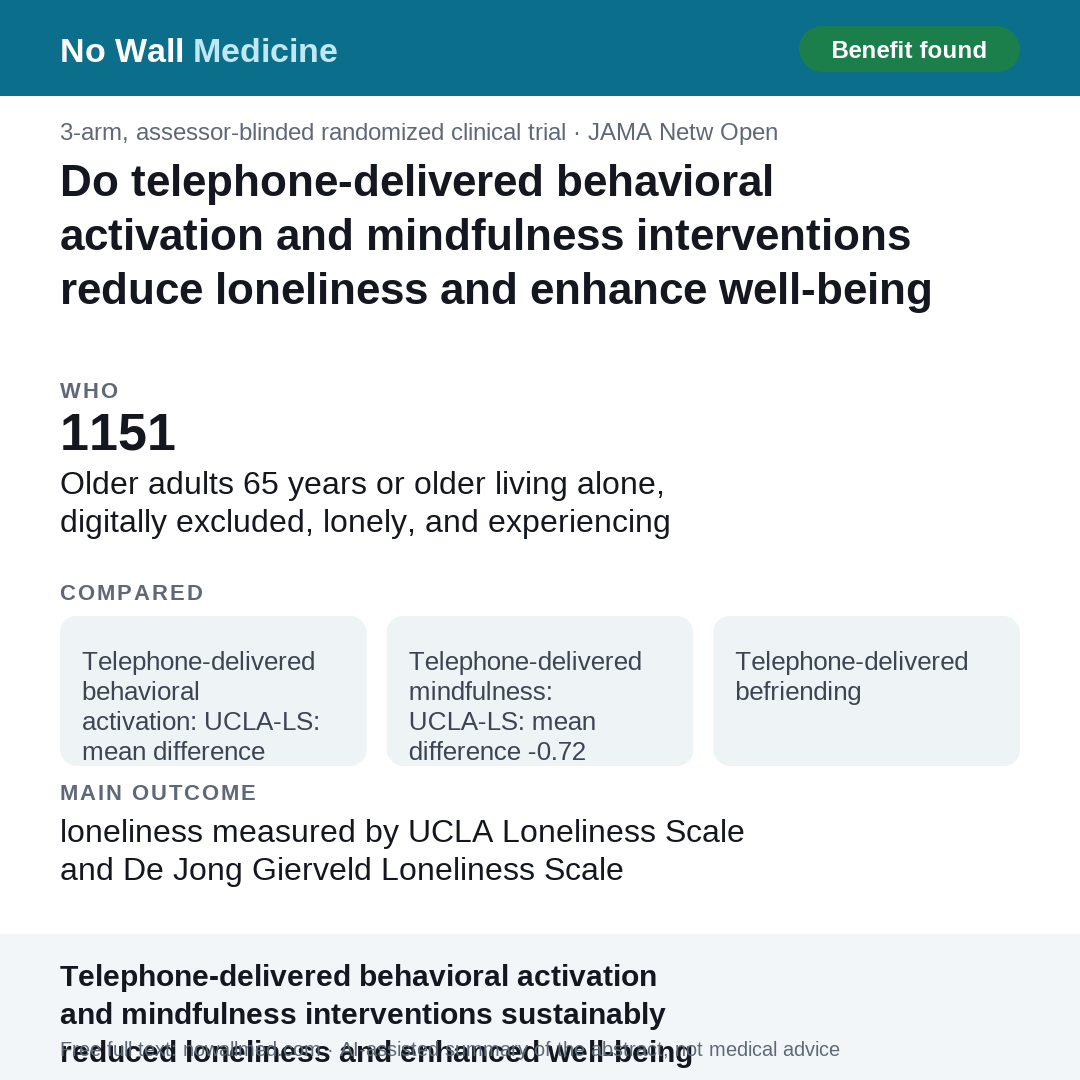
Video Remote Sign Language Interpreting and Health Communication for Deaf Patients: A Randomized Clinical Trial
Randomized clinical trialMixed results
Does video remote sign language interpreting improve communication between Deaf patients and physicians?
Who
210
Deaf adults using Colombian Sign Language · A public hospital in Colombia
Compared
Video remote interpreting: odds ratio 1.90 (95% CI 1.13-3.18) for being encouraged to express themselves
Usual communication tools: no difference in understanding the doctor (OR 1.33; 95% CI 0.79-2.23)
Main outcome
Doctor-Patient Communication scale
Result: odds ratio 1.90 (95% CI 1.13-3.18) for being encouraged to express themselves
Bottom line: Video remote interpreting improved being encouraged to express oneself but did not improve understanding the doctor.
JAMA Netw Open · 2026-02-02Download image
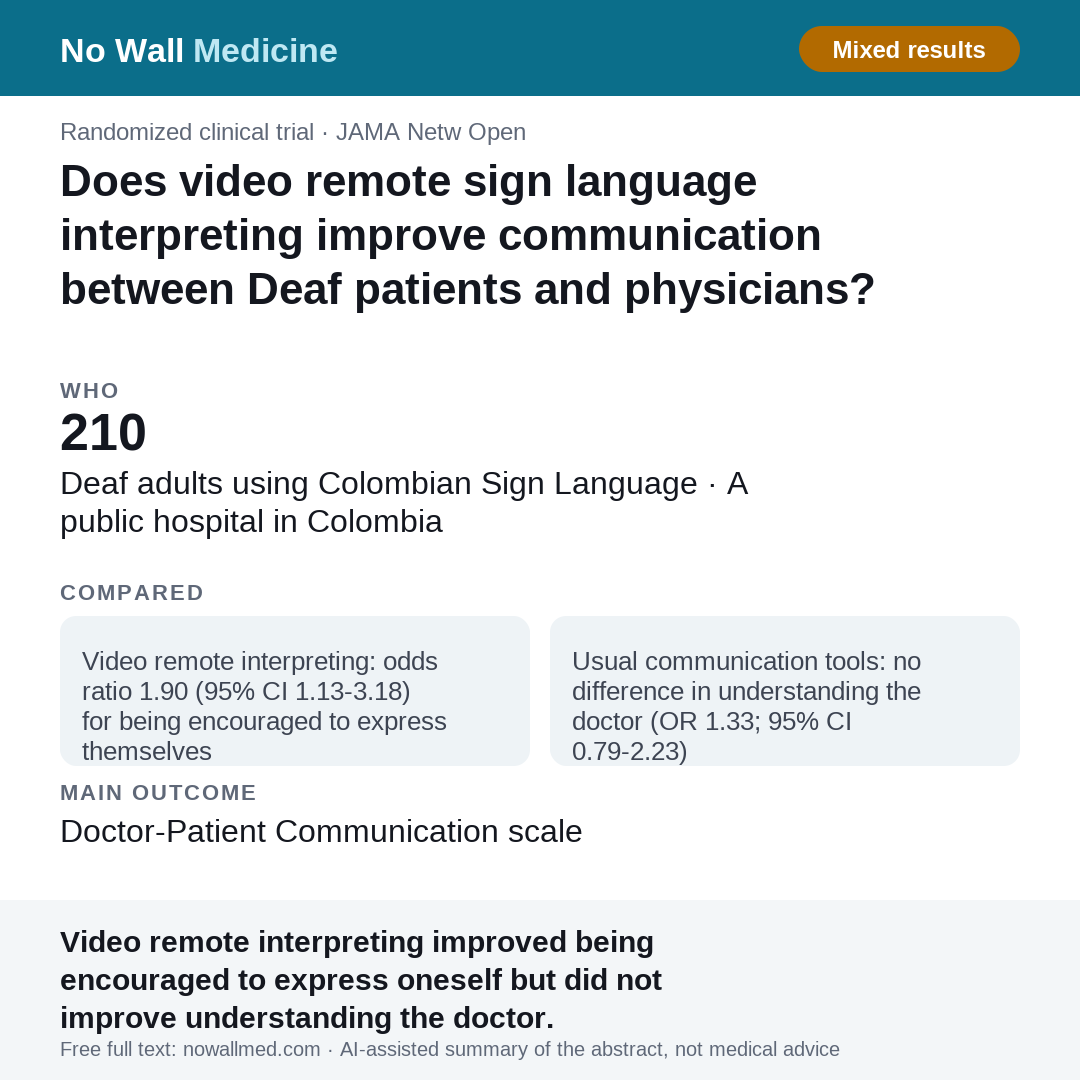
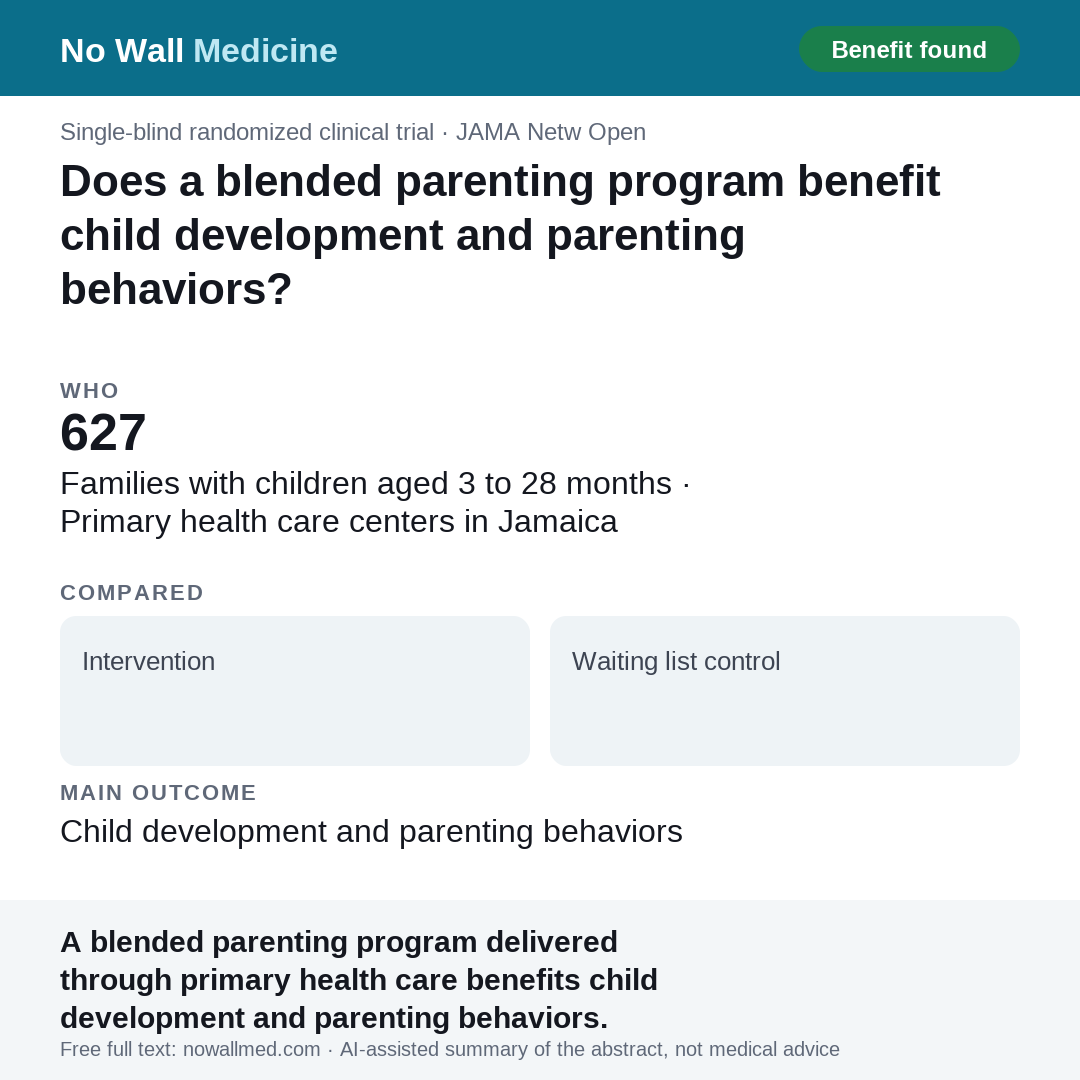
Blended Delivery of a Primary Care Parenting Program for Child Development: A Randomized Clinical Trial
Single-blind randomized clinical trialBenefit found
Does a blended parenting program benefit child development and parenting behaviors?
Who
627
Families with children aged 3 to 28 months · Primary health care centers in Jamaica
Compared
Intervention
Waiting list control
Main outcome
Child development and parenting behaviors
Result: overall developmental quotient ES 0.17 SD (95% CI 0.01-0.33 SD)
Bottom line: A blended parenting program delivered through primary health care benefits child development and parenting behaviors.
JAMA Netw Open · 2026-02-02Download image
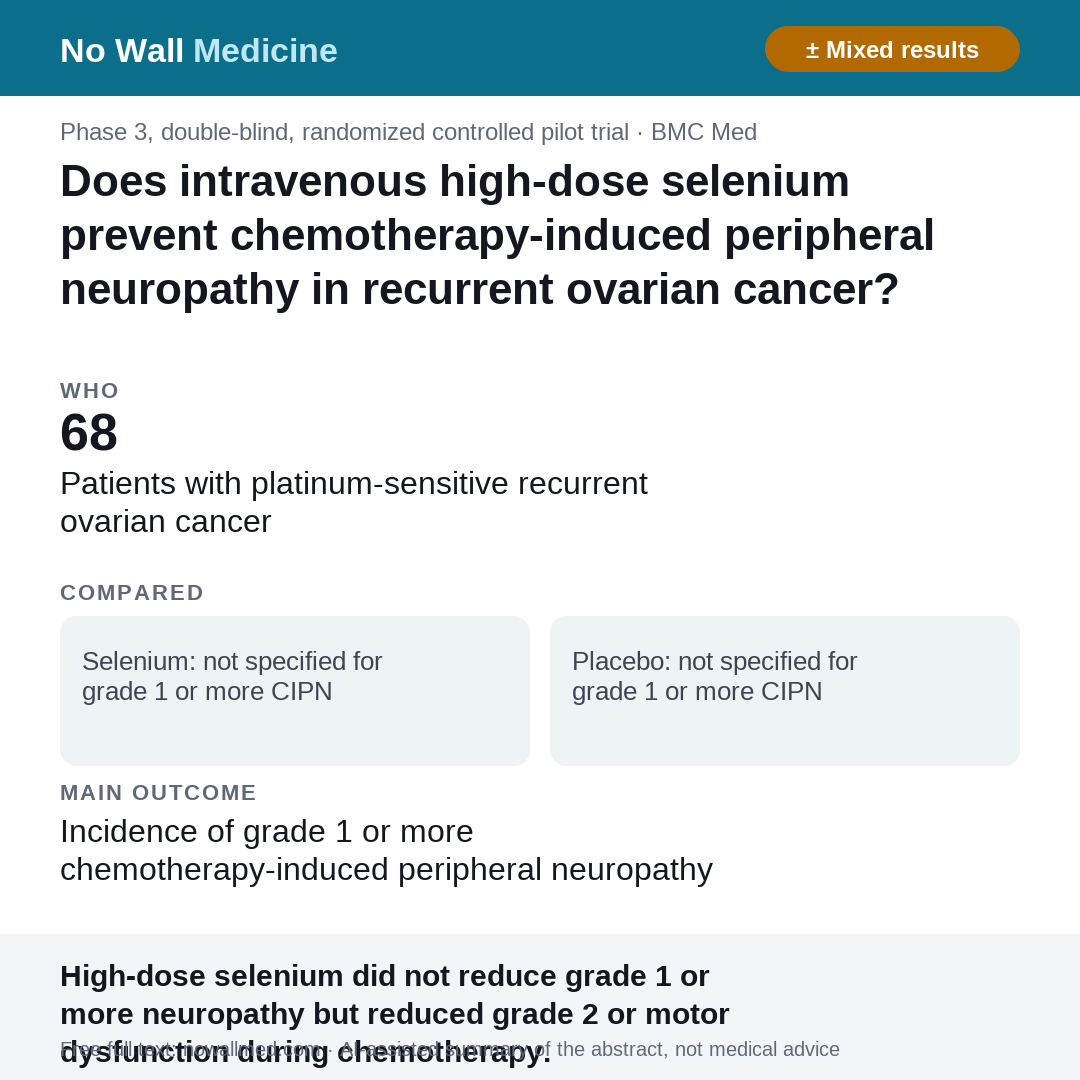
Efficacy and safety of intravenous administration of high-dose selenium for preventing chemotherapy-induced peripheral neuropathy in platinum-sensitive recurrent ovarian cancer: a phase 3, double-blind, parallel group, randomized controlled pilot study
Phase 3, double-blind, randomized controlled pilot trialMixed results
Does intravenous high-dose selenium prevent chemotherapy-induced peripheral neuropathy in recurrent ovarian cancer?
Who
68
Patients with platinum-sensitive recurrent ovarian cancer
Compared
Selenium: not specified for grade 1 or more CIPN
Placebo: not specified for grade 1 or more CIPN
Main outcome
Incidence of grade 1 or more chemotherapy-induced peripheral neuropathy
Bottom line: High-dose selenium did not reduce grade 1 or more neuropathy but reduced grade 2 or motor dysfunction during chemotherapy.
Limitation: This was a pilot study and the primary endpoint was not met.
BMC Med · 2026-02-02Download image
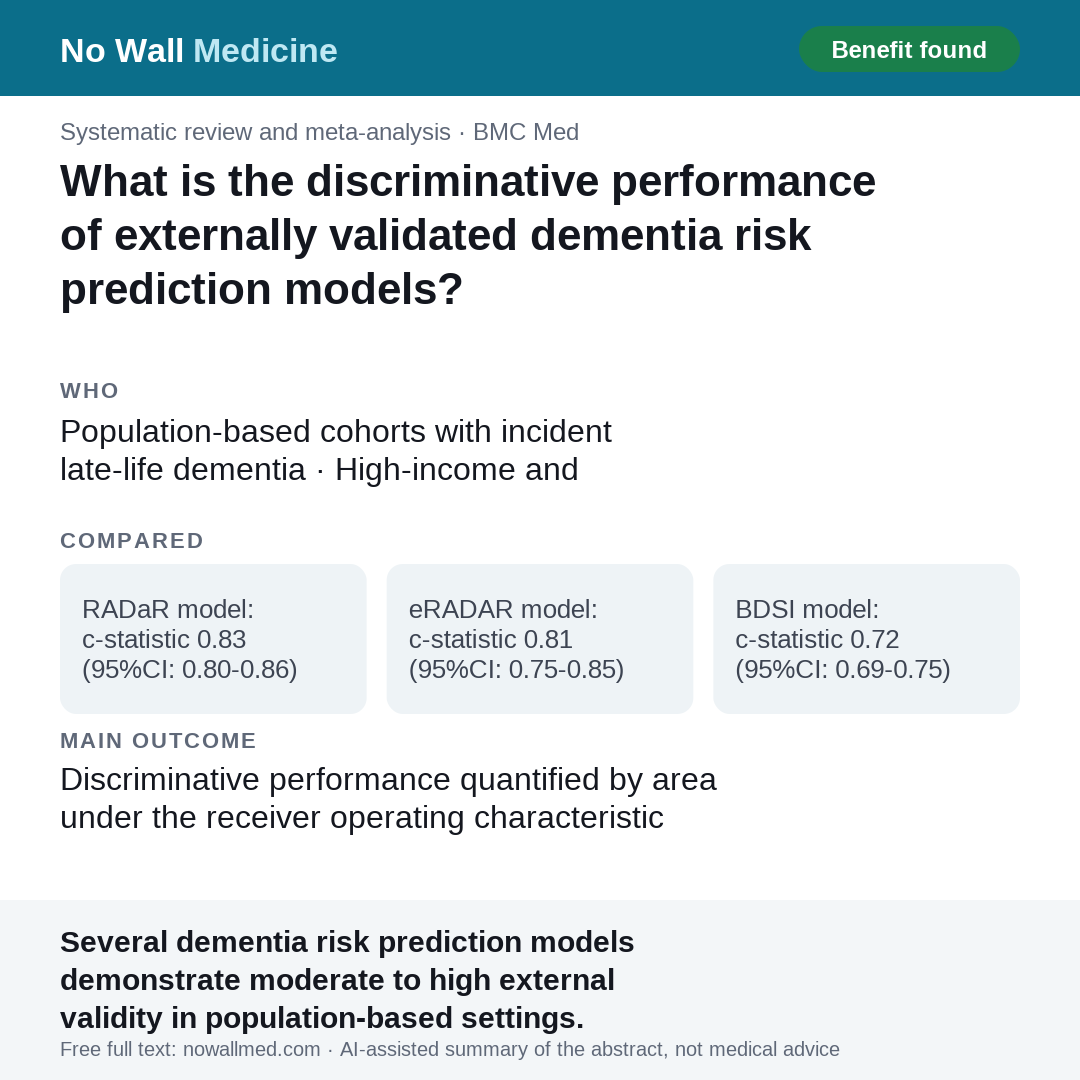
Discriminative performance of externally validated dementia risk prediction models: a systematic review and meta-analysis
Systematic review and meta-analysisKey finding
What is the discriminative performance of externally validated dementia risk prediction models?
Who
Population-based cohorts with incident late-life dementia · High-income and upper-middle income countries
Compared
RADaR model: c-statistic 0.83 (95%CI: 0.80-0.86)
eRADAR model: c-statistic 0.81 (95%CI: 0.75-0.85)
BDSI model: c-statistic 0.72 (95%CI: 0.69-0.75)
Main outcome
Discriminative performance quantified by area under the receiver operating characteristic curve
Bottom line: Several dementia risk prediction models demonstrate moderate to high external validity in population-based settings.
Limitation: Limited number of fully validated models and scarcity of studies in low-income country settings.
BMC Med · 2026-02-02Download image
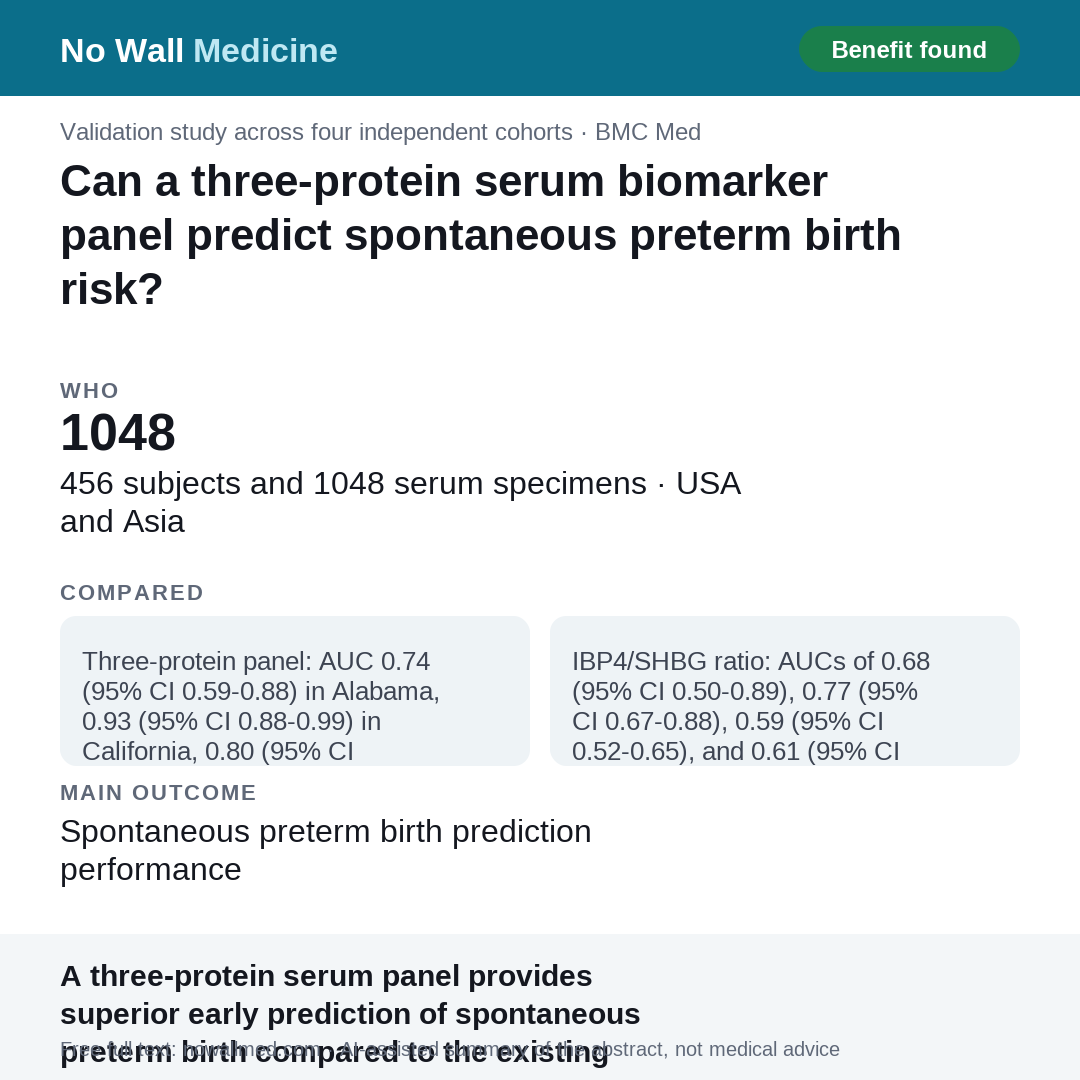
Early gestational prediction of spontaneous preterm birth using a validated three-protein serum biomarker panel
Validation study across four independent cohortsKey finding
Can a three-protein serum biomarker panel predict spontaneous preterm birth risk?
Who
1048
456 subjects and 1048 serum specimens · USA and Asia
Compared
Three-protein panel: AUC 0.74 (95% CI 0.59-0.88) in Alabama, 0.93 (95% CI 0.88-0.99) in California, 0.80 (95% CI 0.75-0.85) in Asia 1, and 0.83 (95% CI 0.70-0.95) in Asia 2
IBP4/SHBG ratio: AUCs of 0.68 (95% CI 0.50-0.89), 0.77 (95% CI 0.67-0.88), 0.59 (95% CI 0.52-0.65), and 0.61 (95% CI 0.50-0.75)
Main outcome
Spontaneous preterm birth prediction performance
Bottom line: A three-protein serum panel provides superior early prediction of spontaneous preterm birth compared to the existing IBP4/SHBG ratio.
BMC Med · 2026-02-02Download image
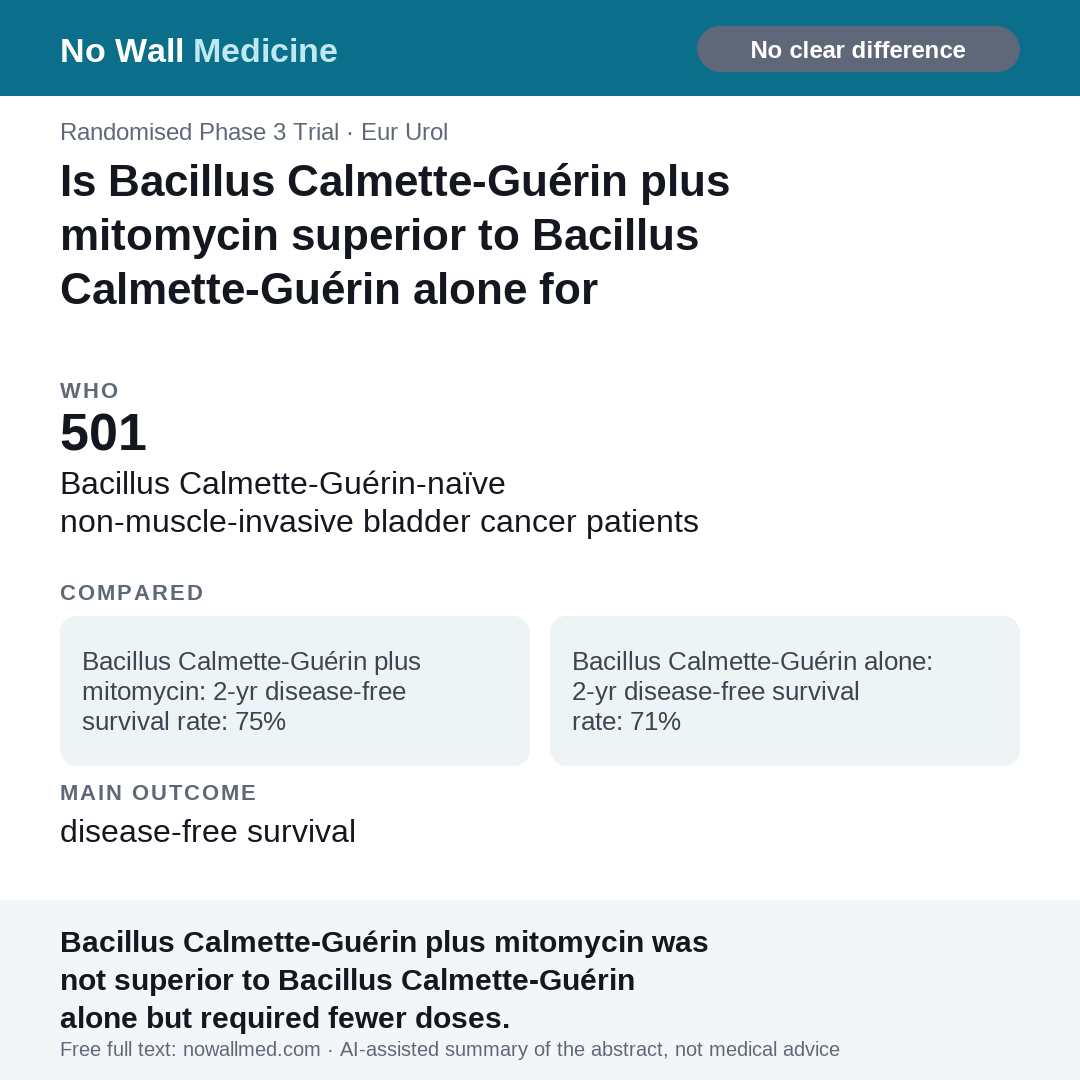
Bacillus Calmette-Guérin Plus Mitomycin Versus Bacillus Calmette-Guérin Alone for Bacillus Calmette-Guérin-naïve Non-muscle-invasive Bladder Cancer: A Randomised Phase 3 Trial (ANZUP 1301)
Randomised Phase 3 TrialNo clear difference
Is Bacillus Calmette-Guérin plus mitomycin superior to Bacillus Calmette-Guérin alone for non-muscle-invasive bladder cancer?
Who
501
Bacillus Calmette-Guérin-naïve non-muscle-invasive bladder cancer patients
Compared
Bacillus Calmette-Guérin plus mitomycin: 2-yr disease-free survival rate: 75%
Bacillus Calmette-Guérin alone: 2-yr disease-free survival rate: 71%
Main outcome
disease-free survival
Result: hazard ratio 0.87 (95% confidence interval 0.65-1.16)
Bottom line: Bacillus Calmette-Guérin plus mitomycin was not superior to Bacillus Calmette-Guérin alone but required fewer doses.
Eur Urol · 2026-02-02Download image
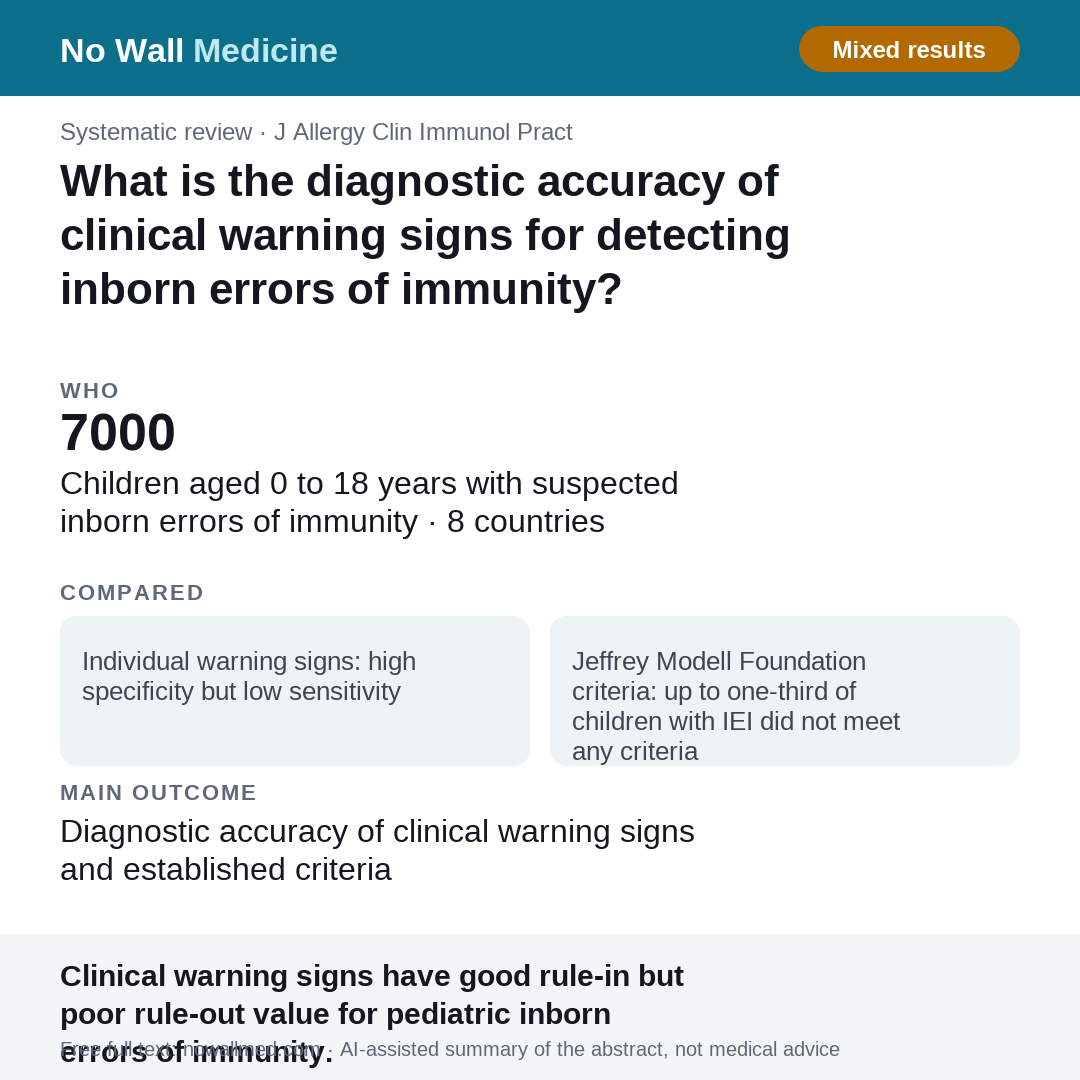
Clinical Warning Signs in Detecting Inborn Errors of Immunity in Children: A Diagnostic Accuracy Systematic Review
Systematic reviewMixed results
What is the diagnostic accuracy of clinical warning signs for detecting inborn errors of immunity?
Who
7000
Children aged 0 to 18 years with suspected inborn errors of immunity · 8 countries
Compared
Individual warning signs: high specificity but low sensitivity
Jeffrey Modell Foundation criteria: up to one-third of children with IEI did not meet any criteria
Main outcome
Diagnostic accuracy of clinical warning signs and established criteria
Bottom line: Clinical warning signs have good rule-in but poor rule-out value for pediatric inborn errors of immunity.
Limitation: Diagnostic performance was highly heterogeneous and pooled estimates are exploratory.
J Allergy Clin Immunol Pract · 2026-02-02Download image
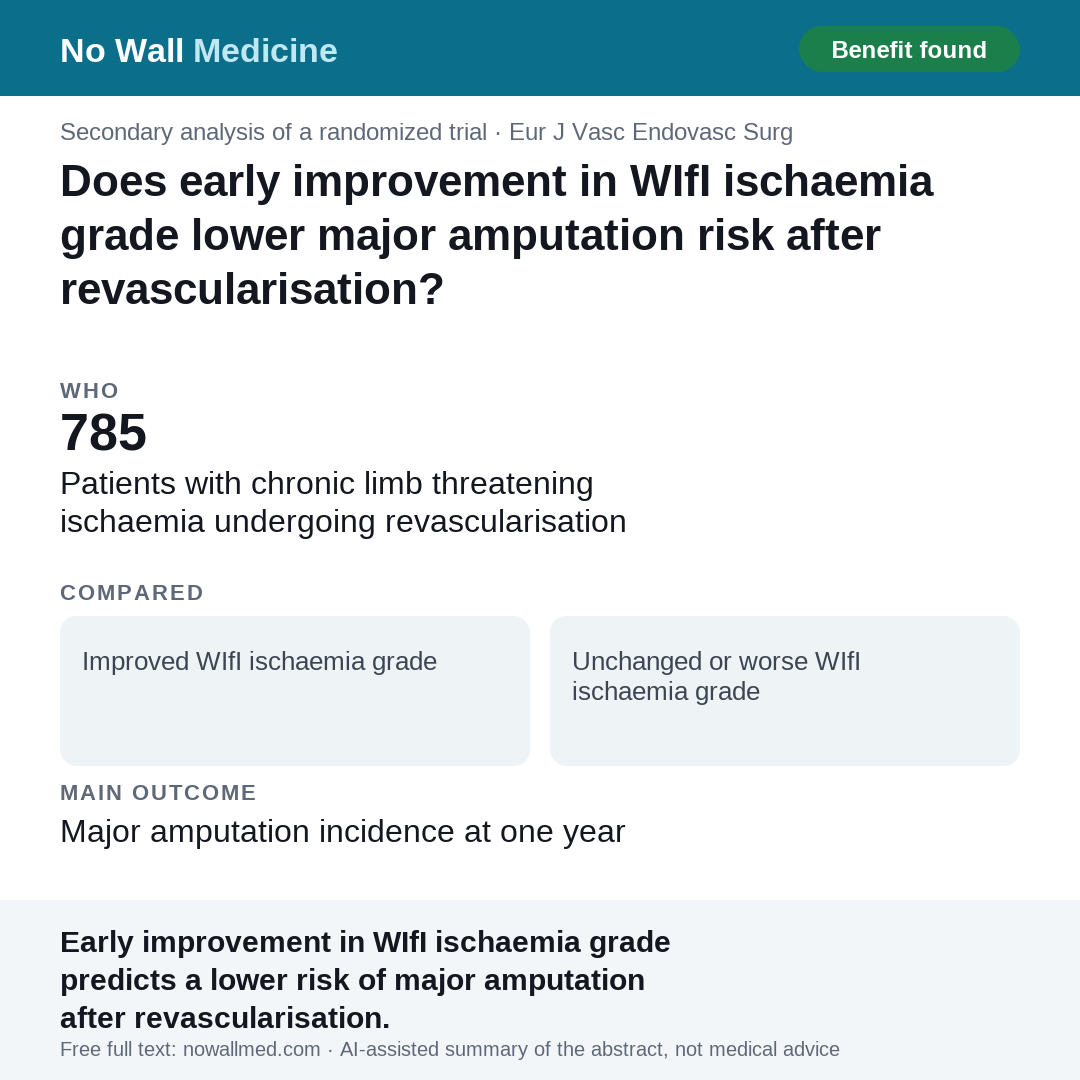
Editor's Choice - Early Improvement in Wound, Ischaemia, and foot Infection (WIfI) Ischaemia Grade Lowers Risk of Major Amputation following Revascularisation for Chronic Limb Threatening Ischaemia
Secondary analysis of a randomized trialBenefit found
Does early improvement in WIfI ischaemia grade lower major amputation risk after revascularisation?
Who
785
Patients with chronic limb threatening ischaemia undergoing revascularisation
Compared
Improved WIfI ischaemia grade
Unchanged or worse WIfI ischaemia grade
Main outcome
Major amputation incidence at one year
Result: hazard ratio 0.27 (95% confidence interval 0.18-0.41)
Bottom line: Early improvement in WIfI ischaemia grade predicts a lower risk of major amputation after revascularisation.
Eur J Vasc Endovasc Surg · 2026-02-02Download image
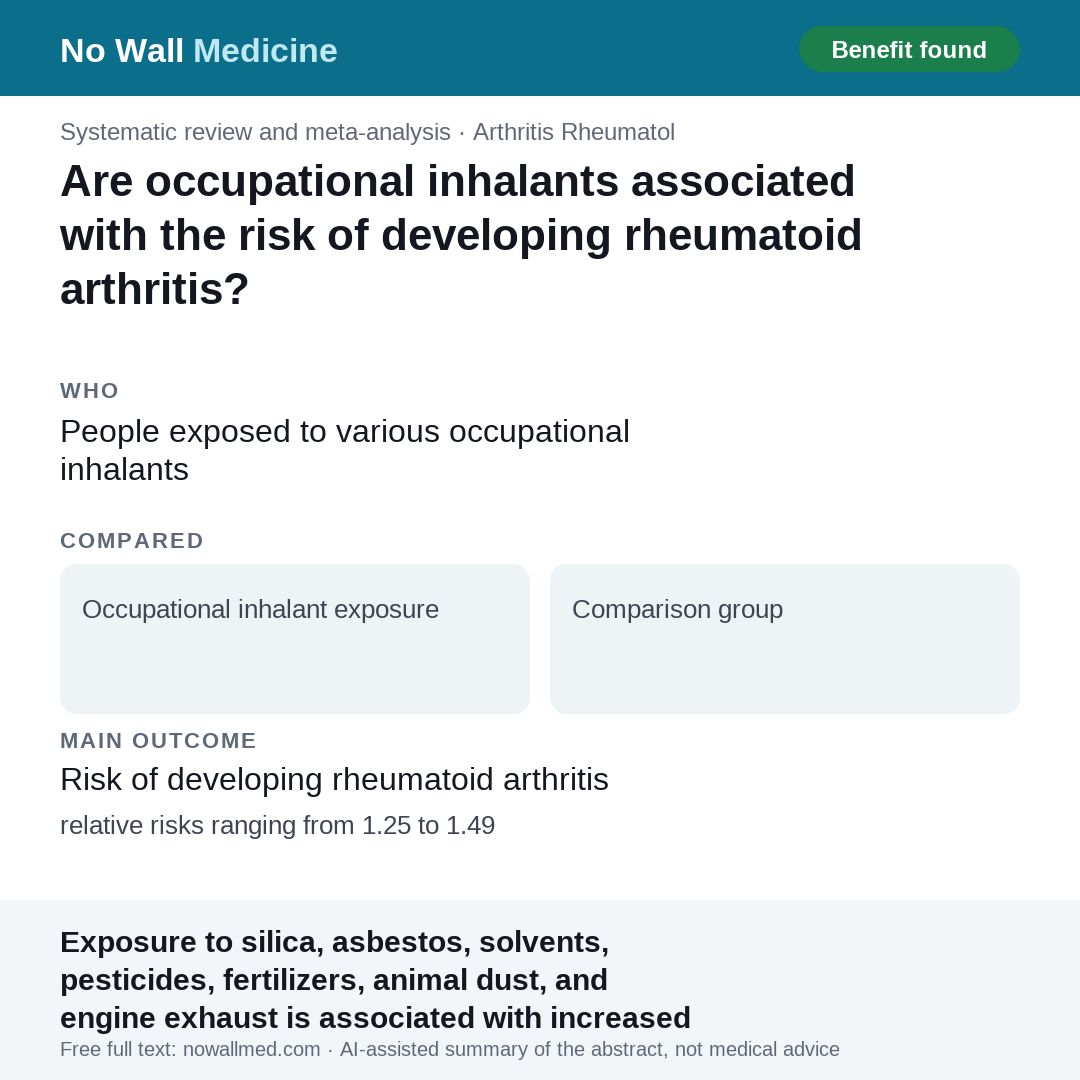
Exposure to Occupational Inhalants and the Risk of Developing Rheumatoid Arthritis: A Systematic Review and Meta-Analysis
Systematic review and meta-analysisKey finding
Are occupational inhalants associated with the risk of developing rheumatoid arthritis?
Who
People exposed to various occupational inhalants
Compared
Occupational inhalant exposure
Comparison group
Main outcome
Risk of developing rheumatoid arthritis
Result: relative risks ranging from 1.25 to 1.49
Bottom line: Exposure to silica, asbestos, solvents, pesticides, fertilizers, animal dust, and engine exhaust is associated with increased rheumatoid arthritis risk.
Limitation: Moderate-to-high heterogeneity was observed in seven meta-analyses.
Arthritis Rheumatol · 2026-02-02Download image