Visual abstracts
New randomized trials and meta-analyses from leading journals at a glance: who was studied, what was compared, and what was found. Every paper is free to read in full.
All specialtiesCardiology 847Oncology 766Gastroenterology & Hepatology 307Infectious Disease 626Neurology 353Psychiatry & Mental Health 430Pulmonology 368Critical Care 252Endocrinology & Diabetes 480Pediatrics 540Surgery 328Orthopedics & Sports Medicine 163Neurosurgery 100Cardiothoracic & Vascular Surgery 87Plastic & Reconstructive Surgery 132Nephrology 197Rheumatology 108Hematology 182Dermatology 80Ophthalmology 97Obstetrics & Gynecology 262Public & Global Health 167Radiology & Imaging 98Anesthesiology 117Urology 162ENT (Otolaryngology) 100Emergency Medicine 84Allergy & Immunology 58Geriatrics 160Family Medicine & Primary Care 111Medical Genetics & Genomics 91Pathology & Laboratory Medicine 24Physical Medicine & Rehabilitation 148Palliative Care 81Nutrition 223Digital Health & AI 460General Medicine 101
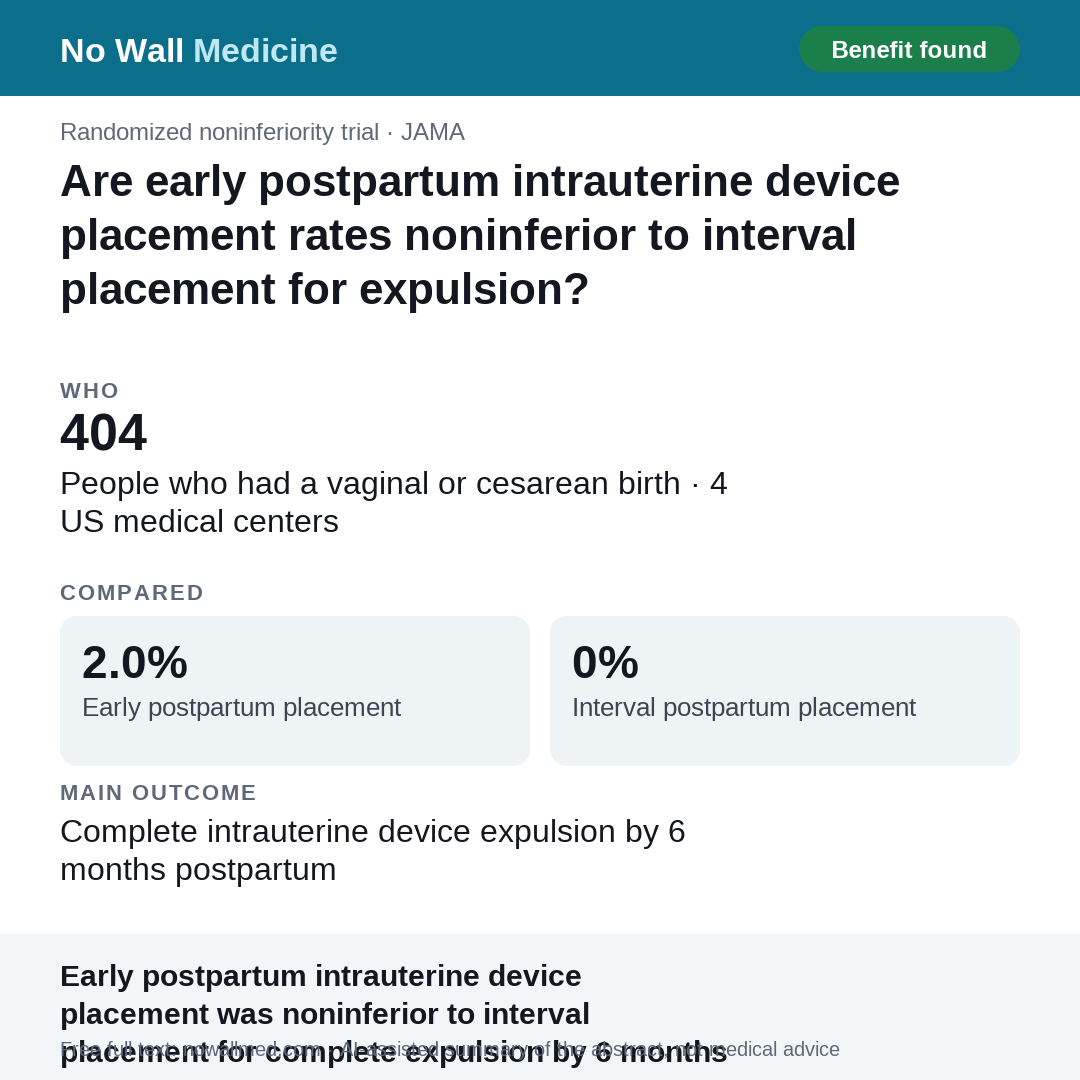
Early vs Interval Postpartum Intrauterine Device Placement: A Randomized Clinical Trial
Randomized noninferiority trialBenefit found
Are early postpartum intrauterine device placement rates noninferior to interval placement for expulsion?
Who
404
People who had a vaginal or cesarean birth · 4 US medical centers
Compared
2.0%Early postpartum placement (3/149)
0%Interval postpartum placement (0/145)
Main outcome
Complete intrauterine device expulsion by 6 months postpartum
Result: between-group difference, 2.0 (95% CI, -0.5 to 5.7) percentage points
Bottom line: Early postpartum intrauterine device placement was noninferior to interval placement for complete expulsion by 6 months postpartum.
JAMA · 2023-03-21Download image
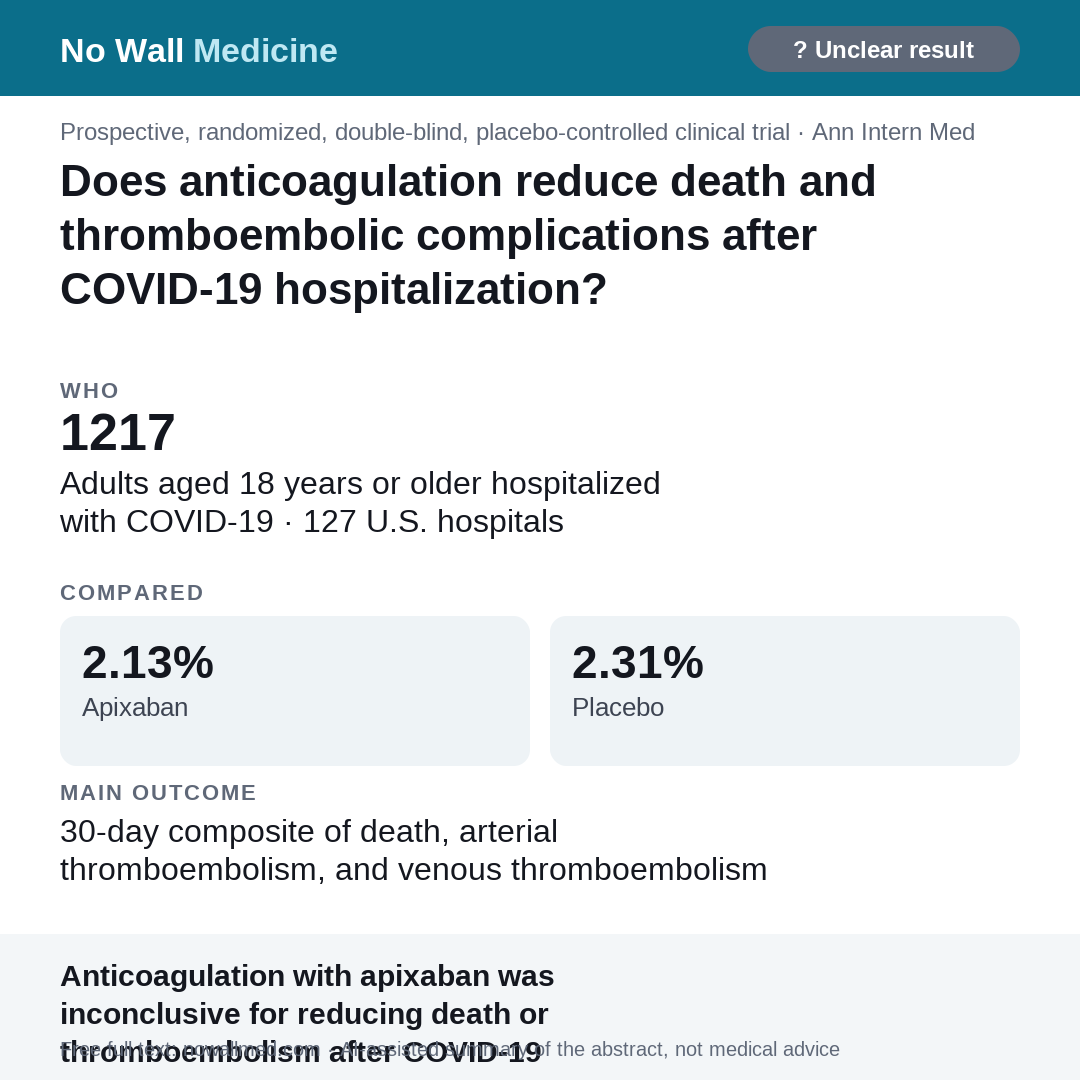
Effect of Thromboprophylaxis on Clinical Outcomes After COVID-19 Hospitalization
Prospective, randomized, double-blind, placebo-controlled clinical trialUnclear result
Does anticoagulation reduce death and thromboembolic complications after COVID-19 hospitalization?
Who
1217
Adults aged 18 years or older hospitalized with COVID-19 · 127 U.S. hospitals
Compared
2.13%Apixaban (95% CI, 1.14 to 3.62)
2.31%Placebo (CI, 1.27 to 3.84)
Main outcome
30-day composite of death, arterial thromboembolism, and venous thromboembolism
Bottom line: Anticoagulation with apixaban was inconclusive for reducing death or thromboembolism after COVID-19 hospitalization due to early termination.
Limitation: Early enrollment termination and changing SARS-CoV-2 variant peaks made results imprecise.
Funded by: National Institutes of Health
Ann Intern Med · 2023-03-21Download image
Immunogenicity, safety, and tolerability of a recombinant measles-vectored Lassa fever vaccine: a randomised, placebo-controlled, first-in-human trial
Randomised, placebo-controlled, first-in-human trialBenefit found
What are the safety, tolerability, and immunogenicity of the MV-LASV vaccine?
Who
60
Healthy adults aged 18-55 years · Single site in Antwerp, Belgium
Compared
Low-dose MV-LASV: 96% (24/25) local solicited adverse events
High-dose MV-LASV: 100% (23/23) local solicited adverse events
Placebo: 50% (6/12) local solicited adverse events
Main outcome
Rate of solicited and unsolicited adverse events
Bottom line: The MV-LASV vaccine showed an acceptable safety and tolerability profile and induced substantial Lassa virus-specific IgG concentrations.
Funded by: Coalition for Epidemic Preparedness Innovations
Lancet · 2023-03-16Download image

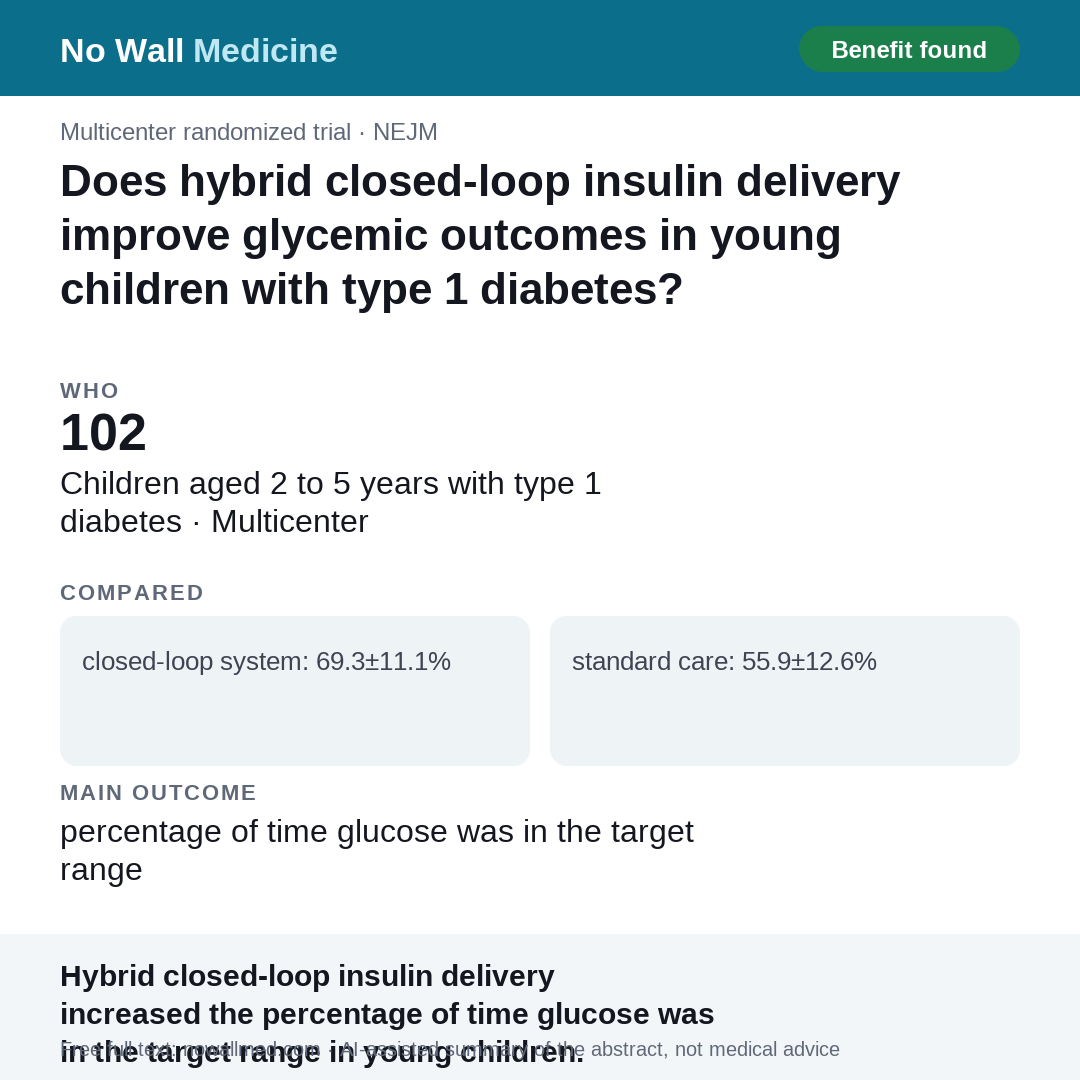
Trial of Hybrid Closed-Loop Control in Young Children with Type 1 Diabetes
Multicenter randomized trialBenefit found
Does hybrid closed-loop insulin delivery improve glycemic outcomes in young children with type 1 diabetes?
Who
102
Children aged 2 to 5 years with type 1 diabetes · Multicenter
Compared
closed-loop system: 69.3±11.1%
standard care: 55.9±12.6%
Main outcome
percentage of time glucose was in the target range
Result: mean adjusted difference, 12.4 percentage points (95% CI, 9.5 to 15.3)
Bottom line: Hybrid closed-loop insulin delivery increased the percentage of time glucose was in the target range in young children.
Funded by: National Institute of Diabetes and Digestive and Kidney Diseases
NEJM · 2023-03-15Download image
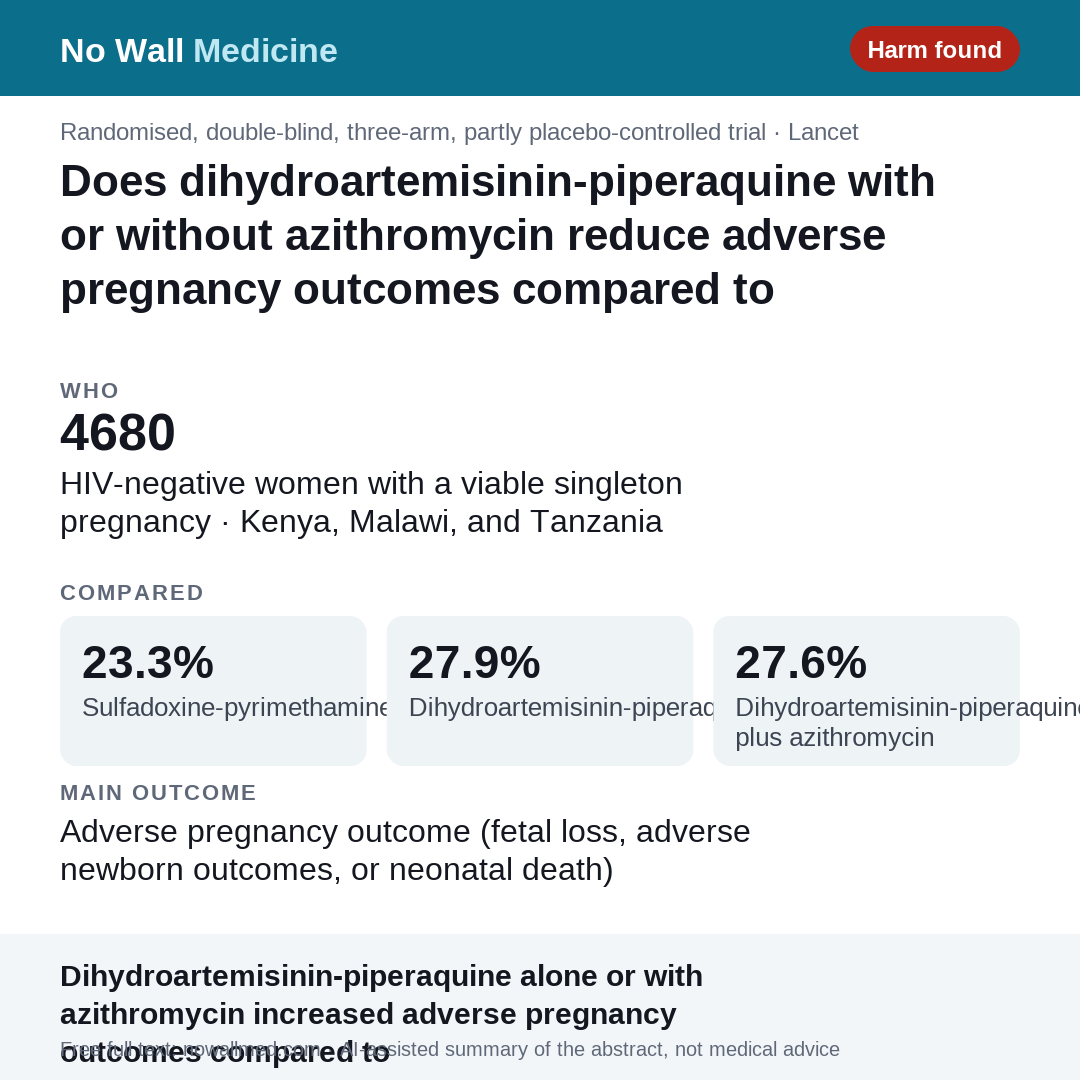
Effect of monthly intermittent preventive treatment with dihydroartemisinin-piperaquine with and without azithromycin versus monthly sulfadoxine-pyrimethamine on adverse pregnancy outcomes in Africa: a double-blind randomised, partly placebo-controlled trial
Randomised, double-blind, three-arm, partly placebo-controlled trialHarm found
Does dihydroartemisinin-piperaquine with or without azithromycin reduce adverse pregnancy outcomes compared to sulfadoxine-pyrimethamine?
Who
4680
HIV-negative women with a viable singleton pregnancy · Kenya, Malawi, and Tanzania
Compared
23.3%Sulfadoxine-pyrimethamine
27.9%Dihydroartemisinin-piperaquine
27.6%Dihydroartemisinin-piperaquine plus azithromycin
Main outcome
Adverse pregnancy outcome (fetal loss, adverse newborn outcomes, or neonatal death)
Result: risk ratio 1.20 (95% CI 1.06-1.36); risk ratio 1.16 (95% CI 1.03-1.32)
Bottom line: Dihydroartemisinin-piperaquine alone or with azithromycin increased adverse pregnancy outcomes compared to sulfadoxine-pyrimethamine.
Funded by: European & Developing Countries Clinical Trials Partnership 2, EU, UK FCDO, Medical Research Council
Lancet · 2023-03-10Download image
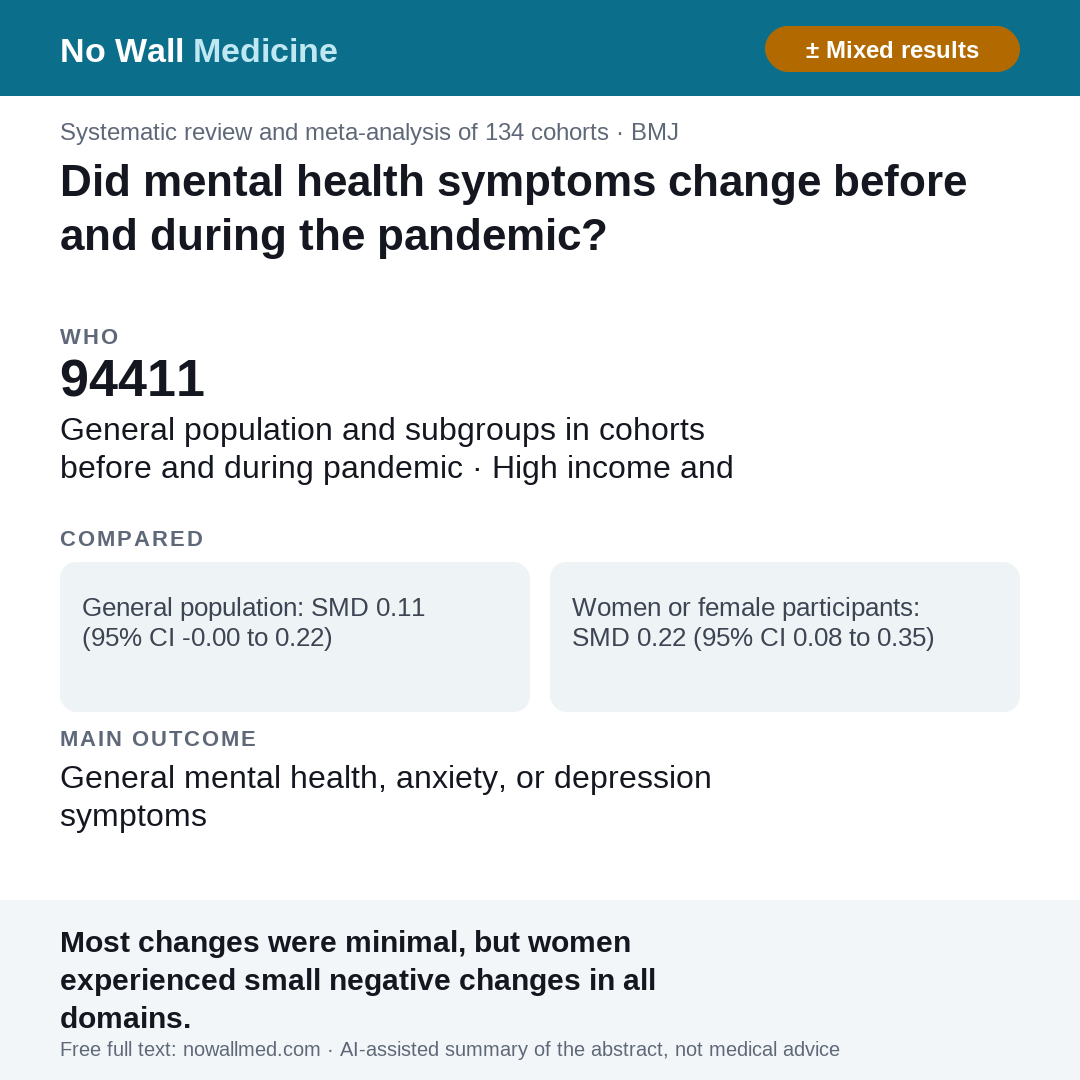
Comparison of mental health symptoms before and during the covid-19 pandemic: evidence from a systematic review and meta-analysis of 134 cohorts
Systematic review and meta-analysisMixed results
How did mental health symptoms change before and during the covid-19 pandemic?
Who
Any population in 134 cohorts · High income and upper middle income countries
Compared
General population: general mental health: standardised mean difference change 0.11
0.05General population: anxiety symptoms
0.12General population: depression symptoms
0.22Women or female participants: general mental health
Main outcome
General mental health, anxiety symptoms, or depression symptoms
Bottom line: Most symptom changes were minimal or not statistically significant, though women experienced small increases in mental health symptoms.
Limitation: Substantial heterogeneity and risk of bias were present across analyses.
BMJ · 2023-03-08Download image
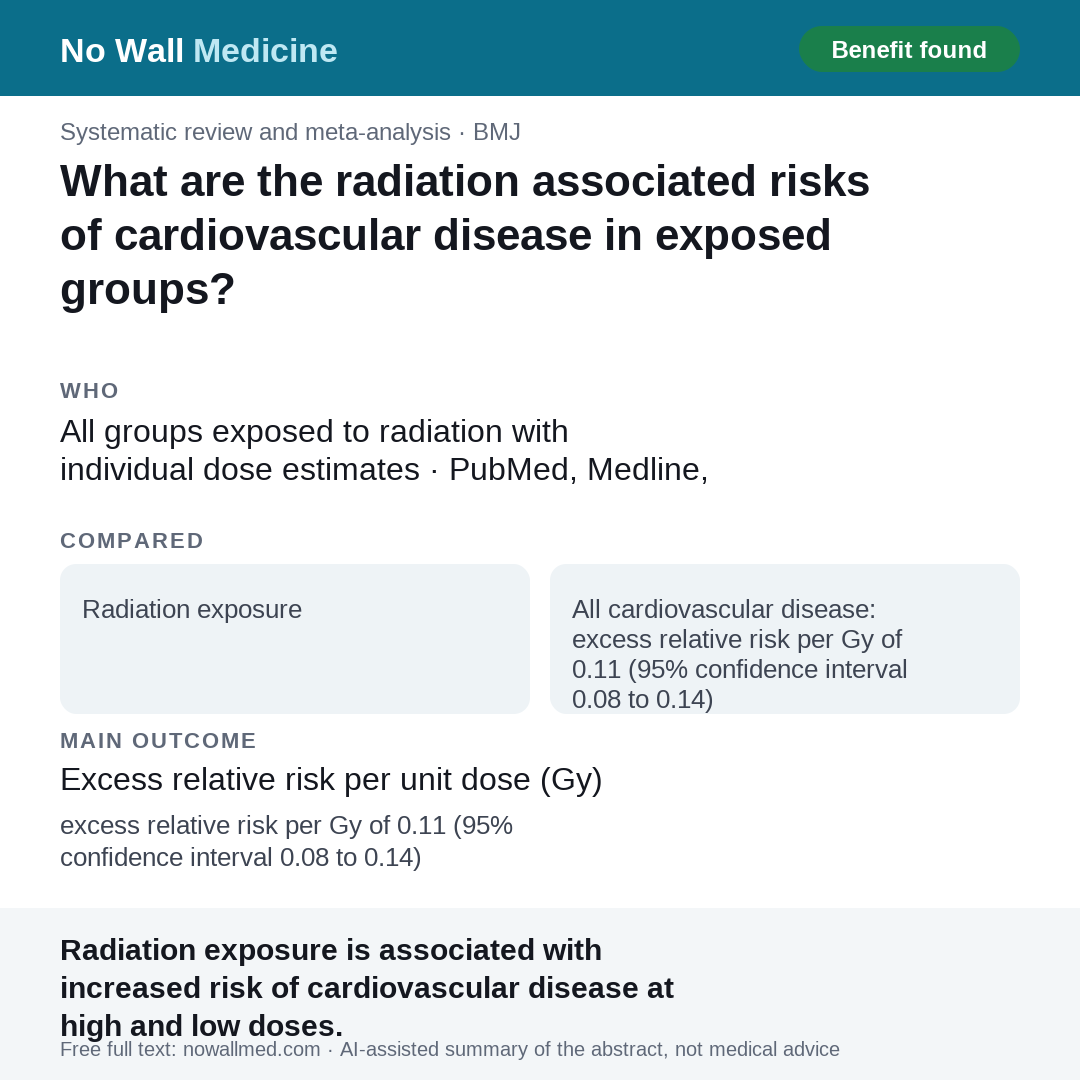
Ionising radiation and cardiovascular disease: systematic review and meta-analysis
Systematic review and meta-analysisBenefit found
What are the radiation associated risks of cardiovascular disease in exposed groups?
Who
All groups exposed to radiation with individual dose estimates · PubMed, Medline, Embase, Scopus, and Web of Science
Compared
Radiation exposure
All cardiovascular disease: excess relative risk per Gy of 0.11 (95% confidence interval 0.08 to 0.14)
Main outcome
Excess relative risk per unit dose (Gy)
Result: excess relative risk per Gy of 0.11 (95% confidence interval 0.08 to 0.14)
Bottom line: Radiation exposure is associated with increased risk of cardiovascular disease at high and low doses.
Limitation: Interstudy heterogeneity possibly resulting from unmeasured confounders or effect modifiers.
BMJ · 2023-03-08Download image
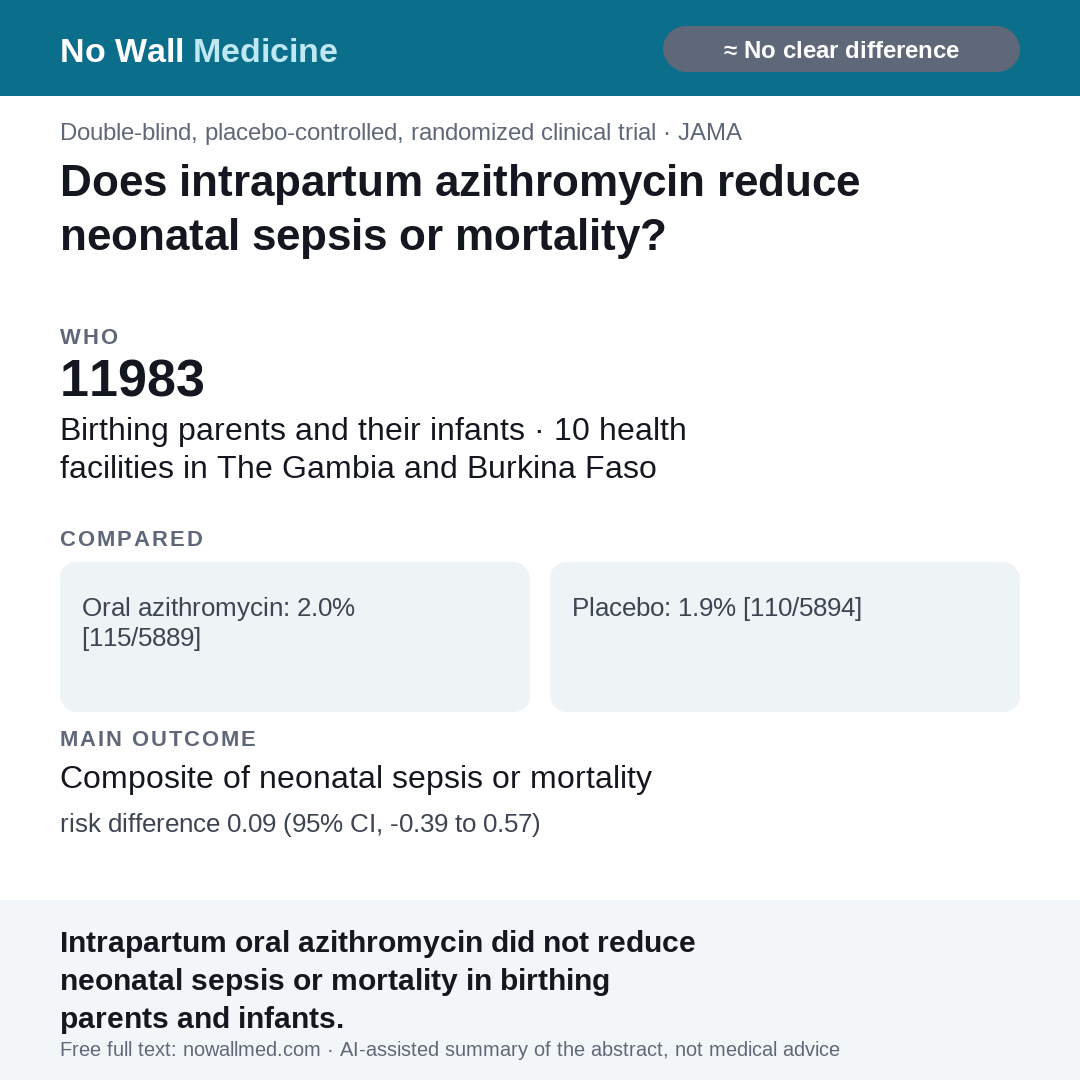
Effect of Intrapartum Azithromycin vs Placebo on Neonatal Sepsis and Death: A Randomized Clinical Trial
Double-blind, placebo-controlled, randomized clinical trialNo clear difference
Does intrapartum azithromycin reduce neonatal sepsis or mortality?
Who
11983
Birthing parents and their infants · 10 health facilities in The Gambia and Burkina Faso
Compared
Oral azithromycin: 2.0% [115/5889]
Placebo: 1.9% [110/5894]
Main outcome
Composite of neonatal sepsis or mortality
Result: risk difference 0.09 (95% CI, -0.39 to 0.57)
Bottom line: Intrapartum oral azithromycin did not reduce neonatal sepsis or mortality in birthing parents and infants.
JAMA · 2023-03-07Download image
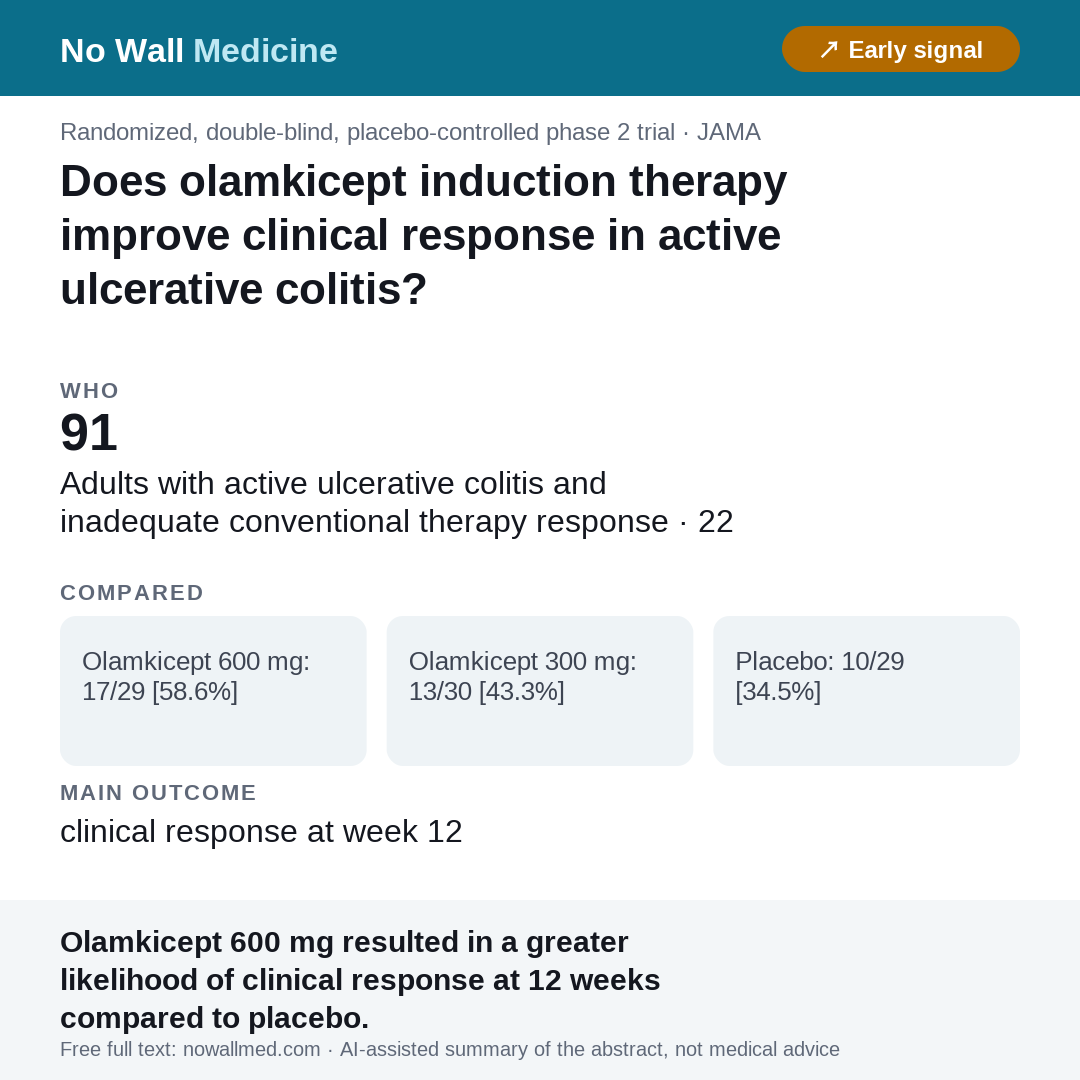
Effect of Induction Therapy With Olamkicept vs Placebo on Clinical Response in Patients With Active Ulcerative Colitis: A Randomized Clinical Trial
Randomized, double-blind, placebo-controlled phase 2 trialBenefit found
Does olamkicept induction therapy improve clinical response in active ulcerative colitis?
Who
91
Adults with active ulcerative colitis and inadequate conventional therapy response · 22 clinical study sites in East Asia
Compared
Olamkicept 600 mg: 17/29 [58.6%]
Olamkicept 300 mg: 13/30 [43.3%]
Placebo: 10/29 [34.5%]
Main outcome
clinical response at week 12
Result: adjusted difference vs placebo of 26.6% (90% CI, 6.2% to 47.1%)
Bottom line: Olamkicept 600 mg resulted in a greater likelihood of clinical response at 12 weeks compared to placebo.
JAMA · 2023-03-07Download image
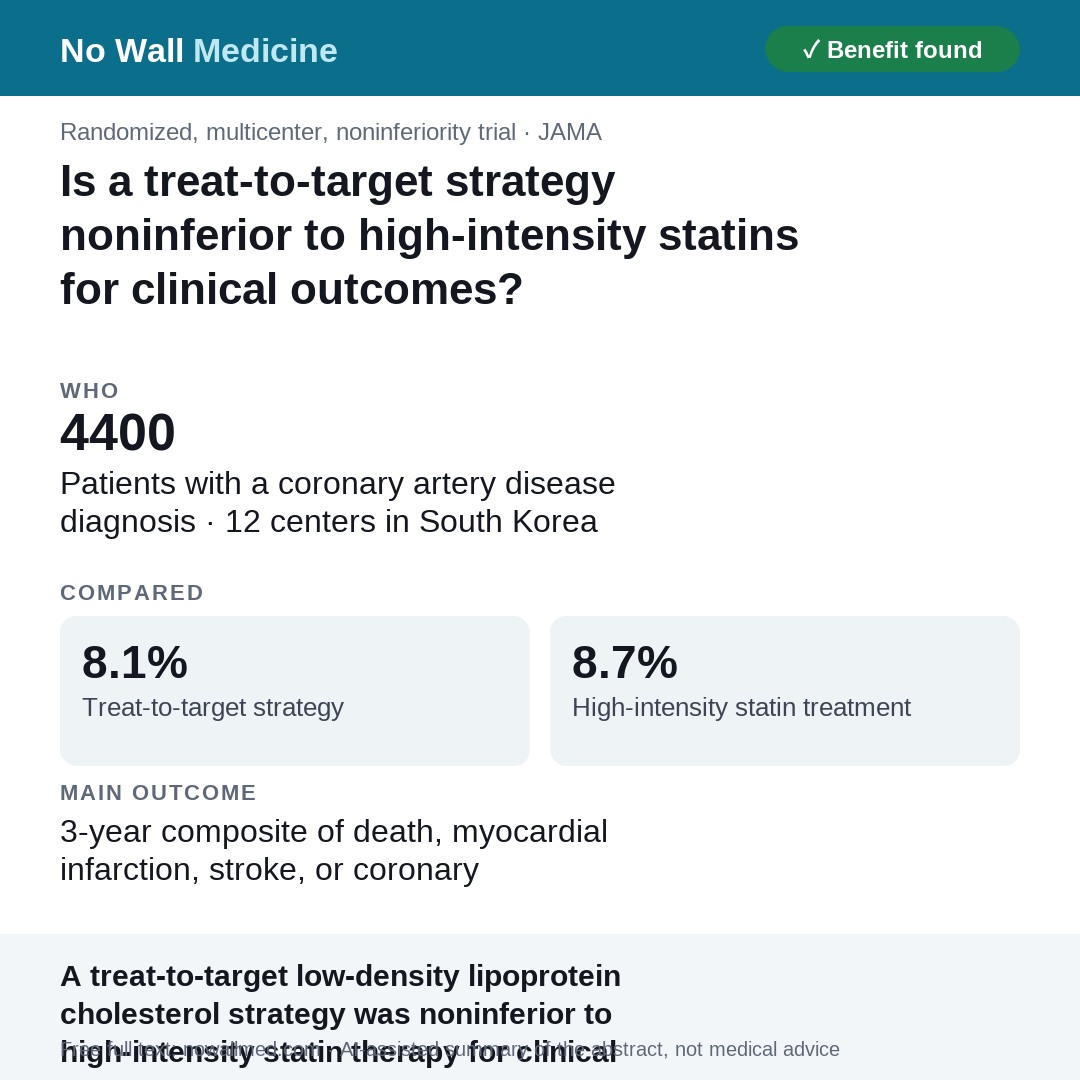
Treat-to-Target or High-Intensity Statin in Patients With Coronary Artery Disease: A Randomized Clinical Trial
Randomized, multicenter, noninferiority trialBenefit found
Is a treat-to-target strategy noninferior to high-intensity statins for clinical outcomes?
Who
4400
Patients with a coronary artery disease diagnosis · 12 centers in South Korea
Compared
8.1%Treat-to-target strategy
8.7%High-intensity statin treatment
Main outcome
3-year composite of death, myocardial infarction, stroke, or coronary revascularization
Result: absolute difference, -0.6 percentage points [upper boundary of the 1-sided 97.5% CI, 1.1 percentage points]
Bottom line: A treat-to-target low-density lipoprotein cholesterol strategy was noninferior to high-intensity statin therapy for clinical outcomes.
JAMA · 2023-03-07Download image
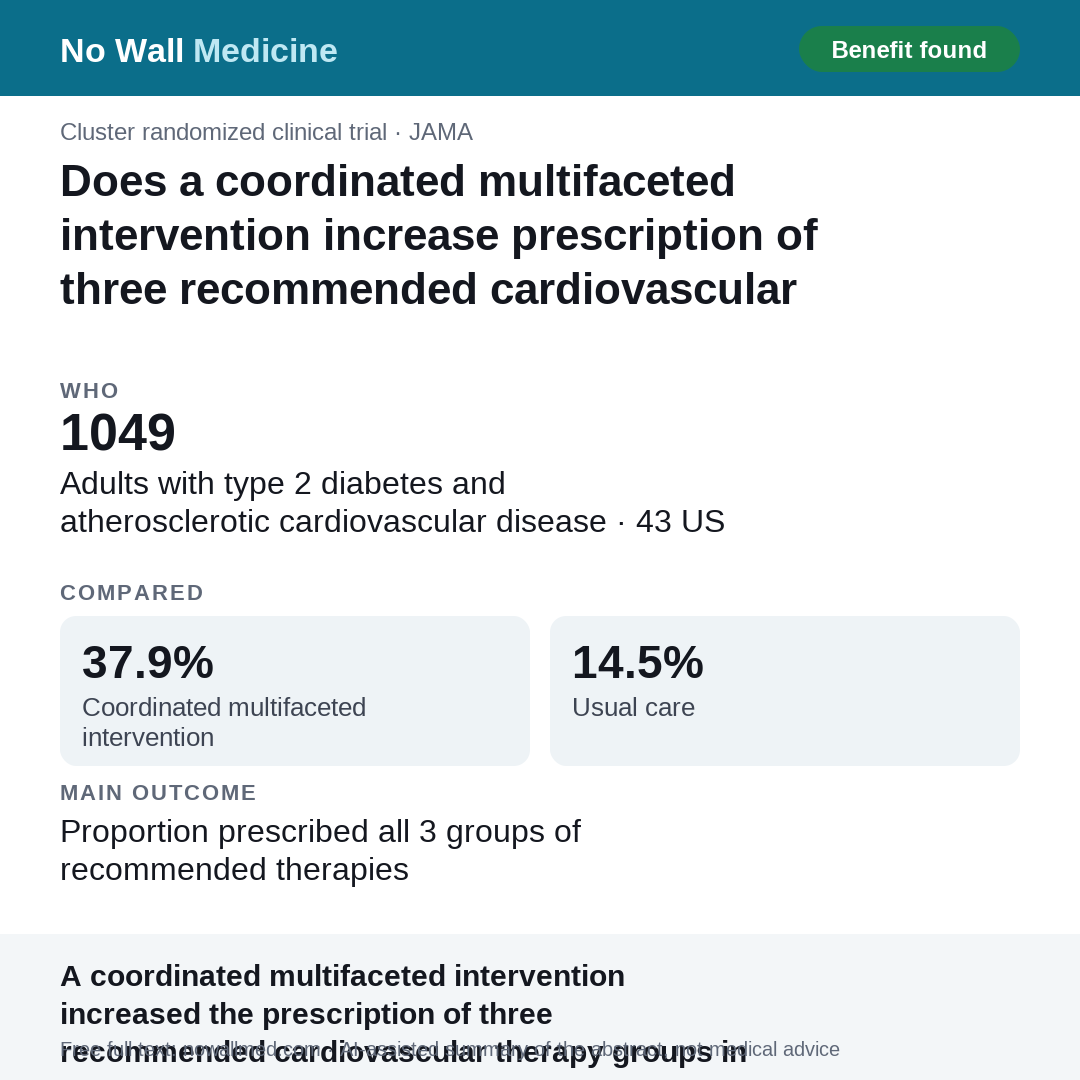
Coordinated Care to Optimize Cardiovascular Preventive Therapies in Type 2 Diabetes: A Randomized Clinical Trial
Cluster randomized clinical trialBenefit found
Does a coordinated multifaceted intervention increase prescription of three recommended cardiovascular therapies?
Who
1049
Adults with type 2 diabetes and atherosclerotic cardiovascular disease · 43 US cardiology clinics
Compared
37.9%Coordinated multifaceted intervention (173/457)
14.5%Usual care (85/588)
Main outcome
Proportion prescribed all 3 groups of recommended therapies
Result: adjusted odds ratio 4.38 (95% CI, 2.49 to 7.71)
Bottom line: A coordinated multifaceted intervention increased the prescription of three recommended cardiovascular therapy groups in adults with type 2 diabetes.
JAMA · 2023-03-07Download image
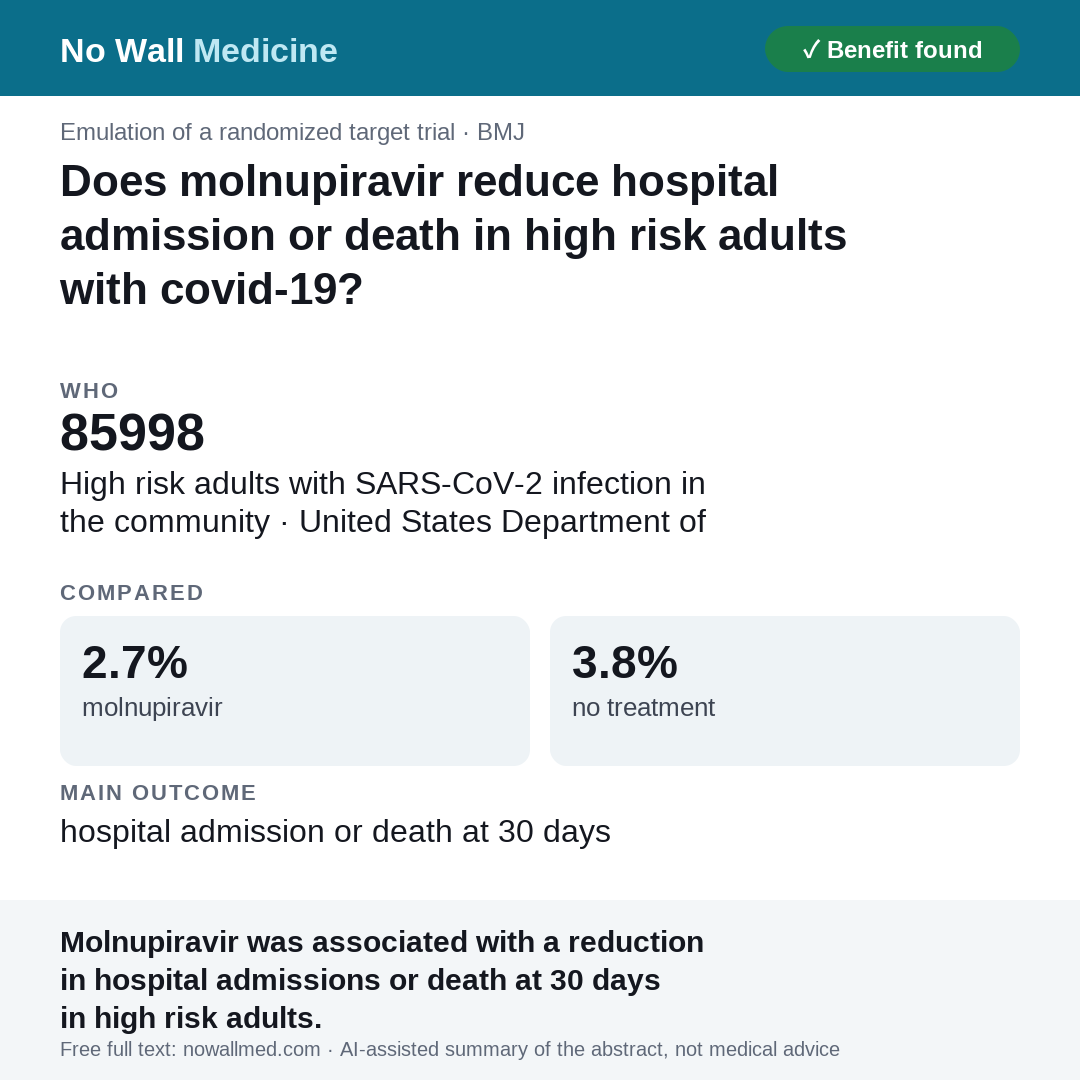
Molnupiravir and risk of hospital admission or death in adults with covid-19: emulation of a randomized target trial using electronic health records
Emulation of a randomized target trialBenefit found
Does molnupiravir reduce hospital admission or death in high risk adults with covid-19?
Who
85998
High risk adults with SARS-CoV-2 infection in the community · United States Department of Veterans Affairs
Compared
2.7%molnupiravir (95% confidence interval 2.5% to 3.0%)
3.8%no treatment (3.7% to 3.9%)
Main outcome
hospital admission or death at 30 days
Result: relative risk 0.72 (95% confidence interval 0.64 to 0.79)
Bottom line: Molnupiravir was associated with a reduction in hospital admissions or death at 30 days in high risk adults.
BMJ · 2023-03-07Download image
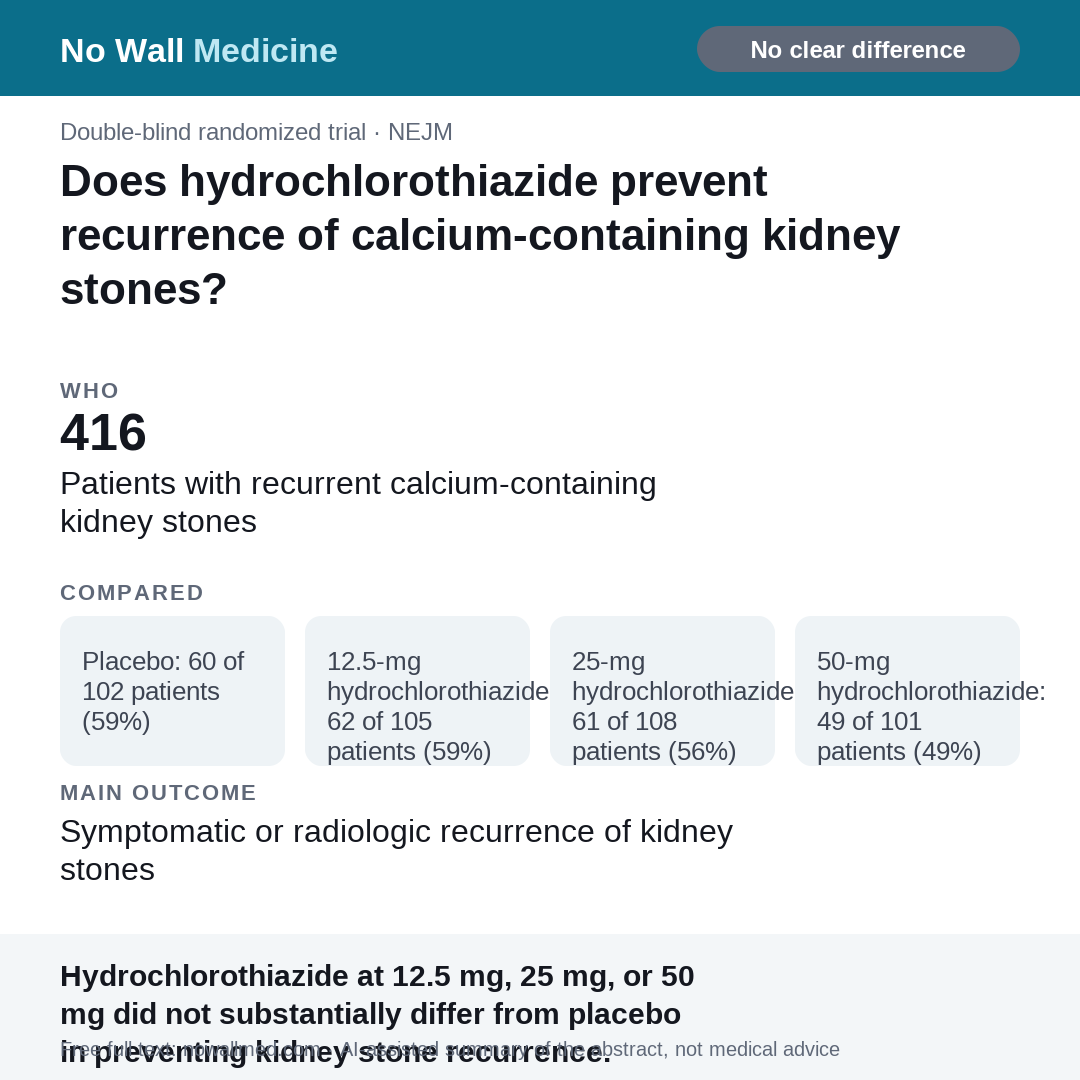
Rate-Adaptive Atrial Pacing for Heart Failure With Preserved Ejection Fraction: The RAPID-HF Randomized Clinical Trial
Single-center, double-blind, randomized, crossover trialNo clear difference
Does rate-adaptive atrial pacing improve exercise performance in patients with heart failure with preserved ejection fraction?
Who
29
Patients with symptomatic heart failure with preserved ejection fraction and chronotropic incompetence · Tertiary referral center, Rochester, Minnesota
Compared
No pacing: 10.4 [SD, 2.9] mL/kg/min
Atrial rate responsive pacing: 10.7 [SD, 2.6] mL/kg/min
Main outcome
Oxygen consumption at anaerobic threshold
Result: absolute difference, 0.3 [95% CI, -0.5 to 1.0] mL/kg/min
Bottom line: Atrial pacing increased exercise heart rate but did not improve oxygen consumption or exercise capacity in these patients.
JAMA · 2023-03-06Download image
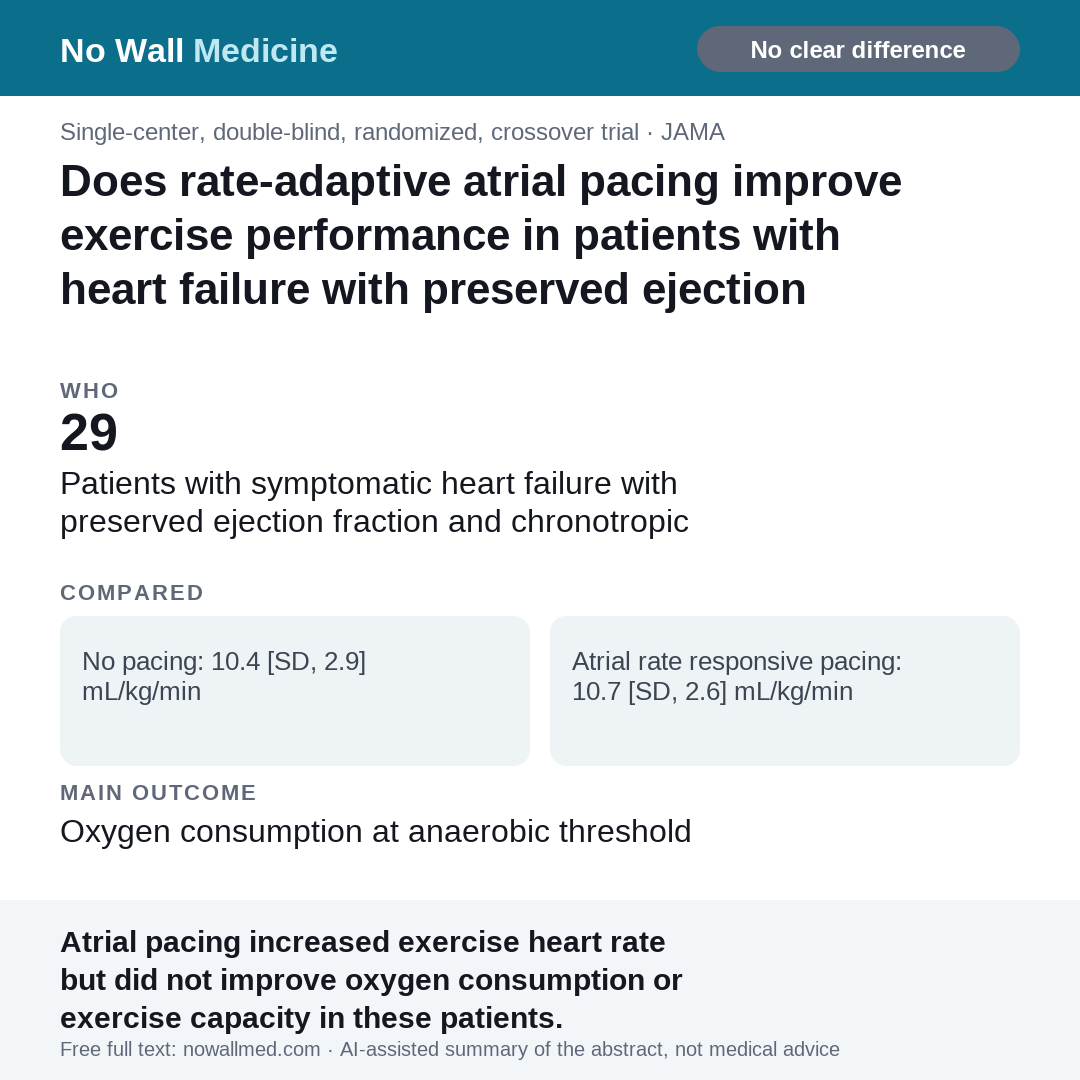
Codon-specific KRAS mutations predict survival benefit of trifluridine/tipiracil in metastatic colorectal cancer
Analysis of RECOURSE trial and real-world dataMixed results
Do KRAS codon mutations predict survival benefit of trifluridine/tipiracil in metastatic colorectal cancer?
Who
800
Patients with metastatic colorectal cancer
Compared
KRAS codon 12 mutation: hazard ratio 0.97 (95% CI 0.73-1.20)
KRAS codon 13 mutation: hazard ratio 0.29 (95% CI 0.15-0.55)
Main outcome
overall survival
Result: hazard ratio 0.97 (95% CI 0.73-1.20) for KRASG12
Bottom line: KRAS codon 12 mutations predict reduced survival benefit from trifluridine/tipiracil, while codon 13 mutations show improved survival.
Nat Med · 2023-03-02Download image
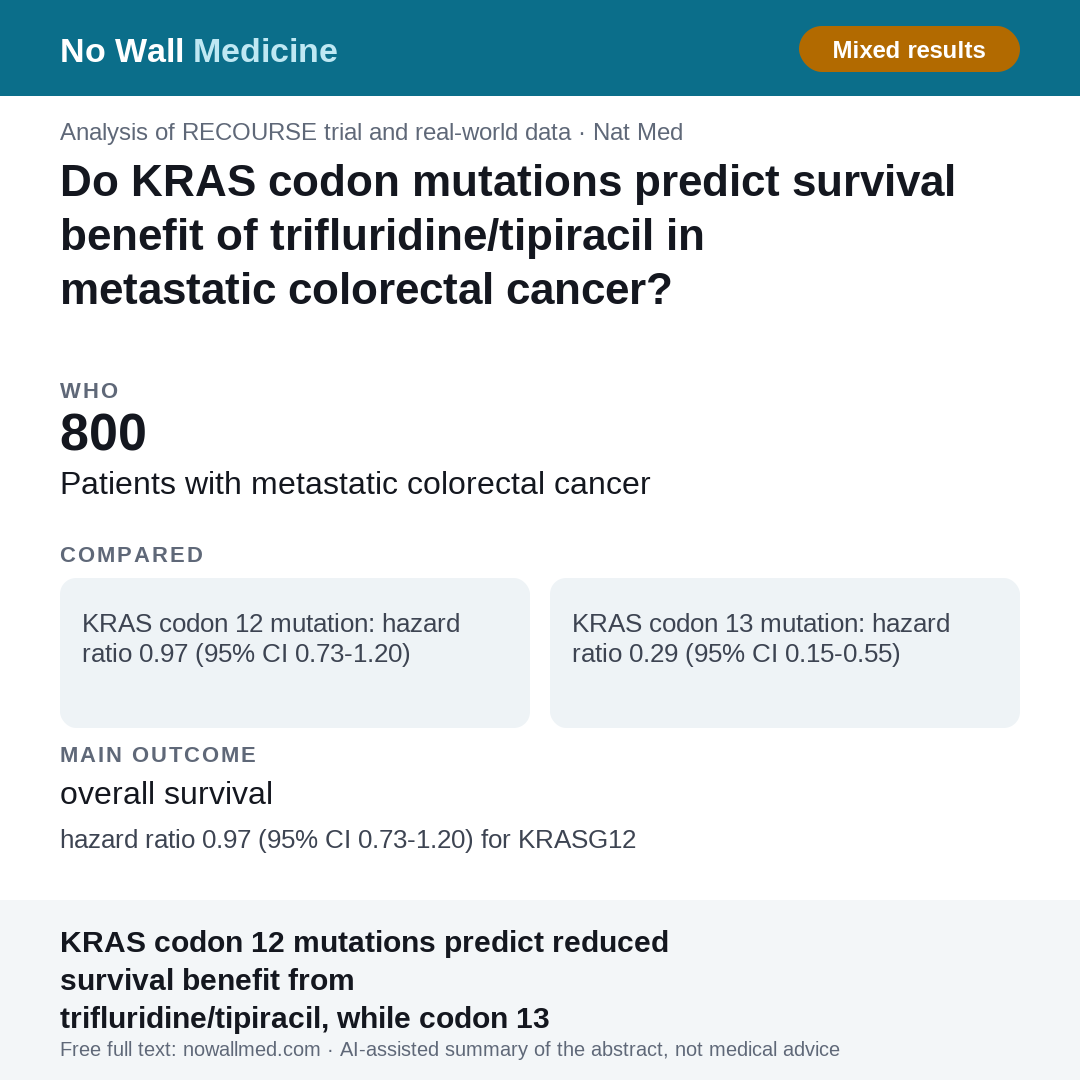
Intravenous Doxycycline, Azithromycin, or Both for Severe Scrub Typhus
Multicenter, double-blind, randomized, controlled trialBenefit found
Which antibiotic treatment is most effective for severe scrub typhus?
Who
794
Patients 15 years or older with severe scrub typhus and organ involvement · Multicenter
Compared
33%Combination therapy
47%Intravenous doxycycline
48%Azithromycin
Main outcome
Composite of death, persistent complications, and persistent fever
Result: risk difference -13.3 percentage points (95% CI -21.6 to -5.1) vs doxycycline; -14.8 percentage points (95% CI -23.1 to -6.5) vs azithromycin
Bottom line: Combination therapy with intravenous doxycycline and azithromycin is better than monotherapy for severe scrub typhus.
Funded by: India Alliance and Wellcome Trust
NEJM · 2023-03-01Download image
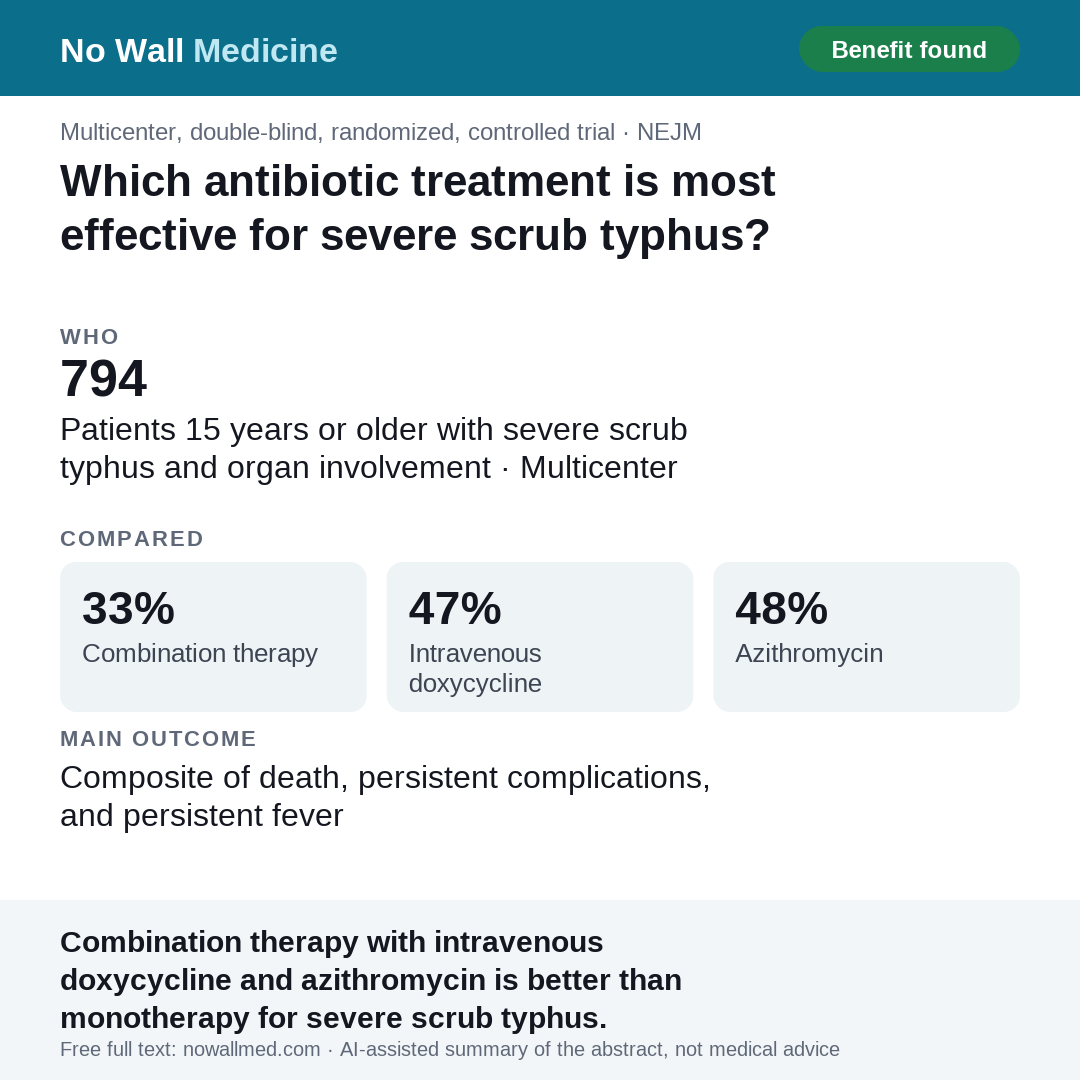
Hydrochlorothiazide and Prevention of Kidney-Stone Recurrence
Double-blind randomized trialNo clear difference
Does hydrochlorothiazide prevent recurrence of calcium-containing kidney stones?
Who
416
Patients with recurrent calcium-containing kidney stones
Compared
Placebo: 60 of 102 patients (59%)
12.5-mg hydrochlorothiazide: 62 of 105 patients (59%)
25-mg hydrochlorothiazide: 61 of 108 patients (56%)
50-mg hydrochlorothiazide: 49 of 101 patients (49%)
Main outcome
Symptomatic or radiologic recurrence of kidney stones
Bottom line: Hydrochlorothiazide at 12.5 mg, 25 mg, or 50 mg did not substantially differ from placebo in preventing kidney stone recurrence.
Funded by: Swiss National Science Foundation and Inselspital
NEJM · 2023-03-01Download image
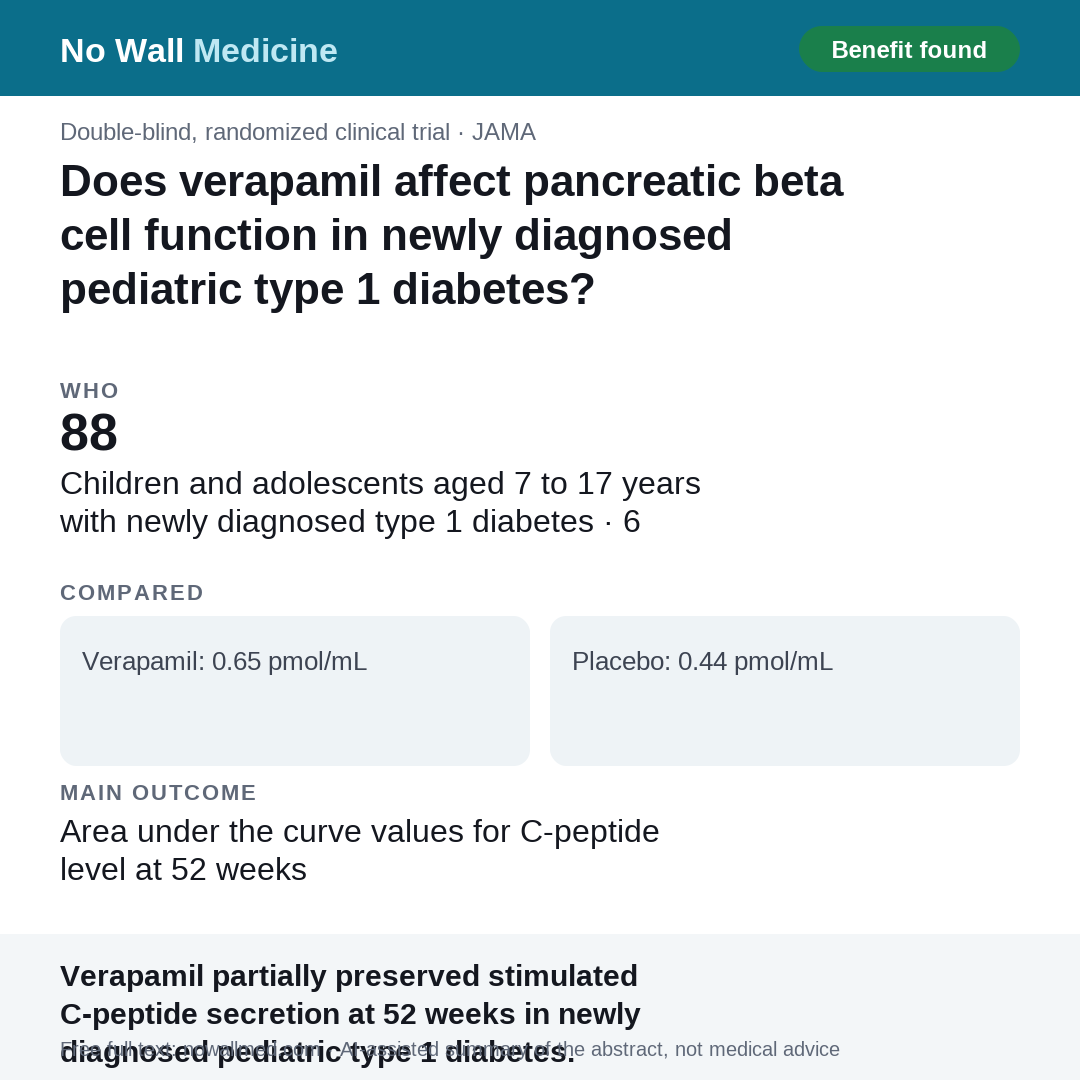
Effect of Verapamil on Pancreatic Beta Cell Function in Newly Diagnosed Pediatric Type 1 Diabetes: A Randomized Clinical Trial
Double-blind, randomized clinical trialBenefit found
Does verapamil affect pancreatic beta cell function in newly diagnosed pediatric type 1 diabetes?
Who
88
Children and adolescents aged 7 to 17 years with newly diagnosed type 1 diabetes · 6 centers in the US
Compared
Verapamil: 0.65 pmol/mL
Placebo: 0.44 pmol/mL
Main outcome
Area under the curve values for C-peptide level at 52 weeks
Result: adjusted between-group difference, 0.14 pmol/mL (95% CI, 0.01 to 0.27 pmol/mL)
Bottom line: Verapamil partially preserved stimulated C-peptide secretion at 52 weeks in newly diagnosed pediatric type 1 diabetes.
JAMA · 2023-02-25Download image
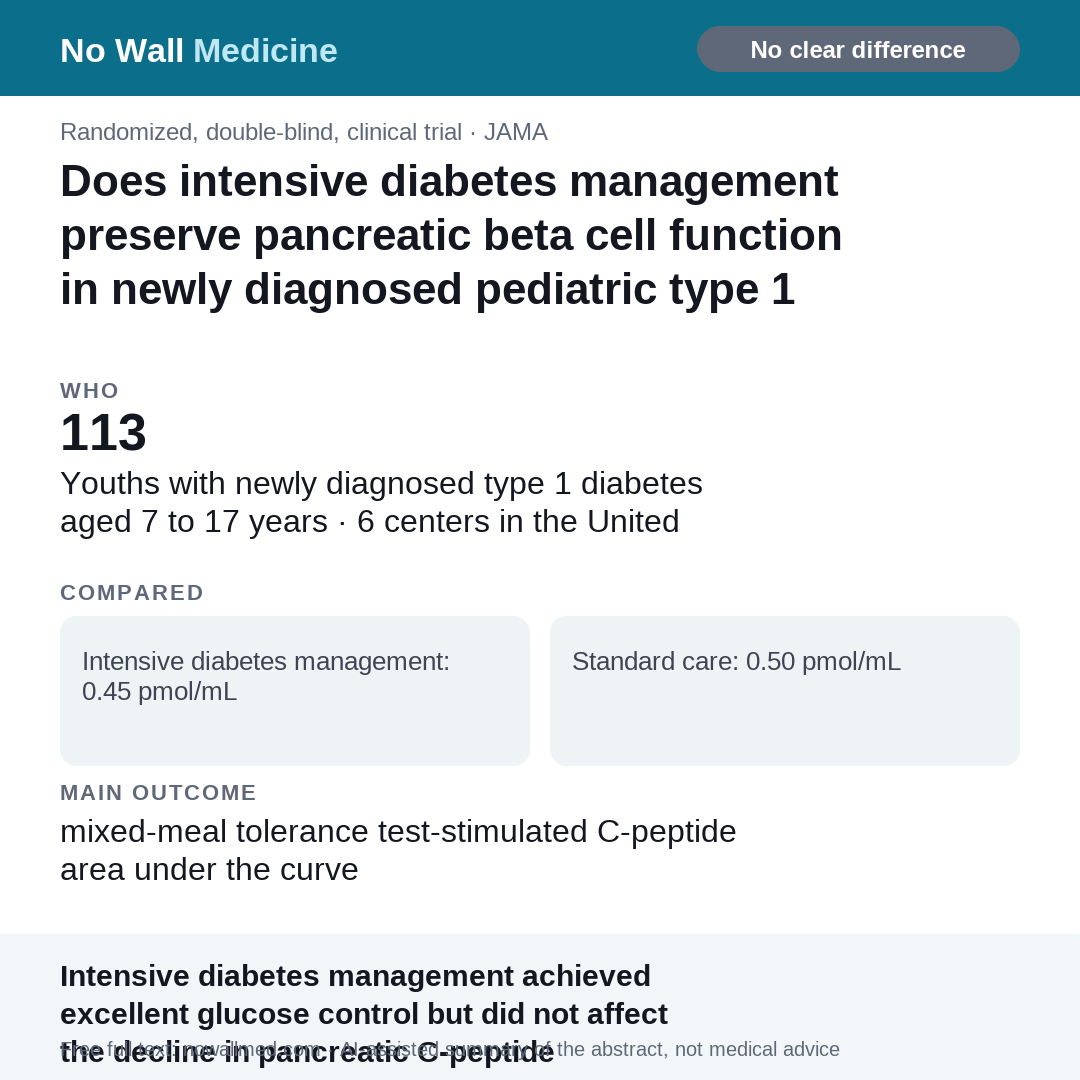
Effect of Tight Glycemic Control on Pancreatic Beta Cell Function in Newly Diagnosed Pediatric Type 1 Diabetes: A Randomized Clinical Trial
Randomized, double-blind, clinical trialNo clear difference
Does intensive diabetes management preserve pancreatic beta cell function in newly diagnosed pediatric type 1 diabetes?
Who
113
Youths with newly diagnosed type 1 diabetes aged 7 to 17 years · 6 centers in the United States
Compared
Intensive diabetes management: 0.45 pmol/mL
Standard care: 0.50 pmol/mL
Main outcome
mixed-meal tolerance test-stimulated C-peptide area under the curve
Result: -0.01 (95% CI, -0.11 to 0.10)
Bottom line: Intensive diabetes management achieved excellent glucose control but did not affect the decline in pancreatic C-peptide secretion.
JAMA · 2023-02-25Download image
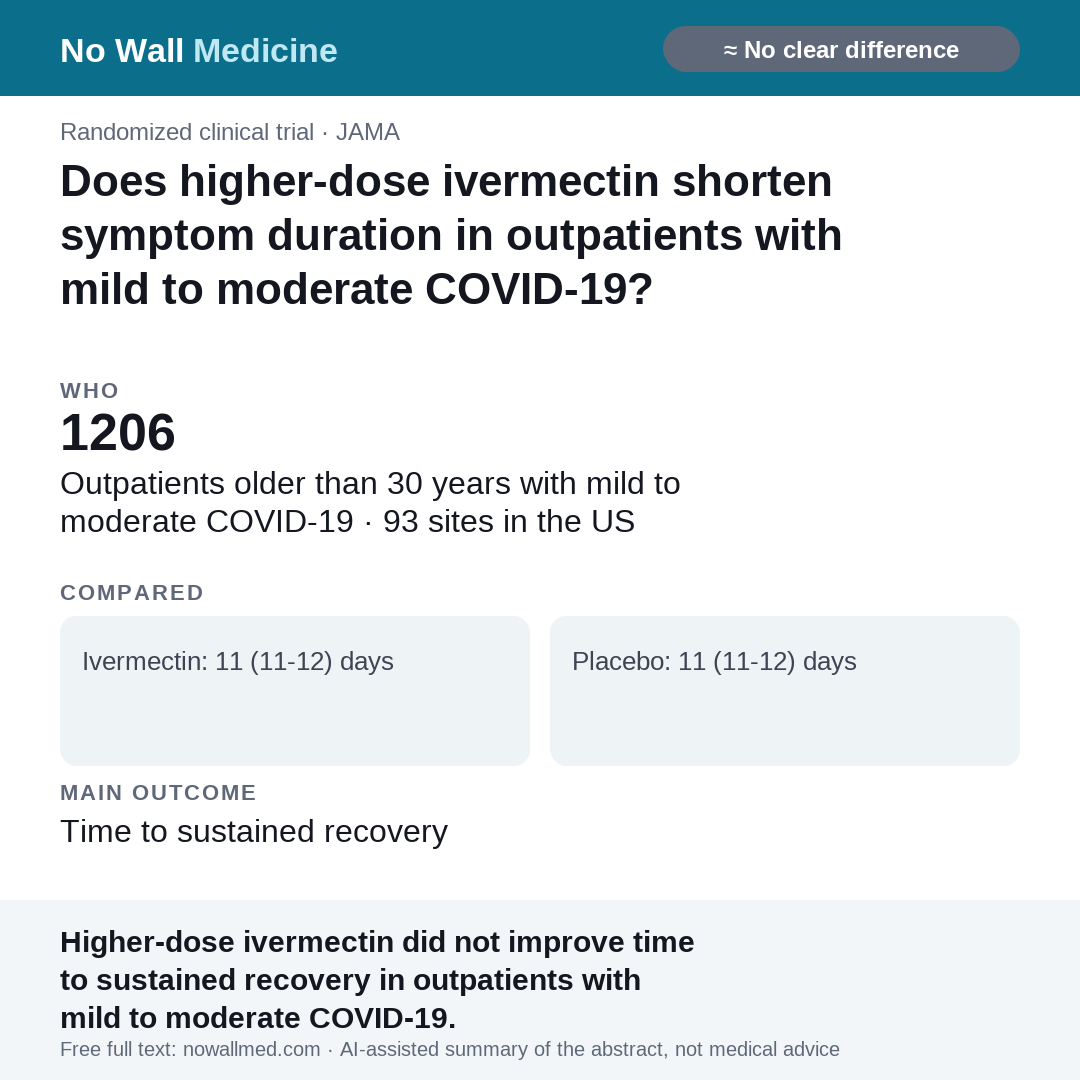
Effect of Higher-Dose Ivermectin for 6 Days vs Placebo on Time to Sustained Recovery in Outpatients With COVID-19: A Randomized Clinical Trial
Randomized clinical trialNo clear difference
Does higher-dose ivermectin shorten symptom duration in outpatients with mild to moderate COVID-19?
Who
1206
Outpatients older than 30 years with mild to moderate COVID-19 · 93 sites in the US
Compared
Ivermectin: 11 (11-12) days
Placebo: 11 (11-12) days
Main outcome
Time to sustained recovery
Result: hazard ratio 1.02 (95% credible interval, 0.92-1.13)
Bottom line: Higher-dose ivermectin did not improve time to sustained recovery in outpatients with mild to moderate COVID-19.
JAMA · 2023-02-23Download image
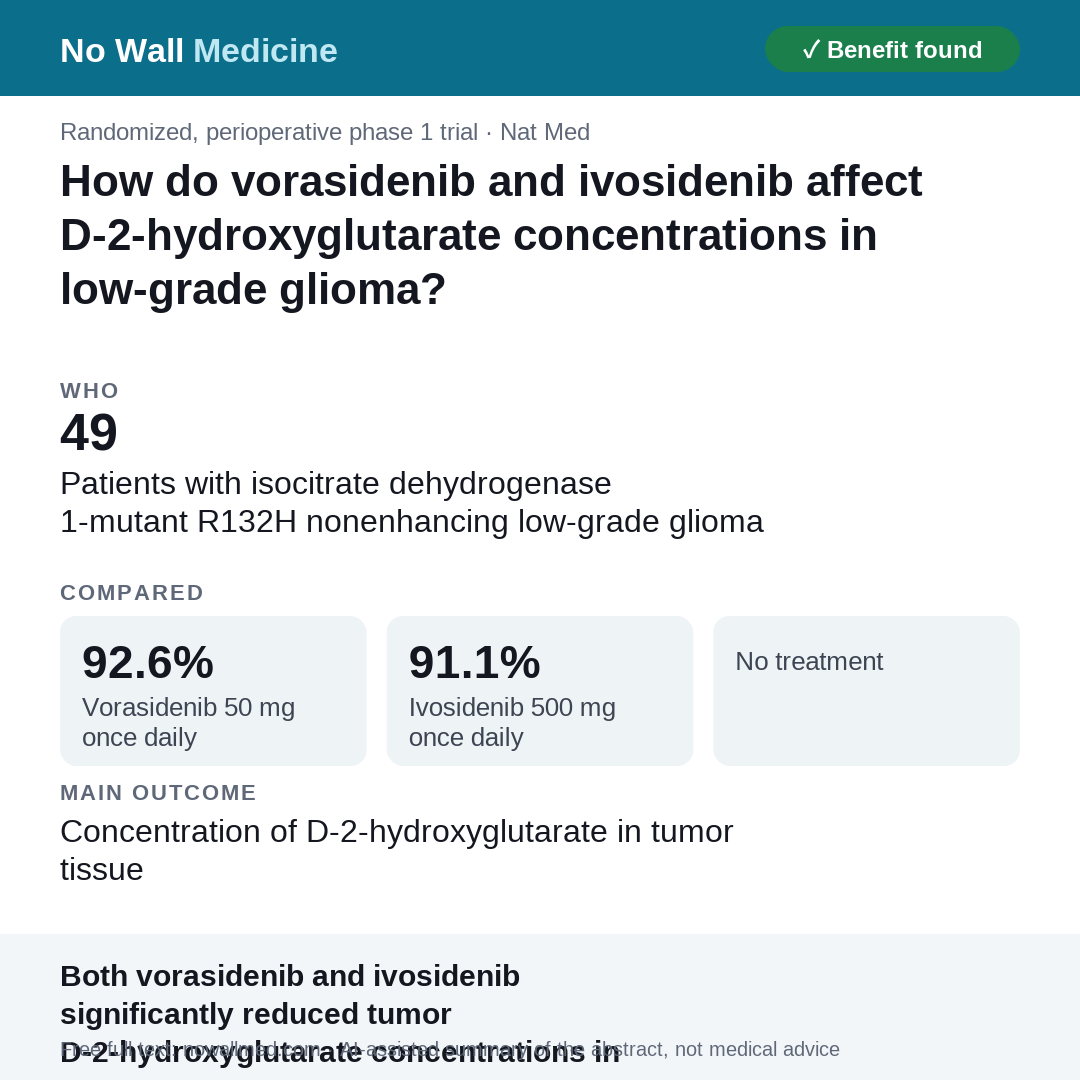
Vorasidenib and ivosidenib in IDH1-mutant low-grade glioma: a randomized, perioperative phase 1 trial
Randomized, perioperative phase 1 trialBenefit found
How do vorasidenib and ivosidenib affect D-2-hydroxyglutarate concentrations in low-grade glioma?
Who
49
Patients with isocitrate dehydrogenase 1-mutant R132H nonenhancing low-grade glioma
Compared
92.6%Vorasidenib 50 mg once daily (95% credible interval, 76.1-97.6)
91.1%Ivosidenib 500 mg once daily (95% credible interval, 72.0-97.0)
No treatment
Main outcome
Concentration of D-2-hydroxyglutarate in tumor tissue
Bottom line: Both vorasidenib and ivosidenib significantly reduced tumor D-2-hydroxyglutarate concentrations in patients with mutant low-grade glioma.
Funded by: Agios Pharmaceuticals, Inc. and Servier Pharmaceuticals LLC
Nat Med · 2023-02-23Download image