Visual abstracts
New randomized trials and meta-analyses from leading journals at a glance: who was studied, what was compared, and what was found. Every paper is free to read in full.
All specialtiesCardiology 4877Oncology 4138Gastroenterology & Hepatology 1942Infectious Disease 3837Neurology 1905Psychiatry & Mental Health 2273Pulmonology 2143Critical Care 1365Endocrinology & Diabetes 2580Pediatrics 2980Surgery 2559Orthopedics & Sports Medicine 931Neurosurgery 537Cardiothoracic & Vascular Surgery 674Plastic & Reconstructive Surgery 591Nephrology 1133Rheumatology 823Hematology 1109Dermatology 621Ophthalmology 543Obstetrics & Gynecology 1686Public & Global Health 1058Radiology & Imaging 648Anesthesiology 986Urology 764ENT (Otolaryngology) 503Emergency Medicine 511Allergy & Immunology 313Geriatrics 981Family Medicine & Primary Care 562Medical Genetics & Genomics 676Pathology & Laboratory Medicine 159Physical Medicine & Rehabilitation 757Palliative Care 444Nutrition 1588Digital Health & AI 2201General Medicine 321
Polyurethane-coated silicone breast implants: A viable option for primary augmentation mammoplasty: A systematic review and technical considerations
Systematic review and case seriesBenefit found
Are polyurethane-coated silicone breast implants a viable option for primary augmentation mammoplasty?
Who
50
Patients undergoing primary augmentation mammoplasty
Compared
Polyurethane-coated implants: nearly nonexistent occurrence of capsular contracture
Standard textured implants
Main outcome
Safety and efficacy for primary augmentation mammoplasty
Bottom line: Polyurethane-coated implants are a safe, effective option with reduced capsular contracture rates compared to standard textured implants.
JPRAS Open · 2025-03-28Download image

Long-term mortality outcome of a primary care-based mobile health intervention for stroke management: Six-year follow-up of a cluster-randomized controlled trial
Cluster-randomized controlled trial follow-upBenefit found
Does a 12-month mobile health intervention reduce long-term mortality among stroke patients?
Who
1299
Patients experiencing stroke · 50 villages in rural China
Compared
19.0%Intervention arm (121 among 637)
23.4%Control arm (155 among 662)
Main outcome
All-cause mortality
Result: hazard ratio 0.73 (95% CI 0.59, 0.90)
Bottom line: The mobile health intervention was associated with reduced all-cause and cardiovascular cause-specific mortality during six years of follow-up.
Limitation: Unavailability of accurate clinical diagnostic records and potential confounders influencing mortality associations.
PLOS Med · 2025-03-27Download image

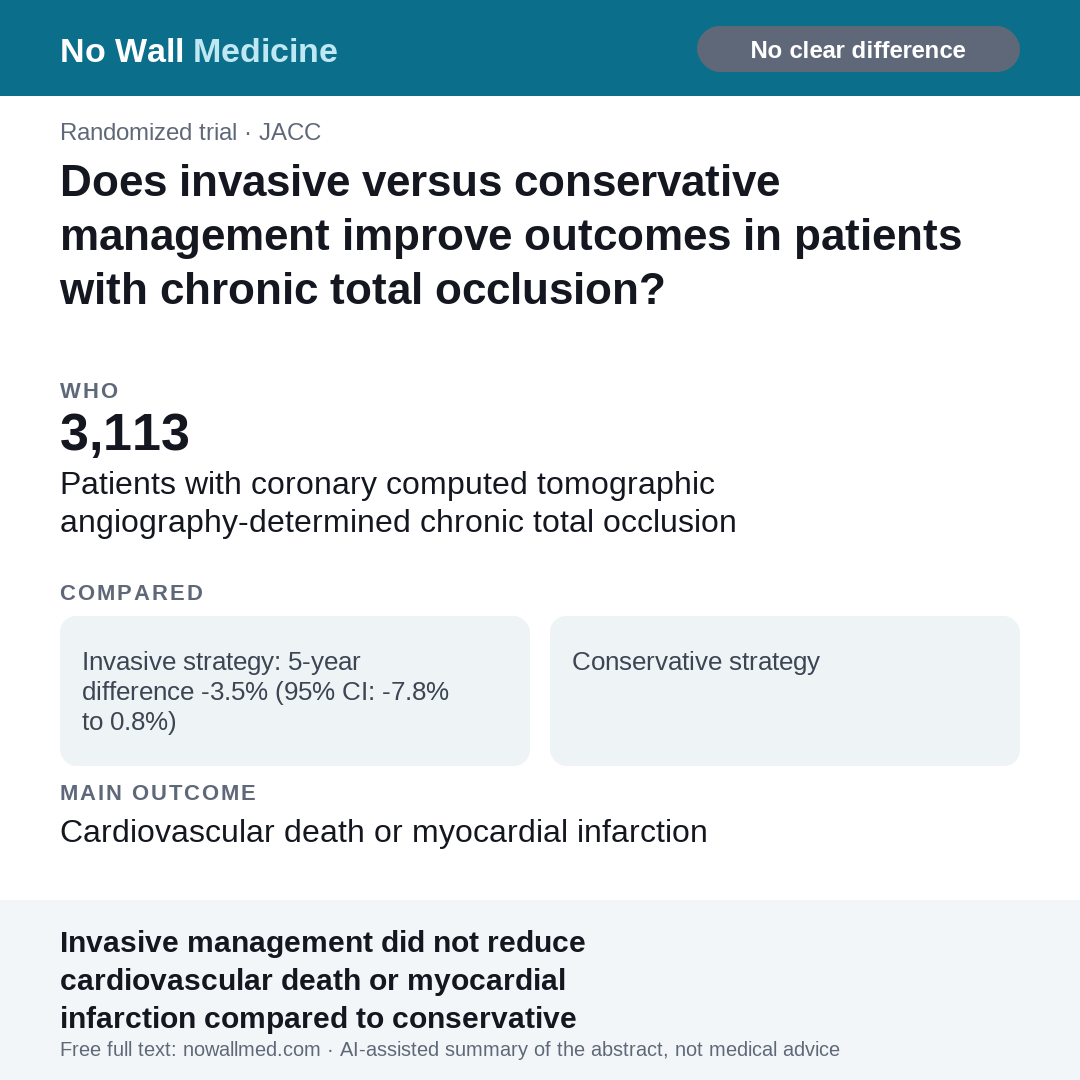
Invasive vs Conservative Management of Patients With Chronic Total Occlusion: Results From the ISCHEMIA Trial
Randomized trialNo clear difference
Does invasive versus conservative management improve outcomes in patients with chronic total occlusion?
Who
3,113
Patients with coronary computed tomographic angiography-determined chronic total occlusion
Compared
Invasive strategy: 5-year difference -3.5% (95% CI: -7.8% to 0.8%)
Conservative strategy
Main outcome
Cardiovascular death or myocardial infarction
Result: 5-year difference -3.5% (95% CI: -7.8% to 0.8%)
Bottom line: Invasive management did not reduce cardiovascular death or myocardial infarction compared to conservative management.
JACC · 2025-03-27Download image
Guideline-Directed Medical Therapy and Outcomes in the ISCHEMIA Trial
Observational studyBenefit found
How does achieving guideline-directed medical therapy goals affect cardiovascular outcomes?
Who
5179
Participants with chronic coronary disease
Compared
24.5%No guideline-directed medical therapy goals (95% credible interval: 13.5%-42.2%)
8.7%All 4 guideline-directed medical therapy goals (95% credible interval: 6.7%-10.9%)
Main outcome
cardiovascular death or myocardial infarction
Result: absolute 16% fewer CV deaths and MIs
Bottom line: Early attainment and maintenance of guideline-directed medical therapy goals, especially systolic blood pressure, were associated with fewer cardiovascular events.
JACC · 2025-03-27Download image

Health-related quality of life in participants with advanced biliary tract cancer from the randomized phase III KEYNOTE-966 study
Randomized, double-blind, phase III trialNo clear difference
Does adding pembrolizumab to gemcitabine and cisplatin affect health-related quality of life in advanced biliary tract cancer?
Who
1069
Participants with advanced biliary tract cancer
Compared
Gemcitabine and cisplatin plus pembrolizumab: NR
21.2 monthsGemcitabine and cisplatin plus placebo
Main outcome
Health-related quality of life and time to confirmed deterioration
Result: hazard ratio 0.86 (95% CI 0.70-1.07)
Bottom line: Adding pembrolizumab to gemcitabine and cisplatin maintained health-related quality of life in advanced biliary tract cancer.
J Hepatol · 2025-03-27Download image

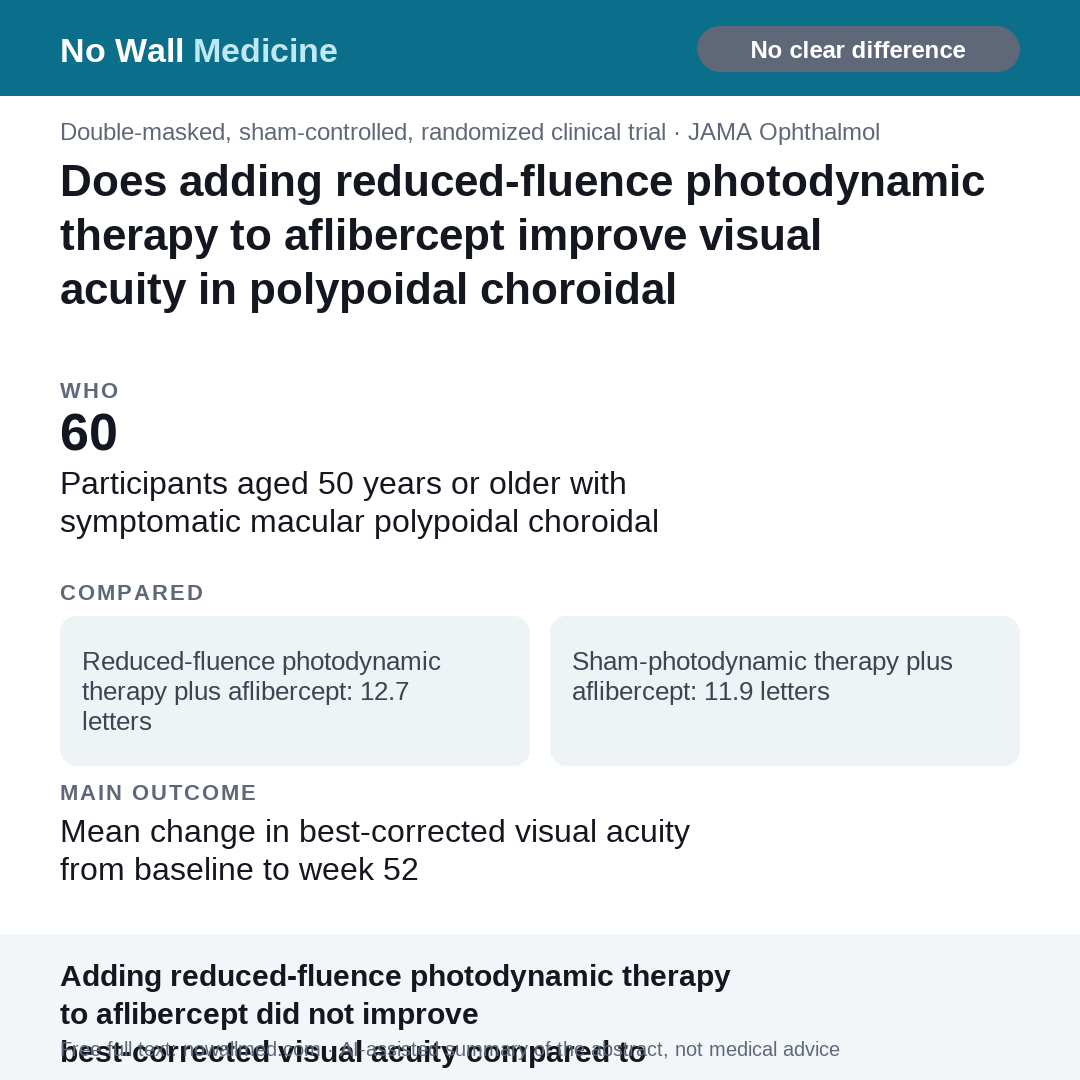
Aflibercept With vs Without Reduced-Fluence Photodynamic Therapy for Polypoidal Choroidal Vasculopathy: A Randomized Clinical Trial
Double-masked, sham-controlled, randomized clinical trialNo clear difference
Does adding reduced-fluence photodynamic therapy to aflibercept improve visual acuity in polypoidal choroidal vasculopathy?
Who
60
Participants aged 50 years or older with symptomatic macular polypoidal choroidal vasculopathy · 2 centers in Singapore
Compared
Reduced-fluence photodynamic therapy plus aflibercept: 12.7 letters
Sham-photodynamic therapy plus aflibercept: 11.9 letters
Main outcome
Mean change in best-corrected visual acuity from baseline to week 52
Result: difference = 0.8 letters; 95% CI, -3.0 to 6.0 letters
Bottom line: Adding reduced-fluence photodynamic therapy to aflibercept did not improve best-corrected visual acuity compared to aflibercept alone.
JAMA Ophthalmol · 2025-03-27Download image
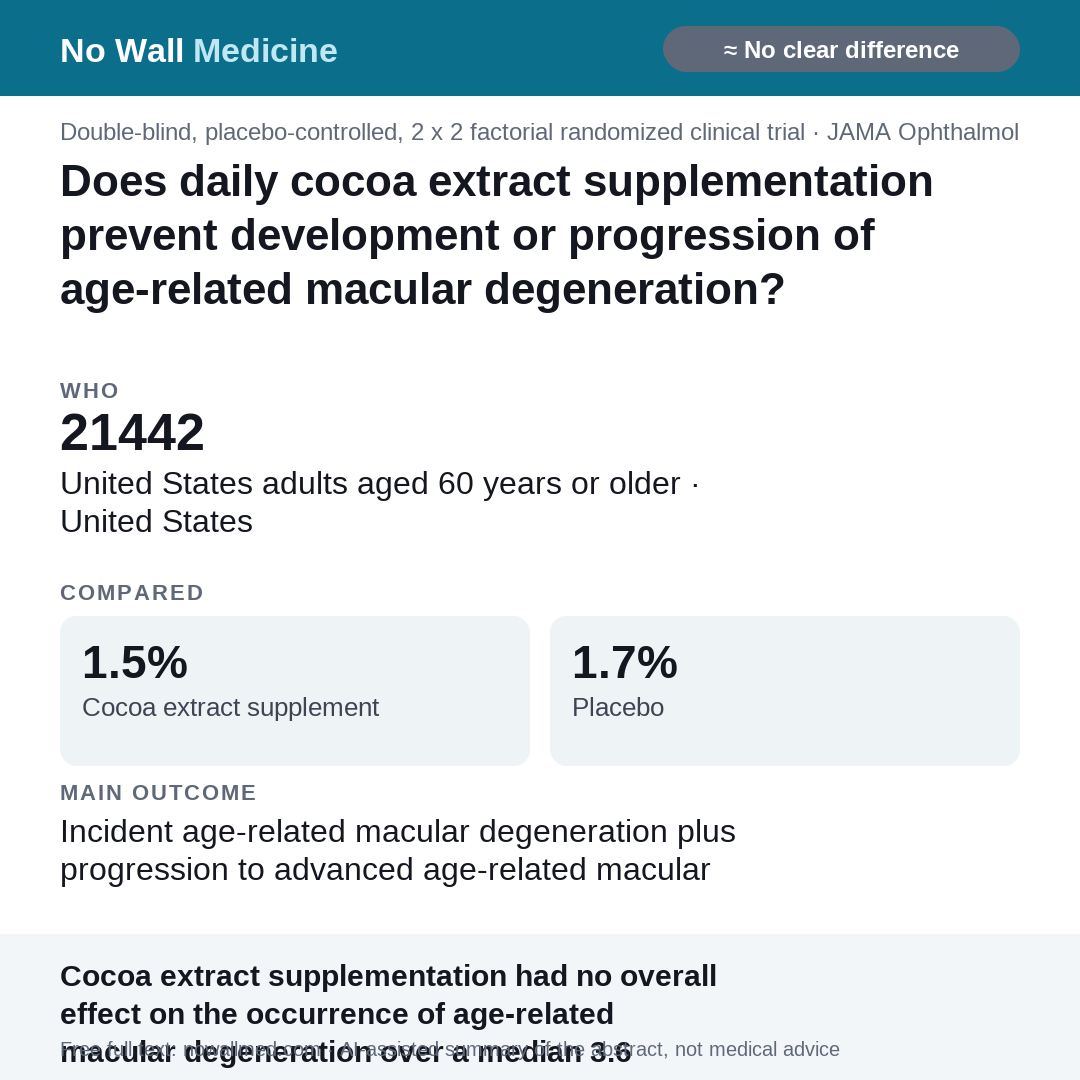
Cocoa Flavanol Supplementation and Risk of Age-Related Macular Degeneration: An Ancillary Study of the COSMOS Randomized Clinical Trial
Double-blind, placebo-controlled, 2 x 2 factorial randomized clinical trialNo clear difference
Does daily cocoa extract supplementation prevent development or progression of age-related macular degeneration?
Who
21442
United States adults aged 60 years or older · United States
Compared
1.5%Cocoa extract supplement
1.7%Placebo
Main outcome
Incident age-related macular degeneration plus progression to advanced age-related macular degeneration
Result: hazard ratio 0.87 (95% CI, 0.71-1.08)
Bottom line: Cocoa extract supplementation had no overall effect on the occurrence of age-related macular degeneration over a median 3.6 years.
Limitation: A possible modest treatment effect early in the trial could not be ruled out.
JAMA Ophthalmol · 2025-03-27Download image
Subcutaneous versus intravenous pembrolizumab, in combination with chemotherapy, for treatment of metastatic non-small-cell lung cancer: the phase III 3475A-D77 trial
Phase III open-label randomized trialBenefit found
Is subcutaneous pembrolizumab noninferior to intravenous pembrolizumab plus chemotherapy in metastatic non-small-cell lung cancer?
Who
377
Newly diagnosed stage IV squamous or nonsquamous non-small-cell lung cancer patients
Compared
45.4%subcutaneous pembrolizumab plus chemotherapy
42.1%intravenous pembrolizumab plus chemotherapy
Main outcome
pharmacokinetic exposure measures of cycle 1 area under the curve and steady-state trough concentration
Result: GMR for cycle 1 AUC0-6 weeks 1.14 (96% CI 1.06-1.22)
Bottom line: Subcutaneous pembrolizumab plus chemotherapy is noninferior to intravenous pembrolizumab plus chemotherapy for metastatic non-small-cell lung cancer.
Ann Oncol · 2025-03-27Download image

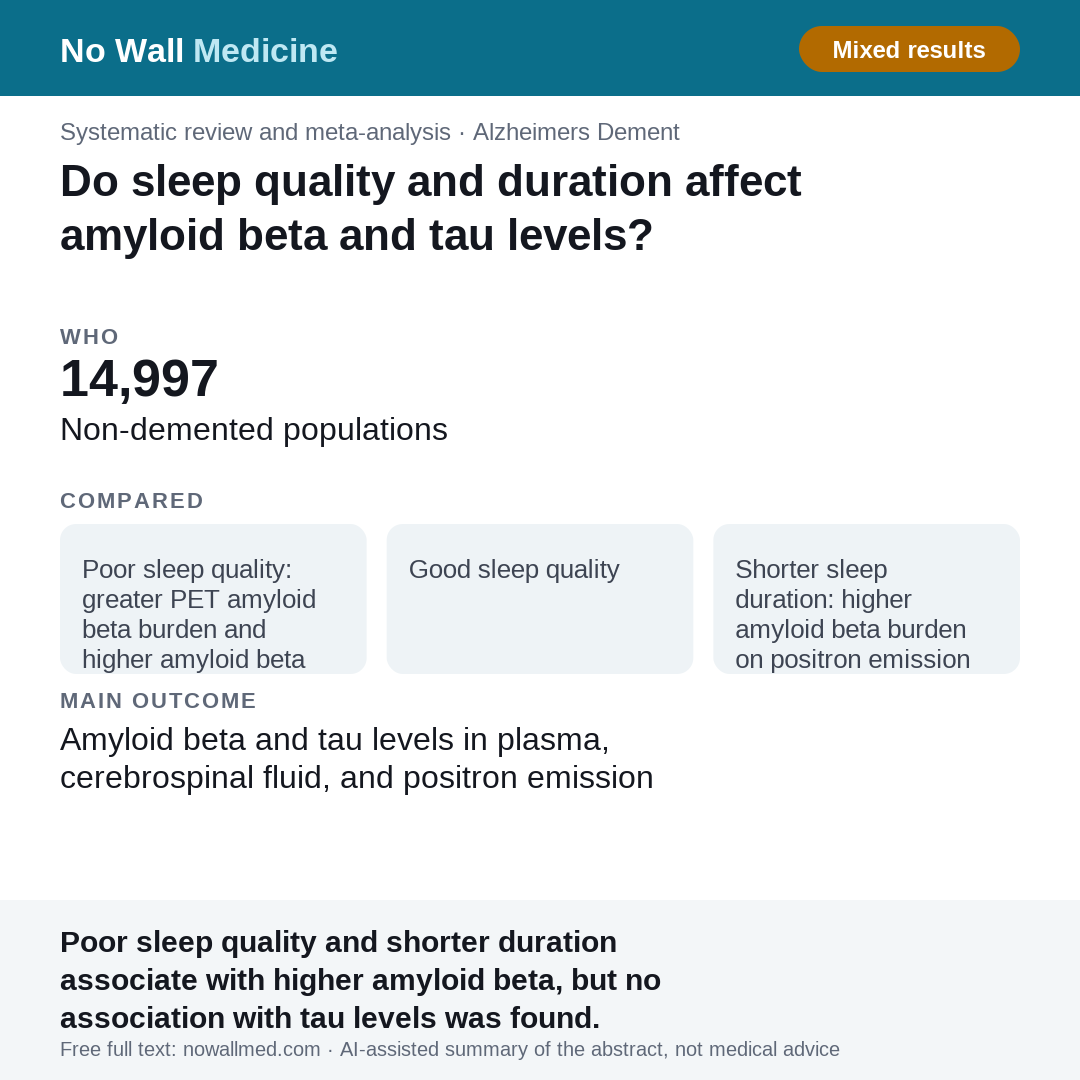
Associations among sleep quality, sleep duration, and Alzheimer's disease biomarkers: A systematic review and meta-analysis
Systematic review and meta-analysisMixed results
Do sleep quality and duration affect amyloid beta and tau levels?
Who
14,997
Non-demented populations
Compared
Poor sleep quality: greater PET amyloid beta burden and higher amyloid beta 42 levels in plasma
Good sleep quality
Shorter sleep duration: higher amyloid beta burden on positron emission tomography
Main outcome
Amyloid beta and tau levels in plasma, cerebrospinal fluid, and positron emission tomography
Bottom line: Poor sleep quality and shorter duration associate with higher amyloid beta, but no association with tau levels was found.
Alzheimers Dement · 2025-03-27Download image
Efficacy of Communication Bridge-2 for primary progressive aphasia: A randomized controlled trial of communication intervention
Phase 2, Stage II, parallel-group randomized controlled trialBenefit found
Does Communication Bridge-2 improve communication and participation in primary progressive aphasia?
Who
95
Ninety-five dyads with primary progressive aphasia · Four countries via video chat
Compared
66.7%Experimental arm
49.1%Control arm
Main outcome
Communication-participation measurement of goal attainment
Result: 66.7% vs 49.1% (p = 0.006)
Bottom line: Communication Bridge-2 telemedicine intervention improved communication participation for people with primary progressive aphasia.
Alzheimers Dement · 2025-03-27Download image

Social cognition in mild cognitive impairment and dementia: A systematic review and meta-analysis
Systematic review and meta-analysisBenefit found
Are social cognition abilities different between mild cognitive impairment and dementia subtypes?
Who
2409
Individuals with mild cognitive impairment and dementia subtypes
Compared
Mild cognitive impairment: better emotion recognition (Cohen's d = 0.69) and theory of mind (d = 0.70)
Alzheimer's disease dementia: lower emotion recognition and theory of mind; higher emotional empathy
Frontotemporal dementia: lower emotion recognition (d = 2.09) and theory of mind (d = 1.49)
Main outcome
Social cognition including emotion recognition, theory of mind, and empathy
Bottom line: People with mild cognitive impairment outperform those with Alzheimer's or frontotemporal dementia in emotion recognition and theory of mind.
Alzheimers Dement · 2025-03-27Download image

In utero exposure to methylphenidate, amphetamines and atomoxetine and offspring neurodevelopmental disorders - a population-based cohort study and meta-analysis
Population-based cohort study and meta-analysisNo clear difference
Does in utero exposure to ADHD medications increase offspring neurodevelopmental disorder risk?
Who
861650
Children born to mothers using methylphenidate, amphetamines, or atomoxetine · Sweden and Denmark
Compared
Exposed children
Unexposed children
Main outcome
Any neurodevelopmental disorder, including ADHD and autism spectrum disorder
Result: pooled hazard ratio 1.00 (95% CI 0.83;1.20)
Bottom line: In utero exposure to ADHD medications does not increase the risk of long-term neurodevelopmental disorders in offspring.
Mol Psychiatry · 2025-03-27Download image

Ozoralizumab shows effectiveness regardless of baseline RF and ACPA titres in patients with RA: a post hoc analysis of the OHZORA trial
Post hoc analysis of a Phase II/III trialBenefit found
Is ozoralizumab effective in rheumatoid arthritis patients regardless of RF and ACPA titres?
Who
381
Japanese patients with rheumatoid arthritis with inadequate methotrexate response · Japan
Compared
Ozoralizumab 30 mg: significantly reduced disease activity in all groups
Ozoralizumab 80 mg
Main outcome
disease activity scores, RF and ACPA titres
Bottom line: Ozoralizumab is effective for rheumatoid arthritis regardless of baseline rheumatoid factor and anti-citrullinated peptide antibody titres.
Rheumatology · 2025-03-27Download image

Belantamab Mafodotin Plus Proteasome Inhibition Efficacy Versus Comparators in Early Relapsed Myeloma: A Systematic Review and Network Meta-Analysis
Systematic review and network meta-analysisBenefit found
How does belantamab mafodotin plus bortezomib and dexamethasone compare to alternative regimens?
Who
Patients with relapsed or refractory multiple myeloma receiving at least 1 prior therapy
Compared
Belantamab mafodotin plus bortezomib and dexamethasone
Alternative regimens
Main outcome
Progression-free survival
Bottom line: Belantamab mafodotin plus bortezomib and dexamethasone improved progression-free survival and overall survival versus alternative regimens.
Am J Hematol · 2025-03-27Download image

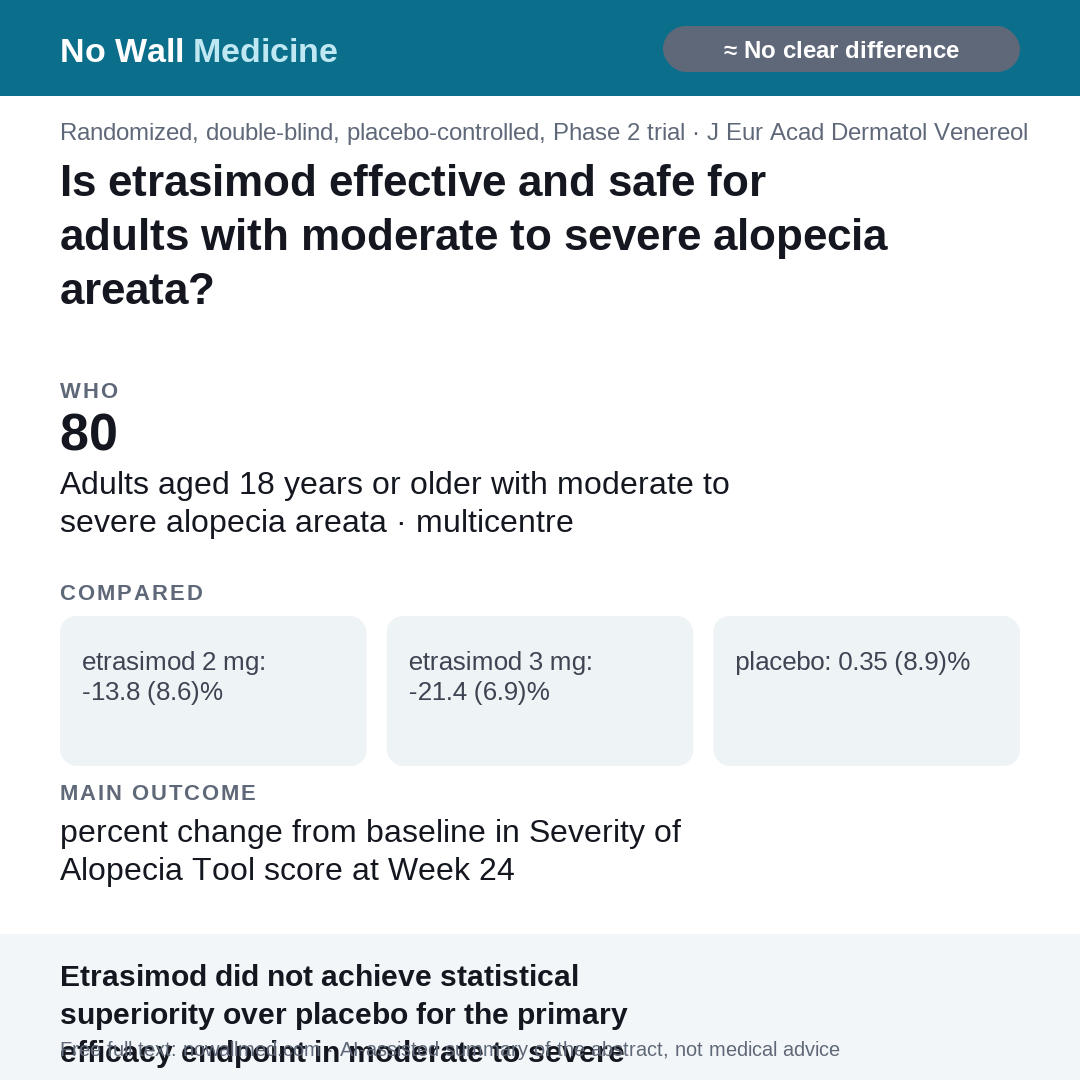
Efficacy and safety of etrasimod in alopecia areata: A multicentre, randomized, double-blind, placebo-controlled, Phase 2 study
Randomized, double-blind, placebo-controlled, Phase 2 trialNo clear difference
Is etrasimod effective and safe for adults with moderate to severe alopecia areata?
Who
80
Adults aged 18 years or older with moderate to severe alopecia areata · multicentre
Compared
etrasimod 2 mg: -13.8 (8.6)%
etrasimod 3 mg: -21.4 (6.9)%
placebo: 0.35 (8.9)%
Main outcome
percent change from baseline in Severity of Alopecia Tool score at Week 24
Result: -14.1 (-38.9 to 10.6; p = 0.2579) and -21.8 (-44.4 to 0.9; p = 0.0592)
Bottom line: Etrasimod did not achieve statistical superiority over placebo for the primary efficacy endpoint in moderate to severe alopecia areata.
J Eur Acad Dermatol Venereol · 2025-03-27Download image
Influence of plaque characteristics by coronary computed tomography angiography on lesion-specific ischemia: a systematic review and meta-analysis
Systematic review and meta-analysisBenefit found
Do coronary computed tomography angiography plaque characteristics associate with ischemia determined by fractional flow reserve?
Who
4416
Patients with predominantly stable coronary artery disease · PubMed, EMBASE, and Cochrane Library databases
Compared
Lesions with FFR ≤ 0.80: more frequent high-risk plaque characteristics
Lesions with FFR > 0.80
Main outcome
Ischemia determined by invasively measured fractional flow reserve
Bottom line: Plaque volumes and high-risk characteristics are associated with ischemia and improve discrimination beyond coronary stenosis severity.
Eur Radiol · 2025-03-27Download image

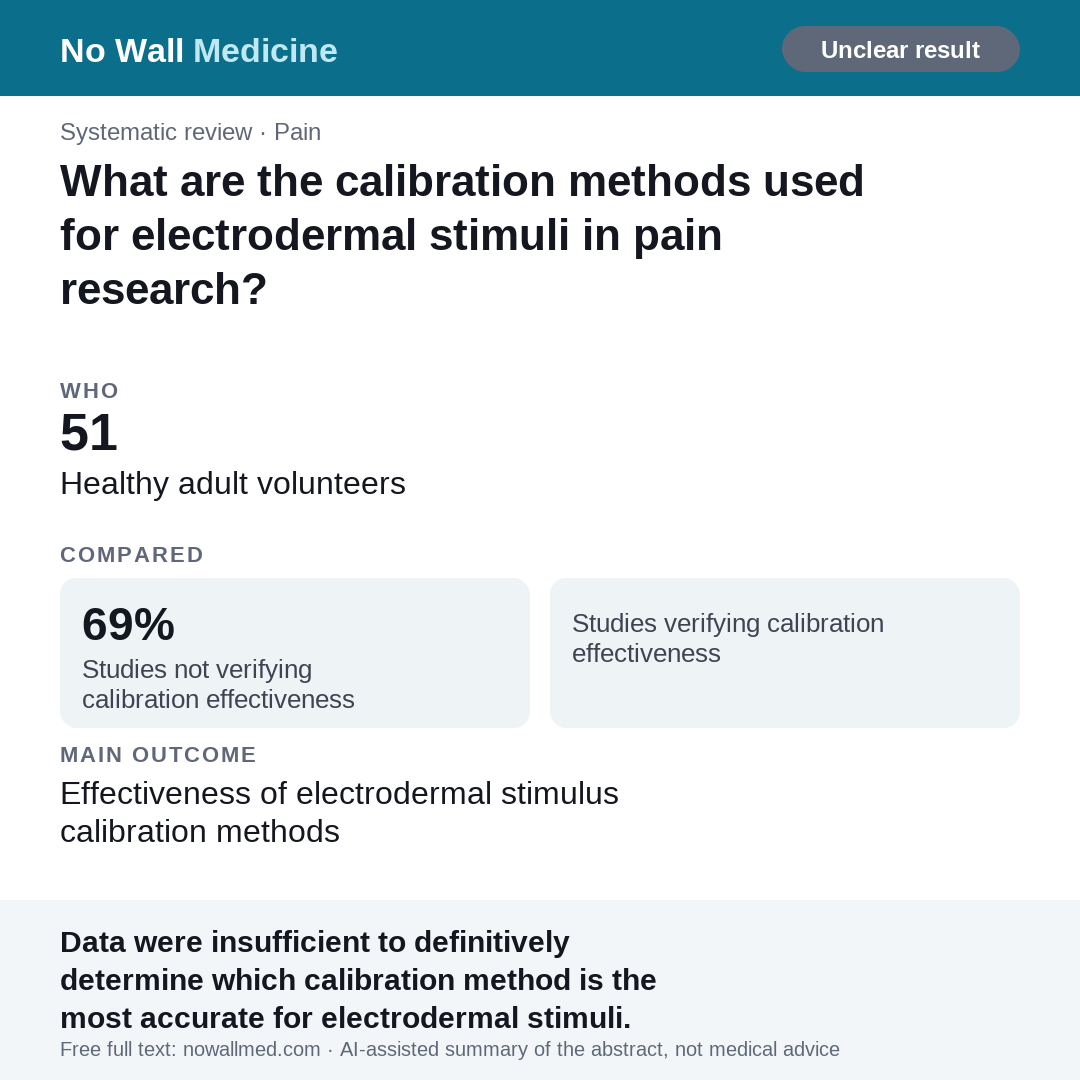
What you don't know can hurt others. A systematic review on calibration of stimulus intensity in pain research
Systematic reviewUnclear result
What are the calibration methods used for electrodermal stimuli in pain research?
Who
51
Healthy adult volunteers
Compared
69%Studies not verifying calibration effectiveness
Studies verifying calibration effectiveness
Main outcome
Effectiveness of electrodermal stimulus calibration methods
Bottom line: Data were insufficient to definitively determine which calibration method is the most accurate for electrodermal stimuli.
Limitation: Data were insufficient to definitively determine which method was the most accurate.
Pain · 2025-03-27Download image
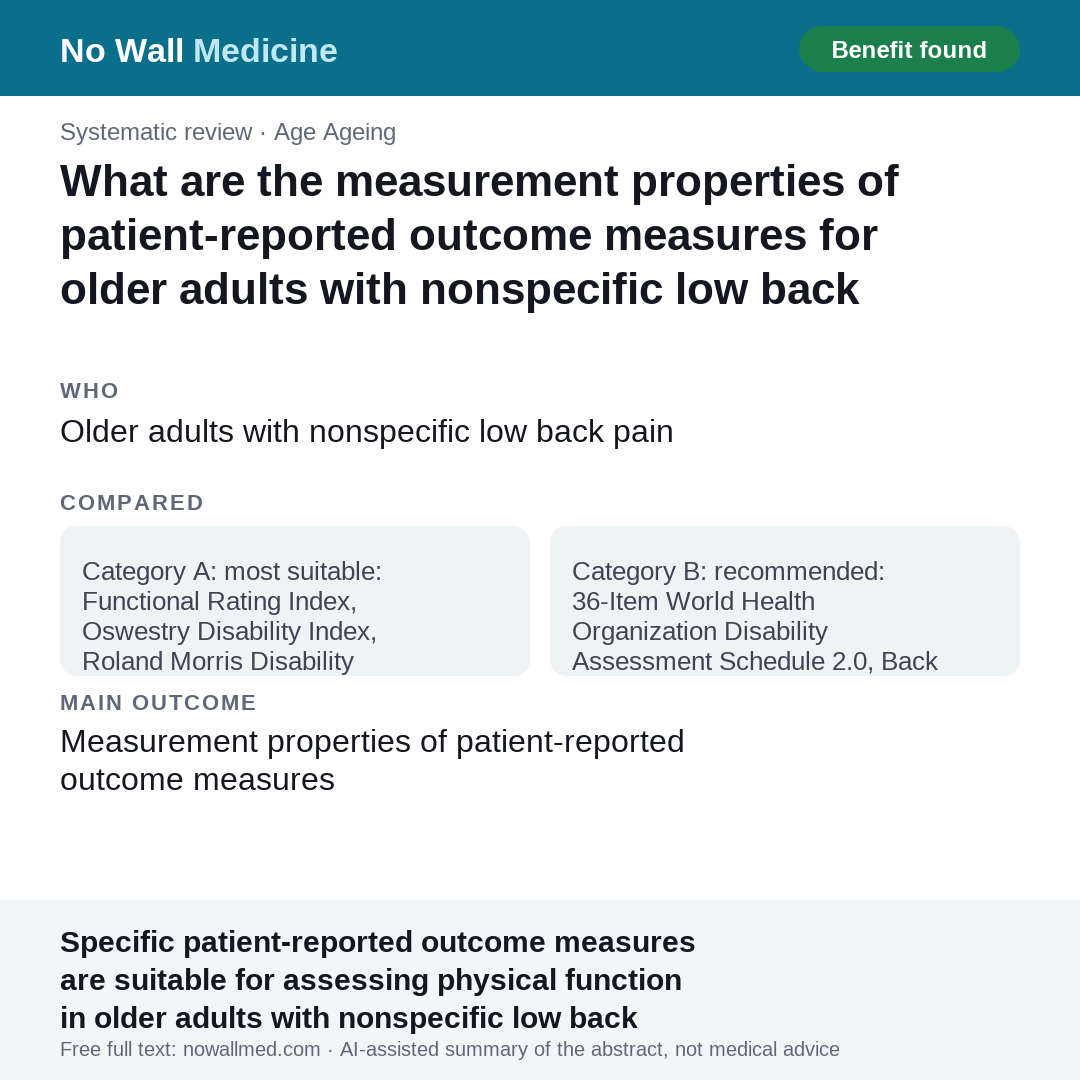
Measurement properties of self-reported outcome measures for older adults with nonspecific low back pain: a systematic review
Systematic reviewBenefit found
What are the measurement properties of patient-reported outcome measures for older adults with nonspecific low back pain?
Who
Older adults with nonspecific low back pain
Compared
Category A: most suitable: Functional Rating Index, Oswestry Disability Index, Roland Morris Disability Questionnaire, Quebec Back Pain Disability Scale
Category B: recommended: 36-Item World Health Organization Disability Assessment Schedule 2.0, Back Believe Questionnaire, Catastrophizing Avoidance Scale D-65+, Pain Catastrophizing Scale, Psychological Inflexibility in Pain Scale
Main outcome
Measurement properties of patient-reported outcome measures
Bottom line: Specific patient-reported outcome measures are suitable for assessing physical function in older adults with nonspecific low back pain.
Limitation: More studies are needed to evaluate measurement properties on other outcome domains.
Age Ageing · 2025-03-27Download image
AI to Assist in the Fetal Anomaly Ultrasound Scan: A Randomized Controlled Trial
Randomized, single-center, open-label trialBenefit found
Does artificial intelligence assist in fetal anomaly ultrasound scanning performance?
Who
78
Pregnant participants with fetal congenital heart disease and healthy fetuses · One large teaching hospital
Compared
AI-assisted scan: 88.9% sensitivity and 98.0% specificity
Standard scan: 81.5% sensitivity and 92.2% specificity
Main outcome
Diagnostic performance of the scan
Result: difference in proportions 7.4% for sensitivity (97.5% CI, -15.9 to 30.7%)
Bottom line: Artificial intelligence assistance reduces scan duration and sonographer cognitive load without reducing diagnostic performance.
Funded by: NIHR doctoral fellowship and others
NEJM AI · 2025-03-27Download image

Does short-term intraoperative electrical stimulation enhance nerve regeneration following peripheral nerve repair? A systematic review and meta-analysis
Systematic review and meta-analysisBenefit found
Does intraoperative electrical stimulation enhance nerve regeneration following peripheral nerve repair in animals?
Who
Experimental animals with peripheral nerve injury
Compared
Electrical stimulation plus suture repair
Suture repair alone
Main outcome
Motor, sensory, electrophysiology, and histological nerve regeneration
Bottom line: Intraoperative electrical stimulation improves motor, sensory, electrophysiological, and histological outcomes following peripheral nerve repair in animals.
J Plast Reconstr Aesthet Surg · 2025-03-27Download image