Visual abstracts
New randomized trials and meta-analyses from leading journals at a glance: who was studied, what was compared, and what was found. Every paper is free to read in full.
All specialtiesCardiology 834Oncology 758Gastroenterology & Hepatology 306Infectious Disease 626Neurology 348Psychiatry & Mental Health 430Pulmonology 363Critical Care 240Endocrinology & Diabetes 480Pediatrics 533Surgery 317Orthopedics & Sports Medicine 160Neurosurgery 80Cardiothoracic & Vascular Surgery 86Plastic & Reconstructive Surgery 107Nephrology 197Rheumatology 108Hematology 181Dermatology 74Ophthalmology 97Obstetrics & Gynecology 261Public & Global Health 167Radiology & Imaging 93Anesthesiology 107Urology 162ENT (Otolaryngology) 82Emergency Medicine 64Allergy & Immunology 58Geriatrics 160Family Medicine & Primary Care 111Medical Genetics & Genomics 91Pathology & Laboratory Medicine 23Physical Medicine & Rehabilitation 147Palliative Care 81Nutrition 223Digital Health & AI 459General Medicine 101
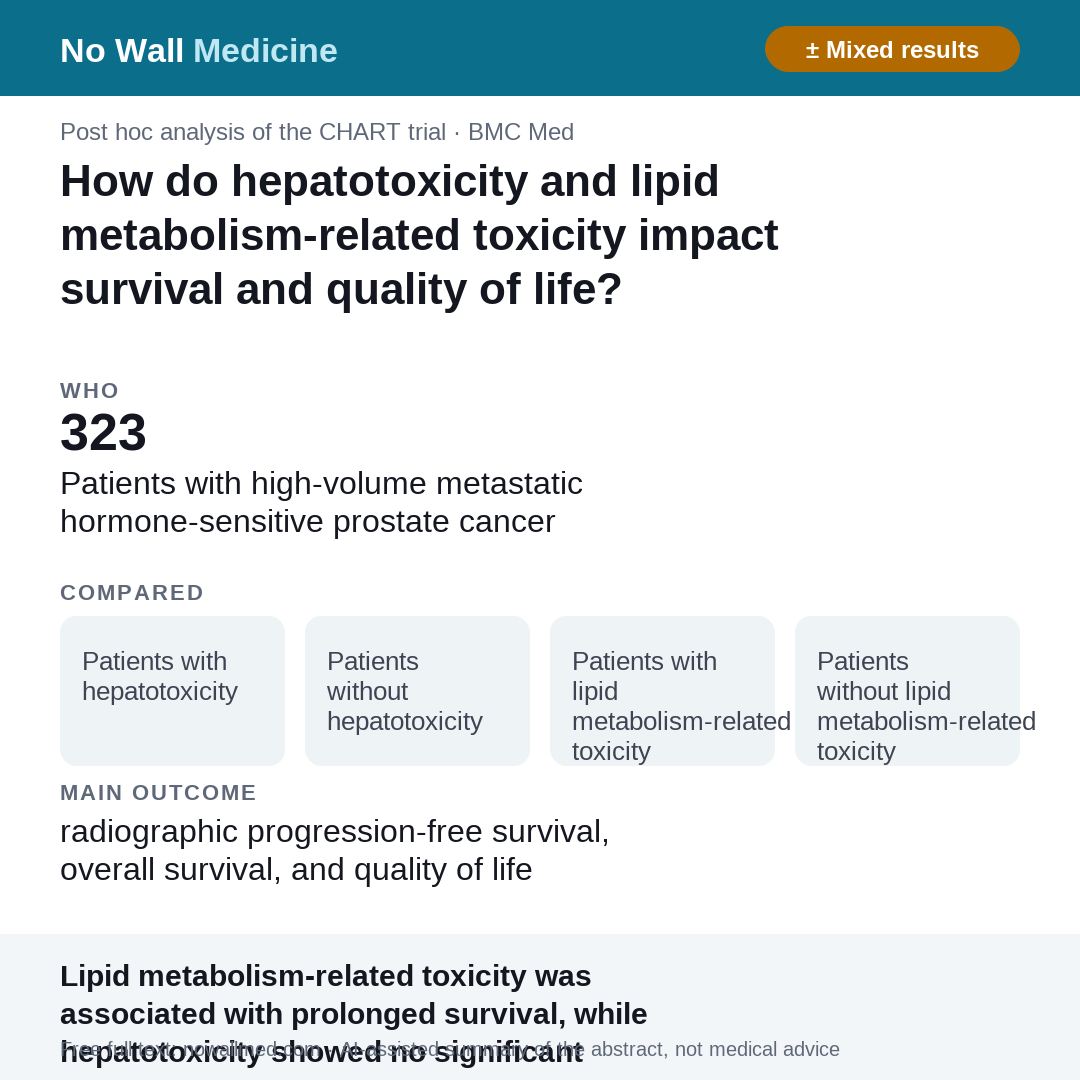
Impact of hepatotoxicity and lipid metabolism-related toxicity on survival and quality of life in patients with high-volume metastatic hormone-sensitive prostate cancer treated with rezvilutamide in the CHART trial: a post hoc analysis
Post hoc analysis of the CHART trialMixed results
How do hepatotoxicity and lipid metabolism-related toxicity impact survival and quality of life?
Who
323
Patients with high-volume metastatic hormone-sensitive prostate cancer
Compared
Patients with hepatotoxicity
Patients without hepatotoxicity
Patients with lipid metabolism-related toxicity
Patients without lipid metabolism-related toxicity
Main outcome
radiographic progression-free survival, overall survival, and quality of life
Result: hazard ratio 0.594 (95% CI 0.383 to 0.922)
Bottom line: Lipid metabolism-related toxicity was associated with prolonged survival, while hepatotoxicity showed no significant association with clinical outcomes.
BMC Med · 2026-06-30Download image
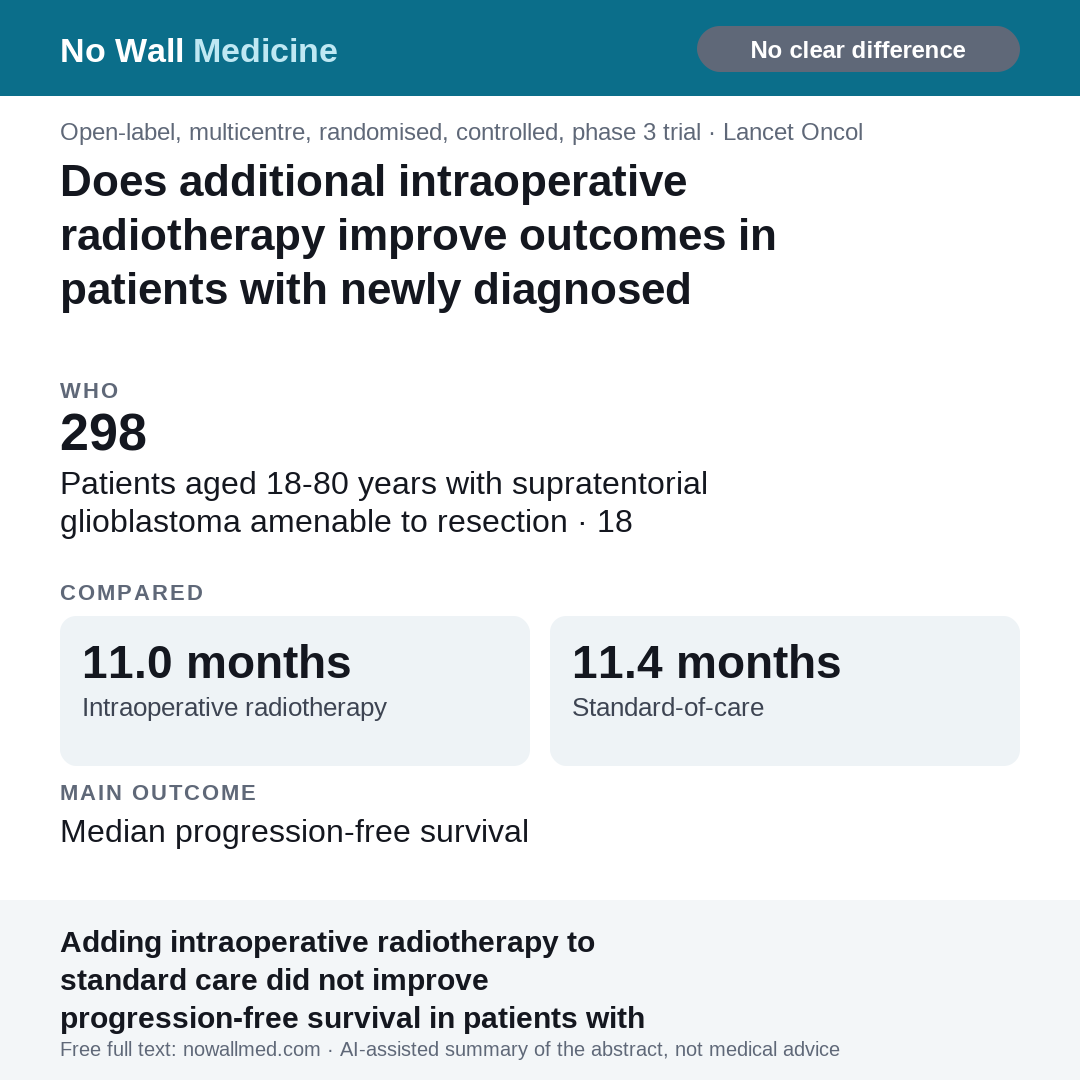
Dose escalation with intraoperative radiotherapy in newly diagnosed glioblastoma (INTRAGO-II): an open-label, multicentre, randomised, controlled, phase 3 trial
Open-label, multicentre, randomised, controlled, phase 3 trialNo clear difference
Does additional intraoperative radiotherapy improve outcomes in patients with newly diagnosed glioblastoma?
Who
298
Patients aged 18-80 years with supratentorial glioblastoma amenable to resection · 18 centres in seven countries
Compared
11.0 monthsIntraoperative radiotherapy
11.4 monthsStandard-of-care
Main outcome
Median progression-free survival
Result: hazard ratio 1.1 (95% CI 0.85-1.44)
Bottom line: Adding intraoperative radiotherapy to standard care did not improve progression-free survival in patients with newly diagnosed glioblastoma.
Funded by: Universities of Heidelberg and Bonn, Carl Zeiss Meditec, Deutsche Forschungsgemeinschaft
Lancet Oncol · 2026-06-30Download image
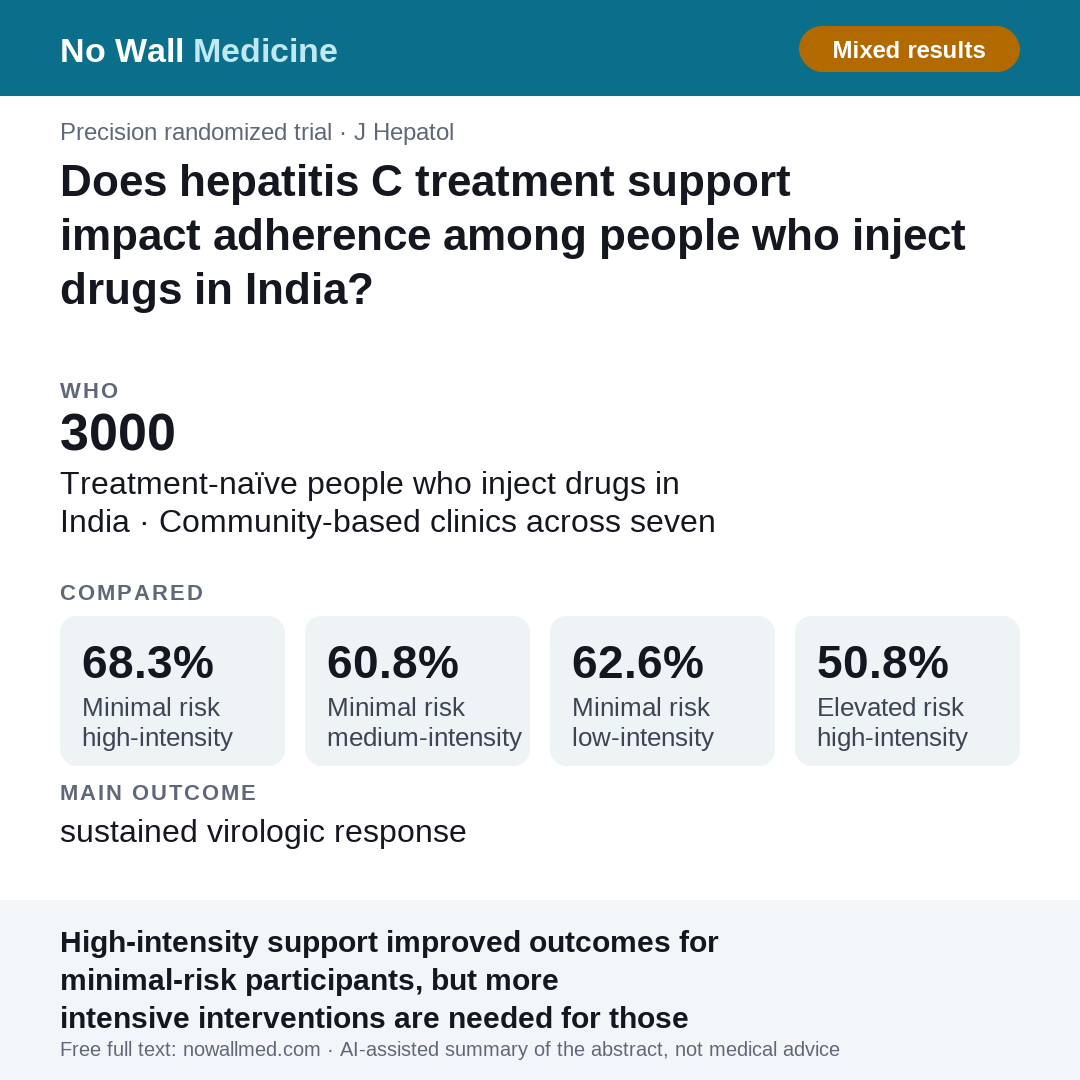
A precision randomized trial of hepatitis C treatment support among people who inject drugs in India: The STOP-C trial
Precision randomized trialMixed results
Does hepatitis C treatment support impact adherence among people who inject drugs in India?
Who
3000
Treatment-naïve people who inject drugs in India · Community-based clinics across seven cities in India
Compared
68.3%Minimal risk high-intensity support
60.8%Minimal risk medium-intensity support
62.6%Minimal risk low-intensity support
50.8%Elevated risk high-intensity support
Main outcome
sustained virologic response
Result: adjusted relative risk 1.09 (95% CI 1.00-1.19) for high vs low intensity in minimal risk
Bottom line: High-intensity support improved outcomes for minimal-risk participants, but more intensive interventions are needed for those at elevated risk.
Limitation: more intensive adherence support and/or novel interventions are needed to improve sustained virologic response among those at highest predicted risk
J Hepatol · 2026-06-30Download image
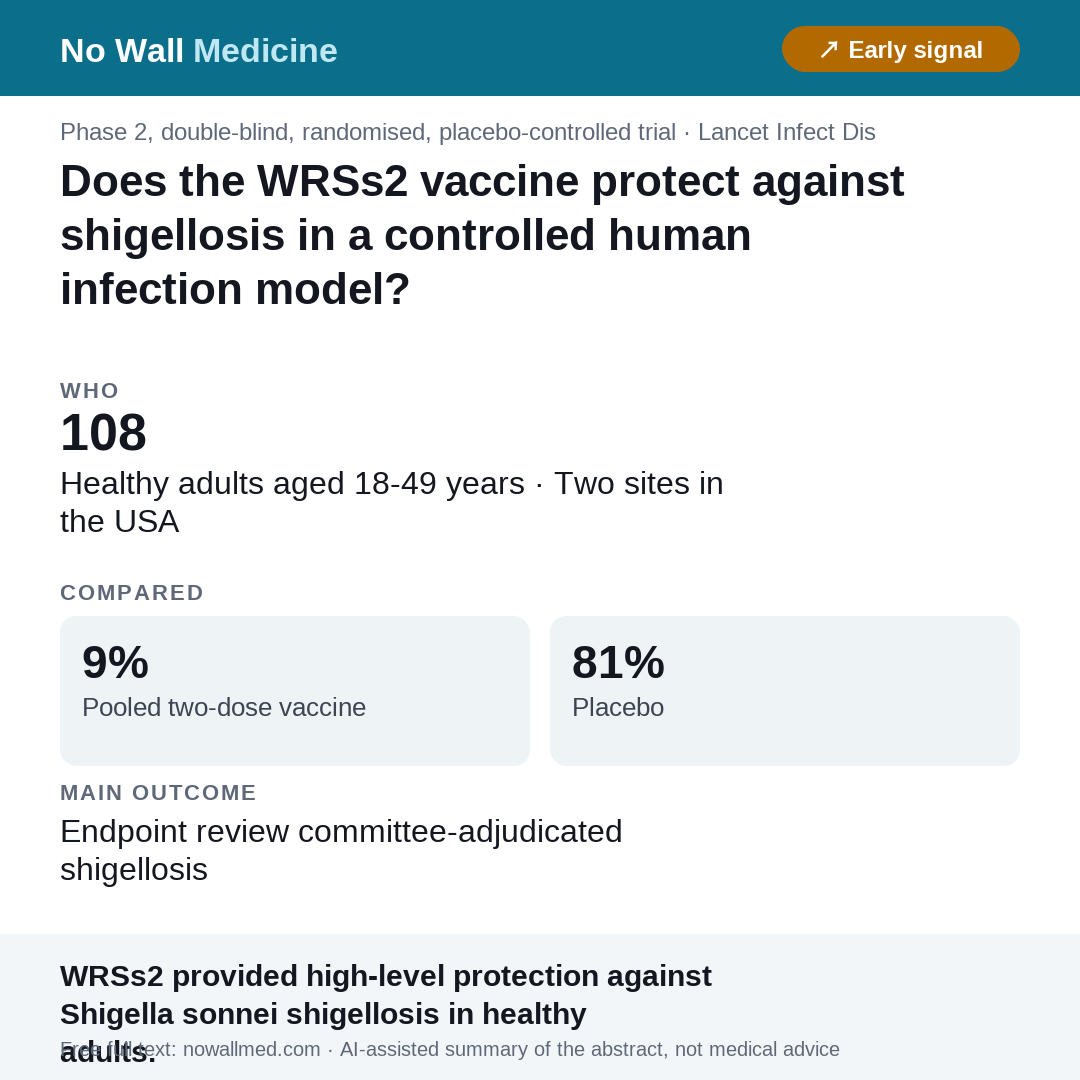
Efficacy of WRSs2, a live-attenuated Shigella sonnei vaccine, against shigellosis in a controlled human infection model in the USA: a phase 2, double-blind, randomised, placebo-controlled trial
Phase 2, double-blind, randomised, placebo-controlled trialBenefit found
Does the WRSs2 vaccine protect against shigellosis in a controlled human infection model?
Who
108
Healthy adults aged 18-49 years · Two sites in the USA
Compared
9%Pooled two-dose vaccine
81%Placebo
Main outcome
Endpoint review committee-adjudicated shigellosis
Result: vaccine efficacy 89% (95% CI 71-96)
Bottom line: WRSs2 provided high-level protection against Shigella sonnei shigellosis in healthy adults.
Funded by: US National Institutes of Health and US Department of Defense
Lancet Infect Dis · 2026-06-30Download image
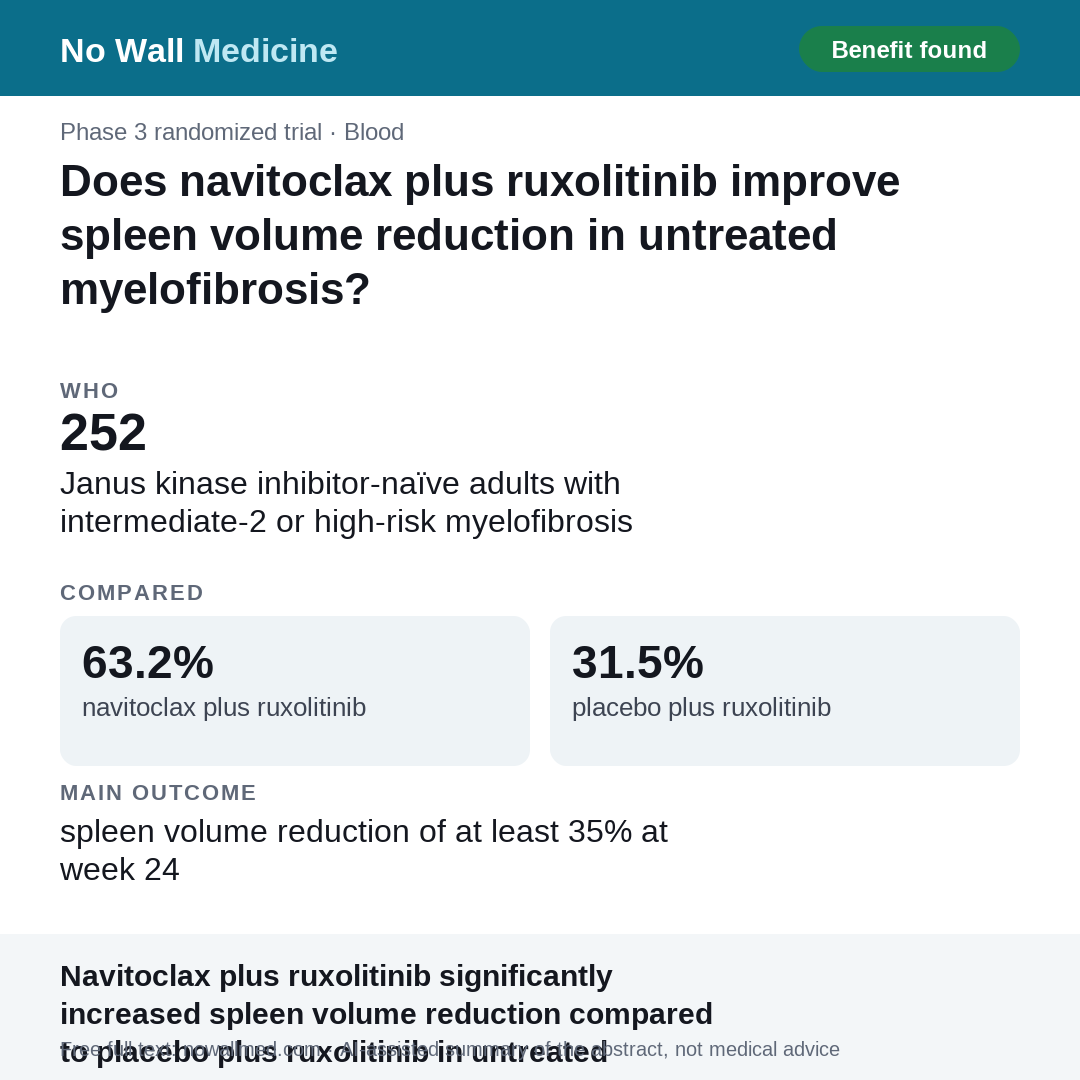
TRANSFORM-1 phase 3 study: efficacy and safety of navitoclax plus ruxolitinib in patients with untreated myelofibrosis
Phase 3 randomized trialBenefit found
Does navitoclax plus ruxolitinib improve spleen volume reduction in untreated myelofibrosis?
Who
252
Janus kinase inhibitor-naïve adults with intermediate-2 or high-risk myelofibrosis
Compared
63.2%navitoclax plus ruxolitinib
31.5%placebo plus ruxolitinib
Main outcome
spleen volume reduction of at least 35% at week 24
Bottom line: Navitoclax plus ruxolitinib significantly increased spleen volume reduction compared to placebo plus ruxolitinib in untreated myelofibrosis.
Blood · 2026-06-30Download image
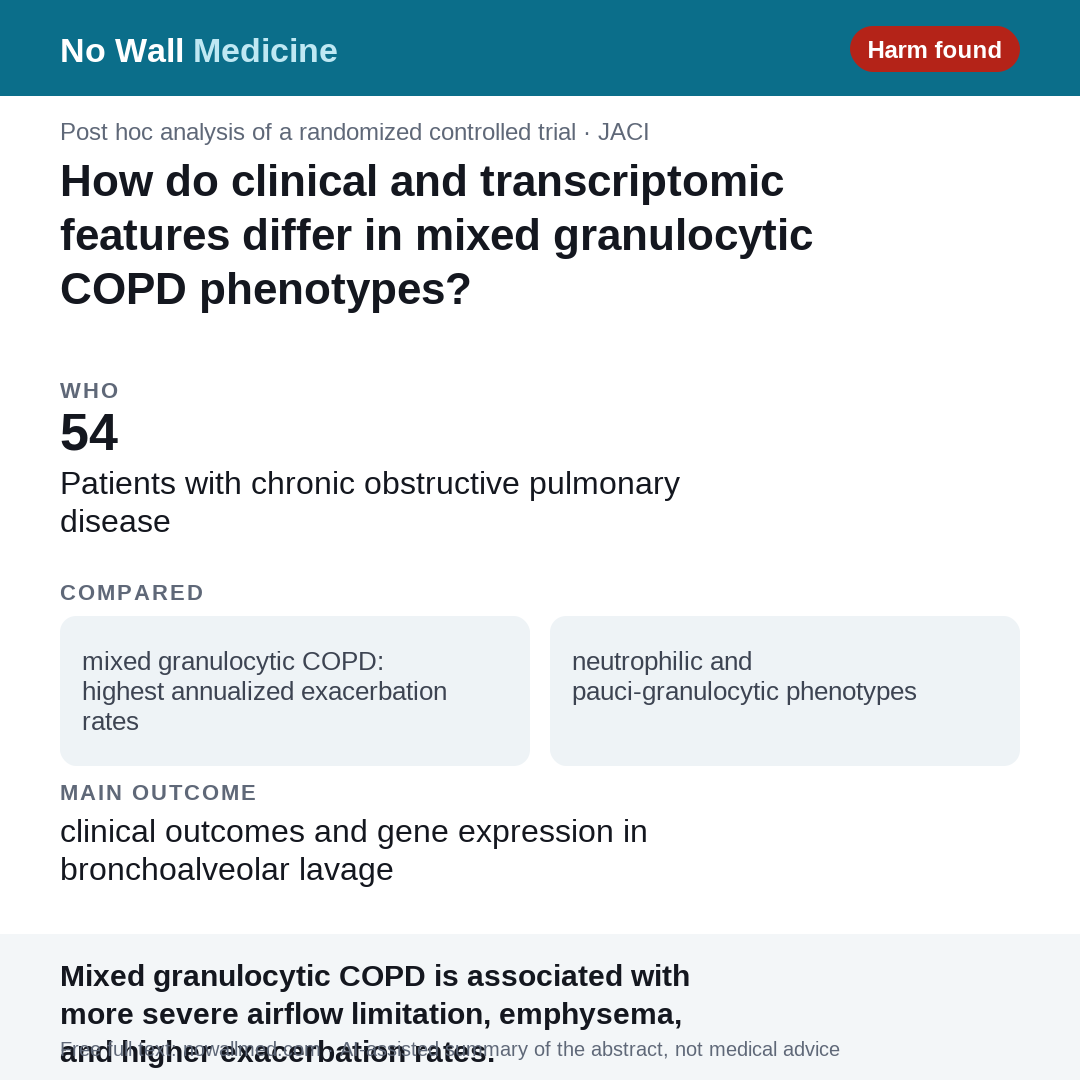
Clinical and transcriptomic characterization of mixed granulocytic phenotype in chronic obstructive pulmonary disease
Post hoc analysis of a randomized controlled trialHarm found
How do clinical and transcriptomic features differ in mixed granulocytic COPD phenotypes?
Who
54
Patients with chronic obstructive pulmonary disease
Compared
mixed granulocytic COPD: highest annualized exacerbation rates
neutrophilic and pauci-granulocytic phenotypes
Main outcome
clinical outcomes and gene expression in bronchoalveolar lavage
Bottom line: Mixed granulocytic COPD is associated with more severe airflow limitation, emphysema, and higher exacerbation rates.
Limitation: This was a post hoc study of a randomized controlled trial
JACI · 2026-06-30Download image
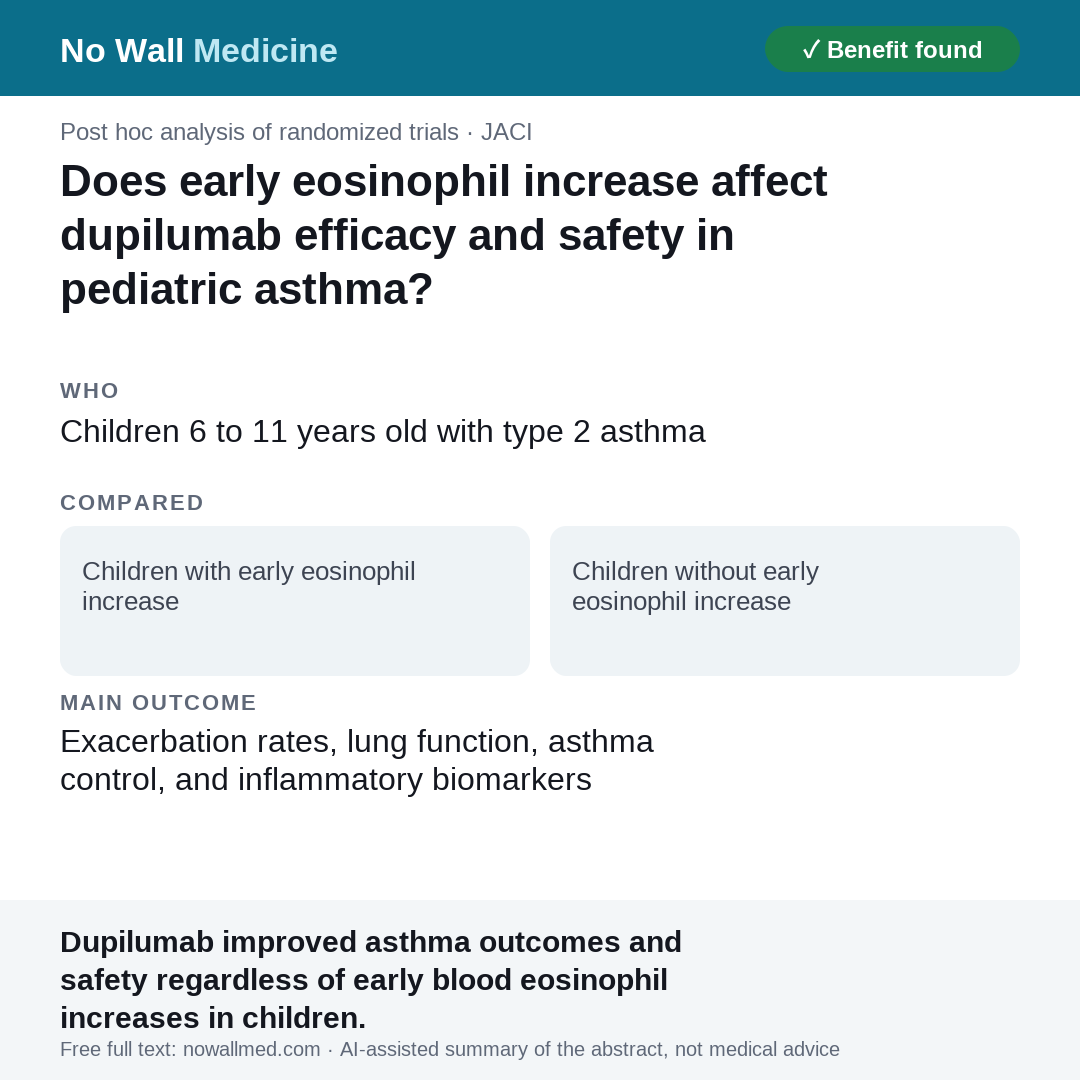
Dupilumab outcomes in pediatric asthma by early eosinophil status: Post hoc analysis of VOYAGE/EXCURSION
Post hoc analysis of randomized trialsBenefit found
Does early eosinophil increase affect dupilumab efficacy and safety in pediatric asthma?
Who
Children 6 to 11 years old with type 2 asthma
Compared
Children with early eosinophil increase
Children without early eosinophil increase
Main outcome
Exacerbation rates, lung function, asthma control, and inflammatory biomarkers
Bottom line: Dupilumab improved asthma outcomes and safety regardless of early blood eosinophil increases in children.
JACI · 2026-06-30Download image
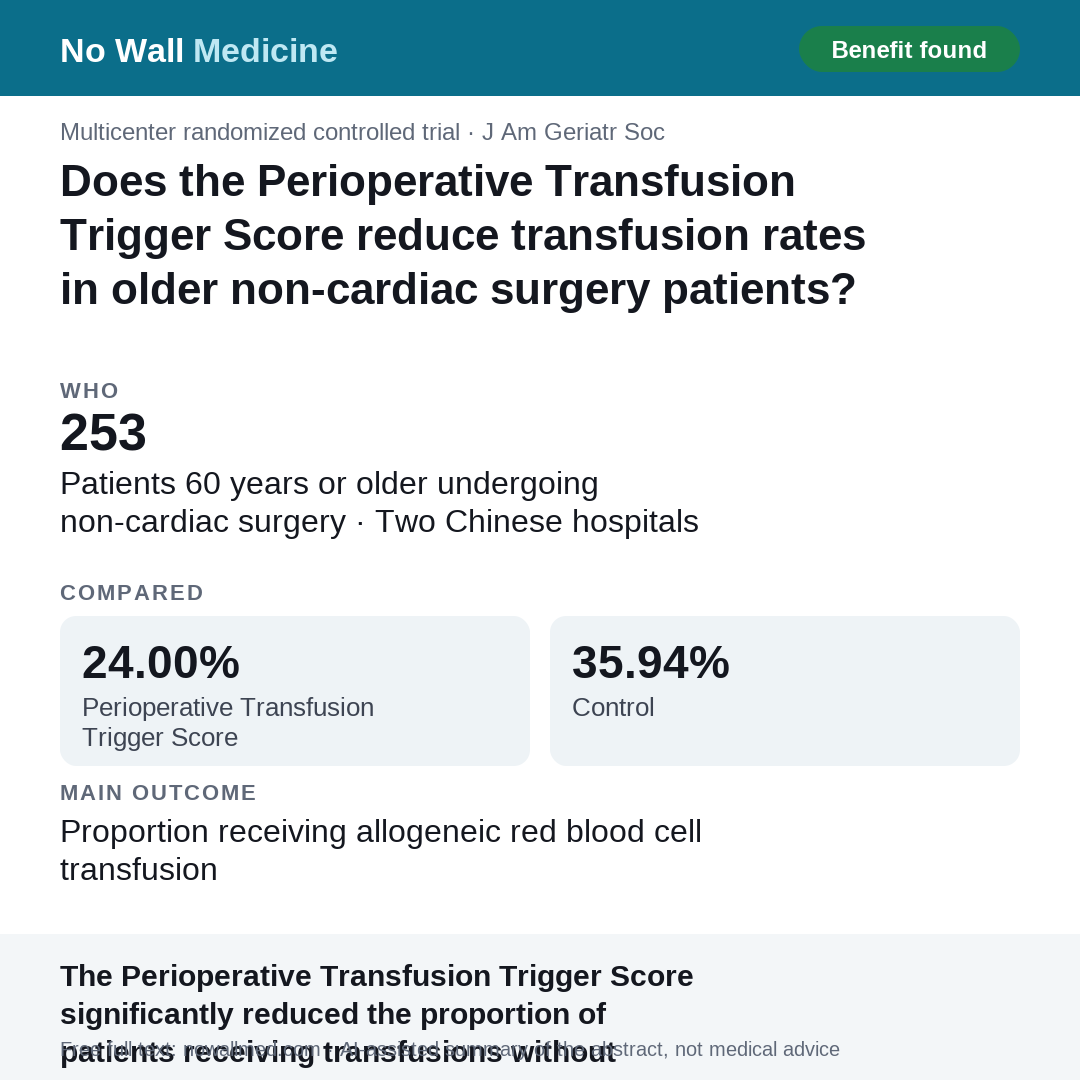
Perioperative Transfusion Trigger Score Versus Restrictive Transfusion in Older Non-Cardiac Surgery Patients: A Multicenter Randomized Controlled Trial
Multicenter randomized controlled trialBenefit found
Does the Perioperative Transfusion Trigger Score reduce transfusion rates in older non-cardiac surgery patients?
Who
253
Patients 60 years or older undergoing non-cardiac surgery · Two Chinese hospitals
Compared
24.00%Perioperative Transfusion Trigger Score (30/125)
35.94%Control (46/128)
Main outcome
Proportion receiving allogeneic red blood cell transfusion
Bottom line: The Perioperative Transfusion Trigger Score significantly reduced the proportion of patients receiving transfusions without increasing complications.
J Am Geriatr Soc · 2026-06-30Download image
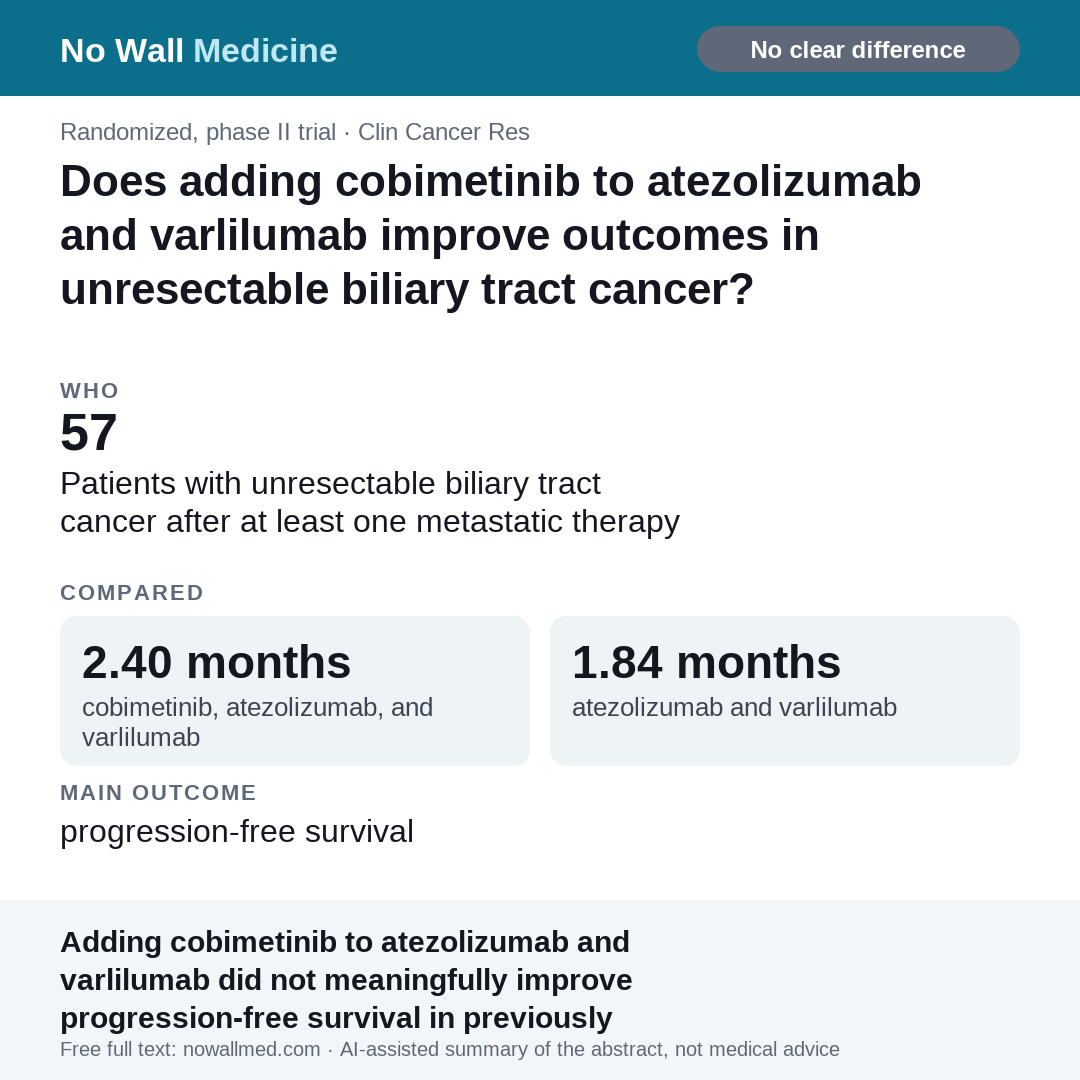
A Randomized Phase II Study of Combination Atezolizumab and Varlilumab (CDX-1127) with or without Cobimetinib in Previously Treated Unresectable Biliary Tract Cancer
Randomized, phase II trialNo clear difference
Does adding cobimetinib to atezolizumab and varlilumab improve outcomes in unresectable biliary tract cancer?
Who
57
Patients with unresectable biliary tract cancer after at least one metastatic therapy
Compared
2.40 monthscobimetinib, atezolizumab, and varlilumab
1.84 monthsatezolizumab and varlilumab
Main outcome
progression-free survival
Result: hazard ratio 0.67 (95% CI 0.38-1.18)
Bottom line: Adding cobimetinib to atezolizumab and varlilumab did not meaningfully improve progression-free survival in previously treated biliary tract cancer.
Clin Cancer Res · 2026-06-30Download image
Effects of cannabidiol on anxiety- and depressive-like behaviors and cognition: a systematic review and meta-analysis of preclinical studies
Systematic review and meta-analysis of preclinical studiesBenefit found
Does cannabidiol affect anxiety, depressive-like behaviors, and cognition in preclinical models?
Who
123
Animal models
Compared
Cannabidiol
Control
Main outcome
Anxiety-like behaviors, depressive-like behaviors, and cognition
Bottom line: Cannabidiol reduces anxiety-like and depressive-like behaviors and improves cognitive performance in various preclinical models.
Limitation: Clinical evidence in humans is still limited and inconclusive.
Mol Psychiatry · 2026-06-30Download image
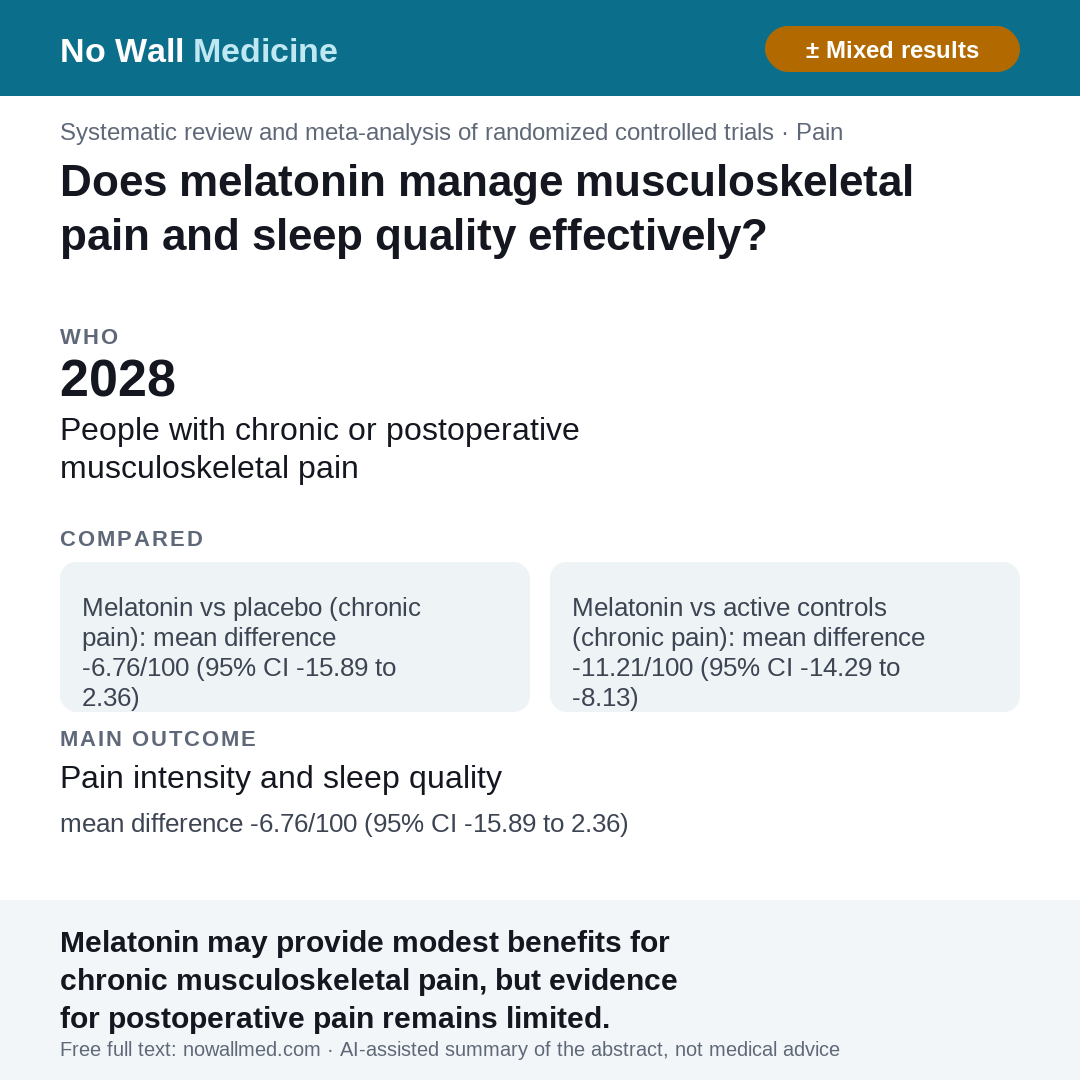
Efficacy and effectiveness of melatonin for the management of musculoskeletal pain: a systematic review and meta-analysis of placebo and active controlled trials
Systematic review and meta-analysis of randomized controlled trialsMixed results
Does melatonin manage musculoskeletal pain and sleep quality effectively?
Who
2028
People with chronic or postoperative musculoskeletal pain
Compared
Melatonin vs placebo (chronic pain): mean difference -6.76/100 (95% CI -15.89 to 2.36)
Melatonin vs active controls (chronic pain): mean difference -11.21/100 (95% CI -14.29 to -8.13)
Main outcome
Pain intensity and sleep quality
Result: mean difference -6.76/100 (95% CI -15.89 to 2.36)
Bottom line: Melatonin may provide modest benefits for chronic musculoskeletal pain, but evidence for postoperative pain remains limited.
Limitation: Most effects did not reach minimal clinically important difference thresholds and certainty of evidence was low to moderate.
Pain · 2026-06-30Download image
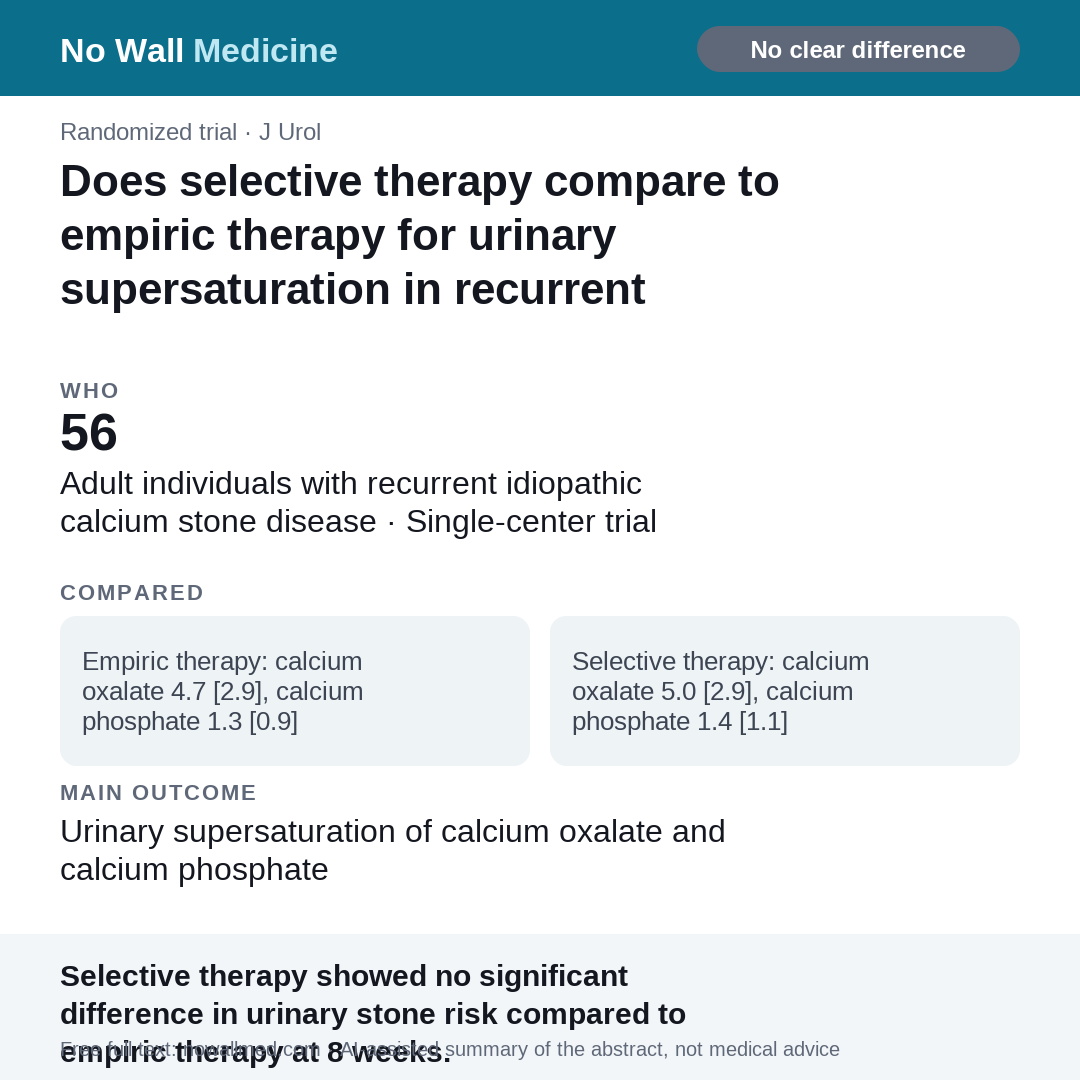
Urinary Supersaturation in a Randomized Trial Among Individuals With Recurrent Nephrolithiasis Comparing Empiric vs Selective Preventive Therapy: The URINE Trial
Randomized trialNo clear difference
Does selective therapy compare to empiric therapy for urinary supersaturation in recurrent nephrolithiasis?
Who
56
Adult individuals with recurrent idiopathic calcium stone disease · Single-center trial
Compared
Empiric therapy: calcium oxalate 4.7 [2.9], calcium phosphate 1.3 [0.9]
Selective therapy: calcium oxalate 5.0 [2.9], calcium phosphate 1.4 [1.1]
Main outcome
Urinary supersaturation of calcium oxalate and calcium phosphate
Bottom line: Selective therapy showed no significant difference in urinary stone risk compared to empiric therapy at 8 weeks.
J Urol · 2026-06-30Download image
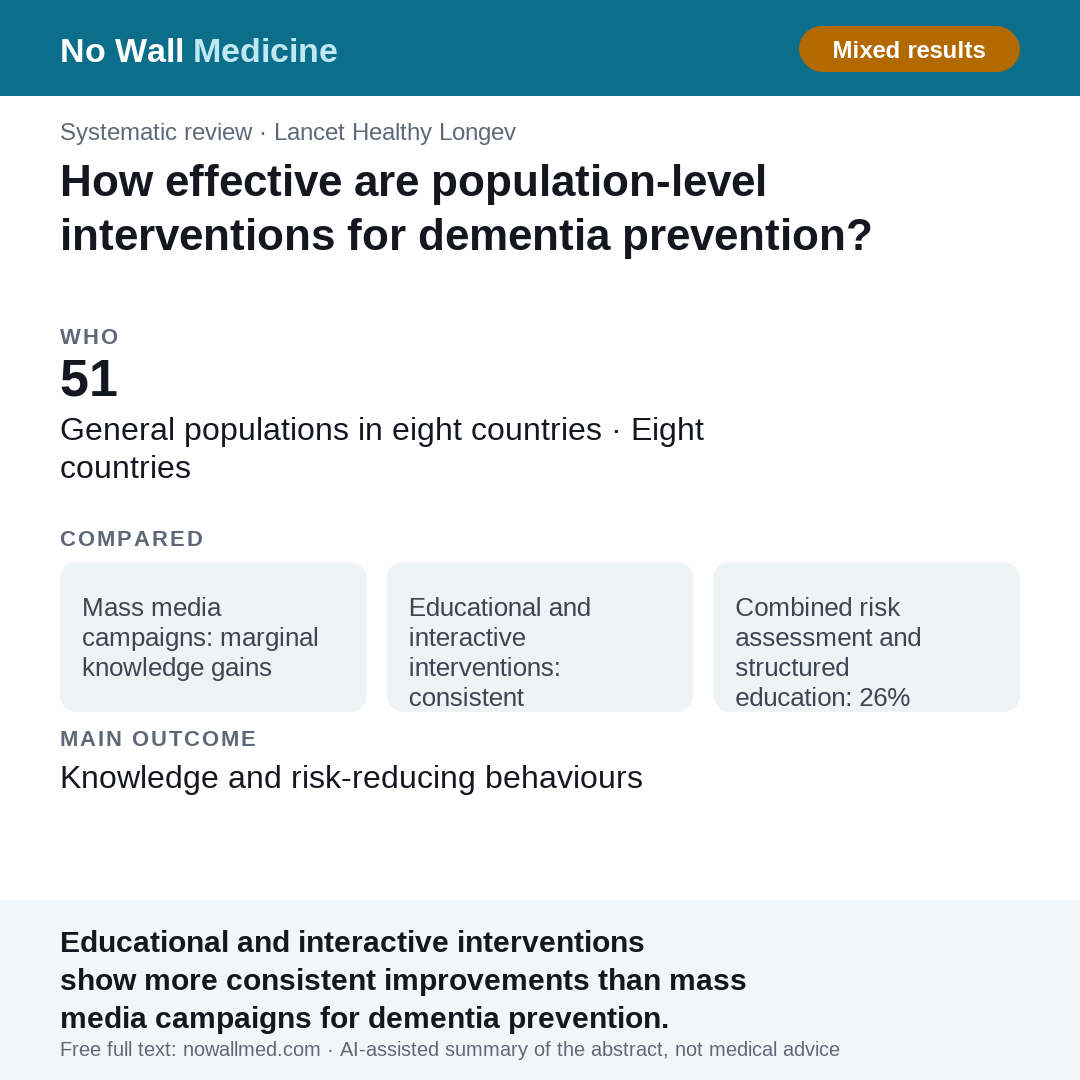
Population-level interventions for dementia prevention: a systematic review
Systematic reviewMixed results
How effective are population-level interventions for dementia prevention?
Who
51
General populations in eight countries · Eight countries
Compared
Mass media campaigns: marginal knowledge gains
Educational and interactive interventions: consistent improvements in knowledge and risk-reducing behaviours
Combined risk assessment and structured education: 26% improvement in modifiable risk factor status
Main outcome
Knowledge and risk-reducing behaviours
Bottom line: Educational and interactive interventions show more consistent improvements than mass media campaigns for dementia prevention.
Lancet Healthy Longev · 2026-06-30Download image
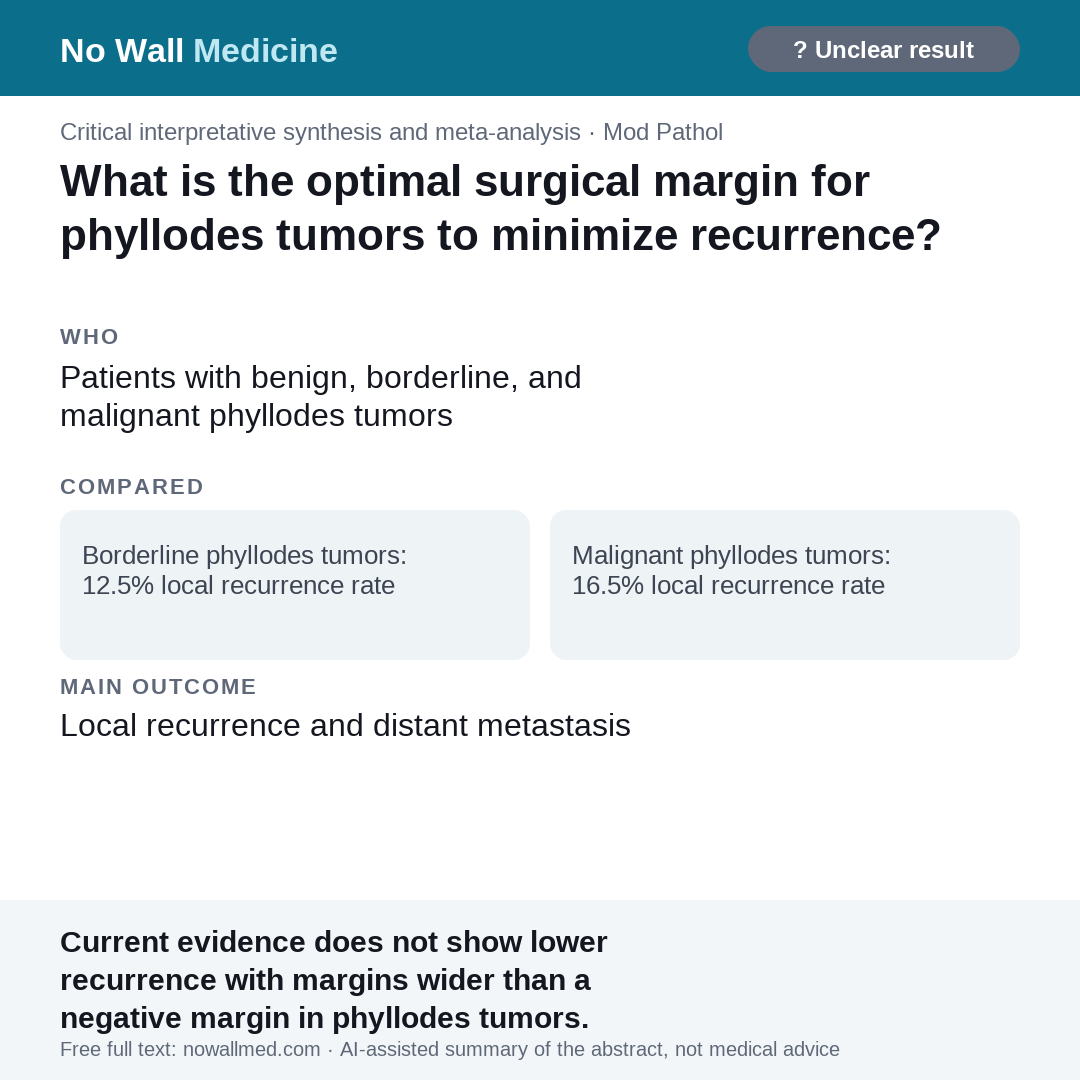
Margin Adequacy in Phyllodes Tumors Revisited: Reappraisal of the Evidence Base and Knowledge Gaps
Critical interpretative synthesis and meta-analysisUnclear result
What is the optimal surgical margin for phyllodes tumors to minimize recurrence?
Who
40
Patients with benign, borderline, and malignant phyllodes tumors
Compared
Borderline phyllodes tumors: 12.5% local recurrence rate
Malignant phyllodes tumors: 16.5% local recurrence rate
Main outcome
Local recurrence and distant metastasis
Bottom line: Current evidence does not show lower recurrence with margins wider than a negative margin in phyllodes tumors.
Limitation: Current heterogeneous evidence does not show lower recurrence with margins wider than a negative margin.
Mod Pathol · 2026-06-30Download image
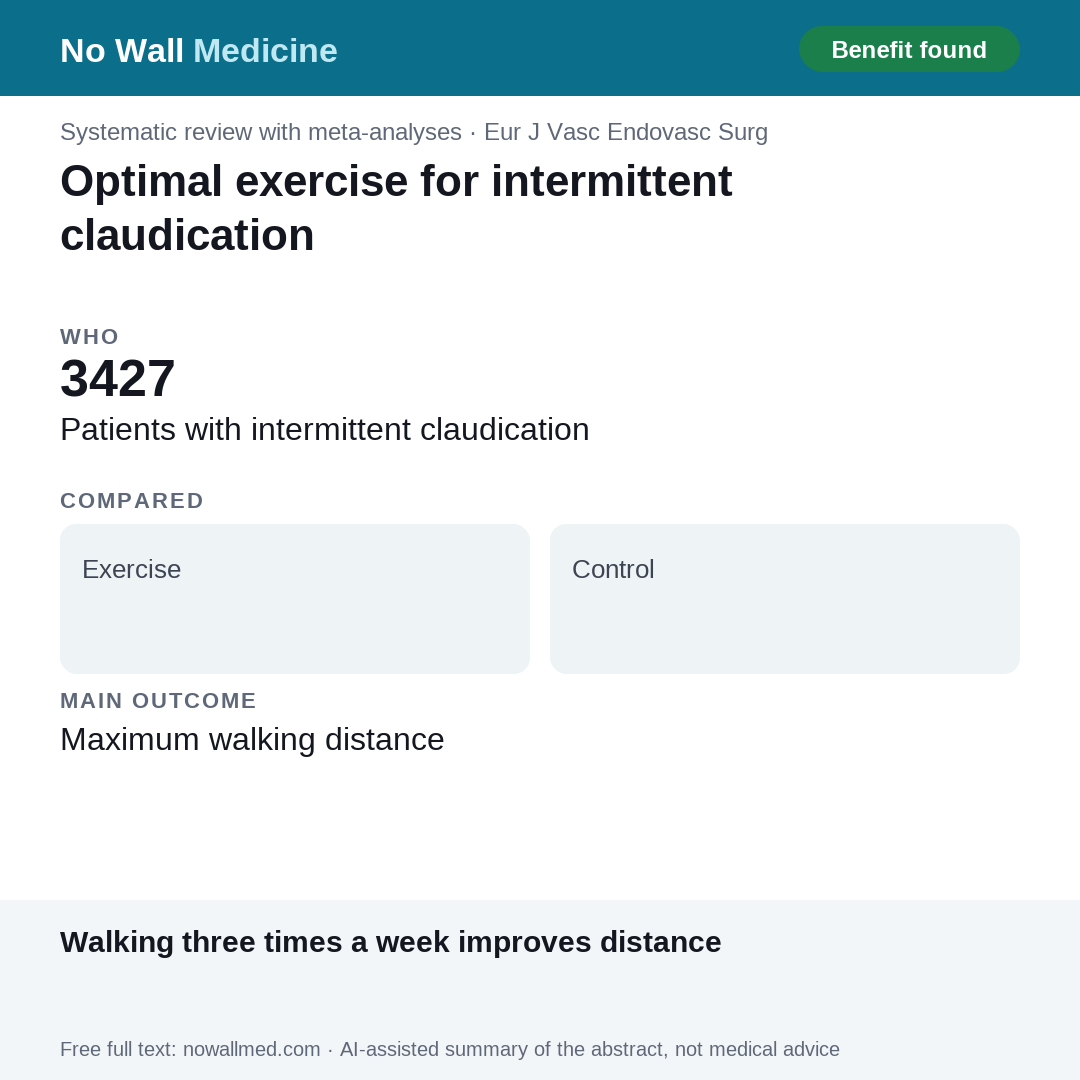
Identifying the Most Clinically Effective Exercise Prescription for Improving Maximum Walking Distance in People with Intermittent Claudication (MAXIMISE): A Systematic Review with Network and Component Network Meta-analysis
Systematic review with meta-analysesBenefit found
Optimal exercise for intermittent claudication
Who
3427
Patients with intermittent claudication
Compared
Exercise
Control
Main outcome
Maximum walking distance
Bottom line: Walking three times a week improves distance
Eur J Vasc Endovasc Surg · 2026-06-30Download image
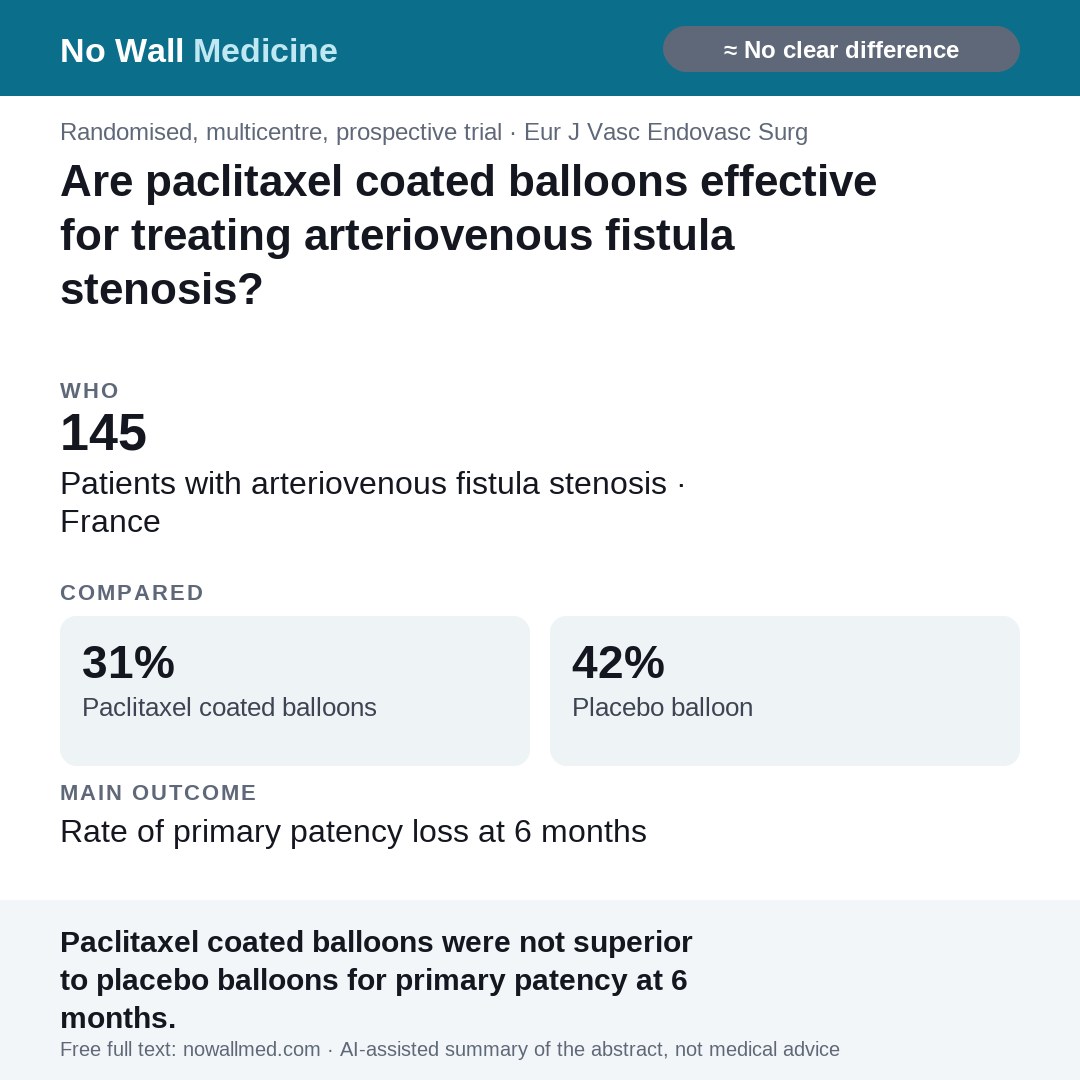
A Randomised Trial of Paclitaxel Coated Balloons for Arteriovenous Fistula Stenosis with Blinded Re-intervention Criteria
Randomised, multicentre, prospective trialNo clear difference
Are paclitaxel coated balloons effective for treating arteriovenous fistula stenosis?
Who
145
Patients with arteriovenous fistula stenosis · France
Compared
31%Paclitaxel coated balloons (22 of 70)
42%Placebo balloon (30 of 71)
Main outcome
Rate of primary patency loss at 6 months
Result: hazard ratio 0.62 (95% CI 0.36 - 1.07)
Bottom line: Paclitaxel coated balloons were not superior to placebo balloons for primary patency at 6 months.
Eur J Vasc Endovasc Surg · 2026-06-30Download image
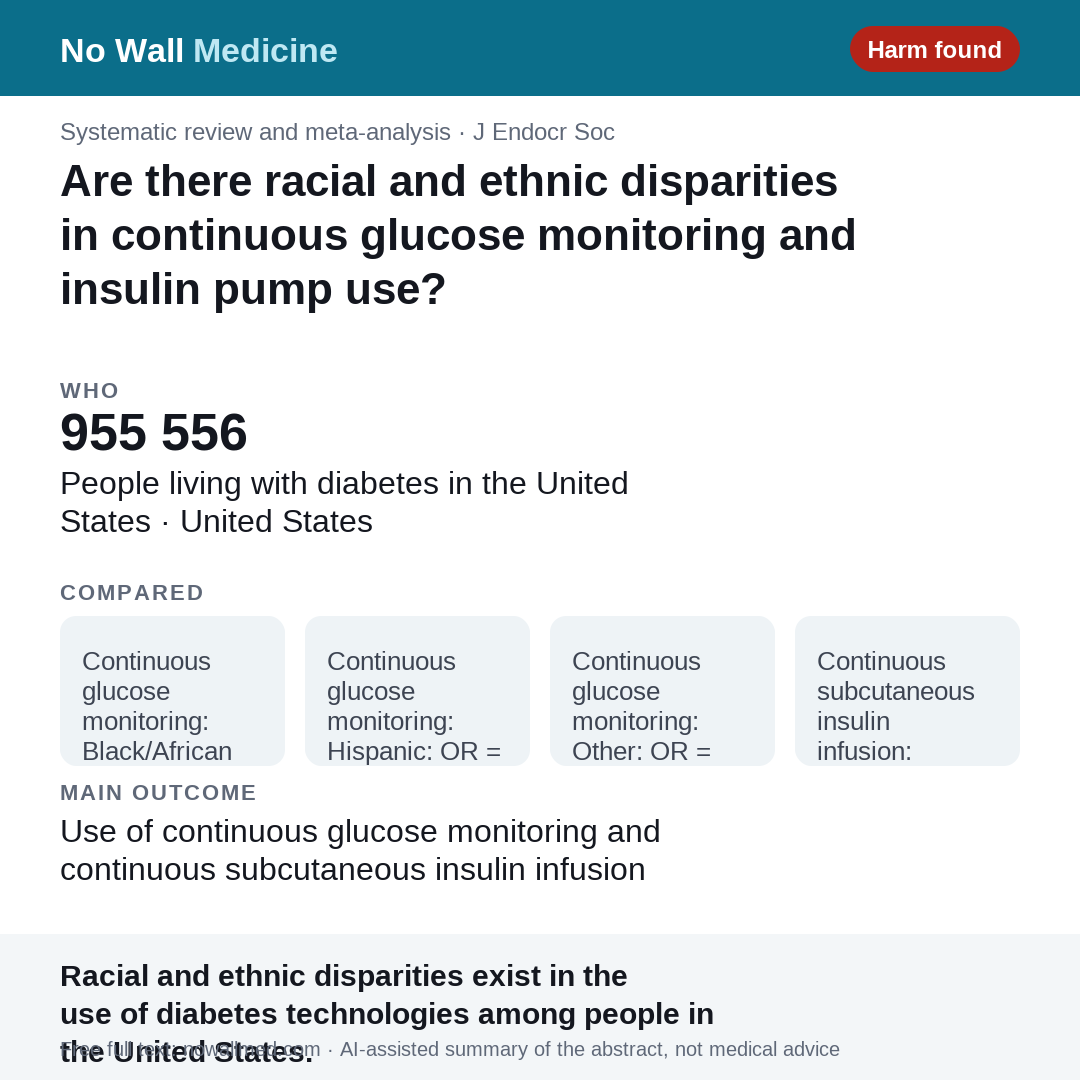
US race/ethnic disparities in diabetes technologies: a systematic review and meta-analysis of 950 000 individuals
Systematic review and meta-analysisHarm found
Are there racial and ethnic disparities in continuous glucose monitoring and insulin pump use?
Who
955 556
People living with diabetes in the United States · United States
Compared
Continuous glucose monitoring: Black/African American: OR = 0.47 (95% CI = 0.38-0.60)
Continuous glucose monitoring: Hispanic: OR = 0.59 (95% CI = 0.50-0.69)
Continuous glucose monitoring: Other: OR = 0.69 (95% CI = 0.58-0.83)
Continuous subcutaneous insulin infusion: Black/African American: OR = 0.31 (95% CI = 0.23-0.42)
Main outcome
Use of continuous glucose monitoring and continuous subcutaneous insulin infusion
Bottom line: Racial and ethnic disparities exist in the use of diabetes technologies among people in the United States.
Limitation: Moderate/substantial heterogeneity and reliance on electronic medical record data.
J Endocr Soc · 2026-06-30Download image
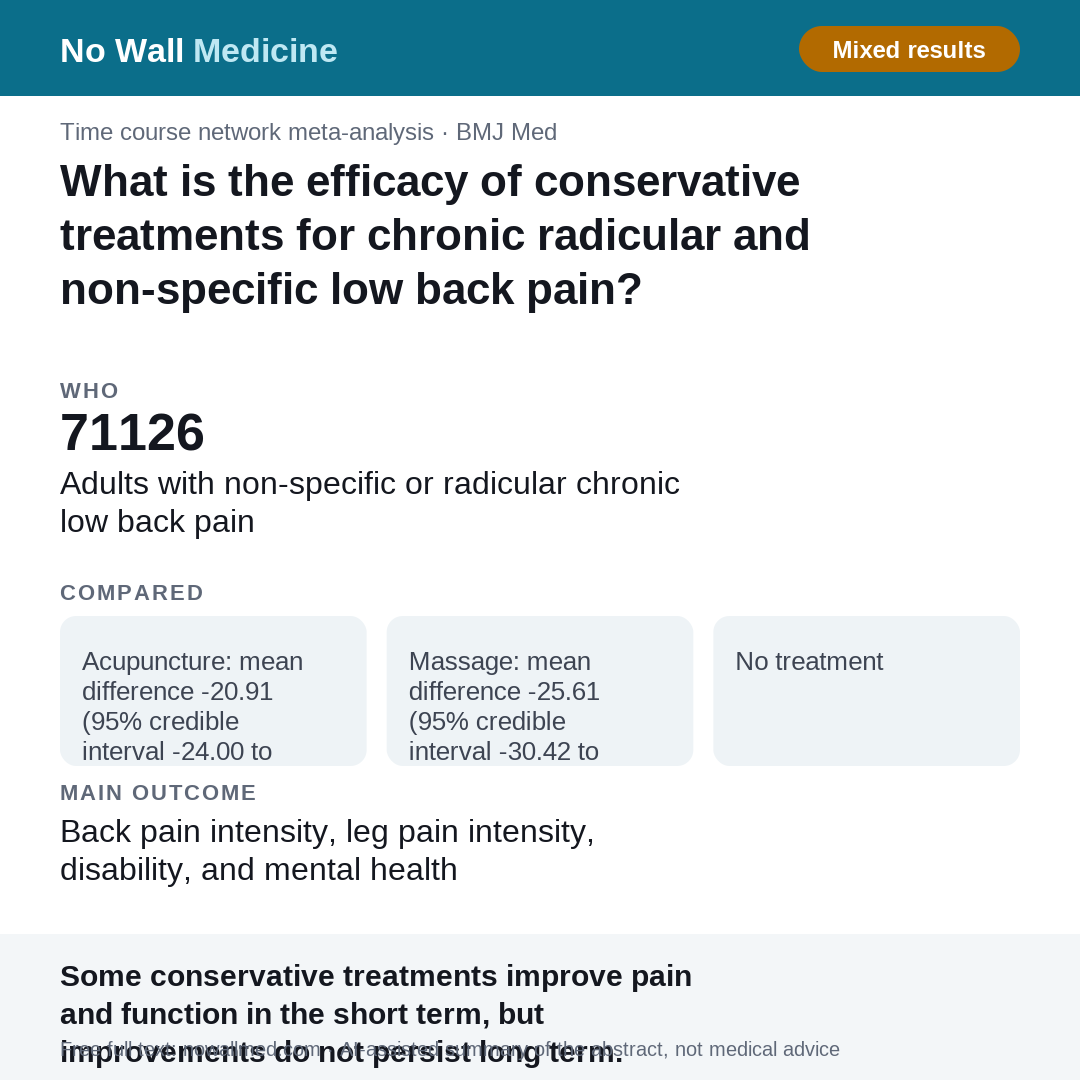
Conservative treatments for chronic non-specific low back pain: time course network meta-analysis
Time course network meta-analysisMixed results
What is the efficacy of conservative treatments for chronic radicular and non-specific low back pain?
Who
71126
Adults with non-specific or radicular chronic low back pain
Compared
Acupuncture: mean difference -20.91 (95% credible interval -24.00 to -11.95)
Massage: mean difference -25.61 (95% credible interval -30.42 to -10.91)
No treatment
Main outcome
Back pain intensity, leg pain intensity, disability, and mental health
Bottom line: Some conservative treatments improve pain and function in the short term, but improvements do not persist long term.
Limitation: The certainty of the evidence was low to very low across interventions and time points.
BMJ Med · 2026-06-30Download image
Assessing the reliability of Response Evaluation Criteria In Solid Tumors (RECIST): a systematic review of the factors contributing to inter-observer variability
Systematic reviewUnclear result
What affects interobserver variability in RECIST
Who
Patients with solid tumors
Compared
RECIST 1.0
RECIST 1.1
Main outcome
Interobserver variability
Bottom line: Interobserver variability affects clinical trial outcomes
Insights Imaging · 2026-06-30Download image
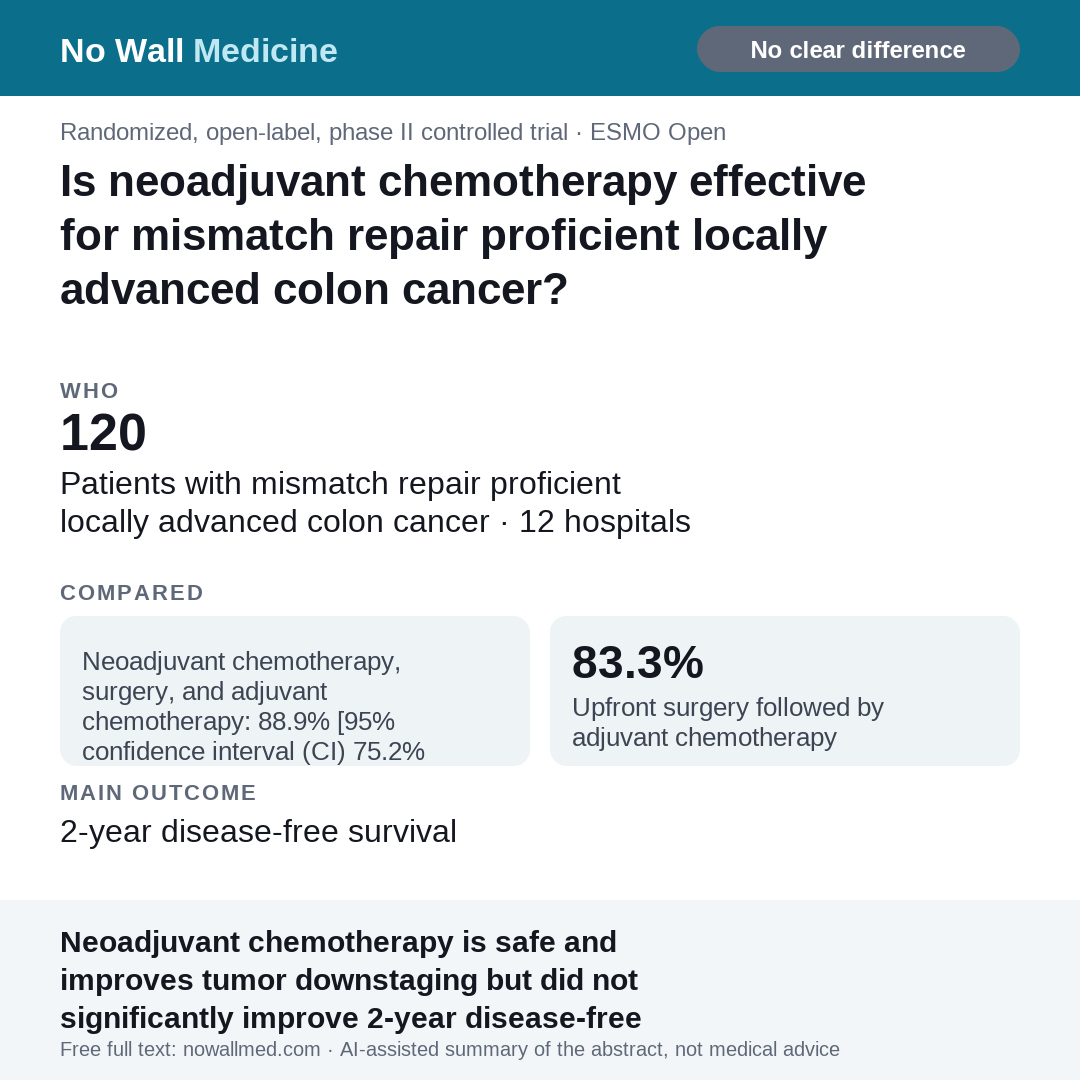
ELECLA trial: final results of perioperative chemotherapy with fluoropyrimidine and oxaliplatin in mismatch repair proficient locally advanced colon cancer
Randomized, open-label, phase II controlled trialNo clear difference
Is neoadjuvant chemotherapy effective for mismatch repair proficient locally advanced colon cancer?
Who
120
Patients with mismatch repair proficient locally advanced colon cancer · 12 hospitals in Spain
Compared
Neoadjuvant chemotherapy, surgery, and adjuvant chemotherapy: 88.9% [95% confidence interval (CI) 75.2% to 95.2%]
83.3%Upfront surgery followed by adjuvant chemotherapy (95% CI 70.9% to 90.7%)
Main outcome
2-year disease-free survival
Bottom line: Neoadjuvant chemotherapy is safe and improves tumor downstaging but did not significantly improve 2-year disease-free survival.
ESMO Open · 2026-06-30Download image