Visual abstracts
New randomized trials and meta-analyses from leading journals at a glance: who was studied, what was compared, and what was found. Every paper is free to read in full.
All specialtiesCardiology 4877Oncology 4138Gastroenterology & Hepatology 1942Infectious Disease 3837Neurology 1905Psychiatry & Mental Health 2273Pulmonology 2143Critical Care 1365Endocrinology & Diabetes 2580Pediatrics 2980Surgery 2559Orthopedics & Sports Medicine 931Neurosurgery 537Cardiothoracic & Vascular Surgery 674Plastic & Reconstructive Surgery 591Nephrology 1133Rheumatology 823Hematology 1109Dermatology 621Ophthalmology 543Obstetrics & Gynecology 1686Public & Global Health 1058Radiology & Imaging 648Anesthesiology 986Urology 764ENT (Otolaryngology) 503Emergency Medicine 511Allergy & Immunology 313Geriatrics 981Family Medicine & Primary Care 562Medical Genetics & Genomics 676Pathology & Laboratory Medicine 159Physical Medicine & Rehabilitation 757Palliative Care 444Nutrition 1588Digital Health & AI 2201General Medicine 321
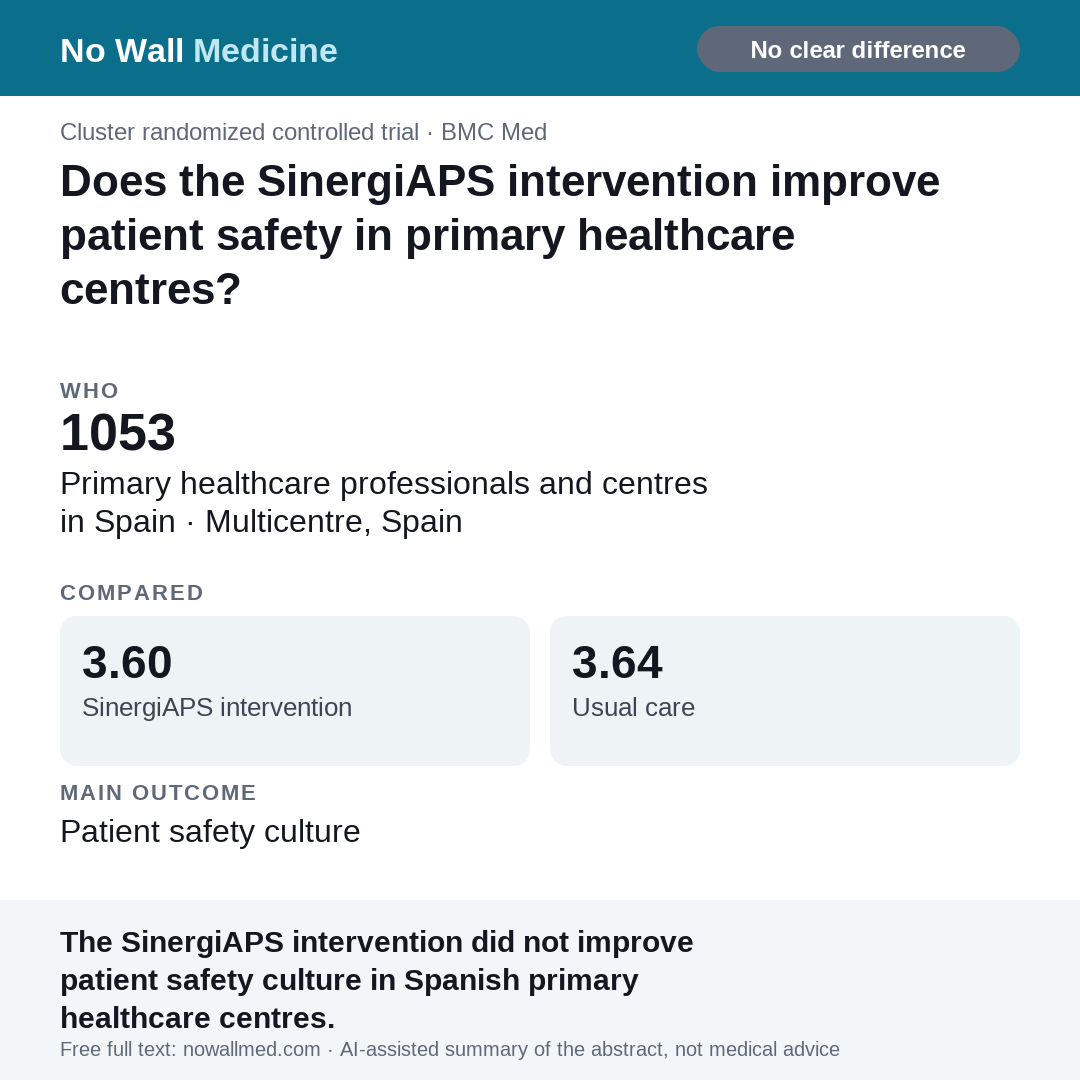
Evaluating SinergiAPS, an intervention based on patient feedback to improve patient safety in primary care: a cluster randomized trial
Cluster randomized controlled trialNo clear difference
Does the SinergiAPS intervention improve patient safety in primary healthcare centres?
Who
1053
Primary healthcare professionals and centres in Spain · Multicentre, Spain
Compared
3.60SinergiAPS intervention (95% CI 3.55 to 3.64)
3.64Usual care (95% CI 3.60 to 3.68)
Main outcome
Patient safety culture
Bottom line: The SinergiAPS intervention did not improve patient safety culture in Spanish primary healthcare centres.
Limitation: The COVID-19 pandemic limited the capacity to develop and implement safety improvement action plans.
BMC Med · 2025-04-07Download image
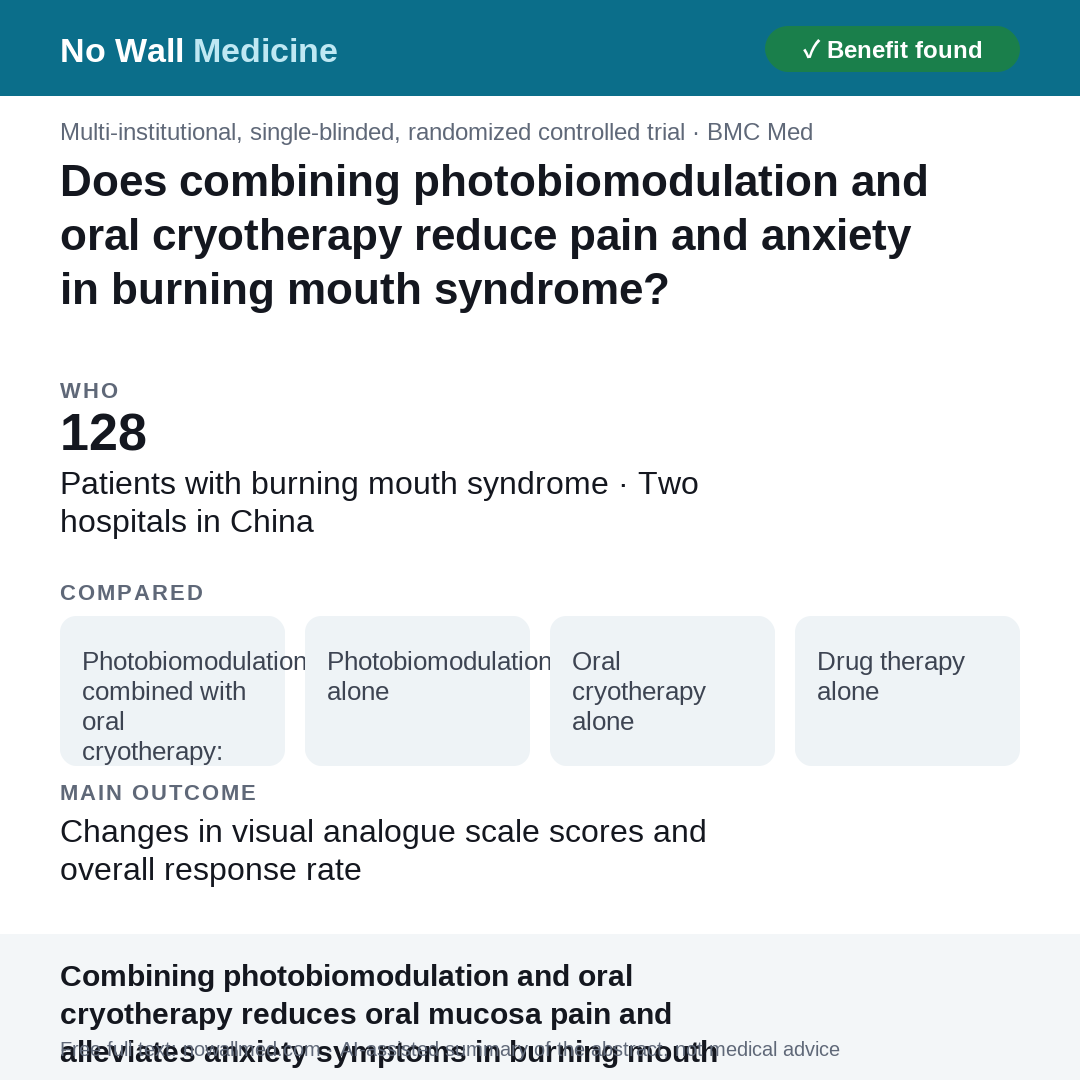
Efficacy and safety of photobiomodulation combined with oral cryotherapy on oral mucosa pain in patients with burning mouth syndrome: a multi-institutional, randomized, controlled trial
Multi-institutional, single-blinded, randomized controlled trialBenefit found
Does combining photobiomodulation and oral cryotherapy reduce pain and anxiety in burning mouth syndrome?
Who
128
Patients with burning mouth syndrome · Two hospitals in China
Compared
Photobiomodulation combined with oral cryotherapy: 81.25% overall response rate
Photobiomodulation alone
Oral cryotherapy alone
Drug therapy alone
Main outcome
Changes in visual analogue scale scores and overall response rate
Bottom line: Combining photobiomodulation and oral cryotherapy reduces oral mucosa pain and alleviates anxiety symptoms in burning mouth syndrome patients.
BMC Med · 2025-04-07Download image
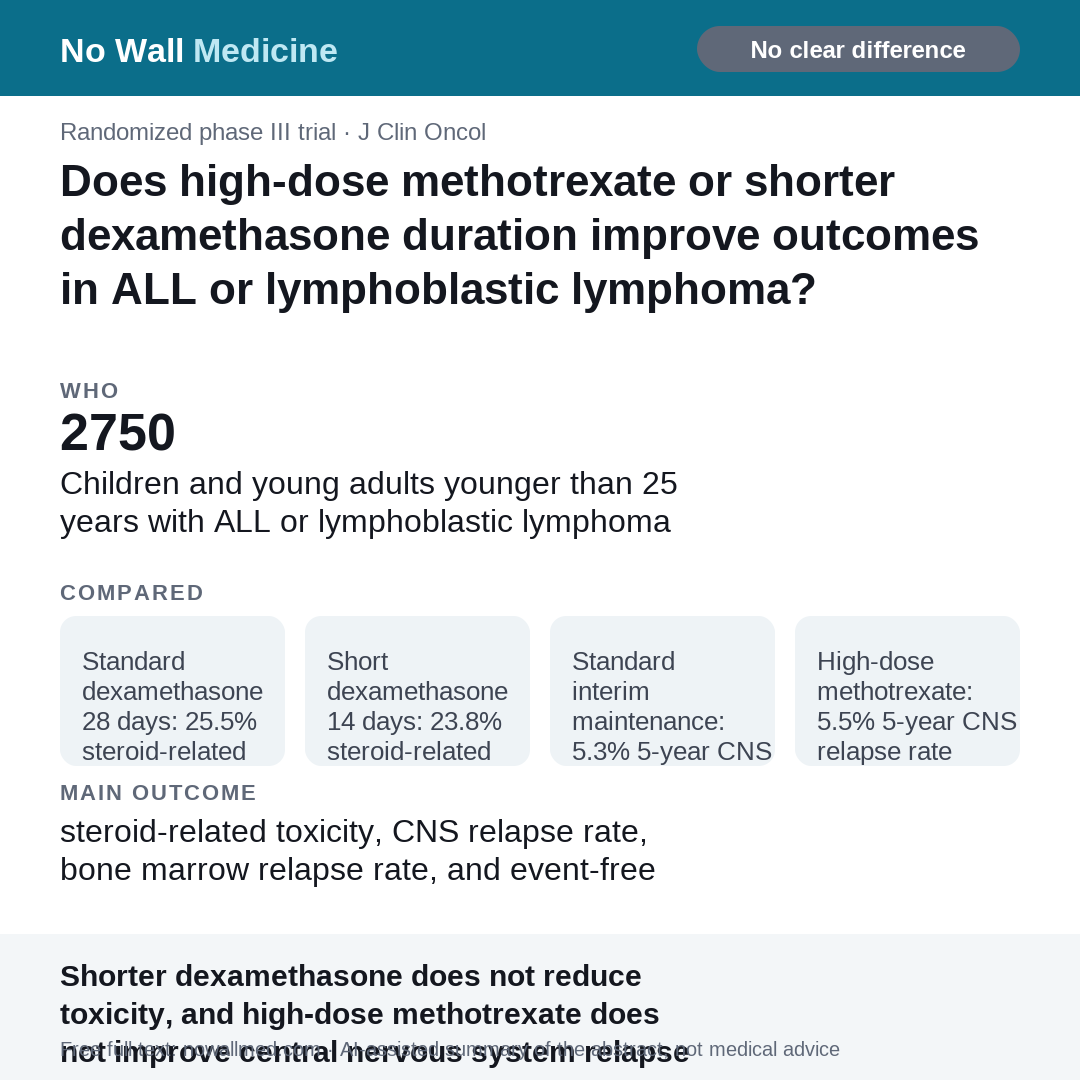
High-Dose Methotrexate in Children and Young Adults With ALL and Lymphoblastic Lymphoma: Results of the Randomized Phase III Study UKALL 2011
Randomized phase III trialNo clear difference
Does high-dose methotrexate or shorter dexamethasone duration improve outcomes in ALL or lymphoblastic lymphoma?
Who
2750
Children and young adults younger than 25 years with ALL or lymphoblastic lymphoma
Compared
Standard dexamethasone 28 days: 25.5% steroid-related toxicity
Short dexamethasone 14 days: 23.8% steroid-related toxicity
Standard interim maintenance: 5.3% 5-year CNS relapse rate
High-dose methotrexate: 5.5% 5-year CNS relapse rate
Main outcome
steroid-related toxicity, CNS relapse rate, bone marrow relapse rate, and event-free survival
Result: hazard ratio 1.19 (95% CI 0.87 to 1.62) for bone marrow relapse
Bottom line: Shorter dexamethasone does not reduce toxicity, and high-dose methotrexate does not improve central nervous system relapse rates.
J Clin Oncol · 2025-04-07Download image
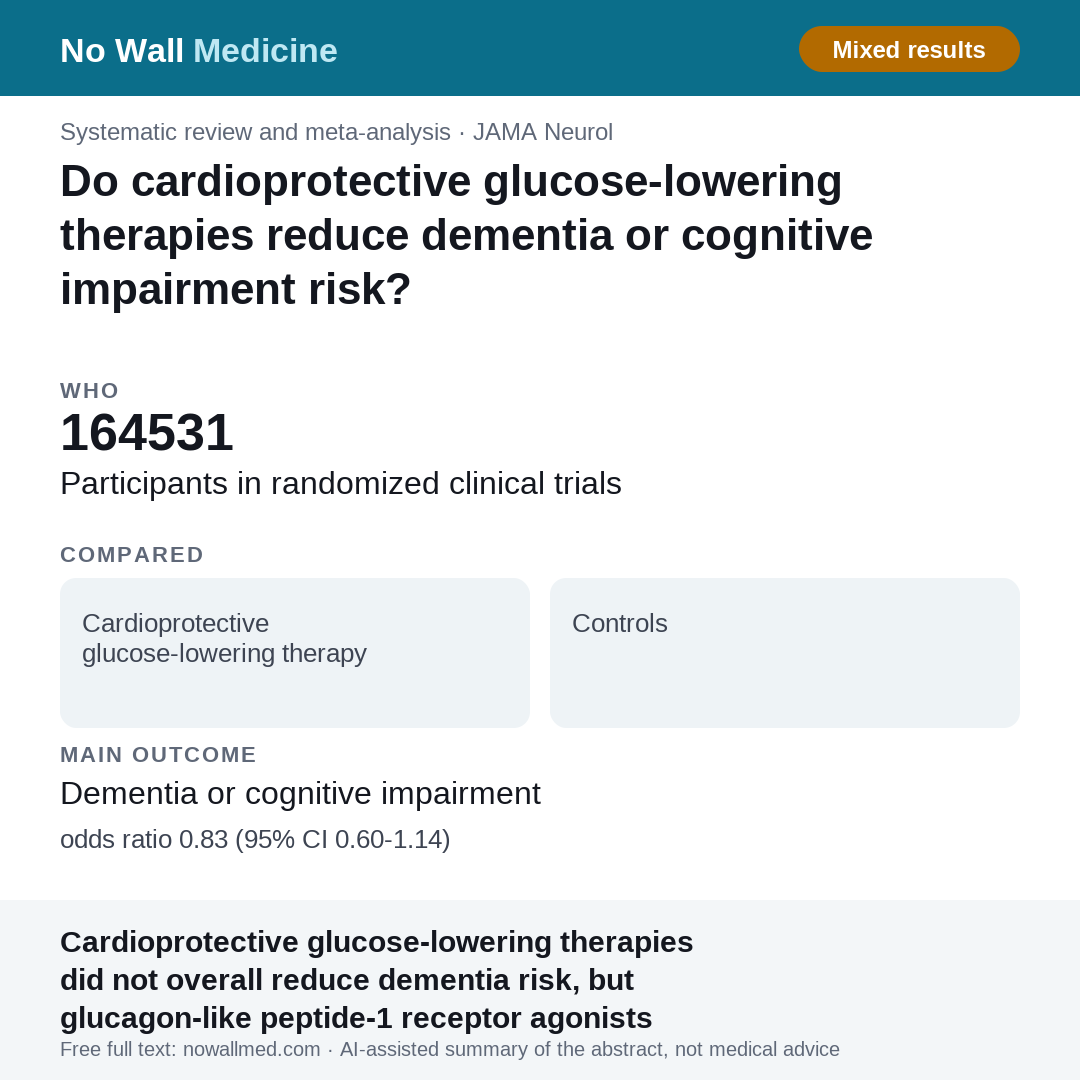
Cardioprotective Glucose-Lowering Agents and Dementia Risk: A Systematic Review and Meta-Analysis
Systematic review and meta-analysisMixed results
Do cardioprotective glucose-lowering therapies reduce dementia or cognitive impairment risk?
Who
164531
Participants in randomized clinical trials
Compared
Cardioprotective glucose-lowering therapy
Controls
Main outcome
Dementia or cognitive impairment
Result: odds ratio 0.83 (95% CI 0.60-1.14)
Bottom line: Cardioprotective glucose-lowering therapies did not overall reduce dementia risk, but glucagon-like peptide-1 receptor agonists were associated with a reduction.
JAMA Neurol · 2025-04-07Download image
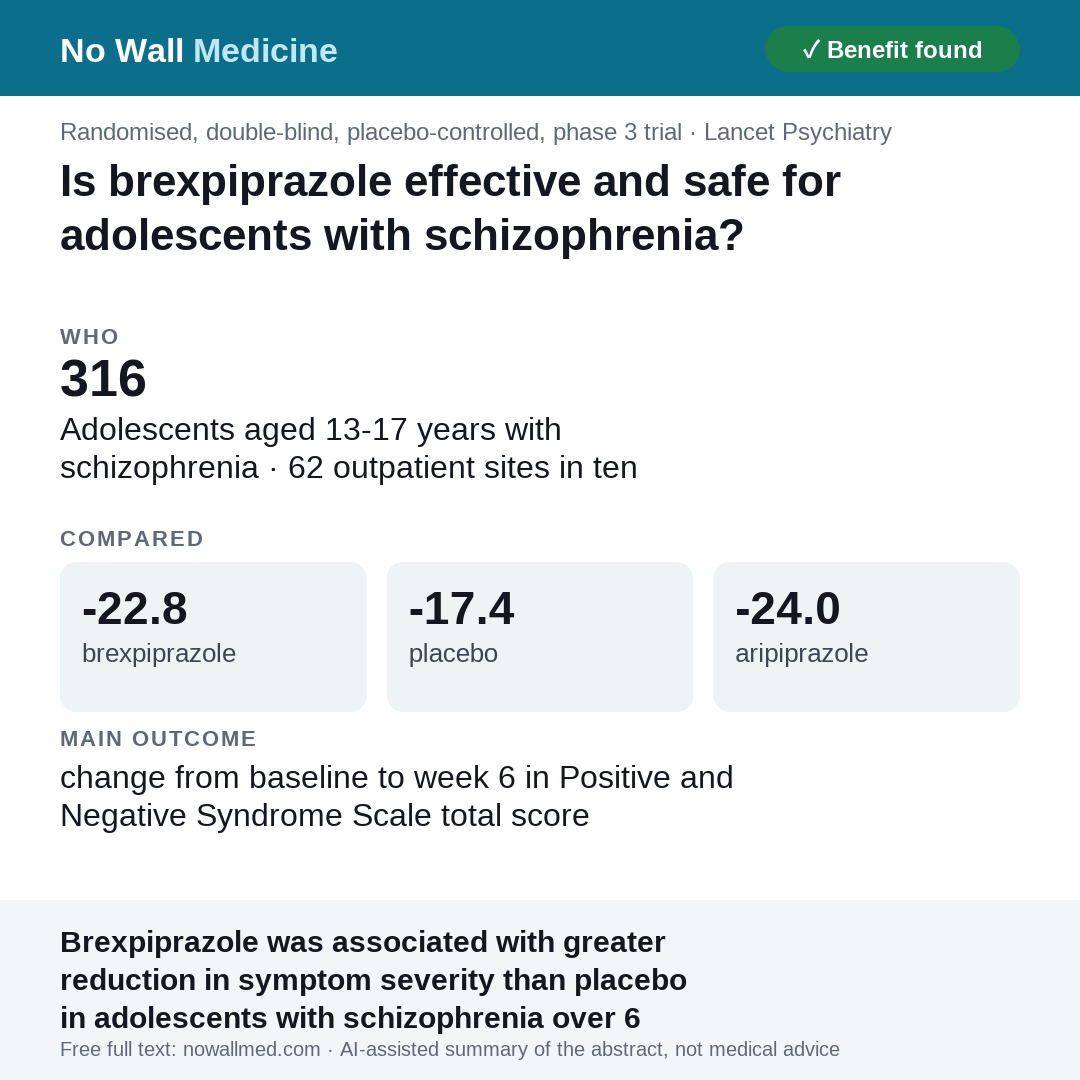
Efficacy and safety of brexpiprazole in adolescents with schizophrenia: a multicountry, randomised, double-blind, placebo-controlled, phase 3 trial with an active reference
Randomised, double-blind, placebo-controlled, phase 3 trialBenefit found
Is brexpiprazole effective and safe for adolescents with schizophrenia?
Who
316
Adolescents aged 13-17 years with schizophrenia · 62 outpatient sites in ten countries
Compared
-22.8brexpiprazole
-17.4placebo
-24.0aripiprazole
Main outcome
change from baseline to week 6 in Positive and Negative Syndrome Scale total score
Result: least squares mean difference -5.33 (95% CI -9.55 to -1.10)
Bottom line: Brexpiprazole was associated with greater reduction in symptom severity than placebo in adolescents with schizophrenia over 6 weeks.
Funded by: Otsuka Pharmaceutical Development & Commercialization and H Lundbeck
Lancet Psychiatry · 2025-04-07Download image
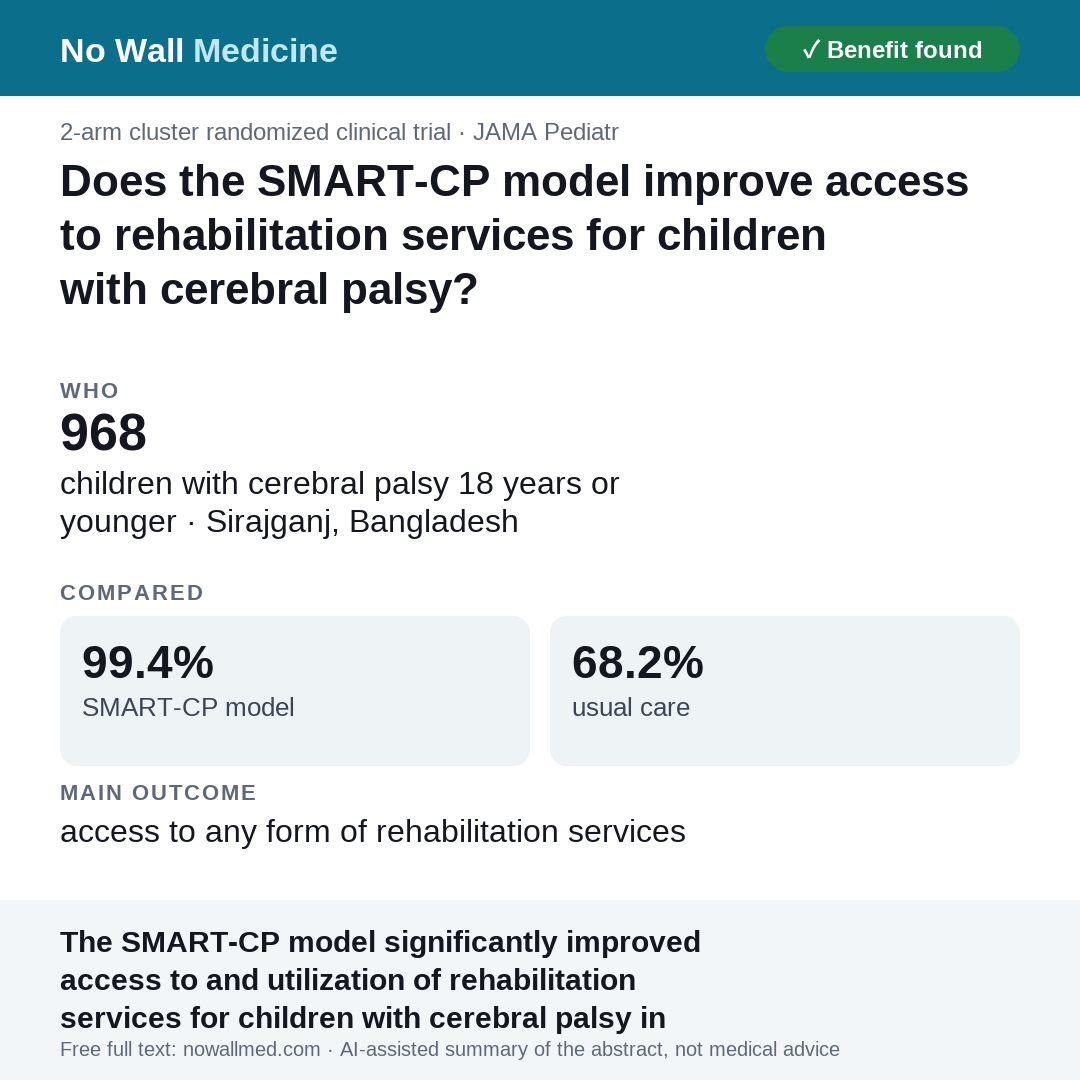
Sustainable Model of Early Intervention and Telerehabilitation for Children With Cerebral Palsy in Rural Bangladesh: The SMART-CP Randomized Clinical Trial
2-arm cluster randomized clinical trialBenefit found
Does the SMART-CP model improve access to rehabilitation services for children with cerebral palsy?
Who
968
children with cerebral palsy 18 years or younger · Sirajganj, Bangladesh
Compared
99.4%SMART-CP model (497/500)
68.2%usual care (319/468)
Main outcome
access to any form of rehabilitation services
Result: 1.5 times more likely to access rehabilitation
Bottom line: The SMART-CP model significantly improved access to and utilization of rehabilitation services for children with cerebral palsy in rural Bangladesh.
JAMA Pediatr · 2025-04-07Download image
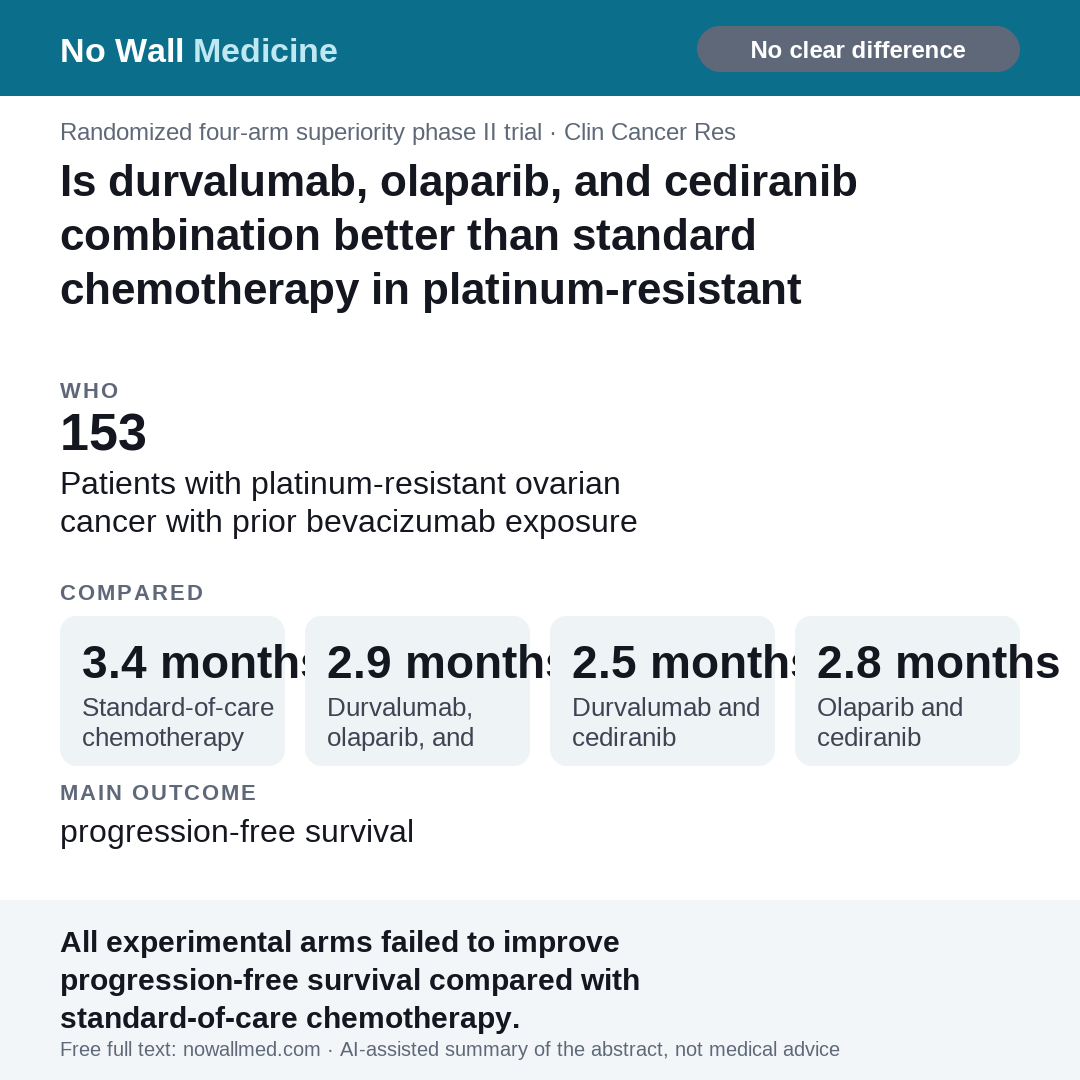
Comparing Durvalumab, Olaparib, and Cediranib Monotherapy, Combination Therapy, or Chemotherapy in Patients with Platinum-Resistant Ovarian Cancer with Prior Bevacizumab: The Phase II NRG-GY023 Trial
Randomized four-arm superiority phase II trialNo clear difference
Is durvalumab, olaparib, and cediranib combination better than standard chemotherapy in platinum-resistant ovarian cancer?
Who
153
Patients with platinum-resistant ovarian cancer with prior bevacizumab exposure
Compared
3.4 monthsStandard-of-care chemotherapy
2.9 monthsDurvalumab, olaparib, and cediranib
2.5 monthsDurvalumab and cediranib
2.8 monthsOlaparib and cediranib
Main outcome
progression-free survival
Result: hazard ratio 1.003 (95% CI 0.56-1.80), 1.108 (95% CI 0.63-1.96), and 1.021 (95% CI 0.57-1.82)
Bottom line: All experimental arms failed to improve progression-free survival compared with standard-of-care chemotherapy.
Clin Cancer Res · 2025-04-07Download image
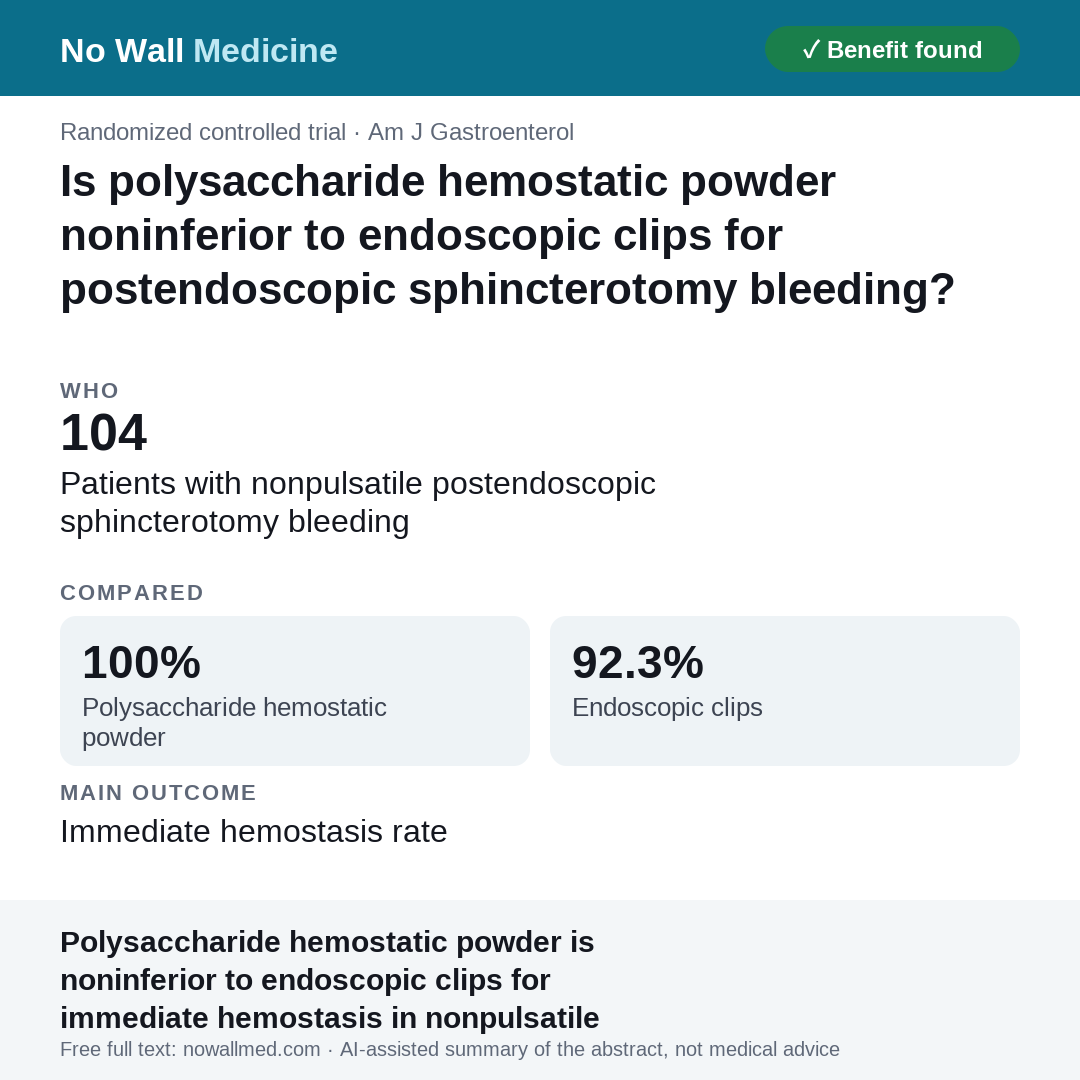
Efficacy of Polysaccharide Hemostatic Powder on Blood Oozing Among Patients With Postendoscopic Sphincterotomy Bleeding: A Randomized Controlled Trial
Randomized controlled trialBenefit found
Is polysaccharide hemostatic powder noninferior to endoscopic clips for postendoscopic sphincterotomy bleeding?
Who
104
Patients with nonpulsatile postendoscopic sphincterotomy bleeding
Compared
100%Polysaccharide hemostatic powder
92.3%Endoscopic clips
Main outcome
Immediate hemostasis rate
Result: risk difference 7.7% (95% CI 0.5%-15.0%)
Bottom line: Polysaccharide hemostatic powder is noninferior to endoscopic clips for immediate hemostasis in nonpulsatile postendoscopic sphincterotomy bleeding.
Am J Gastroenterol · 2025-04-07Download image
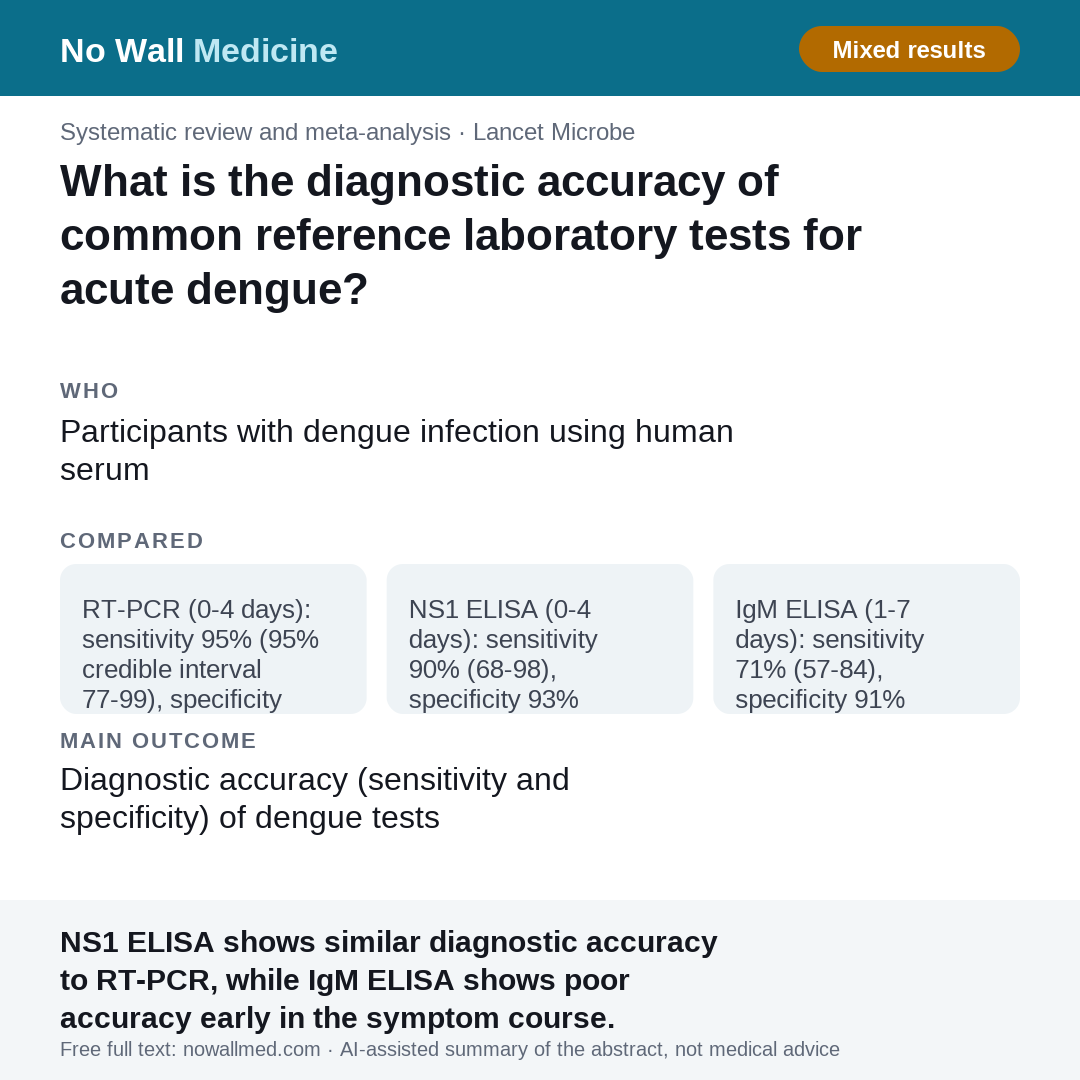
Evaluating the performance of common reference laboratory tests for acute dengue diagnosis: a systematic review and meta-analysis of RT-PCR, NS1 ELISA, and IgM ELISA
Systematic review and meta-analysisMixed results
What is the diagnostic accuracy of common reference laboratory tests for acute dengue?
Who
Participants with dengue infection using human serum
Compared
RT-PCR (0-4 days): sensitivity 95% (95% credible interval 77-99), specificity 89% (60-98)
NS1 ELISA (0-4 days): sensitivity 90% (68-98), specificity 93% (71-99)
IgM ELISA (1-7 days): sensitivity 71% (57-84), specificity 91% (82-95)
Main outcome
Diagnostic accuracy (sensitivity and specificity) of dengue tests
Bottom line: NS1 ELISA shows similar diagnostic accuracy to RT-PCR, while IgM ELISA shows poor accuracy early in the symptom course.
Lancet Microbe · 2025-04-07Download image
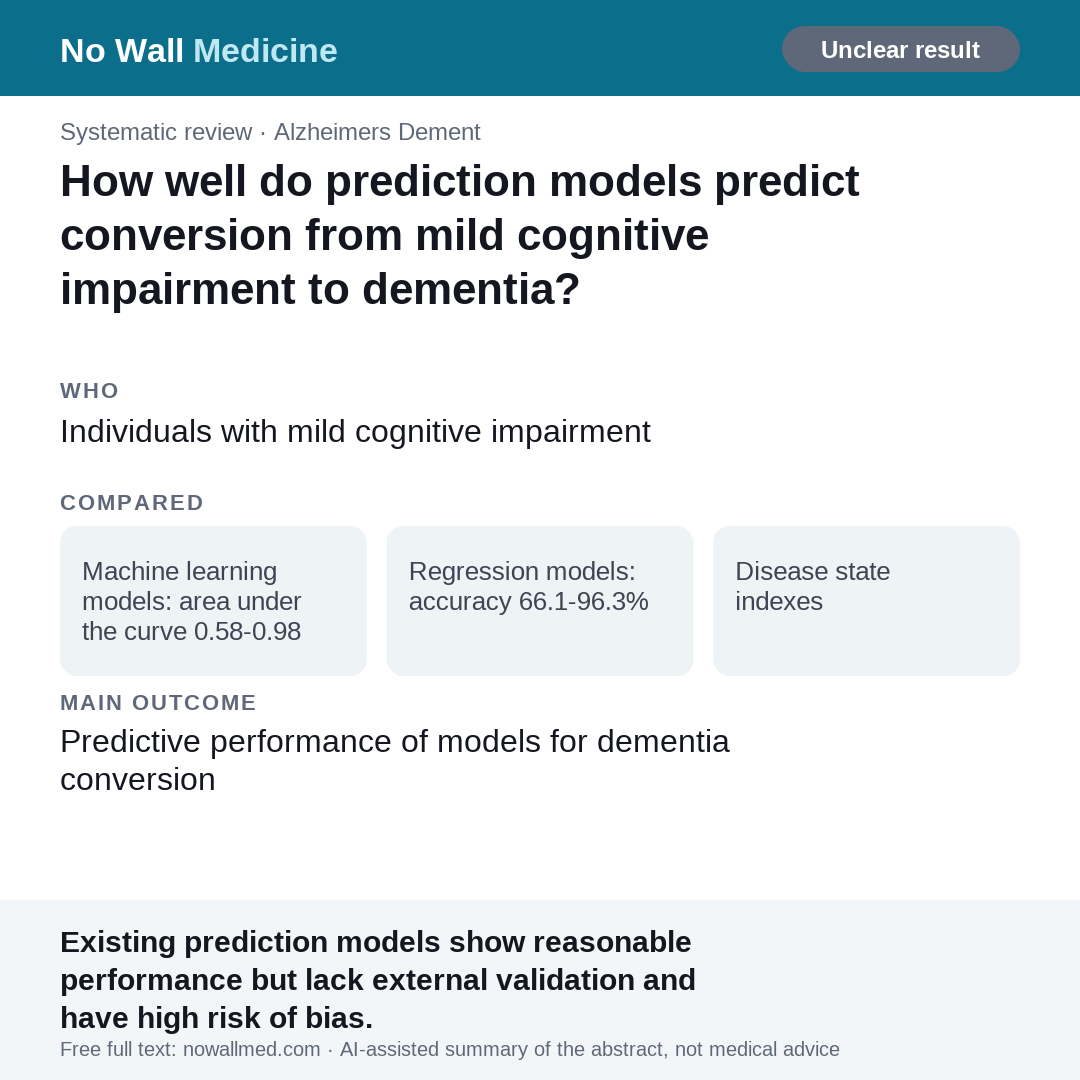
Limited generalizability and high risk of bias in multivariable models predicting conversion risk from mild cognitive impairment to dementia: A systematic review
Systematic reviewUnclear result
How well do prediction models predict conversion from mild cognitive impairment to dementia?
Who
62
Individuals with mild cognitive impairment
Compared
Machine learning models: area under the curve 0.58-0.98
Regression models: accuracy 66.1-96.3%
Disease state indexes
Main outcome
Predictive performance of models for dementia conversion
Bottom line: Existing prediction models show reasonable performance but lack external validation and have high risk of bias.
Limitation: Most studies are at high risk of bias and 47 studies lack external validation.
Alzheimers Dement · 2025-04-07Download image
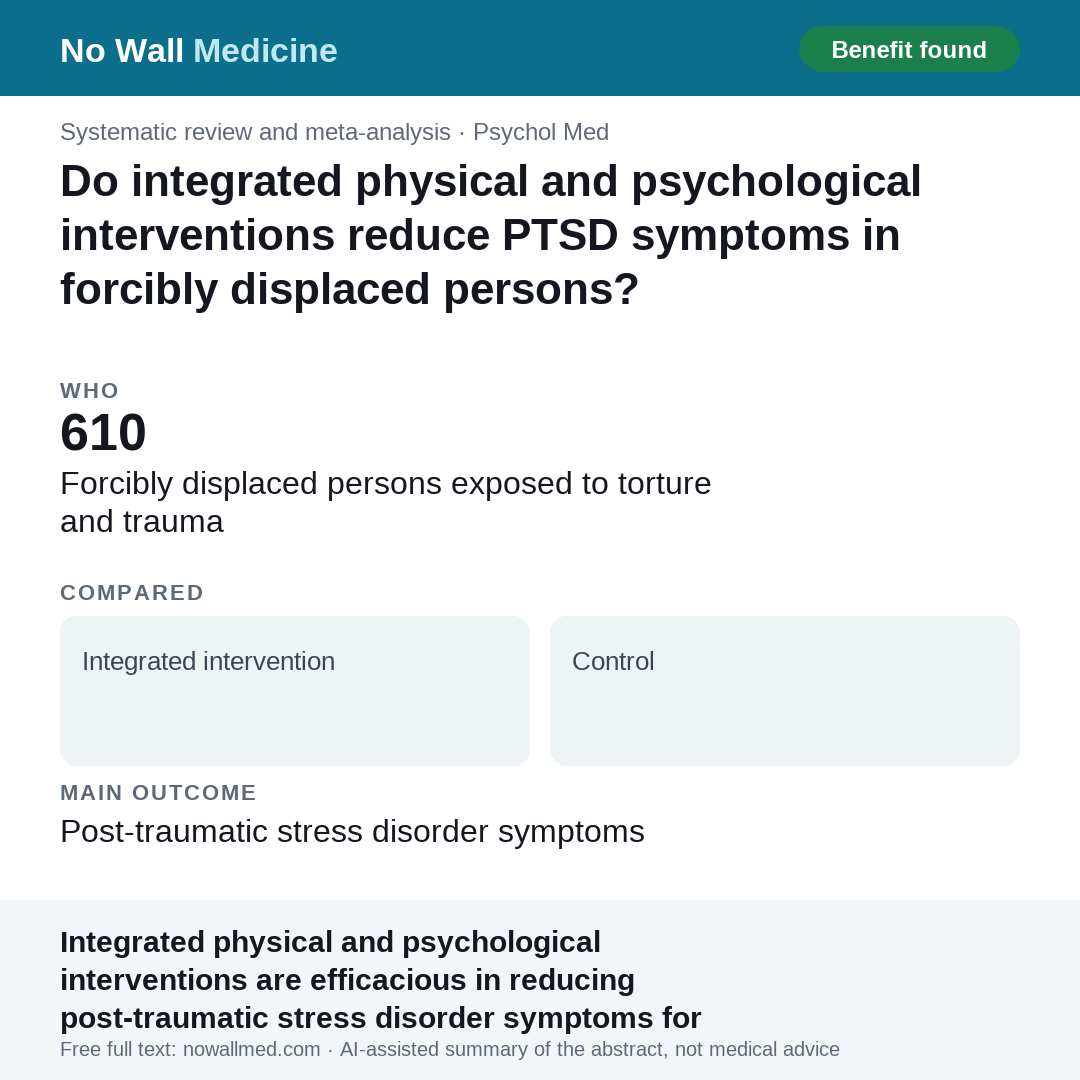
Efficacy of integrated physical and psychological interventions on PTSD among forcibly displaced persons: a systematic review and meta-analysis
Systematic review and meta-analysisBenefit found
Do integrated physical and psychological interventions reduce PTSD symptoms in forcibly displaced persons?
Who
610
Forcibly displaced persons exposed to torture and trauma
Compared
Integrated intervention
Control
Main outcome
Post-traumatic stress disorder symptoms
Result: Hedges' g = -0.46 (95% CI -0.80 to -0.12)
Bottom line: Integrated physical and psychological interventions are efficacious in reducing post-traumatic stress disorder symptoms for forcibly displaced persons.
Psychol Med · 2025-04-07Download image
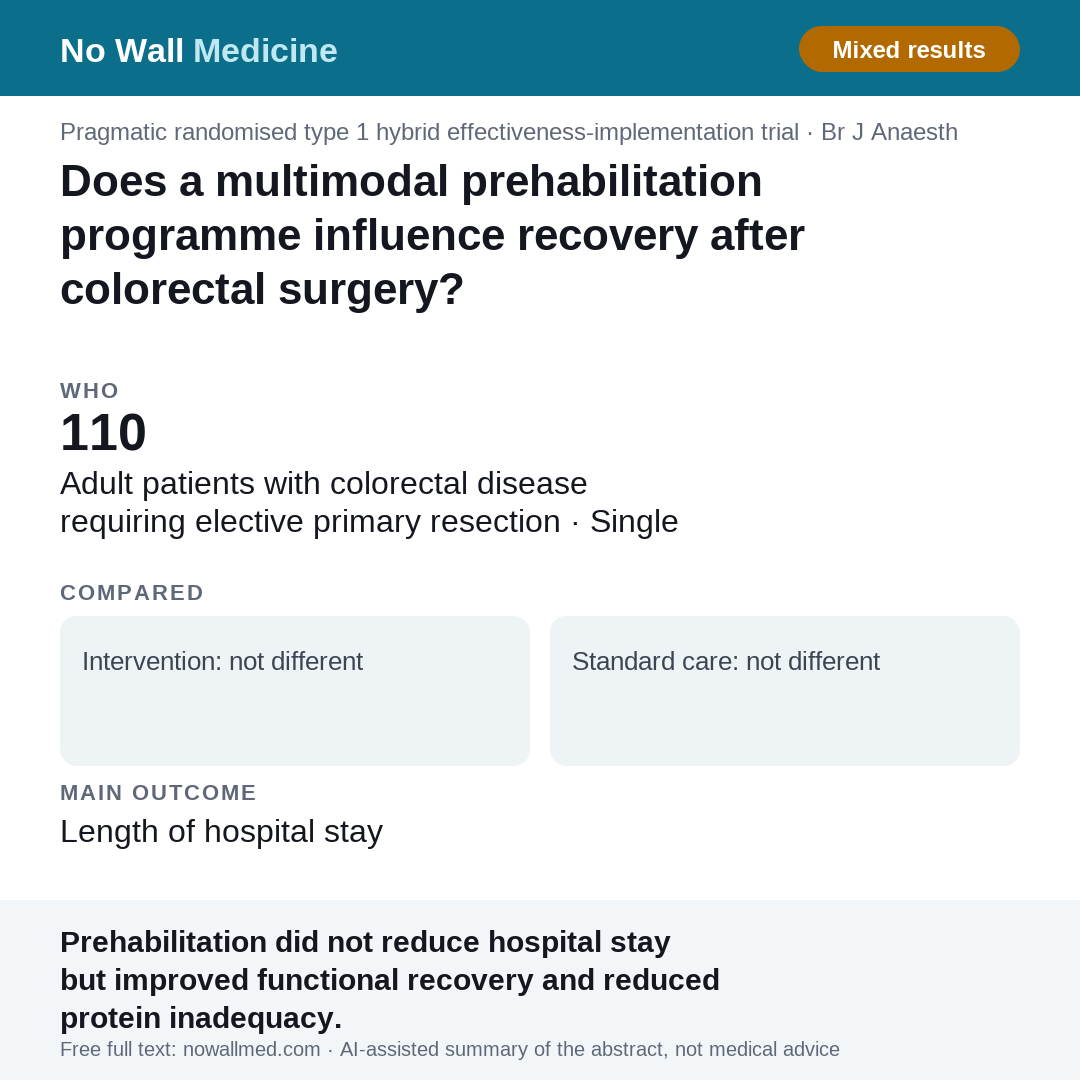
A multimodal prehabilitation class for Enhanced Recovery After Surgery: a pragmatic randomised type 1 hybrid effectiveness-implementation trial
Pragmatic randomised type 1 hybrid effectiveness-implementation trialMixed results
Does a multimodal prehabilitation programme influence recovery after colorectal surgery?
Who
110
Adult patients with colorectal disease requiring elective primary resection · Single centre
Compared
Intervention: not different
Standard care: not different
Main outcome
Length of hospital stay
Bottom line: Prehabilitation did not reduce hospital stay but improved functional recovery and reduced protein inadequacy.
Limitation: The study ended prematurely and was underpowered to assess length of hospital stay.
Br J Anaesth · 2025-04-07Download image
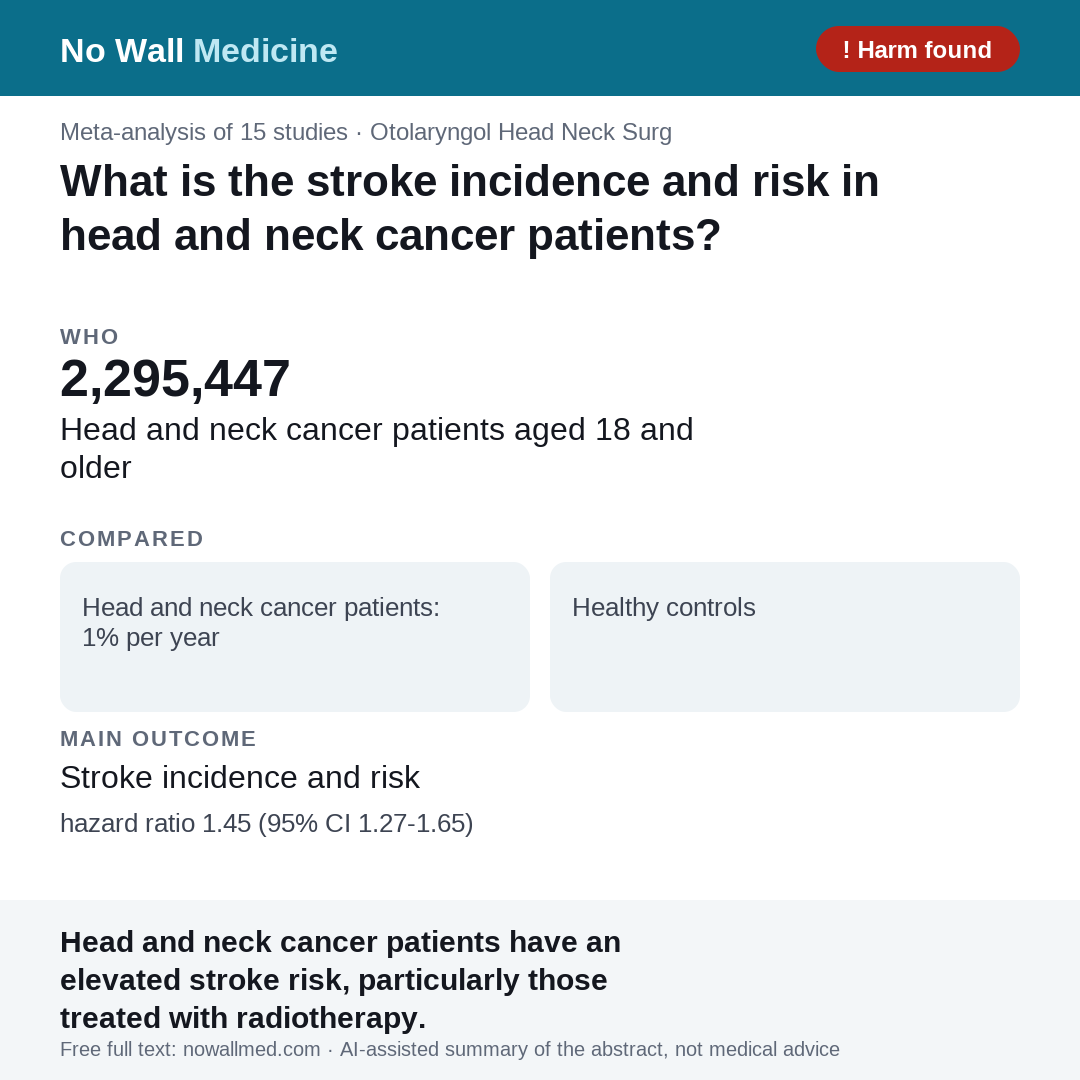
Stroke Risk in Head and Neck Cancer: A Meta-analysis of Reconstructed Individual Patient Survival Data
Meta-analysis of 15 studiesHarm found
What is the stroke incidence and risk in head and neck cancer patients?
Who
2,295,447
Head and neck cancer patients aged 18 and older
Compared
Head and neck cancer patients: 1% per year
Healthy controls
Main outcome
Stroke incidence and risk
Result: hazard ratio 1.45 (95% CI 1.27-1.65)
Bottom line: Head and neck cancer patients have an elevated stroke risk, particularly those treated with radiotherapy.
Otolaryngol Head Neck Surg · 2025-04-07Download image
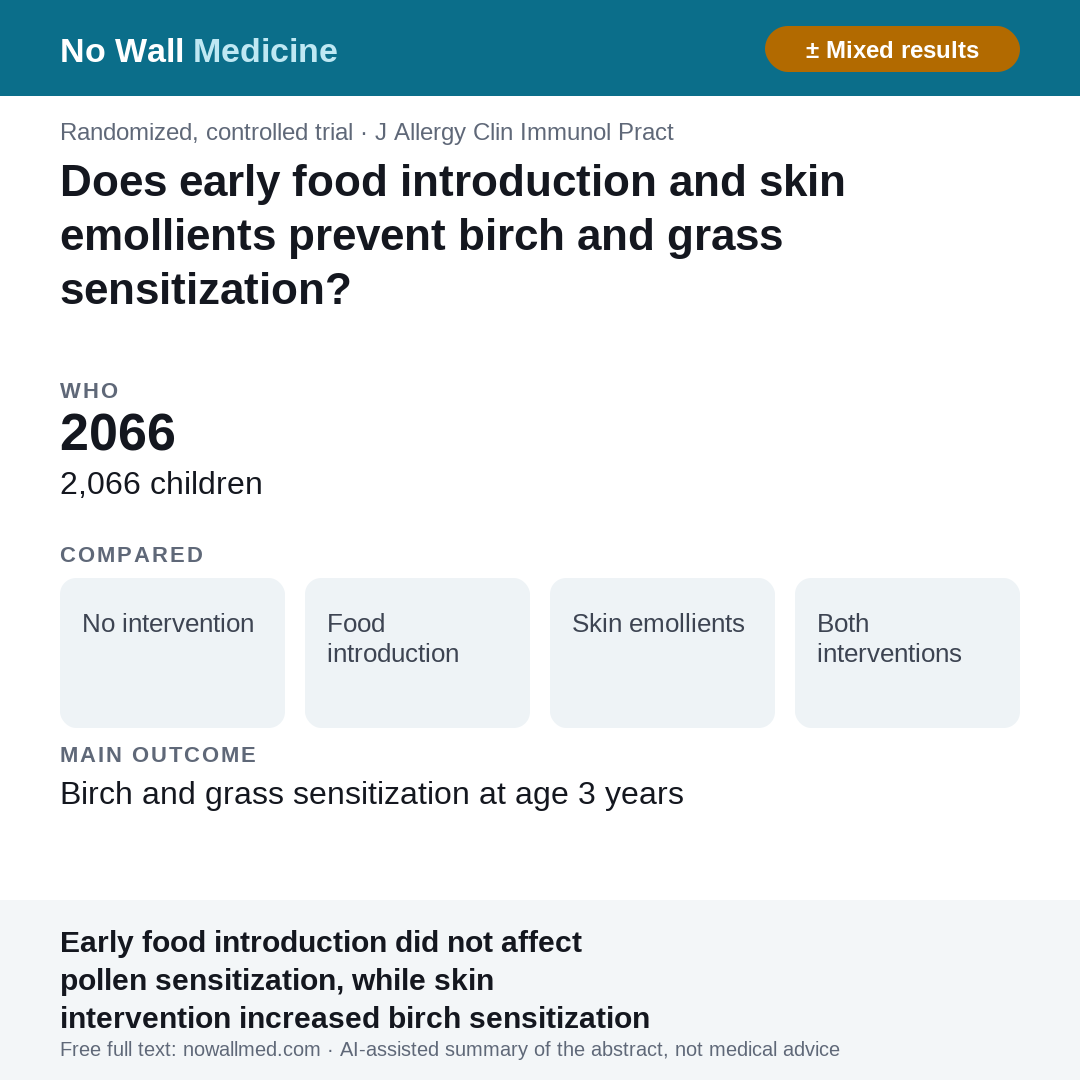
The Effect of Early Food Introduction and Skin Emollients on Pollen Sensitization: A Randomized Trial (PreventADALL) Sub-Study
Randomized, controlled trialMixed results
Does early food introduction and skin emollients prevent birch and grass sensitization?
Who
2066
2,066 children
Compared
No intervention
Food introduction
Skin emollients
Both interventions
Main outcome
Birch and grass sensitization at age 3 years
Bottom line: Early food introduction did not affect pollen sensitization, while skin intervention increased birch sensitization risk via skin barrier changes.
J Allergy Clin Immunol Pract · 2025-04-07Download image
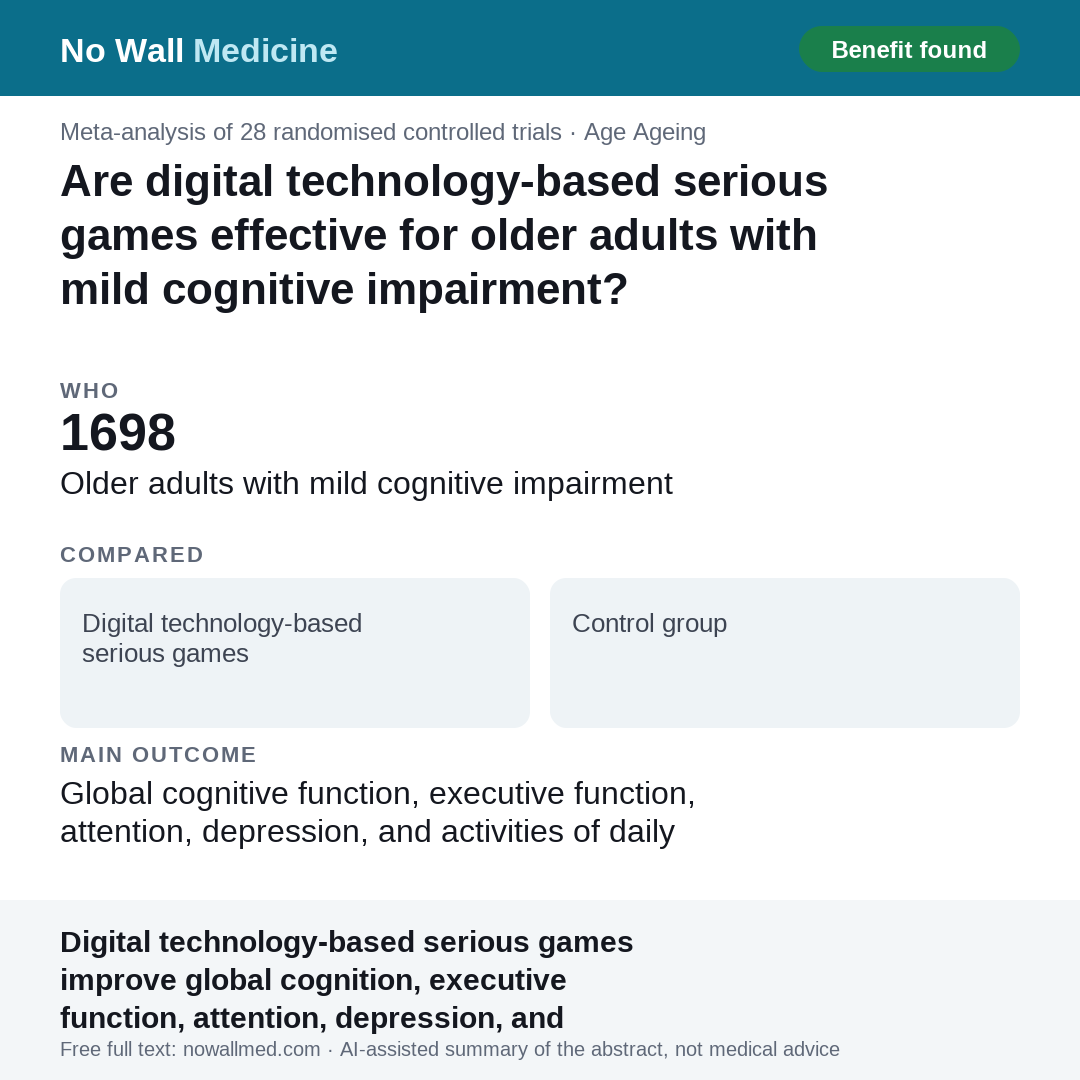
Effects of digital technology-based serious games interventions for older adults with mild cognitive impairment: a meta-analysis of randomised controlled trials
Meta-analysis of 28 randomised controlled trialsBenefit found
Are digital technology-based serious games effective for older adults with mild cognitive impairment?
Who
1698
Older adults with mild cognitive impairment
Compared
Digital technology-based serious games
Control group
Main outcome
Global cognitive function, executive function, attention, depression, and activities of daily living
Bottom line: Digital technology-based serious games improve global cognition, executive function, attention, depression, and activities of daily living in mild cognitive impairment.
Limitation: The certainty of evidence was low or very low for several outcomes.
Age Ageing · 2025-04-07Download image
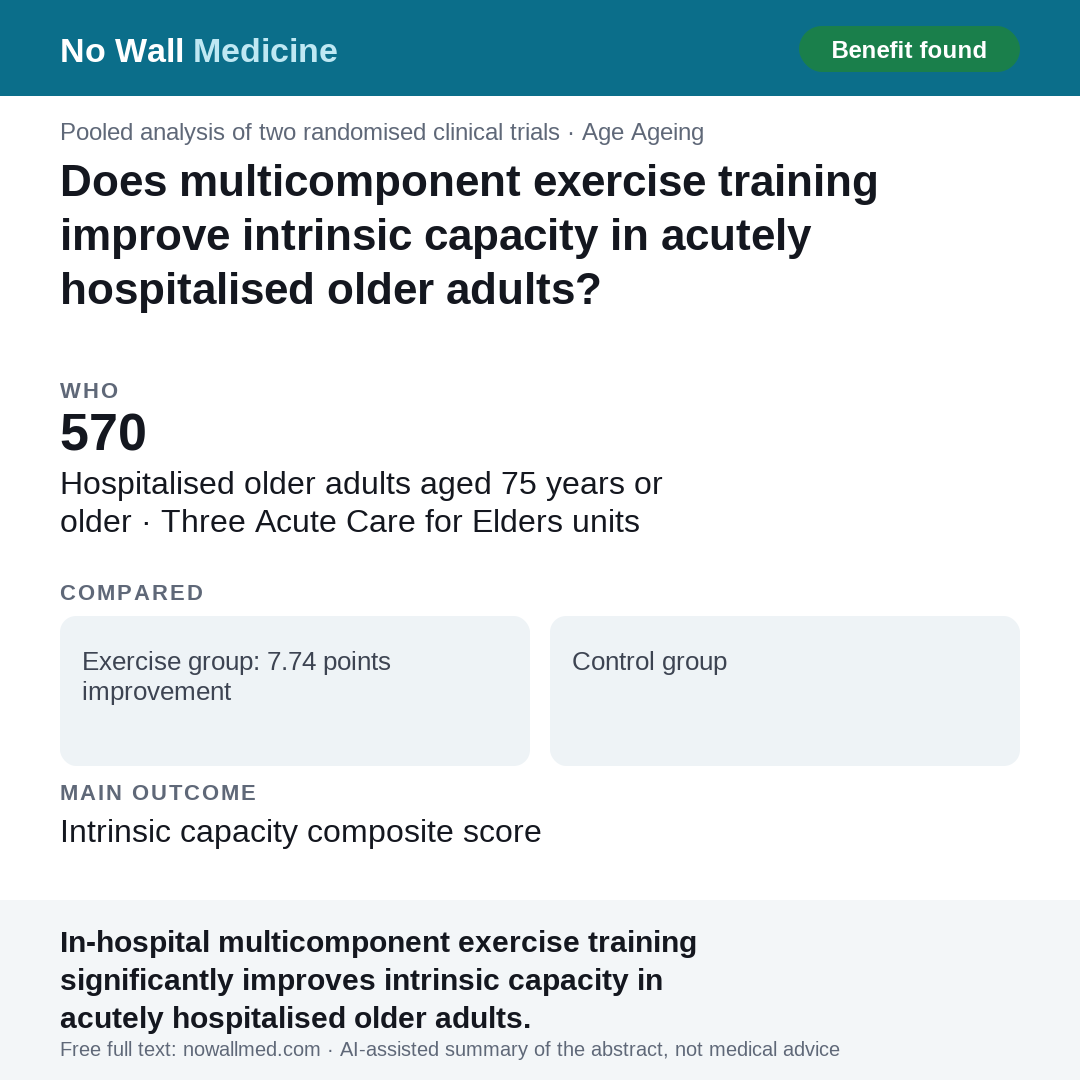
Exercise effects on intrinsic capacity in acutely hospitalised older adults: a pooled analysis of two randomised controlled trials
Pooled analysis of two randomised clinical trialsBenefit found
Does multicomponent exercise training improve intrinsic capacity in acutely hospitalised older adults?
Who
570
Hospitalised older adults aged 75 years or older · Three Acute Care for Elders units
Compared
Exercise group: 7.74 points improvement
Control group
Main outcome
Intrinsic capacity composite score
Result: 7.74 points, 95% confidence interval (CI) 6.45-9.03
Bottom line: In-hospital multicomponent exercise training significantly improves intrinsic capacity in acutely hospitalised older adults.
Age Ageing · 2025-04-07Download image
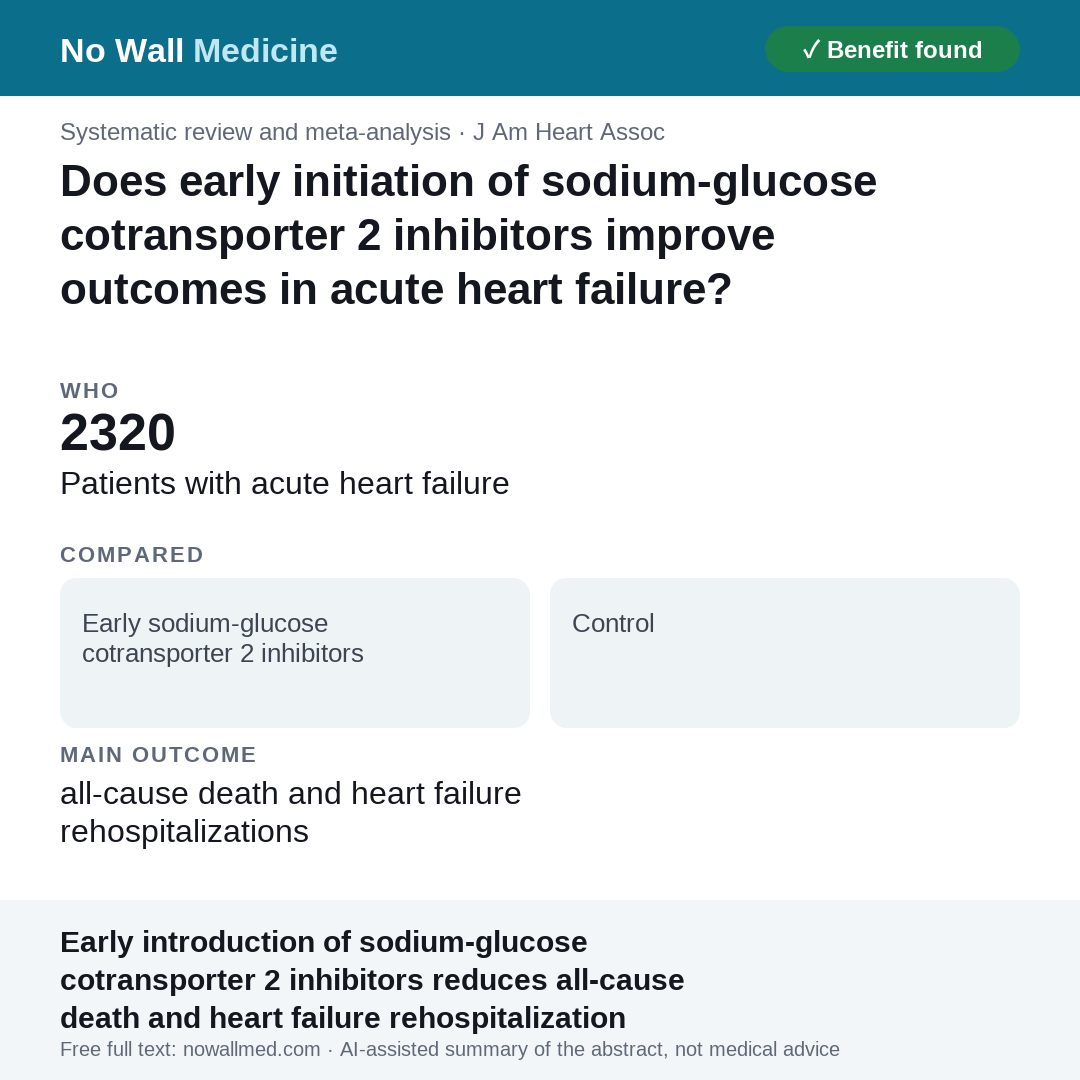
Early Initiation of Sodium-Glucose Cotransporter 2 Inhibitors in Acute Heart Failure: A Systematic Review and Meta-Analysis
Systematic review and meta-analysisBenefit found
Does early initiation of sodium-glucose cotransporter 2 inhibitors improve outcomes in acute heart failure?
Who
2320
Patients with acute heart failure
Compared
Early sodium-glucose cotransporter 2 inhibitors
Control
Main outcome
all-cause death and heart failure rehospitalizations
Result: odds ratio 0.71 (95% CI 0.55-0.92) for all-cause death
Bottom line: Early introduction of sodium-glucose cotransporter 2 inhibitors reduces all-cause death and heart failure rehospitalization rates.
Limitation: Safety outcomes could not be determined due to low event rates.
J Am Heart Assoc · 2025-04-07Download image
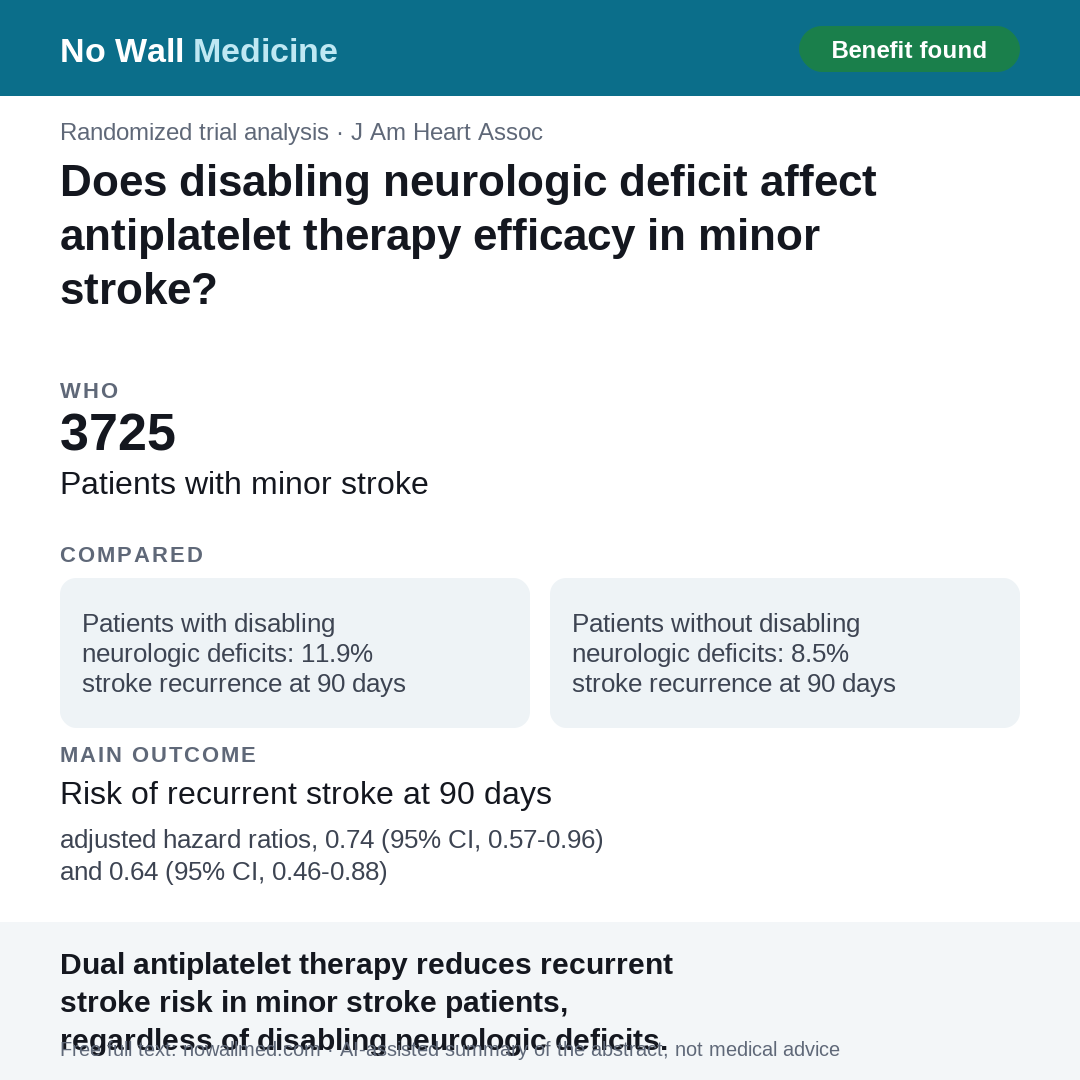
Disabling Neurologic Deficits and Antiplatelet Therapy in Acute Minor Stroke
Randomized trial analysisBenefit found
Does disabling neurologic deficit affect antiplatelet therapy efficacy in minor stroke?
Who
3725
Patients with minor stroke
Compared
Patients with disabling neurologic deficits: 11.9% stroke recurrence at 90 days
Patients without disabling neurologic deficits: 8.5% stroke recurrence at 90 days
Main outcome
Risk of recurrent stroke at 90 days
Result: adjusted hazard ratios, 0.74 (95% CI, 0.57-0.96) and 0.64 (95% CI, 0.46-0.88)
Bottom line: Dual antiplatelet therapy reduces recurrent stroke risk in minor stroke patients, regardless of disabling neurologic deficits.
J Am Heart Assoc · 2025-04-07Download image
Impact of all-oral bedaquiline-based shorter regimens in the treatment of drug-resistant tuberculosis: a systematic review and meta-analysis
Systematic review and meta-analysisBenefit found
Do all-oral bedaquiline-based shorter regimens improve outcomes in drug-resistant tuberculosis?
Who
1902
Adults diagnosed with drug-resistant tuberculosis · 11 countries
Compared
83%All-oral bedaquiline-based shorter regimens (95% CI 77% to 89%)
Control regimens
Main outcome
Treatment success rate
Result: RR 1.22 (95% CI 1.04-1.43)
Bottom line: All-oral bedaquiline-based shorter regimens significantly improve treatment success and reduce mortality and treatment failure in drug-resistant tuberculosis.
BMJ Glob Health · 2025-04-07Download image

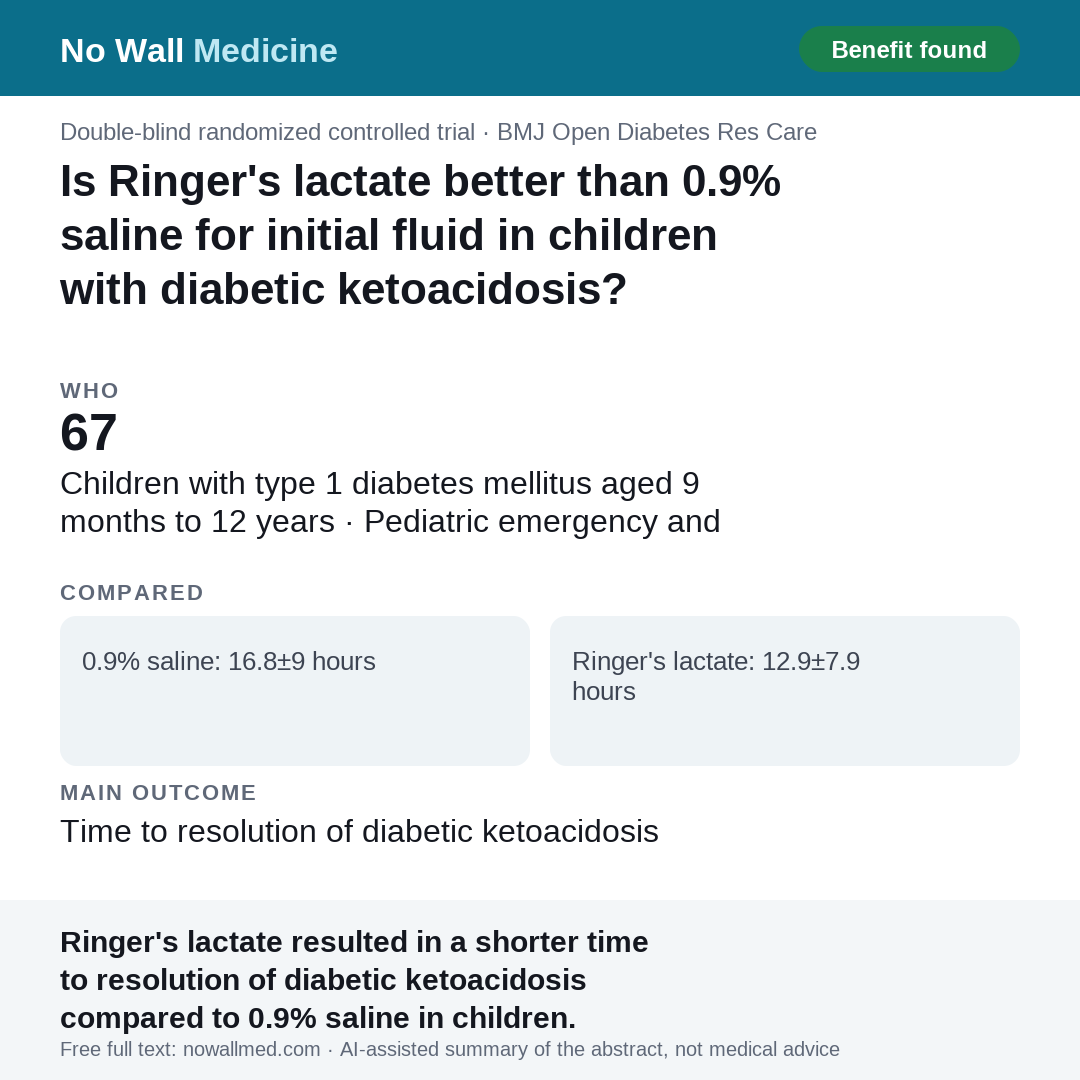
0.9% Saline versus Ringer's lactate as initial fluid in children with diabetic ketoacidosis: a double-blind randomized controlled trial
Double-blind randomized controlled trialBenefit found
Is Ringer's lactate better than 0.9% saline for initial fluid in children with diabetic ketoacidosis?
Who
67
Children with type 1 diabetes mellitus aged 9 months to 12 years · Pediatric emergency and intensive care units of a teaching hospital
Compared
0.9% saline: 16.8±9 hours
Ringer's lactate: 12.9±7.9 hours
Main outcome
Time to resolution of diabetic ketoacidosis
Result: mean difference 3.85 hours (95% CI 0.3 to 8)
Bottom line: Ringer's lactate resulted in a shorter time to resolution of diabetic ketoacidosis compared to 0.9% saline in children.
BMJ Open Diabetes Res Care · 2025-04-07Download image