Visual abstracts
New randomized trials and meta-analyses from leading journals at a glance: who was studied, what was compared, and what was found. Every paper is free to read in full.
All specialtiesCardiology 4877Oncology 4138Gastroenterology & Hepatology 1942Infectious Disease 3837Neurology 1905Psychiatry & Mental Health 2273Pulmonology 2143Critical Care 1365Endocrinology & Diabetes 2580Pediatrics 2980Surgery 2559Orthopedics & Sports Medicine 931Neurosurgery 537Cardiothoracic & Vascular Surgery 674Plastic & Reconstructive Surgery 591Nephrology 1133Rheumatology 823Hematology 1109Dermatology 621Ophthalmology 543Obstetrics & Gynecology 1686Public & Global Health 1058Radiology & Imaging 648Anesthesiology 986Urology 764ENT (Otolaryngology) 503Emergency Medicine 511Allergy & Immunology 313Geriatrics 981Family Medicine & Primary Care 562Medical Genetics & Genomics 676Pathology & Laboratory Medicine 159Physical Medicine & Rehabilitation 757Palliative Care 444Nutrition 1588Digital Health & AI 2201General Medicine 321
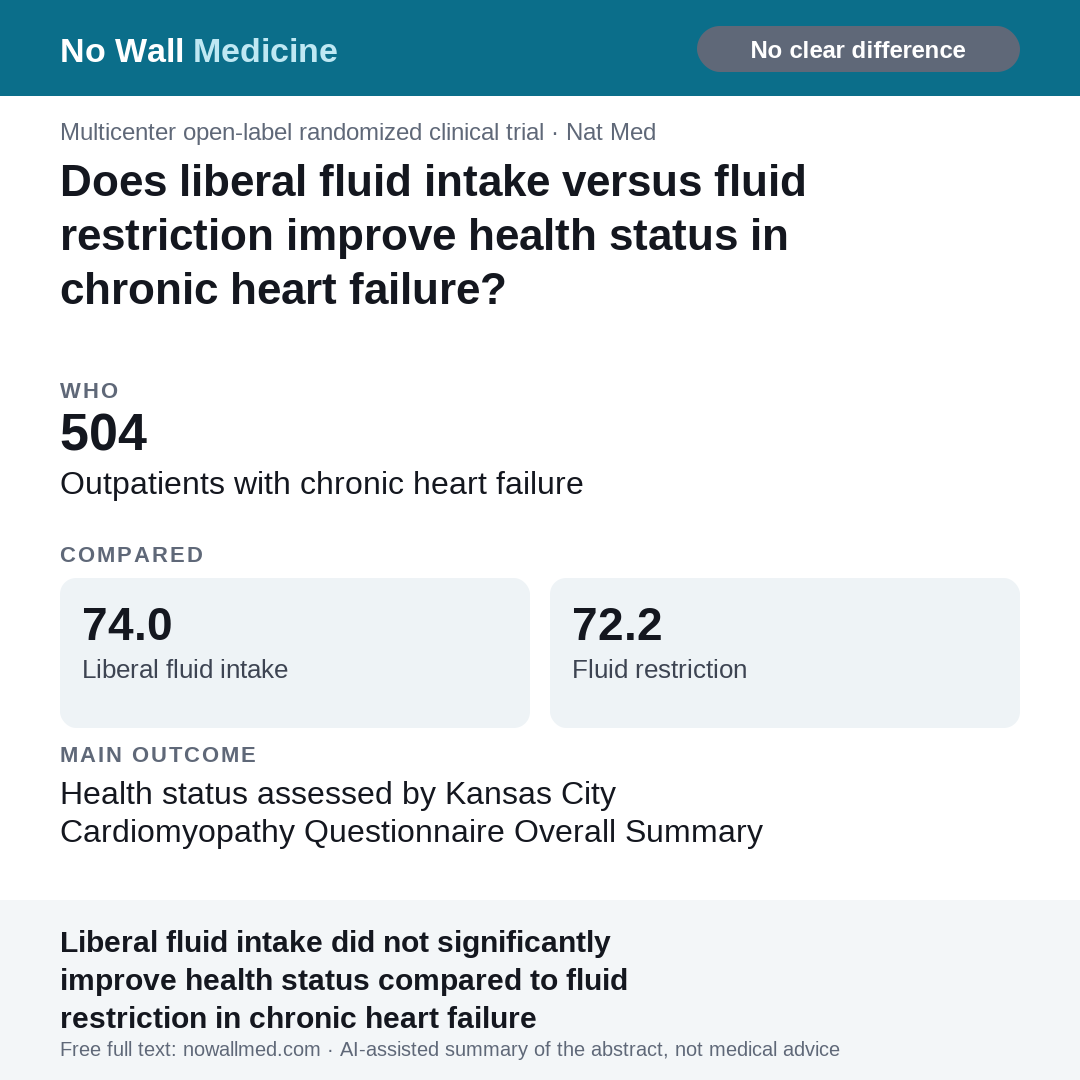
Liberal fluid intake versus fluid restriction in chronic heart failure: a randomized clinical trial
Multicenter open-label randomized clinical trialNo clear difference
Does liberal fluid intake versus fluid restriction improve health status in chronic heart failure?
Who
504
Outpatients with chronic heart failure
Compared
74.0Liberal fluid intake
72.2Fluid restriction
Main outcome
Health status assessed by Kansas City Cardiomyopathy Questionnaire Overall Summary Score
Result: mean difference 2.17 (95% confidence interval -0.06 to 4.39)
Bottom line: Liberal fluid intake did not significantly improve health status compared to fluid restriction in chronic heart failure patients.
Nat Med · 2025-03-30Download image
Systematic review and meta-analysis of intravenous iron therapy for patients with heart failure and iron deficiency
Meta-analysis of six trialsBenefit found
Intravenous iron for heart failure with iron deficiency
Who
7175
Patients with heart failure and iron deficiency
Compared
Intravenous iron
Placebo
Main outcome
Heart failure hospitalizations and cardiovascular mortality
Result: risk ratio 0.72 (95% CI 0.55 to 0.89)
Bottom line: Intravenous iron reduces heart failure events
Nat Med · 2025-03-30Download image

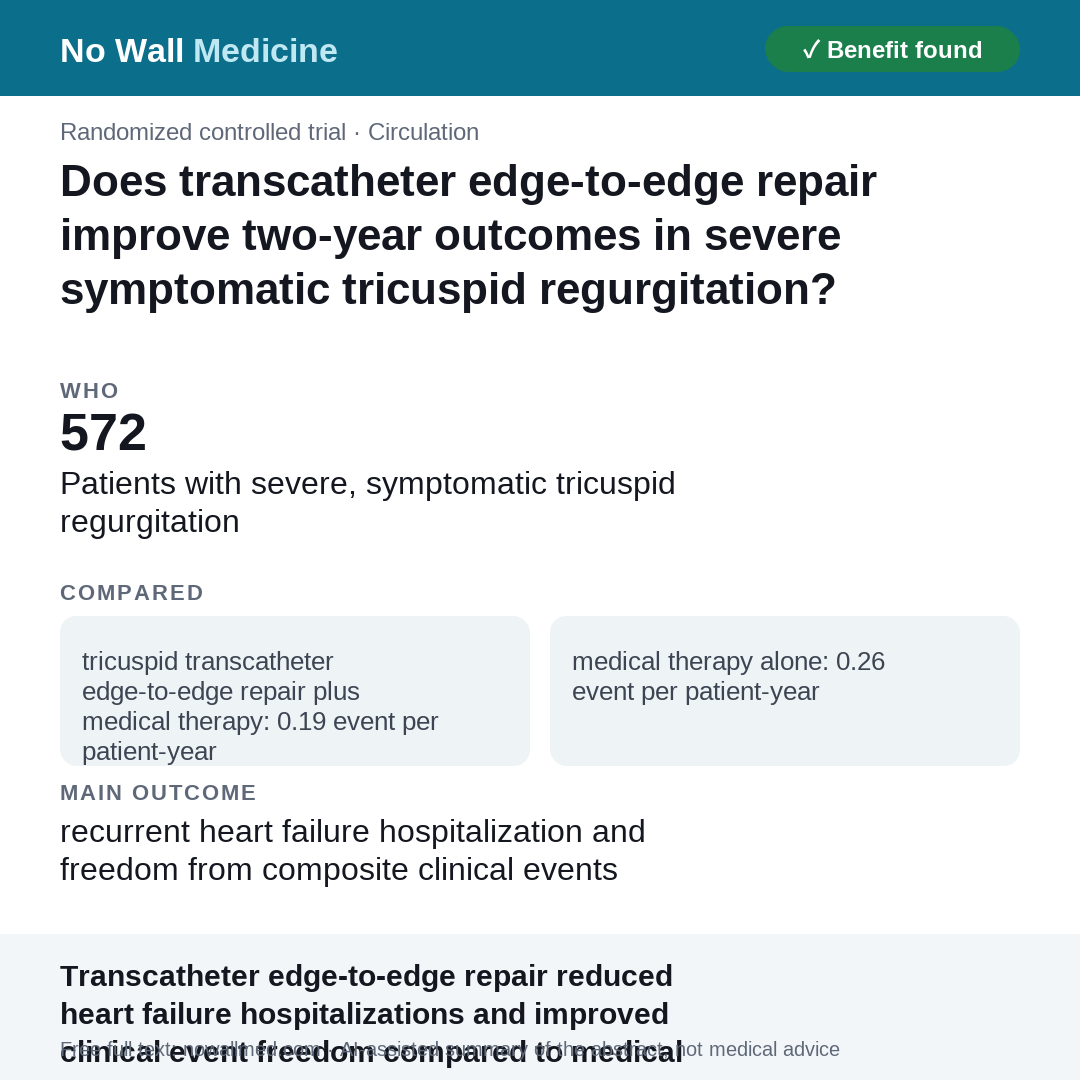
Two-Year Outcomes of Transcatheter Edge-to-Edge Repair for Severe Tricuspid Regurgitation: The TRILUMINATE Pivotal Randomized Controlled Trial
Randomized controlled trialBenefit found
Does transcatheter edge-to-edge repair improve two-year outcomes in severe symptomatic tricuspid regurgitation?
Who
572
Patients with severe, symptomatic tricuspid regurgitation
Compared
tricuspid transcatheter edge-to-edge repair plus medical therapy: 0.19 event per patient-year
medical therapy alone: 0.26 event per patient-year
Main outcome
recurrent heart failure hospitalization and freedom from composite clinical events
Result: hazard ratio 0.72 (one-sided upper confidence limit, 0.93)
Bottom line: Transcatheter edge-to-edge repair reduced heart failure hospitalizations and improved clinical event freedom compared to medical therapy alone.
Circulation · 2025-03-30Download image
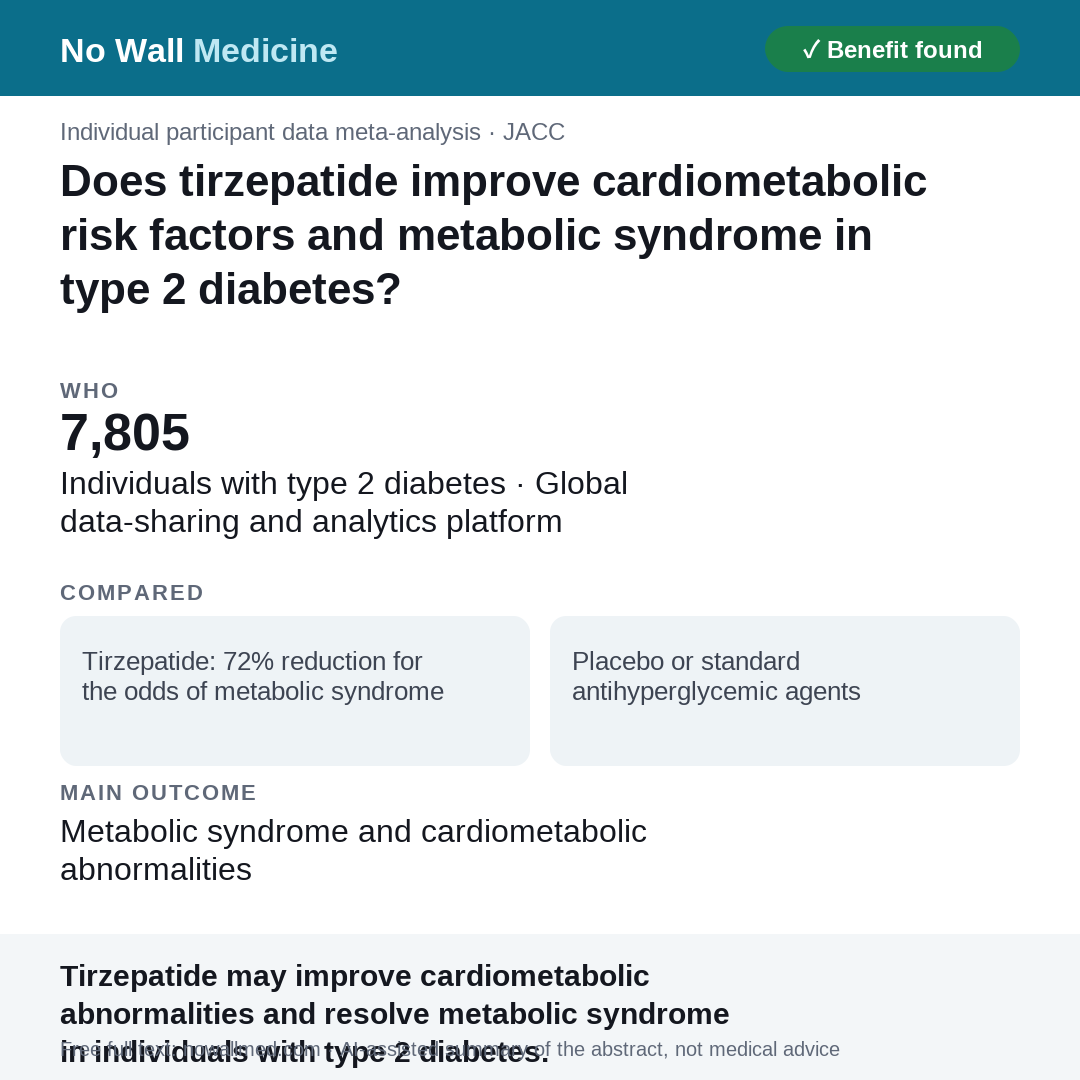
Effects of Tirzepatide in Type 2 Diabetes: Individual Variation and Relationship to Cardiometabolic Outcomes
Individual participant data meta-analysisBenefit found
Does tirzepatide improve cardiometabolic risk factors and metabolic syndrome in type 2 diabetes?
Who
7,805
Individuals with type 2 diabetes · Global data-sharing and analytics platform
Compared
Tirzepatide: 72% reduction for the odds of metabolic syndrome
Placebo or standard antihyperglycemic agents
Main outcome
Metabolic syndrome and cardiometabolic abnormalities
Result: OR 0.28 (95% CI 0.24 to 0.33) for metabolic syndrome
Bottom line: Tirzepatide may improve cardiometabolic abnormalities and resolve metabolic syndrome in individuals with type 2 diabetes.
JACC · 2025-03-30Download image
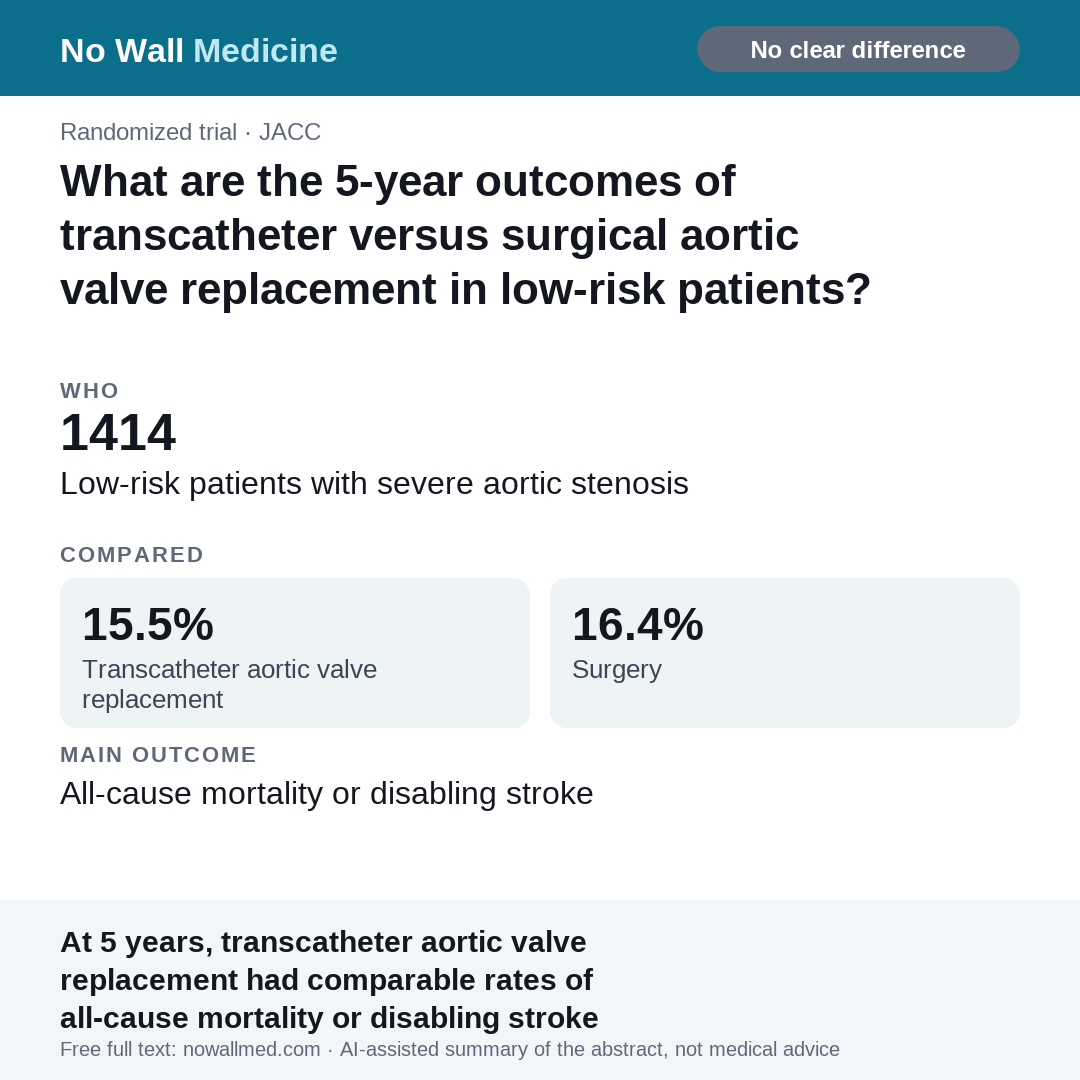
5-Year Outcomes After Transcatheter or Surgical Aortic Valve Replacement in Low-Risk Patients With Aortic Stenosis
Randomized trialNo clear difference
What are the 5-year outcomes of transcatheter versus surgical aortic valve replacement in low-risk patients?
Who
1414
Low-risk patients with severe aortic stenosis
Compared
15.5%Transcatheter aortic valve replacement
16.4%Surgery
Main outcome
All-cause mortality or disabling stroke
Bottom line: At 5 years, transcatheter aortic valve replacement had comparable rates of all-cause mortality or disabling stroke compared to surgery.
JACC · 2025-03-30Download image
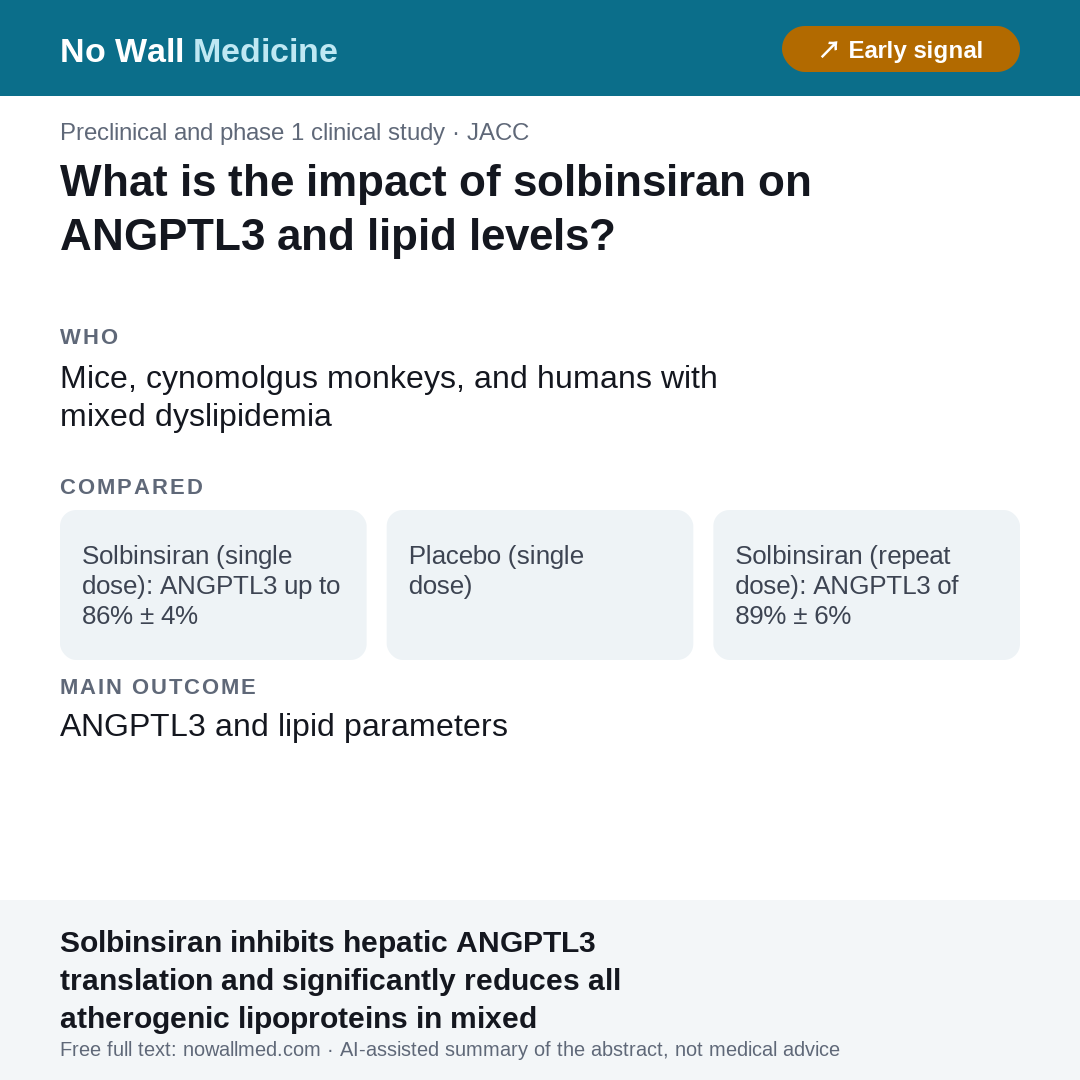
Effect of ANGPTL3 Inhibition With Solbinsiran in Preclinical and Early Human Studies
Preclinical and phase 1 clinical studyBenefit found
What is the impact of solbinsiran on ANGPTL3 and lipid levels?
Who
Mice, cynomolgus monkeys, and humans with mixed dyslipidemia
Compared
Solbinsiran (single dose): ANGPTL3 up to 86% ± 4%
Placebo (single dose)
Solbinsiran (repeat dose): ANGPTL3 of 89% ± 6%
Main outcome
ANGPTL3 and lipid parameters
Bottom line: Solbinsiran inhibits hepatic ANGPTL3 translation and significantly reduces all atherogenic lipoproteins in mixed dyslipidemia.
JACC · 2025-03-30Download image
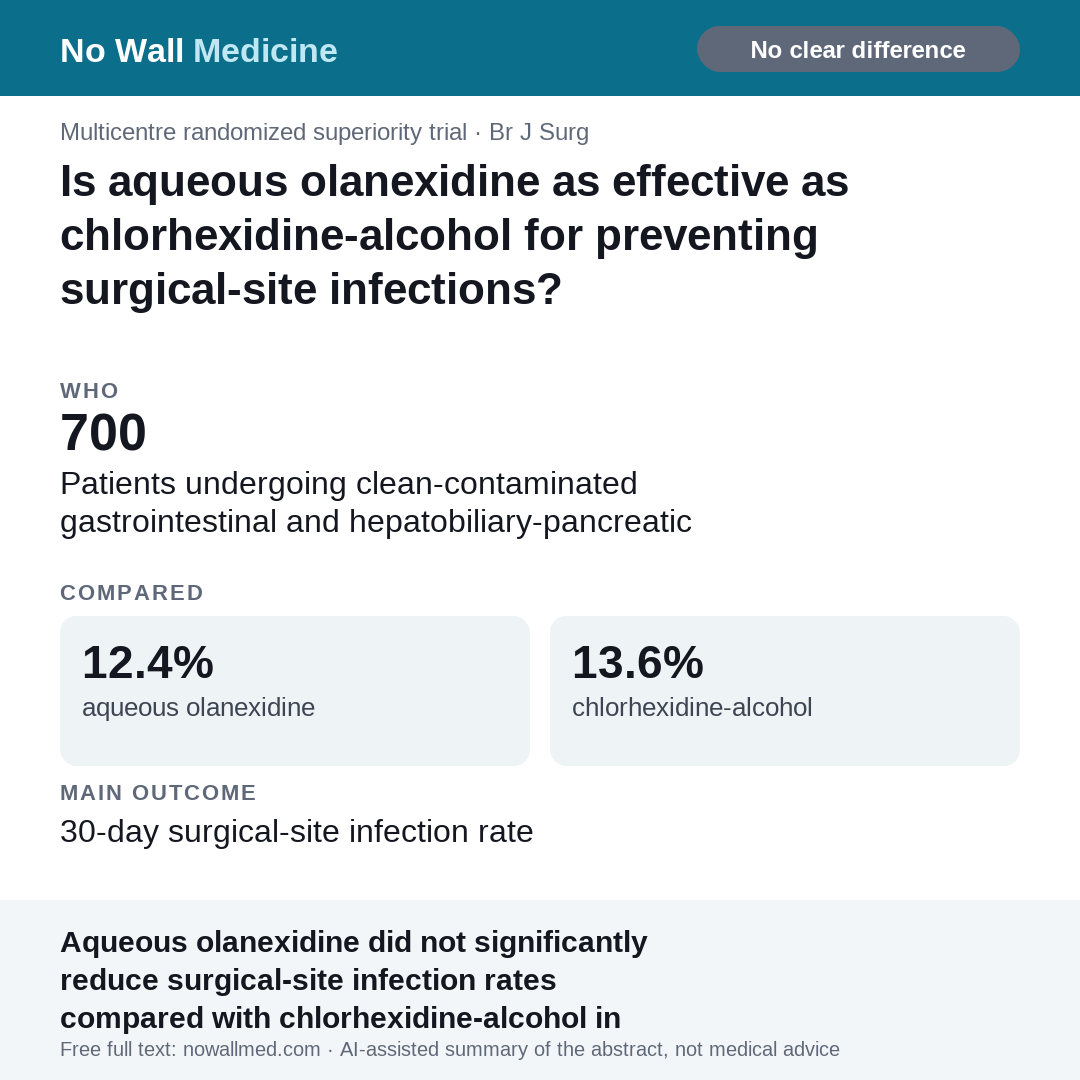
Efficacy of aqueous olanexidine compared with alcohol-based chlorhexidine for surgical skin antisepsis regarding the incidence of surgical-site infections in clean-contaminated surgery: a randomized superiority trial
Multicentre randomized superiority trialNo clear difference
Is aqueous olanexidine as effective as chlorhexidine-alcohol for preventing surgical-site infections?
Who
700
Patients undergoing clean-contaminated gastrointestinal and hepatobiliary-pancreatic surgeries · Five hospitals
Compared
12.4%aqueous olanexidine (43 of 347)
13.6%chlorhexidine-alcohol (47 of 345)
Main outcome
30-day surgical-site infection rate
Result: adjusted risk ratio 0.911 (95% c.i. 0.625 to 1.327)
Bottom line: Aqueous olanexidine did not significantly reduce surgical-site infection rates compared with chlorhexidine-alcohol in clean-contaminated surgery.
Br J Surg · 2025-03-30Download image
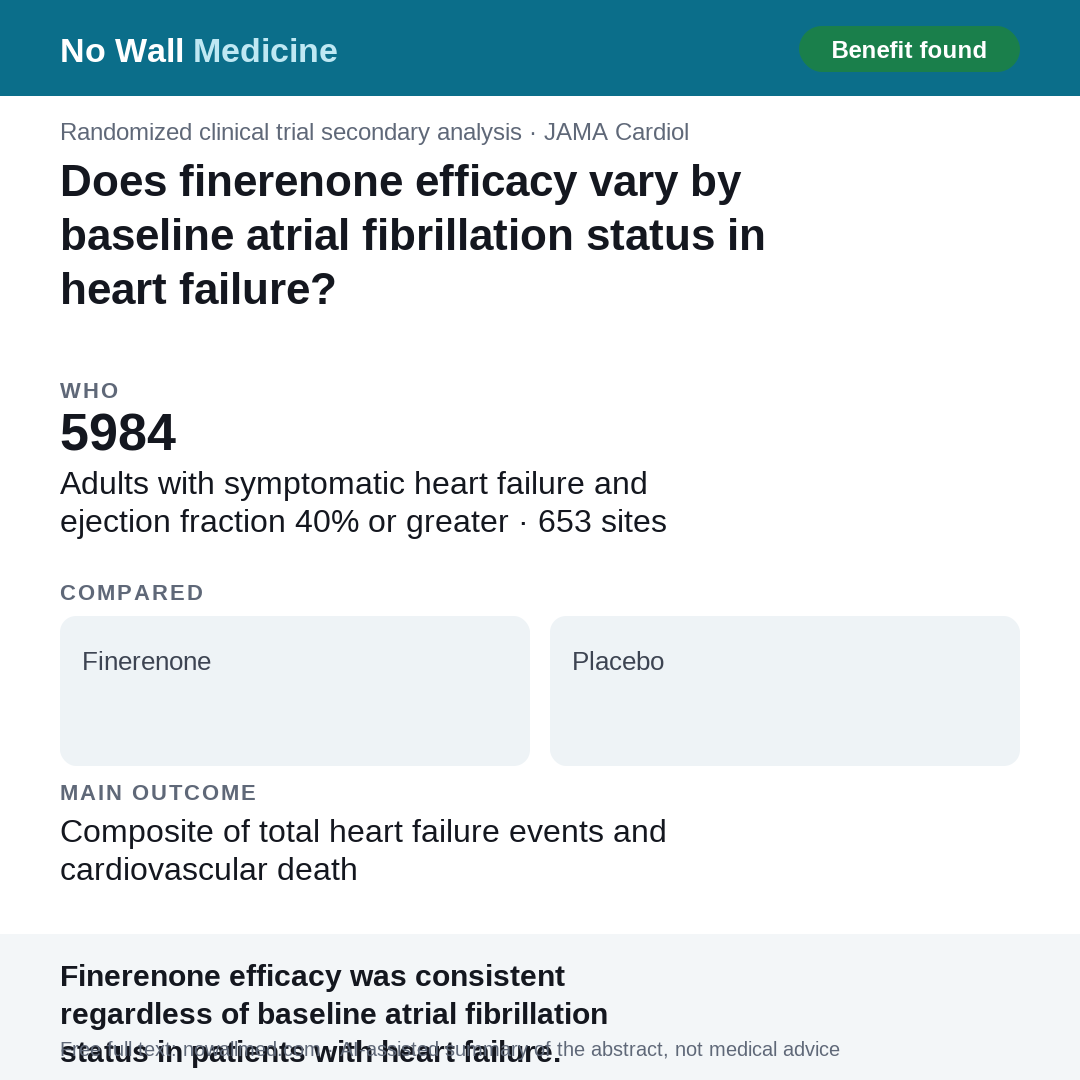
Finerenone and Atrial Fibrillation in Heart Failure: A Secondary Analysis of the FINEARTS-HF Randomized Clinical Trial
Randomized clinical trial secondary analysisBenefit found
Does finerenone efficacy vary by baseline atrial fibrillation status in heart failure?
Who
5984
Adults with symptomatic heart failure and ejection fraction 40% or greater · 653 sites in 37 countries
Compared
Finerenone
Placebo
Main outcome
Composite of total heart failure events and cardiovascular death
Result: overall RR, 0.84 (95% CI 0.74-0.95)
Bottom line: Finerenone efficacy was consistent regardless of baseline atrial fibrillation status in patients with heart failure.
JAMA Cardiol · 2025-03-30Download image
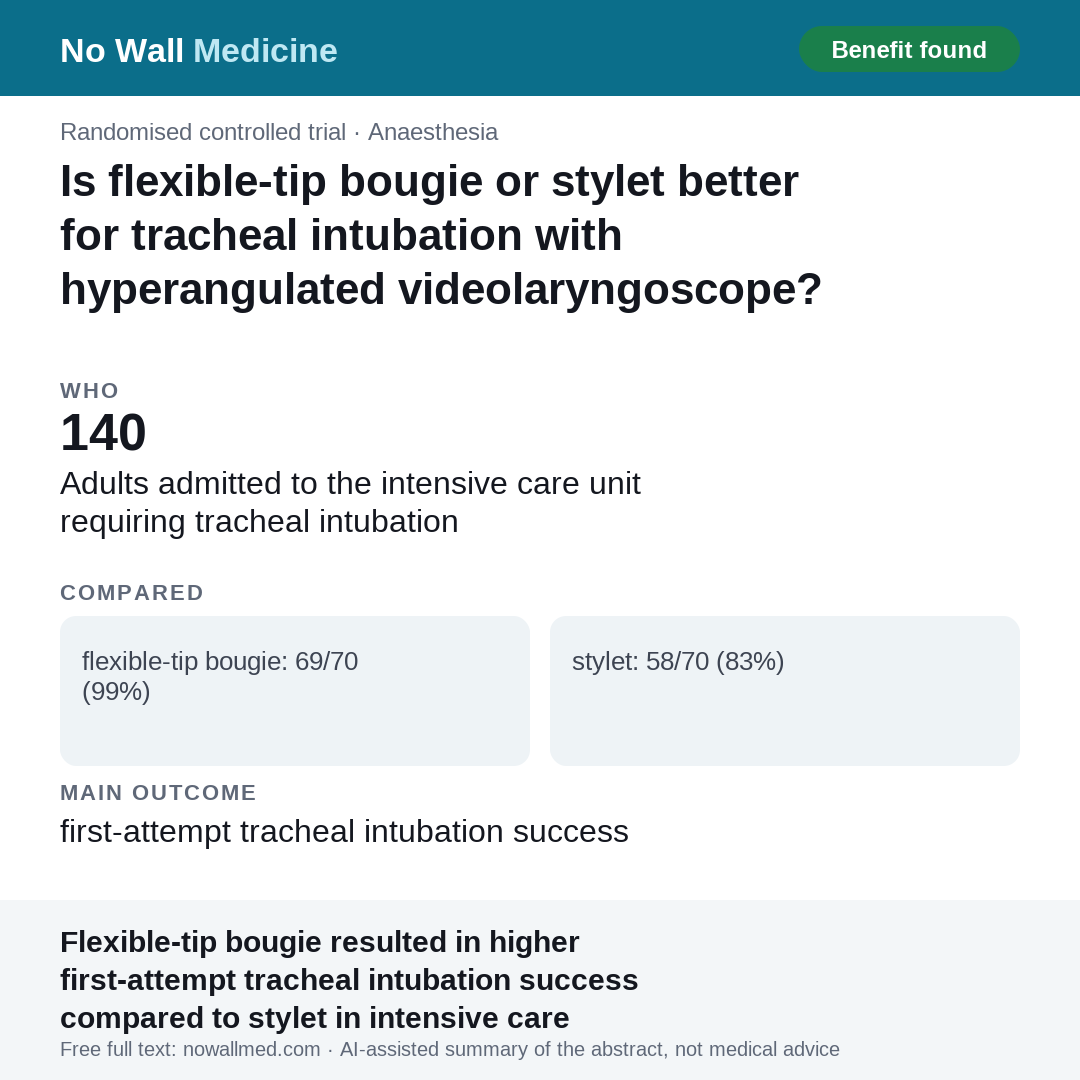
Flexible-tip bougie vs. stylet for tracheal intubation with a hyperangulated videolaryngoscope in critical care: a randomised controlled trial
Randomised controlled trialBenefit found
Is flexible-tip bougie or stylet better for tracheal intubation with hyperangulated videolaryngoscope?
Who
140
Adults admitted to the intensive care unit requiring tracheal intubation
Compared
flexible-tip bougie: 69/70 (99%)
stylet: 58/70 (83%)
Main outcome
first-attempt tracheal intubation success
Result: p = 0.005
Bottom line: Flexible-tip bougie resulted in higher first-attempt tracheal intubation success compared to stylet in intensive care patients.
Anaesthesia · 2025-03-30Download image
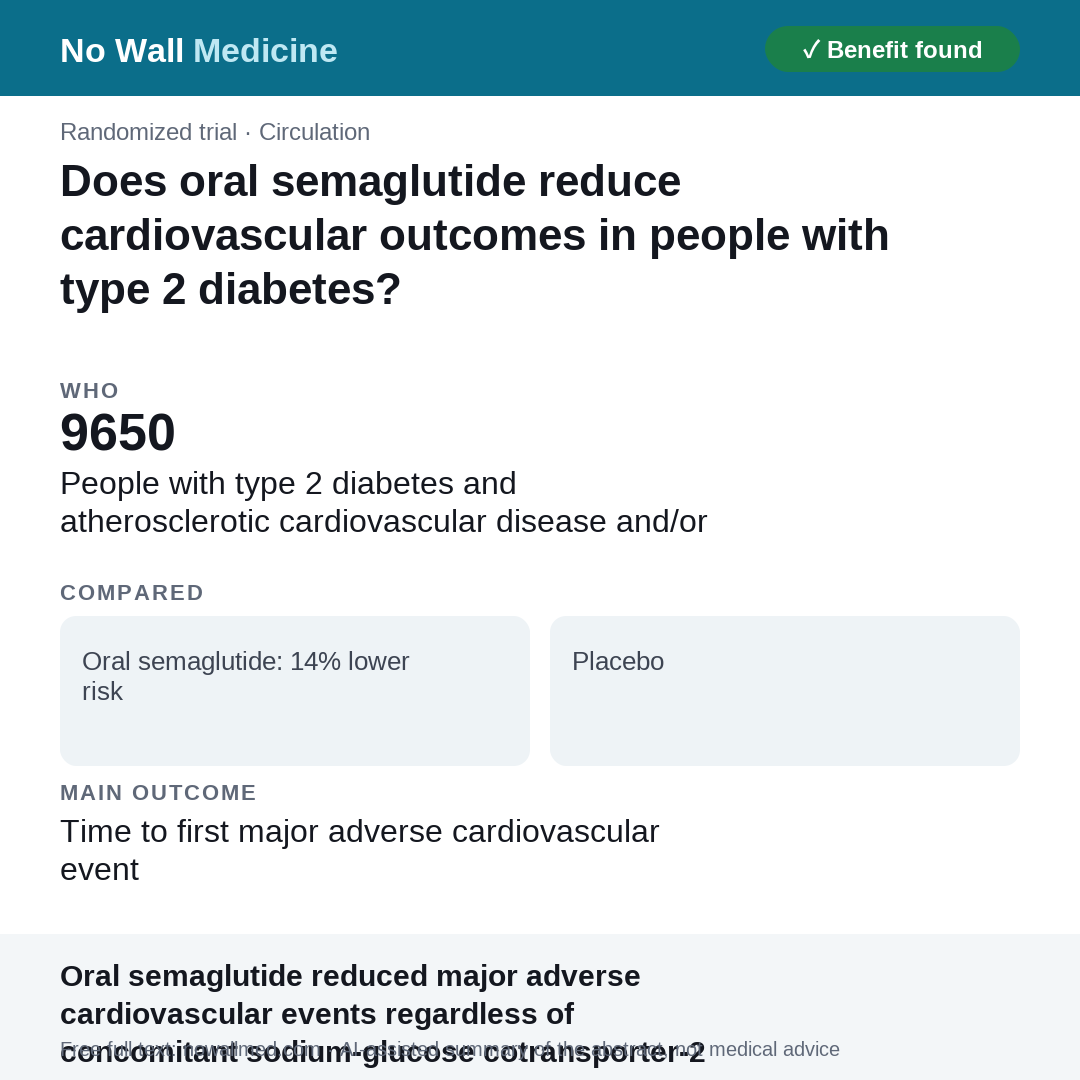
Oral Semaglutide and Cardiovascular Outcomes in People With Type 2 Diabetes, According to SGLT2i Use: Prespecified Analyses of the SOUL Randomized Trial
Randomized trialBenefit found
Does oral semaglutide reduce cardiovascular outcomes in people with type 2 diabetes?
Who
9650
People with type 2 diabetes and atherosclerotic cardiovascular disease and/or chronic kidney disease
Compared
Oral semaglutide: 14% lower risk
Placebo
Main outcome
Time to first major adverse cardiovascular event
Result: hazard ratio 0.86 (95% CI 0.77-0.96)
Bottom line: Oral semaglutide reduced major adverse cardiovascular events regardless of concomitant sodium-glucose cotransporter-2 inhibitor treatment.
Circulation · 2025-03-29Download image
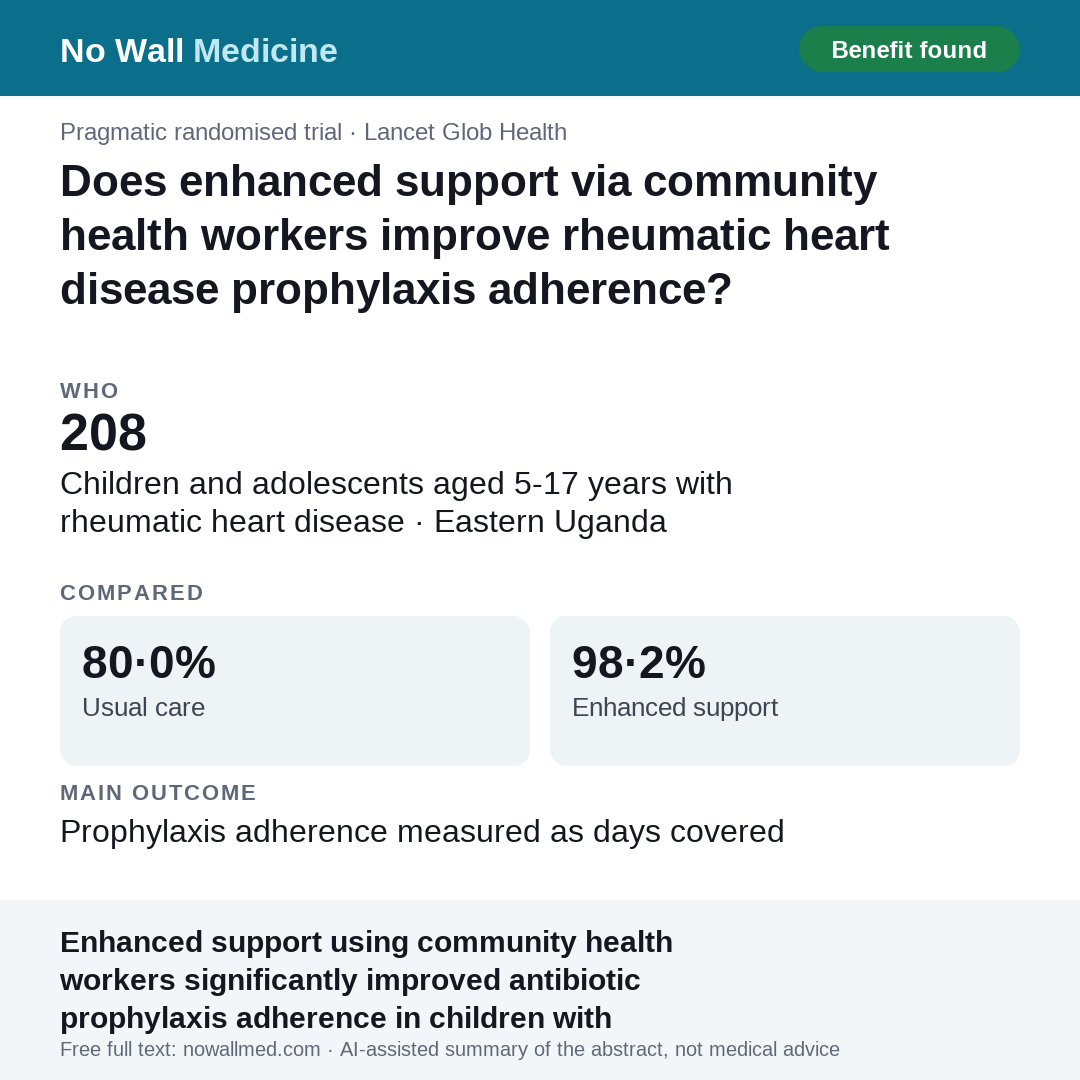
Enhanced support for adherence to rheumatic heart disease prophylaxis for children in the public health system in Uganda (CAMPS): a pragmatic randomised trial
Pragmatic randomised trialBenefit found
Does enhanced support via community health workers improve rheumatic heart disease prophylaxis adherence?
Who
208
Children and adolescents aged 5-17 years with rheumatic heart disease · Eastern Uganda
Compared
80·0%Usual care (SD 19·0)
98·2%Enhanced support (7·1)
Main outcome
Prophylaxis adherence measured as days covered
Result: estimated mean difference in adherence of 18·2%, 95% CI 14·4-22·1
Bottom line: Enhanced support using community health workers significantly improved antibiotic prophylaxis adherence in children with rheumatic heart disease.
Funded by: Thrasher Research Fund and Edwards LifeSciences Foundation
Lancet Glob Health · 2025-03-29Download image
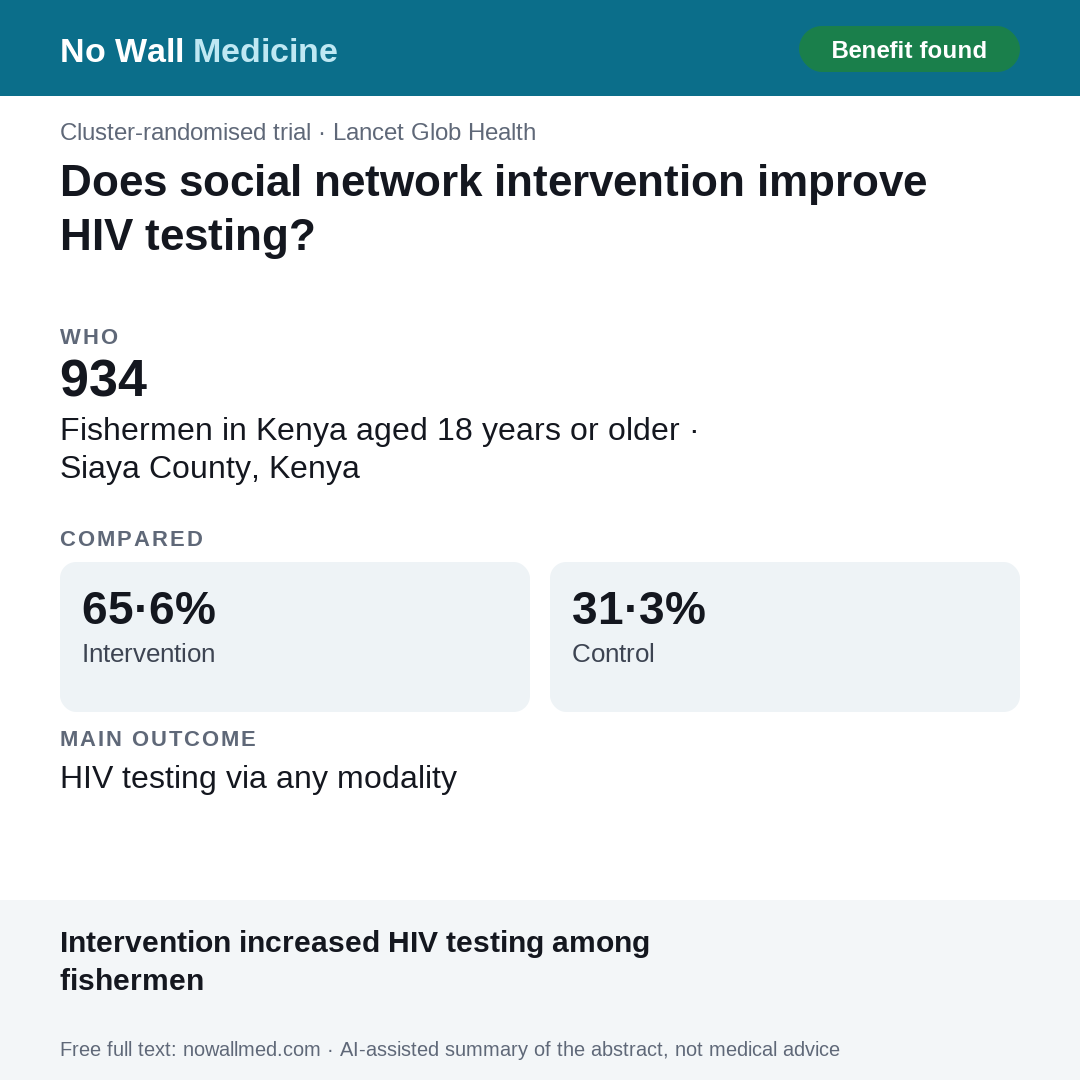
The effect of a social network-based intervention to promote HIV testing and linkage to HIV services among fishermen in Kenya: a cluster-randomised trial
Cluster-randomised trialBenefit found
Does social network intervention improve HIV testing?
Who
934
Fishermen in Kenya aged 18 years or older · Siaya County, Kenya
Compared
65·6%Intervention (95% CI 59·5-71·7)
31·3%Control (25·4-37·2)
Main outcome
HIV testing via any modality
Bottom line: Intervention increased HIV testing among fishermen
Funded by: National Institute of Mental Health
Lancet Glob Health · 2025-03-29Download image
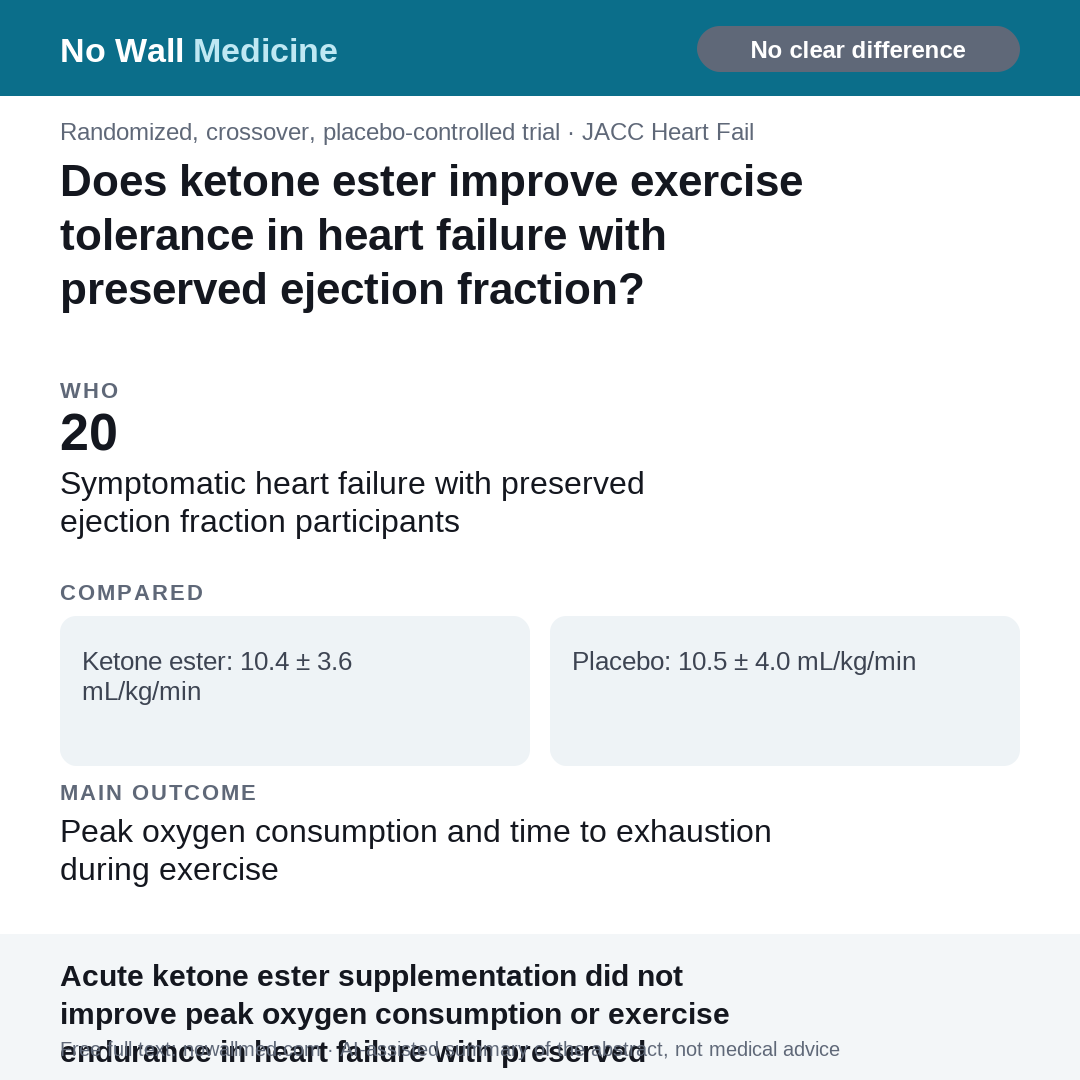
Crossover Trial of Exogenous Ketones on Cardiometabolic Endpoints in Heart Failure With Preserved Ejection Fraction
Randomized, crossover, placebo-controlled trialNo clear difference
Does ketone ester improve exercise tolerance in heart failure with preserved ejection fraction?
Who
20
Symptomatic heart failure with preserved ejection fraction participants
Compared
Ketone ester: 10.4 ± 3.6 mL/kg/min
Placebo: 10.5 ± 4.0 mL/kg/min
Main outcome
Peak oxygen consumption and time to exhaustion during exercise
Bottom line: Acute ketone ester supplementation did not improve peak oxygen consumption or exercise endurance in heart failure with preserved ejection fraction.
JACC Heart Fail · 2025-03-29Download image
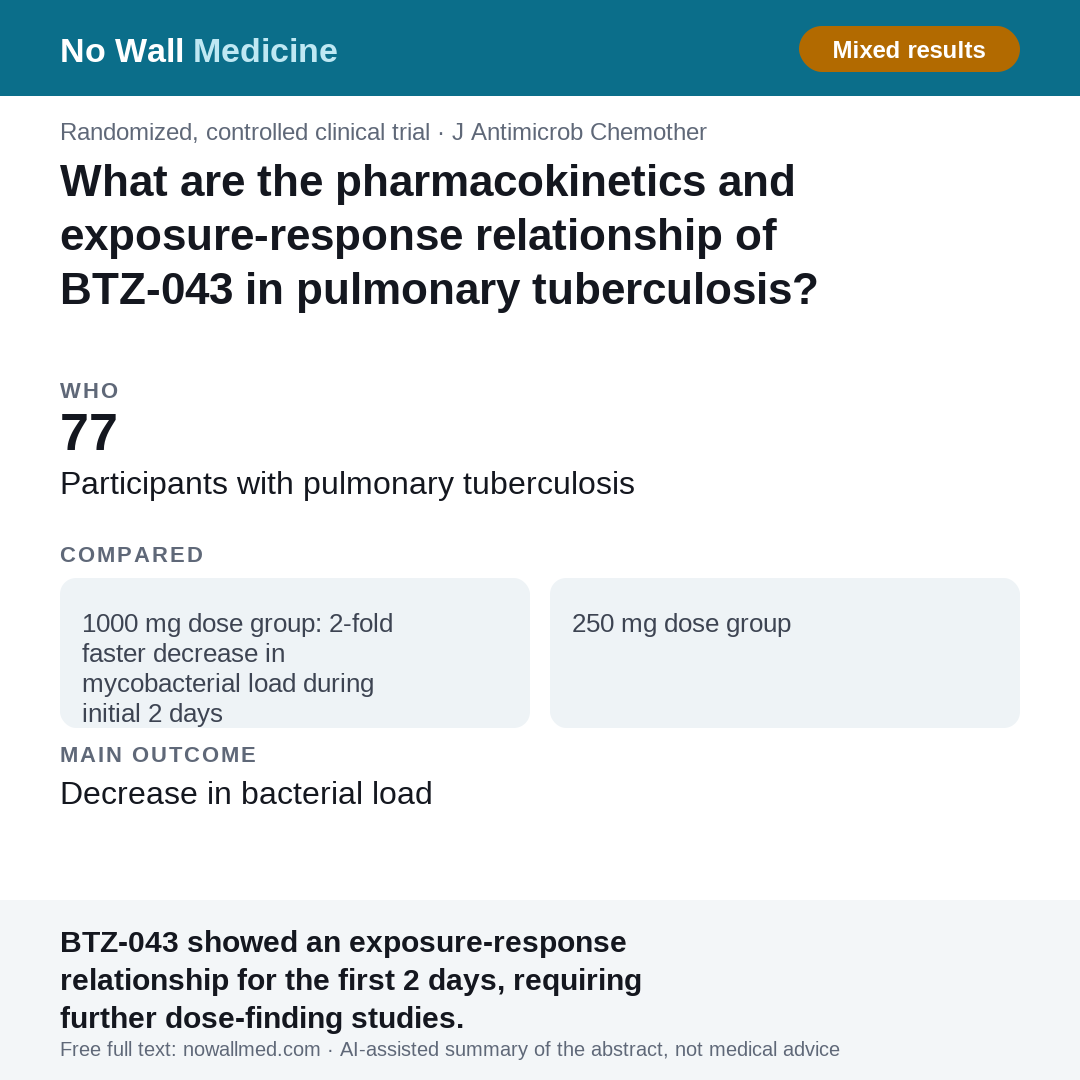
Population pharmacokinetics and exposure-response relationship of the antituberculosis drug BTZ-043
Randomized, controlled clinical trialMixed results
What are the pharmacokinetics and exposure-response relationship of BTZ-043 in pulmonary tuberculosis?
Who
77
Participants with pulmonary tuberculosis
Compared
1000 mg dose group: 2-fold faster decrease in mycobacterial load during initial 2 days
250 mg dose group
Main outcome
Decrease in bacterial load
Bottom line: BTZ-043 showed an exposure-response relationship for the first 2 days, requiring further dose-finding studies.
J Antimicrob Chemother · 2025-03-29Download image
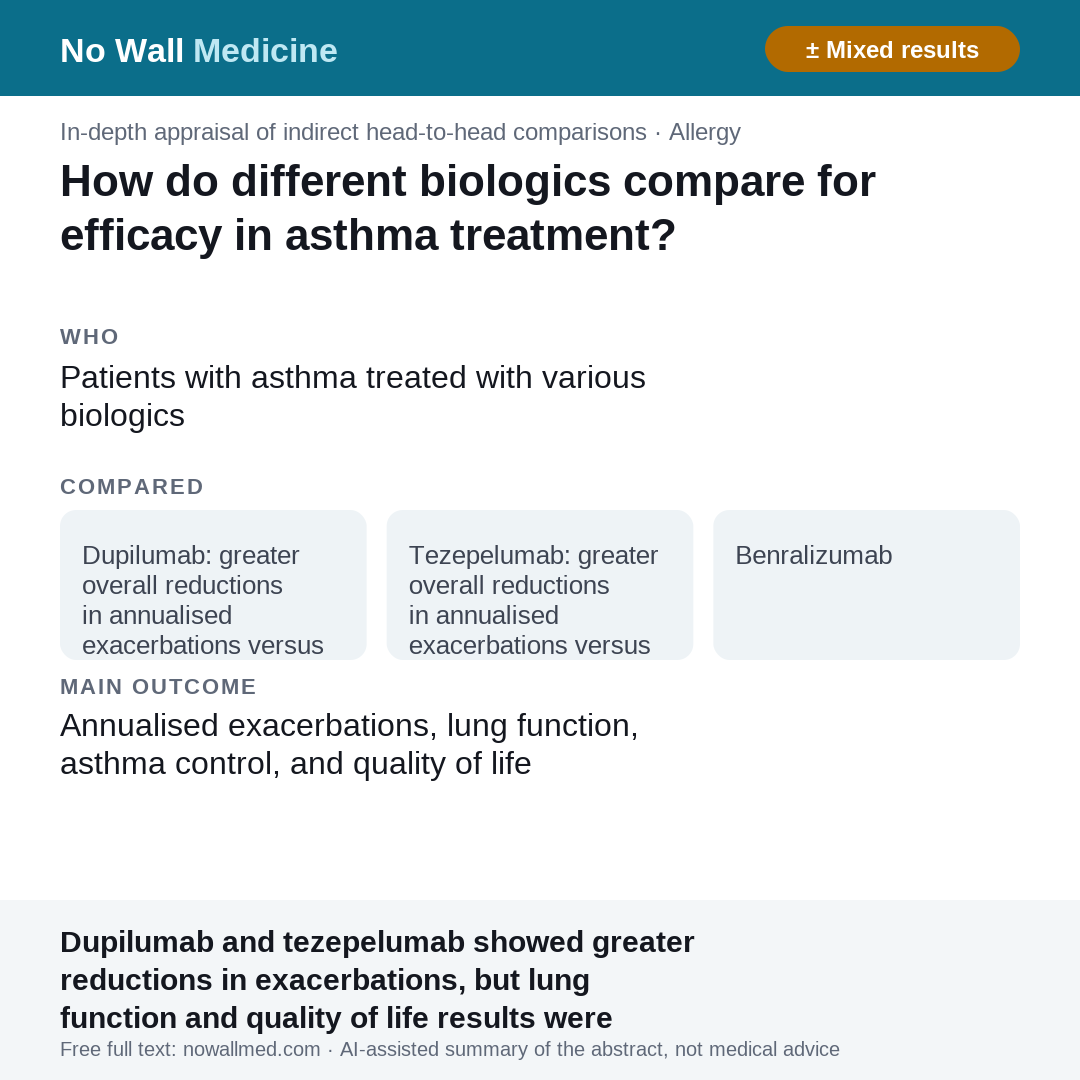
Head-To-Head Comparison of Biologic Efficacy in Asthma: What Have We Learned?
In-depth appraisal of indirect head-to-head comparisonsMixed results
How do different biologics compare for efficacy in asthma treatment?
Who
Patients with asthma treated with various biologics
Compared
Dupilumab: greater overall reductions in annualised exacerbations versus mepolizumab or benralizumab
Tezepelumab: greater overall reductions in annualised exacerbations versus benralizumab
Benralizumab
Main outcome
Annualised exacerbations, lung function, asthma control, and quality of life
Bottom line: Dupilumab and tezepelumab showed greater reductions in exacerbations, but lung function and quality of life results were mixed.
Allergy · 2025-03-29Download image
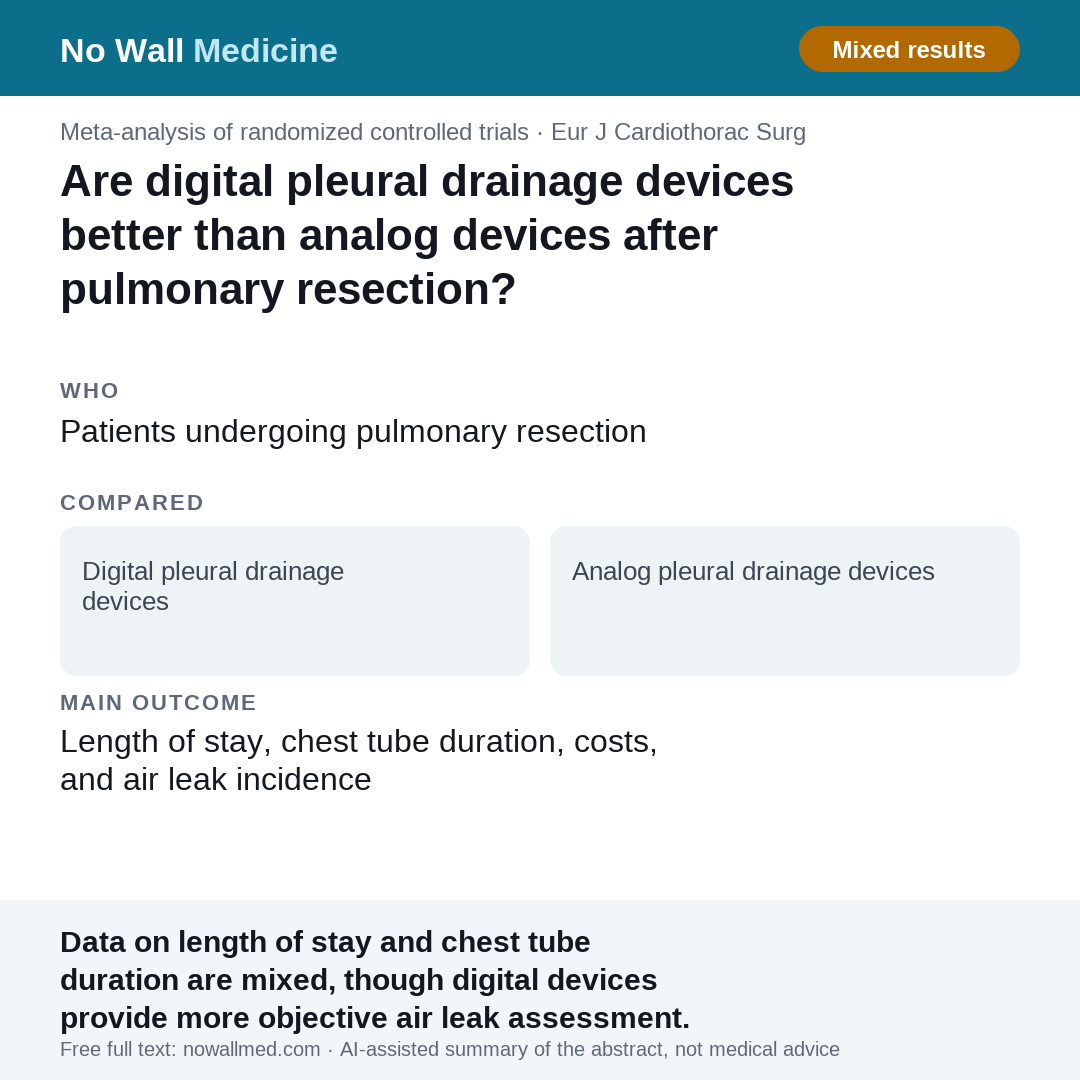
Digital pleural versus analog drainage devices for postoperative management of patients after pulmonary resection
Meta-analysis of randomized controlled trialsMixed results
Are digital pleural drainage devices better than analog devices after pulmonary resection?
Who
Patients undergoing pulmonary resection
Compared
Digital pleural drainage devices
Analog pleural drainage devices
Main outcome
Length of stay, chest tube duration, costs, and air leak incidence
Bottom line: Data on length of stay and chest tube duration are mixed, though digital devices provide more objective air leak assessment.
Eur J Cardiothorac Surg · 2025-03-29Download image
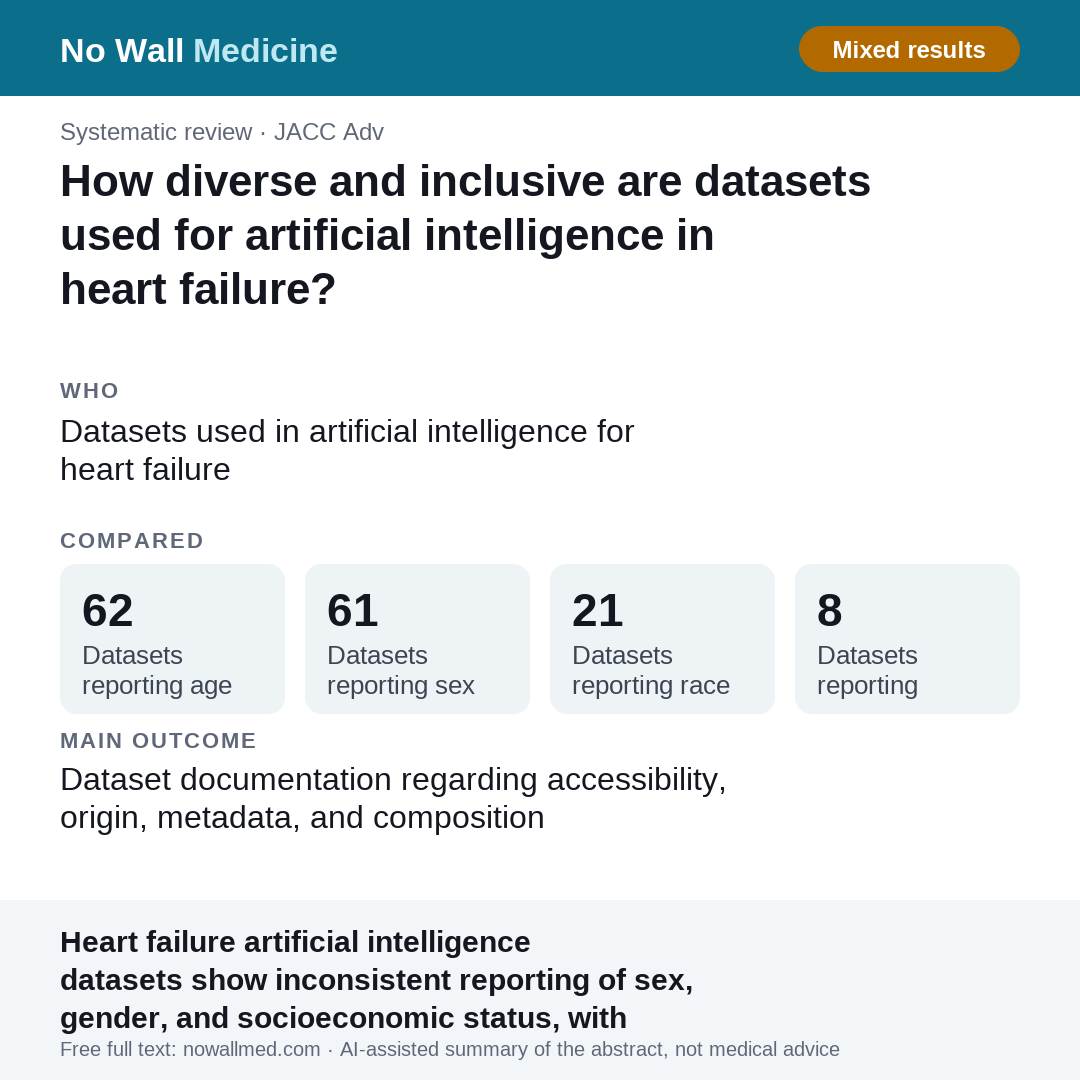
Diversity and Inclusion Within Datasets in Heart Failure: A Systematic Review
Systematic reviewMixed results
How diverse and inclusive are datasets used for artificial intelligence in heart failure?
Who
Datasets used in artificial intelligence for heart failure
Compared
62Datasets reporting age (86%)
61Datasets reporting sex or gender (85%)
21Datasets reporting race and/or ethnicity (29%)
8Datasets reporting socioeconomic status (11%)
Main outcome
Dataset documentation regarding accessibility, origin, metadata, and composition
Bottom line: Heart failure artificial intelligence datasets show inconsistent reporting of sex, gender, and socioeconomic status, with limited race and ethnicity data.
JACC Adv · 2025-03-29Download image
Adjuvant therapies for management of hemorrhagic shock: a narrative review
Narrative reviewUnclear result
What adjuvant therapies may help manage hemorrhagic shock?
Who
Patients with severe bleeding and hemorrhagic shock
Compared
Niacin
Thiazolidinediones
Prolyl hydroxylase domain inhibitors
O-GlcNAcylation stimulation
Main outcome
Cell survival during tissue hypoxia and resuscitation
Bottom line: Several promising molecules show potential for future human clinical trials in hemorrhagic shock management.
Crit Care · 2025-03-29Download image

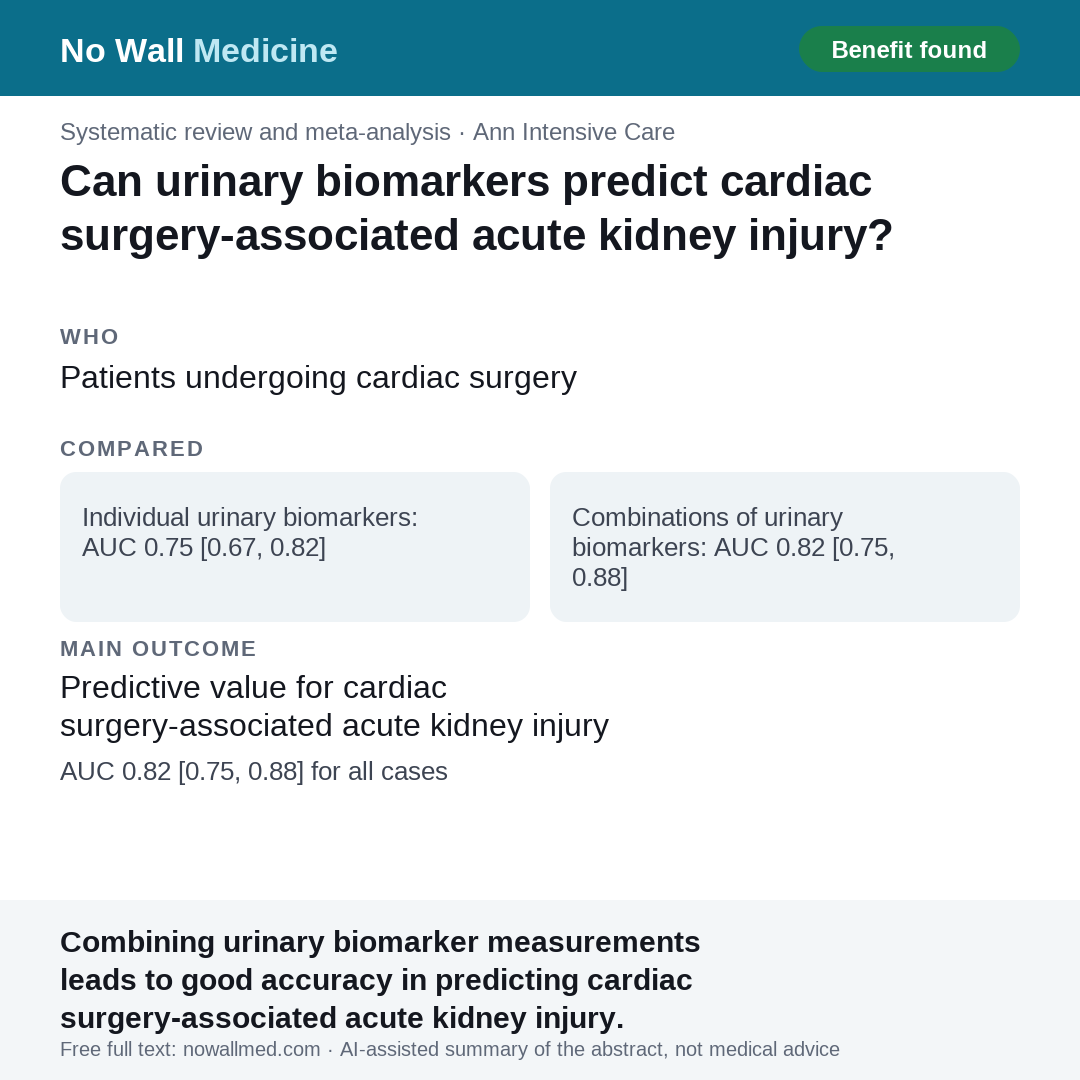
Combination of urinary biomarkers can predict cardiac surgery-associated acute kidney injury: a systematic review and meta-analysis
Systematic review and meta-analysisBenefit found
Can urinary biomarkers predict cardiac surgery-associated acute kidney injury?
Who
Patients undergoing cardiac surgery
Compared
Individual urinary biomarkers: AUC 0.75 [0.67, 0.82]
Combinations of urinary biomarkers: AUC 0.82 [0.75, 0.88]
Main outcome
Predictive value for cardiac surgery-associated acute kidney injury
Result: AUC 0.82 [0.75, 0.88] for all cases
Bottom line: Combining urinary biomarker measurements leads to good accuracy in predicting cardiac surgery-associated acute kidney injury.
Ann Intensive Care · 2025-03-29Download image
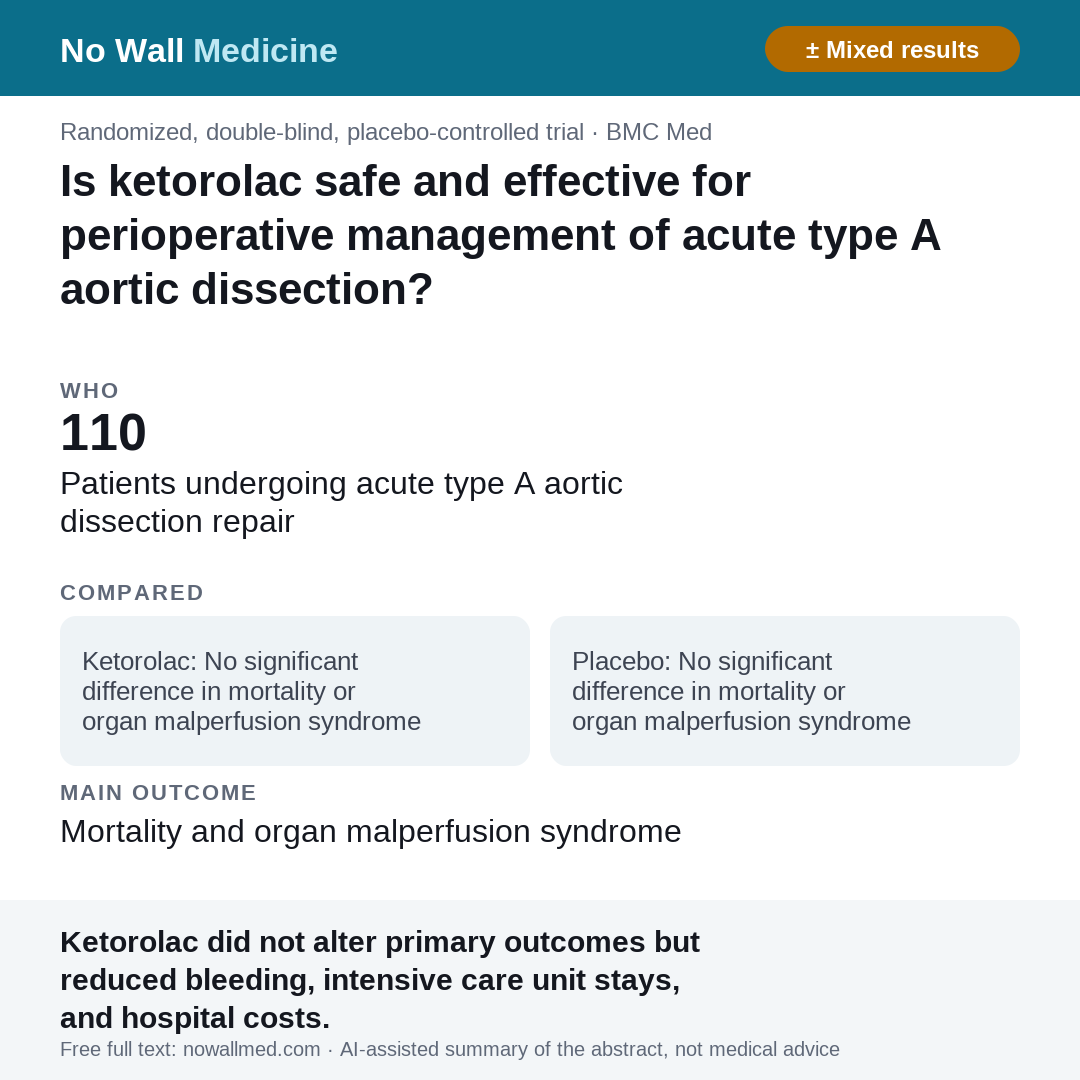
Ketorolac in the perioperative management of acute type A aortic dissection: a randomized double-blind placebo-controlled trial
Randomized, double-blind, placebo-controlled trialMixed results
Is ketorolac safe and effective for perioperative management of acute type A aortic dissection?
Who
110
Patients undergoing acute type A aortic dissection repair
Compared
Ketorolac: No significant difference in mortality or organ malperfusion syndrome
Placebo: No significant difference in mortality or organ malperfusion syndrome
Main outcome
Mortality and organ malperfusion syndrome
Bottom line: Ketorolac did not alter primary outcomes but reduced bleeding, intensive care unit stays, and hospital costs.
BMC Med · 2025-03-28Download image